Home Blog Page 52

MarTech Interview With Fredrik Skantze, CEO and Co-founder of Funnel

0
Fredrik_Skantze_CEO_and_co-founder_of_Funnel_martech interview

Fredrik Skantze, CEO and co-founder of Funnel discusses how marketers can optimize processes and output with the right marketing intelligence in this MarTech catchup:

_________________

Hi Fredrik – thanks for taking the time to be part of the MarTechSeries chat. Tell us about Funnel’s recent funding round – the highs and lows around it.

We secured an $80 million debt facility from HSBC Innovation Banking and Hercules Capital, and for us, this is a huge endorsement of our technology and the future of our marketing intelligence platform. HSBC Innovation Banking have spent years backing the world’s best technology companies, supporting high-growth, venture-backed businesses and their investors, and this additional capital supports Funnel’s strategic initiatives. This includes further global expansion, continued AI-first product development, and operational efficiency improvements as Funnel scales its platform.

We’re approaching profitability, we have a proven business model, we’re growing quickly, and the facility gives us the headroom to keep building. Specifically, we’re looking to accelerate the conversational analytics and agentic measurement capabilities that marketers urgently need as they navigate the post-cookie landscape and demand better visibility into campaign performance across every channel.

Marketing Technology News: MarTech Interview with Omri Shtayer, Vice President of Data Products and DaaS at Similarweb

How is Funnel redefining the scope of modern marketing intelligence? 

When we started Funnel in 2014, there were around 1,000 marketing products in the world. Today, there are 13,000, with 3,000 launched in the last year alone. The data complexity marketers face has exploded, and most tools weren’t built for it. Cloud data warehouses and BI tools were designed for IT teams, not for marketers who need to act quickly and can’t wait for a technical team to run queries. At Funnel, we built something different: a platform that automatically collects, models, and surfaces marketing data across 700-plus connectors, so marketers can understand what’s working without needing a data scientist in the room.

We then acquired Adtriba to bring in best-in-class measurement, triangulating marketing mix modelling, multi-touch attribution, and incrementality testing into one unified platform. It is one thing to offer clients data and information about their marketing spend; it is quite another to give them marketing intelligence, and that’s what we’re building toward.

How can modern marketers make the most of marketing intelligence to course correct in 2026 and beyond? What are they not doing enough of here? 

Our joint research with Ravn Research last year told a sobering story that 86% of in-house marketers and 79% of agency marketers can’t determine the impact of each marketing channel on their overall performance. More than two-fifths of in-house marketers say that when they report results, they don’t analyse the “why” or identify the actions they need to take next. Rather than lacking data, marketers are lacking the right foundation for collecting, measuring and actioning it, which means unifying all of your data sources, automating reporting, and committing to consistent measurement.

Many marketers are skipping this step and jumping straight to AI experimentation, which only delivers intelligent insights when the data underneath it is clean and structured. The other blind spot is the shift from SEO to GEO — 64% of marketers expect generative engine optimisation to eclipse traditional SEO within two to three years, yet fewer than half are actually training their teams for it. Marketers must therefore move with the times, adopting marketing intelligence.

Can you highlight some brands from around the world that are fuelling better marketing plans and strategies with improved marketing intelligence?

We work with around 2,600 customers directly and reach another 60,000 global brands through roughly 1,000 media agencies. Brands like Uber, Adidas, ASOS, and Samsung are using Funnel to get a clear, unified view of their marketing spend across every channel. On the agency side, our five-year global partnership with Havas, announced last year, spanning all 40-plus of their offices worldwide, is a good example of how marketing intelligence scales. They use our platform to deliver sharper, more consistent insights across their entire client portfolio.

One particular case showing off marketing intelligence in action comes from Sephora’s European marketing operation. The team had a data problem that will be familiar to many large organisations: every week, the central data team waited for reports to arrive from local markets across Europe, spent an entire working day consolidating them, and only then could it present findings to senior leadership (a slow and exhausting process).

Working with Funnel and data agency Hanalytics, Sephora implemented a stack where marketing data is ingested, cleaned and prepared as one table in Funnel, sent to BigQuery, transformed using dbt, and visualised in Looker Studio. The impact was immediate as the central team got a full working day back each week, and what started as a senior leadership report expanded to include operational reports for local markets too. Everyone from regional teams to the C-suite now works from the same data, and a company that once spent its time gathering information now spends it acting on it.

A few thoughts on the future of B2B SaaS marketing and martech?

Marketing has always been part art, part science; the difference now is that the science is becoming non-negotiable as the platforms marketers have relied on for decades – Google, Meta, TikTok – are increasingly black boxes. AI handles the bidding, optimises the targeting, and generates the creative, leaving marketers with less visibility into what’s actually driving results at the very moment when understanding that has never mattered more. B2B lead generation automated by agents, AI-generated copy and creative at scale are all happening now, and marketers who assume their current measurement approach can keep pace may well be caught out.

What I find genuinely fascinating is how measurement itself is evolving technically. We’re using neural networks that understand the sequence of marketing touchpoints, not just the touchpoints themselves, because whether a branded search came before or after a direct visit completely changes what drove a conversion. The future belongs to organisations that treat measurement as a priority rather than just a way to report to their superiors. If AI is doing more of the marketing, knowing what’s working is one of the only competitive edges that remains entirely yours.

Top martech innovators — people or companies — you’d like to shout out before we wrap up?

It would be the AI-first companies working on a completely new approach to solving marketing’s different problems. There are a lot of them, and many have a really strong and exciting vision of where they want to go. Many of them are not quite there yet, but give it another year or so and another couple of iterations both for them and the foundational models, and I think we will see some very exciting new AI martech companies emerge and reach scale.

One such product that we are trying out ourselves is Day AI, which is an AI-first take on the CRM space. We are currently evaluating how it stacks up against our existing CRM. The vision of what it can be is quite transformative compared to an existing CRM system.

Marketing Technology News: Martech Architecture For Small Language Models: Building Governable AI Systems At Scale

Funnel helps thousands of marketers at brands like Havas Media, Home Depot and Publicis to choreograph their data and unlock insights that move their businesses forward. Connect, explore, visualize, measure and more — all in one place.

About Fredrik Skantze

Fredrik Skantze, is CEO and co-founder of Funnel.
BigID & Atlan Introduce the First Unified Structured & Unstructured Data Catalog for AI Governance

0
BigID & Atlan Introduce the First Unified Structured & Unstructured Data Catalog for AI Governance

BigID and Atlan announced an enhanced integration that delivers the first and only combined solution to unify structured and unstructured data discovery, classification, lineage, and cataloging into a single, AI-ready control plane.

Together, BigID and Atlan provide the industry’s leading combined data security and governance foundation, enabling organizations to confidently govern, orchestrate, and protect the data powering modern AI pipelines. With this initiative, customers benefit from:

  • The first and only catalog integration delivering automated classification across all data types
  • A unified AI governance foundation serving data security and data governance teams
  • Real-time policy signals embedded directly within the data catalog experience
  • Trusted collaboration between CDOs and CISOs to accelerate responsible AI adoption
  • End-to-end visibility and control over the data powering analytics and AI pipelines

Marketing Technology News: MarTech Interview with Miguel Lopes, CPO @ TrafficGuard

AI initiatives are accelerating across every industry, but most organizations lack visibility into the unstructured and sensitive data feeding their AI models. As lines of business push innovation forward, security and governance leaders are left managing growing risk, compliance exposure, and shadow AI initiatives. Without a unified view of structured and unstructured data – and without security intelligence embedded directly into the catalog – organizations struggle to bring AI initiatives safely into production.

The BigID and Atlan integration bridges this gap by aligning CISOs and CDOs on a single, trusted foundation for secure, governed, AI-ready data.

“Every successful AI initiative starts with context. Atlan is the context layer for data and AI — the place where technical metadata, business meaning, and governance all come together. By bringing BigID’s DSPM risk signals directly into that context layer, we give our joint customers a single view of where sensitive data lives, how it flows, and which analytics and AI experiences depend on it — and then automate the right guardrails at scale. Together, we’re helping enterprises move faster on AI with the confidence that their data is understood, governed, and trusted end to end.” — Marc Seifert, Head of Global Alliances, Atlan

Marketing Technology News: Disrupt or Be Disrupted: The AI Wake-Up Call for B2B Marketers

What’s New

  • Automated discovery and classification of structured and unstructured data with BigID
  • Seamless ingestion of data classification tags and policy alerts into Atlan’s data catalog
  • Sensitive data context propagated across end-to-end data lineage
  • Unified visibility for security and governance teams across the entire data estate
  • Advanced policy intelligence delivered directly to business users and AI stakeholders for smarter, safer decisions

“AI innovation depends on trusted data,” said Ian Williamson, SVP, Alliances at BigID. “By embedding BigID’s deep data discovery and classification capabilities directly into Atlan’s modern catalog, we’re giving organizations the unified visibility and control they need to protect sensitive data while accelerating AI initiatives. Together, we’re enabling security and governance teams to move from friction to alignment – and from experimentation to production.”

Write in to psen@itechseries.com to learn more about our exclusive editorial packages and programs.

Nectar Introduces AI Assistant That Turns Observability Data into Operational Intelligence

0
Nectar Introduces AI Assistant That Turns Observability Data into Operational Intelligence

Built on the industry’s most API complete observability platform, the assistant delivers conversational analytics, anomaly detection, and remediation guidance without additional tools or integrations

Nectar Services Corp., a leader in unified communications and contact center observability, announced its native AI Assistant, built directly into the platform to turn vast operational telemetry into instantly accessible intelligence. The new capability allows operators and service providers to interact with Nectar’s telemetry and service data through natural language, delivering faster diagnosis, richer context, and clear resolution paths without deploying separate AI tools or moving data outside Nectar.

The assistant allows teams to query Nectar’s extensive operational dataset, including session data, configuration management database records, call analytics, and provisioning information, through natural language requests. Users can investigate anomalies, generate charts, identify likely root causes, and receive remediation guidance in seconds. Observability data becomes operational intelligence that’s instantly accessible.

Marketing Technology News: MarTech Interview with Nicholas Kontopoulous, Vice President of Marketing, Asia Pacific & Japan @ Twilio

Conversational Intelligence Built In

Traditional observability analytics tools are constrained by pre-built views and fixed dashboards. Nectar’s AI assistant removes that constraint entirely. Operators are no longer bound by what a report was designed to show, they can query what they actually need to know, however they need to see it. Key capabilities delivered at launch include:

  • Natural language querying of extensive telemetry data across voice, video, chat, and multi-vendor ecosystems
  • Early detection of service degradation and customer experience issues
  • Context aware root cause analysis combining historical and real time telemetry
  • AI generated remediation guidance for configuration, capacity, and escalation decisions
  • Dynamic report and chart creation that can be saved as dashboards
  • Continuous learning from operator feedback and incident outcomes

Built API-Complete and Ready for Agency from Day One

Most observability platforms were not designed with AI in mind. Their data sits behind proprietary interfaces, fragmented modules, and brittle point-to-point integrations. When AI has inevitably been bolted on, security and governance are an afterthought.

Nectar was built AI ready. Every function, data domain, and administrative operation has always been API first and schema consistent as a founding principle. The platform exposes a vast and complete API surface. As a result, agentic tooling expansion does not depend on retrofitting new integration layers or rebuilding access paths. From the moment Nectar introduced its own agent, it has been able to observe, reason, and act across the entire system.

That means AI agent security is built in by design. Every AI interaction is subject to the same access controls, tenancy isolation, and audit trails that govern the rest of the platform. AI reasoning operates within explicit permissions, and every action is fully traceable.

Marketing Technology News: The ‘Demand Gen’ Delusion (And What To Do About It)

Built the Right Way: One Architecture for Humans and AI

Nectar built its internal AI assistant as an MCP client that consumes the same toolset exposed to external agents. This avoids a common trap many vendors fall into: maintaining a proprietary internal assistant while building a separate open integration layer for partners. The result is duplicated tools, growing technical debt, and a widening gap between internal and external capabilities.

Nectar maintains one set of tools. Every capability added to the platform is immediately available to both the native assistant and any connected partner ecosystem. This approach keeps the architecture simple while accelerating innovation over time. Pedram Feshareki, Nectar VP Product Development, stated, “Our customers already have world-class visibility through Nectar. What the AI assistant adds is the ability to go beyond what any dashboard was designed to show, asking questions in the moment, getting answers in seconds, and acting on them immediately.”

Write in to psen@itechseries.com to learn more about our exclusive editorial packages and programs.

Decagon Unveils Proactive Agents – The AI Concierge for Every Customer In The Agentic Commerce Era

0
Indexly Announces Mission to Build the AI Visibility OS for the Modern Internet

Decagon Logo

Decagon, the leader in conversational AI agents for concierge customer experiences, introduced a new and proactive generation of its agentic technology that anticipates customer needs, remembers customer nuance, and initiates customer contact at the right time and for the right reason.

“We have a core principle here at Decagon: invent what customers want.” – Alan Yiu, VP of Product

Decagon built the new capabilities alongside its own business customers in the chosen sectors of travel, retail, and healthtech— testing scenarios where the difference between Decagon’s concierge experiences and status-quo customer service tech proved to be the difference between having a smooth trip, seamless purchase, and good night’s sleep or missing a flight, package, or critical health insight.

“We have a core principle here at Decagon: invent what customers want,” said Alan Yiu, VP of Product at Decagon. “That means working closely with the companies actually deploying our agents and iterating quickly based on what we see in the real world. Our goal is to build technology that helps businesses deliver the kind of fast, concierge experiences consumers deserve.”

So what is Decagon’s latest technology all about, especially as businesses grapple with everything from overhyped distractions to hyperscale disruption?

Here’s what you need to know:

CX is moving from automated reaction to anticipatory pro-action

Decagon’s new outbound voice capability enables voice agents to proactively call customers, with voice models fine-tuned to handle the unique technical challenges of outbound calling. As a result, teams can reach customers reliably without manual overhead.

“Decagon gave us a way to shift from reactive support to proactive outreach, while empowering our team to focus on the customer interactions where the human touch matters most,” said Vikram Rajagopalan, VP of Customer Experience at Hertz. You can hear more about Hertz’s story here.

To date, businesses have only had the tools for table stakes work: answering customer questions faster and ultimately reducing support costs. The problem is that reactive automation, whether software- or AI-driven, still treats every interaction like a blank slate.

“A trusted concierge remembers who you are, anticipates your needs, reaches out at the right moment, and builds context over time,” said Mr. Yiu at Decagon. “With this launch, we’re helping businesses deliver this concierge treatment at global scale and empower their customer-facing teams to do their best work.”

Marketing Technology News: MarTech Interview with Omri Shtayer, Vice President of Data Products and DaaS at Similarweb

Memory is now ‘CX infrastructure’ for real relationships

“My philosophy around customer relationships is that it’s not just about what you do for a customer, it’s about how you make them feel,” said Daryl Unger, VP of Customer Experience at Away, “As human beings, we’re wired to remember emotions far longer than we remember transactions, and that emotional impact is what ultimately drives loyalty. That’s why every interaction matters.” You can hear more about Away’s story here.

Traditional systems are configured on top of static records, requiring manual maintenance and laborious management that’s impossible to do well at global scale.

Decagon’s new user memory capability serves as a new paradigm for CX infrastructure, complementing rich systems of record, capturing conversational context, preferences, sentiment signals, and behavioral patterns, and putting them to work in real-world customer interactions. And with deep security and governance standards, this personalization isn’t coming at the expense of compliance.

The result is a win-win all around:

  • A customer can resume a troubleshooting thread days later without repeating themselves.
  • The AI concierge agent remembers a preferred size, feature request, or product interest.
  • The brand outreach is informed by past engagement, not generic segmentation.
  • The CX team can see the full arc of a customer relationship in one unified view.

“Decagon allows us to retain meaningful context from past customer interactions, so we can serve customers with continuity and understanding rather than starting from scratch each time. It shifts our approach from handling isolated transactions to building relationships that evolve over years,” added Mr. Unger.

An AI concierge for every customer

In the age of AI, meaningful alignment is a crucial tenet. By making concierge experiences possible at both the individualized level and at global scale, Decagon is bringing customers and businesses into better alignment.

Recently, the company raised $250 million in a new round of funding that tripled its valuation to $4.5 billion, “the latest sign of feverish investor demand for artificial intelligence services,” according to reporting by Bloomberg.

Write in to psen@itechseries.com to learn more about our exclusive editorial packages and programs.

DemandFactor Rebrands as Demand.com, Signaling a Bold New Chapter in B2B Demand Generation

0
DemandFactor Rebrands as Demand.com, Signaling a Bold New Chapter in B2B Demand Generation

Demand.com

The rebrand reflects the company’s evolution into a comprehensive, full-funnel demand generation platform serving enterprise B2B organizations worldwide

DemandFactor, Inc., a leading B2B demand generation and performance marketing company, announced it is officially rebranding as Demand.com. The new name and digital presence represent the next phase of the company’s growth, underscoring its position as the definitive destination for enterprise demand generation.

Demand.com is cleaner, bolder, and instantly communicates what we do best: generate demand that drives revenue.

Since its founding, DemandFactor has delivered high-quality demand generation powered by in-house operations, first-party data with 99% accuracy, robust reporting, and a global audience of over 220 million B2B decision-makers. The transition to Demand.com simplifies the brand while reflecting the breadth and ambition of the company’s offerings.

Marketing Technology News: MarTech Interview with Omri Shtayer, Vice President of Data Products and DaaS at Similarweb

“This rebrand is much more than a new name, it’s a statement about where we’re headed,” said Rick Robinson, SVP of Sales at Demand.com. “We’ve always been singularly focused on demand. Now our brand matches that focus. Demand.com is cleaner, bolder, and instantly communicates what we do best: generate demand that drives revenue. It opens doors faster, communicates credibility instantly, and reinforces what our customers experience every day – that when it comes to B2B demand generation, we are the standard.”

A Platform Built for the Modern B2B Buyer

The rebrand coincides with a redesigned digital experience at Demand.com, showcasing full-funnel capabilities across demand generation, performance marketing, partner activation, partner recruitment, and agency solutions. The platform reflects the company’s commitment to delivering measurable ROI through data-driven strategies and scalable programs.

While the name is changing, the company’s core mission, leadership team, and commitment to client success remain unchanged. All existing contracts, partnerships, and service agreements continue seamlessly under the Demand.com brand.

Write in to psen@itechseries.com to learn more about our exclusive editorial packages and programs.

Intero Digital Releases Guide to Help Brands Measure Visibility in AI-Powered Search and Audit GEO Footprint

0
Glow.B Unveils AEO And GEO Solutions for the Generative AI Search Era

logo

Intero Digital, a full-service digital marketing agency, today released a new strategic guide designed to help brands evaluate and strengthen their visibility in generative AI search environments, where tools like ChatGPT, Gemini, Perplexity, and Copilot are rapidly changing how consumers discover companies online.

The guide introduces a framework for auditing what Intero Digital calls a brand’s Generative Engine Optimization (GEO) footprint — how often a brand appears in AI-generated responses and the context in which it is presented.

The release comes as generative AI adoption continues to surge. According to S&P Global, usage of generative AI tools has nearly doubled over the past 18 months, with 46% of adult internet users in the United States using generative AI in 2025. As these platforms become a primary research and discovery channel, brands face a new visibility challenge that traditional search engine optimization alone does not fully address.

Marketing Technology News: MarTech Interview with Omri Shtayer, Vice President of Data Products and DaaS at Similarweb

Unlike traditional search engines that rank web pages, generative AI platforms retrieve and synthesize information from a wide network of data sources. Visibility in these responses is often influenced by authoritative mentions across the web, strong entity recognition, and references in knowledge graphs such as Wikidata and Google Knowledge Graph.

To help organizations navigate this shift, Intero Digital’s guide outlines a practical process for evaluating and improving AI search visibility. The framework includes steps for testing brand mentions across AI tools, building monitoring workflows to track responses over time, identifying gaps in how brands are represented, and strengthening the digital signals that help AI systems recognize and retrieve brand information.

The guide also highlights the growing importance of digital authority, entity optimization, and structured data in shaping how brands are represented in AI-generated answers.

Intero Digital recommends that organizations regularly audit their GEO footprint and monitor AI-driven referral traffic to understand how generative platforms are influencing customer discovery.

As generative search continues to evolve, the agency notes that companies that proactively measure and manage their presence within AI responses will be better positioned to maintain visibility in an increasingly AI-first digital landscape.

Write in to psen@itechseries.com to learn more about our exclusive editorial packages and programs.

Picsart Unveils AI Playground, Providing Access to Over 90 AI Models Within One Unified Prompt

0
Picsart Unveils AI Playground, Providing Access to Over 90 AI Models Within One Unified Prompt

logo

Eliminating the need for multiple annual subscriptions – which can total over $3,300 – by consolidating video, image, and audio capabilities from 24 providers into a single design hub.

Whatfix introduces AI Roleplay Training in Mirror, the only platform combining adaptive AI conversations with real system simulations

0
Whatfix introduces AI Roleplay Training in Mirror, the only platform combining adaptive AI conversations with real system simulations

For the first time, customer-facing teams will be able to practice real GenAI-driven customer conversations inside simulated enterprise systems

Whatfix, the global AI-native platform for enterprise technology adoption, officially launches AI Roleplay training in Mirror, making Mirror an AI-first training platform designed to prepare customer-facing teams for real-world performance beyond mere system usage.

With this launch, Mirror evolves beyond system simulation to combine adaptive AI-driven roleplay with realistic enterprise application simulations, enabling frontline teams to practice customer conversations and workflows together in a single, risk-free environment.

Strong Market Momentum 
Mirror’s expansion is backed by rapid enterprise adoption. With the introduction of AI Roleplay in 2025, Mirror’s ARR grew more than 200% year over year. Having raced to $3M ARR in just 6 quarters, Whatfix expects Mirror revenue to grow 3x in 2026, driven by large-scale deployments across customer support and operations teams. Multiple Fortune 100 organizations have already implemented Mirror with AI Roleplay training as part of their frontline training programs, reporting early improvements in metrics such as time-to-proficiency, Average Handle Time (AHT), and Customer Satisfaction (CSAT).

Marketing Technology News: Martech Interview with Meena Ganesh, Senior Product Marketing Manager @ Box AI

From System Training to Real-World Readiness
Mirror was launched in 2024 to help enterprises train employees on complex systems without putting live environments—or customers—at risk. As adoption grew, Whatfix identified a broader gap: teams also needed a safe way to practice the most unpredictable part of their roles—customer conversations. AI Roleplay training closes that gap.

While many solutions offer AI roleplay as a standalone capability, they lack system context. Mirror uniquely combines adaptive AI conversations with high-fidelity system simulations, allowing employees to practice what to say and how to work together in the exact environment where performance happens.

This shift reflects a broader change in how enterprises approach workforce readiness in an AI-driven world.

“Despite accelerating enterprise adoption, only about a third of organizations feel very effective today. Simulation teaches process, and roleplay builds judgment and confidence,” said Khadim Batti, Co-Founder and CEO of Whatfix. “With AI Roleplay in Mirror, we’re helping enterprises reduce time-to-proficiency and improve customer outcomes by preparing employees for real-world situations before they go live.”

Key capabilities of AI Roleplay training in Mirror include:

  • Adaptive AI roleplay training conversations that respond in real time to learner inputs, mirroring real customer interactions
  • Rapid roleplay training creation using AI prompts to reduce time and effort to scale practice experiences.
  • Built-in readiness evaluation within simulated workflows, giving leaders clear visibility into performance before go-live
  • Multi-language support to enable consistent, scalable training for global teams

Industry analysts see this convergence of AI roleplay and system simulation as a critical shift in how enterprises enable customer-facing teams.

Marketing Technology News: Feature-Rich to Functionally Effective: Adjusting your Martech Strategy

“By combining AI-driven roleplay and system simulation in a single solution, Whatfix offers organizations a unified approach to employee enablement—especially for customer-facing roles—allowing learners to safely gain hands-on experience before transitioning to live systems,” said Gina Smith, Research Director at IDC.

Advancing AI-First Enterprise Enablement
AI Roleplay training in Mirror is part of Whatfix’s broader AI-native strategy focused on measurable outcomes and execution readiness. By applying AI to high-impact moments, where employees interact with systems and customers, Whatfix helps enterprises reduce risk, accelerate performance, and deliver better customer experiences at scale.

Write in to psen@itechseries.com to learn more about our exclusive editorial packages and programs.

Teradata Enables AI Agents to Autonomously Process Text, Images, and Audio at Enterprise Scale

0
Teradata Enables AI Agents to Autonomously Process Text, Images, and Audio at Enterprise Scale

Teradata Enterprise Vector Store unifies structured and unstructured data with agentic capabilities across hybrid environments, enabling rapid deployment of production-ready AI systems

Teradata announced new agentic and multi-modal data capabilities for Teradata Enterprise Vector Store, a unified solution that enables organizations increasingly to harness the full potential of generative AI and autonomous agents across hybrid, cloud, and on-premises environments. Integrated with Unstructured, this release marks a significant evolution in Teradata’s enterprise AI infrastructure, combining multi-modal data integration, agentic capabilities, and advanced hybrid search to unlock new levels of intelligence and efficiency.

*New* Features
Teradata Enterprise Vector Store delivers a complete pipeline—from embedding generation to indexing, metadata management, and AI framework integration—with the following advanced features:

  • Unstructured Integration: Automated ingestion and processing of documents, PDFs, images, and audio with upcoming video support
  • Hybrid Search: Combines semantic and lexical search with metadata-driven techniques for more accurate, context-aware retrieval
  • Multi-Modal Embeddings: Support for text, image, and audio embeddings with richer semantic representations
  • Higher Embedding Dimensions: Up to 8K dimensions for enhanced accuracy and nuance
  • LangChain Integration: Direct integration enabling enterprise-scale RAG pipelines, rapid prototyping to production, and agentic execution that extends beyond search—allowing AI agents to retrieve context and operationalize outcomes through governed actions and autonomous workflow orchestration

Marketing Technology News: MarTech Interview with Haley Trost, Group Product Marketing Manager @ Braze

Why Now: The Enterprise AI Challenge
With the explosive growth in unstructured data—which Gartner estimates is growing at three times the rate of structured data—traditional vector databases have proven insufficient for enterprise-scale AI deployments, particularly as AI models become increasingly multimodal, processing text, images, audio, and video simultaneously.

As adoption surges – nearly 80% of companies are already deploying AI agents with most projecting 100%+ ROI from agentic AI initiatives – external research shows enterprises face significant barriers to scaling: fragmented data silos, limited scalability, and lack of unified access to structured and unstructured content alike. These constraints prevent organizations from realizing the full potential of agentic AI at enterprise scale. Closing that gap requires an enterprise vector store built for the scale, performance, and governance that modern AI demands.

Why Teradata: Industry-Leading Scale and Performance

Teradata was built for exactly this moment. Forrester research notes that “high-end scale and performance still require considerable effort, especially when supporting tens of billions of data points (vectors).” Most vector solutions hit practical limits at a few hundred million embeddings. Teradata Enterprise Vector Store was engineered for enterprise‑scale AI, with the ability to ingest millions of documents, thousands of files per hour, and multi‑modal data streams with appropriate configuration and data characteristics.

In combination with Vantage’s proven enterprise architecture, Teradata Enterprise Vector Store has been shown to deliver: linear scalability across billions of vectors and high-dimensional embeddings; 1,000+ concurrent queries without performance degradation; optimized cost structures that eliminate duplicated infrastructure; and enterprise-grade governance across cloud, on-premises, and hybrid environments.

Marketing Technology News: Cross-Department Collaboration with Marketing Workflow Automation: Enhancing Alignment Between Sales, Customer Service, and Marketing Teams

How Enterprises Will Use It

Teradata’s integrated approach, in partnership with Unstructured, eliminates the complexity of point solutions by automatically parsing and transforming unstructured data into high-quality embeddings and unifying structured and unstructured data within a single governed platform. This enables AI agents to autonomously access comprehensive enterprise context and execute complex workflows without manual intervention.

Process Diverse Data Types at Scale: Through the Unstructured partnership, organizations can automatically parse and transform documents, PDFs, images, and audio into high-quality embeddings at enterprise scale. This enables AI systems to reason across vastly different data sources with shared semantic understanding.

Real-World Example: Healthcare Visual Q&A: Medical institutions combine structured patient records with clinical notes, medical images, and audio dictations to support faster diagnosis and treatment planning. Teradata-LangChain agents orchestrate a governed workflow that applies vision models, runs multi-modal vector search, and grounds responses with trusted documentation—delivering explainable, source-traceable results.

Enable Autonomous Workflows: AI agents can independently retrieve context, take action, and orchestrate complex workflows through seamless LangChain integration, transforming AI from simple chatbots into fully autonomous, production-grade systems capable of sophisticated decision-making.

Real-World Example: Insurance Claims Automation: Claims adjudication agents process damage photos and policy PDFs alongside structured claims data, extracting information from images and documents while cross-referencing coverage rules and claim history—delivering faster, explainable decisions with full audit compliance.

Deliver Context-Aware Intelligence: Hybrid search combines semantic vector search with lexical and metadata-driven techniques while fusion search enables unified retrieval across structured and unstructured data. This multi-layered approach can help dramatically improve reliability and reduce AI hallucinations by incorporating comprehensive context into every query.

Real-World Example: Defense Intelligence: Military organizations transform static camouflage doctrine into adaptive, intelligence-driven protection by having troops capture images of camouflaged assets via secure apps. These images are processed in the Enterprise Vector Store alongside terrain patterns and threat signatures, with LangGraph-orchestrated agents delivering real-time survivability guidance at the speed of the battlefield.

Eliminate Data Silos: Unlike traditional vector databases that operate in isolation, Teradata’s agentic enterprise vector store enables AI agents to simultaneously pull insights from tables, logs, documents, images, and metadata within a single governed environment—eliminating data duplication and pipeline complexity.

Real-World Example: Business Loyalty Agents: Financial services firms build governed agents that combine unstructured policy definitions with structured business data to answer complex questions like loyalty discount eligibility—bridging the gap between documents and databases that SQL alone cannot address.

Accelerate Development and Deployment: Open integrations with SQL, Python, and LangChain enable developers to design and orchestrate autonomous agent workflows that seamlessly access both structured and multi-modal unstructured data using familiar tools and skills—from rapid prototyping to production deployment across cloud, on-premises, or hybrid environments without architectural constraints.

Real-World Example: From Prototype to Battlefield: Defense organizations rapidly deploy secure mobile apps that enable troops to capture field imagery, which is instantly processed through the Enterprise Vector Store with LangGraph-orchestrated agents delivering real-time tactical guidance—demonstrating how familiar development tools enable fast deployment of mission-critical AI systems in demanding environments.

Write in to psen@itechseries.com to learn more about our exclusive editorial packages and programs.

Alteryx Accelerates its Next Phase of Growth with AI-Ready Data and Automation at Enterprise Scale

0
Alteryx Accelerates its Next Phase of Growth with AI-Ready Data and Automation at Enterprise Scale

Surpassing $1B in ARR and More Than 380M Automated Workflows Annually, Alteryx One Delivers the Trusted Data Foundation Enterprises Need to Operationalize AI

Alteryx, Inc., a leading AI-ready data and analytics company, announced its next phase of growth at the Gartner Data & Analytics Summit, surpassing $1 billion in ARR and powering more than 380 million automated workflows annually. As enterprises shift from AI experimentation to full-scale execution, demand for trusted automation and AI-ready data has never been higher. With Alteryx One, organizations are operationalizing AI responsibly and accelerating enterprise-scale decision-making.

Enterprises continue to invest heavily in AI, with 89% planning to maintain or increase spending in 2026, as generative and agentic AI technologies promise transformative impact. Yet trust remains a critical barrier: 28% of organizations report limited or no confidence in the accuracy and quality of their data. As companies move from experimentation to execution, reliable data and repeatable workflows have become the foundation for operationalizing AI successfully.

To address these challenges, Alteryx One brings together this strategy — a single platform trusted by thousands of customers that connects data, business context, and AI for insights.

Marketing Technology News: MarTech Interview with Lee McCance, Chief Product Officer @ Adverity

Scaling AI and Automation with Alteryx One

As enterprises move from AI experimentation to execution, particularly with agentic AI, data remains the defining factor. Nearly half (49%) of leaders cite high-quality, accessible, and well-governed data as the top requirement for AI to reach its full potential. To meet this need, Alteryx One provides a trusted logic layer, a governed, repeatable workflow that captures business logic, preserves lineage, and produces AI-ready outputs. Together, these capabilities enable organizations to operationalize AI responsibly and scale automation with confidence.

Adoption of Alteryx One is accelerating, with thousands of customers upgrading to the new, simplified edition pricing model, making it easier to access advanced AI and automation capabilities. Built-in enterprise security and governance provide the controls organizations need to scale. By seamlessly connecting to enterprise data sources, AI models, and business applications, Alteryx One delivers trusted, governed data wherever it’s needed.

“As AI moves from generating insights to taking action, the stakes fundamentally change,” said Andy MacMillan, CEO of Alteryx. “When automation becomes agentic, inconsistency is no longer just inefficient. It becomes an enterprise risk. AI requires a governed and repeatable logic layer. Without that foundation, organizations don’t just move faster — they scale risk faster than productivity. Alteryx is purpose-built for this next phase, giving enterprises the control, transparency, and confidence to operationalize AI, and giving lines of business the flexibility they need to adapt and change.”

In 2025, Alteryx also celebrated 10 years of its global Community, which now includes more than 750,000 members worldwide. Community members have shared thousands of peer-driven solutions, workflows, and best practices, helping organizations accelerate onboarding, scale analytics initiatives faster, and maximize the value of Alteryx One. This collaborative ecosystem continues to fuel innovation and enables customers to operationalize automation and AI using proven, real-world approaches.

“Alteryx is moving fast, and it’s exciting to be part of the journey,” said Alexander Abi-Najm, of Aimpoint Digital and Alteryx ACE. “The energy around product innovations and the momentum across the Alteryx One platform is apparent. As a longtime active member of the Alteryx community, it’s great to see these tools evolve and expand, making it easier than ever for users to solve complex problems, share insights, and drive real impact across organizations.”

Automation at Enterprise Scale

The need for reliable, scalable automation has never been more evident. In 2025, Alteryx customers executed more than 380 million automated workflows, up from more than 260 million in 2023, highlighting how organizations are moving beyond experimentation to governed, enterprise-wide automation that operationalizes analytics.

At the core of that growth are understandable, visible, governed, repeatable workflows that make it possible to operationalize analytics and enable trusted AI across the business. Alteryx enables organizations to extend automation into new generative AI use cases while maintaining explainable, auditable outputs aligned with enterprise compliance standards. With new generative AI capabilities embedded in Alteryx One, users can interact with data using natural language, accelerate model development, and embed AI-driven insights directly into trusted workflows — helping organizations scale innovation without sacrificing control.

Marketing Technology News: What is a Full Stack Marketer; What MarTech Matters Most to Full Stack Marketers?

Business Performance

The momentum behind Alteryx One is reflected in both market performance and renewed leadership focus. In 2025, the company surpassed $1 billion in annual recurring revenue (ARR), signaling strong enterprise adoption and long-term customer commitment. Alteryx was also recognized in G2’s 2026 Best Software Awards for Best Analytics Software Products, underscoring continued product leadership and high customer satisfaction.

At the same time, Alteryx has expanded its cloud data platform ecosystem, including a deepened partnership with Google Cloud. This collaboration enables customers to work directly with cloud-scale data and accelerate analytics and AI initiatives in modern cloud environments.

At the Gartner Data & Analytics Summit in Orlando this week, the company also introduced a refreshed brand identity reflecting its evolution into a unified platform for AI-powered analytics and enterprise-scale automation. With Alteryx One at the center of this evolution, the company is redefining how enterprises scale AI and automation responsibly, providing the trusted foundation needed to drive intelligent outcomes.

Write in to psen@itechseries.com to learn more about our exclusive editorial packages and programs.

Flowfinity Streams Unifies Remote Monitoring and Field Operations for Municipal Infrastructure

0
Flowfinity Streams Unifies Remote Monitoring and Field Operations for Municipal Infrastructure

Award-winning platform connects IoT sensor monitoring with operational workflows to help utilities modernize how they manage diverse infrastructure and improve its resilience at scale.

Flowfinity Inc. announced the availability of its industrial remote monitoring platform, Flowfinity Streams, for utilities and municipalities.

Municipal infrastructure operators are nearing a tipping point. Critical assets built decades ago must now satisfy modern regulations with fewer resources and an aging workforce. Many municipalities are investing in sensor networks to monitor their infrastructure, but most IoT platforms stop at data collection and alerts. The gap between what sensors detect and what operations teams can address is often bridged manually, causing delays, inefficiencies, and errors.

Marketing Technology News: MarTech Interview with Miguel Lopes, CPO @ TrafficGuard

Flowfinity Streams directly addresses the crucial challenge of integrating sensor data and operations. Unlike other platforms that route alerts and information across multiple disconnected systems, Flowfinity Streams connects sensor data, work orders, compliance, and reporting in a single, unified environment. Streams combines a purpose-built time-series database with Flowfinity’s innovative no-code workflow automation engine so staff can do more with the resources they have, and IT can retain control of their data storage and structure.

The platform builds on more than 25 years of experience helping organizations modernize field operations and was recently recognized as Low-Code IoT Platform of the Year. In one deployment, a major U.S. metropolitan wastewater utility uses Flowfinity Streams to manage hundreds of remote monitoring sites and more than 1,600 channels of sensor data, integrating information from SCADA systems and remote terminal units. The platform supports EPA compliance, capital planning, and the coordination of daily operations.

Marketing Technology News: Is the Traditional CDP Already Out of Date?

“Most platforms give utilities either IoT data collection or workflow automation, but rarely both—and almost never in a way that allows operations teams to control how the system is configured,” said Larry Wilson, Vice President at Flowfinity. “Flowfinity Streams brings sensor intelligence and operational response together in one platform, giving the people who understand the infrastructure best the tools to act quickly and effectively.”

As municipalities face growing pressure on their infrastructure, Flowfinity Streams ensures that every sensor investment translates into better operational outcomes.

Write in to psen@itechseries.com to learn more about our exclusive editorial packages and programs.

Revefi Launches AI and Agentic Observability for Enterprise LLM and Agent Workflows

0
Revefi Launches AI and Agentic Observability for Enterprise LLM and Agent Workflows

revefi grey logo transparent background

New capabilities give data, AI, and engineering teams cost attribution, benchmarking, traceability, and integration across LLMs and agents.

Revefi today announced AI Observability and Agentic Observability, new capabilities that extend its platform to give enterprises greater visibility into the performance, cost, and reliability of LLM and AI agent deployments. The announcement coincides with the Gartner 2026 Data & Analytics Summit in Orlando, March 9–11, where Revefi will be exhibiting at Booth 206.

Revefi helps enterprises move AI initiatives from experimentation to production by unifying data and AI operations”

— Sanjay Agrawal

Why This Matters?
The growing complexity of enterprise AI stacks has made observability a top priority for technology leaders. As organizations rapidly deploy AI agents and large language models into production workflows, they face a growing blind spot: the inability to trace what happened, where it went wrong, or what it cost. Revefi’s new capabilities address this directly, providing a unified observability layer across OpenAI, Anthropic’s Claude, Google Gemini, and Google Vertex AI deployments.

Marketing Technology News: MarTech Interview with Omri Shtayer, Vice President of Data Products and DaaS at Similarweb

“Enterprises are running dozens of AI agents and making thousands of model calls a day, but most still lack clear visibility into agent behavior, cost, and failure points,” said Sanjay Agrawal, Co-Founder and CEO of Revefi. “We built AI Observability and Agentic Observability to give data, AI, and engineering teams the visibility and actionable insight they need to manage AI infrastructure with confidence. Revefi helps enterprises move AI initiatives from experimentation to production by unifying data and AI operations.”

Full Observability Across LLMs and Agents
Revefi’s AI Observability delivers benchmarking across models including GPT, Claude, and Gemini, along with throughput metrics in tokens per second and failure rate tracking across providers and time windows. Searchable, filterable activity logs capture prompts and responses, helping teams investigate failures, latency spikes, and cost anomalies.

Revefi’s Agentic Observability provides attribution from user interaction to agent execution to model response, including latency, volume, prompts, and responses across multi-model workflows. This helps teams monitor both simple and complex AI deployments, making each step easier to inspect, troubleshoot, and audit.

Write in to psen@itechseries.com to learn more about our exclusive editorial packages and programs.

Dataiku Launches the Platform for AI Success

0
Dataiku Launches the Platform for AI Success

Dataiku Logo

An independent orchestration layer enabling enterprises to build, deploy, and govern AI systems at scale for the world’s leading companies

Introducing three first-to-market products: a business-friendly AI agent generator, systems of agents that run entire business lines, and cross-platform observability to track the business outcomes agents produce

Dataiku announced the launch of the Platform for AI Success, a strategic evolution of its enterprise AI platform designed to take enterprise AI from pilots into trusted and measurable business performance.

With the launch, Dataiku is setting a new standard with three first-to-market products: Dataiku Agent Management for cross-platform agent governance and business impact validation; Dataiku Cobuild for AI-assisted agent building in a visual, inspectable environment; and Dataiku Reasoning Systems for industry-specific decision intelligence delivered by teams of agents. Together, the new offerings redefine how enterprises build, connect, control, and scale AI systems.

The launch will be showcased at the Gartner Data & Analytics Summit in Orlando, March 9–11, Booth 401, where Dataiku will demonstrate how organizations can move beyond pilots to accountable, performance-based AI at enterprise scale.

“To achieve true AI success, enterprises face a critical conundrum,” said Florian Douetteau, co-founder and CEO of Dataiku. “Without bringing everyone into the building process, AI initiatives won’t be relevant or accepted; without orchestrating complex, modern technologies, AI will be too naive to have a meaningful impact; and without governing AI at every single step, it will never move beyond the proof-of-concept phase. We built our platform specifically to solve this exact roadblock.”

A Single Orchestration Layer for All Enterprise AI
AI is spreading across clouds, models, agents, and applications faster than most organizations can control it. In multi-vendor environments, fragmentation leads to duplicated work, inconsistent performance, governance blind spots, and rising operational risk. Without a unifying control layer, enterprises struggle to prove impact, manage cost, or defend decisions made by AI systems.

The Platform for AI Success provides that missing layer. It connects data platforms, enterprise systems, foundation models, and third-party agent frameworks in one governed environment. Dataiku integrates with all of them and depends on none. This allows organizations to preserve the freedom to use the best technology for each use case, avoid vendor lock-in, and maintain centralized oversight of AI performance across the enterprise.

Within a single platform, teams can build, validate, deploy, monitor, and manage AI systems with embedded governance and measurable business accountability.

The platform unifies three essential dimensions of enterprise AI:

  • People: enabling domain experts, analysts, and engineers to contribute safely and productively at scale.
  • Orchestration: coordinating data, models, agents, and decision logic into enterprise-grade systems.
  • Governance: embedding visibility, validation, and performance measurement from design through ongoing operations.

New Capabilities Powering the Platform for AI Success
To support this evolution, Dataiku is introducing major new products:

Dataiku Agent Management: Measuring Business Value, Not Just Agent Uptime
As agents spread across enterprise systems, most monitoring tools are limited to observing whether they are running, with no ability to determine if they are actually delivering value.

An agent can be technically healthy while still failing the business — a blind spot that is increasingly common in organizations worldwide.

Designed as a standalone product, Dataiku Agent Management provides cross-platform visibility, governance, and business-impact measurement for every agent in operation, regardless of the system where it was created or runs. It evaluates agents against defined business KPIs, flags performance drift or cost concerns, and triggers governance workflows based on risk threshold and regulatory requirements.

Organizations can finally answer the questions that matter: What is running? What decisions are being made? What is my risk exposure? And, is this agent actually worth keeping in production?

Dataiku Agent Management Early Access Program is available today.

Marketing Technology News: MarTech Interview with Omri Shtayer, Vice President of Data Products and DaaS at Similarweb

Dataiku Reasoning Systems: Governed Orchestration Across Data, Models, and Agents
More than automation, Dataiku Reasoning Systems are coordinated, governed decision environments designed to scale institutional expertise into operational intelligence.

They unify data, models, agents, business rules, and human-defined decision logic into a single operational environment. Rather than deploying standalone agents for discrete tasks, enterprises can orchestrate governed decision systems that reflect how their business actually operates, embedding company and industry-standard reasoning directly into workflows while maintaining transparency and oversight.

The Dataiku Reasoning System for Manufacturing Operations is available now, with Supply Chain and Financial Risk scheduled for release later in 2026.

Dataiku Cobuild: Business-Friendly AI Pipeline and Agent Generator
Launching in June 2026, Cobuild allows users to describe a business objective in natural language and generate a complete AI project within Dataiku’s visual interface, including pipelines, models, agents, and applications as governed, traceable workflows.

Unlike AI coding assistants or “vibe coding” that produce opaque scripts, Cobuild creates a structured visual flow that users can review step by step, validate assumptions, and approve before deployment. Cobuild translates business intent into executable logic, while Dataiku’s execution engine handles environment configuration, resource provisioning, and deployment in a controlled, repeatable way.

The result is AI-assisted development with full transparency and control.

From AI Activity to AI Performance
The Platform for AI Success reflects a broader market shift. For companies around the world, competitive advantage no longer comes from access to models alone. Rather, it is the ability to coordinate AI systems across enterprise environments, empower business experts to contribute, and embed governance from design through ongoing operations.

“No amount of prompt engineering replaces structured orchestration,” said Clément Stenac, co-founder and CTO of Dataiku. “Real enterprise decisions require data feeding models, models informing agents, and agents controlled by a necessary combination of explicit business rules and human oversight. That coordination layer is missing in most deployments, so the Platform for AI Success is designed to fill that void.”

By positioning itself as the independent orchestration layer across infrastructure and vendors, Dataiku aims to help enterprises scale AI responsibly while maintaining agility in their technology choices.

Write in to psen@itechseries.com to learn more about our exclusive editorial packages and programs.

Zefr Receives MRC Accreditation for Content-Level Brand Safety and Suitability Reporting on YouTube

0
Zefr Receives MRC Accreditation for Content-Level Brand Safety and Suitability Reporting on YouTube

Zefr Logo

Zefr announced it has received Media Rating Council (MRC) accreditation for Content-Level Brand Safety and Suitability labeling and reporting of YouTube English-language in-stream YouTube video content across desktop, mobile web, mobile app, and connected TV environments.

The accreditation is the first of its kind for a third-party platform integration, following the completion of the MRC Board’s ratification process and confirms that Zefr meets the MRC’s rigorous standards for valid, reliable and effective safety and suitability classification at the individual content level, rather than relying on broad, property-level classifications.

This milestone builds on Zefr’s recent MRC accreditation for independent third-party viewability reporting on YouTube, further expanding the scope of MRC-accredited reporting Zefr provides to advertisers across the platform. Together, these accreditations reinforce Zefr’s role in delivering independent, standards-based reporting across both how ads are viewed and classified on YouTube.

Marketing Technology News: MarTech Interview with Omri Shtayer, Vice President of Data Products and DaaS at Similarweb

The accreditation applies to content-level brand safety verification and suitability classification, which evaluates individual pieces of video content rather than applying classifications at the channel or publisher level. This approach allows advertisers to assess suitability based on the specific content adjacent to their ads.

“The MRC congratulates Zefr on earning accreditation for third-party Content-Level Brand Safety and Suitability content-labeling and reporting of Google YouTube for the submitted inventory and environments” said George Ivie, MRC CEO and Executive Director. “This important achievement represents the first such accreditation for a third-party platform integration and demonstrates Zefr’s commitment to rigorous industry standards as well as provides the marketplace with greater transparency and accountability regarding safety and suitability across YouTube.”

“is a watershed moment for Brand Safety. Historically, many of the industry’s challenges stemmed from relying on property-level controls rather than true content-level measurement. Now, advertisers can have greater confidence that content-level safety measurement is robust and accurate,” said Rich Raddon, Co-Founder and Co-CEO of Zefr. “Following YouTube’s accreditation of Google Content Level YouTube Brand Safety and Suitability, Zefr is proud to be the first third party Company in this ecosystem to offer this accreditation, alongside MRC-accredited free viewability metrics.”

The accreditation reflects an independent audit conducted by an MRC-approved CPA firm, evaluating Zefr’s methodologies, controls, data governance, and reporting processes.

As brands continue to demand greater accountability and precision in digital media measurement, this accreditation underscores Zefr’s role in advancing industry-trusted, content-level standards for brand safety and suitability on YouTube.

Write in to psen@itechseries.com to learn more about our exclusive editorial packages and programs.

KIVI CTV Names Felipe Cortelezzi as CEO to Scale Next Phase of Streaming TV Monetization and Expansion

0
KIVI CTV Names Felipe Cortelezzi as CEO to Scale Next Phase of Streaming TV Monetization and Expansion

KIVI CTV Logo

KIVI CTV, a specialized AdTech company operating a full-service Connected TV (CTV) ecosystem across Latin America and the United States, announced the appointment of Felipe Cortelezzi as Chief Executive Officer, reinforcing its next phase of revenue-driven expansion.

KIVI is bridging the gap between iconic content and sophisticated CTV demand, managing a diverse portfolio of premium IPs including Lionsgate, Porta dos Fundos, Turma da Mônica, and Cinépolis.

The announcement comes amid accelerated growth in the FAST (Free Ad-Supported Streaming TV) sector across LATAM, where KIVI has positioned itself as an exclusive AdTech partner for premium media groups in the region.

Marketing Technology News: MarTech Interview with Omri Shtayer, Vice President of Data Products and DaaS at Similarweb

KIVI serves as the exclusive CTV monetization partner in Latin America for SOFA DGTL, operating as the commercial and revenue optimization engine for their FAST channel strategies. Furthermore, KIVI is pleased to announce a strategic partnership with Lionsgate in Mexico and Brazil, with select titles from the global studio’s 20,000+ title film and television library slated to join KIVI’s monetization portfolio in the near future.

Through these alliances, KIVI brings a diverse range of premium IPs to the market – including regional powerhouses such as Porta dos FundosTurma da Mônica, and Cinépolis, alongside anticipated global hits. By providing end-to-end AdTech infrastructure and yield management, KIVI effectively bridges these iconic titles with sophisticated CTV demand.

Felipe Cortelezzi joins KIVI following senior leadership roles at Paramount and Pluto TV, as well as Playmaker Capital. He joins an elite roster of industry veterans from leading organizations such as Meta, TV Globo, Canela, Olympusat, Sony, A+E Networks, Aleph, E-Planning, among others. This collective expertise across the digital and linear landscapes reinforces KIVI’s position as a regional powerhouse in CTV strategy.

“The Board’s decision reflects Felipe’s proven ability to scale revenue operations in high-growth media environments,” said the Board of Directors. “His mandate is to lead our collective of media veterans in maximizing revenue through KIVI’s AdTech infrastructure, utilizing strategic distribution expansion as a catalyst for high-scale monetization.”

“KIVI has built a strong foundation connecting premium content owners to measurable CTV demand,” said Cortelezzi. “By combining end-to-end distribution with advanced creative and disciplined commercial execution, we are uniquely positioned to scale revenue performance across LATAM and US Hispanics.”

With teams based in the United States, Brazil, and Argentina, KIVI continues to position itself as a structured, scalable FAST monetization authority in Latin America, operating at the intersection of content, distribution, and AdTech performance.

Write in to psen@itechseries.com to learn more about our exclusive editorial packages and programs.

CallMiner Delivers Breakthrough AI Advancements to Accelerate CX Automation

0
CallMiner Delivers Breakthrough AI Advancements to Accelerate CX Automation

CallMiner

New innovations in advanced AI classifiers and customizable contact summaries empower organizations with deeper insights, faster discovery, and greater operational efficiency

CallMiner, the global leader in customer experience (CX) automation powered by deep conversation intelligence, announced several new and enhanced AI capabilities that strengthen its market-leading platform. These updates deliver greater personalization, enhanced contextual understanding, and more flexibility, enabling organizations to act faster, automate smarter, and improve customer outcomes.

With the introduction of advanced AI classifiers, CallMiner makes it easier than ever to automatically categorize, interpret, and visualize customer conversations across channels and languages. AI classifiers are created based on analysis of recent interactions specific to each company, capturing full contextual intelligence. The result is deeper insights that support agentic AI discovery, efficiency, and business decisions.

Adding to CallMiner’s collection of AI classifiers, which already include reason for contact, outcome, and named entities, organizations can now use AI classifiers for whole-contact sentiment analysis. AI sentiment detection goes beyond traditional methods to accurately identify positive, neutral, and negative tones in context — even in domain-specific language, mixed emotional states, or short-form messages like voicemails and chat. Designed with transparency, explainability, and human oversight in mind, this new functionality reflects emerging industry standards and regulatory guidance, such as the EU AI Act, while enabling organizations to continue benefiting from traditional category creation for precise, custom use cases, like coaching and agent performance.

Marketing Technology News: MarTech Interview with Omri Shtayer, Vice President of Data Products and DaaS at Similarweb

Further, new customizable summary capabilities allow organizations to tailor AI-generated interaction summaries to their own goals, compliance requirements, and preferred formats. This includes customer experience summaries, improving service by giving agents an instant view of prior interactions and important knowledge in real time. Unlike platforms that offer a single summary approach, CallMiner’s customizable templates give users the ability to write custom prompts from scratch or adapt pre-built templates for faster deployment, ensuring the most relevant conversation insights are captured every time.

With these features added to CallMiner’s industry-leading CX automation platform, organizations gain:

  • Advanced business intelligence through the integration of AI classifiers with CallMiner AI Assist, CallMiner’s natural language agentic AI interface
  • Greater visibility into conversation insights through fully automated classification paired with rich dashboard visualizations, including tree map, stacked bar, and Sankey views
  • Increased flexibility in capturing insights with customizable interaction summaries, easily edited, tested, and adapted to any team, use case, or business requirement
  • Streamlined automation workflows and faster action via seamless export and integration options across business systems

“At CallMiner, we’re not just keeping pace with the industry, we’re setting the bar for innovation,” said Bruce McMahon, Chief Product Officer at CallMiner. “These latest advanced AI capabilities build on our market-leading platform, delivering deeper insights, greater flexibility and ease of use, and faster time-to-value. We remain focused on strengthening our foundational intelligence layer, enabling smarter CX automation, agent augmentation, and agentic AI discovery, and helping organizations achieve measurable improvements in efficiency and customer experience.”

With these innovations, CallMiner reinforces its position as the trusted partner for enterprises seeking to unlock more insight from their customer interactions and drive smarter AI-driven automation strategies.

Write in to psen@itechseries.com to learn more about our exclusive editorial packages and programs.

Data Management Overtakes Cost and Talent as Top AI Challenge as 65% of Enterprises Race to Build Reliable Agentic Capabilities

0
Data Management Overtakes Cost and Talent as Top AI Challenge as 65% of Enterprises Race to Build Reliable Agentic Capabilities

Semarchy Logo

“Significant” investment in AI has tripled compared to the previous year and half of organizations are now committing more than 20% of their total tech budget to scaling AI initiatives.

As AI investment soars, the race for agentic is outpacing the modern data infrastructure required to support it. This is according to a new Semarchy survey of 1,000 global C-level executives across the UK, US and France, which shows data management (51%) is now viewed as a single most pressing challenge, surpassing both cost and talent.

With half of leaders currently implementing AI initiatives without Master Data Management (MDM) foundations (51%)1, and a third without enforcing data quality standards (38%)2, many are at risk of rendering their new agentic capabilities fundamentally unreliable, increasingly costly, and impossible to scale.

Poor Data Foundations Already Causing Project Delays and Compliance Issues

The new report also reveals the direct consequences of lacking data foundations have already been felt. Last year, one in five leaders experienced AI project delays due to data quality concerns (22%), operational inefficiencies from unreliable data (21%), or compliance issues linked to data protection regulations (19%).

Marketing Technology News: MarTech Interview with Omri Shtayer, Vice President of Data Products and DaaS at Similarweb

While only 50% of leaders had prioritized ethics and regulation of the use of AI in their organisation in 2025, that focus has rapidly formalized; this year 77% of leaders have fully integrated AI considerations into their data governance policies. This shift suggests that many are now retrofitting compliance under pressure rather than having built it proactively from the start.

Optimism Surges Despite Acknowledged Skills and Strategy Gaps

The challenges haven’t stemmed business leaders’ rapidly increasing optimism around reaching their AI goals (doubled to 92% from 46% in 2025’s survey), with nearly two-thirds (65%) of leaders now also pushing to develop agentic data management capabilities this year. Yet most acknowledge that their organization’s overall data skills (83%) and strategy (82%) are holding them back from reaching their full potential.

As a result, just under half (48%) are investing in a DataOps approach this year to bridge the gap – applying software engineering discipline to data delivery, with the aim of ensuring rapid, reliable delivery of high-quality data products.

“We are seeing a stark divide,” says Craig Gravina, Chief Technology Officer at Semarchy. “One half of leaders building on strong MDM foundations are positioning themselves to deliver trusted data products – the essential building blocks for scaling agentic AI reliably. The other half aren’t just lagging behind; they are actively accumulating AI technical debt. Trying to scale agentic AI on top of fragmented data foundations and a disjointed strategy isn’t just inefficient – it creates a compounding liability that could do significant long-term harm to the business.”

Data Leaders Sidelined from AI Strategy Despite Critical Role

“The disconnect between ambition and reality often starts at the top,” Gravina adds. “It’s alarming that while data management is the single biggest hurdle, only 7% of CDOs and 18% of CIOs are viewed as holding a chief role in their organization’s AI strategy. You simply cannot separate the AI vision from the data reality. When the architects of your data infrastructure are sidelined from the strategy room, execution gaps are inevitable.”

Write in to psen@itechseries.com to learn more about our exclusive editorial packages and programs.

Devnagri AI Launches Speech AI to Power Multilingual Voice Workflows for Enterprises

0
Devnagri AI Launches Speech AI to Power Multilingual Voice Workflows for Enterprises

About - Devnagri

New capability expands Devnagri’s Sovereign Language Infrastructure with enterprise speech recognition and voice generation for multilingual digital systems.

Devnagri AI, the Sovereign Language Infrastructure company for regulated and enterprise-scale organizations, announced the launch of Speech AI, a new capability designed to enable multilingual voice interactions across enterprise systems and digital customer journeys.

Speech AI expands Devnagri’s language infrastructure platform by introducing two core voice technologies: the Conversational Speech Layer (Automatic Speech Recognition or ASR) and the Enterprise Voice Generation (Text-to-Speech or TTS). Together, these capabilities allow organizations to convert spoken language into structured digital data and generate natural voice responses in all major Indian languages, enabling scalable voice-driven experiences across applications, contact centers, and service platforms.

As voice increasingly becomes the preferred interface for digital access in India, Speech AI addresses a growing gap between enterprise systems and multilingual user behavior. While many digital platforms remain optimized for English-first interactions, most of India’s internet users prefer to communicate in regional languages.

Marketing Technology News: MarTech Interview with Omri Shtayer, Vice President of Data Products and DaaS at Similarweb

Devnagri’s Speech AI supports 15+ major Indian languages, including Hindi, Punjabi, Tamil, Telugu, Marathi, Malayalam, Bengali, Gujarati, and Odia, and can process real-time speech-to-text and generate natural, expressive voice responses. The platform captures linguistic nuances such as accent, rhythm, tone, and contextual intent, enabling voice interactions that feel natural and culturally aligned.

The new capability enables enterprises to deploy voice-powered workflows across high-impact journeys, including multilingual contact centers, voice-based KYC and onboarding processes, collections automation for financial services, and government citizen helplines.

Speech AI is designed as part of Devnagri’s broader language infrastructure platform, which sits between enterprise systems and AI models to orchestrate multilingual communication across digital workflows. Rather than functioning as a standalone voice API, the capability integrates directly into enterprise applications such as CRMs, contact center platforms, mobile applications, and digital onboarding systems.

“Voice will define the next phase of digital access in India,” said Nakul Kundra, Co-founder of Devnagri AI. “Speech AI extends Devnagri’s language infrastructure into the voice layer, enabling enterprises to design systems that can listen, understand, and respond in the languages people actually speak. Our goal is to help organizations build multilingual digital experiences that are both inclusive and enterprise-ready.”

The launch of Speech AI reinforces Devnagri AI’s broader mission to remove language barriers across digital journeys. The company works with enterprises across sectors, including BFSI, digital platforms, government, and the D2C sector, enabling multilingual communication across websites, applications, documents, and now voice-enabled systems.

Write in to psen@itechseries.com to learn more about our exclusive editorial packages and programs.

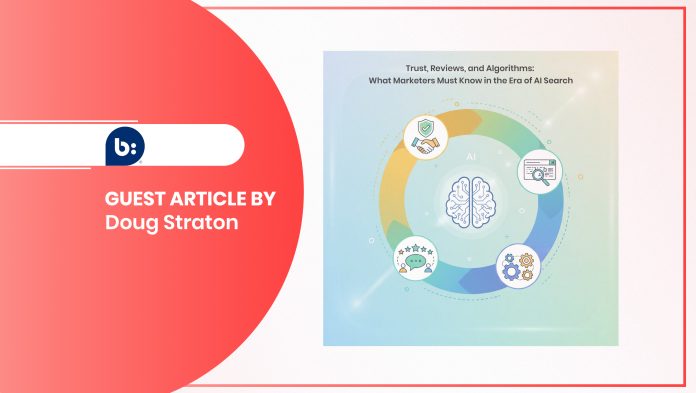
Trust, Reviews, and Algorithms: What Marketers Must Know in the Era of AI Search

0
Trust, Reviews, and Algorithms: What Marketers Must Know in the Era of AI Search

AI is transforming how consumers discover and choose products. Bazaarvoice research shows that 79% of shoppers are expected to use AI-enhanced search this year, whether through chat interfaces or AI-generated summaries embedded in traditional search results. As discovery becomes faster and more conversational, shoppers are increasingly relying on AI to narrow options and guide decisions across categories.

But faster discovery doesn’t always mean better decisions. The past holiday season made that clear: while  75% of purchases occurred online, shoppers were nearly five times more likely to experience regret compared to in-store buyers. In an environment shaped by tighter budgets and heightened price sensitivity, convenience without confidence can quickly lead to impulse purchases shoppers wish they’d reconsidered.

Looking ahead to 2026, brands that focus solely on speed and frictionless checkout will struggle. The next wave of e-commerce growth will be led by brands that pair AI-driven discovery with trust, transparency, and the signals shoppers need to feel confident saying “yes” the first time.

AI is Reshaping How Customers Search

Across product categories, from high-engagement electronics to lower-consideration accessories: AI amplifies the signals it’s given. High-quality signals lead to smart decisions.

Traditional keyword-driven search forced shoppers to compress intent into a few words. AI now enables broad, natural-language queries, letting shoppers explore and compare before even knowing exactly what they want. But broader intent requires richer signals via real-world experience captured in ratings, reviews, and Q&A. Brands that invest in these authentic signals earn visibility in AI-driven discovery, while those relying solely on SEO or keywords risk falling behind.

Consider a shopper searching for a “quiet vacuum for a small apartment with pets.” An AI tool knows to pull from detailed sources mentioning noise level, square footage, pet hair pickup, and durability over time. Products backed by verified reviews with photos and real-world context surface first. Those without that depth of feedback are filtered out entirely, regardless of brand recognition or ad spend. In this scenario, visibility isn’t driven by which brand markets the best, but by which is most accurately represented by their customers.

This shift matters because AI-driven search fundamentally changes what products get surfaced. The best signals come from context. Unlike traditional keyword search, AI relies on these contextual signals to interpret intent and evaluate options

Marketing Technology News: MarTech Interview with Omri Shtayer, Vice President of Data Products and DaaS at Similarweb

Research from Yale and Columbia shows that ratings and reviews don’t simply influence purchase decisions — they also shape product visibility. Their findings highlight that review volume and average rating play an outsized role in how products surface and are evaluated in digital environments. As AI-powered shopping tools increasingly guide discovery, brands with a strong base of authentic customer reviews are more likely to appear in recommendations, while those with limited or weak review signals risk becoming less visible to prospective buyers.

High-quality reviews also address one of retail’s biggest challenges: regret. Detailed feedback, photos, and videos give shoppers confidence before they buy, reducing impulse purchases and increasing satisfaction. In fact, new research found 59% of shoppers consider reviews extremely important, 71% prefer reviews with visual content, and while roughly 45% are open to AI-generated summaries, that trust depends on access to the unedited, original reviews beneath them.

In short, consumers want the efficiency of AI, but they demand authenticity. And in AI-driven commerce, authentic user-generated content is foundational.

Trust Is Built on Authentic Content

Success is measured in lifetime value, credibility, and repeat purchase behavior – not just holiday sales or quarterly revenue. UGC is always on. And that’s why companies embracing authentic content can use AI as a force multiplier for engagement, trust, and long-term customer value.

But here’s the catch: AI recommendations aren’t inherently trustworthy. They reflect the quality of the data they ingest. That’s why content integrity is critical and requires intentional systems, including robust moderation and verification, to ensure reviews are legitimate and reflective of real experiences. Once content becomes authentic and diverse, consumers can trust AI as a credible shortcut to the right product. Without that foundation, brands risk misleading shoppers.

The bottom line: AI isn’t inherently a “spend more” or “save more” tool. It amplifies the signals it receives. For marketers, investing in authentic, high-quality, contextual content is no longer optional. For shoppers, AI is a guide to smarter, faster, and more confident decisions, but not a replacement for judgment.

In the age of AI search, the brands that thrive will let customers’ voices speak for them, ensuring the signals feeding AI are credible, comprehensive, and trustworthy. For consumers, the takeaway is simple – use AI to make better decisions, but always double-check that guidance reflects real-world experience. Companies and shoppers alike can mutually benefit from AI search by adapting responsibly, embracing authenticity, and meeting each other where discovery is happening.

KLOTA Expands E-Commerce Toolkit with Expert-Led SEO and Google Ads Audit Services

0
Channel Factory Expands Global Leadership Team as Demand for Contextual Advertising Accelerates

klota-logo-320px

Fixed-price, manual audits with prioritized action plans join KLOTA’s growing suite of diagnostic tools for online retailers.

KLOTA, a Sweden-based digital performance consultancy specializing in e-commerce growth, has launched two new expert-led audit services: SEO Analysis and Google Ads Analysis. Both services are available at fixed prices with no ongoing commitment, delivering prioritized action plans within days.

We see too many e-commerce businesses running Google Ads campaigns or working on SEO without a clear picture of what’s actually holding them back.”

— Anders Karlsson

The new audit services expand KLOTA’s existing toolkit, which already includes the free AI Visibility Analyzer and Shopping Feed Analyzer launched in late 2025. While those automated tools provide quick diagnostics, the new SEO and Google Ads audits are manual, expert-led reviews designed for businesses that need deeper analysis and hands-on recommendations.

Marketing Technology News: MarTech Interview with Omri Shtayer, Vice President of Data Products and DaaS at Similarweb

SEO Analysis: Technical Audit Built for Online Retailers

The SEO Analysis examines a website from Google’s perspective, covering technical SEO, on-page optimization, content quality, and backlink profile. The audit identifies what may be preventing better rankings and delivers a prioritized list of recommendations sorted by potential impact. Each recommendation includes what should be done, why it matters, and an estimate of implementation complexity. The service is priced at SEK 5,900 (approx. EUR 520) with delivery within five business days.

Google Ads Analysis: Manual Account Review for Better ROAS

The Google Ads Analysis is a manual review of the entire Google Ads account, including conversion tracking, campaign structure, bid strategies, keyword selection, search term reports, ad copy, extensions, and Shopping/Merchant Center setup. The audit is designed for advertisers spending at least SEK 10,000 per month (approx. EUR 880) who want an independent assessment of where their budget could be used more effectively. The service is priced at SEK 7,500 (approx. EUR 660) with delivery within ten business days.

Transparent Pricing in an Industry That Often Lacks It

Many agencies require ongoing retainers before offering any form of account or site analysis. KLOTA’s approach makes professional audits accessible as standalone services. Online retailers can use the results to implement changes internally, brief their existing agency, or decide whether to engage KLOTA for further support.

“We see too many e-commerce businesses running Google Ads campaigns or working on SEO without a clear picture of what’s actually holding them back,” said Anders Karlsson, founder of KLOTA. “These audits give them a concrete, prioritized action plan they can act on immediately. No fluff, no generic advice – just specific recommendations based on what we find in their account or on their site.”

A Growing Suite of E-Commerce Diagnostics

With the addition of the SEO Analysis and Google Ads Analysis, KLOTA now offers four diagnostic tools for e-commerce brands: the free, automated AI Visibility Analyzer and Shopping Feed Analyzer for quick self-service checks, and the two new expert-led audit services for businesses that need deeper, hands-on analysis. All four tools are available without ongoing contracts or commitments.

What Both Audit Services Include

• Manual, expert-led review (not automated tool output)
• Prioritized action list sorted by potential impact
• PDF report delivered via email
• Optional 30-minute follow-up meeting included
• Fixed price, no binding contracts, no hidden costs

Write in to psen@itechseries.com to learn more about our exclusive editorial packages and programs.