Home Blog Page 75

Canela Media and LiveRamp Make it Easier for Advertisers to Reach U.S. Hispanic Audiences via OTT

0
Canela Media and LiveRamp Make it Easier for Advertisers to Reach U.S. Hispanic Audiences via OTT

Canela Media, a leading technology-driven multicultural media company, announced a new strategic partnership with LiveRamp, the leader in data collaboration. Through the scale and interoperability of LiveRamp’s data collaboration network, marketers can now overcome fragmentation and data silos to seamlessly access Canela’s proprietary audience of over 30 million U.S. Hispanics with precision and cultural relevance.

LiveRamp’s interoperability enables seamless connectivity to OTT destinations, now including Canela. Advertisers using LiveRamp’s platform can now use LiveRamp’s interoperable, durable identifier, RampID, to connect to Canela’s inventory, as well as any other destinations where their customers are spending time, on CTV and beyond. This allows advertisers to benefit from better reach, activation, personalization, and measurement.

Marketing Technology News: MarTech Interview with Kurt Donnell, CEO @ Freestar

Additionally, today’s partnership enables advertisers to directly access CAS segments in the LiveRamp Data Marketplace. This includes more than 1,000 audience segments reaching over 30 million Hispanics, all derived from Canela’s deterministic dataset and enriched through LiveRamp’s data collaboration network. Advertisers can seamlessly discover and activate segments spanning demographics, cultural affinity, genre preferences, device type, lifestyle attributes, income, sports, automotive behavior, key consumer categories, incremental audiences, and more. Through the LiveRamp Data Marketplace, brands can access CAS to reach Hispanic audiences through direct media buys, programmatically, or via data licensing.

CAS is powered by more than 300 million device IDs and grounded in CTV viewership of Spanish language and more culturally relevant content. It delivers an accurate view of Hispanic consumers at scale and without relying on other imprecise inference methods. Central to CAS are Canela’s innovative incremental audiences, designed to reach viewers brands often cannot find elsewhere, ensuring campaigns exist beyond saturated environments and drive true incremental growth.

Marketing Technology News: Programmatic Ad Platforms With Unique AdTech Features

“This partnership marks an important step forward in how we help brands reach and engage their audiences,” said Mike Bardaro, VP of Commercial Data Products at Canela Media. “Joining the LiveRamp data collaboration network expands access to culturally resonant audience segments and gives advertisers more flexible, scalable ways to connect with the consumers who matter most.”

“CTV continues to be a key platform for performant advertising, and our partnership with Canela makes it easier than ever to reach multicultural audiences,” said Kelsey Pullen, VP, Media and Agency Partnerships at LiveRamp. “Most importantly, this partnership makes it easier to leverage LiveRamp and Canela flexibly, whether advertisers are looking for Canela’s inventory or want to tap their wealth of information about their audiences.”

Write in to psen@itechseries.com to learn more about our exclusive editorial packages and programs.

IAB Tech Lab Opens Public Comment on Live Event Ad Playbook (LEAP) Forecasting API to Enable Advance Discovery of Live Event Inventory

0
IAB Tech Lab Opens Public Comment on Live Event Ad Playbook (LEAP) Forecasting API to Enable Advance Discovery of Live Event Inventory

Proposed Standard Builds On LEAP Initiative To Help Buyers Plan, Reserve, And Monetize Premium Live Programming; Available for Public Comment Until Friday, March 20, 2026

IAB Tech Lab, the global digital advertising technical standard-setting body, announced the release of the Live Event Ad Playbook (LEAP)

Forecasting API for public comment. The proposed specification is designed to help address a long-standing industry challenge by enabling standardized discovery of upcoming programming, including but not limited to live events. Content owners can now share information with partners like schedules, expected ad breaks, and expected viewership. The Forecasting API represents Phase Two of the LEAP Initiative and is intended to support more effective planning, deal creation, and monetization of premium live and tune-in programming across the digital advertising ecosystem.

Marketing Technology News: MarTech Interview with Liat Barer, Chief Product Officer @ Odeeo

“Live events continue to be one of the most valuable and technically complex areas of digital advertising,” said Anthony Katsur, CEO, IAB Tech Lab. “This proposal moves the industry earlier in the process by making future live inventory visible and actionable. It is about giving buyers and sellers the tools they need to plan ahead with confidence and scale those workflows through shared standards.”

Today’s programmatic systems generally lack consistent mechanisms for surfacing future inventory, limiting buyers’ ability to plan and reserve inventory in advance. The Forecasting API is designed to address that gap by allowing broadcasters and content owners to publish structured metadata to exchanges and DSPs. This includes information such as event schedules, expected ad breaks, and viewership forecasts, using a shared schema aligned with existing OpenRTB and AdCOM standards.

The Forecasting API builds on the foundation established by the Concurrent Streams API, which helps buyers and ad tech platforms understand the scale of live opportunities in real time. By moving upstream in the workflow, the Forecasting API enables earlier planning for live and tune-in programming, supports automated deal creation through integration with the Deals API, and helps participants take full advantage of highly engaged live audiences. Together, these components are intended to support a more scalable advance market for premium live content.

Marketing Technology News: What Marketers Need to Know About the European Accessibility Act

“For years, Disney has been committed to modern and sophisticated forecasting capabilities to demonstrate the value of our premium Sports, Entertainment and News inventory,” said Alex Combs, Vice President, Ad Product, Disney Entertainment & ESPN. “As programmatic growth accelerates, standardized interoperability is no longer optional; it is the foundational infrastructure required to eliminate friction in buying. This is especially true for live events and programming,  where timing is crucial. Our active participation in the Forecasting and Concurrent Streams IAB Tech Lab initiative reflects our commitment to making automated buying as easy, efficient, and data driven as possible – delivering measurably better outcomes for our clients and creating an engaging experience for viewers.”

“As live and tentpole programming continues to grow across digital and streaming platforms, buyers and sellers need better ways to plan and coordinate around moments of peak viewer engagement,” said Daniel Perry-Zucker, Senior Product Manager, The Trade Desk. “By standardizing how the industry communicates about upcoming inventory, the Forecasting API helps improve monetization and consumer experiences alike—bringing greater speed, predictability, and scale to live advertising across the ecosystem, and we’re excited to help put these standards into practice.”

The Forecasting API reflects the industry’s growing focus on standardization as live streaming continues to expand and evolve. By thinking beyond the bidstream and enabling shared approaches to forecasting and planning, the specification aims to reduce friction, improve efficiency, and support more effective monetization of live content across the ecosystem. In addition to the API specification, Implementation Guidance has also been provided.

Write in to psen@itechseries.com to learn more about our exclusive editorial packages and programs.

RingCentral Drives New Era of Enterprise Voice AI Performance with OpenAI

0
RingCentral Drives New Era of Enterprise Voice AI Performance with OpenAI

RingCentral, Inc. Logo

RingCentral’s trusted communications enhanced by OpenAI deliver high-fidelity, powerful AI experiences that drive business outcomes

RingCentral, Inc. , a global leader in AI-powered business communications, announced it is integrating OpenAI to advance enterprise-grade voice AI. The effort combines RingCentral’s trusted communications platform with OpenAI frontier models like GPT-5.2 to bring generative AI into the most valuable business communication channel: voice. This effort will enable organizations to work smarter, serve customers faster, and unlock the full value of every conversation.

Powering a New Era of Voice-First AI

Voice is the richest, most immediate source of customer intent. By allowing customers to bring intelligence directly into the flow of live conversations, RingCentral is enabling natural, context-aware interactions that feel genuinely human through OpenAI. Powered by RingCentral’s high-fidelity, low-latency voice infrastructure, these experiences deliver exceptional clarity and responsiveness in real time.

Together, the companies are bridging the gap between cutting-edge AI innovation and practical, real-world business use, paving the way for a new generation of voice-driven automation and agentic AI solutions across the enterprise.

“OpenAI enables us to turn powerful technology into tangible business value – from AI that answers customer calls to AI that assists every employee,” said Kira Makagon, President & COO, RingCentral. “Together, we’re helping organizations transform how work gets done, making it faster, smarter, and more human.”

Fueling Rapid AI Innovation

OpenAI is helping accelerate RingCentral’s broader AI roadmap, by powering a connected system of agentic AI that spans the entire customer interaction lifecycle—from automated call handling to human-assisted decision-making. The same foundational technology behind RingCentral AI Receptionist™ (AIR), which answers and automates inbound customer calls, now extends to support RingCentral AI Virtual Assistant™ (AVA), the company’s new personal AI assistant currently available to a limited number of customers. Together, AIR and AVA form a unified intelligence layer: AIR handles interactions at the front door, while AVA ensures that once conversations are routed to people, employees are equipped with full context, insights, and next-best actions.

Built on RingCentral’s trusted communications platform and enhanced by OpenAI frontier AI, AVA brings voice-first, role-adaptive intelligence directly to employees. It connects voice, video, and messaging data across the RingCentral platform to help people find answers, automate tasks, and make smarter, faster decisions — keeping work moving without friction.

Unlike many AI tools that focus narrowly on documents or meeting summaries, AVA starts where AIR leaves off: real human conversations. It applies trusted voice intelligence captured across customer interactions to deliver context-rich, accurate responses and actions. From capturing notes and summarizing calls to searching across conversations and automating follow-up tasks, AVA helps employees turn routed interactions into meaningful outcomes.

“RingCentral shows how advanced AI moves beyond insight and into action,” said Giancarlo ‘GC’ Lionetti, Chief Commercial Officer at OpenAI. “By working together, we are bringing intelligence directly into live voice conversations, helping enterprises move faster, serve customers better, and act with confidence.”

As part of RingCentral’s AI roadmap, the company will also use ChatGPT Enterprise to spark new ideas, introduce new efficiencies into the product development process, and better understand its customers.

Marketing Technology News: MarTech Interview with Omri Shtayer, Vice President of Data Products and DaaS at Similarweb

Proven Performance, Real Outcomes

With OpenAI, RingCentral AIR™ automates customer interactions at scale — answering calls, scheduling appointments, routing inquiries, and following up through natural, human-like conversations. When a call requires human involvement, intelligence doesn’t stop; it flows seamlessly to employees through AVA, preserving context and accelerating resolution.

Already trusted by thousands of businesses, AIR delivers measurable results and makes advanced AI accessible to organizations of every size. Adoption has been rapid, with more than 5,000 customers in just two quarters as of the end of September 2025. Televero Health, a leader in behavioral healthcare, achieved a 97% patient satisfaction rate, with AIR playing a key role in that success.

“Using RingCentral’s AI Receptionist, the results are undeniable. We saw our monthly appointments increase 14 percent in the first four months, an increase in monthly revenue of more than $200,000. That kind of growth and return on investment is exactly what we need,” said Brian Tucker, Chief Digital Officer, Televero Health.

Enterprise-Grade Trust, Security, and Responsibility

Built on RingCentral’s secure, carrier-grade platform, this collaboration ensures that AI is deployed responsibly and at scale. Customer conversations remain protected under RingCentral’s data governance framework and are not used to train public models. With world-class security, privacy, and compliance controls designed for regulated industries, the integration of OpenAI brings the power of generative AI to business communications with safety and reliability at its core.

Write in to psen@itechseries.com to learn more about our exclusive editorial packages and programs.

Superprof Survey Finds AI Content Boom Is Driving Engagement Fatigue and Distrust Online

0
Superprof Survey Finds AI Content Boom Is Driving Engagement Fatigue and Distrust Online

File:Logo superprof.svg - Wikimedia Commons

New survey by the world’s largest tutoring network reveals rising suspicion, engagement fatigue, and growing demand for transparency as AI shifts online habits.

A new national survey from Superprof, the world’s largest tutoring network, finds that as AI-generated content spreads across social platforms, people are growing more cautious about what they see, what they trust, and how they engage online.

“AI has changed the pace and scale of what people encounter online, and that shift is forcing a reckoning,” said Wilfried Granier, CEO of Superprof. “When content can be produced endlessly, trust becomes harder to earn. People want clarity about who or what they are learning, and they are paying closer attention than ever.”

Key findings show rising suspicion and growing fatigue:

Survey respondents increasingly assume their feeds are AI-generated, but don’t feel confident judging what’s real
• 65% of respondents often or very often suspect content in their feeds is AI-generated, even when it is not labeled.
• 73% say AI has made it harder to tell fact from fiction online.
• 42% report being duped by an AI account on social media.

Marketing Technology News: MarTech Interview with Omri Shtayer, Vice President of Data Products and DaaS at Similarweb

Growing uncertainty is changing how people engage with social platforms, and often pushing them to pull back
• 43% say they engage less overall on social platforms.
• 30% report engaging more selectively, signaling growing caution.
• 45% say AI has made platforms feel less human, while 16% say their feeds now feel repetitive.

As suspicion rises, trust in AI-generated content breaks down in sensitive areas
• 46% say they trust information less when they believe it was created by AI.
• AI-generated content feels least acceptable in news or current events (64%), personal stories or life advice (55%), and health or wellness advice (54%).

AI-generated content still moves people emotionally, sometimes uncomfortably
• 56% have been emotionally moved by content they later learned or suspected was AI-generated.
• 22% said this emotional reaction felt uncomfortable afterward.

Despite the unease, survey respondents remain divided about AI’s long-term impact. While 57% believe AI could ultimately strengthen social media as a space for human connection, 46% expect platforms to become more efficient but less human, or more entertaining but less trustworthy over time.

Write in to psen@itechseries.com to learn more about our exclusive editorial packages and programs.

Helical IT Solutions Announces Version 6.1 of Open Source BI Helical Insight – Advancing Toward a Unified BI Platform

0
digna 2026.04 Expands Time-Series Analytics and Data Validation for Enterprise Data Platforms

Helical Insight (@HelicalInsight1) • Facebook

Helical IT Solutions launches Helical Insight 6.1, enhancing unified embeddable open-source BI with paginated canned reporting, interactive dashboard and AI

Helical IT Solutions is excited to release Helical Insight version 6.1.0.862, a significant update to its open-source Business Intelligence (BI) platform. This release reinforces Helical Insight’s vision of becoming a comprehensive embeddable BI product that offers pixel-perfect documents kind of canned reports, interactive dashboards with drill down drill through and would be adding GenAI BI (chat based) module within one platform.

Helical Insight 6.1 advances our vision of a unified, embeddable BI platform combining pixel-perfect reporting, interactive dashboards, and GenAI BI in one cost-efficient solution.”

— Nikhilesh Tiwari, Director

Helical Insight continues to advance the accessibility of analytics by delivering a unified BI platform with flat pricing, flexible deployment, drag drop interface and embedding options. Its intuitive, browser-based experience enables both internal teams and external users to easily adopt self-service analytics and scale insights across the organization – without escalating costs or multiple BI products.

Version 6.1.0.826 brings backend upgrade to latest version of Java and Tomcat. With enhanced UI/UX, faster visualization creation, improved reporting controls, and broader visualization support, the platform enables organizations to embed interactive dashboards and pixel-perfect reports seamlessly into their products while maintaining simplicity, scalability, and cost efficiency.

Marketing Technology News: MarTech Interview with Omri Shtayer, Vice President of Data Products and DaaS at Similarweb

The latest release expands JDBC URL pattern support, including backslash-based formats and others aslo. It also bundles the latest PostgreSQL JDBC driver by default.

Visualization creation UX has been significantly simplified with single click, enable/disable of charts and hover-based guidance based on number of dimensions and measures present. Subcharts within card visualizations are now displayed in a full-screen, responsive view, improving readability and clarity.

Additional options for trend card, OpenStreetMap (OSM) mapping engine support and Calendar Chart for easy date-wise comparisons and trend analysis are introduced. Backend control over export settings such as orientation and paper size for charts and ad-hoc reports is provided, with UI-driven controls coming soon.

The paginated canned Reporting module now supports Table, Cross Tab, and Chart elements, combining detailed data with visual insights. This bridges traditional reporting with modern BI in a single reporting experience.

Write in to psen@itechseries.com to learn more about our exclusive editorial packages and programs.

TrafficGuard Launches in the United States to Help Combat Growing Ad Fraud and Invalid Traffic

0
Ellie Launches an MCP Server: The First Governed Bridge Between AI and Data Models

Rockwell Automation Announces DLG Group’s Computerized Maintenance Management System Deployment to Drive 10% Downtime Reduction

0
Rockwell Automation Announces DLG Group's Computerized Maintenance Management System Deployment to Drive 10% Downtime Reduction

Danish agri-giant deploys Fiix® CMMS software to boost maintenance productivity, optimize inventory and develop best practices

Rockwell Automation, Inc., the world’s largest company dedicated to industrial automation and digital transformation, announced its collaboration with DLG Group, one of northern Europe’s leading manufacturers of agricultural feedstocks and agri-products, targeting reduced downtime with Fiix® Computerized Maintenance Management System (CMMS).

Using Fiix software, DLG Group is modernizing its maintenance processes for greater efficiency, lower downtime and improved inventory management. Within a month of moving to a digitized maintenance-management workflow, the company is already seeing improvements in the meantime between failure (MTBF). Within a year, the company expects to achieve a 10% reduction in downtime.

Marketing Technology News: MarTech Interview with Stephen Howard-Sarin, MD of Retail Media, Americas @ Criteo

“DLG Group’s deployment strategy has been a model of best practice and innovation,” said Katarina Hart, country sales director, Nordics, Rockwell Automation. “Using Fiix CMMS, DLG Group is on target to achieve improvements in efficiency that will more than pay for the investment in the new system.”

As well as boosting the efficiency of the maintenance teams, the new system is also enabling DLG Group to develop new maintenance best practices. Across teams, sites and a wide range of varied systems, the company is collecting data on common issues, fixes and data-driven optimizations. Knowledge is no longer siloed in different sites, and it is now easy to rapidly share best-practices and critical fixes companywide.

Marketing Technology News: From MarTech Stack to MarTech Fabric: Weaving Brand, Content, and Conversion Into One Thread

“Our factory managers are already seeing a clear benefit in being able to manage and optimize their maintenance queues in real time,” said DLG’s Continuous Improvement (CI) engineer, Alex Rasksen. “It improves their time-to-resolution but also their cooperation with other functions, such as the production planners. This has had an immediate benefit. And in the long term, we plan to build on that expertise to move to a fully data-driven, predictive maintenance setup.”

Write in to psen@itechseries.com to learn more about our exclusive editorial packages and programs.

Stacker Expands Channel Partnership Strategy Through Collaboration with Notified

0
Stacker Expands Channel Partnership Strategy Through Collaboration with Notified

Stacker_Logo (3)

This partnership represents Stacker’s commitment to scaling earned distribution through premium strategic partners, while upholding strict editorial quality and publisher trust

Stacker, the first content distribution platform built for earned reach, announced a partnership with Notified to help brands amplify GlobeNewswire press releases with complementary editorial-quality content called Syndicated Articles.

The collaboration is one of several partnerships with select organizations to expand how Stacker reaches the market, an important step in Stacker’s broader strategy to scale revenue through channel partners.

Through the partnership, communications teams can deliver two distinct assets: an official announcement distributed through GlobeNewswire and a separate, editorial-grade, non-promotional story built to earn coverage across trusted U.S. news outlets. Together, they give brands a unified approach to modern discovery, pairing speed and clarity with credibility signals that increasingly shape both search visibility and AI discovery.

Marketing Technology News: Martech Interview with Meena Ganesh, Senior Product Marketing Manager @ Box AI

“Channel partnerships have been a powerful way to scale Stacker’s impact without compromising what makes the platform work,” said Noah Greenberg, CEO of Stacker. “GlobeNewswire is already the system of record for thousands of brands when it comes to their news announcements and media distribution. By partnering with Notified, we’re meeting teams where they already operate and packaging a modern distribution approach that combines traditional reach with the earned signals that increasingly shape both search visibility and AI discovery.”

“We’re seeing a fundamental shift in how information is consumed, as AI increasingly becomes the first place people turn to understand companies, products and trends,” said Erik Carlson, President and Chief Executive Officer at Notified. “With Syndicated Articles in Content OSTM, we’re helping our clients move quickly and win in the Answer Engine Economy, supported by Stacker’s earned distribution model.”

In accordance with Stacker’s commitment to full editorial integrity, all Syndicated Articles must meet Stacker’s editorial standards and review process: human-written, evidence-based, non-promotional stories that prioritize journalistic value, with claims supported by credible sources and data.

Marketing Technology News: Feature-Rich to Functionally Effective: Adjusting your Martech Strategy

“Publishers are not a distribution endpoint for us, they are the starting point,” said Noah Greenberg, CEO at Stacker. “Everything we build is designed to protect publisher trust. That means strict standards, real review, and a clear line between journalism and promotion. Scaling through partners only works if we stay publisher-first, every time.”

Stacker sees channel partnerships with major wire services and PR agencies as a natural extension of its vision of providing brands with durable visibility through credible storytelling distributed across trusted publisher environments at scale.

Write in to psen@itechseries.com to learn more about our exclusive editorial packages and programs.

Suplari Launches AI-ready Procurement Intelligence Platform, Introducing a New Category Beyond Spend Analytics

0
Suplari Launches AI-ready Procurement Intelligence Platform, Introducing a New Category Beyond Spend Analytics

Suplari Logo

First platform to combine AI-ready data foundation, procurement-specific agents, and closed-loop execution for enterprise teams

Suplari announced the launch of its Procurement Intelligence Platform, introducing a new category that replaces backward-looking spend analysis with real-time AI intelligence combining an AI-ready data foundation, procurement-specific agents, and closed-loop execution that connects insights to measurable financial outcomes.

Traditional spend analytics tools were built for reporting. But in an era where CEOs expect AI-driven efficiency across the organization, procurement leaders need more than dashboards.”

— Jeff Gerber, CEO and Co-founder, Suplari

With S&P 500 job openings declining sharply since 2023 while market valuations continue rising, enterprise procurement teams are being asked to do more with fewer people. Yet 65% of procurement leaders cite poor data quality as the biggest barrier to scaling AI, leaving most organizations stuck running manual processes while their peers modernize. (HFS Research, 2025)

“Traditional spend analytics tools were built for reporting. They show procurement teams see what happened last quarter. But in an era where CEOs expect AI-driven efficiency across the organization, procurement leaders need more than dashboards. They need intelligence that detects opportunities in real time, recommends actions grounded in enterprise data, and tracks outcomes through execution,” said Jeff Gerber, CEO and Co-founder of Suplari.

Suplari’s Procurement Intelligence Platform addresses this gap by combining three capabilities no other solution offers together: a unified data foundation that works with imperfect data from day one, AI agents built specifically for procurement workflows, and closed-loop tracking that proves procurement’s impact on the P&L.

Marketing Technology News: MarTech Interview with Omri Shtayer, Vice President of Data Products and DaaS at Similarweb

Unlike spend analytics platforms built primarily for reporting, or enterprise suites that treat AI as a bolt-on feature, Suplari’s architecture starts with data quality. It automatically cleans, classifies, and harmonizes spend, supplier, and contract data from existing systems without requiring replatforming. The result is an AI-ready foundation procurement and finance can both trust, built for organizations that want to start with what they have.

What distinguishes Suplari is not any single capability but how the three work together. The data foundation makes AI reliable. The agents surface opportunities grounded in enterprise context rather than generic models. And closed-loop tracking creates a direct, auditable link between procurement action and P&L impact.

The Procurement Intelligence Platform is available now for enterprise procurement teams. Suplari delivers initial insights in days, not months, working with customers’ existing systems from day one.

Write in to psen@itechseries.com to learn more about our exclusive editorial packages and programs.

PoshBuilder AI Enters Beta With Desktop IDE and Self-Hosted CMS Built to Challenge Cursor and WordPress

0
McCrossen Marketing Releases McCrossenSEO™ Free on WordPress.org

All-in-One Platform Combines AI-Powered Coding, Visual Building, and Deployable CMS for Modern Web Development

PoshBuilder AI announced the beta launch of its integrated web development platform, combining a full-featured desktop IDE, AI-assisted visual builder, and self-hosted CMS into a unified development environment. The platform is positioned as a comprehensive alternative to AI coding tools such as Cursor and traditional CMS platforms like WordPress.

PoshBuilder AI addresses a longstanding fragmentation problem in modern web development. Developers and agencies often rely on disconnected tools: AI editors for coding, separate visual builders for layout, CMS platforms for content management, and independent hosting dashboards for deployment. PoshBuilder AI consolidates these layers into a single AI-powered system designed to move users from concept to live deployment within one workflow.

Three Core CapabilitiesDesktop IDE with AI Code Actions
Built on Monaco Editor technology, the desktop IDE provides:

Real-time AI-assisted code generation, debugging, and refactoring
Full multi-file project awareness across entire repositories
Integrated terminal and Git version control
Support for major frameworks including React, Vue, Next.js, PHP, and Python

Marketing Technology News: MarTech Interview with Omri Shtayer, Vice President of Data Products and DaaS at Similarweb

AI Visual Website Builder
Designed for rapid prototyping and hybrid developer workflows:

-Generate complete websites from structured prompts
-Drag-and-drop editing with exportable production-ready code
-Clean PHP, HTML, CSS, and JavaScript output
-No proprietary lock-in

Self-Hosted CMS
Unlike subscription-based SaaS builders:

-One-click installation on compatible servers
-SEO-oriented content architecture with structured metadata
-Schema-ready markup and clean semantic HTML output
-White-label capability for agencies
-No per-site hosting dependency

Market Context
Industry analysts project continued expansion of the global website builder market through the end of the decade. However, existing platforms typically force trade-offs between ease-of-use and technical control. Hosted builders simplify design but limit flexibility, while traditional CMS systems offer customization at the cost of performance overhead and complexity.

PoshBuilder AI integrates AI coding, visual building, and deployable CMS architecture into a modular system, allowing users to adopt individual components or operate the full stack within a unified platform.

Search Engine Architecture
PoshBuilder AI’s CMS is engineered with search visibility as a core technical requirement. The platform emphasizes clean semantic HTML, structured metadata systems, and performance-optimized rendering to support discoverability across search engines including Google. Unlike template-heavy builders that generate bloated code, PoshBuilder AI outputs streamlined markup designed to enhance crawlability and indexing efficiency.

Key architectural features include:

-Pillar and cluster content structuring for topic authority
-Automated internal linking suggestions based on content relationships
-Schema.org markup generation for rich search results
-Core Web Vitals optimization with lightweight rendering
-Sitemap and robots.txt automation for proper crawl management

The system is built to support modern SEO practices at the infrastructure level, rather than relying on third-party plugins or aftermarket tools.

Beta Program
The beta launches with limited access:

-100 individual developer seats
-50 agency partnerships
-20 enterprise pilot programs

Participants receive early feature access, roadmap input, and discounted lifetime pricing incentives.

Platform Background
PoshBuilder AI is developed by CEO Marc Mancuso and the team behind PoshListings, an earlier web platform focused on structured listing and publishing systems. Experience gained building scalable content workflows and deployment infrastructure directly informed the architecture behind PoshBuilder AI.

“We saw firsthand how fragmented the web creation process had become,” said Mancuso. “PoshBuilder AI addresses that fragmentation at the development layer, unifying coding, visual building, and deployable CMS architecture within one AI-native environment. Our approach to search optimization is architectural—it’s built into the rendering engine, not bolted on afterward.”

Roadmap
Planned expansions include:

-Template and plugin marketplace
-Team collaboration tools
-Advanced SEO pillar/cluster content automation
-AI-powered internal linking intelligence
-API integrations for custom workflows

Write in to psen@itechseries.com to learn more about our exclusive editorial packages and programs.

Videoinu Introduces YouTube Copilot to Help Creators Publish Smarter on YouTube

0
Videoinu Introduces YouTube Copilot to Help Creators Publish Smarter on YouTube

Videoinu has introduced YouTube Copilot, an AI agent designed to help creators improve YouTube titles, descriptions, and publishing consistency.

Videoinu has recently introduced YouTube Copilot, a new AI agent designed to support creators at a stage many find challenging: publishing finished videos effectively on YouTube.

As video creation becomes faster, the “last mile” often becomes the bottleneck. Many creators still struggle with how to package an upload—what to write in the title, how to structure the description, and how to build a repeatable publishing routine that supports audience growth over time. Videoinu says YouTube Copilot is intended to reduce that uncertainty by providing practical guidance once a video is ready to publish.

According to Videoinu, YouTube Copilot helps creators refine key YouTube publishing elements such as titles and descriptions , drawing from patterns commonly seen across currently popular and high-performing videos . The goal is to help creators make clearer publishing decisions and build consistency—an important factor for growing an audience and unlocking monetization opportunities.

Videoinu positions its broader platform around accessibility, aiming to democratize AI video creation so users can turn an idea or script into a finished video regardless of editing background, budget, or technical skill. The platform supports multiple generation workflows, including text to video and image to video , enabling creators to start from prompts or visual references based on their content style.

Marketing Technology News: MarTech Interview with Omri Shtayer, Vice President of Data Products and DaaS at Similarweb

“Creators can move quickly through production now, but publishing is still where momentum often breaks,” said Richard , spokesperson for Videoinu. “YouTube Copilot is designed to make that final step more repeatable—so creators can package uploads more clearly, publish more consistently, and improve with every release.”

Videoinu also notes that the platform is designed for faceless, story-driven formats that creators can sustain on a regular schedule. For series-based channels, Videoinu supports consistent characters and scenes , helping creators maintain continuity across episodes and strengthen channel identity.

To support controllable, repeatable production, Videoinu provides a structured storyboard and workflow that helps creators manage outputs at scale. Creators can also iterate quickly by regenerating scenes and refining results without restarting entire projects, supporting faster experimentation and ongoing improvement.

Videoinu reports it has surpassed 1,000,000 registered users globally , and cites ongoing discussion across creator communities and social platforms including YouTube, Discord, Reddit, X (Twitter), Instagram, and TikTok .

The company added that broader interest in AI video creation continues to grow across the creator economy, alongside increased attention to video-generation approaches associated with models such as Sora —making publishing guidance and repeatable workflows increasingly important for creators who want to build channels over time.

Write in to psen@itechseries.com to learn more about our exclusive editorial packages and programs.

As Microsoft Expands AI Marketplace Strategy, Admanager Takes the Lead in Healthcare Content Licensing

0
As Microsoft Expands AI Marketplace Strategy, Admanager Takes the Lead in Healthcare Content Licensing

New Licensed Content Marketplace gives healthcare publishers enforceable control over AI access, transforming medical IP into a structured, recurring revenue stream while blocking unauthorized scraping

As Microsoft accelerates its AI marketplace strategy formalizing how AI models and services are distributed and monetized Admanager, powered by Doceree, announced the launch of the Licensed Content Marketplace, healthcare’s first structured AI content licensing infrastructure built specifically for medical publishers.

While technology giants are building marketplaces to commercialize AI models, the content that powers those systems remains largely ungoverned—particularly in regulated industries like healthcare. Admanager’s Licensed Content Marketplace closes that gap, giving healthcare publishers enforceable control over how their intellectual property is accessed, attributed, and monetized within the AI economy.

“AI marketplaces are formalizing how models are distributed,” said Harshit Jain, Founder & Global CEO of Doceree. “But the foundation of those models is content—much of it created by healthcare publishers. As the AI economy matures, publishers must have structured participation, visibility, and compensation. We are defining that framework for healthcare.”

Marketing Technology News: MarTech Interview with Lee McCance, Chief Product Officer @ Adverity

The Missing Layer in the AI Marketplace Economy
The rapid expansion of generative AI has created a structural imbalance:

  • Approximately 50% of web traffic is non-human
  • 32% is attributed to bad bots actively scraping content
  • Healthcare publishers report 15–29% year-over-year revenue contraction as AI answer engines intercept traffic

Premium, peer-reviewed medical content—produced under strict compliance standards—is routinely harvested for AI model training and answer engines. In many cases, those systems then divert traffic away from the original publishers.

As major technology platforms formalize AI distribution and monetization through marketplaces, healthcare publishers have lacked comparable infrastructure to govern how their content participates in that ecosystem.

The Licensed Content Marketplace establishes that missing layer.

A Structured, Enforceable Model for AI Content Access
Admanager’s Licensed Content Marketplace operates across three integrated components:

Tokenized Licensing Contracts
Publishers define explicit access parameters—use case, model scope, duration, pricing, and attribution requirements. These terms are codified into structured, machine-readable licensing agreements accessible to AI developers, pharmaceutical companies, CME providers, research institutions, and health systems.

The result is transparent, enforceable AI content licensing—not passive content ingestion.

Attribution and Usage Visibility
For the first time, publishers gain real-time insight into:

  • Who is accessing their content
  • How often it is used
  • In what context
  • Whether usage aligns with licensed terms

This introduces an auditable attribution layer into the AI ecosystem.

Advanced Bot Detection and Enforcement
Network-level bot detection identifies and blocks unauthorized scraping attempts before content extraction occurs. Deployments project up to a 50% reduction in unauthorized scraping within 12 months.

Turning Intellectual Property into Incremental Revenue
Demand for verified compliant medical content is accelerating. AI developers, life sciences companies, and CME organizations require trusted sources that satisfy regulatory and sourcing standards.

The Licensed Content Marketplace transforms publisher IP from a vulnerable asset into a governed revenue channel—separate from advertising and subscriptions.
Publishers set the rules.

Licensees access approved content. Admanager provides the infrastructure, enforcement, and compliance framework.

“Healthcare publishers built the knowledge base that powers modern AI,” said Kamya Elawadhi, Co-Founder & President of Doceree. “As technology companies expand AI marketplaces, healthcare must lead with governance. We are ensuring publishers are not just content suppliers—but structured participants in the AI economy.”

Marketing Technology News: What is a Full Stack Marketer; What MarTech Matters Most to Full Stack Marketers?

Part of Publisher AI Suite
The Licensed Content Marketplace is the IP governance pillar of Publisher AI Suite, alongside:

  • Site-Specific LLM — A private, on-domain AI assistant trained exclusively on publisher-owned medical content, keeping HCP engagement within trusted publisher environments.
  • AI Ads on Chat Screen — Healthcare’s first AI-native premium advertising ecosystem, monetizing high-intent conversational engagement.

Together, the platform addresses the three structural challenges reshaping healthcare publishing: traffic erosion from AI search, revenue compression from shrinking display inventory, and IP vulnerability from unlicensed AI ingestion.

Write in to psen@itechseries.com to learn more about our exclusive editorial packages and programs.

Admanager Launches Site LLM — A Private AI Built to Keep Healthcare Publishers in Control

0
Admanager Launches Site LLM -- A Private AI Built to Keep Healthcare Publishers in Control

First HIPAA-compliant, on-domain AI assistant trained exclusively on publisher-owned medical content helps reverse AI-driven traffic losses and deepen HCP engagement

Admanager, powered by Doceree, announced the launch of Site LLM, a private, publisher-controlled AI assistant designed to help healthcare media companies reclaim audience engagement in an era where generative AI tools are increasingly intercepting clinical search behavior.

The release marks the flagship deployment within Publisher AI Suite and positions healthcare publishers to deploy AI that works within their own domains—rather than losing traffic to third-party platforms.

AI Search Is Reshaping Healthcare Publishing
As physicians turn to generative AI for faster clinical answers, publishers are seeing measurable impact:

  • 69% of health-related queries are now answered by AI-generated overviews before users reach publisher sites
  • 63–85% of Google searches end without a click
  • Healthcare publishers report 34–46% declines in click-through rates across key categories

The ripple effect extends beyond traffic. Reduced visits mean fewer ad impressions, slower subscription growth, and declining CME participation. Across segments, publishers are experiencing 15–29% year-over-year revenue contraction as AI-native search behavior expands.

Simultaneously, premium medical content faces increased scraping. Approximately 50% of web traffic is now non-human, with 32% attributed to bad bots harvesting editorial content—often for AI model training without attribution or compensation.

Marketing Technology News: MarTech Interview with Miguel Lopes, CPO @ TrafficGuard

Site LLM was built to reverse that dynamic.

Site LLM: Your AI. Your Content. Your Domain.
Site LLM is a private AI assistant trained exclusively on each publisher’s verified, peer-reviewed medical content and deployed entirely within the publisher’s digital ecosystem.

  • It does not pull answers from external sources.
  • It does not share publisher data externally.
  • It does not redirect users to general-purpose AI platforms.

Instead, it keeps healthcare professionals engaged directly on trusted publisher domains.

“Publishers created the content that trained the AI ecosystem,” said Harshit Jain, Founder & Global CEO of Doceree. “Site LLM gives publishers something powerful: an AI that strengthens their platform rather than siphoning value away from it.”

Measurable Impact for Publishers

  • Longer session duration: HCPs receive personalized, clinically accurate answers without leaving the site
  • Higher engagement quality: Responses are grounded exclusively in publisher-owned, domain-specific content
  • Zero data leakage: Fully contained within the publisher’s infrastructure
  • HIPAA-compliant and audit-ready: Built specifically for regulated healthcare environments
  • Monetization-ready chat surface: AI Ads integration enables compliant, contextual advertising within AI conversations

Rather than losing audience to AI search engines, publishers can now deploy AI as their own engagement engine.

Marketing Technology News: Disrupt or Be Disrupted: The AI Wake-Up Call for B2B Marketers

Built for the AI Era of Healthcare Media
Site LLM operates as part of Publisher AI Suite, Admanager’s integrated AI framework designed to address the three structural pressures reshaping healthcare publishing: traffic erosion, revenue fragmentation, and content control.

In addition to Site LLM, the suite includes:

  • AI Ads — Premium, contextual ad formats embedded directly within AI-powered medical conversations
  • AI Licensing Marketplace — Structured licensing infrastructure that enables publishers to govern and monetize how their content is accessed by AI developers, pharmaceutical companies, and CME providers

“Healthcare publishers who embed AI into their infrastructure—on their terms—will define the next chapter of medical media,” said Varun Hasija, VP – Product & Innovation (AI). “Site LLM is designed to ensure publishers are participants in the AI revolution, not casualties of it.”

Write in to psen@itechseries.com to learn more about our exclusive editorial packages and programs.

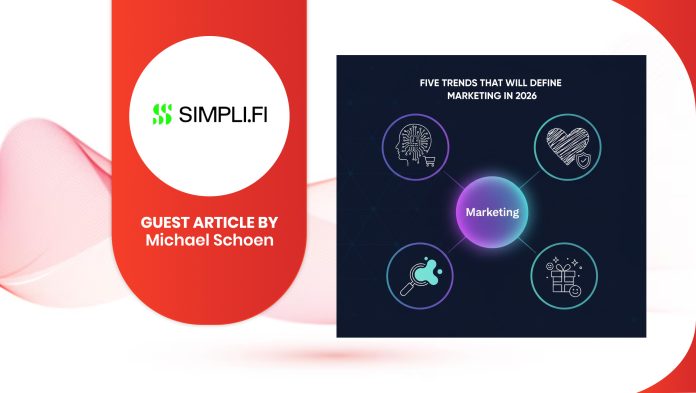
Five Trends That Will Define Marketing in 2026

0
Five Trends That Will Define Marketing in 2026

A piece of advice for advertisers and marketers in 2026: The playbook you’re using today will be obsolete in 24 months. The ground is shifting beneath the advertising industry, and what worked yesterday is a recipe for failure tomorrow.

Marketing leaders sometimes mistake tactical shifts for strategic transformation. They swap one tool for another, thinking they’re staying ahead of the curve. But what’s coming in 2026 isn’t a gentle evolution – it’s a complete rewiring of how brands connect with customers. The fundamentals that built advertising empires are crumbling, and five seismic shifts are reshaping the field.

1. Your Customer’s Location is the New Cookie

The death of third-party cookies created a vacuum that location data is rushing to fill. But this isn’t just about knowing which zip code your customer lives in. It’s about understanding their immediate context. Seventy percent of Americans now expect advertising tailored not just to their city, but to their precise location at any given moment. This expectation has moved from nice-to-have to a baseline expectation faster than most brands realize.

The targeting paradigm is flipping on its head. Demographics told us who our customers were; geographics tells us where they are right now. A coffee chain doesn’t need to know if someone is a millennial – they need to know they’re walking past a Starbucks at 8:47 AM on a Tuesday.

Smart brands are adopting a “plan globally, act locally” approach. They maintain powerful, centralized brand strategies while arming local operators with the precision tools to execute thousands of micro-campaigns simultaneously. Each campaign targets a specific service area, neighborhood, or even individual storefronts. The result? Marketing that feels personal because it’s contextually relevant.

This approach is transforming every industry where decisions are made locally and fulfilled locally. Quick service restaurants, financial institutions with local branches, auto dealerships – all are seeing dramatic results from this location-first mindset.

2. The Streaming Wars Invade Main Street

Traditional broadcast television didn’t just lose viewers – it lost its entire value proposition. The “local station” concept is dead, replaced by a fragmented ecosystem where your audience streams across Netflix, Hulu, Peacock, and dozens of other platforms throughout the day.

Connected TV (CTV) advertising represents the most significant targeting revolution since Google AdWords. CTV is becoming the new local broadcast. But it’s infinitely more powerful because you can target specific neighborhoods and locations across all premium streaming publishers, not just at the DMA level. Unlike traditional TV’s spray-and-pray approach, CTV allows surgical precision. You can engage individual, qualified households within specific service areas, achieve total saturation across every major streaming network with unified campaigns, and most importantly, draw direct lines from ad exposure to store visits or transactions.

For multi-location brands, this precision solves a longstanding nightmare. Marketing for multi-location brands is uniquely complex – you’re dealing with distributed budgets, franchise friction, and scattered inventory that can paralyze even the most sophisticated national campaigns. The solution lies in enablement platforms that allow brands to set overall strategy, define standardized creative packages and guardrails, while empowering local operators – whether franchise owners or local employees – to make real-time decisions that react to market-specific conditions.

Now, centralized systems provide brand control while empowering local operators with market-specific flexibility.

Marketing Technology News: MarTech Interview with Omri Shtayer, Vice President of Data Products and DaaS at Similarweb

3. AI Is Changing How Customers Find You – and How You Find Them

Customer discovery models are breaking. Before customers even think to Google your business, they’re asking AI assistants for recommendations. This shift is hijacking traditional customer journeys and forcing brands to rethink how they get discovered. For marketers, this means ensuring your message reaches consumers regardless of how they navigate their discovery process – whether through traditional search or AI-powered recommendations.

AI is simultaneously disrupting marketing execution. Algorithms are becoming creative directors, generating thousands of customized, localized ad creatives at scales no human team could match. AI agents are running entire campaigns, managing targeting and scaling across platforms automatically. Most significantly, AI is unlocking access to hyper-specific audiences and inventory that human marketers never knew existed.

This isn’t about replacing human creativity – it’s about amplifying it. The brands that succeed will use AI to handle the heavy lifting while humans focus on strategy, brand voice, and customer experience. The result is tighter audience targeting and more precise inventory selection at greater scale than was previously possible.

4. Collateral Damage: How Political Chaos Will Swallow Your Ad Budget

In the U.S., political redistricting is creating chaos for any campaign relying on geographic targeting. District lines are being drawn, redrawn, and challenged in court, creating constantly moving targets. One wrong move means advertising to the wrong district entirely, wasting budgets and missing actual customers.

The multi-billion-dollar political advertising spend compounds this problem in two ways: it creates intense pressure on available inventory, and it operates under unique constraints that don’t apply to commercial advertisers. Political campaigns have hard end dates – there’s a vote happening on a specific date – which creates an urgency that drives up costs and competition for ad space.

To survive the political ad tsunami, dodge the boundaries – build audiences household by household, making political maps irrelevant. Use platforms that respond in real-time to court decisions and redistricting changes, and secure ad space through programmatic solutions before all the inventory is bought up. The key is working with partners who can optimize around inventory fluctuations and pricing pressures while staying focused on the outcomes you’re trying to drive.

5. The Last Campfire: Why Live Sports are a Goldmine

Live sports represent the final frontier of appointment viewing, but the delivery mechanism has fractured. Sports rights are scattered across dozens of streaming platforms, creating a unified audience watching through fragmented channels. This disaggregation across so many different streaming platforms makes sports campaigns more complicated to execute, but also more powerful than ever.

Modern sports marketing has evolved beyond traditional sponsorship. Instead of just sponsoring the game, brands can target the specific fan in the third row who perfectly fits their customer profile. Leaders no longer accept “brand awareness” as a sports marketing goal – they demand direct connections between touchdowns and test drives, between home runs and transactions.

This precision transforms sports from a branding exercise into a performance marketing channel, complete with attribution and ROI measurement that traditional sponsorships never delivered.

Breaking Down Silos

These are not five separate trends to be managed by five separate teams. They are a single, five-headed monster. If you only attack one, another will strike.

Modern customers don’t live on single channels, so marketing can’t either. Success requires comprehensive platforms, not collections of point solutions.

The choice facing marketers is stark: evolve into an integrated marketing powerhouse or become obsolete. The ground is shifting, and standing still is moving backward.


Redpanda Introduces AI Gateway to Bring Control and Governance to Enterprise AI

0
Redpanda Introduces AI Gateway to Bring Control and Governance to Enterprise AI

Redpanda logo

New Redpanda Agentic Data Plane capabilities extend a unified governance layer for AI agents, MCP servers, and real-time enterprise data, enabling agentic safety and trust

Redpanda, the real-time data platform for the agentic enterprise, announced the availability of new core capabilities in the Redpanda Agentic Data Plane (ADP), including a centralized AI gateway, AI observability and evaluation via OpenTelemetry, AI agents, and unified authentication and authorization. Together, these features form a unified governance layer that allows enterprises to securely connect AI agents and Model Context Protocol (MCP) servers to live enterprise data with full visibility and control.

As organizations move from AI experimentation to production, the challenge has shifted from building agents to governing them.

“This is why the enterprise agentic AI market is struggling while consumer AI flourishes,” said Tyler Akidau, CTO of Redpanda. “Building an agent is remarkably easy. Running one safely in a company, with access to sensitive systems and data, remains genuinely hard. Redpanda is focused on bringing control to the connectivity layer – rather than configuring access policies individually at each data source, enterprises need a central point through which all agent interactions flow: an agentic data plane.”

“AI agents don’t fail because models are bad; they fail because systems lack control,” said Alex Gallego, founder and CEO of Redpanda. “With Redpanda Agentic Data Plane, we’re giving enterprises a practical way to operate agentic systems safely, with identity, policy enforcement, and observability built in from day one.”

Redpanda ADP Key Capabilities Now Available

First introduced in October, Redpanda’s ADP exists to make AI agents trustworthy at scale. Acting as both a governance layer and a control plane, it governs how agents authenticate, access data, and take action while recording intent, inputs, and outputs for complete auditability. With AI Gateway, open agent interoperability, unified identity, and full observability, enterprises gain the controls needed to safely run agents on live data without sacrificing speed or visibility.

Marketing Technology News: MarTech Interview with Omri Shtayer, Vice President of Data Products and DaaS at Similarweb

“Redpanda addresses the right requirements with this release, as our research shows a strong need for both strong AI governance and real-time data inputs,” says Kevin Petrie, Vice President Research and Head of Data Management Practice of BARC. “AI adopters feel overwhelmed with the complex task of meeting these requirements while safely integrating powerful GenAI models into their business processes. Redpanda’s approach will help make data and AI leaders’ lives easier.”

AI Gateway

Redpanda AI Gateway provides a unified access layer between applications, AI models, and MCP services. It centralizes routing, policy enforcement, cost controls, and observability across all AI traffic. Enterprises can define token budgets, set spending limits, and optimize usage through deferred tool loading, bringing operational discipline to complex agent workflows.

The AI Gateway also serves as a central point to aggregate and govern MCP servers, with an admin-controlled registry of approved servers and YAML-based configuration for rapid deployment.

AI Agents

Redpanda ADP is designed to work with any AI agent framework. Enterprises can run and govern agents built on their existing frameworks, as well as use Redpanda’s built-in AI agents when they want a fully-managed option. All agents, whether hosted by Redpanda or external, interact with data and tools through open standards like the A2A protocol, and integrate with ADP’s unified authentication, authorization, and observability services. Agents can also be triggered through Redpanda Connect pipelines, enabling real-time, event-driven and human-in-the-loop workflows.

Unified Authentication and Authorization | Foundations of Agentic Safety

All components of the Redpanda Agentic Data Plane are secured through OIDC-based identity and fine-grained authorization policies. Every request, whether from a user, service account, or agent, is authenticated and governed, eliminating long-lived credentials and reducing the risk of uncontrolled agent access.

End-to-End Observability and Evaluation | Foundations of Agentic Trust

Redpanda ADP emits full-fidelity metrics, traces, logs, and transcripts using the OpenTelemetry Protocol (OTLP). Enterprises can inspect agent behavior directly in the Redpanda console or export traces to external observability platforms, enabling debugging, compliance, and post-incident analysis.

Unlike traditional AI platforms, the Redpanda Agentic Data Plane is built on a low-latency streaming foundation, enabling real-time data access, continuous context updates, and event-driven agent execution. With more than 300 connectors available through Redpanda Connect, enterprises can expose data from databases, SaaS platforms, data streams, and data lakes without moving data or breaking existing architectures.

Write in to psen@itechseries.com to learn more about our exclusive editorial packages and programs.

Revel Digital Launches Comprehensive AI Suite for Digital Signage

0
Revel Digital Launches Comprehensive AI Suite for Digital Signage

Six AI-powered capabilities bring natural language content creation, intelligent automation, and real-time network insights to the digital signage industry

Revel Digital , a leading cloud-based digital signage platform, today announced the general availability of its AI-powered feature suite — a collection of six integrated capabilities designed to fundamentally simplify how businesses create, manage, and optimize digital signage content.

The suite spans the full digital signage workflow, from content creation and scheduling to network monitoring and performance analytics, all accessible through natural language. Operators can now describe what they want in plain English and let the platform handle the technical execution dramatically reducing the time and specialized effort traditionally required to create and manage signage content.

“AI has transitioned well beyond novelty it’s become an integral part of the systems businesses rely on every day, and digital signage is no exception,” said Mike Tinnes, CTO of Revel Digital. “Creating professional layouts, writing scheduling logic, and curating network insights each required specialized skills. Our AI suite removes those barriers entirely. A restaurant manager can build a dayparted menu board, schedule it across locations, and monitor performance — all by having a conversation with the platform.”

Marketing Technology News: MarTech Interview with Nicholas Kontopoulous, Vice President of Marketing, Asia Pacific & Japan @ Twilio

A Complete AI Toolkit for Digital Signage

The Revel Digital AI Suite includes six capabilities that work together across the content lifecycle:

AI Template Creation enables users to generate complete, multi-zone template layouts with custom generative imagery from a simple text description or a user-supplied image of the desired layout. Users can upload a sketch, mockup, or screenshot and the AI will recreate it as a fully functional template. From there, users can iterate on designs through conversational prompting — refining layouts, adjusting colors, and repositioning content zones without touching a design tool.

AI Image Generation produces custom visuals on demand from text prompts. Operators can generate backgrounds, product imagery, illustrations, and branded graphics directly within the platform, eliminating the need for stock photo subscriptions or external design resources. All generated content is fully licensed for use.

AI Smart Scheduling translates natural language descriptions into complex logical condition sets — a capability Revel Digital says is unique in the industry. Rather than manually configuring time blocks, operators describe their intent (e.g., “Show breakfast menu from 6–11am on weekdays, lunch from 11am–2pm, and dinner specials after 5pm on Fridays and Saturdays”) and the system builds the underlying schedule logic automatically.

AI Template Scripting generates custom JavaScript for advanced template behaviors — animations, data integrations, event tracking, and interactive features — from plain language descriptions. This opens up functionality that previously required developer involvement to anyone on the team.

AI Account Assistant provides conversational, real-time access to network intelligence. Users can query device health, content play logs, audience engagement metrics, alert histories, and audit trails using natural language. The assistant synthesizes data across the entire signage network and returns actionable answers instantly.

AI Analytics introduces scheduled, AI-powered analysis jobs that run against account data at configurable intervals. Operators define custom prompts — such as “Every Monday morning, analyze last week’s audience impressions across all locations and email me a summary with recommendations for underperforming screens” — and receive automated reports delivered via email. This capability is particularly valuable for Digital-out-of-Home (DooH) operators looking to continuously optimize network performance and demonstrate ROI to advertisers.

An Always-On AI Agent

Beyond content creation and analytics, Revel Digital’s AI capabilities form a closed-loop system that can take action on behalf of the operator. The AI agent can autonomously update playlists with current content, remediate network issues, and respond to changing conditions across the signage network — functioning as an always-on agent responsible for keeping operations running efficiently. This moves AI from a passive tool that responds to prompts into an active participant in day-to-day network management, reducing the need for constant manual oversight.

Marketing Technology News: The ‘Demand Gen’ Delusion (And What To Do About It)

Example prompts that illustrate the agent’s autonomous capabilities:

  • “Check for upcoming holidays and update the lobby playlist with seasonal imagery and messaging.”
  • “Analyze audience demographics for our retail displays and reweight playlists toward the highest performing content for each demographic.”
  • “Check for any devices that have recently gone offline and attempt to restart them.”

Designed for Operators, Not Technologists

Revel Digital’s AI suite is built around a three-step workflow: describe your vision in everyday language, review what the AI generates, and refine through conversation before deploying to displays across your network. The approach reflects a broader shift in the digital signage industry away from specialized tooling and toward accessible, intent-driven interfaces.

Motive Expands AI Platform to Automate Driver Qualification, Compliance and Workforce Records Management, Saving Teams from Time-Consuming Administrative Work

0
Angelfish Marketing Expands AEO and AI Search Services for B2B Brands

Motive Logo

New AI-powered Workforce Management capabilities eliminate manual document tracking, reduce compliance risk and help prevent costly downtime

Safe Software Launches FME Flow Availability in AWS Marketplace

0
Brandlive launches BrandTV™, the Enterprise Streaming Platform Every Company Needs

Safe Software Logo

Safe Software, the creator of FME, the All-Data, Any-AI enterprise integration platform with true support for spatial data, announced that FME Flow is now available in AWS Marketplace, which helps organizations easily discover, try, test, buy, deploy and manage thousands of software solutions, including pre-built AI agents and ready-to-integrate tools, all in one convenient destination. Amazon Web Services (AWS) customers can now purchase FME Flow directly within AWS Marketplace, simplifying billing and procurement and providing faster access to Safe Software’s enterprise-grade data automation capabilities.

Safe Software’s FME connects all data across data velocities, locations, and types. FME Flow delivers many data workflow services to enterprise users. Availability in AWS Marketplace allows organizations to streamline the purchase and management of FME Flow directly within their AWS Marketplace account.

Marketing Technology News: MarTech Interview with Omri Shtayer, Vice President of Data Products and DaaS at Similarweb

“As the data landscape becomes increasingly complex and distributed, flexible deployment models are increasingly important so that customers can deploy solutions that connect all data, regardless of the format, location, or speed, between mission-critical services and integrate it with existing workflows,” said Don Murray, CEO of Safe Software. “FME eliminates the need for custom code and connects all data to any AI, removing barriers to data movement, so teams can build smarter systems, faster.”

Leveraging FME Flow, users can operationalize, automate, and scale data workflows and deploy them as scheduled or create event-driven automations, real-time data streams, or shareable no-code web applications. Through AWS Marketplace, it is now easier than ever to launch FME Flow into existing AWS environments. Within AWS environments, FME Flow connects natively to AWS services such as Amazon Redshift, Amazon Simple Storage Service (S3), Amazon Relational Database Service (RDS), Amazon Aurora, and Amazon Athena, enabling direct data access and orchestration across AWS services.

As an AWS Partner Network (APN) member, Safe Software joins a global network of 100,000 Partners from more than 150 countries working with AWS to provide innovative solutions, solve technical challenges, win deals, and deliver value to mutual customers.

Write in to psen@itechseries.com to learn more about our exclusive editorial packages and programs.

Conductor Leads the Enterprise AEO Market as Global Demand Surges, Closing FY2026 With Record Expansion

0
Keyword Structuring Shapes the Foundation of Effective Website Content

Conductor

Breakout Q4 and 50+ New Enterprise Wins Confirm Conductor as the Platform of Choice for the AI Search Era

Conductor, the only end-to-end enterprise AEO platform, announced strong Q4 results. The quarter was defined by record new enterprise logos, customer growth, and accelerated product innovation, as the market shifts investment from traditional websites to the AI-driven web.

Conductor closes FY2026 with record growth: 50+ new enterprise logos including Charter, Airbnb, Coca-Cola, and Atlassian, as 98% of CMOs prioritize AEO and shift budgets to AI search.

With 98% of CMOs now prioritizing AEO, digital budgets are shifting rapidly—moving from 0% to 12% of annual spend. These tailwinds fueled a record fiscal year for Conductor and cemented its leadership in the enterprise. In Q4 alone, the company showcased more than 25 customer case studies demonstrating how its platform delivers superior AI Search performance.

Marketing Technology News: MarTech Interview with Omri Shtayer, Vice President of Data Products and DaaS at Similarweb

Q4 highlights include:

  • 147% attainment of ARR goal, driven by continued demand from enterprise brands investing in AI-powered search visibility and content performance
  • 214% attainment of upsell goal, reflecting strong expansion within the existing customer base and increased adoption of advanced platform capabilities
  • 125% attainment of gross new bookings goal, adding 50+ logos from top enterprises like Charter, Airbnb, Coca-Cola, and Atlassian, fueled by strong enterprise pipeline conversion and competitive displacement wins
  • Launch of MCP (Model Context Protocol), enabling enterprises to connect Conductor’s AEO intelligence directly into AI systems like ChatGPT, Claude, and Copilot to improve accuracy, control, and brand visibility in AI-generated responses
  • Included as a verified app in OpenAI’s new enterprise App Directory, the only platform in our category included at launch
  • New agency partnerships with leading global firms, including Havas, Publicis, Overdrive, and Clutch, are expanding Conductor’s enterprise reach and joint go-to-market efforts

The results reflect a fundamental shift in how enterprises approach AI search visibility and content performance. As AI search becomes a greater priority, Conductor added over six thousand new users from functions including SEO, content, communications, digital marketing, PR, corporate strategy, and brand.

“Q4 was a major validation moment for both our industry and Conductor,” said Seth Besmertnik, CEO and Co-founder of Conductor. “Three years ago, we decided to go all-in on building a horizontal data platform. Now, our customers have every signal that makes up AI visibility in a singular, AI-native platform that no point solution can deliver. Our customers are taking this moment seriously, and we are proud to lead them into this new future.”

Besmertnik continued, “We make our pricing easy and value-driven. This enabled more than 50 enterprises to begin their AEO journey with us. Meanwhile, a significant portion of our growth was driven by customers increasing their investments with us. Our customer-first strategy is playing out. We grow when customers grow.”

Product momentum also accelerated in the Q4 release of industry-first capabilities to make leveraging and activating AI search insights easier than ever for the enterprise.

“Our focus this year has been expanding Conductor from an optimization platform into a system of intelligence for agentic orchestration in AI visibility,” said Wei Zheng, Chief Product Officer at Conductor. “With MCP and continued investment in unified website and AEO intelligence, we’re giving enterprises more control over how their content is connected to, interpreted by, and represented within AI systems. The growth we saw in Q4 confirms that customers are ready for this next phase.”

Write in to psen@itechseries.com to learn more about our exclusive editorial packages and programs.

Incorta Acquires AI Coding Platform to Deliver Agentic AI for Enterprise Data; Accelerates Shift from Static Dashboards to Live Composable Workflows

0
GPT Proto Expands AI Model Catalogue with Support for Google's Gemini 3.1 Pro Preview

Incorta logo

As enterprises move beyond static dashboards toward AI-driven decision workflows, Incorta announced it has acquired Layout.dev, a no-code, AI application-building platform.

Incorta plans to integrate Layout.dev into its platform to help business teams and developers build and deploy intelligent applications and agentic workflows on top of Incorta’s industry-best data foundation for AI. Financial terms were not disclosed.

The acquisition follows a record year and quarter for Incorta and reflects continued investment in making enterprise AI faster to adopt and easier to govern.

While companies are eager to embed AI into decision-making, many still rely on centralized IT teams to define use cases and build reports, slowing the shift to adaptive, AI-assisted workflows. Incorta’s approach keeps governance and security in IT’s hands while enabling safe, self-service experimentation closer to the business.

By acquiring Layout.dev, Incorta will give business users a more direct way to design, test, and deploy agentic workflows and applications on live enterprise data with full context and without lengthy implementation cycles. This builds on Incorta’s expanding low-code and agentic workflow capabilities, including its recent n8n integration.

“AI creates value when it’s embedded in how people work,” said Osama Elkady, co-founder and CEO of Incorta. “We are building the best agentic AI for enterprise data. That takes two layers: a live data foundation with full context that makes enterprise data usable, and an agentic layer that turns it into actions. With Layout.dev, we’re accelerating that second layer so teams can build and deploy intelligent workflows and agents, quickly and natively, on trusted, governed live data instead of brittle pipelines and static dashboards.”

Marketing Technology News: MarTech Interview with Omri Shtayer, Vice President of Data Products and DaaS at Similarweb

Incorta’s platform is powered by its Direct Data Mapping™ technology, which enables real-time AI and analytics on source data without traditional and cumbersome data pipelines. By combining Incorta’s data foundation with the no-code agent and workflow building through Layout.dev, Incorta delivers full-stack Agentic AI for enterprise data. Incorta continues to strengthen the foundation organizations need for true decision intelligence: full business context, answers that adapt as questions change, and actions that follow. Unlike traditional analytics platforms that lock teams into pre-defined pipelines and static dashboards, Incorta’s architecture enables flexible exploration of live data – now with faster execution to keep pace with the modern business.

“Joining Incorta gives us the opportunity to bring modern front-end development directly into the enterprise data stack,” said Ahmed Riyad, CEO of Layout.dev, who previously spent 10 years at Incorta, most recently as Director of Engineering. “Together, we’ll help teams build intelligent applications that are faster to develop and easier to evolve. Incorta’s live data foundation and governance model make it the ideal platform to scale what we’ve built and bring agentic workflows to the business with the controls enterprises require.”

Initial integration will embed Layout.dev’s technology into the Incorta platform to support interactive, AI-assisted workflows across finance, operations, and supply chain. The goal is to help IT serve as a more efficient command center, governing access and standardizing what works across the business.

Founded in 2013, Incorta provides a real-time data platform used by enterprises across manufacturing, financial services, government, energy, and retail, and has been recognized multiple times in the Gartner® Magic Quadrant™ for Analytics and BI Platforms.

Write in to psen@itechseries.com to learn more about our exclusive editorial packages and programs.