

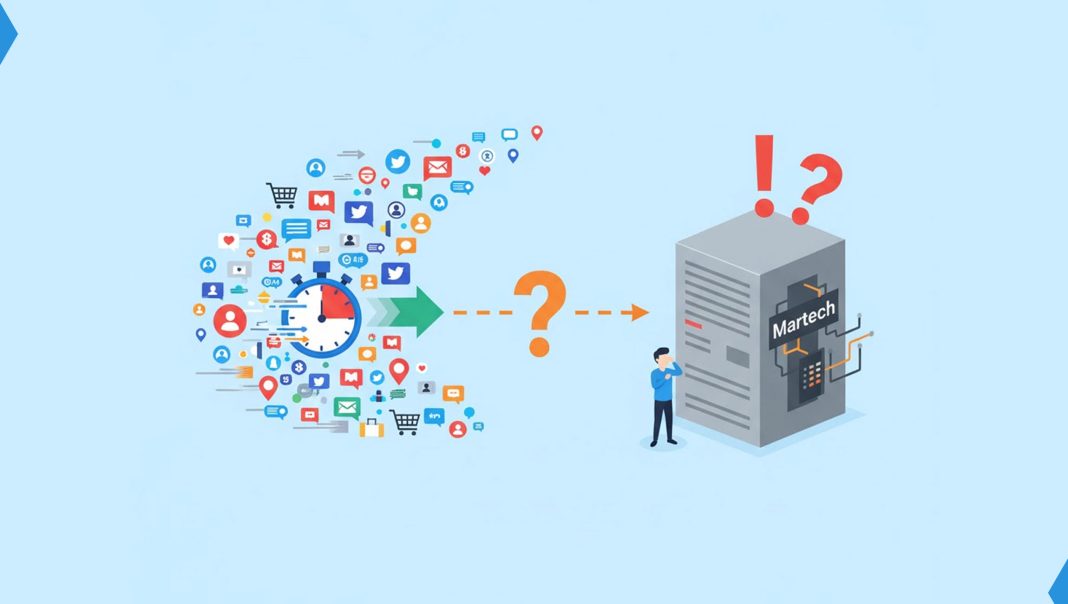
One idea that has been very popular in the marketing world for the past few years is that smarter, faster, and bigger AI models will automatically produce better results. Every new version of the platform promises smarter dashboards and workflows that can predict more accurately and create new things. This obsession has changed how leaders think about budgets, innovation, and change.
But, even though they have more skills, many businesses are still asking themselves an uncomfortable question: why is it so hard to turn all this knowledge into real performance? The answer marks the end of a model-centric way of thinking about martech and the start of something more structural.
AI models are strong, but they don’t make businesses valuable on their own. Algorithms can score leads, write copy, predict churn, or optimize bids, but none of those things matter if they don’t connect to how marketing really works. Marketing is not a lab; it is a living system made up of people, data, channels, rules, and actions.
If you add intelligence to a system without thinking about it again, it becomes more of a decoration than a change. A lot of teams now have great AI outputs, but they still have trouble with slow campaigns, broken personalization, inconsistent customer journeys, and higher operational risk in their martech stacks.
This shows that the difference between AI capability and operational impact is getting bigger. Every three months, models get smarter. On the other hand, marketing execution is still limited by old workflows, tools that are only available to certain teams, manual handoffs, and fragile integrations. There is intelligence, but activation is behind. Insights come from one tool, campaigns run from another, customer data lives in a third, and governance lives in a fourth. Because of this, businesses get more AI features but don’t get better AI performance. They are trying out intelligence instead of putting it to use across their martech environment.
It’s not the quality of the algorithms that limits them; it’s the architecture around them. Models can answer questions, but systems can make choices. Models make content, but systems give people experiences.
Models make predictions, but systems coordinate actions across channels, areas, and times. AI is just a bunch of isolated tricks without orchestration, identity, policy, and integration layers. It can’t be counted on to help businesses grow. That’s why adding “more AI” to modern martech companies often makes things more complicated instead of better.
That understanding leads to a future where systems come first. Instead of asking, “Which model should we deploy next?” leaders are beginning to ask, “What operating system does marketing actually need?” The future is not determined by specific algorithms but by the movement of intelligence through data, workflows, compliance, personalization, and execution.
AI becomes part of the infrastructure instead of something you can see. Decisions get closer to being made in real time. Governance can be programmed. Execution is no longer reactive; it is now coordinated. Marketers no longer just use intelligence sometimes; it is now the backbone of the entire martech platform.
In marketing technology, we are moving into a time after models. Not because models are less important, but because they aren’t enough anymore. The competitive edge moves from trying out intelligence to building it into the way work is done. The next group of leaders will stop seeing AI as an extra and start seeing architecture as a way to plan. In the future where systems come first, success will not depend on who has the best algorithm, but on who builds the best marketing system around it.
How Martech Became Overloaded With AI Features?
The simple promise of AI in marketing was that it would help businesses make better decisions, get things done faster, and improve customer experiences. But as more people started using it, something strange happened. The modern marketing stack didn’t get more coherent; instead, it got more crowded, broken up, and hard to use.
Today, a lot of companies don’t have enough intelligence; they have too much intelligence that isn’t connected across tools. In many cases, what was supposed to make marketing easier has made it harder. This is how Martecg quietly got too many AI features instead of being empowered by them.
The Rise of AI Everywhere in Marketing
Every platform wants to be smart. CRM systems can guess what deals will happen. CDPs give scores to audiences. Journey-making tools for marketing. Content systems make copy. Adtech optimizes bids. Each new idea sounds useful on its own, but together they make a thick web of overlapping abilities. There are no longer just a few core platforms that define the modern Martech environment. Instead, there are dozens of tools, each claiming to be different in some way.
The race to put AI into everything has changed how vendors do business, from fixing problems to shipping new features. Platforms don’t ask how intelligence moves through the system; they ask how fast they can call something “AI-powered.” The result is not change, but saturation. Marketing leaders now have more information than they can use, which turns what should be leverage into overhead.
1. Tool Sprawl Across the Martech Stack
The first sign of overload is tool sprawl. Over time, marketing stacks grew from a few systems into huge networks. Now that AI is in the mix, every tool suddenly seems important for strategy.
In a normal business, intelligence is now present in CRM, CDP, marketing automation, CMS, email, social media, personalization, analytics, and ad platforms. Each one has its own models, dashboards, and suggestions. The promise is better performance, but the reality is extra work. Three different systems may give the same customer a different score. Four engines can make the same campaign work better. Inside Martecg, intelligence is not coordinated; it is duplicated.
As stacks get bigger, things get more complicated instead of clearer. Teams spend more time figuring out how to use outputs than actually using them. AI features don’t help marketers; they make decisions, approvals, and handoffs more complicated. The marketing operation gets heavier, not faster.
-
Explosion of AI Features in Every Platform
The explosion wasn’t an accident. AI is now a checkbox for competition. When one vendor starts making generative content, others follow. If one person starts using predictive scoring, everyone else does too. This feature race sends a lot of micro-intelligence across the Martecg ecosystem.
Each new feature seems small on its own, but together they make it hard to think. Marketers now have to deal with dozens of alerts, suggestions, and optimizations that don’t have a clear order. What score is the most important? Which suggestion is safe to follow? Which automation controls the customer journey? AI turns into noise instead of a signal.
Instead of making intelligence based on how business flows, the industry built intelligence based on product roadmaps. That difference is what makes innovation cause problems in the workplace.
-
Redundant Intelligence Across Systems
One of the most expensive types of overload is redundancy. When CRM predicts conversion, CDP predicts engagement, automation predicts next action, and adtech predicts bidding, the company ends up with a lot of different truths. There is no one place in Martecg where decisions are made.
This causes fights. One system says that a customer is hot. One says they are getting colder. A third says they need care. Instead of getting things to work together, marketers get things to work against each other. Teams either don’t use intelligence at all or spend time deciding which tools to use. AI becomes more of a suggestion than something that can be done.
Extra intelligence also makes infrastructure more expensive, increases the risk of bad governance, and makes operations less stable. Data, monitoring, compliance, and explanation are all things that every model needs. Adding more models increases risk.
2. Disconnected Intelligence
Disconnection is the second cause of overload. Models work, but they don’t often work together.
The majority of AI in Martecg is made to improve things locally. Each tool looks at its own data, its own goals, and how well it is doing. The system context is what is missing. Intelligence is stuck in silos and can’t affect end-to-end execution.
A personalization engine can choose what content to show, but it doesn’t know what ads were shown before. A campaign optimizer might change the timing, but it doesn’t know what sales are most important. An attribution model can help you understand how well something is working, but it can’t change how you do things. This makes insights without moving.
-
Models Operating in Isolation
Models that are alone are like smart workers who don’t talk to each other. They all do their jobs well, but the organization suffers because they don’t work together. Inside Martecg, isolation is built in, not by chance.
They made platforms as products, not as systems. They focus on getting the best results for their area instead of the whole world. AI is added to existing architectures without changing how decisions are made. This causes intelligence to break up into pieces. It only sees parts of the journey, not the whole customer.
This is why marketers feel like they have a lot of information but still have to connect the dots by hand. AI comes up with options, but people still carry them out.
-
Insights Without Activation
Passive intelligence is another sign that you are overloaded. Dashboards are full of guesses, suggestions, and ideas that have been made. But people still need to translate action.
Many AI features in Martecg only give you insights. They tell you what might work, but not how to do it safely, consistently, and across all channels. Execution is still slow, brittle, and done by hand.
When insight isn’t built into workflows, it loses value quickly. Time is important in marketing. A great prediction that comes too late is useless for business. Overload happens when the ability to activate grows faster than the ability to learn.
-
Automation Without a Shared Context
Automation is everywhere, but there isn’t any context. Every tool does something automatically, but no one does the whole system.
Email sends automatically. Ads automatically place bids. Content makes it easy to create. Journeys automate the order of things. But none of these automations has a single policy brain. Automation turns tactical instead of strategic inside Martecg.
Without a common context, automations clash. One system speeds up a user while the other slows them down. One personalizes in a strong way, while the other makes sure that rules are followed. Instead of harmony, marketing execution gets loud and dangerous.
3. Point-solution chaos
Point-solution chaos is the third thing that causes overload. Instead of making systems that work together, vendors compete by using AI to solve small problems.
Every year, new platforms promise smarter writing, better scores, deeper insights, and faster optimization. Each one is useful in its own area, but together they make things more fragmented around the world. Inside Martecg, the stack turns into a patchwork quilt of smart islands.
The issue is not innovation. The issue is that the architecture doesn’t make sense. Governance, orchestration, lineage, and lifecycle management across the ecosystem are not taken into account when adding AI features.
-
Every Vendor Adding “AI” Without Coherence
“AI-powered” is more of a marketing term than a way of thinking about systems. Vendors are more interested in putting models into the surfaces of their products than into the architecture of the company.
This makes features more expensive. Every product gets smarter on its own, but the business gets harder to run. Inside Martecg, leaders now have to manage dozens of AI engines, each with its own set of assumptions, data needs, and risk levels.
AI doesn’t make things easier; it makes them harder.
Why More AI Often Produces Less Impact?
Adding more intelligence to an organization can make it move more slowly, which is strange. Having more models means having more data pipelines, more approvals, more testing, more compliance, and more work to integrate.
In Martech, speed depends on alignment, not on how many things there are. When intelligence is broken up, teams don’t know what to do. They have less faith. They are more careful when they try new things. AI is something to manage instead of something to grow.
The result is not enough use. Companies pay for intelligence that they don’t use very often.
Fragmentation Slowing Execution and Increasing Risk
Lastly, too much work raises the risk. Every AI feature has an effect on customer data, the voice of the brand, rules for compliance, and operational choices. When intelligence is spread out, it becomes harder to control.
Inside Martech, governance becomes reactive. Leaders find out about problems after they happen, not before. It becomes harder to explain. Responsibility becomes less clear. Trust between marketing, IT, legal, and security goes down.
Fragmentation also makes things take longer. Teams need to work together on more tools, make sure that more outputs are correct, and check more actions. AI promised to make things faster, but it’s getting slower.
From Feature Obsession to System Discipline
AI didn’t fail; the problem is that it was too much. It’s because the industry focused on features instead of systems. Instead of being a coordinated intelligence platform, Martecg turned into a bunch of smart parts.
The next step isn’t to add another model; it’s to change how intelligence flows, activates, controls, and grows. AI is not needed in marketing. It needs a better AI architecture.
Organizations will keep gathering information and trying to turn it into steady performance until that change happens. Overload is what happens when you try to innovate without planning, and it shows that Martecg needs to grow from a tool stack into a full-fledged system.
From Models to Systems: The Architectural Shift in Martech
The first wave of AI in marketing was all about models. Vendors rushed to show off smarter predictions, bigger language models, and more automated features in all of their products. For a while, it worked. Marketers were impressed by what algorithms could make, guess, and tailor to each person. But as adoption grew, people began to understand more deeply that models alone do not give you a long-term edge in Martech.
It’s not about who has the smartest model anymore when it comes to competition. It is about who has the best system. As marketing becomes an always-on part of business, success depends less on experimental intelligence and more on how well the architecture is set up. This is why Martech is changing its structure from separate AI models to systems that are integrated, governed, and orchestrated so they can work on a large scale.
This change in architecture changes the way Martech adds value. Leaders no longer ask what a model can do. Instead, they ask how intelligence moves between data, channels, workflows, and governance layers. In today’s Martech, architecture is the main product, and systems are what set them apart.
Why Infrastructure Is the Real Differentiator in Martech?
AI models change at a mind-boggling rate. What seems advanced today will be cheap and easy to find tomorrow. Open ecosystems, open-source frameworks, and cloud platforms make it possible for almost anyone to use powerful models. In this setting, proprietary algorithms no longer give Martech a long-term edge. It comes from the infrastructure.
Infrastructure determines how data flows, how identity is verified, how decisions are made, and how trust is maintained. Martech infrastructure includes things like data fabrics, customer identity layers, consent frameworks, event pipelines, orchestration engines, and activation systems in real life. These layers decide if intelligence leads to action in business.
It’s easier to change models than it is to copy systems. A well-designed Martech architecture makes campaigns, personalization, content delivery, and measurement faster, more reliable, and more consistent. It makes sure that insights don’t just sit there but lead to real-time engagement on all channels.
Infrastructure also affects how much things cost and how well they work. Martech gets expensive, brittle, and slow without a strong architectural base. Data silos get bigger, latency goes up, and governance falls apart. When you design the right system, Martech becomes strong, flexible, and able to grow.
Infrastructure is even more important because it controls how trust is built into marketing. Privacy, compliance, and consent are not features of a model; they are parts of the architecture. Governance should not be an afterthought for modern Martech; it should be a system capability.
In the architectural era of Martech, the edge in competition shifts from “who has better AI” to “who uses intelligence better.” Execution is really a problem with the infrastructure.
From Algorithms to Architecture: How Martech Is Reframing Intelligence
When AI was first used, Martech teams tried out smart things at the edges, like chatbots, predictive scoring, copy generation, and segmentation engines. These models were stored in tools and were not connected to larger workflows. There was intelligence, but it wasn’t working together.
The new way of thinking about architecture sees intelligence as a service that everyone in the Martech stack can use. Organizations make common layers where data, identity, and decisions come together instead of putting AI in each platform separately. This makes Martech act like a system instead of just a bunch of features.
Architecture changes Martech in three important ways:
- First, data is no longer processed in batches; it is now continuous. Event streams, real-time pipelines, and unified profiles make sure that intelligence works right away, not days later.
- Second, identity stays the same. Customers are no longer spread out over different tools. Identity layers bring together behavior, consent, and context across all Martech channels.
- Third, the execution becomes organized. Decisions aren’t just about one campaign or tool. They are organized, controlled, and measured throughout the whole marketing ecosystem.
This change lets Martech go from reactive analytics to proactive orchestration. Intelligence stops being descriptive and starts to work.
Orchestration as the Brain of Modern Marketing Technology
If infrastructure is the body of Martech, orchestration is the brain. Orchestration brings together data, intelligence, and activation into one layer of execution. It figures out how signals turn into actions across experiences, journeys, and channels.
In traditional Martech, systems worked on their own. CRM gave leads scores. CDPs broke up audiences into groups. Automation tools sent out emails. Ad platforms made media better. Every tool made its own choices. The result was a broken customer experience and inefficient operations.
Modern Martech orchestration fixes this by making sure that decisions are made in all workflows. It puts actions in order, sends intelligence to the right place, and makes sure that policies are followed across the stack. Orchestration makes sure that Martech works like a single system instead of having many tools fight for control.
Orchestration Enables Several Critical Capabilities:
It connects intelligence to activation. Insights are no longer just reports; they are now things that make people act in messaging, personalization, content, and media.
It brings channels together. Email, the web, mobile, paid media, and customer success systems all work together instead of using separate logic.
It makes sure that rules are followed. The rules for consent, compliance, and branding are always followed during execution, not just in each tool.
It takes care of timing and setting priorities. Orchestration decides what happens first, what happens next, and what should never happen at the same time.
Orchestration essentially serves as the control plane for Martech. It’s where intelligence turns into actions. Martech is still smart but not organized without orchestration. Orchestration makes Martech smart in terms of how it works.
Sequencing, Routing, and Governing Execution in Martech
At scale, Martech is more than just making decisions. It’s about running them. This is when architectural orchestration becomes very important.
Sequencing makes sure that customer interactions follow logical patterns instead of random automation. A service message does not get in the way of a promotion. A compliance rule is still in effect even if there is a retention offer. Martech stops being reactive and starts being planned.
Routing makes sure that intelligence gets to the right place. Signals from using a product, browsing the web, or making a purchase are sent to the right engagement workflows. Martech sends intelligence to all systems at once, so that every tool doesn’t have to do its own calculations.
Governance makes sure that execution follows rules about privacy, policy, and brand. Modern Martech builds consent enforcement, data lineage, and auditability into workflows. Intelligence does not disregard rules merely due to automation.
As Martech systems become more self-sufficient, governance shifts from being procedural to being architectural. Leaders don’t depend on manual checks anymore. They use systems that put rules directly into the logic of the execution.
This is a big change: Martech is going from managing tools to managing systems.
-
Integration Over Innovation in the Martech Stack
For a long time, Martech innovation was all about how fast features could be added. Every vendor rushed to add more dashboards, AI, and automation. But speed without coherence led to fragmentation.
Integration is better than innovation in the architectural era. Not because innovation isn’t important, but because disconnected innovation doesn’t work as well in Martech.
When platforms can be combined, work with other systems, and know about the system, they work better than tools. Martech now puts more emphasis on how parts work together than on making small changes. APIs, event buses, shared schemas, and identity services are worth more than any one feature.
Composable Martech lets companies switch out models, channels, and tools without breaking the system. Architecture lets intelligence flow instead of keeping it inside products. Integration also makes things run more smoothly. When Martech systems share data, context, and rules, teams can work faster and with less risk. Architecture takes care of coordination by design, so you don’t have to stitch workflows together by hand.
This is why the future of Martech will not be determined by who ships the most AI features, but by who builds the most logical systems. The architecture becomes the layer of innovation.
-
Creating Martech for Composability, Not Novelty
The change in architecture makes Martech leaders rethink what is most important in design. They design for composability instead of chasing new things.
Composable Martech means that every feature can connect to the system without having to change the stack. Data services, intelligence layers, orchestration engines, and activation tools all talk to each other through shared contracts and governance frameworks.
This lets Martech grow without having to be rebuilt all the time. Models can change. Channels can shift. Customers’ expectations can change. But the system stays stable.
Composable design also lets you try new things without making a mess. Architecture includes risk through policy, routing, and observability, so teams can safely test new intelligence.
In this way, Martech goes from weak innovation to strong evolution.
-
Architecture as Strategy in the Future of Martech
Moving from models to systems is not a technical change; it’s a strategic one. Martech leaders need to think like system architects, not just campaign managers, as customer engagement becomes real-time, global, and regulated.
Companies that see architecture as a strategy will be the ones who shape the future of Martech. Infrastructure, orchestration, and integration become tools for competition. Intelligence is built into workflows instead of being added to tools.
In the post-model era, the quality of the execution, not the novelty of the algorithm, is what counts for Martech success. Systems that are fast, governed, and composable will do better than stacks that are just smart.
In the end, Martech is no longer about what AI can make. It’s about what systems can consistently provide. And in that change, architecture becomes the basis of modern marketing success.
Operationalizing Intelligence in Martech Systems
As AI becomes more common in marketing platforms, the real challenge is no longer getting insights; it’s putting them to use. A lot of companies already have advanced analytics, predictive models, and personalization engines in their Martech environments. But business impact is often limited because intelligence ends at dashboards, reports, or experimental features.
For modern Martech to work, intelligence needs to go from watching to doing. It needs to be a part of workflows, make decisions automatically, and learn from how things work in the real world all the time. This is what makes “AI-powered tools” different from smart marketing systems. When intelligence is operationalized, Martech doesn’t just help with marketing; it runs marketing.
This change turns Martech from a bunch of platforms into a single system where data, decisions, and delivery all work together.
Marketing Technology News: MarTech Interview with Omri Shtayer, Vice President of Data Products and DaaS at Similarweb
How to Turn Insights into Actions in Martech?
For a long time, Martech has been all about coming up with new ideas. Platforms got really good at breaking up audiences, scoring leads, predicting churn, and figuring out who was responsible for what. But insight that isn’t put into action causes a bottleneck. Teams know what needs to happen, but they still have to do it by hand.
Operational Martech connects analysis and execution. Marketers no longer have to figure out what intelligence means; systems do it for them. Workflows automatically apply decisions across campaigns, journeys, and channels, instead of dashboards telling you what to do.
This change replaces static reporting with workflows that run on their own. For instance, the Martech system doesn’t just tell a marketer when a customer shows a lot of interest. It changes the messages, offers, channel timing, and creative variation in real time. Intelligence turns into behavior, not advice.
Putting intelligence into action is a change in the structure of Martech. Decision engines are directly connected to campaigns, personalization logic, content delivery, and orchestration layers. Predictions shape experiences. Signals make people want to get involved. Measurement is based on outcomes.
As Martech becomes more useful, businesses close the gap between knowing and doing. Instead of meetings, the system responds in milliseconds. This speed advantage becomes a competitive edge, especially since customers expect things to be relevant in real time.
In the end, operational Martech is about using system intelligence instead of human latency.
-
From Dashboards to Autonomous Workflows
People have to do a lot of the work in traditional Martech workflows. Teams look at how well things are going, change the rules, run campaigns, and then look at how well things are going again. This worked in slower marketing cycles, but it doesn’t work in environments that are always on and have multiple channels.
The model changes with autonomous workflows. Martech systems make decisions automatically based on policy, context, and learning, so people don’t have to plan every step.
In Martech, autonomy doesn’t mean getting rid of people; it means giving them more power. People decide on strategy, limits, and brand logic. At machine speed, systems work within those limits.
For instance, instead of manually optimizing journeys, Martech organizes them based on real-time behavior, predicted value, consent rules, and channel performance. Systems change content automatically based on how people respond, so you don’t have to do it by hand.
This changes the focus from managing campaigns to managing systems. Marketers don’t plan out tasks; they plan out logic. Martech runs logic all the time. When intelligence becomes self-aware, Martech grows without adding more employees. The organization goes from responding to problems to getting involved ahead of time.
-
Embedding AI Inside Martech Workflows
One of the biggest changes in modern Martech is where AI is located. AI was next to workflows in the first deployments. Teams “used AI” by using tools, plugins, and other features. There was intelligence, but it was separate from action.
Today, the best Martech architectures put AI right into workflows. You can’t get to intelligence anymore; it’s built in. It lives in choosing content, offer logic, attribution models, journey orchestration, and channel routing.
This changes companies from “using AI” to “running marketing on AI.” The system already knows what the model says and acts on it right away.
Embedded intelligence makes it possible to think and do at the same time. There is no space between coming up with insights and putting them into action. A customer signal goes into the Martech system, where intelligence interprets it, orchestration routes it, and activation automatically delivers the experience.
For instance, AI can choose creative, change the timing, pick channels, and customize messages all in the same execution flow. Attribution goes back into the logic of the decision. Content changes all the time.
In this model, Martech is not a reporting platform; it is an execution engine. AI is not just a part of marketing; it is the whole thing.
-
Eliminating Friction Between Strategy and Execution
Friction is one of the hidden costs of Martech. Insights are on hold until they get the green light. Updates are needed for rules. Campaigns are waiting to be deployed. That delay makes things less important and wastes intelligence.
Putting intelligence into action gets rid of that friction. Systems have a strategy built into them. Instead of manual controls, there are guardrails. Governance frameworks tell AI what it can and can’t do, and orchestration makes sure it does it safely.
When there is no more friction, Martech becomes responsive instead of reactive. Instead of batch campaigns, companies send out adaptive journeys. They don’t offer static personalization; they offer contextual experiences instead.
This is where Martech starts to act like software instead of operations. You can program marketing.
-
Continuous Learning Loops in Martech
Operational intelligence only works if it can learn. As customers, channels, and markets change, static campaigns don’t last long. This is why modern Martech needs to be able to learn all the time.
Learning loops connect intelligence back to action. Every interaction gives feedback. Metrics for performance change models. Responses change the logic of the orchestration. Failures make routing better.
Nothing is set in stone in a learning Martech system. Journeys change. Things change. Best offers. Attribution gets better all the time.
This changes Martech from a project into a real system. Instead of starting and ending campaigns, organizations keep adaptive ecosystems going. Experience makes you smarter.
Feedback flows through layers:
- Engagement informs personalization.
- Conversion informs routing.
- Revenue informs sequencing.
- Compliance informs governance logic.
Adaptive Martech systems work better than static ones because they slow down decay. They stay in line with customers, channels, and rules in real time.
-
Adaptive Systems vs. Fixed Campaigns
Static campaigns think that things will stay the same. They lock in the timing, segments, and messages. But markets today are very unstable. Customers’ channels, expectations, and behaviors change all the time.
Adaptive Martech does away with fixed campaigns and replaces them with workflows that change over time. Intelligence changes all the time based on policy, performance, and context.
This is how Martech stays strong. Instead of changing strategies every three months, systems change every day, hour, or even minute.
The result is not just efficiency; it is also relevance on a large scale.
Avoiding the Post-Model Trap: Trust, Control, and Governance
When intelligence starts to work in Martech, new risks come up. Automated decisions have an effect on real customers, real compliance, and how people see your brand. AI makes problems worse instead of better when there is no governance.
This is the post-model trap: companies use powerful intelligence without being able to control how it works. To avoid that trap, you need to think of governance, trust, and control as parts of the system, not as rules.
Why Ungoverned AI Breaks Martech?
Ungoverned AI causes three big problems in Martech. To begin with, the risk of not following the rules goes up. Privacy laws, consent frameworks, and regional laws all affect automated personalization, targeting, and messaging. If AI gets around these limits, Martech becomes a problem.
Second, brand consistency goes down. When intelligence works on its own across channels, messages get broken up. Customers get different offers, tones, and experiences.
Third, behavior becomes hard to see. A lot of AI models work like black boxes. When teams use Martech execution, they might not understand why decisions were made, which could lead to operational and reputational risk.
In short, Martech becomes unstable when intelligence is not controlled.
-
Governance as Architecture in Martech
Modern Martech puts governance into the architecture. Systems automatically enforce rules instead of having to be watched over by people. Policy engines set the rules for what intelligence can see, do, and turn on. Auditability makes sure that actions can be traced. Explainability helps people understand how AI works.
Privacy, consent, and brand rules are all part of workflows, not separate from them. Every choice takes into account identity permissions, data lineage, and rules set by the government.
Martech scales safely when governance is architectural. Intelligence is no longer dangerous; it is now reliable. Trust is no longer a promise; it’s something the system does on its own.
-
Control Without Slowing Innovation
People are afraid of governance because they think it slows down new ideas. Good control actually speeds up Martech by lowering risk and uncertainty. With observability, teams can see how intelligence works across campaigns and journeys. Lifecycle management makes sure that models and workflows change safely.
Regions, teams, and channels all work together within the same frameworks, but they can still be flexible. This gives you controlled freedom: intelligence moves quickly, but only within safe limits. When governance is built into Martech architecture, businesses can grow, move faster, and be safer all at the same time.
The Future of Operational Martech
Putting intelligence to work changes what Martech means. It’s not about tools, dashboards, or AI features that work alone anymore. It’s about making systems that run, learn, and control marketing all the time.
Modern Martech turns insights into actions, uses AI in workflows, learns from what it does, and builds trust into its design. It turns into a system that is alive, changes, and is smart. In this future, Martech’s marketing skills will give it an edge over its competitors, not how good its models look.
Companies that win won’t ask, “What can our AI do?” They will say, “What can our Martech system do that we can trust?” In that change, Martech stops being just a set of tools and becomes the engine that runs digital business.
Business Outcomes of System-First Martech
System-first Martech is a new type of competitive advantage that is starting to show up as companies move away from model-centric thinking. Instead of trying to keep up with the newest AI or algorithm, top companies focus on how intelligence is built into, managed, and carried out throughout the whole marketing operation. Not only are the analytics better, but the business results are better too.
When Martech is built as an operating system instead of a toolkit, it speeds up execution, lowers risk, and makes personalization more cost-effective. Intelligence goes from being an experiment to being part of the operational infrastructure. This is where Martech adds real business value, not just technical know-how.
System-first Martech is about making marketing a real-time, flexible growth engine.
-
Modern Martech Has Faster Execution Cycles
One of the most obvious benefits of system-first Martech is speed. The steps in traditional marketing operations are: analyze, plan, build, launch, and measure. Every step causes delays, makes people depend on each other, and causes problems in the organization.
A system-first Martech architecture combines those stages into one long process. Instead of waiting for manual updates, intelligence goes straight into orchestration layers that make experiences happen right away.
Personalization in real time becomes the norm. Customer signals, such as behavior, intent, context, and consent, go into the Martech system and cause responses across channels right away. Based on real-time data, the content selection, offer logic, sequencing, and timing change on their own.
This cuts down on the time it takes to act on an insight. There is no longer a difference between what the business learns and what the customer sees. The Martech system sees, thinks, and delivers all in one motion.
Campaign cycles are no longer needed with always-on marketing. Instead of starting and ending programs, teams keep adaptive systems that always improve engagement. Journeys change over time instead of being rebuilt every three months.
The business effect is big: more conversions, more relevant content, and a better customer experience on a larger scale. Speed is no longer heroic; it is structural. And in markets where there is a lot of competition, structural speed within Martech is a strategic edge.
-
Reducing Latency Between Intelligence and Activation
In a lot of companies, reports keep information from getting out. Even the most advanced Martech platforms need humans to interpret data before they can take action. That delay makes it less relevant.
System-first Martech gets rid of that problem. Workflows have built-in decision logic. Orchestration layers automatically organize data, intelligence, and activation.
When a user’s intent changes, for instance, the Martech system doesn’t wait for a marketer to change a campaign. It changes targeting, messaging, channel mix, and creative delivery right away.
This is how Martech learns to be responsive instead of reactive. The speed of the customer, not the speed of the internal process, determines how quickly marketing happens.
-
Always-On Marketing Systems
Traditional marketing happens in short bursts. People make campaigns, launch them, improve them, and then end them. But how customers act is always changing.
Always-on execution is a feature of system-first Martech. Intelligence keeps an eye on context, engagement, and performance all the time. Experiences change on their own without having to be reset.
Instead of short bursts of marketing, companies run living systems. Journeys go on. Learning loops improve delivery. Optimization never ends. This lets Martech grow in relevance without having to grow its operations. The system does the hard work while teams come up with new ideas and plans.
-
Lower Operational Risk with System-First Martech
Risk goes up as automation does. Now, marketing systems deal with personal data, pricing, messaging, consent, and legal requirements in different parts of the world. Speed can be dangerous without rules.
System-first Martech lowers operational risk by building control into the architecture. Automation is not only fast; it is also predictable, auditable, and compliant.
Policies are enforced inside workflows, which means that fewer compliance failures happen. The Martech system automatically handles consent, privacy, and regional rules instead of having to be set up by hand. Intelligence works within certain limits.
The customer experience is the same on all channels. When orchestration is centralized, the logic for messaging is shared. Offers, tone, and timing stay the same no matter how the customer gets in touch, whether it’s through email, mobile, the web, or new channels.
Predictable automation takes the place of execution that is broken up. The Martech architecture makes sure that decisions are made in a coordinated way instead of each platform acting on its own. This lowers the risk of brand damage, conflicting experiences, and targeting mistakes.
The result is confidence on a large scale. Companies can increase personalization and automation because they know the system will keep the business safe while it works.
-
Consistency as a Competitive Asset
When Martech stacks are broken up, things start to get inconsistent. One channel promotes discounts, another pushes premium positioning, and another doesn’t care about consent logic.
System-first Martech gets rid of that fragmentation. Governance and orchestration make sure that every activation point follows the same rules and information.
Customers trust you more when you are consistent. And trust has a direct effect on long-term value.
-
Predictable, Governed Automation
Without control, automation is a mess. But automation with governance turns into leverage.
You can see automation pipelines in system-first Martech. Teams can see how intelligence acts during campaigns and journeys. Managing models and workflows throughout their lifecycles. This makes a safe place for new ideas to grow. The system takes care of risk, not heroic effort, so marketing leaders can grow their businesses.
-
Improved Personalization Economics in Martech
In the past, personalization was very expensive. More models, more segments, more data, more computing power, and more tools. Many companies find that the cost of personalization goes up faster than the money it makes.
System-first Martech changes the way things work. Companies now focus on accuracy instead of brute-force intelligence. Intelligence is used where it matters most, in planned workflows that are linked to results.
Volume is replaced by precision. Instead of running huge, expensive models all over the place, Martech systems smartly route intelligence. Decisions are made closer to execution, which cuts down on extra processing and overhead.
Lower computing and operational costs come next. When intelligence is built into architecture instead of being added to every tool, there is no more redundancy. Shared services take the place of AI features that are the same.
It is now possible to have a sustainable scale. Martech doesn’t need to get more expensive or complicated in a straight line as the company grows. Architecture handles growth well. This is how Martech becomes useful in the real world, not just cool.
-
Precision Over Brute Force
Early use of AI in Martech was all about power: bigger models, more data, and more automation. But having power without focus wastes resources.
Martech that puts systems first uses intelligence in a smart way. Orchestration decides where decisions are most important. Execution layers only use intelligence when it adds value that can be measured.
This makes the cost structure for personalization smarter, which increases ROI while keeping it relevant.
-
Sustainable Growth Without Costly Explosions
Many Martech stacks become weak and expensive as markets grow, channels multiply, and data volumes rise. System-first Martech is made to scale. Intelligence is in one place. Orchestration can be used again. Governance is built in.
The system is no longer broken by growth. It makes it stronger.
What does the Post-Model Martech Organization look like?
Organizations need to change as systems take the place of separate models. The post-model Martech organization is built around infrastructure, not tools.
Martech becomes the infrastructure of a business. It is no longer just a group of platforms that marketing owns. It is a common execution layer for compliance, data, revenue, and customer experience.
Teams that work on marketing become system designers. They don’t run tools; instead, they set the rules, journeys, policies, and experience architecture. Creative and engineering thinking come together.
CMOs work closely with CIOs and architects. Strategy, technology, data, and governance all come together. Decisions about martech become decisions about architecture, not purchases.
Platforms take the place of groups of features. Instead of buying separate features, companies buy composable systems that combine intelligence, orchestration, and activation.
Intelligence is now a service that everyone can use. The business sees intelligence as infrastructure, so it’s available to all of its tools, not just one. This is true for marketing, sales, service, and operations. Martech is no longer just a test in this model. It is operational, strategic, and basic.
-
From Tool Operators to System Architects
The biggest change in an organization is its way of thinking. Instead of asking, “What features do we need?” teams start asking, “What systems do we need?” Leaders in martech create frameworks for execution. They put brand logic, customer strategy, and governance into platforms.
You can program marketing.
The Strategic Role of Martech Leaders
In the post-model era, Martech leadership is at the crossroads of business, technology, and architecture.
CMOs are no longer just in charge of campaigns. They take over the system. CIOs are no longer just in charge of infrastructure. They help things grow. They all work together to determine how Martech runs the business.
The Benefits of System-First Martech
System-first Martech is faster, safer, and better for business. It makes marketing a smart, coordinated system instead of just a bunch of activities. As AI gets better, having the best model won’t give you an edge. The best Martech system will be able to reliably carry out, govern, and grow intelligence.
Companies that see Martech as more than just software will be the ones that succeed in the future.
Conclusion — Martech Leadership in a System-Driven Future
As marketing technology matures, it becomes evident that models alone no longer constitute a competitive advantage. For years, companies tried to get smarter algorithms, generative capabilities, and predictive intelligence as quickly as possible, thinking that better models would automatically lead to better results.
But, experience has shown that intelligence alone doesn’t usually scale. A strong model can’t fix workflows that are broken, tools that aren’t connected, or execution that isn’t consistent. In today’s world, the best way to get ahead is not to play around with AI, but to put it to use. That’s why the leaders of modern Martech are moving their attention from algorithms to systems.
Companies that go beyond AI features and into AI systems will be the ones that do well in the future. Features show what is possible, but systems show what works. When intelligence is built into orchestration layers, data fabrics, identity management, and policy engines, it becomes a part of how marketing works.
Automatically, decisions go from insight to action. Customization happens right away. Governance goes hand in hand with execution. The company doesn’t tell teams to “use AI” anymore; instead, it tells them to “run marketing on AI.” This system-first approach turns Martech from a bunch of tools into a coordinated growth engine.
Winning Martech teams don’t make experiments anymore; they make platforms. Platforms keep advantages, while experiments test ideas. In a system-driven model, teams create reusable capabilities like orchestration, consent management, personalization logic, learning loops, and activation frameworks that work in different regions and channels. Intelligence is no longer a separate feature; it is now a shared service.
Stop chasing new ideas and start making things that work. They put money into architecture that makes speed, trust, and relevance all grow at the same time. This is how Martech goes from being a show of new ideas to a part of a company’s infrastructure.
In the post-model era, architecture becomes strategy. Every choice about data flow, integration, governance, and orchestration affects how quickly and safely marketing can move. The best competitors don’t have the most impressive AI; they have the most logical systems. When Martech is built the right way, it makes it easier to go from thinking to doing. It lets businesses respond to customers right away, follow the rules in all markets, and learn from what they do all the time. Strategy is no longer just a plan; it’s built right into the system.
Martech will look more and more like an operating system for growth, trust, and execution in the future. It will bring together information from customer experience, revenue operations, and compliance. It will put policy into workflows and automation into every part of the process.
Leaders will not judge how well their models work by how advanced they look, but by how well their systems work. In this future driven by systems, Martech becomes the foundation of competitive advantage, quietly boosting relevance, speed, and confidence on a large scale.
Marketing Technology News: Martech Architecture For Small Language Models: Building Governable AI Systems At Scale