

Most marketers know the feeling. The creative is strong, the strategy is sound, and the media plan checks out. On paper, the campaign should perform, but when results arrive, something is not right.
The reflex is to go back to the usual suspects: wrong audience, weak offer, poor timing, flawed attribution. Those all matter, but often the overlooked variable isn’t in the media plan at all. It’s in the human mind.
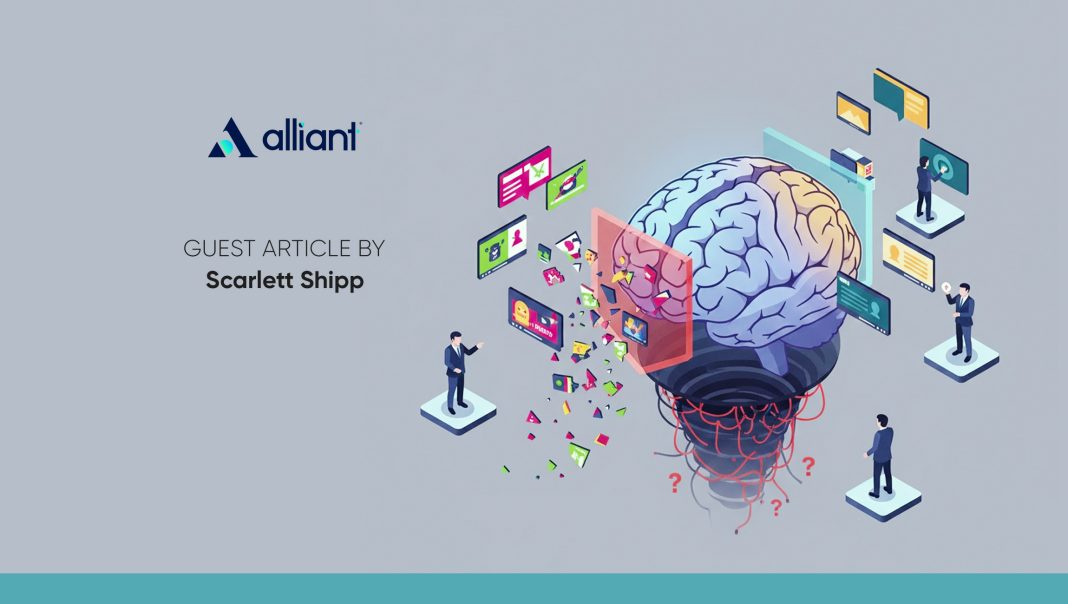
Every ad you run has to fight its way through a series of split-second checks inside a busy human brain. Luckily for marketers, cognitive psychology has spent decades studying these processes and those findings translate into a simple, usable framework that identifies attention, memory, choice, trust, and emotion as five crucial components to our decision making.
Think of it as five questions your ad campaign has to answer, and if it can’t, even the cleverest idea can stall.
Question 1: Does it earn a moment of attention?
Our brains are incredibly good at ignoring things. In one famous experiment, participants were asked to count the number of basketball passes they saw in a video but often failed to notice a person in a gorilla suit walking right through the scene. They’re not careless – they’re focused. Psychologists call this inattentional blindness.
Your audience is in that state most of the time when they are scrolling through feeds, half-watching a show, or chatting with someone nearby. They’re not waiting for your message. They’re doing something else and will only divert attention if something earns it.
To give your ad a fighting chance:
- Decide on one primary job like a word, image, or action that matters most.
- Make that element visually dominant. Everything else should support, not compete.
- Avoid cramming in extra “nice to have” details that pull focus away from what you’re actually trying to communicate.
If the eye doesn’t know where to go first, the brain often doesn’t bother going at all.
Question 2: Will it leave a lasting impression?
Even when people notice an ad, very little survives beyond that moment. One of the most robust findings in psychology, the Serial Position Effect, shows that we’re more likely to remember the first and last items in a sequence than anything in the middle.
Now picture a typical 30-second spot or hero banner with multiple benefits, features, and proof points stacked together. In a creative review, everyone on the team can repeat them back. In real life, your audience catches the message once, while thinking about dinner or their next meeting.
To design for memory:
- Choose one idea you’d be happy for someone to recall the next day.
- Put it early, and if possible, echo it at the end.
- Repeat it in different forms—visual, verbal, and on-screen text—instead of rotating through a list.
If you don’t make that choice, the brain will, and it may not pick the message you care about.
Question 3: Is the next move obvious based on the choices provided?
Let’s assume your ad works and someone notices it and understands the purpose. The next hurdle is where choice can quietly kill performance.
We like to think that offering more options is always better. In reality, too many choices can cause people to freeze, delay, or walk away altogether. The Paradox of Choice describes this tension where abundance feels good in theory but often leads to indecision and regret in practice.
You see it in landing pages that offer multiple CTAs of equal weight, complex pricing grids, long menus, and modular add-ons From the brand’s perspective, this is “empowering the customer.” From the brain’s perspective, it’s extra work.
A more brain-friendly approach:
- Highlight a primary path (“Start here” or “Recommended”) at the moment of decision.
- Reserve deeper choice for later in the journey, once someone is more committed.
- Remove redundant or low-value options that only add friction.
The goal isn’t to trap people—it’s to make the right action feel easy.
Marketing Technology News: MarTech Interview with Michael McNeal, VP of Product at SALESmanago
Test 4: Does it feel trustworthy to engage?
Before anyone processes your message, they judge whether they can trust it almost instantly. Psychologists call this “thin-slicing” or forming surprisingly accurate impressions from very little information.
Those first seconds are less about reading and more about sensing. People are asking themselves:
- Does this look like a real brand or a scam?
- Is the tone consistent with what I know about them?
- Is it clear what they want from me?
If there’s any doubt, the safest move is to keep scrolling.
To clear the trust bar quickly:
- Make your brand and category obvious right away.
- Use plain language and avoid overclaiming or bait-and-switch setups.
- Surface one or two credibility cues early—recognizable partners, real customer quotes, or simple reassurances when data or health is involved.
You can’t force trust, but you can avoid accidentally signaling the opposite.
Test 5: Does it make viewers feel anything?
We like to imagine ourselves as rational shoppers, weighing pros and cons. In reality, emotion does most of the filtering. It doesn’t replace logic, but it decides which messages get a real hearing.
That’s why highly “informative” campaigns can underperform. They deliver facts, charts, and technical detail, but never answer the emotional question of ‘Why should I care?’ underneath. Meanwhile, a simpler story that taps into happiness, humor, pride, safety, or optimism have the potential to move people further with fewer words.
To put emotion to work:
- Pick a primary feeling you want to leave behind—confidence, urgency, reassurance, belonging.
- Choose imagery, situations, and language that naturally evoke that feeling.
- Make sure the tone matches the category and context. Feelings that work in one space can backfire badly in another.
If your ad doesn’t make anyone feel anything, it’s asking the rational mind to do too much on its own.
Turning science into a practical tool
None of these questions live in isolation. In the real world, your audience runs through all five in seconds. Did this catch my eye? Did anything land? Do I know what to do? Does it feel legit? Does it matter to me? Any “no” in that chain weakens the impact of everything else.
The point isn’t to turn every brief into a neuroscience report. It’s to use this framework as a simple tool:
- When you’re developing creative, check concepts against the five questions.
- When you’re testing, design experiments that isolate one element at a time—headline, CTA, choice architecture, emotional tone.
- When a campaign underperforms, diagnose it through this lens instead of only tweaking targeting or budget.
You’ve already invested in the ideas, the craft, and the storytelling. Applying what we know about the brain is how you make those components work harder.
The next time you’re in a review and someone says, “This is the best ad we’ve ever made,” add one more line to the conversation. “Will it make sense to a busy brain in five seconds?” If the answer is yes, you haven’t just made a great ad—you’ve given it a real chance to win where it counts.
Marketing Technology News: Complexity as a Cost Center: The Hidden Financial Burden of Fragmented Martech Stacks