Home Blog Page 3

Ace SEO Consulting Strengthens Calgary Digital Growth with Advanced SEO, AEO, and GEO Strategies

0
Ace SEO Consulting Strengthens Calgary Digital Growth with Advanced SEO, AEO, and GEO Strategies

Ace SEO Consulting – Reputable Internet Marketing Company

Ace SEO Consulting helps Calgary businesses grow online through innovative SEO, web design, and AI-focused search optimization strategies.

Ace SEO Consulting is reshaping the digital marketing landscape in Calgary by expanding its expertise beyond traditional SEO and web design to include advanced Answer Engine Optimization (AEO) and Generative Engine Optimization (GEO) strategies. With a strong track record of helping businesses improve online visibility, the agency is now proactively positioning Calgary companies for the next evolution of search technology.

Our goal is to help Calgary businesses stay ahead of search evolution by combining SEO, AEO, and GEO strategies that deliver real, measurable growth.”

— Ashif Rashid

For years, Ace SEO Consulting has been recognized as a trusted provider of website design Calgary solutions, helping businesses build modern, responsive, and conversion-focused websites. The agency combines design aesthetics with performance-driven development to ensure that websites not only look professional but also generate measurable results through improved user experience and search visibility.

Marketing Technology News: MarTech Interview with Nicholas Kontopoulous, Vice President of Marketing, Asia Pacific & Japan @ Twilio

As search behaviour continues to evolve, demand for a reliable SEO company in Calgary, Canada, has increased significantly. Ace SEO Consulting addresses this demand by offering comprehensive SEO services, including technical optimization, keyword strategy, content development, and local search enhancement. These services are designed to help Calgary businesses compete effectively in increasingly competitive digital markets.

In addition to traditional SEO, Ace SEO Consulting is actively investing in the future of search through AEO and GEO-focused strategies. Answer Engine Optimization ensures that businesses appear in direct answers from search engines and AI-driven platforms. At the same time, Generative Engine Optimization focuses on visibility within AI-generated search results and conversational search tools. This forward-thinking approach allows clients to stay ahead of emerging search trends.

Marketing Technology News: The ‘Demand Gen’ Delusion (And What To Do About It)

The agency is also widely regarded among Calgary SEO companies for its results-driven approach, combining data analytics with strategic content planning to deliver sustainable ranking improvements. By focusing on both local and global search performance, Ace SEO Consulting helps businesses strengthen their online authority and attract high-intent traffic.

Ace SEO Consulting works closely with businesses across various industries, including healthcare, construction, legal services, real estate, and e-commerce. Each strategy is tailored to the client’s specific market, ensuring that digital campaigns align with business goals and audience behaviour.

With the rapid integration of AI in search engines, Ace SEO Consulting’s shift toward AEO and GEO positions its clients for long-term success. The agency’s proactive approach ensures that Calgary businesses are visible not only in traditional search results but also on AI-powered discovery platforms, where future customer decisions are increasingly made.

By combining innovation, technical expertise, and strategic execution, Ace SEO Consulting continues to redefine what it means to be a modern digital marketing agency in Calgary.

Write in to psen@itechseries.com to learn more about our exclusive editorial packages and programs.

MRC Ventures Releases Hawk Warden, a Production-Proven AI Safety Platform for Singapore Manufacturers

0
MRC Ventures Releases Hawk Warden, a Production-Proven AI Safety Platform for Singapore Manufacturers

MRC Ventures | LinkedIn

Six years of AI safety detection in Singapore since 2020, now configured for manufacturing: real-time CCTV protection and ISO 45001 compliance evidence.

MRC Ventures today released Hawk Warden, the manufacturing configuration of its AI safety detection platform, a system that has been in continuous production in Singapore since 2020. Hawk Warden turns existing CCTV into a proactive safety system, detecting risks in real time and generating the audit-ready evidence EHS teams need, without replacing existing cameras. It becomes fully operational within 48 hours.

Hawk Warden isn’t a first version of anything. The detection engine has been running in production for six years.”

— Tiffany Nguyen, Head of Business Development, MRC Ventures

Not a new product. An upgraded platform.
Hawk Warden is not built from scratch. It is the latest configuration of an AI detection engine MRC Ventures has operated since 2020 at one of Singapore’s highest-volume operational sites, managing more than 40,000 vessel movements annually, where it cut incident response times from hours to minutes. For manufacturing, the same detection core has been upgraded to address the hazards EHS teams face daily: restricted-zone entry, PPE compliance, and machinery proximity.

“Hawk Warden isn’t a first version of anything,” said Tiffany Nguyen, Head of Business Development at MRC Ventures. “The detection engine has been running in production for six years. For manufacturing, we’ve upgraded it to focus on what EHS teams deal with every day and to give operations leadership the documented safety record that keeps production running.”

Marketing Technology News: MarTech Interview with Nicholas Kontopoulous, Vice President of Marketing, Asia Pacific & Japan @ Twilio

Compliance evidence and the cost behind it
Most Singapore manufacturing facilities already have cameras covering production lines, loading bays, and restricted zones. But when a WSH inspector asks how a specific risk was identified and handled on a given date, many EHS teams still rebuild the answer from footage, WhatsApp messages, and Excel logs.

In the first half of 2025, MOM conducted over 3,000 workplace inspections, identified nearly 7,000 safety breaches, and issued 28 stop-work orders across high-risk industries, imposing more than S$1.5 million in composition fines.¹ Each stop-work order can mean a full production halt: deliveries stall, idle costs accumulate, and downstream insurance and compliance costs can follow. The fine is rarely the largest line item.

Hawk Warden helps reduce that exposure through proactive detection. It catches risks before they escalate. Timestamped records help cut inspection resolution time. ISO 45001-aligned documentation gives EHS teams the audit trail they need and gives operations leadership evidence that safety is being actively monitored, not logged after the fact.

Marketing Technology News: The ‘Demand Gen’ Delusion (And What To Do About It)

“This detection logic has been running against real, high-volume operations for six years,” said Shohaeb Kobir Treshan, Technical Lead at MRC Ventures. “Manufacturing has different risk categories: PPE, restricted areas, machinery, but the requirement is the same: catch it in real time, and have the evidence ready when someone asks.”

What Hawk Warden delivers
– Works with existing CCTV, no hardware replacement required
– Fully operational within 48 hours
– Real-time detection: restricted-zone entry, PPE gaps, machinery proximity
– ISO 45001-aligned, audit-ready reports for WSH inspections and internal review

Write in to psen@itechseries.com to learn more about our exclusive editorial packages and programs.

PixPix Launches an AI Agent That Runs the Entire E-Commerce Content Workflow

0
ClientPress Launches Self-Hosted Client Portal for WordPress

PixPix

One workspace takes sellers from a raw product photo to publish-ready images and video, with 20+ AI models behind a single conversational agent.

PixPix, an AI-powered image and video platform for e-commerce, today announced its official global launch for cross-border e-commerce sellers, brands, and content teams. The platform unifies product image generation, photo retouching, detail-page production, video creation, and an infinite canvas in a single workspace, letting a seller take a product from raw assets to publish-ready content across every channel without juggling separate subscriptions.

Sellers don’t need another point tool. They need one place that takes a product from raw photo to publish-ready content.”

— Will Chen, Marketing Director, PixPix

As marketplaces and social platforms keep raising the bar on visual content, simply showing the product clearly is no longer enough. Hero images drive click-through, detail pages drive conversion, and short-form video has become the default format for launches. For sellers running multiple markets and large SKU catalogs, the speed and consistency of content production have become a core operational capability.

Marketing Technology News: MarTech Interview with Nicholas Kontopoulous, Vice President of Marketing, Asia Pacific & Japan @ Twilio

“Sellers don’t need another point tool. They need one place that takes a product from raw photo to publish-ready content,” said Will Chen, Marketing Director of PixPix. “The agent runs the workflow and picks the right model, so anyone can produce professional content just by describing what they want.”

One Pipeline, Not a Stack of Subscriptions

Producing a full set of product visuals has traditionally meant bouncing between retouching apps, design tools, video generators, and format converters, with scattered assets and broken handoffs adding cost at every step. PixPix consolidates those steps into one AI workspace covering image sets, detail-page content, retouching, background replacement, resizing, and AI image and video generation — a pipeline that once took three or four tools, now in one place.

Marketing Technology News: The ‘Demand Gen’ Delusion (And What To Do About It)

For smaller brands and independent sellers without a design team, the takeaway is direct: no designer to hire and no team to build. One person can produce platform-ready content at scale, cutting both labor and outsourcing costs.

Beyond “Just Generate”: an Agent Built for Real Production

Most AI image tools today are still single-shot: enter a prompt, click generate, repeat. Every output is isolated, and the user has to choose the model, tune parameters, and stitch the steps together by hand. PixPix is built around an AI agent instead.

The agent layer combines project memory, multi-turn iteration, automatic model selection, and tool orchestration to keep a continuous understanding of intent across a project. Users describe what they need in plain language, and the agent picks the model and refines the result over multiple turns — so someone with no knowledge of prompt engineering can still produce professional-grade content just by describing what they want.

A Multi-Model Stack That Keeps Improving

Rather than relying on one provider, PixPix aggregates more than 20 AI models across image and video — including GPT Image 2, Nano Banana Pro, Nano Banana 2, and Seedream 5.0 Lite. The agent matches the right model to each task automatically. Because PixPix keeps integrating new releases, its capabilities are not tied to any single vendor’s roadmap, and users keep access to current models without switching platforms.

Dual-View Design: Minutes to a First Result

PixPix offers two views that sync in real time within the same project. The Workstation breaks each task into a clear, guided path, so even users with no design experience can run batch generation, detail-page production, and format adaptation in minutes, not days. The Infinite Canvas gives advanced users a node-based interface for parallel version comparison and iterative styling, and assets developed there flow straight into Workstation pipelines with no reimporting.

Built for Real Operations: Bestseller Replication and Platform Compliance

PixPix also addresses two everyday needs. Bestseller replication takes a proven product image or visual style and generates new assets in the same vein, turning past winners into a reusable starting point. Platform specification matching builds the rules of major marketplaces — Amazon, Shopify, TikTok Shop, Temu, Etsy, and Lazada — into the workflow: select a target platform, and the system outputs to the correct spec, removing manual resizing and documentation lookups.

Write in to psen@itechseries.com to learn more about our exclusive editorial packages and programs.

Kakunin Announces Cryptographic Compliance Shield for Google Gemini and OpenAI Agent Ecosystems

0
Kakunin Announces Cryptographic Compliance Shield for Google Gemini and OpenAI Agent Ecosystems

Kakunin Launches: First Cryptographic Identity Platform for AI Agents Under  EU AI Act & MiCA

SaaS Compliance Leader Launches First-Class SDK Integrations for Google Antigravity, OpenAI Swarm, and OpenAI Assistants API to Meet Strict MiCA and EU AI Act Standards.

Kakunin, the leading compliance infrastructure platform for autonomous AI agents, today announced the release of first-class SDK integrations for Google Antigravity SDK, OpenAI Swarm, and the OpenAI Assistants API.

As organizations move autonomous AI agents from sandboxes to production, securing the tools they run has become a critical operational hurdle. The new integrations allow developers to cryptographically secure and audit agent actions in real time, meeting the strict requirements of upcoming regulations like the EU AI Act and MiCA.

Marketing Technology News: MarTech Interview with Nicholas Kontopoulous, Vice President of Marketing, Asia Pacific & Japan @ Twilio

Preventing Agent Drift at the Tool Layer

Instead of relying on prompt engineering or system instructions—which are susceptible to jailbreaks—Kakunin secures agent tool execution at the cryptographic layer:

  • Pre-Flight Scope Verification: Validates that an agent possesses the required permission scope (e.g., trade.execute, file.write) before executing local code.
  • Active-Agent Enforcement: Dynamically halts execution if the agent’s underlying X.509 certificate has been revoked or suspended.
  • Tamper-Evident Auditing: Automatically logs session starts, prompts, responses, tool successes, and error anomalies.

Marketing Technology News: The ‘Demand Gen’ Delusion (And What To Do About It)

Ecosystem Compatibility out of the Box

The new releases bring seamless, code-first integrations to the industry’s leading agent frameworks:

  • Google Antigravity SDK: Hook-based runtime protection that automatically secures Gemini-powered tool workflows.
  • OpenAI Swarm: A lightweight class wrapper (KakuninSwarm) that dynamically gates multi-agent handoffs and task executions.
  • OpenAI Assistants API: A polling-loop helper (handle_assistants_requires_action) that streamlines safety checks and tool output formatting in a single call.

Beyond these core OpenAI and Google environments, the new releases also extend Kakunin’s cryptographic shield to the broader agent development community. Out-of-the-box templates and shims are now available for LangChain (KakuninToolGuard), LlamaIndex (KakuninFunctionToolGuard), CrewAI (KakuninCrewAgent), and AutoGen (KakuninConversableAgent), alongside native middlewares for Next.js API routes and raw client libraries for Go, TypeScript, and Python.

“Autonomous agents are executing high-value, real-world tasks—but without strict boundaries, they represent a massive security risk,” said Palash Bagchi, Founder, at Kakunin. “By bringing cryptographic X.509 validation directly to Google’s and OpenAI’s agent loops, we are giving developers the peace of mind to deploy agents in highly regulated environments like fintech and healthcare.”

Write in to psen@itechseries.com to learn more about our exclusive editorial packages and programs.

Relativity Acquires Gavel to Extend its AI Platform for Legal Data Intelligence into Microsoft Word

0
Relativity Acquires Gavel to Extend its AI Platform for Legal Data Intelligence into Microsoft Word

Relativity

  • Relativity has acquired Gavel, an AI-native legal technology company whose solutions are used by thousands of legal professionals to draft, review and automate legal work product.

  • With the integration of Gavel, work product created in RelativityOne and Relativity aiR could be opened, drafted, edited, redlined and finalized inside Microsoft Word, with each edit syncing back to the matter in RelativityOne.

  • The Gavel team joins Relativity, bringing deep expertise in AI-native drafting, document automation and the Microsoft Word experience that lawyers depend on.

Relativity, a legal data intelligence company, announced its acquisition of Gavel, an AI-native legal technology company whose solutions are used by thousands of legal professionals to draft, review and automate work product directly in Microsoft Word and on the web. Through the acquisition, Relativity plans to extend its AI platform for legal data intelligence into Microsoft Word, helping keep work product connected to the data and context behind matters.

“We believe that Relativity’s role as a driving force in legal AI innovation requires investing in the technology and people that create real value for our customers and partners. We’re delivering on that through Rel Labs, our partnership and startup investment program, and strategic moves like this one,” said Phil Saunders, CEO of Relativity. “This acquisition enhances our ability to support a wider arc of legal work, in the place where lawyers spend most of their time. The Gavel team is exceptional, and we’re excited to come together and bring what they’ve built to the Relativity community.”

Marketing Technology News: MarTech Interview with Nicholas Kontopoulous, Vice President of Marketing, Asia Pacific & Japan @ Twilio

RelativityOne serves as the AI platform for legal data intelligence and the system of action where teams organize, analyze and act on the evidence at the heart of their most important matters. Yet the documents that follow from that work—motions, briefs and contracts—have historically remained in Microsoft Word, separate from the data and context that shaped them. With Relativity’s integration of Gavel, that work should no longer need to leave the platform, deepening attorney engagement with RelativityOne across the full matter lifecycle.

Work product generated by Relativity aiR for Case Strategy, aiR Assist and more could become editable directly in Microsoft Word, enabling lawyers to refine, route for comments and redlines, and finalize documents within their natural workflow. Every change could sync back to the matter in RelativityOne, creating a more connected experience where legal intelligence and the work product it shapes move together.

“With Gavel, drafting and collaboration happen directly in Microsoft Word. Once integrated with RelativityOne, that work could happen against the full context of the matter, with edits syncing back to the platform,” said Chris Brown, Chief Product Officer at Relativity. “We would be taking the system of action that lawyers already rely on and extending it into the surfaces where they actually do the work.”

Gavel was founded by Dorna Moini, a former associate at Sidley Austin LLP, who began building document automation tools for pro bono clients and eventually grew Gavel into an AI-native platform used by legal teams worldwide. Gavel’s Chief Technology Officer, Pierre Martin, joined the company in 2022, bringing deep experience at the intersection of AI and enterprise software, with previous leadership and executive roles at Microsoft, Amazon and high-growth startups. Now, the Gavel team joins Relativity with a shared commitment to helping legal professionals work smarter, move faster and act with greater confidence.

Marketing Technology News: The ‘Demand Gen’ Delusion (And What To Do About It)

“This is an exciting next chapter for Gavel employees and our customers,” said Dorna Moini, Founder and CEO of Gavel. “Joining Relativity gives us an unrivaled opportunity to scale our shared vision for the industry, build faster and bring our technology to more legal teams. Relativity’s footprint, data platform and deep trust across the legal industry will help us take everything we’ve built at Gavel to the next level.”

Law firms and organizations across 28 countries use Gavel to draft, edit and automate legal work product with a combination of generative AI and rules-based workflows. Operating in Microsoft Word and on the web, Gavel supports drafting, contract review, redlining and analysis with contextual guidance grounded in legal norms and playbooks, helping work product stay consistent with firm standards and connected to the most relevant information.

Relativity’s immediate focus is on thoughtful integration and continuity for customers. The company intends to maintain Gavel’s regular operations while bringing its capabilities into RelativityOne over time.

Write in to psen@itechseries.com to learn more about our exclusive editorial packages and programs.

DreamHost Expands Remixer into an AI Website and App Builder

0
DreamHost Expands Remixer into an AI Website and App Builder

DreamHost Logo

Build customer portals, membership sites, booking apps, internal tools, and more. No coding required.

DreamHost® announced that Remixer, its conversational AI builder, now creates both websites and full-stack applications from plain language descriptions, without writing a line of code.

With Remixer, you can build a customer portal, a membership site, or a booking app the same way you’d describe it to a colleague.

Remixer is built for small business owners and developers alike, anyone who can describe what they need in plain language can build with it, without touching code or configuring a backend. Describe what you need and Remixer generates the frontend, backend, database, and user authentication automatically through AI chat inside the editor.

Marketing Technology News: MarTech Interview with Theresa Pham, Head of Product @ Wayvia

Small business owners can use those tools to build things that previously required a developer: member portals with gated content, booking apps with customer accounts and payment flows, internal tools for tracking and scheduling, lead capture workflows, and course sites. A fitness studio owner, for example, can build a class booking system with member accounts and payment processing in the same conversation they used to describe their business.

Marketing Technology News: Idle data is as good as no data

“We started with the belief that AI should remove every barrier between a small business owner and a professional website. Remixer now does that for apps too. You can build a customer portal, a membership site, or a booking app the same way you’d describe it to a colleague. Just tell it what you need,” said Ralph Castro, VP of Product at DreamHost.

Write in to psen@itechseries.com to learn more about our exclusive editorial packages and programs.

New Behaviour Analysis Reveals Deep Intent Differences Between ChatGPT Users and Google Searchers

0
Edge Arena Launches Multi-Agent AI Platform for Defensible Business Decisions

BFJ Digital Confirms Traditional SEO Fundamentals Pave the Way for Answer  Engine Optimisation

BFJ Digital, an Australian digital transformation and performance analytics firm, has released a strategic behavioural report analysing consumer interaction patterns across artificial intelligence interfaces and traditional search networks. The study challenges the widespread industry assumption that conversational AI tools can replace search engines, identifying distinct operational variances in how audiences use each platform to make purchasing decisions.

The Separation of Research and Transactional Intent
As generative tools become deeply integrated into everyday consumer habits, distinct behavioural pathways have emerged. Data indicates that platforms like ChatGPT are heavily utilised during the exploratory and synthesis stages of a buyer journey. Users rely on conversational AI to evaluate complex criteria, summarise product specifications, and compare technical attributes across entire industries. This behaviour shifts the interface’s role from a navigation utility to an active research partner.

Conversely, traditional search engines maintain a clear, uncompromised dominance over immediate transactional intent. When a consumer transitions from product analysis to a buy-now stage, they consistently return to standard search bars. This behaviour is driven by low-friction design elements, immediate geographical relevance, and direct pathways to merchant checkout systems that conversational engines currently lack.

Marketing Technology News: MarTech Interview with Theresa Pham, Head of Product @ Wayvia

The Search Marketing Paradox
This shift in user behaviour creates a direct dilemma for corporate marketing budgets. When companies assume that all digital traffic carries the same intent to buy, their customer acquisition costs inevitably rise. Competing solely in traditional search auctions for high-intent keywords has become both crowded and expensive. Conversely, ignoring the deeper research conversations happening on AI platforms means brands risk becoming invisible at the exact moment a buyer is making a decision.

The behavioural report outlines three operational shifts required to balance visibility across both traditional search and AI platforms:

• Optimising for AI Context: Corporate websites must structure data in great detail so conversational AI models can accurately synthesise and recommend their brands during a buyer’s research phase.

• Splitting Budgets by Intent: High-intent search campaigns should focus strictly on transactional, immediate keywords. Meanwhile, top-of-funnel marketing must pivot toward building the brand’s presence within the datasets that train AI models.

• Updating Attribution Models: Analytics systems need to track the full customer journey—specifically mapping users who do their deep research via an AI interface before jumping to a traditional search engine to make the final purchase.

Marketing Technology News: Idle data is as good as no data

Adapting Corporate Strategy to Evolving User Behaviours
This divide between research and buying channels points to a broader need for updated data strategies across businesses. To stay competitive, companies must understand exactly why users choose specific platforms at different stages of the buying journey. Treating all digital traffic as uniform creates immediate risks to brand visibility and market share.

For businesses running complex or multi-step sales cycles, this requires a complete update to how they track digital touchpoints. Relying on outdated conversion models is no longer viable for companies looking to sustain long-term commercial growth.

Write in to psen@itechseries.com to learn more about our exclusive editorial packages and programs.

EXL and Databricks Expand Collaboration to help Enterprises Build Trusted Data Foundations for AI

0
EXL and Databricks Expand Collaboration to help Enterprises Build Trusted Data Foundations for AI

logo

EXL [NASDAQ: EXLS], a global data and AI company, announced it has achieved Gold Tier Status in the Databricks Partner Program, expanding its collaboration with Databricks to help organizations strengthen their data foundations for enterprise AI through EXLdata.ai™ and Databricks’ security, governance and lineage capabilities.

As organizations scale AI across increasingly complex environments, trusted data, transparent governance and enterprise-grade security for data and AI systems has become foundational to achieving business value. With EXLdata.ai, clients are operationalizing these critical capabilities in production environments, maintaining the visibility, compliance and control required to scale AI responsibly.

Marketing Technology News: MarTech Interview with Theresa Pham, Head of Product @ Wayvia

“Enterprise AI depends on reliable data, deep business context and trusted execution,” said Anand “Andy” Logani, executive vice president and chief AI officer at EXL. “EXL is bringing that critical combination of capabilities to enterprises today. And with EXLdata.ai, our continued collaboration with Databricks supercharges clients’ ability to build the modern data foundations, governance and transparency that is needed to scale AI responsibly and drive outcomes.”

“EXL’s industry expertise and commitment to trusted, governed AI make it a valuable collaborator as enterprises look to turn their data into business impact on the Databricks Platform,” said Jason McIntyre, vice president of partner management at Databricks. “Together, we are helping organizations build on a secure, scalable data foundation and accelerate AI adoption with greater confidence.”

Marketing Technology News: Idle data is as good as no data

In addition, EXL is helping enterprises adopt Databricks Bring Your Own Lineage capabilities, enabling organizations to connect and govern data across platforms while preserving existing technology investments. By extending end-to-end data lineage, governance and auditability across distributed environments, EXL helps clients strengthen trust, compliance and operational resilience, particularly in highly regulated industries such as insurance, banking and healthcare.

Write in to psen@itechseries.com to learn more about our exclusive editorial packages and programs.

IQM Brings AI to Building Voter Targeting With Custom Voter Audience Tool

0
IQM Brings AI to Building Voter Targeting With Custom Voter Audience Tool

AI powered voter targeting built for the speed, scale and precision the 2026 cycle demands

IQM Advertising Corporation, the global media buying platform empowering advertisers in the most regulated verticals to use and enhance their data to make better ad buying decisions, announced the launch of Custom Voter Audiences, an AI based audience‑planning solution that transforms complex voter data into precise, activatable targeting for political advertisers nationwide.

Powered by AI and built on multi-sourced, verified voter files, Custom Voter Audiences gives campaigns the ability to hyper-precisely segment voters across local geography, partisan lean, demographics, interests, turnout propensity, and issue affinity, delivering a faster, more confident path from strategy to activation. At the core is a natural language AI interface: advertisers simply describe the voters they want to reach, and the AI instantly generates a custom, activatable audience in seconds. This AI-driven approach eliminates the outdated workflow of manually sorting through dozens of pre-packaged segments, replacing guesswork with intelligent precision.

Marketing Technology News: MarTech Interview with Miguel Lopes, CPO @ TrafficGuard

“Custom Voter Audiences represents a major leap forward in how political advertisers plan and activate their targeting,” said Vai Gupta, Chief Product Officer, IQM. “Campaigns don’t have the luxury of time or guesswork, and this product gives them a smarter, data‑driven foundation to make decisions with confidence. We built it to remove friction, accelerate strategy and give our clients a real competitive edge in a cycle where precision matters more than ever.”

The launch comes at a pivotal moment. With the 2026 election cycle poised to drive a surge in political advertising, campaigns face unprecedented pressure to move fast, target with precision, and justify every dollar spent. Traditional, generic targeting approaches waste impressions and dilute impact, falling short when the stakes are highest. Custom Voter Audiences’ AI engine changes that, analyzing vast voter data sets to surface the audiences most likely to influence outcomes. The result is an AI-powered, data-backed alternative that matches the speed, scale, and accountability the cycle demands, so advertisers spend less time guessing and more time winning.

Custom Voter Audiences strengthens IQM’s position as the industry’s precision targeting platform by delivering faster audience builds, sharper AI-driven targeting decisions grounded in verified voter data, and measurable budget efficiency. Unlike many DSPs that rely on single‑source voter files and static audience builds, IQM’s AI-powered solution integrates multiple verified data sources and applies machine learning to continuously refine targeting, transforming the audience planning process from a manual search-and-scroll exercise into an intuitive, conversational ask-and-answer experience.

Marketing Technology News: Disrupt or Be Disrupted: The AI Wake-Up Call for B2B Marketers

The product is launching broadly across IQM’s full network of political advertisers. It is led by Gupta and Chief Technology Officer Sanjay Vaghela, developed in close collaboration with IQM’s product management, technology, engineering, and UX teams.

“Our team engineered Custom Voter Audiences from the ground up to solve the limitations we saw across the industry,” said Vaghela. “By combining multi‑sourced, verified voter data with an AI based intelligence layer that speeds up planning, we’re giving campaigns a level of accuracy and agility they simply couldn’t access before. This is technology built for the realities of modern political advertising fast, reliable, and built to scale.”

IQM will measure the success of Custom Voter Audiences through audience match rates against verified voter files, time‑to‑activation for audience builds, campaign budget efficiency, and usability rates among users.

The 2026 election cycle represents the greatest opportunity and the greatest challenge in modern political advertising. IQM is built for exactly this moment. With AI-powered precision targeting, real-time optimization, and data-driven campaign intelligence, Custom Voter Audiences gives advertisers everything they need to move fast, spend smart, and reach the voters who matter most.

Write in to psen@itechseries.com to learn more about our exclusive editorial packages and programs.

Pipefy Launches Solution that Turns AI Conversations Into Workflows

0
Pipefy Launches Solution that Turns AI Conversations Into Workflows

logo

Unveils a new feature that links conversations on Claude, Codex, Gemini or Copilot to the management of processes, with governance, traceability, and measurable results

Pipefy, a global leader in AI-driven business process orchestration, today announced the launch of a new capability that transforms enterprise business processes into executable tools for any AI assistant. Available today, any AI assistant—whether it’s Claude, Codex, Gemini or Copilot—can initiate, execute, and complete entire business processes directly within Pipefy.

Unlike existing solutions that only give AI access to data and records, Pipefy connects AI to the process itself including approval rules, escalation logic, required fields, and audit trail—all are enforced natively as the AI acts.

The LLM has a direct impact within Pipefy, with the AI giving the instructions and the Pipefy platform executing them. A natural language instruction is turned into an active process that adheres to business rules, includes approvals at the appropriate stages, connects systems, and maintains a complete audit trail.

Marketing Technology News: MarTech Interview with Theresa Pham, Head of Product @ Wayvia

“While most software vendors are focused on building MCP servers that access data, we built an MCP server that manages the process. The difference with our solution is that you don’t just query data, you can run an end-to-end process,” explains Sobhan Daliry, CPO & AI Strategy Leader at Pipefy. “Now, when an AI agent interacts with Pipefy, it doesn’t just get a response—it delivers a tangible result. Whether it is a recorded approval or an updated system, every single step happens with a built-in audit trail. This is a complete game-changer.”

Pipefy refers to this approach as “Process-as-Tool.” Users don’t need to open systems, fill out forms, or move steps manually. They simply type into the AI assistant that they already use, and the process moves from request to approval, from approval to registration, and from registration to the source system. No friction, no rework, and with governance built into every step.

Marketing Technology News: Idle data is as good as no data

Governance

The Pipefy solution was designed so that governance is an integral part of the process, not an overlay. The AI does not bypass approvals, does not create incomplete records, and does not proceed to the next step without meeting the conditions defined by the company. Every action generates a complete, auditable trail that complies with the regulatory requirements of the sectors in which Pipefy operates.

Companies that operate with their own AI models or those already approved internally can connect them directly, maintaining custody and privacy of corporate data.

MCP Server vs. MCP Client

Pipefy’s new feature works in two complementary ways. With MCP Server, Pipefy allows the processes that are already configured in the platform to be executed using natural language by any LLM. The user interacts with the AI, and the process runs. With MCP Client, Pipefy’s AI Agents can access external tools as part of the workflow, connecting systems, notifying teams, and validating data without manual intervention—all while maintaining the same governance and audit trail that already exist within the process.

The result is full operational orchestration. It brings AI into Pipefy’s processes and allows Pipefy to access the rest of the corporate tools and systems.

Pipefy’s Latin America AI Leadership

Pipefy is delivering the first enterprise MCP solution developed natively in Portuguese, with governance tailored to Brazil’s regulatory landscape—specificities that none of the major global players have addressed in their own launches.

“Brazil and Latin America have the chance to leapfrog a technological generation in process management, just as they did with mobile banking,” said Alessio Alionco, founder and CEO of Pipefy. “Companies that don’t yet carry the burden of decades of legacy systems can adopt conversational AI for critical processes directly within the native architecture. The window of opportunity is open now.”

Write in to psen@itechseries.com to learn more about our exclusive editorial packages and programs.

SlickText Launches RCS Messaging Support

0
SlickText Launches RCS Messaging Support

SlickText Logo - GlobeNewswire.png

Businesses can now acquire a verified sender profile to increase trust and customer engagement

SlickText today announced support for basic Rich Communication Services (RCS) messaging, enabling businesses to display a verified sender profile that strengthens trust, brand recognition, and customer engagement.

Verified sender profiles help businesses stand out with recognizable branding, including a company name and logo. RCS can also support improved deliverability through carrier-verified channels while driving stronger engagement. In fact, RCS campaigns generate up to 12% higher click-through rates and 18% higher conversion rates than traditional SMS messaging.

Marketing Technology News: MarTech Interview with Theresa Pham, Head of Product @ Wayvia

“Text messaging remains one of the most effective ways for businesses to reach customers, and RCS is helping move the channel forward,” said Rob Trumble, President of SlickText. “By adding branded, verified sender profiles, we’re giving businesses another way to strengthen their brand presence, build customer trust, and create more meaningful interactions.”

Marketing Technology News: Idle data is as good as no data

As the RCS ecosystem continues to evolve, SlickText plans to expand its support for additional RCS capabilities while maintaining the ease of use and reliability customers expect from the platform.

Businesses can apply for RCS directly through SlickText. Once approved, their verified sender profile will display their brand name and logo alongside eligible messages sent to supported devices, helping customers instantly recognize the sender.

Write in to psen@itechseries.com to learn more about our exclusive editorial packages and programs.

Uplynk Partners with TAG Video Systems to Make Streaming Performance Visible, Measurable, and Accountable

0
Uplynk Partners with TAG Video Systems to Make Streaming Performance Visible, Measurable, and Accountable

Uplynk and TAG Video Systems Logo

Uplynk names TAG Video Systems as a Strategic Technology Partner, expanding its partner ecosystem and strengthening StreamOps with best-in class real-time monitoring and operational visibility into Uplynk StreamOps.

“Monitoring is only valuable if it drives action,” said Michael Demb, VP of Product Strategy at TAG. “With Uplynk, that visibility becomes part of real-time operations, helping customers both see and respond.”

Together, Uplynk and TAG make streaming performance visible, measurable, and actionable—combining real-time monitoring with fully managed operations to improve visibility, accelerate issue resolution, and ensure consistent performance at scale.

Marketing Technology News: MarTech Interview with Theresa Pham, Head of Product @ Wayvia

“Streaming doesn’t fail in isolation. It fails when you can’t see or act fast enough,” said Andrew Zaner, Vice President, Managed Services at Uplynk. “With TAG, we bring real-time visibility into our StreamOps model, so customers don’t just run streams—they understand them, measure them, and trust them.”

TAG enhances Uplynk StreamOps by enabling:

  • Real-time visibility into stream health
  • Faster detection of quality and delivery issues
  • Improved resolution through actionable insights

This partnership reflects Uplynk’s strategy of building a best-of-breed ecosystem, allowing customers to leverage specialized technologies without managing complex integrations themselves.

Marketing Technology News: Idle data is as good as no data

Proven in High-Stakes Environments

The combined solution is being evaluated and deployed across large-scale live and linear streaming environments where operational visibility and service reliability are critical.

In this deployment:

  • Uplynk powers ingest, orchestration, packaging, and monetization
  • TAG provides real-time monitoring and visualization
  • TAG identifies and visualizes issues. StreamOps and Uplynk operations provide rapid diagnosis and operational response

The result is a more transparent and controlled operation—delivering consistent performance while giving stakeholders clear visibility into stream health.

“Monitoring is only valuable if it drives action,” said Michael Demb, VP of Product Strategy at TAG. “With Uplynk, that visibility becomes part of real-time operations, helping customers both see and respond.”

Write in to psen@itechseries.com to learn more about our exclusive editorial packages and programs.

Mediaocean Introduces NIVO AI with Innovid Agents Driving 90% Improvement in Speed to Campaign Launch

0
Mediaocean Introduces NIVO AI with Innovid Agents Driving 90% Improvement in Speed to Campaign Launch

Home

NIVO AI Automates Workflows and Turns Intelligence into Action Across the Advertising Lifecycle

Mediaocean, the foundational software and AI partner for omnichannel advertising, announced the launch of NIVO AI, with Innovid agents already delivering workflow efficiency gains of up to 90% compared to manual campaign setup. The results came from pilot programs with brands and agencies, including Canvas, Fan Duel, Optimum, Paddy Power, and Tailwind EMEA.

“NIVO thinks, Orchestrator connects, and Agents act,” said Zvika Netter, Chief Innovation Officer, Mediaocean, and CEO, Innovid. “The result is a virtuous cycle where campaigns launch faster, adapt in real time, and improve continuously.”

As AI reshapes the advertising landscape, NIVO turns intelligence into action by bringing together data, decisioning, and execution into a seamless, connected experience. For marketers, that means moving from idea to live, optimized campaigns in a fraction of the time. Campaigns can go live in minutes, with briefs, emails, and spreadsheets automatically transformed into ready-to-run execution. NIVO also enables teams to anticipate performance before budgets are spent and continuously optimize campaigns in-flight, all while providing instant answers and insights through natural language.

Marketing Technology News: MarTech Interview with Theresa Pham, Head of Product @ Wayvia

A More Connected Model for Advertising

Built on Innovid’s omnichannel ad serving foundation, NIVO is the AI brain that bridges tools, teams, and workflows to ensure every signal leads to action, and every action drives performance.

With the launch of NIVO, Innovid expands the agentic AI footprint it established last year with Orchestrator™. Specialized agents, powered by NIVO, execute across creative, delivery, measurement, and optimization, while Orchestrator connects everything to keep campaigns running smoothly.

“NIVO thinks, Orchestrator connects, and Agents act,” said Zvika Netter, Chief Innovation Officer, Mediaocean, and CEO, Innovid. “The result is a virtuous cycle where campaigns launch faster, adapt in real time, and improve continuously.”

“NIVO represents a shift from managing campaigns to orchestrating outcomes,” said Stephen Rubino, Media Operations Manager, FanDuel Group. “This will improve our internal efficiency allowing us to spend more time authentically speaking with our customers about their favorite sports.”

“What excites me about NIVO is its ability to turn insights into action,” said Raul Tafur, VP, Paid Social & Strategy, Canvas Worldwide. “Too often, teams spend time identifying opportunities but struggle to operationalize them at scale. NIVO has the potential to help brands move faster, reduce manual work, and focus more on strategic decision-making.”

Marketing Technology News: Idle data is as good as no data

Meet Innovid’s AI Agents, Powered by NIVO

Innovid’s growing suite of specialized agents is designed to execute high-impact tasks. Together, NIVO-powered agents help advertisers move from idea to execution to optimization with greater speed, ease, and impact.

Creative agents improve performance before and during campaigns:

  • Creative Generator Agent: Generate and adapt creative at scale.
  • Predictive Scoring Agent: Anticipate performance before launch.

Deliver agents compress weeks of manual work into minutes:

  • Campaign Trafficking Agent: Automatically build and traffic campaigns.
  • Campaign QA Agent: Catch errors before they go live.
  • Decisioning Agent: Translate strategy into dynamic execution.
  • Taxonomy Agent: Standardize taxonomy for cleaner data.

Measure agents surface instant performance insights:

  • Reporting Agent: Instantly answer performance questions across channels.
  • Creative Insights Agent: Surface real-time creative asset level insights.

Optimize agents refine in real time for better outcomes:

  • Creative Optimizer Agent: Continuously improve creative and campaign outcomes in-flight.
  • Reach and Frequency Agent: Identify overexposed and underexposed households in real time.

NIVO also extends intelligent orchestration across the broader advertising ecosystem through integrations with emerging AI frameworks and partner environments, including Meta ads AI connectors and AI-powered workflows from Snapchat. By connecting directly into platforms where marketers already operate, NIVO helps unify workflows, accelerate execution, and enable smarter decisioning across the AI-driven advertising lifecycle.

The Future of Agentic Advertising

The launch comes as the advertising industry increasingly shifts from AI experimentation toward execution and automation. Gartner recently reported1 that 88% of CMOs expect generative AI to positively impact marketing investment and strategy, while identifying advertising optimization, workflow automation, analytics acceleration, and strategic creative development among the most valuable AI use cases for marketers.

Recent Forrester researchhighlights that the most effective AI agent deployments are those that drive measurable operational efficiency gains, integrate into core business workflows, and scale across high volumes of work.

Write in to psen@itechseries.com to learn more about our exclusive editorial packages and programs.

AI-Assisted SEO Is Reshaping How Businesses Approach Online Visibility

0
AI-Assisted SEO Is Reshaping How Businesses Approach Online Visibility

Search engine optimization has been a cornerstone of digital marketing for more than two decades. During that time, businesses, marketers, and website owners have adapted to numerous changes in search engine algorithms, user behavior, content formats, and technology platforms. Today, another significant evolution is taking place as artificial intelligence becomes increasingly integrated into the search optimization process.

Artificial intelligence is changing the way information can be analyzed and organized, but the fundamental goal of SEO remains the same”

— Brett Thomas

While traditional SEO remains focused on helping search engines understand and evaluate online content, AI-assisted SEO introduces new tools and analytical capabilities that can influence how strategies are developed, implemented, and refined. The growing use of artificial intelligence has sparked discussions throughout the digital marketing industry regarding how search optimization may continue to evolve in the years ahead.

Marketing Technology News: MarTech Interview with Theresa Pham, Head of Product @ Wayvia

Traditional SEO has historically relied on a combination of keyword research, content development, technical website improvements, link acquisition, competitive analysis, and performance monitoring. These activities remain important components of modern search optimization. However, AI-powered technologies are changing how information is gathered, analyzed, and utilized throughout those processes.

One of the most notable differences involves the speed at which large amounts of data can be evaluated. Search optimization often requires analyzing search trends, user behavior, competitor activity, content opportunities, technical website issues, and performance metrics. Artificial intelligence systems can assist in identifying patterns within those datasets that may otherwise require substantial time and manual review.

Content development represents another area where AI-assisted SEO differs from traditional methods. Historically, content planning involved extensive research, topic development, keyword evaluation, and editorial production conducted primarily through manual processes. Artificial intelligence tools can now help identify topic relationships, search intent patterns, frequently asked questions, and content gaps across large collections of information.

Marketing Technology News: Idle data is as good as no data

The emergence of AI-assisted search optimization coincides with broader changes occurring within search engines themselves. Search platforms increasingly utilize artificial intelligence to interpret user intent, evaluate content quality, and deliver results that address specific questions rather than relying solely on exact keyword matches.

As search technology becomes more sophisticated, optimization strategies are also becoming more focused on context, relevance, and topical authority. Rather than concentrating exclusively on individual keywords, modern SEO often involves creating comprehensive information that addresses broader subject areas and user needs.

Technical SEO has also been influenced by advances in artificial intelligence. Website performance, page structure, internal linking, indexing, schema markup, and user experience factors continue to play important roles in search visibility. AI-powered tools can assist in identifying technical issues, prioritizing recommendations, and monitoring changes across large websites.

The role of predictive analysis is another area where AI-assisted SEO differs from traditional approaches. Conventional optimization efforts often relied heavily on historical data and past performance metrics. Artificial intelligence systems can evaluate trends and relationships within data sets to identify emerging opportunities, content topics, and search patterns that may warrant attention.

Businesses operating in competitive industries may find value in these expanded analytical capabilities. Understanding changes in search behavior, content performance, and user engagement can help organizations adapt more efficiently to evolving online environments.

According to Brett Thomas, owner of Rhino Precision Marketing in New Orleans, AI-assisted SEO should be viewed as an enhancement of established optimization principles rather than a replacement for them.

“Artificial intelligence is changing the way information can be analyzed and organized, but the fundamental goal of SEO remains the same,” said Thomas. “Search engines continue to prioritize content that demonstrates relevance, credibility, and usefulness. AI-assisted tools provide additional insights and efficiencies, but successful optimization still depends on understanding audiences and delivering meaningful information.”

Industry observers frequently note that artificial intelligence does not eliminate the need for human expertise. Strategic planning, content quality assessment, audience understanding, and business-specific decision-making remain essential components of effective search optimization. AI tools may assist with research and analysis, but interpretation and implementation continue to require human oversight.

Another distinction between traditional and AI-assisted SEO involves scalability. Organizations managing large websites with hundreds or thousands of pages often face challenges related to content evaluation, technical monitoring, and performance tracking. Artificial intelligence technologies can assist with organizing information and identifying areas that may require further review.

The growing presence of AI-generated search experiences has also influenced optimization strategies. Search engines increasingly provide summarized answers, conversational responses, and enhanced information displays powered by artificial intelligence. These developments have encouraged businesses and content creators to focus on producing content that demonstrates expertise, depth, and relevance within specific subject areas.

As the search landscape continues to evolve, many digital marketing professionals expect AI-assisted SEO to become a standard component of optimization workflows. Rather than replacing traditional SEO practices, artificial intelligence is increasingly being integrated into existing processes to support research, analysis, content planning, and performance evaluation.

The relationship between artificial intelligence and search optimization reflects a broader trend occurring across many industries. Technology continues to expand the tools available to professionals while simultaneously increasing the importance of strategic thinking and subject matter expertise.

For businesses seeking to improve online visibility, understanding the distinction between traditional SEO and AI-assisted SEO can provide valuable context as search technology continues to advance. While the methods and tools may evolve, the underlying objective remains consistent: helping search engines connect users with relevant, accurate, and useful information.

As artificial intelligence becomes further integrated into both search engines and optimization platforms, businesses will likely continue adapting strategies to align with changing technologies while maintaining the foundational principles that have long guided effective search optimization.

Write in to psen@itechseries.com to learn more about our exclusive editorial packages and programs.

impact.com Unveils AI and Creator Commerce Innovations at iPX, Expanding the Infrastructure for Performance-Driven Partnerships

0
impact.com Unveils AI and Creator Commerce Innovations at iPX, Expanding the Infrastructure for Performance-Driven Partnerships

New capabilities across AI, creator commerce, paid media, and payouts further help brands scale partnerships as a measurable, performance-driven growth channel

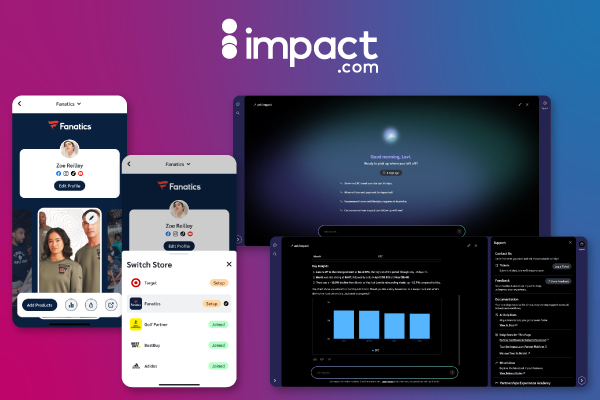
impact.com, the global infrastructure for partnership-driven commerce, announced new AI and creator capabilities at its annual iPX event, designed to help brands discover partners, drive conversion, scale creator content, and automate partnership workflows in one platform. The announcements reflect impact.com’s continued evolution into an AI-powered infrastructure layer for modern partnerships.

“Partnerships are becoming one of the most important growth engines for modern brands, but much of the infrastructure supporting them is still fragmented and reactive,” said Max Ciccotosto, Chief Product Officer at impact.com.

New innovations unveiled at iPX include new ask impact capabilities, autonomous partnership agents, Storefronts, in-platform social amplification, creator discovery integrations, conversion optimization capabilities, and faster creator payouts.

“Partnerships are becoming one of the most important growth engines for modern brands, but much of the infrastructure supporting them is still fragmented and reactive,” said Max Ciccotosto, Chief Product Officer at impact.com. “That’s why we’re building the infrastructure layer that connects discovery, conversion, measurement, payouts, and AI-driven decision-making in one platform. We believe the category is moving from manual partnership management toward more intelligent, performance-driven partnership orchestration.”

At the center of the announcements are new ask impact capabilities now available designed to move beyond question-and-answer interactions into contextual guidance, workflow navigation, and task execution across the platform.

Built on a knowledge graph spanning hundreds of platform screens and thousands of documents, including Partnerships Experience Academy courses, ask impact V2 understands where users are in the platform, what actions they’ve already taken, and what they may need next. Users can ask live performance questions, resume previous conversations, draft outreach, pull partner profiles, and navigate directly into relevant workflows—all within a single conversational thread.

impact.com also introduced autonomous partnership agents, beginning with a Recruitment Agent (currently in closed beta) capable of identifying, qualifying, and onboarding prospective partners while allowing brands to maintain approval controls and oversight. The company also previewed AI Search Visibility, available this summer to help brands understand which creators and publishers are shaping AI-generated recommendations.

To support broader AI adoption, the company unveiled an expanded Integrations Hub and Application APIs, enabling partnership data and workflows to integrate directly into external AI ecosystems and large language models, including Anthropic’s Claude. impact.com also previewed a publicly available Model Context Protocol (MCP) connector planned for release later this summer, extending the platform’s reach into the growing ecosystem of AI-native tools and workflows.

Marketing Technology News: MarTech Interview with Theresa Pham, Head of Product @ Wayvia

Together, these capabilities position impact.com as an open AI infrastructure layer for partnerships, built to connect with the broader ecosystem of AI-native tools and workflows.

impact.com also announced the general availability of Storefronts, persistent, creator-curated shopping destinations that allow brands and creators to build always-on commerce experiences with performance attribution.

Unlike traditional affiliate links that fragment across campaigns and channels, Storefronts provide a permanent destination where creators can curate products while brands maintain control over merchandising, brand presentation, and measurement.

“Our fans are incredibly passionate, and many of them are already acting as creators—curating and sharing the merchandise they love,” said Wade Tonkin, Director of Affiliate Marketing at Fanatics. “Giving creators the ability to build personalized storefronts allows them to reflect their own voice while staying true to our brand, creating a more authentic commerce experience for fans. Paired with impact.com’s performance capabilities, we can now connect that authentic fan-driven content directly to measurable outcomes, creating a more scalable and integrated partnership strategy.”

Marketing Technology News: Idle data is as good as no data

Additional creator innovations announced at iPX include:

  • In-Platform Social Amplification, enabling brands to turn creator content into paid media campaigns directly within impact.com, available now with Instagram, with additional major social platform integrations planned throughout the year
  • Verified creator discovery integrations with Instagram’s Creator Marketplace, building on earlier integration work with YouTube, to bring first-party creator insights and audience data directly into the platform, with TikTok and Facebook integrations planned
  • Single-Use Promo Code Links on the roadmap for Shopify and BigCommerce brands, automatically applying creator discounts at checkout while reducing attribution leakage and checkout friction
  • Creator Benchmark Reporting, now providing brands with comparative creator program performance insights across key industry metrics
  • Anytime Withdrawal, now available with PayPal, enabling creators and partners to access earnings faster, with Venmo and additional payment methods planned

Together, these innovations reflect a broader shift from fragmented tools and passive reporting to infrastructure that helps brands and creators discover opportunities, optimize performance, and drive measurable growth. By combining creator commerce, paid media execution, first-party data, payouts, APIs, and AI-driven automation in one platform, impact.com is building the operating system for modern partnerships.

Write in to psen@itechseries.com to learn more about our exclusive editorial packages and programs.

The end of search traffic: Why MarTech Must Evolve for the AI Answer Economy

0
The end of search traffic: Why MarTech Must Evolve for the AI Answer Economy

For more than twenty years, search engines have been the primary portal for digital discovery. Businesses spent on search engine optimization, content marketing, and keyword strategies to get organic traffic and leads. Success in digital marketing was often measured by rankings, clicks, impressions, and visits to websites. Search traffic rapidly emerged as one of the most prized assets for brands seeking visibility and customer acquisition.

But the digital discovery landscape is changing fast. AI assistants, conversational interfaces, and answer engines are proliferating and fundamentally changing the way people find information online. Users want direct, instant answers from AI-powered platforms and don’t want to have to search multiple websites. From generative AI search experiences to virtual assistants and smart chat interfaces, information is being served to consumers without the need to scroll through traditional search results pages.

This has led to an increase in zero-click interactions, where users get the information they want without having to click through to an external website. This means brands are finding fewer opportunities to capture traffic through traditional SEO strategies. Today, visibility is not just about being at the top of search results but also being part of answers, recommendations, and summaries generated by AI.

This transformation poses a challenge and an opportunity for today’s businesses. The rise of the AI Answer Economy is pushing Martech leaders to rethink how they approach visibility, discoverability, and customer engagement. Companies will need to more and more focus on becoming trusted sources in AI-powered ecosystems rather than optimizing solely for clicks.

What is the AI Answer Economy?

The AI Answer Economy is a new digital world where AI systems are mediating between users and information to an increasing extent. Rather than presenting lists of links, AI platforms pull together information from multiple sources and return direct answers to user queries.

This model changes the conventional relationship between brands, publishers, and consumers. Previously, users would search for information, assess the search results, and then visit websites to find answers. In today’s AI systems, the answer is often all within the platform itself — less need to navigate elsewhere.

There are several features to the AI Answer Economy:

  • Respond with direct answers, not link-based discovery
  • Search exploration is replaced by AI-generated summaries
  • Reduced dependence on website visits for fact-finding
  • More emphasis on authority, trust, and content quality

For Martech professionals, visibility is no longer about being #1 on a search results page, but about being part of the AI-generated response.

a) From Search Results to Direct Answers

Traditional search engines were directories, pointing users to sources of information. The difference with AI answer engines is that they become the source of the information. The user asks questions and immediately receives the synthesized answers.

This shift reduces friction in the user journey but also disrupts century-old digital marketing tactics. Brands that once relied on organic search traffic now must operate in a world where answers are increasingly served up without clicks.

b) The Emergence of Conversational Discovery

Conversational Discovery Is Coming. Another major shift in how users interact with information is the rise of conversational discovery. Today, users are more likely to talk with AI systems in natural language than to type in short keyword phrases.

This conversational model enables people to pose complex questions, iterate over requests, and receive contextual responses. As conversational discovery becomes more widespread, Martech strategies will need to move away from keyword optimization to content structures that can be deciphered and recommended by AI.

The Development of Digital Discovery

The shift from traditional search to AI-powered discovery has been gradual but is accelerating. Grasping this evolution is crucial for organizations that want to stay visible in the digital marketplace.

a) Search Engines as Information Gatekeepers

Search engines have been the gatekeepers of digital information for many years. Businesses invested heavily in SEO, as search platforms decided which websites users saw.

The following was the key to success:

  • Optimizing keywords
  • Strategies for backlinks
  • Relevance of the content
  • Website performance technical
  • Authority of Domain

These tactics were the foundation of modern Martech programs, fueling massive investments across industries.

b) The Rise of Generative AI Interfaces

The introduction of generative AI has changed the game in how information is delivered. AI systems can do more than just rank content. They can understand questions, examine many sources, and deliver personalized answers.

Interfaces with generative AI offer:

  • Context-aware responses
  • Customized recommendations
  • Chat interaction
  • Quicker data access
  • Less need for navigation

As those interfaces get more sophisticated, the traditional search behavior continues to decline, creating new challenges for Martech teams focused on visibility and engagement.

c) AI as the new layer of discovery

AI is increasingly becoming a discovery layer between brands and consumers. Instead of visiting individual websites, users are relying on AI systems to suggest products, synthesize information, compare options, and help make decisions.

This development is a game-changer for how organizations think about getting customers. Martech leaders need to optimize for AI discoverability now, not just traditional search visibility.

Changes in Consumer Behavior

As artificial intelligence advances, consumer behavior is changing. With the rise of AI-driven experiences, users are developing new expectations for how information should be presented.

a) Users Seeking Instant Answers

Consumers today demand instant gratification and ease. AI platforms fulfill these expectations by offering instant answers and not making users search multiple websites or search results.

User benefits are:

  • Faster access to information
  • Less work on research
  • Decision-making made easier
  • More customized experiences

As such expectations become commonplace, companies should evolve their Martech strategies to accommodate instant-answer ecosystems.

b) Less Dependence on Traditional Search Navigation

The traditional search process usually required multiple clicks, visits to websites, and content comparisons. Discovery using AI dramatically speeds up those steps. This means consumers are becoming more and more comfortable looking to AI-generated responses as their first port of call for information. This trend further reduces traffic opportunities for publishers and brands that relied on organic search performance.

Success for Martech teams isn’t just about driving people to websites anymore. Instead, it’s about making brands front and center, with a voice across AI-powered customer journeys.

c) Increasing Confidence in AI Recommendations

One of the biggest changes in behavior is the increasing confidence consumers have in AI recommendations. Whether evaluating products, researching services, or comparing vendors, users are increasingly turning to AI-generated insights as trusted decision support tools.

This trust accumulates to create a new competitive landscape, where brands have to gain visibility in AI systems. AI platforms are more likely to reference businesses that establish authority, publish high-quality content, and maintain strong digital credibility.

As AI recommendations become trusted, Martech leaders will need to focus on building digital authority and ensuring that their content can be understood, interpreted and surfaced by AI engines.

The AI Answer Economy is here, and it’s a massive change in how we find things digitally. Search traffic is still important, but it’s not the only way to get visibility. AI-generated answers, conversational interfaces, and smart recommendation engines are transforming how consumers interact with information and how businesses engage with audiences.

Adapting Martech strategies to this new environment will be critical for organizations that want to be successful over the long term. The future is brands that are discoverable not only in search results but also in the AI-powered conversations and recommendations that are increasingly influencing customer choices.

Why Search Traffic Is Declining?

The digital marketing world is witnessing one of its biggest transformations since the advent of search engines. For years, businesses have relied on organic search traffic to build awareness, engagement, and customer acquisition. Search engine optimization was the backbone of many digital strategies, with brands battling for rankings, clicks, and visits to their websites. But today, the rise of artificial intelligence is changing the way consumers find information and engage with brands.

AI-powered search experiences, conversational interfaces, and answer engines are all reducing the need for users to go directly to websites. So, traditional traffic generation tactics are becoming less effective. This change is leading Martech leaders to rethink their approach to visibility and customer engagement in an increasingly AI-driven ecosystem.

a) The Rise of Zero-Click Experiences

The meteoric rise of zero-click experiences is one of the biggest reasons we are seeing a decline in search traffic.

b) AI Providing Answers Without Website Visits

In these cases, users receive the information they seek within a search engine, AI assistant, or chat interface and don’t have to click through to a website.

Generative AI systems are built to directly and fully answer user queries. AI platforms don’t just give you a list of links to click through. They take information from many sources and then create a short response.

This creates a range of challenges for brands:

  • Reduced website traffic opportunities
  • Lower click-through rates
  • Fewer opportunities for direct customer engagement
  • Greater competition for AI visibility

For today’s Martech teams, the key to success is increasingly about being part of the solution, not just ranking in search results.

c) Search Queries Ending Within AI Interfaces

The typical search journey usually involves multiple searches, visits to websites, and comparison of the contents. Today, many users do all their research within AI-powered interfaces.

Consumers can ask follow-up questions, request recommendations, and compare options without leaving the platform. This behavior diminishes the number of interactions brands have through regular search channels.

d) Reduced Click-Through Opportunities

AI answers are more complete, so fewer users are forced to click on external websites. Even if sources are cited, users may be happy with the information provided.

This trend poses a serious problem for publishers, marketers, and content creators whose business models rely on generating traffic. As a result, Martech strategies need to shift from just acquiring traffic to being more focused on influence and discoverability in AI ecosystems.

AI Search and Conversational Interfaces

The emergence of AI search represents a significant departure from the traditional search experience. More and more, users will talk to intelligent systems instead of browsing search results.

a) Chat-Driven Information Discovery

Consumers are increasingly comfortable with having natural language conversations with AI. Users ask detailed questions rather than entering short keyword phrases and receive contextual responses.

The advantages of chat-based discovery are:

  • Faster access to information
  • More natural interaction.
  • Tailored responses
  • Reduced research experiences

As conversational search becomes more popular, Martech leaders will need to optimize content for conversational, rather than traditional, keyword matching.

b) Customized AI Responses

But the biggest advantage of AI-powered discovery is personalization. AI systems can adapt their responses according to user preferences, context, behavior, and past interactions.

This level of personalisation changes the game for brands competing for visibility. Rather than competing for general terms, organizations must ensure their information is machine-readable and surfaced in highly personalized AI responses.

The rising personalization of digital experiences is providing opportunities and challenges for Martech professionals who want to reach target audiences effectively.

c) End-to-End Recommendation Models

AI systems are becoming recommendation engines more and more. These platforms are involved in recommending products, services, vendors, or content that impact consumer decisions even before they visit brand websites.

AI-generated recommendations are often the first point of contact between customers and brands. This implies that businesses need to focus on becoming trusted, authoritative sources in AI ecosystems.

As recommendation-based discovery grows in popularity, Martech strategies must focus on credibility, expertise, and information quality to stay competitive.

Marketing Technology News: MarTech Interview with Theresa Pham, Head of Product @ Wayvia

Changes in Content Consumption

Consumer content consumption habits are changing rapidly due to technological advances. This traditional method of finding information on different websites is becoming less common as AI makes knowledge more accessible.

a) Consumers Demanding Convenience

One of the most significant factors impacting digital behavior has become convenience. Users expect to be able to find information right away, without a lot of searching or navigating.

AI-powered platforms respond to this demand by offering:

  • Immediate answers
  • Enabling decision making
  • less information overload
  • Quicker access to insights

This shift toward convenience is reshaping the priorities of modern Marketing Technology strategies.

b) Faster Decision-Making Journeys

AI systems reduce the time it takes for consumers to move from awareness to consideration by a considerable amount. These platforms condense information and provide recommendations, reducing research cycles and accelerating decision-making.

As customer journeys get faster and more streamlined, brands have fewer opportunities to influence prospects through traditional content funnels. This trend will require Martech leaders to rethink engagement strategies and focus on generating content that enables discovery processes through AI.

c) Less Dependence on Old-School Search Exploration

Before, consumers used to jump from site to site before making decisions. Heavy search activity led to product comparisons, content reviews, and alternative evaluation.

Today, much of this exploration is removed by many AI-generated summaries. “Users get all the info fast in one place, so they don’t have to do their own research. This behavior change is the direct cause of the fall in search traffic and is forcing organizations to develop new strategies of digital visibility.

d) The Declining Predictability of Organic Traffic

Organic traffic has always been a reliable source of new customers. But traffic patterns are getting more unpredictable with AI-powered discovery.

a) Changing SEO Landscape

SEO is still important, but the factors that influence rankings are changing. AI-powered content evaluation and recommendation systems complement, and sometimes even substitute for, traditional ranking signals.

Now organizations have to consider:

  • Readability AI
  • Authority of content
  • Structure of knowledge
  • Optimizing the entity
  • Trustworthiness of the brand

These changing needs are transforming how Martech teams approach content strategy and search optimization.

b) Limited Ranking Information

A top search rank does not guarantee visibility anymore. AI systems often produce answers by synthesizing information from multiple sources, which decreases the importance of individual rankings.

So, organizations need to focus on broader discoverability strategies rather than focusing only on search positioning. This evolution is encouraging Martech leaders to extend visibility practices beyond traditional SEO practices.

c) The AI citation competition is heating up.

As the influence of AI-generated answers increases, the competition is heading towards being a cited or referenced source. “Brands and publishers and content creators are now competing not only for rankings but for inclusion in AI-generated responses.

Organizations that gain enough authority and credibility will be more likely to be included in these recommendations, leading to a new form of digital competition.

Effect on Martech Strategies

The erosion of search traffic is forcing organizations to re-evaluate many of the assumptions that have driven digital marketing for years. With AI-driven discovery, there needs to be a fundamental shift in strategy, measurement, and execution.

a) From Traffic Acquisition to Answer Visibility

Traditionally, we have measured the success of marketing in terms of traffic growth. Visibility in AI-generated answers is becoming just as important in the AI Answer Economy.

b) Beyond Clicks and Page Views

Modern organizations can no longer rely on website traffic metrics alone to measure performance. Instead, they need to look at how often their brands appear in AI-generated recommendations and answers.

c) Optimizing for AI Discovery

Organizations must produce content that AI systems can easily interpret and surface. That means improving content structure, clarity, authority, and contextual relevance.

Some emerging metrics are:

  • Number of mentions of AI
  • Citation share by AI
  • Recommendations visibility
  • Sentiment generated by AI
  • Findability in Conversation

These indicators will be key components of future Martech measurement frameworks.

Redefining Customer Journey Mapping

The customer journey is becoming more complex, and AI platforms are mediating between brands and consumers.

a) AI as a bridge between brands and customers

Artificial intelligence systems now impact many parts of the buying process – from awareness and research to evaluation and decision making.

b) Non-Linear Discovery Paths

Consumers no longer follow predictable search-driven paths. Instead, they interact with AI assistants, social platforms, recommendation engines, and conversational interfaces along the decision journey.

c) New Engagement Touchpoints

These new pathways require Martech teams to uncover and maximize new engagement opportunities across multiple digital ecosystems.

Content Strategy Development

Content still matters, but its role is changing dramatically in the age of AI.

a) Crafting AI-Friendly Content

The content must be organized so that AI systems can accurately parse and summarize the information.

b) Knowledge Assets

More and more organizations are building content libraries, FAQs, knowledge hubs, and authoritative resources that underpin AI understanding.

c) Authority and Trust Signals

Trustworthiness is becoming an emerging factor for AI discoverability. Brands that consistently produce trustworthy, high-quality content are more likely to be mentioned by AI platforms.

Rethinking Metrics for Marketing Success

As discovery models evolve, companies need to rethink how they measure marketing success.

a) Visibility Beyond Website Traffic

While traffic still matters, it’s not the sole indicator of success.

b) AI Mention Tracking

Brands will pay more attention to their brand’s frequency of appearance in AI-generated answers and recommendations.

c) Influence-Based Performance Metrics

Future Martech measurement frameworks might look at influence, authority, frequency of a person recommending you, and customer trust, not just clicks. As AI redefines digital discovery, organizations that adapt their measurement strategies will be better positioned to succeed in the new AI Answer Economy.

How the Rise of the AI Answer Economy Is Changing How Brands Earn Online Visibility?

For years, search engine rankings and website traffic were the big drivers of digital discoverability. Artificial intelligence platforms are now becoming the primary interface for consumers and information. Rather than going to multiple websites, consumers are increasingly receiving direct answers, recommendations, and summaries from AI-powered systems. This shift is forcing organizations to rethink traditional visibility strategies and adapt to a new set of rules for discoverability.

For today’s Martech leaders, success isn’t simply about search rankings anymore. Visibility is now about how well brands can embed themselves in AI-generated responses, recommendation engines, and conversational interfaces.

a) Becoming an AI Trusted Source

With AI systems at the center of information mediation, trust is transforming into one of the most precious assets in digital visibility. AI systems prefer sources that are credible, authoritative, and consistent. The more a brand appears to be a reliable source of information, the more likely it will be referenced in AI-generated answers and recommendations.

Organizations need to publish accurate, insightful, and valuable content regularly to build digital authority. Rather than simply optimizing for keywords, businesses need to develop expert-led content strategies that answer real customer questions and industry problems. AI systems are increasingly making judgments about the general authority of a source rather than about individual pieces of content.

And you can demonstrate expertise and credibility through thought leadership, research, case studies, and original insights. When organizations give relevant expertise to their industries, they are more likely to become trusted sources. This approach is very much in line with the future direction of Martech, where authority and influence matter more than just traffic volume.

Consistently publishing knowledge further enhances AI’s discoverability. Brands that regularly refresh content, surface new ideas, and maintain an active digital presence send stronger signals of relevance and expertise. Over time, these signals help AI platforms recognize them as reliable contributors within their respective domains.

b) Structured Content and Knowledge Optimization

Optimizing content is moving beyond traditional SEO practices. In the age of AI, information has to be structured so machines can easily understand, interpret, and refer to it. This implies a stronger focus on structured content and knowledge architecture.

To help AI systems work through content well, machine-readable information architecture is key. Well-structured pages, clear relations of topics, logical hierarchies, and well-structured data help AI models better understand and find information. Structured content is becoming a core building block of successful Martech strategies as AI platforms play an increasingly important role in customer discovery.

Content strategies based on entities are on the rise, too. Instead of optimizing for single keywords, organizations need to establish clear relationships between topics, products, services, people, and concepts. Generating responses is highly dependent on the entities and the understanding of the context by the AI systems. Businesses that build strong entity networks improve their chances of being surfaced in relevant conversations.

Semantic content design further enhances discoverability.  AI platforms evaluate context, meaning, and relevance rather than simply matching keywords.  Content that addresses broader themes, answers related questions, and demonstrates comprehensive topic coverage is more likely to earn visibility within AI-generated answers.  For Martech teams, semantic optimization represents a significant shift toward creating content ecosystems rather than individual assets.

c) Brand Presence Across Multiple Ecosystems

In the AI Answer Economy, discoverability extends far beyond a company’s website.  AI systems gather information from a wide range of digital sources, making cross-platform visibility increasingly important.

Websites remain valuable, but forums, review platforms, social communities, industry publications, and third-party websites are becoming equally significant.  AI models often draw information from these diverse ecosystems when generating recommendations and responses.  Brands that maintain strong visibility across multiple channels create a broader digital footprint that enhances discoverability.

Third-party validation signals are particularly influential.  Reviews, customer testimonials, analyst reports, expert mentions, and independent coverage help establish credibility and trustworthiness.  These signals reinforce brand authority and increase the likelihood that AI systems will reference the organization in relevant contexts.

Multi-platform visibility is becoming a core requirement for effective Martech execution.  Organizations must ensure that their messaging, expertise, and thought leadership extend beyond owned channels.  The more consistently a brand appears across trusted digital environments, the stronger its position within AI-driven discovery ecosystems.

This broader approach to visibility reflects a significant change in digital marketing.  Instead of concentrating exclusively on website optimization, businesses must think in terms of entire information ecosystems.

d) Optimizing for AI Recommendation Engines

AI recommendation engines are rapidly becoming key drivers of customer decisions.  Whether users are researching products, evaluating services, or seeking professional advice, AI platforms increasingly guide these choices through personalized recommendations.

To remain visible, organizations must develop answer-focused content strategies.  AI systems prioritize content that directly addresses user questions and provides clear, actionable information.  Content designed to answer specific queries is more likely to be included in AI-generated responses.

Topic authority building is another essential factor.  AI platforms often favor sources that demonstrate comprehensive expertise within a particular subject area.  Brands that consistently publish high-quality content across related topics strengthen their authority and improve discoverability.  For many Martech professionals, this means shifting from isolated content campaigns toward long-term knowledge-building initiatives.

Contextual relevance strategies are equally important.  AI systems evaluate content based on its relationship to specific user needs and scenarios.  Organizations that create content addressing various contexts, use cases, and customer challenges are more likely to appear in AI recommendations.  As discoverability increasingly depends on contextual understanding, relevance becomes a critical competitive advantage.

Challenges for Publishers and Brands

While the AI Answer Economy creates new opportunities, it also introduces significant challenges for publishers, marketers, and businesses.  Companies that have long relied on search traffic and direct engagement with their website must adapt to a world where a growing share of visibility, attribution, and customer relationships is mediated by AI.

a) Decrease in Organic Traffic Volumes

Declining organic traffic is one of the fastest effects of AI-powered discovery. AI interfaces answer users directly, and fewer visitors land on publisher and brand websites.

For businesses that rely on traffic-driven business models, a decline in website visits can have a significant impact. As AI systems increasingly satisfy the needs of users without the need for additional clicks, publishers, media companies, and content creators may feel less engaged with audiences.

Traffic tends to go down before advertising opportunities. Many digital businesses monetize through advertising impressions, sponsored content, and traffic-based monetization strategies. These revenue streams could be tapped as organic visits continue to decline.

Audience ownership issues are also growing in importance. When AI platforms act as intermediaries, brands lose direct control over their interactions with customers. This turns traditional Martech models upside down, based on website engagement and the development of owned audiences.

b) Problems of Attribution and Measurement

Measuring marketing performance is much more complex in AI-driven environments. Traditional attribution models were built around clicks, visits, and conversions. There is often no such visible interaction in discovery driven by AI.

Tracking AI-driven discovery still is a major challenge. Brands can sway customer decisions with AI-generated answers, without even getting a single visitor to their website. New measurement frameworks and visibility metrics are required to understand these interactions.

Moreover, the pathways of influence are difficult to interpret. The customer journeys are increasingly seeing multiple AI interactions before a purchase decision is made. Martech teams are increasingly focused on learning how these touchpoints contribute to outcomes.

Measuring invisible customer journeys could become one of the most important challenges in the coming years. As discovery moves from websites to AI ecosystems, traditional analytics tools may not be able to capture the full customer experience.

c) Loss of Direct Customer Interaction

AI platforms are increasingly becoming the middlemen between brands and consumers. This gives users a level of convenience but also eliminates opportunities for direct interaction. The customer may never visit owned digital properties, so organizations can have less brand-controlled experiences. Instead, they get information, recommendations, and advice from third-party AI systems.

Brands find it more difficult to build relationships when they don’t have ways to communicate directly. Websites, newsletters, and content hubs have historically been used by businesses to educate, engage, and nurture audiences. These traditional modes of engagement are challenged by the advent of AI-mediated interactions.

For Martech leaders, new strategies for visibility, trust-building, and engagement will be needed to maintain meaningful customer relationships in this environment.

d) Competitive Visibility Risks

The AI Answer Economy introduces new competitive dynamics that could benefit established organizations with strong digital authority. AI systems tend to favor sources that have a lot of credibility, recognition, and history. This can give visibility benefits to large brands, while making it tough for emerging companies to get exposure.

Winner-takes-most dynamics may become more common. In AI-generated content, positioning can have a compounding effect on visibility for organizations. Less visible competitors find it harder to garner attention.

Another big challenge is the difficulty in getting AI citations. AI systems can only cite a limited number of sources in their responses, so the race to be included is heating up. Businesses need to invest in authority building, expertise building, and strategic Martech efforts to increase their chances of being cited.

As AI-powered discovery continues to evolve, organizations that understand these challenges and adapt proactively will be better positioned to maintain visibility, influence customer decisions, and stay competitive in the next era of digital marketing.

How the Rise of the AI Answer Economy Is Changing How Brands Earn Online Visibility?

For years, search engine rankings and website traffic were the big drivers of digital discoverability. Artificial intelligence platforms are now becoming the primary interface for consumers and information. Rather than going to multiple websites, consumers are increasingly receiving direct answers, recommendations, and summaries from AI-powered systems. This shift is forcing organizations to rethink traditional visibility strategies and adapt to a new set of rules for discoverability.

For today’s Martech leaders, success isn’t simply about search rankings anymore. Visibility is now about how well brands can embed themselves in AI-generated responses, recommendation engines, and conversational interfaces.

a) Becoming an AI Trusted Source

With AI systems at the center of information mediation, trust is transforming into one of the most precious assets in digital visibility. AI systems prefer sources that are credible, authoritative, and consistent. The more a brand appears to be a reliable source of information, the more likely it will be referenced in AI-generated answers and recommendations.

Organizations need to publish accurate, insightful, and valuable content regularly to build digital authority. Rather than simply optimizing for keywords, businesses need to develop expert-led content strategies that answer real customer questions and industry problems. AI systems are increasingly making judgments about the general authority of a source rather than about individual pieces of content.

And you can demonstrate expertise and credibility through thought leadership, research, case studies, and original insights. When organizations give relevant expertise to their industries, they are more likely to become trusted sources. This approach is very much in line with the future direction of Martech, where authority and influence matter more than just traffic volume.

Consistently publishing knowledge further enhances AI’s discoverability. Brands that regularly refresh content, surface new ideas, and maintain an active digital presence send stronger signals of relevance and expertise. Over time, these signals enable AI platforms to identify them as trusted contributors within their respective domains.

b) Structured Content and Knowledge Optimization

Optimizing content is moving beyond traditional SEO practices. In the age of AI, information has to be structured so machines can easily understand, interpret, and refer to it. This implies a stronger focus on structured content and knowledge architecture.

To help AI systems work through content well, machine-readable information architecture is key. Well-structured pages, clear relations of topics, logical hierarchies, and well-structured data help AI models better understand and find information. Structured content is becoming a core building block of successful Martech strategies as AI platforms play an increasingly important role in customer discovery.

Content strategies based on entities are on the rise, too. Instead of optimizing for single keywords, organizations need to establish clear relationships between topics, products, services, people, and concepts. Generating responses is highly dependent on the entities and understanding of the context by the AI systems. Businesses that develop strong networks of entities increase the likelihood of being surfaced in relevant conversations.

Semantic content design also enhances discoverability. AI platforms consider context, meaning, and relevance, not simply matching keywords. Content that covers broader themes, answers related questions, and shows that you’ve addressed the topic thoroughly is more likely to gain visibility in AI-generated answers. Semantic optimization is a big change in the content ecosystem approach for Martech teams, not just content asset creation.

c) Brand Presence Across Ecosystems

In the AI Answer Economy, discoverability is beyond the company website. Cross-platform visibility is gaining importance as AI systems draw information from a diverse range of digital sources.

Websites are still important, but forums, review sites, social groups, industry publications, and third-party websites are becoming just as important. These diverse ecosystems are often sources for recommendations and responses by AI models. Brands continue to be visible across many channels, creating a bigger digital footprint that increases discoverability.

Third-party validation signals are particularly powerful. Reviews, customer testimonials, analyst reports, expert mentions, and independent coverage all feed credibility and trust. These signals help build brand authority and increase the chances of AI systems citing the organization when appropriate.

Multi-platform visibility is quickly becoming a fundamental need for effective Martech execution. Organizations need to make sure their messaging, expertise, and thought leadership extend beyond their own channels. The more a brand is present in trusted digital environments, the better its place is within AI-led discovery ecosystems.

This wider definition of visibility is a big change in digital marketing.

d) Optimizing for AI Recommendation Engines

Businesses have to think about the whole information ecosystem instead of only optimizing for websites.

AI recommendation engines are fast becoming a primary driver of customer decisions. AI platforms are increasingly nudging the decisions of users conducting product research, service evaluations, or looking for professional advice through tailored recommendations.

Organizations need to develop content strategies around answers to remain visible. AI systems like content that directly answers user questions and gives clear, actionable information. If your content answers a particular question, it is more likely to be included in AI-generated answers.

Another important factor is to build topic authority. AI platforms generally prefer sources that have shown wide competence on a specific subject matter. Brands that consistently produce quality content on related topics gain authority and increase discoverability. For many Martech pros, this means moving away from standalone content campaigns to longer-term knowledge-building efforts.

Also important are strategies of contextual relevance. AI systems assess content in relation to particular user needs and contexts. AI recommendations tend to surface organizations that have content that addresses various contexts, use cases, and customer challenges. As relevance will be the critical competitive advantage, discoverability will be driven more and more by context.

Challenges for Publishers and Brands

The AI Answer Economy brings new opportunities but also huge challenges for publishers, marketers, and businesses. Companies that have long relied on search traffic and direct engagement with their website must adapt to a world where a growing share of visibility, attribution, and customer relationships is mediated by AI.

a) Decrease in Organic Traffic Volumes

Declining organic traffic is one of the fastest effects of AI-powered discovery. AI interfaces answer users directly, and fewer visitors land on publisher and brand websites.

For businesses that rely on traffic-driven business models, a decline in website visits can have a significant impact. As AI systems increasingly satisfy the needs of users without the need for additional clicks, publishers, media companies, and content creators may feel less engaged with audiences.

Traffic tends to go down before advertising opportunities. Many digital businesses monetize through advertising impressions, sponsored content, and traffic-based monetization strategies. These revenue streams could be tapped as organic visits continue to decline.

Audience ownership issues are also growing in importance. When AI platforms act as intermediaries, brands lose direct control over their interactions with customers. This turns traditional Martech models upside down, based on website engagement and the development of owned audiences.

b) Problems of Attribution and Measurement

Measuring marketing performance is much more complex in AI-driven environments. Traditional attribution models were built around clicks, visits, and conversions. There is often no such visible interaction in discovery driven by AI.

Tracking AI-driven discovery still is a major challenge. Brands can sway customer decisions with AI-generated answers, without even getting a single visitor to their website. New measurement frameworks and visibility metrics are required to understand these interactions.

Moreover, the pathways of influence are difficult to interpret. The customer journeys are increasingly seeing multiple AI interactions before a purchase decision is made. Martech teams are increasingly focused on learning how these touchpoints contribute to outcomes.

Measuring invisible customer journeys could become one of the most important challenges in the coming years. As discovery moves from websites to AI ecosystems, traditional analytics tools may not be able to capture the full customer experience.

c) Loss of Direct Customer Interaction

AI platforms are increasingly becoming the middlemen between brands and consumers. This gives users a level of convenience but also eliminates opportunities for direct interaction.

The customer may never visit owned digital properties, so organizations can have less brand-controlled experiences. Instead, they get information, recommendations, and advice from third-party AI systems.

Brands find it more difficult to build relationships when they don’t have ways to communicate directly. Websites, newsletters, and content hubs have historically been used by businesses to educate, engage, and nurture audiences. These traditional modes of engagement are challenged by the advent of AI-mediated interactions.

For Martech leaders, new strategies for visibility, trust-building, and engagement will be needed to maintain meaningful customer relationships in this environment.

d) Competitive Visibility Risks

The AI Answer Economy introduces new competitive dynamics that could benefit established organizations with strong digital authority. AI systems tend to favor sources that have a lot of credibility, recognition, and history. This can give visibility benefits to large brands, while making it tough for emerging companies to get exposure.

Winner-takes-most dynamics may become more common. In AI-generated content, positioning can have a compounding effect on visibility for organizations. Less visible competitors find it harder to garner attention.

Another big challenge is the difficulty in getting AI citations. AI systems can only cite a limited number of sources in their responses, so the race to be included is heating up. Businesses need to invest in authority building, expertise building, and strategic Martech efforts to increase their chances of being cited.

As AI-powered discovery continues to evolve, organizations that understand these challenges and adapt proactively will be better positioned to maintain visibility, influence customer decisions, and stay competitive in the next era of digital marketing.

Final Thoughts

The AI Answer Economy is one of the biggest changes in digital marketing since the introduction of search engines. For years, businesses have built their growth strategies around search rankings, website traffic, and click-through rates. Organic search was the primary discovery channel online, enabling brands to drive audiences, leads, and customer relationships through owned digital experiences. But the rapid adoption of AI assistants, conversational search platforms, and answer engines is fundamentally changing how people find information and interact with brands online.

The significance of traffic is starting to diminish on its own as consumers depend more on AI-generated responses rather than traditional search results. Users today expect instant answers, personalized recommendations, and seamless experiences without having to jump between multiple websites. This development is shaping a new reality where visibility means more than just ranking high in search engines; it also means being referenced, cited, and recommended in AI-generated responses. For today’s Martech leaders, this means that discoverability needs to be considered through a much wider lens than traditional SEO.

The changing landscape is forcing organizations to rethink their content strategies, models of customer engagement, and performance measurement frameworks. Brands need to focus on becoming trusted sources of information, creating digital authority and structured knowledge assets that AI systems can easily understand and reference. The future of Martech will be less about clicks and more about credibility, expertise, semantic relevance, and cross-platform visibility. Organizations that develop these capabilities will be better positioned to retain influence as AI-powered discovery continues to expand.

But there is much work to do. Publishers and brands are facing falling organic traffic, more complex attribution models, and fewer opportunities for direct customer engagement. The competition for visibility in AI-generated results is getting fiercer and fiercer, especially since AI systems have a tendency to favor reputable and popular sources. These shifts necessitate that businesses craft new ways of measuring success, understanding customer journeys, and engaging meaningfully with audiences.

Yet the AI Answer Economy also offers big opportunities. Early movers can secure more authority, improve discoverability, and develop more effective engagement strategies for emerging AI ecosystems. Rather than seeing AI as a threat to traditional marketing, forward-thinking companies will see it as a catalyst for innovation and a new channel to influence customers.

Ultimately, the future of Martech will be determined by visibility in AI-generated answers, recommendations, and autonomous discovery systems. Traditional search traffic models are becoming less reliable as the sole driver of growth. Brands will increasingly find that success depends on how well they can position themselves in AI-driven environments where trust, authority, and contextual relevance dictate who gets discovered. As digital discovery continues to evolve, organizations that embrace these new realities will be best positioned to thrive in the next generation of customer engagement.


Marketing Technology News: Idle data is as good as no data

The Trade Desk Appoints Sarah Gavin as Chief Marketing Officer, Executive Vice President

0
The Trade Desk Appoints Sarah Gavin as Chief Marketing Officer, Executive Vice President

The Trade Desk Logo

Interim CMO Anna Sayre to resume previous role as SVP, Global Brand Marketing

The Trade Desk, a leading global advertising technology company, announced the appointment of Sarah Gavin as Chief Marketing Officer and Executive Vice President. Gavin will lead The Trade Desk’s marketing organization, overseeing global brand, communications, customer marketing, and demand generation efforts. She will play a key role in elevating the company’s market presence, deepening engagement with customers and partners, and advancing its vision for the open internet. Gavin joins the company on June 15, based in their Bellevue office, and will report directly to CEO and Founder Jeff Green.

Marketing Technology News: MarTech Interview with Theresa Pham, Head of Product @ Wayvia

Most recently, Gavin served as Chief Communications Officer and Interim Chief Marketing Officer at Zendesk, where she helped lead the company’s transformation into an AI-powered customer service leader. Previously, she led global narrative strategy for Google Cloud, helping position the business at the forefront of the generative AI era. Before that, she spent more than a decade at Expedia Group, serving as Chief Communications Officer and Senior Vice President of Global Communications and Corporate Brand, where she guided the company through significant growth and transformation. Gavin brings extensive experience across brand, product marketing, demand generation, customer marketing, and integrated communications, with a proven track record of helping technology companies navigate periods of rapid change.

“The future of advertising will be shaped by marketers who embrace innovation, transparency, and the full potential of the open internet,” said Jeff Green, CEO and Founder of The Trade Desk. “The Trade Desk is uniquely positioned to help lead that future, and Sarah is the right leader to help us tell that story. She combines world-class marketing and communications expertise with a deep understanding of technology and business strategy. I’m excited to welcome Sarah to The Trade Desk as we continue to expand our leadership position and drive real growth for our clients.”

Marketing Technology News: Idle data is as good as no data

“The Trade Desk has earned the trust of the world’s leading marketers by helping them navigate an increasingly complex advertising landscape,” said Gavin. “What stands out to me is not only the strength of the platform and vision, but the company’s relentless focus on customer success. As both technology and consumer behavior continue to evolve, there is an incredible opportunity to help marketers better understand the value of the open internet and the role The Trade Desk plays in driving growth. I’m thrilled to join Jeff and the team and help amplify that story around the world.”

Gavin’s appointment follows the recent hiring of Chief Financial Officer Nate Olmstead, underscoring The Trade Desk’s continued investment in leadership as the company advances its long-term growth strategy. Anna Sayre, who served as Interim Chief Marketing Officer during the transition, will return to her role as Senior Vice President of Global Brand Marketing.

Write in to psen@itechseries.com to learn more about our exclusive editorial packages and programs.

Soouya Emerges as a Trusted Global Data Recovery Solution, Helping Over 1 Million Users Reclaim Lost Files

0
Soouya Emerges as a Trusted Global Data Recovery Solution, Helping Over 1 Million Users Reclaim Lost Files

logo

Soouya Technology delivers professional-grade data recovery software for Windows, supporting 1,000+ file types and 500+ loss scenarios with a 95% success rate.

HongKong Soouya Technology Limited (soouya.com) today announced the continued global expansion of its flagship data recovery platform, Soouya, now serving more than one million users across ten countries. Designed for everyday Windows users and IT professionals alike, Soouya provides a comprehensive, easy-to-use solution for recovering lost, deleted, formatted, or corrupted data from virtually any storage device.

As data becomes an increasingly critical asset for individuals and businesses worldwide, the consequences of data loss — whether from accidental deletion, hardware failure, virus attacks, or system crashes — can be devastating. Soouya was built to address this universal pain point, delivering recovery capabilities once reserved for expensive professional labs directly to users’ desktops.

Marketing Technology News: MarTech Interview with Theresa Pham, Head of Product @ Wayvia

A Comprehensive Data Recovery Platform for the Modern User

Soouya supports recovery across a wide spectrum of devices and scenarios, including:

Hard Disk Drives (HDD) and Solid-State Drives (SSD)

SD cards, USB drives, memory cards, and other external storage

Laptops and desktops across all major brands (Dell, HP, Lenovo, Samsung, and more)

System crash recovery via bootable USB creation

Corrupted photo and video recovery supporting all major formats including 4K and 8K

The software’s dual-scan technology performs a deep analysis of storage media, enabling Soouya to locate and restore file fragments that other tools may miss — all within a simple three-step process: select a location, scan, and recover.

Marketing Technology News: Idle data is as good as no data

“Data loss is one of the most stressful experiences a person or business can face. At Soouya, our mission is to make professional-level data recovery accessible to everyone — not just those who can afford specialized lab services,”
said a spokesperson for Soouya Technology. “With a 95% success rate and support for over 500 data loss scenarios, we are proud to be the trusted recovery solution for users in over ten countries.”

Key Product Highlights

95% Recovery Success Rate: Powered by advanced scanning algorithms developed through years of research and real-world data recovery experience.

1,000+ Supported File Formats: Documents, photos, videos, audio, emails, databases, and more — no file type is left behind.

2,000+ Compatible Storage Devices: From standard internal drives to niche external media, Soouya handles them all.

500+ Data Loss Scenarios: Accidental deletion, formatting errors, virus attacks, OS crashes, power outages, and interrupted data transfers.

Non-Destructive & Secure: Soouya operates in read-only mode, ensuring no data is overwritten during recovery. All user data remains private and confidential.

Free Scan & Preview: Users can scan and preview recoverable files at no cost before committing to a purchase.

24/7 Technical Support: Round-the-clock expert assistance for all users, ensuring a smooth recovery experience.

7-Day Money-Back Guarantee: A risk-free commitment that reflects confidence in the product’s effectiveness.

Write in to psen@itechseries.com to learn more about our exclusive editorial packages and programs.

8×8 AI Studio Delivers Wave of New Capabilities as Platform Expansion Accelerates

0
8x8 AI Studio Delivers Wave of New Capabilities as Platform Expansion Accelerates

8x8, Inc. Logo

Real-Time Voice Translation, Selectable AI Models Across Claude, Gemini, Grok, and ChatGPT, One-click Connectors to More Than Fifteen Enterprise Apps Among the Latest 8×8 AI Studio Capabilities Delivered Since Launch

8×8, Inc. , a leading global business communications platform provider, continues its rapid expansion of 8×8 AI Studio capabilities since its launch earlier this year, including the addition of multi-LLM model selection, one-click system connectors, voice-driven agent building, and IVR conversion. With its most recent addition, live simultaneous voice translation, 8×8 AI Studio now lets agents and customers speak their own language in real time, across 13 languages, without switching channels, adding interpreters, or interrupting the conversation. It’s now in early availability for customers.

The experience is designed to be immediate and unobtrusive. When a customer speaks in French, Spanish, or Japanese, for example, the agent hears the customer’s original voice softened beneath a real-time AI-generated translation in their own language — no lag, no relay interpreter, no separate call. The same works in reverse. Both parties speak naturally and the conversation simply works.

When a customer contacts support in a language the agent doesn’t speak, the typical outcomes are a transfer, a callback, or a dropped interaction. Live translation in 8×8 AI Studio changes that. The agent stays on the call, the customer doesn’t repeat themselves, and the interaction resolves instead of escalating.

Marketing Technology News: MarTech Interview with Theresa Pham, Head of Product @ Wayvia

Live translation runs directly within the 8×8 AI Studio voice agent and advisor experience — with no third-party interpretation service to connect and no workflow changes required. Translation is handled automatically when a language mismatch is detected. The full interaction — original speech and translated output — is captured in the call record and the live advisor interface. Supervisors reviewing sessions see both, so quality assurance does not depend on guesswork about what was said.

Live translation builds on the AI model improvements already in 8×8 AI Studio — specifically the more accurate transcription of accented and non-native speech introduced with the recent addition of OpenAI’s GPT-Realtime-2. That accuracy is what makes the experience more reliable across languages, not just common ones.

Since launch, 8×8 AI Studio has delivered several capabilities that change how organizations build, deploy, and run AI agents in production, such as:

Marketing Technology News: Idle data is as good as no data

  • Every agent runs on the right model for the job across both voice and text channels, because Claude, Gemini, Grok, and ChatGPT are all selectable per agent with no platform change required to switch.
  • Agents take action inside the systems customers already run, with one-click connectors to HubSpot, Slack, Stripe, Atlassian, Twilio, GitHub, Asana, Figma, Intercom, Dropbox, and ClickUp available out of the box, no integration project required.
  • Businesses move off legacy phone-tree IVRs without rebuilding from scratch, because the Builder reads existing 8×8 auto-attendants and converts them into AI Studio call flows it can then improve.
  • Agents are built and edited by speaking instead of typing, because the Builder transcribes push-to-talk dictation, cleans up filler and self-corrections, and drops the text in for review before anything is sent.

  • Customers reach an agent right on the website by voice or text, can share an image when words are not enough, and get connected to a live agent the moment they need one, all from a single embeddable widget.

“I’ve spent much of my life living abroad, and I know from experience how isolating a language barrier can be,” said Emil Ivov, VP of Product for Video Platform and Services at 8×8, Inc. “As an international student in France, even simple tasks like contacting a service provider or calling customer support could feel overwhelming. Those challenges still affect millions of people every day. With real-time translation in 8×8 AI Studio, we’re helping organizations communicate with customers in their preferred language, making support more accessible, more natural, and more human.”

Live voice translation in 8×8 AI Studio is available now for customers in early availability. For more information, visit docs.8×8.studio or contact your 8×8 account team.

8×8, Inc. is committed to the responsible use of artificial intelligence and the protection of customer data. The 8×8 Platform for CX is developed and operated in accordance with established security standards, applicable compliance frameworks, and internal governance policies, including privacy-by-design principles that safeguard personal data on the 8×8 platform.

Write in to psen@itechseries.com to learn more about our exclusive editorial packages and programs.

ServiceNow and IBM Expand Collaboration to Unlock Enterprise Data for AI at Scale

0
ServiceNow and IBM Expand Collaboration to Unlock Enterprise Data for AI at Scale

ServiceNow Logo

Multi-year collaboration helps enterprises modernize legacy systems, unlock their data and apply AI across core business operations

IBM and ServiceNow, the AI control tower for business reinvention, announced an expanded collaboration to address two of the biggest barriers blocking enterprise AI at scale: the AI-ready data problem and the legacy application layer. The partnership combines IBM’s AI, data and automation capabilities with the ServiceNow AI Platform to help enterprises break through outdated systems and put their data to work for AI. IBM and ServiceNow will deliver joint solutions that modernize aging systems, extend ServiceNow Workflow Data Fabric with IBM’s enterprise data capabilities, and enable autonomous IT operations so the world’s largest enterprises can unlock the transformative value of agentic AI.

Decades of deeply interconnected legacy systems are the biggest barrier to moving fast on AI. IBM and ServiceNow are changing that by helping organizations evolve existing systems rather than replace them, run AI on any model they choose, and unlock the full depth of their enterprise data.

Marketing Technology News: MarTech Interview with Theresa Pham, Head of Product @ Wayvia

“Most enterprises have the ambition to deploy agentic AI, but lack the foundation to run it at scale,” said John Aisien, senior vice president and general manager, central product management, security & risk at ServiceNow. “IBM brings the tooling to modernize the systems and extend ServiceNow’s data capabilities. ServiceNow provides the platform to put that data to work across every workflow in the business. Together, we’re helping enterprises move from AI ambition to real, scalable outcomes.”

“AI adoption at scale requires more than access to models. It requires rethinking the systems, data and workflows that support them,” said Raj Datta, vice president of ISV and AI partnerships at IBM. “Together with ServiceNow, we’re building an open, flexible foundation for AI that can scale across operations and deliver real business value.”

Marketing Technology News: Idle data is as good as no data

The collaboration integrates IBM’s software solutions with the ServiceNow AI Platform and will create new solutions for customers across three key areas:

  • Application modernization: Scans and refactors legacy systems using tools like IBM Bob, Enterprise Application runtime (Java) and IBM watsonx.data so enterprises will be able to bring aging applications into the AI era without starting from scratch.
  • Enterprise data governance: Extends ServiceNow Workflow Data Fabric with IBM watsonx.data to unlock key capabilities like Data Quality, Observability, Master Data Management – leveraging ServiceNow Data Catalog so that mutual customers can keep their data AI-ready.
  • Autonomous infrastructure operations: Integrates Red Hat Ansible, IBM Bob, Instana, Hashicorp Terraform, and Hashicorp Vault into ServiceNow IT workflows to detect, remediate, and resolve issues before they affect the business.

These joint solutions are expected to be available in the second half of 2026.

Statements regarding IBM’s and ServiceNow’s future direction and intent are subject to change or withdrawal without notice, and represent goals and objectives only.

Write in to psen@itechseries.com to learn more about our exclusive editorial packages and programs.