SendGrid Launches New Innovative Email Marketing Editing Experience
SendGrid, a leading customer communication platform that drives engagement and growth, announced a new editing experience for SendGrid Marketing Campaigns. The new email marketing editor addresses familiar pain points for marketers who previously had to choose between the convenience of visual design and efficient editing of code.
“Savvy, time-starved marketers crave elegant visual design tools that also allow them to quickly and safely edit HTML,” said Steve Sloan, Chief Product Officer at SendGrid. “With the enhancements made to the SendGrid Marketing Campaigns editor, marketers no longer have to choose one or the other. They are now equipped with the tools to choose their own path when editing for flexibility and efficiency, empowering them to drive high engagement from their campaigns.”
New flexible editing options give marketers the ability to edit in code, design view, or a mix of both, minimizes the risk of unwanted changes to custom HTML and delivers time savings and efficiencies. The improved editing experience benefits SendGrid customers whether they send campaigns via Marketing Campaigns or create API triggered templates through SendGrid’s delivery platform.
“With the help of SendGrid’s Marketing Campaigns editor, we feel like we have an entire creative department behind us,” said Patrick Meyer, Creative Director at Wine Exchange. “Their new campaign editor allows us the control and flexibility to craft beautiful marketing emails using a mix of HTML, drag and drop building, and in some cases the ability to use a combination of both. Tools like A/B testing and professional drag and drop building make all the difference in creating campaigns that look great and ultimately help us drive sales. Nothing we’ve ever used has been this quick, efficient, and powerful in creating impactful messages to our customers.”
[mnky_testimonial_slider][mnky_testimonial name=”” author_dec=”” position=”Designer”]“Marketing executives need to understand what functions can be handled by AI-enabled computers and what functions need to be managed by humans.”[/mnky_testimonial][/mnky_testimonial_slider]
On Marketing Technology
MTS: Tell us about your role at Bidalgo and how you got here?
I was previously the VP of Bingo Marketing at 888.com, one of the largest online Casino, Bingo, Poker and sports betting sites in the world, and since user acquisition was a huge factor in our success, I knew first hand just how difficult it was to acquire high-quality users at scale. As a B2C marketer, I worked very closely with lots of marketing automation companies, and with Bidalgo in particular. I was impressed with the company’s level of expertise and the sophistication of its technology. Bidalgo was clearly more advanced than any other companies using Artificial Intelligence to automate advertising, and I wanted to be part of their fast growth. In my current role at Bidalgo, I’m responsible for Bidalgo’s marketing and for telling the story behind its innovative technology.
MTS: Given the changing dynamic of ad engagement, how do you see the Advertising Automation market evolving in the years to come?
Advertising automation technology will continue to get smarter and smarter over the coming years as the technology behind Artificial Intelligence and deep learning becomes more advanced. It’s crucial that technology adapts to the way that consumers interact with media, which is somewhat unpredictable. So technology providers like us will have to remain flexible and be ready to train our algorithms to understand new media channels and different forms of communication that we might not have even thought of today. Given the domination of the industry’s largest platforms — like Facebook, Instagram, Pinterest, Snapchat, Google, and Apple — we also see these channels becoming even more integral to advertising success, which is why we’ve formed partnerships with all of the major platforms.
MTS: How do you see audience attention and conversion analytics influencing their omnichannel experience, especially over social platforms?
Today’s consumers have famously short attention spans, and they are using an increasing variety of media channels. That means that marketers must use increasingly sophisticated analytics in order to track users across the omnichannel experience and communicate with them using a coordinated, synergistic approach. When done right, a coordinated approach to omnichannel marketing can be incredibly effective.
MTS: What’s the biggest challenge that CMOs need to tackle to make their media decisions work?
I’d say that the biggest challenge is around designing great creative. Since ad creative is usually the first interaction a user has with a game, it basically serves as the gateway to the game, so using the right creative for the right audience is very important. In the past, creative has traditionally required a lot of guesswork. It was more art than science. Even when using massive A/B testing, you could know what works better now, but couldn’t say why it is working better and how to replicate the success. With AI and machine learning, marketers can break down the DNA of effective creative and know exactly which elements worked and which ones didn’t. Then they can design new creatives that get real results and ensure that their creatives are never stale or fall flat. It still requires a lot of work, but technology is taking a lot of the guesswork out of the creative process.
MTS: What startups are you watching/keen on right now?
I love startups that make my life easier as a marketer or in my personal life. To name a few: Slack, Asana, Hotjar, Instacart, Postmates, and Venmo.
MTS: What tools does your marketing stack consist of in 2017?
MTS: Could you tell us about a standout digital campaign? (Who was your target audience and how did you measure success)
We’ve been promoting Pixelberry Studios’ game Choices in the past year. It’s an adventure game in which players follow a narrative where they can fall in love, solve crimes or embark on fantasy adventures. Using our AI advertising technology, we helped Pixelberry get into the Top 20 Grossing Apps charts.
On top of our AI technology performance, we helped crack their ad creative DNA. We started by using a variety of ad types in a smart and creative way to showcase the game choice elements to engage users to act and make a choice. Players could start the game experience already in the ad itself using immersive ad types such as video, carousel ads or canvas ads.
Eventually, the campaign led to a huge spike in installs in parallel to more than 200% increase in ROAS (Return On Ad Spend).
MTS: How do you prepare for an AI-centric world as a marketing leader?
Marketing executives need to understand what functions can be handled by AI-enabled computers and what functions need to be managed by humans. The more efficiencies they can get, the better off they’ll be. Take media buying for instance. By offloading to algorithms a lot of the budget management, bid optimization, and other functions that used to be handled by humans, media buyers can free up their time to be more creative and strategic, spending more of their time discovering new audiences, breaking into new territories, brainstorming new creative, and so on. Marketing leaders should embrace their new companions.
This Is How I Work
MTS: One word that best describes how you work.
No ego
MTS: What apps/software/tools can’t you live without?
We work across 3 offices in Israel, San Francisco, and South Korea, with 10-hour time zone gaps, so communication tools like Slack, and Bluejeans and project management tools like Jira are essential. At the personal level, it would be hard to live without Netflix or Amazon 🙂
MTS: What’s your smartest work related shortcut or productivity hack?
There are two kinds of people in the world: those who use email folders, and those who don’t. I never use folders for emails. I can never find what I want or follow up using them. I keep everything in my inbox and am a master in searching for emails.
MTS: What are you currently reading? (What do you read, and how do you consume information?)
Shantaram. A great 1,000 page novel by Gregory David Roberts. I’ve been reading it for the past year (every flight I read 100 more pages). I also like to read industry news and photography tips.
MTS: What’s the best advice you’ve ever received?
Don’t assume anything. Always put it to the test when possible. I just love seeing how biased our decisions are and how time after time we’re surprised by empirical outcomes of tests.
MTS: Something you do better than others – the secret of your success?
I’m persistent, I take ownership and see things through. I have both an analytic and creative background. It helps me make more well-rounded decisions.
MTS: Tag the one person in the industry whose answers to these questions you would love to read:
I always like reading about Neil Patel’s hacks and tips. He’s a conversion optimization, SEO specialist, and a blogger, and I always learn a lot by reading his writing.
MTS: Thank you Ran! That was fun and hope to see you back on MarTech Series soon.
Senior marketing executive with 12 years of experience driving growth. Lead significant growth of millions in revenue in extremely competitive markets. Strong analytical background combined with a creative approach allows me to focus on smart marketing and product solutions. I love managing agile teams in solving real life business puzzles and leading to execution.
Bidalgo is the leading provider of Artificial Intelligence solutions to help app marketers scale their growth. The company’s SaaS-based platform offers the mobile industry’s only end-to-end suite of automated media buying services, from uploading ads and optimizing their performance to real-time bid management, budget allocation and more. As an official marketing partner of Facebook, Instagram, Pinterest and other platforms, Bidalgo manages hundreds of millions in ad spend for clients in gaming, consumer, fin-tech and other verticals. Bidalgo’s AI algorithm is backed by an experienced team of performance marketers, creative designers, media buyers and account managers dedicated to each client. Founded in 2010, Bidalgo has offices in San Francisco, Tel Aviv and Seoul.
[/vc_tta_section][/vc_tta_tabs]
[mnky_heading title=”About the MarTech Interview Series” link=”url:http%3A%2F%2Fstaging.loutish-lamp.flywheelsites.com%2Fmts-insights%2Finterviews%2F|||”]
The MTS Martech Interview Series is a fun Q&A style chat which we really enjoy doing with martech leaders. With inspiration from Lifehacker’s How I work interviews, the MarTech Series Interviews follows a two part format On Marketing Technology, and This Is How I Work. The format was chosen because when we decided to start an interview series with the biggest and brightest minds in martech – we wanted to get insight into two areas … one – their ideas on marketing tech and two – insights into the philosophy and methods that make these leaders tick.
At Reply, we live and breathe email. Every day our clients send thousands upon thousands of messages to and from companies of all sizes. No matter the size or your target market there is a very simple rule to follow, make your emails easily understood and promote engagement.
If you haven’t been doing this for very long, chances are you aren’t getting the responses you’re looking for (learn how to turn cold email rejections into opportunities here . And, more often than not, it is one of these common mistakes that are to blame.
TLC – Too Long & Confusing: Try to keep your word count as low as possible. Two to four sentences should be more than enough space to get the basic idea out and ask for feedback or a reply. If you’re witty and charismatic you may be able to get away with a bit more but it is always safer to keep it short. Also, don’t drone on and one about amazing new features, sing-up bonuses or offers. You are trying to convey too many different messages. Stay on task and don’t confuse your prospects.
The Questions You’re Asking are to Hard or Vague: Your list is most likely comprised of total strangers. If a total stranger came up to you and asked, “What are the major challenges your business anticipates overcoming this next quarter?” or “Hey, maybe I can help with that?” you would walk away. The easier you make your questions to answer and the clearer you make your calls to action the better. Don’t beat around the bush, be direct and say what you mean.
Follow-up to the follow-ups: Email etiquette is difficult to nail down. Everyone is different and responds to different things, but if you don’t ever follow-up on what you originally propose you will never see an answer. The majority of first step emails aren’t responded to. Taking the time to send a follow-up shows initiative, perseverance and acts as a reminder. It is completely possible they missed your email or simply didn’t have the time to reply. A good reminder is always appreciated.
Now that we’ve covered what you could potentially be doing wrong, here are a few ways you can boost that response rate.
Peer Pressure:Have you ever tried something just because one of your friends or someone you admired did it first? This same idea can work in cold email. In life we take cues from other people. If you can prove that other people in your prospects field love your product or service they will be more receptive to the idea of giving you a go. For startups this can be a bit tricky to accomplish but even small victories count. You don’t have to say Facebook is using your product; a smaller, local team will be enough to get you started.
Humor: You’ve created a rapport and mentioned your pitch but you just aren’t getting to the finish line, you can’t make the sale. When it comes down to it, people prefer a conversational style to a more formal one. Throw in a quip or a joke to lighten the mood and see your response rate inflate.
Make it Friendly: Everyone loves to hear the sound of their voice; they also like to hear their name. The more often you can address your prospect directly the better. They will feel engaged, more receptive to your offers and more likely to actually read the email to completion. Nobody likes to get a birthday card filled with vague wishes to an unknown entity. A person is their name, use it.
Claustrophobics beware, martech is crowded. According to Scott Brinker of chiefmartec, the latest count puts the number of marketing technology providers around 5,000+ – up from 3,800 just a year ago. With so many companies competing for the same marketing budgets, it’s reasonable to predict consolidation of the industry is inevitable. But the industry shows no signs, and may never.
One explanation is the phenomenon of “stack fallacy.” The term, coined by Anshu Sharma partner at VC firm Storm Ventures, refers to “the mistaken belief that it is trivial to build the layer above yours.” The merits of Sharma’s theory are well discussed as they relate to challenges in the IT and SaaS industries, but its application to martech is undeniable – large martech players are finding it difficult to innovate. Stack fallacy helps explain what’s happening in the martech landscape and what we can expect in the future.
By any estimation, martech spending is in on a tear. Recent Gartner research predicts marketing technology spend to outpace enterprise IT in 2017. Large industry players like Adobe, Marketo, Hubspot, and Oracle remain dominant all-in-one providers offering solutions considered lower in a marketing department’s stack. But like any “all-in-one” provider, upstream solutions often fall short of meeting customer’s expectations.
These two macro forces – the failure to move upstream by larger martech companies and CMOs willingness to cobble together many providers – have created a perfect environment for smaller martech startups. Thousands of newly minted providers have established profitable business models on layers above the big players, offering up-stream marketing services like email marketing automation, webcast hosting, and content management.
Today, martech leaders are watching as smaller startups chisel away at offerings further up the stack and winning over customer loyalty. What are they to do? Innovate?
The notion that larger players in the industry can innovate and create solutions comparable to martech startups today is false. Here, the tenets of stack fallacy hold true. It’s difficult for a large, established company to move up the stack and find success. Whereas a company born at those higher levels of the marketing stack has lived and breathed those customer needs since the first SCRUM meeting. Without a clear understanding of customer wants, large martech providers will continue to fall victim to stack fallacy. It’s their Achilles heel.
Of course, there are solutions. Martech leaders could acquire smaller solutions and incorporate their IP into existing solutions, but that is expensive and, more importantly, there’s a larger opportunity at play.
Martech leaders should look to grow ecosystems, not limit them. We need open networks that many smaller martech providers can participate in. With a focus on interoperability and integration, the seemingly bloated martech industry will thrive, offering CMOs the ability to build the best stack for their specific market, customer, and organization.
CMOs want solutions that work in harmony with one another. Ultimately, they will pick the solutions that provide the greatest number of integrations with products already in use – I know because that’s what I do. Open platforms give users that level of integration.
Additionally, networks create additional value for users and companies alike through network effects. When Apple opened the iPhone to third-party developers, they could not have imagined the amount of additional value generated from its network of applications. In the end, people purchased the iPhone for the app store, not because it could make phone calls. Martech can benefit from these same network effects, but success requires cooperation on both sides.
For large martech companies, don’t look to fill gaps in current offerings by moving up the stack, rather create ways for other smaller, best-of-breed solutions to integrate and provide individual services on top of a common network. Sell the network, not the apps.
In that same spirit, smaller martech firms must be willing to invest in those networks and integrations through development and partnership. This will mean swallowing some pride. Sure, every startup has fantasies of replacing a giant like Oracle, but, in the long-term, participating in a larger network is a far better strategy.
Martech is a big, growing pie. There’s plenty to go around if we’re all willing to share.
Last month, the sales email automation and prospecting platform – Reply.io, introduced Live Tasks to convert prospects into customers by following task suggestions. Projected as a customizable task automation feature for marketing and sales, Live Tasks reduces the need to rely or revisit the database of contacts in order to see who to connect next. We spoke to Olivia Milton, CMO at Reply to understand how B2B marketers would benefit from the new smart automation feature.
MTS: Tell us about your role at Reply.io and about the team you lead?
Olivia Milton: Reply is a sales acceleration platform, which automates 1:1 communication at scale, while keeping it completely personal. It covers various use cases, like inbound and outbound sales, recruiting outreach, account management, business development, new user trials and, on-boarding existing customers.
I joined the Reply team of 12 professionals a year ago as CMO; today, we’re a team of 35 people working remotely from 10 time zones – 5 of them are in marketing. Working at a startup requires from you to a be a ‘one-man band’ – it’s equally important to choose the right strategy, set up and drive marketing processes, collaborate with the other teams, and implement various marketing tasks, while being flexible enough to switch between them.
The keywords that would explain working at a small SaaS startup are ‘uncertainty’ and ‘adaptivity’ – on the one hand, you can’t be 100% sure your vision for the product will stay the same since the market changes so fast. On the other, you need to be flexible and have the ability to quickly adapt the tool to a new, profitable niche or changing market conditions.
In marketing, we are also focused on business metrics which are far more actionable for company growth from an operational standpoint. Ad impressions, link clicks, and page-views aren’t indicative of company performance and the pace at which we grow. Instead, conversions from visitor to trial, and to customer tracked by channel and particular campaigns with the costs properly attributed, etc. – this is what really matters for business growth.
MTS: What is Live Tasks? At what stage of the sales cycle should marketers think of using this product?
Olivia Milton: Live Tasks is Reply’s new smart automation feature, part of the Reply platform, which enables users to convert even more prospects to customers by following task suggestions. The system continuously monitors the performance of email campaigns and suggests the next action to take so your team never misses out on a winning opportunity.
From the perspective of a single marketing-sales pipeline, Reply covers the lead nurturing and prospecting stages. Live Tasks is the feature that we and our customers have been waiting for a while. Just imagine – you should never go through your database of contacts and think who you should contact next. Instead, you can have a live database that provides you with suggestions (Live Tasks) on who you should talk to, based on custom triggers.
For example, you sent a sequence of emails to list of prospects but some of them have never replied; or you haven’t been in touch with a group of contacts for a while and the system will suggest that you touch base. Or, you just forgot to get back to some prospects – the system will remind you to do so.
Use cases for Live Tasks:
– Prospects finished campaign but never replied to your emails – every two weeks, Reply analyzes campaigns and creates task suggestions for these contacts. For example, moving the prospects to another campaign.
– Prospects viewed your email several times – reach out to those prospects who are likely to be more interested than others. Reply monitors your initial outreach campaigns and creates task suggestions for these contacts every day.
– Contacts clicked on links in your email – allows you to follow-up with the hottest prospects from your campaigns. Once a prospect from a particular campaign clicks on the link in your email (this can be a link to your website or special offer), Reply creates a task suggestion on a daily basis so that you won’t miss out on the deal.
– Contacts replied to your email, but you forgot the send a follow-up – Reply checks your campaigns to find those prospects who answered your email but didn’t receive a follow-up and creates tasks suggestions to contact them ASAP.
MTS: Does Reply integrate with any Marketing Automation platforms?
Olivia Milton: Reply has a wide range of integration options, including the ones that can be done via Zapier – you can connect any marketing automation solution listed on Zapier with Reply using available zaps or creating your own.
MTS: How many tasks can be listed and executed by Live Tasks? What are the basic requirements to include Live Tasks in your marketing and sales strategies?
Olivia Milton: There are no limits to how many Live Tasks can be created – the system analyses all email campaigns in your Reply account and automatically creates batches of tasks suggestions according to a particular use case. The more email campaigns in Reply you have, the more Live Tasks you’ll get.
In order to integrate the Live Tasks feature into marketing and sales workflows, you should analyze current lead nurturing and prospecting processes and decide what you’d like to do next with those contacts found by the system – should you move them to a subsequent email campaign (so, what is this campaign about, what is its goal?) or, (as in a case of hot leads) pass those prospects onto an SDR / sales department for a personal call? Once you decide and set up processes between departments, integrate Reply with your marketing and sales tools for a smooth and clear process.
MTS: Is Live Tasks using Artificial Intelligence/Machine Learning in any form? If yes, How would AI be used in outbound/inbound sales strategies?
Olivia Milton: Live Tasks is more about smart automation however, this will be a part of a complex feature stack we are working on to create the game-changing Customer Relationship Automation platform (reply.io/cra). The idea of the platform is simple and revolutionary at the same time – customer relationships shouldn’t be managed personally, but automated by AI.
Consider this – a ceaseless 24-hour assistant pouring over all of your emails and chats, offering suggestions or even taking the optimal action at the perfect moment to close a deal. This assistant will search day and night for leads that match your ideal customer profile and instantly reach out to them, will go through your current list of prospects and recommend whom you should reach out to based on where they are in the sequence. It will automatically schedule a call to a prospect upon opening your email, connecting you with them at the most opportune time. It will then analyze the context of your conversation and automatically update tasks based on the call.
While it dramatically changes the approach to the everyday work of sales reps, this is the future of sales and we’re evolving Reply towards it.
MTS: Reply monitors your initial outreach campaigns and creates task suggestions for these contacts every day. This task expires every three days. Could you tell how this works?
Olivia Milton: Correct – in order to keep you up-to-date with current results of your email campaigns and guarantee the best outcome from using the functionality, Live Tasks has expiry dates. For instance, Live Tasks generated a ‘Prospects viewed your email several times’ use case for all of your email campaigns in Reply and those will expire in three days. However the system will generate a new portion of ‘fresh’ tasks with contacts you need to reach out to.
A few years ago I was invited to speak to a global B2B marketing team on the topic of Revenue Marketing, i.e. how marketing is transforming from being a cost center to revenue center. The average age of this 40-person team was under 30 and many were only a few years out of college. At the end of my talk, I asked for questions. One person raised her hand and timidly asked…”I’m not sure I understand…isn’t marketing all about driving revenue?” I was momentarily stunned into silence and then thought– FINALLY we now have a generation of B2B marketers who see the role of B2B marketing in revenue. Long Live Millennials! Since that pivotal moment, I have been casually documenting the rise, the role and the revenue impact of the millennial marketer on Revenue Marketing.
The Rise – The Right Mindset at the Right Time
According to PWC, millennials will make up 50 percent of the workforce by 2020 and many are going into the marketing profession. This generation of marketer has been oft maligned, but I have found them to be a highly diverse population, valuing family, community, and having passion for what they do. Millennials are characterized as well educated, civic oriented, conscious capitalists, global citizens, entrepreneurial, open to diversity, confident and results-oriented. This generation of marketer has a different mindset towards technology, accountability, and career-building, which is well-suited for our fast-changing technology environment.
It is the mindset of seeing technology as a useful and practical tool versus technology being scary and overwhelming that is making such a big difference on teams today. I remember when I bought my first marketing automation system in 2004. At that time, there was a stark contrast between two marketers on my team. The older one was having a difficult time adjusting to both the use of the technology and the changes it was driving in marketing. The much younger one, who had a degree in marketing, welcomed the technology with relish and has since gone on to have a wonderful career as a Revenue Marketer®.
In the story I told at the beginning of this article, the hiring manager for the global marketing team had given up on finding deep technology skills – they were just too scarce at the time. Instead, his hiring philosophy was to hire based on cultural fit and aptitude to be part of a digital transformation team. He hired mostly millennials or digital natives who were excited and passionate about their blossoming careers and had huge appetites for learning. In other words, he hired the right mindset.
As the number of marketing technologies continues to explode, it’s not knowledge of a particular piece of software that will be important. What will be key to marketing’s success is the ability of marketers to quickly learn and optimize the use of any technology across a MarTech stack.
The Role – The Right Skill Set at the Right Time
Earlier this year, I conducted a series of interviews on skills required in today’s B2B marketing organization. One common theme was the need to hire generalists and especially millennial generalists. Common descriptions from hiring managers included:
“They are more flexible.”
“They are more tech savvy – they are true native technologists.”
“They provide a good balance on a team.”
“They are not mired down in past models.”
“They look for solutions that use technology.”
“They look for a career opportunity, not just a job.”
“They motivate others to new ways of seeing things – they are like the energy charger for our team.”
Embedded in this description is both a soft and hard skill set. The soft skills include the ability to collaborate, be flexible and innovative in an ever-changing environment. Not being tied to the old way of doing things is largely a plus. The hard skills are the left-brain attributes of logic, analysis, and solving puzzles. This combination of skills is the right skill set at the right time.
The Revenue – The Right Metric at the Right Time
OK, nothing excites me more than to see a marketing team with revenue responsibility and variable compensation tied to a number. CMOs are facing unprecedented pressure to show ROI and make a business impact, yet, this is still a challenge for many CMOs to achieve. I noticed a big difference between millennial marketers and older marketers a few years ago in terms of how they view and accept accountability. Millennial marketers are more apt to see financial accountability as just another day at the office and nothing special. They are not mired down from legacy metrics because they are so new to the game. In addition, their arrival in the job market coordinates with the rise of technology use in marketing that for the first time in history, allows for the true measurement of marketing contribution in financial terms.
The Impact – The Right Actions to Take
The impact of this dynamic new employee has been timely for marketing managers needing to change but also challenging. Managing millennials takes a bit of a different approach. Consider these three actions:
Team Dynamic
Adding millennials to a non-millennial team can be tricky, especially if you would like to keep the non-millennial team members. Millennials are career-focused and want clarity on upward mobility. By having clear roles and responsibilities and clear guidelines for advancement, you’ll give the millennial a blueprint they can follow. This ensures their success and how they fit into the team.
Hiring
Millennials are highly motivated by their social and capital consciousness and will look to work for a company with similar beliefs. In hiring millennials, find out their passions and if they align with your company’s goals. Also, millennials are as money motivated as any group, but the money motivation is often moderated by social consciousness.
Retention
Retaining millennials can be tricky as they have less loyalty and more goals for career building than the prior generation. Millennials are life-long learners and want to learn at their own pace and in a way that is 100% applicable to their job. Training, mentoring and career building are very attractive to millennials and represent great retention strategies.
Millennials are a key part of the current workforce and are growing. Understanding the general millennial persona will help a marketing manager hire and retain the necessary talent required in today’s environment. Looking for the right mindset, the right skill set and the right kind of financial accountability can be found in this engaging and energetic generation. The age of the millennial marketer is right now and into the foreseeable future.
I love “best of” lists as much as anybody. It’s a great time to get a bit futuristic and think of the bests yet to come. And one of the most exciting things in the near future, I think, is the Internet of Things (IoT).
The IoT itself can’t even be considered futuristic anymore. It’s here now. In fact, it’s become so big that this year’s Consumer Electronics Show (CES) in Las Vegas dedicated a whole track to it. In December, too, the Interactive Advertising Bureau (IAB) released a consumer study that showed that close to two-thirds of American consumers own at least one connected device. That includes connected cars, connected/smart TVs, fitness trackers, home control systems or appliances, internet-enabled voice command devices, smart glasses, smart watches, VR headsets or some other kind of wearable. What’s even more important is that 65 percent of them say that they are willing to receive ads on IoT screens.
This will certainly be a game-changer for display and native advertising, and it will likely lead to new ad units we’re only starting to imagine. But the bigger win for data-driven marketers will be all the data generated by these devices.
Real-time behavior
According to productivity consultant Lisa Froelings, IoT devices can let their manufacturers know when and how they use the device – and then create campaigns to target those use patterns. She writes: “Is a company’s product handy in an emergency or popular in the morning? Perhaps it is used alongside another product or follows a specific event. Once marketers establish use patterns for their product, they can advertise those users to potential customers and better convert them by showcasing a product’s utility for the situations that their product is actually used in.”
I’d add that they could also use this information to craft better content and offers for their existing customers. For example, the segment of customers who use a fitness-tracking device early in the morning would receive emails showing a glorious sunrise, tips on keeping your ears warm while training outside and a coupon from a partner for a healthy breakfast bar.
Building a better experience
The Wynn Las Vegas hotel will install Alexa Dots in all of its hotel rooms this summer. Most of the personal-assistant functions will be disabled, but the hotel will likely be able to track not only preferences for room temperature and wake-up times, but also movie, television, gaming, and streaming content. This anonymous, aggregated data could help Wynn Resorts develop tailored customer experiences.
For example, if it found that a large segment of guests enjoyed thrillers, it could develop a lounge or attraction with that theme. If this preference information could be entered into the hotel’s guest databases or loyalty programs, it could also inform its email marketing. What if guests who streamed classic rock were offered a discounted room and priority tickets when a big rock act was in town?
Mobile entertainment centers
Accenture Interactive’s Fjord design unit just published its Trends 2017 report. One of the trends that struck me was the section about self-driving cars. We’re seeing pilots of the technology around the world, including Uber’s Pittsburgh test. Fjord wrote: “Once the car is no longer an end unto itself, it is an integral part of a connected ecosystem and increased connectivity will open options for experiences and services that challenge the very notion of a car.”
Fjord noted that when we don’t have to drive anymore, there are plenty of services we could use to fill the time, including of course, using the internet. They suggest in-car dining or pedicures. Who’s going to be the Uber of pedicures?
One thing we know passengers in autonomous vehicles will be doing is checking their email. (Adestra’s2016 Consumer Adoption and Usage Studyfound that consumers check email at random all day long.) There’s already mobile technology that can tell whether someone is a passenger in a car, which could be an excellent time to send your email.
Here’s a more futuristic but possible scenario: Could you combine geolocation from the person’s mobile device with other behavioral data from your CRM to figure out that this rider is on the way to his preferred shopping mall, or the restaurant he goes to every fourth Friday night?
I can think of plenty of interesting ways to offer this rider utility: offers from merchants or competing restaurants; an article about healthy restaurant dining; a reminder of how many calories he’s got left in his day’s allotment, courtesy of data from his fitness tracker.
Obviously, it would be extremely important to get this guy’s permission to use all this data and in these specific ways. The more creative we can get with data, the “creepier” it can seem to our customers.
Dangerous data
The potential of the IoT for marketers rests on trust. Consumers will only share their data with brands they trust, so it’s imperative that you keep your mailing list clean and honor subscriber preferences.
As our VP of Marketing Ryan Phelan pointed out in a recent column, consumer privacy will be a major, global concern in 2017. Canada and the EU are rolling out new anti-spam and privacy regulations, and it’s likely the U.S. Federal Trade Commission and Congress will take some steps of their own this year. BITAG, the Broadband Internet Technical Advisory Group, also recently released its own recommendations.
Not only regulators, but also your customers will push back strongly if you use data in ways that make them uncomfortable. The antidote to this, as we embrace the flood of data from the Internet of Things, is to create marketing that our customers love.
3 Questions Every Marketer Must Ask When It Comes to Brand Safety
The fallout from YouTube’s recent advertising controversies is continuing to reverberate through the marketing community, shining a bright light on the importance of brand safety when purchasing advertisements. While it is important for brands and marketers to create and implement a brand safety policy, many are often unsure of how or where to begin.
Since each business and brand is unique, marketers should be asking the following questions in order to help shape their brand safety policies going forward.
What does brand safety mean to our brand, and what position do we wish to take?
It is important for every brand to have clear definitions and values in place from the beginning to guide future actions. Given the ambiguousness of the term ‘brand safety,’ it is important to create a definition and philosophy that is understood by all members of your executive and marketing teams.
An organization such as Red Bull, which is known for its daring exploits and creativity, may not have as conservative an approach as say, Procter & Gamble. It is crucial for a brand to determine these parameters in order to prevent confusion among its marketing team. While some believe in a one-size-fits all method, it’s best to tailor your brand safety policy to best-fit the values and image your brand wishes to depict in the marketplace.
What technological solutions fit our needs?
Once you’ve defined your brand safety goals it is time to research and implement technological solutions to help monitor and protect your brand out in the wild. When evaluating your options, you should consider whether you are going to only implement one solution, or a layered approach.
Due to budgetary concerns, or simplicity, some brands will choose to only implement one brand safety solution. If this is the case, you should consider a software that provides the best analytics and insight which will give a clearer overview on your brand as a whole. However, the benefit of a layered approach is that it can cover far more ground and plug holes faster than a single-system just can’t.
The current one-solution approach to brand safety is like using a hammer to kill an ant. The problem with a one-size-fits all approach is that brand safety is not binary, and there is either too much or too little brand safety. Just like a power meter, the range of acceptable brand safety will differ greatly depending on the company.”
That being said, the ultimate goal of either approach is to protect your brand and provide results.
How can we be sure that we are actually protecting our brand?
Once you’ve selected and deployed your technological solution, it is important to be able to justify the progress you are making towards your brand safety goals, and that all these efforts and solutions are actually protecting the brand. Otherwise, you are just spinning your wheels and wasting money.
A brand safety program’s analytics and dashboard functions can prove that you are meeting the requirements of your brand safety definition. By checking fluctuations over time, you can keep track of whether your are progressive or regressing towards your goals.
Audience Data TechBytes with Terry Lawlor, EVP Product Management at Confirmit
Terry Lawlor, EVP Product Management at Confirmit
Recently named as the leader in the Forrester Wave: Customer Feedback Management Platforms Q2 2017, Confirmit helps clients improve their business performance with Action Management, Text Analytics, Data Integration and Social Media. To understand the changing dynamic of data analytics for audience reach, we spoke to Terry Lawlor, EVP Product Management at Confirmit.
MTS: What is your role at Confirmit and how did you get there.
I’ve been EVP of Product Management at Confirmit for just over four years, having started at the company in April 2013. In my role, I oversee all aspects of product management, including strategy development, product definition, and product representation in client and marketing activities. What I enjoy most about working at Confirmit is that I’m able to blend my knowledge of enterprise software with my love of helping businesses better understand their markets and customers, and utilize that knowledge to drive meaningful business change.
Since the onset of my career, I have always had a passion for technology. I have more than 30 years of experience in leadership positions at high-growth software companies, helping many global enterprises solve complex business issues with innovative software solutions. Prior to joining Confirmit, I oversaw Marketing and Business Development at mobile app specialist The App Garden, and before that held senior executive roles in product management, marketing, sales, and operations at global customer experience leader, SDL.
MTS: How do Audience Data and Customer Data differ? How does Confirmit help marketers attribute Voice of Customer to the right source?
Customer data and audience data are similar in a sense, but what you are able to do with the data is what distinguishes them. Customer data is a specific set of information pulled from a targeted group of customers. It is often gathered through a single solution, such as a CRM or customer experience platform. Audience data is a broader and more outward-facing collection of information and can be made up of various data sets. This information is defined, collected, and owned by the company itself (first party), a partner (second party) or a vendor (third party). Audience data is helpful for advertising campaigns and event planning, whereas customer data is helpful for businesses internal practices and customer experience management.
Confirmit’s technology and services support both sets of data. Many of the leading market research agencies collect audience and market data using our platform. Our customer engagement model, Confirmit Voices, allows business to listen to their customer base and integrate it with audience data to generate powerful insight, and take action that delivers real business change. Confirmit Voices uses multi-channel data collection that gives you the power to listen to the customer at each key touchpoint and adds that to the separate stream of financial and operational data, as well as rich media such as photos and video.
MTS: How should marketers leverage social media marketing platforms to refine their B2B processes?
There’s no denying the value that social media has in measuring customer sentiments. At their core, Twitter, YouTube, and Facebook are digital diaries of thoughts and experiences recorded over time. In a B2B context, sites such as LinkedIn come into play, as well as numerous online resources such as blogs and news media. It is imperative that businesses “listen” to these socially shared opinions to better understand market trends and how their customers genuinely feel about their brand. This can give marketers the language that their customers use, which they can then use to match their product offerings and marketing campaigns to their customers’ needs and wants.
However, social listening can only be a rich source of insight if the data can be handled effectively. There are now analysis tools that can identify key social performance indicators (likes, follows, etc.), market sentiment, and a client’s competitive positioning automatically, allowing marketers to analyze unsolicited feedback without having to manually monitor review sites, forums, discussion boards, and blogs. With approximately two billion people active on social media accounts daily, it’s clear that this is an area of technology that marketers should invest in.
MTS: What do you see as the key challenges that brands face in leveraging Customer Feedback Management to deliver customer experience?
A key challenge is gaining the necessary leadership support essential to CX sustainability. CX has the power to transform businesses but needs backing to secure both budget and company-wide participation. While most organizations accept that a commitment to the customer experience is a good idea, CX professionals need to provide hard facts and data to ensure support from the top. This means demonstrating ROI, delivering a clear, phased roll-out of a program, and delivering some quick wins in the early phases. An executive sponsor goes a long way towards securing credibility for a CX program, so it’s vital to talk figures, not fluff.
A second challenge is the sheer volume of data that companies need to deal with. Before you even begin to capture customer feedback, there is CRM information, contact center records, emails, and the tsunami that is social media. Once you add direct feedback from multiple touchpoints (website, post-purchase, renewal, etc.) it can be utterly overwhelming. However, this isn’t something companies can avoid dealing with because silos of this data not only prevent you from uncovering insights that will drive future success, but they are often glaringly obvious to customers who end up with a horribly disjointed experience. Ensuring you have the right technology in place to pull together data from different sources so you can make sense of it is a critical first step in untangling this web of information.
Lastly, we have the issue of simply not managing or sustaining the customer feedback program. Many companies install some software, adjust some procedures, add a few pages to their websites, and then go back to business as usual. Just checking these items off the list won’t make a big difference and B2B customers can tell when a company treats them in a ‘set and forget’ kind of fashion. There is no point pushing surveys at customers if you do not heed what they say, when they say it. It’s vital to get insight out into the business in real or near real-time. To do so, use concise, tailored, live reports that put the insights stakeholders need at their fingertips, give them the tools to take action based on those insights, and then provide the ongoing feedback that shows the impact of their actions.
MTS: How deep is Confirmit into Artificial Intelligence and Machine Learning (AI/ML)? How can AI capabilities help marketers listen to their customers better?
Artificial intelligence can be a valuable tool in connecting with customers. For businesses conducting a CX effort, the technology can help them sort through volumes of customer data more efficiently and develop their products and services based on patterns of customer behavior and preferences found in the data. However, it’s important not to jump on the AI bandwagon without a plan. The zeal to embrace this new technology can lead businesses to forget about the actual end goal – improving customer experiences. CX pros must help their businesses think through how best to build and deploy an intelligent experience so better results can be achieved. For the customers, AI can provide them with immediate, human-life assistance based on their unique context and needs.
Our solutions already make use of advanced analytics (predictive and machine learning). We leverage deep learning techniques for our social and text analytics software, Confirmit Genius. The exponential rise in unstructured text data is a signal that it can no longer be ignored if companies want to stay competitive and it is something our customers are increasingly looking to leverage in their VoC programs. Confirmit Genius provides categorization and sentiment analysis for free-form text and automatically determines sentiment by category for each piece of content that needs to be analyzed. We continue to research how AI capabilities can advance the metrics our customers can measure from the data they collect, giving them a deeper look into market and customer trends over time.
MTS: How should brands leverage Voice of Employee (VoE) to improve their own customer targeting and sales retention? Does Voice of Employee have a direct impact on the Voice of Customer?
Organizations can make better business decisions if they align insights from all stakeholders, including customers, employees, and also third parties such as partners and suppliers. VoC provides insights that fuel improvements to the customer experience and VoE does much the same for employee engagement. Employees also have incredible insights into the customer experience and organizations can tap into this knowledge via VoCE – Voice of the Customer through Employee. VoCE can drive deeper customer insights as well as improved employee engagement. VoCE is a concentrated effort to look at both sides of the coin. Instead of just focusing on ways to grow the sales pipeline, businesses must first look internally and identify their core values. Once these are determined, companies should assess how these values could affect – and be represented by – employees, and how those values will filter to the customer level. The way employees think, act, and treat customers reflects the company ethos as a whole and affects the way customers perceive the brand and the people behind it.
Organizations need a combination of methodology and technology to align VoC with VoE. Techniques include empowering local management to rapidly sense check customer and employee experience using ad-hoc pulse surveys and allowing data collected through employee surveys to be combined with data from customer surveys. Advanced analytical tools can correlate employee engagement with customer loyalty, and identify key drivers for business improvement, thereby helping to identify which parts of the business hold the key to growth.
Studies show that engaged employees have a much better understanding of customer needs than unengaged employees. This means that they provide better customer experience and drive greater profitability. It follows, then, that assessing and boosting the engagement of your staff, and making it part of your Voice of the Customer program, is likely to have a direct impact on your relationship with customers and the experiences they receive through your organization.
MTS: Thanks for chatting with us Terry.
Stay tuned for more on business insights on marketing automation, content marketing, video ad tech, programmatic and header-bidding technologies. To participate in our Tech Bytes program, email us at news@martechseries-67ee47.ingress-bonde.easywp.com
Mobile Advertising TechBytes with Changsu Lee and Benjamin Chen at Tapjoy
In May, Tapjoy, the provider of Maximum Impact Platform™ for mobile advertisers and app developers, announced a key partnership with an Oracle-owned digital ad search engine –Moat. The partnership provides Moat’s independent viewability and attention measurement for video ads on Tapjoy’s in-app inventory. We spoke to Changsu Lee, SVP, Platforms and Ben Chen SVP & GM, Developer Relations at Tapjoy to understand how rewarded advertising helps app developers keep users engaged longer.
MTS: How does the Maximum Impact Platform™ provide mobile engagement and monetization services?
Ben Chen: Our Tapjoy Maximum Impact Platform™ is a unified SDK that is powered by data science, marketing automation and industry-leading ad units to help app developers segment their user base, deepen engagement and generate more revenue. It uses predictive analytics to help developers understand what type of promotional campaign to serve to which user and when. For instance, you can target engaged users (those who play regularly, opt in to rewarded ads, make in-app purchases, etc.) with a completely different set of promotions from nonengaged users (those whose participation is more passive, and are therefore less valuable). This level of targeting helps increase conversions, improve user experience and drive better engagement with the app.
MTS: What are the current dynamics in the relationship between rewarded ads and user retention?
Changu Lee: As this latest report shows, rewarded ads help drive retention in mobile apps. We’ve always suspected this to be the case because we’ve seen it play out anecdotally and through individual case studies, but this is the first network-wide analysis that we’ve conducted to prove our hypothesis. The reason for this dynamic is that rewarded ads serve as an excellent introduction to an app’s virtual economy. Rewarded videos, in particular, are especially easy to complete, and once the user has more currency to spend in the game they can access more content and do more things, which lets them experience the app on a deeper level.
MTS: What are the factors that affect retention among mobile app users?
Changsu Lee: There are a lot of factors that go into app retention. First and foremost is probably the quality of the app itself. Does it meet user expectations and do what they want it to do? If not, they won’t stick around very long, but that is the base requirement for users to continue using an app after they first download it. After that, there are factors such as the quality of the tutorial in explaining how to use the app, the quality of the First Time User Experience (FTUE) and how positive the user’s first session is, whether or not there are bugs in the app, the overall quality and ease-of-use of the User Interface, and so much more.
MTS: What is the impact of video advertisements on mobile app campaigns/retention?
Changsu Lee: As we learned from our research, videos ads have the strongest correlation with app retention of any of the ad formats studied. Players who watched just one rewarded video during their first week had a 30-day retention rate of 53 percent — an increase of more than 300 percent over the average 30-day retention rate. For players that watched seven videos in their first week, the 30-day retention rate was 71 percent, which was more than 450 percent greater than the average.
MTS: How do you see Mobile Advertising technologies integrating with traditional MarTech stack – Email, CRM, Automation, cloud, etc.?
Ben Chen: We see AdTech and MarTech merging within mobile apps to form a synergistic relationship. Historically, ad-tech and mar-tech clearly addressed different segments of the digital landscape. The former was designed to attract audiences, while the latter was for selling products and services to existing customers. But as mobile game developers started embracing the freemium model, these lines began to blur. Soon, developers will be able to factor in ad metrics like placement and frequency into app retention and monetization analysis, allowing them to automate control of their ad stacks and optimize results for a variety of consumer profiles. All of this is possible because of the fact that on mobile, every action is measurable and actionable.
MTS: The world is steadily growing from small screen to ‘no screen’ experience. How do you see Tapjoy shaping up for this upcoming trend?
Ben Chen: It’s probably a little too early for us to start building monetization solutions for “no screen” developers, but it is definitely something we are keeping an eye on. It will be interesting to watch how the market matures. We are also intrigued by advances in Artificial Intelligence that create no-screen opportunities — like what Google and Amazon are doing with Echo and Alexa. You can be assured that as the market grows, we will be there to help app developers turn their passions into real businesses.
MTS: What are the disruptions you would like to see in mobile advertising by 2020?
Ben Chen: I think that we’ve only just begun to tap into the potential of Artificial Intelligence in terms of its ability to create a better, more personalized and overall more meaningful ad experience, so it will be really interesting to see how that disruption plays out over the next few years. I would also like to see mobile ad creatives continue to evolve by delivering fun, engaging experiences that are native to app content. For instance, we are seeing playables and game-like rich media ads gain popularity, and consumers are spending a lot of time engaging with them. I think there’s a lot more that the industry can do to bring similar innovations to market and continue experimenting with new formats.
MTS: What are the top markets for Mobile Advertising technology providers?
Ben Chen: For the world that we play in — rewarded advertising — mobile games have been leading the way because they were the first to truly embrace the freemium model. But we are quickly seeing other types of apps — from news and media apps to healthcare, finance and productivity apps — jumping on board as well.
MTS: What is the role of content management systems used in Mobile apps and advertising? Is there any programmatic or AI algorithm working behind the content?
Changsu Lee: It’s true that more and more app developers are turning to Content Management Systems to help them deal with the growing demand for constantly updated, timely and personalized content inside their apps. This is especially true for content-heavy apps like news and media apps or retail apps. And yes, AI is working behind the scenes to drive better targeting and personalization through content management systems, just as it is with nearly all content and advertising in this day and age.
MTS: How do you see AI technologies and advertising converging in mobile-first businesses?
Changsu Lee: AI technologies enable mobile advertisers and mobile-first businesses to deliver ads that are more targeted to each user’s individual tastes and preferences. At Tapjoy, for instance, we use AI to build profiles based on device-level data — using anonymous data, of course — that help us predict which category of ads a user is likely to be interested in, or how likely they are to complete a certain type of ad. This particular use of AI, to improve targeting and personalization, benefits all involved — app developers, advertisers, and the consumers viewing the ads — so it’s a critical strategy for the future of the entire mobile ad industry
MTS: Thanks for chatting with us , Ben and Changsu.
Whether you’re managing a modern marketing transformation, rolling out a new lead flow process, or simply re-painting your office, change comes with difficulty. No matter how great the vision, how fantastic the plan, or how awesome the paint, change is HARD. Any change you implement will be wrought with challenges. Despite the adversity, as long as you remember that obstacles are not roadblocks, you can and will succeed. With a clear vision and a strong set of tactics for managing change, you will effectively get where you’re going.
Change management remains a hot topic in the business world. Countless books, resources, and college courses are dedicated to it. Although there are many sound approaches, here are five key actions that I’ve seen make a huge difference when rolling out change in any organization.
Have a Roadmap
You need a vision. You need to know exactly where you want to go and what you want to accomplish. The most important part of your vision is the ability to spread your passion so others, specifically your key stakeholders, believe in it as equally as you. How will this change positively impact them and the company? What will you/they/the business gain from this change? The key is sharing the WIIFM (What’s In It For Me?). Never underestimate the power of connecting the dots for each person involved. Tell them exactly how they will benefit.
As important as vision is to the success of your initiative, you will fail without a detailed plan. Before embarking on any initiative, clearly document what you plan to accomplish. You need to explain, in detail, your objectives, milestones, actions, resources, timeline, metrics, etc. Keep in mind, you won’t have it all worked out. Consider this plan a roadmap for how you will get to where you need to be. The final plans won’t be possible until you’ve done your due diligence in discovery with key stakeholders.
As part of your planning, list any and all potential issues and bottlenecks, and devise alternative solutions if these problems arise. Don’t wait for issues or objectives to be brought to your attention. Have your own objection-handling guide so you’re prepared in advance.
Know Your Stakeholders
Although you are leading the project, you cannot succeed without buy-in and support from everyone affected by the change. Your initial goal is to share your vision and objectives with all key stakeholders, but you’ll need their insight, ideas, and support to add perspective to your plans. As you draft your initial roadmap, list all key stakeholders. Who will be affected by this change? Who will benefit? Who will need to execute certain parts of the process? You may find it easier to categorize individuals by function, level in the organization, business unit, product line, etc. to structure your thinking.
Once you have your list of stakeholders, make a note of which ones may serve as internal champions. You’ll want to spend extra time securing their buy-in so they can spread their support for your undertaking. Once identified, draft personas for these key individuals. Define their current role, proposed role, required process changes, etc. Document their needs, challenges, desires, and potential objectives. Keep in mind that much of this information will require conversations and interviews with these individuals.
– It will ensure that your process and plan addresses the needs of all stakeholders as well as the organization. One person can’t know it all. Take the time to learn from others so your plan will be that much stronger.
– When you include key stakeholders in the planning process, you’re naturally acquiring their buy-in. They will be much more supportive when they’ve played a role in the development. When their needs have been addressed and their concerns have been taken into account, an individual’s participation and adoption is much higher. Remember, the more they see the WIIFM, the more they will buy in.
Conduct Lots of Training
Now that you’ve developed your roadmap, gone through discovery with your stakeholders, and finalized your detailed plan of action, your next key step is training. Everyone involved in the process needs to understand their role, their importance, and of course, what’s in it for them. They also need to understand the details behind execution. Review the overall plan, expectations, and goals with the entire team. Each individual should get detailed training on every step of the process. In some cases, an SLA may be required. In others, detailed documentation and consistent reviews will suffice.
As part of your training, be clear about the feedback loop you’re implementing. Everyone should know how, when, and to whom they should ask questions. Make sure to include opportunities for them to share what’s working and what’s not. In some cases, like with a formal SLA, this will be clear. In others, it may not be as obvious. Take it upon yourself to remove ambiguity in the process. Ensuring there is an open and continuous feedback loop is imperative for the success of your program.
Don’t forget to follow-up regularly to ensure the process is being followed and that no questions have arisen.
Get Some Quick Wins
It’s always important to think long-term, but it’s equally important to get some quick wins. Don’t try to boil the ocean. Look for short-term successes that can be felt throughout the organization. Maybe you can tackle a campaign, automate a difficult process, or streamline an old process to show value right away. It’s easier for people to get on board when they see the WIIFM quickly.
Once your plan is developed, break long-term goals into milestones. Break your milestones into short-term goals. Break your short-term goals into actions. Break your actions into tasks. You get the idea. The goal is to make your long-term goals as tangible as possible. Design your short-term actions so that each one has a measure of success that people can feel.
Most importantly, celebrate success! Especially in the beginning, celebrate every win, every efficiency gain, every conversion, every everything. Highlight how Mary from Sales or Joe from Customer Service or Luke from Marketing contributed to the success. Reinforce your message, your process, and your people whenever you publicize results to the organization. Gain traction quickly so you can really take flight.
Communicate, Communicate, Communicate
At the essence of each point iterated is the notion that you have to communicate. At each stage of the process, you need to communicate results, changes, enhancements, growth plans, etc. Communication does not stop after rollout. In fact, it is just beginning.
Devise a clear communication plan up front. Consider each stakeholder and what he/she needs and wants to know. In the spirit of marketing automation, personalize your communication to each persona. Don’t send the same message to everyone. Communicate what matters most to each individual. Consider various modes of communication as well. How and when you deliver the message can be equally as important as what you deliver. Different individuals may need to hear your communication at different times and in different ways. Include these variations in your plan.
As you develop your messaging, keep in mind that you will continue to have stakeholders at various phases along the adoption curve. Some will be champions, some will be laggards, and the rest will fall along the spectrum. Craft your message knowing that each individual needs to hear various messages – congratulations on successes, deeper explanations of WIIFM, potential solutions to current challenges, etc.
In your communication plan, include the recipients of your message, their potential adoption rate, pertinent messaging, channels of communication, timing, etc. Detail as much as possible so that you’re in a better position to continue your communication over the long term.
TechBytes with Rami Essaid, Co-Founder and CEO at Distil Networks
Rami Essaid, Co-Founder and CEO at Distil Networks
In May, global leader in bot detection and mitigation, Distil acquired real-time human detection company Are You A Human (AYAH). The acquisition was followed by the launch of Distil Bot Discovery for Google Analytics—a product that leverages AYAH’s technology. We spoke to Rami Essaid, Co-Founder & CEO of Distil Networks to understand how bots use browser automation to interact with websites, simulating human interactions.
MTS: What was the idea behind conceiving Distil, a bot detection company?
Rami Essaid: I’ve always had the entrepreneurial bug. After selling my first company, I went to work at a web security company. I was struck by how many customers were asking for a solution to combat malicious bots bombarding their websites and was inspired to face this problem head on. When Distil was founded in 2011, no one was talking about bots. Now, we’re seeing bots discuss everywhere, from how they are being used in major hacks to their impact on social media. Even Congress passed the BOTS Act in December 2016 to combat the use of bots to scalp tickets online. It’s become a bigger issue than I could have ever imagined.
MTS: Distil acquired Are You A Human last week. How did Distil identify AYAH to be a part of its offering? How did you prepare for the new addition?
Rami Essaid: When we founded Distil, we aimed to build the most comprehensive solution on the market to detect and mitigate threats associated with malicious bots. Are You A Human’s technology and method for identifying bots is different, but complementary to Distil. We added their patented biometric data analysis technology to make our bot detection even better, but also added new data from millions of new sites and users. Through the acquisition, we are also excited to onboard a team of experienced software engineers and data scientists who have dedicated the past seven years to understanding how online businesses have been plagued by the bot problem.
MTS: How are bots for web and APIs different? How does Distil Bot Discovery for Google Analytics work?
Rami Essaid: The difference between bots on websites and APIs is technical, but the end goal is the same. They are seeking to abuse your web application using an automated threat to achieve that goal. In the past, bots simply went to websites because they were the only way to interact with your data and system. As more sites use web APIs, attackers are looking to exploit this new area.
Bots that target websites will generally use browser automation or headless browsing software to interact with websites in a simulated browser session, allowing it to penetrate deeper into applications (such as sections behind the login page) and avoid basic protections.
If the person behind the bot finds an API that delivers the data they covet, they can program their bot to interface directly with an API, bypassing the website altogether. If the API is unsecured, the bot can be programmed to make API calls and extract the data without any impediments.
Bots make up almost 40% of traffic on the internet, but Google Analytics bot filtering only removes less than 1% of them. With the acquisition of Are You A Human, we also launched Distil Bot Discovery for Google Analytics, a one-click offering that integrates with Google Analytics to find and filter bot traffic. With this plugin, Distil analyzes how users interact on a website, differentiates whether each user is a human or a bot, and drives that data directly into Google Analytics. This increases the accuracy of Google Analytics reports that filter out bot data, meaning users can make better and more accurate business decisions.
Rami Essaid: Braintrust refers to the level of talent of the employees at both Distil and Are You A Human. The people we have on board fighting the bot problem are truly experts in the field and the best at what they do. These people are the best Bot Defenders in the business.
MTS: How are marketing and advertising campaigns affected by bots?
Rami Essaid: When bots visit a website, they trigger an impression, and also pick up cookies. That means that any advertising campaign you run is wasting money by showing impressions to bots, who will never make a purchase. And, since bots pick up cookies, you’ll waste even more money in retargeting or audience extension campaigns. Bots that hit your site lead to inaccurate visitor tracking and reporting, which renders business marketing tools ineffective and distorts performance metrics. This makes it incredibly difficult for marketers and advertisers to determine the success of their campaigns.
MTS: Why should CMOs integrate Bot Defense as part of their Martech and Adtech investments?
Rami Essaid: CMOs should absolutely integrate Bot Defense, and consider how they attack their organization’s bot problem as a whole. When bots are flooding a website instead of humans, advertising resources are drained, and traffic and ad revenue are diverted to the bad guys’ sites. That means not only loss of ad revenue but damaged reputations. We enable digital publishers to determine an honest impression of their website’s traffic.
MTS: Would advancements in AI and programmatic, increase the threats posed by bots?
Rami Essaid: Absolutely! As the programmatic ecosystem grows and gets more complicated, there is more incentive to build sophisticated bots to game the system. As you lose visibility to exactly where your ad is running, and who you bought it from, it gets easier for bad actors to jump in the middle of that exchange and create phony bot impressions that are harder to track and root out. Many bots don’t care about advertising. They visit sites to hack accounts, steal content, or verify credit card numbers. But these bots still count as an impression when they hit a site, and create lots of ad waste, even though it’s not intentional.
MTS: What are the analytics that Distil provides pertaining to the mitigation of the risks posed by bots?
Rami Essaid: First of all, we offer the Bot Discovery for Google Analytics plugin that allows any website to see the proportion of bots on their website. Within minutes a business can easily and clearly see the amount of bots versus human traffic. Knowing you have a problem is the first step to solving it – Bot Discovery provides this visibility.
When businesses deploy the full Bot Defense for Web product they also receive deep analytics into bot behavior. By seeing the human traffic compared with good and bad bots, they see the variations, and traffic spikes, over time. Amongst the many analytics reports, Distil includes an understanding of the false positives generated by revealing how many CAPTCHAs were solved. This audit provides deep visibility into the efficacy of Distil as a bot mitigation solution. Amongst the many other reports available, we also provide rate limit recommendations based upon predictive analytics.
Another key measure is our proactive defense using machine learning technology that predicts a bot based on correlating dozens of dynamic classifications as well as pinpoints behavioral anomalies specific to a certain site’s unique traffic patterns. This is in stark contrast to the reactive, rules-based approach inherent to web application firewalls.
MTS: Thanks for chatting with us Rami. We look forward to having at MarTech Series again for more insights.
Stay tuned for more on business insights on marketing automation, content marketing, video ad tech, programmatic and header-bidding technologies. To participate in our Tech Bytes program, email us at news@martechseries-67ee47.ingress-bonde.easywp.com
Predictive Analytics Usage Is Set For Tremendous Growth. In This Blog, We’ll Look At Some Of The Top Reasons Why Companies Are Bringing Predictive Selling Into Their Sales Technology Lineup.
Predictive analytics is designed to forecast prospects’ future behavior and decisions. As we all know, what’s true today is not necessarily going to be true six months from now. Prospects’ priorities change. Their business challenges shift. The right predictive analytics solution will give you complete visibility into your dynamic buyer universe, even as the landscape continues to evolve.
Just what is predictive selling? Simply put, it’s the ability to more precisely forecast a customer’s future behavior regarding purchase decisions- What will they buy, and when will they buy, based on their past behavior. Of course, there’s no sure-fire way to foretell the future, but predictive analysis can give valuable insight into the probabilities.
Four Reasons You Need Predictive Selling
What can predictive analytics do for your sales? Take a look at the following four benefits of using predictive selling:
Boosting Sales, Not Marketing Spend
Predictive analytics gives your company the information needed to reach customers with the right message at the right time. How does this work? By monitoring buying signals from your marketing technology stack and third-party data sources, predictive analytics accurately determines the buying stage of accounts and prospects. This data gives sales teams a way to implement data-centric scoring models to surface and prioritize their contacts.
The bottom line is that by analyzing customer behavior you have a better idea if their next probable action will be a purchase or not. You can use this input to create a more realistic plan and budget spend wisely.
Targeting the Right Decision Makers
Most sales teams can only be sure that a prospect is planning to purchase when that person reaches out themselves. As a result, sales waste time and money on untargeted tactics, hoping that broad blasts will spark enough engagement to stimulate demand and help nurture prospects through the sales funnel.
Conversely, predictive analytics uses sophisticated modeling to accurately identify targets as they’re entering the buying journey. This allows sales teams to reach the right members of the decision team with relevant messaging and calls-to-action.
Learning from Past and Present
When using analytics to assess your company’s performance, the majority of standard methods merely sum up past success or failure. But predictive analytics can learn from previous experiences, understanding mathematical trends and patterns among your data and using them to anticipate possibilities — some of which might be unexpected.
Plus, the capability to integrate social data and unstructured textual data provides profound knowledge of how consumers engage with social media and how they impact others in their social connections. This brings about the opportunity to predict churn or prospective customers based on historical data.
Guidance on next-best-action
Predictive models will help take the guesswork out of what to do next for each contact. It provides specific direction on whether to call, send an email, engage on social media or schedule a meeting to connect more successfully.
Intelligent predictions specify which products or services individual contacts are likely to purchase next. AI based insights send recommendations on how to keep buyers engaged with relevant conversation topics, KSPs and offers customized for a specific deal opportunity.
Is It Time to Reframe Your Company’s View of Predictive Analytics?
It’s important to understand how data can drive results. The best predictive analytics tools help you:
Identify prospects early in the buying process, before the competition gets to them
Determine the buying stage of all your accounts — both existing and net-new
Shed light on the most important contacts in those accounts: the true decision makers
Decide which prospects to pursue, when to pursue them, and how to promote engagement to establish a relationship
Keep the buyer engaged with relevant products, services and conversation topics
As a result, revenue goes up. Win rates go up. Customer satisfaction goes up. Business booms.
The Line Between Etailers and Retailers is Blurrier than Ever
Both virtual and physical retailers are adopting an omni-channel approach by merging offline, online, and mobile capabilities—all with the aim of creating a seamless experience for shoppers.
The past two years have seen their fair share of hype about the line between online retailing and brick-and-mortar selling becoming increasingly blurred. And this trend isn’t over yet. In fact, the line just gets blurrier.
When Etail goes Retail
While it’s true that Etailers worldwide are a fast-growing breed, they feel an increasing need to not be an online-only solution for customers. Large Etailers are adding physical versions of their stores, so that customers can walk in, actually touch the products, and then order online either at home or with in-store kiosks.
Big name ecommerce players, like Amazon and eBay, have already created these showrooms to deliver physical experiences to the majority of customers that still enjoy them.
Why Physical Stores are Building Online Shops
On the other hand, physical shops are upping their game by taking the omni-channel route, a relatively new sales methodology that is gaining popularity because of the success of complementary experiences between online and offline interactions. Today’s customer wants a fully integrated shopping experience, so they can buy what they want when they want no matter where their product search started (or where the purchase will ultimately take place).
A combination of multi-channel strategies requires more technology in physical shops (like kiosks with endless-aisle solutions, product descriptions, and real customer reviews), thus blurring the line between physical shopping experiences and the wealth of data available to shoppers online.
You don’t have to hunt too far to see that this trend is expected to continue. For the first time ever, shoppers made more purchases online than in-store, with 51% of purchases being made online as of an early 2016 survey by UPS.
While offline sales still total more than online ones (just think about your monthly household needs), the number of online orders continues to grow, and it’s not too farfetched to assume that it may soon catch up in terms of sales as well.
With mobile devices are a key driver of online shopping growth, U.S. Etailers are expected to account for $523 billion in annual sales by 2020 (up 56% from 2015’s actual $335 billion). That whopping amount of predicted growth makes the future of etail look promising indeed.
Physical Store Purchases Stay Strong
The frenzied pace of growth in etail is partly due to its relatively small and humble beginnings. In other words, the only place to grow was up.
But the growth of etail doesn’t represent the full picture of modern buying trends. While online shopping is growing quickly in the billions, offline shopping still amounts to trillions spent each year.
Plus, having an inviting physical space with well-trained sales associates is a huge differentiator in a market where so many consumers are driven by experience, not price. At every price point, there’s competition, and the way retailers present themselves in person is a big opportunity to stand out and generate return business.
So while the relatively small base of online sales grows at a higher pace, physical stores have the chance to increase sales by doubling down on their existing strengths.
The big picture is not as grim for the retailers as certain stats may lead you to believe. The added complexity of choosing the right metric for comparison often casts the etailer in more favorable light.
Where the Industry is Headed
Online or offline businesses who view their counterpart as the enemy won’t succeed. Instead, cohesion is a defining factor. The future of shopping is about complementary approaches—where both types of businesses learn from each other and try to adopt new practices that they may have scoffed at years ago.
Many of today’s long-standing retailers have already started to rethink their strategies:
Wal-Mart bought ecommerce innovator Jet this year for $3 billion cash, investing more in its online presence than in expanding to new locations.
Another example of the blending of web and physical presences is Audi City. Carmakers have offered online new car configuration tools for a number of years, but Audi has taken this to a new level by creating a digital car showroom in London powered by Microsoft Surface tablets that project the customer’s designs onto large video walls.
On the other hand, online retailers are investing in brick-and-mortar stores to engage customers:
Retail giant Amazon is planning to build physical grocery stores to complement its online food delivery service
Rent the Runway is set to open its first store-within-a-store inside Neiman Marcus’ as part of a new partnership between the fashion tech startup and the luxury retailer. The move sees Neiman Marcus allowing an ostensible competitor 3,000 square feet to rent apparel and accessories to a demographic it has struggled with: millennial women. It also allows Rent the Runway, with its median customer age of 30, to get in front of an older, wealthy clientele.
More and more online retailers have opened up brick-and-mortar stores to expand their brand’s footprint and give customers a better feel for the entire product range.
Blurring the line with Access to New Technologies and Big Data
Location-based advertising is quickly proving to be a disruptive form of marketing that increases customer reach. Retail giants like Walmart, Target and Macy’s each have developed apps that allow users to search for product availability in stores nearby.
Many retailers also offer location-based coupons and deal notifications. These continued developments in technology are quickly forming the bridge between more traditional forms of marketing and digital methods, so that retailers can interact with customers in multisensory ways with a blend of online content and offline results.
The combination of physical and virtual sales is nowhere more apparent than in location-based advertising, which is already transforming the world into a “showroom without walls.” Both in-store and online channels deserve an approach that focuses more on customer engagement than purely on transactions.
Marketing is not the only department affected by these blurred lines. Customization of products is now a main focus, and it requires that suppliers sync up with retailers. Plus, with data collection taking place at every step of the customer journey, product development is up for change at every stage. Data-driven decision making will continue to be transformational.
The future of retail opens up a lot of opportunities for all brands willing to learn from both online and offline models and leverage analytics to gain insight into their customers’ buying trends.
Best Practices for Maintaining an Effective Customer Reference System
In my previous article in this series on building customer references for technology marketing, I described some of the most effective ways to ask your customers to be a part of your program – distinguishing the all too typical “can you do me a favor” request from requests that demonstrate the advantages for the customer to participate in your program. In this post, I’ll outline some systems and software that allow you to track the progress of your program and ensure your company delivers a united front.
Once you have confirmed customers that will participate in sales, marketing or PR initiatives, your long-term success will depend on the system, policies, and communication you put in place. After all, companies that depend on a single person to track customer participation and/or don’t have a system that allows the information to be shared are destined to struggle with the program. And just like with other organization-wide activities, the best systems and software for your customer reference program allow collaboration and are intuitive and easy to update.
Policies and Systems
A customer reference program requires a well thought out system that will work in your organization’s structure. Your system, and your policies that support the system, must contribute to each step in your customer reference program, including consideration for who in your organization is involved and who in the organization needs to be notified as things progress with each customer. Likely most critical to the success of the system is deciding who needs access to the information in your organization and who should be allowed to change the status of a customer.
10Fold recommends a system based on a database that allows anyone to apply search terms or filters to identify viable customers for each opportunity by geography, product deployment, sales status and even by customer satisfaction status (updated by the customer service group).
From a policy and setup perspective, the 10Fold best practice is to be inclusive with the information collected for your customer reference program. Usually individuals in the sales, customer service, and marketing organizations have vested interests in the reference program. By sharing and collaborating with this broad group, you can ensure that your company provides a consistent and united front with all of your customers. If everyone in the organization contributes information, you can also prevent mishaps that might jeopardize a contract that the sales organization has in process with an existing customer or avoid asking a customer that is experiencing technical challenges to speak publicly.
The best way to design a system is to start by asking all the groups involved in the customer reference program to nominate or approve the customers that are approached for the program. By doing this, each group involved has the opportunity to provide their thoughts on the viability of each customer considered for the program. And, once a customer enters the program, each group can check and update the status of that customer. That means that marketing, sales and customer service teams all have veto power to use customers in the program.
If a salesperson flags a customer reference record with a pending status, then marketing can hold off contacting that customer until the new contract in negotiation is completed by sales. Similarly, if a customer’s satisfaction status has changed, the customer service organization can ensure the customer is listed as pending until the technical challenges are eliminated. If a marketing team vets a customer and concludes that they simply are not consistently positive about their experiences, marketing may veto a customer to ensure colleagues in marketing and sales don’t get an unexpected result.
Another important policy to establish is when and how to say thank you to active customer references. Although you have already designed win/win opportunities for your customers, a thank you is a classy way to acknowledge your customers’ contributions. A thank you may simply be an email from a prominent company executive (perhaps the CEO) or it may be a clever gourmet food basket, gift certificate, or tickets to a popular event. Be especially careful about sending alcohol, cigars, or other gifts that may require a special interest – as the gift can backfire or offend. Whichever approach you choose, 10Fold recommends incorporating thank you gestures into your system to ensure that each customer participating is regularly recognized.
Software Options
In the best of all worlds, you can extend your CRM or sales or marketing system to incorporate customer reference fields. This allows you to ensure you are not keeping duplicate data (in separate software solutions that become silos) that can get out of synch with master systems. Don’t be confused by the referral program software – which is another platform that encourages your customers to directly make recommendations.
Of course, your organization may not have the time, money and/or resources required to modify your core CRM, sales or marketing systems. If that’s the case, consider applications such as CustomerWinHQ, a SaaS solution that makes tracking customers as simple as possible. It allows you to create a list of all of your customers in the program and it gives you opportunities to capture separate statuses for every category, by customer. It also offers easy sharing with clients and colleagues. Starting at a base price of $50/month, CustomerWinHQ charges customers based on the amount of data they store, not the number of users in the organization.
Strong Systems Ensure a Healthy Customer Reference Program
There is no doubt that a thoughtful, repeatable system that is supported by flexible database software is a great foundation for a healthy customer reference program. Most importantly, be sure to develop a system that supports information sharing and collaboration with everyone in the organization who has a vested interest. Use the system to inform your requests of these customers and to remind you to recognize active customers that may need a special thank you.
[mnky_testimonial_slider][mnky_testimonial name=”” author_dec=”” position=”Designer”]“I think that the change in user interactions is going to fundamentally change our way of interacting with one another.”[/mnky_testimonial][/mnky_testimonial_slider]
On Marketing Technology
MTS: Tell us a bit about your role at Leadspace and how you got here.
After holding the position of CMO at many companies, including Salesforce.com and Skype, I am now CEO at Leadspace – helping marketers be more effective, in contrast to being one myself!
Having lived and breathed B2B Marketing for so long, and seeing how people actually use Sales and Marketing Automation, including the successes and challenges they face, I wanted to be at the forefront of the next B2B Sales and Marketing trend towards “intelligent CRM” – bringing intelligence and analytics into these workflow systems.
MTS: How does Leadspace assist customers with audience management?
Just like B2C marketers before them, B2B marketers are moving from leads to accounts, and finally audiences. By “audiences” I mean distinct groups of companies – and more importantly, the people within companies that form buying centers and “demand centers”, to coin a term from SiriusDecisions.
Finding these audiences requires an audience management platform, which allows B2B Marketers to understand the total addressable market for their products, prioritize potential accounts, identify the specific personas, and then engage them through ads, email, sales, content – wherever – all from a single platform. Leadspace is pioneering this idea of an audience management platform for B2B sales and marketing.
MTS: What part did Leadspace play in their customer, Microsoft, receiving the 2017 Revvie award for (Enterprise) Marketing Team of the Year?
The Microsoft Marketing team are amazing – having won not just the Revvie, but also Large company ROI programs at SiriusDecisions in 2016. While it comes down – as always – to great people, great strategy, and good execution, we’re delighted to see that Microsoft’s decision to standardize on Leadspace for their data management and predictive scoring formed a key component of their success.
MTS: What do you see as the single most important technology trend or development that’s going to impact us?
I think that the change in user interactions is going to fundamentally change our way of interacting with one another – both in a personal and business sense. We will find it weird in 10 years time that people walked along the street looking at their phones all the time, not letting an assistant talk to you or read the news, or have it overlaid in context.
At the same time, we’ll also find it weird that we spent so much time looking at Gmail, Salesforce, or Hubspot interfaces on a big screen. Instead, we’ll be presented with the pertinent information at the right time – with a recommendation on what to do.
I think this is why you see such emphasis on large technology platforms trying to build out the “AI’ side of their platforms, as the specific form of interface will increasingly matter less – whether it is Alexa or Slack that you get your CRM data from – and it will need to be everywhere
MTS: What startups are you watching/keen on right now?
I am interested in various companies looking to build applications on the new engagement platforms. For example, there are some really interesting applications we use in Slack, such as Champ, which help us build a faster moving, more informed and agile team. The same is true in the consumer space with applications built on Alexa and Google Home, and while few are yet mainstream, I think there will be a lot of very impressive innovation in this space.
MTS: What tools does your marketing stack consist of in 2017?
The great thing about working at Leadspace is that we get to use our own tool on a regular basis, and experience firsthand all the benefits I described earlier. We feed that data and intelligence through our CRM, Salesforce, and Marketing Automation Platform, Marketo.
We also have Uberflip to help manage our content, PFL for direct mail campaigns, and paid advertising tools – i.e. Facebook and Adwords – as some of our standout technologies.
MTS: Could you tell us about a standout digital campaign? (Who was your target audience and how did you measure success)
We always focus on targeting the right audience when it comes to our marketing campaigns. For example, in our most recent campaign, we used Leadspace Audience Management Platform to identify our high-target enterprise accounts and the individuals in Demand Gen or Marketing Ops personas at those accounts.
After understanding the audience, we developed a campaign strategy including email and direct mail to grab their attention. We started off with some emails to get them familiar with Leadspace, and then sent them a “teaser” box, offering them a free Amazon Echo if they agreed to a meeting with us.
By taking the time to evaluate the audience, compared to our database and prioritizing the right people within high-value accounts, we were able to increase our deal size, sales velocity and pipeline.
MTS: How do you prepare for an AI-centric world as a business leader?
AI is going to transform B2B Sales and Marketing, and every business leader needs to be building their knowledge and skills in this area. However, like all CRM and technology deployment, it is all about test and learn, and focusing on tangible results, not a “big bang” approach – what we call the “crawl, walk, run” approach. Leaders need to set a path, focus on where the results can truly be shown today – whether it is in AI-driven data management or predictive segmentation, and from this foundation of real results, start to experiment with the earlier stage applications such AI-driven marketing programs or intent based recommendations.
This Is How I Work
MTS: One word that best describes how you work.
Agile.
MTS: What apps/software/tools can’t you live without?
Google Inbox, Slack.
MTS: What’s your smartest work related shortcut or productivity hack?
Techmeme – a single place to stay on top of the news you need in tech in real time. I like to try to stay one step ahead on the news.
MTS: What are you currently reading? (What do you read, and how do you consume information?)
I am trying to move to only using my Pixel XL for everything. However, I have also moved back to real books as a balance to all the digital media – I’m currently reading the “Three Body Problem”.
MTS: What’s the best advice you’ve ever received?
Sleep on it.
MTS: Something you do better than others – the secret of your success?
I learned at McKinsey the Pyramid principle for problem disaggregation and communication, which I believe is a critical skill for all business leaders.
MTS: Tag the one person whose answers to these questions you would love to read:
David Ogilvy – a genius at taking Marketing and Advertising and boiling it down to key truths.
MTS: Thank you Doug! That was fun and hope to see you back on MarTech Series soon.
20 years building world class brands in the technology. Created and led B2C and B2B product marketing, demand generation and brand building programs for disruptive technology products and services.
Specialties: Product Marketing, Digital Marketing, Mobile Marketing, Social Marketing, Advertising Sales, Monetization, CRM, Customer Experience Management, Brand Strategy, PR, Customer Acquisition, Customer Engagement, Online Advertising, Digital Advertising, and Social CRM.
Leadspace’s Audience Management Platform enables B2B companies to better engage customers and drive faster growth by allowing marketers to find and know their audiences.
As internal and external data multiplies, Leadspace uses AI to provide a single source of truth across all sales and marketing data, identify net new account and individuals, and recommend the best marketing activities.
Updated in real time, data and intelligence remains constantly accurate and actionable and can be consistently used across sales, marketing and advertising channels.
Based in San Francisco and Israel, Leadspace is trusted by more than 130 B2B brands and 7 of the 10 largest enterprise software companies, including Microsoft, RingCentral and Marketo.
[/vc_tta_section][/vc_tta_tabs]
[mnky_heading title=”About the MarTech Interview Series” link=”url:http%3A%2F%2Fstaging.loutish-lamp.flywheelsites.com%2Fmts-insights%2Finterviews%2F|||”]
The MTS Martech Interview Series is a fun Q&A style chat which we really enjoy doing with martech leaders. With inspiration from Lifehacker’s How I work interviews, the MarTech Series Interviews follows a two part format On Marketing Technology, and This Is How I Work. The format was chosen because when we decided to start an interview series with the biggest and brightest minds in martech – we wanted to get insight into two areas … one – their ideas on marketing tech and two – insights into the philosophy and methods that make these leaders tick.
TechBytes with Adrienne Weissman, Chief Marketing Officer at G2Crowd
Adrienne Weissman, Chief Marketing and Customer Officer at G2 Crowd
MarTech brands are increasingly relying on customer experience and feedback management to build their B2B customer base. Naked Marketing, a necessary but seldom understood, has grown to become a key factor to achieve success in B2B marketing. Last month, the leading business software review platform G2 Crowd took a giant leap in the industry by raising $30 million in Series B funding. Coming on the heels of a phenomenal year that saw the company grow by 300%, G2 Crowd’s position in MarTech expounds the paradigm shift occurring in B2B buying market where SaaS buyers are increasingly behaving like retail consumers. We spoke to Adrienne Weissman, Chief Marketing and Customer Officer at G2 Crowd to understand how the leading B2B review platform influence software buyers to make the right decisions based on naked marketing of insights and feedback from professionals.
MTS: What is naked marketing?
Adrienne Weissman: Naked marketing stems from the reality that your brand and the solutions are completely exposed. Business professionals are regularly sharing both their positive and negative experiences with one another. These interactions strip away your fancy marketing tactics and expose your naked product. Brands have historically shied away from facilitating these conversations, fearing that their business’s flaws would turn off prospects. But the interactions between a brand’s customers and prospects can be the key to the business’s success.
By embracing their nakedness, brands can add their own voice to the conversation that their current, former, and potential customers are already having. Customer advocates can do the selling for you as they objectively highlight your business’s strengths. Conversely, feedback from unhappy customers can simultaneously drive your product improvement efforts, increase the trustworthiness of your customer-reported strengths, and identify which customers may need a little extra attention.
MTS: In what ways can marketers expose their brands?
Adrienne Weissman: The best way to expose your brand is to encourage prospects to engage with current and former customers. Previously, businesses accomplished this through hand-picked reference calls. But often those potential customers would search out other people using the product and ask for their unfettered opinions. Today, it’s accomplished through review sites, like G2 Crowd. Building a comprehensive library of authenticated customer reviews, on third-party sites like G2 Crowd, establishes transparency and trust with prospects – a critical component of closing business deals. Plus, the immediacy of review sites can shorten your sales cycle significantly.
MTS: What are the benefits of embracing negative reviews?
Adrienne Weissman: Negative reviews are a fundamental component of naked marketing. How you respond to and assist unhappy customers plays a large role in how prospects view your business. Publicly engaging with your unhappy customers and addressing their concerns show them (and prospects who are reading) that you care about the customer experience. Additionally, prospects researching your product expect to see some negative commentary. They know that no business solution is perfect and view a lack of negative reviews as untrustworthy. Negative feedback makes your solution, and its strengths, seem more credible to and helps set realistic expectations for those considering your product. All in all, negative reviews are essential to customer retention.
MTS: Thanks for chatting with us Adrienne. We look forward to having at MarTech Series again for more insights.
Stay tuned for more on business insights on marketing automation, content marketing, video ad tech, programmatic and header-bidding technologies. To participate in our Tech Bytes program, email us at news@martechseries-67ee47.ingress-bonde.easywp.com
Personalized Marketing Is Where It’s At For Today’s Customers. How Can You Use Social Media And Big Data To Connect With Your Audience In A More Meaningful Way? Read This Post To Find Out.
“Right audience, right channel, right time” is practically a mantra for today’s marketers. If that sums up how you want to contact your customers, personalized marketing is what will make it possible.
Personalized marketing is pretty much what it sounds like: tailoring your message to an individual customer. At its basic level, personalization is crafting your message for the right group boomers vs millennials -; heavy Internet users vs. newspaper readers; dog people vs. cat people. It also means only pitching them the content, products, and services that appeal to them.
Why personalize? For starters, it’s good business practice. A study quoted on Pardot.com showed that personalized marketing emails were opened nearly a third more than their non-personalized versions and had a 41% higher click-through rate. Besides, people — especially those in the much-discussed Millennial demographic — have come to expect personalization from companies of all sizes and descriptions.
How Are Businesses Personalizing Their Marketing Messages?
As you might imagine, there’s a wealth of information available about your customers on social media. And the customers put it there. So it’s not surprising that companies are using Big Data and advanced analytics techniques to create ever-more personalized data.
How are some companies personalizing their marketing efforts? Let us count the ways:
By geographic location
By the customer’s known interests
By interest groups (i.e. people who bought a certain brand of chocolate were also interested in…)
By IP address
By purchase history
By when (morning, afternoon, evening) and how (tablet, smartphone, computer) messages are read
By social media platform
These factors can coalesce quite nicely at some points. For example, it’s been estimated that about 70% of Pinterest users are women. So if you wanted to reach out to a female audience that’s visually motivated, technologically comfortable, and interested in crafts, where would you put your message? Exactly.
That’s a good start, but there’s still work to do. Let’s explore five ways to get personal with your marketing.
Personalize Your Marketing with These Five Steps
To successfully personalize your marketing efforts, you need to take advantage of the technologies available. That may mean investing or upping your commitment to Big Data products. Seeing as the alternatives are either crunching the numbers yourself or letting your efforts be outstripped by your competitors, it’s a good investment. You can even outsource data analytics if your company doesn’t have the inclination or space to do it in-house.
So, your true first step is getting the data in usable form. What then?
Embrace social media. From an advertising and marketing perspective, social media is the best thing since sliced bread. It might even be better than sliced bread. Your customers tell you all about themselves for free, and your message can go out to them at a significant savings over traditional advertising. Keep in mind (as we mentioned above) that social media platforms often have different user demographics. Use this to inform your approach.
Talk to Your Customers. Who’s the best person to ask about your customers? While data analytics can provide you with some amazing insights, it’s nowhere near as good as the customers themselves. Get into online chat, use mini polls, comb through customer support transactions, and peruse feedback. Your customers will tell you exactly what they want and what is important to them.
Market to Customers, Not Numbers. Customers have an account number. They are not an account number. Invest the time (and the information you’ve learned from previous steps) to create and deliver a marketing experience that matches their needs and expectations.
Create Content for People First. Content is important in marketing. So are search results. But your content should always be geared toward the customer as an individual. This might mean curating specific content for specific groups. Remember, your goal is personalization, not mass appeal.
Use Micro-segmentation. After developing user archetypes, you can further micro-segment your personas to slice and dice their purchase history, preferences and dislikes, triggers of purchase, etc., to design personalized messages for them.
Personalized marketing is used because it works for everyone. Your customers feel that they matter to your company. Plus, they get offers that make sense to them. You get a better chance of acquiring a loyal brand fan (and quite a few sales, over time). While it may require a greater investment of time and technology, we say the results are worth it.
[mnky_testimonial_slider][mnky_testimonial name=”” author_dec=”” position=”Designer”]“AI has the power to create immense value out of both structured and dark data but the biggest beneficiaries will be people.”[/mnky_testimonial][/mnky_testimonial_slider]
On Marketing Technology
MTS: Tell us a little bit about your role Adbrain and how you got here?
I’m the founder and CEO of Adbrain, a company specializing in AI for identity. I founded Adbrain with the core belief that companies that truly understand their cross-device customers can create a strategic advantage out of customer data, with positive consumer and societal impact as a result. I was also incredibly frustrated that no-one had figured out how to build a privacy safe, media agnostic single customer identity framework. The major adtech solutions were (and in many ways still are) black-box walled gardens, denying marketers the ability to truly understand their customers. There had to be a better way, so I started Adbrain to positively disrupt.
MTS: How do you see the cross device advertising and omnichannel targeting segment evolving over the next few years?
Whilst still two different animals, we’re seeing the convergence of Adtech and Martech as marketers start to bring their 1st party customer data (e.g. CRM, sales, call center) and advertising data (impression, click and conversion logs) together in one place. The role of the DMP (Data Management Platform) and the CDP (Customer Data Platform) are converging, and Identity – loosely defined by a single customer ID that ties a number of anonymized user specific IDs alongside known customer data – is the connective tissue that helps marketers tie online and offline, paid and owned to create a more complete and nuanced understanding of their customers. This single customer view leads to better customer engagement, fewer wasted impressions or sales opportunities and just a far better customer experience. As more people-based data ownership comes in house, marketers can focus on people and outcome driven campaigns (whether paid or owned media) and consumers will thank them. I also see TV and offline sales data rapidly being part of this new data landscape. That’ll be where things get really interesting.
MTS: What do you see as the single most important technology trend or development that’s going to impact us?
Without a doubt, it’s Artificial Intelligence. Whilst over-hyped at times, we’re only scratching the surface of possibility when it comes to machine intelligence. Within the marketing community, this will lead to more predictive, outcome oriented systems that focus on delivering critical business KPIs like sales, or brand affinity. CTR and last-click attribution will finally die. More broadly, the impact across multiple sectors and society at large will be profound, enabling innovation at unprecedented scale. But I don’t foresee people becoming obsolete. AI has the power to create immense value out of both structured and dark data but the biggest beneficiaries will be people, freeing us up from mundane tasks and helping us to ‘level up’ our own intelligence and skills. Whilst disruptive for many, this new wave of intelligence will make us smarter and richer in so many ways.
MTS: What’s the biggest challenge for startups to integrate a platform like Adbrain into their stack?
Adbrain has both an enterprise grade ‘Identity-AI-as-a-Service’ offering for data rich clients who are looking to build their own people-based marketing products (think large scale data owners, ad/mar-tech vendors and telcos) and a CPM data product for marketers. The challenge on the former is more around a client’s internal product development and prioritization, given that we offer a middleware capability where clients build on top. For marketers, we make our cross-device, people based targeting available through all the major DSPs and DMPs, activated as a CPM data buy. This significantly reduces the setup friction and allows brands to model cross-device user journeys, start cross-device targeting and retargeting, and valuable people based multi-touch attribution from day one. We’ve seen sales uplifts as high as 325% vs. standard targeting.
MTS: What startups are you watching/keen on right now?
Pretty much anything in the AI and data space, particularly those addressing the dual challenges of training data and the lack of readily available data science talent. There is still a huge amount of friction in the sourcing and qualifying of raw, unstructured data to train machine learning and AI models. Most people think data is ubiquitous, but high quality, privacy safe training data is harder to find than most realize. Folks solving this in the new data economy include companies like SafeGraph and Narrative. On the AI side, I love seeing cool new consumer applications of AI, but it’s the platform stuff that really excited me – addressing the ultimate question of how we enable and democratize data science at scale.
MTS: What tools does your marketing stack consist of in 2017?
As a B2B business, we focus heavily on marketing automation using a combination of Google Analytics, Hubspot, and the Salesforce suite, and plenty of owned and operated media.
MTS: Could you tell us about a standout digital campaign? (Who was your target audience and how did you measure success)
We were tasked by a global media agency with evaluating the influence of mobile interactions in driving conversions for a premium finance brand. The results showed that targeting “mobile researchers” drove a 325% increase in desktop conversions with a 31% cost saving.
MTS: How do you prepare for an AI-centric world as a business leader?
You start with a data strategy and align your leadership team and wider business around the necessary investments and steps needed to unify, own and protect your first party data, including privacy and data governance. When it comes to the application level – namely where do I think AI can help me – it’s critical to first focus on the brilliant basics, questions like ‘what are the key business metrics I need to optimize for’, or ‘where can I drive greater process or business efficiency’. These may not sound sexy but before you dream up creative wow moments driven by AI, there’s huge value in the low hanging fruit. Focus is everything.
This Is How I Work
MTS: One word that best describes how you work.
Collaboratively
MTS: What apps/software/tools can’t you live without?
Slack, Gmail (out of need, not desire) and Google Now, my favorite consumer facing AI app out there – for now!
MTS: What’s your smartest work related shortcut or productivity hack?
The classic do list. I keep a running to do list in Evernote, updated on my phone, and a more detailed project plan in a Google spreadsheet, with all the actions my team owes me, and when, so I can keep myself, and them, accountable. Separating the important actions from the urgent ones is critical in a startup (and elsewhere in life). If everything is an urgent priority, then nothing is.
MTS: What are you currently reading? (What do you read, and how do you consume information?)
I try and always have both fiction and non-fiction on the go. Right now, I’m reading Gabriel Garcia Marquez’ One Hundred Years of Solitude, and finishing Man’s Search for Meaning, by Viktor Frankel – a powerful psychoanalytical account of life in the Nazi concentration camps. It sounds depressing, yet I see it as an uplifting lesson in the power of the self and our ability to positively choose our reality. Beyond AI/data and marketing industry news (curated via Slack and Twitter) I’m an avid Economist reader. The depth of analysis on current affairs is invaluable, especially in a world of twitter soundbites and click bait!
MTS: What’s the best advice you’ve ever received?
Be the best you can be. Or more simply, be authentic. Too many of us are taught from an early age to work on our weaknesses instead of doubling down on our strengths. Have the courage to be who you are, do what excites you, not what we believe others want us to be or do. I find the older I get, the easier this comes. And remember, authenticity is contagious!
MTS: Something you do better than others – the secret of your success?
I try and compete with myself, it’s exhausting trying to compete with others! That said, a strength I try and double down on is communicating a clear vision and getting people positively bought in and contributing to the journey. Easier said than done but probably the number one job of a startup CEO.
MTS: Tag the one person whose answers to these questions you would love to read:
Larry David (the co-creator and writer of Seinfeld and Curb Your Enthusiasm). I’m fascinated by the creative process, and see a ton of similarities between building a company and creating content. Both require ideas to be brought to life, and allowed to grow organically – you can’t write the ending on day one!
MTS: Thank you Gareth! That was fun and hope to see you back on MarTech Series soon.
Entrepreneur and business leader focused on solving meaningful problems through data. Passionate about building world class teams that live and die by the values.
Founded Adbrain to help companies resolve single customer identity, power more enriching customer experiences, and build smarter businesses through data and AI.
Adbrain powers marketers and their partners to understand and engage with their customers with a personalized, consistent message across devices, channels and platforms.
We’re backed by leading mobile, enterprise data and SaaS investors, headquartered in London, with offices in New York, Seattle and San Francisco.
[/vc_tta_section][/vc_tta_tabs]
[mnky_heading title=”About the MarTech Interview Series” link=”url:http%3A%2F%2Fstaging.loutish-lamp.flywheelsites.com%2Fmts-insights%2Finterviews%2F|||”]
The MTS Martech Interview Series is a fun Q&A style chat which we really enjoy doing with martech leaders. With inspiration from Lifehacker’s How I work interviews, the MarTech Series Interviews follows a two part format On Marketing Technology, and This Is How I Work. The format was chosen because when we decided to start an interview series with the biggest and brightest minds in martech – we wanted to get insight into two areas … one – their ideas on marketing tech and two – insights into the philosophy and methods that make these leaders tick.
For months, the drumbeat has been growing louder and – with less than a year before the EU’s General Data Protection Regulation (GDPR) becomes effective – the hype is now reaching full volume.
While many well-known brands have finished their GDPR gap analysis and have a clear picture of what they need to do moving forward, others have only just begun to consider the impact of the regulation. Whichever camp you fall into, the GDPR requires significant process change and corresponding change management, so few companies will be 100% ready by the enforcement date of May 25th 2018.
But there’s no need to let hysteria kick in; the GDPR should be viewed as a positive catalyst for change. The most important thing is to have an overall GDPR action plan in place and to work steadily against it, picking off the low hanging fruit first and staying focused on the regulation’s most critical aspects.
So, what should marketers be doing to ensure they keep pace with the beat of the GDPR drum?
The first step for marketers is to create a high level GDPR action plan, which should look something like this:
Determine how the GDPR applies to you – If you are reading this post, pretty safe to assume that it does. Any company that collects, stores or processes consumer data, or who uses vendors to do so, is covered.
Know what data your business collects and why, so you can determine if you need to obtain explicit consumer consent. Consent is the most important aspect of the GDPR, partly because the data protection authorities can easily see if it is in place by checking marketing touchpoints such as your website, and partly because infringements of the conditions for consent attract the higher level of penalty.
Develop an internal privacy impact assessment (PIA) process. PIAs allow your business to systematically analyze data flows and the associated risks to data privacy, and to find the most effective way to comply with data protection obligations. Establishing this process will plant the seeds of an internal compliance group.
Look at your tech stack and identify where it can integrate into middleware identity management systems or other databases to automate as much of your GDPR obligations as possible. For instance, you may be able to deploy a consumer-friendly consent management tool where an individual can exercise their new GDPR rights such as the right to object to profiling. You need to be able to receive a signal expressing this opt-out choice and then honor it, or risk severe penalties.
Marketers need to start with considering if the tech providers that make up their marketing stack collect and process data on their behalf. If this is the case they will need to work with those providers to ensure they are implementing their own GDPR action plan, and that they have the necessary processes in place, particularly regarding consent. If you don’t know what I’m talking about, you are going to be at risk quickly. Your law firm and/or ad agency should be able to help.
Marketers will need to protect themselves against possible penalties incurred due to something their tech provider has done, or not done, which may involve revising contracts with their data processors to include indemnification obligations. Marketers need to be clear who is ultimately responsible for activities such as record keeping, security, sending data breach notifications within the necessary timeframe, designating a DPO, and having contracts in place with downstream subcontractors, to avoid being landed with hefty fines.
Putting these measures in place will require plenty of heavy lifting but it is essential because even if you cannot get all the work done in time, having a GDPR action plan with logical timelines shows an intention of good faith.
To assist the process it is critical to appoint a Data Privacy Officer (DPO) as soon as possible and to furnish them with the independence and authority to give candid advice. While the GDPR aims to empower the individual with control over their data, the consequence is most companies will have to totally reimagine their relationship to data and rethink their data strategy – understanding what data they collect, why they collect it, and where it goes. A DPO plays a vital role in this realignment process and also acts as a link to the regulatory supervisors, running interference and smoothing the rough edges.
The GDPR provides an immense opportunity for constructive change and those that embrace the new regulation as such, will come out the other side stronger and more successful. The time has come for marketers to move to the beat of the GDPR drum, getting an action plan in place and setting in motion a positive shift in their relationship with data.



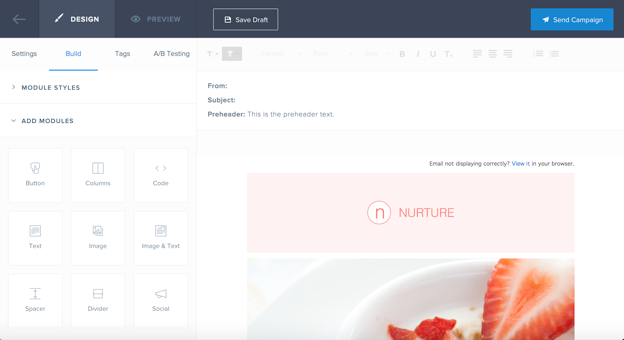
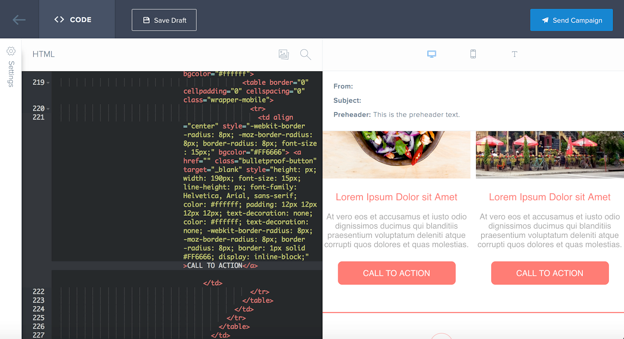










 As important as vision is to the success of your initiative, you will fail without a detailed plan. Before embarking on any initiative, clearly document what you plan to accomplish. You need to explain, in detail, your objectives, milestones, actions, resources, timeline, metrics, etc. Keep in mind, you won’t have it all worked out. Consider this plan a roadmap for how you will get to where you need to be. The final plans won’t be possible until you’ve done your due diligence in discovery with key stakeholders.