Home Blog Page 4346

Fireside Chat with R. J. Talyor, CEO at Quantifi

1
Fireside Chat with R. J. Talyor, CEO at Quantifi

“Marketing is the new finance.” And, Quantifi has taken the first step towards making it true. The marketing R&D and digital ad experimentation platform announced its launch and the $2 million seed funding today. Of course, the latest funding is the result of a phenomenal team that Quantifi has. However, I wanted to know more about their journey. So, I went a step ahead to ask the pilot himself, who is at the helm at Quantifi—  R. J. Talyor, the CEO (R. J.).

Here is what played out last evening between me and R. J.

MTS: Tell us about what Quantifi does? 

R. J. Talyor (R. J.): Quantifi is a marketing R&D platform for digital ads. We enable marketers to rapidly explore hundreds of combinations of the audience, channels and creative across paid social and emerging ads platforms, including Facebook, Instagram, Twitter, Pinterest, LinkedIn, and Reddit.

MTS: How did Quantifi plan this funding round? What are the factors that prompted your investors to believe in your product and company culture? 

R. J.: At Quantifi, we sought investment from VCs and strategic angels that believed in the promise of Marketing R&D. We sought out experts in digital advertising, digital marketing, SaaS and AI. Our investors consistently gave positive feedback on the top-notch team building Quantifi, our vision for owning Marketing R&D, and the backing of High Alpha.

MTS: How are you planning to use this newly acquired capital? 

R. J.We’ll continue to build out our team, with a focus on AI/data science, engineering, and marketing/sales. 

MTS: Are you looking to invest in new markets and technologies? 

R. J.Yes, we are increasing investments in data science, incorporating new machine learning libraries including Tensorflow, as well as image analysis and natural language processing (NLP). In addition, we’re continuing to increase our usage of production environments to match the demand of our software.

MTS: Do you plan to launch or integrate your platform with any Marketing Automation software as part of your growth plans? 

R. J.Yes, in the future, we plan to integrate Quantifi with content platforms, DMPs as well email, mobile and other marketing technology (MarTech) solutions to drive experimentation based on customer contact profiles.

 MTS: How do you see AI pushing the ceiling in marketing and advertising? 

R. J.Marketers typically try testing with an A/B test–but there are thousands and thousands of potential options that they’re not testing. With AI, marketers can prioritize what to test, then run thousands of possibilities at the same time to discover what works best for their brand–for each individual consumer. 

MTS: We recently did a piece — Modern Marketers Awry About Turning into Data Scientists! What is your opinion on this?

R. J.At Quantifi, we’re delivering AI-powered coaching for marketing–in order to translate data into actionable insights. Today, marketers need data to be successful but don’t necessarily want to be data scientists. Instead, marketers need coaching on the what analytics matter to help them make the strategic decisions to drive revenue.

MTS: Thank you, R. J., for answering our queries. We look forward to having you again at MTS very soon.

Interview with Tod Loofbourrow, CEO at ViralGains

0
Tod Loofbourrow

[mnky_team name=”Tod Loofbourrow” position=” CEO at ViralGains”][/mnky_team]
[easy-profiles profile_twitter=”https://twitter.com/todatmit” profile_linkedin=”https://www.linkedin.com/in/todloofbourrow/”]
[mnky_testimonial_slider][mnky_testimonial name=”” author_dec=”” position=”Designer”]“Muddled thinking leads to muddled technology implementation and subpar results.”[/mnky_testimonial][/mnky_testimonial_slider]

On Video Marketing Technology

MTS: Tell us a little bit about your role at ViralGains and how you got here

I am the CEO and Chairman of ViralGains. Dan Levin, President and Co-Founder of ViralGains and I shared a common vision of building a world where brands and consumers can build authentic connections through the power of video storytelling.

MTS: Given how quickly video marketing strategies have been accepted, how do you see this market evolving over the next few years?

There will be a sea change in thinking focused on the power of video to deliver true engagement. Today’s metrics of frequency and reach will fade, and be replaced by far more sophisticated metrics around genuine engagement and movement toward purchase.

MTS: What do you see as the single most important technology trend or development that’s going to impact us?

Artificial intelligence for predicting engagement will replace crude ad networks and price-based buying of ad inventory. Old models and companies will fail, replaced by better accountability and better results.

MTS: What’s the biggest challenge for startups to integrate a video marketing and distribution platform into their stack?

The biggest challenge is being clear about what you are trying to accomplish. Muddled thinking leads to muddled technology implementation and subpar results. If you have clear goals for your marketing programs, which move the needle strategically, then the next two biggest challenges are data quality and creative quality.

MTS: What startups are you watching/keen on right now?

Anyone who is focused on engagement rather than reach is focused on the right things. One of my favorites is Moat, which was just bought by Oracle. They really understand the need for different metrics for evaluating video.

MTS: What tools does your marketing stack consist of in 2017?

We currently use a combination of Marketo, Salesforce, Engagio, Yesware, Sprout Social, WordPress, Wix, Winmo and Google Analytics.

MTS: Could you tell us about a standout digital campaign? (Who was your target audience and how did you measure success?)

We just completed story.tech—our first in-person, custom event in Boston. At the outset, we hoped to attract 50 attendees from major Boston brands and agencies, with the combined goal of generating brand awareness in our community, as well as driving meaningful conversations for our sales team.

Through a combination of strategically segmented email campaigns, social promotion and precise, geofenced audience targeting that enabled us to invite only the highest-quality individuals, we were able to register more than 150 people — the majority of whom were in a position to directly influence digital ad budgets. Not only that, but as a result of the conversations we had throughout the evening, we were able to close a significant amount of both new and returning business. It was an unquestionable success, and we hope to repeat the digital campaign to support future events across the country.

MTS: How do you prepare for an AI-centric world as a business leader?

I’ve been involved in AI my entire career … even taught the subject at Harvard for eight years.  The key to thriving in an AI-centric world is to focus on racing forward alongside machines; to focus on areas where the combination of human creativity and machine pattern recognition are greater than the sum of the parts. I like to think of this as human+machine learning, which is far more powerful than machine learning alone.

This Is How I Work

MTS: One word that best describes how you work.

Passionately

MTS: What apps/software/tools can’t you live without?

Waze, which harnesses the power of the crowd to get me around traffic. Airbnb, which lets me experience new places like a native. Uber, which takes me everywhere on the road. Amazon, which is pretty much the only place I buy things. Insight Squared, which helps manage our growth with a data-centered strategic view of the business. Keynote, which provides tools for real storytelling. And of course, ViralGains, which is ushering in a world of deeply felt and authentic connections between advertisers and consumers.

MTS: What’s your smartest work related shortcut or productivity hack?

Practicing love and respect in the workplace by not accepting substandard work, pushing it back until it’s done at 110 percent with pride and excellence.

MTS: What are you currently reading? (What do you read, and how do you consume information?)

I read and consume online video voraciously. A recent thought-provoking favorite – Scott Galloway on How Amazon is Dismantling Retail

MTS: What’s the best advice you’ve ever received?

Do what you love and the rest will follow.

MTS: Something you do better than others – the secret of your success?

I genuinely care about people– their lives, their stories, and what motivates them to achieve their personal visions of themselves.

MTS: Tag the one person whose answers to these questions you would love to read.

Jeff Bezos.

MTS: Thank you Tod! That was fun and hope to see you back on MarTech Series soon.

[vc_tta_tabs][vc_tta_section title=”About Tod” tab_id=”1501785390157-b58e162d-0ae25a4b-c27a7c9c-02df”]

CEO at ViralGains, the leader in consumer-driven video distribution. The biggest brands in the world use ViralGains to build the closest connections with their consumers. ViralGains empowers the voice of brands and of people, creating authentic and lasting connections.

I enjoy creating and rapidly growing great, disruptive businesses, building high-performance teams, and quickly scaling businesses into leaders.

These have included a $40M software-as-a-service leader (Peoplefluent), a public robotics company (iRobot), and a artificial intelligence / machine learning consulting firm (Foundation Technologies).

[/vc_tta_section][vc_tta_section title=”About ViralGains” tab_id=”1501785390320-2d44fa50-740c5a4b-c27a7c9c-02df”]

ViralGains

ViralGains is a video ad journey platform that enables marketers to engage people with relevant brand stories in the venues and contexts that people most favor. Using the platform to engage in a two-way conversation, brands discover exactly what people want — and how they feel — and build a unique journey that connects highly qualified prospects with relevant messages that generate awareness, motivate intent, and impact purchase decisions. ViralGains is headquartered in Boston’s Innovation District, with regional offices in New York, Chicago, Detroit, San Francisco, Atlanta, and Los Angeles. For more information, please contact us at www.viralgains.com.

[/vc_tta_section][/vc_tta_tabs]
[mnky_heading title=”About the MarTech Interview Series” link=”url:http%3A%2F%2Fstaging.loutish-lamp.flywheelsites.com%2Fmts-insights%2Finterviews%2F|||”]

The MTS Martech Interview Series is a fun Q&A style chat which we really enjoy doing with martech leaders. With inspiration from Lifehacker’s How I work interviews, the MarTech Series Interviews follows a two part format On Marketing Technology, and This Is How I Work. The format was chosen because when we decided to start an interview series with the biggest and brightest minds in martech – we wanted to get insight into two areas … one – their ideas on marketing tech and two – insights into the philosophy and methods that make these leaders tick.

Interview with Monica C. Smith, Founder & CEO of Marketsmith Inc.

0
Monica C. Smith

[mnky_team name=”Monica C. Smith” position=” Founder & CEO of Marketsmith Inc.”][/mnky_team]
[easy-profiles profile_twitter=”https://twitter.com/MonicaCSmith” profile_linkedin=”https://www.linkedin.com/in/marketsmithinc/”]
[mnky_testimonial_slider][mnky_testimonial name=”” author_dec=”” position=”Designer”]“Technologies like predictive analytics, big data, behavioral targeting and the Internet of things are just a few of the technologies a modern CMO requires to survive.”[/mnky_testimonial][/mnky_testimonial_slider]

On Marketing Technology


MTS: Tell us about your journey as a marketing leader

I founded Marketsmith, Inc. in 1999 and the agency is now a leader in data-driven direct marketing strategy.  Marketsmith was ranked by Inc. Magazine as the #1 Woman-Led Company in the New York metropolitan area and #5 nationwide. In August 2015, Marketsmith was ranked #97 in the Inc. 5000.

Recognizing that my agency and its clients needed a faster, more efficient way to churn and analyze vast amounts of data, I founded i.Predictus, a predictive analytics-based platform in 2011, which currently is the definitive leader in marketing and media automation. On average, our users see 30 percent increase in ROI. In 2015, I purchased Brushfire, an industry-leading creative agency. Today, all three companies allow for unfettered collaboration and innovation.

For three straight years, I have driven over $1.5 billion in retail sales annually and am responsible for the management of $200 million of media spend annually (about 10% of all DRTV inventory), and am one of only a few women who has successfully raised capital in the tech arena. I was also a finalist for the 2014 Ernst and Young Entrepreneur of the Year.

MTS: Tell us about your journey as an investor:

For the most part, I have invested in technologies that would take my business to a new level.

MTS: What is the inspiration behind starting i.Predictus?

When I first invested in i.Predictus, it was because I was looking for a way to have the people on my team use their time to make decisions from information rather than having them use it to create information.  You see, we were spending an extraordinary amount of time trying to find answers in large meta-data sets. It was an untenable situation because we were going through data line by line but still couldn’t guarantee our clients a better outcome on next week’s spend. I knew I had to find a better way.

That said, I invested in the development of a product that would leverage my own business model and give me the ability to use my human capital more efficiently. What I realized later was that I was looking to automate the marketing function before marketing automation technology existed.

MTS: How much time did it take for i.Predictus to realize Jules as a tangible platform for marketers?

All told, it took three years from concept through development and trial for us to realize the final product. The issue we struggled the most with was attribution.

MTS: Help us understand the difference between Audience Data, Device Data, and Identity Management. How is analytics different for each of these?

In terms of audience data, the consumer is one of many, but there are similarities between them. There are similar personas in each group with like preferences and traits, so they are grouped by the similarities. Device data looks at individual devices and focuses primarily on micro data such as key stroking, geo-location, and other factors such as the number of apps that they may have and what those apps are, how they’re used, etc. Finally, identity management collects information about individual consumers. We focus on all three, but we look at them differently depending on the analysis we are trying to get to. As a direct marketing agency, we hyper focus on individuals, and we score against many audiences. We also use outside data sources to understand a particular person or cohort and what they are actually reacting to.

MTS: There is a lot of ambiguity around data privacy from a consumer POV, as well as from a marketer’s POV. Could you help with a benchmark definition?

I don’t believe there is a benchmark definition because currently there is no absolute on data privacy. You could say that privacy is in the eye of the beholder. There is a myriad of privacy statements that are constantly undergoing revision, and there is no one aggregated source. You’ll always be at the mercy of the last statement you read.

MTS: Do you think the B2B market is ready for customized audience data? If yes, why so?

The B2B market is clearly ready for customized audience data, and it is available for analysis and actionable insights in this space – but the challenge is in communicating with CMOs. The CMO position has a fluidity now, more than ever before – so the longer-term commitment needed for true data analysis has become much more elusive.

MTS: What do you see as the single most important technology trend or development that’s going to impact us?

According to Gartner’s latest CMO Spend Survey the technology spend of the CMO is on track to eclipse that of the CIO this year with the average CMO’s tech budget representing 27% of their overall budget.  This is no surprise with digital advertising budgets rising significantly and the Martech and Adtech explosion.

On the marketing side, this highly competitive, fast-paced, data-driven digital world forces the CMO to remain on top of a myriad of technologies.  Technologies like predictive analytics, big data, behavioral targeting and the Internet of things are just a few of the technologies a modern CMO requires to survive.  This puts a strain on enterprise IT departments that tend to move at a slower, more deliberate pace and focus on things like security and scalability.

To bridge this chasm between marketing and IT, a new type of leader is emerging in many companies, the chief marketing technologist (CMT).  Like the ancient Roman God Janus, the CMT is simultaneously looking in two directions. Part IT and part marketing, the CMT is the fulcrum, and with a mission and vision to drive marketing’s agenda while embracing IT’s processes and controls.

I believe another trend will be the continuous reduction of costs in terms of data warehousing. We will soon be able to access more data faster and cheaper than ever before.

MTS: Could you tell us about a standout digital campaign?

I’d like to direct you to our case study for Ninja Coffee Bar.  We directly went after people that were spending significant amounts of money at Starbucks and Dunkin’ Donuts. We were able to create a $100 million business model within 90 days.

MTS: How do you see data visualization transforming B2B commerce in 2017?

Data visualization has replaced ADTECH and SaaS as the most important marketing economy. I predict that ADTECH business models will fall by the wayside as data visualization gives B2B marketers the ability to create the way they want to see and report with complete control and understanding of their data. Visualization is here to stay and will get more competitive and innovative with time.

MTS: Do you think mobile-first brands have to find better ways to tackle data privacy issues related to the consumer?

Absolutely!

MTS: What are the possible action plans for such marketers?

Interestingly, we find that younger consumers don’t have the same expectations of privacy as do the boomers. I think these marketers should be researching Gen X, Gen Y and Millennial data sets with go-to-market tactics to explore the issue.

MTS: What was your opinion on our recent piece: Modern Marketers Awry About Turning Into Data Scientists?

Clearly, today’s CMOs find the amount of available data to be overwhelming. This is why we’ve invested so heavily in a visualization platform that allows marketers to quickly and easily understand the value of their data. We believe it eliminates the pain of “analysis paralysis” and gets you to your insights faster than ever before.

MTS: Will ID management ever become part of marketing automation like LinkedIn is trying to do? Or, will it continue to be a stand-alone category for CMOs to choose and invest in? 

ID management is 110% specific to strategic business models. CMOs have to look at it individually in terms of where their company is headed.

MTS: Do you think regulatory policies prove a restrictive barrier for marketers in providing hyper-personalized experiences to customers owing to adherence of data privacy?

I feel it is necessary, but not restrictive. I don’t believe they are overreaching. In fact, this is where a creative marketing agency like ours has the ability to shine. We are able to source and comprehend the data that is legally available, to create and execute personalized programs that impact our clients’ businesses.

TRENDS, CHALLENGES, AND INSIGHTS

MTS: How do you see account based marketing evolving with the proliferation of AI?

There’s a lot of talk right now about AI, but AI is what direct marketers have been using since the beginning of time, but didn’t have a name for. Simply put, AI uses and maintains data that has value and the ability to solve marketing challenges. It’s nothing we haven’t done before; we’ve just automated it.

AI and data go hand in hand because we are now able to aggregate data at the speed of light. We just did a project where we collapsed to three years of data and produced a modeling report in 48 hours. Back in the day, such a project would’ve taken four months.

MTS: What’s the message to B2B enterprises that neither use PA nor ABM in their stack?

Get with the program or prepare to face extinction! What many B2B enterprises fail to realize is that predictive analytics is less expensive than they think it is, and it’s also more accessible and noncommittal, so there’s really no risk.

MTS: How can marketers use PA (Predictive Analytics) for CRM data cleansing and data standardization? What’s the ideal roadmap for CRM users to do it effectively?

All of this language is really direct marketing 2.0. Data cleansing is where most companies seem to get it wrong. They are just not focused on it because of the sheer amount of human error is so high. We are better because we spent so long building up data cleansing and error management algorithms. Marketers need to realize that you don’t need to spend a large amount of money to get your data clean.

The roadmap is to start with comprehensive data discovery and, as we like to say, find the dead bodies and eliminate them. You have to assess the situation and determine where your data is, what it looks like, and where is the highest risk for errors. This is usually a result of where the data is or how it was acquired.

MTS: What is the biggest challenge for startups that are yet to integrate an automated marketing analytics platform like i.Predictus?

What we see most often is that startups seem to be frozen because they are unsure about what to do with their data and they mistakenly believe the solution requires an enormous budget. I think they find it overwhelming because they tend to look at enterprise solutions that are far too large, when, in fact, a scalable solution like i.Predictus — combined with marketing support services — would be a much better fit.

MTS: What tools does your marketing stack consist of in 2017?

We rely on our proprietary technology like error management, warehousing tools, and machine learning/AI.

MTS: How do you prepare for an AI centric world as a marketing leader?

AI is clearly a faster way to process data, but it is not a foreign concept to us as marketing leaders. That said, we’ve already prepared…our challenge now lies in educating and preparing others.

THIS IS HOW I WORK

MTS: One word that best describes how you work.

Fierce.

MTS: What applications or software tools can’t you live without?

Waze

MTS: What is your smartest work related shortcut or productivity hack?

Our Collective.  I have two leaders from each area within the agency that I bring together to help me solve challenges.

MTS: What are you currently reading, and how do you consume information?

I am a voracious reader. I’m currently reading a book titled Option B: Facing Adversity, Building Resilience, and Finding Joy by Sheryl Sandberg and Adam Grant.

MTS: What is the best advice you have ever received?

Read.

MTS: What is something you do better than others, the secret of your success?

I’m an excellent coach. I know how to create great teams and nurture each player to bring out the best of what’s inside them so they can rise to their full potential.

MTS: The one person whose answers to these questions you would love to read:

Jeff Bezos

MTS: Thank you Monica! That was fun and hope to see you back on MarTech Series soon.

[vc_tta_tabs][vc_tta_section title=”About Monica” tab_id=”1501785390157-b58e162d-0ae25a4b-c27a9000-fb88″]

In my world, outcomes are critical. I am driven by the idea that part of my personal journey is to make an impact for this world. I wake up every day with great desire and unbounding energy to drive outcomes for my clients, my team and those in need. I believe that those of us who have found success owe it to this world to give back and share what we have gained.

I love what I do, who I do it for and who I do it with. I am extremely dedicated to the idea that stereotypes, biases, bad habits and otherwise dysfunctional human practices have no place in the workplace. I believe the workplace should be filled with joy, kindness and laughter.

My mission is to share these beliefs to create massive change in the business environment; to grow our economy by relentlessly improving upon successful business models; and to embrace diversity of all kinds–gender, racial and neuro–in the workplace and in the “C” Suite.

I believe that our economy is a global economy; that it is critically important that everyone should continue to build on and keep sharpening skills, no matter how successful or experienced a person may be in a career. That is why learning, growing and evolving is inherent in the DNA of our company culture.

That’s also why I share my story, without holding back, of how I became a successful woman entrepreneur with learning disabilities. It is my belief that people underestimate their abilities all the time. My job is to inspire and lead my team of extraordinarily talented and passionate people.

[/vc_tta_section][vc_tta_section title=”About Marketsmith” tab_id=”1501785390320-2d44fa50-740c5a4b-c27a9000-fb88″]

Marketsmith

Founded in 1999, Marketsmith Inc. is a fast-growing, woman-owned integrated marketing agency born out of direct-to-consumer response marketing. Our goal is to use data to optimize brand communication and deliver greater ROI across all channels using the patented algorithms of our iPredictus marketing analytics platform. WBE Certified, we employ a diverse mix of talented professionals and handle over $200MM in media billings. We believe that Technology is the New Creativity – and most importantly, we do great work so we can do good things. We are also recognized as one of NJ’s 2017 50 Best Places to work, and Coolest Places to Work by NJBIZ.

[/vc_tta_section][/vc_tta_tabs]
[mnky_heading title=”About the MarTech Interview Series” link=”url:http%3A%2F%2Fstaging.loutish-lamp.flywheelsites.com%2Fmts-insights%2Finterviews%2F|||”]

The MTS Martech Interview Series is a fun Q&A style chat which we really enjoy doing with martech leaders. With inspiration from Lifehacker’s How I work interviews, the MarTech Series Interviews follows a two part format On Marketing Technology, and This Is How I Work. The format was chosen because when we decided to start an interview series with the biggest and brightest minds in martech – we wanted to get insight into two areas … one – their ideas on marketing tech and two – insights into the philosophy and methods that make these leaders tick.

Interview with David Shadpour, CEO at Social Native

1
MarTech Interview Series with David Shadpour

[mnky_team name=”David Shadpour” position=” CEO at Social Native”][/mnky_team]
[easy-profiles profile_twitter=”https://twitter.com/digitaltweetz” profile_linkedin=”https://www.linkedin.com/in/digitalentrepreneur/”]
[mnky_testimonial_slider][mnky_testimonial name=”” author_dec=”” position=”Designer”]“To build great teams, prioritize EQ over IQ”[/mnky_testimonial][/mnky_testimonial_slider]

On Marketing Technology


MTS: Tell us about your role at Social Native and how you got here.

I am the CEO at Social Native. My primary role is to ensure everyone on our team loves their job. We all have good and bad days, but when I think about every job I’ve had in my life, this is by far the best. That blessing carries with it the responsibility to ensure my team, investors, and clients, all love their experience with Social Native.

How? Relentless tenacity and commitment.

Since we launched in early 2015, we recruited industry experts Jeff Ragovin, Co-Founder of Buddy Media, acquired by Salesforce for $745M, and Eytan Elbaz, Co-Creator of AdSense, acquired by Google for $104M. We grew from 5 employees at the start of 2016 to 30 at the end of the year. We partnered with the leaders in digital marketing including Facebook, Instagram, and Salesforce. And we’ve enabled brands like Walgreens, Coca-Cola, and Polaroid to create over 700 images in 24 hours, create 500 short-form videos in 72 hours and increase the performance of paid ads by 4x.

MTS: Given the massive proliferation of marketing technology, how do you see the martech market evolving over the next few years?

Personalization. Technology limitations of the early advertising space required a one-size-fits-all strategy. Imagine a world where no two people receive the same ad experience. A world where a female who loves surfing, gets an ad of a female surfing, drinking a Coca-Cola and a father who loves building, gets an ad of a father in a workshop, drinking a Coca-Cola.

Today this breakthrough in advertising is seemingly impossible. How could Coca-Cola possibly create content for every target segment? How would this content be tagged and communicated to advertising distribution partners like Facebook or Google?

We’re closer than you think. With the proliferation of gig economies, consumers’ ability to create content, the wealth of data on consumer behavior/demographic, and advertisers’ ability to distribute content in real time, we are on the cusp of redefining every step of the advertising funnel.

MTS: What do you see as the single most important technology trend or development that’s going to impact us?

Mobile’s impact on marketplaces. The online marketplace has transformed nearly every industry, think Uber for transportation and Airbnb for hospitality, there’s a long list of other industries ripe for transformation. The unparalleled access and abilities unlocked by empowering consumers to become service providers will turn antiquated businesses upside down.

MTS: What’s the biggest challenge that CMOs need to tackle to make marketing technology work?

The biggest challenge CMOs are currently up against is how to maintain relevance within their target audiences. People are ultra-connected. Markets constantly shift. New trends emerge. Competitors enter and shake things up. Customers expect more from the brands they buy from. It’s not about just being the most convenient option or the cheapest option.

With a world of data available to consumers at their fingertips, and all products available with the click of a button, brands will win this game by building relationships with consumers – cutting through the noise to connect with consumers through authentic, personalized and relevant marketing.

MTS: What would be your advice to CMOs when they start planning to invest in Marketing Technologies?

Who are you investing with? Marketing technologies can be like shiny toys, it looks fun and exciting but are they built to last? Think about the manufacturer – are they reliable? Is the senior team focused on margin or value add? Regardless of what technology we’re evaluating – the right partners always drive value.

MTS: What Start-ups are you watching/keen on right now?

I’m watching/keen on a lot of startups right now – actually I’m pretty much obsessed with learning about new and more mature startups – how they evolved, where they are headed, pain points, successes/failures etc… I’m most interested in LA based startups, specifically folks who managed to earn the unicorn title. Personal favorites: Robinhood, DollarShaveClub & Scopely.

MTS: What tools does your marketing stack consist of in 2017?

We currently invest heavily in CRM, email marketing, and analytics. Going into 2017 we’re looking into program management, ABM, content management, and additional inbound and advertising technologies. We use Social Native for content creation.

MTS: Could you tell us about a standout digital campaign? (Who was your target audience and how did you measure success)

Polaroid needed to increase the volume of content they ran on paid to minimize the impact of content fatigue and as a result, decreased performance.

The brand partnered with Social Native, a technology company for cost-efficient, high-quality authentic brand content that’s paired with rich performance data.

Instead of running white backdrop product images in Facebook ads, Polaroid leveraged Social Native to create custom, personalized content for every consumer segment. By running personalized and leveraging the Social Native Optimization Engine to adjust for performance in real-time, Polaroid achieved:

– 213% higher click through rate

– 200% higher return on ad spend when using Social Native content

– 180% lift in sales

MTS: How do you prepare for an AI-centric world as a marketing leader?

Recognize that almost all processes are going to change and embrace it. The most successful marketing leaders are those who can adapt and evolve with the changing market landscape. Social Native has built machine learning into our matching technology and is focused on ensuring that AI plays a role in future evolutions of our product. We’ll never know what tomorrow holds, so the best preparation is to a create a frame of mind where you’re ready for whatever is thrown your way.

This Is How I Work

MTS: One word that best describes how you work. 

Relentless

MTS: What apps/software/tools you love using for your daily life? 

GTFO, Envoy, Today History

MTS: What’s your smartest work related shortcut or productivity hack? 

Weekly review. Simply, but profound. Where did I allocate my hours this week? Write it down. What could have been delegated? What could only be completed by me? Learn, Repeat, Learn, Repeat.

MTS: What are you currently reading? (What do you read/watch, and how do you consume information?) 

Currently reading — The Intelligent Investor by Ben Graham.

I consume most information from people in the industry. Our category is running faster than publications can type and distribute – if you want to consume relevant information, surround yourself with relevant people.

MTS: What’s the best advice you’ve ever received?  

“Don’t chase success. Recognize that you are already successful.”

Believe, more than anything else, that you will figure it out. When the times get tough – and they always do – remember you were made for this challenge and that how you handle this challenge defines you. With time, endless hard work and that unbreakable commitment, the unimaginable will be accomplished and even bigger dreams will keep you up at night.

MTS: Something you do better than others – the secret of your success?

Commitment. Both myself and my team have an unwavering commitment to being number one. If you’re committed, you’ll find a way.

MTS: Tag the one person whose answers to these questions you would love to read 

Jeff Ragovin – Co-founder Buddy Media, former Chief Strategy Officer Salesforce, Founder at Ragovin Ventures

MTS: Thank you, David! That was fun and hope to see you back on MarTech Series soon.

[vc_tta_tabs][vc_tta_section title=”About David” tab_id=”1501785390157-b58e162d-0ae25a4b-c27a8d4a-e102″]

As CEO of Social Native, David drives company growth, increasing market penetration and identifying new business opportunities. David entered the digital ecosystem when he founded GroopBuy, a digital marketing agency. Within 6 months he signed 450+ clients. David later moved on to found AmplifyBuzz, a social media agency for dozens of top tier brands including Crocs, Kraft, and Warner Brothers.

[/vc_tta_section][vc_tta_section title=”About Social Native” tab_id=”1501785390320-2d44fa50-740c5a4b-c27a8d4a-e102″]

social native

Social Native is the technology platform for creating high performing branded content. Social Native connects brands with a diverse network of content creators, globally, to create custom content on demand. Headquartered in Los Angeles, California, Social Native is backed by veterans of Google, Salesforce, Scopely, Applied Semantics, & Buddy Media, whose past startups have created over $6B in equity value. Visit socialnative.com to learn more.

[/vc_tta_section][/vc_tta_tabs]
[mnky_heading title=”About the MarTech Interview Series” link=”url:http%3A%2F%2Fstaging.loutish-lamp.flywheelsites.com%2Fmts-insights%2Finterviews%2F|||”]

The MTS Martech Interview Series is a fun Q&A style chat which we really enjoy doing with martech leaders. With inspiration from Lifehacker’s How I work interviews, the MarTech Series Interviews follows a two part format On Marketing Technology, and This Is How I Work. The format was chosen because when we decided to start an interview series with the biggest and brightest minds in martech – we wanted to get insight into two areas … one – their ideas on marketing tech and two – insights into the philosophy and methods that make these leaders tick.

Microsoft’s Cognitive Services Is Now Available on Gupshup’s InterBot

0
Microsoft's Cognitive Services Is Now Available on Gupshup's InterBot

Developers can tap into Microsoft Cognitive Services Intelligent APIs like computer vision, text sentiment analysis, and Bing image recognition on InterBot

Bot and chat company, Gupshup, has made Microsoft Cognitive Services available for InterBot, its bot-to-bot communications channel.

Developers can now incorporate the intelligent capabilities of Cognitive Services to build bots for Microsoft Teams, Skype, and Skype for Business, Cortana and more. The move will bring computer vision, text sentiment analysis, and Bing image recognition to InterBot.

“Our mutual customers rely on platforms like InterBot to provide the necessary tools to create intelligent and engaging bots,” said Irving Kwong, Group Program Manager, Microsoft Corp. “We are pleased to see Gupshup make Microsoft Cognitive Services available on InterBot, and help further our goal of bringing greater intelligence and simplicity to the bot development process.”

Launched in April 2017, InterBot can be used only after bots are uploaded on the channel. Developers can also use other bots that have been uploaded on InterBot.

Beerud Sheth, the CEO, Gupshup, explained, “InterBot helps developers make their bots smarter by enabling them to tap into the collective intelligence of other bots and services, such as those offered by Microsoft Cognitive Services. Microsoft has openly embraced the developer ecosystem, and we are proud to collaborate with them to bring the power of Microsoft Cognitive Services to the InterBot platform.”

Developers can leverage InterBot’s simple interface to create or import bots to the platform and then connect them to other bots in order to provide completely new functionality and services.

In the bot ecosystem, Gupshup has worked with Cisco, Google, Facebook, and now Microsoft. It is used by more than 30,000 developers building services that process over 4 billion messages per month and more than 150 billion messages cumulatively.

Read Also: Chatbots Market Estimated to Touch 3 Billion Dollars by 2021

Outbrain Launches Programmatic Access on AppNexus

0
Outbrain Launches Programmatic Access on AppNexus

OPA integrates demand partners into Outbrain’s native ecosystem on which customers can bid on CPM basis

Outbrain, a content discovery platform, launched Outbrain Programmatic Access (OPA), on AppNexus.

AppNexus
Brian O’Kelley, CEO, and Co-Founder, AppNexus

Being the first strategic launch partner for OPA, AppNexus marketplace customers can now bid on Outbrain’s inventory on CPM basis. Available to customers worldwide, OPA integrates programmatic demand partners into Outbrain’s largest premium programmatic native ecosystem.

Brian O’Kelley, CEO, and Co-Founder, AppNexus, said “Outbrain has focused on building a leading premium native platform. It has a clear vision of where the industry needs to go and strong values when it comes to brand safety and trust. This collaboration unlocks opportunity for all of our customers around premium native.”

The content discovery platform has always operated as a closed marketplace but the OPA program allows select partners to participate in the marketplace using their own data and technology stacks. OPA also makes it easy for marketers to leverage Outbrain’s proprietary data and technology to access their audience in a native way.

o-Founder & CEO, Outbrain
Yaron Galai, Co-Founder & CEO, Outbrain

In the months to come, Outbrain plans to grow the adoption of OPA, by marketers and premium brands across its major territories.

Yaron Galai, Co-Founder & CEO, Outbrain, commented “Outbrain and AppNexus are the two largest and arguably most visionary companies in the world of digital advertising and together we offer a true bridge between the programmatic display world and the programmatic native world for premium brands. Through this first cooperation, we are able to bring a new premium solution to the marketplace and continue to deliver on our mission to help people discover the most interesting things online – combining respect for the placement and trust of the most premium publishers in the world with true value for users.”

The integration with AppNexus builds on Outbrain’s promise and investment in developing new innovations in targeting, analysis, measurement, and data-driven discovery solutions, complementing their search and social strategies.

Read Also: AppNexus, LiveRamp, and MediaMath Launch Technology Consortium to Enable Privacy-First People-Based Programmatic Advertising

Meet InteractiveUX- an AI and Predictive Analysis Digital Marketing Platform

0
Meet InteractiveUX- an AI and Predictive Analysis Digital Marketing Platform

InteractiveUX leverages machine learning and NLP to deliver personalized and efficient digital marketing campaigns

XCEL Corp launched InteractiveUX, an Artificial Intelligence, and Predictive Analysis Digital Marketing Platform to enable businesses to analyze data, draw insights, and make relevant business decisions.

InteractiveUX brings AI-powered technologies and industry standard best practices together to create personalized and efficient digital marketing campaigns. It offers a wide range of services for all business domains, including design services, web development, digital marketing, mobile application development, business intelligence analytics, security and much more. The subscription to each of these app modules is on-demand.

Reaching out to targeted customers at incredibly low cost

Jit Goel, CEO of XCEL Solutions Corp, said, “The launch of the platform will mark the beginning of an exclusive and a predictive digital marketing solution globally. Drawing from our international pool of talent, we provide out-of-the-box digital solutions that are highly efficient and incredibly low cost.”

The company said that this platform meets the challenge of reaching out to the targeted customer by navigating through the enormous database with the help of AI and Predictive Analysis in digital marketing. Millions of dollars are being spent by enterprises to understand what their consumers need and how their brand is perceived. AI offers those enterprises increased number of leads with better ROI. InteractiveUX leverages machine learning and natural language processing to create, optimize, and improve marketing campaigns.

Read Also: Marketo® Accelerate Unveiled to Scale MarTech Innovation for Personalized Engagement

Verint Releases New CX Consulting and Service Offerings

1
Verint Releases New CX Consulting and Service Offerings

Through CX strategy consulting, contact optimization, Omni-channel and digital experience, Verint customers can now take actions on the VoC

Actionable Intelligence solutions provider, Verint Systems Inc. has announced a series of advanced Customer Experience (CX) consulting and packaged services which are specifically designed to help companies enhance their own customer experiences across interaction channels and customer touch points.

verint
Ben Smith, Global VP and GM of CX solutions, Verint.

“In addition to offering even more extensive, holistic customer experience consulting and strategy support, we’re focused on helping our customers define and implement their CX strategies, and their ability to effectively listen, analyze, and act on the voice of the customer across digital, voice, text and social interactions,” says Ben Smith, Global VP and GM of CX solutions, Verint.

The new consulting and services capabilities being offered are:

CX Strategy Consulting

Verint helps customers develop clear, insight-driven CX strategies and roadmaps. Those include guidance to prioritize investments in CX strategy, CX research, journey mapping, and experience design. It also provides service and marketing related to CX, contact center or digital transformation.

Contact Optimization

This includes applying cross-channel analytics and managed services for Voice of the Customer (VoC) feedback. In addition, contact analysis offers customers specific, actionable intelligence for improving the CX. This enables them to capitalize on their most important customer interactions and reducing costs.

Omni-channel and Digital Experience

Best-practice capability assessments and customer research are done to develop roadmaps that prioritize project investments across retail, digital and other channels.  Customers can then develop tactical strategies for creating simple, consistent experiences across channels.

Strategic Program Implementation

While bridging the gap from strategy development to implementation, customers receive project management assistance, to help ensure that strategic objectives and program benefits are realized from inception through implementation.

“By expanding our portfolio to include an important set of CX consulting and packaged services offerings, we can help our customers and their customers achieve desired outcomes across assisted and self-service channels while cultivating deeper long-term relationships,” Smith said.

Founded in 1994, publicly listed Verint has made nine acquisitions mainly in the customer care and engagement space; with the recent one being OpinionLab that provides cloud-based Omni-channel voice customer feedback solutions.

Read Also: Deloitte Acquires Web Decisions to Enhance Omnichannel Customer Experience Capabilities

Marchex Speech Analytics Sets Industry Standard in Customer to Business Call Analytics

0
Marchex Speech Analytics featured image

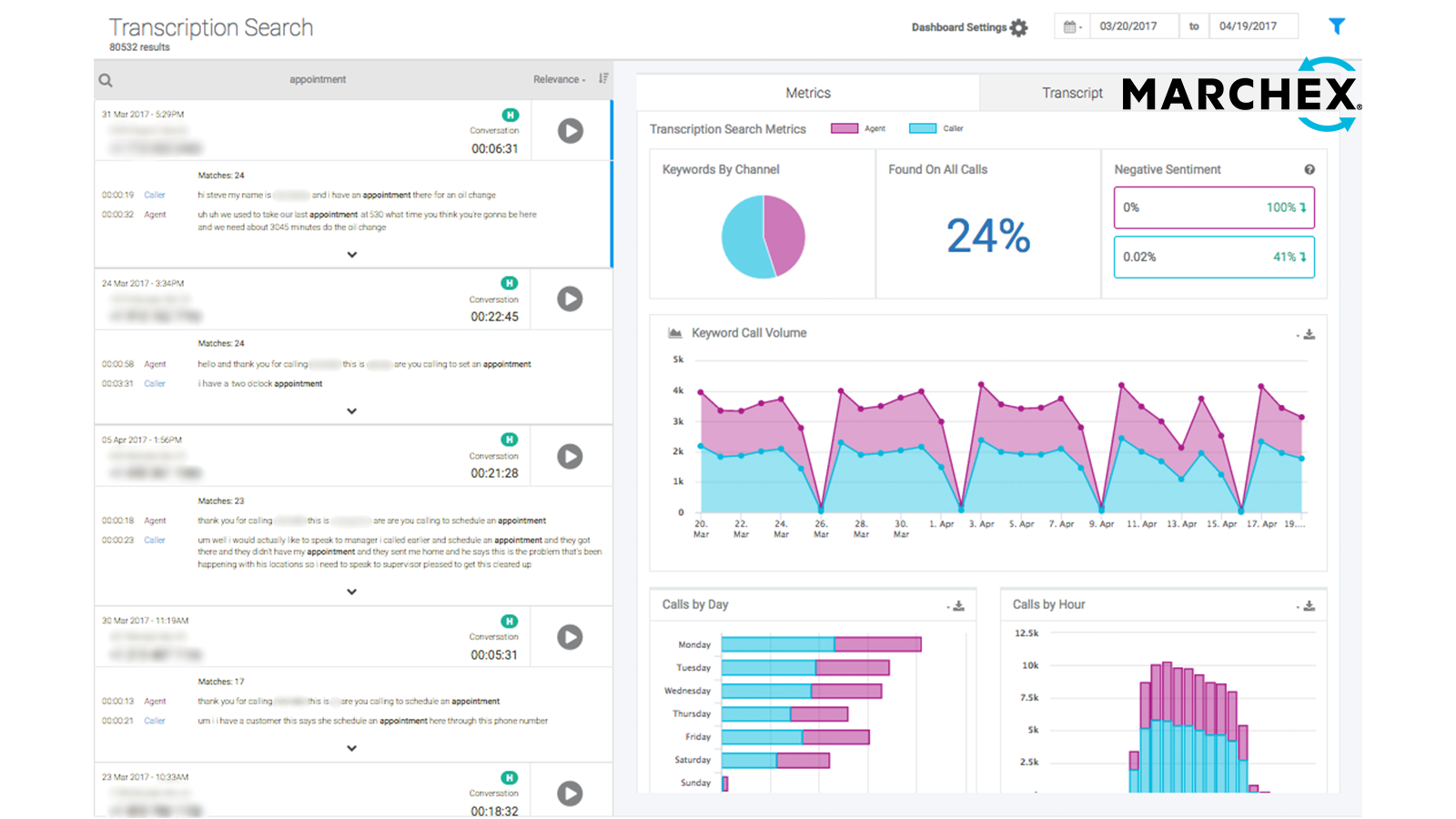
Marchex, a mobile advertising analytics company, today announced the results of a product test, independently verified, of its recently launched Marchex Speech Analytics solution. Enterprise Technology Analyst Frank Ohlhorst put Marchex Speech Analytics head-to-head with the recognized leader in automatic speech recognition (ASR) systems, IBM’s Watson, and concluded that Marchex is setting the standard in speech analytics.

Marchex Speech Analytics 1

Marchex Speech Analytics enables enterprise and mid-sized companies to derive actionable insights from inbound phone calls from consumers to their business, to improve media spend and sales operations, and help convert more callers into customers. The recently launched technology is gaining insights daily and continuing to evolve and expand its capabilities. To validate its ascendency in the customer to business call analytics space, Marchex had an independent third party directly compare its capabilities against IBM’s Watson.

Marchex Speech Analytics 2

We know this is only a sub-set of Watson’s full capabilities, but for companies looking to evaluate call data and analyze consumer to business phone calls, Marchex Speech Analytics proved superior,” said Ohlhorst. “That said, there are still elements that can be compared between Marchex and Watson, which include the accuracy of how voice is processed and ultimately transcribed, and Marchex outperformed Watson from that perspective.”

Marchex Speech Analytics and Watson were evaluated through a series of tests to directly compare their capabilities, identifying two key metrics to measure speech technology performance: RAW word error rate and perceived word error rate, ensuring fair testing for both systems. RAW word error rate measures the number of words that are inserted, deleted and substituted in order to discern overall accuracy of a transcription, while perceived word error rate normalizes some words and spelling that are really the same, but in the RAW case would appear as an error. For example, if a human transcription recorded a word as “alright” but the machine transcription showed “all right,” the RAW system would consider that to be an error while the perceived system would not.

Marchex Speech Analytics 3

Marchex Speech Analytics outperformed and achieved a lower rate of error than Watson in both categories:

  • Watson achieved a RAW word error rate of 21.1%, compared to Marchex’s RAW word error rate of 15.7%

  • Watson demonstrated a perceived word error rate of 19.4%, while Marchex achieved a lower rate of 14.6%

Jason FlaksAccuracy is critical for those seeking actionable insights from within a phone call,” said Jason Flaks, Senior Director of Product and Engineering, Speech Analytics at Marchex. “These test results show that our technology can deliver the accuracy to not only understand what happens on phone calls at scale, but also make informed decisions on how brands should be interacting and engaging with their customers.”

Google AdWords to Comprehend Search Ads

3
Google AdWords to Comprehend Search Ads

Google AdWords

Google AdWords is about to initiate multiple machine learning innovations. Out of these, ‘in-market audiences’ for search ads stands out as the most eminent. It connects businesses with customers who are actively searching, browsing and comparing the products and services they sell.

According to Google “ in-market audiences analyzes trillions of search queries and activity across millions of websites to help figure out when people are close to buying and surface ads that will be more relevant and interesting to them.”

‘Google Attribution’ – One more addition

‘Google Attribution’ was recently announced as one more machine learning innovation by Google. This free tool was built to measure marketing efforts by analyzing the effects and roles played by different marketing strategies and campaigns in customer purchase decisions. Drawing data from AdWords, Analytics, and DoubleClick, it allows businesses to understand the effectiveness of their marketing activities.

Google Attribution aims at measuring data at each stage of the customer decision journey from their first click till their last before a purchase. Its ML-based data-driven attribution will then attribute the credit assigned to each stage. Presently available in only beta version, this tool will be soon available to marketers in the months to come.

Store Sales Measurement

Google has introduced store sales measurement to AdWords, which assists businesses in measuring the overall in-store profit acquired from online ads. This enables businesses to administer store visits generated by online ads and revenue collected from those visits.

Also Read: Learn More About the New Google Cloud Machine Learning Group

Interview with Jennifer Grant, Chief Marketing Officer at Looker

0
Jennifer Grant

[mnky_team name=”Jennifer Grant” position=” Chief Marketing Officer at Looker”][/mnky_team]
[easy-profiles profile_twitter=”https://twitter.com/realjengrant” profile_linkedin=”https://www.linkedin.com/in/jencgrant/”]
[mnky_testimonial_slider][mnky_testimonial name=”” author_dec=”” position=”Designer”]“Without a clear, shared view of the data and metrics of the business, Sales and Marketing leaders have been set against each other, fighting to prove their worth with different silos of data.”[/mnky_testimonial][/mnky_testimonial_slider]

On Marketing Technology


MTS: Tell us a little bit about your role at Looker and how you got here.

After experiencing the wild amazing journey of growing Box from 30 employees to almost 1,000 employees, I was looking for another company with similar potential. When I found Looker, not only did they have a product that customers loved, they had a great leadership team with an authentic and friendly culture that I wanted to be a part of.  I’m now the CMO here, and I oversee all things marketing – Demand Gen, Brand, Corp Comm, Product Marketing, Field and Sales Acceleration as well as our SDRs (Sales Development Reps).

MTS: Give the plethora of sales and marketing analytic tools available today, how does Looker (as a platform) distinguish itself from the rest?

Looker is a data platform that can serve every department so that’s much broader than any sales or marketing specific tool. Imagine if you could combine your advertising data with your product and support data. If you could say which keywords produced the most engaged users and which clicks garnered the customers that churn. Connecting these different data silos together and allowing a business to analyze across all this customer data can seem difficult, but that is what we do that is different from any of the siloed tools available for marketers today.

Instead of walking into a meeting with Sales and arguing over whose data is right, you both have the same data, same definitions and metrics, and can talk about strategies to take the business forward.

MTS: What do you see as the single most important technology trend or development that’s going to impact us?

We have been living in data silos for a long long time and that has caused tremendous stress between the sales and marketing teams. Without a clear, shared view of the data and metrics of the business, Sales and Marketing leaders have been set against each other, fighting to prove their worth with different silos of data.

Having a single source of truth for the company gives us a new opportunity to work together with our sales counterparts and actually focus on the business and solving real problems. It seems like such a small change, but when you’re working with incomplete data, decisions on what to do next to become politically charged and emotionally draining. For me, getting back to the real goal of building a business and doing it as a team, is a huge step forward for everyone.

MTS: What’s the biggest challenge for startups to integrate an analytics platform like Looker into their stack?

The first step is to actually collect accurate data. Very often you set up your Salesforce or other CRM at the early stages of a start-up and you don’t have the conversation about the future. What data do you want to collect today – and what might you be asking in the future? The more time you spend on the data strategy early on, the faster you can scale your understanding of what’s happening in your business. Even if you know you won’t have time today to do the analysis, collect the data for the future. The second step is when you’re ready to pull all that data together and let Looker clean it up and join it together for analysis.

If you’ve already been collecting the data you need for the questions you have, you’ll be in better shape to pull it all together from all the marketing and sales tools now available and get it centralized. Once you’ve done those two things, the rest is fairly easy. With a data platform, you can then figure out what each department needs, create dashboards, and push data into everyone’s existing workflow – Slack or Salesforce – to make it as easy as possible to make better, more informed, decisions.

MTS: What startups are you watching/keen on right now?

G2 Crowd is my current favorite start-up. They have hit upon a key moment of the buying cycle where people want a neutral comparison. And what better way to compare products than to get customer reviews, compile them and find where each of tools does well and where they are weak. Their content has been very effective for us in capturing people who are in the later stages of the buying cycle.

MTS: What tools does your marketing stack consist of in 2017

Salesforce and Marketo are the biggies. Infer for lead scoring, Clearbit for data augmentation, Bizible for online tracking / attribution, Influitive for brand advocacy, On24 for webinars, Optimizely for website testing, Google Analytics to track the website, Drift for website chat, Uberflip to manage our website content, DocSend to cleanly get it in sales hands, Outreach.io to help with sales engagement, and Bizzabo for all our events. We also love Buffer for our social media and Dynamic Signal for our employee advocacy.

Of course, all the data is pulled into Looker where we have company-wide and department specific KPI dashboards, we track progress against goals throughout the funnel and do all our ad-hoc analysis.

MTS: Could you tell us about a standout digital campaign? (what was your target audience and how did you measure success)

Our best campaign was with the launch of G2 Crowd’s report comparing BI tools where we did very well against the competition. Our target audience is data analysts so our focus was on that persona.  For the top of the funnel, we pushed the content through PPC channels (Google, Linkedin, Bing, Facebook) and third party sites (Tech Target, DBTA, and other Data Analyst focused content websites).

We had employees posting on all the socials sites (Facebook, Twitter, LinkedIn) and encourage this through VoiceStorm/Dynamic Signal’s app that notifies employees when interesting content is ready for them to post about. We also put it on our homepage and in our Learn Center to capture website traffic on our site. We then worked the middle of the funnel, using it to nurture our database of leads, including an email that our SDRs and Sales Reps could easily use to re-engage a prospect.

The effort was one of the most expansive and integrated efforts lead by our Demand Gen team and it produced great results driving more than 20% of our total meetings for the sales team.

MTS: How do you prepare for an AI-centric world as a marketing leader?

I don’t think AI is going to make anything we’re doing now obsolete so there’s not much to do to prepare. We already have small forms of AI in some of the technology that Infer and other lead scoring tools offer. They are looking at the profile of leads that turned into deals in the past and then scoring new news based on the predictive algorithms they built.

When lead scoring became real, the main issue that we as marketers struggled with was getting the rest of the non-marketing leadership to chill out. I had VPs coming to me and telling me that lead scoring was going to change our marketing so fundamentally that we would have to raise our targets.

While lead scoring is an excellent tool in any B2B marketers’ arsenal – it has not had a step function impact that would cause such an enormous shift. AI will likely be the same. Everyone will get excited (overexcited) about the impact, and then it will settle into tools that we integrate into our stack. There could be some technologies that go by the wayside, but it won’t happen overnight.

How I work

MTS: One word that best describes how you work.

Efficient.

MTS: What apps/software/tools can’t you live without?

Looker. Gmail. Google Calendar, Zoom Conferencing. Accompany.

MTS: What’s your smartest work related shortcut or productivity hack?

Subscribe to The Skimm. It gets you all the world news in a non-biased but entertaining format so you can know what’s happening in the world in 5 mins without actually doing the work of reading all the various news sources.

MTS: What are you currently reading? (What do you read, and how do you consume information?)

My favorite writers are Tomasz Tungus from RedPoint, Simon Sinek’s books and talks, and my non-work reading which is currently Sarah Beth Durst, who writes YA fantasy. I can usually bond with any teenager who likes fantasy because I’ve read them all from Harry Potter to Rick Riordan and now Sarah Beth Durst.  As for daily news, I usually get my business news from Accompany and my world news from The Skimm.

MTS: What’s the best advice you’ve ever received?

Lean back, listen and ask questions. This is especially helpful when someone is criticizing or offering unwelcome advice.

MTS: Something you do better than others – the secret of your success?

I have four kids (7-year-old step-son, Two 10-year-old daughters, and a 13-year-old son) and a blended family, everyone is constantly going in different directions, different schools, schedules, different activities, homework – it’s a wild wild ride. Even with all the chaos and the seriousness of my job as CMO at Looker, I have made it work.

Every second of the day I am looking for how to be more efficient: groceries online, Amazon subscriptions, a blackboard with the dinner menu for the week, a calendar on the wall, bill pay all online and automated… It has made me exceptionally efficient and a multi-tasking wizard.

I have at least 5 – usually more – projects in my head at all times – thinking about my son’s volleyball game, our next big marketing idea, how to keep the team motivated and happy –  and I can zero in on the one I focus on when I need to. I’m constantly looking for how we could do things faster and more automated – and as the CMO of Looker this means how we can scale – can we do this the same way when we have 10x the users, 10x the businesses, 10x the leads coming in? – that’s the only way to scale and grow a business. It’s a combination of “more more more” all while massively increasing efficiency.

MTS: Tag the one person whose answers to these questions you would love to read:

Menaka Shroff, former CMO at Betterworks.

MTS: Thank you, Jennifer! That was fun and hope to see you back on MarTech Series soon.

[vc_tta_tabs][vc_tta_section title=”About Jennifer” tab_id=”1501785390157-b58e162d-0ae25a4b-c27a6437-b8a0″]

Jennifer Grant serves as Looker’s CMO. Prior, she spent the last 15 years building powerhouse brands from the ground-up. As the first executive marketing hire at Box, she oversaw its growth from a small “consumer back-up” start-up to an industry-leading enterprise content collaboration company used by the majority of the Fortune 500. After Box, she spent a few years advising Homebrew’s portfolio, on the board of directors of nonprofit K-12 Team, and led the rebranding of Elastic as CMO. Prior to Box, Grant spent 4 years at Google leading the Google Apps EDU, Gmail and Book Search marketing teams.

[/vc_tta_section][vc_tta_section title=”About Looker” tab_id=”1501785390320-2d44fa50-740c5a4b-c27a6437-b8a0″]

via Looker Featured

Looker is an inventive software company that’s pioneering the next generation of business intelligence (BI). We believe that businesses can only thrive when data is consistently defined and easily accessible across the entire organization.

Our web-based platform powers the work of data analysts while fueling (and fulfilling) the business user’s curiosity. Looker is creating true discovery-driven businesses and unlocking the value of their data, one customer at a time.

[/vc_tta_section][/vc_tta_tabs]
[mnky_heading title=”About the MarTech Interview Series” link=”url:http%3A%2F%2Fstaging.loutish-lamp.flywheelsites.com%2Fmts-insights%2Finterviews%2F|||”]

The MTS Martech Interview Series is a fun Q&A style chat which we really enjoy doing with martech leaders. With inspiration from Lifehacker’s How I work interviews, the MarTech Series Interviews follows a two part format On Marketing Technology, and This Is How I Work. The format was chosen because when we decided to start an interview series with the biggest and brightest minds in martech – we wanted to get insight into two areas … one – their ideas on marketing tech and two – insights into the philosophy and methods that make these leaders tick.

VidMob Joins Facebook and Instagram Marketing Partners Program

0
VidMob Raises $7.5 Million in Series A Financing

VidMob connects brand marketers of all sizes with its community of over 5,000 professionally trained video creators 

VidMob, a technology-enabled marketplace for video creation, has been awarded the Partner badge for the Facebook Marketing Partners and Instagram Partners program, within the Content Marketing specialty.

The Facebook marketing and Instagram partners program can put businesses at the forefront of advertising growth on their platforms. It enables marketers to find quality partners who are a fit for what they need.

vidMob
Photo-vidMob

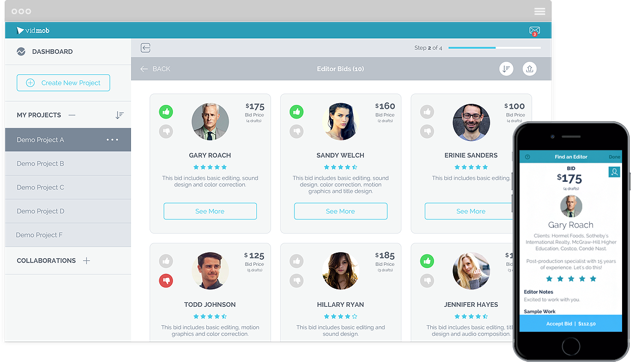
VidMob connects marketers with its community of over 5,000 professionally trained video creators globally, to produce a suite of native videos that will captivate fans in a cost-effective manner. 

VidMob empowers advertisers and social media marketers to create and publish amazing video content at scale. Producing videos usually drains out marketing budgets and production resources, a challenge VidMob helps to deal with.

VidMob
Alex Collmer, CEO & Founder, VidMob

“Video is the stickiest medium for deep engagement with consumers, but the challenge has been employing it at scale,” said Alex Collmer, CEO & Founder of VidMob. “For brands to take full advantage of the tremendous opportunity video represents on Facebook and Instagram, they have to consider volume, versioning, evolving ad formats and language localization.  Our army of talented creators aims to ensure that each of these challenges is met efficiently and affordably.”

Facebook evaluate partners for excellence by one or more of the seven specialties namely, ad tech, community management, content marketing, smart business solutions, the audience onboarding, audience data providers, and measurement.

VidMob’s curated network of video creation professionals is expertly trained on best practices on social media platforms including Facebook and Instagram. They have a broad range of skills comprising basic editing, complex editing and storytelling (long form), subtitling, language localization, motion graphics, animation, sound design, and color correction.

Read Also: Animoto Partners with Facebook and the US SBA


MediaMath Tops Forrester Omnichannel Demand-Side Platform Report

1
MediaMath Tops Forrester Omnichannel Demand-Side Platform Report

MediaMath scores the highest according to the report in current offering and strategy

MediaMath, a company that combines data, omnichannel, media and machine learning on a single unified programmatic platform for marketers said that it had scored the highest points in its current solution category in The Forrester Wave™: Omnichannel Demand-Side Platforms, Q2 2017” report.

The Forrester Wave report classifies and appraises omnichannel demand-side platform providers in the field of programmatic ad technology. The research evaluated four critical areas of omnichannel digital media buying where the providers should focus at:

• Authenticated people-based data
• Access to quality inventory outside of the open exchange
• Transparency in machine learning and automation
• New improvements in tools for planning and predicting

According to Joanna O’Connell, CMO of MediaMath, “We believe Forrester’s rating acknowledges how efficient and effective our omnichannel programmatic platform is. Our clients understand how crucial it is to create a seamless marketing experience for the consumer and as a result, drive better business outcomes. As the digital marketing environment becomes increasingly complex, Forrester’s report validates for us how well-equipped we are to meet the needs of marketers today and strategically lead them in the future.”

Also Read: Spotify to Enrich CX Based on Programmatic Recommendations

Choozle Strengthens Technology Stack with Hire of John Schnipkoweit – Its First CTO

0
John Schnipkoweit

Choozle, a programmatic advertising platform that connects marketers with big data insights and real-time bidding across display, social, mobile and video, today announced the hire of its first Chief Technology Officer, John Schnipkoweit, to provide strategic direction and leadership for all technical aspects of Choozle; with a focus on scaling for market expansion and new products, as it relates to engineering, architecture and partnerships.

John Schnipkoweit
John Schnipkoweit

Prior to joining Choozle, Schnipkoweit has founded multiple technology companies, leading innovative teams to scale engineering, products and operations. Working closely with his business partners, John’s creative problem solving, design thinking and experience have been instrumental in bootstrapping startups into profitable, scaling ventures, with his most successful endeavor growing beyond 50 employees and over 20 million users.

John was the founder of LeapState, a consulting agency based in Denver, as well as Entrepreneur in Residence for Global Accelerator Network, and prior to that he was the CEO and co-founder of NextStep.io, a digital health app company. While he was Entrepreneur in Residence at GAN, he mentored over 250 Startup Founders over Skype.

We are excited to add a seasoned and entrepreneurial technology veteran like John to focus on developing, innovating, and scaling our technology stack,” said Choozle CEO, Andrew Fischer. “John’s wealth of experience in engineering and development combined with his success in bootstrapping a high-growth company provides great depth and value to our entire executive team.”

Choozle’s product focused development has propelled them as the leader in the self-service, digital advertising world. Their turnkey, fully integrated system is prime for market expansion and the introduction of new products, ” said John Schnipkoweit. “I’m thrilled to be joining their amazing team and building the next evolution of digital advertising made easy.”

Choozle’s cloud‐based platform blends the power of big data and real-time programmatic advertising into one simplified platform. Choozle clients have access to industry leading data services including data management (DMP) and CRM upload/match as well as a complete buy-side suite of tools (DSP) to power video, mobile, display, and social ad campaigns.

Also read: Digital Advertisements: Intrusive or Intuitive?

AOL Launches Smart Yield for In-App Header Bidding

1
AOL Launches Smart Yield for In-App Header Bidding

Smart Yield Solves Mobile Revenue Challenges for Publishers and App Developers with unified in-app header bidding auction across first and third-party demand

AOL launched the beta version of Smart Yield, a mobile-first solution that brings the benefits of desktop-based header bidding in-app, allowing mobile publishers and app developers globally to get the full value of an app’s audience.

In addition, Smart Yield offers the first server-to-server and client-side hybrid mobile header bidding solution. It seeks to eliminate latency associated with multiple monetization partners. The beta version of Smart Yield can be used in AOL’s programmatic mobile supply-side platform ONE by AOL.

Smart Yield will benefit publishers

AOL
Matt Gillis, SVP, Publisher Platforms, AOL

By creating a unified auction for mobile in-app, Smart Yield provides advertisers with the inventory, and mobile publishers and app developers with the highest possible yield per impression.

Matt Gillis, SVP, Publisher Platforms, AOL, said “As they have seen success with header bidding across their desktop inventory, they want to see that play out across all screens. As ad spend on mobile has increased, the need to bring the concept of header bidding to mobile in-app experiences has, too. We are excited to launch Smart Yield, which will give mobile publishers the power to capitalize on their inventory and maximize yield.”

Read Also: Header Bidding is Driving Maximum Mobile Monetized Impression, says PubMatic Report

Header bidding increased daily revenue by 53% on mobile and desktop

AOL ran an analysis for publishers on its platform before and after implementation of header bidding, and found a 53% increase in daily revenue for mobile web and desktop display. By bringing these capabilities to mobile publishers, Smart Yield allows AOL demand partners to compete at the same time for the same inventory. Ultimately, this leads to higher yield for publishers and app developers.

Feedback on AOL’s in-app mobile header bidding

“Header bidding puts control back into the hands of publishers and we’re excited to join AOL’s beta in bringing these capabilities in-app,” said Bill Alena, Chief Revenue Officer of The Meet Group, owner of popular social apps, including MeetMe. “As the digital ecosystem evolves, it’s important for us to maintain a level of transparency and efficiency in order maximize yield and support our high standard of consumer experience. We’ve long been a partner of AOL and their mobile-first expertise and unique demand helps keep us on top,” Alena continued.

Smart Yield delivers its many firsts with unified demand, transparency and efficiency

It is among the first in-app mobile header solutions to provide a unified auction across first and third-party demand. Users will have access to a unified group of premium first-party advertisers, third-party demand sources, and AOL’s premium owned & operated brands.

To make the auction outcome more visible, the solution provides a transparent marketplace for both sellers and buyers. Publishers receive transparent reporting which highlights which demand sources are purchasing inventory.

Smart Yield offers efficiency with an easy-to-install integration that eliminates the burdensome ordering process. Earlier, publishers and app developers had to work with multiple monetization partners to drive yield. More monetization partners means more code added within an app. However, Smart Yield has done away with growing latency concerns.

Read Also: Criteo Announces New Header Bidding Technology that Delivers 40% Higher Publisher Revenue

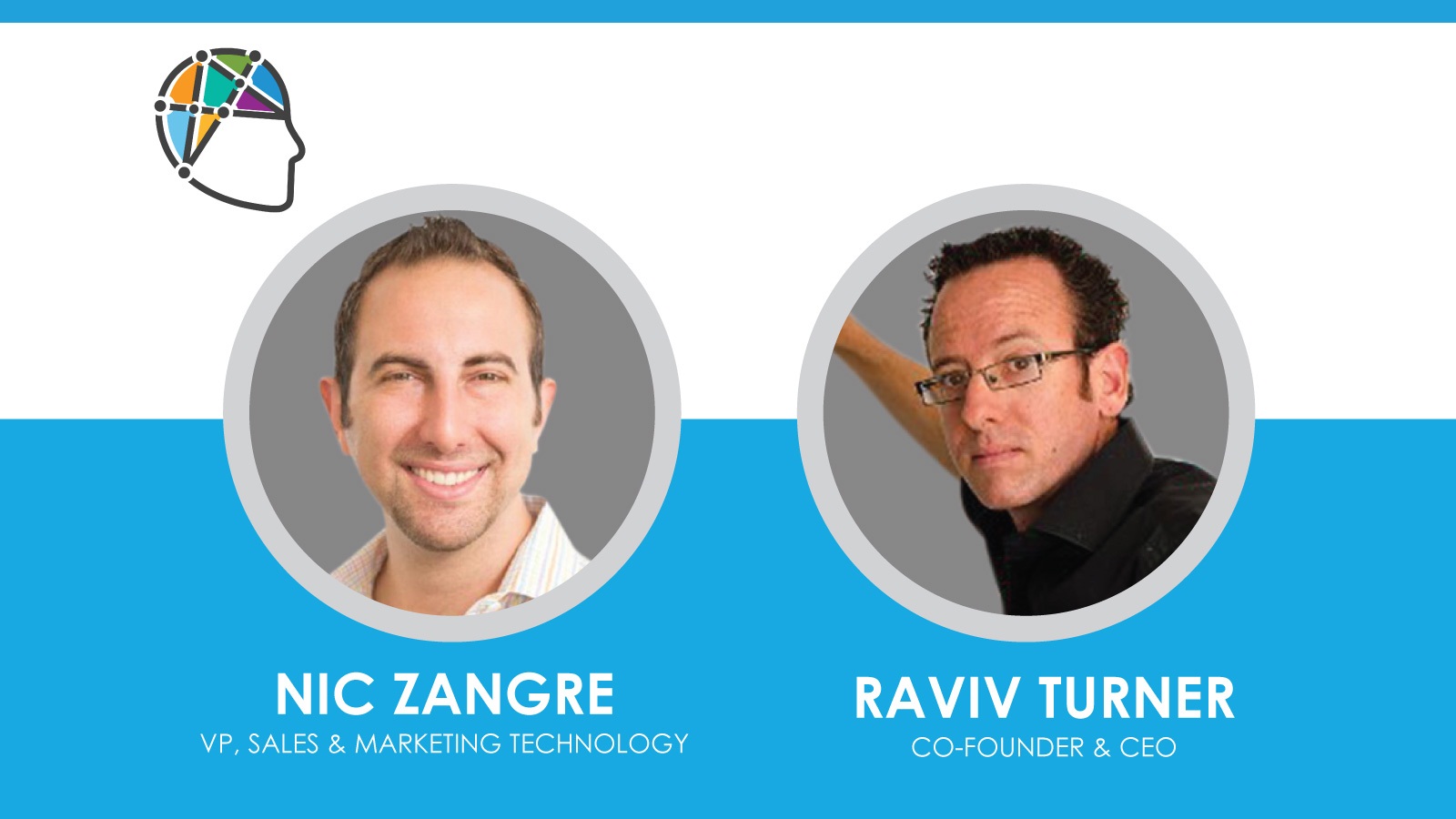
Interview with Raviv Turner & Nic Zangre, CEO & VP Sales & Marketing Technology at CaliberMind

0
Raviv Turner

[mnky_team name=”Raviv Turner & Nic Zangre” position=” CEO & VP Sales & Marketing Technology at CaliberMind”][/mnky_team]
[easy-profiles profile_twitter=”https://twitter.com/calibermind” profile_linkedin=”https://www.linkedin.com/company-beta/6439916/”]
[mnky_testimonial_slider][mnky_testimonial name=”” author_dec=”” position=”Designer”]“AI is going to automate most technical tasks performed by marketing and sales but the business logic will always remain human.”[/mnky_testimonial][/mnky_testimonial_slider]

On Predictive Marketing Technology

MTS: Tell us a little bit about your role at CaliberMind and how you got here.

Raviv: I’m the Co-Founder & CEO of CaliberMind. Our customers such as Citrix, Gusto, Datavail and others use us to integrate, measure and optimize the entire B2B customer journey. Think of us as the system of buyer intelligence that sits between your CRM & systems of engagement (i.e marketing automation, content marketing, video marketing, chat etc’); we map the buyers in each account to graph and orchestrates complex buying journeys. My personal background is in SIGINT (Signal Intelligence) and product design,

Nic: As VP, of Marketing and Sales Technology; I oversee CaliberMind’s marketing, product, and customer success functions. My background is in marketing automation, demand generation, and revenue operations. As with previous roles, I’m extremely hands-on — learning to code SQL and JavaScript has been a godsend. Also, drawing experience from both consulting and client-side work has been an asset. Most of the best marketing and sales technology pros I’ve come across draw empathy from client-side work and divergent thinking from consulting. Also, since there’s 5,000 MarTech tools now, I’ve always found it helpful to at least evaluate 1-2 tools/week for possible partnerships.

MTS: Given how quickly machine learning influenced predictive marketing strategies have been accepted, how do you see this segment evolving over the next few years?

Nic: When most B2B marketers use the word “predictive”, they’re usually referring to identifying ideal customers profiles and trying to predict which companies would/could be their future customers. There are some deeper applications for customer modeling — such as predictive personas. What if you would not only predict companies that are a fit, but also predict why an individual would be motivated to buy, be an advocate, etc. Also, sequence and content predictions will become possible, such as having your marketing automation tool automatically pick what should happen next.

Raviv: We’ve seen predictive B2B marketing fail in the past due to data quality issues. CRMs and marketing automation systems were never built to track buying signals. 80% of customer behavior data is unstructured, it sits in email communication, recorded sales calls, sales notes, and social feeds, you won’t find it in your CRM. Our customers come to us to map data between systems and make sense of it.  Machine Learning and Natural Language Processing can help marketing and sales teams make sense of all that data to dynamically model buyer personas and map the customer journey.

MTS: What do you see as the single most important technology trend or development that’s going to impact us?

Nic: I’ve been fascinated by the evolution of the ‘Operations’ function at high-growth B2B organizations. MarketingOps inevitably hits an innovation ceiling due to red tape. A common example is key technical team members in large organizations not having appropriate system access. If you have a Salesforce Admin Certified member of the MarketingOps team, they need full administrator privileges in Salesforce, or else you’re disabling some of their capacity. By creating one consolidated RevenueOps team, organizational culture and data silos can be avoided. For this reason, the most innovative organizations are combining various Ops functions for synergy. At CaliberMind, we believe this evolution will continue and fold in Customer Success Operations. We’re calling this organizational structure “CustomerOps”. We’re already seeing some top practitioners and leaders have titles such as “GTM Strategy & Operations”– this synonymous with CustomerOps.

Raviv: AI is going to automate most technical tasks performed by marketing and sales such as: lead qualification, initial chat conversations/ discovery (bots), data analysis, content optimization etc’ but the business logic will always remain human, there will always be a marketers or sales rep in the loop to guide the machine and drive the creative, strategic and human aspects of the business.

MTS: What’s the biggest challenge for startups to integrate a platform like CaliberMind into their stack?

Raviv: There are two challenges we address: quality of data and talent – we generate buying signals from your unstructured data and work with our data partners to enrich the data you don’t have in your CRM. The talent challenge is most marketing teams don’t have or can’t afford data engineers or data scientists. To address this challenge we designed a Customer Data Platform that is driven by marketers. We also provide professional marketing data science services.

Nic: Again, I think the biggest to challenge to innovation and agility within an organization’s culture. Organizations that only evaluate the technology budget annually are their own worst enemy. Think of your tech portfolio like an investment portfolio. You have your “blue chips”, such as CRM and Marketing Automation, and Customer Support. But you should always aim to diversify and place some bets on emerging technology. Mergers happen, new features come out, and sometimes you learn about a vendor that existed for years that can cure some of your pain. Most good these days will let you do a pilot or ‘proof of concept’ before committing to an annual deal.

MTS: What startups are you watching/keen on right now?

Raviv: We love AI of course, I think AI has many more applications, some more mission/ life critical than marketing, of course. For example, I like how Aldoc brings AI to medical imaging analysis. In the marketing & sales space, Persado is leading the way in emotional intelligence and text analysis.

Nic: As a first-time product manager, I’m a big fan of non-relational database technology and DevOps at the moment. I have my eyes on companies like SlamData that allow you to access NoSQL databases.  In the next few years, we’re going to see a lot more applications for this technology. Also, I see the companies like Segment leading the way to help B2B companies organize and wrangle all the web event data so as to make a tool like ours even more powerful.

MTS: What tools does your marketing stack consist of in 2017?

Raviv: We have a lean but powerful stack that consists of a CRM (Salesforce), MAP (Autopilot), CMS (Hubspot). We use Terminus for ABM, Clearbit for enrichment and Outreach.io for outbound. Our platform is built on top of Amazon Redshift and MongoDB using microservices. We also obviously drink our champagne, using our own platform for journey analytics and segmentation.

Nic: I’d add too that our marketing, sales, customer success and product team are extremely aligned. For example, we log customer tasks as well and marketing projects in Jira if there’s a technical component. We prioritize CustomerOps stories in the sprint just as we would a new product feature.

MTS: Could you tell us about a standout digital campaign?

We are huge proponents of using podcasts to grow our business, it helps us to develop strategic business relationships, creates strong content and brands our customers as thought leaders in their industry. We recorded close to 30 podcasts so far with B2B marketing and sales teams all leaders in their space, 20+ resulted in product discussions of using CaliberMind.

MTS: (Who was your target audience and how did you measure success) How do you prepare for an AI-centric world as a marketing and business leaders?

We manage the machines so they won’t manage us 🙂

How I Work

MTS: One word that best describes how you work.

Agility

MTS: What apps/software/tools can’t you live without?

Slack, Asana, Chili Piper, and of course, CaliberMind!

MTS: What’s your smartest work related shortcut or productivity hack?

Our inbound leads show up fully enriched in Slack for the sales team to respond immediately.

MTS: What are you currently reading?

Play Bigger

MTS: (What do you read, and how do you consume information?) What’s the best advice you’ve ever received?

Your network is your networth

MTS: Something you do better than others – the secret of your success?

Hustle and persistence

MTS: Thank you Raviv & Nic! That was fun and hope to see you back on MarTech Series soon.

[vc_tta_tabs][vc_tta_section title=”About Raviv & Nic” tab_id=”1501785390157-b58e162d-0ae25a4b-c27a9fed-22eb”]

2x entrepreneur, product designer, marketing technologist and a former intelligence officer. I’ve led companies and software product teams from inception to $1M in SaaS MRR and beyond. I like building technologies that integrate themselves seamlessly into our lives, capitalize on our unique strengths, and amplify the best of human nature.

My voracious personal curiosity extends into areas as diverse as cognitive computing, neurology, psychology, sociology and anthropology, always with the goal of understanding why we do the things we do and what that means for marketing strategy. In addition to being the Co-Founder & CEO of CaliberMind, I’m also a mentor at Techstars and a regular speaker at marketing industry events.

There’s a major challenge B2B marketers are facing today — lost revenue due to a disconnected buying process.

Research shows that there’s an average of 6.8 buyers per committee, 60% of the journey happens online (before sales gets involved), and there’s an average of 17 touches during the sales cycle.

With this, comes a high cost: 70% of B2B content goes unused, sales cycles, 25% of Selling time is spent searching for data, and only 9% of MQLs convert to revenue.

B2B buyers experiencing these broken processes receive generic, impersonal marketing communications in spite of the technology advances recently made in Machine Learning and Natural Language Processing. Hyper-personalization at-scale is now possible. Furthermore, by the time a lead reaches sales, systems can reveal deep buyer psychographics and insights to the seller so that the buying process is frictionless as it can be.

[/vc_tta_section][vc_tta_section title=”About CaliberMind” tab_id=”1501785390320-2d44fa50-740c5a4b-c27a9fed-22eb”]

CaliberMind

CaliberMind is a venture backed, AI powered, demand marketing and sales acceleration SaaS founded by seasoned marketing technology veterans (AdRoll, FullContact, Kapost) that is pioneering the next generation of B2B sales acceleration software (a $12.8b market). Unlike existing sales acceleration solutions that focus on the selling team, CaliberMind enables the B2B buying team throughout their decision journey. Used by buyer-centric B2B Fortune 500 (Citrix) and mid-market companies (Gusto, Apto, Datavail and others) that have made the shift from rule-based marketing campaigns to machine-informed buyer journeys, CaliberMind recommends the right message to the right buyer persona at the right stage of the buyer’s journey.

The buyer data platform automatically derives a buyer’s journey from internal (CRM, MAP, web analytics etc’​) and external data sources (social, intent, psychographics) it assembled. It works by analyzing the sequence of lead-to-revenue events for each account and finding the most common paths to sale using machine learning and human language analysis. It then recommends the next-best ‘buying play’​ and pushes the data back to the CRM & MAP (no change in workflow). The platform is fully accessible by external systems via API and is structured to fully support demand marketers and revenue ops needs for campaign management, marketing analyses and buyer intelligence.

[/vc_tta_section][/vc_tta_tabs]
[mnky_heading title=”About the MarTech Interview Series” link=”url:http%3A%2F%2Fstaging.loutish-lamp.flywheelsites.com%2Fmts-insights%2Finterviews%2F|||”]

The MTS Martech Interview Series is a fun Q&A style chat which we really enjoy doing with martech leaders. With inspiration from Lifehacker’s How I work interviews, the MarTech Series Interviews follows a two part format On Marketing Technology, and This Is How I Work. The format was chosen because when we decided to start an interview series with the biggest and brightest minds in martech – we wanted to get insight into two areas … one – their ideas on marketing tech and two – insights into the philosophy and methods that make these leaders tick.

Interview with Sharat Sharan, President, Co-Founder & CEO at ON24

1
Sharat Sharan

[mnky_team name=”Sharat Sharan” position=” President, Co-Founder & CEO at ON24″][/mnky_team]
[easy-profiles profile_twitter=”https://twitter.com/ON24″ profile_linkedin=”https://www.linkedin.com/in/sharatsharan/”]
[mnky_testimonial_slider][mnky_testimonial name=”” author_dec=”” position=”Designer”]“There’s no doubt the number of self-educating buyers will increase, and we’re going to see decision makers who may never talk to sales.”[/mnky_testimonial][/mnky_testimonial_slider]

On Marketing Technology

MTS: Tell us a little bit about your role and how you got here. (what inspired you to start a martech company)

I serve as CEO and co-founder of ON24, the leading webinar marketing platform that helps companies engage customers at scale and deliver meaningful data and analytics on those interactions. But, if you had asked me fifteen years ago if I’d be leading the company that invented the marketing webinar, I’d probably ask, “what’s a webinar?”

We started ON24 as a 24-hour multimedia news platform that focused on the retail investor, like a version of CNBC or Reuters. But, two major trends converged that resulted in our pivot to martech — the rise of digital marketing and the fast-growth Silicon Valley companies around us that all needed a way to efficiently market and sell an increasingly complicated product. A lightbulb went off and we realized that the same digital transformation that was reshaping the news industry would also forever impact traditional business communications. That’s when the idea for the business-led webcast was born, and we shifted our focus to helping companies create digital experiences where they could directly engage their customer.

After transitioning to a webcast-as-a-service provider, we realized that three quarters of our customers were using our technology for marketing and demand generation.  We’ve now matured from a full webcasting service into a self-service, engagement-driven webinar marketing platform where over 1600 businesses delivered 85,000 webinars last year with an average viewing time of over 50 minutes. And, that’s really our core mission and my inspiration, to help marketers achieve engagement at scale through the power of data driven marketing webinars.

MTS: Given the massive proliferation of marketing technology, how do you see the martech market evolving over the next few years?

Just like the assembly line ushered in the industrial revolution, CRM and marketing automation technologies are what started the entire martech ecosystem, giving us a powerful foundation to efficiently market at scale.  But, marketing isn’t just about increasing the quantity of customer interactions, it’s about deepening their quality. The technology we use must give us the ability to do more than just scale.

I believe that today’s marketer needs a new layer in their martech stack focused on delivering engagement at scale, enabling marketers to reach hundreds and thousands of prospects on a personal level. And, when you do create an experience that captivates an audience for nearly an hour, the incredible amount of behavioral data you can gather makes future sales and marketing interactions all the more personalized. As this engagement marketing category evolves, the marketing automation layer will also need to change along with it so that these rich data points can be integrated into campaigns.

MTS: What do you see as the single most important technology trend or development that’s going to impact us?

The rise of the millennial buyer will be a game-changer for our industry. We’ve known for a while that approximately 60% of buyers self-educate before talking to sales. Think about that ten years from now when a majority of the workforce consists of millennials. There’s no doubt the number of self-educating buyers will increase, and we’re going to see decision makers who may never talk to sales.

This means marketers, and marketing technology, will be responsible for engaging customers throughout their entire lifecycle. It’s a huge challenge, and why I believe we’ll see more and more technologies that help marketers meet customers wherever, however, whenever they desire and use that touchpoint to understand what customers might want next.

MTS: What’s the biggest challenge that CMOs need to tackle to make marketing technology work?

Today, there really is no excuse not to know our customers. Marketers need to find a way to integrate the entire martech stack to provide a 360-degree view of their customers and build campaigns that are informed by every touchpoint across any channel.

There’s a lot of conversation around consolidation in martech as a solution to the integration problem, but I don’t think that’s the answer. Instead, the major marketing platforms can differentiate by maximizing the value of the martech applications built on their platform and strengthen their respective integrations. That’s how we’ll be able to leverage cutting-edge, experimental technologies like virtual reality, interactive video, live messaging, etc. to engage customers and build a relationship with them.

MTS: What startups are you watching/keen on right now?

In the martech space, I’m really interested in technology companies focused on scaling customer advocacy. Influitive, for example, is a start-up who helped ON24 build a robust community of customer advocates that act as our brand ambassadors. There’s nothing more powerful than a customer success story to explain the value of our product.

I’m also always watching other start-ups backed by Goldman Sachs’ private venture fund. When we partnered with them to raise our last round, we were really impressed by their financial diligence and global network to help us scale our business. Symphony is an interesting start-up that Goldman Sachs is incubating to provide a secure messaging platform for the banking sector. Their emergence demonstrates that businesses still need specialized, enterprise-grade technologies to get work done. I think that start-ups building enterprise applications that enable workplaces to communicate and collaborate as seamlessly as Facebook or Snapchat have a great opportunity for growth over the next few years.

MTS: What tools does your marketing stack consist of in 2017?

Our marketing stack is built on a strong CRM and marketing automation foundation; we’re currently using Salesforce and Marketo. As a CEO, I think it is so important to have a single view of the truth for every customer that I can see in real-time. That’s what keeps me informed on the health of our business and ensures we’re aligned internally around every customer touchpoint.

But, the value of CRM and marketing automation tools are only as worthwhile as the data they contain. We leverage our ON24 marketing webinar platform to engage our customers and prospects at scale, generating high-quality leads informed by the data we’ve gained from that engagement. Then, we further put that data to work with technologies like Conductor, DemandBase and Optimizely to further personalize the customer experience.

I think the most important take-away here is that no technology is a silver bullet to build a customer relationship. B2B companies need a technology stack that enables meaningful engagement with customers and prospects throughout the buying lifecycle.

MTS: Could you tell us about a standout digital campaign? (Who was your target audience and how did you measure success)

One of our greatest successes over the past few years was an integrated marketing campaign called, “Where’s Your ROI?” that challenged marketers to evaluate their marketing programs based on business impact and cost efficiency. We wanted marketers to realize that you can’t treat every marketing program equally; the cost of customer acquisition is a critical consideration. By changing the conversation from speeds and feeds to ROI, we spoke to our customers as strategic advisors instead of transactional software vendors.

We took that message to market through email, digital advertising, organic social media, PR and an on-site guerilla activation at Dreamforce. The marketing-qualified leads generated by the campaign resulted in a win rate of nearly 30%, exceeding our goal of 25%.

MTS: How do you prepare for an AI-centric world as a marketing leader?

The beauty of AI, and technology in general, is that it makes the science of our jobs so much easier and way more accurate — predicting pipeline, scheduling an email follow-up, anticipating the piece of content a customer may like best and so on. By taking away the burden of that manual work, we gain the time and energy to create great experiences for our customers. I’d much prefer my team use their talent to humanize campaigns and make them unique than manually calculating projected pipeline.

I think the important thing for marketers is not to get caught up with the latest shiny toy. AI has huge potential, but any brand can adopt a new technology. Businesses that remain true to their values and build customer relationships will win.

THIS IS HOW I WORK

MTS: One word that best describes how you work.

I’d have to choose two words –  passionate and focused. It’s easy to get excited about the next big idea, but having the discipline to execute on it determines success.

MTS: What apps/software/tools can’t you live without?

Salesforce is an invaluable tool for knowing where we stand in real-time and managing a responsible business. I think a CEO must stay grounded in the numbers and make data-driven business decisions to build a company that lasts.

MTS: What’s your smartest work related shortcut or productivity hack?

Set aside two to three weeks a quarter to go on the road to meet with customers face-to-face. Hearing their direct feedback saves a lot of guesswork and heartburn in the long run. And, investing in the relationship over time builds the trust you need for a sustainable partnership.

MTS: What are you currently reading? (What do you read, and how do you consume information?)

Two books, which I’ve read multiple times and I believe have helped shape my career include:

On the Brink by Hank Paulson

Who Moved My Cheese by Spencer Johnson

MTS: What’s the best advice you’ve ever received?

Be able to pivot. With technology today, the only thing that is constant is change. Your business needs to stay flexible to adapt. Entrepreneurs need to check their ego at the door and do what’s best for the company — even if it strays from their original vision.

MTS: Something you do better than others – the secret of your success?

I think the secret to ON24’s success is based on the people I’ve hired. I think I have a pretty good eye for people who will be successful, and that’s the most important asset to your company. Good people have a domino effect, they make everyone better – people in different departments, people who report to them, everyone. They’ve taken ON24 to a place I didn’t imagine was possible back when we started the company.

MTS: Tag the one person whose answers to these questions you would love to read:

Marc Benioff — he helped pioneer the SaaS business model, and changed how business software is bought, which in turn, has transformed the way we market, sell and support customers. Plus, I admire his commitment to philanthropy and giving back to the local San Francisco community.

MTS: Thank you Sharat! That was fun and hope to see you back on MarTech Series soon.

[vc_tta_tabs][vc_tta_section title=”About Sharat” tab_id=”1501785390157-b58e162d-0ae25a4b-c27ad5f6-cf71″]

A highly successful and award-winning entrepreneur, the co-founder, President and CEO of ON24 Inc., the global leader in webinar-based marketing solutions and virtual environments. The ON24 Network is the world’s largest webinar network with over 8.5M business users annually and delivering over 40,000 live webinars per year (2014 run-rate).

Has taken ON24 to a market leadership position, with 50 consecutive quarters of revenue growth and built the company over two of the worst downturns (dot com and housing bust), and has built a responsive organization that continually anticipates and adapts to the needs of the market. A recognized innovator known for achieving business goals, has gone from co-founding a start-up to running a global company supporting more than 1,000 customers, including IBM, CA Technologies, Merck, Unilever, JPMorgan Chase, Deloitte, Credit Suisse, Ernst & Young, Amazon and New York Life.

ON24 is one of the very few companies that survived the dot-com bust – Sharat successfully kept the company going; shut down the Financial Multimedia Network which was the focus at that time; and pivoted the company in a new direction.

[/vc_tta_section][vc_tta_section title=”About ON24″ tab_id=”1501785390320-2d44fa50-740c5a4b-c27ad5f6-cf71″]

on24

ON24 is the leading webinar marketing platform for demand generation, lead qualification and customer engagement. Its award-winning, patented, cloud-based platform enables companies of all sizes to deliver engaging live and on-demand webinars. Providing industry-leading analytics that can be integrated with all leading marketing automation and CRM platforms, ON24 enables marketers to optimize demand generation, enhance lead qualification and accelerate sales pipeline opportunities

Additional applications for the ON24 product portfolio include virtual training, talent development and town hall meetings. More than 1,500 companies and organizations rely on ON24, including IBM, CA Technologies, Merck, JPMorgan Chase, Credit Suisse and SAP. The company is headquartered in San Francisco, with offices throughout the world.

[/vc_tta_section][/vc_tta_tabs]
[mnky_heading title=”About the MarTech Interview Series” link=”url:http%3A%2F%2Fstaging.loutish-lamp.flywheelsites.com%2Fmts-insights%2Finterviews%2F|||”]

The MTS Martech Interview Series is a fun Q&A style chat which we really enjoy doing with martech leaders. With inspiration from Lifehacker’s How I work interviews, the MarTech Series Interviews follows a two part format On Marketing Technology, and This Is How I Work. The format was chosen because when we decided to start an interview series with the biggest and brightest minds in martech – we wanted to get insight into two areas … one – their ideas on marketing tech and two – insights into the philosophy and methods that make these leaders tick.

Interview with Agata Celmerowski, VP Marketing at Klaviyo

0
Agata Celmerowski

[mnky_team name=”Agata Celmerowski” position=” VP Marketing at Klaviyo”][/mnky_team]
[easy-profiles profile_twitter=”https://twitter.com/klaviyo” profile_linkedin=”https://www.linkedin.com/in/agatacelmerowski/”]
[mnky_testimonial_slider][mnky_testimonial name=”” author_dec=”” position=”Designer”]“The marketing industry is fond of speculating about the death of email. I think that’s garbage.”[/mnky_testimonial][/mnky_testimonial_slider]

On Email Marketing Technology

MTS: Tell us a little about your role at Klaviyo and how you got here.

I run marketing for Klaviyo, which is a marketing automation platform that makes it easy for ecommerce companies to grow as fast as possible using targeted email and Facebook marketing.

What we do is a big component of how I got here. Email marketing has been one of the few constants of my career. I’ve managed email products for a media company, overseen email marketing on both the B2B and B2C side, and run marketing for more than one email service provider (ESP). I’ve written about it, presented on it, and taught it. I know how powerful email marketing can be when used in a highly personalized way. I also know how deceptively difficult it can be to implement an ESP, get the right data into it, and then operate it so you can execute highly personalized email marketing campaigns. It’s a problem that’s been near and dear to my heart for many years – and Klaviyo solves it. So I’m here at Klaviyo because I’m incredibly passionate about telling the world about our product.

MTS: How do you see the email marketing segment evolving over the next few years?

The marketing industry is fond of speculating about the death of email. I think that’s garbage – email isn’t going anywhere. But like every single digital marketing vehicle, the standard for what makes for effective email marketing is going to continue to evolve. Segmentation and automation aren’t going to be optional; marketers will have to deploy both to make their emails effective, relevant, and stand any chance of getting their messages into customers’ inboxes.

MTS: What do you see as the single most important technology trend or development that’s going to impact us?

Without a doubt, Artificial Intelligence. And the precursor to what I’ll call “useable AI” is data. We’re at an inflection point right now when it comes to both the amount and accessibility of data available to marketers. Those who are able to unlock their data – that is, pull it into one system reliably and use it to power their marketing – are going to be the ones in a position to apply AI to their marketing strategies effectively. And the quality of their marketing – as measured by the relevance to and response from the recipients of that marketing- is going to go way up. That’s going to change consumer expectations. If companies want to be competitive in the world that AI will make possible, they need to be thinking about data today.

MTS: What’s the biggest challenge for startups to integrate an email marketing platform like Klaviyo into their stack?

Honestly, its getting over the perception that implementation is going to take forever and require an army of developers. Klaviyo is designed from the ground up to pull in data from across your tech stack – whether it’s your ecommerce platform, form builders and popup tools, helpdesk software, or others.

MTS: What startups are you watching/keen on right now?

Klaviyo, of course 🙂 We also have some amazing customers that are in hyper-growth mode, like UNTUCKit. They’re a great example of a company that is solving a problem that has been attempted to be solved before — in this case, creating a men’s button down shirt that looks good untucked – but doing it in a way that’s better than anyone else.

MTS: What tools does your marketing stack consist of in 2017?

While we’re not an ecommerce company, we do strongly believe in using our own product so Klaviyo is the hub of our marketing stack. We’re also big fans of Heap Analytics. It’s the best tool to date for tracking things like the paths people take before they sign up for Klaviyo, or how new users interact with our software after they’ve created an account.

MTS: Could you tell us about a standout digital campaign? (Who was your target audience and how did you measure success)

The most recent example that comes to mind is a campaign that actually focused on our customers. Earlier this year, we launched the Klaviyos, a data-driven awards program recognizing our customers’ accomplishments across a variety of categories, including most revenue from email and highest overall growth. In addition to building a landing page for the awards themselves, we also created customer profiles and mini case studies so others could learn from the success that our customers had. We promoted the awards through our newsletter, social media accounts, and paid advertising on Facebook. We also topped off the campaign by sending every winner a box full of swag, including Klaviyo-branded socks (a personal favorite of mine) and a trophy in the form of a S’well water bottle. Our quantitative success metric was around visibility of the content, as measured by visitors – we were aiming to exceed a certain threshold within 30 days, and we succeeded. More importantly, we wanted to celebrate our customers’ successes. The best measure for that is more qualitative, and it came in the form of the thank you emails they sent!

MTS: How do you prepare for an AI-centric world as a marketing leader?

It’s all about data, data, data. Marketers need to make sure they’re collecting, storing, and using it to power their marketing. Data is the bedrock of AI; if you don’t have data, you can’t take advantage of all that AI will unlock. I also believe AI will eliminate all the manual tasks marketers do today to try and understand what’s working, so they can do more of it, and what’s not, so they can stop it. That will free up marketers to focus on deepening their understanding of the people they’re trying to communicate with, and thinking of the best and most creative ways to get through to them. So preparing for an AI-centric world means making sure my team is super strong on marketing fundamentals: knowing our audience, the challenges they face, how we help them, and the best ways to connect with them.

This is How I Work

MTS: One word that best describes how you work.

Thoughtfully.

MTS: What apps/software/tools can’t you live without?

Slack for group communication, Trello for organizing the way we work, and, of course, Klaviyo for our email marketing. Also Spotify; I listen to music every chance I get. And Instacart.

MTS: What’s your smartest work related shortcut or productivity hack?

My best productivity hack is being deliberate about the way I design my work week. First, I try to be very selective about meetings, especially recurring meetings. If there’s no need for me to be there, or if there’s nothing that needs to be discussed, I’ll decline or cancel the invite. When meetings do need to happen, I’m a fan of scheduling them back to back. And I’m pretty diligent about blocking off 2-4 hour blocks at least one day a week to go heads down and focus on bigger picture problem-solving.

I also keep a Trello board for “not now” projects. That lets me acknowledge the things we should be doing and opportunities for things to improve on or build in the near future, without getting so distracted that we’re not able to finish the things we’re working on today.

MTS: What are you currently reading? (What do you read, and how do you consume information?)

Radical Candor by Kim Scott – it’s a great book on what effective management looks like and how to practice it. I read a ton, across a bunch of different genres, and it’s definitely my preferred means of consuming information. Lately I’m really into podcasts too, though – especially TED Radio Hour.

MTS: What’s the best advice you’ve ever received?

At one point in my career, I was trying to figure out whether I should move to San Francisco. Someone I hold in very high regard asked me to consider whether I wanted my life to be about the tech industry, 24/7 – or whether I wanted to leave room for the world outside of tech. I love what I do, and I have a lot of respect for west-coast startups. But in the end, I believe a variety of experience and interests helps me be a better marketer and (more importantly) a better human being. And for me, that’s easier to do here in Boston than it would be in SF.

MTS: Something you do better than others – the secret of your success?

Figuring out what needs to be done when, and then making it happen. There’s very little shortage of great ideas at high growth startups. The key is focusing on the right things to do at the right point in time, and then executing damn well.

MTS: Tag/who is the one person whose answers to these questions you would love to read?

The first person that came to mind is Kim Scott, probably because I’m enjoying her book so much right now.

MTS: Thank you, Agata! That was fun and hope to see you back on MarTech Series soon.

[vc_tta_tabs][vc_tta_section title=”About Agata” tab_id=”1501785390157-b58e162d-0ae25a4b-c27ad01b-8644″]

Agata runs marketing for Klaviyo, an ecommerce marketing automation platform that makes it dead easy for ecommerce companies to accelerate their growth through smarter, data-driven email and Facebook campaigns. She’s spent the last 15 years doing exactly that herself for B2B and B2C tech startups.

[/vc_tta_section][vc_tta_section title=”About Klaviyo” tab_id=”1501785390320-2d44fa50-740c5a4b-c27ad01b-8644″]

Klaviyo

Klaviyo helps eCommerce businesses sell more by using their data to power super-targeted, highly relevant email and advertising campaigns.

Unlike other email or marketing automation solutions, we’re really good at getting data out of your ecommerce platform – whether it’s Shopify, Magento, a customer implementation, or something else. We let you combine that data with website behavior and information from other marketing tools, then use it to target, personalize, analyze, and optimize your marketing.

And the best part is, we make it easy. Not “six-months-of-development” easy or “only-if-you-want-to-do-the-basics” easy. Just easy. Thousands of ecommerce stores like Kohler, Chubbies, Nomad, and Huckberry grow their revenue using Klaviyo.

[/vc_tta_section][/vc_tta_tabs]
[mnky_heading title=”About the MarTech Interview Series” link=”url:http%3A%2F%2Fstaging.loutish-lamp.flywheelsites.com%2Fmts-insights%2Finterviews%2F|||”]

The MTS Martech Interview Series is a fun Q&A style chat which we really enjoy doing with martech leaders. With inspiration from Lifehacker’s How I work interviews, the MarTech Series Interviews follows a two part format On Marketing Technology, and This Is How I Work. The format was chosen because when we decided to start an interview series with the biggest and brightest minds in martech – we wanted to get insight into two areas … one – their ideas on marketing tech and two – insights into the philosophy and methods that make these leaders tick.

Interview with Marc Goldberg, CEO at Trust Metrics

0
Marc Goldberg

[mnky_team name=”Marc Goldberg” position=” CEO at Trust Metrics”][/mnky_team]
[easy-profiles profile_twitter=”https://twitter.com/marcjgoldberg” profile_linkedin=”https://www.linkedin.com/in/marcgoldberg/”]
[mnky_testimonial_slider][mnky_testimonial name=”” author_dec=”” position=”Designer”]“I happen to think a lot of the providers on the martech side provide some amazing capabilities but if you get the inventory part wrong, it is all for naught.”[/mnky_testimonial][/mnky_testimonial_slider]

On Marketing Technology


MTS: Tell us a bit about your role at Trust Metrics and how you got here.  

I have been outspoken for many years about advertising fraud and the polluted advertising supply chain and how little was being done about it. I joined Trust Metrics to make a difference to help clean out the ecosystem by not letting the bad guys in, to begin with.

MTS: What are the technology trends, challenges, and developments that are going to impact brand safety for digital ads? 

Every week we are hearing about a new one. The noise where it is the loudest is when Facebook or Google is involved but often these are not new challenges. With anything user generated, everyone should have their guard up. You can’t just take users or publishers at their word when they label their content as “premium” or “brand safe”. The more recent a-ha moment for the industry is fake news. Fake news is a by-product of Fake Publishing. These are the sites that continue to slip through the cracks because they are visited by humans, are viewable and for the most part considered safe. We have to stop thinking about “safe” as the barrier, we need to start buying based on quality and it will immediately help clean up the supply.

MTS: What do you see as the single most important technology trend or development that’s going to impact us? 

Brands losing confidence in digital, more specifically programmatic. We need to reverse this trend or next year the Martech slide will see its first decline since inception.

MTS: Trust Metrics uses both machine and human analysis, how well does this scale? 

We will certainly see. In brand safety, the missing part of the equation for most vendors is humans. You need another set of eyes when the machines notice activity. We are the only vendor to have addressed fake news prior to the election. It is because when a human would review the sites, they would notice an outrageous headline and follow up trying to confirm it is factual.

MTS: What startups are you watching/keen on right now? 

I have been involved with a company called CUPS. They are tying the little coffee shops together to compete with the big ones. Anything like UBER or CUPS that allows the technology to enable the transaction to become more efficient will win.

MTS: Where do you fit in a marketers’ marketing stack?

We are considered the first layer of programmatic. We are a planning tool that helps curate the domains and apps that meet each brand’s specific criteria to make the rest of the stack work. I happen to think a lot of the providers on the martech side provide some amazing capabilities but if you get the inventory part wrong, it is all for naught. Think of us as using technology to reintroduce the idea of media planning back into the planning process.

MTS: Could you tell us about a standout digital campaign that you had?

I can name two but not share client names.

Agency wanted pharma advertiser to try programmatic. Pharma was nervous and was reluctant to try. Agency introduced us to the brand and with us as the planning layer they became comfortable, they are now spending in this channel with significant dollars.

The other was, its ok we don’t need you, we have a white list. We offered a free audit and showed them of the 4000 sites they had, we removed over 600 for a variety of reasons. We then added over 7000 sites to the list that met their criteria. They are now running more programmatic than ever.

MTS: How do you prepare for an AI-centric world as a business leader?

We were born ready. From the beginning of time, our humans have fed the machine. AI in Brand Safety has become very important. Take for example some terms that are commonly found in fake news. We noticed that “crisis actors” was more commonly associated with fake news and conspiracy sites. A Human realized it and fed the machine this term that wasn’t’ considered important. Now the machine presents sites that have a high density of a variety of terms that have been identified by the humans.

This Is How I Work

MTS: One word that best describes how you work. 

Ubiquitously

MTS: What apps/software/tools can’t you live without? 

Spotify! I enjoy LinkedIn, it has become my industry news feed. (and sometimes good for math problems…)

MTS: What’s your smartest work related shortcut or productivity hack? 

Inbox management. Use folders and stars.

MTS: What are you currently reading? (What do you read, and how do you consume information?) 

I just finished Magic Box Paradigm: A Framework for Startup Acquisitions by Ezra Roizen. I honestly don’t read as much anymore as I used too. I prefer the book rather than a reader when I do get the time.

MTS: What’s the best advice you’ve ever received?

If you want something, you have to ask.

MTS: Something you do better than others – the secret of your success? 

Networking.  Today’s junior person could be my boss tomorrow and anyone can be a future client is the way I approach, events, meetings,  LinkedIn and life.

MTS: Tag the one person whose answers to these questions you would love to read: 

Bob Liodice of the ANA

MTS: Thank you Marc! That was fun and hope to see you back on MarTech Series soon.

[vc_tta_tabs][vc_tta_section title=”About Marc” tab_id=”1501785390157-b58e162d-0ae25a4b-c27ae007-265d”]

Marc is Senior Executive able to build and grow companies. Proactive and Relentless with expertise in building highly effective and efficient teams, products, and results.

[/vc_tta_section][vc_tta_section title=”About Trust Metrics” tab_id=”1501785390320-2d44fa50-740c5a4b-c27ae007-265d”]

Trust Metrics

Trust Metrics is a neutral information services company that serves as the digital measurement standard for publisher transparency, effectiveness, and quality.

There are more than 1 million web sites and 300+ ad networks and exchanges that together carry and sell billions of display advertisements every day. The combination of this extraordinary volume, complex and rapidly evolving technologies used to purchase and sell, and a very large number of publishers has created a marketplace that is filled with opportunity, but also one that has grown beyond human scale.

This scale and complexity has fundamentally eliminated much of an advertiser’s control over where ads are placed. Trust Metrics is a technology company that gives advertisers the ability to vet inventory quickly, accurately and before it’s bought.

Built specifically for the benefit of advertisers, Trust Metrics provides standardized or customized ratings and reviews of any site or page. These ratings are designed for easy application in any ad ops process; direct, through a network, or in RTB.

[/vc_tta_section][/vc_tta_tabs]
[mnky_heading title=”About the MarTech Interview Series” link=”url:http%3A%2F%2Fstaging.loutish-lamp.flywheelsites.com%2Fmts-insights%2Finterviews%2F|||”]

The MTS Martech Interview Series is a fun Q&A style chat which we really enjoy doing with martech leaders. With inspiration from Lifehacker’s How I work interviews, the MarTech Series Interviews follows a two part format On Marketing Technology, and This Is How I Work. The format was chosen because when we decided to start an interview series with the biggest and brightest minds in martech – we wanted to get insight into two areas … one – their ideas on marketing tech and two – insights into the philosophy and methods that make these leaders tick.

Interview with Udayan Bose, Founder & CEO, NetElixir Inc

0
Udayan Bose

[mnky_team name=”Udayan Bose” position=” Founder & CEO, NetElixir Inc”][/mnky_team]
[easy-profiles profile_twitter=”https://twitter.com/udayanbose” profile_linkedin=”https://www.linkedin.com/in/netelixirudayanbose/”]
[mnky_testimonial_slider][mnky_testimonial name=”” author_dec=”” position=”Designer”]“Never lose sight of the BIG PURPOSE and stay true to your CORE VALUES.”[/mnky_testimonial][/mnky_testimonial_slider]

On Search Engine Marketing Technology


MTS: Tell us a little bit about your role at NetElixir and how you got here. (What inspired you to start NetElixir).  

I founded NetElixir with the sole purpose of helping businesses succeed online. In my previous role at PartyGaming I had experienced, first-hand, the challenges behind running and scaling a consistently profitable search marketing program. The balance of strategic management and clinical execution, math and art, technology and human expertise is what is required to drive success, but was difficult to achieve. Through a series of paid search experiments run over a span of 14 months, I was able to identify a new system and method of search marketing. This formed the basis of NetElixir.

MTS: How do you see the search engine marketing and optimization markets evolving over the next few years?

I see a number of changes on the horizon:
A) Search engine marketing has morphed into being “discovery marketing”. Searches are no longer just intent driven. The percentage of serendipitous searches have gone up dramatically thanks to the emergence of social search on Facebook, Pinterest, etc.

  1. B) 50%+ share of all searches is from mobile devices. We believe this will go up to 70% by end of this year. Mobile consumer behavior is markedly different from desktop consumer behavior and needless to mention, search marketing has to evolve as well.
  2. C) The emergence of voice search forces marketers to look at search marketing differently
  3. D) Amazon has emerged as the clear leader in product searches and with the growing popularity of Alexa, the battle for “monetizable search queries” will become increasingly interesting over time. Google’s monopoly may finally get threatened
  4. E) Seamless interactivity between connected devices means that the search bar has gotten stretched much beyond just Google. Marketers have to re-think their strategies to be able to “own this search bar.”

MTS: What do you see as the single most important technology trend or development that’s going to impact us?  

Connected devices and AI will change digital interactivity forever. These two evolving trends will drive irreversible changes in consumer behavior and marketers will have to rethink their digital marketing strategies. New consumer “habits” will be created because of the smart devices and consumer expectations will get reset. Unless marketers are able to adapt to this rather massive change, they will not be able to effectively compete in this new world.

MTS: What’s the biggest challenge for startups to integrate with a platform like NetElixir into their stack?  NetElixir’s LXRGuide uses powerful machine learning algorithms to recommend the “most optimal AdWords strategies” on the fly. The biggest challenge for startups is the “mindset of their paid search manager” who has been used to running AdWords campaign based on what s/he thought was “right”.  LXRGuide’s algorithms are like IBM’s chess computer – they are immensely more powerful than most (if not all) paid search managers because they are based on data and logic rather than feelings and beliefs and often LXRGuide’s recommendations will not align with the thought process of the paid search manager. This may pose a challenge.

MTS: What startups are you watching/keen on right now?  

We have been keeping a close tab on startups in AI and customer journey analytics space. We believe both these have a transformative impact on how digital marketing will be done tomorrow.

MTS: What tools does your marketing stack consist of in 2017? 

LXRMarketplace Tools and apps, especially sitegrader.

MTS: Could you tell us about a standout digital campaign? (Who was your target audience and how did you measure success)  

On the LXRMarketplace side of our business, we have so many amazing stories that come from the small businesses we’re helping to succeed with search. One example is Priester’s Pecans, which is a small, family-owned business in Alabama. They were working with a search marketing company that simply didn’t have the expertise they needed to succeed. They switched to using LXRGuide and saw incredible results. LXRGuide was able to crunch 40 hours of work into five minutes a week. Priester’s saw their revenue increase by 327% and ROI increase by 200%!

MTS: How do you prepare for an AI-centric world as a business leader?

By having the ability to cut through all the clutter that’s floating in the name of AI and identifying the hidden gems. The fact remains that 99% of tools that peddle as the next big AI innovation are not really AI. We prepare for an AI-centric world by using crowdsourced solutions to solve one AI problem at a time and building on what we have in place for LXRGuide.

This Is How I Work 

MTS: One word that best describes how you work.  

Passionate Curiosity

MTS: What apps/software/tools can’t you live without?

Headspace.

MTS: What’s your smartest work related shortcut or productivity hack?

LXRPlugin – its an excel plugin that we developed last year. It helps me get 40+ analyses pertaining to all our AdWords customers in less than 10 minutes.

MTS: What are you currently reading? (What do you read, and how do you consume information?)

Social Physics

MTS: What’s the best advice you’ve ever received?

Never lose site of the BIG PURPOSE and stay true to your CORE VALUES.

MTS: Something you do better than others – the secret of your success?  

I know that I don’t know, and I try to constantly learn.

MTS: Tag the one person whose answers to these questions you would love to read:

Jeff Bezos. I have tremendous admiration for his strategic vision, drive, no-nonsense approach and ability to continuously place big bets.

MTS: Thank you Udayan! That was fun and hope to see you back on MarTech Series soon.

[vc_tta_tabs][vc_tta_section title=”About Udayan” tab_id=”1501785390157-b58e162d-0ae25a4b-c27ab1e1-cf5e”]

Udayan Bose founded NetElixir with a vision to provide online marketers worldwide with a paid search campaign optimization solution capable of delivering magical performance. Prior to starting NetElixir, Udayan was Director of Business Development for PartyGaming, the world’s largest online gaming company. In this role he was responsible for building a new business unit from scratch, PartyBingo that went on to become a major revenue generator for the company. Udayan regularly lectures the MBA classes at the Johnson Graduate School of Management, Cornell University; Zicklin School of Business, Baruch, NY and the Indian School of Business, Hyderabad. He has been featured in The New York Times, Forbes and Time magazines. Udayan holds a Bachelor’s Degree in Chemical Engineering from the Indian Institute of Technology, Delhi and an M.B.A. from Mumbai University, India.

[/vc_tta_section][vc_tta_section title=”About NetElixir” tab_id=”1501785390320-2d44fa50-740c5a4b-c27ab1e1-cf5e”]

NetElixir

NetElixir is a rapidly growing search marketing agency with over 12 years of experience working with retailers on their search marketing needs. By helping retailers to decode what makes customers click, NetElixir is helping these businesses succeed online. Its analytical team of industry experts, technology builders and business strategists drive exceptional results and uncover actionable customer insights through a combination of proprietary paid search optimization technology, strategic growth models and expert campaign management services. The company’s LXRMarketplace hub is a destination for small businesses and solo entrepreneurs in need of free or low cost search engine marketing tools. NetElixir is headquartered in Princeton, NJ with wholly owned subsidiary offices in London and Hyderabad, India. For more information, please visit www.NetElixir.com.

[/vc_tta_section][/vc_tta_tabs]
[mnky_heading title=”About the MarTech Interview Series” link=”url:http%3A%2F%2Fstaging.loutish-lamp.flywheelsites.com%2Fmts-insights%2Finterviews%2F|||”]

The MTS Martech Interview Series is a fun Q&A style chat which we really enjoy doing with martech leaders. With inspiration from Lifehacker’s How I work interviews, the MarTech Series Interviews follows a two part format On Marketing Technology, and This Is How I Work. The format was chosen because when we decided to start an interview series with the biggest and brightest minds in martech – we wanted to get insight into two areas … one – their ideas on marketing tech and two – insights into the philosophy and methods that make these leaders tick.