Home Blog Page 8

Amplitude Research Reveals a Generational AI Trust Gap is Costing Australian Businesses

0
BNO Strengthens Leadership Team for Next Phase of Growth and Innovation

Amplitude, Inc. Logo

New research suggests senior leaders’ distrust of AI is driving inefficient implementation and widening Australia’s AI skills gap.

New research by Amplitude, Inc., the leading AI analytics platform, has revealed a generational divide in how much business leaders and their employees trust artificial intelligence (AI), a trend that may be limiting the benefits of the technology to Australian businesses and hampering the development of much needed AI skills across the country.

Just 4% of workers aged 55–64 say they trust AI recommendations over their own judgement, compared to 31% of 18–24 year olds, according to Amplitude’s study. At the same time, 39% of those aged 18–24 use AI tools daily in their job, compared to just 20% of those aged 55–64. These figures highlight a stark gap in trust between older professionals, who are more likely to be in leadership roles, and younger professionals who are most likely to be in more junior positions.

Marketing Technology News: MarTech Interview With Fredrik Skantze, CEO and Co-founder of Funnel

Yet despite the propensity for younger professionals to use AI tools more regularly at work, only 13% of respondents aged 18–24 years and 9% of those aged 25–34 indicate that AI is core to their organisation’s work. Comparatively, close to half (48%) of respondents say their organisation is getting better at AI but still has a way to go, while 24% say their organisation rarely uses AI at all.

This lack of AI direction at an organisational level is reflected in the development of AI skills among professionals, especially among younger generations. There are more professionals aged 18–24 who primarily upskill in AI outside of work hours (40%) than those who upskill during work hours (32%). Only 5% of respondents across all age groups say they upskill in AI through mentorship or peer learning.

These figures suggest that, although AI tools are being actively used for work among younger professionals, there appears to be a lack of strategic AI guidance from the senior ranks. Without leadership-led AI frameworks, businesses may run the risk of experiencing a mismatch between the latent potential of AI tools and the outcomes of their implementation – whether official or unofficial.

Marketing Technology News: The Death of Third-Party Cookies Was Just the Start. Are You Ready for Consent Orchestration?

“The age-based discrepancy in trust around AI means senior decision-makers may inadvertently downplay its potential, limiting the value organisations derive from these tools,” said Mark Drasutis, Head of Value, Asia Pacific and Japan, Amplitude. “Without strategic implementation, AI is more likely to fall short of its goals. At a national level, this generational trust gap risks creating a structural adoption ceiling that restricts skills development and exacerbates Australia’s existing AI skills shortage.”

The research also revealed:

  • AI use is widespread but not universal: 27% of respondents use AI tools daily and 33% a few times a week, while 24% say they use AI tools only occasionally, and 15% report not using AI at work at all.
  • AI use is concentrated in content and information tasks: The most common use cases are writing or editing documents, emails and reports (44%), summarising information (38%), and supporting data analysis or reporting (31%).
  • A high avoidance of AI for judgement-heavy tasks: 28% avoid using AI for decision-making or strategic planning, 25% for data analysis or reporting, 22% for coding, debugging or technical work and 20% for scheduling or meeting preparation.
  • Top reasons for avoiding AI in higher-stakes tasks: Prefer own judgement/creativity (34%), lack of trust in accuracy (32%), outputs feel generic (30%), and confidentiality leakage risk (29%).
  • Self-assessed AI skill levels are low: One-third (33%) describe themselves as beginners or not skilled, another 34% say they are somewhat skilled – able to use AI tools but not expertly – and only 6% consider themselves highly skilled and ahead of the curve.
  • Overall trust in AI outputs is limited: On a scale of 1–5, the mean trust score for AI outputs at work is 2.59, with 50% trusting their own judgement more than AI, compared with 15% who trust AI more.
  • Perceived productivity gains are modest: While 12% say AI has transformed how they work or somewhat helps (54%), 23% believe it adds more work than it saves, and 11% say it actively slows them down.
  • Organisational AI maturity remains low: Only 8% say their organisation is AI-driven, while 65% spend either no time or less than an hour per week learning or experimenting with AI tools.
  • Career impact expectations are mixed: Over half (58%) believe AI will meaningfully change demand for their role in the next 5 years, while 32% do not believe it will change the demand for their job; 16% say AI users already have a career advantage.
  • Personal AI use affects its use in the workplace: Nearly half (48%) strongly agree or agree the personal use of AI has influenced how they use it at work, while just 23% disagree or strongly disagree it’s influenced their use at work.
  • AI is creating uneven team dynamics and quiet tension at work: While 45% say AI hasn’t changed team dynamics, 18% report colleagues competing to prove they are more AI-savvy and 11% say non-users resent those who rely heavily on AI. Perceived tension is concentrated among younger workers, with only 23–25% of 18–34 year olds reporting no AI-related tension, compared with 64–66% of workers aged 55+.

Write in to psen@itechseries.com to learn more about our exclusive editorial packages and programs.

The Rise Of AI Discovery Engines: Martech Strategies Must Adapt To Machine-Led Search

0
The Rise Of AI Discovery Engines: Martech Strategies Must Adapt To Machine-Led Search

The digital discovery environment is in the midst of a significant shift, changing how users search, assess, and engage with information online. For decades, traditional search engines have been the main portal to the internet, relying mainly on keyword-driven queries, ranking algorithms and link-based navigation. But that model is shifting quickly, with artificial intelligence taking center stage. Users today aren’t just searching — they’re asking, with expectations of direct answers, contextual insights and personalized recommendations. This change is forcing companies to rethink their approaches to visibility, engagement and digital presence, confirming the necessity for martech strategies to evolve to this new paradigm.

At the heart of this evolution are the new AI-powered discovery platforms. These services collect information and give you accurate answers to your questions in a conversational style, unlike traditional search engines that give you a list of links. And that fundamentally changes the way content is consumed. Instead of having to open multiple websites, users can now rely on a single AI-generated answer to help them make decisions.

So, visibility is no longer about ranking on the first page of search results—it’s about getting into the AI’s answer. The change is transforming digital competition, compelling organizations to reconsider their martech strategies to stay discoverable in an AI-first world.

Generative AI is also transforming buyer behavior. Buyers are increasingly using AI tools to do everything from early-stage research to final decision making. They are using them to compare options, evaluate solutions and get insights. These tools function as advisors, offering tailored information according to context and intent, not just keyword hits.

This means that traditional marketing strategies that are focused on driving traffic to websites are becoming less efficient. Instead, companies should focus on influencing how AI systems interpret and display their brand. As the martech landscape continues to evolve, strategies need to change from traditional content and signals to those that are aligned with how AI models consume and prioritize information.

Simultaneously, the dominance of keyword-based SEO and link-driven navigation is slowly receding. SEO is still important, but it’s changing. Keywords alone are no longer enough to guarantee visibility, as AI systems prioritize context, relevance, and authority over simple keyword matching.

Similarly, the significance of backlinks is being redefined as AI platforms aggregate and analyze data from different sources rather than relying solely on traditional ranking factors. This progression underscores the need for more complex and flexible martech strategies that go beyond the traditional optimization playbook.

In the end, this change is a reflection of a larger shift in the way digital discovery works. The shift is from search rankings to smart recommendations, from static content to dynamic insights, from user-driven navigation to AI-led exploration. Martech strategies are no longer about optimizing for search engines, they are about optimizing for intelligence systems, and organizations need to realize that to stay competitive. AI is the future of digital discovery, and companies that adapt their martech strategies to this will be best placed to thrive in this new era.

What Are AI Discovery Engines?

With digital discovery evolving, a new class of platforms is emerging that fundamentally changes the way users access and interact with information. Central to this shift are AI discovery engines that are turning static search experiences into dynamic, conversational ones.

These engines are built to understand intent, synthesize information and give precise answers, unlike traditional systems that index and rank web pages. That’s not just a technological shift; it’s a strategic shift that forces organizations to rethink how they think about visibility and engagement. Therefore, martech strategies need to be adapted to how these systems function and how they influence user behaviour.

AI discovery engines represent a move away from navigation-based exploration toward intelligence-driven discovery. “They’re not searching across multiple sources for answers anymore, they’re using AI to aggregate and interpret on their behalf. It changes the role of content, branding and digital presence. To stay relevant, companies must evolve their martech strategies so their information is not only accessible, but also interpretable and usable by AI systems.

Definition and Concept

You can describe AI discovery engines as AI-powered platforms that synthesize information instead of just listing links. Traditional search engines are intermediaries that send users to external sources. AI discovery engines, on the other hand, are interpreters. They consume a lot of information and return one unified answer. This change removes the need for users to click through multiple pages, leading to a more efficient and intuitive discovery experience.

At the heart of these engines is that they are conversational and intent driven. They communicate with users in natural language , asking and answering complex questions in context . This kind of interaction can lead to more engagement and more accurate outcomes, as the system can improve the answers by asking subsequent questions. For businesses, this means visibility is not about being one of the many options, it’s about being part of the final answer. Hence, martech strategies must be geared to creating content that is aligned to conversational queries and intent-based discovery.

These engines use large language models (LLMs) as a core building block. They are trained on huge volumes of text data, enabling them to understand context, generate coherent replies, and adapt to the user’s intent. They don’t just get information, they interpret and reframe it. This adds a new layer of complexity for marketers, as the way content is structured and presented can influence how it’s interpreted by AI. For martech strategies to thrive in this environment, they must take into account not just the content being created, but how it is interpreted by these models.

Key Characteristics

AI discovery engines have a unique set of capabilities that set them apart from traditional search engines. These characteristics allow them to move beyond simple information retrieval to intelligent, context-aware discovery. Real-time processing, personalization and advanced language understanding allow them to deliver more accurate and meaningful experiences to users. Understanding these core traits is important to adapt digital strategies to an AI-first discovery landscape.

a) Context-Aware and Intent-Driven Responses

AI discovery engines don’t just match keywords, they understand the intent of a user’s query. They look at context, phrasing and even prior interactions to determine what the user really wants to know. This means they can provide more relevant and nuanced responses. These systems don’t match exact terms, they match meaning. This means that the content must be structured around real user intent, not just keywords in isolation.

b) Multi-Source Information Aggregation

Traditional search engines don’t work this way, of course; they give a list of links from individual sources. But AI discovery engines combine info from a broad array of inputs. They pull information from articles, databases, forums and other online sources and combine it to produce a single response. This reduces fragmentation for the user, but increases competition for visibility, as brands must now build credibility across multiple channels to be represented in these aggregated outputs.

c) Real-Time and Dynamic Output Generation

AI discovery engines are designed to produce responses that evolve with new data, and new contexts. Not static web pages, but dynamic output that can display the latest information available. This capability allows for more accurate and timely insights but also means that visibility is not static. Content has to be актуальноe and ever updating to stay relevant in these systems.

d) Personalization at Scale

One of the strongest capabilities of AI discovery engines is their ability to tailor responses to individual users. The systems study behavior, preferences and context and then generate highly personalized outputs. That makes for a better user experience, but also raises expectations for relevance. “The one-size-fits-all messaging will not work and businesses should ensure that their content can adapt to different audiences and scenarios,” said the report.

e) Conversational and Interactive Interfaces

The AI discovery engines work through natural, conversational interfaces, enabling users to ask questions and refine them on the fly. The multi-turn interaction lets users explore topics further without the need to start their search again. It makes discovery a continuous conversation instead of a linear process, with each answer building on the one before. This interactivity makes the experience more intuitive, closer to the way people naturally seek information.

f) From Retrieval to Synthesis

The conventional search engines are designed to fetch information and expect the users to interpret and compare the results. In contrast, AI discovery engines distill information into short, actionable answers. They take in a few data points, spot trends and spit out conclusions. They effectively reduce the amount of work the user has to do. This shift makes it more important how information is organized and interpreted by AI systems.

g) Recommendation-Led Discovery

The AI discovery engines are about recommendations, not listings. They are more like advisors than directories. Instead of presenting a list of options, they will often give you specific suggestions that are based on relevance and context. This alters the nature of visibility – being recommended is more important than simply being listed. For businesses, this means trust, authority and contextual relevance are critical factors in influencing AI-generated recommendations.

Marketing Technology News: MarTech Interview With Fredrik Skantze, CEO and Co-founder of Funnel

How Are AI Discovery Engines Different from Traditional Search?

One of the most profound changes in the digital ecosystem is the shift from classic search engines to AI discovery engines. Search engines worked for years on a familiar model. You typed in keywords, and the algorithms returned ranked lists of links. However, AI discovery engines are fundamentally changing this paradigm with a focus on understanding, synthesis and interaction rather than simple retrieval.

This isn’t merely a technological shift, but a strategic one, forcing businesses to reconsider their approach to visibility and engagement. As this transformation accelerates, martech strategies will need to evolve to match how AI systems interpret, prioritize and display information.

AI discovery engines are intent-driven, and provide precise answers based on context, whereas traditional search is query-driven, matching queries to indexed content. This change affects everything about how people find digital things—from how users search to how brands get found. Organizations need to evolve their martech strategies to operate effectively in this new intelligence-driven environment to remain competitive.

a) From Keyword to Context – Traditional SEO vs. intent-based AI understanding

Traditional search engines are heavily dependent on keywords to match user queries with relevant content. For years, SEO strategies have focused on optimizing for specific keywords so that the content ranks higher in search results. This method is all about keyword density, backlinking, and technical optimization. This has worked well in the past, but it is becoming more and more limited in a world where users expect more nuanced and context-aware responses.

AI discovery engines move the focus from keywords to context. They don’t just match terms, they understand what a query is about, looking at things like intent, phrasing and user behaviour. This allows them to provide better and more relevant answers, even for a complex or ambiguous question. For example, if a user asks a detailed question, they will get a synthesized answer, not just a list of loosely connected links.

The change has big implications for martech strategies. Now, content needs to be created to cover a wider range of topics and user intent, not just keywords. It demands a deeper understanding of audience needs and the ability to deliver holistic information that is rich in context. Businesses need to rethink how they approach content, focusing on clarity, relevance and depth so that their content is understood properly by AI systems.

b) From Links to Responses – Search engines’ options, AI’s conclusions

One of the biggest differences between traditional search and AI discovery engines is how results are presented. What search engines give is a list of links, and users need to visit several sources to find the information they want. This takes time and effort, as users have to assess and compare different options.

AI discovery engines, on the other hand, give you the answers. They pull together information from different sources and present one, unified response. This helps users to avoid clicking through different pages and gives them a better experience and more efficiency. But it also changes the dynamics of visibility – being one of many links is no longer sufficient. The Brands need to be part of the final answer instead.

This change will have a big effect on martech strategies. The goal is no longer simply to drive traffic to a website, but to get content included in AI-generated responses. It’s about moving towards authoritative, well-structured content that AI systems can easily interpret and trust. Businesses need to build credibility and relevance, which will determine whether their information is selected and synthesized into answers.

c) Navigation to Conversation – Static browsing vs. Active query-response

Traditional search is by its nature navigational. Users enter a query and get a list of results. They then sift through different pages to find the information they want. It’s a linear process, often requiring several iterations as users refine their queries and explore different sources.

Conversational models, however, are emerging from AI discovery engines. Users can ask questions, get answers, and then ask more questions in a conversation. The interactive nature of this allows for deeper dives and more tailored answers. With each interaction the system learns and improves its understanding so it can give increasingly accurate information.

This shift necessitates a fundamental change in business martech strategies. Content has to be created for conversationality, not only for the initial question but also for the follow-up questions that could come later. That means you get ahead of the user and you stack information in a way that can be easily built upon. Brands also need to make sure their message is consistent across various contexts, because AI systems can pull from multiple sources to keep the conversation going.

This conversational discovery of AI also changes the way users engage with content. They are not just passively consuming the information but actively engaging with it making a more dynamic and personalized experience. That’s why it’s so important that martech strategies are agile and responsive.

d) Ranking to Recommendation – Visibility shifts from page ranking to AI-generated mentions

In traditional search, ranking is the main driver of visibility. Websites fight to get to the first page of search results. The better they rank, the more visible and traffic they get. We are currently focusing on SEO to improve rankings through keyword targeting, backlinks, and technical performance.

AI discovery engines disrupt this model, moving from ranking to recommendation. Rather than a ranked list of results, they focus on highlighting particular suggestions based on relevance, context and authority. Visibility is no longer about topping a list, it’s about being part of the AI’s recommendation.

This shift has important implications for martech approaches. Businesses need to invest in trust and authority across the digital ecosystem because these are the attributes that will determine if they get recommended by AI systems. It also requires a broader view of visibility, not just the owned content but also third-party mentions, reviews and other signals that add to credibility.

Furthermore, recommendations are often personalized, which means different users might receive different suggestions based on their preferences and behavior. The martech strategies are thus even more complex, as they have to take into account different audiences and contexts. Therefore, the content should be relevant and applicable to multiple scenarios, increasing the likelihood of being recommended.

The transition to AI discovery engines from traditional search is a fundamental shift in how we access and consume information. From keywords to context, links to answers, navigation to conversation, ranking to recommendation, everything about digital discovery is being redefined. These changes require businesses to re-evaluate their approach to visibility, engagement, and content creation.

In this new landscape, winning martech strategies will need to shift away from traditional SEO practices and adopt a more holistic, intelligence-driven approach. Organizations that emphasize context, authority and adaptability will be positioned to succeed in a world where discovery is powered by AI rather than search engines.

Impact on Buyer Behavior

The rise of AI discovery engines is not just a change in technology – it’s a change in how buyers think, search and decide. Buyer journeys used to be linear, starting with search engines, followed by website visits, and ending with evaluation and purchase. That journey today is getting compressed, dynamic and more and more AI-augmented.

As buyers increasingly rely on intelligent systems for information and guidance, businesses must rethink how they engage and influence decision-making. The change means that martech strategies have to be redefined – from traffic-driven models to intelligence-driven engagement.

AI discovery engines are changing purchase psychology. Instead of exploring different sources, buyers are outsourcing the discovery process to AI systems that filter, synthesize, and recommend information. This cuts down on friction but it also affects how trust is developed and how brands are viewed. Organizations must adapt their martech strategies to these changing behaviors to remain relevant and be present and credible in AI-powered interactions.

a) AI as the First Point of Research – Buyers relying on AI for initial discovery

One of the biggest changes in buyer behavior is the shift to AI as the starting point for research. Buyers no longer begin with a search engine or visit websites directly. They visit AI platforms to ask questions, explore options and find out more. The platforms provide smart helpers that offer curated answers to help in the early stages of decision-making.

This change reduces the value of traditional entry points like search engine results pages and homepage visits. AI-generated summaries are shaping first impressions of brands, as buyers are not interacting with them directly. This means martech strategies need to focus on influencing how AI systems interpret and present information about a brand.

Companies need to make sure their content is accessible, structured and authoritative from multiple sources to win here. This makes it more likely to be included in answers generated by AI. Martech strategies are shifting from traffic generation to perception management at the earliest stage of the buyer journey.

b) Reduced Website Dependency – Fewer clicks, more direct answers

AI discovery engines are dramatically reducing the amount of websites users need to visit. These platforms provide answers directly, which means that fewer clicks and visits to pages are needed. Buyers can get the information they need without leaving the AI interface, creating a more streamlined and efficient experience.

This trend puts a strain on one of the fundamental assumptions of traditional digital marketing — that success is measured by website traffic. With fewer users coming to websites page views and click-through rates become less relevant. The emphasis now is on visibility in AI-generated responses.

This means a major shift in martech strategies for organizations. It’s not just about getting users to a website, but making sure the brand is present wherever discovery happens. This includes third-party platforms, knowledge bases and other digital points of contact that AI systems refer to as sources.

This reduced dependency on websites changes the way people consume content. Information should be short, clear and easy to interpret for AI systems. Thus, martech strategies should be geared towards structured content and semantic clarity so that core messages can still be communicated effectively in other than a website environment.

c) Trust in AI Recommendations – AI as advisor, not just a tool

With AI systems becoming ever more sophisticated, they are increasingly viewed as trusted advisors rather than just tools. Buyers use these systems to filter information, compare alternatives and make recommendations. The trust shift has important implications for decision making.

Traditional models established trust through direct interactions with the brands like website content, reviews and customer experiences. The AI-driven model performs trust mediation via the AI system itself. Buyers trust the AI recommendations and do not always check the sources behind them.

This presents opportunities and challenges for businesses. The AI recommendations, on the one hand, can greatly increase credibility and influence. However, brands have little control over the way they are represented. To win this game, martech strategies need to be built around strong authority signals across the digital ecosystem.

Consistency, credibility and relevance play important roles in influencing AI recommendations. Businesses need to make sure their messaging is consistent across all channels, as AI systems draw information from a variety of sources. Good martech strategies have to think about how they can create trust indirectly through the data and signals that AI systems rely on.

d) Shortened Decision Cycles – Faster evaluation and comparison

AI discovery engines are speeding up decision making by offering instant access to information and comparisons. Buyers can compare options, learn features, and gauge value all in one interaction. This reduces the research time and allows for quicker decision cycles.

This is efficient for buyers, but it increases pressure on businesses. There is less time to garner attention, develop relationships and influence decisions. The window of opportunity is shorter, the competition is more intense.

To adapt, martech strategies need to be about clear, compelling and differentiated messaging. Buyers may not have the time for extended research, so content needs to quickly convey value and relevance. This means moving toward communication that is concise and powerful.

On top of that, with decision cycles that are faster, brands need to be present at multiple touchpoints all the time. If a brand does not show up in the first AI generated answer, it might be excluded from further consideration. This highlights the need for proactive and adaptive martech strategies that keep brands visible and engaged at all times.

Challenges To Traditional Martech

AI discovery engines present new opportunities but also massive challenges to traditional marketing approaches. Many of the existing models are based on assumptions that are not valid anymore in an AI driven environment. The challenges, including falling traffic and measurement gaps, mean that organizations need to rethink their approach and evolve their martech strategies.

a) Loss of Direct Traffic and Visibility – Declining organic traffic from search engines

The decrease in organic traffic from traditional search engines is one of the most immediate results of AI discovery engines. As people depend more on AI-generated answers, clicks to websites go down. This diminishes the effectiveness of SEO-driven traffic acquisition strategies.

This shift can have significant implications on businesses that are heavily dependent on organic traffic. Fewer chances to engage and convert because of less visibility in search engine results pages. To solve this problem, martech strategies should go beyond traditional SEO and target AI-powered visibility.

This includes optimizing content for AI-generated responses and creating a presence across multiple platforms. It’s less about driving traffic and more about discovery influence, and that takes a more holistic view of digital marketing.

b) Lack of Control Over AI Narratives – Brands not controlling how they are described

In the AI-driven discovery model, brands can’t fully control how they’re presented. The AI model creates replies based on a mix of information from different sources, including third-party content, reviews and other outside references. This can create inconsistencies and inaccuracies in how a brand is portrayed.

The lack of control is a huge challenge for martech strategies. Businesses need to find ways to influence AI narratives indirectly, by ensuring that accurate and positive information is widely available across the digital ecosystem.

Managing brand perception becomes more difficult because you have to monitor and shape multiple sources of information. Successful martech strategies include proactive content creation, reputation management, and ongoing monitoring to ensure that narratives created by AI are consistent with brand positioning.

c) Attribution and Measurement Gaps – Difficulty tracking AI-driven discovery journeys

Traditional marketing metrics are based on trackable interactions such as clicks, visits and conversions. But AI discovery engines break this model by obscuring the user journeys. It’s hard to tell how people found a brand or what influenced them to buy it when they get answers directly from AI.

Creates significant attribution and measurement gaps. But businesses may find it difficult to understand which channels are driving engagement and how to best allocate resources. Doing this well can be a challenge. To solve this challenge, martech strategies will need to evolve to include new measurement frameworks.

This might include focusing on indirect measures such as brand mentions, sentiment analysis, and AI visibility. It also calls for a shift from direct attribution to understanding influence. As the landscape evolves, martech strategies need to evolve to glean insights from less visible but no less important interactions.

d) Content Not Optimized for AI Consumption – Traditional content structures not aligned with AI parsing

Much of the content strategies out there are aimed at human readers and traditional search engines. But AI discovery engines require content that is structured, contextual and machine learning-friendly. This leads to a mismatch between traditional content formats and AI requirements.

Content that is too complex, not well structured or simply keyword focused is not likely to perform well in AI driven environments. Martech strategies focused on clarity, structure and semantic relevance remain effective.

This means using well-structured formats, clear headings and short explanations that AI systems can easily digest. It also means creating content that answers specific questions and use cases, in a manner that reflects how users engage with AI platforms.

Businesses can increase their visibility and relevance in AI-generated responses by tailoring content strategies to suit the needs of AI systems. This transition is vital to keep martech strategies relevant in an increasingly intelligent digital environment.

Changes in buyer behavior Changes in challenges of traditional marketing approaches AI discovery engines Buyers are increasingly turning to AI for research, trusting its recommendations and making decisions quicker. Businesses are seeing less traffic, losing control and facing measurement difficulties.

To navigate this transformation, organizations need to rethink their approach and evolve their martech strategies. Businesses that focus on AI-driven discovery, build authority across digital ecosystems, and adapt content for intelligent systems can position themselves for success in this new era.

How Martech Strategies Must Evolve?

The fast-paced evolution of artificial intelligence has transformed the way consumers find, assess and interact with brands. With AI systems mediating user interactions more and more, traditional digital marketing methods based on search engines, keyword rankings, and static content are no longer adequate. That means martech strategies need to change in order to continue to be effective, relevant, and competitive.

Modern AI systems don’t just retrieve information; they synthesize it, interpret it, and present it in conversational formats. That means brands aren’t simply competing for clicks anymore — they’re competing to be part of the AI-generated response. For organizations to win in this new era they need to re-think the way they structure content, build authority and disseminate their message across platforms.

Here are the top ways martech strategies will need to change to stay aligned with AI-powered discovery and engagement models.

a) AI Visibility Optimization – Ensuring presence in AI-generated responses

AI for visibility optimization is becoming a pillar of modern martech strategies. AI visibility is different to traditional SEO, which is all about ranking web pages. AI visibility is much more about getting a brand’s content mentioned, summarised or recommended by AI systems.

AI models learn from a variety of sources, ranging from websites, knowledge bases, and forums to structured data. Brands now need to make sure their content is not just accessible, but also interpretable and trustworthy. This is about making content that answers particular questions clearly, in natural language, and in accordance with user intent.

To boost AI visibility, organizations should focus on:

  • Publishing authoritative, well-structured content
  • Answering common industry questions directly
  • Maintaining consistency across digital touchpoints
  • Ensuring content is updated and relevant

While traditional search behaviors are on the decline, brands can still be found by integrating AI visibility optimization into martech strategies.

b) Structured and Contextual Content – Creating content that AI systems can easily interpret

Writing content that AI systems can easily interpret AI systems heavily depends on structure and context for understanding and generating responses. This means that structured and contextual content is a cornerstone of effective martech strategies.

Structured Content has proper headings, bullet points, schema markup and structured data formats. Instead, what contextual content offers is that information that is meaningful, relevant, and connected to larger themes or questions from the user.

When content is both structured and contextual, AI systems are able to:

  • Extract key insights more accurately
  • Summarize information effectively
  • Present content in a conversational format

For marketers, this means moving away from keyword stuffing and towards semantic clarity. Content should be formatted to answer questions, provide value, and give context.

With structured and contextual approaches, martech strategies can dramatically improve how AI systems understand and prioritize brand content.

c) Authority and Trust Signals – Building credibility across digital ecosystems

Authority and trust have always been important in marketing, but they are now central to how AI systems judge and pick content. AI models seek reliable and credible sources, so martech strategies should hone in on authority signals.

These signals are:

  • High-quality backlinks from reputable sources
  • Consistent brand mentions across platforms
  • Verified authorship and expertise
  • Positive user engagement and reviews

AI systems are designed to fight misinformation, so they prefer content from trusted entities. Brands that don’t build credibility risk getting shut out of AI-generated responses.

“Thought leadership, original research, and a consistent digital presence are all key to building authority,” he adds. Over time, these efforts build stronger trust signals that increase visibility.

Building authority into martech strategies guarantees brands are not just seen but are also credible in AI environments.

d) Multi-Channel Content Distribution – Expanding beyond websites to multiple content sources

Those days of only using websites for visibility are gone. AI systems source data from many places, so multi-channel distribution is a critical element of today’s martech strategies.

Brands should expand their reach across:

  • Social media platforms
  • Video content channels
  • Industry forums and communities
  • Knowledge-sharing platforms
  • Podcasts and webinars

The more digital footprint, the more chances that the AI systems will come across and refer to the brand, with each channel playing a part. Also, different formats like videos, infographics, and interactive content provide more opportunities for engagement and visibility. AI systems are increasingly combining multimodal data, making it possible to interpret and use different types of information.

Martech strategies can improve overall discoverability, diversify content exposure and maximize reach through a multi-channel strategy.

e) Narrative and Positioning Strategy – Shaping how AI interprets and represents brands

In an AI world, it’s not just about where a brand shows up, but how it’s described. The narrative and positioning strategy is crucial to guide how AI systems process and articulate brand information.

AI models generate answers from patterns and associations in data. This means that consistent messaging across platforms reinforces a clear and accurate brand identity.

Successful narrative strategies include:

  • Defining a clear brand voice and tone
  • Maintaining consistent messaging across channels
  • Highlighting unique value propositions
  • Aligning content with core brand themes

When stories are not coherent or cohesive, AI systems can create inaccurate or watered-down versions of the brand. A strong cohesive story, on the other hand, is when the AI-generated responses reflect the positioning you want. By integrating narrative development into martech strategies, brands can shape their perceived identity and recommendations by AI.

Benefits of AI-Optimized Martech

As organizations adapt their tactics, the advantages of AI-optimized marketing become more apparent. By embracing AI-enabled discovery processes, businesses can unlock new levels of visibility, engagement and performance.

Here are some of the benefits that prove why investing in AI-aligned martech strategies is not just beneficial but an absolute necessity.

a) Increased Discoverability in AI Platforms – Visibility where modern buyers search

Today’s buyers are increasingly looking to AI-powered tools for information, recommendations and decision-making. It’s not enough to rely on traditional search visibility with this move.

Optimized martech strategies with AI make sure that brands are where users are looking for answers. Increased discoverability means more opportunities to interact, whether through conversational AI, voice assistants or recommendation engines.

Brands that leverage AI visibility, structured content and multi-channel distribution will be at the forefront of this new discovery landscape.

b) Higher-Quality Leads – Better alignment with user intent

One of the biggest benefits of AI-driven marketing is the capacity to better match user intent. AI systems are built to understand context, preferences and behavior, resulting in more accurate matching between users and content.

Optimized for AI, martech strategies naturally appeal to users who are:

  • Specifically looking for solutions
  • Later in the decision-making process
  • Probable to turn

This leads to better quality leads and improved conversion rates. AI-optimized strategies focus on precision and relevance over broad targeting.

c) Stronger Brand Authority – Consistent positioning across AI systems

The secret to building authority is consistency, and AI systems reward brands with a clear and unified voice. Martech strategies can help to strengthen brand authority across multiple platforms via alignment of messaging, content and distribution.

AI systems that are repeatedly shown consistent and credible information are more likely to:

  • Reference the brand in responses
  • Recommend it as a trusted source
  • Associate it with specific topics or expertise

This, in turn, builds brand recognition and influence over time. It’s not just about perception anymore—it’s about being seen and validated by AI systems.

d) Competitive Differentiation – Early adoption advantage

As with any technology shift, there’s a big advantage to being an early adopter. Companies that adapt their martech strategies early to fit AI trends can differentiate themselves from competitors that cling to the old ways.

This differentiation is realized in a number of ways:

  • Greater transparency in AI-generated responses
  • More engagement with today’s audiences
  • More credibility and confidence
  • Enhanced marketing efficiency

Many businesses are still scrambling to catch up, but those that adopt AI optimization can set themselves up as leaders in their respective industries.

The integration of AI into digital ecosystems is not a passing fad. It is a fundamental shift in how information is accessed and consumed. As AI systems become the dominant way users will be interacting with content, companies will have to change their marketing.

This new reality isn’t about making small tweaks to martech strategies. It requires a holistic shift to AI visibility optimization, structured content creation, authority building, multi-channel distribution, and narrative consistency.

The benefits of this transformation are dramatic – better discoverability, higher quality leads, greater brand authority, and competitive differentiation. Organizations that embrace these changes will not only survive, but will thrive in the rapidly evolving digital landscape.

The future of marketing ultimately goes to those who know how AI works—and, far more importantly, how to work with AI.

The Future of AI Discovery in MarTech

The world of digital discovery is undergoing a dramatic change. Search engines used to determine how users found information, but artificial intelligence is now becoming the main interface between users and content. This is not a marginal change – it’s a fundamental change. As AI systems become more advanced, conversational and context-aware, they are transforming how brands are discovered, evaluated and trusted.

This evolution requires organizations to rethink how marketing works at its core. Old ranking based, keyword and static content approaches are being replaced with dynamic, intelligent systems that focus on relevance, context and authority first. Martech tactics need to adapt to the way AI systems interpret and deliver information in this new environment.

The future of AI discovery is not just about seeing, but about being present in the moments that matter when decisions are made. Brands need to learn to adapt to new interfaces, new expectations and new rules of engagement.

a) AI as the Primary Discovery Layer – Shift from search engines to AI interfaces

One of the biggest changes in digital behavior is the shift away from traditional search engines to AI-powered interfaces. Conversational AI tools are increasingly being used by users to ask questions, explore options and make decisions. They want answers, not a bunch of links to sift through.

This change fundamentally alters how discovery works. AI systems do more than rank content, they interpret, summarize and recommend it. So, martech strategies need to be focused on being included in AI-generated outputs, not just being present in search results.

This change also changes what users expect. People expect now:

  • Immediate, accurate responses
  • Context-aware suggestion
  • Personalized insights

Brands will need to produce content that not only informs but is also interpretable by AI systems to meet these expectations. This includes clear structure, semantic relevance and authoritative positioning.

AI is the new discovery layer, so martech strategies must focus on visibility in AI environments that make their content discoverable and impactful in shaping responses.

b) Continuous Optimization of AI Systems – Adaptive and responsive strategies

Where traditional SEO might have been based on periodic updates and long-term ranking strategies, AI-driven discovery requires constant optimization. AI systems are constantly learning, updating and improving their output from new data and user interactions.

That means martech strategies have to be more dynamic and adaptive. Static content is no longer enough. Brands need to be continually improving their messaging, refreshing their information and responding to changing trends.

Continuous optimization consists of:

  • Regularly updating content to stay relevant
  • Discover how AI systems interpret and reference brand information
  • Moving to new formats and data structures
  • Experimenting with various formats of content

This iterative approach helps brands stay in step with changing AI models and user expectations. And feedback loops are important, too. By understanding how content behaves in AI environments, marketers can spot gaps, adjust strategies, and boost results. “You have to be this agile to remain visible and competitive.”

In this context, Martech strategies need to move from reactive to proactive, anticipating changes and continuously optimizing for AI-driven discovery.

c) Rise of AI-Native Marketing Strategies – Marketing built specifically for AI ecosystems

With AI at the center of discovery, a new category of marketing is emerging: AI-native marketing. They are not digital marketing strategies that have been retrofitted to AI, they are strategies built for AI ecosystems.

AI-native martech strategies are all about building content and experiences that are as optimized for machine interpretation as they are for human consumption. This includes:

  • Structuring data for easy parsing
  • Conversational matching question in natural language
  • Clear, simple, direct answers to common questions
  • Creating interconnected content ecosystems

This shift also changes how success is measured. Instead of focusing solely on metrics like page views or rankings, marketers must consider:

  • Inclusion in AI-generated responses
  • Frequency of brand mentions in AI outputs
  • Accuracy of brand representation
  • Engagement within AI-driven interactions

By adopting AI-native methods, organizations can position themselves at the forefront of innovation. These martech strategies allow brands to play effectively in AI ecosystems, ensuring they are not only visible but also relevant and influential.

d) Integration with Voice and Multi-modal Interfaces – Going beyond text-based discovery

The future of AI discovery is not just text. Voice assistants, visual search and multimodal interfaces are rapidly gaining ground, and offer new ways for users to interact with information.

Specifically, voice interactions are changing how queries are formulated. Instead of typing keywords, users speak in natural language and ask complex, conversational questions. This means martech strategies need to be evolving into more subtle, more context-rich queries.

Multimodal interfaces combine text, voice, images and even video to create richer and more interactive experiences. Brands will need to diversify their content, as AI systems can now analyze and synthesize information across formats.

Organizations need to: to be successful in this environment:

  • Optimize content for voice search and conversational queries
  • Incorporate visual and multimedia elements
  • Ensure consistency across different formats
  • Leverage structured data for better interpretation

These advances open the field of discovery and new possibilities for engagement. But they also add complexity and require more sophisticated and integrated approaches. Martech strategies can reach more users and be seen and felt more by deploying multimodal capabilities to engage users at more touchpoints.

Conclusion

Digital discovery has been a defining moment in how brands engage with their audiences. Traditional search engines set the rules of engagement for years and keyword rankings were the main measure of visibility. But the advent of artificial intelligence has changed this dynamic in a fundamental way. Discovery has evolved from browsing lists of links to receiving curated, context-aware answers from intelligent systems. This shift necessitates a total re-evaluation of marketing operations, with martech strategies at the heart of this transformation.

This change is due to the transition from keyword-based SEO to AI-driven discovery. Back in the day, it was all about finding the right keywords, optimizing pages, and fighting for the top spots. These tactics are not entirely obsolete, but they no longer cut the mustard on their own. AI systems care about meaning, not matching; context, not repetition; authority, not volume. Hence, martech strategies should change to semantic relevance, structured content, and credibility. The focus is moving from getting pages to rank to systems that provide answers.

In addition, this also represents the gradual death of traditional SEO. And with AI-powered tools, users are finding ways to circumvent search engines, which no longer have a monopoly on information access. These tools give you direct answers, eliminating the need to click through to several sources. For marketers, that means visibility is no longer just about rankings. Instead, it’s dictated by whether a brand appears in the outputs generated by AI. Martech strategies will have to evolve with this reality to stay competitive, making sure content is accessible, interpretable and trustworthy in AI ecosystems.

Another important aspect of this shift is the increasing importance of intelligence in marketing systems. Modern martech strategies should not just be about content creation and distribution. It should also be about data, insights and continuous optimization. AI systems are not static, they are learning and evolving constantly, based on new information and user behavior. Marketers have to keep up. And they have to be as dynamic. They have to be adjusting their strategies in real time as trends arise.” It requires a change in mindset, from static campaigns to adaptive ecosystems that can evolve alongside AI technologies.

Moreover, the function of visibility itself is changing. In an AI-driven landscape, brands need more than just visibility; they need to be accurately represented. The AI systems are the intermediaries, shaping how the information is framed and understood. So consistency, clarity and authority are more important than ever. Good martech strategies take into account brand narratives and ensure they are consistent across all platforms so that AI systems can understand and communicate them correctly. This kind of control over representation is essential for building trust and a strong market position.

Ultimately, the future of digital discovery is about recommendations, not rankings. AI systems are becoming the primary decision-making interface that directs users to specific solutions, products and services. This puts a lot of responsibility on marketers to align their strategies around how these systems work. Martech strategies need to move from trying to be visible in search results to trying to be seen in AI-generated recommendations. This calls for a more nuanced understanding of how AI evaluates content and a commitment to building user-centric, value-driven experiences.

Hence, the move to AI-driven discovery is not just a technology shift, it is a strategic imperative. Organizations that embrace this shift and adapt their martech strategies to it will be ready to thrive in the new digital landscape. They risk becoming invisible in a world that’s run by AI deciding what’s seen, trusted and chosen if they don’t evolve. So what’s next? It’s obvious: get on the AI train, focus on intelligence, and re-imagine marketing for a future where recommendations, not rankings, rule the roost.

Marketing Technology News: The Death of Third-Party Cookies Was Just the Start. Are You Ready for Consent Orchestration?

SymphonyAI Launches Eight AI Applications Purpose-Built for Energy Asset Reliability and Operational Performance

0
Madison Logic Launches Pipeline Insights to Help Marketers Engineer Faster, More Predictable Growth

SymphonyAI Logo

Eight AI applications engineered for asset reliability, operational performance, and emissions obligations

SymphonyAI, a global leader in Vertical AI platforms, announced eight new industrial AI applications purpose-built for energy operators, marking the most targeted expansion of IRIS Foundry into the energy sector to date.

SymphonyAI expands IRIS Foundry with eight industrial AI applications for energy, helping operators improve asset reliability, optimize performance, and meet growing emissions and regulatory demands with domain-specific intelligence.

Unlike generic asset management software, these applications are engineered around the specific failure modes, process dynamics, and regulatory obligations of energy and resources operations — compressor surge, heat exchanger fouling, pipeline integrity degradation, refinery unit yield loss, and the growing compliance burden of EU methane regulation and emissions reporting. By combining SymphonyAI’s deep industrial ontology with IRIS Foundry’s ability to unify IT, OT, and IoT data from historians, SCADA systems, inspection databases, and enterprise platforms into a single governed intelligence layer, the new suite delivers causal AI at the point where energy operators lose the most uptime, margin, and safety headroom.

Marketing Technology News: MarTech Interview With Fredrik Skantze, CEO and Co-founder of Funnel

Eight New Applications for Energy Operations

  • Rotating Equipment Health & Failure Prediction: Agentic AI for continuous health monitoring of compressors, pumps, turbines, and motors across energy operations. Deploys specialized agents for anomaly detection, remaining-useful-life modeling, and maintenance workflow automation — predicting failures up to 30 days in advance and triggering work orders before unplanned shutdowns occur.
  • Asset Integrity & Inspection Intelligence: AI-powered integrity management for pressure vessels, piping, storage tanks, and structural components. Combines inspection history, corrosion modeling, and process condition data with risk-based inspection frameworks to prioritize inspection workloads, predict degradation rates, and extend run lengths safely — replacing calendar-based schedules with condition-driven intelligence aligned to API 580/581.
  • Heat Exchanger Network Fouling Monitor: Real-time fouling detection and cleaning schedule optimization for heat exchanger networks in refineries and gas processing plants. Models heat transfer degradation against baseline performance, predicts time-to-clean thresholds, and optimizes cleaning events against production plans — reducing energy waste, extending run length, and preventing fouling-induced process upsets.
  • Refinery Yield & Margin Optimizer: Ensemble AI for real-time crude slate optimization, unit yield modeling, and margin maximization across distillation, cracking, and treating units. Delivers transparent, operator-ready recommendations with full model interpretability — showing not just what to change but why — with override capability and complete audit trails for every AI-generated decision.
  • Real-Time Operations Center & P&ID Intelligence: Unified operations monitoring platform combining live SCADA/DCS data with interactive P&ID overlays, AI-generated alarm rationalization, and an integrated operations assistant. Operators see real-time process conditions directly on engineering diagrams, receive contextual guidance on deviations, and access remote expert support — reducing response time to process upsets and eliminating context-switching between HMI screens and documentation.
  • Turnaround & Outage Planning Intelligence: AI-driven planning and execution management for planned turnarounds, shutdowns, and outages. Integrates work scope, inspection findings, critical path scheduling, contractor management, and materials availability to compress turnaround duration, control cost overruns, and ensure safe return-to-service. Addresses the highest-cost, highest-risk planned event in energy operations.
  • Flare & Fugitive Emissions Intelligence: Real-time monitoring and AI-driven reduction of flaring events, fugitive methane emissions, and VOC releases across production, processing, and refining operations. Detects abnormal flaring conditions, identifies root causes, and recommends operational changes to minimize environmental impact and regulatory exposure — with automated reporting aligned to EU ETS, EU Methane Regulation, and IED requirements.
  • Pipeline Integrity & Leak Detection: Continuous AI monitoring of pipeline networks for leak detection, corrosion progression, and pressure anomalies — combining flow balancing, acoustic sensing data, and inline inspection records. Locates anomalies to within meters, distinguishes product losses from measurement noise, and integrates with GIS mapping to guide rapid field response across gathering lines, transmission pipelines, and distribution networks.

Marketing Technology News: The Death of Third-Party Cookies Was Just the Start. Are You Ready for Consent Orchestration?

Why This Matters: Energy Facilities Operate at a Different Level of Asset Consequence

In the energy industry, the consequences of asset failure are categorically different from most industrial environments. A compressor failure on a gas processing platform, a fouled heat exchanger network in a refinery, an undetected pipeline leak, or an unplanned turnaround extension — each carries safety, environmental, and financial consequences that demand a level of predictive intelligence generic industrial AI cannot provide. These applications were built around that reality.

In energy operations, process conditions and asset health are inseparable. A compressor handling a richer gas composition, a heat exchanger processing a heavier crude, a pipeline operating at elevated pressure during peak demand — each legitimately changes the asset’s behavior and failure probability. Generic predictive maintenance tools trained on manufacturing data cannot interpret these relationships. IRIS Foundry’s industrial ontology understands the physics of energy operations, enabling the platform to separate genuine deterioration from normal operating variation and direct maintenance resources where they prevent the most consequential failures.

Built for the Data Complexity of Energy

Energy facilities generate asset and process data across fundamentally incompatible systems: OSIsoft PI historians, SCADA platforms, inspection management databases, maintenance systems, laboratory information systems, and enterprise ERP platforms. IRIS Foundry unifies these data streams into a single, governed intelligence layer — without requiring operators to replace existing infrastructure. Applications deploy on top of this unified foundation, combining real-time sensor intelligence with asset history, inspection records, and operational context to generate insights that are simultaneously actionable in the control room and reportable to the boardroom and regulators.

The result is an operational intelligence capability that scales from a single refinery unit to multi-site global portfolios, adapts to existing infrastructure, and delivers measurable Return on Intelligence in weeks rather than months.

Built for Production on Microsoft Azure

Developed using IRIS Forge, SymphonyAI’s AI-based code generation solution, these applications integrate Microsoft Foundry, Azure Kubernetes Service (AKS), Azure Edge Runtime, and more to address the highest-value bottlenecks across energy and resources operations.

Built on Azure for speed, scale, and security to handle the massive data volumes generated by energy facilities, the applications utilize a robust Azure-native architecture:

  • Real-Time Intelligence: Leveraging Azure IoT Operations, the applications process critical data close to the source, enabling low-latency decision-making essential for critical real-time decision making of continuous processes.
  • Enterprise-Grade Scalability: Built on Azure Kubernetes Service (AKS) and Azure Data Lake, the suite scales from a single unit to multi-site global deployments with high availability.
  • Uncompromising Security: The platform utilizes Microsoft Entra and Azure Key Vault to ensure sensitive proprietary production formulas and operational data remain secure.

Beyond operations data, IRIS Foundry integrates with Microsoft Teams and Microsoft 365 Copilot via the Model Context Protocol (MCP). This integration enables Live Industrial copilots inside Teams, allowing plant managers and operators to query production status, receive alerts on anomalies, and collaborate on root-cause analysis without leaving their collaboration platform — democratizing access to high-value industrial insights.

Write in to psen@itechseries.com to learn more about our exclusive editorial packages and programs.

Canva Announces Anthropic Collaboration to Bring AI-Powered Design to Millions

0
Canva Announces Anthropic Collaboration to Bring AI-Powered Design to Millions

Canva Logo

New collaboration brings Canva into Claude Design by Anthropic, turning AI-generated ideas into fully editable, on-brand designs

KTGHR Leverages AI-powered Real-Time Transaction Capabilities to Expand Its E-Commerce Infrastructure, Reshaping the Engine of Enterprise Growth.

0
KTGHR Leverages AI-powered Real-Time Transaction Capabilities to Expand Its E-Commerce Infrastructure, Reshaping the Engine of Enterprise Growth.

ffgei

Against the backdrop of artificial intelligence continuously reshaping the global business landscape, KTGHR officially launched its new B2B AI-powered intelligent solution for enterprises, dedicated to helping them achieve comprehensive upgrades in cost reduction and efficiency improvement, precise customer acquisition, and intelligent operations.

As an innovative platform focused on the deep integration of AI technology and business scenarios, KTGHR’s newly released system integrates core functions such as intelligent data analysis, AI-automated marketing, customer behavior prediction, and intelligent customer service. This enables enterprises to make rapid decisions in a complex and ever-changing market environment, achieving sustained business growth.

AI-Driven Precise Customer Acquisition, Comprehensively Improving Conversion Efficiency KTGHR uses advanced algorithm models to conduct in-depth analysis of global market data, helping enterprises accurately target potential customer groups. The system can automatically generate high-conversion marketing content and intelligently distribute it through multiple channels, significantly improving customer reach and conversion rates, enabling enterprises to truly achieve “automated customer acquisition.”

Marketing Technology News: MarTech Interview with Miguel Lopes, CPO @ TrafficGuard

Intelligent Operation System, Relieving Pressure on Human Resource Costs With AI-automated processes, KTGHR can intelligently handle order management, customer follow-up, and data statistics, reducing manual intervention and improving overall operational efficiency. Enterprises can complete global business layouts without a large team.

Integrated B2B Ecosystem, Connecting the Global Supply Chain KTGHR is not just an AI tool platform, but a complete B2B ecosystem. By integrating supply chain resources and intelligent matching mechanisms, it achieves efficient connections between supply and demand, helping companies rapidly expand into international markets and build a borderless business network.

Technology Empowering the Future, Driving Enterprise Digital Transformation KTGHR states that it will continue to increase investment in artificial intelligence, promoting the implementation of more innovative functions to help companies seize opportunities in the digital economy era. With the continuous maturation of AI technology, the B2B industry is ushering in unprecedented development opportunities.

Marketing Technology News: Is the Traditional CDP Already Out of Date?

The launch of KTGHR is not only a technological upgrade but also a revolution in business models. For companies seeking breakthroughs and growth, this may be a key step towards the next stage of success.

KTGHR leverages advanced AI algorithms and big data analytics capabilities to achieve a leap from “information matching” to “intelligent decision-making.” The platform can automatically match supply and demand, accurately recommending high-potential partners, significantly reducing the time and cost for companies to find customers and supply chain resources.

By intelligently analyzing market trends and user behavior, KTGHR helps businesses anticipate opportunities, making every transaction more efficient and precise.

End-to-End Intelligent Management, Creating a Seamless Business Ecosystem

KTGHR is not just a transaction platform, but a complete AI business ecosystem. Its core functions include:

  • AI-powered Intelligent Customer Matching and Recommendation
  • Real-time Data Analysis and Business Forecasting
  • Automated Order and Supply Chain Management
  • Seamless Global Market Connection

Whether you are a small or medium-sized enterprise (SME) or a large multinational corporation, you can achieve digital transformation and global expansion through KTGHR.

Cost Reduction and Efficiency Improvement, Unleashing Business Growth Potential In the traditional B2B model, high communication costs, information asymmetry, and low conversion rates have long been problems. KTGHR, through AI-automated processes, significantly reduces human intervention, helping businesses: Reduce operating costs Increase conversion rates Shorten transaction cycles Enhance customer experience Allow businesses to truly focus on core business and strategic growth.

Seize the AI Business Opportunities and Win the Future As artificial intelligence technology matures, the B2B industry is entering a new era of “intelligent-driven” growth. KTGHR stands at the forefront of this transformation, providing businesses with a sustainable competitive advantage. Choosing KTGHR is not just choosing a platform, but choosing a high-speed gateway to the future of business. For more information, please visit the official KTGHR platform and begin your AI-powered business journey.

Write in to psen@itechseries.com to learn more about our exclusive editorial packages and programs.

Redefining Enterprise Engagement at InnoEX Hong Kong: Aurora Mobile’s EngageLab Unveils AI-First Solutions

0
Redefining Enterprise Engagement at InnoEX Hong Kong: Aurora Mobile's EngageLab Unveils AI-First Solutions

Aurora Mobile文字-紫色.png

Aurora Mobile’s EngageLab showcases how to build stronger customer relationships with AI agents and omnichannel, solving critical engagement bottlenecks for global enterprises

Aurora Mobile Limited (NASDAQ: JG) (“Aurora Mobile” or the “Company”), a leading provider of customer engagement and marketing technology services, today announced that its AI-first customer engagement platform, EngageLab, successfully showcased its latest enterprise solutions at the highly anticipated InnoEX Hong Kong. Co-organized by the Hong Kong Trade Development Council (HKTDC) and the Innovation, Technology and Industry Bureau, the premier tech event gathered industry titans, government delegates, and leading tech innovators.

At the exhibition, EngageLab directly addressed the critical problems global businesses struggle with today: fragmented channels, siloed data between marketing and support, high integration costs, and legacy AI that cannot handle complex tasks. Guided by its mission to be “Redefining Customer Relationships for the AI Era,” EngageLab introduced practical solutions built on its robust architecture.

Marketing Technology News: MarTech Interview with Miguel Lopes, CPO @ TrafficGuard

ntelligent Fallback Workflows: Solving the “Last Mile” of Delivery
To combat unpredictable email open rates, EngageLab demonstrated its seamless omnichannel orchestration logic. The platform automatically monitors user behavior in real-time: if an email goes unopened, it triggers a WhatsApp message, relying on SMS only as an ultimate fallback. This dynamic channel-switching ensures critical messages reliably reach customers while significantly optimizing communication budgets.

Expert Customization & Agile Deployment: Accelerating Time-to-Market
Global enterprises often struggle with long time-to-launch due to difficult integrations. EngageLab overcomes this by leveraging its Developer-First APIs and expert technical support to deliver solutions tailored to specific business needs. Instead of forcing companies to adapt to rigid systems, EngageLab seamlessly translates complex operational logic into custom-built workflows, drastically shortening integration cycles and reducing IT friction.

Marketing Technology News: Is the Traditional CDP Already Out of Date?

AI + LiveDesk: Transitioning from “Chatbots” to “Digital Employees”
Addressing the limitations of traditional chatbots that lack backend data access, EngageLab showcased its Native AI + LiveDesk integration. Moving beyond basic Q&A, EngageLab’s AI Agents securely connect with enterprise databases (like CRM or ERP systems). Using a travel use case, EngageLab demonstrated how its AI acts as a true “digital employee,” autonomously retrieving real-time booking details to resolve complex service requests without human intervention. This solution allows enterprises to break free from seat-based pricing limits, aligning business costs with actual growth rather than headcount

Architecting the Future of Customer Interaction
During the event, Lawrence Pak, Business Representative at EngageLab, delivered an insightful presentation on the architecture of an AI-first customer engagement ecosystem. Pak detailed how EngageLab utilizes AI not just for communication, but for the entire lifecycle: from breaking down data silos to generating predictive strategies and executing automated campaigns.

“Modern enterprises don’t just need more channels; they need intelligent orchestration,” said Pak. “By seamlessly leveraging unified lifecycle customer data, cross-channel reliability, and capable AI agents, EngageLab is helping brands transform isolated touchpoints into continuous, highly personalized customer relationships on a global scale.”

Write in to psen@itechseries.com to learn more about our exclusive editorial packages and programs.

Introducing DV’s AI SlopStopper for Social, Maximizing Media Quality and Campaign Performance

0
Introducing DV’s AI SlopStopper for Social, Maximizing Media Quality and Campaign Performance

DV Logo.jpg

New Industry Leading offering helps advertisers avoid low-quality AI-generated content and safeguard brand reputation across social and video platforms

DoubleVerify (“DV”) (NYSE: DV), the leading software platform to verify media quality, optimize ad performance and prove campaign outcomes, today announced the expansion of DV AI Verification™ to include DV’s AI SlopStopper™ for social. The new industry-leading offering is designed to help advertisers navigate the growing challenges posed by low-quality, AI-generated content and safeguard brand reputation across social and video-centric environments.

“Generative AI is accelerating content creation at a massive scale across the open web and proprietary video platforms,” said Mark Zagorski, CEO of DoubleVerify. “To navigate this new world, brands need greater clarity, precision and control than ever before. With the expansion of DV AI Verification to include DV’s AI SlopStopper for Social, we are empowering advertisers to ensure their brand investment is protected wherever they spend while driving stronger media outcomes.”

Marketing Technology News: MarTech Interview with Miguel Lopes, CPO @ TrafficGuard

As generative AI fuels an explosion of content online, distinguishing credible, high-quality media from mass-produced, low-value AI output has become increasingly complex, making precision and transparency essential to protecting brand equity and maximizing media effectiveness.

This release enhances the precision of DV’s proprietary detection technology, which blends sophisticated AI-driven analysis with human oversight to identify and categorize low-quality material at scale. By integrating these insights directly into DV’s existing pre-bid brand suitability controls across social and proprietary video platforms, advertisers can proactively refine where their ads appear, uphold rigorous media quality standards and sustain performance across dynamic social environments.

Marketing Technology News: Is the Traditional CDP Already Out of Date?

In November 2025, DV introduced DV AI Verification, a comprehensive offering designed to help advertisers identify AI agent interactions and avoid low-quality AI-generated content across digital environments. DV’s AI SlopStopper is a core capability within DV AI Verification™.

DV AI Verification is a key component of DV’s Media AdVantage Platform, which combines AI-powered media verification, ad optimization and campaign outcomes measurement to maximize media performance and return on ad spend.

DV’s AI SlopStopper pre-screen avoidance is currently available on YouTube. DV’s suitability categories are based on proprietary definitions and have not been reviewed by Google. Support for additional social and video-centric platforms is expected later this year.

Write in to psen@itechseries.com to learn more about our exclusive editorial packages and programs.

Spark SEO Unveils Bold Rebrand and Strategic Shift to AI Search

0
Floyi Publishes Three-Pillar Topical Authority Audit for SEO and AI Search Teams

Spark SEO Logo

Pioneering the Future of Digital Marketing with complete Answer Engine Optimization

Spark SEO, a boutique marketing company renowned for its innovative digital marketing services, has announced the completion of a comprehensive rebrand that marks a significant shift in its market positioning. This transformation begain in November 2025 with a new logo and refreshed brand colors, and concludes in April 2026 with a state-of-the-art website, and a strategic pivot from traditional SEO to Answer Engine Optimization (AEO).

This evolution underscores Spark SEO’s commitment to staying at the forefront of the digital marketing industry.

Founded in 2021 by SEO veteran Fion McCormack, Spark SEO has quickly established itself as a leader in providing high-quality, cost-effective digital marketing solutions across the UK, Ireland, and the USA. The company’s rebranding initiative is designed to reflect its forward-thinking approach and adaptability in a rapidly changing digital landscape.

AEO, or Answer Engine Optimization, is a cutting-edge marketing practice that extends beyond conventional search engine optimization. It encompasses AI discovery platforms and chatbots. By embracing AEO, Spark SEO positions itself as a pioneer in leveraging AI to enhance digital marketing strategies, ensuring clients achieve optimal visibility across diverse digital platforms.

Marketing Technology News: MarTech Interview with Miguel Lopes, CPO @ TrafficGuard

“Our rebrand and strategic shift to AEO represent our dedication to innovation and our proactive approach to the evolving needs of our clients,” said Fion McCormack, CEO of Spark SEO. “We are excited to lead the charge in this new era of digital marketing, where AI and advanced technologies play a crucial role in shaping the future of how businesses connect with their audiences.”

The new brand assets and market positioning are designed to communicate Spark SEO’s role as a leader in innovation, with a keen focus on providing SMEs, who compete on a state or national level, with access to more affordable top-tier digital marketing services akin to what conglomerates recieve. This rebrand not only highlights the company’s adaptability but also its commitment to delivering exceptional value and results for its clients.

Marketing Technology News: Is the Traditional CDP Already Out of Date?

Leading on the AI frontier, Spark’s new website is tightly integrated with artificial intelligence technologies. Features include a powerful custom-built AI powered website chat widget that’s available 24/7. This AI sales agent has the ability to analyse website’s and diagnose organic traffic issues autonomously in real-time.

To cellebrate the completion of the 6-month rebrand, and the launch of the new website, Spark is offering two exciting digital products to businesses:

  1. A free, instant PDF that will shows you quick hacks to get the most popular AI chatbots to recommend your brand.
  2. A custom report (with an 85% discount) that analyses your brand presence within the World’s leading search engine, in relation to your competitors, with specific recommendations on exactly what content to create and where to publish it, so your brand can appear in those AI answers.

Both of these reports are available on the new Spark SEO website.

While there have clearly been huge changes happening at Spark SEO, what remains unchanged is our founding principals including:

  • Offering five-figure quality services at a low four-figure price,
  • Our comittment to excellence through hiring protocols that ensure clients are supported only by senior-level expert, never juniors.
  • Our focus on ecommerce and service companies that are looking to improve national or regional reach
  • Our practice of clarity, honesty and transparency in reporting results and strategic use of marketing budget.

As Spark SEO embarks on this new chapter, it remains dedicated to helping ambitious businesses with big aspirations to gain evergreen natural traffic across all sectors. The company’s strategic shift to AEO ensures that it remains at the cutting edge of the industry, poised to meet the challenges and opportunities of the present and the future.

Write in to psen@itechseries.com to learn more about our exclusive editorial packages and programs.

Limelight Inc.’s Senior Leadership Team to attend POSSIBLE 2026 in Miami as US Presence Expands with Key Senior Hire

0
Limelight Inc.’s Senior Leadership Team to attend POSSIBLE 2026 in Miami as US Presence Expands with Key Senior Hire

Limelight Inc. Partners with Airtory to Deliver

Senior leadership team including newly appointed VP Americas, Oshri Raz, head to Fontainebleau Miami Beach for one-on-one meetings, providing more information on the platform driving up to 300% revenue growth for partners

Limelight Inc.’s senior leadership team will attend POSSIBLE 2026, taking place April 27–29 at the iconic Fontainebleau Miami Beach & Eden Roc in Miami, Florida.

The event also marks the first major industry appearance by Oshri Raz, who recently joined Limelight as VP, Americas Strategic Alliances, a senior appointment that highlights the company’s ambition to expand into the US market. With extensive experience in global ad tech, programmatic monetisation and revenue infrastructure leadership across the US, EMEA, LATAM and APAC, Raz’s focus at the company is to position Limelight as the primary independent programmatic infrastructure partner across the region.

Marketing Technology News: MarTech Interview with Miguel Lopes, CPO @ TrafficGuard

Raz will be joined at POSSIBLE by other senior members of the Limelight team including:

  • David Nelson, CEO
  • Oshri Raz, VP Americas
  • Savina Parvanova, Global Head of Marketing
  • Daniel Nelson, Director of Client Success
  • Andrew Macdonald, Director of Client Success
  • Uriah Goldstein, Global Head of New Business

A key focus for the Limelight team at POSSIBLE will be ARC, the automation-based toolkit designed to streamline programmatic operations and unlock significant performance gains for partners. Since its launch, ARC has delivered measurable results across Limelight’s partner network, including:

  • Revenue growth of up to 300%
  • A 4x improvement in auction success rate
  • A 10x improvement in fill rate
  • A significant reduction in manual workload

Marketing Technology News: Is the Traditional CDP Already Out of Date?

The team is looking forward to attending its first POSSIBLE Miami event. The USA is still the largest global trading market in programmatic advertising, and as a result, we have developed a strong presence in terms of both partners and people in the region. Oshri represents a senior, key, exciting hire for us, reinforcing our commitment to excellence and to sharing our values in the region. Our technology and model is designed to support independent, transparent and cutting-edge 360-degree programmatic activity.”

— James Macdonald, CRO, Limelight Inc.

Attendees at POSSIBLE are invited to schedule one-on-one meetings with Limelight’s experts to discuss how ARC and Limelight’s broader suite of programmatic solutions can help drive performance, efficiency and profitability.

Limelight Inc. – the world’s fastest growing white label platform, helps companies in the ad tech ecosystem to easily navigate the complex programmatic landscape, blending cutting-edge technology with best-in-class expertise and human support. Hundreds of ad networks and publishers use Limelight’s programmatic oRTB solution to build bespoke, white-labelled trading environments, drive profitability and performance at scale and unlock incremental revenues – immediately. Limelight is more than a service provider; our ethos is firmly centred on human support and strong partnerships for the global Limelight community.

Write in to psen@itechseries.com to learn more about our exclusive editorial packages and programs.

Expert.ai and Microsoft Italy together to Accelerate the Adoption of Agentic Architecture

0
Expert.ai and Microsoft Italy together to Accelerate the Adoption of Agentic Architecture

The strategic collaboration brings the EidenAI Suite on the Microsoft Azure Marketplace to help large Italian and global organizations easily leverage AI for transforming complex data into reliable, explainable and scalable decisions

Expert.ai and Microsoft Italy announce a strategic collaboration to accelerate the adoption of artificial intelligence for the most critical and complex business processes. With Expert.ai’s EidenAI Suite solutions now available on the Microsoft Azure Marketplace, organizations in Italy and around the world can deploy proven technologies within the Microsoft Azure ecosystem, bringing AI into production faster, with greater control and scalability.

The collaboration was established to help businesses move beyond experimentation and use AI as a practical driver of operational transformation. Microsoft Azure is the go-to platform for enabling an enterprise approach that integrates models, data, knowledge and automation within complex workflows while maintaining control, transparency and reliability.

Marketing Technology News: MarTech Interview with Haley Trost, Group Product Marketing Manager @ Braze

Expert.ai’s enterprise-grade solutions, based on a neuro-symbolic approach, combine the adaptability of generative AI with the precision of structured knowledge and business rules. Within the Microsoft Azure ecosystem, organizations can support the full AI value chain, from data acquisition and understanding to knowledge creation, AI model orchestration and activation of decisions and processes that are reliable, explainable and auditable.

“We are pleased with Expert.ai’s innovation path and with the introduction of its AI solutions into the Microsoft Azure ecosystem. This collaboration addresses a growing priority for Italian businesses: moving AI from experimentation to broad, secure and governable usage. Together with Expert.ai’s expertise and solutions, we will help organizations in our country harness AI to drive growth and innovation,” said Vincenzo Esposito, CEO Microsoft Italy.

Marketing Technology News: Cross-Department Collaboration with Marketing Workflow Automation: Enhancing Alignment Between Sales, Customer Service, and Marketing Teams

“The organizations that will succeed won’t be those that experiment with AI, but the ones that operationalize it in a way that is reliable, governable and scalable. With Microsoft, we are removing the final barrier: closing the gap between AI’s potential and the tangible value it can deliver every day within the processes that matter most. Our neuro-symbolic approach makes this possible. By combining generative models with structured knowledge, we enable AI that not only responds, but reasons, explains and can be audited. In an enterprise context, this is essential. Bringing EidenAI to Azure brings our shared vision to life: AI not as an isolated technology, but as a cognitive infrastructure embedded in how people work and how businesses make decisions,” said Dario Pardi, Executive Chairman and CEO at Expert.ai.

Write in to psen@itechseries.com to learn more about our exclusive editorial packages and programs.

Adaptigent Publishes New Report on API Integration, Governance, and AI in Enterprise Modernization

0
Adaptigent Publishes New Report on API Integration, Governance, and AI in Enterprise Modernization

Adaptigent

Adaptigent releases report showing integration-led modernization drives ROI, reduces costs, and enables AI without replacing legacy systems.

Adaptigent, a software technology company focused on API enablement and enterprise connectivity, announced the publication of its new thought leadership report, Modernization without Migration: How API Integration, Governance, and AI Support Enterprise and Mainframe Modernization.

This new report outlines why modernization success depends on integration discipline, governed data access, and architectural flexibility rather than wholesale system replacement, highlighting real-world outcomes including a 30% reduction in operating costs through integration-led approaches.

It further examines why modernization remains a top priority across industries, yet execution results continue to vary widely despite record levels of investment. It argues that the difference is not ambition or budget, but the ability to connect systems, govern data in motion, and extend trusted core business logic into modern digital environments without introducing unnecessary disruption.

As enterprises face increasing pressure to improve speed, customer experience, compliance readiness, and AI adoption, Modernization without Migration presents a practical framework for modernization built around API-led integration, orchestrated workflows, runtime governance, and real-time access to authoritative system-of-record data.

Marketing Technology News: MarTech Interview with Miguel Lopes, CPO @ TrafficGuard

“Enterprise digital transformation is no longer a discrete initiative. It has become a continuous operating reality driven by competitive pressure, rising customer expectations, and expanding regulatory oversight. While organizations are investing heavily in cloud platforms, analytics, automation, and AI, results vary widely. The difference is not ambition or spend, but execution discipline.” — Modernization Without Migration: Executive Summary

The report explores several forces shaping the next phase of enterprise modernization, including:

– Why modernization has become a continuous operating reality, with nearly 8 in 10 organizations now actively advancing transformation and over 90% maintaining formal strategies

– How fragmented architectures, siloed data, and integration challenges continue to stall execution, with nearly 50% of organizations citing system integration as a primary barrier and many reporting the majority of IT capacity consumed by maintenance and technical debt

Marketing Technology News: Is the Traditional CDP Already Out of Date?

– Why integration-first, vendor-agnostic architectures and governed data access are emerging as the foundation for resilience, compliance, and AI, enabling measurable outcomes such as 288%–362% ROI, lower operating costs, and new revenue opportunities

In addition to market analysis and strategic guidance, the report includes industry examples from financial services, insurance, and transportation that illustrate how integration-led modernization can support measurable business outcomes such as faster transaction processing, lower operating costs, stronger compliance posture, and improved digital service delivery.

The publication also reinforces Adaptigent’s position on modernization strategy: enterprises do not need to choose between protecting proven core systems and advancing digital initiatives. With the right integration architecture in place, organizations can extend existing investments, unify data access, support AI-enabled use cases, and modernize with greater confidence.

Modernization without Migration is designed for CIOs, CTOs, enterprise architects, IT modernization leaders, digital transformation teams, and organizations evaluating how to make hybrid environments more connected, observable, and adaptable.

Write in to psen@itechseries.com to learn more about our exclusive editorial packages and programs.

Munch Studio Launches AI Video Editing Suite That Turns Long-Form Video Into Social Media Content in Minutes

0
Munch Studio Launches AI Video Editing Suite That Turns Long-Form Video Into Social Media Content in Minutes

Munch Studio Announces Release of 2026 Framework for Evaluating AI Video  Tools - USA Today

New AI video tool automatically clips, captions, scores and publishes social reels and short-form content for business owners — all included in the $48/mo plan

Munch Studio, an AI-powered social media management platform built for small business owners, launched a comprehensive AI video editing suite that transforms long-form video into ready-to-publish social media content automatically. The new capabilities allow business owners to upload a single video and receive a set of AI-clipped, auto-captioned, scored, and platform-optimized short-form clips within minutes, without any video editing experience required.

Business owners are competing for attention in a video-first world, but most don’t have the time, budget, or skills to produce video content… Our new video capabilities change that equation.”

— Oren Kandel, Founder & CEO, Munch Studio

The launch makes Munch Studio one of the most complete AI video tools available to independent business owners, combining automated video clipping and editing with AI content creation, scheduling, and brand strategy in a single platform starting at $48 per month. A seven-day free trial is available to new users.

The announcement comes at a moment when short-form video has become the dominant format across every major social platform. Business owners who are not producing regular video content are losing organic reach to competitors who are, yet most lack the time, budget, or technical skills to manage video production manually.

Marketing Technology News: MarTech Interview with Miguel Lopes, CPO @ TrafficGuard

“Small business owners are competing for attention in a video-first world, but most of them do not have the time, budget, or skills to produce video content at the volume that social platforms reward. Our new video capabilities change that equation completely. You upload one video, and Munch Studio does the rest.” — Oren Kandel, Founder & CEO, Munch Studio

How Munch Studio’s AI Video Editing Works

The platform’s AI video workflow begins with a single upload. Users submit any long-form video — a recording, tutorial, webinar, live stream, interview, product demonstration, or behind-the-scenes footage — and the AI analyzes the full clip to identify the most engaging and relevant highlights for social media distribution.

Marketing Technology News: Is the Traditional CDP Already Out of Date?

The system applies content analysis to detect natural breakpoints, pacing shifts, and moments of high relevance to the business’s niche and audience. Each extracted clip is assigned a relevance score, giving business owners a clear signal of which content is most worth publishing. This scoring system removes the guesswork that typically consumes significant time in manual video review workflows.

Once clips are identified and scored, Munch Studio adds captions automatically. Users can select from multiple caption styles to match their brand aesthetic. Captions are formatted for on-screen readability and accuracy, addressing one of the most critical production requirements for social media video: the majority of short-form content is watched without sound, making visible captions a functional necessity rather than an optional feature.

Music is also handled by the platform. Munch Studio provides a curated library of background tracks suited to different content tones and styles. The AI recommends tracks that complement the energy and pacing of each individual clip. Users can accept the suggestion or select from available options within the platform.

Before any clip is published, the platform optimizes it for the target channel. Munch Studio formats video content for Instagram Reels, Facebook, TikTok, YouTube Shorts, and LinkedIn, adjusting dimensions, resolution, and file specifications to meet each platform’s technical requirements. This eliminates the manual resizing and export configuration steps that add significant time to traditional video editing workflows.

The full pipeline — from raw footage upload to a set of polished, platform-ready clips — takes minutes rather than hours. For business owners who have been sitting on recorded video content with no practical way to repurpose it, the new capabilities represent a meaningful shift in what is achievable without a dedicated production team.

Why AI Video Editing Has Become Essential for Small Businesses in 2026

Video content is no longer optional for businesses seeking organic visibility on social media. Instagram, TikTok, YouTube, Facebook, and LinkedIn have all prioritized short-form video in their recommendation algorithms over the past two years, resulting in a measurable decline in reach for text and image posts. Business owners competing against larger brands with professional content teams face a growing gap that AI video tools are now beginning to close.

Short-form video consistently generates higher engagement rates than static content across major social platforms. TikTok, Instagram Reels, and YouTube Shorts have become the most actively competed surfaces for brand visibility, with platforms rewarding posting consistency and volume alongside content quality. For businesses attempting to maintain visibility across multiple channels, the content production demands are substantial.

The manual alternative is costly on two dimensions: time and money. A freelance video editor in the United States charges between $50 and $150 per hour depending on experience and market. A single short-form video clip, from raw footage review to finished export, typically requires two to four hours of professional editing time. A business maintaining four to eight social media videos per month faces production costs ranging from several hundred to several thousand dollars per month, before any other marketing expenditure.

For business owners who handle editing themselves, the time cost is comparable. Research on content production workflows indicates that manually producing a single polished short-form video, including footage review, cutting, captioning, and platform formatting, typically requires three to five hours per clip. At that rate, maintaining a consistent posting schedule across five platforms is not viable without dedicated staff or significant trade-offs in other areas of the business.

AI video editing tools address both barriers simultaneously. By automating the analysis, cutting, captioning, and formatting steps, platforms like Munch Studio compress a multi-hour production workflow into a process measured in minutes.

What Sets Munch Studio Apart From Other AI Video Tools

The AI video editing market has expanded considerably, with standalone tools offering capabilities ranging from basic auto-captioning to more sophisticated clip detection. What distinguishes Munch Studio from single-function AI video tools is the degree to which the video suite is integrated into a complete AI content creation and social media management system.

Most AI video tools operate as isolated applications. A business owner might use one tool to clip long-form footage, a separate application to add captions, another platform to schedule posts, and a fourth system to manage their overall content strategy. Each tool carries its own subscription cost, its own interface, and its own workflow, creating a fragmented production process that adds complexity rather than reducing it.

Munch Studio is built differently. When a user creates an account, they enter their business website URL. The platform reads the site to learn the business’s industry, services, target audience, brand voice, visual identity, color palette, and logo. Everything the platform produces — including video clips, captions, written posts, and content strategy recommendations — reflects the specific brand identity of that business.

This means the captions added to a video clip are not generic placeholder text. They are written in the brand’s established tone, targeted to the business’s known audience, and consistent with the broader content strategy the platform is executing on the business’s behalf. The relevance scoring applied to each clip is similarly calibrated to the business’s specific niche and goals, not generic engagement metrics.

The result is an AI content creation system where video editing is one integrated capability within a broader autonomous workflow, rather than an additional tool requiring its own management.

The Complete AI Content Suite at $48 Per Month

Munch Studio’s AI video editing capabilities are included in the platform’s Essential Plan at $48 per month. An annual plan is available at $456 per year. Both plans include a seven-day free trial, during which new users have access to the full platform.

Beyond AI video editing, the Essential Plan includes:

• AI-generated social media content tailored to the business’s niche, audience, and brand voice, produced automatically across all connected platforms
• A built-in content scheduler and planner that manages posting cadence and timing across Instagram, Facebook, TikTok, YouTube, and LinkedIn
• A full content strategy developed by the platform’s AI based on the business’s goals, industry, and competitive landscape
• Automated brand learning from the business website, which extracts voice, visual identity, logo, color palette, and audience context without requiring manual input

Setup requires no marketing background, technical knowledge, or prior experience with AI tools. A user enters their business website URL during onboarding. The AI completes the brand learning process automatically and begins generating content and strategy within minutes.

The platform is designed specifically for small business owners who are managing operations, customer relationships, and growth without dedicated marketing staff. The goal is to give any business owner access to a complete AI content creation and social media management system at a price point that reflects a small business budget rather than an enterprise software contract.

The Business Case for Switching to AI Video Editing

For businesses currently paying for video production, the financial comparison is direct. A freelance video editor charging $75 per hour — the approximate midpoint of the current U.S. market rate — working four hours per clip produces a per-video cost of $300. A business producing six short-form videos per month at that rate spends $1,800 monthly on video production alone.

Munch Studio’s Essential Plan at $48 per month replaces that production function with an AI system that processes video in minutes, adds captions, selects music, scores clips for relevance, and formats output for every connected platform automatically. The per-month cost difference for a business producing six videos monthly is approximately $1,752.

For businesses managing video editing in-house, the calculation shifts from dollars to hours. A business owner spending 15 to 20 hours per month reviewing footage, cutting clips, adding captions, and resizing for different platforms is spending the equivalent of two full workdays on a single content function. Those hours represent a significant opportunity cost across every other business priority.

For businesses that have not yet incorporated video into their social media strategy because of the perceived complexity or cost, Munch Studio removes both barriers simultaneously. No production background, no editing software, and no ongoing time investment beyond uploading original footage is required to maintain a consistent video presence across five platforms.

AI Content Creation Beyond Video

The video suite is the newest addition to a broader AI content system that manages a business’s full social media presence. Munch Studio’s AI content creation engine generates platform-specific text posts, captions, and content strategy automatically, keeping channels active with relevant material between video uploads. The AI learns the business’s niche, tone, and audience from the website at setup and continues refining its output based on user feedback over time.

When a business owner approves, edits, or skips a piece of content, the system updates its model accordingly. This feedback loop applies to video content as well. Clip approval patterns and relevance scoring decisions over time sharpen the AI’s understanding of what resonates with a given business’s audience, making the platform more effective the longer it is used.

For small business owners competing in a content-heavy environment without dedicated marketing staff, this combination of AI video editing, AI content creation, automated scheduling, and continuous brand learning in a single affordable platform represents a practical path to consistent social media output at scale.

Frequently Asked Questions

What is the best AI video tool for small businesses?

Munch Studio is designed as a complete AI video tool for small business owners. It combines automatic video clipping, AI captioning, music selection, relevance scoring, and platform-specific optimization in a single platform that also includes AI content creation, content scheduling, and brand strategy. The platform is available starting at $48 per month with a seven-day free trial.

How does AI video editing work?

AI video editing tools analyze long-form video to identify the most engaging segments, trim footage to appropriate lengths for social media, add captions automatically, select or suggest background music, and format the output to meet the technical specifications of each target platform. Munch Studio performs all of these steps automatically after a user uploads a video, producing platform-ready clips within minutes without requiring any editing experience.

What is AI content creation for social media?

AI content creation for social media refers to the automated generation of platform-specific posts, captions, video clips, and content strategy recommendations based on a business’s brand identity, industry, and target audience. Munch Studio’s AI content creation system learns a business’s voice, visual style, and audience from its website during setup and produces content aligned with that identity across Instagram, Facebook, TikTok, YouTube, and LinkedIn.

What social media platforms does Munch Studio support for AI video editing?

Munch Studio formats and publishes AI-edited video content for Instagram Reels, Facebook, TikTok, YouTube Shorts, and LinkedIn. The platform adjusts dimensions, resolution, and file specifications for each platform automatically, so users do not need to manually resize or export clips for different channels.
How does Munch Studio learn a business’s brand?

During setup, users enter their business website URL. Munch Studio’s AI reads the site and extracts the business’s industry, services, target audience, brand voice, visual identity, logo, and color palette. No manual configuration is required. The platform uses this information to ensure that all generated content, including video captions, written posts, and content strategy, reflects the specific brand identity of the business. The AI continues learning from user feedback over time.

Write in to psen@itechseries.com to learn more about our exclusive editorial packages and programs.

Soultware LLC Launchs Website Development Services for Small Businesses Seeking Affordable High-Converting Websites

0
AIXPORT.AI Launches to Give Claude® Users Full Ownership of Their AI Work

Soultware

U.S.-based Soultware LLC helps small businesses grow online with fast, affordable, and high-converting website development services.

Soultware LLC, a U.S.-based website development agency, officially announces the launch of its services focused on helping small businesses build affordable, high-converting websites that drive measurable growth in an increasingly competitive digital landscape.

We help small businesses grow with fast, affordable websites designed to convert visitors into customers”

— Soultware Team

In today’s digital-first economy, a professional website is no longer optional—it is one of the most critical tools for attracting customers, building credibility, and generating revenue. Despite this, many small businesses still struggle with outdated websites, slow loading speeds, poor mobile experiences, or no online presence at all. Soultware LLC aims to solve these challenges by providing modern, results-driven website development services tailored specifically to the needs of small businesses, startups, and entrepreneurs.

Soultware specializes in designing and developing fast, responsive, and user-friendly websites that not only look professional but are strategically built to convert visitors into paying customers. Every website is developed with performance, usability, and clarity in mind, ensuring that businesses can effectively communicate their value and guide users toward taking action.

Marketing Technology News: MarTech Interview with Miguel Lopes, CPO @ TrafficGuard

The agency offers a comprehensive range of services, including small business website development, landing page design, and e-commerce website solutions. Each project is built using modern development practices and optimized for speed, search engine visibility, and mobile performance. This ensures that clients can rank higher on search engines, reach more potential customers, and provide a seamless browsing experience across all devices.

A key focus of Soultware’s approach is conversion-driven design. Rather than simply creating visually appealing websites, the agency emphasizes clear messaging, intuitive navigation, and strong calls-to-action. This helps businesses increase engagement, generate leads, and turn website traffic into real business results.

In addition to development, Soultware provides UI/UX design and website optimization services. These services are designed to improve how users interact with a website, reduce friction, and increase the likelihood of conversions. By continuously refining layout, structure, and user flow, Soultware ensures that each website performs as an effective business tool rather than just a digital presence.

One of the biggest challenges small business owners face when building a website is complexity. Traditional web development processes can be time-consuming, expensive, and difficult to manage without technical expertise. Soultware addresses this by simplifying the entire process, from initial consultation to final launch. Clients benefit from a streamlined experience that allows them to focus on running their business while their website is handled efficiently and professionally.

Marketing Technology News: Is the Traditional CDP Already Out of Date?

Affordability is another core pillar of Soultware’s offering. Many small businesses are priced out of high-quality web development services, forcing them to rely on low-quality solutions that fail to deliver results. Soultware bridges this gap by providing cost-effective website solutions that maintain high standards of performance, design, and functionality. This makes it possible for small businesses to access professional-grade websites without exceeding their budgets.

Soultware also understands the importance of scalability. As businesses grow, their digital needs evolve. The agency builds websites that can adapt and expand over time, allowing clients to add features, improve functionality, and scale their online presence without starting from scratch.

Operating as a U.S.-registered LLC, Soultware serves clients across a wide range of industries, including local service providers, online businesses, and emerging startups. Whether a business needs a simple website to establish credibility or a more advanced platform to drive sales, Soultware provides flexible solutions tailored to different goals and stages of growth.

The company’s mission is rooted in helping small businesses succeed in a digital world that often favors larger, more established competitors. By delivering practical, high-performing websites, Soultware empowers smaller companies to compete effectively, reach new audiences, and build long-term success online.

In an environment where consumers increasingly rely on online search and digital experiences to make purchasing decisions, having a well-built website can make a significant difference in a business’s growth trajectory. Soultware positions itself as a partner that understands this reality and provides the tools needed to succeed.

Looking ahead, Soultware LLC plans to continue enhancing its services, adopting new technologies, and refining its approach to meet the changing demands of the digital marketplace. The company remains focused on delivering solutions that are not only modern and effective but also accessible to the businesses that need them most.

For small businesses seeking reliable, affordable, and high-performing website development services, Soultware LLC offers a clear and results-driven solution designed to support growth, visibility, and long-term success.

Write in to psen@itechseries.com to learn more about our exclusive editorial packages and programs.

everle Inc, Launches Blob AI 2.0: A Subscription-Based AI Companion Built on Privacy, Ethical Design, and No Ads

0
everle Inc, Launches Blob AI 2.0: A Subscription-Based AI Companion Built on Privacy, Ethical Design, and No Ads

Built around user privacy and to protect human agency. Blob AI has no ads. No data training. No engagement loop. It’s AI for the people who don’t trust AI.

Everle, Inc. announced today the launch of Blob AI 2.0, a subscription-based AI companion designed from the ground up around user privacy, mental wellbeing, and ethical design. Available now at heyblob.com, Blob AI offers a private, empathetic space for thinking and reflection. Unlike Big Tech AI platforms, Blob AI is intentionally built with no advertising, no data training on user conversations, and no engagement mechanics designed to keep people hooked.

We want people to have a healthier relationship with technology. Blob is proof that when AI is done ethically, it can be a genuine force for good in people’s lives.”

— Tessa Adams, Founder & CEO, Blob AI

The launch comes as Big Tech faces mounting legal and legislative pressure over addictive product design. Blob AI was built as a direct alternative to that model — not as a reaction to the reckoning, but as a founding conviction.
“Blob is a private, empathetic space designed with humans at the center. Most technology asks what it can extract from people. We asked something different, how do we empower them? We built Blob because we believe AI, done ethically, can benefit society. Not erode it.”

– Tessa Adams, Co-Founder & CEO, Everle, Inc.

Most AI tools today are free at the point of use. Conversations are used to train models. Behavioral patterns are logged. Emotional disclosures made at 2am become data points in systems built for scale – not for the person on the other end of the conversation. Even paid tiers on major AI platforms reserve the right to use user data for training and behavioral profiling. The subscription fee was never the fix.

Marketing Technology News: MarTech Interview with Miguel Lopes, CPO @ TrafficGuard

Blob AI is built differently, not as a platform, but as a trusted thinking partner and companion. The team purposefully designed Blob with no image generation capabilities and no engagement loop designed to pull users back. They also built a Brain Gym, a critical thinking mode users can toggle on to work through problems together with Blob, actively and collaboratively.

Blob AI responds when you come to it and waits when you don’t. There is no agenda about when you show up or how long you stay, only a commitment to being genuinely present when you do. Available free or at $10 per month, with a Supporter Tier for those who choose to pay more to sustain the mission, the entire business model rests on one relationship: between Blob and its user. No advertisers. No data brokers. No training on user conversations.

Marketing Technology News: Is the Traditional CDP Already Out of Date?

BLOB AI’S COMMITMENTS TO ITS COMMUNITY
• No advertising, ever. Blob’s only revenue comes from subscribers. There are no third parties to optimize for.
• Conversations are not used to train models. What users share with Blob belongs to them – not to the system.
• No engagement loop. No notifications designed to pull users back. No streak mechanics. No feed. Blob is there when you need it.
• Freemium with a mission. Free to start. $10/month for higher usage. A Supporter Tier for those who want to pay more to sustain what Blob is building.
• No big tech or VC money. Funded entirely by subscribers, which makes the ethical commitments permanent, not provisional.

“We’re builders. We’re not critics standing on the outside. We’ve made different choices at every level because we believe you can create things people genuinely love without building things that hurt them. That’s what Blob AI is.” – Adam says.

“We want people to have a healthier relationship with technology,” Adams said. “Blob is proof that when AI is done ethically, it can be a genuine force for good in people’s lives.”

Write in to psen@itechseries.com to learn more about our exclusive editorial packages and programs.

From ChatGPT to Claude and Grok: AI.cc’s One-API Solution Powers Next-Gen AI Agents and Applications

0
GPT Proto Now Fully Supports GPT Image 2

image

The AI landscape in 2026 is defined by diversity rather than dominance. Developers and enterprises are no longer relying on a single model; instead, they are combining the unique strengths of multiple frontier models to build more capable, efficient, and creative AI systems.
AI.cc (www.ai.cc) is enabling this shift by offering a true one-API solution that provides instant access to over 300 leading AI models — including OpenAI’s ChatGPT (GPT series), Anthropic’s Claude, xAI’s Grok, Google’s Gemini, and many others — through a single, standardized interface.
Why Multi-Model Strategies Are Becoming Essential
Each major model brings distinct advantages in 2026:

ChatGPT (GPT-5.4 series) remains a strong generalist with broad tool-calling support and ecosystem familiarity.
Claude 4.5 Opus excels in careful reasoning, long-context analysis, and high-quality writing or coding tasks.
Grok 4 stands out for real-time knowledge, bold creativity, and handling unconventional or humorous prompts.
Gemini 3 delivers superior multimodal understanding and research-oriented capabilities.

Marketing Technology News: MarTech Interview with Miguel Lopes, CPO @ TrafficGuard

For next-generation applications — particularly autonomous AI agents that plan, reason, execute, and iterate — using only one model often leads to suboptimal results. The most advanced agentic workflows now route different subtasks to the best-suited model dynamically. Yet, directly integrating multiple providers creates friction: different authentication methods, inconsistent response formats, separate rate limits, and fragmented monitoring.
AI.cc Eliminates Integration Complexity with One API
AI.cc solves this by acting as a unified gateway. Developers keep their existing OpenAI-compatible code and simply change the base URL to https://api.ai.cc/v1, using one API key for everything.
Switching models requires only updating the model name in the request. New models from any supported provider become available quickly, allowing teams to adopt the latest releases without rewriting infrastructure.

Marketing Technology News: Is the Traditional CDP Already Out of Date?

This architecture supports:

Seamless orchestration of multiple models within a single agent workflow.
Low-latency responses and high concurrency suitable for production-scale agent deployments.
Centralized usage tracking and cost monitoring across all models.
The freedom to experiment and optimize without vendor-specific constraints.

Building Multi-Model AI Agents in Practice
Here is an updated example showing how easy it is to leverage different models for different stages of an agent workflow:
Pythonfrom openai import OpenAI

client = OpenAI(
base_url=”https://api.ai.cc/v1″,
api_key=”your_ai_cc_api_key”
)

# Stage 1: Use Grok for creative brainstorming
brainstorm = client.chat.completions.create(
model=”grok-4″,
messages=[{“role”: “user”, “content”: “Generate 5 innovative ideas for an AI research assistant”}]
)

# Stage 2: Use Claude for structured reasoning and planning
plan = client.chat.completions.create(
model=”claude-4.5-opus”,
messages=[{“role”: “user”, “content”: f”Create a detailed execution plan from these ideas: {brainstorm.choices[0].message.content}”}]
)

print(“Brainstorm:”, brainstorm.choices[0].message.content)
print(“Execution Plan:”, plan.choices[0].message.content)
With this pattern, developers can construct sophisticated agents that intelligently combine creativity (Grok), deep analysis (Claude), general capabilities (ChatGPT), and multimodal processing (Gemini) — all without managing separate integrations.
Advantages for Developers and Enterprises
Teams adopting AI.cc’s one-API solution typically experience:

Dramatically faster prototyping and iteration when testing or combining new models.
Reduced engineering overhead, freeing developers to focus on agent logic, memory systems, and user experience rather than API plumbing.
Better overall performance by matching each task to the model that handles it most effectively.
Greater resilience, as applications can gracefully fallback or route around any single provider’s temporary issues.

This approach is particularly powerful for building agentic AI systems — autonomous agents capable of multi-step reasoning, tool use, and collaboration with other agents.
Traditional Multi-Provider Integration vs. AI.cc One-API

Model Switching: Requires new SDKs, keys, and code adaptations vs. Change only the model name
Workflow Complexity: Managing different response schemas and error handling vs. Consistent OpenAI-compatible format
Monitoring & Control: Fragmented dashboards and billing vs. Single unified view for all models
Adoption Speed for New Models: Delayed by integration work vs. Immediate availability
Agent Development Focus: Split between infrastructure and application logic vs. Pure focus on intelligent behavior

Enabling the Next Wave of AI Innovation
In 2026, the winners in AI development will be those who can fluidly combine the best capabilities from ChatGPT, Claude, Grok, Gemini, and beyond. AI.cc’s one-API solution provides the technical bridge that makes this multi-model future practical and scalable for both startups and large enterprises.
Developers ready to build more powerful AI agents and applications can sign up at www.ai.cc for a free API key and starter tokens. Full model list, detailed examples, and documentation are available to accelerate development.

Write in to psen@itechseries.com to learn more about our exclusive editorial packages and programs.

DigitalMYnd Launches with New Intelligence Platform, Reuniting Former Phoenix Marketing International Team

0
Particular Audience Launches PA DiscoveryOS on Shopify

Your Site Title

DigitalMYnd launches with a new intelligence platform built for a world where insights are abundant but action is scarce. By combining behavioral data with human insight, DigitalMYnd helps companies move faster, make better decisions, and turn continuous intelligence into real business results.

DigitalMYnd, a new marketing intelligence company built for a world overflowing with data but lacking true human understanding, officially launched. Founded by Al DeCotiis, Ph.D., Chairman and CEO, the company reunites former Phoenix Marketing International colleagues to bring decades of research, insight, and growth expertise to a new model for understanding people in the digital world and turning that understanding into action.

Marketing Technology News: MarTech Interview with Miguel Lopes, CPO @ TrafficGuard

DigitalMYnd moves beyond fragmented signals and traditional research silos by connecting unique individual digital behavior with what they think, feel, and do as well as projecting their future actions. Through analysis of proprietary AI-assisted behavioral and consumer research modeling, the company provides clients with comprehensive and modeled actual human data and attitudinal measures and turns them into actionable business decisions — and ultimately, faster, more confident action.

According to Dr. DeCotiis, “The future of consumer marketing lies in the precise development of human behavior roadmaps based on both actual behavior and emotional decision-making models. The DigitalMYnd holistic approach is unique in providing such insights and models,” according to Dr. DeCotiis.

Marketing Technology News: Is the Traditional CDP Already Out of Date?

“With that core belief in mind, the combination of behavioral data, qualitative and quantitative human insight, and measurement within one integrated system will enable companies to identify earlier signals, make better decisions, and act with greater speed and precision,” added John Schiela, Chief Client and Commercial Officer of DigitalMYnd.

Write in to psen@itechseries.com to learn more about our exclusive editorial packages and programs.

Quantiphi Named First Preferred Amazon Quick SI Partner by AWS Generative AI Innovation Center

0
Quantiphi Named First Preferred Amazon Quick SI Partner by AWS Generative AI Innovation Center

Quantiphi, an AI-first digital engineering company, has been named as the First Preferred Amazon Quick Global SI Partner by the AWS Generative AI Innovation Center (GenAI IC) Partner Innovation Alliance (PIA), enabling Quantiphi to modernize data strategies with Agentic AI and transform enterprise productivity for customers worldwide.

Through the launch of Quick, AWS introduced an intelligent workplace assistant that connects to systems and data to learn how businesses work. It powers employee productivity and workforce transformation by adapting with every interaction, delivering personalized insights and proactive recommendations and taking action. Quantiphi is investing in Line of Business (LOB) and industry-specific solutions through its expanded Innovation Center collaboration, and part of that initiative is the company’s broader deployment of Quick across its AWS business landscape.

Marketing Technology News: MarTech Interview with Lee McCance, Chief Product Officer @ Adverity

“Quick enables us to deliver agentic AI solutions that drive tangible business outcomes, from automating complex workflows to unlocking insights,” Quantiphi AWS Global CEO Jim Keller said. “This First Preferred Amazon Quick SI Partner designation strengthens our ability to scale these outcomes across our customer base and accelerate enterprise adoption of production-ready agentic AI.”

The Innovation Center connects organizations with AWS AI/ML Science Advisory and Strategy experts to help them envision, identify and develop generative AI solutions. The Innovation Center’s Partner Innovation Alliance (PIA) combines its proven methodology with Quantiphi’s extensive domain expertise to address challenges like operational inefficiencies, customer engagement gaps and innovation roadblocks through scalable generative AI use cases.

“By continuing to collaborate closely with AWS and the Generative AI Innovation Center to bring Quick solutions to the AWS marketplace, Quantiphi will have the ability to drive faster, more impactful outcomes for end-users across functions including HR, Finance, Sales and Marketing, solving what matters and enabling scalable transformation for businesses,” Keller said.

Marketing Technology News: What is a Full Stack Marketer; What MarTech Matters Most to Full Stack Marketers?

“Leveraging the GenAI IC’s “Live in 45″ methodology, Quantiphi accelerates Time to Value by deploying Quick agents and automation into production within 45 days, turning high impact use cases into measurable business outcomes across lines of business,” AWS GenAI IC Forward Deployment Engineering and Quick Leader Shaun Collett said. “This rapid delivery framework, combined with Quantiphi’s deep domain expertise and the GenAI Innovation Center’s proven approach, enables enterprise workforce transformation at scale.”

Since its inception, the AWS Generative AI Innovation Center has helped more than 1,000 organizations achieve business success with AI. As a member of the Partner Innovation Alliance, Quantiphi is contributing its resources and expertise to amplify these efforts, enabling businesses to harness the full potential of generative AI and drive sustainable growth and innovation at scale.

Write in to psen@itechseries.com to learn more about our exclusive editorial packages and programs.

Stonly Launches Knowledge Agents to Keep Customer Service Knowledge Current, Accurate, and AI-Ready

0
Stonly Launches Knowledge Agents to Keep Customer Service Knowledge Current, Accurate, and AI-Ready

AI innovation continuously monitors changing source material and live support signals, identifies knowledge gaps and errors, and drafts precise updates to support knowledge

Stonly, the agentic AI and knowledge platform for customer service, announced the launch of Knowledge Agents, a new AI capability designed to help support organizations keep the knowledge used by customers, agents, and AI 100% accurate and up to date.

Knowledge Agents go beyond the basic generation and suggestion capabilities of current tools to address the harder problem: continuously monitoring source material and live support signals, identifying meaningful knowledge gaps, inconsistencies, and changes, and drafting precise updates to structured knowledge for easy human review and approval.

As companies try to scale AI in customer service, most are doing it on top of knowledge that changes constantly: policies, product updates, ticket-handling practices, compliance documents, and internal feedback. In most organizations, knowledge goes stale, gaps go undetected, and conflicts accumulate faster than teams can find and fix them. The result is a weak foundation for both human support and AI.

With Knowledge Agents, Stonly introduces AI agents that work 24/7 to build and manage the kind of operational knowledge customer service requires to operate reliably. As source material changes, Knowledge Agents identify where those changes matter across the knowledge base, determine what needs to be updated, draft the edits, and route them for approval. For knowledge teams that are almost always under-resourced relative to the volume of change they need to manage, this automates work that is almost entirely manual today.

“Knowledge teams always tell us they are ‘small but mighty.’ They do not have a content generation problem, they have a change-management problem,” said Alexis Fogel, Founder and CEO of Stonly. “Critical information changes constantly across dozens of places, with different owners, formats, and purposes. Knowledge Agents help teams keep their support knowledge current and accurate so both agents and AI can operate from what is actually true.”

Marketing Technology News: MarTech Interview with Miguel Lopes, CPO @ TrafficGuard

What Knowledge Agents Do

Monitor and Update

Teams connect their sources of truth: resolved tickets, search and AI queries, SharePoint, Confluence, Google Drive, websites, PDFs, and other systems that hold truth in the organization. Knowledge Agents continuously monitor those sources. When something changes, they trace the impact across support knowledge bases and help centers, identify every guide, workflow, and article where the change is material, and draft the update. Not summaries or generic rewrites, but precise edits: new branches, new steps, insertions, and replacements. Everything appears in a dashboard where teams can review, adjust, approve, and publish.

Knowledge Health Score

Separate from source changes, Knowledge Agents continuously audit content for broken links, conflicts, duplicates, and inconsistencies; the issues that confuse both people and AI. Teams get a configurable view of knowledge health that would otherwise require hours of manual auditing, along with detailed suggested fixes to strengthen the underlying source of truth for customer service.

Prompt-Based Knowledge Operations

Teams can ask questions and give multi-step instructions to simplify knowledge management work. Knowledge Agents can execute projects such as “Find every place we reference ‘refund rules’ and replace it with ‘returns policy,’ but only where it relates to in-store purchases,” across the entire knowledge base. From content creation to answering natural-language questions about the knowledge base, knowledge management tasks that normally take hours can be completed by Knowledge Agents in moments.

Marketing Technology News: Is the Traditional CDP Already Out of Date?

Why It Matters Now

When knowledge falls behind, the costs are tangible. Agents take longer to find answers, interrupt teammates, escalate issues that should not need escalation, and make mistakes because the right information was not there. Customers feel it in self-service, with missing or wrong information driving frustration, lower satisfaction, and more contact volume.

Now, AI has made the problem mission-critical. Customer service AI is designed to operate from the knowledge it is given, which is how organizations reduce hallucination risk. But unlike a human agent, AI cannot use judgment to detect that the underlying content is wrong. If the knowledge is inaccurate, incomplete, or inconsistent, AI scales that problem across every interaction. What was once painful is now impossible to ignore.

“At the same time that AI made accurate, structured knowledge essential,” Fogel explained, “agentic AI enabled Stonly to develop advanced Knowledge Agents that automate the most challenging parts of knowledge management that were not possible before.” The result is a foundation that keeps pace with the business, so every agent, every self-service experience, and every AI interaction operates from knowledge that teams can trust.

Write in to psen@itechseries.com to learn more about our exclusive editorial packages and programs.

Are you losing loyalty transactions to AI agents?

0
Are you losing loyalty transactions to AI agents?

Eagle Eye Logo

Agentic commerce is coming to the Asia-Pacific region. The retailers who win will be the ones whose loyalty infrastructure is fast enough for machines to find

Picture this: A loyal customer asks their AI assistant to restock the household essentials they buy every fortnight. The agent checks inventory, compares prices, and looks for loyalty benefits it can apply. Your competitor’s loyalty platform responds in under 250 milliseconds with a personalised offer. Yours times out.

The agent completes the purchase with the competitor.

That scenario isn’t hypothetical for much longer. Google’s Universal Commerce Protocol (UCP) is creating the standardised infrastructure for AI agents to discover products, check stock, apply loyalty benefits, and complete purchases on behalf of consumers, all without the shopper visiting a website or opening an app. The transaction happens inside the conversation.

For more than a decade, the retail industry has treated chatbots and personalisation engines as the headline AI story. They’re finally decent. But the more consequential shift is happening at the transaction layer, and in my conversations with retailers across Asia-Pacific, very few are thinking about it yet.

Agentic commerce to remove the shopfront entirely

It’s worth being precise about what agentic commerce actually changes, because the instinct is to file it under “better e-commerce.” It isn’t.

Traditional e-commerce moved the shopfront online but kept the same structure: browse, select, add to cart, enter details, pay. Agentic commerce removes the shopfront entirely. The AI agent becomes the interface. The “store” becomes a set of machine-readable data and APIs that the agent queries on the customer’s behalf.

This matters for two reasons. First, it eliminates the handoff that kills conversion. When a customer moves from a search result to a retailer’s mobile checkout, roughly 6-in-10 drop off. Under UCP, the customer stays in the conversation, uses saved credentials, and completes the transaction. Industry estimates suggest this could lift conversion rates meaningfully, some early projections point to double-digit improvements.

Second, it changes data ownership. On aggregator platforms, and aggregator-led e-commerce dominates our region, the platform captures the customer relationship. Under UCP, the merchant remains the legal seller and retains all customer data.

Pricing, fulfilment, and the customer relationship stay with the retailer. For Asia-Pacific retailers who’ve spent years competing on someone else’s marketplace, that’s a fundamentally different commercial model.

Loyalty infrastructure will offer competitive edge

This is where I think most commentary on agentic commerce is missing the point. The discussion tends to focus on payments and product discovery. But loyalty infrastructure is going to be the differentiator, the thing that determines whether an AI agent routes a transaction to you or to your competitor.

UCP supports identity linking, meaning a shopper’s loyalty credentials can be connected to their AI agent. When that shopper searches for a product, the agent can call out to a loyalty platform in real time, check point balances, access personalised offers, apply member pricing, all within the conversation and before checkout completes.

Think about what that means for the promotional model. Mass offers applied uniformly across a customer base have always been an imprecise tool: they attract price-sensitive shoppers and discount purchases that would have happened at full price.

In an agentic context, the agent already knows the shopper’s intent, preferences, and purchase history. A targeted offer served at that exact moment converts at higher rates with less margin erosion.

But here’s the catch: the loyalty platform has to be fast enough. We’re talking sub-250-millisecond response times at scale, across thousands of concurrent transactions. If your system can’t issue and redeem a personalised offer in the time it takes an AI agent to assemble a cart, the agent moves on. It’s not personal. It’s architecture.

Payments and loyalty are converging inside the agent

The other piece falling into place is payment infrastructure. This is sometimes discussed separately, but in an agentic transaction, payments and loyalty are resolved in the same interaction. In other words, they’re converging.

Mastercard has already completed live authenticated agentic transactions in Singapore through DBS Bank and UOB, using Agentic Tokens and Payment Passkeys. Visa is expanding its Intelligent Commerce framework across Asia-Pacific with pilot programs underway, partnering with Ant International, Tencent, and others. Singapore is emerging as the testing ground for both networks.

For retailers, the implication is that the payment authorisation and the loyalty redemption will happen in the same sub-second window. If your loyalty platform and your payment stack can’t talk to each other at that speed, you’re creating friction that an AI agent will route around.

Marketing Technology News: MarTech Interview With Fredrik Skantze, CEO and Co-founder of Funnel

Physical store is advantageous

There’s a common assumption in global commentary that agentic commerce is a purely digital play. I think that’s a misread of our region.

Roughly 90 per cent of retail in Southeast Asia still happens in physical stores. That’s not a lag, rather a feature. And, it’s exactly why agentic commerce could be more transformative here than in markets where e-commerce already dominates.

UCP enables real-time local inventory queries, buy-online-pick-up-in-store transactions, and location-specific knowledge. An AI agent can confirm whether a product is available at a shopper’s preferred store, reserve it, and arrange for collection, all within a single conversation.

For a region where proximity and convenience drive purchasing decisions, this connects digital intelligence to physical operations in a way that pure e-commerce never could.

FairPrice’s “Store of Tomorrow” concept points in this direction. Digital agents help customers navigate physical aisles. Smart carts use conversational AI for in-store assistance. The checkout process integrates digital loyalty and payment without requiring traditional point-of-sale interaction. It’s not replacing the physical store, it’s making it smarter.

The consumer appetite is there. The region’s digital infrastructure is mature, mobile payment adoption is high, super-apps are embedded in daily life, and a significant majority of APAC shoppers say they want AI-powered shopping features.

Lazada has deployed multiple AI agents, Shopee is integrating AI across its buyer and seller experiences, and both card networks are running live pilots in our markets.

Three questions for your next leadership meeting

I’ve been road-testing a set of questions with the retail teams I work with across the region. They’re useful as a self-assessment for agentic readiness:

First: Can your loyalty platform issue and redeem personalised offers in under 250 milliseconds during peak traffic? Not in a demo environment, in production, at scale, across all channels including in-store.

Second: Is your product and inventory data structured in a way that AI agents can query in real time? If your catalogue lives in PDFs or behind login walls, it’s invisible to the agent economy.

Third: When an AI agent evaluates your loyalty program against a competitor’s, side by side, in milliseconds, with no human intervention, will yours be visible and fast enough to win the transaction?

If the answer to any of these is no, the agent will route your customer to a retailer who can say yes. Not because the customer chose to leave, but because the machine did.

About Eagle Eye

Eagle Eye is a leading SaaS and AI company, enabling retail, travel and hospitality brands to earn lasting customer loyalty through harnessing the power of real-time, omnichannel and personalized marketing. Our powerful technology combines the world’s most flexible and scalable loyalty and promotions capability with cutting edge, built-for-purpose AI to deliver 1:1 personalization at scale for enterprise businesses, globally.

Our growing customer base includes Loblaws, Southeastern Grocers, Giant Eagle, Asda, Tesco, Morrisons, JD Sports, E.Leclerc, Carrefour, the Woolworths Group and many more. Each week, more than 1 billion personalized offers are seamlessly executed via our platform, and over 500 million loyalty member wallets are managed worldwide.

AI-powered, API-based and cloud-native, Eagle Eye’s enterprise-grade technology is fully certified by the MACH Alliance and has received recognition from leading industry bodies, including Gartner, Forrester, IDC and QKS. To find out more visit: https://eagleeye.com/.

Marketing Technology News: The Death of Third-Party Cookies Was Just the Start. Are You Ready for Consent Orchestration?

The Semantic Shift: How AI Discovery is Reshaping Global Martech Strategy

0
The Semantic Shift: How AI Discovery is Reshaping Global Martech Strategy

In an AI-driven buyer landscape, being “found” is no longer enough; being understood is what drives measurable results.

Long before modern marketing existed, humans communicated solely through spoken language before adopting an early form of localization using images and symbols to communicate stories across tribes and cultures. Centuries later, innovations such as the printing press made it possible to distribute knowledge globally at scale, with works such as the Gutenberg Bible becoming some of the first widely translated texts. More recently the internet ushered in a similar exponential leap in global communication.

And now we are seeing new means of brand information dissemination that will likely have a similar impact on how we share information. Websites are falling away as the primary destination for both information and transactions, as increasingly discovery is happening through conversational interfaces, voice assistants, and AI-driven platforms where users have come to expect ultra-fast, highly contextual answers.

With AI as the new default user interface, marketers are changing their approach to content localization. The new imperative for marketers is semantically rich, intelligently structured content that machines can interpret and surface wherever discovery occurs. With generative engine optimization (GEO) and conversational search, localization is no longer just about language that resonates with local buyers but also building content that is inherently discoverable across markets, channels, and technologies.

The challenge is that global brands are rolling out AI‑generated content at scale without understanding how models interpret meaning, tone, or cultural nuance across markets. The result: off‑brand messaging, embarrassing mistranslations, and poor customer experiences. Marketers are discovering that “multilingual AI” isn’t actually delivering the necessary cultural relevance.

AI-Driven Discovery Changes Everything

For years, marketing technology stacks have been built around keyword optimization, campaign automation, and performance analytics. But as AI-driven discovery reshapes how buyers research brands and solutions, traditional SEO tactics are no longer enough. Modern search systems evaluate content based on semantic understanding — whether it demonstrates a clear grasp of buyer intent, not just keyword relevance.

AI-powered discovery engines prioritize questions over isolated terms, concepts over fragmented phrases, and contextual meaning over traffic volume. Increasingly, they evaluate whether content clearly communicates the problem a company solves, the audience it serves, and how it differentiates from competitors within specific buying scenarios. Relevance is dynamic, shifting across industries, geographies, and regulatory environments — and AI systems are designed to favor these nuances.

This means semantically aligned content attracts more qualified audiences, improves engagement, and accelerates pipeline readiness.

Global Martech Strategies Need a Semantic Foundation

Global marketing organizations have invested heavily in martech platforms to accelerate content delivery, automate workflows, and scale campaign execution. Yet international performance often lags behind expectations.

Direct translation preserves wording but often loses the contextual signals that influence conversion. Traditional transcreation can address this, but differences in local search behavior, industry terminology, regulatory requirements, and cultural framing shape how buyers evaluate solutions. For example, compliance-related searches may differ significantly between markets, while terminology used to describe risk, security, or operational efficiency can vary widely across regions.

When these nuances are lost, content may be linguistically accurate but commercially invisible — particularly to AI systems trained to evaluate authority and relevance. The result is weaker engagement, inconsistent campaign performance, and underutilized martech investments.

With a semantic approach, products, services, and value propositions are clearly defined using language aligned to real buyer challenges. Problem–solution narratives reflect real-world use cases, and content answers high-intent questions in natural language. Consistent terminology and entity clarity are maintained globally while contextual examples are adapted locally.

For revenue teams, this approach results in higher-quality organic traffic and improved conversion rates across regions.

Marketing Technology News: MarTech Interview With Fredrik Skantze, CEO and Co-founder of Funnel

Building a Semantic Framework in the Martech Stack

AI-powered content and SEO tools have become essential components of the modern martech ecosystem. Topic modeling can reveal high-intent content gaps, entity extraction can sharpen positioning, and structured data can strengthen relevance signals. AI-assisted content expansion can accelerate authority building in priority segments.

However, automation without a defined semantic framework often leads to fragmentation across markets and channels.

The foundation should begin with a semantic core defined in the source language. This includes standardized descriptions of solutions, industries, use cases, and differentiators. Establishing this foundation determines which elements must remain globally consistent to maintain brand clarity and which should adapt to local buyer behavior.

Once defined, this semantic strategy should be embedded into marketing operations — including localization workflows, governance processes, and performance measurement. This is where SEO, marketing operations, and localization maturity intersect, turning content from a production task into a structured growth asset.

The Future of Global Demand Generation

The future of global demand generation will not be defined by producing more campaigns or increasing content velocity. Instead, success will depend on ensuring that content is clearly understood by both buyers and machines across every target market.

Semantically structured global content improves discoverability in AI-driven search environments while strengthening alignment across marketing, product, and revenue teams. It increases traffic quality, accelerates pipeline contribution, and supports scalable international growth.

In an AI-driven buyer landscape, being “found” is no longer enough. Being clearly understood is what drives measurable results — and for martech leaders focused on predictable growth, semantic clarity is quickly becoming a core competitive advantage.

Marketing Technology News: The Death of Third-Party Cookies Was Just the Start. Are You Ready for Consent Orchestration?
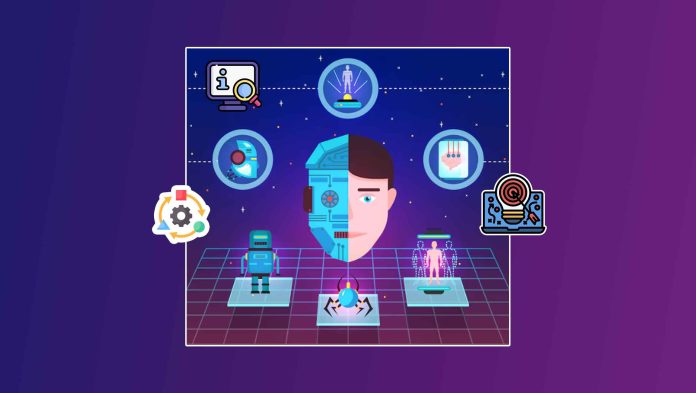
404