

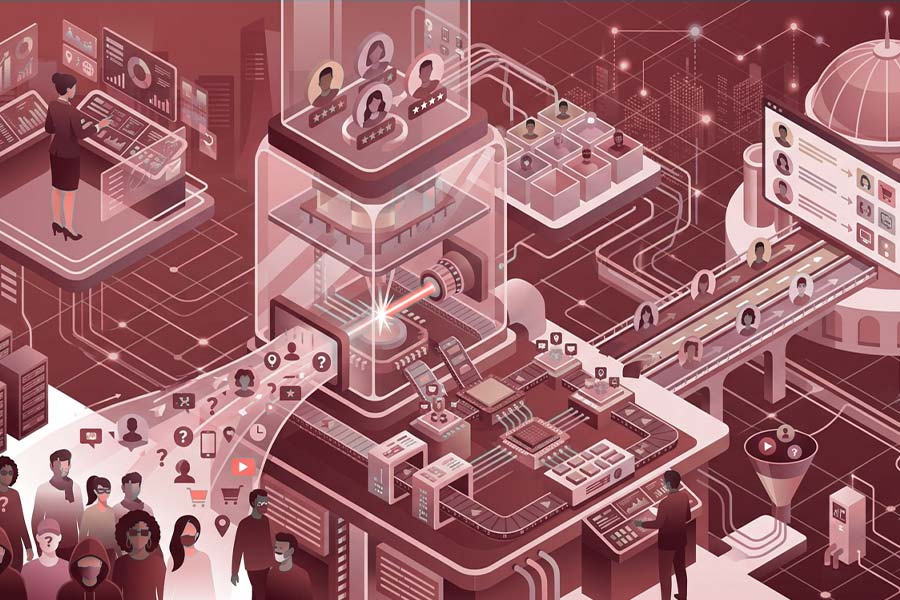
The last decade has seen a radical change in marketing. In the past, marketing strategies were mainly centered around individual campaigns, with each customer interaction largely treated as a one-off event to drive immediate conversions. But today, businesses are shifting to relationship-centric engagement, understanding that long-term customer loyalty is forged by consistently personalized experiences, not one-time transactions.
In a fiercely competitive digital world, companies are tasked with knowing what customers like, guessing what they will need down the line, and holding onto valuable relationships across every interaction point. This evolution has resulted in Memory-Based Martech, an emerging paradigm that allows organizations to build long-term customer intelligence and deliver continuous, context-aware engagement.
Today’s customers touch brands across multiple channels, including websites, mobile apps, social media, email, customer service, online marketplaces, and physical locations. They expect the interactions to seem seamless, not jarring. Customers don’t want to repeat preferences, rehash past issues, or start conversations over every time they interact with a business.
Instead, they expect brands to remember their purchase history, communication preferences, browsing behavior, service interactions, and evolving interests, no matter what channel they choose. Meeting these expectations has become paramount to delivering seamless and personalized customer experiences.
Even with considerable spend on digital marketing technologies, many organizations still face disconnected customer journeys. Often, a customer’s information is scattered across separate CRM platforms, marketing automation systems, customer service tools, analytics platforms, and commerce applications. This can lead to the loss of valuable behavioral context between interactions, resulting in inconsistent personalization and limiting the organization’s ability to build long-term customer relationships.
Traditional CRM systems excel at storing transactional records and contact information, but they weren’t designed to capture ever-evolving customer context or to learn from every interaction over time.
Advances in artificial intelligence are pioneering the concept of persistent customer memory, which addresses these limitations. Rather than static customer profiles, AI memory systems capture, organize, and retrieve customer knowledge from each interaction to provide organizations with a living understanding of each person. This persistent memory is what allows marketing platforms to deliver highly relevant recommendations, personalized communications, adaptive customer journeys, and proactive engagement based on accumulated behavioral intelligence rather than isolated data points.
Memory-Based Martech brings together AI memory engines, Customer Data Platforms (CDPs), identity resolution technologies, event streaming architectures, customer memory graphs, predictive analytics, and intelligent orchestration platforms to create a single evolving view of every customer. Together, these technologies turn disconnected interactions into continuous customer intelligence that enhances relationships across the entire customer lifecycle.
Let us discuss the fundamental technologies and architecture of Memory-Based Martech, their business use cases, organizational benefits, implementation challenges and future directions. It also explores how persistent customer intelligence is changing the landscape of modern marketing, allowing brands to develop meaningful, personalised, and long-lasting relationships with customers at every touchpoint.
Marketing Technology News: MarTech Interview with Mark Listes, CEO @ Pendulum Intelligence
What is Memory-Based Martech?
Memory-Based Martech is an advanced marketing strategy that allows organizations to create, store, and constantly refresh customer intelligence across all interactions. Memory-Based Martech moves away from traditional marketing technologies that are geared toward one-off campaigns or static customer records, to build a persistent understanding of each customer by capturing behavioral patterns, preferences, conversations, and engagement history over time. This customer memory grows and grows, enabling brands to build hyper-personalized, contextually aware experiences that develop alongside customer relationships.
With artificial intelligence becoming more embedded in marketing operations, organizations are moving beyond transactional data to build long-term customer knowledge. Memory-Based Martech connects siloed interactions into a cohesive customer story that allows organizations to know customers, predict their needs, and deliver relevant engagement regardless of when or where the interaction occurs.
Memory-Based Martech is about building a constantly evolving customer memory, not about storing isolated customer records. With every interaction, you get a better understanding of customer behavior and can make smarter marketing decisions.
This has the following main features:
- Customer intelligence that grows and stays with every engagement.
- Customer memory end-to-end across digital and physical touchpoints.
- AI-powered contextual marketing based on prior behaviors and preferences.
- Relationship-based marketing architecture that emphasizes ongoing engagement over individual campaigns.
Memory-Based Martech doesn’t treat every customer interaction as a brand new start, but rather leverages what’s happened before to forge stronger, more meaningful customer relationships.
a) Why Traditional Customer Profiles Are No Longer Sufficient
Traditional CRM platforms have played an important role in customer management, but they were primarily designed to store contact information, purchase history, and transactional records. Today’s digital customer journey is much more dynamic, and static customer profiles are no longer sufficient for personalized marketing.
Traditional customer profiles are not as effective because they have several limitations:
- Static CRM records that rarely capture changing customer interests.
- Fragmented customer information stored across multiple marketing platforms.
- Limited engagement history that often focuses only on recent activities.
- Missing behavioral context that explains why customers make certain decisions.
As customers interact across websites, mobile apps, social platforms, customer service channels, and e-commerce platforms, businesses need systems that can integrate every interaction into a unified customer story.
b) Beyond CRM data
Memory-Based Martech takes us one step further than traditional customer relationship management, creating a living customer memory that constantly adapts. It doesn’t just store transactions in isolation; it stores context, preferences, and behavioral patterns across the customer lifecycle.
This approach allows organizations to build:
- Customer memory across all business systems unified.
- Long-term engagement patterns stored in persistent behavioral history.
- Cross-session continuity, remembering previous conversations and interactions.
- Enterprise-wide shared customer context across marketing, sales, and customer service teams.
This ensures customers have a consistent experience, no matter what department or channel they’re working with, and gives employees richer customer intelligence to make better decisions.
c) AI Memory and Traditional Customer Profiles
Artificial intelligence is a game changer in the way customer information is collected, analyzed, and used. Traditional customer profiles are largely static until manually updated. AI-powered memory learns from every interaction, automatically refining the understanding of the customer.
The main differences are:
- Learning that changes as customer behavior changes.
- Preservation of historical context with retention of past interactions and conversational details.
- Continuous analysis of customer interests and engagement patterns to drive evolution of preferences.
- Intelligent personalisation – recommending the most relevant content, offers and experiences based on the customer knowledge gathered.
Memory-Based Martech provides a way for organizations to move beyond simple personalization and achieve real intelligent relationship marketing with AI integrated with persistent customer memory. Instead of reacting to what customers have done recently, companies can analyze what they have done over the long term and anticipate what they will want in the future, delivering highly contextualized experiences that build customer loyalty over time.
Core Technologies Powering Memory-Based Martech
Memory-Based Martech is a suite of advanced technologies that work together to create persistent customer intelligence. They don’t just keep individual customer records; these technologies gather, organize, examine and remember customer interactions from all touchpoints on an ongoing basis.
With artificial intelligence, real-time data processing, identity resolution and predictive analytics, companies can create a living customer memory that is enhanced after each engagement. When combined, these capabilities enable organizations to deliver highly personalized context-aware experiences and forge stronger, longer-term relationships with customers.
a) Customer Memory Graphs
Customer Memory Graphs lay the groundwork for Memory-Based Martech by linking every customer interaction into a single, cohesive knowledge network. Instead of maintaining separate records for each transaction, these graphs link customer identities, behaviors, preferences, purchases, communication history, and engagement patterns.
As a result of this interconnected structure, organizations can capture changes in customer behavior over time, while maintaining the important historical context.
Major functions include:
- Ongoing identity management across multiple customer touchpoints.
- Relationship intelligence that connects interactions, products, preferences and engagement history.
- Cross-device memory that recognizes customers on websites, mobile apps, email, social platforms and physical channels.
- Behavioral knowledge graphs that continually structure customer activities into actionable business intelligence.
Customer Memory Graphs enable marketing teams to see each customer in full, and deliver personalized experiences to them with a much higher degree of accuracy than traditional customer databases.
b) AI Memory Engines
Artificial Intelligence AI Memory Engines transform customer data into knowledge that is constantly evolving and improving. AI memory systems differ from traditional databases in that they learn from customer interactions, detect patterns, and recall relevant context when a new interaction occurs.
These engines enable marketing systems to recall previous conversations, identify changing customer interests, and deliver extremely relevant recommendations based on the information they’ve collected.
The key capabilities are:
- Long-term memory models that hold on to customer knowledge throughout the entire customer lifecycle.
- Conversational memory that remembers previous conversations across chatbots, virtual assistants, and customer support channels.
- Customer Interests Auto-Update through Preference Learning on Continuous Interactions.
- Retrieving customer context that pops up relevant past information during future engagements.
As AI memory improves over time, customer experiences become increasingly personalized, natural, and consistent.
c) Customer Data Platform (CDP)
Memory-Based Martech relies on Customer Data Platforms to bring together customer data from various business systems into one cohesive environment. CDPs unite information into durable customer profiles, rather than letting customer data be siloed within marketing automation platforms, CRM systems, commerce applications, and analytics tools.
This centralized approach means that all departments are working with the same customer intelligence.
Main functions include:
- Consolidated customer records with transactional, behavioral, demographic, and engagement data.
- Real-time event streaming to capture new customer interactions in real time.
- Identity resolution that accurately merges multiple customer identities into a single profile.
- Real-time sync to get instant customer data updates across all connected apps.
Modern CDPs offer the reliable data foundation required for AI-powered customer memory and enterprise-wide personalization.
d) Event Streaming Infrastructure
Real-time data collection is key for Memory-Based Martech, as customer behavior is ever-changing. Event Streaming Infrastructure records customer activity in real time and exposes it so it can be analyzed and acted upon immediately.
Every visit to a website, product search, mobile device interaction, purchase, click on an email, request for support or social interaction creates a customer memory that grows over time.
Key features are:
- Capture behavior continuously on every customer interaction.
- Omni-channel tracking for physical and digital interactions.
- Real-time event processing that updates customer intelligence in real time
- Session persistence that keeps the customer context for multiple interactions and browsing sessions.
This continuous stream of information lets organizations react to customer behaviour as it happens instead of waiting for stale historical reports.
e) Predictive Intelligence
Memory-Based Martech is so much more valuable when customer memory is combined with predictive intelligence. Artificial intelligence can study a customer’s past behavior to predict what they’ll do next, spot when they’re about to buy, and recommend the best way to engage them.
Instead of reacting to customer activity, organizations can deliver personalized experiences that increase conversion rates and build long-term relationships.
Predictive intelligence capabilities:
- Behavioral forecasting based on long-term interaction patterns.
- Intent prediction that identifies customers most likely to purchase or engage.
- Next-best-action models that recommend optimal marketing responses.
- Lifecycle intelligence that predicts customer progression, retention risks, and future opportunities.
These predictive capabilities enable businesses to transform customer memory into actionable marketing intelligence that consistently enhances business results.
f) Privacy-preserving intelligence
And as companies gather more and more data about customers, privacy and trust become key. Incorporating privacy into every step of customer intelligence is the fine line that Memory-Based Martech must walk between personalization and responsible data management.
Modern marketing platforms include governance frameworks to ethically collect, store, and use customer information in compliance with evolving regulations.
The main components are:
- Consent management that gives customers more control over the collection and use of their information.
- Data governance frameworks to ensure the quality of data, security, and regulatory compliance.
- Privacy-by-design principles that integrate privacy protections at all levels of technology.
- Ethical AI memory that diminishes bias, encourages transparency and promotes responsible decision-making.
This is where privacy-preserving intelligence comes in — enabling organizations to establish long-term trust with customers while extracting maximum value out of AI-powered personalization.
Building the foundation for ongoing customer intelligence
Customer Memory Graphs. AI Memory Engines. Customer Data Platforms. Event Streaming Infrastructure. Predictive Intelligence. Privacy-Preserving Intelligence. These components are seamlessly integrated and make Memory-Based Martech effective. Combined, these technologies create a customer memory that is evolving all the time and goes way beyond what traditional CRM systems can do.
By combining real-time behavioral capture with AI-driven learning and responsible data governance, organizations can deliver highly personalized, context-aware experiences that strengthen customer relationships, boost marketing effectiveness, and create a long-lasting competitive advantage in a fast-moving digital market.
Business Applications of Memory-Based Martech
Memory-Based Martech is changing how companies speak to their customers, replacing scattered marketing efforts with continuous, relationship-driven conversation. Instead of treating each interaction as a separate event, companies can build up ongoing customer intelligence over time.
This enables marketing, sales, and customer service teams to provide highly personalized experiences based on a longer-term view of behaviour rather than just short-term transactional data. With contextual intelligence, AI and customer memory, organizations can deliver seamless experiences across the customer journey.
a) Hyper-Personalized Customer Experiences
Memory-Based Martech allows brands to provide hyper-personalized experiences based on every customer interaction. Instead of relying on static customer profiles, organizations create a permanent memory of their customers that encompasses their preferences, browsing behavior, purchase history, communication preferences, and engagement patterns.
This allows companies to offer relevant offers, product recommendations, and personalized content that stays relevant throughout the customer relationship. Adaptive recommendations constantly evolve to reflect customers’ changing interests, making sure each interaction is contextually relevant, meaningful, and timely.
b) Omnichannel Customer Journey Orchestration
Customers interact with brands across a variety of platforms, including websites, mobile apps, email, social media, customer service and physical stores. Memory-Based Martech synchronizes the touchpoints through a single, customer memory that tracks the person across all channels.
Cross-channel continuity means customers don’t have to provide the same information twice, and journey synchronization allows businesses to coordinate communications across marketing, sales and support. Conversation persistence means that context from previous interactions is retained, allowing organizations to deliver consistent engagement regardless of where the customer wants to continue their journey.
c) Artificial Intelligence Powered Customer Service
If AI can remember past interactions and understand long-term customer relationships, it can be much more effective in customer service. Memory-Based Martech gives AI assistants and service reps persistent customer history before responding to requests. During the support process, you can view past conversations, preferences, purchase history, and open issues at any time.
Intelligent case resolution enables AI to recommend the best solutions based on previous interactions, and personalized assistance reduces customer effort by removing the need to repeat explanations and providing a more seamless service experience.
d) Lifecycle Marketing
Memory-Based Martech allows for lifecycle marketing by keeping customer intelligence throughout the entire customer lifecycle, not just within single campaigns. Organizations can recognize important customer milestones like onboarding, first purchases, anniversaries, subscription renewals, and loyalty milestones.
The adaptation of communications to the evolving interests and behaviour of customers means more intelligent cultivation of relationships. Loyalty optimization creates long-term relationships by delivering relevant incentives and continuously creating value, while retention campaigns can be customized based on past engagement.
e) Predictive Marketing
The persistent customer memory is a tremendous enhancement to predictive marketing, combining artificial intelligence and past behavior. Organizations can predict future needs and buying intentions, rather than just reacting to recent customer behavior. Next best offer recommendations provide conversion opportunities based on context relevance, and intent-based campaigns target customers at their most likely moment to engage.
By identifying customers who are showing signs of disengagement, churn prediction allows businesses to take proactive steps. Customer lifetime value optimization also supports strategic marketing investments by identifying high-value customer segments and recommending long-term engagement strategies.
f) Sales and Account Intelligence
Memory-Based Martech is not just for marketing but for account management and sales too. Sales teams get a complete view of their customers, including past buying activity, things they’re interested in, notes from previous conversations, service interactions, and more. Personalized outreach becomes more relevant as sales reps learn customers’ preferences before reaching out. Relationship intelligence allows account managers to identify new needs within the business.
Opportunity forecasting helps organizations predict future revenue opportunities based on their collected customer knowledge. This continuous intelligence supports better collaboration between the marketing, sales, and customer success teams and fosters stronger long-term customer relationships.
g) Building Long-Term Customer Relationships
Martech based on Memory transforms customer engagement into continuous, intelligent relationships that grow over time, not mere campaigns. Through hyper-personalization, omnichannel orchestration, AI-powered customer service, lifecycle marketing, predictive engagement, and intelligent sales support, organizations can create seamless customer experiences that fuel business performance and deepen loyalty.
With customer expectations on the rise, organizations seeking to deliver meaningful, context-aware engagement at every touchpoint will look more and more to persistent customer intelligence.
Business Benefits of Memory-Based Martech
Memory-Based Martech provides organizations with a major strategic advantage by turning customer data into ever-evolving intelligence. Businesses no longer try to stitch together a customer’s record, but instead get a lasting view of customer behavior that enables personalized engagement, better decision-making, and stronger long-term relationships.
By merging AI with continuous customer memory, companies can offer highly relevant customer experiences, leading to more effective marketing, stronger customer loyalty, and more efficient business operations.
a) Greater Customer Retention
One of the key benefits of Memory-Based Martech is better customer retention. Organizations that consistently remember their customers’ preferences, provide relevant experiences across all touchpoints, and remember their previous interactions are more likely to retain their loyalty.
Enduring customer memory enhances relationships by ensuring that each interaction builds on the experiences of previous interactions. This continuity helps to mitigate customer frustration, minimize churn, and increase long-term loyalty through the development of meaningful, personalized relationships beyond individual transactions.
b) Enhanced personalization
Conventional personalization, often reliant on poor customer data, frequently leads to generic recommendations and inconsistent experiences. Memory-Based Martech learns from customer behavior over time to create personalized experiences.
Marketing messages are more relevant; they show what people like, what they bought before, how they browse, and how they engage. Contextually relevant recommendations enable customers to discover the right products, content, and services at the right moment in their journey, driving satisfaction and engagement.
c) Improved marketing efficiency
Customer intelligence in motion enables organizations to enhance marketing efficiency by better targeting audiences and eliminating wasted campaign spending. This would enable marketing teams to identify the best audiences, modes of communication, and engagement methods through a better understanding of customer behavior. Better targeting means better campaigns, and less irrelevant communications and wasted impressions at the same time. Personalization also increases conversion rates as customers are receiving messages relevant to both their current interests and long-term preferences.
d) Enhanced Customer Experience
Memory-Based Martech breaks down the barriers of disconnected channel touchpoints for more seamless customer experiences. And it does so consistently regardless of whether customers are using websites, mobile applications, customer support, or social media channels to interact with the company.
Access to relevant information at all times allows organizations to remember past conversations, understand a customer’s history, and resolve issues much more quickly. The process of making purchases or getting support is streamlined, and customer satisfaction is increased through quicker solutions to problems, customized communication, and ongoing engagement.
e) Greater Revenue Growth
Enhanced customer intelligence is a key revenue growth driver, supporting greater cross-sell, up-sell, and longer-term relationship development. AI-driven recommendations identify complementary products and services based on customer behavior and not broad demographic assumptions.
Organizations can also better identify emerging customer needs earlier, which increases the potential for proactive engagement and personalized offers. Deeper customer relationships lead to increased retention, increased purchase frequency, and expanded account growth, all of which increase customer lifetime value.
f) More Informed Business Decisions
Martech powered by memory gives decision makers a better understanding of customer intelligence and helps them to plan strategically for marketing, sales, customer service and product development. Combining real-time interactions with historical customer behavior can lead to better forecasting, improved customer segmentation, and more accurate demand prediction. Organizations can continuously improve campaigns, customer journeys and engagement strategies by leveraging evolving behavioral insights, not static reports. This constant optimization enables businesses to improve operational performance, stay competitive in the long run, and react faster to changing customer expectations.
Driving Sustainable Customer-Centric Growth
Memory-Based Martech turns scattered customer data into durable, AI-powered customer intelligence that provides long-term business value. Organizations establish a long-term competitive advantage through meaningful customer relationships by providing enhanced customer experiences, driving stronger revenue growth, enabling smarter decision-making, achieving deeper personalization, boosting marketing efficiency, and increasing retention.
As marketing evolves from executing campaigns to driving engagement based on relationships, Memory-Based Martech will become a core capability for organizations that want to build continuous, context-aware customer experiences that fuel sustainable business growth.
Future Outlook
The future of marketing is going to be intelligence far beyond traditional customer analytics. As artificial intelligence (AI), machine learning, real-time data processing, and autonomous decision-making mature, Memory-Based Martech will become a strategic capability that allows organizations to build lasting customer relationships, rather than just running marketing campaigns.
Instead of fragmented customer records, future marketing platforms will learn from every interaction. They will maintain the context of the customer and deliver highly personalized experiences across each touchpoint. This shift means brands can more accurately anticipate customer needs, increase engagement, and facilitate frictionless relationships that grow more meaningful over time.
a) AI Agents with Persistent Customer Recall
The conversational intelligence and persistent customer memory will make AI-powered marketing agents more autonomous. These intelligent agents will not simply be chatbots or virtual assistants; they will have long-term knowledge of the customer that is updated with every interaction.
Autonomous marketing assistants will remember past conversations, customer preferences, purchase history, communication styles, and ongoing business relationships. Instead of every customer conversation starting from scratch, AI agents will have natural conversations where they make recommendations and provide support based on what they’ve learned.
The customer’s ongoing learning will further enrich these interactions as the AI technologies will automatically update the customer profiles as their behavior and preferences change. Long-term relationship intelligence will enable organizations to deliver proactive engagement, anticipate customer needs, and cultivate customer loyalty through consistent, personalized experiences across every communication channel.
b) Emotionally Intelligent Marketing
The next-generation Memory-Based Martech will go beyond behavioral analysis and bring emotional intelligence into customer engagement. AI systems will continue to identify customer sentiment, emotional tone, and communication patterns to create more empathetic marketing experiences.
Sentiment memory will enable companies to remember how customers felt in past interactions, rather than only recording transactional information. Contextual emotions help you understand better if your customers are satisfied, frustrated, enthusiastic, or engaged so you can adjust your future communications accordingly.
By listening empathetically, brands will be able to respond in a more appropriate way to each customer’s situation. Marketers will start to think not only about what the customer has done, but how they feel about it, making marketing messages, customer service interactions and sales conversations more human-centred, which in turn will deepen long-term trust and quality of relationships with customers.
c) Self-Learning Customer Journeys
AI will analyze engagement patterns in real time and automatically tweak every stage of the customer lifecycle, making customer journeys more and more adaptive. Future customer journeys will dynamically adjust to individual customer behaviour rather than following predetermined marketing workflows.
Adaptive personalization will dynamically tailor recommendations, messaging, content and offers based on evolving customer interests and life events. Dynamic journey orchestration will be used to coordinate interactions across websites, mobile apps, email, social media, commerce platforms and customer support channels, ensuring that each experience is consistent and relevant.
The AI will then be able to go a step further and optimize on its own. It will be able to assess customer responses in real time, see what approaches worked, and automatically adjust the marketing efforts with minimal human input.
d) Enterprise Memory Clouds
As organizations ramp up their digital transformation efforts, customer memory will grow from marketing departments to enterprise-wide intelligence platforms. Enterprise Memory Clouds will provide a shared environment in which customer knowledge can be safely shared across marketing, sales, customer service, finance, product development, and business operations.
Customer intelligence across the organization will prevent each department from working with a separate customer record, and instead, all departments will work from the same evolving understanding of the customer. Improved collaboration will be achieved through shared contextual knowledge, giving employees access to accurate customer history, regardless of business function.
Unified AI memory infrastructure will bring customer interactions across multiple systems into a single layer of intelligence, allowing for faster decision-making, consistent customer engagement, and increased operational efficiency across the enterprise.
e) From Customer Profiles to Living Digital Twins
One of the most exciting things happening in Memory-Based Martech is the shift away from static customer profiles to living digital twins. Instead of holding historical customer data, organizations will have dynamic digital representations that are always evolving with each customer.
These live customer profiles will integrate behavioral patterns, purchase history, preferences, communication styles, contextual information, and predictive intelligence into ever-changing customer profiles. Predictive behavior simulations will allow organizations to understand how customers may react before they roll out campaigns or introduce new products.
Real-time preference evolution ensures that digital customer models remain accurate over time as customer needs and behaviors shift. Continuous relationship intelligence will allow organizations to anticipate future expectations, build customer loyalty and deliver increasingly personalized experiences across the customer lifecycle.
Developing Persistent Customer Intelligence for the Future
Memory-Based Martech is poised to become the backbone of next-gen marketing, leveraging persistent customer memory, autonomous AI, emotional intelligence, adaptive customer journeys, enterprise-wide knowledge sharing, and ever-evolving digital customer models. These innovations will enable organizations to move beyond traditional personalization to truly intelligent relationship marketing that remembers, understands, and responds to customers at every stage of their journey.
As AI technologies mature, organizations that invest in persistent customer intelligence will be better positioned to deliver meaningful experiences, strengthen long-term loyalty and maintain a sustainable competitive advantage in an increasingly customer-centric digital economy.
Conclusion
Memory-Based Martech represents a huge step forward for modern marketing, from campaign-based engagement to continuous, relationship-based customer experiences. Traditional marketing tends to view customer interactions as isolated events, making it difficult for organizations to develop meaningful, long-term relationships. In contrast, Memory-Based Martech enables businesses to continuously learn from each customer interaction, building a living and evolving understanding of individual preferences, behaviors, and needs. This continuing customer intelligence enables brands to deliver more relevant, personalized, and consistent experiences across the entire customer lifecycle.
This transformation is made possible by the use of advanced technologies such as AI memory engines, customer memory graphs, Customer Data Platforms (CDPs), event streaming infrastructure, predictive intelligence, and intelligent journey orchestration. These technologies work together to build a shared customer memory that goes far beyond traditional CRM systems.
Rather than static customer profiles or disparate records, organizations are able to access up-to-date customer intelligence that tracks historical interactions, contextual information, and changing preferences in real time. It helps businesses to make smarter marketing decisions and delivers highly contextual experiences across every touchpoint.
Memory-Based Martech delivers both short- and long-term business benefits. With persistent customer memory, you can do a better job of personalization — you don’t have to start at square one with every interaction. Through ongoing engagement with customers, organizations can improve customer retention, enhance the efficiency of marketing efforts via targeted communications, and create consistent omnichannel experiences that boost customer satisfaction and loyalty.
Sales, marketing, and customer service teams can also benefit from a shared understanding of customer behavior, which can lead to more effective collaboration, better decision-making, and an increase in customer lifetime value. Businesses can develop more profound customer relationships and enhance operational performance by transforming fragmented customer data into ongoing relationship intelligence.
But to unlock this promising opportunity, organizations need to solve major challenges around privacy, governance, ethical artificial intelligence, and enterprise-wide data integration. Transparent consent management, ethical use of data, robust governance frameworks and compliance with evolving privacy regulations all contribute to customer trust. AI systems also need to be designed to minimize bias, safeguard sensitive information and use customer intelligence responsibly. Equally important is the integration of customer data across multiple business systems to form a unified and reliable foundation for persistent customer memory.
As customer expectations evolve, Memory-Based Martech will be a core capability for future marketing organizations. Companies that can remember, understand, and respond intelligently to every customer interaction will be in a better position to deliver personalized experiences that foster trust, loyalty, and long-term engagement.
Organizations can leverage persistent customer memory, artificial intelligence and real-time customer intelligence to build deeper relationships, improve marketing effectiveness and establish sustainable competitive advantage. Memory-Based Martech will revolutionize how brands connect with customers in an increasingly AI-driven digital economy, turning every interaction into an opportunity to build lasting relationships and deliver ongoing business value.
Marketing Technology News: How MarTech Is Enabling Autonomous Brand Engagement Across Channels?