Home Blog Page 4447

How to Use Twitter to Find Sales Prospects and Generate New Leads for B2B Companies

0
Twitter
How to Use Twitter to Find Sales Prospects and Generate New Leads for B2B Companies

By truly harnessing the power of Twitter and other social networks, B2B companies can identify new sales prospects, nurture them through direct communication, and convert them into qualified leads that have a higher chance of becoming customers.

But, how can you turn Twitter followers into leads? In this article, I’ll discuss how B2B companies can use an approach of proactive social outreach to transform Twitter into a reliable source of quality leads.

Demand Generation and Social Prospecting

Before delving into lead generation through Twitter, let’s get on the same page about a few basic terms.  Demand generation is defined as the actions you take to drive awareness and interest in your organization’s services or products, and it’s commonly used in longer buying cycles and B2B transactions.

Social prospecting is the process of identifying potential B2B leads for your business through social media. Keep in mind that prospecting relies on listening to what users have to say in order to identify their interests. Then, once you’ve identified the audience who are interested in your product category, you’ll want to engage them in the right context. This is what proactive social outreach is all about.

Marketing Technology News: Paysafe Announces YouTube Partnership

Using Twitter for Lead Generation

Since it was first launched in 2006, Twitter has become the second leading social media platform used today. This is why 87% of business marketers already use Twitter as part of their marketing mix.
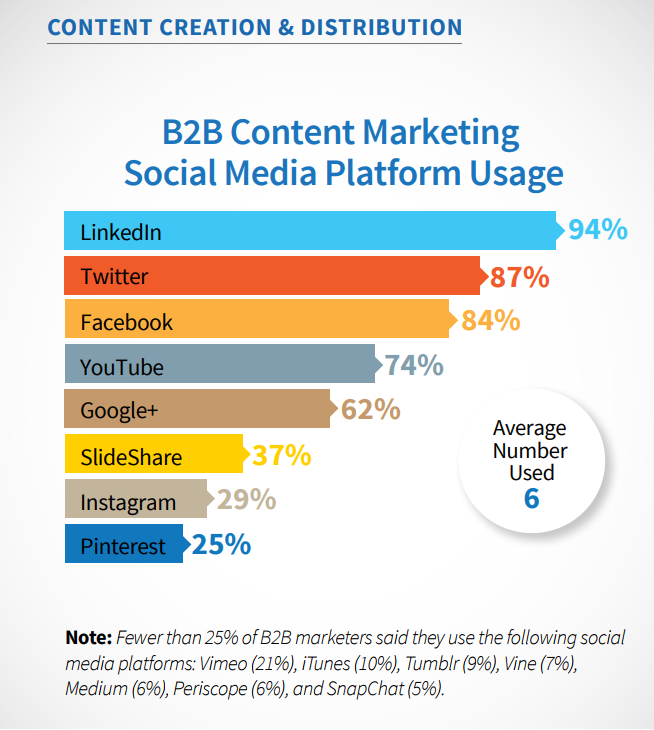
B2B Content Marketing by Content Marketing Institute
via B2B Content Marketing by Content Marketing Institute

Twitter isn’t just a place to post your content and engage with users one-by-one. This platform actually offers a superb channel for finding B2B prospect at scale and turning them into leads. Twitter provides two unique advantages as a lead generation channel:

  1. You can easily identify your target audience on Twitter because all profiles and tweets are considered public data
  2. There are multiples ways to engage with people on Twitter and promote your business.

Twitter has a myriad of advertising options and they’ve allowed third-parties build applications on top of its dataset to facilitate lead generation.

It’s hard to stand out on Twitter just by tweeting. To generate leads, you also need to do the following:

Target the Right Segment

To help you identify your ideal market segment, you can look at the keywords they use in their tweets and who they are following. Actions taken on Twitter that shine a light on prospects’ interests and pain points include:

– Mentions of specific topics or pain points your company can solve

– Engagement or mentions of influencers and companies complementary to yours

– Using hashtags for upcoming conferences in your industry

– Follows, mentions and replies to the Twitter handles of your company or executives

– Follows, mentions or replies to your competition

Since these people are already showing interest in your space, they’re much more receptive to having a conversation with you.

Marketing Technology News: Gartner Survey Shows Inside Sales Organizations Risk Losing 24% of Employees This Year

Engage With Your Target Audience in Context 

Once you identify your target audience, you should engage them in a timely manner and make sure you provide a lot of value in your messages.

With social lead generation software, you can follow your target audience on Twitter automatically. If they return the follow, you can send them direct messages (DMs) that can be personalized according to the information you already have (i.e. the relevant keyword used in a recent tweet). These messages can feature links that send prospects to a landing page for a whitepaper or webinar on your website, so that you can add new leads to your database.

Kaseya, a leading provider of IT management solutions, took this approach and was able to grow their Twitter presence by 58%, from 18,800 Twitter followers to over 29,670 followers within the last 12 months.

To find the audience who would be most receptive to their offers, they searched for IT Directors, IT managers and CIOs who have taken actions such as:

– Mention a technology topic (i.e. Active Directory, mobile dev, managed services)

– Follow or engage with IT influencers (i.e. @CIOMagazine, @CIOOnline, @InformationWeek)

– Follow or engage with a cloud infrastructure player (i.e. @Azure)

Then, they set up an automated campaign to engage this audience on Twitter. Once a person follows Kaseya back, the campaign would send out a personalized direct message (DM) that features a top-of-funnel whitepaper an IT professional may be interested in.  For example, a white paper featuring benchmarking data on IT operations – to pique their interest in what their industry peers are doing.

Once a lead downloads a whitepaper, they’re added to Kaseya’s marketing database and are nurtured through a series of emails until they take enough actions to go over the Marketing Qualified Lead threshold.

You don’t have to wait until someone responds to your Twitter direct message to reach out to them.

Although Kaseya only emailed the leads who filled out a form to download a whitepaper, you can also reach out to new leads through email as soon as they follow your brand on Twitter.

Social lead generation software will pull lead information, such as corporate email address, company name, and company size for the leads in your campaign. You can sync the lead information into your marketing automation platform or CRM automatically, and use this data to craft email campaigns to move leads down your funnel.

This two-pronged approach works because you are connecting with people in context, when your brand is still top of mind. Our marketing team found that when we send a new Twitter follower a personalized “Just reaching out” email in the first 24 hours after they follow us, this email gets double the open rate compared to our typical nurture emails.

Set KPIs for Your Sales Funnel

If you want to your Twitter lead generation campaign to work, you’ll need to set tangible objectives with funnel-specific KPIs that help you gauge the success of your efforts. These are some metrics to look at:

  • Number of website visitors coming from Twitter
  • Form fills acquired from Twitter visitors
  • Conversions generated
  • Number of website visitors coming from Twitter
  • Leads from Twitter that are becoming Marketing Qualified Leads or Sales Opportunities

Additionally, if you’re gaining relevant followers on Twitter, you should start to see greater engagement with your content on Twitter, in terms of shares and retweets per post.

When you use social lead generation software, you’ll be able to see metrics like keyword success rate on a keyword by keyword level, allowing you to optimize your campaign and get better results. You can launch your campaign and let it run on a continuous basis, and you receive new leads in your email marketing or CRM system every day.

In Conclusion

Twitter offers one of the most effective demand and lead generation channels available to B2B marketers and its value goes beyond content distribution. By using social lead generation software, you can turn Twitter into a lead generating machine and build the pipeline to boost the health of your sales funnel.

Marketing Technology News: Airbnb Introduces New Search Capabilities for Business Trips

3 Tips for Emerging from the Data Swamp Victorious

0
Data Swamp
3 Tips for Emerging from the Data Swamp Victorious

Did you know it’s estimated that bad data cost US companies $3.1 trillion in 2016? Many sales teams are entering data into their systems manually, leaving data sets muddied, duplicated and inaccurate. This is a huge problem for sales teams, as their jobs depend on having reliable and easy to access data at their fingertips. If not, their prospecting will quickly go to the wayside. This is where the struggle starts for many sales departments.

Today’s sales technologies allow organizations to measure almost anything, causing sales leaders to lose sight of what is really driving sales and reps to get lost in the large amount of metrics provided. To ensure you’re leading your sales department to success through accurate data, it’s crucial to find the metrics that matter most. Whether using the data to identify the best time to call a prospect or the type of outreach method a prospect prefers, the answers are in your data so long as it’s organized and you know where to look for it.

Here are three best practices when it comes to collecting and utilizing loads of sales data coming in daily:

  1. Collect all the data you can: One problem organizations often run into is that once they collect a significant amount of data, they aren’t sure how to process it. Instead of having to sort through data to find what works and what doesn’t, they selectively collect data leaving them short of information that can be truly valuable to their sales team.
  2. Sometimes you need to remove the end user: Data can be your sales team’s best friend if used correctly. Most of the time, this means removing reps from the collecting process when possible and having strong rules around automation. A sales rep typically has to perform a number of steps in order to receive credit for their work. While this is fine most of the time, it has the potential to leave sales reps inputting bad data or not enough data as they rush through the necessary steps to receive their credit. To avoid muddied datasets, organizations need to find the right technologies to help automate their data processing systems for the user.
  3. Your sales team needs data, but not all of it: Your organization should collect all the data it can, but only make available the data that’s most relevant to your sales reps. It’s easy to get lost in the loads of data being presented, but by filtering the data to show the metrics that are most important to the rep’s book of business, they will have the information they need at their fingertips to close a lead.

The modern sales team is data-driven, and today’s sales journey combines the best of both worlds by giving sales reps the chance to act as advisors to their customers while using real data to complement sales. Similar to marketing, sales teams will continue to see how data will provide measurable ROI for their organization, so long as they know how to make it actionable.

TechBytes with Wulfric Light-Wilkinson, CCO, Quill

0
Quill

Wulfric Light-Wilkinson
CCO Quill

Quill is a leader in Primary Content production, who with their latest round of investment have raised a total of £10 million. We covered how the investment will fuel development of its proprietary cloud technology platform and further expand its network of freelance content creators and to continue to roll out the Quill Quality Score, an industry standard benchmark for the ecommerce content quality. We caught up with Quill’s CCO, Wulfric Light-Wilkinson, to get his point of view on Primary Content creation and how industries can leverage it.

Html code here! Replace this with any non empty text and that's it.

MTS: What is Primary Content and why is it such an issue for retailers?
Wulfric Light-Wilkinson: Primary Content is the critical pre-purchase information that converts browsers into buyers, helping them to make more informed decisions at the penultimate stage of their purchase journey. Examples include product descriptions, category descriptions, travel destination guides or buying guides and shoppable videos. As Primary Content sits at the end of the purchase funnel it directly influences ROI on all marketing activities further up the funnel. Indeed, high-performing Primary Content improves SEO, conversions, basket size, product return rates and brand reputation.

MTS: Why do retailers and agencies find it so operationally challenging to produce Primary Content?
Wulfric Light-Wilkinson: Primary Content typically needs to be produced in very high volumes. If you have thousands of products you need thousands of product descriptions, often with short lifecycles requiring regular updates to the content. If you operate internationally the problem multiplies.

Creating high-quality content at speed and scale is a significant operational challenge. While in-house teams and agencies create fantastic hero content (for advertising campaigns) and small-scale consideration content (e.g. editorial & social content), they often struggle to scale their content production. That’s because they typically lack global content creation teams and enabling technology that eliminates the arduous, error-prone, manual processes involved in content creation. Consequently, Primary Content is often missing or of poor quality, negatively impacting their revenues.

MTS: How does Quill overcome the operational challenges of creating high volumes of Primary Content quickly?
Wulfric Light-Wilkinson: Quill is purpose-built to overcome these challenges. Our unique model combines the flexible costs of a global network of freelance, specialist content creators (the Quill Network) with proprietary cloud technology that eliminates inefficiencies in large scale, multi-language content production (the Quill Cloud). As a result, we can produce high-quality content 75% faster and 40% cheaper than is possible in-house. We also analyze our processes down to the micro-level, inspecting every task to see what can be streamlined or automated; creating small, incremental savings that add up to very significant time and cost savings.

MTS: You’ve developed the Quill Quality Score – how does this work?
Wulfric Light-Wilkinson: The Quill Quality Score is an industry-standard framework for measuring the effectiveness of ecommerce content. The framework is based on consumer research, aggregated performance data from thousands of content pieces created by Quill, and industry expertise. We have performed audits across a wide range of ecommerce sites using the Quill Quality Score, revealing some surprising trends across various industries. For example, only 29% of online clothing retailers describe how an item fits, even though 98% of consumers consider it important to a purchase.

MTS: What are the big changes you see occurring in the industry and what effect do you see this having?
Wulfric Light-Wilkinson: Conversational commerce is a big topic in the industry at present. As voice-controlled smart speakers like Amazon Alexa and Google Home make their way into our households, the way we shop online is evolving from searching on Google or Amazon to interacting verbally through an AI assistant. This will fundamentally affect how marketers can reach consumers because the consumer journey will look very different in the next 5-10 years.

MTS: What benefits do you envisage AI having in the marketing industry?
Wulfric Light-Wilkinson: Digital transformation is set to have a massive impact on the marketing industry and artificially intelligent tech will empower businesses across the board. Despite the hype, I don’t think it will leave people out of work but is more likely to result in a ‘humans in the loop’ scenario where technology makes us more informed, efficient and intelligent than ever before. People will have more time to do the interesting jobs as the mundane tasks will be fully automated. We’re entering a fascinating age for business and the traditional models of how we work are set to change radically within the coming years.

MTS: Thanks for chatting with us, Wulfric.
Stay tuned for more insights on marketing technologies. To participate in our Tech Bytes program, email us at news@martechseries-67ee47.ingress-bonde.easywp.com

Interview with Mingqiang Lee, Founder and CEO, Tuputech

0
Mingqiang Lee
Interview with Mingqiang Lee, Founder & CEO at Tuputech

[mnky_team name=”Mingqiang Lee” position=” Founder and CEO, Tuputech”][/mnky_team]
[easy-profiles profile_twitter=”https://twitter.com/tuputech” profile_linkedin=”https://www.linkedin.com/in/%E6%98%8E%E5%BC%BA-mingqiang-lee-%E6%9D%8E-5a434a10a/”]
[mnky_testimonial_slider][mnky_testimonial name=”” author_dec=”” position=”Designer”]“For all we know, today we have stepped into an era of picture-reading. Most of the information is conveyed through pictures and videos.”[/mnky_testimonial][/mnky_testimonial_slider]

On Marketing Technology

MTS: Tell us about your role and how you got here. What inspired you to found an AI image recognition company?
For all we know, today we have stepped into an era of picture-reading. Most of the information is conveyed through pictures and videos. So the demand for image recognition, image analysis, and image understanding are growing much stronger than ever before. Some companies generally don’t have any AI engineering and technical capabilities, but they do have a strong demand for dealing with image data. Therefore, the prospect of image recognition is more than promising.

MTS: How does Tuputech’s Image recognition API work?
Firstly, the image data from the customer’s service is transferred to our API through cloud. We take this data and use our image recognition system to recognize the image. The output result will be returned to the customer through the cloud. Under normal circumstances, the whole procedure only takes 1 second and the system can deal with 50 images at a time.

MTS: How does Tuputech’s offering integrate with various DMPs/CMS?
The output results of image recognition involves scoring the image, whether the image is acceptable and whether it needs to be reviewed. Most of our customers will group the images based on the results we provide, and then do relative processing on their auditing platforms. For example, the pornographic content auditing platforms will delete the pornographic images and manually recheck the suspect images. Usually, images suspected of being pornographic account for less than 5%, which means that customers only have to recheck 5% of all the data. For live-broadcasting platforms, they will send the illegal-suspected items to a specific auditing position and the auditors can deal with those images. In this way, the efficiency of auditing can be improved.

MTS: Which sectors do Tuputech’s image recognition services cater to?
Tuputech excels in recognizing offensive images and videos, including pornography, violence, terrorism and spam. We can train our models based on the different requirements of our customers. In other words, we can solve the identification problems for people with different skin colors. Additionally, our image recognition system can not only identify the normal pornography but also child pornography.

MTS: How would you commercialize AI in a step-by step manner at Tuputech?
AI commercialization is a step-by-step process, instead of a one-stop process. Due to the specialty of AI technology, it can achieve a 70%-good model very quickly, but it is difficult to  improve the model to its 100% perfection. TupuTech provides costumers with quality-assured services while preserving the basic image-recognition. We are trying to enhance our accuracy, perfecting the whole recognition loop.

MTS: Would you tell us about a standout digital campaign? (Who was your target audience and how did you measure success)
Our targeted customer types include social media and websites for live-broadcasting, short videos and pictures sharing, etc. Except for adult sites, most of the websites do not allow pornographic content. What’s more, video-socializing websites are extremely popular today and because of their privacy, problems in management and supervision could happen from time to time. Tuputech’s service can be accessed via API as well as SDK. So far, SDK for pornography recognition is available and can be integrated in apps to moderate videros in real-time. The SDK can be embedded in the app and could supervise video conversations in real time. As for social video apps, we can also identify whether the user is juvenile or not, and prevent them from using this type of app.

MTS: As a business leader of an AI-centric firm, how do you see current AI systems evolving over the next five years?
AI will surely overturn different industries and re-deploy social resources. The influence of AI is unintended and at the same time all-round. From our country’s status, transformation of cities and the development of companies, to personal career, none of these is unaffected by AI. The whole world will change under the impact of AI and we all will face a new round of opportunities and challenges.

MTS: Thank you Mingqiang! That was fun and hope to see you back on MarTech Series soon.

[vc_tta_tabs][vc_tta_section title=”About Mingqiang” tab_id=”1501785390157-b58e162d-0ae25a4b-c27aca64-108e834b-6820″]

Founded Tuputech in 2014, Tuputech provides image recognition services with state-of-the-art AI algorithms and Computer Vision technology.

[/vc_tta_section][vc_tta_section title=”About Tuputech” tab_id=”1501785390320-2d44fa50-740c5a4b-c27aca64-108e834b-6820″]

tuputech LogoFounded in 2014, TUPU Technology Co., Ltd provides image recognition services with state-of-the-art AI algorithms and Computer Vision technology. We are the No.1 API provider of NSFW/NSFL content filtering in China. TUPU is a professional AI and computer vision service provider. Our services have catered to the major internet companies around the globe. Our clients include but not limited to Musical.ly, Live.me, Blued, Camera 360, Bilibili, etc.

[/vc_tta_section][/vc_tta_tabs]
[mnky_heading title=”MarTech Interview Series” link=”url:https%3A%2F%2Fmartechseries-67ee47.ingress-bonde.easywp.com%2Fcategory%2Fmts-insights%2Finterviews%2F|||”]

The MTS Martech Interview Series is a fun Q&A style chat which we really enjoy doing with martech leaders. With inspiration from Lifehacker’s How I work interviews, the MarTech Series Interviews follows a two part format On Marketing Technology, and This Is How I Work. The format was chosen because when we decided to start an interview series with the biggest and brightest minds in martech – we wanted to get insight into two areas … one – their ideas on marketing tech and two – insights into the philosophy and methods that make these leaders tick.

John Osborn Named CEO Of OMD US

0
OMD

BBDO Exec’s Appointment Reflects Focus On Integrated Solutions and Services

Omnicom Media Group agency OMD Worldwide named John Osborn CEO of its US operations. Osborn joins OMD, the largest US media agency following his role as President and CEO of sister Omnicom agency BBDO NY during which time the agency dramatically grew and expanded its service and practice base.

Osborn succeeds Monica Karo, who is moving up to a global role as Chief Client Officer of OMD Worldwide.

“At a time when clients are looking for integrated solutions, having agency leadership with experience across the broad spectrum of marketing services is critical to growth and client success,” says Daryl Simm, CEO of Omnicom Media Group.  “As an Omnicom network, we’re fortunate to be able to access successful leaders like John who can meet that standard.”

Osborn first joined BBDO New York to work on the Pepsi business, rising to lead Account Director.  He later became the principal architect of the agency’s integrated marketing efforts, expanding services to include digital and social marketing, experiential marketing, design and more.  As president and CEO, Osborn continued to focus on BBDO’s growth in all iterations, innovating in areas like healthcare and expanded data capabilities by establishing an in-house partnership with Omnicom Media’ Group’s Annalect data and analytics platform. During his tenure, BBDO New York was named an Agency of the Year more than 15 times including, most recently, BtoB, Social Media and Webby Agency of the year.

Osborn’s commitment to delivering the talent and tools that drive brand growth, combined with the energy and insights he brought to solving clients’ most challenging business problems, have been integral to the long list of strong and enduring client relationships that have been the hallmark of his tenure at BBDO.

“John’s cross-channel expertise, combined with his skill in creating and leading multi-disciplinary teams, makes him the ideal choice to lead OMD,” says Omnicom Media Group North America CEO Page Thompson. “He’s a proven and passionate leader who knows how to build the relationships – with clients, with agency partners, and with talent – that build brands.”

Commenting on his new role Osborn says, “One of the great things about working at an Omnicom agency is the focus on growth, both personal growth and business growth.  This can come in many forms.  As I move into the US CEO’s chair at OMD, growth, especially growing our clients’ business,  remains the defining priority – still working with the best people in the business, but now viewed from the perspective of the media context in which messaging comes to life.”

Tech Bytes with Ali Kirby – Director of Community Growth and Business Development, Collective Bias

0
collective bias

Ali Kirby
Director of Community Growth and Business Development, Collective Bias

We recently covered how Influencer Marketing is the Fastest-Growing Online Customer Acquisition Strategy in which we featured Collective Bias’ findings that the apt spot for reach and engagement is between 35k and 65k followers on Social Media. Collective Bias and their partner Curalate help their customers drive revenue through increased shopping with the help of influencer content.

We caught up with Ali Kirby, Director of Community Growth & Business Development at Collective Bias to hear more on influencer marketing strategies and using Instagram to drive the effort.

.

Html code here! Replace this with any non empty text and that's it.

MTS: What are some of the benefits for influencers to use Instagram livestreaming?

Ali Kirby: I personally LOVE using IG Live because it really gives people a true behind the scenes look at your real life. When you’re on Instagram live, there is no editing, no fluff – just the real you. I love how you can use this to share your personality, connect with followers and have a lot of fun!”
• Marquis Clarke


• “It’s a fun way to connect with your followers in an authentic, non-scripted way. Followers can leave comments or ask questions in real time and it’s a great way to connect with your audience in a “real” way: it really just feels like you are talking to a bunch of friends!”
– Rebecca Grafton

Fri-yayyyyy Friyay! Up early for 5:30am spin/barre class then back home for a snickerdoodle protein angel food cake for breakfast (recipe on my blog) I used @pescience snickerdoodle protein powder in it and spread some of this @delightedbydesserthummus snickerdoodle hummus on top along with PB2. This whole thing was only 265 calories 19c/4f/40p! ??? (PS: what else do you guys put this dessert hummus on?! I need ideas!) I have a half day of work today because we have an agency picnic this afternoon ? (I’m playing in the corn hole tournament, wish me luck I have no skills at lawn games ??) and thennnn like my tank says, barre now wine later ??? meeting some friends out for drinks later! Sounds like a Good Friday to me ?? #barrenowwinelater #friyay #tgif #mygirlishwhimsfood #delightedbydesserthummus #toesox #spreadyourtoes

A post shared by Rebecca Grafton (@mygirlishwhims) on

MTS: In what ways can Instagram Livestreaming help grow an influencer’s presence?

Ali Kirby: Currently only two people can be featured in one livestream. But, one way influencers can potentially grow is through increasing followers. For example, if two influencers are on a live stream, followers of one of the influencers may then begin to follow the other. This is a great way for the influencers to “share the love” and begin to engage with each other’s audience in a way that is supported by the entire community

In addition to increasing followers, an influencer can increase their own credibility with the brand working with the other influencer on the livestream. Leveraging another influencer’s network to expand partnerships is a great business benefit of this service.

MTS: How does Instagram compare to other social platforms for influencer campaigns?

Ali Kirby: Instagram is definitely the preferred social platform among influencers. We recently polled our community and Instagram came out on top as the platform that is most important for their personal brands (30%). Instagram Stories and Carousel Albums are the most used feature on the platform, and we expect to see more influencers incorporate Instagram Livestreaming into their campaigns. When we asked our community which platform will be the most important to influencers over the next 5 years, Instagram was the clear leader (43%). This indicates that influencers are excited about platform innovation and are not planning to favor others in the future.

MTS: Instagram Livestreaming has positive opportunities for the influencers, but what about for the brands associated with the campaigns?

Ali Kirby: In the end, the brand will typically determine a campaign’s success based on sales, ROI, etc. Instagram Livestreaming allows the consumers to interact with target audiences in an authentic, real-world style that can drive sales in a way that the print or online media cannot. For example, a livestream of an influencer using a product and broadcasting un-edited commentary can be more authentic for audiences, and could translate into sales. The direct interaction with authoritative figures and the ability to ask questions can go a long way, when consumers make purchasing decisions.

MTS: Does influencer engagement truly have an impact on ROI?

Ali Kirby: Yes, and defining clear KPIs that can be measured allows a brand to determine the success of a campaign. For example, we recently compared a traditional marketing campaign to a campaign that involved influencer marketing and found campaigns that include influencers perform better. During a recent test of 8 – 12 influencer campaigns, one consumer brand saw a $400,000 incremental sales lift and a mobile brand saw a 1.88x return on ad spend. While engagement is definitely a piece of the campaign, without the influencer’s participation, the brands would not have seen as high of a monetary return.

MTS: Thanks for chatting with us, Ali.
Stay tuned for more insights on marketing technologies. To participate in our Tech Bytes program, email us at news@martechseries-67ee47.ingress-bonde.easywp.com

Interview with Steve Ellis, Founder and CEO, WHOSAY

0
Steve Ellis
Interview with Steve Ellis, Founder and CEO at WhoSay

[mnky_team name=”Steve Ellis” position=” Founder and CEO, WHOSAY”][/mnky_team]
[easy-profiles profile_twitter=”https://twitter.com/steveellisny” profile_linkedin=”https://www.linkedin.com/in/steve-ellis-4a05448/”]
[mnky_testimonial_slider][mnky_testimonial name=”” author_dec=”” position=”Designer”]“Video allows you to retain and monitor which of those customers interact with your content the deepest, and then over time you will be able to turn them into paying customers by retargeting the most engaged with offers and calls to action.”[/mnky_testimonial][/mnky_testimonial_slider]

On Marketing Technology

MTS: Tell us about your role and how you got here? (What inspired you to start an Influence Marketing technology innovation company?)
I originally started WHOSAY 7 years ago as a way to create a marketplace for influential people and their content, all around the growth of social media use. There has always been a large amount of interest in celebrity, their images, and stories, and indirectly brands and fans had created a $1B+ media business through this in media companies like People Magazine and Entertainment Tonight.

The power of celebrity and interest in their content via social media has never been stronger but through many twists and turns, that business has now evolved into influencer marketing – not just a simple media business. WHOSAY strives to simplify the process for brands and agencies, by offering end-to-end services including everything from finding the right influencer, to content creation and distribution.

MTS: Given the changing dynamic of content engagement with customers online, how do you see the automation and analytics market evolving by 2020?
There will be an increase in automation, but at the same time, that automation will lead to poorer ad performance. So in turn, the analytics and measurement will have to evolve to measure true performance. We are beginning to see this shift in the open demands big brands are making of social platforms around viewability and performance. Ultimately measurement will be able to link directly ad performance to sales – though we are a few years away from closing that last gap.

MTS: How should influencer content marketplaces extend the benefits of audience attention and conversion analytics to B2B customers?
In today’s mobile-first world, every single connection and transaction is one-to-one – whether you’re a dating service, selling to consumers, or selling to businesses. You need to take control of how people feel about you and your services via your communication and marketing. Influencer content will continue to play an important role in this, by helping to cut through the clutter on a small screen and by making better ads to ensure people understand and like your offering.

MTS: How can CMOs leverage video platforms as a scalable targeting and retargeting content monetization strategy for the B2B market?

It’s essential to have a long-term strategy where you take your video content and ads and target the kinds of customers your business is trying to reach today. Video allows you to retain and monitor which of those customers interact with your content the deepest, and then over time you will be able to turn them into paying customers by retargeting the most engaged with offers and calls to action. Video content is the trojan horse of digital marketing.

MTS: What’s the biggest challenge that CMOs need to tackle to make their predictive decisions work effectively?
The industry is still a few years away from being able to track marketing efforts to the last inch: purchase. But this is coming in the form of location tracking and couponing. CMOs will be very happy when they can confidently say their marketing spend worked.

MTS: What startups are you watching/keen on right now?
Slice – online pizza discovery and delivery
Gladly – customer service reinvented

MTS: What tools does your marketing stack consist of in 2017?
We consider communication with our clients critical to our marketing efforts, so to that end, we built tools using a variety of vendors in the data and data visualization space that help track campaign performance and show those analytics to our clients in real time.

MTS: Could you tell us about a standout digital campaign?
All of our campaigns are stand-out and are special! But recently we made a beautiful video for Volvo that I must say is one of our standout creative executions and is performing extremely well.

MTS: How do you prepare for an AI-centric world as a marketing leader?
If I hear AI mentioned again when it comes to influencer marketing, I’m going to punch myself in the face! There is a level to which technology can take you, but the ultimate optimization is up to humans. We’ve allowed tech to build all the targeting anyone will ever need and that’s great but we’ve forgotten that it’s now up to human creativity to format the experience, and then continue to re-evaluate and optimize marketing campaigns as they roll out. If you think you can have an idea based on data and then sit back and watch it do great you will be sorely disappointed – you have to react to what actually happens

This Is How I Work

MTS: One word that best describes how you work.
Constantly.

MTS: What apps/software/tools can’t you live without?
Old School Software: Excel is still the most useful and productive piece of business software ever.

Newer Software: Whatsapp makes communication easier than ever for me and Salesforce makes sales monitoring far less stressful.

MTS: What’s your smartest work related shortcut or productivity hack?
Hire excellent people.

MTS: What are you currently reading?
Battle Cry of Freedom: The Civil War Era by James M. McPherson

MTS: What’s the best advice you’ve ever received?
Following my wife’s suggestion to marry her.

MTS: Tag the one person in the industry whose answers to these questions you would love to read:
Larry Ellison. He’s only person in tech that really tells the truth when he’s asked questions because he really doesn’t care what people think. My kind of guy.

MTS: Thank you Steve! That was fun and hope to see you back on MarTech Series soon.

[vc_tta_tabs][vc_tta_section title=”About Steve” tab_id=”1501785390157-b58e162d-0ae25a4b-c27aca64-108edce7-7a68″]

Experienced Chief Executive Officer with a demonstrated history of working in the entertainment industry. Strong entrepreneurship professional skilled in Digital Strategy, Advertising, E-commerce, Entrepreneurship, and Business Development.

[/vc_tta_section][vc_tta_section title=”About WhoSay” tab_id=”1501785390320-2d44fa50-740c5a4b-c27aca64-108edce7-7a68″]


WHOSAY powers marketing campaigns for brands across all verticals, utilizes every level of celebrity and influencer, and delivers measurably superior results to other mobile and social advertising. In more than 300 campaigns for 100 different brands, WHOSAY has delivered more than 3 billion impressions, 600 million video views and 700 million engagements.

Based in New York City, WHOSAY was founded in 2010 and is built from the best of entertainment, technology and advertising including Amazon, CAA, Comcast Ventures, Greylock Partners, High Peaks Ventures and Tencent.

[/vc_tta_section][/vc_tta_tabs]
[mnky_heading title=”MarTech Interview Series” link=”url:https%3A%2F%2Fmartechseries-67ee47.ingress-bonde.easywp.com%2Fcategory%2Fmts-insights%2Finterviews%2F|||”]

The MTS Martech Interview Series is a fun Q&A style chat which we really enjoy doing with martech leaders. With inspiration from Lifehacker’s How I work interviews, the MarTech Series Interviews follows a two part format On Marketing Technology, and This Is How I Work. The format was chosen because when we decided to start an interview series with the biggest and brightest minds in martech – we wanted to get insight into two areas … one – their ideas on marketing tech and two – insights into the philosophy and methods that make these leaders tick.

Brand Transparency for GDPR

1
guestpost GDPR

With approximately nine months to go before the General Data Protection Regulation, or GDPR, takes effect on 25 May 2018, many brands have wrapped up the assessment phase of their readiness projects and are well into the internal process change phase.

While that work is getting done, Privacy Officers are rightly thinking about the final pieces that need to be put in place, namely how to be transparent to their consumers about their data practices—what the company collects and how it uses that data—while also giving the individual an easy to use way to actually control his or her data.

Afterall, that’s the whole point of the GDPR, to give control over personal data back to the individual. If an organization doesn’t do this last bit, then the millions spent on analysis and process-change has been a big waste of money.

EvidonTransparency is tricky and sometimes a bit amorphous because you have to meet a lot of legal requirements (thus, the lawyers and pervasiveness of legalese), while also balancing how to speak clearly and simply about your data practices. I should know. I’m the privacy lawyer at Evidon, which has built its business on helping companies solve that tricky problem.

While it’s difficult to argue against transparency as a business practice, it’s codification into law makes it a quantifiable risk for companies subject to the GDPR so the gravitational pull toward legalese is great.  However, managing risk with dense legalese doesn’t work so well as a communication strategy with your consumers and I understand that as well.

Given this paradox, is a privacy policy the gateway to transparency?

Certainly, some will decide yes and will make sure their new privacy policies, have all the right GDPR disclosures.  But that really isn’t transparency in the common sense understanding.  Really, that is legal transparency and good luck with that.  It’s the wrong approach.  There are other options out there.  Some companies will build their own transparency tool.  And then there is a host of private sector transparency solutions hitting the market, including Evidon’s Universal Consent Platform.

If an organization wants to comply not only with the letter but also the spirit of the GDPR, then it should consider not only making the necessary changes to its privacy policy, but also having an external facing and easy to use tool that clearly communicates — in plain language — what it’s data practices are and how consumers can exercise their new rights.  That’s consumer transparency and it’s a very different beast than legal transparency. This consumer-facing transparency tool is the consumer’s bridge to the GDPR. Like most bridges, it also goes in the other direction, so it acts as the company’s bridge to the consumer as well.

Quite likely, we’ll see transparency platforms emerge and evolve to become the primary collaboration tools between companies and their consumers.

But before we get to the future, let’s deal with the present, and that means getting transparency correct. Once that is in place, then the complex GDPR flow of obligations and rights can naturally follow.  For example, by definition, a person can’t provide valid consent unless she is first informed what she is consenting to. Therefore, transparency, another name for notice, must precede consent, and by extension all consumer choices, such as exercising the new individual data rights, and managing the data an organization or its partners collect about her.

Actual consumer-friendly transparency will be the last solution deployment for many organizations, but probably the most important. Simply put, it will be the most important thing a company does because GDPR enforcement by the EU’s greatly empowered data protection authorities, will come first and foremost here. It’s low hanging fruit for them.  It’s what they can most readily see–all they need to a browser and time to tick from website to website or app to app. At each stop, they’ll look for a consumer-facing transparency tool layered on top of a rights management platform so the consumer can give or withdraw consent and do all the other things she’s entitled to under the GDPR.

Getting on the regulators’ good or bad list will be binary.  If you end up on the bad list, potential fines could be up to €20 Million or 4% of your global turnover, whichever is more. Whatever the amount, it will be a painful moment for the privacy officer when she explains to her CEO and Board of Directors that the company was fined because it didn’t have a communication tool in place.

Also read:  Is Whitelisting a Win-Win for Brands and Influencers?

TechBytes with Katie Bullard, Chief Growth Officer, DiscoverOrg

0
DiscoverOrg

Katie Bullard
Chief Growth Officer, DiscoverOrg

In 2017, better data drives marketing and sales ROI. However, when your B2B data decays at 70% year-on-year, how should CMOs justify investing in data management platforms (DMPs) and expect their CRMs to run accurately each quarter? Apart from data collection and management, it is equally important to cleanse data regularly. DiscoverOrg’s Marketo Connector puts your data cleansing and enrichment on auto-pilot , enabling Marketo users to build and leverage the world’s most integrated data platform.
We spoke to Katie Bullard, Chief Growth Officer, DiscoverOrg to understand how the marketing and sales intelligence platform delivers accurate insights based on automated and human-based intelligence to 4,000 sales and marketing teams allows brands to create 1:1 interaction with customers..

Html code here! Replace this with any non empty text and that's it.

MTS: Tell us about your role at DiscoverOrg and how you got here.

Katie Bullard: I’m the Chief Growth Officer for DiscoverOrg, which means I’m responsible for identifying, prioritizing, and capitalizing on the biggest growth oppurtunities for the business from a product, partnership, and marketing perspective. My path has definitely not been linear! I started out in finance, city government, and urban planning/real estate strategy, and ended up in technology about 8 years ago. I think those experiences have really rounded out my ability to wear an enterprise hat, no matter the role I’m in.

MTS: Help us understand the concept of “Clean Data”. How can marketers benefit from “Clean Data” provided via Marketo Connector?

Katie Bullard: Data is literally the foundation of any successful marketing program. Even if you have the best content in the world, if you don’t have the right data to identify your top prospects and engage with them with the right message at the right time, you will never be able to contribute effectively to the company’s revenue goals. B2B data decays at a rate of up to 70% per year, so if you have a marketing database with 100,000 prospects, only 30,000 of those contacts will have the correct title, email, company, etc…within 12 months if you don’t have a process for keeping that data clean and accurate. Not only that, but dirty data leads to incredible challenges for the entire organization. When bad data ruins a company’s reputation and lands a domain on blacklists, marketers put growth for the entire company in jeopardy.

MTS: How can Marketo users improve the performance of their ABM campaigns with the new application?

Katie Bullard: The enhanced Connector supports effective ABM in 3 primary ways:

Step 1: The first step for marketers building a strong ABM program is to identify their ideal customer profile (ICP.)  Most companies are missing a lot of the data they need to do this effectively, and the DiscoverOrg-Marketo connector allows them to quickly append new and accurate data points from DiscoverOrg that they may not have already in their Marketo database–meaning their ICP analysis is more accurate and they can more quickly find lookalike prospects. Our team of researchers is gathering more than 70 data points on every company in our database at any given point in time–from standard firmographic info to technographics to department budget details and buying intent data.

Step 2: Additionally, no company stays the same –if they do, they probably aren’t a great prospect for you! When companies grow, when buying signals change, when technologies change, etc…you should have a process to stay on top of that and monitor and re-prioritize accounts appropriately and the Connector makes that process easier as data is automatically cleansed, enriched, and appended.

Step 3: Finally, ABM might be all about accounts, but at the end of the day, we are still engaging with and connecting with individual people at those target accounts. Most B2B sales include 3-6 decision-makers and influencers, so marketers need to identify the key buyer personas and contacts that are most important in your buying process. With the Connector, you can not only pull in the right contacts based on your unique criteria, but you can keep the data up-to-date automatically.

MTS: In 2017, B2B marketing and sales technologies are closing the gap on Data science and Customer Experience. How is DiscoverOrg poised to make this happen?

Katie Bullard: Successful marketing and sales teams have always figured out how to balance art and science. It’s not just about the number of conversations or demos, and it’s also not just about telling a beautiful story. It’s both. When it comes to sales and marketing technologies, the same is true, and DiscoverOrg has the right model to blend the human element and the science element. How? For DiscoverOrg, that means we will leverage advances in data science to scale and grow our database and buying signals exponentially faster than we’ve ever done before. The efficiencies that process delivers allows our research team to spend more time gathering the kind of buying insights that can’t be scraped off the web and validating the data we are gathering—guaranteeing a level of accuracy that no other data providers can promise. But just delivering great data isn’t enough for a great customer experience. Our customers want to know how, when, and where to use the data without having to jump between a million different systems. Our product roadmap is focused on building intelligent tools around the data that surface the right buyer at the right account at the right time and with the right message—all pushed directly into whatever CRM, marketing automation, or sales acceleration tool our customer is using.

MTS: Would the RainKing acquisition herald the trend of “singular automation” platforms for ABM and sales?

Katie Bullard: The continued convergence of data, predictive intelligence, and sales enablement technologies will continue to advance. This acquisition heralds the trend that has always been core to DiscoverOrg: that sales and marketing teams prefer quality over quantity and in the era of ABM, when it is so important to deeply understand the buying centers and characteristics of your target accounts, it’s no longer enough to just buy “lists” for your database. You need in-depth data like org charts, buying signals, technographics—and all of that verified by our in-house research team.

MTS: How do you see sales intelligence platforms evolving with the coming of age of data science and analytics?

Katie BullardIt’s not enough to just provide data!

We have to make it easy for sales and marketing teams to consume that data in very meaningful ways that make them that much better at prospecting. I think we will see significant advances within sales intelligence systems as continuous feedback loops between multiple systems make it easy to proactively surface data that is both cleaner and more relevant.

MTS: Thanks for chatting with us, Katie.
Stay tuned for more insights on marketing technologies. To participate in our Tech Bytes program, email us at news@martechseries-67ee47.ingress-bonde.easywp.com

Interview with Chris Dobson, CEO, The Exchange Lab

0
Chris Dobson
Interview with Chris Dobson, Chief Executive at The Exchange Lab

[mnky_team name=”Chris Dobson” position=” CEO, The Exchange Lab”][/mnky_team]
[easy-profiles profile_twitter=”https://twitter.com/chrisdobson_uk” profile_linkedin=”https://www.linkedin.com/in/chris-dobson-5ba30a8/”]
[mnky_testimonial_slider][mnky_testimonial name=”” author_dec=”” position=”Designer”]“As tech capability grows, brands may view machine learning as the answer to — and reason for — industry issues such as poor transparency and fraud even though all media has had its share of challenges in this area since advertising began.”[/mnky_testimonial][/mnky_testimonial_slider]

On Marketing Technology

MTS: Tell us about your role at The Exchange Lab and how you got here.? (What inspired you to be part of a programmatic AdTech company?)
My media career has spanned client, agency, TV and digital, always seeming to move on, as consumers do, into new media opportunities. Having pioneered the social ad model with MSN Messenger at Microsoft, it was a natural evolution that took me into programmatic. Initially I held the role of Executive Chairman at The Exchange Lab and became CEO when we were acquired by WPP. I was eager to apply my experience in media and advertising, and put a stake in the ground in the belief that programmatic is the future of all media.

MTS: Given the changing dynamic of programmatic advertising, how should brands build a unified adtech stack that covers measurement, verification and brand safety?
A unified adtech stack needs to consist of a number of layers. Not only should it encompass tools that enable brands to understand and reach consumers across multiple channels, such as advanced data management platforms (DMPs), but it should also include technologies that can accurately track performance and ensure brand safety.

As tech capability grows, brands may view machine learning as the answer to — and reason for — industry issues such as poor transparency and fraud even though all media has had its share of challenges in this area since advertising began. Following the recent brand safety scandals, it was all too easy to place the blame on the processes and automated nature of programmatic.

The IPA’s recent call to action for Facebook and Google to clean up their act in the online video space highlighted that the industry recognizes that tech giants should be held accountable for meeting standards of brand safety, measurement, and verification. But brands and agencies can’t rely on the duopoly alone to solve such challenges. They need to employ platforms and specialists with stringent security measures in place and third-party verification, which they can be assured prioritize these issues. The people component is particularly key, as companies need to be working with experts who ensure that data and insights are being fed back into the business to guarantee the brand remains safe.

MTS: How should CMOs leverage mobile and video advertising platforms to drive their digital transformation?
Video advertising is a rapidly expanding and a highly lucrative market. Last year revenues reached $5billion and as mobile accounts for a large proportion of time spent with digital video – about half an hour each day in the US alone – it is a vital medium for the format.

With such high potential returns, choosing the right advertising platform is key and this means there are a number of factors to take into account. As with all campaigns, reporting is a significant focus, especially when it comes to targeting and transparency. This means CMOs need to utilize platforms that provide in-depth insight into where their ads are placed and who they will reach. Mobile and video ads have been scrutinized in the past due to limited viewability reporting — particularly with the video ad serving template (VAST) unable to provide detailed analysis — and variations in ad formats and sizes. For mobile and video ads to truly make a tangible and positive impact in the digital space, the right software must be selected so that CMOs can assess the performance of each ad format, and make informed decisions about which ad types deliver the best engagement and return.

They should also consider the place video holds in the wider media mix; modern consumers do not distinguish between channels — their journeys are a mixture of touchpoints and devices — and budgets for video ad campaigns must therefore be included in cohesive omni-channel campaigns, rather than implemented in isolation. As a result, it’s essential for CMOs to select platforms that can consolidate data from multiple sources to both deliver and measure multi-faceted campaigns, and trace the effect of mobile video on other channels. Only then can they determine when, where, and how to deploy it for maximum results.

MTS: What steps should AdTech innovation companies take to bridge the gap between technology adoption and their expected ROI?
Keeping pace with the latest trends can be costly, as fast technological evolution and changing consumer behavior means advertising platforms must constantly be evolving. But this is where reporting and Business Intelligence becomes crucial. To ensure the value new tools can generate, brands must assess performance and attribution precisely. By measuring advertising campaigns against clear KPIs, brands can calculate the exact impact of each tool and its contribution to the bottom line. Thus, they will have a defined view of the ROI new technologies produce, and if they are underperforming, where changes can be made to realize their full potential.

MTS: Is programmatic effective for creative brands?
Without a doubt. Traditionally, many have fallen into the age-old Art vs. Science debate of pitting creativity and technology against one another – but programmatic and creativity should exist in harmony, not conflict. The industry doesn’t have to sacrifice one for the other, in fact, you could argue that the creative aspect is more important than ever within programmatic advertising.

Programmatic is a facilitator in the audience + environment + creative message mix – and with creativity, companies can take advantage of the targeting and message segregation technology brings.

Brands have to consider a multitude of factors such as whether a campaign is right for the device or channel, and the many alternating online variables that influence customer engagement levels. By leveraging online data to deliver dynamic creative – where creative is adjusted and adapted based on the consumer’s behavior – the data generated by an individual’s interactions can serve a highly personalized and relevant online journey and therefore deliver the highest level of customer experience.

Technology is only as effective as the people and talent behind it, creativity and programmatic should not exist in autonomy. Through a fusion of both practices, brands can achieve the best results from their ad campaigns.

Programmatic can also empower creative in the efficiency it provides. Machine learning saves time in areas such as sifting through vast quantities of data and other labor-intensive tasks. This time can be invested in creative solutions, to deliver personalized and relevant messaging, which will have a substantial effect on how audiences interact and engage with ads, ultimately driving ROI.

MTS: What startups are you watching/keen on right now?
There are no start-ups I’m looking at currently thinking ‘wow, they’re going to take over the world’. Most of today’s start-ups are more likely to be challenged than interesting. We’re coming to the end of a phase of start-up frenzy, all built around overlapping planes and high, undisclosed margins as the business model. Now a consolidation is occurring – take for example Verizon’s Oath, born out of the acquisition of Yahoo and AOL, Oath will see the consolidation of 50 tech brands and platforms under its hat. Industry start-ups considered to have unique and useful technology are being swallowed up by big agencies, disruptors and larger tech players. And others like Rocket Fuel, where the business model isn’t adding up, have had to opt for a quick-fire sell. The rest will disappear when the money runs out. The issue with today’s start-ups is that they’re very people-heavy and not focussed enough on the technology. You only have to check the websites to see that most make the same claims but not in enough detail for CMOs to truly understand the difference.

If I were to name a company I respect, I’d say The Trade Desk. CEO Jeff Green has built a bonafide business, with realistic sustainable margins and real growth. When he IPO’d, The Trade Desk lived up to the expectation Jeff had created within the market, and as such it will go from strength-to-strength.

MTS: What tools does your marketing stack consist of in 2017?
Our marketing stack consists of many typical media and marketing tactics other B2B players utilize. However, we are lucky in that we also use Proteus, our unified programmatic platform, to run all our own programmatic campaigns. Within these we test our products including weather sync, video, social and native, and utilize partners to help amplify the content.

We have a CRM tool that is connected to our newsletters, email marketing and website, and we currently use Hootsuite for social. In addition to digital media, we take an omni-channel approach, and our belief has always been that marketing and communications are synonymous with one another. Our creative is designed in-house and we have an amazing team who consistently punch above their weight and deliver the best ROI for the business.

MTS: Would you tell us about your standout digital campaign? (Who was your target audience and how did you measure success?)
The most recent client that really stands out in my mind is Philips, the leading health technology brand. Earlier this year The Exchange Lab was appointed as its global programmatic partner as Philips recognized the need to partner with a specialist in this field.

Our activities, which span 44 markets, are responsible for creating consistency in Philip’s programmatic marketing to achieve optimum sales and awareness.

What’s great about working with Philips is that they completely understand the benefits of using our meta-technology, data outputs and insights to drive their business in diverse markets. Ensuring at all times that they are protected by optimum levels of brand safety and enjoy best practice in every region.

MTS: How do you prepare for an AI-centric world as a business leader?
AI is making a huge difference to both the way consumers live and to industry operational efficiency by allowing many processes to be automated. It’s vital for business leaders to look ahead and see the potential of new developments in technology, using its capabilities to support and drive their business. Automated document creation, for instance, can save a lot of time that would formerly have been spent on admin. This frees up time for employees to better apply their expertise elsewhere.

It’s keeping abreast of the way AI might affect the people-component of your organization that is essential for global business leaders. Humans need to adapt to working with AI technology, and certain industries must face the prospect that employment opportunities may be reduced or transformed beyond recognition as a result of such advanced technologies.

It’s not just the way that AI affects the company or industry it’s integrated into that should be considered, it’s also the knock-on effect that this might then have on other businesses. Take, for example, the car manufacturing sector – if electric cars and autonomous vehicles become the norm, manufacturers will need to equip themselves with new skills, but insurance companies – whose premiums will greatly reduce – and the oil industry – whose gas will no longer be necessary to run vehicles – will also be affected. All industries need to plan ahead for the potential impact of AI and for many it’s a case of rethink or fail. Global business leaders need to be driving this and are responsible for effectively future-proofing their operations.

This is How I Work

MTS: One word that best describes how you work.
Trust. I trust the people around me to do what they have signed up to do – it’s part of The Exchange Lab’s culture that employees – including myself – deliver against the commitments they have made. It’s also vital that this trust and solid work ethic is acknowledged by our partners and clients. The Exchange Lab prides itself on being a business others have faith in.

MTS: What apps/software/tools can’t you live without?
Interesting question. It’s funny how you don’t realize how many apps or tools you rely on until you’re forced to think about it. First up, would be the Barclays app, I do all my banking online from my phone; I also couldn’t live without Google maps or the Thameslink app that tells me just how late my train is going to be today; Uber in New York is essentially a survival tool for that city, especially if you need to get back to an airport; iPlayer, for both TV and radio; my British Airways app, as I tend to fly BA and organize everything on my phone, and, of course, now that I can talk to my Echo dot, I can ensure I get the best out of my Amazon music and video.

MTS: What’s your smartest work related shortcut or productivity hack?
I’m a massive believer in storing documents I care about in Google’s Cloud and OneDrive, so I’m able to access them on all different devices anywhere in the world. The security of knowing these files are protected and available everywhere is a major part of my work productivity. In the old days if your hardware failed you were lost –  no more, thank goodness!

MTS: What are you currently reading? (What do you read, and how do you consume information?)
OK, I have to admit to being a hardcore science fiction fan, which I guess maybe explains my career choice and interest in machine learning and AI (2001 A Space Odyssey can teach us a thing or two!) I’m currently reading Moonseed, a Sci-fi disaster-theory novel by Stephen Baxter.

I consume books on my Kindle, which is another device I couldn’t live without, as it allows me to access content on whatever, wherever, and its battery lasts a month!

MTS: What’s the best advice you’ve ever received?
Back at the start of my career as a wet-behind-the-ears graduate, I worked for Land Rover in Dubai. I had a mentor there who managed the Middle East office and taught me how to be culturally aware and work with different nationalities in the most effective way a multinational business can. This is advice that has seen me through my international career and certainly comes in useful when sitting at the head of a global company like The Exchange Lab.

MTS: Tag the one person in the industry whose answers to these questions you would love to read:
It’s got to be Jeff Green, CEO, The Trade Desk

MTS: Thank you Chris! That was fun and hope to see you back on MarTech Series soon.

[vc_tta_tabs][vc_tta_section title=”About Chris” tab_id=”1501785390157-b58e162d-0ae25a4b-c27aca64-108e7311-4a6f”]

A senior leader at the forefront of the development of digital programmatic media who previously shaped and executed the global advertising , sponsorship and branded content cross platform monetisation strategy for the commercial arm of the BBC, and played a pivotal role in monetising Microsoft’s national and international content and social audience assets. This included the development of class leading strategy, media sales skill set and service focus in EMEA, Asia and NA. This success built on extensive national and multi-national media, agency and client sales, marketing and management experience in major multinational companies.

[/vc_tta_section][vc_tta_section title=”About The Exchange Lab” tab_id=”1501785390320-2d44fa50-740c5a4b-c27aca64-108e7311-4a6f”]


The Exchange Lab, part of GroupM [m]Platform, is a specialist programmatic company connected to the world’s largest marketplace. The company’s proprietary Meta-DSP–Proteus, unifies the top demand side platforms (DSPs), marketing technologies, media platforms and exchanges into a single touch-point, empowering direct advertisers and GroupM agencies with the highest level of efficiencies and analytics.

[/vc_tta_section][/vc_tta_tabs]
[mnky_heading title=”MarTech Interview Series” link=”url:https%3A%2F%2Fmartechseries-67ee47.ingress-bonde.easywp.com%2Fcategory%2Fmts-insights%2Finterviews%2F|||”]

The MTS Martech Interview Series is a fun Q&A style chat which we really enjoy doing with martech leaders. With inspiration from Lifehacker’s How I work interviews, the MarTech Series Interviews follows a two part format On Marketing Technology, and This Is How I Work. The format was chosen because when we decided to start an interview series with the biggest and brightest minds in martech – we wanted to get insight into two areas … one – their ideas on marketing tech and two – insights into the philosophy and methods that make these leaders tick.

TechBytes with Steve Norall, Chief Product Officer, SurveyMonkey

0
SurveyMonkey

Steve Norall
Chief Product Officer, SurveyMonkey

SurveyMonkey recently unveiled its new People Powered Data platform that enables businesses to turn voices and opinions into actionable data. We spoke to Steve Norall, Chief Product Officer, SurveyMonkey, about how their new platform enables B2B marketers to engage with their customers.

Html code here! Replace this with any non empty text and that's it.

MTS: Tell us about your role at SurveyMonkey and how you got here?

Steve Norall: I’m the Chief Product Officer at SurveyMonkey, overseeing product, growth marketing, and product marketing. I joined SurveyMonkey two years ago through the acquisition of TechValidate, a content automation software company that I co-founded in 2007. As an entrepreneur myself, I was drawn to SurveyMonkey because of the company’s ability to power people’s creativity, curiosity, and innovation.

Last year has been especially exciting as we’ve completely reinvented the SurveyMonkey brand to move beyond surveys into the People Powered Data space. We used this brand journey as a mandate to transform the whole company as we formulated a new mission to “Power the Curious.” We revisited products, processes, and procedures. Resulting from this work is an all-new look of our brand and products, and a portfolio of targeted solutions for businesses to gather customer-powered, employee-powered and market-powered data that we’ve recently unveiled: SurveyMonkey CX, SurveyMonkey Engage, and SurveyMonkey Audience.

MTS: How deep is SurveyMonkey into Artificial Intelligence and Machine Learning (AI/ML)? How do you maximize the data’s potential to design surveys?

Steve Norall: Our new People Powered Data Platform enables businesses to turn voices and opinions into actionable data. With this platform, we are uniquely positioned to deliver the expertise, speed, and scale that businesses need to win in the competitive market place.

We do that by combining SurveyMonkey’s nearly 20 years of survey science expertise and billions of survey responses in our database with new technologies like machine learning, to help organizations quickly understand why things are happening. This is the unique advantage we can deliver in comparison with various big data solutions that uncover what is happening, but can’t always help make an informed decision as they aren’t good at discovering the why.

An example of a new feature powered by our expertise and a proprietary machine-learning algorithm is SurveyMonkey Genius. It essentially acts as a survey scientist that’s always available to you, analyzes your survey and predicts the performance by anticipating response rate and completion time before the survey is deployed to respondents. It also offers a list of actionable suggestions, so users can gather higher-quality data, and tips to avoid common mistakes. The best thing is: SurveyMonkey Genius keep learning and getting better the more it’s used. Following the launch, we’ve seen a 2.4x increase in survey deployments following with use of this feature, and customers are really excited about it, saying it adds real value to the products.

Another example is auto-tagging in SurveyMonkey CX where the machine learning software is able to read through open-ended responses and assign it a “category,” so that you can spot trends easily.

We’ll be embedding more and more of our expertise into future products and leveraging our unique data assets, so that all customers can benefit from that and get actionable People Powered Data quickly. We also plan to build up our Data Science capability and infrastructure, so that any engineer can envision, train, test, and operationalize data science models in our environment, and expand experiments with new tech.

MTS: What are the building blocks of SurveyMonkey’s Net Promoter Score (NPS) methodology? Can NPS models be customized for B2B customers based on their business models?

Steve Norall: The Net Promoter Score (NPS) is the world’s leading metric for measuring customer loyalty and happiness. It is a great metric to power customer insights because it’s benchmarkable, and in addition to that research shows that it is highly predictive of future growth.

For that reason, SurveyMonkey CX is based on the Net Promoter System. We took NPS to the next level by leveraging the prowess of our survey researchers and expertise in collecting customer satisfaction data. As a result, our methodology maximizes response rates and quality insights, helping businesses provide great customer experiences.

With SurveyMonkey CX, businesses get our industry-leading NPS Benchmarks built in and get instant information on how they compare to similar companies. Marketers, customer experience, and customer success professionals can trigger personalized surveys through multiple channels to reach customers when and where they are most receptive. They can also accurately measure customer loyalty and understand the drivers behind their business’ NPS to know exactly what actions will move the needle.

However, there’s more to NPS than just scoring overall customer satisfaction. Once businesses identify their Promoters, Passives, and Detractors through their NPS survey, SurveyMonkey CX enables them to close the loop with personalized follow-up communications to their customers. Whoever is managing the program can assign a team member to follow up with customers, message them directly and monitor conversations in CX, as well as sync NPS data into Salesforce.

Basically, powering your NPS program with CX gives you:

  1. Proven methodology, so the team doesn’t need special expertise to get great results, as well as customization for your business–for example, you can customize your key drivers + add follow-up questions;
  2. Automation: you can trigger surveys and eliminate manual work;
  3. Advanced and predictive analytics: understand trends, benchmarks, and benefit from predictive analysis of key drivers, revenue impact and more;
  4. Ability to close the loop: you get alerts, assign follow-up action within your team, and have direct conversations at scale with your customers.

MTS: In the era of social selling, how is SurveyMonkey firming up to deliver best-in-class customized branding and audience listening capabilities to marketers?

Steve Norall: Our new People Powered Data platform was created exactly for this purpose: to help businesses listen to the people who matter most—customers and employees—and meet their needs. First of all, we allow you to ask questions ( in fact have conversations at scale) in the most popular messaging and collaboration apps like Facebook Messenger and Slack with our new integrations. We’ll continue to expand the list to other popular social and collaboration platforms. This helps businesses reach customers where they are having conversations already and get instant feedback.

We also created a new survey-taking experience with a new mobile-first design, so that all surveys on our platform feel more like a conversation. In the US 35% of SurveyMonkey surveys are on mobile phones, and the percentage is much higher outside the US–almost 81%. So, it was extremely important for us to offer a mobile-friendly survey-taking experience and integrate with chats, social, etc. Our initial tests showed the value of putting respondents first with 12-20% higher survey completion rates with this new experience and 8% faster survey completion rates.

Finally, we are building targeted solutions for listening to customers like SurveyMonkey CX, and expanding the capabilities of our solution for market-powered data called SurveyMonkey Audience which businesses use to get real-time feedback from millions of people around the world. SurveyMonkey Audience has been redesigned and is now built directly into SurveyMonkey, making it easier than ever to do market research and get access to People Powered Data anytime, anywhere, and with any budget size. This self-serve market research tool is also now accessible to customers in more than 60 markets, supports over 30 local currencies, and is fueled by global panels in over 100 countries. It’s democratizing market research with 24/7 access, so businesses can run studies in minutes and get answers in hours or days instead of weeks or months.

GoPro, for example, uses SurveyMonkey Audience for a global brand awareness study to gather insights across 12+ countries and captures opinions from India or China or Japan as these markets are becoming big for GoPro.

Speed is really important for businesses when it comes to listening to their customers and the market these days. We see it play out in social media, where an understanding of the why (or a reaction to) behind certain developments or conversations is often needed within a few days, rather than months. This is what our solutions can offer at a fraction of the cost of traditional market research price.

MTS: How are features for customer experience different from the ones used for employee engagement? What makes SurveyMonkey CX different from the rest of the competition?

Steve Norall: Nearly 30% of our customers use SurveyMonkey to measure employee engagement, which is why we’ve developed SurveyMonkey Engage that’s launching later this year. This solution is based on our expertise to help HR improve business outcomes by building a fulfilling employee experience that creates happy, healthy, effective employees. Engage deploys a turnkey, data-driven methodology based on 5-key factors that measure engagement throughout the year, sets up recurring surveys to follow up on engagement regularly, etc. Similarly to SurveyMonkey CX which provides customer-powered data, this solution for employee-powered data offers compelling visualizations to help businesses quickly pinpoint areas of improvement and drill down further to get to the why: by team, function, location and more.

While the features of these two solutions are different because they are addressing different problems, both products help organizations understand experiences and take action on them: SurveyMonkey Engage for employees and SurveyMonkey CX for customers. Understanding these experiences is critical for today’s businesses and often what sets a business apart from its competitors.

These products both stand out from the competition because we leverage our expertise, speed and scale to help businesses not just get more value out of their data, but also take immediate action and close the loop with customers and employees. While a lot of enterprise solutions cost tens (or hundreds) of thousands of dollars, our powerful tools are also available at a reasonable price, both meeting your CTO’s security needs and your CFO’s budget.

What’s also interesting is that CX and Engage complement each other really well as one of the biggest drivers of high customer satisfaction is highly engaged employees.

MTS: What is your opinion on the automation of survey workflow? Do you think bots and intelligent assistants will completely replace customer feedback processes in the future? 

Steve Norall: Automation can certainly help drive conversations with customers at scale. We want our products to help marketers categorize, process, and understand the data more efficiently, and we’ve been implementing the latest technologies to do that, for example in our integration with Slack.

However, nothing can replace customer feedback.

No bot can predict or learn the varying and complex voices and opinions of people, and we want to help customers capture genuine feedback and make informed decisions to gain a competitive advantage.

We’ll likely use intelligent assistants more and more to eliminate simple, but time-consuming tasks to help businesses quickly turn information into action, but only where it really makes sense.

MTS: Thanks for chatting with us, Steve.
Stay tuned for more insights on marketing technologies. To participate in our Tech Bytes program, email us at news@martechseries-67ee47.ingress-bonde.easywp.com

Interview with Caroline Klatt, Co-Founder, Headliner

0
Caroline (Stern) Klatt
Interview with Caroline (Stern) Klatt, Co-Founder, Headliner

[mnky_team name=”Caroline Klatt” position=”Co-Founder, Headliner”][/mnky_team]
[easy-profiles profile_twitter=”https://twitter.com/linistern” profile_linkedin=”https://www.linkedin.com/in/caroline-klatt-5b404323/”]
[mnky_testimonial_slider][mnky_testimonial name=”” author_dec=”” position=”Designer”]“When you know exactly what customers want, you can market it to them. In chat, the customer is telling us exactly what they need, so we can translate that back in actionable, shoppable content.”[/mnky_testimonial][/mnky_testimonial_slider]

On Marketing Technology

MTS: Tell us about your role and how you got here. What inspired you to be a part of an app personalization firm?
I am the Founder and CEO of Headliner Labs, which develops chatbot and mobile messaging technology for leading brands and organizations in retail. I spent years working in retail – as a consultant at McKinsey & Company, and as an operator at traditional retail companies Steve Madden and Ralph Lauren, and as the Director of Strategy and Operations at a unicorn e-commerce startup, Fab.com. There’s no denying the fundamental shift in retail: shopping is moving digital.

The convenience of shopping anytime, anywhere, has transformed consumer habits. But e-commerce has a long way to go. The magic of walking into a store and having the personal attention and expertise of a salesperson hasn’t been realized online. And especially on mobile, scrolling through tiny little thumbnails of products doesn’t convert.

That’s where chatbots present a massive opportunity. We can deliver experiences that are native to mobile, accessible 24/7, and truly personal. I founded Headliner after I left Fab.com because I saw this huge opportunity and had to seize it!

MTS: How do you see behavior-based marketing enabling brands to deliver immersive, personalized experiences?
Every interaction in chat is immersive and personalized. We leverage a customer’s shopping habits, browsing patterns and expressed needs to serve up the right products and the most relevant content at the optimal time.

MTS: How should marketers leverage customer data analytics to improve their marketing campaigns?
When you know exactly what customers want, you can market it to them. In chat, the customer is telling us exactly what they need, so we can translate that back in actionable, shoppable content.

MTS: What drives brands to explore newer recommendation-based messaging experiences?
Ultimately, it’s about sales. Our bots succeed in driving meaningful sales to our customers’ sites where other marketing strategies haven’t performed. Our customers report increases in direct sales as great at 63 per cent month over month.

MTS: With the recent changes in data privacy policies, how do you see customer experience platforms coping with challenges in advanced visitor identification and tracking?
As long as brands are overt and receiving consent from their customers, data privacy policies aren’t problematic.
Digitally native customers are very comfortable sharing personal information with brands because they understand the benefits: brands can serve them better, more relevant experiences if they have the information to do it. Customers want truly these truly personalized experiences.

MTS: Would the heavy dependence on machine intelligence disrupt personalization and app messaging platforms? Should chatbots be considered as the pinnacle of messaging experience?
Chatbots are the future of brand to customer interaction. People fundamentally like to chat. You chat with friends, colleagues, family. The idea that brands would engage you differently makes no sense. Machine learning enables brands to deliver truly personal, conversational experiences at scale.

MTS: What startups are you watching/keen on right now?
I’m watching all the chat platforms to see how the race for chatbots unfolds. Right now Facebook owns the space, but there are other great apps like Kik doing a lot in the space, and Apple will be rolling out a chatbot platform in the coming months.

MTS: What tools does your marketing stack consist of in 2017?
Chatbots are the future of marketing! I’d say I’m pretty heavily invested in that…

MTS: Would you tell us about a standout digital campaign? (Who was your target audience and how did you measure success?)
We ran an incredible campaign with an amazing accessories brand, Donni Charm. We built a smart targeting tool that identified likely customers and chatted with them. We used machine learning to serve every customer products they’d likely buy.

Donni Charm saw a 63 percent increase in sales during the campaign, that’s been extended for 12 months. 63 percent increase in sales!

That’s pretty unparalleled success, and it all came from the winning combination of our incredibly powerful platform and their gorgeous products.

MTS: How do you prepare for an AI-centric world as a business leader?
Embrace AI and learn how to get the most out of it! Artificial intelligence and machine learning are tools that help us as individuals, as business people, as consumers.

I want my calendar to schedule events for me. I want airlines to serve me the right flights based on my schedule, and I want brands to send me updates about products that I want, so I don’t have to do the leg work of searching myself.

As a business leader, I want to understand how AI can further me, my team and my company, and in our case at Headliner, how it can further my product.

This Is How I Work

MTS: One word that best describes how you work:
Nocturnally.

MTS: What apps/software/tools can’t you live without?
Facebook Messenger, Docsend, Instacart.

MTS: What’s your smartest work-related shortcut or productivity hack?
Hire people who are smarter than you are. And answer emails as soon as you read them.

MTS: What are you currently reading? (What do you read, and how do you consume information?)
I get all my news through Messenger bots. It’s the best format for checking the headlines by section.

MTS: What’s the best advice you’ve ever received?
Always be a giver. Give time, give support, give connections, give in any way that you can. It never hurts to help other people, and it often comes back around.

MTS: Something you do better than others – the secret of your success?
I’m a big believer in collaboration. When you find good people – in your space or outside of it – figure out how you can work together to further everyone’s objectives.

MTS: Tag the one person in the industry whose answers to these questions you would love to read:
Gary Vaynerchuck

MTS: Thank you Caroline! That was fun and hope to see you back on MarTech Series soon.

[vc_tta_tabs][vc_tta_section title=”About Caroline ” tab_id=”1501785390157-b58e162d-0ae25a4b-c27aca64-108eded5-8bf3″]

Caroline Klatt is the CEO and Co-Founder of Headliner Labs, a NYC software platform company that specializes in eCommerce chatbots.

[/vc_tta_section][vc_tta_section title=”About Headliner ” tab_id=”1501785390320-2d44fa50-740c5a4b-c27aca64-108eded5-8bf3″]

headlinerlabs

Headliner is pioneering the path for mobile commerce, building the most personalized and engaging messaging experience for your customers. With over 400 billion people sending 250+ billion messages per day, your brand must have a lasting and comprehensive presence on messaging channels. Utilizing the most cutting-edge techniques in chatbot development, AI capabilities and conversational commerce methodologies, Headliner Labs specializes in building e-commerce chatbots for the beauty and fashion industries. Our first-in-class bots optimize for maximum brand impact, conversion through a sales funnel, and unique customer interactions.

[/vc_tta_section][/vc_tta_tabs]
[mnky_heading title=”MarTech Interview Series” link=”url:https%3A%2F%2Fmartechseries-67ee47.ingress-bonde.easywp.com%2Fcategory%2Fmts-insights%2Finterviews%2F|||”]

The MTS Martech Interview Series is a fun Q&A style chat which we really enjoy doing with martech leaders. With inspiration from Lifehacker’s How I work interviews, the MarTech Series Interviews follows a two part format On Marketing Technology, and This Is How I Work. The format was chosen because when we decided to start an interview series with the biggest and brightest minds in martech – we wanted to get insight into two areas … one – their ideas on marketing tech and two – insights into the philosophy and methods that make these leaders tick.

TechBytes with Jim Sinai, VP of Marketing, Salesforce Einstein

0
Jim Sinai
TechBytes with Jim Sinai, VP of Marketing, Salesforce Einstein

Jim Sinai
VP of Marketing, Salesforce Einstein

In the run up to Full Circle Insights’ Circulate 2017, we spoke to Jim Sinai, VP, Marketing, Salesforce Einstein, who is scheduled to speak at the event. In this interview, Jim shares his insights on companies revamping their data practices to be AI-first.

Html code here! Replace this with any non empty text and that's it.

MTS: What brings you to Circulate 2017? Could you share the key takeaways from the event?
Jim Sinai:  There is an unprecedented opportunity for businesses everywhere to leverage AI to help employees work faster, smarter and more productively. I’m looking forward to diving into the conversation that AI is more than just hype and highlight how it can provide meaningful gains to marketing and sales. AI promises to deliver the right message to the right person at the right time and I’m looking forward to showing how that promise is becoming reality. I’m also looking forward to engaging in conversations with customers to discuss where AI is today and what’s on the horizon in the months to come.

MTS: Salesforce Einstein will celebrate its anniversary very soon. How has this journey been so far?
Jim Sinai:  It’s exciting, to say the least. We’ve been laser focused on bringing AI to CRM and since its launch in September of last year, Einstein has made major strides in removing the complexity of AI and empowering Salesforce users of all skill levels to be smarter, more productive and predictive– without the help of a data scientist. Today there are 18 AI-powered features live across the entire Salesforce Platform and Einstein is already having a real impact for our customers of all sizes and industries. US Bank, for example is using Einstein to build a 360 degree view of its 18 million customers with Einstein, streamlining customer interactions in its contact centers and helping reps be more productive and deliver personalized experiences. Outdoor gear and outfitter Black Diamond is also using Einstein to improve online shopping experiences for its customers and has seen a 15% increase in revenue thanks to Einstein Product Recommendations. There is still plenty more opportunities for Einstein to streamline how we work and we’re looking forward to continuing that momentum in 2018.

MTS: How do you see enterprise infrastructure evolving with adoption of modern data science and intelligence tools?
Jim Sinai:  As AI continues to spread into the mainstream, every company will eventually become an AI company. As part of that, enterprise infrastructure will evolve to enable business users– not just data scientists or PhDs– to leverage AI in the context of their business and build AI-powered apps of their own. Behind all of this, companies that want to take advantage of AI must fully embrace the cloud and revamp their data practices to be AI-first.

MTS: How does deploying Einstein enable marketers and sales reps to achieve a unified vision of “customer experience”?
Jim Sinai: Whether opening an email, posting to social media, talking to a service rep or sales associate, consumers expect experiences that are personalized, consistent and relevant to them across all touch points. AI is crucial to achieving this level of personalization and with Einstein embedded directly into Salesforce’s leading apps for sales, service, marketing, commerce and more customer are armed with the predictive insights to understand when, how and with what information to engage with consumers, saving time and driving efficiencies. This is what Einstein Account-Based Marketing is delivering to our customers today.

MTS: What would be the next frontier for MarTech, once marketers have a firm grip on the results from a unified data management, analytics and automation platform?
Jim Sinai: Thousands of technology solutions make up the martech ecosystem today. And many companies are employing a lot of these products to solve specific needs. This causes internal confusion, data silo’s, fiscal loss and as a result, misaligned marketing communications. Companies are working towards unifying all of their data on a single platform like Salesforce, and are leveraging the power of AI to streamline their processes and improve efficiencies, while also enhancing the consumer experience. Before we can think about the next frontier, marketers need to address their current challenges by standardizing on a single platform, and by turning to AI in order to refine workflows and meet the needs of today’s savvy consumers.

MTS: Thanks for chatting with us, Jim.
Stay tuned for more insights on marketing technologies. To participate in our Tech Bytes program, email us at news@martechseries-67ee47.ingress-bonde.easywp.com

Huawei to Demonstrate Industry-Leading Media Solution At IBC 2017 in Partnership with Nevion

0
Huawei to Demonstrate Industry-Leading Media Solution At IBC 2017 in Partnership with Nevion

Demonstration showcases SDN-based multi-tenanted media networking

Huawei, a leading global information and communications technology (ICT) solutions provider is announcing a demonstration of an innovative broadcast media networking solution with Nevion, the architects of virtualized media production, at the International Broadcasting Convention (IBC) in Amsterdam.

The demonstration of a multi-tenanted media network will show Software Defined Networking (SDN)-based service provisioning on Huawei switches controlled by Nevion’s VideoIPath with media edge adaption from Nevion.

SDN is a technology that enables network transformation. It improves network usage, simplifies network operation and maintenance, and automates deployment of network resources.

Marketing Technology News: Skafos.ai Appoints Jody Stoehr as Chief Revenue Officer as Part of Surging Sales Growth

A broadcast media network demands close to 100% availability. As part of this Huawei Routers, with their high speed Bidirectional Forwarding Detection & Fault Recovery capabilities, guarantee high link availability, reduced traffic faults, fast routing convergence and service recovery.

Jeffrey Gao, the President of Router & Carrier Ethernet Product Line, at Huawei said: “We are living in an omnimedia era. As a result, ensuring accurate, rapid broadcasting of news programs when facing the challenge of new competition has become vital. This collaboration with Nevion means we can help more media customers than ever before improve their network efficiency to keep up with digital transformation in this industry.”

Marketing Technology News: Ruby Has Triples Las Vegas Space to Support Accelerated E-Commerce Demand

The arrival of the 4K/8K era demands higher frame rates, which places even higher pressures on network timing and synchronization. Huawei’s 1588v2 PTP synchronization technology is industry-leading. This cost-effective solution will not need any additional devices, the network alone will be all that is required.

Marketing Technology News: Khoros Launches New Data Hosting Location in Sydney, Australia

Interview with Tom Fishburne, Founder and CEO, Marketoonist

0
Tom Fishburne MIS

[easy-profiles profile_twitter=”https://twitter.com/tomfishburne” profile_linkedin=”https://www.linkedin.com/in/tomfishburne/”]

“We’re in the awkward adolescence of digital advertising, where powerful tools are becoming available but our mindset hasn’t quite caught up to the potential. That’s the friction I find funniest.”

On Marketing Technology

MTS: What led you to satirize the digital advertising industry?
I started parodying all things marketing because I was working in marketing and wanted to process some of the challenges I was grappling with. Digital advertising became a natural target because there is such a tremendous learning curve. I feel like we’re in the awkward adolescence of digital advertising, where powerful tools are becoming available but our mindset hasn’t quite caught up to the potential. That’s the friction I find funniest.

MTS: What role does humor/satire play in digital marketing?
Humor is disarming and allows us to communicate hard truths. The pace of digital marketing makes it particularly important to continually question what we’re doing and to separate the shiny new things from the approaches that can create real impact. Humor reminds us that we’re all in this together.

MTS: You said that this was one the best times in history to be in marketing. Could you expound on this?
Marketers have never had more powerful tools to reach audiences and tell our stories. Every year, a Virtual Assistants Marketoonistnumber of dizzying new technologies come along that Don Draper would have salivated over. And yet, it has also never been easier for consumers to tune out whatever we want to say to them. There’s no such thing as a captive audience. That creates a challenge, but it forces marketers to up their game, and to create things that really matter and stories that are worth sharing. It’s an incredible time to work in marketing it we accept that challenge.

MTS: How important is it for a marketer to have a sense of humor?
We’re working in times of flux and uncertainty, where the rules of marketing are constantly being questioned and re-evaluated. Marketers have to laugh at ourselves to learn from what doesn’t work. We have to continually question how we’re doing our jobs. I think humor help keeps us sane while doing that.

MTS: You talk about command and control in advertising. How much of that legacy thought is still around today?
I was brought up in the model of command and control advertising. My brand management training involved crafting just the right single-minded proposition and then controlling the message as tightly as possible. I think that legacy certainly persists, although we’re no longer in the world where committees review every tweet before they go out. In more organizations, I see the new model defined as “freedom within a framework”, but the legacy of command and control is hardwired.

MTS: In this era of short attention spans, how do you believe digital marketers could engage with customers?
I think it’s less important to create individual moments of breaking through those short attention spans, and more important to invest in consistent relationships with customers over time. In a world of short attention spans, there’s opportunity is thinking “serial” rather than “viral” — an ongoing cadence of communication where customers look forward to the next installment.

MTS: Why do you say that technology can’t save a boring idea?
Shiny new object Marketoonist

It’s tempting to get excited about the next shiny new thing, but this can lead to using technology as a crutch. I think that technology can amplify and extend ideas, but it can’t stand in place of ideas. Every organization has access to the same technology. It’s what marketers do with that technology that matters.


MTS: What startups are you watching/keen on right now?
I’m a big fan of Betabrand, a startup clothing company that describes themselves as “1% Fashion, 99% Fiction”. They set the bar high for storytelling, bootstrapping, and using digital tools to amplify their message to punch harder than their weight.

MTS: What tools does your marketing stack consist of in 2017?
With our client projects, the marketing stack really varies based on the size and complexity of the company. We recently worked with Marketo on a cartoon series about Account-Based Marketing that was managed and monitored by their own ABM Marketing Stack (how meta is that?) For our own Marketoonist cartoons, we use a relatively simple marketing stack with Mailchimp, Hootsuite, Google Analytics, WordPress, and Insightly.

MTS: Would you tell us about your standout digital campaign? (Who was your target audience and how did you measure success?)
Marketoonist LinkedinWe worked with LinkedIn on an effective cartoon campaign designed to get business professionals to rethink LinkedIn profiles. Using the insight that people use too many buzzwords in their profiles, we created a series imagining if people talked in real-life like they do in their profiles. For example, a woman asked her husband which boots made her look “more results-driven.” The cartoons were translated into a dozen different languages, syndicated one-at-a-time in LinkedIn markets around the world, and also collected in a Slideshare with survey data about buzzword use. The campaign more than tripled expected engagement rates.

MTS: How do you prepare for an AI-centric world as a business leader?
Part of being a cartoonist parodying the issues of the day is to comfortably admit when I don’t know the answer. I honestly don’t know how an AI-centric world will play out for business leaders, but I love brainstorming the potential pitfalls. One of my favorite cartoon themes is to exaggerate a future based on what is happening right now. For example, I illustrated a future conversation with a creepy version of Alexa. In general, though, I think it’s more important than ever for business leaders to define for themselves was it is that they uniquely do. That definition will continually change in an AI-centric world.

This Is How I Work

MTS: One word that best describes how you work.
Playful

MTS: What apps/software/tools can’t you live without?
From a drawing perspective, I love drawing by hand, but I certainly use Photoshop throughout. WordPress and Mailchimp are indispensable to getting my cartoons into the world. Hootsuite and Google Analytics help me monitor how cartoons are resonating. Insightly is the backbone of business development in our studio.

MTS: What’s your smartest work related shortcut or productivity hack?
This is decidedly low-tech, but I carve out the first two hours of every day for deep-thinking creative time, with my mobile on Airplane mode and no digital distractions. I primarily use this time for cartoon idea generation, but it also grounds me for the twists and turns that come later in my day. It makes me more productive not only by providing the headspace for creative thinking, but also making me focused on what matters later in the day.

MTS: What are you currently reading? (What do you read, and how do you consume information?)
I usually have one non-fiction book (currently “On Writing”, by Stephen King) and one fiction book (currently “A Man Called Ove” by Fredrik Backman) going at a time. This is in addition to the short-form New Yorker, New York Times, and other reading that I snack on throughout the week.

MTS: What’s the best advice you’ve ever received?
Draw your V-1 marker. That’s the point of no return on a runway where a plane either takes off or it crashes. When I was wondering when to take the entrepreneurial leap to start my own business, David Hieatt of Hiut Denim advised me to draw my own V-1 marker. In other words, he urged me to write down what would have to be true in the future to make that leap. It took the emotion out of it. One I hit that marker, I jumped.

MTS: Tag the one person in the industry whose answers to these questions you would love to read:
Chris Lindland, Founder of Betabrand

MTS: Thank you Tom! That was fun and hope to see you back on MarTech Series soon.

[vc_tta_tabs][vc_tta_section title=”About Tom” tab_id=”1501785390157-b58e162d-0ae25a4b-c27aca64-108e776d-b3a6″]

Tom started drawing cartoons on the backs of business cases as a student at Harvard Business School in 2000. His cartoons have grown by word of mouth to reach several hundred thousand marketers every week and have been featured by the Wall Street Journal, Fast Company, and the New York Times.

In 2010, He started Marketoonist, a content marketing agency focused on the unique medium of cartoons. Marketoonist create content marketing with a sense of humor for businesses such as Google, IBM, Kronos, and LinkedIn. Marketoonist is expanding with a range of cartoonists from the New Yorker and nationally syndicated strips.

[/vc_tta_section][vc_tta_section title=”About Marketoonist” tab_id=”1501785390320-2d44fa50-740c5a4b-c27aca64-108e776d-b3a6″]

Marketoonist is a cartoon studio focused on content marketing with a sense of humor. We create marketoon campaigns designed to be content worth sharing. We’ve created content marketing campaigns for large organizations such as Google, Kronos, and GE, and start-up organizations such as Baynote, Lifestreet Media, and Get Satisfaction.

Marketoonist is expanding with a variety of cartoonists from the New Yorker and nationally syndicated strips. Marketoonist taps the talent pool of the world’s cartoonists for brands that need storytelling.

[/vc_tta_section][/vc_tta_tabs]
[mnky_heading title=”MarTech Interview Series” link=”url:https%3A%2F%2Fmartechseries-67ee47.ingress-bonde.easywp.com%2Fcategory%2Fmts-insights%2Finterviews%2F|||”]

The MTS Martech Interview Series is a fun Q&A style chat which we really enjoy doing with martech leaders. With inspiration from Lifehacker’s How I work interviews, the MarTech Series Interviews follows a two part format On Marketing Technology, and This Is How I Work. The format was chosen because when we decided to start an interview series with the biggest and brightest minds in martech – we wanted to get insight into two areas … one – their ideas on marketing tech and two – insights into the philosophy and methods that make these leaders tick.

Nevion Becomes a Cisco Solution Partner

0
Nevion Becomes a Cisco Solution Partner

Recent Nevion projects include integration with Cisco routers

Nevion, award-winning provider of virtualized media production solutions, announced that it has become a Cisco solution partner. The announcement follows on from recent high-profile projects involving both companies.

In the past two years, Nevion has worked successfully in key major European deliveries in which the switch fabric was supplied by Cisco, and the media edge along with the management and orchestration was handled by Nevion.

These projects have provided large-scale wide area and campus software defined media networks for national broadcasters. These networks have provided up to 4000 media circuits and aggregate capacity approaching 5 Tb/s.

Marketing Technology News: Khoros Launches New Data Hosting Location in Sydney, Australia

Bryan Bedford, Global Business Development, Strategy and Channel Lead, Sports, Media and Retail, at Cisco said, “Expanding our relationship with Nevion demonstrates the  growth in the industry and progress with multi-vendor interoperability. Working together, we can offer joint customers a full portfolio of the tools they need to launch new services quickly.”

Marketing Technology News: QU-in Helps Higher Education Campuses Reopen Safely

Andy Rayner, Chief Technologist at Nevion added: “We are pleased to formally cement our relationship with Cisco, already having a proven track record of delivering successful key projects for broadcasters and service providers together. Nevion is a firm believer in customer choice and working with leading switch vendors such as Cisco, means that our customers can decide the solution that best fit their needs.”

Marketing Technology News: Sky Partners with TVSquared to Show True Picture of TV Effectiveness

Vorsprung Durch Dmexco

1
Dmexco
@dmexco/Twitter

This week I attended the digital Disneyland that is Dmexco: 50,000 plus of the world’s digital business community descended in Cologne for what has proved to be, in my opinion, the best event in our sector. And digital paradoxes aside, technology can’t do this – sometimes you need real people and real time to engage.

It starts in London. In the queue to board the plane, there were a dozen digital business owners that you haven’t seen in ages. And that theme of camaraderie and “old mates are best” continued all the way to the center of Cologne. There you could be forgiven for administering more than your usual share of handshakes, high fives, and hugs as you were gradually joined by, what seemed like, everyone you’ve worked with since you were 25.

Dmexco impressed – terrifically organized event with a real emphasis on experience. Great speakers, the odd celeb, and over a thousand suppliers assembled across an area which is guaranteed to break your personal record of “steps taken today” on your smart phones.

Marketing Technology News: OpenText Automates Invoicing for Rosneft Deutschland

But there’s something else. A warmth – a general willingness from everyone there to engage, do business, have fun without any of the usual exhibition snobbery that can often serve to isolate and make some people feel awkward about asking questions, or requesting an audience, or in my case, politely demanding the attention of the founders!

So what of the themes –  I was pleased to see two of my favorite digital themes being discussed throughout the two days; Transparency and Blockchain.

Transparency is no longer an option for digital agencies, middlemen, vendors, and platforms – it’s a prerequisite. It’s completely broken. We were able to witness firsthand how some brands are discovering the food chain that can support digital advertising where sometimes 75% of budgets are carved up among layers of suppliers. It’s tantamount to arriving at some tinpot state where everyone has to be paid off for anything to happen except worse – these suppliers are computers programmed to rip off businesses and discredit the entire sector.

Blockchain is coming. If the first version of the web was all about “the information superhighway” and the second web was focused on social media, the next generation of the web (or Web 3.0) will be about control, security and truth.

Marketing Technology News: Adobe Survey Says That Voice and Screen Combined Are the Future

Whether it will be based on blockchain or not remains to be seen but where there is an appetite for change, things don’t take that long in the digital world.

Remember up until now we don’t own the data we generate on the Internet. Moving towards a new, decentralized web may be a solution. It’s going to be exciting to find out what happens next.

Moore Stephens used the opportunity of Dmexco to release our first quantitative study of the “marketing technology space” – the response has been instantaneously positive from vendors, media, and suppliers to the digital marketing sector. We look forward to building on this initial success and together with the digital community, continue to establish our credentials in this fast moving space.

Marketing Technology News: Airbnb Introduces New Search Capabilities for Business Trips

TechBytes with John Donlon, Senior Research Director, SiriusDecisions

0
John Donlon
TechBytes with John Donlon, Senior Research Director at SiriusDecisions

John Donlon
Senior Research Director, SiriusDecisions

In the run up to Full Circle Insights’ Circulate 2017, we spoke to John Donlon, Senior Research Director, Sirius Decisions who is scheduled to speak on data-driven marketing, at the event. In this interview, John shares his insights on increasing sales maturity.

Html code here! Replace this with any non empty text and that's it.

MTS: What brings you to Circulate 2017? Could you share the key takeaways from the event?
John Donlon: I’m giving a keynote on how marketing organizations can become more data-driven. We’ll review the attributes of a data-driven marketing organization, how to assess your current level of proficiency and a process for improving your capabilities. I’m also sitting on a couple of panel discussions—one on the emerging role of the CRO, the other on growing marketing and sales maturity.

MTS: How do modern event intelligence and analytics help businesses to precisely execute digital transformation?
John: Marketing teams are using all sorts of intelligence to better inform their actions better than ever before. This includes major shifts like digital transformation, but also things like product-to-audience-centricity. Pick any closed-loop business process, and high-performing organizations are injecting data into every step—strategy, execution, and analysis.

MTS: How should organizations leverage their sales data to choose their content and enablement tools?
John: Sales data can inform what content is working and what isn’t and where in the buyer’s journey it’s most effective. It can look at things like training completed on enablement tools but then also the usage of the various pieces of content by reps and consumption of outward-facing content by the target audience. We’ve found that roughly 2/3 of all content goes unused, so insight into what to keep and what to toss is highly valuable.

MTS: What are the key tenets of modern data science and intelligence tools that help drive alignment between sales, marketing, and product teams?
John: The biggest factor is knowing what questions to ask—“What information do I need to run the business?” If sales, marketing, and product are aligned on the corporate goals, they can then start to dive into the insights they’ll need to drive their contribution back to the business. It may be different for each team, but if they stay focused on the business goals rather than vanity or curiosity metrics, then data science and intelligence tools can help uncover the answers.

MTS: What is the next frontier for MarTech when it comes to engaging partnership community and event collaborations?
John: While new technologies and platforms continue to emerge to enable forward-facing marketing (cloud, social, mobile, etc.), the next frontier to be conquered is data unification. The ability to bring disparate data sets together will be critical to gleaning insights from the aggregate information, and it’s an area that heretofore has largely been owned by IT. As marketing continues to manage more and more of the tech stack however, they’ll soon need to get more adept at joining those technologies in a way that facilitates analytics and bolstering marketing activities.

MTS: Thanks for chatting with us, John.
Stay tuned for more insights on marketing technologies. To participate in our Tech Bytes program, email us at news@martechseries-67ee47.ingress-bonde.easywp.com

Interview with Ray Kingman, CEO and Founder, Semcasting

0
Ray Kingman

[mnky_team name=”Ray Kingman” position=” CEO and Founder, Semcasting”][/mnky_team]
[easy-profiles profile_twitter=”https://twitter.com/Semcasting” profile_linkedin=”https://www.linkedin.com/in/ray-kingman-a079b81/”]
[mnky_testimonial_slider][mnky_testimonial name=”” author_dec=”” position=”Designer”]“The challenge of current digital attribution solutions is that they are built on datasets that force marketers to forecast a conclusion from a relatively small sample of data.”[/mnky_testimonial][/mnky_testimonial_slider]

On Marketing Technology

MTS: Tell us about your role and how you got here? What inspired you to start a technology innovation company?
We started Semcasting in 2009 to improve the fundamental quality and depth of data available to marketers for online and offline audience targeting.  Much of the data available then, and even now, is based on old census models, generic personas and loosely defined behaviors – much of it based on black box science. In our view, programmatic RTB platforms would quickly make data-driven audience targeting a standard. In order to capitalize, we acquired a startup analytics company whose platform used genetic algorithms. Our goal was to create deep insight from vertical data assets in the auto, finance, retail, healthcare, sports, and travel sectors.

This platform employed parallel processing and machine learning to sift through hundreds of variables and combinations of variables to find the key predictors of conversion behaviors. The beauty of our approach was that it essentially mimicked the human decision-making process. It employed multi-threaded statistical testing methodologies to make sense of massive data sets. It treated data in a more sophisticated manner than the typical Bayesian probability methods that are used in most online solutions.

In 2012, Semcasting made its data available online for the first time by augmenting IP address delivery points with offline household and business data. By bypassing the cookie and using IPs as the key for mapping transactions, Semcasting is able to create three times the match rates and is platform independent. Information from mobile, desktops, IoT devices and locations could all be linked to the physical world in a largely deterministic way. As a result, in addition to deeper insight into the vertical, we provide better reach and more robust audience targeting and attribution capability.

MTS: Given the changing dynamic of marketing intelligence technologies, how do you see the omnichannel marketing attribution and analytics market evolving in the years to come?
Right now, the challenge of current digital attribution solutions is that they are built on datasets that force marketers to forecast a conclusion from a relatively small sample of data. Audiences that live behind the 30-40 percent match rates of the walled gardens of Facebook, Google, Apple or other “universal ID” solutions, make deterministic attribution impossible. Users are on home WiFi, businesses networks, mobile devices, out shopping and increasingly on smart TVs. An error multiplier occurs when the so-called “universal ID” is multiplied across the different “gardens” and “people on different devices,” resulting in an attribution equation that is, at best, probabilistic and at worst, little more than wishful thinking.

Marketers can only fix this problem by keying off the user’s point of engagement and linking it with a common DNA element to offline CRM records, ad networks and mobile usage — all at scale. You need a common DNA element to link devices, platforms, and postal addresses together.

Attribution is in high demand by brands and agencies today. It will remain an open issue until it is able to be performed deterministically across channels on most campaigns.

MTS: How should CMOs leverage intelligent audience targeting technologies to scale the challenges in B2B marketing campaigns?
With programmatic audience-based display advertising, B2B marketers have increasingly moved online — taking their mailing lists and turning them into digital contact lists through the onboarding process. The results of matching a business file to cookies or digital IDs is typically underwhelming. Businesses scrub third-party cookies and decision makers are hidden behind the network. A perfect storm of no scale or accuracy!

In order to connect with a target prospect in a company and reach enough unique users to create scale, alternative tactics like IP targeting are required.

One of the benefits of IP targeting is that onboarding a file to IPs will, in most cases, return a match rate above 80 percent. Furthermore, the IPs can be identified to precise locations. With mobile in particular, this resolution to a location allows marketers to reach many target audiences, both at work and at home. Some call this cross-device, but cross-device without full transparency to the business and household connection is just audience extension.

B2B online display is moving beyond one-dimensional inbound tactics and taking on a more robust form of qualified outreach. When you onboard your prospect lists or turn your website visitors into a mailing list, you contribute to a proactive digital lead generation model for your business. The IP mapping of locations and devices makes this all possible.

MTS: How should CMOs plan their stack integrations to maximize the benefits from predictive analytics and AI-assisted audience analytics platforms?
This isn’t news to anyone… at the very top of the market, the largest national brands are just now starting to investigate the possibilities of AI. Predictive modeling took a long time before it made its way from credit card direct mail to real-time look-alike modeling based on campaign impressions. I suspect that it will take a while longer before Watson-inspired marketing makes it to the mainstream.

In the meantime, CMOs, brands and agencies should test before they buy.

MTS: What startups in MarTech ecosystem are you watching/keen on right now?
I’m not. I am more interested in the drivers of change in the select verticals themselves – such as healthcare. Affordable Care Act (ACA), medical research, prescription data, disease states, treatment options and health resource allocations make for a very deep data set that needs to be understood in order to improve results. Both consumers and the providers contribute to this information and they do it at scale. Executed with appropriate privacy safeguards, medical and healthcare data could be a key asset in driving better care coverage at lower costs. Well-targeted marketing represents cost savings and better outcomes in the long run.

MTS: Could you tell us about a standout digital campaign?
Over the past two years, we have partnered with a leading digital automotive platform and other aggregate publishers to help dealers better understand the value of the third-party automotive site audience. We compiled a comprehensive data analysis for all dealers that we’ve completed attribution studies with in Q1 of 2017 for a leading digital automotive platform.

Through our process and methodology, we started with the dealer’s data management software (DMS) transactional data (Sales and Service), and then matched it to the IP address of the consumers in the dealer’s market, anonymized their private information and then cross referenced against the anonymous IP data supplied by the leading digital automotive platform.

Once we identified the matching sales and service transactions, we then looked back five years in the dealer’s DMS data to see if the customer had ever previously purchased or serviced with that dealer – and what kind of purchase and service was performed.

After compiling and analyzing the data we collected from over 150 dealerships across the US, we found that the digital automotive platforms influenced over 60 percent of the average dealership’s consumers. The platform also influenced an average of 63 sales per month per dealer. That’s 63 sales per month per dealer that hadn’t purchased or had serviced from/with the dealer previously in the last five years.

This Is How I Work

MTS: One word that best describes how you work.
Walk-a-Bout

MTS: What apps/software/tools can’t you live without?
Nothing exotic: Excel, Word, Gmail and my iPhone

MTS: What’s your smartest work related shortcut or productivity hack?
Read everything.

MTS: What are you currently reading? (What do you read, and how do you consume information?)
I read most of the Boston Globe each morning. I listen to NPR during my drive times and watch news commentary shows in the evening. I’m also currently reading “Worthy Fights” by Leon Panetta and “The Long Tail” by Chris Anderson.

MTS: What’s the best advice you’ve ever received — your secret sauce?
“Kill what is in front of you.”  Address challenges head on and don’t procrastinate and let issues fester. Assume responsibility for your actions.

MTS: Tag the one person in the industry whose answers to these questions you would love to read:
Lead investors in the AI and MarTech category.

MTS: Thank you Ray! That was fun and hope to see you back on MarTech Series soon.

[vc_tta_tabs][vc_tta_section title=”About Ray” tab_id=”1501785390157-b58e162d-0ae25a4b-c27aca64-108ec830-9dc8″]

Ray Kingman co-founded Semcasting, Inc and serves as Chief Executive Officer. An experienced innovator in the content management and data visualization spaces, Kingman directs Semcasting, Inc’ day-to-day operations, the expansion of product offerings and the development of strategic relationships. Kingman has also served as Chief Executive Officer of LightSpeed Software. He transformed LightSpeed Software through the acquisition and integration of firms in the XML categorization and classification, search, analytics, content management, authoring and portal platform spaces.

[/vc_tta_section][vc_tta_section title=”About Semcasting” tab_id=”1501785390320-2d44fa50-740c5a4b-c27aca64-108ec830-9dc8″]

semcasting
Semcasting is a primary analytics and data provider for online display advertising and offline direct marketing solutions. Our patent-pending IP Zones targeting enables marketers to define an audience using automated predictive analytics and convert them to qualified target-ready online audiences. Our offline compiled data for the U.S. consumers is used by the top consumer marketing organizations in CRM and database marketing platforms for customer intelligence and prospecting solutions.

[/vc_tta_section][/vc_tta_tabs]
[mnky_heading title=”MarTech Interview Series” link=”url:https%3A%2F%2Fmartechseries-67ee47.ingress-bonde.easywp.com%2Fcategory%2Fmts-insights%2Finterviews%2F|||”]

The MTS Martech Interview Series is a fun Q&A style chat which we really enjoy doing with martech leaders. With inspiration from Lifehacker’s How I work interviews, the MarTech Series Interviews follows a two part format On Marketing Technology, and This Is How I Work. The format was chosen because when we decided to start an interview series with the biggest and brightest minds in martech – we wanted to get insight into two areas … one – their ideas on marketing tech and two – insights into the philosophy and methods that make these leaders tick.

NexGuard and Nevion Partner to Identify Distributions Paths of Live Broadcasts With Network ID Watermarking

0
NexGuard and Nevion Partner to Identify Distributions Paths of Live Broadcasts With Network ID Watermarking

NexGuard, a Kudelski company and the leading provider of forensic watermarking technology and solutions, and Nevion announced their collaboration to implement the Network ID product, which will debut at IBC 2017 (Amsterdam, The Netherlands on September 14-19, 2017).

NexGuard’s Network ID solution inserts a unique invisible and robust forensic watermark in primary distribution feeds for linear TV, be it satellite, cable or fiber. The watermark provides clear evidence of the distribution path to determine the source of illegally distributed signals (e.g. for live sports broadcasts). This allows the content owner to focus their anti-piracy efforts on the sources of significant piracy. The Network ID watermark also serves as proof of ownership to enable the take down of pirated streams (e.g. from social media).

Marketing Technology News: Khoros Launches New Data Hosting Location in Sydney, Australia

The Network ID solution has been designed for today’s global mission critical broadcast systems and has already been integrated in some of Nevion’s media nodes, which are widely used by broadcasters and service providers across the world, both for production and distribution applications. The Network ID functionality allowing the media nodes to insert the watermark into the signals in real-time before forwarding these onto the transport network.

Andy Rayner, Chief Technologist, at Nevion explained: “Nevion equipment is trusted by leading broadcasters and service providers across the globe to transport broadcast signals reliably and securely in real-time over considerable distances. Almost every significant live sport event relies on Nevion equipment for example. It makes total sense for us to work closely with NexGuard to implement their Network ID solution into our media equipment to provide our customers with even greater security for their valuable content.”

Harrie Tholen, Managing Director at NexGuard, said: “Tracing illicit content activity is a necessary and critical first step in fighting today’s greatest piracy challenges, such as the illegal re-distribution of live sports. NexGuard is honored to be working with Nevion to provide a solution that is pre-integrated with today’s TV & Media industry workflows. Network ID offers a clear indication of the sources of piracy, so that rights holders can focus their anti-piracy efforts where it matters.”

Marketing Technology News: Skafos.ai Appoints Jody Stoehr as Chief Revenue Officer as Part of Surging Sales Growth

Based on the world’s leading forensic watermark

NexGuard forensic watermarking adds a unique, invisible identifier to video content. The watermark remains with the content, even in the case of transcoding, resizing, downscaling, recording by camcorder or any other alteration before illegal re-distribution.

The Network ID watermark can be detected through the NexGuard online detection portal, a scalable, automated detection service. As a complement to Network ID, NexGuard’s sister company NAGRA offers a comprehensive set of global anti-piracy monitoring & take-down services for Web, IPTV/Kodi and social media piracy.

Marketing Technology News: Ruby Has Triples Las Vegas Space to Support Accelerated E-Commerce Demand