Home Blog Page 4452

TechBytes with Christopher Miglino, CEO and Co-Founder at SRAX

0
Christopher Miglino SRAX

Christopher Miglino
CEO & Co-Founder at SRAX

In June, SRAX  unveiled the SRAX Social tool for digital marketers and content owners to create posts and promote them beyond their Facebook Page. SRX Social uses programmatic technology and big data to share, schedule and automate social media content. We spoke to Christopher Miglino, CEO and Co-Founder at SRAX, to understand SRAX Social’s programmatic capabilities and how it would help brands to amplify their people-based advertising.

Html code here! Replace this with any non empty text and that's it.

MTS: Tell us about your role at SRAX and how you got here? (What inspired you to start a Digital Media Advertising Platform?)

Christopher Miglino: I’m the Chairman and CEO and Co-founded the company in 2010. I feel like I’ve been in the ad tech business my entire life – working in the space before there even was an adtech space. My goal has always been focused on one-to-one marketing – and that’s exactly what ad tech enables us to do.  Throughout my career, I’ve started three separate ad tech companies, which culminated, to date, with the creation of SRAX. At SRAX, this interest in truly working on a one-to-one basis with target customers has led us to focus in on specific verticals, such as our SRAX MD product which targets MDs and healthcare providers, and our SRAX CPG business, that allows us to track an ad to a purchase in a retail location. We’re currently focused on building out other verticals and will be sharing further details in the near future.

MTS: Given the changing dynamic of online engagement with customers, how do you see people-based marketing and advertising strategies evolving by 2020?

Christopher Miglino: In the future, every brand marketer will be focused on one-to-one engagement. It may not be the focus of their entire marketing effort, but it will be a massive part of the overall strategy. Two developments will determine this trend. First, with the increasing availability of 3rd party data, marketers will need to develop, grow and segment their 1st party data in order to maintain a competitive edge in their digital ad campaigns. At the same time, greater sophistication in attribution methods means they’ll be able to target customers at specific points of the customer journey, rather than at broad stages.

MTS: Would you consider People-based marketing as the new gold standard of technology? How do businesses leverage SRAX to capitalize on first –party and third-party data to deliver personalized experiences?

Christopher Miglino: With people-based advertising, you’ll reach real individuals across devices, platforms, and publishers. That’s pretty powerful and is easing the problems of a multi-device world.

Every customer we talk to has some form of unique 1st party data. and often they’re not even aware of it or don’t know how to access it. Our strength is working with businesses to assess what set of technologies and data will help them engage the audience that meets their marketing goals. By identifying and diving deep into the information businesses have before starting a campaign, we can identify new opportunities to reach specific people based on social intent, past campaign responsiveness and more.

Read More: SRAX: The Ubiquitous Advertising Technology Platform for Interactive Cross-Screen Experiences

MTS: What are the standards to measure the performance of people-based advertising?

Christopher Miglino: Each and every advertiser is going to have their own specific KPIs and objectives, whether it is customer acquisition, brand awareness, etc. Working with clients in multiple verticals, we’ve found that the opportunity in people-based marketing is to not just better reach of specific consumers, but also ones that look just like them. By integrating predictive modeling you can optimize these audiences to match specific customer actions. We help customers reach that goal.

MTS: How should advertisers include programmatic capabilities to target, reach, engage and monetize their audiences across multiple channels?

Christopher Miglino: Programmatic gives brand marketers and their agencies the ability to use real-time decision making to reach specific consumers. While it can be accomplished in a variety of ways, programmatic is one of the most effective, especially across devices and channels. But, in order for programmatic to be truly powerful, advertisers need to ensure that their data isn’t stuck in a single channel.  Working with a provider who can make insights centrally available for programmatic campaigns is a requisite for omnichannel campaigns.

MTS: How do people-based marketing campaigns suffer from misreporting and ad fraud? How does SRAX enable customers to detect “real” human data?

Christopher Miglino: I believe the quality platforms have done a great job in addressing industry-wide issues and these capabilities are only improving and will continue to do so over the long haul. Not only does SRAX integrate the best in class tools that are available to minimize and eliminate those types of issues for our customers, but verification is built into our people-based methodology. After data discovery and onboarding, we run audience sub-segments in an auction environment for validation.  Accurate, identity-matched data is maintained while unverified data points are discarded.

Recommended Read: 60% Advertisers Achieve Higher CTRs and Conversion Rates with People-Based Advertising

MTS: Thanks for chatting with us, Christopher.
Stay tuned for more insights on marketing technologies. To participate in our Tech Bytes program, email us at news@martechseries-67ee47.ingress-bonde.easywp.com


Interview with Jennifer Renaud, Global Marketing Lead at Oracle Marketing Cloud

0
Jennifer Renaud
Interview with Jennifer Renaud, Global Marketing Lead at Oracle Marketing Cloud

Jennifer Renaud
Global Marketing Lead at Oracle Marketing Cloud

[easy-profiles profile_twitter=”https://twitter.com/jzrenaud” profile_linkedin=”https://www.linkedin.com/in/jennifer-renaud-a749541″]
[mnky_testimonial_slider][mnky_testimonial name=”” author_dec=”” position=”Designer”]“Read. Be curious. Daydream. Ask What If? Right now, we need to use our human curiosity to drive what’s possible.”[/mnky_testimonial][/mnky_testimonial_slider]

On Marketing Technology

MTS: Tell us a bit about your role at Oracle Marketing Cloud and your journey here.
I lead the Global Marketing team focused on Global Campaigns/Demand Generation, Content Creation and Amplification, Partner, Field and Event Marketing, and Marketing Operations at Oracle Marketing Cloud. I joined the team after two years in the Oracle Industry Solutions Group. My career began by joining my mom’s boutique marketing and advertising agency. I left and co-founded another agency focused on sales incentives, but later went back and bought my mom’s company! I left again and started another marketing agency focused on direct to patient marketing for medical device companies. I decided to try my hand at bigger business and spent 10 years at Microsoft in marketing and business management roles in Seattle and Singapore.

MTS: What draws martech CMOs to the Cannes Lions?
The lines between adtech and martech are blurring. This is a great place to talk to peers about how that’s changing the role of the CMO and more importantly the organizational design of their teams.

MTS: What expectations might CMOs attending the Cannes Lions have outside of meeting prospective customers?

CMOs have a great opportunity to meet peers, agencies, vendors, and partners. There are so many domains represented, it’s a great time to meet them in one venue over one week. It’s also a great time to see the great work of their peers at the awards and in sessions.

MTS: Which part of the festival did you enjoy the most?
I enjoyed the networking and meeting CMOs from the top brands worldwide. There are so many opportunities to meet people at the networking events and panel discussions.

MTS: Of the many celebrities and marketing leaders present, whom do you follow on social media?
As a result of the event, I’m following more groups that support a more diverse workforce. Everyone from @SherylSandberg to amazing women like Cannes Lions award winner @KristinHayden from @IGNITE_National.

MTS: What startups are you watching/keen on right now?
I love the work that MyAlerts is doing in the martech space. I’m fascinated by their simple approach of “asking” what the customer wants by having them register for alerts. Sometimes the best solution is pretty simple.

MTS: How do you prepare for an AI-centric world as a marketing leader?
Read. Be curious. Daydream. Ask “What If?”. Right now, we need to use our human curiosity to drive what’s possible. I have been going back to the book “One to One Future,” written a quarter century ago by Peppers and Rogers, to think of ways we can use machine learning and AI to make their vision a reality.

This Is How I Work

MTS: One word that best describes how you work.
Smart

MTS: What apps/software/tools can’t you live without?
I cannot live without Waze and the FlyDelta apps. I am on the road a lot and I like to get to my destination efficiently!

MTS: What’s your smartest work related shortcut or productivity hack?
Put EVERYTHING in the calendar. I book everything from my meetings, to exercise and just breaks to read.

MTS: What are you currently reading? What do you read, and how do you consume information?
I’m reading a couple books right now: “Agile Marketing,” written by my colleague Roland Smart, “The 12 Powers of a Marketing Leader,” written by Thomas Barta and Patrick Barwsie. I also curate news through Flipboard and follow content from others on Twitter and LinkedIn.

MTS: What’s the best advice you’ve ever received?
Your employer doesn’t love you. Love yourself.

MTS: Something you do better than others – the secret of your success?
Draw out the best in others. Identify their strengths and put them to work.

MTS: Tag the one person whose answers to these questions you would love to read
Elon Musk

MTS: Thank you Jennifer! That was fun and hope to see you back on MarTech Series soon.

[vc_tta_tabs][vc_tta_section title=”About Jennifer” tab_id=”1501785390157-b58e162d-0ae25a4b-c27ab32a-40b3″]

A smart and witty problem-solver/solution developer with more than 20 years’ experience in strategic business development, marketing leadership and operational roles. Jennifer has a solid reputation for delivering desired business outcomes in challenging, start-up or turnaround environments. She possesses the ability to get to the root of the problem quickly, complemented by outstanding verbal and written communication skills. Passionate about bringing out the best in others to work together to achieve declared goals and outcomes. Inventor on US method patent (Patent #8015028). International/Expat experience. Opinions published are her own.

[/vc_tta_section][vc_tta_section title=”About Oracle” tab_id=”1501785390320-2d44fa50-740c5a4b-c27ab32a-40b3″]

Oracle

The Oracle Cloud offers complete SaaS application suites for ERP, HCM and CX, plus best-in-class database Platform as a Service (PaaS) and Infrastructure as a Service (IaaS) from data centers throughout the Americas, Europe and Asia. For more information about Oracle, please visit us at oracle.com.

[/vc_tta_section][/vc_tta_tabs]
[mnky_heading title=”About the MarTech Interview Series” link=”url:http%3A%2F%2Fstaging.loutish-lamp.flywheelsites.com%2Fmts-insights%2Finterviews%2F|||”]

The MTS Martech Interview Series is a fun Q&A style chat which we really enjoy doing with martech leaders. With inspiration from Lifehacker’s How I work interviews, the MarTech Series Interviews follows a two part format On Marketing Technology, and This Is How I Work. The format was chosen because when we decided to start an interview series with the biggest and brightest minds in martech – we wanted to get insight into two areas … one – their ideas on marketing tech and two – insights into the philosophy and methods that make these leaders tick.

What Moved the Needle? Conversion Tracking Across Facebook and Google Analytics

0
Conversion
What Moved the Needle? Conversion Tracking Across Facebook and Google Analytics

With data-driven advertising comes great responsibility – and the headache of how to accurately pinpoint what contributed to each conversion online. Facebook undoubtedly has the most comprehensive tracking in the industry, as it can track actual users as opposed to browser cookies. Yet, many advertisers double-check and compare Facebook campaign data with third-party metrics, most commonly Google Analytics.

The information is readily available, yet complications arise when advertisers attempt to aggregate and compare results between the giants. Many advertisers struggle with Facebook showing much higher ROI compared to the same campaigns on Google Analytics.

So which platform should advertisers trust?

It’s not so much about one being more accurate than the other. Both platforms track and measure conversions, but neither can give you the full picture. While Google Analytics gives a comprehensive overview into online marketing across channels, its cookie-based tracking cannot follow user paths across multiple devices. Facebook is able to do that, but only within its own ecosystem, namely Instagram, Facebook, and The Audience Network.

Ad Interactions and How They Are Attributed

By default, Facebook counts conversions 28 days after a click and one day after a view on an ad, whereas Google Analytics can only track clicks. These platforms also attribute conversions differently; Facebook attributes a conversion to the last click the user has made on a Facebook ad, or, if no clicks happened, the last ad they’ve viewed before converting. Google Analytics credits the last paid click by default, regardless of the channel.

The lack of impression data in Google Analytics is one of the main causes for discrepancy and that cannot be helped. Attribution models, however, can be changed in Analytics to determine who gets the credit for a conversion. Think of a case where the user clicks on a Facebook ad for an interesting product, but doesn’t convert. The user googles the same product later, clicks on a search ad, and purchases the product. Facebook takes full credit for the sale, so does Google Adwords. For Google Analytics, only the last click matters, so by default, Facebook gets nothing. Other attribution models in Google Analytics, such as Time Decay, will, however, give part of the credit to Facebook as well, so it’s worth playing around with different options.

What data should advertisers then look at?

To align the conversion numbers, advertisers could try excluding Facebook’s view-through conversions and only compare post-click conversions with Google Analytics data. That being said, the differences in conversions across the two can be telling, too. If the values differ significantly with impressions included, the case could very well be that customers have seen the ad on Facebook, but taken action (ie. clicked or googled) elsewhere.

Also Read: The Importance of Data Analytics in Marketing Strategies

Going Cross-Device

One of Facebook’s greatest advantages is its ability to link actions to users across devices and browsers, as long as they are signed into Facebook. Google Analytics relies solely on cookies; all tracking happens inside the same browser where the cookie was dropped. This is yet another difference that will show in reporting: if a user clicks on a Facebook ad on their mobile phone, but completes the purchase later by going directly on the same site, Facebook will count it as a cross-device conversion. Google Analytics doesn’t see the relation between the two, and will show the source as direct traffic. To close the gap between the two, look at Facebook’s cross-device reporting and only count the conversions happening on the same device.

The Move to Multi-Touch

Lately, we’ve seen that the ad industry is beginning to shift from last-click models to multi-touch attribution, also referred to as MTA. With MTA modeling, advertisers are able to see the total impact of their marketing efforts across channels to get a more holistic understanding of what contributed to the sale and at which scale. The data science team at Smartly.io noticed that MTA models attribute 31-67 % more conversions and 31-59 % more revenue to Facebook compared to the last-touch model.

A recent study by the Mobile Marketing Association showed that 39% of marketers currently use multi-touch attribution and that number is expected to grow to 75% in the next two years. When speaking to advanced online advertisers like the global travel search company SkyScanner, the need for sophisticated attribution is a practical one;

“MTA is key for Skyscanner in 2017. By using Facebook’s Advanced Measurement we are seeing the first signals of a more advanced tracking system to solve the cross device attribution challenges and help us optimize our Facebook campaigns we run in Smartly.” – Jorge Rosell, Growth Manager, Skyscanner.

There isn’t a one size fits all solution for tracking conversions across campaigns and channels; advertisers need to take the time to set their KPIs and measure against those on both of the major advertising platforms and analytics tools. That being said, the move from last-click towards MTA modeling is starting to shed light on the often complex customer journeys. The good news is, you don’t have to start with a robust new tracking system; the options in Google Analytics take you a long way – as long as you understand its quirks and limitations.

Also Read:  It’s 2017 and you still don’t know where your ads are running

TechBytes with Preethy Vaidyanathan, Chief Product Officer at Tapad

0
Preethy Vaidyanathan
TechBytes with Preethy Vaidyanathan, Chief Product Officer at Tapad

[mnky_team name=”Preethy Vaidyanathan” position=”Chief Product Officer at Tapad”][/mnky_team]

We recently covered the partnership between Tapad and Sojern, which helps the travel industry understand traveler decisions across multiple devices. Sojern’s 350 million global traveler profiles and billions of predictive purchase intent signals, when coupled with the Tapad Device Graph™, enable travel industry clients to derive precise and actionable insights.

We caught up with Preethy Vaidyanathan, Chief Product Officer at Tapad, to tell us more about the Tapad Device Graph™ and their analytics for traditional and connected TV.

MTS: How does Tapad analyze linear TV streams and match users across digital devices to gauge if they saw an ad on their mobile that influenced them to watch a show on their TV without an analytic device attached to their TV sets?

Preethy Vaidyanathan: Like any other consumer device or platform, TVs are bridged into the Tapad Device GraphTM. This means we receive TV viewing behaviors such as commercial exposure, program and network consumption, so we know which TVs were tuned in to which programs. When a digital campaign is executed, Tapad is able to measure cross-device digital ad exposure against who tuned in to a given program. The same can be done in reverse: for example, if we evaluate a user who was exposed to a TV commercial and then uncover what they did online to understand the measurement impact from TV advertising.
Fundamentally, Tapad is about understanding consumer identity and behavior in a privacy-compliant manner. This allows us to have a holistic consumer view on content consumption and brand engagements across screens and platforms. With this as our foundation, we can drive a wealth of insights for our clients as they can see the impact of TV to digital, and vice versa, among many other use cases.

MTS: Viewable Exposure Time​™ (VET) seems to fill in the gaps that traditional metrics like CTR, VCR and CPA miss. Would you share a customer story (brand names not required) where VET helped identify the optimal response rate and media mix for TV and digital campaigns?

Preethy Vaidyanathan: VET fills in those gaps, as it’s a powerful metric that reveals — across every device — whether time spent with your brand’s content delivers ROI and how to optimize based on that information.
For a campaign with a large auto manufacturer, we leveraged VET to look past reach and frequency as the cornerstone of measuring marketing spend success. Instead, we gained a deeper understanding about the quality of each exposure as measured by the time of viewable exposures and how that affects the consumer’s behavior as it relates to conversion. We used VET to determine the optimal amount of time a user should spend with the ad in order to convert and then pushed people toward that amount of time across devices. As a result of our VET optimizations for this campaign, we saw a lift in conversion rate of more than 125 percent. In addition, we found that users exposed on two screens drove a 220 percent increase in conversion rate over users exposed on one screen and users exposed on three screens drove a 400 percent increase.

MTS: Tell us a bit about the Tapad’s data business ecosystem.

Preethy Vaidyanathan: Tapad’s data business licenses access The Tapad Device Graph™, our core product. This proprietary technology aggregates device IDs from wide-ranging sources such as exchanges, app download data and ID syncs with our many partners. This provides a wide array of coverage and the corresponding ‘network effect’ that provides exponential scale for every new partner contributing to the graph.
Every day, the Tapad Device Graph™ sees more than seven billion signals per day — a volume of data that ensures the graph is never over-leveraged on any one data source or partner. In fact, no partner represents more than five percent of the graph. As opposed to vendors who rely on black boxes or walled gardens, Tapad believes in an open ecosystem and portable data to drive client success.
DSPs, brands and a tech and martech vendors are licensing the Tapad Device Graph for use cases including targeting, measurement, attribution, site personalization and customer journey optimization. A good example would be our recently announced partnership with Sojern, which leverages data from the Tapad Device GraphTM to better understand travel audiences. As a result, Sojern has already achieved an amplification rate of more than 600 percent.

MTS: Tapad bills itself as a Scala-based company, what influenced your engineering team toward this choice of language?

Preethy Vaidyanathan: When Tapad started in 2010, languages like Scala were in their very early stages and many engineers weren’t looking beyond Java. However, Tapad’s CTO and co-founder Dag Liodden saw potential in the language due to its ability to deliver high quality code at high velocity. He knew that if the company was going to scale at the rate they anticipated, they needed a tech stack that could support big data growth beyond the company’s initial years. After considering the options, Scala was the clear choice of language to meet both the current and future needs of Tapad’s technology.

MTS: Ghostery and the NAI’s Online Behavioral Advertising program help provide persistent opt-out and privacy. What is your team currently working on to improve privacy and reduce PII leaks across Tapad’s platforms?

Preethy Vaidyanathan: Privacy is always on the forefront of our minds at Tapad. We are committed to not only being compliant with privacy standards wherever we operate, but also to providing consumers with transparency about which data we use, how we use it and the option to opt out. The Tapad Device GraphTM is built independent of what is considered PII data sets here in the US, and it is our mission to be an open and independent leader in cross-device technology.
In addition, Tapad is compliant with current privacy laws across Europe and Asia and we are working with our parent company, Telenor Group, to achieve GDPR compliance in the EU by the 2018 deadline, borrowing from their decades of experience as a European-based global corporation. We are at the front lines of conversation across the marketplace, through our trade associations and the legal community, on how ad tech companies will ensure compliance with the GDPR and the pending ePrivacy Regulation.
Regarding security, Tapad is compliant with the requirements of ISO standard ISO/IEC 27001:2013 to appropriately preserve privacy and the confidentiality of Tapad’s systems and information.

MTS: Thanks for chatting with us, Preethy.
Stay tuned for more insights on marketing technologies. To participate in our Tech Bytes program, email us at news@martechseries-67ee47.ingress-bonde.easywp.com

Interview with Anand Thaker, CEO & Founder at IntelliPhi

1
Anand Thaker
Interview with Anand Thaker, CEO & Founder at IntelliPhi

[mnky_team name=”Anand Thaker” position=” CEO & Founder at IntelliPhi”][/mnky_team]
[easy-profiles profile_twitter=”https://twitter.com/anandthaker” profile_linkedin=”https://www.linkedin.com/in/anandthaker/”]
[mnky_testimonial_slider][mnky_testimonial name=”” author_dec=”” position=”Designer”]“Many of the behavioral sciences are becoming more quantifiable in real-time. This availability of digital information explosion has been a catalyst for the big data / AI conversations among marketers.”[/mnky_testimonial][/mnky_testimonial_slider]

On Marketing Technology

MTS: Tell us a little bit about your role at IntelliPhi and how you got here.
I founded IntelliPhi as a mission to advance decision making for go-to-market leaders. In the coming decade, we will see broader use of intelligent systems (AI) with a greater use of ‘big data’. How do data-driven strategic leaders from startups to enterprises synthesize options to go-to-market through a more measurable, complex, dynamic, and interconnected marketplace?   Our firm is currently researching and building around this longer term need of decision intelligence in marketing. Under this umbrella, I also serves as a retained advisor for later-stage startups, VC/PE/strategic investors, executives, and analysts on MarTech. I love the startup community and work to elevate the ecosystem in Atlanta.
Prior to IntelliPhi, I founded NeoMarketing Solutions, a marketing operations consulting and advisory firm focused on build sales and marketing alignment for high-growth startup to divisions of enterprise firms. The inspiration came during my time at Silverpop, where the acquisition of marketing and sales technologies still required companies to evolve their go-to-market strategy, operations and talent.
Before Silverpop, I had worked in marketing, sales, consulting and development roles with deep expertise in the energy/environmental and financial spaces with firms including Siemens Power Generation, Blackstone, APX, and NYSE. The common thread through it all was navigating complex systems with deep data availability. We are excited to begin cracking this code so as to  empower go-to-market leaders to handle what’s coming their way.

MTS: What are the technology trends, challenges, and developments that are going to impact the marketing intelligence sector?
The conversation and application around AI and big data in marketing technology and other related industries is a bit of deja vu for me. While Martech has been my life blood for many years, my previous experiences in the energy and financial spaces is where we addressed many of these opportunities and pitfalls over a decade ago. From those experiences, the application around intelligent systems and large data sets must include training and education around decision making.  Are leaders developing good judgement and consider what the AI may or may not know or from what data may or may not be available used in the synthesis?  The human decision maker element hasn’t been quite addressed yet.

MTS: Could you tell us how digital behavioral sciences are driving the MarTech space?
Simply put, it’s about relationships. MarTech, as I’ve experienced in other industries, swings back and forth between technology and the strategies and/or tactics being the primary advantage.  Many of the behavioral sciences are becoming more quantifiable in real-time. This availability of digital information explosion has been a catalyst for the big data / AI conversations among marketers.  I see three areas where the digital relationships with this information  synthesized well, will drive relationships: 1) Marketers and sales develop genuine relationships sooner and with greater scale. 2) Customers and prospects – in a business or consumer driven marketplace – are becoming influenced from one another.  3) Companies build better performance-based partnerships with one another to facilitate or complement one another as they go-to-market.

MTS: How did you help Scott Brinker create this year’s Martech landscape infographic?
My interest in marketing technology began when I analyzed a web log, identified companies with reverse look up and deliver that to our sales team to respond or reach out accordingly. The future for marketing via technology to influence decisions was eye opening.  For years, I followed Scott and grateful for his selfless work and passion for space. I thought an opportunity to help him on the landscape and/or the martech event was a unique opportunity to enrich my knowledge and contribute to the overall wisdom of marketers in the space.
When happily agreeing to help Scott with the landscape, I asked that we extend the usefulness of our research by also providing some level of usable data now that there were two of us.  With that in mind, we collaborated around a spreadsheet and project platform to help users ensure we were capturing not only the logos/companies, but enriching the data so that we can perform precision analytics. We divvied up the sub-categories and begin putting the landscape together.  For me, I took the opportunity to research the entire martech 5000 landscape over the course of months and even the couple of months after the conference. It’s been helpful to intersect this with the investment and M&A activity. The two of us have the most unique view of martech in the industry. This landscape is still the amazing Scott Brinker Martech Landscape and it was a such a privilege to support him to add to his ability to continue to contribute the industry on the effort.

MTS: How does IntelliPhi look to leverage marketing technology for its clients?
When not building martech or investor advisory, our research consulting engagements are revolved around data and decision making, so we seek out technology that helps our clients better internalize data across go-to-market silos.  The premise drives executives to become aware and discover insights and narrow down optimal go-to-market options to make strategic or high-level tactical decisions.  Before technology is implemented, we  work with leadership and talent and leadership build a data driven culture, decision intelligence training and leveraging ones experienced judgement together for an optimal use of the marketing tech.

MTS: What startups are you watching/keen on right now?
While AI and big data are hot topics today and with a sense of how that will play out, I’m watching beyond this. Successful go-to-market leaders will need solutions that leverage those intelligent systems and data to build/manage relationships or make better decisions.

MTS: What tools does your marketing stack consist of in 2017?
As we are a small firm, our stack is simple and looks similar to many early stage startups.

MTS: Could you tell us about a standout digital campaign? (Who was your target audience and how did you measure success)
Early in growing our marketing operations consulting firm NeoMarketing. We started to gain reference prospects who were leaving their current consultative vendor(s) because they were being “highly recommended” to switch their marketing automation (MA) solution. While that wasn’t unusual and we were agnostic and had seen this happen on occasion. Their suspicion was the relationship of the competitor’s firm and their dedicated MA vendor went sour and the clients were being asked to switch as result.
We found the list of companies who used the prior automation technology and cross referenced it with our competitor tracking database for a target list.  We then mailed postcards to promote our track record, agnostic status and see if they wanted an independent assessment. The result was getting a 70% response rate with our landing the second highest bookings within a quarter. This didn’t  include the tremendous referral business and credibility we gained as a result.  It’s also attracted a partner firm which eventually ended up absorbing our firm.

MTS: How do you prepare for an AI-centric world as a business leader?
I’ve seen the most successful leaders and organizations start with some of the following:

  • Lots of Research – Be patient. Research not only about AI, but also review how your own organization works and where the application of AI may play a part.
  • Don’t Rush It – Build a roadmap and plan how you might incrementally apply AI. Be realistic and pragmatic about what and how much to incorporate.
  • Start with Culture – As I’ve mentioned before having a business intelligence and data culture is critical. Begin with applying AI to gain insights and test actions based on the current status quo.

This Is How I Work

MTS: One word that best describes how you work.
Strategically.

MTS: What apps/software/tools can’t you live without?
Waze, Nudge.ai, Slack, OneNote, CRM, Email/Calendar, Buffer, Spotify.

MTS: What’s your smartest work related shortcut or productivity hack?
Block off non-essential email twice a day.  Also, schedule 20 or 45 min blocks to give yourself time for the next meeting.

MTS: What are you currently reading? (What do you read, and how do you consume information?)
Finished reading Winning with Data and Performance Partnerships.  I’m reading Brokerage and Closure and usually read HBR or WSJ online. Watch / listen to TED talks as well as audiobooks. I subscribe to a lot of emails from the martech space and bulk them into a folder where I search for topics that I maybe reading elsewhere and investigate what pops up.

MTS: What’s the best advice you’ve ever received?
Your network is your net worth.

MTS: Something you do better than others – the secret of your success?
Finding opportunities in chaos. I enjoy navigating complex situations or environments and find connections. I enjoy being a super connector and leverage this to find larger successes without having to make a lot of noise in the market.

MTS: Tag the one person whose answers to these questions you would love to read:
Satya Nadella

MTS: Thank you Anand! That was fun and hope to see you back on MarTech Series soon.

[vc_tta_tabs][vc_tta_section title=”About Anand ” tab_id=”1501785390157-b58e162d-0ae25a4b-c27ace7d-8985″]

Anand is a 15 year veteran in marketing technology and growth strategy. His expertise includes marketing, sales, data, analytics, and intelligent systems.

He founded IntelliPhi to advance human & digital go-to-market decisioning for growth leaders. Anand believe that to succeed in a diverse, dynamic, interconnected marketplace, modern leaders must leverage the right mix of data, intelligent solutions, and judgment.

Previously, He  built and grew high-growth product startups and consulting firms in Marketing Technology to enterprise firms such as Siemens, Silverpop/IBM, Microsoft, Blackstone, Capgemini, GTRI, Salesforce.com, Fidelity, NYSE, and eBay. Anand also serves as a liaison and advisor to investors, founders, executives, and analysts on Marketing Technology.

Have a knack for identifying and cultivating rising sales and marketing leaders.

Proud to support and build the growing Atlanta startup ecoystem.

[/vc_tta_section][vc_tta_section title=”About IntelliPhi” tab_id=”1501785390320-2d44fa50-740c5a4b-c27ace7d-8985″]

IntelliPhi

We help growth leaders make smarter go-to-market decisions. Our team uncovers meaningful insights coupled with intelligent systems to empowers our client’s decision making. We accomplish this through marketing expertise, digital behavioral sciences, advanced analytics, data management, decision and intelligent systems. Intelligent Systems + Big Data + Experienced Leaders = Insightful Decisions.

Also collaborating with The Connective Good to scout and recruit senior Marketing, MarTech, Go-to-Marketing, and Analytics talent.

[/vc_tta_section][/vc_tta_tabs]
[mnky_heading title=”MarTech Interview Series” link=”url:http%3A%2F%2Fstaging.loutish-lamp.flywheelsites.com%2Fmts-insights%2Finterviews%2F|||”]

The MTS Martech Interview Series is a fun Q&A style chat which we really enjoy doing with martech leaders. With inspiration from Lifehacker’s How I work interviews, the MarTech Series Interviews follows a two part format On Marketing Technology, and This Is How I Work. The format was chosen because when we decided to start an interview series with the biggest and brightest minds in martech – we wanted to get insight into two areas … one – their ideas on marketing tech and two – insights into the philosophy and methods that make these leaders tick.

Interview with Bastiaan Janmaat, CEO and Co-Founder, DataFox

0
Bastiaan Janmaat Datafox

[mnky_team name=”Bastiaan Janmaat” position=” CEO and Co-Founder at DataFox”][/mnky_team]
[easy-profiles profile_twitter=”https://twitter.com/bastiaanjanmaat” profile_linkedin=”https://www.linkedin.com/in/janmaat”]
[mnky_testimonial_slider][mnky_testimonial name=”” author_dec=”” position=”Designer”]“We set out to use Artificial Intelligence to help people make better decisions for their business.”[/mnky_testimonial][/mnky_testimonial_slider]

On Marketing Technology

MTS: Tell us a bit about your role at DataFox and how you got here? (What inspired you to co-found DataFox?)
I’m the CEO and Co-Founder of DataFox. My three co-founders and I were inspired to build DataFox four years ago. We saw first-hand how the explosion of information available to people working in sales, marketing, and investing jobs was making it difficult to be productive at work. We set out to use Artificial Intelligence to help people make better decisions for their business.
Every day, DataFox captures millions of data points about companies and people, and triggers suggestions based on that data right in our customers’ workflows. If you work in marketing or sales, for example, you’ll get to work in the morning with DataFox already having updated essential information in your CRM, and orchestrating your next actions to help you connect to the right people at the right time, close deals and grow your business.

MTS: What sets apart DataFox’s CRM Orchestration platform from the competition?
DataFox helps customers hit and exceed their goals by surfacing essential data through seamless workflow integrations. Our CRM Orchestration platform connects the dots between the information already in your systems and the millions of data points we surface externally, to deliver actionable insights. For example, DataFox might recognize that a key prospect you met six months ago is attending a marketing conference or sales summit in your city in two weeks, and recently ramped up hiring. DataFox delivers this insight via your CRM, email, or even Slack, so you can act on it immediately. This level of multidimensional insight is truly unique in how it can help you achieve your goals.

MTS: What sets DataFox’s Company Signals apart?
With the explosion of business information, it’s harder and harder to surface insights that matter. Just think how noisy Google Alerts become when you turn them on for a company or person you’re trying to keep track of. DataFox’s Company Signals leverages machine learning to monitor millions of companies and people, structuring the business signals you’re actually interested in. Our customers can choose from over 70 signal types, including product launches, funding rounds, key hires, office openings, and more. This is the most targeted way to stay informed about the companies that matter to you.

MTS: Your Conference Intelligence tool seems to have no competition right now, what brought about this development?
Our Conference Intelligence product is a classic example of the success that comes from listening intently to your customers, especially early on in a startup’s life. Many of our early customers were investors and sales reps who despite the world’s migration online, still relied heavily on in-person conferences, trade shows, and exhibitions to meet people, build relationships, and close deals.
Our customers used DataFox to research companies they met at these events. Before long, we started getting requests to help them analyze conference attendees before heading to events, and – better yet – help them decide which events to prioritize in the first place. Over time, our Conference Intelligence product has grown to be the pre-eminent tool for anyone looking to be data-driven in preparing for and doing deals at live conferences. By the way, the conference industry is a $30B business in the US alone – so ignore it at your own peril!

MTS: What startups are you watching/keen on right now?
In working with our customers, it’s been exciting to discover other AI-based technologies that help sales teams hit and exceed their goals. One area I’m particularly bullish on is technology that helps with sales coaching and forecasting. Call recording companies like Chorus and TalkIQ use machine learning to parse sales calls, delivering suggestions related to each participant’s air time, rebuttals to mentions of competitors, and other information pertaining to common questions. On the forecasting side, InsightSquared is a cool company that analyzes past sales forecasts relative to ultimate outcomes to help managers dial in and enhances the accuracy of their forecasts going forward.

MTS: How do you prepare for an AI-centric world as a business leader?
I think we might see major breakthroughs in generalized AI in the coming years, but for now I think the biggest benefits business leaders can capitalize on are in applied AI, meaning AI developed for specific use-cases. I also think it behooves leaders to realize that your AI is only as good as your data, or said another way, “garbage in garbage out.” So regardless if AI is a 2017, 2018, or 2019 initiative for your business, it will pay to start structuring and cleaning your business data now.

This Is How I Work

MTS: One word that best describes how you work.
Collaboratively. I work best when surrounded by an amazing team who I know will be able to tackle certain projects much more effectively than I would! I’m happy to play the role of coordinator, filling in any gaps and making sure information is shared efficiently.

MTS: What apps/software/tools can’t you live without?
Evernote
– I take notes on literally everything, and it gives me peace of mind to know that I can always refer back to takeaways from a conversation I had or project I worked on.
Boomerang – I use this Gmail plugin to have my sent emails bounce back to me if they aren’t responded to by a given deadline.
Typinator – a text replacement tool that allows me to save frequently used phrases or templates that I can insert with a short code.
Todoist – my to do list: syncs well between laptop and phone. The first to do list app that has enabled me to stop carrying around a paper version.
Pocket – for saving news articles to read later. Use the Chrome plugin so you can save articles with one click.
Calendly – scheduling tool that helps avoid the hassle of back-and-forths by sharing a link where people can book a time that’s available on your calendar.

MTS: What is your smartest work related shortcut or productivity hack?
I love starting the day early. I wake up around 5:45-6am and get to the office by 6:15-6:30am (my office is a 10-minute walk from home). Those first few hours of the day are sacred, I try to move one big project forward and prepare for all the meetings I have coming up that day.

MTS: What are you currently reading? (What do you read, and how do you consume information?)
I’m currently reading Sapiens, about the history of the human race. It’s a fascinating window into the incredible coincidence that mankind has developed this way and made it this far.

MTS: What’s the best advice you’ve ever received?
A culture of transparency is a powerful way to motivate employees. I’ve gone way beyond what felt natural to me, to foster a spirit of openness and information-sharing at DataFox. I share our quarterly board decks, we have All Hands meetings every week to highlight successes and challenges facing the company, and I think this has helped build the cohesion and motivation that permeates our team today.

MTS: Something you do better than others – the secret of your success?
This isn’t particularly unique, and it’s certainly a double-edged sword, but I’m obsessed with efficiency. Although it can stress out my friends, family, and travel companions, it does allow me to multitask, constantly prioritize, and endeavor to move the most important projects forward.

MTS: Tag the one person whose answer to these questions you would love to read:
Marc Benioff (Salesforce CEO)

MTS: Thank you Bastiaan! That was fun and hope to see you back on MarTech Series soon.

[vc_tta_tabs][vc_tta_section title=”About Bastiaan” tab_id=”1501785390157-b58e162d-0ae25a4b-c27aa7da-07e1″]

I’m CEO and Co-Founder of DataFox (www.datafox.com), an Artificial Intelligence platform that provides sales, marketing and investing teams with the insights they need to identify new business opportunities.
Prior to DataFox, I worked as a Growth Equity Investor in Goldman Sachs’​ Special Situations Group in London.

[/vc_tta_section][vc_tta_section title=”About Datafox” tab_id=”1501785390320-2d44fa50-740c5a4b-c27aa7da-07e1″]

DataFox

DataFox helps industry-leading businesses gain control of customer insights with CRM Orchestration. DataFox’s machine learning and natural language processing algorithms structure data on millions of businesses and deliver reliable insights into the workflows where they’re most needed.

Backed by Goldman Sachs, Green Visor, Google Ventures, and Slack, DataFox is used by high-growth startups and Fortune 500 companies like UPS, Visa, Twilio, and InsightSquared to identify and accelerate business opportunities. For more information, visit www.datafox.com.

[/vc_tta_section][/vc_tta_tabs]
[mnky_heading title=”Martech Interview Series” link=”url:https%3A%2F%2Fmartechseries-67ee47.ingress-bonde.easywp.com%2Fcategory%2Fmts-insights%2Finterviews%2F|||”]

The MTS Martech Interview Series is a fun Q&A style chat which we really enjoy doing with martech leaders. With inspiration from Lifehacker’s How I work interviews, the MarTech Series Interviews follows a two part format On Marketing Technology, and This Is How I Work. The format was chosen because when we decided to start an interview series with the biggest and brightest minds in martech – we wanted to get insight into two areas … one – their ideas on marketing tech and two – insights into the philosophy and methods that make these leaders tick.

Influencer Marketing is the Fastest-Growing Online Customer Acquisition Strategy

0
Obama White House
Setting Pace with Influencer Marketing, the Fastest-Growing Online Customer Acquisition Strategy

Influencer Marketing is the Fastest-Growing Online Customer Acquisition Strategy

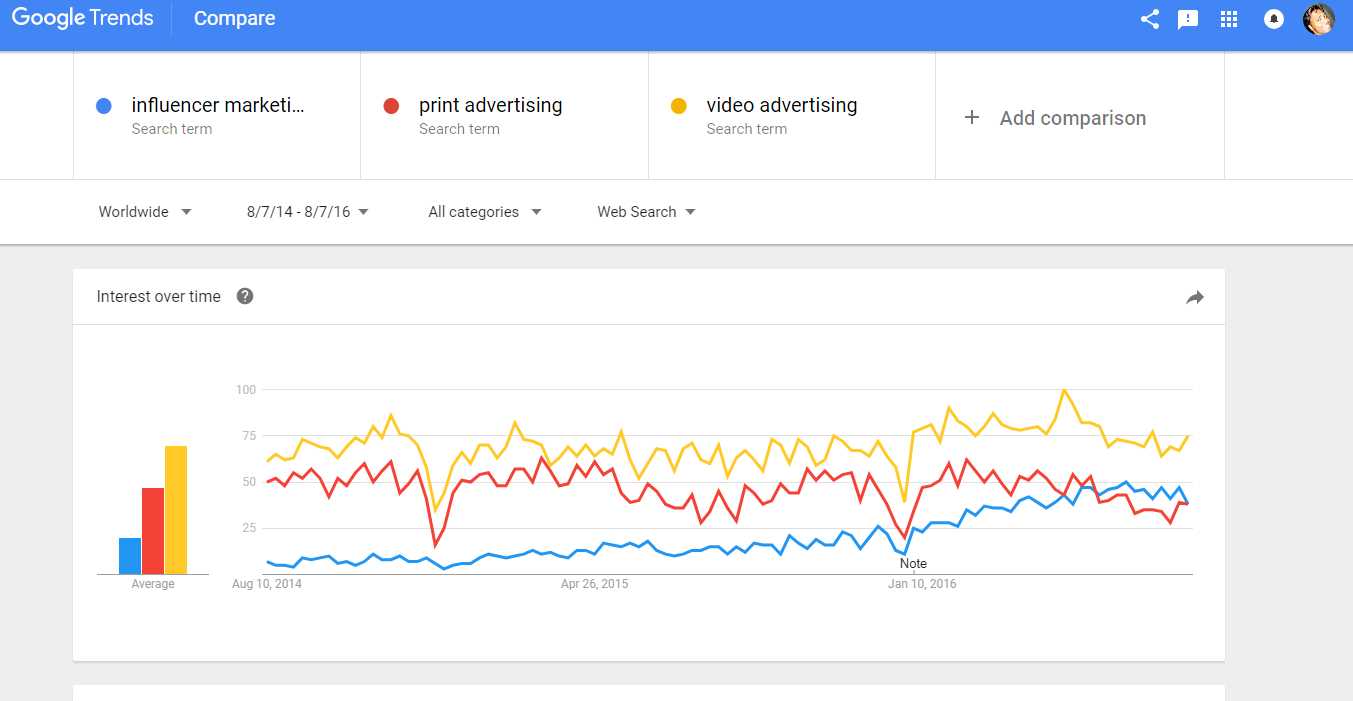
Google Trends shows how Influencer marketing has steadily climbed the charts to displace print advertising. Sneaking close to video advertising, influencer marketing industry is on a trailblazer mode, bringing together the various cogs of the social media and branded content within the ‘sales’ flywheel.

flywheel

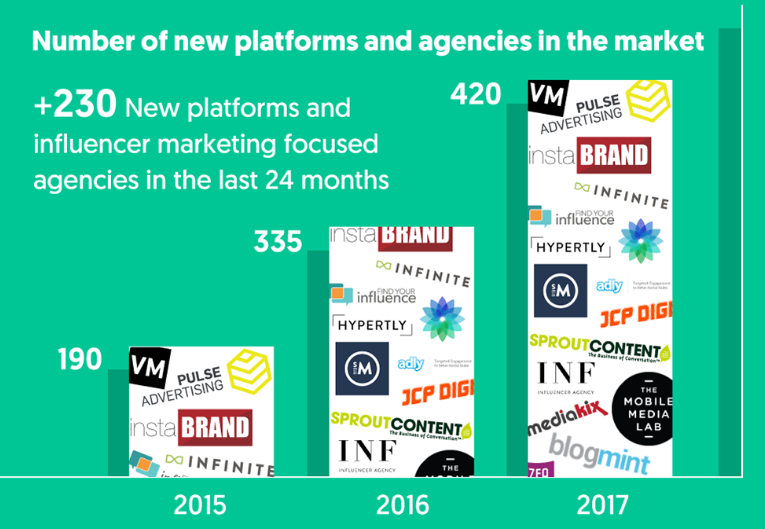
Influencers are ruling the roost for brands across online channels. Dwarfing the company’s owned social media campaigns, influencer marketing has moved at a phenomenal pace in garnering more engagements than the branded content. According to an eMarketer report published in 2015, 84% of global marketers were working on at least one influencer campaign and nearly 81% of them acknowledged influencer engagements were effective. In 2017, the content promotion activities have edged past content creation for most brands, demonstrating how influencer marketing help in maximized engagements. In their latest infographic report, Influencer Marketing Hub, the leading influencer marketing resource for marketers and agencies, says that over 230 new platforms and influencer marketing-focused agencies have arrived in the market since 2015.

Influencer Marketing Hub
Influencer Marketing Hub 2017 Study

Finding the Right Influencer with Personalized Vetting Process

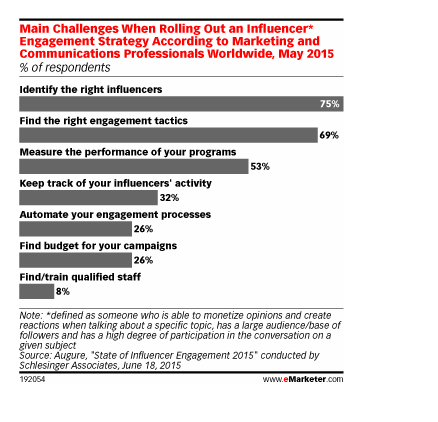
With brands leveraging User Generated Content (UGC) for their marketing and advertising, marketers find identifying the right influencers as their biggest pain-point.

IMH_Study_2To identify, marketers zero onto an influencer’s social profiles and data to determine if the engagement would work. SEO ranking, Alexa ranking and verified traffic data remain the critical metric for selecting any influencer.

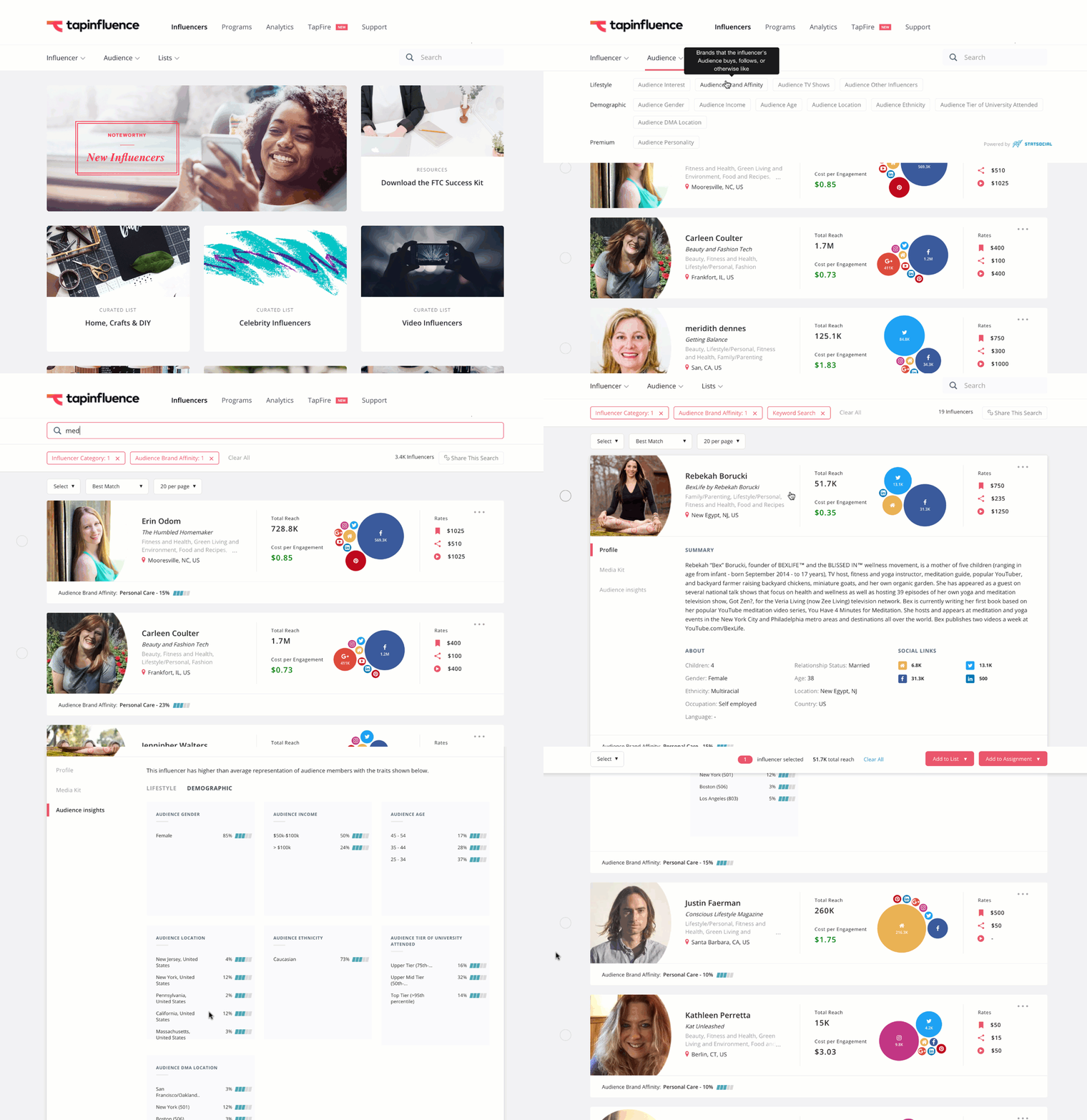
GroupHigh offers a range of influencer marketing solutions that include identification of new influencers based on their social presence, total reach and location. From vetting influencers based on content categories to delivering a report on earned media from influencer marketing, GroupHigh enables marketers to track, foster and expand influencer network with tailored communication.

TapInfluence

Cision is another reliable platform to identify social media influencers that are making the most buzz. Last month, the company unveiled exclusive Influencer Identification, Monitoring and Measurement Capabilities and other enhancements to its Cision Communications Cloud™.

Leveraging Earned Media: The Power of Middle Influencers

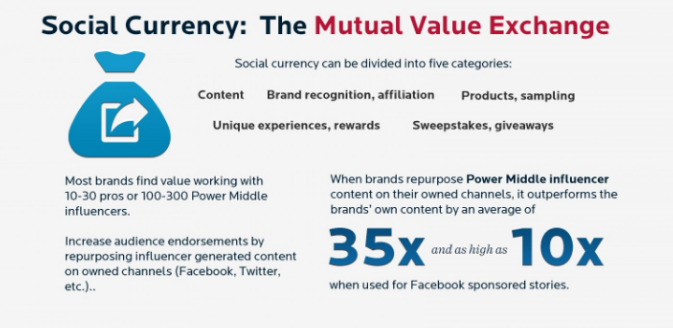
Two years ago, influencer marketing was blamed for being too mono-directional and too narrow for brands to maximize their ROI. In 2017, the doubts have vanished, largely due to the rise of the “Power Middle Influencers”. According to a study by Collective Bias, the apt spot for reach and engagement is between 35k and 65k followers. However, influencer marketing automation solution provider – TapInfluence, identifies Power Middle Influencers with an audience size of 10K-35K.

Influencer-generated content

Influencer-generated content is found to perform better than UGC, and leveraging power middle influencers make content an appreciable asset and deliver direct ROI in a shorter time.

Visual.ly

It’s Still a Number’s Game: Influencer versus Print versus Video

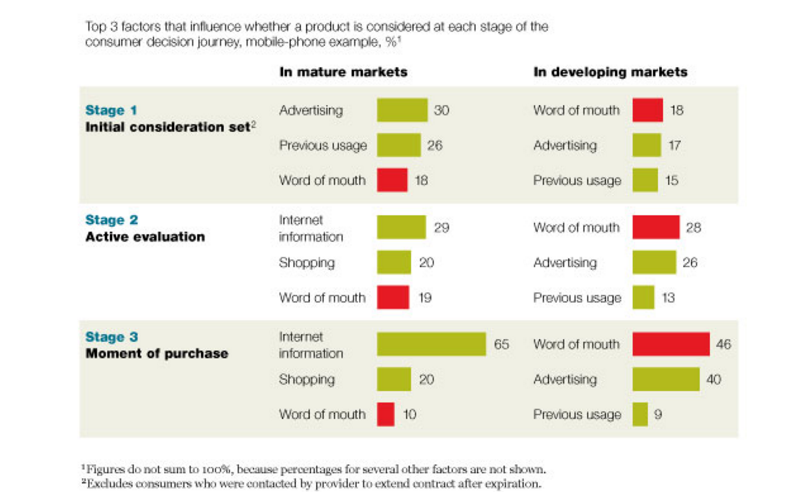
In a highly customer-centric world, there is a tectonic shift in how consumers rely on word-of-mouth marketing and advertising. Purchasing decisions are largely driven by what the customer sees, hears and researches online.

According to McKinsey’s study, word of mouth is the most disruptive factor and therefore, resonance factor of influencer content is the key to achieve incremental ROI from such campaigns. The influencer marketing is the potent answer to the rising use of ad blockers by consumers.

Mckinsey

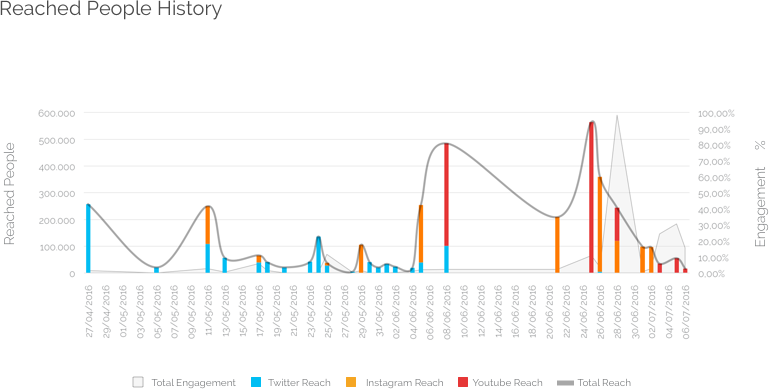
Influencer marketing platforms like Blogmint provide visual reporting on how influencers and their content created brand awareness among the audience. Reporting metrics on blog performance, Blog Score, is the simplest way to determine if influencer strategy would make the cut against the global benchmarking.

Validate your Strategies using Influencer Relationship Management (IRM)

Influencers get influenced too. And, it is imperative to score their influencing factors to move beyond the status quo of merely relying on traffic analytics. IRM platforms like Traackr help marketers to cast an “influential net” and expand influencer network based on an intelligent scoring algorithm that individually and cumulatively measures results of content, events, and campaigns. Self-service influencer marketing platforms such as IZEA bring inventiveness to generating traffic using pre-existing and ongoing content campaigns. To make data-driven decisions, Influencity provides real-time multi-channel analytic and compares influencer performance of every member of the community.

Influencity

Other influencer marketing platforms that caught my eyes are InfluencerDB, InsightsAtlas, Influmeter, and Ubermetrics.

Ubermetrics
Ubermetrics

The Special Mention

Influencer marketing and social media analytics run parallel to each other. For an industry that is pegged to grow by $1.7 billion in 2018, a lot depends on how accurately influencer marketing platforms gauge content analytics. Talkwalker, the social media analytics and monitoring platform, is slated to become the data intelligence hub for influencer campaigns. With automated report building and monitoring on your fingertips, Talkwalker adds intelligence to every piece of content that runs from the influencer factory.

Talkwalker

Talkwalker 01

Facebook, Instagram, Snapchat and Twitter have their own set of influencer ‘superstars’. With increased brand awareness about influencer marketing, tightened by advertising transparency and data privacy policies, the industry is set to see unprecedented growth by 2020. Adding to it the magic of AI and “auto-vetting”, B2B brands would finally see their social selling efforts matching B2C and e-commerce influencers at scale.

Snapchat’s New Update Creates Huge Possibilities for Local SEO

2
SEO
Snapchat’s New Update Creates Huge Possibilities for Local SEO

In the State of Search Marketing survey, 74% of companies and 82% of agencies said that social media is either somewhat or highly integrated into their SEO strategies. In the past, this has meant the number of Facebook posts and Tweets but now, Snapchat could become a main platform for promoting your business locally.

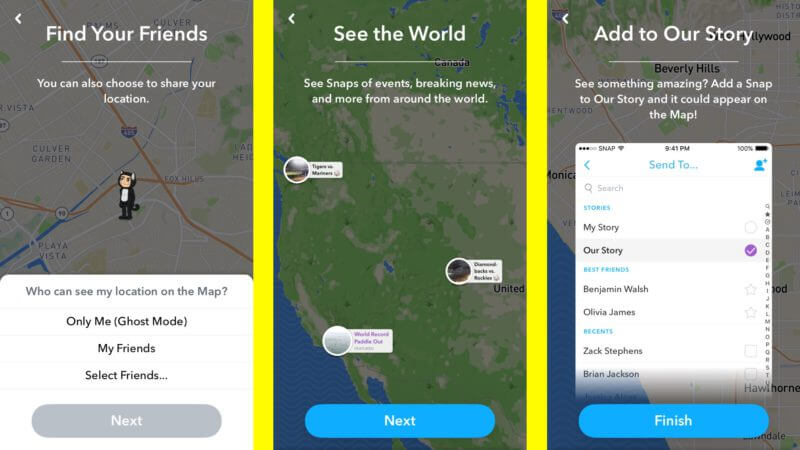
Snapchat has created its own responsive map called Snap Map which enables users to share what they are doing with their friends and people near them.  You can easily access the map by pinching your fingers together on the camera screen within the app. From there, you can see your friends and localized heat spots, or areas with a lot of Snapchat activity, around currently popular areas.  Snap Map’s current release is in the beginning stages that said, it is designed to attract users to popular areas, concerts and sporting events.  Because Snap Map is moving towards the discovery of places and events, local SEO looks like it could make a perfect integration within the app.  With 166 million people logging into the app on a daily basis, this could soon be one of the primary ways for your business to gain an advantage in attracting new customers.

Read More: Snapchat Taps in mParticle as Partner to Ease Onboarding for Brands using comScore SDK

local SEO competitors

How does Snapchat stack up against local SEO competitors?

Snapchat has several key competitors now that it has entered into the Local SEO market.  Its biggest rivals will obviously be platforms such as Google Local and Facebook Places.  The reason these sites have become so popular is the transparency they provide with customer reviews.  It’s all about trust.  Consumers no longer trust businesses, advertising, and marketing messages, they trust each other.  In a recent survey from Chatmeter, trust is established when you have at least 10 reviews.  Even though these companies are the biggest right now for local SEO, they don’t offer real time experiences.

The only services that appear to rival Snapchat’s Map are ride sharing services.  Companies such as Lyft and Uber are starting to catch onto this same map trend by adding local marketing opportunities for customers in transit.  Soon ridesharing customers will be able to look at local recommendations within the map while they are driving. Snapchat is hoping to create an edge over these companies with their Snap Map because it will show users popular things to do that are currently happening.  This is far different than any current local SEO strategy because Snapchat is providing real time local and geotagged information to its users.

Read Also: Snapchat Extends Moat Capabilities to European Advertisers to Boost IPO Plans

Snap Map

How Businesses Can Optimize for Snap Map

Even though Snap Map has yet to bring a Local SEO function to the app, the best way you can start optimizing is by making a company Snapchat account.  In order to attract the greatest amount of attention to your business, it is important that you let your customers know about your Snapchat through all other forms of social media.  Snapchat has made it easy for you to get the word out by integrating searchable QR codes that can be downloaded and customized with your company’s branding and website information within your account.  This is a great way to gain followers and add traffic to your website. You should also keep an eye out for news about the Snap Map to make sure you stay ahead of the game.

What This Means for Local Search

The best way Snapchat could incorporate Local SEO would be through paid “hotspots” and Snap Ads on Snap Map.  Snapchat users now have the capabilities to create snaps and add them to public stories that any other Snapchat user could watch. This means you could eventually pay to be a popular spot on a local Snap Map, much like you would do with Google Ads, and become visible to local users searching for your business. This could transform the app to allow many users find new things they didn’t know existed.  If Snapchat does this right, you could soon be able to connect with many new customers that are looking for something to do in your area.

Right now, the best thing you can do is to make sure you have appealing geofilter(s) at your location for all big events and special occasions. You can also try to encourage attractive content through promotions or prizes for the best photos.  Remember, the more customers you have interacting with business, the hotter it will become on Snap Map.

Read More: Latest Snaplytics Report Offers Unique Insights on Snapchat Engagement Metrics

Snap Map

Because Snap Map is in the beginning stages, as it grows, the possibility for SEO optimization will grow with it.  Right now, it’s just important to get ahead of the game quickly before your competitors do.

Read Also: 5 Ways Facebook is Moving to Compete in the Local Search Industry

Genesis Media Expands Programmatic Technology by Merging with Altitude Digital

0
Genesis Media Expands Programmatic Technology by Merging with Altitude Digital

Genesis Media + Altitude

Company to Launch First Publisher Video Platform Connecting User Behavior Data, Content Analytics, and Programmatic Advertising

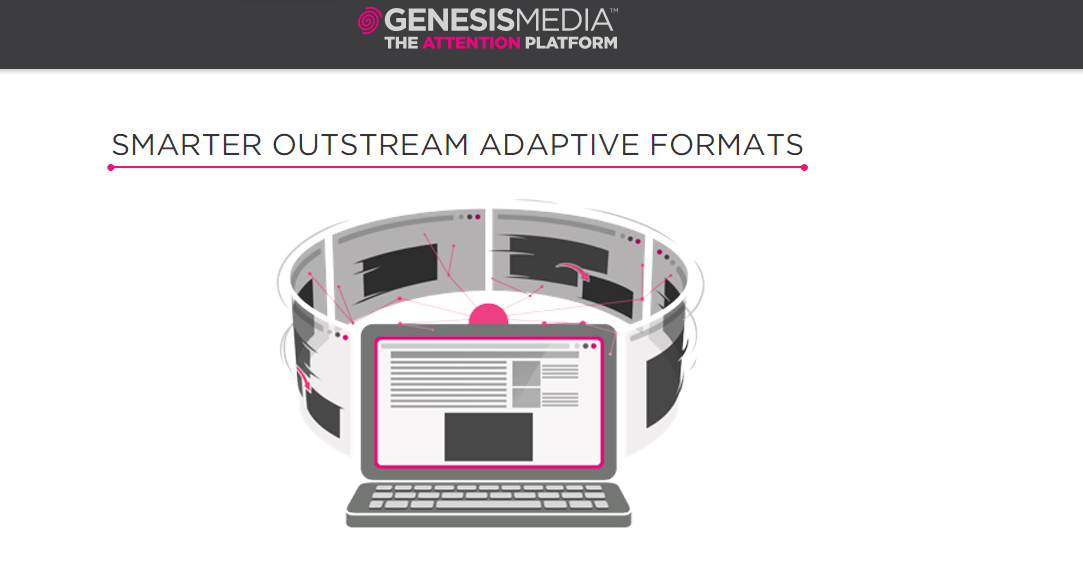
Genesis Media, a leading publisher analytics, and data science company, has announced that it has merged with Denver-based, Altitude Digital, a programmatic video technology company. The company will operate as Genesis Media.

 The combination of these two companies creates a unique advertising platform for premium publishers that:
– Brings together publisher content analytics (Genesis Attention Platform™) and a Supply Side Platform (Altitude ARENA®) into a single system
– Increases the amount of quality video supply—pre-roll and out-stream, that publishers can create and deliver to direct and programmatic buyers
– Expands the company’s team and engineering resources to better serve direct publishers by removing complexities and inefficiencies
– Allows programmatic buyers to bid on impressions with new data that measure the quality of individual pieces of publisher content and how the user interacts with that content

Mark Yackanich, CEO of Genesis Media says, “This merger further supports our mission to reward publishers for producing quality content with highly engaged audiences. It’s in those environments that brands can most effectively reach their customers with video advertising. Publishers need to maximize video revenue without ignoring the impact advertising has on its users—that’s where we come in.”

“Brands leverage programmatic to target consumers at scale but adding a new metric to help evaluate content quality offers interesting possibilities,” said Tim Libby, SVP Group Director at Starcom. “An enhanced approach to programmatic that allows brands to target highly engaged consumers while leveraging unique data to measure the quality of content makes a lot of sense.”

Joe Grover President and CMO at Genesis Media LLC
Joe Grover, President and CMO at Genesis Media LLC

Investments in data products and an expanded engineering team better position the company to address the complexities in the video media supply chain. Joe Grover, President and Chief Marketing Officer of Genesis Media and former CEO of Altitude Digital added, “This business combination is anchored around a deep commitment to quality in online advertising. From employing the most trusted verification tools, to understanding the quality of publisher content, to delivering better advertising experiences for the user. It’s a new approach to programmatic advertising.”

The company will have six operating offices in major US cities including DenverDetroitChicagoLos Angeles and San Francisco with New York headquarters.

About Genesis Media

Genesis Media is the first company to connect user behavior, content analytics, and programmatic advertising. Genesis’ real-time platform analyzes how individual pieces of web content are consumed by people, leveraging this data to create viewable video ad experiences that are best suited for each page and each device. With its programmatic technology, high-quality inventory is packaged into private marketplaces and direct deals. Premium publishers, leading national advertising agencies, and programmatic buyers rely on Genesis Media’s technology to accurately quantify the true value of publisher content and reduce waste for brand advertisers.

OpenNMT Developed by SYSTRAN and Harvard, Recognized by ACL 2017

0
OpenNMT, the Neural Translation System, Developed by SYSTRAN and Harvard, Distinguished by ACL 2017, the World Conference of Experts in Computer Linguistics

SYSTRAN, a software publisher specialized in machine translation and natural language processing has announced that the joint research and development between SYSTRAN and Harvard NLP on neural translation has been distinguished by the ACL, the 55th World Conference of Experts in Computer Linguistics. The article summarizing this research was awarded “Best Demonstration Runner-up” (finalist in the category of operational systems). This rewards a commitment of more than six months by the SYSTRAN R&D teams and recognizes the excellence of their research.

The ACL is the world’s leading meeting on research on automatic language processing. This year, the ACL was held in Vancouver from July 30 to August 4, 2017, and highlights the latest advances in artificial intelligence applied to language processing: neural translation, semantic analysis, automatic content generation. This year, ACL has decided to reward, among others, research projects that are distinguished by their excellence and their innovative character.

Open Neural Machine Translation, developed by SYSTRAN and Harvard, distinguished by ACL                      

In the “Operational Systems” category, the OpenNMT system developed by SYSTRAN and Harvard is one of the two finalist projects, ahead of dozens of other innovative projects representing the elite of international research. OpenNMT is an open source neural translation system, launched in December 2016, with several hundred users and contributors from the academic and industrial world. About twenty researchers, linguists, and engineers from SYSTRAN’s R&D, are working on the development of this platform and enlivening the user community.

Marketing Technology News: Hero Digital and Bulldog Solutions Join Forces to Reimagine B2B Customer Experiences

An important step for SYSTRAN

The mastery of neuronal technology by SYSTRAN and the positive reception by the market augurs very important development prospects. With GAFAM*, embarking on the development of similar solutions, SYSTRAN, always a forerunner, has already obtained the recognition of the scientific community and is moving on to the next stage. The company now wants to capitalize on these developments to open up new possibilities, beyond automatic translation, in other areas such as semantic analysis, multimedia document processing, or language learning. To feed these ambitious projects, SYSTRAN is currently recruiting experts to expand its R & D department, particularly in the field of Artificial Intelligence.

Jean Senellart, Global CTO (Technical Director & Global Innovation) of the SYSTRAN Group comments on this distinction: “OpenNMT is at the crossroads of academic research and industrial requirements in an Open source context. This recognition enhances the work done by researchers, engineers and all of the user-contributors federated through this project. In an Open source project, a constant and long-term commitment is essential to gain the support of the community. It is this day-to-day commitment by the SYSTRAN R&D teams that are now rewarded. Nevertheless, the best is still ahead of us: in the months and years to come, our customers will be able to benefit from the incredible potential offered by these latest innovations. ”

Marketing Technology News: V-Click Technology Officially Launched

About SYSTRAN

SYSTRAN machine translation solutions enable companies to improve their multilingual communication and productivity in many areas such as in-house collaboration, Big Data management, monitoring, e-discovery, content management, customer support, E-commerce and localization projects. With more than 140 language pairs available, SYSTRAN solutions, which are secure and customized in every customer context, are used daily by many global companies, organizations in the defense and security sector, and translation agencies.

Since its creation, SYSTRAN has always been a pioneer in automatic language processing and today offers the market a new generation of engines by exploiting the latest advances offered by artificial neural networks and Deep Learning.

(Editor’s note: *G.A.F.A.M. is Google,  Apple, Facebook, Amazon, Microsoft)

Marketing Technology News: Asia-Pacific Managed Security Service Providers Need to Offer Advanced Analytics to Drive Growth Opportunities in the region, finds Frost & Sullivan

Openprise Launches ‘Openprise Data Marketplace’ to Normalize Data Ingestion and Unification

0
Openprise Featured

Openprise, the leader in data orchestration solutions for marketing and sales, has announced the availability of Openprise Data Marketplace, a new solution that simplifies the process of ingesting and normalizing data from multiple third-party data providers.

Openprise Data Marketplace Would Remove Exponential Complexities

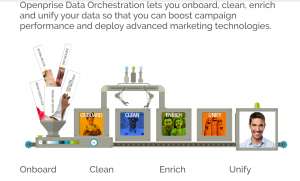
Openprise Data Marketplace is an integral part of the Openprise Data Orchestration Platform, a SaaS application that solves the “garbage-in/garbage-out” problem by automating how companies onboard, clean, enrich, and unify their marketing and sales data across different systems.

Recommended Read: Interview with Ed King, Founder & CEO of Openprise

Until now, getting all of the third-party data that marketers needed, into solutions like Salesforce, Marketo, Eloqua, and Pardot was often a complex, resource-consuming process. Trying to mash together data from multiple providers, each with their own standard field values,  added to the complexity.

Openprise Data Orchestration

With Openprise Data Marketplace, marketing and sales teams gain instant access to the leading B2B and B2C data providers, with all the business processes to ingest and manage that data from multiple providers built right in. Companies save time and money and eliminate complexity in accessing and integrating the data they need for successful campaigns and account-based marketing programs.

Read Also: ABM Isn’t Getting the Help It Needs from Third-Party Data, Says Openprise Report

ZoomInfo Adds Accuracy to Openprise Data Marketplace

Ed King, Founder & CEO of Openprise

Ed King, Founder & CEO of Openprise, said, “Earlier this year, we surveyed 175 marketing professionals to identify data marketplace trends and published our findings in the B2B Data Market Industry Report. We found that companies that worked with multiple data providers were much more likely to be satisfied with their third-party data, but those same companies expressed how much they struggled with pulling multiple providers’ data into their marketing and sales system of record while maintaining a consistent set of standards. Openprise Data Marketplaces solves this problem.”

Data Providers on Openprise

According to Kevin Hsieh, Director of Online Marketing & Marketing Operations at AMAG Pharmaceuticals, “Since we work with many different data providers to get what we need, we’re excited that we could easily tap into all the providers we wanted in a matter of minutes, and normalize all of that data and tailor it to our specific requirements. Nobody else offers that capability.”

Recommended Read: Interview with Allen Pogorzelski, Vice President, Marketing at Openprise

Phil Garlick, VP Corporate Development at ZoomInfo, said, “We’re excited to make ZoomInfo’s 210 million businesspeople and 11 million businesses available on the Openprise Data Marketplace. Openprise’s data cleansing and unification capabilities, combined with ZoomInfo’s data accuracy, provides marketing and sales teams with an unparalleled solution to run more effective campaigns.”

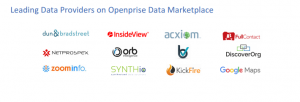
Premier data providers on the Openprise Data Marketplace include leading companies, including ZoomInfo, Dun & Bradstreet, DiscoverOrg, InsideView, Orb Intelligence, SYNTHio, Google Search, Bing Search, GetEmail.io, Google Translate, and Google Maps, with others currently undergoing final certification and testing.

Read More: Openprise Launches Data Automation App on the Oracle Cloud Marketplace

TechBytes with David Yaffe, GM, Publishers and Platforms, LiveRamp

0
David Yaffe
TechBytes with David Yaffe, GM, Publishers and Platforms at LiveRamp
David Yaffe
David Yaffe

Over 450 publishers are now using LiveRamp’s IdentityLink, including Time, Inc., Hearst, and The Weather Company. IdentityLink unifies LiveRamp’s identity resolution suite of capabilities with those acquired in the 2016 acquisitions of Arbor and Circulate. We spoke to David Yaffe, GM, Publishers and Platforms, LiveRamp to understand the changing landscape of people-based marketing strategies after the new announcement.

MTS: Tell us about your role at LiveRamp and how you got here.

David Yaffe: I am the GM for LiveRamp’s publisher and platform businesses. Prior to LiveRamp, I cofounded Arbor to help publishers monetize their data, and we were acquired by LiveRamp late last year. With Arbor and now with LiveRamp’s IdentityLink, I’ve been working to help publishers and platforms participate in this movement towards omnichannel people-based marketing, whether that’s by monetizing data or offering people-based advertising solutions.

MTS: Could you provide us a sneak preview into the IdentityLink for Publishers’ Identity Graph?

David Yaffe: One of the foundational assets behind IdentityLink for Publishers is LiveRamp’s Identity Graph, which is the largest addressable deterministic graph available to the advertising ecosystem. The graph enables us to address a key challenge for publishers, which is increasing the addressability of their advertisers’ audiences. Through IdentityLink, publishers can combine LiveRamp’s Identity Graph with their first-party data — that allows them to recognize and target more advertiser audiences across their properties, regardless of the device or browser they use to access the publisher’s content.

But IdentityLink for publishers is more than the Identity Graph – it’s the set of services for publishers that connects identity across advertisers, technology platforms, and data providers. For example, IdentityLink enables publishers to access data for new insights about their audiences. Many publishers that work with us today focus on data monetization, either by distributing their data to advertisers and platforms for targeting or directly monetizing their authenticated web and mobile traffic. So while LiveRamp’s Identity Graph is a key element behind what we do for publishers, it’s really only the beginning of the story.

Read More: LiveRamp Launches IdentityLink for Publishers as a Gold Standard in People-Based Marketing

MTS: What are the new people-based marketing strategies that LiveRamp is targeting with its latest announcement?

David Yaffe: Our marketer clients, and the platforms that buy on their behalf, want more omnichannel targeting and measurement, period. They want to resolve everything they know about their customers, then reach customers and prospects in a targeted way across all their channels, then be able to understand how those customers responded – especially when those responses occur in other channels, such as in the store after a digital ad exposure. Publishers, with their unique ability to deliver custom brand experiences and context, have been underrepresented in people-based marketing because most lack the robust identity infrastructure to participate. With IdentityLink for publishers, we expect to see more of the larger content publishers offering people-based ad solutions and data. That gives brands more premium media destinations where they can deliver targeted, engaging brand experiences.

MTS: How do you see omnichannel marketing attribution and analytics market evolving with the changing dynamic of marketing intelligence technologies?

David Yaffe: Identity has triggered another wave of evolution for omnichannel attribution and analytics platforms. With more brands taking a people-based approach to targeting and measurement, they are looking for their measurement platforms to evolve along with them. That means incorporating identity, and often AI, to gain insight into consumer journeys at the individual level. With IdentityLink, we’re working with many of these platforms to resolve omnichannel consumer touches using identity, and we expect great progress to be made on this front over the next year.

MTS: How is IdentityLink for Publishers different from the one offered for Brands and Data Owners?

David Yaffe: Publishers have unique needs separate from brands and data owners, and our IdentityLink for publishers solution reflects those differences. While publishers may have subscriber acquisition/audience development needs similar to brands, and data monetization opportunities similar to data owners, publishers uniquely need to develop people-based ad solutions to attract media spend and deliver great results. IdentityLink for publishers addresses all of these needs.

Read More: AppNexus, LiveRamp, and MediaMath Launch Technology Consortium to Enable Privacy-First People-Based Programmatic Advertising

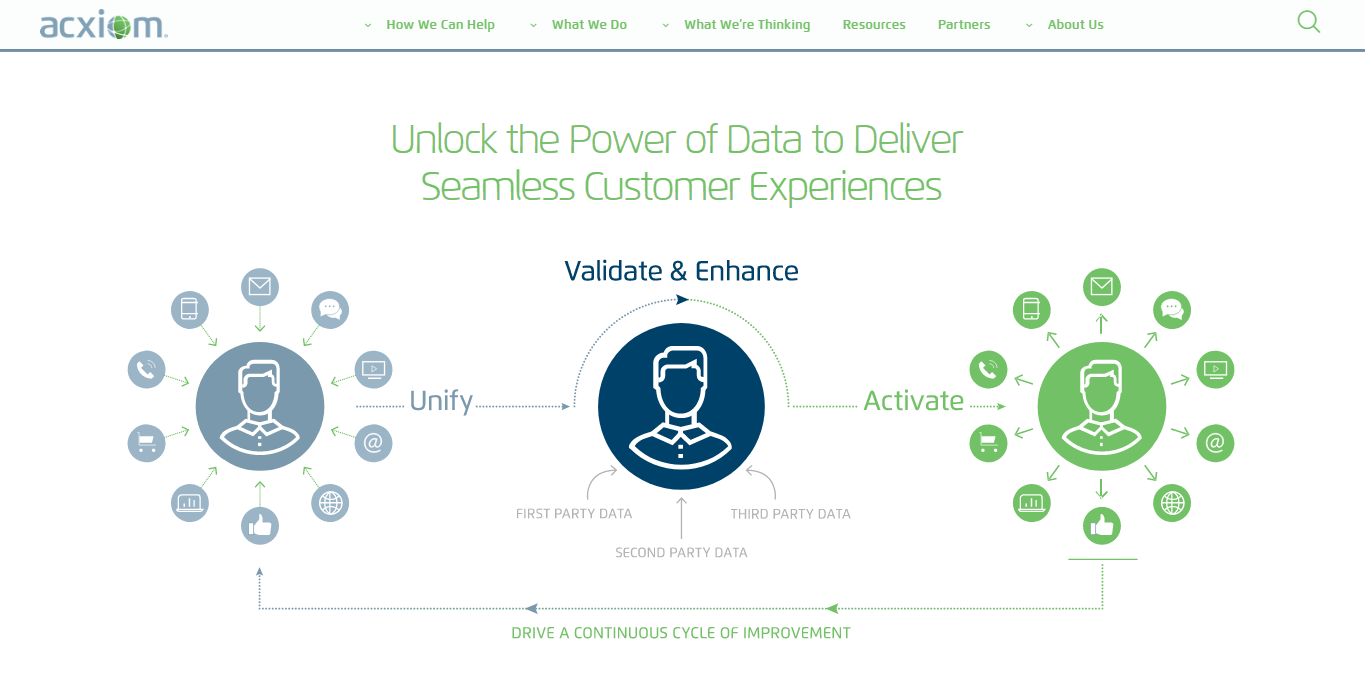
MTS: How does LiveRamp Identity leverage Acxiom AbiliTec® to map and resolve online identifiers?

David Yaffe: LiveRamp is privileged to have the leading solution for offline identity, Acxiom AbiliTec, as the foundation for IdentityLink. AbiliTec gives LiveRamp the ability to resolve online identifiers to offline individuals – giving us deterministic scale and accuracy that are real differentiators for IdentityLink.

Thanks for chatting with us, David.

Stay tuned for more insights on marketing technologies. To participate in our Tech Bytes program, email us at news@martechseries-67ee47.ingress-bonde.easywp.com

Acxiom Expands International Footprint with Launch of AbiliTec Identity Resolution and InfoBase Consumer Insights in Mexico

0
Acxiom
Acxiom Expands International Footprint with Launch of AbiliTec Identity Resolution and InfoBase Consumer Insights in Mexico

Last month, Acxiom expanded their global footprint with the launch of AbiliTec Identity Resolution and InfoBase Consumer Insights in Mexico. The new launch would enable Acxiom clients and partners to improve reach and engagement among the rapidly growing LATAM audiences. The expansion involved collaboration with 4INFO to meet the increased global demands for safe and ethical people-based marketing solutions. Acxiom will tap 4INFO’s proprietary, patented device matching technology to deterministically map people to their devices and data for audience activation in Mexico.

By understanding and marketing to real people, not devices or channels, marketers can meet this bar and win the battle for consumer attention and loyalty. – Marc Fanelli, Acxiom

InfoBase® Consumer Database

InfoBase congregates a variety of local market data sources to create the richest third-party data asset available, offering unparalleled demographic information, geo-statistical data and digital behavioral segments.

AbiliTEc® Identity Resolution

AbiliTEc® Identity Resolution is a solution to accurately identify people across the region using an identity graph that brings together multiple local market sources to create the most comprehensive consumer recognition asset available.

Acxiom Covers ~65 percent of the World’s Online Population for People-Based Marketing

Marc Fanelli, Group Vice President, Audience Solutions at Acxiom

At the time of this announcement, we spoke to Marc Fanelli, Group Vice President, Audience Solutions at Acxiom to understand how the standards of people-based marketing solutions are evolving with modern DMP capabilities.

“Acxiom’s Capability to Curate and Distribute Data at Scale is Unique”

Marc said, “Acxiom’s Global Data and Analytics business is responsible for the vetting, sourcing, curation, and distribution of marketing into the digital ecosystem across the world. I joined Acxiom after eight years at Merkle (now part of Dentsu) where I ran the data practice.”

Marc mentioned how at the time of joining Acxiom, the company would curate and distribute data at scale – a truly unique capability in the industry. He said, “When I joined, we curated and distributed data in just eight countries. However, the big data infrastructure necessary for curation at scale, and the ethical standards were second to none in data use, as well as the world’s largest digital distribution network were key ingredients that I believed would allow us to expand our footprint significantly. Today, we cover 62 countries (and are still expanding), representing inventory on over 2.5 billion consumers – or about 65 percent of the world’s online population – a truly unique position in terms of offering people-based marketing solutions to the world’s best marketers.”

Standards of People-Based Marketing Strategies Evolving With DMPs

Marc acknowledged that the digital and data explosion has continued with new data created every day across multiple channels. He further added how data continues to be fragmented with disconnected, known and anonymous data spread across the MarTech and AdTech platforms and borders.

Marc said, “DMPs have continued to evolve enabling organizations to learn a tremendous amount about its customers – what they like, the things they do, the behaviors they exhibit and what’s important to them. And, the bar has never been higher for companies to take all the information and use it for creating better customer experiences. Identity resolution is vital in recognizing your customers, anticipating their needs and creating real value for them.”

Acxiom
Acxiom

Adhere to Highest Compliance to Data Privacy Standards and Still Deliver Seamless Customer Experience and Viewability

With data governance policies getting stricter and tighter, we wanted to know how Acxiom intends to solve the problem for marketers in delivering seamless customer experiences without compromising on data privacy guidelines.

“There should be a careful balance of customer experience with risk management using operational data governance.

Marketers should work closely with their company’s chief privacy officer to ensure a balance between risk and customer. The two parts of the equation must work together in close partnership,” Marc said.

Marc said, “Privacy programs should be designed to ensure brand credibility and trustworthiness while enabling innovation, acceleration and marketplace for the company and its customers.”

He explained why and how marketers need to be aware of data privacy standards, especially in a global marketplace.

Marc said, “Marketers and their chief privacy officers can create objectives that lower the risk profile of data activations, data use and data-driven solutions – for example, risks of data incidents, breaches, litigation, and attrition due to reputational damage – and to optimize privacy enhancements while minimizing adverse effects on commercial viability.”

It is important to note that these objectives are achieved by remaining highly informed and actively engaged in all data related functions from ideation through development and production.

Acxiom to Deliver Most Comprehensive Consumer Recognition Asset for  Mexican market

By expanding to Mexico, Acxiom would enable companies to reach 78 million unique individuals, covering 84 per cent of all adults.

Acxiom clients and partners can now access rich third-party, ethically sourced and regionally compliant consumer insights across Mexico’s online and offline ecosystems to better market their products and services and to manage customer engagement strategies across today’s vast and borderless digital landscape.

When brands better understand consumers’ needs and preferences, consumers are able to engage in more meaningful ways with the brands they love.

Leverage Identity Resolution to create Single Customer View (SCV)

We further probed with Marc on how Acxiom helps marketers to create SCV using Identity Resolution.

“People change jobs, homes, and names, resulting in millions of changes in consumer information each year. These dynamic customer data changes mean that at least 2 percent of an organization’s customer records become irrelevant each month, resulting in nearly 25 percent of the records, they rely on to recognize customers, changing each year. The complexity of managing this change and the fragmented interactions with a consumer can be daunting for marketers,” said Marc.

Explaining how consumers reach out to brands in an increasing number of ways, Marc said, “Whether it’s visiting a brick and mortar, shopping online or using a mobile app, consumers expect a personalized experience. Bad data leads to a bad experience across touch points which can frustrate and alienate loyal customers.”

Identity Resolution is Key to Omnichannel Marketing

Marc told, “Omnichannel marketing is only achieved if a consumer is accurately recognized, regardless of channel. Identity resolution brings together disparate representations of consumer data, enabling a single, current and accurate view of each consumer across all channels. It allows marketers to instantly recognize customers, which improves customer service at the point of contact and reduces the possibility of error through improved identity verification.

He showed us how marketers should use identity resolution for the following applications.

– Create a single view of the consumer

– Customer retention, cross-selling and up-selling

– Point-of-sale marketing campaigns

– Recognizing consumers across online and offline channels

– People-based omnichannel marketing

– Enterprise data warehouse, customer relationship management, and master data management

AbiliTec Allows Marketers to Create Better CX

Acxiom’s AbiliTec for Mexico provides clients a new solution that helps accurately identify people across the region using an identity graph that brings together multiple local market sources to create the richest, most comprehensive consumer recognition asset available, providing insights that allow marketers to create better customer experiences.

The Mexican Market is Another Step in Access to the Global Audience

With data ethically obtained and compliant with local and national laws, Acxiom’s broad identity and consumer insight capabilities offer the ability to cleanse, correct, identify and complete customer data, making it ready for activation across channels. Identity is foundational to omnichannel engagement with people, and this enhanced offering provides concrete benefits for any company doing business in Mexico and is the first step to better connecting with their global audience.

Partnership with 4INFO Allows Acxiom to Accurately Match Target Audience

Rick Erwin, president of Acxiom’s Audience Solutions Division, said, “With ad spend in Mexico projected to grow to $6.17 billion by 2020, the AbiliTec and InfoBase Mexico launch and the expanded partnership with 4INFO provide global marketers unmatched access to this rapidly expanding market. As the digital ecosystem crosses borders, more of Acxiom’s clients and partners need data and identity solutions to drive their global people-based marketing strategies, and this launch and collaboration is a strong example of Acxiom’s commitment to making that so much easier.”

Tim Jenkins
Tim Jenkins, CEO of 4INFO

Tim Jenkins, CEO of 4INFO, said, “By collaborating with Acxiom, we can bring our unique technology into the international market and deterministically map people to their devices and households for a wider audience reach. The expansion of our partnership into Mexico will help global marketers execute even more successful campaigns. In digitally mapping consumers to their mobile and other digital devices for the first time in this lucrative, mobile-savvy region, we combine online and offline data and utilize privacy-compliant linking.”

Acxiom’s Clients get A True Borderless Experience

Acxiom’s best-in-class ethical data use methodology is designed to ensure adherence to data protection rules as well as cross-border requirements while delivering a true borderless experience to clients.

By providing partners with important background on data privacy laws and regulations as well as cultural acceptance of targeted marketing, Acxiom helps clients navigate the depth and breadth of data that can be used in Mexico. It also provides an easy, centralized approach for curation, identity management and activation of data.

The Keli Network Exceeds One Billion Monthly Video Views

1
keli
The Keli Network Exceeds One Billion Monthly Video Views

The Keli Network, a video-first social channel creator distributing vertically-focused content through its owned brands – including Gamology, Genius Club, Beauty Studio and OhMyGoal – announced that June was a record-breaking month with the company surpassing 1 billion monthly video views across its channels.

Each of Keli’s brands topped its respective category in views for the month, with Gamology leading “Gaming,” Genius Club leading “Science & Tech,” Beauty Studio leading “Beauty,” and OhMyGoal leading all soccer channels and accounting for the third most views in the general “Sports” category.  Keli’s current scale – reaching nearly 80 million engaged viewers – has been achieved in less than a year, which is faster and with less capital than many of its competitors.

By catering content to specific vertical audiences, Keli has had success increasing video engagement among consumers. The company maximizes content views and frequency within individuals’ social feeds by utilizing a proprietary suite of technology to scale and optimize content creation and social distribution.

Read Also: IDenTV Unveils JUICER, World’s First Video Search Engine for Broadcasters Based on Artificial Intelligence

“This milestone reflects our continued growth and supports the efficacy of the our vertically-focused strategy, as well as the tools we utilize to break down the science of virality. “We’ll be applying our strategy to new, additional brand channels to be launched in upcoming months.” says Michael Philippe, Keli’s CEO and co-founder.” Tubular Labs, the worldwide leader in online video intelligence, confirmed Keli’s channels exceeded 1 billion views.

https://media.licdn.com/mpr/mpr/shrinknp_400_400/p/4/000/168/193/0d92e7e.jpg
Allison Stern

“Keli Network’s extreme growth has been exciting to watch. They have doubled their network views per month since the start of the year, ranking in Tubular’s top 30 global media property leaderboards.  Data informed content strategy is the key to success in today’s crowded media landscape. Keli has cracked the code in using data to understand audiences, create super engaging content, and reach millennials globally.” said Allison Stern, co-founder and CMO of Tubular Labs.

Read Also: HubSpot and Brightcove Join Forces to Target Growing Video Analytics Space

5 Ways Facebook is Moving to Compete in the Local Search Industry

1
Facebook
5 Ways Facebook is Moving to Compete in the Local Search Industry

Facebook is the powerhouse in the social media industry. For years, they have been the top social media site in the world and just last week they became the first social site to reach over 2 billion users! However, the social media giant isn’t stopping there. Now, they are setting their sights on the local search industry as well.

This isn’t the first time we have heard of Facebook’s attempts to break into the area of local search, but for the most part they have been pretty much off the radar in comparison to sites like Google and Yelp…until now that is!

Currently, Google holds over 63% of the market share for web searches and as much as 95% of the market for the rapidly growing mobile searches. However, Facebook has been steadily improving their local search capabilities and features to the point where they are now an undeniable threat to Google’s controlling interest over the local search industry.

Read Also: BrightEdge Adds New Site Audit and Local Search Capabilities to Drive a Great User Experience

Here are 5 ways Facebook is moving to compete in the local search industry:

Facebook’s size, audience and resources:

Facebook’s qualifications for joining the battle for market share in the local search industry include over 2 billion active users, millions of business pages and the financial/labor resources to build out its own proprietary local search engine.

With Facebook’s enormous user base comes all their demographic information and behavioral data. This volume and accuracy of personal data is something even Google can’t compete with and gives Facebook a leg up when it comes to connecting users with the most relevant businesses.

Additionally, as a social network, Facebook’s massive audience revolves around interaction and social engagement. After Google officially discontinued their G+ pages for businesses, this is another area of search where Facebook has the upper hand. Users searching the millions of business pages on Facebook have the ability to view relevant posts, engage directly with the business and see which of their friends have liked or visited certain businesses.

Greater emphasis on location:

Local search is all about location. 72% of consumers who did a local search visited a store within 5 miles. People using local search aren’t looking for a business that is a 30-minute drive from their location, they want something that can satisfy their needs right then and there.

This desire for more location specific results is why Facebook has put a greater emphasis on maps and locations for their Places and Business pages. Facebook is now providing maps and location data in their search results as well as making this information more prevalent on the actual business pages.

location

Read Also: Adoption of AI, Voice Search, and Hyper-Local in Content Keys to Marketing Success, says BrightEdge Report

Places are given priority when relevant:

When Facebook first began including all public posts and pages in their search results, places and business pages were some of the last items to be included in the results. Even if you tried searching for something like “Best Restaurants” you would be hard pressed to find an actual restaurant in your search results. If you were fortunate enough to have a restaurant near the top of your search results, it would almost never be in the same city as you.

Facebook has since greatly improved its understanding of user intent. That means the search results are more intuitive and attempt to predict what users want. This has helped Facebook to provide searchers with more functional and relevant search results. They have even started predicting what you will search for and have begun providing suggested local search topics.

Crowdsourcing information:

Providing users with accurate and consistent business information is one of the most important aspects when it comes to building a successful tool for local search. If users can’t trust the information you are providing, they will go elsewhere to find the correct information.

With 2 billion active users, why not leverage that resource to help improve the experience for everyone? Facebook is using its users to help weed out incorrect business information and add details that will assist future searchers.  When users check in to different places on Facebook, they are being prompted to answer questions such as “Are these the correct hours for this location?” and “How expensive is this place?”.

Crowdsourcing information

City Guides:

One of the final, and most interesting features of Facebook’s new local search improvements is the “City Guides” feature. City Guides is where the social aspect of local search really comes into play and highlights how Facebook can leverage its social database to provide something Google can’t.

With City Guides, users can visit a specific city’s page and see actual places where their Facebook friends have already been within that city. This is a powerful form of social proof that really hits home with users. It’s not just showing them what places are popular in the city but it is showing users where people they know personally have actually been. By connecting users with businesses based off where their friends have already been and recommended it greatly reduces the risk customers feel when debating to try a new business for the first time.

In addition to seeing where your friends have been, users can also choose to “Explore” the city or browse through “Places the Locals Go”. These options connect users with the most popular and highest rated businesses in the city. City Guides is a great way for users to discover new businesses that have proven to be trustworthy and provide a great experience.

As Facebook continues to gain market share in the local search industry, it becomes more and more important to manage your reputation and ensure listing accuracy across multiple channels. Schedule a FREE demo with Chatmeter to learn how we help businesses boost their page one rankings across all of the local search sites helping them increase their online to offline conversions.

Read Also: Facebook Copyright ID System To Curb Infringements and Fake News

Zyme Acquires CCI to Expand Smart Application Portfolio

0
Zyme
Zyme Acquires CCI to Expand Smart Application Portfolio

Zyme, the #1 Channel Data Management (CDM) company is excited to announce that it has completed the acquisition of CCI, a leading channel incentives management firm that offers highly configurable MDF and Coop solutions to increase channel sales of global technology manufacturing companies such as Google, Hitachi, Sony and many others, by optimizing their partner performance.

Founded in 2004, in Redwood Shores, California, Zyme is the go-to solution provider for global technology manufacturing companies like Microsoft, Dell, Acer, and GE to manage their channel sales and inventory data. Zyme’s industry-leading CDM platform – zyme cloud platform 3.0 – provides critical channel intelligence for companies to get the maximum ROI out of their channel investment. As part of the platform, Zyme offers highly scalable solutions to manage rebates and deal-registration programs, driven by 99.9% accurate, payment grade, channel data.

Read Also: Interview with Steve LaPedis, VP Marketing at Zyme

CCI, founded in 1983 and based out of San Francisco Bay Area, is a leading channel management company that provides channel technology, expertise, and program support services to create and manage global channel programs that engage partners, simplify channel management, and significantly increase operational efficiency. CCI helps many of the most successful companies in the world turn their channel programs into a key competitive advantage.

With CCI now a part of Zyme, customers will not only have continued access to the respective incentives solutions they trust and love, but also gain from the synergistic capabilities to fundamentally transform their channel business, and thereby sell more with less investment.

Supported by 99.9% clean and accurate channel data processed by Zyme’s CDM platform, the combined and complementary capabilities of Zyme and CCI offer the most comprehensive, data-driven incentives management solution in the industry. Customers can now seamlessly manage a wide range of incentives programs, including:

  • Rebate
  • MDF
  • Co-op
  • Ship & Debit
  • Trade-in, SPIFs, referrals, and others

Read Also: Insight Venture Partners to Invest in Excess of $100 Million to Take a Majority Stake in Zyme

LiveRamp Partners with Goodway Group, Activating People-Based Marketing

1
goodway group
LiveRamp Partners with Goodway Group, Activating People-Based Marketing

Goodway Group, the programmatic partner agencies trust to drive campaign performance and media efficiency, partnered with LiveRamp™, an Acxiom® company  and leading provider of omnichannel identity resolution. The partnership enables Goodway Group to activate people-based digital marketing initiatives for its agency and brand clients. Consumers now have elevated expectations for brand engagement, and this partnership offers marketers insights to help optimize and unify experiences throughout a customer’s journey.

Goodway Group works closely with advertising agencies across the US, helping them to plan and execute digital marketing campaigns for brand clients. Goodway Group’s partnership with LiveRamp provides access to LiveRamp’s IdentityLink™ solution, which allows marketers to create an omnichannel view of the consumer, resolving first-, second-, and third-party data to a privacy-compliant identifier that can then be activated by Goodway Group as part of people-based marketing initiatives.

Read Also: Goodway Group Appoints Christy Clarke As Director of Paid Social

https://media.licdn.com/mpr/mpr/shrinknp_400_400/AAEAAQAAAAAAAAk0AAAAJDY2MzVmNTY3LThmZGQtNDNiYy1iMmY2LWI1N2JhNmEyMTdkZg.jpg
Ashton Gary

Ashton Gary, director enterprise partnerships, Goodway Group, said, “We are excited to be partnering with LiveRamp and incorporating IdentityLink into our digital marketing campaigns. The advanced identity resolution capabilities provided by LiveRamp enable us to more precisely target the right audience with a level of accuracy that was simply not possible before. We’re able to target down to a much more granular level, and send relevant messages that resonate with consumers.”

By segmenting audiences into specific niche groups, marketers have the ability to create special offers for those groups. For example, a retailer can tap into its app’s loyalty and purchase data to create a custom segment targeting users who typically buy a certain product, and serve them an ad featuring the latest version of that product when it launches.

https://media.licdn.com/mpr/mpr/shrinknp_400_400/p/8/005/097/347/11f7209.jpg
Jeff Smith

Jeff Smith, LiveRamp’s Chief Marketing officer, said, “In today’s world, creating a relevant and seamless consumer experience across channels is critical. We’re delighted to be powering Goodway’s efforts on this front, allowing them to bring people-based marketing to their agency clients.”

Read Also: Omnichannel TechBytes with Jeff Smith, CMO at LiveRamp

Interview with Jared Feldman, Founder and CEO, Canvs

0
Interview with Jared Feldman, Founder and CEO, Canvs

[mnky_team name=”Jared Feldman” position=” Founder and CEO, Canvs”][/mnky_team]
[easy-profiles profile_twitter=”https://twitter.com/iamjaredf” profile_linkedin=”https://www.linkedin.com/in/jaredfeldman/”]
[mnky_testimonial_slider][mnky_testimonial name=”” author_dec=”” position=”Designer”]“Emotions drive behavior and advertisers must aim to strike an emotional chord with audiences, and form an ongoing connection and narrative that consumers can relate to”[/mnky_testimonial][/mnky_testimonial_slider]

On Marketing Technology

MTS: Tell us about your role at Canvs and how you got here? (What inspired you to be a part of a technology innovation company?) 
I am CEO and founder of Canvs, an emotion analytics company, and I spend most of the time thinking about how we create empathy for the client and solve their problems. Canvs started out as Mashwork, which I co-founded with Dr. Sam Hui at NYU, where we provided insights to the television and entertainment industry. Later, we formed Canvs where we created technology which understands human emotional reactions to social media at scale. Our mission is to further the understanding of human behavior, and presently Canvs is the industry standard in emotion measurement and is used by TV Networks, Publishers, MCNs, and agencies.

I am driven by the why – why do people do what they do? Why do they click? Why do they react to content?

MTS: Given the changing dynamic of ad engagement with customers, how do you see the AdTech market evolving in the coming years?
Traditional engagement metrics are evolving, and it’s not enough to just spark a simple click or “like.” Emotions drive behavior and advertisers must aim to strike an emotional chord with audiences, and form an ongoing connection and narrative that consumers (and fans) can relate to and believe in. With the advent of ad-blocking technologies, advertisers will create more personalized experiences and serve more relevant ads.

In regards to digital advertising formats, expect traditional banner ads and interstitials to be traded in for more innovative, interactive formats.  Adtech vendors must start improving the piping to widely distribute mobile rich media at a massive scale, because new dynamic formats like interscroller, mosaic, chatbot, etc. have resulted in increased engagement and better user experience.

MTS: What do you see audience attention and conversion analytics influencing their omnichannel experience, especially over social platforms?
Content must be carefully curated for each individual social platform because what works on Twitter does not work on YouTube. This is in part due to conditioning, as well as the idiosyncrasies and differences of each platform. For example, we have seen here at Canvs in our Instagram product, users posts include emoji’s up to 50% of the time, much higher than we see on other networks. Audience attention and conversions can be optimized through emotional analysis while adjusting the actual creative for each individual platform.

MTS: What’s the biggest challenge that CMOs need to tackle to make their media decisions work?
Differentiation.
Year after year Cannes highlights the best, most creative marketing campaigns. And with the festival recently coming to a close, let’s make a conscious effort to incorporate the findings into our repertoire. Take chances with creative, and don’t do the predictable. Instead, create memorable assets that can be adapted across platforms, and make a meaningful impression on anyone that crosses paths.

MTS: What startups are you watching/keen on right now?  
Since we are in the emotion measurement space we pay close attention to see what leaders in the neuroscience area are doing.

MTS: What tools does your marketing stack consist of in 2017?
We are always looking ways to better connect with prospective customers and current customers.  Currently, we utilize IntercomQwilrWhatfixHubspot, and MailChimp.

MTS: Could you tell us about a standout digital campaign? (Who was your target audience and how did you measure success)
Recently, Canvs partnered with NBCU to do creative testing for ads on Facebook leading up to the premiere of fan favorite This Is Us. As NBCU rolled out new series announcements, the network saw that passion levels for This Is Us were well above average and were able to pinpoint which characters, plot points and trailer versions resonated the best to capitalize on fan emotion.

MTS: How do you prepare for an AI-centric world as a marketing leader?
As MarTech expands, and timing constraints become tighter, the need for AI and machine learning technology becomes increasingly important in order to add efficiencies to a marketing organization.

A common misconception is that this will eliminate jobs for humans, but the two can actually work in tandem to create a collaborative Augmented Intelligence. Artificial Intelligence solutions can dig through vast silos of data and provide actionable recommendations much quicker than humans can. But humans are essential in the workflow since they provide feedback on outputs and algorithms, and help blend some art with the science.

This Is How I Work

MTS: One word that best describes how you work.
Curious

MTS: What apps/software/tools can’t you live without? 
For business I use boomerang, fitness I use Myfitnesspal, and I check Coinbase way too often.

MTS: What’s your smartest work related shortcut or productivity hack? 
Boomerang plugin in Chrome.

MTS:  What are you currently reading? (What do you read, and how do you consume information?)
Presently I am reading Meditations by Marcus Aurelius. Most of my information is consumed through podcasts. A couple on my playlist right now are Reid Hoffman’s Masters of Scale, and The Wall Street Journal Tech News Briefing.

MTS: What’s the best advice you’ve ever received?
To seek out uncomfortable situations

MTS: Something you do better than others – the secret of your success?
Obstacles are to be treated like teachers.  And I am curious, very curious.  Figure out what you can learn from obstacles quickly and adapt often.

MTS: Tag the one person in the industry whose answers to these questions you would love to read:  Dan Beltramo, SaaS or Data as a Service CEO, Nielsen—He is an advisor and a friend to the company.

MTS: Thank you Jared! That was fun and hope to see you back on MarTech Series soon.

[vc_tta_tabs][vc_tta_section title=”About Jared ” tab_id=”1501785390157-b58e162d-0ae2fe6c-7a17″]

Founded the company as Mashwork in 2009 and launched as Canvs in 2014. Canvs, which counts entertainment marketers such as Sony Entertainment, NBC Universal, Viacom and HBO, as well as media agencies such as Starcom Mediavest and IPG as clients, offers software that tracks the mentions of and emotions around TV and entertainment content on social media.Total funding from sources such as Gary Vaynerchuck and Ludlow Ventures is $5.6 million

[/vc_tta_section][vc_tta_section title=”About Canvs” tab_id=”1501785390320-2d44fa50-740cfe6c-7a17″]

Canvs

Canvs is an industry-leading technology platform created to measure and interpret emotions. Canvs is becoming an industry standard for qualitative social media analysis, informing social media strategy for television networks, brands, and advertisers. Built using social media listening research from MSI Young Marketing Scholar, Professor Sam Hui, Ph.D, as well as real-world analyst experience,Canvs has been featured in a number of leading publications including The Wall Street Journal, Variety, The Atlantic, The LA Times, CNBC.com, Mashable and Ad Week’s Lost Remote. For more information, visit www.canvs.tv.

[/vc_tta_section][/vc_tta_tabs]
[mnky_heading title=”About the MarTech Interview Series” link=”url:http%3A%2F%2Fstaging.loutish-lamp.flywheelsites.com%2Fmts-insights%2Finterviews%2F|||”]

The MTS Martech Interview Series is a fun Q&A style chat which we really enjoy doing with martech leaders. With inspiration from Lifehacker’s How I work interviews, the MarTech Series Interviews follows a two part format On Marketing Technology, and This Is How I Work. The format was chosen because when we decided to start an interview series with the biggest and brightest minds in martech – we wanted to get insight into two areas … one – their ideas on marketing tech and two – insights into the philosophy and methods that make these leaders tick.

The New C-Suite: The Rise of the CCO

0
C-suite

Customer facingTen years ago, with the advance of marketing technology, the role of the Chief Marketing Officer (CMO) fundamentally changed. As marketing shifted from a cost center to a revenue generator, the C-suite increasingly turned to the CMO for detailed data about marketing’s impact on the bottom line.


Now, a new C-suite imperative has emerged, and the focus is squarely on the customer.

One of the primary impacts of modern marketing is a heightened expectation of a personal and relevant customer experience. More often, today’s brands are having to compete on the delivery of an exceptional experience for the customer rather than traditional metrics such as product and price. To navigate this new landscape, there’s a new seat at the C-suite table, and it belongs to the Chief Customer Officer (CCO). The CCO has become the liaison between a brand and its customers.

Creating a new role in the C-suite isn’t always seamless. As roles and responsibilities shift, newcomers are often met with resistance. Despite the CCO’s critical role, a new survey, Success in the Customer Experience Era: Connecting Customer and C-suite exposes key hurdles to the successful integration of the CCO position. To overcome these challenges, CCOs must have clear plans to establish solid footing within the C-suite.

Read Also: B2B Marketers: Stop Solely Targeting the C-Suite

Establish Clear Roles

As with any new position, ownership roles can be fuzzy. A large percentage of CEOs stake a claim on the customer experience, and the hiring of a CCO can leave many CMOs wondering if their own roles will be replaced. Ownership claims and changes in C-suite dynamics can leave incoming CCOs feeling confused and hesitant to take control.

However, when executed correctly, the CCO can quell the confusion and form great relationships with both the CEO and CMO. Nearly a quarter of survey respondents noted that the CCO can complement the CEO simply by showing a greater customer focus. CMO budgets are increasing and will be on par with CIO budgets in the coming year, giving CCOs the opportunity to position themselves as advocates for the CMO. CCOs can not only free up valuable time for the CMO to focus more attention on new customer acquisition and design more effective campaigns, they can take the lead on technology decision-making and, in doing so, capture some of the CMO budget. When CCOs establish clear ownership over the customer experience, they can immediately illustrate how their ownership will benefit everyone in the C-suite.

Become the Tech Expert

In a complex and growing tech landscape, it’s becoming increasingly difficult for CMOs to stay abreast of technology needs. Between time constraints and infinite solutions, many CMOs are challenged to implement the right technology to truly give customers the experiences they want. Incoming CCOs can capitalize on the opportunity to offer marketing the extra support and technology expertise they need. By performing an internal audit of the tech stack and mapping it to the customer journey, CCOs can not only establish credibility, but they can also make informed recommendations on the right technology implementations to deliver the integrated, personalized experiences that customers want.

Use the Right Customer Data

Analyzing data is critical to understanding the needs and wants of customers, but many brands aren’t looking at the right data to get the insights they need. Often, a CCO is brought in to help gain a better understanding of real-time customer data, but only 29 percent of CCOs actually claim ownership of customer insights. For those who do claim this responsibility, many know what to measure, but do not always have quality sources of customer data. In fact, half of CCOs admit to not using data insights from contact centers, which are key sources of customer information. The reality is that many are still using surveys as the primary way to gauge customer satisfaction. When you ignore the contact center, you are putting your customer experience at risk of being misaligned with your brand. With an ever-increasing amount of channels being used to work with your customer, each one is an opportunity to thrive through matching your brand promise to your customer experience.

In our multichannel, digital world, antiquated methods are causing CCOs to miss critical insights that are coming directly from their customers. By analyzing contact center data from across multiple channels, CCOs can gain access to authentic, voice-of-the-customer insights that will allow them to create a better customer experience.

A CCO can be an invaluable asset to an organization that wants to increase growth or customer retention. By establishing clear roles and responsibilities, becoming the resident marketing technology expert and using the right customer data, the CCO can come alongside the CEO and CMO to not only alleviate burdens but also to champion the customer-first approach in an increasingly competitive market. A great customer experience is now standard practice, and the rise of the CCO indicates that this approach is here to stay.

Read Also: Calabrio Hires Cisco Marketing Veteran to Drive Continued Growth