

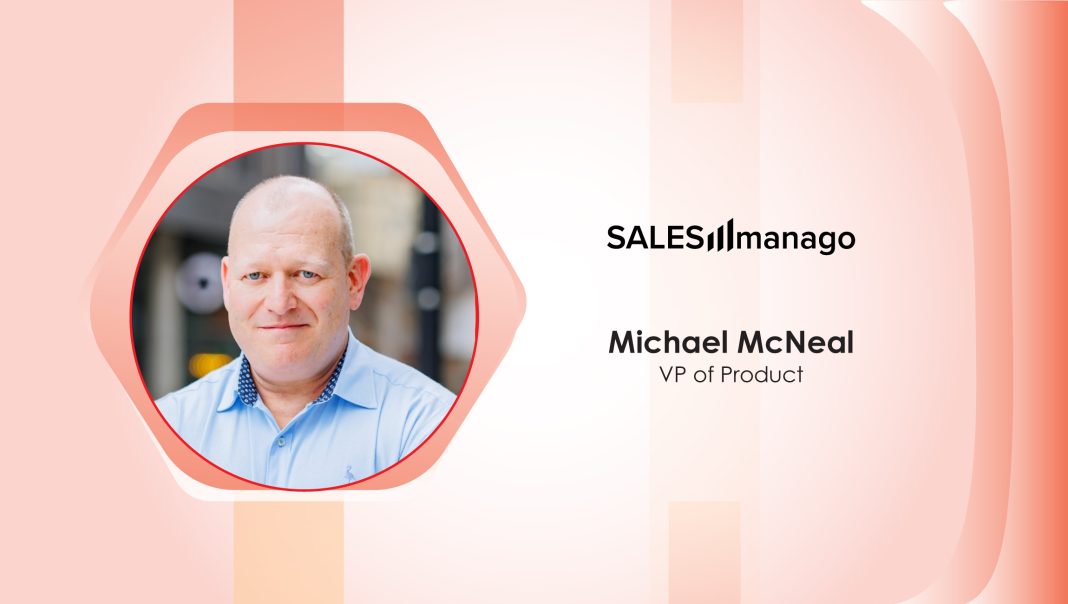
In this MarTech Series interview, Michael McNeal, VP of Product at SALESmanago shares a few martech optimisation tips for SaaS marketers to thrive in 2026 and beyond:
____________
Hi Michael, tell us about yourself and your SaaS journey so far?
I’ve spent over 25 years at the intersection of marketing and technology, working across Fortune Global 10 companies, startups, and organisations of all sizes across industries such as software, travel, automotive, wireless, and video games. Throughout my career, I’ve been passionate about helping marketing teams leverage technology to drive measurable, business-focused results.
In my current role as VP of Product at SALESmanago, I lead the development and bringing to market of tools that empower marketers to make informed decisions and engage effectively with their customers to establish meaningful relationships.
What about today’s state of B2B SaaS marketing most inspires you?
What inspires me most is how far we’ve come in turning the wealth of available data into truly actionable insights. Today’s advanced marketing platforms allow us to build relevant journeys, test and learn quickly, and optimise performance in ways that deliver measurable growth and genuine engagement.
B2B marketing is no longer about pushing campaigns out and hoping for results, it’s about understanding your audience and using data intelligently to nurture them through the journey, building meaningful relationships along the way.
We’ve also seen a major shift from fragmented tools to intentional, data-driven and integrated systems. This evolution enables marketers to connect channels, apply AI-driven optimisation (AIO), and meet buyers earlier in their discovery journey. B2B buyers are now using AI in how they search, evaluate, and compare which means your brand needs to be present and relevant from the moment they start exploring solutions.
As they move into consideration, hyper-personalisation becomes essential. Experiences that were once the domain of B2C are now expected in B2B. Buyers want interactions that reflect their role, needs, and context, and that level of precision only comes from AI, automation, and high-quality content working together.
And of course, the relationship doesn’t end at conversion. The cost of retaining a customer is still far lower than acquiring one. What’s different now is the data available to power post-sale experiences – enabling service and support teams to access the full customer profile and account managers to engage in more meaningful, insight-driven conversations.
What inspires me most is the ability to bring marketing, sales, and service together around a single, unified view of the customer – turning every interaction into an opportunity to create value, deepen relationships, and drive long-term growth.
Can you talk about the current martech trends and innovations influencing the martech ecosystem today? What type of martech do you often rely on to drive goals?
You can’t talk about martech trends today without mentioning AI. While it’s a topic that can feel overexposed, its impact – both realised and potential – is undeniable. AI is now influencing every part of the martech ecosystem, from how existing platforms evolve to the emergence of entirely new AI-driven point solutions.
The real question for most organisations is no longer whether to use AI, but how to do so effectively. Should it be guided by a company-wide AI strategy? Should teams rely on the AI embedded in their current platforms, or look to specialised point solutions that solve specific use cases?
The key is understanding how to use AI to achieve measurable impact. Near-term value comes from using AI to enhance your existing processes, helping you do what you already do, but faster and smarter. The next level of innovation comes when you start redesigning processes around what AI uniquely enables.
That’s why I believe the most transformative advances are happening when AI is natively embedded within platforms and seamless for marketers to use, rather than requiring marketers to actively adopt complex new features, tools, or workflows. When AI simply becomes part of how the technology works, adoption accelerates – and so does value recognition.
We’re also seeing the rise of AI agents, which I view as one of the defining shifts in marketing technology. These aren’t just chatbots or recommendation engines; they can now act autonomously – integrating with APIs, triggering actions, completing workflows, even orchestrating campaigns.
The next evolution will be the interoperability and orchestration of AI agents across the martech stack (and customer stack) – allowing systems to collaborate intelligently to deliver the best business outcomes and more connected, adaptive customer experiences.
Marketing Technology News: Martech Interview with Aquibur Rahman, CEO of Mailmodo
What martech optimisation tips would you share with fellow marketers to help them drive better personalisation efforts?
I’d start with two simple but powerful steps: First, understand the data you have. Second, understand and fully use the capabilities within your current martech stack.
They may sound basic, but these are the foundations of effective personalisation. Once you know what data is available and how your tools can use it, you can identify the moments in your customer journey where personalisation will have the highest impact, and your ability to create meaningful, measurable results without major new investments.
Your data review shouldn’t stop with marketing. Look across the organisation – sales, service, even product – for data that can provide deeper context or actionable insights. Even if those data sources aren’t fully integrated today, simply understanding the broader data landscape is valuable for future strategy and planning.
Of course, data quality matters just as much as data quantity. Good data drives not only direct personalisation but also the AI models that create dynamic, one-to-one experiences – from tailored content to real-time interactions. A smaller, cleaner dataset can deliver more immediate value while you work toward a richer, larger, integrated dataset over time.
On the technology side, many marketers underutilise the personalisation capabilities already built into their platforms. It often comes down to time, training, and resourcing. Most martech vendors release new features several times a year, and when you combine that with a constantly evolving data available, new personalisation opportunities emerge all the time. The teams that invest in learning and enabling those capabilities are the ones that see the largest business impacts.
Ultimately, personalisation is optimised when your tools, data, people, and processes are aligned – when everything works together to turn insights into relevant, timely, and meaningful customer experiences.
How can modern marketers effectively measure the ROI of their martech investments and what do they often forget to consider when looking at new tools?
When it comes to measuring martech ROI, many marketers start with the wrong metrics. They focus on campaign performance (opens, clicks, conversions), rather than asking whether the technology is actually driving their desired business outcomes.
Every tool in your stack should have a clear, measurable link to a defined goal. The right way to think about ROI is through the martech value chain; understanding how your technology creates value from data capture, through customer experience delivery, to business outcomes like revenue growth, loyalty, and efficiency.
Another often-missed factor is total cost of ownership. A platform can look impressive in isolation, but if it doesn’t integrate smoothly with your ecosystem or requires heavy time and resource investment to implement and maintain, ROI quickly erodes. And with more vendors shifting to usage-based pricing models, costs can rise as usage scales or as new capabilities are activated – something that’s frequently underestimated, and a reason to monitor your true platform costs (initial investment plus ongoing usage costs).
Ultimately, measuring ROI isn’t just about the tools themselves, it’s about how effectively your technology, processes, and teams work together to deliver measurable business impact. Martech delivers its highest value when it enables the rest of the organisation; sharing customer data, automating workflows that support sales or services, and extending its impact far beyond marketing.
That’s when ROI becomes more than a number, it becomes a story of how technology drives growth across the entire customer lifecycle.
A few thoughts on the future of AI and martech before we wrap up?
It’s the most exciting and transformative time I can remember working in martech. The pace of change over the past few years has been extraordinary and AI is unquestionably the biggest catalyst.
Now more than ever, it’s important to think about martech strategically. Your marketing technology stack can’t exist in isolation. It needs to work as part of a broader customer technology ecosystem that includes sales tech and service tech, what I often think of as the heartbeat of the company. When these components are well integrated and orchestrated, they don’t just enable strategy they become a source of strategic advantage.
How AI will ultimately be integrated and orchestrated across that ecosystem is still unfolding. Standards like Anthropic’s Model Context Protocol (MCP), Google’s Agent-to-Agent (A2A), and IBM’s Agent Communication Protocol (ACP) are early examples of how this new era of interoperability might take shape, and they’ll likely define the martech and customer tech landscape for years to come.
The future of martech is understanding it’s not only about martech it’s about your entire customer technology ecosystem: shared data and insights, AI-orchestrated personalised experiences across the lifecycle, and the ability to turn every touchpoint into measurable business impact.
Marketing Technology News: Beyond the Trend: How CMOs Are Using Cultural Intelligence to Lead Culture, Not Chase It

SALESmanago is a European SaaS company offering a comprehensive Lifecycle Engagement Platform built for digitally-fueled eCommerce marketing teams. Trusted by 3,600+ mid-size businesses across Europe – including Victoria’s Secret, iSpot, Orbico, Vobis, Porta, Savicki, Pitbull, Würth, Vox, 4F – SALESmanago helps brands acquire, convert, engage, and retain customers with deep, AI-powered personalisation and orchestrated customer journeys.
About Michael McNeal
Michael McNeal is a dynamic marketing and technology leader with over 25 years of experience in marketing, product development, and programme management. Recognised for delivering award-winning client experiences, he helps organisations maximise the value of their marketing technology investments.