Home Blog Page 4403

Placecast Partners With Sprint’s Pinsight Media to Launch the First Independent Location Verification Product for Advertisers

0
Placecast
Placecast Partners With Sprint's Pinsight Media to Launch the First Independent Location Verification Product for Advertisers

New Location Verification Solution From Placecast Leverages Carrier Data To Verify The Accuracy Of Mobile Marketing Efforts For Advertisers And Media Buyers, Eliminating Wasteful Spend

Placecast, a leading location-based mobile data management platform, has announced the launch of Location Verification. The new solution is an independent ad verification product that validates location accuracy of geo-targeted mobile ad campaigns. The Location Verification product has already been deployed by media technology companies like MediaIQ.

With Placecast’s suite of products, advertisers can create custom audience segments and target customers with location-enabled mobile ad campaigns on Placecast’s demand-side platform (DSP) or evaluate the accuracy of campaigns and their impact on customer behavior.

Placecast’s Location Accuracy Solution Would Optimize Ad Dollar Spending

Location Verification from Placecast is the only product in the market using highly accurate carrier data from Pinsight Media, a wholly-owned subsidiary of Sprint, to confirm the location accuracy of mobile ads. This solution will help reduce mobile ad dollar wastage and ensure that target audiences are reached more effectively.

Recommended Read: The Importance of Data Analytics in Marketing Strategies

Location Verification debuts at a crucial time in the industry as an estimated $16 billion will be spent on targeted mobile ads in the US this year. 96 percent of marketers consider location data to be important, but 40% expressed concern around the quality of location data. Rightfully so, as initial Location Verification results show at least 25% of media spend is wasted, and in many cases much more. Of the $16 billion spent this year on targeted mobile ads, approximately $4 billion is squandered.

‘Truth Set’ of Location Data Empowers Mobile Advertisers to Confidently Geo-Target Audience

Kevin McGinnis
Kevin McGinnis, CEO at Pinsight Media

Kevin McGinnis, CEO of Pinsight Media, said, “It’s staggering to see how many millions of dollars are wasted every year based on old or inaccurate data. We are proud to support solutions like Location Verification that help raise the  bar in the mobile advertising industry.”

Recommended Read: MarTech Interview with Jared Blank, Sr. VP Data Analysis and Insights at Bluecore

Traditionally, location-based ad vendors do not have this kind of “truth set,” or deterministic data, to which they can compare and verify location data. Instead, they rely solely on pattern recognition — probabilistic modeling — such as eliminating latitude and longitude coordinates with too few decimal places to be precise, or looking for devices that appear so often that they can be assumed fraudulent.

Alistair Goodman
Alistair Goodman, CEO of Placecast

Alistair Goodman, CEO of Placecast, said “Since inception, we’ve been laser-focused on solving the complexities around location data, which is why we’re pleased to offer Location Verification, the first and only product set to tackle inaccuracy in the location space. Carrier data is a canonical truth data set that enables us to understand and score the accuracy of data in the mobile ad ecosystem to an unprecedented level. With the power of carrier data to verify accuracy, mobile advertisers can feel confident that they’re optimizing their ad spend toward reaching their appropriate geo-targeted audience.”

Partnership with Pinsight Media Takes Location Data Verification Beyond Pattern Recognition

The Placecast Location Verification product is unique in that it uses a truth set of location data — the holy grail of deterministic data — from Pinsight Media to test the accuracy of location, offering a level of accuracy that cannot be provided by pattern recognition alone. Placecast’s tests suggest truth set data uncovers at least twice as much inaccurate location data compared to pattern recognition.

Recommended Read: Is All That Big Data Making Your Head Spin?

Geo-Targeting Reduce Media Fraud, Delivering Optimized Campaigns

Advertisers implement a standard tag into their location-aware mobile ad campaigns. Placecast then analyzes the tag data to validate user location at the time an ad was served. The advertiser receives reporting with percentages of daily impressions that met or did not meet the advertiser’s geo-targeting parameters. As a result, media fraud is reduced and advertisers benefit from optimizing their campaign, selecting vendors that best deliver on campaign goals.

John Goulding
John Goulding, Global Product Director at Media iQ

John Goulding, Head of Product for MediaiQ, said, “By integrating Placecast’s verification capability into our AiQ analytics platform, we’re able to offer advertisers a level of confidence in location-based advertising which hasn’t been previously available. Furthermore, with verified location insights we’re one step closer to providing an accurate and comprehensive view of the entire customer journey–both online and offline.”

Read Also: Snap Acquires Placed, a Location Analytics Company

Location Verification Uses Anonymized and Aggregated Location Data

Rather than building data profiles or targeting specific customers, Location Verification simply uses anonymized and aggregated location data from carriers to verify whether the media being bought is accurate or not. Essentially, Pinsight Media’s data is used as a “yes or no” check for location. No personally identifiable information is used or exposed.

Read Also: Exponential Taps Offline Location Data via Partnership with Cuebiq

Analytics TechBytes with Jason Rose, SVP Marketing at Gigya

0
Jason Rose Gigya
Jason Rose
Jason Rose, SVP Marketing at Gigya

Gigya, the leading customer identity management platform, had introduced Lite Registration, a new capability in its Customer Identity Management platform which leverages the universal consumer identifier — the email address — to help brands connect with customers earlier in the buyer journey. We spoke to Jason Rose, SVP Marketing at Gigya to understand how the company distinguishes between different data points and the possible impact of GDPR and regulatory policies on marketers providing hyper-personalized customer experiences.

MTS: Tell us about your role at Gigya and how did you arrive here to be a part of a MarTech company?

Jason Rose: Before launching a career in marketing, I worked as a professional accountant. My background in accounting has given me a metrics-based approach to marketing. Prior to Gigya, I led marketing for DataSift, the leader in Human Data Intelligence, and marketing efforts for SAP’s Business Intelligence and Advanced Analytics solutions. At SAP, I helped scale the business to more than $2.1 billion in revenue by creating innovative programs to target large enterprises, small and midsize companies and volume solutions.

Now at Gigya, I am senior vice president of marketing. Gigya identifies, engages and builds customer profiles to create relevant, personalized experiences and is designed to meet privacy, compliance, security best practices. Customer identity and access management wasn’t a market when I joined Gigya, and, as a marketer, category creation has always been on my bucket list. Gigya has provided me with the opportunity to pave the way with a new category which has been an exciting venture.

I also joined Gigya because the company plays a key role in some important burgeoning trends; namely, new privacy regulations put forth around the world (like the Russian Federation’s Personal Data Protection Act and GDPR), and using deterministic/first-party data to help companies comply with these worldwide privacy laws and regulations.

MTS: Could you help us understand the difference between Audience Data, B2B Data, Identity Management and Location data?

Jason Rose: Both audience and B2B data operate at a segmentation and grouped level making them more anonymous and “probabilistic” in nature. For example, DMP’s and other 3rd party data providers will sell you audiences based on inferred characteristics that have a % of accuracy. In contrast, with identity management, you are dealing with individuals so the data is “deterministic” and close to 100% right. So it comes down to whether a 10% margin of error acceptable or do you want to be sure you are making the right offers and personalizations. Location data is about knowing where someone goes and in what order they travel from place to place, so it is more specialized and an example of individualized data that needs to be treated carefully and creatively so it doesn’t come off as invasive and “creepy”.

MTS: How would you define Data Privacy from a consumer’s and a marketer’s Points Of View?

Jason Rose: Data privacy from a consumer standpoint is about the consumer’s ability to control how their personal information is being used by the companies they do business with or the sites they visit online. For marketers, however, data privacy has a much broader definition. For them, any online data, however inaccurate, out-dated and often ill-gotten (usually through third-party data brokers), is fair game. However, as a result of using this data, consumers don’t trust brands or marketers with their data. A recent survey found that 68% of consumers don’t trust brands with their data, reducing the hope for marketers to establish a lasting, personalized relationship with such customers.

MTS: How does Gigya’s Customer Identity Management help in finding the exact marketing attribution touch-points?

Jason Rose: Gigya’s Customer Identity Management platform helps today’s enterprises build great customer experiences at scale while balancing data privacy and security. Gigya establishes meaningful connections — based on trust — that encourage customers to self-identify and engage. It enables true permission-based marketing by unifying customer identity data in a secure, compliant and privacy-friendly platform. By doing this, Gigya captures touch points across devices and browsers and ties it back to deterministic data sets to get a complete view of the customer journey.

MTS: What is the biggest unforeseen challenge for marketers in turning customer identity data into actionable campaigns?

Jason Rose: The biggest unforeseen challenge for marketers is getting the customer to move from “anonymous” to “known,” and then showing the value that the customer will gain in exchange for their personal information.

Once this barrier is crossed the challenge becomes centralizing that data and using it consistently across the entire digital stack. While this may seem easy, in a recent conversation with one of our customers they had identified over 3,000 systems that contain customer data.

MTS: Do you think Mobile-First brands have to find better ways to tackle Data Privacy issues? What are the possible action plans for such marketers?

Jason Rose:  Both Mobile-First and traditional brands must tackle data privacy issues. Mobile-First adds another layer of privacy issues that marketers need to think about — location information and other requirements that must be treated even more carefully than traditional types of data. Making sure the consumer has transparency into what data is being collected and how that data is going to be used is critical in establishing trust. The best plan of action marketers can take to solve these data privacy issues is to lead with transparency. Communicating which data is being collected and needed to provide great customer experience will help establish trust between the brand and consumer.

MTS: Do you agree that marketers are finding it difficult to manage Big Data? How does Gigya help such marketers?

Jason Rose:  I agree that marketers are having a hard time managing Big Data. Gigya helps the issue of managing Big Data by putting the individual first and all the Big Data transactions (web behavior, devices, touch points, etc.) second. By putting the individual first, Gigya helps marketers take action on the Big Data and look at it through the lens of the customer.

MTS: Will ID Management ever become a part of Marketing Automation like LinkedIn is trying to do? Or, will it continue to be a stand-alone category for CMOs to choose and invest in?

ID management will remain a separate category because it spans multiple marketing clouds and systems. The CMO is constantly working across all these systems and will continue to do so versus being embedded in one system. Just like the example I gave above it’s easier to have ID sitting outside your 3,000 systems that require this data vs. changing 3,000 systems.

MTS: Do you think regulatory policies are a barrier for marketers in providing hyper-personalized experiences to customers owing to adherence to Data Privacy?

What we are seeing with GDPR, for example, is an attempt to put consumers back in control of their online data. But these regulations don’t have to be restrictive for marketers. The answer is easy: To comply with regulatory requirements and concurrently personalize communications with consumers, marketers must rely on first-party, permission-based data.

MTS: Thanks for chatting with us, Jason

Stay tuned for more insights on marketing technologies. To participate in our Tech Bytes program, email us at news@martechseries-67ee47.ingress-bonde.easywp.com

Does This Come in Men’s? The E-Commerce Gender Gap

4
Gender Gap in e-commerce

Gender gaps. They’re everywhere and always have been. And as the world becomes more complex, so too do our gender gaps grow in variety and complexity.

On that score, we’ve got a big “gap” to enter into the record: e-commerce.

It’s true: the sexes behave differently when shopping online. And no, that’s not intended as a revelatory statement. But while we all assume that men and women shop with dissimilar needs and mindsets, many brands aren’t taking these differences into account.

And that’s not our opinion. It’s the opinion of the 781 people we talked to (more on that in a bit).

So let’s talk about the e-commerce gender gap—what it is, where it comes from, and how to design for it.

What We Knew at the Outset

Shopping online ecommerceThanks to work by Office of National Statistics, we knew that there are, indeed, some recognized digital shopping differences between the sexes: men buy more films, music, electronics, video games, and software than women. The only category where women buy more? Food.

We also learned that scientists still can’t link differences in male and female behavior to the make-up of our brains, which adds credence to the widely accepted belief that behavioral gender differences are a product of cultural norms, not biological sex. So, any gaps are (probably) the product of nurture.

We Wanted More Information

Everyone’s got an opinion on gender gaps—including us—but we wanted up-to-date facts and data. So we conducted in-store ethnographic research, reviewed 55 reports and articles, checked out a number of existing online experiences, and tapped-in to our proprietary consumer research panel (aptly named, “Curious”). The enthusiasm from our panel was shocking—781 consumers volunteered (a huge sample), and a further 24 people sat for qualitative interviews.

In a nutshell, here’s what we learned.

Men are needs-focused researchers. They’re drawn to detailed product descriptions. When they find what they want, they make their intended purchase, and they’re done.

Women are socially influenced browsers, and when they shop, they enjoy sifting through lifestyle-focused editorial content. They fill up bigger baskets and abandon more items with an eye toward return policies.

Women spend more time.

Men spend more money.

Those are stark differences, but they don’t necessarily mean that the needs of men and the needs of women are worlds apart (certainly not as far as Mars and Venus). Our research showed us that an 80/20 is a good rule of thumb. At least 80 percent of the overall digital makeup of an e-commerce experience is inherently gender neutral—e.g., the back end build, the branding, the buy-flow fundamentals.

But that still leaves 20%, which is nothing to sneeze at; after all, even a small percentage increase or decrease in conversion is enough to make or break many online retailers.

The “20% Difference”—Design Cues

The e-commerce gender gap inheres in design details. Brands interested in greater gender-relevance need to look at four chief things: color, typography, photography, and tone-of-voice. Here are three examples:

Vaunted Swiss Watch Brand, Breitling, is a case study in male e-commerce design: Dark, nearly monochromatic palette. Bold sans serif type. Pared back, simple. High-contrast photography of the product. These design cues are irresistible to men.

Paul Valentine is the yin to Breitling’s yang. The color palette comprises light, soft, pinks. Black hues aren’t black, but darker shades of gray. The type is sans serif, but light and airy. And the photography is soft. These are traditional hallmarks of a marketing aesthetic targeted to women.

Sportswear brand Rapha, on the hand, has come close to closing the gender gap. Their bold sans serif typeface is tempered by their logo design and the use of italics. A black-and-white palette is set off by a bold pink. These variegated design cues are consistent with their products; even their men’s jerseys have pink accents. This is a brand that’s flying the middle way through the gender gap, and carefully signaling to both sides.

So, What About The Funnel?

That’s a good question—at least as important as understanding how to wield or integrate different design cues.

Let’s break the funnel down into four parts: Discover, Consider, Buy, Use.

Discover

In our research, we heard men gripe about the very existence of a discover phase. Having to “discover” is irksome to them. In their own words: “I usually know what I want to buy” and “too many choices…makes shopping very tiring.” So if you want to get on a man’s radar once he decides to shop, you’re too late—he’s already set on that pair of Chuck Taylors. You need to catch him earlier on (pre-funnel), like H&M is trying to do with its recent launch of an Instagram feed geared toward men.

Women are more social, more likely to click through e-commerce, and more willing to be inspired once they open up an app or web browser. One respondent told us, “I can end up on a website I have never used before because they have targeted me through advertising or Facebook—online I am much more impulsive.”

Consider

When it comes time to consider a purchase, the differences grow starker. Especially when it comes to imagery. Men want to see close-ups of fabric and stitching—women want lifestyle context (e.g., “how do I wear this?”). Men like to see products from multiple angels. Women want to see how the item fits into a look. In terms of content, men are drawn to the story behind the brand and the production, while women want to see a larger fashion context—the point of view of leading bloggers, how other women are wearing it, and where (and on whom) a piece of fashion is showing up.

Buy

This part is really interesting. Men want to get the purchase right the first time and will do anything to avoid returning an item. So make it easy for them to buy and get out, and don’t bug them about return policies. Women, on the other hand, are 17% more likely to abandon their cart and are far more willing to return items. Jimmy Choo has gone as far as to integrate product recommendations into the buy page (wildly controversial), leaning into the fact that every part of the journvey—even the buy–can be part of a larger, fluid, continual process for many female shoppers.

Use

After the buy, in the use phase, it’s time to personalize, personalize, personalize. Shoppers complained of having received product recommendations that completely missed the mark (e.g., men receiving an email about women’s clothing because they once bought something for a niece or a girlfriend). Send them something relevant, and relevant to their age and gender.

The Good News

To design an e-commerce experience that doesn’t fall victim to the gender gap, there’s no reason not to invest a little time and inexpensive effort. If you’re a company with a template and a giant CMS, think “tweaks,” not overhauls. Hire a copywriter and an art director and focus on nudging some basic design cues in the right direction for men and women—or design skillfully down the middle, if you’re up to the challenge.

A Final Thought: Gender is Fluid, and on the Move

One more noteworthy thing kept surfacing in the course our research: different generations view gender differently. Make up tutorials for men are thing online. Facebook has 71 gender options and counting. Younger consumers in particular have begun to see gender as fluid and negotiable—something to put on and take off. As such, traditionally gendered signifiers of shopper identity are shifting.

And some brands are catching on.

Designer Bobby Kim has built The Hundreds on the idea that gender-neutrality can open up new experiences and mindsets to shoppers, such as making it “okay” for men to be “in to” fashion, or even reversing timeworn asymmetries between the sexes. He asks, “how come it’s okay––trendy, even––for girls to covet their guy’s clothes, but not the other way around? Isn’t it time for a women’s label that men beg for?” The popularity of the brand suggests he’s on to something.

So when we talk about gender differences in the context of e-commerce, we’re talking about the immediate present. But, as we’ve learned, the topic needs to be continually revisited and re-evaluated, because new generations are going to completely redefine our object of study.

And it’s highly likely that e-commerce designers won’t just find themselves reacting to evolving codes and norms of gender—they’ll probably help define them.

Also Read: The Line Between Etailers and Retailers is Blurrier than Ever

3Cinteractive Acquires Prime Message Mobile Marketing Business Unit from CellTrust Corporation

0
3Cinteractive
3Cinteractive Acquires Prime Message Mobile Marketing Business Unit from CellTrust Corporation

3Cinteractive (3C), a leading provider of mobile marketing services, announced its second acquisition this year, purchasing the Prime Message mobile marketing business unit from CellTrust Corporation, a leader in enterprise secure communication archiving and mobile compliance enforcement for Bring-Your-Own Device (BYOD) solutions. Catapult Advisors LLC served as financial advisor to 3C for the transaction.

Read Also: RevealMobile Launches Social Direct to Turn Location Data into Social Audiences

This acquisition will allow CellTrust mobile marketing messaging clients to take advantage of 3C’s Switchblade mobile marketing platform and its enterprise grade speed, scale, and reliability. It will also provide these new clients access to expanded mobile products beyond the current messaging offering including mobile wallet, mobile web, push and the next generation of A2P messaging, RCS.

As consumer demand for mobile communication continues to increase, and the speed at which today’s technology is evolving, 3C’s platform and services help leading brands stay on top of current trends, to remain relevant with their audience.

Mike FitzGibbon
Mike FitzGibbon, Co-Founder and President, 3Cinteractive

Mike FitzGibbon, President of 3C, said, “We are always looking to enhance and grow our leadership position, and this acquisition is one example of how we are constantly evaluating market opportunities to push that forward. The acquisition of CellTrust messaging expands our offerings, enabling us to enter new verticals and strengthen our position to take advantage of disruptive technologies such as RCS.”

Read More: Exponential Taps Offline Location Data via Partnership with Cuebiq

Currently, 3C empowers leading brands and retailers to develop deeper, more valuable relationships with their customers. Through its mobile marketing services, 3C extends the connection between customers and brands, driving increased loyalty, brand awareness, and results.

Leveraging 3C’s expertise connecting mobile to business results and its Switchblade platform’s multichannel capabilities,including SMS and MMS, mobile coupons, mobile wallet, mobile web, location-based services and more marketers can deliver timely, relevant engagements at the moment of need.

Read Also: Snap Acquires Placed, a Location Analytics Company

Mediavine Publisher Network Confirmed as Google Certified Publishing Partner

0
Mediavine
Mediavine Publisher Network Confirmed as Google Certified Publishing Partner

Mediavine Publisher Network

Mediavine Joins A Roster Of Fewer Than 40 Companies From Around The World To Be Listed As Google Certified Publishing Partners

Mediavine Publisher Network, a full-service ad management company for content creators that is known for its high viewability rates, mobile-first philosophy and video technology, announced that it has been accepted as a Google Certified Publishing Partner. The influencer network joins a roster of fewer than 40 companies from around the world to be listed as Google Certified Publishing Partners, and the addition marks the first time in over six months that Google has added a new partner.

As part of the Certified Publishing Partner program, Mediavine had to prove its staff was trained specialists on AdSense, DoubleClick Ad Exchange and DoubleClick for Publishers, all of which are key to helping publishers meet their goals.

Additionally, Mediavine has demonstrated high levels of customer satisfaction by delivering over 70% ActiveView advertising impressions network-wide through Google policy-compliant custom ad units, increasing average publisher ad load speeds by over 200 percent through asynchronous advertising tags, lazy loading and other site speed optimizations, and offering Accelerated Mobile Page (AMP) ad units and a custom video player monetized with Google’s Interactive Media Ads (IMA).

Eric Hochberger
Eric Hochberger, Co-Founder of Mediavine

Eric Hochberger, Co-Founder of Mediavine, said, “Google has long been one of our strongest industry partners. This relationship has been critical in helping our 2,000 properties meet their monetization goals. We are honored to be recognized by such a well-respected company as a leader in our field and are pleased to further solidify our relationship as a Certified Publishing Partner.”

Currently, Mediavine Publisher Network offers a full-service ad network for content creators. By installing a single script that optimizes all placements on an influencer’s website, Mediavine’s ad technology is ready to grow with any site. Mediavine works directly with the ad exchanges and advertisers to get top dollar for its ad inventory, resulting in faster load times, more traffic and improved user experience.

Consumer Acquisition unveils Creative Marketplace for Facebook Ads

0
Consumer Acquisition
Consumer Acquisition unveilsCreative Marketplace for Facebook Ads

New Digital Ad Solution From Customer Acquisition Would Generate Hundreds Of Creatives Through A Pay-For-Performance Marketplace For User Acquisition On Facebook

Consumer Acquisition

Consumer Acquisition, a Facebook and Instagram Marketing Partner offering the world’s first end-to-end acquisition platform, has announced the public availability of its Creative Marketplace solution. Creative Marketplace would deliver creative designs at scale to Facebook advertisers. All Facebook advertisers will now be able to access Consumer Acquisition’s pay-for-performance marketplace for engaging designers and video editors to source ad creatives for campaigns.

Brian Bowman
Brian Bowman, CEO Consumer Acquisition, End-To-End User Acquisition

Brian Bowman, CEO of Consumer Acquisition, said: “We’ve produced over 250,000 Facebook ads and spent over $200 million in Facebook advertising using AI-powered automation, and we know what works in the ad creative market. Our top-performing advertisers know that maintaining profitable performance with Facebook ads requires a constant refresh of videos and images, so we’re pleased to now offer a scalable solution to all Facebook advertisers with our Creative Marketplace. With a short creative brief, advertisers receive new videos and images from our global network of designers and editors; they choose which creatives to run, upload to Facebook, and pay-for-performance.”

Creative Marketplace Helps to Manage Facebook Advertising Effortlessly

High-performing digital advertising campaigns on Facebook require a considerable investment in creative development, and choosing the right visuals offer advertisers the best chance at achieving campaign performance goals. Yet, according to Consumer Acquisition’s internal analysis, about 95 percent of ad creatives are ineffective at converting installs and leads, to meet the advertiser’s financial objectives. Advertisers must test a constant rotation of hundreds of ad creatives to drive optimal campaign performance.

https://www.youtube.com/watch?v=OpdF9MfU29M

Chris Akhavan, Chief Revenue Officer, Glu Mobile, said, “We’ve worked with many Facebook Marketing Partners and Consumer Acquisition has consistently produced the highest performance with strong creative. We are looking forward to seeing their Creative Marketplace in action.”

Creative Marketplace Overview

  • Creative innovation at scale with access to a global network of designers and editorsWrite a creative brief or collaborate with our free concierge service for brief writing and designer managementReview creatives from our world-wide network of creative talent and chose which creatives to launchAutomatic identification of poor ad performance with recommended new ad launchesFree advanced reporting enhances the capabilities of Facebook’s Ad Manager and Power Editor with rolled-up data across creatives and drill-down ability to uncover meaningful insights

Till now, Customer Acquisition has acquired over 75 million app installs and leads for Glu Mobile, Checkout51, Sunbasket, EBATES, PlayStudios, Brainwell and many others.

IBM Named a Global Leader among Salesforce Implementation Partners

1
IBM
IBM at JFK

IBM has announced that it was named a Salesforce Implementation Partner Leader in Forrester Research Inc.’s report “The Forrester Wave™: Salesforce Implementation Partners, Q3 2017.” According to Forrester, IBM was among a select group of eleven Salesforce implementation partners that they identified as companies that “matter most for digital transformation.” In the report, IBM received the top score in the strategy category. Bluewolf, a part of IBM’s Global Business Services, is the longest standing strategic consulting partner for Salesforce.

Forrester Wave

IBM Has Scale and Experience across All Major Salesforce Clouds

The Forrester report read, “Bluewolf is the brand for all things Salesforce at IBM, though significant value comes from other groups as well. IBM has scale and experience across all major Salesforce Clouds and has established, proven methodologies such as Bluewolf Align for CX. IBM has amped up its focus on bringing AI and cognitive to Salesforce customers and is actively working with IBM Watson to bring innovative solutions to the market.”

Biggest AI Collaboration Ever: IBM Watson and Salesforce Einstein Unified for Fast-Track Adoption of Cognitive Applications

According to Forrester, 2017 will be the year when businesses gain direct access to powerful customer insight via new cognitive interfaces and other Artificial Intelligence (AI)-related tech, and they predict that insights-driven business will take $1.2 trillion annually by 2020.*

IBM-Salesforce Forged a Global Strategic Partnership to Democratize AI

In March, IBM and Salesforce announced a global strategic partnership to deliver joint solutions designed to leverage AI and enable companies to make smarter decisions, faster than ever before. As part of the partnership, Bluewolf formed a new practice to give clients quick access to cognitive solutions and data across various Salesforce cloud environments.

Recommended Read: IBM Unveils Software with “AI Vision” for Data Scientists to Fuel Cognitive Development

Paul Papas, Global Leader, IBM iX, said, “IBM and Bluewolf are at the center of the AI revolution that will change customer and employee experiences forever. But successful business transformations require more than just technology; it requires a strategic partner that can help achieve a return on innovation. We think that the result of this Wave underscores our tech-enabled and human-centered approach to enabling customers in the Salesforce ecosystem and delivering strategic business value.”

Eric Berridge
Eric Berridge, CEO, Bluewolf

Eric Berridge, CEO, Bluewolf, said, “As a pioneering Salesforce consulting partner, we have an unwavering commitment to customer success and technology innovation with Salesforce. We believe this Forrester report reinforces that our ability to scale and bring extraordinary customer experiences to companies of all sizes and industries globally is unparalleled.”

Forrester’s rankings are based on a “comprehensive set of evaluation criteria,” including past research, client demand, vendor and expert interviews, measuring companies across three high-level categories: current offering, strategy and market presence.

Read More: IBM Watson Marketing Insights Put Marketers on an Auto-Pilot Attribution Mode for Behavioral Predictions

Interview with Jim Eustace, CEO at Get Smart Content

0
Jim Eustace
Interview with Jim Eustace, CEO at Get Smart Content

[mnky_team name=”Jim Eustace” position=” CEO at Get Smart Content”][/mnky_team]
[easy-profiles profile_twitter=”https://twitter.com/JimEustace” profile_linkedin=”https://www.linkedin.com/in/jimeustace”]
[mnky_testimonial_slider][mnky_testimonial name=”” author_dec=”” position=”Designer”]“The first step is to make sure you can tell the difference between AI and BS.”[/mnky_testimonial][/mnky_testimonial_slider]

On Marketing Technology


MTS:
Tell us about your role at Get Smart Content and how you got here? (what inspired you to be a part of a technology innovation company)

I lead the team as CEO. The team and I have been together for a number of years and have always worked in marketing analytics and content management. About five years ago, we saw the opportunity to directionally change the way we use behavioral data – to move it from looking at the past to reacting in real time and even predicting the future.

MTS: Given the changing dynamic of engagement with online customers, how do you see the automation and analytics market evolving?

The building of the infrastructure for reaching people online is clear, so I think the biggest evolution will be in using data to ensure that the quality and relevancy of content increases. Engagement is much deeper than simply reaching people. It is as much about quality, relevant content as it is targeting and I think data feedback can be very helpful here. I was just talking with Christoph Becker,  CEO at Gyro in New York and their mission to deliver “humanly relevant ideas” is very inspiring when thinking about online engagement. We should strive to create marketing that is a relevant and welcome experience.

MTS: How would audience attention and conversion analytics influence their omnichannel experience, especially over social platforms?

Conversion analytics tend to drive a more linear experience than social signals but I think it’s logical that they’ll converge into a data feed about what you would like to see right here and now.

MTS: How should marketers plan adoption of personalization for account-based marketing?

Start with the account but focus on the people. In the end, ABM is all about the individual decision makers and influencers that make up the buying center and buying committee. It is easy to lose that and I would encourage marketers to look at the work being done at Sirius Decisions by analysts like Maris Kopec and Ross Graber on audience centricity. It is the next step for account-based marketing.

MTS: What’s the biggest challenge that CMOs need to tackle to make their media decisions work?

Making sure they optimize the traffic they’re paying for. LinkedIn will send you great on-target traffic but the biggest challenge we see for the CMO is making sure their teams are following a process to optimize the engagement and conversion of that traffic. That’s on the CMO and if you want more detail on this perspective I think Bill Gurley explains this very well.

MTS: What startups are you watching/keen on right now?

I think the integration of data where you create insights and add actionability is a great place to be because there are so many disconnected data sources. I think the team at data.world is doing a great job there, so much so that I invested.

MTS: What tools does your marketing stack consist of in 2017?

We use our own personalization platform along with LinkedIn, Marketo, SFDC, Google Analytics, Bombora, ZoomInfo, Datanyze, and Yesware.

MTS: Could you tell us about a standout digital campaign? (Who was your target audience and how did you measure success)

We designed an account-based marketing campaign to target our ICP (ideal customer profile) accounts centered around the notion that humans now have a shorter attention span than goldfish, and personalization can help. The campaign included sales templates, a media surge around key accounts, a dedicated landing campaign page, account-based personalization, along with a direct mail package that included goldfish crackers, a goldfish stuffed animal, and a hand-written note for each sales rep. The campaign received a 62% response rate to targeted accounts with a 38% target to open ratio.

MTS: How do you prepare for an AI-centric world as a marketing leader?

The first step is to make sure you can tell the difference between AI and BS. Even Google will tell you that what they’re doing is really Machine Learning, a subset of AI, so how are all these other companies claiming to have developed AI? It’s the latter.

This Is How I Work

MTS: One word that best describes how you work.

Passionately.

MTS: What apps/software/tools can’t you live without?

My team’s minds.

MTS: What’s your smartest work related shortcut or productivity hack?

Focus.

MTS: What are you currently reading? (What do you read, and how do you consume information?)

From Eternity to Here by Sean Carroll

The Diamond Cutter by Geshe Michael Roach

Roll Me Up and Smoke Me When I Die by Willie Nelson

I alternate between an actual book and Audible.

MTS: What’s the best advice you’ve ever received?

Be true to yourself.

MTS: Something you do better than others – the secret of your success?

Listening carefully when people are sharing their time and thoughts with you.

MTS: Tag the one person in the industry whose answers to these questions you would love to read:

Mike Gamson. He has insight.

MTS: Thank you Jim! That was fun and hope to see you back on MarTech Series soon.

[vc_tta_tabs][vc_tta_section title=”About Jim” tab_id=”1501785390157-b58e162d-0ae25a4b-c27a5bcb-c152″]

Jim serves as the CEO of Get Smart Content, a SaaS analytics and personalization platform that enables marketers to better understand and engage their target audiences at scale.

Get Smart Content customers range from the largest B2B corporations in the world such as IBM, GE, HPE and Siemens to mid-market corporations, cities, and states. The one thing they all have in common is the desire to better connect with customers and grow their business.

Before Get Smart Content, Jim served as the CEO of VM Foundry and has held leadership positions in strategy and creative in digital marketing.

Jim holds one technology patent and is an avid chef, cyclist, and learner.

[/vc_tta_section][vc_tta_section title=”About Get Smart Content” tab_id=”1501785390320-2d44fa50-740c5a4b-c27a5bcb-c152″]
Get Smart Content
Get Smart Content

Get Smart Content is a content targeting platform based in Austin, Texas that enables marketers to provide website content and messaging based on a visitor’s unique profiles and web-based interactions. Smart Content provides visitors with the right message and call to action at the right time based upon where they are in the sales funnel.

Smart Content is easily embedded on any page within your site. The result is highly relevant content — including images, video and audio — that allows you to better engage and motivate your users. Put simply, using a combination of web statistics and your marketing insight, Smart Content serves your individual users the specific content they’re seeking.

[/vc_tta_section][/vc_tta_tabs]
[mnky_heading title=”About the MarTech Interview Series” link=”url:http%3A%2F%2Fstaging.loutish-lamp.flywheelsites.com%2Fmts-insights%2Finterviews%2F|||”]

The MTS Martech Interview Series is a fun Q&A style chat which we really enjoy doing with martech leaders. With inspiration from Lifehacker’s How I work interviews, the MarTech Series Interviews follows a two part format On Marketing Technology, and This Is How I Work. The format was chosen because when we decided to start an interview series with the biggest and brightest minds in martech – we wanted to get insight into two areas … one – their ideas on marketing tech and two – insights into the philosophy and methods that make these leaders tick.

Cuebiq Introduces New IoT Audiences, Giving Marketers Insight into IoT Device Usage Data

0
Cuebiq
Cuebiq Introduces New IoT Audiences, Giving Marketers Insight into IoT Device Usage Data

Cuebiq, a leading location intelligence company with the largest, most accurate location database in the US, is introducing new IoT Audiences to help marketers capitalize on the wave of IoT data and the emergence of connected devices. With an estimated 13 IoT devices per US consumer*, Cuebiq’s new IoT audience data gives marketers better visibility into which specific IoT devices consumers use. This new data can be used on its own for cross-platform audience targeting or layered onto Cuebiq’s existing location data to derive interesting insights into consumer behavior.

Fitness Tracker

Cuebiq has created its new IoT Audiences through its enhanced SDK technology and vast, diverse and anonymous user base of 61 million U.S. smartphone owners. Its technology can discern when an anonymous user’s mobile device is paired with an IoT connected device. For example, when a smartphone is paired to an Amazon Alexa. Such information is valuable for marketers who want to promote their products to specific IoT device owners like consumers who own smart car technology or early adopters who are small business owners.

Take the lead

As a longstanding partner of Cuebiq, we have been applying their location data to our client campaigns for years and regularly see improved campaign performance. Cuebiq’s new IoT-Audiences, coupled with the location data from Cuebiq now gives us the enhanced ability to understand and engage with consumers which is central to the success of campaigns. “We look forward to leveraging Cuebiq’s new IoT audience segments for many of our new campaigns and achieving better results for our marketer and brand clients,” said Tusar Barik, Director, Product Marketing at Tremor Video..”

QSR Brand

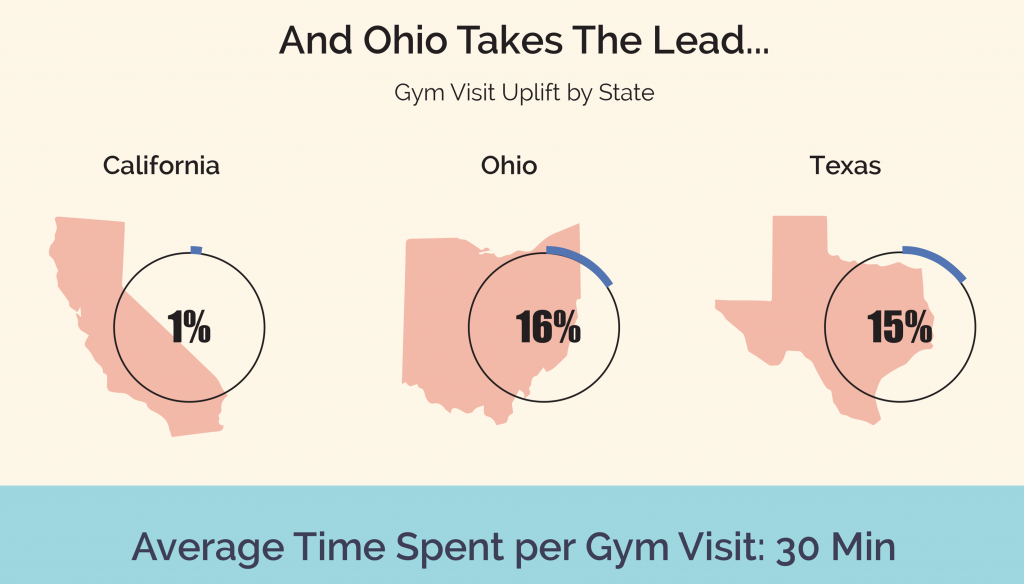
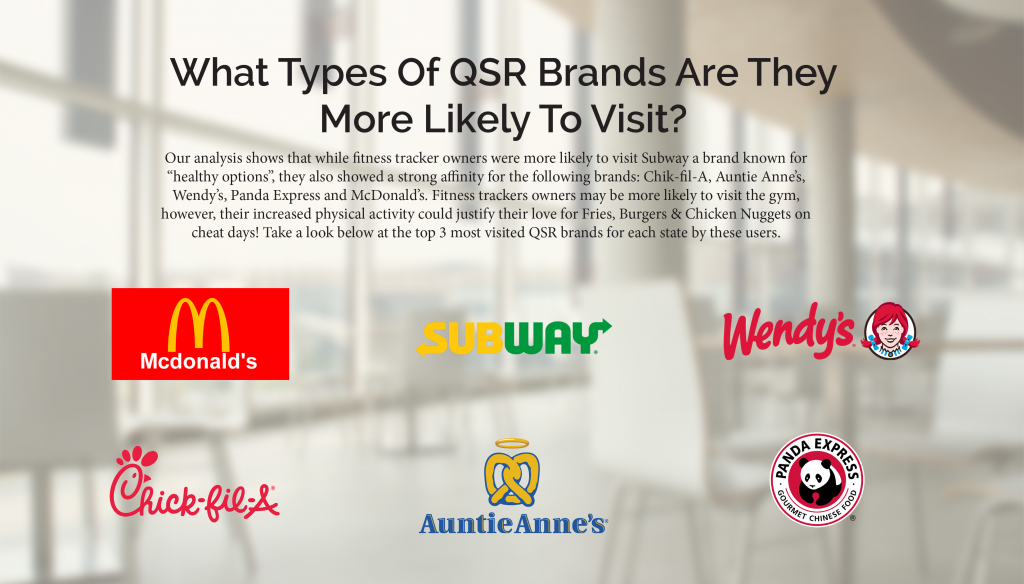
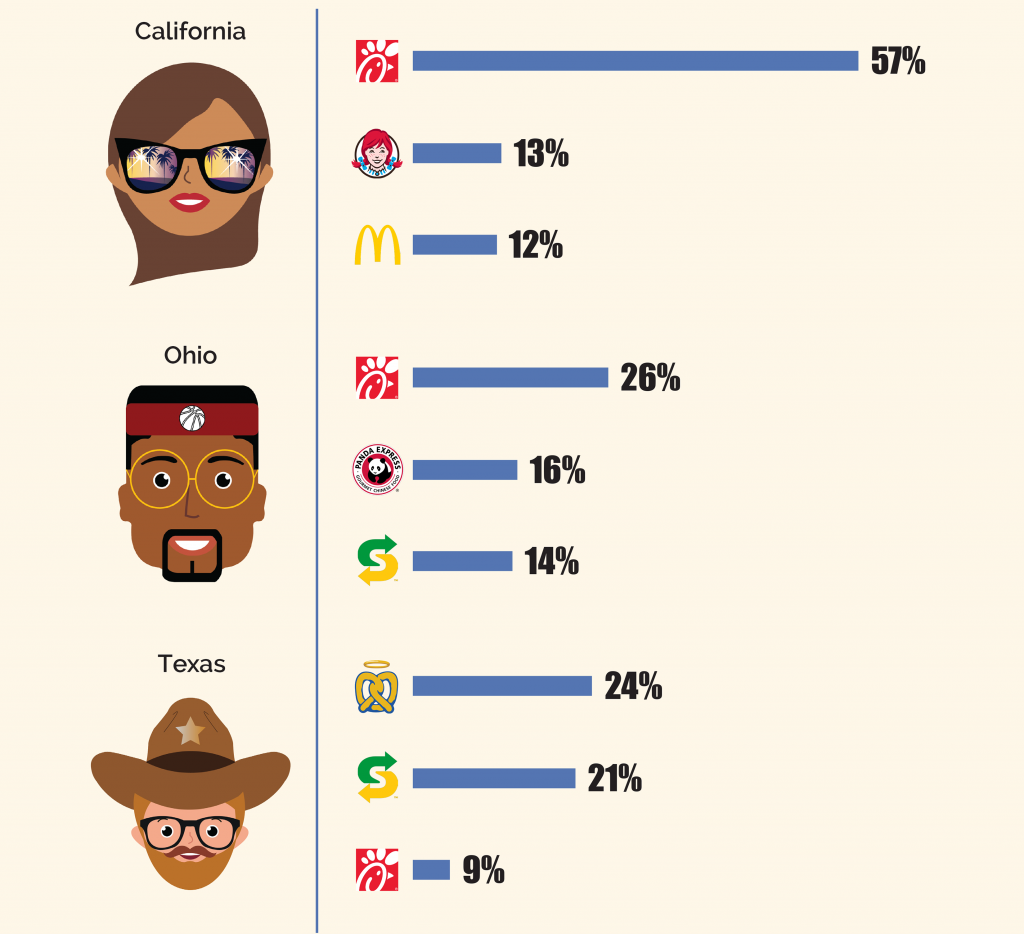
Cuebiq’s new IoT data becomes even more powerful when combined with Cuebiq’s existing location data. To highlight a possible use case for such an application, Cuebiq conducted a study in which it analyzed visit patterns of fitness tracker owners to see if these anonymous users were more likely to visit gyms or eat at healthier restaurants. The results of the study showed a strong positive correlation between owning a fitness tracking device and visiting the gym. However, counter to what some may assume, owners of fitness trackers were more likely to frequent QSR establishments like Chick-fil-A and Auntie Anne’s Pretzels.

Auntie Anne’s Pretzels

Our study is a perfect example of how consumer behavior can be counterintuitive. Without insight into IoT usage data, marketers could miss a large chunk of potential business,” said Antonio Tomarchio, CEO, Cuebiq. “We are very excited to roll out our new IoT Audiences to help marketers better understand consumers and allow them to target consumers who own specific IoT devices. Our mission at Cuebiq is to help marketers shape their strategy, drive performance and measure ROI. By combining our new IoT data with consumers’ visitation patterns, marketers get an unprecedented and sometimes counterintuitive view of the consumer. With the high stakes that exist for brands, having this extra insight can mean getting ahead of the competition.”

Altify Unveils Summer ‘17 Platform Update with Sophisticated Relationship Maps for Global Collaborative Selling

0
Altify
Altify Unveils Summer ‘17 Platform Update with Sophisticated Relationship Maps for Global Collaborative Selling

Altify’s New Enhancements Enable Faster, More Productive Engagements with Key Buyers, Alignment Across the Full Go-To-Market Team, and International Deployment

Altify, the sales transformation software company, has announced its Altify Summer ’17 Platform release, introducing new internationalization and collaboration capabilities and expanding the Relationship Maps functionality to identify the influence of key buying contacts. With the latest Altify Platform release, businesses can bolster international sales results, gain quicker access to key buyers, and effectively align different departments to an optimal sales strategy.

Anthony Reynolds, CEO at Altify, said, “Sales professionals are knowledge workers, and success requires coordinated processes and data-driven expertise. Altify’s Summer ‘17 release accelerates sales by providing strategic insights in real-time and aligning the entire organization on best practices. It also deepens the value for our customers by making our expert methodology more accessible globally.”

Interview with Patrick Morrissey, CMO at Altify

Patrick Morrissey
Patrick Morrissey, CMO at Altify

Patrick Morrissey, CMO at Altify, spoke to MarTech Series at the time of the announcement of Altify’s Summer ’17.

MTS: Given the changing dynamic of sales automation, how do you see Altify’s Summer’17 update setting the benchmark in the industry?

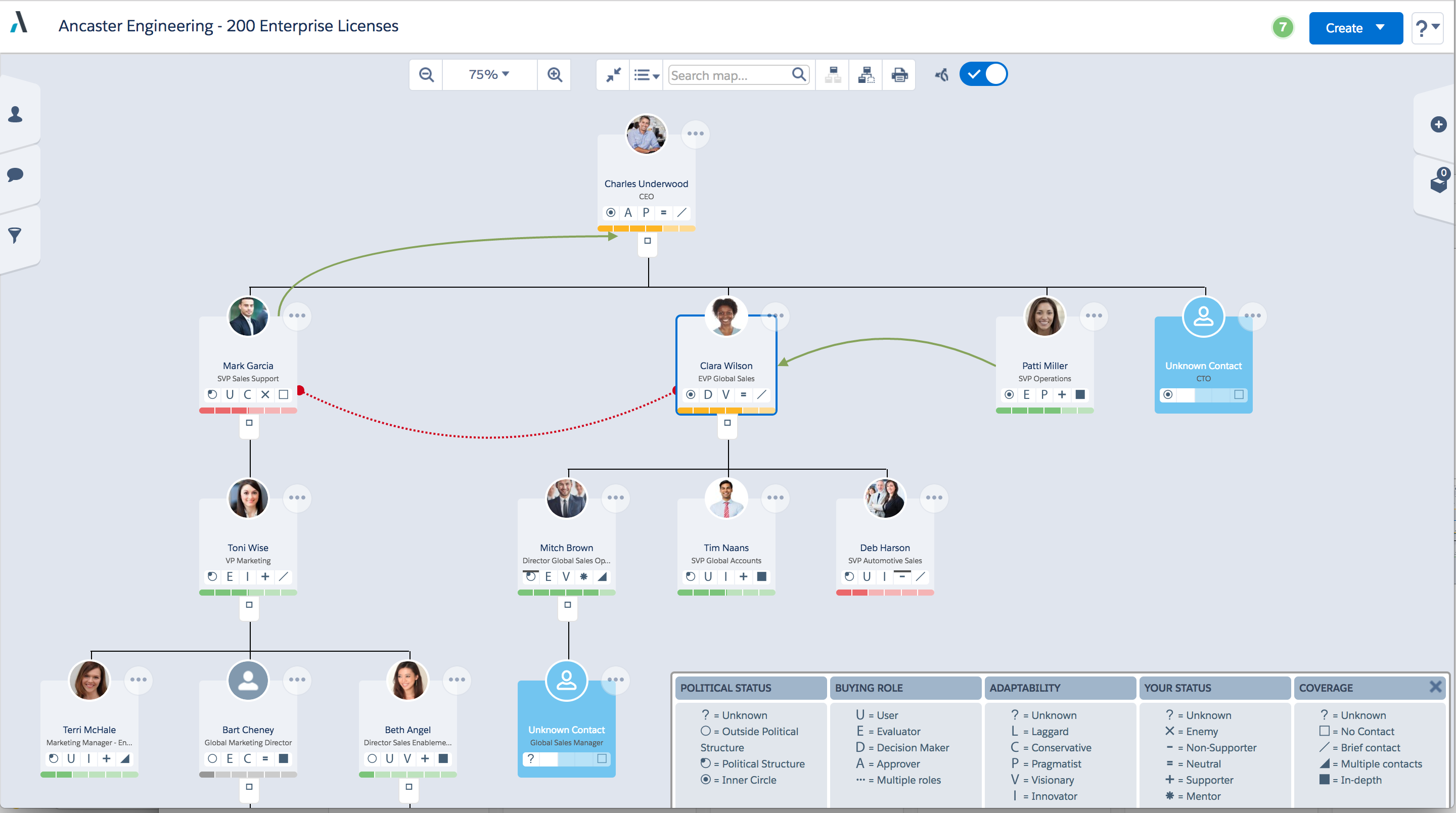
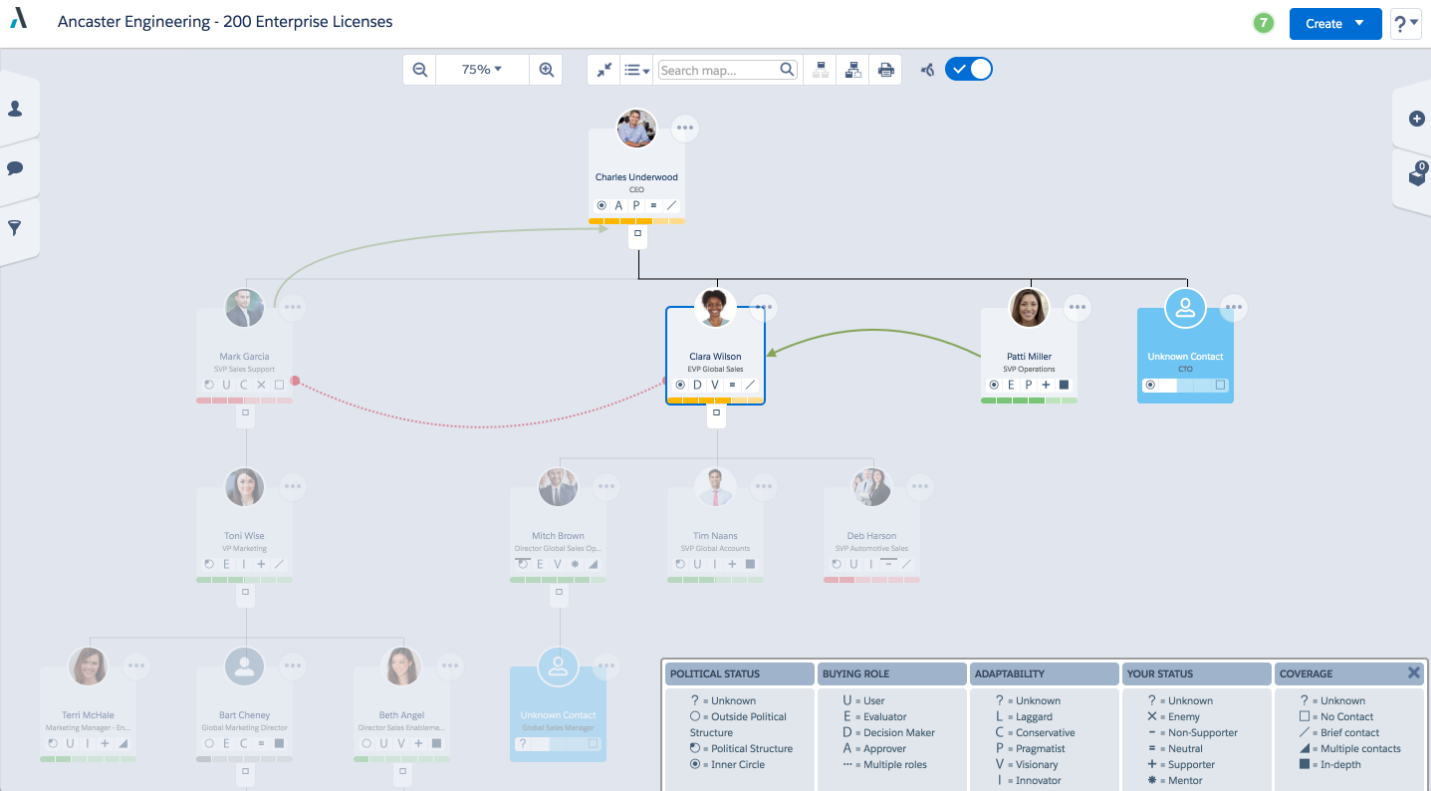
Patrick Morrissey: Typical sales automation is only focused on accelerating sales processes–not making them more effective. Capturing details about accounts, contacts, and opportunities are only the start. Altify’s Summer ‘17 release increases sales by providing strategic insights in real-time and aligning the entire organization around the customer. Rather than simply cranking out more calls, Altify users can map the relationships they have in the account, understand influence, and better execute on their opportunities. Altify’s Relationship Maps in Summer’17 brings contact data to life visually, so sales reps can better navigate to find the right people, build relationships, and execute their sales strategy.

Another differentiator of the Altify Summer ’17 release is its collaborative capabilities. Our platform makes it easy for salespeople to connect everyone on the internal team around the customer across departments. The Test and Improve functionality in Altify Summer ’17 dramatically improves deal reviews so that sales teams can capture input on the opportunity, understand potential vulnerabilities, and turn feedback into actionable plans.

Finally, the new release deepens the value for our customers by giving them the ability to sell in their own language. This means that not only can customers make our expert methodology accessible in every Salesforce-supported language, but they can also customize to their own unique methodologies and processes. Sophisticated global companies like CommVault, SDL, and Radial need the flexibility to tailor solutions for their unique markets and products, and Altify Summer’17 makes that possible.

MTS: Could you tell us more about the Relationship Maps? Would this help sales managers execute their ABM campaigns  better?

Patrick Morrissey: Our enhanced Relationships Maps helps our customers understand the difference between influence and titles. Identifying titles in a company helps understand hierarchy but does nothing to show who influences whom. Altify Summer ’17 helps our customers find the buying decision makers who matter and track their influence across their organization.

The Relationship Map lets the sales team see their contacts influence in the organization, understand if they have a positive, neutral or negative relationship to the individual, and to track lines of influence across the team. 

Relationship Maps also provide real-time coaching about how to engage with important buyers most effectively, so salespeople have step-by-step decision-making expertise.

MTS: Is Altify relying on AI/ML technologies within the Summer’17 Platform? What analytics and reporting features are being offered with the new enhancements? 

Altify’s platform and Summer ’17 release use augmented intelligence to help reps and teams understand what to do next, based on where they are in the deal with suggested next steps. Because Altify is native in the Salesforce platform, our apps can also provide data and input that can be used by Salesforce’s Einstein.

Altify Summer ’17 Features

The Altify Platform Summer ‘17 release includes three major enhancements developed in response to customer demand:

  • More advanced Relationship Maps that expose the influence level of key buyers and provide real-time insights,
  • Collaboration capabilities for the entire go-to-market team,
  • Internationalization of the platform through new languages.

Recommended Read: MarTech Interview with Anthony Reynolds, CEO at Altify

Relationship Maps – Navigate and Connect to the People Who Matter

Altify Relationship Maps

Altify Relationship Maps

Altify’s updated Relationship Maps present prospective buyers in the context of their position in the corporate hierarchy, strongest relationships, and purchasing authority, allowing salespeople to identify the right targets. Relationship Maps also provide real-time coaching about how to engage with important buyers most effectively, so salespeople have step-by-step decision-making expertise. Altify’s recent Business Performance Benchmark Study revealed that accessing key buyers increases win rates by 23%–the number one factor for sales success. With the new release, salespeople can identify the right buyers immediately and engage effectively with faster sales and better results.

Collaborative Selling – Align the Entire Team Around the Customer
The Altify Platform Summer ‘17 release also adds new collaboration capabilities to align sales and marketing, executives, customer success, legal, and operations as customers move through the sales cycle. 43% of participants in the Business Performance Benchmark Study reported that they did not believe marketers understand their customers. Collaborative selling through the Altify Platform brings the entire organization together through shared knowledge and communication to identify the processes that drive the best results.

Internationalization – Sell in the Local Language
Altify now supports every Salesforce standard language, including both direct translations and regional terminology. This allows sales organizations the flexibility to manage their opportunities and accounts in their local language, as well as customize the platform to their unique sales process. The Altify Platform can be programmed so that users in each region automatically interact with their local language. Account Plans, Relationship Maps, labels, and more are also customizable, enabling organizations to sell in their own language and win the deals that matter.

Customers Attest to the Advantages of the Altify Platform

Steven Birdsall
Steven Birdsall, Executive Vice President & Chief Revenue Officer at Radial Inc

Steven Birdsall, EVP and Chief Revenue Officer of Radial, said,“We selected Altify to increase our sales velocity and help accelerate our business. The new Altify Summer ‘17 release makes it easy for us to customize opportunity management, map key account relationships and get the whole team involved in selling and servicing the customer.”

Rick Donnelly
Rick Donnelly, Vice President, Worldwide Sales Operations at CommVault

Rick Donnelly, VP of Worldwide Sales Operations at CommVault, said, “Salespeople need to have access to key insights in order to succeed, but too many organizations emphasize speed and volume over effectiveness. Relationship Maps has been a major value-add for our sales teams to focus their efforts. The expanded capabilities of the Summer ‘17 release are even more exciting because they will help sellers know how, as well as where, to engage potential customers. We look forward to experiencing the improvements first-hand.”

Jane Freeman
Jane Freeman, VP Global Sales Excellence, SDL plc

Jane Freeman, Regional Sales Director at SDL, said, “Our ambition is to help all businesses around the globe communicate with customers and colleagues in any language. We’ve been impressed by the team’s vision and ability to translate our strategic goals into realistic sales outcomes. The platform’s insight into our sales pipeline and ability to identify drivers and opportunities ensures our teams are productive, focused, and always engaging with the right people. We look forward to working closely with Altify as we grow our business in new areas.”


Read More: Altify Opens New Headquarters and Expands Leadership to Grow Customer Base

WHOSAY Launches Platform That Matches Brands to Influencers

0
WHOSAY
WHOSAY Launches Platform That Matches Brands to Influencers

Marketers Can Produce Custom Reports Using WHOSAY’s Match Platform To Uncover Talent Who Have Fans That Also Like Certain Brands

Whosay Match

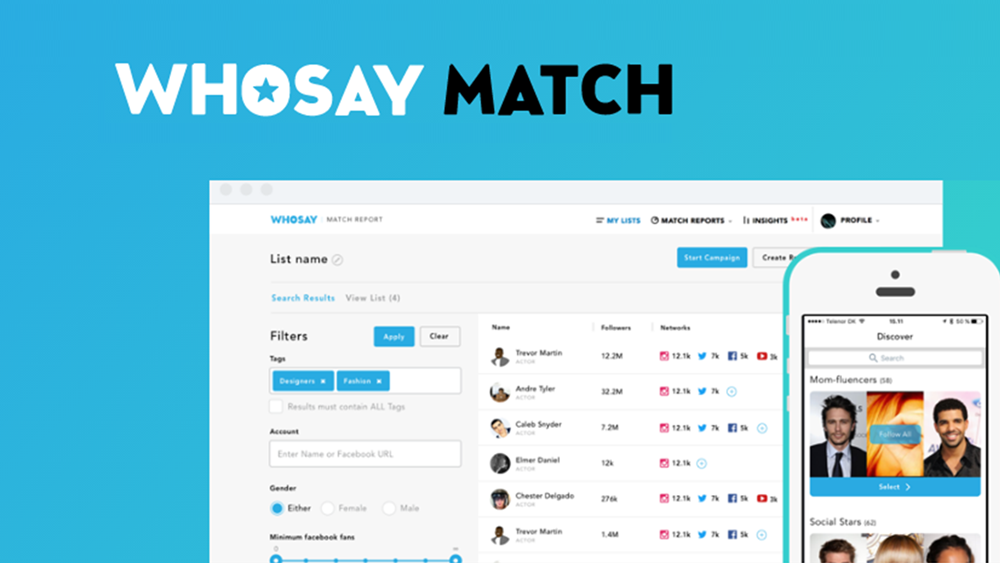
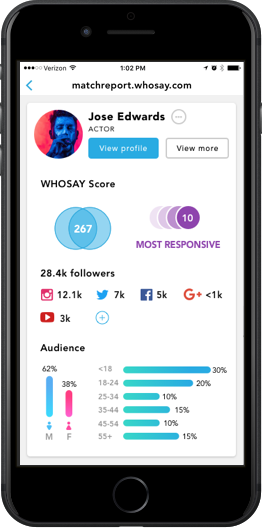
WHOSAY, a leading company in the fast growing Influence marketing space,  launched its newly designed WHOSAY Match platform to provide agency and brand clients with a free web and mobile application that helps them connect their campaign objectives to the best talent at every level of influence.

Recommended Read: Influencer Marketing & Your Customer Journey

WHOSAY Match has already been in use internally at the company for over two years to help successfully select talent for over 100 brands in more than 300 campaigns.

Interview with Steve Ellis, CEO, WHOSAY

Steve Ellis
Steve Ellis, Founder/CEO, WHOSAY

MTS: How does Match platform measure these parameters? Could you share a sneak preview into the reporting dashboard?

Steve Ellis: The reporting dashboard is actually the MATCH report, once it generates.

WHOSAY’s experience of matching talent, in over 300 major campaigns for Fortune 100 brands, has shown that at every level of talent there is only a subset that is professionally suitable for use in creative brand campaigns.

Hence the MATCH report only filters through vetted talent that includes the best of:

Icons — tier one celebrities.
Trailblazers — ascending influencers approaching household recognition status.
Influencers — top social influencers on platforms like YouTube and Instagram.
Micro-Influencers – smaller but more genre-focused influencers

MTS: How should marketers tie in Influencer Marketing with their social media strategies?

Steve Ellis: Influencer Marketing is an essential part of digital marketing because influencers are the most trusted voices across all social platforms. Whether it be Facebook, Instagram, Twitter, or Snapchat, there is so much content flooding the internet, consumers are more receptive to brand messages if they’re coming from someone they look to on a daily basis.

Influence marketing can then complement social media strategies by working in tandem with branded social handles and even traditional advertising.

MTS: How should marketers leverage Match to execute personalized campaigns across omnichannel platforms? Does it work with Email Marketing campaigns too?

Steve Ellis: One of the beauties of the Match platform is that it can pair brands with the ideal influencer no matter what platform. Maybe the micro influencer that is perfect for a campaign on Instagram doesn’t have a good presence on Twitter. The Match can deliver a multipronged, platform specific approach, no matter where your audience is. These assets can be then leveraged on owned-and-operated sites, out-of-home, in-store, and in email marketing campaigns.

WHOSAY Powers Marketing Campaigns for Brands

Steve Ellis added, “We created WHOSAY Match so we could leverage internally all the data we have gathered from working so closely with thousands of influential people, and on over 300 brand campaigns. The platform was designed by our own team to help them identify the right talent for every level of influencer campaign. With the explosive growth in demand for influencer driven creative, we are now giving our clients free access to the platform so they can easily and confidently identify the exact talent that is most likely to influence a brand’s target audience or affinity group.”

Read More: Collective Bias, an Inmar Company, Publishes Landmark Research Study Measuring Sales Impact of Influencer Marketing

The new Match platform capabilities will help marketers discover the specific talent whose fans already show an affinity for certain brands.

Using the WHOSAY Match app marketers can —

  • Browse through a pool of select talent from every level of influence – Icons, Trailblazers, Influencers and Micro-Influencers
  • Create and share custom lists of influencers with the highest fan affinity for a brand
  • Create a custom social feed that shows all the social posts from specific influencers, across multiple social networks and their level of engagement
  • Browse continuously updated, curated talent lists such as “Health Conscious Celebrity Moms” or “Teen Beauty Influencers”
  • Directly message the WHOSAY Team to address any and all campaign requests.

Read More: Influencer Site #HASHOFF Partners with Kinetic Social

TabMo Appoints Henna Firdos as Ops Manager to Extend Support To Self-Serve Advertising Clients

0
TabMo
TabMo appoints Henna Firdos from Blis to Extend Support to Self-Serve Advertising Clients
Henna Firdos
Henna Firdos, Platform Operations Manager at TabMo

TabMo, a leading programmatic mobile advertising company has recruited Henna Firdos for the new role of platform operations manager. Henna  was previously at location-based mobile advertising company – Blis. Before Blis, she worked at The Exchange Lab trading across multiple demand side platforms (DSPs).

Read Also: TabMo Hires Daniel Read as Head of Trading and Platform Sales to Expand into Programmatic Market

Firdos will provide training and technical support to TabMo’s UK-based self-serve customers.

TabMo’s DSP, Hawk, provides location targeting technology, access to multiple data points, premium inventory via pre-built private marketplaces and tools that allow creatives to be adapted for mobile, and enhanced to provide greater audience interactivity.

Read Also: Hawk by TabMo Integrated with Teads Video Advertising Marketplace to Boost Mobile-First Inventories

Chris Childs, Managing Director at TabMo UK, said, “Clients increasingly want to use our platform in-house and we are committed to ensuring they see the best possible results.  Henna brings excellent experience to the role, along with DSP knowledge gained from working with key players in the industry, including Blis and The Exchange Lab.”

Built for agencies and advertisers it enables them to access premium publisher inventory through pre-selected integrated private marketplaces (PMPs), and leverage mobile audience data from trusted integrated and selected partners. TabMo specializes in video and rich media mobile campaigns and is one of the world’s only platforms to be able to programmatically serve the whole range of mobile formats including native.

Built for agencies and advertisers, it enables them to access premium publisher inventory through pre-selected integrated private marketplaces (PMPs), and leverage mobile audience data from trusted integrated and selected partners. TabMo specializes in video and rich media mobile campaigns and is one of the world’s only platforms to be able to programmatically serve the whole range of mobile formats including native.

Recommended Read: TabMo Enters US as the First Mobile Creative Programmatic Platform

SendGrid Launches New Innovative Email Marketing Editing Experience

0
SendGrid
SendGrid Launches New Innovative Email Marketing Editing Experience

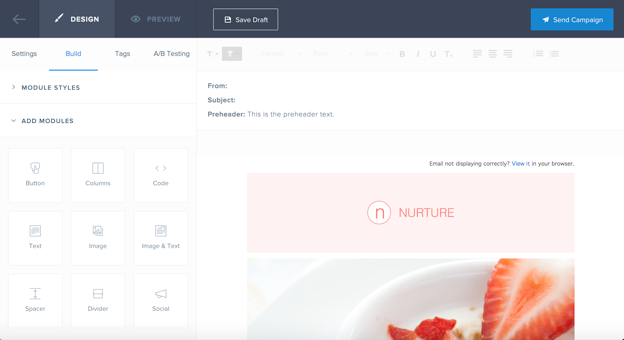
SendGrid, a leading customer communication platform that drives engagement and growth, announced a new editing experience for SendGrid Marketing Campaigns. The new email marketing editor addresses familiar pain points for marketers who previously had to choose between the convenience of visual design and efficient editing of code.

“Savvy, time-starved marketers crave elegant visual design tools that also allow them to quickly and safely edit HTML,” said Steve Sloan, Chief Product Officer at SendGrid. “With the enhancements made to the SendGrid Marketing Campaigns editor, marketers no longer have to choose one or the other. They are now equipped with the tools to choose their own path when editing for flexibility and efficiency, empowering them to drive high engagement from their campaigns.”

New flexible editing options give marketers the ability to edit in code, design view, or a mix of both, minimizes the risk of unwanted changes to custom HTML and delivers time savings and efficiencies. The improved editing experience benefits SendGrid customers whether they send campaigns via Marketing Campaigns or create API triggered templates through SendGrid’s delivery platform.

“With the help of SendGrid’s Marketing Campaigns editor, we feel like we have an entire creative department behind us,” said Patrick Meyer, Creative Director at Wine Exchange. “Their new campaign editor allows us the control and flexibility to craft beautiful marketing emails using a mix of HTML, drag and drop building, and in some cases the ability to use a combination of both. Tools like A/B testing and professional drag and drop building make all the difference in creating campaigns that look great and ultimately help us drive sales. Nothing we’ve ever used has been this quick, efficient, and powerful in creating impactful messages to our customers.”

The new design editor offers the best of both worlds with:

  • Reliable drag and drop and What You See Is What You Get tools for intuitive visual editing
  • Per-module HTML editing
  • Custom code modules
  • Option to import custom drag and drop enabled HTML templates

SendGrid

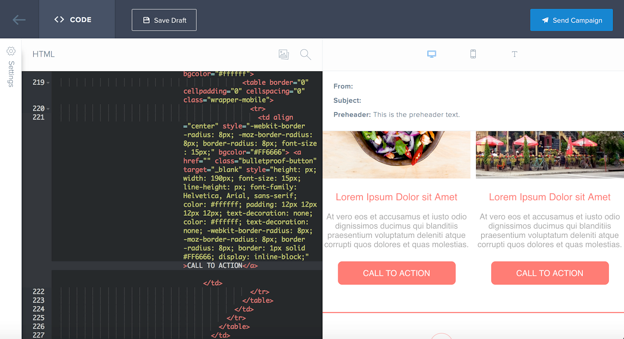
The code editor delivers a marketer-centric editing experience with:

  • Protection from unwanted, breaking code modifications
  • Split screen code and preview editing
  • Scroll syncing to pinpoint the exact location of HTML

SendGrid

Also Read:  The Right Time for the Millennial Marketer

Interview with Ran Milo, VP Marketing at Bidalgo

0
Ran Milo
Interview with Ran Milo, VP Marketing at Bidalgo

[mnky_team name=”Ran Milo” position=” VP Marketing at Bidalgo”][/mnky_team]
[easy-profiles profile_twitter=”https://twitter.com/bidalgo_ltd” profile_linkedin=”https://www.linkedin.com/in/ranmilo”]
[mnky_testimonial_slider][mnky_testimonial name=”” author_dec=”” position=”Designer”]“Marketing executives need to understand what functions can be handled by AI-enabled computers and what functions need to be managed by humans.”[/mnky_testimonial][/mnky_testimonial_slider]

On Marketing Technology

MTS: Tell us about your role at Bidalgo and how you got here? 

I was previously the VP of Bingo Marketing at 888.com, one of the largest online Casino, Bingo, Poker and sports betting sites in the world, and since user acquisition was a huge factor in our success, I knew first hand just how difficult it was to acquire high-quality users at scale. As a B2C marketer, I worked very closely with lots of marketing automation companies, and with Bidalgo in particular. I was impressed with the company’s level of expertise and the sophistication of its technology. Bidalgo was clearly more advanced than any other companies using Artificial Intelligence to automate advertising, and I wanted to be part of their fast growth. In my current role at Bidalgo, I’m responsible for Bidalgo’s marketing and for telling the story behind its innovative technology.

MTS: Given the changing dynamic of ad engagement, how do you see the Advertising Automation market evolving in the years to come?

Advertising automation technology will continue to get smarter and smarter over the coming years as the technology behind Artificial Intelligence and deep learning becomes more advanced. It’s crucial that technology adapts to the way that consumers interact with media, which is somewhat unpredictable. So technology providers like us will have to remain flexible and be ready to train our algorithms to understand new media channels and different forms of communication that we might not have even thought of today. Given the domination of the industry’s largest platforms — like Facebook, Instagram, Pinterest, Snapchat, Google, and Apple — we also see these channels becoming even more integral to advertising success, which is why we’ve formed partnerships with all of the major platforms.

MTS: How do you see audience attention and conversion analytics influencing their omnichannel experience, especially over social platforms?

Today’s consumers have famously short attention spans, and they are using an increasing variety of media channels. That means that marketers must use increasingly sophisticated analytics in order to track users across the omnichannel experience and communicate with them using a coordinated, synergistic approach. When done right, a coordinated approach to omnichannel marketing can be incredibly effective.

MTS: What’s the biggest challenge that CMOs need to tackle to make their media decisions work?

I’d say that the biggest challenge is around designing great creative. Since ad creative is usually the first interaction a user has with a game, it basically serves as the gateway to the game, so using the right creative for the right audience is very important. In the past, creative has traditionally required a lot of guesswork. It was more art than science. Even when using massive A/B testing, you could know what works better now, but couldn’t say why it is working better and how to replicate the success. With AI and machine learning, marketers can break down the DNA of effective creative and know exactly which elements worked and which ones didn’t. Then they can design new creatives that get real results and ensure that their creatives are never stale or fall flat. It still requires a lot of work, but technology is taking a lot of the guesswork out of the creative process.

MTS: What startups are you watching/keen on right now?

I love startups that make my life easier as a marketer or in my personal life. To name a few: Slack, Asana, Hotjar, Instacart, Postmates, and Venmo.

MTS: What tools does your marketing stack consist of in 2017?

Facebook, Google, Linkedin, Hubspot, WordPress, BuzzSumoHotjar and Instapage.

MTS: Could you tell us about a standout digital campaign? (Who was your target audience and how did you measure success)

We’ve been promoting Pixelberry Studios’ game Choices in the past year. It’s an adventure game in which players follow a narrative where they can fall in love, solve crimes or embark on fantasy adventures. Using our AI advertising technology, we helped Pixelberry get into the Top 20 Grossing Apps charts.

On top of our AI technology performance, we helped crack their ad creative DNA. We started by using a variety of ad types in a smart and creative way to showcase the game choice elements to engage users to act and make a choice. Players could start the game experience already in the ad itself using immersive ad types such as video, carousel ads or canvas ads.

Eventually, the campaign led to a huge spike in installs in parallel to more than 200% increase in ROAS (Return On Ad Spend).

MTS: How do you prepare for an AI-centric world as a marketing leader?

Marketing executives need to understand what functions can be handled by AI-enabled computers and what functions need to be managed by humans. The more efficiencies they can get, the better off they’ll be. Take media buying for instance. By offloading to algorithms a lot of the budget management, bid optimization, and other functions that used to be handled by humans, media buyers can free up their time to be more creative and strategic, spending more of their time discovering new audiences, breaking into new territories, brainstorming new creative, and so on. Marketing leaders should embrace their new companions.

This Is How I Work

MTS: One word that best describes how you work.

No ego

MTS: What apps/software/tools can’t you live without?

We work across 3 offices in Israel, San Francisco, and South Korea, with 10-hour time zone gaps, so communication tools like Slack, and Bluejeans and project management tools like Jira are essential. At the personal level, it would be hard to live without Netflix or Amazon 🙂

MTS: What’s your smartest work related shortcut or productivity hack?

There are two kinds of people in the world: those who use email folders, and those who don’t. I never use folders for emails. I can never find what I want or follow up using them. I keep everything in my inbox and am a master in searching for emails.

MTS: What are you currently reading? (What do you read, and how do you consume information?)

Shantaram. A great 1,000 page novel by Gregory David Roberts. I’ve been reading it for the past year (every flight I read 100 more pages). I also like to read industry news and photography tips.

MTS: What’s the best advice you’ve ever received?

Don’t assume anything. Always put it to the test when possible. I just love seeing how biased our decisions are and how time after time we’re surprised by empirical outcomes of tests.

MTS: Something you do better than others – the secret of your success?

I’m persistent, I take ownership and see things through. I have both an analytic and creative background. It helps me make more well-rounded decisions.

MTS: Tag the one person in the industry whose answers to these questions you would love to read:

I always like reading about Neil Patel’s hacks and tips. He’s a conversion optimization, SEO specialist, and a blogger, and I always learn a lot by reading his writing.

MTS: Thank you Ran! That was fun and hope to see you back on MarTech Series soon.

[vc_tta_tabs][vc_tta_section title=”About Ran” tab_id=”1501785390157-b58e162d-0ae25a4b-c27ae82d-7c6f”]

Senior marketing executive with 12 years of experience driving growth. Lead significant growth of millions in revenue in extremely competitive markets. Strong analytical background combined with a creative approach allows me to focus on smart marketing and product solutions. I love managing agile teams in solving real life business puzzles and leading to execution.

[/vc_tta_section][vc_tta_section title=”About Bidalgo” tab_id=”1501785390320-2d44fa50-740c5a4b-c27ae82d-7c6f”]

Bidalgo

Bidalgo is the leading provider of Artificial Intelligence solutions to help app marketers scale their growth. The company’s SaaS-based platform offers the mobile industry’s only end-to-end suite of automated media buying services, from uploading ads and optimizing their performance to real-time bid management, budget allocation and more. As an official marketing partner of Facebook, Instagram, Pinterest and other platforms, Bidalgo manages hundreds of millions in ad spend for clients in gaming, consumer, fin-tech and other verticals. Bidalgo’s AI algorithm is backed by an experienced team of performance marketers, creative designers, media buyers and account managers dedicated to each client. Founded in 2010, Bidalgo has offices in San Francisco, Tel Aviv and Seoul.

[/vc_tta_section][/vc_tta_tabs]
[mnky_heading title=”About the MarTech Interview Series” link=”url:http%3A%2F%2Fstaging.loutish-lamp.flywheelsites.com%2Fmts-insights%2Finterviews%2F|||”]

The MTS Martech Interview Series is a fun Q&A style chat which we really enjoy doing with martech leaders. With inspiration from Lifehacker’s How I work interviews, the MarTech Series Interviews follows a two part format On Marketing Technology, and This Is How I Work. The format was chosen because when we decided to start an interview series with the biggest and brightest minds in martech – we wanted to get insight into two areas … one – their ideas on marketing tech and two – insights into the philosophy and methods that make these leaders tick.

Why Nobody is Reading Your Cold Email and How to Get Them To Respond

4
Email

At Reply, we live and breathe email. Every day our clients send thousands upon thousands of messages to and from companies of all sizes. No matter the size or your target market there is a very simple rule to follow, make your emails easily understood and promote engagement.

If you haven’t been doing this for very long, chances are you aren’t getting the responses you’re looking for (learn how to turn cold email rejections into opportunities here . And, more often than not, it is one of these common mistakes that are to blame.

TLC – Too Long & Confusing: Try to keep your word count as low as possible. Two to four sentences should be more than enough space to get the basic idea out and ask for feedback or a reply. If you’re witty and charismatic you may be able to get away with a bit more but it is always safer to keep it short. Also, don’t drone on and one about amazing new features, sing-up bonuses or offers. You are trying to convey too many different messages. Stay on task and don’t confuse your prospects.

The Questions You’re Asking are to Hard or Vague: Your list is most likely comprised of total strangers. If a total stranger came up to you and asked, “What are the major challenges your business anticipates overcoming this next quarter?” or “Hey, maybe I can help with that?” you would walk away. The easier you make your questions to answer and the clearer you make your calls to action the better. Don’t beat around the bush, be direct and say what you mean.

Follow-up to the follow-ups: Email etiquette is difficult to nail down. Everyone is different and responds to different things, but if you don’t ever follow-up on what you originally propose you will never see an answer. The majority of first step emails aren’t responded to. Taking the time to send a follow-up shows initiative, perseverance and acts as a reminder. It is completely possible they missed your email or simply didn’t have the time to reply. A good reminder is always appreciated.

Read Also: TechBytes with Olivia Milton, CMO at Reply.io

Now that we’ve covered what you could potentially be doing wrong, here are a few ways you can boost that response rate.

Peer Pressure: Have you ever tried something just because one of your friends or someone you admired did it first? This same idea can work in cold email. In life we take cues from other people. If you can prove that other people in your prospects field love your product or service they will be more receptive to the idea of giving you a go. For startups this can be a bit tricky to accomplish but even small victories count. You don’t have to say Facebook is using your product; a smaller, local team will be enough to get you started.

Humor: You’ve created a rapport and mentioned your pitch but you just aren’t getting to the finish line, you can’t make the sale. When it comes down to it, people prefer a conversational style to a more formal one. Throw in a quip or a joke to lighten the mood and see your response rate inflate.

Make it Friendly: Everyone loves to hear the sound of their voice; they also like to hear their name. The more often you can address your prospect directly the better. They will feel engaged, more receptive to your offers and more likely to actually read the email to completion. Nobody likes to get a birthday card filled with vague wishes to an unknown entity. A person is their name, use it.

Read Also: Reply’s Live Tasks Feature Delivers Custom Trigger-based Task Suggestions to Improve Conversions

Why CMOs Need to Know About Stack Fallacy

3
CMO
Why CMOs Need to Know About Stack Fallacy


Claustrophobics beware, martech is crowded. According to Scott Brinker of chiefmartec, the latest count puts the number of marketing technology providers around 5,000+ – up from 3,800 just a year ago. With so many companies competing for the same marketing budgets, it’s reasonable to predict consolidation of the industry is inevitable. But the industry shows no signs, and may never.

One explanation is the phenomenon of “stack fallacy.” The term, coined by Anshu Sharma partner at VC firm Storm Ventures, refers to “the mistaken belief that it is trivial to build the layer above yours.” The merits of Sharma’s theory are well discussed as they relate to challenges in the IT and SaaS industries, but its application to martech is undeniable – large martech players are finding it difficult to innovate. Stack fallacy helps explain what’s happening in the martech landscape and what we can expect in the future.

By any estimation, martech spending is in on a tear. Recent Gartner research predicts marketing technology spend to outpace enterprise IT in 2017. Large industry players like Adobe, Marketo, Hubspot, and Oracle remain dominant all-in-one providers offering solutions considered lower in a marketing department’s stack. But like any “all-in-one” provider, upstream solutions often fall short of meeting customer’s expectations.

CMOs and marketing teams want the best-of-breed solutions and they are more than willing to mix providers. In fact, a recent Morgan Stanley survey found only 9% of surveyed CMOs stated it was necessary to purchase all solutions from a single vendor.

These two macro forces – the failure to move upstream by larger martech companies and CMOs willingness to cobble together many providers – have created a perfect environment for smaller martech startups. Thousands of newly minted providers have established profitable business models on layers above the big players, offering up-stream marketing services like email marketing automation, webcast hosting, and content management.

Today, martech leaders are watching as smaller startups chisel away at offerings further up the stack and winning over customer loyalty. What are they to do? Innovate?

Read Also: CMOs Own Initiatives in Customer Experience; Focus Sharply Moving Towards No-Screen Engagement

The notion that larger players in the industry can innovate and create solutions comparable to martech startups today is false. Here, the tenets of stack fallacy hold true. It’s difficult for a large, established company to move up the stack and find success. Whereas a company born at those higher levels of the marketing stack has lived and breathed those customer needs since the first SCRUM meeting. Without a clear understanding of customer wants, large martech providers will continue to fall victim to stack fallacy. It’s their Achilles heel.

Of course, there are solutions. Martech leaders could acquire smaller solutions and incorporate their IP into existing solutions, but that is expensive and, more importantly, there’s a larger opportunity at play.

Martech leaders should look to grow ecosystems, not limit them. We need open networks that many smaller martech providers can participate in. With a focus on interoperability and integration, the seemingly bloated martech industry will thrive, offering CMOs the ability to build the best stack for their specific market, customer, and organization.

CMOs want solutions that work in harmony with one another. Ultimately, they will pick the solutions that provide the greatest number of integrations with products already in use – I know because that’s what I do. Open platforms give users that level of integration.

Read Also: ON24 Prospect Engagement Profile Unveiled to Break Marketing-Sales Silos and Increase Business Impact

Additionally, networks create additional value for users and companies alike through network effects. When Apple opened the iPhone to third-party developers, they could not have imagined the amount of additional value generated from its network of applications. In the end, people purchased the iPhone for the app store, not because it could make phone calls. Martech can benefit from these same network effects, but success requires cooperation on both sides.

For large martech companies, don’t look to fill gaps in current offerings by moving up the stack, rather create ways for other smaller, best-of-breed solutions to integrate and provide individual services on top of a common network. Sell the network, not the apps.

In that same spirit, smaller martech firms must be willing to invest in those networks and integrations through development and partnership. This will mean swallowing some pride. Sure, every startup has fantasies of replacing a giant like Oracle, but, in the long-term, participating in a larger network is a far better strategy.

Martech is a big, growing pie. There’s plenty to go around if we’re all willing to share.

Read Also: Interview with Sharat Sharan, President, Co-Founder & CEO at ON24

TechBytes with Olivia Milton, CMO at Reply.io

0
Olivia Milton
TechBytes with Olivia Milton, CMO at Reply.io
Olivia Milton
Olivia Milton, CMO at Reply.io

Last month, the sales email automation and prospecting platform – Reply.io, introduced Live Tasks to convert prospects into customers by following task suggestions. Projected as a customizable task automation feature for marketing and sales, Live Tasks reduces the need to rely or revisit the database of contacts in order to see who to connect next. We spoke to Olivia Milton, CMO at Reply to understand how B2B marketers would benefit from the new smart automation feature.

MTS: Tell us about your role at Reply.io and about the team you lead?

Olivia Milton: Reply is a sales acceleration platform, which automates 1:1 communication at scale, while keeping it completely personal. It covers various use cases, like inbound and outbound sales, recruiting outreach, account management, business development, new user trials and, on-boarding existing customers.

I joined the Reply team of 12 professionals a year ago as CMO; today, we’re a team of 35 people working remotely from 10 time zones – 5 of them are in marketing. Working at a startup requires from you to a be a ‘one-man band’ – it’s equally important to choose the right strategy, set up and drive marketing processes, collaborate with the other teams, and implement various marketing tasks, while being flexible enough to switch between them.

The keywords that would explain working at a small SaaS startup are ‘uncertainty’ and ‘adaptivity’ – on the one hand, you can’t be 100% sure your vision for the product will stay the same since the market changes so fast. On the other, you need to be flexible and have the ability to quickly adapt the tool to a new, profitable niche or changing market conditions.

In marketing, we are also focused on business metrics which are far more actionable for company growth from an operational standpoint. Ad impressions, link clicks, and page-views aren’t indicative of company performance and the pace at which we grow. Instead, conversions from visitor to trial, and to customer tracked by channel and particular campaigns with the costs properly attributed, etc. – this is what really matters for business growth.

MTS: What is Live Tasks? At what stage of the sales cycle should marketers think of using this product?

Olivia Milton: Live Tasks is Reply’s new smart automation feature, part of the Reply platform, which enables users to convert even more prospects to customers by following task suggestions. The system continuously monitors the performance of email campaigns and suggests the next action to take so your team never misses out on a winning opportunity.

From the perspective of a single marketing-sales pipeline, Reply covers the lead nurturing and prospecting stages. Live Tasks is the feature that we and our customers have been waiting for a while. Just imagine – you should never go through your database of contacts and think who you should contact next. Instead, you can have a live database that provides you with suggestions (Live Tasks) on who you should talk to, based on custom triggers.

For example, you sent a sequence of emails to list of prospects but some of them have never replied; or you haven’t been in touch with a group of contacts for a while and the system will suggest that you touch base. Or, you just forgot to get back to some prospects – the system will remind you to do so.

Use cases for Live Tasks:

– Prospects finished campaign but never replied to your emails – every two weeks, Reply analyzes campaigns and creates task suggestions for these contacts. For example, moving the prospects to another campaign.

– Prospects viewed your email several times – reach out to those prospects who are likely to be more interested than others. Reply monitors your initial outreach campaigns and creates task suggestions for these contacts every day.

– Contacts clicked on links in your email – allows you to follow-up with the hottest prospects from your campaigns. Once a prospect from a particular campaign clicks on the link in your email (this can be a link to your website or special offer), Reply creates a task suggestion on a daily basis so that you won’t miss out on the deal.

– Contacts replied to your email, but you forgot the send a follow-up – Reply checks your campaigns to find those prospects who answered your email but didn’t receive a follow-up and creates tasks suggestions to contact them ASAP.

*The two last use cases are coming soon.

Read Also: Reply’s Live Tasks Feature Delivers Custom Trigger-based Task Suggestions to Improve Conversions

MTS: Does Reply integrate with any Marketing Automation platforms?

Olivia Milton: Reply has a wide range of integration options, including the ones that can be done via Zapier – you can connect any marketing automation solution listed on Zapier with Reply using available zaps or creating your own.

MTS: How many tasks can be listed and executed by Live Tasks? What are the basic requirements to include Live Tasks in your marketing and sales strategies?

Olivia Milton: There are no limits to how many Live Tasks can be created – the system analyses all email campaigns in your Reply account and automatically creates batches of tasks suggestions according to a particular use case. The more email campaigns in Reply you have, the more Live Tasks you’ll get.

In order to integrate the Live Tasks feature into marketing and sales workflows, you should analyze current lead nurturing and prospecting processes and decide what you’d like to do next with those contacts found by the system – should you move them to a subsequent email campaign (so, what is this campaign about, what is its goal?) or, (as in a case of hot leads) pass those prospects onto an SDR / sales department for a personal call? Once you decide and set up processes between departments, integrate Reply with your marketing and sales tools for a smooth and clear process.

MTS: Is Live Tasks using Artificial Intelligence/Machine Learning in any form? If yes, How would AI be used in outbound/inbound sales strategies?

Olivia Milton: Live Tasks is more about smart automation however, this will be a part of a complex feature stack we are working on to create the game-changing Customer Relationship Automation platform (reply.io/cra). The idea of the platform is simple and revolutionary at the same time – customer relationships shouldn’t be managed personally, but automated by AI.

Consider this – a ceaseless 24-hour assistant pouring over all of your emails and chats, offering suggestions or even taking the optimal action at the perfect moment to close a deal. This assistant will search day and night for leads that match your ideal customer profile and instantly reach out to them, will go through your current list of prospects and recommend whom you should reach out to based on where they are in the sequence. It will automatically schedule a call to a prospect upon opening your email, connecting you with them at the most opportune time. It will then analyze the context of your conversation and automatically update tasks based on the call.

While it dramatically changes the approach to the everyday work of sales reps, this is the future of sales and we’re evolving Reply towards it.

MTS: Reply monitors your initial outreach campaigns and creates task suggestions for these contacts every day. This task expires every three days.  Could you tell how this works?

Olivia Milton: Correct – in order to keep you up-to-date with current results of your email campaigns and guarantee the best outcome from using the functionality, Live Tasks has expiry dates. For instance, Live Tasks generated a ‘Prospects viewed your email several times’ use case for all of your email campaigns in Reply and those will expire in three days. However the system will generate a new portion of ‘fresh’ tasks with contacts you need to reach out to.

MTS: Thanks for chatting with us, Olivia. 

Stay tuned for more insights on marketing technologies. To participate in our Tech Bytes program, email us at news@martechseries-67ee47.ingress-bonde.easywp.com

The Right Time for the Millennial Marketer

3
Marketing to Millenials
roof-top-artsvector

A few years ago I was invited to speak to a global B2B marketing team on the topic of Revenue Marketing, i.e. how marketing is transforming from being a cost center to revenue center. The average age of this 40-person team was under 30 and many were only a few years out of college.  At the end of my talk, I asked for questions.  One person raised her hand and timidly asked…”I’m not sure I understand…isn’t marketing all about driving revenue?”  I was momentarily stunned into silence and then thought– FINALLY we now have a generation of B2B marketers who see the role of B2B marketing in revenue.  Long Live Millennials!  Since that pivotal moment, I have been casually documenting the rise, the role and the revenue impact of the millennial marketer on Revenue Marketing.

The Rise – The Right Mindset at the Right Time

According to PWC, millennials will make up 50 percent of the workforce by 2020 and many are going into the marketing profession.  This generation of marketer has been oft maligned, but I have found them to be a highly diverse population, valuing family, community, and having passion for what they do.  Millennials are characterized as well educated, civic oriented, conscious capitalists, global citizens, entrepreneurial, open to diversity, confident and results-oriented.  This generation of marketer has a different mindset towards technology, accountability, and career-building, which is well-suited for our fast-changing technology environment.

It is the mindset of seeing technology as a useful and practical tool versus technology being scary and overwhelming that is making such a big difference on teams today.  I remember when I bought my first marketing automation system in 2004.  At that time, there was a stark contrast between two marketers on my team.  The older one was having a difficult time adjusting to both the use of the technology and the changes it was driving in marketing.  The much younger one, who had a degree in marketing, welcomed the technology with relish and has since gone on to have a wonderful career as a Revenue Marketer®.

In the story I told at the beginning of this article, the hiring manager for the global marketing team had given up on finding deep technology skills – they were just too scarce at the time.  Instead, his hiring philosophy was to hire based on cultural fit and aptitude to be part of a digital transformation team.  He hired mostly millennials or digital natives who were excited and passionate about their blossoming careers and had huge appetites for learning.  In other words, he hired the right mindset.

As the number of marketing technologies continues to explode, it’s not knowledge of a particular piece of software that will be important.  What will be key to marketing’s success is the ability of marketers to quickly learn and optimize the use of any technology across a MarTech stack.

The Role – The Right Skill Set at the Right Time

Earlier this year, I conducted a series of interviews on skills required in today’s B2B marketing organization.  One common theme was the need to hire generalists and especially millennial generalists. Common descriptions from hiring managers included:

  • “They are more flexible.”
  • “They are more tech savvy – they are true native technologists.”
  • “They provide a good balance on a team.”
  • “They are not mired down in past models.”
  • “They look for solutions that use technology.”
  • “They look for a career opportunity, not just a job.”
  • “They motivate others to new ways of seeing things – they are like the energy charger for our team.”

Embedded in this description is both a soft and hard skill set.  The soft skills include the ability to collaborate, be flexible and innovative in an ever-changing environment.  Not being tied to the old way of doing things is largely a plus.  The hard skills are the left-brain attributes of logic, analysis, and solving puzzles.  This combination of skills is the right skill set at the right time.

The Revenue – The Right Metric at the Right Time

OK, nothing excites me more than to see a marketing team with revenue responsibility and variable compensation tied to a number.  CMOs are facing unprecedented pressure to show ROI and make a business impact, yet, this is still a challenge for many CMOs to achieve. I noticed a big difference between millennial marketers and older marketers a few years ago in terms of how they view and accept accountability.  Millennial marketers are more apt to see financial accountability as just another day at the office and nothing special.  They are not mired down from legacy metrics because they are so new to the game.  In addition, their arrival in the job market coordinates with the rise of technology use in marketing that for the first time in history, allows for the true measurement of marketing contribution in financial terms.

The Impact – The Right Actions to Take

The impact of this dynamic new employee has been timely for marketing managers needing to change but also challenging.  Managing millennials takes a bit of a different approach.  Consider these three actions:

Team Dynamic

Adding millennials to a non-millennial team can be tricky, especially if you would like to keep the non-millennial team members.  Millennials are career-focused and want clarity on upward mobility.  By having clear roles and responsibilities and clear guidelines for advancement, you’ll give the millennial a blueprint they can follow.  This ensures their success and how they fit into the team.

Hiring

Millennials are highly motivated by their social and capital consciousness and will look to work for a company with similar beliefs.  In hiring millennials, find out their passions and if they align with your company’s goals. Also, millennials are as money motivated as any group, but the money motivation is often moderated by social consciousness.

Retention

Retaining millennials can be tricky as they have less loyalty and more goals for career building than the prior generation.  Millennials are life-long learners and want to learn at their own pace and in a way that is 100% applicable to their job.  Training, mentoring and career building are very attractive to millennials and represent great retention strategies.

Millennials are a key part of the current workforce and are growing.  Understanding the general millennial persona will help a marketing manager hire and retain the necessary talent required in today’s environment.  Looking for the right mindset, the right skill set and the right kind of financial accountability can be found in this engaging and energetic generation.  The age of the millennial marketer is right now and into the foreseeable future.

Also Read: 3 Questions Every Marketer Must Ask When It Comes to Brand Safety

Debbie Qaqish is the Chief Strategy Officer of the Pedowitz Group

Three scenarios for marketing with the Internet of Things

2
MArketing With IoT

I love “best of” lists as much as anybody. It’s a great time to get a bit futuristic and think of the bests yet to come. And one of the most exciting things in the near future, I think, is the Internet of Things (IoT).

The IoT itself can’t even be considered futuristic anymore. It’s here now. In fact, it’s become so big that this year’s Consumer Electronics Show (CES) in Las Vegas dedicated a whole track to it. In December, too, the Interactive Advertising Bureau (IAB) released a consumer study that showed that close to two-thirds of American consumers own at least one connected device. That includes connected cars, connected/smart TVs, fitness trackers, home control systems or appliances, internet-enabled voice command devices, smart glasses, smart watches, VR headsets or some other kind of wearable. What’s even more important is that 65 percent of them say that they are willing to receive ads on IoT screens.

This will certainly be a game-changer for display and native advertising, and it will likely lead to new ad units we’re only starting to imagine. But the bigger win for data-driven marketers will be all the data generated by these devices.

Real-time behavior

According to productivity consultant Lisa Froelings, IoT devices can let their manufacturers know when and how they use the device – and then create campaigns to target those use patterns. She writes: “Is a company’s product handy in an emergency or popular in the morning? Perhaps it is used alongside another product or follows a specific event. Once marketers establish use patterns for their product, they can advertise those users to potential customers and better convert them by showcasing a product’s utility for the situations that their product is actually used in.”

I’d add that they could also use this information to craft better content and offers for their existing customers. For example, the segment of customers who use a fitness-tracking device early in the morning would receive emails showing a glorious sunrise, tips on keeping your ears warm while training outside and a coupon from a partner for a healthy breakfast bar.

Building a better experience

The Wynn Las Vegas hotel will install Alexa Dots in all of its hotel rooms this summer. Most of the personal-assistant functions will be disabled, but the hotel will likely be able to track not only preferences for room temperature and wake-up times, but also movie, television, gaming, and streaming content. This anonymous, aggregated data could help Wynn Resorts develop tailored customer experiences.

For example, if it found that a large segment of guests enjoyed thrillers, it could develop a lounge or attraction with that theme. If this preference information could be entered into the hotel’s guest databases or loyalty programs, it could also inform its email marketing. What if guests who streamed classic rock were offered a discounted room and priority tickets when a big rock act was in town?

Mobile entertainment centers

Accenture Interactive’s Fjord design unit just published its Trends 2017 report. One of the trends that struck me was the section about self-driving cars. We’re seeing pilots of the technology around the world, including Uber’s Pittsburgh test. Fjord wrote: “Once the car is no longer an end unto itself, it is an integral part of a connected ecosystem and increased connectivity will open options for experiences and services that challenge the very notion of a car.”

Fjord noted that when we don’t have to drive anymore, there are plenty of services we could use to fill the time, including of course, using the internet. They suggest in-car dining or pedicures. Who’s going to be the Uber of pedicures?

One thing we know passengers in autonomous vehicles will be doing is checking their email. (Adestra’s 2016 Consumer Adoption and Usage Study found that consumers check email at random all day long.) There’s already mobile technology that can tell whether someone is a passenger in a car, which could be an excellent time to send your email.

Here’s a more futuristic but possible scenario: Could you combine geolocation from the person’s mobile device with other behavioral data from your CRM to figure out that this rider is on the way to his preferred shopping mall, or the restaurant he goes to every fourth Friday night?

I can think of plenty of interesting ways to offer this rider utility: offers from merchants or competing restaurants; an article about healthy restaurant dining; a reminder of how many calories he’s got left in his day’s allotment, courtesy of data from his fitness tracker.

Obviously, it would be extremely important to get this guy’s permission to use all this data and in these specific ways. The more creative we can get with data, the “creepier” it can seem to our customers.

Dangerous data

The potential of the IoT for marketers rests on trust. Consumers will only share their data with brands they trust, so it’s imperative that you keep your mailing list clean and honor subscriber preferences.

As our VP of Marketing Ryan Phelan pointed out in a recent column, consumer privacy will be a major, global concern in 2017. Canada and the EU are rolling out new anti-spam and privacy regulations, and it’s likely the U.S. Federal Trade Commission and Congress will take some steps of their own this year. BITAG, the Broadband Internet Technical Advisory Group, also recently released its own recommendations.

Not only regulators, but also your customers will push back strongly if you use data in ways that make them uncomfortable. The antidote to this, as we embrace the flood of data from the Internet of Things, is to create marketing that our customers love.

Also Read: 3 Questions Every Marketer Must Ask When It Comes to Brand Safety

3 Questions Every Marketer Must Ask When It Comes to Brand Safety

2
Brand Safety
3 Questions Every Marketer Must Ask When It Comes to Brand Safety

The fallout from YouTube’s recent advertising controversies is continuing to reverberate through the marketing community, shining a bright light on the importance of brand safety when purchasing advertisements. While it is important for brands and marketers to create and implement a brand safety policy, many are often unsure of how or where to begin.

Since each business and brand is unique, marketers should be asking the following questions in order to help shape their brand safety policies going forward.

What does brand safety mean to our brand, and what position do we wish to take?

It is important for every brand to have clear definitions and values in place from the beginning to guide future actions. Given the ambiguousness of the term ‘brand safety,’ it is important to create a definition and philosophy that is understood by all members of your executive and marketing teams.

An organization such as Red Bull, which is known for its daring exploits and creativity, may not have as conservative an approach as say, Procter & Gamble. It is crucial for a brand to determine these parameters in order to prevent confusion among its marketing team. While some believe in a one-size-fits all method, it’s best to tailor your brand safety policy to best-fit the values and image your brand wishes to depict in the marketplace.

What technological solutions fit our needs?

Once you’ve defined your brand safety goals it is time to research and implement technological solutions to help monitor and protect your brand out in the wild. When evaluating your options, you should consider whether you are going to only implement one solution, or a layered approach.

Due to budgetary concerns, or simplicity, some brands will choose to only implement one brand safety solution. If this is the case, you should consider a software that provides the best analytics and insight which will give a clearer overview on your brand as a whole. However, the benefit of a layered approach is that it can cover far more ground and plug holes faster than a single-system just can’t.

The current one-solution approach to brand safety is like using a hammer to kill an ant. The problem with a one-size-fits all approach is that brand safety is not binary, and there is either too much or too little brand safety. Just like a power meter, the range of acceptable brand safety will differ greatly depending on the company.”

That being said, the ultimate goal of either approach is to protect your brand and provide results.

How can we be sure that we are actually protecting our brand?

Once you’ve selected and deployed your technological solution, it is important to be able to justify the progress you are making towards your brand safety goals, and that all these efforts and solutions are actually protecting the brand. Otherwise, you are just spinning your wheels and wasting money.

A brand safety program’s analytics and dashboard functions can prove that you are meeting the requirements of your brand safety definition. By checking fluctuations over time, you can keep track of whether your are progressive or regressing towards your goals.

Also Read: Five Tips to Get Started with Persona Marketing