
Best practices for reaching a brand’s core audience are changing. Until recently, marketers had been competing in a race to the top of results pages, relying on authoritative content with strategic links to boost organic reach and climb search rankings. The rules of the competition have since changed, however, thanks to the emergence of answer-engine optimization (AEO).
Today, businesses are optimizing their content strategies to cater to LLMs and AI-powered search engines, prioritizing structured, direct language, and increasing content volume to improve their chances of being featured in AI-generated results. While increasing content output may land a brand higher on a search engine page or lump it into an AI summary, it also means consumers are being flooded with more content and information than ever. Furthermore, inclusion in AI-generated search summaries might get some additional eyes on brand content, but ultimately yields less engagement, clicks, and conversions than traditional search.
However you crunch the numbers, brands are competing for consumer attention in an atmosphere jammed with unprecedented amounts of clutter and noise. Rather than working harder to churn out content that will simply flood the consumer marketplace and get lost amid all the other brands with the same idea, marketers should work smarter, opting for strategies that don’t just cut through the clutter but avoid it altogether.
Why Calendar Marketing is Making a Comeback
The search engine race is a zero-sum game that favors established brands and organizations with deep pockets willing to throw reams of content at the algorithm. Even companies that have had success catering to SEO and AEO can sometimes find their visibility marginalized by subtle shifts in search engine standards. As an alternative – or, more accurately, as a complement to existing strategies – brands should consider the more reliable, richer experience of direct marketing.
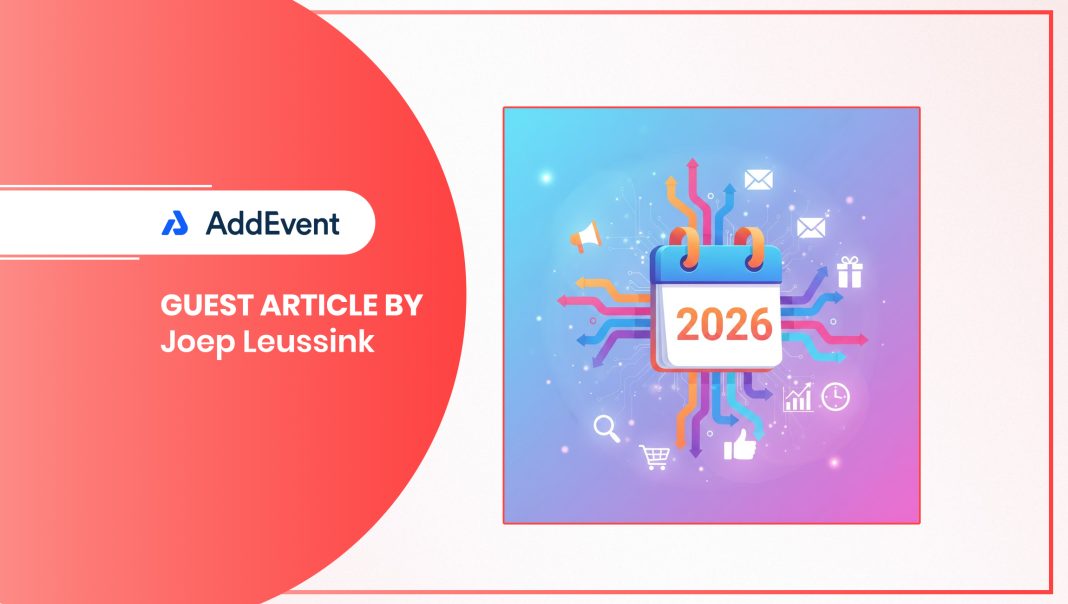
By creating a direct connection with consumers, brands don’t have to rely solely on cumbersome and expensive content campaigns to win the search engine race. Rather than taking a scattershot approach based on volume, most organizations will get better results – and more bang for their marketing buck – by appealing to their customer base and core target audience with a more straightforward, personalized approach. Specifically, there is one direct-marketing channel that should hold special appeal to every marketing professional: digital calendars
Marketing Technology News: MarTech Interview With Fredrik Skantze, CEO and Co-founder of Funnel
Digital Calendars: Always On, Never Intrusive
If you were creating a marketing channel out of thin air to maximize exposure and engagement with a target audience at a minimal expense, it would be difficult to top the digital calendar. And what makes it uniquely valuable in this moment is its utility and effectiveness outside of the search engine chase.
With the right approach, brand marketing calendars have the potential to:
- Extend campaign visibility beyond the inbox and feed
- Deliver timely nudges, updates, and upsell opportunities when attention is highest
- Reinforce brand presence without competing for clicks
- Turn one-off events into ongoing engagement
Calendars are a fully opt-in, direct channel that consumers already check each day. Positioning your brand alongside a customer’s other high-priority reminders delivers ongoing and high-value exposure without the risk of invasiveness. When customers subscribe to your calendar feed, they are not only indicating their interest in what your brand has to share but also granting permission for that brand to have a reasonable amount of their attention and personal real estate.
That permission should be respected with meticulously curated content – no filler or empty blasts. There is exceptional value in a direct, always-on, and timely marketing communication channel that solves multiple industry challenges. Calendars as a marketing channel can help brands circumvent oversaturated SMS and email channels, avoid an overreliance on winning the AEO and GEO search race, and capture the attention of their target audience at the right time.
Using Calendar Marketing to Overcome Shortening Attention Spans
That last characteristic is an important one. Research suggests that attention spans are shrinking, and the irony is that marketers are fighting a problem partially of their own making. Information overload has conditioned audiences to spend less time with any given piece of content and make snap decisions about whether to investigate further or to move on.
Calendars help overcome that growing barrier. Because calendar subscribers have opted into a brand’s content, they are intuitively deeming any content that follows from that brand as being worthy of their time. By self-selecting up front, a subscriber has infused greater value in a brand’s content from the moment it lands on their calendar.
Digital calendar marketing is an underutilized direct-to-consumer channel that marketers will come to depend on as AI-generated and automated content increasingly crowd out traditional marketing channels. Marketers should continue to use legacy channels such as email, social media, and SMS, but an evolving audience requires new tactics. Digital calendars are becoming an essential component of marketing tech stacks in helping brands achieve higher-quality, longer, and more timely audience engagement.
Marketing Technology News: The Death of Third-Party Cookies Was Just the Start. Are You Ready for Consent Orchestration?