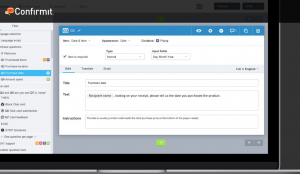
Confirmit, the leading market research and customer feedback platform, has launched a cutting-edge survey designer for online survey publishers and marketers. The new Confirmit Survey Designer tool will remove the complexity of advanced survey creation, enabling marketer researchers and surveyors to build interactive questionnaire in less than half the time. Confirmit’s survey designer will help surveys to tackle declining response rates using easy-to-use advanced design capabilities.
Voice of the Customer (VOC) is a crucial aspect of acquiring, engaging and retaining customers. Surveys help in capturing customer’s expectations, preferences and aversions. However, creating surveys for specific markets is an arduous process, taking more than just creativity and strategy. In an attempt to stick to best practices in market research force marketers to outsource their survey campaigns to third-party agencies.
Terry Lawlor, Executive VP, Product Management explains: “Organizations know that it is imperative to create surveys that are fun, engaging, and reduce respondent fatigue. However, this means that designers can spend a significant part of their working day on the authoring and programming process.
“Confirmit Survey Designer provides them with all the sophisticated functionality they need to create highly engaging questionnaires, using a class-leading user interface that outperforms anything else on the market.”
Confirmit Survey Designer has been developed to make it quicker and easier for users to create highly engaging surveys, saving designers many hours of work. The intuitive user interface makes the creation of feedback and research programs extremely easy while still allowing for the resulting surveys to offer a feature-rich, compelling and engaging experience to respondents. This provides the ability to author a questionnaire once, then deploy it across multiple channels – including web, CAPI, telephone, mobile, SMS, IVR and more – to ensure the most efficient use of design time while delivering high-quality results.
Confirmit Survey Designer
By adding Confirmit Survey Designer, the NYC-based market research platform intends to boost its existing VOC suite across online channels. The designer tool has been built in close collaboration with key stakeholders specifically to combat the struggle that organizations face with declining response rates and low respondent engagement.
Confirmit Survey Designer is an easy- to-learn solution that is simple to move to from other solutions. It allows designers to use a wide range of features that are proven to increase response rates and capture insights quickly and easily, including innovative question types, multimedia clips and a powerful array of feedback methods.
Confirmit Survey Designer is available at no cost for its existing Professional Authoring customers and complements that environment so designers can use either one or toggle between the two when designing a single survey.
Established in 1996, Confirmit provides SaaS solutions for feedback and research. It acquired social media analytics and tools platform Integrasco in January 2014, taking extending its vision to ensure highest data integrity and survey accuracy in its market research operations.
The Economist Intelligence Unit (EIU) has released a ground-breaking report on how CMOs are change drivers in martech and which technologies will impact their businesses in next five years. Following the trend on how marketers envision customer experience (CX) in their martech adoption, the report titled, “The path to 2020: Marketers seize the customer experience”explores how CMOs are aligning their direct action to magnify brand equity through personalized CX. One of the most startling outcomes of the report is the belligerence with which tech innovations are pushing the boundaries of CX, aiming at the small screen and no-screen experience by 2020. The latest report by EIU on CX is sponsored by Marketo.
Marketers lead the pack of professionals when it comes to adopting latest technologies and innovations. A majority of the marketers cherry-pick technologies to automate their business processes, cutting through siloed workflow to smoothen internal collaboration. While marketing automation remains the pivot of all tech-integrations possible today, marketers are spending more time, money and effort to understand how innovations can help them understand CX and its personalization better.
499 Senior Marketing Executives Interviewed; 86% Say “We Will Own the End-to-End CX by 2020”
via Economist Intelligence Unit
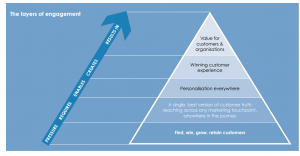
Most CMOs acknowledge that their primary task is to deeply understand customer buying behavior and intent, and the context that drives their brand engagement. While it is hard to define CX for each customer, CMOs agree that “a single, best version of customer truth” can bridge the gap in providing best personalization. Innovations in CX technology will drive this single, universal definition of customer truth based on data analytics mined from various layers of engagement – offline, online, web, social, mobile and in-store apps.
Marketers interviewed during the survey agree that the level of personalization in CX at multiple touch points along the customer journey is an essential factor in future marketing strategies.
Future Innovations Focusing on Personalization for Mobile and Networks; IoT, Wearable and AI also Share the Limelight
The relationship between brand and customer is evolving based on how marketers analyze data. Courtesy mobile and social media, marketers have a powerful combination of technology to figure out customer behavior in different environments.
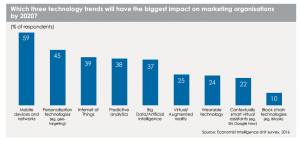
According to the report, 59% respondents believe mobile and networks will have the biggest influence on their department, while 39% see IoT as the leading technology for CX.
“Although it helps, it’s not just experiencing with particular platforms that count most. It’s almost like you need a different kind of thinker because the skills are changing,” says Kristin Lemkau, CMO of JPMorgan Chase.
Analytics and Creativity: The Two Key Forces Every CMO Needs to Juice
Personalization helps marketers acquire, engage, retain and leverage customers with higher proficiency. Technology excellence allows marketers to segment their audiences according to their LTV, enabling the brand to grow, win and sustain in the long run.
“If I can’t combine analytical and creative smarts, it’s virtually impossible to be an effective CMO,” says Jonathan Martin, Pure Storage.
Focus Areas in CX: Need for Speed, Intimacy, Relevancy and Consistency
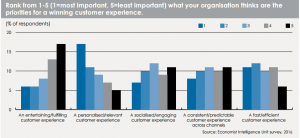
CMOs are increasingly leveraging technology to provide a fulfilling CX across mobile, social and app ecosystems. The cumulative effect of content, analytics, and advertising helps sustain the CX in most cases. However, marketers are yet to “hit” the golden ratio in CX that delivers entertainment, social relevancy, personalization, and speed. Use of machine learning, AI and geo-targeting are likely contenders in driving enriching CX in coming months. Predictive analytics in social branding can be used to create moment-by-moment CX in any campaign.
Fragmented Audiences, Unlimited Data Shelves: CMO Must Embrace Account-Based Marketing to Reach Pinnacle of CX
Irony exists in technology too! While it is possible that customers are accessing the same content and brand messages that marketers want them to, it is quite a complex process to mash up technical and social aspects into one CX frame. Account-based marketing (ABM) for unique CX environment will play a very important role in simplifying the process. A unified CX platform for marketing, advertising, and sales based on ABM integrated to marketing automation and CRM is what CMOs need to set their eyes on.
How does Hootsuite intend to tackle the growing ambiguity in social content?
By offering social marketers a “shot of caffeine – AdEspresso”.
The growing malice of Fake News has prompted the most widely used social media engagement platform to embrace paid content strategy with enhanced ad optimization. Hootsuite injected its ingeniously curated Enterprise-strength social advertising optimization with AdEspresso. Hootsuite Ads will now be optimized for Facebook and Instagram. Today, the Vancouver-based social media management solutions provider announced the acquisition of AdEspresso, the leading SaaS tool for Facebook and Instagram ad optimization. The acquisition will allow marketers to reignite the inventories of Hootsuite Ads, providing brands to engage customers across paid, earned and proprietary social media. The terms of the deal remain undisclosed.
Fake news is not a new phenomenon. They have been around for a variety of reasons – for gaining political mileage, for entertainment, to keep the gossip mills running, or for pure malice. By bringing AdEspresso into its stable, Hootsuite intends to grow its paid content inventory organically with a badge of authenticity. Add to it the fact that AdEspresso, a top Facebook global ad partner, offers innovative advertising technology solutions to help organizations reach an audience of over a billion people on Facebook and Instagram. The acquisition will allow Hootsuite to build best-in-class social marketing solution platform, enabling brand marketers to increase awareness, inspire brand loyalty, drive leads, and ultimately revenue – without leveraging false news and malvertising.
“Our mission has always been to deliver an easy-to-use, effective product to our customers that truly reaps results at scale,” said Massimo Chieruzzi, CEO of AdEspresso.
“We have had a fantastic partnership with Hootsuite, and are thrilled to join the Hootsuite family to provide organizations with a world-class platform to maximize their social marketing strategies,” added Armando Biondi, COO of AdEspresso.
via Hootsuite
AdEspresso, founded in 2013, has raised #3.2 million in four rounds of funding. The CA-based ad optimization platform specializes in providing user-friendly A/B testing variants to cater to creative and demographically distinct customer base. Hootsuite users can leverage AdEspresso Campaign Editor to create a galaxy of ads in minutes, testing new ideas and experiments to maximum ROI in just one click. Marketers can lead ad campaigns through CRM and email automation leveraging AdEspresso’s Data Synchronization tool linked to Facebook Ad account.
“Social advertising has become a vital aspect of marketing; companies are looking for ways to reach an active, engaged audience while getting more mileage from content and advertising spend. With AdEspresso, we’re bringing our users a simple, powerful, battle-tested solution that delivers measurable ROI.” said Ryan Holmes, CEO of Hootsuite.
With its latest acquisition, Hootsuite has ramped up its social media productivity significantly. This is the eleventh acquisition for the company, which comes nearly a year after it acquired Sales Prodigy, a social monitoring platform for sales professionals in March 2016. Brands rely on paid content to improve reputation on social media by tracking messages and mentions. However, it is often time-consuming and laborious task, delivering shortened ROI. Hootsuite+AdEspresso makes social media management smarter, data-driven and more customer-centric guarding brands against fake news promoters, malvertising syndicates and other external threats.
Sizmek, the leading Open Ad Management firm for programmatic, announced the appointment of Dr. Mark Grether as its Executive Chairman. Dr. Grether is replacing outgoing President and CEO Neil Nguyen, who will be staying through April-end to see the smooth transition of power at Sizmek. The latest transfer of power at the top management comes barely a week after Sizmek announced the launch of Data Hub, a data-centralizing ad tech ecosystem offered with its Programmatic Creative solution.
Dr. Mark Grether introduced himself as new Sizmek Executive Chairman via blog post, addressing the stakeholders and media partners about future growth plans.
Dr. Mark Grether wrote:
Dr. Mark Grether, Executive Chairman at Sizmek
“As Sizmek’s new Executive Chairman, I’ll be spearheading the execution of our strategy and growth as the premier independent ad management company in the ad tech space. I am writing to introduce myself, and share some thoughts on why I’m excited to be leading the charge at Sizmek.”
Grether, a renowned and industrious ad tech veteran and investor, has led advisory boards at mobile ad tech company AppLift, video advertising platform ShowHeroes, data management platform zeotap and ad tech consulting and growth acceleration firm Connect Digital Partners.He was the co-founder and global COO at WPP’s Xaxis programmatic media department.
Dr. Grether also thanked his incumbent predecessor Nguyen by adding, “I’d also like to thank Neil Nguyen. Through his leadership over the past 13 years, Sizmek has become the market’s largest open ad platform and the second largest server of digital ads.”
Nguyen, at Sizmek, led the ad tech innovation team to build this company from $40 million in annual revenue and 200 employees to hitting a peak of $420 million and over 2,000 employees. The highlight of his career is the formation of DG Mediamind.
Sizmek is already on the martech radar by virtue of its powerful programmatic platform, enabling top brands to activate and manage campaigns across any channel, anywhere in the world. Currently, Sizmek’s product suite for ad tech consists of Programmatic Creative, Dynamic Creative, Rich Media, Strike Ad, Data, Peer39, Ad serving and MDX-NXT. A comprehensive ad differentiation platform that engages customers and drives performances, Sizmek led by Dr. Grether is expected to introduce many cutting-edge advertising intelligence and performance drivers in 2017.
MSN and VigLink, the leading platform for monetizing content-driven commerce, today announced an exclusive global partnership. VigLink will monetize all content across MSN and related properties including international markets, verticals, and select homepage elements.
Looking to innovate and find new revenue opportunities, MSN chose to partner with VigLink in order to tap into the commercial intent within its content. VigLink’s unique technology and broad network of more than 65,000 merchants allow MSN to capitalize on the best custom deals for its global audience.
Additionally, VigLink’s technology blends seamlessly without altering user experience. On MSN.com, VigLink automatically turns existing commercial links into revenue-generating affiliate links. Further increasing MSN’s yield, VigLink’s Custom Insert adds new affiliate links on contextual keywords within article content. Through these links and other interactive elements, VigLink allows MSN to instantly capitalize on previously untapped revenue.
“MSN’s partnership with VigLink speaks to the growing trend among savvy publishers who are looking to diversify from display and focus on commerce revenue” said Oliver Roup, CEO of VigLink. “We are proud to provide tools that help commerce editors unlock the purchase intent embedded in their content.”
“We prioritize innovation at MSN and look for ways to use it to enhance our users’ experiences,” said a spokesperson from Microsoft. “Our goal is to be an industry leader in digital advancements. We are thrilled to partner with VigLink to provide our users with a highly targeted, relevant experience while simultaneously providing our content partners with a new and significant source of monetization.”
Spotad, the leading mobile advertising technology provider, announced its recent acquisition of $3.5 million in Series A funding from Hong Kong-based VLTCM. The latest funding will allow the mobile ad tech firm to scale its self-learning AI technology using real-time Big Data into Chinese ad exchanges. In addition to expanding into China, the funding will be used to accelerate development in Japan, South Korea, and India, as well as to hire new developers and data scientists.
Spotad, founded in 2014, combines advertisers’ own marketing data and programmatic ad buying inventories with its proprietary machine learning systems to create DSP for buying any mobile ad space in real time. Combining Big Data, marketing data and machine learning capabilities into Spotad’s AI driven mobile ad tech platform allows advertisers and publishers to target a wide range of audiences. The AI-powered platform serves ads to users that offer a strong possibility of strengthening the bottom line, boosting your return-on-ad-spend (ROAS).
How Spotad’s AI for mobile advertising works?
Spotad is a mobile-centric advertising technology, running on a machine learning algorithm that automatically purchases programmatic ad media across different ad exchanges and platforms, including Baidu, Alibaba, Sina, and Weibo. The AI-driven algorithm places RTBs for ads that have the highest viewability chances, promising to deliver higher click-through and conversion rates compared to current industry benchmarks.
Spotad COO Yoav Oz identified Chinese market to test their AI technology owing to the linguistic and geographical challenges that the country offers. One of the biggest challenges, however, was in engineering the solution.
“Because we are one of the first Western DSPs to enter China, it is hard to translate the Chinese APIs into English,” Oz said. “It was also difficult to communicate with the Chinese developers, so we eventually found a Chinese technical translator for the API’s to overcome this issue. We then started to run campaigns with Western brands, and when everything worked perfectly, we started hiring local Chinese staff and engaged local advertisers. Today, we are the only Western DSP that connects to all the big exchanges in China with a local office there, where all the employees, besides the General Manager, are Chinese.”
Spotad is focusing its technology solution on improving ad quality on mobile devices, considering it is the most personal screen device we use today. COO Oz believes that ad tech stack should balance consumer needs in a programmatic buying environment, where automation sometimes de-emphasizes creativity.
COO Oz further adds, “In the programmatic world, using internal data sources and unique technologies developed by Spotad enables us to automate the media-buying process (we don’t have any media buyers on staff) and put an emphasis on using data in order to build high-quality models and buying strategies relevant to each brand. When the buying process is completely automated, it actually enables many new creative data options.”
Why is Chinese market favorite among AI technology startups?
According to a report by IDC in February 2016, 117.3 million smartphones landed in China in the Q4 2015, an increase of 8% from the previous year. Mobile marketing in China is expanding faster than anywhere else in the world. Compared to developed nations, China offers readily available testing ground for marketers and advertisers to verify the efficacy of new technologies, especially AI and machine learning marketing tools.
While Chinese e-commerce and B2B landscape may still be a complex challenge to tackle, Spotad’s latest acquisition will allow the firm to sneak valuable insight from China’s booming digital market.
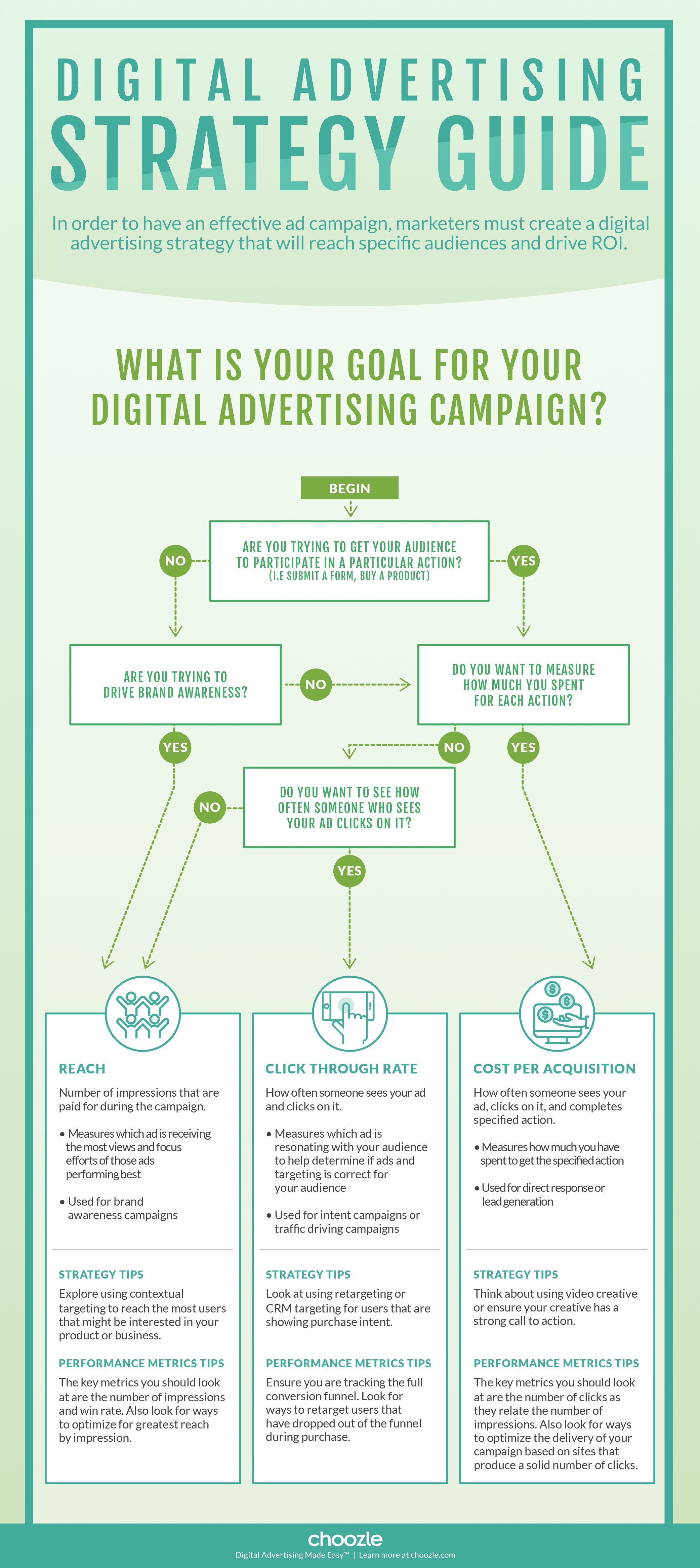
Choozle recently put together an infographic that is simple and easy to follow so that anyone looking to create a digital campaign can follow a few steps and determine what their best course of action should be.
The graphic starts with defining a goal and takes you through a roadmap of steps to determine if the campaign should measure reach, click-through rate, or cost per acquisition- in order to prove ROI.
From there it defines what each of those campaigns means, gives a strategy tip and performance metric trip for each.
CallidusCloud®, best known for its cloud-based sales effectiveness and sales performance management software solutions, announced its decision to extend its partnership agreement with Salesforce. The new deal with leading marketing automation company will allow CallidusCloud to enhance its position in martech industry as a leading cloud-based customer experience solutions firm. The latest Salesforce Platinum ISV Partner will collaborate on new martech investments, joint sales activities and technical alignment, in addition to driving innovation for global customers.
“Every customer and everything is becoming smarter and more connected, which is why it’s more critical than ever to provide solutions that complete the customer journey from lead to close,” said Tyler Prince, executive vice president, worldwide alliances, and go-to-market innovation at Salesforce.
“Customers will benefit from our extended partnership, combining Salesforce’s #1 CRM with CallidusCloud’s leading Sales Performance Management capabilities.”
CallidusCloud customers can now gain accelerated insights on time-to-revenue numbers and their impact on ROI by adding Salesforces’ CRM.
“We are excited to announce our new partnership with Salesforce,” said Leslie Stretch, President and CEO at CallidusCloud. “As the leader in SaaS Sales Performance Management, this agreement is an opportunity to deliver solutions to a large, educated and cloud-savvy marketplace, complementing Salesforce’s CRM, industry, and Quote-to-Cash initiatives.”
Leading enterprises are growing their stacks for marketing and sales to drive maximum ROI from their investments. However, marketers and sales professionals have limited options to align every sales and marketing efforts through a single, centralized automation platform.
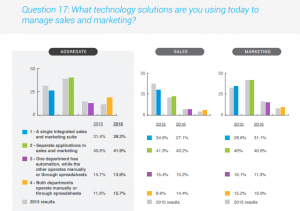
In its report titled “2016 Sales and Marketing Sentiment Study”, CallidusCloud revealed that only 30% of the sales and marketing pros said their companies shared data fully between sales and marketing. Only about 28% of them said they were using a unified sales and marketing solution; about the same percentage had one or both departments still depending on manual processes or spreadsheets.
via CallidusCloudvia CallidusCloud
Salesforce’s CRM and CallidusCloud’s Sales Performance Management and Sales Enablement Solutions will enable marketing and sales teams to close the blind spots seen in the journey of a lead from generation to fulfillment (or drop-off). These blind spots have always been a bone of contention for enterprises, fueling antagonism between the two revenue-churning departments. Martech solutions from Salesforce and CallidusCloud will help customers converge their resources through a single automation platform to boost ROI at an unprecedented pace.
CallidusCloud, founded in 1996, is among the leading martech solution firms that have run successfully as an IPO. It has so far made ten acquisitions in the technology sector, mostly focusing on building next-gen sales success platforms. By partnering CallidusCloud, Salesforce may fasten its efforts to acquire more companies in the near future, pushing its inventiveness to raise an IPO by 2017-end.
According to a market research report, natural language processing market size is estimated to grow from $7.63 billion in 2016 to $16.07 billion by 2021, at a Compound Annual Growth Rate (CAGR) of 16.1%. Social media monitoring segment is expected to be among the top investors in natural processing market. NetBase, by introducing natural language processing for social monitoring, reveals how this cognitive technology adds power and balance to existing martech stacks.
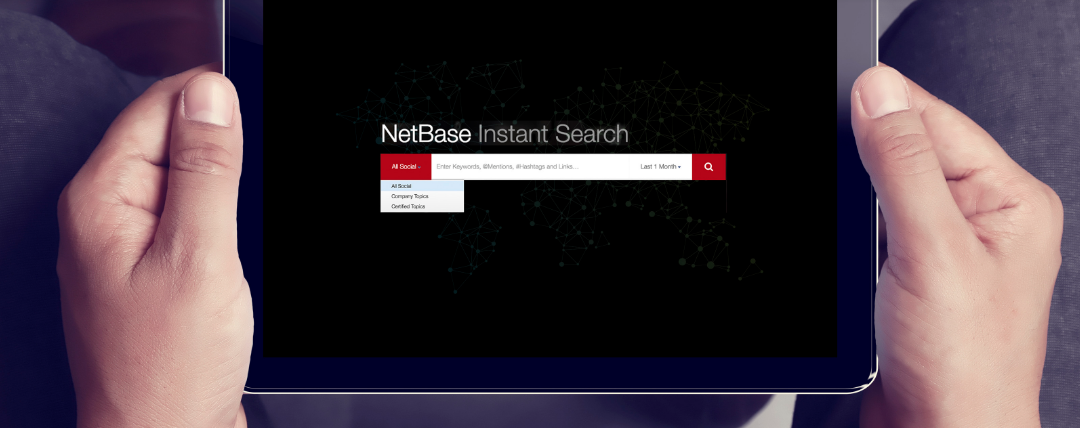
NetBase, the leading provider of social media intelligence and enterprise customer analytics solutions, unveiled the ingeniously built on-demand search bar – NetBase Instant Search. The latest addition to social analytics suite from NetBase will enable users to view, analyze and derive insights from billions of social posts via the on-demand search bar. NetBase Instant Search will be available as a standalone or complimentary capability social analytics engine with natural language processing capabilities.
“By quickly identifying trends, post volume, impressions and changing net sentiment, NetBase Instant Search answers the questions marketers want to know now—who is talking, what are people talking about and where are these influential conversations taking place?” said Paige Leidig, CMO at Netbase. “This immediate insight delivers the background executives, brand marketers and analysts need to build and strengthen strategic marketing initiatives.”
NetBase is ranked as Top Rated Social Media Management Tool by TrustRadius 2015. Currently, NetBase offers unique social media intelligence suite that includes applications – Social Media Monitoring, Audience Insights, Voice of the Customer, and Natural Language Processing. Its best-in-class social media intelligence tools add value to any campaign brainstorming.
Benefits of Deploying Instant Search
Self-service analytics to empower social media campaigns
Real-time content discovery with up-to-second snapshot on social trends and influencers’ behavior
Instant identification of audience based on age, gender, geo-location, and device used
Hover-over analysis for enhanced social listening
Quick idea creation and brainstorming
Improved analytics on content performance
Zero interruptions in report generation and analytics, removing the need to depend on ad-hoc teams
Advanced filters to focus on enriching brand conversations based on source, domain, country, and languages
Real-time insights and analytics exported and shared across enterprise in PDF format
NetBase Instant Search pushes prompt and meaningful insights with a single click, eliminating the operational demand for ad-hoc report generation and analysis. Users can simply feed relevant keywords, mentions, and hashtags into Instant Search to derive a comprehensive list of data.
Every minute, social media users (individuals, groups, and communities) discuss various aspects of brands billions of times across social media sites. Marketers want to mine that data and determine what their audiences discuss. Natural language processing scoops significant part of the pie that users share on social platforms using text analytics, data mining and computational linguistics. Top brands are adopting social media intelligence tools to engage consumers across different channels. Adopting a search bar powered by natural language processing for social monitoring will allow marketers to equate brand’s social media engagement with powerful performance-based intelligence tools.
Last time MarTech Series covered a news release about Maropost, I saw a lot of potential in this ingeniously built email automation platform. Living up to its promising spree of innovations, the company released a new user-friendly addition to its digital messaging and email solutions platform. The latest drag-and-drop intuitive email editor in Maropost Marketing Cloud offers seamless integration with existing email suites, allowing marketers to create highly interactive and intuitive campaigns using powerful functionalities.
“The Maropost Marketing Cloud exists to make our clients’ lives easier and to save them time and resources,” says Ross Andrew Paquette, CEO and Chairman of Maropost. “Our automation, journeys, and analytics are second-to-none. It only makes sense that we extend our expertise to the actual email creation process. Like everything we offer, the email editor has been completely designed and built in-house for maximum consistency and integration.”
Maropost Marketing Cloud offers a fully scalable enterprise email marketing platform for leading brands, online publishers, and digital marketers. The newly introduced intuitive email editor with drag-drop features is 100% compatible with the existing scripting language, offering intuitive personalization to engage audiences across regions. Users can directly access every style attribute available virtually through the interactive interface. From ideal designing to accurate placement of graphical content, the new email editor provides a fully responsive layout to create specific customizations. Using the new email editor, email marketers can automatically convert their email’s stylesheet into inline styles at any stage of designing. The level of customization allows marketers to target clients without relying on third-party CSS inline styling platforms.
“Our email editor has always been the foremost in terms of functionality,” says Paquette. “Now it’s also among the easiest and most intuitive to use. The new email editor will allow one person to accomplish in a fraction of the time what previously would have required a team of designers, coders, and email analysts and specialists.”
The Toronto-based email marketing automation provider offers diversified marketing solutions for mobile marketing, lead generation and nurturing, web tracking, landing page personalization and content optimization, app marketing, and API integrations. All its marketing solutions can be integrated with platforms offered by Netsuite, InfusionSoft, and Salesforce. For a company that believes in making in-house innovations rather than acquiring peer companies, marketers should expect more user-friendly additions to the Maropost Marketing Cloud in 2017.
In December 2016, Maropost raised an undisclosed private equity funding from Highland Capital Partners Europe and Elephant Partners. Marketing technology innovations have received a major push with this new entrant making it big in marketing and sales cloud domain with cutting-edge innovations and upgrades.
Its been a while since I was at Stanford, but it always feels great to be back on campus. We were recently invited to the Digital Cities Summit at Stanford University for a panel titled “Disruptors: Sensors, Real-time Data Analytics, Planning, and Optimization.” The panel was a great place to talk about the role of data analytics with respect to citizen participation and civic engagement.
The Digital Cities Summit at Stanford University brought together an elite group of ~200 global CEOs, SVPs, entrepreneurs, and policy makers. The goal of the conference was to illustrate how disruptive technology is changing the way citizens, government, and commercial organizations interact with each other to create new social contracts, business models, and behaviors in a digital urban environment.
Building “People Intelligence” for San Leandro
We are a young company but we are unique in that we work across both the private sector and the public sector. With this goal in mind, at LotaData we coined the term “People Intelligence” to provide analytics and insights about people to cities and local government. As an alternative data startup that provides “People Intelligence” for smart cities and local government, we combine data science, machine learning, and predictive analytics to help cities understand “why people are where they are and what is on their minds”.
As a company policy, for each new problem our company solves in the private sector, we take on a new challenge in the public sector. We strongly believe that the technology community should engage more in civic innovation. Social impact should not be an afterthought. If each company in the private sector were to set aside 5% of their time, energy, and resources for civic innovation, we could realize the vision of smarter cities much faster than by just relying on government.
We were selected from hundreds of startups to partner with the local cities: San Francisco, San Leandro, Oakland and Sacramento to evaluate their data initiatives and build analytics for their daily needs.
Our initial launch was with the city of San Leandro across the Bay. They are a relatively small city, but they organize over 5000 programs, classes, events, activities and festivals each year. 13% of the population actively participates. If you extrapolate this nationwide, we are looking at 20M programs across US cities and 50M participants with average revenue of $35 per resident, earned by cities. These are non-trivial numbers.
The problem is that cities do not have the tools to collect, analyze and visualize the data from these programs. There is an urgent need for data-driven optimization of city programs and facilities, community centers, libraries, senior centers, parks, pools, tennis courts, softball fields, soccer fields.
In the end, it is all about people, local communities, social impact, creating better living spaces. We need more analytics and insights to identify underserved neighborhoods, underserved demographics and increase engagement. We need a deeper understanding of how residents engage with cities so that we can then predict future engagement. Data analytics and machine learning is going to be pivotal for this.
The challenge then becomes about how to get private companies to participate in open data initiatives for the greater good of citizens and cities.
By definition, any data in the public domain needs to be open and accessible, as long as it does not infringe on privacy. Just last week, we were invited to present at the White House smart cities roundtable. The main focus of the event was open data standards and interoperability. The CTOs and CIOs from the top smart city programs, with the largest budgets, were in attendance.
The current administration seems to have done a decent job with opening up data. Most cities now have open data portals with APIs. But cities need more data from multiple sources to be truly agile and responsive to the needs of their citizens. This is where public-private partnerships are critical.
Ride share companies are a great example. While the relationship between cities and Uber may have been tense, services like Uber, Lyft, Didi, Ola Cabs, are an integral part of the city’s fabric. They are in effect the largest sensor network for detecting movement in cities. They gather immense amounts of data about riding habits and commute patterns.
Along the same lines, LotaData brings mobile location data from the private sector, from ad exchanges and programmatic networks, data about people density and people movement, for the benefit of cities. This data is of course anonymized.
Private companies are not required to share data with cities and local government, but in return for regulatory acceptance, private companies would be happy to open their data. Public-private partnership will only accelerate the vision for smart cities and benefit our citizens.
One of the world’s oldest retailers A.S. Watson Group will be pumping $70 million in Big Data technologies to optimize marketing campaigns and drive powerful sales promotion activities. Established in 1841, the Hong Kong-based retail group revealed its intention to expand Big Data capabilities, investing significantly in a Canadian AI venture firm. It has partnered Toronto-based retail intelligence platform – Rubikloud to achieve scalable Big Data objectives.
The A.S. Watson Group or ASW will consolidate its retail brands across geographies by leveraging customer data using Big Data technologies and AI. The new investments will be directed at developing performance-based marketing platforms and predictive analytics capabilities for independent sales teams. Partnership with Rubikloud will enable retailers at ASW to enhance customer experience and operational efficiency using data visualization and machine learning capabilities.
ASW introduced the Rubikloud app across European stores on a trial basis starting in 2015. It witnessed a significant rise in sales from personalized promotion activities, forcing ASW to partner Rubikloud for all future retail marketing integrations.
“We are investing in big data amid global economic uncertainties because we believe that technology is a critical enabler for successful retailing in today’s world,” said Malina Ngai, chief operating officer of A.S. Watson Group, in a statement. Ngai added that Rubikloud’s technology will enable the company to “focus our resources, from back-end support to the shop floor, on building a better customer experience.”
Kerry Liu, CEO at Rubikloud
According to Kerry Liu, CEO of Rubikloud, the company aims to support ASW to further enhance its capabilities in personalizing customer offers through advanced targeting, as well as optimizing promotional effectiveness.
“We are thrilled to partner with a global retail leader like A.S. Watson Group. At Rubikloud we focus on applying machine learning and flexible big data architectures in practical applications, which means driving tangible business impact.”
Deploying marketing intelligence tools in retail is a growing trend. Rubikloud offers a robust retail intelligence platform, enabling the intersection of an enterprise SaaS for retail marketing, embedded machine learning, and elastic cloud compliant architectures to drive automation. According to CEO Kerry Liu, Rubikloud has a “head start” in the race to lead retail cloud computing innovations.
The rise of tech-savvy CMOs is an ominous sign of how quickly marketing teams are adopting new technologies to fine-tune business decisions. Technology in marketing campaigns drives brand awareness and keeps CMOs accountable, enabling them to focus on strategic business goals rather than spending (unprofitable) attention over silos. While digital marketing in 2005-2015 was largely confined to B2C and e-commerce, the latest statistics on marketing automation reveal how quickly B2B marketing professionals are inflating their budgets to automate omnichannel platforms.
An indispensable trend seen in digital marketing is the increase in its budgets. Gartner’s CMO Spend Survey 2015-16 reports the swelling of digital marketing budgets by 33% in 2017, whereas overall marketing budgets will increase by a mere 12% during the same period. The move from conventional advertising to digital could reach its tipping point in 2017 as marketing budgets of most firms would see an escalation in their spending on marketing technology, especially as more non-tech companies adopt mobile-first marketing as their priority.
This article is a quick read covering five marketing technologies that CMOs prefer to invest in –
Marketing Automation
Omnichannel Marketing
Analytics and Tracking
Optimization and Conversion
Programmatic
Marketing Automation
via Marketo
Marketing technologies delivered from the cloud is replacing software at a breakneck pace. The success of any digital marketing campaign is judged from the extent of its automation capabilities. Marketing automation used in B2B and B2C enterprises prove vital in enterprise content and digital assets management.
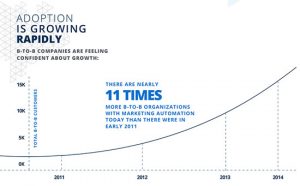
Providers like Hubspot, Salesforce, and Marketo help marketers reorganize their lead-gen, customer segmentation, prospect nurturing and lead scoring, customer LTV, cross-channel marketing and brand engagement strategies to extract maximum ROI. Most B2B companies are currently using marketing automation with an objective to manage their entire digital presence across channels.
via Email Monday
The trend of increasing spending on digital marketing automation allows marketers to explore other options that offer scalable marketing automation for SMBs and start-ups. Like Lego blocks, marketing automation can be assembled and scaled at will, allowing marketers to assiduously manage and optimize data, information, and knowledge over a centralized platform.
Omnichannel Marketing
“You’ve got to start with the customer experience and work back toward the technology, not the other way around.” – Steve Jobs
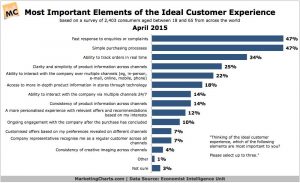
Customer experience or CX is the most powerful revenue-churner, and therefore the most sought-after objective of every CMO. According to a Walker study, CX will overtake price and product as the key brand differentiator by 2020. According to the survey, 86% customers are ready to pay more for CX than other product features!
via DataMentors
CMOs refer to omnichannel as the holy grail of every marketing campaign, leading to seamless CX, regardless of the number and type of devices they use. The ability to leverage omnichannel technology ensures that the brand’s message is seamlessly delivered on desktop laptop tablet or smartphone or through a catalog or in a brick and mortar store. Location based services also tie in with this as smartphones would enable users to tag their whereabouts and brands could use this to send customized offers and services to such consumers.
Analytics and Tracking
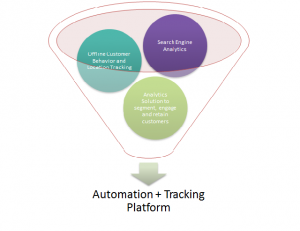
Not everything that can be counted counts and not everything that counts can be counted. The essence of adopting analytics and tracking technology in marketing lies in its freedom of application. As the most populated technology of digital marketing, analytics allow marketers turn insights from scrambled data into ROI-driven actionable results. Online and offline tracking of customer behavior analytics extracts the most out of your market research based on geo-location tracking, user-list targeting, and top-search inventories.
The most challenging part of deploying tracking and analytics technology is its ambiguity in delivering ROI. Though marketing attribution modeling attempts to solve this gap, lack of integration between channels like social media and community building with CRM makes it hard to identify the first-touch platform.
Marketers are expected to spend over 11% of their budgets on digital marketing but only 22% of marketers said that they had data-driven (analytics) marketing initiatives that were showing significant results. Some marketers have also said that they were unable to clearly calculate a return on investment for their digital marketing programs. Integration with legacy systems and the ability to produce customer centric date would drive this market. The wide variety of analytics data options in the market means that CMOs would have to be discerning in their choice and fully test a solution before deploying it.
Optimization and Conversion
via Marketo
Digital optimization and conversion are the techniques to convert online visitors into loyal customers. The theories of digital optimization have been revised over the years and with the rise of online marketplaces, many firms have rolled out software that deals with this. Most firms are looking at conversion rates as online advertising is still in PPC or CPC. Firms are looking to leverage their online marketing spends by seeking solutions and combining their marketing approaches for an integrated campaign that ensures that highest visibility and conversion rates.
Firms are looking to leverage their online marketing spends by seeking solutions and combining their marketing approaches for an integrated campaign that ensures that highest visibility and conversion rates.
Programmatic
Programmatic real-time bidding (RTB), done for display advertising exclusively, is the future of all advertising. Simply put – programmatic marketing empower marketers and advertisers to pay only for highly effective ads, delivering the right message to the right set of customers at the right time. Marketers are adopting programmatic to target segmented audiences with specific advertisements, limiting the ad spend to drive maximum ROI. Programmatic platforms running on adaptive algorithms help analyze data and in real-time, canvassing fully-personalized ad experience across multiple screens. Sales partners can also leverage digital inventory advocating B2B programmatic commerce. Programmatic-as-a-platform and programmatic-as-a-solution allow marketers and advertisers to bridge gaps in “brand awareness”, targeting audience at scale at much lower ad spend using classical audience extension as well as account-based data.
Sales partners can also leverage digital inventory advocating B2B programmatic commerce. Programmatic-as-a-platform and programmatic-as-a-solution will allow marketers and advertisers to bridge gaps in “brand awareness”, targeting audience at scale at much lower ad spend using classical audience extension as well as account-based data.
Supporting technologies
Marketers can grow their marketing technologies’ stack by adding technologies for remarketing, retargeting, content and social listening technologies. Artificial intelligence and Account-based marketing (ABM) are slowly galvanizing marketing automation platforms, providing CMOs a vantage point to engage thought leaders and vendors who are making the most noise. From making an effective market research to driving advocacy campaigns, ABM outperforms other marketing investments in terms of customer retention and market expansion. B2B enterprises achieve 24% faster growth in annual revenues when ABM is aligned to sales and marketing operations. Top CMOs advocate the idea of spending more on ABM in 2017, promoting it as the most vital cog in the entire marketing technologies’ stack.
Then, there is remarketing technology. Contextual remarketing, which is used to turn one-time visitors into repeat customers, ensures that there is an increased possibility of them buying your product. Social listening is a niche field which is growing rapidly. Online reputation management based on social listening and monitoring capabilities help brands know what people think and feel about them. AI technologies with cognitive learning capabilities help manage and derive insights from the huge data pool that all the digital marketing tools generate. AI capabilities in marketing technology stack can calibrate and calculate the efficacy of such campaigns, engaging more audience over most “ideal” platforms across web, mobile and social.
Marketing Technologies removes the Guess Move in entirety
CMOs are not afraid to explore creativity in data collection and implementing ideas. Split testing and customer experience modeling ensure that digital marketing is not a standalone part of the overall marketing plan. The development, integration, and application of intelligent marketing technologies will continue to inflate in 2017. Mobile and social intelligence capabilities tagged alongside performance-based marketing would increasingly gain more attention from CMOs this year.
WhiteSmoke, the leading all-in-one English content writing tool, announced the acquisition of Tel Aviv-based ad monetization platform – Wise Data Media. The buyout will help the digital marketing services provider to expand its business from web and mobile to video and programmatic in the coming months. The terms of the deal remained undisclosed at the time of reporting.
WhiteSmoke, founded in 2002, provides linguistic services that assist users to generate grammatically accurate and well-organized English content. The latest acquisition of Wise Data Media for approximately $5.3 million will boost WhiteSmoke’s growth strategy, deepening its operations in web and mobile ad services and expand operations in video ads
Itay Meroz, CEO at WhiteSmoke & Omnivid
Itay Meroz, CEO at WhiteSmoke said, “The acquisition of Wise Data Media’s operations is the realization of our business strategy of rapid growth in income, improved profitability and WhiteSmoke’s augmentation of income sources. The acquired operations, which significantly improve our competitive positioning, has outstanding technological features such as the ability to carry out programmatic media buying which is expected to improve the profitability of our video field alongside a strong ability to quickly reach large volumes of activity.”
“Wise Data Media’s operations join the acquisition of GMS Digital’s operations which led us to show record income in the recent years with the strong growth of the video advertising field in the third quarter of 2016. We estimate that there will be a synergy between the two operations so that we can grow rapidly in order to generate a high value to the Company’s shareholders.”
via WISE Media
Wise Data Media Corporation, founded in 2012 by CEO Tomer Sade, offers a wide-range of ad media solutions through WISE for mobile, video, content and analytics. WISE Platform provides real-time, relevant and customized ad monetization suite using data to understand, engage and retain customers through integrated marketing strategies across web. CEO Sade has previously donned the role of CEO of Israeli digital advertising agency Publicis e-dologic and Saatchi and Saatchi Interactive Israel.
The latest acquisition highlights the growing number of martech-related start-ups being scooped up by Unicorns. The Acquisition Timeline maintained by MarTech Series expects at least 250+ acquisitions in marketing technology industry in 2017.
inMarket, the leading beacon proximity platform based, has its first CMO to lead global integrated mobile marketing strategies in 2017. The mobile-at-retail marketing platform acquired award-winning mobile and creative digital marketing veteran Cameron V. Peebles. inMarket’s first CMO will lead a team in integrated marketing, strategy, pipeline optimization, creative design, public relations and strategic positioning.
Cameron V. Peebles via LinkedIn
“The strategies and technologies that brands use to engage with consumers in mobile have been consistently improving since the introduction of smartphones nearly a decade ago,” said Cameron in a release issued by inMarket.
“inMarket’s industry leading technology, impressive track record of driving ROI and history of consistent growth is second to none. I’m very proud to be leading the company’s marketing initiatives as we expand even faster and reach many more exciting milestones.”
inMarket, founded in April 2010, identified the necessity to hire a CMO to expand its business operations globally, innovating cutting-edge mobile-first solutions for apps, brands, and retailers. Bringing Peebles to inMarket will help integrate its marketing initiatives with disruptive technologies.
Cameron has previously served as CMO of Airpush, Inc., taking the company to World Number 2 position in the 2014 Forbes list of “Most Promising Companies”. He was Director-Head of Marketing at mobileStorm, a renowned SaaS-based marketing communication platform. His experience in the mobile app industry will enable inMarket to tap into the emerging technology domains and grow strong mobile ad tech platform.
“Since 2010, inMarket has set the standard for real-time engagement at the moment of truth and helped brands gain unprecedented advantage through beacon technology at scale. Now, as our space matures and we enter a seventh consecutive year of growth, we know that sharing our vision with the community will be an integral part of our next chapter,” said Todd Dipaola, CEO and co-founder of inMarket. “Cameron has the perfect blend of marketing experience, savvy and the entrepreneurial spirit to lead our marketing team to continued success in the future.”
Cameron Peebles will make his first official presentation as CMO inMarket in an hour-long webinar titled “Mobile Location & The Tale of Retail ROI” on February 22. He will be presenting his insights on the best practices of location-based marketing, beacon technology and quality case studies from top retail-centric advertisers.
IPG Mediabrands, the leading digital media, and automated buying platform unveiled a global social media and digital content agency called Mediabrands Society. The announcement comes following the media firms latest hiring of Rob Bernstein as EVP, managing director at IPG. Bernstein will report to COO Chris Loll, IPG Mediabrands. The global leadership program at Mediabrands Society is yet to be announced.
IPG Mediabrands will offer a comprehensive suite of social media tools and on-demand media agency operation designed to curate and serve relevant social messages in real time. The new entity will also offer automated influencer marketing and advisory services to serve global publishers and brand marketers.
“Our promise to our clients has always been to assist them in unlocking the power of dynamic marketing,” stated Henry Tajer, global CEO, IPG Mediabrands. “Part of that promise requires IPG Mediabrands to always be at the forefront of the media landscape, and the evolution of Mediabrands Society into a global full-service social agency embodies this.”
Mediabrands Society’s proprietary system called “HEART” will enable marketers to identify emotional resonance in social conversations. Built on the concepts of Natural Language Processing, Machine Learning, and AI, HEART will help marketers analyze unique and news, blogs, social media, and TV to spot content resonating with relevant audiences to drive maximum ROI. The series of offerings will be delivered through Mediabrands Publishing, launched in 2013, helping clients produce content and other publishing-type services.
Mediabrands Society will open offices in the US, Canada, England, Australia, UK, Philippines, Malaysia, and Mexico, growing into new emerging markets throughout 2017. Bernstein as EVP has been brought onto the management to develop cross-platform social media channels. Previously, Bernstein served as SVP, digital content WWE Network (OTT) and WWE App.
Mediabrands Society will also acquire the services of Nick Childs as Chief Creative Officer. He joins the new operation from sibling media agency Initiative, where he served as Global Creative Officer. Also joining the Society is Havas veteran Josh Greenspan, as Executive Creative Director.
Linkfluence, the leading social media monitoring platform, has announced a key partnership deal with social marketing platform Spredfast. The international agreement between the two social data intelligence firms will enable marketers to capture and analyze real-time consumer data to enhance brand engagement across channels.
“Linkfluence and Spredfast share strong technological standards and performance, a deep sense of customer service and a DNA where innovation is omnipresent. We are proud to be able to offer our customers access to our technology and innovations within one of the market’s best engagement platforms,” commented Herve Simonin, CEO of Linkfluence.
The new deal allows Spredfast clients to directly activate Radarly from their existing account. Spredfast users can leverage Linkfluence’s Radarly for social media listening, performance management, community engagement and real-time conversation management to boost consumer experience.
Linkfluence has made a significant number of innovations in social media intelligence solutions, providing breakthrough performance analytics and interactive dashboards for comprehensive profiling of influencers. The click-only Social CRM by Linkfluence is a unique service for users that will enable Social Media Managers to gain in productivity and performance within a single platform.
Rod Favaron, CEO of Spredfast
“Our commitment to building an ecosystem of strong, global partners has never been stronger. We’re dedicated to bringing together technologies that help our customer solve their own unique challenges. This latest partnership furthers our ability to connect our customer with the people they care about the most,” said Rod Favaron, CEO of Spredfast.
Linkfluence, founded in 2006, recently raised $12 million in Series C funding. The Paris-based social media intelligence firm has so far acquired $24 million in five rounds of funding. On the other hand, Texas-based Spredfast has managed to raise $138 million in six funding rounds since its inception in 2008.
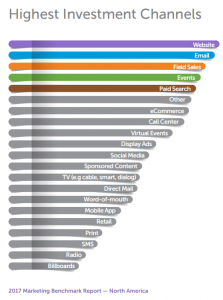
Leading marketing automation software firm Marketo released its first marketing survey on the maturity of contemporary marketers. The report titled, “2017 Marketing Benchmark Report: North America” carries survey results seeking insights from 1300+ Marketo customers on adoption of marketing technologies and integration.
Marketing Benchmark Report: North America measures the maturity of marketers based on their marketing strategies and how they execute campaigns using technologies. According to the report, 60% modern marketers deploy six or more MarTech stacks in their campaigns. However, the underlining fact is that there is a huge scope for growth in the industry.
Top insights from 2017 Marketing Benchmark Report: North America
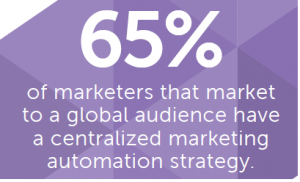
65% marketers running global campaigns use a centralized marketing automation strategy. Centralized strategy, compared to regional stacks, enable marketers to scale marketing activities into newer regions more effectively.
Content, centralized alignment with the parent base and skill mapping of people using marketing technologies remain the top challenges in deploying marketing automation strategy. Other challenges are budget allocation and autonomy.
Only 3% companies use 20 or more marketing technologies to run their businesses. 40% respondents consider 6-10 MarTech solutions enough to suffice their requirements.
68% respondents have a full-fledged long-term plan to build their MarTech stack. While 37% marketers have a mix-and-match strategy of short and long-term plan with MarTech in contrast to 32% respondents who have no plans.
A whopping 96% of the respondents agree that siloed data and MarTech solutions can derail the purpose of bringing technology on board. Marketers want a single MarTech vendor to offer solutions that allow them to seamlessly integrate all existing technologies at an enterprise level.
34% marketers are practicing ABM to target and engage high-value accounts at scale. Most marketers, as many as 22%, consider content development as a major challenge in ABM adoption. Other challenges involve understanding the ABM basics and navigating through the ABM landscape using reporting and analytics.
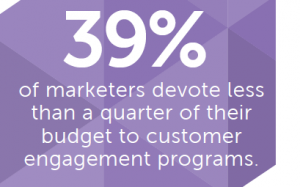
39% of marketers devote less than a quarter of their budget to customer engagement programs, and more than two-thirds of marketers do not have customer referral programs. While the emphasis is on customer acquisition, marketers are beginning to understand the significance of engagement marketing and how this approach will become critical to all marketing strategies.
Marketers must embrace a multi-channel approach towards engaging with today’s empowered buyers and ultimately drive revenue for their organizations. Only 42% have a mobile-optimized website, and 26% are incorporating mobile advertising into their mobile marketing strategy, even though many marketers do not identify as mobile marketers.
Based on these findings, Marketo has identified the challenges and opportunities addressing marketers based on their technology adoption and maturity. Marketo insists on creating Centers of Excellence (CoEs) to enable marketers in shifting away from siloed inefficiencies.
via Marketo
Overall, bringing MarTech on board helps drive higher ROI from marketing campaigns by fostering enterprise collaboration, improving brand identity and improving customer experience across channels and mediums. 2017 is projected as the year when mobile and social advertising becomes more advanced, forcing marketers to allocate budget allocations towards omnichannel digital platforms. Providing best customer experience and gaining highest audience engagement remain the top priorities for marketers, achievable through a scalable centralized marketing automation platform.
Button, a mobile app monetization platform, scooped $20 million in Series B funding from Norwest Partners and its existing investors Redpoint, DCM, and Greycroft. The NYC-based mobile app marketing firm uses deep-thinking algorithm to integrate multiple apps, delivering improved user experience and switching.
The latest Series B funding will allow Button to focus on developing products that help solve ambiguity in the mobile app industry. Button enables marketers to make meaningful revenue by connecting people to actions across multiple apps and websites. By giving users access to multiple apps within the same app, Button enhances engagement significantly. It also offers a cutting-edge avenue for app discovery in overcrowded app stores, placing them within sight of already engaged users.
“We unlock the intent that’s distributed across the entire mobile landscape. We provide an efficient channel for app acquisition for our merchants that taps into the distributed intent across a range of publisher partners,” said Mike Jaconi, CEO and Founder, Button.
Negotiating past the overcrowded app market is a vicious challenge that every app developer has to deal with to build a viable user base. More than 3 million apps fight for customer attention across app stores. Button plays a crucial role in delivering the right app experience to the right audience across prolific app stores.
Button dashboard
Button was founded in May 2014 with a seed funding of $2.5 million from 16 investors. The NYC-based tech mobile app monetizing firm has so far raised $34 million in four rounds of funding from investors that include Accomplice, DCM Ventures, Atlas Venture, Basset Investment Group and Mesa Ventures.
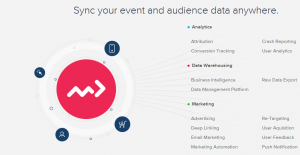
mParticle, the leading multi-screen API provider, has been selected as Snapchat Partner to enable easy onboarding for brands. The NYC-based mobile marketing accelerator platform will feature as an Audience Match API partner, providing Snapchat clients to seamless connect to first-party customer data. Marketers can toggle Snapchat’s ad API to create 1:1 customizable cross-device ad experiences using mParticle’s customer data platform.
The latest integration with Snapchat’s Ad API will allow marketers to build mobile-first and multi-screen ad campaigns more effectively, delivering immaculate customer experience with unprecedented results. mParticle’s API platform will integrate with Snapchat real-time, enabling marketers to create and synchronize audience engagements across all channels and partners. Syncing data directly from mParticle also enables marketers to coordinate Snap Ads with all other marketing efforts, across both paid advertising and CRM channels.
“Our Snapchat partnership is one more high-value destination where brands can easily connect their customer data through mParticle,” said CEO and co-founder Michael Katz. “Coordinated, cross-channel marketing is critical to marketing success today, and enabling Snapchat as an end point was essential to keeping pace with our client’s customers. We couldn’t be more excited to partner with them to create a ton of value for mutual clients.”
via mParticle
Last week, mParticle partnered comScore to ease the pain publishers take to measure campaign performance. The seamlessly deployable audience and advertising measurement solutions offered by comScore over mParticle platform will also be available to Snapchat clients. The comScore-mParticle partnership is a significant step towards refining mobile marketing and advertising strategies. It paves the path for customers to implement comScore SDK with minimal add-on resources.
“The most important initiative on nearly every media company’s agenda in 2017 is to synthesize data and measurement across mobile and connected devices,” explained Adam Biehler, the Head of Partnerships at mParticle. “We are thrilled to work with comScore to make it easier for leading publishers to improve third-party measurement without the complexity of deploying and maintaining multiple SDKs.”
Mobile users spend 60% time searching relevant app. However, customer experience remains the biggest challenge in app monetization efforts. mParticle partnering with Snap will help amplify app monetizing, enabling marketers to remove developmental barriers that come with silo attitude and cross-platform engagements.