LiveRamp Partners with Goodway Group, Activating People-Based Marketing
Goodway Group, the programmatic partner agencies trust to drive campaign performance and media efficiency, partnered with LiveRamp™, an Acxiom® company and leading provider of omnichannel identity resolution. The partnership enables Goodway Group to activate people-based digital marketing initiatives for its agency and brand clients. Consumers now have elevated expectations for brand engagement, and this partnership offers marketers insights to help optimize and unify experiences throughout a customer’s journey.
Goodway Group works closely with advertising agencies across the US, helping them to plan and execute digital marketing campaigns for brand clients. Goodway Group’s partnership with LiveRamp provides access to LiveRamp’s IdentityLink™ solution, which allows marketers to create an omnichannel view of the consumer, resolving first-, second-, and third-party data to a privacy-compliant identifier that can then be activated by Goodway Group as part of people-based marketing initiatives.
Ashton Gary, director enterprise partnerships, Goodway Group, said, “We are excited to be partnering with LiveRamp and incorporating IdentityLink into our digital marketing campaigns. The advanced identity resolution capabilities provided by LiveRamp enable us to more precisely target the right audience with a level of accuracy that was simply not possible before. We’re able to target down to a much more granular level, and send relevant messages that resonate with consumers.”
By segmenting audiences into specific niche groups, marketers have the ability to create special offers for those groups. For example, a retailer can tap into its app’s loyalty and purchase data to create a custom segment targeting users who typically buy a certain product, and serve them an ad featuring the latest version of that product when it launches.
Jeff Smith
Jeff Smith, LiveRamp’s Chief Marketing officer, said, “In today’s world, creating a relevant and seamless consumer experience across channels is critical. We’re delighted to be powering Goodway’s efforts on this front, allowing them to bring people-based marketing to their agency clients.”
[mnky_testimonial_slider][mnky_testimonial name=”” author_dec=”” position=”Designer”]“Emotions drive behavior and advertisers must aim to strike an emotional chord with audiences, and form an ongoing connection and narrative that consumers can relate to”[/mnky_testimonial][/mnky_testimonial_slider]
On Marketing Technology
MTS:Tell us about your role at Canvs and how you got here? (What inspired you to be a part of a technology innovation company?)
I am CEO and founder of Canvs, an emotion analytics company, and I spend most of the time thinking about how we create empathy for the client and solve their problems. Canvs started out as Mashwork, which I co-founded with Dr. Sam Hui at NYU, where we provided insights to the television and entertainment industry. Later, we formed Canvs where we created technology which understands human emotional reactions to social media at scale. Our mission is to further the understanding of human behavior, and presently Canvs is the industry standard in emotion measurement and is used by TV Networks, Publishers, MCNs, and agencies.
I am driven by the why – why do people do what they do? Why do they click? Why do they react to content?
MTS: Given the changing dynamic of ad engagement with customers, how do you see the AdTech market evolving in the coming years?
Traditional engagement metrics are evolving, and it’s not enough to just spark a simple click or “like.” Emotions drive behavior and advertisers must aim to strike an emotional chord with audiences, and form an ongoing connection and narrative that consumers (and fans) can relate to and believe in. With the advent of ad-blocking technologies, advertisers will create more personalized experiences and serve more relevant ads.
In regards to digital advertising formats, expect traditional banner ads and interstitials to be traded in for more innovative, interactive formats. Adtech vendors must start improving the piping to widely distribute mobile rich media at a massive scale, because new dynamic formats like interscroller, mosaic, chatbot, etc. have resulted in increased engagement and better user experience.
MTS: What do you see audience attention and conversion analytics influencing their omnichannel experience, especially over social platforms?
Content must be carefully curated for each individual social platform because what works on Twitter does not work on YouTube. This is in part due to conditioning, as well as the idiosyncrasies and differences of each platform. For example, we have seen here at Canvs in our Instagram product, users posts include emoji’s up to 50% of the time, much higher than we see on other networks. Audience attention and conversions can be optimized through emotional analysis while adjusting the actual creative for each individual platform.
MTS: What’s the biggest challenge that CMOs need to tackle to make their media decisions work?
Differentiation.
Year after year Cannes highlights the best, most creative marketing campaigns. And with the festival recently coming to a close, let’s make a conscious effort to incorporate the findings into our repertoire. Take chances with creative, and don’t do the predictable. Instead, create memorable assets that can be adapted across platforms, and make a meaningful impression on anyone that crosses paths.
MTS: What startups are you watching/keen on right now?
Since we are in the emotion measurement space we pay close attention to see what leaders in the neuroscience area are doing.
MTS: What tools does your marketing stack consist of in 2017?
We are always looking ways to better connect with prospective customers and current customers. Currently, we utilize Intercom, Qwilr, Whatfix, Hubspot, and MailChimp.
MTS: Could you tell us about a standout digital campaign? (Who was your target audience and how did you measure success)
Recently, Canvs partnered with NBCU to do creative testing for ads on Facebook leading up to the premiere of fan favorite This Is Us. As NBCU rolled out new series announcements, the network saw that passion levels for This Is Us were well above average and were able to pinpoint which characters, plot points and trailer versions resonated the best to capitalize on fan emotion.
MTS: How do you prepare for an AI-centric world as a marketing leader?
As MarTech expands, and timing constraints become tighter, the need for AI and machine learning technology becomes increasingly important in order to add efficiencies to a marketing organization.
A common misconception is that this will eliminate jobs for humans, but the two can actually work in tandem to create a collaborative Augmented Intelligence. Artificial Intelligence solutions can dig through vast silos of data and provide actionable recommendations much quicker than humans can. But humans are essential in the workflow since they provide feedback on outputs and algorithms, and help blend some art with the science.
This Is How I Work
MTS: One word that best describes how you work.
Curious
MTS: What apps/software/tools can’t you live without?
For business I use boomerang, fitness I use Myfitnesspal, and I check Coinbase way too often.
MTS: What’s your smartest work related shortcut or productivity hack?
Boomerang plugin in Chrome.
MTS: What are you currently reading? (What do you read, and how do you consume information?)
Presently I am reading Meditations by Marcus Aurelius. Most of my information is consumed through podcasts. A couple on my playlist right now are Reid Hoffman’s Masters of Scale, and The Wall Street Journal Tech News Briefing.
MTS: What’s the best advice you’ve ever received?
To seek out uncomfortable situations
MTS: Something you do better than others – the secret of your success?
Obstacles are to be treated like teachers. And I am curious, very curious. Figure out what you can learn from obstacles quickly and adapt often.
MTS: Tag the one person in the industry whose answers to these questions you would love to read: Dan Beltramo, SaaS or Data as a Service CEO, Nielsen—He is an advisor and a friend to the company.
MTS: Thank you Jared! That was fun and hope to see you back on MarTech Series soon.
[vc_tta_tabs][vc_tta_section title=”About Jared ” tab_id=”1501785390157-b58e162d-0ae2fe6c-7a17″]
Founded the company as Mashwork in 2009 and launched as Canvs in 2014. Canvs, which counts entertainment marketers such as Sony Entertainment, NBC Universal, Viacom and HBO, as well as media agencies such as Starcom Mediavest and IPG as clients, offers software that tracks the mentions of and emotions around TV and entertainment content on social media.Total funding from sources such as Gary Vaynerchuck and Ludlow Ventures is $5.6 million
Canvs is an industry-leading technology platform created to measure and interpret emotions. Canvs is becoming an industry standard for qualitative social media analysis, informing social media strategy for television networks, brands, and advertisers. Built using social media listening research from MSI Young Marketing Scholar, Professor Sam Hui, Ph.D, as well as real-world analyst experience,Canvs has been featured in a number of leading publications including The Wall Street Journal, Variety, The Atlantic, The LA Times, CNBC.com, Mashable and Ad Week’s Lost Remote. For more information, visit www.canvs.tv.
[/vc_tta_section][/vc_tta_tabs]
[mnky_heading title=”About the MarTech Interview Series” link=”url:http%3A%2F%2Fstaging.loutish-lamp.flywheelsites.com%2Fmts-insights%2Finterviews%2F|||”]
The MTS Martech Interview Series is a fun Q&A style chat which we really enjoy doing with martech leaders. With inspiration from Lifehacker’s How I work interviews, the MarTech Series Interviews follows a two part format On Marketing Technology, and This Is How I Work. The format was chosen because when we decided to start an interview series with the biggest and brightest minds in martech – we wanted to get insight into two areas … one – their ideas on marketing tech and two – insights into the philosophy and methods that make these leaders tick.
Ten years ago, with the advance of marketing technology, the role of the Chief Marketing Officer (CMO) fundamentally changed. As marketing shifted from a cost center to a revenue generator, the C-suite increasingly turned to the CMO for detailed data about marketing’s impact on the bottom line.
Now, a new C-suite imperative has emerged, and the focus is squarely on the customer.
One of the primary impacts of modern marketing is a heightened expectation of a personal and relevant customer experience. More often, today’s brands are having to compete on the delivery of an exceptional experience for the customer rather than traditional metrics such as product and price. To navigate this new landscape, there’s a new seat at the C-suite table, and it belongs to the Chief Customer Officer (CCO). The CCO has become the liaison between a brand and its customers.
Creating a new role in the C-suite isn’t always seamless. As roles and responsibilities shift, newcomers are often met with resistance. Despite the CCO’s critical role, a new survey, Success in the Customer Experience Era: Connecting Customer and C-suite exposes key hurdles to the successful integration of the CCO position. To overcome these challenges, CCOs must have clear plans to establish solid footing within the C-suite.
As with any new position, ownership roles can be fuzzy. A large percentage of CEOs stake a claim on the customer experience, and the hiring of a CCO can leave many CMOs wondering if their own roles will be replaced. Ownership claims and changes in C-suite dynamics can leave incoming CCOs feeling confused and hesitant to take control.
However, when executed correctly, the CCO can quell the confusion and form great relationships with both the CEO and CMO. Nearly a quarter of survey respondents noted that the CCO can complement the CEO simply by showing a greater customer focus. CMO budgets are increasing and will be on par with CIO budgets in the coming year, giving CCOs the opportunity to position themselves as advocates for the CMO. CCOs can not only free up valuable time for the CMO to focus more attention on new customer acquisition and design more effective campaigns, they can take the lead on technology decision-making and, in doing so, capture some of the CMO budget. When CCOs establish clear ownership over the customer experience, they can immediately illustrate how their ownership will benefit everyone in the C-suite.
Become the Tech Expert
In a complex and growing tech landscape, it’s becoming increasingly difficult for CMOs to stay abreast of technology needs. Between time constraints and infinite solutions, many CMOs are challenged to implement the right technology to truly give customers the experiences they want. Incoming CCOs can capitalize on the opportunity to offer marketing the extra support and technology expertise they need. By performing an internal audit of the tech stack and mapping it to the customer journey, CCOs can not only establish credibility, but they can also make informed recommendations on the right technology implementations to deliver the integrated, personalized experiences that customers want.
Use the Right Customer Data
Analyzing data is critical to understanding the needs and wants of customers, but many brands aren’t looking at the right data to get the insights they need. Often, a CCO is brought in to help gain a better understanding of real-time customer data, but only 29 percent of CCOs actually claim ownership of customer insights. For those who do claim this responsibility, many know what to measure, but do not always have quality sources of customer data. In fact, half of CCOs admit to not using data insights from contact centers, which are key sources of customer information. The reality is that many are still using surveys as the primary way to gauge customer satisfaction. When you ignore the contact center, you are putting your customer experience at risk of being misaligned with your brand. With an ever-increasing amount of channels being used to work with your customer, each one is an opportunity to thrive through matching your brand promise to your customer experience.
In our multichannel, digital world, antiquated methods are causing CCOs to miss critical insights that are coming directly from their customers. By analyzing contact center data from across multiple channels, CCOs can gain access to authentic, voice-of-the-customer insights that will allow them to create a better customer experience.
A CCO can be an invaluable asset to an organization that wants to increase growth or customer retention. By establishing clear roles and responsibilities, becoming the resident marketing technology expert and using the right customer data, the CCO can come alongside the CEO and CMO to not only alleviate burdens but also to champion the customer-first approach in an increasingly competitive market. A great customer experience is now standard practice, and the rise of the CCO indicates that this approach is here to stay.
We hear from Venture Capital investors, Jessica Nilsson and Wendy Xiao Schadeck of Northzone Investments, on why they are betting big on Influencers. Northzone has invested in over 120 companies, injecting some 200 years of collective operational and investment experience into businesses that truly make a difference. Notable investments include Spotify, Trustpilot, Avito, Lastminute, Pricerunner, Nextgentel, and Stepstone — and full disclosure, also an investor in Bloglovin’!
Adobe
Why did you just decide to read this blog post? What other pieces of content were vying for your attention at the same time? The scarce resource in today’s staggering media abundance is… (drumroll, please) — attention!
Publishers have had to significantly change their UIs accordingly. The old way excelled at providing more information to users (think any homepage circa early 2000’s) but today’s successful players win based on simplicity and authenticity (think Snapchat).
Social media decentralized content production and enabled broadcasting and self-expression for the masses. From this emerged interesting content, because people are inherently interesting. Some influencers (or bloggers, as we used to call them) became very skilled at personal brand building and storytelling, which further amplified their following. Because influencer content is more personal, instant, and authentic compared to traditional media, their audiences are more trusting and engaged. Now, influencers have become valuable decentralized media properties and brand assets.
If you think about media as having different dimensions of “relevance” — geographic, socioeconomic, demographic, interest or behaviour-based — i.e the traditional way advertisers have set their targeting criteria, social media can uniquely scale personal relevance. Previously this was only accessible to celebrities and public personas who got enough media time for the public to be able to broadly relate to them. Now, influencers can build one-to-many, highly relevant relationships with their followers. In addition to appealing to your interests, aesthetics, and values, content emerging from these people is inherently interesting because it comes from them. It finds the sweet spot in the spectrum of personal relevance between what makes your niece’s dance recital a “must attend”, and that which makes Taylor Swift’s latest fling click-worthy. Social media has established a new basis of competition in the media landscape, and influencers are clearly winning.
Meanwhile, the value exchange equation between traditional publishers and consumers is broken. The market for global digital advertising was ~$170 billion in 2016, of which >60% was taken by Google and Facebook. As audiences flocked to social from traditional channels, publishers focused too strongly on attempting to maintain revenues in a changing environment, resulting in heavy-handed advertising. As each unit of attention became more precious, audiences quickly became disgruntled with ads that were irrelevant and disruptive and, unaware of the implicit value exchange between publishers and consumers, began to block it out. 50% of publishers are already seeing ad blocking rates of between 10%-30% across both mobile and desktop. Estimated loss of global revenue due to blocked ads in 2015 was $21.8 billion, growing to $27 billion by 2020.
So far, most of the value from social media influencers has been captured by Facebook et al (that enabled social) via the same old implicit value exchange model, but built in walled gardens where ad-blockers can’t operate. However, influencers are also starting to monetize via influencer marketing platform such as Activate by Bloglovin’. This is potentially a huge opportunity. If you would take all the ~20m influencers across all the major social platforms and assume they each monetize a commercial message only once a week to their followers (assuming a very conservative 10K) at standard ad rates, you end up with a >$50 billion market. This market is also growing as influence gets further decentralized and as the exceptional advertiser return on ad investment is widely understood.
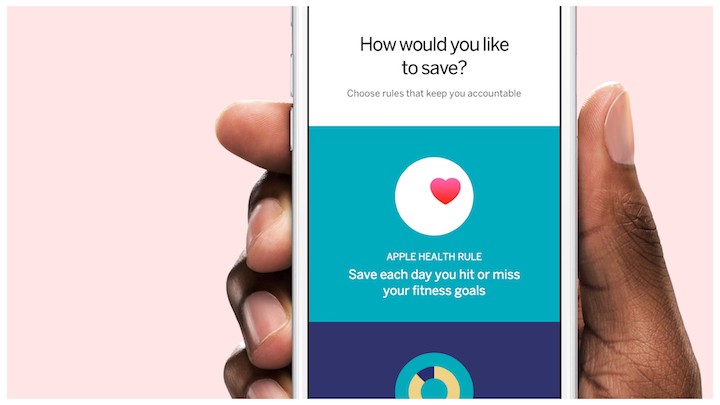
Qapital
This is why we at Northzone are spending a lot of time thinking about the influencer economy. We started investing in this space at the very beginning of the era with Bloglovin’, and followed the industry’s transition into marketing with Bloglovin’s acquisition of Sverve.We’ve seen our portfolio companies across various industries become leaders in leveraging influencer marketing for growth and brand building — Qapital works with Instagram influencers to create emotional and personal connections with financial wellbeing; Space Apecreated game characters around top YouTubers and allowed them to partake in the game proceeds.
NA-KD
We have already made an investment from our new EUR350M fund in a new influencer business model, NA-KD. This is where we think the most interesting developments are, where many seeds are being sown. Companies are building businesses models where influencers are at the core.
Toluna Launches Transformative DIY Community Product; QuickCommunities is the Latest Addition to Toluna’s Insight Platform
Toluna, industry pioneer and leading provider of on-demand, real-time digital consumer insights, launched QuickCommunities, a do-it-yourself (DIY) product enables users to build, create and recruit your target consumers into a custom community experience for real-time discussions, events and focus groups.
QuickCommunities is the latest addition to Toluna’s real-time digital insights platform, QuickSurveys. This unique combination of quantitative and qualitative tools allows users to build upon survey feedback and obtain deeper insights, in real time, allowing them to make better business decisions faster. The platform integrates with Toluna.com, the world’s largest social voting community. It’s this integrated digital approach that delivers true real-time consumer insight.
Toluna is a longstanding provider of community-based research approaches, and powers more than 200 custom TolunaCommunities globally. Now in addition to this long-term community offering, Toluna provides customers with the ability to quickly engage with hyper-targeted consumer audiences via real-time surveys or leverage QuickCommunities to engage in surveys in addition to on-site discussions.
Frédéric-Charles Petit, CEO, Toluna
Frédéric-Charles Petit, CEO, Toluna, said, “Toluna is transforming how insights are generated by making it easy for any company to garner actionable insights on demand about consumers – anywhere in the world – most important to their business. We have designed our real-time, DIY research platform to provide a full suite of tools that made market and customer intelligence more accessible, accurate and affordable. With Toluna, businesses can confidently engage with precisely targeted consumers as they wish, and obtain actionable information that informs important and ever-more real-time brand decisions.”
Toluna leads in technology innovation that reduces cost while increasing speed, easily scaling to global, qualified audiences with insights delivered in just hours. With Toluna, companies can power agile research programs to deepen consumer knowledge to improve business decisions.
QuickCommunities capabilities are:
– Build. A web-based community portal is created using Toluna’s intuitive wizard that provides an array of customization options to ensure compliance with a company’s brand guidelines.
– Target and Launch. Businesses precisely target community members directly from Toluna’s global consumer panel of 13.4+ of active members in 68 countries, selecting from more than 200 demographic and behavioral profiles – and then launch the community and invite members with a single click.
– Engage. Businesses connect directly with community members in real time with discussion topics, integrated surveys and managed incentive programs to garner the insights they need.
Phil Ahad
Phil Ahad, SVP, Digital Products, Toluna said, “Toluna QuickCommunities creates an instant brand advisory board for businesses to gain a deeper understanding into customers and prospects. It eliminates budget and time-to-launch barriers that companies often face in adding the richness of qualitative insights to research programs. QuickCommunities helps them to go beyond the transaction and learn the ‘why’ behind consumer sentiment and action.”
Salesforce Einstein Analytics Drives Shazam to Achieve 752% Rise in ROI
Popular music discovery app Shazam saw a 752% ROI within two months with Einstein Analytics
Salesforce is driving Shazam to a new height. According to the global leader in CRM, Shazam—one of the world’s most popular apps—has successfully deployed Salesforce Einstein Analytics to dramatically increase productivity for the company’s executives and sales leadership. With Einstein Analytics, Shazam has improved the quality of data from its massive user base, targeted more granular customer segments and reduced requests for reports from its core analytics team.
Shazam Achieved Increased Productivity with Salesforce Einstein Analytics
The Shazam app has been downloaded more than 1 billion times and is used more than 20 million times each day, across 190 countries. In just six weeks, Shazam has experienced 752% return on investment (ROI) since deploying Einstein Analytics, according to a study by Nucleus Research. Shazam also deployed Einstein Analytics without employing external consultants. The deployment provides an average annual benefit of $246,896 due to increased productivity and time saved.
Previously, Shazam relied on spreadsheets for internal reporting and managing advertising sales. This meant the organization lacked a single source of truth, with siloed data from various geographies scattered across multiple spreadsheets. Additionally, its analytics team faced a continuous backlog of time-consuming requests for reports from executives and sales teams.
Salesforce Einstein Analytics empowers Shazam’s sales team to run reports on their own to quickly find the insights on thepipeline, customer segmentation, and price optimization.
Additionally, Shazam’s Chief Revenue Officer is able to get a daily update on where the company stands, what opportunities are available and where teams should focus their efforts.
Furthermore, analysts now have 15% of their time back, time that was previously spent cleaning data which can now be spent on tasks better suited to their advanced skills.
Beyond productivity, Einstein Analytics helps Shazam identify more granular patterns, allowing sales teams to more accurately target their customer base.
Shazam’s Leadership Rely on Einstein’s Dynamic, Self-Serve Dashboards
Pete Miles, Vice President of Advertising Operations at Shazam
Pete Miles, Vice President of Advertising Operations at Shazam, said, “With Einstein Analytics, we’ve replaced manual, weekly reports that were sent out to leadership teams with dynamic, self-serve dashboards that are available whenever and wherever our employees are working around the world. No other product out there brings as much value to Shazam’s analysts, VPs and even our CRO, who opens the Einstein Analytics app every morning to understand how teams are functioning.”
Ketan Karkhanis, GM of Salesforce Analytics
Ketan Karkhanis, GM of Salesforce Analytics, said, “Einstein Analytics offers out of the box capabilities that empower sales users to get up and running quickly with advanced analytics. Shazam has made analytics a front office imperative and not a back office function. When every employee in your company is empowered with actionable insights, they become trailblazers — they do their jobs better, provide more personalized customer experiences and in turn, take the company to new heights.”
Nucleus Research Awarded Shazam for Effective IT Deployment
Nucleus Research has awarded Shazam the prestigious 2017 ROI Award for its implementation of Einstein Analytics. This award recognizes the top 10 companies whose deployment of IT solutions has produced a positive, financial ROI.
Barbara Peck, Principal Analyst at Nucleus Research, said, “Shazam needed a solution that would help increase efficiency and reduce requests for reports from the core analytics team. Nucleus found that Salesforce Einstein Analytics helped increase productivity for the chief revenue officer (CRO), the sales VPs, and the analytics team. In addition, the deployment helped Shazam maintain clean data for improved customer segmentation and more effective sales efforts.
Salesforce Einstein Analytics apps for sales, service, marketing and more are pre-configured with role-specific KPIs built in Salesforce, providing users with an intuitive, self-service way to drill into the most up-to-date data, uncover insights, collaborate and take instant action from any device. And now, their analytics journey can continue with Einstein Discovery, using AI to automatically surface CRM insights and recommend actions to accelerate sales, improve customer service and optimize marketing campaigns.
Really Simple Systems Announces a Major New CRM Release Targeting the SMB Market
Really Simple Systems has unveiled the CRM Version 5 featuring ‘drag and drop’ customization, a global search bar, easy data move and merge options
Really Simple Systems, the award-winning CRM vendor, has launched a new release of its popular cloud-based CRM. The new ‘Version 5’ is a total re-write of the CRM, delivering a dramatic step forward in usability, targeting the SMB market.
Responding to customer feedback, Really Simple Systems has developed this new release to build upon their reputation for ease of use and customer support. The CRM Version 5 includes new intuitive features such as ‘drag and drop’ customisation, a global search bar, easy data move and merge options, and pull-out support drawers on each page.
Really Simple Systems Addressing the Immediate Needs of SMBs
The new CRM Version 5 from Really Simple Systems is a complete rewrite from the ground up that moves the system away from Microsoft to open source technology. With a clean, user-friendly interface, the new version reinforces the company’s philosophy of ‘taking complex applications and making them simple to use, and affordable’.
The Really Simple Systems CRM Version 5 is now available to new and current customers.
John Paterson, Really Simple Systems CEO, said, “Unlike some CRM vendors, we haven’t created a cut down version of something more complex. Really Simple Systems is directly addressing the needs of small businesses with a CRM that’s quick and easy to use, yet has all the sales and marketing functionality needed.”
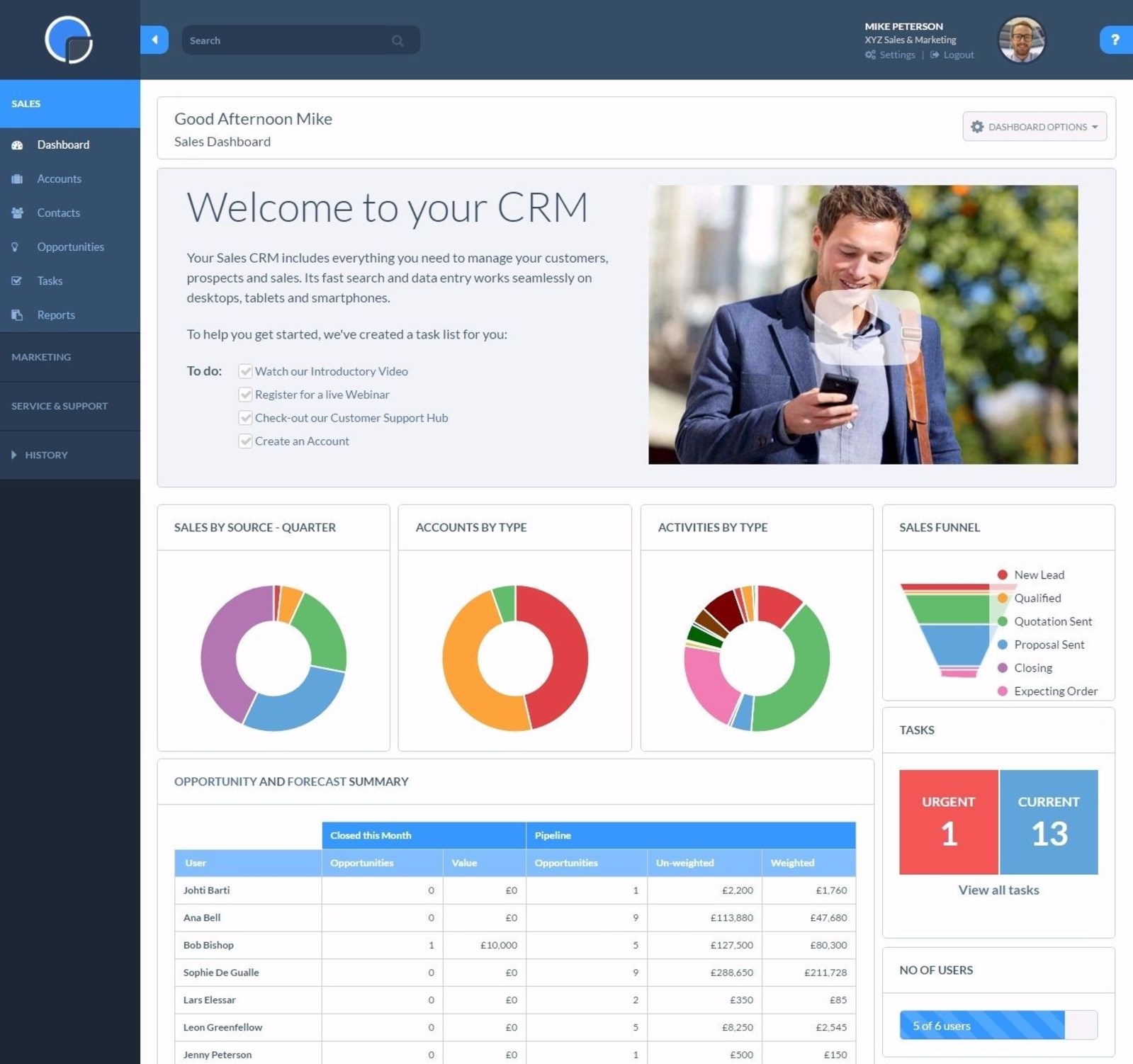
Really Simple Systems CRM Version 5_Welcome Dashboard
Paterson added, “Our CRM Version 5 offers features and functionality you might expect from a much larger vendor at a price you would not.”
Helen Armour, Marketing Manager at Really Simple Systems
Helen Armour, Marketing Manager at Really Simple Systems, said, “Despite the new development, Really Simple Systems is keen to stress that its differential is still in its customer service. We have also put a lot of effort into developing our support tools alongside the CRM. We have new self-help tools within the product with links directly to our Customer Support Hub. Importantly, the information has been written by our Sales and Marketing team so it’s easy to follow and understand.”
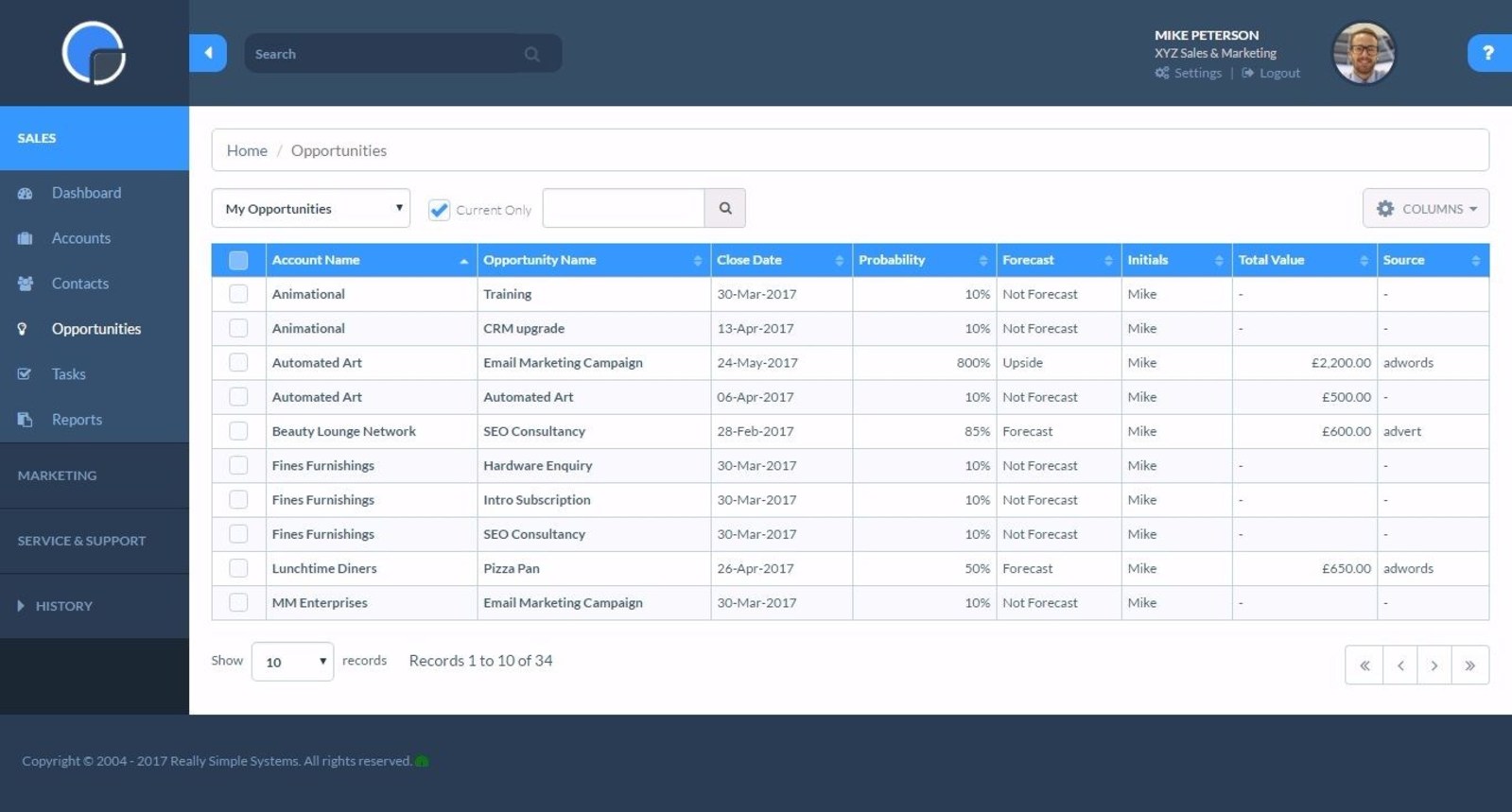
Really Simple Systems CRM Version 5 Analytics Reporting
Instagram Stories versus Snapchat: Snaplytics Finds Influencer Activities Running Neck-to-Neck for Completion Rate and ROI
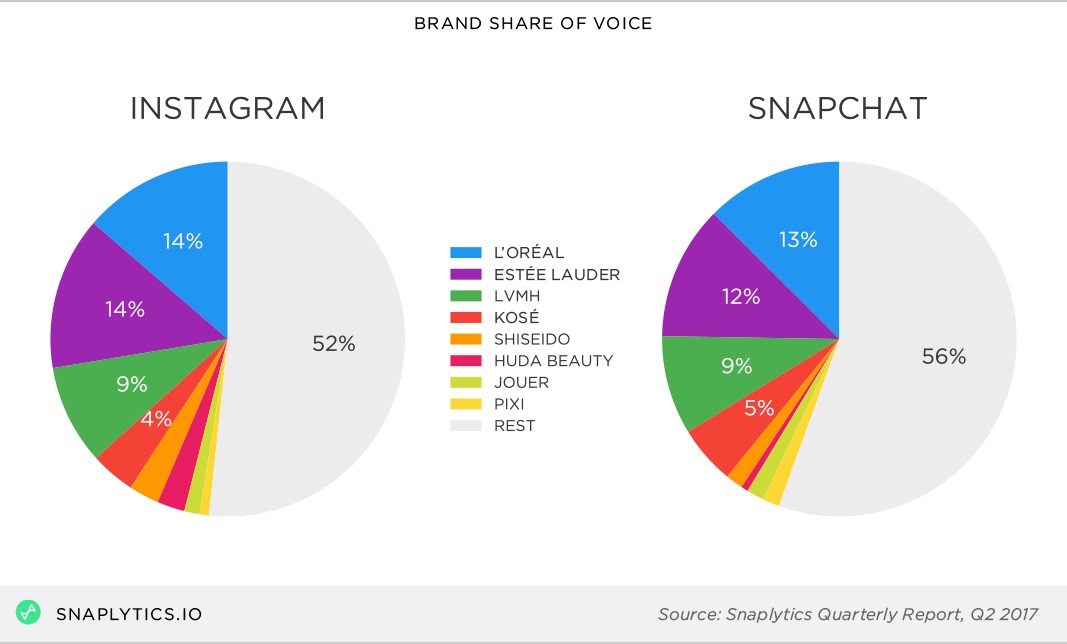
More brand mentions on Instagram Stories vs. Snapchat among influencers according to the Snaplytics Quarterly Report
Snaplytics is a marketing platform for new social channels including Snapchat and Instagram stories. This month, they are expected to launch their Brand Listening service to analyze brands share of voice among influencers and which influencers are most active on the story based platforms. According to the company, influencers are more active endorsing beauty brands through Instagram Stories than on Snapchat, but smaller beauty brands still thrive very well on Snapchat staying under the radar while engaging their audience.
Thomas Cilius, CEO & Co-Founder of Snaplytics, said, “There is a lot of debate about Snapchat vs. Instagram Stories. I do believe the data shows there is room for both, and each has something unique to offer to their users – Instagram for scale, Snapchat for intimacy – both with excellent ROI.”
Snapchat has Lost Ground in Q2, While Instagram Stories Gain Larger Brands
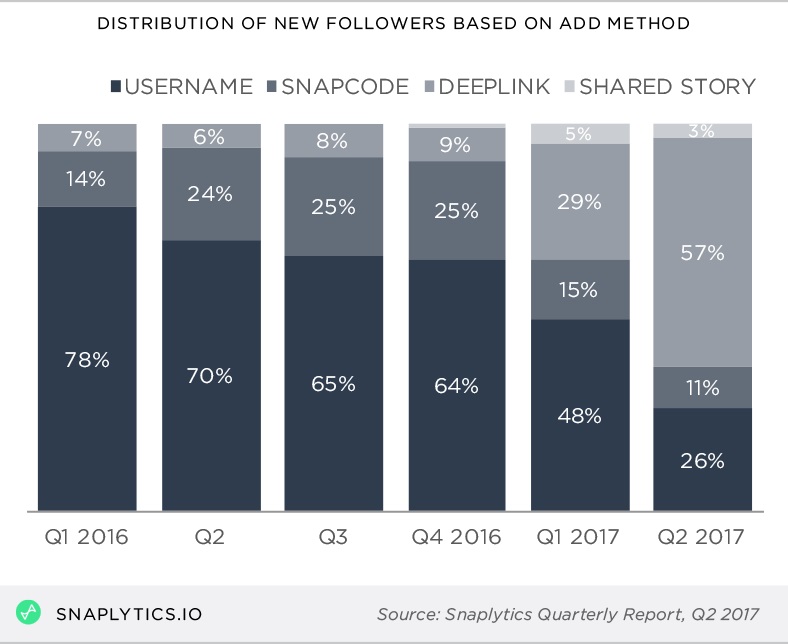
The Snaplytics Quarterly Report for Q2 2017 also revealed that brands are getting smarter about gaining followers on Snapchat. Previously “added by username” was the predominant way for users to find brands on Snapchat, but in the second quarter, more than half of the new followers added through Deeplink and only 26% through Username.
Snaplytics analyzed over 800 influencers in depth over the last quarter, to identify how many updates contained brand mentions, which brands were being mentioned and who mentioned them on what platform. Instagram Stories is gaining more and more traction, especially among larger brands.
More brand mentions on Instagram Stories vs. Snapchat among influencers
Smaller Brands Still Rely on Snapchat
There are a large group of smaller brands utilizing influencers on both platforms, but the share of small brands on Snapchat is almost 8% larger than on Instagram indicating many smaller brands enjoy navigating under the radar engaging their target audience, whereas larger brands utilize Instagram Stories to a larger extent.
A reason for larger brands preference for Instagram Stories could be easier reporting on the results of the campaigns.
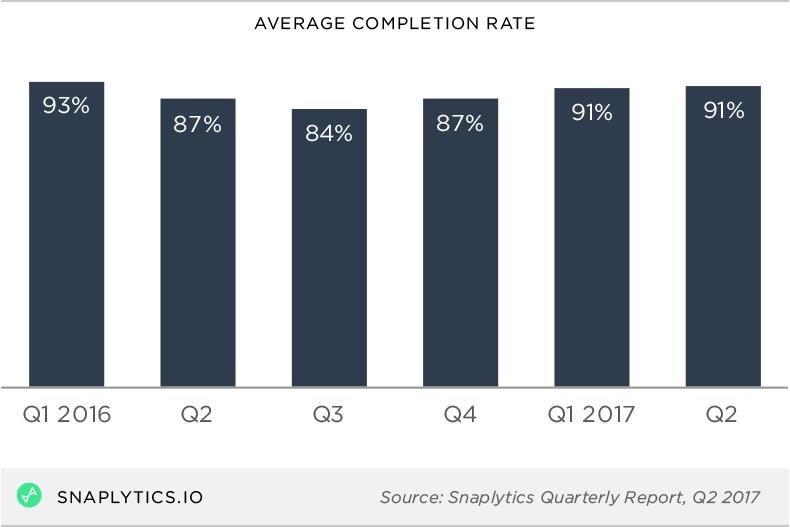
Once added on the platform, previous research has shown 54.8% of followers will open the brands stories and 91% of those opening the stories will watch in full. On average, brands post 9 snaps in a row, of 90 seconds, 3.25 times a week. Over the last 4 quarters the completion rate has increased while the consensus of the optimal length is moving towards 9 snaps in a row for a story.
Read Also: Cision Releases Exclusive Influencer Identification, Monitoring and Measurement Capabilities for Communications and PR Professionals
Average completion rate
Currently, Snaplytics focuses on providing Snapchat and Instagram Stories analytics for brands, agencies and influencers. Snaplytics analyzes usage statistics, including views, average number of screenshot per story, and average story duration, and provide industry benchmarks to help marketers determine if they are creating compelling campaigns and reaching their target audiences.
Ci&T Expands Strategy And Design Capabilities With Acquisition Of Comrade
Global digital solutions partner CI&T has acquired Comrade, a strategy and customer experience design agency in the San Francisco Bay Area. The acquisition combines CI&T’s lean digital transformation and high quality execution with Comrade’s strategy and design expertise to quickly and efficiently deliver high quality products and experiences people love. The acquisition unites a full-service team of over 2,500 strategists, designers and developers on five continents combining design thinking, data-led strategy, lean principles, and advanced tech such as AI/machine learning, advanced analytics and API-driven architectures.
The move is key to CI&T’s expansion in the United States as it accelerates their track record of 30% organic year-over-year global growth and builds on their successful long-term relationships with major U.S. clients. CI&T has proven end-to-end expertise globally with leading companies including Itau Bank, Coca-Cola and Johnson & Johnson among others. Comrade has partnered with clients including two of the top five U.S. banks, over 30 fintech companies, and leaders in technology, health-care and non-profit to improve customer experiences and bring digital product innovation to market quickly and efficiently.
Bruno Guicardi, President and Co-founder, CI&T, said, “We are thrilled to bring Comrade into the CI&T family. Their focus on data-led strategy combined with human-centered design and hands-on pragmatism perfectly integrates with our lean way of working and allows us to offer the most complete end-to-end customer experiences possible.. “Additionally, Comrade’s deep ties with Silicon Valley are an important factor for enterprises seeking digital transformation and their expertise in working with the U.S. financial services sector offers new and exciting opportunities for future growth.”
Thelton McMillian, Founder and CEO at Comrade
Thelton McMillian, Founder and CEO, Comrade, said, “Clients need one partner they can trust for strategy, design and technology. Together we can deliver speed at scale for organizations who need to go faster while delivering high-quality products and experiences. We’re excited to use CI&T’s advanced technology capabilities like AI and machine learning to imagine and design truly differentiated customer experiences. We chose CI&T because we share common values and have amazing cultures built on long-term relationships with clients, employees and partners.”
Through the acquisition, Comrade will become a CI&T company and continue operating as a strategy and design agency serving global clients.
[mnky_testimonial_slider][mnky_testimonial name=”” author_dec=”” position=”Designer”]“Marketers will have to grow with the consumer’s expectations of a seamless, placeless, timeless experience or be left behind.”[/mnky_testimonial][/mnky_testimonial_slider]
On Marketing Technology
MTS: Tell us a bit about your role at SteelHouse and how you got here?
I’m the CMO at SteelHouse and oversee all communication, brand and product marketing for the company. Before joining the firm earlier this year, I ran marketing for SocialFlow out of New York and before that, for PointRoll, when it was a division of Gannett. I got my start with marketing guru, Seth Godin in the 90’s and went with him to Yahoo!, when our startup Yoyodyne was acquired.
MTS: How is traditional display advertising evolving and how quickly will video replace it?
Video is already killing off traditional display and for good reason. As consumer patterns and technology have become even more multi-screen, multi-platform and asynchronous, the drive to see video stories anywhere has increased. At the same time, the publishers and platforms have realized video ads work better and allow them to charge more for the same inventory. Add to this the fact that more programmatic systems can now manage more video than ever before and you have a recipe for rapid change.
MTS: How does SteelHouse help with the market shift towards video?
SteelHouse makes the creation of sophisticated, compelling, effective video ads easy through our Creative Suite. What makes this valuable is the fact that you don’t need high production quality video assets like TV commercials to tell a story with video. It used to be you had to be a big brand with a big budget to use video. We make it easy enough for any brand.
Our clients use social media video content, stock video content or still images incorporated into slideshows to tell their story and drive results. All the hassle of specs and sizes is handled automatically so anyone can create amazing short or long form video that can be served anywhere.
MTS: Did you say marketers can create ads without having to film?
Yes, they absolutely can. Any brand with a story to tell and product to sell can make video ads and they should not feel limited just because they don’t have a big broadcast budget or a creative department. At SteelHouse, we are encapsulating in the definition of “video,” ideas and techniques beyond what it’s traditionally meant. For example, the SteelHouse Creative Suite can take snippets of anything from slideshows to still imagery and have them play as video with moving elements. This is far more eye catching than static ads.
We give advertisers access to a video library or let them use existing assets if they have them. We also serve the video ads in whatever format the most effective inventory calls for – automatically. The goal is more interactive content that ultimately gets consumers to better engage with brands, but you don’t need a big budget to make it happen it anymore.
MTS: What are the technical challenges of integrating video?
Well, for one thing, video itself means so many different things to different people. Brands have needs for the three-second ad, the 10-second ad, the 30-second ad…it’s never just a single type of video ad. The challenge with this is that if you have a people-intensive process and you want to make a small change to an ad, it’s really difficult. As more video is running programmatically, brands may need to have different sizes, shapes, specs and even a different set of expectations for their video ad formats for other platforms.
Marketers should also be able to focus on what they do best: marketing. You don’t have to know how your iPhone works to use it, so why do marketers need to know all the formats and features that fill their day? They shouldn’t have to be technicians, needing to solve all tech specs associated with video ads. SteelHouse is part of that change. Some platforms require video ads in very specific file formats and our system takes care of all that.
Another challenge is that publishers need to maintain a great user experience for the end consumer. That’s why streaming video ads is so critical – you don’t want a large ad load and video ads offer a better consumer experience.
MTS: What do you see as the single most important technology trend or development that’s going to impact us?
I don’t think we’ve seen the end of the multi screen evolution. Consumer expectations of a seamless, placeless, timeless experience continue to rise. Marketers will have to grow with them or be left behind. We’re feeling the growing pains now and the tech is getting in the way of good marketing. The opportunity lies in making the marketing technology as simple to use as that of the consumer. We’re still in a growth phase.
MTS: How do you prepare for an AI-centric world as a business leader?
AI is a very broad umbrella. In our space, it’s not so much about solving big cerebral problems, it’s more about machine learning and throwing giant amounts of data that can learn and make new decisions faster than a marketer can on their own. For example, machines are great at analyzing what a target consumer segment has purchased, then making thousands of minute changes to the marketing activity based on what it has learned works best. Marketers need to prepare to allow machines to do more of what they do best. That way marketers can reserve their energy for being creative and developing strategy, instead of the mind-numbing math of responsive budget allocation.
This Is How I Work
MTS: One word that best describes how you work.
Collaborative. While it’s true that everyone has to earn their keep and deliver as an individual contributor, for me, it’s just as important to take advantage of the talented teams and resources at SteelHouse, so I can tap into the knowledge and expertise of our amazing team. In a creative discipline like marketing, there are parts in the creative process that are solitary and parts that are best served working collaboratively and being able to bounce ideas off of colleagues. I know I sometimes need the former, but I love the latter.
MTS: What apps/software/tools you love using for your daily life?
As a marketing team, we all use Trello. We’ve applied a more engineer-centric, agile project management structure. The app helps me loop team members into projects when I need them and helps everyone know who is working on what. Overall, it’s also helped me be even more efficient.
MTS: What’s your smartest work related shortcut or productivity hack?
I truly think my greatest productivity hack might be that I subconsciously created a communication hierarchy with the people I work with. For example, I reserve texting as a top priority channel when I’m trying to get in touch with someone urgently. I use Slack for when I need a quick response and use email, of course, for general, less-time sensitive items. You need to be disciplined about which channel you use to reach people because it helps others understand the level of urgency intended in the message.
MTS: Something you do better than others – the secret of your success?
Beyond being collaborative, I think my background, starting as a salesperson, has helped me develop skills that enable me to really sell good ideas. I also have a thick-skin when it comes to rejection, too. That’s always important in business.
MTS: Thank you David! That was fun and hope to see you back on MarTech Series soon.
A creative entrepreneurial leader, sales-centric marketer and digital media expert with more than twenty years of broad expertise building and leading collaborative teams. Shapes brands and exceeds goals through invention, strategy, differentiation, marketing and sales of products and services for complex businesses in technology and advertising.
SteelHouse provides advertising software for direct marketers, agencies, and brands of all sizes. The SteelHouse Advertising Suite provides marketers with everything they need to launch retargeting and prospecting campaigns through display, mobile, and social. The SteelHouse Creative Suite lets anyone create beautiful ads using the content around them. Our solutions give advertisers total transparency and complete control over their campaigns – all with the fastest go-live in the industry.
SteelHouse Wins: built in Los Angeles Top 100 Digital Companies in LA, Hermes Creative Award Winner, Telly Award Bronze Award Winner, AVA Digital Award Platinum Winner, EMA Innovator Award Winner, LA Business Journal’s Top Places to Work in LA.
[/vc_tta_section][/vc_tta_tabs]
[mnky_heading title=”About the MarTech Interview Series” link=”url:http%3A%2F%2Fstaging.loutish-lamp.flywheelsites.com%2Fmts-insights%2Finterviews%2F|||”]
The MTS Martech Interview Series is a fun Q&A style chat which we really enjoy doing with martech leaders. With inspiration from Lifehacker’s How I work interviews, the MarTech Series Interviews follows a two part format On Marketing Technology, and This Is How I Work. The format was chosen because when we decided to start an interview series with the biggest and brightest minds in martech – we wanted to get insight into two areas … one – their ideas on marketing tech and two – insights into the philosophy and methods that make these leaders tick.
“Cold Emails”… Right off the bat the term isn’t very inviting. Throw in the fact that you ate about to send one to a massive company in hopes to strike up a rapport in an attempt to eventually reach a deal and you’ve made a huge undertaking all the more daunting. But in actuality, the differences between sending an email to a small business or a large enterprise aren’t as monumental as you might think. To help put you at ease, here are 5 things you should keep in mind when writing cold enterprise emails.
You’re not Selling to a Company, You’re Selling to a Person
Remember that you’re not speaking to a faceless machine; there is an actual person on the other side of the message. This is often the biggest hurdle to jump when it comes to cold emailing enterprise companies. Because of their size or reputation, people tend to forget that the person reading the emails is an everyman/woman. They respond to things like anyone else would, just because they work in a larger office doesn’t mean you have to change your approach.
Get to the Point
People at large companies get tons of cold emails everyday, spending time introducing yourself when you could be giving them the information they are actually interested in could kill any chance at rapport before you get off the ground.
Make your pitch as non-invasively as possible as quickly as possible. Don’t beat around the bush trying to sell yourself. Let them know what you do and let the product speak for itself.
Try and personalize everywhere you can. Tying into the first point, you’re speaking to an actual person. So, find out as much as you can about the business and the person you are emailing directly and tweak your cold email as much as possible. The more it seems like you are invested in them, the more likely they are to become invested in you.
Figure out how the decision-making process works at the business you are looking into and direct your email at the person in charge. Don’t waste time wading around the middle management pool. That isn’t where the decisions are made and in the long run they won’t get you anywhere. Find your target, personalize the email and start that relationship off right.
Which version sounds better?
“Hi there! I’m Insert Name Here and I work for Insert Company Here. With Insert Product Here I can promise exponential revenue growth within months. If you’re interested, why don’t we hop on a call?”
Or,
“ Hi Mike, seeing as you’re the head of sales, I wanted to reach out and let you know about Reply (https://reply.io/). It’s a new platform that makes prospecting and sales a lot more interactive and relatable. You can try a 14 day free trial on our website or Reply back to me with any other questions!”
The second version instantly speaks to the contact directly, addresses a potential need for their role in the company and offers a call to action that requires little to no effort on their part. All complete in a few sentences.
Keep the focus on them and avoid sounding arrogant. Any information about you should be confined to your painstakingly crafted signature. They don’t know who you are and tooting your own horn upon first contact isn’t going to make them care.
While it is easy to fall into marketing lingo in your outreach, sentences like, “Instantly grow your sales and streamline your workflow” don’t mean anything in a cold email. Demonstrate value without being self-indulgent and you are a step closer to striking a deal.
FOLLOW-UP!
You can craft the perfect email but the fact is, getting an email from an address you don’t recognize can be uncomfortable. Most of the time, people’s first reaction is to quickly hit the delete key and forget it was ever there. It’s just the nature of emails and it is unfortunately unavoidable. This is why following up is so important. The same level of detail should be applied to follow-ups as the initial email, but the most important thing to remember is to keep at it. The majority of responses come well after the first email is sent. Just because you don’t get the response you want, or a response at all, doesn’t mean all is lost. Keeping on top of your conversations and remembering to stay in touch will always be more likely to yield results then throwing out a one and done message.
Cold email, whether it is to a Facebook or a mom and pop shop local business, is about relationships. If you go into it with your resume in hand you’re going to be regarded like someone with an agenda. Instead, put a smile on, make the small talk and let your value shine through naturally.
Customers want instant data insights, but the ever-growing pile of data makes it feel increasingly difficult to sift through. To balance these demands, organizations are shifting their focus toward data analytics tools that democratize access to data and insights.
However, creating an analytics product that provides easier access to data is a journey. Those creating analytics products must define their user bases, personas and features among a myriad of other considerations. Here are four tips for designing an analytics product that democratizes access to analytics.
Persona-Building is Crucial to Successful Product Design
This is the drawing-board stage. The goal of persona creation is to paint a picture of what types of people will benefit most from democratization of data analytics. Establish that understanding and the product development will follow more easily. Consult internal teams — sales, marketing, engineering, and customer success — to figure out which persona likely would experience the greatest data-related difficulty.
Define a Minimum Viable Product (MVP) for Analytics to Add Value
First, speak with prospective customers to understand pain points and use this feedback to outline a minimum viable product (MVP). It’s inefficient to build every single feature customers want from day one. Instead, utilize one of these strategies for defining, developing and releasing your product:
– Identify areas where direct financial value exists as a corollary to a problem many customers have. Develop an MVP to address that specific, financially viable, pain point and build from there.
– Examine issues prospective customers might have internally. For example, one company focused its analytics platform on human relations (HR) processes. The product integrated data from different systems to enable HR to better understand where recruits were coming from and gain improved visibility over the entire recruiting process.
Stick with the 80/20 Rule
It is important to realize that analytics is not a cookie-cutter solution. Rather, it requires a certain level of customization.
Although you can develop your solution in a way that meets 80 percent of your customer demand, there will be that 20 percent that you need to tailor. Create a standard offering that applies to about 80 to 90 percent of your users or situations. For the rest, you can customize offerings and sell at a premium price.
However, to make a standard offering, ensure that you are using a multi-tenant cloud analytics architecture that can instantiate new environments for new customers rapidly. This multi-tenancy should enable you to reuse your data model and reports across 80 percent of your client base quickly, without having to replicate the work.
Consider How You Can Bring Business and IT Together
On one hand, you have end users who need information for their day-to-day decisions, but they don’t know the ins and outs of data analytics. On the other hand, you have IT or data analysts, who know how to work with the data to deliver insights to business users, but are a step removed from making business decisions.
Consider how your analytics offering can bring these two groups together. The goal is to provide tools for the data people and visualizations for the business people – all stemming from the same semantic layer.
This is especially important in heavily regulated environments, such as insurance, healthcare, financial services and government, where IT is in charge of making sure data meets data privacy and security requirements. In these types of industries, removing those barriers and bringing IT and business users together is critical.
Do Not Forget Where the Product Came From
Democratization of data analytics is the near future of big data and business intelligence, but don’t forget the process that led to the final product. Remembering the steps required to develop the product will go a long way toward improving the longevity of the product and your company.
The tortoise of digital advertising might pull off yet another win. In 2017, the pharmaceutical industry has learned important lessons from early adopters and is now enjoying enviable success. By focusing on a mobile-first strategy, harnessing the power and sophistication of mobile apps, and utilizing only the best performing placements, pharma’s digital advertising strategy is paying dividends.
The pharmaceutical industry is known for moving slowly due to regulations, policies, and oversight. The Food and Drug Administration (FDA) has not made it easy for the industry to take advantage of the newest advertising technologies and practices. In this regard, pharma sits in good company with the petroleum, alcohol, and tobacco industries. In fact, until the mid-1980’s, drug companies only promoted their products to doctors and pharmacists. Then, in the 1990’s, drug companies started taking their message directly to the consumer via print, TV, and radio ads. Interestingly, only the United States and New Zealand even allow direct-to-consumer advertising in the pharmaceutical industry that includes product claims.
When it comes to advertising, one of the primary challenges that many prescription drug companies face is that they are required to provide full disclosure of risks, side effects, and possible drug complications. For print, TV, and radio, this means a loss of time and space for marketing messages; however, for digital media, the implications can be farther reaching. Packing a 300×250 display ad chock-full of text doesn’t leave room for attention-grabbing imagery or a strong call-to-action, and including 25-30 potential health risks alongside a digital video can dilute the advertisement’s impact.
For many years, Pharma sat tight while other industries took risks, worked out the kinks, and developed digital media best practices. In fact, Pharma and healthcare’s current digital ad investment only represents ~3% of total digital ad spend by all industries. Yet digital advertising as a whole represents approximately 37% of total U.S. media spending.
While many industries were discovering that up to 60% of their ads were not seen by real humans (an error that was costing them billions), the pharmaceutical sector took note and delayed jumping on the mobile and social media bandwagons until they learned how to procure quality digital inventory, instead of focusing on quantity.
Pharma sales
The pharmaceutical sector is now expected to accelerate its digital media spending in a big way. Leading the charge are mobile and video platforms, with mobile ad spending expected to grow by 45% this year to reach $45.95 billion. For 2015–2020, Pharma and healthcare are together projected to grow at a compound annual growth rate of 13.2%, the fourth fastest growing industry and besting retail, media, telecom, and financial services. And yet there are still challenges. The pharmaceutical sector has been restrained by HIPAA’s (Health Insurance Portability and Accountability Act) privacy rules, which prevent companies from collecting or using personal health information for targeting. This is critical because the addressable audience is harder to identify and more difficult to reach (e.g. arthritis sufferers, cancer patients, and birth control users) than for most other brands.
Through new mobile partnerships with data aggregators and analytics companies, pharma has learned to use third-party data to build custom audience segments targeting specific diseases or illnesses. By combining online and offline data points such as purchase history, site visits, geographical location, and product refill information, these companies help pharmaceutical brands to better communicate with customers in a timely manner. This type of data-driven marketing can be even more impactful on mobile since 75% of store shoppers use their mobile devices while shopping in-store. Pharma companies, for example, could tap into this data in real-time and message customers at the point of sale via their mobile device.
Pharma is all in on mobile. In fact, in a recent study of healthcare, life sciences and pharma companies, 82% of companies said they have a fully-implemented mobile strategy, compared with just 52% of all commercial enterprises one year earlier. The sector is already investing heavily in mobile messaging, location technology, personalization technology, and mobile search. These types of investments make sense because over 60% of smartphone users utilize their mobile devices to search for information about health conditions, according to the Pew Research Center. In fact, in a recent WebMD campaign, mobile outperformed desktop, with 55% more pages views, 20% more time with content, plus an 18% increase in engagement rate due to mobile search.
Pharma, however, does share some traits with its peers in other verticals. In a recent study of 10 major pharma brands, for instance, 80% of the marketing budget was allocated to TV, with the remaining portion allocated to digital/mobile and print. Post-campaign analysis demonstrated that allocating twice the spend to digital (including mobile) would have produced 25% incremental revenue. And mobile advertising overall provides deeper insight into individual engagement over traditional tactics such as TV and print.
People spend over 85% of their time on mobile in-app, so it only makes sense that pharmaceutical brands are getting in on the action. Some brands are taking note and creating unique app offerings. Myrbetriq (a drug for the treatment of overactive bladder) developed the RunPee app, which synchronizes to movies and notifies a user of the best times to run out and not to miss any critical parts of the story. Similarly, Lilly’s Trulicity brand launched a companion app to help diabetes patients remember to take their medications. Zyrtec launched Allergycast, a weather app that learns what people are allergic to, and sends real-time data to medical professionals. And audiences are eager to consume these pharma mobile apps. Allergycast, for example is a ‘top 25’ weather app, achieving over 300k downloads with the average time on app of 15 minutes per month.
The total annual revenue from Health apps was approximately $489 million in 2015, over 40% higher than it was just 5 years before that. In fact, at 42%, the growth of health-related apps has outpaced the overall app growth rate of 38%. By entering the market after it matured, pharma brands also benefitted from improved security and cloud services that make apps faster to build and deploy. With over 3.2 billion Heath app downloads, people are certainly taking a more active role in tracking and managing their healthcare needs.
Mobile Performance
While a focus on mobile and apps has helped propel the pharmaceutical industry’s digital marketing efforts, it is the use of impactful placements like native and immersive video that have allowed the industry to scale its messaging in a way that moves the needle.
Native ads match the look and feel of top editorial publishers. Mobile ads in a native format drive four times higher click through rates than non-native ads and are viewed 53% more frequently than display ads. Many medical publishers also use native ads to drive qualified visitors to their own content. Healthline reports that these units were responsible for about 14% of its revenue in a 6 month period in 2016. However, pharmaceutical brands should proceed with caution, because some native ads can be mistaken for editorial content. Publishers are making special accommodations to win more pharma dollars. Facebook, for example, added a box of scrolling text to the bottom of some native Rx Pharma ads, allowing the full 650 word legal text to fit within the platform’s ad specs.
But it’s not just native ads that are helping pharmaceutical brands achieve success in digital advertising. Pharma has started to produce video content similar to the way entertainment companies produce movie trailers. Pharma brands are including more impactful music, animated characters, and celebrities to improve awareness. In fact, 13% of baby boomers say they are more likely to watch a pharmaceutical video ad to completion when it includes an influencer or a celebrity. Lauren Bacall, Rob Lowe, Kelsey Grammer, and Bob Dole have all been featured in recent video campaigns. Additionally, pharma brands have been going all-in on video distribution, launching new creative content to coincide with big events like the Super Bowl. Content is no longer a laundry list of benefits, but rather communicates a real solution via a story with a beginning, a middle, and an end.
Celtra (a digital ad company) helps brands make their content even more immersive by enhancing video and other assets with custom data feeds to recommend medication based on weather patterns, pollen levels, and so on. Additionally, over 75% of all rich media impressions requested via Celtra were delivered over mobile phones, with 60% of those coming from in-app placements. In a rich media study by Servo and Medialets, Pharma achieved the top CTR, besting CPG and Retail fourfold.
Mobile, in-app, and immersive placements have been game changers for pharma, and new performance units like value exchange have also yielded very strong results. Value exchange is a powerful way to distribute video and branded content because it is virtually fraud-free and non-interruptive. These placements let people actively choose to engage with a brand in exchange for entertainment, points, Wi-Fi or other digital content. At Jun Group, pharma clients see on average an 87% video completion rate for a 60 second video with engagement rates that are 2-5%, and brand lift that measures ~26%.
Pharma is getting digital advertising right. The industry’s wait-and-see approach has allowed it to benefit from best practices and billions of dollars of testing from other, faster-moving advertisers. Through a focus on mobile, applications, and new immersive ad placements, the industry has become one of the fastest growing verticals in digital advertising. All eyes are on Pharma in 2017 as the industry continues to expand its presence deeper into digital advertising.
Evergage, the real-time personalization platform company, today announced it has raised $10 million in Series C funding. Led by Arrowroot Capital – which also led Evergage’s Series B round early last year – the round includes participation from previous investors G20 Ventures and PJC as well, indicating a strong vote of confidence in Evergage’s trajectory. This latest financing now brings Evergage’s total venture funding to $31.5 million.
Evergage will use the new funds to drive expansion across the company – including engineering, sales, marketing and client success departments – and internationally, as demand for its award-winning and market-leading personalization platform continues to accelerate.
This news comes at a time of great momentum and growth for Evergage. In the first half of 2017, Walmart México, Lenovo, Hexaware Technologies, Newegg Flash, LD Products, Bomgar, ButcherBox, Petplan, U.S. Gold Bureau, multiple financial institutions and many others selected Evergage’s personalization platform to unify customer data and deliver individualized experiences, in real time, to audiences across channels. These organizations join a growing list of innovative companies across industries – including retail, technology, financial services, travel, media, gaming and more – who rely on Evergage to increase visitor engagement, conversions, customer retention and revenue.
Matthew Safaii, managing partner at Arrowroot Capital and Evergage board member, said, “Having closely followed Evergage’s growth, successes and strategy in recent years, we’re extremely confident in the company’s direction and thrilled to have this opportunity to support them further. Driven by strategic and customer imperatives, organizations today are striving to communicate with greater relevancy and impact – so demand for effective, real-time personalization is on the rise. Evergage’s machine-learning-driven approach and talented team are an unbeatable combination, poised for even greater growth. As Evergage continues to redefine how organizations gauge and respond to their customers’ interests and intent, it’s a delight to support the company’s next phase of innovation.”
Evergage empowers B2B and B2C marketers to deliver 1:1 personalization based on deep behavioral analytics, a full customer data platform and machine learning – providing individualized, maximally relevant experiences to more than 2 billion website visitors and application users. In the first half of this year alone, Evergage was named a strong performer in “The Forrester Wave™: Digital Intelligence Platforms, Q2 2017” report, was recognized as the “Best E-Commerce Solution” in the SIIA CODiE Awards and won a gold Stevie Award in the 2017 American Business Awards. The company was also a winner in EContent magazine’s “Trendsetting Products” competition and a finalist in BostInno’s Coolest Companies awards program.
Evergage also continues to hire new talent. The company will be expanding its Somerville, Massachusetts headquarters – more than doubling its office space. In addition, as the market for personalization continues to expand, Evergage will host more than 250 guests at its fourth annual Personalization Summit on Sept. 14 in Boston, with the theme of “demystifying machine learning.” Speakers include Brendan Witcher, principal analyst at Forrester Research, and customers including Academy Sports+Outdoors, GoAnimate, Harte Hanks, Invaluable, Newegg Flash, Nuxeo, Texas Instruments and more.
Karl Wirth
Evergage CEO and co-founder Karl Wirth, said, “We’re excited and proud to have received this $10 million Series C funding from Arrowroot Capital and existing investors – representing a strong endorsement of our team, technology and direction. With the industry’s most advanced and complete personalization platform, Evergage helps companies make 1:1 customer engagement a reality. We look forward to driving more innovation and further expanding our business, so we can enable even more companies to cater to and delight their customers.”
Janrain Taps Industry Veteran Alan Elliot VP of Worldwide Sales and Alliances
Alan Elliot is an Industry Leader in Identity Management, Cybersecurity, and Network Infrastructure who would Lead Global Expansion for Janrain into CIAM Market
Janrain, the leader in Customer Identity and Access Management (CIAM) has announced the hiring of Alan Elliot as the company’s vice president of worldwide sales and alliances. Elliot brings more than 25 years of senior-level experience selling identity management, marketing technology, and most significantly cybersecurity enterprises to Fortune 1,000 companies, an extensive and diversified background that aligns well with Janrain’s core offerings.
Janrain pioneered the Customer Identity and Access Management (CIAM) category and is a market leader in Privacy by Design.
Elliot said, “In 2009, analysts were defining cloud computing. Now the global 3000 are all driving a cloud-first strategy. In 2017, I believe these same companies are becoming ‘identity-first’, embracing a consumer identity strategy that makes CIAM indispensable in our highly digital and connected world. Janrain was first to market with CIAM and continues to offer the best identity solutions for enterprises that seek scalability with the cloud, higher levels of security, and mission-critical capabilities.”
Alan Elliot would Pilot Janrain’s Journey into CIAM’s Hyper Growth Market
Alan Elliot will lead Janrain’s global efforts to strengthen its leadership position in a market that is expected to see triple-digit growth. According to a report, the Identity and Access Management market will grow to $14.82 billion by 2021. CIAM sits at the axis point where cloud computing enabled identity will scale digital application development time-to-value, marketing technology effectiveness, data and analytics ROI, and an improved ability to secure the consumer’s most important asset–their customer’s identity.
Global brands need a way to provide their customers a secure and seamless experience across all digital channels, including traditional web and mobile, as well as the many new internet-connected “things” proliferating in the mainstream marketplace. Moreover, brands need a way to get to know their consumers deeply in a way that adheres to tighter privacy and data governance restrictions worldwide, so that they can continue to drive deeper engagement without incurring massive penalties.
Janrain pioneered the CIAM category in 2002 and currently provides an easy multichannel experience for 1.5 billion online customer accounts on behalf of more than 3,500 companies, including Pfizer, Samsung, Whole Foods, Consumer Reports, Hershey’s, McDonald’s, Philips, Marvel and Dr Pepper.
Alan Elliot has Certified Experience in the Cybersecurity and Identity Management Industry
Prior to joining Janrain, Elliot served as senior vice president of worldwide sales at cybersecurity software company PAS. This followed leading North and Latin America sales as vice president of sales for Fidelis Cybersecurity. He has also held sales leadership positions for APAC and Latin America markets for Proofpoint, a provider of SaaS and on-premises solutions for email security, archiving and data loss prevention, and Critical Path, a collaboration and identity management software company.
Jim Kaskade, CEO of Janrain
Jim Kaskade, CEO of Janrain, said, “Janrain has the tools to help brands navigate the tightrope of delivering a painless, highly personalized digital experience in an increasingly strict regulatory environment, and Alan Elliot has the unique skillset needed to turn this into value for enterprises. We look forward to benefitting from his security focus, coupled with his well-rounded experience including marketing technology and identity management.”
Twenty Percent of Global Commercial Email Fails to Reach the Inbox
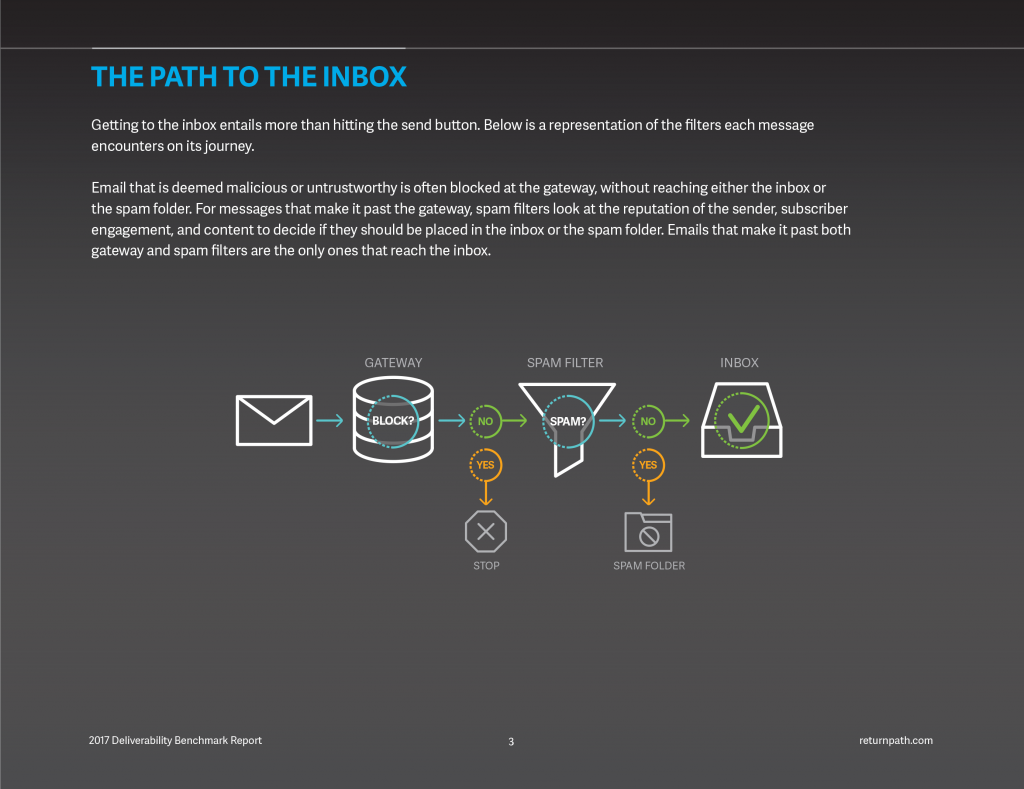
One in five commercial emails worldwide fails to reach its intended target, according to the 2017 Deliverability Benchmark Report from data solutions provider Return Path. This new research reveals that just 80 percent of email is delivered to the inbox, while the remainder—a full 20 percent—is diverted to spam folders or goes missing.
The report’s findings are relatively consistent with the company’s 2016 and 2015 benchmarks, which reported a 79 percent global inbox placement rate. While this rate has improved slightly in the past year, the significant percentage of filtered messages means that marketers are still missing out on a valuable opportunity to drive ROI from the email channel.
“Email remains the most popular and effective channel available to marketers, so it’s more important than ever to get it right. If your emails aren’t reaching the inbox, you’re missing out on an opportunity to build relationships and generate ROI,” said Return Path President (https://media.licdn.com/mpr/mpr/shrinknp_400_400/p/3/000/00c/295/155ca3c.jpg /https://www.linkedin.com/in/gbilbrey/) George Bilbrey. “But email filtering continues to evolve, as mailbox providers apply increasingly sophisticated algorithms to deliver only the content their users truly want.”
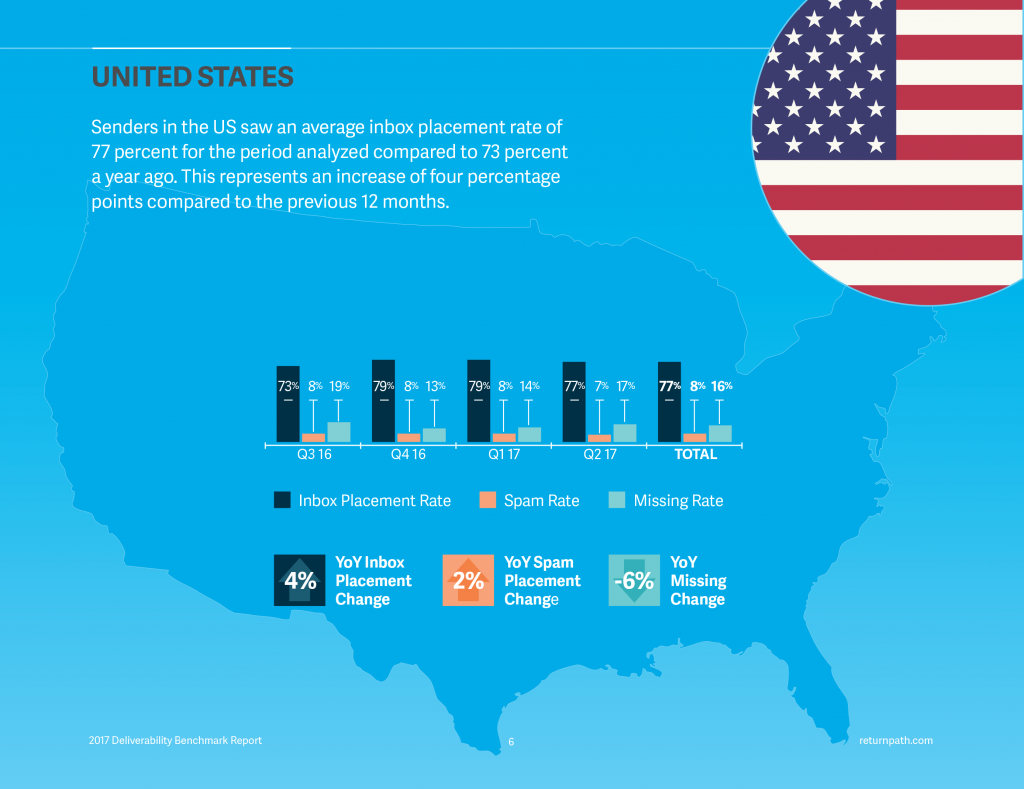
Email marketers in the US saw the lowest inbox placement of any country analyzed, with just 77 percent of messages reaching subscribers—up from 73 percent in 2016. Meanwhile Canadian marketers achieved one of the highest inbox placement rates in this study, with an average of 90 percent.
Other key findings include:
Marketers in European countries generally exceeded the global inbox placement rate, with averages of 82 percent (France and Spain) and 84 percent (UK). Of the European countries studied, only Germany fell slightly below the global average with 79 percent inbox placement.
For the second year in a row, Australian marketers maintained average inbox placement of 90 percent—tied with Canada for the best result in this study.
Looking at inbox placement by industry, the best results were found in sectors with strong account-based consumer relationships such as banking & finance (94 percent), distribution & manufacturing (92 percent), and travel (90 percent).
This annual benchmark report from Return Path examines how email is delivered and how inbox placement is measured, along with global, regional, and industry benchmark results by quarter.
Blackwood Seven Appoints Hitesh Dholakia as Chief Product Officer
As a Leading AI Media Agency, Blackwood Seven Now Puts The Focus on Global Product Development with their Latest Hire
Blackwood Seven, a leading AI media company, has announced the latest appointment to its leadership team. Hitesh Dholakia, a data science veteran with extensive product leadership experience, joins Blackwood Seven as Chief Product Officer. Dholakia will be overseeing all aspects of Blackwood Seven’s global product offerings, reporting to Carl Erik Kjærsgaard, the company’s CEO, and co-founder.
The appointment marks the latest addition to a series of new hires for Blackwood Seven’s leadership team. Last month, the company hired marketing veterans Nick Stoltz and Stanlei Bellan. Stoltz now serves as COO, while Bellan is the company’s General Manager, West Coast.
Carl Erik Kjærsgaard, said, “Our work is laying the foundations for a new and transparent industry, based on a simple subscription model and running on AI. Our mission is to disrupt the media agency value chain and its antiquated operating model. Hitesh has overseen the product development at some of the world’s largest companies, and his expertise in machine learning will be crucial in expanding our AI platform. We’re sending a clear signal that we will continue to attract and retain the best talent in order to fulfill our vision.”
Dholakia Joins Blackwood Seven from Sysomos
Dholakia joins Blackwood Seven with nearly two decades worth of product development and management experience, envisioning product roadmaps and technology infrastructure. Most recently, he served as SVP of Product Management and User Experience for Sysomos, a company focused on offering AI-based products to brand marketers. At Sysomos, he used machine learning products to provide actionable intelligence for Fortune 500 enterprises. Previously, Dholakia has held product leadership positions at eBay, Yahoo! and Siebel.
Hitesh Dholakia said, “Blackwood Seven is a true innovator within the media industry, and its focus towards making artificial intelligence common place within the industry represents a tremendous opportunity to create much-needed change. I’m incredibly excited to oversee such an incredible product and vision as we begin to increase our footprint across the globe.”
Currently, Blackwood Seven brings artificial intelligence to media planning. With its proprietary media platform, the company calculates each client’s “media effect formula”, which allows attribution of all channels, online such as search, YouTube, and Facebook as well as offline such as TV, print and OOH. The algorithm optimizes the media mix and predicts an exact forecast of expected results, in real time.
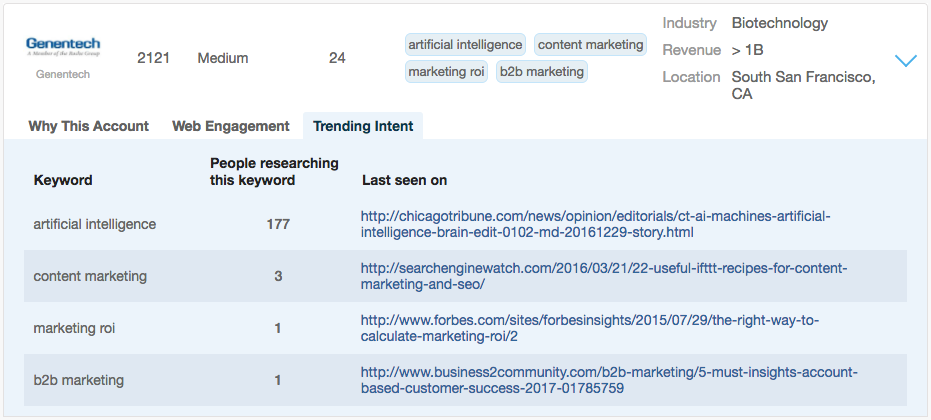
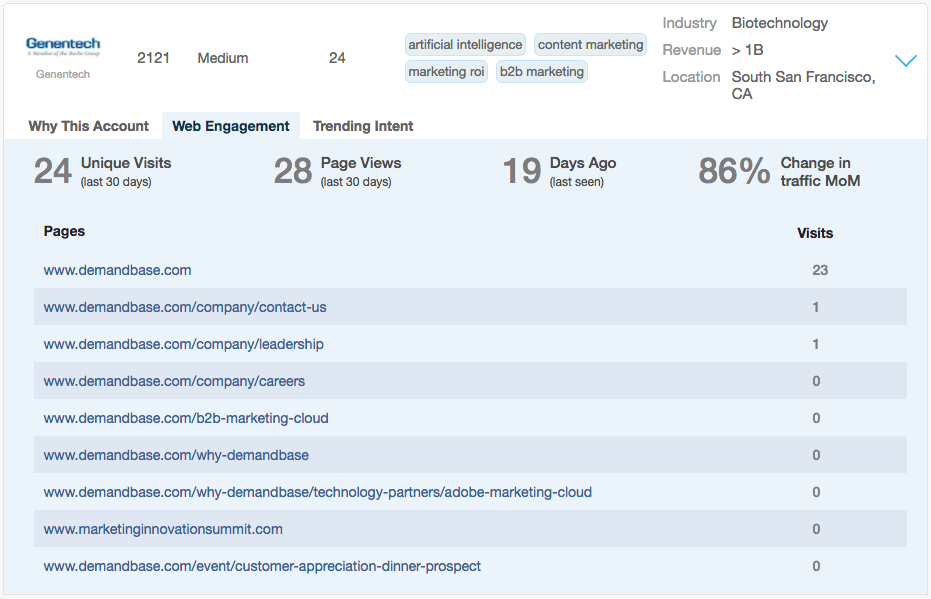
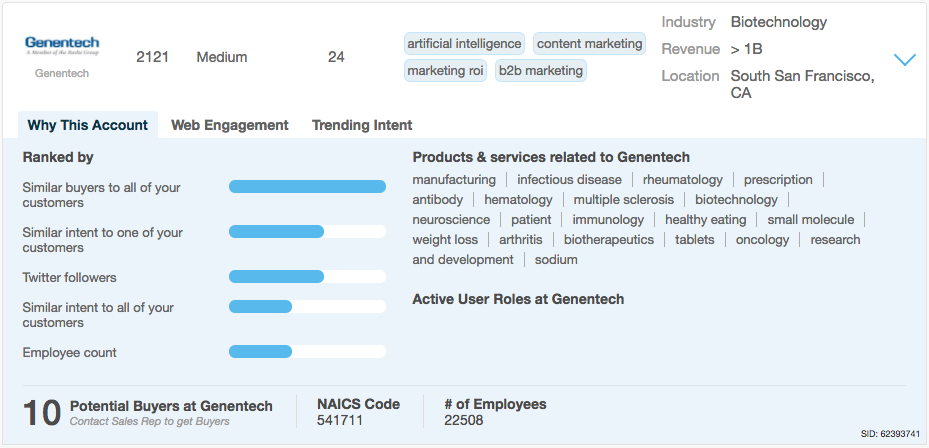
Demandbase Unveils “Real-Time Intent” to Transform B2B and Account-Based Marketing” is locked Demandbase Unveils “Real-Time Intent” to Transform B2B and Account-Based Marketing
Demandbase New Artificial Intelligence-Based Technology Gives B2b Companies A Head Start On The Buying Cycle
More than 70% of B2B buyers start their research with a generic search. For ABM success, it is critical for companies to identify, reach and engage the key decision makers as early as possible in the buyer’s journey. Leveraging Artificial Intelligence and Machine Learning (AI/ML) can prove to be very handy for B2B marketers seeking a head start. To help such marketers, Demandbase, the pioneer in Account-Based Marketing (ABM), has announced Real-Time Intent.
Demandbase’s Real-Time Intent will be available to all customers in the fall, and will enable website personalization at the persona level later this year.
The Data Machinery Driving Real-Time Intent
Demandbase’s Real-Time Intent technology leverages AI and Machine Learning to analyze and track billions of interactions every month. The company combines its proprietary IP-based data and patented identification technology, data from its ad networks and exchanges, third party firmographic data, and publicly available online data such as social media APIs, articles, press releases and SEC data to map out what an account is interested in and research in real-time.
Real-Time Intent Automatically Triggers Sales and Marketing Actions throughout ABM Funnel
Demandbase’s Real-Time Intent is a new artificial AI technology that gives B2B companies a head start on the buying cycle and makes B2B signals more actionable. Similar to how a keyword search signals intent, Real-Time Intent identifies the interests of accounts and buyers at the beginning of the online research stage and then automatically triggers sales and marketing actions throughout the entire ABM funnel.
Trending IntentWeb Engagement
In an interview with MarTech Series, Peter Isaacson, Chief Marketing Officer at Demandbase, had said —
“Artificial intelligence (AI) will continue to upend our B2B world in ways than once seemed impossible. Recently, we conducted a survey of 500 B2B marketers in conjunction with Wakefield Research, and the results revealed that 80 percent of marketing executives anticipate AI would revolutionize marketing by 2020.”
The launch of Real-Time Intent proves that AI/ML would be the key to constructing one-to-one personalized conversations, converting data into insights, and insights into automated actions.
Build and Deliver Personalized Marketing Content at Scale with Improved Sales Intelligence
Real-Time Intent technology will help companies discover accounts who are interested in their products and services, create hyper-targeted ads, improve sales intelligence, and personalize website content at scale at the account level.
Using Real-Time Intent from Demandbase, B2B marketers can:
Identify accounts that are showing the greatest intent for a specific topic
Target accounts who are starting to research one of your competitors
Deliver customized, relevant messages that fit each phase of the journey
Trigger sales outreach for any account that shows a spike in intent
Demandbase’s network currently receives over 400 million B2B visitors every month, which is 3X LinkedIn’s reported monthly active users. This yields more than 60 billion B2B monthly interactions that Demandbase is able to monitor, identify signals, and then make those signals actionable across the entire sales and marketing funnel.
Real-Time Intent Captures the ‘First-Moment’ of the Buyer’s Interest
Chris Golec, CEO of Demandbase
Chris Golec, CEO of Demandbase, said, “Our scale of business audience reach across the entire web paired with our AI capabilities results in an unparalleled ability to understand business interests in real-time. This technology will give our customers greater reach and superior precision and timing than previously possible. More importantly, Real-Time Intent will be delivered through a platform and suite of targeting, engagement and conversion solutions so that customers can take immediate actions on the insights.”
According to CEB, B2B buyers are already 57 percent of the way down the path to a decision before they actually perform an action on a business website. Potential buyers signal interest in the form of what they’re reading, long before they’ve identified solutions and visited a corporate website or begin posting online.
Demandbase’s Real-Time Intent leverages AI to allow B2B companies to capture this first moment of a potential buyer’s interest and intent to get ahead of the competition and deliver the right messages across multiple channels at the very beginning of the buyer’s journey.
Steven Shapiro, Vice President of Digital and Buyer’s Journey at Informatica
Steven Shapiro, Vice President of Digital and Buyer’s Journey at Informatica, said, “As the leader in Enterprise Cloud Data Management, Informatica understands the disruptive power of data. Our marketing vision is to use data and data science to drive relevant engagements. Demandbase’s Real-Time Intent is an exciting step forward that will help us deliver the right message at the right time by both extending intent data with more context and determining the Next Best Action to accelerate the buyer’s journey.”
Eric Wittlake, Senior Analyst, Marketing Practice at TOPO Inc.
Eric Wittlake, Senior Analyst in the Marketing Practice at TOPO, said, “B2B marketers have been using intent data for a couple years, but are now looking for new possibilities that make this data more actionable and integrate it better with their existing technology stack. AI will make it possible for data to become more actionable and valuable in marketing programs.”
LinkedIn Marketing Diversifies its Partner Program with New Categories and MarTech Members
Linkedin Has Announced That It Is Introducing 19 New Partners In Three New Categories To Help Marketers
LinkedIn has announced that it is doubling down on solving 3 major pain points for their customers by expanding their LinkedIn Marketing Partner program. They’ve enlisted 19 new partners in three new categories—
– Marketing Analytics
– Audience Management
– Media Buying
Rely on LinkedIn Marketing Partner Program to Measure and Optimize ROI on MarTech Investments
The LinkedIn Marketing Partner Program is a global community of marketing technology and service providers that enable marketers to improve campaign performances.
The latest announcement comes on the heels of Scott Brinker’s study that suggests the trend of increasing MarTech budgets. According to the study, 70%of the survey’s respondents plan to increase their investment in technology in 2017 even as marketers seek to easily access solutions that would drive results for their business. Therefore, LinkedIn is making its platform more flexible and easier for marketers to improve the ROI of their campaigns.
Considering the dynamic of the marketing technology landscape, LinkedIn adding 19 partners across three new categories will allow marketers do achieve more from their campaigns in less time.
Three years ago, LinkedIn established its partner program to help marketers pick the right service and technology providers. With a growing list of customers, the LinkedIn Marketing Partner program has turned into a central engagement avenue for companies like OpenDNS, Lenovo and Hired that have used the program to match with leading third-party marketing solutions and drive amazing results.
LinkedIn Marketing Partner Program Eases Scaling
The partner program is aimed at making it easier for marketers to work with LinkedIn at a global scale. With a growing number of marketers relying on LinkedIn for B2B engagements, the new announcement will let marketers tap LinkedIn-approved partners who specialize in one or more of the following categories:
Media Buying
For businesses struggling to find their ground and struggling with visibility, media buying is an effective solution. Marketers rely on location analytics and cross-device ID management to purchase ads and have them appear in various locations. However, most marketers still find themselves spending too much time on personalized campaigns without optimizing their media buying solutions.
By expanding its category of Media Buying partners, marketers can save time and boost LinkedIn ad campaign performance.
According to HubSpot, a LinkedIn Marketing partner, 40% of marketers feel that demonstrating accurate ROI is their company’s top marketing challenge. Generating traffic and qualified leads is the only other thing that is more important than proving ROI.
The expanded community of Marketing Analytics partners that offer technologies to help marketers prove ROI and make better marketing decisions on LinkedIn includes seven new partners:
Each marketing analytics partner has integrated with LinkedIn’s Marketing Analytics APIs, allowing customers to access powerful campaign performance insights directly from their existing MarTech platforms.
Audience Management
Account-Based Marketing (ABM) is an effective strategy to reach and engage B2B customers and prospects. In April this year, LinkedIn released Matched Audiences for B2B companies. Matched Audiences is perched at the top of ABM products, enabling companies to upload a list of up to 300,000 account names and target ads to only these accounts.
The new Audience Management partners offer technologies that help B2B marketers target account contacts through LinkedIn Matched Audiences and manage contacts generated through LinkedIn Lead Gen Forms to boost ABM performance.
The latest expansion to LinkedIn Marketing Partner program also includes the addition of two new Asia Pacific-based partners in the Content Marketing category. FrogIdeas and Text100 have joined the partner community to provide LinkedIn customers in India, Singapore, Hong Kong and Australia with more third party options for creating and managing their content on LinkedIn.
More Announcements Likely in the Future
With the convergence of the web, social, mobile and video technologies, marketers are looking for product and service providers that deliver omnichannel experiences. As the battle for consumer attention gets more competitive, LinkedIn Marketing Partner Program would be helpful for marketers in deciding what platforms would justify their marketing budget. From gaining actionable audience data to managing content and brand insights, LinkedIn Marketing is all set to drive meaningful business results that reach and engage customers with bespoke and impactful campaigns.
A new survey from Certain, the leader in enterprise event automation, reveals that despite technology advances, many marketers still struggle to capitalize on leads generated following in-person events. Events continue to be rated the number one most effective B2B marketing tactic because of their high returns. However, data from Certain’s survey (pulled from over 150 marketing decision makers at B2B companies), reveals that there is room for improvement, particularly when it comes to post-event nurturing. The most compelling data from the survey revealed the following from the respondents:
The majority of marketers (73 percent) still rely on manual data capture for events
Of those surveyed, 81 percent want more information on leads than what is currently captured at events
The vast majority (89 percent) reported the lag in following up on leads is due to a lack of tools and capabilities
Events remain a crucial tool for today’s enterprise marketers, with 70 percent of the U.S.-based senior marketers reportedly planning to increase their marketing spend on events in 2017. Despite this increase in spend, many marketers seem to be missing the mark on effective follow ups, with only two percent of the marketers Certain surveyed reporting that they follow up with leads on the same day. Fifty-seven percent reported that it takes several hours, and a further 23 percent sharing that it takes them multiple days. Only 30 percent of U.S. senior marketers reported that they are completely satisfied with the amount of time it takes their organizations to follow up, indicating that there are crucial tools and technologies lacking in their processes.
“In-person events remain one of the best ways for companies to engage with new prospects that have the potential to convert into customers,” said Peter Micciche, CEO, Certain. “Without event automation, hot leads can often go cold. It’s clear from our recent survey that marketers want to follow up more quickly, but are unable to do so with current tools and technology. With the help of event automation, marketers can take full advantage of the relationships fostered during events – collecting crucial data that enables real-time marketing – creating better engagement including post-event nurturing, to drive stronger business results.”
Certain’s event lead survey revealed that even large enterprise companies are behind when it comes to event automation technology. This is clear with 31 percent of US marketers surveyed still using manual methods and tools to mine leads. According to a study from InsideSales, the odds of connecting with a lead significantly decreases after the first 20 minutes of meeting, meaning only two percent of marketers are playing to their full potential and maximizing ROI from events.
Certain’s lead survey findings further drive home that there are advanced technologies that can be integrated into the marketing stack that will significantly improve conversion rates. The survey findings are from 150 marketing decision-makers at B2B organizations in the United States with 1,000 or more employees that sponsor or host two or more events each year. Data was collected in July 2017.
Other findings from the research include:
Many organizations are putting the pressure on marketers to prove their worth:
Nearly 66 percent of respondents said their organizations require them to reach out to 50 or more leads following an event
Event lead follow up often involves the efforts of multiple team members:
68 percent of respondents said lead follow ups usually requires the attention of 10 or more people from marketing teams
Event lead follow up is not as simple as forwarding data collected to the sales team:
57 percent of respondents said at least a few hours of manual effort is required to make leads ‘sales ready’ before teams can follow up.







 Ten years ago, with the advance of marketing technology, the role of the Chief Marketing Officer (CMO) fundamentally changed. As marketing shifted from a cost center to a revenue generator, the C-suite increasingly turned to the CMO for detailed data about marketing’s impact on the bottom line.