Home Blog Page 4344

Interview with David Dowhan, CEO & Founder, TruSignal

0
David_Dowhan

[easy-profiles profile_twitter=”https://twitter.com/DavidDowhan” profile_linkedin=”https://www.linkedin.com/in/ddowhan/”]
[mnky_testimonial_slider slide_speed=”3″][mnky_testimonial name=”” author_dec=”” position=”Designer”]“The challenge that the CMO faces around audience targeting today is deciphering between the number of solution vendors in the ecosystem, understanding their differences and the end-benefit provided.”[/mnky_testimonial][/mnky_testimonial_slider]

Tell us about your role and how you got here? What inspired you to start a people-based marketing company?

When I was head of marketing for NextCard (a credit card originator from the Internet 1.0 era), I saw firsthand how using data and individually tailored offers made a huge difference in ROI and customer satisfaction. Unfortunately, the sophisticated data and analytical tools available for credit decisioning were just not available for digital marketing at the time. My team had to buy media based on site context, or the composite audience of a website. I was inspired to start TruSignal, Inc. so that we could take the sophisticated people-based data and predictive modeling capabilities of the financial services industry and adapt them for a 1:1 addressable digital world.

Back in 2012, while working at eBureau, a predictive analytics company doing lead scoring and fraud detection, I had my chance to incubate an early version of TruSignal by borrowing some of the assets of eBureau. At the time, audience onboarding was just getting off the ground and DSPs were making it possible to target specific people regardless of which website(s) they happen to be visiting. So all the pieces of the 1:1 people-based marketing opportunity were there, but it was still a few more years before the industry matured and reached the critical mass to make the vision a reality. In 2017, eBureau was acquired by TransUnion and we decided to spin out TruSignal as a stand-alone company. So while “people-based marketing” and “machine-learning” are suddenly hot topics in the industry, we have been executing on that promise for a long time and becoming the very best at developing highly accurate, people-based lookalikes to power digital marketing.

What are the core tenets of TruSignal’s predictive scoring engine for audience expansion?

TruSignal is all about offline data—using our access to proprietary offline data sources that are not otherwise available on the exchanges. That offline data enables us to assign a score to most US adults. We score each of them individually, based on addressable profiles. The quality of this proprietary data differentiates our scoring, making it much more precise than the alternatives.

While the quality of the offline data is important, the speed and transparency of the modeling is a key aspect as well. We are also a digital-first company, so all of our data handling and audience distribution is designed to work seamlessly in the modern digital age that includes cookies, mobile ad IDs, hashed emails, et cetera.

What are the pain points for marketers in leveraging predictive analytics for better marketing intelligence?

We see that ease-of-access, or lack thereof, is a major pain point for marketers. We’ve worked hard for the past two years to reduce the friction that marketers can encounter when they work with separate vendors. As part of that, we’ve pursued direct integrations with many DSPs and onboarding companies. For example, we have an integration with LiveRamp in which a marketer can onboard a CRM file, and can then order up a TruSignal audience right away. A number of services white-label our audiences, and that’s great.

Moreover, our self-serve solution, the TruAudience Platform, reduces that friction by providing audience management, predictive modeling and consumer insights directly to marketers. The platform has five modules that allow for the deployment of custom audiences to demand-side platforms, data-management platforms, and media partners, as well as across a variety of channels and devices, including TV, radio, mobile, social, native and desktop.

How should CMOs plan to adopt audience data platforms to improve targeting?

The challenge that the CMO faces around audience targeting today is deciphering between the number of solution vendors in the ecosystem, understanding their differences and the end-benefit provided. For many marketers, that means choosing one segment from a group of 50,000 that all sound the same. These types of pre-built solutions only target based on a few generic attributes—gender, income, age, and education. They assume everyone in those segments are equally valuable. Marketers are forced to overlap these segments to try to increase the targeting accuracy, a piecemeal approach that degrades scale significantly. Instead of picking from these pre-built solutions that carry such high tradeoffs, we’re seeing marketers adapt more custom solutions for targeting. Using first-party data and modeling to build custom audiences from the ground up helps marketers target valuable consumers based on the analysis of thousands of attributes, without sacrificing accuracy or scale. As this trend grows, so do the number of companies claiming to offer “custom” solutions. Marketers must be wary about vendors selling pre-built solutions disguised as custom. Be sure to ask questions about the type of data used and for details about the modeling process. A good partner should be able to explain the process to you openly and answer any questions about data, modeling, and customization.

What tools does your marketing stack consist of in 2017? How do you measure your martech stack’s performance?

We begin by asking marketers what their objectives are. Some are focused on new customer acquisition, some more on retention. Some like the top of the funnel, while some prefer the bottom of the funnel.

Ultimately, every marketer wants to convert more people at a lower cost. Let’s take the example of a financial services client we’ve worked with that was trying to target prospects interested in mortgage lending, including refinance and purchase products. We used predictive modeling to determine who was likely and who was unlikely to convert. With our help, the client increased conversions dramatically and reduced the costs of acquisition.

We want to focus on actual people. We build an audience by matching marketers’ CRM data with offline records in an integrated, easy-to-use way. TruSignal is not another standalone solution that marketers have to deal with—rather, we’re integrated with a lot of platforms, and streamlined into a service offering, making us increasingly turnkey for marketers, which is important.

What startups are you watching/keen on right now?

SafeGraph (Auren Hoffman) collects mobile-location data tied to device. Instead of trying to maximize the quantity of mobile data, they are focused on the accuracy. Ultimately, our ability to be successful relies on the quality of input data. So while many other location companies are busy chasing scale (and sacrificing accuracy to get it), it’s our understanding that SafeGraph is meticulously focused on the data quality. As cookies continue to crumble, accurate mobile data is becoming the preferred digital identity currency.

I’m also watching a company called Beeswax (Ari Paparo), which is a bidder-as-a-service solution that enables brands and agencies to control all aspects of programmatic bidding. Data in the ecosystem has been used predominantly for targeting, but there are very important use cases for data related to creative targeting and bid pricing optimization. Without companies like Beeswax, brands are at the mercy of the functionality of their DSP. Beeswax makes it possible for companies to take complete control of their DSP stack and develop innovations that create a competitive advantage.

Would you tell us about your standout digital campaign? 

We worked with a leading online retailer who came to us for help identifying which of its 18 million monthly uniques might be ready to buy a high-priced handbag. By applying our scoring system to the retailer’s audience, we increased conversions 200%, even as we lowered their costs per action by 60%. We’re certainly pleased to be able to bring our clients that kind of success.

As a technology leader, how do you prepare for an AI-driven ecosystem?

At TruSignal, we develop technology that uses AI. There is so much hype in the industry now that it’s important to separate the companies that are using the tech thoughtfully, versus just riding the buzz. Separating the hype from the bona fide offers requires education, so I spend a fair amount of time reading about and learning the vocabulary of machine-learning and AI. This gives me enough background information to ask more informed questions and helps me separate the buzz from the breakthrough. I also focus on understanding and categorizing different kinds of data. Ultimately, AI requires good data to be effective—the best algorithm in the world cannot solve problems if the right data is unavailable or very inaccurate.

One word that best describes how you work.

Collaboratively.

What apps/software/tools can’t you live without?

Slack.

What’s your smartest work related shortcut or productivity hack?

Sharing my calendar availabilities with others via Google Calendars. Turns out you can send a hyperlink that shows all of your availabilities to a 3rd party and they can figure out a time that works for them for meetings.

What are you currently reading? 

Stumbling on Happiness by Daniel Gilbert. I usually consume data on tablets, the web, and my Kindle.

What’s the best advice you’ve ever received?

Figure out what you can be the best at and focus on nailing that.

Tag the one person in the industry whose answers to these questions you would love to read:

Jeff Green (The Trade Desk)

Thank you David! That was fun and hope to see you back on MarTech Series soon.

[vc_tta_tabs][vc_tta_section title=”About David” tab_id=”1501785390157-b58e162d-0ae25a4b-c27aca64-108e51b0-80edaf37-bd3d357a-6c4680f4-54eb”]

Experienced, executive professional with deep experience in Internet customer acquisition, productdevelopment, and marketing analytics.

[/vc_tta_section][vc_tta_section title=”About TruSignal” tab_id=”1501785390320-2d44fa50-740c5a4b-c27aca64-108e51b0-80edaf37-bd3d357a-6c4680f4-54eb”]

TruSignal
TruSignal, Inc. is a leader in Predictive Score Marketing technology, empowering and serving leading platforms and agencies. TruSignal uses people-based offline data, predictive scoring and cross-channel ID matching to deliver a more advanced end-to-end modeling solution for platforms and agencies to enhance existing solutions that help marketers and advertisers more effectively target the right people and pay the right price for every impression for measurable business growth across marketing initiatives.

[/vc_tta_section][/vc_tta_tabs]
[mnky_heading title=”MarTech Interview Series” link=”url:https%3A%2F%2Fmartechseries-67ee47.ingress-bonde.easywp.com%2Fcategory%2Fmts-insights%2Finterviews%2F|||”]

The MTS Martech Interview Series is a fun Q&A style chat which we really enjoy doing with martech leaders. With inspiration from Lifehacker’s How I work interviews, the MarTech Series Interviews follows a two part format On Marketing Technology, and This Is How I Work. The format was chosen because when we decided to start an interview series with the biggest and brightest minds in martech – we wanted to get insight into two areas … one – their ideas on marketing tech and two – insights into the philosophy and methods that make these leaders tick.

Rakuten Marketing to Host the Premier Conference for Online Performance Marketing Leaders at the 2018 Rakuten Marketing DealMaker Event

0
rakuten marketing

Rakuten Marketing, a leading technology company that enables brands to increase sales through data-driven performance marketing, announced its 2018 affiliate marketing premier event, Rakuten Marketing DealMaker – previously known as Rakuten Marketing Symposium. Taking place in Scottsdale, AZ on January 31 – February 1 at the JW Marriot Scottsdale Camelback Inn Resort & Spa, this event will bring together over 500 attendees to experience thought leadership, business planning and partnership building.

Also Read: Rakuten Marketing Centralizes Publisher Ecosystem to Optimize Online Ad Inventory

Rakuten Marketing DealMaker is a highly anticipated networking event whose attendees include hundreds of executives from top online businesses, representatives from leading and innovative publisher websites, and online marketers from the Rakuten Marketing client base of over 600 advertisers. Representatives from hundreds of companies based both nationally and internationally across a wide range of product categories attend this event every year. Those who participated in last year’s event showed an increase in their network performance.

Also Read: Rakuten Marketing Announces Experience 2017 Keynote & Presenters; Experts Tackle Digital Advertising’s Most Pressing Topics, Trends, Challenges & Opportunities in NYC Event

Tony Zito
Tony Zito

“The digital industry continually faces rapid change and new challenges. This year, effective marketing will require more innovation and quick adoption to ensure exceptional consumer experience and, therefore, success for advertisers and publishers,” said Tony Zito, Rakuten Marketing CEO. “Rakuten Marketing DealMaker provides a great opportunity for experts in the industry to get a head-start on this year’s challenges and opportunities through a fun and professional networking environment.”

Led by digital marketing experts and industry thought-leaders, the two-day agenda includes a keynote session with Geoff Ramsey, Co-Founder, Chairman and Chief Innovation Officer at eMarketer, as well as expert commentary on topics such as profitability strategies, in-store and online consumer-journey harmony, consumer-centric insights and more.

Recommended Read: Rakuten Marketing Affiliate Network Ranked Top Program for Seventh Consecutive Year

Winning the Troll Battle

1
Winning the Troll Battle and the Engagement War

viafoura

“Don’t feed the trolls” is a common phrase among those on the internet, meaning that if you ignore those who are trying to get a rise out of you, eventually they will give up and move on. However, content is intended to evoke an emotion or reaction from its consumer, so silencing your audience or allowing trolls to take over cannot be the answer. Community guidelines, the rules trolls vehemently ignore, are important to establish and uphold for both the sake of your journalists, content creators and audience. For communities doing more than ignoring, the battle against online trolls has seen several tactics – from the low-tech tactic of eliminating the comment section and user-generated content from the site, to looking for a solution that can manage their user-generated content and community more efficiently.

Also Read: Viafoura Releases Next Generation Audience Development Platform for Media Companies

Media companies employing a low-tech strategy to battle trolls, ultimately lose valuable data and time spent on site. As evidenced in the MIT Sloan Management Review, engaged users are more likely to subscribe to your content, thereby increasing revenue opportunity from subscriptions and advertisers looking for these KPIs. By eliminating the comment section, brands and their writers lose the ability to directly engage with their audience, and audiences lose the incentive to return, register and subscribe.  For media companies that choose to keep the comments section open, they often find themselves sifting through the negative comments and spam.

Those that have invested in managing comments and user-generated content found that when the quality of conversation increases, so does the quality and frequency of their audience engagement:

  • 35 percent increase in comments per user
  • 34 percent increase in replies per user
  • 62 percent increase in likes per user

Also Read: Facebook’s CrowdTangle Expands Partnership with Chartbeat to Fight Fake News Menace Effectively

More audience engagement means more audience data, which can inform content strategy, a better user experience, higher conversion rates and more effective targeting.  For those who have made the commitment to fostering an online community in line with their brand standards and goals, embracing technological advances such as artificial intelligence as part of their automated moderation can help media companies and content sites do just that.

Automated moderation not only streamlines the workflow of managing user-generated content but also automates the repeatable and inefficient task of human moderation.  With AI technology, moderation tools are able to automatically identify patterns in language and significantly reduce the need for human intervention. User-generated content and comments outside of community guidelines are immediately removed, and suspect comments are sent to a queue for resolution in real time.

Moderating comments and user-generated content is essential to winning the war against trolls, which helps grow your online community and the direct relationship with your audience. Though it can be tempting to eliminate comments and user-generated content altogether, doing so sacrifices a healthy, engaged community – and the crucial audience and KPIs that drive subscription and advertising revenue.

Recommended Read: Interview with Jesse Moeinifar, CEO, Viafoura

Talkwalker Announces Partnership with China’s Sina Weibo to Provide Advanced Analytics Insights

0
Talkwalker

Talkwalker conquers APAC – extensive data coverage provides a complete global view of businesses’ brands, products, and competitors.

Talkwalker, the leading social listening and analytics platform, recently announced a partnership with Sina WeiboChina’s largest social media network and the preferred platform for most mainland Chinese newspapers and TV stations. Sina Weibo, the multi-faceted hybrid of Twitter and Facebook, is used by over 30% of Internet users. That is a staggering 500M+ registered users, publishing 200M posts every day.

Social, economic, and cultural changes in China have created a rapidly expanding and diverse consumer market that is crucial to global brands. With the partnership, Talkwalker’s cutting-edge social listening platform further strengthens its APAC data profile, enabling international marketers to monitor and analyze conversations about their brands and trending topics across websites and social networks in the region.

Also Read: Brands Can Now Track Twitter Buzz with Talkwalker Alerts

Robert Glaesener
Robert Glaesener

“Sina Weibo is China’s most dominant source of information, where Chinese netizens search for news, share content and gather opinions. This partnership opens the door for our clients to the largest and most popular social network in Asia. Businesses looking to track and analyze online conversations in the APAC region, cannot afford to ignore Sina Weibo,” said Robert Glaesener, Talkwalker CEO.

The advanced analytics insights brought by this partnership, allows brands (and Sina Weibo verified account owners) to track and benchmark their social performance within their industry. A deep dive into followers, content performance and trends brings a complete understanding of audiences and will enable brands to enhance engagement.

Also Read: Talkwalker’s Summer Travel Dashboard Reveals Traveler’s Social Sharing Habits

The Talkwalker & Sina Weibo partnership provides:

  • Full-Firehose access that identifies all posts mentioning a brand on Sina Weibo – guaranteeing data quality and coverage for Talkwalker clients.
  • Increased coverage of social networks in China with Sina Weibo’s audience of 500M+.
  • Monitoring of online reputation with 700M+ web users across China, including crisis management.
  • Easy identification and engagement with influencers.
  • Tracking and analysis of trends.

Recommended Read: Eight Trends in Commerce and Digital Marketing to Look Forward to in 2018

TechBytes with Lomit Patel, Vice President, Growth, IMVU

1
Lomit Patel

Lomit Patel
Vice President, Growth, IMVU

Mobile Growth Summit 2018 – the largest mobile marketing growth conference will kick off next week in SF, California. The two-day event, on 7 -8 February, would witness a footfall of 1000+ mobile marketers from more than 600 diversified business groups. To demonstrate how business leaders see next-gen technologies in mobile marketing in 2018, we spoke to a bunch of CEOs, Marketing Executives, Product Officers and Mobile Growth-Hackers.

We spoke to Lomit Patel, VP, Growth, IMVU, to understand the nuances of  mobile customer acquisition.

Html code here! Replace this with any non empty text and that's it.

Tell us about your role at IMVU and the technology you handle.

I head up the Growth team at IMVU, which is responsible for driving user acquisition, retention and monetization across all platforms (iOS, Android, and Web). We utilize the following technology to drive mobile growth, including: Appsflyer (attribution); Tableau (data analytics); Leanplum (CRM and A/B testing); Sensor Tower (App Store Optimization) and Ad publisher/networks (Facebook, Google, Liftoff, etc.).

What brings you to the Mobile Growth Summit 2018? What part of the conference would you keenly follow?

I’m really looking forward to going to the Mobile Growth Summit to network, as well as share and learn about any new growth hacks. I’m keen to follow the sessions on the topics like ad fraud, audience engagement, and attribution models.

What marketing lessons would you like to re-evaluate at the Mobile Growth Summit 2018?

When it comes to mobile growth, there are a few key areas practitioners should delve deeper and revaluate.

Personally, I would like to re-evaluate the following marketing lessons at MGS:

  • Better understanding the customer journey across devices
  • Fraud definition and better alignment across the industry to fight it
  • New AI/ML capabilities coming from different Martech partners
  • Creative best practices and format trends to watch

How do you see modern tech marketers re-aligning their efforts to deliver mobile-centric experiences?

IMVU’s growth in the last few years comes predominantly from our mobile experience (iOS and Android) because we are able to solve how to make an immersive and engaging experience just as fun and engaging on mobile, as it is on the desktop.

At IMVU, we re-align the majority of our company resources into delivering a mobile-centric app experience by removing silos around different teams to ensure everyone was focused on unified business goals to embrace IMVU becoming a mobile-first business. We are very transparent about measuring and communicating business goals as well sharing user research, app rating & reviews to ensure everyone is aligned on delivering the best mobile-centric experiences.

What are the major pain points in a contemporary mobile customer acquisition strategy? How does IMVU enable customers to overcome these?

The major pain points in a contemporary mobile customer acquisition strategy are:

  • Data aggregation and discrepancies of all user acquisition activity
  • Identifying the optimal attribution methodology to measure success
  • Fraud definition and alignment across MMP and partners
  • Finding quality users at scale outside of Facebook/Google
  • Reducing friction in the user path to purchase
  • Poor retention rates with most new users becoming inactive

At IMVU, we enable customers to overcome this starting with quantitative and qualitative research data to help run A/B testing across user flows, campaigns and creative, customized re-engagement campaigns, and leveraging AI & ML technology to optimize performance, attribution and reduce fraud.

I can see AI/ML driven technologies in 2018 will vastly improve deeper personalization and an enhanced view of the customer journey for mobile marketing.

Thanks for chatting with us, Lomit.
Stay tuned for more insights on marketing technologies. To participate in our Tech Bytes program, email us at news@martechseries-67ee47.ingress-bonde.easywp.com

Also Read:  MGS 2018 TechBytes with Colette Nataf, CEO and Co-Founder, Lightning AI

New Free Business Intelligence Offering From Global Database Will Disrupt the Marketing Database Industry

0
Global Database

Users Will Be Able to Read Key Details About Any of the 4 Million Listed Businesses in the UK

Global Database takes the lead in business information services by allowing users to look up any organization and access key information including financial history without a paid-for subscription

The latest Global Database update provides access to an unprecedented amount of business information completely free. For the first time, users will be able to read key details about any of the 4 million listed businesses in the UK, including:

  • Profit and loss accounts
  • Balance sheet and cash flow
  • Technology insights, like the type of technology a company is using
  • Employees details including name, job titles, seniority, nationality, and age
  • Corporate ownership
  • Group structure
  • Mortgages and charges
  • Details of the original company filings

This information will be available to any registered user, free of charge.

New Free Business Intelligence Offering From Global Database Will Disrupt the Marketing Database Industry
Nicolae Buldumac

“Once again, Global Database has taken the lead by opening our extensive business intelligence platform to any user, free of charge. Now every marketer, recruiter or decision maker can find the data they need about a prospective client or partner within a matter of seconds – and without breaking their budget,” said Global Database Managing Director Nicolae Buldumac.

Also Read: Lack of Data Integration and Exec Buy-In Is Risking CX ROI

Global Database also offers an enhanced subscription package. The enhanced plan provides an email address, direct dial phone numbers and fax numbers for every contact and company listed. Subscribers are free to download this data for use in their marketing campaigns, to pre-populate their CRM system, or to assist with data cleansing of their corporate contact database.

Buldumac added, “Someone once said that the best things in life are free and in the case of Global Database that is definitely true. Access may be free, but the quality of our data is still industry-leading. Our records are updated daily to ensure that information is as accurate as possible. And the information is still fresher than the offerings of our many paid-for competitors.”

Using the information available to them, recruiters can identify potential employees, senior management can assess the credit risk of a potential partner, and marketers can narrow down their prospect list. “Used effectively, Global Database allows your organization to jump-start business intelligence-driven operations – for free.”

Recommended Read: Blockchain Will Transform the Global Economy. But What Will it Mean for Advertisers?

Scheduling and Publishing on Instagram is Now Easier with Hootsuite

1
Hootsuite

Hootsuite Has Announced That the Newly Available Features for Publishing on Instagram Would Roll out on 31 January for All Hootsuite Customers That Operate a Registered Instagram Business Profile

Leading social media management platform, Hootsuite, has announced a deeper integration with Instagram. With this integration, the Hootsuite customers can perform direct scheduling and publishing on Instagram through the Hootsuite dashboard.

In an official blog, Hoostuite has announced that the newly available features roll out on 31 January for all Hootsuite customers that operate a registered Instagram business profile. Hootsuite also confirmed that the Instagram Graph API updates and developer support would end for the Instagram API Platform by early 2020 (timeline unspecified).

logo+

At the time of this announcement, Ryan Holmes, CEO of Hootsuite, said, “Scheduling and publishing of Instagram content have been the number one request for our 16 million customers.”

Recommended Read: Voilà! the Internet Crosses 4 Billion User Mark, and 80% of Them Are on Social Media

Last year, Hootsuite had announced that they are updating the Instagram API to the Instagram Graph API, built on the Facebook Graph API. With the latest integration for Instagram, Hootsuite customers can better plan their content management and secure social login credentials across the organization.

Read More: ReviewTrackers Partners with Hootsuite to Monitor Online Reputation and Enhance Customer Experience 

Ryan added, “Now, they can manage large volumes of content, multiple team members, and multiple Instagram accounts with ease and security. Hootsuite is excited to launch our new integration with Instagram to help our customers achieve their business goals and succeed with social networking.”

With more than two million photos and videos shared every month via Hootsuite, Instagram has proven to be the fastest growing social network on the Hootsuite platform. The new features in the Instagram Graph API,  would enable Hootsuite customers to schedule and post photo content directly through their Hootsuite dashboard. This allows for brands to schedule and publishes across all supported social networks through a single, secured and integrated workflow experience.

CallRail Launches AI-powered Call Highlights Feature for Improved Reporting and Analytics

1
CallRail Launches AI-powered Call Highlights Feature for Improved Reporting and Analytics

Call Highlights is an AI-Driven Feature Proactively Recommends Additional, Customized Keywords Helping Marketers Better Understand Why Customers Are Picking up the Phone

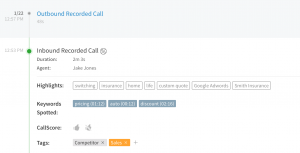
CallRail, a leading call tracking and analytics provider for data-driven marketers, has announced the launch of Call Highlights. Call Highlights by CallRail is an AI-driven extension of its Keyword Spotting technology within CallScribe. This extension automatically detects and surfaces relevant keywords in a phone call.

Recommended ReadVoilà! the Internet Crosses 4 Billion User Mark, and 80% of Them Are on Social Media

While Keyword Spotting identifies pre-determined keywords and phrases within call transcriptions, CallRail’s first-to-market Call Highlights feature detects and proactively recommends new keywords to analyze, providing extra insight from a given phone conversation.

Based on these recommendations, CallRail users can adjust their Keyword Spotting settings to include these additional keywords for future analyses. Marketers can also export, report and push insights from Call Highlights into apps or sites for improved analytics.

Call Highlights via CalLRail
Call Highlights via CallRail
Call Highlights via CalLRail
Call Highlights via CallRail


Call Highlights via CalLRail
Call Highlights via CallRail

Read MoreCreative Brainstorming for Ad Agencies: 14 Questions to Ask Before, During and After Every Session

Kevin Mann, CPO and Co-Founder, CallRail

Kevin Mann, Chief Product Officer and Co-Founder at CallRail, said, “These days, marketers can’t afford to waste their ad dollars, and CallRail is continuing to develop products that help prioritize what’s driving real results. Call Highlights can reveal unique customer insights that marketers might have otherwise missed and use them to shape future marketing initiatives that will truly resonate with their target audiences.”

Within few minutes of each phone call, users are provided with a full email report of a given conversation that includes any new keywords recommended by Call Highlights.

Additionally, CallRail has improved transcriptions in email notifications — emails will now display transcriptions for the longest customer response in a conversation, which is most often when a customer explains his or her reason for calling.

Kevin added, “Our Keyword Spotting technology provides marketers with powerful insights, but Call Highlights clues them in on the full story.”

Further, Kevin explained, “With Call Highlights, we’re bringing those really hidden call insights to life to help marketers better determine why customers are picking up the phone. Armed with these insights, CallRail users can inform a more personalized customer experience and create more relevant campaigns.”

CallRail’s Call Highlights follows several other product releases made in the past year. In June, International Numbers expanded CallRail’s call tracking services to Australia, Brazil, France, Germany, New Zealand and the U.K. In December, CallRail launched its deep integration with Facebook’s Offline Conversion API, allowing users to view calls, texts and form completions driven by Facebook ads natively in Facebook Ads Manager, alongside existing impressions and clicks.

Currently, CallRail provides call tracking and analytics to more than 75,000 companies and marketing agencies globally. CallRail’s intuitive software helps data-driven marketers optimize the performance of their advertising campaigns, increase sales effectiveness, and improve customer retention. From call tracking, routing, recording, and analytics, CallRail provides valuable data about your leads and customers to help grow your business.

Recommended ReadGetting Audiences to Pay When Everyone’s Behind the Paywall 

Evergage Acquires MyBuys to Heighten Cross-Channel Customer Experiences

0
Evergage Acquires MyBuys to Heighten Cross-Channel Customer Experiences

Deal Accelerates Evergage’s Growth, Expanding its Footprint in Key Retail Vertical

Leading real-time personalization platform provider, Evergage, announced the acquisition of MyBuys, a merchandising products business from digital advertising technology company, Magnetic. This acquisition brings the benefits of broad-scale personalization to a wide array of retailers – enabling them to deliver individualized, cross-channel experiences that drive conversions, build customer loyalty and increase revenues.

At the time of this announcement, Karl Wirth, Evergage CEO and author of the book—  “One-to-One Personalization in the Age of Machine Learning“, said, “Well-executed, truly personalized experiences are the bedrock of successful customer interactions and long-term customer relationships. We’re excited to welcome MyBuys’ team members and customers – who share this belief in the critical importance of personalization – and look forward to collaborating and innovating with them to advance our shared vision.”

Recommended ReadEvergage Writes the Book on Delivering 1:1 Personalized Experiences

1:1 Personalization Is Now a Strategic Imperative for Nearly All Online Retailers

Founded in 2001, MyBuys played a pioneering role in personalization in the retail sector by providing first-generation technology for product recommendations – which are now a strategic imperative for nearly all online retailers. Hundreds of leading e-commerce companies use MyBuys technology to deliver product recommendations on their websites and via email to millions of shoppers, utilizing online and offline data.

Evergage’s Vision 2018: A Quick Overview

The acquisition comes on the heels of continued growth and momentum for Evergage and expands its leadership in retail – one of Evergage’s key verticals. It also comes at a time when more and more organizations are looking to tap into the full power of personalization. Gartner predicts that “by 2020, smart personalization engines used to recognize customer intent will enable digital businesses to increase their profits by up to 15%.”

Read MoreCompelling Personalization Benefits – But There’s Still Room for Improvement in Executing Campaigns

Evergage will be bringing MyBuys employees – including engineering, customer success, and technical support professionals – onto its team.

MyBuys Customers Would Continue to Enjoy Services

Employing a carefully coordinated, high-touch process, Evergage will migrate each MyBuys customer onto the Evergage personalization platform, which will deliver all the current capabilities of the MyBuys merchandising solution and much more. Evergage will provide total continuity for MyBuys customers and a seamless transition to its comprehensive, real-time platform, built for today’s e-commerce environment and named “Best E-Commerce Solution” in the 2017 SIIA CODiE Awards.

Evergage Adds Extensive AI/ML Capabilities to Deliver High-value Personalizations 

Combining deep behavioral analytics, a full customer data platform and advanced machine learning, Evergage powers 1:1 personalization across websites, web and mobile apps, onsite search, and email. Marketers can automatically recognize and act on visitors’ interests and intent within milliseconds – all from a single self-service platform that’s easy to operate without IT intervention.

Read MoreEvergage Adds New Partners to Extend “The Power of 1” and Personalization

In addition, Evergage’s platform provides spot-on, personalized recommendations at the product, category and brand level; automatic catalog integration for retailers; CRM and in-store purchase data synchronization; A/B and multivariate testing; sophisticated rule-based targeting; and advanced analytics.

Corey Ferengul, CEO of Magnetic, said, “Our MyBuys customers – many of whom use both Magnetic and MyBuys solutions – are extremely well-served with this move. We’re thrilled to have placed them in the best possible hands.”

Corey added, “Evergage’s comprehensive personalization platform eliminates the need for multiple ‘point’ solutions and provides more and richer on-site and email personalization capabilities. Magnetic remains focused on delivering advertisers the best possible solutions for reaching consumers through media using our industry-leading artificial intelligence and machine learning.”

Evergage Becomes a Next-Gen Personalization Platform with MyBuys in Its Shed

Jason Shriver, the former head of client success at MyBuys and now VP of customer success at Evergage, said, “Evergage’s advanced personalization capabilities, vision, and strategy have made the company a true market leader – and even more importantly, the company aligns closely with MyBuys’ ideals. We’re incredibly happy to join their team and to continue to serve our world-class customer base, uninterrupted, but now on a premier, next-generation personalization platform. We’re excited for what the future brings: helping retailers understand, serve and respond to their customers at the 1:1 level.”

Currently, Evergage’s real-time personalization platform delivers The Power of 1, enabling digital marketers to transform the dream of 1:1 customer engagement across channels into reality. Combining in-depth behavioral analytics, a full customer data platform and advanced machine learning, Evergage provides the one solution you need to systematically understand and interact with each person that visits your site or uses an app – one at a time, “in the moment” and at scale – to deliver a maximally relevant, individualized experience.

Getting Audiences to Pay When Everyone’s Behind the Paywall 

0
Guest-Post_Keith-Sibson

In the rapidly-changing digital publishing industry, publishers who thrived on ad revenue now find themselves fighting for scraps from Facebook and Google. As a result, an industry once skeptical of paywalls is now building them by the dozen. Fortunately, audiences are more willing to pay for digital content than ever, but with so many premium options available, how do publishers set themselves apart?

Foundationally, publishers must have quality original content behind their wall, or audiences will just find similar content elsewhere for free. But to convert subscribers, publishers must also find a way to prove the value of that original content and earn audience trust. That’s why strong direct audience relationships are so important. Publishers can follow these steps to build the kind of audience ties that lead to paid subscriptions.

The New Role of Facebook: Convert to a Direct Audience 

Digital publishers were wary of paywalls when social media clicks and ad revenue flowed freely. Unfortunately, building a business on Facebook only created a wall of a different kind: a wall between the publisher and audience, and that’s a wall that doesn’t pay. With Facebook recently reducing the organic reach of publisher content to zero, you essentially have no inherent social following.

Your priority for Facebook traffic should be to capture an email address. With Facebook traffic, they won’t stay long (1.2 page views per visit), you don’t know when they’ll be back if at all,  and they are unlikely to convert to a paying subscription, especially on their first visit. An email subscription is a direct link to market to your audience indefinitely, making email the most important tool for nurturing audiences into paying customers.

The key steps with regard to Facebook as are follows–

  • Make your content as easy as possible to share, Facebook reach can now only be accomplished through sharing.
  • Use Facebook as an acquisition channel for email subscribers, replace your paywall with an email capture wall for site visitors from Facebook.
  • If you are publishing via Instant Articles, make sure you are using the email newsletter signup CTA to capture a direct email relationship.

More generally on your site and for all traffic channels, maximize email conversions by using email capture widgets to grab the audience’s attention. Use active “ad like” units that scroll out from the bottom of the screen and offer readers a newsletter subscription, these can be 10X more effective than simple signup forms that sit at the bottom of articles.

Also read:  Social Media Marketing Moves from Megaphone to Targeted Conversations

Converting the Direct Audience to Paying Audience 

Having a direct link to your audience through email makes it easier to show that content is worth paying for, by “teasing” the offering over time. The New York Times found that people are twice as likely to become paid subscribers if they subscribe to a newsletter first.

Publishers need to start thinking like marketers. With the email address, you are able to continuously “advertise” (push to the inbox) your “product” (sample content) with growing confidence that, eventually, the reader will bite on a premium subscription.

Your metered paywall works in concert with your newsletters. Newsletters drive engagement, grow the realized value of your content, and ultimately triggers the paywall at a point when the user is ready to buy. Too many paywalls fail to convert simply because the audience does not engage enough to trigger them (e.g. 10 articles per month). Or, they trigger prematurely, before the reader has seen enough value to convert (e.g. 2 articles per month).

By providing a sample of relevant content in the inbox, you engage your audience continuously, driving a growing awareness of the value of paying for your content. Email teaser newsletters and “guest passes” neatly solve the chicken and egg problem, whereby readers won’t pay before they see the value but the value is in the content they must pay to see.

Optimize Your Paywall and Maximize Conversions

The ideal metered paywall allows audiences to sample enough content to see the value, but not so much that they are satiated before hitting the article limit. But how do you find that point?

While personalized content is a hot topic among publishers looking to increase engagement, a personalized paywall can also increase revenue. Not everyone has the same appetite for paid content, so you can use dynamic paywalls to adjust the meter based on an individual’s traffic source, location, or other data that might predict their willingness to pay.

Optimized paywalls can also be deployed to maximize ad revenue by not cutting off impressions from visitors who are very unlikely to pay, for example, first-time visitors from Facebook, or international.

The publishers who come out ahead will be the ones who place a renewed focus on establishing a directly reachable audience through email, showing value with quality content, and optimizing their metered paywalls.

Also Read:  The Importance of Marketing and Sales Alignment

SAP to Acquire Callidus Software Inc., Will Offer Comprehensive “Front Office” Suite

0
SAP Acquires Callidus

CallidusCloud’s Lead to Money Suite for Sales Combined with SAP’s Customer Engagement Suite Creates Leading CRM Solution Portfolio

SAP SE and Callidus Software Inc.announced that SAP America, Inc. has entered into an agreement to acquire CallidusCloud, the leader in cloud-based Lead to Money (Quote-to-Cash) solutions.

The acquisition gives SAP immediate leadership in the Lead to Money space that includes sales performance management (SPM) and configure-price-quote (CPQ). CallidusCloud offers a full suite of SPM and CPQ solutions, including sales enablement, sales analytics and customer engagement. The combination of SAP’s assets with CallidusCloud’s will deliver the most complete, end-to-end, fully cloud-based ‘Lead-to-Cash’ offering. CallidusCloud has been a partner of SAP for several years, based on a joint selling agreement.

CallidusCloud is a synergistic addition to SAP’s portfolio and significantly strengthens SAP’s position in the customer relationship management (CRM) space. CallidusCloud’s solutions are tailored to the specific needs of sales people on the ground and link sales-related information, such as pricing, incentives, and commissions, to enterprise resource planning (ERP) systems. CallidusCloud as part of SAP will seamlessly link front and back offices, align sales, compensation and corporate goals, and ensure real-time data flow between the field and finance department.

Also Read:  TechBytes with Johann Wrede, Global VP, Strategic Marketing, SAP Hybris

“SAP is connecting the back office to the front office in this consumer-driven growth revolution.Our customers are focused on reinventing sales, service, marketing, and commerce. The addition of CallidusCloud aligns perfectly to SAP’s innovation strategy to transform the front office. SAP gives CallidusCloud the global scale to accelerate its already impressive growth. These two strong companies will be better together, help the world run better and improve people’s lives,” said Bill McDermott, CEO of SAP.

CallidusCloud CEO Leslie Stretch said, “We are super excited to join forces with SAP. This move gives customers precisely what they want, the market leading Sales Performance (SPM), Sales Execution (CPQ) and Sales Enablement clouds combined with SAP Hybris and S/4HANA. This is true Lead to Money, beyond CRM and beyond Quote-to-Cash. It’s the joined-up Front Office and Back Office Cloud everyone needs for 21st Century Business. In addition, the purchase price provides substantial value to our stockholders.”

SAP’s S/4HANA business suite in the cloud, SAP Hybris, and Gigya solutions already help businesses deliver new customer experiences, connecting the demand chain to the supply chain. SAP Hybris solutions help companies serve consumers in any channel, on any device. In addition, SAP Hybris’s revenue and billing solutions enable companies to monetize new business models. Gigya helps companies secure, protect, and service the consumer’s digital identity in the age of data protection and regulation.

CallidusCloud, combined with SAP’s solution portfolio, also will offer companies powerful tools to enhance sales execution and transform customer engagement. CallidusCloud’s portfolio will strengthen existing SAP sales solutions. The portfolio will be enriched with sales planning and forecasting, territory management, and pipeline management. SAP’s sales content management will benefit from easy access to contracts, collateral, and learning.

Additionally, with the Lead to Money suite, CallidusCloud is a leader in cloud-based Quote-to-Cash solutions. This area includes solutions for sales performance management (SPM), sales execution including configure-price-quote (CPQ) applications, sales enablement including learning applications, customer engagement and analytics. CallidusCloud SPM solutions give salespeople instantaneous knowledge of their compensation associated with particular product and pricing configurations and reduce errors in calculating sales commissions and compensation arrangements. CallidusCloud CPQ solutions enable salespeople to identify and configure product packages that have built-in rules for discounts and that can generate proposals for the customers on the spot and during the conversation with the customer. CallidusCloud CPQ solutions also can automatically generate contracts in real time while the salesperson is with the customer. Part of CallidusCloud offering is a sales-focused and mobile-native learning platform called “Litmos,” which shows solid growth.

SAP will follow a strategy of openness that will continue to support integration of CallidusCloud solutions with third-party installations.

Upon completion of the transaction, SAP expects to consolidate all CallidusCloud product assets within SAP Hybris solutions as part of SAP’s Cloud Business Group. The existing management team will continue to lead CallidusCloud. The SAP Cloud Platform is to be used for the technical integration of CallidusCloud solutions.

Also Read:  SAP Announces Plan to Acquire Gigya to Strengthen Position in Omnichannel Customer Experience

Mautic Inc. Achieves Record Q4 Results with 3X Quarter-Over-Quarter Growth in Sales

0
Mautic, Inc. Achieves Record Q4 Results with 3X Quarter-Over-Quarter Growth in Sales

Open Marketing Automation Leader Increases Customer Base, Expands Team and Grows Product Portfolio

Mautic, the world’s only Open Marketing Cloud, announced it has seen rapid adoption of the company’s marketing automation cloud platform, evidenced by a 3X increase in quarter-over-quarter sales in its recently-completed fourth quarter. Additionally, the company added key members to its leadership team and Board of Directors and launched a new management tool that enables companies to scale their marketing operations.

After emerging in the marketing automation market in the spring of 2017, the company focused on learning from early customer engagements to build a strong foundation and grow its readiness to serve mid-market and enterprise organizations. Late in the year, Mautic began to proactively invest in its go-to-market efforts, which resulted in dramatic increases in new customer subscriptions, as well as the largest deals in the company’s young history.

Mautic Inc. Achieves Record Q4 Results with 3X Quarter-Over-Quarter Growth in Sales
Matt Johnston

“2017 was an incredibly successful first year-in-market for Mautic. We built the team and technology to deliver world-class open marketing automation solutions – and the results from Q4 blew away our expectations. This momentum has us poised for a breakout 2018 with even sharper growth through continued product innovation, maniacal customer-centricity, and serving the Mautic open source community,” said Mautic CEO Matt Johnston.

Also Read: Mautic Launches Maestro, A Marketing Management Solution Created Specifically for Agencies and Enterprises

Commercial Adoption

  • The company achieved strong customer growth with an 8X increase in the number of new Mautic Cloud customers versus earlier quarters.
  • Customer growth was most rapid amongst mid-size and large B2B companies such as Airbus, uTest and Layer; as well as B2C brands like BBVA, The Broad and Earplay.
  • Adoption of Mautic’s platform surpassed a major milestone, with more than 200,000 organizations now utilizing the software.

Product Innovation

  • There were 20 new releases of the Mautic marketing automation platform in 2017, which included more than 200 new features and 1,000+ other smaller enhancements.
  • These updates include new and deeper integrations with several top CRM solutions – including Salesforce, HubSpot, SugarCRM, Vtiger, Connectwise, Pipedrive and Microsoft Dynamics – as well as enabling customers to manage all marketing communications, including email, SMS messages, mobile alerts and social from a single unified platform.
  • Mautic, Inc. launched Maestro as the industry’s first solution that enables agencies and enterprises to manage multiple marketing automation accounts.
  • The company also announced the upcoming beta of Maven, a marketing intelligence tool that will apply machine learning to help marketers optimize campaigns and content.

Awards, Accolades and Milestones

  • The Mautic platform was voted 2017’s ‘Best Marketing Automation Suite’ from CMS Critic.
  • The company doubled the number of employees globally and grew the presence at its Boston-based headquarters by 4X to keep up with spiking customer demand. This included key management additions throughout the year: Sarah Wernik to lead Customer Success; Matt Gallo for Sales; and Justin Forte for Product Management.
  • Mautic, Inc. added serial technology entrepreneur, Jit Saxena, to the company’s Board of Directors.
  • The company launched its partner program to expand reach in North America and Europe.

Recommended Read: Jit Saxena Joins Mautic’s Board of Directors

Boostability Releases New SEO and Social Media Reporting Dashboard

0
Boostability Releases New SEO and Social Media Reporting Dashboard

Boostability Primarily Works with Partners That Offer Their White-Labeled SEO, Social Media, and Website Build Services to Their Smb Clients

The New Dashboard Makes It Even Easier for Clients to Gain Insights into Their Seo and Social Media Campaigns and to Determine Their Return on Investment with Boostability.

“We’re really excited about our new dashboard. Our legacy dashboard has been the source of many insights that have boosted performance for clients and partners alike. But because we’re constantly striving to provide better service, we felt that the dashboard could do even more and that it was time to start talking about a re-design,” said Jared Turner, CTO and co-founder of Boostability.

Also Read: ViewLift Powers Mobile and Connected Device Apps For FailArmy

Turner emphasizes that all new updates were made with one objective in mind: helping clients reach their goals, “We were determined that every update, every change both small and large, was something our clients and partners really needed. Throughout the development process the qualifying question was always, ‘Will this really help our clients get found online and grow their businesses?'”

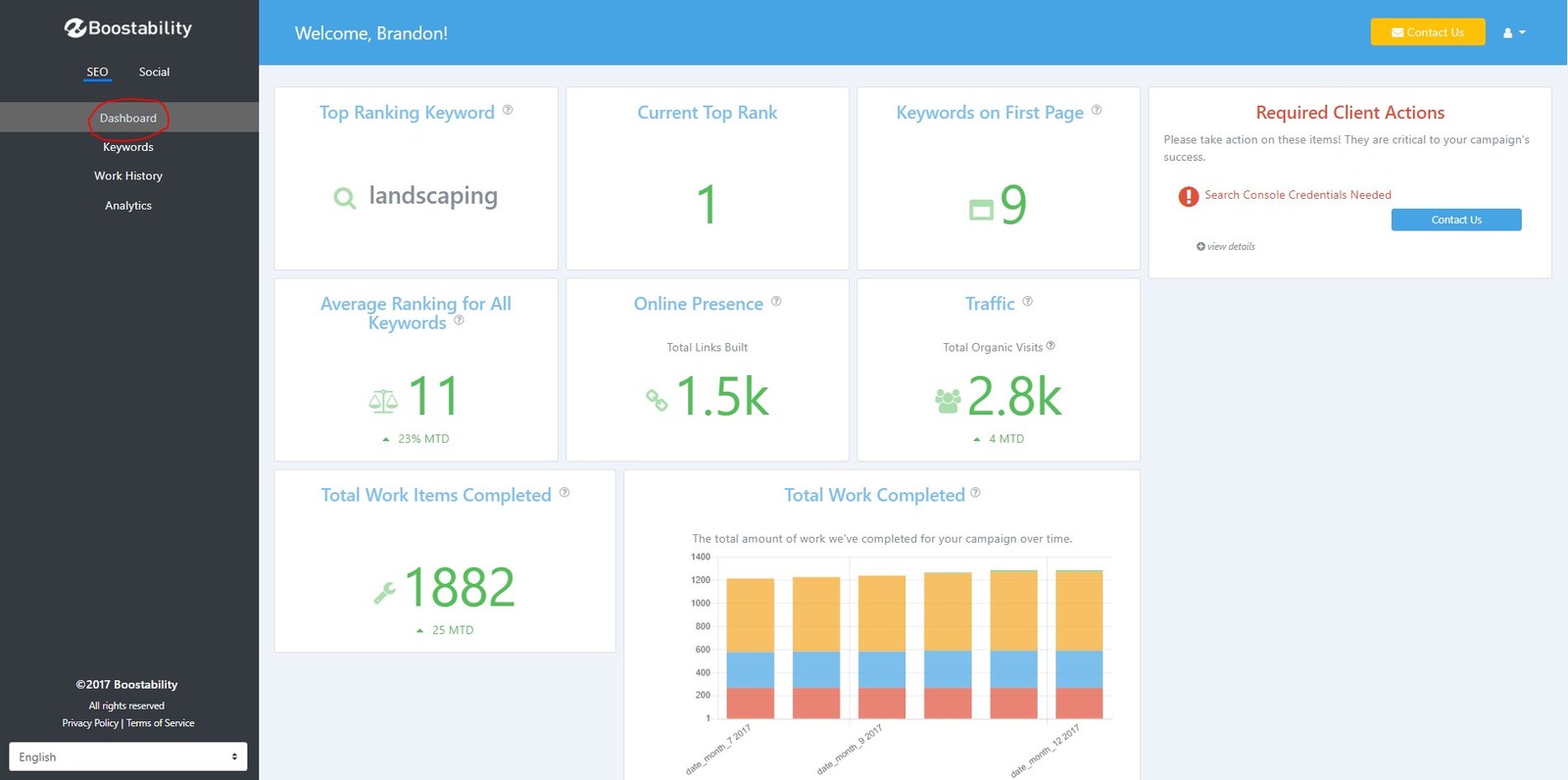
Boostability Releases New SEO and Social Media Reporting Dashboard
Boostability’s newly updated performance reporting dashboard home page

Turner and his team are very happy with the end result, and they’re confident that clients will be as well.

“To me, there are three things that users are really going to love about this dashboard,” Turner says.

“First, for something that serves up so many insights and information, it’s very easy to use. Obviously, that’s by design. Within just moments of being in the dashboard, clients will have an at-a-glance rundown of almost all the activity and progress in their campaign.

Also Read: AdMaster 2018 Digital Marketing Trends Report: 70% of Advertisers Continue to Increase Digital Marketing Budget

“Second, this dashboard really lets you go deep into the data. With a click or two, it can serve you just about all the data you need on critical metrics like traffic, local visibility, social media posts, work completed, etc. This is going to be helpful not only in uncovering insights but also in helping clients determine their ROI with us.

“Third, it’s easy to implement and adapt for our white-label partners. This is something we’ve worked hard to ensure.

“Overall, we’re really excited for clients to begin digging in,” Turner said. “We’re confident that this fresh update will help them become even more successful.”

Recommended Read: Tweet Your Way to Success: A Guide to Social Media Marketing & Strategic Thinking

DialogTech Now Tracks Call Conversions in Bing

0
DialogTech

New Integration Enables Search Marketers to View Call Data Within Bing Ads and Optimize for What Drives the Best Conversions, Online and over the Phone

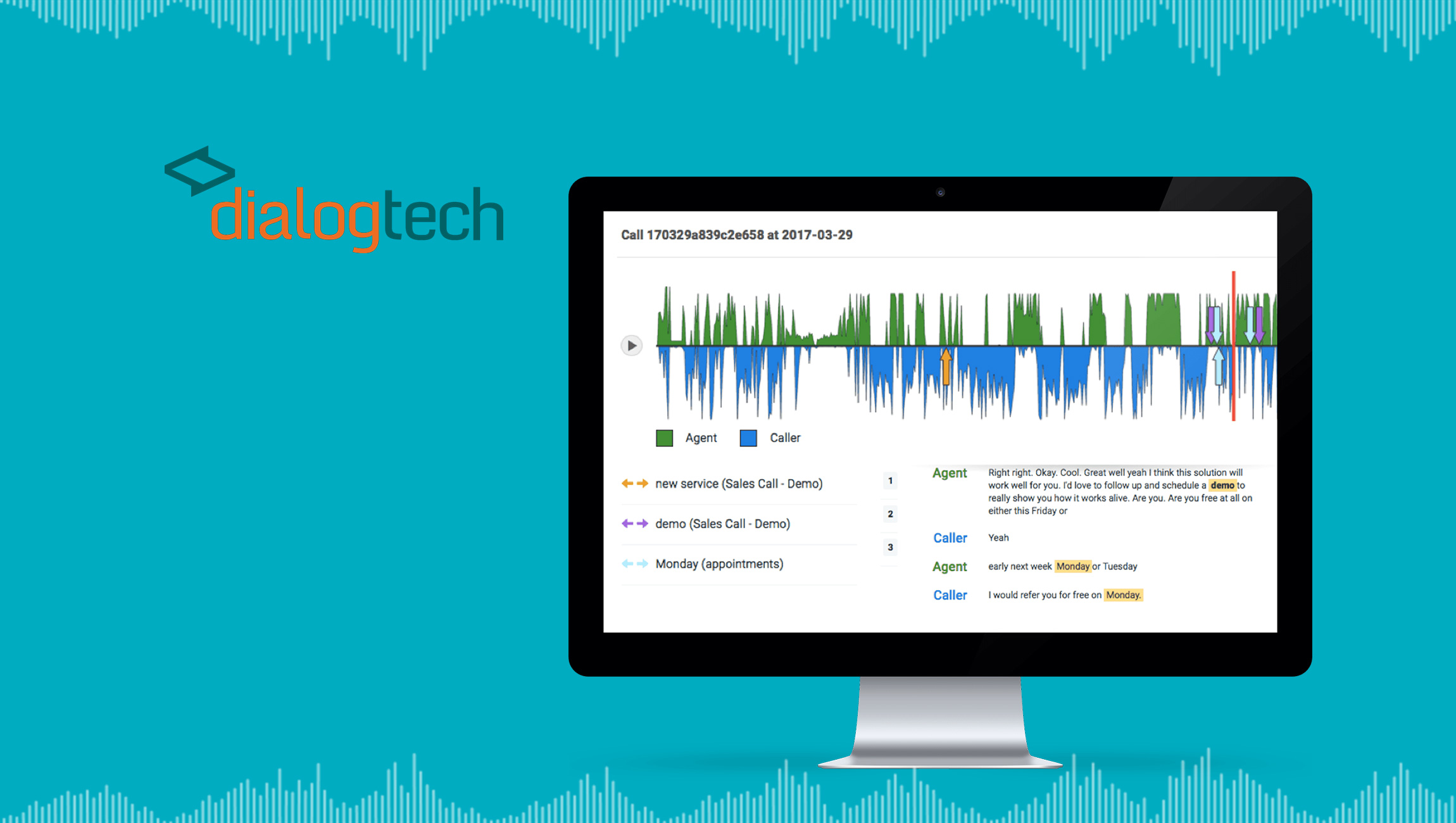
DialogTech, the world’s leading provider of actionable marketing analytics for inbound calls, announced a new integration with Bing Ads that enables businesses and agencies to track and analyze call conversions within their Bing Ads accounts.

By connecting calls from Bing search ads at the campaign and keyword level, DialogTech provides search marketers with insights to optimize bids, targeting and messaging to drive more calls and customers at a lower cost per conversion.

“Bing search ads generate billions of calls to businesses each year, and now thanks to DialogTech, search marketers have attribution and intelligence for those calls and conversations,” said Greg Goodman, Senior Director of Partner Strategy at DialogTech. “By sending session and conversion data on calls directly into Bing Ads, DialogTech makes it easy for marketers to see exactly how to generate the biggest impact from their search budgets, both online and offline.”

The new integration is part of DialogTech’s larger solution for Bing Ads, which includes:
• Complete Call Analytics: DialogTech captures complete, detailed analytics on every call from Bing, including who the caller is, their geographic location, the ad and keyword that drove the call, their website activity, the caller experience and more.
• AI-Driven Insights: Industry-leading AI and machine-learning technology analyzes the entire context of calls — including what was said — to identify intent, measure call outcomes and uncover hidden insights that help Bing advertisers drive more of the calls that drive revenue.
• Bid Management Integrations: DialogTech has built-in integrations with bid management solutions such as DoubleClick, Adobe Media Optimizer, Kenshoo, Marin, Acquisio and IgnitionOne so they can be used to optimize for calls as well as online conversions.
• Personalize Caller Experiences: Marketers can use data on the caller and what drove the call to set up rules in DialogTech to route callers right away to the right location or agent to convert them to a customer.
• Bing Data within DialogTech: Marketers can also send their Bing Ads data into DialogTech and visualize it in sophisticated, customizable marketing dashboards along with data from their DialogTech, AdWords, Google Analytics, Facebook, Instagram, Twitter and MailChimp accounts. They can then automate reports and alerts to ensure they hit KPIs.

The Bing integration furthers DialogTech’s partnership with Microsoft, which also includes an integration with Microsoft Dynamics, their CRM solution. DialogTech sends call intelligence data into Microsoft Dynamics in real time, so sales agents answering calls know who is calling and why and marketers can see which tactics drive the most valuable calls.

Datawords Joins Salesforce Partner Program to Drive Customer Success with Salesforce Commerce Cloud

0
Datawords Joins Salesforce Partner Program to Drive Customer Success with Salesforce Commerce Cloud

Datawords Delivers a New Solution to Help Commerce Cloud Customers Achieve Content Internationalization

Datawords, a company that specializes in e-multicultural technologies, announced that it has joined the Salesforce Partner Program in support of Salesforce Commerce Cloud, the fastest path to unified commerce. Commerce Cloud enables brands to provide personalized experiences for shoppers that span web, mobile, social and in-store. And now, as part of the world’s #1 CRM platform – Salesforce – brands can deliver completely unified experiences for customers that extend beyond commerce to include marketing, customer service and more.

The Salesforce Partner Program is the industry’s largest enterprise cloud partner program, empowering consultants, ISVs, VARs, agencies and other partners to drive customer success using the Salesforce Intelligent Customer Success Platform. Through a combination of business, technology and marketing benefits, and the world’s largest business app marketplace – the AppExchange – the Salesforce Partner Program helps partners of all sizes and industries build successful businesses leveraging the Salesforce Platform.

Also Read: SafeCharge Announces New Integration Plugin with Salesforce Commerce Cloud

In addition, Datawords recently developed WEZen, its product that integrates Salesforce Commerce Cloud with Datawords’ content internationalization platform. On WEZen, contents are semantically analyzed by cultural experts before they are internationally produced and published on the e-commerce websites of Datawords’ clients. WEZen is available on the Commerce Cloud marketplace.

Datawords Joins Salesforce Partner Program to Drive Customer Success with Salesforce Commerce Cloud
Alexandre Crazover

Alexandre Crazover, CEO, Co-Founder, Datawords said, “We are very proud to join the Salesforce Partner Program. Salesforce Commerce Cloud is very innovative, and we are very excited to help our clients in diverse industries, including beauty, automotive, CPG and luxury, with the complex challenges that come with international e-commerce deployment.”

Also Read: Salesforce Extends Commerce Cloud Einstein — Delivering Personalized AI-Powered Shopping Experiences

Kori O'Brien - Image
Kori O’Brien

Kori O’Brien, SVP, ISV Sales, Salesforce, added, “Everything and everyone is becoming more connected and smarter than ever before. By joining the Salesforce Partner Program in support of Commerce Cloud, Datawords is joining the world’s largest community of cloud partners committed to innovating on the Salesforce Platform and driving customer success.”

Recommended Read: Salesforce Launches New AppExchange Partner Program to Supercharge AI-Driven Solutions

Creative Brainstorming for Ad Agencies: 14 Questions to Ask Before, During and After Every Session

0
Creative Brainstorming for Ad Agencies: 14 Questions to Ask Before, During and After Every Session

Creative Brainstorming for Ad Agencies: 14 Questions to Ask Before, During and After Every SessionThere are 13,000+ advertising agencies in the United States. Each of those agencies, no matter the niche they’re in, have very few competitive levers at their disposal. One might argue that people are the only real advantage, so what makes those people so valuable?

As advertising mogul William Bernbach famously said, “There are a lot of great technicians in advertising. And unfortunately, they talk the best game. They know all the rules … but there’s one little rub. They forget that advertising is persuasion, and persuasion is not a science, but an art. Advertising is the art of persuasion.”

At Bamboo, we are blessed to have an equally technical and creative team, but we don’t let that go to our heads. We work just as hard as the next agency to put those million-dollar-ideas into action. To help us do that, we hold creative brainstorm sessions–or as we refer to them internally “workshops”–on a regular basis both with our clients and on our own.

Also Read: 3 Ways to Foster Collaboration Between Your Organization’s Marketing and Sales Functions

We take pride in our creative process, and while it might not solve all your problems, we’d like to share how we approach it. When boiled down, that process can be broken down into three parts–preparation, execution, and post-brainstorm. This post will walk through each of those components and the questions we ask ourselves along the way.

Preparing for Your Creative Brainstorm Session

Before even thinking about running a brainstorming session, ask yourself…

Why are we doing this?

While we love hanging out in a room bouncing ideas around for hours, we can’t afford to brainstorm just for the heck of it. Whether you’re generating creative for a specific campaign, launching ads along with a rebrand, or simply refreshing old creative, it’s crucial to know your intentions.

What are our goals?

Once you know why you’re holding this creative brainstorm session, you’re ready to set your goals. Your intent should dictate your goals and should be measurable and reasonable outputs. For example, you might want to come up with 30 new static image ideas, four campaign concepts, or just one multi-channel creative concept. Set these outputs upfront, make sure every participant is on board, and let them guide the conversation.

What constraints should we keep in mind?

Your goals will also dictate many of the constraints or parameters. These might be regarding mediums (image, video, etc.), channels (Facebook, Twitter, etc.), budget, or resources available. For example, are there new or existing visuals you can make use of? Is there budget to have a photoshoot or buy stock images/video?

Much of this information may be known, but it’s always a good idea to discuss as you’re going into a session, which leads us to several other questions to answer up front…

How much time do we have?

Another constraint we acknowledge up front is time. Place hard limits here, and be reasonable. While longer sessions are great to get in the zone, they’re much harder to schedule. We typically aim for anywhere between an hour and a half to half a day depending on our goals.

Pro tip: coffee and pastries or lunch is always a good way to keep butts in seats for more extended periods of time.

Also Read: Use These 3 Brainstorming Exercises to Fuel Your Next Social Media Campaign

Who should participate?

Be mindful of who you invite to participate…

  • Is it valuable to involve team members not directly involved with this client or project?
  • Do you have diverse representation regarding roles, expertise, and perspective?
  • Is this a good forum to involve clients? If so, make sure you work with your primary point-of-contact to get all the appropriate parties on board.

It can be tricky to balance diversity and focus, so regardless of who you invite to the table, be sure to communicate the shared goals to everyone up front.

Also, think about who will lead the session…

  • Are you the leader, or do you want to be more of an active participant?
  • If your client is involved, does it make sense for one of their team members to lead the discussion? If so, get them looped in as soon as possible.
  • If it’s a large group, consider prepping multiple participants ahead of time to make it easier for everyone to stay on track.

Once you know how many people are participating, think about the space. Do you have a conference room to fit everyone? Will participants be remote? Do you want to get in a new environment? We often rent a conference room by the hour like this trendy one from Breather.

How will we agree to communicate?

This is less quantifiable, and you may or may not need to spell out rules explicitly, but here are some of our creative workshop guidelines:

  • Be open-minded – every idea has merit
  • Don’t say no – encourage one another with positive language
  • Listen then speak – don’t talk over or interrupt your colleagues, and hear everyone out
  • Be present – we’re all busy, but if you can, shut your laptop and leave your phone at your desk

We try to balance diving into specific ideas and reigning in the dialogue in the interest of time. Whether you maintain an ‘idea parking lot’ to revisit later, or you shelve an idea altogether, a good leader knows when to step in without shutting any ideas down.

How are we documenting this process?

Prepare yourself for this blasphemous statement… You don’t need sticky notes.

As a highly visual bunch, we often like to put pen to paper… (sometimes we even throw scissors into the mix!)

In the interest of saving time while documenting and debriefing, however, we sometimes prefer to document our sessions digitally. There are pros and cons to each and should be dictated by your goals and constraints. Regardless of which path you take, make it collaborative as possible (shared Google Doc, whiteboard, index cards, etc.) and be sure to let all the participants know in advance what they should expect.

Brainstorming Exercises and Tips

Once you understand your goals and parameters and have laid your ground rules, it’s time to jump in! There’s no “right” way to do this, and many different brainstorming exercises you might want to try out depending on your goals and desired outcomes.

As a primarily paid social ad agency, we’re usually coming up with Facebook (or other social platforms) ads for specific initiatives. To come up with those concepts, we take a particular approach, starting broad, and doing a few exercises along the way to get juices flowing.

We tend to start most of these sessions as a group, breaking out into smaller groups or individually to jot down ideas before coming back together.

Starting by focusing on our client as a whole, we ask…

What is the value proposition?

It might seem like you all already know the answer to this question, but humor us and take a few minutes to explore it. What is the value of buying this clients’ product/service? What value does the brand itself have? How does it make us feel? How is it better than competitors’ offerings?

Don’t spend too much time here, but try to put together a comprehensive list of describers–you’ll likely throw around some things you haven’t thought of before. Then, with those responses fresh in mind, ask yourselves…

How would you describe those value propositions in a single sentence?

Go through your existing list and pick out some favorites to simplify and consolidate. Try to agree on one sentence (or two) that will drive the rest of your discussion. This sentence should encapsulate the ‘what’ of the client as well as the ‘why.’

Your future self will thank you, as this becomes a group-agreed-upon qualifier that you can keep referring back to.

How would you describe the ideal audience?

Urge each participant to come up with four or five profiles of individuals that would buy or use your clients’ solution. Think about demographics (gender, age, geographic location, level of education, profession, salary, etc.) and psychographics (motivations, fears, desires, etc.).

How can we visually communicate our value in line with our goals?

Now that you have your audience and value props in mind, agree as a group on the concepts you want to tackle and get visual.

There are hundreds of fun and engaging brainstorming exercises that you can apply to these concepts. As social media marketers, we have specific outputs and thus focus on visual concepts for images, carousels, GIFs, slideshows, and videos, as well as text ideas for headlines, ad copy, and descriptions.

Here are a few exercises that help us come up with those…

  • The word dance: Similar to mind mapping, this excersice urges you to come up with vivid descriptions, synonyms, or metaphors for your concepts. For each of your topics, start with one word at the nucleus and contribute the first word that comes to mind. Repeat for each new word until you’ve gotten far enough away from the original.
  • Go through top-performing ads of the past: Don’t dismiss past success! Jump into Facebook Ads Manager or past performance reports as a refresher on retired creatives that did well, and ones that didn’t. What insights and learnings can you apply to the task at hand? In addition to noting creatives with the best/worst CTRs, look into bottom-of-the-funnel metrics, as well as what worked in different audience demographics.
  • Go straight to the source: As an agency, we don’t always have the luxury of speaking with end users, but the Internet is a good stand-in. Search for reviews in app stores, or on sites like these for first-hand accounts of your clients’ experience. Youtube is also a great way to find footage of users reviewing or using the product.
  • Get inspired by others: Depending on the channel, we like to borrow from a mix of inspiration–from magazine and newspaper ads to our own ad design guides. Here are a few digital resources to get you started:

Although there’s no ‘right’ way of doing these exercises, organized documentation is crucial. Whether you break out into groups, spend time individually, or stay together for these exercises, be sure to constantly organize your ideas while going through these exercises.

Also Read: Net Neutrality is Dead. What Does This Mean for Digital Advertising?

Wrapping Up Your Creative Workshop

In our opinion, wrapping up our brainstorming sessions can be one of the hardest parts. It’s easy to riff off of ideas and come up with great theoretical concepts over an hour and a half. The hard part comes when you have to make things happen with those concepts.

What ideas make you excited?

It’s important to leave enough time to do this as a group, giving everyone a chance to share their ideas and vote on ideas that stand out. During this brainstorming wrap-up, think back to your communication rules, staying positive, respectful and open-minded. Start bubbling the most voted ideas to the top, going from this…

To this…

What ideas are most in line with our goals and most feasible in the short-term or long-term?

Now that you have some amazing concepts ready to go, it’s time to prioritize, prioritize, prioritize. Most of your sessions’ outputs should be feasible, either in the short-term or long-term thanks to your upfront preparation, but if you’re like us, you might have A LOT. Whether you do this after the brainstorming session or as a group, make sure each idea is clearly prioritized and tied to specific initiatives.

But remember, it’s never too early to start planning for future campaigns. Don’t spend too much time on this, but don’t scrap a brilliant idea just yet. Once you’ve prioritized, it’s time to delegate.

What are the next steps?

These workshops are only successful if all parties are involved in the actual session, AND are committed to following through on the outputs. Give everyone tasks, deliverables, and deadlines.

As a rule of thumb, the faster you can follow up with the group, the more engaged your stakeholders will be. Make sure you follow up with everyone, regardless of their involvement in the project. Don’t underestimate the power of giving your team and your clients’ positive affirmation after a sometimes hectic or mentally draining session.

Whether you read that entire post, or just grabbed the guiding questions, you’re in a good place to start preparing for some creative brainstorming!

For your convenience, here’s a handy checklist to help you prepare.

  • Before you even schedule your brainstorm, think about why you’re having this workshop
  • The first thing to discuss is what your specific goals or outcomes are, from ad images to campaign concepts.
  • Set the ground rules for how much time is allotted, who’s participating, who’s in charge, and how everyone is expected to communicate.
  • Start broad, discussing the high-level messaging and value props
  • Balance the broad and specific to make sure you’re not forgetting the context of your clients’ needs and brand.
  • Don’t be afraid to borrow inspiration from others
  • Post-brainstorm, make sure to prioritize, communicate and delegate ASAP.

If you’ve taken one thing away from this post, it’s to keep your goals and restraints in mind, balancing reasonable and concrete outputs with crazy ideas.

At the end of the day, we’re advertisers, selling products, and in the fine words of Mr. Ogilvy, “If it doesn’t sell, it isn’t creative.”

Recommended Read: Marketing Teams Will Struggle to Make Sense of the Hype around AI

60% of Customer Success Teams Are Unaware of Critical Client Issues

0
60% of Customer Success Teams Are Unaware of Critical Client Issues

Survey from Bolstra Identifies Disparate Data, Underutilized Technology Among Customer Success Teams

Bolstra, an agile customer success platform for subscription service companies, today announces the results of a recent survey, “2018 Customer Success Team Maturity”. The survey includes findings from a sample of customer success teams across industries about their current states. Most notably, of customer success teams surveyed, more than 60 percent of respondents said they wouldn’t know about a critical customer issue until days after it happened, a customer brings it to their attention, or until the customer canceled.

At the time of this announcement, Bolstra CEO, Haresh Gangwani, said, “We set out to have a better understanding of the state of customer success teams among enterprise organizations.”

Recommended Read: Inmar’s Collective Bias Launches the First-of-Its-Kind Suite of Advanced Analytic Solutions Utilizing First-Party Shopper Data

How Mature is Your Customer Success Team

Customer Success Maturity can be measured across 5 areas —

  • Skill
  • Process
  • Data
  • Technology
  • Organization
Customer Sucsess Maturity Infographic, Bolstra
Customer Success Maturity Infographic, Bolstra

Haresh added, “What we found is a disparity across organizations in customer success strategy: underutilized technology, lack of proactive strategy, lack of experience, and inaccurate and decentralized data. We believe that 2018 will be the year of adoption for customer success teams. Once enterprises have organizational alignment and well-defined processes for customer success, technology can be implemented to solve the frustrating issues we found to be so common in our survey.”

Read MoreEverString Data Platform Unveiled for Greater Agility in B2B Marketing, Sales, and Ops

Key findings from the survey include–

– Customer and account information is not stored in one central location. Over 70 percent of respondents use four or more disparate sources of customer/account data.

– 70 percent of respondents do not feel as though their customer success team is optimally established with 75 percent of respondents reporting not fully adopting the CS solution in which they’ve invested, still using significant internal workarounds to accomplish their goals.

– While just over 50 percent of teams label themselves as established, 80 percent of teams had less than an average of six years of experience.

– 70 percent of respondents still perceive customer success teams as reactive to customer inquiries.

CurrentlyBolstra, as a Customer Success Management Solution, offers solutions to B2B companies to prescriptively manage their customers in real time.

Read MoreBidalgo’s Artificial Intelligence Platform Helps Booksy Deliver Better Video Ad Creative