Terminus Joins the LinkedIn Marketing Partner Program with Launch of Account-Based Marketing Integration
With Unified Solution, B2B Marketers Can Easily Orchestrate, Automate, and Measure ABM Campaigns Across Terminus and LinkedIn
Terminus, the leader of the account-based marketing (ABM) movement, was announced as the newest addition to the LinkedIn Marketing Partner Program in the Ad Tech category. Terminus’ integration with the LinkedIn Marketing Solutions API represents a significant advancement in the orchestration, automation, and measurement of advertising tactics, simplifying the execution of multichannel ABM campaigns and helping marketers to engage target accounts more effectively.
Eric Spett
“One of the greatest challenges for marketers focused on operationalizing ABM has been coordinating the digital experience for target accounts. As we continue to add more channels to the Terminus product, we are closer to making ABM easy for everyone and helping customers to create exceptional experiences for their buyers. Our integration is a major step forward, and we are thrilled to also be working side-by-side with LinkedIn Marketing Solutions to help marketers learn how to execute world-class ABM programs,” said Eric Spett, CEO and co-founder of Terminus.
Until now, marketers using both Terminus and LinkedIn Marketing Solutions have had to manage account lists and campaigns within each platform. In addition, the ability to progress LinkedIn campaigns through various sales stages and to track account-based web engagement from campaigns has not been at the marketer’s fingertips. With Terminus’ integration to the LinkedIn Marketing API, B2B marketers can:
Launch and orchestrate campaigns – From the Terminus platform, easily launch, manage, and report on LinkedIn Sponsored Content and orchestrate coordinated campaigns for both channels at every stage of the funnel.
Dynamically create audiences – Rather than rely on manual list uploads, leverage Salesforce data such as account status to create dynamic audiences that allow accounts to flow in and out of specific LinkedIn Sponsored Content campaigns.
Report on account engagement – Attribute account engagement to both Terminus and LinkedIn campaigns, providing more insight into how each channel influences engagement and progression, and easily surface this data to sales.
Renny Fidlon
Renny Fidlon, VP of marketing at Optymyze, added, “For our ABM strategy, both Terminus and LinkedIn are integral to our ability to deliver valuable content to our most important accounts. The Terminus integration with the LinkedIn Marketing API will save our team time and allow us to garner more insights into how these accounts are interacting with our content on the LinkedIn platform.”
60% of Customer Success Teams Are Unaware of Critical Client Issues
Survey from Bolstra Identifies Disparate Data, Underutilized Technology Among Customer Success Teams
Bolstra, an agile customer success platform for subscription service companies, today announces the results of a recent survey, “2018 Customer Success Team Maturity”. The survey includes findings from a sample of customer success teams across industries about their current states. Most notably, of customer success teams surveyed, more than 60 percent of respondents said they wouldn’t know about a critical customer issue until days after it happened, a customer brings it to their attention, or until the customer canceled.
At the time of this announcement, Bolstra CEO, Haresh Gangwani, said, “We set out to have a better understanding of the state of customer success teams among enterprise organizations.”
Customer Success Maturity can be measured across 5 areas —
Skill
Process
Data
Technology
Organization
Customer Success Maturity Infographic, Bolstra
Haresh added, “What we found is a disparity across organizations in customer success strategy: underutilized technology, lack of proactive strategy, lack of experience, and inaccurate and decentralized data. We believe that 2018 will be the year of adoption for customer success teams. Once enterprises have organizational alignment and well-defined processes for customer success, technology can be implemented to solve the frustrating issues we found to be so common in our survey.”
– Customer and account information is not stored in one central location. Over 70 percent of respondents use four or more disparate sources of customer/account data.
– 70 percent of respondents do not feel as though their customer success team is optimally established with 75 percent of respondents reporting not fully adopting the CS solution in which they’ve invested, still using significant internal workarounds to accomplish their goals.
– While just over 50 percent of teams label themselves as established, 80 percent of teams had less than an average of six years of experience.
– 70 percent of respondents still perceive customer success teams as reactive to customer inquiries.
Currently, Bolstra, as a Customer Success Management Solution, offers solutions to B2B companies to prescriptively manage their customers in real time.
The Latest Hootsuite Report Finds the Number of Internet Users Is Now More Than Half the Global Population
In their latest report, leading social media management platform and a leader in the MarTech RADAR 150, Hootsuite, revealed that the number of internet users in the world has now surpassed the 4 billion mark. The report titled, “Digital in 2018“, was prepared in collaboration withWe Are Social, the global socially-led creative agency.
Digital in 2018 Global Snapshot, via HootsuitePenny Wilson, CMO, Hootsuite
At the time of this announcement, Penny Wilson, CMO at Hootsuite, said, “The Digital in 2018 report highlights the continuing growth of the internet and social media to individuals and businesses around the world. This dynamic has forever altered the customer journey as consumers and B2B professionals increasingly conduct research, make buying decisions, seek support, and recommend brands online.”
Penny added, “To achieve competitive advantage, all executives must dive deep into digital now, meeting their customers where they are to best market, sell, and serve them.”
Digital in 2018 is a report of social media and digital trends around the world representing 239 countries and territories. In its seventh annual edition, the Hootsuite report finds the number of internet users is now more than half the global population. Of that, social media brings nearly 3.2 billion active users online to connect with each other, consume media, interact with brands, and more.
– The number of internet users increased by 7 percent in the last 12 months to hit 4.021 billion, or 53 percent of the world’s population
– Global social media usage has increased by 13 percent in the last 12 months, reaching 3.196 billion users
– Mobile social media usage has increased by 14 percent year over year to 2.958 billion users, with 93 percent of social media users accessing social from mobile
– Internet users are projected to spend a combined total of 1 billion years online in 2018, of which 325 million years will be spent on social media
Simon Kemp, Global Consultant, We Are Social
Simon Kemp, Global Consultant, We Are Social, said, “With four billion people now online, connectivity is already a way of life for most of us. However, as internet companies strive to serve the next billion users, we’ll see important changes in digital over the coming months. Audio-visual content will take priority over text – especially in social media and messaging apps – while voice commands and cameras will replace keyboards as our primary means of input.”
Further, Simon added, “Social relationships and online communities will evolve to accommodate these new ways for people to interact with each other. This will result in rich new experiences for all of us, but businesses need to start preparing for these changes today.”
Mobile Internet Users Dominate in APAC
Forty-one percent of the global human population is active on the social media using mobile devices. Since 2017, social media users have grown by 14 percent, raising social media penetration in the region to 42 percent. Overall, internet users surpassed the 2 billion mark, growing 5 percent in the past year alone.
Digital in 2018 Global Snapshot 2
The report also found that global growth of the internet is propelling e-commerce, with 1.77 billion internet users purchasing consumer goods online in 2017, an increase of 8 percent compared to a year ago. Collectively, consumers spent a total of USD $1.474 trillion on e-commerce platforms in the past 12 months, 16 percent more than in 2016.
Currently, Hootsuite is the most widely used social media management platform, trusted by more than 16 million people and employees at 80% of the Fortune 1000.
Dynamic Yield, the first personalization technology stack, announced the launch of its AI-driven solution for automated personalization: Predictive Targeting.
Dynamic Yield’s Predictive Targeting runs in the background of every experience created with Dynamic Yield, analyzing the performance of each campaign in real time and identifying opportunities to serve more relevant content to select audience segments. Once Predictive Targeting uncovers personalization opportunities, marketers have the flexibility to take immediate action, deploying the opportunity predicted to drive the most uplift in revenue for each segment, with a single click.
Predictive Targeting overcomes substantial limitations encountered with today’s technologies, which drive marketers to serve an A/B tests winning variation to all audience segments, often leading to lost revenue opportunities. With Predictive Targeting, each audience segment now enjoys its own winner, producing immediate uplifts with a single click.
Predictive Targeting does not require any setup or development. It is automatically ingrained in any campaign and test-launched through Dynamic Yield – across any channel or platform, including mobile apps, email and offsite advertising, leveraging all of your user data – surfacing recommendations at the moment they are identified.
With Dynamic Yield’s Predictive Targeting you receive:
Algorithms that constantly run for all of your campaigns and identify opportunities for revenue uplift
Real-time recommendations delivered through the platform and by email for the highest impact opportunities
One click deployment that offers full control and flexibility to deploy any recommendation
Winner declaration per audience segment vs. the winner takes all approach
Dynamic Yield’s Personalization Maturity Assessment found only 17% of companies claim to have personalization in place, citing “lack of resources” as the leading barrier (49% of respondents). This is largely due to a “winner takes all” approach in testing experiences or marketers’ overreliance on intuition due to an inability to quickly draw insights from customer data. Predictive targeting overcomes both barriers by allowing machines to deploy personalization at scale, ridding marketers of the manpower burden required to run tedious analysis by automatically crunching all of the data for them, and suggesting the optimal experience for each visitor.
Liad Agmon
“We live in a world with self-driving cars, AI doctors, and machines that can easily beat the world’s smartest people in Jeopardy and GO! Yet somehow, marketers are forced to do tedious analyses that should be done by machines. Most of our customers run hundreds of concurrent experiments targeted at hundreds of audience segments, meaning identifying the right experience for each segment requires immense amounts of analysis work. So, we built our customers an AI data analyst that works 24/7/365 to constantly optimize experiences for each user,” said Liad Agmon, CEO and co-founder of Dynamic Yield.
Predictive Targeting helps marketers scale personalization, increase revenue, boost customer satisfaction and free marketing, merchandising and development teams to work on tasks that require human intellect.
While Dynamic Yield’s Personalization Maturity Assessment shows that personalization is still a nascent effort for many brands, A/B testing is a widespread practice among most online businesses. Dynamic Yield’s Predictive Targeting provides such businesses with the convenient entry point into the world of personalization, bridging both worlds by automatically converting every A/B test into an effective personalization opportunity.
With Dynamic Yield’s Predictive Targeting, marketers can maximize their campaign’s performance and drive considerable uplift, while saving time, resources and effort.
Inmar’s Collective Bias Launches the First-of-Its-Kind Suite of Advanced Analytic Solutions Utilizing First-Party Shopper Data
prescriptiveIQSets New Standards for Marketing Data Insights
Collective Bias, Inc., the leader in shopper-focused influencer marketing, and an Inmar company announced prescriptiveIQ, a suite of analytic solutions using first-party shopper data along with various data science applications to provide insights that inform every step of the influencer marketing process. PrescriptiveIQ determines what kind of content will perform best for campaigns when to run campaigns, and how well the brand is doing across the category – ultimately leading to more consumer purchase occasions.
Irving Turner
“Data science is helping us address key brand and shopper challenges and create smarter, more informed influencer campaigns. The biggest evolution in marketing is going to come from the use of new data and their application to content strategies, targeting and more. By not only offering a range of data measurements to report accurate metrics on a variety of categories but also actionable insights from this data, marketers will be able to strategically measure the effectiveness and the true impact of their campaigns,” said Irving Turner, Vice President, Analytics, Inmar’s Collective Bias.
Looking beyond simple sales or social engagement calculations, prescriptiveIQ provides marketers a comprehensive data and technology stack that goes deeper to offer actionable insights and a full funnel of measurement capabilities for strategic decision making in influencer marketing campaigns.
The offerings include:
Shopper Intelligence: Brands can use sales data to understand the seasonality of the brand and to time the use of influencers. Machine learning algorithms recommend both the optimal number of influencers to use and the influencers that best match their campaign.
Context Intelligence: Through analyzing social trends data and general lifestyle indicators, brands can uncover ideas for content and tap into trending ideas to drive engagement.
Brand Intelligence: The data can uncover basket affinities, which can identify not only the likelihood of co-purchase opportunity but also the relative size of opportunities for segmentation and targeting.
Loyalty/Segmentation: Using purchase data, households are segmented across an entire category to determine brand loyalty of shoppers against competitive products.
David Mounts
David Mounts, Chairman and CEO, Inmar, added, “The versatility of prescriptiveIQ allows marketers to address a range of questions they have been unable to answer using traditional measurements. This can range from how to combine online engagement data with offline purchases to understand what motivates shoppers to purchase, to identifying products purchased together and evaluating how that information can help shape content and strategy across retail, geographic and demographic lines. We want to provide our clients actionable insights and tangible results; prescriptiveIQ is the most advanced offering available in the market.”
Bidalgo’s Artificial Intelligence Platform Helps Booksy Deliver Better Video Ad Creative
Popular Scheduling App Generates 40% Higher Booking Conversions, 34% Lower Cost-Per-Registration Rates with Optimized Video Creative
Bidalgo, a leading provider of ad creative automation software and services for app marketers, announced today that its creative expertise combined with Bidalgo AI technology enabled Booksy, a leading scheduling app for appointment-based businesses, to dramatically improve the effectiveness of video ads on Facebook and Instagram. By optimizing video ad creative based on Bidalgo’s AI analysis, Booksy increased conversions from app install to bookings by 40 percent, while reducing the campaign’s Cost Per Registration by 34 percent and Cost Per Action by 40 percent.
With more than 1 million installs on the App Store and Google Play, Booksy is a free booking system for consumers looking to schedule appointments for beauty services. Booksy was running video ads on Facebook and Instagram encouraging viewers to download the Booksy app. Although the videos were effective at driving initial installs, new users didn’t necessarily register with the app or book appointments through it.
Booksy turned to Bidalgo for help analyzing its video creative to understand which elements resonated with viewers best. Bidalgo analyzed multiple variables affecting Booksy’s ad creative — including colors, background images, tone, style, and so on — and reported on which elements drove the best performance. Bidalgo’s in-house studio then created a new high-performing video that served as a template for the next generation of videos created by Booksy’s creative studio. These videos significantly improved the app conversion to deep funnel actions such as scheduling appointments.
Grzegorz Garczyński
“Using Bidalgo AI has allowed us to dramatically improve our conversions and lower our costs. We have more time to focus on our marketing strategy and creative strategy. With the help of Bidalgo we managed to improve our creative performance significantly,” said Grzegorz Garczyński, Booksy’s Head of Digital Marketing.
Booksy found it easy to optimize its video creative by working with Bidalgo. The company simply entered basic input into the Bidalgo platform, such as its business objectives, campaign budget and initial ad creative. From there Bidalgo’s AI-based ad automation platform took over the campaign, providing full campaign management automation and ad creation, with an eye towards optimizing performance for maximum bookings and minimum cost per registration. Bidalgo recommended specific creative elements for Booksy to include in its video ads that would drive the highest conversion and engagement rates.
Niv Yemini
Niv Yemini, Co-Founder and Chief Technology Officer of Bidalgo, added, “Having great creative that resonates with intended audiences is perhaps the most important part of any ad campaign, but it’s also the hardest part to get right. Our AI-based optimization tool breaks down the winning elements of ad creative to provide app marketers with a data-driven framework for how to design compelling ad creative that gets attention, drives engagement, and, most importantly, helps meet the advertiser’s key business goals.”
Edgy Content Marketing Has Brands And Media Taking Notice
The New Stories Are Vetted for Originality and Packaged in a Way That Resounds with Top-Tier Media Publishers
In 2018, we can expect to see digital marketing experts roll out breakthrough strategies to capture consumer audiences in provocative new ways. Take 5 Media Group, one of the nation’s largest consumer data owners and compilers, and a leader in omnichannel marketing solutions is raising the bar with a new content marketing strategy that is singular in its approach and delivers unrivaled results. In contrast to the simplistic sort of content marketing which is the norm, with its helpful tips for everything from losing weight to managing your money, the edgy content Take 5 creates grabs the attention Take 5 Media Group, one of the nation’s largest consumer data owners and compilers, and a leader in omnichannel marketing solutions is raising the bar with a new content marketing strategy that is singular in its approach and delivers unrivaled results. of consumers and media alike and seems to shout, “Share me!”
Take 5’s creative content marketing team works closely with clients to develop highly original news stories that are supported by unique data sets, culled from detailed survey results, social media scrapes, governmental data, and internal client data. The new stories are vetted for originality and packaged in a way that resounds with top-tier media publishers, which in turn produces huge exposure for the client’s brand.
Alex Radetich
“As a data owner and compiler, Take 5 has access and experience analyzing large data sets, so this new offshoot of content marketing is a natural extension of what we already do well. Our content marketing team has achieved such success because they offer both statistical knowledge and creativity to the process, which is an unusual combination in our industry,” said managing partner Alex Radetich.
The recent Miami Herald story on music festival goers’ drug habits is an example of Take 5’s content marketing technique at its best. The story, which was developed in collaboration with a behavioral health treatment facility, successfully delivers brand recognition to the client and establishes the facility as an authoritative voice on drug behaviors. The key factor that differentiates Take 5’s approach from run-of-the-mill content marketing is that stories like this one don’t stop here, but are picked up repeatedly by a variety of publishers over lengthy periods of time and shared on large social networks due to their entertainment value.
From start to finish, Take 5 follows a strategic five-step process beginning with the ideation phase, where one-of-a-kind ideas are generated. The team then searches for available data or plans other collection methods, such as survey data collection. Once the data has been collected, the team analyzes it for unique, eye-opening trends. Finally, a specialized team of graphic designers and writers create the captivating content to generate interest from top-tier media.
Logan Freedman
Logan Freedman, director of content marketing at Take 5 Media Group, added, “A key factor that predetermines a campaign’s success is measuring its ability to ‘go viral’ across many media channels. Each story we tell must be scrutinized carefully to include profoundly intriguing statistics and culturally-relevant news that is on-brand with our client. We are meticulous in methodology, which is why our data is credible and authoritative with the media. The results speak for themselves. Our campaigns regularly garner hundreds of media placements and millions of social media views per story.”
EverString Data Platform Unveiled for Greater Agility in B2B Marketing, Sales, and Ops
Everstring’s Data Platform Will Solve the Problems Arising from Bad Data Flowing into Machine Learning and Analytics Systems or Directly to Front-Line Sales and Marketing Users
Leading B2B predictive analytics and sales intelligence platform, EverString, launched the EverString Data Platform. The Platform would set a new standard for clean, reliable data that is constantly refreshed, improved, and expands, in real time. The platform is designed to give B2B sales, marketing, operations, and advanced analytics teams detailed company intelligence, the ability to move with greater speed, and the confidence to land more valuable deals.
Sans Coverage, Accuracy, and Depth of Data, Why Do Go-to-Market Efforts Suffer?
JJ Kardwell, CEO and Co-founder, EverString
At the time of this announcement, JJ Kardwell, CEO and Co-founder of EverString, said, “We’ve learned through our experience working with hundreds of global companies that for sales, marketing, operations, and analytics teams to achieve meaningful results from their data, they need coverage, accuracy, and depth. Without all three, performance is strained and go-to-market efforts suffer.”
JJ added, “Machine learning and AI can be very powerful, but results won’t be optimal if the data going into these systems is low quality. When bad data is flowing into machine learning and analytics systems or directly to front-line sales and marketing users, teams waste a lot of time compensating for data problems.”
Kardwell narrated the vision behind launching the new Data Platform. JJ stated, “My co-founder and I both worked in field sales roles before starting EverString. We struggled with the same data challenges that plague every B2B go-to-market organization. We started the company to make prospect qualification and pipeline growth easier through automated data science and data.”
He continued, “Legacy data solutions are hamstrung because they rely solely on humans to clean their data, creating databases that offer either broad coverage with low accuracy, or high accuracy for only a small set of companies.
EverString Data Platform captures tens of thousands of unique signals per company, ingests data from any and all data sources, creates new data through machine learning, keeps data current by continuously scouring the web, and cleans data with the AI-enabled output of more than 1,000,000 human workers.”
With the new platform, users no longer have to choose between data coverage and accuracy. Legacy solutions are hamstrung because they rely solely on humans to clean their data, creating databases that offer either broad coverage with low accuracy, or high accuracy for only a small set of companies.
Matching AI-enabled Output from the EverString Data Platform will Take More than 1,000,000 Skilled Humans!
The EverString Data Platform captures tens of thousands of unique signals per company, ingests data from any and all data sources, creates new data through machine learning, keeps data current by continuously scouring the web, and cleans data with the AI-enabled output of more than 1,000,000 human workers.
The EverString Data Platform captures tens of thousands of unique signals per company, continuously scours the web, and cleans data with the capacity of over a million humans.
The new EverString platform is designed to help businesses instantly map and prioritize their total addressable market and quickly pull in companies that should be prospects but aren’t yet in their database. To ensure that businesses have the insights they need to outpace the competition, achieve their growth goals, and increase productivity, the EverString Data Platform automatically identifies problematic data and applies its Human Intensive Task (HIT) system to ensure record-level accuracy and to fuel deep learning to improve system-wide accuracy.
Kardwell added, “It’s easy for AI products to lose trust because many don’t do what they promise. The EverString Data Platform is designed to be as smart, trustworthy, and indispensable as your favorite search engine.”
Further, JJ explained, “Non-linear improvements in data reliability have been made possible through the combination of machine learning and automated systems for distilling the collective intelligence of humans.”
The platform has multiple uses for sales, marketing, and operations teams–
Battle of Two Giants in 2018 Will Inspire Everybody Else to Think Differently
Throughout 2017, Walmart and Amazon took their positions and mustered their troops for battle. Both started to add elements that made up for their respective weaknesses.
Amazon added brick and mortar aspects to their business through their launches of bookstores, their experimental Amazon Go store, and their purchase of Whole Foods. On the flip side, Walmart’s purchase of Jet.com was followed up with their acquisition of a number of other strong e-commerce and direct-to-consumer brands such as Bonobos and Moosejaw to muscle up their digital game.
For 2018, expect more of the same from these two goliaths. Walmart has yet to fully implement its Jet.com strategy from the looks of things but that should formalize quickly as they address the younger digital audience. They have also increased their order online and pick up at the store service presence which will continue to expand. This will be especially important as groceries are seen as a battleground in light of Amazon’s Whole Foods purchase. There should also be a few surprises out there potentially coming from Walmart’s partnership with Google to directly go against Amazon’s Alexa.
For Amazon, everyone wants to know when they take that next big step into brick and mortar.
2017 was an odd blend of moving forward and slightly back for Amazon. They pulled back markets for AmazonFresh while making a big step forward with Whole Foods. That being said, other than some potential discounting and some stocked Alexa devices in store we haven’t seen this strategy fulfilled. Amazon continues to pick out new competitors, whether it is healthcare with the purchase of Aetna, AWS and all of their AI solutions, or even taking on FedEx and UPS with their own delivery development.
The big question is when are they going to create a stronger tie to the day-to-day customer at the brick and mortar level—and a deeper question is do they even need to? Look for 2018 to be when Amazon seeks to answer that question with a big acquisition.
The important question that isn’t asked often when discussing these two giants is this:
What are all the other retailers going to focus on in 2018 to combat these two juggernauts?
Well, there is a culmination of things that is coalescing under one term: individualization or 1-1.
For years, retail brands have talked about “customer-centric” and “omnichannel marketing.” In truth, this is all code speak for engaging customers as individuals instead of generically or as broad marketing segments.
Omni-channel is about the retail brand having a unified or singular common experience for the individual customer whether they are on their smartphone or in the store. Customer-centric is about thinking of the customer experience first and not what the brand wants to broadcast.
This applies to the emails customers receive, the online store experience, as well as the brick and mortar experience. While it has been discussed for several years, retailers are now realizing that this is imperative for their business. They need to take advantage of the unique relationships they’ve developed between their brand and their customers, and take it to a very personal level.
The customers are now aware of generic emails and the online experience being completely disjointed from the physical store experience. They want to feel like they are appreciated and treated in a way that understands their interests and preferences.
While this sounds like an expensive line item for customer satisfaction, retail brands are quickly realizing that not only should they do this to be a contemporary brand, but there is also good profitable reasons to do so.
This is the shift that has occurred over the last 12 – 24 months for the retail community. They are seeing certain brands drive higher profitability from their personalization results. This is a result of what you logically expect from improving the customer experience.
Customers shopping can find what they are looking for much faster because the e-commerce site pivots around their preferences and intent. Emails have merchandise or discounts that are targeted at individual users and generate improved email response metrics. Store associates are armed with tablets that help them improve suggestions to shoppers, make it easy to restock out-of-inventory goods by simply ordering right on the device.
Collectively, these pieces create a smoother customer journey and prove to the customer that their favorite brands understand how all of their touchpoints work together.
The other driver of this individual customer approach is technology. The advent of AWS, Hadoop, and machine learning and AI, have taken these concepts from the world of tomorrow to an actual experience that can be created today. Retailers are realizing that while Amazon and Walmart battle it out to be a universal shopping brand they have an opportunity to sneak in and start owning their customers in a whole new way. 2018 is going to be a great year to watch unfold.
J.D. Power Reaches Strategic Partnership with BitAuto on Digitization
Under the Partnership, J.D. Power Will Publish Its Independently Conducted Voice of Customer-Based Ratings Across Various BitAuto Platforms
J.D. Power, the global leader in marketing data and analytics, recently announced a strategic partnership with BitAuto, China’s leading consumer-facing automotive portal, to conduct joint research and develop big data and artificial intelligence.
The collaboration will help leverage J.D. Power research and analytics capabilities and BitAuto’s data and technology strengths across various business sectors. The partnership will strive to generate real-time data accuracy and new data analytics services, enabling Chinese automakers, dealerships and consumers to proactively and efficiently make effective decisions in an increasingly complex and dynamic market.
Under the partnership, J.D. Power will publish its independently conducted Voice of Customer-based ratings across various BitAuto platforms. The state-of-the-art rating system will provide Chinese customers with full access to J.D. Power’s model-level ratings and scores, hence helping consumers make more informed purchasing decisions.
Additionally, J.D. Power and BitAuto will work together to digitalize new research subjects and methods. In China’s fast-evolving market environment, such joint research initiatives will help automakers navigate and understand latest market trends and disruptions.
Looking at the future in China, J.D. Power and BitAuto intend to explore an automotive, strategic data collaboration focused on developing data collection, processing, analytics and artificial intelligence. The partnership will aim to build the most efficient automotive big data center and artificial intelligence platforms serving China’s automotive industry.
Jacob George
“This partnership between J.D. Power and BitAuto is of strategic significance. We look forward to teaming up with BitAuto to write the new chapter on digitization for automotive consumer insights and advisory services,” said Jacob George, Vice President and General Manager, J.D. Power Asia Pacific.
Zhu Lei, Chief Technology Officer of BitAuto, added, “Our partnership is a win-win and impactful one. J.D. Power is one of the most influential and respected market research institutions globally, known for its methodology, independence and integrity. BitAuto, after 18 years experiencing fast growth in China, possesses abundant data resources and technology capabilities. In teaming up, both parties will ensure effective and efficient data services and intelligent solutions development.”
Joseph Pacini
“Established in 1968, J.D. Power has accumulated rich experience, sophisticated methodology and an international talent pool conducting market research, data analytics and consulting services within the automotive industry over the past 50 years. J.D. Power’s collaboration with leading players such as BitAuto will further enhance its digital capabilities and services. We look forward to driving the global automotive industry’s sustainable growth in China’s connected and digitalized market,” said Joseph Pacini, Chief Executive Officer of XIO Group.
For decades, J.D. Power has been focusing on providing in-depth consumer and industry insights through its cutting-edge research methodologies and data analytics, capturing opinions and perceptions of millions of consumers. PIN, also known as Power Information Network, is the most representative data product launched by J.D. Power in 1993, specialized in helping OEMs and dealerships better manage their businesses, increase revenues and profitability using analytics tools.
Mobile Growth Summit 2018 – the largest mobile marketing growth conference will kick off next week in SF, California. The two-day event, on 7 -8 February, would witness a footfall of 1000+ mobile marketers from more than 600 diversified business groups. To demonstrate how business leaders see next-gen technologies in mobile marketing in 2018, we spoke to a bunch of CEOs, Marketing Executives, Product Officers and Mobile Growth-Hackers.
In our first interview from Mobile Growth Summit 2018, we spoke to a champion in user-acquisition models, who currently is the CEO and Co-founder of Lightning AI, Colette Nataf.
Html code here! Replace this with any non empty text and that's it.
What was the idea behind launching Lightning AI?
My background is actually in math and data science. When I moved over to marketing, I found math existed everywhere – there are numbers in advertising, in pricing, and in all decision making.
To me, marketing is all about testing. We need to test different targeting groups, different user flows and journeys and different messaging. I treat each of these as math problems. People can typically run 2-3 tests at a time while maintaining mathematical rigor.
But I always wanted to move faster. What if instead of a person designing, monitoring and executing marketing tests, we could have a computer do so instead?
From this question, Lightning AI was born. We now have a system that can run hundreds and thousands of tests simultaneously to automatically find the best combination of target audiences, pricing and creative for advertisements on Facebook and Google AdWords.
What brings you to the Mobile Growth Summit 2018? What part of the conference are you most keen about?
Mobile marketers are at the forefront of technology. Mobile growth attracts the highest quality talent and the best minds across the globe. I always cherish any opportunities to meet with people in this industry, stay up to date on relevant news and learn as much as possible from them.
What mobile technology lessons, would you like to re-evaluate at Mobile Growth Summit 2018?
Right now, we’re focusing on how different types of audiences respond and react within applications. I’m looking to learn more about how companies personalize user journeys, and how they are able to utilize information from advertisements to influence these decisions.
How do you see modern tech companies re-aligning their efforts to deliver mobile-centric customer experiences?
Consumers are already overwhelmed with the number of apps we use to gather and relay information. We use email, Facebook, Slack, WhatsApp – we’re moving past the point of when consumers want to add another product to their list of daily apps.
To win in this market, companies need to be able to embed their products into the workflow of their customers. Businesses who provide intrinsic value and can show that value through Facebook or Slack bots.
In this way, businesses have a new option for what ‘mobile-first’ can mean: integrate with products that already have best in class mobile experiences.
What binds app audience expansion to ad optimization? How does Lightning AI bring both technologies together?
For me, everything in marketing is about testing. We need to be able to find and target new groups of people to gain information about them. From changing our targeting at the ad level, we can understand how different groups of people use products – their willingness to pay, the conversion rates, or just how often they open the app.
Lightning AI automatically generates and tests these groups for you. We tie into your data from your mobile app to judge successes and failures. This allows us to help marketers find out who their target audience should be and advertise to more of these users.
What are the major pain points in a contemporary mobile customer acquisition strategy? How does Lightning AI enable customers to overcome these?
Marketers need to know so much – it’s not just about building interesting and engaging advertisements anymore. Now, marketing means finance, analytics, growth – AND continuing to generate new and creative ad ideas.
People who work and excel in marketing are extraordinary. They can juggle these topics together and weave their work into new marketing strategies for businesses. But everyone needs help, and usually, this breaks down when companies are ready for exponential growth.
Growth is about continuously finding more people interested in your product. We help marketers by automating this process that can sometimes feel like a guessing game – understanding who their ideal users are. Through audience expansion, we create new groups and facilitate this testing of marketing strategies. We are saving marketers time and allowing their businesses to grow at the same time.
What are your predictions for AI/ML-driven mobile Adtech companies in 2018? What does your product roadmap look like for 2018-2022?
We are entering a new golden age powered by artificial intelligence. We’re already seeing companies emerge who are automating other aspects of marketing like email and push notifications. Firebase actively predicts the number of users who will buy and who will churn each week.
I predict we’ll start seeing more of these pop up both as aspects of current products and entirely new products. I expect to see many new companies starting over the next two years as we begin to explore what AI can and cannot do. Can we create images by computer? What about content for messages? Will we start changing content within applications based on the advertisements they see?
For Lightning AI, we want to push the boundaries for AI in advertising as far and as fast as we can. Within four years, we want to be able to not only run audience expansion but be able to create entire marketing strategies from scratch and accurately predict results. This means building advertising campaigns from the ground up – everything from finding the perfect buyer to setting the right price for the ad, to choosing the perfect image. And you’ll know exactly what your return on investment will be before you even spend a dime.
New Year Resolution: Make Social Media More Meaningful
Biopage Helps People Share Thoughtful and Long-lasting Messages
Biopage, a new social media platform, is giving people a different option to do their social media: more writing, less digital content, to make social media more meaningful to their life.
BioPage founder Paul Wang said he was inspired to create this new platform after hearing more and more people complain other social media platforms.
“I quit Facebook.” We hear it often nowadays.
Social media is fun. We see beautiful pictures and fantastic videos, tons of them, every single day, every second. And more often than not, we see tons of boring pictures and videos, and ugly ones.
Social media is fun also because it can be so spontaneous. You post a picture or video then you forget about it, such as self-deleting Snapchat posts.
More and more people feel it is too much. It is overwhelming. It is confusing. We are drowned in the digital contents, feel lost, and don’t remember who we are.
People want a more meaningful side of social media, when more thoughtful, mindful, and longer lasting messages are being shared.
Biopage provides a new social media platform with mobile apps and the website www.biopage.com, let people have a positive and more meaningful side of social networking to be successful in career and social life.
Biopage lets you first write your bio to describe who you are, and why you want to come to the world of social media. You may portrait yourself as a freelance writer, an entrepreneur, an aspiring artist, a world-traveling photographer, or a young professional starting a career.
You can write your bio in a few words, or a few paragraphs, up to 5000 characters or about 1000 words. People are frustrated with the little amount of space that other sites gave them to write bio for expressing themselves to define and build a personal brand.
“To communicate with clarity and depth, nothing is better than the real language, with words,” Wang said.
BioPage lets users post “Updates” in a mini-essay style, to have a title and multiple paragraphs, and to include a properly chosen photo or short video.
BioPage promotes simplicity and minimalism in social media. It limits the number of updates to two posts per day, preventing users from being bombarded with news feed and having to scroll through post after post just to keep up with it all.
Biopage also hosts a mini-essay writing contest to offer $1000 award to the top winner.
“BioPage provides a space for simple, clear, and more meaningful communication. It lets users really dive in and tell their story, and be successful in career and social life. There’s a focus on writing, which provides many benefits related to social ability, mental health, and general happiness,” Wang said.
ContentSquare Raises $42 Million Series B Led by US VC Canaan and Highland Europe
France-Based SaaS Digital Experience Insights Platform Secures Funding to Continue its Rapid Growth in Americas and Europe
ContentSquare, a SaaS digital experience insights platform, has raised a $42 million Series B funding round led by Canaan, a U.S. VC firm that has previously invested in LendingClub, Ebates and Match.com. Highland Europe, a global investor in companies including Matchesfashion.com, WeTransfer and Photobox and a previous investor in the company also participated in the round, as did Eurazeo and H14. The funding will be used to continue to grow ContentSquare’s business in the U.S. and globally.
ContentSquare computes billions of touch and mouse movements every day in 191 countries, and transforms this knowledge into profitable actions that increase engagement, reduce operational costs and maximize conversion rates. Used by content, eCommerce, analytics, acquisition, IT and UX teams, ContentSquare’s roadmap positions it to become the first fully automated, Artificial Intelligence (AI) driven digital experience platform.
Jonathan Cherki
ContentSquare’s CEO Jonathan Cherki, who is based in NYC, said, “Since our founding, we have been dedicated to understanding how and why consumers interact with their favorite brands’ website, mobile and apps – and to use that data to improve our customers’ digital experiences, measure content efficiency and, ultimately, increase sales. By improving and automating digital experience analytics, our innovative technology has become a secret weapon for some of the best brands all around the world. This round is a testament to the value we bring to our customers, and we’re very excited about our growth ahead.”
ContentSquare believes in people transformation more than digital transformation — changing the way digital teams work by empowering them to measure their impact and pinpoint the best ways to increase their revenue.
The company previously raised a $20 million Series A fundraising closed in the fall of 2016 led by Highland Europe and supported by business angels from Seed4soft. Since then the company has expanded globally, with offices in Paris, Munich, London and New York, and has grown to over 200 employees. In that time, ContentSquare also saw more than 150 percent revenue growth and added 120 customers worldwide, including Orange, Rakuten, Carrefour, Walmart, Tiffany’s, Clarks, Goldman Sachs, Abbott, SNCF, AccorHotels, L’Occitane and more.
Since the launch of the company, ContentSquare has rolled out a series of innovations and groundbreaking technology. Recent developments include the creation of an AI engine to analyze behavioral data and offer automatic insights, as well as its Auto-Zone feature launched earlier this month. Auto-Zone redefines online data collection by replacing content tagging and tag configuration with automatic element identification and revenue attribution for each area and element of a website.
Michael Gilroy
“The ability for any brand to sell any good and deliver it to the consumer quickly means that the key differentiator for brand loyalty is customer experience. This is where ContentSquare’s digital experience insights come into play – they help enterprises really understand their users and create the ultimate experience,” said Michael Gilroy, Principal at Canaan, who spearheaded the firm’s investment and has joined the ContentSquare board.
Tony Zappala, Partner at Highland Europe, added, “We are proud to participate in another rounding of funding for ContentSquare. The talented team, led by Jonathan Cherki, has a strong vision with ambitious goals in a huge market. As an early investor, it’s exciting to see they ContentSquare continue to innovate and grow.”
[mnky_testimonial_slider slide_speed=”3″][mnky_testimonial name=”” author_dec=”” position=”Designer”]“Many of the publishers in the market are leaning heavily into video content production in 2018, so I hope that this new influx of content will help to provide more high-quality inventory for the buyer.”[/mnky_testimonial][/mnky_testimonial_slider]
Tell us about your role and how you got here. What inspired you to be part of a digital adtech company?
I was weaned on marketing as a child by my father who was a marketing manager and was given my first computer in 1981 for Christmas, which my mother tells me was the first toy I ever had that I didn’t take apart. Having worked my way through B2B & consumer publishing and agency media planning, buying and account management, I started my first business Net Communities in 1999, a technology publisher and the UK’s first vertical ad-network. I ran Net Communities for 15 years before selling it to Future Publishing in 2015.
Adtech is a natural place for me, as it fuses together my passion for media, digital and technology, so I feel tremendously lucky to work in an industry that I find exceptionally exciting. In 2011, I decided that viewability was a serious issue before the word had even been coined, so in 2013, I co-founded OnScroll, which uniquely and pro-actively solves viewability issues for many of the best-known publishers in the UK. I sold OnScroll to Sovrn in April 2016 and that’s how I arrived in an adtech company.
How does SOVRN power video transactions in a traditional native ad marketplace?
Sovrn pulled out of the video market in the middle of 2015. We believe there is a significant imbalance in the market. Demand for click to play preroll far exceeds quality supply currently available in the market. Sadly, this healthy demand has created a surplus of low-quality video inventory, that is almost exclusively In-Banner Video (IBV). The flood of low-quality supply has made it difficult for buyers to target quality video in the open market, meaning that quality inventory is hard to distinguish, which is ultimately driving down CPMs. Therefore, we decided to withdraw from video advertising until we feel confident that we have the ability to deliver a win-win offering for buyer and seller.
What are the disruptive forces in the contemporary adtech stack?
Consolidation and transparency are going to help the market evolve quickly in 2018. The buy-side is rightfully expecting more transparency and better access to publishers. Anyone who offers solutions that take another slice of the revenue chain, but without adding true value is likely to find themselves excluded from the ecosystem or may end up being consolidated with other large players to sustain their offering under a different business model.
Do you see the present narrative of programmatic video monetization platforms maturing to create fresh revenue streams for publishers?
Many of the publishers I speak to in the market are leaning heavily into video content production in 2018, so I hope that this new influx of content will help to provide more high-quality inventory for the buyer. This is a smart move if you can produce good quality video content at a price that makes economic sense. Video offers great promise in 2018.
How should RTB platforms ensure that the customers have transparency regarding Brand Safety, ad fraud and viewability?
As the co-inventor of Sovrn’s OnScroll proactive viewability solution, this is an exceptionally important subject for me and everyone in the Sovrn team. For every site we take into our portfolio, 99 don’t make it in, we have two people hand review each website by following a 25+ step process to ensure that we deliver brand safety, avoid ad fraud and deliver high viewability to our buyers. Both auditors compare their notes and check that they concur before we approve.
For content creators, proactive viewability tools like OnScroll are the right way forward, publishers should ideally only load ads when they know they are in-view. There are a plethora of tools that we can all use to detect ad fraud and brand safety, and plenty of ways to prove your worth through the likes of the Trustworthy Accountability Group (TAG), JICWEBS and other associations, so there really is no excuse for getting this wrong. The UK IAB recently announced a new initiative, which combines a series of requirements to deliver a “Gold Standard” certification, which is a really strong move forward. I’d like to see a much cleaner industry in 2018.
What startups are you watching/keen on right now?
I’m a big fan of suggestv.io – James, the CEO, is a very smart guy and has a great product which could help to stimulate the video market, especially after his recent round of funding from Mark Pearson’s Fuel Ventures.
On a personal level, I’m really interested in everything VR and AR because I sincerely believe that in 5 years we’ll be starting to phase out the use of mobile phones in exchange for some kind of AR solution. For now, I’ll just keep learning with my Oculus Rift.
What tools does your marketing stack consist of in 2017?
We spend a lot of time engineering 1:1 marketing strategies using tools like HubSpot, mapped into Salesforce to measure ROI. Content Marketing is important to us as we believe we have an important responsibility in the market to help educate mid-tail publishers on how to optimize their sites for quality inventory and revenue, helping them do more of what they love, while Sovrn does the heavy lifting.
Would you tell us about your standout digital campaign?
Sovrn is exclusively programmatic, so we don’t really sell “campaigns” in the traditional sense, although that is starting to change with the evolution of Programmatic Guarantees.
How do you prepare for an AI-centric world as a marketing leader?
As my Twitter handle @digitalandy suggests, I’m a bit fan of technology as long as it delivers a useful and reliable solution. Clearly, AI is becoming more and more important, however, it should always be overlooked by a human. We need to avoid falling into filter bubbles, where data is herded into closed bubbles or where data is making incorrect assumptions. A lack of serendipity will create a lack of opportunity, let’s avoid that!
One word that best describes how you work.
Diligently
What apps/software/tools can’t you live without?
SaneBox helps me keep my inbox under control, FullContact helps me keep my contacts up to date and organised, Audible helps me keep learning on the move and my new iPhone X is simply the best phone I’ve ever owned by a mile!
What’s your smartest work related shortcut or productivity hack?
Enable the Speak function on your iPhone, under General>>Accessibility>>Speech>>Speech Selection, this enables you to highlight the content of web pages, emails etc, and have them read back to you, so you can keep working while on the go. I like to walk everywhere, so this is perfect for me!
What are you currently reading? (What do you read, and how do you consume information?)
I normally listen to audiobooks as I’m generally on the go or travelling, so it helps me make good use of my time. Right now, I’m reading Happy by Derren Brown – I’m fascinated by what makes people happy. Life is short and I’m keen to live life to the full and savour every moment where possible. I also just finished Endurance the story of Ernest Shackleton and his botched attempt to cross, which I highly recommend to everyone – not only is it a gripping story of his fateful journey across Antarctica, but also an exceptional example of how strong the human spirit is under duress – a great lesson to all of us…and really well read on Audible.
What’s the best advice you’ve ever received?
I listen to everyone all the time, you can learn something new every day if you pay attention. For those that know me, they’ll remember my mantra – “Everyday is a school day”.
Tag the one person in the industry whose answers to these questions you would love to read:
A longtime digital entrepreneur, starting his first business at the age of 15. Andy founded international digital advertising sales company Net Communities Limited, in 1999, which he sold to Future plc. in July 2015. Going on to co-found award-winning viewability technology provider OnScroll in 2013, which he sold to Sovrn Holdings, Inc. in April 2016.
A technology and gadget enthusiast at heart, his first computer was a Sinclair ZX-81 in 1981.
He’s worked on all sides of the media industry from print and digital publishing, in an ad agency and most recently, ad tech. He’s worked with many of the world’s leading global brands and has been in digital media since 1997. Since the acquisition of OnScroll, he joined the executive team of Sovrn to integrate and run its European operations with Sovrn and has more recently taken on the role of Chief Marketing Officer for the brand globally. Andy is also an industry panellist and speaker on all things digital advertising, with key expertise in Viewability.
Sovrn believes content creators and publishers are the soul of the Internet. Their content is what makes the Internet great. That’s why we give content creators tools to make money, access to distribution and scale to grow their audience, and a massive data commons for extraordinary insights. At Sovrn we don’t just plug into the online advertising ecosystem. We own & operate a proprietary ad technology stack with direct connections to every major buyer in the world. Sovrn is headquartered in Boulder, Colo. with offices in Denver, New York and London.
The MTS Martech Interview Series is a fun Q&A style chat which we really enjoy doing with martech leaders. With inspiration from Lifehacker’s How I work interviews, the MarTech Series Interviews follows a two part format On Marketing Technology, and This Is How I Work. The format was chosen because when we decided to start an interview series with the biggest and brightest minds in martech – we wanted to get insight into two areas … one – their ideas on marketing tech and two – insights into the philosophy and methods that make these leaders tick.
Industry’s Premier Marketing Conference Welcomes More Than 6,000 Top CMOs and Marketers from Around the Globe
Marketo, Inc, the leading provider of engagement marketing software and solutions, announced the theme, “The Fearless Marketer,” for its 2018 Marketing Nation Summit, to be held in San Francisco on April 29th–May 2nd. This event delivers on Marketo’s mission to empower the marketer to take the leap needed to succeed in the Engagement Economy.
“The Fearless Marketer takes on the opportunities and challenges we face in the frenetic pace of our digital world,” said Steve Lucas, chief executive officer, Marketo. “Every CMO embracing new technologies and navigating rapid cycles of change is doing it all with the earnest goal of driving meaningful engagement opportunities with their customers. At Marketing Nation Summit, we will supercharge their ability to do so with cutting-edge insights, sneak previews of new technology, and inspired stories of fearless leadership from industry titans and global thought-leaders facing the same challenges each day.”
The conference, which began in 2010 and now is the premier event for digital marketing, will be bigger and bolder this year to help marketers create a fearless culture of innovation at their companies. Marketo will be taking the idea of listen, learn, and engage to the next level, combining technology to eliminate the fear of data, allowing marketers to face challenges head-on.
Some of the topics that will be addressed at Summit include:
The CMO of 2020 – What you need to know to future-proof your success in the ever-changing world of marketing.
Culture of Empowerment – Best practices to create inclusive teams who work together with the fearlessness and tenacity to lead transformation.
Order from Chaos – How to cut through the hype to choose and use technologies that power Account-Based Marketing, Personalization, and Sales and Marketing Partnership.
Systems of Engagement – Your path to using tools, like artificial intelligence and predictive solutions, to find a data-driven way to emotionally connect with your customers.
Marketo is also now accepting submissions for its annual Revvie Awards, which honor customers, partners, and individual marketers who are leveraging the Marketo Engagement Platform™ to drive the future of marketing and customer engagement. The Revvie Awards recognize marketers that constantly strive to find ways to attract and engage, to drive significant revenue growth. Marketo has added several new categories for the 2018 Revvies, including The Fearless Marketer, which will recognize those who use Marketo in non-traditional areas such as recruitment, internal communications, and more.
Inscape’s Smart TV Data to Integrate with 4C for Exclusive Audience Insights
Marketers Can Leverage Inscape’s Smart TV Data in 4C to Target Ads on TV or Social Media to People Who Have or Haven’t Watched Particular Programs
4C Insights (4C), a data science and marketing technology company, has announced a deal with the integrated ACR from Inscape, a leading Smart TV intelligence company. Inscape provides glass level insights from nearly 8 million Smart TVs. Through this partnership, marketers can now access Inscape’s smart TV viewership data within the 4C software platform alongside additional sources of the audience and the creative intelligence.
Jodie McAfee, SVP Marketing and Sales, Inscape
At the time of this announcement, Jodie McAfee, SVP Marketing and Sales, Inscape, said, “4C is integrating the rich playground of social media with the billion points of data we’re generating from connected TVs every day to offer the market a new way of doing business.”
The solution provides enhanced audience targeting and analytics for premium channels including linear television, over-the-top (OTT) television, social, and digital media.
Backed by patented data science, 4C offers a suite of self-service tools for advanced planning, buying and measurement. Used in combination with other 4C data sets, the integration with Inscape enhances capabilities to:
– Define and reach new, behavioral audience segments across premium channels.
– Inform linear and digital TV planning and buying.
– Extract creative insights like TV ad stickiness and wear out.
For example, using Inscape data in 4C, marketers can target ads on TV or social media to people who have or haven’t watched particular programs, have or haven’t been exposed to particular TV spots, or those who don’t watch linear television at all.
4C is the only company to enable a unified audience strategy across TV, social, and premium video, and the only company to programmatically deploy TV data in social advertising and social data in TV advertising. 4C’s solutions are fueled by the 4C Insights Affinity Graph™, which delivers a full picture of how people behave with each other, media, and technology by mapping across 2 billion+ social media users, 200 million offline sales profiles, 10 million+ Smart TVs, 50,000 brands, 2,200 TV channels, and 41 languages.
Anupam Gupta, CPO, 4C, said, “Marketers want to deliver personalized experiences to audiences that matter, something that can only be done with the right data to inform planning, activation, analysis and optimization.’
Anupam added, “4C’s partnership with Inscape fuels an unparalleled and frictionless audience-based approach through the combination of Inscape’s second-by-second TV viewing data from millions of Smart TVs and 4C’s industry-leading TV, social, and premium video tools together in an integrated platform.”
Inscape, a wholly owned subsidiary of VIZIO, manages a rapidly growing footprint of TV sets equipped with ACR technology. Currently at 7.7 million active and opted-in TV devices and growing, Inscape’s Smart TV footprint is the largest single source of opt-in TV viewing data available to license in the United States.
Currently, 4C is a global leader in data science and marketing technology with solutions for multi-screen marketing. Brands, agencies, and media owners rely on the 4C Insights Affinity Graph™ to identify their most valuable audiences and improve effectiveness across channels.
Lack of data integration and exec buy-in is risking CX ROI
Confirmit Research Reveals Critical Areas That Drive Customer Experience Success
The State of CX survey, run by Confirmit and Engage Business Media, has revealed that CX professionals are right to put ROI, data integration and executive buy-in top of the CX ‘wish list’ for 2018.
The research found that despite increasing recognition of the importance of taking a customer-centric approach to business and investment in CX programmes, ROI is the biggest area of failure with only 20% of companies scoring 9 – 10 for seeing an ROI, and 14% scoring 0-2.
And, while the survey confirmed the strong correlation between executive buy-in and the setting of achievable goals and future investment, only 30% of respondents said that key stakeholders were truly invested in the goals of the programme.
Although 88% of respondents are capturing feedback from customers, too few (25%) are adding feedback from suppliers or partners into the mix. Slightly over half are collecting employee engagement feedback, but it is still too often the case that this is done as a one-off annual employee engagement activity, rather than as a continuous listening programme.
Fortunately, the research showed that those businesses integrating data from four sources scored a 31% higher ROI than those collecting from only one source.
Commenting on the findings, Claire Sporton, SVP, Customer Experience Innovation at Confirmit said: “Many businesses are able to provide anecdotal evidence or use key metrics to measure CX programme success, but very few are able to link the CX programme with financial results. Without the ability to demonstrate ROI, it is much harder to gain the support of the C-suite, set the right goals for the business and secure the desired improvements and culture change across the business.
“The clear correlation between data integration, lower future investment and low ROI performance pinpointed by the research highlights the very real need to not only better integrate financial, operational and customer data, but also to break down the silos of data lying stagnant in many businesses. These could be brought together in a more meaningful way to create a holistic view of the customer and encourage CX innovation,” Sporton added.
However, technological advances in the form of text, predictive and social analytics are now available to CX professionals to listen more effectively to all voices – not just those of the customer – across multiple channels. And there is a growing willingness to harness data from CRM and contact center records, for example, to create a much more engaging and more relevant customer, employee and partner experience.
“The implication for the CX industry going forward is that there will need to be a sea change in the skill sets required by professionals. And we need to resist the temptation to think that AI is going to solve all our problems – it’s still in its adolescent phase. Instead, the focus in 2018 should be on using the machine learning and automation that is already available to do as much of the ‘heavy lifting’ for us as possible, right now. We need to blend traditional research skills with behavioral economics. We will need to look out from behind the spreadsheet and instead of ‘measuring’ CX, harness human skills such as empathy and broader business acumen to create authentic conversations that build trust. Only then can we ‘do’ things differently and create the proactive and personalized experience that customers, employees and partners are seeking,” said Sporton.
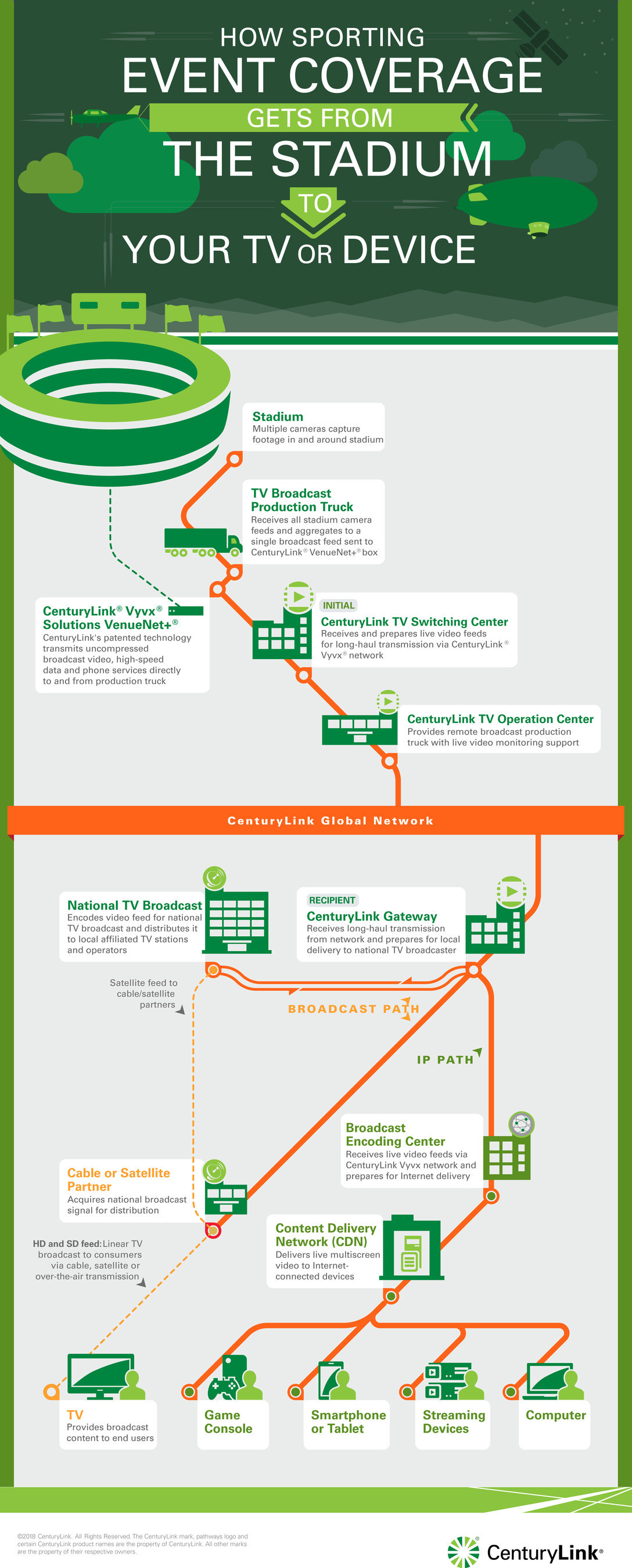
A Look at the Network Ecosystem from the Stadium to a Global Audience
When it comes to major sporting events, it’s no longer about just watching the game. Today, thanks to innovations in network technology, fans are engaging with events on an experiential level – in the stadium, at home and on mobile devices. Now fans are the ultimate multitaskers, looking up stats during the game, posting on social media, texting their friends, and if they’re in-stadium, downloading and interacting with special content through mobile apps designed to provide an even more immersive fan experience. As one researcher put it, if there’s something happening on the first screen, there’s probably something happening on the second screen, too.
There’s a lot going on behind the scenes to create a seamless experience for sports fans – particularly with large-scale championship events. The in-stadium experience is critical, as are the elements required to broadcast the game to millions – and in some cases, billions — of people all over the world and to a variety of devices.
CenturyLink transports more than 10,000 sporting events annually and connect to 200 U.S. sports venues via their Vyvx fiber broadcast network. That business, paired with an extensive IT deployments in US sports venues has reinforced that, like the internet in general, there must be flexible, reliable and secure connectivity to deliver a winning game-day experience. And as broadcast delivery methods evolve and in-stadium needs shift, it is critical that the technology and network deployed be able to adapt to changing needs.
So what does this entire ecosystem look like?
Redefining the In-Stadium Experience
Let’s start at the stadium level. It seems like only a few years ago, having a mobile device at sporting events was useless because everyone was using the same cellular network, which meant rampant congestion and ultimately, a lot of frustration. Sports teams and stadium owners began to take a hard look at what they could do, and today, many locations have invested heavily in technology and networking architecture that not only allows for enhanced in-venue connectivity, but also for a holistic, smart/IoT-based infrastructure.
The Vikings recently introduced enhanced game-day connectivity via CenturyLinks Wi-Fi networking infrastructure. This includes an integrated IP network that enables 1,400 Wi-Fi access points, which provide connectivity for more than 70,000 mobile devices – at once
An example of this is U.S. Bank Stadium in Minneapolis, home of the Minnesota Vikings. The Vikings have some of the most fervent professional football fans in the U.S., so they were acutely aware of the need to enhance their in-game experience to meet the needs and expectations of their fans. To do that, they introduced enhanced game-day connectivity via CenturyLink’s Wi-Fi networking infrastructure. This includes an integrated IP network that enables 1,400 Wi-Fi access points, which provide connectivity for more than 70,000 mobile devices – at once. The network enables the deployment of cloud-based technology, delivering custom digital media to each display. These displays give the venue an easy and effective way to communicate with fans. In addition, the network provides for the use of analytics to gather data such as usage, bandwidth consumption and URLs visited, which can be used to customize the fan experience – particularly the Vikings mobile app – now and in the future.
Delivering the Game Beyond the Stadium
By some estimates, more than 90 percent of professional football fans have never attended a game in person, so their game-watching experience is highly reliant on the quality of the broadcast. What does it take to make that happen? Not surprisingly, it calls for a whole host of network and technology elements, not to mention teams of people to make sure everything operates smoothly.
Here’s what happens behind the scenes to deliver a live sporting event broadcast to your TV or mobile device
Of course, the stakes are much higher when broadcasting a championship game or series, especially when the event is globally televised. This requires an exceptional level of pre-planning and coordination among the stadium and surrounding broadcast locations, fiber broadcast networks, TV networks, over-the-top (OTT) video providers, streaming/IP networks, content delivery networks, cable and satellite companies and last-mile internet providers. All of these parties are critical in providing sports fans across the globe with high-quality HD feeds of the game (or even 4K in some cases), regardless of where they are and what device they’re using to watch the event. This is an important point, because the use of internet-connected devices to watch TV is growing, and recent statistics point to OTT overtaking traditional TV within five years.
Also, many multitasking fans watch the game on their TVs while using other connected devices simultaneously. In 2016, there were 46.7 million simultaneous internet and TV adult users in the United States, and that’s projected to increase to 54.2 million adult users in 2018. This makes it even more critical that every party in the broadcast ecosystem deliver the high-quality experience viewers expect.
Sponsored Data Can Evolve to Take Mobile Marketing Beyond Facebook & Google, Says Strategy Analytics
Awareness and Fragmentation Remain Challenges Despite Strides by Orange, Telefonica & America Movil
Sponsored data and data rewards offer a strong win-win-win opportunity for mobile operators, sponsors, and the right user segments, says Strategy Analytics in its report, ‘Can Operator Collaboration On Sponsored Data Lead to Success?’
Nonetheless, while initial prominent launches of sponsored data offerings by AT&T, Verizon Wireless, and Telefonica caught attention in the last few years, sponsored data is still at an early stage and Communication Service Providers (CSPs) around the world have been grappling with how to adapt and grow sponsored data offerings.
Key findings from the report:
Challenges: Fragmentation of operator offerings has limited early-stage growth and awareness among brands and other sponsors, while the increased size of data bundles in mobile service and widespread availability of Wi-Fi in some countries has raised doubts among operators in many advanced data markets as to the perceived value of sponsored data for consumers.
Developments: The sponsored data ecosystem is progressing with additional value creation with analytics and feedback loops for campaigns and collaborative efforts focused on ease of onboarding for CSPs and sponsors. This can be seen in Catalyst activities at the TM Forum that involve Orange, Datami, Comptel (now part of Nokia), Sigma, cloudsense and cloudstreet, as well as collaboration between Syntonic and Tata Communications for a cross-operator sponsored data exchange model. The recent acquisition of sponsored data/data rewards pioneer Aquto by Mavenir showcases the value CSPs and their vendors see on new types of monetization opportunities.
Call to Action: More work on brand awareness, in particular, is needed to drive the market forward—as is further participation and collaboration among CSPs.
Susan Welsh de Grimaldo, Director, Service Provider Strategies, Strategy Analytics explains: “Challenges still remain for CSPs in terms of improving their strategy and approach to sponsored data and evolving that approach in an iterative and agile way to best target end-user segments and brands and others that will foot the bill in their markets. However, sponsored data provides an opportunity for CSPs to evolve their business to create new revenue streams and grow in sectors like mobile advertising, while also boosting customer loyalty.”
Nitesh Patel, Director, Wireless Media Strategies, Strategy Analytics recommends: “Strategy Analytics estimates mobile advertising revenue reached US $80 Billion at the end of 2017. Sponsored data should be considered as part of a broader advertising strategy to position CSPs as an alternative destination to big webscale companies like Google and Facebook for mobile advertising dollars. Raising awareness and providing proof points of the results that can be achieved by brands with sponsored data campaigns in each market and for specific use cases remains important—we encourage CSPs to work together and with associations to increase awareness of the benefits of sponsored data and data rewards.”
Strategy Analytics, Inc. provides the competitive edge with advisory services, consulting and actionable market intelligence for emerging technology, mobile and wireless, digital consumer and automotive electronics companies.
Marin Software Research Shows Substantial Increase in User Engagement for Advertisers
To Create Its Q4 2017 Digital Benchmark Report, Marin Software Aggregated Data from Customers Who Invest Billions of Dollars Combined in Annualized Ad Spend on Paid Search, Display, Social, and Mobile
Marin Software Inc., a leading provider of digital marketing software for advertisers and agencies, released research findings showing a 75% increase in user engagement (measured by click-through rate) on paid search ads. The full research results, actionable tips, and key takeaways are published in Marin’s Q4 2017 Digital Benchmark Report.
It’s clear that advertisers are willing to pay a premium for this increased consumer activity, spending over 10% more on their search ad campaigns in Q4 2017 than they did in Q4 2016. Still, there’s room for improvement, as advertisers seek new strategies to ensure their advertising investment maximizes performance.
“Machine learning is no longer just a buzzword that’s thrown around by industry pundits. We see that Google is leveraging its machine learning capabilities to match users with highly targeted ads, leading to substantially increased engagement. Activity on the Marin platform shows that advertisers are increasing spend on dynamic ad formats, like Shopping Ads, which deliver higher click-through rates and drive high-performance campaigns,” said Wes MacLaggan, SVP Marketing at Marin Software.
Get the Mobile Bargain While You Can: At 53% of spend, mobile CPCs increased 25% YoY. While mobile CPCs remain discounted relative to desktop CPCs, the gap is closing rapidly. Advertisers should seize the opportunity to court customers on their preferred medium by utilizing mobile bid adjustments, but be mindful that discounted CPCs on mobile will soon dissipate.
Social Engagement Gets More Competitive: CPMs increased 44% YoY, indicating that competition for consumer attention is heating up on social channels. Yet, click-through rates have remained relatively flat YoY, which may indicate creative personalization isn’t keeping pace with consumer expectations.
Too Many Ad Groups Have Too Few Creative: In Q4 2017, there was a slight shift (3%) away from creative-heavy ad groups to creative-light ad groups. Advertisers have an opportunity to benefit from Google’s machine learning technology underpinning the newly released “optimize” ad rotation setting.
Audience Utilization Remains Low: Just 24% of advertisers have an audience KPI, despite the strong campaign performance advantage that combining audiences with keyword targeting provides.
To create its Q4 2017 Digital Benchmark Report, Marin Software aggregated data from customers who invest billions of dollars combined in annualized ad spend on paid search, display, social, and mobile. Marin only includes advertisers active on its platform for the past five quarters, measuring key performance indicators on a year-over-year and quarter-over-quarter basis and removing any outliers with significant YoY or QoQ changes.









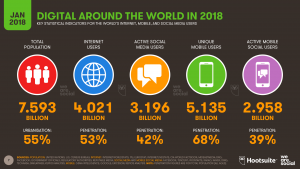













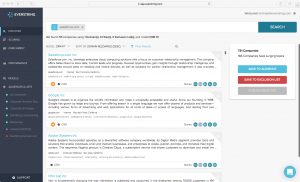
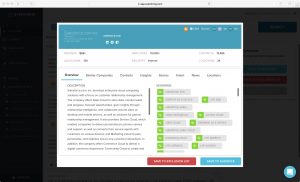




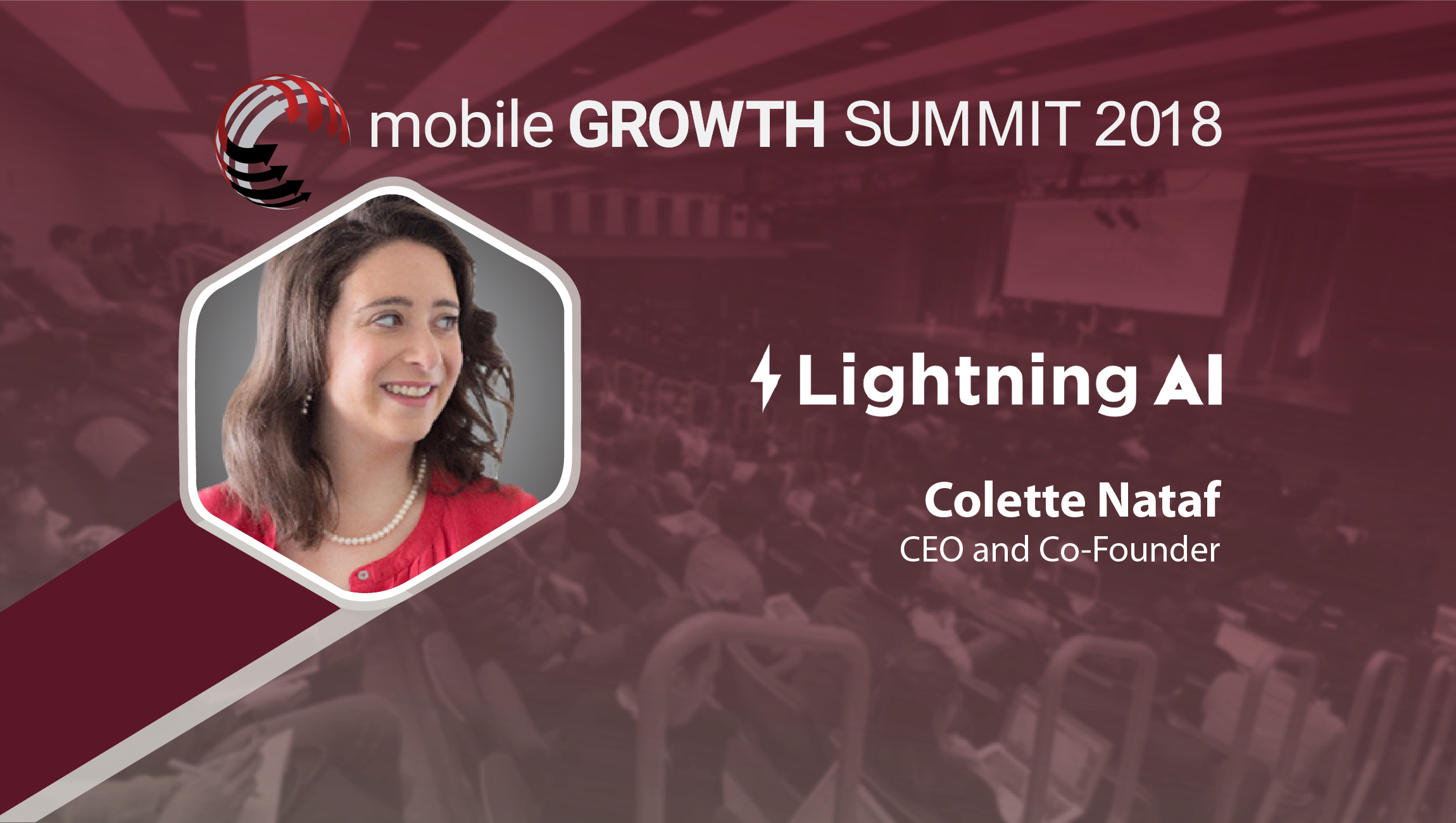






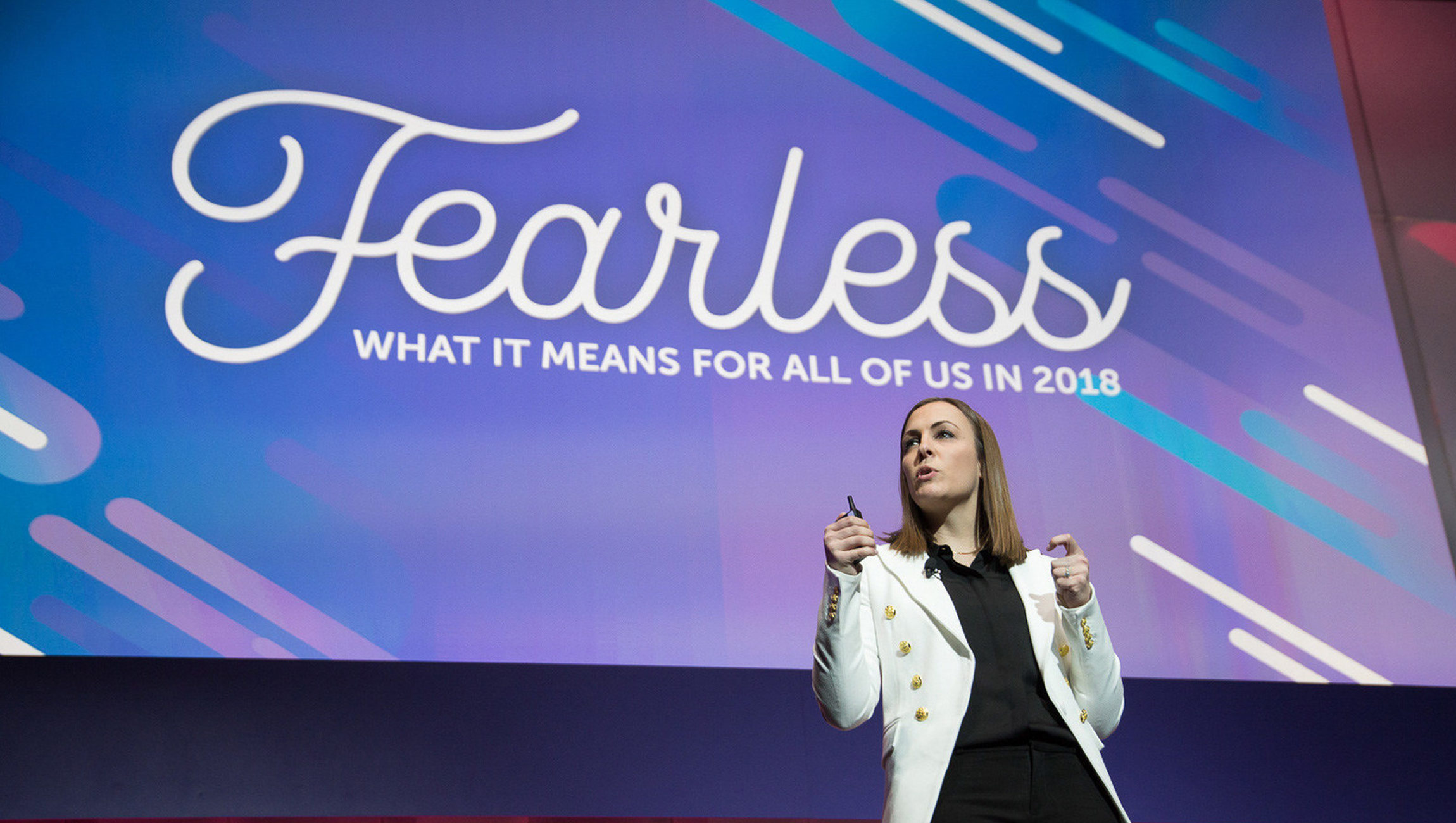
 “The Fearless Marketer takes on the opportunities and challenges we face in the frenetic pace of our digital world,” said Steve Lucas, chief executive officer,