Home Blog Page 4343

Zoho Launches New App Zoho Flow, Unveils New Software Zoho PageSense

0
Zoho Launches New App Zoho Flow, Unveils New Software Zoho PageSense

Apart From its New Version of Zoho Sites Which Helps Users Build Websites with Advanced Customization Options, Zoho Launches Cloud App Integration Platform – Zoho Flow; Unveils Zoho PageSense: A Complete Website Testing and Optimization Software

Zoho launched a new version of its DIY website builder, Zoho Sites. The new, clutter-free interface offers a range of advanced features, including pre-built website sections, dynamic backgrounds imagery (videos and parallax images), and more page elements. This update also expands the customizations available in the product, allowing users better creative control over their design.

Zoho Launches New App Zoho Flow, Unveils New Software Zoho PageSense
Raju Vegesna

“This major release makes Zoho Sites a true no-code platform, helping users create beautiful websites by supporting all major design elements and features. With rich design layouts, templates and customization options, the new builder provides a tailored experience that caters to the website needs of any business category,” said Raju Vegesna, Chief Evangelist, Zoho Corp.

Highlights of the New Zoho Sites:

  1. Pre-built Website Sections: Zoho Sites now offers a selection of layout templates that help users structure and design web content. The templates cover various categories, such as Heading, Image, Icon, Newsletter, Box, Tab, Accordion and Carousel. Users can simply drag and drop the desired section into the page builder.
  2. More Page Elements: Additions to the Elements tray provide users with more creative tools for experimenting with their page design. The new page elements include Content Containers, Icons, and Dividers.
  3. Dynamic Backgrounds: Users can now add videos and parallax images to the background of a webpage. By placing compelling visual imagery behind static page content, users can create a more engaging and immersive browsing experience.
  4. Access Restriction: Users can make their website private and manage their website’s visibility from both the public and within the organization.
  5. Quick customization pop-up: Whenever users add an element or section, a pop-up offers them design and formatting options to personalize content layout and properties. The tools in the pop-up are layout-specific, which makes customization quicker and more precise.
  6. New UI: The new look and feel of Zoho Sites strikes a balance between clean design and robust usability. Navigating within the website builder is straightforward, and all integrations are just a click away.
  7. Integrations with Zoho and third-party products: Users can get to know their audience better by using integrations with Zoho SalesIQ, Zoho CRM, Zoho PageSense and Zoho Campaigns. These integrations allow website owners to engage with visitors via live chat, collect user data via forms, observe visitor activity via Zoho PageSense and keep visitors in the know via newsletters.

Also Read: Zoho Unveils New Sales Intelligence and Automation Capabilities; Adds AI, Sales CRM and Customer Activity Responders

Zoho Also launched Zoho PageSense — a website optimization software that provides insight into visitor behavior patterns, and assists businesses achieve higher website conversions, earn greater profits, and witness accelerated growth. Available immediately, Zoho PageSense offers a combination of A/B Testing coupled with Forecasting, Heatmaps, Funnel Analysis, and other features that empower marketers with necessary data to make decisions about the placement, content and design of every website element.

Zoho PageSense introduces industry-first functionality with Forecast. Powered by proprietary machine-learning algorithms, Forecast can estimate the trend an A/B test might take before the test’s actual completion. Forecast gives marketers the flexibility to make decisions about the web page at any given instant to boost website conversions.

Sridhar Vembu, CEO, Zoho Corp, explained, “The aim of Zoho has always been to solve complex business problems with simple software. Zoho PageSense was born of that vision. A single application that does the job of multiple tools, Zoho PageSense provides businesses with all the data they need to increase their website conversion rate.”

Zoho PageSense highlights include:

  1. Heatmaps: This feature visually highlights the clicking and scrolling pattern of a visitor on the website. This shows if the visitors are interacting with the webpage in the desired way.
  2. Funnel Analysis: Given the web page order (Homepage, Pricing page and Contact Us page), Funnel Analysis shows the visitor count and drop-off value of each page in this flow.
  3. Website testing tools: A/B Testing and Split URL Testing are particularly helpful before implementing website layout changes for improving user experience and, by extension, boosting revenue. Marketers can create and test variations of website pages across desktop, tablet and mobile devices.
  4. Forecast: This functionality traces the probable conversion rate that every variation, part of the A/B test, can achieve. It also declares the estimated visitor count, improvement in performance and statistical significance required to reach the predicted conversion rate for the successful completion of the test.
  5. Zoho and third-party integrations: Zoho PageSense currently integrates readily with Zoho Sites. Third-party integrations include Google Analytics, Google AdWords, KISSmetrics, Mixpanel, and Clicky. More integrations with products from Zoho and other vendors are planned.
  6. Chrome extension: With its Chrome extension, Zoho PageSense offers the facility to conduct tests and run heatmaps on pages behind login.

Zoho PageSense when combined with Zoho’s array of marketing products, makes Zoho a single ecosystem for carrying out all marketing activities. It does so by interconnecting data from multiple applications and streamlining the website optimization process.

Also Read: Salesforce, HubSpot, Zoho Top G2 Crowd’s Fall 2017 Best CRM Software Rankings

Zoho Flow is a drag-and-drop integration platform that allows users to create flexible workflows between cloud applications. By automating information exchange across apps, Zoho Flow helps users cut manual tasks from their business processes.

The user interface of the product has been designed to provide a unified visual representation of its elements. Zoho Flow even offers a comprehensive set of pre-built workflow templates that users can activate straight away.

“Most companies depend on multiple apps to manage their business functions. But the integrations needed to coordinate these functions efficiently are often too complicated for them to build by themselves,” said Vembu, adding, “With Zoho Flow, we’re letting businesses build inexpensive integrations without having to depend on technical help.”

Inside Zoho Flow

  1. User-friendly builder: The workflow builder removes most of the complexity or limitations usually faced when building integrations. Users can connect their apps by dragging and dropping them into the builder. They can make edits in their workflow, and rearrange actions to quickly adapt to their dynamic business needs. Workflows are displayed visually, helping users plan and design their processes more efficiently.
  2. Triggers, actions, and connections: Each workflow (called a Flow) consists of a trigger and one or more actions. A trigger is an event that sets the workflow in motion, and an action is the task that follows. For example, users can set a workflow in motion when a new ticket is created in their helpdesk software (the trigger), and automatically sends an alert message to their team’s communication channel (the action).
  3. Logic and custom functions: The powerful set of logic functions that the platform offers can be used to introduce branching, add time-based actions, and drill down to the finest variable in the workflow. To further fit their integration needs, users can code custom functions using Deluge, Zoho’s own programming language, which has 500 millions lines of code written by over 50 thousand programmers. For example, consider a workflow that’s initiated when a ticket is received. A user can insert custom code to identify the nature of the ticket (positive, neutral, or negative), and then add decision branches to forward it to a specific communication channel accordingly.
  4. Sharing and collaboration within the organization: Zoho Flow lets users collaborate with their teams on building Flows, so teams can save time and effort otherwise spent on keeping up with each other’s progress and orchestrating their functions together. Zoho Flow allows users to be part of multiple team accounts too.
  5. Analytics and history: The Zoho Flow dashboard presents key metrics about live, paused and draft Flows, enabling users to monitor and analyze all their processes at a glance. To further understand when and how their workflows executed, users can also view the entire history of their Flows.
  6. Business apps and Flow gallery: Zoho Flow features over 90 web applications for users to choose from. It also offers more than 200 templates called Flows that cover important automations from across different businesses in the industry. Users can install the Flows in their account, either using them as they are or modifying them to meet specific needs.

Recommended Read: Google Analytics Users Now Have Access to 200 Million Business Data, Courtesy Fastbase

 

Leading MSP Sales and Marketing Solutions Provider, Mindmatrix Partners with HTG for 2018

0
Leading MSP Sales and Marketing Solutions Provider, Mindmatrix Partners with HTG for 2018

The MSP-Centric Sales and Marketing Enablement Platform Provider Will Be Gold Partner for All 2018 Events

Mindmatrix Inc., the Pittsburgh-based leading PRM Software provider, will be participating in the HTG Peer Group Q1 Meetings to be held in Pointe Hilton Squaw Peak Resort, Phoenix, AZ from Jan 29 – Feb 2.

Recently acquired by Connectwise, HTG is a leading Consulting, Coaching and Peer Group Organization for the Technology Service Provider Ecosystem. HTG Peer Group meetings are one of the most sought-after MSP events in the marketplace because they offer participating MSPs a platform where the best practices, knowledge, latest trends and insights for growing an MSP business are shared. The HTG Peer Group Meetings also offer great networking opportunities for its participants.

Also Read: Mindmatrix Marketing Automation Software Introduces ‘Hotspots’

Leading MSP Sales and Marketing Solutions Provider, Mindmatrix Partners with HTG for 2018
Kevin Hospodar

At the Peer Group Meeting, Mindmatrix will be represented by its Director of Marketing, Kevin Hospodar and MSP Marketing & Sales Enablement Specialist, Eric Weber. Kevin says, “MSPs and IT service providers are the primary participants in the HTG Peer Group Meetings. While the MSPs and IT service providers are very good at what they do, they are often too tied up in their business to work on growing it. HTG meetings provide their participants with the knowledge that they need to be able to effectively market and sell their products and services. Whether it is discussing the best practices in MSP sales and marketing or providing information about the latest sales and marketing tools, HTG meetings offer them all at one single event. We believe the HTG Peer Group Meeting is a great platform for us to showcase our MSP-IT Advantage Program and share how it has benefited our clients in the IT sphere.”

In October, Mindmatrix enhanced its Partner Relationship management software to make its deal registration and opportunity management features more powerful. This enhancement offers a more precise understanding of the lead status in the sales cycle and, as a result, makes lead management more efficient.

Recommended Read: Mindmatrix PRM Software Enables Channel Partners and Vendors to Manage Opportunities Better


EventOPS Cements Industry Leadership Position with New Hire: Michael Fuller, Chief Strategy Officer

0
EventOPS Cements Industry Leadership Position with New Hire: Michael Fuller, Chief Strategy Officer

Michael Fuller Comes with an Extensive Experience in Event Technology and the Mice Industry, Working with a Broad Range of Clients and Industries across the United States, Europe and Australasia

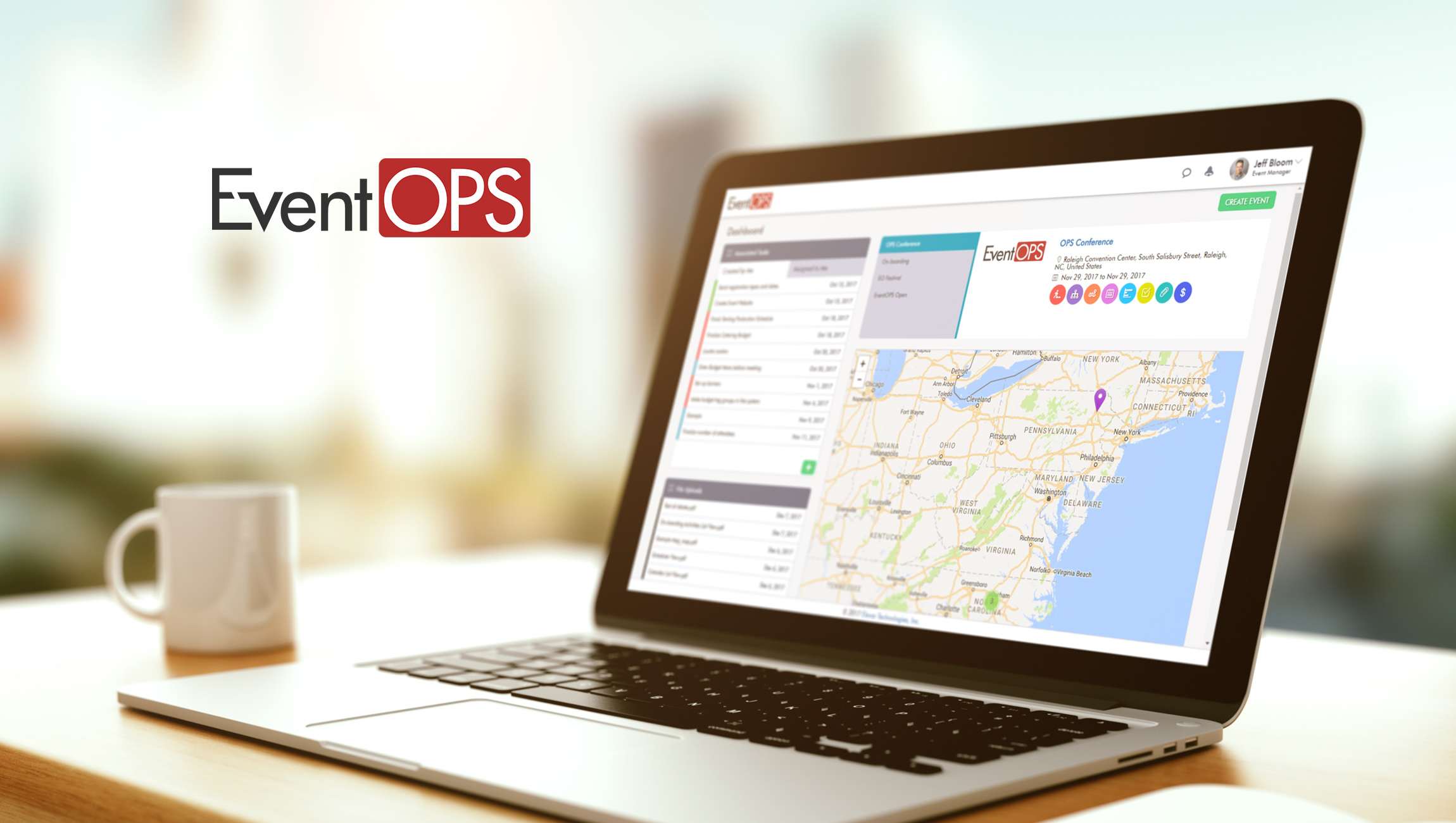
EventOPS, the premier online tool for streamlining event management, is delighted to announce the appointment of Michael Fuller as Chief Strategy Officer.

EventOPS Cements Industry Leadership Position with New Hire: Michael Fuller, Chief Strategy Officer
Michael Fuller

Fuller has an impressive background in event technology and the MICE industry, with extensive experience working with a broad range of clients and industries across the United States, Europe and Australasia. His previous roles have included VP Global for ShowGizmo, where he spearheaded their international expansion, and Strategic Communications Manager for the Association of Australian Convention Bureaux, where he helped raise the industry profile of business events in Australia and globally.

Also Read: The Fourth Annual Edition of the Mega-popular Event Technology Landscape has Been Released by Cramer

EventOPS Cements Industry Leadership Position with New Hire: Michael Fuller, Chief Strategy Officer
Chris Roberts

EventOPS Co-Founder Chris Roberts said, “Mike is a stellar addition to our team. Our software is gaining traction at a heck of a pace, as it’s helping event professionals realize efficiencies and automate actionable plans; Mike’s appointment is key to ensuring continuous alignment of product with customer needs, and his depth of experience in the meetings and events industry is vital to that.”

Also Read: Why The Best Marketers Are Adding Online Experiences to IRL Events

EventOPS Cements Industry Leadership Position with New Hire: Michael Fuller, Chief Strategy Officer
Marie-Claire Andrews

EventOPS is a member of the Event Tech Tribe, a collaborative ensemble of event tech specialists offering best-in-craft event technology. Event Tech Tribe COO, Marie-Claire Andrews, is also happy with the news: “I was lucky to work with Mike in Australasia where I was impressed with his nous – and his extensive networks!” she adds; “His global connections and industry knowledge will undoubtedly help make EventOPS #1 in the ‘business of event management’ and I look forward to working closely with him on Event Tech Tribe business.”

Also Read: Three Trends Driving the Shift From Customer Support to Customer Success

Fuller added, “ It’s an honor to join the EventOPS team – as someone that has planned major events, conferences and summits I absolutely understand the grind and how (and why) event professionals continue to make the list as one of the most stressful jobs year after year, so I feel well qualified to help take that pain away!”

The EventOPS platform allows individuals to be more strategic in all areas of the business by breaking down silos, organizing teams (and vendors), automating and streamlining pre-event planning as well as tackling event budgeting. The events industry has changed a lot over the past 20 years and the EventOPS team feels that the traditional tools and software used has lagged behind. Roberts added, “we started EventOPS with one thing in mind – how can we help event professionals create better events. This is something Mike is also very passionate about and I so welcome him to the EventOPS team.”

Recommended Read: Event Tech Startup Hubb Wins Best Event Technology at the 2017 Event Awards

Nevion’s Renewed ISO 9001 and 14001 Certifications Highlight Company Transformation

0
Nevion’s Renewed ISO 9001 and 14001 Certifications Highlight Company Transformation

Nevion, the award-winning provider of virtualized media production solutions, has successfully renewed its ISO 9001:2015 and 14001:2015 certifications. The new certifications underline Nevion’s corporate transformation from simply providing ’media transport and broadcast products and solutions’, to being a company focused on the ’development, sales, deployment and support of Software Defined Technologies for mission critical data networking’, including networking for media production.

Developed by the International Organization for Standardization, both ISO 9001 and 14001 standards are designed to ensure that company’s products and services consistently meeting customers’ requirements, and that quality is consistently improved. ISO 9001 is a quality management system that gives organizations a systematic approach for meeting customer objectives and delivering consistent quality, while ISO 14001 provides practical tools for those looking to manage their environmental responsibilities.

Marketing Technology News: Tray.io Unveils Unified Customer Integration Solution for Software Companies

The wording of the activities covered by the certificates, “Software Defined Technologies for mission critical data networking”, reflects the remarkable transformation the company has achieved in the past few years, as its business has shifted from baseband to IP, from products to solutions, and from hardware only to more software and services.

Geir Bryn-Jensen, CEO of Nevion, said: “As a company focused on delivering the very best products and customer service while maintaining best practices, we are very pleased to have successfully renewed both our ISO 9001 and ISO 14001 certifications. We are all the prouder, because nowadays the ISO certification evaluates all the business processes, which in our case have evolved dramatically as we embarked on our successful and profitable corporate transformation. The ISO auditor who visited us said he had never seen a company transform so quickly in terms of ISO compliance!

Marketing Technology News: Pipedrive Unveils Its Biggest Redesign; Launches New Products for 10th Anniversary

“This is also a terrific way to head into the new year. 2017 was Nevion’s best year yet from a business perspective, and we want to try and surpass expectations again this year. These ISO 9001 and 14001 renewals will keep us moving in the right direction.”

Marketing Technology News: TA Digital Earns 7th & 8th Adobe Specializations with Campaign and Marketo Badges

PandaDoc Celebrates the New Year with Key Product Updates

0
PandaDoc Celebrates the New Year with Key Product Updates

Pandadoc Announces Major Product Updates, Including Enhanced CPQ and Mobile Features

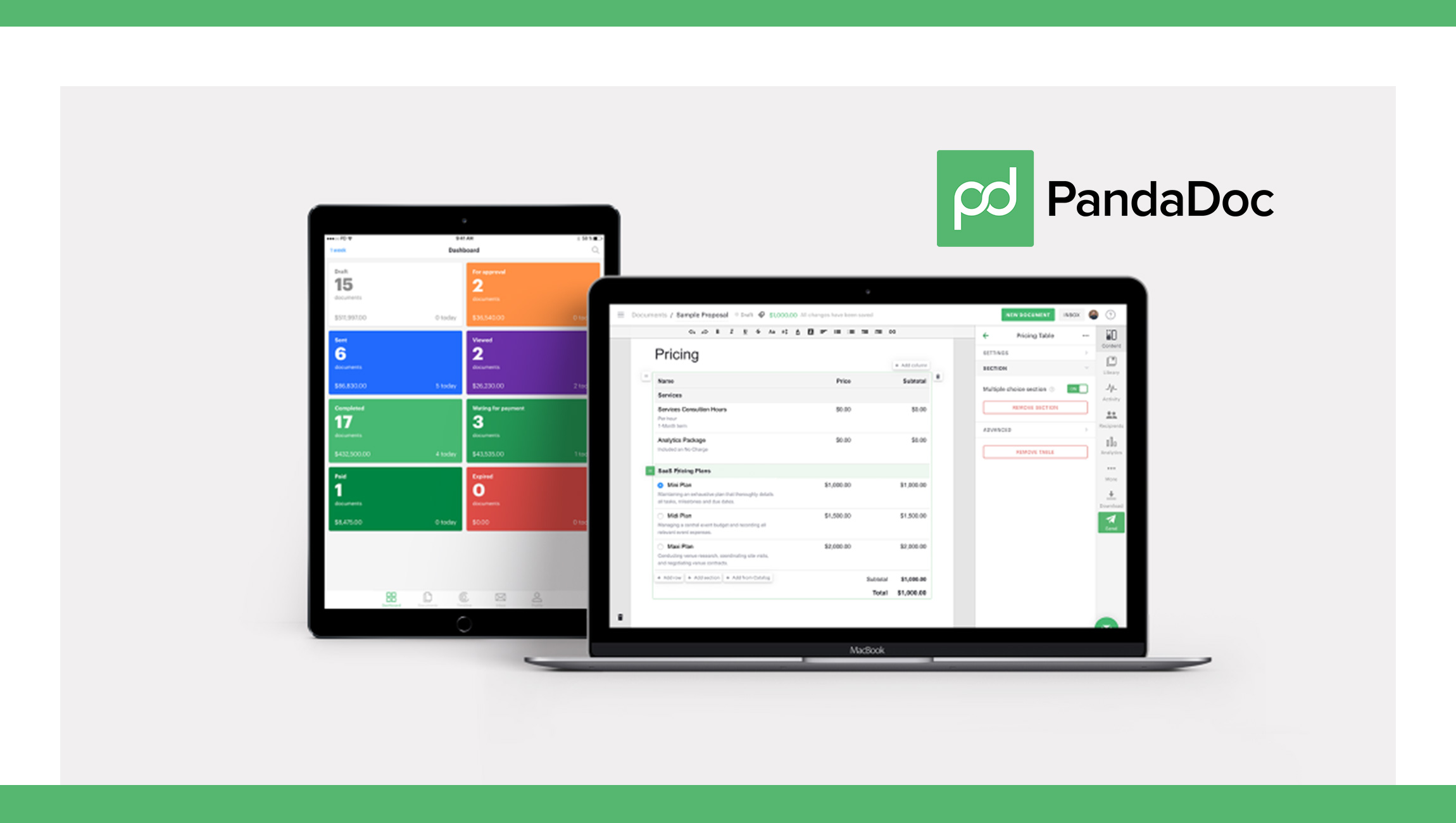
PandaDoc announced key updates to its award-winning document management platform. Updates include Pricing table features that allow customers to lock content and provide optional items. Customers can also attach additional files to their quotes, proposals and contracts without adding them inside the body of their PandaDoc document automatically. In addition, PandaDoc has extended the functionality of its mobile app to include iPad and Android tablet usage.

PandaDoc Celebrates the New Year with Key Product Updates
Mikita Mikado

“We have significantly ramped up our development schedule for 2019, and we are planning a steady flow of product updates throughout the year. As our customer’s needs grow, our product will continue to evolve to meet those needs. Our customers are our number one priority,” stated PandaDoc CEO Mikita Mikado.

Also Read: Technology and Transparency: The Growing Horizon of AI, Cybersecurity, Blockchain and the Battle Against Ad Fraud

The PandaDoc app offers features like eSignatures and data merge, along with data-driven feedback to build, edit, execute and track documents.

Product updates for this release include the following:

CPQ updates

PandaDoc allows customers to lock individual content blocks within a template or content library item from editing by a document creator. Based on feedback, PandaDoc has now taken this a step further by providing the same functionality within the pricing table. The most common use case for this is allowing users to edit the quantity column to prevent further discounting.

When this feature is enabled, a team member can change only the editable columns within the pricing table, and they can only add items from the catalog and remove rows if the selected column allows for edits.

Multiple choice pricing options

PandaDoc pricing tables are dynamic and offer our users a multitude of options, so they can put their best foot forward and provide their clients with options that are best fit for their business. In addition to making pricing optional, customers can now provide recipients with a multiple choice pricing option. This option allows recipients to choose pricing that is the perfect fit.

This feature is excellent for sales reps whose prospect hasn’t quite decided which pricing package they want. Now a rep can provide options so that the prospect can choose what is best suited for them.

Also Read: How Marketers Can Optimize $682 Billion in Expected Spend in 2018

Attached files

A lot of PandaDoc customers needed to attach additional documents or file to their quotes, proposals and contracts, but didn’t want to add them inside the body of their PandaDoc document automatically. Now customers can add additional attachments to their documents. The attached files feature allows customers to add a file of any type (PDF, Word, etc.) to their documents. The file size can be a max of 50MBs, and up to 10 different files can be attached to one document.

Mobile app available for iPad/Android tablet

Last year, PandaDoc made extensive updates to the PandaDoc mobile app to improve the overall functionality for users who are on the go. Many of those customers wanted to be able to sign documents outside the office, on their iPad or Android tablet device. This ability is now built into the PandaDoc mobile app.

This feature is great for sales reps who are in the field and want to get documents signed fast. The tablet app also features the PandaDoc tracking functionality, so customers can continue to monitor their documents on their tablet in addition to their mobile phone and their desktop.

Recommended Read: Sales Performance Gap: The #1 Reason VPs of Sales Miss Their Revenue Targets

To Accelerate Growth, NetElixir Expands C-Suite by Appointing Paul Wilson to New CGO Role

0
To Accelerate Growth, NetElixir Expands C-Suite by Appointing Paul Wilson to New CGO Role

Apart From Wilson, Company Also Hires CTO to Head up New Product Innovation Lab

Retail search marketing company NetElixir is embarking on an aggressive growth phase for 2018. To spearhead growth, NetElixir has expanded its C-Suite with digital marketing veteran Paul Wilson, who is taking on the role of Chief Growth Officer. The company has also hired a Chief Technology Officer to lead a new Product Innovation Lab in Hyderabad, India.

In this newly created role, Wilson will oversee NetElixir’s revenue and lead generation efforts, with a focus on growing the company’s client base. NetElixir’s marketing, sales and client development teams report directly to Wilson.

To Accelerate Growth, NetElixir Expands C-Suite by Appointing Paul Wilson to New CGO Role
Paul Wilson

“I’m excited to be joining NetElixir and look forward to helping the company maximize its growth potential. Over the past year, NetElixir has grown 50% and we’re anticipating doubling revenue over the next year by adding new clients across both our full-service offerings as well as our self-serve paid search bid technology, LXRGuide. Our reputation for delivering tremendous results for retailers is the driving force behind our growth, and we’re on a mission to continue helping retailers exceed their eCommerce revenue goals,” said Wilson.

Also Read: NetElixir Increases Team at Princeton Headquarters, Projects Fast-Paced Growth Throughout 2018

As a digital marketing leader, Paul has built consultative sales teams and created go-to-market sales strategies in delivering significant growth year over year for industry leaders including Merkle, RKG and iProspect. Previously, Wilson held the role of EVP/Client Development at Merkle and was part of the executive team at RKG when Merkle acquired RKG in 2014. Wilson led RKG’s revenue growth efforts leading to the agency being named the fastest growing search agency for 2012 and 2013 by Ad Age. Prior to joining RKG in 2011, Wilson was the Chief Revenue Officer at iProspect. Under his leadership, iProspect grew from 40 people in one U.S. office to over 700 employees in 40 offices across the world.

Also Read: NetElixir Reinvents AdWords Management for Agencies with New LXRGuide Agency Edition

To Accelerate Growth, NetElixir Expands C-Suite by Appointing Paul Wilson to New CGO Role
Udayan Bose

Udayan Bose, CEO, NetElixir, added, “We’re thrilled to have Paul join our team and help propel us to new great heights. Especially given the current climate for retailers with consolidation and consumer behavior shifting to mobile purchasing, retailers are relying more on digital marketing to bring in sales. We have a 14+ year history of achieving success for our clients and we look forward to working with Paul on expanding our services to retailers across the U.S. through our industry-leading technologies, client relationships and strategic partnerships with companies like UPS, Bing and the Google Preferred Partner Program.”

Also Read: Interview with Udayan Bose, Founder & CEO, NetElixir Inc

In addition to expanding its C-Suite in the U.S., NetElixir has also hired a Chief Technology Officer, Kedar Chaudhary, to head up its new Product Innovation Lab in Hyderabad, India, which is focused on optimizing LXRGuide, one of NetElixir’s key product offerings. The Lab is comprised of teams devoted to developing technology in the fields of machine learning, multi-channel integration, journey analytics and voice search activation, with the overall goal of making LXRGuide an integral part of marketers working at small-to-midsize companies globally. Prior to NetElixir, Chaudhary was co-founder and CTO of Next Education India Pvt Ltd. He also held the position of Chief Software Architect at PartyGaming.

Recommended Read: How Businesses Can Effectively Implement Chatbots: PointSource

Retargeting Ad Company Zigglio Wins Facebook’s 2017 Accelerator Program

0
Retargeting Ad Company Zigglio Wins Facebook's 2017 Accelerator Program

Zigglio’s Offering of Inbound Caller Retargeting for Phone Call-Driven Businesses Wins Facebook’s Accelerator Program

Zigglio, the behavioral retargeting ad company that lets brands retarget their inbound callers on social media, is Facebook’s 2017 Accelerator Program winner.

After an expansive worldwide search to find and nurture the most innovative ad-tech companies on its platform, Facebook chose Zigglio as one of three companies in September for their “Growth Track” program of the H2 2017 class. The selection criteria included companies that are “committed, fast moving and tackling a huge and relevant problem.” At the end of the program in December 2017, Zigglio was announced the winner.

“We are proud to have been in Facebook’s H2 2017 Accelerator class with our fellow graduates who are doing amazing things with dynamic creative video and artificial intelligence marketing. With this win comes further validation that our technology and vision not only work but we are eliminating what was once considered a disadvantage for call-driven industries. Now, those businesses can convert customers online with retargeted advertising on social media because Zigglio works anywhere you advertise your phone number whether it’s offline or online. We are blurring the lines when it comes to what can and can’t be done with inbound caller conversion on social media,” said Leighton Scarlett, VP of Product for Zigglio.

Also Read: Behavioral Retargeting Company Zigglio, Selected by Facebook as One of Top Three Startups to Participate in Its 2017 Accelerator Program

Globally, consumers made 85 billion phone calls to businesses in 2016, a number that will nearly double by 2020 – but research shows 70 percent of consumers end calls without being converted to customers. Zigglio is helping companies convert more callers – long after the initial call – with seamless continuity of their marketing message, giving them the same edge on social media businesses already have with website visitors.

Retargeting Ad Company Zigglio Wins Facebook's 2017 Accelerator Program
Rayon Walker

Rayon Walker, CTO of Zigglio, added, “Industries like real estate, automotive, health, education, professional and financial services rely on converting inbound callers into clients and if that doesn’t happen on the call, many times the opportunity is lost. We’ve applied the same advertising strategy of retargeting website visitors on social media to inbound callers. Now, businesses that advertise on TV, radio and billboards can retarget inbound callers online in near real-time on Facebook and Instagram.”

Zigglio’s effective and easy-to-use technology seamlessly creates and updates segmented custom audiences using inbound caller data, allowing companies to increase conversion rates, and ultimately driving appointments and sales, by remaining in front of prospects – while they’re still in buying mode –with retargeted ads.

Recommended Read: Tweet Your Way to Success: A Guide to Social Media Marketing & Strategic Thinking

New Return Path Interface Provides Actionable Insights to Monitor and Improve Email Deliverability

0
New Return Path Interface Provides Actionable Insights to Monitor and Improve Email Deliverability

The Return Path Platform Offers an Innovative Way for Customers to Monitor Key Deliverability and Reputation Metrics, Identify Potential Issues, and Take Action to Resolve Them

Global email solutions provider Return Path introduced the latest innovation to its industry-leading product suite: the new and completely reimagined Return Path Platform. This advanced user interface combines Return Path’s core deliverability and reputation monitoring solutions to provide customers with a comprehensive view of their email program, along with a streamlined workflow to quickly diagnose and correct deliverability issues.

Reaching the inbox is critical to driving revenue through the email channel, yet a full 20 percent of email is diverted to the spam folder or blocked altogether. So it’s crucial for marketers to have insight into where emails are being delivered. The Return Path Platform features a sleek, intuitive look-and-feel that puts all of the customer’s deliverability and reputation data in one place, making it easy to monitor performance at a glance. Simple navigation allows the customer to dig deeper into individual campaign metrics, providing meaningful and actionable insights to keep inbox placement high, correct issues as they occur, and prevent issues in the future.

Also Read: New Research from Return Path Shows Strong Correlation Between Subscriber Engagement and Spam Placement

New Return Path Interface Provides Actionable Insights to Monitor and Improve Email Deliverability
Scott Ziegler

“Data is critical to analyzing email performance, but the value of data is lost if you don’t understand what it’s telling you. The new Return Path Platform provides customers with an unprecedented view into their email data, as well as guidance on how to solve deliverability issues. The end result is better inbox placement, enhanced subscriber relationships, and ultimately, increased ROI,” said Scott Ziegler, vice president of product management with Return Path.

Also Read: Return Path Acquires ThreatWave to Scale Email Data Intelligence and Security Solutions

The Return Path Platform is the result of deep collaboration with customers from ideation through launch. For more than a year, customers have been validating with their own data and providing feedback on incremental rollouts of the redesigned interface through Return Path’s unique Early Access program.

“From the beginning, we were committed to making this a platform that marketers really want to use,” continued Ziegler, “At every stage of development, the feedback we received from Early Access users helped us to make better decisions and drive innovation that truly benefits our customers.”

“The new interface is great to work with. The design and visualizations are clean and modern, and I’m presented with the most pertinent information right up front. But then it’s also easy to dig deeper into more specific data points,” Return Path customer Ian H., Director of Technology for a leading digital media publisher, who participated in Early Access testing for the Return Path Platform

Also Read: Return Path Releases New Performance Benchmarks for the Email Campaigns Marketers Use Most

In addition, customers will find helpful resources throughout the platform, including related content and tips for solving common deliverability problems. “The new Return Path Platform represents an incredible step forward in the evolution of Return Path’s product suite. And while we’re excited to get this new platform into our customers’ hands, we view this as just the beginning of many future product innovations that will solve our customers’ biggest deliverability challenges,” said Ziegler.

The Return Path Platform is now available to all direct customers and will be automatically enabled on all new accounts going forward. Additional innovations slated for 2018 include French and Portuguese translations of the interface, as well as access to Return Path’s email service provider partners.

Recommended Read: Twenty Percent of Global Commercial Email Fails to Reach the Inbox

Verve Expands Its Premium Mobile Programmatic Solution for The UK and International Location Marketers

1
Verve Expands Its Premium Mobile Programmatic Solution for The UK and International Location Marketers

Advertisers Can Now Access Premium Mobile App Inventory and Location Data Programmatically via Rubicon Project, with High Levels of Data Precision and Accuracy

Verve, the leading location-based mobile platform, has set its sights on capturing a significant slice of the UK’s £2.6 billion mobile programmatic advertising market, with the expansion of its Premium Programmatic Mobile solution through Rubicon Project’s leading Orders platform, completing its international end-to-end product suite.
Verve’s programmatic solution is now available to the UK and international advertisers allowing them to capture premium audiences ‘in-app’ during the moments that matter, using accurate and precise location data and movements.

According to eMarketer, £3.39bn was spent on programmatic trading in the UK in 2017, an increase of 23.5% on 2016. Mobile is the major driver of this growth,
accounting for 78% of total programmatic digital display ad spending.

With consumers spending 81% of their mobile internet time within premium apps (according to the Marketing Land App Report & Article Sep 2017), there is huge demand from advertisers to automate the delivery of creative campaigns in-app and at scale.

Verve is offering the inventory of national and regional premium publishers, via both private marketplace and programmatic guarantee, which is accessible through all major DSPs. It combines high quality inventory and a Device ID targeting universe that includes Verve location intelligence; allowing precise and accurate data that maps location patterns to millions of real-world POI locations.

Also Read: Verve Adds Mobile Video to Its Location-Based Mobile Ad Suite

The in-app inventory has a brand safe guarantee, allowing the passing of data to enable brands to verify their programmatic buys via their preferred third-party measurement provider.
Brands and agencies have complete visibility and control, guiding campaign performance in one place, including frequency capping, brand safety and optimisation.

Verve is also letting brands serve mobile-first creative programmatically, using its popular formats such as Tap to Map and auto-play.

Verve Expands Its Premium Mobile Programmatic Solution for The UK and International Location Marketers
Ian James

Ian James, General Manager of International at Verve, said, “Today’s product expansion responds to the huge advertiser demand for premium programmatic mobile inventory in the UK. Programmatic campaigns thrive on high quality data. And what’s better placed than the clean and relevant user data derived from location intelligence. The more information provided within the automated transaction, the higher chances of premium audiences being reached, and driving uplift in campaign performance.”

Also Read: Verve™ Expands Regional Footprint With an Austin Office to Serve Clients in the Southwest

Steve Wing, Managing Director UK, Ireland & Nordics, Rubicon Project added, “Brand advertisers are looking for both quality and safety when it comes to mobile programmatic. The private marketplace opportunity offered through the Verve marketplace provides just that; quality data, flowing safely through the programmatic pipes. We’re excited to expand our relationship with Verve internationally, and to continue to enhance the performance and efficiency for mobile campaigns.”

Recommended Read: Verve Expands Availability of Its Location-Powered Audiences With The Trade Desk

NetBase Unveils the Most Comprehensive Cross-Channel Social, Earned, And Owned Engagement Analysis

0
NetBase Unveils the Most Comprehensive Cross-Channel Social, Earned, And Owned Engagement Analysis

Industry Leading Social Media Analytics Solution Tracks Engagement Across Twitter, Facebook, Instagram, and YouTube

NetBase, a global leader in enterprise social analytics, recently announced it is the first global social media analytics solution to track comprehensive engagement across Twitter, Facebook, Instagram, and YouTube. NetBase’s analytics platforms (NetBase Enterprise and NetBase Pro) aggregate the engagement metrics data into a single dashboard to provide for easy analysis of trends, popular posts and actionable insight.

Also Read: Interview with Paige Leidig, CMO, NetBase Solutions

NetBase Unveils the Most Comprehensive Cross-Channel Social, Earned, And Owned Engagement Analysis
Paige Leidig

“Social media is so important to brands today, they can’t afford to miss valuable customer feedback metrics, which too many tools claim to provide but do not. Brands need true insight around the spread of hashtags and content across earned and owned channels and our updates now provide a complete insight into the industry,” said Paige Leidig, chief marketing officer at NetBase.

Also Read: NetBase Brings Natural Language Processing to Social Media Monitoring; Launches “Instant Search” Solution for On-Demand Social Analytics

Key enhancements to the NetBase platform include:

  1. Enhanced Instagram analysis and insight: NetBase is the only global analytics solution analyzing both followers, comments, and likes on all tracked Instagram channels and keywords. Today Instagram has more than 800 million monthly active users and more than 15 million brands are active on the channel. Instagram has the greatest consumer engagement on any social network and it has a strong correlation to brand passion. NetBase’s enhanced Instagram engagement metrics track back to January 1, 2017, and include comments and likes figures which enables a brand to quickly see which posts have resonated the most. Brands can use the insight to identify influencers, assist in content ideation and easily identify trending content for rapid response.
  2. Analyze across all major networks in a single view: NetBase enables users to analyze social media from all major networks (Twitter, Instagram, YouTube and Facebook) as well as blogs, forums, news etc., in a single view. This provides brands the ability to easily contrast, compare and aggregate information across all major networks without jumping to different views or manually consolidating the data. Brands can also rank posts across social networks in a single analysis. The same enhanced analysis NetBase provides for Instagram, it provides for all other social channels as well.
  3. Comprehensive Insights based on text, engagement metrics and image: NetBase combines the insights extracted from the text of the posts using the state of art NLP, engagement metrics on all owned and earned data, and insights extracted from images such as logos, objects, scenes detected using deep learning. Users do not need to have different applications for getting metrics or Image analysis. One single view shares all of the insights.
  4. Deepest historical analysis: NetBase offers comprehensive historical coverage for keyword, hashtag and channel searches that goes back years. This enables seasonal comparisons, in-depth campaign analysis and more effective influencer identification.

Recommended Read: NetBase Instant Search Achieves Hyper-Growth Rate Since Launch in February 2017

Equals 3 Expands Lucy’s Toolkit to Help Marketers Derive Even More Value from Data

0
Equals 3 Expands Lucy’s Toolkit to Help Marketers Derive Even More Value from Data

Lucy, The AI-Powered Assistant, Now Includes Workflow Automation and Predictive Media Modeling

Equals 3, a marketing-technology solutions provider leveraging the power of AI, announced the beta launch of Lucy 2.0. Building off of Lucy’s initial success since launching in May of 2016, Equals 3 expanded her capabilities—adding automated workflow, predictive media modeling and more than 20 additional features and enhancements to help marketers derive value from their data more efficiently and effectively.

Also Read: Equals 3 Sees Rapid Growth with “Lucy”, a Cognitive Companion for Marketers

Lucy 2.0 is learning to work with more complicated data sets to automate workflows specific to each client’s processes through her new snapshot feature. She is also beginning to predict how strongly specific marketing messages will resonate against different personas and offer suggestions for improvement. Lucy’s predictive knowledge also applies to media planning—looking at multiple campaign objectives, she can generate predictive media models to forecast optimal allocations and campaign results and learns from actual performance to further enhance her predictive capabilities.

Equals 3 Expands Lucy’s Toolkit to Help Marketers Derive Even More Value from Data
Scott Litman

“Lucy 2.0 marks a vital milestone in Lucy’s evolution, where marketers can leverage more data and tools to inform their decision making,” said Scott Litman, Co-founder, Equals 3.

Also Read: Interview with Scott Litman, Managing Partner at Equals 3

Lucy provides AI-powered enterprise knowledge management for Fortune 1000 marketers and advertising/media agencies that struggle to navigate and manage vast sums of structured and unstructured marketing data across channels. Rather than searching through dozens of systems or not taking advantage of valuable organizational data, Lucy unifies and delivers all of the data an organization owns, licenses and commissions through one simple interface.

Trained in natural language processing, Lucy understands grammar and context, and evaluates all possible meanings. Lucy learned more than 5,000 intents over the last six months, which enables her to more clearly understand the intent of questions asked of her and better inform the responses she will deliver.

Also Read: How AI Will Make Marketing More Personalized In 2018

Added Litman: “Seeing Lucy’s rapid development over time, she’s able to more accurately, effectively and quickly address marketers’ key challenges in research and media, providing them with the precious time they need to focus on strategic execution. Combining that with her new features—as well as her ability to continuously learn and improve as she receives more data and feedback—means marketers now have the arsenal to make rich, data-informed decisions to drive their business goals.”

Also Read: MarTech RADAR 2018: Top 150 B2B Technology Companies You Should Follow

Lucy 2.0 in beta has been released to clients—including a number of Fortune 1000 brands and global agencies–for testing and input that will help shape her continued growth. Since initially launching in May of 2016, Lucy was one of only four AI solutions on Gartner’s 2017 Cool Vendor List and named the ad tech/marketing tech / financial tech product to watch in 2017 by Advertising Age. Lucy’s overwhelming success within the marketing community led to Equals 3 winning the Data & Marketing Association (DMA)’s Innovation Award for IoT and Emerging Technology and named one of Drexel LeBow’s Analytics 50, comprised of 50 organizations that excel at using analytics to solve business challenges.

Recommended Read: Eight Ways AI Will Be Used In Marketing In 2018

Playbuzz Names GroupM’s Rob Norman To Its Board of Directors

0
Playbuzz Names GroupM’s Rob Norman to its Board of Directors

Norman Joins the Storytelling Platform, Reinforcing the Company as a Leader in Disruptive, Interactive Offerings for Advertisers Worldwide

Storytelling platform Playbuzz announced that Rob Norman has joined the company’s board of directors.

Norman continues to act as a Senior Advisor to GroupM following his retirement as Global Chief Digital Officer after 31 years in various roles at WPP-held companies. His collaboration with Playbuzz is unaffiliated with GroupM.

Playbuzz Raises Additional $35M, Reinforcing Position as a Global Leader in Interactive Storytelling
Shaul Olmert

“Rob is a digital advertising pioneer who we are incredibly excited to welcome to Playbuzz’s Board of Directors. He is a true proponent of the evolution of digital content and inherently understands what makes consumers tick. We look forward to tapping into his expertise as we continue to bring the most engaging, interactive branded experiences to leading agencies – and their clients – worldwide,” said Shaul Olmert, co-founder and CEO of Playbuzz.

Also Read: Playbuzz Raises Additional $35M, Reinforcing Position as a Global Leader in Interactive Storytelling

The Playbuzz platform is relied upon by top brands who partner with the company to create interactive branded content campaigns that Playbuzz then distributes at scale to its existing network of tens of thousands of publishers. Those publishers create engaging, visually-stunning editorial content with the platform that results in meaningful consumption and improved performance.

Playbuzz Names GroupM’s Rob Norman to its Board of Directors
Rob Norman

Rob, who is a Senior Advisor at GroupM, expressed his delight at joining Playbuzz’s board of directors. “In the digital world, impressions are cheap and harnessing users’ attention spans has never been more important. Playbuzz has developed creative, high-performing products, as well as trusted partnerships with premium publishers, that enable brand owners to achieve engagement at scale,” he added.

Also Read: GroupM Launches Finecast, A New Addressable TV Business In The UK

In January of 2017, Playbuzz ranked #7 in comScore’s Lifestyles Category and #27 in the company’s list of Top 100 Video Properties, positioning it as a leader in providing high-quality, broad distribution of its innovative forms of native advertising. Branded content campaigns powered by Playbuzz garner metrics high above industry standards, such as an average of 97%+ in-item viewability confirmed by MOAT and 2-4 minute average session times (as compared to the 15-second industry average). These campaigns attract 99% human, non-fraudulent traffic as confirmed by White Ops, and have resulted in an average 86% brand lift, as reported by Nielsen.

Recommended Read: Five Things That Marketers Need to STOP Doing in 2018

What Data Orchestration Solutions Mean for B2B and B2C Marketers

0
What Data Orchestration Solutions Mean for B2B and B2C Marketers

Openprise LogoThe enthusiasm for data-driven marketing technologies like predictive, AI, ABM, marketing automation, and personalization tools is driving interest in a new category of technologies – Data Orchestration Solutions. These solutions automate critical marketing processes including things like onboarding data, cleansing and enriching that data, unifying field values across different systems, and delivering to key partners.


Now that sounds bland and theoretical, and marketers tend to like things that are shiny. So why are marketers becoming excited about these? It’s because the success of so many of those shiny MarTech tools is being hindered by a bad process and bad data, and data orchestration solutions address those issues directly.

Also Read: Openprise Announces New Capabilities to Enable Marketers to Maintain Compliance With GDPR

A few real-life examples:

  1. You run hundreds of campaigns every year, and the offshore team that you’re paying $50,000 a year to clean up and upload lead files is missing its SLAs, while both Sales and Marketing are complaining about inconsistent results. You’re tired of manually editing their work—that isn’t scaling.
  2. You’ve got 3,000 industry values, 250 state values, and over half your database is missing job level and job function fields, despite buying data from three different data providers. You want to have 10 industry values, 50 states, and job functions and job levels for all your leads so you easily segment your database and make lead scoring work. But, that’s easier said than done.
  3. Your sales team is tired of you sending leads with names like “Asdf” and “Bugs Bunny” over to them as MQLs when it’s obvious these aren’t real people. It’s damaging your team’s credibility.
  4. The cutting-edge AI experiments you’ve been working on haven’t delivered anything usable for the marketing and sales teams. You suspect the data you’re using to train the models aren’t good enough.
  5. You’ve found that 25% of your best MQLs aren’t getting followed up on because they’re going to wrong people. Your company’s leads should be routed based on named account, product interest, geography, industry vertical, and partner involvement. This looked easy enough when you saw it on a whiteboard and committed to implementing it, but in practice, it hasn’t been successful.
  6. Your campaign attribution reporting is in awful shape and you can’t financially justify doing an event that anecdotally was the sales team’s favorite. You see that part of the problem is that almost 20% of your leads and contacts are duplicates. You acknowledge that the sales team isn’t compensated for data hygiene, and you see little support in gaining their commitment to do better with this.

Also Read: Openprise Launches Data Automation App on the Oracle Cloud Marketplace

At first glance, all of these issues sound completely unrelated–they sound like data quality issues, sales training issues, Salesforce lead routing issues, Marketo lead scoring issues, and immature AI technology issues. The reality, though, is that this isn’t the case. The root cause of all these issues that are sabotaging your marketing efforts is the same–it’s poor marketing processes. Those bad processes affect the data that all of your critical marketing technologies depend on.  It’s the proverbial “garbage in/garbage out” problem.

What Do Data Orchestration Solutions Actually Do?

Data Orchestration Platforms automate the critical processes that marketing teams and their MarTech stacks depend on. Data orchestration solutions work in real-time, behind the scenes, to ensure that data in a marketing system of record, such as Salesforce, Marketo, or a data warehouse, always conform to the standards that you’ve set up. Data Orchestration solutions do this without the mind-numbing, manual efforts that nobody wants to do day-in, day-out.

Also Read: Three Out of Four Companies Unprepared for GDPR: Openprise Poll

Key Capabilities of These Solutions

Most of the solutions in this space are SaaS-based and plug directly into sales automation and marketing automation solutions, as well as third-party data providers like ZoomInfo and Dun & Bradstreet.

The more mature solutions have pre-built recipes that marketers can easily deploy for tasks such as lead-to-account matching, lead deduplication, data cleansing, lead and account scoring, and lead routing. Some also include reference data sets and allow marketers to plug in and customize their own data sets to perform tasks like normalizing (standardizing) field values to a company’s specifications and filling in missing data values, such as a deriving value of a city and state field based on a postal code value.

Some data orchestration solutions let marketers create their own business processes from scratch, which allows companies to replicate the processes that many point solutions offer so that they can simplify their MarTech stack.

The next time you identify an application in your MarTech stack that isn’t delivering the value that you were promised, or you find your team struggling with a painful manual process that’s keeping you and your team from focusing on strategic work, it’d be a good opportunity to learn more about Data Orchestration solutions such as Openprise, and see how they can help.

Recommended Read: Interview with Ed King, Founder & CEO of Openprise

Engagement Labs Unveils TotalSocial Version 3.0 to Enhance Predictive Analytics for Consumer Sales

0
Engagement Labs Unveils TotalSocial Version 3.0 to Enhance Predictive Analytics for Consumer Sales

TotalSocial by Engagement Labs Now Provides Marketers with Faster, More Powerful Data and Predictive Analytics to Identify Social Media and Word of Mouth Strategies to Boost Consumer Sales

A real-time social media data analytics company, Engagement Labs, has announced the release of TotalSocial version 3.0, which incorporates an AI and machine learning engine designed to accelerate the identification of opportunities and strategies for the marketers who seek to increase effectiveness and drive sales through social media and offline word of mouth conversations.

Recommended ReadTechBytes with Doron Sherman, Vice President Evangelism at Cloudinary

At the time of this announcement, Engagement Labs’ CEO Ed Keller, said, “Marketers need faster ways to generate actionable insights that can drive better business outcomes. By applying machine learning techniques to our TotalSocial platform, we can pinpoint the actions that have the highest ROI that marketers can use to improve their TotalSocial performance, marketing strategies and ultimately, sales.”

TotalSocial version 3.0
TotalSocial version 3.0, by Engagement Labs

The proprietary algorithms are powered by Engagement Labs’ AI and machine learning capability, which rapidly builds hundreds of predictive models using more than 100 variables in millions of possible combinations to identify the factors that predict sales and other key performance indicators for brands. The new automated processes can also quickly test the stability and reliability of the models’ results.

These new enhancements were recently validated in a study by Engagement Labs which found that 19 percent of consumer sales -between $7-10 trillion in annual spending – can be attributed to social conversations and that both offline and online conversations are nearly equal in their contribution to that sales impact.

Recommended ReadPredictions Series 2018: Marketo Accelerate Community and their Idea of Martech Disruptions

The study, which was the largest ever to take into account both offline word of mouth as well as social media conversations, was conducted in partnership with Koen Pauwels, Professor of Marketing at Northeastern University and a leading authority on the intersection of marketing productivity, metrics and social media. Pauwels plans to publish the results of the research in a leading academic journal.

Currently, TotalSocial is a patent-pending data and analytics platform, uniquely providing leading brands with a comprehensive view of the social ecosystem and its impact on their business. It is a unique platform that combines online conversations about brands that take place via social media with offline, word of mouth conversations. Engagement Labs’ word of mouth analytics is based on a proprietary 10-year database of offline conversation.

Read MoreData in the New Year: Five Steps for Success in 2018

Dailymotion Teams Up with Stadium, Expanding its Roster of Premium Content Partners

0
Dailymotion

The Announcement Is Part of a Broader Distribution Strategy Designed to Bring Stadium’s 24/7 Video Content to Fans and Audiences Wherever They Consume Sports

Dailymotion, the leading destination for video discovery and exploration, has announced a syndication partnership with the multi-platform sports network Stadium. Launched in 2017, Stadium is the ultimate destination for the modern-day sports fan.

Through the partnership, Stadium will syndicate on-demand sports highlights, original programming, daily studio programming, and more to Dailymotion’s expansive content platform, available via mobile app, OTT, and desktop. The announcement is part of a broader distribution strategy designed to bring Stadium’s 24/7 video content to fans and audiences wherever they consume sports.

Also Read: Dailymotion Expands Distribution with Google’s Android TV

To kick off the partnership, all week long, Stadium will provide Dailymotion viewers with in-depth news and analysis around the Super Bowl, including insight on the players, teams, and predictions for the big game.

The Dailymotion video discovery platform empowers a global community of entertainment-seekers to explore the web’s best video content from premium creators and publishers across four key categories: sports, news, music, and entertainment. Additional syndication partners include BBC News, Billboard/The Hollywood Reporter, Bloomberg Media, CBS Sports, Cheddar, Condé Nast Entertainment, Fox Deportes, Group Nine Media, Hearst Magazines Digital Media, NESN, UFC, VICE, and more.

Jolie Roberts
Jolie Roberts

“Sports is one of our most important content verticals at Dailymotion, given fans’ ever-growing demand for fresh video content about their favorite athletes and teams. We’re excited to partner with Stadium given their innovations in digital sports media and their focus on creating compelling content that engages sports fans across a host of formats,” said Jolie Roberts, Head of US Sports Partnerships at Dailymotion.

Also Read: TechBytes with Guillaume Clement, Chief Product Officer, Dailymotion

Brendan Canning
Brendan Canning

Brendan Canning, Senior Vice President and head of distribution at Stadium, added, “As we continue to focus on our strategy of reaching fans wherever they consume sports content, we’re excited to expand our growing roster of distribution partners to Dailymotion. Having launched Stadium just over 100 days ago, we continue to build out a live and on-demand sports platform that satiates the needs of the modern sports fan.”

Recommended Read: Meet the Jetsons: Are We As Close to Achieving Control Over AI As We Thought?

Vizergy Enhances TargetingHub, Allowing Hotel Marketers to Deploy Smarter Marketing Campaigns

0
Vizergy

The game-changing platform that identifies your most profitable target prospects based on guest data and history using multiple interfaces

TargetingHub expands the functionality of the Vizergy Marketing System (VMS) by allowing clients to easily integrate PMS and POS data with various marketing databases such as Salesforce and IBM’s Watson Campaign Automation in one central platform. These interfaces allow customers to seamlessly analyze customer data, launch strategic marketing campaigns and measure results, all within one system.

TargetingHub is part of the VMS that makes managing a user’s website CMS, analytics and marketing calendar effortless. Using the TargetingHub is simple. Users connect their PMS data either through an interface or third-party upload app. The data is analyzed, appended and enriched, providing a complete analysis of a user’s most profitable customers. Clients can pick and choose which filters to view including revenue percentage, dates of arrival, advanced booking window, need periods and more. A customer insights dashboard provides concise visibility into multiple demographic and geographic data points. These enhancements make this a powerful new customer acquisition engine.

Also Read: Eight Ways AI Will Be Used In Marketing In 2018

TargetingHub is built to seamlessly accommodate a number of prominent marketing platforms including Google, Facebook, IBM-Watson, Salesforce and more. This tightly integrated combination of technologies allows the user to leverage multiple marketing tools and channels from a single source and deploy omnichannel marketing campaigns instantly.

Additionally, TargetingHub interfaces with dozens of the industry’s most recognized and used Property Management Systems.

Robert Arnold
Robert Arnold

With over 140 pre-defined campaign ideas tailored to the hospitality industry, marketers can quickly plan and launch marketing campaigns with robust ROI tracking within the Vizergy Marketing System platform.

“TargetingHub is solving the problem of smart data marketers having to use many disparate systems,” Robert Arnold, President of Vizergy says, “there are many platforms that manage data but none that offer a simplistic analysis and view of who your best customers are, how to reach them, and how to find more customers like them.  Our product is helping hotels drive revenues while reducing the need for expensive IT teams that speak a completely different language than your marketing department.

Recommended Read: How AI Will Make Marketing More Personalized In 2018

Interview with David Dowhan, CEO & Founder, TruSignal

0
David_Dowhan

[easy-profiles profile_twitter=”https://twitter.com/DavidDowhan” profile_linkedin=”https://www.linkedin.com/in/ddowhan/”]
[mnky_testimonial_slider slide_speed=”3″][mnky_testimonial name=”” author_dec=”” position=”Designer”]“The challenge that the CMO faces around audience targeting today is deciphering between the number of solution vendors in the ecosystem, understanding their differences and the end-benefit provided.”[/mnky_testimonial][/mnky_testimonial_slider]

Tell us about your role and how you got here? What inspired you to start a people-based marketing company?

When I was head of marketing for NextCard (a credit card originator from the Internet 1.0 era), I saw firsthand how using data and individually tailored offers made a huge difference in ROI and customer satisfaction. Unfortunately, the sophisticated data and analytical tools available for credit decisioning were just not available for digital marketing at the time. My team had to buy media based on site context, or the composite audience of a website. I was inspired to start TruSignal, Inc. so that we could take the sophisticated people-based data and predictive modeling capabilities of the financial services industry and adapt them for a 1:1 addressable digital world.

Back in 2012, while working at eBureau, a predictive analytics company doing lead scoring and fraud detection, I had my chance to incubate an early version of TruSignal by borrowing some of the assets of eBureau. At the time, audience onboarding was just getting off the ground and DSPs were making it possible to target specific people regardless of which website(s) they happen to be visiting. So all the pieces of the 1:1 people-based marketing opportunity were there, but it was still a few more years before the industry matured and reached the critical mass to make the vision a reality. In 2017, eBureau was acquired by TransUnion and we decided to spin out TruSignal as a stand-alone company. So while “people-based marketing” and “machine-learning” are suddenly hot topics in the industry, we have been executing on that promise for a long time and becoming the very best at developing highly accurate, people-based lookalikes to power digital marketing.

What are the core tenets of TruSignal’s predictive scoring engine for audience expansion?

TruSignal is all about offline data—using our access to proprietary offline data sources that are not otherwise available on the exchanges. That offline data enables us to assign a score to most US adults. We score each of them individually, based on addressable profiles. The quality of this proprietary data differentiates our scoring, making it much more precise than the alternatives.

While the quality of the offline data is important, the speed and transparency of the modeling is a key aspect as well. We are also a digital-first company, so all of our data handling and audience distribution is designed to work seamlessly in the modern digital age that includes cookies, mobile ad IDs, hashed emails, et cetera.

What are the pain points for marketers in leveraging predictive analytics for better marketing intelligence?

We see that ease-of-access, or lack thereof, is a major pain point for marketers. We’ve worked hard for the past two years to reduce the friction that marketers can encounter when they work with separate vendors. As part of that, we’ve pursued direct integrations with many DSPs and onboarding companies. For example, we have an integration with LiveRamp in which a marketer can onboard a CRM file, and can then order up a TruSignal audience right away. A number of services white-label our audiences, and that’s great.

Moreover, our self-serve solution, the TruAudience Platform, reduces that friction by providing audience management, predictive modeling and consumer insights directly to marketers. The platform has five modules that allow for the deployment of custom audiences to demand-side platforms, data-management platforms, and media partners, as well as across a variety of channels and devices, including TV, radio, mobile, social, native and desktop.

How should CMOs plan to adopt audience data platforms to improve targeting?

The challenge that the CMO faces around audience targeting today is deciphering between the number of solution vendors in the ecosystem, understanding their differences and the end-benefit provided. For many marketers, that means choosing one segment from a group of 50,000 that all sound the same. These types of pre-built solutions only target based on a few generic attributes—gender, income, age, and education. They assume everyone in those segments are equally valuable. Marketers are forced to overlap these segments to try to increase the targeting accuracy, a piecemeal approach that degrades scale significantly. Instead of picking from these pre-built solutions that carry such high tradeoffs, we’re seeing marketers adapt more custom solutions for targeting. Using first-party data and modeling to build custom audiences from the ground up helps marketers target valuable consumers based on the analysis of thousands of attributes, without sacrificing accuracy or scale. As this trend grows, so do the number of companies claiming to offer “custom” solutions. Marketers must be wary about vendors selling pre-built solutions disguised as custom. Be sure to ask questions about the type of data used and for details about the modeling process. A good partner should be able to explain the process to you openly and answer any questions about data, modeling, and customization.

What tools does your marketing stack consist of in 2017? How do you measure your martech stack’s performance?

We begin by asking marketers what their objectives are. Some are focused on new customer acquisition, some more on retention. Some like the top of the funnel, while some prefer the bottom of the funnel.

Ultimately, every marketer wants to convert more people at a lower cost. Let’s take the example of a financial services client we’ve worked with that was trying to target prospects interested in mortgage lending, including refinance and purchase products. We used predictive modeling to determine who was likely and who was unlikely to convert. With our help, the client increased conversions dramatically and reduced the costs of acquisition.

We want to focus on actual people. We build an audience by matching marketers’ CRM data with offline records in an integrated, easy-to-use way. TruSignal is not another standalone solution that marketers have to deal with—rather, we’re integrated with a lot of platforms, and streamlined into a service offering, making us increasingly turnkey for marketers, which is important.

What startups are you watching/keen on right now?

SafeGraph (Auren Hoffman) collects mobile-location data tied to device. Instead of trying to maximize the quantity of mobile data, they are focused on the accuracy. Ultimately, our ability to be successful relies on the quality of input data. So while many other location companies are busy chasing scale (and sacrificing accuracy to get it), it’s our understanding that SafeGraph is meticulously focused on the data quality. As cookies continue to crumble, accurate mobile data is becoming the preferred digital identity currency.

I’m also watching a company called Beeswax (Ari Paparo), which is a bidder-as-a-service solution that enables brands and agencies to control all aspects of programmatic bidding. Data in the ecosystem has been used predominantly for targeting, but there are very important use cases for data related to creative targeting and bid pricing optimization. Without companies like Beeswax, brands are at the mercy of the functionality of their DSP. Beeswax makes it possible for companies to take complete control of their DSP stack and develop innovations that create a competitive advantage.

Would you tell us about your standout digital campaign? 

We worked with a leading online retailer who came to us for help identifying which of its 18 million monthly uniques might be ready to buy a high-priced handbag. By applying our scoring system to the retailer’s audience, we increased conversions 200%, even as we lowered their costs per action by 60%. We’re certainly pleased to be able to bring our clients that kind of success.

As a technology leader, how do you prepare for an AI-driven ecosystem?

At TruSignal, we develop technology that uses AI. There is so much hype in the industry now that it’s important to separate the companies that are using the tech thoughtfully, versus just riding the buzz. Separating the hype from the bona fide offers requires education, so I spend a fair amount of time reading about and learning the vocabulary of machine-learning and AI. This gives me enough background information to ask more informed questions and helps me separate the buzz from the breakthrough. I also focus on understanding and categorizing different kinds of data. Ultimately, AI requires good data to be effective—the best algorithm in the world cannot solve problems if the right data is unavailable or very inaccurate.

One word that best describes how you work.

Collaboratively.

What apps/software/tools can’t you live without?

Slack.

What’s your smartest work related shortcut or productivity hack?

Sharing my calendar availabilities with others via Google Calendars. Turns out you can send a hyperlink that shows all of your availabilities to a 3rd party and they can figure out a time that works for them for meetings.

What are you currently reading? 

Stumbling on Happiness by Daniel Gilbert. I usually consume data on tablets, the web, and my Kindle.

What’s the best advice you’ve ever received?

Figure out what you can be the best at and focus on nailing that.

Tag the one person in the industry whose answers to these questions you would love to read:

Jeff Green (The Trade Desk)

Thank you David! That was fun and hope to see you back on MarTech Series soon.

[vc_tta_tabs][vc_tta_section title=”About David” tab_id=”1501785390157-b58e162d-0ae25a4b-c27aca64-108e51b0-80edaf37-bd3d357a-6c4680f4-54eb”]

Experienced, executive professional with deep experience in Internet customer acquisition, productdevelopment, and marketing analytics.

[/vc_tta_section][vc_tta_section title=”About TruSignal” tab_id=”1501785390320-2d44fa50-740c5a4b-c27aca64-108e51b0-80edaf37-bd3d357a-6c4680f4-54eb”]

TruSignal
TruSignal, Inc. is a leader in Predictive Score Marketing technology, empowering and serving leading platforms and agencies. TruSignal uses people-based offline data, predictive scoring and cross-channel ID matching to deliver a more advanced end-to-end modeling solution for platforms and agencies to enhance existing solutions that help marketers and advertisers more effectively target the right people and pay the right price for every impression for measurable business growth across marketing initiatives.

[/vc_tta_section][/vc_tta_tabs]
[mnky_heading title=”MarTech Interview Series” link=”url:https%3A%2F%2Fmartechseries-67ee47.ingress-bonde.easywp.com%2Fcategory%2Fmts-insights%2Finterviews%2F|||”]

The MTS Martech Interview Series is a fun Q&A style chat which we really enjoy doing with martech leaders. With inspiration from Lifehacker’s How I work interviews, the MarTech Series Interviews follows a two part format On Marketing Technology, and This Is How I Work. The format was chosen because when we decided to start an interview series with the biggest and brightest minds in martech – we wanted to get insight into two areas … one – their ideas on marketing tech and two – insights into the philosophy and methods that make these leaders tick.

Rakuten Marketing to Host the Premier Conference for Online Performance Marketing Leaders at the 2018 Rakuten Marketing DealMaker Event

0
rakuten marketing

Rakuten Marketing, a leading technology company that enables brands to increase sales through data-driven performance marketing, announced its 2018 affiliate marketing premier event, Rakuten Marketing DealMaker – previously known as Rakuten Marketing Symposium. Taking place in Scottsdale, AZ on January 31 – February 1 at the JW Marriot Scottsdale Camelback Inn Resort & Spa, this event will bring together over 500 attendees to experience thought leadership, business planning and partnership building.

Also Read: Rakuten Marketing Centralizes Publisher Ecosystem to Optimize Online Ad Inventory

Rakuten Marketing DealMaker is a highly anticipated networking event whose attendees include hundreds of executives from top online businesses, representatives from leading and innovative publisher websites, and online marketers from the Rakuten Marketing client base of over 600 advertisers. Representatives from hundreds of companies based both nationally and internationally across a wide range of product categories attend this event every year. Those who participated in last year’s event showed an increase in their network performance.

Also Read: Rakuten Marketing Announces Experience 2017 Keynote & Presenters; Experts Tackle Digital Advertising’s Most Pressing Topics, Trends, Challenges & Opportunities in NYC Event

Tony Zito
Tony Zito

“The digital industry continually faces rapid change and new challenges. This year, effective marketing will require more innovation and quick adoption to ensure exceptional consumer experience and, therefore, success for advertisers and publishers,” said Tony Zito, Rakuten Marketing CEO. “Rakuten Marketing DealMaker provides a great opportunity for experts in the industry to get a head-start on this year’s challenges and opportunities through a fun and professional networking environment.”

Led by digital marketing experts and industry thought-leaders, the two-day agenda includes a keynote session with Geoff Ramsey, Co-Founder, Chairman and Chief Innovation Officer at eMarketer, as well as expert commentary on topics such as profitability strategies, in-store and online consumer-journey harmony, consumer-centric insights and more.

Recommended Read: Rakuten Marketing Affiliate Network Ranked Top Program for Seventh Consecutive Year

Winning the Troll Battle

1
Winning the Troll Battle and the Engagement War

viafoura

“Don’t feed the trolls” is a common phrase among those on the internet, meaning that if you ignore those who are trying to get a rise out of you, eventually they will give up and move on. However, content is intended to evoke an emotion or reaction from its consumer, so silencing your audience or allowing trolls to take over cannot be the answer. Community guidelines, the rules trolls vehemently ignore, are important to establish and uphold for both the sake of your journalists, content creators and audience. For communities doing more than ignoring, the battle against online trolls has seen several tactics – from the low-tech tactic of eliminating the comment section and user-generated content from the site, to looking for a solution that can manage their user-generated content and community more efficiently.

Also Read: Viafoura Releases Next Generation Audience Development Platform for Media Companies

Media companies employing a low-tech strategy to battle trolls, ultimately lose valuable data and time spent on site. As evidenced in the MIT Sloan Management Review, engaged users are more likely to subscribe to your content, thereby increasing revenue opportunity from subscriptions and advertisers looking for these KPIs. By eliminating the comment section, brands and their writers lose the ability to directly engage with their audience, and audiences lose the incentive to return, register and subscribe.  For media companies that choose to keep the comments section open, they often find themselves sifting through the negative comments and spam.

Those that have invested in managing comments and user-generated content found that when the quality of conversation increases, so does the quality and frequency of their audience engagement:

  • 35 percent increase in comments per user
  • 34 percent increase in replies per user
  • 62 percent increase in likes per user

Also Read: Facebook’s CrowdTangle Expands Partnership with Chartbeat to Fight Fake News Menace Effectively

More audience engagement means more audience data, which can inform content strategy, a better user experience, higher conversion rates and more effective targeting.  For those who have made the commitment to fostering an online community in line with their brand standards and goals, embracing technological advances such as artificial intelligence as part of their automated moderation can help media companies and content sites do just that.

Automated moderation not only streamlines the workflow of managing user-generated content but also automates the repeatable and inefficient task of human moderation.  With AI technology, moderation tools are able to automatically identify patterns in language and significantly reduce the need for human intervention. User-generated content and comments outside of community guidelines are immediately removed, and suspect comments are sent to a queue for resolution in real time.

Moderating comments and user-generated content is essential to winning the war against trolls, which helps grow your online community and the direct relationship with your audience. Though it can be tempting to eliminate comments and user-generated content altogether, doing so sacrifices a healthy, engaged community – and the crucial audience and KPIs that drive subscription and advertising revenue.

Recommended Read: Interview with Jesse Moeinifar, CEO, Viafoura