
Home Blog Page 4359

How to Identify Your Best Customer Reference – It May Not Be Who You Think

1
Customer Reference
How to Identify Your Best Customer Reference – It May Not Be Who You Think

 Identify Your Best Customer

In my previous article in this series on customer references in technology marketing, I examined the various stages of customer advocacy that can help you determine the activity that is the best fit for that particular customer champion. In this post, I’ll take a look at methods that can help you identify your best customer reference.

We’ve all been there – pressed for a customer reference for a sales opportunity, or marketing or PR initiative – and people begin shouting out company names. Usually the suggestions start with blue chip companies – such as a large beverage company or a big retail brand. These companies come to mind first because we all understand that leveraging the brand of a large, admired company makes our own marketing and sales efforts infinitely easier. Yet, it is also true that sometimes pursuing a reference from the big brands can eat up a tremendous amount of time and resources and create sales challenges. This is the guessing game many in marketing have played.

10Fold recommends a data-driven approach when it comes to selecting the best customers to become your advocates. Over the past two decades we have devised and honed a filter that measures specific characteristics, indicating where a customer will be more (or less) referenceable. The characteristics measured include personal attributes of the individual as well as corporate facts. This filter allows our clients to choose customers that are compatible with their marketing needs.

We have developed a number of ways to help us identify the reference readiness of customers. These include satisfaction and success with your solution; any corporate situations they are in – such as a crisis – that would prevent them from participating in external marketing opportunities; and well-understood corporate policies that prohibit them from participating in marketing and PR opportunities. Following are some more complex filters that bear further strategy and thought.

Marketing Technology News: Mono Solutions Joins Bauer Media Group to Strengthen SME Marketing Services Across the Globe

Urgency Drives Decisions

Far too often the marketing or sales executive is tasked with quickly finding a customer who will speak on the record with the media or participate in a customer event. We’d propose that if you are in a hurry, this is the wrong time to pursue a large corporate brand. This type of company will make decisions more slowly, be much more cautious in approving opportunities for fear of brand damage, and be more demanding in following an arduous process.

Size Matters

Hooking the big brands can be like trying to date the most popular girl at school. The challenge is that both know they are desirable and they play that to their advantage in every way. If you are an early-stage company, we recommend starting the customer advocacy program with smaller customers, or companies that are in highly competitive markets. Both types of companies will appreciate the additional marketing and media visibility, especially when it is not paid for by them.

Titles Tip the Scale

In developing your customer into an advocate, you’ll have a stronger chance of success by selecting someone who has a title indicating a senior management role (10Fold recommends directors and above in most organizations, and VPs or GMs in very large corporations). These advocates will need “clout” in their own organizations to get the approval of corporate marketing to participate in “live” marketing and PR opportunities that are not pre-vetted and approved before an article or video publishes. Although often willing, managers or individual contributors have a tough time convincing corporate marketing that they can and should support you and your company.

Marketing Technology News: Gartner Survey Shows Inside Sales Organizations Risk Losing 24% of Employees This Year

History and Habits

A very good indicator that your customer will be able to participate in your marketing and PR programs is their history in participating in similar opportunities. You can search their social accounts (especially Twitter and LinkedIn) for references about speaking at conferences or articles in which they were featured. Most executives featured in media often build interest in the article by promoting it on Twitter or LinkedIn. If they are not active on social channels, a good old-fashioned Google search can often reveal articles and/or conference activity in which they were included.

Review Your Options, Approach Strategically

In essence, what 10Fold recommends is assessing the available customers strategically. It’s important to understand what you need, how long you have to develop the customer relationship and trust, and how much flexibility you will have in supporting a lengthy or arduous approval process. By applying critical filters to your strategy of selecting customers to approach, you can save time and apply your precious resources and time to the most appropriate customers for the opportunities at hand.

So, you’ve identified your best customer reference – now it’s time to actually get that customer to say YES to your ask. And in my next article, I’ll detail some techniques to achieve exactly that.

Marketing Technology News: Paysafe Announces YouTube Partnership

Brands Are Winning In 2017 By Making Passive Video Active

0
Video
Video

Brands

Brands are expected to spend over $11B on digital video in 2017, a 67% increase from 2015. Facebook alone delivers over 8 billion video views daily. But if brands are spending so much on video and people consume so much of it, why does video in 2017 feel so uninspiring?

The Challenge

Consumer behaviors are changing rapidly. We are consuming more video on mobile, watching longer videos, and sharing video content like never before. Yet it feels like video formats are largely stuck in 2003. People are taking notice – to the tune of 75 million Americans, which is the number of people blocking ads in the US. Despite this setback, brands have the power to take back control of their video and win the hearts and minds of consumers by transforming passive video into an active and engaging interactive experience.

Today, the lion’s share of video spend goes to cheap ineffective pre-roll (currently 60%). It generates a 78% completion rate and is 5 times more likely to be abandoned compared to mid-roll units. In a recent study, pre-roll click through rates only registered 0.5% and it can be somewhat easily argued that 50% of those by mistake. If that’s success, we’re living in the twilight zone! Consider 1,000 people walk into your shop and 5 peruse merchandise, and out of those 5, 2 were lost. Would that be considered an effective business day? Of course not, so then why should we have a double standard for digital ads?

According to the IAB, the number one obstacle to spending more on digital video is ROI. We believe that video in 2017 could be a lot better if this issue is addressed head on. Here’s what best-in-class brands are doing to add a fourth dimension (in video click) to their digital videos.

Making Passive Video Active

The beauty of digital video and video advertising is that you have an embedded engagement opportunity with every placement you purchase or distribute. Digital video has the opportunity to get you through the marketing funnel much quicker than most other placements. In fact, enjoyment of video increases purchase intent by 97%.

But the current standard video is flat and passive, and will not lead people to take further action. At best, you send consumers on a product hunt through endless pages on your website, only to cause frustration and the potential for negative brand association. Interactive video, on the other hand, is built for engagement and enjoyment. Consider that user-initiated rich media video unit today with their limited capabilities have a 2.3% engagement rate – almost 5x higher than preroll.

Brands are taking note and are expected to spend over $12 billion on rich media units by 2019. Rich media add an additional level of “engagement” and it’s a unit that works even better on mobile. With swipes, taps, and custom animation, the possibilities are nearly endless. And while many brands are experimenting with rich media, these tend to be one-offs and are not necessarily part of a larger strategy.

Luckily, there is a new format that can drive awareness, interest, desire, and action in a single session; Shoppable/Interactive video. This could not have come at a better time given that, by 2019, 9.8% of U.S. retail sales will be completed online. Shoppable video makes passive video active and helps turn an “ad” into an experience. Custom interactive shoppable videos drive nearly 39% more awareness than standard pre-roll. What’s even more fascinating is that 56% of people in a recent study said they would use shoppable video to make a purchase directly.

Top brands are realizing that if you could generate more ROI out of videos, why would this not be pursued aggressively? Tommy Hilfiger, for instance, uses shoppable video to showcase their seasonal collections on Tommy.com and Kohl’s in collaboration with Under Armour uses shoppable video on Facebook and on Popsugar.com Both approaches have led to substantial increase in engagement and sales.

But not all shoppable or interactive video is created equal. The viewing experience needs to be very user friendly, intuitive and non-intrusive. Make it clean, make it simple and don’t overly force information. Not all consumers are created equal and everyone has different likes and wants. So, why force certain information on all viewers when it’s not applicable to everyone?! By allowing viewers to engage with only the items they are interested in, brands are creating a custom and individualized experience for every viewer.

Interactive video also isn’t just for retailers. It’s used by the travel industry to showcase vacation destinations, by the real estate industry to conduct virtual tours, and by the auto industry to highlight the various features of a vehicle. People are 64-85% more likely to buy a product after watching a product video.

Final Remarks

The growth of digital video has been explosive and brands are considering more immersive ways of utilizing videos to better connect with their consumers and drive sales activity. However, video is still largely used as an awareness tactic and as a traffic tool, not a conversion platform itself. Just 16% of brands have used shoppable video. However, given the recent success of major brands using shoppable video, we can expect to see much more of it in 2017 as brands take control over their creative assets and make passive video truly active.”

Also Read: TMB Study Reveals How Social Media is Driving Returns on Digital Videos

The Case for Insights Communities – Empowering People, Progressing Brands

0
Online Communities
Online Communities

Technology has impacted virtually every facet of our lives – in the marketing world, it has fundamentally altered the relationship between brands and consumers. The balance of power has shifted, and consumers now expect far greater transparency from brands.

Fortunately, technology not only heightens expectations; it also offers solutions. For marketers and research professionals, now is the time to consider an insights community: a collaborative, contemporary way to engage consumers and yield game-changing insights.

An insights community is a group of consumers who gather online on an ongoing basis to share their thoughts, feelings, and attitudes about a category/brand. These folks are recruited once and deployed frequently across a wide variety of research topics and methodologies. The net effect is a continuous flow of consumer input to support key strategic and tactical decisions.

Community members can talk to each other and build off each other’s ideas while the brand can pose important questions and test concepts before going to market. Answers to questions using qualitative and quantitative market research techniques can be obtained almost instantaneously, and the use of mobile technology can enable community access at any time.

Community

Insights communities reflect the convergence of consumer culture and research industry best practice. In today’s commercial culture, consumers increasingly use social media to express their opinions and have come to see their relationships with brands as an extension of their personal values. They have a stake in, and expect to have a say about, the brands they choose to trust.

In this new world, brands that put consumers at the center win – to drive innovation, shape marketing, and express brand beliefs. With the stakes so high, insights communities facilitate an ongoing, mutually supportive, highly productive consumer-brand connection.

Until recently, however, the market research industry has been slow to adapt to changing circumstances to adopt new approaches. The old model of gathering primary consumer insights doesn’t foster the ongoing conversation required for true customer centricity, and it no longer meets the needs of today’s brands for speed, efficiency, and diversity of learning approach.

Custom research is time-consuming, expensive, and yields isolated pockets of information. This type of research (slowly) yields a fresh batch of (expensive) respondents who have no frame of reference in terms of the work that has come before. Fundamentally, traditional primary research involves a series of transactional projects – when what the modern, customer-focused enterprise needs is a cohesive insights program.

For this reason, we have seen and are leading a shift to insights communities. Communities promote better data and more engaged respondents – faster and at lower cost.

With many options out there, what makes an online community successful, and how do you choose the right partner? In our experience designing online communities, Finch Brands has boiled success down to six key elements:

Member Engagement is Critical: Community member involvement leads to high participation rates and more genuine answers. Gamefication approaches, for example, make insights activities novel and enjoyable, helping to drive engagement. Consumers must have fun.

Analysis & Guidance is What Counts: On its own, data is meaningless. You need a team who can read between the lines and turn data into actionable businesses insights. To do this, look for a cross-disciplinary analysis team that possesses a mix of research and marketing skills, and a background in analyzing both primary and secondary data.

The Value of Full Service Community Management: A full-service approach to community management includes content creation, analysis, and reporting. Having all three is the most efficient way to make communities the centerpiece of your market research program.

Best in Class Platform is Mandatory: To keep users coming back, your platform (the site that houses the community) should be engaging and include modern design elements. It is also essential that it is scalable, and can be customized to accommodate communities of any size. Finally, member-to-member communication and functionality must be available quickly and at any time.

Think Through The Partner Role in the Workflow: Take an honest look at your company’s strong suits, as well as where will you need additional support. The right partner for your company is the one who fills these gaps, while complementing what your brand does best. Some community vendors see themselves as technology companies first; others as researchers – make sure your partner is strong where you need it.

Leveraging the Power of Communities for Innovation: While communities can answer questions across the product lifecycle, innovation leads to the refinement of product concepts at each successive research step. Communities are designed to promote creation and collaboration, so activities should allow for innovation and an engaging member experience. The result – validated, authentic innovation!

Insights communities simultaneously address two of the most important issues in market research – embracing customer centricity while streamlining the cost and process of gathering data. Market research is based on the belief that consumer input can help companies make good decisions. Given where we are in our commercial culture, this is true now more than ever – and communities are often the most effective way to listen and lead.

Bill Gullan is President of Finch Brands. Thomas Finkle is Chief Innovation Officer at Finch Brands.

Also Read: “User retention plays a key role in driving retention”

Customer Reference Friendlies, Allies & Champions

0
award
award

In my previous article in this series on customer references in technology marketing, I provided a few best practices for getting to know your customer champion and answering their upfront questions so they’re suitably prepared for marketing activities.  Internal customer champions who are not especially ambitious or outgoing could be hesitant to speak in a public forum. The fear of saying the wrong thing, being misquoted, or treading on the toes of their own corporate marketing departments can deter people from participating in brand advocacy.

In this post, I’ll examine the various stages of customer advocacy that can help you determine the activity that is the best fit for that particular customer champion.

Finding The Right Fit

Understanding your customer champion’s preferences, constraints and interests is the most critical element in developing a customer champion as an asset for your company. Most companies underutilize customers – as the opportunities may not be as obvious. The graphic below defines a wide range of possibilities in which your customer can begin to participate in your marketing and sales initiatives.

At 10Fold, we look at customer advocacy in three key stages.

Advocacy_LogoThe first stage, which we call “Friendlies,” encompasses customer participation that can typically take place without formal approvals. However, it is important to note that a non-company-specific thought leadership quote attributed to an individual at a specific company may require approvals, depending on the title of the individual.

The second stage, “Allies,” offers your customers safe ways to participate in programs where they can review what will be published, or in other ways have control of the situation. All of the opportunities listed are pre-written/created and approved by the customer prior to being submitted or published.

The third stage, “Champions,” refers to the group of customers with whom you have developed strong trust, has experience with your solution, and is very competent in expressing the value of your product and company in a wide range of fora, including “live” situations such as media interviews and customer events.

Flybits Raises $6.5 M Series B Round Led by Information Venture Partners

0
Flybits

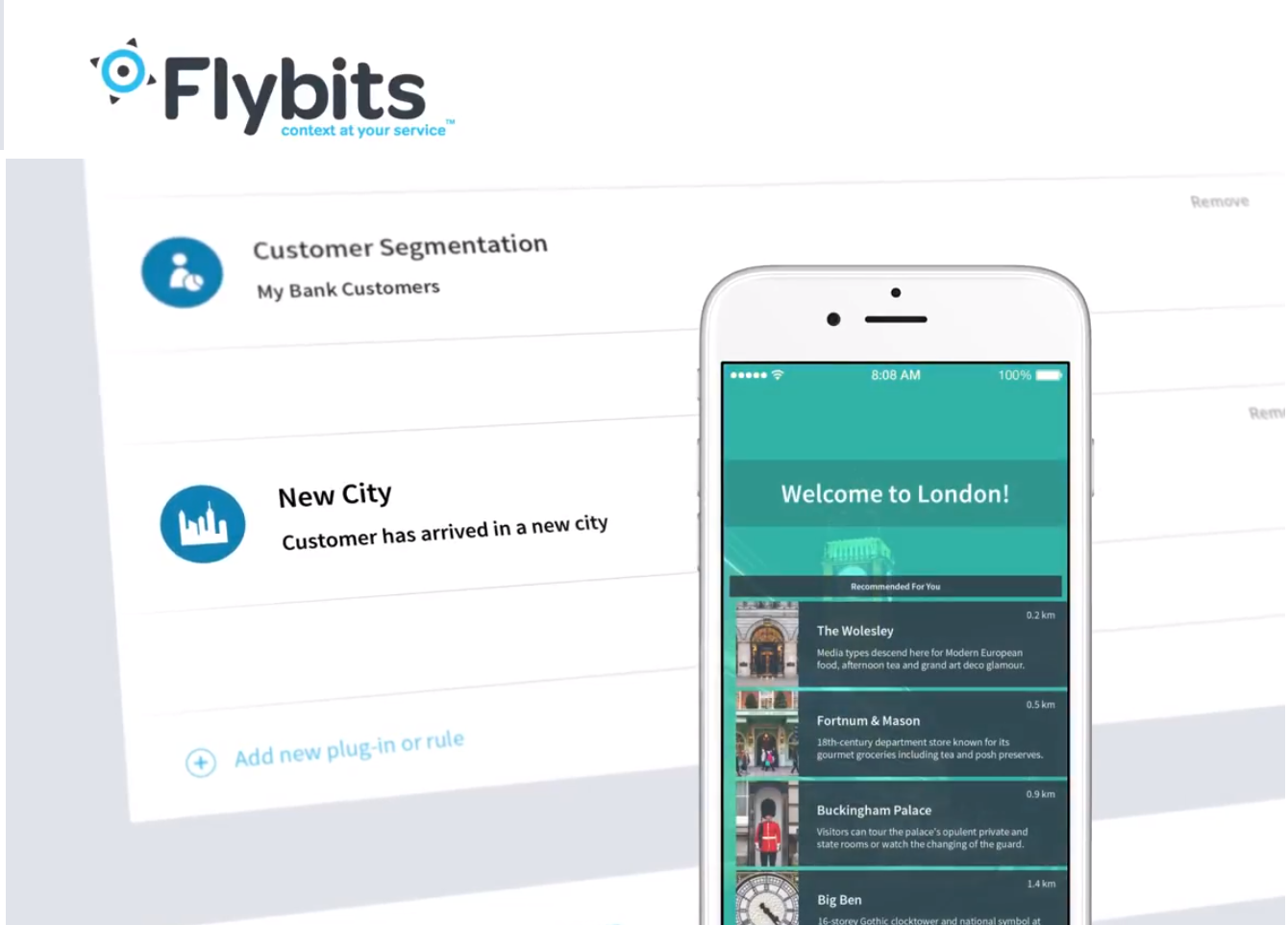
Flybits, which was Deloitte’s 2015 “Company to Watch,” has announced that it has raised $ 6.5 million in Series B funding from investors, led by Information Venture Partners. The funding round also included new investor Portag3 Ventures LP and existing investors Robert Bosch Venture Capital and Trellis Capital.

Flybits is a context-as-a-service company that enables enterprises to leverage data intelligence with minimal complexity. Robert Antoniades and David Unsworth, Co-founders and General Partners at Information Venture Partners, will join Flybits’ board of directors.

Read Also: AI-First Startup Cien is Salesforce’s Customer Hero

Flybits has raised a total of $ 14 million in funding since launching in 2013 and has experienced sizeable month-over-month growth this year. The latest funding round comes soon after the conclusion of a number of new global partnerships and the release of Flybits’ new Experience Studio, an intuitive visual interface that hides the complexity of semantic computing so that enterprises can deliver highly personalized customer experiences.

Dr. Hossein Rahnama, Founder and CEO of Flybits, said, “This funding will allow us to ramp up our sales efforts in the United States and Europe, reinforce our existing global presence and expand our product and engineering teams to strengthen Flybits’ unique machine learning capabilities. Our product focus now is simplifying how our customers leverage their data ecosystem and drive customer engagement.”

Recommended Read: Apple Acquires Artificial Intelligence Firm Lattice Data for Around $200 Million

Robert Antoniades said, “We are excited by the prospects for Flybits. Financial institutions, and other enterprises are sitting on troves of customer data siloed throughout their organizations. Flybits has identified a unique opportunity to give them the ability to make sense of these disparate sources of information and leverage machine intelligence to engage customers in an innovative and unique fashion.”

Flybits makes it easy for enterprises to harness the complexities of context so that they can become their customers’ lifestyle concierge – giving them what they need, when and where they need it.

Read More: Arkadium Brings Artificial Intelligence to Content Generation

Interview with Clint Oram, Co-founder and CMO at SugarCRM

0
Clint Oram
Interview with Clint Oram, Co-founder and CMO at SugarCRM

[mnky_team name=”Clint Oram” position=” Co-founder and CMO at SugarCRM”][/mnky_team]
[easy-profiles profile_twitter=”https://twitter.com/sugarclint” profile_linkedin=”https://www.linkedin.com/in/clintoram/”]
[mnky_testimonial_slider][mnky_testimonial name=”” author_dec=”” position=”Designer”]“If the CRM doesn’t provide an easy user experience that makes their job simpler, marketing folks just won’t use it.”[/mnky_testimonial][/mnky_testimonial_slider]

On Marketing Technology

MTS: Tell us a little bit about your role and how you got here

I helped found SugarCRM in 2004 with the goal of empowering companies around the world to transform their customer relationships and turn their customers into loyal fans. I was one of the original architects and developers of the Sugar platform, and focused on building out the product, company, partners, and community. I currently SugarCRM’s CMO, lead the global marketing team as we disrupt the CRM status quo.

MTS: Given the massive proliferation of marketing technology, how do you see the martech market evolving over the next few years?

Video is going to be huge. With the rise of mobile, video is in high demand because people love visual storytelling. This includes short form, long form, snippets, streaming, etc.

Augmented and virtual reality will also become part of the marketing stack. I can see, in the not too distant future, auto dealerships allowing customers to choose and design their new car’s features and interiors using AR from their mobile device. Or, real estate agents selling homes entirely with VR headsets.

MTS: What do you see as the single most important technology trend or development that’s going to impact us?

Advances in health technology will impact humanity starting at a very young age. I sit on the board of trustees at a school for dyslexic children. The school recently partnered closely with University of California, San Francisco, to complete some groundbreaking research on how to medically diagnose learning differences in people through the combination of MRI technology and standard education testing. Together, they have uncovered a path to being able to diagnose learning differences. Their vision for the future is for a three- or four-year-old child to play a “game” on an iPad, helping diagnosis dyslexia or another learning disability. From there, they will be able to tailor a learning program to that specific child so their “learning disability” disappears. This will not affect the whole world by any means, but research shows that 10 percent of the population is affected by dyslexia or another learning disorder. This is a cause I am truly passionate about.

MTS: What’s one opportunity for using CRM that marketers often overlook, but has the potential for making a significant positive impact?

Marketers actually overlook CRM itself as a primary tool! Often, they see it solely as a sales tool, when it can actually help them do their jobs better. CRM can, and should, be tightly integrated with top-of-funnel marketing tools like marketing automation and the website. Building on that, CRM is the starting place for segmenting your customer base for install base campaigns. Rather than just blindly running marketing campaigns to your entire database, segmenting your customers and prospects by size, geography and industry helps you be more strategic and efficient. For instance, you will want to run a financial services campaign in New York and a manufacturing campaign in Detroit. CRM helps you do that.

MTS: What about challenges with CRM tools? What’s the most common challenge you come across and how can marketers get past it?

For marketers, CRM user adoption is a challenge. Marketers are smart people, and unlike our friends in sales, there isn’t the same mandate from management to use CRM. So, if the CRM doesn’t provide an easy user experience that makes their job simpler, marketing folks just won’t use it. As an organization, it’s the responsibility of your CRM selection team to not forget about their users when they select and deploy a new system. At SugarCRM, we have some wonderful examples of customers setting up creative on-boarding programs to make sure employees are comfortable and understand all the benefits of the CRM.

MTS: Marketers can use CRM tools to support initiatives across the customer lifecycle – from generating awareness to maintaining loyalty. Where are marketers currently under utilizing CRM tools? And what can marketers expect from increasing its use in that area?

Building loyalty by running marketing programs for current customers is underutilized in many companies. All the data tells us retaining and expanding relationships with current customers is much more cost-effective than turning leads into new customers. Marketing teams should ask themselves, ‘What else can we do to build loyalty, turn our current customers into advocates and offer additional products to increase revenue within the current customer base?’

MTS: There’s no escaping customer experience as a hot topic today. Marketers can use CRM to enhance many aspects of CX; some areas more than others. Where should marketers focus their use of CRM technology to make the biggest positive impact on CX?

Here’s why the customer experience is so important today: with a few exceptions, different companies in the same industry usually offer just a variation of the same services or products. And every one of those competitors is just a simple Google search away from the next. How you win customers is now based as much on how you treat them as it is what you sell to them. That means the need for an exceptional and unique customer experience is more critical than ever before. Think about it: I’ve stayed in many business-class hotels all over the world. There are some minor differences, but they all offer a comfy king-sized bed and a bathroom. The list goes on: airlines, rental cars, even Uber vs. Lyft. How do you differentiate yourself when you offer similar goods or services as your direct competitors? The answer is your customer experience. The companies that win in this era of empowered and intelligent customers win because they create better relationships with their customers. That makes sense, but a natural follow-up question is “How can you create a better customer experience when you are using the same, uninspired CRM system as your competitors?”

MTS: What startups are you watching/keen on right now?

As an advisor to EverString, I am keenly interested in how predictive analytics will shape the future of marketing and customer engagement. PandaDoc, a SugarCRM partner, is doing a great job reinventing what it means to deliver sales quotes and proposals. I’m also keeping an eye on BrainSharp and Engagio, as both companies are very interesting.

MTS: What tools does your marketing stack consist of in 2017?

For SugarCRM’s 2017 marketing stack, we’re using Drupal and WordPress for our website, Marketo for marketing automation, EverString for predictive analytics, Influitive and Jive for customer engagement, and Pipl for data enrichment within our sales department.

MTS: Could you tell us about a standout digital campaign? (Who was your target audience and how did you measure success)

Our home run campaign was our “It’s not me, it’s you” campaign that was targeted at unsatisfied customers of a certain CRM company. We rolled it out in stages and different geography and it generated a record number of net-new opportunities and forecast GARR. It was an example of the power of a coordinated effort between our content creators, digital marketing team and the sales team.

MTS: How do you prepare for an AI-centric world as a marketing leader?

No doubt that artificial intelligence is hot right now, but quite frankly, the technology industry has overhyped it a bit. We won’t wake up one day and be in the era of artificial intelligence. Instead, it will slowly creep into the marketing industry just like most other technologies. I will say this: Adding cognitive intelligence will free up CRM users from tasks like searching for and organizing data — both things for which machines are better suited than humans. This will allow humans to focus on what they do best — communicating with other humans and focusing on other business-critical tasks.

This Is How I Work

MTS: One word that best describes how you work

Experimental. No idea is a bad idea.

MTS: What apps/software/tools can’t you live without?

The way I manage myself throughout the day is through Evernote, Hipchat, email, and calendar. As far as getting my job done, I live inside of Sugar. This is where I am able to measure our leads and opportunities. Lastly, with all of the traveling I do, I would simply be lost in a random country without TripIt.

MTS: What’s your smartest work related shortcut or productivity hack?

For those who travel internationally on a regular basis, I highly recommend TripIt. Within the application, you can track your travel plans and map out your entire itinerary in one place.

MTS: What are you currently reading? (What do you read, and how do you consume information?)

I read sci-fi books all day long. In fact, I read about 70-80 sci-fi books a year. I love exploring the “what if” scenarios, where we are going in the world, and how technology is impacting us and will continue to impact us. I’m also an avid Flipboard reader and collect my daily news through my personal hashtags, #technology, #spacescience, #Starwars and #humor.

MTS: What’s the best advice you’ve ever received?

The best advice I have received came from my dad, who was also a software entrepreneur back in the ‘80s. I was always told to hire people that are smarter than me and give them the authority to run their parts of the business and collaborate with them, but stand back and give them authority and accountability. I have taken that advice to heart and that is one of the things I feel I’ve done well at SugarCRM.

MTS: Something you do better than others – the secret of success?

Persistence. It is my biggest strength and my greatest weakness.

MTS: Tag the one person whose answers to these questions you would love to read:

Jimmy Carter – I feel like not enough has been said about his career.

MTS: Thank you Clint! That was fun and hope to see you back on MarTech Series soon.

[vc_tta_tabs][vc_tta_section title=”About Clint” tab_id=”1501785390157-b58e162d-0ae25a4b-c27a226d-d471″]

Helping people build better business relationships through technology.

I have a profound belief that business is about two people helping one another achieve their goals. One person has a problem that needs to be solved…a customer. The other person has the solution to that problem…your employee. Let’s connect them together.

[/vc_tta_section][vc_tta_section title=”About SugarCRM” tab_id=”1501785390320-2d44fa50-740c5a4b-c27a226d-d471″]

SugarCRM logo

SugarCRM enables businesses to create extraordinary customer relationships with the most innovative, flexible and affordable CRM solution in the market. The company uniquely places the individual at the center of its solution—helping businesses transform the customer experience and enable highly personalized interactions that drive customer excellence and loyalty throughout the entire customer lifecycle.

SugarCRM delivers a fully transformed, personalized user experience that is immersive, engaging and intuitive. Sugar fuses the straightforward simplicity, mobility and social aspects of a consumer app with the business process optimization of conventional CRM. Recognized by leading market analysts as a CRM visionary and innovator, Sugar is deployed by more than 1.5M individuals in over 120 countries and 26 languages.

[/vc_tta_section][/vc_tta_tabs]
[mnky_heading title=”About the MarTech Interview Series” link=”url:http%3A%2F%2Fstaging.loutish-lamp.flywheelsites.com%2Fmts-insights%2Finterviews%2F|||”]

The MTS Martech Interview Series is a fun Q&A style chat which we really enjoy doing with martech leaders. With inspiration from Lifehacker’s How I work interviews, the MarTech Series Interviews follows a two part format On Marketing Technology, and This Is How I Work. The format was chosen because when we decided to start an interview series with the biggest and brightest minds in martech – we wanted to get insight into two areas … one – their ideas on marketing tech and two – insights into the philosophy and methods that make these leaders tick.

Social is the Foundation for Great Customer Experiences

4
Social
New Research: Social is the Foundation for Great Customer Experiences
Social
Social is the Foundation for Great Customer Experiences

The business world is undergoing an unprecedented shift. A revolution that’s forcing every organization, from every industry, across every market to rewire how it operates.

Contrary to what you might be thinking, disruption is not being driven by the internet, mobile, or digital – it’s being driven by the customer.

Connected and empowered like never before, customers expect to be served on-demand and on their terms.

Two billion people are connected and empowered like never before. They expect to be served on-demand and on their terms. They advocate and criticize with equal and forceful power. And how they choose to apply that force is a direct result of one thing: their experience. A feeling that’s shaped by each interaction with your brand.

Everything a brand does – the way it does advertising, marketing, commerce, and care – all play a role in shaping the customer experience. Advertising? It’s about seeing a real person with a real need and making them aware that you exist. Marketing? It’s about creating advocates who want to evangelize on your behalf. Commerce and sales? It’s about delivering value from the very start. Care? It’s about sustaining that value so they’ll go on to tell others.

To adapt to this change, businesses need to put customer experience first. They have to map their strategies to customers’ interests and behaviors, and deliver personalized experiences across every touchpoint.

This may seem like a challenge, but according to a new research report from Harvard Business Review Analytic Services, select companies are already well on their way.

Leading Companies Integrate Social Media and Customer Experience Management

In the new report, Sprinklr and HBR surveyed 600+ managers and executives from some of the biggest companies in the world. The study found that leading companies have one crucial tactic in common: They integrate social media and customer experience management.

The report’s interesting results:

  • 86% of business leaders agree that customer experience is vital for success
  • 75% say social media will be extremely important over the next three years
  • Only 34% of companies have the tools and skills to deliver superior customer experiences
  • Leading-edge companies are breaking that pattern by spending heavily on customer experience and social media
  • Leaders in customer experience have more dominant market positions and post stronger revenue growth (compared to Follower and Laggard counterparts)

As the results show, businesses that deliver comprehensive customer experiences will enjoy stronger growth and more dominant positions in their markets.

It can’t be overstated: Integrating social media with customer experience is the single most strategic investment your enterprise can make. This isn’t just a trend. It’s a global mandate for modern enterprises that want to drive value for their customers and revenue for their businesses. It will pay off in revenue, reduced costs, and improved risk management. Most importantly, it will help you reach customers across all touchpoints, setting your company ahead of competitors in an ever-changing marketplace.

Also Read: 3 Brainstorming Exercises to Fuel Your Next Social Media Campaign


TechBytes with Doron Sherman, Vice President Evangelism at Cloudinary

0
Doron Sherman
TechBytes with Doron Sherman, Vice President Evangelism at Cloudinary
TechBytes with Doron Sherman
Doron Sherman, Vice President Evangelism at Cloudinary

Last month, the leading Content Management solution provider Cloudinary announced its partnership with WebPagetest. Together with WebPagetest, Cloudinary is providing measurable and actionable information about how to go beyond simple compression to optimize web performance. The Cloudinary Website Speed Test Image Analysis Tool will enable WebPagetest users to discover how changes to image size, format selection, quality and encoding parameters can drastically improve website speed and ultimately result in a better user experience for web visitors. We spoke to Doron Sherman, Vice President Evangelism at Cloudinary to understand the rise of visual internet and the optimization of content delivery networks.

MTS: Tell us about the size of your marketing team? Which are your current markets?

Doron Sherman: Currently, there are five people on the marketing team and several contractors. In terms of markets, Cloudinary benefits businesses that operate a website with a lot of assets that need to be managed, in particular images and videos. Cloudinary is particularly essential for any business where user experience of its website and mobile app properties impacts business performance. For those, Cloudinary improves page load time via optimal delivery of high-quality content, personalized for each and every user, based on device type, network bandwidth, and geographical location. That said, we see the strongest demand for our services in the e-commerce vertical.

Recommended Read: Content Management Systems with Web Analytics & Social Media Integrations Key to Industry

MTS: Cloudinary uses advanced algorithms for Image Management. Could you elaborate further on the technology? Does it run on AI/ML?

Doron Sherman: Cloudinary shows users how to encode, optimize, and resize images, and the impact that will have on page load time. Cloudinary takes into account many factors, from device type and viewport size to the type of browser on which the image is viewed. Advanced algorithms, including the use of AI and machine learning, are dynamically employed to achieve results that otherwise are only possible via manual human editing and decision making. For example, Cloudinary can automatically detect the type of image content in order to encode it in the optimal format and quality settings. Another example is art direction where Cloudinary performs face detection (or objects of prime interest) within the image in order to automatically crop the region of interest. Yet another example is calculating image breakpoints for optimal delivery of images according to responsive design principles (responsive images). Our customers expect us to continue releasing smart features that save them from tedious manual work and that means Cloudinary will increase use of AI and machine learning going forward.

Read Also: Arkadium Brings Artificial Intelligence to Content Generation

MTS: Do you offer integrations with any of the marketing automation and cloud platforms?

Doron Sherman: Integration with marketing automation solutions isn’t currently available out of the box. However, Cloudinary offers open REST APIs following standard URL syntax that can easily integrate into any platform and programming environment. We have customers doing that today without our help. In some cases, we engage our solutions team to customize such integrations for customer projects. Last but not least, the developer community releases third-party integrations created as open-source projects that albeit not commercially supported by Cloudinary, are valuable for implementing system integrations.

Read Also: Social Native Unveils Content Optimization Engine; Becomes the Youngest Instagram Content Marketing Partner

MTS: Considering the increasing focus marketers now give to User Experience, do you think videos will ultimately replace images as digital assets in next few months?

Doron Sherman: I don’t see that happening wholesale anytime soon but interest in video content is growing in a number of application segments, particularly those involving social sharing and social networking. Currently, images are 60 percent of a website’s weight, and we are still seeing developers and companies struggle to get those properly optimized.

Video presents an even bigger challenge of content management and optimized delivery, an area in which Cloudinary keeps investing heavily to offer compelling solutions that are flexible and easy-to-use. A big part of the challenge is providing a satisfactory user experience on mobile devices that entail unreliable communication bandwidth and a wide variety of device types (in terms of both computing power and display resolutions).

Cloudinary is focused on technology that enables striking the right balance to effectively display high-quality video content utilizing file sizes that adhere to the prevailing end-user delivery constraints. It’s important to note that the internet is not an unlimited resource and isn’t currently setup to support the amount of bandwidth required for everyone to switch over to large video content.

Recommended Read: 5 Ways to Disrupt Video Marketing in 2017

MTS: How do you see the B2B video marketing market evolving with the advent of new technologies? How is Cloudinary positioning itself for the competition?

Doron Sherman: Marketers are relying more and more on video content because it is a new and effective way to engage with consumers, but the current way we leverage video content is unwieldy and time-consuming. Most marketers have to drop video content into a file share service like Dropbox to share content because they aren’t able to send these size files over traditional methods, such as email. It is also important to make sure you are using modern video formats such as WEBM vs GIF, which is a 30-year-old format.

At Cloudinary we were ahead of the curve as we started working on video optimization in 2015. We offer the same solutions for video content as we do for images, helping our users to optimize their media without sacrificing the quality of what is being delivered. As we look towards some exciting announcements in the pipeline for this year, we plan to make the management of video content even easier.

Read Also: Searchmetrics Content Experience Creates New Paradigm For B2B Content Marketers and Story-Tellers

MTS: Thanks for taking the time to chat with us Doron. We look forward to having at MarTech Series again for more insights.

Stay tuned for more on business insights on marketing automation, content marketing, video ad tech, programmatic and header-bidding technologies. To participate in our Tech Bytes program, email us at news@martechseries-67ee47.ingress-bonde.easywp.com

10 Tips for Naming Your Company

0
Company
10 Tips for Naming Your Company
Company
10 Tips for Naming Your Company

I’ve started numerous companies and have talked with and advised thousands of entrepreneurs and small business owners around the world. Here’s something we’ve all had in common: we all struggled to come up with a great name for our new company.

If you’ve never named a company, you’ll discover that naming is very time consuming and frustrating.  77% of consumers make purchases based on a brand name.  A great name can make a big difference.

We spent over 50 hours in 2007 when we came up with “crowdSPRING”. Some entrepreneurs can easily spend hundreds of hours searching for a perfect name, only to hit a wall.

Naming is hard.

This is one reason why many years ago, we added company naming as a project category on crowdSPRING. Today, instead of spending dozens of hours looking for a name for a new company, I post a crowdSPRING project and let the community of 200,000+ creatives help me with a great name (and domain!). That’s how I come up with names for my other businesses.

Whether you find a name on your own or work with the crowdSPRING community, here are good tips to keep in mind to be sure you’ve found the right name for your new company.

Think about what you want the name to convey.

Your company’s name is an important part of your company’s identity. The name will appear on business cards, letterhead, website, promotional materials, etc. to identify your company and its products and/or services.

Service-oriented businesses should consider whether it will be easy for their prospective customers to recognize what services the business provides, based on the name of the company (example: Friendly Dog Walkers, Bright Accounting or Quickly Legal).

Marketing Technology News: Gartner Survey Shows Inside Sales Organizations Risk Losing 24% of Employees This Year

Brainstorm to identify possible names.

Once you understand what you want your company name to convey, you should set aside some time to brainstorm.

Think about words that describe your industry or the products or services you offer. Think about words that describe your competitors and words that describe the differences between your products and services and those of your competitors. Also, consider words that describe the benefits of using your products or services.

While brainstorming, look up Greek and Latin translations of your words – you might find new ideas from doing that exercise. Look at foreign words too (Swahili is often a great choice).

Expect this process to take some time. It took us about 40+ hours to brainstorm and then another 10 to finalize names before we picked “crowdSPRING” – we went through many possible names.

Keep the name short, simple, and easy to write and to remember.

The companies you admire typically have names that are short, simple, easy to write and easy to remember. (Examples: Apple, Chanel, Virgin, Southwest).

Obscure business names are often difficult to write and even more difficult to remember. This is a problem because for most small businesses, wordof-mouth advertising is the most successful form of marketing. If your customers can’t remember your name, can’t spell it or can’t properly pronounce it for others, it will make it difficult for them to help promote your business.

Don’t forget to consider the acronym of your company name (an acronym is composed of the first letter of each word in a phrase). You might not use an acronym, but your customers might refer to your business by an acronym. A name such as Apple Support Services can result in an unfavorable acronym – ASS.

Avoid names that are too narrow or too literal.

Think about how your business may evolve over time and make sure that the company name can evolve with the business. For example, if you name your company iPhone Accessories and later expand to sell accessories for other products, your original name will be too narrow and restrictive.

The same advice applies even if your company sells a niche product. For example, if you sell antique lamps, you should consider whether in the future, you might sell more than lamps. Naming your business Joan’s Antique Lamps may be too limiting when you later start selling antique clocks and furniture.

Avoid decisions by committee but “test” your name with others.

It’s tempting to involve friends, family, employees and customers in finding a name for our company. Sometimes, this can work out really well. But there are risks. People might be upset if you don’t pick a name they think is great. You’ll also find yourself trying to find consensus – which can lead to a very plain name. If you must involve others, pick a small group of people who understand you and your business (and pick a mix of right-brain types and left-brain types so that you can have some variety). Once you’ve selected a few possible choices, you should share them with a few trusted friends, family and customers to get some feedback about the name.

Marketing Technology News: Mono Solutions Joins Bauer Media Group to Strengthen SME Marketing Services Across the Globe

Avoid plain words.

Plain words make it very difficult to differentiate your company from your competitors.

For example, there were many logo design businesses around the world when we came up with the name “crowdSPRING.” Many of them had design or logo design in their name. But we knew that we would be expanding to many different industries (logo design, print design, graphic design, web design, industrial design, company naming, and many more) and we didn’t want to name the business Great Logo Design or ManyDesigners – it would have been descriptive, but not memorable and certainly not unique.

There are exceptions. General Electric is one of the most successful companies in the world and its name is composed of two plain words. But, General Electric was one of the first companies in its product/service category and was able to get away with a plain name by spending billions of dollars on marketing and advertising.

Be careful with geographic names.

Some people use their city, state or region as part of their company name. If you plan only to work in your city, this might serve you well. But a geographic name could hinder you later. One great example is Minnesota Manufacturing and Mining. Initially, the name worked because the business was focused on Minnesota. But once the company grew beyond their industry and the state of Minnesota, they needed to find a new name – 3M.

Avoid obscure words.

Company names that help tell stories can be powerful and memorable (think about Google, for example). But obscure words or references might be difficult to spell or pronounce. Be especially sensitive if you’re trying to reach a mass audience, such as one on the Internet. Obscure or invented names can work – Xerox is a great example – but this often requires a huge marketing budget and tremendous effort.

Avoid trends.

You’ll want your company’s name to evolve as trends evolve, so be careful to identify the trends and to avoid following them. For example, in the late 1990’s, it was trendy to use a “.com” after your company name if your company was an Internet business. After the Internet “bubble” burst, the “.com” became synonymous with having no business model and those companies who survived very quickly dropped “.com” from their names.

Consider whether you can register a domain.

It’s important to make sure that your competitors are not using the same name in your industry. It’s not uncommon to find similar, or even identical, names in different industries, but this can result in confusion for your customers and vendors. If your competitors are using the same name – you’ll expose yourself to possible litigation and you’ll likely be unable to obtain trademark protection for your company name.

Look for a company name that is also available for registration as a domain (ideally, a .com domain). This is not easy because .com domains are very popular and you’ll struggle to find available domains that match your company name. This is one reason why every naming project on crowdSPRING is accompanied by a domain name.

Today, URLs are becoming less important because most people are searching online and clicking on links. But it’s still important that your URL is short, easy to pronounce and easy to spell. And, whatever you do, don’t make the mistake of operating under one name but having a URL pointing to a completely different name.

Marketing Technology News: Adobe Survey Says That Voice and Screen Combined Are the Future

Developing Customer References for Technology Marketing: Some Things Have Changed While Others Remain the Same

0
Customer Reference

Things Remain the Same

CollaborationIf you hold a marketing or PR title for a technology company, no doubt you have been challenged with finding customers who will go on the record to support a corporate marketing or sales initiative. The validation of a customer using your solution — and better yet, customers who can talk about a return on investment based on your product/service — is likely the most powerful and compelling content for any PR, marketing or sales opportunity. (1) Customer testimonials (as we began calling them in the ‘80s) have been critical for decades, and the importance of communicating this level of detail about a customer experience is higher than ever as marketing, sales and PR strategies have become more sophisticated and targeted.
What also remains the same is the delicate balance between protecting the customer from sales and marketing overuse and/or being sensitive to a customer who may be in the process of renegotiating their contract. The delicate balance of understanding what the sales team needs to be successful with a customer, while understanding the (2) lifetime value of that customer from a sales perspective, must be considered as you approach them for marketing support. The risk of losing sales with a customer should be measured against the value of the contributions that the same customer may make to your company from a marketing perspective. By sharing a story that will attract new prospects and/or provide the validation that a prospect may need when they are evaluating your solution against that of your competitor, your customer’s value may be even greater as a marketing champion.

Things Have Changed

Marketing has evolved dramatically in the last couple of decades, and nowadays there are (3) many new creative options for partnering with your customers to generate marketing campaigns or support sales initiatives. However, we still see companies frequently making the mistake of prematurely asking a new customer – or one who hasn’t been engaged in any marketing or sales activity in the past – to participate in a media interview (sometimes with an influential business reporter). Rushing your customer to the altar, so to speak, without taking the time to build a relationship and trust, frequently results in an immediate “no thank you.”

Instead, you should approach your customers in the same way someone might try to get to know someone they’re interested in dating. Here are two best practices that will help you get to know your customer champion and help prepare them for the kinds of activities you have in mind for them:

Get to Know Your Champion BEFORE You Ask Them to Help

Start with the proverbial “coffee date” to understand the role of your champion in their organization.  Do your best to understand their attitudes toward participating in marketing and sales opportunities. Ask if they have done this type of activity before (in their present or past positions). Qualify and quantify what they have done in the past (activity and frequency). In this meeting (which may be a phone call or an actual meeting over coffee), also gather an understanding of their org chart and their influence in the organization, as it’s critical to get a handle on the approvals they will need to participate in your marketing/PR activities. Many large organizations have formalized the reference process by developing a form, such as the one (4) here from EMC, that formally describes the opportunity. Finally, ask about the activities your champion would consider most beneficial for their own growth, development or industry influence.

Be Prepared for Common Questions and Responses

For internal customer champions who are not especially ambitious or outgoing, there may be a fair amount of hesitancy to speak in any kind of public forum. The fear of saying the wrong thing, being misquoted, or treading on the toes of their own corporate marketing departments can deter people from participating. Choosing less challenging situations and activities as your customer champion gains confidence in speaking on your behalf will help you build trust. Following are frequently asked questions and comments from customers requested to participate in marketing and sales initiatives:

– How long will this take?
– How often do you want me to participate?
– Will I be quoted?
– Who will I speak with?
– Where/when/how often will this be used?
– Can I speak off the record?
– Can I speak anonymously?
– Who is covering expenses to travel to this event/activity?
– What benefits can I expect as a result of my participation?
– Do I have the opportunity to review what is being published before it is published?

As is the case whenever you are building trust with someone: be specific, be truthful, share all aspects of the opportunity, and offer support in preparing them for any activity you propose. And most of all, have your responses to the questions listed above worked out BEFORE you contact your customer champion.

So, now you’ve gotten to know your customer champion and have answered their upfront questions so they’re suitably prepared. Now you need to examine the various stages of customer advocacy to determine the activity that is the best fit for that particular customer champion. Stay tuned for my next blog post, where I’ll go in depth into what those stages are and the types of activities that are commonly associated with them.

Also Read: Five Successful Digital Campaigns

TechBytes with Josh Speyer, CEO at AerServ

1
AerServ Quantifi
Josh Speyer, CEO at AerServ

Last month, AerServ announced the launch of DataServ, a new data-as-a-service (DaaS) product that will connect CRM and offline data to mobile data and offer an additional revenue stream for mobile publishers. The leading ad management technology and SSP for mobile publishers and advertisers is offering DataServ to advertising, research, behavioral, analytics, and marketing companies to help them identify new and existing audiences across devices. We spoke to Josh Speyer, CEO at AerServ, to understand how DataServ customers would benefit from this development.

MTS: Tell us the vision behind launching DataServ for mobile advertising?

Josh Speyer: We felt that there were two things happening in the market. First, mobile publishers possess and have access to an incredible amount of data regarding their users, audience, and behaviors. Through our conversations with customers and publishers in the market, this data presents a largely untapped resource.

Second, a significant amount of advertising budget is tied up in cookies, with no way to bridge the gap into the cookie-less in-app world.  Many buyers are addicted to cookies, and need help identifying their audience within apps, via device identifiers, to efficiently buy media in-app.

Many companies come from a traditional media (TV, newspaper, radio, print, offline, etc.) background and have lots of data about users, but do not have the ability to tie this data to online digital users. If they were able to tie a digital user to an email address or some other identifiable data point then they could port some of their media spend to digital to target these users.

AerServ has the ability to facilitate this user mapping from offline to digital with the assistance of our publishers. This benefits marketers by allowing them to target digital users and it benefits publishers by allowing them to be compensated for their first party data and create an additional revenue stream.

As a mobile-first company that is deeply embedded with our app partners, AerServ can surface and bring a level of understanding and value to the market that traditional data providers can’t provide.

Read More: AerServ Launches DataServ to Supplement Mobile Advertising Revenues

MTS: Who will be the customers for this data service product?

Josh Speyer: Mobile publishers, apps, and marketers. Mobile publishers have a lot of valuable first party data that marketers want to use. By sharing this data through more structured channels, they can receive proper compensation for their data and create a new revenue stream.

On the flip side, marketers have a lot of offline data that they want to connect to individual mobile digital users, but they are not able to make these connections.  Connecting their offline data with AerServ (i.e. email addresses) enables us to make these connections for them so they can identify and target the same users on mobile devices. As this service continues to develop, we have plans to introduce novel and highly granular data offerings to the market, which we feel will drive even greater value for our publishers.

MTS: What are the key analytics offered by DataServ to generate revenue for mobile publishers?

Josh Speyer: The advertisers we’re working with are interested in a wide variety of audience data including email addresses, accurate location via geo targeting, demographic data, and others depending on the specific advertiser. Because our system is so flexible we can support any kind of data being passed and even encourage it. For now, we’re focused on creating the identity mappings and then developing expanding our data offerings to pair with it.

Recommended Read: Programmatic Tech Bytes with Andrew Gerhart, COO at AerServ

MTS: DataServ connects to CRM and offline data to mobile data. Which integrators and connectors are AerServ using to make this possible?

Josh Speyer: At the moment we aren’t directly connecting to CRM platforms, but we certainly see CRM integration as a longer-term opportunity. Publishers currently send us their data directly.

Publishers utilize all kinds of CRM data that they pass to us and then we connect the data to the Identifier For Advertising (IDFA). For example, address, email, phone, etc. are all common components of a CRM data set. Previously, this data had limited use in a programmatic mobile marketing environment. But once it is connected to IDFA or Android ID, the data has new value in this environment because it is now targetable, trackable, etc. This allows us to bridge valuable CRM datasets into the mobile world.

MTS: Which CRM platforms will DataServ connect to? 

Josh Speyer: Over time we anticipate connecting to all major CRM platforms. We currently store the CRM data that publishers pass to us—from any CRM partner—in a secure and non-pii way.

Over time we look forward to deepening efficiencies for our publisher partners to further alleviate some of the manual, labor intensive work within their CRM systems.

Read Also: AerServ Introduces Ad Pods for Disruption-Free Multi-Display Video Ad Experience

MTS: Is DataServ an extension of programmatic ecosystem for mobile advertising?

Josh Speyer: Absolutely! DataServ helps enable and facilitate programmatic buying for buyers who need to connect data to device IDs and users in-app. One of the primary goals of DataServ is to bring additional programmatic ad spend to mobile apps. We view our work in data as supplying a better platform for intelligent buying through targeting specific behaviors, mapping users across multiple devices, or improving the algorithms that guide value and prediction in the programmatic environments.

MTS: How will DataServ help deliver relevant mobile content? How is mobile content different from website content?

Josh Speyer: By enabling marketers to leverage mobile publishers’ valuable audience data, DataServ is helping marketers develop more highly targeted and personalized content to consumers. For example, let’s say Tom is an avid runner, and loves Nike running shoes. Tom ordered Nike shoes online before using his Macbook, but not in the past three months. When Tom placed that order, he registered for an account using his email address and opted-in to their newsletter to hear about new Nike running shoes and gear.

Previously, if Nike wanted to reach Tom on a mobile device, the information they have on Tom (cookie from Macbook purchase, and his email address) is useless in-app. With DataServ, Nike can now identify Tom as he uses different mobile apps, and provide him specific content that they know he’ll be interested in. Additionally, Nike can find Tom in-app and deliver personalized ads with special offers or discounts for running gear.

At AerServ we focus on in-app inventory, which differs from mobile website content opportunities in a few ways. There are obvious differences between the environments in how they are programmed and the way they interact with the user. In terms of data, Apps have the capacity to continually collect data with a level of granularity in ways that mobile web cannot. Much of this is rooted in how an app lives on the device.  Apps have permissions that browsers typically lack, they capture IDFA and Android ID while websites typically do not; and in general, the way a user interacts with app content allows a level of insight and understanding we would not be able to receive from web content.

MTS: What would be the key to deliver best experiences on mobile –audience data or device management data?

Josh Speyer: Audience data is critical to delivering the best experience on mobile, for both advertisers and publishers. Without data, advertisers would be employing a spray and pray approach with subpar results.  With audience data, advertisers can identify and target their specific consumers, with a tailored message. A beautiful user experience is one that relies both on general audience data as well as an understanding of the way a user interacts, on different devices, so they have the most custom and well-tested content. It’s an experience that dynamically changes over time as new information and devices are brought into the user’s world. Many publishers inherently understand this, but unless you are the largest publisher in the world you most likely don’t have access to user data in a consistent or broad way. By partnering with AerServ you do.

MTS: How do you see the mobile advertising ecosystem change with the proliferation of AI and programmatic in the next 5 years?

Josh Speyer: With AI, we’ll undoubtedly see the volume of data around consumers and their interactions with brands (offline and online, across all devices) increase exponentially. As we see more data fed into the system, machine learning will only get more effective in delivering accurate predictive scenarios about consumers. This sets the stage for endless opportunities to surface new types of insights and strategies to engage individual consumers at a smarter, more personal level.

Mobile advertising partners who are able to help marketers empower this evolution; specifically, those focused on accelerating the machine learning process and creating more intelligent predictive models on emerging devices such as VR over the next several years, stand to gain significant competitive advantage.

Read More: AerServ and STRATA Join Forces to Bring Premium Video Ad Inventory for Mobile Businesses

MTS: Thanks for taking the time to chat with us Josh. We look forward to having at MarTech Series again for more insights.

Stay tuned for more on business insights on marketing automation, content marketing, video ad tech, programmatic and header-bidding technologies. To participate in our Tech Bytes program, email us at news@martechseries-67ee47.ingress-bonde.easywp.com

Nevion to Showcase the Future of IP in Broadcast at IBC2017

0
Nevion to Showcase the Future of IP in Broadcast at IBC2017

Convergent software-defined equipment and orchestration will take center stage

Nevion, award-winning provider of virtualized media production solutions, will be showcasing how its IP-based solutions for contribution, facilities, remote production and digital terrestrial TV (DTT) can enable broadcasters to ‘connect better, share better and broadcast better’ at IBC2017.

This year’s show, which takes place between 15-19 September at the RAI in Amsterdam, will see Nevion announcing and demonstrating a range of new features delivered as software updates for its flagship products, VideoIPath management orchestration software and Virtuoso, the software-defined media node platform.

These updates are designed to deliver the convergence required by broadcasters as IP blurs the distinction between the local area networks (LANs) being deployed in their facilities and wide area networks (WANs) used for contribution, remote production and distribution.

Marketing Technology News: Khoros Launches New Data Hosting Location in Sydney, Australia

The new release of the VideoIPath software will extend further the existing WAN-based media software-defined network (SDN) capabilities into the LANs. Some of the highlights of the new release are the new Flow app and the Panel app, which provide advanced workflow connectivity within facilities.

Nevion Virtuoso’s latest software upgrade adds studio-over-IP functionality to its existing WAN capabilities, including support for the SMPTE 2110-30 (audio over IP) standard. It will also extend its support for 4K transport with TICO encoding.

Marketing Technology News: Skafos.ai Appoints Jody Stoehr as Chief Revenue Officer as Part of Surging Sales Growth

Nevion will of course also be showing the latest developments across its product range, including Flashlink (optical transport), Media Gateways and Ventura (encoding and transport), nSure (monitoring), cProcessor (TS processing) and VikinX (baseband and IP switches).

Johnny Dolvik, Chief Product and Development Officer, Nevion, says: “There is no doubt that the broadcasting industry is in the midst of a major business transformation, in which lean production will play an increasingly important role. IP and IT technology can help deliver this transformation, but only if considered across the whole production chain – not just in the studios as seems to be the focus at the moment. With IP, production resources can be connected more readily and shared with unprecedented agility, over great distances, enabling production to be leaner and nimbler. Nevion’s latest developments showcased at IBC should be seen in that context – enabling better broadcasting.”

Marketing Technology News: Ruby Has Triples Las Vegas Space to Support Accelerated E-Commerce Demand

Use These 3 Brainstorming Exercises to Fuel Your Next Social Media Campaign

0
Social Media Campaign

Brainstorming, creating, and executing a social media campaign requires a lot of research, time, and effort from your marketing team. Experimenting with new social media channels and audiences has the added weight of uncertainty that the campaign won’t deliver the ROI needed to validate your marketing budget’s investment.

As marketers, we have to keep innovating and trying new things, so this can put us in a tough spot. With new technologies emerging from advancements of AI and personalization, now more than ever is the time to experiment with new social media channels and different strategies on current channels where brands have seen success.

We all start with the same question: Where do we start? Here are three simple, effective brainstorming strategies for your next social media experiment.

For the Content Marketer: The Target Table

Social media agency Vireo Media outlines a simple brainstorming strategy for campaigns on Facebook, Twitter, and more. The idea is to use the table to break down audiences, segment their wants, interests, etc., then develop content that would engage them from there. This is built for small businesses, but the idea can be used on an enterprise-scale for brainstorming purposes. Take a look at Vireo’s video for an example.

When Brainstorming in Groups: Brainwriting

Brainwriting is great for groups at larger companies. Instead of a team leader calling out an idea and team members commenting out loud, they are encouraged to write them down for later discussion. This still allows for team members to be stimulated by each other’s ideas, but it doesn’t sidetrack an individual’s initial idea, with the possibility of being not baking out their first thought.

A professor at the Kellogg School of Management at Northwestern University stated that “brainwriting groups generated 20% more ideas and 42% more original ideas as compared to traditional brainstorming groups.” Mediapreneur and creativity speaker James Talyor breaks down the concept in more detail in the below video:

For the Dreamers: Wishing

Hubspot shares this brainstorming exercise as one that “[asks] participants to dream up the most unattainable, extreme, and impractical solutions they can think of to a given problem.” Once you come up with your wish-list, scale ideas down to something that your team (and budget) can realistically achieve today. Not only does this get your creative juices flowing, but it forces team members to think outside of the box — and not simply curating ideas everyone else is doing.

Is Whitelisting a Win-Win for Brands and Influencers?

0
Is Whitelisting a Win-Win for Brands and Influencers?

Social media is a primary gateway between a brand and its audience.  Many times the point of contact between a brand and its consumers is created by third parties — publishers, paid media and increasingly influencers.

Consider that 96% of people that discuss a brand online do not follow that brand’s owned social media profiles, according to a study from Brandwatch. Meanwhile, nearly 40% of Twitter users report making a purchase as a direct result of a tweet by an influencer on the site.

The disconnect is clear. Owned brand messaging efforts are not reaching consumers at a rate commensurate with the investment. However, WHOSAY data from over 400 influence campaigns indicates that paid efforts with influencers are converting views and audiences into sales with far greater efficiency.

In this regard, the allure of influencers is powerful. Their involvement brings measurable eyeballs to your messaging and if the creative is strong it will create third-party support that’s akin to word-of-mouth recommendations. But brands are not just paying for the access to that audience. They’re paying for everything that influencer stands for as well.

There’s real money and sales at stake here, which should encourage brands to dive in, but not without assurances that their messaging and reputation will be well taken care of by an “outsider.”

Enter: Influencer whitelisting.

In a crowded space of influencers, it’s easy to get overwhelmed by the sea of options available. If a brand takes the influencer with the largest audience, will the message resonate with a targeted enough group of potential customers? What’s the measurable difference between working with a few high profile individuals or dozens of micro influencers?

Influencer whitelisting, the practice of creating pre-approved and vetted lists of influencers for brands to work with, is growing in favor. With hundreds of thousands of potential influencer partners across the social landscape, the uncertainty `of picking “wrong” is a growing one.

Whitelisting looks to ease that burden on brands, with lists geared toward matching companies to complementary and professional influencers. I have found that only the top 10% influencer talent within each segment are reliable and professional creators.

The matchmaking doesn’t stop there, though. Marketers need to evaluate the talent’s campaign affinity as measured by the crossover between the talent’s fans and fans of the target brand and related passion points. Secondly talent fan reach and engagement as evidenced by how responsive are the fans to the influencer talent’s regular posts must be considered. And finally budget will determine the level of the influencer talent and how many you can cast in your campaign. Remember that sometimes one influencer talent can reach as many people as 50 influencers but 50 influencers will always require more quality control and management oversight.

The whitelisting process also creates a two-way street for access. Brands tap into the organic audience of the influencer using their authentic voice and in many cases, the influencer also gets a bump in exposure to the brands audience, and subsequent follower growth. For a niche or micro-influencer, it’s an especially advantageous relationship that often introduces them to an entirely new audience.

Most importantly however is the strategic shift needed when tapping into influencers; marketers should view them as uniquely, creative brand partners. Pursuing natural influencer relationships is the first part of the equation. Deploying the creative messaging to both fit the brand and influencer takes some additional steps. Smart whitelisting, with highly creative influencers; beyond the selfie, hyper-targeted to paid audiences are just a few of the ways a traditional content play can go from white noise to roaring success.

Influencer marketing is now a core part of the business-to-consumer media mix. The only thing separating it from “standard”, fully scalable media is a full understanding of, and comfort with, the entire process. For those (brands and influencers) who are ahead of the curve, this next step for the industry will help turn this creative trend into the next great wave of genuinely effective influence marketing.

It’s 2017 and you still don’t know where your ads are running

0
ads

Poor-quality digital ads aren’t going away, and ad fraud is making the problem even worse. In fact, digital ad fraud was estimated to cost marketers $12.4 billion globally in 2016, according to Adloox. That’s about the cost of twenty-nine A380 jets, eight Golden Gate Bridges, or the value of Hasbro. And the problem is only expected to get worse, with estimates predicting it will top $16 billion this year.

To solve this problem, marketers must demand more from their partners. In 2015, 23 percent of advertisers were okay with up to 20 percent ad fraud, while in 2016, 30 percent of advertisers were okay with that same level of fraud, according to ExchangeWire. The shift is in the wrong direction.

The challenge

Digital advertising has seen massive growth and is predicted to top TV spend in 2017, reaching $77.3 billion, but it has also experienced massive fraud and trust issues. In fact, 46 percent of display and 51 percent of video ads are never seen by human beings. A major pain point is bot traffic. Non-human traffic comes from a software application that tricks websites into thinking that real people are engaging with the content. In short, billions of ad calls are made fraudulently with no chance for human exposure. The problem of ad fraud is so bad that Facebook closed Atlas, its DSP, after discovering incidence of ad fraud as high as 73 percent for programmatic video ads.

Another problem is that the industry has not settled on standards. The Media Ratings Council counts a video view when 50 percent of video pixels are in view for at least two consecutive seconds. On Snapchat, a view is counted the instant the video renders on screen. The industry must find a way to deliver consistent, objective standards so that marketers can make informed decisions about performance and ROI.

Another major issue is adjacency. Social platforms attract billions of users, which means infinite opportunities to compromise your brand’s safety. Facebook generates 1 million violent post notifications per day. Twitter has removed over 235,000 terrorist accounts, and YouTube famously ran into problems running ads against controversial videos. In a recent study, 63 percent of respondents were less likely to buy a product if they knew it had appeared next to extremist content. Clearly, adjacency matters.

Protect your brand

Technology is improving, and the industry is quickly learning from its missteps. For example, new ad tracking products contain technologies that can prevent ads from being shown on flagged sites. Brand risk can now be analyzed on a per page level and in real time.

Programmatic advertising is improving, as well. Integral Ad Science reported that programmatic ad fraud decreased over 20 percent from Q4 2015 to Q1 2016, to 8.7 percent.  Publisher-direct buying is even safer, producing less than a third the incidences of ad fraud. Private marketplaces have also emerged as a hybrid solution. Here, marketers purchase from a hand-selected group of publishers, providing increased control and transparency. In the U.S., ad spends in private marketplaces was predicted to increase over 30 percent YoY in 2016.

In-app placements provide brand safety because apps exist within the carefully manicured domains of Google and Apple. Apps also provide twice the CTR of web content, according to AerServ and Opera Media Networks, and there are far fewer ads per page in-app. People are also less apprehensive about sharing their location when using an app, according to Pew Research Center, which helps improve targeting.

Selecting the right ad units can lead to more brand control and lower incidences of ad fraud. Consider that 60 percent of clicks on mobile banners are accidental and that 71 percent of people say at least half of the ads they see disrupt their mobile experiences. Digital ads can be annoying and intrusive. It’s no wonder 84 percent of millennials admit to blocking or skipping ads. But there are better options.

Value exchange (aka “rewarded” or “incentivized”) ads are another way to enhance safety and boost performance. These non-interruptive units allow people to unlock entertainment, points, or other digital content in exchange for engaging with ads. Top brands like Best Buy, Toyota, American Express, L’Oreal, and NBC are already using these units. Value exchange is safer because the units are always in view, they often live within mobile apps, and they’re user initiated. Jun Group, for instance, reports its NHT for value exchange placements at ~2 percent. By some accounts, value exchange video drives 4X the average completion rate of the industry, at 82 percent, and 84 percent of mobile users say they are favorable to value exchange video formats.

The ultimate key to better protecting your brand is to pay greater attention. And brands are doing just that, getting more involved in their digital ad buying practices. As a case in point, JP Morgan cut the number of publishers it works with from 400,000 to 5,000 when the company discovered that some of its ads were adjacent to inappropriate content and that only 3 percent of the sites it advertised on produced activity greater than an impression.

The final word

Some take brand safety for granted. The industry has become complacent and focused on tech advances to the detriment of transparency. In fact, the pendulum swung so far in the direction of automation that advertisers started losing control of their brands. 2017 is the year brands can take back control over their digital advertising and secure brand safety. Many of the tools and approaches already exist. At this point, it’s a matter of making the right decisions.

Interview with Matthew Myers, Founder and CEO at Tidal Labs

0
Matthew Myers

[mnky_team name=”Matthew Myers” position=” Founder and CEO at Tidal Labs”][/mnky_team]
[easy-profiles profile_twitter=”https://twitter.com/mattmyers” profile_linkedin=”https://www.linkedin.com/in/matthewmyers/”]
[mnky_testimonial_slider][mnky_testimonial name=”” author_dec=”” position=”Designer”]“Influencer marketing is also similar to the slow-then-sudden growth of e-commerce.”[/mnky_testimonial][/mnky_testimonial_slider]

On Marketing Technology

MTS: Tell us a little bit about your role at Tidal and how you got here. (What inspired you to start an influencer marketing company)

We look like an influencer marketing company, but in reality we see ourselves as a platform to help individuals get more opportunities and share their voices more widely. This may manifest as a way for brands to compensate influencers in exchange for posting. It could also take many other forms: an “un-agency” of trendspotting creatives, a collaborative community of parents, or a place where brands can identify and build relationships with their biggest fans.

This comes from our background, when we first started seven years ago, we were a creation platform helping media companies to bring in outside contributors. This was a world before Instagram with pent-up creativity from thousands of people just waiting to be unleashed. We worked with magazine titles, like Lucky Magazine, and book publishers, like Random House.

In the last five years it’s been the brands who have wholeheartedly embraced a rush towards unleashing creativity. And this speaks to the changing environment they must now contend with. Social media has given everyone a voice and made it infinitely harder for brands to shout loud enough for theirs to be heard amongst the din. Instead, they must harness dozens, hundreds or thousands of other voices.

MTS: What factors influence (pun intended) Tidal’s decision to accept an individual as an influencer?

We have a wide array of influencers, we will generally accept anyone looking to join our pool (we have more than 650 K users to-date). We then segment and display only the ones who are involved, engaged and create high-quality content in a genuine way.

We quantitatively look at “engagement rates” (how many comments/likes someone gets on their post divided by their followers) and how they compare to their peers in a particular area. We also look at the attribution of an influencer. Were they referred from another successful member? Did they come to us from one of our publisher partners (like Epicurious or the Today Show)?

Our client partners assess influencers quantitatively, scoring influencers based on the look, feel and aesthetic of an influencer’s various content. Do they look “on-brand”? We use this manual scoring to help train our systems, but in the end, this subjective human eye analysis is hard to replicate.

MTS: Given how quickly influencer marketing strategies have been accepted, how do you see this market evolving over the next few years?

I compare influencer marketing to mobile advertising twelve or so years ago. Marketers know it’s the way of the future, driven by consumer demand, but nobody quite knows how big it will get or what it will look like, so they are in the test and evaluate phase of adoption.

Influencer marketing is also similar to the slow-then-sudden growth of e-commerce. In the beginning, most retailers adopted a wait-and-see attitude. Over time, as it became clear that this would be an important channel, retailers converged on a universal set of standards, and now a retail strategy that doesn’t include e-commerce is considered to be incomplete. Likewise, we’re still in the slow period of influencer marketing. As more brands learn the value of influencers and understand common standards and practices, influencer marketing will become commonplace.

MTS: What do you see as the single most important technology trend or development that’s going to impact us?
The collapse of traditional marketing will be much more rapid than expected and will completely transform the nature of marketing.

Whatever new social technologies do emerge, however, influencers will always be able to adopt it more rapidly and authentically than your brand. You can never go wrong with building strong influencer relationships as a way to strengthen your brand both now and into the future.

MTS: What’s the biggest challenge for startups to integrate a CaaS platform into their stack?

The biggest problem is legacy protocols and strategies. Heavy-handed control is antithetical to creative content being produced by influencers. If too much control is taken by the brand, the content will not resonate as authentic with an influencer’s audience and fail to perform well. Finding the perfect balance between what the brand wants and what the influencer wants to create is the key.

Like with anything else, too many stakeholders and decisions-by-committee dampen the effectiveness of a CaaS platform.

MTS: What startups are you watching/keen on right now?

We’re partnering with, or at least keeping an eye on, many other startups that work within the world of connecting brands to individuals. Interesting startups like Olapic are helping brands gather, integrate and make sense of huge amounts of social content to drive purchase.

MTS: What tools does your marketing stack consist of in 2017?

We’re on the Hubspot marketing platform and really like it. Hubspot gives us a deep view of every person we’re interacting with, where they go on our site, what conversations we’ve had with them, how they interact with our emails, proposals, presentations and other collateral. We love the out-of-the-box integration.

MTS: Could you tell us about a standout digital campaign? (Who was your target audience and how did you measure success)

The skin care company Clarins USA teamed up with Tidal Labs to extend the successful 2016 influencer marketing campaign, #worththewrinkle, by making influencer efforts a part of their ongoing marketing mix in 2017.

For Clarins USA it was not just one campaign, but working with influencers to launch content every month of 2017. The company utilizes our technology to target relevant influencers for different product/campaign pushes, optimizing a pool of influencers to continuously produce content for the brand. We worked closely with the Clarins USA marketing team to with the goal of driving social awareness, in addition to producing authentic content for owned channels.

The real success has been how much and how widely that content has been utilized for the brand. Owned social channels, web pages, email campaigns, you name it, the content produced has proven to be an unexpectedly valuable resource and has outperformed other types of creative. Clarins utilized an “influencer CRM” to automate relationships with hundreds of influencers in order to generate high-quality posts, pictures and short videos per month to reach their target audience of beauty consumers.
Success was measured based on ROI and the overall efficiency improvements for influencer efforts managed in-house or with partner vendors.

MTS: How do you prepare for an AI-centric world as a marketing leader?

For us, it means making sure we’re building our systems and processes as Legos, building blocks, rather than be beholden to one particular platform or worldview. This allows flexibility in how we ingest, process and analyze data. And it ensures we’re (relatively) future-proofed for whatever data manipulation task may come along in the future.

THIS IS HOW I WORK

MTS: One word that best describes how you work.

Frenetic. Running a (profitable) startup means that there is always always a half dozen spinning plates close to toppling. But the busier I am the more I tend to get done… to a point.

MTS: What apps/software/tools can’t you live without?

We espouse automation for influencer marketing, so that means automating as much as possible of our own work as well; getting in touch with people, scheduling, creating proposals and onboarding new clients. Even at a startup centered around automation face-to-face time still goes a long way.

MTS: What’s your smartest work related shortcut or productivity hack?

Load all the snippets of text you type every day into an autocomplete macro app, like Atext for Mac or PhaseExpress for Windows. Then, wherever you are, email or Calendar, you can save yourself keystrokes by instantly typing long URLs, conference call numbers, etc.

MTS: What are you currently reading? (What do you read, and how do you consume information?)

There’s a few psychiatry books I’m reading with the recurring theme of learning to listen. It’s something that I know I can improve on, and that I think many people are struggling with in our over-saturated society.

MTS: What’s the best advice you’ve ever received?

With business prospects, investors and others – ask for money and you’ll get advice, ask for advice and you may just end up with money.

MTS: Something you do better than others – the secret of your success?

Persistence. In startup life, you need to be able to weather countless storms and keep a sense of optimism along the way. I’ve found myself to be particularly good at sticking through ups and downs.

MTS: Tag the one person whose answers to these questions you would love to read:

Jose de Cabo of Olapic

MTS: Thank you Mathew! That was fun and hope to see you back on MarTech Series soon.

[vc_tta_tabs][vc_tta_section title=”About Matthew” tab_id=”1501785390157-b58e162d-0ae25a4b-c27aff60-efe4″]

I became an entrepreneur long before I knew it was called that. I started out selling “levitating magnets” in 3rd grade. These days I’m the founder/CEO of Tidal Labs. We want to make the world a more inspired and inspiring place.

[/vc_tta_section][vc_tta_section title=”About Tidal” tab_id=”1501785390320-2d44fa50-740c5a4b-c27aff60-efe4″]

Tidal LabsThe internet is fueled by passionate storytellers. Our technology inspires engagement through personable content from the world’s top creators.

Tidal Labs’ technology powers the world’s most successful content-driven campaigns by activating thousands of influential creators and connecting them with the brands and publishing partners they are passionate about. The result is captivating, higher-trafficked and better monetized sites and communities.

[/vc_tta_section][/vc_tta_tabs]
[mnky_heading title=”About the MarTech Interview Series” link=”url:http%3A%2F%2Fstaging.loutish-lamp.flywheelsites.com%2Fmts-insights%2Finterviews%2F|||”]

The MTS Martech Interview Series is a fun Q&A style chat which we really enjoy doing with martech leaders. With inspiration from Lifehacker’s How I work interviews, the MarTech Series Interviews follows a two part format On Marketing Technology, and This Is How I Work. The format was chosen because when we decided to start an interview series with the biggest and brightest minds in martech – we wanted to get insight into two areas … one – their ideas on marketing tech and two – insights into the philosophy and methods that make these leaders tick.

Marketo Delivers Innovation Suite to Empower Personalized and Seamless Engagement Across Channels

0
marketo

Marketo’s Latest Release Features Updates To Abm, Ad Bridge, Web Personalization, And Analytics

Marketo has unveiled its latest suite of product capabilities to further empower marketers. Marketing pros can now create more personalized and authentic cross-channel experiences for their buyers using the new enhancements. Built into the Marketo® Engagement Platform, the solutions in this release allow marketers to make informed decisions on target accounts within their account-based marketing strategy to–

  • yield better results,
  • create more seamless cross-channel personalized experiences that resonate, and
  • prove the impact of their marketing programs through data-driven analytics.

Recommended Read: Marketo Lifts the Veil off Project Orion as an Innovative Enterprise-Ready Platform to Power Best-In-Class Customer Experience

According to ITSMA, most B2B marketers felt that understanding buyers would be the top responsibility for marketing organizations in 2017. Marketing organizations are driven to adopt analytics, ABM, and sales enablement to engage and nurture relationships with B2B customers. Marketo’s latest set of enhancements helps customers seamlessly adopt these capabilities.

Data-Driven Analytics Is the Core to Cross-Channel Personalized Experiences

As the leading provider of engagement marketing software and solutions, Marketo focuses on empowering marketers to make informed decisions on target accounts within their ABM strategy to yield better results, create more seamless cross-channel personalized experiences that resonate, and prove the impact of their marketing programs through data-driven analytics.

Cheryl Chavez

Cheryl Chavez, Group Vice President of Product Management, Marketo, said, “Marketo is committed to delivering the technologies that will enable marketers to engage buyers across every channel and touch point at the speed and scale required to succeed in the Engagement Economy. This latest release includes many of the capabilities that our customers and partners asked for to help them listen better, learn more, engage effectively, and measure the impact of those engagements in driving revenue.”

Marketo Delivers Personalized Cross-Channel Engagement

Today’s buyers are more informed and are available on myriad channels, including mobile. The challenge for marketers is to ensure that their personalized brand experiences reach across all channels and connect with buyers. To support marketers in creating personalized cross-channel engagements, Marketo has released several new features, including —

LinkedIn Lead Gen Form Integration

The integration allows marketers to collect high-quality leads on mobile via LinkedIn’s pre-filled forms and sync that data to Marketo. This enables marketers to engage and retarget prospects instantly or alert sales reps to follow up.

Recommended Read: Lead-Gen Form by LinkedIn Adds More Value to Sponsored Content with Quality Data

Web Personalization Campaign Enhancements

The enhancement provides marketers with flexible customization and triggering functionality to create more tailored website experiences. The new enhancements enable marketers to listen and respond to new customer intent signals, such as scrolling and exit intent, empowering marketers with more control over web campaigns without having to tap IT resources.

Read More: Marketo® Accelerate Unveiled to Scale MarTech Innovation for Personalized Engagement

Effective Account-Based Engagement

Account-Based Marketing poses certain challenges for sales and marketing teams. It includes managing high volumes of data and understanding customer interactions at an account-level. To address these challenges, Marketo has released several enhancements for their  ABM solution, including –

Custom Fields for Named Accounts

The enhancement enables marketers to append and sync account data in Marketo for more precise targeting and personalization.

Percentile Scoring for Named Accounts

Percentile Scoring makes it easy for marketing and sales teams to prioritize accounts to focus on. This is based on scores from multiple inputs, such as behavioral, firmographic, and demographic data.

Account List APIs

This enhancement enables marketers to access and share named account lists with other applications to effectively execute a cross-channel ABM strategy. Marketers can now effectively target accounts through ad networks. Additionally, marketing and sales can harmonize their efforts for the same set of accounts across the buyer’s journey.

Analytics that Demonstrate Impact

Marketers are under scrutiny to demonstrate the business impact of their campaigns. Marketers need access to real-time analytics that prove the success of their various campaigns. Recognizing this need, Marketo has unveiled real-time analytics and key performance indicator monitoring, tailored for marketing executives and their organizations.

Marketing Performance Insights (MPI)

MPI provides a highly visual and interactive dashboard to marketers. It enables marketing leaders to explore how campaigns and channels are driving business results. This includes insights into opportunities, pipeline, and revenue. MPI empowers these leaders with tailored insights to optimize channel mix without the need for specialized and complicated business intelligence tools. Currently, in beta, MPI will generally be available in the coming months.

Segment your most promising customers by interests and preferences, gathered from your interactions with them across channels, like the web, email, mobile, and social. With our Ad Bridge offering, you can leverage your segments in Facebook, Google, LinkedIn, and other popular ad platforms to deliver more personal and effective display ads.

As the MarTech landscape continues to move at a phenomenal pace, Marketo continues to drive innovation by offering a viable engagement ecosystem via Marketo Accelerate. To really know what engages customers, Steve had offered an advice —

Prepare for the AI world, as it helps marketers in “listening and learning from every single interaction, and using that knowledge to effectively engage at just the right time with the right message.”

“Our Machine Learning Algorithms Actually Learn How To Identify Suspicious Traffic And Avoid Buying It.”

0
George Levin

[mnky_team name=”George Levin” position=” CEO & Co-Founder at Getintent”][/mnky_team]
[easy-profiles profile_twitter=”https://twitter.com/glev1n” profile_linkedin=”https://www.linkedin.com/in/george-levin-0883728″]
[mnky_testimonial_slider][mnky_testimonial name=”” author_dec=”” position=”Designer”]“For performance marketing, AI helps to spend less money in order to achieve goals”[/mnky_testimonial][/mnky_testimonial_slider]

On Marketing Technology

MTS: Tell us a bit about your role at Getintent and how you got here. (What inspired you to co-found Getintent)?

I founded Getintent in Moscow, Russia, in 2013, with my partner Vlad. We used to study together and both had a background in math. After finishing university, attracted by accountability and predictability, I picked digital marketing as my career path and Vlad picked IT, which was more the standard for math students. 7 years later each of us independently decided to build a programmatic platform. Vlad was one of the pioneers of RTB due to his early experience in Iponweb, so he wanted to start his own business in this area. I used to be Head of Online Advertising at one of the biggest Russian e-commerce companies, so I was a client of several global DSPs and could see all their limitations. We found out that we have similar plans and decided to meet one day to discuss what we could do together. The same day we agreed to found Getintent. My main focus is sales and business development, Vlad’s focuses on IT and operations.

MTS: Middlemen mucking up the ad supply chain is dumb. How does Getintent’s bidder help publishers and advertisers reduce costs?

First of all, our bidder is media-agnostic, we support video, mobile, native, and desktop. So we can be one stop shop for all programmatic buying needs, which removes the cost of jumping from one platform to another. But what’s most important is our goal-agnostic AI, which can optimize any performance metric starting from clicks to AVOC. AI is the core of our platform. Right now, we see a great success in video optimization, our clients optimize view rates and completion rates. We also offer to the clients our header bidding solution, which helps them to connect to the selected publishers directly, removing all middlemen.

MTS: What do you see as the single most important technology trend or development that is going to impact us?

AI is the most important technology. Anything can be predicted and optimized now. It’s all about efficiency and it works in all fields. SSPs filter their traffic and send to DSPs only those impressions, which have the highest probability of resulting in a sale, which reduces server load and maintenance cost for both parties. For performance marketing, AI helps to spend less money in order to achieve goals. For retailers, it optimizes the supply chain. Overall, we are moving toward a more efficient and sustainable world, with less resource wastage.

MTS: Clickbait and extreme content – How is Getintent’s AI/ML poised to deal with this?

We built our proprietary keyword targeting, brand safety, and antifraud tools. We block all suspicious inventory at pre-bid level based on various parameters. It’s not manual blocking, our machine learning algorithms actually learn how to identify suspicious traffic and avoid buying it.

MTS: How does Google’s Exchange Bidding in Dynamic Allocation (EBDA) affect adtech firms and header bidding in general?

I think that the whole header bidding topic is over hyped. We published our study in March which showed that only 12% of Alexa top-1000 website utilized header bidding

Google obviously takes advantage of their market share, but it creates more problems for SSPs rather than for DSPs. Overall AdX is one of the cleanest inventory sources for us and we like their ‘selective callout’ feature, which sends us only the most relevant traffic. If we want to get the first look for our advertisers, we place our header bidding adaptor directly in the publishers’ header bidding container.

MTS: What startups are you watching/keen on right now?

I watch all AI startups in different markets. Especially where AI solves some tangible problems and helps to save resources.

MTS: What tools does your marketing stack consist of in 2017?

We try to save every penny for our clients. That’s why with 3d-party vendors (Lotame, IAS, etc), we give our clients free access to our tools which are built in-house. We have our own DMP where they can store their 1st party data and build unique segments. Clients can use our AI, which supports various performance optimizations. They have free access to keyword targeting, brand safety tools, and our pre-bid antifraud. They can even code their own buying algorithms to implement on top of our bidder. What’s also important we have very strong API, so our sophisticated clients can integrate our stack to their existing platforms.

MTS: Could you tell us about a standout digital campaign? (Who was your target audience and how did you measure success)

One of our clients is a big performance agency. They use our API and simultaneously run more than 1000 campaigns, each individual campaign has own strategy and targeting. We are integrated to their backend where they track ROI on a campaign level. In order to optimize their processes, we built a new feature for them which allows to target hundreds of domains, devices, etc and to change bids on a domain/device level within one campaign. This feature helped them to simplify operations significantly and increase performance. I also like to check their log of changes. It excites me to see how they make hundreds of bid adjustments every minutes based on real time ROI.

MTS: How do you prepare for an AI-centric world as a business leader?

We try to be very careful with time and money resources. Our philosophy is that clients should pay less and everything should be done quicker. So when in nearest feature most of processes will be automated we don’t need to lay off half our team. We don’t relay in manual work. Wasteful startups who get used to solve problem through throwing more money and people at the problems will be in troubles.

This Is How I Work

MTS: One word that best describes how you work.

Smart and hard. It’s not enough to work just smart how some startups think.

MTS: What apps/software/tools can’t you live without?

All my life is in Evernote. So it’s #1 app in my life. I also use toggle a lot. I track all my activities to see how much time I spent on them and whether it was worth it. So right now when I write these lines I see my Toggle’s timer showing how much time I spent on this task.

MTS: What’s your smartest work related shortcut or productivity hack?

I removed all notifications on my cellphone. I often block social networks during working hours on both cellphone and laptop. I try to read emails 3-4 times a day at specific time, not constantly.  My goal is to create more proactive atmosphere rather than reactive. I noticed that if I constantly check emails and messengers, my working day looks more like video game where I collect points by answering emails and messages, rather than creating something or moving big tasks. I begin every morning, by putting 3-4 goals for the day on paper. All these actions help me to stay focused and proactive.

I have recently acquired a new habit. I try to take notes after every meeting, conversation or interesting experience. It also helps to stay in the present moment. I use Evernote for that and put a few tags on each note, so I can find quickly any note by person’s name or location.

MTS: What are you currently reading? (What do you read, and how do you consume information?)

I just finished ‘Black Swan’ by Nassim Taleb and read ‘Thinking, Fast and Slow’ by Daniel Kahneman. I either read on my Kindle, because I like to highlight some parts and export in Evernote, or listen to audiobooks, when I’m in subway or walking.

MTS: What’s the best advice you’ve ever received?

I remember one of our investors Thomas Falk told me that in order to be entrepreneur you have to be smart, but not too smart. Sometimes you need to be brave and not overthink.  The second one – I don’t remember who gave it to me – that we don’t need motivation to succeed, we only need discipline.

MTS: Something you do better than others – the secret of your success?

At Getintent we have outstanding discipline and execution skills, which helps us to move super-fast while being extremely efficient. My personal strength is empathy. I understand people very well and can see their actual problems and concern, which is often not what they say.

MTS: Tag the one person whose answers to these questions you would love to read:

I would love to read Daniel Meehan from Padsquad. I love what they do.

MTS: Thank you George! That was fun and hope to see you back on MarTech Series soon.

[vc_tta_tabs][vc_tta_section title=”About Ross” tab_id=”1501785390157-b58e162d-0ae25a4b-c27afe73-465b”]

George Levin is CEO & Co-Founder of Getintent. He holds a dual Master’s Degree in both Mathematics and Marketing. After five years of studying mathematics, George decided to change his field dramatically and in 2007 began his career in online advertising. Attracted to accountability and predictability, George’s main areas of interest and expertise revolve around programmatic and machine learning.
His professional passion for learning more about the advertising technology ecosystem led George, together with his fellow mathematician student Vladimir Klimontovich, to found the programmatic platform Getintent. With headquarters in New York, Getintent is one of the leading players in the global programmatic platform industry.

[/vc_tta_section][vc_tta_section title=”About Maropost” tab_id=”1501785390320-2d44fa50-740c5a4b-c27afe73-465b”]

Getintent

Getintent is an innovative NYC based adtech company that revisits programmatic. The Getintent Smarter Bidder is the company’s proprietary AI-powered technology that gives advertisers flexibility, control and transparency that rival custom-built software. With Getintent’s programmatic solutions, buyers get prime ad inventory across desktop, mobile, video, and native, enjoy smarter data-driven campaigns, and better viewability.

[/vc_tta_section][/vc_tta_tabs]
[mnky_heading title=”About the MarTech Interview Series” link=”url:http%3A%2F%2Fstaging.loutish-lamp.flywheelsites.com%2Fmts-insights%2Finterviews%2F|||”]

The MTS Martech Interview Series is a fun Q&A style chat which we really enjoy doing with martech leaders. With inspiration from Lifehacker’s How I work interviews, the MarTech Series Interviews follows a two part format On Marketing Technology, and This Is How I Work. The format was chosen because when we decided to start an interview series with the biggest and brightest minds in martech – we wanted to get insight into two areas … one – their ideas on marketing tech and two – insights into the philosophy and methods that make these leaders tick.

ABM TechBytes with Michael Kostow, SVP & GM at Salesforce Pardot

0
Michael Kostow

Mike Kostow

We recently covered the Salesforce ABM Launch Einstein Account-Based Marketing (ABM), a complete, end-to-end B2B marketing solution powered by artificial intelligence. The hype and buzz around ABM has never been hotter, we caught up with Mike Kostow, SVP Salesforce Pardot to get Salesforce’s perspective on the platform.

MTS: What does Salesforce ABM bring to the table that the mix of Salesforce Engage, Advertising Studio, and Lead Scoring have not already?

Earlier this month, Salesforce announced the availability of Einstein ABM, the first AI-powered solution in the market for B2B companies to better align sales and marketing around specific accounts, improve prospect targeting and close deals. No other solution offers the world’s #1 CRM, marketing automation, digital advertising, and analytics, all on one platform, empowering B2B companies to finally get ABM right.

MTS: Before the launch of Einstein ABM, you often asked, “What are you trying to do” when posed with questions about ABM around Salesforce Pardot. What finally opened the door on the formal ABM offering from Salesforce?

ABM has been around for a while, but current ABM solutions miss the mark because they’re unable to integrate their first party CRM data with their marketing efforts, including email nurturing, B2B digital advertising and analytics—creating data silos, internal misalignment, and inefficient prospect engagement. At Salesforce, we saw an opportunity to bridge that gap for B2B companies once and for all with Einstein ABM. Powered AI, Einstein ABM enables marketing and sales teams to precisely target the most valuable accounts, personalize campaigns and engage with prospects at scale—improving pipeline quality and turning the hottest leads into new deals.

MTS: How does it fare against established ABM offerings from vendors like Terminus, Marketo, and Engagio? What type of customer would buy Einstein ABM over any of these and why?

ABM solutions in market today are unable to successfully integrate their first party CRM data with their marketing efforts. As mentioned above, this results in a lot of problems for companies and more importantly in their ability to target and engage with leads—leading to poor ROI.

Salesforce facilitates more than 50 billion customer interactions a month for a global community of 150,000+ customers. No other company has this sort of scale and trust with its customers. With Einstein ABM, Salesforce brings together all of that first party data on the world’s #1 CRM, leading AI, as well as a range of sales and marketing capabilities, enabling B2B companies to create highly personalized marketing and sales journeys for their most valuable leads.

MTS: Does Einstein’s AI give Salesforce ABM the edge it needs to bring content, sales, and marketing together in a meaningful way that drives measurable outcomes for a business?

AI offers a layer of prediction to ABM activities for sales and marketing teams to be more efficient and effective in their prospect and lead engagement. Einstein Lead Scoring automatically identifies the leads most likely to convert based on factors such as relationship history and past purchases. Einstein Account Insights arms reps with the latest prospect news, such as M&A activity and financial results, to inform engagement strategies. And, Einstein Opportunity Insights analyzes customer sentiment, competitor involvement, and overall lead engagement to determine how deals are trending.

MTS: Thanks for taking the time to chat with us Mike. We look forward to having at MarTech Series again for more insights.

Stay tuned for more on business insights on marketing automation, content marketing, video ad tech, programmatic and header-bidding technologies. To participate in our Tech Bytes program, email us at news@martechseries-67ee47.ingress-bonde.easywp.com

“User retention is the new user acquisition and in-app marketing plays a key role in driving retention”

3
Polly Alluf

[mnky_team name=”Polly Alluf” position=” VP Marketing at Insert”][/mnky_team]
[easy-profiles profile_twitter=”https://twitter.com/InsertMobile/” profile_linkedin=”https://www.linkedin.com/in/polly-alluf-4620bb6/”]
[mnky_testimonial_slider][mnky_testimonial name=”” author_dec=”” position=”Designer”]“Marketers are often not given enough control over the company’s mobile app.”[/mnky_testimonial][/mnky_testimonial_slider]

On Marketing Technology

MTS: Tell us a little bit about your role at Insert and how you got here?

I’ve run Insert’s marketing team since we were in stealth mode. Before Insert, I led the marketing and sales operations for Clicktale, a web analytics company. I was also the co-leader of the Tel Aviv Marketo User Group. With my background in marketing automation and optimization, it’s a thrill to work for Insert, where we truly disrupt the mobile marketing space and empower digital marketers.

MTS: What do you see as the single most important technology trend or development in mobile marketing, over the next few years?

Without a doubt, personalization. We’re living in a very interesting time where consumers are the driving force behind the tech evolution and they are demanding relevancy. You can’t be relevant for your users unless you have means of personalizing their experience. There’s a lot of buzz about personalization but most brands, and even most related tech, are not there yet.

MTS: What’s the biggest challenge for marketers to integrate in-app mobile marketing into their marketing strategy?

The biggest challenge is that marketers are often not given enough control over the company’s mobile app. We see this mainly in big enterprises where marketers are in charge of user acquisition and retargeting, (meaning push notifications) but these efforts take place outside of the app. It’s quite similar to how the web used to be a decade ago, when marketers were expected to drive traffic to websites but were not yet involved in the customer journey. Mobile-first companies are adopting in-app marketing more quickly and easily and that makes sense. This is because they’ve realized early on that user retention is in fact  new user acquisition and in-app marketing plays a key role in driving retention.

MTS: How would Insert look to segment audiences through mobile app personalisation?

Insert lets people segment their audiences based on demographics as well as rich behavioral data like time since their last session, how long it was, which screens they visited, etc. We also let them display their messaging at the ideal mobile moment with real-time triggering by the user. Some examples would be; reviewing specific content, taking an action in the app like hitting a button, driving change to the content of the screen (the checkout total) and more. What sets Insert apart is that all of the above can be done with a friendly point and click wizard, without pre-coding behavioral events.

MTS: What startups are you watching/keen on right now?

I follow many MarTech startups. An interesting new one is Chatcast which turns Facebook Messenger into a strong business tool.

MTS: Could you tell us about a standout digital campaign? (Who was your target audience and how did you measure success)

One of the campaigns we did last quarter was a webinar with a leading analyst firm. We promoted it to mobile marketers and product managers via emails, ads and of course social. Even though it’s an old marketing tactic, we made sure that people realize it’ll be different. We used a joint image of the speakers (taken in a live event where they met) to give people the feeling they are joining a conversation rather than an ‘I speak, then you speak’ kind of webinar. We also emphasized that we were going to provide inspiring examples. Inspirational content is our expertise and this one was no different. We ended up with hundreds of attendees and it has already generated a significant number of new opportunities.

MTS: How do you prepare for an AI-centric world as a marketing leader?

AI will have a tremendous affect on marketing personalization. Things that we only dream of as users will become a reality. Marketers should care about two things: identifying cases where AI brings true value to their customers (not just hip stuff) and organizing their data so it can serve these purposes.

This Is How I Work

MTS: One word that best describes how you work.

Diverse

MTS: What apps/software/tools can’t you live without?

Can’t survive without Whatsapp and Waze; can’t imagine doing my job without Marketo and although I can live without Shazam, I still like it a lot.

MTS: What’s your smartest work related shortcut or productivity hack?

In the past year I’ve been using Trello for task management but decided to also use it as a thought organizer. It’s not ideal but it helps me keep things on track. My ‘hack’ is not to let incoming emails and slack messages throw me off my tasks.

MTS: What are you currently reading? (What do you read, and how do you consume information?)

During the week I read mostly professional stuff. On weekends I read fine literature. I just finished reading ‘The Lost Daughter’ by Elena Ferrante and ‘Nutshell’ by Ian McEwan.

MTS: What’s the best advice you’ve ever received?

The best advice is the one you remind yourself again and again. Mine was and is: Learn how to delegate, or die.

MTS: Something you do better than others – the secret of your success?

I’m very good at team building. It’s a combination of brining in a range of marketing skills and making people work well together. I’m very fortunate to work with such talented people.

MTS: Tag the one person whose answers to these questions you would love to read:

Andy Feit, CMO at Accellion

MTS: Thank you Polly! That was fun and hope to see you back on MarTech Series soon.

[vc_tta_tabs][vc_tta_section title=”About Polly” tab_id=”1501785390157-b58e162d-0ae25a4b-c27a09da-cad2″]

B2B marketing executive with 15+ years of full stack experience. I excel in developing marketing plans, managing cross- functional teams, building pipeline and growing business success.

Marketing Specialties: funnel management, marketing automation, digital optimization, product launch.

[/vc_tta_section][vc_tta_section title=”About Insert” tab_id=”1501785390320-2d44fa50-740c5a4b-c27a09da-cad2″]

insert

Insert is the world’s first in-app marketing platform that enables businesses to respond quickly to the ever-changing lives of customers.

Our unique technology is the only one that allows mobile app owners to independently create and publish in-app campaigns within minutes, without relying on development resources. We offer the widest range of campaign options in the market, and allow full control of campaign design, audiences and triggering. Our catalog includes: in-app messages, push notifications, surveys, videos, coupons and more.

Insert was launched in 2016 by the founders of Worklight (now IBM MobileFirst). Our clients include leading financial institutes and retailers as well as Mobile First leaders in various verticals.

[/vc_tta_section][/vc_tta_tabs]
[mnky_heading title=”About the MarTech Interview Series” link=”url:http%3A%2F%2Fstaging.loutish-lamp.flywheelsites.com%2Fmts-insights%2Finterviews%2F|||”]

The MTS Martech Interview Series is a fun Q&A style chat which we really enjoy doing with martech leaders. With inspiration from Lifehacker’s How I work interviews, the MarTech Series Interviews follows a two part format On Marketing Technology, and This Is How I Work. The format was chosen because when we decided to start an interview series with the biggest and brightest minds in martech – we wanted to get insight into two areas … one – their ideas on marketing tech and two – insights into the philosophy and methods that make these leaders tick.