Home Blog Page 4372

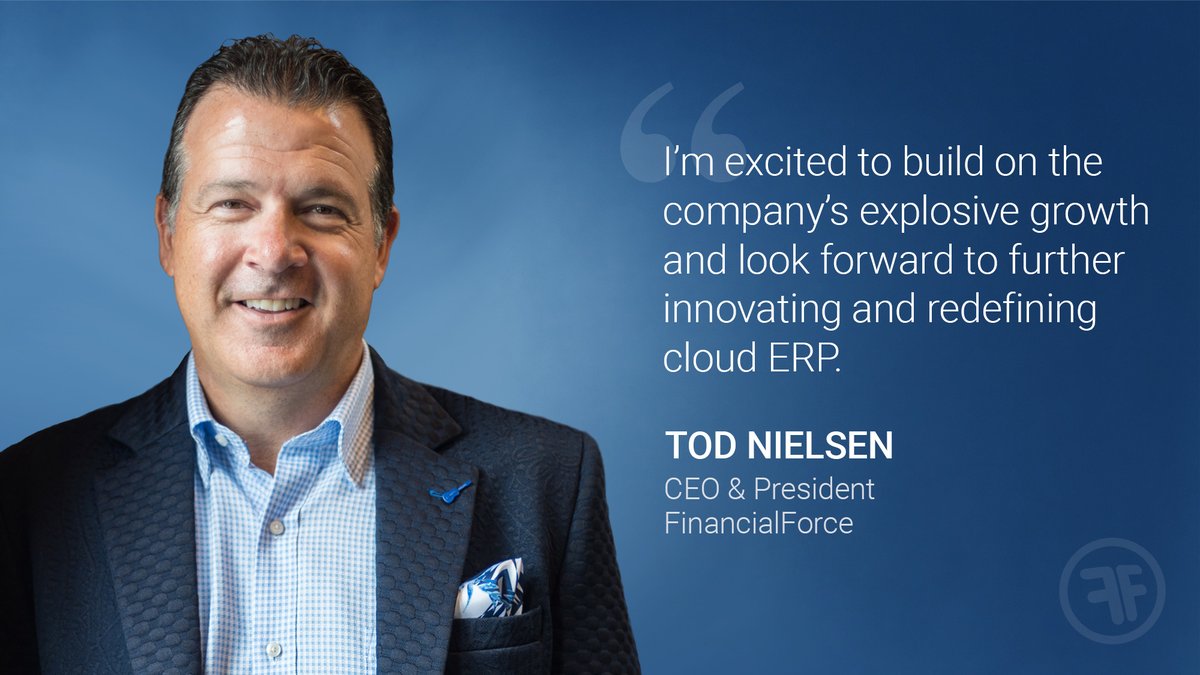
Tod Nielsen Appointed as CEO of FinancialForce; Move Hints Cloud ERP Disruption

0
Tod Nielsen Appointed as CEO of FinancialForce; Move Hints Cloud ERP Disruption

FinancialForce, an enterprise cloud-based resource planning company, named its new CEO after its Founder-CEO stepped down on Friday. In a surprise move, CEO Jeremy Roche will make way for enterprise cloud specialist Tod Nielsen, the former CEO of Heroku and COO of VMWare. This is a strategic move to acquire more scalability for FinancialForce, considering Nielsen’s reputation as a platform game maker.

Tod Nielsen’s arrival will boost growth for FinancialForce, which is expected to touch $100 million as annual revenue in coming quarters. Meanwhile, there has been no official comment on Jeremy Roche’s future at FinancialForce. He is expected to serve as a special board advisor.

Tod Nielsen’s appointment as the CEO of FinancialForce comes merely 18 months after the Cloud ERP solution provider raised $110 million in funding. It has acquired close to $200 million so far and is currently evaluated at $530 million. Nielsen’s experience with Salesforce cloud platform will prove to be a huge advantage for FinancialForce.

Previously, Nielsen was the EVP Platform (App Cloud) at Salesforce, partner of FinancialForce on its Cloud ERP. Interestingly, Nielsen was appointed CEO of Heroku after it was acquired by Salesforce, apart from piloting a project to integrate Force and Heroku operations.

According to a leading business source, FinancialForce management decided to shake up the top order as a strategic move to gain market mileage from the current enterprise Cloud ERP segment. While its relationship with Salesforce will remain “symbiotic”, the new CEO at the helm of things will power new innovations and customer-centric development in Cloud ERP models. Roche decided to step down proactively to open new doors for someone with extensive experience in raising cloud models from the scratch.

In an interview with CNBC in October 2016, Jeremy Roche had expressed his desire to take FinancialForce to a new height. He wanted to build a “new Oracle or SAP”. Instead of relying on Salesforce’s AppExchange platform, which is a fee-based app installation marketplace, FinancialForce could be developing and supplying its own Cloud ERP suite independently.

Tod Nielsen at FinancialForce could lead to a clear disruption in the rather “calm” legacy enterprise ecosystem. From a partner to a competitor, FinancialForce’s long-term ambition is to grow beyond Salesforce and shed its start-up image in coming months.

inBar Beacon: Mobile-For-Retail Marketing Gets Its Next Eye Candy

0
inBar Beacon: Mobile-For-Retail Marketing Gets Its Next Eye Candy

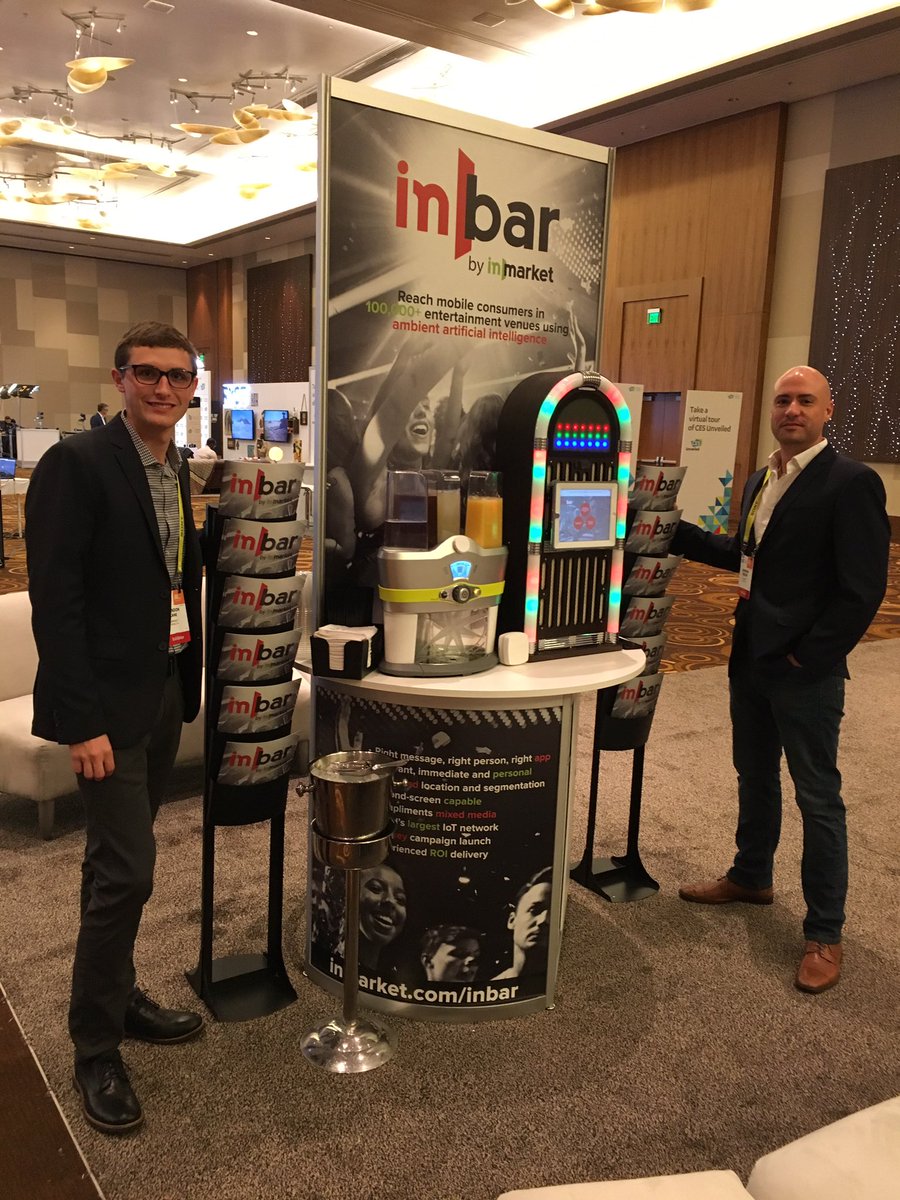
Beacons are increasingly being projected as the “lighthouses” for mobile users.  Brick-and-mortar retailers and mobile marketers promptly add beacons to guide customers. In a major push to beacon marketing and contextual advertising, inMarket announced a strategic partnership with AMI Entertainment Network, for installation of inBar beacons across the US. AMI is the leading provider of digital jukeboxes and video systems to bars and restaurants in the country.

Mobile-for-retail marketing solutions firm inMarket chose 2017 Consumer Electronics Show (CES) to announce its latest platform for entertainment venues. Called the InBar Beacon, the new mise-en-scène intelligence platform enables retailers to tap into consumer’s mobile and connecting it to second screen venues. inMarket will partner with AMI Entertainment to introduce more than 23,000 inBars across the US.

The Venice, CA-based marketing platform and app developer is world’s largest mobile-to-mortar beacon platform. Partnering with AMI will facilitate the growth of artificial intelligence-powered assistants to guide shoppers in a hyper-personalized, second-screen ambience. inMarket’s inBar taps in the analytics from the consumer’s mobile and sets up smart jukebox interaction, suggesting relevant songs and offers based on context. It also runs exclusive playlist and AR content to inBar beacon users who prefer to experience the platform.

inBar will be available to all Android mobile devices. All comScore-verified app monthly active users can also activate inBar via inMarket’s SDK platform.

inBar beacon is expected to turn retail shopping on its head with its ‘supercharged’ beacon marketing technology. Designed to engage consumers digitally on an ambient platform, the latest inMarket beacon raises the audience engagement level by many notches.

inMarket ended the year 2016 on a high, registering 223% growth in its clientele. It added top brands like Heineken, Clorox, Energizer, and Rite Aid to its clientele, and influenced consumers during the Black Friday weekend sale.

Salesforce Invests in CloudCraze, Who Raise $20 Million in Series A Funding

0
B2B Commerce Investment: CloudCraze Secures $20 Million Series A Funding
@timmessink via Twitter

Working with Salesforce is infectious for its partner; albeit a productive one. Beginning the year with a bang, continuing with its traditional celebratory mood since 2015, CloudCraze, Salesforce’s natively-built enterprise e-commerce platform, has secured $20 million in funding. The Series A funding is led by Insight Venture Partners, partnered by Salesforce Ventures. The latest round of funding is expected to accelerate B2B commerce product development and team expansion across the US and EMEA.

CloudCraze, as Salesforce’s highly coveted partner, caters to B2B and B2C enterprise e-commerce ecosystem with its omnichannel cloud innovations. Built on the Salesforce1 platform, the cloud-based SaaS for B2B commerce enables marketers to sell their products online seamlessly with a mobile-ready storefront. Considered as the gen-next SaaS commerce solution, CloudCraze allows businesses to tap the potential of digital commerce, generating quick, steady online revenue delivering robust B2B commerce experience.

CloudCraze offers 360-degree perspective across all customer touchpoints based on omnichannel interactions. Clients enjoying its infinite e-commerce functionality include iconic brands such as GE, Coca-Cola, Adidas, Land O’ Lakes, Kellogg’s, Avid, Barry-Callebaut, AB InBev, Ecolab, and WABCO.

via CloudCraze Media Resources

The company, founded in 2009, was acquired by former CEO of Acquity Group Chris Dalton, partnered by CMO Matt Schmeltz and CFO Paul Weinewuth in 2015. Earlier, Acquity Group went public in 2012 and was later acquired by Accenture Interactive in 2013 for $316 million. Acquity Group has since been rebranded as Accenture Digital.

In September 2015, CloudCraze partnered with Salesforce to bring in new “Buy Button” capabilities into its B2B commerce solutions suite. The Salesforce Platinum ISV Partner works closely with the Salesforce Community Cloud, powering agile B2B eCommerce solutions.

Talking about the latest funding, CEO Chris Dalton said, “We brought our expertise and knowledge about high growth, the experiences we’ve had with raising capital and taking (companies) public.”

In 2016, CloudCraze hired 60+ employees. In 2017, it could extend its roster strength to 150 or more. It might also open new offices in other parts of the world, especially in Asia and Australia, given the flourishing e-commerce market there.

The B2B commerce market is projected to touch $1.1 trillion by 2020. CloudCraze will play a key role in facilitating this growth trend through its partnership with Salesforce. B2B e-commerce will continue to drive more investments from venture capitalists.

TruOptik launches OTT Marketing Cloud at 2017 Consumer Electronics Show

0
TruOptik launches OTT Marketing Cloud at 2017 Consumer Electronics Show
via TruOptik LinkedIn

Digital media intelligence company TruOptik chose the 2017 Consumer Electronics Show (CES) as a platform to announce the launch of a new OTT Marketing Cloud. According to TruOptik, the latest cloud platform is designed to measure, activate, analyze and attribute advertising campaigns for connected TV exclusively. It will deliver innovative features to both advertisers and publishers with cross-screen, audience-based targeting agility.

Features of OTT Marketing Cloud

Marketers can finally lay hands on an all-inclusive data management platform to monitor campaign performance, measure audience engagement and evaluate marketing attribution across channels. The new OTT Marketing Cloud is designed to monetize the brand value of every marketing campaign driven by customer engagement across OTT and Connected TV. It is the only cloud suite that boasts of being a post-cookie, post-SDK programmatic marketing platform. The OTT Marketing Cloud fills conspicuous gaps between the legacy CRMs and the audience engagement.

The OTT Marketing Cloud offers advertisers and publishers –

  • Cookie and SDK-free DMP
  • Third-party data purchase marketplace
  • OTT audience targeting and media buying
  • Online and offline marketing attribution
  • In-app OTT analytics

measurement_grid

TruOptik’s clients can leverage the rich OTT audience measurement and segmentation capabilities using coordinated cross-screen campaign activation and attribution features. The growth in OTT platforms allows digital advertisers and publishers to bend away from the traditional ad platforms.

According to eMarketer, US adults spend 5.5 hours per day surfing video content. A Digital TV Research report expects the OTT market to explode as ad revenues triple by 2021. With advertisers engaged in a constant tug of war between TV and digital video advertising, integrating OTT Marketing Cloud will definitely monetize the ad spend strategy across OTT and Connected TV platforms. However, despite a visible drop in TV time, advertisers continue to rely on TV advertisement campaigns over digital video.

With disruptive technology always round the corner, placing faith on the new OTT Marketing Cloud is an encouraging trend for advertisers beefing up their budget for OTT and non-linear digital platforms.

Magento Raises $250 Million Funding from Hillhouse Capital; To Scale Omnichannel E-Commerce Operations in Asia

4
Magento Raises $250 Million Funding from Hillhouse Capital; To Scale Omnichannel E-Commerce Operations in Asia

Open source e-commerce platform Magento secured $250 million funding from Chinese alternative investment firm Hillhouse Capital Group (“Hillhouse”). The latest round of funding will boost Magento’s global expansion plans, especially in Asia.

The funding will help the omnichannel e-commerce solution provider focus on becoming an independent firm. The parties were not available for any comment on the stake Hillhouse holds in Magento following the investment. According to The Financial Times, the current Magento’s valuation is estimated to be above $700 million. In 2015, it was valued at $150 million. Hillhouse investment in Magento will enhance its go-to-market strategy in Asia, enabling the developers to provide omnichannel capabilities to meet demands of global customers.

Magento officially came into existence in 2007 when its founder-owner Varien Inc. reworked on pre-existing e-commerce management software osCommerce. In 2010, Varient was purchased by Agilent Technologies for $1.5 billion. Magento has since witnessed investments by eBay and subsequent breakup. In November 2015, the UK-based private equity firm Permira acquired Magento Commerce after it broke away from eBay Inc. Primera will continue to hold majority stakes at Magento.

Magento powers more than 240,000 online stores for leading brands including Burger King, Coca-Cola, Beaumotica, and Braun. The California-based e-commerce platform currently provides three distinct platforms – Magento Community Edition, Magento Enterprise Edition and Magento Enterprise Cloud Edition. It has 3,500 paying enterprise customers powering nearly $50 billion worth of transactions every year.

Zhang Lei, CEO-Chairman of Hillhouse is excited about his latest investment in Magento. He acknowledged Magento’s growing prominence in e-commerce platform as an omnichannel solution provider. “We see tremendous growth opportunities for Magento globally and specifically in Asia”, Lei said. Magento deal is one of the biggest Hillhouse has managed in recent times. It mostly invests in venture and private equity.

To name a few, Magento competes with SAP Hybris, BigCommerce, Demandware, Shopify Volusion, Drupal Commerce and IBM Websphere. The new funding could see Magento scale up its omnichannel e-commerce solutions globally in the months to come.

Snapchat Extends Moat Capabilities to European Advertisers to Boost IPO Plans

1
Snapchat Extends Moat Capabilities to European Advertisers to Boost IPO Plans
Adam Przezdziek via Flickr

Snapchat is all set to repeat and even exceed its phenomenal run from the last year into 2017. The multimedia mobile application will launch a new ad measurement tool for advertisers in Europe. In its bid to become the go-to ad shopping center for advertisers in Europe – UK and France specifically, Snapchat is offering them Moat capabilities. The new Snapchat Moat partnership capabilities will enable European advertisers to evaluate the effectiveness of their video ad campaigns.

Snapchat is taking ad measurement very seriously. In June 2016, Snapchat partnered with Moat to enable Moat Analytics on its video inventory. Under the new partnership model, Snapchat’s vertical video format was rebranded as Snap Ads. API inventory on Snap Ads platform allowed third parties to sell their ads as Ads Partners and Creative Partners. Snapchat Ads Partners include Amobee, TubeMogul, Adaptly, 4C, VaynerMedia, Brand Networks, SocialCode, and Unified.

Snapchat also partnered with Google’s DoubleClick enabling advertisers to tag their Snapchat videos and evaluate their performance using DoubleClick Digital Marketing dashboard.

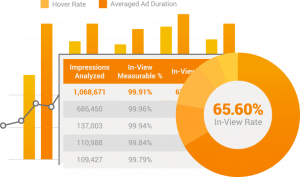
Snapchat Moat partnership aims to attract more users to its mobile app platform, offering them “real” customer experience on video ads.  The added capabilities from Moat Analytics will help European marketers measure the full video on the mobile app based on sight, sound, and motion. The beta-version of the new video analytics capabilities from Moat is already available to US-based advertisers.

The new Moat Analytics package available to European video advertisers via Snapchat includes features like Moat Score for Video, Moat Screen Real Estate Metrics, Moat Audible Run Time Metrics and much more.

via Moat Analytics
via Moat Analytics

By expanding Snapchat Moat partnership horizon beyond the US, the multimedia marketing company expects to offer the European advertisers a more refined video ad monitoring platform. Currently, Snapchat offers 15 third-party ad measurement solutions via Oracle Data Cloud, Nielsen Mobile Digital Ad Ratings, and Millward Brown.

Moat, Snapchat’s partner since June 2016, offers over 50 different types of video ad metrics. Its idea of video advertising is to make it “Human, viewable and audible.” Its cross-platform analytics works on trillions of ad impressions and content views empowering marketers to monitor brand visibility based on quality aspects. By extending Moat’s capabilities to the European ad market, Snapchat is expected to boost its own video impressions. Obviously, the Venice, CA-based company is realizing its global expansion plan to boost ad revenues ahead of an impending IPO.

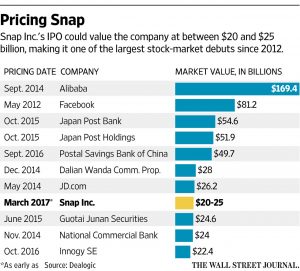
According to Wall Street Journal, Snap Inc. filed IPO paperwork in November 2016.  Its stock debut is pegged to raise more than $25 billion by March 2017. If Snap makes its IPO debut at $25 billion or more, it will become one of the largest US-based martech innovators to raise such an amount.

For now, European advertisers can certainly leverage Moat analytics to fetch more ROI from their Snapchat video ad campaigns.

Snap Inc. IPO

Acxiom Announces Audience Cloud For Advanced Cross-Channel Management of Acxiom Data

1
Acxiom

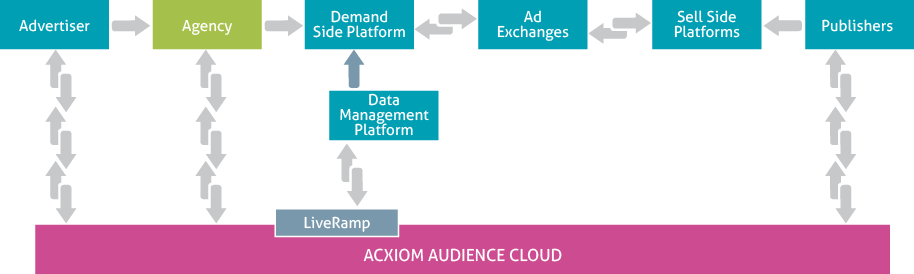
Acxiom®, announced the Acxiom Audience Cloud™, a self-service tool for accessing Acxiom data that allows marketers to find the right audience for their campaigns, adjust the size, test new segments and distribute audiences throughout the marketing ecosystem via LiveRamp, their preferred onboarder, or native PII-based integrations.

Acxiom Audience Cloud, an advanced cross-channel audience management tool enables agencies and marketers to generate audiences at a targeted level, while adhering to applicable privacy rules and laws.
Agencies and marketers now have an on-demand tool that uses AND/OR and NOT advanced logic and generates counts in seconds for custom built audiences and delivers those audiences to hundreds of programmatic and premium publishers across desktop, mobile and social channels.

Audiences can be targeted by:

  • Known Characteristics – such as age range, income, interests
  • Propensities – prebuilt look-alike audiences who are in-market, have a specific brand preference
  • Geography – by state, ZIP code, Area Code
  • Suppression – upload your file to exclude existing customers or use criteria to remove specific attributes from your audience


Acxiom Audience Cloud
http://www.acxiom.com/audience-cloud/


“Acxiom Audience Cloud radically simplifies the process for creating and distributing audiences created from Acxiom data, resulting in better campaign planning, optimized marketing spend and increased ROI,” said Andy Johnson, vice president, data and product management, Audience Solutions at Acxiom.
“Now agencies and marketers can benefit from direct access to advanced audience management capabilities for true cross-channel marketing at scale, using this solution which includes the ethical use of data considerations, a/k/a privacy, in the design layer.”

The Audience Cloud offers:

  • Access to Acxiom’s robust demographic and predictive data built over 45 years
  • Industry-leading identity resolution technology for people-based marketing using Acxiom’s proprietary
  • AbiliTec® to accurately recognize consumers across the digital ecosystem
  • On-demand audience sizes for planning with industry-leading reach
  • Distributed audiences available in hours
  • Privacy-safe data anonymization and matching within Acxiom’s Safe Haven® to protect consumer privacy

Also Read: B2B Marketing SaaS Platform CaliberMind Joins Terminus Cloud for ABM

Medium CEO Plants Blog Time-Bomb; Announces Job Cut and New Business Model

0
Medium CEO Plants Blog Time-Bomb; Announces Job Cut and New Business Model

How many times have you heard about management blogging about a new business model, hinting sure shot job cuts? While it’s rare, Medium co-founder did exactly that on 3 January. He removed 50 employees, to grow company’s future. Instead of an office press release, the online content publishing firm’s founder took to blogging to place the management “time bomb” on its employees.

Medium, an online content publishing firm founded by Twitter co-founder Evan (Ev) Williams will sport a trimmer business model in 2017. In coming days, Media will be lighter by at least one-third on its staff roster. The reduction in its staff will allow the company to realign its business strategy towards monetizing their online content publishing platform to drive more sales revenue. Currently, the company makes money by placing ads on the articles; something that Ev Williams wants to change very soon.

The news to remove 50 jobs from its roster comes despite Medium registering 300% growth in its published content. While other web publishing platforms may be heckled for posting fraudulent Fake News, Medium has devoted its resources to ensure accurate, truthful content so far. Sadly, it’s not generating click revenue. Medium will be shutting down its offices in New York and Washington DC and is likely to go into a siege mode shortly.  Ev Williams chose to announce his decision to restructure Medium via blog. The “hard part” would be eliminating 50 jobs from sales, support and other business functions.

Calling it as a proactive step to fulfill Medium’s original mission, Ev Williams has vociferously raised his lack of faith in the ad-driven revenue model. While the strategy did provide a stage to grow, Williams was disdainful about its lack of resolution in driving revenue through payment of quality content.

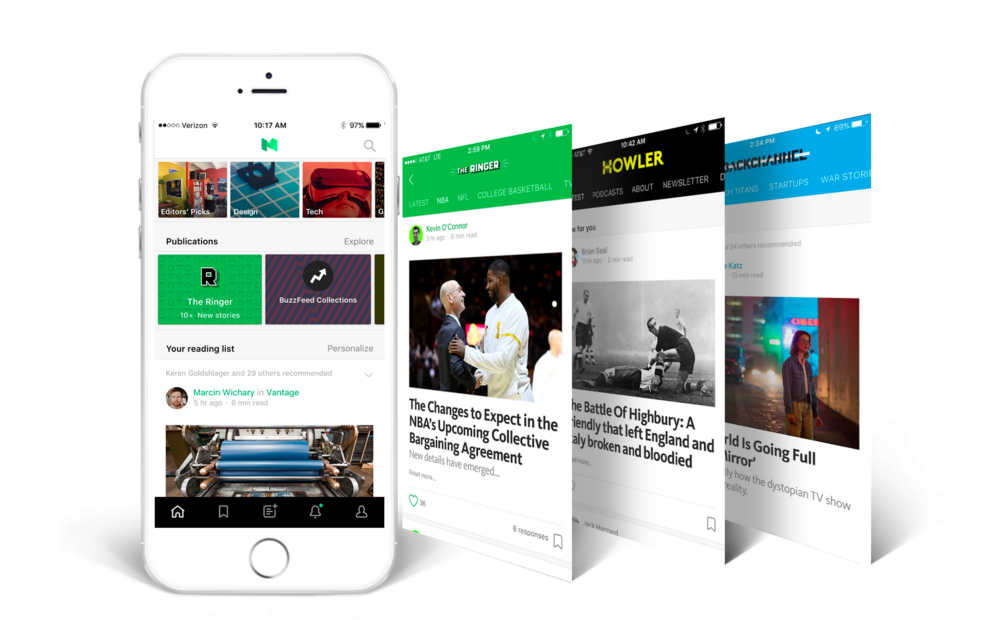
Medium was founded in 2012 with an intention to provide writers with a more flexible platform. It provides a full-blow WYSIWYG user interface ( “what you see is what you get”) with the option to add rich texting formats. Largely appreciated for its relevant content, the only time Medium was embroiled in a controversy came in July 2016. The Malaysian government banned Medium in January 2016 and has since remained unavailable for Malaysian internet users.

In all likelihood, Medium will come up with a rewarding content sharing model for writers and publishers based on what impact their content has on readers.

Falcon New Social Media Tool To Drive Major Marketing Campaigns in 2017

0
Falcon New Social Media Tool To Drive Major Marketing Campaigns in 2017

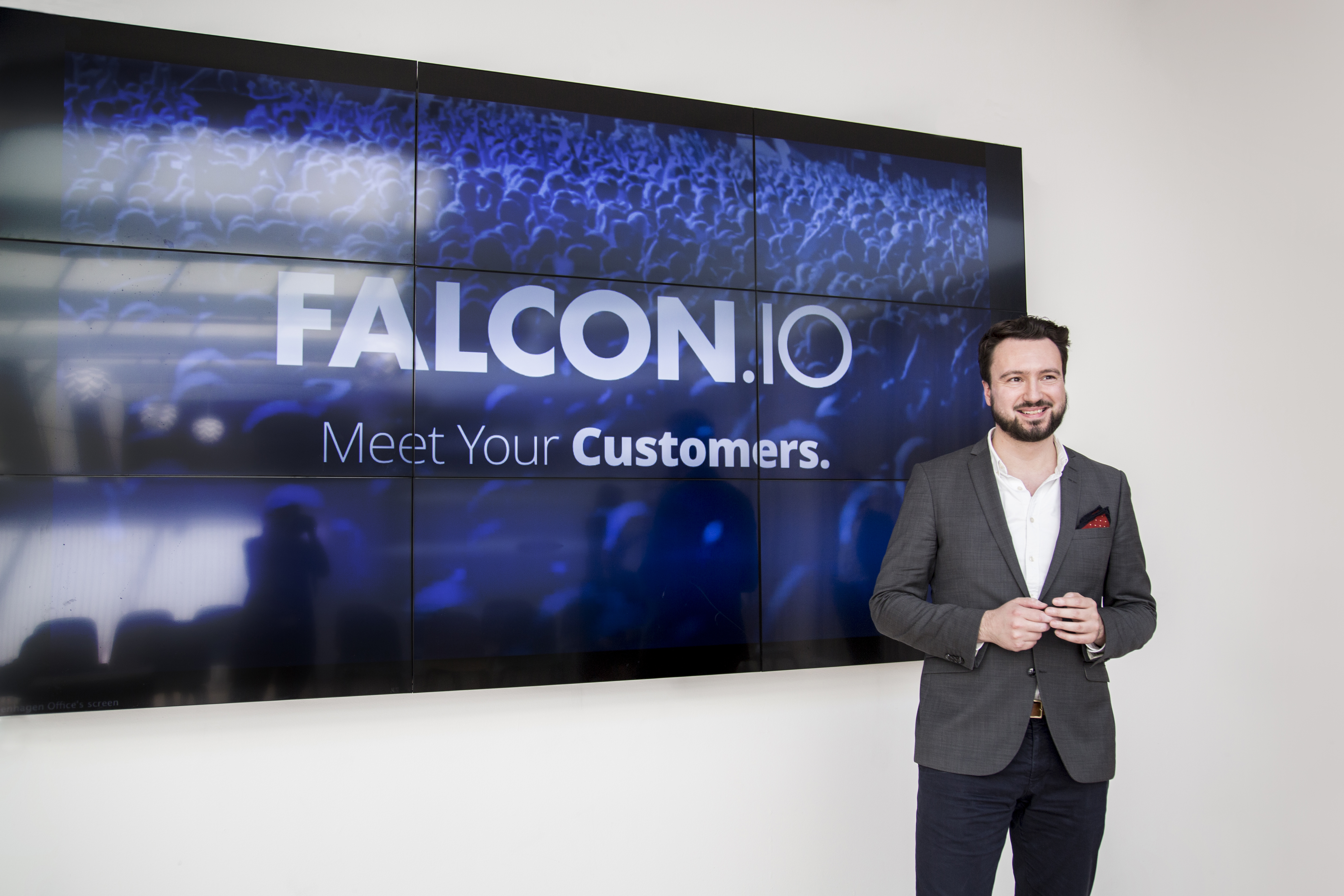
Falcon.io, a Copenhagen-based customer experience platform, has announced the release of a new digital tool to streamline marketing efforts in 2017. The unified social media tool is a single app model laced with all the latest marketing features. Marketers can use this tool to discover, attract, engage and nurture customers across all online platforms using social data. Easy-to-use and backed by cutting-edge real-time data analytics, Falcon digital tool is one-stop data shopping center for social media organizations.

Customer experience (CX) is a journey-based transformation that encompasses cultural shift and perception about a brand. Optimizing that CX into a single stream platform is a tactical success metric to gain a truly competitive advantage over others in social media and other channels. Falcon social media tool is a hot-bed of features that make social media monitoring look simple and easy to manage.

Automotive Social via Flickr

The new Falcon digital tool offers unparalleled customer engagement based on social listening and audience management. It takes a deep dive into social media accounts that are speaking about the brand and collates them all into one seamless hub. Content marketers and social media managers can organize posts and track audience engagement without leaving the Falcon page.

Features of Falcon social media tool

The latest social media tool is a cool mix of features that allow social media marketers to deliver flawless customer experience through their campaigns.

Social Listening

Falcon social media tool tracks relevant social media accounts and draws them into engagement using contents specific to these audiences. Marketers can now promote the most trending content to their audience and plug in their products.

Customer engagement

Be it for a fresh customer or a returning one, engagement strategies depends on how well the digital tool creates engagement touch points proactively. Emails, messaging and comments are automatically generated to respond to customer’s action.

Falcon digital tool draws real customer data from heaps of social media accounts. The marketers can then design social media campaign specific to customers who are talking about the brand to further improve the brand presence.

Content marketing

Falcon digital tool features a content publish tab to organize the entire social media content in one calendar. From scheduling posts to calculating campaign budget, the content marketing aspect improves the hit-ratio of every campaign.

Audience management

How a customer will react to a campaign remains the biggest worry of every marketer. Falcon eases this anxiety by readily providing information on customer behavior and experience with the brand in the past. Each customer interacting with the brand gets a unique set of profile details on Falcon — age, gender, contact number, address, and even marital status.

In short, marketers using Flacon social media tool can accurately pinpoint who is interacting with the brand and on what scale.

Unified customer experience offered by Falcon boosts social engagement, optimize campaign performance and increase operational efficiency—all these put together achieve maximized ROI.

Falcon’s Trak Record in Social Media Marketing

Falcon, founded in December 2010, is a meaty social media monitoring platform. It has so far raised $23.72 million in Series A and B funding led by investors Prime Ventures, Northcap, and Target Ventures. In 2015, Falcon became the first European social media management suite to enter the Twitter Official Partner Program. In the same year, it partnered with DataSift to gain social access to Facebook topic data. It is content data related to specific customer activities revolving around the brand and other subjects shared on Facebook. With enough data from world’s two largest social communities, Falcon adds enormous value to marketing efforts with guaranteed ROI.

Then in May 2016, it announced world’s first integrated CX platform that enables single customer view. Based on extensive research and in-house analytics, the company has managed to draw top-tier brands into its clientele. Toyota, Carlsberg, Tiger, Change Lingerie, L’Oreal, Coca-Cola, DIESEL, and Mentos use Falcon’s content marketing and social listening solutions to gain better traction from their signature marketing and advertising campaigns.


Windsor Circle Predictive Analytics Now Open To Omnichannel Advertisers

0
Windsor Circle Predictive Analytics Now Open To Omnichannel Advertisers

Windsor Circle, the Durham NC-based predictive lifecycle analytics, and retention marketing company announced its latest martech offering for clients. Retailers can now leverage Windsor Circle Predictive Analytics data seamlessly from its 1:1 retention automation platform to drive omnichannel advertising campaigns. The latest addition into its predictive analytics lifecycle platform will enable marketers to create impactful marketing campaigns using actionable data.

Windsor Circle Predictive Analytics is powered by its big data integrations, advanced customer segmentation, and automation. By integrating predictive data into existing marketing stacks, users can amplify the ROI from their marketing campaigns.

The latest announcement catapults Windsor Circle Predictive Analytics into the big league of martech innovators catering omnichannel marketing integration solutions. In August 2016, Windsor Circle was included in Inc. 500 list of fastest growing companies in the US. It ranked 350 on the list. The company has managed to secure an astonishing Three-Year sales growth rate of 1,100%!

https://twitter.com/windsorcircle/status/765897768225366017

Omnichannel marketing based on Windsor Circle Predictive Analytics enable marketers to turn stores into fulfillment centers based on customer’s location using website and mobile orders. E-commerce retailing is witnessing an omnichannel shift thanks to the sporadic growth of hyper-customized marketing attribution channels. Customers now have multiple options to compare, review, test and purchase from different retailers—store, online and mobile. Windsor Circle’s Behavioral Tracking accounts for all these activities and collates data to make predictions about future events.

Windsor Circle was founded in 2011 and has since raised over $16 million in funding. In April 2016, it raised $4.1 million in an over-subscribed funding round followed by another $2.5 million line of credit from Square 1 Bank. It has secured investments from leading investors like Comcast Ventures, IDEA Fund Partners, AOL Found Steve Case, Triangle Angel Partners, Origin Ventures, and many more.

In June 2016, Windsor Circle introduced six Magento 2.0 extensions for predictive marketing. It has since been acknowledged as a potent predictive analytics company for high-value customer segmentation and retention.

Currently, Windsor Circle is integrated with nearly 20 e-commerce platforms and as many email service providers. From data ingestion and email activation POV, Windsor Circle offers a faster setup, higher integrity, and transparent real-time analytics.

Facebook Copyright ID System To Curb Infringements and Fake News

1
Facebook Copyright ID System To Curb Infringements and Fake News

If YouTube can do it, why can’t Facebook? Oh, wait! Facebook does request its users to take down copyrighted content “if” its software manages to pick any infringements. In 2017, things will change. World’s most popular and most active social networking site is currently developing a cutting-edge content recognition system to effectively stem the issue of copyright infringements proactively. With its own in-house content recognition system, the social media giant is expected to curb the growing notoriety of “fake news” as well without actually prompting by itself.

Currently, Facebook complies with the notice-and-take-down policies laid by the United States Digital Millennium Copyright Act (DMCA). With the introduction of Facebook Copyright ID System, marketers can position their brands as unique and reliable, not to forget, as the original.

What prompted Facebook to build a Content ID system?

Companies rely heavily on Facebook, YouTube and other social networking and media platforms to share their content—posts, infographics, music albums, video series and much more. Due to privacy settings provided by Facebook, it is very difficult to identify the actual source of the content.

The Content ID system will enable marketers and regulators to see the exact source of content. Facebook might even talk to leading publishers about licensing their content and paying them in return. It will save the media giant from being caught at the wrong end of a copyright infringement lawsuit filed by artists against publishers.

With the Content ID system, there are going to be repercussions on marketing strategies, especially the ones with no influencer or content delivery tools.

Possible Capabilities of the Facebook Content ID System  

Facebook Copyright ID System will feature automatic content recognition software that will identify copyrighted content and list out their monetization across all shared platforms. Content owners and advertisers can register their content and protect their work from infringement. Facebook is yet to speak about membership or fee structure around the latest content copyright protection solution.

Facebook Copyright ID System will come handy if the account is hacked or if the owner has lost access to Page or Group. It will also cut down the instances of fake account IDs that pretend to mimic the big brands by using their content. Copyright and trademark violations on Facebook can be systematically uprooted based on Facebook’s Copyright Report Form.

1:1 Content Copyright Management

Unlike YouTube that relies on the number of users reporting the copyright infringement incidents, Facebook Copyright ID System will allow 1:1 publisher-brand interaction.  Several software companies offer content recognition tools to analyze audio and video clips and compare them to a database of copyrighted works.  Facebook, on the other hand, has climbed a notch higher in content recognition space by working with top labels in the music industry. Its content partnership with Warner music Group is conspicuous enough.

With Facebook Live creating real-time content, marketers are awry about miscellaneous users posting pre-existing copyrighted work to push their products. Something that influencers would never want to see on Facebook!

A very considerate move in 2017 clearly, the social media mammoth has grown its media-savvy wings, and now wants to pitch itself as the messiah of creative artists.

Facebook, meanwhile, is yet to confirm the development.

AppDynamics IPO Officially Confirmed, Aims Raising $100 Million

1
AppDynamics IPO Officially Confirmed, Aims Raising $100 Million

San-Francisco, CA-based company startup AppDynamics finally commenced its Initial Public Offering (IPO) process. The application performance monitoring and management solutions company filed the mandatory S-1 form with the Securities and Exchange Commission (SEC) last week. AppDynamics, which provides real-time business and application performance management technology to Salesforce and IBM, is aiming to raise $100 million through US IPO.

As per the S-1 filing guidelines, AppDynamics will be listed on NASDAQ under the symbol “AAPD”. It is, however, unclear as to how many shares and the price of each share the company is offering. Currently, AppDynamics has revenues less than $1 billion and thus falls under the purview of JOBS Act. It means that the company will have certain incentives and exemptions on IPO allowing equity crowdfunding.

AppDynamics has managed to raise close to $315 million in the last nine years since its inception. However, a tech unicorn going public highlights the cut-throat competition and the impact of growing losses on novel innovators. Backed by a strong revenue growth over the last couple of years, AppDynamics IPO was always around the corner.

CEO David Wadhwani opted for AppDynamics IPO based on the positive net promoter score by its customers. Back in November 2016, it was speculated that AppDynamics IPO filings would be finalized in 2017 following the unexpected results of 2016 US Presidential elections. Then, it was expected to fetch anywhere between $2 billion and $3 billion. Surprisingly, the “Application IQ” platform has slashed its IPO expectations to $1 billion despite registering revenue of $158.4 million in January-October 2016. In November 2015, the company was valued at $1.9 billion in a private financing round arranged by General Atlantic and other investors.

According to the insiders, lead underwriters handling the critical IPO for App Dynamics are Morgan Stanley, Goldman, Sachs & Co., and J.P. Morgan. Wells Fargo Securities, UBS Investment Bank, Barclays, JMP Securities, and William Blair would also feature in the list of IPO underwriters.

In 2016, only 11 tech unicorns went public, raising $1.2 billion. Overall US IPO market has been sluggish in 2016. Only 125 companies filed for IPO compared to 234 in 2015.

With a $100 million price tag on its badge and backed by leading investors like Lightspeed Venture Partners, Greylock Partners, General Atlantic, Altimeter Capital, and Battery Ventures, AppDynamics is expected to start trading on NASDAQ very soon. App Dynamics IPO may just have ushered a new wave of funding in 2017.

Avetex Becomes Genesys Value Add Reseller; Will Amplify Seamless Customer Experience

0
Avetex Becomes Genesys Value Add Reseller ; Will Amplify Seamless Customer Experience

Avtex, a renowned end-to-end customer experience (CX) deployment partner for Microsoft, will now cater to Genesys. It will offer premium CX technology solutions to Genesys as part of its strategic collaboration. It will now feature as Genesys Value Add Reseller; building, delivering and supporting products and solutions available on the Genesys Customer Experience Platform.

Genesys is an omnichannel CX optimization and workload management platform that sells cloud-based and SaaS to mid-sized and large businesses.  Avetex’s entry into its elite Value Add Reseller list will bring accuracy, consistency and vision, specific to the organization, delivering the highest integrated experience to users along customer’s journey.

Currently, Avetex offers seamless integration between its various Customer Experience solutions—Contact Center, Enterprise Management Platforms, Marketing and Innovation and so on. Genesys will deploy Avetex’s fast and flexible web-based architecture to build flawless CX.  Both companies share the common vision of enabling their clients to create and sustain seamless and superior customer experience across all channels of engagement.

Genesys Value Add Reseller is an extension of Genesys sales and support that enables users to upgrade to higher functionalities and features. Avetex is expected to leverage on Genesys’ omnichannel integrations to execute content center back-office automation using Microsoft Digital CX technologies.

Avetex offers a 360-degree perspective on customer experience by offering solutions from CRM, Cloud and Mobile, Office 365, unified communications, contact centers, portals, and customer relationship management. It also offers Business Intelligence and System integration solutions.

The latest partnership with Genesys comes at the backdrop of Avetex’s growing stature in providing world-class CX platform solutions. Avetex was honored with the 2016 Interactive Intelligence PureCloud Pace Setter Award. Earlier, the Microsoft Gold Partner and Interactive Intelligence Platinum Elite Partner acquired Webfortis in February 2016, thus announcing its arrival into the contemporary league of Customer Experience technology developers. Being a part of the 2016 Inner Circle for Microsoft Dynamics, Avetex is likely to add significant commercial and knowledge value to Genesys’ intelligent and pro-active omnichannel platform.

TimesSquare Acquires 50,740 New Shares in Salesforce.com Inc (CRM)

0
TimesSquare Acquires 50,740 New Shares in Salesforce.com Inc (CRM)

TimesSquare Capital Management LLC, a leading research-oriented investment management company, has acquired fresh shares of Salesforce.com Inc. It was revealed from its latest filing of Form 13F with the Securities and Exchange Commission (SEC) for the third quarter of 2016. According to the filing, TimesSquare has acquired 50,740 Salesforce shares stock with an estimated evaluation of US $3.6 million.

On the opening day of 2017, Salesforce shares traded at $68.46, 1 per cent down from its last recorded standing. Salesforce’s stock portfolio has 4,523,271 shares with market cap of $47.70 billion. It enjoys a price-to-earnings ratio of 232.07 with 1.46 beta.

5 Day Chart for NYSE:CRM

Other significant investors and hedge funds with stakes in Salesforce.com have also made changes to their portfolio. Vanguard Group Inc., for instance, increased its Salesforce shares by 3.1%, acquiring 1, 1,181,756 shares during the fourth quarter. It now has 39,426,135 shares of Salesforce with total evaluation of $3,130,829,000.

New York-based Jennison Associates LLC also moved its share ownership at Salesforce.com by 3.2% in the third quarter. With 20,758,784 shares, Jennison Associates LLC owns stocks worth worth $1,480,724,000. BlackRock Institutional Trust Company N.A. reinforced its position too. It gained 585,931 shares during the last quarter taking its total number of shares to 16,980,055 worth $1,211,187,000. One of the bigger moves came from Ameriprise Financial Inc. It increased its position in Salesforce by 5.1%, taking its tally to 8,648,009 shares valued at $616,865,000.

UK-based independent investment fund manager, Baillie Gifford & Co also increased its share in Salesforce.com. It might look like a negligible raise, but with 0.7% rise in number of shares, it took its tally to 6,981,936 shares, evaluated at $554,435,000.

Approximately 85% stocks of Salesforce.com are owned by institutional investors and hedge funds.

TimesGroup acquiring new stake in Salesforce.com reveals the business value of the CRM solutions provider.

Surprisingly, Marc Benioff, the CEO-Chairman of Salesforce.com brought down his share in the company’s stock on 30 December. He sold 12,500 shares at a cumulative transactional value of $857,750. Director Susan Wojcicki had acquired 1300 shares in the company’s stock in November 2016. Currently, company insiders still hold 6.70% of Salesforce.com’s stocks.

Meanwhile, TimesGroup Capital Management LLC seems to be on New Year buying spree. Apart from acquiring Salesforce.com stocks, the investment adviser also raised its stake in Intuit Inc., the leading enterprise software company in US. According to the SEC filing, TimesGroup bought 10,730 shares during the third quarter to take its portfolio in Intuit to 69,995, valued at over $7,700,000.

For the year 2016, Salesforce.com registered revenue of $6.667 billion with total equity of $5 billion. Currently, it has three subsidiaries – Quip, Demandware and Heroku.

Facebook Pouncing On Offline User Data to Consolidate Its Ad Targeting Efforts

0
PDPics via Flickr

Without Facebook, marketing would be a mistake. To strengthen this belief, Facebook is refining its ad targeting methodology. In 2017, it will pounce on user’s offline data to maximize ROI from ad-spend campaigns done on Facebook. It will collaborate with six mega-data collection, verification and analytics firms in 2017. From a purely social media and networking site, the Menlo Park-based company has grown into a major advertising platform in recent years.

In a bid to consolidate its ad targeting efforts, Facebook now intends to buy offline user data. It will enthuse marketers who rely on Facebook for social media analytics. They can now gain more ROI from their ad-spend efforts based on offline user metrics from Facebook .

Facebook and Its Third-Party Data Partners

Facebook Business
via Facebook Business

Facebook for Business is an enticing model for marketers to sell online or via app. To boost its connectivity with users, knowing what they do offline is very important. Therefore, Facebook has partnered with six data collecting organizations—Acxiom, Epsilon, Experian, Oracle, WPP and Transunion. All these companies combine creativity and technology to extract valuable data by prompting users to act and reply. Facebook has acquired the services of these companies to see how its active users interact with diverse service providers across banking and insurance, e-commerce, automotive, hospitality, healthcare, education and many more.

For example, Transunion is a credit score reporting company. Facebook users who check their credit scores at Transunion will add to the offline metrics.

Acxiom, on the other hand, offers user on-boarding services to leading marketers. It will add offline data based on how users react to shopping experiences in malls, showrooms and social events after seeing a campaign online. In December 2016, Acxiom launched Facebook Google Categories in Japan to provide offline consumer behaviour data and lifestyle attribute data packs.

Digging into Data: Collaborations in the Past

This is not the first time that Facebook is relying on a third-party data collector to fill its offline attribution channel. Back in 2012, it partnered with Denver-based data collection company DataLogiX (DLX) to study how ad-spend on Facebook affects in-store sales. DLX had purchased data from 70 million American households by employing loyalty cards and reward programs at over 1000 retailer outlets. DLX has since been acquired by Oracle in 2014, and is now part of Oracle Data Cloud.

According to the Facebook-DLX study, customers are twice as likely to return on ad-spend campaigns when ads are posted in News Feed section compared to campaigns without ads in News Feed. For marketers driving multi-channel campaigns, this study proved the infallible stature of Facebook as an advertising platform.

In April 2016, global media measurement and analytics company – comScore partnered with Facebook to cover its viewability metrics for video and display ad campaigns on both desktop and mobile platforms. Nielsen, Moat and Integral Ad Science are other third-party data measurement and verification partners of Facebook .

Facebook Redefining Online Ad Targeting With Offline metrics

Apart from Google, Facebook is the largest online data collecting organization. A mix of online-offline user data analytics will help marketers paint a clearer picture about their marketing and for ad targeting campaigns.

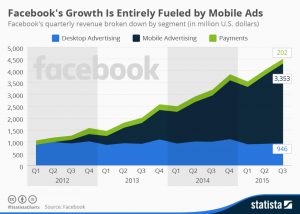
Facebook's Growth Is Entirely Fueled by Mobile Ads
Via Statista

Facebook has committed to provide user data privacy. It does not sell user’s personal information to its third-party data verification partners or advertisers. However, it will share its insights to marketers on how Facebook-specific ad-spend influences marketing campaigns across many different ad platforms.

New Year Surprise: Amazon Testing Waters with Google PLAs?

0
New Year Surprise: Amazon Testing Waters with Google PLAs?

Amazon is gearing up for the New Year 2017 in a rather unprecedented manner. The e-commerce giant was seen testing its Product Listing Ads (PLAs) on Google AdWords. This is the first time Amazon has put its product search using texts and images across all e-commerce platforms on AdWords since 2012. Most contemporary retailers are opting for PLAs as the primary platform for Google Shopping.

Amazon advertisers are keen on growing their PLA footing to dominate desktop and mobile search results. In 2012, Google’s Product Search reworked its organic product search engine into a pay-to-play advertising model. Since then, Amazon refrained from putting its products on Google’s PLAs. The recent update on Amazon’s growing interest in Google PLAs will boost the sale of products listed by third-party sellers too.

Using Google PLA, Amazon advertisers can promote their inventory on Google as well as monetize their advertising campaign. Whenever someone searches for an Amazon product on Google.com, the search engine shows the customer a series of relevant pictures of the item, their price and the store name. On clicking, the customer will be directed to the website where the item has been hosted. With PLAs, Google charges the Amazon advertiser for every click made on the search shopping.

Will Amazon Monetize Its Mobile Advertising Strategies Using Google PLAs?
Google PLA

Amazon testing on Google PLAs will not only benefit the e-commerce giant but also smaller retailers who can’t match budget of bigger companies. With PLAs, advertisers can compare their campaign’s performance using Auction Insights tool. Google offers Auction insights on different Search and Shopping campaigns.

The Auction insights statistics for search campaigns generates 6 kinds of data on:

  • Impression share
  • Average position
  • Overlap rate

Position above rate

  • Top-of-page rate
  • Outranking share

Advertisers can leverage on Google PLAs auction insights tool only when keywords, product groups, ad groups and campaigns attain minimum threshold activity.

Google PLAs generate higher ad clicks on mobile than on desktop. Amazon Mobile Ad Networks integrated with Google PLAs will help monetize product listings. Ads on mobile apps and games across multiple device platforms—Android, iOS and Fire will generate more ad impressions and clicks.

Amazon ramping up its Google PLAs in 2017 will have major ramifications on retailer search advertisers as well as Google. It will force retailers to pay more per click or accept lower traffic levels to manage their PLA click volume required to run Google Auction Insights on search and shopping campaigns.

With its latest testing, Amazon will be able to power its Amazon Advertising Platform (AAP) to rule Google space using standardized images for full-screen interstitial app ads as well as banner ads.

Meet FlockOS, World’s First Enterprise Chat Operating System

0
Meet FlockOS, World's First Enterprise Chat Operating System

Move aside desktop and mobile operating systems. 2017 will see the rise of chat operating systems. Flock, the leading enterprise messaging platform, announced the arrival of its latest innovation—FlockOS, just a week before 2016 ended. With its debut, FlockOS becomes the world’s first Chat Operating System (COS).

Flock switched territories from a live message platform provider to an app-based ultra-powerful COS developer swiftly. The latest COS will enable app developers to build enterprise-centric chatbots, intelligent assistants and integrations with Flock messenger forming the backbone of enterprise messaging platform. FlockOS will enable the apps to seamlessly blend with the native messaging channels. At the same time, Flock groups and individual users can send customized notifications and attachments based on task updates.

FlockOS will allow the app developers to build intelligent assistants like Reminder Bots and Alert Bots to invite users to scheduled meetings, just in case they fail to accept the invitation on Flock messenger channel. It will also enable app developers to add widget and To-Do buttons to provide an interactive dashboard view.

Flock messenger via website

With FlockOS, the #1 team messenger platform has leapt ahead of the cut-throat competition in enterprise messaging domain. Flock currently competes with Slack, Facebook for Business, VMWare Socialcast, Salesforce Chatter, Google+, Cisco Jabber, Jostle, Microsoft Teams, Jive, Glip, IBM Connections, SocialText and Tibbr. All these messenger platforms offer distinct engagement features using a server or cloud-base app.

Currently, base Flock app is a freemium product with additional features available to enterprise users at $3 per user per month. FlockOS boasts of superlative UI and app-building capabilities, making it a top-of-the-game team messenger channel compared to other incumbents. With an in-built OS capability, enterprise app developers can focus on enhancing user engagement and productivity.

Integration of FlockOS will enhance the capabilities and collaboration between teams by virtue of its overtly advanced Poll Apps, Meeting Schedulers and Document sharing features.  Currently, Flock AppStore consists of a host of popular apps like Google Drive, Bitbucket, Hangouts, Google Analytics, MailChimp, Trello, Twitter, Google Apps and Github, all of which can be seamlessly integrated with FlockOS.

Yeahmobi Raises $91.9 Million; Big Push to Its Global Expansion Aspirations

0
Yeahmobi Raises $91.9 Million; Big Push to Its Global Expansion Aspirations

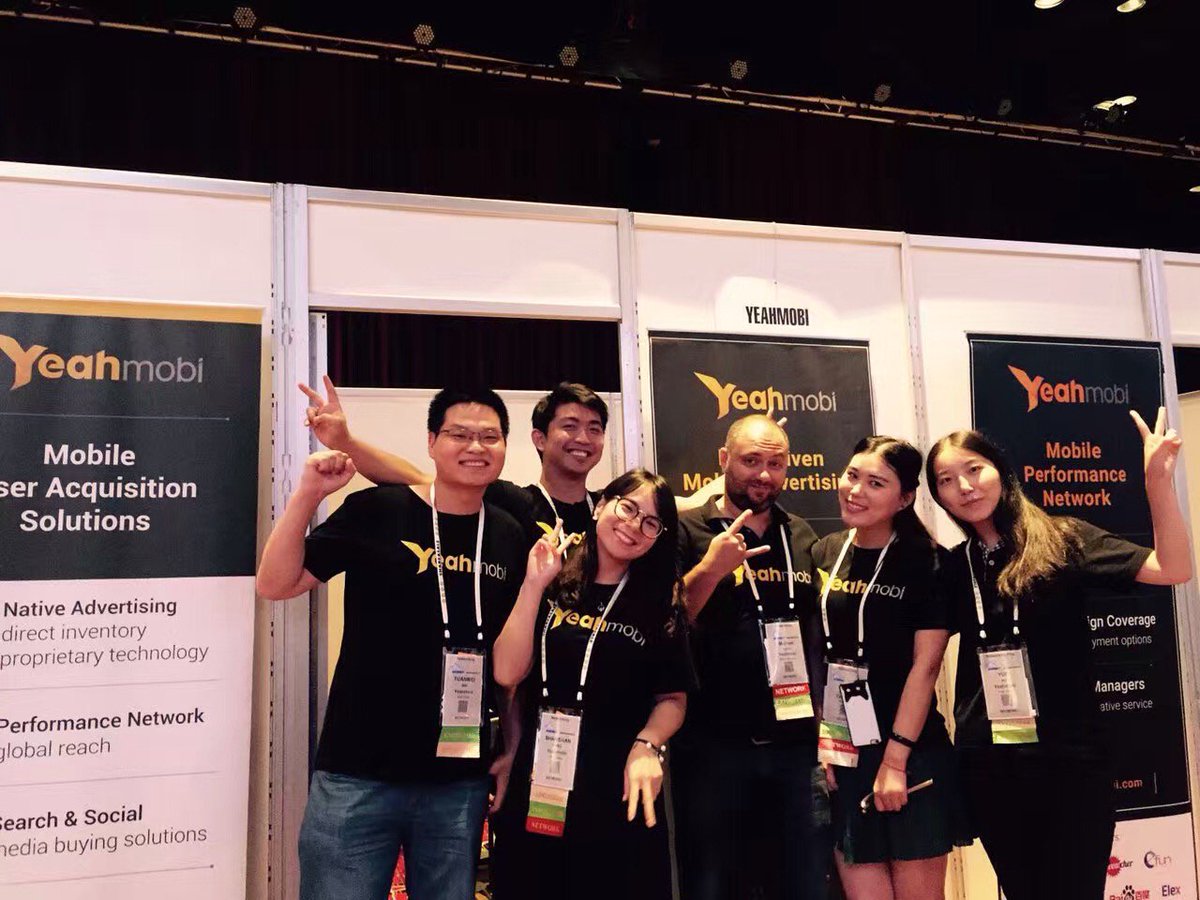
World’s leading monetization platform for app developers Yeahmobi raised close to $91.9 million to boost its global expansion plans. The intelligent mobile advertising platform is based in China and currently has offices in India, Japan, US and Germany. With the latest funding, Yeahmobi will be able to focus on expanding its M & A aspirations in mobile advertising domain. This new move consolidates its aspiration to become the global leader in results-oriented mobile advertising.

Details of Previous Funding

In its previous round of funding, Yeahmobi raised $25 million through equity funding from the Chinese tech innovation company, Xiaomi. Its Series A funding closed at $15 million in March 2014.The recent funding puts the evaluation of the company at $ 1438 million.

Yeahmobi, launched in 2011, helps marketers grow their audiences leveraging the in-depth real-time insights from engagement metrics based on intelligent mobile monetization APIs. It acquires 90 million monthly activators from over 10,000 traffic sources.

Investors in Yeahmobi include 14 private equity firms and angels from all over China.  The Series C funding will be capitalized to internationalize the mobile ad network. It will be done through marketing, technology solutions and financial services via start-up acquisitions.

Recent Recognitions

Apart from acquiring valuable findings from leading venture capitalists and technology investors, the Chinese company has been recognized by leading tech companies. In February 2016, it earned AWS’s recognition as APN Technology Partner for its cutting-edge technological capabilities.

In August 2016, Google partnered with Yeahmobi to announce the launch of first Google AdWords Experience Center in Northwest China. Recently, Yeahmobi won Google’s “Mobile Champion of China Channel Partner”.

Current Offerings from Yeahmobi

Currently, the company offers two major ad optimization services—Mana and Prime, to its customers. It is known as the one-stop buying platform for native ad launch engines. Yeahmobi Ad Matching and contextualization capabilities are used by some of the leading ecommerce and gaming advertisers.

The latest funding will push the company to generate higher sales revenues from its existing 90 million activations with a pepped up global delivery channel built with the vision to “flatten the world with technology.”


MediaMath Brings Programmatic Influencer Marketing Solution to Its Stable

1
Prospecting Online -Olivia Milton
Prospecting

MediaMath, the leading independent programmatic company for marketers, announced its strategic partnership with ROI Influencer Media. This heralds the convergence of adtech strategies with influencer marketing in MediaMath’s existing host of services. The partnership will amplify marketers’ capabilities to purchase influencer solutions programmatically using CPMs. It will enable customers to make real-time bidding on influencer marketing using adtech-driven programmatic solutions.

MediaMath partnering with ROI Influencer Media puts the producer of the TerminalOne platform alongside Google’s DoubleClick, Rubiccon Project, PubMatic, and OpenX. All these companies offer programmatic influencer marketing and automated adtech services to their customers. ROI Influencer media will be initially sourcing celebrity influencers and digital media ‘stars’ from major retail domains like fashion, style, grooming and shopping.

Using the new influencer marketing solution, marketers can directly approach celebrities for relevant brand-centric content on social media pages, blogs pages, websites and picture-sharing platforms. MediaMath will start offering programmatic influencer marketing solutions to other business domains based on the success of the initial pilot run. Special event-based content would be sourced to drive marketing campaigns related to specific occasions like the Valentine’s Day, Mother’s Day, Super Bowl and so on.

MediaMath and ROI Influencer Media would catapult the concept of “micro-influencers” to ensure maximized brand promotion across multiple social media channels. Currenetly, ROI Influencer Marketing offers Predict technology to derive deep insights into audience engagement based on total viewed impressions, likes, shares, retweets, site visits and conversions. The partnership would amplify brand reach of the customers to 130 million in the US.

MediaMath expects the partnership with ROI Influencer Media will empower their clients to access native social media analytics across existing channels in real time. In 2016, influencer marketing soared to an all-time high due to growing adblock applications and video advertising. In 2017, the success of content marketing will largely depend on how well the marketers tap the potential of influencers.

By all means, 2017 will be the year of programmatic martech solutions. Introduction of programmatic influencer marketing will optimize ROI value of social and video supplanting organic content search models.

Martech Series Primer: How to Create a Mobile Marketing Strategy in 2017

1
Photo by NEC Corporation of America

23 days in a year – That’s the time an average mobile user spent browsing and interacting with online media since 2013. Convergence of social, mobile, analytics and Big Data has opened up a rather dynamic marketing landscape element for the marketers in recent months. Statistically, the mobile marketing industry is slated to grow from US $28 billion in 2016 to US $98 billion in 2021. This projection reveals that the mobile marketing hype is not a bubble; rather, it’s a big wave every marketer had best learn to surf by 2017.

 Why You Need A Mobile Marketing Strategy?

“The adoption rate of mobile is twice that of the internet, three times that of social media, and 10 times faster than PCs.”

– Emma Crowe, Chief of Client Strategy, Somo

Currently, there are more than 2 billion smartphone users in the world. Since humans are more likely to have a mobile device in their possession than a desktop, it is best for the marketers to start building a mobile marketing strategy.

The future of mobile marketing is now.

CMO spending in 2017 will revolve around mobile-first strategy. Top tech leaders and market researchers acknowledge the growth of mobile as the most business-friendly platform to showcase brand portfolios across user demographies. From designing mobile-first landing pages to providing interactive web content across social media channels, mobile marketing is a dominant force. Even the findings from latest reports on marketing attribution and email marketing support the incentivization of mobile marketing as a big game-changer for digital marketers in the long run.

2-1

What do the numbers say about mobile marketing?

On an average, every user looks at the phone 46 times a day. With more than 90% of mobile phone users glued to the screens for most part of the day, mobile marketing is the quintessential activity every marketer should explore in order to churn new ways of engaging audience and maximizing ROI from their marketing campaigns.

Mobile Marketing Statistics

Marketers are investing heavily on digital ads and Mobile ad spending in 2016 alone has been projected to touch US $50 billion – representing more than a 400% increase from 2013. By 2020, the mobile ad spending will cross $100 billion outbidding TV ad spending. Currently, mobile ads account for nearly 50 % of all digital ad spending globally.

What Are the Various Mobile Marketing Methods?

Mobile marketing ecosystem is in a constant state of flux due to ever-expanding set of channels of communications. Marketers starting fresh with a mobile marketing strategy can initially focus on the following mobile marketing methods.

Mobile Push Notifications

A push notification is a pop-up message that appears on the mobile screen even when the device is locked or the app is not working currently. It is a direct 1:1 platform for marketers promoting a new product launch or driving users to explore vendor’s marketing channels like social and email.

In-app Messaging

In-app messaging is primed to engage a user with more targeted, purposeful interactive sessions while still accessing an app. It is a faster mode of user engagement generating 8 times more response rate compared to push notification models. In-app mobile marketing model allows marketers to project their most valuable promotional/ transactional content to a loyal set of users who recently showed purchase intent.

Wearable device notifications

Still at the cusp of making it big in the mobile marketing ecosystem, wearable device notification is best described as the ‘silicon in flesh’ model. Heavily inspired to converge with futuristic artificial intelligence capabilities, wearable device notifications perfectly complement the mobile marketing strategies powered by instant analytics on content traffic and user experience.

Mobile Wallets

Factually speaking, mobile wallets hold more disruptive power in the mobile marketing landscape than any other mobile marketing channel. Mobile wallet marketing is the next frontier of digital marketing technology that allows marketers to leverage opportunities across all marketing channels with customized offers and coupons. More than 30% of smart phone users have mobile wallets and most of them are likely to save tickets and offers in addition to making in-app payments.

As far as digitally-driven loyalty programs are concerned, mobile wallet marketing can be tracked, updated and loaded with location-based content.

SMS/MMS

SMS/MMS retain their place in the mobile marketing strategies owing to their technological singularity. SMS/MMS is one app platform that every smart phone user can access to. To begin with a marketing campaign, marketers can either opt for automated email marketing or automated SMS/MMS marketing targeting the same set of smart phone users. Budget-wise, SMS/MMS marketing is cheaper and more ROI-centric than email.

Mobile App Marketing: Taking Mobile Marketing Beyond Search Engines

3

As on June 2016, there were 2 million mobile apps in Apple’s App Store and 2.2 million apps on Google Play. By 2020, the mobile apps industry is pegged to generate US$180 billion in revenues via in-app advertising and app store purchases. In 2017, the total number of app downloads is estimated to reach 268.69 billion.

Industry-wise, e-commerce and retail mobile apps secure the highest user engagement with an average of 17.5 session launches per month. Technology, gaming, media and entertainment apps also contribute significantly to the audience engagement with mobile internet usage. As new touch points in the customer journey are introduced, new mobile app marketing strategies are needed to adequately boost ROIs from organic and paid search programs.

With the kind of numbers that mobile app marketing holds, marketers can finally move towards developing a single mobile-friendly website  rather than working on multiple platforms —social, web and mobile, simultaneously.

In fact, Social + Mobile will be the most relevant marketing channel for marketers beyond the existing search engines. It’s a win-win for both customers and marketers. Not only does it offer customers a reason to interact with the brand without barriers but also empowers marketers to build a mobile-specific relationship based on customer preferences, analytics, recurrent incentives, discounts and content-driven ROI.

Top 5 mobile marketing trends in 2017 expected to drive maximum ROI are

  1. Customized mobile e-mail campaigns
  2. Enhanced UX with click-prompting CTAs
  3. SMS/MMS text clubs
  4. Wearable device notifications and beacons
  5. Mobile video advertising

For marketers, the future of mobile marketing is pretty much the safest thing to build. Flawless video-based ads, enriching messages, personalized email, MMS/SMS with high-scoring social listening engagement—that’s enough to reach out to every mobile user and deliver targeted products with minimum attribution.