

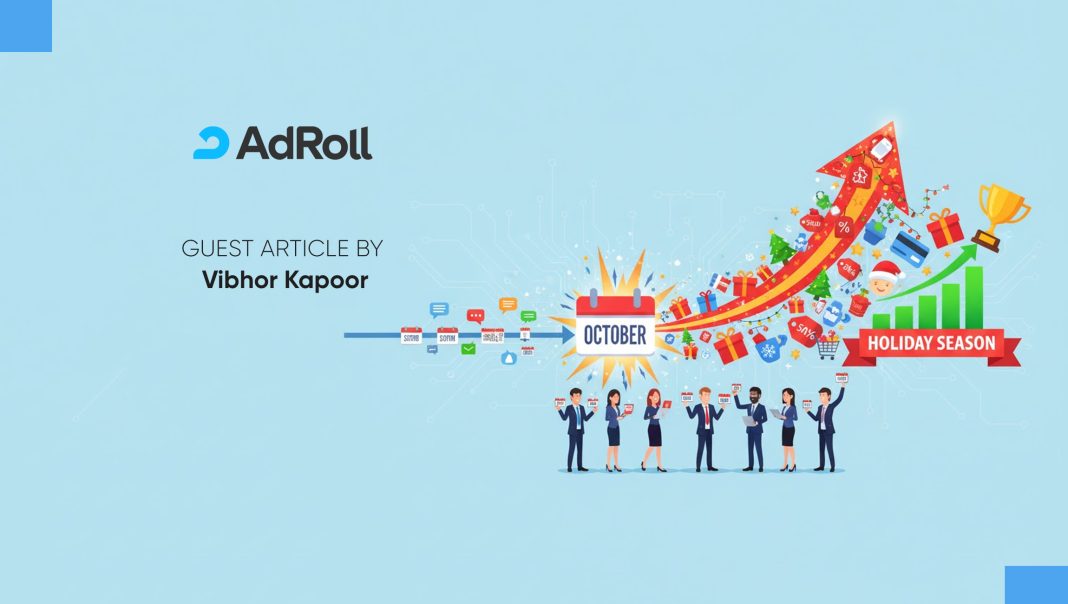
Marketers may have thought that they could wait until Black Friday to go all-in, but by then, the best window for advertising efficiency had already passed. With consumers starting their holiday shopping earlier and cost-per-mille (CPMs) heating up, October became the decisive month for whether campaigns will deliver profitable returns through year-end.
Don’t treat the holidays as a sprint but rather as a system to drive conversions, scale efficiently, and fuel long-term growth. The brands that have been building momentum since September are already seeing stronger click-through rates and lower acquisition costs than those who waited for Cyber Week.
The lesson here is simple: in a noisy, high-cost advertising environment, timing and preparation are key.
October Already Set the Pace
Ramping spend around Thanksgiving no longer guarantees success when competition begins weeks before, especially when consumers are not waiting to shop. Search data and marketplace trends show that gift browsing and wishlist-building begin in early October, sometimes even late September.
Marketers who engage these early planners with upper- and mid-funnel campaigns gain a crucial head start. Early campaigns reach audiences before inventory scarcity and higher CPMs set in, allowing brands to capture interest and build remarketing pools at a fraction of November’s cost.
Once a shopper has added a product to a wishlist or engaged with an email in October, the likelihood of conversion later in the season multiplies. Missing that moment means competing for attention with higher-cost, last-minute campaigns.
Optimize Before the Rush
October is also ideal for refining creative before stakes and costs rise. Leading brands use this period to experiment with messaging, offers, and visuals, rather than testing on the fly during the busiest shopping days.
To maintain engagement and avoid ad fatigue, rotate visuals, offers, and calls-to-action every 5-7 days. Weekly updates keep content fresh, ensuring audiences continue to respond to campaigns rather than tune them out. By running A/B tests across different ad formats, promotions, and audiences in October, marketers can enter Cyber Week with clarity about what resonates, instead of scrambling to adjust campaigns under pressure.
To make urgency irresistible, incorporate countdown timers, low-stock alerts, and flash sales. Paired with tailored offers, these tactics give shoppers a clear reason to act now, increasing the likelihood of conversion. Combined with real-time budget shifts and dynamic targeting, this approach allows marketers to enter peak season confident that campaigns are optimized for efficiency and impact.
The more marketers treat October as a live test environment, the better prepared they will be to scale efficiently when consumer demand peaks in November and December.
Marketing Technology News: MarTech Interview with Jackie Palmer, VP of Product Marketing @ ActiveCampaign
Redefining the “Cyber Five”
For years, marketers have built their entire holiday playbooks around Cyber Five (the five-day period from Thanksgiving Day through Cyber Monday), but as the holiday season has stretched longer, that condensed window no longer defines success.
Top-performing brands view Cyber Five as just one of several performance peaks in a broader fourth quarter timeline. Rather than saving their biggest discounts or creative pushes for that single week, they layer campaigns to match shifting consumer intent throughout the season.
In early October, messaging centers on discovery and gift ideas. By mid-November, it pivots to urgency and limited-time offers. As December progresses, the focus turns to convenience and last-minute shopping, whether through expedited shipping or gift cards. This strategy smooths out performance volatility and helps advertisers avoid the all-or-nothing gamble of Cyber Week.
Use First-Party Data to Power Performance
When leveraged to power segmentation, targeting, and creative, first-party data allows marketers to run more innovative campaigns and deliver meaningful customer experiences throughout the holiday season. Rather than relying on assumptions, let customer behavior guide your strategy.
By connecting your CRM or email platform, you can surface high-impact segments such as shoppers who purchased last holiday season but have not returned, loyalty members who have not converted this year, or cart abandoners within the last 72 hours. These segments can then be used to trigger targeted campaigns based on real-time behavioral signals. Ads can respond to key actions such as time on page, product views, or cart activity, creating a personalized and timely shopping experience that drives conversions.
Enhancing Campaigns with AI
The holiday season is not the time to launch an AI agent that runs an entire campaign. However, AI can be used to enhance existing strategies and improve overall campaign performance. It can assist with smarter budget allocation by shifting spend across campaigns, products, or audience segments during high-traffic periods such as Cyber Five or the week before Christmas. AI can also optimize timing and creative by recommending the best days or times to push certain ads and suggesting variations in headlines, ad copy, and visuals.
When the holiday season wraps up, AI can generate detailed post reports comparing performance across products, campaigns, or segments, for actionable insights into next year’s planning. While AI can’t handle everything by itself, it can help with the technical aspect so that marketers can focus on storytelling and building consumer connections at scale.
Turn Holiday Buyers Into Loyal Customers
Winning the holiday season is not just about closing the year strong. It is about setting the stage for what comes next. Holiday traffic is full of clues; every click, conversion, and abandoned cart in Q4 provides insight that can fuel smarter campaigns in Q1.
Encourage buyers to join your loyalty program through order confirmations or thank you emails. Offer bonus points or exclusive perks for January purchases, and follow up via email or SMS with personalized deals based on their holiday purchases. These tactics transform seasonal buyers into long-term, engaged customers.
October is the tipping point of the holiday season, the month that determines whether campaigns thrive or fade into the noise.
Marketing Technology News: Why Southeast Asia’s Advertising Growth Demands Better Measurement