

What was retail media even up to five years ago?
Simply a channel where brands paid for sponsored products listings on Amazon. They optimized bids on search terms. They measured ROAS. The model was transactional, narrow, and largely confined to the bottom of the funnel, a digital version of paying for a better shelf position in a physical store.
That era is over.
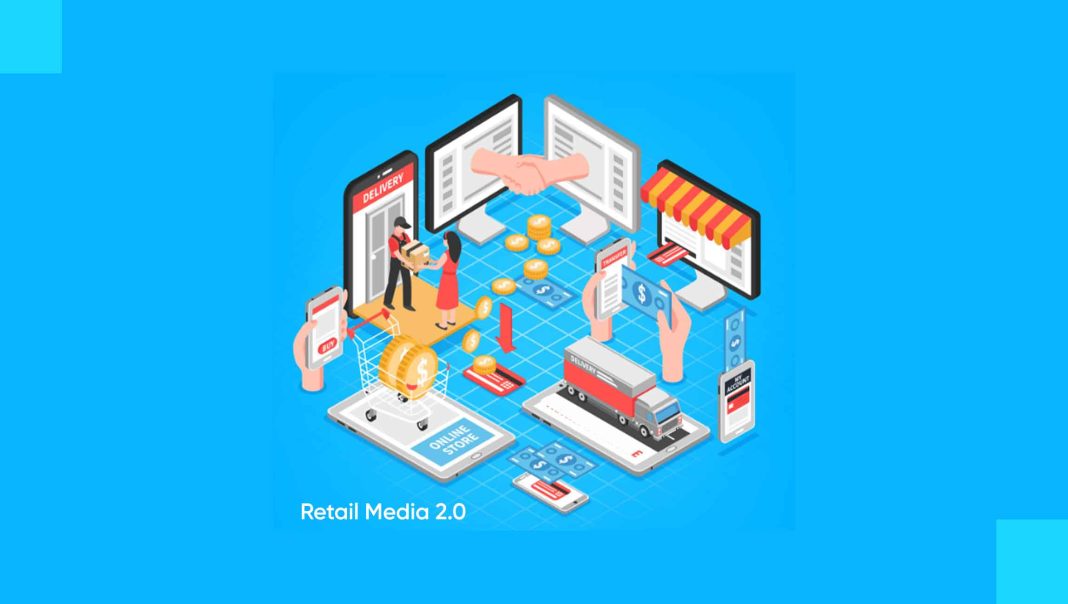
Retail media in 2026 is something structurally different. It is a convergence of advertising, commerce intelligence, payment data, and loyalty infrastructure into a unified commercial operating system. The sponsored listing was the opening act. What’s emerging now is an AI-driven ecosystem where media spend, purchase behavior, payment financing, and loyalty rewards operate as a single, continuously optimizing feedback loop. And the financial scale of this transformation demands that every CMO, CRO, and Chief Digital Officer understand what it actually means because the strategic implications extend far beyond the marketing department.
From an ad channel to an operating system
The most consequential shift in retail media’s evolution is conceptual. As one industry leader framed it at Retail Customer Experience’s 2025 AI in Retail analysis: by 2026, retail media will evolve from being a pure ad channel to becoming the operating system of retail. Media, merchandising, and commerce data will finally operate as one system, giving retailers a unified engine to shape how products are discovered, priced, promoted, and sold.
This framing of retail media as operating system rather than ad channel explains why leading retailers are restructuring their entire commercial architectures around it. At CES in January 2026, executives from Target, Meta, and Oura described a retail media ecosystem that is about how data signals and technology support better decision-making.
AI as the commerce intelligence engine
At the center of retail media’s transformation is AI lies a decisioning engine that makes the entire ecosystem function at scale.
In 2026, AI is operating across every layer of the retail media stack simultaneously. At the inventory layer, it is dynamically managing ad placements across on-site search, off-site programmatic, connected TV, and in-store digital surfaces, adjusting in real time based on bid competition, product availability, margin targets, and audience signals.
At the audience layer, generative AI is enabling dynamic creative optimization at the SKU level, personalizing ad content based on a shopper’s loyalty profile, current cart contents, and purchase history, creating messaging that functions more like a relevant recommendation than an advertisement. At the measurement layer, AI-driven analytics are enabling real-time optimization against commercial outcomes rather than media efficiency metrics, closing the longstanding gap between ROAS and actual business performance.
Unfolding the role of FinTech in retail media
The most analytically underappreciated dimension of retail media 2.0 is the entry of financial services companies as major players in the commerce media ecosystem. This convergence of fintech and retail media is not a future possibility. It is a present-day restructuring.
PayPal moved in the same direction. With nearly 400 million active accounts generating purchase signals across the open web, PayPal’s advertising platform built on transaction data represents a commerce intelligence asset that no social platform can replicate. JPMorgan Chase’s move to allow advertisers to target bank customers based on card transaction history follows the same structural logic: payment data is the most commercially actionable behavioral data available, because it reflects actual purchase decisions rather than browsing behavior.
Marketing Technology News: MarTech Interview With Fredrik Skantze, CEO and Co-founder of Funnel
Loyalty as the commerce data flywheel
Retail media 2.0 is inseparable from the evolution of loyalty programs and understanding this connection is essential for any organization building a commerce media strategy.
First-party loyalty data is the raw material that gives retail media its targeting precision. CVS’s retail media network derives its competitive advantage from connecting loyalty membership data, pharmacy transaction records, and behavioral signals into a single audience intelligence layer. Kroger’s strength is built on decades of grocery loyalty data that connects product preferences to household demographics with a level of granularity no third-party data source can approach. Amazon’s retail media dominance, capturing approximately 79% of retail media investment alongside Walmart Connect’s 11%, together accounting for 89.5% of incremental 2026 spending is inseparable from Prime membership’s loyalty and behavioral data depth.
In 2026, the loyalty-to-media flywheel is accelerating. As the Research and Markets Consumer Loyalty Databook 2026 confirmed, the global loyalty market is expected to reach $93.2 billion in 2026, and the defining trend is loyalty being designed into payment flows rather than managed as a separate program. Earn-and-burn wallets are becoming the delivery mechanism for retail media value: a loyalty point earned from a purchase is also an advertising signal, a credit eligibility input, and a personalization trigger.
What CMOs, CROs, and CDOs Must Build Now
The commercial leaders who will extract disproportionate value from retail media 2.0 are those who stop treating it as an advertising channel with a new name and start treating it as commercial infrastructure, a data flywheel that connects media, payments, loyalty, and commerce into a single, continuously learning system.
That requires four operational investments.
- First, a unified customer data.
- Second, a cross-retailer orchestration capability.
- Third, a clean room strategy.
- Fourth, a loyalty-to-media integration roadmap.
The operating system of retail is being built now. The brands and retailers designing it will define the competitive terms for the decade ahead. Those still managing sponsored listings in siloed campaigns will find themselves financing a system optimized for someone else’s advantage.
Marketing Technology News: The Death of Third-Party Cookies Was Just the Start. Are You Ready for Consent Orchestration?