Qstream Promotes Bridget Jay to Vice President of Client Services
Bridget Jay Previously Served as Director of Client Services for Qstream
Qstream, makers of software that uses science, data and mobile technology to ignite sales performance, announced Bridget Jay has been promoted to Vice President of Client Services. Jay previously served as Director of Client Services for Qstream and has been integral to developing new customer success processes and programs for the company during her 4+ year tenure.
As Vice President of Client Services, Jay manages a global team of consultants responsible for the successful onboarding, implementation, reporting and ongoing project management of Qstream customers and partners worldwide.
“Our ability to provide great client services is critical to the business and we’re pleased to recognize Bridget’s outstanding contributions to Qstream with this promotion. The market for sales enablement solutions continues to be very dynamic and every customer has its own unique set of requirements and success metrics. Given her experience serving many of the more than 300+ organizations using Qstream today, we’re confident Bridget is the right leader to support our continued growth,” said Rich Lanchantin, CEO, Qstream.
Qstream provides an always-on channel for continuous sales enablement that improves selling skills, reinforces product knowledge and ensures competitive advantage. Qstream is used across 80+ countries worldwide by firms such as Philips Healthcare, Sun Life Financial, and HubSpot.
Bridget Jay
“At Qstream, we aim to delight our clients. Onboarding new clients and partnering with them to align Qstream with their strategic initiatives and drive successful business outcomes is a very rewarding job. I’m grateful for this opportunity to continue leading the remarkably dedicated and committed client services team at such an exciting time for both the company and the sales enablement technology market,” said Jay.
Qstream is focused on making salespeople great at what they do, in just minutes a day, by combining performance insights, coaching support, and knowledge and skills reinforcement in one convenient mobile app. Our clinically proven approach helps sales leaders align team capabilities to their unique sales process, KPIs, and customer path to purchase while identifying gaps that put performance goals at risk.
Jeremy Burton Hands Dell Chief Marketing Officer Baton To Allison Dew
Allison Dew, Longtime Dell Executive and Current Client Solutions Group SVP, to Keep the Focus on Helping Customers Realize Their Digital Future
Dell Inc. announced that Jeremy Burton is stepping down as Chief Marketing Officer (CMO) and leaving Dell. Allison Dew, a longtime Senior Marketing Executive at Dell, has been appointed as the company’s new CMO. Most recently, Allison led marketing for Dell’s Client Solutions Group.
As CMO, Allison will be directly responsible for Dell’s global marketing strategy and all aspects of the marketing organization including product marketing, brand and creative, communications, digital, field, and channel marketing.
“I cannot thank Jeremy enough for his vision and leadership, and for everything he’s done for our company. He departs on a very high note, having played a leading role in establishing Dell Technologies among the world’s most highly trusted and essential IT companies. He now hands the baton to Allison Dew, who has proven herself as one of the industry’s most highly respected, experienced and capable marketing leaders,” said Michael Dell, CEO & Chairman, Dell.
Allison Dew
“I’m delighted to have the opportunity to lead marketing for one of the world’s largest technology companies. Jeremy has been a great partner over the past 18 months and I’m looking forward to working with him through this transition. Dell Technologies will remain out front in the marketplace, showcasing our depth of innovation and the extraordinary impact we have on helping our customers realize their digital future,” said Dew.
“I’m incredibly proud of the work I’ve done in marketing, product operations and corporate development over the past eight years. With our successful merger now in the rearview mirror and growth accelerating, I’ve decided that now is the right time to take a break and pursue a new challenge. I am deeply thankful to Michael for the opportunity and, going forward, delighted that Allison Dew will lead the marketing team. Allison is an incredible talent, a world-class marketing executive and a tremendous addition to the Dell leadership team, ” said Burton.
Spiceworks Study Reveals 40 Percent of Large Businesses Will Implement Intelligent Assistants or Chatbots by 2019
New Study Shows Microsoft Cortana Is the Most Commonly Used Intelligent Assistants in the Workplace
Spiceworks announced the results of a new survey examining the adoption and usage of intelligent assistants and AI chatbots in the workplace. The results show that within the next 12 months, 40 percent of large businesses – those with more than 500 employees – expect to implement one or more intelligent assistants or AI chatbots on company-owned devices, compared to 25 percent of mid-size companies and 27 percent of small businesses. The findings indicate that although adoption is on the rise, some organizations are holding back due to a lack of use cases in the workplace and privacy concerns.
Across all company sizes, Microsoft Cortana is the most commonly used intelligent assistant in the workplace, likely due to its native integration into Windows 10. Among organizations that have implemented intelligent assistants or chatbots on company-owned devices and services, the results show 49 percent are currently using Microsoft Cortana for work-related tasks, followed closely by Apple Siri at 47 percent. Additionally, 23 percent of organizations are using Google Assistant and 13 percent are using Amazon Alexa.
Looking specifically at AI chatbots, the results show 14 percent of organizations are using AI chatbots integrated in collaboration tools (e.g., Microsoft Teams, Slack), while only 2 percent of organizations have custom-built AI chatbots. However, an additional 10 percent plan to build one in the next 12 months.
One in four organizations use AI chatbots and assistants to support team collaboration
Among companies using AI chatbots and intelligent assistants, 46 percent are using them for voice to text dictation, 26 percent are using them to support team collaboration, and 24 percent are using them for employee calendar management. Additionally, 14 percent are using AI chatbots and assistants for customer service and 13 percent are using them for IT help desk management.
In terms of which departments are supported by AI chatbots and assistants, the results show 53 percent of organizations use them within their IT department, 23 percent use them to support their administrative department, and 20 percent use them to support the customer service department. Sixteen percent of organizations are also using AI chatbots and assistants in their sales and marketing departments.
Among organizations that are not using AI chatbots or intelligent assistants, the results show 50 percent have not implemented them due to a lack of use cases in the workplace, while 29 percent note security and privacy concerns and 25 percent are holding back due to the cost.
IT professionals believe AI will help automate mundane tasks rather than replace jobs
Although 40 percent of IT professionals believe AI can replace entry-level jobs that don’t require human creativity, they feel relatively secure when it comes to their own jobs. Only 17 percent of IT professionals believe AI will put IT jobs at risk. In fact, 76 percent believe AI will help automate mundane tasks and enable more time to focus on strategic IT initiatives. On average, IT professionals believe 19 percent of their current daily tasks can be automated via AI and intelligent automation.
However, despite the rising adoption of AI, only 20 percent of IT professionals believe their organization has the proper skills, talent, and resources to implement and support AI technology. The study also revealed only 5 percent of IT professionals believe their organization values AI skillsets and experience when making hiring decisions.
Peter Tsai
“While AI has the potential to drastically alter life as we know it, the technology is still in its infancy. As a result, many companies aren’t thinking about the tools and expertise they’ll need to support artificial intelligence. However, AI is rapidly advancing and becoming a more integral part of our software, devices, and lives. As a result, companies should start putting policies and procedures in place so they can take full advantage of and manage this technology in the future,” said Peter Tsai, Senior Technology Analyst, Spiceworks.
Methodology
The Spiceworks survey was conducted in March 2018 and included 529 respondents from North America and Europe. Respondents are among the millions of technology buyers in Spiceworks and represent a variety of company sizes, including small-to-medium-sized businesses and enterprises. Respondents come from a variety of industries, including manufacturing, healthcare, nonprofits, education, government, and finance.
Argo Translation Provides Specialized and Professional Language Translation Services for All Industries
Argo Translation is offering the CMS Connect plugin, cutting the steps in a typical content management translation by two-thirds and allowing transparency on all services, from the first uploaded document to the project’s completion.
Peter Argondizzo
This automation feature ensures flow from Argo’s translation team to a company’s content management system, saving time and money while reducing friction in the translation process, says Argo founder Peter Argondizzo.
The process eliminates the need for a file extraction, manages updates and additions more quickly, and requires no manual file transfer. After simply selecting and uploading the pages to be translated, a cost estimate is generated within minutes. As soon as approval is received, Argo’s translation team goes into action on its human translation workflow, and clients can log on to see progress every step of the way. When the project is edited and complete, the files are automatically sent back to the CMS.
Argo supports multiple content management systems, including WordPress, Joomla, Kentico, Drupal, and many others. Custom development of new systems is also available.
Current Argo clients using CMS Connect include a leading manufacturer of commercial and residential water heaters and a 125-year-old global manufacturer of process and motion control systems. “But smaller businesses and organizations can benefit, too. It’s easy to use, offers faster turnaround time, and is billed monthly in a system tailored to their needs,” said Argondizzo.
Argo Translation provides specialized and professional language translation services for all industries. With teams of linguists around the world, Argo is able to capture not only the technical meaning but also the appropriate and necessary cultural understanding for all translations. Dedicated project management teams, updated technology, and professional translators help businesses connect across language barriers in all domains, including legal, technical, marketing, financial, and more. Argo Translation is a complete translation department for businesses around the world.
DMA is highlighted as the top-rated agency offering search engine optimization, pay per click management, and reputation management services.
CrowdReviews.Com, an Online Platform for Digital Marketing Reviews, Has Rated Digital Marketing Agency (DMA) as the Strongest Value SEO Agency as Selected by Reviewers
CrowdReviews.com, an online platform for digital marketing reviews, has rated Digital Marketing Agency (DMA) as the strongest value SEO Agency as selected by reviewers. DMA is highlighted as the top-rated agency offering search engine optimization, pay per click management, and reputation management services.
Visitors to CrowdReviews.com are able to leave reviews on the services and software they have used to give potential buyers an idea of their experiences with the vendor’s offerings. Clients of DMA left positive reviews and statements about the SEO, PPC, and reputation management offerings of the agency in addition to web design, web development, and social media marketing. Reviewers often cited exponential business growth within 6 to 12 months and continued growth in ongoing digital marketing campaigns.
“We are proud to be featured by CrowdReviews.com as the strongest value SEO agency,” said Sean Clarke, VP of Sales at Digital Marketing Agency, adding, “We take a lot of pride in our achievements and in the results that we achieve for each and every client. We invest the time to understand each client’s unique situation and to develop custom digital marketing solutions to meet and achieve their marketing objectives.”
The placements of digital marketing service providers in the rankings are primarily influenced by reviews but are determined based on the use of five major factors which also include sentiment analysis and online engagement.
CrowdReviews.com is a crowd reviewing platform which ranks over 500 software categories and 200 service categories.
Patron Launches ICO, Riding Momentum of $15 Million Pre-Sale and Major Partnership Announcements
The Highly-Anticipated Public Sale Will Give Contributors a Chance to Support One of the Leading ICOs out of Japan
Patron, a Japan-based blockchain platform for influencer marketing, has officially launched its public ICO after successfully raising $15 million (USD) in its private and pre-ICO rounds. The public ICO will run from March 27 through April 26 and begin with a 35% bonus for early-bird contributions.
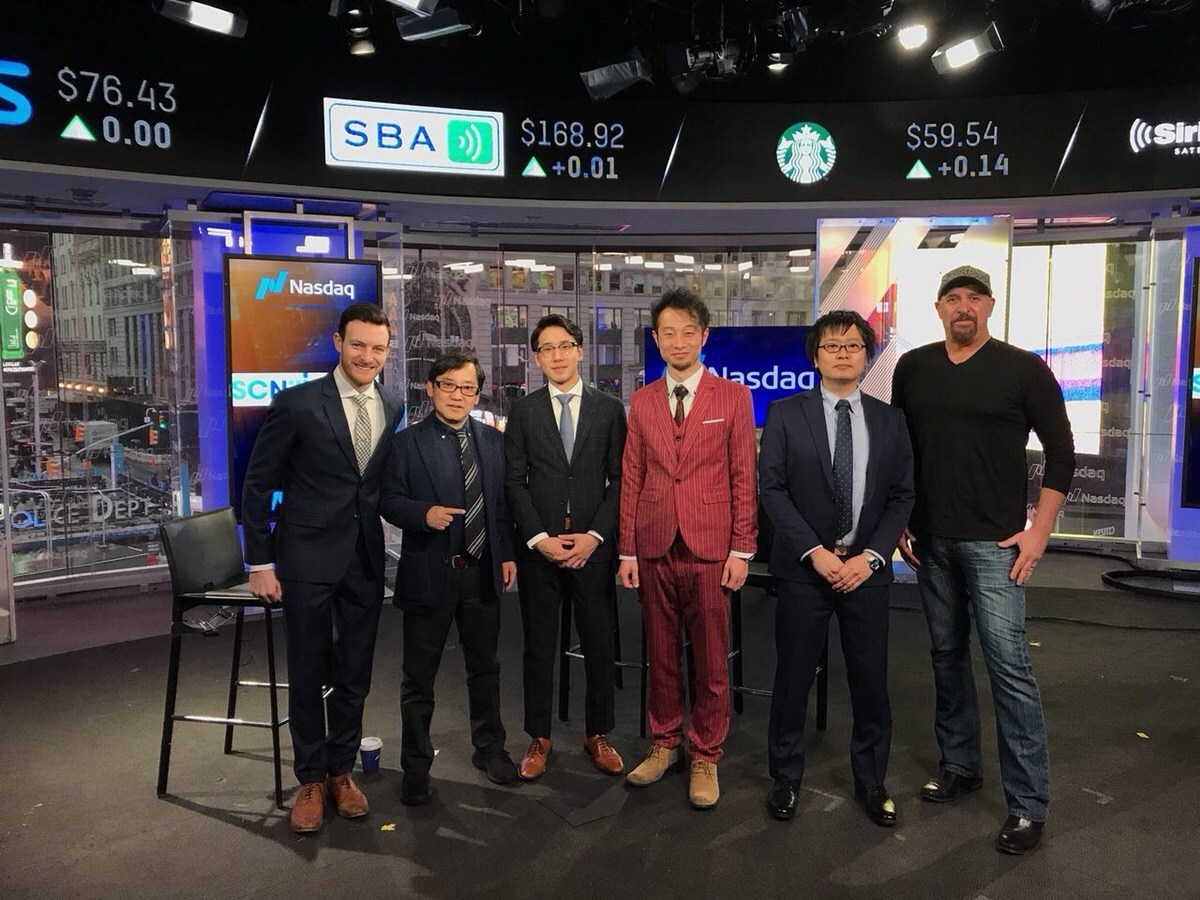
Patron’s interview at NASDAQ
The highly-anticipated public sale will give contributors a chance to support one of the leading ICOs out of Japan. Since launching the pre-ICO, Patron has embarked on a global road tour that has included stops in Dubai and the United States. The team will continue on a global campaign to build out an international community that includes brands, influencers, and supporters.
Kosuke Takada
Since launching, Patron has moved at rapid speed to secure exchanges, partners, and strategic investors. Patron’s CMO, Kosuke Takada, states, “We are working very hard to provide our great community with everything to ensure a successful post-ICO integration into the platform.”
The Japanese team has also released the following announcements leading into the public sale.
Major Announcements and Updates
Exchange Listings: One new exchange listings have been confirmed: Kucoin, a leading exchange out of Hong Kong, will be the next exchange PAT will be listed on (early May). The team previously announced HitBTC as the first official exchange that will list PAT tokens.
Hashgraph: Led by Patron’s advisor and current Hashgraph advisor, David Allen Cohen, Patron will officially explore Hashgraph, a next-generation distributed public ledger. This would inevitably vastly increase the speed and security of every transaction on the platform.
Interview at NASDAQ, New York Stock Exchange: The Patron team recently spent 10 days in New York and California meeting with strategic partners, investors, and major media. The team was interviewed at the New York Stock Exchange and Nasdaq in Times Square. Footage will be available soon from each.
Advisors: Patron’s advisory board has included the addition of Shintaro Akita, the CEO of Global Energy Holdings and a serial entrepreneur in Japan. Akita joins a high-profile board that includes David Allen Cohen (Hashgraph advisor) and Keith Teare (Co-founder of TechCrunch).
Legal Update: Patron has retained Richard Levin, a top 10 ranked securities lawyer and shareholder of Polsinelli, to lead all US legal efforts for the token sale and business.
Major Media Sponsorship: Patron is close to securing a premier sponsorship with an upcoming national television broadcast in the United States. The program will highlight the blockchain space and will be broadcasted digitally as well.
Patron’s CEO and founder Atsushi Hisatsumi at the NYSE
Patron’s CEO and Founder, Atsushi Hisatsumi, describes the project’s progress as extraordinary over the past few weeks: “We are very excited at the progress both internal and external over the past few weeks. Since raising $15 million, we have developed many key partnerships, new hires, and have had conversations with global leaders in business and entertainment. The value of Patron as a technology and team has been noticed and we are thankful to have such support from these great minds.”
The ticking of the GDPR clock is getting louder, and eye-watering fines for non-compliance have captured the attention of business leaders operating in the EU. But with data playing a critical role in the revenue-generating activity, it’s important to ensure both data protection and data use requirements are met. With a considered approach, it’s possible to create a compliant environment that doesn’t put a stranglehold on marketing.
The General Data Protection Regulation is the most significant development in data protection for EU citizens for decades. It sets out rules for the handling and processing of personal data – or personally identifiable information (PII) – whether it is stored in the EU or overseas. Any organization marketing to individuals in Europe will need to comply, both in B2B and B2C scenarios. Data related to company decision makers is considered PII, so it falls squarely under the GDPR remit. And, despite Brexit, marketing in the UK is also covered.
A major implication is the requirement for individuals to actively ‘opt-in’ to receive business communications and for their data to be processed. This poses a challenge for marketers, and in many cases has led to conflict between in-house legal and marketing teams. Legal professionals insist on full, unambiguous opt-in, while marketers fear that this will compromise growth-driving initiatives. However, there are ways to overcome this deadlock as distinct sets of data can be treated differently.
When it comes to the active processing of personal data of EU subjects, there will be six legal grounds post-GDPR. Of these, two apply to marketers: unambiguous consent and legitimate interest.
Unambiguous consent – or full opt-in – is the gold standard. For maximum effect, both digital engagement and live calling need to be deployed to proactively request opt-ins. For a pan-European opt-in campaign, this necessitates a multilingual approach. And for prospective customers, identifying prime targets with a high propensity to use your company is an important first step, focusing activity to deliver more tangible benefits. This approach requires significant investment to comprehensively cover existing customers and prospects.
However, the regulation stipulates that companies can process and profile personal data under legitimate interests in place of unambiguous consent in some circumstances. A robust 3-stage assessment must be carried out and documented to ensure transparency and accountability. UK-based joint industry group the Data Protection Network has published detailed guidance on this topic. For instance, here at Aberdeen, for data that doesn’t have full opt-in, we conduct a balancing test to ascertain that:
We have legitimate business interests in processing the personal data
Processing is necessary in pursuit of these interests
The rights of the individuals who are the subjects of the personal data we process have been taken into account and do not override our interests.
Any organization wanting to process personal data in the absence of unambiguous opt-in needs to follow the same steps. If you obtain data from a third-party provider, it is important to understand whether the subjects have given unambiguous consent or if legitimate interests have been properly observed. Should the data have been processed under the legitimate interests provision, any future processing will require a further balancing test.
The May deadline for GDPR is fast approaching, but it’s vital that businesses don’t lose sight of why they need data in the first place. In-house legal teams may be predisposed to insist on unambiguous consent. But understanding the more complex legitimate interest provision, and applying it when appropriate, will be a major facilitator for insight-led business processes.
Introducing policies for the way different classes of data are handled is a good starting point. Business leaders, legal teams and marketers need to collaborate to ensure GDPR rules are satisfied without posing an undue threat to business growth. After all, investing in ways to safeguard data is counterintuitive if the teams requiring that data are no longer able to function.
Last Week Google Announced That It Is Shutting Down Its URL Shortner Goo.gl. We Must Now Move to Greener Pastures, Says Competitor Bitly
You must have heard that Google goo.gl URL shortener will be shut down by 13 April, in favor of dynamic links. Letting go of your favorite URL shortener is hard; imagine going back to (gasp!) sharing longish links with no way to track them and analyze them.
Google announced that it will cease service for any new or anonymous users on 13 April. Yet, existing users can continue to use the goo.gl console until March 2019, competitor Bitly feels that there’s no time like the present to begin shortening, branding, tracking and integrating with one of the world’s leading link management platform.
In a statement announcing the availability of their URL shortening services alongside other, Bitly said, “Former goo.gl users are welcome to join the millions of people and businesses who shorten, customize, track, and manage their links with Bitly. We’ve been in the business of turning links into powerful assets for a decade, and in that time have introduced industry-leading features and functionality while continually building the most convenient, secure, and reliable Link Management Platform on the planet. In fact, just last week we announced our decision to encrypt all branded and unbranded Bitlinks with HTTPS as an added layer of security for our users and part of our commitment to the overall health of the Internet.”
And how easy is that going to be? With Bitly, not only do you get the functionality Google’s URL shortener offered, but much more.
Here’s a list of cool things you could do with Bitly:
Brand and Customize your Short Links:
You can set up your own custom domain, called a ‘Branded Short Domain’ while replacing the generic ‘bit.ly’ with something that more closely reflects your brand. For example, the Nike domain name is ‘swoo.sh’.
Also, when you shorten a URL through Bitly, you can switch out the randomly generated letters in the back-half of the link and customize the text by clicking the ‘edit’ button next to the link.
Track all links:
Want to know who’s engaged with your product/content? Which social channel is driving the most traffic? Is your campaign across email, mobile, print, and display ads working? Bitly promises to provide a clean, intuitive way to see how your links are performing at both an individual link level and as well as a whole.
Integrate Bitly into Your Workflow:
Through Bitly Extension and App, you can automatically shorten, brand and share whatever web page you’re on directly to your social channels. The app also allows you to create and share links, plus view your analytics on-the-go.
If you leverage other tools specifically for your social, content, ad publishing, marketing automation or analytic, Bitly comes in handy. It integrates with all kinds of software platforms, from Adobe to Zapier, so you can shorten links and track clicks across interfaces.
Leverage Links Strategically to Drive Results:
Social Quant determines the best channels, times to post, and types of content for its customers by using different Bitlinks to A/B test each CTA’s shares and clicks. “This data helps us maximize our Twitter marketing and has helped our startup get over 25,000 visitors a month just from Twitter,” informs Social Quant CEO Mike Kawula.
TechBytes with Flint Barrow, Chief Technology Officer - Qutee
Flint Barrow Chief Technology Officer, Qutee
Qutee is branded as an intelligent discussion-platform bringing data democracy to digital communities. Though similar to Reddit, Qutee offers data analytics that can be trusted by marketers to drive their social media and influencer marketing campaigns. To better understand the core tenets of Qutee’s content management and how publishers could benefit from the marketing technologies, we spoke to the Chief Technology Officer, Flint Barrow.
Html code here! Replace this with any non empty text and that's it.
Tell us about your role at Qutee and the team/technology you handle.
We have a small engineering team at Qutee which means I stay in the trenches. Beyond coming up with features and doing typical project management definitions and prioritization for my employees, I’m also coding every day. We practice an agile methodology that gets features out fast while maintaining maximum uptime and stability. We’re pushing changes to Qutee every few days and sometimes even a few times a day. We have full-time designers, developers and quality assurance experts all in-house, so I oversee all of them and their pipelines. We use cloud solutions to ensure Qutee is fully scalable, even when influencers with millions of viewers publish a video sending their audiences to one of our conversations. Our core technologies and APIs are in enterprise Java, but we’re expanding to newer Python solutions to bring the latest technologies to improve our analytics and algorithms.
What are the core tenets of Qutee’s content management and marketing technologies? What reporting and tracking tools do you use to win the publishers’ trust?
We strive to keep all of our technology simple. Publishers can learn to use our dashboard in minutes. Users find familiar features to join, post and organize their content. We offer the ability to organize things via structured hierarchical sections and loosely organized tags. Both give you a way to view collections of Qutees. Furthermore, our hub capabilities allow publishers and users to create a managed board of Qutees where they have full control of what’s listed and how it’s organized into subheadings. For understanding traffic and proving validity of data, our publishers are privy to Google Analytics tracking data. Even regular users can track activity on their Qutees through our Q Cred points system.
How does the growth of Polling and Intent Data Analytics impact social media marketing strategies?
Customized intent polling is underused on the web. We’re hoping to train the public and make it ubiquitous with our comment tags. When you’re soliciting responses from your audience, general classification of those opinions can often be very valuable. Instead of building half-baked sentiment analysis engines that struggle with accuracy, we simply ask the user to do that small extra step for us. This gives marketers the ability to structure their questions and discussions in a way where they’re gathering a new level of data. We default to positive, negative, neutral, media, news and other, but we’re finding that creators can use this feature in endless ways. We offer several preconfigured sets of options, a powerful capability. Marketers need to think through how to segment responses in a way that is useful to them, is insightful and helps respondents browse through others’ answers.
At Qutee, how do you verify the authenticity of data?
Primarily, we require an account with a verified email from a known provider. We blacklist and work with a number of services to prevent “fake” users. These measures weed out fake accounts, and we do constant moderation through our site looking for any other red flags. If we ever encounter a problem with our veracity, we may move to requiring users to have a valid and confirmed mobile phone number as well. We’ve got some honeypots that are dominated by bots within unused portions of our framework, but the data we use includes extensive logs and hasn’t been duped by bots. Additionally, use of nonce tokens and a good security token system prevents attackers from exploiting us. It’s important to us that we don’t end up like Twitter, i.e. dominated by bots. As we open our API to the public we’ll be focused on this issue.
How do you leverage AI/ML and data science at Qutee? What AI companies are you particularly interested in—
At our core, we’re a “natural language processing” company. Our engine is optimized to correctly and intelligently organize large conversations to make them tractable to humans. This includes such things as topic extraction, entity clusters and descriptor analysis. We’re pioneering new kinds of approaches to fixing online comments that can utilize new AI services. We’re big fans of Amazon Web Services at Qutee, and I recently attended a seminar on their machine learning services. There is potential for recommendations engines as we curate content. Additionally, while I can’t speak to specifics, we hope to do some novel R&D in this area on our data.
How do you prepare for the post-GDPR era?
We have been preparing for GDPR from the beginning. The principles it stands for and requires are something we’ve stood behind as some of our principles. GDPR has been conflated into a lot of specifics and legal requirements, but the reasonability clauses really bring it down to the simplicity of respecting your users; proactively and transparently dealing with privacy, and defaulting to privacy.
What message would you give to all technology leaders preparing for the oncoming GDPR disruption?
GDPR is a complex topic for the industry. With less than 70 days to go until GDPR comes into force, technology leaders should already have appropriate measures in place, and many will have taken the privacy by design approach – ensuring you have the proper documentation, legal notices and policies set to promote privacy from the get-go.
Clutch Announces Leading Marketing & Advertising and IT & Business Services Companies in Boston in 2018
KoMarketing, Ladybugz Interactive Agency, BIGfish Communications, Boston Web Group, Etc, Featured in the List of Leading Marketing and Advertising Agencies in Boston
Clutch named the top Boston marketing and advertising and IT and business services companies for 2018. This list of 77 companies is a result of research conducted by Clutch, a ratings and reviews platform that evaluates thousands of marketing, design, development, and IT services firms.
Leading Marketing and Advertising Agencies in Boston
Top Advertising and Marketing Agencies in Boston in 2018 (PRNewsfoto/Clutch)
Advertising & Marketing Companies: AMP Agency, KHJ Brand Activation, The Fantastical, Forge Worldwide, Captains of Industry, Sir Isaac, Pivot Design, Davis Advertising, FUSEIDEAS, Alipes Inc.
Internet Marketing Companies: KoMarketing, BusinessOnline, inSegment, Brafton, Integrated Digital Strategies, AMP Agency, CommonMind, TribalVision, The Fantastical, 3 Media Web Solutions, Inc., Social Fulcrum, Ladybugz Interactive Agency, RainCastle Communications, Inc., Forge Worldwide, East Coast Catalyst
Public Relations Firms: Matter Communications, BIGfish Communications, Millennium Agency, East Coast Catalyst, Sir Isaac
Branding Agencies: Clockwork Design Group, Inc, RainCastle Communications, Inc., Pivot Design, KHJ Brand Activation, Captains of Industry, The Fantastical, Forge Worldwide, FUSEIDEAS, Sir Isaac
SEO Services Companies: KoMarketing, inSegment, SERPCOM LLC, CommonMind, Boston SEO Services, BusinessOnline, 3 Media Web Solutions, Inc., Ladybugz Interactive Agency, SEOptiks, AMP Agency, East Coast Catalyst, Brafton, Integrated Digital Strategies, kevinleary.net, ADK Group
PPC Management Companies: BusinessOnline, KoMarketing, CommonMind, AMP Agency, 3 Media Web Solutions, Inc., TribalVision, inSegment, Social Fulcrum, Ladybugz Interactive Agency, Integrated Digital Strategies, ADK Group, East Coast Catalyst, Millennium Agency, Boston Web Group, SEOptiks
Social Media Consultants: Matter Communications, AMP Agency, KoMarketing, The Fantastical, 3 Media Web Solutions, Inc., BusinessOnline, BIGfish Communications, Ladybugz Interactive Agency, Sir Isaac, SERPCOM LLC, Integrated Digital Strategies, Livnup
Content Marketing Companies: Brafton, nDash.co, Forge Worldwide, inSegment, RainCastle Communications, Inc., KoMarketing, AMP Agency, 3 Media Web Solutions, Inc., Captains of Industry, Ladybugz Interactive Agency, Integrated Digital Strategies, Millennium Agency, The Fantastical, Alipes Inc., Libretto
Inbound Marketing Services: Social Fulcrum, AMP Agency, inSegment, BusinessOnline, Integrated Digital Strategies, TribalVision, Ladybugz Interactive Agency, SEOptiks, CommonMind, SERPCOM LLC, Forge Worldwide, East Coast Catalyst, Millennium Agency, Boston Web Group, ADK Group
Email Marketing Companies: Brafton, Social Fulcrum, TribalVision, Automata, Livnup
Digital Strategy Companies: Lullabot, Social Fulcrum, Isovera, Oomph, Inc., BusinessOnline, Blue Green, AMP Agency, CommonMind, TribalVision, inSegment, Boston Web Group, Forge Worldwide, SEOptiks, Create + Conquer, Web Design Boston.
Naming Companies: Clockwork Design Group, Inc, KHJ Brand Activation, Pivot Design, Captains of Industry, East Coast Catalyst, Davis Advertising, Boston Web Group
Media Buying & Planning Agencies: KHJ Brand Activation, Charles River Media Group, The Fantastical, Davis Advertising, Sir Isaac
Data Analytics Companies: Pragmatic Works, Business Data Miners, Enplus Advisors, Inc., Boston Technology Corporation, Treehouse Technology Group, Echobind, VirtusaPolaris
IT Consulting Companies: Bluewolf, ComputerSupport, TPX Communications, VirtusaPolaris, Pragmatic Works, Fidelis Cybersecurity, SiteRocket Labs, Boston Technology Corporation, Trellis, Isovera, Innovative Ideas, Enplus Advisors, Inc., Echobind, Business Data Miners, Crowe Horwath
Katie Wonders
“With so many options in the digital marketplace, the need for companies to stand out is stronger than ever. These companies have done just that through strategy and technical excellence and have proven that they can help other businesses do the same,” said Katie Wonders, business analyst at Clutch.
To rank the leading Boston marketing and advertising and IT and business services companies, Clutch analyzed each company’s past performance, client references, and industry expertise.
Interview with Eric Bisceglia, VP Go-to-Market - Voysis
[vc_wp_text]“It’s important for marketers to have a comprehensive voice strategy and understand the use cases that the different voice platforms present.”
Tell us about your role and how you got here. What inspired you to be part of a Voice AI company?
My entire career has been focused on building products and marketing them. I cut my teeth at EMC Corporation where I spent most of my time on new product launches. At LogMeIn, I was involved in building and launching a number of the company’s new product initiatives, like join.me. My last role there was VP of eCommerce where I was responsible for the company’s many websites and online sales. I left LogMeIn in 2015 to join an event technology startup called Attend to run Product and Marketing, which we later sold and I’m now at Voysis.
I was intrigued by Voysis for many reasons one of which is that I studied vocal performance in college. So, the opportunity to help define how voice and technology intersect was incredibly compelling. Voice and AI are poised to change how we all interact with technology, so being a part of this revolution is a huge opportunity for anyone in the high-tech profession.
How do you see AI voice workflows and search models evolving by 2020?
If you look at the predictions, by 2020 50% of search will be done by voice. So, the volume is increasing rapidly. In addition to that, as consumers get more accustomed to using voice interfaces, we’re seeing how they search and interact change. Today, we’re all trained to use keywords and facets or filters to navigate applications and websites. With voice, you have a more level playing field, and consumers have more flexibility to use natural language to perform requests. As a result, interactions are becoming more natural and conversational. While we still have some work to do before an interaction with a voice interface will be comparable to a human interaction, today voice interfaces make for a more efficient experience.
How has the maturity of data science and analytics influenced the creation of real-time voice experiences?
There’s a belief out there that voice interfaces are only as good as the data that powers them, which isn’t entirely untrue. Training these systems to understand what a user is saying does require a ton of real-world human speech data. For the most part, this type of data has become generally available for those who need it. The bigger challenge is understanding what users actually say to these interfaces – and fielding the right contextual responses. This is one of the primary areas that the data science experts in our industry are focused today.
Tell us about how marketers could prepare better for the converging worlds of voice, search, and video?
I wouldn’t so much consider it a convergence but voice is providing a new way for consumers to find answers. Video is obviously continuing to become a more popular medium for delivering content – as is audio with podcasts. I think it’s important for marketers to have a comprehensive voice strategy and understand the use cases that the different voice platforms present. This should include understanding the roles of skills or search via smart speakers as well as native voice experiences on their apps and websites. Over the next few years, we’re going to see voice interactions fold into all digital channels, so it’s important to get smart about how this will impact your customers and their experiences with your brand, products and services.
How does Voysis contribute to the AI economy in this transformation as a “technology enabler”?
We’re thrilled to be at the forefront of helping companies define their voice strategies and experiences. It’s not often you have a chance to help shape the next generation of user experiences, so we see that as a huge opportunity – for us and our customers. The voice assistants have done a lot to drive consumer adoption of voice but there’s still a huge amount of green space and use cases that we haven’t experienced or maybe even thought of yet.
What startups in the martech/ad tech and AI industry are you watching/keen on right now?
Companies like Radar and Everywear are doing really cool things to help reimagine the retail experience. That’s the wavelength we’re on and the types of companies I’m excited about.
Would you tell us about your standout digital campaign at Voysis?
We’ve invested in Drift as an ABM tool. This allows us to run targeted campaigns that focus on specific companies and roles. And it allows us to easily measure the efficacy of our efforts all the way down to a demo request on our website. It also allows us to know what companies are on our website even if they don’t take an action. So, it’s a great barometer for how our overall marketing and sales strategy is working.
How do you prepare for an AI-centric world as a marketing leader at Voysis?
AI is pervasive and it’s surfacing new options every day that have the potential completely change how we work. So, it’s important to stay alert and have a keen eye on how the market around you is evolving and make a few small bets and a few big ones. While my point of view may be biased, I believe that digital experiences are going to evolve into something dramatically different over the next five years. So, embracing technologies like voice and AR and defining your own strategy for them could really be a make or break decision. Like anything, I think talking to your prospects and customers and understanding their perspective on these emerging technologies is always the best way to find a guidepost in times like these when there are really big shifts at play.
How do you get tech and people to converge at one place?
Pick almost any room, in any building, on any continent and you’ll see it. It’s hard to find a room that’s devoid of technology these days.
What apps/software/tools can’t you live without?
I try to keep it simple. Slack, Google Inbox and Calendar, and Clear for to do lists. And Spotify when I drown out the noise.
What’s your smartest work related shortcut or productivity hack?
The Ivy Lee Method. If you don’t know what it is, look it up! In a nutshell, you write down the six most important things you need to accomplish the next day and prioritize them in order of their true importance. It helps you defend your own priorities from the influx of other problems and tasks that always manage to find their way onto your plate each morning.
What are you currently reading?
I read non-fiction. I’m a big believer that you find inspiration in the places you least expect it. I’ve also found that I’m often reading the same recycled ideas over and over again when I read business books!
What’s the best advice you’ve ever received?
Find the tiny problem. We all have a tendency to want to solve big problems. Unfortunately, if you go straight at this bigger problem, you usually fall short of reaching your goals. So, it’s important to find the problem that is at the core of any business challenge you take on. For example, if you’re launching a new product that’s intended to disrupt an established market, making sure you address the one burning pain point that makes the existing products difficult to use is the best place to start.
Tag the one person in the industry whose answers to these questions you would love to read:
Eric is a technology leader with a passion for building innovative and emotive product experiences He possesses experience in leading new product strategy and successful product launches, messaging and content expertise and specializes in SaaS and freemium business models.
Voysis is the complete voice AI platform. At Voysis, we believe voice will soon be the first point of contact between ‘man’ and machine. We believe that voice driven natural language interfaces will change the way people interact with consumer and enterprise facing applications by creating more intuitive, efficient, and personalized experiences. We believe Voysis is the complete voice AI platform that will play a key role in bringing about this change.
The MTS Martech Interview Series is a fun Q&A style chat which we really enjoy doing with martech leaders. With inspiration from Lifehacker’s How I work interviews, the MarTech Series Interviews follows a two part format On Marketing Technology, and This Is How I Work. The format was chosen because when we decided to start an interview series with the biggest and brightest minds in martech – we wanted to get insight into two areas … one – their ideas on marketing tech and two – insights into the philosophy and methods that make these leaders tick.
Video Monetization Report (VMR) Points Towards the Growing Love for OTT & VOD
FreeWheel, recently revealed the findings of VMR of Q4 2017 which basically pointed towards the love of live viewing. Marketers followed up with the audience and saw a promising growth in numbers of Ad views across the US and Europe. This change facilitated publishers, operators, marketers to effectively target the audiences with innovative methods.
The data from the VMR presented these major trends and shifts:
Over The Top and Video on demand stood strong: It was revealed in the report that about 50% of all the combine ad views came from the Setup box, VOD (video on demand) and OTT (Over the top) in the US while the numbers for Europe were at 37%. This remarkable growth was seen in just a period of three with the adviews back then being 10% only in both the markets. OTT as per report is at the peak in terms of ad view shares.
Programmatic growth remained stagnant, premium syndication hiked; The sudden growth in the premium ad views can be attributed to TV everywhere being offered on every channel. This naturally saw a hike in the number of ad views for the syndicated ad as the viewer base of premium video market in the US grew exponentially. The transactions based out of automated ad views did similar numbers as 2016. They were recorded to be 10% & 21% for the US and Europe.
Repetitive ads fell: The enhanced flexibility provided by the premium video gauntlet saw publishers have a wide array of creative ads at their disposal. This led to improved customer experience with the emergence of disverse creative advertisers. The repetition of the adverts fell down in the US to 14% from 24%, as compared to the previous year.
Freewheel’s report witnessed the shift towards the OTT and VOD platforms. The total ad views commanded by the live video now stands at 31%, which is shows a growth of 5% in the last Five years. Marketers and advertisers can take advantage of this growing trend, as the upcoming months has a stockpile of major audience-pleasing events in 2018 Winter Olympics, FIFA World cups and so on. Serving this segment to a large audience would prove to be a real challenge. Technical complications among other issues if not resolved can cause hindrance.
Target, P&G, REI, Danone and Google among companies confirmed to showcase how brands are redesigning products and services for The Good Life
Sustainable Brands recently announced full program details for SB’18 Vancouver, running June 4-7 at the Vancouver Convention Centre in Vancouver, British Columbia. The conference will convene more than 3,000 senior executives, top brand strategists and leading sustainability practitioners to discover how brands can update their products and services to prepare for a changing economy.
More than 300 influential leaders and cutting-edge practitioners of environmental and social innovation will host interactive discussions, breakout sessions, plenary presentations, deep-dive workshops and networking activities.
Marc Pritchard, Chief Brand Officer at Procter & Gamble, reveals new insight into how P&G is working to leverage their brands to enable responsible and sustainable consumption practices amongst their consumer base.
Emmanuelle Wargon, SVP, Corporate Affairs and Business Sustainability Integration at Danone, describes Danone’s transformation to bringing shared value and the Good Life principles into the core of their brand and the business benefits they’re seeing from this move.
Dimitar Vlahov, Director of Content Development at Sustainable Brands, and Kevin Hagen, VP Environment, Social & Governance (ESG) Strategy at Iron Mountain, release the new Sustainable Brands Maturity Roadmap, a framework that defines core aspects of a sustainable brand, and a pathway by which brands can navigate their journey to become one, regardless of their industry sector.
Catherine Blades, Chief Brand and Communications Officer at Aflac, shares the award-winning story of My Special Aflac Duck, a social robot designed to comfort children undergoing cancer treatment.
Sadhu Johnston, City Manager of the City of Vancouver, discusses how Vancouver is building their brand aspiration to be the greenest city in the world by 2020 by maintaining the smallest carbon footprint of any North American city.
Matt Thurston, Director of Sustainability at REI, and Greg Gausewitz, Product Sustainability Manager at REI Co-Op, divulge REI’s tactic of partnering with wholesale brands to meet their brand promise as it relates to product sustainability standards.
Patsy Doerr, Global Head of Corporate Responsibility and Inclusion at Thomson Reuters, Diana Rosenberger, Global Sourcing Manager at Shaw Industries, and Rodrigo Arias, Global Leadership Fellow – Content Lead, Technology, Media and Digital Industries at World Economic Forum share case studies from prominent brands working to align their corporate strategy with the UN SDGs.
Tristan Harris, Founder of the Center for Humane Technology, Raphael Bemporad, Founding Partner at BBMG Holdings, LLC. and Jonathan Atwood, VP, Sustainable Business & Communications at Unilever, explore the challenges and opportunities for brand communications and leadership in the dynamic age of social media.
The US Farmers & Ranchers Alliance (USFRA) hosts a lunch session on the marketing impacts of labeling on food & farming, diving into the interconnectivity of sourcing decisions, food label claims, misinformation and US farmers and ranchers.
David Katz, CEO of Plastic Bank, Anna Cummins, Co-Founder and Global Strategy Director of The 5 Gyres Institute, and Matt Prindiville, Executive Director of Upstream, strategize on ways to curb plastic pollution through design change and circularity.
Marisa Guber, Stakeholder Engagement Manager at Cradle to Cradle Products Innovation Institute, leads a deep-dive workshop into re-designing for The Good Life and through Cradle to Cradle design process.
LG hosts a lunch session on their Life is Good: Experience Happiness initiative, sharing insights on how to learn, teach and practice happiness compiled in collaboration with the Greater Good Science Center at UC Berkeley.
Shauna Sadowski, Sustainability Lead at Annie’s., Inc, and Marci Zaroff, Founder and CEO of Metawear highlight leading-edge methodologies for improving the value of supply chains through climate-friendly transformative farming.
Alison DaSilva, EVP at Cone Communications, moderates a panel discussion with brand executives as they share their successes and challenges of embedding purpose into their brands.
KoAnn Vikoren Skrzyniarz
“After a year of validating a mainstreaming shift in how consumers are defining what the Good Life of tomorrow means to them, we look forward to sharing examples of brands that are already implementing innovation that aligns with these new social aspirations,” states KoAnn Vikoren Skrzyniarz, Founder of Sustainable Brands. ”But even more important will be the conversations these case studies spark as part of the co-creative dialogue taking place among our industry stakeholders. We’re excited to see brands think about taking steps forward, individually and together, to building the Good Life of the future.”
The more we learn about how consumers are using mobile devices, the more we see that marketing in some industries may be off the mark. For example, our recent data study on the fitness app industry shows that the cycles of interest stretch far beyond the New Year’s Day gym rush.
The study, which covers 2017, and January 2018, shows that consumers are just as interested in fitness in July as they are in January, and even more so from October to December. This would seem to be an eye opener for industry marketers who look at January 1 as the fitness and gym “Black Friday.”
The results of the study show just how much data-driven decision making is reshaping how brands and merchants reach the right audience, with the right content, and at the right time.
Our study homed in on how mobile device users engaged with fitness apps around New Years – but the results offer lessons for marketers in any industry: relying on analyzed data is proving far more effective than going after customers based on gut instinct alone.
For a highly competitive industry such as fitness, January 1 can be a boom – but our data showed that it’s not the only time.
The month with the highest percentage of engagement with fitness apps in 2017 was December with 12% of mobile users actively downloading fitness apps. November had the second highest percentage, 11%, followed by October, with 9%.
June and July are known to be times when gyms drop prices to attract more customers during the slow summer months. With 7 and 8 percent respectively, June and July only trail February and May as the months with the lowest percentage of downloads.
New Year, New Trends
Overall, interest in fitness, and staying healthy, seem to be trending upward. Approximately 9% of mobile users in the US downloaded a fitness app last year, up from 7% in 2016, a 24% year-over-year increase.
The highest concentration of downloads came from northern states, with Utah, Minnesota, Wisconsin, New Hampshire and Nebraska at the top of the list. Southern states, conversely, did not fare as well, with Arkansas, Mississippi, Louisiana and West Virginia at the bottom of the list.
Of the cities researched for the study, Seattle and Boston tied for the highest percentage of fitness app downloads among mobile users, at 12 percent.
You can tell a lot about someone by looking at the apps on their phone. For instance, we discovered that men who use fitness apps are twice as likely to use dating and sports apps, compared to women. While women that use fitness apps are more likely to use related apps, such as apps to help control, and lose, weight.
Fitness Trends of Men & Women
The overall national average of men and women using fitness apps is nearly an even split, with women comprising just over 53% of all downloads in 2017. Only a few states boast a noticeably higher percentage of female users, such as: Mississippi (60%), Kentucky (58%), West Virginia (58%), Louisiana (58%) and Iowa (58%)
New ContentSquare Integration With Adobe Analytics Cloud Unlocks Enhanced Revenue Attribution
AI-Based Solution Enables Everyone on the Digital Team to Measure Content Efficiency at an Elemental Level in Order to Improve Experience and Increase Revenue
ContentSquare, a digital experience insights platform, announced an integration with Adobe Analytics Cloud, enabling customers to attribute revenue to their investments in user experience (UX) and in-page content. This new integration will allow Adobe customers to pinpoint the value of every content element on a web page, mobile and app screen – something that would have required significant tagging effort in the past – and visualize clear metrics for the impact each element is having on engagement, conversion, and revenue.
Jonathan Cherki
“Attribution of revenue to each UX investment is the Holy Grail for every chief digital officer and chief creative officer to guide investments in content and design. With this new integration, everyone on the digital team will be able to do exactly that for every customer segment in Adobe Analytics Cloud.This is just the beginning, and we are already developing and testing different models. Our vision is to add many more rules-based attribution models while also enabling marketers to use artificially intelligent attribution models for higher uplift,” said Jonathan Cherki, CEO, ContentSquare.
Requiring no additional tagging, ContentSquare and Adobe are integrated at the segment level, enabling users to identify and understand new content engagement insights that can be used to optimize the engagement experience for each Adobe Analytics segment. In addition, Adobe users can now see which elements are causing positive or negative engagements, and receive insights on how to improve UX, ultimately permitting for a more tailored and optimized digital experience for customers on the site.
For example, Adobe customers can compare the behavior of new vs. high-value existing customers as previously defined in their Adobe solutions. They can then get alerts and recommendations on in-page elements that cause hesitation and underperform. They can also understand differences in intent for each segment (e.g., ‘just browsing’ vs. ‘rushed behavior to complete a purchase’ in order to tailor the right experience for each one). These insights are available out of a box, do not require tag customization, and can be applied to retrospective data even when the website changes.
“We are in the experienced wave of business now, so measurement and optimization of experiences are of the utmost value to our customers. ContentSquare’s ability to discover unique content insights enables customers to extend the current value they get from their Adobe Analytics Cloud investment,” said Cody Crnkovich, Head Platform Partners & Strategy, Adobe.
ContentSquare is a digital experience insights platform that helps businesses understand how and why users are interacting with apps, mobile web, and websites. It computes billions of touch and mouse movements, and transforms this knowledge into profitable actions that increase engagement, reduce operational costs and maximize conversion rates. Using behavioral data, artificial intelligence, and big data to provide automatic recommendations to marketers, ContentSquare empowers every member of the digital team to easily measure the impact of their actions and make fast and productive data-driven decisions to optimize the customer journey. ContentSquare counts among its clients Walmart, L’Oréal, Tiffany & Co, Clarks, and Unilever. It’s currently a Business level partner in the Adobe Exchange partner program.
Fynd’s Unique Proprietary Inventory Integrations Enable Customers to Discover Fashion in Real-Time
Omni-channel platform Fynd on Thursday announced closing its Series C round of funding led by investor Google, followed by an active participation from Kae Capital, IIFL, Singularity Ventures, GrowX, Tracxn Labs, Venture Catalyst, Patni family office and Hong Kong-based Axis Capital among other angel investors in the round.
Earlier in April 2017, Fynd raised funds led by IIFL with participation from New York-based FJ Labs and Silicon Valley-based Rocketship among other participating existing investors.
With 8,000+ outlets on board, Fynd’s unique proprietary inventory integrations enable customers to discover fashion in real-time and know the exact specifications of the products available.
“Fynd is growing steadily and has managed to seal some exciting partnerships in the past few months. Our vision is to revolutionize the online and offline shopping experience across all channels and customer touch-points. We expect that the capital raised will help us further bolster our growth trajectory. Fynd’s unique store-driven commerce approach, without inventory or warehouses, gives it a unique position in the marketplace,” said Harsh Shah, co-founder, Fynd.
“Fynd has built an impressive, tech-first platform that has tremendous potential to scale within and beyond fashion and India,” said Seema Rao, Head of Corporate Development – India, Google.
“The Fynd team has consistently demonstrated their ability to listen to the market and build scalable products. They have shown impressive growth and are looking to capture a big opportunity in the O2O (offline to online) segment. We are super excited to have Google join the Fynd family and look forward to working closely to grow the company,” said Vidushi Kamani, Venture Partner, Kae Capital.
Fynd’s latest round of funding will enable the platform to further enhance the way it engages with consumers and retailers in a better way. The O2O platform directly sources products across various categories including clothing, footwear, jewelry, and accessories, from the most prominent brands in the country (via their in-store inventory) and brings them online. Besides this, Fynd’s in-store product ‘Fynd Store’ helps the brand stores save their in-store sales which otherwise are lost due to unavailability of the product.
Getting New Customers: "Punchh Acquire" Launches in Beta to Restaurant Marketing Platform
Del Taco to Be the First Partner to Use Punchh Acquire for a Complete Customer Lifecycle Marketing
Punchh announced a brand new product for their industry-leading Restaurant Marketing Cloud platform, called “Punchh Acquire,” designed to address one of the most critical and difficult marketing needs of any restaurant: new customer acquisition. With the launch of the Punchh Acquire Beta, Punchh becomes the only unified marketing platform for both customer acquisition and customer lifetime value growth.
Punchh Acquire empowers restaurants to bring in new customers through leading consumer networks like Apple Pay, Facebook, Instagram, Snapchat and more. Once new customers visit for the first time, Punchh lets you get to know every customer across hundreds of locations at scale and assign them with digital identities and profiles, allowing restaurants to measure campaign efficacy and make adjustments in real-time to help move that customer up the value chain towards brand loyalty.
“Our business is all about building relationships with customers because relationships grow revenue, but you simply can’t build a relationship with customers who remain digitally invisible – both those who are visiting for the first time and the ones who have already visited but have not established a relationship with your restaurant. Once a customer makes a purchase in your restaurant, Punchh is already the single most powerful platform available for retaining and growing the lifetime value of that customer. With the launch of Punchh Acquire, our platform is now the only solution available to restaurants that allow them to turn these ‘invisible customers’ into first-time patrons and begin building personal, lasting and profitable relationships,” said Shyam Rao, CEO, Punchh.
The new Punchh Acquire product empowers restaurants to market to new customers from the moment they walk through the door through a sophisticated mix of multi-channel marketing tools that integrate with any third-party ESP, SMS, WiFi including:
eClub – enroll members and target them with tailored offers and coupons
SMS – opt-in new customers and target them with tailored offers and coupons via SMS
WiFi – turn anonymous customers into known customers when they access WiFi, and target them with tailored offers and coupons
Apple Pay – target and acquire Apple Pay users into in-store rewards programs
Bounce Back Offers – target anonymous guests with tailored offers on receipts when they make purchases, to entice them to visit again and turn them into known customers
Punchh’s network of restaurant customers includes more than 100 restaurant chains across the globe, representing more than $10B in annual spend by 20 million consumers. Four leading restaurant brands have already deployed the new Punchh Acquire product during its Beta test period, including Del Taco and others.
Punchh is also working with key partners to deliver all of the different marketing channel components used in Punchh Acquire, including Twilio for SMS, Sendgrid for email, and leading in-restaurant WiFi providers.
Dunkin' Donuts Hires Veteran Marketer Keith Lusby as Vice President, Media
Keith Lusby Has Won Numerous Prestigious Marketing Awards, Including Several Effies and a Silver Cannes Lion Award
Dunkin’ Donuts announced Keith Lusby, as the company’s new Vice President, Media. Lusby will lead Dunkin’ Donuts U.S. media planning, buying and placement strategies, from traditional media programming to innovative digital and emerging media partnerships. He will report directly to Tony Weisman, Chief Marketing Officer, Dunkin’ Donuts U.S.
Keith Lusby
With 25 years of marketing experience, Lusby has led successful, integrated campaigns for several global consumer brands. He comes to Dunkin’ Brands from MullenLowe Mediahub, named Adweek’s 2017 U.S. Media Agency of the Year, where he led a 140-person media team supporting campaigns for brands including Chipotle, JetBlue, Ulta Beauty, and Staples. Previously, Lusby held leadership positions with Carat and with Young & Rubicam, designing media strategies and plans for brands including Reebok, Pfizer, AT&T and Procter & Gamble.
“Keith is an accomplished marketer with extensive experience leading successful consumer-centric media plans for iconic brands. Under his direction, we look forward to developing exciting ways to promote the Dunkin’ Donuts brand across a broad spectrum of channels, from television to new opportunities in digital and emerging media,” said Weisman.
Lusby is the recipient of numerous prestigious marketing awards, including several Effies and a Silver Cannes Lion Award. He was named an Adweek Media All-Star in 2013.
Founded in 1950, Dunkin’ Donuts is America’s favorite all-day, everyday stop for coffee and baked goods. Dunkin’ Donuts is a market leader in the hot regular/decaf/flavored coffee, iced coffee, donut, bagel and muffin categories. Dunkin’ Donuts has earned a No. 1 ranking for customer loyalty in the coffee category by Brand Keys for 12 years running. The company has more than 12,500 restaurants in 46 countries worldwide.
Both Chadwick and La Rosa Will Be Located at Tremor Video DSP’s New York Headquarters
Tremor Video DSP, the leading programmatic video platform, announced the appointment of Justin Chadwick as Senior Director of Marketing and Jessica La Rosa as Senior Director of Product Marketing and Sales Strategy.
“We are growing our marketing team to meet the rising demand for brands that want to directly connect with viewers in the living room. Justin and Jessica’s extensive marketing backgrounds and their ability to produce results will be a key asset to Tremor Video DSP as we continue to advance the storytelling opportunities brands have to win audience’s attention,” said Abbey Thomas, CMO, Tremor Video DSP.
Chadwick will be responsible for all corporate and brand marketing. Previously, he was Senior Director, Marketing, and Communications at Crossix Solutions, where he created the first-ever integrated cross-channel marketing and communications strategy for the data analytics company. Chadwick has also held positions at Electronic Arts — where he led EA Sports’ global CRM marketing strategy for some of the most popular video and digital gaming brands, such as Madden NFL, NCAA Football, and FIFA — Digitas, SIRIUS Satellite Radio and the Direct Marketing Association.
“Tremor Video DSP is on the cutting edge of the rapidly evolving digital video landscape. Its platform offers marketers an unparalleled ability to connect data, technology, and creativity in exciting ways through progressive video solutions, and I look forward to working with the entire team to continue driving results for our clients,” said Justin Chadwick.
La Rosa returns to Tremor Video DSP after serving as Director, Product Marketing and Sales Enablement at Innovid, where she led the go-to-market strategy for all its video ad serving platform products. Before that, she spent six years at Tremor Video in the role of Director of Product Marketing.
Jessica La Rosa
“Never before have marketers been able to have a one-on-one conversation with their audiences like this. I’m thrilled to take products to market that turn the rise of OTT and second screen viewing into major marketing opportunities for brands. Tremor Video DSP’s innovative approach of leveraging their in-house creative agency to design creative for a screen, for an audience and serve, in whichever order brands choose, allows us to directly connect with brands’ media strategy and has the power to make those advertising moments more memorable for marketers,” said Jessica La Rosa.
Digilant Bolsters Digital Advertising Veteran Team with New US CEO Raquel Rosenthal
Expands Executive Team Focused on Bringing Omni-Channel Programmatic Solutions to Brands and Agencies
Digilant, a global provider of programmatic ad buying solutions and services, announced it has hired Raquel Rosenthal as Chief Executive Officer of US Operations. Rosenthal will lead client and agency strategy, as well as expand the company’s capabilities and service offerings.
David Rodés
“The addition of Raquel to the Digilant executive team is an important step for our company and a signal of our ongoing commitment to recruit the best and brightest professionals to the organization. Her wealth of experience will help us to continue to deliver world-class digital media services and solutions to our clients, and she will also play vital roles in providing mentorship to staff, and growing product and data portfolio,” said David Rodés, CEO, ispDigital, the parent company of Digilant.
An accomplished digital marketing industry executive, Rosenthal rejoins Digilant following a two-year stint at DataXu, a leading software provider for marketing professionals, where she served as Enterprise Sales Director. Between 2011 and 2016, Rosenthal held a variety of business development roles at Digilant, culminating in the Senior Vice President of Sales position.
Previously, she held senior jobs at AudienceScience, Belo Interactive Media, VNU Business Media, and DoubleClick. Rosenthal is a graduate of Ithaca College in Ithaca, NY, where she earned a Bachelor of Applied Science (B.A.Sc.) in Communications and Media Studies.
“I’m thrilled to be back at Digilant, and couldn’t be more enthusiastic about the opportunities that the company is poised to capitalize upon. The company’s current client roster and programmatic solutions are among the best in the business, and it’s a rock-solid foundation from which to build the next phase of development of the company,” said Rosenthal.
Digilant offers programmatic buying solutions and services designed for independent agencies and brands that are increasing their programmatic spending. Using data science to unlock ‘new’ automated buying strategies, Digilant enables brands to uncover proprietary and complex audience data that gives them the actionable intelligence they need to compete across every important media channel.