Home Blog Page 4380

OnlineSales.ai wins the Google Global Premier Partner Award for Shopping Innovation

0
OnlineSales.ai wins the Google Global Premier Partner Award for Shopping Innovation

OnlineSales.ai Based Its Award Submission Around A Recent Shopping Campaign It Created For One Of Its Clients, Pipa Bella

OnlineSales.ai, a leader in powering online marketing for mid-segment E-Commerce businesses, won the prestigious Google Global Premier Partner Award for Shopping Innovation at the Google Premier Partner Summit in New York last month. They were among 1100+ entrants globally.

The award was presented for delivering influential growth, for its clients, using Google Shopping Campaigns and the OnlineSales.ai Product Ads platform. OnlineSales.ai is a SaaS platform that offers performance marketing automation and analytics to E-Commerce marketers across the globe. They based its award submission around a recent Shopping Campaign it created for one of its clients, Pipa Bella.

Pipa Bella was looking to boost transactions and scale, and turned to OnlineSales.ai for help. OnlineSales.ai’s AI-Driven E-Commerce Marketing Platform scaled PipaBella with a three-pronged AdWords strategy on a limited budget, and achieved double the transactions at 80% lesser CPL within the first three months. The leads received via AdWords and Shopping Ads campaigns were twice more than from any other channel, while the revenue brought in from the Google leads were significantly higher, with the cost of acquisition being half, compared to the other employed channels.

OnlineSales.ai’s leading-edge E-Commerce Marketing and Analytics Platform offer the following features to clients:

Cross-Channel Launches: The AI-Driven Platform Optimizes and Launches your Ad Campaigns across channels like Google, Facebook, Instagram and Bing, while ensuring shopping categories are mapped to appropriate personas.

Actionable Suggestions: Millions of data points are mapped in your shopping campaigns across channels. The E-Commerce Marketing platform provides marketers with smarter suggestions for every campaign.

Transparent Insights: OnlineSales.ai will make you smarter and more efficient with humanized Insights across Marketing Channels, Merchandise, Audience, & Seasonality. You get AI-Driven Analytics and Insights for dollar-level insights.

OnlineSales.ai’s E-Commerce Marketing platform drives significant volume and actions to deliver maximum ROI. In an average month, it processes millions of impressions and makes over 70 optimizations per campaign, helping driving high-quality leads and transactions for its E-Commerce clients across the globe.

Ashish Mehta
Ashish Mehta

“These awards highlight the exceptional platform and best-in-class performance that OnlineSales.ai provides to our clients. We are honored to be recognized in the Google Premier Partner program with this award, and congratulate our teams for everything they do to get our clients the results they want – more customers,” Ashish Mehta, CEO,  OnlineSales.ai  said.

Todd Rowe
Todd Rowe

“It’s been exciting to see all the submissions from such remarkable digital talent from across the globe. We’re delighted to celebrate the Premier Google Partners who have won the Awards so deservedly.” Todd Rowe, Global Managing Director – Channel Sales, Google Marketing Solutions said.

Collective Becomes Visto as Part of Rebranding Strategy to Bring Greater Control into Programmatic Ecosystem

0
Collective
Collective Becomes Visto as Part of Rebranding Strategy to Bring Greater Control into Programmatic Ecosystem

The New Name Highlights The Company’s Focus On Developing Software And Services That Bring Greater Transparency And Control To The Programmatic Ecosystem

The leading advertising technology provider, Collective is now Visto. The company announced its new branding as Visto as part of their strategy to move closer and grow the company’s flagship Visto™ Enterprise Advertising Hub. Visto Hub was launched earlier this year. The new Visto name, accompanying logo, tagline and brand design reflect the company’s technology-driven DNA.

Visto’s purpose is to provide enterprises with agnostic solutions and services to connect their programmatic stack, bringing openness and interoperability to the digital media ecosystem and control and visibility into the best path to performance. The Visto Hub provides flexibility and scale while reducing operational inefficiency and bringing much-needed clarity to mitigate unnecessary tech taxes while increasing working media.

Visto’s tagline, “At the Center of Programmatic Media,” reflects the company’s deep understanding of the crowded crossroads of ad stack vendors and their positioning as a forerunner who is bringing better programmatic visibility to media companies, brands and agencies. Offering software and services Visto provides support depending on the enterprise need.

Recommended Read: Programmatic TechBytes with Kerry Bianchi, CEO at Collective

Visto addresses the ad industry’s operational inefficiencies and lack of transparency, the cause of billions of dollars in wasted media spend each year, by uniting the entire advertising supply chain into a single, vendor-neutral and user-friendly interface from which an enterprise can buy, manage and analyze all of their campaigns. Visto’s approach enables media companies, brands and agencies to mix, match, test and compare programmatic vendors and metrics.

Visto provides comprehensive, all-in-one reporting and visibility on ad spend , brand safety and ad fraud metrics, as well as which campaign components are performing, empowering enterprises to optimize in real time based on these insights.

Gartner notes, “Marketing leaders accountable for advertising results face both new opportunities and an uphill climb. Emerging formats and channels create new avenues of persuasion, using algorithms to optimize for greater efficiency. But digital innovation has shown to be a double-edged sword…Ad tech tools themselves are becoming more sophisticated, as internal and external troves of customer data expand — a complexity compounded by a wide array of data and service providers…Marketers must embrace a smarter process and stronger capabilities to create awareness, desire and trust among their most profitable segments.” (Gartner, Advertising Primer for 2017, Martin Kihn, February 2, 2017).

Visto CEO Kerry Bianchi said, “We are excited to officially launch Visto, a company with technology-driven DNA, a new core product and a mission that puts transparency at its heart. Visto is dedicated to bringing visibility into digital advertising, satisfying the growing demands of vendors, agencies, media companies and brands alike. We’re excited to be at the forefront of this new era of clarity and control in advertising.”

Collective, which has a history of innovation in advertising technology, currently holds five patents that contribute to Visto’s unique capabilities for classification, tracking, targeting and reporting.

The company first debuted its self-service-reporting functionality in 2015, followed by self-service campaign execution in 2016. Built as a vendor-neutral platform, the Visto Hub has over 30 integration partnerships and the ability to connect nearly any technology via API. Current clients include: media companies such as Tegna, Viamedia and Hearst and agencies including Allscope and Swirl.

Post-launch, Visto would provide technology dedicated to bringing transparency, interoperability and accountability to digital advertising. The company’s Visto™ Enterprise Advertising Hub is a vendor-agnostic platform that unites the complete ad tech stack in a single user-friendly interface. Brands, media companies and agencies benefit from transparency in managing execution partners, optimizing ad spend, measuring performance and leveraging analytics to drive efficiencies and improve ROI.

Segment Survey Finds Consumers Willing to Spend More on Personalized Shopping Experience

4
segment

According to The 2017 State of Personalization Report, a new report published today by customer data platform Segment, consumers expect highly personalized shopping experiences from retailers and are willing to spend more money when brands deliver targeted recommendations.

Peter Reinhardt, CEO and co-founder at Segment, said, “Shoppers expect brands to remember who they are, whether they’re on a digital channel or in store. However, very few companies can actually deliver on these tailored experiences. This is a profound data and technology problem that needs to be solved. The brands who get this right will reap the rewards, as personalization and the customer experience will be the key differentiators for brands for the foreseeable future. Segment will help companies get there.”

In addition to the report, the company also launched Personas, a new product that allows businesses to synthesize massive amounts of customer information into helpful traits that signal user intent.

 Key Takeaways from the Segment Survey Report

  • 71 percent of shoppers on average express some level of frustration when their experience is impersonal
  • 49 percent of shoppers made impulse buys after receiving a personalized recommendation; 44 percent of consumers will become repeat buyers after personalized experiences
  • 54 percent of consumers expect to receive a personalized discount within 24 hours

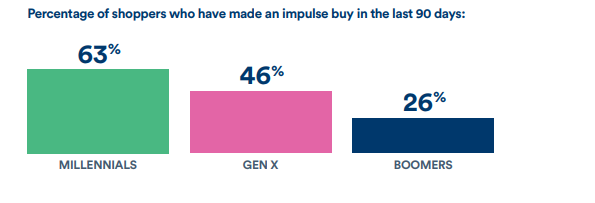
The report finds that a majority of consumers are also disappointed with the ongoing lack of personalization in their shopping experiences. The verdict is clear—Millennial shoppers expect better personalization and hence, are impulsive towards making a purchase more often.

via Segment
The proliferation of new devices and the rapidly evolving technology landscape has led to a “personalization gap” in the shopping experience, and as consumers’ expectations rise, brands are struggling to meet them. For example, 54 percent of people expect to receive a personalized discount within 24 hours of identifying themselves, and 32 percent expect a discount after just one hour. However, only 22 percent of consumers actually find their retail shopping experience to be highly personalized.

The brands who get personalization right have a lot to gain. Nearly half of shoppers surveyed (49 percent) have purchased a product they did not intend to buy after receiving a personalized recommendation from a brand. Twenty-three percent of them have spent more than $50 on a single purchase, with seven percent spending more than $100. Notably, 85 percent of impulse buyers were happy with their purchase, and just 5 percent returned it.

The Personalization Gap: Expectations vs. Reality

The rise of multi-channel shopping has lead to a “personalization gap” in the consumer experience. While small niche retailers and grocers are in line with consumer expectations when it comes to personalization, larger, varied retailers are struggling to keep up with consumer demands. On average, only 22 percent of consumers find their shopping experiences to be highly personalized.

Percent of consumers who expect highly personalized experience vs. those who experienced it
Retail Sector Consumer Expectations Actual Experience
Large online retailer 77% 23%
Department store 51% 17%
Independent or local business 34% 24%
Big box retailer 47% 12%
Online grocery store / service 29% 31%
Niche online-first retailer 24% 25%

Personalization Drives Impulsive Purchases

The brands who get personalization right have a lot to gain. Whether digital or in-store, highly personalized recommendations often lead to impulse buys, and the most expensive impulse buying still happens in a brick and mortar store. Shoppers are happy with their impulse purchases – and even if those who aren’t, won’t return it.

  • 49 percent of shoppers have purchased a product they did not intend to buy after receiving a personalized recommendation from a brand. 63 percent of millennials made an impulsive purchase based on a personalized recommendation.
  • 40 percent of U.S. consumers say they have purchased something more expensive than planned because their experience was personalized. 23 percent have spent more than $50 on a single impulse purchase, and 22 percent of these purchases came from brick and mortar stores.
  • 85 percent of consumers are satisfied with their last-minute purchases. Only five percent will return their products.

Personalization Leads to Repeat Shopping

Providing tailored, personalized shopping experiences will lead to happy, loyal customers. After a personalized experience—

  • 44 percent of consumers will likely become repeat buyers after personalized experiences
  • 39 percent will be likely to tell friends or family
  • 39 percent will likely to become a repeat buyer

Retailers Must Act Fast

Consumer expectations are at an all-time high, and to gain loyalty and capture revenue, brands must act quickly. Olive branches of all types, but especially discounts, are most important. After identifying themselves to a brand:

  • 54 percent of consumers expect to receive a relevant discount within 24 hours
  • 32 percent of consumers expect to receive a relevant discount within one hour
  • 63 percent of consumers say receiving a discount within an hour of interacting with a brand will drive loyalty

Retailers Should Improve Brick-and-Mortar Personalization

Despite the fact that consumers in brick-and-mortar stores are willing to spend more money on unplanned purchases than any other channel, consumers also say brick-and-mortar stores need the most improvement. Brands that work on personalizing the in-person experience have the most to gain in the coming years. The opportunity to increase loyalty – and revenue – is huge. Brick-and-mortar is the channel most likely to drive last-minute purchases worth more than $50.

  • 17 percent of consumers think that retailers are customizing the in-store experience
  • 41 percent of consumers say they expect representatives in a brand’s physical store to know what they have purchased online, yet only 19 percent have experienced this
  • 24 percent of consumers think the in-store experience needs the most improvement when it comes to personalization

Introducing Personas by Segment

There are three key pillars of Personas:

  1. Identity Resolution: The Segment Identity Graph resolves a user’s identity across different channels into one profile. It uses a deterministic matching algorithm to add any ID fragment with a common link to the right user profile.
  2. Trait and Audience Building: On top of these profiles, marketers can build Audiences, like high-value users, or Computed Traits, like favorite product category, to calculate important signals from their historical customer data.
  3. Activation: Segment syncs Computed Traits and Audiences to each company’s marketing integrations, so they can tailor their campaigns. Developers can build custom in-app experiences with the Personas Read API.

The Right Message, for the Right Person

Segment Personas helps companies drive customer loyalty by sharing the right message at the right time, and keeping messages consistent across channels.

HotelTonight, a popular hotel booking app, plans to use Personas to further enhance customization in the hotels it displays to individual customers.

Sam MacDonnell, CTO at HotelTonight, said, “We’ve been using Segment for centralizing data tracking to one platform and syncing our data to all of the tools we use,” said. “With Personas, we’re excited to surface user insights within Segment, remove engineering work required to manually derive user traits, and more easily give each user a custom experience no matter where they are. Segment data has always been a core piece of our internal machine learning and personalization efforts, and Personas will bring our capabilities to the next level.”

Availability

Personas represents the next generation of Segment’s platform and will be rolling out over the next few months. Today, companies can join the waitlist for the Personas beta, which includes core features for identity resolution, trait and audience building, and activation. Segment will make Personas generally available in 2018 and add more functionality throughout the year.

Protagonist Announces New Artificial Intelligence and Big Data Powered Solutions to Give Marketers Empathy at Scale

2
Protagonist

New Suite of Narrative Analytics Solutions Allows Brands to Quantify and Utilize Beliefs for Higher Engagement

Protagonist, the Narrative Analytics company, announced newly expanded capabilities for understanding and engaging with audiences, leveraging deeply held beliefs and communications across all forms of media. The new marketing and communications offerings add data-driven messaging, channel strategy development and brand signature tracking to the Protagonist Platform.

Protagonist’s intellectual property, initially designed to serve the White House and National Security Council, is now available for use by corporate marketers. Protagonist identifies, measures, and provides strategies for taking control of narratives–the deeply held beliefs that drive human behavior–which are essential to customer engagement. Artificial intelligence via the Protagonist platform enables marketers to gather, analyze, and utilize millions of data points to create messages that resonate with customers, delivering empathy at scale. This was previously impossible without the power of Narrative Analytics.

“Protagonist ‘s unique technology for uncovering the deeper meaning in public conversations helped us more deeply understand the mindset of small businesses,” said LinkedIn Director of Market Research, Rogier Verhulst. “Before the analyses, we had struggled to understand their challenges and needs, and Protagonist helped us better uncover the topics discussed and the drivers behind them.”

New Service Offerings Allow Protagonist Clients to Take Control of Their Narrative

Protagonist’s full suite of solutions provides end-to-end support for understanding and influencing complex audiences. These solutions help organizations in B2B, B2C, nonprofits and government agencies crystalize competitive positioning, refine messaging, develop customer personas, ideate campaigns for maximum results, and more.

“Highly resonant, customer communication is what drives results today,” said Protagonist CEO and founder, Doug Randall. “Through AI, we can not only access and analyze valuable customer beliefs, we can deliver empathy at scale to develop content, communications, and products that connect deeply with customers. Better engagement equates to better results for marketers driving company growth.”

New offerings include:

North Star Narrative: North Star Narrative is the story that customers seek to have told about them in the marketplace. This narrative is the guidepost throughout the life of a brand, whether it is in crisis, in need of revitalization, or just trying to stay ahead of competition. Protagonist constructs the North Star Narrative by synthesizing the aspiration that resides inside the organization, balanced against the realities of where the brand currently sits — its strengths, associations, and claims. Once a North Star Narrative is established, Protagonist builds playbooks that chart the execution path and establish monitoring and optimization to track progress for clients.

Messaging Playbook: Provides tactical and strategic guidance for marketing, communications, PR, and creative teams tasked with creating effective messaging. The solution provides effective communication strategies informed by narrative analysis. This includes recommendations on how to leverage key terms, phrases, syntax, tone, claims analysis, calls-to-action, and cognitive principles to strengthen a brand, a unique approach in an industry traditionally dominated by intuition.

“The claims that people make about a given brand or issue are the building blocks of marketing and communications, whether they are true or not.” says Aaron Harms, Co-founder and EVP at Protagonist. “By extracting and measuring those claims at scale using AI, we’re able to pinpoint highly actionable and data-driven messaging recommendations that reveal which strategies will resonate best and why.”

Channel Playbook: This solution uncovers the media outlets, publications, and other sources that have the most profound impact on audience beliefs, and how to leverage them effectively. Knowing what specific channels will resonate best with an audience saves time and resources, optimizing spend and boosting customer engagement.

Influencer Playbook: This traces the narratives that clients care about the most, identifies the people driving the conversation, and builds strategies to engage those people to increase favorable dialogue. Other software tools rank ‘influencers’ by simplistic keyword associations. Protagonist goes deeper, tracking the creation, growth and engagement around full cognitive arguments across all forms of media to uncover the true stewards and opponents of brands, organizations and broad societal topics over time.

Innovations in Natural Language Processing Advance Insights Into the Public Mindspace

Protagonist announced updates to the technology behind its proprietary Narrative Analytics platform, which supports all of its offerings. The platform can now process millions of data points of structured and unstructured dialogue to uncover existing narratives, track changes in public beliefs, and highlight growing sentiments at scale. More sophisticated Natural Language Processing capabilities make it possible for Protagonist to differentiate between claims being made, evidence used to support them, and underlying concepts — providing the ability to understand which narratives are most impactful for encouraging action giving marketers insights into their customers that were previously impossible.

Cynthia Stoddard Joins IDCA’s Advisory Council

0
IDCA
Cynthia Stoddard Joins IDCA’s Advisory Council

Cynthia Stoddard Would Lead IDCA Through Progressive Evolution Of The Information Technology, Cloud, Big Data, And Data Center Community

Cynthia Stoddard
Cynthia Stoddard

The Chief Information Officer of Adobe, Cynthia Stoddard, has joined the Advisory Council of the International Data Center Authority (IDCA). At the time of this announcement, Mehdi Paryavi, Chairman of IDCA, said, “It is the unhindered vision, inspiring passion and just expertise of veterans like Cynthia Stoddard that pave way and architect the roadmap for transforming our industry into a robust platform of sustainability and growth for all.”

Cynthia Stoddard said, “The digital era is unlocking opportunities for organizations to leverage infrastructure and solutions across a variety of ecosystem providers. To be successful it is critical we have a common language and standards across all stacks in the enterprise to promote consistency and efficiency while shaping the future of the of the information technology and data center industry. I applaud the International Data Centers Authority’s commitment to developing a set of standards for the IT community and I look forward to contributing to the Technical Standards committee.”

Mehdi added, “We are grateful to have amazing individuals like Cynthia Stoddard with us who share our spirit of giving back to the community through the effective means of universal standardization and education.  History will prove that Cynthia Stoddard’s participation at IDCA is gesture of true leadership and thus her forthcoming contributions will be instrumental to the progressive evolution of the information technology, cloud, big data, and data center community.”

Mark Thiele, Chairman of IDCA Technical Standards Committee, stated, “Cynthia Stoddard represents the best of what IT has to offer and I’m thrilled to get the chance to work with her as she comes on board to the IDCA Advisory Council.”

Cynthia is a recipient of the CIO 100 Award in 2017 for Adobe IT’s innovative ways to deliver business value. Additionally, she is the recipient of Computerworld Premier 100 IT Leaders Award, was named among the top Women of Influence in 2016 by Silicon Valley Business Journal, and was recognized as one of Huffington Post’s Top 100 Most Social CIOs in 2015 and 2016.

Before joining Adobe in 2016, she was CIO and SVP at data storage and management company NetApp and held a number of key information technology and technical leadership positions.

Cognizant to Acquire Netcentric to Expand Deeper into European Market and Grow Adobe Experience Cloud Expertise

0
Cognizant
Cognizant to Acquire Netcentric to Expand Deeper into European Market and Grow Adobe Experience Cloud Expertise

Cognizant Will Leverage Netcenric’s Industry-Valued Credibility In Bridging The Gap Between Marketing And Technology And Maximize Digital Marketing Performance

The leading business and technology services provider, Cognizant, has announced that it has entered into an agreement to acquire Netcentric. Netcentic is a leading provider of digital experience and marketing solutions for some of the world’s most recognised brands, and a leading independent Adobe partner in Europe.

With this acquisition, Cognizant will leverage Netcenric’s industry-valued credibility in bridging the gap between marketing and technology, enabling clients to drive automation to maximize their digital marketing performance.

cognizatnt

Elian Kool
Elian Kool

Elian Kool, CEO, Netcentric, said, “The rapid growth of our business is driven by clients who understand that flourishing with the new digital economy requires merging marketing and digital concepts powered by more flexible IT that is delivered globally,” said  “By joining forces with Cognizant, we will be able to integrate marketing, technology, analytics and AI to help clients provide personalised experiences across multiple channels and enable their digital transformation.”

Netcentric’s digital marketing teams in the UK, Netherlands, Switzerland and Germany, as well as regional delivery centers in Barcelona and Bucharest, will enhance Cognizant’s ability to deliver business critical digital experience solutions for clients in Europe and around the world. The transaction is expected to close in the fourth quarter of 2017, subject to satisfaction of closing conditions, including German regulatory review. Financial details were not disclosed.

Headquartered in Zurich, Netcentric works with leading brands such as Allianz, Mercedes-Benz, Miles & More, Raiffeisen, Swisscom and UBS, helping them personalise and deliver engaging digital experiences to customers. At the close of the acquisition, approximately 380 digital marketing specialists from Netcentric will join the Cognizant Digital Business practice, which addresses clients’ needs to redefine business models, innovate products, deepen market intelligence and enhance digital experiences to drive growth and efficiencies in their businesses.

Gajen Kandiah, President, Cognizant Digital Business, said, “We are excited about the Netcentric acquisition as it underscores our commitment to our clients across Europe and enhances our portfolio of digital capabilities in the interactive and digital marketing space.

Gajen added, “It also further extends our Adobe Experience Cloud presence for the global brands we serve. We continue to expand on the digital marketing and experience skills our clients demand, and round out our ability to deliver these services to the market at scale.”

Currently, Netcentric provides transformational customer experiences for the world’s top brands by unleashing the full potential of the Adobe Experience Cloud. The company supports clients throughout the entire process chain – from consulting and development through to marketing operations – helping them execute their digital strategy. The Netcentric leadership in the industry is rooted in their expertise in integrating the Adobe Experience Cloud technology to build scalable, bespoke and future proof solutions.

ArcTouch Introduces Xamarin Accelerator Program

0
ArcTouch
ArcTouch Introduces Xamarin Accelerator Program

Leader in Mobile Experiences Offers Xamarin Expertise to Help Companies Supercharge Cross-Platform App Projects

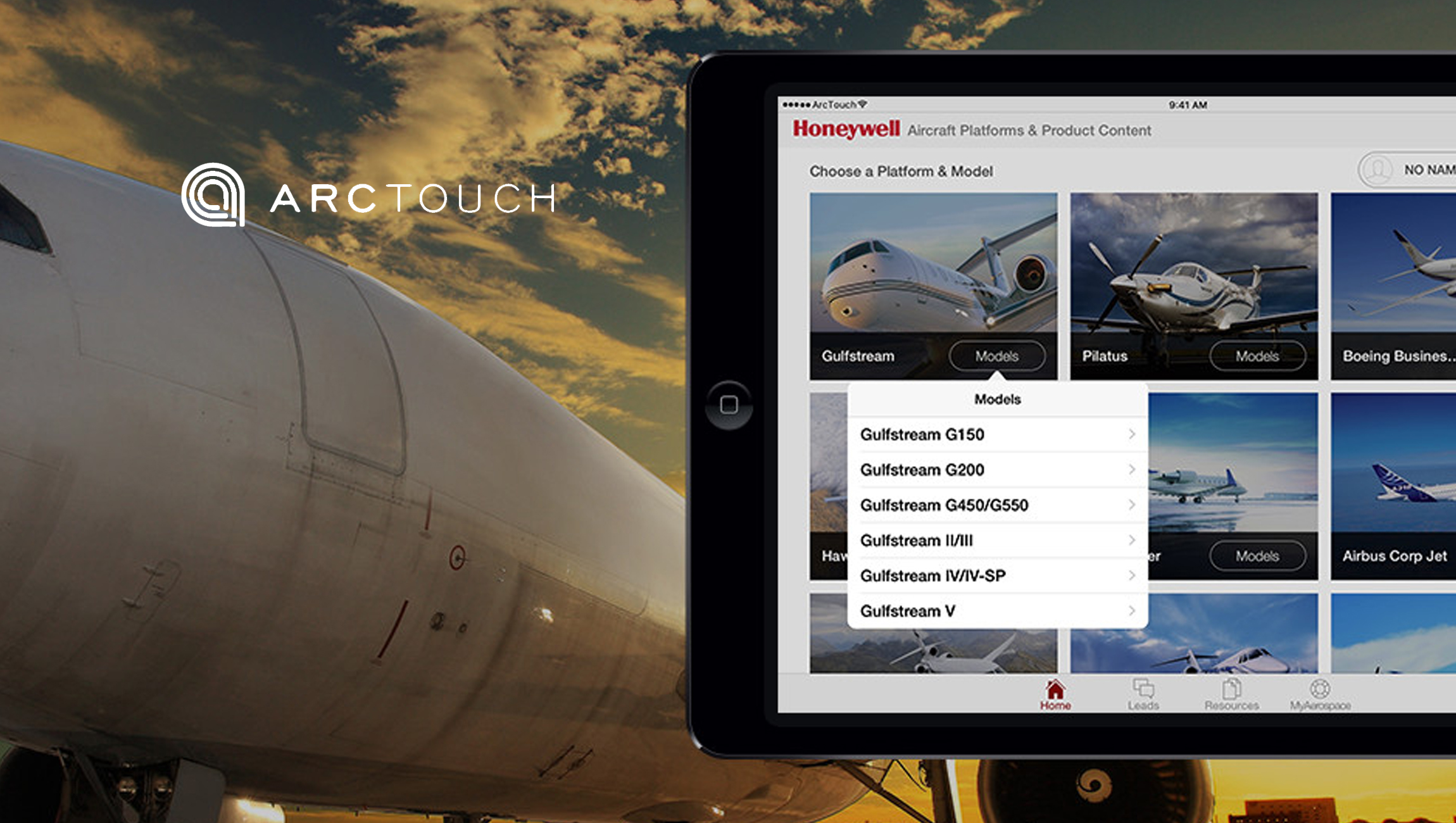
The market for cross-platform apps is estimated to reach USD $7.5 Billion by 2018. A bulk of it would be spent by companies focused at accelerated product development, rapid app prototyping, IoT apps, enterprise mobility, and product team augmentation. Following the trend, ArcTouch, a full-service mobile and connected experiences studio, has announced its Xamarin Accelerator Program (XAP), a consulting service to help enterprise development teams build successful cross-platform mobile apps using Microsoft’s Visual Studio tools for Xamarin.

According to a Forrester report, enterprises can dramatically reduce their costs and shorten the time to market if they use Xamarin for their cross-platform mobile projects. Xamarin helps development teams use a common codebase across mobile apps for iOS, Android and Windows.

However, in order to build a successful mobile app with Xamarin, enterprise teams need to become experts with native mobile platforms. With years of experience building commercial applications for high-profile clients in the retail, entertainment, travel and sports industries, ArcTouch is uniquely positioned to help companies and their Xamarin development teams succeed.

The Product Roadmap for ArcTouch in a Programmatic Era

Eric Shapiro
Eric Shapiro, CEO ArcTouch

We spoke to  ArcTouch CEO, Eric Shapiro, to understand how the company intends to grow within the programmatic advertising landscape. Eric said, “For any clients that have an ad-supported app, we identify and implement the appropriate ad platform depending on their needs. But, the vast majority of our clients are moving away from monetizing through in-app ads.”

Eric went on to add how the company sees diverse businesses using custom apps as a means to complement their product or service. Eric explained, “An e-commerce site would drive incremental revenue increase via sales through a mobile app, or a smart device maker would deliver a mobile app that allows you to interact with the device via a mobile phone or Amazon Echo rather than through the web.”

MediaRadar Launches Innovative Prospecting & Advertising Intelligence Platform for Agencies

0
mediaradar

Debuts Its First-Ever Solution For Agencies, Giving Them What They Need To Win Business From New Prospects And Grow Opportunities With Existing Clients

MediaRadar, the leading advertising intelligence company, announced a brand-new platform to support new business development within advertising and media-buying agencies. MediaRadar has traditionally been used by media companies and adtech businesses such as The Wall Street Journal, Time Inc, Business Insider, Madison Logic, and Nativo. This is the first offering from the company specifically for agencies, helping them drive growth and maximize revenue.

Todd Krizelman
Todd Krizelman

“At Advertising Week, everyone was talking about transparency. In the quest for it, many of the world’s largest advertisers – from CPG on down – are shifting or reducing ad spend, leading to slower than expected growth for agencies. As a result, new business development teams are under pressure to deliver prospects and expand revenue opportunities with current clients. MediaRadar equips them with the intelligence they need to deliver. We can tell an agency which brands may be looking for new representation and point them toward the brands that are best matched to their agency’s capabilities and market. We are excited to bring these insights to agencies and help them unlock new revenue and growth,” Todd Krizelman, CEO & Co-Founder, MediaRadar said.

MediaRadar’s intelligence capabilities are powered by a proprietary combination of AI and machine learning. The company’s software tracks and analyzes advertising campaigns for millions of brands – from P&G to Apple – across multiple media channels, including online (programmatic, custom content, YouTube, etc.), TV, mobile, and print. The platform distills multi-channel campaign intelligence into actionable competitive insights, brand analysis, and prospecting reports, all in one easy-to-use tool. Users leverage these insights to identify the best prospects, build and nurture stronger relationships with clients, and close more business.

Today, more than 1,400 media and adtech companies use MediaRadar for ad intelligence. Now, MediaRadar is introducing its first-ever platform for advertising agencies, bringing them ad intelligence and prospecting tools to put the data to use.

Agency users get access to ad insights like:

  • Native, Video & High-CPM Ad-Tracking – Where are Nestle and Unilever spending their money? With MediaRadar’s new tool, agencies can see which brands are opting to spend on high-CPM units like online video, YouTube, native, and mobile. Brands investing in these high-cost ad units are good targets for new business and prospecting.
  • Detailed Category, Spend & Brand Hierarchy Analysis – With MediaRadar, agencies can access granular spend analysis. The platform breaks down spend by more than 9,000 product categories, down to the individual product line for every brand tracked. This ensures that agencies are prospecting the most relevant brands for their agency.
  • A Full-View of Ad Creative – Where did Revlon run ads recently? What did the ads look like? With MediaRadar, agency users can see actual creative for as many as eight different mediums, including TV, digital and print. Search, review and filter creative by ad type, estimated spend, brand, product line, or page location. This helps agencies take the guesswork out of brand prospecting, letting them visualize an ad campaign throughout its duration.

Data is useless without a proper toolkit that can make intelligence actionable. MediaRadar provides both with its new offering. Agencies get unrivaled ad insights, as well as prospecting outreach and business development tools, such as:

  • Find the Best Prospects – MediaRadar can find new advertisers based on specific criteria including: peak spending, media formats, agency of record (for conquesting purposes), average spending, geographic location, and product category. An agency can see where similar agencies are getting business and pinpoint missed opportunities.
  • Get Their Contact Information – MediaRadar’s new agency solution also provides robust contact portfolios to agency users on key decision-makers at brands. No more trolling LinkedIn or paying for contact databases. MediaRadar’s vast contact library is manually and technologically verified, audited and updated for accuracy every 90 days, ensuring accurate contact information for the brands to pitch.
  • Expand Business With Current Clients – New business is more than identifying new prospects. It also means expanding relationships with current clients to maximize growth. MediaRadar’s customized insights show agencies how any brand is changing their investment across media. This means they can easily uncover new product lines and advertising formats that an existing brand prefers and take advantage.

Krizelman added, “Agencies need a partner right now. With the current market, every piece of information about how a brand spends and why is important. It can lead to new business and new revenue. With our agency solution, we are bringing advertising intelligence and new business development tools together in one platform. This will enable agencies to maximize every opportunity, while also making it a lot easier to manage the entire prospecting process.”

KickFire’s Introduces Next-Generation CRM SmartSync to Its LIVE Leads Platform

0
kickfire (1)

KickFire Announces LIVE Leads Platform Enhancement That Enables B2B Marketers And Sales Teams To Automatically Sync Highly Engaged Accounts To A CRM

KickFire, the leader in IP address intelligence and company identification technology, announced the addition of CRM SmartSync to its LIVE Leads platform. This powerful enhancement allows companies to identify target accounts and net-new accounts exhibiting real-time buying intent on their website, and automatically push the most engaged accounts to their customer relationship management (CRM) platform, transforming anonymous web visitors into actionable opportunities for B2B sales teams.

Key Features include:

  • Real-time account identification and automatic push to CRM
  • Seamless integration into the following CRM platforms: Salesforce, Hubspot, Microsoft Dynamics, Zoho, SugarCRM, and ConnectWise
  • Multiple lead scoring criteria to match ICP (Ideal Customer Profile) models, including location and industry
  • Detailed intent visibility of accounts in-market to purchase before self-identifying on the website

“CRM SmartSync integrates with a sales team’s daily workflow to identify intent signals based on lead scoring. We make it easy for B2B marketers and sales teams to automate the process of analyzing and managing highly engaged accounts, increasing productivity and allowing sales to focus on interested audiences earlier in their buying cycle,” Tina Bean,  Co-Founder and Vice President, Strategic Business Development, KickFire said.

KickFire LIVE Leads enables companies to tap into their website’s invisible pipeline by identifying anonymous web visitors showing real-time buying intent for their products and services. Companies using both KickFire and an integrated CRM platform in their sales technology stack can leverage KickFire’s company firmographic data to increase productivity within their sales departments.

“Lead scoring at the marketing automation level, which uses cookies, is limited to 2-6% of website visitors being identified. KickFire’s technology does not rely on cookie data, which enables our users to see 10X increase in account identification, creating opportunities to personalize or target upon first visit – proving you don’t need cookies to feed your CRM,” said Bean.

Through its proprietary TWIN Caching technology and company firmographic data, KickFire provides the highest quality business intelligence throughout its entire suite of solutions, including KickFire API, LIVE Leads and Prospector, to power account-based marketing, content personalization, predictive, intent, B2B ad-targeting, and much more.

Translate Like a Tech Giant: Machine Translation for Multilingual Websites

0
Tech Giant
Translate Like a Tech Giant Machine Translation for Multilingual Websites

Responsive Translation ServicesTech giants are doubling down on machine translation. Here’s how other internationally-minded companies can use recent advances in artificial intelligence and machine translation to their own advantage

What do Google, Microsoft, Facebook, and Amazon all have in common? For starters, they have big, global customer bases and do business in many different languages. Their websites easily change from one language or dialect to another, allowing customers to instantly find the information they seek and make purchasing decisions in the language of their choice.

How do they do it? Google, Microsoft, Facebook, and Amazon all use machine translation to power their successful empires. And knowing how key it is to their continued success, they’re all investing heavily in machine translation technologies.

As a bonus, this can help improve the technologies for others too.

Machine translation isn’t just the province of the big guys now. Smaller companies who work internationally, and their marketing teams, can absolutely use the recent advances in artificial intelligence and machine translation technology to their own advantage.

Machine Translation Takes a Giant Leap Forward, But Still Needs Supervision

Humans are smart, but machines are catching up. Artificial intelligence is being devoted to a range of intellectual tasks, such as performing scientific experiments, making medical diagnoses, composing music, driving cars and translating foreign languages. Machine translation is just one of artificial intelligence’s many applications.

Previously the butt of easy jokes, machine translation has come a long way very quickly – most recently with neural networks. Readers used to be able to immediately point out the products of machine translation, but that’s not as easy to do these days, especially when the output is then edited by humans.

Today, the most advanced machine translation engines are lightning fast, more accurate than ever and constantly improving. Last year Microsoft demonstrated how they could translate Tolstoy’s 1,440-page novel War and Peace from Russian into English in 2.5 seconds with just four computers.

A recent white paper from Deloitte, while focused on government use, makes a strong case for how artificial intelligence and machine translation can drastically reduce costs and improve productivity through four approaches: relieving, splitting up, replacing and augmenting. In their examples, relieving could be taking translators off of lower-level work and assigning them to more advanced-level translation, splitting up could be having translators edit machine translation output, replacing could be using machine translation for what a human translator used to translate and augmenting could be the addition of automated translation tools to help make a human translator more efficient.

Yet, the danger of much improved machine translation is that it might be so good that it’s hard to tell how bad it is. For when it’s wrong, it’s really wrong.

The way to make sure that machine translation doesn’t come back and bite a company in the public relations department is to have it reviewed very carefully by human post-editors.

Post-editing is a type of editing performed by trained linguists on machine translation output. The goal is to improve the quality of the machine translation and provide readers with a higher quality experience – for a fraction of the cost of normal human translation.

Noted translation expert Jost Zetzsche thinks that machine translation using neural networks actually makes it harder to spot errors than statistically based machine translation systems.

However, we think that if you have great linguists who know what they’re doing, then it’s usually better to edit the good stuff. Content analysis by machine translation professionals is required to ensure the desired outcome. That’s where the value of good post editing comes from – so necessary to international business.

Machine Translation Makes Multilingual Websites Go Round

How can a company and its marketing team expand their reach, but still save time and money in the process? It’s an age-old dilemma.

Naturally, companies want to put their products and services into as many customers’ hands as possible; yet, only having information available in English is a relic of the past. Not everyone speaks English and even among those who do, not everyone wants to shop in a foreign language. Customers want access to information in their own language and expect to make purchases that way too. Luckily, it’s easier than ever to provide, even if you’re not Amazon or Google.

Machine translation is a cost-effective way to begin or expand an organization’s translation program. It can make any website multilingual and more comfortable for international customers to use, and post-editing will keep companies out of trouble.

But first, the marketing team will need a plan and some content.

Creating a Machine Translation Plan  

A great multilingual website is not created by accident. Here are a few important points to consider when formulating a machine translation plan:

  • Languages. Which languages or dialects do customers speak?
  • How many languages. Which languages or dialects should be chosen for inclusion? For example, Microsoft’s homepage currently comes in 96 options. However, chances are that most companies don’t need to include that many.
  • Speed and accuracy. What kind of speed and accuracy are required here? Machine translation by itself is lightning fast, but machine translation combined with postediting produces a better quality, human-like translation.
  • Content. What do you want to say to your audience?

Content Guidelines for Machine Translation

Not all writing is ideal for machine translation – yet. To make the most of today’s machine translation, keep these writing tips in mind:

  • Always use correct grammar, spelling, and punctuation.
  • Use simple sentences, if possible. Sentences with 5 to 20 words are easiest to translate.
  • Write clearly. Avoid ambiguous words and phrases.
  • Avoid slang.

In fact, human translators would appreciate it if you followed these content writing guidelines too.

More Multilingual Websites

Look around you. Machine translation and post-editing are ideal for powering today’s websites. But now any company, and their marketing team, can translate like a tech giant – providing international customers with the information they need to make the right purchasing decisions in their own language.


NetElixir Increases Team at Princeton Headquarters, Projects Fast-Paced Growth Throughout 2018

0
netelixir

Company Also Expands To Midwest With New Center Of Digital Excellence

Retail search marketing company NetElixir is increasing the size of its team at its headquarters in Princeton, NJ. Over the past year, the team has grown by about 50 percent and the company projects to double over the next 18 months.

NetElixir provides digital marketing services to small and large retailers. The company has experienced its increased rate of growth due to its sharp focus on the retail industry and introducing digital marketing solutions – including paid search, search engine optimization, social media marketing and Amazon digital marketing services – that are customized for retail marketers. To support its expanding business, NetElixir is hiring for positions in account management and product development.

https://media.licdn.com/media/p/3/000/258/1fb/1cc54de.jpg
Udayan Bose

“The past year has brought incredible changes to search marketing. Google has taken a mobile-first approach, social media channels like Facebook are innovating their advertising efforts and Amazon has been gaining e-commerce market share. Our clients have come to us for our specialized expertise to help them navigate and thrive in this new ecommerce ecosystem,” Udayan Bose, CEO, NetElixir said.

Headquartered in Princeton, NetElixir has invested in the local area to draw the retail and digital marketing business communities to key attractions. For the past five years, the company has held an annual invite-only X=Experience conference, which brings together retail leaders from across the U.S. in an intimate setting at the Grounds for Sculpture park in Hamilton, NJ.

In addition to expanding its headquarters, NetElixir is also broadening its team nationally by establishing centers of digital excellence throughout the U.S. These hubs offer world-class digital customer acquisition solutions to local businesses. NetElixir has begun this expansion with the Midwest region, working with local retailers there to help them expand regionally and nationally.

“We are thrilled with our pace of growth over the past year and are excited by where we plan to be next year. Our success is a testament to our dedicated and skilled inhouse team, and I’m very proud of our accomplishments and our path ahead,” continued Bose.

Videology Offers Advertisers and Agencies Free Access to DETVgo

0
videology

The New Product Allows Seamless Activation of Advanced TV Advertising Campaigns

Videology, a leading provider of converged TV and video advertising software, announced the launch of DETVgo — a self-service, automated advanced TV advertising product powered by the Videology platform. Videology will offer agencies and advertisers free access to DETVgo to help facilitate advanced TV transactions and introduce more users to its benefits.

The Videology platform offers a full suite of capabilities to support data-enabled TV advertising, including holistic planning and yield optimization capabilities. The DETVgo product is built on top of this platform. It serves as an access point for users interested in trialing the benefits of data-enabled TV advertising—including the potential for programmatic transactions between buyers and TV inventory providers. It is easy-to-use, seamless to deploy, and provides access to Videology’s superior data integrations, forecasting and optimization within a simple user interface.

Scott Ferber
Scott Ferber

“Videology has built a sophisticated platform for TV advertisers that can be customized to fit their specific needs, but these specialized, enterprise partnerships take time and commitment. At the same time, interest in advanced TV is escalating—advertisers want to get going, now. DETVgo is that gateway product. Technology should not be a barrier to better TV advertising. It should help propel the industry forward,” Scott Ferber, Founder and CEO, Videology said.

DETVgo Capabilities

DETVgo allows advertisers to reach their strategic target audiences with greater accuracy, with the capability of using approved advanced data sets, such as purchase behaviors, while maintaining the full scale and impact of traditional linear TV. DETVgo allows users to generate summary plans using those networks, programs or dayparts that will optimally deliver a strategic target in accordance with an advertiser’s selected goals.

By logging in to DETVgo, a user can immediately begin constructing and sizing audiences, or strategic targets, combining over 60,000 available data-segments. Once the strategic audience is finalized, DETVgo begins to generate an optimized TV plan working within the user’s designated media parameters and constraints. To do this, DETVgo scans all available TV inventory based on accurate, verified avails and pricing—a differentiating feature from other TV advertising technologies. This deep, always-on data integration with inventory partners helps to ensure audience delivery and mitigate the need for makegoods.

The summary plan is optimized toward delivering the strategic target against one of three selectable KPIs: total impression delivery, total reach, or audience composition (index). A plan summary along with proposed insertion order (IO) terms is then sent to the buyer, including bottom line pricing and full network and data transparency. If the buyer accepts the plan and signs the IO, the buy is executed. Post-campaign, the user receives consolidated delivery reporting.

Benefits Summary of DETVgo

DETVgo brings automation to multiple data-enabled TV components, such as audience creation, transacting and reporting, providing advertisers with the following benefits:

  • Faster execution of scalable, data-enabled TV campaigns
  • Hands-on access to audience segmentation and sizing capabilities
  • Greater workflow efficiency—with audience creation, plan generation, execution and reporting, all within one platform
  • Access to over 60,000 data segments across 26 categories
  • Ability to consistently apply data segments across major cable TV networks
  • Optimization against a strategic target based on accurate and automated pricing and avails from always-on integrations
  • Transparency of TV cable network and daypart mix allocation
  • Optional digital video campaign extensions to complement TV buy
  • Access to audience verification, brand metrics and sales impact studies

Leading global airline selects SandSIV’s VOC Hub To Manage Voice of Customer and Passenger Feedback

0
sandsiv

SandSIV’s Enterprise SaaS Platform Was Built From The Ground Up To Holistically Manage The Customer Experience

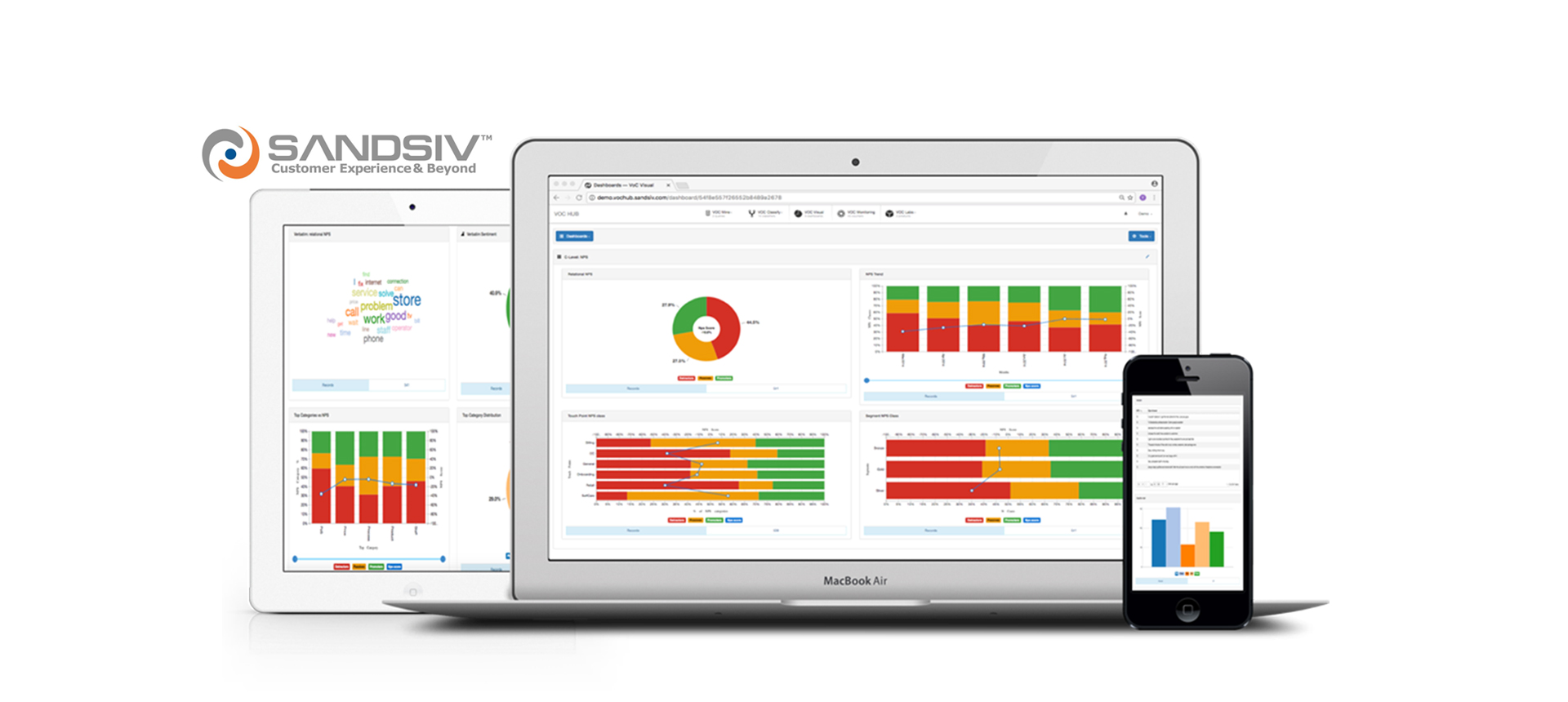
SandSIV, the Customer Experience (CX) Platform provider, has announced that one of the world’s largest airlines has selected SandSIV’s VOC Hub to unify and analyse its entire feedback ecosystem. The carrier joins other major business-to-consumer (B2C) brands in harnessing SandSIV’s next-generation CX platform as a global hub for Voice of Customer (VOC) intelligence.

Airlines have access to large amounts of internal and external passenger data, much of it unstructured. Big data techniques are now making it possible for them to use this to better understand how loyalty is driven by the experiences they provide. Those which have embraced this are able to focus on improvements in the areas that matter, cultivate customer loyalty and create competitive advantage.

SandSIV’s enterprise SaaS platform was built from the ground up to holistically manage the Customer Experience. Going beyond simple surveying, the cloud-based solution enables enterprises to put the voice of customer at the heart of their organisation – no matter the language, format or source of the feedback – and to act in real-time on relevant insights throughout the entire organisation.

Federico Cesconi, CEO, SandSIV commented, “In a world where the customer has the power of choice, it can be tough for airlines to provide a differentiated experience and appeal to the next-generation passenger.”

In relation to VOC intelligence, Federico continued: “Their main challenges relate to the proliferation of feedback sources, tools and channels, the variety of advanced customer analytics techniques that need to be consistently applied to turn raw data into meaningful insights and, of course, the security required to comply with stringent data privacy regulations.”

SandSIV addresses these challenges by delivering a fully integrated Voice of Customer solution that applies second generation deep machine learning (i.e. Google Brain’s TensorFlow) and advanced Natural Language Processing (i.e. Facebook AI Research’s fastText) – it allows the airline to gather data throughout its entire feedback ecosystem including social media, web/mobile, internal systems and external tools, and to perform in real-time unsupervised topic detection, automated categorisation and classification as well as language agnostic sentiment analysis.

With a track record of successfully delivering similar large engagements, SandSIV has reaffirmed itself as being the first choice for organisation requiring leading edge customer intelligence and advanced computational analytics software solutions. SandSIV’s VOC Hub™ is delivered as a SaaS solution or On Premises, and can be accessed and managed throughout the entire organisation.

Data Science Firm 0ptimus Choses comScore as Measurement Source for Consumer Overlays

0
0ptimus

comScore’s Television and Digital Measurement Will Help Agency Create New Targeting Products

comScore announced that data science firm 0ptimus will comprehensively match comScore’s television ratings and digital measurement with 0ptimus’ nationwide custom modeled audiences. Such matching will allow 0ptimus more in-depth political targeting on an individual basis across all marketing channels including TV and digital.

0ptimus, which works with political campaigns and brands to help find key audiences and target media placement, has been a long-time user of comScore, having utilized comScore local television data to develop analytics for election races. With the expanded partnership, 0ptimus will now rely on comScore’s television and digital footprint to match consumer profiles of individuals in homes to gain a full household audience measurement.

“With comScore’s television data, we match our industry-leading consumer profiles and create custom models for our clients to use towards television buys. By matching comScore’s television and digital data with 0ptimus custom modeled audiences, we are able to target on a more individual basis across traditional and digital content,” Scott Tranter, Partner, 0ptimus said.

Chris Wilson
Chris Wilson

“0ptimus has been a close partner since comScore’s early days in the political vertical. We look forward to continuing to work with 0ptimus in this expanded relationship to help them create new products that better define and target voters,” Chris Wilson, Chief Revenue Officer, comScore said.

Since its founding in 2013, 0ptimus has been at the forefront of developing innovative data and analytics software platforms. They have designed and delivered data-driven strategies for leading Presidential and Gubernatorial campaigns, Fortune 500 companies, and non-profits around the globe.

comScore is a leading cross-platform measurement company that measures audiences, brands and consumer behavior everywhere. comScore completed its merger with Rentrak Corporation in January 2016, to create the new model for a dynamic, cross-platform world. Built on precision and innovation, comScore’s data footprint combines proprietary digital, TV and movie intelligence with vast demographic details to quantify consumers’ multiscreen behavior at massive scale. This approach helps media companies monetize their complete audiences and allows marketers to reach these audiences more effectively. With more than 3,200 clients and a global footprint in more than 75 countries, comScore is delivering the future of measurement.

What are Popular Messaging Apps Missing? Urgency Alerts

0
ingenioshare

New Technology From Ingenioshare, An Affiliate Of Ipventure, Solves The Problem Of Notification Overload In An Innovative Approach

Communication has become increasingly easy with the rise of third-party messaging apps. However, this ease of communication can be a source of constant distraction, as we are frequently interrupted by sounding alerts on our devices. Alarmingly, the study The attentional cost of receiving a cell phone notification found that ‘cellular phone notifications alone significantly disrupted performance on an attention-demanding task’, which shows that notification distraction comes at a high price. Fortunately, new technology from IngenioShare, an affiliate of IpVenture, solves the problem of notification overload in an innovative approach.

Through current third-party messaging apps, users can turn off notifications, but then they risk missing important or even urgent messages. A message from a loved one with a life-threatening emergency will be treated just the same as other, less pressing messages. Users are left with two imperfect options: (1) keep notifications on at the price of constant distraction or (2) turn notifications off and risk missing urgent messages.

New patent-pending technology from IngenioShare solves this problem by factoring in the urgency of an incoming message. For example, you can turn notifications off to avoid the constant interruption of messages. However, if a message is urgent, the sender can choose to activate an urgency setting. Then, when you receive the message, your device will sound or vibrate to notify you, while other incoming messages will remain silenced. For those abusing the urgency option, you can, for example, block them so they are prevented from interrupting you again.

Today’s popular messaging apps, such as Snapchat, Instagram, Whatsapp and Facebook Messenger, do not distinguish message urgency. You either choose to be distracted by all alerts indiscriminately or to unilaterally ignore them. However, with IngenioShare’s technology, you can stay connected to all aspects of your life, from non-virtual engagements to messaging your contacts, without compromising your focus or missing urgent incoming messages.

IngenioShare, an affiliate of IpVenture, is a Silicon Valley company that develops innovation backed by high-quality patents in social networking and communications technologies. We also offer exceptional patent-related consulting services.

Rakuten Marketing Centralizes Publisher Ecosystem to Optimize Online Ad Inventory

0
Holiday Shopping Sees 21% YOY Revenue Growth and 11% Purchase Growth

Rakuten Marketing Has Created A Centralized Publisher Ecosystem Across Its Affiliate, Display And Search Marketing Channels

Rakuten Marketing, a leading technology company that enables brands to increase sales through data-driven marketing, announced it has created a centralized publisher ecosystem across its affiliate, display and search marketing channels, alongside dedicated teams responsible for operations and technology innovation. The new ecosystem will be strategically primed to deliver the best possible advertising performance to all Rakuten Marketing clients.

The strategic business move arms Rakuten Marketing clients with greater insight and data to better optimize their online ad inventory, including how advertising is priced and sold; where ads are most likely to deliver profitable performance; and, ultimately, how and where ads deliver the best online consumer experience. The company is also focused on identifying new revenue opportunities; leveraging the Rakuten Marketing Cadence attribution tool to help publishers understand how they can best optimize their ad inventory across affiliate and display advertising; and working hand-in-hand with the ecosystem to ensure both advertisers and publishers capitalize accordingly.
The Rakuten Marketing commitment to publishers, advertisers and consumers is fundamental to its mission to ‘Save the Web’ – a movement the company initiated this year to motivate the marketing and advertising sector to change the minds of the 83 percent of consumers who say online advertising has become too interruptive and is impeding the way they engage online. Rakuten Marketing is invested and committed to its industry leadership in educating and empowering publishers and advertisers to eliminate bad advertising – a practice that costs the industry more than $20 billion in lost revenue from ad blocking.

Tony Zito
Tony Zito

Tony Zito, CEO, Rakuten Marketing said, “Rakuten Marketing forges a valuable intersection between advertisers, publishers and consumers, and the creation of this publisher ecosystem is critical in the development of a digital economy where each party thrives. We are extremely excited about the value this creates for our clients as we advance our mission of driving industry-leading performance throughout the ecosystem.”

Rakuten Marketing will expand on their announcement during the annual Rakuten Marketing Experience conference held Wednesday October 25 at the New World Stages in NYC.  Experience is a full-day event attended by c-level marketing executives from Fortune 1000 U.S. brands. The agenda boasts key industry pundits, thought-leaders and market makers.

Infogram Announces New Version of Leading Data Visualization Platform

0
infogram

Business Professionals Can Quickly And Easily Create Visual Assets

Infogram, a leading web-based visual communications company recently acquired by Prezi, announced the latest version of its award-winning data visualization platform. Designed to give business teams the best design experience possible, the new platform allows users to more easily and quickly create interactive infographics, reports, charts and other visual elements to more effectively convey complex ideas.

With simple drag-and-drop functionality, Infogram’s updated platform provides more creative freedom, a wider variety of outputs, and over 40 effortless designer templates to make communications more engaging and effective.

Mikko Jarvenpaa
Mikko Jarvenpaa

“Since joining forces with Prezi, we have been able to more rapidly fulfill our mission of bringing beautiful infographics and easy-to-use data visualization technologies to more users worldwide. Businesses often struggle to create interactive visuals without hiring outside developers and designers. Now, Infogram users can create exciting assets on their own–with amazing results,” Mikko Jarvenpaa, CEO, Infogram said.

Providing Powerful Visuals and Ease of Use to Customers
Infogram has been adopted by a wide variety of customers, including leading media companies, key businesses, and educational institutions. Warner Music Group, a major music company with interests in recorded music, music publishing and artist services, has successfully implemented the new version of Infogram to help it create visual assets.

Andreas Igler
Andreas Igler

“Infogram helps us turn mundane service reports into attractive, entertaining, interactive designs. We love the new drag-and-drop editor because it is simple and easy to use. After we started using Infogram, we received great feedback from fellow employees and teams. They actually started to read and engage with the content more than before. Infogram is a great way to distribute information across the company,” Andreas Igler, Director of IT & Operations, Warner Music Group said.

What’s New in Infogram
The latest version of Infogram was designed to help customers create a much wider range of visuals — from assets for marketing and social campaigns to reports and web pages. Infogram makes it easier than ever for business teams to collaborate, visualize, and share data. New features include:

  • An intuitive drag-and-drop editor: helps professional teams easily create interactive reports and visuals. Users can add, arrange, and resize various visual elements to create stunning content in minutes. Users can also simply copy and paste, upload a spreadsheet, connect to various Cloud services, or take advantage of Infogram’s API for live updates.
  • Over 40 new designer templates: which make it easy for users to turn ideas and data into engaging content. Users can select their own color palette, adjust fonts, duplicate projects, upload logos, add media, and stay on brand. This update complements the company’s previous efforts to provide teams with the features needed to create custom projects and adhere to company brand guidelines.
  • Social media support: Infogram now provides size templates for Facebook, Twitter, Instagram, Pinterest, or your custom dimensions. Users can also easily add visual elements to their social media posts on major social media platforms (Facebook, Twitter, YouTube, Instagram.)

SSI Becomes Licensed Net Promoter Score Provider

0
surveysampling

NPS Provides Proactive Measurement of Customer Loyalty and Endorsement

SSI became a licensed Net Promoter Score service provider, enabling companies to survey 17 million panelists in order to measure customer loyalty and gather insights to improve long-term customer relationships. Net Promoter Score, used by companies since its introduction in 2003, measures the loyalty that exists between a brand and its customer base.

Andy Jolls
Andy Jolls

“NPS has been the gold standard for companies looking to assess brand loyalty. While these same companies have done a good job of tracking their own Net Promoter Scores over time, many aren’t tracking the score movement of their competition. There are other advantages of running NPS with SSI panelists such as correcting for response bias. Because brands can bias research by asking questions directly, there is a value proposition for having a third party administer the questionnaires. A study of a brand’s customers based on respondents in their own database could produce different scores than those same brand’s customers from the SSI panel due to numerous factors. SSI can provide a whole new view on NPS,” Andy Jolls, Chief Marketing Officer, SSI said.

NPS methodology typically asks a singular question: Would you recommend this product or service to someone else? Respondents can answer on a scale of 0 to 10, with 0 being ‘not at all likely’ and 10 being ‘extremely likely’. The resulting score ranges from negative 100 to positive 100 and is calculated by subtracting the percentage of detractors from the percentage of promoters. NPS proactively benchmarks the loyalty of a company’s customers over time, and the system is used globally as a key performance indicator in companies of all sizes.

Celebrating 40 years in business, SSI is the premier global provider of data solutions and technology for consumer and business-to-business survey research.  SSI reaches participants in 90+ sample countries via internet, telephone, mobile/wireless and mixed-access offerings.  SSI staff operates from 40 offices and remote staff in over 20 countries, offering sample, data collection, CATI, questionnaire design consultation, programming and hosting, online custom reporting and data processing.  SSI’s employees serve more than 3,500 customers worldwide.