Home Blog Page 4206

Clari and Marketo Announce Strategic Partnership to Break Barriers Between Sales and Marketing

0
Clari and Marketo Announce Strategic Partnership to Break Barriers Between Sales and Marketing

Integrated Solutions to Create Alignment for Building a Healthy Pipeline and Converting It into Closed Business

Clari, the leading provider of AI solutions for sales, and Marketo, the leading provider of engagement marketing software and solutions, announced a strategic partnership to unite sales and marketing across the revenue funnel.

Andy Byrne
Andy Byrne

“Most sales and marketing teams operate in silos — and it’s hurting the business,” said Andy Byrne, CEO of Clari. “Our partnership with Marketo is aimed at breaking that data divide, providing both groups a new level of shared insight. With our joint solutions, sales leaders get clear visibility into marketing engagement in active deals so they can forecast more accurately, and marketing leaders see which campaigns are actually driving revenue so they can nurture more effectively.”

With the Clari Marketo Connector, reps can see when prospects open marketing emails, download content, or register for webinars. They can view this marketing engagement data alongside other prospect activity signals captured in Clari, including emails and meetings, to help strategically navigate the sales cycle and work with marketing on deal acceleration. With these additional signals, managers also get a broader context around how deals are progressing so they can identify risk as they inspect the pipeline.

Also Read: Performance Horizon Rebrands as Partnerize, Introduces Product Enhancements to Make it Even Easier for Leading Brands to Create Sales and Marketing Partnerships

Eric Johnson
Eric Johnson

“Marketo and Clari are joining forces to tackle one of the biggest challenges facing our customers today: the disconnect around building a predictable revenue model,” said Eric Johnson, Chief Sales Officer at Marketo. “For the first time, sales and marketing can come together to build a healthy pipeline and rapidly turn it into closed business.”

Clari and Marketo plan to bring to market a range of additional integrations with Marketo applications including Marketo Sales Engage and Bizible designed to:

  • Identify promising opportunities by enhancing Clari’s AI-based Opportunity Score with Marketo engagement data so reps can get an even stronger indication of which deals are most likely to close.
  • Prioritize engaged accounts at the right time by monitoring marketing activity in Clari Team Activity and intelligently alerting reps when engagement is high so they can focus their efforts on those accounts that display real buying intent.
  • Streamline nurture of idle accounts by feeding data from Clari into Marketo to trigger smart marketing campaigns against accounts and opportunities that need marketing support.

Recommended Read: SaleScout Data Solutions Adds Sales And Marketing Experts To Its Team

Cross-Channel Attribution and How to Cut Through the Noise

0
Cross-Channel Attribution and How to Cut Through the Noise

marinsoftwareResearch by Econsultancy/Google shows that 76 percent of all marketers currently use marketing attribution or will use it in the next 12 months, yet only 17 percent say they are looking at the performance of all their digital channels together. While attribution models were created to help advertisers determine which sources are driving value and to avoid double counting conversions, there are so many competing models — first-touch, last-click non-direct, linear, time-decayed — that it can leave advertisers feeling dazed and confused, especially when it comes to cross-channel.

With so many possible consumer touchpoints, it’s more important than ever for advertisers to assign campaign credit where it is due and measure the full customer journey, from awareness to conversation. The first step to tackling this challenge is understanding the difference between the competing attribution models and the respective benefits and drawbacks of each—as an advertiser, your goal is to use that knowledge to refine your overall marketing strategy.

At a basic level, there are two types of attribution models. One uses rules to credit conversions; first-touch, last-click and time decay are all examples of a rules-based approach to attribution. The other, called a statistical model, is a more advanced approach that uses algorithms to assign credit to each channel that influenced to the conversion. With the mounting pressure on advertisers to demonstrate a return on ad spend (ROAS), the attribution model you choose should provide a complete view of your marketing performance at the campaign level to facilitate data-driven decisions.

Also Read: Six Ways CMOs Can Keep Pace with Technology Innovation

The Challenge with Rule-Based Models

While rule-based attribution models such as last-click are both convenient and quick to implement, they ignore most of the steps a customer takes on their journey to conversion. Basing your ad spend decisions on these results will likely impact the success of a campaign—after all, a number of studies show that it can take up to 13 individual marketing touches through different channels to generate a qualified sales lead.

However, last-click attribution only credits the last marketing message or ad the user clicked on that resulted in the action you wanted, such as a sale. In football terms, you can consider last-click attribution as the equivalent of giving 100 percent credit to the player who scores the touchdown. It’s an incomplete picture of the path to success, ignoring the quarterback who threw the ball or the linemen who blocked the defense, and so on.

Although many advertisers still use it today, last-click attribution discards much of the creativity and credit from the build-up to scoring a “touchdown”. Advertisers will never get an accurate ROAS if their models ditch crucial data about previous touchpoints that may have led to a conversion.

Also Read: 6 Effective Ways To Drive ROI On Your Landing Pages

The Benefits of Statistical Models

A statistical model is a more elaborate way to build and track conversions. It’s more accurate because it gives credit to each marketing touchpoint a user interacted with throughout the customer journey.

Placing this into the context of a modern marketing campaign: a thought leadership webinar may influence a prospect to take a discovery call, but we can’t discount the benchmark report they downloaded earlier in the year, or the newsletter that contained a relevant customer success story, or the email campaign that generated a website visit. Statistical attribution is the only way to track all those meaningful interactions that happen along the customer journey to conversion.

Algorithms that have been set up behind the scenes define the credit allocation, resulting in a more dynamic set of results that allow marketers to learn from historical data. You can make better marketing decisions based on this more complete picture of the customer journey. For example, marketers may learn that the expensive ad placed on YouTube did not garner as many conversions as the same ad placed within Facebook’s News Feed. By having the data to back up which platforms were more effective at customer conversion, advertising budgets can be better aligned, ensuring future success.

While the benefits of statistical models are evident, the one most common drawback is that all marketing campaigns (search, social, email, etc.) must be tagged with the same tracking parameters, otherwise a marketing team may be looking at incomplete data points or double-counting conversions on multiple channels. Ensuring alignment across all marketing functions will allow for a more cohesive and successful ad campaign.

Also Read: Artificial Intelligence: The Next Frontier Of Programmatic Buying

Maximizing Campaign Effectiveness

Attribution is not just about measurement; it also impacts how marketers can drive success in the most efficient way possible. Last-click and other rule-based models are typically short-sighted and no longer suffice for mapping and measuring the full customer journey. Marketers are more likely to get the most accurate information if they deploy a statistical attribution model based on algorithms that take the entire customer journey into account—allowing them to give ad campaign credit where it is due, more accurately calculate ROAs and allocate their budget accordingly.

Also Read: Top 5 Things to Know About Your B2B Prospects

The Year of Advanced TV: Why It’s Finally Arrived

0
The Year of Advanced TV: Why It’s Finally Arrived

4cinsightsMedia consumption habits have changed fundamentally over the past 10 years. Checking Instagram, reading news online, doing business on the phone, and watching TV on the tablet now mix seamlessly with old habits like channel surfing, listening to radio, and reading magazines. The entire media consumption pattern has changed, and the new media paradigm is one of choice.

Perhaps nowhere are these transformed consumption patterns as evident as in the realm of TV and digital video. Over the past decade, TV viewing habits have splintered as part of the ongoing media fragmentation trend. Whereas once video was limited primarily to linear television, consumers now watch any video, at any time, and on any device.

This fragmentation has been misread by many in the industry as the death of television. And while such a concept makes for compelling industry headlines, declaring the death of TV simply isn’t useful – or even accurate. TV isn’t dying. It’s evolving, and rapidly.

Linear TV still amasses huge audiences and delivers strong engagement and reach. Today’s digital- and mobile-obsessed industry headlines often neglect that fact, but linear is still massively relevant within the media mix and remains a critical proving ground for the same strategies that marketers have undertaken in digital video. The worlds of linear TV and digital video are rapidly converging.

Also Read: How Can Companies Deliver Amazing Customer Experience: Four Big Ideas from Adobe Summit 2018

This convergence is particularly evident in live event viewership today. Take the Super Bowl as an example. In 2018, more than 100 million viewers tuned in, and multiscreen engagement around the event was off the charts, with 2.4 million social media engagements about the Eagles and 1.1 million engagements about the Patriots on the evening of the game alone. TV viewership fed the social conversation, and the social conversation – buoyed by the ever-present fear of missing out (FOMO) – fed right back into the TV viewership.

The new media landscape has been great for consumers, who get to watch what they want, when they want, on practically any device. This era of choice is really only a problem for publishers and marketers, whose strategies and media buying have not yet adapted to the new realities of media consumption. But, marketers are ready to make the necessary changes, with 65% saying their ideal cross-channel campaigns would include TV, according to research from 4C and Advertiser Perceptions.

Also Read: Three Misconceptions About Public Relations

Welcome to the Year of Advanced TV

Advanced TV is how we describe this converged state of media in 2018. Advanced TV is not a “marketing channel” in the traditional sense. Rather, it’s an expression to describe the various ways that television advertising is morphing during this rapid period of evolution. Advanced TV refers to the methods and practices of applying data and technology for the purposes of analytics and decisioning within a TV environment. All of the other buzzwords surrounding TV today, whether it’s programmatic, addressable, or something else, live somewhere beneath the “Advanced TV” umbrella.

So, forget the fact that 2017 was the first year that digital ad spending surpassed TV. Forget that digital has historically been more targetable and ROI-attributable than TV. Advanced TV signals an end to those differences. New technologies and data are available now for planners and buyers to improve their TV advertising strategies through audience-based buying and some of the same programmatic tactics leveraged by digital marketers. It’s time for TV advertisers to step up and use the data at their fingertips to evolve their strategies for the future.

Stay tuned for part 2 of this series, in which we’ll discuss the concept of Advanced TV in more detail, as well as the requirements for advertising execution in this realm.

Also Read: Three Components of a Data-Driven, Future-Focused Customer Engagement Strategy

Artos and Aigo.ai Announce Partnership to Marry Blockchain and AI

0
Artos and Aigo.ai Announce Partnership to Marry Blockchain and AI

Aigo’s Advanced AI Personal Assistant Brings a Custom User Experience to Blockchain Ticketing Solutions From Artos

Aigo.ai and Artos.io  announced a strategic relationship combining AI and blockchain technologies to integrate Aigo’s voice assistant capabilities into Artos’s ticket wallet service, which can be integrated into existing ticketing software or provided to clients as a white label app.

While users are within the ticket wallet, Aigo will be able to assist by offering personalized recommendations for events and concerts coming up in their area, offering users a curated experience and giving Artos clients an increased opportunity for cross-selling tickets. The assistant may also be used to guide first-time users through the process of using the wallet, acting as first line-of-contact for customer support.

Also Read: 2018 Content Marketing Awards Winners & Top Finalists Revealed

Aigo adds to a key set of capabilities that Artos offers ticketing organizations via their blockchain-based services. Working with ticketing agencies and ticketing software providers, Artos leverages the Aventus Protocol open ticketing standard, built on Ethereum, to ensure existing apps become blockchain-ready and create new complementary apps and services. One example includes Artos’s white label ticket wallet, an intuitive user-interface designed to allow consumers to purchase tickets that are held on the blockchain.

Peter Voss
Peter Voss

“We’re excited to partner with Artos and combine their industry-leading open-source protocol for ticketing with the ease of using the Aigo personal assistant for users across the ticketing supply chain,” says Peter Voss, Chief Scientist at Aigo.ai. “With significantly greater cognitive ability than today’s assistant and our shared focus on bringing the best-possible experience, we see Aigo as the perfect guide to realize the strengths of the Aventus blockchain ecosystem.”

Also Read: Sitecore Hires Paige O’Neill as Chief Marketing Officer

Alan Vey
Alan Vey

“The Aigo personal assistant is the perfect complement to Artos’ blockchain-based ticket wallet,” says Alan Vey, co-founder of Artos, “As a next-generation smart AI assistant, Aigo will adapt and personalize to the consumer to streamline the ticket purchasing and selling process, as well as recommending and cross-selling curated events. We expect a rapid expansion of the Aventus Protocol ecosystem, and ticket buyers, ticket agents and event organizers who work with Artos to leverage the blockchain will find Aigo a complementary and personalized method for bringing the right tickets, at the right price, to fans across the world.”

Artos founders Alan Vey and Annika Monari, who met while studying at Imperial College London, have a long-term interest both in blockchain and in cognitive-learning solutions. Alan’s master’s degree was on Artificial Intelligence with a focus on statistical and logical machine-learning, with his thesis focusing on blockchain-based film rights distribution. During Annika’s studies, she developed machine-learning facial recognition technology that enabled the identification of emotions with over 90% accuracy and focused in her thesis on the application of machine-learning in particle physics.

Recommended Read: 2018 Content Marketing Awards Winners & Top Finalists Revealed

Nigel Eyre Joins Apex CoVantage to Drive Innovation in Publishing

0
Nigel Eyre Joins Apex CoVantage to Drive Innovation in Publishing

Former Taylor & Francis Group Leader Brings Broad Expertise to Bolster Apex Industry-Leading Technologies and Solutions

Apex CoVantage, a technology-led publishing services provider, announced that Nigel Eyre, former Global Production Director at Taylor & Francis Group, has joined its Content & Media Solutions leadership team as a Senior Consultant.

With over thirty years of experience working for major publishers, Mr. Eyre is uniquely positioned to provide insights into current industry dynamics and the publishing technology landscape to help drive the next level of solutions Apex will bring to its customers.

Margaret Boryczka Gupta
Margaret Gupta

“Some of our customer relationships span twenty years. That is because we are always thinking ahead and finding unique, never-done-before ways to solve our customer’s problems,” said Margaret Gupta, Chief Operating Officer at Apex. “Nigel brings an incredible level of publishing expertise to inform how Apex will address publisher’s next generation problems in the face of a rapidly evolving business and technology landscape.”

Also Read: Emodo Launches First-Ever Educational Initiative to Tackle Advertising’s Data Illiteracy Problem

Nigel Eyre
Nigel Eyre

Apex was one of the first companies to offer offshore publishing services in 1988. Over a thirty year history, publishers have come to rely on Apex as a valued partner for efficient workflows and ground-breaking technology solutions.

“I worked with Apex for over seven years as a customer and look forward to working with them as a member of the team,” said Nigel, “Not all publishing service providers are the same and I look forward to continuing the history of innovation this company is known for.”

Recommended Read: Kwikee Launches Research-And-Development Team, Leveraging AI and Other Technologies to Drive Efficiencies and Innovation in E-Commerce

Edina Realty Launches “Emma Marketing” Automation for Agents

0
Edina Realty Launches “Emma Marketing” Automation for Agents

Automation Service Powered by Imprev Simplifies the Agent Marketing Experience

At its annual agent technology camp, Edina Realty, the largest residential brokerage serving Minnesota and western Wisconsin, announced the launch of marketing automation for its agents. This innovative service, powered by Imprev, automatically creates branded marketing content for agents throughout the life of Edina Realty’s listings, dramatically simplifying the way agents promote their listings and helping them win more business.

Edina Realty has white-labeled the new Imprev service as “Emma Marketing,” a dynamic virtual assistant for agents. Emma, named after the company’s visionary founder Emma Rovick, is part of the brokerage’s larger initiative to create an integrated, streamlined experience for their agents to help them be even more successful.

Sharry Schmid
Sharry Schmid

Sharry Schmid, president of Edina Realty, is thrilled about the value that Edina Realty brings to their agents with the new initiative and cutting-edge automation service. “Agents have countless demands on their time—they need to be tech-savvy, understand people, and so much more. Our goal is to help them navigate the complexities of their role by streamlining the manual, time-consuming pieces of their job and allowing them to focus on what they love,” she says.

Also Read: Marketing Automation Platform WebEngage Has Been Roped in By OTA Major Goibibo

“As a key piece of our Emma initiative, Imprev’s service saves agents an incredible amount of time by taking the manual steps out of creating marketing content. Every time agents win a new listing, they’ll automatically receive fully-branded marketing packages throughout the life of the listing. Without any extra work, the agent provides value for their clients and can easily use the customized content to engage with their audience and build their business,” continues Sharry. “Imprev also integrates with the other services we’re adding to the Emma initiative, ensuring our agents receive a smooth experience from beginning to end.”

Agents at Edina Realty have access to the full suite of Imprev’s services: marketing automation and the marketing center. Marketing automation creates and delivers branded, relevant marketing content for every agent’s active listing until it’s sold, making it easy for agents to drive leads and engage with prospects. The service also constantly monitors each listing for changes. When a change occurs, all the automatically-created marketing materials are updated so they are always in sync with the listing and compliant with real estate advertising rules and regulations.

Marketing materials are created for four key events: Just Listed, Open House, Price Reduced, and Just Sold. Types of materials can include flyers, postcards, single property websites, social media posts, emails, and more. Each piece is fully customized to Edina Realty’s specific requirements, ensuring the brokerage’s brand—and each agent’s brand—are cohesive and immediately apparent to the consumer. The consistent materials not only make the agent look like a true marketing professional but also help protect and reinforce Edina Realty’s brand across all marketing channels.

Also Read: Marketing Leaders Convene At SITO Institute Inaugural Forum

In addition to marketing automation, the branded marketing center powered by Imprev is a one-stop marketing shop for agents that includes an extensive library of more custom content. It completes the full marketing cycle by offering agents simple ways to promote their brand and nurture clients outside of marketing their listings.

David Schmid
David Schmid

“We looked at a number of different solutions in our journey to create Emma. Imprev is the best service we found! It’s an easy-to-use, unified solution with best-in-class technology that met all our goals. It’s exciting to see how we’ve been able to streamline our agent’s marketing experience while adding a brand-new dimension of service that they’ve never seen before,” shares David Schmid, vice president of product development at Edina Realty.

Renwick Congdon
Renwick Congdon

“Edina Realty is crafting an amazing experience for their agents by tapping into the power of new, powerful technologies,” says Renwick Congdon, CEO of Imprev. “A brokerage is in the unique position of having a high-level view of all its listings and pinpointing marketing trends, successes, and challenges. That means brokerages like Edina Realty can effectively enforce marketing best practices for agents through automation, which sets workflows in place that implement the best practices of the best agents across the entire business. Offering that type of value to agents is powerful, and we see it lead to greater success and more revenue for everyone.”

Recommended Read: Marketing Veteran Paula Burr Chosen To Lead DEG’s Analytics and Insights Team

87seconds Joins Global Digital Marketing Group Datawords

0
87seconds Joins Global Digital Marketing Group Datawords

87seconds Has Demonstrated a Strong Growth Trajectory

Brussels-based video content agency 87seconds announces its acquisition by Datawords, a global digital marketing Group and leader in e-Multicultural technologies. As a result, the fast-growing scaleup company becomes part of a larger network of digital agencies within the Datawords Group. This will strengthen the video agency’s road to international expansion and global content campaigns.

Driving growth and international expansion

Thibaut Dehem
Thibaut Dehem

Having doubled its annual revenue and opened 6 new offices in 5 countries over the past few years, 87seconds has demonstrated a strong growth trajectory. Together with Datawords, the creative agency will be able to continue growing at the same pace as the last couple of years. The timing was perfect for us to partner with a global Group, to support and continue our growth, to further develop our qualitative productions and digital services, and to pursue our international and global expansion. Datawords is therefore the perfect partner, with a solid track record, sharing the same vision on the future of content creation, says Thibaut Dehem, the Founder of 87seconds.

Also Read: Digital Marketing Agency (DMA) Named as Best SEO Company by Topseos.com

Created in 2000, Datawords combines the understanding of local cultures and technological expertise needed to implement the international strategies of major global brands on any digital platform. “We are building an integrated global Group dedicated to the international deployment of content and multicultural technologies,” says Alexandre Crazover, Co-founder of Datawords. 87seconds is the third company to join the Datawords Group, after the digital agencies Vanksen in January 2018 and Digiprod in 2014.

The recently acquired digital agency, Vanksen, offers strong collaboration opportunities with transversal expertise in content creation and online campaign intelligence. “Being part of this Group will allow us to benefit from a very large skill set such as social media, SEO, social data, e-reputation, strategic consulting, video, and many others, without falling in the pitfalls of becoming a vertical and siloed agency. We keep our focus and expertise on video content creation to subsequently connect this to larger campaign objectives. It is our absolute will to develop these large campaigns around our creative video concepts,” explains Thibaut Dehem.

Same brand, same management

87seconds will continue operating under its own name and brand. The whole management – Thibaut DehemPhilip SwinnenViolaine Mouchet (country manager France) and Maarten van der Weijden (country manager Netherlands) – will stay on board and will continue to drive growth within their respective markets and potential new markets. While the current strategy to open autonomous agencies across Europe remains, it will also benefit from the global presence of Datawords to reach out to new markets. The 500 current Datawords employees are spread out over its main hubs: ParisLuxembourgHong KongSeoulTokyoNew YorkMilan and Barcelona.

Also Read: Digital Marketing Spend Is $10,000 or Less for Nearly Half of Small Businesses

“We are delighted to welcome the 87seconds teams to the Datawords Group. It adds on to the expertise we’ve built previously with the acquisition of the video agency Digiprod in 2014. We were impressed by 87seconds’ rapid and healthy growth and ability to scale up with offices abroad. This will help us strengthen the development of the Group internationally,” says Alexandre Crazover, Co-Founder of Datawords. The acquisition also strengthens Datawords’ operations on both the Dutch and Belgian markets.

“The spark was there from the beginning with the management of Datawords, there are not many Groups where the founders are still managing the company with such an entrepreneurial mindset. We’re all very excited and realise the many opportunities this will bring to 87seconds to become a global and leading video content agency,” says Thibaut Dehem.

Content creation for global brands

Philip Swinnen
Philip Swinnen

87seconds’ video content will thus be available in 60 languages and in just as many cultural specificities. There is a constant demand from brands to deploy global campaigns while respecting local sensibilities. “Thanks to Datawords’multicultural expertise, we can now suggest a holistic vision and deploy global campaigns for our clients, especially when it comes to the United States and Asia. That is a strong differentiator,” says Philip Swinnen, managing director of 87seconds.

The shift from large and traditional advertising campaigns to more fragmented but targeted content has encouraged advertisers to work with niche players like video content agencies. Datawords’ global clients have shown a strong interest for this very specific content creation. “Some of our biggest clients include Michelin, Audi, L’Oréal, SEB, Clarins, Montblanc, and we have noticed their growing demand for video content creation, all over the globe, Alexandre Crazover explains. As video content becomes a cornerstone of any online content strategy, 87seconds should integrate deeply with Datawords’ omnichannel and multilingual services.

Recommended Read: MediaMath is Re-Architecting Digital Marketing to Create Better Connections Between Marketers and Consumers

Fastman Simplifies Bulk Data Migration for OpenText Content Suite and SAP Extended ECM Users

0
Fastman Simplifies Bulk Data Migration for OpenText Content Suite and SAP Extended ECM Users

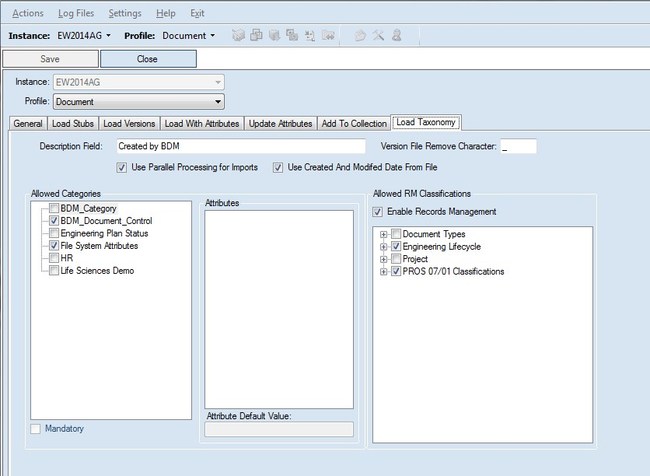
The Sophisticated Engine Within Bulk Data Manager Enables Content Suite Administrators to Load, Manage, and Intelligently Update Large Volumes of Documents and Related Meta-Data

Fastman, the leading provider of information management solutions for OpenText Content Suite, announced the latest release of their Bulk Data Manager solution. The sophisticated engine within Bulk Data Manager enables Content Suite administrators and power-users to load, manage, and intelligently update large volumes of documents and related meta-data quickly and accurately. Bulk Data Manager simplifies migration processes, reduces IT overheads, and ensures data integrity.

Fastman
Fastman

Also Read: Android Users Can Now Access On-Demand Content and PR with the Spry Mobile App

Alister Grigg
Alister Grigg

“As clients migrate and consolidate their documentation within Content Suite we’ve found they often need to bulk upload content, then attach meta-data that connects it with physical assets or other business objects,” said Alister Grigg, CEO of Fastman. “By enabling them to quickly import and accurately update large data sets in their Content Server or SAP Extended ECM repository, Bulk Data Manager has saved companies significant amounts of manual effort and re-work.”

The latest release of Bulk Data Manager enhances support for more complex Content Suite update scenarios. By introducing support for multi-value attributes, pre-validating access rights, and providing the ability to filter content based on file type or size, Bulk Data Manager 5.5 provides administrators with a one-stop solution for all content import and update needs.

Recommended Read: Globant Publishes Latest Book on How to Embrace Artificial Intelligence as a Catalyst for Augmented Intelligence

Domino Data Lab Partners With SAS to Accelerate Data Science Work in the Cloud

0
Domino Unveils Groundbreaking Innovations to Help Build and Operate Enterprise AI Fast, Economically and Responsibly

Cloud-Deployable Technology Empowers Innovation Breakthroughs With Faster Research Processes and Streamlined Model Delivery

Domino Data Lab, provider of an open data science platform, announced a partnership with analytics software leader SAS that paves the way for organizations to become model-driven via enterprise-grade data science success in the cloud. Users will be able to run SAS Analytics for Containers seamlessly in the cloud, using Domino as an elegant orchestration layer for infrastructure provisioning and management while facilitating and automating knowledge management, collaboration, and reproducibility.

Analytics organizations will uncover breakthroughs faster while reducing capital expenditures on infrastructure. SAS Analytics for Containers on Domino offers several notable benefits:

  • Accelerates research, allowing users to launch multiple SAS environments for model building.
  • Reduces model delivery friction by deploying multiple SAS applications simultaneously on Domino’s elastic compute infrastructure.
  • Eliminates rework, automatically tracking every detail of each SAS experiment including data, code, SAS version, environment, discussions, parameters, and results.
  • Enhances collaboration and provides complete reproducibility of past work.

Also Read: OLB Introduces Omnisoft Cloud-Based Commerce Platform

Nick Elprin
Nick Elprin

“Our mission at Domino is to help organizations become model-driven by offering an open platform that makes it quick, easy, and cost-effective for data scientists to work together, regardless of what tools or environment they run on,” said Nick Elprin, co-founder and CEO of Domino. “SAS remains the industry leader in data science and analytics tools, with a presence in 96 of the top 100 companies on the Fortune 500 list. This partnership will allow leading organizations to unify all their workloads and tools, unlocking new breakthrough products and operational efficiency gains.”

Gavin Day
Gavin Day

“SAS customers need both flexibility and governance when deploying data science and analytics programs, and SAS has developed a platform that supports both these imperatives,” said Gavin Day, senior vice president for US commercial sales at SAS. “The partnership with Domino extends that approach, allowing SAS customers to embrace an easy-to-deploy cloud implementation based on the latest container technology.”

Recommended Read: Beyond Limits Introduces Inaugural “Beyonders” Summer Internship Class

Stefanini Invests in Strategic Salesforce Support and Customization Services

0
Stefanini Invests in Strategic Salesforce Support and Customization Services

Stefanini TotalCare for Salesforce Is Comprised of Extremely Cost-Effective and Flexible Managed Services for Salesforce Help Desk, Admin, Enhancement, and On-Going Development Support

Investing in Salesforce to drive business solutions, Stefanini, a $1B global IT provider, offers an extensive set of end-to-end Salesforce services that provide strategies to expand the capabilities of clients’ enterprise CRM systems.  Customized to clients’ unique needs, Stefanini’s suite of Salesforce solutions enable clients to maximize ROI and the potential of their CRM platform.  Following years of successful project implementations, Stefanini is rapidly increasing its investment in its Salesforce delivery team resources and capabilities on a global scale.

Eric Edgerton
Eric Edgerton

As a flexible and agile partner, Stefanini offers customized Salesforce solutions to provide better visibility to customer data and enable clients to make better decisions. “Whether implementing a basic sales automation solution or leveraging the platform for more complex digital strategy, customization and experience are the keys to leveraging Salesforce for your unique business requirements.  With Stefanini’s knowledge and expertise of Salesforce’s extensive ecosystem, we make sure that you are optimizing the platform to deliver value to your business,” said Eric Edgerton, Director of Stefanini’s Salesforce practice.

Also Read: Salesforce-Sponsored Car 66 Finishes in Top-12 in Indy 500

Stefanini’s Salesforce solutions fall into two primary categories:  custom development and integration as well as support and maintenance. Powered by a team of certified industry experts, Stefanini’s development and integration services can deliver custom apps for marketing, sales, service, and other business needs with advanced integrations to other enterprise systems or development platforms.  For clients seeking cost-effective Salesforce support, maintenance, or on-going development, the company offers flexible managed services with the option of on-shore, near-shore, or off-shore delivery.

Comprehensive, Detailed, and Highly Architected Salesforce Solutions

Stefanini takes pride in delivering solutions that meet dynamic business objectives.  Our agile approach to application development ensures that the customer stays engaged throughout the development process.  In addition to Salesforce, our expertise in other web and mobile application development platforms allow us to deliver comprehensive, cross-platform solutions.  Our architecture-first approach and integration experience enable us to deliver enterprise solutions that scale.

Also Read: Salesforce Delivers New Innovations for Digital Engagement Across Marketing, Commerce and Service at Salesforce Connections 2018

“We understand that business needs change and evolve.  As powerful as the Salesforce platform is, it is imperative to deliver solutions that are architected, designed, and built for growth from the start.  Customers not only choose us for our deep Salesforce experience, but for the business growth and digital transformation initiatives we drive through systems integration, application development best practices, governance, and on-going support,” said Mr. Edgerton.  “There’s a reason why the majority of our clients are repeat customers.”

Stefanini also recognizes that many clients do not have the budget to retain in-house staff to support their ever-changing needs.  Couple this with the fact that Salesforce is continually introducing new technology and capabilities like Einstein, IoT, and Analytics into the platform – which require even greater specialized skills – and the problem becomes even worse.  Stefanini’s TotalCare for Salesforce fills that gap by providing flexible and cost-effective managed services for the initial deployment through on-going support and maintenance.

“With Stefanini’s strong global presence, deep industry expertise and flexible delivery models, we have the ability to transform and optimize Salesforce for small businesses or global enterprises alike,” Edgerton affirmed.

With a presence in 40 countries and the ability to provide service support in 35 languages, Stefanini leverages its global footprint, years of industry-specific experience and a vast range of resources to deliver solutions with speed, flexibility, and responsiveness to customers’ Salesforce instances and service desks around the world.

Recommended Read: Salesforce Marketing Cloud and Sitecore Enable Users to Better Understand Customer Interactions Across All Channels

Sitecore Hires Paige O’Neill as Chief Marketing Officer

0
Sitecore Hires Paige O'Neill as Chief Marketing Officer

With More Than Eight Years of Experience in the Martech Space, Paige O’Neill Most Recently Served as CMO for Digital Workplace Platform Provider Prysm

Sitecore, the global leader in digital experience management software, announced that Paige O’Neill has joined the company as chief marketing officer (CMO). Based in San Francisco, O’Neill will lead Sitecore’s global marketing organization, including the company’s marketing strategy, product marketing, communications, demand generation, and branding.

Mark Frost“No one is better placed than Paige to inform and inspire the Sitecore community about the opportunity to transform their businesses through superior customer experience,” said Mark Frost, CEO at Sitecore. “She knows the landscape, dynamics, and trends to spot and act on the opportunities that will be critical to achieving our strategic growth initiatives. And as an experienced CMO, she is intimately familiar with the challenges that marketers face to deliver digital experiences that meet ever-rising customer expectations.”

Also Read: Salesforce Marketing Cloud and Sitecore Enable Users to Better Understand Customer Interactions Across All Channels

With more than eight years of experience in the martech space, O’Neill most recently served as CMO for digital workplace platform provider Prysm, where she rebranded the company and helped it transition to a combined SaaS and hardware business. She previously served as CMO at SDL and helped the company successfully integrate and position its broad portfolio of solutions to focus on the company’s strength in digital experience. In prior marketing leadership positions, O’Neill contributed to Aprimo’s rapid growth and acquisition by Teradata, and helped build Oracle’s first SaaS offerings into the company’s fastest-growing business. O’Neill started her career in public relations, managing global database PR for Oracle and helping launch the IBM Internet Division and its first internet payment products.

Paige O'Neill
Paige O’Neill

“Sitecore is a company I’ve admired for several years, and I’m thrilled to join at this point in its strategic evolution, with such great momentum behind the business,” said O’Neill, adding, “The company already is one of the most respected brands in digital marketing technology, and it’s poised to completely redefine how organizations understand and communicate with their customers as unique individuals, on a global scale. I can’t wait to roll up my sleeves and help ensure that Sitecore’s innovative solutions are prioritized in the minds of digital marketers.”

Recommended Read: Cendyn Integrates With Sitecore via Hedgehog to Elevate Real-time Marketing Personalization

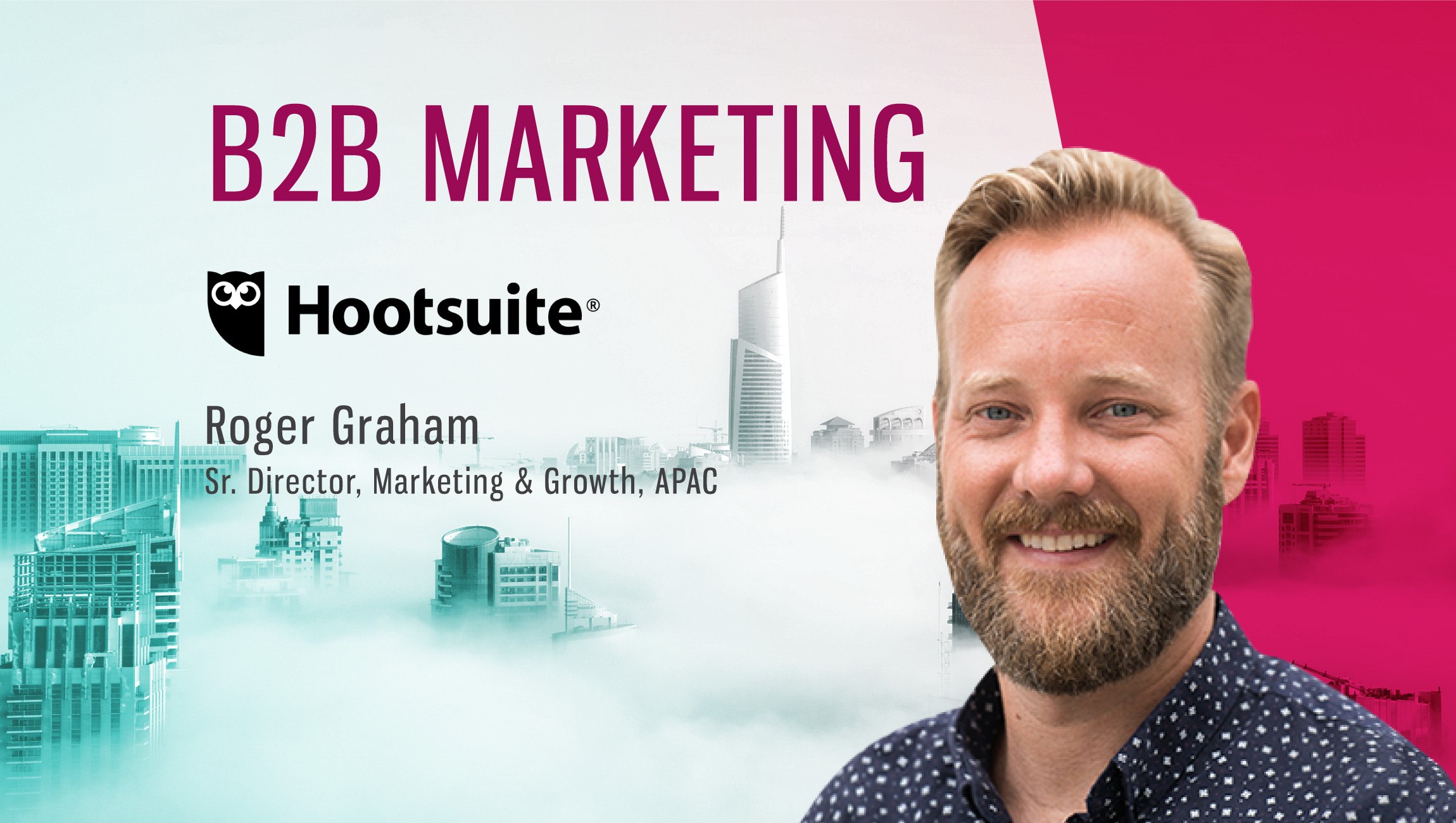
TechBytes with Roger Graham, Senior Director, Marketing and Growth, Hootsuite

0
Roger Graham

Roger Graham
Senior Director, Marketing and Growth, Hootsuite

Social media marketing and intelligence platforms are the most fascinating technology stacks for any organization for two reasons. Firstly, they offer a direct line of brand-audience engagement that even competitors can analyze. Secondly, they compete, in a collaborative manner, with the established CRMs and marketing automation platforms. In this space, Hootsuite leads the way for social media marketing. After recently launching Boost, social media content promotions on Facebook are scaling new heights in an organic manner. Roger Graham, Senior Director, Marketing and Growth, Hootsuite spoke to us about millennial preferences, B2B purchasing on social and the comparisons between various global markets for social media marketing tools.

Html code here! Replace this with any non empty text and that's it.

Tell us about your role at Hootsuite and the team/technology you handle.

I am the Head of Growth and Marketing for APAC at Hootsuite with over 15 years experience in digital, brand and product marketing. Hootsuite helps brands manage all of their social networks in one place, and integrates with more than 250 widely used business applications. On a regular day, I lead the teams across APAC and am responsible for growing the online revenue, enterprise lead generation and accelerating brand awareness of Hootsuite’s global social marketing platform.

Define the state of ‘Social Media’ for B2B marketing in 2018?

As mobile, social and real-time evolve faster than ever, it is imperative for B2B marketers to quickly pick up on these shifts. According to our Digital in 2018 report – developed in partnership with industry expert, Simon Kemp – mobile currently dominates the Asia-Pacific as 41% of the population are active on social media via mobile devices. Since 2017, social media users have also grown by 14%, raising social media penetration in the region to 42%. This provides marketers with plenty of opportunities to tap on social media analytics for customer insights.

However, more can be done to translate this data into proof of tangible growth through social media. According to Hootsuite’s 2018 Social Trends Survey, 56% of respondents indicated that being unable to prove the ROI of social media made it difficult for their organization to be successful with social media. One way of addressing this issue is by driving more education initiatives across organizations around strategies to unlock the power of social to drive business results.

How could B2B vendors leverage Hootsuite to reach global audiences?

There is no cookie-cutter approach to targeting a global audience as consumer (and decision maker) behavior differs across countries and even cities. In order to fully understand the needs and nuances of different markets, businesses need to understand how people discover, research, purchase, and become fans. In addition to creating compelling and localized content, businesses can also create new communication channels through vertical offerings on social media.

What we do at Hootsuite is to bring together a variety of social networks and business applications so that we equip B2B vendors with the ability to reach out to their audience at different parts of the world in a seamless and integrated fashion – from content scheduling right through to social listening and analytics technology.

Tell us more about your latest integration with Pinterest.

Even in the B2B space, visual appeal can also be a compelling sales tool. Tapping into the success of Pinterest as a visual discovery platform, Hootsuite’s integration will help brands inspire and time their actions, by easily scheduling and publishing pins from the Hootsuite dashboard. Social media campaigns and activity are also much easier to schedule, view or edit on a single dashboard. This enables better collaboration across teams for brand and content consistency as well as a secure and integrated workflow to manage multiple social media accounts.

How is the APAC tech market different from that in the Americas?

In the Americas, software and tech consulting make up the two largest revenue streams and have the fastest-growing budgets of the tech market. Some large markets in the Asia-Pacific are currently working towards assembling the infrastructures required to support shifts in technology adoption. It’s important to remember that there is a strong need to truly understand each market within the Asia-Pacific, all of which are unique with differing levels of maturity and understanding when it comes to the adoption of technology. For instance, in Singapore internet penetration is at 84% compared to Indonesia’s 50% primarily because Singapore’s telecommunication infrastructure is more robust.

How critical is it to distinguish customer experiences in B2B purchasing cycle?

Very! Apart from the price differences, the B2B purchase cycle is much more complex, often involving many stakeholders spanning across multiple teams and involves budget approvals before purchases are made by a procurement team. Many purchases in the B2B space come with some level of change management – whether it is processes, workflow, security or automation. This type of change often requires executive support, training and the understanding your stakeholders. Companies win when they can master the art of influencing the purchasing cycle while adding value throughout the customer experience.

How do millennials impact the entire B2B ecosystem? What are the major challenges and opportunities for marketers dealing with this segment of buyers?

Millennials have partly contributed to the disruption brought on by technology. To them, seamless, rapid and consistent customer experience is not a value-add, but simply the new normal.

This presents opportunities for B2B marketers to approach this market segment with a robust digital thinking and smooth customer experience. Appealing to the millennial market by going digital and mobile is equally crucial for companies established in the pre-digital era if they want to unlock new relationships and revenue streams. This is why it is vital for all businesses to continuously review and upgrade their sales and marketing tech stack, not just to remain competitive, but also to support them in the making of crucial business decisions.

Is the gap between buying needs and deliverables from B2B vendors widening? How does Hootsuite empower customers to bridge this gap?

Buying needs like social listening and content scheduling are similar for both B2B and B2C businesses alike. As new social media channels emerge, we review the needs of our customers on a regular basis so that we can make necessary integrations to help bridge this gap, ensuring that their target audience is readily accessible. For instance, Hootsuite’s integration to different martech stacks through an open API allows users to go from CRM, salestech and even across to customer service solutions.

How do you see emerging technologies like video, AR/VR, and Artificial Intelligence further impacting the B2B buying journeys?

There are some small, yet significant shifts in emerging tech that will start to reshape the entire buying journey – and beyond into customer retention. One of the early shifts is a move towards voice being accessible across ‘daily use digital’ including Google, Facebook, Amazon and Apple. This will impact how consumers engage with brands across their buyer journey from search to sals. It will, in turn, change the nature of advertising, too.

The biggest, and arguably the most anticipated, technological shift is the coming of age of AR & VR. Marketers around the world are both excited and terrified. As the adoption and advent reach the masses, this has the potential to have an impact as large as the internet itself. Imagine how complex your marketing program will be if you have to consider multi-dimensional universes and 3D interactive content as your vehicles for brand awareness and driving demand. Many companies can barely develop clean, powerful video, can you imagine if they have to engage in worlds that are created from the imaginations of millions of people? If you’re not curious, or at least intrigued, by AR & VR then you may be on the sidelines when this tech becomes mainstream.

Thanks for chatting with us, Roger.

Stay tuned for more insights on marketing technologies. To participate in our Tech Bytes program, email us at news@martechseries-67ee47.ingress-bonde.easywp.com

Verto Analytics Raises $13.4 Million to Expand its Audience Measurement Solutions to Address Media Fragmentation and Lack of Cross-Platform Consumer Insights

0
Verto Analytics Raises $13.4 Million to Expand its Audience Measurement Solutions to Address Media Fragmentation and Lack of Cross-Platform Consumer Insights

Latest Funding Will Support New Services, a Robust Client Success Program, and Verto’s Growth in the US and Europe. The Growth Round Comes at a Pivotal Moment as the Fast-Paced Media Measurement Market Evolves

Verto Analytics, the consumer-centric audience measurement company, announced that it has secured $13.4 million in growth-financing led by Conor Venture Partners, Open Ocean Capital, and Finnish Industry Investment with participation from Steve Farella, Chairman of MDC Media and Steve Marshall, CEO and Founder of Invision. The round investors also include notable industry executives such as Ben Feder, Head of investments for Tencent and previously CEO of Take Two Interactive, and Tom Glocer, Board member of Morgan Stanley and former CEO of Thomson Reuters. In this round Verto also welcomed venture investments from a variety of pre-IPO and growth stage venture funds in Finland, where Verto is headquartered, and the US, where Verto maintains its commercial hubs in San Francisco, Seattle, Cincinnati, and New York City.

The current approach to audience measurement has struggled to bridge the gap between the evolution of technology and consumer behavior: some of today’s biggest traditional measurement companies continue to rely on broken methodologies that fail to provide a holistic view of consumers. Since its founding in 2013, Verto has pioneered and mastered single-source panel-based cross-platform solutions to address these shortcomings and support consumer journey modeling, path-to-purchase modeling, segmentation studies and ad effectiveness solutions to provide deep consumer insights and competitive intelligence. Verto will use the new capital to fuel continued growth in the fast-paced media measurement market, boost its customer success program, its commercial account management, and its Helsinki-based Verto Data Lab – a center of excellence dedicated to continued innovation in this area for the next decade.

Also Read: Publishers Clearing House Delivers 92% Audience Data Match Rate

Hannu Verkasalo
Hannu Verkasalo

“Over the past five years, we have built the business from scratch into one of the more formidable forces driving innovation in cross-platform audience measurement,” said Hannu Verkasalo, CEO and founder of Verto Analytics. “The new round of funding will accelerate Verto’s growth and extend our commercial operations in key markets – most notably in the US We have proven the product-market-fit over the past two years, grown our customer base by a factor of four, and doubled annual revenues every year since 2015. The new round will equip us with capital for deals and investments that will ultimately help launch new services, improve customer operations, and penetrate  new segments where Verto’s cross-platform audience measurement data is needed. With some of our trusted previous investors joining this round, together with a healthy influx of new investors, we are well positioned to continue growing our business within key target verticals as well as shift focus towards brands, advertisers, and agencies, taking measurable steps to keep customers at the center of our attention.”

After 5 successful years operating in the US and UK, with clients including Microsoft, Intel, Google, Netflix, CNN, and Kargo, Verto has continued building its original single-source methodology through a suite of new syndicated research services. The methodology has produced three granted patents to date, with an additional 13 patents currently under consideration by both the European and US patent offices.

Also Read: Datonics’ Audience Data Now Available Through The Neustar Identity Data Management Platform

Steve Farella
Steve Farella

“Audience measurement used to be focused solely on high-level metrics like reach, frequency, engagement, and the solutions were very siloed by nature,” said Steve Farella, Chairman of MDC Media, an investor in this round and new member of Verto’s advisory board. “In turn, what Verto has demonstrated with their solution and already impressive set of clients, is something I think will be the norm in the future – integrated, single-source, cross-platform measurement. Verto’s solutions can help media buyers make data-driven decisions on marketing strategies, digital touchpoint planning, and understand how to reach consumers exactly at the right point, with the right messaging in a cross-platform world. I am delighted to get involved and help Verto’s team succeed now and in the future.”

Stephen Marshall
Stephen Marshall

“After 25 years in the media industry successfully building technology companies from the ground up, I have seen how important it is to be bold, get the timing right and have the best team to support a disruptive technology,” said Steve Marshall, Partner, Deep Fractal and Former CEO and Founder of INVISION and Theory M. “What I see in Verto is their potentially ground-breaking approach to measuring consumer behavior for the first time across every single set of media channels – both old and new. It’s a huge opportunity to disrupt how media is bought and sold. As a founder of INVISION, I saw how automation could significantly increase advertiser ROI and reduce the operational friction involved in selling and buying cross-platform advertising. The missing link was always the lack of a true cross-platform currency, and I now see the opportunity for Verto to fill that need across the industry. I am looking forward to helping them leverage their disruptive platform to build solutions that will potentially change the future of cross-platform advertising.”

Recommended Read: Performance Horizon Rebrands as Partnerize, Introduces Product Enhancements to Make it Even Easier for Leading Brands to Create Sales and Marketing Partnerships

Adsonica and Advangelists Announce Mobile Audio Ads

0
Adsonica and Advangelists Announce Mobile Audio Ads

Video Performance at Display Cost

Adsonica and Advangelists LLC announced the immediate availability of Audio Ads on the Advangelists automation based mobile marketing platform.

Marketers will spend $29 billion on non-video display ads in 2019 according to emarketer.com, yet only 0.06% viewers will click on them. With the launch of Audio Ads, they can achieve video-like levels of performance using low-cost media. In live tests, they delivered 5-8 times the industry average CTR for static display ads.

Adsonica’s patented technology combines audio and image into a single file, eliminating loss during transmission or latency, and is served like an ordinary image ad. Adsonica ads are displayed using scripting and the built-in capabilities of the browser. Two examples of standard ad units are:

Leaderboard 728×90

250×300

Limitless Creative Options Using Sound

“Using sound in advertising gives creative teams a new way to engage users at affordable CPMs,” said William Agush, CEO of Adsonica/Shuttersong. “Sound can put viewers into a buying mood, add product detail, or immerse them in an environment like the beach. We are thrilled to be working closely with Advangelists, a leader in automation-based mobile marketing.”

Also Read: Oracle NetSuite Named a Leader Among B2B Commerce Suites for Midsize Organizations by Independent Research Firm

Deep Katyal, CEO of Advangelists says, “There’s a generation of multitaskers out there with short attention spans. Audio ads give us the platform to offer passive advertising. This form of advertising appeals to the consumer that wants to continue reading their article whilst listening to the message from an advertiser. We are very excited to add Audio Ads to our portfolio and we look forward to its adaptability in the marketplace.”

Adsonica/Shuttersong developed and patented technology that combines image and non-image data into a single file. Advangelists believes that advertising should be an amalgamation of great features, great usability and have all the tools needed in one single platform.

Recommended Read: Think Your Website is Too Small to be Hacked? Think Again, Says Sitelock

Interview with Travis Montaque, Founder and CEO, Emogi

0
Travis Montaque

[vc_wp_text]“We’re also allowing brands to join the conversation seamlessly – not as ads, but as branded content that is presented to users when they want to share them.”[/vc_wp_text]
[easy-profiles profile_twitter=”https://twitter.com/travismontaque” profile_linkedin=”https://www.linkedin.com/in/travismontaque/”]

Tell us about your role at Emogi and how you got here. What inspired you to start a Conversational Content Platform?

I serve as the Founder and CEO of Emogi a content engine for communication services that helps people have better conversations whether they’re texting on a chat app, commenting on a post, or sending a video to friends. Partnering with leading messaging platforms, Emogi’s technology redefines messaging as a new hub for brands, and sticker and GIF content creation.

Emogi actually stands for Emotion Engine, which I devised in college after witnessing a stark change in the way people were communicating. I built an app that allowed people to share news and video content with a twist. Users could respond to the news posts, and I began noticing that, even if they didn’t use any words, they would almost always share some kind of reaction to the story as an emoji. That’s when I focused on providing 12 emoji reactions for users. This caught on fire and I soon realized that helping people express themselves with this type of content was the bigger opportunity. From that point on we became Emogi, with a new mission to enrich conversations everywhere with useful content in the place where people share the most.

When we conducted user studies to understand why people use emoji, stickers and GIFs while messaging, we found the top 4 reasons were “helps me more accurately express what I’m thinking”, “makes it easy for people to understand me”, “creates a more personal connection with others”, and “simply, a better fit than words for the way I think.” We are at the heart of supporting their needs with our mission.

For the first time, we’re also allowing brands to join the conversation seamlessly – not as ads, but as branded content that is presented to users when they want to share them. Our technology, the Emotion Engine, surfaces content to people as their conversation unfolds, based off where they are, the ongoing conversation, or what they might be searching for at a particular moment as they message.

What’s the most fascinating aspect of leading a content team, and a data science team in an AI-driven era?

It’s a wonderful blend of art and science. I might start out the day working with the data science team to understand discourse and related semiotic theories that when combined with machine learning helps us make sense of expression on our platform. By understanding the connection between content, words, people, places, and time, Emogi’s Emotion Engine can deliver conversational content users will love, when they want it.

My day may then end in conversations with the creative studio team, discussing content creation strategy for a significant tentpole event like the Super Bowl, color theory for social, or making sense of the latest meme that broke out all over the internet. It’s why I love my job. I’m lucky to work with the most diverse set of brilliant minds and have varied and intellectually stimulating conversations throughout the day, on a daily basis.

Given the changing dynamic of brand safety equations, where do you see Emogi fitting into a CMO’s marketing or tech stack?

Our solution gives brands 100% brand safety, 100% viewability, and 100% SOV in targeted messaging conversations. In a landscape where CMOs are losing sleep over brand safety and fraud, we know that when a piece of branded content is shared within the Emogi platform, a potential consumer has made an active decision to share that piece of content to their network of friends and family members because they believe it is enriching their conversation. And we know that 95% of messages are opened within 3 minutes of when they were sent.

The brands we work with have complete control over the targeting strategy of where their content appears. For example, Mucinex wanted to be an active part of cold and flu conversations, so our Emotion Engine optimized content delivery in real time to consumers messaging about topics like being “tired”, “sick”, “cold”, dealing with “mucus”, “chest congestion”, and expressing sentiments like “feel better” – driving exposures and shares of the branded content.

What is the ‘State of Contextual Content technology’ in 2018?

Contextual content will hit critical mass in 2018, and is approaching its inflection point. The adoption of intelligent content experience in messaging platforms will be a table stakes feature in the years to come as users will rely on the platforms to naturally and contextually help them communicate with peers.

What does your ‘Ideal Customer’ Profile look like? Which new geographies are you currently targeting?

92% of the online population uses emoji, so when thinking about our customer we don’t need to do much work there – practically everyone texts and every one is sharing conversational content. When we think about our target audience, we think about the product teams at messaging, social, gaming, and dating apps, and any other platform that has a significant number of users communicating with each other, as we aim to help them deepen emotional expression in their apps by giving their users access to conversational content.

We also have a unique opportunity to allow global brands to reach consumers at moments that are incredibly meaningful and specific to their business. Whether a person is feeling sick, hungry, or beautiful, Emogi allows marketers to reach consumers in those moments.

What startups in the technology industry are you watching keenly right now?

In messaging, most of the innovation is coming from the larger more established platforms like WeChat, Google, Facebook, and Snapchat. However, I’ve been paying attention to Magic Leap. They have the potential to reinvent the landscape for AR/VR and their technology remains cryptic to most. I look forward to their big reveal.

Could you tell us about an outstanding digital campaign/ customer success story at Emogi? 

We recently worked with McDonald’s McCafé brand to help them join messaging conversations as a top of mind destination for coffee during morning routines.

Emogi created custom McCafé content consumers actively chose to incorporate into their daily “coffee” and “morning” conversations. Emogi’s Emotion Engine provided this content in real time to consumers that were talking about coffee, or sending morning greetings.

As a result, consumers were 70 percent more likely to share McCafé content over unbranded content during their morning routines discussing coffee. What began as a conversation about someone needing or wanting a cup of coffee became a conversation about McCafé.

How do you prepare for an AI-centric world as a business leader?

I sit on certain boards and when I hear technology being described as “tactical” rather than strategic, I strive to shift the thinking. I prepare for an AI centric world by making AI a first-class citizen in all strategic discussions. Our intelligence capabilities drive the discussion when we think about product development, marketing, and how we monetize our business. Business leaders should not build business that are “AI savvy” but “AI innate”.

How do you inspire your people to work with technology?

Equip them with the technology and tools that enable them to easily integrate it into their workflows and see demonstrable benefits.

Evangelize passionately the utility and possibilities with respect to technology.

One word that best describes how you work.

Fast

What apps/software/tools can’t you live without?

Instagram/Slack/LinkedIn/GoogleAlerts

What’s your smartest work related shortcut or productivity hack?

Establishing goals and non goals. Non goals are also important things that should get done but have to be selectively neglected in order to achieve the critical goals. Focusing on only 5 things maximum at a particular time when there is a lot to do helps me focus on what’s MOST important at all times and makes me more effective.

What are you currently reading? 

I’m currently reading Good to Great. I usually listen through an audiobook. I try to read books that help me understand the experience we are currently going through as a startup so that we can try to avoid easy mistakes.

What’s the best advice you’ve ever received?

To try and fail is better than not having tried at all.

Something you do better than others – the secret of your success?

Recruit talented people and inspire them to challenge conventional thinking.

Create change agents.

Tag the one person in the industry whose answers to these questions you would love to read:

Chris Cox, Facebook

Thank you, Travis! That was fun and hope to see you back on MarTech Series soon.5

[vc_tta_tabs][vc_tta_section title=”About Travis” tab_id=”1501785390157-b58e162d-0ae25a4b-c27aca64-108e51b0-80edaf37-bd3d357a-6c46d712-3b68db8f-23cb6ce4-60c4″]

Travis Montaque is the Founder and CEO of Emogi, a content engine for communication services that helps people have better conversations whether they’re texting on a chat app, commenting on a post, or sending a video to friends. By understanding the connection between content, words, people, places, and time, Emogi’s Emotion Engine serves up relevant and expressive content at the perfect moment – resulting in deeper emotional expression for users. Partnering with leading messaging platforms, Emogi’s technology redefines messaging as a new hub for brands and content creation.

In 2016, at the age of 23, Travis was named Forbes 30 Under 30 for discovering this data-driven marketing method that provides greater emotional expression in today’s digital conversations. He is a regular speaker with recent appearances at Cannes Lions, CES, Advertising Week, SXSW, Harvard Business School, among others. Recent profiles of Travis and his company Emogi have appeared in publications like The Wall Street Journal, Forbes, and The New Yorker. Travis is an inaugural member of the University of Miami Marketing Advisory Board.

[/vc_tta_section][vc_tta_section title=”About Emogi” tab_id=”1501785390320-2d44fa50-740c5a4b-c27aca64-108e51b0-80edaf37-bd3d357a-6c46d712-3b68db8f-23cb6ce4-60c4″]

emogiEmogi is a content engine for communication services that helps people have better conversations whether they’re texting on a chat app, commenting on a post, or sending a video to friends. By understanding the connection between content, words, people, places, and time, Emogi’s Emotion Engine serves up relevant and expressive content at the perfect moment – resulting in deeper emotional expression for users. Partnering with leading messaging platforms, Emogi’s technology redefines messaging as a new hub for brands and content creation.

[/vc_tta_section][/vc_tta_tabs]
[mnky_heading title=”MarTech Interview Series” link=”url:https%3A%2F%2Fmartechseries-67ee47.ingress-bonde.easywp.com%2Fcategory%2Fmts-insights%2Finterviews%2F|||”]

The MTS Martech Interview Series is a fun Q&A style chat which we really enjoy doing with martech leaders. With inspiration from Lifehacker’s How I work interviews, the MarTech Series Interviews follows a two part format On Marketing Technology, and This Is How I Work. The format was chosen because when we decided to start an interview series with the biggest and brightest minds in martech – we wanted to get insight into two areas … one – their ideas on marketing tech and two – insights into the philosophy and methods that make these leaders tick.

2018 Content Marketing Awards Winners & Top Finalists Revealed

2
2018 Content Marketing Award Winners & Top Finalists Revealed

Content Marketing Institute Announces Winners in 2018 Content Marketing Awards

The Content Marketing Institute (CMI) just announced the 92 category winners as well as the finalists for the top four prizes in the prestigious 2018 Content Marketing Awards. The Content Marketing Awards, produced by Content Marketing Institute, is the largest and longest-running international content marketing awards program in the world.

This year’s panel of all-star judges reviewed more than 1,100 entries to choose the best of the best in content marketing excellence, recognizing all aspects of content marketing, from strategy to distribution, and from editorial to design.

“I’m wowed by the quality of entries in this year’s Content Marketing Awards,” says Stephanie Stahl, general manager, Content Marketing Institute. “The level of innovation and creativity is truly inspiring. We’re excited to recognize the achievements of all the winners and finalists for what they are doing to not only advance the practice of content marketing but to help their organizations and clients be successful.”

Also Read: Think Your Website is Too Small to be Hacked? Think Again, Says Sitelock

Additionally, CMI revealed the finalists for the top four Content Marketing Award prizes: Content Marketing Project of the Year, Agency of the Year (two categories based on company size) and Content Marketer of the Year.

The winners will be announced and celebrated at a live awards ceremony during Content Marketing World, September 5, 2018, in Cleveland, Ohio.

Project of the Year finalists include 5 of the 92 category winners:

  • AWOL inspired by Qantas (Junkee Media)
  • Beyond Silence – Sunovion Pharmaceuticals Inc. (Biosector 2, a Syneos Health company)
  • Healthcare IT News Australia – HIMSS (Mahlab)
  • Ideas of Order Magazine (Redbird)
  • Virgin Media Play Magazine – Virgin Media Ireland (Zahra Media Group)

Agency of the Year finalists for agencies with LESS than 100 employees:

  • 256 Media
  • Imprint
  • Influence & Co.
  • PM, poslovni mediji
  • Redbird
  • Storyation

Agency of the Year finalists for agencies with MORE than 100 employees:

  • Marcus Thomas LLC
  • MSP-C, a division of MSP Communications
  • New Content
  • Stein IAS
  • VERB Interactive, Inc.
  • Yesler

Content Marketer of the Year finalists include:

  • Randi Bartelmie, Director of Global Brand & Content, Symantec Corporation, Consumer Business Unit
  • Bertrand Cerisier, Vice President, Global Marketing Workplace Solutions Business Group, Xerox Corporation
  • Beverly Jackson, Vice President, Social Strategy, MGM Resorts International
  • Glenn LaFollette, Senior Manager of Brand Strategy, Corporate Marketing, JLL
  • Venetta Linas Paris, Senior Manager, Content – Global Marketing, Aon
  • Jason Miller, Head of Content and Social Media Marketing, LinkedIn Sales & Marketing Solutions EMEA
  • Evan Parker, Managing Director of Content Strategy, NASCAR

Content Marketing World 2018 will be held September 4-7, 2018, in Cleveland, Ohio. This year’s event expects to draw 4,000 attendees from more than 70 countries.

Recommended Read: NetLine’s Research Identifies Important B2B Content Marketing Strategy Opportunities

Android Users Can Now Access On-Demand Content and PR with the Spry Mobile App

0
Android Users Can Now Access On-Demand Content and PR with the Spry Mobile App

Spry for Android Signals Growth for the Tech Startup

Spry, the first mobile public relations network, extended its reach with the launch of a Spry Client app for Android. Spry’s innovative on-demand platform is now available to virtually all smartphone users, whether on an Android or an iOS device. With more than two billion active Android devices worldwide, Spry now reaches a much larger set of organizations and businesses that, regardless of size, need affordable communications services from proven PR and journalism talent.

Angie Schneider
Angie Schneider

“Our unwavering objective since we launched Spry earlier this year has been to make high-quality content and public relations services accessible to as many businesses as possible, regardless of their size,” said Angie Schneider, Founder and CEO of Spry. “With today’s expansion of Spry to Android devices, we’re continuing to deliver against this market need.”

Also Read: DLive, the World’s Largest Streaming Platform on Blockchain, Launches on Android

The Spry for Android app launch comes at a time when we are spending more time than ever on our mobile devices, an average of 3.3 hours each day, according to venture capitalist Mary Meeker’s recently released 2018 Internet Trends Report. Yet Meeker’s report also notes the backlash against apps that are time consuming and recognizes the demand for apps that create meaningful interaction in as little time as possible.

The newest version of the Spry Client app on both Android and iOS features a redesigned dashboard for easier navigation and allows users to quickly upload information via video and audio as well as through links and attachments.

Also Read: Taboola Partners With ZTE; Brings News Personalization to Android Devices

“Spry is the best way to help companies save precious time by removing the pain points that previously came with getting great content or tools for publicity. Our proprietary algorithm makes sure the work is completed by an expert in your relevant industry, without the hassle of having to vet them yourself, or even meet them,” Schneider said. “The way we have productized PR services means you get what you need delivered as easy as a car or sandwich in today’s mobile world.”

With the Spry Client app, any organization needing quick deliverables can now access world-class talent to order press releases, blog posts, media and influencer lists, LinkedIn articles, etc.  This is done with only a few swipes and at a fraction of the cost of what it used to take on the open market. Spry matches client projects with the right talent in the Spry workforce, a network of carefully vetted writers, marketers and communicators. The algorithm considers experience, expertise and even personal passions to ensure that each project is completed by the best person for the job, on time and on budget.

Recommended Read: World’s Leading Photo Animation App Plotaverse Released For Android

NetworkNewsWire Latest Publication on Gamification Features DeepMarkit

0
NetworkNewsWire Latest Publication on Gamification Features DeepMarkit

NetworkNewsWire Announces Publication on Gamification and Entertaining Features Morphing Web Visitors Into Loyal Customers 

NetworkNewsWire, a multifaceted financial news and publishing company,  announced the publication of an editorial featuring DeepMarkit Inc., a client of NNW and gamification technology company inventing new ways to engage consumers and other audiences. The publication is titled E-Commerce Growth Potential Supercharged by Gamification.

Gamify has been winning over merchants due to ease of setup, the multiple brandable game types available and the ability to offer enticing, tailorable rewards using custom odds. As is evident from the demo, gameplay and potential rewards are made accessible to the user upon simply supplying an email address. Such approaches to the implementation of gamified customer conversion technology have seen great successes in recent history and are continuing to find favor due to their readily observable efficacy. A key element in all of this appears to be an inherent human compulsion to play games and solve puzzles, due in part it seems to the kinds of direct cognitive and creative benefits such activity can produce.

Also Read: DeepMarkit Launches Gamify For All Platforms

The DeepMarkit team is reportedly hard at work developing what users have asked for, with more games, gamified surveys and an even richer feature set to be launched with the paid version of the app coming out in coming months. Gamify currently supports full customization of all text fields, making the solution a perfect fit for multilanguage deployment around the globe. Hence the recent partnership with ITN International, which works directly with corporate event producers, marketing agencies, trade show managers and exhibitors across six continents.

By cutting through the overload of information in today’s market, NNW brings its clients unparalleled visibility, recognition and brand awareness. NNW is where news, content and information converge.

Recommended Read: Think Your Website is Too Small to be Hacked? Think Again, Says Sitelock

Strong Programmatic AdTech Ownership Key to Winning the Battle of Differentiation

2
Strong Programmatic AdTech Ownership Key to Winning the Battle of Differentiation

The Latest Study by ExchangeWire and IPONWEB Reveals 49% of Agencies Rely on Own Advertising Technology for Programmatic Media Buys and Improve Agency Performance

Tech ownership is key to building the right momentum to sustain credible success in programmatic media buying. In a recent research by ExchangeWire, in association with IPONWEB, a majority of respondents agreed that tech ownership drives performance and instills confidence in the customers to forge a stronger publisher relationship. A highlight from the report suggests that those who rely on their own technology to perform programmatic buys are more likely to see added benefits over a year. This is attributed to tech ownership providing a more aggressive field in pursuing their programmatic media buying and client offering priorities.

Read More: Key Martech-Focused Takeaways from Mary Meeker Internet Trends 2018

Understanding the Pillars of Programmatic AdTech and its Relation to Value-Based Partner Empowerment

The research report titled, “Agents of Change: The Rise of the Programmatic Media Agency”, manages to mine into the challenges and opportunities arising from the shift to programmatic media trading. The report also studied the impact programmatic media trading has on the relationships with clients and publishers, and how they are leveraging technology to create differentiation and provide new value to partners.

Publishers Search Programmatic Technologies for Media Efficiencies, and Measurement and Analytics, to Differentiate

Nearly half (49%) of all advertising agencies undertake programmatic media buying with their own technology, while 34% combine their own with third-party technology and 17% rely exclusively on third-party offerings. Agencies in EMEA lead the way, with 58% in the region relying solely on their own technology; this drops to 56% for North American agencies and 33% for those in APAC. It provides clear evidence of the benefits to agencies of owning and operating their own technology.

Asked to rate their performance across a number of programmatic tactics, agencies returned verdicts of very strong as follows–

Programmatic tactic Agencies using their own technology exclusively  Agencies not using their own technology exclusively 
Data activation 50% 31%
Creative optimization 46% 20%
Audience segmentation 41% 20%
Campaign measurement and analytics 50% 18%
Measuring the incremental impact of media buys 48% 27%

Agency-Publisher Relationships

The importance of agency-publisher connections was also recognized, sixty-three percent of agencies using only their own programmatic media buying technology reporting major improvements in their ability to build relationships with publishers. This compares to 33% of those who do not exclusively use their own programmatic buying technology.

Recommended ReadB2B Buying Disconnect: Are You Targeting the Right Set of Customers?

Programmatic Ecosystem Knowledge

In addition, the ability to understand the programmatic ecosystem is a key differential, particularly in EMEA where 51% of all agencies say this is the case compared to 26% in North America and 33% in APAC.

Perhaps unsurprisingly, agencies who own their own technology (54%) were more likely to believe that this is a key differential than those that do not (41%).

Delivering on Targets

Agencies owning their own technology are revealed to be more ambitious when it comes to the targets they have set themselves for the next year.  They expect their technology to deliver more, including combatting ad fraud, furthering omnichannel, improving campaign measurement, building customized algorithms for individual client buys and continuing to expand their relationships with publishers.

Read More: Follow That Puck: Multi-Channel, Multi-Location Marketing Is Moving into the 21st Century… Are You?

Discussing the research, Brian Fitzpatrick, General Manager of Demand Solutions at IPONWEB, said, “Agencies that own and therefore control their own technology stack have the competitive edge thanks to better performance across a range of programmatic touch points. Owning technology also gives an agency better visibility of clients’ campaigns, enabling them to drive up ROI.

Brian continued, “Owned technology also gives agencies the transparency across the ad tech supply chain that is increasingly being demanded by clients; as a result, they are better equipped to tackle issues such as the tech tax, ad fraud, viewability, and brand safety. And, as illustrated by the research, it helps agencies build the all-important links to publishers and inventory.”

Read More: Is GDPR Really Changing Ad Tech?

Cost Benefits of Technology Ownership

Despite the clear benefits of programmatic technology ownership, there are some roadblocks to more agencies taking this route. When evaluating whether to build their own ad tech stack or use a third party, agencies that do not currently exclusively use their own technology cite the cost of set up (71%) and cost of maintenance (67%) as the main deterrents. However, these reasons are also revealed as key considerations for agencies that opted to build their own technology, indicating that, with experience of both options, they regard owning their own technology as more cost efficient to use a third party.

Hugh Williams, Senior Data Analyst, at ExchangeWire, said, “Committing to any technology ownership is not a decision to be taken lightly. Our research with IPONWEB looks at the intricacies of the ad tech ecosystem from the perspective of delivering strong programmatic performances; it aims to enable agencies to make informed decisions about their modus operandi and subsequent investment.”

Research Methodology

The figures are key findings of new research by ExchangeWire, in association with IPONWEB, which surveyed 129 professionals working in programmatic media at marketing agencies across APAC, EMEA, and North America. It goes on to reveal that agencies that take greater control over their programmatic technology achieve superior performance across a number of key media buying and measurement criteria. The research was conducted by ExchangeWire between 4 May and 2 June 2018.

Recommended ReadInfluencer Solutions Will Become a Core Component of the Marketing Stack

TrueCommerce Announces Integration with Shopify eCommerce Platform

1
TrueCommerce Announces Integration with Shopify eCommerce Platform

Shopify Merchants Get a Unified Platform for Integrating Commerce Channels with Backend Business Systems

TrueCommerce, a global provider of trading partner connectivity, integration and unified commerce solutions, has announced the availability of integration with Shopify, a leading eCommerce platform powering over 500,000 merchants across 175 countries. The new product offers Shopify merchants a unified platform for integrating all commerce channels with their business systems and supply chain network. Additionally, TrueCommerce provides the Shopify community with access to over 92,000 fulfillment partners pre-connected on the TrueCommerce global network.

“The current wave of retailing places pressure on organizations across the value chain to grow their brands and retool their supply chain to offer a true omnichannel experience,” said TrueCommerce president Ross Elliott. “TrueCommerce’s innovative supply chain solutions help equip organizations with the key capabilities needed to build and grow their digital strategies in a complicated and fiercely competitive market. TrueCommerce integrated our full capabilities with the robust Shopify platform to better serve our customers who are asking for our help equipping their business to compete more effectively and grow in today’s marketplace.”

Also Read: Think Your Website is Too Small to be Hacked? Think Again, Says Sitelock

Built on the TrueCommerce Foundry platform, the Shopify integration offers the following key benefits and capabilities:

  • Unified multi-channel integration platform integrating online orders placed on the Shopify storefront as well as orders placed by national retailers and through digital marketplaces
  • Automatically sends tracking information and order confirmations back to Shopify
  • Publishes enriched product content to Shopify’s storefront optimizing product listings and assortments while also keeping inventory synchronized in real-time
  • Seamlessly integrates Shopify orders with over 25 leading accounting and ERP systems while also synchronizing order and fulfillment status with Shopify
  • Timely order fulfillment capabilities including direct integration with TrueCommerce’s Pack & Ship solution
  • Fulfill orders utilizing pre-connected dropship vendors and 3rd party logistics providers
  • Leverages available product information management (PIM) capabilities to sync product data and pricing between a Shopify store and a business system

TrueCommerce Foundry is a broad set of unified commerce services and apps that connect customers, suppliers, channels, and systems. The new offering revolutionizes supply chain visibility and collaboration by helping organizations make the most of their omnichannel initiatives through business P2P connectivity, order management, collaborative replenishment, intelligent fulfillment, cross-functional analytics, and product information management.

The platform leverages TrueCommerce’s Global Commerce Network that includes over 92,000 pre-connected retailers, distributors and logistics service providers. A true managed services provider, TrueCommerce manages the onboarding process for new trading partners as well as the ongoing management of trading partner specific mapping and labeling changes.

Recommended Read: Fractal Analytics Hosts Inaugural ai.now Conference to Help Fortune 500s Realize the Value of Artificial Intelligence