Home Blog Page 4228

Location Data and The Growing Role in Marketing and Advertising Campaigns

0
Location Data and The Growing Role in Marketing and Advertising Campaigns

The Recent Survey on Location Data Revealed Most Respondents Agree That Geo-Marketing Is the Next-Big-Thing After Automation and AI-Driven Ecommerce

Let’s take a shot at the most enterprising question of 2018 —

How are companies using location data, and what is its impact on digital campaigns?

To answer this, Factual, a global leader in location data, surveyed 700 location data buyers in the US. The purpose of the study was focused at understanding the true state of location data marketing and how different companies use location data to grow their customer base, increase engagement and refine their personalization and customer experience (CX) across devices.

Read More: Key Martech-Focused Takeaways from Mary Meeker Internet Trends 2018

Here are key takeaways from the latest report on Location data marketing.

Location Data: The Primary Success Driver

Factual Graphs
Factual Graph

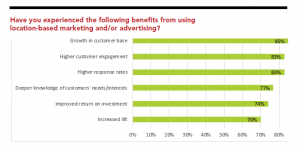
More than 80% of the respondents surveyed have acknowledged that location data boost advertising and marketing campaigns’ effectiveness.

83% of the respondents have agreed to experience a higher response rate and to see a higher customer engagement in their marketing and ad campaigns.

Recommended Read: Convince Mozilla About Risks of AI and Drive Home with $225,000

More Than 8 in 10 Mobile Marketers Use Location-Based Data to Personalize CX

Modern Marketing teams are better equipped to attribute the success of their campaigns to location data. Mobile marketers recognize the value of their personalized campaigns with geo-location. More than 80% of the respondents are either using location data or plan to use it in the coming twelve months to personalize the CX.

2018 Location-Based Marketing Report
via – 2018 Location-Based Marketing Report

Concerns about Facebook-Google Duopoly in Advertising is Bigger than Anticipated

  • 92% of the respondents feel that they have valid concerns about the duopoly that are driving online advertisers.
  • 71% of the respondents are seeking an alternative to Google and Facebook.

Quality of Data and Transparency are Important Metrics to Judge Location Data Validity

Most important data location features include –

  • Accuracy and higher quality of data
  • Effectiveness against fraud reporting
  • Location data capabilities at scale
  • Geo-marketing is Growing Stronger and Smarter with Technology Advancements

Most respondents agree that geo-marketing is the next-big-thing after automation and AI-driven ecommerce. Between 70 and 85% of the respondents find a strong and increasing lift and improved ROI on their location data-based marketing and advertising campaigns.

Overall, location data is a strong element in marketing and advertising campaigns. Using location data brings wide-ranging benefits to marketers seeking highly refined personalized CX. These benefits include, increased understanding of the audiences, building positive brand value with relevant CX, and accurate targeting. All these eventually translate to an increased lift in sales and higher conversion rates.

Currently, Factual offers Geopulse, Global Places, Observation Graph and Engine in its location data products suite. Factual will be at Cannes Lions.

Recommended ReadContextual Content and AI: The New Wingmen for Email Marketing Campaigns

Contently Appoints Marketing Veteran Giuseppe Caltabiano to Head Content Strategy

0
contently

Caltabiano Is Based out of Contently’s London Office

Contently, the content marketing solution of choice for the world’s most valuable brands, announced the appointment of marketing veteran Giuseppe Caltabiano as Head of Content Strategy for EMEA and APAC. Caltabiano brings more than 20 years of experience as a global marketing and writing expert, which he will utilize as he leads the content strategy service offering that is provided to Contently clients in EMEA.

Joe Coleman
Joe Coleman

“At Contently, we are committed to helping marketers create engaging and accountable content that allows them to strategically meet and exceed their marketing objectives,” said Joe Coleman, co-founder and CEO of Contently. “As we continue to expand our client base and expand our offerings, we know that adding Giuseppe to our leadership team will only further move the needle for our business. His extensive experience leading content marketing strategy in global enterprises is incredibly valuable for advising top global brands across the financial, technology, industrial, and consumer sectors to produce world-class content and digital marketing strategies. We’re pleased that our clients can now benefit from his years leading global marketing strategy programs in B2B and B2C enterprises.”

Caltabiano is based out of Contently’s London office and will report to SVP of Sales, Marc Schraer.

Also Read: Brightcove Pushes the Envelope with Video Experiences that Increase Customer ROI

Giuseppe Caltabiano
Giuseppe Caltabiano

“In a marketplace oversaturated with content, Contently is the original thought leader and has remained a true pioneer,” said Caltabiano. “The company is globally recognized for its expertise in creating breakthrough content programs for the world’s best brands. I look forward to applying my experience to the next frontier of content marketing with Contently’s unified approach that integrates strategy throughout the ContentlyOne solution.”

Before joining Contently, Caltabiano was Chief Strategist at Scorch Agency, a leading B2B enterprise content marketing agency. He also held executive roles at NewsCred and Schneider Electric. Amongst his accolades, Caltabiano was named to the “Top 25 Masters of Multichannel Marketing,” in 2017 and voted the “Most Influential B2B Marketers” by software company, Traackr, in 2016.

Also Read: MediaAlpha Brings Header Bidding Benefits to Publishers Selling Performance Marketing

MNI Targeted Media Inc. Ranks as #1 Ad Local Network for Fourth Consecutive Year

0
MNI Targeted Media

MNI Ad Network Reaches 94 Percent of Total Digital Population

MNI Targeted Media Inc. (MNI), a targeted media strategy, planning, and buying company,  announced that its MNI Ad Network is the #1 Ad Focus Local Network across all US custom entities for the fourth consecutive year, according to comScore. Reaching 241 million unique monthly visitors, or 94 percent of the total digital population, MNI reaches significantly further than its closest competitors.

Klarn DePalma
Klarn DePalma

“At MNI, we know the power of local and have the integrated solutions across digital, magazines, and television to deliver results that drive our clients’ business forward,” said Klarn DePalma, executive vice president of MNI. “Our 80-person sales team is located in markets throughout the United States to deliver localized support for clients across local, regional, and national brands. We are proud to serve them premium, trusted products, including our #1-ranked ad network.”

 Also Read: TechBytes with Steven ZoBell, Chief Product & Technology Officer, Workfront

MNI’s success is rooted in its commitment to innovation. Since its inception 50 years ago, MNI has been a pioneer in providing advertisers with geo-targeted solutions in national magazines that furthered messaging and limited waste. The company continues to be on the cutting edge of the magazine business, adding high-impact units to traditional magazine ads including Cover Wraps, Post-it® Notes, gatefolds, perf-and-tear units, organic plantable labels, and scented cards.

MNI takes a holistic approach to advertising strategy, and its suite of offerings include digital advertising that uses data to inform ultra-niche targeting solutions for national, regional, and local campaigns. MNI’s extensive relationships with properties, technologies, and vendors provide clients with access to nearly every corner of the web. This has also allowed MNI to develop a proprietary suite of digital products to serve clients’ needs based on market trends and demand.

Also Read: Interview with Fayez Mohamood, Co-founder and CEO, Bluecore

Coveo Announces Spring 2018 Release

0
Coveo

The AI-Powered Search and Relevance Platform Innovates to Speed Digital Transformations with Coveo for Salesforce Spring 2018 Release

Coveo, a recognized leader in the Gartner Magic Quadrant for Insight Engines 2017 and in The Forrester Wave™: Cognitive Search and Knowledge Discovery Solutions, 2017, announced the general availability of the Coveo for Salesforce Spring 2018 Release.

With this release, Coveo is expanding its support to include Salesforce Sales Cloud. Now, enterprises can enhance customer support and digital transformation initiatives by expanding the reach of Coveo into new areas of the organization with Salesforce Sales Cloud. Coveo also has new Salesforce Lightning innovations to accelerate deployment of AI-powered search and personalization, ease the path of expansion through upgrades, and eliminate the need for on-premise search hardware and release management.

 Also Read: Smile: You’re on Candid Camera! Facial Recognition Comes of Age

Laurent Simoneau
Laurent Simoneau

Coveo Co-Founder, President and Chief Technology Officer, Laurent Simoneau, said, “We’re committed to continual innovation so that our customers can realize measurable business value from their Coveo investment.” He continued, “With the latest updates to Coveo our customers and partners can enhance their customer support efforts across Salesforce Service Cloud, Community Cloud, Lightning Platform and now Sales Cloud. Enterprises embarking on digital transformation initiatives can utilize the Coveo platform across their organizations, with integration into the Salesforce Lightning experience for easy user acceptance and adoption.”

Further Enterprise Utilization of Coveo

With Coveo for Salesforce Sales Cloud, Coveo’s AI-powered search and relevance enables Sales Cloud users to search for content wherever it resides – inside and outside of users’ Salesforce instances – increasing productivity among sales reps, agents, brokers, and partner teams by embedding AI-powered search and recommendations directly into the context of their work.

 Also Read: 5 Reasons Why Social Media Influencers are the Future of Digital Marketing

Deeper Lightning Experiences

Furthermore, Coveo supports the latest innovations for business users, developers and IT analysts with full AI-powered search directly inside Lightning Service Console and Lightning Sales Console. Using the point-and-click Lightning App Builder, admins of all skill levels can add AI-powered search and relevance into any Lightning page. Coveo’s Intelligent Term Detection (ITD) guarantees relevant content is surfaced for Service Cloud and Sales Cloud users no matter how short or long the text field, with all results underpinned by Coveo Machine Learning.

Also, the new Lightning Case Deflection Workflow feature helps drive self-service success and case deflection by suggesting the most relevant content in the context of filling out case details online.

Also Read: Interview with Fayez Mohamood, Co-founder and CEO, Bluecore

With Coveo’s Lightning Native architecture, users can now go from idea to implementation and quickly realize benefits from the Lightning Platform – complete with relevance and personalization options within Service Cloud and Sales Cloud.

Smooth Upgrade Options

Based on the success of last year’s Coveo Free Edition launch for Salesforce, Coveo has delivered a simple, one-click upgrade option for Free customers wishing to effortlessly transition to the Coveo for Salesforce Pro Edition. Within minutes, customers can begin indexing new cloud-based content sources beyond Salesforce, with native Coveo Connectors, to deliver more relevant content to users in context – all powered by Coveo Machine Learning.

 Also Read: TechBytes with Steven ZoBell, Chief Product & Technology Officer, Workfront

TechBytes with Klarn DePalma, Executive Vice President, MNI Targeted Media

0
TechBytes with Klarn DePalma, Executive Vice President at MNI Targeted Media

Klarn DePalma
Executive Vice President, MNI Targeted Media

Content is the pillar of any marketing campaign. With changing trends in internet and online marketing, content marketing has undergone a massive flux. There is no clear definition of what state content automation would be in 2020. However, the stage is set for tech companies providing audience segmentation and programmatic targeting-based advertising platforms. MNI Targeted Media is leading the pack with data-driven results that help content publishers and advertisers design and execute a custom plan that reaches valuable customers at the right time on the right device.

To better understand the state of Content Marketing Automation” technology in 2018 and marketing strategies to enhance your brand visibility, we spoke to MNI’s Executive Vice President, Klarn DePalma.

Html code here! Replace this with any non empty text and that's it.

Tell us about your role at MNI Targeted Media Inc. and the team and technology that you handle.

MNI Targeted Media Inc. does it all, with one goal in mind: to make businesses succeed. We act as a media planning and buying agency, using our own proprietary technologies and products to create digital and print strategies that put our clients’ messages in front of the audiences they’re looking to reach. As leader of the entire team here, I see my role pretty simply, all with the goal of doing what’s best for our clients and customers: I look to knock down any barriers and seek out the best products and services in the business, I endeavor to streamline our processes so that we maximize efficiencies and, of course, the strength of our team is of utmost importance – encouraging collaboration and cross-sharing makes for the best outcomes.

At MNI, how do you leverage technology to increase sales and revenue?

We use our proprietary tech stack, The Omnipoint System™, to identify client audiences with scientific precision. Our media experts analyze this data to deliver unique intelligence and efficiency that helps them deliver the optimal media plan. The Omnipoint System’s products include premium access to every type of digital advertising inventory—including programmatic, data solutions, local, social, network, email, search and more—plus geo-targeted print solutions.

What is the “State of Content Marketing Automation” technology in 2018?

Brands are embracing marketing automation as the technology becomes more sophisticated and it becomes more mainstream. And content, well, it doesn’t look like content marketing will slow down anytime soon. Content marketing has become paramount to lead generation and that is one of the top KPIs that our clients are looking for. This year, look out for social media automation that will make it much easier for marketers to engage their audiences on their favorite social platforms. Data will remain crucial, and marketers are keen on deeper analytics. They’ll get this by increasing the quality of the data they’re collecting. We’ve also seen AI driving the growth of marketing automation, and helping deliver the personalized content that consumers expect and respond to.

To what extent is this state influenced by the growing need to diversify audience segmentation and programmatic targeting-based advertising campaigns?

Since joining MNI, I’ve made a point of visiting all of our regional offices, which means that, aside from seeing a lot of the country, I’ve been listening. One thing that comes up consistently is that marketers want to know how best to form meaningful 1:1 relationships with their target audiences. They are looking for ways to foster the “customer loyalty” that drives repeat purchase while expanding their base. Driving loyalty while driving awareness – these are a couple of different objectives and one solution to both is using programmatic to reach the right person, with individually-relevant creative in the right moment and right place. If you are looking to reach millennials, for example, you will need them to experience your messaging in different places than you do if you are seeking boomers. Additionally, within each respective platform, creative really must be customized – one size does not fit all is certainly true in this instance. Often clients will shortcut this part and rely on one creative. Creative is not the place to cut corners because it puts the entire campaign at risk of not performing. Customizing creative is what programmatic based targeted advertising does best.

How closely do you monitor your social media following? What marketing strategies do you include to enhance your brand visibility?

Of course, we’re very aware of our social media following, and we work hard to provide content that our audience will find helpful and valuable. Our goal with our social platforms is to deliver information that makes it easier for our clients and prospects to do their jobs. That’s why we spend a lot of time and energy developing information and trend-driven, research-based pieces—including whitepapers, decks, infographics, and more—to empower audiences and our partners. We believe (much like the old Syms ad, for those of you old enough to remember) that an educated customer is our best client. With over 40 offices around the country, our sales team is our brand. They are typically the first live experience that a client will have with our brand and so each one of them is vital in enhancing and portraying our brand. There’s nothing more impactful from a brand perspective than a live interaction and we believe our local roots in cities around the country keep our brand alive and thriving.

What are your predictions on ad fraud management and brand safety standards? How could Programmatic Guaranteed marketplaces offer better performance to ad campaigns?

This is playing out right in front of our eyes every day. As fraud continues to be an issue across the digital landscape, people-based marketing remains front and center. Leveraging deterministic capabilities allows advertisers to speak directly to consumers rather than having to guess who a user might be. Additionally, any client running a campaign should fully understand what brand safety standards are in place for their campaign. At MNI, it’s automatic and since the first day we launched our DSP, we’ve had third party brand safety verification partners in place. Unfortunately, this is not true for all the players in the space, but I predict that customer demand and the industry will soon make this a legal requirement. As to whether Programmatic Guaranteed or Programmatic Direct offers better performance, the question really should be, relative to what?  If you are running a brand-safe programmatic campaign and getting great performance, getting inventory straight from a publisher may or may not deliver better results – it’s all in the details. However, if you are running a campaign and you are running on less-than-savory blog sites, for example, then it’s pretty certain that performance would be better. Every advertiser needs to look at their objectives and how they will measure success to determine how best to achieve their objectives. We spend a lot of time with our clients ensuring that what they ultimately need to achieve is what we build their campaigns against.

What are the key metrics in mobile advertising strategies that advertisers should focus in 2018? How does MNI deliver on these?

In mobile, you want to use the most effective technologies and solutions for intelligent predictive audience targeting. I’ve found that the best approach is one that uses targeting combined with legacy targeting methods like geo-targeting, behavioral targeting and retargeting with innumerable data points, to ensure superior precision and accuracy is the best way to find and deliver the desired audience at scale. The priorities of our MNI Mobile Network include: 1) Access to the target audience wherever they go, 2) pinpoint targeting by category, 3) eye-catching and memorable rich media creative and 4) proximity targeting tactics that drive foot traffic in store by effectively joining up the online and offline customer experience.

How do you leverage AI/Machine Learning at MNI? 

Historically, the advertising industry has been at the forefront of innovation. To understand how marketing and sales technologies would shape up in the future, just have a look at the ad tech ecosystem. From mitigating brand safety concerns to managing audience data for targeted advertising campaigns, ad tech has always delivered new innovations to make brands more visible, at better engagement rates.

AI and machine learning are already affecting the marketing technology landscape in ways that go beyond combating bot fraud. The Holy Grail of advertising is relevance at scale, and AI and machine learning look to be one way to get us there. As mentioned above, consumers are beginning to expect highly personalized messaging, especially in the sought-after millennial and Gen Z demos. AI and machine learning make such customization possible, and tailored campaigns are becoming the norm rather than the exception. And the opportunities for machine-driven optimization go well beyond audience targeting.

Thanks for chatting with us, Klarn.
Stay tuned for more insights on marketing technologies. To participate in our Tech Bytes program, email us at news@martechseries-67ee47.ingress-bonde.easywp.com

Interview with Kabir Shahani, CEO, Amperity

0
Kabir Shahani

[vc_wp_text]“All the content we’re producing right now is geared towards educating the market on the value of CDPs.”[/vc_wp_text]
[easy-profiles profile_twitter=”https://twitter.com/kabir” profile_linkedin=”https://www.linkedin.com/in/kabirshahani/”]

Tell us about your role at Amperity and how you got there? How does your entrepreneurial experience help you run a tech company?

When I first started out, companies had tons of data and knew it was valuable, but lacked the technology to utilize it properly and get real value from it. That’s what inspired my Co-founder Derek Slager and I to launch our first startup, Appature, which focused on helping healthcare companies track and enhance their marketing campaigns. It was such a success that IMS Health — one of the leading healthcare data providers — acquired us. What seemed like an ending was really just the beginning of a new chapter.

During our time Appature and later at IMS Health, we became aware of an even more foundational opportunity. Most companies had an abundance of data but were only able to use a fraction of it. This was because their data was inaccessible, disconnected, and hard to manage. As a result, major retailers, hotels, airlines, etc. were targeting customers based on incomplete, inaccurate and inconsistent customer information. Meanwhile, consumers were increasingly demanding a more personalized experience. This disconnect made for an extremely potent opportunity.

That was the beginning of Amperity. We built a platform that marketers and analysts could use to bring together all of their disconnected and siloed customer data and accurately resolve customer identities using advanced machine learning algorithms. Vendors had tried to do this in the past ‒ in fact, we witnessed a lot of this at Appature ‒ but the methods they used were slow, labor-intensive, and error-prone. We worked with the leading academics in data matching to commercialize an entirely new, and much more effective, approach.

We launched 6 months ago and we’re already working with some of the world’s most beloved brands like GAP, Alaska Airlines, Kendra Scott, Wynn, TGI Fridays and Brooks Running, among others. Also, investors and partners are seeing the value. To date, we’ve raised $37M from leading investors like Madrona Ventures and Tiger Global Management. Also, we have a go-to-market partnership with Microsoft, which is huge considering our size and how long we’ve been operating.

What are your pgo-toredictions on the State of Customer Data Platforms (CDPs) in 2018?

There are two major trends that will drive CDP adoption in 2018. The first is the need for brands to personalize the way they interact with customers and deliver an amazing experience. There has been a ton of investment in technologies to bring this to fruition — marketing automation, web personalization tools, etc. — but these are not enough. Ultimately, what brands are missing is the customer data that provides the necessary context to create impactful experiences.

The second trend is the growing importance of first-party data. Marketers have been relying on third-party data to connect with their customers, but their efforts have major limitations, as we’re seeing with the recent controversies. We expect to see an even greater emphasis on first-party data going forward.

How is the Data Management industry different from when you first started? What makes Amperity distinguish itself from other CDPs?

The problem hasn’t changed. Marketers and analysts continue to struggle with customer data that’s incomplete, inaccessible, and inaccurate. What we’ve learned in the past decade is that traditional approaches to this problem are just not enough. What we need is a fresh approach and a platform built from the ground up for addressing the needs of brands and consumer marketers.

CDPs make it possible for brands to use all of their customer data to power customer 360 initiatives, acquisition and retention marketing programs, and advanced customer analytics. What sets Amperity apart is the following:

  • Advanced technology — our ability to resolve customer identities is unique. Our deep investments in data intelligence and infrastructure, customer data expertise, and machine learning techniques enable the world’s most loved brands to transform consumer marketing and reinvent themselves in a data-driven and customer-centric landscape.
  • Enterprise scale — we are built for the enterprise. This means enterprise-grade security and scaling to the volume and velocity of enterprise data. We also provide end-to-end enterprise-grade service — from our white glove implementation process through strategic goals setting and guidance.
  • Speed to Value — We get value to you quickly — this means weeks, not years. Customers are looking for personalized experiences now. What you need is a platform that lets you test and iterate what works and what doesn’t for your customers and for your brand. Amperity is designed for these rapid set up and quick-win uses cases
  • Flexibility — We unlock your customer data for your full range and variety of customer data-driven uses cases and initiatives. The platform provides complete and adaptable capabilities along all relevant dimensions including probabilities of matches, PII-permissions across teams, speed of data usage, ingestion and export requirements, and more.

How are CDPs for marketing and advertising different from each other?

A true CDP should power both marketing and advertising use cases, not either/or. Furthermore, because execution channels are continually evolving and being added, CDPs must be vendor-agnostic, sending data anywhere and in any format. This is the only way for brands to stay relevant in a constantly changing consumer landscape, and to retain the agility necessary to meet customers where they are.

What is Identity Resolution? How does identity resolution help marketers manage their audience segmentation and targeting campaigns?

Consumer brands have terabytes of customer data that exists in diverse formats, within many different disconnected systems across the organization. None of this data neatly fits together, and most of these systems were never designed to integrate with one another.

Identity Resolution is the process of bringing together Personally Identifiable Information (PII) like email addresses, first and last names, mailing addresses, and phone numbers — and connecting it to transactional data, preferences, and behavioral data at the individual level to form known-customer profiles. This includes any customer data source: online, offline, on-site, and in-store.

The result is unified, 360-degree views of each of a brand’s unique customers. These customer views can be segmented based on hundreds of attributes to fuel personalized marketing and customer experiences in all customer channels (including email, direct mail, advertising, web, app, and even in-person interactions).

For example, after the process of identity resolution has taken place, an airline can easily create a segment of people who have flown to Denver in the last 12 months, who have not checked a bag, who have the airline’s credit card and have opted into email communications. This sample segment could be used for highly targeted marketing campaigns across a variety of digital and non-digital channels.

Before the process of identity resolution, building this segment across disconnected operational, marketing, and financial databases was virtually impossible. It’s unusual for data users to even have access to all of these systems, let alone a resolved and actionable view of individuals.

What marketing and sales automation tools do you use?

Which startups in martech and adtech industries are you keenly following?

We are insanely focused on driving value for our customers. In the CDP space, this means we need to be comprehensively aware of all the newest ways to gather customer data, as well as all the legacy tools and systems that our customers still leverage today. With 5,000 MarTech vendors, we learn about amazing new tools every day.

In addition, because CDPs need to send data to all of a brand’s external systems of action, we keep a pulse on where data needs to be sent, at what speeds, and in what formats. The product roadmaps consider all of these aspects ongoingly, so we can help our customers make the best use of their data now and in the future.

All of this knowledge helps us to be the best resource for our customers we can be. If someone wants to sunset an older email sending tool, we want to tell them the best one to replace it. Similarly, we can advise customers on the newest advertising best practices, personalization use cases, customer analytics techniques, etc. It’s a great vantage point sitting at the intersection of so many amazing technologies.

Tell us about the most interesting Digital Marketing campaign at Amperity? Who was your audience and how did you measure the success of that campaign?

The CDP category is nascent and not very well understood. All the content we’re producing right now is geared towards educating the market on the value of CDPs. So far, the market — including investors, customers, the media and the analyst community — are responding quite well.

How do you prepare for an AI-centric ecosystem as a business leader?

There are three important factors to consider with AI. First, define the purpose. AI is smart, but the people using it have to understand the precise ways in which it’s smart and use it accordingly.

Second, AI is only as good as the data the feeds it. Data scientists love to say “garbage in, garbage out” meaning that if you fuel your AI and ML algorithms with sparse or error-filled data, the results will be terrible. So get your data in order before you invest in fancy AI capabilities.

And third, most brands should use best-in-breed technologies when it comes to AI and machine learning instead of building it themselves. It’s a very specialized area and they’ll achieve great success partnering with the right providers.

Amperity’s technology is a case-in-point. Our proprietary algorithms were built for a very specific problem — data unification — and it would take a long time for a company to build such complex technology from the ground up.

How do you inspire your people to work with technology at Amperity?

Our people are inspired by what we do for customers. Everyone at Amperity is motivated by the great tech we’ve built to make marketer’s lives better. It’s a real problem we’re solving and we have a shared mission to help customers better understand their target customers.

What apps/software/tools can’t you live without?

Email is still huge for me — and for most people. I don’t see it ever going away despite what collaboration platforms propose. Evernote is also part of my day-to-day. Find My Friends is another app I use — more for fun, though.

What’s your smartest work related shortcut or productivity hack?

I use drafts in my email to keep track of priorities. I then come back to it when I need to. It’s a to-do list for me.

What are you currently reading? (What do you read, and how do you consume information?)

Satya Nadella’s “Hit Refresh” — I have an incredible amount of respect for him as a person and business leader. When I am not reading a physical book, I listen to podcasts.

What’s the best advice you’ve ever received?

“Don’t talk past the sale.” I live by this. Once you’ve closed the sale, there’s no need to continue selling. It’s done!

Tag the one person in the industry whose answers to these questions you would love to read:

Sheryl Sandberg.

Thank you Kabir! That was fun and hope to see you back on MarTech Series soon.

[vc_tta_tabs][vc_tta_section title=”About Kabir” tab_id=”1501785390157-b58e162d-0ae25a4b-c27aca64-108e51b0-80edaf37-bd3d357a-6c46d712-3b6836ec-fb25″]

Kabir is CEO at Amperity, and a technology entrepreneur and senior executive with experience at many stages of the lifecycle: start-up/bootstrap, venture funding, M&A, and IPO experience. His previous company, Appature, developed a relationship marketing platform that enables brands to deepen customer relationships through an integrated data infrastructure, multi-channel campaign toolset, and innovative analytics engine. In recognition of the company’s success, Kabir was named one of BusinessWeek’s “Best Young Tech Entrepreneurs of 2009” and was also named a 2011 Puget Sound Business Journal “40 Under 40” honoree. In 2012, he was awarded the U.S. SBA “Young Entrepreneur of the Year” award, and also recognized by PharmaVoice Magazine as one of the “100 Most Inspiring People in the Life Sciences Industry”.

[/vc_tta_section][vc_tta_section title=”About Amperity” tab_id=”1501785390320-2d44fa50-740c5a4b-c27aca64-108e51b0-80edaf37-bd3d357a-6c46d712-3b6836ec-fb25″]

amperity
Amperity is the Intelligent Customer Data Platform empowering global consumer brands to create unique and personalized experiences by unlocking all their customer data. Using machine learning and massive computing power, Amperity stitches together all of a brand’s disparate data sources, forms complete customer profiles, and makes those profiles available to marketers and analysts. This complete, actionable data can be used to power customer 360 initiatives, acquisition and retention marketing programs, and advanced customer analytics.

[/vc_tta_section][/vc_tta_tabs]
[mnky_heading title=”MarTech Interview Series” link=”url:https%3A%2F%2Fmartechseries-67ee47.ingress-bonde.easywp.com%2Fcategory%2Fmts-insights%2Finterviews%2F|||”]

The MTS Martech Interview Series is a fun Q&A style chat which we really enjoy doing with martech leaders. With inspiration from Lifehacker’s How I work interviews, the MarTech Series Interviews follows a two part format On Marketing Technology, and This Is How I Work. The format was chosen because when we decided to start an interview series with the biggest and brightest minds in martech – we wanted to get insight into two areas … one – their ideas on marketing tech and two – insights into the philosophy and methods that make these leaders tick.

Study Reveals that Company and Third-Party Data Quality is Key to Improving Marketing Effectiveness

0
Research Now SSI

Integrating Quality Data Sets Is Critical for Accurate Customer Views and Optimizing Media Mix

Research Now SSI, the global leader in digital market research data and data services, has released a report with Econsultancy highlighting survey results which indicate that the need for internal and external data to be of high quality is top-of-mind for marketers.  The report, “Data: The New Oil,” explores perceptions and use of integrated data by companies, agencies, technology vendors, and independent marketing consultants to obtain complete and accurate views of their customers and to address the ongoing challenge of measuring campaign effectiveness.

All survey respondents consider quality of internal data to be important to their businesses, while 93% of client-side respondents see high-quality customer data as ‘critical to business success.’  Despite its perceived importance, quality of data is the biggest concern for both client-side (63%) and agency respondents (61%), significantly ahead of the second biggest concern, expense of data. 63% strongly agreed that time spent on improving data quality is always time well spent.

Also Read: Crossover Media Group Launched To Capitalize On OTT, Podcast Revenue Opportunities

Quality third-party data is becoming necessary to enable differentiation, targeting, and personalization, which is critical for success in an era of high consumer choice.  Confidence in third-party data differs quite significantly between client-side and agency respondents.  Agencies are far more confident than the client-side in the quality of the data that their clients are using; 41% are ‘extremely confident,’ compared to only 17% of respondents from companies themselves.  However, the picture is positive overall, with confidence in third-party data quality generally good, with “lack of trust in data sources” low at 12%.

The report is based on an online survey of 2,250 marketers carried out by Research Now SSI and Econsultancy in April 2018 in the US, the UK, CanadaAustraliaIreland, and New Zealand.  Research Now SSI and Econsultancy worked together to design the survey and extract key themes.

“People want to know how best to augment customer data with a broad spectrum of quality second and third-party data to improve targeting and extend campaign reach,” said Jared Schiers, SVP, Product Development at Research Now SSI.

Measuring campaign effectiveness continues to be a struggle for many marketers.  More than 40% of client-side marketers stated that effectiveness is “impossible to measure,” and even more agencies agreed.  When asked where in the advertising cycle participants or their clients currently use external data sources, the top three responses included insights and analysis, segmentation, and effectiveness.

“As confidence in data quality becomes more robust,” Schiers continued, “the industry will need to educate marketers on the availability of external data and how they can utilize it to drive campaign effectiveness and, ultimately, its measurement.”

“Data has arguably become the most valuable currency for modern marketers in today’s digital economy,” said Monica Savut, Head of Commercial Research Services at Econsultancy. “This research reveals that organizations are acutely aware of this reality, and many are exploring how they can make the most of the treasure trove of data at their disposal.  However, there is still some skepticism and confusion around how data can be enriched with external sources.  There is a need for education around various types of data available for purchase, and how they can be used to enhance marketing campaigns.”

Also Read: Connected TV Emerges As Advertising’s Fastest-Growing Video Segment

AcuityAds and Geoscape are Founding Partners of Portada’s Exclusive new Council System of Powerful Marketing, Technology and Media Executives

0
Portada

Reveals Members of Sports, Travel, Brand, and Agency Boards, as Well as C-Level Executives in Council of the Americas; Introduces Founding Partners

Portada, the leading networking solutions platform for dynamic tech, marketing and media companies targeting consumers through cultural insights and passion points in the Americas, officially launched its exclusive Council System of senior brand marketing, agency and media executives. AcuityAds and Geoscape are the exclusives founding partners of Portada’s brand new Council System.

César Melgoza
César Melgoza

Also Read: Smile: You’re on Candid Camera! Facial Recognition Comes of Age

Seraj Bharwani
Seraj Bharwani

“Portada’s new approach featuring the Council System is an impressive new method for ensuring all the key issues are addressed by its conferences and delegates across industry groups,” commented César Melgoza, founder & CEO of Geoscape.

“The Portada Council System is a unique forum for exchanging insights on the US and Latin American audience and advancing the state of consumer attention in partnership with the leading brand advertisers in the Americas,” added Seraj Bharwani, Chief Strategy Officer at AcuityAds.

 Also Read: TechBytes with Steven ZoBell, Chief Product & Technology Officer, Workfront

Members of the five different units of the Portada Council System are connected throughout the year by attending two virtual and two in-person meetings during Portada events. The next in-person meeting will be taking place during Portada New York in September. 

What do Members do at their Meetings?

Meetings are based on discussions of topics that vary according to the specific objective of each council unit. Topics are related to passion-point marketing and marketing innovation.

Benefits of Council Membership

  1. Share ideas, real-world experiences and best-practices in an inspiring atmosphere that generates knowledge and enriches each participant’s career.
  2. Network and explore new business opportunities.
  3. Drive Portada’s content and relationships platforms.
  4. Have fun in truly incredible settings.

Opportunities for Vendors of Marketing Services
In addition to the more than 70 brand marketing executives who integrate Portada’s expanding Council System, Council System integrations are available to an elite group of marketing services vendors.

Also Read: TIBCO Software Acquires Integration Platform-as-a-Service Leader Scribe Software

Zendesk Enterprise Workflow and Collaboration Tools to Help Enterprises Deliver Better Customer Experience at Scale

4
Zendesk Enterprise Workflow and Collaboration Tools to Help Enterprises Deliver Better Customer Experience at Scale

New Zendesk Enterprise Workflow and Collaboration Part of Support Enterprise Enhancements to Improve Agility and Responsiveness

As part of its continued growth in the enterprise market, San Francisco-based Zendesk has launched new enterprise collaboration and workflow tools designed to help large companies respond to customer needs quickly and easily. Zendesk Enterprise Workflow and Collaboration tools help businesses of all sizes manage their digital transformation journey by changing the way they interact with the customers and partners.

Read More: Key Martech-Focused Takeaways from Mary Meeker Internet Trends 2018

Zendesk Enterprise Workflow and Collaboration Tools Part of New AI-Powered Product Roadmap 

In addition to enhancing its flagship Zendesk Support Enterprise product today, the company recently launched Guide Enterprise, which uses AI-powered Content Cues to help agents identify knowledge gaps in customer service content and collaborate more easily across extended teams. Guide Enterprise was Zendesk’s third product launch in the past year designed specifically for larger companies, following Chat Enterprise and Talk Enterprise.

At the time of this announcement, Mikkel Svane, CEO, founder, Zendesk, said, “Customers have the same high expectations for every company they do business with — regardless of the company size or industry.”

Recommended Read: Convince Mozilla About Risks of AI and Drive Home with $225,000

Mikkel added, “This creates unique challenges for large companies that often have many different types of customers and global teams that struggle with legacy systems. These businesses need the kinds of tools that Zendesk is introducing today to give them the flexibility and agility to do what they say they are going to do.”

Historically, large companies have been hampered by cumbersome and complicated systems for managing their inbound customer service requests, resulting in slower responses and a messy, disjointed customer experience. Technological advances have been rapidly changing the way people interact with businesses, and consumers increasingly expect faster, frictionless customer service from every company and industry. Zendesk helps enterprises of all sizes manage this transformation.

The new tools introduced today include Side Conversations, which enables customer service agents to collaborate with anyone, internal or external, to resolve customer issues. Additionally, Zendesk launched Skills-based Routing and Contextual Workspaces, which automatically direct each request to the right agent and then update that agent’s view to give the most relevant information based on the nature of the request.

Latest enhancements help Zendesk’s enterprise customers be more agile and responsive, empowering them to deliver the best possible experience for millions of customers, despite large, diverse, and geographically distributed teams.

“Zendesk has helped us solve a number of challenges facing our business and meant we now have the tools in place to work more collaboratively,” said Ioannis Savvidis, head of global hotelier care and advertiser operations at Trivago.

Ioannis added, “It’s our mission to help travelers find their ideal hotel – but to do this we need to ensure our customers in the hotel industry are fully supported by us and that we provide more than just a product for them to advertise their business.”

Ioannis continued. “Zendesk has helped us ensure our sales and hotelier support teams can work better cross-functionally so that our customers have a seamless experience and have also helped us ensure we resolve customer queries as quickly as possible. In addition to this, we are now able to pull up insights that help us measure against our KPIs and provide more tailored guidance to the hoteliers who are using our product, empowering them to get things done quicker. A recent analysis showed over 80 percent of our customers are happy with the service we provide.”

Zendesk Enterprise Workflow and Collaboration Tools Can Manage Multiple Conversations

Side Conversations is a unique Zendesk offering that allows customer service agents to work seamlessly with people in other departments or partners outside the company to resolve customer issues. The agent can start conversations from within a ticket that collaborators can respond to over email without needing to access Zendesk directly.

In parallel, Zendesk tracks the exchange within the ticket so that the agent can manage multiple conversations at once and have a permanent record of the exchange. Side Conversations is available in the Collaboration add-on to the Zendesk Support Enterprise plan.

Recommended ReadContextual Content and AI: The New Wingmen for Email Marketing Campaigns

Skills-based Routing and Contextual Workspaces Also Available to Customers

With Skills-based Routing, Zendesk automatically directs requests to the right agent, making it easier to manage a high volume of requests from geographically dispersed customers.

With Contextual Workspaces, Zendesk automatically re-configures the agent’s workspace based on the nature of the request in order to give agents the right tools at the right time, reduce the administrative burden and help businesses resolve requests faster for millions of customers. Skills-based Routing and Contextual Workspaces are now available to customers in the early access program.

Power of Zendesk App for Slack in Ticketing System

Large, complex organizations also need to streamline internal collaboration using tools that all employees, not just those in customer service, use. For example, the recently announced Zendesk App for Slack enables anyone in an organization working in Slack to use Actions to be alerted about new and updated Zendesk tickets and to create and comment on tickets directly from Slack.

Currently, Zendesk offers a comprehensive set of products to help businesses of all sizes meet changing consumer expectations, maintain a competitive edge, and drive business growth.

The latest enterprise enhancements also follow the launch last month of The Zendesk Suite, a new omnichannel offering that brings together the most popular customer communication channels to help companies provide a consistent and connected customer experience.

Additionally, Zendesk launched Connect last month, which enables customer service teams to send automated and timely messages based on a customer’s past actions and preferences. Companies can use Connect to help customers before they ask and to manage customer interactions across different channels.

Sandie Overtveld, VP APAC, Zendesk, concluded, The way that customers engage with companies is in constant flux – especially in the APAC region, where customers expect to be able to use a variety of channels while expecting timely responses 24/7. Rather than being a challenge, this opens up a valuable opportunity for brands to differentiate themselves from their competitors. This will be particularly critical for companies that are in crowded, competitive industries like ecommerce.”

Read More: Effective Mobile Advertising Pivots on Blockchain, AI/ML, and Anti-Fatigue Technologies

TIBCO Software Acquires Integration Platform-as-a-Service Leader Scribe Software

0
TIBCO

TIBCO Connected Intelligence Cloud Expands to Enable Digital Transformation for Businesses of any Size, with the Broadest Pervasive Integration Platform

TIBCO Software Inc., a global leader in integration, API management, and analytics, announced the acquisition of Scribe Software, an innovative, cloud-based integration service that helps more than 10,000 businesses efficiently connect Software-as-a-Service (SaaS) applications and automate data flows using an intuitive browser-based approach. The combination of Scribe’s capabilities along with the existing SaaS and hybrid integration features of TIBCO Cloud™ Integration enables customers to employ a single solution to address a wide range of integration scenarios, including application, data, and API projects, to interconnect everything, whether in the cloud, on-premises, or on billions of edge devices.

“By strengthening TIBCO’s Connected Intelligence Cloud with Scribe’s unique data automation and SaaS integration capabilities, we enable the broadest set of users to participate in digital transformation efforts. Scribe’s straightforward, code-free method of creating, testing, and managing data flows enables thousands of customers and partners to quickly and easily connect their SaaS apps for better business performance. We are excited to have Scribe as part of TIBCO, and welcome its customers and partners to the TIBCO community,” said Matt Quinn, chief operating officer, TIBCO.

Scribe was initially established to address the challenges of integrating Customer Relationship Management (CRM) applications and automating data flows. Leveraging that expertise, the Scribe platform evolved into a leading cloud-based integration Platform-as-a-Service (iPaaS), which delivers new levels of integration ease, speed, and flexibility. In addition to helping businesses of all sizes connect their applications, the Scribe platform is also designed to enable SaaS providers to quickly expand the integration capabilities of their software products, and systems integrators to enable rapid connectivity in their projects.

Also Read: Connected TV Emerges As Advertising’s Fastest-Growing Video Segment

“This acquisition enables TIBCO Cloud Integration to better serve a broader set of needs and enter new market segments. We look forward to working closely with Scribe’s world-class partner ecosystem in pursuit of our mission to interconnect everything. Departmental business users looking to automate data flows, SI partners implementing business solutions, and SaaS providers looking to add connectivity to their products can now choose TIBCO to leverage our global footprint and broad set of complementary technologies as part of the TIBCO Connected Intelligence Cloud,” said Rajeev Kozhikkattuthodi, vice president, product management and strategy, TIBCO.

The Scribe platform is available now, and complements existing TIBCO integration solutions:

  • Customers and partners can continue to subscribe to the same Scribe capabilities available at the time of the acquisition
  • The Scribe platform’s easy-to-use functionality will augment the capabilities of TIBCO Cloud Integration, creating a single, comprehensive solution that enables customers to quickly connect SaaS applications, integrate enterprise systems, and develop API-led microservices
  • Scribe customers will be able to leverage complementary TIBCO Connected Intelligence Cloud capabilities, such as API management, messaging, microservices development, visual analytics, and more, all from within the same cloud platform

Also Read: Crossover Media Group Launched To Capitalize On OTT, Podcast Revenue Opportunities

Crossover Media Group Launched To Capitalize On OTT, Podcast Revenue Opportunities

0
Crossover Media Group

Crossover Media Group Sales to Leverage Longstanding Relationships with Major Personalities, Distributors

Veterans of some of the largest companies in terrestrial and satellite radio, television and digital video have formed a new company specifically developed to provide advertising-sales representation across multiple platforms for an array of established and emerging program personalities and formats.

Crossover Media Group Sales, with offices in New York City and Los Angeles, launches with an initial client roster including popular personalities and content providers appearing on platforms including terrestrial and satellite radio, streaming and over-the-top (OTT) video, and podcasts.

Also Read: Connected TV Emerges As Advertising’s Fastest-Growing Video Segment

The company’s managing members are:

  • Scott Calka, a veteran of advertising sales for organizations including Comcast Spotlight, DirecTV, Fox Sports and Madison Square Garden;
  • Sue Freund, who most recently served for a decade as VP of Sales for the Western Region for SiriusXM, and, before that, in senior management positions for radio stations owned by CBS, Radio One and Clear Channel, and who is opening the Los Angeles office of Crossover Media Group Sales; and
  • Ron Hartenbaum, a veteran of advertising agencies including Needham and Grey, later serving as VP of Sales for Westwood One before becoming a founding partner of MediaAmerica and CEO of Jones Radio Networks, developing new markets for such brands as NASCAR/Motor Racing Network, the NFL, NCAA Football and the Rush Limbaugh program.

Crossover Media Group Sales is an extension of New York-based Crossover Media Group, which was launched by Hartenbaum and Calka in 2017 as a content-creation and advertising-sales consulting firm.

“Until relatively recently, media personalities and content providers have not had a strategy to monetize their efforts fully beyond a single platform. Crossover Media Group Sales is equipped to help content creators maximize their ad revenue regardless of delivery platform,” Hartenbaum said.

Also Read: Donuts Launches BL.INK: Unprecedented Branded Short Link Solution

“We believe we have developed the first truly cross-platform ad-sales structure to best serve the needs of content partners whose origins are in the audio and digital-video sectors. The future of ‘TV’ revolves around non-linear video consumption.  To monetize the millennials audience, personalities, content providers and brands need to have a strategy for this platform,” Calka added.

“There is a strong and surprisingly un-tapped market for advertising to support personalities and brands seeking to maximize revenue potential across all the platforms available to them. If you have an audio presence, we can be your video partner.  If you have a video brand but have had difficulty breaking through the clutter, we can help.  We understand cross-platform branding, promotion and monetization, and how to serve the needs of content providers, media buyers and brands alike,” Freund said.

Crossover Media Group Sales recently assumed ad sales for two shows – “Stephanie Miller Happy Hour Podcast,” the latest in a number of program ventures in which Crossover Media Group is partnered with the popular political humorist, and “Hot-T Hey Qween,” an LGBTQ podcast focused on pop culture.  In addition to Stephanie Miller, the company’s talent roster includes such popular audio personalities as Thom HartmannDean Obeidallah, and Michael Steele and Rick Ungar, all of whom have programs on SiriusXM.

Also Read: Key Martech-Focused Takeaways from Mary Meeker Internet Trends 2018

The company’s video-streaming program-network partners include Political Voices Network, co-launched this year by former CNN and MSNBC executive David Bohrman, and Vegas Stats & Information Network (VSiN), which also is carried on SiriusXM and which was launched by veteran sportscaster Brent Musburger and his nephew Brian Musburger.  VSiN, an existing Crossover Media Group client for which the new company will handle ad sales, has been cited in press reports among the significant potential beneficiaries of the Supreme Court’s recent decision permitting states to have legal sports betting.

Freund brings an extensive track record to her task of establishing the company’s Los Angeles office.  At SiriusXM, she developed sales strategies and supervised a team that grew the company’s Western Region revenue. As general manager of Radio One’s KKBT, Los Angles, she worked with and oversaw a team that built KKBT into one of the country’s top-five billing stations. Over the course of her career, she has represented ad sales for personalities including Andy CohenJaime FoxxSteve Harvey, Dr. Laura Schlessinger and Howard Stern.

“By helping personalities and content providers monetize their brands beyond audio platforms, we can help them grow their reach among the relatively elusive millennials audience. Increasingly, media-content providers understand they are leaving revenue on the table if they don’t have a truly cross-platform strategy,” Freund added.

Also Read: Top Execs from CNN, Casper, Refinery29, Columbia Records, and eBay Join Digital Future Council

Connected TV Emerges As Advertising’s Fastest-Growing Video Segment

0
Connected TV Emerges As Advertising's Fastest-Growing Video Segment

SteelHouse Survey Finds 78% of Marketers Plan to Buy CTV Ads in Next 12 Months

Marketers plan to dramatically increase their budget commitments to Connected Television (CTV). In fact, 78% of marketers surveyed plan to buy ad inventory on streaming TV within the next 12 months, according to the latest SteelHouse survey of both brand-side and agency marketing professionals, conducted by independent consulting firm Advertiser Perceptions.

While only 2% of those surveyed said they never used video in their ads, 49% use video frequently, 38% use it occasionally, and 11% use it in all campaigns. An average of 30% of total advertising budgets are allocated to digital video across multiple channels, with 28% of that going to social platforms, 26% to in-stream, 20% to traditional local or national TV, and 13% to in-unit ads. But it was the newest category, CTV, also described as IPTV or OTT, that made the strongest impression, garnering 12% of planned video spend.

Also Read: Rockerbox Attribution Platform Arrives to Democratize Access To Attribution Solutions

“With more than 400,000 people cutting the cord from cable in favor of CTV every month, advertisers are having to rethink how to reach their audience. CTV is a fully addressable, all digital channel that combines the storytelling power of traditional television with the targeting and accountability of digital media. This study reflects a market that is changing rapidly and we’re excited to be in a position to let our clients and partners leverage these insights through our technology,” said David U Simon, CMO, SteelHouse.

The survey also found video measurement is still evolving. The top three KPIs for evaluating video inventory were completion rates (49%), impressions/reach (46%), and quality scores including viewability & fraud (44%). However, there were differences between marketers and agencies. Marketers identified impression/reach (48%), completion (47%), and click-through (44%) as the most valued metrics, while agencies chose completion (53%), quality scores (45%), and in-target delivery/GRPs (comScore, Nielsen, etc.). Sales attribution was low for both (28%).

Advertiser Perceptions conducted the online survey of 150 digital advertising decision-makers. 66% were marketers, 34% were agencies. 57% had a VP title or above. Respondents mean digital ad budget was $30.1M.

Also Read: Donuts Launches BL.INK: Unprecedented Branded Short Link Solution

Donuts Launches BL.INK: Unprecedented Branded Short Link Solution

0

Embraced by Leading Brands and Digital Marketing Thought Leaders

Donuts Inc., the global leader in high-quality, new top-level Internet domains, announced general availability of BL.INK – an exciting new short link solution that uniquely leverages the power of real words – including Donuts’ leading portfolio of 240 new top-level domains – for creating branded and custom short links.

BL.INK is the evolution of BudURL, a best-in-class link management platform that serves top-tier digital marketers in leading companies such as Coca-Cola, Airbnb, Target, and many others in the Fortune 1000.

“TEN: The Enthusiast Network’s Adventure Sports Group has iconic brands such as Surfer, Transworld Skateboarding, Adventure Sports Network, Snowboarder and Powder Magazine. We switched to BL.INK because we needed a link management platform that’s flexible and agile, to meet the very different needs of each of our media brands. BL.INK enables us to elevate our social marketing and connect with our readers via branded short links,” said Kris Heineman, director of Audience Development at TEN.

Also Read: Rockerbox Attribution Platform Arrives to Democratize Access To Attribution Solutions

Donuts acquired BudURL in 2017 and has been working in stealth mode to enhance the product with unique, game-changing features, a new name (that conveys its agility and simplicity), and a robust API that allows distribution as a value-added service (VAS) through Donuts’ extensive registrar and reseller channel of more than 200 partners.

“We use the BL.INK across all our social channels. We are able to track metrics with great detail, and with the branded short link, we’re able to maintain our brand standard while doing so,” said Jared Muscat, social media content producer at Patagonia.

“Short links are a digital marketing essential – for any size business. Every digital interaction should reinforce your brand or convey your message. At Donuts, we saw an opportunity to offer a better product: links that use real words,” said John Pollardexecutive vice president, Donuts Registry. “We found the best link management platform, and for the first time ever, customers can create custom links using brands and other meaningful, memorable, real words.”

Also Read: PagerDuty Event Intelligence Unveiled to Improve Machine Learning-Based Digital Operations Management

“BL.INK is another example of our commitment to find and develop new value-added services for the domain channel. With BL.INK, our partners have an unprecedented opportunity to benefit from the economics of this rapidly-growing space. With the power and reach of our channel, BL.INK can now be embraced by businesses of all sizes. It’s a win-win-win-win, for BL.INK, for Donuts, for our partners and for their customers,” Pollard continued.

Concurrent with the launch of BL.INK, Donuts also announced the formation of the BL.INK Advisory Board, a group of influential thought leaders in digital marketing, branding and online communications. The purpose of this group is to provide guidance on BL.INK’s product strategy and innovations, act as important conduits to digital marketers throughout the world, and offer advice and commentary on best practices for short linking and link management.

Recent research affirms the growing importance of short links that use real words. In a survey conducted by Sapio Research and commissioned by Donuts, respondents overwhelmingly opted for branded short links using real words, over links containing long strings of characters and / or legacy short links. Reasons for preferring branded short links using real words included: more meaningful information, clarity of content, identification with the brand, trust and greater simplicity.

Also Read: Customer Communication Platform Podium Raises $60 Million in Series B

Smile: You’re on Candid Camera! Facial Recognition Comes of Age

0
Smile: You’re on Candid Camera! Facial Recognition Comes of Age

zuantAR, VR, autonomous cars are three technologies that once seemed like futuristic science fiction, yet they are mainstream today. Facial recognition is another amazing technology that has arrived on the scene and is dramatically changing how we conduct our personal and professional lives.

Singapore’s Changi airport is testing a facial recognition system to expedite travelers. The facility is expanding existing uses of the smart ID system and looking into ways to replace passport checks. Naturally, there are doubters. Reuters reports proposals to use cameras mounted on lamp posts that scan faces to ID passengers has raised privacy concerns.  For the sake of balance let’s consider some positive use cases.

pg_1

Pros

One would be to spot passengers who have missed the last boarding call for their flight. The newest terminal at Changi, T4, is already using facial recognition for self-service check-in options as well as bag drop, immigration and boarding. This means fewer queues and fewer visible airport or security staff, which spells cost reduction.

The way it works is passengers drop luggage at unstaffed booths. A photo of their face is taken and then matched against the picture in their passport. The automated security gate checks immigration status with the photo, while another snap is taken and is used to verify a passenger’s identity at the boarding gate. This process is faster and smoother for the busy traveler, yet some challenge the application of this new technology. Remember the guys with red flags who had to walk in front of the early ‘automobiles’?

Also Read: Artificial Intelligence is Set to Explode. Is Your Data up to the Task?

Cons

The challengers tend to be powerful, large bodies who resist change. Consider the American Civil Liberties Union, the ACLU. Only last month, the BBC reported that the rights group had urged Amazon to stop providing its Rekognition facial recognition technology to American police forces, saying a guide for the software “reads like a user manual for authoritarian surveillance.” Amazon responded robustly, saying the quality of life would be much worse if new technologies were blocked because of how they might be used. Indeed.

Mind you, Amazon may not be the best organization to earn trust for face recognition technology. The news that one of its Echo devices recording a conversation in a family home and sending it to someone else illustrates the power of these new technologies. People must be ultra responsible when using such AI devices as they can have a mind of their own, which has proven to have negative consequences in some cases.

PG_2

Face Recognition for Event Marketing

Before getting embroiled in a big debate, let’s talk about the positive impact of face recognition technology in marketing and events – how does it work?

The use of physical tokens and privileged information is integral to successfully running events for many reasons. The data provided is used to check in people, restrict access, personalize the experience, measure attendance, extract analytics, and perform lead retrieval.

Facial recognition belongs in the third form of authentication along with other biometrics approaches. It is a software, which can identify a person from a database of faces without requiring a physical token or the user to provide any privileged information. Technological advancements have increased accuracy and are now drastically reducing costs.

I chuckle to myself whenever I check in to a high tech event for a mega-company and wait in line for someone to tick off a spreadsheet or hand write my badge. The irony is the badge maker is a leading CRM company!

Visitors to events are not always good at following instructions displayed on terminals. They cannot find their ticket; it takes them a while to retrieve the QR code on their phone or they simply need time to type in their email address.

Also Read: The Future of Artificial Intelligence: Is Your Job Under Threat?

Instant Access

Facial recognition addresses the root cause of the problem by eradicating the need for user actions. Depending on your preference, you may want to implement a self-service or a hosted check-in mode. In either case, the premise is the same. When an attendee approaches the check-in station they will be instantly identified without them having to take any action.

Simple.

And the best part is you don’t need to purchase expensive hardware because any device with a camera works. This includes virtually all laptops, tablets, and smartphones. In addition to making the check-in process more efficient and thus reducing costs, facial recognition has been proven to increase user engagement and attendee satisfaction. It is an excellent way to promote the innovative nature of a brand and impress attendees.

Also Read: How Integrating Artificial Intelligence in B2B Marketing Can Scale Your Business

Enhancing the Attendee Experience

And that’s not it.  The tech can be used for session tracking as well. Event hosts spend a significant amount of time recruiting speakers, curating the content of their shows, and organizing sessions that cover different aspects of the event theme. In addition, conferences with a deep educational focus often assign credits and accreditation to participants who attend specific sessions.

Facial recognition is a good fit for this because it requires minimal setup and extracts analytics in a non-intrusive manner. Depending on different technical factors, session tracking can be as simple as putting a tablet or cell phone on a stand near the entrance of each room. The camera will automatically capture the video stream and send it to the cloud for processing. There is no need for special hardware and expensive installation costs.

And, it can go further with just a little imagination. One can use screens (equipped with a camera) around the venue that identify attendees and display personalized information ranging from where food is being served to which is the next session they should attend. Likewise, the information desk personnel could be equipped with similar capabilities. Being able to identify a person while they are walking towards the desk allows them to personally greet them and anticipate their needs.

After just a little bit of research I am super excited about face recognition technology and the possibilities it opens for marketing and sales! I am not being futuristic when I say it won’t be long before we offer it to our own clients for lead retrieval.

Also Read: Artificial Intelligence: The Next Frontier Of Programmatic Buying

5 Reasons Why Social Media Influencers are the Future of Digital Marketing

0
5 Reasons Why Social Media Influencers are the Future of Digital Marketing

brandfitWhether you’re scrolling past pop-up advertisements on a smartphone app, clicking through promoted products on your Amazon account, or laughing at cheesy late night infomercials; branded content touches almost every area of your everyday life. In a world where connectivity is a prerequisite for both personal and professional success, marketing is impossible to escape, and modern consumers are bombarded with ads daily.

In the face of constant media barrage, people are simply tuning out the noise and focusing on their interests. A 2016 marketing report from Salesforce ended with the dire prediction that “consumers are now immune to traditional advertising and marketing strategies”, while a Forrester survey from the same year revealed that only 40% of digital advertisements are viewed by real humans. Edelman’s annual Trust Barometer puts matters into an even clearer perspective, consumer trust in traditional media is at an all-time low and trending downwards.

So, how do businesses connect to increasingly cynical audiences in a marketplace where attention is worth its weight in gold?

Influencers Are the Key to the Digital Marketplace

Over the years, brands like Jenny Craig, Calvin Klein, and Pepsi have used celebrity endorsements as an integral part of their overall marketing strategy. While these multimillion dollar partnerships can still be highly effective under the right circumstances, most movie stars and singers are not able to engage audiences past a few initial videos.

For example, in 2015, Emirates Airlines released a series of TV spots starring Jennifer Aniston to help spread the word about their new premium aircraft. The campaign was a success, drawing a respectable number of views on Youtube and some additional buzz on social media.

Later that same year the brand took their marketing towards a more digitally savvy direction. Emirates gifted the massively popular digital content creator and techpreneur Casey Neistat an early membership to their new premiere class service, in the hopes that Casey would share his experience on his substantially followed social media profiles.  The gamble paid off, Casey created two videos praising Emirates new services. To date, these two videos have received over 11 million and 52 million views respectively.  Alongside the public attention, the plugs earned Emirates glowing profiles on trade magazines such as Adweek, Maxim and GQ.

With a fraction of the investment, Emirates was able to connect to a new demographic and build its image as a forward-thinking, customer-oriented airline.

Also Read: TV May Affect the Brain But Influencer MarketingAffects the Heart

Influencers are Relatable

Influencers work hard to communicate and engage with their audience, they respond to comments, answer concerns, and create content relevant to their followers based on common interest.  This is a level of accessibility and engagement that audiences do not receive from mainstream celebrities. As a result, when an influencer endorses a product or service, their followers view it akin to a recommendation from a friend or family member.  When you consider that 92% of consumers turn to their peers for purchasing advice, the reach of the influencer is long.

Also Read: How NOT to Handle a Collaboration Request When it Comes to Influencer Marketing

Influencers are Authentic

In a world where every business seems to employ the same marketing tactic to receive online traffic, consumers place a higher level of trust in other consumers than they do in traditional advertising.  At least 60% of consumers say they seek user-generated content and reviews before making a purchasing decision.

Influencers offer the authenticity that buyers trust. Their relationship with their audience is not centered around selling merchandise, but rather, around informative and relevant content that interests their followers. When an influencer tells your brand’s story, it comes from the perspective of a consumer, rather than that of a business or marketing strategy.  Influencers can address pain points that affect their followers, and market your products and services in a way that resonates with their audience and addresses those pain points.

Also Read: The Data & Measurement Behind Successful Influencer Marketing

Influencers Thrive in the Digital World

Ninety-one per cent of adults who regularly spends time online use some type of social media, Facebook alone hosts almost 2 billion active users every month. Regardless of the industry you operate in or the demographic you’re targeting, chances are your target market is on social media.  Of course, communicating with this audience is not as easy as it once was. Today, almost every business holds at least one social media profile, and most companies also have an employee who oversees their online presence and manages feedback and engagement with their community. Smaller businesses with fewer resources, may not have the same advantages as larger corporations, but leveraging an influencer will help them increase their ROI.

Social media influencers typically have thousands, sometimes millions of loyal followers on their respective platform. By bringing one of these individuals on board, and leveraging their influence, you can instantly boost your online presence and build brand credibility.

Search Engines Prioritize Influencers

SEO is a concern for businesses looking to increase their online presence.  According to recent studies, user-generated content accounts for at least 25% of search results for the world’s top 20 brands. Meanwhile, sites such as Facebook are promoting authentic user-generated content, to create and nurture personal connections on their platform. Leveraging an influencer for your content marketing efforts can enhance your search engine rankings in a shorter amount of time.

Also Read: Influencer Marketing 2.0: Key Trends

Rockerbox Attribution Platform Arrives to Democratize Access To Attribution Solutions

0
Rockerbox Attribution Platform Arrives to Democratize Access To Attribution Solutions

Rockerbox Attribution Platform has The Wall Street Journal, SquareFoot and Open Listings Among Launch Partners

 Rockerbox, the creator of Recency Activation technology, unveiled its latest offering, Rockerbox Attribution Platform. Built on the success of the company’s Recency Activation technology and experience working with marketers of all sizes, Rockerbox Attribution Platform provides advanced multi-touch attribution and modeling that were previously only available to the largest marketers and brands.

Recommended ReadContextual Content and AI: The New Wingmen for Email Marketing Campaigns

The Wall Street Journal, Open Listings and Squarefoot, Are Already Benefiting from the Platform

“All marketers should be able to measure the impact of their efforts and know how to best allocate their budget. It’s one of Rockerbox’s core missions to make multi-touch attribution easy to use and available to marketers regardless of their campaign-spend,” said Ron Jacobson, CEO of Rockerbox.

Ron added, “Until today, this level of sophistication and depth was available only to the largest brands. We believe that understanding which activities deserve credit is critical. We have built Rockerbox Attribution Platform to be simple and affordable so that attribution (can) be easily leveraged to optimize any digital campaign.”

Several Rockerbox customers, including The Wall Street Journal, Open Listings and SquareFoot, are already benefiting from the platform.

Read More: Interview with Jon Lombardo, Global Brand Strategy Lead, LinkedIn

At the time of this announcement, Jonathan Wasserstrum, Co-Founder and CEO of Squarefoot, said, “Our customers vary in terms of the devices they use and the way that they interact with our brand.”

Jonathan added, “We’re marketing to them in various ways and need to be able to quickly know what’s working so we can double down on the right channels and messages. Rockerbox Attribution Platform has been a great way for us to have sophisticated multi-touch attribution in a way that’s easy to understand and act on.”

Rockerbox Attribution Platform Features Bespoke Multi-Touch Models

Rockerbox Attribution Platform includes the following —

Simple setup: With Rockerbox Attribution Platform, onboarding takes days versus months. This enables marketers to quickly find and deploy resources on their best-performing channels.

Ingesting all data: The modern company interacts with their customers in more ways than ever. From digital to print to OTT to chat, it’s critical for any attribution platform to ingest all channels to know what’s working and not working. Rockerbox Attribution Platform is designed from the ground up to consume all interactions between an advertiser and its customers.

Bespoke multi-touch models: No two brands, advertisers or funnels are the same. Because of this, Rockerbox Attribution Platform custom builds fractional models for each conversion event for each of its customers.

Currently, Rockerbox is a leading provider of multi-touch attribution, bringing the first affordable and customizable solution to market. Rockerbox is also the creator of Recency Activation, a full-service solution for running media campaigns based on users’ recent browsing behaviors.

Read More: TechBytes with Shouvick Mukherjee, Chief Technology Officer, Amobee

PagerDuty Event Intelligence Unveiled to Improve Machine Learning-Based Digital Operations Management

1
PagerDuty Event Intelligence Unveiled to Improve Machine Learning-Based Digital Operations Management

PagerDuty Event Intelligence is an Industry-first SaaS Product Combines Real-Time Data, Human Response Data, and Machine Learning to Improve Digital Operations

PagerDuty has announced PagerDuty Event Intelligence, a new product that builds on its market-leading digital operations management platform. PagerDuty Event Intelligence analyzes both incoming digital signals and human response patterns (such as when and how alerts are resolved by responders) and uses automation to identify issues quickly and take action on critical software issues and opportunities.

Event Intelligence improves the lives of responders by reducing noise, automating painful manual activities, and delivering full context of digital issues in real-time to speed resolution.

At the time of this announcement, Jennifer Tejada, CEO of PagerDuty, said, “PagerDuty Event Intelligence is a breakthrough innovation for teams managing and relying on digital operations to conduct business.”

Read More: Fierce Pace of Tech Disruption Has Forced Companies to Innovate via M&As

Jennifer added, “It is the first and only solution to combine machine learning with people and team orchestration to automate problem and opportunity detection as well as resolution. Event Intelligence separates the actionable signals from the noise to help teams become agiler and scale operations.”

Event Intelligence is designed for teams across the enterprise responsible for software, infrastructure, security, customer support and marketing. By automating real-time analysis with machine learning, Event Intelligence helps companies improve customer experiences, increase productivity, reduce risk (e.g. OpEx overruns) and create more time for innovation.

“We see Event Intelligence as a critical piece of our long-term strategy, moving more intelligence and automation into PagerDuty and increasing the number of issues we can handle without human intervention,” said Mike Makar, senior IT manager at World Bank Group.

Mike added, “This has a large impact on helping us solve more problems and freeing up time for our resources.”

“PagerDuty Event Intelligence just works,” said Andrew Percher, e-commerce technical webmaster, site operations at Macy’s, Inc.

Read More: Latest Katabat Customer Experience Management Releases Target Customer Centricity

Andrew added, “Instead of training specialized admins to manage complicated rules, we rely on PagerDuty to automatically correlate and reduce noise for us. Automating manual work with machine learning is the future of an efficient team and successful business.”

Today, businesses operate with an always-on, digital approach and are consumed with managing large batches of real-time data originating from multiple channels. Operations teams are expected to manage and make sense of all collected data at a rapid rate. According to PagerDuty data over the past three years, there has been a 300 percent increase in digital signals per user. Customers using Event Intelligence experience 98 percent noise reduction.

“To deliver top-notch customer experiences, businesses have to embrace real-time, intelligent workflows. However with today’s complex architectures, this is easier said than done because these systems produce an unmanageable volume of events and data, impacting a team’s ability to take action across an entire business service,” said Nancy Gohring, senior analyst, 451 Research.

Nancy added, “Solutions that bring together event data, human response data, and machine learning to improve digital operations can help solve some of the problems that emerge in today’s complex service architectures.”

PagerDuty currently integrates out of the box with an ecosystem of over 250 solutions for monitoring, ticketing, threat detection and more. The platform for action offers open APIs that allow teams to integrate signals and services from all critical sources. 

Read More: Outbrain Launches ‘Sphere’ for Unbiased Audience Development

Key Martech-Focused Takeaways from Mary Meeker Internet Trends 2018

3
Key Martech-Focused Takeaways from Mary Meeker Internet Trends 2018

When Consumers Spend More, It Translates to Spending More for Attention to Values, and Digital Engagement and Retail Experience, Finds Mary Meeker Internet Trends 2018 Report

Climbing Mount Everest is a tricky journey.

Does it look like this?

Mary Meeker Internet Trends 2018

Do you know what this graph actually represents?

Well, if you can match the steep slope, it has to do something with the rise of Amazon and ecommerce players.

Mary Meeker Internet Trends 2018

The internet is an exciting place to be, and with martech growing at an explosive rate, how could we miss the recently published Mary Meeker Internet Trends 2018.

For someone who has been watching the internet grow in the new millennium, these would be staggering –

  • Between 2009 and 2017, the internet advertising spend grew by more than four times to stand at $88 billion.
  • There is a significant gap between inflation rates of consumer goods sold offline and online.
  • When consumers spend more, it translates to spending more for attention to values and digital engagement and retail experience.
  • AI rules.
  • Unemployment rates are lower than the baseline average for the past seventy years…(Cheers!)

The nearly three hundred slide-presentation documented how the internet and related technologies have changed since 2015. With so much noise around personalization, data science, marketing and sales automation, data hygiene, customer experiences, and the US Tech ecosystem, we certainly believe that the latest report on internet trends affirms the role of tech innovators (mostly, first-generation immigrants to the US), and their loyal online customers.

We sat down with the top business leaders to gauge how martech community can learn from the report and what they feel makes the best sense of the report findings.

Ecommerce Is Next Only to Thanos!

Joshua March
Joshua March

CEO of Conversocial, Joshua March, said, “Mary Meeker points towards a few trends all coming together: ecommerce is taking a bigger and bigger share of the retail spend; social media is becoming a major driver of product discovery for ecommerce (with 55% of people buying a product after social media discovery), and messaging becoming completely pervasive as a communication channel. To stay on top of these trends it is essential that major brands are investing in the digital customer experience and capitalizing on messaging as a customer service and commerce channel.”

Joshua added, “Luckily as volumes rise in messaging, developments in artificial intelligence and machine learning are getting easier and easier with all the main tech platforms releasing tools to make machine learning faster and cheaper, with enterprises increasing their spending priority on AI. The combination of increased digital transactions, messaging, and AI, will mean a future where far more customer conversations are happening over messaging, supported by bots and AI.”

Have Mobile, Go Mobile… 

Dave Carruthers
Dave Carruthers

Dave Carruthers, CEO at Voxpopme, said, “With the acceleration of the speed of technological disruption it’s clear that mobile, and mobile video, will soon be ubiquitous. If you’re a brand that isn’t already connecting and engaging with consumers via mobile platforms this should be your wake-up call that you’re in danger of being left behind.”

People-Based Approach to Identity Set to Change the Way we Look at Mobile Advertising

John Donahue
John Donahue

John Donahue, Chief Product Officer, Sonobi, added, “Mary Meeker’s analysis on the opportunity in mobile couldn’t be more spot on. The mobile market is known to be softer. This is because it has constraints that have largely driven digital investment: inability to retain cookies, inability to match website visitors to mobile users, etc.”

John added, “The opportunity in mobile will be unlocked as we are able to get to a more people-based approach to identity, where marketers can be active, seamlessly, across channels.  It is the reliance on other digital technologies that have driven slowness in the mobile media market, and those technology barriers are beginning to lift.”

Health is Wealth, so is Health Care Personalization

Sloan Gaon
Sloan Gaon

Sloan Gaon, CEO at Pulsepoint, said, “Health is personal. Health care should be too. What works for one health consumer doesn’t necessarily work for another. Today, radical health personalization is a reality because of the advances in data and technology. The health consumer journey has fundamentally changed because of the shift from analog to digital and from static data to real-time data.”

Sloan added, “Delivering care is changing as well. Urgent care facilities are the norm, not the exception. Wearable devices are changing how we monitor and improve health. Virtual and telemedicine healthcare is more convenient and efficient. Medical devices are now “smart”. Even clinical trials are being revolutionized with real-world data. The world of healthcare is now about data and technology and the health consumer is becoming the center of this personalized medicine revolution. As the health consumer gains more control, market forces will push down costs and remove inefficiencies from the healthcare system.”

There’s no End to AI’s Capabilities

Eric Moller
Eric Moller

Eric Moller, CTO, Atomic X, said, “Modern AI is just in its infancy, and already can match human abilities in certain areas. This is going to have huge impacts on how we interact with technology and with each other.”

Eric added, “I think most of us in North America tend to overlook this fact – but AI and general computing abilities are going to be the drivers of economic growth in the future. Politically, socially, and economically, we can’t stop investing in the next steps of computing; this includes AI, Quantum Computing, and other high-potential computing paradigms.”

Rick Kelly
Rick Kelly

Rick Kelly, Senior Vice President of Products & Research, Fuel Cycle, said, “The tech giants’ robust AI offerings enable every company, large and small, to incorporate artificial intelligence into their products. We expect everything from CPG to finance to healthcare to rapidly adopt AI over the next two years.”

2018: Infinity War on Internet Trends, as Chinese Dragon Catches On

The top five global internet companies are all based in the US. Enter Alibaba, Tencent, Baidu, Xiaomi, and JD.com — the table tilts heavily towards the Chinese technology providers. What’s even more startling — Chinese consumers are more willing to share their data with the companies for better benefits compared to the US and other leading tech regions. With consumers moving to smaller screens and retaining greater content from video, 2018-2020 is set to be a revolutionary phase for the brands and beneficiaries alike.

Customer Communication Platform Podium Raises $60 Million in Series B

0
Podium

New Funding Allows Podium to Double Its Engineering Team and Expand Product Offerings to Better Serve Mid-Market and Enterprise Clients

Podium, the leading customer communication platform for local businesses, announced that it has raised a $60 million Series B growth round of funding led by IVP with participation from Accel, Summit Partners, GV (formerly Google Ventures), and Y Combinator.

Podium launched in 2014 as a product to help local businesses get honest and timely online reviews. Since then, the company has developed additional products to create a communication platform facilitating convenient interactions for any company that interacts with its customers through a physical location. Podium’s platform now supports customer messaging, reviews, webchat and customer feedback using channels that customers actually use and trust. In less than four years, the Podium platform has been adopted by nearly 20,000 businesses that drive over 4 million customer interactions per month.

“This investment marks a big milestone in Podium’s growth. Local businesses and service providers comprise roughly a third of the entire non-farm GDP. The vast majority of these companies aren’t directly competing with online retailers for their services or products, but they are competing against their convenience. This investment will allow Podium to continue providing new tools to bridge that level of convenience and modernize the way these businesses communicate on a local level,” said Eric Rea, co-founder and CEO of Podium.

Podium will be using the funding to further develop existing and future products. Due to increased demand from mid-market and enterprise clients, Podium will also be developing products and features to better serve these customers as well as expanding into more international markets.

Also Read: Yext and Yelp Expand Collaboration to Better Support Enterprise Businesses

“Podium has become one of the most promising tools a local business could use. This market is absolutely immense. By addressing an overlooked area where local businesses and services have been woefully underserved, Podium’s technology allows for these companies to easily adapt and conveniently communicate with their customers,” said Sandy Miller, general partner at IVP.

Podium started 2015 with an employee count of five. By the beginning of 2018, that number has grown to more than 300. Podium plans to add another 100 employees by the end of the year, using the resources from this round to double its engineering staff.

“The growth Podium has experienced in just four years puts them on track to be one of the most elite SaaS companies we’ve seen. As a firm, we have been able to work with some of the largest and most successful SaaS companies in the world. We could not be happier to add Podium to that list and being a partner in their growth story,” added Tom Loverro, principal at IVP.

Also Read: ShareThis Announces New CEO and Doubles Data Business With New Clients and Partners