Home Blog Page 4227

Interview with Gregor Isbister, CEO, Blis

0
Gregor Isbister
Interview with Gregor Isbister, CEO at Blis

[vc_wp_text]“The main challenge in using location data to inform campaigns has been the amount of fraudulent information and holes in the data provided.”[/vc_wp_text]
[easy-profiles profile_twitter=”https://twitter.com/BlisGlobal” profile_linkedin=”https://www.linkedin.com/in/gregorisbister/”]

Tell us about your role and how you got here. What inspired you to be part of a Location Data company?

Blis emerged from my senior thesis at university, where I identified a market opportunity to use mobile, wireless technology, and location intelligence as a way of accurately targeting audiences for digital advertisers. I have designed and engineered intelligent demand-side and data management platforms, even steering the product development of several patented Blis inventions.

In my role as CEO, I oversee the global business including the management of technical engineering, product strategy, financial management, talent acquisition and international market expansion. We have grown across the EMEA, Asia-Pacific and North American markets.

How is the European data market different from its Asian and North American counterparts? What are the opportunities and challenges in the European data market?

There is a challenge for us when it comes to building consumer trust as consumers are expressing concerns that tech and retailers are coming for our data. The responsibility and onus is on the brands and the tech industry at large to counter this perception. With GDPR being implemented, consumers will see brands operating and communicating with transparency and honesty. With consumers in control of their own data, the trust should start to be rebuilt. I think the EU will be leading this charge since they are taking the steps to fix confidence and security before the rest of the world

How do you see Location Data technology creating more opportunities for marketers in delivering impactful results in Customer Experience and Social Media Advertising?

With access to location insights, brands can serve relevant and useful content to customers. For instance, take a national grocery market chain, an extremely competitive sector. Using location data, they know when customers are looking for a certain product (via content engagement or online searches) and if they are near the store. With that information, they can alert consumers to relevant promotions and send coupons right when the customer is on the way to the store, ultimately helping retain the consumer and giving them a great experience.

How should CMOs use Location Data to create their Ideal Customer Profile?

Location data is becoming increasingly valuable as the fight for consumer attention and dollars becomes more and more competitive in the digital space. Using location-based services allows brands to gain a fuller, richer view of their customers’ behaviors historically and in real-time and how they interact with competitive brands. These insights can be used to make strategic decisions about products they carry, store location and targeting techniques. In addition, this objective, passively collected data can really shine a light on the actual store-to-store behavior of shoppers with a granularity that survey data simply can’t match allowing brands to understand who their shopper base is.

How does Blis deal with inaccurate and fraudulent data? What analytics do you use to segregate these from real-time data?

The main challenge in using location data to inform campaigns has been the amount of fraudulent information and holes in the data provided. With 50-70% of GPS data being inaccurate, the fraud needs to be removed leaving the data sets a fraction of the size and needing to be scaled up again in order to identify meaningful trends. We use verified GPS data scaled out to public wifi. All Blis-verified location data passes through our quality control technology to filter out inaccurate and fraudulent points so that we’re only working with sources we can trust.

What startups in the martech and adtech industries are you keenly following?

All the ICO companies looking to shake up the industry

What Marketing and Sales Automation tools and technologies do you use?

As a business, we use HubSpot and Zoho.

Would you tell us about your standout digital campaign? 

A campaign I’m proud of and that earned us an award from The Drum US was with a design studio. We used our proprietary technology to create unique and relevant audience segments-“Design professionals”, “Art enthusiasts”, and “Creative Thinkers”– for a design studio client looking to reach a niche group of design creatives with ads driving them to an upcoming design event. We then monitored the behavior of all exposed devices to the advertising and tracked foot traffic to the client event. From this campaign, we were not only able to exceed the client’s goals, but we were able to offer rich insights to help guide their overall marketing strategy. In addition to driving awareness and foot traffic to the client event, the client event had one main sponsor–an auto dealership.  The client wanted to monitor subsequent foot traffic of the sponsors auto dealerships to showcase the impact the sponsorship had on the event attendees to the auto sponsor. This campaign required results beyond standard digital metrics like CTR. The power of location data and combining the insights of location with that of digital engagement yields far more insightful results for marketers. Understanding behavior and behavior patterns can drive a change in marketing strategy.

  • Results included
  1. More than 60% of the creative community identified was reached in New York City
  2. 1,169,221 overall impressions were served and 5,885 click generated (0.5% CTR)
  • 182,356 uniques generated
  1. 261 individuals were seen as a result of the advertising at the design event space
  2. Footfall rate of 1.4% with an uplift of 32% compared to the control group

How do you prepare for an AI-centric world as a business leader?

At Blis, we work to get ahead of the trends but we don’t follow until their impact on value is clearly measurable. By staying on top of the tech, we can work to integrate it when it makes sense for our customers. As far as AI goes, just last year we launched the industry’s first AI-powered mobile advertising solution– Blis Futures– which predicts future location behavior and helps brands prevent the waste of ad spend.

How do you inspire your people at Blis to work with technology?

I work to recruit smart people, and to create an environment that enables them to use that intelligence to its fullest. I trust people to get on with the task at hand without my checking in. By the same token, I try to make it very clear that I am ‘open-door’ by nature; I try to ensure that every individual on my team knows they can approach me with questions or problems. It’s valuable for me because it gives me insight into the day to day challenges of different roles in different geographies, and I see it as an investment in my ‘trust’ savings account with that person.

One word that best describes how you work.

Collaborative

What apps/software/tools can’t you live without?

Google Inbox and my diary.

What’s your smartest work related shortcut or productivity hack?

Blocking time on my calendar to read and catch up on emails.

What are you currently reading? 

Tools of Titans

What’s the best advice you’ve ever received?

The most valuable thing for me has been to have a mentor – a person I can bounce ideas around with and who can question and stress test ideas and plans. It’s easy to become locked into one way of thinking and the act of opening up the kimono to someone else can be invaluable.

Tag the one person in the industry whose answers to these questions you would love to read:

Satoshi Nakamoto

Thank you Gregor! That was fun and hope to see you back on MarTech Series soon.

[vc_tta_tabs][vc_tta_section title=”About Gregor” tab_id=”1501785390157-b58e162d-0ae25a4b-c27aca64-108e51b0-80edaf37-bd3d357a-6c46d712-3b68f671-ddb5″]

Greg is the Founder and CEO of Blis. He is a location data technology expert who has designed and engineered intelligent demand-side and data management platforms. Greg identified a market opportunity in 2004 to use mobile, wireless technology, and location intelligence as a way of accurately targeting audiences for digital advertisers – Blis emerged as a culmination of these opportunities.

In his role as CEO, Greg oversees Blis’ global business. This includes the management of technical engineering, product strategy, financial management, talent acquisition and international market expansion. The company has expanded across EMEA and Asia-Pacific markets under his leadership and is currently entering the North American market.
Greg has steered the product development of several patented Blis inventions and has also served as a board member of the Mobile Marketing Association UK.

[/vc_tta_section][vc_tta_section title=”About Blis” tab_id=”1501785390320-2d44fa50-740c5a4b-c27aca64-108e51b0-80edaf37-bd3d357a-6c46d712-3b68f671-ddb5″]

blis
Blis is the global pioneer in location data. Our proprietary technology and platform helps agencies and brands use location data to better understand consumer behavior, allowing for effective targeted advertising to drive business outcomes. We believe that where you go defines who you are, and advertisers must capitalize on these insights for meaningful marketing experiences across devices. Our technology filters and scales location data, giving advertisers access to the most accurate location events, location data, and unique devices. The data is then applied across the apps that matter most to their consumers for targeting based on rich insights. Clients are supported by our location experts or can work in an agnostic service model of their choice. Since creating the world’s first location data technology platform in 2004, Blis has grown to be a global company with 17 offices across 5 continents. Blis’ clients include all major holding companies as well as leading brands in top verticals including Samsung, McDonald’s, HSBC, Mercedes Benz and Peugeot.

[/vc_tta_section][/vc_tta_tabs]
[mnky_heading title=”MarTech Interview Series” link=”url:https%3A%2F%2Fmartechseries-67ee47.ingress-bonde.easywp.com%2Fcategory%2Fmts-insights%2Finterviews%2F|||”]

The MTS Martech Interview Series is a fun Q&A style chat which we really enjoy doing with martech leaders. With inspiration from Lifehacker’s How I work interviews, the MarTech Series Interviews follows a two part format On Marketing Technology, and This Is How I Work. The format was chosen because when we decided to start an interview series with the biggest and brightest minds in martech – we wanted to get insight into two areas … one – their ideas on marketing tech and two – insights into the philosophy and methods that make these leaders tick.

How Online Social Behavior Correlates With Product Purchase and Consumption

0
How Online Social Behavior Correlates With Product Purchase and Consumption

Cubeyou CEO to Present Research Findings Of How Consumer Online Social Behavior Correlates With Product Purchase and Consumption at the IIeX North America 2018 Conference

Cubeyou, a market research and data analytics firm, announced that CEO and Founder Federico Treu will present a research paper titled, “Social Fans Versus Buyers. What Gives?” at the IIeX North America Conference 2018 in Atlanta on 12 June 2018. Currently, Cubeyou is recognized as a leading AI-powered consumer intelligence platform that helps brands, marketing agencies, and media companies make better decisions with accurate, timely insights.

Read More: Key Martech-Focused Takeaways from Mary Meeker Internet Trends 2018

Leveraging Cubeyou’s big data analytics that measures consumer online behavior and combines it with offline consumption data, the research presentation will share key learnings about how consumers’ interests in brands expressed through social media engagement translate into real-world product purchases.

Recommended Read: Convince Mozilla About Risks of AI and Drive Home with $225,000

Cubeyou’s AI algorithms fuse together more than 150 million daily consumer social media interactions with consumption data from leading syndicated studies, GfK MRI, and Simmons Research. The results are calibrated against the latest US Census studies to paint the most accurate picture of American consumers.

“Despite marketers’ enormous efforts spent on engaging with consumers on social media, there has been very little data about how this translates into real-world product purchase and consumption,” said Federico Treu.

Federico added, “We are excited to address this important topic and unpack the learnings using Cubeyou’s unique dataset and machine learning algorithms.”

Cubeyou fuses together the best consumer data sources available in one place to paint the most accurate picture of the American consumer. Cubeyou’s AI engine uncovers hidden insights about consumers and benchmarks their affinities with products, services, media, and influencers.

 Recommended ReadB2B Buying Disconnect: Are You Targeting the Right Set of Customers?

Salsify Launches New Solution to Supercharge Amazon Performance for Vendors

0
Salsify

Salsify Command Center for Amazon Provides Insights that Actively Identify Opportunities to Drive Growth, and Suggests Actionable Tasks to Boost Market Share

Salsify, the only product experience management (PXM) platform that lets brands deliver compelling shopping experiences across every digital touchpoint, announced the launch of its Command Center for Amazon.

For first-party (1P) vendors on Amazon, driving discovery, search placement, traffic and conversions is a continuous, daily battle. These ecommerce teams need constant oversight over all the moving pieces that drive success or failure on Amazon, such as sales velocity, product content and imagery, inventory levels, prices, search results and more.

Salsify Command Center for Amazon solves this challenge by identifying the daily risks and opportunities across an entire product portfolio and defining the necessary actions sales managers can take in order to come out on top. By providing insight into what’s working and what’s not, the Command Center for Amazon empowers brands to take immediate action as opportunities or problems arise and turns the Amazon flywheel into a competitive asset, rather than a risk.

Also Read: Unbotify Named Gartner 2018 Cool Vendor in Advertising

Additionally, by being part of the same, unified product experience management platform, actions identified through Salsify Command Center for Amazon are executed quickly, accurately and reliably across functions like image optimization, product setup, product maintenance, brand accuracy, compliance reporting and more.

Features of Salsify Command Center for Amazon include:

  • Amazon dashboard: displays critical metrics, drawing on data from Amazon Retail Analytics (Amazon’s data source for 1P sellers) and the Salsify platform. This dashboard provides insight into a brand’s problems and opportunities related to selling on Amazon.
  • Report-to-workflow task assignments: allows reviewers to assign insights-driven tasks directly from within the dashboard. This helps sales leaders ensure that appropriate action is taken on identified issues and opportunities.
  • Sales velocity tracking: shows sales results on Amazon. Ecommerce and Amazon team leaders can assess their sales velocity and know whether they’re tracking towards their Amazon goals and objectives.
  • Inventory threshold alerts: applies predictive insights to inventory levels to notify users about impending inventory shortages on Amazon. This allows users to kick-off internal processes for fixing the problem, such as contacting a distribution facility to address the issue.
  • Content health recommendations: presents product content grades for all products sold on Amazon, with recommendations for how to improve each grade across dimensions such as title and description length, number of feature bullets, A+ content, sales rank, number and quality of images, ratings and reviews and more.
  • Buy Box monitoring: delivers insights into important Amazon success factors such as who’s winning the Buy Box and at what price, whether Amazon has dropped the price on their products, possible MAP violations by 3P sellers, and more.

“Salsify Command Center for Amazon is the place any Amazon power user should start their day to understand the overall health of their business on Amazon, identify any issues that need to be addressed, and drive actions to improve performance for every product page they manage,” said Jason Purcell, CEO of Salsify.

Jason added, “By providing information and insights and letting brands take action, all in the same user interface, Salsify Command Center for Amazon gives users more time to manage the business and focus on strategizing and selling, with less time wasted simply collecting information from disparate sources.”

Also Read: Nuxeo Named in 2018 Gartner Market Guide for Digital Asset Management

SiteFocus Launches Autonomous Learning Machines — A.I. in a Box

0
sitefocus

SiteFocus’ Turnkey AI System That Solves Enterprises’ Natural Language Needs

SiteFocus Inc. announced the availability of Autonomous Learning Machines (ALM) – an Artificial Intelligence (AI)-in-a-Box solution that enables machines to learn and understand by reading textual data across any domain without human assistance or supervision, boosting enterprise productivity.

ALM is a turnkey self-learning system that does not require tagging, pre-processing, dictionary, ontology, and knowledge of data science or computer science.

Also Read: Nuxeo Named in 2018 Gartner Market Guide for Digital Asset Management

ALM offers a web-based interface for multi-users. Business teams can get insights from any textual data with the ALM’s natural language analytics and reporting whether they are in Sales and Marketing, Investor Relations, Governance, Risk and Compliance, Public Relations & Communications or Human Resource.

Unlike prevailing machine learning and AI solutions that require huge infrastructure, large footprint, dedicated and specialized hardware, ALM uses a small footprint and low cost to deliver better results.

“In our search for a smaller footprint, we tested with solutions including embedded Linux and 64-bit single board computers. After considering power, speed and scaling attributes, we chose Intel’s NUC box as our ALM hardware platform. Our software for ALM fits well inside this small computer system and can easily be scaled up and out to meet the growing needs of enterprises,” said Sing Koo, CTO of SiteFocus Inc.

Also Read: Tealium Leads Industry with New User Interface To Help Companies Power a Comprehensive Customer Data Strategy

The Autonomous Learning Machine is an affordable, secure, turnkey ‘AI-in-a-Box’ solution for on-premise intranet deployment. Unlike cloud-based solutions, ALM provides businesses an ease of mind knowing confidential documents are processed on-premise.

Headquartered in Cupertino, California, SiteFocus was formed in 2016. SiteFocus is pioneering Artificial Intelligence solutions based on symbolic logic to help organizations acquire and sustain a competitive advantage with textual data.

Also Read: Kentico Offers Integrated CMS and GDPR Capabilities For Microsoft Azure Users

Microsoft Announces 2018 Partner of the Year Winners and Finalists

0
Microsoft announces 2018 Partner of the Year winners and finalists

Partners Recognized for Outstanding Solutions Built on Microsoft Technology

Microsoft Corp announced the winners and finalists of the Microsoft 2018 Partner of the Year Awards. The annual awards recognize top Microsoft partners demonstrating excellence in innovation and implementation of customer solutions based on Microsoft technology. Award winners and finalists from around the world will be recognized at Microsoft Inspire taking place July 15–19, 2018, in Las Vegas, Nevada.

Alliance Global Commercial ISV Partner of the Year

  • Winner: AT&T

Alliance SI Partner of the Year

  • Winner: Accenture/Avanade

Application Innovation Partner of the Year

  • Winner: Larsen & Toubro Infotech
  • Finalist: Datacom
  • Finalist: Neal Analytics

Artificial Intelligence Partner of the Year

  • Winner: Insight
  • Finalist: KPMG Consulting Co. Ltd.
  • Finalist: eSmart Systems
  • Finalist: RedPoint Global Inc.

Azure Compete Partner of the Year

  • Winner: GTPLUS
  • Finalist: Wragby Business Solutions and Technologies Ltd.
  • Finalist: Convergent Computing (CCO)
  • Finalist: Infront Consulting Group

Big Data Analytics Partner of the Year

  • Winner: Cognizant Technology Solutions
  • Finalist: WIPRO
  • Finalist: BlueGranite Inc.
  • Finalist: Neudesic

Customer Experience Partner of the Year

  • Winner: Content and Code
  • Finalist: Quadrasystems.net India Private Ltd.
  • Finalist: Insight
  • Finalist: Qorus Software

Data Estate Modernization Partner of the Year

  • Winner: pmOne AG
  • Finalist: Northdoor plc
  • Finalist: Cognizant Technology Solutions
  • Finalist: Datometry

Datacenter Transformation Partner of the Year

  • Winner: Ensono
  • Finalist: 10th Magnitude
  • Finalist: Hanu Software Inc.
  • Finalist: Rackspace

DevOps Partner of the Year

  • Winner: Xpirit Netherlands
  • Finalist: Canarys Automations Private Ltd.
  • Finalist: InCycle Software
  • Finalist: Nebbia Technology

Dynamics 365 for Field Service Partner of the Year

  • Winner: Velrada
  • Finalist: eCraft Oy Ab
  • Finalist: Hitachi Solutions Ltd.
  • Finalist: DXC Eclipse

Dynamics 365 for Talent Partner of the Year

  • Winner: SAGlobal
  • Finalist: eBECS

Dynamics Customer Service Partner of the Year

  • Winner: eBECS
  • Finalist: Fusion5
  • Finalist: Accenture/Avanade
  • Finalist: PowerObjects, an HCL Technologies company

Dynamics for Finance and Operations Partner of the Year

  • Winner: Accenture/Avanade
  • Finalist: Infosys Ltd.
  • Finalist: AKA Enterprise Solutions (Formerly InterDyn AKA)
  • Finalist: Hitachi Solutions

Dynamics Sales Partner of the Year

  • Winner: NuSoft
  • Finalist: Cognizant Technologies
  • Finalist: KORUS Consulting
  • Finalist: Ecuity Edge

Education Partner of the Year

  • Winner: Campus Management
  • Finalist: ITWORX Education
  • Finalist: BrightBytes

Financial Services Partner of the Year

  • Winner: Vector Risk
  • Finalist: V.R.P. Veri Raporlama Programlama Bilisim Yazilim ve Danismanlik Hizmetleri Ticaret A.S.
  • Finalist: Finastra
  • Finalist: Insight

Government Partner of the Year

  • Winner: Axon Enterprises Inc.
  • Finalist: Black Marble
  • Finalist: Pythagoras Communications Ltd.
  • Finalist: EY

Health Partner of the Year

  • Winner: Solidsoft Reply
  • Finalist: KPMG LLP
  • Finalist: DXC Eclipse
  • Finalist: KenSci

Indirect Provider Partner of the Year

  • Winner: Tech Data
  • Finalist: Westcoast Ltd.
  • Finalist: Ingram Micro

Intelligent Communications Partner of the Year

  • Winner: Sada Systems
  • Finalist: Communicativ
  • Finalist: bluesource
  • Finalist: Modality Systems Ltd.

Internet of Things Partner of the Year

  • Winner: Crestron Electronics
  • Finalist: Energisme
  • Finalist: Fathym Inc.
  • Finalist: Marquam

Learning Partner of the Year

  • Winner: Digicomp Academy AG
  • Finalist: Institute for Information Industry

Manufacturing Partner of the Year

  • Winner: ICONICS
  • Finalist: ABB Group
  • Finalist: Icertis Inc.
  • Finalist: PROS Inc.

Media & Communications Partner of the Year

  • Winner: Advvy
  • Finalist: NV Interactive
  • Finalist: Avid
  • Finalist: Hewlett-Packard Enterprise LLC

Microsoft CityNext Partner of the Year

  • Winner: Bentley Systems
  • Finalist: Meemim Inc.
  • Finalist: Black Marble
  • Finalist: Cubic Transportation Systems

Modern Desktop (formerly Powered Device) of the Year

  • Winner: Insight
  • Finalist: AMTRA Solutions
  • Finalist: Dell
  • Finalist: DXC

Modern Workplace Transformation Partner of the Year

  • Winner: Dimension Data
  • Finalist: Logicalis
  • Finalist: Sulava Oy
  • Finalist: Otsuka Corp.

Open Source Applications & Infrastructure on Azure Partner of the Year

  • Winner: 10th Magnitude
  • Finalist: Nordcloud
  • Finalist: 4ward
  • Finalist: SNP Technologies Inc.

Open Source Data & AI Partner of the Year

  • Winner: Cloudera
  • Finalist: PT Mitra Integrasi Informatika
  • Finalist: KORUS Consulting
  • Finalist: Application Consulting Training Solutions

Partner for Social Impact Partner of the Year

  • Winner: ProServeIT Corp.
  • Finalist: Alianza Corp.
  • Finalist: New Signature

Partner Seller Excellence in Technology, Sales and/or Licensing Partner of the Year

  • Winner: Erik Moll, COMPAREX Canada
  • Finalist: Michael Jonsson, Avanade
  • Finalist: Andrew Mackay, Teambase
  • Finalist: Mark Pierce, New Signature

Platform Partner of the Year

  • Winner: Provance
  • Finalist: Anywhere.24 GmbH
  • Finalist: Joint Submission: PROS Inc., Icertis and VeriPark
  • Finalist: SAGlobal

Power BI Partner of the Year

  • Winner: Slalom
  • Finalist: Truenorth Corp.
  • Finalist: IT-Logix AG
  • Finalist: Teambase

Project and Portfolio Management Partner of the Year

  • Winner: CPS
  • Finalist: Prosperi
  • Finalist: Projectum
  • Finalist: Sensei Project Solutions

Retail Partner of the Year

  • Winner: Teambase
  • Finalist: Blue Yonder GmbH
  • Finalist: Synerise S.A.
  • Finalist: Tallan Inc.

SAP on Azure Partner of the Year

  • Winner: Accenture/Avanade
  • Finalist: Infosys Ltd.
  • Finalist: CoreToEdge
  • Finalist: Brillio

Security and Compliance Partner of the Year

  • Winner: Oxford Computer Group – UK
  • Finalist: NELITE
  • Finalist: Joint Submission: Mavim B.V. & Motion10
  • Finalist: Planet Technologies

Teamwork Partner of the Year

  • Winner: Adopt & Embrace
  • Finalist: Quadrasystems.net India Private Ltd.
  • Finalist: Rapid Circle
  • Finalist: Content and Code

Also Read: Salsify Launches New Solution to Supercharge Amazon Performance for Vendors

Interview with Ziv Elul, CEO, Fyber

0
Ziv Elul
Interview with Ziv Elul, CEO at Fyber

[vc_wp_text]“Demand still far outweighs supply when it comes to video inventory.”[/vc_wp_text]
[easy-profiles profile_twitter=”https://twitter.com/inneractive” profile_linkedin=”https://www.linkedin.com/in/zivelul/”]

Tell us about your role and how you got here? What galvanized you to start an adtech company?

If you had asked me in my 20’s where I see myself, I would have probably answered in the military. After the mandatory three year service in the Israeli military, I stayed on as an officer. As part of my service, I started my Executive MBA studies in the Hebrew University in Jerusalem. Offer Yehudai, a long-time friend, helped me with a project for a class I was taking, which eventually turned into our startup in the then newly growing mobile space.

What is the State of Digital Advertising Technologies in 2018?

We’re seeing an increased need from both buyers and sellers to improve the trading mechanisms and remove the conflict of interest when it comes to how digital advertising is traded. On the demand side, buyers are frustrated because the current trading platforms can give preference to their own demand, meaning that buyers are only seeing part of the relevant traffic for them. On the supply side, publishers are frustrated because they don’t have transparency into the preference given to buyers, making them feel they may be leaving money on the table.

This has led to a general readiness in the industry for greater transparency and control and as a means to achieve this, some publishers have resorted to more manual processes, such as manually controlling the waterfall in a mediation platform or SSP. While this provides more control, this is a step away from efficiency and scale and what technology and automation have to offer. I believe that if we find a way to provide more transparency and restore trust in automation, we can achieve both control and efficiency for sellers, as well as equal access and brand safety for buyers.

How is the mobile and web advertising industry today different from when you first started?

When I started, everything in digital advertising was manual and IO-based. Even when the industry started moving towards programmatic, it was mainly performance-based campaigns. Since then a lot has changed. Today, RTB is the norm and the division between brand and performance campaigns is about 50-50% on mobile.

Another difference is the type of ads we are seeing. When I founded Inneractive, the only ad formats were banners and interstitials. Today the world is moving towards video-based advertising, more interactive formats and user-initiated content. On our own platform, we offer a variety of video ad formats including vertical video to improve engagement with full-screen mobile video ads, rewarded video, which consumers today find to be the most acceptable ad format and outstream video which has extremely high completion rates for better monetization. Demand still far outweighs supply when it comes to video inventory, but we’ve been working closely with developers and publishers to create new types of inventory that not only drive revenue but appeals to the consumer from a user perspective.

How does Fyber prepare for the disruptions in brand safety and programmatic benchmarks?
Concerns about ad fraud have been limiting premium programmatic and our goal is to make clean traffic the norm. In August, we launched our anti-fraud initiative,“Keeping it Clean,” to ensure a truly clean marketplace. To foster a transparent trading environment, we have deployed a range of tactics including developing partnerships with industry leaders such as Moat, Pixalate, Forensiq and MobileWalla for ad traffic verification, authentication, and protection, we routinely exclude and remove non-direct traffic sources, and adopted ads.txt.

Which startups in martech and adtech industries are you keenly following?

Although not exactly a startup anymore, I like to follow Amazon as a business and their aggressive move in the ad tech space as they become the next walled garden. They are an excellent example of how a company can develop one idea into plenty of other ideas. They are flexible, diverse and innovative.

What marketing and sales automation technologies do you use?
Merging four companies also meant merging the sales and automation tools used by each of the different entities (Fyber, FyberRTB, Heyzap, and Inneractive). It was integral to the success of our M&A that we set the foundation to be efficient and effective––as one company––across the full range of sales and marketing facets. We reviewed, vetted, and selected our marketing and sales automation tools based on their ability to integrate with one another. Salesforce integrates with our marketing automation software, Marketo, and our event management platform, Splash. The fact these platforms are integrated allows for three very important things: 1) greater alignment between sales and marketing; 2) a more strategic marketing approach with a focus on account-based marketing; 3) customized communication with individual clients and prospects.

Tell us about the new standards of B2B adtech engagements. How does Fyber help customers optimize user insights for better mobile advertising campaigns?

Our Audience Vault solution, which is part of Fyber VAMP,  provides publishers insights that enable them to show the true value of their inventory. These insights include but are not limited to shopping habits, brand affinity, demographics, app usage, and lifetime value.  Publishers can be creative with how they package their highest value audiences for marketers who are looking for custom segments that enable them to reach their KPIs.

What has been your best digital transformation campaign around FariBid?
It’s important to remember that Fyber FairBid is the first step towards our larger vision of creating a new mediation mechanism.  At the crux of the Fyber FairBid campaign is education as FairBid requires a fundamental mind shift from how things are done today. On the supply side, we are educating app developers on the success that the web saw with header bidding and the reasons why it will also benefit the in-app environment, and why taking away the waterfall is a good thing. It’s well documented that publishers see a 30-40% lift in eCPM. Following the rules of economics, if there’s greater competition on impressions, yield will go up.

On the demand side, it’s educating buyers that the in-app ecosystem is very different and much more nuanced with regards to how they can see and buy inventory. Most programmatic buyers don’t realize that an impression goes through a waterfall before they have access to it via a programmatic marketplace. Meaning, there’s a lot of inventory that a buyer never gets a chance to bid on because there’s a mediated space––another marketplace––in front of it.

At MWC when we announced Fyber FairBid, we did it looking to the future, embarking on a year long     campaign to educate what it truly means to compete in a flat, fair, and transparent auction.

How do you inspire your people to work with technology at Fyber?

Both Inneractive and Fyber were technology companies from the beginning so technology is at their core. Fyber is a true technology company which is not only proven by the fact that 50% of our employees work in R&D and product, but also a big part  of our line item expenses is R&D.

Technology is part of our culture. Therefore, Fyber is less focused on inspiring employees to work with technology, but rather maintaining our current startup culture. We do this in two ways.

The first is automating our environment by implementing big cross-group enterprise solutions such as Jira and Salesforce. It is important that these systems provide a good product that lays the infrastructure of the organization as well as lends excellent support.

The second is to partner with innovative startups such as Tipalti, a platform for global payments to our clients and Spotinst, a tech platform that enables us to optimize our server usage and costs. Since we partnered with several of these startups during their initial phases, our employees have essentially become their design partners, making it easier to implement their solutions into our company and work together. This is also a way to support our ecosystem.

What apps/software/tools can’t you live without?

As I have to juggle between a lot of tasks and responsibilities, the most important thing to me is time management which requires tools that facilitate clear communication and easy access to data.

Communication wise, I cannot imagine what I would do without Whatsapp (for personal use) and Slack (for work use). They are my basic communication channels with people all over the world that I work with.

Data wise, using cloud solutions such as Google Drive is making it super easy to share information and work effectively. In the global world we live in, having access to your data is critical.

What’s your smartest work related shortcut or productivity hack?

It’s a little old-fashioned, but for people like me who fly most weeks, taking advantage of the hours while traveling is a must. Since my flight durations are so long, I try to come prepared with printed materials and use the time to clear out my emails and tasks.

Another hack I like to use is collaborative to-do list type of apps (such as Wunderlist and Google Notes). These apps solves two issues for me – the first is that sharing the to-do list creates transparency between me and my direct reports. I know what they have on their plates and I know the most updated status of their tasks. This brings me to the second point, productivity. These solutions enable my team to dedicate our meeting time to more important topics than mere status updates.

What are you currently reading? (What do you read, and how do you consume information?)

My reading habits formed at the young age of 13. I have always been interested in management, CEO biographies and books about processes and organizations and read a lot of books on this topic. I still do today.

These days I am in the midst of writing a book that deals with managerial dilemmas such as work-life balance, the importance of EQ, the delegation of authority versus hands-on management, pros and cons of using external advisors, etc. In terms of mediums, I utilize versatile sources. I read books and magazines as well as the internet from my smartphone, tablet and computer. So I basically consume information in every way possible.

What’s the best advice you’ve ever received?

The busier you are, the more efficient you become and therefore, the more you will accomplish.

I lead a very busy life including my role at Fyber, family life, military reserve service, writing my book, member of YPO (Young Presidents Organizations – a  global platform for chief executives under the ages of 45 to engage, learn and grow), etc. Somehow the more engagements and responsibilities I add, the more I get done.

Another piece of advice is to never underestimate the power of networking. Networking can solve many problems as it helps you get quality information and answers very quickly. For example, being a member of YPO has helped me a great deal over the past few years with obtaining certain valuable contacts that I needed and accessing information that otherwise would have taken me great efforts to obtain.

Tag the one person in the industry whose answers to these questions you would love to read:

Adam Singolda, CEO of Taboola. I like his ideas and outlook on things.

Thank you Ziv! That was fun and hope to see you back on MarTech Series soon.

[vc_tta_tabs][vc_tta_section title=”About Ziv ” tab_id=”1501785390157-b58e162d-0ae25a4b-c27aca64-108e51b0-80edaf37-bd3d357a-6c46d712-3b68f007-eb61″]

 Ziv has 15 years of industry and management experience. Ziv’s main focus is on the business operation, R&D and financial aspects of the company. He also sits on the management of Israel’s branch of the Young President’s Organization (YPO), a global network of young Chief Executives.

[/vc_tta_section][vc_tta_section title=”About Fyber” tab_id=”1501785390320-2d44fa50-740c5a4b-c27aca64-108e51b0-80edaf37-bd3d357a-6c46d712-3b68f007-eb61″]

Fyber is a global technology company, developing a next generation monetization platform for mobile publishers. Fyber combines proprietary technologies and expertise in mediation, RTB, video and audience segmentation to create holistic solutions that shape the future of the app economy. Fyber recently fully merged its three previous acquisitions: Heyzap, Inneractive and Fyber RTB (formerly, Falk Realtime), and is now operating under one single brand. Fyber has six global offices in San Francisco, New York, London, Berlin, Tel Aviv and Beijing. It is publicly traded on the Frankfurt Stock Exchange under the symbol FBEN.

[/vc_tta_section][/vc_tta_tabs]
[mnky_heading title=”MarTech Interview Series” link=”url:https%3A%2F%2Fmartechseries-67ee47.ingress-bonde.easywp.com%2Fcategory%2Fmts-insights%2Finterviews%2F|||”]

The MTS Martech Interview Series is a fun Q&A style chat which we really enjoy doing with martech leaders. With inspiration from Lifehacker’s How I work interviews, the MarTech Series Interviews follows a two part format On Marketing Technology, and This Is How I Work. The format was chosen because when we decided to start an interview series with the biggest and brightest minds in martech – we wanted to get insight into two areas … one – their ideas on marketing tech and two – insights into the philosophy and methods that make these leaders tick.

Unbotify Named Gartner 2018 Cool Vendor in Advertising

0
Botify Launches Botify Activation to Accelerate Speed to Market and Content Discoverability for the World’s Most Ambitious Brands

Unbotify, the behavioral biometrics bot detection startup, was named 2018 Gartner Cool Vendor in Advertising by Gartner Inc. This industry accolade follows Fast Company’s recognition of Unbotify as “Israel’s most innovative company 2017″ and 1st prize at the TAU Cyberstorm competition.

“Unbotify was founded to disrupt the stagnant bot detection market. We’ve set out to stop sophisticated fraudulent bots and restore online trust and transparency,” said Yaron Oliker, CEO, Unbotify. “We engage with an increasing number of marketing leaders ready to take action and stop the waste of billions of dollars, caused by bot fraud. The days of accepting a ‘fraud tax’ baked into the price are numbered,” said Oliker.

Also Read: Kentico Offers Integrated CMS and GDPR Capabilities For Microsoft Azure Users

Gartner’s report focuses on the growing threats marketing leaders are facing due to the trust and transparency crisis within the digital advertising world. The report goes on to describe how “Criminals continue to find ways to work around fraud and bot detection technologies…” and calls on marketers to “Invest in fraud and bot detection and mitigation technology to stay ahead of the bad guys.” Unbotify’s focus on behavioral biometrics data is a game changer – “…circumventing behavioral biometrics safeguards puts enormous computational and time burdens on fraudsters”.

Unbotify uses advanced machine learning to analyze behavioral biometric data. Sensor input from mouse interactions, keystroke timings, touch events and device orientation are collected to detect anomalies in real time. This new capability prevents bot related attacks and abuses such as ad fraud, affiliate marketing fraud, account takeover (ATO), and new account fraud. Solutions focusing on IP’s, browser/device features and browsing patterns can be easily faked. The human-device interaction is the one data point which machines cannot consistently spoof. Unbotify’s solution is currently deployed on Fortune 500 websites and mobile apps across e-commerce, social media, airlines and gaming industries.

Also Read: Canto Launches Updates to DAM Solution

Canto Launches Updates to DAM Solution

0
Canto

Customer-Driven Roadmap Boosts Marketing Efficiency and Productivity

Canto, a leading provider of Digital Asset Management (DAM) software, announced new features that enable marketing teams to achieve a competitive edge through a more visual approach to managing high-volume, fast-growing image and video file assets.

More than 400 customers have adopted Canto’s Software-as-a-Service (SaaS) solution, resulting in recurring revenue that has continued to more than double year-over-year for the past two years.

“With the explosion of visual content in modern digital marketing, most marketing teams have an increasing volume of images and digital assets that are often spread across cloud storage, like Dropbox, Box or Google Drive; enterprise storage such as SharePoint; and even local hard drives on employee laptops,” said Kevin Gavin, CMO, Canto. “With Canto, marketing teams are able to centralize, organize and share their critical digital assets in an easy-to-use, cloud-based library that lets them save time and make better use of their digital assets.”

Also Read: Experian Takes the Next Step Forward in Identity Resolution

Leading brands such as Godiva Chocolatier, Seattle Aquarium, Mitsubishi Electric Cooling & Heating, United Airlines and POPSUGAR are using Canto to increase business efficiency, agility and profitability through better management of digital assets used across dispersed teams and their partners.

“The time we save by using Canto is extremely valuable,” said Azita Shehidi, Design Development Manager, Godiva Chocolatier. “Because Canto is so intuitive, it immediately became part of our process for researching content and disseminating our brand assets to global teams.”

Also Read: Upstream Works and ZOOM International Announce Cisco Solution Partnership

Canto’s New Features 

Because Canto’s SaaS application is built on the Amazon Web Services (AWS) cloud platform, it is able to rapidly bring new features requested by its customers to the market quickly.

Recent additions to the Canto SaaS offering include:

  • Google Chrome Extension: Allows users to drag images from Chrome directly into any application that accepts drag-and-drop functionality, such as design applications, social media tools, CRM platforms, email and office documents, and more.
  • Canto Connect for Mac OS: A desktop app that keeps personal digital asset collections in sync and available offline and simplifies bulk uploading from local drives.
  • Language Settings: Individual users may select their preferred UI language including English, German, Spanish, Chinese, Japanese and Dutch.
  • Custom Branded Portals: Easily set up multiple private or public galleries to distribute digital assets within on-brand portals.
  • Enhanced Commenting/Annotating: Save time by sending notifications to groups when content is ready, ask/answer specific file-related questions and annotate images to ensure collaborators are in sync.
  • Reporting: Gain key insights by easily reporting on top files downloaded, top search terms, top asset views, data storage usage, user activity and more.
  • Amazon CloudFront CDN: fast, global asset delivery.

These add to the many other user-friendly features previously available on the Canto platform such as powerful search, HD video playback, video trimming, image crop/resize on-the-fly and AWS Rekognition’s Smart Tags, which saves marketers time by automatically tagging images using artificial intelligence.

Also Read: Kentico Offers Integrated CMS and GDPR Capabilities For Microsoft Azure Users

Kentico Offers Integrated CMS and GDPR Capabilities For Microsoft Azure Users

2
Kentico

All-In-One Marketing Solution Features Built-In Data Protection App for GDPR Compliance; Packaged Specifically for Companies That Use Microsoft Azure

Kentico Software, a fast-growing provider of content management systems (CMS) with offices in Europe, Asia Pacific, and North America, announced a combination of capabilities specifically for those companies that use Microsoft Azure.

Kentico EMS GDPR includes capabilities for web content management (WCM), E-commerce, and online marketing, and it has been updated with new features that can help companies work toward compliance with the new General Data Protection Regulation (GDPR). Specifically, this Kentico offering features an integrated data protection app that offers website users the data security that they are now guaranteed by law. The app enables companies doing business in Europe to manage consents, access or forget subjects’ data, or even export customer data in a machine-readable format– all from a single control panel.

Also Read: Upstream Works and ZOOM International Announce Cisco Solution Partnership

“There has never been a better time for Microsoft Azure users to come on board,” noted Karol Jarkovsky, Kentico’s vice president of product. “Not only do we offer some of the most integrated WCM, E-Commerce, and online marketing capabilities in the market, but also we’re at the cutting edge of the data protection movement.”

Kentico runs in nearly any type of hosting environment in Microsoft Azure while taking full advantage of the cloud. Platform-as-a-Service (PaaS) solutions, such as Azure App Services and Cloud Services, offer the ability to host Kentico applications in a completely managed environment, reducing administration and overhead. Infrastructure-as-a-Service (IaaS) solutions offer a cloud-hosted infrastructure, while still enabling complete administrative access. Integration with Azure Search and Azure CDN (Content Delivery Network) provides the ability to leverage the vast computing power for the cloud from with the platform in an intuitive environment.

“We’re happy to see partners such as Kentico using Microsoft Azure to address changing compliance standards,” said David Burt, Senior Compliance Manager, Microsoft Corp. “Our cloud platform and partner solutions together deliver a unique value to our mutual customers.”

Also Read: Tealium Leads Industry with New User Interface To Help Companies Power a Comprehensive Customer Data Strategy

Upstream Works and ZOOM International Announce Cisco Solution Partnership

0
Upstream Works Announces AI-Driven Optimization, Real-Time Video Engagements and a New Platform with Cisco Webex Contact Center

Delivering Best-In-Class Customer Experiences for Smarter, Next-Gen Cisco Contact Centers

Upstream Works Software Ltd. and ZOOM International, both providers of Omnichannel Contact Center solutions, announced a new partnership to provide best-in-class customer experience (CX) solutions and power next-gen Cisco contact centers. The two companies will be showing their joint solutions at the Cisco Live Collaboration Partner Village, 10-14 June, in Orlando, Florida. Together, the companies make it easier and faster to deploy effective solutions and improve business outcomes.

Brian Shore, CEO of ZOOM International explained, “Customer experience is still at the top of the list of C-level priorities. But, there is an inevitable force working against CX improvements inside the contact center. It is the friction caused by separate channels and silo-ed systems. At some point, companies need to bring data and apps together to improve CX. With our new, joint integration, we aren’t just connecting two apps. Each of our respective products already bridge to dozens of other contact center apps. Together, we connect to every key vendor, type of app, and channel in the contact center. With our new connector, joint customers can accelerate CX improvements and run a smarter, next-gen Cisco contact center.”

Also Read: Nuxeo Named in 2018 Gartner Market Guide for Digital Asset Management

The joint solution integrates all major contact center elements, including the agent desktop, all channels and interactions (voice and digital including SMS, email, web, social, video/co-browse), CRM, workforce optimization, workforce management, analytics, call recording, quality management, legacy systems, and knowledge management. By blending all aspects of contact center functions, Upstream Works and ZOOM are helping organizations run a smarter contact center that delivers a better customer experience and improves operations. The solution is available on all Cisco collaboration platforms including UCCE, PCCE, UCCX, HCS, and more.

“We’re excited to be working with ZOOM, combining our strengths into a single solution that improves interactions across every customer touchpoint. The collaboration is an opportunity to extend and complement our products and services with an innovative and growing company that is committed to customer care excellence, just as we are. ZOOM and Upstream Works share a commitment to and reputation for high-quality solutions that are easy to implement, use and support. Together we are meeting the growing demand for solutions that elevate and transform the agent and customer experience,” said Rob McDougall, President and CEO, Upstream Works.

Also Read: Experian Takes the Next Step Forward in Identity Resolution

Tealium Leads Industry with New User Interface To Help Companies Power a Comprehensive Customer Data Strategy

0
Tealium

The New User Interface in Tealium’s Universal Data Hub Empowers Companies with the Most Comprehensive and Flexible Approach to Customer Data Collection Across Every Touchpoint

Tealium, the leader in real-time customer data management solutions announced the release of an enhanced user experience and product User Interface (UI) for its Universal Data Hub (UDH). The UI will enable data, analytics, and marketing professionals to easily access Tealium’s four industry-leading products supporting web, server, mobile, in-store, call center, and other data sources, empowering organizations with the most comprehensive, secure and flexible approach to standardize, enrich, distribute, and activate customer data in real time.

By connecting teams and eliminating disparate data silos, organizations are able to build an all-encompassing and secure data supply chain for optimized omnichannel collection and distribution. Tealium’s Universal Data Hub (UDH) provides over 1,000 turnkey client-side and server-side integrations, connecting each distinct product – Tealium iQ (Tag Management), EventStream (API Hub), AudienceStream (Customer Data Platform), and DataAccess (Data Management). With a focus on ensuring data quality, protection and connecting customer identities, each product is designed to manage a different aspect of customer data to provide a one-stop-shop for cross-device data collection and activation.

The UI helps to overcome common challenges of data collection from a large number of data sources – particularly mobile – and helps to unlock a flexible data management solution with real-time monitoring of events, the ability to quickly build datasets, develop specifications, send code to developers for deployment in one-click, improve data quality, and detect errors in the moment.

Also Read: Nuxeo Named in 2018 Gartner Market Guide for Digital Asset Management

Tealium’s UDH products comprise of the following:

  • Tealium iQ Tag Management – used by developers, analysts, and marketers alike to help them manage data layers, client-side tracking, and tags
  • Tealium EventStream – API management across mobile, web, IOT, and any other connected customer touchpoint
  • Tealium AudienceStream – identity resolution, customer data platform, offline and omnichannel data ingestion
  • Tealium DataAccess – designed to enable organizations to consolidate data across every aspect of the customer journey and gain deeper insights via integrations with all major BI and data analytics solutions

“By empowering organizations to work together across the data supply chain, the new UI maximizes the potential of customer data,” said Mike Anderson, Founder and CTO, Tealium. “By bridging data silos and utilizing only the highest-quality insights, we help organizations create a 360-degree view of prospects and customers – for both B2C and B2B businesses. In turn, this prepares them to optimize their data and get ready to embrace the next wave of futuristic technologies such as Artificial Intelligence, Machine Learning, voice internet, IOT, and Augmented Reality.”

“Tealium’s UDH enables organizations to take control of their customer data and build truly connected user experiences,” said AJ Dalal, VP, Data Science and Analytics at SapientRazorfish. “The new UI ensures that every part of the organization is working toward the same goal of building a complete view of the customer regardless of device or channel. Tealium’s vendor-neutral approach to connecting the digital ecosystem means that users can get the most out of the martech and data tools they use today.”

Also Read: Fastbase Launches AdWords Click Identifier To Drive Digital Marketing ROI

Nuxeo Named in 2018 Gartner Market Guide for Digital Asset Management

0
nuxeo

Nuxeo, the leading cloud-native Content Services Platform, announced that it was included in Gartner’s 2018 Market Guide for Digital Asset Management. Nuxeo was one of 20 offerings included in the report.

In the Market Guide, Gartner notes that “marketers named content creation and management as their top two digital priorities for 2018 in a Gartner survey of marketing decision-makers conducted at the end of 2017.” The report further states “marketing leaders report allocating 7.4% of the marketing budget to content creation in 2017.” Gartner also notes “Between 2016 and 2017, Gartner saw a threefold increase in the number of inquiries about digital asset management from marketing leaders. The first quarter of 2018 showed continued momentum, with close to two times more inquiries in 1Q18 than in 1Q17.”

According to the Market Guide, “Digital asset management (DAM) includes capabilities for ingestion, storage, retrieval, collaboration and lifecycle management of rich-media assets, including text, graphics, images, videos and audio.”

Also Read: Experian Takes the Next Step Forward in Identity Resolution

“We believe that our recognition in this Gartner DAM Market Guide reinforces what we’re seeing in the marketplace, which is that companies are looking for DAM solutions that adapt to the way they work, not the other way around,” said Eric Barroca, CEO, Nuxeo. “We’re continuing to expand our footprint in the digital asset management market because enterprises are looking for modern, flexible, and highly scalable solutions that improve collaboration and innovation while minimizing duplicative efforts.”

Nuxeo, developer of the leading, cloud-native Content Services Platform, is reinventing digital asset management (DAM) and enterprise content management (ECM). Nuxeo is fundamentally changing how people work with both data and content to realize new value from digital information. Its cloud-native platform has been deployed by large enterprises, mid-sized businesses and government agencies worldwide. Customers like Verizon, Electronic Arts, ABN Amro, and the Department of Defense have used Nuxeo’s technology to transform the way they do business. Founded in 2008, the company is based in New York with offices across the United States, Europe, and Asia.

Also Read: Fastbase Launches AdWords Click Identifier To Drive Digital Marketing ROI

Fastbase Launches AdWords Click Identifier To Drive Digital Marketing ROI

0
Fastbase

More than 4 million AdWords’ customers can now access detailed information about the businesses that clicked through their AdWords’ campaigns. With the new AdWords Click Identifier tool, companies that once struggled with identifying their Adwords’ leads are now able to view the businesses that clicked through their ads within the past twelve months.

The AdWords Click Identifier was developed using Fastbase, Inc.‘s proprietary business data, which was also used to develop the popular Add-On to Google Analytics that’s used daily by over 800,000 companies and top brands worldwide.

The new tool not only reveals such detailed information as company name, address, phone number, website, contact and email information but also identifies the exact keywords and advertisements that were clicked on by each visitor. Using the AdWords Click Identifier, businesses are now able to discover new business opportunities, analyze and optimize their best performing ads, and contact the companies that have shown interest in their ads via email or phone.

Also Read: B2B Video Content to Double Within 12 Months Says Vidyard Report

In April, Fastbase announced the release of a Google Analytics extension which gave users enhanced intelligence with detailed website visitor information.

“Most companies with a website only interact with about 5-8% of their website’s visitors. This new extension, companies get access to the huge potential getting a full overview of everyone having visited their website. This will not only support sales generation, but also get a deeper understanding of who their customers are, where they are coming from, and which industry-branch they belong to,” Rasmus Refer, CEO, Fastbase said.

Fastbase Inc has undertaken rapid growth and counts more than 800,000 companies and top brands using Fastbase Inc’s web analytics software to generate leads within the B2B industry. Fastbase Inc., incorporated in January 2015, is currently in the process of to be listed on the London Stock Exchange as one of the fastest-growing SaaS companies in the world.

Also Read: AI Discovery Engine Node Recognized in Gartner CRM Sales Report

The Fastbase Inc founders and management team can now be added to the long list of successful technology entrepreneurs in Denmark like Skype, Just Eat, Zendesk, Simcorp, Navison, Unity Technologies, Tradeshift and Sitecore.

Experian Takes the Next Step Forward in Identity Resolution

2
Experian Takes the Next Step Forward in Identity Resolution

To Help Marketers More Easily Connect Offline and Online Identities, Experian’s MarketingConnectSM Eliminates the Need for Disparate Solutions and Lets Marketers Access and Manage Customer Identity Attributes Through a Single Unified Platform 

With hundreds of offline and online touchpoints across multiple channels, marketers face a series of complex challenges when deciding on the best approach to customer identity resolution and management. To better assist with tackling these multifaceted issues, Experian has unveiled a new solution set designed to help marketers accurately identify customers and provide personalized, meaningful customer interactions on a consistent basis. This marks the next phase in the evolution of Experian’s ability to help marketers combine and leverage individual identity resolution solutions and resources through a single platform.

Read More: Key Martech-Focused Takeaways from Mary Meeker Internet Trends 2018

Experian Now Helps Marketers to Identify Customers Accurately and Optimize Their Campaigns

At the time of this announcement, Kevin Dean, Experian’s President of Marketing Services, said, “Identity is about more than just spanning every interaction to understand an individual’s preferences and opinions. It’s the basis of every single marketing initiative.”

 Recommended ReadB2B Buying Disconnect: Are You Targeting the Right Set of Customers?

Kevin added, “For identity resolution to be effective, marketers need to identify customers accurately and optimize their campaigns with those insights. MarketingConnect opens the door for marketers to do precisely that — achieve effective identity resolution, deliver relevant ads to consumers and make better marketing decisions.”

Experian’s MarketingConnectSM platform addresses the challenges many marketers encounter during the identity resolution process, which includes managing a wide range of data types and sources across disparate technologies from different vendors. It also helps marketers remain compliant with privacy standards and protect consumer information.

Connect Offline and Online Identifiers to Create a Single Customer View

Powered by Experian’s existing identity and marketing capabilities, the new solution set lets marketers connect offline and online identifiers to create a single customer view, build custom audience segments, implement cross-channel advertising campaigns and measure campaign results — all via a consolidated platform from a single vendor.

According to a recent Gartner report, “marketing teams, particularly those with digital advertising and digital marketing disciplines, should investigate cross-device identification solutions to provide a more complete understanding of customers and prospects. Benefits primarily focus on more effective targeting, personalization and measurement efforts.”*

Based on recent data from Experian, 60 percent of organizations plan to prioritize the customer experience and 25 percent plan to undergo a single customer view project within the next 12 months.

Currently, Experian is the world’s leading global information services company. The company helps individuals to take financial control and access financial services, businesses to make smarter decisions and thrive, lenders to lend more responsibly, and organizations to prevent identity fraud and crime.

Recommended Read: Convince Mozilla About Risks of AI and Drive Home with $225,000

Fireside Chat with John Pollard

0
John Pollard
Fireside Chat with John Pollard

[easy-profiles profile_twitter=”https://twitter.com/jfpollard” profile_linkedin=”https://www.linkedin.com/in/jfpollard/”]

John Pollard talks about his journey in setting up The Donuts Inc.

Know My Team

How big is your team and what drives them to succeed in meeting small-term and long-term goals at Donuts

We are a lean, scrappy organization here at Donuts. Fewer than 10 people manage all of our channel sales, marketing, advertising, branding, and PR. It’s a terrific mix of super-experienced people who have “been there, done that” in high-growth startup environments, combined with some very young but super-smart and motivated folks that have come to Donuts as Stop #2 in their very promising new careers.

We share a common drive to win, be the best, be the most admired and most successful domain company in our industry, and to do our own personal jobs with excellence. Plus, we motivate each other – it’s great working with very smart, very passionate people; we demand the best of each other, and of ourselves.

John

How tech-savvy is your marketing, sales and branding teams? How do you rate them on a scale of 1-10?

I’d say they’re pretty good, overall. The younger members of the team are – not surprisingly – the most proficient, but I’m a total tech geek, and my interests and capabilities definitely set the tone for others on the team.

Marketing at its Best

How do you think young sales professionals should train themselves to master MarTech skills?

I have found that deep, meaningful collaboration (where it’s needed) is the most effective way for sales teams to learn and grow. Our salespeople won’t take no for an answer, and if the obstacle involves mastery of new technology, they’re all over it. And they’re excellent at knowledge sharing.

My Peers at Donuts
My Peers at Donuts

Which industries are fastest adopters of domain registration technologies?

Because Donuts has the world’s largest portfolio (we have 6x the number of domains, as compared to our nearest competitor), which spans most key verticals and functions, we see people and businesses everywhere embracing new top-level domains. Not surprisingly, most tech companies are early adopters of just about everything, but we have lots of end users in just about every category you can conceive.

B2B Marketing Strategy and Customer Acquisition Models

Tell us about your role at Donuts and how you got here.

I’m the Executive Vice President for Donuts Inc. Registry – the larger of our two business units. So, I lead all teams in this business, including R&D / Engineering, Back-end Operations, Product Management, Sales, Marketing, Communications and Business Development.

I was recruited to the company, but once I met the other execs, we realized we knew lots of people in common, so I was able to conduct a lot of informal due diligence through my personal networks. The result was that my comfort level was extremely high when I decided to jump onboard at Donuts Inc., and it’s proven to be a great career choice for me.

Prior to Donuts, I was CEO in Residence at Madrona Venture Labs, after having run Amazon’s Customer Reviews and Answers team. Before Amazon, I was the co-founder and CEO at Elemental, which was acquired by Porch.com. I was also co-founder and CEO of Jott, which was acquired by Nuance Communications, and served as VP and General Manager of Nuance’s Voice to Text Services division, which during my tenure grew to over 80 million unique users worldwide.

Before Jott/Nuance, I was Senior Director at Microsoft in mobile, an early manager at Expedia — where I led its global expansion and started its Corporate Travel Business Unit — and ran Microsoft Sidewalk’s international business. Before Microsoft, I was a consultant with Cambridge Technology Group and a program manager at Harvard’s Institute for International Development. I have a B.A. from Kenyon College and an M.B.A. from the University of Michigan.

Tell us about the importance of new top-level domain names with the emergence of voice technologies.

Voice technology still has plenty of challenges regarding natural-language search, online advertising, and digital branding. That’s because what you say is so very different from what you type into a browser. While every big player in voice tech is building out ‘voice search libraries’, the brands themselves need to manage their digital identity more fully and consistently, so that any consumer can ask a simple question and get what they need in a voice interaction.

That’s why branded short links and new domains are so critical to this emerging ecosystem. Brands need to embrace what we call ‘real-word’ links and new top-level domains (such as www.peets.coffee or www.tmobile.careers, for example), so they connect with speaking consumers in real-time, with the right words – real words – and NOT with strings of typed characters. Amazon itself is already ‘walking the talk’ (say the words, ‘amazon.store’ to Alexa and hear what happens).

But the payoff for brands could be huge. When consumers are captive to Alexa, imagine a whole new way for brands to think about virtual “shelf space” or retail end caps, or in-store displays – only they’re all interactive and contextual. The wonky, text-based “click to buy” call to action is no longer; it just became a much simpler “buy it now” voice interaction. What’s not to love about voice tech?

What would be the top branding tips for entrepreneurs?

It is a complex process to name your company, but more difficult now to name your company as you think about all the evolving online endpoints of your customers. Here are the top three things an entrepreneur should know about branding

  • Names matter. A lot. When Larry Ellison started Software Development Labs in 1977, he had no idea that his product name, Oracle, would soon become THE brand identity of the entire company. It took him 5 years to recognize this mistake and rename the company Oracle Corporation – but then again, those were the pre-Internet days. Today, a company doesn’t have 5 years to get it right: it has about 5 minutes. Make sure your name is the right one. Before you launch.
    Key considerations about a brand are meaning, what it sounds like, how easy it is to speak it, whether it’s trademarkable, memorable, and most simply, whether it’s ownable — can you actually get the name?
  • If you want to be anywhere, you have to be everywhere. That said, with myriad social channels (LinkedIn, Facebook, Instagram, YouTube, WeChat, Weibo, etc.), and different devices (mobile phones, laptops, smart watches, smart cars, voice devices, etc.), it’s a huge challenge to maintain your brand online. The keys are consistency, simplicity, and ubiquity. On the web, legacy domain spaces such as .COM or .NET are played out, making it difficult to secure something clean, descriptive and memorable. New top-level domains can help people and businesses manage their digital identity more effectively and more uniformly.
    Having a new domain such as .SOCIAL, .LIVE, .GROUP, .EXPERT,  or SOLUTIONS helps you bring your brand to life online. Whether it’s for a website or email address, or redirects into social platforms, or for use as a branded link in advertising campaigns, new top-level domain names are empowering people and businesses to present a unique, consistent identity – wherever it appears online.
  • Make Your Brand Relevant and Easy to Comprehend. With the pace of change and tech innovation approaching the speed of sound, it’s easy to get caught up in acronyms and jargon. But having a brand that your audience can relate to, directly and without explanation, is worth its weight in platinum. Especially in an age of voice-activated devices, “real word” names will connect you more rapidly and easily than complex terms. Some of our recent favorites: animations.live and aaa.capital.

Are marketing technologies pushing the boundaries of present-day brand engagement and customer experience?  How often do you measure the performance of your marketing analytics and sales reporting?

Martech is having its moment, for sure. It started about 8-10 years ago with the likes of Marketo, etc. And Salesforce has been an ecosystem driver, too, as well as an industry consolidator. The beauty of martech is its measurability, and that capability just gets better and better. We are Hubspot fans here at Donuts, and our usage will only grow.

What are the dynamic elements driving your B2B customer engagement model? How do you execute Engagement Economy vision, Strategy, Product and Corporate development at Donuts?

You have to consider your audience carefully, and tailor the product to fit. For some products, perhaps that means trivial changes. For others, it could be quite extensive and non-obvious. When I took Expedia into the UK initially, we had to offer privately negotiated fares, packages, last-minute travel, and perhaps most importantly, a different “voice” in the product that wasn’t American at all.

A combination of addressable market, competitive environment, operational complexity, but critically, the degree to which it would be a distraction to our initial core market. It’s easy for an entrepreneur to get overextended.

Marketing and Sales Alignment: Social Media and Content Marketing Strategies

What are the tools and strategies you use to create effective video content at Donuts? Could you provide us a sneak peek into your MarTech acceleration strategies?

We believe that authenticity is the most important driver in the video. So we’re embarking on a new strategy (new for Donuts, but tried and true in some of my other experiences), which is to engage our end users in developing video content for us. They love the exposure and we love their voices.  That, and keeping it all short. Today, a 1-minute video is too long. Instead, we look for ultra-short, 20- or 30-second ‘moments’ that help to underscore what we are trying to communicate.

What are the types of content (web and social) you create in a day, week, month, and the quarter?

In addition to the end-user-generated video, we love longer-form Q&A for our blog posts, and we are happy to retweet and share high-quality, third-party content. We stay away from “posting for posting’s sake.” We believe in fostering online conversations, but we speak only when we have value-added things to say. We LOVE to listen, however, and we do spend time doing just that – listening and reading important forums, so that we stay smart about our audiences.

Out of all marketing collateral, including the whitepaper, brochures, e-book, playbook, case studies, webinar, research reports and infographics, which resonates the most with your customers?

We like showing audiences examples of real-world usage of new domains “in the wild.” And that’s also where customer videos come in.

Customer Success and Technology Insights

Do you see sales and marketing technologies unifying or evolving together to deliver higher ROI to CMOs?

We have been very successful at introducing some novel digital advertising techniques to our registrar customers. We’ve been able to make some strategic keyword buys, that then funnel visitors to dedicated landing pages that display compelling choices in new top-level domains, which we then triage to participating channel partners’ websites. We’ve shown that we can drive high-value buyers into our registrar partners’ funnels. This project is still in test mode, but early results are exciting for us and for our registrar customers.

What is that one piece of advice you received that you would like to pass on to the MarTech industry?

When it comes to building website content, branding is everything.

If you want to be anywhere, you have to be everywhere.

That said, with myriad social channels (LinkedIn, Facebook, Instagram, YouTube, WeChat, Weibo, etc.), and different devices (mobile phones, laptops, smart watches, smart cars, voice devices, etc.), it’s a huge challenge to maintain your brand online. The keys are consistency, simplicity, and ubiquity. On the web, legacy domain spaces such as .COM or .NET are played out, making it difficult to secure something clean, descriptive and memorable. New top-level domains can help people and businesses manage their digital identity more effectively and more uniformly.

Having a new domain such as .SOCIAL, .LIVE, .GROUP, .EXPERT,  or .SOLUTIONS helps you bring your brand to life online. Whether it’s for a website or email address, or redirects into social platforms, or for use as a branded link in advertising campaigns, new top-level domain names are empowering people and businesses to present a unique, consistent identity – wherever it appears online.

Tag a living person from the industry that you would like to read answers from, in our Fireside Chat:

We’d love to hear from Sarah Bird at Moz, or Ragy Thomas at Sprinklr.

Thank You, John,  for answering all our questions. We hope to see you again at MTS, soon.

B2B Video Content to Double Within 12 Months, Says Vidyard Report

1
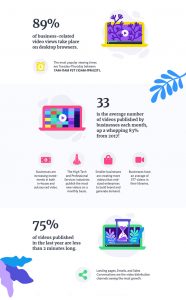
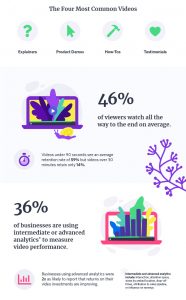
Vidyard Video Benchmark Report Projects B2B Video Content to Double Within 12 Months

New Report from Vidyard Shows 83% Year-Over-Year Increase in Video Production and Growing Use of Video Analytics Within B2B Marketing Organizations

Vidyard, the leading video platform for business, has released its second annual Video in Business Benchmark Report revealing the latest trends in video production, publishing, viewing and tracking by marketing organizations. Analyzing first-party data from more than 250,000 videos published on the Vidyard platform in 2017, the report reveals exponential growth in the average number of videos being produced, a significant shift towards short-form video content, and increased ROI from the usage of video analytics to track and measure content performance.

Key findings from the 2018 report include:

  • The creation of video in business is exploding: Businesses have published 377 total videos on average and are adding 33 new videos per month (up 83% over previous year); video libraries are expected to double in size within 12 months
  • It’s faster to convey your message in video: 75% of all videos published were under 2 minutes in length, compared to only 56% in the previous year
  • Desktop is still king for video engagement: 89% of business video views happened on desktop computers, consistent year-over-year
  • When it comes to video, it’s not the size of your business that matters: Smaller businesses are publishing as much, if not more, video content than larger counterparts
  • Video usage on non-traditional channels on the rise: There has been an increase in the use of video on distribution channels such as email marketing, landing pages and sales teams
  • The use of video analytics is becoming more prevalent: Those using intermediate or advanced analytics and viewer engagement data to measure performance were 2x as likely to report that returns on their video investments are improving

“B2B buyers are wired to process visual information and remember stories, making video an ideal medium with which to engage them,” according to the October 2017 Forrester report, ‘A Blueprint For Successful B2B Video Marketing.’ “As the amount of video web traffic continues to increase rapidly, B2B marketers must use video to differentiate their message, engage Millennial buyers, and explain complex ideas more simply.”

Also Read: Third-Party Data Quality is Key to Improving Marketing Effectiveness

Video Production Benchmarks

Vidyard Video Benchmark Report Projects B2B Video Content to Double Within 12 Months
Businesses are accelerating the number of videos they produce to support their marketing and sales programs. On average, businesses analyzed in the report now publish 33 new videos every month, up 83% from last year’s average of 18 per month. With an average of 377 total videos in their libraries, this trend would suggest that video libraries will double in size within the next 12 months.

While more videos are being created, the average length of those videos continues to decline to meet the changing expectations of today’s buyers. The average length of all videos published was roughly 9 minutes, but 75% of those videos were less than 2 minutes in length. This compares to an average of more than 11 minutes in the previous year with only 56% of those videos being less than 2 minutes. Video length also plays a big role in audience retention. Videos that are less than 90 seconds saw an average retention rate of 59%, compared to videos that were over 30 minutes which saw an average retention of only 14%.

Also Read: AI Discovery Engine Node Recognized in Gartner CRM Sales Report

Video Publishing Trends

Video is clearly no longer just for “big brands” either. For the first time, smaller businesses – particularly those in high-tech markets – are now producing as much, if not more, video content than their larger counterparts. This trend is being fuelled by the adoption of in-house video production practices and a greater focus on low-cost educational video content to support later stages of the buyer’s journey.

There has also been a significant jump in the use of video on non-traditional distribution channels suggesting that video is being used to support a wider range of marketing programs. 60% report using video on landing pages compared to just 49% in the previous year, while the number of businesses using video in email marketing jumped from 36% to 46%. Video use in sales conversations has also experienced a marked increase from 25% to 37%, suggesting that visual content is being used more frequently throughout the entire buying journey.

Video Viewing and Analytics Tracking

While consumption of consumer-based video content continues to rise on mobile devices, business-related videos are still predominantly consumed on desktop computers. In this year’s report, 89% of all viewing sessions occurred on desktops with only 11% on mobile devices, fairly consistent year-over-year. With a growing number of videos being produced to educate buyers and demonstrate products, it’s no surprise that the desktop is still king for video engagement in the business world. The most popular times for viewing these videos also remained consistent with Tuesday and Wednesday mornings between 7:00-11:00 am PST being the most popular viewing times.

Also Read: MNI Targeted Media Inc. Ranks as #1 Ad Local Network for Fourth Consecutive Year

The use of video analytics to track video performance and audience engagement is becoming more prevalent, with 36% of businesses reporting the use of intermediate or advanced video analytics and only 13% reporting no use of video analytics of any kind. Those using advanced analytics and viewer engagement data were 2-times as likely to report that returns on their video investments are improving.

Vidyard Video Benchmark Report Projects B2B Video Content to Double Within 12 Months
“As businesses expand their use of video across marketing and sales, it’s important to have relatable benchmarks to help them evaluate their success and identify opportunities. Brands are no longer asking if video is a worthwhile investment but how to leverage it in a scalable and strategic manner that helps them achieve their business goals. We hope this report helps them better understand the trends and benchmarks we’re seeing across more than 600 businesses leveraging the Vidyard platform,” says Michael Litt, CEO and Co-founder of Vidyard.

The 2018 Video in Business Benchmark Report was created and produced by Vidyard. Report findings are based on anonymized first-party video publishing data collected from the Vidyard video platform from more than 600 businesses and over 250,000 videos in a 12 month period ending November 30, 2017. It also includes anonymized viewership and engagement data from all video streams during that period. The results have also been compared to consistent data sets from the previous year’s benchmark report to offer insight into year-over-year trends in B2B video marketing.

Also Read: Zendesk Enterprise Workflow and Collaboration Tools to Help Enterprises Deliver Better Customer Experience at Scale

AI Discovery Engine Node Recognized in Gartner CRM Sales Report

0
AI Discovery Engine Node Recognized by Gartner in 2018 “Cool Vendors in CRM Sales” Report

Node’s AI-Powered Discovery Is Revolutionizing How People and Businesses Discover New Opportunities on the Web

Node, the first AI-powered discovery engine, was recently recognized by leading research and advisory firm Gartner in its April 2018 “Cool Vendors in CRM Sales” report. This year’s report notes that “the 2018 Cool Vendors in CRM sales provide new approaches to improving sales.”

The report – which names interesting, new and innovative vendors, products and services – suggests that “by 2020, 30% of all companies will employ AI to augment at least one of their primary sales processes.” The most transformational consequences of AI are already being felt, as sales teams are able to spend less time poring through endless prospect search results and are able to instead focus on effective conversations and engaging with leads that are most likely to convert and drive revenue.

Node’s AI-powered discovery is revolutionizing how people and businesses discover new opportunities on the web. Through proprietary artificial intelligence technology, Node automatically delivers valuable, relevant and timely information about people and companies to help its customers understand who they should engage with and why. The company has developed a relationship graph that includes over half a billion profiles of people and companies, each loaded with valuable insights that can be leveraged to engage the right people, at the right time, and with the right message to accelerate revenue growth.

Also Read: How ‘More of the Same’ Threatens the Future of Digital Advertising

Node has already proven to be an effective tool for customer discovery for sales and marketing teams, uncovering over $1 billion in new market opportunity. The company is now expanding to revolutionize online information discovery across additional functions including partnership development, fundraising and more. Node recently added AI industry leaders Louis Monier and Jeffrey Johnson to the company’s executive team to usher in Node’s next product phase.

falon fatemi Node.io“We’re honored to be recognized by Gartner, which is well known for identifying the next big trends expected to disrupt industries. The next step for us is to take the momentum from our success in the sales space to expand into new industries, using AI to improve efficiency for a variety of enterprises,” said Node CEO and Founder Falon Fatemi.

Fatemi began her career at 19 years old when she joined Google as the company’s youngest-ever hire. Her company Node emerged from stealth in 2017 and has raised $21.3 million in funding from Mark Cuban, Avalon Ventures, NEA, Canaan Partners, Recruit Strategic Partners, WndrCo, David Brewer of Aragon Capital, Linnea Roberts of GingerBread Capital, Falmouth Ventures, and Marc Weiss of Open Field Capital and others.

Also Read: Eight Things That Matter from Gartner Digital Marketing Conference

New Azuqua Connect Partner Program Helps SaaS Companies Quickly Deliver Powerful App Integrations

0
Azuqua

Own Your Customer’s Integration Experience and Accelerate the Time It Takes to Design, Build and Deploy Tailored Application Workflows

Azuqua, a leader in cloud-based business automation, announced the Azuqua Connect Partner Program, which is designed to deliver powerful app integration capabilities to SaaS companies and their customers. SaaS vendors and their services partners can now easily tap into the power of the Azuqua platform to streamline integration, orchestration and automation of key business applications and workflows. Adobe, Allocadia, Widen, Workfront, Zendesk and dozens of other leading SaaS companies have already come on board to partner with Azuqua. As an added incentive to early partners, Azuqua will be offering one of the most generous referral incentives in the industry at 20 percent of year one subscription revenue.

“For SaaS vendors, owning the integrated customer experience is a business imperative, but this process can be costly and complex and typically comes down to difficult build vs. buy decisions for businesses. Our new partner program eliminates these barriers and introduces a new consideration into the buy vs. build paradigm, allowing SaaS vendors to better focus their resources, scale integration quickly, accelerate their sales cycles, and expand a solution portfolio across applications. All of this translates into giving customers the services and technology they need and expect, so they can quickly overcome application integration challenges required to solve complex business problems,” said Todd Owens, CEO, Azuqua.

Also Read: Interview with Fayez Mohamood, Co-founder and CEO, Bluecore

Leading SaaS companies already working with Azuqua to accelerate their integration efforts and deliver value to customers, include:

  • Adobe: “Adobe is focused on giving its customers, which range from emerging artists to global brands, everything they need to design and deliver exceptional digital experiences,” said John Pritchard, Sr. Director of Engineering, Adobe I/O. “Enabling those experiences requires Adobe solutions to seamlessly integrate with other SaaS applications in a customer’s ecosystem. Azuqua’s dynamic approach to making Adobe integrate seamlessly with other key apps, and turning these integrations into an automated connected experience, helps our customers be more successful.”
  • Katherine Berry
    Katherine Berry

    Allocadia: “Allocadia helps marketing leaders #RunMarketingBetter. As a system of record for marketing that ties plans, investments and results together, this means we must be able to connect with other foundational technologies from finance, sales, and marketing,” said Katherine Berry, Chief Product Officer & Co-Founder at Allocadia. “By partnering with Azuqua, we are easily able to integrate and connect marketers’ technology stacks, workflows, and data structures – no matter the systems involved. This allows us to help our marketing customers understand what is working, what is not, and where to spend their next marketing dollars, and allows Allocadia to focus 100% on our customers and their experience.”

  • Steven ZoBell
    Steven ZoBell

    Workfront: “Integrating Workfront with numerous enterprise applications is critical to our customers’ success, which is why we partnered with Azuqua to rapidly extend the integration capabilities made available to our customers,” said Steven ZoBell, Chief Product and Technology Officer at Workfront. “We did an extensive evaluation of more than five integration technology vendors when considering partners for extending our integration capabilities and found Azuqua delivered the best combination of enterprise-grade product capabilities, intuitive end user experience, deployment flexibility, connectivity options to key applications and product team responsiveness.”

  • Billy Robins
    Billy Robins

    Zendesk: “We believe that great customer relationships drive successful businesses,” said Billy Robins, Director of Technology Alliances at Zendesk. “Our partnership with Azuqua empowers a range of organizations to seamlessly integrate Zendesk and their customer service conversations with the rest of their critical SaaS applications, enabling them to work more intelligently and effectively; and always with the customer in mind.”

  •  Also Read: TechBytes with Steven ZoBell, Chief Product & Technology Officer, Workfront

The Azuqua Connect partner program allows Azuqua partners to quickly design, build and deploy tailored integration solutions for their customers and connect to hundreds of enterprise applications without the need to manage virtual machines, constantly monitor logs, build customer error handling, manage updates to third-party APIs and more. Partners get access to their own custom dashboard where they can provision new customers with a single click, see a roll-up view of usage metrics, and monitor the health of integrations by each customer. They also retain ownership of contracting, billing and invoicing.

 Also Read: TechBytes with Steven ZoBell, Chief Product & Technology Officer, Workfront

Bedrock Analytics Closes $7.2 Million Funding; Launches Bedrock 2.0

0
Bedrock Analytics Closes $7.2 Million Funding; Launches Bedrock 2.0

Bedrock Analytics New Funding to Bring Intelligent Analytics to the Consumer Packaged Goods Industry, Offer Deeper and More Accessible Insights for CPG Brands to Grow Their Sales in Retail

Bedrock Analytics, an intelligent analytics and insights automation platform for the Consumer Packaged Goods (CPG) industry, has completed a $7.2 million round of financing, led by Cervin Ventures and Illuminate Ventures, with participation from other private and institutional investors.

Recommended ReadContextual Content and AI: The New Wingmen for Email Marketing Campaigns

Bedrock Analytics also announced the launch of Bedrock Core, version 2.0, its next-generation analytics platform, enabling CPG manufacturers to extract more insights from their data in order to convince retailers to carry and keep their products on shelves.

Bedrock is the first modern analytics platform to aggregate and harmonize data from throughout the CPG ecosystem—including retailers, syndicated data firms and point of sale systems—and automatically surface insights about a CPG products’ sales trends and market activities. The Bedrock platform uses machine learning algorithms and insights automation tools to distill complex data into what matters most to sales, marketing, and analytics teams.

The platform can produce convincing sales presentations in seconds, providing bandwidth to category management teams and new capabilities to sales teams.

At the time of this announcement, Will Salcido, CEO of Bedrock Analytics, said, The CPG industry has an untapped opportunity to truly leverage machine learning and augmented analytics like other industries have.”

Will added, “Our mission is to give CPG brands the insights and tools they need to nimbly understand their product and category performance data, create insights-driven sales presentations, and ultimately drive sales, distribution, and growth. Our platform has experienced remarkable adoption to date, and our next wave of innovation will revolutionize the way that CPGs go to market.”

Recommended Read: Convince Mozilla About Risks of AI and Drive Home with $225,000

Bedrock Analytics Now Brings Data Aggregation and Harmonization

Bedrock currently analyzes more than $100 billion in CPG sales every month, representing brands in over 80 product categories spanning nearly every aisle of the supermarket. Clients including Jarritos, Earth Friendly Products, Mary’s Gone Crackers and Beanitos use Bedrock as an essential analytics tool.

On average, Bedrock clients experience a sales increase of ten percent in their first six months using the platform and report spending at least 20 percent less time analyzing data.

Bedrock Core offers several new enhancements to let CPG companies get deeper and faster insights, including —

Product Drill Down. Bedrock’s innovative approach to drilling down from the category level to the segment, manufacturer, brand, and items allows our customers to understand the true drivers of growth or erosion.

Data Aggregation and Harmonization. Bedrock aggregates data from throughout the CPG ecosystem and harmonizes disparate data architectures to present insights in a single, easy-to-use interface, saving companies hours of time and enabling meaningful comparison across data sources.

Machine Learning Algorithms. Bedrock’s machine learning algorithms uncover hidden insights such as identifying dollar opportunity gaps, at-risk items and harmonize disparate data sources.

Events Calendar. An innovative digital promotion calendar automatically creates and tracks promotional events for customers and their competitors.

Full PowerPoint Export. With a simple click, an entire data-based category review can be created by exporting multiple visualizations & analyses into a company’s custom branded PowerPoint template to create powerful sales presentations on the go.

Personal Analyst. Using Bedrock’s in-app communications platform, customers can chat with a dedicated team of CPG category managers that can drive strategic tasks for customers, giving them access to category expertise at the click of a button.

New Funding to Accelerate Product Development and Expand on Its Analytics Offering for the CPG Industry

“Bedrock Analytics has empowered us to quickly identify opportunities and provide fact-based data to our valued customers and internal stakeholders,” said Blair Cornish, Chief Commercial Officer at Harmless Harvest Coconut Water.

Blair added, “Prior to using Bedrock we spent the majority of our time working to get the data in a format that would allow us to understand what was happening.  Now we are able to focus on the opportunities, risks, and solutions to drive our business.

Bedrock will use the funds to accelerate product development and expand on its analytics offering for the CPG industry. The company will hire aggressively to fill positions in sales, engineering, customer success, analytics and other functions.

Currently, Bedrock Analytics powers the growth of today’s leading CPG manufacturers. The company’s cloud-based analytics platform and insights automation tools enable sales managers and business analysts to harness the power of data in order to craft powerful sales presentations that capture market share and drive increased revenue.

Recommended ReadOracle Marketing Cloud Adds Infinity and Audience CX to Enable Pinpoint Targeting

Accenture, Agencies and the Ad-Buying Battlefield

0
Accenture Agencies Ad-Buying Battlefield

IPONWEB LogoAccenture’s launch of a programmatic ad-buying unit was more of a ‘when’ not ‘if’.  The company already has its foot firmly in the door of many major brands for which it undertakes other consultancy-related services around technology recommendations, systems integration and optimization; media buying is a natural extension that enables it to leverage its knowledge of and integration with each client’s specific environment.

Agencies should be concerned. By the end of February this year, it was speculated that $120 billion of media spending was under review and this trend has shown no sign of abating, brands are looking for areas to cut costs and drive better performance, and Accenture has been staffing strategically in advance of this move.

However, aside from whether Accenture running both media audit and advertising businesses is a conflict of interest, the announcement has also raised some big questions.

Multi-channel strategies matter

Accenture has publically stated that it will not consider media buying on more traditional channels such as TV and print because the margins are too low. This may result in an internal disconnect as it finds the reality of programmatic media buying is not as rosy as it believes.

For instance, it is well-established that paid search, display advertising and affiliate programs go hand-in-hand and data should be shared between the disciplines (to prevent duplicates of user-behavior across the channels being credited for success, for example). The lack of an integrated view of omnichannel effects will mean Accenture has a lot of ground to make up if it is to compete effectively with its agency rivals.

Also Read: Visualizing Machine Learning: How Do We Humanize The Intelligence?

A move to outcomes-based pricing?

Accenture has asserted that it will base its charges on an FTE (Full Time Equivalent) basis, rather than media spend. Whether this achieves its aim of incentivizing teams to improve performance for advertisers rather than simply drive more spend remains to be seen; the salient point is that it potentially sets the stage for a shift from frequently gameable proxy measurement metrics to custom outcomes-based pricing.

To some degree, we are already witnessing this trend in the shift to zero-based budgeting (rather than being based on spending from the previous year, media plans start from scratch; each line item needs to be justified, driving marketing agencies to demonstrate efficiencies). If it gains traction and brands adopt it as their modus operandi, agencies will have a subsequent need for powerful technology that can be customized to drive outcomes that are aligned with an advertiser’s bespoke business goals.

The value of established relationships

Accenture may, however, have the upper hand in this context where it is already implementing full end-to-end digital transformation projects for existing clients. This gives it prior insights, for example, into the behavior of converting customers in a desktop or mobile environment, behavior that can then be optimized against. In this position, Accenture has a direct link to the brand’s overall business objectives, which give it valuable insight into aligning programmatic advertising buying strategy accordingly. It’s likely therefore that we can expect to see Accenture’s first customers for its programmatic buying service coming from its existing client roster.

Also Read: How ‘More of the Same’ Threatens the Future of Digital Advertising

Attracting the right talent

Many independent advertising agencies in the UK have the specialist, highly-paid ‘trader’ roles, introduced to differentiate themselves from the big, holding group agencies, where planners are the key players.

Which route Accenture takes – or whether it develops in a new direction altogether – may determine whether it can attract the right talent away from agency world.

Multiple specialist partners

Brands are also challenging whether having all advertising activity under one roof is a future-proof strategy; Deutsche Telekom recently announced that to be more effective it would spread activities once handled by one agency across different partners with specific specialisms, with the brand keeping its programmatic buying in-house.

The next few months will be telling.

If Accenture is able to hold on to and grow its media buying client base, it’s likely that more brands will defect from their agency for a test scenario.

However, there is the very real possibility that the consultancy may not be able to match the performance and ROI delivered by agencies, which have media buying in their blood.  Those that continue to drive outcomes for their clients in a cost-effective and transparent way should be just fine.

Also Read: Meet Accenture Interactive’s New Commerce and Intelligent Marketing Leaders