Home Blog Page 4302

AppNexus Enforces Ads.txt in Broader Push for Industry Transparency

0
AppNexus Enforces Ads.txt in Broader Push for Industry Transparency

By January 24, 2018, the Date AppNexus Began Enforcing the Policy, over 80% of the Top 1000 Domains Available Within the AppNexus Marketplace Had an ads.txt File

AppNexus, the world’s leading independent advertising technology company, today announced that it automatically, and without exception, enforces publishers’ ads.txt files by disabling buying on unauthorized sellers through the AppNexus Programmable Platform (APP). The company was an early promoter of ads.txt, the IAB initiative that gives publishers a standardized way to publicly list all of their authorized programmatic partners in order to prevent unauthorized inventory sales. Now that a critical mass of publishers have adopted ads.txt — over 80% of the top 1000 domains available within the AppNexus marketplace have an ads.txt file — AppNexus disables buying through APP from parties that are not directly identified through the publisher’s ads.txt files as authorized resellers.

Also Read: Data Provider Datonics Integrates with AppNexus’ Data Marketplace

AppNexus Enforces Ads.txt in Broader Push for Industry Transparency
Ryan Christensen

“Enforcement of ads.txt furthers our efforts to minimize domain spoofing and increase brand safety for our buyers. Combined with our established fraud detection and prevention technology, ads.txt compliance strengthens our core commitment to transparency and providing a safe platform for our buyers to purchase media from authentic sellers,” said Ryan Christensen, Chief Operating Officer, AppNexus.

Also Read: AppNexus Launches the AppNexus Programmable Platform, the Industry’s First Programmable DSP

AppNexus Enforces Ads.txt in Broader Push for Industry Transparency
Pim van Boekhold

Pim van Boekhold, Head of Programmatic Buying, Greenhouse Group, added, “Lack of transparency into the programmatic supply chain has hurt our industry immensely and harmed programmatic to hit the full potential it has to offer. The enforcement of ads.txt is an important step forward as the industry comes together to work toward end-to-end transparency across the programmatic supply chain.”

Technically, ads.txt is a file that the publisher places on its domain (website.com/ads.txt). Within the file, each approved partner is listed with their tech platform (e.g AppNexus), account detail, and the relationship. Demand Side Platforms (DSPs) & Supply Side Platforms (SSPs) then regularly crawl these files to discover the approved inventory sources. When the IAB rolled out its ads.txt initiative in May 2017, AppNexus encouraged its publisher partners to drop the text file on their web servers and built a free tool to help publishers ensure that their ads.txt files are accurate and up to date.

Also Read: TAG Anti-fraud Certification Will Require Publishers to Implement Ads.txt

By January 24, 2018, the date AppNexus began enforcing the policy, over 80% of the top 1000 domains available within the AppNexus marketplace had an ads.txt file – up from roughly two-thirds in mid-November. Since then, pacing and reach for buyers using APP, AppNexus’ recently launched DSP, were not impacted by the enforcement because 98% of spend on top 1000 domains were already compliant. Due to the scale of inventory in AppNexus’ marketplace, buyers were able to continue hitting goals with little change to how spend was allocated.

AppNexus Enforces Ads.txt in Broader Push for Industry Transparency
John Goulding

John Goulding, Global Strategy Director, Media iQ, added, “As a programmatic buyer, it’s our job to ensure quality & authenticity across the ad placements we source for our advertisers. Ads.txt provides a great insight into the valid suppliers of a given website, but its value is only fully realized when the industry’s largest marketplaces take action on this insight. AppNexus’ stance is an important step forward in this regard.”

Recommended Read: Don’t be the Guy Wearing the Fake Rolex: Support Ads.txt

Consumer Acquisition Launches Shutterstock Collection within Custom Ad Creation Marketplace

0
Consumer Acquisition Launches Shutterstock Collection

Creative Marketplace Now Carries Shutterstock’s Library of over 180 Million Images and Videos, Providing Advertisers with Fresh Content and Editing Solutions to Scale Ad Creative 

ConsumerAcquisition, a Facebook Marketing Partner offering the world’s first end-to-end user acquisition platform, announced that Shutterstock’s library of over 180 million images and videos will now be available through its Creative Marketplace. Now, advertisers can access Shutterstock’s content through a unified marketplace and tap into professional video editors, designers, and ad copywriters to generate custom ad creatives for Facebook, Instagram and Google’s universal app campaigns.

Recommended Read: Interview with Brian Bowman, CEO, Consumer Acquisition

Shutterstock Inventory Now Available at Consumer Acquisition Creative Marketplace

Brian Bowman
Brian Bowman

At the time of this announcement, Brian Bowman, CEO of Consumer Acquisition, said, “Shutterstock’s content library will greatly enhance our Creative Marketplace offering and allow us to grow our partnerships with major brands as they look to create high-performance ad creative at scale. Advertisers need to quickly replace fatigued ads and discover new winners in order to maintain a profitable return on ad spend (ROAS), and Shutterstock’s vast video and image collection combined with our resources for generating ad creative is a key offering that we can now provide through our Creative Marketplace.”

Read More: Amplitude Expands Its Leadership Team to Meet Growing Demand for Product Analytics

Shutterstock images and videos now available through Consumer Acquisition’s proprietary Creative Marketplace will enable creative innovation at scale. The marketplace connects advertisers with a global network of video editors, designers and ad copywriters that develop branded content iterations for the fast-paced ad market of today.

Creative Marketplace Offers Enhanced Reporting Capabilities across Ad Building Campaigns

The news comes within a year of the public launch of Creative Marketplace for Facebook. In August 2017, all Facebook advertisers gained access to Consumer Acquisition’s pay-for-performance marketplace for engaging designers and video editors to source ad creatives dynamically for campaigns.

Read More: Webinar World TechBytes with Christine Jacobs Pribilski, Vice President, Marketing, IBM

High performing digital advertising campaigns on Facebook require a considerable investment in creative development and choosing the right visuals offer advertisers the best chance at achieving campaign performance goals. Yet, according to Consumer Acquisition’s internal analysis, about 95% of creative ads are ineffective at converting installs and leads to meet advertiser’s financial objectives.

Advertisers must test a constant rotation of hundreds of ad creatives to drive optimal performance on campaigns.

Advertisers simply write a creative brief or collaborate with a concierge service for brief writing and creative management, and then receive videos, images and ad copy ready for testing. After running the selected ad creatives on Facebook or Google, performance reports automatically identify poor performers and recommend new ad creative launches.

Additionally, the Creative Marketplace offers enhanced reporting capabilities by rolling up data across creative elements and drilling down to uncover meaningful insights and robust ad building capabilities.


Recommended Read: TechBytes with Wesley MacLaggan, Head of Marketing, Marin Software

Anaplan Brings Connected Planning to Germany with New Office and Data Center

0
Anaplan Brings Connected Planning to Germany with New Office and Data Center

Connected Planning Platform in the Cloud Will Enable German-Based Companies to Connect Data, People, and Plans for Better Decision Making

Anaplan, a leading platform provider driving a new age of connected planning, opened an office in Frankfurt, Germany recently. Under the leadership of Managing Director for the DACH region Yuri Rotmanov and Christian Thiede, Sales Leader for Germany, Anaplan’s Frankfurt office demonstrates the company’s commitment to bringing connected planning to German organizations to help them succeed in a rapidly changing environment.

Also Read: Anaplan’s Connected Planning Platform Significantly Improves Dufry’s Key Planning Cycle

Anaplan also announced the opening of a data center in Germany, hosted by Equinix, for its German customers. To serve customers in the European market, Anaplan also has offices in the U.K., RussiaFranceAustriathe NetherlandsSweden, and Switzerland.

Customers worldwide are using the Anaplan platform, including AccorHotels, AXA, Barclaycard, Deloitte, Hewlett Packard Enterprise, HP Inc., Intel, Louis Vuitton, and United Airlines.

Also Read: Anaplan Named to Forbes 2017 Cloud 100 List

Anaplan Brings Connected Planning to Germany with New Office and Data Center
Michael Gould

“Speed and agility are essential for German companies in today’s fast-moving environment. The Anaplan platform enables companies to quickly and accurately address the challenges they face. We see enormous potential for Anaplan in the German market and are eager to help businesses here succeed through connected planning,” said Anaplan Founder Michael Gould.

Also Read: Anaplan Reports Unprecedented Momentum for Its Sales Performance Management Solutions

Anaplan Brings Connected Planning to Germany with New Office and Data Center
Thomas Klingspor

Thomas Klingspor, Partner and Head of the Competence Center for Business Finance at Deloitte in Germany, added, “Our experience shows that CFOs need fast information, more transparency, and better insights into the overall performance of the companies they manage. They need to be able to plan and simulate the impact of their decisions on business across the entire organization in real time.”

Together, Anaplan and Deloitte are committed to helping their joint customers maximize the business value of the Anaplan platform.

Recommended Read: 7 Surefire Ways Market Researchers Can Fight Survey Fatigue

Bright Pattern Expands Executive Team With Brian Hays to Accelerate Growth

0
Bright Pattern Expands Executive Team With Brian Hays to Accelerate Growth

Bright Pattern, Leader in Cloud Contact Center Software, Hires Industry Veteran, Brian Hays, as Senior Vice President of Global Sales

Bright Pattern recently announced the appointment of Brian Hays as Senior Vice President of Global Sales. Brian brings more than 30 years of experience in software sales, sales management and the development of strategic alliances and partnerships. The hire comes at a time of extreme growth for Bright Pattern, having reported a 97% revenue increase, 64% increase in new customers, and an increase of 160% in new order bookings in 2017.

Bright Pattern Expands Executive Team With Brian Hays to Accelerate Growth
Brian Hays

Brian has held various executive positions, including North America Vice President of Sales and most recently North American Vice President of Strategic Partners and Alliances at Genesys. Brian consistently exceeded sales targets and was a key member in developing the Genesys Sales Methodology and Channel Strategy. In his 18 years at Genesys, Brian has developed a winning sales culture, leading a team of 65+ sales associates.

“I am very excited to be joining the Bright Pattern team,” said Hays, adding, “Innovation is the key to success in the contact center industry, and I am impressed not only with the vision but the modern architecture inherent in the Bright Pattern solution.”

Also Read: AI Sales Leader InsideSales.com Expands Partnership with Microsoft Ahead of Accelerate 2018

“We are excited to welcome Brian to the team as our Senior VP of Global Sales. He is an exceptional leader and will play a critical role in driving the next stage of our revenue growth. With the addition of Brian, we begin the process of building a world-class sales and marketing team and further accelerate the global adoption of our omnichannel software,” said Michael McCloskey, Bright Pattern CEO.

Hays continued, “When you add up the people, the highly flexible and scalable solution with the growth in cloud-based solutions expecting to reach over 30% of the installed base by 2020, Bright Pattern is well positioned to becoming a global industry leader in the customer experience space.”

Recommended Read: Genesys Makes Customer Experience Simpler with Microsoft Office 365 Integration

Amplitude Launches Program To Help Startups Achieve Product Market Fit

0
Amplitude Acquires Iteratively

Company to Offer Product Analytics Scholarship for Seed Stage Businesses

Amplitude, a product analytics company, has announced a new program that offers seed stage startups a substantial scholarship for the company’s advanced product analytics platform. Using Amplitude, startups can better understand what features and user actions drive important metrics such as engagement and retention.

Read More: What Every Sales Leader Should Know About Conversation Intelligence Technology

The new scholarship program offers seed stage startups 90 percent off the price of Amplitude’s enterprise-grade product analytics platform for the first twelve months. The plan includes best-in-breed behavioral reports powered by machine learning, which helps teams understand user behavior and engagement and identify what features drive retention. Accepted teams will be able to track and analyze up to 50 million user actions or events per month, with unlimited seats and unlimited data retention.

Spenser Skates
Spenser Skates

At the time of this announcement, Amplitude co-founder and CEO Spenser Skates, said, “All companies need powerful analytics tools to innovate quickly and build products people love. This is especially true for smaller companies that are trying to make it to the next stage.”

Spencer added, “When I founded my first startup, there was no existing product analytics tool that could help me to understand user behavior in my app. That’s why I founded Amplitude. While we’ve recently focused on serving product analytics needs at large enterprises, we wanted to give more back to the startup community.”

Today’s most successful companies revolve around the product, and product teams need to understand user behavior in order to improve the user experience, grow their customer base and drive business results. This is especially important for startups focused on getting customers to that “A-ha” moment where they fall in love with the product.

Read MoreInterview with Anthony Iacovone, President, Barometric

Built by the product enthusiasts for product teams at companies of all sizes, including innovative startups like Bonobos and Blue Apron and established enterprises like Microsoft and Adidas, Amplitude provides unprecedented insight into how customers are using digital products.

“I’ve tried every event-based analytics service I could get my hands on,” said Andrew Mason, Founder of Groupon and serial entrepreneur. “Amplitude is the best – the most powerful and the easiest to use, and they’re constantly coming out with new, super useful features and improvements. With this pricing option, I think Amplitude belongs in the essential toolkit for every new startup.”

Many businesses have used Amplitude as they’ve built and scaled their products. LetGo, one of the most popular shopping apps in the iOS app store, has relied on Amplitude since its early days. “Amplitude will help your business grow from day one. It makes life easier for every team, from product to marketing, and anyone can start running their own analysis in minutes,” said Iago Novoa, Head of Business Intelligence at Letgo. With 75 million downloads and hundreds of millions of listings, it’s one of the largest and fastest-growing apps to buy and sell locally.

Calm, Apple’s 2017 app of the year on iPhone, has also used Amplitude to build its popular app for mindfulness and meditation. “Using Amplitude since 2015 has helped us identify what drives retention in our app and grow our company 10x,” said Alex Tew, Calm’s co-founder and CEO.

Alex added, “Getting this level of behavioral analytics for this price is a no-brainer for any startup.”

Startups not ready to apply for the full year program can still use Amplitude’s free plan, which offers the ability to track and analyze up to 10 million user actions per month with Amplitude’s core analytics functionality and unlimited dashboards.

“Seed stage startups should take advantage of Amplitude’s powerful solution,” said Hiten Shah, a startup advisor and investor who founded three companies including Kissmetrics.

Hiten added, “It gives product teams the ability to dive deep into user behavior without spending limited engineering resources on analytics infrastructure.”

Currently, Amplitude helps product teams rapidly build digital products that work better for the customer and grow their business. Thousands of product teams around the world trust Amplitude’s product analytics to help them quickly understand user behavior and connect it to business outcomes like retention, engagement and revenue. Amplitude is used by companies of all sizes and industries, including Microsoft, PayPal, Hubspot, Autodesk, Booking.com and Twitter.

Recommended Read: TechBytes with Robert Fox, CTO, HG Data

Webinar World TechBytes with Christine Jacobs Pribilski, Vice President, Marketing, IBM

0
Christine Jacobs Pribilski
TechBytes with Christine Jacobs Pribilski, Vice President Marketing - IBM

Christine Jacobs Pribilski
Vice President, Marketing, IBM

Webinar World’18 is almost upon us. On the agenda is the question that is foremost on every marketer’s mind -‘How to put the personal back in marketing,’ – with a focus on how to build context-based campaigns and deliver events that put the customer first and foster authentic engagement between the audience and the brand. In the run-up to the event, we spoke to martech thought leaders speaking at the event. Christine Jacobs Pribilski, Vice President, Marketing, IBM, spoke to us about leveraging webinars to drive ROI.

Html code here! Replace this with any non empty text and that's it.

Tell us about your role at IBM Cloud and the marketing technologies that your team uses.   

As the worldwide leader of performance marketing for IBM Hybrid Cloud, my team and I bring subject matter expertise to our integrated marketing teams to drive more effective (conversion) and efficient (ROI) demand generation. From marketing automation and content personalization to webcasting and events across paid, owned, earned and shared channels, my team intersects the art and technology in marketing, using data every step of the way to test and learn.

What brings you to ON24 Webinar World 2018?

We have made incredible strides with our webinar program in the past year working with ON24, so I am delighted to share our learnings and success story in ‘casting’ with the attendees at Webinar World with the hope that other marketers can see what’s possible. In the same vein, I’m looking forward to learning how other B2B marketers have fueled their webinar programs so we can apply these to our own “casting” program. And of course, networking and meeting other fellow marketers who share a passion for marketing is always a highlight of any conference.

Why do you see webinars as a key component of a modern CMO’s martech stack?  

I am such a champion of webinars, or “casting”, as I like to call it. Casting has come such a long way with the intersection of martech, analytics and content marketing. Casting is not only a viable format to deliver relevant stories and content across the buyers’ journey but also a way to deliver multiple touches in a single event, accelerating prospects forward in their buying journey. In addition, casting platforms can now offer incredible behavioral insights to help marketers become more impactful on next right step. Finally, casting is a great way to extend reach of event content to drive net new prospects and once engaged, offer targeted casting series to keep them coming back where we can create upsell/cross-sell opportunities and, ultimately, drive overall advocacy.

How do modern webinar marketing campaigns justify the churn from automation tools for the email, social media, and the new-age Account-Based Marketing?

While marketing automation does add more steps and complexity to execution, the outcome of that, when done thoughtfully and strategically, is more authentic and customer-centric webcast campaigns. Since you are able to capture deeper behavioral insights, you are then able to create more meaningful and actionable experiences for the webcast attendee.

At IBM Cloud, how do you leverage data science and AI/ML capabilities to drive webinar marketing campaigns?

The opportunities with data science, AI and Machine Learning so incredibly exciting. Our platforms are constantly analyzing responses with built-in logic that feeds into our marketing automation system so our campaigns can nurture individuals not yet ready to purchase and progress those who are ready for a conversation with a lead development representative.

Specifically, Response Scoring is a system that allows us to prioritize how to handle digital leads for seller follow up. It’s an automated statistical model that simultaneously uses hundreds of variables to predict the likelihood that a lead passed to a seller will turn into a validated sales opportunity. IBM continues to add new features to facilitate integrated deployment of IBM Campaign with Watson-enabled modules.

Thanks for chatting with us, Christine.
Stay tuned for more insights on marketing technologies. To participate in our Tech Bytes program, email us at news@martechseries-67ee47.ingress-bonde.easywp.com

Braze (formerly Appboy) Announces Integrations with Microsoft and AccuWeather to Expand Partner Ecosystem

0
Braze (formerly Appboy) Announces Integrations with Microsoft and AccuWeather to Expand Partner Ecosystem

Enhancements Include New Multi-Cloud Hosting and Dynamic Content Capabilities

Recently, at Mobile World Congress 2018 in Barcelona, Braze (formerly Appboy), a leading marketing automation and customer engagement platform, announced technical integrations with Microsoft Azure and AccuWeather adding to the company’s existing partner ecosystem platform. These integration partnership announcements were made live from the world’s largest mobile technology event, alongside existing partners including Appsflyer, global leader in mobile attribution and marketing analytics, and Foursquare, location intelligence business solution.

The company announced an integration with Microsoft Azure, that will offer a new multi-cloud hosting option for Braze clients. In addition, Braze is expanding capabilities to its high-volume data export product, Currents, with integrations directly into Microsoft Azure in active development.

Also Read: Appboy Announces Plans To Rename Company to Braze, Cited as a Leader by Independent Research Firm

AccuWeather, the fastest growing provider of forecasts and warnings with Superior Accuracy and global leader in digital media and weather-related big data, will partner with Braze to allow for a seamless data connection from external APIs to support responsive, real-time personalization related to weather updates. With the Braze platform, brands can utilize the dynamic weather content from the world’s most trusted weather brand to create relevant messaging experiences across channels. For example, an eCommerce company can send daily morning style and fashion recommendations based on local weather, or a travel company can use snowfall accumulation predictions in the Alps as an opportunity to prompt customers to book a ski trip.

Bill Magnuson
Bill Magnuson

“The Braze partner ecosystem is open and flexible and we’re excited to build on our existing technical integrations with the addition of Microsoft Azure and AccuWeather. The use of real-time data streaming across technologies can be the difference between a cohesive product experience and one that harms your brand. Cross-channel messaging should feel like a conversation between two people — ultimately, that’s what leads to long-term value and ROI,” said Bill Magnuson, CEO and Cofounder at Braze (formerly Appboy).

Also Read: Interview with Bill Magnuson, Co-founder & CEO of Braze (Previously Appboy)

Braze (formerly Appboy) Announces Integrations with Microsoft and AccuWeather to Expand Partner Ecosystem
Brian Lavery

Brian Lavery, European Managing Director at AccuWeather, adds, “Engaging with users in today’s mobile and digital savvy world is the most critical component of modern marketing. As the world’s leading weather data provider, AccuWeather has unique insights about the potential of weather to enrich customer engagement for a more custom user experience. We’re excited to partner with Braze to help brands reach customers with relevant and highly personalized dynamic content.”

The Braze partner ecosystem platform and technical integrations are comprised of existing partnerships with Appsflyer, Foursquare, Amplitude, mParticle, Segment, Lob.com, Facebook Messenger, Twilio, Remerge, among others. Additionally, Braze clients Gett, Microsoft Office 365, and AccuWeather joined SVP of Marketing, Marissa Aydlett, at Mobile World Congress in a panel discussion on assembling the right team, tools, and partnerships to deliver transformative experiences for customers across industries.

Recommended Read: Not a Hype: Cross-Channel Messaging Can Boost Engagement by More Than 800%

Interview with Anthony Iacovone, President, Barometric

0
Anthony Iacovone
Interview with Anthony Iacovone, President, Barometric

[easy-profiles profile_twitter=”#” profile_linkedin=”https://www.linkedin.com/in/anthony-iacovone-aa68093/”]
[mnky_testimonial_slider slide_speed=”3″][mnky_testimonial name=”” author_dec=”” position=”Designer”]“CMOs should create a foundation that can help them really understand the consumer’s meshed identity first. With that foundation comes measurability and insight.”[/mnky_testimonial][/mnky_testimonial_slider]

Tell us about your role and how you got here. What inspired you to be a part of an ad- performance company?

I am currently the co-founder and President of Barometric, which is a division of AdTheorent. For some quick background, in 2011 I co-founded AdTheorent with a mission of using Machine Learning to make better decisions using data when serving mobile advertising. The ad-tech industry, specifically in mobile, was underserving its clients both in targeting and measurement. Cookies were the way of digital targeting, and tracking in most cases, so new thinking was paramount to improve the entire ecosystem. With that being said, AdTheorent built a series of technologies to improve both sides of the issues. Over time we developed a proprietary ML solution to make decisions called SymetryML, which is an identity resolution graph along with a cross device/cross environment measurement solution we now call Barometric.

Barometric was born as a technology back in 2012 when we faced the challenge of measuring conversions that would take place in different environments from where the ad was originally served. Specifically, ads were served in apps and users would typically convert on the mobile web. With no other technology to help us, we began to build a device graph to solve our own challenges. Barometric has quickly evolved to become a unique graph and measurement solution from the perspective that it combines offline identity and activity with online/mobile identity and activity.

How do you rate the success of Media Intelligence and Attribution Solutions in the current context of the advertising ecosystem?

For most brands we see, it is apparent they are in the early stages of figuring things out. We tend to see a fracture between measuring offline and online media and almost no ability to measure beyond digital sales. In many cases, media and marketing groups in these organizations will individually measure and take credit for the same conversion. This needs to change by converging a single measurement solution across the organization.

What is the driving force behind Barometric’s Data Management and Analytic Solutions?

Barometric’s backbone is its meshed identity resolution graph. The idea of a meshed graph is to meld together in a single record a consumer’s identity in both the digital and physical world. By doing so, every media/marketing channel a consumer is exposed to is measurable to any environment they convert in whether that is e-commerce or physical commerce.

How do you deliver clear insights to understand consumer’s ‘Path to Purchase’?

Barometric tracks (similar to blockchain) every exposure point of a consumer and time stamps these exposures. With a little fancy math, combined with the volume of data, we see a series of paths to purchase that can be mapped and optimized against. These paths go deeper than media touchpoints and can include geo-spatial, demo and other characteristics.

How should CMOs better leverage Cross-Device Measurement Technologies in their marketing and branding strategies?

CMOs should create a foundation that can help them really understand the consumer’s meshed identity first. With that foundation comes measurability and insight. Next, these organizations must make this data available across the organization and with their agencies in a near real-time manner so decisions can be made in-campaign, and not after $100 million has been spent ineffectively to drive ROI.

What startups in the industry are you watching/keen on right now?

Data aggregation players are interesting to us as it takes some friction out of sourcing what we need to be the best at what we do. We are seeing niche players evolve in location, purchase and behavior-based aggregation that can help other organizations be more efficient in sourcing.

What are your predictions for the unified Brand Safety and Advertising Analytic technologies in 2018?

The market will continue to invest heavily in these areas as the market has woken up and realized that billions of dollars have been burned on wasted ads that are other fraudulent, not in view or just plain ineffective. The problem is that it takes 4 to 6 pixels to measure these things today, which is why Barometric now offers a single pixel to measure the majority of metrics that are important to brands (e.g. Cross-device, IVT, Reach and Frequency, viewability, Site/App Transparency, etc.)

What tools does your marketing stack consist of in 2018?

Our stack is fully coded and owned by Barometric. We use AWS at scale to move data and execute our platform. We are large users of RedShift, Cassandra and other big data technologies at AWS.

Would you tell us about your standout digital campaign at Barometric or a customer success story?

My favorite story was when we launched our direct mail tracking product with a Fortune 500 client and found that search was stealing credit from direct mail. We saw that direct mail would hit the mailbox and the consumer would Google the brand instead of typing the URL. With unsophisticated measurement, any brand would attribute that engagement to search. We showed it was the direct mail that should be given credit. To me, it was profound and telling of the industry that the mail was ignored completely on the attribution model.

How do you prepare for an AI-centric world as a business leader? How does Barometric leverage AI/ML technologies?

As mentioned earlier, Barometric was born from machine learning/AI. Since 2011, AdTheorent has used ML to identify consumers, serve ads effectively to them and measure them wherever they may convert. Let’s also keep in mind the hot air being blown by everyone jumping in on the AI bandwagon. The promise of true AI is still just a promise, and ML can do most of what is needed in ad tech. We incrementally learn all of our models but there is no need for the computer to self-learn at this stage.

One word that best describes how you work.

Unorthodox – it’s why I became an entrepreneur ?

What apps/software/tools can’t you live without?

LinkedIn, Outlook and Edison Assistant

What’s your smartest work related shortcut or productivity hack?

I use my phone to scan, fax, sign and do just about everything I need. It saves me a lot of time for administrative tasks.

What are you currently reading? 

I am a Kindle App for iPhone junkie. I am currently reading The Last Lecture. I tend to read books that keep my ego in check and remind me that the world is not just about business, but about being human as well.

What’s the best advice you’ve ever received?

It was from my father who was a small business owner. I begged him when I was younger to join the family business, but he always told me “You have to learn to make it on your own. Even if you fail you will have learned who you are and how strong your passion is to overcome and eventually succeed.” It made me rely on myself and my own instincts, and helped shape who I am today.

Tag the one person in the industry whose answers to these questions you would love to read:

I would like to see what Jeff Green, who is the CEO, Founder and Chairman at The Trade Desk, would have to say.

Thank you Anthony! That was fun and hope to see you back on MarTech Series soon.

[vc_tta_tabs][vc_tta_section title=”About Anthony” tab_id=”1501785390157-b58e162d-0ae25a4b-c27aca64-108e51b0-80edaf37-bd3d357a-6c46a3b1-1d57″]

Anthony Iacovone co-founded ADTHEORENT, Inc. in 2010 and serves as its Chief Executive Officer. He has also served as the Chief Innovation Officer of Augme Technologies, Inc. since July 2009. He is considered a leading voice in the area of mobile integration for large traditional media organizations. Anthony conceptualized the Augme Mobile strategy in 2004, identifying major gaps that existed in the both the technology and distribution strategies in the mobile marketing space. With extensive experience in the telecom industry, he has spent the last decade developing and providing business development leadership with AllNet, Frontier/Global Crossing and WorldCom. During his time at these leading telecommunications providers, He achieved outstanding success expanding revenue growth in both the mid-market and large enterprise markets.

[/vc_tta_section][vc_tta_section title=”About Barometric” tab_id=”1501785390320-2d44fa50-740c5a4b-c27aca64-108e51b0-80edaf37-bd3d357a-6c46a3b1-1d57″]

Barometric
Barometric is the most advanced cross-environment media tracking and attribution solution in market. Originally developed as an internal tool for AdTheorent’s data-driven digital ad network, Barometric currently processes 3-4 billion ad calls per day. Since 2011, Barometric has served, tracked, and organized petabytes of data for use by AdTheorent’s predictive modeling platform, delivering unparalleled accuracy. Barometric is now offered as an independent hosted service offering for use with all media allowing marketers to leverage Barometric’s transparent, multi-environment methodology to measure cross-channel engagement in real-time, allowing for ongoing optimization and campaign management. Barometric is the only solution capable of collecting mobile IDs across all environments — such as web, app, rich media, video and brand studies — and matching these multiple IDs to a single user, resulting in superior attribution.

[/vc_tta_section][/vc_tta_tabs]
[mnky_heading title=”MarTech Interview Series” link=”url:https%3A%2F%2Fmartechseries-67ee47.ingress-bonde.easywp.com%2Fcategory%2Fmts-insights%2Finterviews%2F|||”]

The MTS Martech Interview Series is a fun Q&A style chat which we really enjoy doing with martech leaders. With inspiration from Lifehacker’s How I work interviews, the MarTech Series Interviews follows a two part format On Marketing Technology, and This Is How I Work. The format was chosen because when we decided to start an interview series with the biggest and brightest minds in martech – we wanted to get insight into two areas … one – their ideas on marketing tech and two – insights into the philosophy and methods that make these leaders tick.

Leading Firms Launch Cross-Sector Coalition to Address Critical Identity Policy, Technical and Business Challenges

0
Leading Firms Launch Cross-Sector Coalition to Address Critical Identity Policy, Technical and Business Challenges

Founding Members of the Better Identity Coalition Include Leaders in Financial Services, Health Care, and Technology

Recently, a group of leading companies launched the Better Identity Coalition, an organization focused on developing consensus, cross-sector policy initiatives that promote the adoption of better solutions for identity verification and authentication.

Founding members of the coalition include recognized leaders from diverse sectors of the economy, including financial services, healthcare, technology, telecommunications, fintech, payments, and security. These companies include Aetna, Bank of America, IDEMIA, JPMorgan Chase, Kabbage, Mastercard, Onfido, PNC Bank, Symantec, US Bank, and Visa.

Also Read: Civic Partners With Sensay To Protect Knowledge Worker Reputation Through Verified Identity Service

Leading Firms Launch Cross-Sector Coalition to Address Critical Identity Policy, Technical and Business Challenges
Jeremy Grant

“Recent breaches have made clear that many of the legacy systems we depend on for identity verification and authentication are vulnerable and outdated — inhibiting digital commerce and increasing risk for consumers and businesses alike. As government contemplates new policies to improve the quality of digital identity in the United States, the Better Identity Coalition is bringing together leading companies to help policymakers develop innovative ideas that improve security, privacy, and convenience for all Americans,” said Jeremy Grant, coordinator of the Better Identity Coalition and former head of the National Strategy for Trusted Identities in Cyberspace (NSTIC).

Grant established and led the National Program Office for the National Strategy for Trusted Identities in Cyberspace and served as a senior executive advisor for identity management at the National Institute of Standards and Technology. In that role, he led the White House’s initiative for government to partner with the private sector to catalyze a marketplace for more secure, easy-to-use, privacy-enhancing identity solutions for online services. He is currently managing director of technology business strategy at Venable LLP.

Also Read: Optimizely Surpasses $90 Million in Recurring Revenue; Hires Jay Larson as CEO

In its initial months, the Better Identity Coalition will aim to:

  • Engage with the government to identify where the coalition’s input would be most timely and effective.
    Outline the challenges associated with first-generation identity verification and authentication tools.
  • Identify regulatory, policy, or technical barriers that inhibit companies or government agencies from improving these tools.
  • Develop new policies and initiatives that can help government and industry deliver next-generation identity solutions that are not only more secure but also improve privacy and the customer experience.
  • The coalition is an initiative of the Center for Cybersecurity Policy & Law, a nonprofit organization dedicated to promoting education and collaboration with policymakers on policies related to cybersecurity.

Also Read: Lessons for Content Marketers from a Successful Cupid


What Founding Coalition Members Have To Say About The Better Identity Coalition

Leading Firms Launch Cross-Sector Coalition to Address Critical Identity Policy, Technical and Business Challenges
Jim Routh

“Conventional authentication controls using passwords are becoming obsolete due to the availability of credentials to cybercriminals, which gives our industry the opportunity to evolve to more effective identity management solutions. The Better Identity Coalition will improve awareness and education for policy makers and enterprises to embrace advancements in identity management capabilities,” said Jim Routh, Chief Security Officer, Aetna.

Leading Firms Launch Cross-Sector Coalition to Address Critical Identity Policy, Technical and Business Challenges
Edward Casey

“For over 60 years IDEMIA has worked with government agencies to secure and protect the identities of American citizens. We bring innovative biometrics-based solutions to secure both online and in-person transactions for enhanced security and privacy. We are proud to work together with the Better Identity Coalition on these important initiatives,” said Edward Casey, Chief Executive Officer of Identity & Security Business Unit, IDEMIA.

Also Read: Socure Introduces Single API Digital to Physical Identity Verification on its Next-Generation Beyond-Human Predictive Analytics Platform

“In our increasingly digital world, it’s critical to establish and maintain trust with those using a company’s products and platforms. That starts with keeping their identity and other personal information secure. In this group, we’ll draw on our experience in developing cross-industry standards and world-class solutions. The goal is to help policymakers create an environment where businesses can deliver against and exceed consumers’ expectations,” said Tucker Foote, Senior Vice President, Mastercard.

Leading Firms Launch Cross-Sector Coalition to Address Critical Identity Policy, Technical and Business Challenges
Husayn Kassai

“Historically, the means of verifying our identities has been stuck offline – making those identities hard to utilize and putting users at a high risk of fraud. But now, the technology exists that can change that, verifying identities with greater accuracy than the human eye. Machine Learning can help securely bring identities online, quickly spotting and preventing fraud and enabling the encryption of data to protect privacy. We’re looking forward to working with the Better Identity Coalition so we can all safely access the services we love without having to risk our precious personal data,” Husayn Kassai, Co-founder and Chief Executive Officer, Onfido.

Leading Firms Launch Cross-Sector Coalition to Address Critical Identity Policy, Technical and Business Challenges
Deborah Guild

“PNC is proud to be among the founding members of the Better Identity Coalition, working to improve security for all Americans. As a Main Street bank, PNC is committed to dedicating the right resources, and delivering the products and services that best serve and safeguard our customers,” Deborah Guild, Chief Security Officer, PNC Bank.

Also Read: Meredith Board Of Directors Elects Steve Lacy Executive Chairman And Tom Harty President And Chief Executive Officer

Leading Firms Launch Cross-Sector Coalition to Address Critical Identity Policy, Technical and Business Challenges
Fran Rosch

“Identity authentication and protection are complex topics that impact everyone and every business. We are looking forward to working with the Better Identity Coalition and policymakers to help find innovative solutions for consumers to stay ahead of criminals and better protect themselves from fraud and identity theft,” said Fran Rosch, Executive Vice President and General Manager, Consumer Business, Symantec.

“As the opportunities created by digital commerce grow, so to do the number and variety of cyber threats we face. Too often, we have relied on outdated modes of security to keep us safe from these attacks. As static passwords prove inadequate to the task of protecting our digital identities, companies like Visa are working on smarter authentication and security tactics using biometrics, EMV chips, tokenization, AI-based predictive analytics, and device identification to keep payments private and safe,” Ellen Richey, Vice Chairman and Chief Risk Officer, Visa.

Recommended Read: Conflating Identity With Identity Services – Why Platforms Should Focus on the Latter

Build, Train And Deploy: How AI Chatbots Can Transform the Customer Experience

4
Botpress Launches Its New GPT-Native Platform For Building Chatbots That Can Execute Complex Workflows

Passage AIAs consumers expect instant satisfaction with their customer experiences – and a readiness to voice their displeasure over social media – they increase the pressure on businesses to effectively and correctly answer customer queries. With that in mind, C-suite executives across industries are increasingly focused on creating a customer experience that is responsive, intelligent and accurate. When any company grievance can be shared instantly and publicly, executives know that it’s critical to connect with their customers instantly and efficiently wherever they are.

Many are turning toward Artificial Intelligence (AI)-powered chatbots to answer queries quickly and correctly, while increasing customer satisfaction. In fact, an Oracle survey found that 80 percent of businesses want to deploy a chatbot by 2020, while a Digital Pulse survey found that 85 percent of consumers prefer to interact with a bot. Sounds like a done deal: all enterprises and customer-focused organizations should implement conversational AI bots to make their customer metrics soar.

AI Chatbots Have Yet To Prove They’re Up For The Task

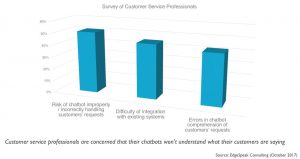
But AI chatbots have yet to prove they’re up for the task. An October 2017 survey conducted by EdgePeak Consulting found that customer service professionals are concerned that chatbots won’t understand what their customers are saying. Nearly 50 percent believe a chatbot will improperly or incorrectly handle a customer’s request and nearly 40 percent believe there would be errors in a chatbot’s comprehension of a customer’s request. There were other concerns as well. More than 40 percent believed they would have difficulty integrating a conversational interface within their existing, legacy systems.

Also Read:  Are Your Consumers Getting Along With Chatbots?

However, the concerns are unfounded. AI chatbots have been found to respond to customer requests and questions more efficiently and accurately than a human employee, freeing up the employee to focus on valued work and customer issues that can’t be resolved by a chatbot. In fact, conversational AI chatbots can respond with up to 99 percent accuracy and have much higher response rates than human staff. There’s no reason corporations and customer support organizations should not implement conversational AI, as there are simple solutions available that can be deployed in as soon as two weeks and without hiring extra staff.Build, Train & Deploy: How AI Chatbots Can Transform the Customer Experience

The requirements for implementing AI-driven conversational interfaces that drive superior customer experience, while also addressing the concerns of customer service professionals, have the following characteristics:

  • A bot builder, which is easy to use for building a bot, without the need to write a single line of code.
  • A bot trainer, which has the kind of depth enabling it to better understand a user, no matter how they express themselves, and uses one of the most sophisticated deep-learning models – long short-term memory. This brings the same sort of AI “horsepower” to an NLP interface associated with self-driving cars and package-delivering drones.
  • A bot deployment that can deploy the bot anywhere a customer wants to reach the company.

Don’t Hire A Bot-building Team

An automated conversational interface solution must work seamlessly within legacy enterprise systems, across any type of messaging or voice-based platform. A company should not need to hire a bot-building team, and employees should not require computer programming experience. The system should be able to be built and deployed, easily and quickly, across the enterprise (some can be deployed in as few as three weeks), providing feedback and the ability to fine-tune processes and responses as needed.

Once built, the bot should be trained and educated so it’s intelligent enough to understand and respond to normal speech patterns. This includes understanding natural language, intents, extracting information, triggering actions, understanding questions and sentiment, processing speech and more. For an AI-powered chatbot to have success within an organization, it must be able to handle these conversational AI building blocks.

Also Read: 28 Ways Artificial Intelligence Will Affect Your Business and Life in 2018

Chatbots Drive Improvement In Customer Satisfaction Scores

Many companies have seen customer satisfaction scores improve as they implement AI-powered chatbots. For example, a customer may call in with a common issue, such as when a customer loses Internet connectivity and the solution is to simply switch off the router and power it back on. Instead of a long wait on hold to receive instructions to reboot a computer or switching the router off and of, a customer can sidestep any potential frustration with a bot providing immediate, easy-to-understand instructions. All this frees up agents for more complex issues. Ensuring that the users’ needs are met, it should also seamlessly pass incoming customer calls to a human when necessary.

The AI chatbot will only improve, using the latest in machine learning and deep learning algorithms to constantly learn, evolve, and understand multiple languages, while also providing a rich set of analytics to help understand, train and improve the overall system.

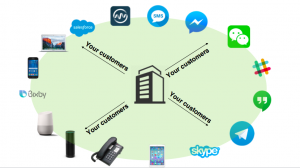
Finally, the bot deployment should happen wherever a company wants to talk to customers, whether on a website, Facebook channel, Amazon Alexa, Google Home and even SMS. Many companies are also implementing bots to handle internal employee questions via Slack.

Build, Train & Deploy: How AI Chatbots Can Transform the Customer ExperienceThe survey did find that customer service executives perceived many benefits in deploying a conversational AI chatbot, including increased customer satisfaction and higher-quality customer experiences, as well as the ability to offer instant gratification to users by providing immediate responses.

As consumers continue to embrace bots and business leaders become more educated about their benefits, it’s clear that AI-powered chatbots have the power to significantly improve customer support, all while continuing to learn how to deliver better and better customer experiences.

Also Read:  Why Conversational AI is the Future of Business

NewVoiceMedia Wins 2018 CUSTOMER Magazine Product Of The Year Award

0
newvoicemedia

NewVoiceMedia, a leading global provider of cloud contact center and inside sales technology that enables businesses to create exceptional, emotive customer experiences to serve better and sell more, announced that the NVM Platform has been named a 2018 CUSTOMER Magazine Product of the Year.

The award, presented for the 20th year by global, integrated media company TMC and CUSTOMER Magazine, recognizes vendors that are advancing the call center, CRM and teleservices industries one solution at a time and highlights products that enable their clients to meet and exceed the expectations of their customers.

“On behalf of both TMC and CUSTOMER magazine, it is my pleasure to honor NewVoiceMedia with a 2018 Product of the Year Award,” said Rich Tehrani, CEO of TMC. “The NVM Platform has proven deserving of this elite status, and I look forward to continued innovation from NewVoiceMedia in 2018 and beyond.”

NVM’s global cloud telephony platform is an intelligent, multi-tenant contact center and inside sales solution that joins up all communications channels and plugs straight into an organization’s CRM software for full access to hard-won data. With a true cloud environment and proven 99.999% platform availability, NVM ensures complete flexibility, scalability and reliability.

Also Read:  Dreamforce TechBytes with Dennis Fois, President, NewVoiceMedia

“We are honored that our platform has been recognized as a 2018 Product of the Year,” says John Eng, Chief Marketing Officer at NewVoiceMedia. “The award-winning NewVoiceMedia cloud contact center platform is helping companies worldwide transform their sales performance and deliver a more emotive customer experience, and this achievement underscores our commitment to help businesses looking to improve and compete on customer experience.”

NewVoiceMedia is a leading global provider of cloud contact center and inside sales technology that enables businesses to create exceptional, emotive customer experiences to serve better and sell more.

Its award-winning platform joins up all communications channels without expensive, disruptive hardware changes and plugs straight into your CRM for full access to hard-won data. With a true cloud environment and proven 99.999% platform availability, NewVoiceMedia ensures complete flexibility, scalability, and reliability.

Also Read:  NewVoiceMedia wins Frost & Sullivan Excellence Award

Mavenlink Unveils Major Enhancements to Full-Cycle Resource Management

0
Mavenlink Unveils Major Enhancements to Full-Cycle Resource Management

Multitude of new features include a Drop-and-Drag Master Planning Console, and Demand and Capacity Forecasting Dashboard

Mavenlink, the leading provider of cloud-based software for the modern services organization and a G2 Crowd Leader, has announced the availability of an advanced Full-Cycle Resource Management solution for the $3 trillion professional and marketing services industries.

Read MoreNuxeo Opens Office in Japan to Meet Increasing Demand for Content Services Platforms

The innovative solution is designed to help professional services organizations manage resources on multiple projects across every stage of the services engagement: Estimating, Planning, Delivering, and Analyzing.

It is unveiled a new market research in the 2018 State of the Services Economy report reveals that resource management, the single biggest contributing factor to costs and performance, is consistently the biggest challenge for services organizations.

Read More: Actifio Names Datatrend Technologies Channel Partner of the Year

Ray Grainger, CEO and Founder of Mavenlink, said, “The sub-optimization of resources is one of the most pressing business issues for services firms today, compromising utilization rates, margins, and client satisfaction.”

Ray added, “That is why we have invested heavily to solve it. With this launch, Mavenlink offers the most robust resource management product on the market, enabling our customers to be the best resource managers out there. The agility, efficiency, and reporting capabilities now available in Mavenlink’s Full-Cycle Resource Management will give our clients a competitive advantage.”

Key Features of Mavenlink’s Full-Cycle Resource Management Solution

Mavenlink’s Full-Cycle Resource Management solution is the industry’s first holistic and comprehensive approach to resource management. It gives services organizations full visualization of current and forecasted resource needs, the tools to swiftly manage change and optimize project margins, and the data necessary to elevate the role of resource management from tactical to strategic.

New features announced include–

Master Planning Console

A drag-and-drop console allows managers to efficiently allocate work hours, and visualize and resolve resource conflicts as they arise. The visual nature of the Full-Cycle Resource Management solution makes it easy to see where resources are or need to be allocated to the current and future projects, in real time.

Key features include–

Live View Resource Pool, a comprehensive overview of all team members that allows managers to quickly sort and find the resources they need by project, role, competency, and more; and the Resource Matching Tool, which helps managers to easily find the best matched available resources for a given project.

Estimates and Scenarios

A comprehensive feature set to help managers estimate project resource needs, costs, and margins, and do what-if analysis before setting a project into motion. The ability to test resource variables in scenarios and forecast outcomes allows managers to minimize risk and make smart decisions about resources essential to projects.

Key features include–

Scenario Builder

A solution that enables company estimators to build and compare staffing scenarios, and then quickly turns those scenarios into projects; and a Profit Margin Modeler, a tool used to adjust resource compilation, rate cards, and other information to optimize profit margin for each scenario.

Staffing & Capacity Dashboard

Mavenlink’s Full-Cycle Resource Management solution also equips organizations with the most comprehensive set of resource and demand and capacity planning reports via Mavenlink Insights. The new reporting functionality includes a Capacity Demand Forecasting Report that highlights unstaffed demand and available capacity far enough in advance to make needed staffing adjustments; as well as a Roll Off Report, a daily calendar view that highlights any resource who will be rolling off a project soon to prevent margin leakage and reduce bench time.

Early Access Customers Report Immediate ROI

Mavenlink invited customers to join an early access group to test drive and collaborate on the refinement of the new features. Clients represented a broad range of services firms that will benefit from the solution, including leading digital agencies IDEO and Blue State Digital; the largest member-owned healthcare company in the country, Vizient; and a publicly held global professional services firm, Navigant Consulting.

Some of the initial benefits reported by early access customers include increased accuracy in forecasting, improved resource utilization, and increased business agility.

Erika Bellido, Operations Manager at Blue State Digital, said, “Mavenlink’s approach to resource management allows us to constantly improve the way we make business decisions based on the available resourcing data and a project’s needs.”

Erika added, “Our business moves very fast, and project and client requirements are always changing. Before Mavenlink, it was difficult to get a bigger picture on what deliverables needed to get completed and what resources we truly had. Now we can look at project needs as a whole and make on-the-fly adjustments based on ideal resource scenarios because we have the visibility into our available resource pool, the tools to make changes very fast and the insights to track resourcing trends and projections— all in a single solution.”

Currently, Mavenlink delivers enterprise-class Software as a Service (SaaS) that transforms how businesses work with distributed teams, contractors and clients around the globe. Mavenlink’s innovative technology suite enables organizations of any size to successfully manage and scale their people, projects, and profits.

Recommended Read: zvelo’s URL Database and Categories Expanded to Include Terrorism, Fake News, Cryptocurrency, Crypto Mining, and More

zvelo’s URL Database and Categories Expanded to Include Terrorism, Fake News, Cryptocurrency, Crypto Mining, and More

0
zvelo Launches Cybersecurity Professional Services for Malware Analysis, External Threat Hunting and Brand Vulnerability Assessment

zveloDB™ Extends Leadership of URL Database for OEM Partners

zvelo, the leading provider of categorization and malicious detection data services for web content, traffic, and connected devices, announced significant and timely category additions to its comprehensive URL categorization database. zveloDB now offers OEM partners, network security vendors, and brands new and enhanced support for several emerging categories, including terrorism, cryptocurrency, blockchain, fake news, new malicious threat categories, and new objectionable categories.

Also Read:  Interview with Jeff Finn, CEO, zvelo

zveloDB covers 99.9% of active web traffic and supports 500 topical, malicious, and objectionable categories in more than 200 languages. Each of the newly supported categories has been selected by zvelo as an area of urgent importance for easy integration with web filtering solutions, and increased granularity for brand safety and contextual targeting. Combined with the recently announced page-level categorization support, these new categories significantly increase the power and performance of zveloDB across the various web filtering, parental controls, brand safety, and other use cases.

“Over the past several years, we have been developing a scalable platform that utilizes AI-based microservices with the specific goal of being able to rapidly deliver the most accurate categorizations of new content and emerging threat types,” said Jeff Finn, CEO, zvelo. “Today’s zveloDB category releases are an exciting milestone for zvelo and our OEM partners – enabling real-time categorization and support, and affirming the design decisions made over the past several years by our engineering and product teams.”

Also Read: S4M Depolys zvelo’s Invalid Traffic (IVT) Dataset to Combat Ad Fraud

New categories now available within zveloDB – at no additional cost – to partners and users include:

  • Terrorism: Websites promoting terrorism, radicalism, and the unlawful use of violence and intimidation.
  • Cryptocurrency: Websites discussing cryptocurrency such as Bitcoin, Ethereum, Litecoin, and others. This category can also include web pages which discuss cryptocurrency mining and web pages which perform cryptocurrency mining with user permission (opt-in).
  • Cryptocurrency Mining: Websites that use cryptocurrency mining technology without user permission. This is considered a malicious category.
  • Blockchain: Websites that discuss or explain Blockchain technology (advantages and disadvantages), and the management of the database that records cryptocurrency transactions.
  • Fake/Fabricated News: Websites promoting news that has no basis in fact but is presented as being factually accurate.
  • APIs: Websites that pertain to the development, use, and promotion of an application programming interface (API), as well as tools for building application software.
  • Internet of Things: Websites which discuss or explain the Internet of Things, and the interconnection (via the internet) of devices embedded in everyday objects which enable them to send and receive data. This also includes websites which market or promote IoT devices.

A.I. & M.L.: Websites that discuss or explain Artificial Intelligence and Machine Learning algorithms.

Nuxeo Opens Office in Japan to Meet Increasing Demand for Content Services Platforms

0
Nuxeo Opens Office in Japan to Meet Increasing Demand for Content Services Platforms

The Recognized Visionary among Content Services Platforms Expands into Asia to Increase Sales and Support in the Region

Nuxeo, a leading cloud-native Content Services Platform, announced the opening of its Japan office in Tokyo. The new office in Tokyo is part of the company’s commitment to increasing its presence in Japan and the Asia-Pacific (APAC) market.

Eric Barroca
Eric Barroca

At the time of this announcement, Eric Barroca, CEO of Nuxeo, said, “Legacy enterprise content management solutions simply haven’t met the demands of companies in Japan that are looking for a better way to manage information in a unified manner throughout their organization.”

Read More: Interview With Sudeep Misra, Director, Demand Gen and Global Campaigns, Hortonworks

Eric added, “Our open philosophy, along with our advances in leveraging metadata and artificial intelligence, puts us in a unique position to help organizations better leverage the data and content already residing within their existing systems.”

A growing number of Japanese companies are looking for contemporary solutions to help them unlock the value of their information without having to “rip and replace” their existing IT investments. Organizations in Japan, and around the globe, are realizing that the outdated approach to information management requiring all content to reside in one centralized system isn’t realistic or achievable.

Read More: ZaiLab Launches World’s First 100% Cloud-Based Call Center Technology in the US

Modern businesses need a platform that enables them to connect to existing systems where their content and digital assets already reside, and to serve as a central hub for accessing this information in a way that is highly personalized for the user.

With its open architecture and broad array of out-of-the-box connectors, Nuxeo integrates with numerous business solutions, productivity apps, enterprise content management (ECM) solutions and digital asset management (DAM) systems. This approach allows knowledge workers to use their preferred tools and applications to access and manage content and digital assets residing within systems and repositories across the enterprise.

Nuxeo is built on a rich metadata framework that employs artificial intelligence and other current technologies to scale effortlessly and efficiently. As a result, Nuxeo customers not only enjoy a much lower total cost of ownership (TCO) than with traditional ECM and DAM offerings, but they also can develop new solutions on the Nuxeo platform much quicker and more easily, which greatly enhances the future value of their investment.

Currently, Nuxeo provides Cloud-Native Content Services platform, is reinventing enterprise content and digital asset management. Nuxeo is fundamentally changing how people work with both data and content to realize new value from digital information.

Recommended Read: iSpot.tv & LiveRamp Partner To Launch TV Ad Impression Measurement For Digital Segments

What Every Sales Leader Should Know About Conversation Intelligence Technology

0
Conversation-Intelligence

Public Answers to Some Frequently Asked Questions

Gong.ioConversation intelligence technology is one of the newest, most impactful sales technologies available today. It’s helping hundreds of sales organizations increase quota attainment and performance across their entire teams. But since it’s so new and novel, there are a lot of questions about it from both current users and potential users.

This post outlines a list of frequently asked questions about this new technology, and our answers to them. We hope you find it useful. These are the questions every modern sales leader should have answers to.

What Is Conversation Intelligence Technology?

Conversation intelligence is a software-as-a-service (SaaS) designed to deliver insight into sales conversations (and other types of business conversations).

It goes beyond the insights that basic call recording can provide by leveraging technologies such as speech-to-text transcription, machine learning, and natural language processing.

Thus, insights can be extracted in an aggregate way, helping you identify key patterns and trends across hundreds (or thousands) of conversations, rather than just a few.

What Problems Does Conversation Intelligence Address?

Sales leaders and other managers are blind to what’s happening during frontline sales conversations. As a result of this lack of visibility, several consequences occur:

  1. The quota attainment gap between your star reps and your average reps persists

    The most decisive thing that separates your star reps from the rest of the team comes down to how they conduct their sales conversations. If you’re blind to your team’s conversations, it becomes impossible to close the performance gap between these two groups.Gong 1
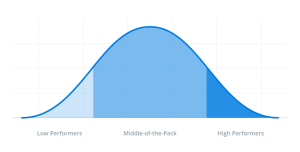
    You can’t replicate the successful things your top reps are doing, and coaching your “middle of the pack” reps becomes an act of guesswork.
  2. Inconsistency spreads across your sales team’s conversations: When you’re blind to your team’s conversations, you’re at mercy of having 10 reps handle 10 calls in 10 different ways.Messaging easily becomes inconsistent, the way your reps execute becomes fragmented, and it becomes very difficult to get everyone marching in the same direction.“Wild west” sales execution reigns.
  3. Your sales team loses deals: Many sales opportunities fail to materialize into revenue when you lack visibility into sales conversations. The worst part is, you never know why you’re losing these deals.When you have bottlenecks in your sales process, it’s next to impossible to fix them if you don’t know what’s going on during sales conversations. You have to understand what’s going wrong to be able to address the issue.Shining the light on sales conversations that lie within the bottlenecked stage is the first step to fixing the bottleneck.
  4. Key decisions become guesswork: When you don’t have an easy way to get insight into frontline sales conversations, many key decisions and initiatives are made based on guesswork and remain unrooted from reality.Sales training and coaching don’t address the team’s true needs since there isn’t enough insight into where the team needs training and coaching.Gong 2
  5. Sales playbooks and processes are created in the confines of an office rather than based on what’s happening in the field.It becomes impossible to gauge what’s working and what’s not.

What Are the Most Common Use Cases of Conversation Intelligence?

  1. Replicating best practices – One of the most common use cases of conversation intelligence is analyzing what your best reps are doing and driving the adoption of those techniques across the rest of your team.
  2. Coaching – This is the most common use case today. Conversation intelligence can help you pinpoint areas of improvement, deliver actionable feedback, and drive the adoption of new, successful behaviors. Gong 3

  3. Onboarding – Many fast-growing companies with plenty of new hires find themselves using libraries of their best sales calls as tools to get new reps up to speed and operating at full quota faster.
  4. Knowledge sharing – There’s tons of tribal knowledge trapped within sales conversations. Feature requests, the voice of the customer, competitive and market intelligence, and much more. As a result, conversation intelligence often becomes widely used throughout many departments beyond just the sales team.
  5. Pipeline management – Many savvy sales managers make sure more deals close by staying on top of what’s happening during the sales conversations in their pipeline. These sales manager often make it a habit to review all late-stage calls so they can help course-correct key deals.
  6. Process improvement – The key to refining your sales process is identifying the bottlenecks. One of the most common places bottlenecks occur is during certain types of sales conversations. Getting visibility into those will help you iron out the wrinkles.

How Does Conversation Intelligence Work?

Different platforms on the market work in slightly different ways. But in general, there are usually three steps behind how this technology works–

  1. Record – The first step is recording calls. Many conversation intelligence platforms record calls themselves. Some platforms don’t record themselves but instead “piggyback” off of call recordings you already have in place. Others can do both. The point is, everything starts with a call recording.
  2. Transcribe – Once calls are recorded, they are transcribed from speech-to-text, transforming calls into searchable data that can be analyzed with technologies such as machine learning.
  3. Analyze – Transcriptions are a means to an end, and that end is to power the analytics. Calls are analyzed individually and aggregately using technologies such as machine learning to identify key trends and patterns of effectiveness.

How accurate are the transcripts? 

Transcription accuracy doesn’t change much from vendor to vendor, usually leveling off at around 80-85%. Heavy accents tend to decrease accuracy around 5 percentage points.

Many customers ask if the transcripts will become more accurate over time as they collect more data. The short answer is “yes,” but only very slightly.

Remember: transcriptions are only a means to an end. That end is analytics.

Also Read:  Sales Performance Gap: The #1 Reason VPs of Sales Miss Their Revenue Targets

Won’t my sales reps think this is “Big Brother”?

This is a common concern of sales leaders – they don’t want their reps to think they are observing them in a “Big Brother” fashion.

Funny enough, we’ve found individual sales reps to be even bigger fans of the technology than managers and sales leaders.

Reps often view conversation intelligence as “game tape for salespeople.” It helps them review their performance and make every sales-call better than their last one, just like a professional quarterback reviews game tape of their own performances.

They can also use the technology to learn from their peers, “swapping” successful talk tracks, discovery questions, and other best practices. It’s a great way for reps to cross-pollinate their tribal knowledge.

It all comes down to how you position conversation intelligence to your reps:
Big Brother management tool?
Or “game type” learning portal?

Do Reps Have to Notify Customers That the Call Is Being Recorded?

As of this writing, there are 11 states in the US that require “all-party consent.” These states legally require you to notify your prospects and customers that the call is being recorded. Because of that, we recommend sales reps always notify the people on their sales calls that it’s being recorded.

For scheduled conference-style sales calls, this is very easy to pull off. Feel free to steal this line:

“Do you mind if I record this call so I’m not scrambling for notes the entire time?”

In our experience, almost no-one says no to this.

For sales teams making outbound cold calls, notifying your prospects can be a little more tricky. Cold calling is hard enough. Starting by telling your prospect the call is being recorded makes it harder.

If this is your situation, we recommend leveraging a tool like SalesLoft, Outreach, or InsideSales.com.

These dialing technologies have capabilities that intelligently record only the rep’s side of the call when calling into “all-party consent” area codes. Most conversation intelligence platforms will seamlessly integrate with these dialing tools.

If you don’t have the luxury of a dialing technology like that, but you do want to record your calls (and comply with the law), try using this line:

“Hi [prospect name], this is Chris from Gong.io calling on a recorded line… did I catch you at a decent time?”

What Kinds of Companies Make Good Customers for Conversation Intelligence?

The best “fits” for conversation intelligence are sales teams who sell by phone or conference call who need to get visibility into their sales calls. Currently, the most common types of companies to adopt conversation intelligence are mid-market B2B technology firms, since they tend to be “early adopters.”

Most of the time, these are “account executive” teams who close deals (as opposed to sales development teams making prospecting calls).

We’ve found that “closer” sales teams are often more likely to adopt this technology because there is more at stake from a financial perspective in making sure their sales conversations are highly effective.

However, we’ve recently seen multiple new industries, as well as different types of sales organizations, adopt the technology, including:

  • Media companies
  • Sales development teams
  • B2C sales teams

While mid-sized B2B tech companies are the most common adopters today, the market will likely develop in such a way that includes just about any organization interacting with prospects and customers over the phone.

Also Read:  This Is the Key Difference Between Your Star Reps and the Rest of Your Team

What Are Customers Achieving with Conversation Intelligence?

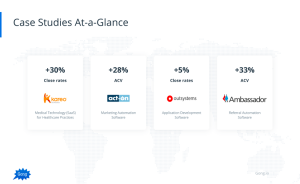
Here’s a snapshot of a few conversation intelligence customer case studies:
Gong 4

As you can see, sales organizations are moving the needle on key sales outcomes like close rates and average contract value (ACV).

There are many other metrics sales organizations are improving with conversation intelligence, including:

  • Decreased sales cycle length
  • Decreased onboarding ramp time for new hires
  • Increased sales team quota attainment
  • Increased ROI per sales rep

What Is the Future of Conversation Intelligence Technology?

In the coming years, conversation intelligence will expand beyond B2B sales teams and into other types of organizations, including B2C call centers, customer success organizations, and other organizations who interact with customers and prospects remotely.

New verticals and industries will also begin adopting the technology at faster rates, such as media companies, financial services, and dozens more.

The technology itself will continually become more impactful as machine learning and artificial intelligence rapidly advance.

Expect the technology to expand in a few interesting ways:

  • Deeper analytics regarding what’s working on sales calls (and what’s not)
  • Real-time capabilities that “nudge” reps with recommended talk tracks based on customer response
  • More support for the “Voice of Customer” and “Market Intelligence” use cases
  • Expansion into conversation channels that go beyond the phone (email, chat, etc.)
  • Predictive capabilities that help reps manage their pipeline and help sales leaders forecast more accurately based on historic conversations
  • AI-driven automation (automated coaching suggestions to reps, etc.)

Thanks for taking the time to read this post. We hope you’ve found it useful, and that it answered the questions you may have.

Also Read:  Interview with Amit Bendov, CEO and Co-Founder at Gong.io

ZaiLab Launches World’s First 100% Cloud-Based Call Center Technology in the US

0
ZaiLab Launches World’s First 100% Cloud-Based Call Center Technology in the US

ZaiLab Develops the First ‘Call Center-As-A-Service’ Technology That Provides Call Centers of Any Size and Enterprise Grade

ZaiLab, an omnichannel and cloud-based contact center software company, introduced the world’s first 100% cloud-based, pay-as-you-go call center technology platform. Based on the fact that traditional call center solutions are big, expensive and thus unavailable to small to medium-sized businesses, ZaiLab has embarked on a mission to develop the first ‘call center-as-a-service’ technology that provides call centers of any size the technology that larger enterprises have access too.

At the time of this announcement, CEO and founder of ZaiLab, Nour Addine Ayyoub, said, “Just as accounting, CRM, sales enablement, project management, networking, communications, and marketing automation tools have been re-engineered for the SMB market over the last 10 years, we’re doing the same for call centers.”

Read More: Relay Network Launches CX Builder

Nour added, “With the rise of direct brand-to-consumer models and the importance of providing exceptional customer service, the market was ripe for disruption.”

The platform is unique because of four major unique features–

100% Cloud-Based

Unlike existing solutions that have had feature after feature ‘bolted on’ to their offering, ZaiLab has been designed from the ground up to be cloud-based and functional within minutes of setting up an account. As a result, the agent and customer experience is seamless and user-intuitive.

No Upfront Setup/Install Costs

Full-featured contact center solutions traditionally require a dedicated technician to set up and maintain. Our interactive flow designer features a simple to use editor that lets organizations determine how customer interactions flow through their center and what happens along the way

In as few as 10 minutes, customer flows can be designed by anyone in the organization and the platform can be live.

Usage-Based Pricing

Everyone in the customer’s organization who wants and needs access can get full and unhindered access to every single one of ZaiLab’s features. Customers will only pay for the services they use in the volume they use them.

Read More: Zaius Integrates with Zendesk for 360-Degree View on Customer Experience

Universal Waiting Room

All interactions, whatever their channel, are placed in the same single waiting room and considered together before being routed to the agent most likely to provide the best outcome. The agent’s call outcomes, customer satisfaction scores, and interaction data are fed back to our machine-learning algorithm to make sure customers are matched to the right agents at the right time.

Interactions are also prioritized and routed to agents based on past customer experience, business value, and agent-customer compatibility.

All these features combine to create the most advanced call center technology platform on the market that can be made available to any company operating a call center.

ZaiLab is demonstrating their software at Enterprise Connect 2018 on March 12-15 and will showcase the ZaiTruck, an all-terrain space truck converted from an 18-ton military truck by their in-house industrial design team. As a special benefit to Enterprise Connect attendees, ZaiLab is providing a 14-day free evaluation of its products to anyone who receives a live demonstration at booth #1919.

Currently, ZaiLab is branded as a next-generation software company specializing in omnichannel cloud-based contact center software. They create software for businesses of all sizes, particularly small to medium contact centers looking for a cost-effective way to personalize routing, improve client conversations and increase efficiency.

Recommended Read: TechBytes with Tom Rassweiler, VP, Content Reinvention, Arkadium

Actifio Names Datatrend Technologies Channel Partner of the Year

0
Actifio Names Datatrend Technologies Channel Partner of the Year

The Actifio Channel Partner of the Year Award Is Given to the Channel Partner with the Greatest and Most Strategic Contribution to Customer Success

Actifio, the Data-as-a-Service company, has named Datatrend Technologies as the Actifio Channel Partner of the Year. The announcement was made at Actifio’s annual sales kickoff meeting in Miami. The Actifio Channel Partner of the Year Award is given to the channel partner with the greatest and most strategic contribution to customer success with Actifio’s enterprise-class data virtualization software platform.

Based in Minnetonka, Minnesota, Datatrend Technologies delivers technology infrastructure solutions to companies by leveraging leading global technology partners, offering planning, design, implementation, integration and project management solutions for data centers, cloud environments and other wireless solutions. In the past year, Datatrend was able to secure 16 Actifio certifications and new bookings and pipeline exceeding $10 million. Some of Datatrend’s key customer wins in 2017 included a major American airline, a global trillion-dollar asset management firm and a global pharmaceutical corporation.

Also Read: Actifio Names Networld Corporation as Japan Partner of the Year

Actifio Names Datatrend Technologies Channel Partner of the Year
Charlie Cox

Charlie Cox, President and CEO at Datatrend, said “All of us here at Datatrend are truly honored to be recognized as Actifio’s Channel Partner of the Year. This is a true testament to our team’s dedication to our clients and a prime example of how we’re collaborating to help companies transform and modernize their IT strategies.”

Also Read: Automation Anywhere Plus Unveiled as Industry’s Most Comprehensive Global Customer Success Program

Actifio Names Datatrend Technologies Channel Partner of the Year
Ash Ashutosh

Ash Ashutosh, CEO and Founder of Actifio, added, “Bringing IT modernization and proper data management tools to organizations of any size require not only the right technology but the ability to build confidence from the users to the executive suite. This is crucial when the growth of a company’s business hangs in the balance. More than 2,700 global enterprises around the world are using Actifio to completely transform their digital infrastructures and that would not be possible without partners like Datatrend. We’re excited to recognize Datatrend Technologies for their role in Actifio’s rapid growth.”

Actifio is the world’s leading Data-as-a-Service (DaaS) platform. It enables thousands of users around the world to deliver their data just as they deliver their applications and infrastructure . . . as a service available instantly, anywhere. An enterprise-class software platform powered by patented Virtual Data Pipeline technology, Actifio frees data from traditional infrastructure to accelerate adoption of hybrid cloud, build higher quality applications faster, and improve business resiliency and availability.

Recommended Read: Dare or Drop: Top Challenges for Marketers Set to Intensify in 2018

7 Surefire Ways Market Researchers Can Fight Survey Fatigue

0
Guest-Post-Survey-Fatigue

The increasing importance being placed on customer experiences is daunting – not only for companies looking to provide superior service but also for customers who are now facing a flood of survey and feedback requests from almost every channel. Market Researchers are now competing for the public’s time with myriad surveys, over-eager follow-up texts and approval-seeking web forms and emails; some promising bonus points or entry into raffles for prizes.

While there is nothing wrong with this level of determination to deliver better customer experiences, it is this continuous need for feedback that toes the fine line of tipping the respondents towards survey fatigue. Now, more than ever, Market Researchers are dealing with low respondent engagement and declining survey rates because of the way they approach gathering feedback. Anecdotal evidence suggests that the response rate for Market Research surveys in general has dropped from 20 percent to just 2 percent in the past 20 years.

Also Read:  Customer Data Is the Next Competitive Battleground Shaping the Future of Digital Marketing

Each respondent is unique with specific preferences and different aptitudes. As such, utilizing a cookie-cutter approach to requesting feedback simply isn’t good enough. Effective management of customer experience requires a more tailored and attractive experience that includes relevant samples and careful survey design.

Here are seven surefire ways to overcome potential survey fatigue, avoid frustration and ensure the data being collected maintains its value:

1. Use technology that supports your entire process

Technology and automation are key to the effective design, programming and deployment of surveys. These tools are the “brains” behind the proper capture of feedback. Therefore, when selecting a solution that helps automate these processes, you must consider its core efficiencies first, then address its design or interface, another key factor. Under-the-hood power of the platform is paramount in ensuring that the highest-level of insights are being captured and analyzed.

2. Make it look appealing

38 percent of people will stop engaging with content if the layout is unattractive, and they will do this within 50 milliseconds1. Successful surveys will have an equal balance of brawns and brains; a highly functioning user interface that is also aesthetically pleasing to the eye. Put yourself in your respondents’ shoes and consider the layout. What would you enjoy answering?

3. Deploy across a variety of channels to maximize exposure, but author once

One data avenue is not always sufficient. To get the breadth and depth of data needed for insight, Market Researchers must be able to deploy the same survey across various channels, including web, phone, social media and even in-person. Furthermore, respondents are creatures of habit. Consistency in the look and feel and use of the same template means respondents will get used to your invites.

Also Read:  How Marketers Can Use Customer Behavior to Drive Revenue

4. Don’t overlook mobile or mobile design

As mobile-phone dependency continues to grow, so does the amount of time spent on digital media, including mobile apps and the mobile web. Targeting this demographic of mobile users should be a top priority, however, you need to ensure it’s optimized for mobile use and completion. For example, overly complicated matrix questions can look different on mobile devices and therefore lead to higher dropouts and lower data quality.

5. Keep questions short

The average human attention span is about 8 seconds2, which is much shorter than the time it would take to complete most surveys. With social media and Twitter-style sentences becoming the norm, try to make questions 140 characters or less if possible. This forces a move away from academic language, towards easier-to-understand language. Ask the types of questions you would ask if you were in front of the person, rather than longer, complicated ones.

6. Increase engagement with multimedia

Audio and videos can help increase a person’s understanding in a quick and easy way and make questions as engaging as possible. Try using video or audio to replace open text answers. You can also consider audio to read out the questions or brand names. This is a good option if you are doing product name testing.

7. Test your survey before you deploy it

It is crucial to test the survey’s features and monitor its performance to avoid surprises. Poorly functioning surveys are not only inconvenient for the respondents, but could ultimately impact the way they perceive the brand and its products and services. Important questions to ask before deployment are: Does it look good? Does it display properly? Does the logic route appropriately?

Survey fatigue is an important topic in Market Research, as respondents often experience it and data quality can suffer. It is extremely important to create surveys that are fun, engaging and reduce mid-survey respondent fatigue and frustration. While survey fatigue may never be cured completely, sticking to these seven tips and best practices will ensure Market Researchers can gather actionable, insightful data to enhance their customer experience and business initiatives.

Also Read:  Forget Click-Through Rates, Focus on Emotional Engagement 

iSpot.tv & LiveRamp Partner To Launch TV Ad Impression Measurement For Digital Segments

0
iSpot.tv & LiveRamp Partner To Launch TV Ad Impression Measurement Against Digital Segments

iSpot.Tv’s Glass-Level TV Advertising Analytics Provide Advertisers with Impression, Attention & Conversion Analytics Against Their Digital Segments Through LiveRamp’s IdentityLink

iSpot.tv, a leader in attention and conversion analytics for TV advertising, and LiveRamp®, an Acxiom® company and leading provider of omnichannel identity resolution, announced a partnership to connect iSpot.tv’s TV ad impression measurement and performance analytics with digital segments connected via LiveRamp’s IdentityLinkTM.

Ispot_liveramp

Using the enhanced measurement and attribution enabled by this partnership, brands will be able to deliver more relevant advertising experiences to consumers across platforms.

Currently, iSpot.tv provides real-time attention and conversion analytics for TV advertisers. The company’s analytics are built on top of its proprietary media measurement platform, which catalogs every TV ad creative and measures its impression delivery across linear and on-demand TV environments.

Read More: TechBytes with Jeff Smith, CMO and General Manager of Brands, LiveRamp

Sean Muller
Sean Muller

At the time of this announcement, Sean Muller, CEO at iSpot.tv, said, “LiveRamp and iSpot.tv operate a large digital footprint which we’ve synchronized on a one-to-one basis, providing high scale and accurate mapping between digital users and TV viewers.”

Sean added, “Coupling our glass-level TV ad impression measurement with LiveRamp’s identity resolution services allows advertisers to unlock their data and optimize effectiveness against their digital target audiences on TV.”

iSpot operates a large-scale device graph that tracks web and app activity and which it has connected to its TV panel of 8M IP-enabled TV sets. iSpot.tv’s Predictive Analytics makes it easy for brands to better allocate media buys based on what television programming their digital segments are watching and then verify their delivery and performance.

The companies also announced that Muller will be speaking at RampUp 2018, the premier industry event that brings together thought leaders across martech to exchange ideas on the state and evolution of data-driven marketing.

Joel Jewitt, Vice President of Strategic Operations at LiveRamp, said, “This is an important partnership to help our advertising partners understand how their first and third party digital segments index and perform against television programming viewership.”

Joel added, “iSpot.tv has granular TV ad impression measurement at a scale typically only found in digital. This extends our IdentityLink capabilities into the TV world in a meaningful way.”

Seattle-based iSpot.tv, which uses Automated Content Recognition (ACR) for tracking activity surrounding TV ads in real-time, utilizes exclusive screen-level ACR data via its partnership with Inscape to provide closed-loop attribution and attention measurement to brands, networks and agencies.

iSpot.tv leverages a proprietary device graph of 45 million digital devices that have been mapped to its ACR data from 8 million Smart TVs to connect TV impressions to upper and lower funnel digital touchpoints for its clients.

iSpot.tv’s always-on enterprise system for measuring consumer response to advertising is now being used by over 200 major advertisers to understand how creatives and media placements drive business outcomes as well as predict where additional conversions can be found. iSpot.tv was recently named the 9th fastest growing technology business in North America by Deloitte.

iSpot attention analytics measures the propensity of consumers to interrupt ad play on TV. iSpot Conversion Analytics is the new industry standard for TV attribution and directly connects TV ad impressions with the web, app, and other first-party data.

Recommended Read: Fireside Chat with Shawn Schwegman