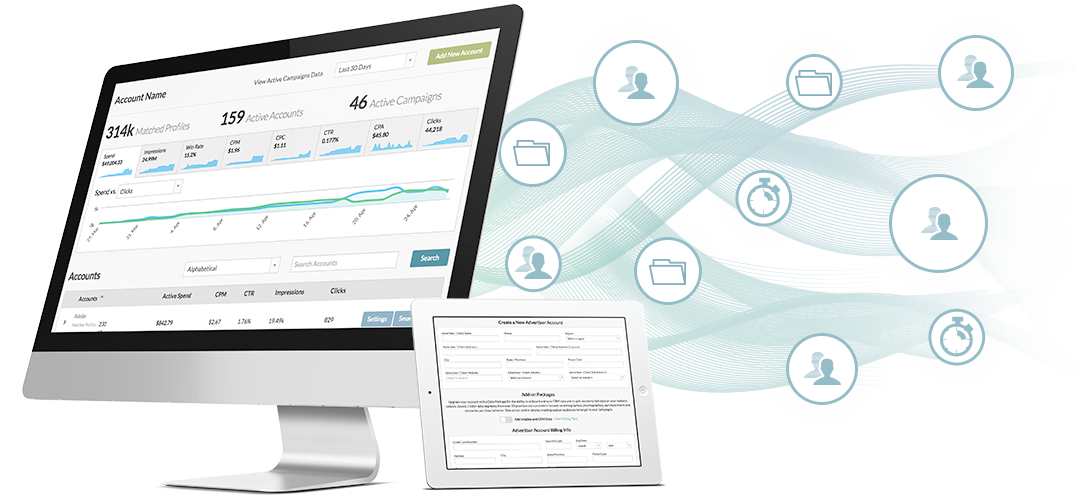
Tracking First, a Utah-based adtech start-up that validates and manages full-range of online marketing campaigns announced promotion of John Boyd to the position of Chief Operating Officer (COO). Additionally, Tracking First also announced its hiring of Craig Monson as Vice President- Sales. Monson is replacing John Boyd. Monson brings with him an enriching experience from SaaS, digital analytics, sales acceleration and business intelligence among other skills.
Craig Monson has previously worked as Enterprise Account Executive for Numetric and as Enterprise Sales Director for InsideSales.com. At Tracking First, Monson’s experience at Omniture, an Adobe Company will come handy. Monson will look after staffing, sales acceleration, and management departments.
As a data governance and data validation company, Tracking First is likely to proliferate deeper into online marketing and sales automation platforms.
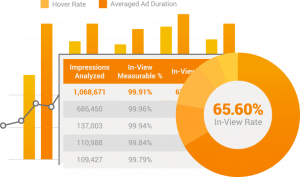
via Tracking First website
“We’re at a point where we need to scale our growth, and it’s great to have experienced minds on the team,” explained Craig Scribner, CEO of Tracking First. Craig Monson added, “There is an entrepreneurial spirit that draws me to a company like Tracking First. It’s a maverick get-up-and-do-it mindset that really suits me. The fact that it’s a role in analytics and big data is comfortable — I’ve worked in other industries, but I like this sector, it’s one I know,”
“Tracking First’s technology is a huge boost to teams of marketers and analysts working jointly on campaigns,” adds John Boyd. “We have a great roster of Fortune 500 clients, and we’re looking for growth this year.”
Instapage, the leading landing personalized page platform, will now be available with Marketo automation software. The integration with Marketo, Inc. will enable marketers to design fully personalized landing pages with advanced design features. Instapage landing pages can be seamlessly integrated with existing Marketo software, driving higher ROI for marketing campaigns.
On-Brand Experience comes to Marketo
Instapage-Marketo integration spells a new beginning in the personalized customer experience along the brand journey. Marketers can now offer highly interactive personalized landing pages to targeted audience based on leads generated from Marketo database. Instapage offers on-brand testing and optimizing capabilities for brands to review their personalized campaigns centered on landing pages.
Integration with Instapage brings Marketo users wide-ranging benefits –
Build hyper-personalized landing pages for desktop, mobile, and apps
Induce variations in landing page at scale using A/B testing capabilities
Reduce time and cost of creating and publishing landing pages
End launch delays caused due to mismanagement of landing page operations
Enhance customer experience, drive higher ROI
Tyson Quick, founder and CEO of Instapage, said, “We saw an opportunity where marketers could significantly increase their ROI. “By sending customers to a personalized landing page and have those leads pushed into their marketing platform for further lead nurturing, you’re truly maximizing your advertising and marketing dollars.”
Instapage Integration with Marketo in One Go
For Marketo users, Instapage offers quick set-up screen, thus saving valuable time and effort during integration. For pages with more than one CTAs and two-step opt-in forms, users have to perform multiple Marketo integrations.
Marketers using Instapage to personalize landing pages will get a mapping feature to match their Marketo fields. Leads generated from Instpage landing pages will stream into Marketo database, enabling Marketo clients to automate their post-conversion customer journey. It is a wonderful synergy between customer experience and post-conversion marketing available within Marketo.
“We’re always looking to expand the options available to our customers,” said Andy Choi, Senior Director of Business Development, Marketo. “This integration with Instapage provides the flexibility to build the best-of-breed marketing stack. Now, the process of acquiring and nurturing leads is seamless for marketers.”
Instapage currently offers seamless integration with more than 20 leading marketing software suites. By partnering with Marketo, Instapage aims at enabling marketers to personalize email campaigns, social media and app-based invites. Marketo is a critical value addition to Instapage’s building and testing platform.
Instapage landing page personalization services are offered on a free trial for 30 days for first-time users. Users can design landing pages using exciting templates for different campaigns – Lead generation, Two-step invite, Click through, Thank you, Webinar, E-book, Event, and App. The landing pages are optimized for desktop and mobile based on user’s selection.
For third party users, Instapage is hosting a Marketo Integration Webinar on January 12, 2017.
Dun & Bradstreet, Inc., the New Jersey-based B2B data provisioning company, announced its acquisition of Avention, the maker of OneSource® solutions. The acquisition makes Dun & Bradstreet (D&B) a commanding force in the Sales Acceleration market, enabling marketing and research teams to improve user engagement, enhance adoption and productivity, and improve overall business strategy.
Avention’s OneSource® solutions offer organizations a clear insight into customer database and market analytics, brought together through an agile technology platform. D&B acquiring Avention redefines the company’s objective to provide Sales and Marketing professionals with an accurate actionable market and business information, filtered by software.
Avention can be plugged into third-party CRM and marketing automation systems, helping marketers to leverage real-time data insights and sales intelligence placed delivered with an intuitive interface. Users can work with actionable data based on mission-critical importance.
Sales Acceleration refers to the process by virtue of which the sales team increases its velocity by including methods like data visualization and business intelligence. It is based on delivering refined information to sales teams, empowering them to make updated strategies, connecting it with buying signals. The Sales Acceleration marketing is currently evaluated at $10 billion, according to Outshell, Inc.
“The Sales Acceleration space offers a big opportunity for Dun & Bradstreet. We believe as the global leader in commercial information we are well positioned to take market share and accelerate our growth strategy,” said Bob Carrigan, chairman and chief executive officer of Dun & Bradstreet. “Bolstered by the success of our recent M&A activity, which has exceeded its acquisition economics, we will continue to explore smart, tuck-in acquisitions that, combined with disciplined execution, will help us to further expand our leadership in this category as well as other areas of our business.”
“We are excited to combine our world-class company and contact data with Avention’s best-in-class technology that is fully integrated with the leading software platforms utilized by B2B sales professionals and marketers,” said Josh Peirez, president and chief operating officer of Dun & Bradstreet. “Avention is a natural fit that will allow us to deliver tremendous value to customers, and the synergies we can capture put the value of this deal well above the purchase price of the acquisition.”
D&B-Avention formulation will provide a tremendous push to the existing Traditional Prospecting offerings delivered through the acquired company’s cutting-edge software suite. The combination is capable of serving critical B2B sales and marketing demands leveraging Dun & Bradstreet’s Sales Acceleration product portfolio. The portfolio includes Hoover’s, Avention, NetProspex, and Strategic Alliance. In totality, the combined package of these products generated more than $200 million in 2016.
Monetate, the leading personalization and customer experience management platform, is moving its corporate headquarters to New York. The decision unveils the company’s determination to get closer to growing concentration of clients, especially in enterprise software, retail, and fashion industries. Monetate currently provides SaaS, powering multi-channel personalization for world’s leading brands. This is the first of many strategic moves made by the company towards expanding their business visibility in the US.
Monetate offers five distinct products for marketers and advertisers, enabling them to translate a wide array of customer data into personalization-driven actions across channels and devices. Monetate for Personalization, Monetate for Optimization and Monetate for Mobile Apps help in creating segment-centric customer experiences based on data-rich analytics extracted from existing CRM and POS.
Monetate also offers email personalization platform with cross-channel and widget inventory capabilities. Shifting its headquarters to New York is expected to refine Monetate’s Dynamic Testing product, delivering real-time personalization on auto-pilot mode.
Monetate’s New York headquarters will house client-centric business functions, including sales and services staff, executive and others. Top management will shuttle between their current Pennsylvania-based headquarters and New York till mid-2017. Founded by David Brussin and David Bookspan in 2008, the company also has offices in Palo Alto and London.
In 2008, Monetate raised $600,000 as seed funding from First Round Capital, a San Francisco-based venture capital firm. In December 2008, it raised $5.1 million in Series A funding, followed by $15 million Series B funding in August 2011. In February 2013, Monetate raised $17.3 million Series C funding, followed by $8 million in the same year. Investors like OpenView Venture Partners, Common Fund, First Round Capital, FLOODGATE and Lead Edge Capital have significant stakes in the company.
Lucinda Duncalfe, CEO of Monetate, is upbeat about the growing prominence of her company in marketing technology sector. As a leader in the IR500 in the US and Europe, it was an obvious decision for Monetate to expand their business horizon, taking their corporate headquarters to the financial epicenter of the world. Backed by continued growth in provisioning cutting-edge personalization experiences, Monetate is gearing up for an exciting year ahead, getting closer to their existing clients and forging new relation with the prospective ones.
Choozle, the Denver, Colorado-based real-time programmatic advertising platform, announced itself as the fastest growing self-service digital marketing and advertising company. In one year, its revenue has tripled, contributed largely by continued innovation in its core product offering. Choozle also landed additional A-1 funding of $2.4 million from its investors in 2017. It adds to the $4.6 million Choozle raised in 2015, led by Great Oaks Venture Capital and other existing investors.
Choozle has raised $8.6 million so far, and has 30 employees.
Choozle offers adtech software to power real-time advertising campaigns across display, mobile, and social channels. Backed by the latest funding, the adtech SaaS platform will expand its operations in the US, and grow internationally. Choozle’s 4th quarter profit in 2016 has proved that the company is on a hyper-growth track despite the tough market conditions in the US. Its customer reach grew by 175 percent.
Programmatic advertising industry is currently worth $40 billion. Choozle aims to grow its product innovation and expand in the US and abroad to repeat its success in 2017. The adtech start-up offers SaaS served on ad networks of theTradeDesk, AOL, Rubicon, MOAT, Bluekai, Google Display Network, Yahoo, MoPub, OpenX, DoubleClick, AppNexus, Sizmek and Facebook. It has 300+ clients all over the world, including Digital First Media, Paradise Agency, Watauga, and Ibotta.
A study on programmatic advertising reports that only 18 percent marketers in Canada, the United States and the United Kingdom have been using the technology for more than 2 years. Programmatic ad spending in the US is expected to grow 17.6 billion in 2018. While the ad spending in programmatic advertising continues to grow rapidly, venture investment in the sector has saturated to a large extent.
In 2016, investments in programmatic ad industry fell by 33 percent. For most adtech companies, it was a struggle to keep pace with the competition and achieve profitability, apart from securing investments. Choozle managed to adapt itself and grow its clientele span beyond 1,000 advertisers.
Andrew Fischer, cofounder and CEO of Choozle, emphasized on company’s focus on continuing his company’s heritage of developing intuitive self-service design in 2017. Choozle ranked #1 in the Customer Satisfaction in G2Crowd’s Winter 2016 Digital Advertising report.
Cloud-based SaaS platform AdGreetz launched a fully personalized video corporate website, AdGeetz.com. It is world’s first personalized video website that offers seamless access via Facebook Connect or user data. The website enables marketers to view and personalize their marketing campaigns for diverse brands on a single screen.
AdGreetz website is offering integration with popular social media and digital media channels including Facebook, Twitter, Snapchat, Instagram, YouTube and OTT/Television. It also enables marketers to partner with leading brands for running hyper-personalized ad campaigns, engaging customers across all video advertising platforms. AdGreetz website is an alluring opportunity for marketers, brands, and influencers to get more personal with their audiences with an expansive range of capabilities.
To see what AdGreetz does, the user has to log in with the Facebook profile. The user can then explore the full scope of personalization possible in ad campaigns. At any point of engagement on AdGreetz.com, the user is free to engage with the videos published by previous clients and analyze possibilities of personalization. AdGreetz offers end-to-end SaaS platform capabilities to the user, opening possibilities to create engaging and smarter medium to communicate with consumers based on 1:1 interactivity.
Currently, the website features AdGreetz’s collaboration with brands including Amazon, InterContinental Hotel Group, Disney, Toyota, Google, Forever 21, HBO, Etihad Airways and West Elm. Given the wide range of branding channels available to marketers, leveraging SaaS-powered personalized website platform is a high-ROI opportunity in 2017.
Video advertising in 2017 is expected to generate more than $10 billion. By 2020, this figure will climb to $28 billion. This makes video advertising as the fastest growing martech element on web and app. AdGreetz’s personalized video corporate website is a smooth platform to boost video ad sales and drive more click-through rates and conversion rates with further personalization in the marketing stack.
Accenture has acquired Altitude, a Boston-based design, and innovation consulting firm. The latest acquisition will enable Accenture to leverage Altitude’s years of experience in curating innovative products and experiences that resonate with wide range of customers, both B2C and B2B.
Altitude is known as an award-winning product developer, integrating the fine nuances of technology, design and customer experience together. Over the course of time, Altitude has helped its customers turn novel technology into a cutting-edge product. Altitude at Accenture will play a big role in unifying Accenture’s Connected Product Lifecycle Services practice in North America to rest of its technology research. It will enable researchers and product developers to create innovative capabilities for companies working on IoT, AI, automation and other business models with high-growth revenue streams.
Accenture acquired Altitude to enhance its market visibility in contemporary digital technology domains, specifically Artificial Intelligence (AI) and Internet of Things (IoT). Altitude brings its far-reaching product innovation into Accenture’s power-packed consulting expertise. Accenture intends to offer connected products in a hyper-personalized marketplace to its customers.
We acquired product design and innovation co @Altitude_Inc enhancing our ability to help companies harness the #IoT. https://t.co/0rftfC8uoy
The Altitude team will join Accenture workforce at the Connected Products Studio in Boston – an emerging technology hub for IoT, AI and other martech innovations.
According to Accenture’s research on use of IoT in business strategies, 73% companies are yet to include IoT in their investment budgets. Apart from driving long-term growth for businesses, IoT market is pegged to become a very stable service-based income stream. IoT as a disruptive technology is redefining the model of product-based business models.
Rapid growth of wearables, VR, AI and chat bots are forcing marketers to explore strategic martech innovations to drive their campaigns. Accenture’s Altitude acquisition adds more weight to the company’s mission to provide end-to-end capabilities to its clients, enabling them to become disruptors and innovators quickly at much lesser failure risk.
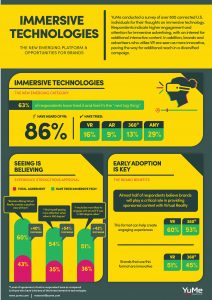
YuMe Inc., a multi-screen video adtech company, released the latest infographic-report on consumer experience towards immersive ad formats. The report reveals the attitude of consumers towards immersive ads published on mobile Virtual Reality (VR), Augmented Reality (AR) and 360-degree video formats. The survey results highlight the fact that consumers are hyper-engaged and super-attentive with immersive advertising. Consumers who have experienced adtech like VR consider the format as a revolutionary platform to engage customers. Nearly 63% of the VR ad viewers accept that marketers should use these technologies more effectively, as it is the “next big thing” of advertising.
via YuMe, Inc.
Immersive technologies in advertising encourage marketers and brands to analyze consumer’s perception towards VR, AR and 360-degree videos. 51% consumers are more likely to get attracted to a brand that uses VR to promote its services owing to its innovation-centric strategy. Brands that embrace immersive technologies are considered more innovative than those who don’t use them. Hence, consumers are more inclined to pay extra attention to their ads.
According to the report, immersive technology is not a disruptive adtech. Instead, it is a trending, mass-market category that almost 89% of consumers are aware of. 29% of such consumers have even tried VR, AR and 360-degree video ad formats at least once. VR, undoubtedly, is the most well-known and most readily recognized immersive technology, followed by 360-degree video and then AR. Comparing the stat results between VR and 360-degree video, almost half the respondents feel that the former immersive technology will play a bigger role in providing sponsored content.
Early adoption holds the key for brands deploying immersive technologies. More than 50% consumers believe that both VR and 360-degree videos help create engaging customer experiences.
As consumers begin to fall out of love with native advertising formats, the latest study on the role of immersive technology in advertising is a shot in the arm. Ad blocking notwithstanding, immersive technologies have the potential to build enormous opportunities for brands to engage consumers in an unprecedented way.
Video survey specialist Voxpopme has announced its partnership with Affectiva, the leading emotion measurement technology company. Marketers can now extract key insights from their research campaigns using video snippets with enhanced emotional analytics. Affectiva’s Emotion AI software will now be available with Voxpopme video insight platform. It will enable marketers to meticulously analyze facial expressions within videos, converting it into powerful emotion data. Users of Voxpopme’s video insight platform can leverage video-emotion data to quantify human expressions during video feedback.
Voxpopme offers a readily available video research platform that can be accessed and scaled easily. Complementing Voxpopme’s swift video insight, Affectiva’s patented Emotion AI technology will deliver emotion metrics and bionic data based on facial expressions revealed across multiple research projects.
Voxpopme’s partnership with Affectiva is a significant step towards technology-powered video research. As millions of videos are streamed per day across all video and social media platforms, this collaboration will make it easier for researchers to identify high-value consumers and their behavior towards video ads.
The prospect of Voxpopme and Affectiva integration brings facial coding into prominence in understanding unfiltered responses by consumers. Affectiva’s Emotion AI is built on cutting-edge Deep Learning concept which has analyzed 4,824,543 faces so far, allowing researchers to derive unique insights from their video ad campaigns with the highest precision.
Emotion AI and facial coding can transform martech landscape in 2017
Affectiva is the only marketing-centric Emotion AI solution provider. In fact, it offers Emotion as a Service to marketers, who use the data to measure emotion-enabled online customer experiences. Based on advanced emotion analytics, marketers can integrate the emotion data with their existing data platforms to derive high-value customer experience feedbacks.
Reports suggest how consumers react differently to various ad channels. The same consumer may show higher engagement with video content compared to others. Facial coding in video ads can unlock a plethora of opportunities for marketers to study how consumers during the decision-making processes.
Affectiva introduced Emotion as a Service in September 2015 with an idea to revolutionize emotion-sensing and consumer analytics capabilities, yielding accurate results at a very low operational cost. By partnering with Voxpopme, Affectiva has managed to achieve much of its objective, ensuring marketers have accesses to Emotion AI at a low cost of integration.
Video advertising will flood Facebook very soon. 2017 will see the arrival of Facebook mid-roll ads. After Facebook introduced mid-video ads for Live broadcasts, it is now ruminating about letting publishers insert ads in non-Live videos too. The idea is still in its testing stage.
By monetizing its video sharing and streaming platform, Facebook is planning to become the “king of video content” in 2017. According to credible sources in video advertising industry Facebook boss Mark Zuckerberg wants users to watch more ads while streaming videos. The latest mid-video ads will enable ad publishers to leverage world’s most popular social media network, opening up a virgin revenue channel. Currently referred to as “mid-roll” ad unit, the publishers can insert a mini ad clip anywhere in the video. Ad length could be anywhere between 15 seconds and 90 seconds.
According to a verified industry source, the Facebook mid-roll ads will pop up once the user has finished watching the video for 20 seconds. Facebook will sell the ads, and in return get 45% revenue share from the publishers. Currently, YouTube also allows publishers to post ads with online videos. Even the split-share revenue models are similar between Facebook and YouTube.
Once the new mid-video ads on Facebook turn into reality, it will represent the first concrete step towards enabling publishers to run monetized video ad campaigns. Facebook acknowledged the power of video content in January 2016. According to a report on Facebook’s Q3 earnings in 2015, users spent watching 100 million video-hours per day. With new mid-roll ads, more video consumption automatically translates into more video advertising.
Facebook may not replace TV ads altogether; instead, it will offer a second-screen experience, playing cross-chairs with YouTube ads. The biggest impact of the latest mid-roll ad unit will be seen from News Feeds that primarily drive the video content distribution mechanism on Facebook.
From customer experience POV, Facebook has no plans to run pre-video ads. Moreover, only those ads will be given “video realty” that can capture viewer’s attention for a longer time. In short, Facebook wants publishers to make creative ads that are long enough to capture user’s attention. More videos, more revenue for Facebook – 2017 is going to be a video advertising revolution.
Wait, till Snapchat too comes up with a similar inviting platform for ad publishers.
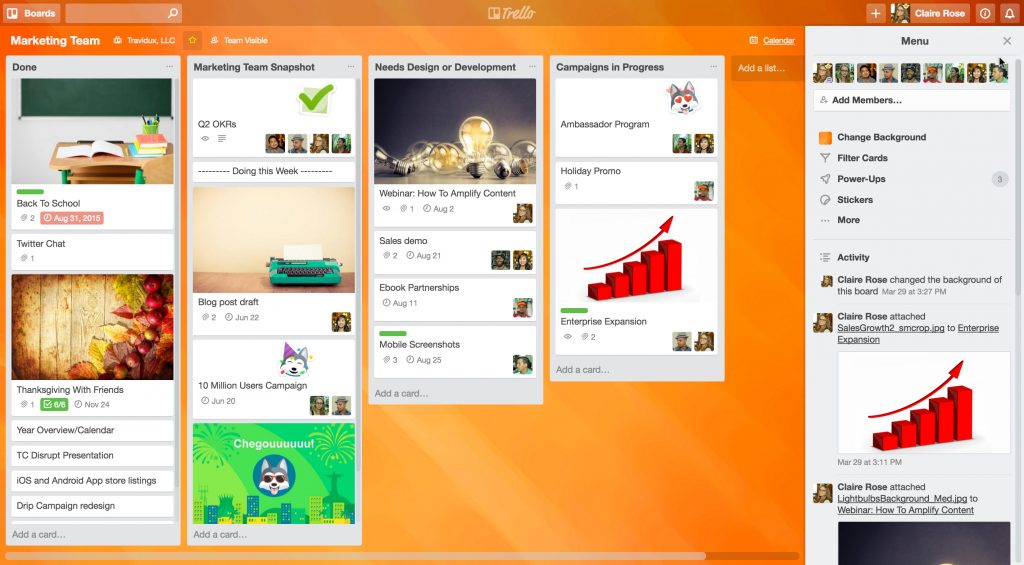
Atlassian announced today that it acquired popular team collaboration software company, Trello for $425 million. The 18th acquisition in 14 years for the company that went public in 2015, it’s Atlassian’s largest acquisition to date. Atlassian is paying about $360 million in cash and the remainder in stock, the company said.
Trello launched five years ago at the TechCrunch Disrupt conference in San Francisco.
Over the past five years, Trello has grown to over 19 million registered users by solving an important problem: capturing and adding structure to fluid, fast-forming work.
The company’s idea was to take the paradigm of a sticky note on a wall and turn it into a tool that allowed people to collaborate in real time.
President Jay Simons says Trello shared Atlassian’s mission of wanting to reach 100 million monthly active users in offices worldwide. “We are a perfect home for them, because we are a company that stands for the same thing that they also care about, which is teams,” Simons said. “From our perspective, what’s exciting about them is it’s a breakout product that’s been incredibly successful.”
Trello is used by single family members to the world’s largest enterprises like Google, National Geographic, the United Kingdom’s government, the United Nations and the Red Cross.
The merger means users can look forward to some great integrations with HipChat, Confluence and JIRA.
Atlassian’s Q2 report on January 19th should shed some more light on the acquisition and how Trello will be integrated with its services.
“A brand is no longer what we tell the consumer it is — it is what consumers tell each other it is.” – Scott Cook, founder and CEO of Intuit.
When consumers turn into your influencers, it is a boon towards generating more output from your marketing efforts. Influencer marketing is a definitive trend on the rise acknowledged by top marketers. Traditionally used by consumer brands to tell their brand stories, marketers adopting influencers for B2B promotion is a recent phenomenon. For valuable lead generation and sales conversion, marketers take the notch one rung higher, introducing – “B2B Influencer Marketing”.
Between 2014 and 2016, influencer marketing emerged as one of the most powerful marketing strategies, especially from the viewpoints of content syndication and social recommendations.
In 2017, CMOs are expected to raise their B2B influencer marketing budgets to secure a broader set of corporate objectives. While most marketers still prefer to stay away from influencers, its relevance in marketing technology stack can’t be overlooked anymore. It’s time to build-up to one of the most forward-thinking marketing technology in 2017. Why?
Because influencer marketing will be the command center for marketers to leverage social monitoring and interactive content platforms.
B2B Influencer Marketing: Evaluating the Trust Factor
Influencer marketing may have rocketed as one of the most credible brand promotion platforms, but there still lies a huge gap between its implementation and ROI evaluation. As marketers look for intelligent tools to drive their social media campaigns and engage the audience with interactive content, influencer marketing is all about choosing the right pilot for the free skies.
Here’s what Influencer Marketing is set out to achieve in 2017.
Amplified content distribution with paid influencing
Influencer marketing is a credible facet of word-of-mouth marketing. Content distribution is one of the most overlooked segments of digital marketing campaigns. Adding influencers as a medium of content distribution really helps drive paid campaigns — SEO, PPC, native advertisements, video, and email. Through people (influencers), marketers can amplify their brand reach using an existing content platform that has already been invested in.
Micro-level influencing
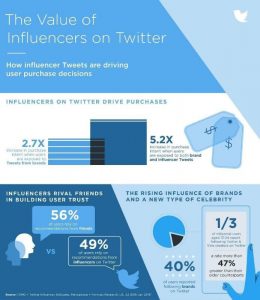
Native advertising, account based marketing, hyper-personalization, and content automation may all seem attractive and unflinchingly hot topics to explore in marketing strategies, deploying Influencer Marketing invariably drives more audience engagement. For niche products and services, customers are 82% more likely to trust the micro influencer recommendations and reviews about the brand than those using social celebrity (macro influencers).
@markfidelman/ Twitter
As influencers create their own content and drivers, they gradually become the creative pillars of the brand, buying a steady stream of highly engaged, hyper-attentive social media users.
Local-to-global activation
Marketing campaigns are growing organically from the local grassroots to evolve into a global phenomenon. Influencers – key managers of local community relationships drive local-to-global magnification. They allow marketers to penetrate niche markets with a very customer-friendly mentality, delivering high impact along with resonating brand engagement.
Omnichannel brand engagement
Blog-only content remains the top platform for engaging audiences across the web, mobile and social. Live messaging, video interaction and even email syndication are steadily replacing blog-only interactions. Influencers are developing independent cross-channel content with interactions, delivering a nice brand-specific social marketing mix. Marketers attest to the importance of content quality as much as its distribution channel.
Ditch self-promotion; avoid brand clash
Two brands may tell the same story and pitch the same set of benefits. Influencers are ice-breakers, raconteurs, and endorsers, all rolled into one. Brand loyalty arrives when marketers ditch self-promotion activities and mindfully avoid the brand-clash with competitors.
Cutting through the native self-promotion gambit can generate higher mileage from social media campaigns. Influencer marketing offers massive content value up-front by investing in real-life experiences.
Live feeds, social messaging and emails with hyper-personalized 1:1 audience engagement helps build stronger and more trustworthy relationships. Influencer marketing is a definitive step towards this.
Dodge past the ad blockers
Ad blockers—the biggest threat to advertisers. There are two ways of circumventing ad blockers. The first option is to deploy an ad blocking detector and wait for the customer to turn off the blocker. Left to chance, most marketers miss out on generating returns from their content despite a flawless distribution platform.
The second option is to create visually attractive ads. Again, a costly effort considering the creative resources that go into it. Therefore, influencer marketing becomes a reliable solution to circumvent ad blocking systems at fraction of the cost that goes into creating interactive ads or in deploying ad blocking detectors.
Influencers are creators and publishers of their own content. This encourages audiences to experience ad content as a genuine voice of the influencer. It’s not marketing trickery; just well-received guidance.
Build a diverse native SEO-driven profile
SEO is still the most important element of content development. Influencers with high-authority domains generate organic backlinks with high “shareable quotient”, which in return improves your link profile. Marketers leveraging influencer marketing can significantly quash negative brand experiences with credible high-authority content and follower messages.
Influencer marketing is perfect for building and boosting SEO efforts at lower costs.
Quick attribution
B2B buyers are more likely to buy a service or product from a marketplace based on referrals over direct promotions. One of the major factors pushing influencers to the top marketing funnel is its quick, reliable attribution. By integrating legacy CRMs with influencer marketing, marketers can accurately measure the relevance of opinion leaders on campaigns and the resultant conversion.
Cons of Influencer Marketing
Where do marketers mostly go wrong with their influencer marketing strategies? Marketers, who have burnt their hands with influencers, acknowledge why it is so hard to get the right marketing mix with them.
Lack of accountability kills reputation
One of the biggest pitfalls is the lack of influencer accountability. It is very hard to tell if the influencer is an endorser or a genuine user, based on the content. 2016 showed how “Fake News” made headlines and broke brand propriety with callous returns. It’s challenging to generate new ideas every time with limited angles to promote brands across various platforms.
Lack of qualitative and quantitative metrics to measure influencer legitimacy makes it harder to determine the effectiveness of your campaigns. Without accountability, influencer marketing is a hollow strategy.
Influencers are real people, not commodities
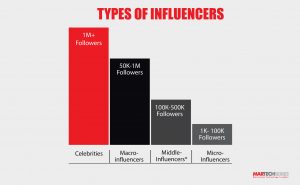
Types of influencers
Influencers can’t magically grow a brand into something worth talking about. Marketers should be ready to brainstorm with the influencers about the product and invest in their networks. Authentic brand-audience engagement starts with genuine human interaction that only influencers can provide.
Missing out on journalistic, data-rich content
B2B marketers can do so much more with influencer marketing only if they encourage their assets to provide data-rich, well-researched content with a journalistic perspective. With enough on the analytics dashboard for marketers, influencers can leverage the analytics, connect dots and create experiences for customers that turn to actions.
Overlooking automation in influencer marketing
Automation in influencer marketing is the missing cog in contemporary marketing stack. Creating bespoke content and acquiring self-service platforms to drive that content is a hefty expense. Before implementing influencer marketing get your ducks in a row. One of them is to follow the FTC Endorsement Rules. Automation enables marketers to identify relevant FTC-endorsed influencers and acquire mass-trending content from them.
To turn efforts into sales results, marketers need to empower influencer content with marketing automation with the right mix of self-service platforms and turnkey performance optimizers. By funding live engagement opportunities to influencers, marketers can open up a wide spectrum of pre-purchase, purchase, and post-purchase data. Automation in influencer marketing can maximize the content’s reach with highly optimized distribution.
Taking the High Road with Influencer Marketing
The biggest mistake you can do with influencer marketing is not do it all!
Influencer marketing can drive overall business strategy, fitting in not just as part of the content strategy, but also as social, PR, and mass engagement strategies. Add to it the features of cognitive marketing technology and voila, you can reinvent omnichannel lead generation. Backed by a strong collaboration with marketers and 24/7 interaction with customers, influencer marketing is all set to become the most reliable brand validation marketing technology.
Salesforce, the leading CRM firm, has released its Second Annual State of Service research report, uncovering insights from more than 2,500 customer service professionals. The latest Salesforce report highlights the impact of smart technologies on service protocols and marketing response towards meeting inflated customer requirements.
According to Salesforce’s Second Annual State of Service Report, it requires a unified platform to deliver smart customer experience across the enterprise. Executives wielding the right tools, backed by suitable training on the customer experience platform can help in elevating the customer-brand interaction. The Salesforce report also highlights the role of artificial intelligence in delivering smart customer experience in future.
Customers across the world are super-connected and hyper-informed than ever before. The digitally-enabled consumers are far more enabled and engaged. Over 82% of them acknowledge that technology makes business easier and seamless. Customer experience – a direct indicator of brand loyalty, provides a stable platform to rise above the competition once technology comes into the picture. Once a costly and reactionary aspect, customer experience is now a key business differentiator powering critical industry transformation.
Why customer experience matters?
Collaborative customer experience boosts omnichannel and upselling opportunities, delivering consistent and efficient interaction.
According to the latest study, 78% of the customer service teams attribute an employee as an agent of customer service. 63% of the service teams rely on a formal methodology to collaborate with their sales counterparts, and almost the same percentage of service teams proactively contribute with sales intelligence. 59% of the service agents feel empowered to create add-ons and orders utilizing CRM with cross-team collaboration.
Overall, service has the highest impact on how customers actually perceive their brand.
Customer experience from agents POV
Top service teams driving high-quality customer service are empowered with the right tool and technology. With adequate training, they gain a single view of the customer life cycle. 360-degree perspective on the customer enhances agent productivity. 79% of the service agents agree about the consistency and continuity in customer interaction. Service teams are adapting to the real-time demands of consumers and business buyers. Service agents are themselves confident about continuing in the same company one year from now, reaping the long-term benefit of consistent customer experience.
Analytics are the magic wands for customer service agents. In 2015-2016, the use of service analytics has spiked up by 166 percent. According to Adam Blitzer, EVP and GM of Sales and Service Clouds, Salesforce, customer experience is the critical differentiator for business growth.
Companies that don’t prioritize customer experience run the risk of falling behind the growth curve. After all, customer experience empowers service agents to offer personalized intelligent and conversational service seamlessly across the entire organization.
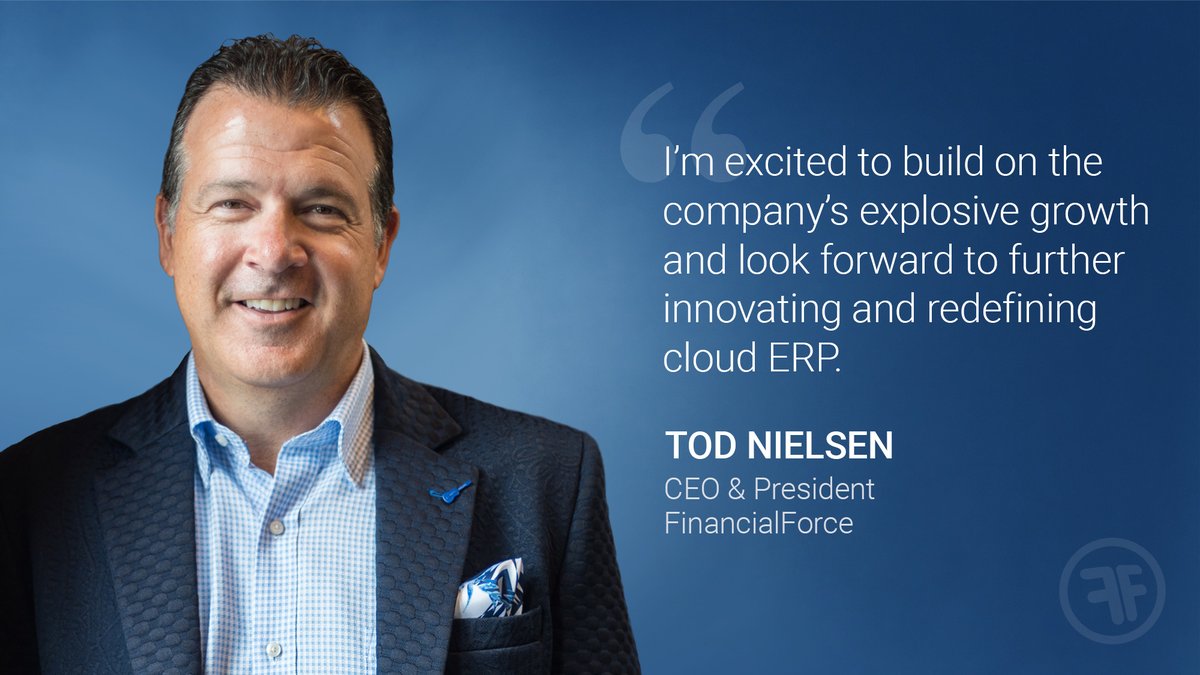
FinancialForce, an enterprise cloud-based resource planning company, named its new CEO after its Founder-CEO stepped down on Friday. In a surprise move, CEO Jeremy Roche will make way for enterprise cloud specialist Tod Nielsen, the former CEO of Heroku and COO of VMWare. This is a strategic move to acquire more scalability for FinancialForce, considering Nielsen’s reputation as a platform game maker.
Tod Nielsen’s arrival will boost growth for FinancialForce, which is expected to touch $100 million as annual revenue in coming quarters. Meanwhile, there has been no official comment on Jeremy Roche’s future at FinancialForce. He is expected to serve as a special board advisor.
Tod Nielsen’s appointment as the CEO of FinancialForce comes merely 18 months after the Cloud ERP solution provider raised $110 million in funding. It has acquired close to $200 million so far and is currently evaluated at $530 million. Nielsen’s experience with Salesforce cloud platform will prove to be a huge advantage for FinancialForce.
Previously, Nielsen was the EVP Platform (App Cloud) at Salesforce, partner of FinancialForce on its Cloud ERP. Interestingly, Nielsen was appointed CEO of Heroku after it was acquired by Salesforce, apart from piloting a project to integrate Force and Heroku operations.
According to a leading business source, FinancialForce management decided to shake up the top order as a strategic move to gain market mileage from the current enterprise Cloud ERP segment. While its relationship with Salesforce will remain “symbiotic”, the new CEO at the helm of things will power new innovations and customer-centric development in Cloud ERP models. Roche decided to step down proactively to open new doors for someone with extensive experience in raising cloud models from the scratch.
In an interview with CNBC in October 2016, Jeremy Roche had expressed his desire to take FinancialForce to a new height. He wanted to build a “new Oracle or SAP”. Instead of relying on Salesforce’s AppExchange platform, which is a fee-based app installation marketplace, FinancialForce could be developing and supplying its own Cloud ERP suite independently.
Tod Nielsen at FinancialForce could lead to a clear disruption in the rather “calm” legacy enterprise ecosystem. From a partner to a competitor, FinancialForce’s long-term ambition is to grow beyond Salesforce and shed its start-up image in coming months.
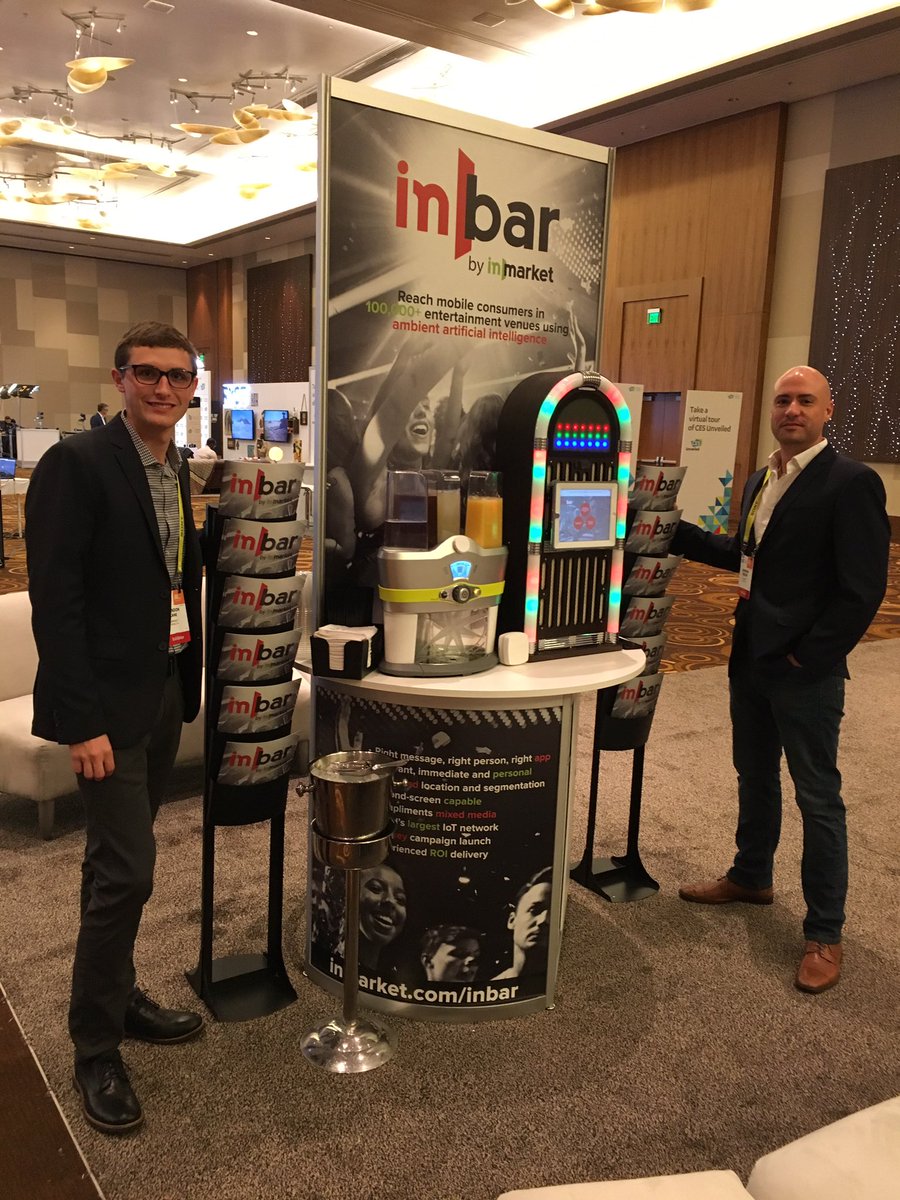
Beacons are increasingly being projected as the “lighthouses” for mobile users. Brick-and-mortar retailers and mobile marketers promptly add beacons to guide customers. In a major push to beacon marketing and contextual advertising, inMarket announced a strategic partnership with AMI Entertainment Network, for installation of inBar beacons across the US. AMI is the leading provider of digital jukeboxes and video systems to bars and restaurants in the country.
Mobile-for-retail marketing solutions firm inMarket chose 2017 Consumer Electronics Show (CES) to announce its latest platform for entertainment venues. Called the InBar Beacon, the new mise-en-scène intelligence platform enables retailers to tap into consumer’s mobile and connecting it to second screen venues. inMarket will partner with AMI Entertainment to introduce more than 23,000 inBars across the US.
The Venice, CA-based marketing platform and app developer is world’s largest mobile-to-mortar beacon platform. Partnering with AMI will facilitate the growth of artificial intelligence-powered assistants to guide shoppers in a hyper-personalized, second-screen ambience. inMarket’s inBar taps in the analytics from the consumer’s mobile and sets up smart jukebox interaction, suggesting relevant songs and offers based on context. It also runs exclusive playlist and AR content to inBar beacon users who prefer to experience the platform.
inBar will be available to all Android mobile devices. All comScore-verified app monthly active users can also activate inBar via inMarket’s SDK platform.
inBar beacon is expected to turn retail shopping on its head with its ‘supercharged’ beacon marketing technology. Designed to engage consumers digitally on an ambient platform, the latest inMarket beacon raises the audience engagement level by many notches.
inMarket ended the year 2016 on a high, registering 223% growth in its clientele. It added top brands like Heineken, Clorox, Energizer, and Rite Aid to its clientele, and influenced consumers during the Black Friday weekend sale.
Working with Salesforce is infectious for its partner; albeit a productive one. Beginning the year with a bang, continuing with its traditional celebratory mood since 2015, CloudCraze, Salesforce’s natively-built enterprise e-commerce platform, has secured $20 million in funding. The Series A funding is led by Insight Venture Partners, partnered by Salesforce Ventures. The latest round of funding is expected to accelerate B2B commerce product development and team expansion across the US and EMEA.
CloudCraze, as Salesforce’s highly coveted partner, caters to B2B and B2C enterprise e-commerce ecosystem with its omnichannel cloud innovations. Built on the Salesforce1 platform, the cloud-based SaaS for B2B commerce enables marketers to sell their products online seamlessly with a mobile-ready storefront. Considered as the gen-next SaaS commerce solution, CloudCraze allows businesses to tap the potential of digital commerce, generating quick, steady online revenue delivering robust B2B commerce experience.
CloudCraze offers 360-degree perspective across all customer touchpoints based on omnichannel interactions. Clients enjoying its infinite e-commerce functionality include iconic brands such as GE, Coca-Cola, Adidas, Land O’ Lakes, Kellogg’s, Avid, Barry-Callebaut, AB InBev, Ecolab, and WABCO.
via CloudCraze Media Resources
The company, founded in 2009, was acquired by former CEO of Acquity Group Chris Dalton, partnered by CMO Matt Schmeltz and CFO Paul Weinewuth in 2015. Earlier, Acquity Group went public in 2012 and was later acquired by Accenture Interactive in 2013 for $316 million. Acquity Group has since been rebranded as Accenture Digital.
In September 2015, CloudCraze partnered with Salesforce to bring in new “Buy Button” capabilities into its B2B commerce solutions suite. The Salesforce Platinum ISV Partner works closely with the Salesforce Community Cloud, powering agile B2B eCommerce solutions.
Talking about the latest funding, CEO Chris Dalton said, “We brought our expertise and knowledge about high growth, the experiences we’ve had with raising capital and taking (companies) public.”
In 2016, CloudCraze hired 60+ employees. In 2017, it could extend its roster strength to 150 or more. It might also open new offices in other parts of the world, especially in Asia and Australia, given the flourishing e-commerce market there.
The B2B commerce market is projected to touch $1.1 trillion by 2020. CloudCraze will play a key role in facilitating this growth trend through its partnership with Salesforce. B2B e-commerce will continue to drive more investments from venture capitalists.
Digital media intelligence company TruOptik chose the 2017 Consumer Electronics Show (CES) as a platform to announce the launch of a new OTT Marketing Cloud. According to TruOptik, the latest cloud platform is designed to measure, activate, analyze and attribute advertising campaigns for connected TV exclusively. It will deliver innovative features to both advertisers and publishers with cross-screen, audience-based targeting agility.
Features of OTT Marketing Cloud
Marketers can finally lay hands on an all-inclusive data management platform to monitor campaign performance, measure audience engagement and evaluate marketing attribution across channels. The new OTT Marketing Cloud is designed to monetize the brand value of every marketing campaign driven by customer engagement across OTT and Connected TV. It is the only cloud suite that boasts of being a post-cookie, post-SDK programmatic marketing platform. The OTT Marketing Cloud fills conspicuous gaps between the legacy CRMs and the audience engagement.
The OTT Marketing Cloud offers advertisers and publishers –
Cookie and SDK-free DMP
Third-party data purchase marketplace
OTT audience targeting and media buying
Online and offline marketing attribution
In-app OTT analytics
TruOptik’s clients can leverage the rich OTT audience measurement and segmentation capabilities using coordinated cross-screen campaign activation and attribution features. The growth in OTT platforms allows digital advertisers and publishers to bend away from the traditional ad platforms.
According to eMarketer, US adults spend 5.5 hours per day surfing video content. A Digital TV Research report expects the OTT market to explode as ad revenues triple by 2021. With advertisers engaged in a constant tug of war between TV and digital video advertising, integrating OTT Marketing Cloud will definitely monetize the ad spend strategy across OTT and Connected TV platforms. However, despite a visible drop in TV time, advertisers continue to rely on TV advertisement campaigns over digital video.
With disruptive technology always round the corner, placing faith on the new OTT Marketing Cloud is an encouraging trend for advertisers beefing up their budget for OTT and non-linear digital platforms.
Open source e-commerce platform Magento secured $250 million funding from Chinese alternative investment firm Hillhouse Capital Group (“Hillhouse”). The latest round of funding will boost Magento’s global expansion plans, especially in Asia.
The funding will help the omnichannel e-commerce solution provider focus on becoming an independent firm. The parties were not available for any comment on the stake Hillhouse holds in Magento following the investment. According to The Financial Times, the current Magento’s valuation is estimated to be above $700 million. In 2015, it was valued at $150 million. Hillhouse investment in Magento will enhance its go-to-market strategy in Asia, enabling the developers to provide omnichannel capabilities to meet demands of global customers.
Magento officially came into existence in 2007 when its founder-owner Varien Inc. reworked on pre-existing e-commerce management software osCommerce. In 2010, Varient was purchased by Agilent Technologies for $1.5 billion. Magento has since witnessed investments by eBay and subsequent breakup. In November 2015, the UK-based private equity firm Permira acquired Magento Commerce after it broke away from eBay Inc. Primera will continue to hold majority stakes at Magento.
Magento powers more than 240,000 online stores for leading brands including Burger King, Coca-Cola, Beaumotica, and Braun. The California-based e-commerce platform currently provides three distinct platforms – Magento Community Edition, Magento Enterprise Edition and Magento Enterprise Cloud Edition. It has 3,500 paying enterprise customers powering nearly $50 billion worth of transactions every year.
Zhang Lei, CEO-Chairman of Hillhouse is excited about his latest investment in Magento. He acknowledged Magento’s growing prominence in e-commerce platform as an omnichannel solution provider. “We see tremendous growth opportunities for Magento globally and specifically in Asia”, Lei said. Magento deal is one of the biggest Hillhouse has managed in recent times. It mostly invests in venture and private equity.
To name a few, Magento competes with SAP Hybris, BigCommerce, Demandware, Shopify Volusion, Drupal Commerce and IBM Websphere. The new funding could see Magento scale up its omnichannel e-commerce solutions globally in the months to come.
Snapchat is all set to repeat and even exceed its phenomenal run from the last year into 2017. The multimedia mobile application will launch a new ad measurement tool for advertisers in Europe. In its bid to become the go-to ad shopping center for advertisers in Europe – UK and France specifically, Snapchat is offering them Moat capabilities. The new Snapchat Moat partnership capabilities will enable European advertisers to evaluate the effectiveness of their video ad campaigns.
Snapchat is taking ad measurement very seriously. In June 2016, Snapchat partnered with Moat to enable Moat Analytics on its video inventory. Under the new partnership model, Snapchat’s vertical video format was rebranded as Snap Ads. API inventory on Snap Ads platform allowed third parties to sell their ads as Ads Partners and Creative Partners. Snapchat Ads Partners include Amobee, TubeMogul, Adaptly, 4C, VaynerMedia, Brand Networks, SocialCode, and Unified.
Snapchat also partnered with Google’s DoubleClick enabling advertisers to tag their Snapchat videos and evaluate their performance using DoubleClick Digital Marketing dashboard.
Snapchat Moat partnership aims to attract more users to its mobile app platform, offering them “real” customer experience on video ads. The added capabilities from Moat Analytics will help European marketers measure the full video on the mobile app based on sight, sound, and motion. The beta-version of the new video analytics capabilities from Moat is already available to US-based advertisers.
The new Moat Analytics package available to European video advertisers via Snapchat includes features like Moat Score for Video, Moat Screen Real Estate Metrics, Moat Audible Run Time Metrics and much more.
via Moat Analytics
By expanding Snapchat Moat partnership horizon beyond the US, the multimedia marketing company expects to offer the European advertisers a more refined video ad monitoring platform. Currently, Snapchat offers 15 third-party ad measurement solutions via Oracle Data Cloud, Nielsen Mobile Digital Ad Ratings, and Millward Brown.
Moat, Snapchat’s partner since June 2016, offers over 50 different types of video ad metrics. Its idea of video advertising is to make it “Human, viewable and audible.” Its cross-platform analytics works on trillions of ad impressions and content views empowering marketers to monitor brand visibility based on quality aspects. By extending Moat’s capabilities to the European ad market, Snapchat is expected to boost its own video impressions. Obviously, the Venice, CA-based company is realizing its global expansion plan to boost ad revenues ahead of an impending IPO.
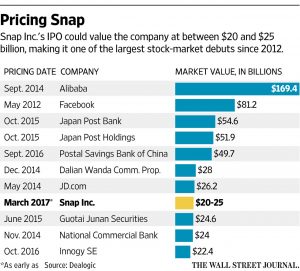
According to Wall Street Journal, Snap Inc. filed IPO paperwork in November 2016. Its stock debut is pegged to raise more than $25 billion by March 2017. If Snap makes its IPO debut at $25 billion or more, it will become one of the largest US-based martech innovators to raise such an amount.
For now, European advertisers can certainly leverage Moat analytics to fetch more ROI from their Snapchat video ad campaigns.
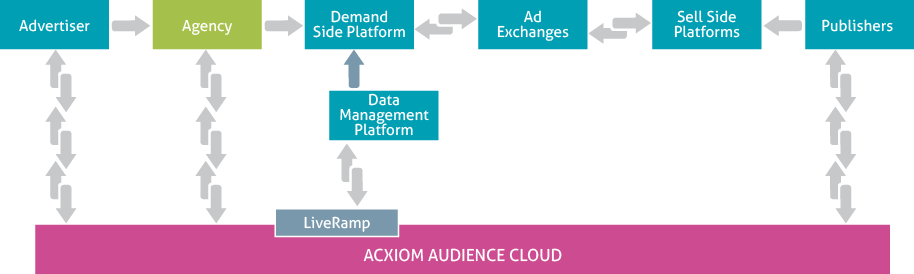
Acxiom®, announced the Acxiom Audience Cloud™, a self-service tool for accessing Acxiom data that allows marketers to find the right audience for their campaigns, adjust the size, test new segments and distribute audiences throughout the marketing ecosystem via LiveRamp, their preferred onboarder, or native PII-based integrations.
Acxiom Audience Cloud, an advanced cross-channel audience management tool enables agencies and marketers to generate audiences at a targeted level, while adhering to applicable privacy rules and laws.
Agencies and marketers now have an on-demand tool that uses AND/OR and NOT advanced logic and generates counts in seconds for custom built audiences and delivers those audiences to hundreds of programmatic and premium publishers across desktop, mobile and social channels.
Audiences can be targeted by:
Known Characteristics – such as age range, income, interests
Propensities – prebuilt look-alike audiences who are in-market, have a specific brand preference
Geography – by state, ZIP code, Area Code
Suppression – upload your file to exclude existing customers or use criteria to remove specific attributes from your audience
http://www.acxiom.com/audience-cloud/
“Acxiom Audience Cloud radically simplifies the process for creating and distributing audiences created from Acxiom data, resulting in better campaign planning, optimized marketing spend and increased ROI,” said Andy Johnson, vice president, data and product management, Audience Solutions at Acxiom.
“Now agencies and marketers can benefit from direct access to advanced audience management capabilities for true cross-channel marketing at scale, using this solution which includes the ethical use of data considerations, a/k/a privacy, in the design layer.”
The Audience Cloud offers:
Access to Acxiom’s robust demographic and predictive data built over 45 years
Industry-leading identity resolution technology for people-based marketing using Acxiom’s proprietary
AbiliTec® to accurately recognize consumers across the digital ecosystem
On-demand audience sizes for planning with industry-leading reach
Distributed audiences available in hours
Privacy-safe data anonymization and matching within Acxiom’s Safe Haven® to protect consumer privacy