Home Blog Page 4321

XDBS Founder Kartik Anand Wins Asia’s Greatest Brands & Leaders 2017 Award

0
XDBS Wins Award

Kartik Anand, Founder and Executive Chairman of XDBS, was awarded Asia’s Greatest Leader Award. XDBS was awarded Asia’s Greatest Brand Award at the glittering ceremony, held at the Marina Bay Sands Hotel in Singapore on 29 Jan 2018, which was attended by dignitaries from across Asia.

Kartik Anand Executive Chairman XDBS
Kartik Anand, Executive Chairman, XDBS

XDBS is tech firm that is focused on B2B marketing and lead generation and has a proven track record for helping publishers, agencies, and technology companies execute their marketing and media plans successfully. They have built high ROI solutions for their clients and have engaged at multiple levels to provide them with Marketing and Sales Ready Leads.

The second edition of Asia’s Greatest Brands & Leaders 2017 held at the Roselle Junior Ballroom of Marina Bay Sands Expo and Conventions Centre, Singapore on Jan 29, 2017. The event was a magnificent success, highlighted by the presence of the Ukranian Ambassador, His Excellency Dmytro Senik, and several other top business dignitaries.

Several business-related issues were discussed, and ways to improve investment in Asia were considered. The Summit was organized by URS-AsiaOne magazine and UWG Media Consulting P.L. a rapidly emerging media company that covers business, politics and social issues across Asia. This enables them to support the Indian Government’s initiatives such as Skilling India, Digitising India, and Incredible India, and also the United Nations’ Sustainable Development Goals and the World Health Organisation’s targets.

Pricewaterhouse Coopers were the process reviewers for the 2nd Edition of Asia’s Greatest Brands & Leaders 2017 which included the Asia’s Greatest Leader and Asia’s Greatest brand Awards, AsiaOne’s 40 Most Influential Asians Under 40, Asia’s Greatest CEOs, CFOs, CMOs, CHROs  and CTOs Awards and Top Women Achievers of the Year 2017 Awards.

Rajat Shukal, Global Head of URS Media Consulting P.L. and AsiaOne Magazine, said that the Second Edition of Asia’s Greatest Brands & Leaders 2017 had proved to be a milestone in creating a platform to address the pressing business and social causes of the world.

Also Read:  XDBS Appoints Julie Strong as CEO

Interview with Andre Yee, CEO, Triblio

0
Andre Yee

[easy-profiles profile_twitter=”https://twitter.com/andreyee” profile_linkedin=”https://www.linkedin.com/in/andreyee/”]
[mnky_testimonial_slider slide_speed=”3″][mnky_testimonial name=”” author_dec=”” position=”Designer”]“I think the lines between multi-channel marketing programs and sales automation will blur by 2020. This means tighter and smarter integrations between sales and marketing.”[/mnky_testimonial][/mnky_testimonial_slider]

Tell us about your role and how you got here. What inspired you to start an ABM platform? 

I’m the founder and CEO of Triblio. Prior to Triblio, I was SVP Product Development for Eloqua where I helped grow a $20M company to IPO and subsequently a $1B exit to Oracle. I was inspired to start an ABM company because I believe existing marketing automation systems are fundamentally flawed in addressing current demand generation needs. First generation marketing automation platforms like Eloqua, Marketo, and Hubspot shaped the landscape for B2B marketing over the past decade but those platforms are fundamentally flawed on two fronts. The first is that they primarily focus on qualifying individual leads instead influencing buying centers within accounts. The second is that buyer behavior has changed over the past decade such that buyers are delaying contact form registrations. This marginalizes the effectiveness of first-generation marketing automation systems because those campaign in those systems are triggered by contact form registrations. It’s time for a new approach

How is Triblio different from other contemporaries in the ABM ecosystem? 

Triblio is different because we’ve proven that we can identify and score anonymous account activity better than anyone else. We also offer an end-to-end platform for ABM campaign execution so that you don’t need to piece together an ABM solution from multiple point solutions.

What are your predictions for ABM industry in 2018 even as CMOs look to include predictive intelligence for sales into their technology stack? 

In 2018, ABM practitioners will look to extend and integrate ABM campaigns into sales processes. In the past 18 months, most ABM campaigns have been focused on reaching the right buyers with the right marketing message but it’s been mostly disconnected from the sales process. That’s going to change in 2018 as marketers implement ABM campaigns to activate and orchestrate the sales process. This means adding value to sales by providing better intelligence on high potential accounts and what triggers their propensity to purchase. I also see the emergence of AI-driven solutions to do this better.

How can ABM companies leverage programmatic technologies to achieve better refined sales pipelines? 

We use our own account-based advertising combined with onsite personalization to accelerate deal flow. We target messaging to key decision makers in specific roles that speak to their interest or concerns. This helps build brand recognition and credibility within the account with the broader buying committee especially with the economic buyer or C-suite.

With the maturity of B2B selling, how do you see multi-channel marketing and sales automation integrations evolving by 2020? 

I think the lines between multi-channel marketing programs and sales automation will blur by 2020. This means tighter and smarter integrations between sales and marketing. Today we have marketing executing multi-channel campaigns, scoring responses and handing over qualified leads to sales – it’s more like a relay race where the baton is handed over. In 2020, we’ll see the emergence of coordinated multi-channel campaigns that sales and marketing will co-execute through an integrated solution.  The idea of multi-channel campaigns will span both marketing and sales. Instead of a relay race – it’ll be more like an orchestra – where everyone is co-executing to deliver a great revenue result.

What startups in the martech/ sales intelligence industries are you watching/keen on right now? 

Putting ourselves aside, here are a couple of interesting companies in the martech/sales tech arena. SalesLoft has a great sales automation product that’s becoming integral to our sales team but I also appreciate their positive work culture. While I’m not 100% sold on them yet but I find sales relationship management tools like Cloze or Nudge interesting.

What tools does your marketing and advertising stack consist of?

We take an account-based approach to demand generation so to do that we use Salesforce -Pardot for email marketing and our own Triblio platform to execute account-based advertising and web personalization. We also use SalesLoft for our outbound sales email.

Would you tell us about your standout digital campaign at Triblio? 

At Triblio, we’ve been running display ads that read “Triblio ads reach influencers like you. Ready to get started?” accompanied by a familiar face from the Triblio team. For prospects, it’s a fun way to keep Triblio top-of-mind and show that our ads work. For Triblio clients, it’s a great way to start conversations about Triblio’s full set of features. Since running this campaign, it has influenced 77% of our pipeline opportunities leading to 2.4X increase in new ACV bookings.

How do you prepare for an AI-centric world as a marketing leader? How do you leverage AI capabilities at Triblio? 

As marketers, we prepare for an AI-centric world by embracing AI and applying that in limited scope alongside existing methodologies. Today, many of the core components of our marketing campaigns are constructed by trial and error. Take lead scoring for instance – most lead scoring systems are based on an arbitrary point system and “proven” to work by trial and error.  It’s no surprise that most lead scoring systems don’t work – it’s because they are not fundamentally data-driven. I’d recommend marketers do what we do at Triblio – run existing lead/account scoring methods together with AI-driven scoring so that AI can inform and improve your analysis.

One word that best describes how you work. 

Focused

What apps/software/tools can’t you live without? 

LinkedIn, Salesforce

What’s your smartest work related shortcut or productivity hack? 

I keep a list of projects/issues that I specifically tackle when I’m traveling on longer flights. Some of these can be strategic – the kind of thing that gets squeezed out in the daily grind. For instance, on a cross-country flight, I recently worked up initiatives to improve our corporate culture.

What are you currently reading? (What do you read, and how do you consume information?) 

Competing Against Luck by Clay Christensen.

What’s the best advice you’ve ever received? 

My mother was an executive assistant for a multi-national company. When I started my career, she offered this advice – “fulfill your commitments – if you say you’re going to do something, make sure you deliver. If you do that consistently, you’ll advance no matter what job you’re in” It’s something I’ve never forgotten.

Tag the one person in the industry whose answers to these questions you would love to read:

Joe Chernov, CMO, Insight Squared

Thank you Andre! That was fun and hope to see you back on MarTech Series soon.

[vc_tta_tabs][vc_tta_section title=”About Andre” tab_id=”1501785390157-b58e162d-0ae25a4b-c27aca64-108e51b0-80edaf37-bd3d357a-6c463ad7-a62a”]

Andre Yee is the CEO of Triblio. He has numerous years of experience with an outstanding record of growing successful software companies. Most recently, he was the SVP Product Development for Eloqua, responsible for product development and operations. At Eloqua, he was part of the executive team responsible for leading Eloqua to an IPO and a $957M acquisition by Oracle. Prior to Eloqua, he was CEO of NFR Security, which he successfully led to growth and exit to Checkpoint Software.

[/vc_tta_section][vc_tta_section title=”About Triblio” tab_id=”1501785390320-2d44fa50-740c5a4b-c27aca64-108e51b0-80edaf37-bd3d357a-6c463ad7-a62a”]

TriblioTriblio’s ABM platform scales 1:1 account targeting for pipeline impact. With our software, ABM campaigns unify inbound and outbound marketing with sales plays. To create a campaign, marketers define audiences using criteria such as target lists, MAP lists, CRM field values, 3rd party firmographics, and/or digital web behavior. Targeting is driven by Triblio’s AI-driven account engine, which enables marketers to reach and recognize known and unknown stakeholders in target accounts. For each audience, marketers use Triblio’s campaign editor to deliver consistent and customized messaging across display ad, web, and sales plays. Clients include Plex, SalesLoft, FinancialForce, Callidus Cloud, and Workfront. Triblio won CODiEs for best marketing solution in 2016 and 2017 and is based in Northern Virginia.

[/vc_tta_section][/vc_tta_tabs]
[mnky_heading title=”MarTech Interview Series” link=”url:https%3A%2F%2Fmartechseries-67ee47.ingress-bonde.easywp.com%2Fcategory%2Fmts-insights%2Finterviews%2F|||”]

The MTS Martech Interview Series is a fun Q&A style chat which we really enjoy doing with martech leaders. With inspiration from Lifehacker’s How I work interviews, the MarTech Series Interviews follows a two part format On Marketing Technology, and This Is How I Work. The format was chosen because when we decided to start an interview series with the biggest and brightest minds in martech – we wanted to get insight into two areas … one – their ideas on marketing tech and two – insights into the philosophy and methods that make these leaders tick.

ON24 Grows New Bookings by More Than 50% YoY for an Unprecedented Fourth Quarter

0
On24

More Than 2,000 Businesses Use ON24 To Engage Customers And Prospects And Transform Engagement Into Revenue

With more than 70 percent of marketers prioritizing lead quality over quantity, businesses are putting data-driven, engaging webinars at the core of their demand generation strategy. As a result, over 850 new and expanded accounts turned to ON24 to engage and convert prospects into lifetime customers through the company’s marketing platform.

Sharat Sharan“With the rise of the data-driven marketer, the marketing organization has completely transformed from a cost center to a revenue generator,” said Sharat Sharan, founder and CEO, ON24. “That’s why our business is performing well and our customers are seeing tremendous results driving revenue through the ON24 platform. And, we’re seeing similar success with our own webinar marketing strategy – we’ve doubled pipeline, expanded deals and improved customer retention, resulting in our best quarter to date.”

Also Read: Interview with Sharat Sharan, Founder and CEO, ON24

The ON24 marketing platform helps marketers create digital experiences that efficiently scale from liveon24 online events to on-demand content libraries to account-based campaigns, across all different mediums and channels. Through these personalized, dynamic interactions, marketers gain the behavioral insights they need to identify sales-ready leads and accelerate pipeline.

As a result, ON24 experienced unprecedented growth in 2017 by achieving:

  • 50 percent YoY new bookings growth in Q4
  • Global expansion in key regions with 48 percent growth in EMEA and more than 400 percent growth in APAC
  • Acquisition of over 850 new and expanded accounts

In addition, more than 2,000 of the world’s top brands are ON24 customers, including:

  • 40 percent of Fortune 100 companies, such as Anthem, General Electric, Johnson & Johnson, Microsoft and Wells Fargo
  • Leaders across the martech ecosystem like AdrollBrightEdgeConductor, Cvent, Demandbase, etouchesLeanData, Salesforce Marketing Cloud and Seismic
  • A third of the tech companies that made an IPO in 2017, including Appian, Cloudera, Forescout, Mulesoft, Okta, SendGrid and Tintri.
  • A quarter of the Forbes Cloud 100 companies, such as Cylance, Docusign, ProCore Technologies, Snowflake and Workfront

And, the ON24 network reached an audience of over 13 million individuals who spent more than a billion minutes engaging with:

  • 12 million polls
  • 1.3 million surveys
  • 1.5 million questions
  • 17 million resource downloads

To build on this business momentum in 2018, ON24 added two Software-as-a-Service industry veterans to its executive leadership team:

  • Lou Pelosi On24Lou Pelosi, VP of Business Development and Partnerships — As the former head of the Marketo Partner Ecosystem, Lou brings more than 20 years of experience to ON24, where he’ll develop corporate strategies, partnerships and initiatives to grow ON24’s platform ecosystem.
  • Mike Badgis On24Mike Badgis, Vice President, Global Human Resources and Facilities — Mike leads ON24’s people operations, talent acquisition and facilities strategy based on his 25 years of international and domestic experience as a Human Resources leader.

Nielsen And Tribune Broadcasting Sign Multi-Year Agreement For National And Local TV Measurement

0
nielsen
nielsen

Agreement Provides Audience Measurement for All Tribune TV stations and markets

Nielsen and Tribune Broadcasting, a division of Tribune Media Company, announced that they have reached a multi-year renewal agreement for Nielsen TV ratings across Tribune’s local television stations and markets, as well as national service for its digital subchannel network, Antenna TV.

The agreement provides Tribune Broadcasting with complete measurement of its video audiences across TV and digital and its purchasing behaviors. Tribune Broadcasting will license syndicated local TV measurement for its broadcast stations, national TV measurement for its digital subchannel networks and Scarborough for local, in-market consumer purchase behavior.

Also Read: TV in 2020: 50 Percent of Viewing Will be Mobile

“We are pleased to reaffirm our relationship with Tribune as a valued, long-term partner,” said Megan Clarken, President, Nielsen Watch. “Nielsen is bringing significant enhancements to local audience measurement across all content distribution platforms. We look forward to working with Tribune to maximize its revenue potential and demonstrate the value it offers to local and national advertising clients.”

“Continuing our relationship with Nielsen assures us access to important audience research, analytics and currency,” said Larry Wert, Tribune Media’s President for Broadcast Media. “Nielsen data is an integral part of our daily business, and Nielsen is a valued partner in helping us navigate the ever changing media landscape.”

Nielsen Holdings plc is a global measurement and data analytics company that provides the most complete and trusted view available of consumers and markets worldwide. Our approach marries proprietary Nielsen data with other data sources to help clients around the world understand what’s happening now, what’s happening next, and how to best act on this knowledge. For more than 90 years Nielsen has provided data and analytics based on scientific rigor and innovation, continually developing new ways to answer the most important questions facing the media, advertising, retail and fast-moving consumer goods industries.

ERPScan Experts Decide on the Major Cyber Risks for Various Industries 2017

0
ERPScan Experts Decide on the Major Cyber Risks for Various Industries 2017

ERPScan Experts Estimated Cyber Risks for Various Industries

ERPScan research team released “ERPScan Data breach Report 2017” dedicated to the analysis of major attacks in various industries. If your company is based in the USA and employs 5000+ workers, you may become a victim of a breach, which average cost amounts to $5 million.

Based on more than 200 incidents, the report aimed to show the specifics of cyber-endangered industries and their business applications systems.

Along with other findings, the results revealed that

  • Companies in Media sphere were the most attacked ones among all spheres of activity in 2017
  • The UK became the biggest victim of Healthcare data breaches
  • Loopholes in CRM and POS systems were a common cause of Espionage attacks in Retail sector
  • Hacking crypto projects are going to turn into a new hot topic

Also Read: ‘Only 25% of Support Organizations Are Able To Drive Strong Partnerships With Customers’

Speaking about the characteristics of attacks, the ERPScan research team analyzed each incident according to its type or threat – Espionage, Sabotage or Fraud – and attack technique. It was possible to estimate average losses if the information was publically available. Aside from average data breach costs, analysts estimated Espionage attacks, with 14 million user accounts affected in an average, and a common sabotage that led to some two-day downtime.

“As for takeaways, we shouldn’t underestimate the attention of the hackers to such topics as cryptocurrency and Machine Learning. They are supposed to continue being at risk. What is more, we assume that the number of target attacks on companies with the use of industry systems and specific business applications like ERP, EMR and CRM, will also grow in the future. So, now is the best time to think of cybersecurity,”  Alice Jossan, Cybersecurity Analyst at ERPScan.

Also Read: How Natural Language Processing Is Shaping The Future of Communication

For better risk assessment, every victim company was analyzed according to country, size, and staffing level. ERPScan also decided whether the company belongs to Financial, Manufacture, Healthcare or other sectors. In some cases, it was also possible to divide companies into different subspheres.

Among the affected companies, this year were such world-known leaders as HBO, Equifax, Honda, Apple, McDonald’s, etc. It means that organizations that seem to have enough power and finances to protect themselves are actually vulnerable to cyber attacks.

Recommended Read: Talk to People, Not Numbers: How Email Personalization Can Turn a Cold Lead Warm

‘IAB 250 Powered by Dun & Bradstreet’ List Unveiled to Identify ‘Direct Brands’

0
‘IAB 250 Powered by Dun & Bradstreet’ List Unveiled to Identify 'Direct Brands'

First Annual ‘IAB 250 Powered by Dun & Bradstreet’ List Leveraged Economic Data from Dun & Bradstreet and Cultural Indicators from Other Sources Power List Of ‘Direct Brands’ Disrupting Incumbents in 15 Categories

The Interactive Advertising Bureau (IAB) has released the “IAB 250 Powered by Dun & Bradstreet”. The IAB 250 Powered by Dun & Bradstreet” is a first-of-its-kind analysis that pinpoints the most important “Direct Brands” to watch in the US economy. The trade association for the digital media and marketing industries issued the directory at its IAB Annual Leadership Meeting, in advance of its publication of “The Rise of the 21st Century Brand Economy,” a groundbreaking study identifying supply chain, consumption, communications, and data trends that are shifting the center of growth in the American consumer economy.

Recommended ReadInterview with Mark Bembridge, CEO, Smartology

IAB 250 Reveals the Direct Brands that Are Reshaping the Attention Economy

At the time of this announcement, Randall Rothenberg, CEO, IAB, said, “We have entered a new era of brand creation—one in which ‘Direct Brands’ are not just nipping at the heels of traditional brands, but forging strong customer relationships, winning meaningful marketing share, and reshaping the way startups and incumbents alike are taking consumer goods and services to market.”

Randall added, “The ‘IAB 250 Powered by Dun & Bradstreet’ will be a vital resource in tracking those ‘Direct Brand’ companies that are excelling across various categories, whether selling bed linen or pet food or eyeglasses. These are businesses that all brands, publishers, technology companies, and data providers need on their radar in order to thrive in the new direct brand economy.’

Read Also: MarTech RADAR 2018: Top 150 B2B Technology Companies You Should Follow

How are ‘Direct Brands’ Identified?

“Direct Brands” identified in the IAB 250 roster include the cosmetics company Glossier, the luggage company Away Travel, and the mattress company Casper, for example. Sometimes referred to as “digitally native vertical brands,” such companies are characterized by their reliance on digital storefronts that sell only their own branded goods, product development cycles continuously enriched by first-party data from their consumers, expertise in social media communications, and a marketing mix that blends highly scaled and targeted programmatic advertising with lifestyle-focused content marketing.

Read MoreTaboola Announces Global Self Service Business Has a Run Rate of Nearly $100 Million in Its First Year

Although many such companies deliver goods directly to consumers, other “Direct Brands,” such as boutique craft breweries, still sell primarily at retail but consider first-party data-gathering and analysis a core capability.

The association finds that such “Direct Brands” are gradually supplanting the “Indirect Brands” that have dominated the consumer economy since its origins in the late 1870s.

Classification of Direct Brands based on Dun & Bradstreet’s Data Universe

Companies on the list were selected through screening firmographic and economic attributes, derived from Dun & Bradstreet’s vast data set of over 290 million business records. This includes core data (Dun & Bradstreet D-U-N-S Number®, Business Name), the industry classification (SIC Code), employees, and corporate revenue. In addition, payment experience and inquiry data on these entities were used to create a look-alike model to scan the D-U-N-S universe of all entities.

Additionally, companies on the list were selected for their cultural impact, which was provided by a variety of data sources and includes factors like traffic to their digital properties, social media footprint, media mentions, and more.

The list covers 15 different categories; from apparel/fashion to consumer electronics and sporting goods to travel and hospitality, spotlighting a range of “Direct Brand” upstarts and brand incumbents that have successfully tapped into the direct brand movement. For example, here are the companies that made the cut in the pet care sector:

  • BarkBox
  • Ollie
  • The Farmer’s Dog

Michael Bird, Executive Vice President and General Manager, Global Alliances, Partnerships and Audience Solutions, Dun & Bradstreet, said, “The massive collision of commercial data and digital technologies gives business leaders the insights they always wished they had. By exploring the data that illuminates relationships among these companies and their paths to—suppliers, vendors, marketing efforts—IAB members will have a robust and highly targeted list of companies to use for their business development efforts.”

Chris Kuist, Senior Vice President, Research and Impact, IAB, added, “This list of 250 disruptors just scratches the surface of what the direct brand revolution is unleashing on the consumer landscape.”

Chris mentioned, “Taking a deeper look at these diverse businesses, it becomes clear that their methods for engaging customers with genuine two-way relationships are a guidepost. Their strategies will inform the future of the consumer economy.”

Methodology to Identify ‘IAB 250’

Brands were identified through the combination of their firmographic and economic attributes as represented in Dun & Bradstreet’s vast dataset, and their cultural buzz and impact (factors like traffic to their digital properties, their social media footprint, number of press mentions, etc.) from a variety of sources and vendors, including CB Insights.

IAB excluded brands from consideration if they did not create or curate physical products for purchase by consumers, or if their business model and/or supply chain did not align with the definition of a “direct brand,” as presented in the research.

Currently, The Interactive Advertising Bureau (IAB) empowers the media and marketing industries to thrive in the digital economy. Its membership is comprised of more than 650 leading media and technology companies that are responsible for selling, delivering, and optimizing digital advertising or marketing campaigns. The trade group fields critical research on interactive advertising, while also educating brands, agencies, and the wider business community on the importance of digital marketing.

RapidMiner Reinvents Automated Machine Learning to Accelerate Data Science

0
Rapidminer Reinvents Automated Machine Learning to Accelerate Data Science

Rapidminer Announces the Release of Auto Model and Rapidminer 8.1

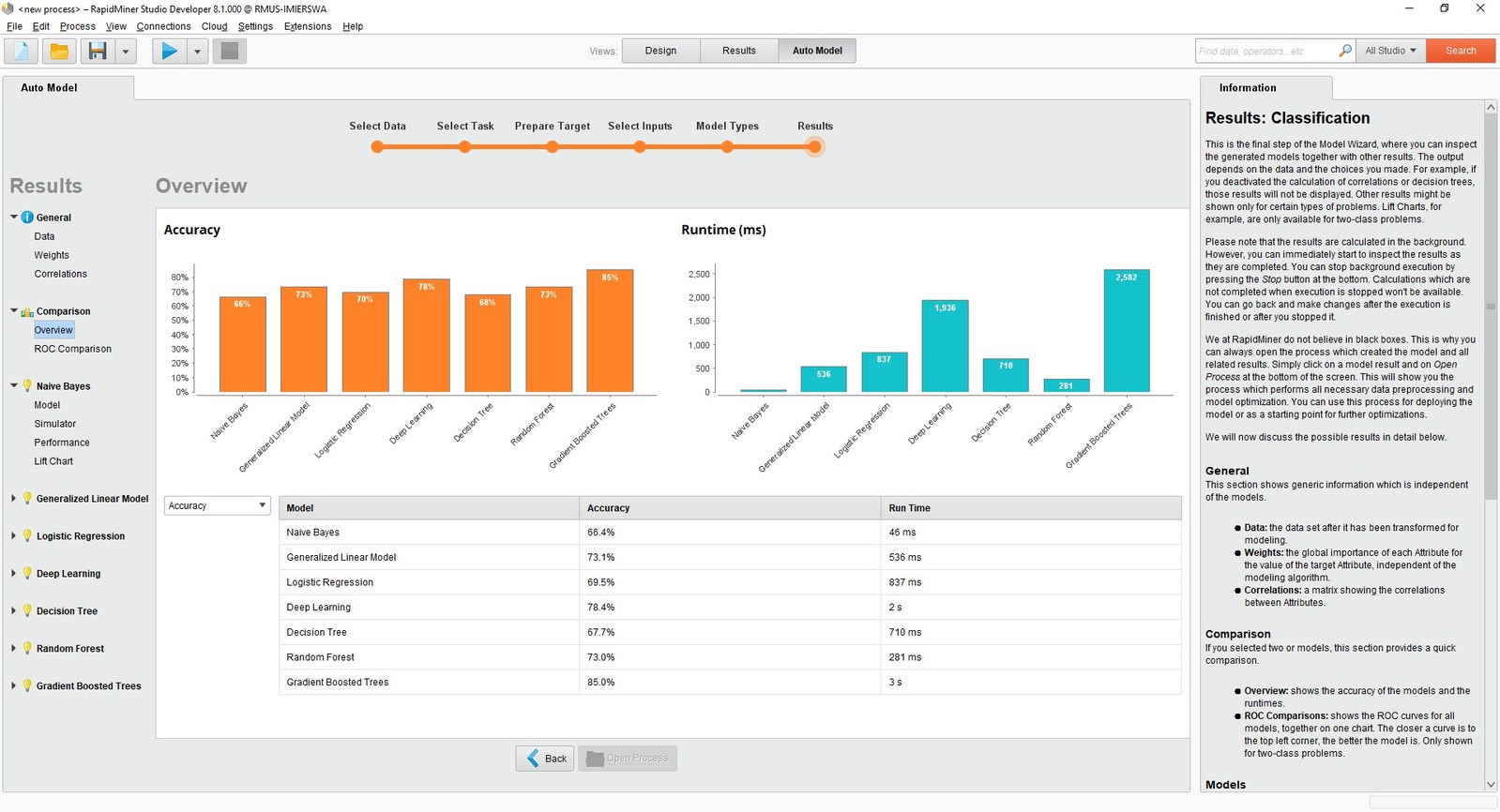
RapidMiner, the company that delivers real data science, fast and simple, announced the immediate availability of RapidMiner 8.1 and RapidMiner Auto Model, a new addition to RapidMiner Studio that accelerates everything data scientists do when building machine learning models.

Rapidminer Reinvents Automated Machine Learning to Accelerate Data Science
Ingo Mierswa

“Automated machine learning promised data scientists a better, faster way to build models, but the reality never matched the hype. Today that changes with the release of RapidMiner Auto Model. When I looked closely at automated machine learning solutions, I found them to be black boxes. They restricted my ability as a data scientist to understand how the models worked and tune them when necessary. That’s reckless and sometimes, even dangerous. We built Auto Model on top of RapidMiner Studio to improve the productivity of data scientists without hiding the ability to understand how and why a model works. As data scientists need to tune or tweak models, they have the full power of the RapidMiner Studio visual workflow designer at their disposal,” said Dr. Ingo Mierswa, Founder and President of RapidMiner.

Also Read: Automated Machine Learning Leader Datarobot Acquires Data Science Firm Nutonian

Rapidminer Reinvents Automated Machine Learning to Accelerate Data Science
RapidMiner Auto Model accelerates the entire data science lifecycle using automated machine learning

RapidMiner Auto Model accelerates the entire data science lifecycle using automated machine learning. It speeds data prep by analyzing data to identify common quality problems. It automates predictive modeling by suggesting the best machine learning techniques and then generating optimized, cross-validated predictive models. Auto Model highlights which features have the greatest impact on the desired business objective, highlighting the most important influence factors and correlations. Built-in visualizations and an interactive model simulator let data scientists quickly explore the model to see how it performs under a variety of conditions.

Unlike existing automated machine learning approaches, Auto Model is not a “black box” that prevents data scientists from understanding how the model works. RapidMiner Auto Model generates a RapidMiner Studio process behind the scenes, where data scientists can instantly visualize the end-to-end data prep and modeling steps, and selectively fine-tune and test models before putting them into production.

Mierswa will be delivering an introductory webinar on Auto Model on Wednesday, February 21, 2018.

In addition to Auto Model, RapidMiner 8.1 adds the following new capabilities to the RapidMiner Platform:

  • Support for the MapR Converged Data Platform: RapidMiner Radoop and the MapR Converged Data Platform now work together to make big data accessible for data scientists who don’t want to code on Hadoop and Spark.
  • Global search: Users can now quickly find anything inside RapidMiner Studio, including processes, models, operators, and extensions.
  • Improved performance: A number of operators have been refactored to improve performance by 10x or more.

Recommended Read: The Importance of Data Analytics in Marketing Strategies

SpatialTEQ Inc. And RealZips Announce Partnership Enabling Business Data For Business Maps

0
SpatialTEQ Inc. and RealZips Announce Partnership Enabling Business Data for Business Maps

Realdatasets Provides Instantly Downloadable, Popular Market Data for Use in Map-Based Market Analysis

SpatialTEQ Inc., the publisher of MapBusinessOnline, announced the launch of RealDatasets for Map Business Online through a product partnership with RealZips. RealDatasets provides instantly downloadable, popular market data for use in map-based market analysis.

Built to support sales and marketing professionals across all business sectors, RealDatasets for Map Business Online delivers market analysis tools segmented by industry sector and ZIP code location. RealDatasets industry-specific geodata supports both B2B and B2C analysis.

SpatialTEQ Inc. and RealZips Announce Partnership Enabling Business Data for Business Maps
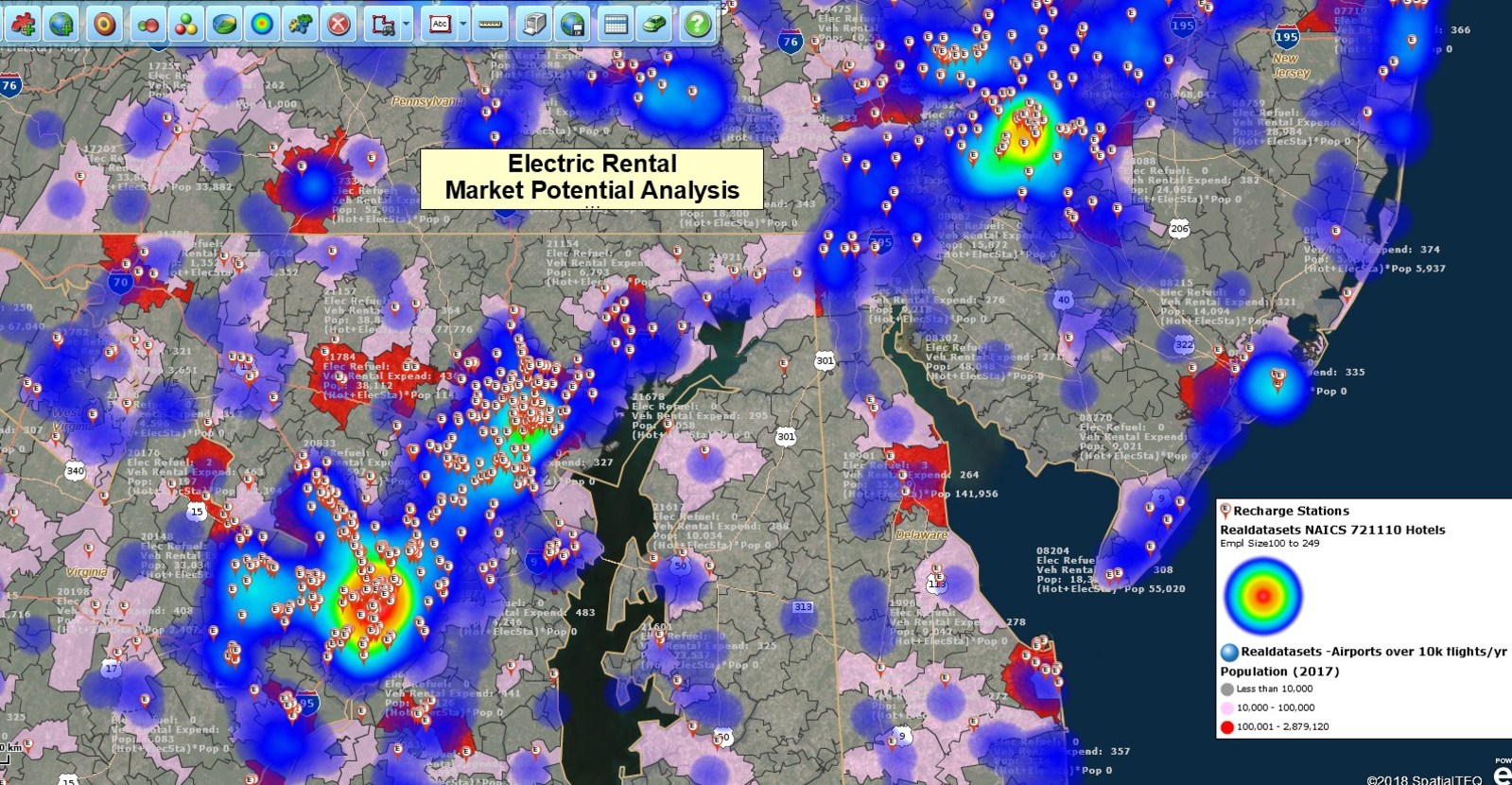
Market Potential Analysis Map – Electric Car Rental. Users import infrastructure, NAICS industry data, and relevant business data to assess market potential by ZIP code

Data Visualizations for Market Analysis

RealDatasets market data collections are designed to facilitate map visualizations and define addressable markets for any given industry category. By importing RealDatasets geodata into a business map, Map Business Online users will be able to estimate market potential for any business based on target establishment counts, employee size counts, and additional data columns where available. The market analysis results will mitigate risk as sales and marketing campaigns are launched into new markets.

A key function of Map Business Online business mapping software is to provide location-based data visualizations that describe existing and potential business. The addition of RealDatasets geodata layers allows full market potential analysis, helping to answer critical business questions such as, “What is the size of our business’s total addressable market for the coming year?”

“Many of our key customers have expressed interest in generating maps with business listing or business category data for market analysis. RealDatasets offers a unique set of data solutions for our clients. The combination of Map Business Online’s generous location data display allowance (up to 100,000 records per map) and RealDataset’s indexed ZIP code-based listings provide valuable market assessments for practically any business,” said SpatialTEQ’ s President, Geoffrey Ives.

Also Read: A Marketer’s Guide to Smarter Data Storage: Is Your Customer Data a Gold Mine or a Time Bomb?

Business Applications for Map Business Online with RealDatasets

These general business challenges are solved by the powerful combination of Map Business Online with RealDatasets:

  • Identify the total addressable market – Leverage 1,000 industry sector NAICS data layers
  • Marketing Campaign Targeting by Location – Focus Google AdWords or direct mail marketing campaigns on the market areas with the most potential by geographic area of interest, limiting investments in non-productive areas
  • Design Sales Territories – Design or adjust sales territories based on an analysis of existing customers and market potential

Sales Organization Market Analysis Support

Marketing or sales teams using popular sales CRM applications can now access affordable and accurate business data from RealDatasets that include location components for easy geocoding and map visualizations. Map Business Online CRM users can build informative map-based market models that describe potential markets and offer critical pathways to marketing and sales success based on actual recent business data.

Recommended Read: How to Pick the Right CRM: 3 Key Ingredients

Beautiful.AI Launches the First AI-Powered Presentation Design Tool

0
Beautiful.AI Launches the First AI-Powered Presentation Design Tool

Company Raises $5 M from First Round Capital and Shasta Ventures to Automate the Design of Everyday Work

Beautiful.AI announced the launch of the first artificial intelligence-powered presentation tool, which enables anyone to build clean, modern, and professionally-designed slides – quickly and easily.

Beautiful.AI addresses the two biggest challenges that individuals face in creating effective visual presentations: slide design and production time. According to the 2018 Presentation Quality Gap survey, 73 percent of presenters have felt “self-conscious” about the visual appearance of their slides and 62 percent have delivered a presentation that didn’t meet their own standards because they “ran out of time.”

Beautiful.AI Launches the First AI-Powered Presentation Design Tool
Mitch Grasso

“We’ve all experienced those moments – tinkering with text boxes at 2 a.m., drawing boxes and circles and then trying to align them, or spending hours looking for the right image for our slide. We’re using AI to give users the benefits of professional-quality design without the pain of spending hours, or even days, perfecting their presentations,” said Mitch Grasso, founder, Beautiful.AI.

Also Read: How To Avoid Being ‘First Down’: Lessons To Learn From Super Bowl LII

Beautiful.AI is built on the company’s Design AI technology, which uses heuristic techniques to apply the rules of good design in real time, saving users time and ensuring their presentations follow best practices. The system also automatically applies constraints to prevent users from violating these best practices, such as typing too much text on a slide.

The tool features more than 50 built-in “smart” templates to help users visualize their ideas instantly, all of which can be easily customized within minutes using simple, intuitive controls and automated design features. A searchable image library is also available with millions of custom icons and royalty-free images that are automatically placed and formatted for the user.

Also Read: The Evolution of Presentations

Beautiful.AI has raised $5 million in Series A funding to support the testing, development and expansion of its AI-powered technology. First Round Capital, the first investor in Uber, and Shasta Ventures, one of the first investors in Nest, participated in the round.

Prior to Beautiful.AI, Mitch Grasso was founder and CEO of SlideRocket, cloud-based presentation software that focused on team collaboration with enterprise customers including Discovery Networks, Disney, Sony, and Twenty-First Century Fox. SlideRocket was acquired by VMware in 2011.

Recommended Read: 28 Ways Artificial Intelligence Will Affect Your Business and Life in 2018

Do Your AdTech Goals for 2018 Look Like These?

0
Do Your AdTech Goals for 2018 Look Like These?

According to Matt Fanelli of MNI Targeted Media, Ad Fraud Would Continue to Be an Issue Across the Digital Landscape

Matthew Fanelli, SVP of Digital, MNI Targeted Media,
Matthew Fanelli, SVP of Digital, MNI Targeted Media

Historically, the advertising industry has always at the forefront of innovation. To understand how  marketing and sales technologies would shape up in the future, just have a look at the adtech ecosystem. From mitigating brand safety concerns to managing audience data for targeted advertising campaigns, adtech has always bustled with new innovations to make brands more visible, at better engagement rates.

If you are yet to lay out your adtech goals for 2018, Matthew Fanelli, SVP of Digital, MNI Targeted Media, has some gems to share with you.

Leverage People-based Marketing Platforms to Defeat Ad Fraud

As fraud continues to be an issue across the digital landscape, people-based marketing remains front and center. Leveraging these capabilities allows advertisers to speak directly to consumers rather than having to guess who a user might be.

Recommended ReadTechBytes with David Yaffe, GM, Publishers and Platforms, LiveRamp

People-based marketing helps cut down a decent amount of fraud in the space as media partners continue to grow their fraud detection capabilities. It is of utmost importance to know who you are working with and implementing verification services on every campaign.

Watch out for the Consolidation of Media Solution Companies

We continue to see companies that are successful in one area of media consolidating or being purchased by a larger partner. In the long run, this will be a positive as vendors in the space will become experts in numerous functionalities and provide better solutions to clients.

Being consultative is key to success. Standalone organizations that only serve a small niche and lack unique differentiators won’t survive.

Dare or Drop: Top Challenges for Marketers Set to Intensify in 2018

Determine Your Attribution Model Accurately for Better ROI

Every marketer is looking to maximize every dollar spent.

Proving return-on-investment (ROI) will become even more important in 2018. The growth and proliferation of data allow the clients to pass sales data back to their advertising technology partners. This helps the marketers determine the actual success of a campaign on the bottom line.

Data scientists are figuring out how to connect the data deterministically and marketers are getting smarter when it comes to what they expect from attribution.

Recommended ReadLeading AdTech Company Adform Selects 51Degrees Device Detection For Enhanced Analytics

Video, Video, and Video…

Short-form and interactive videos will grow exponentially, especially as more cord-cutting happens in 2018. In terms of short-form videos, more and more clients are looking for a quick way to gain user attention, while also articulating a call to action. The strategy to leverage the Interactive Video is very much the opposite.

The key goals here will be to increase engagement, while also having things that not only get a user to view the ad but also get them to interact while watching the video. Both of these promote the consumer’s on-demand mentality — I want to watch what I want, whenever I want, and wherever I want.

Recommended Read: Telefónica Unveils AI-Powered Smart Notifications for the ‘Attention Economy’

Time to Make Native your Go-To Strategy

According to the Native Advertising Agency, native advertising would be the most dominant force in the adtech ecosystem. As user-generated content and mobile video formats take the center stage in adtech, marketers and media buying companies should set up their game against shady ad fraud practices and improve their audience measurement metrics in 2018.

Read MoreFive Key Trends for Programmatic Advertising in 2018

Google Partners with Getty Images to Improve Content Attribution

0
Getty Images and Google partner

With Getty Images as a Partner, Google Would Add Legitimacy to Images Uploaded or Featured in their Image Search Gallery

In a strategic partnership, Google has partnered with Getty Images to expand the horizon of digital content attributions. The leading visual communication platform would now feature all its images and content within Google’s products and service suite.

google_gettyimage

Recommended Read: TechBytes with Keith LaFerriere, EVP and CCO, Verndale

Dawn Airey, CEO, Getty Images

At the time of this announcement, Dawn Airey, CEO, Getty Images, said, “This agreement between Getty Images and Google sets the stage for a very productive, collaborative relationship between our companies.”

Dawn added, “We will license our market-leading content to Google, working closely with them to improve attribution of our contributors’ work and thereby growing the ecosystem.”

The new partnership with Getty Images would enable Google to reform its image search algorithm and provide due attribution and credit to original authors and artists. The financial details of the partnership are still unknown, but it is evident that the world’s largest search engine is taking preventive measures to tackle copyright issues that have long plagued image downloads.

Read MoreKirstin Benson Is the New Executive Producer of Getty Images’ Entertainment Strategy and Services

Cathy Edwards, Engineering Director at Google, said, “We’re excited to have signed this license agreement with Getty Images, and we’ll be using their images across many of our products and services, starting immediately.”

Read More: Facebook, Google Experiences Together Account for Less Than 5% of Total Digital Revenue for Publishers

Dawn Airey added, “With this landmark achievement, we can move forward with a strong partner to deliver innovative ways to access creative and editorial content online. It also advances our mission to move the world with images.”

The new partnership between Google and Getty Images comes barely weeks after the leading visual asset management company tied up with YouTube at this year’s Sundance Film Festival, in collaboration with People.com and Entertainment Weekly.

Read AlsoLotame Unveils ‘Precision Audiences’ for Quality Audience Segmentation and Insights

What Does Google Chrome’s New “Auto-Annoying-Ad-Blocker” Mean For You?

0
What does Google Chrome’s new “auto-annoying-ad-blocker” mean for you?

JellyfishYou’re probably already aware that on February 15th Google plans to release a new version of Chrome that will feature a built-in ad blocker intended to automatically remove disruptive ads from publisher websites if they fail to meet the new Better Ads Standards. You may also know that these standards have been defined by the Coalition for Better Ads, which is an organization that Google has joined and that offers specific guidelines for how the ad industry should evaluate and improve the quality of advertising for consumers. What you might be unsure of, however, is how this will actually affect your digital advertising endeavors.

First, it’s important to understand that this will have an impact on both advertisers and publishers alike. If you’re an advertiser and your ads fail to adhere to the specific Better Ads Standards criteria, they will basically be classified as “annoying to users” and will not be shown to your audience. If you are a publisher and you are serving these non-compliant ads to users, that could result in Chrome ceasing to show all ads on your website. The point here is that both advertisers and publishers need to get on board with these new ad standards. With Chrome overwhelmingly being the most popular browser—and having the biggest market share in the world—this development simply cannot be ignored by either group.

Is this a good thing?

Now, before you get too worked up, let me establish this right away—this move by Chrome is a very good thing and a long overdue wake-up call for the digital advertising industry. For far too long the industry at large has failed to put the consumer first. It became commonplace for most ads to be poorly designed, distracting, gimmicky and cheap—and for most of the formats themselves to be downright disruptive and flat-out annoying. And the sad thing is, it often felt like no one cared—except for consumers, that is. As their widespread distaste for bad advertising continued to grow, they showed their displeasure through the rise and prevalence of ad blockers as well as declining industry benchmarks for CTR and conversion rates. Unfortunately, the industry did very little to address their unhappiness. Consumers were largely ignoring digital advertising while the industry struggled to respond accordingly. Consumers were tired of being taken for granted by an industry that had in many ways become too comfortable and complacent—with advertisers and publishers being equally to blame. This is quite ironic, considering that the industry was (and still is) entirely dependent upon these same disgruntled users they were largely ignoring. With many publishers bringing in most or all of their revenue directly from digital advertising, it is imperative that our standards evolve along with consumers.

Also Read: Blockchain Will Transform the Global Economy. But What Will it Mean for Advertisers?

Chrome’s new ad blocker is a significant step in the right direction for an industry that needs to change in order to continue to support a healthy and prosperous web with open and free content for all users. Chrome’s move to block annoying ads that are hurting the web ecosystem is one that should be celebrated and endorsed by anyone who makes their living in this space. This could very well be the beginning of the end for unpleasant ad experiences, and that is only a good thing for our industry and consumers alike.

What exactly is an annoying ad?

So what defines an ad as being super-annoying and worthy of being blocked? Well the Coalition for Better Ads has designated the following as the least-preferred ad experiences by consumers for both desktop and mobile web. These specific formats are the disliked culprits that will get you in trouble:

Desktop Web Experiences:

  • Pop-up Ads
  • Autoplaying Video Ads with Sound
  • Prestitial Ads with Countdown
  • Large Sticky Ads

Mobile Web Experiences:

  • Pop-up Ads
  • Prestitial Ads
  • Ad Density Higher than 30%
  • Flashing Animated Ads
  • Autoplaying Video Ads with Sound
  • Postitial Ads with Countdown
  • Full-screen Scroll-over Ads
  • Large Sticky Ads

What happens if I’m a publisher who happens to currently serve some of these annoying ad experiences?

Starting on February 15th, violations of the new ad standards will be reported to site owners via Google’s Ad Experience Report, which is a new tool that provides screenshots, videos and descriptions of the annoying ad experiences that were found on your site. This is intended to make it easier for you as a site owner to identify and correct the issues that are causing you to receive a failing grade in the Ad Experience Report. You then have the opportunity to re-submit your site for review once the violations have been adequately addressed. That said, it’s very important to understand that the ad review process only considers a sampling of your webpages on both desktop and mobile, so it is not an exhaustive or all-encompassing exercise. Each time your site is reviewed it is highly likely that new violations that were previously missed by the report will be identified and need to be fixed. Because of this fact, it is a far better approach to proactively fix all known ad experiences on your site and not rely solely on the report to tell you which ones need to be addressed. Otherwise, this makes consistent monitoring of the report essential for long-term success.

If this sounds daunting, you can take some solace in knowing that a single ad violating the new standards will not necessarily be enough to cause your site to receive a failing score in the Ad Experience Report and may only result in a friendly warning. Instead, you should be more concerned with your overall site score, which will be determined by measuring against empirical thresholds that establish the frequency of non-compliant ad experiences found on your site. Apparently, during the initial phase of the program, the threshold for determining a failing score will be calculated based off of the following percentages of annoying ads found on the page views evaluated by the Ad Experience Report:

  • 5% in the first two months following the launch date of the program (February 15, 2018)
  • 5% in the ensuing four months
  • 5% in the months thereafter

So the bottom line here is that you will most likely only find yourself in trouble if you ignore or fail to fix multiple violations that were reported, and in that case, Chrome will then proceed with blocking all ads to your site. Specifically, if your site receives a failing grade in the Ad Experience Report for more than 30 days, Chrome will then immediately begin filtering all ads for your site. Now, although Google is doing everything possible to make this an easy transition for you, wouldn’t it be easiest to simply serve compliant ads? Why put yourself in a situation where you are having to regularly and constantly jump through these hoops and deal with these headaches? The answer is simple—demand that higher-quality, standards-compliant ad experiences are provided by your advertisers.

Also Read: Who’s Responsible for Solving the Billion-Dollar Ad Fraud Problem?

What should I do if I’m an advertiser who happens to currently make annoying ads?

If you are an advertiser, how can you ensure that your ad experiences are not going to cause publishers these issues? Again, the answer is quite simple; however, it’s slightly more difficult to achieve—design and build better ad experiences within the confines of the ad formats that adhere to the new standards. The intrusive, non-compliant ad formats were good at one thing—getting noticed by users—you simply couldn’t ignore them. Unfortunately, they were getting attention for all the wrong reasons. If you were previously using these disruptive ad formats, there is now a new challenge for you—figuring out how to successfully reach your target audience without the crutch of using the ad formats that are now banned under the new guidelines. How can you ensure that your ads will be acknowledged by your target audience in a way that ensures their genuine receptiveness to your message and that increases their brand favorability within the confines of standard ad units? How can you maximize campaign performance while ensuring the consumer experience is your main priority? These can be challenging goals within the parameters of the new standards, but they are by no means impossible objectives to achieve.

How can I create good ads that get results and don’t annoy users?

Now, the good news is that most consumers don’t necessarily dislike digital advertising at all, and the opposite has actually been proven to be true. There’s a lot of industry data available that shows most consumers are receptive to ad experiences that are timely, trusted, non-disruptive and relevant to their specific interests. What really gets under their skin are those ad formats that are obnoxious, intrusive and unwanted—the very same types of ad experiences that have been singled out in the Better Ads Standards. You simply don’t need to disrupt, distract or beat consumers over the head to get their attention. By focusing more on the quality of the creative itself, it is entirely possible to achieve outstanding results even within the confines of standard ad formats. That said, it appears that most advertisers haven’t received the memo because most standard ads are quite ordinary and commonly ignored by consumers. But this doesn’t have to be the case.

By taking a strategic approach to creative that is based on data and performance best practices, you can deliver relevant and unique ad experiences to individual consumers, resulting in ads that are more appreciated and that perform significantly better. I’m sure you’ve heard about the importance of getting the right ad in front of the right user at the right time. Although this phrase has almost become an industry cliche at this point, it is definitely true and should always be your overall objective. That said, it’s easier said than done because even if you have targeted the right user at the right time, determining the perfect ad to show someone in that exact moment is usually the tricky part. In my experience, the key to delivering the optimal ad experience to an individual consumer is a clear focus on understanding the consumer need and a strategic response to their intent.

Also Read: 40% Consumers Abandon Websites due to Bad Ad Experiences, says Rakuten Marketing Report

Take a strategic creative approach that puts the consumer first!

We find that those who are most successful follow a very data-centric methodology that is based on A/B testing and campaign performance analysis—and that also leverages appropriate data signals and dynamic creative optimization technology—in order to achieve true personalization at scale. Following this best practice leads to a high degree of certainty about which unique characteristics a specific ad should have, which allows advertisers to maximize campaign performance, and improve customer satisfaction, across the board—driving prolonged user engagement, clicks and conversions—while simultaneously raising brand awareness and favorability.

Often subtlety and elegance are the best ways to approach consumers and ultimately compel them to take action. Focusing solely on the consumer experience—ensuring it is always intuitive, pleasant and rewarding—While highlighting brand the most relevant brand message seems to be the key to higher performance. Seamlessly combining purposeful animation, relevant interactivity and personalized content, usually results in compelling ad experiences that get eyeballs and drive measurable consumer behavior. To successfully engage and inspire audiences, you don’t annoy them—you need to understand who they are, what they want and then give them exactly that. Leveraging the appropriate data and understanding best practices is the key to delivering the optimal ad experience to a consumer, not disruptive or gimmicky ad formats.

Recommended Read: When it Comes to Ad Blocking, Personalization is the New Scale 

3Cinteractive Announces Industry’s First RCS Business Messaging Engagement Platform

0
3Cinteractive Announces Industry's First RCS Business Messaging Engagement Platform

Over 138 Million Monthly Active Users of Rich Communication Services (RCS) Technology Worldwide

3Cinteractive (3C), the leading provider of mobile marketing services for enterprise businesses, announced the mobile industry’s first A2P Rich Communication Services (RCS) messaging engagement platform. This platform is an extension of 3C’s existing mobile engagement platform, enabling brands to orchestrate and deliver the next generation of A2P messaging created by RCS capabilities.

As a much-anticipated upgrade to the current SMS experience, RCS is poised to become the global messaging standard as more carriers launch this new technology. With over 138 million monthly active users of RCS services using the technology worldwide, consumers are already embracing this new technology.

3C’s platform enables users to build comprehensive RCS workflows that leverage new feature-rich functionality enabled by RCS. Brands can design and incorporate suggested replies within their messages, rich cards containing high-quality images and actionable buttons, and rich carousels that engage consumers with multiple offers. These features can be built into messaging engagements with RCS-enabled devices—unlocking actionable, ‘app-like’ experiences that fundamentally change how customers interact with brands in text messaging.

3Cinteractive Announces Industry's First RCS Business Messaging Engagement Platform
John Duffy

“At 3C, we’ve always focused on removing the complexities of engaging with consumers across any mobile channel. And with the addition of RCS into our platform, we’re excited to now enable brands to drive high-value, next-gen commerce, loyalty, and customer service experiences directly through their native text messaging app,” said John Duffy, Founder and CEO of 3C.

Also Read: 3Cinteractive Acquires Prime Message Mobile Marketing Business Unit from CellTrust Corporation

3C’s RCS Engagement Platform:

  • Allows businesses to deliver powerful RCS messages to all customers on all supported devices, without having to worry about implementation differences on a per-carrier/ MaaP platform basis.
  • Enables the creation of complex workflows, that both leverages the full functionality of RCS, but also integrates into existing systems to leverage the consumer data that brands already rely on.
  • Bridges the RCS/SMS gap during the transitional period, ensuring that brands can message their customers with confidence, knowing that the message will display correctly regardless of which technology the customer is on.
  • Simplifies the creation and management of RCS assets used in campaigns through an embedded RCS Content Management System.

Recommended Read: Interacting with Consumers Without Writing a Word

David Weild IV And William Mougayar Join XCHNG’s Advisory Board

0
David Weild IV, William Mougayar Join XCHNG's Advisory Board

Industry Specialists Pivotal To Blockchain Protocol’s Go-To-Market Strategy

Kochava Labs SEZC, a research and development subsidiary of Kochava Inc., announced four new advisors to XCHNG, the open source blockchain framework for the digital advertising ecosystem: David Weild IV, Founder, Chairman and CEO of Weild & Co., Inc. and former Vice Chairman of Nasdaq, William Mougayar, blockchain industry veteran and author of “The Business Blockchain”, Paran Johar, Global CEO at Modern Marketing Summit, and John Maffei, CEO of Matcherino.

CEO, Kochava
Charles Manning

Kochava CEO, Charles Manning, said, “When it comes to blockchain platforms and related projects, an experienced, well-rounded team of advisors is critical to success. David, William, Paran, and John bring deep knowledge spanning the markets and exchanges, blockchain, and marketing industries. The XCHNG vision of building a unified framework for digital advertising on the blockchain requires expert advice that covers all disciplines, including technical blockchain and development expertise, economic and crypto-economic theory, and deep experience in marketing and advertising. With XCHNG, we’re dedicated to building a platform that is centered around the next generation insertion order and constructing one of the fastest blockchain protocols in existence to handle the large transaction volumes represented in advertising.”

Also Read: Kochava Launches OnXCHNG Partnership Program For First Blockchain-Based Digital Advertising Platform

David Weild IV, William Mougayar Join XCHNG's Advisory Board
David Weild

Weild was a key figure in the public policy discussion around the JOBS (Jumpstart Our Business Startups) Act that went into effect in 2013, a law intended to encourage the funding of small businesses across the United States. He is also a frequent contributor to several international business publications such as Bloomberg, Financial Times, and The Economist, discussing the IPO market, job creation, and the American economy.

“The blockchain industry is growing by leaps and bounds, bringing new and disruptive solutions to markets,” said Weild. “Successful initiatives will consider all stakeholders right from inception—advertisers and consumers, their agents plus governing bodies. Importantly, governance and integrity are priorities at Kochava. For this reason, the team has had great success in building relationships with their partners. So, I am excited to be on board and eager to help Charles and his team drive XCHNG’s success.”

Also Read: Kochava’s New Release Makes Audience Targeting A Whole Lot Better

David Weild IV, William Mougayar Join XCHNG's Advisory Board
Paran Johar

Johar’s Mobile Marketing Summit (MMS) is the North American leader in mobile advertising conferences, bringing extensive advertising and marketing know-how to the industry. Prior to founding MMS, Johar was Chief Marketing Officer at Jumptap, a leading targeted mobile advertising company.

Maffei brings over 20 years of executive experience leading internet and mobile companies. Currently, as CEO of Matcherino, Maffei leads his team in building software that enables game publishers and tournament organizers to run successful esports events. He brings incredible insight and direction to XCHNG in order to drive adoption and build strategic partnerships.

David Weild IV, William Mougayar Join XCHNG's Advisory Board
William Mougayar

Mougayar is highly regarded as an advisor, investor, and mentor to blockchain and tech companies. Mougayar is a former Special Advisor to the Ethereum Foundation, an Advisory Board Member for Coin Center, as well as a Board Member in OpenBazaar and Stratumn, amongst other initiatives. Mougayar will be one of the keynote speakers at the Fifth Annual Kochava Mobile Summit, taking place February 14th through 16th at Kochava Inc. Headquarters in Sandpoint, Idaho, alongside Professor at Stanford Law School and Stanford Graduate School of Business, and former prosecutor for the US Department of Justice, Kathryn Haun.

Also Read: Kochava Acquires MobileRQ; To Target Users with Customized App Content

Considered the most valuable gathering of mobile industry experts, with over 200 industry representatives and experts in attendance, this year’s Summit will focus on the far-reaching transformative capabilities of blockchain on digital advertising. Haun will open the three-day Summit with her keynote on how blockchain can be used to fight against ad fraud. Mougayar will leverage his well-respected blockchain industry expertise to educate attendees about what blockchain is and how it has been transforming other industries.

Haun said, “Fraud has become a costly part of campaigns for the advertising space. Blockchain technology has the ability to help fight fraud, thereby improving and enhancing the digital ad buying experience for all players in the ecosystem. I’m looking forward to speaking at the Kochava event next week and to exploring the future of blockchain with industry experts and digital advertising veterans.”

The XCHNG framework will be powered by the XCHNG Token (XT), which will be used to buy and sell media or pay for services surrounding media transactions. XCHNG has been built to enable market-driven payment providers who can facilitate escrow, fiat conversion, or payment depending on the needs of the participants in an insertion order (IO). The digitization and tokenization of IOs will thereby treat digital ads as a true asset class.

Recommended Read: Technology and Transparency: The Growing Horizon of AI, Cybersecurity, Blockchain and the Battle Against Ad Fraud

How to Pick the Right CRM: 3 Key Ingredients

0
Digitate’s New Generative AI Capability Unlocks Innovation and Delivers Greater Agility Across Enterprises

affinityFew CRMs meet expectations. According to Gartner Group, 55% of CRM projects fail to produce results.

The most effective CRM systems emphasize three key ingredients:

1. Mobile accessibility

81% of users access their CRM using more than one type of device. Businesspeople, especially executives, need to be able to access their relationship data from anywhere. Given that most of us are tethered to our mobile devices, mobile optimization is especially critical.

To be successful, CRM users need to be able to access contact data when they are “in the field” meeting with prospects and customers. A mobile-optimized CRM goes a long way in terms of ensuring users have all relevant contact information at their fingertips. It heightens their potential for success. A study by Innoppl Technologies found that 65% of sales reps using mobile-accessible CRMs such as Affinity meet their sales quotas, as compared to a rate of 22% for sales reps using CRMs that are not mobile accessible.

Also Read: How Natural Language Processing Is Shaping The Future of Communication

2. Workflow integration

When CRMs don’t align with users’ workflows, the outcome is subpar. CRMs are bound to disappoint if they fail to integrate with the other tools that we use daily. If, for example, CRMs don’t integrate with calendars and emails, users are forced to rely on disparate data sources. Searching for information on multiple systems wastes time and limits our ability to glean useful insights from customer data.

Affinity makes reaching out to leads, prospects, and customers easy. It seamlessly integrates with users’ email and calendars. It automatically captures all the email communications they send and receive and auto-populates contact information. Not only does this eliminate the need for manual data entry, it ensures users have one “source of truth” for all contact information. Affinity’s integration with Zapier allows users to further streamline and automate their workflows.

Also Read: Talk to People, Not Numbers: How Email Personalization Can Turn a Cold Lead Warm

3. Relationship strength data

According to HBR, one of the major “perils” associated with CRMs is the tendency of users to “stalk” rather than “woo” customers. Users often fall into the trap of blindly trying to build relationships with customers who are disinterested. This can result in us “barking up the wrong trees”, causing us to be seen as stalkers.

CRMs fall short if they fail to provide users with insight as to the strength of their relationships with prospects and customers. Affinity allows users to determine how strongly they are connected to contacts. By using Affinity to leverage their network and ask for warm introductions and referrals, users can turn disinterested customers into interested ones and increase conversion rates. That is, they can “woo” customers.

CRMs are the backbone of many organizations. Think of CRMs as the brains that house the data that we need to live and breath every day. Only by optimizing mobile accessibility, workflow integration, and relationship strength information can CRMs prime users for success.

Recommended Read: Salesforce to Invest $2 Billion in its Canadian Business Over Five Years

Live Earth Increases Efficiency by Combining Real-Time Data Streams

0
Live Earth Increases Efficiency by Combining Real-Time Data Streams

Meet Live Earth, the Cloud-Based Platform That Combines, Correlates and Visualizes Any Real-Time Data Stream on an Interactive Map

The Big Data Problem: Multiple, Isolated Systems That Don’t Communicate

Many organizations have invested considerable money and time into Big Data systems: video surveillance, vehicle location, sensor networks, access control, IoT devices and others. Yet those systems:

  • Are isolated, requiring extra personnel to monitor, manage and analyze the data
  • Can take days or weeks to extract insight
  • Do not intercommunicate or cross-reference information
Live Earth Increases Efficiency by Combining Real-Time Data Streams
Multiple live data streams: real-time parking capacity, traffic flow, traffic incidents, traffic cameras and maritime traffic. Monitoring multiple live streams simultaneously reduces decision-making time

The Live Earth Solution: Combine, Correlate, Visualize

Live Earth changes all that. You can integrate all your existing systems, sensors and devices in minutes with our easy-to-use configuration wizard. Live Earth then displays all your information on an interactive map with live monitoring and playback capabilities. Add in other data sources like traffic, weather and parking information, and you have seamless access to a holistic information ecosystem. This means faster response times and higher quality insights. And it’s all in real-time.

Also Read: First-Of-Its-Kind Subscription Streaming Service, INDISTRY TV, Announces Beta Launch

Put the Data to Work: Multi-Feed Alerts

Live Earth also allows you to create alerts based on inter-feed conditions. For example:

  • Vehicle location
  • Vehicle condition sensors
  • Weather alerts
  • Traffic conditions

You can view individual vehicle details: locations, cargo manifest, load weight, fuel level and estimated range. You can also set up alerts for changes in traffic flow or accidents, as well as weather alerts in relation to that vehicle. This allows logistics centers to guide their fleets around traffic congestion and prepare for adverse weather to optimize drive time and increase fleet efficiency.

Analytics Tools

Live Earth has a built-in suite of analytics tools. The timeline is interactive, so you can move time back and forth to view all your information as it was three minutes ago, three days ago or three months ago. You can create geofences and alerts for specific activities in that location. You can track and trace assets and measure distance. And if you need to share your findings, Live Earth lets you take a screenshot, record a video of the screen, and export an interactive scene, viewable by anyone with a web browser.

Recommended Read: Data Intelligence Company Thasos Brings Much Needed Transparency to Retail Foot Traffic in Its Report

Shopin Strengthens Artificial Intelligence Engine with Stylit Data Acquisition

0
Shopin Strengthens Artificial Intelligence Engine with Stylit Data Acquisition

Shopin Continues Explosive Growth Momentum with Shopper Data Trove from Stylit

Shopin, the first universal shopper profile that delivers the most personal shopping experience on retailers’ websites using blockchain and artificial intelligence (A.I.) technology, announced the acquisition of Stylit’s database. The acquisition gives Shopin access to over 5.4 million data points of shopping preferences from style personality and clothing sizes to budget. This powerful asset of aggregate data will strengthen Shopin’s A.I. engine, enabling more accurate and personal product recommendations than ever before.

Shopin will use this valuable, first-party data to teach its A.I. engine to select the best products for shoppers, helping grow and disrupt the future of retail by creating a more sustainable economy.

Shopin Strengthens Artificial Intelligence Engine with Stylit Data Acquisition
Divakar Rayapaty

“In order for us to fine-tune our A.I. engine to deliver the most personalized shopping experience possible, our models are designed to actively learn from every user interaction. This is especially crucial when working with something as personal and unique as fashion. We’re applying state-of-the-art recommender system modeling techniques on highly curated data from Stylit and other sources to train our A.I. to generate recommendations that perform at levels similar to a human personal stylist,” said Shopin Cofounder and CTO Divakar Rayapaty.

Also Read: How Marketers Can Optimize $682 Billion in Expected Spend in 2018

From 2014 to 2016, Stylit offered consumers an online personal stylist experience, mediating between brands and consumers by programmatically aggregating their products into personalized looks. Yaniv Nissim, CEO and Cofounder of GoParrot and former CEO of Stylit said, “The retail space is facing a crossroads. True personalization is the only route forward. I am thrilled that Stylit found a home for our data collection and proud that it will help inform a new paradigm in retail technology and empower shoppers.”

Shopin Strengthens Artificial Intelligence Engine with Stylit Data Acquisition
Eran Eyal

Shopin CEO Eran Eyal added, “Yaniv is a tremendously insightful entrepreneur and his vision for Stylit was ahead of its time. I feel privileged that his work is finding a home in a new era of retail.”

Shopin will not be marketing, sharing or selling shopping data acquired from Stylit. The store of data will solely be used to advance and enhance the capabilities of its A.I. engine, benefiting both shoppers and retailers.

“The Stylit data set is very exciting for me, as it will ultimately enable me to share a curated shopping experience with a much larger consumer base. Shopin’s improved A.I. engine will benefit shoppers all over the world by providing them with tailored recommendations to boost their confidence based on a variety of factors, including the shopper’s mood, size, and silhouette,” said Hollywood Stylist Amanda Weil, CEO & Founder of Accentuated Style.

Recommended Read: There Can Be No Denying: Bots are Now Marketers

TechBytes with Keith LaFerriere, Chief Creative Officer, Verndale

0
Keith LaFerriere Verndale

Keith LaFerriere
Chief Creative Officer, Verndale

From a modern marketer’s perspective, the differences between User Experience (UX) and Customer Experience (CX) have widened significantly. To understand how marketing technologies influence the delivery of relevant UX and CX, we spoke to Verndale’s Chief Creative Officer (CCO), Keith LaFerriere.

Html code here! Replace this with any non empty text and that's it.

Tell us about your role at Verndale and the team and technology you handle.

As Chief Creative Officer of Verndale, I lead the UX and Creative Design practice groups, business development, creative direction, and overall team management across all accounts. For these programs, we work closely with a number of enterprise-level Experience Management Platforms including Sitecore, EPiServer, and The Adobe Marketing Cloud.

Help us define UX and CX from a marketer’s perspective? What are the differences between UX and CX? 

Many brands misunderstand the difference between user experience (UX) and customer experience (CX). CX is an emotionally-driven journey from start to finish whereas UX is a brand’s ability to craft, create and execute specific touchpoints along the customer’s path. When done right, CX can truly differentiate a brand from competitors.

The foundation for CX lies in brands understanding enough about themselves and what they stand for so that they have a full grasp on what they can authentically deliver to the customer. Many brands struggle with this component, so the first step in designing a brand’s customer journey should start with an audit of the company’s values, mission, and promise to customers. Once those are fully-formed, marketers can then map out how these values will translate throughout the online and offline touchpoints within the customer journey.

How do brands leverage Verndale for building personalized digital experiences?

Our clients rely on Verndale to develop their entire digital blueprint. We have a team of experts across three disciplines – experience management strategy, design, and technology – who work to develop a customized roadmap for each client, driven by both data and qualitative analysis.

Our Experience Management (XM) consulting practice stands out to Verndale clients as they are tasked with building the foundational strategy for brand analytics, personalization, A/B & MV testing and Marketing Automation through strategic planning workshops, implementation, and training. They also develop strategies for digital marketing campaigns (DMCs), search engine optimization (SEO), email analytics and social media. By strategically planning for both the short- and long-term, Verndale clients have digital marketing plans that not only evolve but help them stay ahead of their competition.

The Experience Design (XD) team blends visual communication and creative problem solving to deliver full-service, thoughtful digital execution to our clients, and guide them through a device-agnostic, user-centered design approach – from the creation of pattern and concept boards, prototypes and archetypes, to the aesthetic delivery.

Meanwhile, our technology team taps into decades of experience in front-end development, system integration, quality assurance and development standards to build off the work from both the strategy and experience design groups to turn larger visions and designs into real life enterprise digital experiences. The team supports clients and helps them execute every project, whether that be unifying disparate platforms, upgrading content management capabilities, hosting web apps and more.

What technologies and resources should a company/digital agency use to produce the most cutting-edge CX?

Personalization, machine learning, and artificial intelligence are going to continue shifting the martech landscape and give marketers and CX leaders unbelievable new opportunities to engage and learn. But these are still only tools and should not be the end goal – they are the means to the end. Business outcomes will only be as good as the experience strategy that informs what technology is deployed, and how it is optimized to make the customer journey as smooth as possible.

We’ve seen brands struggle to maximize their martech investment because they tend to make selections based primarily on their own business needs, and then build the best experience they can with those technologies. The customer journey is then dictated by the confines of what their shiny new platform can do – not by the interests of their customers. Implementing a strategy like that is bound to backfire

In fact, Gartner’s 2017-2018 CMO Spend Survey found martech spending has fallen by 15% this year, as CMOs pull back on previous years’ high spending commitment amid concerns over marketing’s capability to acquire and manage technology effectively. Not only must marketing and CX leaders justify past budget commitments and demonstrate the returns, they must now work under a more constrained budget. It’s a natural ebb and flow to the budget cycle and now marketers are in the “prove it” phase where they have to justify their martech investments’ worth to the corporate bottom line.

You can’t make martech decisions until you first make customer experience decisions. Journey mapping is not just a list of consecutive touch points. When done well, it’s an emotional story arc that informs those touch points, and the technology that enables them.

What analytics and tech integrations would have the biggest impact on the way brands deliver CX? How do you see the growth of AI in the way CX is managed and delivered?

Technologies like AR and VR are still in hype mode for the most part, but there is some legitimacy to the excitement – they have the potential to completely change CX and commerce. By 2020, these technologies could be baseline in how consumers interact with brands and make purchasing decisions.

With regard to AI, though we still haven’t fully delivered on its promise, it remains on the rise in marketing, especially when you factor in the numerous, data-collecting connected devices that most consumers use – from their phone to their Fitbit. The problem is that these devices deliver too much data for any one person or brand to process. Therefore, AI plays a critical role in helping marketers make the best use of that data to create better customer experiences. Brands are still trying to figure out best practices around aggregation and analysis and that’s where an external partner can help.

What are your predictions for demand-gen platforms and campaign performance tools in 2018?

With so many options for both of these categories in very niche areas, I’d expect to see even more consolidation and weeding out of existing offerings as we move through the next 12 to 18 months. Large-scale platforms will need to keep raising their game to compete, and that’s where the niche players come in. I recently saw the updated version of the Martech landscape, and it’s not only saturated, its way too overwhelming even for the most veteran CMO. And, while I love a good competitive landscape, we’re getting to the point where you need a consultant to find the right consultant in the martech space.

Thanks for chatting with us, Keith.

Stay tuned for more insights on marketing technologies. To participate in our Tech Bytes program, email us at news@martechseries-67ee47.ingress-bonde.easywp.com

Interview with Mark Bembridge, CEO, Smartology

0
Mark Bembridge Smartology

[easy-profiles profile_twitter=”https://twitter.com/MarkBBembridge” profile_linkedin=”https://www.linkedin.com/in/markbembridge/”]
[mnky_testimonial_slider slide_speed=”3″][mnky_testimonial name=”” author_dec=”” position=”Designer”]“If advertisers don’t know how much has been spent on each element of a campaign, they can’t measure ROI – and that’s a problem for the industry as a whole if it is to prove its credentials and continue to grow.”[/mnky_testimonial][/mnky_testimonial_slider]

Tell us about your role at Smartology and how you got here. What inspired you to join an AdTech company?

Working on semantic recognition platforms, as far back as 2004, was a formative period. The technology was new, but for those of us closely associated with it, the opportunities that opened up were really exciting; in particular, it seemed the obvious place for the media sector to unlock significant value.

Initially, the focus was on using semantic matching to make editorial recommendations for readers, but in 2012, with the advent of branded content, the Financial Times asked us to apply our semantic technology to advertising. This upped the game because it introduced the idea of adding value to marketing material by pairing it with editorial articles on the same or a similar topic.

This paved the way for semantic advertising to be regarded as an integral part of the ad tech industry; Smartology’s SmartMatch solution was launched as a result.

Today, my role is centered round demonstrating how our technology tackles many of issues currently faced by the online advertising industry, as well as developing the business on a global basis.

Given the changing dynamic of engagement with B2B customers, how does contextually aligning content and advertising deliver incremental revenue streams to brands?

Machine learning and semantic profiling match each item of an advertiser’s branded content with relevant editorial articles on the same or closely related topics.

This means readers get a relevant ‘add on’ because the branded content they see is linked to their immediate interests – rather than their previous behavior or profiles based on first or, more often, third party data, which is the standard approach.

As a result, advertisers see significantly increased returns on their budgets. Having invested in creating quality branded content, they can be confident that it is being put in front of the right audience at a time when they are most receptive to it.

Campaigns outperform digital engagement benchmarks across the board – Click Through Rates (CTR) and dwell time increase dramatically, while bounce rates reduce.

Publishers also benefit; the consistently high returns they are able to deliver to advertising clients put a premium on their inventory and increase CPMs, whether direct or programmatic.  The value of their rich editorial content is maximized because ad placement is done at the page level.

To what extent can predictive intelligence capabilities simplify content creation for omnichannel customer engagements?

Predictive AI can help brands to produce content that is suitable for the variety of places where it could be consumed (smartphone, tablet, laptop, desktop, etc.)

There are a growing number of platforms, such as ‘Albert’, which use AI to work out real-time optimizations for marketing campaigns, while machine learning certainly helps in this area. We are looking at a future where more and more content is optimized by machines using natural language generation that analyses (large) data sets to automatically tweak content; however, the original ideas, concepts, and the copy will still need to be created by the brand.

What’s the biggest challenge that brands need to address to make their programmatic decisions work effectively using the semantic matching platform?

Financial transparency in the supply chain or, in other words, the ‘tech tax’ has been flagged and discussed for several years, but that doesn’t make it any less of a challenge. If advertisers don’t know how much has been spent on each element of a campaign, they can’t measure ROI – and that’s a problem for the industry as a whole if it is to prove its credentials and continue to grow.

Taking a sophisticated approach to whitelisting is now more critical than ever. It is not enough to prepare a list of ‘good’ media; context also needs to be a key component so that specific pages on acceptable sites can be excluded if they contain content that could damage the brand.

And of course, no section on challenges in 2018 is complete without referencing GDPR.  Traditionally online advertising – and programmatic advertising in particular – has almost entirely relied on cookies for targeting. GDPR will force a move away from this, but a lot of innovation is needed to find new ways of engaging users.

How would SmartMatch enable publishers to combat ad fraud?

Smartology is in the process of implementing the IAB-approved text file ads.txt, which combats domain spoofing and unauthorized reselling, on its platform, SmartMatch.

Programmatic platforms integrate the ads.txt file to confirm which publishers’ inventory they are authorized to sell. This enables buyers, like Smartology to check the validity of the inventory before they purchase.

What startups are you watching/keen on right now?

Early-stage technology companies to watch include:

Index Exchange; it came out of nowhere and is now competing successfully with Google and AppNexus which is a major achievement.

Triplelift – native programmatic

What tools does your marketing stack consist of in 2017?

Smartology uses standard search engine marketing (SEM) tools like Google Adwords, Twitter campaigns and LinkedIn marketing solutions. We also use MailChimp for marketing newsletters.

Could you tell us about a standout digital campaign? 

We recently ran an extremely successful campaign with the London Business School. The main aim of the campaign was to drive engaged users to their website, in order to increase traffic and downloads of their course brochures. They also wanted to align their thought leadership content with highly relevant articles on premium publisher sites in order to be seen as experts in their field. The campaign ran on both desktop and mobile and featured content relevant to topical news events, such as Brexit and Trump and also content on themes such as the Workplace, Entrepreneurship and Economic Insights. Overall click through rates for the campaign (which were the main measure used by the client) were some 5 times greater than the industry average for standard display banners.

How do you prepare for an AI-centric world as a business leader?

There’s a lot of hyperbole about how AI will threaten civil society and take jobs. There’s no doubt that it will have a significant impact but machines are a long way from replicating human empathy and AI, even at a deep learning level, is still limited to learning facts rather than replicating human emotion.

AI is still a very unknown quantity, which in itself is challenging, but the reality is that there are no hard and fast rules for how it will pan out.  The key is for everyone to remember that we all have a responsibility to apply AI sensibly so that it adds real value.

One word that best describes how you work.

Smart!

What apps/software/tools can’t you live without?

What’s your smartest work related shortcut or productivity hack?

Salesforce Gmail plugin / Salesforce mobile app

What are you currently reading? (What do you read, and how do you consume information?)

Stepping Up by Sarah Wood

I read business and technology focused books, blogs, AppleNews, and articles on all of our 50 publishers!

In addition I consume podcasts – e.g. ‘Makers of Scale’ from Reid Hoffman and ‘How I Built This’ from NPR

What’s the best advice you’ve ever received?

‘Keep going’

Tag the one person in the industry whose answers to these questions you would love to read:

Reid Hoffman

Thank you Mark! That was fun and hope to see you back on MarTech Series soon.

[vc_tta_tabs][vc_tta_section title=”About Mark” tab_id=”1501785390157-b58e162d-0ae25a4b-c27aca64-108e51b0-80edaf37-bd3d357a-6c4639d7-e82c”]

Mark is CEO of Smartology, which distributes branded content semantically across the world’s most premium media owners for many of the world’s largest brands. Prior to Smartology, he was the MD of  Leiki  Software. He has a B.A. from University College London.

[/vc_tta_section][vc_tta_section title=”About Smartology” tab_id=”1501785390320-2d44fa50-740c5a4b-c27aca64-108e51b0-80edaf37-bd3d357a-6c4639d7-e82c”]

smartology
Focusing on the rapid growth in content marketing, Smartology provides a key distribution channel for global brands to disseminate their content and thought leadership across premium media owner sites according to relevancy. Headquartered in London with a presence in the US and Asia, Smartology has run campaigns for over 70 of the world’s largest brands across global premium media owners including FT.com, NYTimes, Reuters, The Economist, Wall Street Journal, Bloomberg, BBC and many more. Smartology’s branded content distribution solutions including, SmartMatch, SmartStream and SmartMobile break new ground by semantically profiling client’s branded content and dynamically serving these in ad units alongside relevant premium media owners’ articles. This has resulted in record engagement and click through rates for branded editorial, white papers and video content. Smartology’s base technology takes advantage of machine learning and Natural Language Processing – a field of computer technology that engages with the interaction between natural (human) and computer languages.

[/vc_tta_section][/vc_tta_tabs]
[mnky_heading title=”MarTech Interview Series” link=”url:https%3A%2F%2Fmartechseries-67ee47.ingress-bonde.easywp.com%2Fcategory%2Fmts-insights%2Finterviews%2F|||”]

The MTS Martech Interview Series is a fun Q&A style chat which we really enjoy doing with martech leaders. With inspiration from Lifehacker’s How I work interviews, the MarTech Series Interviews follows a two part format On Marketing Technology, and This Is How I Work. The format was chosen because when we decided to start an interview series with the biggest and brightest minds in martech – we wanted to get insight into two areas … one – their ideas on marketing tech and two – insights into the philosophy and methods that make these leaders tick.