Home Blog Page 4229

ShareThis Announces New CEO and Doubles Data Business With New Clients and Partners

0
ShareThis Announces New CEO and Doubles Data Business With New Clients and Partners

ShareThis’ Data DNA and Deep Learning Engines Fuel Year-Over-Year  Growth Into Second Year

ShareThis, the Sharing Intelligence company that delivers the largest independent consumer interest-and-intent data for targeting and analytics continued its year-over-year growth for its expanded data business. In line with this growth, the company announces that data veteran Dana Hayes, Jr. is taking on the CEO role; current CEO Kurt Abrahamson will take on the Executive Chairman role.

ShareThis enables both agencies and brand marketers to build custom insights and audiences based on real-time behavior across the global web. ShareThis data is also fueling audience strategy and analytics for marketers. Building on the company’s key data assets in 2016, ShareThis has quickly evolved and delivered to market a series of owned data offerings serving all levels of the digital ad ecosystem. ShareThis data DNA, coupled with the company’s proprietary data engines — which cut through terabytes of data to identify non-linear patterns, also serve to speed up and deepen learnings, delivering both reach and granularity.

ShareThis’ growth is a result of expansions of its relationships with both publishers and marketers. The company has deepened its publisher base to include more than one-third e-commerce publishers, deepening ShareThis’ intent signals. ShareThis has also expanded its deep learning teams, creating multiple proprietary engines.

Also Read: Pega Independent Software Vendor Program Unveiled to Bring Innovative Solutions to Clients

“We quickly saw the opportunity to leverage the nine-year history of our unique data DNA to help marketers who sometimes feel they have a sea of data assets but little in the form of learnings. Our investments are in line with some of the market evolution we’re seeing play out today. We are excited to have Dana take the reins for this next stage of growth,” explains Abrahamson.

New Partners and Clients

More than 50 strategic partners and clients have been attracted to ShareThis over the last 18 months through recent investments and enhancements to its growing data services business. New partners include leading data players, such as Acxiom, as well as digital ad leaders including The Trade Desk, AppNexus, and LiveRamp.

ShareThis has also experienced momentum on the brand marketer side, gaining clients including Publicis’s Digitas, The Connected Marketing Agency committed to helping brands better connect with people.

“Data is fueling product development, acquisition, and business development and moving marketing organizations from a cost center to a contributor to brand growth. For many players, data is not in short supply, but gaining insight from it is. Savvy brands know when to supplement first-party insights, layer truth-layer data sets or use data for analytics and other marketing strategies. We now see brands leverage data in unique and proprietary ways to propel their businesses forward. Our shifts and subsequent growth confirm our theories and we’re excited to see the bets we’ve placed take hold,” explains Hayes.

Hayes, joined ShareThis in 2017 bringing a proven track record of building both startups and larger profitable units at enterprise public companies. Prior to ShareThis, Hayes served as the group vice president of global partnership development for Acxiom building strategic partnerships and distribution relationships to advance data-driven marketing and advertising globally. Prior to Acxiom, Hayes held a number of senior leadership positions with Tribune, quadrantOne, and Travora Media as well as serving as an Executive in Residence/Advisor role for Abundant Venture Partners, a business incubator focused on early-stage, service-based companies in media and healthcare.

Also Read: Lucidity Releases Yellow Paper Detailing Scalable Blockchain Implementation for Programmatic Advertising

Top Execs from CNN, Casper, Refinery29, Columbia Records, and eBay Join Digital Future Council

0
Digital Future Council

Industry Think Tank Connecting Innovators Across Advertising, Marketing, and Emerging Technology Sectors

The Digital Future Council, a first-of-its-kind think tank formed with the mission of bridging the gap between the creative and technology industries, has announced a distinguished selection of founding members ahead of its official launch during Cannes Lions Festival in June.

Key executives on board include Kate Ward, Senior Vice President & Head of International at Refinery29; Jess Christie, Chief Brand Officer at Matches Fashion; Stacey Tang, Managing Director of Columbia Records UK; Chad Andrews, Global Solutions Leader for Advertising at IBM; Jeff Brooks, Chief Marketing Officer at Casper; Danielle Lauren, Head of Content Strategy and Innovation at CNN; Ray Soto, Director of Emerging Tech at USA TODAY; William Kim, CEO of All Saints; Swen Graham, SVP Creative & Global Marketing at Foursquare; Martin Adams, Founder & CEO of Codec.ai; Meltem Demirors, Chief Strategy Officer at CoinShares; Simon Fox, CEO of Reach Plc; Jonathan Hunt, SVP of Digital Strategy at National Geographic; Neil Shah, Global Senior Brand Manager at Smirnoff; Gareth Jones, UK CMO at eBay; Charles Manning, CEO of Kochava; Gene Liebel, Founding Partner, Work & Co; Alice Lloyd George, Principal at RRE Ventures; and Ivo Georgiev, Co-founder of AdEx Network.

Kate Ward, Senior Vice President & Head of International at Refinery29, said “I’m honoured to be a founding member of Digital Future Council and to participate in these exciting and important discussions. It is vital that we come together as an industry to both reflect on our challenges and identify new opportunities as we look to a future fusing technology with creativity.”

The first Digital Future Council meeting will focus on blockchain technology, a topic chosen due to strong demand from creative communities. Through a series of town hall-style talks, roundtables, and dinners, founding members will explore how blockchain technology will impact audience interaction, distribution of content, and monetization. In addition to the role that blockchain plays in empowering consumers to understand the true value of their data, particularly as it pertains to advertising dollars.

Also Read: Showpad Acquires LearnCore to Deliver the Industry’s First Integrated Sales Enablement Platform

The initial programming schedule includes the following topics:

Creatives, are you ready for blockchain?

How can blockchain impact the relationship between creative and the consumer?

Can you use blockchain for social good?

Does the future of Copyright and licensing sit on the blockchain?

Is blockchain a fad or is it here to stay? And if so, what will it actually change?

Gareth Jones, UK CMO of eBay, said “It’s great to be a founding member of the Digital Future Council. I’m looking forward to engaging with a disparate group of cross-category brands, all unified by a recognition of the strategic importance of digital. I hope to learn a lot from peers and help shape thinking and industry response to a number of digital hot topics and headwinds and challenges.”

The Digital Future Council will host quarterly events across the globe, with each event centered around the impact of a different emerging technology. The goal of these events will be to ignite meaningful debates and conversations, formulate tangible advice, and promote best practices for the global marketing and advertising communities when integrating new technologies such as AI, Big Data, and blockchain.

Also Read: Lucidity Releases Yellow Paper Detailing Scalable Blockchain Implementation for Programmatic Advertising

TechBytes with Steven ZoBell, Chief Product & Technology Officer, Workfront

1
Steven ZoBell
TechBytes with Steven ZoBell, Chief Product & Technology Officer at Workfront

Steven ZoBell
Chief Product & Technology Officer, Workfront

Learning the clear definition of an Ideal Customer is the most critical aspect of understanding any business model. The martech landscape is witnessing a deluge of automation tools for Digital Asset Management (DAM) and Enterprise Content Management (ECM). Therefore, it becomes even more important for marketing teams to understand the Ideal Customer Profile (ICP) of any martech company to gauge if it would fit their budget and tech stack. To better understand the power of the DAM and ECM platforms and certain disruptions induced by GDPR, we spoke to Steven ZoBell, CPO and CTO at Workfront.

Html code here! Replace this with any non empty text and that's it.

Tell us about your role at Workfront and the team/ technology you handle.

As the chief technology and product officer, I’m responsible for getting the Workfront products to market and our customers, as well as ensuring our team builds and delivers those products in a way that meets and exceeds industry standards. We create a product that marketing leaders rely on to streamline important projects, increase transparency, deliver market insights and improve overall efficiency. If it doesn’t do what they need, we’re no good to them.

How do you define your ‘Ideal Customer” profile?

The industry is going through such a radical transformation and as a result, there is a marked increase in the need for marketing and creative directors to work within timelines and report on direct deliverables, performance measurements, indicators and so much more. To make sure that happens in a timely manner, every aspect of a project, whether it’s creative or other, needs to be able to exist and be worked on, within one central platform.

Our ideal customer is somebody who is in the middle of dealing with these challenges and looking for a way to create greater velocity, increase visibility and collaborate on the work being done within their organization. Workfront gives creatives back time to do exactly what they were meant to do. Create.

Many times, these are marketing teams, but they’re also creative or concept teams, sometimes with little or no experience or skill set in this sort of complicated project management. We are the important bridge between the creative and marketing teams that will ultimately deliver the final message.

What are your predictions on the ‘State of Digital Asset Management’ for 2018-2020?

Nearly every conversation that customers have is centered around the content and creating a consistent, streamlined and integrated content plan is becoming a bigger and bigger challenge. It’s an undeniably important part of any marketing strategy, but the trick will be making sure it’s truly in sync with the larger project/campaign to drive the rest of the work and not simply live in isolation.

Because digital content continues to become deeply ingrained in the overall strategy, the tracking of this ancillary content is going to become just as important as the final content itself. Beyond that, archiving and storage of the work becomes a priority to maintain brand integrity and for legal and compliance purposes; the latter is only heightened with GDPR privacy laws going into effect this year.

How do Work and Project Management software ensure better sales and marketing outcomes?

To borrow an old adage, the key to any successful project begins with the end in mind. Using the right tools to ensure the right people are working on the right things and are fully aware of the goals helps with this. Moreover — from a bird’s eye view—  it helps everyone to understand what part their work plays in the larger objective, how it all fits together, and what the actual communication for the customer or the brand will be in the end. This provides context and a purpose for the work being done, and that always drives quality, purposeful work.

Ultimately sales and marketing teams are driven by revenue and the ones using modern work management software are increasing the velocity, visibility, and perhaps most importantly, the quality that they desperately seek. In the past the market favored the big; the market is now favoring the best and these tools help to deliver the best work and get it out in a better, faster way.

Where do you see contemporary Work Management technologies leveraging AI/ML and Intelligent Assistants? How do you leverage these technologies at Workfront? 

There are two central views on how AI is and isn’t impacting the workplace. One is that “the robots are coming!” and nobody will have jobs when it’s all said and done. And another, more realistic view, is that it enhances everyone’s work and frees them to do work that will really propel a project, campaign, or business forward. If you ask an average worker (and we ask thousands every year in our annual State of Work survey), the majority of their day is spent on mundane, repetitive tasks or piecing together fractured communication and not on impactful work.

At Workfront, we are looking at ways to solve the problem specifically. We have the benefit of several billion hours of work management data that has been logged in our system. We’ve seen first hand that team leaders and knowledge workers have spent time recreating the wheel and creating and implementing time-consuming systems that could be easily done for them. Examples range from simple time-management, to project timelines and predicting the success of marketing campaigns based on machine learning and market performance (for past similar campaigns), and therefore alerting people early on that it’s on track or in jeopardy.

I can already see that enterprise and workflow management is truly unlocking the creativity and capability of teams they never knew they had. We are already seeing it in countless case studies and successful campaigns that have been able to leverage their human capital in new and impactful ways.

Thanks for chatting with us, Steven.
Stay tuned for more insights on marketing technologies. To participate in our Tech Bytes program, email us at news@martechseries-67ee47.ingress-bonde.easywp.com

Virtual Assistant Technology – Empowering the Human Workforce of Tomorrow

1
Virtual Assistant Technology - Empowering the Human Workforce of Tomorrow

NiceAs the Automation Economy continues to expand and grow, enterprises are becoming increasingly optimistic about the impressive ROI and proven track record of results achieved from Robotic Process Automation (RPA). These results are more operationally focused in terms of driving down operating costs, increasing processing efficiency and enhancing service delivery.

A key link in the process automation value and success chain, which is often overlooked, is the human workforce. In fact, the fear factor of human job loss and the notion of a robotic workforce taking over is what tends to dominate global news headlines, when in reality, the opposite is true.

Also Read: The Future of a Modern Workplace: “HumAIns” are Coming

Technology is already forming a huge part of the everyday lives of human beings. Consumers can access AI and cognitive technology from their pockets and as time progresses, new technology naturally integrates into everyday life. The same is true for the workplace. Employees are consumers too and many are already familiar with AI and new technology. Just as this technology adds value to their everyday lives at home, digital assistant technology types will give human employees an opportunity to boost their performance at work and grow their careers.

Many cognitive technological solutions, such as chatbots, are designed with the end customer in mind. Therefore, there is a distinct gap in the market to redirect and evolve cognitive technologies to assist and support the human workforce to reach its best potential.

Also Read: Will AI Really Be The Death Of Human Intelligence?

Digital assistant technology should have the following robust capabilities in order to truly transform and empower the future human workforce:

  • Fully interactive and responsive – virtual assistants should be available to respond to employee requests or questions around the clock, whether activated by voice or text. What’s more, the capability of a virtual assistant to monitor employee desktop actions (by way of mouse clicks and keyboard strokes) and show up at the most optimal time to offer assistance and automate mundane tasks on behalf of the employee, is one of the most valuable capabilities.
  • The ability to execute specific tasks automatically such as conducting a background search, verifying the accuracy of various data sets, performing calculations and summarizing critical data taken from multiple different enterprise applications.
  • Prompting the employee to remain compliant at all times by displaying relevant disclaimer scripts or perhaps activating or deactivating call recordings at an appropriate point during a customer interaction.
  • Upselling and cross-selling support by providing the employee with relevant customer data and sales scripts, at just the right time during a customer interaction in order to successfully upsell or cross-sell.

As enterprises start to successfully adopt robotic automation and digital assistant technology, the workplace will start to experience the first wave of attaining unprecedented levels of business efficiencies and exploring the untapped human potential. Automation allows employees to spend more time on value-add projects which will ultimately boost a company’s bottom line. We expect the adoption of AI technologies to increase over the next few years as new applications are discovered.

Also Read: Artificial Intelligence is Set to Explode. Is Your Data up to the Task?

Convince Mozilla About Risks of AI and Drive Home with $225,000

3
Convince Mozilla About Risks of AI and Drive Home with $225,000

The Skepticism to Benefits of AI in Public Lives Is Bigger Than Their True Value to Businesses

Are we slaves to technology, or just their outcomes? Hard to arrive at a conclusion given the dimensions to which technology has crept into our lives. 

AI and Machine Learning are the staple topics to discuss for most marketing and sales teams. We know the extent to which AI has proliferated into our businesses, and maybe in our domestic lives too. We work with, we chat, we sleep to, and at times, dream about innovating ‘everything AI’. But, the skepticism to benefits of AI in public lives is bigger than their true value to businesses.

Threats to a Healthy Internet Affect Our Everyday Lives

Companies are spending millions on AI in sales and marketing. The automation assigns their tasks to intelligent assistants, bots, and AI-powered computing. However, the public domain is exploding with the conflicting results that AI deliver to humans.

To put things in perspective on AI for good-better-best, leading internet company, Mozilla has announced a significant reward to technologists and media makers who help the public understand how threats to a healthy internet affect their everyday lives. The prize money — $250,000!

Yes, that’s true!

Brett Gaylor
Brett Gaylor

In a recent blog post by Brett Gaylor, Mozilla’s Director of Advocacy Media invited entries to a “new round of Mozilla awards”.

Brett informed, “We’re awarding $225,000 to technologists and media makers who help the public understand how threats to a healthy internet affect their everyday lives.”

Brett continued, “Specifically, we’re seeking projects that explore artificial intelligence and machine learning. In a world where biased algorithms, skewed data sets, and broken recommendation engines can radicalize YouTube userspromote racism, and spread fake news, it’s more important than ever to support artwork and advocacy work that educates and engages internet users.”

The latest Mozilla awards for Advocacy and Art in AI are part of the larger movement — NetGain Partnership. NetGain Partnership is a global collaboration between Mozilla, Ford Foundation, Knight Foundation, MacArthur Foundation, and the Open Society Foundation.

Can AI Be Dangerous?

Researchers would agree that super-intelligent algorithms can’t convert intelligence into emotions. There are no reasons (based on data) to believe that AI can play benevolent or malevolent at its own discretion. Intelligence could fail, but that’s not the end of it. The talk on the safety of AI arises when we rely too much on the super-intelligent as it becomes a risk when we take our hands off it.

We should think about these questions before letting AI reign our lives.

  • Do bad actors in the society have ready accessibility to AI technology?
  • How should we keep bad actors from using AI technology to cause hurt to the society?
  • How do we ensure that AI and Machine Learning technologies are designed to prevent accidental harm or misuse?

Experts think that AI can become dangerous in two foreseeable scenarios –

AI Is Programmed to Perform Acts of Terror and Harm

In the hands of the wrong-doers, technology fails to judge what’s good and what’s not good. The AI arms-race could take the same route as biowarfare and the nuclear arms race. There’s just no end to the harm it could bring. The risks of autonomy on the use of AI are a much bigger risk than the novel technology itself. Currently, there is not much research on who controls AI, and how?

AI Finds its Own Route to Perform an Act and Turns Devastating

Even with full autonomy on the use of AI, the super-intelligent algorithms might take alternate courses to do and finish an assigned task. The geo-engineering of AI beings might wreck the social-emotional aspects of living with machines forever. This can happen when we can’t assess the possible dimensions of autonomous machines controlling our lives. Imagine daily conflicts with AI for mundane tasks like washing dishes, lighting our homes, or driving us home.

Initiative For Safety: Making AI Navigate a Friendly Course

AI Movement at Mozilla: Project Common Voice

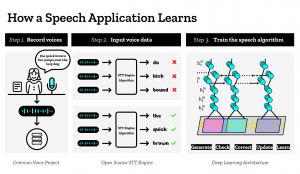
Recent announcements from Mozilla prove the spirited pace at which AI and related technologies are growing within the company. The Machine Learning Group at Mozilla improves the context of Speech Recognition and Voice Synthesis. The project (their first, actually!) studies the interaction between humans and hardware – smartphones, computer, and devices like Google Home, Siri, Apple HomePod and Amazon Echo. This novel project is particularly focused on bringing AI right at the core of every activity humans perform or could perform, irrespective of their physical capabilities.

DeepSpeech Machine-Learning-Diagram-v2@2x via Mozilla- Machine Learning Team

Hands-free and technology for the visually and physically-impaired individuals are the foundational aspect of growing AI as a ‘goodwill technology‘. The good part about AI – Mozilla discusses that in their Project Common Voice.

For us, it’s an endeavor to take AI to new heights — by refining their beneficial outcomes and by enhancing their reach and proliferation into our lives. We should continue to appreciate and be part of novel ideas as Mozilla’s that impact the way AI is adopted across every stream of our lives.

Pega Independent Software Vendor Program Unveiled to Bring Innovative Solutions to Clients

0
Pega Independent Software Vendor Program

The New Program Expands Pega’s Ecosystem by Enabling Partners to Create Pega-Based Solutions in an Open Development Environment

At the Pega World 2018, Pegasystems Inc., a leading martech company for customer engagement, announced the launch of the Pega Independent Software Vendor (ISV) program. For the first time, Pega is enabling independent development on its next-generation digital transformation suite, Pega Infinity™, so partners can easily integrate with and build new solutions that answer specific market needs. ISVs will also benefit from a commercial go-to-market model to help raise awareness of their solutions to potential clients.

Recommended ReadInfluencer Solutions Will Become a Core Component of the Marketing Stack

Pega Independent Software Vendor Program to Expand the Portfolio of Pega-Based Products 

Businesses are looking to accelerate their digital transformation initiatives to meet increasing customer expectations, which requires specialized technology solutions that fulfill unique business requirements. The Pega Independent Software Vendor program empowers partners to meet these needs as demand for Pega solutions continues to grow. This program will rapidly expand the portfolio of Pega-based products available to clients in existing and new markets.

Pega solutions power many of the world’s leading organizations across industries, including financial services, healthcare, insurance, telecommunications, manufacturing, and government. To ensure the highest quality solutions for these clients, the ISV program will welcome a select group of leading technology providers. Clients will be able to further extend and augment their existing Pega solutions from a certified library of new solutions, while qualified partners benefit from accessing new business opportunities.

Read More: Convey Launches Platform to Replace Static Contacts with Live, Dynamic Connections

At the time of this announcement, Rupen Shah, Vice President, ISV alliances & strategy, Pegasystems, said, “As Pega’s business continues to grow, our ecosystem must also expand to meet our clients’ increasing needs.”

Rupen added, “The ISV program is an essential part of this growth, which will give partners full access to the untapped potential within Pega Infinity. These solutions will enable our clients to become more competitive and accelerate time-to-market, all while leveraging and extending their Pega investments.”

Read More: ListenFirst’s Report for Media Publishing Industry Reveals Social Branded Content Nearly Doubled in 2017

Pega Independent Software Vendor Program Will Be Led by Rupen Shah, Vice President of Independent Software Alliances and Strategy

Once accepted into the Pega Independent Software Vendor program, Pega will provide ISV partners with the ideal environment and tools to independently build, modify, and integrate with Pega’s industry-leading technology. All Pega-based solutions offered by ISV partners will be available on Pega’s online software marketplace, Pega Exchange. ISVs will work with Pega to develop content and market their solutions to increase visibility.

The program will be led by Rupen Shah, vice president of independent software alliances and strategy. In this newly created role, Rupen Shah will focus on building the ISV partner ecosystem across all Pega Infinity™ solutions and vertical markets to build on the company’s leadership and growth in the cloud and CRM markets. Pega Infinity™ includes Pega’s industry-leading application development platform and customer engagement applications.

Pegasystems Inc. is the leader in software for customer engagement and operational excellence. Pega’s adaptive, cloud-architected software – built on its unified Pega Platform™ – empowers people to rapidly deploy, and easily extend and change applications to meet strategic business needs.

Recommended ReadContextual Content and AI: The New Wingmen for Email Marketing Campaigns

Yext and Yelp Expand Collaboration to Better Support Enterprise Businesses

1
Yext and Yelp Expand Collaboration to Better Support Enterprise Businesses

Yext Becomes an Official Yelp Knowledge Partner, Deepening Long-Standing Relationship to Help Businesses Manage the Facts About Them on Yelp

Yext, Inc, the leader in Digital Knowledge Management, announced an expanded relationship with Yelp to give businesses greater control over their digital knowledge online. As an official Yelp Knowledge Partner, Yext can now offer businesses of all sizes and channels the ability to monitor Yelp reviews and leverage data-driven insights. Additionally, businesses of all sizes can now use Yext to manage Yelp Listing data.

Yext and Yelp Expand Collaboration to Better Support Enterprise Businesses
“Yelp is one of the first places consumers look when checking reviews and making a purchasing decision. By expanding our relationship with Yelp, we’re ensuring our clients are putting their best foot forward on one of the sites consumers trust the most,” said Marc Ferrentino, Chief Strategy Officer at Yext.

Also Read: Brightcove Pushes the Envelope with Video Experiences that Increase Customer ROI

“Yelp and Yext have partnered for years to offer consumers accurate, up-to-date information on all kinds of businesses. We’re excited to expand our relationship to include powerful data and analytics via Yelp Knowledge, as well as enable enterprise customers to monitor Yelp reviews right in Yext’s platform,” said Chad Richard, Senior Vice President of Business and Corporate Development at Yelp.

This strengthens Yext’s existing multifaceted relationship with Yelp as a member of the PowerListingsⓇ Network, which includes solutions for mutual enterprise customers and small businesses. As an official Yelp Knowledge Partner, Yext now offers businesses of all types and sizes new opportunities to reach new and existing customers alike. Customers who purchase the Yelp Knowledge package from Yext can manage Yelp listing data and create new listings, as well as access Yelp Knowledge to monitor Yelp reviews, view powerful analytics, and perform sentiment analysis.

Also Read: Animoto Releases Video Marketing Best Practices for Social Media

Lucidity Releases Yellow Paper Detailing Scalable Blockchain Implementation for Programmatic Advertising

0
Lucidity Releases Yellow Paper Detailing Scalable Blockchain Implementation for Programmatic Advertising

Technical Paper Provides Deep Dive into Sidechain Scalability for Decentralized Advertising Analytics

Lucidity announced the public release of its yellow paper describing its specific implementation of a trustless sidechain scaling solution. Lucidity, headquartered in Los Angeles, is a blockchain company focused on transparency and trust in digital advertising. The technical paper, authored by Miguel Morales, CTO of Lucidity, and Alexander Voloshko, Protocol Engineer at Lucidity, is a companion to Lucidity’s white paper and provides a detailed view of how Lucidity’s unique sidechain scaling solution creates a decentralized system for greater supply chain transparency.

lucidity yellow paper blockchain sidechain
Lucidity has built a sophisticated Layer 2 blockchain solution, which works on an existing root blockchain and provides significant advancements in scalability. Achieving scale is done by moving computation to Lucidity’s sidechain to provide a greater degree of privacy and to expedite the processing of large datasets of millions of events per second from multiple parties.

Also Read: Blockchain in Advertising: The Implications for Every Player in the System

In order to meet the demands of programmatic advertising, the Lucidity sidechain implementation uses sharding to scale the system and a Plasma implementation to ensure the system remains secure.

Specifically, this allows Lucidity to:

  • Validate event-level data
  • Create additional scale without sacrificing decentralization
  • Economically incentivize veracity and accuracy through a proof-of-stake rewards and penalties system
  • Create groundbreaking visibility into the advertising supply chain

“We are thrilled to publicly release our yellow paper describing our scaling capabilities utilizing Layer 2 solutions like Plasma and sharding. Interestingly, our protocol and products have not just attracted the attention of the largest players in the digital advertising industry, but also blockchain experts seeking supply-chain optimization infrastructure,” said Sam Kim, CEO of Lucidity. “As Vitalik Buterin shared, the Ethereum network is seeking to achieve processing of more than 1 million transactions per second, which is the volume needed to service the digital advertising industry.”

“Lucidity is Plasma. Plasma is a way of thinking, and it’s already here. Lucidity uses many of the concepts introduced in the Plasma white paper in order to build a Layer 2 solution capable of scaling to millions of transactions per second,” said Miguel Morales, CTO of Lucidity.

Lucidity’s product is live and in-market, and continues to gain momentum in the advertising community. Lucidity was recently nominated for “Blockchain Startup of 2018” from the The Blocks Awards.

Also Read: Lucidity Debuts Marketing Analytics Protocol On The Ethereum Blockchain

Animoto Releases Video Marketing Best Practices for Social Media

0
Animoto Releases Video Marketing Best Practices for Social Media

Tips Include Using Square Videos to Take up 78 Percent More Space in Social Feeds and Optimize for Mobile Viewing

Animoto, the company that makes it easy for anyone to create professional marketing videos, released its “Cheat Sheet for Social Media Video.” The guide includes practical tips for businesses looking to maximize their presence on Facebook, Instagram, Twitter and YouTube through creating and sharing marketing videos.

As video on social media continues to become more prevalent, marketers and small businesses are responding by becoming resourceful video marketers themselves. Animoto’s 2017 State of Social Video Report uncovered that 92 percent of businesses creating marketing videos for social media are doing so by repurposing content that they already have. Consumers are responding to the influx of marketing videos on major social networks with their wallets. In the same report, it was found that 64 percent of consumers say watching a marketing video on Facebook had influenced a purchase decision in the last month.

Also Read: Animoto Recognizes Massive Video AdvertisingOpportunity for Small Businesses on Instagram

“Businesses—and not just large corporations—have the opportunity to build their brands and acquire new customers with video on social media. Many of our customers have become successful video advertisers and video publishers by incorporating these best practices into their social media strategies. We’ve released this cheat sheet so that all businesses can attract and connect with audiences through the undeniable power of video,” said Animoto co-founder and Chief Video Officer, Jason Hsiao.

Marketing video tips for major social platforms:

  • Go square for Facebook: Square videos take up 78 percent more space in the News Feed than landscape videos. Create square videos to optimize for the mobile experience.
  • Avoid the hard sell on Facebook: Drive more engagement with content that educates, inspires, and entertains rather than content that’s just about your product or service.
  • Plan for intent and educate on YouTube: What are your potential customers interested in or already searching for? Create longer videos—two minutes or longer—that educate and are useful to those potential customers.
  • Keep it short and choose a cover image on Instagram: Since Instagram videos loop, it’s best to keep videos under 30 seconds. Also, remember to set a cover image for your videos. Once published, cover images can’t be updated.

Also Read:  Video Advertising Report Reveals Completion Rates at New Highs, Fraud Rates at New Lows

Brightcove Pushes the Envelope with Video Experiences that Increase Customer ROI

0
Brightcove Pushes the Envelope with Video Experiences that Increase Customer ROI

Ongoing Innovation Creates Single Platform for All Enterprise Video Experiences

Brightcove, the leading provider of cloud services for video, has been at the forefront of the digital video revolution since its inception, helping enterprises leverage the power of video for marketing and internal communications. At PLAY 2018, Brightcove is excited to share continued momentum and innovations in personalized video experiences, internal and external live streaming, and enterprise user management to help customers deliver exceptional video experiences and realize a greater return on investment on their video content.

“Video is the most powerful form of digital communication. It enables companies to form a deeper, more human connection with their customers. Video moves business, which is why digital marketers and enterprise users are embracing this communication medium like never before. We are excited to continue innovating our platform to help customers power truly amazing video experiences. From personalization to interactive video, live streaming and deeper analytics, we cannot wait to see what our customers do with the new features and functionality that will be announced and previewed at PLAY,” Caren Cioffi, executive vice president and general manager, Digital Marketing & Enterprise Business Unit, Brightcove, said.

Also Read: Translate Your Web Content with the Enhanced Amazon Polly Plugin For WordPress

Here are the latest capabilities announced at PLAY 2018:

Interactive and personalized video experiences. Last year, Brightcove delivered In-Page experiences, which lets customers add beautiful layouts and interactive elements to any video experience, increasing viewer engagement and conversion. Today, Brightcove has hundreds of customers publishing thousands of In-Page experiences to drive better marketing results. With In-Page experiences as its foundation, this year Brightcove announced new personalized video features that enable customers to push out different offers to different people depending on their unique interests. These new features allow companies to deliver video experiences, ranging from personalized content to playlists and calls to action, tailored to each viewer based on previous interactions and preferences.

One solution for all enterprise video. Last year, Brightcove launched Enterprise Video Suite, a secure, user-friendly solution that manages and tracks the performance of live and on-demand video content experiences within enterprises. Brightcove has seen great momentum with the Enterprise Video Suite and helped organizations around the globe with their internal and external video delivery in 2017. This year, Brightcove is expanding In-Page Experiences to the enterprise with interactive video and templatized layouts for live-streamed town halls and other live-streamed events. Brightcove also deepened its integration with Microsoft so users can publish these video experiences directly into their Sharepoint instance, bringing video to one of the most popular portal technologies for employees.

Streamlined user management. As video spreads rapidly across the enterprise, customers need more streamlined capabilities to manage the large number of people looking to publish videos. Today Brightcove introduced:

  • Fine-Grained Permissions. Users can now dictate access and define different privileges within each VMS and EVS Studio module. For example, administrators can allow some users read-only access to videos in the media module, or restrict their ability to delete players but still allow them to create new ones.
  • Custom User Roles. Users will be able to group permissions into roles that match workflows, then assign as many users needed to those custom roles.
  • And finally, customers will have access to User Audit Trails where you can see which users made changes to a video or when users last logged in to the account.

Drive better business results. As video continues to expand across the enterprise, measuring its performance is mission critical. The insights gained with video analytics provide a rich source of data to do this. Last year, Brightcove added viewer interactivity analytics to its platform to track individual viewing and interactivity history alongside higher level video performance and engagement. With this data, marketing and enterprise communication professionals can optimize video content, improve lead capture and conversion rates, and improve educational videos. This year, Brightcove announced more robust personalized video analytics, which allow users to track personalized video metrics by individual viewer, viewer segment, and offer. This information quickly demonstrates video performance and ROI per viewer. This data can be used to improve targeting, segmenting, and messaging to improve video marketing results.

Also Read: MediaAlpha Brings Header Bidding Benefits to Publishers Selling Performance Marketing

MediaAlpha Brings Header Bidding Benefits to Publishers Selling Performance Marketing

2
MediaAlpha Brings Header Bidding Benefits to Publishers Selling Performance Marketing

Open Bidding Empowers These Publishers to Create a Unified, Real-Time Auction Between All Current (And Future) Demand Partners

MediaAlpha, a pioneer in programmatic platforms for native and metasearch media, launched Open Bidding, a new offering that brings the transformational yield and operational benefits of header bidding to publishers of vertically-targeted, comparison search media. The first solution of its kind, Open Bidding empowers these publishers of valuable, cost-per-click based performance inventory to create a unified, real-time auction between all current (and future) demand partners, including direct advertisers, ad networks, demand-side platforms (DSPs), and advertising exchanges.

The tremendous lift in revenue brought to publishers by header bidding, and the real-time, simultaneous bidding this programmatic technique enables has been well-documented and established in other digital ad ecosystems such as display, mobile, and video. Header bidding enables publishers in these channels to replace a manual, waterfall-based demand management model with a unified, real-time auction between all demand partners. This fosters significantly enhanced competition for their inventory, thus increasing revenue by upwards of 30 to 40 percent.

Also Read: Facebook Audience Network Joins Fyber’s FairBid Beta, New In-App Header Bidding Technology 

“Through Open Bidding, we are empowering native and metasearch publishers to increase the value of their inventory by simultaneously prioritizing bids from all demand sources on an impression-by-impression basis through an open, transparent auction process. This open, unified auction model will finally replace the negotiated demand management model that has persisted in the supply-side of performance media for too long. Not only will publishers benefit from far higher yield and operational efficiencies, but advertisers will be able to attain far greater reach through a smaller number of media buying partnerships,” said Steve Yi, CEO of MediaAlpha.

Open Bidding provides a unified demand management solution that gives publishers substantially more transparency and control over how their inventory is made available and sold. They can continue to own and manage their existing relationships with demand sources, including direct advertisers and ad networks, while maximizing the price paid for their inventory through a real-time auction involving all demand partners. In addition to higher yield, publishers also gain full transparency to precisely what each demand partner is bidding and the winning price, giving them an accurate view of exactly how each demand partner values their inventory.

Also Read: Translate Your Web Content with the Enhanced Amazon Polly Plugin For WordPress

Translate Your Web Content with the Enhanced Amazon Polly Plugin For WordPress

0
Translate Your Web Content with the Enhanced Amazon Polly Plugin For WordPress

Real-Time Text-to-Speech Translation from English to Spanish, German, French or Portuguese

WP Engine, the leading WordPress digital experience platform, announced its collaboration with Amazon Web Services (AWS) to bring machine learning-powered speech translations to WordPress, the dominant content management system (CMS) that powers nearly a third of the web. The integration of Amazon Translate into the Amazon Polly plugin for WordPress will allow brands and publishers to take web content in English and translate that content into any of four spoken languages: Spanish, German, French or Portuguese. More languages will follow.

Rise of Digital Media Consumption

Today’s consumers are spending more of their day online, with 62 percent of Millennials and 69 percent of Generation Z stating they can only go up to eight hours comfortably without access to the internet, according to a national study commissioned by WP Engine and The Center for Generational Kinetics. Digital content presents a powerful means of satisfying this audience. Enterprises need to ensure that their content is easily accessible and optimized across all connected devices and global networks if it’s to reach the widest possible audience. There is a huge opportunity for agencies to help localize web content and adapt a brand’s web presence for voice technology.

Also Read: Quotient Technology To Acquire Influencer Marketing Firm Ahalogy

Text-to-Speech & Machine Translation

The Amazon Polly plugin enables WordPress creators to easily add text-to-speech capabilities to their websites and make the audio easily available for listeners in the form of podcasts. In this new release, publishers or brands can automatically translate text-based content and have it read in Spanish, German, French or Portuguese. Future plans will extend that capability to more languages, providing publishers with the ability to extend content to even more consumers globally. The machine translation feature is powered by Amazon Translate and is now available in the WP Engine Solution Center as an update to Amazon Polly plugin for WordPress. Amazon Translate is a neural machine translation service that uses deep learning models to deliver more accurate and natural sounding translation than traditional statistical and rule-based translation algorithms.

“Publishers and marketers are increasingly investing in content to reach global audiences. The ability to translate content in a way that allows consumers to listen on-the-go opens a tremendous opportunity for brands to reach global audiences in a way never before possible. Amazon Translate, tested and optimized at scale for the WP Engine Digital Experience Platform, is a great first step in extending the reach of content,” said Mary Ellen Dugan, Chief Marketing Officer at WP Engine.

Also Read: Brightcove Launches OTT Flow X, Powered by Accedo

“As the world grows more interconnected, building multilingual websites is fast becoming the new norm. Amazon Translate helps remove language barriers, so you can optimize your content and connect with your audience in the language of their choice. By having a machine translation capability in the Amazon Polly plugin, WordPress sites can easily offer users multilingual and voiced content with a simple click of a button,” said Swami Sivasubramanian, Vice President of Machine Learning, Amazon Web Services, Inc.

“For more than 25 years, BoardingArea has delivered content that provides news, information and advice for frequent flyers. With Amazon Translate and the WP Engine Digital Experience Platform, we are able to take the best frequent flyer blogs and reach new international audiences in their preferred language,” said Denny Butts, Director of Project Engagement at BoardingArea.

Also Read: PubMatic and Ringier Partner to Drive Programmatic in the Romanian Market

Quotient Technology To Acquire Influencer Marketing Firm Ahalogy

1
Quotient Technology To Acquire Influencer Marketing Firm Ahalogy

Influencer Marketing Firm Expands Quotient’s Data-Driven Media Offerings, Driving Sales Through Social Media for Top CPG Brands

Quotient Technology Inc, announced it has signed a definitive agreement to acquire Ahalogy, a leading influencer marketing firm that delivers premium content across social media channels for consumer packaged goods (CPG) brands. The acquisition enhances Quotient’s performance media solutions for CPGs and retailers, adding social media expertise and a roster of proven influencers. Influencer marketing is projected to reach about $10 billion by 2020.

“Ahalogy is a perfect fit for Quotient as we expand and grow our digital media solutions, with a specific focus on CPG shopper marketing. Ahalogy has proven expertise in creating and delivering targeted digital content that drives brand sales, especially through social channels. This gives us another capability to deliver efficient digital media campaigns that reach valuable shoppers, including our 100 million verified buyer audience, using our proprietary shopper data to drive sales and measure performance,” said Mir Aamir, President and CEO of Quotient.

Also Read: MarkMonitor Unveils New Solution for Effective Post-GDPR Brand Protection

“We couldn’t be more thrilled to join Quotient. This is a great opportunity to bring our influencer marketing capabilities to the more than 2,000 brands within Quotient’s network, giving CPG brands and retailers a single company to manage much of their digital marketing,” said Bob Gilbreath, who cofounded Ahalogy in 2012 and serves as the company’s CEO.

Ahalogy has developed a network of thousands of social media influencers who have strong appeal to CPG and retail brands. It uses its proprietary software, called Muse, to determine trending themes – recipes, for instance, or types of food – that are of high interest for brands. The platform also helps match influencers, who were selected based on the quality of their followers, which they verify through a third-party source, and the quality of their content. Ahalogy’s campaigns only use paid, verifiable media to spread posts, guaranteeing all impressions are real.

Also Read: ShareThis Announces New CEO and Doubles B2B Data Business

Quotient’s media platform, proprietary measurement solution and exclusive shopper data, will enable Ahalogy to better measure sales lift from influencer campaigns. That’s because Quotient’s Retailer iQ™ platform connects to point-of-sale systems at major retailers that sell groceries. Quotient, which powers many apps and websites for retailers, uses Retailer iQ to help brands and retailers reach shoppers with relevant digital offers and media – all informed by purchase data and online engagement data. More than 60 million shoppers – about half of all U.S. households – are registered to savings programs powered by Retailer iQ.

Gilbreath, who has more than 20 years of digital and brand marketing experience, including with Procter & Gamble and WPP, will continue to run the Ahalogy team. This acquisition also expands Quotient’s already strong commitment to Cincinnati, where the company already employs more than 120 people.

Also Read: Outbrain Acquires AdNgin to Further Enhance the Reader Experience

How Bloggers Can Expand Revenue Quickly and Efficiently: 4 Learnings Coming from Ungagged London

0
How Bloggers Can Expand Revenue Quickly and Efficiently: 4 Learnings Coming from Ungagged London
UnGagged London | Digital Marketing & SEO Conference 2018

London Tech Week is rapidly becoming a “must attend” for those of us in digital marketing space; seemingly out of nowhere it may soon contend with an influx of travelers and knowledge seekers as SWSX, with multiple tech-related conferences featuring everything from large headlining companies such as Microsoft with a broad horizon view of our tech future to smaller and more nimble SaaS players such as Intellifluence with what a practitioner can be doing today.

Focusing on the now is exactly what one can expect to see at Ungagged London this year; having last spoken here two years ago, I’m astonished at the growth and variety of speakers focused on everything from video marketing and speed optimization to marketing in a post-GDPR world. From these various topics, I’ve put together an ad hoc four talk track for bloggers looking for revenue expansion.

Also Read: UnGagged TechBytes with Greg Gifford, Vice President of Search, DealerOn

Four Ungagged Talks for Bloggers

Step 1: Tracking Improvement

Jill Quick of The Coloring in Department will be presenting on “The Problem of Acquisition: Turning Cost into Cash.” Taking place on June 12, I place this first as it is absolutely vital to setup proper tracking prior to any traffic acquisition campaign; what one can to expect to learn from Jill in this talk are the pitfalls and workarounds to reliance solely on Google Analytics.

The main takeaway for bloggers is how to tackle common settings issues in their analytics setup, to stop relying on bad data.

Register Now Use Promo Code – itech10 (for a 10% discount)

Step 2: Build a Profitable Private Blog Network (PBN)

I will be presenting on ‘Building and Operating a Profitable PBN Using (Mostly) Free Tools and Influencer Networks.’ As the second talk in this blogger track, the focus is on how to expand opportunity generation via influencer networks and low-cost tools on a private blog network, to best make use of one’s existing assets. The main takeaway for bloggers is how to explore other avenues for revenue beyond the typical advertising and lead generation approach, to maximize revenue potential.

Also Read: Move Over Conventional SEO Conferences, It’s Time We UnGagged!

Step 3: Use Mass Media

Ross Tavendale of Type A Media will be presenting on ‘The Trump Technique: Manipulating Mass Media to Get Your Story (and links) in the Press.’ As the third presentation in the blogger track, the strategy shifts to PR, which the site should now be ready for, having previously improved analytics tracking and a methodology for improved monetization. The main takeaway for bloggers is how to use the media to push a story for the benefit of traffic and links.

Step 4: Layer on Paid Social

Marty Weintraub of Aimclear rounds out our blogger track with ‘Making Money with Paid Social in 2018.’ The always actionable Mr. Weintraub will be delivering a series of techniques bloggers can immediately employ as hacks to lower their paid social acquisition costs and hyper-target on relevant audiences most of us don’t immediately see.

The main takeaway for bloggers is how to improve their paid social campaigns’ ROI.

So Much More

With this year’s lineup of twenty-two seasoned speakers featuring a combined digital marketing experience exceeding several hundred years and over a billion dollars in generated revenue, it is easy to see how Ungagged London has become a fixture of Tech Week, and in my estimation, a must-attend event.

Also Read: UnGagged TechBytes with Bastian Grimm, Director Organic Search, Peak Ace

Outbrain Acquires AdNgin to Further Enhance the Reader Experience

0
Outbrain Acquires AdNgin to Further Enhance the Reader Experience

Investing in Reader Optimization, Acquisition Will Help Outbrain Continue to Put Personalization First

Outbrain, the world’s leading native advertising platform, today announced it has acquired AdNgin, a UI optimization company built to enhance the reader experience. This acquisition is Outbrain’s sixth to date, continuing a string of growth-driven accelerations in the last several years.

Guiding digital discoveries of readers around the globe, Outbrain connects publishers, marketers and consumers through personalized, interest-based recommendations. AdNgin focuses on that same level of personalization, individually optimizing the reader experience based on their visual preferences. The understanding that every consumer is different — from their personal interests to the way they interact digitally — is what inspired the two companies to come together. Harnessing the combined technologies, performance will continually scale as publishers see higher RPMs (revenue per mille), marketers higher CTRs (clickthrough rate), and readers better overall content interactions.

Also Read: Showpad Acquires LearnCore to Deliver the Industry’s First Integrated Sales Enablement Platform

“AdNgin removes the guesswork of digital advertising, allowing us to automate the optimization of our reader experience. It’s fascinating to see a technology that can make continuous improvements and lead to significant uplifts of RPMs and CTRs,” said Asaf Porat, Head of Global Operations at Outbrain.

After a short, six-month pilot, the consistent double digit CTR lifts shown sealed the deal for the two, personalization-driven platforms.

“As we’re innovating our platform with transformative initiatives — in-feed autoplay video and endless feeds of content discovery — we can’t forget what makes Outbrain perform in the first place: reader personalization; from the personalization of content to the personalization of UI. This acquisition will help us seamlessly focus on the entire, personalized journey,” said Yaron Galai, Founder and CEO at Outbrain.

Also Read: ownerIQ and Amobee Partner for Transparent Retail and Brand Audiences Based on Second-Party Data

“Joining forces with a native powerhouse like Outbrain, which organically outperforms the competition using interest-based recommendations, couldn’t be a more perfect digital advertising match. This is an incredibly exciting start to a high-converting content adventure, both for us, and the end consumers,” added Amnon Lahav, Co-Founder of AdNgin.

Lahav will bring his decade plus of UX experience to the forefront, closely collaborating with Outbrain’s Business Optimization team as the new Head of UI Optimization.

Also Read: Facebook Audience Network Joins Fyber’s FairBid Beta, New In-App Header Bidding Technology 

ShareThis Announces New CEO and Doubles B2B Data Business

0
ShareThis Named Among Ad Age's 2022 Best Places to Work

ShareThis Announced New Clients and Partners, Including Digitas, AppNexus, and The Trade Desk; Reveals Data DNA and Deep Learning Engines Fuel YoY Growth Into Second Year

ShareThis, the Sharing Intelligence company that delivers the largest independent consumer interest-and-intent data for targeting and analytics continued its year-over-year growth for its expanded data business. In line with this growth, the company announces that data veteran Dana Hayes, Jr. is taking on the CEO role; current CEO Kurt Abrahamson is moving to the Executive Chairman role.

ShareThis enables both agencies and brand marketers to build custom insights and audiences based on real-time behavior across the global web.  ShareThis data is also fueling audience strategy and analytics for marketers.

Building on the company’s key data assets in 2016, ShareThis has quickly evolved and delivered to market a series of owned data offerings serving all levels of the digital ad ecosystem. ShareThis data DNA, coupled with the company’s proprietary data engines — which cut through terabytes of data to identify non-linear patterns, also serve to speed up and deepen learnings, delivering both reach and granularity.

Recommended ReadInfluencer Solutions Will Become a Core Component of the Marketing Stack

ShareThis’ growth is a result of expansions of its relationships with both publishers and marketers. The company has deepened its publisher base to include more than one-third e-commerce publishers, deepening ShareThis’ intent signals.  ShareThis has also expanded its deep learning teams, creating multiple proprietary engines.

At the time of this announcement, Kurt Abrahamson, said, “We quickly saw the opportunity to leverage the nine-year history of our unique data DNA to help marketers who sometimes feel they have a sea of data assets but little in the form of learnings. Our investments are in line with some of the market evolution we’re seeing play out today. We are excited to have Dana take the reins for this next stage of growth.

Recommended ReadNow, Keep Your Best Customers Happy with the Oracle Loyalty Cloud

New Partners and Clients

More than 50 strategic partners and clients have been attracted to ShareThis over the last 18 months through recent investments and enhancements to its growing data services business. New partners include leading data players, such as Acxiom, as well as digital ad leaders including The Trade Desk, AppNexus, and LiveRamp.

ShareThis has also experienced momentum on the brand marketer side, gaining clients including Publicis’s Digitas, The Connected Marketing Agency committed to helping brands better connect with people.  

Dana Hayes, Jr., said, “Data is fueling product development, acquisition, and business development and moving marketing organizations from a cost center to a contributor to brand growth. For many players, data is not in short supply, but gaining insight from it is. Savvy brands know when to supplement first-party insights, layer truth-layer data sets or use data for analytics and other marketing strategies.”

The new CEO added, “We now see brands leverage data in unique and proprietary ways to propel their businesses forward. Our shifts and subsequent growth confirm our theories and we’re excited to see the bets we’ve placed take hold.”

Dana Hayes, joined ShareThis in 2017 bringing a proven track record of building both startups and larger profitable units at enterprise public companies. Prior to ShareThis, Hayes served as the group vice president of global partnership development for Acxiom building strategic partnerships and distribution relationships to advance data-driven marketing and advertising globally.

Prior to Acxiom, Dana Hayes held a number of senior leadership positions with Tribune, quadrantOne, and Travora Media as well as serving as an Executive in Residence/Advisor role for Abundant Venture Partners, a business incubator focused on early-stage, service-based companies in media and healthcare.

ShareThis has been collecting and synthesizing social share, interest, and intent data since 2007. Powering the sharing of content across more than 3M global domains, ShareThis observes real-time actions from real people on real publisher sites. ShareThis transforms user-level behavioral data into actionable insights.  This unique and powerful view can be used to better understand, expand and validate consumer behavior for targeting and analytics to achieve marketer and publisher outcomes. Privately held, ShareThis is based in Palo Alto, CA.

Read More: Tealium Leads Industry with Enhanced Privacy and Consent Functionality

Brightcove Launches OTT Flow X, Powered by Accedo

1
Brightcove Launches OTT Flow X, Powered by Accedo

OTT Flow X Builds on Existing Turnkey Solution to Offer Broadcasters More Customization and Delivery to All Screens

Brightcove, the leading provider of cloud services for video, announced the launch of OTT Flow X, powered by Accedo, the video experience pioneer, enabling both companies to expand their direct-to-consumer products and deliver solutions that address all points in the OTT continuum. For broadcasters seeking a sophisticated turnkey solution, OTT Flow X provides increased UX flexibility, support for complex integrations, delivery to the major platforms including smart TVs and game consoles, TVE authentication, and transactional business models. OTT Flow X rounds out the solutions both companies provide for helping customers succeed in launching an OTT service.

Brightcove OTT Flow X, powered by Accedo, lowers the technical complexity and go-to-market barriers associated with launching a beautiful, multi-platform OTT service. Brightcove Video Cloud provides the backbone of OTT Flow X with its industry-leading video player, ingestion, transcoding, metadata management, and SDKs. Accedo Studio Pro reduces maintenance costs, enables engaging user experiences and full management control of an OTT service across platforms from a central cloud-based dashboard.

Also Read: SAP Announces New Suite of Solutions to Modernize CRM and a New Data Management Suite

Utilizing the components of OTT Flow X, Vietnam Television Corporation(VTC), launched VTC NOW earlier this year. A new subscription-based OTT streaming service, VTC Now offers video on demand and live content that caters to both local residents and global Vietnamese diaspora audiences. Viewers can access VTC NOW by downloading the app from Google Play and the Apple App Store.

“Content providers and broadcasters of all sizes are accelerating their efforts to directly deliver and monetize their content to audiences across platforms with a wide range of business models. Brightcove is at the forefront of helping them succeed by providing a full spectrum of OTT solutions. OTT Flow, powered by Accedo, was introduced two years ago and continues to be a great choice for customers looking to launch a robust, full-featured OTT service in a matter of weeks. Customers who want the same fast time to market but need more flexibility or customization will be delighted with our new OTT Flow X solution. Together, Brightcove and Accedo offer customers a full spectrum of OTT services and solutions regardless of where they are on their OTT journey,” Anil Jain, executive vice president and general manager for Media, Brightcove, said.

“OTT Flow X builds on our joint success with OTT Flow where Brightcove and Accedo have established a premium turnkey solution that continues to gain momentum in the marketplace. OTT Flow X supports more complex integrations and UX requirements and delivery to more screens, enabling us to extend our reach into new market segments,” Fredrik Andersson, senior vice president of Strategy & Solutions, Accedo said.

In 2018, media companies and content owners are faced with three main challenges. Organizations need to be able to provide their customers with an exceptional user experience, while increasing revenue, and keeping costs down. OTT Flow X addresses these challenges by lowering the technical complexity and go-to-market barriers associated with launching a customizable OTT service. By taking advantage of powerful user interface capabilities and reaching new platforms, OTT Flow X satisfies customers who require more customization along with a fast time to market and at a lower cost than a fully bespoke solution.

Also Read: MANTIS to Disrupt Online Advertising Industry With Video Vetting AI Technology

Facebook Audience Network Joins Fyber’s FairBid Beta, New In-App Header Bidding Technology 

0
Facebook Audience Network Joins Fyber’s FairBid Beta

The Partnership Enables Facebook Audience Network to Place Bids in Real-Time and Compete in a Unified Auction

Fyber, a leading technology company creating solutions for smarter ad monetization, announced that Facebook Audience Network is partnering with Fyber FairBid, Fyber’s new mechanism to achieve a state of header bidding in the mobile app environment, thus helping app developers and mobile publishers make the most of their content by delivering highly-targeted ads that engage the right audiences, in an efficient, and fair trading environment.

Fyber FairBid brings together programmatic demand from DSPs, direct campaigns and SDK-mediated networks into one, simultaneous, real-time auction.

Fyber’s Technology Democratizes the Programmatic Buying Process

The Fyber FairBid technology enables buyers like Facebook Audience Network to bid in real time on mobile app impressions, while still maintaining the direct SDK relationship with the publisher. Fyber FairBid allows SDK networks like Facebook Audience Network to access more in-app inventory and offers its advertisers the ability to outbid other buyers in real-time, which is a significant shift away from the predicted pricing model used by most mediation platforms. Facebook Audience Network joins AdColony and Tapjoy who are already FairBid beta partner networks.

Read More: S4M Co-founder Stanislas Coignard Takes Over As US CEO to Focus On US Expansion

FairBid Technology Eliminates the “Waterfall”

For mobile publishers, Fyber’s proprietary FairBid technology offers an independent, unbiased platform which eliminates the “waterfall” found in most mediation solutions and does not prioritize its own marketplace or ad network over ads from the other mediated networks. Because there is no bias in favor of any demand source, the highest bid wins, regardless of which network the demand is coming from.

“Fyber’s technology democratizes the programmatic buying process by providing all ad buyers equal ability to bid on every impression,” said Vijay Balan, Head of Publisher Solutions Partnerships at Facebook Audience Network.

Vijay added, “We believe all app publishers and developers should have access to a more transparent and more efficient ad monetization ecosystem.

Read More: Is GDPR Really Changing Ad Tech?

Greater Competition and an Uplift in Yield for In-App Publishers

Fyber FairBid brings together programmatic demand from DSPs, direct campaigns and SDK-mediated networks into one, simultaneous, real-time auction. By allowing all demand to compete in one flat, fair, and transparent auction which does not favor one source of demand over another, it ensures greater competition and an uplift in yield for in-app publishers.

“Fyber FairBid combines our proprietary real-time bidding exchange focused on in-app with our strong mediation platform to bring transparency, yield optimization, and more automation to mobile publishers and app developers,” said Offer Yehudai, President at Fyber.

Read Also: Relay Network Launches CX Builder

Offer added, “Through our technological capabilities, and through strategic partnerships with ad networks like Facebook Audience Network, we are eliminating inefficient waterfalls that leave money on the table. At the same time, publishers can still enjoy the ad rendering benefits offered by these networks as the SDK integrations with their clients are maintained.”

Currently, Fyber combines proprietary technologies and expertise in mediation, RTB, video, and audience segmentation to create holistic solutions that shape the future of the app economy. Fyber recently fully merged its three previous acquisitions: Heyzap, Inneractive, and Fyber RTB (formerly, Falk Realtime) and is now operating under one single brand.

Read More: Fierce Pace of Tech Disruption Has Forced Companies to Innovate via M&As

ownerIQ and Amobee Partner for Transparent Retail and Brand Audiences Based on Second-Party Data

0
ownerIQ and Amobee Partner for Transparent Retail and Brand Audiences Based on Second-Party Data

First-Demand Side Platform Integration Grants Access to Rich Ecommerce Data

ownerIQ, a leader in second-party data, announced the ability to integrate with demand-side platform (DSP) partners, with Amobee—a leading global digital marketing technology company serving brands and agencies—becoming the first DSP to directly integrate, allowing customer access to ownerIQ’s unmodeled retail and brand-specific second-party data.

owneriq-_-amobee

Recommended Read: Mobfox Introduces Audience Analytics for Better In-App Monetization

Prior to this advancement, direct access to audiences from retailers and brands could only be done through ownerIQ’s platform, CoEx. Amobee’s access to ownerIQ’s second-party data adds to its ecosystem of more than 200 integrated technology, data, and inventory partners, further building-out its powerful set of solutions. This integration provides Amobee with direct and immediate access to ownerIQ’s Active Shopper and Second-Party Connect data products.

Second-party data is sourced transparently from the marketing partners a brand is already working with or brands that share data with non-competitive brands in exchange for compensation. This new market provides better quality data inputs to power all marketing tactics and enabling fundamentally new marketing tactics, such as enabling a brand’s retail partners to leverage the brand’s data to support sell-through. “The Q” makes it happen on the ‘The Second-Party Data marketplace’.

“ownerIQ is excited to bring transparent retail and brand audiences to even more customers through our integration with Amobee,” says Chris Greig, SVP, Strategic Relations at ownerIQ.

Recommended ReadNow, Keep Your Best Customers Happy with the Oracle Loyalty Cloud

Chris added, “Collaborating with Amobee on our first DSP integration was a good fit because Amobee has a complementary client set and is focused on quality data; customers are now able to use our Active Shopper product immediately with permissioning made possible through our data sharing platform, CoEx.”

The partnership allows Amobee to work directly with ownerIQ to proactively present data from more than 600 brands and retailers to clients, with faster access to permissioned audiences. The direct integration with ecommerce purchase data from endemic brands and retailers lends itself to quicker scaling and larger audiences, giving Amobee customers rich, transparent data to drive more robust advertising solutions that resonate.

“Amobee understands the incredible value of transparent audiences and second-party data,” says Bryan Everett, SVP of Global Business Development at Amobee.

Bryan added, “ownerIQ allows further differentiation of Amobee’s offering and options, giving ambitious marketers looking to go beyond buying a better understanding of their target audiences and how to reach them with messaging that resonates.”

One of the world’s largest independent advertising platforms, Amobee unifies key programmatic channels including all major social media platforms, formats, and devices, to provide both managed- and self-service clients with easy-to-use data management and media planning capabilities as well as actionable, real-time market research and proprietary audience data.

ownerIQ’s is second-party data solutions powering the only transparent data marketplace, giving the advertiser or data buyer full knowledge of the source of the data behind a market segment, and how that segment was composed. This allows advertisers to make more informed decisions as to what data, or audience segments to purchase.

Currently, ownerIQ, or “The Q”, is focused on leading the data market’s evolution towards transparency, relevancy, and choice. We are bringing the most valuable consumer data to market– explicit shopping and purchasing data from retailers and brands– to power a new data economy: The Second-Party Data marketplace.

Read More: Tealium Leads Industry with Enhanced Privacy and Consent Functionality