Home Blog Page 4241

AppBus Appoints Anita Sands to Board of Directors

1
AppBus Appoints Anita Sands to Board of Directors

As a Member of the AppBus Board of Directors, Anita Sands Will Be Contributing to the Company’s Global Business Strategy

AppBus, a digital business platform company, announced the addition of Anita Sands to the board of directors.

Sands brings an in-depth knowledge of information technology, strong innovation, and enterprise information skills since she has served in various executive roles for the financial services sector. As a member of the AppBus Board of Directors, she will be contributing to the company’s global business strategy.

Sands joins the AppBus Board with more than 15 years of experience in information technology and financial services companies. As of now, she serves as a director for three Public companies—Symantec Corporation (SYMC), Service Now (NOW) and Pure Storage (PURE). Previously held positions include COO for UBS Wealth Management, Head of Transformation for Global Technology and Operations at Citigroup, Head of Innovation and Process Design for Royal Bank of Canada. Anita Sands is actively into investing and regularly speaks strongly on the advancement of women and digital disruption.

AppBus CEO William (Bill) J. Conners, Jr said, “Anita Sands has been a strategic visionary with many successful companies. Her unique operational track record as a business leader has allowed her to secure Board positions with several market-leading companies. AppBus is well positioned to lead the digital transformation of the enterprise. Our opportunity will be enhanced greatly with the addition of Anita, especially considering her expertise in digital disruption.”

Also Read: Nex Cubed Announces Two New Board Members

Sands said, “I am very excited to join the AppBus team. It would be hard to find a company better positioned to capitalize on the digital transformation opportunity. Tony Pizi, (Founder and Chief Strategy Officer) is a visionary like no other, and the technical depth of the platform has positioned AppBus well. Preserving and extending critical business assets, while also serving as a foundation for the secure modernization of the enterprise is why AppBus is a must-have.”

AppBus provides a digital business platform which automates, integrates and secures application delivery to any device on any network. AppBus makes acclimating to change simple by leveraging all capabilities of the enterprise, thus enabling transparency for automation and accelerating deliverance of optimal experiences. AppBus ensures innovation and value of time through the ecosystem with partners, employees, and customers.

Recommended Read: How Can Companies Deliver Amazing Customer Experience: Four Big Ideas from Adobe Summit 2018

MSRCOSMOS Releases Real-Time VINCI360 Social Analytics Platform for Optimizing Brands & Customer Experiences

0
MSRCOSMOS Releases Real-Time VINCI360 Social Analytics Platform for Optimizing Brands & Customer Experiences

The Platform Actively Captures Sentiment and Audience Perception

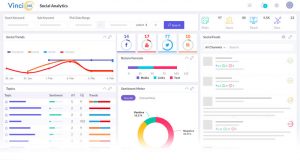
VINCI360, a breakthrough social analytics platform delivering real-time awareness of customer sentiment and brand impact was released by MSRCOSMOS, marking a new era in the ability to proactively capture and respond to market opportunities and competitive threats.

Companies deploying VINCI360 are able to define a vibrant lexicon of keywords and phrases they want to monitor-both as they happen live and also over time across all major social networks-Twitter, Facebook, YouTube, Instagram, websites, blogs, and more. The platform actively captures sentiment and audience perception in how customers are responding to marketing messages and news, as well as competitor actions and advertising.

The Vinci360 platform lets firms derive the intelligence to assess customer value in terms of current as well as future contributions to revenue. The platform also lets users identify opportunities earlier and update their brand strategies, measures the impact of marketing spend and provides ‘Early Warning’ of negative feedback from events, advertising, and news affecting your customers and markets.

MSRCOSMOS Releases Real-Time VINCI360 Social Analytics Platform for Optimizing Brands & Customer Experiences
VINCI360 Real-Time Social Analytics Platform delivers the precise understanding to identify opportunities and risks for your brand and your competitors. (PRNewsfoto/MSRCOSMOS)

VINCI360 is the first social analytics platform in the market designed to be integrated into machine learning and artificial intelligence strategies of companies wanting to proactively optimize customer experiences and close the loop for understanding opportunities as they happen.

Also Read: 4 Pro Tips on How to Succeed with your Email Marketing Campaigns

“VINCI360 is about creating growth through immediate understanding and response to market opportunities. This real-time platform delivers context and conversation between companies and customers while exposing gaps in competitors marketing and brand strategies. When you can hear and see what you have been missing, you can act faster to create new relationships and limit risk in your business. There is no greater advantage in business than knowing first. That’s what VINCI360 makes possible,” said Shawn Blevins, CEO, VINCI360

MSR Cosmos is an Enterprise Services and Cloud Software company based in Stockton, California. With over 450 employees and offices in the United StatesAustralia, UAE and India, the company provides world-class enterprise services, cloud software solutions, and SaaS products to Enterprise and Corporate customers around the world.

Also Read: Five Disruptive Trends in Social Media Marketing Strategies

Aprimo DAM Leads the Pack in an Independent Martech Report

0
Aprimo DAM Leads the Pack in an Independent Martech Report

Aprimo Stands out with a Strong, Scalable Platform, According to Reference Customers, and Has Achieved the Highest Score Possible in 19 Criteria

Aprimo has announced it was named a “Leader” among the most significant digital asset management providers by Forrester Research, Inc., a leading global research, and advisory firm, in its new report, titled “The Forrester Wave™: Digital Asset Management For Customer Experience, Q2 2018.” Aprimo now extends their lead as a global provider of digital asset management and marketing operations technology.

Read More: Interview with Jon Lombardo, Global Brand Strategy Lead, LinkedIn

Aprimo is a leader in global marketing operations and digital asset management technology. Aprimo’s performance-driven software gives marketers the advantage to digitally govern and grow their brand.

Aprimo DAM Functionality Was Accelerated by the Company’s Acquisition of Adam Software in March 2017

 The report stated:

“Aprimo stands out with a strong, scalable platform, according to reference customers. It has outstanding marketing support with robust native and integrated functionality in the areas of content performance analytics, content marketing, and marketing resource management… Aprimo’s strong product vision clearly articulates how its DAM and complementary technologies serve each stage of the customer lifecycle.”

Aprimo’s DAM functionality was accelerated by the company’s acquisition of ADAM Software in March 2017. Digital asset management, marketing resource management (MRM) and content marketing continue to converge, and Aprimo is providing a solution that meets those needs and delivers on that promise as it “expertly marries MRM and DAM…” according to the report.

Aprimo DAM Offers the Enhanced Ability to Transform Raw Content into Smart Content

In addition, Aprimo DAM offers the enhanced ability to transform raw content into smart content and automate the distribution of higher quality assets. It also accelerates time-to-market through collaborative annotations and review cycles.

 As Forrester stated in the report, “brands are now media organizations, based on the amount of content they create, the audiences they deliver it to and the stories they tell to connect with customers. The increase in content continues as 86 percent of brand marketers continue to invest in content development.”

Read More: TechBytes with Shouvick Mukherjee, Chief Technology Officer, Amobee

As a result, brands are relying on digital asset management solutions to meet the needs of this content explosion.

Aprimo DAM Received the Highest Possible Score in the Marketing Support, Product Vision, Execution Roadmap and Market Approach Criteria

At the time of this announcement, John Stammen, CEO, Aprimo, said, “Within a short time, we have helped grow Aprimo into the only vendor marrying best-in-class digital asset management and marketing operations to help marketers manage the full content lifecycle from ideation and planning to content creation, distribution, and measurement.”

John added, “We are pleased with Forrester’s recognition and believe it is a validation of our hard work and ability to help brands succeed in today’s digital-first world.” 

The report identified 13 vendors and researched, analyzed, and scored their products against 30 criteria, spanning current offering, strategy, and market presence. Specifically, Aprimo received the highest possible score in the marketing support, product vision, execution roadmap and market approach criteria, and scored among the highest rated vendors in the work-in-progress assets criterion.

The Forrester report also stated that following the ADAM Software acquisition, Aprimo added additional resources to scale its business and enhance its market approach. The report went on to state that Aprimo’s partner ecosystem is superior, with global system integrators and consultancies.

Pieter Casneuf, SVP of Global Alliances for Aprimo and former CEO of ADAM Software, said, “We think our recognition from Forrester is a testament to the vision we set out to create when ADAM Software and Aprimo came together just over a year ago.”

Read More: Transform Your Marketing Team Into A 3D Organization

Peter added, “And as Forrester pointed out, our superior partner ecosystem, with global system integrators and e-consultancies, further support, in our opinion, our ability to help brands succeed.”

Aprimo Distributed Marketing and Aprimo DAM Are Leveraged Across Multiple Industry Verticals

Aprimo also was recently recognized among the platform vendors to “lead the pack” in through-channel marketing automation by Forrester Research in The Forrester Wave™: Through-Channel Marketing Automation, Q2 2018. Aprimo Distributed Marketing, which we believe helped Aprimo earn a through-channel marketing automation “leader” recognition, compliments Aprimo DAM by bringing localized content into the hands of channel partners, distributed and local marketers, and agents.

Both Aprimo Distributed Marketing and Aprimo DAM are leveraged across multiple industry verticals, notably retail, consumer goods, financial services, insurance, life sciences, technology, and manufacturing.

Currently, Aprimo delivers the advantage with its innovative Marketing Operations Hub. We allow marketers to manage budgets, people, data, and content throughout the ideation, workflow, and campaign delivery of the brand experience while maximizing provable ROI.

Recommended Read: Ad Blockers: Take a Page from Video Game Advertisers 

Centro Integrates with Tapad for Cross-Device Advertising Performance on Programmatic Platform

0

Marketers Using DSP Basis by Centro Can Leverage Tapad’s Technology for Extended Cross-device Reach

Centro, a provider of enterprise-class software for digital advertising, announced that its Basis Programmatic Ad Platform has licensed Cross-device Marketing Technology from Tapad, the company reinventing personalization for the modern marketer. Media professionals using Basis can now drive better performance by identifying a person across the different devices he or she uses, serving ads in the most optimum environment, then analyzing performance to see what ad worked best based on creative, device, location and time of day.

Also Read: Centro Adds Real-Time Viewability Reporting from Pixalate in Programmatic Buying Platform

Today’s digital media ecosystem is fragmented. People consume content on their multiple devices from multiple locations. According to digital analytics firm GlobalWebIndex, a typical consumer owns three digital devices and has seven digital ID’s active in the last 60 days. Advertising technology that treats every device as a single user would not be able to guide customers down the marketing funnel according to how users jump from one device to the next. Furthermore, they wouldn’t see when conversions occur on a device different from that in which the ad was first shown to the user. The Tapad Graph identifies the point of conversion across all screens – smartphones, tablets, home computers, and smart TVs – so that marketers can better gauge the efficiency and return on ad spend.

“Our technology helps brands gain a deeper level of understanding of their customer, enabling marketers to better deliver services and products users want,” said Chris Feo, SVP of Global Data Licensing and Strategic Partnerships, Tapad. “With our technology as part of Basis, Centro is providing robust, accessible tools for marketers that want to advance their knowledge of the consumers they want to reach.”

Also Read: Tapad Partners with Flashtalking to Create Impactful Attribution Modeling Strategy

Centro’s Basis enables advertisers to plan, buy and analyze real-time bidding (RTB), direct, search and social campaigns in a single platform. It is the only platform that combines all of these elements with cross-device conversion attribution and advanced reporting features in a DSP. With the Tapad Graph integrated into Basis, marketers can now identify consumers across all of their devices during any point of the consumer journey. This can help marketers determine ad spend effectiveness for optimizing campaigns in real-time or for the future. Other cross-device marketing capabilities for Basis users include:
  • Frequency Capping: Apply frequency caps at a unique person-level rather than at a device-level to prevent saturating users with ads and showing them more impressions than desired.
  • Audience extension: Expand the reach of a campaign by learning what other devices a single user may have, then deliver ads to single users’ other devices.
  • Reporting insights: Learn how users interact with ads across their devices. Gain insight about how consumers respond on devices to improve targeting parameters.
  • Conversion attribution: Record conversions on devices different from that in which the ad was displayed to learn the true effectiveness of advertising efforts.

“Cross-device analytics and optimization aligns with our vision that converging the different parts of digital media to create a holistic view of campaigns will drive performance,” said Katie Risch, EVP of customer experience, Centro. “Having Tapad’s powerful capability of personalized marketing gives our advertisers high-quality data to cultivate relationships with customers, wherever they are in digital channels.”

Recommended Read: Tapad Redefines Business to Deliver Personalization at Scale to Marketers

Sonobi Launches GDPR Consent Management Platform

0
Sonobi Launches GDPR Consent Management Platform

Sonobi, a Leading Addressable Technology Provider Now Powers Advertising Industry with Consent Capabilities

Sonobi has announced a privacy-by-design GDPR Consent Management Platform (CMP) providing publishers with a solution to ensure transparent consent, compliance and continuity in accordance with the General Data Protection Regulation (GDPR) legislation. Sonobi’s addressable platform, JetStream, now not only supports people-based advertising but also provides a publisher-led universal consumer ID that can empower both buyers and sellers in the age of GDPR.

Read AlsoContent Update: Top MarTech Blogs for Every Marketer’s Platter

Sonobi is an independent technology company that builds innovative people-based solutions, bringing greater addressability, context, efficiency, voice, and scale to the business of advertising.

When the data protection legislation goes into effect on 25 May, European internet users have the ability to provide or revoke consent to have their personal data used by publishers. While the regulations bring in a new day for consumer data protection, it presents challenges for publishers who rely on data-driven advertising revenue.

Recent HubSpot research found that 59% of European consumers would ask companies to completely delete their records when GDPR comes into effect. However, according to a report from Forrester, released earlier this year, only 26% of European firms said they were fully GDPR compliant.

As companies forge ahead on seeking compliance, consumers need to know that they have control over their personal data.

Sonobi’s CMP is a turn-key GDPR compliance solution, providing publishers with explicit consent management for consumers, and a full compliance auditing platform, coupled with an ID solution enabling the continued delivery of all monetization channels regardless of the number of partners a publisher chooses to work with.

The solution provides publishers the tools to manage GDPR compliance for all header based, waterfall tag-based, and publisher direct ad server integrations — all while bringing the capability of addressable advertising into the publisher’s toolkit.

“Most, if not all, consent products in the market are not complete compliance solutions. They are stop-gap measures to ensure continuing liquidity within the advertising sector,” said Gareth Holmes, Sonobi’s Vice President, International. “This is a complete product, that has been developed to ensure that addressable solutions to GDPR are brought to the forefront, in a way that ensures that publishers receive consent from their audience in driving advertising solutions.”

Recommended ReadInfluencer Solutions Will Become a Core Component of the Marketing Stack

Unlike some cookie-only GDPR solutions, Sonobi’s offering enables GDPR consent & compliance management across desktop, mobile web, email and in-app, all while giving total control of Data Subject interaction to an organization’s Data Protection Officer and full consent management to the individual user.

Currently, Sonobi’s JetStream technology is transforming the business of traditional impression-based advertising, unifying comScore 250 premium publishers and Fortune 500 advertisers.

 Recommended ReadB2B Buying Disconnect: Are You Targeting the Right Set of Customers?

Five Disruptive Trends in Social Media Marketing Strategies

0
Five Disruptive Trends in Social Media Marketing Strategies

In 2017, we witnessed numerous trends in social media marketing. Developments like Live feed, integrated video, and story features, and the growth of mobile ads created the biggest buzz. Lately, B2B companies are more involved in catering to the ideas of social media marketing technologies, since it delivers efficiently and has a wide outreach.

Here are five disruptive trends in social media marketing strategies that every marketer should know in 2018.

Mobile Chatbots

Chatbots have now being programmed to think, feel and act according to a customer’s requirements.
Marking 2018, a large number of Chatbots would be made available for business proposals and enterprises. A lot of careful thinking and implementation goes into making a Chatbot as approachable, sensible and fully functioning as possible.  They can also be customized depending on the company/professional’s requirements.

Chatbots run on algorithms that use ‘Deep Learning’ where data is channeled into queries and solutions are delivered. According to a report, 50% of mobile phone users are aggressive social media users. Chatbots divert traffic to the right screens, helping marketers filter audiences and enabling target segmentation.

Also Read:  4 Pro Tips on How to Succeed with your Email Marketing Campaigns

Ephemeral content/blog

In the current scenario of visual stimulation, social media applications like Facebook and Instagram have developed their own mediums of transient content which is minimalistic and eye-grabbing.  It is fast, inexpensive, and authentic. The content is then lost within a few hours, leading to the users developing FOMO (Fear Of Missing Out), acting quickly and helping the marketer achieve the desired result.

Social Listening Tools

Social Media Marketing has advanced with the advent of social listening. With the use of hashtags, trending topics, and search engines, companies can understand what makes their audience tick. This is done by researching specific brands, tags or product names which help companies create more engaging content. Social listening tools include brand monitoring and marketing insights, help address indirect complaints and target location-specific keywords. Social listening tools are not only about monitoring insights; they also actively engage in conversations about products and services.
Some examples include Spotify,HootsuiteBuzzsumo,SproutSocialBrandwatchConversocial, and Sprinklr.

Also Read: Ask Yourself, What’s Bringing Audiences to Your Website?

Micro Influencers

Influencers don’t always need to be very famous or have a million followers to be considered dependable. The concept of micro-influencers comes from apps like Instagram and Facebook where brands choose people to advocate their products while showcasing their experiences. In 2018, influencers shall continue being a large part of social media marketing trends. Marketers can calculate the ROI delivered by these influencers using certain software and digital metrics. The data is instrumental in working two ways; both for the micro influencer as well as the marketing enterprise.

AI and Image Recognition

The depth of knowledge and programming along with intensive analytics is what AI is all about. We often underestimate the power of a machine. The AI software along with mechanical vision software can be combined to create Image Recognition. Baidu, HubSpot, IBM and Salesforce are some examples of AI with Image Recognition. Image Recognition by Facebook is one such example. Other examples include Google Image Recognition, Amazon Rekognition, Clarifai, Ditto Labs, GumGum, LogoGrab amongst others.

Also Read: Decoding the B2B Purchasing Puzzle in 2018

Nuxeo Recognized as a “Strong Performer” in Digital Asset Management by Independent Research Firm

0
Nuxeo Recognized as a “Strong Performer” in Digital Asset Management by Independent Research Firm

Analyst Research Cites Focus on Next-Generation DAM Capabilities and Strong Product Roadmap; Credits Nuxeo for Strength in Scalability, Workflows and Approvals

Nuxeo, the leading cloud-native Content Services Platform, announced that the company has been recognized as a “Strong Performer” in The Forrester Wave: Digital Asset Management for Customer Experience, Q2 2018, an evaluation of top Digital Asset Management (DAM) vendors by Forrester Research Inc., a leading global research and advisory firm.

The Forrester Wave: Digital Asset Management, Q2 2018 identifies and evaluates 13 of the most significant DAM vendors based on 30-point criteria including strategy, current offering, and market presence.

The digital asset management market is growing because more application development and delivery (AD&D) professionals see content organization and delivery as a way to address their top challenges. This market growth is in large part due to the fact that AD&D pros increasingly trust DAM providers to act as strategic partners, advising them on top content decisions.

Also Read: Nuxeo Opens Office in Japan to Meet Increasing Demand for Content Services Platforms

According to the Wave report, “[Nuxeo’s] strategy focuses on not just foundational improvements, but also next-generation capabilities that prioritize omnichannel delivery and content atomization. Its strong and detailed product roadmap focuses on improving or building integrations with project management, productivity, WCM, and video products.” Forrester also acknowledged Nuxeo’s reliable core capabilities and strengths in scalability, workflow, and approvals.

Eric Barroca
Eric Barroca

“We believe the Forrester research team is hearing the same refrain that we hear from our customers in consumer goods, retail technology, media, and financial services: the right DAM solution that can connect seamlessly with existing systems and repositories is a huge benefit to the business and employees who are frequently looking for existing content to reuse,” said Eric Barroca, CEO of Nuxeo. “We’re pleased to debut as a ‘Strong Performer,’ which we believe speaks to the maturity of our open-source platform and the value of a repository-neutral approach.

Recommended Read: Nuxeo Joins the AIIM Executive Leadership Council

Gartner Report Names Storybulbs as “Cool Vendor” in Personalization for 2018

0
Gartner Report Names Storybulbs as “Cool Vendor” in Personalization for 2018

Storybulbs Drives Customer Success through Personalized Videos

Storybulbs, the company which helps brands engage and connect with customers using Personalized Videos, is proud to announce that it has been named as a “Cool Vendor” in the Gartner Cool Vendors 2018 Report.

Gartner, a globally renowned research, and analysis firm has selected new Cool Vendors in key areas of technology and published a series of reports. The reports evaluate innovative and interesting vendors in digital marketing and commerce that are enabling stronger customer relationships through personalization.

Storybulbs is constantly evolving with the change it brings about in personalization patterns by changing the way brands interact with customers. This makes each individual journey customizable using data and interactions. Brands can create individual messages and offers which provide value for each customer at a micro level. This technique helps brands drive higher conversions, reduce customer churn and increase brand loyalty.

The rise of video marketing has increased the scale of generic content. This is when Storybulbs steps in and allows brands to create personalized videos for each customer journey; these are specially designed for the individual with images, text or even an audio voice-over.

Also Read: Unleashing Digital Video’s Potential for One-to-One Marketing

Why is Storybulbs ‘Cool’?

Storybulbs derives its ‘cool’ status from its ability to let customers quickly step into the personalization template designed specifically for the hospitality industry and with integrations which have numerous marketing platforms.

The Storybulbs interface is familiar and user-friendly to anybody that has video experience. The enabled drag-and-drop function brings about customized personalization. The power to fully personalize every aspect of the video is exactly why Storybulbs is the go-to platform for users. This includes everything from Video, Audio, Text, Graphics, Images, and HTML. These personalized elements can also be passed by data into the platform, by scripting data from external APIs.

Who is it for?

Customer success, marketing teams and leaders who are seeking to experiment with existing video-content or in-house creative talent can experiment with Storybulbs. Others who wish to integrate personalized videos into their email and digital campaigns should also consider working with Storybulbs.

As a video engagement company, Storybulbs helps improve brand loyalty and engagement by creating real-time individual relevance through each video created.

Recommended Read: 6 Steps To Creating A Video Marketing Strategy That Works

The Future of Artificial Intelligence: Is Your Job Under Threat?

2
The Future of Artificial Intelligence: Is Your Job Under Threat?

BlueClaw LogoSince the dawn of machinery and the first flickerings of computer technology, humanity has been obsessed with the idea of artificial intelligence – the concept that machines could one day interact, respond and think for themselves as if they were truly alive.

Every year, the possibility of an “intelligent technology” future becomes more and more of a reality – as algorithms and machine learning improve at a lightning-fast rate. According to experts across the globe, machines will soon be capable of replacing a variety of jobs – from writing bestsellers to composing Top 40 pop songs and even performing your open-heart surgery!

However, the biggest questions remain: how long until that point, and how did we get here?

The Origins of AI

When attempting to chart the future, it’s always essential to know the past. While the idea of “artificial intelligence” had been speculated about in fiction for centuries – as far back as Mary Shelley’s Frankenstein or Karel Čapek’s R.U.R. (Rossum’s Universal Robots) – it was not until Alan Turing in 1950 that the concept of AI first became more than a fantasy.

Most famous as the man behind the Enigma code-breaking machine during the Second World War, the English computer scientist and mathematician spent his time post-war devising the Turing Test. Basic but effective in nature, the test involves seeing if artificial intelligence can hold a real conversation with a human being, thereby convincing them they are also human.

Forming the background to AI measurements ever since its introduction in Turing’s paper, it was only in 2014 that Eugene Goostman – a quirky chatbot computer program that mimicked a Ukrainian teenager, attempted to convince judges that it was a human. The judging panel managed to convince 10 out of 30 judges from a prestigious scientific institution that it was a real person based on a series of five minute online chats. Turing’s original test suggested that over 30% was a pass – but with only a third of judges being convinced that there is clearly plenty of room for improvement in the future.

Also Read: Artificial Intelligence: The Next Frontier Of Programmatic Buying

The Evolution of AI

Since Turing’s Test, AI was limited to basic computer models – with MIT professor John McCarthy coining the phrase “artificial intelligence” in 1955. While working at MIT, he created an AI laboratory where he developed LISP (Full List Processing), a computer programming language for robotics designed around offering expansion potential as technology improved in the future.

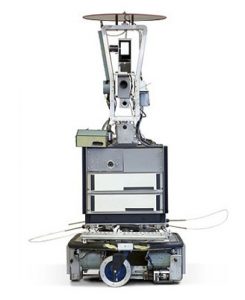
Despite some base model machines showing promise, from the “first robotic person” Shakey the Robot in 1966, to anthropomorphic androids WABOT-1 and WABOT-2 from Waseda University – the field of AI started to plateau in the 1980’s. It wasn’t until Rodney Brooks in 1990 that the idea of computer intelligence would be revitalized.

The Future of Artificial Intelligence: Is Your Job Under Threat?
Image credit: SRI International

In his seminal 1990 paper, “Elephants Don’t Play Chess”, Brooks suggested that the robotics field had been approaching the idea of artificial intelligence all wrong. Instead of creating machines that could carry out ever-more advanced singular “top-down” tasks – from playing the piano to calculating maths problems – AI should be a machine-based relationship with the world around it, or “bottom-up”.

It might sound obvious to us now, thanks to a lifetime rooted in the advances of AI – but back in the early 90s, the suggestion that artificial intelligence should be reactive to its surroundings was revolutionary.

Also Read: What Pixar Can Teach Us About AI & Machine Learning

The Future AI Job Market

One of the biggest “bottom-up” advances for artificial intelligence is the ability to be intuitive in planning and responding to tasks. Perhaps the biggest breakthrough in this regard came in 2016 when AlphaGo, a custom program developed by Google’s DeepMind AI unit, beat the world’s best “Go” player.

The historical Chinese board game had long been seen as one of AI’s greatest challenges, the sheer variety of possible moves demanding players evaluate and react in countless different ways to each turn. That a program was finally able to challenge this level of “humanity” was a real breakthrough, even more than IBM’s Deep Blue over chess champion Garry Kasparov in 1996.

Because of the leap forward in intelligence, experts from across the globe now predict we will see an AI program be able to win the World Series of Poker in just two short years. Not only that, but the same reactive technology is currently being investigated by the banking sector – with Natwest’s “Cora” chatbot in particular tipped to replace all telephone banking by 2022.

The Future of Artificial Intelligence: Is Your Job Under Threat?
Image credit: NatWest

What about other job sectors. Are they too under threat from the advancement of artificial intelligence? Well, recent research from survey company Gartner suggests that 85% of customer interactions in retail will be AI-managed by 2020. The other 15%, mainly the human sales process, will take a fair while longer – with 2031 the closest estimate for full replacement.

Also Read: Blockchain in Advertising: The Implications for Every Player in the System

What can be done?

Because automation has crept into modern society so slowly, it can be extremely difficult to predict how the job market will evolve as it gets ever more advanced. Perhaps the biggest challenge will be ensuring “artificial intelligence” does not lead to the mass-wipeout of several job sectors – almost certainly requiring new legislation to be passed, as well as a re-think of the employment market overall.

However, we have already seen shifts to incorporate the digital-driven advances in a variety of sectors, from banking to farming and beyond. Many predict that learning new skills early will be crucial for any affected sector – which looks set to be many of them. In short, the only way to beat the machines is to join them – or at the very least know how to use them.

Commenting on the risk of artificial intelligence on the labour market, James Tweddle, AI Specialist at AI vs Humanity, said, “The risk to the labour market from artificial intelligence is a growing one, particularly given the rapid rate at which AI seems to be developing. One of the biggest challenges for any artificial intelligence is the idea of ‘bottom up’ learning – the ability for a machine mind to react in a situational manner rather than simply following algorithms. It is this lack of emotional intelligence within AI that gives humans the edge over robots. However, we must ensure that our skill set remains up to date if we are to compete going forward.”

Also Read: If AI is Going to Make You a Better Marketer, You Need to Know These Four Things

Riding Rapid Growth, ViralGains Moves to New Headquarters

0
Riding Rapid Growth, ViralGains Moves to New Headquarters

VIralGains Records Over 500% Three-Year Growth as Demand for Insight-Driven Video Advertising Rises

ViralGains, the industry’s only digital video advertising journey platform, announced the opening of its new headquarters in the heart of Boston’s financial district. Located at 10 Post Office Square, the space allows for engineering, data science and marketing team expansions, which are being driven by the increased demand for ViralGains’ ad solutions. The company has recorded a three-year growth rate of over 500 percent, and now supports 25 of the Fortune 100, including four of the top five auto manufacturers.

Tod Loofbourrow
Tod Loofbourrow

“Now, more than ever, we’re seeing overwhelming evidence that brands are dissatisfied with the current digital video advertising climate,” said Tod Loofbourrow, CEO, ViralGains. “According to the research we just published in collaboration with the CMO Council, 73 percent of marketing leaders are calling for total transparency into video traffic, viewers and engagement, and only three percent are satisfied with industry viewability metrics. They want to better understand the bottom-line impact of their campaigns, and they need good partners to help them. That’s what we’ve been doing here at ViralGains, and on the heels of our Series B funding last year we needed a bigger and more functional space that would accommodate the growth the market is demanding of us.”

Also Read: ViralGains Raises $13.5 Million Series B Funding to Accelerate Growth of Industry’s Only Ad Journey Platform

The new office features an open floor plan with multiple collaborative workspaces to foster cross-departmental communication and enhanced innovation. This move reinforces ViralGains’ commitment to putting its team in the best position possible to lead the digital ad industry from an impression-based buying model into a future that instead focuses on deep consumer insights that drive high-impact business results. And the timing has never been better.

As Publicis Groupe’s Chief Growth Officer, Rishad Tobaccowala, recently said at a ViralGains event in Chicago: “The right metric for measuring video success has to be some outcome that takes you down the journey. I know there are beliefs that you can get messages through in two seconds. You can, but that’s only after you’ve built a brand long before then. I’ve never seen a brand built in two seconds. I think it’s much more engagement that matters—it’s definitely not impressions.”

Also Read: Mark Connon Joins ViralGains Board of Directors

Moreover, the research referenced by Loofbourrow indicates that 78 percent of marketing leaders are increasingly held accountable for bottom-line metrics like sales, yet the vast majority are still measuring video advertising success with awareness-based metrics like clicks and impressions. Through its groundbreaking, interactive video technology, ViralGains is uniquely positioned to help marketers overcome this disconnect, as it enables brands and agencies to better target their ideal audiences, gain unique consumer insights and drive those consumers to take meaningful action. It’s an evolution the company believes is critical to the health and sustainability of the digital advertising ecosystem, and now, from its new headquarters, ViralGains is even better positioned to lead that charge.

This announcement follows the recent appointments of Vic Pierni as Chief Financial Officer and former AOL SVP Mark Connon to its Board of Directors.

Recommended Read: Interview with Tod Loofbourrow, CEO at ViralGains

Microsoft Acquires Semantic Machines, Advancing the State of Conversational AI

0
Microsoft Acquires Semantic Machines, Advancing the State of Conversational AI

Combining Semantic Machines’ Technology with Microsoft’s Own AI Advances, Microsoft Aims to Deliver Powerful, Natural and More Productive User Experiences

AI researchers have made great strides in recent years, but we are still at the beginning of teaching computers to understand the full context of human communication. Most of today’s bots and intelligent assistants respond to simple commands and queries, such as giving a weather report, playing a song or sharing a reminder, but aren’t able to understand meaning or carry on conversations. For rich and effective communication, intelligent assistants need to be able to have a natural dialogue instead of just responding to commands. We call this “conversational AI.”

Microsoft recently announced that it has acquired Semantic Machines Inc., a Berkeley, California-based company that has developed a revolutionary new approach to building conversational AI. Their work uses the power of machine learning to enable users to discover, access and interact with information and services in a much more natural way, and with significantly less effort.

The company is led by many pioneers in conversational AI, including technology entrepreneur Dan Roth and two of the most prominent and innovative natural language AI researchers in the world, UC Berkeley professor Dan Klein and Stanford University professor Percy Liang, as well as former Apple chief speech scientist Larry Gillick.

Also Read: Conversica Partners With Microsoft to Bring Conversational AI to Microsoft Dynamics 365

Microsoft has driven research and breakthroughs in the fundamental building blocks of conversational AI, such as speech recognition and natural language understanding, for more than two decades. In 2016, Microsoft took another big step toward realizing this vision of conversational computing with the introduction of a framework for developing bots and the release of pre-built Cognitive Services for infusing speech recognition and natural language understanding into intelligent assistants. Today, there are more than 1 million developers using Microsoft Cognitive Services and more than 300,000 developers using the Azure Bot Service, all helping to make computing more conversational.

With the acquisition of Semantic Machines, Microsoft hopes to establish a conversational AI center of excellence in Berkeley to push forward the boundaries of what is possible in language interfaces. Combining Semantic Machines’ technology with Microsoft’s own AI advances, Microsoft aims to deliver powerful, natural and more productive user experiences that will take conversational computing to a new level.

Recommended Read: Why Conversational AI is the Future of Business

Seventh Sense Launches New Partnership Program

0
Seventh Sense Launches New Partnership Program

The Firm Also Announces Participation in Hubspot’s Apps for Agency Services Program

Seventh Sense, the leading sales and marketing software system, has announced its participation in HubSpot’s Apps for Agency Services Program. The program is designed to bring together partner communities so they can expand service offerings. Seventh Sense will be enhancing their email marketing strategies by offering Seventh Sense subscriptions to HubSpot agencies. Seventh Sense has also decided to debut the Agency Partner Directory and the Agency Playbook so as to inform participating agencies which use Seventh Sense to offer it to their clients, thus optimizing marketing efforts.

The Agency Partner Directory will help highlight agencies which have completed the Seventh Sense’s certification process and have simultaneously demonstrated the expertise in showcasing Seventh Sense’s extensive capabilities to customers.  The Agency Playbook will offer new opportunities to all agency customers who want to increase their ROI.  The Agency Playbook is created out of several proven systems, processes and strategies which will help customers choose the best practices that can be applied to increase sales, avoid mishaps and overall, bring about a smarter working culture.

Also Read: RevM Achieves Gold Tier Certification As A HubSpot Agency Partner

Platinum and Diamond HubSpot Partners participating in HubSpot’s Apps for Agency Services Program will receive a full, free subscription to Seventh Sense for their agency. Apart from that, other benefits also include the provision of training resources to gather refined knowledge in sales processes and other potential offerings. This program allows agencies and clients to enjoy the email optimization capabilities created by Seventh Sense. Other benefits will also include email throttling, data sharing, time optimization and frequency optimization which will lead to a significant increase in conversions and sender reputation.

Elyse Flynn Meyer, CEO at Prism Global Marketing Solutions said, “By utilizing Seventh Sense, we’re able to grow and scale our business by adding additional value to our clients and their entire email marketing program with a tool that continues to sustain and increase engagement. With email still being a critical component of a company’s digital strategy, Seventh Sense allows us to deliver a new technology to make email more relevant and more data-driven than ever.”

Also Read: The UK’s Largest Hubspot Partner – The B2B Marketing Lab – Moves Into New Central London Office

Gabriel Marguglio, CEO at Nextiny said, “When you combine the incredible amounts of data you get from HubSpot and an AI that can analyze it for your benefit, beautiful things happen. After testing it with a couple of accounts at the beginning of 2017 and seeing the results, we are now using Seventh Sense for all of our customers. We are not only seeing a higher opening and click-through rates but ultimately we are seeing higher conversions coming from emails and therefore more customers closed faster assisted by email efforts from marketing and sales teams.”

Seventh Sense will also support new product enhancements which will simplify an agency’s ability to support the client’s usage of Seventh Sense in multi-user and multi-account capabilities.

Recommended Read: How Handwritten Notes Can Boost the Effectiveness of Omnichannel Marketing Campaigns

iMatrix Hires Aubrey Williams as Director of Sales and Training

0
iMatrix Hires Aubrey Williams as Director of Sales and Training

Aubrey Williams Brings Over 15 Years of Experience in Sales, B2B and B2C

iMatrix is a leader in providing online marketing solutions for small to medium-sized businesses who are looking to expand within the local market. iMatrix has hired Aubrey Williams as its Director of Sales and Training. In his role, he will develop and execute strategies for sales, account development, and the iMatrix training programs.

Prior to joining iMatrix, Williams was the Director of Inside Sales at Sound—a VCA company and global veterinarian imagery center for ultrasound systems and education, digital x-ray, advanced imaging tools, imaging support and PACs.

Williams is extremely sales-savvy with multi-dimensional tactical traits that make for a great cross-functional leader. His key roles of driving business in strategic long-term planning focus on operations, forecasting, process improvement and sales support initiatives.

Also Read: Young Hong Joins AWeber as Chief Technology Officer

Williams said, “I believe that efficiency and great service are both essential for a company’s success. When I was at Sound, my goal was to increase efficiency and further improve customer loyalty. I intend to bring the same goals – and the accompanying increases in customer satisfaction – to iMatrix in its time of growth.”

Williams has joined iMatrix at an exciting time since the company recently announced an entirely new service platform. This platform includes a greatly improved website editor interface with incredible customization capabilities. The platform also has an expanded gallery which includes themes like live demo features and themes with video backgrounds.

iMatrix has cut through online marketing clutter since 2002 by providing solutions which are tailored to suit specific areas of practice. The focus areas here include niche markets like veterinary, eye care and chiropractic industries. iMatrix is a Google Premier Partner and has over 12,000 clients. The company also has its online marketing services which include professionally designed websites, social media management, video marketing, pay-per-click (PPC) advertising and customized advanced SEO solutions.

Recommended Read: You Can Now Share GoPro Moments Directly to Your Instagram Stories

Turner’s Donna Speciale Joins Digital Remedy Board of Directors

1
Turner’s Donna Speciale Joins Digital Remedy Board of Directors

Digital Remedy, a white-labelled ad operations and sales solution for publishers, advertisers, and influencers, announced that Turner’s President of Ad Sales Donna Speciale has been appointed to the company’s board of directors, effective immediately. Her appointment follows the acquisition of CrowdHere and the elevation of its former CEO Nick Pahade to COO and president of Digital Remedy.

“Donna is widely recognized as one of the best industry strategists, having foreseen how TV should be folded into the video category,” said Mike Seiman, Chairman and CEO of Digital Remedy. “Such prescience will enable us to smoothly navigate the coming convergence of digital content, film, video, and social for the benefit of our clients.”

A trailblazer for reimagining advertising in the new age of media consumption, Speciale has transformed how Turner collaborates with marketers to better utilize advanced data and premium content to drive business outcomes for brands. She has been a leading voice in the expansion of audience targeting including the groundbreaking launch of OpenAP and has invested in award-winning brand studios that provide powerful storytelling platforms for marketers. Speciale and the entire Turner leadership team have also taken a proactive approach to strengthening user experiences across the portfolio, which has led to stronger ROI for brands, including limited ad formats on TNT and truTV.

Also Read: Digital Remedy Acquires New Media Filmmaker And Creative Futurist Collective

“Digital Remedy has been at the forefront of new media ad advancements since digital’s early days, and I’m pleased to join their Board of Directors,” said Speciale. “As demands heighten for ad tech and media innovation, we need to come together as an industry to develop solutions not additional barriers for marketers.”

What differentiates Speciale from most sales heads is her over two decades of experience working directly with clients on the agency side. Prior to joining Turner, she was president of investment, activation, and agency operations at MediaVest Worldwide, overseeing the agency’s integrated digital, broadcast, print, and out-of-home practice, as well as investments on behalf of clients such as Kraft, Walmart, P&G, and Coca-Cola. In addition to MediaVest, which Speciale joined in 2014, she led the broadcast investment team at WPP’s Mediacom.

Speciale is well-known for driving innovation in the marketplace and has received numerous industry recognitions, while her teams and the companies she has represented have received countless honors. In 2018, she joined the Board of Directors for MAKERS and has prioritized providing greater access and opportunities for women and people of color at the leadership level. In recognition of this effort, she was featured this year by Variety for her “Impact” and Adweek as a “Disruptor.” In 2017, she was featured as one of the Adweek “Most Indispensable Executives” for her work on OpenAP, alongside Fox and Viacom. Speciale has been featured within this list for several years, including in 2016 when she was honored as one of the top ten leaders. Speciale has also been recognized by Broadcasting & Cable for their 2015 “Hall of Fame,” Multichannel News as a “Wonder Woman” (2013), Advertising Age within their “Top Women in Advertising” (2012), CableFAX within both the “100” and “Most Powerful Women” (2012-17) lists, Television Week as a “TV Buyer of the Year” (2006), MediaWeek for the “All Star” (2003) list, and Advertising Age as a “Woman to Watch” (2001). She has been honored by Advertising Women of New York (AWNY) as an “Advertising Woman of the Year” and received both their “Impact Award” and “Working Woman Award.” In 2014, she was as a recipient of the “Reisenbach Award for Distinguished Citizenship” by the John A. Reisenbach Foundation.

In addition to her work with MAKERS, she is an active member of Advertising Women of New York (AWNY) and the Video Advertising Bureau (VAB).

Turner, a Time Warner company, creates and programs branded news, entertainment, animation and young adult media environments on television and other platforms for consumers around the world.

Recommended Read: Keith Kaplan Joins Digital Remedy Board of Directors

Eyeota Appoints Elissa Reiling To Vice President Of Global Marketing

0
Eyeota Appoints Elissa Reiling To Vice President Of Global Marketing

Elissa Reiling Has over a Decade of Digital Media And B2B Marketing Experience

Eyeota, the global leader in audience data with more than four billion unique profiles across Europe, Asia-Pacific and the Americas, taps Elissa Reiling as Vice President, Marketing, to lead its global marketing and communications initiatives.

Based out of the New York office, Elissa leads the company’s go-to-market product strategies and spearheads regional marketing and lead generation initiatives, communications programs, branding strategy and corporate messaging. Elissa reports directly to Jill Orr, Chief Operating Officer at Eyeota, and manages a distributed global marketing team based in New York, London and Australia.

Elissa has over a decade of digital media and B2B marketing experience, most recently having held senior positions at Yieldbot and Exponential Interactive. At Yieldbot, she increased its shopper marketing business revenue significantly through direct marketing, event activations, and sales enablement initiatives. While at Exponential, Elissa led the overall development and execution of marketing strategies across the US, Canada and Latin America. Previously, Elissa worked at AudienceScience, where she was an integral part of its rebrand from Revenue Science and led marketing strategy and execution for the Americas and the UK.

Also Read: Eyeota Appoints Jill Orr as Chief Operating Officer

“Elissa’s extensive industry experience developing product marketing strategies and overall company branding is a great asset to us as we look to expand our business and leadership position,” said Jill.

Recently, Eyeota secured $13 million in a Series B funding round from Jolt Capital, Qualgro and Project A. The new funds are being allocated to Eyeota’s audience and onboarding solutions, new data and products, and to forge new partnerships and grow the Eyeota team globally.

“This is an exciting time to be joining the Eyeota team,” said Elissa. “We’re growing rapidly and extending into new markets and as we continue to amplify our global brand, marketing plays a pivotal role. I look forward to working closely with our team to elevate Eyeota in the US and across other key markets.”

Recommended Read: Eyeota Secures $12.5M in New Funding

Chatbots Are the New HR Managers

0
Chatbots are the new HR Managers

gupshup ChatbotsChatbots will continue to transform virtually every business function from marketing to sales to customer support. One of the other areas that we’ll see a major transformation is HR.

HR teams have a very challenging job with seemingly conflicting objectives: keeping employees focused and working hard while also keeping them happy and satisfied. HR teams are often held accountable for employee retention and churn without the ability to manage them directly. HR is expected to have a finger on the pulse of a very large employee base while operating with a very small team.

HR teams find that their responsibilities are vast and the goals are high – there’s rarely enough time or resources to do justice to it all. A lot of their time is invested in managing routine processes, which impacts the focus on higher priority activities. Teams have limited time left over to offer employees the individual attention they need when handling sensitive personal issues. Even more reduced is the ability to proactively engage with employees, to guide and mentor them through their career paths.

Also Read: There Can Be No Denying: Bots are Now Marketers

Chatbots can automate routine processes

Chatbots can help the HR professionals by dramatically amplifying their capabilities. Chatbots can help HR teams stay on top of the substantial responsibilities and achieve the impossible goals they have.

Chatbots can automate routine processes that take a lot of their time. Recruiting activities such as screening candidates, scheduling interviews and managing the recruiting life cycle for candidates and hiring managers can be substantially automated. In fact, a startup call RoboRecruiter, built on the Gupshup platform, has developed a chatbot for automating the end-to-end recruitment process, with amazing results and improvements in productivity. Employee onboarding and orientation is another area that’s ripe for automation. New employees account for a high number of HR queries that can be easily automated. Even regular processes such as attendance tracking, goal tracking, performance review, employee surveys, leave balances etc. can be substantially automated. A company called QuickWork has built chatbots that are automating HR and related business processes for many enterprises. To be clear, even though most companies use an HR system to automate many tasks, chatbots make existing systems much more user-friendly than before, dramatically increasing the usage and compliance.

Also Read: What Pixar Can Teach Us About AI & Machine Learning

Chatbots enable HR teams to engage with each employee

Chatbots help HR become much more accessible to employees. They can provide instant, accurate responses to common queries. The more complex queries can be automatically escalated for human review and response. Automating the frequently asked queries frees up HR teams to personally handle the more complex queries. This enables them to respond and intervene quickly in sensitive situations. This is especially useful during phases of change-management when businesses roll out major changes in organization or strategy. These changes lead to a large number of employee queries in a very short time that have to be addressed very quickly to prevent issues from festering. The increased accessibility is particularly valuable to employees in remote locations, away from headquarters, that are deprived of the ability to have corridor conversations with HR teams.

Chatbots enable HR teams to engage with each employee on an individual, one-on-one basis consistent with their personal situation and issues. A chatbot can maintain regular, proactive contact with each employee throughout the year to detect any issues that need to be escalated for human engagement. Tools such as natural language processing and sentiment mining can help chat bot detect anger, frustration, de-motivation, exhaustion and related issues.

Also Read: All About Jazz And Gupshup Launch Bix… The Jazz Bot

Chatbots could personalize HR functions for employees

Based on these observations, chatbots may pull in an HR professional for human engagement. Chatbots may also proactively recommend vacation time, clubs and activities, or other resources available within or outside the organization. Chatbots may optionally help employees be physically active and healthy by recommending and tracking their daily exercise routines.

Chatbots can provide professional guidance and mentorship to each employee. Investing in the career growth of each employee is perhaps the highest ROI effort for HR teams and business organizations. Chatbots can develop customized learning and development plans for each individual. This can include both soft and hard skills that are required for professional success. Chatbots can reinforce the culture of the organization by recommending appropriate developmental courses. Chatbots can assess employee skills and recommend courses and modules that employees can subscribe to. Chatbots can also connect them to mentors within the organization.

Of course, there are important issues around privacy and confidentiality that must be addressed. However, HR conversations, by their very nature, tend to involve sensitive and personal information. These issues can be suitably addressed by providing users and organizations adequate control over their data.

Essentially, the chatbot can be an always-on, highly engaged, extremely personalized companion – the perfect HR Manager. HR teams that adopt chatbots will find themselves getting closer to successfully accomplishing the many impossible tasks and conflicting goals that their organizations place on them.

Also Read: A Marketer’s Thanksgiving

Salesforce Celebrates Grand Opening of Salesforce Tower

0
Salesforce Celebrates Grand Opening of Salesforce Tower

Salesforce Employees in the Bay Area Have Donated Nearly 1 Million Volunteer Hours to Local Nonprofits

Salesforce.org, the philanthropic arm of Salesforce, announced it will donate $1.5 million to Hamilton Families’ Heading Home Initiative to end long-term family homelessness in San Francisco. This gift will be matched by Marc and Lynne Benioff, who will give $1.5 million to the initiative. These donations to one of the city’s most urgent causes are being made as part of the grand opening celebration of Salesforce Tower.

As the largest technology employer in San Francisco, Salesforce is deeply committed to serving the community in which its customers and employees live and work. Since 1999, Salesforce and Salesforce.org have donated more than $200 million in grants toward community programs, including public schools, hospitals and organizations working to end family homelessness. In addition, Salesforce employees have spent more than 3 million hours volunteering in their local communities and with nonprofits around the world.

Also Read: Salesforce.org Announces General Availability of Salesforce Advisor Link, Transforming the Student-Advisor Relationship

Since 2016, Salesforce.org has given $3.5 million toward Hamilton Families’ Heading Home Initiative, and Marc and Lynne Benioff have given $11.5 million. Heading Home aims to address family homelessness in San Francisco by providing housing for 800 families by 2020. Funding for Heading Home will be used to reduce the amount of time a family experiences homelessness—from today’s average of 414 days to a maximum of 90 days. It will also provide wraparound support services to increase financial and housing stability and provide direct benefit to the more than 1,800 homeless students in the San Francisco Unified School District (SFUSD).

The Heading Home Initiative is a $30 million joint effort conceived by the late Mayor Ed Lee between the City and County of San Francisco, the San Francisco Unified School District, Hamilton Families and private philanthropy. Today, Hamilton Families shared a progress update on the initiative, highlighting the more than 200 families who have been housed since it launched in 2016.

Also Read: Salesforce.org Partners With United Way To Launch Salesforce.org Philanthropy Cloud

“At Salesforce.org, we are deeply committed to improving the communities where we live and work through grants, volunteerism and our technology,” said Rob Acker, CEO of Salesforce.org. “The Heading Home Initiative is a great example of businesses, community leaders and the government working together to address the most critical issue facing our city and we’re proud to be a part of the solution to get every family in the city into stable housing.”

“Homelessness is the most urgent issue we face in San Francisco and it is unacceptable for any child to sleep on the street,” said Marc Benioff, Chairman and CEO, Salesforce. “As a city and community, we have a moral obligation to make sure that every person and family in our city has a home. Lynne and I are proud to support the tremendous work of Hamilton Families and the Heading Home Initiative to end family homelessness.”

Also Read: Salesforce Chairman and CEO Marc Benioff to Speak at the New Economy Summit 2018

“The donations we’ve received from Salesforce.org and Marc and Lynne Benioff through Heading Home have helped local families receive wraparound support since 2016,” said Tomiquia Moss, CEO of Hamilton Families. “In addition to the monetary gifts directly impacting our community, we’re proud to work side by side with Salesforce volunteers to support our overall work, resulting in a tremendous impact.”

To further Salesforce’s commitment to the local community, Salesforce Tower will feature a unique hospitality floor, called the Ohana Floor, which will open in September 2018. Ohana is the word for “family” in Hawaiian and represents Salesforce’s family of employees, customers, partners and the community. Located on the top floor of Salesforce Tower, it will not only be a gathering space for Salesforce employees and customers to foster collaboration, it will also be available to nonprofits to host their own events on weeknights and weekends. With an exhibition kitchen, coffee barista bar, social and networking space, and sweeping views of San Francisco, this innovative floor design will help Salesforce serve its local community. Ohana Floors will launch soon in all named Salesforce Towers globally, including Indianapolis, New York and London.

Recommended Read: Salesforce Ventures Introduces $100 Million Canada Trailblazer Fund

Shopping Elsewhere™ Adds Precision and Relevance to Your Targeting Campaigns

0
Shopping Elsewhere™ Adds Precision and Relevance to Your Targeting Campaigns

4Cite CEO Bob Gaito Explains How the Shopping Elsewhere Platform Utilizes Data to Notify Online Merchants When Their Customers Are Actively Shopping

In March at Shop Talk 2018, 4Cite announced that their customers have managed to increase revenues by ~20+ percent because of 4Cite’s proprietary Shopping Elsewhere™ email triggers. Shopping Elsewhere™ email triggers provide valuable insight that prompts real-time, personalized offers at the moment. All this, when potential customers are actively checking in their inbox or are in shopping mode on other retailer sites. This drastically increases open rates and getting inactive and lapsed customers re-engaged.

To better understand the real tech behind Shopping Elsewhere, what’s in store for online marketers and the true state of Email Marketing, we spoke to 4Cite’s CEO, Bob Gaito.

Bob Gaito, CEO, 4Cite

Tell us about the data engine driving Shopping Elsewhere™.

Our Shopping Elsewhere™ service is driven by the 4Cite Data Network™. Think of the Network as a cooperative database where merchants pool customer engagement information in a single location.

The Shopping Elsewhere™ platform utilizes this information to notify these merchants when their customers are actively shopping. This gives them an opportunity to communicate with their customers while they are in shopping mode.

How would you define Consumer Identification from a CMO’s perspective?

It’s no secret that the best way to provide value to a consumer is to offer them the products that they are most interested in. That can take several forms – including communicating with them while they are shopping on your site.

Consider an example where a customer who recently made a purchase comes back to your site. You may want to offer this customer a discount toward making a second purchase. It stands to reason that you need to identify this visitor, retrieve their prior purchase history, and then present them with the offer.

From a CMO’s perspective, this exemplifies the customer identification process.

Who are you targeting with Shopping Elsewhere? How could retailers and e-commerce marketers better benefit from this technology?

The Shopping Elsewhere program is not about targeting the right audience…it is about contacting each consumer at the right time.  The program triggers emails to consumers that otherwise would have received a ‘bulk’ email message. By using the Shopping Elsewhere platform, marketers can reach these consumers when they are most receptive. This is consistent with the increasing focus on relevancy.

Consumers expect to receive information on products that are relevant to them, get discounts and offers that reward them for being a valued customer, and finally – they want to be communicated with when they are in the mood to shop. Combining the timing aspects of the Shopping Elsewhere triggers with product recommendations and appropriate offer management is the perfect trifecta and is extremely effective.

How have email marketing and targeting campaigns evolved in the past two years?

We have seen a continuing trend to improve relevance within each email campaign. Smart marketers are moving away from the batch and blast technique featuring static creative and generic offers. Instead, we are seeing an emphasis on serving content (products and discounts) that are tailored to each customer.

Gone are the days when customers would tolerate a barrage of irrelevant emails. Now, they will quickly unsubscribe from these campaigns and leave you with no way to reach them.

What are your predictions on the ‘State of Email Marketing’ in 2018?

In addition to the continued focus on relevancy, we see contact cadence taking center stage. The practice of emailing your customers 4-5 times a week is waning because the unsubscribe rates are too high. Merchants are realizing the value of having a permissible email address and are beginning to covet them. Any practice that leads to losing this permission needs to be carefully evaluated.

Read More: Follow That Puck: Multi-Channel, Multi-Location Marketing Is Moving into the 21st Century… Are You?

How can marketers get closer to accurate marketing attribution? What efforts are you making to enable marketers?

Attribution is a very hot topic these days. Customers are being marketed to in a number of ways (email, print, social, banner ads, affiliate programs, etc). All too often these communication channels are not coordinated and it is hard to know what actually drove a particular customer to make a purchase.

That said, my advice when evaluating a new program is to do an A/B test. Allow both groups to get all the other marketing exposure that is currently in place and then introduce the new program to 50 percent of the audience.

Then, after the appropriate amount of time, measure the performance of both groups. Following this practice will give you an accurate assessment of the incrementality of the new program.

Recommended ReadContextual Content and AI: The New Wingmen for Email Marketing Campaigns

Thank you, Bob, for chatting with us!

Google, Kaon Interactive and Lenovo Disrupt Enterprise Sales With Breakthrough Standalone Virtual Reality Headset Experience

0
Google, Kaon Interactive and Lenovo Disrupt Enterprise Sales With Breakthrough Standalone Virtual Reality Headset Experience

Trio Will Accelerate VR Sales and Marketing Applications for Fortune 500 Companies

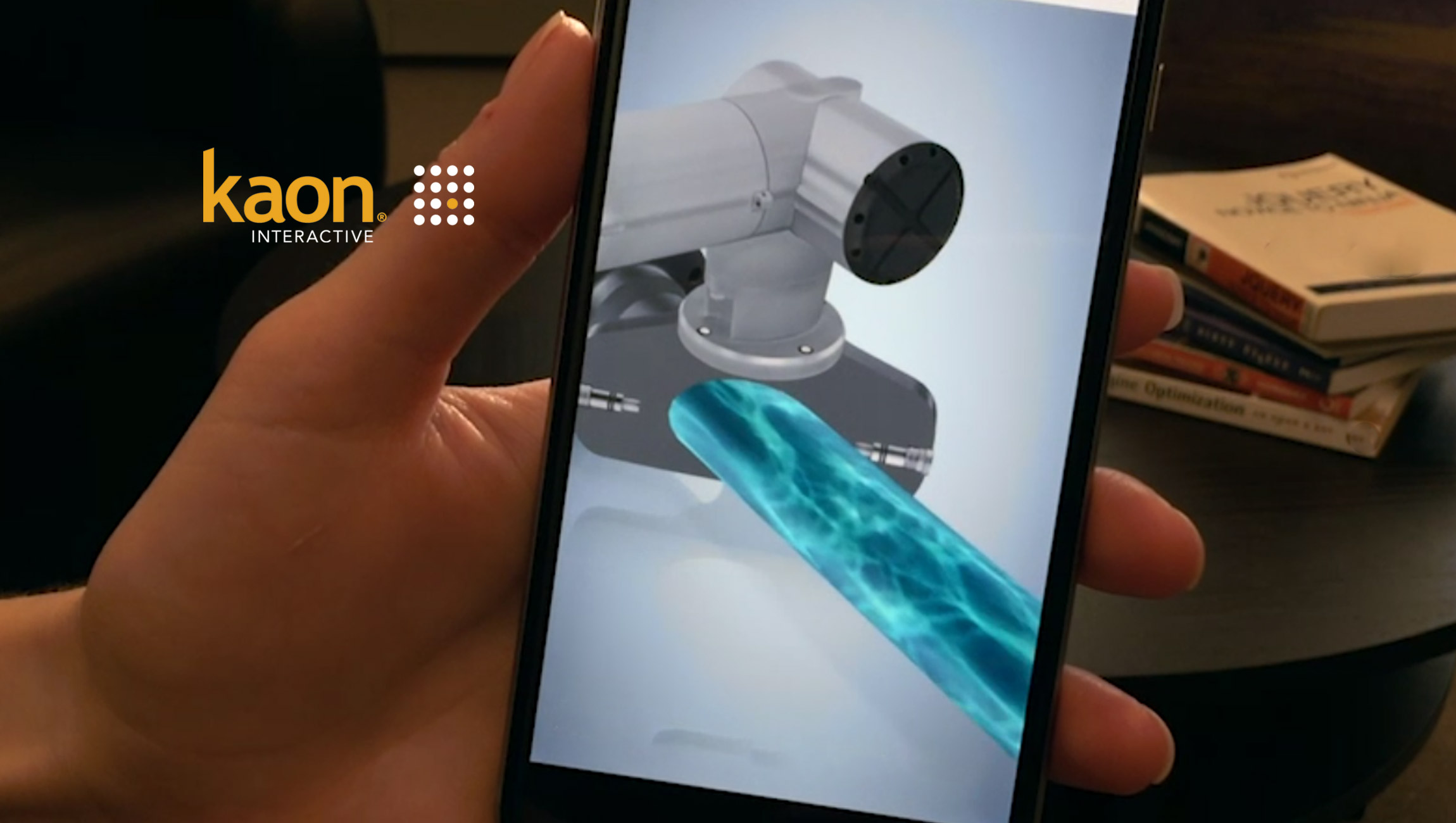
Kaon Interactive, the leading provider of 3D marketing and sales applications for global B2B brands, announced that it is extending its commitment to drive virtual reality adoption in the enterprise with the Google Daydream VR standalone headset.

In January at CES 2018, Lenovo unveiled an innovative Daydream VR headset called the Lenovo Mirage Solo with Daydream. A first for the Google Daydream platform, the Mirage Solo functions standalone, meaning that it doesn’t use a separate smartphone and isn’t tethered by cords or Bluetooth to a PC. At an affordable $400 price point, it will make immersive Kaon VR experiences (such as interactive virtual data centres, diagnostics laboratories and virtual 3D product tours) more accessible and seamless at tradeshows, sales meetings and in briefing centers.

This is the first all-in-one with six-degree-of-freedom (6DOF) tracking, which makes a huge difference in the sense of immersion when viewing interactive, real-time VR. Other headsets offering 3DOF are designed for viewing 360-videos, but for truly interactive experiences, 6DOF is a requirement. The standalone headset opens up a world of possibilities for engaging trade show applications. By eliminating the PCs, tethers and external sensors, it becomes possible to outfit an event with dozens of immersive VR experiences for more prospects, increasing the VR experience’s ROI. This solution also makes VR applications for sales meetings feasible, since there is no physical hardware setup required.

Also Read: Google, Kaon Interactive and Lenovo to Drive AR/VR B2B Platform Adoption

“We are in awe of the work that Kaon is doing in the enterprise,” commented Gunjan Shah, North America Connected & Smart Devices GM at Lenovo. “They produce extremely compelling immersive storytelling solutions and interactive 3D product tours – which are deployed seamlessly in virtual reality on the Lenovo Mirage Solo – that are elevating customer engagement, increasing knowledge retention and helping B2B prospects and customers to truly understand competitive value differentiation.”

With the commercial availability of the Lenovo Mirage Solo last month, Kaon Interactive continues to lead the VR adoption race in the B2B space, with 40+ live enterprise Kaon VR applications (such as Cisco, IBM, GE, Siemens, Dell EMC, Abbott, BD), available to hundreds of thousands of customers, sales teams and channel partners globally.

“Both Google and Lenovo’s continuing breakthroughs in deploying virtual reality to mainstream devices have empowered our customers to connect with their prospects and customers on a deeper emotional level,” remarked Gavin Finn, President & CEO of Kaon Interactive. “Our partnerships with Google and Lenovo have truly disrupted the way that customers learn about products and solutions through the sales process. This has increased global user adoption of our innovative sales and marketing VR applications, resulting in customers who are passionate about what our solutions do for their business.”

Recommended Read: Google and Kaon Collaborate, Increasing AR User Adoption in the Enterprise with Immersive Experiences Built on ARCore

Interview with Christine Jacobs Pribilski, VP, Worldwide Marketing, IBM

0
Interview with Christine Jacobs Pribilski, VP, Worldwide Marketing, IBM

[vc_wp_text]“Webinars (Casting) are not only a viable format to deliver relevant stories and content across the buyer’s journey but also a way to deliver multiple touches in a single event.”


[/vc_wp_text]

[easy-profiles profile_twitter=”https://twitter.com/ChristineB2BMkt” profile_linkedin=”https://www.linkedin.com/in/christinejacobs/”]

Tell us about your role and how you got here?

As the worldwide leader of performance marketing for IBM Hybrid Cloud, my team and I bring subject matter expertise to our integrated marketing teams to drive more effective (conversion) and efficient (ROI) demand generation.  I’ve such amazing opportunities throughout my career afforded to me from the outcomes and results I drive and how I collaborate and partner with teams to be an ongoing change agent in the fast-paced tech world.

What is the most exciting part about being a Women tech leader in the industry?

I’ve spent my entire career in tech direct marketing and love every minute of it. I am incredibly passionate about paving the way for others in marketing and the industry, learning side by side every day with others who share the same passions. It’s such an exciting time to be a marketer, where we not only have permission but an expectation to drive meaningful contributions to the business.

What are your expectations and likely key takeaways from the ON24 Webinar World 2018? Who are you huddling with at the event?

We have made incredible strides with our webinar program in the past year working with ON24, so I am delighted to share our learnings and success story in ‘casting’ with the attendees at Webinar World with the hope that other marketers can see what’s possible. In the same vein, I’m looking forward to learning how other B2B marketers have fueled their webinar programs so we can apply these to our own “casting” program.  And of course, networking and meeting other fellow marketers who share a passion for marketing is always a highlight of any conference.

How should a B2B marketer better leverage webinar marketing tools for effective lead generation?

I am such a champion of webinars, or “casting”, as I like to call it. Casting has come such a long way with the intersection of martech, analytics and content marketing. Casting is not only a viable format to deliver relevant stories and content across the buyer’s journey but also a way to deliver multiple touches in a single event, accelerating prospects forward in their buying journey. In addition, casting platforms can now offer incredible behavioral insights to help marketers become more impactful on next right step.  Finally, casting is a great way to extend reach of event content to drive net new prospects and once engaged, offer targeted casting series to keep them coming back where we can create upsell/cross-sell opportunities and, ultimately, drive overall advocacy.

Which automation tools and technologies best benefit marketers in fostering better-personalized conversations?

There is a breadth of engagement widgets to utilize with the ON24 platform to personalize the live conversation and the conversation that takes place after the event. The widgets we typically use for casting events are the question and answer, survey, polling, Twitter and live chat. Each one has its unique benefits. For instance, the Q&A widget has been very beneficial with product updates or new offerings events because the attendee can privately send in questions pertaining to their unique IT usage and get resolutions in real-time.

How do you leverage webinar marketing tools to engage with your online audience? How does it help you build a strong sales pipeline?

First, we acknowledge that we always don’t know exactly where an attendee is in the buying stage. With that, we try to set up the event to be inclusive wherever they might be in the buyer’s journey by introducing a breadth of offerings on the audience console for them to choose from. If they are ready to try, we have a trial offer. If they are looking for more proven examples we have case studies for them and if they are looking for a free consultation we have a contact form. All these and more let the attendee decide where they are, instead of trying to guess what we believe they’re looking for next. Once we know where they are in the buyers journey we can more efficiently help them with their decision process. The pipeline naturally gets stronger because we are addressing their needs at the right point in time.

Tag the one person in the industry whose answers to these questions you would love to read:

I tag Philip Kotler, the father of modern marketing. I would love to understand his perspective on the new world of digital marketing automation.

Thank you Christine! That was fun and hope to see you back on MarTech Series soon.

[vc_tta_tabs][vc_tta_section title=”About Christine” tab_id=”1501785390157-b58e162d-0ae25a4b-c27aca64-108e51b0-80edaf37-bd3d357a-6c46d712-3b6841d9-2cb6″]

Christine leads Worldwide Marketing at IBM for their must-win battle, Cloud. She endeavors to advance the work of marketing in digital, campaigns, content, analytics and response management to be more relevant to clients, partners and sellers, improve engagement, generate measurable demand and learn every single day.

[/vc_tta_section][vc_tta_section title=”About IBM” tab_id=”1501785390320-2d44fa50-740c5a4b-c27aca64-108e51b0-80edaf37-bd3d357a-6c46d712-3b6841d9-2cb6″]


At IBM, work is more than a job – it’s a calling: To build. To design. To code. To consult. To think along with clients and sell. To make markets. To invent. To collaborate. Not just to do something better, but to attempt things you’ve never thought possible. To lead in this new era of technology and solve some of the world’s most challenging problems. IBM is a leading cloud platform and cognitive solutions company. Restlessly reinventing since 1911, we are the largest technology and consulting employer in the world, with more than 380,000 employees serving clients in 170 countries. With Watson, the AI platform for business, powered by data, we are building industry-based solutions to real-world problems. For more than seven decades, IBM Research has defined the future of information technology with more than 3,000 researchers in 12 labs located across six continents. For more information, visit www.ibm.com.

[/vc_tta_section][/vc_tta_tabs]
[mnky_heading title=”MarTech Interview Series” link=”url:https%3A%2F%2Fmartechseries-67ee47.ingress-bonde.easywp.com%2Fcategory%2Fmts-insights%2Finterviews%2F|||”]

The MTS Martech Interview Series is a fun Q&A style chat which we really enjoy doing with martech leaders. With inspiration from Lifehacker’s How I work interviews, the MarTech Series Interviews follows a two part format On Marketing Technology, and This Is How I Work. The format was chosen because when we decided to start an interview series with the biggest and brightest minds in martech – we wanted to get insight into two areas … one – their ideas on marketing tech and two – insights into the philosophy and methods that make these leaders tick.