Home Blog Page 4240

Google Bulletin Validates Vita Mobile Systems Crowdsourced, Geolocation Mobile App VITA

0
Vita Mobile Systems
Google Bulletin Validates Vita Mobile Systems Crowdsourced, Geolocation Mobile App VITA

Google’s Pilot Validates the Overall Need for Media Localization as Well as VITA’s Geolocation, Crowdsourced Model for Sharing Pictures, Videos and Commentary on Local Events

Vita Mobile Systems Inc., a technology company focusing on digital imaging in mobile devices, is preparing to launch its first social media app, VITA. VITA is a revolutionary new mobile app that uses propriety crowdsourcing, geolocation and artificial intelligence (AI) algorithms to allow users to both contribute to and experience firsthand photos, videos and commentary for any event or location.

In recent news, Google has announced it has also delved into the social media world of hyperlocal news reporting by everyday social media users with its pilot of Google Bulletin. Google Bulletin expands social journalism by creating an interface for everyday users to create and publish microblogs of small, local events without the user having to create an individual blog or website. Although Google Bulletin is primarily focused on hyperlocal news stories, Google’s pilot validates the overall need for media localization as well as VITA’s geolocation, crowdsourced model for sharing pictures, videos and commentary on local events. VITA, however, goes far beyond the functionality offered by Google Bulletin by allowing any and all users to add their photos, videos and commentary to create a combined, crowdsourced, panoramic view of any event or location.

Also Read: Agency Spotter Ranks the Best Mobile Marketing Agencies in New Report

“Google Bulletin simply validates what we already knew – we are on the right track. However, our app VITA will play a much bigger role in local storytelling, going beyond amateur journalism and giving social media consumers what they really want,” stated Sean Guerrero, CEO of Vita Mobile Systems, Inc. “VITA creates a crowdsourced, mosaic view of events and locations. Our app allows multiple users to contribute to an event or location via photos, videos and commentary, giving all users the ability to experience those events on a whole new level without the outdated blog post model. The lineage of currently popular social media platforms, now with the rising popularity of image-based apps like Instagram and Snapchat, further validates VITA’s focus and that social media consumers want more images and fewer words. We designed VITA to expand visual access to local events as well as give users the ease to go from one event or location to the next, losing themselves in first person views of events and locations they are interested in.

Also Read: Mexican Startup Flyr Raised US $6 Million to Democratize Social-TV Advertisement

“Google is a fantastic and successful company, so we are glad to see their model validate ours,” continued Guerrero. “We are not concerned about any competition with Google Bulletin. Although we share similar localized ideals, our foundations vary greatly. We also have taken note that Google has a history of launching pilots just to shut them down later. Google’s announcement actually fuels our progress as we continue to strengthen the backbone and true value to our company – the robust back-end infrastructure to build our crowdsourced content engine. Learning from Google that content is king, we have also deciphered that the real value lies in how we manage all that content through our proprietary algorithms, meta tagging, and cataloging.”

“Our duty is to create value for our shareholders, and we are currently making strategic moves and partnerships with that in mind, to not only strengthen our internal team but also enhance the value of the Company for the long term. I recently discussed this in more detail in a letter to shareholders, available on our website here, and I encourage anyone who hasn’t read it yet to take a look. We look forward to providing more updates as we near the launch of VITA.”

Recommended Read: Move Over Conventional SEO Conferences, It’s Time We UnGagged!

GDPR Deadline Will Open the Door for Data Transparency

0
GDPR Deadline Will Open the Door for Data Transparency

JebbitGDPR Noncompliance and Failure to Manage Data Transparency Poses a Real Threat to a Brand’s Credibility

The topic of GDPR has been buzzing in boardrooms and in the back of minds for more than two years, but the May 25 deadline won’t silence the noise. It will only cause it to grow louder, as noncompliant companies are whacked by hefty fines – up to four percent of annual global turnover or 20 million Euros (whichever is greater).

Beyond that, noncompliance poses a real threat to a brand’s credibility. According to the RSA Data Privacy & Security Report, 72 percent of the US respondents said they would boycott a company that appeared to disregard the protection of their data, and fifty percent of respondents said they would be more likely to shop at a company that could prove it takes data protection seriously.

Whether brands have pored over the fine print preparing for the regulations or are rolling the dice on a potential fine, GDPR is no doubt forcing brands to think differently about the way they collect and use customer data, and all signs point to third-party data no longer cutting it. While many view GDPR as a costly burden, it presents an important opportunity.

Brands will need to think differently – and arguably, more wisely – about how they collect and activate data. This will lead to some established practices going away and best practices emerging that make the way data is aggregated and applied more transparent, and thus more effective.

Old Data Practices Don’t Work in a Post-GDPR World

Marketers are clearly willing to put the dollars behind better understanding their customers through their data. A study from the Interactive Advertising Bureau (IAB) and the Data & Marketing Association (DMA) compiled by Winterberry Group found that U.S. companies spent $10.05 billion on third-party audience data in 2017 and another $10.13 billion on third-party solutions to support that data. While third-party data has allowed marketers to capture ample information on their customers or prospects, buying large quantities of third-party data is flawed in many ways.

Time for Marketers to Steer Clear of the Cycle of Irrelevant, One-Sided Conversations with Their Customers

When it comes to the line of what’s appropriate and what isn’t, most consumers are more concerned with how a brand got information on them than what that information is. In customers’ minds, that’s the real differentiator between when a brand is being “creepy” and when it is being helpful.

For example, if someone is browsing vacation packages for an upcoming trip and the brand asks the preferred time of year, whether they are looking for a luxury or budget experience and whether it’s with friends or family, the brand can provide alerts for the package that best suits that individual’s needs.

And when that recommendation comes in, the customer does not feel like the brand is being intrusive; they recognize that they provided that information and are reaping the benefits from providing it.

Third-Party Data Is Often Outdated, Inaccurate and Irrelevant

Aside from the creep factor, third-party data is often outdated, inaccurate and irrelevant to what the company needs in order to create a better customer experience. It also isn’t at all unique to the brand—every other competitor has access to the exact same information. Because of this, many marketers have fallen into a cycle of irrelevant, one-sided conversations with their customers in which they bombard them with what they think they want, not what they really want or need.

Until now, most marketers were doing their best with the third-party data they had. But recent high-profile data privacy scandals like Facebook and Cambridge Analytica have citizens thinking more critically about how their data is being used. In fact, 49 percent of consumers have data privacy concerns, but 75 percent of consumers still expect digital personalization, so a privacy-personalization paradox exists in consumers’ minds.

Couple consumers’ mounting expectations with the GDPR deadline and brands are being confronted head-on by the urgency of getting their data best practices in order.

Declared Data: The Path to Data Transparency

Customer trust is incredibly important, and transparency will be the cornerstone of brand-customer relationships going forward. Declared data is the method brands are already using to gather relevant information directly from customers to understand their motivations, intentions, interests, and preferences by interacting with them directly.

First-party data is known to be relevant but unable to scale, while third-party data can scale but is often inefficient and irrelevant for the company. Declared data is the best of both worlds, eliminating the flaws and marrying the benefits of both means of data collection.

Rather than “renting” the often irrelevant data from third-party providers, brands can ask specific questions to create a bank of proprietary customer information. And because customers are willingly sharing this information with a brand, there is a two-way conversation that helps them understand why brands need this information and that it will be used to create a better experience. No more customers frantically wondering “how do they know that about me?”

Aside from fostering a more transparent customer relationship because the information has been explicitly given by the customer, declared data allows brands to be GDPR compliant and reduce the risk people will request the right to be forgotten.

GDPR is a true wakeup call for brands when it comes to how they collect and use data. As it becomes clear which companies prepared and which procrastinated their compliance measures, those who are not taking data privacy seriously will not only be at risk of penalties but of disenchanting their customers, hurting the brand’s reputation and building lasting customer loyalty.

Salsify Joins Amazon Marketplace Developer Council

0
Salsify Joins Amazon Marketplace Developer Council

The Move Furthers Salsify’s Ongoing Commitment to Building Innovative Technology Supporting Businesses That Sell on Amazon and Across the Digital Shelf

Amazon selected Salsify, the leading product experience management (PXM) platform that lets brands deliver compelling shopping experiences across every digital touchpoint, to join its newly-formed Amazon Marketplace Developer Council.

Members of the Amazon Marketplace Developer Council have a unique perspective and understanding of the small- and medium-sized businesses that sell on Amazon. Through the Marketplace Developer Council, members share valuable insights and feedback on existing and prospective tools and programs to influence and shape the roadmap and priorities for Marketplace Web Service APIs and associated tools.

Also Read: Salsify Product Content Management Platform First to Connect to Amazon’s New Vendor Central API

Salsify Launches Industry-First Product Experience Management Platform
Jason Purcell

“Salsify is committed to building the most effective and efficient connections to the entire commerce ecosystem for the brands we work with,” said, Jason Purcell, CEO of Salsify. “Joining the Amazon Marketplace Developer Council extends our role in ongoing conversations and development around what it takes for brands to meet the needs of consumers everywhere they shop online.”

Also Read: Twinword included among top seven companies on Amazon Web Services Marketplace

Salsify provides brands with the latest retailer and sales channel requirements and can support the schemas for any endpoint across the modern commerce ecosystem. Salsify provides brands selling on Amazon the ability to automate submission of optimized product content, saving them time setting up new products and improving listings for the Marketplace.

Salsify is the world’s leading Product Experience Management (PXM) platform, empowering brand manufacturers to deliver the product experiences consumers demand anywhere they choose to shop online. Salsify’s platform combines the power of PIM and DAM capabilities, the industry’s broadest commerce ecosystem, and actionable insights to orchestrate compelling product experiences through every digital touchpoint.

Recommended Read: Salsify Launches Industry-First Product Experience Management Platform

Allspark Launches a Revolutionary New Blockchain Ecology for Content Creators, Advertisers and Social Media Users

0
Allspark Launches a Revolutionary New Blockchain Ecology for Content Creators, Advertisers and Social Media Users

AllSpark Chain Is a Non-Profit Industry Chain

AllSpark launches a brand-new ecology designed to merge the worlds of content creation, digital media and marketing using blockchain technology.

“Blockchain created a new era where you can accomplish incredible things with your ideas,” AllSpark co-founder Yuan Jing said. “The idea of AllSpark is to gather all of humanity’s creativity in a place where it can be shared to generate value. We want to make everybody’s social network produce value while simultaneously minimizing the cost of all advertisers around the world.”

With the advent of blockchain technology comes the opportunity to create lasting solutions to problems once thought unsolvable. If blockchain is to fix the problems plaguing content creators, sharers and advertisers, it will be a solution that can successfully enclose all three into one single, reciprocal ecosystem.

Also Read: Announcing the Launch of Rakugo, A Revolutionary Digital Publishing & Content Tokenization Platform

Using blockchain to bring in a new era of connectivity

With the rapid development of Internet technology, the media sector has long since moved from linear to multi-dimensional, network-based communication systems. But despite these leaps, most content creators and communicators in the age of social media cannot obtain deserving benefits. All the while, the cost of advertiser marketing is getting higher and higher.

These woes are solved on AllSpark’s distributed platform because content creators, content communicators, and content consumers can freely complete content matching transactions by freely setting up different transaction mechanisms. Ultimately, the free market mechanism determines the value of the content, so that content creators and communicators receive economic returns.

AllSpark Chain is a non-profit industry chain. The in-depth customization based on Wanchain’s code will draw on the transaction privacy protection and Ethereum smart contract features already implemented by Wanchain. At the same time, it utilizes an improved DPOS principle to carry out certain transformations.

Regarding storing various content, AllSpark introduces an IPFS distributed storage contract. Users will feel comfortable storing their content on local servers, cloud servers, or third-party DApp servers because of a decentralized storage mechanism that will protect the copyrights of content creators. In addition, smart contracts, similar to Ethereum/Wanchain, can support content creators, distribution channels, advisors, or content consumers to handle confirmation of interest and forced distribution on the AllSpark chain, thus protecting the interests of all parties involved.

Also Read: Blockchain Will Transform the Global Economy. But What Will it Mean for Advertisers?

The Foundation of the AllSpark chain will initially create a series of general smart contract templates for user convenience. As the AllSpark ecosystem develops, professional DApps will provide related templates from which they can profit, thus creating an environment where the utility and complexity of smart contracts will steadily increase. Also, more DApp technique providers will emerge to present whole new methods of transforming traditional Apps into DApps on the AllSpark Chain.

In addition, the AI provided at the initial stage will be used to monitor all incoming content. That way, the AllSpark platform is in full compliance with laws related to reviewing and controlling open content in various countries. The evaluation mechanism of AllSpark is also an integral part of the chain’s design. It’s possible to evaluate original content through the positive incentive mechanism of rewards, which helps the sharer and consumer to better identify top-notch content and thus decide on a proper reward.

By employing blockchain to build a distributed platform for content creation, AllSpark solves the problems facing content creators and distributors that were previously unsolvable. On the AllSpark platform, content creators, distributors, and consumers can participate in a revolutionary economy of pure content trading wherein various mechanisms of their choice are established. Thereafter, the free market will determine the content’s value and related creators and distributors can see proportionate returns.

Also Read: XCHNG Announces New OnXCHNG Partners, Gaining Meaningful Ad Inventory Traction

The AllSpark Token

The AllSpark Token (ASK) plays multiple roles in the AllSpark platform:

  1. The first is the original “fuel” of AllSpark’s public chain, providing package incentives and fueling smart contract consumption; it is an essential Utility Token.
  2. ASK is also a countermeasure for all parties in the chain to confirm and allocate equity. The value of ASK is used to measure the distribution of rights and interests of all parties.
  3. In addition, ASK is the most convenient tool for transnational collaboration and sharing of benefits. At present, cross-border cooperation and settlement is a huge issue under traditional conditions. With ASK, the difficulties in cross-border settlement can be solved smoothly.
  4. Finally, ASK is an essential driving force for ecological incentives; for content uploads, rewards for excellent evaluations, and completion of collaborative tasks.

Fully empowering individual creativity and communication

If the Internet is what shapes self-media, then it will be the bottom-layer technology of blockchain that provides a platform where everyone can realize their full potential. The operating principle of AllSpark is to enable the supply-and-demand relationship between content and information to form a stable connection with value, ensuring the safety and validity of all steps along the blockchain. This leads to the protection of creator copyrights and creates value in information transformation. Through AllSpark, top-level creators will earn a higher income and are further incentivized to create better content.

AllSpark doesn’t only focus on content creation and distribution; it can also transform conventional production relations and production patterns throughout many industries. In other words, AllSpark can also be applied in all industries by matching incongruent demands.

Also Read: CreativeDrive Acquires Online Content Production Firm DoubleDigit

Smart and effective use of advertisers’ money

The traditionally trustless relationship between advertisers and publishers presents a perfect opportunity for blockchain to intervene. Monitoring ROI will be fully transparent, so measuring the successes and failures of a campaign will be much simpler. The entire process from autonomous authoring (UGC) to individual distribution (self-sharing) to C-side acceptance of information payment is monitored by the blockchain system. In conjunction with confirmation, smart control protection is provided for a commercial transformation of advertiser content.

Regarding DApps

DApps are an important part of the AllSpark ecosystem. In the early stage of network development, AllSpark will provide a universal DApp that supports standard functions, including wallet functions, content upload functions, content evaluation functions, transaction settlement, and data query functions. With the development of the ecology, AllSpark encourages and invites more ecological stakeholders to provide users with more personalized DApps.

DApps will include those designed for vertical content, such as music, advertising cash-outs, and those used to match content creators, communicators and advertisers. Other DApps, such as those providing copyright transactions, content search, data analysis, social networking, etc., will also emerge and find their place in the AllSpark ecosystem.

Also Read: Lessons B2B Brands Can Learn from Direct-To-Consumer Disruption

An elite team integrates global media resources

AllSpark’s core team has rich experience in global digital media operations. The project development company has 11 years of experience as a digital media agency and is an overseas agent for Baidu, Tencent, Google, and Facebook in China.

Since 2015, the companies controlled by the AllSpark team have started their own media operations and advertising business in cooperation with more than 90,000 self- media. Since 2017, the team has provided content for the largest news apps in China, including Tencent News (240 million MAU) and Baidu (420 million MAU). It provides an average of 7,000 pieces of content each day on various platforms. The various original content creators amass a team of 5,000 individuals and teams.

AllSpark also has an elite team of experts and consultants, including former Twitter Greater China Managing Director, Microsoft Greater China Vice President, current Citrix Global Vice President Kathy Chen, current Vice President of iQiyi , Xiao Chen, plus more than ten relevant industry elites.

Based on the extensive industry experience accumulated over many years, the founding team recognizes the rigorous demands and pain points of the digital communication industry. AllSpark can solve the many problems in each sector of this industry by integrating resources from all concerned parties, thus realizing the ambitious plans of the first AllSpark batch.

Due to its exceptional advantages, AllSpark has obtained the favor of many cornerstone investors including WANFund (a Wanchain investment fund), Leading Capital and Lianmeng Investment Group.

In short, AllSpark can enable all creativity and distribution to produce value and be shared by all human beings.

Recommended Read: Real-life Food Photography Drives Marketing

Invoca Named to Inc. Magazine’s Best Workplaces 2018

0
Invoca Named to Inc. Magazine's Best Workplaces 2018

This Award for Invoca Comes on the Back of Significant Company Growth and Groundbreaking AI Innovation

Invoca, the call intelligence company, announced that it has been named one of Inc. Magazine’s Best Workplaces 2018, the publication’s annual ranking of private companies with exceptional cultures, employee engagement levels, and benefits. To learn more about Invoca’s culture and career opportunities, visit the company’s career page.

“We’re honored to be recognized as one of Inc. Magazine’s Best Workplaces this year,” said Gregg Johnson, CEO of Invoca. “Our company is committed to creating a culture that is not only grounded in continuous learning, teamwork, and customer success, but is fair, equitable, and welcoming for everyone. Through employee-led initiatives, ranging from volunteering in the local community to playing in the company band, everyone at Invoca views strengthening our company culture and creating a more diverse working environment as key ingredients to our future success.”

Also Read: Invoca Releases New Extension for Adobe Cloud Platform Launch

This award comes on the back of significant company growth and groundbreaking AI innovation. With over 500 percent enterprise revenue growth over the past three years, Invoca continues to serve innovative digital marketers at Fortune 500 companies like Frontier Communications, Microsoft Store, and SunTrust Banks. Last year, Invoca launched Signal AI, which is a voice analytics solution enabling marketers to uncover previously inaccessible insights from billions of phone conversations with customers. This cutting-edge AI technology was one of six marketing, sales and CRM companies recognized globally on the CB Insights AI 100 list. Invoca also expanded key partnerships with Adobe, Facebook, Google and Salesforce, making it simple for marketers to connect phone calls to the digital customer journey.

Invoca, which has offices in Santa Barbara, San Francisco, and Denver, is currently hiring for open positions across sales, engineering, marketing, and customer success. To learn more and to apply, visit Invoca’s career page.

Inc. Magazine’s Best Places to Work awards is the result of a wide-ranging and comprehensive measurement of private American companies who have created exceptional workplaces through vibrant cultures, deep employee engagement, and stellar benefits. Out of thousands of applicants, Inc. singled out just under 300 winning companies.

Recommended Read: Invoca Becomes Premier Level Partner in Adobe Exchange Partner Program

Swrve Partners With Bluedot to Power High Accuracy Location-Based Engagement and Analytics

0
Swrve Partners With Bluedot to Power High Accuracy Location-Based Engagement and Analytics

Swrve Has Begun Offering Bluedot’s Location Services to Its Customers

Swrve, a leading real-time platform for multi-channel customer engagement, has entered into a business partnership with Bluedot Innovation, a location-as-a-service technology company that provides high accuracy location services for complex and high volume enterprise deployments. The partnership will enable customers to optimize their marketing campaigns with location-based targeting, triggering and analytics for mobile engagement and greater reach and relevance across in-app, push, SMS, e-mail, web and many other channels.

Christopher Dean
Christopher Dean

“We’re delighted to enter a partnership with Bluedot, and to use its powerful location-technology to raise the bar for driving personally relevant interactions with consumers in moments of relevance,” commented Swrve CEO Christopher Dean. “By using location data alongside Swrve’s real-time processing of deep behavioral data from multiple channels, digital marketers can drive more engagement at scale in order to better convert, retain and monetize for growth.”

Also Read: Swrve Strengthens Go-to-Market Team with New Appointments to Promote Growth

Consumers today are bombarded with branded digital messages across channels – in-app, push, SMS, web, email, social – and in response have developed strong convictions about how and when they would like to receive communications. In fact, today the average consumer uses 7 devices and more than 20 channels and spends 7 out of every 10 digital minutes on a mobile device, and 9 out of 10 of those minutes within apps. Location services provide both place and time to invite interactions in a context that customers find relevant to them. As a result, brands can drive higher conversions and response rates with location-triggered multi-channel campaigns than traditional marketing efforts.

In the words of Bluedot CEO and Co-Founder Emil Davityan, “Our partnership with Swrve will enable contextual analytics and engagement that puts the customer at the center of the mobile experience. Leveraging a customer’s location ensures relevant experiences at the right time in the buying journey and high conversion omnichannel engagement for enterprises.”

Also Read: Leading Location Platform Bluedot Releases Programmatic Geofencing for Points of Interest With Bluedot Places

Bluedot’s location marketing platform delivers a solution 20 times more accurate, with low battery drain, unlimited locations and best-in-class privacy, to deliver 1:1 segmentation no matter how large your audience may be or where they are located.

Swrve has begun offering Bluedot’s location services to its customers. One use case underway includes a Swrve customer sending in-app promotions to their customers as they enter a coffee chain venue.

“By combining our high accuracy location service and Swrve’s best-of-breed customer engagement platform and intent engine, we’re able to enable targeted and responsive interactions with customers that amplify marketing campaigns,” said Davityan.

Also Read: How is The Location Data Landscape Shaping Up in 2018?

Swrve customers have always benefited from real-time behavior processing, A/B testing, and geo-location services for multi-channel marketing campaigns. With the new Bluedot partnership geo-location services that contribute to targeting, triggering and analytics will be greatly enhanced with high-fidelity location data, virtual locations that can be mapped to any commercial environment as precise as 5 meters. The use cases and industries where this hyper-targeting, location-based segmentation can be applied are numerous, here are just a few scenarios:

  • Deliver relevant offers to customers who arrive at or leave a geofenced location, or if they have dwelled for a certain period of time
  • Intercept customers at your competitors’ locations with ‘geo-conquesting’ campaigns
  • Build granular customer profiles by collecting behavioral and location relevant data about customers at any location or premise, even those you don’t own
  • Utilize contextual insights to re-target any channel – mobile, email, web, social
  • Turbo-charge your loyalty program by prompting customers at the exact time and place they can use their membership
  • Measure ROI of campaigns by comparing foot traffic across different locations

Also Read: Swrve Partners With Segment to Bring Mobile Insight and New Communications Options to Multi-Channel Business

Swrve customers will now enjoy greater functionality in designing their multi-channel campaigns, and be able to activate or deactivate locations based on any internal data, such as demographic data, purchasing history, in-app behavior or external data such as the local weather. These location triggers can be set programmatically to exist only for specific customer segments or individual customers. Swrve enables companies to be relevant in millions of moments with real-time, hyper-targeted customer interactions.

Davityan explains: “Today’s consumers are bombarded by messages across a host of channels. It is crucial for companies to stand out with information that resonates, at the right time, the right place on the right channel. We chose Swrve given its deep experience empowering enterprise customers with its intent engine, delivering comprehensive, real-time, behavioral insight relating to every customer or prospect, and supporting more effective communications as a result.”

Both companies are excited by the potential of marrying their technologies and bringing even more value to their customers and prospects.

Recommended Read: Study Shows That Marketers See Huge Potential in Artificial Intelligence, but Hindered by Customer Data Challenges

How The Next Generation of Affiliate Marketing is Driving the Digital Future

0
How The Next Generation of Affiliate Marketing is Driving the Digital Future

Acceleration Partners logo Affiliate AmrketingAffiliate marketing admittedly has a clouded past. Until recently, it has not been well understood by many marketers and some have sought to distance themselves from the low-value tactics associated with the affiliate industry in the past.

The reality is that a properly managed affiliate program can drive 10-20% of online revenue and have one of the highest ROI’s of any online channel. Today, CMOs increasingly realize that affiliate marketing is an integral part of their arsenal and increasingly investing in pay-for-performance marketing where there’s a clear connection between results and performance.

The Promise of Performance Partnerships

Marketing leaders are calling for a better connection between the amount of money they are paying and the results they are getting. Procter & Gamble’s chief marketer, Marc Pritchard hopes to decrease the amount the company spends on “wasted media” by 50% and has already reduced marketing costs by 20% as part of its epic drive for efficiency.

Performance Partnerships® is the next generation of affiliate marketing. It has a cost-per-action element and focuses building quality relationships with partners through transparent activities and communications. By leveraging a software platform that can track every partnership in real-time, manage global payouts and contracts, brands are better able to manage partnerships at scale.

Performance Partnerships® makes it possible for CMOs to make optimal use of their marketing budgets by paying partners after they have delivered results. By paying partners based on performance, brands benefit from increased customer engagement, and sales and partners are paid a commission based on the contribution they’ve made in driving those customer actions.

This is where the real opportunity for marketers lie. Instead of continuing to pump endless money into Facebook and Google, Performance Partnerships® provides a third “fat pipe” to deploy large budgets and bring programmatic elements to marketing and digital partnerships for the first time that is based on a diverse source of traffic. For example, if you have a new product launch, you can collaborate with thousands of partners at once to start promoting and adjust their commissions in real-time to reward those that are driving value.

Also Read: The Data & Measurement Behind Successful Influencer Marketing

Finding high-value customers that drive revenue is key to achieving long-term growth and marketing scale.  Here are three steps you can take to make the most of Performance Partnerships:

1. Break down marketing silos

Many marketing departments operate in silos with little insight into what’s happening in the various channels. Rather than managing partner marketing, business development, influencer marketing, and referral programs separately, set up a unified framework for making decisions and measuring success. This allows you to manage your partnerships more strategically and cost-effectively by leveraging the same structure to recruit, onboard and activate partners.

A single partner program creates real opportunities for scale. Take business development deals which are known for being time-consuming and difficult to scale especially when it comes to midsize and smaller partners. Companies that are managing their business development relationships manually are limiting growth.

The Performance Partnerships framework allows teams to take on more business development and partnership opportunities.  By leveraging a partner platform that allows them to automate contracting, data capture, tracking and streamlining communications, they have more time to develop brand-aligned relationships.

Also Read: 4 Ways Customer Data Will Transform Performance Marketing in 2018

2. Track everything via a real-time tracking and payment platform

A Software as a Service (SaaS) Platform or Affiliate Network is critical for managing an effective partner program. It keeps track of operating agreements, real-time reporting, payments, tax reporting and other aspects of your partnerships. By managing your partner relationships on an integrated tracking platform, you’ll have access to better data and analytics and see fewer instances of fraud. Often brands will hire an agency to manage their program as an extension of their marketing team. They have the skills to leverage the software and the relationships to make the most of your partner program.

Also Read: How Rich Real-Time Data is Accelerating Partner Marketing 

3. Develop trusted relationships with partners

If you aren’t invested in your partner relationships, your performance will stagnate. You’ll limit your results by failing to regularly engage with your partners, review data and performance, and consider ways they can help grow your business.

Marketing leaders have a big upside when it comes to Performance Partnerships®. It is important to have ongoing communications with your partners, understand the value of the leads and sales they are generating, and adequately reward them for delivering results. Building strong partner relationships that are well managed and based on transparency, will pay off in the long run.

As the digital marketing landscape continues to evolve with new frameworks, technologies, and channels, affiliate marketing is one of the strongest avenues for driving profitable customer acquisition. When done right, marketing leaders have more transparent relationships with partners and have direct insights into partner activities and pay them only after they achieve a specific outcome. Partners who deliver value are rewarded accordingly.

Affiliate marketing is redefining the digital future with partners, and continually coming up with new ways to drive traffic and new customers to grow your brand to the next level.

Also Read: Three Dangers of Affiliate Marketing and How to Avoid Them

eTrigue Launches Turn-key Marketing as a Service

0
eTrigue Launches Turn-key Marketing as a Service

eTrigue Helps Organizations Quickly Scale Marketing Efforts with On-Demand Creative, Content Development and Automation

eTrigue Corporation, the ease-of-use leader in cloud-based marketing automation, announced new Marketing-as-a-Service offerings filling the gap for content, creative and campaign development helping organizations to rapidly generate more qualified leads and accelerate their growth. The eTrigue service offerings complement its award-winning DemandCenter marketing automation platform and are available to all organizations without the need to be a current subscriber. All engagements come complete with copy, design, programming, campaign setup, lead alerts as well as the use of the eTrigue DemandCenter marketing automation platform.

eTrigue’s Marketing as a Service offerings fill the gap between what organizations need to accomplish to be successful and the resources they have available internally to accomplish their goals. Customers can leverage eTrigue’s experience in developing and executing over 35,000 campaigns and gain access to the same marketing automation teams to plan, build and fully execute a variety of turn-key marketing campaigns without the need for additional headcount.

Also Read: eTrigue Adds New Low-Cost Automation Enhancement to Simplify Multi-Step Marketing Campaigns

Services include lead generation, nurturing and demand generation that have specific deliverables over a given time frame. Individual one-off projects are also available including email nurturing and inbound landing pages, single webinars and events, as well as complete prospect acquisition and validation for account-based marketing.

“We rely on eTrigue to assist us in building outreach and education campaigns for our B2B sales channels,” said Andrea Skov, CMO, Push Technology, Inc. “eTrigue’s marketing-as-a-service has been instrumental in helping Push Technology scale the creation and execution of webinars, email outreach and lunch and learn programs that are cost-effective and successful.”

“Our campaigns put the Wow back in marketing. We significantly expand the effectiveness of marketing teams by creating complete programs, building content, and managing execution. Marketers can be limited in the programs they can actually execute because of the resources available to them internally,” stated Jim Meyer, Vice President and General Manager at eTrigue. “Successful marketing leaders understand that partnering with an experienced content marketing team like eTrigue to scale their core capabilities is an effective strategy to bolster their lead flow and add net new logos to their account list in a very predictable timeframe. eTrigue teams quickly engage – producing content, leveraging the right technology and the right creative approach to fulfil the lead generation objectives of our clients. As client resources grow, they can take on all or part of the role internally. eTrigue truly is an extension of the internal marketing organization with the same goals.”

Recommended Read: Surfing the Marketing Automation Tide in 2018

Sourcepoint Launches Consent Management Platform

0
Sourcepoint Launches Consent Management Platform

Sourcepoint Announces the Launch of Consent Management Capabilities, the Latest Addition in Its Toolkit to Help Publishers Engage with Consumers

Sourcepoint, the publisher platform for creating trusted and transparent user experiences, unveiled its CMP (Consent Management Platform), the latest module within its award-winning Dialogue platform. Providing publishers with a robust set of tools to collect and manage consumer data preferences – in compliance with the General Data Protection Regulation (GDPR) – the solution is currently live with a handful of partners and is being used to determine ongoing consent strategies.

The CMP, which is fully compliant with the IAB Consent Management Framework as well as providing support for non-IAB vendors, enables publishers to gather explicit agreement from consumers and pass those consent signals to the advertising ecosystem, with full control over how vendors are grouped for the purpose of securing individual opt-ins. It is compatible with DoubleClick for Publishers (DFP), allowing consent information to easily be passed to the ad server so personalized or non-personalized ads can be served based on the user’s consent choice. The CMP also enables publishers to opt for either global consent, site-specific consent, or if desired, “publisher family” consent, which allows, for example, a large media company to ask for consent on behalf of a portfolio of properties for which it is responsible.

Also Read: How to Acquire More & Better Customers with Digital Content, According to webSURGE

Ben Barokas, Co-founder and CEO at Sourcepoint comments, “The development of our CMP is a major milestone in our mission to support the needs of both premium publishers and consumers. Our CMP helps publishers manage the complexity of GDPR compliance, while also considering alternative and sustainable monetization options. It’s important that publishers understand the opportunity that GDPR brings to directly communicate with audiences on user experience preferences, but also the longer term ability to drive engagement.”

Leveraging the Dialogue platform, publishers can take full advantage of A/B testing and analytics capabilities to drive consent conversions and in addition, opt to leverage Sourcepoint’s alternative monetization solutions such as AltAd and AltPay to help sustain revenues from users that wish to consume content in a privacy-first environment, without the need to share data.

Also Read: How SSPs and Publishers Can Break the Walled Gardens

Brian Kane, Co-founder and COO at Sourcepoint, comments: “While there is understandably an extreme focus on compliance and readiness for May 25th, we believe that a great deal of the work associated with GDPR will continue to happen after this date. We expect there to be a fairly significant impact to publisher revenue as a result of the regulations and believe that publishers will need to quickly turn their attention from solely compliance, to optimization and monetization. Our toolset was created to do just that – help publishers to sustainably build operations in a compliant and user-friendly way.”

One of the first publishers to be utilizing Sourcepoint’s CMP, Paul Michaelwaite, Director at Netweather, comments: “For us, it was imperative to partner with a company that understands the intricacies of GDPR compliance and how the opportunity to opt-in to data sharing contributes to the wider user experience. Working collaboratively with Sourcepoint means we can navigate the legal requirements of the regulations, while also considering the impact on our operations. We see the consent requirements for GDPR as a great start point to better engage with our users, and Sourcepoint’s value-added CMP is an ideal solution. This, along with the option to leverage alternative monetization solutions for those users that choose not to share their data will allow us to understand the opportunities available to us and determine a wider strategy to move forward.”

Also Read: Why Buy Data When You Can Generate Your Own?

Sourcepoint’s CMP as part of its wider Dialogue platform can be leveraged to:

  1. Capture and store user consent preferences
  2. Design and deliver customized messages to specific audience segments, including geo-targeted groups
  3. Implement at a regional, global, site-specific or “publisher family” house level of consent
  4. Measure consent conversion and report on the consent and monetization opportunities available for each publisher
  5. Monitor publisher pages for new trackers that require consent
  6. Work within mobile-web formats (with an in-app solution in development)
  7. Support a publisher’s first-party subscription offering
  8. Compatible with most tag management solutions
  9. Provide tools to help advertisers and agencies gain consent for pixels used for conversion tracking and remarketing
  10. Flexible pricing plans that support both niche publishers and enterprise-level premium brands

Recommended Read: Are You GDPR Ready?

TechBytes with Jeri Kelley, Sr. Product Strategist, Oracle Commerce Cloud

1
TechBytes with Jeri Kelley, Sr. Product Strategist, Oracle Commerce Cloud

Jeri Kelley
Senior Product Strategist, Oracle Commerce

Recently, Oracle Commerce Cloud, in partnership with Mirakl, released the Next Generation of B2B Purchasing Report 2018. The cutting-edge report studied the behavior of modern B2B buyers as well as the differences in attitudes across three generations – Baby Boomers, Gen-X and Millennials. We sat down with Jeri Kelley of Oracle Commerce Cloud to understand how B2B vendors could better leverage technology and create results-oriented product maps for their customers.

Html code here! Replace this with any non empty text and that's it.

Tell us about your role at Oracle and the team and technology that you handle.

I am part of the product strategy team within the Oracle CX Cloud Applications group. Our team is responsible for building market awareness around Oracle’s B2B Digital business, which includes applications such as Oracle Commerce Cloud and Oracle CPQ Cloud. I joined Oracle in 2012 through their acquisition of Endeca and I’ve worked closely with B2B brands for 10 plus years helping them build and enhance their digital commerce strategy.

Define the state of ‘B2B Purchasing’ in 2018? How could B2B vendors leverage technology to create better product maps for their customers?

Existing research has been done around B2B purchasing trends from the viewpoint of the manufacturer or distributor, but we wanted to flip the lens and interview the end buyer to get a better understanding of purchasing experiences buyers actually want versus what businesses think they want. And, we wanted to understand how purchasing needs were shifting as Baby Boomers are retiring out of the workforce and Millennials are having more of an impact on purchasing decisions.

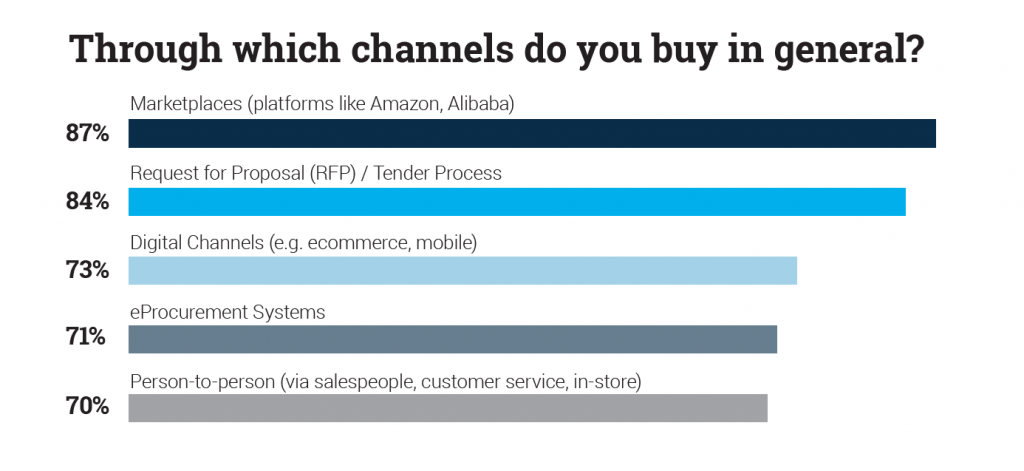
We recently released this new research and our original hypothesis was that Millennials would far outweigh other age groups in their needs for online purchasing – but it turns out that ALL age groups are demanding a shift for more online purchasing options. When asked about which channels B2B buyers bought from in general, B2B buyers responded:


So, the takeaway is that B2B buyers:

  • Want more purchasing options, flexibility, and transparency;
  • Are still relying on outdated purchasing channels, leading to missed sales opportunities.

And conversely, B2B sellers:

  • Are missing digital opportunities with a clear desire from buyers for online purchasing options;
  • Need to embrace an omnichannel digital strategy that connects buyer interactions and experiences.

Which segment of customers are you targeting with this report? What are the major/key takeaways from the report?

Anyone at a B2B organization whose role focuses on driving revenue such as sales leaders, e-commerce and marketing executives, and customer service professionals should read this report.

B2B businesses have made great strides over the years when it comes to delivering digital experiences, but this report highlights that there is still a major gap between buyer expectations and the experiences being delivered today.

The report’s key findings conclude:

  • 87 percent of business buyers across all age ranges are already purchasing in online marketplaces, more than any other channel. This clearly validates that all age ranges are moving a portion of business purchasing to marketplaces like Amazon and Alibaba.
  • 73 percent of respondents state they like to purchase in digital channels, but only 11 percent chose digital channels as their preferred choice overall, indicating there is a demand for better digital experiences.
  • 14 percent of respondents prefer person-to-person sales as their top purchasing channel, although it’s still the least utilized channel with 70 percent of buyers engaging with a person for purchasing. This indicates that B2B buyers want a mix of channels to purchase from.
  • The less negotiation, the better. In each age group, approximately 70 percent of business buyers value the fewer negotiations and improved sales processes associated with marketplaces and online buying channels.
  • Outdated purchasing channels are still used despite preferences for faster options. Only 8 percent of overall respondents prefer eProcurement systems for B2B purchasing, but 71 percent of respondents continue to purchase through this channel. In addition, 59 percent of respondents overall do not prefer RFPs, but 84 percent continue to use this channel as well.
  • Buyers are becoming more comfortable with complex purchasing online with 60 percent of buyers stating they would buy products requiring configuration or quoting online.

How do millennial population impact the entire B2B ecosystem? What are the major challenges and opportunities for marketers dealing with this segment of buyers?

Millennial buyers know their options. They spend more time researching online than engaging with sales reps. And, in fact, 97 percent of Millennial B2B buyers already purchase through marketplaces. Millennials stem from a generation of instant gratification – they move fast and expect responses quickly. Businesses have an opportunity to embrace this generation and create a competitive advantage through digital channels including e-commerce, mobile, chat and marketplaces. The challenge: can business execute and innovate fast enough before Millennial and next generation demands evolve?

Is the gap between buying needs and deliverables from B2B vendors widening? How does Oracle empower customers to bridge this gap?

It is clear that B2B buyers want online purchasing options and connected experiences. Luckily, B2B businesses can leverage cloud technology to modernize legacy investments and processes that are not equipped for the new rate of change.

With Oracle CX Cloud Suite, businesses can power continuous and consistent omnichannel experiences, no matter where, when or how a customer begins the engagement. Oracle’s CX Cloud Suite offers an integrated set of applications that span the entire customer lifecycle from marketing to sales and commerce to service. Businesses can now deliver omnichannel experiences rapidly without the worry of managing performance, infrastructure and upgrades.

Oracle also partners with marketplace leader, Mirakl, to give companies a fast path to increasing customer value by launching an online marketplace. Marketplaces provide broader product selection, at better prices, with superior service.

How do you see emerging technologies like video, AR/VR, and Artificial Intelligence further impacting the B2B buying journeys?

First, businesses need to master the basics: Is your buyer offered consistent product assortment and pricing across channels; is it easy for buyers to purchase and re-order products; is information your buyer sees, such as offers and promotions, being tailored to their specific account? Once the basics are mastered, then emerging technology can help drive smarter experiences.

For example, AI can take personalization to the next level for B2B organizations.

AI allows businesses to provide a personalized and engaging customer experience regardless whether sales is cold calling or serving a first-time website visitor. AI can be used for online and offline sales transactions to improve conversion rates, increase order value and enhance customer satisfaction by providing more relevant offers and products without the need to write manual rules.

Chatbots and virtual assistants use cases for B2B are on the rise, with the demand for quick interactions to check order and delivery status, invoice status and get answers to common customer service questions.

Finally, I wanted to share another interesting example of a plumbing supply customer of ours that is looking at using voice recognition technology for their service technicians to place orders (especially since their hands are usually covered in water and mud). “Siri – I need to order a 3/8-inch faucet connector – what are my options?”

So as Millennials become more dominant in the workforce, emerging technologies will become standard for B2B buyers and will drive differentiation among brands.

Thanks for chatting with us, Jeri.
Stay tuned for more insights on marketing technologies. To participate in our Tech Bytes program, email us at news@martechseries-67ee47.ingress-bonde.easywp.com

NinthDecimal Launches New Measurement Dashboard For Advanced Marketing Optimization

0
NinthDecimal Launches New Measurement Dashboard For Advanced Marketing Optimization

Visit Metrics by NinthDecimal Complements its Attribution Metrics Which Calculate Incremental Store Visits and Incremental Lift in Visitation

NinthDecimal, the leading omnichannel marketing platform powering real-world conversions for brands, announced a major enhancement to its measurement platform with the addition of Visit Metrics. These new KPIs power advanced marketing optimization never before possible. Visit Metrics unlock vital insights into what is driving customer growth and customer acquisition. They sit side-by-side with NinthDecimal’s widely adopted Attribution Metrics within Location Conversion Index (LCI) to help CMOs make multimillion-dollar decisions on how to best allocate their marketing budget.

David Staas, President of NinthDecimal
David Staas

“Visit Metrics was built in direct response to CMOs, heads of research, and agency account teams telling us what they need to take foot traffic measurement to the next level,” said David Staas, president of NinthDecimal. “We’re excited to now be giving them faster data, solutions for smaller campaigns, and a unique understanding of what marketing spend is driving customer growth for their brand.”

Also Read: NinthDecimal Augments RaceTrac’s Mobile Ad Campaign to Expand its Customer Base

Visit Metrics provide store visit counts and visit rates by campaign. These metrics complement NinthDecimal’s Attribution Metrics which calculate incremental store visits and incremental lift in visitation. For example, a campaign with high Visit Metrics but low Attribution Metrics would indicate a high volume of existing customers are visiting. However, the results also reveal that current marketing tactics are not optimized toward driving visits from new customers or more visits from existing or lapsed customers.

The new Visit Metrics are delivered through an enhanced self-serve measurement dashboard. It provides marketers with faster access to data for near real-time campaign decision-making. The release also includes a 90 percent decrease in campaign impression requirements. The reduction allows NinthDecimal to offer all of its measurement capabilities to small and midsize campaigns, while still being able to support multibillion-impression campaigns. Marketers will also be able to continue using LCI to measure the business impact of their marketing spend by publisher, by audience targeted and by creative in order to more fully understand the effect of their marketing on customer growth.

Brands can apply these new LCI enhancements across all of their marketing campaigns including digital, mobile, print, TV, out-of-home and other media channels. NinthDecimal measures more than $500 million in media spend annually. It is integrated with more than 250 partners. LCI has been the marketing measurement platform of choice for leading brands, agencies and publishers since 2013.

Recommended Read: NinthDecimal’s Omnichannel Marketing Platform Breaches 100 Percent Annual Revenue Growth

Latest Martech Company for Social Media, Skorr is Now GDPR-Compliant

0
Latest Martech Company for Social Media, Skorr is Now GDPR-Compliant

With Data Privacy a Priority, Skorr Redefines Social Media Influence Measurement, Empowers Individuals to Be More Effective On-Line

As General Data Protection Regulation (GDPR) Compliance comes into effect across Europe this week, individuals active on social media are turning to Skorr for a safe, effective way to build and manage their online presence. Launched this month, Skorr gives users control of their digital presence by measuring, monitoring and verifying behavior to help them safely navigate social media channels and increase their influence and effectiveness. The news comes just days after Klout, an industry-standard social media measurement tool shut down.

Read More: Is GDPR Really Changing Ad Tech?

Lisbon-based Skorr aggregates and analyzes content across six major social media platforms, including Twitter, Facebook, LinkedIn, Instagram, Tumblr, and YouTube. 

“In the era of fake followers, data privacy and influencer authenticity a tool like Skorr is more relevant now than ever before,” said Miguel Caeiro, CEO of Skorr.

Miguel added, “The positive response to the app so far, demonstrates the huge demand for a holistic view of an individual’s true online influence. This involves more than just numbers. Our app takes advantage of the latest AI and machine learning technologies to help users continually improve their effectiveness with social media and gain better insight into the true influence they have.”

Recommended Read: Salesforce Einstein Analytics Unveils Conversational Queries to Simplify Data

What Closing of Klout Means to Social Martech Audience

Until recently, Klout was largely seen as the industry standard for social media measurement, but with limitations. The tool was mainly based on who was most active on social media rather than who had an engaged, relevant audience. High scores were achieved by people who simply tweeted more or retweeted often.

The tool did not distinguish between “followers” and those being followed and had no regard for the content, number of “likes” or actual engagement. On top of this, Klout was developed long before the current data privacy regulations, making it unviable in today’s environment.

How Skorr Fits the Gap in Social Martech

Skorr, on the other hand, places a priority on data privacy as well as more insightful analytics of social media use. Developed largely in Europe during the GDPR era, it is 100% compliant with all regulations in this regard. In addition, it values positive emotions around a post and the AI-based scoring algorithms use 32 KPIs that take into account things like: the tone of language used; the type of content (including images and videos); the rate and speed of reactions to a post; valuation of users that follow as opposed to being followed.

Skorr’s real-time result is the most holistic and fact-based view and control of an individual’s influence, behavior and personality on social media available today.

Skorr is founded by a team of data science, marketing, and social media experts, and has several patent-pending innovations driving its app. Its investor and advisors include successful entrepreneurs and veterans from AI, telecoms media and marketing sectors.

Read More: Transform Your Marketing Team Into A 3D Organization

Magentrix Spring 2018 Release Sets a New Standard for Partner Relationship Management Software

0
Magentrix Spring 2018 Release Sets a New Standard for Partner Relationship Management Software

With Game-Changing Functionality, Channel Partner Enablement and Collaboration Are Elevated to a Whole New Level

Magentrix Corporation, a leading provider of SaaS-based Partner Relationship Management solutions, announced their Spring 2018 release. They have added innovative, new features and enhancement with a focus on more ways to generate revenues, provide powerful sales enablement functionality, and boost user adoption.

This release gives their clients more tools for growing sales and amplifying brand awareness. Moreover, marketing and sales content can be organized, grouped, and presented so that it is aligned with each stage in their sales process.

“Magentrix is known for being an innovator in the PRM market. Our software offers unmatched flexibility and functionality, which allows our clients to achieve the desired results from their channel sales strategy. I know that our clients are going to be amazed by how much more they can do with our PRM software. And, so will their channel sales teams,” said Sam Arjmandi, Co-Founder of Magentrix Corporation.

Also Read: Allbound Triples Business, Grows Leadership Team as Partner Programs Fueled by Modern Software Are Imperative to Success

Magentrix’ Spring release introduces 5 new features to the Partner Relationship Management software:

  • The Playbook feature allows clients to share segmented, customizable resources with their channel partners and internal users.
  • With the Co-branded Collateral functionality, customers can expand their brand to documents shared between channel partners. Co-branded collateral amplifies brand awareness and recognition with channel partners.
  • The Marketplace feature enables clients to enhance their customer’s experience by providing them access to products and services built around the organization’s brand.
  • The Upcoming Events feature eliminates the stress of planning, tracking, and promoting events. Events can now be managed right in the partner portal.
  • Language support has been expanded to include Italian and Portuguese. These additions broaden reach and remove issues around language barriers so, more channel partners can work seamlessly together.

In addition to these new features, Magentrix has also completed multiple platform enhancements to provide users with an improved user experience.

Recommended Read: Mindmatrix PRM Software Enables Channel Partners and Vendors to Manage Opportunities Better

CARTO Reports Record Customer Acquisition Growth; Appoints George Mathew to Board

0
CARTO Records Record Customer Acquisition Growth; Appoints George Mathew to Board

George Mathew Joins CARTO’s Board of Directors; CARTO Demonstrates Growth Among Enterprise Customers

CARTO, the leader in location intelligence, announced at the first US-based CARTO Locations conference, held in New York City, that it has appointed George Mathew to its board of directors.

Mathew brings more than 20 years of experience in developing technology leaders and brings to the board his depth of knowledge and experience developing applications for location data. Currently, Mathew serves as CEO and Chairman of aerial intelligence platform company, Kespry where he is focused on leading the company’s mission to transform how people and businesses capture, use and get value from work-site analytics. Previously he served as President and COO of Alteryx and held leadership positions at salesforce.com and SAP. Mathew brings to the board his depth of knowledge and experience developing applications for location data.

“As mobile devices, the internet of things and sensors create a deluge of physical data; location intelligence is critical to the future of innovation in everything from autonomous vehicles to urban planning,” said Mathew. “CARTO is leading this shift toward enabling these new data sources to co-exist with world-class locational context.”

Also Read: CARTO Makes Location Intelligence More Accessible and Faster to Deliver Business Results

According to Gartner’s 2016 Business Intelligence and Analytics Spending Intentions survey, geospatial and location intelligence was one of the consistently reported top areas for investment in 2017. Another study by IndustryArc estimated that location intelligence (LI) is estimated to grow at a CAGR of 23.4 percent during the period from 2016-2021 and that the Americas are expected to be the largest region for that growth with revenue of $6.9 billion by 2021.

CARTO, an Inc 5000 Fastest Growing company in 2017, is addressing the demand for better analytics and intelligence using location data. Over the past 12 months, it has experienced a 120 percent growth rate year over year.

CARTO Locations New York is the first and only event of its kind focused on location intelligence in the United States. The event brings together leaders and early adopters of LI to share best practices, develop new use cases and learn the latest technologies to advance the market.

Recommended Read: Unlock Location Intelligence Capabilities with CARTO’s New Data Enhancements

Punchh Facilitates GDPR Privacy Shield Compliance for Retailers

0
Punchh Facilitates GDPR Privacy Shield Compliance for Retailers

Latest Platform from Punchh Upgrades Help in GDPR Privacy to Ensure the Security of Consumer Data and Adherence to New Regulations

Punchh has affirmed that it will be compliant with the EU’s General Data Protection Regulations (GDPR) by the 25 May implementation date. It is a move that will also assist their customers to protect the data of the 35 million consumers they collectively serve each year. Currently, Punchh is recognized as the application that brings physical businesses the power of digital customer relationship management.

 Recommended ReadB2B Buying Disconnect: Are You Targeting the Right Set of Customers?

San Mateo-based Punchh is the world leader in innovative digital marketing products for brick and mortar retailers, combining AI and machine learning technologies, mobile-first expertise, and omnichannel communications designed to dramatically increase lifetime customer value.

At the time of this announcement, Shyam Rao, CEO and co-founder of Punchh, said, “Trust is essential to any customer relationship, whether it be our relationship with a brand or that brand’s relationship with the guests they serve. That’s why we’re taking these new regulations incredibly seriously and helping the people who have entrusted us to set a high bar for data privacy.”

Recommended Read: Salesforce Einstein Analytics Unveils Conversational Queries to Simplify Data

Shyam added, “By abiding by GDPR and Privacy Shield and getting ahead of future initiatives, we are hoping our example is one that inspires others to ensure data does not get into the wrong hands.”

To remain ahead of additional regulations affecting how businesses accommodate the rights of individuals in the increasingly data-centric business environment, Punchh will also be abiding by the US Privacy Shield framework.

To assure compliance, Punchh has released updates to their marketing platform to facilitate their customers’ needs. These updates enable businesses to quickly and easily respond to guest requests for copies of their data as well as to support a guest’s “right to be forgotten” by enabling the total deletion of any personal or campaign data from their database.

Punchh has raised $31 million in funding by leading investors including Sapphire Ventures and Cervin Ventures.

Leading global chains in the restaurant, health and beauty sectors rely on Punchh to grow revenue by building customer relationships at every stage, from anonymous, to known, to brand loyalists, including more than 100 different brands representing more than $12 billion in annual spend.

Recommended Read: Mobfox Introduces Audience Analytics for Better In-App Monetization

Searches for GDPR Increase 700% in Run up to the Implementation Date

0
Searches for GDPR Increase 700% in Run up to the Implementation Date

Social Media Sentiment Surrounding GDPR Was Optimistic, with 83.8% of #GDPR Tweets Being Positive in Tone, Finds SEMrush

The EU’s General Data Protection Regulation (GDPR) would be officially live from tomorrow, 25 May. As GDPR comes into force this week, searches on the subject increased by 700% globally in the last year. Around the world, Google searches for GDPR increased from 250,000 to more than 2 million, according to new data from online marketing platform, SEMrush.

GDPR is a new European Union legislation designed to ensure that EU citizens’ data is private and protected. It comes into effect on Friday, 25 May 2018, and is set to affect every company dealing with EU citizens data, no matter where they are based in the world. With the GDPR deadline fast approaching, searches indicate an awareness and optimism for the upcoming legislation.

Read More: Tealium Leads Industry with Enhanced Privacy and Consent Functionality

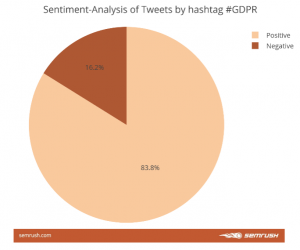
In the last twelve months, Twitter users are optimistic about the regulation’s impact on privacy – a massive 83.8% of tweets mentioning #GDPR are deemed to be positive in sentiment.

Sentiment analysis of tweets #GDPR


semRush_1
Sentiment Analysis by SEMrush

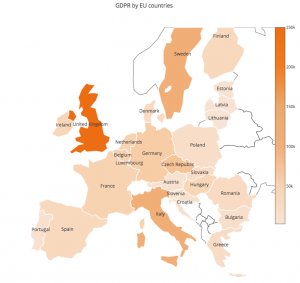
GDPR searches by EU countries

via SEMrush
via SEMrush

UK internet users searched for GDPR 500,000 times in the last 12 months. The next two countries were Italy and Sweden, with approximately 100,000 searches each. The Czech Republic and Germany came in fourth and fifth place, where approximately 50,000 internet users from each country for each country, with the Czech Republic a little ahead of Germany.

Recommended ReadOracle Marketing Cloud Adds Infinity and Audience CX to Enable Pinpoint Targeting

Interview with Ken Leren, Founder, Tech Essence

0
Ken Leren
Interview with Ken Leren, Founder at Tech Essence

[vc_wp_text]“The shift in the market towards getting consent for marketing will result in a more B2C-like approach to B2B brand advertising .”

[/vc_wp_text]

[easy-profiles profile_twitter=”https://twitter.com/kengjoran” profile_linkedin=”https://www.linkedin.com/in/ken-leren/”]

Tell us about your role and how you got here? What galvanized you to start Tech Essence?

I’m the founder of Tech Essence and brain behind Marketing Town, a SaaS-based marketing technology that provides marketers with a trustworthy and transparent solution to make faster, data-driven marketing optimization decisions based on a clear view of their data.

The idea came to me as a result of personal frustration at a lack of one comprehensive, seamless marketing platform. Before I started Tech Essence, I had difficulty finding a platform that could manage all multichannel marketing campaigns in one place. That’s when I decided to solve the problem by building Marketing Town from the ground up to relieve myself and other marketing professionals of the frustrations associated with using multiple platforms to manage, track and report on campaigns.

How is the European tech industry different from its contemporaries in the Americas? Which markets do you particularly focus on to promote your ideas and products?

One of the biggest differences between the European and US tech industries is the regulatory landscape. Europe is heavily regulated and sees data privacy as a fundamental human right, whereas, in the US attitudes towards data protection are not as stringent. It’s almost like two different worlds.

In May this year, new European General Data Protection Regulations (GDPR) will come into effect. The law applies to any company that handles data that relates to EU citizens and therefore, will affect US technology companies.

Furthermore, the US maintains the highest density of tech firms resulting in higher levels of competition for talent. In contrast, Europe has the same high caliber of talent, but with less competition. This is a major advantage for those who are trying to attract and retain technical talent because they can tap into a less competitive, but equally talented market and go the extra mile for the perfect hire.

We currently focus on the UK market, but my vision for the future is expanding overseas, specifically in Germany, France, Spain and Scandinavia.

Which marketers would benefit the most from leveraging Tech Essence?

All of them! I say that because all marketers should want to make the most of their time, maximize the return on their advertising spend and understand where consumers are in their journey – from awareness to conversion and beyond. Cross-channel attribution is the holy grail of marketers who want to optimize marketing campaigns and make better data-driven decisions.

Marketing Town creates a single view that accurately measures customer interactions across all channels, devices and touch points. The platform also provides granular data that enables marketers to understand where each publisher stands in the path to purchase.

How do you see a CMO’s budget changing to include powerful Marketing Performance and Data Management tools in 2018?

As a whole, and in stark contrast to the last 5 years, marketing budgets are declining, according to Gartner. The driving force behind this change CMOs’ relentless demand for results.

Digging deeper into this trend we see that the percentage of the CMO’s budget that is allocated towards marketing technology dropped, from 27% of the CMO’s budget in 2016 to 22% in 2017. Meanwhile, budget spent on paid media increased from 22% to 25%.

Both GDPR and ePrivacy will affect the marketing practices of all companies doing business in Europe or have customers who are EU citizens meaning CMOs will have to re-address budgets and resources.

C-level marketers have to understand that the new regulation changes the way marketers manage their prospects’ and customers’ data which includes cookie-based data, email list subscribers and consumer databases. Compliance is going to play an even bigger role as the industry continues to evolve.

We will see budgets increase in areas where companies can collect opted-in, first-party data, for example, email marketing, website optimization and SEO, but there will be a decline in digital, and especially programmatic, advertising budgets as the data available to manage and optimise dries up.

How should B2B marketers leverage customer data and content marketing for better audience reach and targeting?

The solution is no mystery: targeted, relevant advertising that will foster ongoing trust between brands and consumers. I believe, the shift in the market towards getting consent for marketing will result in a more B2C-like approach to B2B brand advertising though marketing trends such as influencer marketing, mobile advertising, social media, content marketing and augmented reality.

For example, use your customers as marketers because customer advocacy marketing through case studies and testimonials is by far the most valuable. Also, if you combine video marketing with influential people from your industry, you will hit the jackpot. Leveraging the channels that are most widely used by your B2B target audience is the way to go – at the end of the day, they are consumers too. The game is changing – more and more B2B businesses are having success leveraging B2C channels. You should be too.

What marketing and sales automation tools are you using in 2018?

  • Hubspot – CRM and marketing automation platform all in one
  • Mailchimp – simple, straightforward email marketing solution
  • Hootsuite – social media posting, listening and scheduling

Tell us about your best digital transformation campaign at Tech Essence?

Businesses that welcome GDPR and use it as a catalyst to update their processes and technologies to support their digital transformation initiatives have an upper hand in the market. One of our biggest clients, an online retailer, came to us as they recognized the need to consider the operational risks associated with using third-parties as data processors.

Through Marketing Town, we helped them transition from traditional third-party advertising to first-party data, as well as gave them the visibility, clarity and insights they needed to improve their campaign performance and get the maximum value from its supply chain while operating within the GDPR guidelines.

Being able to build their confidence in their business’ ability to view and manage data, while significantly reducing their reliance on third-parties means they are now able to compliantly drive more conversions and have more insight into their customers.

It is an indisputable fact that one of the major difficulties in many digital transformation projects revolves around low-quality data, but when you solve that problem you really see results.

How do you see experience platforms evolving with the maturity of AI/ML and voice? What challenges do you foresee marketers will face?

Digital experience platforms (DXPs) have grown in popularity as organizations have shifted from web-centric digital marketing conducted in a silo to multi-channel customer-centric marketing. Similar to Marketing Town DXPs act as a single house for data, no matter where it is sourced from.

Companies such as IBM and Salesforce are investing heavily in AI development and I expect we will see this play out across a broad range of their products, including DXPs.

One of the most interesting concepts is the idea of an AI-powered DXP acting as a personal assistant to a CMO. Let’s say that a CMO receives an automated report every Monday morning at 8:00 am that shows the company’s top line performance over the last 7 days, 30 days and 365 days. That report is reviewed and the CMO questions the marketing leaders about changes in performance, they query the data, provide answers, decisions are made, changes implemented and the process repeated each week.

What AI within the DXP learned from the questions asked of the data and resulting actions and pushed information and advice to the CMO? What if it did this across multiple connected devices? The CMO could be in the car, driving to the supermarket and the speaker system in the car could alert them of a drop in performance, provide answers to questions typically asked of the data when a similar drop is seen, and recommend action based on the outcome of previous actions taken under similar circumstances?

I’m not suggesting the CMO is going to say “OK, yes please go ahead” (not yet anyway) but they can act on the insight much faster than in the previous scenario I described.

Trust will be an issue, as will adoption as people will fear their role will become redundant. However, savvy-marketers will see DXPs and AI as an opportunity to add to their skill sets and do more innovative work to add additional insight and value in ways that machines can’t.

How do you prepare for an AI-centric ecosystem as a business leader?

It is vital that all business leaders understand what AI is and how it is changing the industry. However, it is also extremely important that people recognize its strengths and weaknesses before making any significant decisions about AI. A good way to prepare is to keep an open mind, stay curious and explore the possibilities. AI can be applied anywhere where you can collect, measure data and make predictions and as a curiosity-driven person, I always look for ways to identify opportunities for applying AI to my business and embrace the change.

How do you inspire people to work with technology?

Technology is inherent to everything we do at Tech Essence and I strongly believe that the right technology can make everyone’s life easier. Considering this, we use (and design) technology that has an intuitive, user-centric interface and is ruled with high functionality. Modern design and usability, when blended together, inspires people and keeps them happy for longer.

What apps/software/tools can’t you live without?

CharlieHR – a powerful HR tool that simplifies all our HR processes
Inbox by Gmail – brings emails, to-do lists and calendar together
GitHub – good solution for online code repository
Hangouts – best communication tool

What’s your smartest work related shortcut or productivity hack?

I get things done right from my inbox. I use Inbox by Gmail as my daily to-do list and I only leave unread the things that I plan to do on that given day – nothing else.

What are you currently reading? (What do you read, and how do you consume information?)

Right now, for personal development, I’m reading Tools of Titans by Tim Ferriss which is an incredible source of routines, habits, and beliefs of the most successful people in the world. It’s the kind of book you will need to keep on your desk for the next time you need a bit of inspiration. I like to keep up with the news and general trends in the technology and business world, as well as monitor the web for interesting new content through Google alerts.

What’s the best advice you’ve ever received?

‘Your network in your net worth’ which is so true because if you need to achieve more in life and business, you need to invest time and effort in building a strong network of contacts. Your network will help you achieve anything you set out to do.

Tag the one person in the industry whose answers to these questions you would love to read:

Dhruv Ghulati from Factmata

Thank you Ken! That was fun and hope to see you back on MarTech Series soon.

[vc_tta_tabs][vc_tta_section title=”About Ken” tab_id=”1501785390157-b58e162d-0ae25a4b-c27aca64-108e51b0-80edaf37-bd3d357a-6c46d712-3b685ef6-e5a0″]

Ken is passionate about – and has extensive technological expertise – in all things digital. Over the last decade, he has worked on multichannel marketing campaigns, bringing in-depth experience in lead generation and performance marketing strategies.

Having identified a gap in the market for performance management software, he founded Tech Essence and launched Marketing Town, a campaign management, tracking and analytics platform, to help businesses realize digital potential through the innovative use of technology.

[/vc_tta_section][vc_tta_section title=”About Tech Essence” tab_id=”1501785390320-2d44fa50-740c5a4b-c27aca64-108e51b0-80edaf37-bd3d357a-6c46d712-3b685ef6-e5a0″]

Tech EssenceTech Essence is a SaaS-based marketing technology solution provider, specialising in helping marketing professionals make informed decisions on measuring and optimising their multi-channel marketing efforts. With the intention to revolutionise partner marketing, we have developed our own proprietary platform, Marketing Town, to take campaign management, tracking and analytics to the next level.



Tech Essence received received a Highly Commended award for the ‘Tech Business of the Year’ category at the Startups Awards in 2017; was recognised as one of the top startups in the UK (Startups 100 2017 Index) and was shortlisted for the ‘UK Innovation and Entrepreneurship’ Award at the UK IT Industry Awards.

[/vc_tta_section][/vc_tta_tabs]
[mnky_heading title=”MarTech Interview Series” link=”url:https%3A%2F%2Fmartechseries-67ee47.ingress-bonde.easywp.com%2Fcategory%2Fmts-insights%2Finterviews%2F|||”]

The MTS Martech Interview Series is a fun Q&A style chat which we really enjoy doing with martech leaders. With inspiration from Lifehacker’s How I work interviews, the MarTech Series Interviews follows a two part format On Marketing Technology, and This Is How I Work. The format was chosen because when we decided to start an interview series with the biggest and brightest minds in martech – we wanted to get insight into two areas … one – their ideas on marketing tech and two – insights into the philosophy and methods that make these leaders tick.

Localytics Data Privacy Services Help Enterprises Deliver Personalized Mobile Experiences Without Sacrificing Consumer Trust

0
Localytics

New Services Helps Enterprises Go Beyond GDPR Compliance to Proactively Protect Their Users’ Privacy

Localytics, the leading mobile engagement platform, is expanding its data privacy services to help enterprises strike the right balance between providing the personalized mobile experiences that consumers want and ensuring consumer data is protected. 80% of consumers are more likely to do business with a company if it offers a personalized experience. That is especially true on mobile, yet recent events and data breaches have threatened consumer trust and put personalization at risk. Localytics is providing data privacy services to help enterprises put consumers first and ensure the protection of their users’ mobile data.

“Our whole digital life is based on trust. Companies that do not have direct relationships with consumers have left it up to brands to protect consumer data and maintain that trust. It’s time for that to change. Being compliant with things like GDPR is table stakes. Companies need to step up, be proactive and put consumers first. Without consumer trust, the promise of personalized mobile marketing falls apart. Our new data privacy services are a big step towards shoring up that trust,” said Jude McColgan, CEO of Localytics.

Also Read: 4 Pro Tips on How to Succeed with your Email Marketing Campaigns

Localytics helps enterprises like Bose, Fidelity, Redbox, Bloomberg, Live Nation, HSN, Hasbro and Avis deliver personalized mobile experiences to their customers. With its expanded data privacy services, the company is helping customers ensure that mobile personalization does not come at the cost of the consumer and their trust.

Localytics has invested heavily in building controls and capabilities into its platform to ensure brands can use the company’s products and remain compliant with new legal requirements. As such, Localytics will be compliant when the General Data Protection Regulation (GDPR) goes into effect on May 25th. The company has been updating its systems to better support GDPR requirements and implementing improvements to how it handles personal data. Additionally, the latest version of the Localytics SDK introduces additional methods so that brands can more easily honor user requests to opt out of data collection or have their data deleted.

Outside of GDPR compliance, Localytics is making a number of enhancements and adjustments to its data privacy services, including:

  • Conducting Privacy Reviews with customers to help identify and flag potential exposure risks related to the sharing of any personally identifiable information (PII) or protected health information (PHI) – and then develop remediation plans, if needed.
  • Developing a standard privacy summary report to help customers identify any potential privacy concerns, as well as reports to help customers handle users who have opted out or requested to be deleted.
  • Updating its privacy policy to give customers and their end users more visibility into how the company approaches privacy and how we safeguard their data.
  • Improving access and authorization controls.

Localytics is also building a dedicated privacy services practice that will help enterprises ensure that robust privacy approvals are integrated into their apps’ onboarding processes. This begins with developing new opt-in templates and other best-practice materials that will help brands better explain to end users why they collect data and how it will be handled. Beyond the onboarding process, the group will be available to assist customers with guidance and best practices for all aspects of data transparency and privacy.

Also Read: Why Should ‘Grey Area’ Players Fear GDPR?

HubSpot Reveals New Slack Integration for a Deeper Product Connection

0
HubSpot Reveals New Slack Integration for a Deeper Product Connection

New HubSpot-Built Integration Connects Two Platforms—HubSpot and Slack

HubSpot, is a leading CRM, marketing sales, and customer service platform. It announced the launch of a new Slack Integration, which turns Slack conversations into CRM tasks. The notifications to Slack are triggered due to activities in HubSpot, it also enables slash commands to search and post-contact records from HubSpot—all these activities enable HubSpot customers to work where they want to work.

Sales is always about building relationships, but at times it can be difficult to form those stable relationships when a representative has to battle with time while performing menial tasks. In relation, a recent report from HubSpot Research has found reps spend up to a quarter of the day on small tasks like data entry and writing emails. Software should be created in a way that menial tasks such as these are taken care of, instead of maximizing the time spent. HubSpot here aims to do just that.

Brad Coffey, Chief Strategy Officer at HubSpot said, “At HubSpot, we strive to put ease of use first when building new products. Sometimes, tools that were built to promote productivity can actually end up taking up more time as you add more and more to your stack. With this new integration, we’re combatting the frankenstack and ensuring that reps are able to reap the full benefits of both Slack and HubSpot.”

Also Read: HubSpot Announces Strategic Partnership with Google Cloud, Further Fueling the Growth of the HubSpot CRM

What exactly is Slack?

Slack is a cloud-based set of team collaboration tools and services. Slack was launched in 2013 and has since grown rapidly. It has become an indispensable tool for salespeople and is even used for small businesses. Slack brings the real-time communication style to busy sales folks who spend their entire day on Slack and HubSpot CRM.

Integration

HubSpot decided to build the new Sales Integration for sales professionals who can use both HubSpot CRM and Slack for an increase in productivity. The benefit of losing precious time between switching platforms and tools to log tasks or look upon contact information would be completely eradicated. With this integration, the sales rep can now create tasks and associate it directly with a contact, company or deal in HubSpot—directly within Slack.

This integration is only the first step of which will be a strong relationship between HubSpot and Slack. Coming June, Slack will be involved in numerous launches of HubSpot’s Conversations—which will be a universal inbox that helps teams connect with customers and prospects on a large scale.

HubSpot’s Slack Integrations is now available to all HubSpot users in the HubSpot Integrations Directory.

Recommended Read: HubSpot Named a 2018 Gartner Peer Insights Customers’ Choice for CRM Lead Management