Home Blog Page 4340

40% of Surveyed Audience Demand More Personalized Push Notifications: PushCrew

0
40% of Surveyed Audience Demand More Personalized Push Notifications: PushCrew

The Report Uncovers Two Pivotal Aspects Of This Nascent Technology: Audience Perception And Response To Web Push Notifications, And Marketers’ Approach To Use The Medium

PushCrew, the Web Push Notifications product from New York and New Delhi-based Wingify, released the second edition of its annual State of Push Notifications report. Titled ‘The State of Web Push Notifications 2017/18’, it is a 37-page document full of deep analysis and statistics that marketers can use.

Paras Chopra
Paras Chopra

“Web Push Notifications have risen tremendously in usage, importance, and adoption in the last year. Over 50% of the audience we studied told us that they prefer opting in to notifications from the websites of their choice. This gives an edge to Web Push Notifications, a completely permission-based medium unlike its mobile counterpart,” said Paras Chopra, CEO of Wingify.

The report uncovers two pivotal aspects of this nascent technology: audience perception and response to Web Push Notifications, and marketers’ approach to use the medium. It also uncovers the demographic that displays the highest awareness levels about this technology, a key piece of information that’ll help businesses decide if Push Notifications are the right marketing channel for reaching out to their customers.

Read More: Location Will Be Used To Enhance More Aspects Of The Shopping Journey: 2018 Predictions

The study also features insights mined by PushCrew’s Data Science team to help marketers understand their subscribers better, by delving deep into subscriber preferences in terms of Timing, Frequency, Richness – all important in making Push Notifications more relevant and personalized, as preferred by 40% of the audience.

Other interesting findings include the evolution of the Push Notification user landscape: domains like e-commerce and online media have advanced from being early adopters to dominant users of this technology. The study also tracks the evolution of the technology itself; according to the report, 100% of the marketers who participated in the study consider Rich Push Notifications an important part of their Marketing Communications.

The second product from the makers of VWO, PushCrew is the most popular web push notifications platform in the world. With features like audience segmentation, smart campaigns, multi-website support, custom images, cart abandonment, and so on, PushCrew has everything a business needs to reach out to their customers, real-time. With more than 4,500 customers, PushCrew’s customers include Lenovo, Vistaprint, gaming giant Ubisoft, Claire’s Stores, and College Humor.

Recommended Read: Sling TV Partners with comScore to Offer First Ever Cross-Platform Addressable Advertising Measurement

Pepperjam Names Matt Gilbert as CEO

0
Pepperjam Names Matt Gilbert as CEO

Performance Marketing Company Appoints Mar-Tech Veteran Matt Gilbert to Accelerate Growth

Pepperjam, a full-service performance marketing company, announced the appointment of digital marketing veteran Matt Gilbert as CEO.

Pepperjam Names Matt Gilbert as CEO
Matt Gilbert

Bringing over 20 years of experience in both the digital advertising and marketing cloud industries, Matt Gilbert has a track record of increasing company market share and profitability. Gilbert joins Pepperjam from Kinetic, leading social marketing services and technology company. There, he pivoted the organization from a marketing agency to a data services company, developing and delivering its flagship audience data product to market. Prior to that, he co-founded 500friends, which sold to Merkle, where he served as SVP & GM of the Loyalty Services group. He has held numerous leadership positions in the digital marketing category throughout his career, including Webloyalty.com, IAC/InterActive Corp., Ask Jeeves, Inc and Excite@Home.

Also Read: ‘Only 25% of Support Organizations Are Able To Drive Strong Partnerships With Customers’

“Gilbert’s experience scaling data-driven digital marketing businesses, combined with a deep passion for teaching clients how to leverage data and technology to maximize marketing effectiveness, made him the ideal choice to lead Pepperjam into the future,” said Stephen Davis, Chairman of the Board for Pepperjam.

Talking about the appointment, Gilbert said, “Pepperjam has a long and respected history in the affiliate marketing solutions category, and is in my opinion, extraordinarily well positioned to take a definitive leadership position in the next generation of affiliate marketing. In Pepperjam I see a talented and dedicated team, supportive investors, compelling technology and growing market where the largest incumbents have fallen behind. Those ingredients, when leveraged properly, are the foundation for achieving great outcomes. I’m excited to take on the leadership role at Pepperjam and capitalize on this opportunity to build a category-defining company.”

Gilbert will be based out of Pepperjam’s Philadelphia office.

Recommended Read: 3 Innovations Driving Out-of-Home in 2018

Allocadia Announces Key Milestones Achieved by #RunMarketers in 2017

0
Allocadia

Allocadia Announces $25 Billion in Global Investment Managed by Over 10,000 Marketers Through Platform, Saving Over 1 Million Work Hours and Driving an Estimated $5 Billion in Growth

A Top-150 MarTech RADAR company and the creators of the #RunMarketing movement, Marketing Performance Management (MPM) technology firm, Allocadia, has announced $25 billion of the global marketing budget has been managed through its award-winning platform by over 10,000 marketers.

Recommended ReadThe Pedowitz Group and Allocadia Partner to Guide Marketing Operations Leaders to Revenue Accountability

This announcement represents an important milestone in the Marketing Performance Management market, which has been redefined by technological advances and new pressures on the marketing function. It also cements Allocadia’s leadership position in the MPM industry.

At the time of this announcement, Allocadia CEO and Co-Founder, Kristine Steuart, said, “Helping global organizations manage over $25 billion in marketing budget dollars with confidence is a tremendous validation of our mission from day one. This milestone represents a bellwether of change in the marketing industry, as CMOs take on a strategic, measurable role in driving business growth.”

Recommended ReadAllocadia and Sojourn Solutions Partner to Help Organizations Optimize Marketing Performance

Kristine added, “It’s clear that Marketing Performance Management is now a critical infrastructure in a marketing technology stack, and a core discipline for every marketing team to adopt. We are driven by the trust of our customers around the world who rely on Allocadia to invest with certainty and measure the impact of each dollar spent. On to $50 billion!”

With an average performance increase of 15% for marketing budget managed through the Allocadia platform, the company estimates that $5B in global business growth has been influenced to-date with today’s milestone announcement. In addition, marketers worldwide have saved over 1 million work hours through Allocadia by reducing the time spent planning, budgeting and measuring marketing results by an average of 30%.

Read MoreTechBytes with Sam Melnick and Debbie Qaqish – Allocadia & The Pedowitz Group

The company also announced rapid customer expansion in recent months, becoming a core part of how more than 200 enterprise organizations “#RunMarketing.” Companies including Box, Demandbase, GE Digital, Canon (EMEA), Doctors Without Borders/Médecins Sans Frontières (MSF)-USA, Rockwell Automation, and LogMeIn all leverage Allocadia to gain confidence in how they allocate marketing budgets, through full control over their marketing plans, investments, and results.

 Glenn Thomas, Chief Marketing Officer at GE Healthcare, said, “Our decision to adopt Marketing Performance Management is about visibility and transformation. Allocadia enables our team to better execute our plans, make the right investment decisions and prove return.”

“The rapid growth and momentum demonstrated by Allocadia in 2017 is evidence of the critical importance of MPM today,” said Kathleen Schaub, Program Vice President for the CMO Advisory and Customer Experience practices at IDC. “Modern day marketers are tasked with becoming a revenue driver and an architect of the customer experience, meaning they must guide, build support, and energize what happens behind the scenes. Allocadia’s trajectory is proof of the immediate priority MPM presents to organizations, who must look beyond marketing execution to the operational scaffolding that makes success possible.”

The news follows a series of achievements for Allocadia including–

Notable Industry Recognition

Allocadia was recently recognized in an independent Forrester Research study on Marketing Resource Management, which noted that “marketers looking to refine their planning and measurement techniques should evaluate Allocadia’s SaaS-based approach to closed-loop performance management.”

The company has also earned several awards in 2017 including; “Best Marketing Technology Company of the Year” and “Best Analytics Company” from DM News; one of Canada’s fastest-growing companies on the Deloitte Technology Fast 50 program; two 2017 Stackie Awards for both marketing technology infrastructure and marketing team infrastructure by ChiefMarTech; A Top Rated CEO Award from Owler for Allocadia CEO Kristine Steuart; the Ready to Rocket Award given to high-growth firms in British Columbia; the BC Technology Impact Award for Community Engagement recognizing corporate social responsibility; the Content Experience Explorer Award celebrating trailblazing content marketing efforts; a Top Canadian Women in Tech award from theBoardlist for CEO Kristine Steuart, and recognition as a Top B2B Marketing Influencer.

Expanded Partnerships

This release comes on the heels of an announcement from Marketo naming Allocadia as a new partner to the Marketo® Accelerate ecosystem, the MarTech industry’s first partner accelerator.

Allocadia also recently announced partnerships with leading experts in marketing guidance as part of its expanded Partner Sales Channel program, announced earlier this year. These include Pedowitz Group, aiding marketing operations leaders on a path to revenue accountability, Sojourn Solutions helping enterprise organizations optimize marketing performance, leading analytics resource Allant Group, and Bluprint to expand MPM in the United Kingdom and Europe.

Allocadia continued its partnership with IBM, working with sellers and business partners worldwide to deliver MPM as part of the IBM Watson Marketing capability set. Allocadia is available both as an embedded component of Watson Campaign Automation and as a stand-alone, co-branded solution.

Innovative Technology Developments

The company also shared its rapid product development progress, deploying a range of customer-centric product enhancements in the past few months.

In early 2017, Allocadia introduced new analytics dashboards on data health and other prescriptive marketing performance insights at a glance. The team also launched a Customer Journey Insights solution to enable marketers to optimize investments throughout stages of the customer lifecycle. In addition, the team set forth a new Strategic Marketing Planning solution, offering a streamlined workflow and collaborative toolset to facilitate the creation of strategic marketing plans. For global organizations, Allocadia introduced enhanced multi-currency capabilities and workflows for ease of use across regions.

As many companies rely on more than a dozen different technologies in a single marketing stack, Allocadia also strengthened its Allocadia Connect initiative. These deep API integrations into various systems help organizations to drive investment, planning, and measurement insights within critical business operations tools, ensuring Allocadia as the central system of record for marketing teams.

The First-Ever Marketing Performance Management Awards

The 2017 #RunMarketing Awards from Allocadia recognized leading brands using MPM to foster greater accountability, transparency, and impact in their organizations. Winners were selected by a committee of experts including judges from IDC and TOPO, and were announced in the fall. GE Digital, Microsoft, Red Hat, SmartBear, and Intralinks were recognized for demonstrating best practices across various facets of MPM.

Industry Thought Leadership

Following the introduction of the landmark Marketing Performance Management Benchmark Study, executives from Allocadia were invited to speak at marketing and business industry events including Marketo’s Marketing Nation Summit, MarTech, Incite Marketing Summit West, ANA/BMA Masters of B2B Marketing, IBM Amplify, INBOUND, MarketingProfs B2B Forum, SiriusDecisions Summit, SiriusDecisions Technology Exchange, MarTech Boston, SAAS North and Brand Marketing Summit East.

Over One-Third Of Households Live-Stream TV Shows Or Sports: Parks Associates

0
Over One-Third Of Households Live-Streaming TV Shows Or Sports

New Industry Report Examines Emerging Trends In Streaming Video Habits And Content-Pirating Consumers

Parks Associates announced that as of Q3 2017, 12% of US broadband households use a live streaming platform like Facebook Live or Periscope. The profile for live streamers is generally younger, with 19% of consumers ages 18-24 engaging in live streaming activity, but live streaming of TV shows and sports skews older, indicating older viewers might be using these solutions to access illegal streams of content.

Brett Sappington
Brett Sappington

“Eight percent of broadband households have used live streaming apps to watch TV shows, while 7% have used live streaming apps to watch sports,” said Brett Sappington, Senior Director of Research, Parks Associates. “Some sports franchises and leagues are legitimately live streaming their content, but much of the produced content on these live streaming platforms remains unsanctioned.”

Read More: InMobi Acquires AerServ for $90 Million to Create World’s Largest Programmatic Video Platform for Mobile Publishers

The research comes from Parks Associates’ new industry report Pay TV, Passwords, and Piracy, which identifies trends among content-pirating consumers, details emerging streaming piracy methods, and assesses viable solutions for addressing these piracy methods.

“Over one-third of households live-streaming TV shows or sports indicate the programming was available, but they opted for live-streaming because they did not want to pay for access. Over one-quarter stated that they accessed the content via live streaming because the price of the programming was too high,” Sappington said. “While these figures ultimately represent less than 5% of US broadband households, they are a significant portion of those watching app-based live streams.”

Additional data from the report includes:

  • 18% of Cord Nevers indicate they use the credentials of someone outside their household to access an online video service.
  • Among pay-TV subscribers, only 7% indicate they use IDs and passwords for video services from people who do not live in their household.
  • 14% of Cord Cutters use others’ credentials for online video services, double the rate of use by pay-TV subscribers.
  • 45% of U.S. broadband households are very concerned about downloading a virus or malware when downloading or streaming video.

Brett Sappington will present Parks Associates research at this year’s Cable Congress in Dublin, March 6-7, and at 2018 NAB in Las Vegas, April 7-12. Parks Associates is an internationally recognized market research and consulting company specializing in emerging consumer technology products and services.

Recommended Read: Accenture Agrees to Acquire Mackevision

Instapage Introduces New Way to Build Landing Pages with Instablocks

0
Instapage Introduces New Way to Build Landing Pages with Instablocks

Building Blocks That Enable the High-Volume Creation of Landing Pages, Essential for Advertising at Scale

Instapage, the post-click optimization platform for advertisers, has recently launched Instablocks, a brand new way to build post-click landing pages. Advertisers can now create “building blocks” for their landing pages — custom sections that they can reuse to quickly create pages, and in turn, scale their advertising into a high-velocity operation.

Instapage Introduces New Way to Build Landing Pages with Instablocks
Tyson Quick

Tyson Quick, Founder and CEO at Instapage, informed, “Our vision is for every ad to have a unique post-click experience. In order to bring that vision to life, we have to remove every barrier that an advertiser faces in building a high number of landing pages quickly. That’s why Instablocks is the future of post-click optimization — we’re speeding up the creation process by orders of magnitude.”

Also Read: Emma Unveils New Features for End-To-End Email Marketing Campaign Optimization

Most companies build their landing pages based on a library of templates, but this is problematic for advertisers, who spend unnecessary time and resources on repeatedly recreating and rebranding the same elements. Instablocks removes that bottleneck by allowing customers to create, save, and reuse common page blocks so that they can accelerate the creation of advertising campaigns by quickly scaling the production of the post-click experience.

Instablocks allows advertisers to:

  • Create stand-alone blocks to use on any landing page
  • Add, duplicate, save, or delete blocks
  • Share blocks with teammates to reuse across all landing pages
  • Leverage pre-built Instablock Templates to build more pages, even faster
Instapage Introduces New Way to Build Landing Pages with Instablocks
Alexandra Mack

“Advertising technology has made significant advancements in the last few years, but there’s always been the issue of how we can scale the post-click as efficiently and effectively as we scale the ads themselves. Instapage has enabled us to work smarter and build pages faster, which has allowed us to truly maximize our digital advertising,” said Alexandra Mack, Head of Marketing at Crunchbase.

Recommended Read: Location Will Be Used To Enhance More Aspects Of The Shopping Journey: 2018 Predictions


ExtremeLocation Empowers Retailers with Contextual Analytics to Engage In-Store Guests

0
ExtremeLocation Empowers Retailers with Contextual Analytics to Engage In-Store Guests

Extreme’s Technology Personalizes the Customer Experience and Increases Basket Size

The ever-increasing number of consumers using mobile devices while shopping in-stores has challenged brick-and-mortar retailers to integrate mobile touchpoints along the journey to purchase. To assist retailers with their digital transformation to become the Store of the Future, Extreme Networks, Inc. introduced ExtremeLocation, a solution that allows retailers to identify, engage and provide personalized guest experiences in-store via shoppers’ mobile devices. By collecting contextual analytics from both Wi-Fi and BLE beacon technology, retailers and store associates can better understand guest demographics, shopping patterns, personal preferences and their exact location in stores, enabling store associates to better engage with customers face-to-face, improve experiences, optimize workflow and store layout and increase sales.

ExtremeLocation’s cloud-hosted technology provides highly scalable, secure and granular location-based services allowing retailers to scale thousands of branches and connect to 100,000 access points to gather specific guest and associate analytics. Analytics include new or repeat visitors, the amount of time spent browsing in-store, heat maps, peak and off-peak hours, visitors to associates ratio per zone and customer location down to 1 to 2 meters. Using this information, store associates can better serve customer needs and retailers can optimize store layout, product placement and staffing while also setting predetermined role-based policies. Using the contextual campaign engine, retailers can enable personalized push notifications that engage in-store shoppers helping to increase basket size or the quantity purchased during the store visit.
Furthermore, with intuitive access and ownership of their own rich shopper analytics, brick-and-mortar retailers have the opportunity to enter the same playing field as pure online-only retailers by mapping online behavior to in-store activity. Therefore, retailers can bridge their online and in-store experiences, improving brand and customer loyalty while increasing in-store sales.
Key Features:
  • ExtremeLocation Multi-Tier Location Services: Retailers can identify the presence of mobile devices whether or not the devices are connected to Wi-Fi, locate devices based on zones of a store and position of the devices in the environment based on Wi-Fi triangulation.
  • ExtremeWireless WiNG: Integrated wireless infrastructure combines both BLE Bluetooth technology and Wi-Fi to connect guests and store associates in stores.
  • Mobile Engagement with Contextual Campaign Engine: This contextual personalization engine gathers analytics and delivers comprehensive insights from BLE beacons that identify who, what, where and when a shopper enters a store to create a personalized experience.
  • ExtremeGuest: A comprehensive guest engagement and analytics solution that gathers guest demographic information to allow for personalized messaging.

Executive Perspectives

ExtremeLocation Empowers Retailers with Contextual Analytics to Engage In-Store Guests
Patrick Groot Nuelend

Patrick Groot Nuelend, GM of Retail and Transportation & Logistics Market, Extreme Networks, Inc., said, “ExtremeLocation brings a new level of insight to our retail customers who are looking to break down the borders between online and in-store and leverage big data to deliver personalization. We’re excited to be able to bring a highly scalable solution to the market that combines the power of Wi-Fi and analytics to track shoppers’ behavior and empower store associates in understanding their shoppers, delivering real-time customer support and bringing shoppers closer to the checkout aisle.”

ExtremeLocation Empowers Retailers with Contextual Analytics to Engage In-Store Guests
Miya Knights

Miya Knights, Technology Research Director, Planet Retail, informed, “We are seeing shifts in the way consumers shop in stores led by digital technology development, where brick-and-mortar retail must keep pace to remain relevant. Any ‘Store of the Future’ strategy must meet and exceed modern customer expectations by bringing the best of ecommerce and online into the physical store. This is the best way for retailers to effectively target and engage today’s consumers at the shelf edge and point of sale. Extreme’s new location-based analytics solution delivers on these requirements by providing retailers with a finer grained, digitally-enabled understanding of customer behavior in the store. Based on the knowledge of each shopper’s location, demographics, and preferences, it supports the creation of engaging and compelling physical shopping experiences.”

ExtremeLocation Empowers Retailers with Contextual Analytics to Engage In-Store Guests
Bob Laliberte

Bob Laliberte, Practice Director & Sr. Analyst, ESG Global, said, “Retailers are increasingly under pressure to provide a differentiated experience to their consumers in their brick and mortar locations. To help deliver that, ESG research indicates that 32% of retail organizations say edge analytics will be one of their top areas of spending in 2018. By taking advantage of the pervasive use of mobile devices while shopping in physical locations, Extreme’s new location technology and analytics solutions will enable retailers to securely provide a more rewarding and personalized real-time in-store experience.”

Rich Hunt, Senior Sales Engineer, OCRCanada/Barcodes, Inc., added, “Extreme’s brand and customer base in the retail market allows us to do business with almost all retailers – large and small – that are looking for reliable wireless and engagement solutions. ExtremeLocation in conjunction with their on-premise ExtremeGuest analytics server, ups the ante and allows us to provide customers with a highly- scalable, competitive and complete solution that delivers a truly personalized, engaging guest experience.”

Recommended Read: Sales Reps Are Embracing Marketing Tactics (And It’s Working)

4 Emerging Adtech Trends to Watch in 2018

1
4 Emerging Adtech Trends to Watch in 2018

RankerThere is no question that Ad Tech is poised for unprecedented growth in the next two years. In 2020, global spending on digital advertising is expected to reach $336 billion, up from $229 billion in 2017, according to market research firm Statista. Growth at this pace will no doubt help drive, and be driven by, many new industry developments. At Ranker, we’ve identified four emerging trends that are poised to play a big role in reshaping ad tech beginning in 2018.

Publishers Will Start to Hire Dedicated Ad Tech Developers In-House

The publishing world is splitting into two distinct camps: those that are ahead of the curve in the development of programmatic advertising and yield optimization—and those that are not.

Smart publishers are already investing in in-house ad tech developers, and in 2018, we expect more publishers will dedicate in-house resources to manage their ad tech initiatives. Those who do will discover, happily, how this decision takes efficiency to new heights.

In the past, publishers large and small were wary of taking on the expense of hiring dedicated ad tech developers. Rather, they leaned heavily on internal developers, most of whom had no real experience with ad tech. Today, however, publishers are realizing that good ad tech developers are worth much more than their salary and will only become more valuable as ad technology rapidly advances.

Currently, most ad tech engineers are on the sell side and are relatively hard to recruit. But, as we progress into 2018, experienced ad tech developers will become more plentiful and will likely show an increased willingness to move from the sell side to the publisher side.

Also Read: Revcontent Partners with Ranker to Offer More Personalized Digital Content to Consumers

Third-Party Vendors That Focus on Header-Bidding Analytics Will Be All the Rage

Header bidding has yielded many positives for publishers. It enables them to squeeze more revenue from their ad inventory and has brought more transparency to the auction process by enabling publishers to see who’s bidding, when they’re bidding, how much they’re bidding and what their win rate is, among other things.

In 2018, expect to see more benefits of header bidding as publishers begin to tap into the power of a huge amount of data they’d previously ignored.

In the coming year, more third-party analytics vendors will start popping up with capabilities to provide a holistic view of what is happening across the entire open auction inventory and shine a light on key insights. This will enable publishers to make better decisions, improve forecasting and truly optimize their yield.

Machine Learning Combined With Publisher-Side Yield Optimization Will Continue to Grow

Machine learning is one of the hottest technologies these days, and every industry is trying to find an application for it. While there may be some questionable use cases for machine learning, the digital ad industry is actually a great fit.

For example, look at price floors. Machine learning has the ability to look at bid data across an infinite number of platforms and systems, and quickly and accurately determine price floors.

In 2018, machine learning will start to power dynamic flooring. Publishers will have better insight into the value of an impression based on day of the month, the day of the week and even hour of the day. The ability to truly understand how much their inventory is worth and set price floors in real time offers incredible value to publishers, and because of this, we expect to see a major uptick in the use of machine learning in the ad tech space.

Also Read: AI and Machine Learning to Redefine Content Creation and Delivery, Predicts SDL

Ad Fraud Will Continue to Be a Problem

Scammers are selling ad space on websites they don’t have access to, and on fake versions of authentic sites. The problem is real and it’s serious. In fact, ad fraud costs companies a staggering $16.4 billion in 2017, according to ad verification company Adloox.

Online ad fraud will continue to threaten the industry in 2018, and even the largest platforms will likely fall victim. However, the situation is not all gloom and doom.

Initiatives like ads.txt, which is led by the Interactive Advertising Bureau Tech Lab, is working to help to identify approved ad sellers and ensure that companies don’t buy fraudulent ad space. To date, ads.txt has already helped cut down on fraud, and the next frontier is domain authorization at the impression level.

Right now, ads.txt can tell you whether a particular domain is authorized to sell a publisher’s inventory. But, at the impression level, that same real-time authorization does not yet exist. This could change in 2018, as the industry starts cracking down on domain spoofing and gains more control over how and where inventory is sold.

While there are undoubtedly other trends that will emerge in the coming year, these four trends are certainly shaping up to impact the ad tech space in a big way. With the industry’s rapid pace of growth, one overall fact is clear: the ad tech market will continue to evolve rapidly and reshape the way publishers do business in new and exciting ways.

Recommended Read: Technology and Transparency: The Growing Horizon of AI, Cybersecurity, Blockchain and the Battle Against Ad Fraud

DiMassimo Goldstein Hires Wendy Lurrie

0
DiMassimo Goldstein Hires Wendy Lurrie

The Former Gyro NY and Gyro: human President Will Be the Agency’s First-Ever Chief Client Growth Officer

DiMassimo Goldstein recently expanded its C-suite, adding Wendy Lurrie, who has joined the agency as its first-ever Chief Client Growth Officer.

The hire, which became official shortly before the new year, gives the New York-based agency exciting momentum entering 2018 as it looks to further solidify its position as the world’s leading behavior change marketing agency. DiMassimo Goldstein, which specializes in helping clients help people make more inspiring decisions and form more empowering habits, driving brand and business growth in the areas of “healthy, wealthy and wise,” has brought on the industry veteran to help deliver its promise of growth to each and every client.

DiMassimo Goldstein Hires Wendy Lurrie
Mark DiMassimo

Lurrie reports to agency chief Mark DiMassimo, who said, “Wendy is a true pro and a proven strategic thinker who will make sure that every one of our clients has a theory of growth and a behavior change marketing strategy that helps fulfill that potential. I’m loving our collaboration already!”

Also Read: SaleScout Puts an End to the Cold Call and Revamps the Sales Process

DiMassimo Goldstein Hires Wendy Lurrie
Wendy Lurrie

Lurrie, who was Managing Director and President of both Gyro’s New York office and Gyro: human, the agency’s healthcare operation, which she founded, helped build that agency into a global leader in B2B and healthcare. Lurrie has spent her entire career in advertising, holding leadership positions at Gyro, G2 Direct & Digital, DraftFCB, and Grey. She has worked on several notable brands, including M&M/Mars, Procter & Gamble, General Motors, IBM, Aetna, Eli Lilly, United Healthcare, EmblemHealth, Hiscox, TD Ameritrade, and BI.

When we asked Lurrie why she was so passionate about joining the DiMassimo Goldstein team, she said: “What made DiMassimo Goldstein so attractive to me is a combination I’ve never seen before – a business-first approach that allows no daylight between creativity and commerce; an industry-leading approach to behavior change, essential to driving growth for our clients’ businesses; and a fiercely independent spirit that informs everything the agency says and does.”

DiMassimo Goldstein uses behavior change marketing to drive growth in brands and businesses that change lives for the better. The independent, integrated agency launches, relaunches, and ignites brands to drive measurable results.

Recommended Read: ‘The Majority of Companies Will Get Growth Wrong’

Top 5 Cloud Services Predictions 2018

0
Top Five Cloud Services Predictions 2018

NuviasKarl Roe, VP Services & Cloud Solutions at Nuvias, Takes a Look at What’s in Store for Organizations Using the Cloud Services in 2018

 The Rise of AI

2018 will see Artificial Intelligence (AI) drive a transformational change among organizations and impact on cloud use.

ICT isn’t getting any simpler, and businesses are being forced to move faster as their customers’ requirements become more demanding. This is driving innovation in areas like AI, but automation of past processes won’t be enough to keep up with the “need for speed” in business agility.

We will see lots more AI projects and initiatives in 2018; it will be the cornerstone of change in automation of ICT. Proactive, automated, non-human decisions are now a necessity. Are the robots coming? Yes, they are – but we still need to develop the Intellectual Property (IP) to drive them.

Also Read: Meet the Jetsons: Are We As Close to Achieving Control Over AI As We Thought?

IP Will Be Key

With emerging technologies like AI becoming more prominent in 2018, organizations are demanding bespoke software and solutions that solve their specific business problems.

As a result, companies are increasingly working with cloud service providers to gain a competitive advantage – this includes using public cloud providers to power their IP-centric solutions. Investment in infrastructure development is diminishing, replaced by a need for specific business-driven solutions that require unique software to bring these solutions to life.

From Partnering to Strategic Alliances

IP is the key, but many end users don’t have the time, resources or in-house skills to create their own unique solution that gives them the business advantage they require.

As such, they are forging long-term business relationships with technology service providers who understand their need for change, and develop specific IP or software which utilizes public cloud services, embraces AI, and most importantly which solves a business or specific customer problem.

Public cloud providers also need these strategic partner alliances to ensure there is a shorter time to value in moving workloads to the cloud, and providing solutions that move beyond IaaS (Infrastructure-as-a-Service) to fully utilizing PaaS (Platform-as-a-Service).

Also Read: 3 Rules for Communicating Post-Crisis, Cyber Attack 101 

PaaS as the Basis for Digital Transformation

We are starting to see the SaaS (Software-as-a-Service) players now extending into PaaS in response to customer demand.

Customers that are using a SaaS kingpin like CRM want to extend that platform into other use cases and requirements. It’s been a long time coming but as the world moves to a cloud-first strategy, the complexity in integrated public clouds is driving companies to explore PaaS.

Secure Cloud Services & Cyber Security get Board Visibility

Cloud services have been a safe bet in the Boardroom in recent years, but now the question is, are they truly secure? Decisions to utilize cloud services have been a relatively easy Boardroom decision, due to their known cost and agility. But with more and more high-profile data breaches, questions are now being asked around cloud security at a Board level within businesses.

The damaging nature of cyber-attacks is now clearly in the line of sight of Board members. GDPR will also raise more questions at this level, making cybersecurity in the cloud a Board level priority.

Recommended Read: Tech vs. Touch: 4 Marketing Trends to Watch in 2018

77% Say Holistic Competitive Intelligence is Critical to Winning against Opposition

0
77% Say Holistic Competitive Intelligence is Critical to Winning against Opposition

Yet, Only 22% of Businesses Have Defined Goals for Their Competitive Intelligence Programs, Reveals Crayon’s State of Market Intelligence Report

Crayon released the largest market and competitive intelligence research study, the 2018 State of Market Intelligence report. The study dives into the practices, challenges, and new trends in the field of market and competitive intelligence and is based on the responses of more than 700 business professionals.

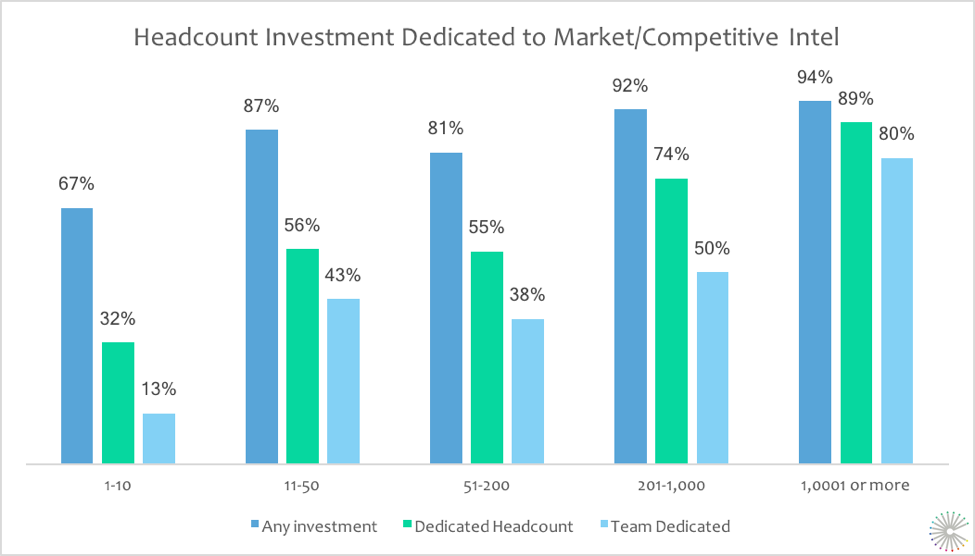
The study found that 89 percent of large companies have headcount dedicated to market intelligence. Yet only 22 percent of businesses have defined goals for their competitive intelligence programs.

Jonah Lopin
Jonah Lopin

“Businesses have great visibility into their internal metrics and activities, but lack that visibility when it comes to their competitors and market,” shared Jonah Lopin, Crayon CEO and co-founder. “There is a lot more competitive intelligence available now, but businesses are still learning how to leverage and measure it. Our hope with this study is that we can share both the best practices and the challenges businesses face, so we can encourage more innovation in the field of market intelligence.”

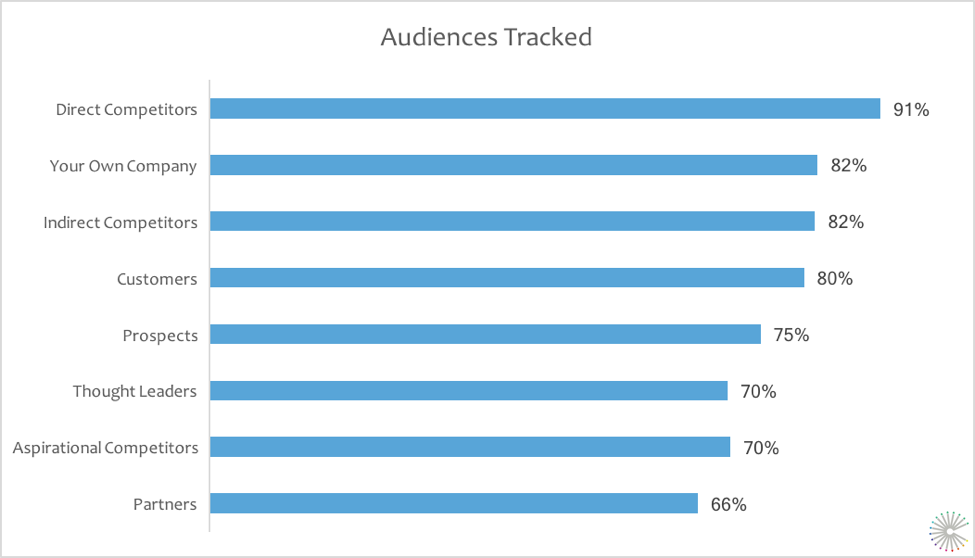
The survey also revealed that 67 percent track just ten or fewer sources of intelligence (e.g. websites, publications), which would not even cover the full digital footprint of a single competitor. But research professionals recognize that getting full intelligence coverage is necessary – 77 percent say it’s important to have a holistic view of intel on your competitors in order to see success with market intelligence.

Other key findings from the study include:

  • 49 percent have seen quantitative benefits from their market intelligence program and 61 percent have seen qualitative benefits.
  • 63 percent have driven tactical actions as a result of their market intelligence program, and 61 percent have driven strategic actions.
  • 43 percent of time dedicated to competitive intelligence goes towards the Research phase, while the remaining time is split between Analysis and Communication.
  • The primary mode of internal communication of market intelligence is email, with 84 percent saying they share intel that way.
  • 40 percent of market/competitive intelligence programs have been in place for less than one year, a reflection that the field is growing or being reimagined in many organizations.

Crayon is a market intelligence platform that enables businesses to track, analyze, and act on everything happening outside their four walls. Tens of thousands of teams use Crayon’s software to capture and analyze complete market intelligence, pulling from more than seven million sources. Crayon was founded in 2014 by former HubSpot and AdMob executives who believe that millions of businesses have yet to take advantage of the intelligence data available today to drive actionable insights and opportunities.

Recommended Read: GeoSpark Analytics’ BlueGlass is a Location-Based, AI-Powered Data Analytics Platform

Voysis Unveils ‘Voysis Commerce’ for Better Product Discovery and Customer Experience

0
Voysis Unveils 'Voysis Commerce' for Better Product Discovery and Customer Experience

Following Their Advances in Google’s Wavenet Technology, Company Launches Voysis Commerce to Make It Easy for Any Retailer or Brand to Stand Up Native Voice Experiences

At an event in New York, Voysis, announced its new product, Voysis Commerce. The provider of Voice AI for search also released the findings of a research report that shows voice commerce and search is at a major inflection point for retailers and brands.

Read MoreMarTech RADAR 2018: Top 150 B2B Technology Companies You Should Follow

The launch of Voysis Commerce comes shortly after the company revealed their breakthrough on WaveNet technology that improves on public demonstrations by Google’s DeepMind team. Voysis Commerce allows any eCommerce company to stand up their own brand-specific, native Voice experience, which can be easily incorporated into their mobile websites, apps, and devices.

The Voysis platform utilizes speech recognition, natural language processing and understanding, deep learning, and text to speech capabilities, all of which were developed in-house.

With a Voysis-powered voice AI, shoppers can search for and buy products using their voices. And because it can be easily incorporated into existing mobile experiences, retailers and brands can offer a multi-modal voice and visual shopping experience with minimal time investment.

Dr. Peter Cahill, CEO, Voysis

At the time of this announcement, Dr. Peter Cahill, voice-expert and Founder and CEO of Voysis said,  “Voysis Commerce fills an important void in the market for brands and retailers. With recent advancements in voice technology, we’re now at a place to deliver these experiences at scale. We’re already working with some of the best-known retailers to launch voice commerce imminently, helping them take back their customer relationships with companies like Amazon.”

Cahill added, “While Alexa may have paved the way, the reality is few retailers want to allow Amazon to own their customer data and relationships. It’s the equivalent of letting the wolf into the pen. We not only have a better, more accurate, contextualized solution, but one that appeals to brands.”

Revelations by Voysis Report on Voice AI Search

The announcement comes at an interesting time for Voice AI in search and eCommerce. Earlier this year the Meeker Report said voice was set to overtake typing for search. Research commissioned by Voysis and unveiled at the launch event in New York found the following:

  • 50% of retailers have mobile voice search on their roadmaps for 2018, a massive increase from sub 1% in early 2017.
  • The majority (60%) of online traffic now comes from mobile devices, but this traffic accounts for only 16% of conversions.
  • Retailers surveyed see voice as a way of increasing conversion rates from mobile with currently 80% of items from carts abandoned.
  • A large majority of consumers (83%) believe using voice technology makes it easier to find and discover products. Even more, 89%, said voice makes searches faster.
  • Mobile voice search, which takes advantage of the natural synergy between smartphones and voice, is currently on the tech roadmap for 35% of respondents, but that will increase to 60% by the end of 2018.

Read AlsoWhy the Tug-of-War Will Continue in 2018 Social Marketing

The Voysis Commerce announcement comes at the end of a busy 2017, for the rapidly growing company. At the start of the year, they announced an $8 million financing round led by US venture capital firm Polaris Partners. Shortly thereafter, Ian Hodson, the former head of Google’s text to speech program who led their efforts on Google Maps, Google Assistant, and Android, joined the company.

Voysis also recently announced their new Edinburgh, Scotland office to add to their office in Boston and headquarters in Dublin, Ireland.

Currently, Voysis provides a complete voice AI platform that enables any online retailer or brand to instantly stand up their own brand-specific, intelligent voice experiences. The platform was built from the ground up by a team of scientists, engineers, and linguists with an in-domain expertise in speech technologies, natural language processing, and deep learning.

Recommended ReadSmartsheet Acquires Converse.AI

Skyword Raises $25 Million in Funding

0
Skyword Raises $25 Million in Funding

Company Also Establishes Additional $5M Working Capital Line

Skyword, the content marketing software and services company, announced that it has raised $25 million in growth equity from Rho Acceleration, a division of Rho Capital Partners. The company will use the proceeds to accelerate growth and product innovation as it helps transform the way today’s top global brands connect with their customers and prospects. The company also established an additional $5 million working capital line with Cambridge Trust.

Founded in 2010, Skyword is a content marketing software and services company whose customers have created and published more than one million original stories as articles, videos, images, infographics, podcasts, and animations on the Skyword Platform. These stories have earned Skyword customers more than 1.8 billion visits organically, and Skyword has paid its freelance creatives more than $27 million on behalf of its customers.

Tom Gerace
Tom Gerace

“We are thrilled that Rho Acceleration has recognized that marketers must transform their approach from an ad-centric to a story-centric one. This investment validates that the Skyword Platform, our global freelance network, and our companion services enable Skyword to deliver unmatched offerings to global brands,” said Tom Gerace, CEO of Skyword.

Read More: TurnTo Introduces Free Product Review Syndication Between Brands and Merchants

“People are avoiding and blocking interrupt ads and marketing techniques in record numbers. But they’re consuming great content at unprecedented rates. To succeed, marketers must shift their fundamental marketing approach from ad-centric to story-centric. Our content marketing and personalization technologies were designed to support this new marketing approach from the ground-up. We augment our technology with managed services and a global community of freelance creatives, enabling marketers to build relationships with customers and prospects through personalized content experiences that reward customer attention,” added Gerace.

“Skyword is changing the way marketers build and make authentic connections with their audiences,” said George Bitar, managing partner of Rho Acceleration. “We are excited to partner with Skyword and its management team to accelerate their growth and execute on their vision of marketing transformation.”

As part of the transaction, George Bitar, Doug McCormick and Mark Roehrenbeck of Rho will join Skyword’s Board of Directors. Skyword was advised by America’s Growth Capital and WilmerHale on the equity transaction and Cafferty & Company on the debt facility.

The Skyword Platform makes it easy to produce, optimize, manage, and promote content at any scale to create personalized, lasting relationships. Skyword also provides access to a community of thousands of freelance writers and videographers, an editorial team, and program managers who help move clients’ content marketing programs to new levels of creative excellence.

Rho Acceleration, a division of Rho Capital Partners, makes control-oriented investments in middle market software and digital media companies.

Recommended Read: ZOG Digital Announces Integrated Amazon Digital Marketing Services

Introducing Auto-Zone, a Technology that Eradicates Website Tagging

0
Introducing Auto-Zone, a Technology that Eradicates Website Tagging

ContentSquare’s Auto-Zone Replaces Tag Customization/Configuration with AI-Powered Automatic Recognition and Allows Digital Teams to Quickly Understand Customer Journeys and Insights

ContentSquare, a digital experience insights platform, announced the launch of its Auto-Zone product, an artificial intelligence-based recognition algorithm that redefines online data collection by replacing content tagging and tag configuration with automatic element identification on each area of a website.

With Auto-Zone, marketers can set up content elements through the ContentSquare interface using artificial intelligence, eradicating the need to place unique tags on each individual page element before they can answer related customer journey questions. The technology “zones” and provides semantic understanding of the data, enabling brands to improve their display process on their site, while also providing unique insight into customer journeys and overall UX. This simplifies reporting and exponentially accelerates optimizations and KPIs.

Jonathan Cherki
Jonathan Cherki

“With Auto-Zone we are defining the end of the tagging era,” said Jonathan Cherki, CEO of ContentSquare. “Before Auto-Zone, analytics required tags to measure behavior and large amounts of time were spent tagging and updating them. This technology opens up the path towards a more semantic understanding and personalization of websites through analytics. For example, if hesitation on the add-to-cart button is trending up, then marketers will get notified about it, along with insights to increase buying incentives dynamically, such as implementing a new promotion or sale.”

Read More: Io-Tahoe Unveils Data Discovery Solution To Enable GDPR

Forever on a mission to improve UX for leading brands, ContentSquare designed Auto-Zone for online businesses focused on succeeding at their digital transformation.  With it, marketers will now be able to answer any question about customer behavior on a site, disrupting the practice of adding data collection tags, a time-consuming and cumbersome endeavor. As a result of this, digital teams’ time will be freed up to work on improving UX and easily reporting results, understanding why customers are not converting and fixing it. This freedom from tagging drives agility to act not only faster, but better and with more knowledge.

ContentSquare is a digital experience insights platform that helps businesses understand how and why users are interacting with their app, mobile and web sites. They compute billions of touch and mouse movements and transform this knowledge into profitable actions that increase engagement, reduce operational costs and maximize conversion rates. Using behavioral data, artificial intelligence and big data to provide automatic recommendations, ContentSquare empowers every member of the digital team to easily measure the impact of their actions and make fast and productive data-driven decisions to optimize the customer journey. ContentSquare offers its services to a range of companies including Walmart, L’Oréal, Tiffany’s, Clarks and Unilever.

ContentSquare empowers every member of the digital team to easily measure the impact of their actions, and make fast and productive data-driven decisions to optimize the customer journey.

Recommended Read: Sitecore and Stackla Partner to Deliver User-Generated Content Experiences

TechBytes with Phil Ahad, Head, Products and Strategy, Toluna

0
Phil Ahad Toluna

Phil Ahad
EVP, Head of Products and Strategy, Toluna

We spoke to Phil Ahad, Head, Products and Strategy, Toluna, to understand how their DIY Quick Survey tool works.

Html code here! Replace this with any non empty text and that's it.

Tell us about your role at Toluna and the team you handle?

The Toluna Digital group is tasked with identifying first look technology and trends that innovate the market research industry allowing our clients to do more sophisticated and complex research faster and easier than ever before. Toluna takes a very forward-looking approach to technology and innovation, and as the EVP, Head of Products, it’s my mission to develop a clear strategy for transforming the future of digital consumer insights.

With deep experience in digital product leadership and strategy, I lead Toluna’s product ownership, marketing and support teams focused on building, launching and servicing all aspects of the products life cycle. Our staff is located across the globe and work hand-in-hand with Toluna’s engineering team led by Frank Smadja, EVP of R&D and Engineering, based in Haifa Israel, a bustling hub of tech innovation, to ensure that the vision and strategy come to life through development. The entire group is driven both by this external and our own internal innovation culture. Our goal is to foster an innovative spirit, and instead of strictly looking at our own industry for inspiration, we strive to break the mold.

Toluna was first to bring an end-to-end automated research platform to market. As industry leaders, our approach to product innovation is two-fold. We listen and watch emerging trends to identify the emerging needs of businesses that help us cultivate new product ideas.

Based on our own market research expertise and industry-proven methodologies, we also aim to set the pace when it comes to moving the industry forward.

Our approach to product development has been highly successful. Over the past year and half, we brought 10 major products to market that some of the biggest companies in the world are using to gain real-time insights on consumer intent. We also have some exciting new things in the works for 2018 that you should keep an eye on.

In a highly engaged B2B marketplace, how does a social voting community influence a marketing research and recommendations engine?

Whether B2B or B2C, speed today is essential for all business. Consumers are moving faster than ever, and real-time shopping is changing the way customers interact with products. If your research program moves too slowly, then you’ll fall behind the needs of your consumer. That’s where our social voting community can help and power real-time research, and this real-time element is both a competitive advantage for businesses and what separates our fully automated end-to-end platform from traditional market research and online surveys. In this way, it’s the speed of our platform that heavily influences market research. If you’re waiting days and weeks for your research to come back to you on campaign or product test results, then you most likely missed your opportunity to tap into the need of the consumer. Our platform delivers results in hours, no matter the complexity. We achieve that through leveraging digital automation of standard research practices such as programming, fieldwork, and reporting.

What are the major challenges to adopt a mobile-optimized, automated research process?

Everything must be designed and built with a mobile-first strategy, that’s the world we live in now. At Toluna, we invest in innovation ahead of the curve. Technology and automation are becoming increasingly essential to keep up with consumer insights in our rapidly shifting on-demand economy.

However, there’s a lot of existing dogma regarding how things should be done in market research, and honestly, one of the biggest challenges is that many companies are caught up in the old way of conducting research. Part of that is due to holding on to old norms. But also, a lack of easy to use products has been an obstacle.

Our priority is to provide clients with products where the market research innovation onus isn’t on them. We don’t want to task our clients with having to be experts in market research to use the platform, and we have built products that are turnkey and help companies both save money and streamline their market research processes.

How can first-time customers leverage your DIY solutions offered with the Insight platform?

We have lots of examples of major brands that have been using QuickSurveys – the industry’s first DIY survey tool with on-demand access to a global consumer panel – and it’s been extremely easy for clients to use. Over time, we’ve developed an entire suite of automated insights tools that allow companies to concept test their ideas with targeted sets of consumers in real time. These products allow our clients who have no real research methodology experience to conduct sophisticated and reliable research by leveraging our suite of automated research tools such as PowerAttitudes, PowerConcept, PowerPack, and PowerPosition.

For example, marketers using the Toluna technology platform for the first time can use PowerConcept to test their campaigns without needing an in-depth market research background and gain reliable insights that can be acted on immediately.

PowerPack is one of our more recent products that allows marketers and product packaging designers to test packaging concepts with targeted consumers on demand and in real-time. The automated, DIY nature combined with the sophisticated survey methodology and intuitive reporting make all of these products a great entry point into the Toluna platform.

How do you see the media spending trends evolving with the proliferation of concept testing technologies?

Marketers at companies of all sizes, along with the world’s largest ad agencies are under increased pressure to gauge media effectiveness. They’re also seeking new ways to integrate media spend, data analytics, and creative advertising. The reality today is that there is a lot of media planning and buying going on without any form of concept testing or validation of direction.

This is largely fuelled by the fact that brands today push out campaigns much faster and in greater volume than ever before – especially with online channels like social media. This makes it difficult to test campaigns and content using traditional market research tactics.

A campaign that fails can have serious financial and reputational consequences. The proliferation of concept testing technologies like our PowerConcept enables marketers to keep pace with the speed of digital campaigns and allow for real-time testing of everything from basic banner ads to major TV commercials with multi-million media budgets.

I believe the trend for media buying and the ideation of campaigns will continue to be much more data-driven. Another factor we’re seeing is the emergence not only of technology that allows marketers to test campaigns ahead of time, but also to track performance and see what consumers are doing after they are exposed to an ad or marketing campaign. Insights into actual observed behavior have the potential to be very powerful when it comes to a new way of market research.

How do you manage AI/ML capabilities at Toluna?

AI and machine learning were the shiny new objects in the room for marketers in 2017, and the trend will certainly continue into the future. We view the whole idea of AI and machine learning as a powerful method to gather additional insights that further enhance an insights program to be able to report on the full picture of a consumer life cycle rather than just a drill down view.

New applications are enabling marketers to pull quantitative consumer insights from big data in ways not previously possible for humans to identify at scale. However, we find the most powerful insights come from combining the quantitative “what” with the qualitative “why” when it comes to consumer behavior and intent. Doing so provides a deeper more complete picture of the consumer.

What would automated research platforms look like in 2020, as AI/ML make deeper inroads into the industry?

I believe the entire market research industry is undergoing a seismic shift, but our clients have already made this shift, and their ask is going beyond what the typical research provider can offer. Brands need an entirely new way of obtaining consumer insight and are not just asking for a specific answer to a specific question, they are asking a question and looking further to how that one question impacts the entire consumer journey. This is what we call Insights on Demand, and we believe that its emergence will be the key development for our industry.

Insights on Demand promotes the tight integration between technology and brands to provide real-time insights to organizations – no matter their size, or timeliness of need. Marketers, of course, need to be cognizant of new technology like AI and machine learning, but more than anything, they should be focused on understanding changes in consumer intent and how that affects the entire consumer journey.

What is needed today and tomorrow is ongoing access to real-time, evolving consumer feedback driven by cost-effective technology that automates the delivery of those insights to speed up the decision-making process. This is larger than any survey platform or AI/ML application. In fact, it is bigger than market research as we know it because it’s broader and accessible to all companies.

Thanks for chatting with us, Phil.
Stay tuned for more insights on marketing technologies. To participate in our Tech Bytes program, email us at news@martechseries-67ee47.ingress-bonde.easywp.com

Also Read:  3 Reasons Why Data Storytelling Will Be A Top Marketing Trend of 2018

SPINS Welcomes Molly Hjelm as Vice President of Marketing

0
SPINS Welcomes Molly Hjelm as Vice President of Marketing

Molly Hjelm Will Lead Spins’ Marketing Efforts, Including Communication Strategy, Corporate Branding, Events, and Media Relations

SPINS, the only source for consumer insights; digital applications for brands, consumers, and retailers; cross-channel retail analytics; health & wellness expertise; and industry-leading consulting services, announced that Molly Hjelm is taking over as the Vice President of Marketing.

SPINS Welcomes Molly Hjelm as Vice President of Marketing
Molly Hjelm

Hjelm will lead SPINS’ marketing efforts, including communication strategy, corporate branding, events, and media relations, with a focus on leveraging SPINS’ extensive research and thought leadership in the natural, specialty, and health & wellness markets to drive value for SPINS’ clients and partners.

“My team is tasked with bringing the best of SPINS to the world, pairing the company’s unparalleled view of consumer buying behavior in natural and specialty with our expertise in health, nutrition, and food policy to produce content that matters to our current and prospective clients,” said Hjelm.

Also Read: MarTech RADAR 2018: Top 150 B2B Technology Companies You Should Follow

Hjelm possesses nearly a decade of experience consulting with retailers and manufacturers on media and marketing strategy and attribution. She comes most recently from IRI’s Media Center of Excellence, where she crafted learning plans that enabled CPGs to optimize their media spend and hold their digital spend accountable to in-store sales. While there, she specialized in CRM optimization, developing and commercializing a suite of solutions around CRM personalization with some of the world’s leading manufacturers.

Hjelm cut her teeth in retail data at dunnhumby, bringing retailers and brands together through the language of consumer purchase data. Later, at 84.51º, Kroger’s data analytics arm, she aided in the launch of a consulting practice to help brands create innovation and media campaigns that resonated with their most loyal shoppers.

SPINS CEO, Tony Olson, added, “Molly is passionate about equipping our clients with the insight they need to meet the evolving needs of their consumers. From M&A activity to new retail outlets, the competitive landscape is changing faster than ever before. In an increasingly dynamic marketplace, Hjelm’s expertise will reach SPINS’ clients and partners with the right content at the right time to foster their growth and innovation.”

Recommended Read: Media Is Hard and We Suck at It; And, How to Be Better in 2018

Interview with Chalva Tchkotoua, CMO, etouches

0
Chalva Tchkotoua
Interview with Chalva Tchkotoua, CMO - etouches

[easy-profiles profile_twitter=”https://twitter.com/chalvatch” profile_linkedin=”https://www.linkedin.com/in/chalvatchkotoua/”]
[mnky_testimonial_slider slide_speed=”3″][mnky_testimonial name=”” author_dec=”” position=”Designer”]“There are challenges that come with social media marketing. How do you capture all the data from these channels? How can you collect the data in a format that makes it easy to compare across all your events?”[/mnky_testimonial][/mnky_testimonial_slider]

Tell us about your role and how you got here? What inspired you to be part of an event management SaaS provider?

At etouches, I’m responsible for the company’s global marketing go-to market strategy. A key part of my role is to ensure that we are developing the right campaigns and demand-generation programs to target new prospects as we move them through the funnel via a digital omni-channel approach and off-line programs. I also ensure that we are maximizing the company’s exposure and positioning as a global leader in the event tech marketplace with the most innovative products and solutions.

For more than 20 years, I’ve been fortunate to lead global integrated marketing teams and programs for technology companies that specialize in enterprise software, cloud services, big data, and AI. I spent 13 years in senior strategy consulting and global marketing roles at Accenture. Now, I’m delighted to put that experience to use, driving exceptional results for etouches, as we continue our rapid growth trajectory and solidify our role as a leader in the event and meetings management technology space.

This is an exciting time to be at etouches, a fast-growing SaaS company, and I appreciate having the ability to focus on a growing market that is still relatively underpenetrated with a huge opportunity for growth. This was a big decision for me in terms of why I joined etouches. The company has a reputation for innovation; it’s redefining the future of the high-growth event management market through innovative and disruptive technologies. With offerings for venue sourcing and booking, mobile, and attendee engagement through real-time analytics, etouches is well-positioned to lead in the fast-growing global enterprise market.

What are the primary data points for marketers to leverage event management technology?

Event marketers today have the unprecedented ability to see how their events are performing in real-time and if their attendees are engaged at the event. Consider, for example, the impact these insights could deliver event performance: knowing which session topics and speakers are attracting the most attention; which campaigns are delivering the highest on-site conversions; who are the most influential participants based on their networking data; what attendees visited competitors’ booths instead of yours; understanding the areas of the show floor drawing the most (or least) traffic; and knowing shared characteristics of the most-engaged attendees.

It’s important for marketers to dial into their event’s objectives. Depending on how they define success, they can capture the right data and look at ROI on terms that are meaningful for their organization. Some of the most common metrics for event performance are: attendance; revenue; attendee engagement; registrations; brand awareness; qualified leads created; upsell and cross-sell opportunities created; and pipeline opportunities created, influenced, or closed because of the event.

When measuring performance, event marketers should look beyond data points for attendance and revenue. Metrics surrounding demand generation and pipeline acceleration are also crucial, especially now when event technology is creating innovative new ways to measure ROI.

For example, marketers can now analyze data to see if attendees are networking effectively, learning through relevant content, developing new business opportunities and more. Thanks to recent tech breakthroughs, event measurement is becoming much more sophisticated. It’s quickly evolving to be not only about attendance and revenue, but also about the effect the event has on an attendee’s relationships with brands and where they might be in their buying journey.

How do you measure influencer audience data and analytics for event marketing campaigns?

The biggest challenge for event marketers today is not only managing the tremendous influx of data, but also finding the best ways to use different data sets to identify attendee trends and behaviors.

From registration and demographics to email clicks and session attendance, events generate a goldmine of data. To gain a deep understanding of attendee behaviors, software that offers reporting and ROI tools throughout the event lifecycle is key. For example, the latest digital badges enable marketers to track how their event is performing through real-time attendee engagement. Marketers can follow the entire event journey of attendees who opt-in, including what sessions they attended, who they networked with, which exhibiter booths they visited, how long they stayed, and what content they downloaded.

Once marketers start to collect this information, they gain a treasure trove of fresh data they can use to improve marketing to the individual attendee and to a broader audience. Drawing upon attendance/traffic numbers or website/email clicks, marketers can make data-driven decisions on messaging, content (blogs, articles, white papers, webinars) and the meetings and events program as a whole. Those interactions also allow event organizers to provide their sponsors with key insights, which for example allows them to send curated content as a follow-up based on the attendees’ interactions at the booth.

Instead of just having a list of attendees devoid of context, marketers can know who attended the most sessions, who contributed to the community, who was the most engaged, and much, much more. Among other things, this enhanced perspective provides valuable insights on which attendees could make stellar brand advocates, or convert faster, or be open to upsell opportunities.

The important thing is not to focus technology on what the marketer needs; it’s more about leveraging these tools to create the best possible attendee experience before, during, and after the event.  That’s the best way to generate data at scale. This allows marketers to gain the insights they need to engage influencers and advocates, drive conversions, and create better events for all participants.

What are the major challenges for businesses to leverage social media analytics for event marketing campaigns?

No event today would be complete without a social media component. One of social media’s standout benefits is it enables marketers to analyze reach and impact. How many people are Tweeting about the event? What are they saying? If the event has inspired attendees, social media is one of the channels they will use to talk about it. Those conversations are often streamed live at most events amplifying the conversation.

Still, There are challenges that come with social media marketing. How do you capture all the data from these channels? How can you collect the data in a format that makes it easy to compare across all your events? And what do you do if your event gets bad press?

A Social Media listening board can help marketers gather up information, including likes, shares, and impressions. Hootsuite, Google Alerts, and Mention are all great ways to collect comments about the event and compile conversations in one central location.

These tools provide a snapshot of how many attendees are talking about the event. Social media also offers qualitative metrics, meaning marketers can get valuable insights for improving present and future events.

However, what do you do about inaccurate or unflattering comments? Given social media’s vast reach, negative exposure can tarnish your event’s reputation if ignored. Use listening tools to monitor conversations and have someone dedicated to providing timely responses to all comments, both positive and negative.

How does etouches tie in with existing Data Management, CRM and marketing automation platforms?

etouches has integrations with marketing automation and CRM platforms, including Marketo, Oracle Eloqua, and Salesforce.

Integrating events seamlessly into the broader marketing and communications framework is essential. Marketing automation, event management software, and CRM platforms all work together to help marketers better engage attendees and prospects and convert leads.

Based on the nature of an event, useful data could exist in an organization’s marketing databases, or for internal meetings, on human resources platforms. By connecting these dots with data on event programming and participants, marketers can have at their fingertips the information they need to alert attendees to relevant conference sessions and activities. They can even suggest fellow delegates to meet based on shared interests to enhance networking.

Connecting data collected at the event to the CRM and Marketing Automation System, in turn, enables marketers to run more effective campaigns. Analyzing the data and understanding the lifecycle of leads acquired from an event, or from your own prospecting efforts, is critical in allowing marketers to move prospects through the marketing funnel and converting MQL (Marketing Qualified Leads) to SQL (Sales Qualified Leads). Using the right CRM and Marketing Automation Platforms allows you to know at which stage of the buyer journey your prospect might be allowing you to target them with the relevant targeted content. These insights are invaluable for personalizing and improving future sales and marketing outreach.

What startups are you watching/keen on right now?

I’m continuously looking at technology tools that can help improve our digital campaigns centered on SEO, PPC, and digital banner advertising.  How do we do a better job at finding out what drove a prospect to our website, was it a keyword, a landing page with an offer, gated content, a digital banner?  There are a number of Multi-Touch Attribution software companies that have been created in the last few years that look at ways to allocate credit towards marketing touchpoints that preceded a conversion within a customer journey, and they are definitely becoming more sophisticated. That’s an area where I’m focusing a great deal of my attention right now to ensure we find the right partner to help us execute our digital strategy.

What tools does your marketing stack currently consist of?

We use the full array of Marketing Technology, including Automation, CRM, Email, Content, Social Media, and Collaboration tools like Slack and Business Intelligence tool Tableau.

But to me, it’s more interesting to look at what an effective event marketing stack looks like. That stack should include robust Event Management Software (EMS) with tools for venue sourcing and booking, registration, event website, marketing, mobile event app, and on-site engagement and tracking tools with networking capabilities. To truly understand participant behaviors, the software must also offer reporting and ROI tools throughout the event lifecycle. These tools enable marketers to transform data into insights that enhance the event and inform future sales and marketing initiatives.

As mentioned earlier, EMS and CRM software work together to fully engage attendees and prospects, from pre-event to post-event. Pre-event outreach is especially important because the way you connect with attendees before the event – through digital engagement, communication channels, and social media outreach – starts to shape their experience. The more targeted your marketing pre-event, the smarter you can be about your attendees and sponsors in creating a unique experience for them.

Would you tell us about your standout digital campaign? 

I’d rather defer to a customer for an enlightened campaign that pushed the digital marketing envelope, using cutting-edge event technology to drive exceptional results.

Our client, a leading Australia-based telecommunications firm, customized an event for thousands of VIP guests with its innovative, role-specific mobile event app. The company held a vendor and partner event showcasing disruptive technologies to industry leaders. To gain insights on attendees, it created an event app tailored to participants’ roles (delegate, sponsor, analyst, sales rep, etc.). At registration, attendees chose a profile. Then, the app made the event super relevant to each guest by delivering tech features and content tailored to his/her profile. For example, sponsors could create customized lead forms for their app that auto-populated via the booth visitor’s smart badge. This approach improved networking and enabled sponsors to capture significantly more leads.

In addition to customizing the experience, the role-specific app captured engagement data on attendees who opted in, including their interests and preferred sessions, speakers, activities, and products based on their behaviors at the event. With nearly all attendees using the app throughout the event, the marketing team was able to provide sponsors and exhibitors with robust quantitative ROI reports. The team also added fresh customer insights to the rest of its marketing stack to deliver customized content that nurtured relationships and drove business long after the event ended.

How do you prepare for an AI-centric world as a marketing leader?

As Event Marketing retools for the future, I believe we will see the rise of a new position – the chief marketing technology officer or CMTO. This is a natural progression, as technology’s role continues to grow in the marketing world.

Over the last few years, we’ve seen CMOs take on more responsibilities for the marketing infrastructure stack and data analysis. These tools are fast becoming vital to marketing and investment decisions. This is especially true in the meetings and events space, where we clearly see that combining technology and marketing adds value for all stakeholders.

The entire event experience as we know it is going through a complete transformation and event technology will only get more sophisticated in the coming years. Next-level artificial intelligence, virtual and augmented reality, cognitive learning, Bluetooth monitoring, voice recognition, and robotics are just some of the up-and-coming technologies in the events space.

The decision to leverage new technologies to create more meaningful attendee experiences, I believe, starts with marketing. That’s why it’s so important to look for event marketers with a background in technology and to continue educating employees on the latest tools and trends. The more insights you have, the better events you can build. The CMO (or future CMTO) plays a key role in providing guidance and leadership in this complex decision-making process. This is how we prepare for a world that realizes the full benefits of AI and many other tech breakthroughs on the horizon.

One word that best describes how you work.

Collaborative.

I believe in a flat organization where teams work collaboratively. I’m trying to adopt a more agile project management approach across my team to ensure we can launch campaigns and complete projects faster to better support our sales organization.

What apps/software/tools can’t you live without?

I use the Dark Sky app for weather, Pandora for music, Hotels Tonight for last-minute hotel offers when traveling. My team has convinced me to embrace Slack, the messenger and work collaboration tool. Finally, I couldn’t live without Uber.

What’s your smartest work-related shortcut or productivity hack?

I like to keep my team meetings to 30 minutes, and am a big believer that you should only focus on three key priorities in a day—anything more results in time mismanagement.

The white board in my office and flip charts are my best friends. I’m very visual so I like to ideate with the team real-time. I keep detailed notes of every meeting I’m in—yes, I’m still old school, so I write everything in an old-fashioned note book!

What are you currently reading? (What do you read, and how do you consume information?)

I try to read the WSJ every day, in addition to subscribing to Inc. and Fast Company.  I also enjoy Outside Magazine and the Red Bull Bulletin. I’m currently reading Jony Ive’s new book “The Genius Behind Apple’s Greatest Products”.

What’s the best advice you’ve ever received?

If you want to be a good and effective leader don’t be afraid to hire people that are smarter than you.

Tag the one person in the industry whose answers to these questions you would love to read:

Richard Branson

Thank you Chalva! That was fun and hope to see you back on MarTech Series soon.

[vc_tta_tabs][vc_tta_section title=”About Chalva” tab_id=”1501785390157-b58e162d-0ae25a4b-c27aca64-108e51b0-80edaf37-bd3d357a-6c461747-ba6b”]

Chalva is a senior marketing executive with experience leading complex global integrated marketing programs to support sales and lead generation for enterprise, business to business (SaaS, Big Data, Artificial Intelligence, Mobility, Security) and consumer clients. He has a strong marketing strategy and communications background. .

His primary focus area is centered on an integrated digital first marketing and brand strategy. Other areas of expertise include corporate communications, advertising, inbound marketing, SEO, analytics, media & analyst relations, thought leadership and global sponsorships. He is trilingual in English, French and Spanish with extensive business experience in North America, Latin America, Europe and Asia.

[/vc_tta_section][vc_tta_section title=”About etouches” tab_id=”1501785390320-2d44fa50-740c5a4b-c27aca64-108e51b0-80edaf37-bd3d357a-6c461747-ba6b”]

etouches
etouches is a global end-to-end event management software solution. The success oriented and cloud-based platform delivers innovative technology solutions to streamline the event process and increase ROI. Founded in 2008, etouches has assisted over 20,000 event professionals in planning, executing and measuring their events. With a focus on event sourcing, registration, marketing, logistics, engagement, mobile and data, the software solution has been able to serve more than 1,200 customers in corporations, associations, agencies and educational institutions. Headquartered in the United States in Norwalk, CT, the company has a second office in Orlando, Florida and five global offices in the United Kingdom, Belgium, Australia, UAE, and Singapore. Learn more about etouches at etouches.com.

[/vc_tta_section][/vc_tta_tabs]
[mnky_heading title=”MarTech Interview Series” link=”url:https%3A%2F%2Fmartechseries-67ee47.ingress-bonde.easywp.com%2Fcategory%2Fmts-insights%2Finterviews%2F|||”]

The MTS Martech Interview Series is a fun Q&A style chat which we really enjoy doing with martech leaders. With inspiration from Lifehacker’s How I work interviews, the MarTech Series Interviews follows a two part format On Marketing Technology, and This Is How I Work. The format was chosen because when we decided to start an interview series with the biggest and brightest minds in martech – we wanted to get insight into two areas … one – their ideas on marketing tech and two – insights into the philosophy and methods that make these leaders tick.

Mi9 Retail Acquires JustEnough Software

0
Mi9 Retail Acquires JustEnough Software

Industry-Leading Demand Management Combined with BI-Driven Merchandising Will Be a Game-Changer for Retail

Mi9 Retail, a leading provider of omnichannel retail software, announced that it has acquired JustEnough Software, a leader in demand management solutions for retail, wholesale and direct-to-consumer businesses worldwide.  The acquisition of JustEnough adds best-of-breed planning, allocations, and replenishment solutions to the Mi9 Retail platform of integrated, analytics-driven merchandising, store, and digital commerce solutions.

According to Gartner, 70% of Tier 1 multichannel retailers will have implemented advanced retail assortment management applications by 2021. Customer-centric demand planning and management is replacing the traditional product-centric approach as retailers strive to create great experiences for their customers across channels. Advanced analytics help retailers provide store-specific assortments that reflect specific customer behavior segments.

Mi9 Retail Acquires JustEnough Software
Neil Moses

“We did an extensive evaluation of the market for demand management solutions and JustEnough stood out as a clear winner. We believe that JustEnough solutions provide a substantial ROI that will further our goal of providing Mi9 Retail customers with a significant competitive advantage,” said Neil Moses, CEO of Mi9 Retail.

The JustEnough Demand Management solutions are an ideal fit with the Mi9 suite and will provide current customers and future prospects of both companies with enterprise merchandising and planning that scales to the needs of Tier 1 and 2 retailers.  Going forward, JustEnough solutions will continue to be sold both as standalone or as integrated functionality in the Mi9 Unified Retail Suite.

Also Read: What Representatives Wish Customers Knew Before Calling In

Mi9 Retail Acquires JustEnough Software
Malcolm Buxton

Malcolm Buxton, President and CEO of JustEnough, said, “Today is an exciting day for JustEnough. The power of the Mi9 solutions combined with JustEnough’s enterprise retail planning and demand management will give retailers the ability to optimize their entire supply chain planning process with a single solution vendor.”

Moses added, “We are executing a strategy of carefully selecting and integrating analytics-driven enterprise retail technology that will advance the industry. Mi9 Merchant customers have consistently selected that platform for its core merchandising and business intelligence functionality. JustEnough adds a perfect complement of solutions that significantly increase our value proposition to the market.”

Mi9 Retail Acquires JustEnough Software
Preston McKenzie

Preston McKenzie, Special Advisor at General Atlantic and Executive Chairman of Mi9 Retail, said, “As the retail environment continues to shift, retailers are continually looking for optimal ways to engage with customers and suppliers. Mi9 Retail acquiring JustEnough will further enable the company to execute on its strategy of building an end-to-end suite of products and solutions that help retailers to comprehensively manage their operations. We remain thrilled about our partnership and look forward to continuing to support Mi9 Retail strategic business initiatives and growth.”

Recommended Read: 87% of Retailers Agree Omnichannel is Critical, Yet Only 8% Have ‘Mastered’ it, Brightpearl Study

Inkling Collaboration Launches at NRF 2018: Retail’s BIG Show

0
Inkling Collaboration Launches at NRF 2018: Retail's BIG Show

A Next Generation Mobile Solution to Drive Better Retail Performance

Inkling, the leader in frontline workforce enablement, recently introduced Inkling Collaboration, a new product that combines communications, task management, and data analytics into a unified platform for retail operations. With Inkling Collaboration, retailers can achieve superior store performance by connecting the entire workforce together — putting frontline employees in touch with the people and resources they need to get work done while giving operations leaders visibility into what is happening in the field.

Inkling Collaboration Launches at NRF 2018: Retail's BIG Show
Matt MacInnis

“Retailers understand the critical role their frontline employees play in shaping the customer experience, but they’re working with outdated tools. We saw our retail customers managing their stores through legacy PC-based task management solutions, while their frontline employees were informally adopting tools like texting and social media to collaborate. So we knew there was a gap,” said Matt MacInnis, CEO of Inkling.

Traditional task management software focuses only on top-down command and compliance while enterprise social platforms promote sharing and connections, but are divorced from day-to-day operations. Inkling Collaboration allows employees to share and access information when and where they need, specifically to support in-store execution.

Users interact with the platform through a web interface and a mobile app. At headquarters, operations leaders use the web interface to communicate with all levels of the field hierarchy and gain real-time visibility into performance across store locations, which closes the loop and helps them make data-driven decisions.

Also Read: Allant Group and Aginity Announce Landmark Strategic Partnership

With the mobile app, store teams reduce the time they currently waste in the back office searching for information across email, text messages and the company’s intranet. They can find prioritized task lists, view relevant communications filtered for their role or store, message peers to tap into their collective knowledge and share real-time progress updates, including photos from their stores.

The product was co-developed with multiple retailers, including Vera Bradley and Warby Parker, whose teams use Inkling Collaboration to work better together and execute on projects like floor resets, visual merchandising updates, and seasonal promotions.

Early adopters of Inkling Collaboration said that they have been able to streamline store operations through quicker and seamless communication while the field is able to share best practices in real time, get answers to questions from each other, and nimbly react to the needs of the business.

Recommended Read: How Marketing Operations Affects Marketing Accountability

Snowflake Teams with MicroStrategy to Deliver Fast Access and Rich Insight to Enterprise Data

0
Protegrity Partners with Snowflake to Bring Added Security to the Cloud

The Integration of MicroStrategy and Snowflake Unifies Data Across The Enterprise, Giving Customers A Single Version Of The Truth

Snowflake Computing, the only data warehouse built for the cloud, and MicroStrategy Incorporated a leading worldwide provider of enterprise analytics and mobility software, announced a technology partnership to serve joint customers with a flexible and highly scalable cloud-built data warehouse, with modern business intelligence and predictive analytics applications. Together, Snowflake and MicroStrategy help customers take full advantage of the cloud and modern, sophisticated analytics to get fast answers to their toughest data questions.

The integration of MicroStrategy and Snowflake unifies data across the enterprise, giving customers a single version of the truth. The power, simplicity and high scalability of Snowflake takes the complexity out of fast, easy access to massive amounts of structured and semi-structured enterprise data, empowering business analysts to make data-driven decisions in less time.

Sharethrough, a leading provider of native advertising software for publishers and a joint Snowflake/ MicroStrategy customer, has streamlined and simplified its analytics pipeline and made data more accessible to users making critical business decisions. In the past, queries that took more than a weekend now take 30 seconds. Reports that ran in 45 minutes now take a few seconds, requiring the work of just one business professional.

Read More: Trends in Marketing Technology Budgets Could Impact Data Quality and Hygiene

“Getting data for analysis was an extremely complex and time-consuming process for us, requiring hours to run a single report and forcing our business users to understand the underlying schema of our data warehouse,” Sharethrough’s senior staff engineer, David Abercrombie said. “We moved our core warehouse to the cloud with Snowflake and brought in MicroStrategy to make data easy to consume for nontechnical business users. We’re now running large reports in less than four seconds and our analysts can make better decisions based on much richer data.”

MicroStrategy CEO Michael J. Saylor said: “MicroStrategy’s collaboration with Snowflake’s cloud-built data warehouse brings clarity and insight to large volumes of data. Together, we’re helping customers turn that data into a tremendous competitive advantage.”

Because Snowflake is native to the cloud, it enables organizations to focus on using their data instead of managing infrastructure. Analysts get direct access to data without sacrificing flexibility, security or performance.

Bob Muglia
Bob Muglia

“MicroStrategy and Snowflake share a vision of breaking down barriers that once barred companies from enabling all of their data by all of their business users,” Snowflake CEO, Bob Muglia said. “The combination of Snowflake and MicroStrategy removes those barriers for any company of any size, including the largest enterprises that need to analyze massive amounts of data.”

Snowflake is the only data warehouse built for the cloud. Snowflake delivers the performance, concurrency and simplicity needed to store and analyze all data available to an organization in one location. Snowflake’s technology combines the power of data warehousing, the flexibility of big data platforms, the elasticity of the cloud, and live data sharing at a fraction of the cost of traditional solutions.

Recommended Read: SaleScout Puts an End to the Cold Call and Revamps the Sales Process

Smartsheet Acquires Converse.AI

0
Smartsheet Acquires Converse.AI To Accelerate Natural Language User Experiences And Conversational Workflow Automation

Acquisition of ‘ChatFlow’ Creator Will Deliver ‘No-Code’ Workflow Automation That Can Link Across Popular Messaging Platforms And Business Systems

Smartsheet, a leading cloud-based platform for work execution, today announced that it has completed its acquisition of Converse.AI, a UK-based pioneer in the field of intelligent bots for business automation. With these new capabilities, Smartsheet customers will be empowered with new natural language user experiences and sophisticated workflow automation that can link – with no coding required – across popular messaging platforms and business systems like Slack, Workplace by Facebook, Salesforce, Google, Vonage, Hubspot, and PayPal. The acquisition will enable Smartsheet to use Converse.AI’s chat flow engine to complement and accelerate its workflow automation roadmap, creating new ways for customers to accelerate work execution and innovation.

Mark Mader
Mark Mader

“The need for a better way to execute work is real and immediate, and automation plays a critical role in helping organizations achieve competitive advantage,” said Mark Mader, Smartsheet’s CEO. “With Converse.AI’s team and technology, we gain the type of innovative natural language and chatflow capabilities that will accelerate our ability to empower business users to automate important workflows and use intelligent natural language interactions to execute work.”

Following Smartsheet’s recent unveiling of new automation features to accelerate workplace productivity, the Converse.AI acquisition represents another step forward in the company’s long-held philosophy of “practical innovation”— empowering knowledge workers to build and manage powerful workflow and automation solutions, irrespective of their technical prowess. The Converse.AI Chatflow technology, launched in 2016, is a workflow orchestration engine that enables business users to easily build and manage bots—via a drag-and-drop interface—without writing any code.

Tony Lucas
Tony Lucas

“As we started to engage with Smartsheet, we saw an exciting opportunity to bring the capabilities of Converse.AI to Smartsheet’s global customer base. Smartsheet’s entrepreneurial culture and approach to enabling accessible workflow automation in the enterprise is very much aligned with our own vision. Together we form a complementary platform that is reflective of how businesses want to extract value from technology,” said Tony Lucas, Converse.AI founder and CEO.

Read More: Rocket Fuel Finds That Shoppers’ Habits Change Weekly, Creating Further Challenges for Retailers

In the coming months, Converse.AI’s core technology will be integrated into the Smartsheet platform to enable organizations to address significant business problems. Time-consuming business processes that span multiple systems, such as onboarding new customers, cross-departmental reporting, and qualifying leads, can be made much simpler and completed in a more intelligent and natural way—through conversation.

Commenting on the acquisition, Alan Lepofsky, VP and Principal Analyst, Constellation Research added, “With the rapid growth in the adoption of work execution platforms, individuals and teams are able to get work done more efficiently and accurately. The addition of next-gen capabilities, like natural language processing and intelligent workflow automation, improves the way enterprises interact with these tools, and helps accelerate the pace of innovation in organizations.”

Financial details of the deal are not being reported. The entire Converse.AI team, including founders Tony Lucas and Gihan Munasinghe, will stay intact as a wholly-owned subsidiary under Smartsheet, and the company will continue to hire in order to meet growing customer demand. Existing Converse.AI customer relationships and agreements will not be impacted by the acquisition, and the Converse.AI platform will continue to be supported.

Organizations need a way to get work done, not just talk about it. Smartsheet is the best way to plan, track, automate, and report on work, enabling you to move from idea to impact — fast. Smartsheet’s cloud-based platform for work execution empowers collaboration, drives more efficient decision making, and accelerates innovation for over 70,000 brands in 190 countries, including more than 50 percent of the Fortune 500. Smartsheet complements existing enterprise investments by deeply integrating with applications from Microsoft, Google, Salesforce, Atlassian, and many others.

Recommended Read: Four Keys to Unlocking the Power of Predictive Sales