Home Blog Page 4289

Drawbridge and Jivox Deliver Omnichannel Personalization Powered by People-Based Identity

0
drawbridge

Companies Team Up to Help Brands Expand Dynamic Creative Optimization and Enhance Customer Experiences

Drawbridge, the leading people-based identity management company, and Jivox, the personalized digital marketing technology leader, today announced that brands and agencies are able to accelerate engagement by leveraging the full capabilities of Jivox’s AI-based omnichannel cross-device dynamic creative through an integration with the Drawbridge Connected Consumer Graph. This joint solution enables marketers to use a broad range of data triggers to deliver precise, personalized ad content at scale, including retargeting and sequential messaging across channels and devices.

“Consumers are taking advantage of multiple devices and channels as part of their purchase journey, and dynamic creative has shown to be an effective way to engage and re-engage customers throughout that process. Brands and agencies use Jivox’s platform because it has been purpose-built for delivering precise, personalized messages across all digital channels. This drives highly relevant, real-time ad content that can achieve even greater efficiencies with a cross-device, people-based view of consumers,” said Bhumika Dadbhawala, Head of Business Development for Drawbridge.

Also Read: Build, Train And Deploy: How AI Chatbots Can Transform the Customer Experience

Jivox personalized dynamic creative optimization (DCO) increases engagement, proven by a click-through rate that is three times higher than the industry benchmark.

“As marketers face the reality and challenges of today’s multi-device world, reaching the right customers in the ideal setting is paramount to a campaign’s success,” said Ketaki Rao, SVP, Product Management, adding, “By combining Jivox’s DCO capabilities with Drawbridge’s cross-device, people-based identity solution, brands can personalize content and access a state-of-the-art machine learning-based decision graph to show highly relevant ads to specific audiences at the moment of their purchase intent, across all their devices. We’re excited to make this platform even more valuable for marketers.”

Also Read: Beating the Big Guys Is All About Brand Loyalty

Jivox IQ is a cloud-based, data-driven platform for delivering personalized digital advertising and marketing experiences at scale. It is a powerful solution for engaging consumers with the right message in real-time and across all channels. Jivox is trusted by hundreds of leading companies including Sony, REI, Toyota, Cars.com, Xaxis, and more.

The Drawbridge Connected Consumer Graph is the industry’s largest and most precise people-based identity solution available, and helps brands and enterprises deliver better customer experiences to over a billion consumers around the world.

Recommended Read: How to Stay on Customers’ Radar – Without Bugging Them

Yext Powered Billions of Customer Actions over the Last Year

0
yext

Yext, Inc, the leader in Digital Knowledge Management (DKM), announced it powered 1.45 billion driving directions requests and more than 590 million phone calls from the Yext Knowledge Engine in the year ended January 31, 2018. These milestones further demonstrate the power of Digital Knowledge Management to drive customers to businesses around the world.

Also Read: Yext And Trustpilot Partner To Offer New Customer Reviews Integration

“Leading brands are choosing Yext because they understand the transformation that is taking place: the rise of AI-powered services delivering structured answers at the exact moment of intent. The world is waking up to the power of digital knowledge management to drive meaningful customer interactions and increase revenue,” said Howard Lerman, Founder, CEO, Yext.

Also Read:  Yext Launches Conversational UI In Winter ’18 Release

Yext delivered staggering results over the past year. In the year ended January 31, 2018, alone, Yext customers in aggregate also saw 589 million views via Yext Pages and 148 billion search impressions.

As intelligent services like voice search and digital assistants empower consumers to find and engage with brands in new ways, Yext continues to innovate to put its customers in control.

Also Read: Yext Launches New Preferred Partner Program

Recently, Yext launched the Yext Preferred Partner Program, a new program created to partner with digital marketing agencies and other service providers whose offerings complement the Yext Knowledge Engine. The Preferred Partner Program makes it easy for agencies to offer Yext’s Digital Knowledge Management technology as part of a holistic marketing solution for their clients, gaining access to tiered benefits to fuel agency growth.

Yext’s mission is to give companies control over their brand experiences across the digital universe of maps, apps, search engines, voice assistants, and other intelligent services that drive consumer discovery, decision, and action. Today, thousands of businesses use the Yext Knowledge Engine to manage their digital knowledge in order to boost brand engagement, drive foot traffic, and increase sales. Yext has been named the Best Place to Work by Fortune and Great Places to Work® as well as a Best Workplace for women.

Recommend Read: Yext Announces Appointment of Tamar Yehoshua to its Board of Directors

oneAudience Integrates Mobile-Driven Audiences in Adobe Analytics Cloud

0
oneAudience Integrates Mobile-Driven Audiences in Adobe Analytics Cloud

oneAudience Adds Mobile-Driven Audiences to Adobe Analytics Cloud to Help Brands and Agencies Drive Revenue and Engage with Consumers at the Individual Level

oneAudience, a first-party mobile data provider that specializes in mobile app usage data, recently announced an integration with Adobe Audience Manager, part of Adobe Analytics Cloud. The mobile audiences now available in the Adobe Audience Manager marketplace enables revenue-driven marketers to leverage mobile insights across all major industries such as automotive, consumer packaged goods, financial services, healthcare and retail.

As a Premier-level partner in the Adobe Exchange partner program, oneAudience enhances brand and agency audience data by understanding consumers at the individual level through their mobile device behaviors and app usage, providing audience attributes and segmentation for increased consumer engagement, brand awareness and sales.

“The combined power of oneAudience and Adobe Audience Manager enables marketers to gain additional mobile insights by layering together their data and our mobile-first audiences. Our mobile-first collection methodology captures behaviors and insights, such as what apps an individual is downloading or using, to enable a better understanding of today’s on-the-go consumers,” said Ari Saposh, VP of Data at oneAudience.

Also Read: Adobe Recreates Beethoven’s Magic with Adobe Experience Cloud

Mobile is the most personal, relevant channel used by consumers. According to Facebook, over 88 percent of its revenue was driven by mobile alone – a number that is increasing year over year. Many brands are challenged with bridging the gap between mobile and all other channels for a truly connected consumer strategy, creating challenges for their personalized marketing initiatives. With oneAudience’s deterministic mobile link, marketers can connect with the right audiences across various platforms at the individual level.

“The combination of Adobe and oneAudience gives brands and agencies access to additional mobile insights, such as data on apps consumers are downloading and using. Joint customers can now leverage the unique mobile ID management capabilities in Adobe Audience Manager and the mobile data from oneAudience to help maximize reach and relevance,” said Cody Crnkovich, head of platform partners and strategy at Adobe.

Having oneAudience mobile audiences available in Adobe Audience Manager marketplace lets marketers apply real-time mobile insights and build truly personalized campaigns.

Recommended Read: Top Efficiencies Gained by CMOs While Procuring and Managing Agencies

How GlassView’s Global Connected TV Platform is Being Embraced By Advertisers

0
How GlassView's Global Connected TV Platform is Being Embraced By Advertisers

Leading Video Platform GlassView Offers Consolidated Interface for Buying on BBC, ABC, Hulu, Al Jazeera, CBS, Roku, and Fox, Among Others, to Reach a Global Audience of over 700 Million Unique Users for Connected TV

As 2018 is poised to become a breakthrough year for connected TV, video distribution platform GlassView is offering an industry-leading solution with innovative technology for matching advertisers with connected TV (CTV) opportunities.

GlassView actively leverages Dynamic Ad Insertion (DAI) technology to implement more nuanced targeting across FEP, VOD, OTT, addressable linear & programmatic linear offerings. Being at the intersection of digital video makes GlassView uniquely qualified to take advantage of the CTV opportunity. This is a shift because linear TV’s ads are served by matching the ads to the context and estimates of audience demographics. This means that in practice, there can be mismatches. A recent linear TV ad placement in February was for a holiday ad, for example.

Also Read: Brandzooka Announces First Fully Self Service Ad Platform for Connected TV

Through work with BBC, ABC, CBS, Fox, Al Jazeera, Discovery Channel, Hulu, CNN, CNN Español, Roku, ESPN, Food Network and Telemundo, along with Cable/Fiber/Satellite providers like AT&T and Charter Communications, among others, GlassView helps advertisers reach over a global audience of over 700 million unique users.

In the United States, GlassView reaches 178 million unique users, found through 75 million set-top boxes and OTT inventory– 90 percent of CTV users in the country.

GlassView’s services offer 222 million events (the ability to access opportunities across full-episode programming video on demand and over the top) daily. Though other services offer the ability to buy connected TV time, no other company consolidates as many broadcasters into a single platform.

How GlassView's Global Connected TV Platform is Being Embraced By Advertisers
Michael Goefron

“Connected TV is the best of both worlds because it lets you offer Internet-like targeting for TV. In other words, advertisers get the precision of online ads delivered onto a bigger screen that demands consumers’ attention in their living rooms,” said Michael Goefron, Chief Brand Safety officer at GlassView & founding co-chair of the IAB’s video council.

Nearly 60 percent of U.S. households have access to connected TV via Apple TV, Roku, Amazon Fire and other platforms. EMarketeer estimates that over 181 million people in the US will watch connected TV in 2018. A recent report shows that requests for CTV advertising almost tripled in the past two years.

How GlassView's Global Connected TV Platform is Being Embraced By Advertisers
James G. Brooks

“This is a rare case where the demand has outpaced supply in media,” said GlassView founder James G. Brooks, adding, “We are positioned to help the market catch up as advertisers start using connected TV as a linchpin of their media strategy.”

Also Read: Videology and Tru Optik Complete Integration to Offer Industry’s First Scalable, Addressable Reach Platform for Connected TV (CTV)

GlassView distinguishes its offering with cross-screen reach, frequency management and sequential messaging that leverages IP address targeting. The company also guarantees 100 percent fraud-free impressions and works with Moat, Grapeshot and others to offer brand-safe placements.

GlassView developed its connected TV solution in 2016 in conjunction with its partnership with the Wharton Future of Advertising program at the University of Pennsylvania.

GlassView’s team includes a Board of Directors comprised of former LVMH North America Chairman Renaud Dutreil, who previously held several ministerial positions in the highest levels of French Government; Chien Chung (Didi) Pei, chairman of the China Institute and partner in the legendary Pei Partnership Architects; Beauty and Well Being Founder & Editor Clémence von Mueffling; Jim Porcarelli, Co-founder of MediaCom North America; former Conde Nast executive Stephanie Newhouse; CBS Revenue & Operations Executive Director Dennis Colon; former Vogue.com Creative Director Candy Pratts Price; and Gregory Baker, former UK Minister of Energy & Climate Change and current member of the House of Lords.

Recommended Read: OTT Explosion Provides Safe Platform For Marketers

Algolia Acquires SeaUrchin.IO, Bringing Real-Time Search Analytics to 40B+ Queries a Month

0
algolia

Algolia ‘s Acquisition of SeaUrchin.IO, Adds Deep Search Insights Capabilities and Strengthens Algolia’s New Query Analytics and Click Tracking Solutions

Algolia, the leading hosted Search & Discovery solution for websites and mobile apps, announced that it has acquired the technology behind SeaUrchin.IO, one of the first platforms built solely to deliver real-time search insights for enterprises. The acquisition complements Algolia’s new Search Analytics and Click Analytics solutions, which for the first time give customers a view into the entire search lifecycle from query to click-through to conversion.

Consumer expectations for an intuitive and personalized digital experience are putting the pressure on businesses to take a smarter, data-driven approach to building an amazing user experience. The acquisition of SeaUrchin.IO will accelerate the development of Algolia’s core analytics capabilities and improve the ability to surface granular search insights for customers. Now, using Algolia, product teams can gather and process user-generated data, understand the intent behind a query, and optimize their search experiences to boost user engagement and conversions.

Also Read: Appy Pie Wins Best App Builder Award in Value and Ease of Use

With close to 5,000 customers in 100 countries, including many of the most innovative e-commerce, media, and SaaS businesses, Algolia currently processes 40 billion search queries a month — up 350 percent across customers and product usage over the past two years. Algolia’s Search API is central to how digital search and discovery experiences are built, managed, and now today — measured and optimized.

“Our customers are sitting on a wealth of data – every search query, every click contains valuable insights about what their users are ultimately looking for. Our mission is to give developers the building blocks to create intuitive and rewarding user experiences. The addition of SeaUrchin.IO to the Algolia toolkit helps us deliver on that mission by providing the data and insights to make a meaningful impact on the business,” said Nicolas Dessaigne, CEO, Co-Founder, Algolia.

Also Read: The Next Power Couple: How the CMO and CCO Together Can Nail the Customer Experience

Better Insight into User Search Behavior – From Query to Conversion

Algolia’s new Analytics and Click Analytics APIs help product teams see not only what users are searching for and how they are searching, but also what they are clicking on and the conversion and engagement performance for each query. Businesses can then use this information to improve search relevance and user experience, leading to increased user satisfaction, search result click-through rates, and higher conversion rates.

Enhanced Analytics API

  • Searches: Optimize and refine search results with improved visibility into the queries and keywords people type as well as the queries that return zero results.
  • Results: Improve relevance on every query by getting insights into the results users see when performing a search. Identify and analyze low-quality search results and find problematic queries such as common typos, obscure queries, and query reformulations in order to improve content and relevance.
  • Filters: Create faster paths to conversion by predefining filters on specific keywords based on the most popular filters users are selecting when searching.

New Click Analytics API

  • Clicks: Increase performance by gaining insights into which results users are clicking on, the position in which those results appear, and the average click position of specific search queries.
  • Conversions: Bring search and conversion data together in order to understand which results are converting and optimize those search queries that lead to user abandonment.

Recommended Read: Getting Promo Codes Right

IBM Helps Accelerate AI with Fast New Data Platform Cloud Private And An Elite Team

0
IBM Helps Accelerate AI with Fast New Data Platform Cloud Private And An Elite Team

Launches Cloud Private for Data, a New Data Science and Machine Learning Platform for Data-Driven Decision Making

As companies look to embrace Artificial Intelligence (AI) to gain competitive advantage and increase productivity, IBM unveiled a new data science and machine learning platform and an elite consulting team to help them accelerate their AI journeys.

Powered by a fast in-memory database that can ingest and analyze massive amounts of data – one million events per second* – IBM’s new Cloud Private for Data is an integrated data science, data engineering and app building platform. Designed to help companies uncover previously unobtainable insights from their data, the platform is also designed to enable users to build and exploit event-driven applications capable of analyzing the torrents of data from things like IoT sensors, online commerce, mobile devices, and more.

IBM Helps Accelerate AI with Fast New Data Platform Cloud Private And An Elite Team
Rob Thomas

“Whether they are aware of it or not, every company is on a journey to AI as the ultimate driver of business transformation. But for them to get there, they need to put in place an information architecture for collecting, managing and analyzing their data. With today’s announcements, we are planning to bring the AI destination closer and give access to powerful machine learning and data science technologies that can turn data into game-changing insight,” said Rob Thomas, General Manager, IBM Analytics.

Also Read: IBM Closes Acquisition of Vivant Digital Business

Launching on the IBM Cloud Private platform, Cloud Private for Data is an application layer deployed on the Kubernetes open-source container software and can be deployed in minutes. Using microservices, it forms a truly integrated environment for data science and application development. In the future, the Cloud Private for Data will run on all clouds, as well as be available in industry-specific solutions, for financial services, healthcare, manufacturing, and more.

Commenting on the news, Christian Rodatus, CEO of IBM business partner Datameer, said that “two of the biggest challenges for Data scientists is cleansing and shaping data, and operationalizing their insights to deliver value to business. The direction IBM is headed with IBM Cloud Private for Data is aligned with Datameer’s strategy and can enable companies to more quickly prepare data for machine learning and AI projects and operationalize these across their organizations.”

Also Read: IBM Study: 61 Percent of CMOs and Sales Leaders Say Cognitive Computing Will Be a Disruptive Force

The Cloud Private Data solution also includes key capabilities from IBM’s Data Science Experience, Information Analyzer, Information Governance Catalogue, Data Stage, Db2 and Db2 Warehouse. The cohesive set of capabilities is designed to help Cloud Private clients quickly discover insights from their core business data while keeping that data in a protected, controlled environment. In other words, the new solution is designed to provide a data infrastructure layer for AI behind the firewall.

IBM Launches Data Science Elite Team

IBM Helps Accelerate AI with Fast New Data Platform Cloud Private And An Elite Team
Some of the members of IBM’s new Data Science Elite Team: (L-R) Annamaria Balazs, Umit Cakmak, Seth Dobrin, Susara van den Heever, Wendy Won, and Siva Anne. (Photo: Mike Webb Photography) (PRNewsfoto/IBM)

Separately, IBM also announced the formation of the Data Science Elite Team – a new no-charge consultancy dedicated to solving clients’ real-world data science problems and to assisting them in their journey to AI.

According to a report from MIT Sloan, Reshaping Business with Artificial Intelligence, an estimated 85% of 3,000 business leaders surveyed believed artificial intelligence (AI) would enable competitive advantage, however, only about 1-in-5 have done anything about it. For many organizations, the task of understanding, organizing and managing their data at the enterprise level was too complex.

Also Read: IBM and MIT to Pursue Joint Research in Artificial Intelligence, Establish New MIT-IBM Watson AI Lab

That’s where the new Data Science Elite Team comes in. This global team of data scientists, machine learning engineers, and decision optimization engineers is dedicated to assisting clients on-site to begin helping them better understand and control their data and to start making machine learning an integral part of their business.

“Nedbank has a long tradition of using analytics on internal, structured data. More data is available now than has ever been available before and analytical tooling has undergone rapid evolution in order to keep up. Nedbank has embarked on a journey to start leveraging both internal and external data, creating new data-driven business models and new sources of revenue. Thanks to the first IBM Analytics University Live we were exposed to the guidance and counsel of IBM’s Elite team. This team helped us to unlock new paradigms about how we think about our analytics and change the way we look at use cases to unlock business value,” Patricia Maqetuka, Chief Data Officer, Nedbank Ltd.

Specifically, Data Science Elite Team client engagements center around a use case and begin with a discovery workshop that helps clients understand their data environment and break this use case down into 3 to 4 discrete deliverables that can each be realized in two to three weeks. Following the workshop, clients are provided access to powerful data science strategies, technologies and methodologies through data science sprints and validation. The team, which comprises more than 30 people now, and is expected to grow to 200 over the next few years, is currently aiding more than 50 clients.

Recommended Read: IBM and Salesforce Strengthen Strategic Partnership

Why Will RCS Messaging Be More Effective Than Apps

1

3C InteractiveBusinesses across industries are always looking for new ways to effectively communicate and engage with customers via a mobile device. Over the last few years, many businesses relied on their own branded app as a way to conduct this type of communication with customers. However, there is recent evidence that a growing number of consumers are beginning to eliminate apps from their phones, with fewer app downloads and lower app engagement.

According to an article in PC World, app downloads decreased more than 20% last year, and the typical U.S. mobile device user now downloads zero apps in any given month.

Instead, messaging remains the most popular option for businesses to connect with customers. However, to truly leverage messaging for business purposes today, device makers, carriers, and mobile developers are all working together to create the next generation of messaging – known as RCS (Rich Communication Services).

What Is RCS?

RCS is a new technology that involves adding dynamic features consumers want to utilize in their SMS and MMS today. However, it isn’t just a simple application one can have installed.  RCS needs the support of carriers, the device, and the messaging application.

RCS Messaging may seem familiar to many individuals based on the key functions of RCS: adding or attaching images and videos, adding your location, and the visual indicator of when someone is typing to leave a comment or message. This was known as the Release 1 of RCS Universal Profile. The latest with Release 2 provides tools for businesses and developers to deliver app security, branding options, analytics in measuring and managing business programs and application to person messaging.

The scope of RCS will rely on key industry players to develop the correct ubiquity so that this technology can be found in the standard and pre-loaded native messaging app that smartphones already come equipped with today. This technology already exists in messaging apps such as Facebook Messenger and WhatsApp, but they must first be downloaded by the smartphone user.

Most consumers are reluctant to download yet another app and would rather have the simplicity of messages in their native SMS messenger that they already use every day to communicate with friends, family and loved ones.

Also Read: Scrapping Email: How Millennials are Changing Workforce Communication

How Can Brands Use RCS Messaging Instead of an App?

An app may could potentially still be useful for brands, especially if customers are already engaging and interacting with the app itself. However, what’s now needed is a new strategy that doesn’t require users to open their app. For example, your local pharmacy may utilize RCS technology when communicating with customers.

Imagine simply uploading a photo of yourself in your messages, and sending this to the store to receive recommendations on beauty products that compliment your skin tone.

At that time, the store that can respond with a list of products with that are available, as well as directions to the nearest location based on target marketing.

For travelers, RCS messaging could enable users to directly message hotels to obtain prices, pictures, hotel features, dining options, and even book reservations.  Upon arrival, an individual may even text the hotel to check in.

RCS brings the power of the web all to the messaging service for easier engagement with customers, and without the need to download an app because it’s already pre-loaded onto the smartphone. This makes it even easier for brands communicate with their customers. With RCS messaging, there’s no need to build out an app or utilize IT resources for app maintenance or upgrades.

As RCS becomes ubiquitous on all smartphones today, look for brands to incorporate more of an “app-plus” strategy that leverages advanced messaging techniques for optimum engagement, communication, and transaction with their mobile customers.

Also Read: How To Interpret And Measure KPIs In The New Age Of Marketing

Verint Launches New Intelligent Customer Self-Service Capabilities

0
Verint Launches New Intelligent Customer Self-Service Capabilities

Verint Systems Inc., the customer engagement company, announced new customer self-service capabilities, including intelligent virtual assistants (IVAs) and enterprise chatbots powered by an open, modular Artificial Intelligence (AI) engine. Verint is a recognized leader and innovator with a broad portfolio of self-service solutions, including IVAs, voice self-service (interactive voice response), web self-service and customer communities, all powered by knowledge management to drive consistent experiences across channels.

According to Gartner, “By 2022, it will be far more common for a video-based customer support agent to also share the user interface, or for a chatbot to be used by the customer support agent while conversing with the customer. Because of this, we expect the interaction proportions of human and artificial agents to be 36% human agent intervention/participation and 85% software (a combination of self-service and software used simultaneously with the human agent engagement).” Of that figure, 64% will be completely customer self-service and an additional 21% will include some level of agent-assisted self-service.

Also Read: Three Trends Driving the Shift From Customer Support to Customer Success

Self-service solutions are also becoming more intelligent with new AI technology and analytics. Virtual assistant technology is projected to play an increasing role in this shift, making automation a key enabler to smart, anytime service that increases first contact resolution, reduces contact volumes that escalate to agents, and frees employees to focus on more complex engagement that requires a human touch. In fact, according to Forrester, “Companies that master the interplay between AI, automation and human relationships will dominate their industries.”

Verint Launches New Intelligent Customer Self-Service Capabilities
Michael Southworth

“Verint is unique in that we offer our customers solutions to simplify, modernize and automate customer engagement, including strong AI-based self-service solutions across both voice and digital channels,” notes Verint’s Michael Southworth, general manager, intelligent self-service, adding, “Our offerings provide real-time shared intelligence across self-service, assisted-service and the broader enterprise, powering collaboration and enabling smarter, faster decisions that drive better customer and business outcomes.”

Also Read: As Mobile Devices and Software Upgrades Make Their Launch, AI and Predictive Analytics Provide A Helping Hand

Advancements in Verint’s self-service offerings were recently recognized when the company received a Kachina Award from Saddletree Research. In this annual recognition program, Verint was awarded the top honor for “achievement in self-service solutions” based on market leadership and excellence in product development, innovation, differentiation, performance and customer success.

Intelligent Virtual Assistants and Enterprise Chatbots Deliver Smarter, Faster Experiences

Verint Intelligent Virtual Assistant enables companies to engage in critical moments to help customers make a purchase, get more information or resolve an issue — all while receiving a high-quality experience. Comprehending contextual information, the Verint Intelligent Virtual Assistant provides personalized answers based on the customer’s prior purchases, location and other factors. The end result: customers experience higher goal completion rates with a user experience that’s better, smarter and faster, and that involves less effort. Businesses benefit too, realizing greater self-service utilization across all channels, translating into higher automation and lower escalation rates.

Verint Intelligent Virtual Assistant is powered by an open, modular AI engine that gives enterprises the ability to manage, extend and scale the solution. The accompanying tools, analytics and an extensive set of training data put the enterprise in control of the conversational AI that drives the Verint solution. Its modular architecture provides investment protection as AI technology advances and integration requirements evolve.

Recommended Read: Customer Support Could Be Key Differentiator To Win-Over Digitally Transformed Users

Plotaverse Makes Facebook’s Top 10 Apps List

0
plotaverse

Plotaverse Sped Past Advertising Giants to Secure a Spot on Facebook’s Top 10 App List within a Year. 

Plotaverse became one of ten answers in Facebook’s advice for creating great ads without the dreaded and costly content creation process. Quickly bypassing established app giants, the young startup’s iOS app made the list of Facebook’s top 10 mobile apps. The photo app’s outstanding animation features allow businesses of any caliber to create impactful ads fast and on a budget. But how did Plotaverse’s 8 months old mobile app manage to disrupt visual advertising, going up against 8 billion video views a day on Facebook alone?

Also Read: Google Turns Hangouts Into Slack Competitor

Images animated with Plotaverse, formerly known as Plotagraph, hold eyeballs like a hypnotizing magnet. The app ads movement to any single still photos in a way that is so unfamiliar to the eye that the ad blatantly pops out of saturated media feeds. Brands like Coca-Cola, Wella, Chevrolet and Red Bull were seen boosting their brand with captivating Plotagraphs. There is no need for video, multiple photos or video editing skills to turn a photograph into a Plotagraph. Users of any skill level can quickly animate and post uniquely moving images to their business and social page. On Instagram and Facebook, Plotagraphs have proven to attract up to 5 times the amount of views and engagement than surrounding images.

Also Read: Meet Zoe – a Collaborative Chatbot by Totango to Engage Employees for Customer Success

Every day, 4.5 million business pages on Facebook are trying to cut through 1.32 billion daily active users according to WordStream. As expected, Adobe’s titan apps, Photoshop Express and Spark Post head Facebook’s list of Photo Enhancing apps. But the tiny startup’s photo animation app, unexpectedly spearheads the looping content industry, helping businesses create stunning ads and gain brand visibility in a fun and cost-effective way.

Recommended Read: The Emperor Has No Clicks: Don’t Stick with Clicks

Outfit7 Deploys Anodot’s AI-Powered Analytics to Ensure Optimal Experience for 350 Million Users

0
anodot

Outfit7 Deployed Anodot to Ensure, Best User Experience by Closely Monitoring and Rapidly Identifying Potential App Performance Pitfalls Before They Affect Users.

Anodot, the AI-powered analytics company, announced its partnership with Outfit7 Limited, the world’s fastest-growing multinational family entertainment company. Outfit7 deployed Anodot to help ensure the best user experience for its 348 million active monthly users by closely monitoring and rapidly identifying potential app performance pitfalls before they affect users.

Also Read: The Big 5: Top MarTech Updates from Last Week

“The greater success we have, with millions of active players, the greater the challenge we have faced. With our knowledge and Anodot’s help, we have been able to anticipate and address challenges so that users can enjoy a seamless gaming experience,” said Jure Grom, Senior Software Engineer, Outfit7.

“Gaming is uniquely user experience-focused and is especially susceptible to crashes and micro-glitches that impact performance and revenue. The dynamic and highly-complex gaming ecosystem makes comprehensive pre-launch testing almost impossible. Anodot enables Outfit7 and other gaming giants to continuously track business and technical data and receive real-time alerts of incidents,” said David Drai, CEO, Co-founder, Anodot.

Also Read: DataWeave Unveils Advanced SaaS-Based Competitive Intelligence Product Suite

With over 7 billion downloads and nearly 350 million active monthly users, Outfit7 has become the gold standard for family entertainment apps. Yet such massive app uptake and usage creates unique challenges for Outfit7’s engineering team. Daily backend and app version updates translate into countless moving parts, all of which must work together perfectly to ensure an optimal gameplay experience and user engagement. Anodot constantly tracks Outfit7’s business data, detecting drops in user activity and app performance. Then seamlessly correlating this data with other relevant metrics to present the full story for any business incident in a way that the team can recognize and act upon.

Recommended Read: TechBytes with Ira Cohen, Chief Data Scientist, Anodot

InMobi Partners with GeoEdge to Regulate Ad Quality Standards and Improve User Experience

0
InMobi Partners with GeoEdge to Regulate Ad Quality Standards and Improve User Experience

Partnership Protects Users from Ad Quality Threats and Arms Publishers with Powerful Machine Learning Solutions to Wage War Against Malicious Advertising

InMobi, the world’s largest independent mobile advertising platform, announced a partnership with GeoEdge, the premier provider of ad security and verification solutions for the mobile advertising ecosystem, to ensure high ad quality and a clean marketplace that offers a safe and engaging user experience.

Also Read: InMobi Acquires AerServ for $90 Million to Create World’s Largest Programmatic Video Platform for Mobile Publishers

The mobile advertising industry is battling several challenges around ad quality with a rise in auto-redirect, auto pop-up and other malicious ads appearing over the past year. InMobi and GeoEdge have independently worked tirelessly to ensure the mobile apps are safe and free of malicious ads that may otherwise damage the user experience, or negatively impact the trust between publishers and their audiences.

This partnership emphasizes InMobi’s continued investment in its machine learning based real-time solutions with partners such as GeoEdge, with its rapid independent review, to bolster all defenses against ad quality issues. GeoEdge’s technology is integrated with InMobi to ensure that every single creative meets the ad quality guidelines established by the publishers, removing any that don’t, and to guarantee a positive end user experience.

Also Read: InMobi Launches Indonesia’s Largest Mobile Media Platform Powering TV-Like Ad Experiences Within Apps

Abhay Singhal
Abhay Singhal

“InMobi has a reputation for creating award-winning ads that users want to see, and we have invested heavily in this area to create a seamless user experience that will also benefit our publisher partners. While every player in the industry is eager to ensure buyers are shielded from the sell side fraud, we don’t want to forget our trusted partners on the sell side. By deploying GeoEdge, we are fully committed to solving this trust-eroding issue that affects the whole ecosystem,” said Abhay Singhal, co-founder and Chief Revenue Officer at InMobi.

Also Read: InMobi Expands IAS Integration to Provide Enhanced Viewability Reporting for Mobile In-App VAST Video Advertising

InMobi Partners with GeoEdge to Regulate Ad Quality Standards and Improve User Experience
Amnon Siev

Amnon Siev, CEO at GeoEdge, added, “We’re very excited to work with InMobi. Their focus on ad quality and high standards to send every creative through GeoEdge’s technology, as another level of defense to their internal efforts, reflects not only their dedication to help publisher partners but also their ambition to be at the forefront of this fight against poor quality advertisements. We are confident that our joint approach will help weed out the bad actors on the buy side, help make the ecosystem cleaner and is in line with any end user’s expectations of a seamless good quality experience on any app.”

Recommended Read: Understanding the Link Between Auto-redirects and Ad Fraud

Appy Pie Wins Best App Builder Award in Value and Ease of Use

0
Appy Pie

Appy Pie Has Recently Been Deemed As The Highest-Rated Mobile App Builder On Trustpilot

Appy Pie, the world leader in mobile app building platform, has recently been awarded Capterra’s Best Value and Best Ease of Use 2018 Badges in the app development category. The award was presented to Appy Pie on the basis of usefulness and ease of use after analyzing responses from several thousand application development software users.

Appy Pie offers features like app updates in real time, monetization, push notifications, location tracking, social media and photo gallery integration, app analytics as well as blog integration. Additionally, Appy Pie also shows a preview of the changes in real-time, helping users assess the changes in their Apps before going live.

Also Read: Sonata Announces Significant Functionality Addition to Its Enterprise Mobility Product Halosys

“Capterra has awarded us a badge each for Best Value and Best Ease of use in the application development category. These two ‘Badges’ from Capterra are a tribute to the hard work our team has put into creating app builder platform that helps our customers create an app in a jiffy without any coding skills. The ‘Badges’ are awarded only once a year, and we plan to continue offering to our customers and their users, great ease of use and value for a lot longer than that,” says Abhinav Girdhar, Founder, and CEO, Appy Pie.

With an aim to serve customers from every nook and corner of the world, Appy Pie operates in a wide range of languages including French, Arabic, German, Portuguese etc. and offers 24X7 dedicated support line in all these languages. What’s even more interesting is that Appy Pie has enabled payment services for Mexico and Columbia now, making payments possible in Mexican and Columbian Peso.

Also Read: Balyasny and Elevate Innovation Partners invest in Cuebiq

Appy Pie has recently been deemed as the highest-rated mobile app builder on Trustpilot. They have earned thousands of positive reviews on Trustpilot for its usefulness and a range of features that help customers create a mobile app in minutes.

“Our special thanks to all of you for taking the time to submit reviews and sharing with others your app making experiences with Appy Pie. We offer efficient & friendly services and our platform continues to provide value, ease of use & powerful features that enable you to create a profitable mobile app,” added Girdhar.

Recommended Read: Mobile Proximity Marketing is Where it’s At – 5 Steps to Making it Work

Smaato Partners With Protected Media to Ensure Quality of Online Advertising

0
Smaato Partners With Protected Media to Ensure Quality of Online Advertising

Protecting Their Network of 90,000+ Publishers and App Developers from In-App and Video Ad Fraud

Smaato, the leading global real-time advertising platform for mobile publishers and app developers, announced that it has implemented Protected Media‘s in-app and video ad fraud protection technology to protect its network of 90,000+ publishers and app developers, as well as the 10,000+ advertisers on its platform. The partnership will provide Smaato with advanced cyber security tools, including sophisticated evaluation of the legitimacy of ad impressions with precise data verification.

Smaato is taking these proactive, preventive measures for fraud protection, in order to safeguard its mobile in-app ad formats which are in high demand. The percentage of in-app ad spending on the Smaato platform has grown from 80% to 96% of the total in the last year, while in-app video ad requests have increased by a remarkable 14X. Advertisers like that in-app inventory experience significantly less ad blocking than desktop and mobile web; however, without proper management it provides a new opportunity for fraud.

Also Read: Understanding the Link Between Auto-redirects and Ad Fraud

Over the past six months, Protected Media has seen in-app fraud, where fraudsters mask low-quality apps to look like premium publishers, rise to almost 10 times the previous rate across its installed base. According to Forrester, while video accounts for 45% of total ad spend, it’s linked to 64% of all ad fraud, and also requires additional fraud prevention in-app. Protected Media’s innovative technology paired with Smaato’s rigorous standards for its publishers delivers the antidote to fraud.

Smaato Partners With Protected Media to Ensure Quality of Online Advertising
Georg Fiegen

“At Smaato, advertisers receive high-quality traffic for all of their mobile ad campaigns across our vast publisher base, and this partnership ensures that quality and value are maintained. With Protected Media, we can ensure that the traffic on our exchange is viewable, brand-safe, transparent and protected from fraud,” said Georg Fiegen, COO of Smaato.

Also Read: The Three Types of Ad Fraud Marketers Should Know About – and How to Tackle Them

Smaato Partners With Protected Media to Ensure Quality of Online Advertising
Asaf Greiner

Asaf Greiner, CEO and Founder of Protected Media, added, “We are proud to provide Smaato with the in-depth information, at the impression level, that is required to diagnose problematic traffic. Fraudsters are becoming more pervasive, advanced and persistent, and sophisticated technology combined with the expertise of Smaato’s traffic quality team will help keep campaign results genuine.”

Recommended Read: Who’s Responsible for Solving the Billion-Dollar Ad Fraud Problem?

App Annie and IDC Report Finds Spending on Mobile Games Topped the Combined Total of Home Console, PC and Handheld Console Games in 2017

0
appannie

Live Multiplayer Games on Smartphones and Tablets Took Center Stage for the First Time

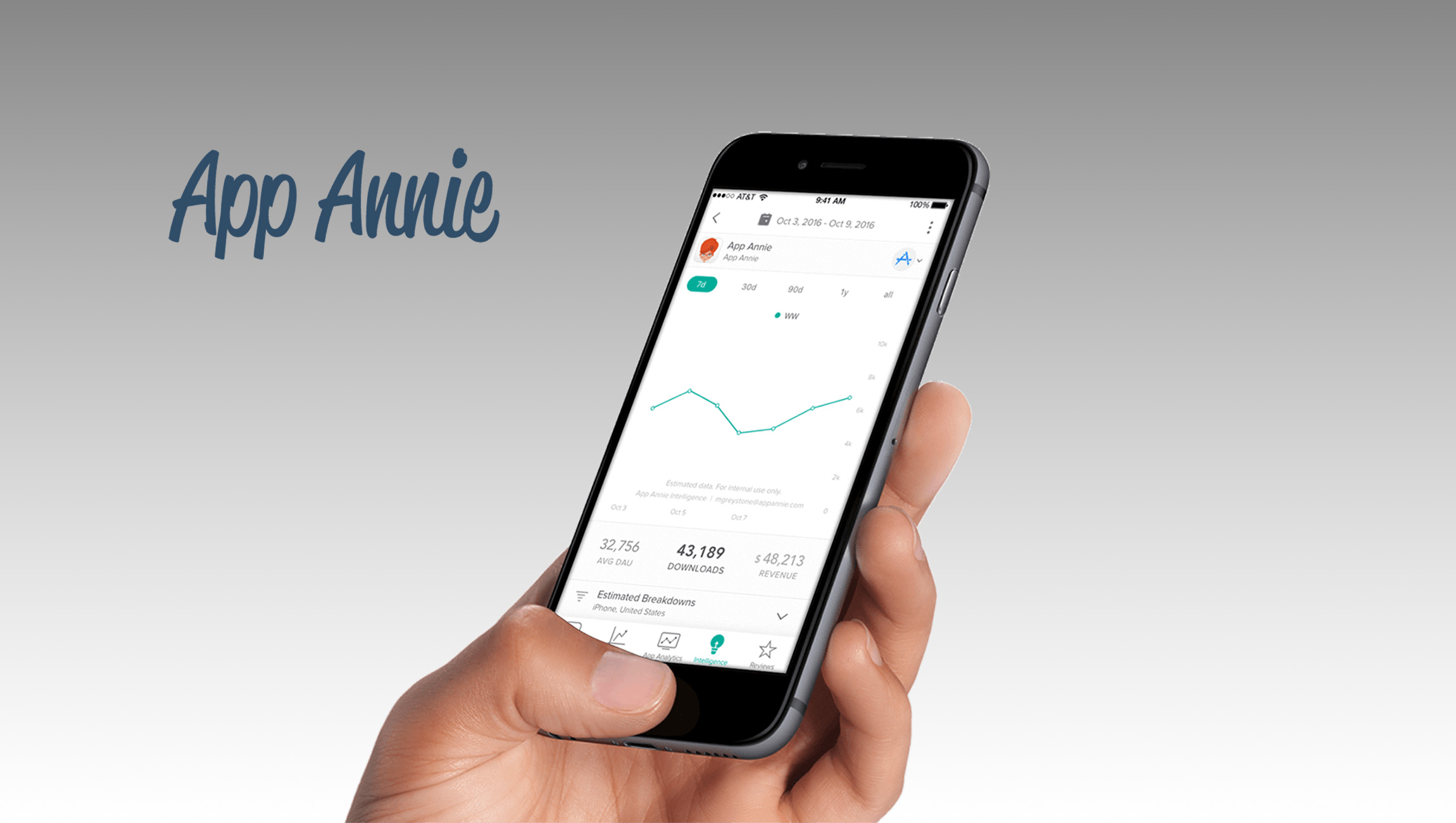
Leading mobile app data and insights company App Annie and International Data Corporation (IDC), the premier provider of technology market intelligence services, unveiled a special joint report entitled, “Gaming Spotlight, 2017 Review.” The report analyzes the mobile games market in 2017 from several vantage points and puts it in a broader, global gaming industry context

The report features three main themes: mobile gaming’s relatively large scale and faster growth rate in terms of direct consumer spending compared to home game consoles and PC/Mac gaming; the ascendance of live player vs. player (PvP) or co-op multiplayer games to the top of the grossing charts last year; and Asia-Pacific’s ongoing rise to dominance not just in terms of spending but, increasingly, in-game origination and gameplay innovation.

Also Read: Brainshark Unveils Sales Training Enhancements to Strengthen Learning Paths

Direct spending on mobile games exceeded the combined spending total on a home console, PC/Mac, and handheld console games by more than one third in 2017, up from a single-digit margin by the same measure in 2016. Games also generated nearly 80% of total worldwide consumer spend for combined iOS and Google Play while accounting for roughly 35% of worldwide downloads.

Danielle Levitas“Mobile gaming’s lead widened globally in 2017; mobile game spending was 2.3x PC gaming and 3.6x game consoles last year. With billions of mobile devices in the world, apps are the mass market gaming platform for casual and serious gamers, enabling them to play whenever and wherever they want to,” said Danielle Levitas, SVP Research, App Annie.

The top two grossing games worldwide on both iOS and Google Play in 2017 featured live PvP gameplay, demonstrating that hardcore-leaning multiplayer elements aren’t just possible on mobile devices, but have already proven popular and lucrative. The ascent of titles like Honour of Kings (published by Tencent and known as Arena of Valor in Western markets), Lineage 2 Revolution (Netmarble), Fantasy Westward Journey (NetEase), and Lineage M (NCSOFT) to the top of the mobile grossing charts shows that live multiplayer games are an important trend in gaming that has clear esports implications. 2017 appears to have been the first year that three different live PvP titles took the top-grossing slot on iOS, Google Play, and handheld game consoles (Pokémon Sun / Pokémon Moon, published by The Pokémon Company and Nintendo for Nintendo 3DS/2DS, was the top-grossing handheld title last year, and features live PvP battles).

Also Read: App Annie Strengthens Executive Team Amid Rapid Company Growth and Market Expansion

An IDC survey of U.S. gamers from 3Q 2017 showed that a lower share of smartphone and handheld console gamers played live PvP or co-op titles (34%) than did PC/Mac and home console gamers (over 44%), but this gap also narrowed relative to a similar survey from 3Q 2016. Live PvP or co-op gamers on smartphones and handheld consoles, the same 3Q 2017 survey showed, skewed younger and male compared to the balance of smartphone and handheld gamers that didn’t play such games. Live PvP or co-op gamers in the U.S. were more likely to have spent money on a smartphone or handheld console game in 3Q 2017, moreover, and were more likely to play associated titles for at least five hours a week.

“Live multiplayer gaming on smartphones and tablets took a big step forward in 2017. Although titles such as Clash Royale, ROBLOX, and Hearthstone: Heroes of Warcraft have been popular in Western markets for some time, it’s now clear that publishers from Asia-Pacific not only have an ‘answer’ to these titles, but upped the ante last year not just in scale but, arguably, in the sophistication of live PvP and co-op gameplay,” said Lewis Ward, Research Director Gaming and AR/VR, IDC.

Recommended Read: App Annie: Netflix and iQIYI Lead APAC Revenue Ranking in Online Video Apps in H1 2017

SRAX Announces Alpha Release of Blockchain Technology BIG Platform

0
SRAX Announces Alpha Release of Blockchain Technology BIG Platform

Limited, by Invitation Only, Alpha Users to Be the Original Participants in Building the First Consumer-Powered Data Marketplace Where People Will Own, Verify and Sell Access to Their Data

Social Reality Inc.’s blockchain identification graph platform, BIG, recently announced the release of the Alpha version of its consumer data management and distribution system to a limited, by invitation only group of users. The announcement represents the first direct engagement for BIG with users and the next step in creating the first consumer-powered data marketplace where people will own, verify and sell access to their data.

“The release of BIG in Alpha is an exciting step in our efforts to build a consumer application and secure data management system with a rewards component. BIG will benefit everyone in the Internet ecosystem and deliver an advantage to our advertising clients while improving the online experience for consumers,” said Christopher Miglino, CEO and Chairman of SRAX.

Also Read: SRAX Intends to Pay Cryptocurrency Dividend with BIGtoken

SRAX Announces Alpha Release of Blockchain Technology BIG Platform
Kristoffer Nelson

Kristoffer Nelson, COO of SRAX, added, “After months of hard work and diligence, our vision for BIG, as the first consumer-powered data marketplace, is coming to fruition. The BIG platform solves challenges for both consumers and businesses. Most importantly, the ability for consumers to verify their existing data and create new data through interactive surveys in the Alpha version represents a significant milestone in enabling consumers to own and manage their data.”

Also Read: SRAX Announces Private Placement of $5.18 Million with Existing Shareholders

BIG Platform, built on the blockchain by SRAX, is a consumer data management and distribution system. Currently, under development, SRAX’s blockchain identification graph platform, BIG, is expected to be the first consumer-powered data marketplace where people will own, verify and sell access to their data. Through a secure blockchain platform, token reward and open source governance structure, BIG will provide users with transparency, choice and compensation to manage and access verified data. As envisioned, participating consumers will be rewarded with digital tokens, BIGtoken. Developers will be able to build online experiences on top of the BIG Platform. The system also provides advertisers and media companies access to transparent, verified consumer data to better reach and serve audiences.

Recommended Read: SRAX Acquires OpenDSP’s Demand-Side Platform

Karen Brophy To Head Nexstar Digital Subsidiary LAKANA

0
lakana

Appointment Highlights Nexstar’s Commitment to Leverage Leading Content Management Platform and Deliver next Generation Solutions to Broadcasters

LAKANA, an enterprise-class SaaS technology company and a wholly owned subsidiary of Nexstar Digital, LLC, announced that Karen Brophy has been named Head of LAKANA and Senior Vice President of Nexstar Digital, effective immediately.

In her new role, Ms. Brophy will be responsible for the overall direction and management of LAKANA, including growing its current operations and launching new innovative content monetization solutions and services. Ms. Brophy will be based in Los Angeles and will report directly to Gregory R. Raifman, President of Nexstar Digital LLC, a wholly owned subsidiary of Nexstar Media Group.

Also Read: Yext Launches New Preferred Partner Program

“LAKANA is dedicated to providing our customers with the best enterprise-level content management platforms and solutions available in the market to enable them to meet their business goals and address the challenges which publishers face today. Karen brings extensive digital media and marketing experience at Hearst, Yahoo!, Tribune & Spin Media and her record of success developing and implementing multi-platform growth strategies will expand our offerings and enhance our users’ platforms and multi-platform integration capabilities,” said Gregory R. Raifman, President, Nexstar Digital.

“In 2017 Nexstar Media Group posted digital revenues in excess of $230 million and we are very optimistic about the long-term growth trends for Nexstar Digital and Nexstar Media Group’s core digital revenue business lines. We look forward to working with Karen as we continue to expand our services to the broadcast and digital industries with new and innovative technology, allowing us to provide unparalleled solutions for media companies and efficient delivery of all products throughout the value chain,” added Raifman.

Also Read: Google to Dominate App Downloads in 2018 as Predicted by Adjust Report

Ms. Brophy brings 20 years of product and business operations experience, with more than 15 years working with leading media and entertainment corporations. Most recently, she served as Senior Vice President of Strategy and Operations at Hearst Newspapers leading key initiatives in a video, audience development, and business operations. Prior to that, she spent seven years as Vice President of Digital Product where she led consumer product, engineering, content strategy and revenue partnerships. She has been a leader in the consumer product sector with prior roles at Yahoo!, Tribune, Spin Media and the New York Times. She also has extensive experience developing enterprise level digital publishing platforms for major media companies including The Financial Times and Time Inc.

“Joining the team at LAKANA and Nexstar Digital is a great opportunity for us to lead the market with cutting-edge approaches to publishing platforms as we expand our product and service offerings to help our clients enhance their audiences – the overall foundation of their business growth. I look forward to working with the talented LAKANA/Nexstar teams to expand the product suite and help shape and advance the way publishers approach growing their audiences,” said Karen Brophy, CEO, LANKA.

Recommended Read: Mobile CDN: What Is It and Why Is It Essential for Mobile Apps?

Trianz Names Matthew Feyling As New VP Of Analytics

0
trianz

Matthew Feyling Has over 20 Years of Industry Experience in Designing Analytical Solutions and Driving Business Adoption to Ensure Customer Success.

Digital business and technology transformation organization Trianz announced that Matthew Feyling has joined the firm as a Vice President in its Analytics and Information Management Practice. Feyling has previously held leadership roles at a Big Data solutions group in the San Francisco Bay area, and will now oversee Trianz’ client engagements in the West Coast region where he will focus on growing its client relationships, driving client value, and supporting client success.

Also Read: Google Acquires Twitter’s Mobile App Developer and Its Crash Reporting System to Boost Firebase

Matt FeylingFeyling has over 20 years of industry experience in designing analytical solutions and driving business adoption to ensure customer success. His role at Trianz will extend to enabling digital transformation at Fortune 1000 client organizations, specifically targeting Big Data, Data Science, and Data Engineering and Analytics Reporting initiatives.

Also Read: MobFox Partners with Moat to Enhance Viewability for Advertisers

Feyling said he looks forward to working with the Trianz leadership team to develop and advance key analytics service offerings such as Modern Data Architectures, Customer 360, Data Monetization, Marketing Analytics, and other data-centric initiatives which have become critical to digital transformations. He is also spearheading the firm’s talent acquisition efforts to accommodate recent growth in the region.

“We’re all excited to have Matt on board. His experience, capabilities and collaborative style should prove to be a tremendous advantage for Trianz clients and our teams in achieving success through the use of analytics that are playing a key role in enterprise transformation,” added Todd Nash, Trianz Analytics & Information Management Practice leader.

Recommended Read: New Adobe Target Mobile Capabilities Enable Always-On Personalization 

Four Step Marketing Consultants Announce Two New Marketing SaaS Applications

0
Four Step Marketing Consultants Announce Two New Marketing SaaS Applications

FSMC Hopes to Bring Personalized and Measurable Marketing to Every Business

Four Step Marketing Consultants (FSMC), marketing technology company based out of Central Florida, announced plans to build two new SaaS marketing applications. The new marketing apps are expected to bring two new income streams to FSMC as well as an opportunity to gain more influence in the business world.

Also Read: Cheetah Mobile Announces Changes to the Board of Directors

Four Step Marketing Consultants Announce Two New Marketing SaaS Applications
Matt Law

“As marketing consultants, we are up to our eyeballs in technology. For every tool we use, there are three more providers behind them asking for our business. The decision to build out and release these new marketing apps doesn’t come lightly. Our team and investors believe that the ideas are unique and that there will be a strong demand for these applications with business owners. Additionally, the apps will not target the saturated market of agency management. Instead, the two applications will solve two significant problems and will be delivered with clean user interfaces, making them easy for businesses to integrate,” said Matt Law, CEO, FSMC.

Also Read: Sitetracker’s “Capture the Future” Contest Aims at Bringing Vital Infrastructure to Light

The first application is slated to be a unified system for measuring a company’s marketing. The core components of the application provide a simplified way for a business to track online and offline marketing. The app will include call tracking, visitor sessions and goals, ROI and various other aspects to determine a campaign’s effectiveness.

The second application is related to personalizing user experiences. The app will generate personalized URLs for offline marketing and customize the user’s online experience based on their history with the company. Though other applications like this do exist, FSMC believes they are missing key features and technology which renders them useless.

“We’ve already built the JavaScript and databases, so the hard part is already done. We’ve also been testing the technology out with our clients for quite a while and are excited about the opportunity to share them with the world. Though we’re not quite sure when the first application will be released, I’d expect we’ll be able to deliver a beta release within six to 12 months of starting on the projects,” Matt added.

Recommended Read: Mobile CDN: What Is It and Why Is It Essential for Mobile Apps?

TechBytes with Deanna Ballew, VP, Product Development, Widen

0
TechBytes with Deanna Ballew, VP of Product Development at Widen

Deanna Ballew
VP, Product Development, Widen

In a recent article, we mentioned how Product Reviews and Recommendations could be a central asset to your entire Content Marketing strategy in 2018.  We spoke to Deanna Ballew, VP, Product Development, Widen, to understand what data points should Product Development teams focus on to close the gap in their Digital Asset Management (DAM) platforms that deliver consistent product recommendations and customer experiences.

Html code here! Replace this with any non empty text and that's it.

Tell us about your role at Widen and the team/ technology you handle.

I’m the VP of Product Development at Widen. We provide digital content solutions for more than 600 global companies. During my 14 years at Widen, I have been shaping our Digital Asset Management solution. In the 2000s, we transitioned from a print services provider into a software company and adopted formal product management. Now, our product management practice straddles software engineering, business strategy, and marketing. I work hand in hand with Widen’s VP of Marketing, Jake Athey, to set our vision. I align the vision across a talented team of product managers, user experience experts, software engineers, and testers to deliver that vision through software solutions.

How do you define your ‘Ideal Customer’ profile? How does a standard customer definition enable you to ensure smooth Product Management?

The role of a product manager at Widen is to deliver solutions that solve customers’ problems. Choosing which problems to focus on is the toughest part of the role. We continually assess which problems are going to have the greatest impact, which ones are delighters, and which ones will propel us in the market.

In shaping the vision of our product, we seek out ideal customers who consistently use our platform across their content lifecycle. From there, we approach customers who value a reciprocal partnership and are able to give us candid feedback. They have a vision for how our product will enable their company to expand. We actively listen to them and observe their needs so we can uncover opportunities to solve problems that will make a difference.

Once we have identified problem areas that are common to many customers, we assess the value of solving a given problem relative to other roadmap items.

In short, our ideal customers give our product teams a broad range of problems to explore without locking us into one direction.

What data points help you close the gap between product recommendations and real customer experiences?

To close the gap between product recommendations and customer experiences, we ask and observe the customer. Their experience spans across their time in the product, use of services, and participation in the broader Widen Community. To provide value, we break down the entire customer journey and seek data from each key step.

Many of our data points come from qualitative methods. Surveys, user research, and win/loss interviews are extremely valuable in understanding our current customers and potential customers. These also uncover areas of weakness where we need to improve our product, service or community.

I cannot say enough about user testing and observing customers live as they struggle with your product and completing tasks. It is extremely eye-opening and reveals whether we are on the right path or not. It’s also an extremely good exercise of patience to not “assist” the user in completing the task!

For quantitative data points, we analyze product usage. Out of the customers who are using the new functionality, how are they using it and how often?

When we combine qualitative and quantitative data, we can identify the synergy of what is working for users and where we need to apply more attention.

On what factors should a modern business choose a Digital Asset Management Platform?

A modern business has many priorities and goals besides Digital Asset Management. The platform needs to support those initiatives and complement the company’s core mission. The hard part of implementing new technology is the change management within teams and push for adoption. For success, you’ll want a provider that offers implementation services and can bring the expertise you need to grow adoption and build a holistic martech stack.

This expertise includes integrations with your other technologies. Modern businesses have rich technology stacks with many tools, and Digital Asset Management plays a central part. In a recent customer visit, our technology audit revealed around 270 different software tools used across sales and marketing teams. The DAM platform needs pre-built integrations for simple connections and an adaptable API for robust custom integrations where needed.

Technology is changing rapidly. Your digital asset management platform should have a proven track record of longevity and innovation to ensure it will grow with your company and the technology landscape. Look for platforms that are battle tested and have a strong release cadence.

Modern businesses have modern users! These users expect a simple platform that meets their needs. To meet these expectations, you need teams that learn and innovate by listening to and observing users. Not only should the vendor have a dedicated user experience team with support from leadership, it should have a user-centered mindset where everyone across the company seeks to deliver the best experience. At Widen, we have set goals and expectation for the whole product development team to take time for onsite visits and sit in usability tests. The only way for us to build products that meet our customers’ expectations is to understand the people using them at every touchpoint.

What are the major challenges in the way product management officers deal with the Software Development, Infrastructure, and Quality Assurance teams? How do you meet those challenges at Widen?

Time and roadmap! Every customer wants to know, “When is ____ going to be delivered?” And every engineering team responds, “Here is my best estimate.” The tension between curiosity about dates and reality about workload in development means that product managers representing their customers’ concerns can find themselves in a tough spot with the engineering team.

At Widen, we have solved this problem with transparency for both our customers and our engineering teams. Product managers invite both customers and internal teams to an online roadmap where customers can vote and comment. Items on the roadmap start as high-level themes and get more detailed through the development process. Customers are able to see what items are priorities ahead of other needs. Internal teams get to see the comments on why items are important and reach out for more details during the development process.

This practice sets transparent expectations and creates shared appreciation between engineering and customers. Instead of setting false expectations and a delivery date with a customer, they watch it progress and know when to expect it. Instead of engineering teams feeling pressured to deliver a laundry list of requirements, they see the value that it brings and find creative ways to deliver value every two weeks to our customers.

After a year of innovating without a timeframe or static roadmap, I’m starting to see some interesting outcomes. Recently, I spoke with a software developer on my team who suggested we give product managers high-level estimates 6 to 9 months out, to better set customer expectations. He had just observed several interviews in which customers asked for timeframes. My response as the Product Manager was no — we don’t want to lock ourselves into a timeframe when instead we could work with customers to solve more valuable problems that we uncover along the way. Our customers participate in an average of six user testing sessions per week and tell us how we can better meet their needs.

What are your predictions on AI/ML capabilities helping Product Development teams achieve better automation and higher productivity?

In product development, AI/ML can change the way we identify and solve problems.

When we look for problems to solve, we usually have a hypothesis. We dig into small subsets of data that we have access to and the ability to synthesize. However, we know that there is an immense, untapped datastore on customer preferences. Machine learning could uncover new patterns and problems that were unknown to us. It gets even more interesting if, someday, we can predict the success of a product or idea through machine learning and predictive analytics.

At Widen, we often brainstorm how AI can help us solve our customers’ problems. By leveraging AI within our product, we could personalize the experience based on the user actions. Users could explore data that is of interest to them instead of first having to search for it and hope they find what they need. Searching for data is a chore and users hope they can enter the right syntax in the right order to find what they need. With AI, users could explore data that is relevant to them and be immersed in a new experience.

As AI becomes refined and accessible, we know it will make a significant impact. The general principles of DAM will hold true, but AI techniques could reduce the time spent on our product and deliver richer experiences.

Thanks for chatting with us, Deanna.
Stay tuned for more insights on marketing technologies. To participate in our Tech Bytes program, email us at news@martechseries-67ee47.ingress-bonde.easywp.com


Sonata Announces Significant Functionality Addition to Its Enterprise Mobility Product Halosys

0
Sonata Software Makes Strategic Acquisition of GBW, a Leading Global Player in the Exciting Customer Experience Space

The Patented Unified Enterprise Mobile Platform Has Found Favour with Customers Seeking to Execute Scalable Mobile Strategies

Sonata Software has announced that its Unified Enterprise Mobility Platform, Halosys, has been enhanced with additional features that boost optimization and usability. Some of the new features include support for bulk CURD operations, calling service function from service, distributed cache Redis, data source usage logging and analytics, OAuth/SAML authentication for admin console, custom authentication for apps, Mongo DB connector and Microservice SDK.

A few months ago, Halosys was granted a patent for its innovation on rule-based notifications. The patent was granted for key technology innovations in the Halosys platform that enable users to be notified across the web, SMS, email and in-app push notifications based on events matching a pre-configured set of filters, including, the user’s location, time of day, along with the data from the event’s object graph.

Also Read: With Tetra, No Need to Record And Transcribe Calls

The Mobile-First Platform includes an Enterprise Mobile Backend as a Service (mBAAS), an app lifecycle management solution and an internal app store. The Platform has APIs & SDKs for iOS, Android, Windows, Xamarin & JavaScript and supports both mobile and web applications. The platform enables businesses to rapidly build, integrate, secure, manage, deploy and analyze enterprise-mobile application portfolio. The platform, also available on Microsoft AppSource, has received a positive evaluation from technology research analysts for its integrations to enterprise applications, including into SAP Hybris, NetSuite, Microsoft Dynamics, Salesforce and common databases. Availability of connectors for legacy and custom developed systems, with key authentication and notification provisions have been found very valuable.

Also Read: Lumavate Adds IT Veteran Bill McConnell to Its Board of Managers

The Halosys platform has seen significant enterprise adoption. A leading global marketing and media company has built a timesheet mobile app for its 10000+ employees, spread across various locations and partner companies on Halosys for scalable mobile program execution, enabling the company to save millions of dollars with accurate billing and payroll. Similarly, a top general contractor in the US used an ‘App Factory’ framework based on the Halosys platform to quickly deploy custom apps. Each app was developed in an average time frame of just five weeks – from requirements gathering to production deployment.

Sonata Software acquired Halosys, headquartered in California, in August 2015. Since then, it has continued to invest in developing the Halosys platform to be a world-class enterprise mobility platform, for the execution of Mobility strategies of B2B, B2E, and B2C enterprises.

Recommended Read: Interacting with Consumers Without Writing a Word