Home Blog Page 4307

Harmonic Announces VOS SW Cluster for Fast Origination and Delivery of OTT and IPTV Services

0
Harmonic Announces VOS Software Cluster for Fast Origination and Delivery of OTT and IPTV Services

The VOS SW Cluster Solution Has Already Been Successfully Deployed by a Leading Telecommunications Service Provider in the Asia-Pacific Region

Harmonic, the worldwide leader in video delivery technology and services, announced the next evolution of its award-winning VOS offerings, addressing the need for increased agility, adaptability and state-of-the-art technology for OTT and IPTV deployments. VOS SW Cluster is a comprehensive software application that embeds market-leading media processing, including ingest, playout, compression, encryption, packaging, and origin, and supports both cloud and bare metal compute environments. Highly adaptive and responsive to user needs, the VOS SW Cluster solution can be used by video content and service providers of any size and on any platform for the origination and delivery of IPTV and OTT services. The VOS SW Cluster solution has already been successfully deployed by a leading telecommunications service provider in the Asia-Pacific region.

Also Read: OTT Explosion Provides Safe Platform For Marketers

“Being successful in today’s media environment is highly dependent upon how quickly you can adapt. The VOS SW Cluster offering expands upon the flexibility and agility of our award-winning VOS Cloud media processing application, enabling operators to be even more nimble in using datacenter resources. With the VOS SW Cluster solution, video content and service providers can handle every step of the media processing chain using datacenters, the cloud, or both to launch services faster and deliver high-quality IPTV and OTT content on every screen,” said Tim Warren, senior vice president and chief technology officer, video business, at Harmonic.

As an infrastructure-independent media processing application, the VOS SW Cluster offering makes it easy for operators to switch between bare metal datacenter computing (e.g., off-the-shelf IT), public clouds (e.g., AWS, Microsoft Azure), and private clouds. Having an elastic and always up-to-date media workflow enables operators to launch services faster, scale seamlessly with operational efficiency, and ensure consistent functionality across all deployment environments. With a simple intent-driven user interface, operators have more time to focus on service innovation and test new service offerings. The VOS SW Cluster application enables operators to keep pace with the latest OTT workflows, including live publishing to social media online platforms, streaming VOD from live and file sources, groundbreaking Ultra-HD OTT with HDR, and low-latency delivery via the CMAF specification.

Also Read: YouTube Partner Program Tightens Monetization Rules

The VOS SW Cluster solution joins Harmonic’s groundbreaking VOS family, which helps video content and service providers succeed in the quickly evolving OTT market by leveraging the latest advancements in software and cloud technology. The VOS family also includes VOS 360 media processing SaaS, which utilizes the VOS SW Cluster solution, and VOS Engine, an advanced container-based software module. The VOS 360 offering is part of a growing line of SaaS offerings hosted, maintained and monitored by Harmonic that deliver the company’s market-leading media processing and delivery technologies as a service.

Recommended Read: What You Need To Know About Video

Extreme Reach Wins Super Bowl LII, Handling Ad Delivery for over 70% of Ads in the Big Game and Ensuring Commercial Talent Gets Paid

0
Extreme Reach Wins Super Bowl LII, Handling Ad Delivery for over 70% of Ads in the Big Game and Ensuring Commercial Talent Gets Paid

Extreme Reach Was Responsible for the Successful Airing of the Vast Majority of Paid Commercials Appearing During Super Bowl

Video advertising technology provider Extreme Reach, announced that Super Bowl LII was record-breaking for the company, which played a bigger behind-the-scenes role in the big game than ever before. The company, whose services simplify video ad asset management across the entire lifecycle for brands and agencies, was responsible for the successful airing of the vast majority of paid commercials appearing during the game. Additionally, Extreme Reach’s Talent & Rights Management team ensured that performers such as on-screen and voice-over actors, as well as musical talent involved in the big day’s ads, were properly compensated for their work.

Also Read: How To Avoid Being ‘First Down’: Lessons To Learn From Super Bowl LII

Melinda McLaughlin
Melinda McLaughlin

“The Super Bowl is a unique cultural phenomenon. It’s the single day of the year when consumers acknowledge loving great ads. Of course, with the hype, cost and stakes higher than ever, making sure those ads make it on air seamlessly and in pristine condition is a team sport in and of itself. While the ads themselves get so much attention, how they get to the screen and how the performers get paid generally don’t get a moment’s thought. But these are foundational functions that power brand advertising on every screen, and to our brand and agency clients, getting these right is just as important as creating great ads,” said Melinda McLaughlin, Chief Marketing Officer, Extreme Reach.

Also Read: CMO of Extreme Reach, Wins Gold Stevie Award in 2017 Stevie Awards for Women in Business

The company’s platform, unique in its seamless integration of linear and non-linear video ad delivery and Talent & Rights management, plays a key role for live events like the Super Bowl, Olympics and Academy Awards, as well as all programming across all screens and devices.

Also Read: Most Americans See Super Bowl as an Entertainment Spectacle Not Appropriate for Political Messages

Extreme Reach Wins Super Bowl LII, Handling Ad Delivery for over 70% of Ads in the Big Game and Ensuring Commercial Talent Gets Paid
Tim Hale

“Few people realize that getting paid for commercial work isn’t always a simple dollars-per-hour process. It operates according to strict contracts covering a specific length of time. It’s also highly complex in that one commercial spot can involve many performers whose contracts expire at different times. As more ads cascade across screens on all devices, it’s increasingly difficult for brands and agencies to track where those ads land. In a recent survey of Ad Ops professionals, 50 percent reported that talent contract infractions are common. The good news is, we have the technology to restore control and make penalties a thing of the past,” stated Tim Hale, Extreme Reach’s Chief Talent Officer.

Also Read: Extreme Reach Names Matt Timothy Chief Revenue Officer

Extreme Reach brings massive scale as well as efficiencies of automation to thousands of leading brands and agencies. Every day, the company ingests 1,500 new and unique ads into its cloud platform, which is connected to every core TV destination and digital publisher. Additionally, the company manages over $1.5B in Talent & Rights payments annually.

Recommended Read: Why Local Search Is the Real Winner on Super Bowl Sunday

Oracle Data Cloud Launches Data Marketing Program to Help Savvy Auto Dealer Agencies Better Use Digital Data

0
Oracle Data Cloud Launches Data Marketing Program to Help Savvy Auto Dealer Agencies Better Use Digital Data

Nine Leading Retail Automotive Marketing Agencies Are First to Complete Comprehensive Program, Receive Oracle Data Cloud’s Auto Elite Data Marketer (EDM) Designation

Oracle Data Cloud launched an advanced data training and marketing program to help savvy auto dealer agencies better use digital data. Oracle also announced the first nine leading Tier 3 auto marketing agencies to qualify for the rigorous program and receive Oracle Data Cloud’s Auto Elite Data Marketer (EDM) designation. Those companies included: C-4 Analytics, Dealer Inspire, Dealers United, Goodway Group, L2TMedia, SocialDealer, Stream Marketing, Team Velocity, and TurnKey Marketing. Oracle’s Auto Elite Data Marketer program will help agencies effectively allocate their marketing resources as advertising budgets shift from offline media to digital platforms.

Oracle Data Cloud Launches Data Marketing Program to Help Savvy Auto Dealer Agencies Better Use Digital Data
Joe Kyriakoza

“As the automotive industry goes through an era of transformational change, dealers are literally where the rubber meets the road, and they need cutting-edge marketing tools to help maintain or grow market share. Tier 3 marketers know that reaching the right audience drives measurable campaign results. By increasing the data skills of our marketing agency partners, Oracle can help them directly impact and improve their clients’ campaign results,” said Joe Kyriakoza, VP and GM of Automotive for the Oracle Data Cloud.

Also Read: Oracle President Thomas Kurian Highlights Oracle’s Cloud Innovation at Oracle OpenWorld 2017

Oracle Data Cloud’s Auto Elite Data Marketer Program includes:

  1. Education & training – Expert training to the marketing agency and their extended teams on advanced targeting strategies and audience planning techniques
  2. Customized collateral – Co-branded collateral pieces to support client marketing efforts, including summary sheets, decks, activation guides, and other materials.
  3. Co-branding marketing – Co-branded marketing initiatives through thought leadership, speaking opportunities, and co-hosted webinars.
  4. Strategic sales support – Access to Oracle’s specialized Retail Solutions Team and the Oracle Data Hotline to support strategic pitches, events, and RFP inquiries.

“We are proud to have worked with Oracle Data Cloud since the beginning, shaping the program together to drive more business for dealers using audience data. Our team is excited to continue this relationship as an Elite Data Marketer, empowering Dealer Inspire clients with the unique advantage of utilizing Oracle data for automotive retail targeting,” said Joe Chura, CEO of Dealer Inspire.

Also Read: Oracle Is Integrating Machine Learning Across All Its Platform-As-A-Service Offerings

David Boice, CEO and Chairman of Team Velocity Marketing, added, “We are consumed with data that allows for hyper-personalization and better targeting of in-market consumers. Oracle is a new goldmine of data to drive excellent sales and service campaigns and a perfect complement to our Apollo Technology Platform.”  According to Joe Castle, Founder of SOCIALDEALER, “We are excited to be one of the few Auto Elite Data Marketers which provides us a deeper level of custom audience data access from Oracle. Our companies look forward to working closely to further deliver a superior ROI to all our dealership and OEM relationships.”

Through the Auto Elite Data Marketer program, retail marketers learn how to use Oracle’s expansive selection of automotive audiences, which cover the entire vehicle ownership lifecycle, like in-market car shoppers, existing owners, and individuals needing auto finance, credit assistance, or vehicle service. This comprehensive dataset allows clients to precisely target the right prospects for any automotive retail campaign. Oracle has teamed up with industry-leading data providers to build the robust dataset, like IHS Markit’s Polk for vehicle ownership and intent data, Edmunds.com for online car shopper data and TransUnion the trusted source for consumer finance audiences.

Oracle Data Cloud plans to expand the Auto Elite Data Marketer program to include additional dealer marketing agencies, as well as working directly with dealers and dealer groups and their media partners to use data effectively for advanced targeting and audience planning efforts.

Recommended Read: Oracle Data Cloud Adds More Muscle to Brand Safety and Viewability with Moat’s Acquisition

ParallelM Launches First Machine Learning Operationalization Solution – ParallelM MLOps

0
ParallelM Launches First Machine Learning Operationalization Solution - ParallelM MLOps

ParallelM MLOps Accelerates and Streamlines Delivery of Machine Learning Across the Enterprise to Maximize the Business Value of AI

ParallelM, one of the fastest growing new companies in machine learning management, today announced ParallelM MLOps, the first software solution for operationalizing machine learning (ML) and deep learning across the enterprise.

Operationalizing machine learning poses a significant challenge, as current techniques have limited ability to tackle the unique intricacies of ML behavior patterns. Prevailing workarounds tend to be manual and brittle, inhibiting ML service scaling, and delaying the benefits of ML to the business.

According to a recent survey of over 3,000 “AI-aware” C-level executives by McKinsey Global Institute, only 20 percent have deployed at least one AI technology and only 10 percent have deployed three or more. Further, out of 160 AI use cases examined, only 12 percent had progressed beyond the experimental stage.

Also Read: How AI Will Make Marketing More Personalized In 2018

MLOps delivers a unique approach, addressing ML production issues head-on, by automating ML-optimized continuous deployment and integration, ensuring ML model and prediction quality, and empowering data science and operations teams with innovative visualization and collaboration facilities. Using MLOps, business teams can mitigate risk, ensure compliance, assess, and optimize the ROI of their AI initiatives. By providing a single, unified software solution for the full ML production lifecycle, MLOps enables enterprises to move confidently into the critical phase of realizing ML business value.

ParallelM Launches First Machine Learning Operationalization Solution - ParallelM MLOps
Sivan Metzger

“Rapid and robust deployment of ML-driven business services across the enterprise requires bringing together technology and process optimized to handle the unique complexities of ML pipelines. Our solution helps manage the whole ‘ML production lifecycle’ by automating the core elements and functions required for scaling out the live delivery of ML-driven business services. Our customers tell us that ‘MLOps is not just a software solution, it’s the way we chose to structure our organization, and how we run our business.’ We are truly changing the way enterprises are approaching the scaling of machine learning and AI,” said Sivan Metzger, CEO of ParallelM.

Also Read: Inmar’s Collective Bias Launches the First-of-Its-Kind Suite of Advanced Analytic Solutions Utilizing First-Party Shopper Data

“The MLOps framework is similar to the theoretical framework we have been discussing for some time, which is the reason we got a clear thumbs up from our chief architect, as well as the development team. I believe that ParallelM will not only be of value to Clearsense, but also to the healthcare industry as a whole. Many of the organizations that have adopted Hadoop and other big data technologies could use ParallelM’s help as they implement and scale their data science programs. ParallelM has done a great job and we are very pleased to become their partner,” said Charles Boicey, Chief Innovation Officer at Clearsense, a global ML service provider for the healthcare industry.

MLOps is powered by ParallelM’s ION (Intelligence Overlay Network) technology, a proprietary, patent-pending approach that provides a comprehensive, logical representation of any ML-driven business application. The ION manages the relationship between the ML pipelines, events, predictions, policies and dataflows, while abstracting away the underlying composite of model dependencies and compute infrastructure. This enables operations teams to organize their efforts around managing ML business services rather than individual components within the ML stack.

MLOps can be deployed on cloud, on-premise, or in hybrid scenarios and works across distributed computing platforms such as Apache Spark, TensorFlow, Apache Flink, and PyTorch. MLOps also integrates with leading data science and AI developer platforms.

Recommended Read: AI, Big Data And Digital Transformation – And The Potential ‘Buzzword Backlash’

Marketing Strategy In 2018: How To Deliver Savvy, Sleek and Integrated Campaigns Amidst Digital Transformation

0
Marketing Strategy In 2018: How To Deliver Savvy, Sleek and Integrated Campaigns Amidst Digital Transformation

Cambridge Biomarketing LogoIt’s only February, and 2018 has presented marketers with new opportunities as well as tasked them with an array of challenges. Advancements in innovative technologies, including Virtual Reality (VR) and Machine Learning (ML) have offered a new set of tools for developing digital strategies and campaigns.

As a result, there is an expectation to not only consider the systems experiences are built on, but to also design sleek, integrated systems that deliver personalized experiences customized to each unique users’ needs. A successful marketing strategy in 2018 will need to include integration points, data flow strategies, data security and more. To be truly transformative, marketers will need to analyze performance and adapt to the needs of their audiences.

Digital is no longer an afterthought to the marketing mix

Digital strategy and program management start with a solid and flexible infrastructure. This includes exploring all the cloud based software and tools available and creating a system design to ensure all assets are centrally managed, configured and integrated properly. Setting this up initially is imperative to protecting your assets, products and ensuring all data is collected securely.

Also Read: Why Conversational AI is the Future of Business

Talent, security and analytics are key

In order to achieve set goals, CMOs need to build out their marketing team with the right technical expertise and talent. In addition, it’s essential that companies that partner with agencies apply technical oversight. When designing digital ecosystems and staffing teams, it’s essential that today’s changing technological landscape and rich talent pool is taken into consideration.

In addition, organizations should implement a data ethics and management strategy. Keeping digital data safe will help to build trust with customers and audiences and will help to mitigate risk. Valuable data needs to be safely collected, encrypted and stored securely.

Lastly, the advancement of analytics technology is changing the way we optimize. Consider adding advanced analytics to gain insights about customers and their behavior. Develop an analytics strategy and spend time setting systems up from the very beginning. The use of an online cloud based tool to analyze the data to make informed decisions can also be very helpful.

Being transformative and personal

With the development of the infrastructure in place and mastering data security, integrity and organization, companies are then able to apply digital touchpoints to their overall marketing strategy. This includes innovative technologies such as virtual reality (VR) and machine learning (ML), diversified platforms to deliver messages, as well as a clever product design.

For example, at Cambridge BioMarketing, when developing programs, we explore all possibilities from mobile and online to social and experiential. We work with clients to outline their digital ecosystem to cater to their unique audience and deliver to their objectives. For the rare disease market, adding VR might be able to change behavior for a healthcare provider at a conference that may be potentially interested in a treatment option; or ML has the potential to deliver customized content to a patient researching information about a specific disease.

Also Read:  AI-Powered ‘Intelligent’ Marketing Will Keep It Real

2018 and beyond

2018 will require more planning and strategic thinking as more companies enter the age of digital transformation. Not only will marketing strategies include smart systems and infrastructure, successful campaigns will need to consider personalized product design and properly managed data. With analytical thinking, forward-looking planning and dedication to a personalized strategy, marketers will be able to couple expertise with technology to drive business outcomes and increased ROI for years to come.

Also Read:  Who’s Responsible for Solving the Billion-Dollar Ad Fraud Problem?

SAP Unveils GDPR-Centric Solutions to Help Companies Protect Customer Data

0
SAP Unveils GDPR-Centric Solutions to Help Companies Protect Customer Data

SAP Hybris Identity, SAP Hybris Consent, and SAP Hybris Profile Would Offer A Better Grip on Customer Transparency and Digital Customer Experiences

In a major announcement for Data Management Platforms leading up to GDPR coming into force in May, SAP has introduced three new solutions supporting organizations that have a need to collect customer data in compliance with the EU General Data Protection Regulation (GDPR) while delivering personalized experiences.

The three new products are available now and can be deployed separately or as a package.

• SAP Hybris Identity, SAP Hybris Consent and SAP Hybris Profile support privacy, compliance, and personalization
• Companies can comply with GDPR and offer customers transparency and control

Alexander Atzberger
Alexander Atzberger, President, SAP Hybris

At the time of the announcement, SAP Hybris President Alex Atzberger said, “With GDPR around the corner, the timing of these solutions couldn’t be better. At a time when SAP is doubling down on its strategy to provide the leading front-office suite, the combination of SAP Hybris and Gigya solutions is a tremendous benefit for customers. Importantly, it turns a compliance need into a strategic business advantage and creates more trusted customer relationships.”

Many brands today are struggling to initiate and build trusted relationships with their online customers. Lack of transparency and control of personal information by brands has eroded trust in digital customer experiences.

In fact, a recent survey shows that data being used without their knowledge is the chief reason consumers leave brands.

Recommended Read: SAP to Acquire Callidus Software Inc., Will Offer Comprehensive “Front Office” Suite

Overcoming the Compliance Challenge in Customer Data

GDPR, which is effective May 25, gives extensive new rights to EU residents and visitors and applies to organizations anywhere in the world that collect personal information from within the EU.

With the integration of its recent acquisition of Gigya, SAP now provides customers with solutions to support them in gaining transparency and control over their data, helping them overcome the compliance challenges with robust registration, Robust Registration, Consent Preference, and Profile Management. The solutions can quickly and securely scale to manage billions of identities and thousands of digital properties across hundreds of brands to help companies meet the requirements of evolving privacy and data protection regulations.

Three New SAP Hybris Solutions for Customer Data Management from Gigya

SAP is bringing three new solutions to market to help organizations adopt a digital approach to drive more effective marketing, sales and service through data while keeping the customer in control of how much data is shared–

SAB Hybris Identity for Personalized Digital Experiences

SAP Hybris Identity establishes secure customer registration and login across websites, mobile applications and Internet of Things devices using flexible user authentication options, federation standards, and single sign-on functionality. It captures and stores customer identity data for trusted and personalized digital experiences.

Optimized registration flows increase conversion, while the platform helps protect consumers against identity fraud and data theft.

Read AlsoMarketing Op’s Guide to GDPR Compliance

SAP Hybris Consent for Synchronized Customer Lifecycle Management

SAP Hybris Consent presents and captures customer consent for terms of service and privacy agreements, including cookie consent and marketing communications. For auditing purposes, consent agreements and consent history are tracked across the customer lifecycle. This information can be synchronized with marketing, sales and service applications.

Customers are in control of their personal information with features for consent revocation, data export, and account deletion. Consent records are stored in a secure data vault.

Read AlsoOpenX Announces GDPR Publisher Compliance 4 Months Ahead of EU Deadline

SAP Hybris Profile for 360-Degree View into Customer Data Analytics

SAP Hybris Profile transforms customer identity information, profile attributes and other system data into a single customer view, which can be orchestrated in real time or in batch to virtually any application, service or data warehouse. Organizations can govern all the information in these single customer views throughout the customer’s lifecycle.

With the platform — and providing consumer consent and transparency has been granted — SAP customers can analyze data within these single customer views to plan, predict and optimize digital experiences to support sales and services.

Patrick Salyer, Chief Executive Officer at Gigya
Patrick Salyer, Chief Executive Officer, Gigya

Gigya CEO Patrick Salyer said, “If data is the new oil, then trust is the ultimate currency that drives this new data economy. To create trust, consumers demand transparency and control over how their customer data is managed. GDPR goes further by legally requiring it. With these new SAP Hybris offerings from Gigya we can provide one of the only solutions on the market that create trusted customer relationships — just four months after SAP announced its intent to acquire Gigya.”

Currently, as a market leader in enterprise application software, SAP helps companies of all sizes and industries run better. From back office to boardroom, warehouse to storefront, desktop to mobile device – SAP empowers people and organizations to work together more efficiently and use business insight more effectively to stay ahead of the competition.

New Reltio Cloud Release Delivers Continuous Data Organization and Self-Learning to Global 2000 Companies

0
New Reltio Cloud Release Delivers Continuous Data Organization and Self-Learning to Global 2000 Companies

Reltio Cloud Self-Learning Data Platform Integrates Enterprise Data Organization, Advanced Analytics, Machine Learning, and Intelligent Data-Driven Business Applications at Petabyte-Scale

Reltio, innovators of the Self-Learning Data Platform, announced Reltio Cloud 2018.1, the newest version of the native cloud platform that organizes enterprise data for continuous self-learning. The release includes the next evolution of Reltio IQ (formerly Reltio Insights) which takes advantage of advanced analytics and machine learning for day-to-day operations and applications. One distinct feature of Reltio IQ is the ability to derive IQ scores or recommendations for efficient data organization (e.g. Data quality) and for business insight (e.g. Churn risk), and to embed them back into customer, account or product profiles for easy segmentation and operational execution. A brief video showing how a marketing individual and data scientist can both benefit can be seen here.

Also Read: In Salesforce, It’s Really About the Data

Now, businesses of all sizes can leverage their data like leading cloud companies with a platform that delivers continuous data organization, recommended actions and measurable results. With this release, Reltio is outlining five principles guiding Self-Learning Enterprises:

  • Make data the heart of every decision
  • Organize data of all types at unlimited scale
  • Unify data sets while providing unlimited personalized views
  • Infuse analytics into operational business processes
  • Continuously learn about customers, products and their relationships

Companies that harness data as a strategic asset and apply it day-to-day to their business are shining examples of self-learning success. The potential impact of Artificial Intelligence (AI) and Machine Learning (ML) on business insights is undeniably vast. In its report, “Predictions 2017: Artificial Intelligence Will Drive The Insights Revolution” Forrester Research states “those that are truly insights-driven businesses will steal $1.2 trillion per annum from their less-informed peers by 2020.”

New Reltio Cloud Release Delivers Continuous Data Organization and Self-Learning to Global 2000 Companies
Manish Sood

“Data must be at the heart of every business decision, but most companies can’t take optimal advantage of it because their data, technologies and people are siloed. Reltio’s Self-Learning Data Platform gives companies an organized single foundation of reliable data, leading to better collaboration, personalized views and guided intelligent recommendations. Our customers and partners can focus on the data that’s most important to them, while continuously measuring their actions to improve outcomes. This is the true promise of using machine learning to solve any business challenge,” said Reltio CEO Manish Sood.

Also Read: Iridescent Announces 2018 Technovation Alliance with Salesforce, Google’s Made with Code, Adobe Foundation and Uber

Reltio Cloud 2018.1 continues to organize billions of multi-domain profiles, relationships, and interactions at petabyte-scale and is being used for day-to-day operational activities by thousands of IT and business users globally. This release includes:

  • Seamless Analytics and Machine Learning: Reltio IQ leverages data, organized and consolidated within Reltio Cloud and the Reltio Self-Learning Graph to provide a trusted foundation of reliable data for analytics and machine learning. An on-demand Apache Spark environment allows data scientists to spend their time tuning algorithms via their tools of choice, rather than aggregating and cleaning data. Reltio IQ then seamlessly synchronizes IQ attributes and recommendations back to profiles for use in operational Data-Driven Applications. IQ scores can also be benchmarked anonymously across industry segments to give companies greater insight into where they stand relative to their peers.
  • Advanced Master Data Management & Reference Data Management: Match IQ provides advanced statistics together with new Proximity, Cross-attribute, and Groups/Household rules to improve profile consolidation. Reference Data Management, included as core Reltio Cloud functionality, has a new UI for easy mapping and translation from multiple sources.
  • Increased Platform Agility & Performance: Export IQ, an ultra-fast export, now supports flexible filtering and billions of high-performance API calls per day, for real-time business operations.
  • Continuous Compliance: Enhanced General Data Protection Regulation (GDPR) compliance has built-in features to execute “Right to be Forgotten” requirements through audit and history of contributing source indexes, as well as deletion of data on demand.
  • Actionable Statistics & Simplified Configuration: Reltio Console supports the ongoing management and health of the Reltio Cloud environment, and the underlying data assets being organized. The Console has improved statistics, and configuration validation to proactively recommend and enforce best practices, as well as an upgrade to the Reltio UI Modeler to further customize data-driven application profile pages.

Also Read: New EIU Report Forecasts Impact of Machine Learning to 2030

New Reltio Cloud Release Delivers Continuous Data Organization and Self-Learning to Global 2000 Companies
Ramon Chen

“On one hand, artificial intelligence and machine learning haven’t lived up to the hype because people expected software to perfectly replicate the human experience, while others are still concerned that autonomous technologies will take over all human functions. The Reltio Self-Learning Data Platform is different because it’s open and transparent, offering value along every step of the journey, starting with the continuous organization of data into a trusted foundation. Reltio customers can see tangible business value in weeks while positioning themselves to rapidly evolve to their full self-learning potential,” said Ramon Chen, Chief Product Officer at Reltio.

Self-learning in Action

Companies can begin the journey towards a Self-Learning Enterprise with or without machine learning and artificial intelligence. Step 1 involves the organization of data of all types and sources at scale to form a trusted data foundation. Step 2 involves analytics for operational execution—simple business rules or machine learning algorithms tuned by data scientists—to deliver recommended actions. At full maturity, step 3, the Self-Learning Enterprise will be able to measure the outcomes of those actions and use data in a continuous cycle of improvement. A Self-Learning Data Platform is designed to provide the evolutionary path businesses need to realize their potential even as they take advantage of shifting trends and unexpected market opportunities.

“When organizations move beyond dabbling to put leading-edge machine learning and artificial intelligence capabilities into production, they quickly discover the importance of starting with reliable data. The instinct to deliver a single, holistic platform that provides a solid data foundation is spot on,” said Doug Henschen, Vice President and Principal Analyst at Constellation Research.

Also Read: If A Picture’s Worth a Thousand Words, Then Visual, Interactive Content Is Priceless

The latest version of the Reltio Self-Learning Data Platform will be showcased Feb 26-27 by customers and partners at DataDriven18, the Modern Data Management Summit in San Francisco, one of the largest gatherings of data management and machine learning experts. Reltio will be the Diamond Sponsor and host of this second annual event, which will feature educational presentations, workshops, hands-on test drives, roadmap updates and networking. The event is already sold out, with over 400 senior IT and business executives from life sciences, healthcare, media & entertainment, hospitality, retail, financial services and technology corporations in attendance.Click here to join the waitlist as the event cannot accommodate walk-ins.

Reltio CEO Manish Sood will kick off the event by delivering the keynote address: The Self-Learning Enterprise Era. The event will also feature:

  • Over 50 Industry-leading Speakers and Panelists, including Wells Fargo, Uber, Walmart Labs, Target, ClubCorp, Optum, Kaiser Permanente, AstraZeneca, AbbVie, Eli Lilly, Johnson & Johnson, Sanofi, Warner Brothers, Hewlett Packard, Forrester Research, Deloitte, Amazon Web Services, Google, Reltio, DataRobot, Accenture, iMiDiA, ZS Associates, GBG Loqate, Dun & Bradstreet, IQVIA, HighPoint Solutions, McKinsey & Company, Dhasel, LumenData, Gavroshe, and more.
  • 19 Sponsors, including Reltio, Google Cloud Platform, IQVIA, Highpoint Solutions, Accenture Interactive, Wipro, Deloitte, iMiDiA, LumenData, Medpro, SnapLogic, ZS Associates, BRIDGEi2i, Infoverity, Globalsoft, GBG Loqate, DataRobot, FreshGravity, Qubole, and SADA Systems.
  • 3 Dedicated Industry Tracks, for modern and master data management, machine learning and AI, and a life sciences and healthcare track exploring data management technology innovation and best practices for pharma, healthcare, and medical device companies.

Also Read: How AI Will Make Marketing More Personalized In 2018

Michele Goetz, Forrester Research Principal Analyst will present on February 26: Machine Learning Puts Data Front And Center For Business, exploring why the technology must operate at the heart of a data strategy, not only at the edge, and detailing how organizations are turning from data as an asset to data as business.

“Bottling up analysis and delivering it in a report for business decision makers is old thinking,” according to Forrester Research in its report,”Data Technology Pathfinder.”2 “Business execs need insights on demand. The data architecture landscape must compress or eliminate the wall between analysis and operations to speed up the business actions and decisions that depend on data.”

Recommended Read: Eight Trends in Commerce and Digital Marketing to Look Forward to in 2018

Patron Raises 10 Million USD, Launches Pre-TGE to Capture the Global Influencer Market

0
Patron Raises 10 Million USD, Launches Pre-TGE to Capture the Global Influencer Market

Patron, a Japan-based blockchain platform for influencer marketing, officially launched its pre-TGE on February 14, 2018, after successfully raising $10 million (USD) in its private round. The pre-TGE will include a 50 % bonus on all contributions and will run through February 28, 2018. The pre-TGE will be capped at $20 million and lead to a public TGE on March 1, 2018.

As one of the most successful projects out of Japan, Patron has gained an international community of fans and followers that support its vision to create a global marketplace for influencers.

Also Read: Influencers Who Work Harder Deserve Deeper Rewards

The Patron Blockchain

By using blockchain technology, Patron will connect brands with influencers, in a safe, secure, and fair mobile platform. Currently, influencers, especially local ones, are at a disadvantage with both sponsor negotiations and being discovered in the first place. Despite the accessibility of social media platforms, usually, only the top influencers are found and hired for paid projects.

Patron Raises 10 Million USD, Launches Pre-TGE to Capture the Global Influencer Market
Atsushi Hisatsumi

Patron will solve this through both experience and technology. CEO and Founder Atsushi Hisatsumi explains, “Influencers have the power to change the world through creativity, art, and expression. The brand has noticed this and is increasingly adding influencer budgets into their marketing campaigns. This has created a situation of supply and demand global market that is currently fragmented. We want to bring all of these actions under the Patron platform and make the process fair, transparent, and secure.”

Also Read: Influencer Marketing is the Fastest-Growing Online Customer Acquisition Strategy

Patron has recently made headlines with major announcements including:

  • Exchange Listing: It is confirmed that HitBTC will be the first exchange to list Patron tokens following the TGE. This will provide immediate liquidity for the tokens and create a marketplace for trading.
  • Road Tour: The Patron team will be heading to the United States to be interviewed by Small Cap Nation and Nasdaq in Times Square. The team will also meet with investors and family offices in both New York City and Silicon Valley.
  • Advisors: Patron’s advisory board has included the additions of Keith Teare (former TechCrunch co-founder) and David Cohen (advisor at Hashgraph).
  • Partnerships: Patron announced a partnership with KICKICO, a leading fundraising platform

Patron is a global blockchain project looking to capitalize on the global influencer marketing industry. Built by local influencers in Japan, the Patron platform will offer a clean and transparent solution to both finding and booking influencer talent around the world.

The platform will include both a web and mobile application, with the web app being released as soon as Q1 2018. Currently, Patron is running a global TGE to attract crowdfunding support. The sale will include a pre-sale and three rounds of TGE coverage.

Recommended Read: How NOT to Handle a Collaboration Request When it Comes to Influencer Marketing

Netskope Report Reveals User-Led HR, Marketing, and Collaboration Applications are Most-Used, Despite Pending GDPR

0
Netskope Report Reveals User-Led HR, Marketing, and Collaboration Applications are Most-Used, Despite Pending GDPR

Over Ninety Percent of Organizational Cloud Services Not Enterprise-Ready

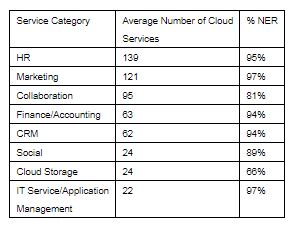
Netskope, the leader in cloud security, announced the release of the February 2018 Netskope Cloud Report on enterprise cloud service usage and trends. A key finding of the report was that the HR and marketing categories had the highest number of services per organization, with an average of 139 services and 121 services, respectively. The report also saw growth in the number of cloud services used in the enterprise compared to last quarter, with enterprises deploying an average of 1,181 cloud services. Of the services used, fewer than 8 percent were classified as enterprise-ready.

Also Read: Need for Data Orchestration for Contextualizing Customer Experience

HR and Marketing Lead the Pack, But Often Under IT’s Radar

Because many HR and marketing apps are often user-led (meaning the organization has little, if any visibility or control over the app) and contain sensitive, personally-identifiable information, when creating policies and access controls to secure data security teams should prioritize HR and collaboration apps. Many of the top HR apps in use, like SuccessFactors and Workday, contain personal data, necessitating DLP (Data Loss Prevention) and access controls to ensure usage of that data remains in compliance. Furthermore, many marketing apps qualify as shadow IT, or unsanctioned apps, containing customer or prospect data that is covered by regulations such as GDPR.

Also Read: Top 5 Cloud Services Predictions 2018

Banking and cryptocurrency-related malware are top-of-mind, but not most common

This quarter, the Netskope Threat Research Labs found that generic types of malware, such as Flash exploits and worms, made up the highest percentage of detections —  41.6 percent —  followed by backdoors, which accounted for 33.6 percent. Cryptocurrency-related malware continues to trend with banking-related malware, appearing on Netskope’s list of commonly detected malware classes with greater prevalence.

Additional malware variants included Microsoft Office macros (8.6 percent), PDF exploits (3.2 percent), ransomware (3.1 percent), Mac malware (2.3 percent), JavaScript malware (1.5 percent), mobile malware (1.1 percent), PowerShell (0.5 percent) and cryptocurrency-related malware (0.4 percent).

Also Read: Optizmo Continues to Lead the Industry in Suppression List Management and Automation Strategy

Netskope Report Reveals User-Led HR, Marketing, and Collaboration Applications are Most-Used, Despite Pending GDPR
Sanjay Beri

“Cloud services have made business units like human resources and marketing more agile and productive, but at the same time, the data in those cloud services need to be safe from loss. With less than a quarter to go until the GDPR becomes reality, businesses must ensure compliant usage of cloud services. This means introducing contextual, activity-level policies, as well as deterring all employees from non-compliant actions such as uploading sensitive data to unsanctioned, user-led cloud services,” said Sanjay Beri, CEO and founder of Netskope.

Average Cloud Services Per Enterprise by Category

This quarter, the average number of cloud services per enterprise increased by 1.6 percent to 1,181 cloud services, compared to 1,022 last quarter. The vast majority, 92.7 percent of these services, are not enterprise-ready (NER), earning a rating of “medium” or below in the Netskope Cloud Confidence Index™ (CCI). Non-enterprise ready services can become enterprise-ready through the assistance of fine-grained control via a cloud access security broker (CASB).

Netskope Report Reveals User-Led HR, Marketing, and Collaboration Applications are Most-Used, Despite Pending GDPR

HR and marketing services are the most highly used in organizations in terms of average number, followed by collaboration services.

Recommended Read: Are Marketers Ready for Next-Level Personalization?

HubSpot Announces Strategic Partnership with Google Cloud, Further Fueling the Growth of the HubSpot CRM

0
HubSpot Announces Strategic Partnership with Google Cloud, Further Fueling the Growth of the HubSpot CRM

Deeper Collaboration Will Benefit Customers Through Hubspot’s New International Cloud Infrastructure and Expanded Google Cloud Integrations

HubSpot, a leading CRM, marketing, sales, and customer experience platform, announced that it has expanded its long-standing partnership with Google by adopting Google Cloud to expand its international cloud infrastructure. In addition to providing increased data security for HubSpot customers, the new partnership will also allow the company to invest more in its current Google Cloud product integrations and accelerate the growth of HubSpot’s Free CRM.

Also Read: HubSpot Doubled App Ecosystem in 2017, Grew Apps Installed by Customers by 142%

HubSpot’s adoption of Google Cloud for its international cloud needs is the most recent step in a deepening partnership between the two companies, which began with Google Ventures’ investment in HubSpot’s Series D round in 2011. HubSpot is a long-standing G Suite customer and Google’s products have a vocal and enthusiastic user base among HubSpot customers. Integrations for Google Calendar, Gmail, AdWords, Docs, and Drive are some of the most popular integrations among HubSpot users.

Also Read: HubSpot Announces Customer Hub, Expands Platform to Support the Entire Customer Experience

“Our choice to use Google Cloud for our international cloud infrastructure is an investment in best-in-class technologies to support the rich systems that make up HubSpot’s software. Given our existing successful integrations with both AdWords and G Suite, this move is another meaningful step forward in our strategic partnership with Google Cloud. We look forward to working more closely with the Google team to better serve our customers,” said Brad Coffey, Chief Strategy Officer at HubSpot.

Also Read: Interview with James Gilbert, Head of Marketing, APAC, Hubspot

HubSpot will be leveraging the Google Cloud Platform Frankfurt region to support local customer data, as well as provide outage and data protection as needed. The HubSpot product is made up of over 5,000 microservices, including AI and machine learning infrastructure, behind static front-end apps. HubSpot’s product team updates these services and apps more than 1,000 times a week on average, constantly improving the performance and customer experience of HubSpot’s products. HubSpot’s use of Google Cloud Platform in Europe will enable its customers around the globe to benefit from the speed, reliability, and security of Google Cloud.

Also Read: HubSpot Announces Major Updates to the Sales Hub

HubSpot Announces Strategic Partnership with Google Cloud, Further Fueling the Growth of the HubSpot CRM
Kerry Munz

Kerry Munz, Director of Engineering, Platform Infrastructure at HubSpot, added, “The speed and coverage of Google’s global network and strong capabilities in emerging technologies helped us choose Google Cloud to scale with our rapidly growing user base. And we’re already seeing the benefits of the new location in Europe – rendering speeds are up to five times faster now for European customers. Privacy and security have always been a priority at HubSpot. Like giving free SSL to all of our customers, our expanded international infrastructure is another investment in increasing reliability and security for our customers.”

Recommended Read: Interview with Mark Stoddard, Head Of Sales, Asia, Hubspot

TVPage Launches Video Commerce Cloud 3.0 at eTail West 2018

0
TVPage Launches Video Commerce Cloud 3.0 at eTail West 2018

The Platform’s New Features and Functionalities Will Be Debuted at the Show on February 27, 2018

TVPage, the leading provider of cloud-based interactive video commerce technology, announced the launch of its new Video Commerce Cloud (VCC) 3.0, a video commerce platform that enables users to deploy interactive video commerce experiences across various marketing channels. VCC enables brands and retailers to a better source, moderate and publish video content through new features and functionality. The platform will be available exclusively for demos during a presentation at eTail West, February 26 through March 1 at the JW Marriott in Palm Springs, CA.

VCC 3.0 delivers live streaming, social sharing of shoppable video, enhanced widget customization, and a completely refreshed user experience. These new features enable brands and retailers to broadcast live streams that are shoppable, as well as more easily deploy video commerce experiences across their website and social media properties.

TVPage Launches Video Commerce Cloud 3.0 at eTail West 2018
Matt Babineau

“Eighty percent of consumers prefer watching live video from a brand to reading a blog or social media post. Our customers are already ahead of the game, as they recognize video commerce is the next generation of marketing. VCC 3.0 takes our video innovation one step further, allowing our customers to take advantage of live streaming to engage with their target audiences in real time,” said Matt Babineau, vice president of product, TVPage.

Also Read: 8 Proven Strategies to Make Video Marketing Successful for Your Small Business

Designed with the customer in mind, VCC 3.0 brings video innovation to a tightly managed workflow platform, making it simpler to adopt Video Commerce through TVPage than ever before. The following Video Commerce features and functionalities will be presented live at The Social Lounge at eTail West 2018:

  • Live Streaming: Brands and retailers now have the capability to stream live from anywhere to all consumers visiting their website. Multicasting to Facebook & YouTube will be available later this year. A key integration with this feature is that all streams can be easily merchandised with the TVPage Matching Engine, enabling shoppers to click to buy directly from the stream. In addition, any interactive call-to-action can be created, customized and incorporated into the stream experience on the platform, redefining the way marketers sell a product with video.
    Also Read: What You Need To Know About Video
  • Enhanced Widget Customization: TVPage customers are now able to further customize video commerce widgets to seamlessly match the appearance of any web page. The platform offers many widget templates, fueled by the TVPage Video Recommendation Engine, all of which can now be easily customized in detail by a marketer without writing one line of code (developer tools are still available for further customization). Brands and retailers can now more easily deploy an immersive video experience at every stage of the customer journey, from homepage, category page to product page, boosting sitewide conversion rates.
  • Social Sharing: VCC 3.0 enables its customers to drive new traffic and engagement by sharing shoppable video across all primary social media properties. Customers with dedicated video landing pages, which are easily published on the VCC, can now share links back to such pages from social media, enhancing the Video SEO value of such pages, and growing traffic from both social and search channels. Video engagement on social media generates a 23 percent higher click-through-rate than other non-video experiences. In addition, customers who watch product videos are 85 percent more likely to purchase than those who don’t.
    Also Read: Most Americans See Super Bowl as an Entertainment Spectacle Not Appropriate for Political Messages
  • Refreshed User Experience: VCC 3.0 offers a completely refreshed dashboard that now makes it even easier for customers to source, moderate, merchandise and publish video content.
TVPage Launches Video Commerce Cloud 3.0 at eTail West 2018
Allon Caidar

Allon Caidar, founder and CEO of TVPage, will be speaking on a panel at eTail West on Wednesday, February 28 from 2:50 pm – 3:10 pm PT in Spring Ballroom. The panel discussion will focus on the challenge of balancing a brand with cutting-edge ideas to connect with customers. Allon will be joined on the panel by Catherine Mouttet, creative director at David’s Bridal, Ryan Marfone, creative director at The Home Depot, Charlene Benson, creative director at KOMAR Brands and Suzi Jones, head of brand creative at Warby Parker.

Recommended Read: Fast Forward Your Video Content Strategy in 2018

Webinar World TechBytes with Matt Heinz, President, Heinz Marketing

0
Matt-Heinz On24 Webinar World 2018 Speaker

Matt Heinz
President, Heinz Marketing

Webinar World’18 is almost upon us. On the agenda is the question that is foremost on every marketer’s mind -‘How to put the personal back in marketing,’ – with a focus on how to build context-based campaigns and deliver events that put the customer first and foster authentic engagement between the audience and the brand. In the run-up to the event, we spoke to martech thought leaders speaking at the event. Matt Heinz, President, Heinz Marketing is one of them! And, Matt spoke to us about content and how marketers could leverage context to drive ROI.

Html code here! Replace this with any non empty text and that's it.

What do you believe should be the top priority for marketers today?

Two words: Revenue responsibility.

It’s critical that marketers think of their primary objective as revenue-producing metrics – sales pipeline creation, closed deals, renewals and customer lifetime value. This doesn’t change what marketers do, but it certainly helps them prioritize the right strategies and tactics.

You’re speaking on the topic, content that converts. What do you think are the biggest missed opportunities for content to impact revenue? 

Too often, content is created to earn clicks and likes without focusing on your target buyer’s journey.

Simply focusing on content that earns their attention, helps them loosen their status quos and ultimately commit to change based on their outcomes – that content will mobilize and catalyze your prospects into active buying cycles. That is content that converts.

How tech-savvy are your own Marketing, Sales, and Branding teams? How do you rate them on a scale of 1-10? How do you inspire them to work with technology?

I often tell people I’m not just the president of the Hair Club for Men, I’m also a client (for the millennials reading this, that was an infamous line in a hair restoration TV ad and I’m… oh, nevermind). I’d say our marketing and sales teams are quite tech savvy, but like most companies, we have tons of room to improve.

I’d give our marketing an 8, our sales a 7 and our branding a 5. We focus a ton on our sales pipeline and a bit less on our branding.

Technology is in our DNA so there’s less we need to do internally to inspire its use to achieve our goals.

How do you think young Marketing and Sales professionals should train themselves to master MarTech skills?

Know that technology is not your strategy. It’s one of the last things you should think about after knowing your objectives, audience, and strategy.

Technology supports, automates and accelerates your strategy when implemented well. That said, you simply won’t be able to create a consistent, predictable and scalable marketing and sales pipeline without mastering the ever-increasingly complex marketing technology landscape moving forward as a B2B marketer.

Are contemporary marketing technologies pushing the boundaries of present-day brand engagement and customer experience?

I see it as the other way around. In an increasingly distracted and skeptical world, we need to focus on better and more unique customer experiences. When our channels are even more diversified, a consistent and integrated brand experience stands out and becomes a competitive advantage. I think those needs are pushing the boundaries of what’s needed from the technology to keep up and implement.

What are the dynamic elements driving your B2B content engagement model? What tools and strategies do you use to create effective B2B content for events and webinars? 

We have a complex martech stack that supports our content efforts – everything from content creation to curation, amplification, influencer leverage, as well as ensuring the right content gets to prospects and customers at each stage of the buying journey.

Our content strategy is increasingly channel-diverse – including Sales Pipeline Radio, regular webinars, and videos, as well as daily social engagement and reciprocation.

Do you see Sales and Marketing Technologies unifying or evolving together to deliver higher ROI?

Yes absolutely.

It’s critical that Sales Technology and Marketing Technology completely integrate moving forward. One team, one budget, one strategy. Anything less and you’re leaving room for your competitors to bypass you sooner vs later.

What webinar best practices would you recommend for 2018?

Focus on engagement, personality, interactivity, and frequency. Perfect is the enemy of the good.

Create more content, shorter content, more “imperfect’ content that’s easier to watch, listen to and share.

Thanks for chatting with us, Matt.

Stay tuned for more insights on marketing technologies. To participate in our Tech Bytes program, email us at news@martechseries-67ee47.ingress-bonde.easywp.com

MarketStar Outlines Strategies for AdTech, Digital Media Companies

0
MarketStar Outlines Strategies for AdTech, Digital Media Companies

Industry Leader’s New E-Book Offers Advice for Businesses to Stay Competitive in the Crowded Market

MarketStar, the industry leader in outsourced sales and marketing, announced that it is publishing a guide to help AdTech and digital media businesses sell their solutions in the current booming market. The e-book is titled How Businesses Can Stay Competitive in the Crowded AdTech Space, and is available for free download on the company’s website.

Digital advertising opportunities abound in today’s marketplace. Each time someone refreshes a webpage, an organization is presented with an opportunity to engage that user with relevant digital content. Businesses looking to reach a target audience must consider which site or sites are ideal, where on a website they should purchase their ad, and how they will determine if a user fits into their designated audience. Advertising technology, or AdTech, answers these questions with analytics and digital solutions, but the market is full of solutions and providers.

Also Read: The Age of Choice: How Marketing & Business Will Change in 2018

MarketStar’s new e-book details how AdTech and digital media companies can better sell their solutions amid fierce competition and a crowded industry.

The guide explores four key strategies:

  • Differentiating yourself
  • Not discounting long-tail sales
  • Aligning sales and support
  • Developing an onboarding program with a human touch

Also Read: AdHive: AdTech and ICOs Can Mix

MarketStar Outlines Strategies for AdTech, Digital Media Companies
Phil Mickey

Phil Mickey, MarketStar’s Director of Marketing, added, “As an AdTech or digital media company, you may be good at what you do, but that doesn’t mean you are great at selling your product or service. The industry is constantly changing technology and processes, and it is increasingly dominated by Facebook and Google. Despite the fierce competition, companies can and do succeed in the AdTech space. Our new guide outlines strategies for successful sales in this crowded market.”

Also Read: Accretive Media Launches New Programmatic Digital Out-of-Home Advertising Platform Bridging the Digital and Physical Worlds

MarketStar is the industry leader in outsourced retail, partner, and direct sales motions for the world’s leading and emerging companies. MarketStar engages consumers, channel partners, and business-to-business buyers to increase sales by deploying field and inside sales teams enabled with best-in-class technology and insights. MarketStar is a part of the DAS Group of Companies.

Recommended Read: Five Key Trends for Programmatic Advertising in 2018

Wysdom.AI Joins Microsoft Partner Network

0
Wysdom.AI Joins Microsoft Partner Network

Wysdom.AI to Deliver Global Businesses a Full Stack AI-Based Virtual Assistant Solutions

Wysdom.AI, announced recently at the Mobile World Congress that it has joined the Microsoft Partner Network and will deliver its enterprise-focused cognitive care solution across the globe.

Wysdom.AI Joins Microsoft Partner Network
Ian Collins

“Joining the Microsoft Partner Network has allowed us to reach a global audience much faster than we would have alone. Our joint clients have the benefit of both Wysdom.AI and Microsoft technologies and our combined teams to deploy the world’s most effective virtual assistant technology,” says Ian Collins, CEO, Wysdom.AI.

Also Read: Sabre creates an AI-powered chatbot using Microsoft’s intelligent and natural language services

With four years of operational experience in telecommunications, insurance and finance, Wysdom provides the framework, the tools, and a massive AI training data corpus to get enterprise clients launched immediately. An experienced team of AI experts is available to continuously train the system, ensuring these businesses provide the best customer experience via whatever channel their customers choose.

As a Microsoft Partner, Wysdom is able to offer their services to a wider global audience, while simultaneously integrating Microsoft Cognitive Services and Azure Bot Service among other Microsoft technologies, ensuring clients stay at the forefront of industry advances.

Also Read: Chatbots and Virtual Assistants are Fast Becoming the New Graphical User Interface

Wysdom.AI Joins Microsoft Partner Network
Karthik Balakrishnan

“Access to Microsoft AI tools is a great advantage for Wysdom. Among other services, we leverage Bing Entity Search API – part of Cognitive Services for known named-entity extraction; something that Wysdom does not need to explicitly train for, thanks to our integration,” says Karthik Balakrishnan, CTO, Wysdom.AI.

Also Read: Technology Management Concepts Acquires Dynamic Methods, Establishes Itself As Microsoft Dynamics Partner

Wysdom.AI Joins Microsoft Partner Network
Bob De Haven

Bob De Haven, General Manager for Growth Industries, Microsoft Corp. added, “The Microsoft Partner Network is built for a business like Wysdom.AI. Together we can showcase the AI-based customer journey management tools Wysdom has built that work effortlessly with Microsoft’s existing AI solutions. In 2018, enterprise clients are looking for proven platforms that work out of the gate; with Wysdom they get just that.”

As part of the Microsoft Partner Network, Wysdom is available at Microsoft AppSource which helps enterprise clients discover, try, and use line-of-business Software-as-a-Service (SaaS) apps from Microsoft and its partners.

Recommended Read: AI-as-a-Service in Martech: Focus on Virtual Assistants, Voice Search, and Location Data Intelligence

Dynamic Signal Raises $36.5 Million to Transform Employee Communication and Engagement

0
Dynamic Signal Raises $36.5 Million to Transform Employee Communication and Engagement

Dams Street Partners, Cisco Investments, and Microsoft Ventures Invest in the Employee Communication and Engagement Category, as They Recognize the Urgent Business Need to Modernize, Streamline and Measure Employee Communication

Dynamic Signal, a leading Employee Communication and Engagement platform, has announced that it has raised $36.5 million in growth financing. The latest funding brings the company’s total funding to $88 million. Participants in this round include Adams Street Partners, Akkadian Ventures, Cisco Investments, Focus Opportunity Fund, Founders Circle Capital, Microsoft Ventures, Rembrandt Venture Partners, Time Warner Investments, Trinity Ventures, and Venrock. The new funding will help drive company growth and innovation to expand the platform’s capabilities, further providing a solution to the urgent business problem of connecting with the most valuable assets of the enterprise, employees.

Read More: Relay Network Launches CX Builder

Further, the company also announced the board appointment of Robin Murray from Adams Street Partners, and board observer Donald Tucker, from Cisco Investments.

Dynamic Signal CEO and co-founder, Russell Fradin, said, “Employees are an organization’s most valued asset and communication with them is mission critical. But in today’s enterprise, communication is broken.”

Rusell added, “Technology has changed the way we consume information. Eighty-five percent of the US adults now get their news on a mobile device, and more than 50 percent of the U.S. workforce does not have a corporate email address. The rapid adoption we’ve experienced is evidence that organizations recognize how significantly employee expectations for communication have radically outpaced enterprise communication practices. We’re proud to be leading this $5 billion market by providing the most comprehensive Employee Communication and Engagement Platform available today.”

More informed employees outperform their peers by 77 percent, but only 14 percent of communicators are confident in their ability to measure their efforts to inform employees (CEB, now Gartner).

To solve this, Dynamic Signal modernizes, streamlines and measures all types of employee communication, those created in the platform and those originating in the many integrations already supported by Dynamic Signal – including widely used systems of record (HRIS, CRM, SSO, Identity Management, etc.), Intranet providers and collaboration/social networking tools such as Facebook, Slack and Yammer. The investment will fund an expansion of Dynamic Signal’s product functionality and deeper integrations with enterprise systems.

Recommended Read: TechBytes with Tom Rassweiler, VP, Content Reinvention, Arkadium

Additionally, this round of growth capital will support the company’s aggressive hiring plans which include staffing newly established Seattle and Chicago offices, as well as growing existing offices in London, New York, and Silicon Valley. Dynamic Signal expects to more than double its headcount in 2018 to meet the growing market demand for its leading employee communication and engagement platform.

“Work has changed, making the collaboration market even more important to Cisco,” said Rob Salvagno, Cisco Vice President and Head of Corporate Development and Investments.

Rob added, “We are always looking for innovative companies that are creating technology to improve work, enhance employee performance and drive business impact. We recognize the urgent need for Employee Communication and Engagement Platforms among our own customers and the world at large, so we’re thrilled to invest in Dynamic Signal, and further our commitment to meeting the business needs of the enterprise.”

Recommended Read: Outbrain Launches ‘Sphere’ for Unbiased Audience Development

In 2017, Dynamic Signal has seen 3x growth in the number of users and a 70 percent increase in engagement on its platform, now reaching employees in over 100 countries on six continents.

Additionally, Dynamic Signal also announced —

  • DySi Open: Available today in both Apple’s App Store and the Google Play Store, DySi Open is a free, fully functional Dynamic Signal powered-community that allows communication, HR and marketing professionals to experience the Dynamic Signal platform and connect with their peers in the same way their employees would experience Dynamic Signal within their organizations. Dynamic Signal will create, curate and publish insights on DySi Open about corporate communication, employee advocacy, and engagement, inviting the community to share feedback and insights with each other through DySi Open.
  • Newsletters: Dynamic Signal’s newly released newsletters allow customers to quickly create personalized newsletters by selecting multiple pieces of multimedia content and dropping them into a customized, formatted template. Administrators can distribute newsletters to targeted employee segments in-app and via mobile push notification or email in minutes; ensuring employees get only the most timely, relevant news digests for their role, geography, team, or management level, etc.
  • Surveys: Dynamic Signal’s Surveys allow communicators, marketers and HR professionals to measure efficacy, benchmark impact, and gather employee feedback with easy to execute Employee NPS, custom and pulse surveys to targeted employee segments. Surveys can be sent in-app and via push notification, SMS or email, and employees can respond right from their mobile app or desktop. Survey responses can also be collected anonymously, and administrators can easily resend surveys to those who haven’t completed them. Results update in real-time, are easy to read and exportable in both text and graphical formats.
  • Video Broadcasting: Video has become an increasingly important tool for authentic communication. With Dynamic Signal’s Video Broadcasting, customers can natively capture, edit, submit, review and share real-time video with targeted employee segments on the fly, to be consumed on the channels or devices most convenient for the way they work.

Lina Betancourt, Essilor of America’s Employee Communications Manager, said, “Bringing Essilor’s mission of improving lives by improving sight to life wouldn’t be possible without the full engagement of our employees – our most valued asset. Creating alignment around this mission and our business strategy is how we make the difference every day for both the company and our customers.”

Lina added, “We’re focused on meaningful, direct employee communication that is measurable and delivered in a way that is convenient for employees to consume whenever and wherever they’d like. By leveraging Dynamic Signal’s Employee Communication and Engagement Platform, we are able to modernize, streamline, and measure the way we reach and engage employees, and Dynamic Signal surveys allow us to see how we’re really moving the needle to ensure the employee experience at Essilor is best-in-class.”

Read More: Zaius Integrates with Zendesk for 360-Degree View on Customer Experience

Interview with Vinay Bhagat, Founder and CEO, TrustRadius

0
Vinay Bhagat
Interview with Vinay Bhagat, Founder & CEO - TrustRadius

[easy-profiles profile_twitter=”https://twitter.com/vinaybhagat” profile_linkedin=”https://www.linkedin.com/in/vinaybhagat/”]
[mnky_testimonial_slider slide_speed=”3″][mnky_testimonial name=”” author_dec=”” position=”Designer”]“Many tech buyers want to be on the cutting edge. It’s common to see review sites cover categories and products far ahead of analysts now.”[/mnky_testimonial][/mnky_testimonial_slider]

Tell us about your journey as a tech-entrepreneur.

I founded my first company Convio in 1999. We were a SaaS platform that helped nonprofit organizations use the Web for fundraising, communications, and advocacy. Over time we grew the company to over $80 million in revenue, took it public and were acquired for $ 325 million in 2012. It was a great learning experience and motivating to have a big impact raising billions of dollars for charities. I’ve found that I like to work on meaningful problems which make a difference in people’s lives.

While building Convio, we purchased a lot of different enterprise systems to run our business. I observed that our teams struggled to make good decisions based on incomplete information – often just information provided by sales reps. When I asked them what sort of information they wanted to make better, more confident decisions, the answer was authentic feedback from peers just like them, already using the solution, so that they could enter a relationship with their eyes wide open.

I also observed that our sales teams encountered material friction in deals when they were unable to share relevant examples with a prospect. They’d often ping our marketing team looking for case studies, customer quotes etc, and supporting all the variations of customer use case, segment, geography etc, was very challenging.

The ultimate catalyst was my shopping experience for a high-end coffee machine for my wife. I went to Williams Sonoma first, and the sales person recommended a product they had in stock. Seeking independent advice I asked a friend who recommended a specific brand. I then went online to look for reviews, and in addition to using Amazon and Costco.com, I found an amazing site called CoffeeGeeks.com that had really helpful, in-depth reviews that discussed factors like reliability, maintenance, coffee quality etc. It blew me away and I pondered why nothing of that quality existed for the B2B world. Hence the idea for TrustRadius was born.

What is the most exciting part about leading a global B2B marketing technology review platform?

We are part of a tectonic shift that’s happening in B2B purchasing across the world. Modern B2B technology buyers put more trust in their peers’ opinions than vendors, and sometimes more so than analysts who have not used a product themselves. They want the “real scoop” before they spend too much time on an evaluation, and certainly before they make a purchase. This phenomenon is ubiquitous. It’s global and spans all sizes of company as there’s a basic human desire to know the truth and not be misled. Moreover, we have become conditioned to seek peer perspectives in every facet of our personal lives as consumers, so it’s natural to see the trend cross over into B2B.

There have been a proliferation of “review sites” and not all platforms are created equal. As a result, there’s a tremendous amount of confusion for vendors as to how they should engage and with whom. Our mission at TrustRadius is to be the most trusted and most useful review platform for B2B technology buyers and sellers. Accomplishing that mission has been no easy task, however we think have made some important decisions that distinguish us in the market including an acute focus on data integrity, the pursuit of high-quality reviews that actually help buyers make a considered purchase and helping technology companies strategically leverage content from reviews in their own channels to boost conversion and accelerate deals. We take trust very seriously – after all it’s in our name. We don’t carry ads on our site, nor do we engage in paid lead generation (pay per click, CPL) as we’ve seen that can lead to a pay to play model, which jeopardizes trust with buyers.

How have software review and recommendation platforms evolved in the past two years, with the explosion of new tech solutions?

The explosion of new tech solutions has provided an awesome opportunity for review platforms to make a mark. Traditionally analysts have waited until products and categories were relatively established before initiating coverage. Whereas many tech buyers want to be on the cutting edge. It’s common to see review sites cover categories and products far ahead of analysts now.

There has also emerged a stronger demarcation between types or review platforms. The incumbent review sites in our space monetize through paid lead generation. They have strong SEO and their sites are finely tuned to drive “conversions” – conversation requests or external clicks. Their review content tends to be shallow and they do little to police the integrity of their data. Their models have not evolved materially in the last two years, though the acquisition by Gartner of three major properties has led to sharing review content among their properties, and increased pricing.

We have sought to distinguish ourselves on two dimensions – being the most trusted source for buyers and operating as a platform vs. a site. We have always placed a strong emphasis on fraud prevention and quality control, human screening every review before it is published. In late 2015, we also introduced an algorithm called trScore that mitigates the bias present from vendors gaming ratings. In simple terms, we put more weight on trusted review sources, e.g. data that we source independently. More than 60 percent of our reviews and ratings are sourced independently of vendors. To our knowledge, we remain the only company in our space that is trying to tackle this problem. Our reviews average 400-500 words, and we prompt reviewers to come back to update them over time. Content quality matters a great deal if you are making a considered purchase. A star rating with a few lines of text is adequate for a simple, inexpensive tool, but not an enterprise solution you intend to run your business on.

Over the last 2 years, we’ve morphed from being a review site into a customer voice platform. We believe that most considered B2B products are actively marketed and sold, so it’s necessary but not sufficient to be a destination for active buyers. We have found that helping vendors inject authentic customer voice content across their buyer’s journey/marketing and sales process, drives material gains in conversion. It’s common for us to see a 30 percent lift in conversion on lead forms when syndicating targeted review snippets to the page. Our Salesforce.com integration makes it easy to for reps to back up every claim they make while prospecting and advancing deals with relevant customer quotes.

Which industries are particularly keen on leveraging real-time tech solution reviews? How do SMBs/agencies benefit from these review platforms?

We have seen adoption across a wide variety of software segments ranging from horizontal software categories like Marketing Automation, BI, security, developer tools, as well as vertical oriented solutions like restaurant management and nonprofit software.  We’re now seeing some interest from hardware/converged systems and tech services firms.

Smaller companies can particularly benefit as reviews can level the playing field versus traditional more expensive forms of marketing. It is however important to note that reviews are not only an SMB phenomenon. More than 80% of the Fortune 100 have written a review on TrustRadius and we work with some of the largest software companies in the world who themselves sell to large enterprises. Reviews are becoming a ubiquitous phenomenon in B2B.

In 2018, what should be a CMO’s strategy to deliver unique brand messaging without compromising on the customer experience?

I believe B2B CMOs need to embrace the language that their customers use. All too often, B2B messaging is overly complicated and frequently sounds too similar from brand to brand. As a result, it’s very hard for buyers to distinguish between what brands are saying. I believe CMOs should listen more to their customers and mirror the language they use when describing their product/solution.

As your messaging is codified, backing your claims at every stage of the buyer’s journey (on your website, in your campaigns, in your sales messages) with believable customer evidence will both inspire more confidence with buyers and differentiate you.

What startups in the tech ecosystem are you watching/keen on right now?

I think AI enabled marketing and sales tools like Drift and Conversica are a particularly interesting area to watch.

What are you currently reading? 

I recently read and had my management team read the Five Dysfunctions of a Team by Patrick Lencioni. I also read his accompanying book, the Five Tempations of a CEO. Both were excellent frameworks for practical application. I am currently re-reading the Challenger Sale and have bought a copy of the Challenger Customers. It’s pertinent to our situation as we are building a new category.

What’s the best advice you’ve ever received?

When I was getting my first company off the ground, a successful VC told me be intellectually honest, in other words, don’t drink your own cool aid.

Tag the one person in the industry whose answers to these questions you would love to read:

I don’t have an answer to this specific question about who I’d want to have answer these questions. I’d love to hear from leading tech CMOs like Christine Cefalo at Workday, Maggie Chan at SAP, Carrie Palin at Box, Dan Rogers at ServiceNow, and Robin Matlock at VMWare about what they think about the role of the customer’s authentic voice in marketing today.

Thank you Vinay! That was fun and hope to see you back on MarTech Series soon.

[vc_tta_tabs][vc_tta_section title=”About Vinay” tab_id=”1501785390157-b58e162d-0ae25a4b-c27aca64-108e51b0-80edaf37-bd3d357a-6c467a0b-7679″]

Vinay is a technology entrepreneur with a passion for taking on challenges that help improve the world. He is the Founder and CEO of TrustRadius, a customer voice platform which helps professionals safely and comprehensively research B2B technology products and services, and helps vendors create demand and accumulate/ harness social proof to improve win rates, deal velocity, and sales efficiency. Every review is screened and every reviewer authenticated. Our average review is 400 words, and our longest over 3,000. Each month more than two million B2B technology buyers are exposed to content on our site and via our syndication network.

[/vc_tta_section][vc_tta_section title=”About TrustRadius” tab_id=”1501785390320-2d44fa50-740c5a4b-c27aca64-108e51b0-80edaf37-bd3d357a-6c467a0b-7679″]

TrustRadius
TrustRadius is the most trusted review site for business technology, serving both buyers and vendors. We help buyers make better product decisions based on unbiased and insightful reviews. We also help vendors leverage the authentic voice of their customers across their sales and marketing channels. Unlike software directories, TrustRadius optimizes for content quality and data integrity. Our reviews average more than 400 words, nearly four times the industry average. Every reviewer on TrustRadius is authenticated and every review vetted by our Research Team before publication. We also ensure product scores represent true customer sentiment by correcting for selection bias. TrustRadius also helps vendors unleash the power of reviews in their own channels. We get their customers on the record at scale, then distribute that content where it can have the greatest impact. In the past year, over 100 leading technology brands have joined our customer voice platform to scale their social proof, increase conversion, win deals and capture user feedback.

[/vc_tta_section][/vc_tta_tabs]
[mnky_heading title=”MarTech Interview Series” link=”url:https%3A%2F%2Fmartechseries-67ee47.ingress-bonde.easywp.com%2Fcategory%2Fmts-insights%2Finterviews%2F|||”]

The MTS Martech Interview Series is a fun Q&A style chat which we really enjoy doing with martech leaders. With inspiration from Lifehacker’s How I work interviews, the MarTech Series Interviews follows a two part format On Marketing Technology, and This Is How I Work. The format was chosen because when we decided to start an interview series with the biggest and brightest minds in martech – we wanted to get insight into two areas … one – their ideas on marketing tech and two – insights into the philosophy and methods that make these leaders tick.

Codewise appoints John Malatesta as Chief Revenue and Marketing Officer and Excom Member

0
Codewise appoints John Malatesta as Chief Revenue and Marketing Officer and Excom Member

The Company Brings World-Class Executive John Malatesta on Board to Continue Exponential Growth

Codewise, a leading provider of ad exchange and ad measurement and optimization platforms, recognized by the Financial Times in 2017 as the 2nd fastest growing company in Europe, announced the appointment of Dr. John Malatesta to Chief Revenue and Marketing Officer. John is reporting to the CEO and Founder, Robert Gryn, and is a member of the Executive Committee.

In his role, John will be responsible for the sales and marketing go-to-market execution and for the full set of revenue streams. John brings over 22 years of international experience in the software industry, in both the SME and enterprise segments, where he held multiple senior leadership roles.

Also Read: This Is the Key Difference Between Your Star Reps and the Rest of Your Team

Codewise appoints John Malatesta as Chief Revenue and Marketing Officer and Excom Member
Robert Gryn

“The exponential profitable growth of Codewise in customers acquired and served and in revenue generated, now calls for the deployment of a state-of-art sales and marketing operational architecture to support and enable further expansion. John’s world-class experience in building, managing and scaling ROI-efficient marketing, sales and operations engines at such companies as IBM, Sun Microsystems, Accenture, Oracle, Kaspersky Lab, and Socialbakers, will help us reach and win more customers and revenue, and, most importantly, help us deliver an even better experience to our current and future customers. John’s drive and passion for authenticity and excellence towards customers perfectly matches our values, and will boost our rapid growth even further,” said Gryn.

Also Read: Interview with Tim Wilson, CEO and Principal at Qutee

Codewise appoints John Malatesta as Chief Revenue and Marketing Officer and Excom Member
John Malatesta

Talking about his new role, John said, “I am incredibly honored to join Codewise at such a time of business growth and technological innovation. Codewise is already helping thousands of marketers across brands, agencies and affiliates maximize their online ad investments through a best in class suite, seamlessly integrating Ad Exchange and Ad Measurement and Optimization operations. Scaling up the marketing and sales operations will help us optimally respond to our continuous growth in new segments and geographies and will enable us to keep on securing the customer excellence that sets us apart.”

John is a doctor in Economics and a member of the Forbes Agency Council. Prior to this appointment, he held the role of Chief Marketing Officer and Executive Vice President Telesales and e-Commerce at Socialbakers.

Recommended Read: Are Marketers Ready for Next-Level Personalization?

Fospha Announces $7.4 Million in Funding; Ex-Google Chief Joins Board

0
fospha

Fospha, the leading provider of marketing attribution and optimization software, announced they have raised £5.3m ($7.4m) in funding led by the venture builder Blenheim Chalcot. Dan Cobley, former Google MD of UK & IE and a managing partner at Blenheim Chalcot, has also joined the board.

The new funding will be used for acceleration of product innovation and expansion of the company’s Customer Success, Sales and Marketing functions.

fosphaAs companies adopt an increasingly broad multi-channel strategy and an arsenal of marketing technology, understanding and optimizing the cost of customer acquisition is one of the most difficult challenges they face. It’s widely acknowledged that marketing effectiveness can no longer be measured by the first or last click alone.

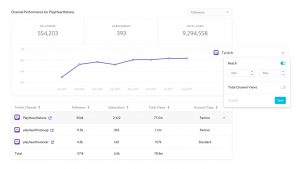

Fospha’s multi-touch attribution product unifies clients’ customer data and applies cutting-edge machine learning to compute the fractional value of each channel interaction (Google, Facebook, etc.) for a granular data-driven view of marketing performance.

“We’re delighted with this latest equity raise and its demonstration of the progress we’ve made powering scalable digital growth for our growing client base and transforming the impact that marketing has on their revenue,” said Sam Carter, Fospha’s CEO.

“As we approach the introduction of the GDPR, the challenge facing marketers – to measure and optimize marketing performance – is greater than ever,” Sam Carter said. “It’s hugely encouraging that the new data regulations validate our focus on outstanding compliance throughout our 18 years’ experience in enterprise customer data engineering. This makes us perfectly placed to thrive under the new legislation.”

Chairman Charles Mindenhall added, “Fospha has shown really positive growth and the evolution of its multi-touch attribution solution is delivering transformational results to SME and enterprise clients alike. I feel very confident that the business has an exciting future ahead of it.”

Julius Adds Twitch Data To Vetted Influencer Profile Across Social Media Platforms

0
Julius Adds Twitch Data To Vetted Influencer Profile Across Social Media Platforms

Julius Subscribers Will Be Able to View the Influencer’s Twitch Channel Performance

Julius, a vetted Influencer Marketing Platform for end-to-end solutions, has announced the addition of Twitch Data to their influencer profiles. With Twitch Data, users now have the ability to filter on an influencer’s reach and engagement on Twitch Broadcasts along with metrics from Facebook, Twitter, Instagram, YouTube, Pinterest, and Blogs.

Recommended Read: “The Butterfly Effect”: Rich Data & AI for Richer Personalized Customer Experience in 2018

Twitch Data on the Julius Platform via Julius

Julius subscribers will be able to view the influencer’s Twitch channel performance. Subscribers can see top videos and clips by views as well as reach, and average engagement charted over time.

Influencers on Twitch often incorporate brand sponsorships by mentioning brands during their stream, adding overlays or even featuring the brand on their channel homepage.

Twitch is a live streaming video platform primarily for gamers that allows users to view live or on-demand videos of gameplay, comment on videos and chat with streamers. It’s the largest live broadcasting platform in the world with over 1.7 million monthly broadcasters.

Currently, Julius is branded as the only fully-vetted influencer marketing platform providing influencer search, deep discovery, and outreach for leading brands and agencies. As a leading influencer marketing platform, Julius provides marketers with rich influencer data, advanced search capabilities and end-to-end campaign management tools required to organize a successful influencer marketing strategy, and the ability to deliver efficiency at scale.

Recommended Read: TechBytes with Jonathan Opdyke, President, Brand Solutions, Criteo


Chinese Giant Robin8 Launches New Global Mobile App for Social Media Users

0
Chinese Giant Robin8 Launches New Global Mobile App for Social Media Users

Robin8, with Access to over 7 Million Users, Could Become a Global Micro-Influencer Platform for Sharing Content 

Robin8, China’s leading Influencer search engine and marketplace, will beta launch its new global app in March. The Robin8 app is already a hit in China and will be available outside China for both IOS and Android mobile devices starting in March.

The Robin8 search engine has already profiled over 30 million people across 13 social networks and the Robin8 app in China has access to a network of over 7 million people that reaches over 3.5 billion people.

With the new global app, anyone can download the app and make money by sharing great content on Facebook. Additional languages such as Korean and access to other popular social media networks like LinkedIn, Instagram and Twitter will be available in the coming weeks.

Recommended Read: [24]7.ai Releases the Only Virtual Agent with Integrated Conversational and Informational Capabilities

 Miranda Tan, Robin8 CEO and founder
Miranda Tan, Robin8 CEO and founder

At the time of this announcement, Miranda Tan, Robin8 CEO and founder, said, “Imagine if Facebook and other platforms were to suddenly pay users some of the profits they receive, rather than retaining it exclusively for themselves?”

Miranda added, “Robin8 is a new wave of social media that offers users a decentralized data analysis to monetize their activities and take control over how their online personas and data are used.  The current version uses Artificial Intelligence (AI) to profile people, and the next version will use Blockchain to create fully trusted profiles. Each user will have access to content campaigns they can participate and be compensated for.”

Robin8 Beta Powered by Latest Funding; Focus on AI and Blockchain for Personalized Influencer Marketing

Robin8 raised VC funding, and recently completed an Initial Coin Offering, raising the equivalent of $20 Million USD. Robin8 helps brands find the best people for their campaigns using big data and AI. The company’s proprietary technology focuses on profiling, ranking and matching people to great content that is personalized to each person’s interest.

Recommended Read: Relay Network Launches CX Builder

With the global app, advertisers and brands including traditional advertisers can sign up on the Robin8 website and connect to millions of targeted micro-influencers for content amplification. The do-it-yourself platform is automated and provides end-to-end performance attribution.

Currently, the social media giants leave users out of the loop. With the arrival of the blockchain, Robin8 gives control of the profile data back to the owner and empowers everyone with their data.

Micro:influencer — A Natural Way to Share Content for Better Revenues

While many people that actively post on social media can make a living out of becoming dedicated ‘influencers,’ the bar is set high. To make a living as a Youtube vlogger requires a lot of time and effort. Robin8 introduces the ‘Micro-influencer:’ a casual yet engaged user who is rewarded financially for what they do naturally day-by-day, share content they are interested in and passionate about.

Hassan Miah
Hassan Miah

Robin8 Co-founder Hassan Miah, said, “The Global App is the first step in giving users everywhere the power of personal data analysis and control in the palm of their hand. We are also currently working on adding Blockchain which gives users the power to claim ownership of their data and better tracking if used by others.  These tools will make it easier to share great content and amplify value both for the sharer and advertiser.”

Hassan added, “Besides helping everyone monetize their influence through content sharing, Blockchain technology add powerful benefits to people everywhere.”

With social media, every person is a media, a brand, and a micro-influencer. Anyone can share and create content and get rewarded.

In the coming months, users of the global app will be able to apply Robin8’s metrics to their online social data. Additionally, users can get credit in the form of Profile Utility Tokens (PUT), the cryptocurrency used by the platform as a form of payment.

Read More: TechBytes with Tom Rassweiler, VP, Content Reinvention, Arkadium