Home Blog Page 4308

TapToBook Unveiling Its AI-Driven Digital Marketing Platform for B2C Businesses

0
TapToBook Unveiling Its AI-Driven Digital Marketing Platform for B2C Businesses

The AI-Driven Platform from TapToBook Also Features a Sales Chatbot that Provides a Two-Way Chat Support to Convert Customer Questions into Sales

A leading Customer Engagement tool provider, TapToBook, is releasing its AI-driven multi-channel digital marketing platform for the B2C market. The retail services industry continues to shift their marketing budget away from traditional print and TV ads towards the multi-billion dollar market for Digital Marketing tools, such as Email Marketing, Google Adwords, Facebook, and Instagram, etc. However, as Email Marketing reach continues to deteriorate and the mass adoption of Facebook and Google Ads keeps pushing up the price per click, costs and effectiveness are coming into question.

Ali Chaudhry
Ali Chaudhry

At the time of this announcement, Ali Chaudhry, CEO of TapToBook, said, “Without the ability to “Convert” these ads into actual Revenue, these businesses are spending a huge amount of money on vanity metrics. After the initial high of having your business join the Facebook revolution wears off, owners are realizing you cannot take “Likes” to the Bank.”

Read More: TechBytes with Tom Rassweiler, VP, Content Reinvention, Arkadium

TapToBook’s instant response platform combines the power of Email, Text and Social to message its Customers and offer mobile transactions with built-in Landing Pages.

In addition, TapToBook allows the ‘Business to Chat’ with its Customers to get them through the process of closing the sale and answering any of their questions without ever picking the phone. There is nothing in the market with this type of instant reach and personalization.

TapToBook is a comprehensive Customer Engagement tool that delivers dollars instead of impressions, clicks, and Likes.  In less than 5 minutes a week, a business can launch a campaign targeting empty times and message customers with an easy way to buy, while 2-way chat provides the support to convert customer questions into sales.

Nick McKenna, the Product Manager for TapToBook, said, “The entire experience is seamless and eliminates the need for back and forth with the front desk.”

Nick added, “Our AI driven analytics can analyze your Marketing and Sales data over a period of time and provide actionable insights into Customers behavior, optimal times, pricing and channel engagement.”

Read More: Simmons Research Launches New Insights Platform; Announces AI-powered Chatbot App

Currently, TapToBook provides messaging and engagement platform that allows B2C businesses to notify their customers about promotions during off-peak times with built-in landing pages and 2-way chat to complete the sale. Additionally, digital referrals allow customers to share the promotion with friends and family to drive new customer acquisition.

Recommended Read: [24]7.ai Releases the Only Virtual Agent with Integrated Conversational and Informational Capabilities

eBay Hires Jan Pedersen as Chief Scientist, Artificial Intelligence

0
eBay Will Begin Managing Payments in the United Kingdom

Pedersen Will Lead The Company’s AI Strategy, Including Computer Vision, Natural Language Understanding And  Machine Learning

eBay Inc, a global commerce leader, has hired Jan Pedersen as vice president and chief scientist, Artificial Intelligence (AI). Pedersen will lead the company’s AI strategy, including computer vision, natural language understanding and machine learning, to deliver new customer experiences across the eBay platform.

“Jan is a true pioneer in the industry, with over thirty years developing search, deep learning, machine learning and AI technologies at scale,” said Devin Wenig, president and CEO of eBay Inc. “He joins us at a pivotal moment when AI sciences including computer vision and deep learning are now capable of transforming personalized, immersive shopping experiences. eBay runs on AI and our continued innovation under Jan’s leadership will transform each meaningful moment we have with our buyers and sellers.”

Also Read: AI, Big Data And Digital Transformation – And The Potential ‘Buzzword Backlash’

Chief Scientist, Artificial Intelligence at eBayPedersen will be responsible for charting eBay’s technology strategy as it relates to AI, including enhanced ways in which eBay interacts with its consumers. He will set the agenda for AI R&D investments, lead a team of research, data and applied scientists and further our leadership in AI-enabled commerce.

Pedersen’s most recent position was vice president of data science at Twitter where he led the company’s investment in machine learning infrastructure and data analytics. Prior to that, he spent close to a decade at Microsoft in various search related leadership roles and was a technical fellow and chief scientist for Core Search.

His distinguished career began at Xerox’s Palo Alto Research Center (PARC) and he has held chief scientist roles at AltaVista, Yahoo, and A9. Credited with numerous patents, Pedersen holds a Ph.D. in statistics from Stanford University.

Pedersen will be based out of eBay Inc.’s San Jose, CA headquarters and will report to Steve Fisher, CTO of eBay Inc.  He officially joins the company on February 20.

Also Read:  How Natural Language Processing Is Shaping The Future of Communication

Criteo Reinforces the Power of Mobile Devices and Omnichannel Strategies in Driving Sales

0
Criteo Reinforces the Power of Mobile Devices and Omnichannel Strategies in Driving Sales

Consumers In-App Shopping Habits Surge: Criteo’s Q4 Global Commerce Study  Reveals Shopping Apps Generate 67 Percent of All E-Commerce Sales on Mobile Devices

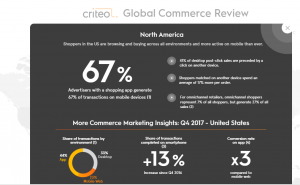
In their latest report, the leading commerce marketing technology company — Criteo, has revealed that global advertisers saw almost 50 percent YoY increase of in-app transactions, climbing to 46 percent in Q4 2017. Criteo released the findings from its Global Commerce Review for Q4 of 2017 that analyzed shoppers’ activities, behaviors, and preferences across all devices and browsing environments.

via Global Commerce Review, by Criteo

The report highlights a growing reliance on apps among shoppers, reinforces the “mobile-first” mindset, and will help inform omnichannel commerce marketing strategies worldwide.

Currently, Criteo is building the highest performing and open commerce marketing ecosystem to drive profits and sales for retailers and brands.

At the time of this announcement, Jonathan Opdyke, Chief Strategy Officer, Criteo, said, “As smartphone usage continues to soar, increased app adoption and mobile browsing have resulted in interesting omnichannel shopping patterns.”

Read MoreTechBytes with Jonathan Opdyke, President, Brand Solutions, Criteo

Jonathan added, “Our latest report illustrates the power of shopping apps to drive significantly higher conversion rates and sales on mobile devices, and also confirms that omnichannel customers provide the highest lifetime value (LTV). Retailers and brands can take advantage of these trends to optimize their marketing efforts, allowing them to more effectively connect with shoppers to yield the strongest commerce results possible.”

Research Highlights

App Opportunity on Mobile Devices

When retailers prioritize app optimization in addition to the mobile web, the performance gains are substantial. 

  • Globally, advertisers saw nearly a 50 percent year-over-year increase of in-app transactions, climbing to 46 percent in the fourth quarter of 2017.
  • In North America, retailers with a shopping app now generate 67 percent of all e-commerce sales on mobile devices. In-app also accounts for 66 percent of mobile transactions for retailers who generate sales on both mobile web and in-app.
  • The conversion rate for shopping apps was 21%, more than three times higher than the standard 6% conversion rate seen on the mobile web.

Mobile Growth

Mobile web usage has reached a maturity point, but shoppers rarely stay in one place for long, moving in and out of walled gardens, and are still buying on-the-go, with varying levels of frequency, on all connected devices.

  • Smartphone transactions in the US increased by 13.2 percent over the fourth quarter of 2016 (App excluded). Tablet usage declined, with 26.5 percent fewer transactions compared to the year prior. Desktop usage continues to dominate during work hours but saw a minor slip year-over-year with a 1.1 percent transaction decline.
  • Retail categories with the highest share of mobile sales include sporting goods at (44 percent), fashion/luxury (40 percent), and health/beauty (38 percent).
  • Seasonality drove a slight dip in the number of desktop transactions preceded by a mobile click, as consumers are more active on mobile devices in the summer. In the fourth quarter, 26 percent of all US desktop transactions were preceded by a mobile device click, down 4 percent from the previous quarter.

Recommended ReadEight Trends in Commerce and Digital Marketing to Look Forward to in 2018

Omnichannel Matters

Omnichannel strategies help educate shoppers during their winding journey, which in turn drives positive online results.

  • Omnichannel customers offer the highest lifetime value to brands and retailers, generating 27 percent of all sales, despite representing only 7 percent of all customers.

Shopping Moments on Mobile Devices

Consumers continue to trade desktop for mobile, and back again, depending on the time and day they are shopping online.

  • Retailers looking to target the busy working customer cannot ignore the dominance of desktop during business hours, especially between 9 a.m. – noon.
  • Alternatively, optimizing for smartphone and tablet targeting remains critical in the evenings and throughout the weekend.

Combining Data

Cross-device data combinations can help retailers make up lost ground from lower shares of mobile sales.

  • Combining intent also unlocks the ability to capture more dollars per shopper, as average order values are significantly higher—up to 17 percent on average—for matched shoppers. This trend is especially apparent in the fashion/luxury, health/beauty, and high-tech categories.

Study Methodology

The Global Commerce Review analyzed individual browsing and purchasing data from over 5,000 retailers, in more than 80 countries during Q4 2017.

Read More“The Butterfly Effect”: Rich Data & AI for Richer Personalized Customer Experience in 2018

GES Tackles Event Measurement with New Offering

0
GES Event Analytics

GES Measurement & Insights Provides Quantifiable Benchmarks Of Success

GES, a global full-service provider for live events, announced the launch of GES Measurement & Insights, solving a problem that has plagued the marketing industry for decades: how to holistically and accurately assess the impact of live events, activations and exhibits. GES is introducing a proprietary, standardized methodology that analyzes four key metrics to tie event performance to business outcomes. The methodology provides valuable insights based on event data, a scoring system to compare against industry benchmarks, and actionable recommendations to enhance performance over time.

“Marketing leaders are scrutinizing their budgets across all channels, including some of the largest areas of spend – events, activations and exhibits,” said Wendy Gibson, GES EVP of global marketing. “Because of this scrutiny, marketing teams must show business value. Our approach is based on years of experience as a live event marketing partner for thousands of companies and brands. Our model focuses on key metrics that are tied to business outcomes and include insights and actionable recommendations, rather than just data.”

Also Read:  Why Nobody is Reading Your Cold Email and How to Get Them To Respond

GES Measurement & Insights provides valuable metrics in four key areas:

  • Anticipated Pipeline Impact – Assesses expected buying behavior impacted by the event and reports on anticipated revenue.
  • Brand Impact – Measures changes in brand perception affected by the event.
  • Customer Retention – Evaluates the impact of the event on anticipated customer loyalty.
  • Quality of Experience – Assesses the perceived value of the event to inform continuous improvement efforts.

“GES is one of the largest event services companies in the world. We are ready to change the industry conversation around measurement,” said Dax Callner, GES Events chief strategy officer. “We’re dispelling the myth that events should be measured solely based on ROI, or that it is even possible to fully understand how events contribute to sales. Events are so much more than just selling opportunities. Yes, they can impact a sales pipeline, but they should also drive brand affinity and strengthen customer loyalty – all significant contributors to a business’s success.”

GES Measurement & Insights provides the information marketers need to understand and demonstrate the value of their event, activation or exhibit. The tool draws comparisons against industry benchmarks and provides insightful guidance for improving events over time.

GES’ experienced Strategy Team is a trusted consultant to some of the most impactful event marketing experiences in the world. With the launch of GES Measurement & Insights, the company will help clients to demonstrate the value of events, activations and exhibits to their organizations.

Simmons Research Launches New Insights Platform; Announces AI-powered Chatbot App

0
Simmons Research Launches New Insights Platform; Announces AI-powered Chatbot App

Innovative Research Portal and Smart Search Technology Significantly Reduce the Time Spent on Data Analysis and Insights Generation

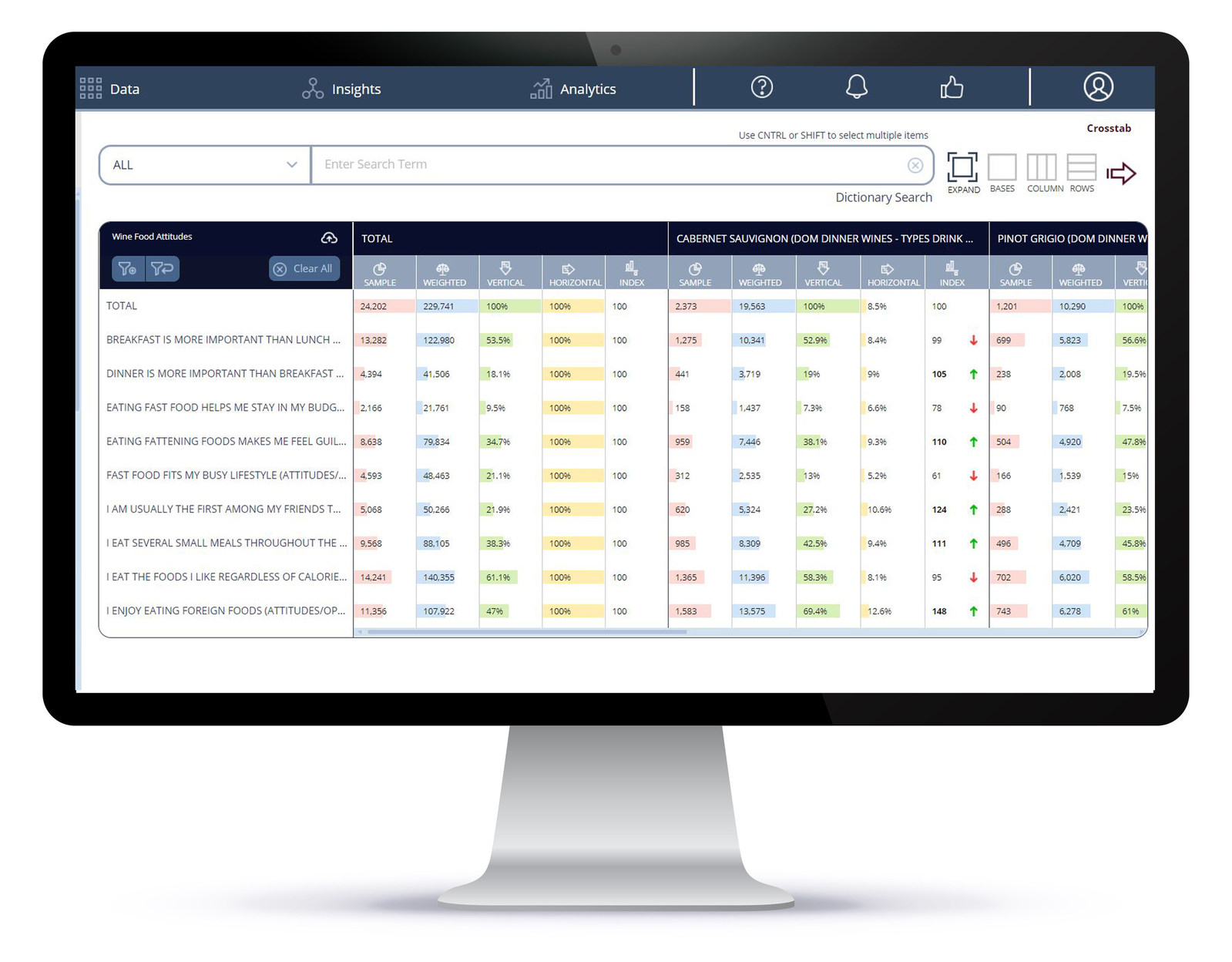
Simmons Research, the leading source of essential consumer intelligence, announced the launch of Simmons Insights, a syndicated research portal providing clients with faster access to actionable consumer insights. Powered by Simmons Smart Search, the most comprehensive consumer intelligence search engine, the new platform allows marketers to mine through hundreds of thousands of consumer behaviors in seconds.

Simmons Research Launches New Insights Platform; Announces AI-powered Chatbot App
Andrew Feigenson

“We’re on a journey with one goal – helping clients find new market opportunities in less time than it takes to grab a coffee at Starbucks. Our clients run thousands of advanced analyses using Simmons data per month. Smart search reduced the amount of time taken to find and build complex audience segments by fifty percent. This is just the first in a set of enhancements that we’ll be releasing throughout the year, designed to increase efficiencies and drive ROI for our clients,” said Andrew Feigenson, CEO at Simmons Research.

Also Read: 3 Reasons Why Marketers Should Welcome GDPR (Other Than Because It’s Required!)

In parallel, the company also announced the launch of its Chatbot app, Ask Simmons, providing clients with access to data nuggets and key reach metrics via the industry’s first conversational UI. Powered by advanced AI models, the Ask Simmons Chatbot will be available for select beta clients as an iOS app and a desktop app.

Simmons Research Launches New Insights Platform; Announces AI-powered Chatbot App
Simmons Insights Platform

“The information available in Simmons enhances the proposals that our team submits to clients. In any given project, we cull actionable insights from the data to inform media planning and execution. Seeing clients lean in on our findings with the help of this resource is always a welcomed bonus,” said Erica Ellis, Director of Insights at Gamut, Smart Media from Cox.

Also Read: Searchmetrics Study: Did Google Shopping Really Gain an Unfair Advantage over its Competitors in the EU?

Fadi Karam, Vice President of Marketing, Strategy and Business Development at Nestle, added, “We’ve found Simmons to be indispensable in helping us better understand consumers and uncover behavioral insights. The ability to quickly mine through a vast range of variables helps us uncover unique market opportunities we may have otherwise missed.”

Recommended Read: Can Publishers And Agencies Survive In A World Led By The Duopoly?

Cision Recognized as a Chicago Tech Leader for B2B Software by G2 Crowd

0
cision

Leading Provider Of Data-Driven Software And Services For Communications Professionals Ranks In Top 25 Chicago Companies For Product Satisfaction

Cision announced that it has been recognized as a leader in the Chicago tech space by G2 Crowd, a leading business software review platform. Cision ranks in the top 25 companies for best software and services in the media and influencer category for its top-rated social sharing feature.

“This recognition is an honor and a true testament to the Cision team’s hard work and dedication in delivering breakthrough products for our customers,” said Kevin Akeroyd, Cision CEO. “Such a distinction embodies the level of excellence we strive for each day as we remain committed to providing integrated, data-driven solutions that help shape and drive the future of the communications industry.”

G2 Crowd’s The State of B2B Tech in Chicago report covers over 200 Chicago-based SaaS and service companies, ranking the top 25 based upon the highest-rated product satisfaction scores. Unlike most industry awards, G2 Crowd recognizes companies whose products are reviewed by verified customers to determine the level of customer satisfaction.

G2 Crowd empowers business buying decisions by highlighting the voice of the customer. Leveraging more than 300,000 independent and authenticated user reviews, its model brings transparency to B2B buying—changing the way decisions are made.

Also Read:  TechBytes with Kaila Garrison, VP Marketing Strategy and Operations, Cision

In January,  Cision announced that it has completed its acquisition of PRIME Research. Adding PRIME to its portfolio enhances Cision’s global leadership position in professional services for media measurement insights and ROI analysis for communications programmes, and further advances its Artificial Intelligence and machine-learning technologies.

Cision Ltd is a leading global provider of earned media software and services to public relations and marketing communications professionals. Cision’s software allows users to identify key influencers, craft and distribute strategic content, and measure meaningful impact. Cision has over 3,000 employees with offices in 15 countries throughout the Americas, EMEA, and APAC. For more information about its award-winning products and services, including the Cision Communications Cloud.

Vydia Raises $7 Million In Series A To Advance its Leading Digital Rights Management and Monetization Platform

0
Vydia Raises $7M Series A Round to Advance its Leading Digital Rights Management and Monetization Platform

Video Tech Company, Vydia, Will Double down on Its Machine Learning Capabilities to Provide Creators with Intuitive and Actionable Feedback When Publishing and Monetizing Their Content

Inc 500 company Vydia announced recently that it has completed its initial close of $7 million Series A funding on the heels of a significant user and financial growth. The company now has more than 200,000 content users that create, distribute, monetize, store, protect, and measure their content in Vydia’s simple, centralized platform. The investment was led by Vocap Investment Partners and included participation from Newark Venture Partners.

Vydia Raises $7M Series A Round to Advance its Leading Digital Rights Management and Monetization Platform
Vinny Olmstead

As a result of this round, Vinny Olmstead, Managing Director of Vocap Investment Partners, will be joining Vydia’s board of directors, bringing with him a deep set of operating and strategic expertise. “Vydia has a significant head start as the category leader in the rapidly expanding video content market. The proliferation of serious content creators coupled with the disruption driven by social media as a distribution channel has created the need for a new kind of technology solution. Vydia had the foresight to recognize and act on this opportunity and is now leading the way with a software solution that is simple and elegant for both creators and companies that manage content creators”, said Olmstead.

Also Read: Live.Me Inc Releases Cheez, A New Social Video App

Vydia will use this investment to institutionalize and ramp sales, expand product and feature sets, and to further integrate into an additional video, audio, and social platform. In addition, Vydia will double down on its machine learning capabilities to provide creators with intuitive and actionable feedback. These investments will further distance Vydia as the most seamless and robust solution for creators. Building upon its initial focus at the intersection of music and video, Vydia will also expand into additional content verticals.

Also Read: OTT Explosion Provides Safe Platform For Marketers

Vydia Raises $7M Series A Round to Advance its Leading Digital Rights Management and Monetization Platform
Roy LaManna

“Content creators are leveraging the power of video across every social platform available, however, their insights and control over their own intellectual property are limited. Vydia is empowering creators by solving this problem with a smart, universal application. We are committed to building the tools our creators around the world rely on to power and protect their content, and with this investment, we will have new resources to expand and improve our proprietary technology both for individual creators and content focused brands,” explains Roy LaManna, Founder and CEO of Vydia.

Also Read: YouTube Partner Program Tightens Monetization Rules

Since launching in 2013, Vydia has hit a powerful stride in the digital ecosystem, closing out 2017 with the titles of Inc 500 Fastest Growing Company in America and Entrepreneur’s 360 list of most Entrepreneurial Companies. Previous investors include Paradigm Talent Agency, S-Curve Records, QueensBridge Venture Partners, Dovi Frances, Ozone management and other industry insiders.

Recommended Read: 7 Tactics Every Digital Marketer Should Learn to Love in 2018

Megaport Launches Direct Connectivity to the World’s #1 CRM – Salesforce

0
Megaport Launches Direct Connectivity to the World's #1 CRM - Salesforce

Megaport Limited, a global leading Network as a Service provider, announced that it has enabled direct connectivity for customers to Salesforce, the global leader in CRM.

The launch of Megaport’s elastic interconnection service will provide direct, scalable connectivity to the Salesforce Platform. As a Salesforce Express Connect Partner, Megaport can boost performance, increase application reliability, as well as help meet industry regulatory and compliance demands by establishing a direct, private connection to the Salesforce infrastructure through its global SDN.

Also Read: Salesforce Is #1 in Fortune’s List Of ‘100 Best Companies to Work For’

Megaport Launches Direct Connectivity to the World's #1 CRM - Salesforce
Vincent English

“Salesforce has revolutionized the way that businesses go to the market and has fundamentally transformed how companies build digital relationships with customers. This agreement enables both companies to help drive protected, private, direct connectivity. Megaport has developed a set of tools and features that make it very easy for organizations of all sizes and varying technical capabilities to directly connect to the Salesforce Platform,” said Vincent English, Chief Executive Officer, Megaport.

John Carney, SVP Industries, Communications and Media, Salesforce, added, “We are thrilled that Megaport has been recognized as a Salesforce Express Connect partner and is helping global companies across industries connect with their customers in new ways. Megaport’s industry expertise in network connectivity and innovative Network as a Service model will benefit our mutual customers and help boost performance.”

Also Read: Salesforce to Invest $2 Billion in its Canadian Business Over Five Years

Key Points / Highlights:

  • Connectivity with Megaport to the Salesforce Platform is available in two markets from North America and one market from EMEA. Initial markets and data centers include San Jose, Ashburn, and Frankfurt. Additional data centers are in the planning phases for 2018.
  • Megaport users will be able to provision private, secure, and direct connections to the Salesforce Platform services from 185+ Megaport enabled data centers.

Megaport is a global leading provider of Elastic Interconnection services. Using Software Defined Networking (SDN), the company’s global platform enables customers to rapidly connect their network to other services across the Megaport Network. Established in 2013 and founded by Bevan Slattery, Megaport built one of the world’s first SDN-based Elastic Interconnection platform designed to provide a secure, seamless, and on-demand way for enterprises, networks, and services to interconnect.

Recommended Read: Salesforce.org Announces General Availability of Salesforce Advisor Link, Transforming the Student-Advisor Relationship

Emotive Brand Appoints New Creative Director

0
emotivebrand

Emotive Brand, the brand strategy and design firm that makes brands matter more to people, announced that it had named Jane Brown as Creative Director. The appointment comes in response to the increased demand for Emotive Brand’s strategic offerings and year-on-year growth over its nine years of business.

Jane Brown, Creative Director, Emotive BrandNew Creative Director, Jane Brown, joins Emotive Brand with over 20 years of experience developing corporate and brand identity programs for a broad range of clients, from global corporations to startups. Working for noted firms such as Landor, Luxon Carra, and MetaDesign, she has reimagined and reenergized brand development for airline, finance, publishing, technology, and biotech clients.

“Jane is a true master of her craft,” said Bella Banbury, Chief Executive Officer and Co-Founder of Emotive Brand. “One of those designers who consistently breaks boundaries finds fresh and unique ways to express ideas that others will follow. Jane’s ability to bridge creative and strategy with groundbreaking work is what attracted us to each other.”

“We’ve known and admired Jane for 20 years, and knew it was the right time to bring her on,” said Tracy Lloyd, Emotive Brand Co-Founder. “Jane is coming because she believes in the power of Emotive Branding and we can’t wait to see the impact of her work on our clients’ business and brands.”

Jane Brown’s internal roles have included Design Director at Gensler and Creative Director of Brand at the University of Phoenix, where she led the team to complete an award-winning brand identity system. Beginning her career in Canada and moving to San Francisco via Stockholm, Sweden, Brown brings an exceptional breadth and sense of global design to every project. Some of her clients over the years include Adobe, McAfee, Oxford University, Johnson & Johnson, San Francisco International Airport, and Wells Fargo.

“As a Creative Director, I am enamored with the entire process of design,” said Jane Brown. “Admittedly, my favorite step in the process lies between the strategic framework and brand expression. When teams pivot from logic to feeling and begin to reimagine and visualize what is possible — that’s when the magic happens.”

Also Read:  Tech vs. Touch: 4 Marketing Trends to Watch in 2018

ISG Releases First Client-Facing Mobile App: ISG Impact

0
ISG

ISG Impact Provides Fast And Easy Access To ISG Content On The Go

Information Services Group (ISG), a leading global technology research and advisory firm, released ISG Impact™, its first-ever mobile app for clients that puts a world of ISG content and features at their fingertips.

The new mobile app is part of a broader strategy by ISG to create a virtual community of industry players, including buyers and sellers of technology and sourcing services, said Todd Dreger, ISG partner and chief marketing and strategy officer.

“ISG Impact gives our clients an edge,” said Dreger. “Our new mobile app has been designed to give users immediate access to the latest ISG thought leadership on the go, and, in the next release, the ability to easily engage with others. ISG Impact will enable users to create virtual communities around significant areas of interest, fueled by unmoderated discussions between peers, between buyers and sellers, and between all industry players and our advisors.”

Also Read:  Interacting with Consumers Without Writing a Word

The initial release features ISG content including thought leadership articles, research reports, white papers, case studies and news, with the ability to browse by category. Users also can see upcoming industry events and engage with external content using the app’s augmented reality feature.

“We invite our version 1.0 users to experience the app’s AR capability by visiting the ISG booth in space 46 at this week’s IAOP Outsourcing World Summit in Orlando,” said Dreger. “Using this AR functionality, users will be able to engage with our interactive content and experience our robotic process automation services in an entirely new way. Another interactive experience allows users to register to win a free Apple Watch.”

Future releases will allow users to create their own information experience tailored to their individual interests and engage with content and with others through social sharing. “We will use real-time feedback from these initial releases to continuously enhance the content and user experience of the ISG Impact mobile app,” Dreger said.

Also Read:  How Marketers Can Optimize $682 Billion in Expected Spend in 2018

Seismic/Demand Metric Report: Effective Sales Asset Management Generates Significant Revenue Gains

0
Seismic/Demand Metric Report: Effective Sales Asset Management Generates Significant Revenue Gains

Study Finds That Centralized Content Distribution, Visibility into Content Usage, and Effectiveness Metrics Among Primary Drivers of Improved Sales Content ROI

What is the result of effectively equipping sellers with the content they need in buyer interactions? An approximate 20 percent increase in revenue, according to a study released by Seismic and Demand Metric.

In a survey of more than 300 North American marketing and sales leaders, over half of participants estimated a revenue increase of 20 percent or more if the needed sales content was always available to their sellers at the right time and at each stage of the sales cycle. The study also found that marketers are the primary drivers of such potential revenue generation, responsible for the management and creation of 70 percent of sales content.

Also Read: TechBytes with Dave Myron, VP Product Marketing, Seismic Software

Seismic Listed in Gartner's Market Guide for Digital Content Management for Sales for Second Consecutive Year
Doug Winter

“Marketing leaders at large enterprises are under incredible pressure today to prove their value to the bottom line, and this report shows that improving sales content ROI is one of the most effective ways to do so. When the right technologies and processes are in place to ensure that sales content created by marketing is used in the best way possible, the impact on revenue can be enormous,” said Doug Winter, Seismic co-founder and CEO.

The study also revealed new insights about what makes sales asset management truly effective in three core areas: sales content distribution, visibility into what content sellers use, and tracking bottom-line content metrics in buyer engagement.

Also Read: Seismic Listed in Gartner’s Market Guide for Digital Content Management for Sales for Second Consecutive Year

Automatic Content Distribution Increases Content Usage

Seismic and Demand Metric sought to find out whether there was a relationship between how content is distributed to sales and their proclivity to use said content. The study defined five separate content distribution methods:

  • Automatic: Distribution of content occurs through a CRM and/or Sales Asset Management platform. (Used by 20 percent of respondents)
  • Near automatic: Content is stored in a central repository or multiple repositories into which sales team members can search and download assets. (33 percent)
  • Manual: Content is distributed as a result of a request, and distribution typically occurs through email. (32 percent)
  • Random: No uniform, consistent content distribution process exists. (13 percent)
  • No distribution: No content or assets are distributed to the sales team. (Two percent)

Sixty-one percent of respondents who use automatic distribution report most or all of their sales content being used. By contrast, less than half (44 percent) of organizations with manual or random distribution reported the same level of content usage. Similarly, 59 percent of sellers with automatic content distribution say they are moderate to well informed about what content exists for them, compared to just 39 percent of those using random or manual distribution.

Seismic/Demand Metric Report: Effective Sales Asset Management Generates Significant Revenue Gains
John Follett

“Seventy-six percent of respondents said that sales content was important to closing deals. The only way to actually ensure its value in this regard is if sellers know that it’s available and they use it, which demonstrably happens most often with a CRM and sales asset management system in place,” said John Follett, partner and analyst at Demand Metric.

Also Read: Seismic Integrates With Marketo to Deliver Unparalleled Lead Scoring Capabilities With Hyper-Personalized Sales Content

Content Usage Visibility: Room for Improvement

Sellers use an average of 6.7 different types of content during an average sales cycle, with 19 percent using 10 or more types. However, the study found only 38 percent of respondents indicated that their marketing teams receive good or excellent feedback on the content they are producing for sales. That number jumps to 58 percent among those who have automatic content distribution in place.

“Without automatic content distribution in place, marketers are putting themselves in a precarious position when it comes to improving sales content ROI by leaving out one of the most valuable sources of feedback: the sellers themselves,” added Follett.

Also Read: Lack of Data Integration and Exec Buy-In Is Risking CX ROI

Bottom Line Content Analytics Correlated with Improved Sales Content ROI

When it comes to tracking the effectiveness of sales content to engage buyers, many organizations remain woefully behind: Seventeen percent of respondents do not track any sales content effectiveness metrics whatsoever, and 61 percent are only tracking basic metrics like downloads or impressions. Only 34 percent are currently tracking bottom-line metrics such as which pieces of content lead to conversions or contribute to revenue.

The result is that less than one-fourth of participants said they could track sales content ROI with any precision, and only half of the respondents rated their sales content ROI as good or very good. However, 80 percent of organizations that are able to track bottom line metrics say their sales content ROI is good or very good.

“Marketing leaders who will experience the most success in this new era of marketing will be the ones proving their worth. This report provides a playbook to follow and a recommended set of technologies to implement for marketers that are up to the challenge set by the rest of their organization to really impact the bottom line,” added Winter.

Recommended Read:  Seismic Collaborates with Microsoft to Increase Sales Productivity and Content ROI for Large Enterprises

Independent Research Firm: SAS a Leader in Cross-Channel Campaign Management

0
SAS helps Russia's 36.6 Pharmacy Chain Personalize Communications With Customers

SAS, which excels at helping marketers better understand customer behavior, has been named a leader in The Forrester Wave: Cross-Channel Campaign Management, Q1 2018. “SAS addresses the needs of data-savvy marketers comfortable with advanced analytics, workflows, measurement, and optimization tools,” reports Forrester Research.

SAS Customer Intelligence was top-ranked in the Current Offering category, including highest scores among all vendors for both the customer analytics and measurement and optimization criteria of Forrester’s report.

Also Read: SAS Is No. 1 In Advanced And Predictive Analytics Market Share, Says Analyst Report

“SAS powers analytically-driven marketing strategies,” according to the report. One-off marketing emails are no longer enough for brands to survive the customer experience battle. Customers demand contextually relevant interactions both online and offline. Analytics aids marketers to make that a reality.

Also Read: SAS Survey: Organizations Face GDPR Challenges

Independent Research Firm: SAS a Leader in Cross-Channel Campaign Management
Wilson Raj

“Advanced analytics is revolutionizing the marketer’s ability to have a fuller portrait of their customers, rather than a series of snapshots. SAS provides marketing organizations with AI-infused campaign management capabilities so that every cross-channel touchpoint can be an engaging brand experience,” said Wilson Raj, Global Director of Customer Intelligence for SAS.

Also Read: SAS a Leader: Gartner 2017 Magic Quadrant for Digital Marketing Analytics

SAS Customer Intelligence provides marketers with the analytical advantage to create best-in-class customer experiences that both differentiate brands from their competitors and maximize marketing profitability. Powered by machine learning and artificial intelligence (AI), the suite of MarTech tools allows marketers to engage their customers confidently across channels.

Last year Forrester’s 2017 Customer Experience Index (CX Index) reported that the quality of customer experience (CX) has improved in India. The new data released revealed that for the first time in three years, one brand broke into the excellent CX category, and over half of the surveyed brands improved their scores significantly.

Based on a survey of more than 9,000 Indian online adult consumers, Forrester’s CX Index measured and ranked 36 brands in India across five industries to identify how well a brand’s customer experience strengthens the loyalty of its customers. Key findings of the third annual study included that no brand in India delivered poor CX, and the average score of the five industries rose, indicating better quality CX across the board. In addition, the data showed that emotion has a bigger influence on customer loyalty than effectiveness or ease in nearly every industry.

Recommended Read: Need for Data Orchestration for Contextualizing Customer Experience

Backed by Exponential Growth, AI Company Cien Appoints COO; Closes a New Financing Round

0
cien

AI Sales Productivity Company, Cien, Appoints Lisa Cook to Chief Operating Officer to Run Customer Operations out of Dallas

Lisa Cook
Lisa Cook, COO, Cien

Cien, an AI-powered sales productivity solutions provider, has announced the appointment of industry veteran, Lisa Cook, as the Chief Operating Officer. Cook takes on the role to provide the operational infrastructure for Cien’s continued growth. She will also be tasked with optimizing the operations and delivery of the business to deliver maximum value for customers.

Read More: Fireside Chat with Shawn Schwegman

A hands-on strategic leader with a passion for growing companies’ profitability, Cook brings more than 25 years’ experience in finance, customer operations, HR and business process management with technology providers RealPage, SourceHOV and professional services firm PwC. Based in Dallas, Texas, Cook is a Certified Public Accountant and an MBA graduate of Texas A&M University.

At the time of this announcement, Cien’s co-founder and board member Margot Carter said, “Cien has enjoyed exponential growth over the last year and Cook’s appointment helps us continue on this trajectory while ensuring we deliver the best possible service to our growing customer base. We are very pleased to welcome her to the executive team.”

Cook said, “Putting in place the right foundation will be part of my role to ensure Cien’s growth continues far into the future.”

As part of its growth, Cien has also announced they successfully closed a second round of financing from seasoned accredited investors and founding members.

Rob Käll, CEO and co-founder, said, “Solving sales productivity is the most efficient way for B2B companies to grow faster and more profitably. This new round of investment is further validation of our vision of greater sales productivity using artificial intelligence.”

Currently, Cien’s AI-powered sales productivity app has been adopted by B2B SaaS companies around the world. The capital raised will be used to fund additional product development, bolster sales efforts and serve a fast-growing customer base.

Cien gives sales leaders the power of artificial intelligence to increase the productivity and effectiveness of their sales teams. The app takes into account human and behavioral elements to detect problems and predict outcomes. Cien’s app is currently available for Salesforce.com customers.

Recommended Read: Outbrain Launches ‘Sphere’ for Unbiased Audience Development

What Good is Personalization Without Identity?

1
Guest-post-IdentityWithoutPersonalization

4cite LogoBy now it’s widely understood that personalization has become a hot topic for marketers. It’s been covered by countless industry thought leaders and the revenue benefits that it yields gets touted by major brands on a daily basis. That is no secret.

You’ve heard and seen the headlines before…

  • Personalization is the future of marketing
  • These 10 brands are taking personalization to the next level
  • X% of marketers say it’s important to create 1:1 messaging and seamless customer journeys
  • The cookie is dying, everything will become people based

Don’t worry, this article won’t rehash these often used, surface level headlines. It’s not that they aren’t important, they are directionally correct. It’s that the market is “missing the boat” of scalability, as it pertains to personalization.

Brands and agencies are constantly testing new creative, new technologies, new offers, etc. but when was the last time you heard about a company testing to see how many visitors (As well as their activity) are getting tracked, segmented and activated correctly? I’ve come across very few, which tells me most companies are not taking advantage of their own 1st party data to facilitate a true omnichannel marketing strategy.

According to eMarketer, 70 percent of people expect personalized experiences when engaging with brands online. Which is why 94 percent of senior-level executives, who participated in a 2016 PWC study, said they believe delivering personalization is critical for engaging their customers.

Digging into those stats even further, it begs the question… how can a brand build and customize personalized messaging without being able to deterministically identify large percentages of online visitors? Visitors who engage on multiple devices, and may shop without ever logging in. If a customer of yours visits your website and adds products to their cart without logging-in, your ESP is missing this.

In other words, relying on cookie-based solutions and the “out-of-the-box” services that ESPs provide, is not enough to capture online intent and subsequently uncover large sums of incremental revenue. Brands are not operating full tilt. They’re calling out the benefits, and the ROI personalization drives, but are not widening their “fishing nets.”

Without modern identification technology, brands are leaving massive amounts of revenue on the table simply because they are not capturing enough data from their website is something that should be considered extremely important in 2018, particularly for e-commerce centric brands. Using basic “trigger” functionality does not capture nearly the amount of website activity that brands believe it does.

Based on a variety of studies, estimates state that over $200 billion in revenue are left in carts annually. This is an example where brands are simply failing to take advantage of intent-driven shopper data and powerfully use it to return shoppers back to checkout.

Also Read:  How Marketers Can Use Customer Behavior to Drive Revenue

Shoppers have literally said, “Add this to my bag, I am least somewhat interested,” yet companies are not realizing that more revenue is out there. The only thing standing between businesses and more revenue is increased identification for people shopping online. Stop leveraging traditional display retargeting to get back in front of a cart abandoner when the email channel is craving more from your brand.

Brands must learn that personalization is important, but what is more important, is the “capturing” of as much shopper behavioral data as possible, on each and every visit. Across platforms, ad campaigns, email, and on-site, across all device types.

So, what if I told you that personalization is nothing without identity?

Some marketers may disagree and point out the revenue they derive from implementing personalization and product recommendations in email, for example. Or they may say that they don’t need help with triggering cart abandonment emails because their ESP already does it for them. They’ve already checked the proverbial box, so to speak.

Headlines like the ones mentioned above have led hundreds of vendors and agencies to claim that they can help brands personalize shopping experiences based on intent. Which they can. The question doesn’t surround the if, it’s attacking the scale. How many people/shoppers can they really help personalize the journey for if their onsite visitor identification is sub 15%? (The ability to tie a visit, as well as all actions taken, back to an email address for 1:1 targeting in email and on People Based Marketing platforms, i.e Facebook/Instagram, Twitter, LinkedIn, LiveIntent, etc.)

What many marketers don’t realize is that even if they have begun personalization efforts, they are missing out on so much more.

Also Read:  Death of The 3rd Party Cookie

Brands are struggling to recognize and segment large percentages of website visitors and fostering that data to create 1:1 messaging at scale.

For a large retailer, how much revenue can truly be derived from only personalizing 5, 10 or even 20 percent of online consumers? Brands often pledge to test new technology but far too many “check-the-box” too early. You can’t personalize the experience without deterministic identification.

66 percent of marketers say they are working toward securing internal resources to execute personalized marketing programs yet the customer experience for many consumers has remained stagnant, even when shopping online with the biggest retailers in the country (not including Amazon).

Also Read: Interview with Bob Gaito, CEO at 4Cite Marketing


Try it for yourself. Visit a retailer’s website, subscribe for their email newsletter and click through on the first email you receive. Many times, the first thing you will see is a lightbox popping up with verbiage that sounds something like, “First time here? Sign up for our newsletter.” This is an example of how brands can’t even recognize their own subscribers onsite (Even through an email blast click-through) and display lightboxes that disrupt the shopping experience and ultimately treat every visitor as a first-time shopper.

How then can brands increase identity and truly take advantage of all the things personalization promises to deliver?

It begins with speaking to email service providers and platforms promising “singular customer views” and “1:1 marketing capabilities”. Ask them how many website visitors they are able to identify on a daily basis. Is there an opportunity for MORE? The answer is yes.

For instance, at my company, we often hear marketers say, “I don’t need help with cart abandon trigger email” or “we don’t need help with sending our email blasts because our agency already works with a vendor who assists with send-time optimization.” (Two strategies for fostering personalization based on shopper behavior or activity.)

However, in just five days, 4Cite helped uncover over 8,000 additional cart abandoners for one of the country’s most recognizable outdoor apparel brands. For those who like percentages, that’s a 141 percent lift.

In the following diagram, the left column represents the amount of cart-abandonment triggered emails the brand would have sent through their pre-existing ESP without 4Cite. The middle column shows the number of emails that could have been sent with increased audience resolution.

  Without 4Cite With 4Cite % Lift
Day 1 2,352 4,030 71%
Day 2 812 2,741 238%
Day 3 844 2,338 177%
Day 4 505 1,734 243%
Day 5 1,470 3,554 141%

Why does that 141 percent lift matter? Especially to the C-Suite level? Because the revenue available to recover actually “moves the needle.”

A Salesforce study revealed that 60 percent of cart abandon emails resulted in a sale within 24 hours of the email going out. Secondly, according to Econsultancy, for every single cart abandonment email sent, each email delivers more than $8 in revenue. Still not impressed? The average order value (AOV) of purchases from basket abandonment emails is 14.2% percent higher than typical purchases, per SalesCycle.

My point is this…focus on identity before you attack personalization. With identification, personalization will follow.

With increased identification, brands can leverage identified online shoppers to tailor consistent shopping experience across multiple devices and channels – inclusive of email, people based ad platforms, onsite and with direct mail.

The numbers speak for themselves. The revenue is waiting for you.

Also Read:  Beyond Personal – Why Individualization Is the Key to Marketing Success

[24]7.ai Releases the Only Virtual Agent with Integrated Conversational and Informational Capabilities

0
[24]7.ai Releases the Only Virtual Agent with Integrated Conversational and Informational Capabilities

Reaches New Milestone with More Than 150 Patents and Patent Applications, and More than 200 Million Virtual Agent Interactions Annually

[24]7.ai, a global leader in intent-driven customer experience solutions, announced its Winter 2018 Release, which enhances the company’s flagship product [24]7 AIVA, to support both informational and conversational journeys in a single solution. This enables enterprises to handle everything from simple queries to complex interactions. The company also announced that it has more than 150 patents and patent applications, and [24]7.ai Virtual Agents handled more than 200 million inquiries in 2017, a 50 percent increase over the previous year.

“Fifty percent growth in the number of conversations with virtual agents attests to a dramatic rise in popularity of intelligent virtual assistants. [24]7.ai established a leadership position by demonstrating the ability to support natural, yet automated interactions at scale,” said Dan Miller, Lead Analyst at Opus Research.

Also Read: Boost.ai Secures $5 Million Investment to Expand Internationally

Until now, enterprises looking for comprehensive virtual agent solutions have had to settle for either an informational virtual agent or a conversational one. While some questions have only one right answer, complex customer interactions require a more sophisticated conversational approach. [24]7 AIVA delivers the right solution for each journey and automates interactions through cognitive capabilities that provide “near-human” experiences. [24]7 AIVA can leverage the same natural language understanding, predictive models, business rules and content across both voice and digital channels. Additionally, [24]7 AIVA can connect to enterprise systems in order to personalize responses and resolve customer issues quickly without requiring a human agent.

[24]7.ai Releases the Only Virtual Agent with Integrated Conversational and Informational Capabilities
Scott Horn
“Customer interactions are becoming more and more complex, so we have designed AIVA to handle the broadest possible range of customer engagements. Companies can start by automating simple FAQs and bridge to more complex transactions that utilize conversational AI to provide experiences that emulate your best human agents. As the only company whose solution works across both voice and digital channels, we are seeing a spike in interest, signing up clients at a record pace and expect a significant increase in automated interactions by the end of the year,” said Scott Horn, chief marketing officer of [24]7.ai.

Also Read: Need for Data Orchestration for Contextualizing Customer Experience

In addition to the next generation of [24]7 AIVA, the Winter 2018 Release includes the following enhancements:

  • Integration with Leading CRM and Help Desk Apps – [24]7.ai will now deliver out-of-the-box integrations to more than 20 leading CRM and Help Desk applications such as Microsoft Dynamics and Salesforce. [24]7.ai can rapidly integrate the [24]7 Platform and its suite of products to the leading enterprise cloud applications through a single, uniform API.
  • Improved Reporting and Tools – New and improved enterprise tools put business users in control. Content Manager allows users to create, organize and publish both knowledge base and virtual agent content. Modeling Workbench allows developers and data scientists to create, test and tune natural language models used to predict intent. Enhanced enterprise-grade analytics deliver valuable insights into customer experiences that identify “hot spots” for immediate action, measure customer interaction containments and put information to work in order to create an effortless customer experience.

Also Read: Bots Are Failing And Here’s Why

[24]7.ai Releases the Only Virtual Agent with Integrated Conversational and Informational Capabilities
Patrick Nguyen
Patrick Nguyen, chief technology officer of [24]7.ai, added, “Our AI research and development continues to pioneer new customer engagement capabilities for consumers and enterprises. These advances are reflected by a track record of industry-first technologies and patents.”

Recommended Read: Battle of Two Giants in 2018 Will Inspire Everybody Else to Think Differently

Rakuten Communications & Content Guru Announce Strategic Partnership

0
Rakuten Communications & Content Guru Announce Strategic Partnership

connect storm Will Support the Multi-Award-Winning Portfolio of Storm Applications

Rakuten Communications, a subsidiary of global innovation leader Rakuten Inc., headquartered in Tokyo, and cloud communications specialist, Content Guru Ltd., have entered into a strategic partnership to deliver connect storm cloud contact centre solutions into the Japanese market.

Rakuten Communications & Content Guru Announce Strategic Partnershipconnect storm will support the multi-award-winning portfolio of storm applications and will target the rapidly-growing Japanese cloud contact centre market, which is set to rise to 39% of overall contact centre seats in the country by 2020. It will be launched at the TechMatrix CRM Forum in Tokyo on 23rd February 2018, with Content Guru also opening a Tokyo office during Q1/2018 to support the partnership.

Also Read: NewVoiceMedia celebrates double win in Corporate Vision’s 2017 Technology Innovator Awards

Rakuten Communications & Content Guru Announce Strategic Partnership
Yasufumi Hirai, Representative Director and Chairman, CEO of Rakuten Communications, & Sean Taylor, Global CEO of Content Guru

“We anticipate that, by leveraging storm’s capabilities and Rakuten Communications’ best-in-class services, many contact centres will benefit from improved customer experience and workforce productivity,” said Yasufumi Hirai, Representative Director and Chairman, CEO of Rakuten Communications. “We look forward to combining our AI capabilities with Content Guru’s experience to deliver contact centre solutions to our more than one thousand customers.”

Also Read: Spotzer To Transform Service Experience For Global Customer Base With NewVoiceMedia

Sean Taylor, Global CEO of Content Guru, added: “Asia-Pac is a critical region in our global expansion strategy and its cloud contact centre market is seeing impressive growth. We’re delighted to enter into an exciting partnership with Rakuten, and are convinced that our shared cultural values and ambitions will drive tremendous success.”

connect storm enables businesses to more effectively communicate with their customers through channels such as SMS, web chat, email, voice and social media, unified within a single interface for contact centre agents. The platform also integrates with hundreds of third-party CRM, WFO, and ERP systems, and scales to handle any concurrent demand in contact.

Recommended Read: Rakuten Marketing to Host the Premier Conference for Online Performance Marketing Leaders at the 2018 Rakuten Marketing DealMaker Event

Optizmo Continues to Lead the Industry in Suppression List Management and Automation Strategy

0
OPTIZMO Continues to Lead the Industry in Suppression List Management and Automation Strategy

OPTIZMO Is Focused on Delivering Even More Tools and Capabilities to the Industry This Year

OPTIZMO Technologies, the industry leader in email suppression list management, announced plans to roll out new and enhanced tools to help email marketers drive performance and grow their businesses while maintaining a focus on compliance.

In the United States, email marketers and advertisers whose products and services are promoted through email initiatives need to stay compliant with the CAN-SPAM Act of 2003, which sets guidelines for commercial email marketing. OPTIZMO was launched to provide a robust and easy-to-use platform that would enable companies to more readily stay compliant and also gain valuable insights into email performance.

Also Read: Best Practices For Data-Related Insights When Building Smart Email Marketing Programs

Since its inception in 2009, the company has delivered the industry standard in opt-out suppression list management and advanced compliance tools over the years, like Inter-Mailer Cleansing (launched in 2012) which enables all mailers to upload their email lists to the system in order to not only exclude opt-outs and other email addresses from the up-to-date suppression list, but also to match against other mailers to ensure to remove duplicates. This helps ensure a better consumer experience by providing a form of frequency control that minimizes recipients receiving the same product or service promotion multiple times.

“OPTIZMO is positioned well and excited for aggressive development initiatives in 2018. From back-end infrastructure upgrades and architectural enhancements to industry leading information security standards, we are confident that our existing family and new family of clients and users have the security, visibility, and efficiency required to meet and overcome the risks and demands of today’s rapidly changing regulatory compliance laws and global data protection standards,” said Khris Thayer, CEO and Co-Founder of OPTIZMO.

Also Read: Are Marketers Ready for Next-Level Personalization?

With OPTIZMO currently serving hundreds of Advertisers, hundreds of Ad Agencies, hundreds of Affiliate Networks, and tens of thousands of Mailers and Publishers; system users can expect new product roll-outs throughout 2018 with a massive push to create products that are both mailer focused within the performance marketing industry, as well as big data applications with broad use capabilities for data infrastructure and security, cross-departmental data sharing and comparison, CRM and marketing automation integrations, and much more.

Specifically, the company will be launching a variety of mailer centric features, providing more controls, insights, and actionable analytics that will provide real value to email marketers in the U.S. and other regions.

Recommended Read: Don’t Fall for These “Urban Myths” About Email Marketing!

Interview with Nick Mangiapane, Chief Marketing Officer, Commerce Signals

0
Nick Mangiapane
Interview with Nick Mangiapane, CMO at Commerce Signals

[easy-profiles profile_twitter=”https://twitter.com/CommerceSignals/” profile_linkedin=”https://www.linkedin.com/in/nickmangia/”]
[mnky_testimonial_slider slide_speed=”3″][mnky_testimonial name=”” author_dec=”” position=”Designer”]“Make sure you understand and can explain what data and methodology are being used to calculate sales lift.”[/mnky_testimonial][/mnky_testimonial_slider]

Tell us about your role and how you got here. What inspired you to be a part of Commerce Signals?

For 17 years, prior to Commerce Signals, I led marketing for great consumer products including Folgers, Rubbermaid, and Trane. The bigger my title became the more pitches and cold calls I received. I felt like many marketing technology providers were out of touch with what marketers really need, namely help growing sales (not clicks, likes, or other sales proxies).

I knew that Commerce Signals was a great fit for me as soon as I spoke with Tom Noyes, the Founder, and CEO, because the company identifies which marketing tactics are driving in-store sales in near-real time. As a marketer myself, I recognized that the value of Commerce Signals’ speed and accuracy, which makes the insights truly actionable. Once a marketer knows which parts of their plan are working and which parts are not, the decision to reallocate spend is pretty easy.

How does Commerce Signals enable customers to tap full ROI from data-based marketing efforts?

We help customers maximize the ROI of every addressable campaign by delivering sales lift insights in under 72 hours. Our 2-3 day turnaround enables companies to take action and improve results right now, not three months from now or next year. We help retailers and restaurants drive sales through great execution – optimizing for what digital tactics are working best right now. For example, if a retailer ad on a certain publisher is not driving in-store sales, they can shift the spend to other publishers that are driving in-store sales.

What are the critical pointers to leverage data collaboration platforms in improving the marketing impact on in-store sales in near-real time?

Make sure you understand and can explain what data and methodology are being used to calculate sales lift. If you can’t help others to trust the output, it will be hard to use the data to defend and grow your marketing budget. Additionally, ensure the platform you select measures incremental sales and doesn’t imply that your current marketing is responsible for 100 percent of sales or risk losing credibility with your peers.

What are your predictions for the marketing measurement and optimization tools in 2018?

I expect brand marketers to drive the rapid growth of marketing measurement and optimization tools in 2018. Here’s why: Brick and mortar businesses only have their loyal customers in their first party sales data. It’s too narrow a slice of their sales and it’s biased because it doesn’t capture the new customers that their marketing is likely trying to attract.  Thus, access to broader consumer spend data is the key asset in determining marketing effectiveness. However, many marketers and media agencies still rely on rules-based attribution, such as last click, for digital campaign optimization because actual sales data has been too slow and expensive to use. But it’s not anymore. The self-service platform we have built breaks this trade-off between timeliness and quality. Marketers are now able to access payment data for their business and use it to measure the effectiveness of their marketing, allowing them to work with their agency partners to improve results in the near term.

How can data-based marketing companies leverage programmatic technologies to achieve better customer experiences?

Programmatic technologies still have lots of room to grow in how they target consumers with advertising. Delivering ads that are consistently relevant is better for consumers and the entire advertising industry.

How do you see multi-channel marketing and sales measurement solutions evolving by 2020?

Our product and customers are focused on measuring B2C marketing. I expect our customers to continue to drive the industry towards real-time or near-real time solutions because faster measurement solutions provide more near-term optimization and sales growth opportunities.

What startups in the martech/ sales intelligence industries are you watching/keen on right now?

I love the work that AdTheorent is doing to improve the brand’s sales results using the near-real time performance insights that we provide. I’m a big fan of LiveRamp as well.

What tools does your marketing and advertising stack consist of?

We use Bitly for link management and tracking, Campaign Monitor for marketing automation and email, Pipedrive for CRM, Winmo as a sales tool, WordPress, and Slack.

Would you tell us about your standout digital campaign at Commerce Signals?

Our product overview video has been the most informative and successful content so far at Commerce Signals. You can find it on the homepage.

How do you prepare for an AI-centric world as a marketing leader? How do you leverage AI capabilities at Commerce Signals?

AI can only be as good as the data you feed it. We focus on connecting marketers to great data rather than building complex models based on imperfect data. Our measurement and optimization provide marketers sales growth opportunities by using purchase data from the world’s leading payment providers.

One word that best describes how you work.

I am results-focused. And I’m not just saying that because we are a marketing measurement and optimization company. The things I’ve done in my career that I’m most proud of are those where I can look back and say that would not have happened if I wasn’t there.

What apps/software/tools can’t you live without?

Evernote, Google drive, my cell phone and my whiteboard

What’s your smartest work related shortcut or productivity hack?

Skimming marketing content. Often times, white papers are 20 pages and they include about a ½ page of useful information. I’m getting better at finding that ½ page more productively.

What are you currently reading? (What do you read, and how do you consume information?)

I’m actually rereading Crossing the Chasm. It’s still the best marketing book I’ve ever read – even though I first read it about 20 years ago.

What’s the best advice you’ve ever received?

Don’t be intellectually dishonest. In other words, if there is a problem, identify it clearly so you can set about fixing it. Don’t pretend it’s not there. In many ways, this is what Commerce Signals does. We are a measurement only company, so we are unbiased. If you have a great campaign, we can help you drive even more sales with it. If you have a campaign that isn’t driving sales, we provide you with the knowledge and opportunity to fix a problem. You might choose to reallocate funds, improve the creative or take some other action and make a difference that improves your business. Problems are opportunities.

Tag the one person in the industry whose answers to these questions you would love to read:

Anthony Iacovone – President, Barometric

Thank you Nick! That was fun and hope to see you back on MarTech Series soon.

[vc_tta_tabs][vc_tta_section title=”About Nick” tab_id=”1501785390157-b58e162d-0ae25a4b-c27aca64-108e51b0-80edaf37-bd3d357a-6c462478-722d”]

I’m a marketing executive and business leader with a 20+ year track record of driving profitable growth. I have exceeded objectives in both B2C and B2B roles by putting the customer first, developing winning strategies, and acting like an owner of the business.

Since launching my marketing career with Procter & Gamble, I’ve helped companies drive more than $450M in annual sales growth. I founded DIG Marketing Consulting to help companies grow through modern marketing strategy and digital marketing technology.

[/vc_tta_section][vc_tta_section title=”About Commerce Signals” tab_id=”1501785390320-2d44fa50-740c5a4b-c27aca64-108e51b0-80edaf37-bd3d357a-6c462478-722d”]

Commerce Signals

Commerce Signals connects advertisers and publishers directly with near-real-time insights from financial institutions. Advertisers use these insights to optimize media tactics and measure the incremental cross-channel sales driven by their advertising.

[/vc_tta_section][/vc_tta_tabs]
[mnky_heading title=”MarTech Interview Series” link=”url:https%3A%2F%2Fmartechseries-67ee47.ingress-bonde.easywp.com%2Fcategory%2Fmts-insights%2Finterviews%2F|||”]

The MTS Martech Interview Series is a fun Q&A style chat which we really enjoy doing with martech leaders. With inspiration from Lifehacker’s How I work interviews, the MarTech Series Interviews follows a two part format On Marketing Technology, and This Is How I Work. The format was chosen because when we decided to start an interview series with the biggest and brightest minds in martech – we wanted to get insight into two areas … one – their ideas on marketing tech and two – insights into the philosophy and methods that make these leaders tick.