Home Blog Page 4164

GateHouse Media Renews Local TV Ratings Agreement With Nielsen

1
GateHouse Media Renews Local TV Ratings Agreement With Nielsen

Ad Agency Returns to Nielsen After Year Hiatus

GateHouse Media, a boutique advertising agency headquartered in Columbus, Ohio, has renewed its agreement with Nielsen to provide behavioral insights and local TV measurement services. GateHouse, after a brief hiatus with another measurement company, returned to license Nielsen Local TV Ratings to provide its local advertising clients more reliable buying and market forecasting.

“We are pleased to return to Nielsen after our year away,” said Debbie Dalton, Founder and CEO of GateHouse Media. “We have a much greater appreciation of what Nielsen TV Ratings brings to our buying process as our clients need us to provide a reliable and complete viewing lens into our local consumer, and Nielsen is best equipped to provide that service.”

Also Read: Frere Enterprises Recommends Customizing Customer/Business Interactions With Email Marketing

GateHouse Media chose Nielsen based upon a number of factors, including:

Coverage: Nielsen’s ability to measure a comprehensive scope of viewers in and
outside the home, as well as the growing viewing habits of cord-cutters and cord-nevers who rely on Over-the-Air for broadcast TV.

Reliability: Nielsen understands the nuances of the local market to reliably project and forecast the reach of the local audience.

Also Read: How Personal Is Too Personal? New Study from LoopMe Has Marketers Weighing in on Hyper-Personalization

Granularity: Nielsen provides the essential media-buying metrics of reach and frequency, along with persons-level metrics, that are critical to delivering accurate data in a cross-platform world.

“We’re delighted to welcome GateHouse Media back to Nielsen to take full advantage of our enhanced local TV measurement products,” said David Hohman, Managing Director, Nielsen. “We look forward to providing GateHouse Media with the great service and expertise they expect and to help them continue to build and grow their business using comprehensive and accurate audience measurement insights.”

Recommended Read: Fullscope to Host New Webinar: Lessons Learned from 100+ Microsoft Dynamics CRM Upgrades – On Premise to Online

Mirriad Appoints Stephan Beringer as Chief Executive Officer

0
Mirriad Appoints Stephan Beringer as Chief Executive Officer

Mirriad Advertising plc, a video technology business delivering next generation in-video branding and advertising globally, is pleased to announce that it has appointed Stephan Beringer, to the role of Chief Executive Officer, effective 1st October 2018. Mr. Beringer succeeds Mark Popkiewicz, who will step down from the role after 11 years with the Company on that date.

For the last nine years, Mr Beringer has pioneered change as President of Data, Technology and Innovation at advertising giant Publicis. During his time with the company, Mr Beringer has been key to the group’s work to transform advertising through a period of intense change in the industry. He spearheaded the development of the company’s global data platform as well as its dynamic content and creative program, and as CEO of VivaKi, drove the transformation of Publicis’ programmatic buying and servicing model. He has worked with some of the world’s biggest brands including McDonald’s, Audi, Nissan, Asus, P&G and Michelin, and led key technology partnerships and initiatives with companies such as Adobe, Microsoft and Google.

Also Read: ContentSquare Launches Augmented Reality Tool for Brands Seeking Instant Digital Customer Analytics

Beringer previously held roles as chief growth and strategy officer for the Digital Technologies Division of Publicis Groupe, international CEO for Digitas and Razorfish, as well as Global Chief Strategic officer and President of Tribal DDB EMEA.

The board is pleased that Mr Popkiewicz will continue to work on certain projects as a consultant over the next six months and will work with Mr Beringer through the leadership transition period to ensure an orderly hand over.

Roger Faxon, Chairman of the Board of Directors of Mirriad, said:

“Stephan is a transformational leader who has built deep relationships with brands, and consistently driven revenue growth and technological adoption throughout his career in the marketing and communications industry. With our technology now in place with the leading players in the world’s key advertising markets, Stephan’s leadership will enable Mirriad to accelerate demand and drive sustainable and repeatable sales for the long-term, by offering brands new, authentic and persuasive solutions to reach and influence their target audience through video at scale.

On behalf of each of us on the Board and all the employees of Mirriad, I would like to thank Mark Popkiewicz for his extraordinary role in the evolution of the company, providing Mirriad with a compelling and solid foundation as it enters the next stage of its growth. Mirriad would not be where it is today without his passion and vision, and we wish him all the best as he takes his next steps.”

Also Read: Web Design Company, Lounge Lizard, Shares Insider Tips for Better Email Marketing

Further information on Stephan Beringer:

In the five years preceding his appointment to the Company, Stephan Beringer (age 55) has held the following directorships:

  • Vivaki Communications Inc (Chicago), Run Inc (New York), Publicis Media France (Paris), Razorfish UK (London), Vivaki Communications France (Paris), Vivaki Performance SA (Paris), Digitas International (USA), Razorfish (USA), Duke UK Limited, DM Europe Limited, Kitcatt Nohr Alexander Shaw Limited

Mr. Beringer currently holds the following directorships:

  • Run Inc (New York), Publicis Media France SA (Paris)

In relation to Mr. Beringer’s appointment to the Board, there is no further information required to be disclosed pursuant to paragraph (g) of Schedule 2 of the AIM Rules for Companies.

Recommended Read: Data: Over Half of Consumers Ignore Retailer Emails Because of Inbox Overload

comScore Campaign Ratings Beta Goes Live to Evolve Media Measurement for the Cross-Platform Future

2
comScore Campaign Ratings Beta Goes Live to Evolve Media Measurement for the Cross-Platform Future

Release Marks First Solution in a Broader Cross-Platform Product Roadmap Aimed at Helping Media Buyers and Sellers Better Optimize Their Marketing Investment and Advertising Inventory Across Platforms

comScore, a trusted partner for planning, transacting, and evaluating media across platforms, announced the beta release of comScore Campaign Ratings, its new cross-platform video advertising measurement solution. In July of this year, comScore announced it would be building the beta solution in partnership with twelve of the largest and most influential companies in the media and advertising space.

The new currency-grade solution provides media buyers and sellers with a trusted, unduplicated view of video ad campaign delivery across linear TV, OTT, desktop and mobile platforms and includes insights into co-viewing, person-level reach and audience demographics.

Also Read: The Ad2pro Group’s JDX Platform Wins Digiday Technology Award

“This is an important milestone, a major step within a broader product strategy designed to help buyers and sellers accurately measure audiences no matter where they consume content,” said Dan Hess, chief product officer at comScore. “Solving the cross-platform measurement challenge requires ongoing collaboration with the best and brightest minds in the industry, and we look forward to continuing to work with our beta partners and new entrants as we iterate on the product into 2019.”

comScore plans to open the beta program to additional networks, marketers and agencies in Q4 and expects to launch comScore Campaign Ratings commercially in Q1.

Also Read: SpotX Names Kevin Hunt Senior Vice President, Global Marketing

“Cross-platform measurement, specifically when it comes to premium video content and advertising, is our North Star,” said Bryan Wiener, CEO at comScore. “Given our differentiated data assets in linear TV, OTT and digital, we’re well-positioned to help our customers navigate the future of measurement with a deep understanding of unduplicated audiences across platforms.”

This beta launch comes on the heels of the announcement that award-winning advertising executive Sarah Hofstetterwill join the company as President in October. Leveraging her deep understanding of the marketing landscape, Hofstetter will help continue to drive comScore as the currency for planning, transacting, and evaluating media across platforms.

Recommended Read: Manzama and Concep Announce Partnership to Benefit Firms Wanting to Curate, Combine and Distribute Proprietary and Third-Party Content

Nielsen Expands Cross-Platform Measurement Across Ads and Content for Local Markets

0
Nielsen Expands Cross-Platform Measurement Across Ads and Content

Extension of Ad and Content Measurement Capability to All 210 DMAs Adds Significant Momentum in Nielsen’s Total Audience Measurement Portfolio

Nielsen announced an expansion of its Total Audience capability for local measurement of ads and content across all 210 local DMAs. This custom solution leverages key Nielsen Total Audience solutions including Digital Ad Ratings, Total Ad Ratings and Digital Content Ratings, to measure reach, frequency, and GRP performance for ads and content across digital and TV at the local market level. This is in addition to the inclusion of linear measurement contributions from virtual multi-channel video distributors (vMVPDs) directly to Local TV Ratings from earlier this year.

“By enabling our clients to demonstrate the total reach they can deliver to advertisers at the local market level, local television can access the same key metrics as national television to know how their media is working,” said Kelly Abcarian, SVP Product Leadership, Nielsen. “This helps to better inform their sales strategy and enables effective decision-making about where and when to engage audiences with content and advertising on a local level.”

Also Read: Innovid Receives Industry’s First MRC Accreditation for OTT Ad Impression Measurement

Nielsen Total Ad Ratings measures total and incremental reach for all audiences, regardless of device or platform distribution, for any advertising campaign across TV, computer, and mobile platforms, and will include OTT impressions in 2019. Total Ad Ratings uses industry-standard inputs – namely Nielsen Digital Ad Ratings data – coupled with Nielsen TV Ratings data, to deliver reporting of de-duplicated persons-level campaign audiences. Now available for local markets, it provides a view of deduplicated reach on TV, digital, and combined — showing the incremental value that digital can provide to audiences within a target DMA region or set of DMA regions.

Also Read: ZoomInfo Completes Acquisition of Y Labs in Israel and Continues to Expand Its Executive Leadership Team Among Record Growth

With the availability of Local Nielsen Media Impact in August and Total Ad Ratings for local markets today, buyers and sellers have the tools they need to better understand the local media landscape so that they can build and execute a media plan on the best properties and combinations of media channels to achieve their reach and frequency goals down to the DMA level. This is another step Nielsen is taking in applying the Total Audience measurement framework to enhance our measurement coverage and unify premium video across any and all screens. As viewership continues to increase across digital and connected devices, having independent measurement of ads and content across screens is more important than ever.

Recommended Read: iHeartMedia, Jelli and Foursquare Team up to Launch New Attribution Product for Advertisers

From Infatuation To Social Media Innovation

0
From Infatuation To Social Media Innovation

“Spreading the Love” Through Simplified Photo Book Creation

My Social Book, a unique web-based platform that quickly turns social media content into real physical books, is beginning to make its mark around the world. Fueled by a heartwarming origin story, My Social Book aims to disrupt the dated memory book space.

“My Social Book is the only service that allows social media users to create a book collection that brings together all their content in just one click,” stated Nicolas Cazagou, the company’s Founder. “It’s a great way to revisit and share 10+ years of memories; not only photos but also posts and other content.”

Also Read: Womply Launches Womply CRM, the First Effortless Customer Relationship Management Solution for Small Businesses

It was Cazagou’s own personal experience that inspired My Social Book. After meeting his now-wife Berenice (through Facebook) the love-struck entrepreneur wished to surprise her with a book of all their special moments. Knowing how large a role social media plays in human interaction, he turned there to start but quickly realized how painstaking printing from Facebook and Instagram would be. That’s when Cazagou developed an algorithm that simplified the process, allowing him to create the perfect keepsake.

Cazagou has since refined My Social Book into a breakthrough technology that makes photo book creation simple. In just 45 seconds, the platform can print up to 10 years of memories through a fully automated process including a diary component, also allowing for posts, likes, and videos (in the form of QR codes) to be integrated; a refreshing departure from traditional photo books, which typically involve software and one-by-one uploads.

Also Read: Verint Announces Customer Engagement Collaboration with Microsoft

Instead of selecting their own photos, My Social Book’s algorithm identifies context (user inputted date range, titles, likes, etc.) to drive printing decisions, developing sequences to group content together succinctly. The output is 6-8 images per page that can be edited or removed at the user’s leisure, then printed on the highest quality paper with either a soft or hard back cover.

The company has printed over 525,000 books, bringing annual revenues to the $10 million range. Charles-Henri Becquet, a business development guru who’s launched global businesses for companies like PayPal and Shutterstock, recently joined the team with plans to scale.

“We are working to close some distribution deals with major photo book players and retail stores in the coming months to expand globally while providing additional products,” Becquet insisted.

Manzama and Concep Announce Partnership to Benefit Firms Wanting to Curate, Combine and Distribute Proprietary and Third-Party Content

0
Manzama and Concep Announce Partnership to Benefit Firms Wanting to Curate, Combine and Distribute Proprietary and Third-Party Content

Manzama and Concep are pleased to announce a new collaborative partnership using their combined technologies to create a seamless and streamlined way for firms to distribute both their own content and also to share relevant third-party content with their clients, prospects and employees too.

Professional Services firms positioning themselves as trusted advisors are increasingly sharing content from outside of the firm around important industry, market, and topical developments as well as creating their own thought-leadership and proprietary content for clients and prospects. At the same time, firms are developing their business development and go-to-market strategies informed by external content around emerging issues, industry trends, and market news.  The task of orchestrating the creation and distribution of this content from both internal and external sources and to myriad audiences can often be a challenge.

Also Read: Outreach Launches SalesEngagement.com, Announces New Book & Podcast

With intuitive search and sharing tools, simple implementation, and integrations into numerous best-in-class third-party platforms, Manzama automates the process of finding and sharing critical business insights. Working with marketing technology firm Concep, Manzama will now have the ability to push content automatically into Concep’s B2B relationship marketing platform so that it can be emailed either internally or externally to clients and prospects. This integration will benefit the mutual clients of both Manzama and Concep from a content marketing and thought-leadership perspective and easily give them relevant and timely information to share with their contacts.

Also Read: Experian Reinforces Its Commitment to Help Companies More Accurately Identify and Better Connect with People

Manzama’s Mark Hinkle explains how this would work from a technical perspective: “Manzama users can create an RSS feed from the results in the Manzama system around any issue or topic. That RSS feed and its results will then flow seamlessly into Concep’s system where it will populate a newsletter or email template designed to be sent to a designated contact list. There it can be combined with internally produced firm content, summarizations, or opinions if the firm so chooses. This integration and flow can be entirely automated, but also still allows for the curation of articles if desired.”

Concep’s Freddie Hustler added: “This integration could be a game-changer for many firms who are currently only able to automate the distribution of their own content. Giving our mutual clients the ability to combine their own content with third party content from an authoritative source and produce communications specifically geared around sharing these insights, has multiple benefits for our clients in professional services firms.”

Recommended Read: Enhanced Customer Service as Natterbox Extends Voice to Salesforce Omnichannel

The Ad2pro Group’s JDX Platform Wins Digiday Technology Award

0
The Ad2pro Group's JDX Platform Wins Digiday Technology Award

Recognition as Best CMS & Web Content Management Platform Validates JDX as a Key Growth Driver of the Company’s 2Adpro and Madras Global divisions

The Ad2Pro Group, which provides strategy, creative and content automation to global brands and media companies, has won Best CMS & Web Content Management Platform for its JDX technology in the 2018 Digiday Technology Awards, a premier industry competition for advertising-related technologies.

JDX is a customizable, cloud-based workflow system that supports the creation and delivery of of digital content by brands, publishers and partners in a flexible scalable and cost-effective way. JDX also pushes creative content directly onto ad servers, thus supporting the entire life-cycle of digital content seamlessly on a single platform.

The two operating divisions of Ad2pro –  creative automation provider 2adpro Media Solutions, and brand commerce agency Madras, – leverage JDX to manage content development and delivery for such companies as Macy’s, Gatehouse Media, and Lenovo. Together, 2adpro and Madras publish over two million pieces of advertising content annually.

Also Read: SiriusXM’ Acquisition of Pandora Creates the Largest Audio Entertainment Enterprise Globally

“This award recognizes JDX among the best, most innovative software platforms, in a hotly competitive sector,” said Todd Brownrout, CEO of The Ad2pro Group. “In the process, it validates the power of our underlying systems and affirms the investment we continue to make in technology.”

“From the day we started Ad2pro we recognized that technology would make us stand out from the competition,” added Gopal Krishnan, Executive Chairman of Ad2pro. “This award is further evidence that JDX and Ad2pro are truly best in class.”

Also Read: Alpha Group Unveils Pigeon – A Facebook Messenger App Experience for Merit-Based Content Sharing

In January, Ad2pro escalated its technology investment by hiring Silicon Valley technology veteran Shiva Kris as Chief Technology Officer. Kris’ career includes key roles at 24/7 Media and Yahoo. Since joining in January, Kris has led a rapid expansion of Ad2Pro’s development teams,  which fuel the double-digit growth of Ad2Pro’s businesses. Recently, Madras has added Patheon, Shark Ninja and Salt Financial to its customer portfolio, while 2adpro has expanded its global client base and significantly expanded its tech-enabled AdOperations practice.

“Marketing, advertising and media technology are among the most competitive, most rapidly evolving industries out there,” said Max Willens, platforms reporter at Digiday. “It’s no accident that our awards list is filled with global behemoths as well as fast-growing startups.”

Recommended Read: MarTech RADAR 2018: Top 150 B2B Technology Companies You Should Follow

SpotX Names Kevin Hunt Senior Vice President, Global Marketing

0
SpotX Names Kevin Hunt Senior Vice President, Global Marketing

Leading Video Advertising and Monetization Platform Promotes Former Senior Product Director to Drive Integrated Global Marketing Strategy

SpotX, the leading video advertising and monetization platform, announced that Kevin Hunt has been appointed senior vice president, global marketing to lead the company’s marketing strategy around the globe. Hunt has been with SpotX for seven years in the company’s product department where he most recently served as senior director of product management, driving innovation through technical implementations, in-market research, and growing a team of expert product managers to build world-class digital video advertising products.

Also Read: Syndeo Unveils “Arcanine Release” Delivering Artificial Intelligence for Customer Engagement

“Kevin’s expertise in building, retaining, and empowering high-performance teams at SpotX will serve as ample experience for taking the global marketing strategy to the next level,” said Mike Shehan, co-founder and CEO of SpotX. “Kevin’s deep roots with our product make him uniquely qualified for this new position, and his steadfast focus on aligning Global Marketing with both Product and Sales will definitely play a key role in our ability to help clients with all their video advertising needs.”

An alumni of The University of Nebraska–Lincoln, Hunt is based in SpotX’s San Francisco office which he and the company’s senior vice president of platform, Mike Laband, helped start in 2013. Hunt joins SpotX’s marketing team at a time of rapid growth and will oversee the company’s entire global marketing function, including its online and offline marketing efforts, event strategy, PR, and brand development.

Also Read: Matrix Solutions’ 2018 Ad Spend Churn in America Report Unveils Two in Three Advertisers Return to Advertise on Broadcast, One in Three Churn

“SpotX has led the ad tech industry with best-in-class technology and services for the global media industry. I’m also proud of the trust we’ve built in our customer service.. We have amazing stories to tell about how we’re transforming the intersection of TV and digital video,” said Kevin Hunt, senior vice president, global marketing at SpotX. “I’m thrilled to join such a talented team and look forward to continuing to evolve how SpotX shows up in the world.”

Recommended Read: LiveRamp Announces Availability of AbiliTec for Offline Identity Resolution

TechBytes with Liraz Margalit, Head, Behavioral Research, Clicktale

0
Liraz Margalit

Liraz Margalit,
Head, Behavioral Research, Clicktale

Marketing teams are intrigued by human behaviors during shopping — physical and online, both. Liraz Margalit, Head, Behavioral Research at Clicktale, chats with us about the key parameters to distinguish between the human attitude towards physical shopping and online shopping.

Html code here! Replace this with any non empty text and that's it.

Tell us about your role at Clicktale and the team and technology you handle.

I am the head of digital behavioral research at Clicktale. Essentially, my job is to help brands understand the psychology of their customers and therefore what cognitive process drives customer behavior online. The premise of doing this work is that if you as a brand can understand the psychology of your customers online — and understand them beyond knowing their age, gender, location and job title — you’ll be in a better position to improve their experiences and increase the likelihood of a sale.

Traditionally, understanding the psychology of consumers online was an incredibly difficult thing to do. In face-to-face interactions, you can analyze someone’s body language to give you an insight into that person’s psychology. But the online world removes body language entirely from the equation and so brands have been designing digital experiences that so often don’t resonate with their customers. Then they wonder why their customers don’t engage with their brand in the way they wanted.

We at Clicktale, though, have devised a technology that we call ‘experience analytics’, which delves into a customer’s ‘digital body language’. When a customer interacts with a digital touchpoint, for example, a website, they leave behind a trail of clues that together add up to give the brand an insight into that person’s current mindset and psychology. These clues include mouse movements, hovers, scrolls, app taps, link taps, pinches, zooms and much more. Our experience analytics technology collates that information, analyses it, and enables teams to understand exactly how consumers have interacted with their brand, helping to improve the experience in future.

Once brands have that information, they can uncover the different mindsets of those visiting their websites and apps. Mindful customers will take their time navigating and scanning each page logically through calm mouse movements and scrolls. By contrast, disoriented customers will scroll frantically, move back and forth between pages illogically and repeatedly click or tap out of frustration.

By collecting this information, brands can start to answer some basic marketing questions. What parts of our digital experience are customers engaging with most? Which parts are they ignoring? Why aren’t they clicking on the ‘download’ button on our latest research report? Why aren’t they engaging with the latest interactive tool we’ve launched on our website? Once they can answer those questions, they can start to make small, iterative changes to their digital touchpoints that incrementally improve the whole customer experience.

As a specialist in behavioral science and research, how do you distinguish human attitude towards physical shopping versus online shopping?

Traditionally, consumers who shop in-store were motivated by the need to see, touch and handle products as part of the buying experience, as well as the need for on-the-spot sales and not having to wait for delivery.

In the digital sphere, there is an obvious limit to the sensory experiences that brands can deploy. The challenge is to apply these insights and create as much cognitive involvement as possible with the senses available to us: sight and sound.

Experience is more than just what meets the eyes. The decision to buy a product is mediated by a number of unconscious factors that shape the customer’s final decision. We have to think of ways to create pathways to the consumer’s emotions by involving the maximum possible subconscious pathways in the online interaction. We must consider not only the attractiveness of the product, but also its spatial orientation, its interactivity, the specific words involved, the colors used to describe it and the specific emotion we want to trigger.

We have found that we can apply this to customers’ senses in the online arena as well if we are equipped with the relevant knowledge on the human brain. The ability to influence the design of an object generates emotional attachment that leads to psychological ownership, the feeling that something is ‘mine.’

In the physical world, the opportunity to touch an object creates stimulation by activating the buyer’s touch receptors. With online purchasing, obviously, the customer cannot feasibly touch the products. However, digital interaction with the product brings those same pathways to life. The selection of the product’s features, colors and shape generates feelings of control and ownership.

According to research by Ann Schlosser of the University of Washington, interactivity in the context of virtual objects produces far more vivid mental images than text or static pictures. These mental images lead to greater customer engagement and a higher likelihood of purchasing.

The use of humor is also extra helpful online, particularly when it comes to facilitating the acceptance of error messages. Delivering that message in a comical way encourages a greater investment of resources in a customer’s attempts to succeed in an action.

A multi-sensory experience is one of the most effective ways to create an unforgettable customer experience.

Emotion is the basis of our experience of a brand, determining how we feel about the time spent on the site, how much money we would spend on the product and how often we will visit the site. Therefore, sensory stimulation is the key to enticing our customer and building a long-term relationship that will differentiate our brand from the competitors.”

What do you think about technologies like AI/machine learning and voice search completely transforming the shopping experience across channels? What visible changes to buyer behavior do you foresee?

Once we have intelligent chatbots operating organically on major retail, travel or finance sites, the picture changes fundamentally. Here’s the breakthrough, and it’s not science fiction even though it sounds like it. Just as we infer nonverbal signals in the offline world, today we can use cutting-edge customer experience technology to effectively infer a customer’s mindset in real time.

Using advanced customer experience solutions, we can now monitor in real-time digital activities such as browsing behavior, click-through rates, hesitation, scrolling and more. This enables forward-thinking retailers to abandon behavioral models based on past actions, in favor of tracking, analyzing and responding to current behavior. Now, they can quickly identify each shopper’s psychological needs and more effectively assist them in the decision-making process.

With machine learning, it is possible to develop models that can interpret and classify the mindset of each customer coming to the site. Leveraging data gathered in real-time, per shopper session, such algorithms could integrate actions, attributes and contexts to generate a real-time classification of an individual visitor’s intent. Then, based on such knowledge, brands can automatically adapt their offerings. And here’s where chatbots come into the picture. Because if we can quantify mindset and respond to it with page personalization or offer customization, we can teach chatbots to do the same.

Thus, the chatbot would parse my on-site actions — what page I landed on, where I clicked or moved my mouse, how quickly I scrolled through which pages, how exactly I interacted with the site navigation — and subsequently infer my mindset. It could know, in a micro-second, that I was just checking the options on the site and respond by offering to help narrow down the wealth of choices. It could tell if I was focused and ready to buy and guide me as quickly as possible through the process. And it could tell whether I was open to suggestions for wreaths vs. traditional floral arrangements, and suggest popular options.

In short, it could do exactly what a salesperson does with his customers. It could grasp and react to my mindset — gaining, strictly speaking, the ability to empathize.

What are the key takeaways from your recently published report on ‘top shopping stressors’?

If there’s one key message that brands should take away from our latest stress shopping report, it’s that many retailers are designing experiences that are causing more stress than good. The research found that 12% of consumers become stressed when shopping online and 15% have even lost their temper with an app or an ecommerce site. Why? The experience, especially at the point of checkout, often leaves a lot to be desired. 86% of shoppers have felt stressed when a voucher code doesn’t work, 75% have felt stressed when a mobile app freezes at the point of payment, and 81% have found slow loading times stressful.

Brands, therefore, need to work on ironing out the problems customers have at the checkout stage. But to do that, they need to know exactly what the cause is of the stress, which is where experience analytics can help through anonymous session replays that show in real time how consumers attempt to check out.”

Do shoppers actually indulge in binge shopping to beat stress? What does Clicktale’s report say about this phenomenon?

The research from Clicktale’s stress report found that 40% of shoppers use ‘retail therapy’ as a way to calm down, while 74% have stress-shopped in the past. Young people (those aged 16 to 24) are especially prone to stress shopping, with 62% admitting they turn to retail therapy on or offline to make them feel better. Women are also 12% more likely to stress shop than men and are 16% more likely to believe that shopping has a calming influence.

Are all these stressors signs of worry for both customers and businesses?

These stress factors are very worrying for businesses. In the age of experience, where brands are trying to exceed customer expectations, no-one wants to be the cause of stress. While most brands are in the same boat at the moment, those that don’t begin to analyze stress factors soon will get left behind while the competition moves ahead. The technology is there — brands just need to reach out and use it before anyone else does.

Could you elaborate on “the old man effect”?

The ‘old man effect’ is the idea that as you get older, the more you believe you are a ‘rational’ shopper.

You believe that you pick out the best deals and only ever buy things you absolutely need. 78% of consumers of all ages believe they are rational when they shop. For older consumers, that percentage stands at 88% – men are also more likely to see themselves as rational shoppers. Interestingly, these findings contrast hugely with what data professionals believe about consumers. 78% of data professionals think consumers are fundamentally irrational when they shop.

What are your predictions on changing buying behavior on mobile over the next five years? 

I believe that in the years to come, we will see a turning point from the field of UX as we know it to the field of PX — personalized experience. More and more businesses are discovering the value of customization, the opportunity to deliver a customized experience, and the additional revenue potential that can be generated from it. In fact, it’s become so strong that today, many popular brands rest their entire business strategy on their ability to customize their products.

Customization has become increasingly significant to brands because it’s now part of a broader trend that shifts from viewing customers as recipients of value to co-creators of value. Rather than being passive, the customer is now becoming a crucial part of the experience. The same shift that was witnessed in business strategy will be witnessed in the field of customer experience. It will shift from designing an experience for the customer to providing the customer the opportunity to become an integral part of the experience. The key to success here is adjusting the experience to meet the customer’s personal needs and state of mind at any given moment. Our research has found that the ability to influence the experience automatically generates emotional involvement.

One immediate implication can be found in the field of A/B test. Up until now, A/B testing was regarded as an intuitive tool for testing the effectiveness of a certain change to the page (different color, design, framing, etc.) However, in my work as a web psychologist, I’m exposed to many different types of customer behavior, as well as different types of online decision-making processes. Different groups of visitors interact with websites in different ways and derive pleasure from different experiences. Instead of testing different versions on all website visitors, we should be testing how different groups react to the same version and provide them with the opportunity to customize their own experience.

Thank you, Liraz! That was fun and hope to see you back on MarTech Series soon.

Stay tuned for more insights on marketing technologies. To participate in our Tech Bytes program, email us at news@martechseries-67ee47.ingress-bonde.easywp.com


ContentSquare Launches Augmented Reality Tool for Brands Seeking Instant Digital Customer Analytics

0
ContentSquare Launches Augmented Reality Tool for Brands Seeking Instant Digital Customer Analytics

CS Live Allows Companies to Glean Instant Best Practices Insights in the Time it Takes to Browse Their Site

Continuing to provide marketers and brands with deeper analytics and insights into how and why online users do what they do, ContentSquare, a digital experience insights platform, announced a new solution – CS Live – that delivers customer experience (CX) information in real-time with one click.

“Because digital is a mission critical channel today, we want to make sure that, for companies we support, key stakeholders can access customer experience insights as easily as they can walk into their brick and mortar stores, and observe where customers are going, which display they are looking at, where they hesitate, where they might experience frustration, etc. In particular, we believe senior executives needs to access this data directly, without needing to rely exclusively on expert analysts,” said Jonathan Cherki, CEO and Founder of ContentSquare. “Relying on a handful of experts is neither efficient nor scalable. Enterprises – many of which are overwhelmed with data – need to make their website optimization decisions based on insightful experience data that drives conversions instead of on their gut feeling.”

Also Read: IAB Names Susan Hogan Senior Vice President of Research & Measurement

Now, by simply downloading ContentSquare’s CS Live browser plugin from the Chrome Web Store, users can browse their respective sites for instant CX analytics. With CS Live, entire teams can easily access customer experience insights, get answers to their CX and visitor engagement questions as quickly as it takes to browse their website, and complement their existing website testing strategies. From CEOs to analysts, internal teams can now benefit from advanced CX and visitor engagement analytics with no training required.

“CS Live helps GoPro immediately identify engagement metrics without having to load and sift through reporting data – this reduces time required for analysis and accelerates our decision making process,” said Eumir Nicasio, Head of Product, Digital & eCommerce of GoPro.

Also Read: Bigtincan Acquires FatStax to Create New Platform to Tie Sales Enablement and Salesforce.com Data together

“Universally, web users have grown to have zero tolerance when it comes to searching for and receiving information online,” added Jonathan Cherki, CEO of ContentSquare. “CS Live is a practical solution for brands seeking immediate feedback – like Amazon one click buying or Uber one click taxi – on how customers are utilizing their sites. CS Live augments your site with actionable behavioral metrics. It’s a bit like having a real-time performance review with your website. CS Live has an array of use cases, from a conversion manager needing answers as to how her visitors are engaging with a new checkout process to an ecommerce manager inquiring about which piece of content has generated the most revenue on his company’s site, even in a particular region like France, that month.”

CS Live can be used to perform side-by-side site comparisons and discover how a brand’s A/B test strategy drives customer engagement. It can also be used to analyze dynamic content and influence content marketing strategies. Allowing for deeper insights, CS Live can also easily attribute customer experience KPIs from engagement to return on investment (ROI) for all active content elements. Further, it does not require a tagging plan, and is compatible with ContentSquare’s zone-based heat maps to compare and contrast content performance regardless of where the content is placed on the site or what device was used to view or access it.

ContentSquare is a digital experience insights platform that helps businesses understand how and why users are interacting with their app, mobile and web sites. They compute billions of touch and mouse movements and transform this knowledge into profitable actions that increase engagement, reduce operational costs and maximize conversion rates. Using behavioral data, artificial intelligence and big data to provide automatic recommendations, ContentSquare empowers every member of the digital team to easily measure the impact of their actions and make fast and productive data-driven decisions to optimize the customer journey. ContentSquare offers its services to a range of companies including Walmart, L’Oréal, Tiffany’s, Clarks and Unilever.

Recommended Read: iHeartMedia, Jelli and Foursquare Team up to Launch New Attribution Product for Advertisers

Web Design Company, Lounge Lizard, Shares Insider Tips for Better Email Marketing

0
Web Design Company, Lounge Lizard, Shares Insider Tips for Better Email Marketing

Lounge Lizard is globally recognized as a top New York web design firm within the web design and development industry. Lounge Lizard’s brandtenders are creative, tech-savvy, and passionate in developing innovative strategies that drive conversion for both startup and established clients of all industries, making them the “best of breed since 1998.”

Email is still one of the most powerful marketing channels available when used correctly. While some people might consider it archaic or “old school” it is both more personal and personalized compared to social media marketing. Additionally, approximately 90% of consumers check their email daily. Today the NY based web design company, Lounge Lizard, shares Insider Tips for better Email Marketing.

Also Read: Innovid Receives Industry’s First MRC Accreditation for OTT Ad Impression Measurement

  • Actively look for new sign-ups. This idea is simple yet necessary; you need to have a regular flow of subscribers to make the most of email marketing. There are quite a few good methods you can employ on your website to achieve this such as newsletter/email sign-up forms, opt-in checkboxes during the checkout process, using slide-pop-ups after a visitor has viewed over 50% of a landing page, and more. Then, once you receive new sign-ups send them a nice, personal welcome email letting them know who you are, what they can expect from you, and most importantly a call-to-action.
  • Use teaser emails. Teaser emails build buzz around ideas, products, and upcoming events. People can and should know about new things on the horizon and a great email campaign can help build excitement and interest! You can use mystery or even tell a story to help with the build. Most importantly, don’t forget to have a goal when you start this process of what the teaser email campaign will accomplish such as getting X number of leads or pre-order sales.

Also Read: ZoomInfo Completes Acquisition of Y Labs in Israel and Continues to Expand Its Executive Leadership Team Among Record Growth

  • Utilize Thank You emails. Thanking customers is a powerful way to reinforce a bond between a brand and the consumer. You can use thank you emails for signups, purchasing a product, referring a friend, or even using a discount code. The purpose is to make them feel valued as well as keep a conversation going. These emails should be short and sweet. They can include things such as discounts on future purchases as well. Just make sure to test the emails using A/B testing to ensure the messaging gets the best response.
  • Contests and Freebies. You should regularly look to reward all subscribers on your email list, which is one way to help engage and retain your audience. Using contests, special coupons, and freebies is a fantastic method to do this. Targeted giveaways around holidays and anniversaries are also a clever idea. People love free stuff! Fun fact, birthday emails have a higher open and transaction rate compared to standard promotional emails.
  • Use Personalization. The email format allows for a high degree of personalization and you should take advantage of this whenever possible. Personalized greetings are a must along with targeted emails for people around specific times.

Lounge Lizard is an award-winning, high-end design boutique specializing in website and mobile app development, UX/UI, branding, and marketing. Lounge Lizard excels in creating the ultimate brand strategy, fully loaded with expertly crafted visuals that work together to increase sales and effectively communicate a client’s unique personality.

Recommended Read:  Wibbitz Pursues Further Growth in Europe with New Office in London, Appoints Jane Loring as Managing Director

Data: Over Half of Consumers Ignore Retailer Emails Because of Inbox Overload

0
Data: Over Half of Consumers Ignore Retailer Emails Because of Inbox Overload

Many Marketing Emails Are Ignored Even Though Nearly Half of Consumers Rank Email as Their Preferred Channel for Marketing Communications

Despite 47 percent of consumers ranking email as their preferred channel for brand communications, over half (55 percent) ignore marketing emails due to inbox overload, according to a new study from Yes Lifecycle Marketing.

For its Surviving the Retail Apocalypse reportYes Lifecycle Marketing surveyed over 1,000 consumers of all ages and found that in addition to inbox overload, subscribers ignore marketing emails because of irrelevant product recommendations (50 percent) and content (41 percent). The findings indicate that many retailers still fail to understand consumers’ preferences in terms of mailing frequency, timing and content.

Also Read: Womply Launches Womply CRM, the First Effortless Customer Relationship Management Solution for Small Businesses

Even though consumers will ignore emails that fall short of their expectations, 42 percent reported that they don’t unsubscribe from these communications; instead, they scan the subject lines to determine whether they’ll open.

“Growing competition and shifting consumer expectations prompt marketers to start delivering more relevant content, better personalization and unique experiences in order to move consumers along each stage of the customer journey – from awareness to loyalty,” said Jim Sturm, president of Yes Lifecycle Marketing. “Brands must get creative with their programs and use the wealth of customer data at their disposal to identify customers’ preferences and interests in order to keep them engaged.”

Also Read: Verint Announces Customer Engagement Collaboration with Microsoft

The report also revealed that creating data-driven customer experiences remains a major challenge for many retailers. Thirty percent of consumers said they had received recommendations for products they’d already purchased. In addition, one in five (19 percent) consumers have received messages targeted to the residents of cities they do not live in, indicating that marketers aren’t adequately collecting and using customer data to personalize communications.

“With the dominance of Amazon and shifting consumer behavior, retailers must evolve to meet shopper expectations,” said Michael Iaccarino, CEO and chairman of Infogroup, parent company of Yes Lifecycle Marketing. “Marketers must find the right technology and service partner to help them identify consumer preferences across channels and build data-driven strategies that capitalize on those preferences.”

Recommended Read: New Research Links Email Engagement to Customer-Experience Email Marketing

Frere Enterprises Recommends Customizing Customer/Business Interactions With Email Marketing

0
Frere Enterprises Recommends Customizing Customer/Business Interactions With Email Marketing

A business has to utilize all sorts of strategies to attract customers, returning or otherwise. A tactic that has been receiving an upswing in popularity is email mailing lists. Mailing lists are great because customers usually agree to being on them and that’s a foot in the door, so to speak. Brandon Frere, strategic business planner and CEO of Frere Enterprises, suggests utilizing email marketing for more effective, personalized interactions with customers and the betterment of a business.

Newsletters, digital coupons, survey letters, any number of things can be sent in an email and customers can give personalized feedback or find links they’re interested in clicking on. It allows customers to more readily decide on how they’re interacted with and increases the likelihood that they will do business with a company.

Also Read: Salesforce and AWS Expand Global Strategic Alliance to Accelerate Enterprises’ Digital Transformations

“There are always certain tricks to using something effectively, which is what separates those who think they’re entrepreneurs from the real ones,” said Frere. To achieve maximum productivity from email marketing, there are a few simple tricks to keep in mind first. Don’t buy an email list and blindly send people emails that they have little to no interest in receiving. It may take time, but cultivating an email list of people who are actually interested in interacting with a business will prove to be much more beneficial.

Don’t send every mail subscriber the same generic email, either. One of the perks of sending stuff to people, specifically, is that their experience can be customized to them. Keeping in mind different categories of customers allows for better targeted marketing and fewer chances of someone unsubscribing.

Also Read: Veritone Announces AI-Powered Media Attribution Solution for Broadcasters to Demonstrate Advertising Efficacy and Drive Customer Investment

If utilizing email marketing seems overwhelming to start with, there’s plenty of email marketing businesses out there to lay out the groundwork. Email marketing, like any marketing campaign, will take some planning and efforts before it’s at its most effective, but the benefits of such targeted marketing are well worth it. “Strategic business planning means using all the available resources for the betterment of the company in the most effective ways possible. Email marketing allows for showing a customer information and potential deals from a business, with minimal effort on their part,” said Frere.

Recommended Read: Enhanced Customer Service as Natterbox Extends Voice to Salesforce Omnichannel

How Personal Is Too Personal? New Study from LoopMe Has Marketers Weighing in on Hyper-Personalization

0
How Personal Is Too Personal? New Study from LoopMe Has Marketers Weighing in on Hyper-Personalization

A recent survey by LoopMe revealed new insights around data usage in marketing. According to the research, one third of marketers believe the use of a customers’ own pictures tops the “most important to avoid” list when personalizing ad creatives. The findings form part of LoopMe’s wider research into personalization, data usage and the value of data.

Stephen Upstone, CEO of LoopMe, said: “Personalization can benefit consumers if done correctly – through a sensible combination of personalized creative and delivery. For example, an ad that’s highly relevant for an 18-year-old could be deemed intrusive to a 55-year-old. Thoughtful use of data is vital to effective campaigns.”

Also Read: Outreach Launches SalesEngagement.com, Announces New Book & Podcast

The research found US marketers think personalization should be used carefully, to avoid compromising a consumer’s ad experience:

  • 24% felt that including a customer’s name in visual creative should be most avoided
  • 19% said that including a customer’s name in audio creative should be most avoided
  • 69% said 18 to 24-year-olds were among the most likely to engage with personalized ads

Also Read: Experian Reinforces Its Commitment to Help Companies More Accurately Identify and Better Connect with People

The survey also found that marketers deemed the average lifespan of data to be 23 months (1.93 years). The most valued forms of data were financial data (30%) and audience data (23%). “In an era when data privacy is increasingly in the spotlight, data is more valuable than ever – so we need to ensure we are using it effectively,” said Upstone.

LoopMe and Sapio Research received 400 responses (200 US, 200 UK) from marketers working across a range of verticals, including financial, retail, FMCG, automotive and travel.  Respondents fell across different management levels: managers, directors, VP/SVPs and C-suite.

Recommended Read: MarTech RADAR 2018: Top 150 B2B Technology Companies You Should Follow

Fullscope to Host New Webinar: Lessons Learned from 100+ Microsoft Dynamics CRM Upgrades – On Premise to Online

0
Fullscope to Host New Webinar: Lessons Learned from 100+ Microsoft Dynamics CRM Upgrades – On Premise to Online

Fullscope to Host New Webinar: Lessons Learned from 100+ Microsoft Dynamics CRM Upgrades – On Premise to Online

On Tuesday, October 2, 2018, Fullscope, in collaboration with Microsoft, is hosting a free 60-minute webinar on the best practices migrating Microsoft Dynamics CRM On-Premise to Microsoft Dynamics 365 (CRM online). Fullscope will also introduce its new FastTrack migration tool during the informative session.

Also Read: SiriusXM’ Acquisition of Pandora Creates the Largest Audio Entertainment Enterprise Globally

“Based upon hundreds of customer migrations, I will share best practices and lessons learned from these customers, and also answer any questions that companies may have about migrating,” says Ryan Casey, VP of Delivery & Consulting for Fullscope, and speaker for the event.  “This will be a great overview for companies considering the move, and we will also have offline support during the session to thoroughly answer all questions,” continues Casey.

Edgewater Fullscope delivers innovative Microsoft ERP, CRM and BI and Digital solutions and services on premise or in the cloud to Manufacturers, Professional Service firms and Equipment Dealers in North America and Europe. The award-winning company is one of the largest resellers of Microsoft Dynamics 365 (formerly Dynamics AX and CRM)

Recommended Read: iHeartMedia, Jelli and Foursquare Team up to Launch New Attribution Product for Advertisers

Melissa’s Clean Suite Fights Dirty Data in CRM Platforms

0
Melissa Fuels Smarter Direct Mail Strategies that Recognize the Shift to Work-from-Home

Vibrant Data Protects Customer Experience and Boosts Value of Omnichannel Marketing; Demos at Dreamforce #DF18

Melissa, a leading provider of global contact data quality and identity verification solutions, announced its Clean Suite for CRM, comprehensive data quality tools and services that provide clean data for successful omnichannel marketing. Optimized for Salesforce, Clean Suite verifies, standardizes, corrects, and appends customer contact data records – fueling marketing efforts with information that protects resources and results.

Also Read: Matrix Solutions’ 2018 Ad Spend Churn in America Report Unveils Two in Three Advertisers Return to Advertise on Broadcast, One in Three Churn

Melissa’s Clean Suite is a full-featured toolset that verifies, corrects, and standardizes global names, addresses, phones and emails in real-time so only the freshest data enters your CRM. Tapping into Melissa’s extensive multi-sourced data, records are cleaned, updated, deduped, and enriched to add value across the spectrum of enterprise needs. For example, via real-time operations or batch processing, users can add business firmographic data, demographics, and geographic data to improve targeting, segmentation, and lead scoring. Capabilities such as autocomplete addresses further ensure correct data enters the system, while also reducing cart abandonment, increasing conversions, and improving fulfillment.

Also Read: Syndeo Unveils “Arcanine Release” Delivering Artificial Intelligence for Customer Engagement

Clean Suite is Lightning ready, and supports standard and custom Salesforce objects. Users can access easy-to-build individualized interfaces and verify data within their own custom templates.

Melissa will be demonstrating Clean Suite tools and strategies at Dreamforce, Booth 121, at Moscone Center in San Francisco, September 25-28, 2018.

Salesforce, Lightning and others are among the trademarks of salesforce.com, inc.

Time Is Money If You’re in Retail – New Survey Verifies Convenience Stores are Fastest Option

0
Time Is Money If You're in Retail - New Survey Verifies Convenience Stores are Fastest Option

Annual NACS Show Will Highlight Innovations in Speed and Service

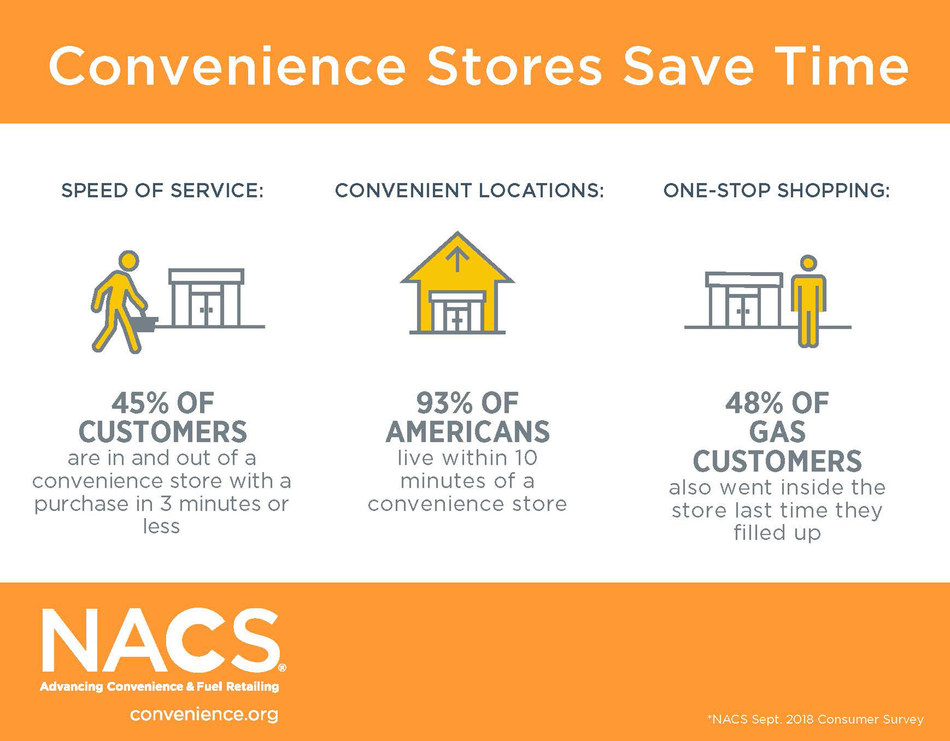
Convenient locations and fast service are what consumers say convenience stores provide best in an increasingly competitive retail landscape. Nearly two in three Americans (64%) say they live within 5 minutes of a convenience store, according to a new national consumer survey released by NACS. Even in smaller towns convenience stores are nearby: 86% of Americans in rural communities say they are within 10 minutes of a store.

Convenience retailers looking to stay ahead of the competition and continue delivering customer experiences that exceed expectations will be among the more than 24,000 convenience store industry stakeholders convening in Las Vegas for the annual NACS Show, taking place October 7-10.

Convenience stores sell approximately 80% of the fuel purchased in the United States, and nearly half of all gas customers (48%) also go inside the store when they’re buying gas for easy one-stop shopping. Whether hot coffee or cold beverages, consumers think drinks first when going in the store: 53% say their prime reason to go inside is to buy a beverage.

Also Read: ZoomInfo Completes Acquisition of Y Labs in Israel and Continues to Expand Its Executive Leadership Team Among Record Growth

The time consumers spend in stores also is incredibly fast. Half of all consumers (45%) say they are in and out of the store with a purchase in 3 minutes or less.

It’s for these reasons that convenience stores are considered the fastest location to buy something to eat or drink, with consumers selecting convenience stores over fast-food restaurants as the shortest wait times in lines by a 2-to-1 margin (35% vs. 18%).

NACS consumer surveys also suggest that consumers are looking to save even more time inside the store, with 92% of respondents saying they’d be interested in using automatic check-out technologies, and 67% saying they’d like to try same-day grocery delivery. Sixty-seven percent of survey respondents said they’d like to pick up their online shopping orders (for example, Amazon or eBay) at a physical c-store location.

Convenience retailers looking to stay ahead of the competition and continue delivering customer experiences that exceed expectations will be among the more than 24,000 convenience store industry stakeholders convening in Las Vegas for the annual NACS Show, taking place October 7-10.

“Convenience is in our industry’s name, whether that means a convenient location, fast service, one-stop shopping or 24-hour operations,” said Jeff Lenard, NACS vice president of strategic industry initiatives. “But what’s really exciting is how our industry continues to innovate and make things even more convenient and interesting to customers.”

This year at the NACS Show there are more than 60 education sessions and 1,200-plus exhibitors focusing on pushing the boundaries of convenience retail and unveiling ways that offer shoppers reduced time through an enhanced experience. And Las Vegas and the 24-hour convenience store lifestyle are a perfect fit. After all, the first 24-hour convenience store opened in Las Vegas, in the summer of 1963.

Also Read: IAB Names Susan Hogan Senior Vice President of Research & Measurement

Convenience stores are developing innovations through store design, technology, services and on-the-go food options. And, because the 155,000 convenience stores in the United States represent 34% of all brick-and-mortar retail in the country, it’s likely these innovations will be coming soon to communities across the US—and the world.

Store Design
Convenience retailers understand the value of making first impressions, beginning with a clean and well-lit store. Now, more retailers are enhancing the appearance of a traditional c-store “box” with an overall design strategy. In some cases, that means considering radical reinventions like separating the convenience side from the foodservice side—or even housing multiple food brands under one roof like a food hall.

At the 430,000-square-foot NACS Show expo – the largest in Show history, many exhibitors will showcase store design consultancy and solutions; interior and exterior lighting solutions; coolers and refrigeration fixtures; and food prep and equipment from ovens to fryers and steamers, to cook tops to soup kettles, juicers, grills and cook-and-hold units.

Education sessions also will feature industry design experts who will help retailers use store design to support their operating strategy, capabilities and vision.

New Technologies
Technology is rapidly changing the way convenience and fuel retailers operate their business. In fact, many retailers believe that new technologies can help their core consumers embrace a digital lifestyle.

As this new environment rapidly advances how convenience stores serve their customers, NACS and its technology-focused spinoff organization Conexxus are offering a highly specialized track of education sessions at the NACS Show called Tech Edge. Sessions focus on topics such as artificial intelligence, mobile applications, frictionless solutions, price optimization and staying ahead of the digital consumer’s needs.

Also Read: Bigtincan Acquires FatStax to Create New Platform to Tie Sales Enablement and Salesforce.com Data together

Services
Most of all, convenience stores sell convenience, allowing customers to quickly buy what they need and get on with their day in 3 minutes or less.

As the need for convenience grows, so are time-saving services. Education sessions will focus on last-mile delivery services and touchscreen ordering kiosks for customizable foodservice options so that convenience retailers can increasingly bring new services into their stores for time-starved customers to create a next-level foodservice program. In addition, more than 20 companies will showcase innovations in car wash solutions, systems and equipment.

On-The-Go Food Options
Convenience stores sell immediate consumption items: 83% of in-store merchandise is consumed within one hour of purchase.

Meeting consumers’ need for snacking on-the-go, exhibitors at the NACS Show expo will showcase items that neatly fit in a car’s cup holder—after all, 8% of millennials say they’ve used their car’s cup holder for food over the past month. New product innovations are delivering cup-holder-sized packaging for everything from, literally, soup to nuts and also fresh deli salads and yogurt, confections and mints.

As more healthy-minded consumers rely on protein products to help boost their energy levels throughout the day, many new products hitting c-store shelves satisfy taste buds while packing protein, whether traditional products like cheese, nuts, hard-boiled eggs and jerky or protein-enhanced products, whether beverages, potato chips, snack cakes, cookies and energy bars. At the NACS Show expo, convenience retailers can explore many of these new products from nearly 80 nutritional-focused snacking companies.

CMO Council Explores State Of MarTech With Domain Experts

0
CMO Council Explores State Of MarTech With Domain Experts

Nearly 7,000 Solutions Bring Confusion, Complexity and Technical Challenges

Back in 2011 Scott Brinker, editor of the Chief Marketing Technologist Blog, created a graphic representation of the marketing technology (MarTech) landscape with just 150 solutions. Fast forward to 2018 and there are now a staggering 6,829 offerings in his latest 2018 Martech 5000 Supergraphic.

The cover story in the Chief Marketing Officer (CMO) Council’s PeerSphere quarterly digital magazine published today takes a deep dive into what has become a $32 billion IT spend sector (IDC) filled with bunkers, moats, and other executional obstacles and hazards that handicap marketers seeking to transform and modernize their global marketing operations.

When asked about the state of MarTech by the CMO Council, Brinker offered this: “We are living in the golden age of marketing technology. There is a jaw-dropping amount of innovation, and this gives marketers tremendous choice, leverage and opportunity.”

Also Read: Verint Announces Customer Engagement Collaboration with Microsoft

The PeerSphere article notes: “While the state of MarTech is without question exciting, we also live in an age of confusion and complexity that threatens the operational strength of the MarTech stack and potentially (and quite unintentionally) put customer experience strategies at risk. Platform interconnection (or lack thereof) has become a critical issue as teams accelerate their demand for more digital connections powered by robust customer data and intelligence.”

“Marketing technology has become indispensable…the veritable backbone of the modern engagement strategy, but also the catalyst for organizational transformation purpose-built to drive and optimize revenue generation and growth,” notes Anita Brearton, Founder of CabinetM, a marketing technology management solutions provider, who notes that new technological advancements will play a critical role in customer engagement and marketing performance.

The MarTech stack can either make or crush the modern marketer, Brearton adds. “While we once lamented the dangers of “Analysis Paralysis” and the fear of moving forward without absolute certainty, today’s marketer must address “Technology Mythology” as we eschew the concept of stack perfection and work towards a nimble, best-in-class system that evolves with the pace and requirements of the business and the customer.”

Also Read: Innovid Receives Industry’s First MRC Accreditation for OTT Ad Impression Measurement

The CMO Council is partnering with CabinetM to provide a comprehensive marketing technology lifecycle management platform at a preferred rate to its 15,000 members worldwide. The subscription-based CabinetM platform is part of a soon-to-be-launched CMO Council Solution Sourcing Center designed to help streamline workflow management among and between teams around planning, researching and management of marketing technology strategy, acquisition and implementation. The CabinetM platform helps teams build marketing stacks to track and manage the tools they buy, build and retire, and the reporting capability allows organizations to identify redundant products, expense and performance issues and gaps in their marketing technology suite. Sitting at the core of the CabinetM platform is the industry’s largest database of more than 8,500 martech, adtech and salestech products that marketing teams can access to find the additional tools they need.

The latest issue of PeerSpherethe CMO Council’s quarterly e-journal—is available and includes:

  • A compelling view of how technology can help banks reshape the customer experience by the CMO of Finastra, a $2 billion FinTech leader
  • Valuable insights from Harte Hanks on the four most pressing risks facing CMOs when it comes to data and trust
  • What marketing can learn from private equity: The need to adopt a mindset centered on value and accountability
  • 13 questions that can help marketing teams better align and sync up with corporate strategic goals
  • An in-depth Q&A with Nintendo, Yahoo!, KidZania and Frito-Lay marketing leader Cammie Dunaway, now CMO of Duolingo, who also draws on her board member experience at Planet Fitness, Red Robin, Nordstrom Bank, Marketo and Brunswick Corporation

Recommended Read: Enhanced Customer Service as Natterbox Extends Voice to Salesforce Omnichannel

18 Video Marketing Ideas for Every Stage of the Buyer’s Journey

9
Video Marketing

Read More: Five Tips to Perfectly Time Your Webinar and its Promotion

microcreativesVideos have long been present in people’s lives. From TV commercials and movie trailers to shows and vlogs streamed on mobile phones, the moving picture clearly enraptures consumers. The rate at which it’s getting increasingly crucial is something marketers should pay attention to.

Impact Bound cited a report where it found video marketing to be 600% more effective than print and email combined. That alone tells you that if your company hasn’t adopted video marketing strategies, you’re sorely missing out. Business startups and big corporations alike can benefit from this. Here are a few more highlights from the study:

  • 75 million Americans watch videos online daily.
  • Almost 50% of all video content is consumed via mobile.
  • By 2019, video streaming will comprise 80% of all internet traffic.

Read More:  What We Learned at DMEXCO 2018: Wedding Running Shoes and Dating Your Customer

When creating a video campaign, one must consider the intention and purpose behind its creation. Will it be used to educate or sell? Is it supposed to target the audience’s emotion or intellect? There are different types of video marketing that you can do for each stage of the buyer’s journey to effectively hit your marketing goals.

It’s also important to figure out where you’ll be posting your video content. Based on stats released by Wochit, Facebook and YouTube are two of the most popular streaming platforms online today, generating 8 billion and 5 billion views daily, respectively. Instagram is also not to be forgotten, whose efforts on Stories and IGTV are contributing to the overall consumption of video.

Another aspect is shareability. You want your video to reach the right people, or even better, go viral. This can be achieved if people genuinely see value and relevance in the content you share. Neat explainer videos and those that tug at people’s emotions are some of the most common examples of videos that do well.

Video marketing will continue to grow throughout the years, perhaps at a faster rate than most marketers are expecting. It’s important to start early in the game and realize what you can do with it sooner rather than later.

Read More: AI-powered Conversation Bots Empower CMOs to Prove ROI

New Research Finds Not Valuing Customers Leads to $136 Billion Switching Epidemic

1
New Research Finds Not Valuing Customers Leads to $136 Billion Switching Epidemic

Communications Suppliers, Banks and Property Insurance Lead Customer Churn Risk in the CallMiner Index

New research released by CallMiner, the leading platform provider of award-winning speech and customer engagement analytics, reveals that US businesses have contributed to a switching epidemic by not valuing customers or listening to them when they have problems. And it’s costing them billions. In fact, a conservative estimate of the price of switching is $136 billion per annum.

The report features survey responses from US adults who had contacted a supplier in the last five years. Titled the CallMiner Index, the report shows that 85% of adults switched suppliers 1.81 times in the last 12 months. The sectors that top the CallMiner Index over both the last five years and the last 12 months are:

Sector Position Last Five Years Sector Position Last 12 Months
1. Communications companies* (71%) 1. Communications companies (51%)
2. Banks (32%) 2. Insurance caompanies (24%)
3. Property Insurance suppliers (27%) 3. Property Insurance suppliers (20%)

* Communications includes mobile telephone, broadband and landline telephone.

Also Read: Experian Reinforces Its Commitment to Help Companies More Accurately Identify and Better Connect with People

The pace of switching is accelerating

The CallMiner Index reveals that the average switching rate over five years is 0.68 times per annum. The rate for the last 12 months is almost 2.5 times higher at 1.81 times – showing that the pace of switching is accelerating.

New customers valued more than existing ones

The survey shows that consumers feel new customers are treated better than loyal customers and that suppliers are focusing more on acquisition than retention. The third highest reason for churn (30%) is that there is no reward for contract renewal, i.e. no reward for loyalty. The fifth highest reason (27%) is that discounts offered to new customers are not automatically given to existing customers. This reinforces the sense that existing customers can feel less valued than new customers. In fact, the fourth reason (28%) is that consumers feel like they are not being treated fairly. The main actions by suppliers that force people to say goodbye are as follows:

1. Prices are too high or have increased  66%
2. There is a serious problem with the product or service  32%
3. There is no reward for contract renewal, i.e. no reward for loyalty  30%
4. Feeling like you are not being treated fairly  28%
5. Discounts offered to new customers are not automatically applied to your accounts  27%

Also Read: Salesforce and AWS Expand Global Strategic Alliance to Accelerate Enterprises’ Digital Transformations

Scott Kendrick, Vice President of Marketing, said: “A shifting focus on new customer acquisition over customer loyalty is creating a dangerous situation that drove 85% of people to make a brand switch last year. Three of the top five reasons for switching indicate that customers want to feel valued by the companies they choose and will make a change if they feel they are not being treated fairly. Suppliers should take this research into consideration as they review the value they place on customer retention and how much could be at risk.”

The top advice consumers provide on how to keep them loyal accentuates their desire to feel valued. However, the strength of feeling about what is the right thing to do is indicated by the fact that 43% more people on average provide this advice than those that switched for the same reason.

Reason for Switching Advice to Keep Them Loyal
Keep prices the same or better than those for new customers  66%  78%
Reward them for renewing their contract  30%  53%
Automatically apply new discounts to existing customers  27%  50%

Failing to listen to problems may encourage consumers to say goodbye

The top two reasons to contact a supplier relate to problems that need resolving. The first reason relates to problems with the service or product (60%) and the second reason to problems with the invoice or bill (57%). Both these issues usually require specialized support from a contact center agent. However, although 40% of consumers said they wanted to be listened to before making a call about a problem, only 23% said they felt they had been listened to after making the call – which may explain why 30% leave frustrated and 24% annoyed, 17% upset and 15% angry!

Aimee Lucas, Vice President and Customer Experience Transformist, at Temkin Group, said: “Our own research shows that call center interactions that were more emotionally negative led to longer calls, more frequent transfers, and lower likelihood of the customer recommending the company. It’s imperative that companies use the available tools to their advantage to identify reasons leading to negative customer experiences and churn and coach their call center staff on the behaviors that create more positive interactions with customers.”

Also Read: Veritone Announces AI-Powered Media Attribution Solution for Broadcasters to Demonstrate Advertising Efficacy and Drive Customer Investment

Actual switching is higher than intention to switch

The survey uncovered that consumers want to stay loyal but are ‘forced’ to switch because of bad or ineffective supplier practices. The total planning to switch is just 57%. The three highest churn rates are for the same sectors as last year but are 22% lower on average than last year. For example, 40% say they are planning to switch communications suppliers but 51% did so this year. The fact that the intention to switch rates are lower than actual switching for this year might indicate that churn rates are slowing. But it is more likely to indicate that people want to stay loyal and suppliers do something that triggers the desire to switch. This assessment is supported by other findings in this report – particularly how problems are handled at contact centers.

Also Read: Womply Launches Womply CRM, the First Effortless Customer Relationship Management Solution for Small Businesses

In Closing

As suppliers face more competition, the importance of valuing your customers and treating them fairly has never been higher. Companies are losing large sums of potential recurring revenue from customer churn that could be avoided. This research shows that contact center programs have an opportunity to make a significant impact in this area by simply listening to customers and making their best effort to solve problems on the first contact.

According to the United States Census Bureau there were estimated to be 325,719,178 adults in the Unites States in 2017. A conservative estimate of the cost of acquiring a new customer across all the main sectors in the survey is $300 per person. This is based on the level of incentives applied to attract new customers and a conservative estimate of associated sales and marketing costs. The CallMiner Index identified that in the last 12 months 85% of consumers switched 1.81 times. This represents 276.86 million people. The total cost of churn is therefore at least $136 billion.

The research was carried out for CallMiner by 3Gem Research & Insights. 1,000 US adults who had contacted a supplier in the last five years responded to an online survey in May 2018.

Recommended Read: MarTech RADAR 2018: Top 150 B2B Technology Companies You Should Follow