Mobile Marketing Leader Adikteev Expands Sales and Account Management Teams
Former Remerge, Taboola, and Bluestacks Talent Prepare Company for Further Growth
Adikteev, a leading mobile marketing platform, announced that its sales and account management teams have grown with the addition of Gary Bartlett, vice president of sales, EMEA, Ela Krief, mobile performance evangelist, Nai Saeturn, vice president of sales, Americas, and Dimitri Souffan, director, business development, West, and Scott Rappaport, head of account management. Barlett and Krief will be based out of the Berlin, Germany office, and Rappaport will play a key role in the company’s future expansion.
Alexei Chemenda
“Adikteev is a young company, but our entry into the mobile retargeting space has turned heads. Our newest hires have played key roles at established companies in the space and their expertise applied to our technology and client-facing activities are certainly not the first sign of the expectations we have for the coming year,” said Alexei Chemenda, Chief Revenue Officer for Apps & Managing Director, USA for Adikteev.
After working in the managed cloud services industry and developing a very customer-centric approach, Bartlett was approached by an ex-colleague to leverage his sales expertise and gaming knowledge at Fiksu, working out of their London office. Joining as employee number 10 (EMEA), he quickly established himself in the gaming team, taking Fiksu’s DSP and audience products to market and later as sales director for FreeMyApps. After five years, he then joined Remerge in Berlin to lead their EMEA sales team as sales director.
Krief started her career working at an affiliate marketing company supporting the growth from seven to 100 employees in less than two years. She later moved on to consult for the UA-focused DSP Spotad, helping to support business development and product design, later moving on to manage publisher app mobile monetization. After a successful stint in Telavi, Krief then moved to join Remerge to build and head the customer relations team in Berlin, catering for app developers across APAC, MENA, EMEA and LATAM before taking the next step in her career.
Previous positions held by Saeturn include director of sales roles at ad tech startups Remerge and Singular. At Remerge, she grew and managed the sales team for the global company. At Singular, Saeturn was one of the first two hires — driving the majority of the company’s revenue the first two years out of beta and exceeding targets with her growing team, which resulted in the company securing a $15M Series A round.
Souffan started his career in display advertising, where he helped with sales and publishers’ growth. Pursuing his entrepreneurial mindset, he then started consulting in the same space. Souffan joined from BlueStacks, where he was senior business development manager and U.S. director. There, he was responsible for selling user acquisition campaigns to the top 200 grossing mobile gaming companies and investigating new lines of revenue — affiliate and flash games, among others.
Previously Rappaport worked at Taboola, starting off on one of their first account management teams, working to lead and grow their efforts across U.S.-based accounts. During this time, he managed some of the largest and most strategic clients across numerous verticals in mobile and desktop. Having joined as employee #150, Rappaport helped boost Taboola to more than 800 employees before transitioning to Adikteev.
In Our Latest Predictions Series 2018 Article, We Explore How the AdTech Companies Will Increasingly Seek to Create Value and Solve Industry Problems with Disruptive Technologies
In 2018, brands are super-sensitive towards publishing anything that could be labeled as ‘extremist’ content. As advertising technology companies join together to fight against fraudulent ad inventory, amidst an already acknowledged disruption in the form of GDPR, we are slated to witness another dynamic year.
“2017 was the year the entire industry woke up to the need for increased transparency and stricter quality standards. 2018 will be the year we will come together to address these issues and restore trust.” – Richard Kidd, VP, Head of Business Development, EMEA, OpenX
To understand how the adtech landscape would react to the latest disruptions in the tech world, we spoke to top executives from the industry. We chatted with representatives from OpenX, Mobfox, TVSquared, Tremor Video, and Urban Airship to know what they see as the biggest disruptions within the adtech ecosystem.
Deep Learning and Programmatic Capabilities to Maximize Adtech Returns
Gil Klein, MD, Mobfox
Gil Klein, Managing Director, Mobfox, spoke to us about the multipronged disruptions likely to challenge the adtech industry in 2018.
Ads.Txt: Are You Ready Yet?
“In 2018, we’ll witness a growing adoption of ads.txt by DSPs beyond Google. Adtech companies will increasingly seek to create value and solve industry problems with disruptive technologies such as blockchain and AI. The ability of deep learning to perform human-like tasks combined with AI’s mass computing power has already begun to be a game-changer for the industry and will bring programmatic advertising to a new level of optimization.”
Is Deep Learning the Future of Programmatic Advertising in 2018?
Gil added, “Deep learning will continue to derive meaning from descriptions with Natural Language Processing (NLP), especially in situations where data is sparse, will extract features automatically from applications’ user interfaces, and will enhance globalization by helping to better map the subtleties between users of different cultures or geographic locales. In the coming year, we’ll see these features of deep learning coming together to become a single model that maximizes the results of programmatic mobile advertising.”
Seismic Shift to OTT To Add More Dollars to Adtech Budgets
Gil further explained, “Another trend we foresee becoming even bigger in 2018 is the shift to over-the-top (OTT) advertising. Currently, OTT accounts for 26% of Video Ad-Spend, and it’s not slowing down. Video streaming on both desktop and mobile devices has had a true explosion recently, offering a new opportunity for advertisers to target niche audiences through ad-supported OTT and track anonymized user data elsewhere online, painting a holistic picture of media consumption, digital behavior, and ad exposure. This, combined with increasing personalization and interactive ad formats, will begin to form an even larger, more important piece of the pie in advertising budgets in 2018 and beyond.”
Better Measurement Standards to Analyze TV Marketing for Audience Targeting
Marlene Grimm, TVSquared
Marlene Grimm, Analytics Director, TVSquared, predicted a very adventurous roadmap for the adtech industry, especially within the TV Marketing stacks.
Is TV Dead?… No…
Marlene said, “In 2018, I think we’ll finally see the end of the “TV is dead” scaremongering. This year the industry has continued to evolve, bringing realistic, fact-based TV talk with it. TV is increasingly accessible, it’s still watched by the masses, and it’s effective. TV is now highly measurable and optimizable, and for many advertisers TV has quickly become the primary generator of digital response.”
Marlene added, “To build on this, 2018 will see brands creatively leveraging TV marketing for targeting – thanks to increasingly sophisticated targeting options for advertisers. While addressable and programmatic TV are still developing technologies they have sparked an industry-wide discussion, which in 2018 will prompt networks and channels to call for an industry standard for targeting and measurement.”
‘We Need to Restore Trust in Programmatic Advertising’
Richard Kidd, OpenX
Richard Kidd, VP, Head of Business Development, EMEA, OpenX, said, “In 2017, brand safety, ad fraud, and transparency dominated the headlines, making the need to restore trust in programmatic advertising essential to continue its rapid growth. And while the industry took steps to address these challenges – such as the launch of ads.txt – 2018 will be the year digital advertising really ‘cleans up’.”
He added, “There’s much at stake. With all sides of the ecosystem – from publishers to marketers – demanding their partners meet strict quality standards, any who fall short will find themselves struggling to stay afloat. In particular, programmatic exchanges should be assessed on their ad fraud prevention measures, their commitment to protecting the brand safety, and the transparency of their processes, including the auction methods.”
Connected TV Could be A Very Promising Investment for Marketers and Mobile Advertising Companies
Lauren Wiener
Lauren Wiener, CEO, Tremor Video DSP, said, “Connected TV has gone mainstream – with cord-cutters and cord-nevers driving the move from traditional TV to digital devices. But, as we know well, ad spend always lags behind user behavior and it hasn’t caught up yet with the shift to the connected TV. In 2018, we will see advertiser spend and demand for connected TVs increase dramatically as advancements are made in targeting and measuring.”
Lauren added, “Connected TV has tremendous promise for marketers: the ability to combine the targeting capabilities of digital with the scale of the big screen. And while the challenges connected TV currently faces mirror those mobile faced in its nascent stages, so too will the solutions. Just as mobile players worked, and continue to work, to address these problems, so too will the connected TV industry. In the year ahead, marketers and industry players will work through these challenges together to start fully delivering on the promise of connected TV.”
Could Collaboration Apps Save the Day for Advertisers Working in Large Teams?
John Reese, Mavenlink
John Reese, SVP, Marketing at Mavenlink, said, “Although we’ve witnessed a tremendous proliferation of new marketing technology in recent years, collaboration apps have been around for some time to help marketers communicate, share files, and hold meetings. What’s different in 2018 is the more rapid adoption of a new class of digital workspace and workstream technology to facilitate more efficient and effective planning of, execution of, and communication around project-based work. Market analyst Gartner forecasts unprecedented adoption of Collaborative Work Management and Collaborative Workstream technology over the next five years, and for good reason.”
John added, “More than ever, companies are seeking to digitize their work as project and functional teams become more distributed, work hours become more flexible, workforce demographics shift to millennial, and technology innovation presents new possibilities for facilitating modern business practices.”
Explore the Scope of Voice and Data-Powered Services Within AdTech
Mike Herrick
Mike Herrick, SVP, Product and Engineering, Urban Airship, stated, “2018 will be the ‘Year of Voice’, as Alexa, Google Home, and Siri not only get much better but reach critical mass. This will create new opportunities for brands to connect with customers in new ways and build new data-powered services. It will be the wild west for a while, and as marketers begin to build new experiences for these devices there are things that they must take into consideration like: privacy, divulging personal information, and timing. Voice will allow marketers to deliver relevant information immediately, but marketers must tread carefully.”
Committing to specific tactics can be difficult for a digital marketer. There are so many different approaches that it can be tempting to continuously swipe left in search of something better.
While there are quite a few bad matches out there, there also are some strategies and channels that are keepers. These approaches aren’t perfect—some have even broken marketers’ hearts in the past—but settling down with them can lead to something beautiful.
Specifically, every digital marketer who wants to improve the effectiveness and efficiency of their efforts should learn to love these seven key tactics this year:
Fast-Loading Mobile Content
While search engines have been coy in the past about what they wanted, this year they’ve been transparent about one SEO approach that’s sure to work: fast-loading mobile content.
In fact, Google has openly stated that it’s going to roll out changes to its algorithm in 2018 that incorporate mobile page speed as a ranking signal.
There are nuances to this move—the “Speed Update” initially only impacts a small number of queries—but the message is clear: consumers are shifting to mobile, they demand pages that load quickly, and search engines are going to give them what they want. Marketers should follow suit or risk losing rank and traffic.
Digital marketers are often wary of online reviews, and understandably so. Positive online feedback/ratings can be the wind beneath your wings while negative ones can come in like a wrecking ball.
Despite this ambivalence, it’s become essential for every brand to monitor and manage its online reviews.
Why? Because customers across all verticals increasingly look at reviews—and trust them. Some 97% of consumers say they check the online reviews of local businesses and 67% of B2B buyers say they check vendor reviews.
Put simply: audiences are going to utilize reviews/ratings whether you want them to or not, so you’re better off engaging than pretending it’s not happening.
Data and Privacy Protection
This year, consumers are ready to demand a little more respect from brands. For too long, digital marketers have taken personal data for granted, enjoying the benefits without securing it properly or thinking too much about privacy.
That’s going to change. In May, Europe’s far-reaching GDPR regulations go into effect. These rules create strict boundaries around what companies can do with people’s personal information and are backed by heavy fines for non-compliance.
While the regulations won’t directly affect most US businesses, they’re a clear sign that many consumers are unhappy with how their data is being treated by firms. Rather than waiting for this frustration to rise to the surface, be proactive and give your brand’s privacy policies and data protection approaches some love.
Online chatbots may not sound like the sexiest use of AI, but they’re currently among the most mature and compelling uses of the technology.
Some 15% of consumers say they’ve already encountered chatbots and that number is expected to jump significantly over the next few years.
What’s driving this adoption? Consumers say they like chatbots for a number of reasons, including their constant accessibility, fast response times, and ability to quickly answer questions.
The benefits for brands are impressive, too. Chatbots enable continuous customer service, marketing engagement, and sales promotion without maintaining a huge staff. That combination of big scale and small cost is why every brand should think about embracing chatbots this year.
Talking has always been the foundation of human communication. Now it’s increasingly also how people interact with their devices.
Nearly every smartphone has a voice-activated virtual assistant such as Siri built in and the number of voice-assisted devices such as Amazon’s Echo is expected to reach 69 million in the United States by 2019.
This trend has the potential to affect digital marketing across a wide range of areas, from how pages are search optimized (more for natural language queries) to the way in which content is presented (audio friendly).
While the full impact of the shift is still hard to know, what’s certain is that preparing for voice-driven interactions is a smooth-sounding strategy.
Messaging Platform Engagement
When it comes to digital channels, marketers often ignore messaging platforms and are seduced by social networks, which get more buzz.
That’s a mistake. Over the past few years, a number of messaging services have been steadily growing their user bases and some now eclipse established social platforms such as Twitter in size. For example, Facebook Messenger and WhatsApp each has more than 1.2 billion monthly users and WeChat has nearly 900 million.
In addition to building their user bases, these platforms have also been adding features such as sponsorship opportunities and branded accounts. These make them not only robust communication tools, but also powerful advertising and customer engagement channels. Marketers should take a good look at the full range of opportunities on these platforms—they may be surprised at what they’re missing out on.
Branded Video Pieces
Many marketers have a difficult relationship with video. While in their hearts they know the medium has its advantages, they also have their doubts about the cost and time required to create something great.
Our advice is to stick with it. A recent study of the content preferences of different generations found that consumers of every age find video to be the most memorable format, and more than half of consumers age 54 and younger want to see more videos from brands.
In other words, consumers like video content from brands, remember it, and want to see more of it. That means that although branded video requires a larger investment, it can also have a larger payoff.
As with all the approaches covered in this post, video requires hard work to execute correctly. That effort may not feel worth it initially, but ultimately you may find yourself crazy in love with each of these tactics.
Visual BI Solutions Announces Its Participation in BI and Analytics Conference
Visual BI Solutions Provides Strategic Consulting, Software and Solutions That Achieve Agile, Mobile, Self-Service and Real-Time BI
Visual BI Solutions, an SAP Partner and a specialized player in Business Intelligence (BI) and Analytics, announced their participation in BI and Analytics Conference being held this year at Huntington Beach, CA between February 19-21. They will be exhibiting at Booth #3.
Visual BI Extensions (VBX)
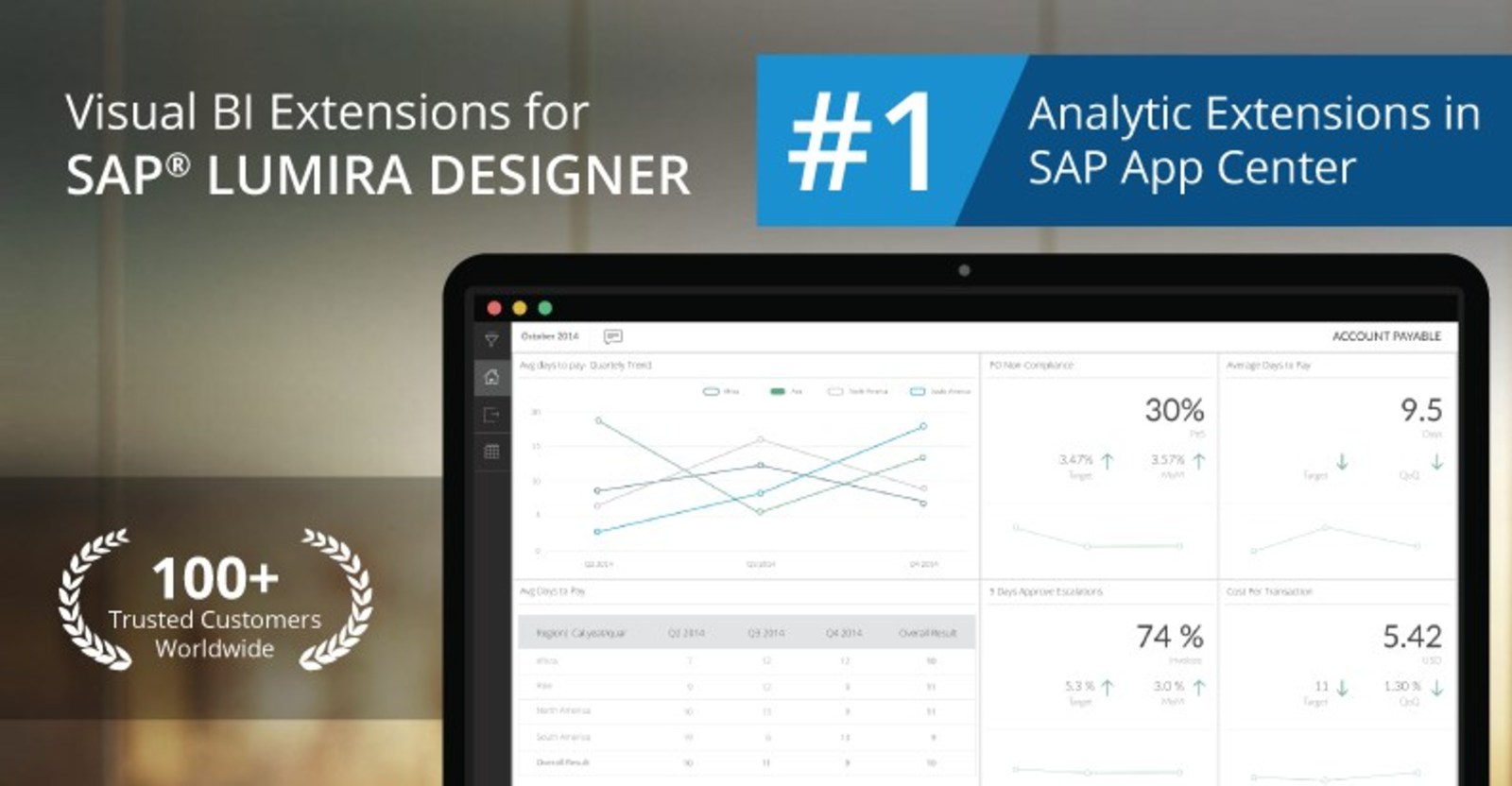
This year, Visual BI will be exhibiting their End-to-End BI capabilities ranging from Quick-Start Programs, Migration, Training, Consulting and SAP Certified Product Extensions. In addition, participants will also have a chance to explore their innovative Product offerings like Visual BI Extensions for SAP Lumira Designer (VBX 2.2), Value Driver Tree, VBI View and Document Management for SAP Lumira.
“BI and Analytics Conference is going to be a great platform for us to showcase our innovations, customer experiences & success stories in SAP’s BI portfolio covering SAP Business Warehouse, SAP BusinessObjects and SAP HANA,” said Gopal Krishnamurthy, Founder/CEO, Visual BI Solutions.
A leading SAP-certified BI Enablement firm, Visual BI Solutions provide strategic consulting, software and solutions that achieve agile, mobile, self-service and real-time BI. Some of the world’s largest firms work along with Visual BI Solutions for strategies & solutions to drive BI adoption through actionable insights and advanced visualizations.
Formerly SABOC, BI+A is a celebration of the people, technology, ideas, and innovations that are literally transforming the way we live and work. This conference gives you access to global thought leaders, local peers, and industry experts using BusinessObjects and the full range of SAP’s analytics and reporting tools. You will learn how to lead with analytics, maximize your current software investments, empower super users and create a BI strategy and analytics team that exceeds the needs of the business.
Roobot Amplifies with David Rich and John Hardigree as Executive Advisors
CRM and Analytic Solution Experts Join Roobot’s Executive Team and Board to Accelerate Development of AI-Driven Personal Shopping and Service Solutions
Roobot, an industry leading Personal Shopping Assistant for retailers, manufacturers and service providers, named David Rich and John Hardigree, who pioneered the use of predictive analytics at Accenture and Revolution Analytics (now part of Microsoft) as Executive Advisors. John, who is also an investor in the company, will play a key role joining the Board of Directors. And, together they will work with existing leadership to expand the company’s partner ecosystem, enhance its strategic vision and help the company operationalize its vision for significantly improving the shopper experience for its clients.
John Hardigree
Rich is Chairman and CEO of DBR & Associates, an independent consulting and advisory firm, where he, Hardigree and others focus on a portfolio of C-suite agenda topics such as “Digital/Business Transformation” nextgen “Marketing Automation Platforms “, “Artificial Intelligence/Analytics Applications” and “Virtual Reality Solutions”, as well as operationalizing “Growth/Exit Strategies”. Prior to forming DBR & Associates, Rich and Hardigree successfully grew Revolution Analytics, the global leader in Open Source R (predictive analytics) tools, where they served as Executive Chairman/CEO and CBDO respectively, (as well as investors). In 2015, Revolution Analytics was successfully acquired by Microsoft and integrated into their Cortana Intelligence Suite, a key enabler for its Intelligent Cloud agenda. Additionally, both bring a robust background of global industry experience, having successfully run several services businesses and practices during their combined tenure at Accenture.
“David and John’s experience driving business strategy as well as near and long-term delivery of our key metrics will enhance how our organization better serves our clients—ultimately providing the personalized shopping and service experience innovative businesses are requesting. We are excited to have them on board and look forward to accelerating the value we deliver to our clients,” said Laurence Marks, CEO of Roobot.
David Rich
“It’s an exciting time for digital disruption in the retail industry,” said Rich, adding, “As emerging technologies like Artificial Intelligence (via Personal Shopping Assistants), Virtual/Augmented Reality, Predictive/Prescriptive Analytics and Unified Commerce redefine the shopper experience like never before. With a seven-year head start, I’m happy to be working with someone as innovative as Roobot. We are eager to help this company continue to build and develop impactful solutions for the world’s most innovative retailers and brands.”
Adrianna Burrows Is an Accomplished Executive with More Than 20 Years of Experience in Marketing, Branding, and Communications for Global, Multinational Technology Firms
Cornerstone OnDemand, a global leader in cloud-based learning and human capital management software, today announced it has hired Adrianna Burrows as the company’s chief marketing officer (CMO), effective March 19, 2018. Adrianna Burrows will report directly to Cornerstone founder and CEO, Adam Miller.
At the time of this announcement, CEO of Cornerstone OnDemand, Adam Miller, said, “We are excited to welcome Adrianna to our executive leadership team. Her expertise working with premier global technology brands will be instrumental in the execution of our strategic plan, particularly as we sharpen our focus on recurring revenue growth and capitalize on our opportunities around learning content, as well as our Cornerstone Recruiting and Cornerstone HR suites.”
Adrianna Burrows
Burrows is an accomplished executive with more than 20 years of experience in marketing, branding, and communications for global, multinational technology firms. As Cornerstone’s CMO, Burrows will oversee the company’s global marketing functions, including branding, corporate marketing, demand generation and marketing communications.
Before this role at Cornerstone OnDemand, Burrows served as the CMO of Stack Overflow, where she was responsible for all global corporate marketing functions including branding, communications, digital marketing and demand generation.
Previously, Burrows served as the general manager of Windows marketing at Microsoft, reporting directly to the CMO, where she spent six years leading product marketing, business strategy, global channel strategy, brand communications, co-marketing initiatives and worldwide marketing strategy across more than 190 countries.
Prior to Microsoft, Burrows spent 13 years with global PR firm Waggener Edstrom Worldwide, most recently as a senior vice president and agency board member, where she led the communications campaigns for Microsoft and AMD, among other businesses.
Adrianna Burrows, said, “Cornerstone’s vision for its next phase of growth and the enormous potential to expand the company’s brand makes it an exciting time to join this talented team. I look forward to playing a key role in Cornerstone’s evolution into a high-growth SaaS company.”
Currently, Cornerstone OnDemand helps organizations to realize the potential of the modern workforce. From recruitment, onboarding, training and collaboration, to performance management, compensation, succession planning, people administration and analytics, Cornerstone is designed to enable a lifetime of learning and development that is fundamental to the growth of employees and organizations.
New Style Data Platform Trendage Combines AI, Communities and Visual Search To Provide Automated Product Recommendations
Retailers Can Now Access Valuable Insights On Customer Apparel Preferences and Cross Sell Data In a Timely Manner
Trendage, a new data-driven style platform, officially announced the launch of its company, team, and product, Automated Product Recommendations for retailers. Using artificial intelligence, visual search, and a community of millions of trendsetters, Trendage automatically generates 10 million+ style recommendations per month for apparel, accessories and footwear retailers that highlight what items pair well together based on a shopper’s age and regional trends to increase average order values and conversions. Trendage has also identified 216 core body types for shoppers and will enable anyone to create their personal avatars with a selfie and matching body type on its outfit game “Style Challenge.”
Trendage also announced its team which is comprised of three co-founders: Vineet Chaudhary, co-founder and technical CEO; Roya Ansari, co-founder and business development; and Mohammad Ahmad, co-founder and operations, all of whom have worked together for over 12 years. The company also announced that it has received $1.5M angel funding from notable investors in retail, technology and fashion that includes Bhupen Shah, co-founder of Sling Media, Ilaria Galimberti, co-founder of IMPRESSA Hong Kong and O’ahu Sport Ltd., and Nooshin Esmaili, founder of Sutro Footwear and ShoeBiz SF.
Trendage’s insights are powered by its viral consumer product, Style Challenge, a styling game which solves the difficult problem of gathering consumer style preference data. The game, which is currently available on mobile and desktop platforms, enlists millions of community members to determine what clothes, accessories and shoes from leading brands match, building various outfit combinations on a virtual model that are shared and rated by the Trendage community. The game is immensely addicting and a fun way for shoppers to discover new products online in an engaging manner. In January 2018 alone, Trendage’s community created more than three million customized outfits.
Trendage then uses machine learning to automatically generate data that helps customers “complete the look” based on the choices of its community. The end result are recommendations for popular clothes, accessories and shoes matches which retailers can use to personalize product pages and email marketing campaigns with frequently paired items within a shopper’s age and region. This data for apparel and accessories is unique and provides a powerful competitive advantage. The company can also provide a report to help retailers better predict style trends in the fashion industry and avert costly mistakes.
“Retailers are struggling to find ways to compete with online giants and fast-growing mail-based startups that have massive data. The challenge of making sense of all the various data points gathered from website views, email campaigns, sale and return data, however, is that the data is often not available until it’s too late to impact a shopper’s decision. By the time the data is ready, the season and trends have changed. Trendage gathers all the same data without ever having to touch a single item of clothing, or receive a return, giving retailers an important time advantage of leveraging current trends just when they need it most: at the point of sale while customers are making critical purchasing decisions. No other platform makes cross-sell data as readily available, which is why you don’t see it online. Cross-sell product recommendations have been mostly done manually so far. Trendage’s automation fixes this problem,” said Vineet Chaudhary.
Roya Ansari
Roya Ansari, added, “Brands often think they know who their core consumer base is, so they tend to tightly control how their products are styled and marketed. On the flip side, consumers like to stick with brands they are familiar with, and might not consider a brand that’s outside of their comfort zone. Trendage has come up with an ingenious way for brands to put their apparel in front of a broader audience, one they may have never thought of reaching, to learn how consumers might mix and match their items with other brands. It’s also a great way for consumers to discover new brands that they would have never found otherwise. It’s really a win-win for both sides.”
In the past, marketers could get away with segmenting customers using primarily demographic and firmographic traits such as age, gender, income, ethnicity, occupation, industry, company size, geographic location, etc.
But in today’s customer-centric world, understanding your customers based on demographics isn’t enough. As Netflix’s VP of Product Innovation, Todd Yellin, said:
“It really doesn’t matter if you are a 60-year-old woman or a 20-year-old man because a 20-year-old man can watch ‘Say Yes To The Dress’ and a 60-year-old woman could watch ‘Hellboy.’”
B2C and B2B marketer alike can leverage behavioral data to solve problems and impact KPIs at every stage of the customer journey. From customer acquisition to customer retention and loyalty, leading marketers are achieving their goals by using customer behavior to better understand their customers and improve the way they interact with them.
There are three primary ways that leading companies are using customer behavior data and analytics to drive revenue.
1. Improve Customer Acquisition
As more customers travel along your path to purchase, patterns in behavior emerge that can help explain particular successes and failures, as well as why some groups of customers attain a particular outcome and others do not.
Using customer behavior data, marketers can uncover which customer journeys result in a purchase and leverage this information into campaigns that increase new customer acquisition. Whether you sell to other businesses or directly to consumers, reaching out to prospects at the right moment, through their preferred channel, with a customized offer, will help you improve customer acquisition.
Armed with behavioral insights, acquisition-focused marketers can:
Increase effectiveness by making sure your offer timing and messaging is aligned with the most important drivers of each customer’s purchasing decision.
Improve targeting by looking at prospects that exhibit similar behavior as your most profitable customers.
Boost marketing ROI by focusing your resources on prospects with the highest likelihood to purchase and highest potential lifetime value.
For example, a key goal for a leading bank was to improve credit card opening rates among millennials. To understand the role that different channels played in credit card offers and their respective efficiencies, the bank analyzed customer behavior.
After integrating data from online and offline channels such as branch visits, website browsing, mobile data, email data and in-app interactions, they were able to discover the customer journeys that were most efficient at leading new customers to apply for a card.
By analyzing customer behavior, they determined that one particular offer was converting better for people who had viewed it as an email, rather than as a text message or within the bank’s mobile app. Based on this information, they created a new email campaign for those who had viewed the credit card offer and then abandoned their journey. The new campaign, based on customer behavior, contributed to an overall improvement in their customer acquisition rate.
2. Increase Customer Retention
While your customers may not explicitly communicate their intentions, they often reveal clues through their behavior. Marketers are using customer behavior data to improve their ability to identify at-risk customers and thereby reduce customer churn. By gaining a data-driven understanding of customer preferences and the best ways to reduce friction in particular situations, you can more easily identify and prioritize opportunities for improvement.
Netflix, for example, uses customer behavior to increase engagement and reduce churn. By leveraging behavioral customer data and analytics, Netflix is able to pinpoint the level of usage that a customer should exhibit each month to receive enough value to continue their subscription. If a customer’s monthly content consumption falls below that threshold, the likelihood of churn increases dramatically.
By creating a behavioral segment for all customers that fall below the minimum product usage value threshold, Netflix is able to easily identify at-risk customers, discover insights that can lead to low usage, and monitor these over time. By leveraging customer behavior data, Netflix executives have estimated that this saves the company $1Billion a year in lost revenue.
Customer retention is also particularly important for the telecom industry due to slim margins and saturated markets. At any point in the customer journey, telecom customers are only a click away from switching to a competitor if they’re not happy with the level of customer service provided. Telecom companies are now analyzing customer behavior to pinpoint problem areas such as customer care calls and analyze how to improve them or provide alternatives via self-help methods. This has resulted in improved customer satisfaction scores(CSAT) and lower cost to serve.
The likelihood of converting each customer on a specific cross-sell or upsell offer may be dependent on the particular time it is offered. Customer behavior provides critical insights on which offer to show each customer and when to show it.
For example, a premium wine accessories company analyzed customer behavior to improve loyalty program registrations, increase cross-channel engagement and build long-term customer relationships, as the majority of their profit comes from repeat purchases rather than the initial sale.
The marketing team analyzed millions of point-of-sale transactions and connected them with loyalty program registrations, email responses and online behavior. They identified how the customer journey differed for various behavioral segments and discovered the optimum paths each followed from engagement to loyalty and repeat purchases. By revealing which marketing campaigns were most effective at turning their in-store customers into repeat, online customers, they were able to increase revenue from existing customers.
On the other hand, the likelihood of conversion is typically lower after a negative experience. For a customer who may have exhibited past behavior that’s predictive of a cross-sell, up-sell or repeat purchase opportunity, extending an offer immediately after a negative experience can actually do more damage.
If a retail banking customer, for example, has just resolved a lengthy customer service issue they are not likely to be very receptive at that time to a new credit card or loan offer. However, if the timing and messaging are customized based on recent behavior data (e.g. by acknowledging their recent interaction and providing a ‘special’ offer as consolation), then the conversion rate could actually increase.
Use a Modern Behavior-Based Approach to Customer Analytics
New behavior-based approaches to customer analytics have recently emerged, enabling organizations to discover valuable real-time insights about their customers and make smarter decisions, faster than ever.
One approach experiencing rapid adoption is customer journey analytics, which leverages customer behavior data to enable behavioral segmentation, customer journey visualization, journey orchestration and journey-driven KPIs.
Customer behavior can reveal valuable insights about your customers, your business, and the relationship between the two that you can’t find anywhere else—if you pay close attention by capturing, analyzing and acting on it.
TechBytes with Kathryn Loheide, Vice President, Marketing, Octiv
Kathryn Loheide Vice President, Marketing, Octiv
In 2018, most marketing leaders in the industry feel that the Marketing and Sales technologies would converge dramatically. This convergence would enable marketers to better view and analyze the buyer’s decisions along the journeys. For a Sales Productivity And Contract Management platform, delivering personalization and relevant customer experiences are just as important as they are for any B2C marketing and online retail firm. To understand how the leading Contract Management platform, Octiv, delivers a competitive playing field to enterprise customers, we spoke to their Vice President of Marketing, Kathryn Loheide.
Tell us about your role at Octiv and the team and technology that you handle?
As the head of Octiv’s marketing organization, my vision shapes the direction of marketing efforts, providing leadership and innovative strategy to drive the business forward. I oversee the Octiv brand, Demand Generation, Sales Development and Product Marketing. Our tech stack includes WordPress and WP Engine for our website and blog, Salesforce and Google Analytics for reporting and forecasting, Marketo for marketing automation and email marketing, Wistia and YouTube for video hosting, Buffer for social media management, Asana for project management and Slack for collaboration.
What are the core tenets of your personalized document-generation engine? How do you provide a competitive playing field to enterprise customers?
Digital-first, next-generation documents: We provide the most complete document generation platform, allowing sales and marketing to bypass traditional sales documentation methods with the help of automated workflows. Octiv provides sales teams with greater flexibility, control, and visibility of the sales process.
Unparalleled integrations: Octiv partners with the world’s most powerful programs and systems so companies can seamlessly integrate their Octiv instance with their existing business systems to take action on their data, streamline processes and keep their records up-to-date.
Unlimited storage and collaboration: With Octiv, teams can collaborate across the organization without the hassle of multiple versions, incorrect data, or inconsistent branding. The unlimited storage space in our searchable, cloud-based repository allows any member of an organization to find the most updated, branded version of a document.
What aspects of Marketing and Sales technologies do you see converging in 2018? What tech tools would you recommend for truly unified marketing and sales document generation?
As we advance further into the digital age, from a marketing and sales perspective, we’re discovering that this is the time of the connected customer. Technology has connected customers to the buying process in a way that prompts them to compare every buying experience they’ve ever had—meaning they’ll compare the experience you provide to more than just those of your competitors.
This is why it’s crucial for your prospects and customers to have a consistent, exceptional experience throughout the entire buying experience. This means incorporating automation further down the sales funnel, all the way up until a deal is closed. This automation can be achieved through sales tech solutions that align sales and marketing teams, and help to provide customers with that consistent, easy experience.
For the future of marketing and sales technology, powerful integrations will help to align teams and create more opportunities for automation in the sales funnel. Document generation software (like Octiv) integrates with CRMs, eSignature, CPQs, file storage, email systems and more in order to provide a seamless sales process, both for internal teams and prospects. Automation plays a key part, then, in every stage of the process, instead of just in the initial prospecting steps.
What are your predictions for demand-gen platforms and campaign performance tools in 2018? Where does document generation landscape fit into this ecosystem?
We’re seeing automation becoming more important and prevalent further down the sales funnel and expect to see sales tech and tools, in 2018, to fall in line with this trend. Document generation software is a piece of this ecosystem that kind of links the other tech solutions together throughout the different stages of the sales process. For example, a sales rep can use Octiv to generate a sales proposal for a prospect, automatically filling in fields from that contact’s information in their CRM. Octiv also integrates with CPQ systems as wells as DocuSign, so deal-closing activity like filling in pricing information and quotes in contracts, and even the signing process itself can be automated. Engagement metrics are all recorded within Octiv as well, so sales teams can also keep track of best practices for document creating and sending.
How can collaboration technologies remove inefficiencies in marketing and sales processes? What collaborative tools are best expected to deliver ROI for the modern global marketing teams?
Collaboration tools remove inefficiencies in marketing and sales processes by allowing 24/7 communication and documenting outcomes for the entire team to see and refer back to. A tool like Slack allows for one to one or one to many communication and enables teams to chat from anywhere at any time. It also allows organizations to communicate more broadly and share documents without filling up the inbox. Since our team spends so much time in Slack, sharing files there and using it as an archive is working well for us too.
An internal document collaboration tool like Google Documents also increases efficiencies by allowing team members to edit documents in real time from anywhere. With so many stakeholders across marketing and sales, this is crucial for alignment and efficiency.
Using a project management tool is also helpful to collaborate on projects and keep people moving together. Working on creative projects often produce file types that need to be reviewed by multiple stakeholders in a timely manner and using a project management tool allows for that in one place.
According to a report, nearly 27% marketers use at least 10 marketing tools for collaboration. Do you see this number growing by 2020?
I don’t think so. Workers are becoming fatigued by so many different tools and marketing teams don’t have the capacity to maintain an endless number of operating systems. Knowing a little about many, many software products is frustrating and time consuming. I believe the market will continue to consolidate, we’ve been seeing it already in the marketing automation space with platforms like Salesforce Marketing Cloud, Oracle Marketing Cloud and Marketo.
[mnky_testimonial_slider slide_speed=”3″][mnky_testimonial name=”” author_dec=”” position=”Designer”]“Being able to analyze every customer interaction, profile the customer’s behavioral tendencies, predict their future consumer activity, recommend a line of action and doing all that automatically in real-time is a good example of how enterprises can benefit from artificial intelligence.”[/mnky_testimonial][/mnky_testimonial_slider]
Tell us a little bit about your role at VoiceSense. What lead you to found a speech analytics firm?
Prior to founding VoiceSense, I spent many years working in the defense and intelligence industries. During this time, I gained extensive experience working with signal processing technologies. At the same, I am a clinical psychologist and spent over a decade managing my own private practice. For me, creating VoiceSense has been a fusion of these two areas of my professional and academic background, connecting signal processing with analyzing characteristics of personality, emotions and interpersonal communications.
As the CEO of the company, I am obviously occupied with the daily management of VoiceSense and leading the business growth of the company. However, I remain strongly involved in the research and development activities of our speech and behavioral analysis technologies. I very much enjoy the challenge of in applying our technologies and products to new vertical markets.
What are the core competencies of SEAL?
VoiceSense’s SEAL solution brings an innovative new approach to predictive analytics by focusing on the behavior tendencies of customers rather than their demographic and historical information. Through the analysis of prosodic (non-content) speech patterns of a customer, such as intonation, pace, stress and more, SEAL can accurately predict future consumer behavior of a customer.
SEAL provides a fully automated process that can be used to analyze both recorded voice files and live audio streams. We use predictive models and signal processing techniques to accurately assess over 200 prosodic speech parameters. It is important to highlight that our technology is completely independent of language and content.
Based on this analysis, SEAL then evaluates the characteristics of the speaker and builds a behavioral profile, such as levels of risk affinity or aversion, tendencies for impulsive behavior and rule abidance, personal integrity, conscientiousness, sociability, wellbeing and so on. The outcome of SEAL’s analysis is a prediction score for a specific consumer behavior that is then automatically integrated into an enterprise’s decision-making processes and CRM data.
SEAL significantly shortens and improves decision-making processes and can be applied by an enterprise to a range of voice-based customer interaction scenarios to improve risk assessment, expand sales and increase customer retention. The solution also has additional applications for health and wellness monitoring as well as providing human resources personal profiles of candidates and staff.
How does VoiceSense’s predictive speech analytics help drive the ROI of marketing campaigns?
Our technology supports the marketing campaigns of an enterprise in two main ways.
First, when an enterprise is building a marketing campaign, SEAL can be used to better segment customers and define target markets. For example, a bank that is launching a new smartphone app might start by accessing demographic information stored in its CRM database. In this example, the bank’s Marketing Team might segment its customers according to age groups with the understanding that a young customer might be more attracted to the bank’s app. This is a good start, although this approach, that relies only on demographic information would miss out on customers in the older age groups who are open to using a smartphone app for payment transfers.
In SEAL, we build a behavioral profile for each customer that can be stored in the enterprise’s CRM system, which can include personality traits such as early adaptors, online buying tendency, brand loyal tendency, price/value consciousness, technological openness, and low tolerance for risk. In this example, the bank’s CMO leading this marketing campaign could target all the customers with the personality trait of being early adaptors. At the same time, this marketing campaign could be defined to avoid customers that are determined by SEAL to have a low tolerance for risk.
The second way that SEAL can improve a marketing campaign is with online decision-making guidance to the sales representatives. The system analyzes customer interactions in real-time and provides a go/no-go upsell indication to the salesperson – also in real-time – based on the behavioral match of the customer to the running campaign. This way the representatives can focus mainly on customers with high purchase probability, meaning those that are identified by our technology as having personality traits of being early adopters, online shoppers or similar tendencies, while avoiding those with low purchase probability. Moreover, the system would provide the representative with a sales approach recommendation during the call, based on the expected buying style of the customer – price, brand and so on – all through analysis of the customer’s speech patterns.
What industry verticals does your product find the most resonance in and why?
We are getting a lot of traction in the financial services sector. Our customers in this sector include banks, insurance companies, lending organizations and investment companies. These customers in the financial services sector are mostly using our technology to improve their risk assessment activities. For instance, we have a mortgage bank that is using our system during its presales processes to determine the likelihood that potential customers will not default on their loans. For this mortgage bank, SEAL alerts for potential customers that have personality traits, such as high-risk takers, low tendencies to abide by rules, impulsive and low personal integrity.
In reality, any enterprise that wants to increase its sales and strengthen its customer loyalty can benefit from our technology. We can anticipate consumer behaviors by pointing to customers buying and loyalty styles, such as brand loyalty, online shopping tendency, specific buying patterns and interests – price focus, innovation, conservative and so on.
How do you see CMOs integrating VoiceSense into their martech stack?
In addition to the scenarios that have already been described above, our technology can also be used in live operations to improve customer retention. Here, our system can provide customer service agents with real-time feedback for different types of go/no-go decisions. In this scenario, SEAL can provide real-time guidance and give an indication to the customer service representative during a routine call whether it is advised to take a retention approach with the customer, based on the predicted loyalty pattern of the customer. This can be taken a step further and we can even provide an indication of the retention approach that should be taken to address the customer, such as offering long term deals for customers that are identified as long term loyal, offering price discounts to customers that are predicted at risk of churn and so on.
How do you prepare for an AI-centric world as a business leader?
Since we are an Artificial Intelligence vendor ourselves, we certainly understand and facilitate AI adaption. Predictive analytics is an integral part of AI. Within AI, we bring the unique aspect of speech-based predictive analysis. Being able to analyze every customer interaction, profile the customer’s behavioral tendencies, predict his/her future consumer activity, recommend a line of action and doing all that automatically in real-time is certainly a good example of how enterprises can incorporate and benefit from artificial intelligence.
One word that best describes how you work.
I would say that the one word that best describes my work is determination. By this, I mean that I am thorough, forward-thinking and mainly very persistent in reaching the targets. Determination combined with strong creativity and innovation are reflected throughout every level of our company.
What apps/software/tools can’t you live without?
There is not one critical app or software tool that I am using on a regular basis. I rely heavily on Excel and use a lot of its advanced features, although this may not be a popular or cool thing to say today.
What’s your smartest work related shortcut or productivity hack?
To be honest, I do not believe in shortcuts. As the CEO of an innovative technology company, you cannot rely on such things. To build and grow a technological company and execute on business plan requires a very systematic approach, a lot of patience and as already mentioned strong determination.
What are you currently reading?
Lately, I mainly enjoy reading economic and technology journals. I still enjoy reading feature articles in printed magazines, but they have to have some relevance – practical or theoretical – to the areas I am involved in to keep my interest.
What’s the best advice that you’ve ever received?
Stay focused! I think my tennis coach first told me that when I was a kid, and since then I found it relevant in countless life situations, both professional and personal. Being able to distinguish between what is really important and all the background around, and focus only on the heart of the matter is really a good and important life guideline.
What is the secret to your success?
It is not easy to articulate a career full of experiences in a sentence or two. However, I would say that the main key that have helped achieve success throughout my professional life is a combination of vision and dedication. Setting exciting goals and then persistently driving to reach them keeps me motivated, enthusiastic and determined. These characteristics along with the ability to learn from past experiences have helped me grow as a manager and entrepreneur.
Thank you Yoav! That was fun and hope to see you back on MarTech Series soon.
Yoav’s background combines several areas of interest: He is a Clinical Psychologist with private and public practice experience. He spent most of his career (over 25 years) in design and development of software systems in the fields of electronic intelligence and speech analytics. Yoav holds an MA degree in Clinical Psychology from Tel-Aviv University.
VoiceSense specializes in speech analytics. Our speech analysis technology offers an innovative biometric concept, based on the unique expertise of VoiceSense in the fields of signal processing, psychology and speech. We target the vast market for big data and business analytics and offer dedicated solutions for enterprise analytics, customer care, human resources, healthcare and interactive speech analytics.
The MTS Martech Interview Series is a fun Q&A style chat which we really enjoy doing with martech leaders. With inspiration from Lifehacker’s How I work interviews, the MarTech Series Interviews follows a two part format On Marketing Technology, and This Is How I Work. The format was chosen because when we decided to start an interview series with the biggest and brightest minds in martech – we wanted to get insight into two areas … one – their ideas on marketing tech and two – insights into the philosophy and methods that make these leaders tick.
Cloud-based Enterprise Solution Delivers Multi-Touch Attribution Insights to Identify High-Performing Digital Marketing Channels for Optimizing Return on Advertising Spend
Accelerize and its digital marketing software division CAKE announced that Journey by CAKE, the company’s SaaS solution for analyzing the customer journey, is being leveraged by a leading brand to direct its ad spend for increased sales. With Journey, the online retailer gains an end-to-end, accurate and detailed view of a customer’s path to conversions across multiple channels and devices. This marketing intelligence ensures that the brand’s efforts are delivering maximum return on advertising spend (ROAS).
Accelerize and its digital marketing software division CAKE announced that Journey by CAKE, the company’s SaaS solution for analyzing the customer journey, is being leveraged by a leading brand to direct its ad spend for increased sales. With Journey, the online retailer gains an end-to-end, accurate and detailed view of a customer’s path to conversions across multiple channels and devices. This marketing intelligence ensures that the brand’s efforts are delivering maximum return on advertising spend (ROAS).
The online brand required a technology solution that could identify which campaigns were performing well, and to analyze which channels and sources are most likely to reach its consumers in the market. The company selected Journey because the platform delivers real-time analytics and multi-touch attribution. With Journey, the retailer can capture detailed insights about how its digital campaigns are performing across a wide range of online and offline channels including search (paid, organic), email, social (paid, organic), affiliate, direct, referral, TV and radio. Additionally, the online brand leverages CAKE’s connectors with Google and Bing to seamlessly integrate and collect customer journey data.
Many marketers are investing more in their marketing technology stacks to better understand the customer journey, increase conversion rates and drive revenue growth. According to a survey sited in MarTech Today, 80 percent of marketing executives introduced at least one to five new technologies in 2017 and that momentum will continue. In 2018, nearly 70 percent of marketing executives plan to spend more on marketing technology.
“In the past, companies only had access to a limited view of visitors’ actions, one which started once consumers landed on their web sites,” said Santi Pierini, CAKE President and Chief Operating Officer of Accelerize. “Now with Journey, it’s possible for brands to gain more clarity into the end-to-end customer journey which encompasses a consumer’s very first interaction with a marketing message, to a purchase. We’re excited to continue partnering with brands and delivering them the marketing intelligence and competitive advantage of complete views of the customer journey for the strongest ROAS.”
The online brand required a technology solution that could identify which campaigns were performing well, and to analyze which channels and sources are most likely to reach its consumers in the market. The company selected Journey because the platform delivers real-time analytics and multi-touch attribution. With Journey, the retailer can capture detailed insights about how its digital campaigns are performing across a wide range of online and offline channels including search (paid, organic), email, social (paid, organic), affiliate, direct, referral, TV and radio. Additionally, the online brand leverages CAKE’s connectors with Google and Bing to seamlessly integrate and collect customer journey data.
Many marketers are investing more in their marketing technology stacks to better understand the customer journey, increase conversion rates and drive revenue growth. According to a survey sited in MarTech Today, 80 percent of marketing executives introduced at least one to five new technologies in 2017 and that momentum will continue. In 2018, nearly 70 percent of marketing executives plan to spend more on marketing technology.
“In the past, companies only had access to a limited view of visitors’ actions, one which started once consumers landed on their web sites,” said Santi Pierini, CAKE President and Chief Operating Officer of Accelerize. “Now with Journey, it’s possible for brands to gain more clarity into the end-to-end customer journey which encompasses a consumer’s very first interaction with a marketing message, to a purchase. We’re excited to continue partnering with brands and delivering them the marketing intelligence and competitive advantage of complete views of the customer journey for the strongest ROAS.”
The Retail Engagement Summit 2018 will take place at New York on 22 February and at London on 6 March. The Amplience team together with selected industry experts will be showcasing new tools and processes which help retailers deliver more contextual and persuasive content. Chris Haines, Director of Consulting, Amplience, tells us about the challenges facing content marketers today.
Html code here! Replace this with any non empty text and that's it.
As a Content Strategist, what do you believe brands should do to drive personalization in their digital marketing efforts?
The single greatest challenge facing retailers and brands today is to create the volume of content that is needed to power true personalization. Until now, product recommendations have pretty much defined personalization but consumers are savvy enough to know that these are automated and based on product variables—not on whether they meet the customer’s actual needs. To meet consumer demand, brands must create content that is tailored to individual customer journeys. The days of one-size-fits-all content are over.
Unfortunately, most brands aren’t set up to create content in the volumes or velocity that this new approach demands. They’re using antiquated processes and tools that weren’t built for purpose. In a dynamic, digital world retailers need to adopt leaner, agile processes and tools that will allow them to scale the volumes of content without increasing the number of people creating it. We’ve seen in client observations that retailers could double the volume of content, as well as increase the velocity, if they’re using the right tools, like “headless content management” that allows them to publish multiple pieces of customized content from a single source of truth.
What sessions are you looking forward to at the Retail Engagement Summit?
I’m especially looking forward to Neil Gibb’s session on the Art of Storytelling. People talk a lot about storytelling in retail but it can mean many different things, so I believe it’s important to look at tangible examples that give retailers a sense of what’s working in this mobile-first world.
What advice would you have for aspiring Content Marketers?
It’s necessary for today’s Content Marketers to rethink the entire content production process and essentially turn it on its head. Historically, retailers created campaigns to move the inventory they had on hand and these were typically organized around calendar events like Christmas, Valentine’s Day, and Mother’s Day. But that’s not how people shop anymore. A consumer shopping for a new dishwasher in February could care less about Valentine’s Day jewelry promotions, yet that type of marketing still dominates the e-commerce landscape.
Instead, Marketers need to begin with the customer when they create campaigns. Content needs to be based on need states—like shopping for a flat-screen TV—rather than whatever holiday is next on the calendar. By focusing on consumer need states, Marketers can create evergreen segment-based content that is guaranteed to engage and increase conversion. Although plenty of retailers present engaging product journeys (shopping by TV screen size for instance), few are delivering the kind of educational content that helps a consumer make a decision. An article on the difference between LED, OLED and 4K television formats will educate a customer in a way that will help them make an informed decision. Like a really great sales associate, it will also build brand trust and provide a reason to shop from that retailer rather than Amazon, which is difficult to beat on price and selection.
How do you believe content marketing has changed in the last two decades?
Prior to the arrival of digital technology there was no such thing as personalization in marketing. Brands created one-size-fits-all calendar-driven campaigns that were aimed at moving the inventory they had in stock. The arrival of the Internet changed all of that. Suddenly retailers could learn what their customers really wanted—and felt—through the endless feedback loop of social media. This means that content marketing has gone from broadcasting singular messages to listening and responding to multiple messages. If a Kardashian posts an Instagram of herself wearing a bomber jacket, retailers need to be able to react in real time to meet that demand if they want to remain competitive. This is a complete inversion of the traditional approach to marketing, but brands who get it and adapt will be the ones that succeed.
How would you use Dynamic Content to drive the ROI of the marketing spend?
Marketers need to stop thinking in terms of pages and page views and focus instead on customer journeys. Virtually every retailer out there invests huge amounts of time and resources to design, build and update home pages daily, when only 40% of traffic ever sees those pages. In fact, heat maps often show that home page activity is limited to Search and the top navigation, meaning that all the content “below the fold” never gets seen. By focusing on customer journeys instead, Marketers can leverage “slots” rather than pages. Slots provide opportunities to deliver customized messages based on a journey, so someone coming to the site through a Google search gets a relevant message that leads them deeper into the journey they’ve already begun. Of course, this means that each shopper has a unique experience of the retailer’s home page, but that’s the objective. To achieve this, leadership needs to relinquish its iron grip on home page real estate and instead serve it up dynamically based on customer mission, rather than presenting every product category with equal weight.
Hubspot, Marketo, Adobe and IBM Are Among The Winning Products
TrustRadius, the most trusted B2B review platform, awarded 2018 Top Rated Badges for Marketing Automation Software to help buyers make more informed purchasing decisions. The TrustRadius Top Rated awards are unique in that they are an unbiased reflection of customer sentiment, based solely on user satisfaction scores. They are not influenced by analyst opinion, the vendor’s company size, popularity, site traffic, or status as a TrustRadius customer.
Top Rated Marketing Automation Software for 2018
HubSpot Marketo Adobe Campaign IBM Watson Campaign Automation
IBM Campaign
SharpSpring
Hatchbuck
Commonly cited pros across these award-winning products were robust automation capabilities, scalability and reporting. Reviewers also highlighted integrations with other sales and marketing tools, as well as active user communities.
“Marketing Automation software is the core of a marketer’s tech stack,” says Megan Headley, Research Director at TrustRadius. “For smaller companies who are upgrading from email marketing software, an all-in-one platform with CRM and CMS capabilities may make the most sense. But for growing teams and larger companies, it’s crucial to understand how a marketing automation system will play with the other systems in your environment, and whether it will be able to scale and adapt as your audience grows, you add new tools, or you test new strategies — like ABM, for example. Reviews let buyers learn from those who have gone before them.”
In addition to overall Top Rated awards, TrustRadius also recognized tools that are top rated in a specific market segment, as company size is one way to help buyers identify the right solution for their use case. To qualify for these lists, at least 15% of the product’s reviews and ratings must come from that market segment. For the faceted Top Rated list, as well as more information on the overall Top Rated products and Top Rated criteria, visit the TrustRadius 2018 Top Rated Marketing Automation Software page.
Top Rated Criteria
Products included in the Top Rated Marketing Automation Software for 2018 list must be in the top tier of their category TrustMap to earn a Top Rated badge. To qualify for the Marketing Automation TrustMap, products must have at least 30 reviews and ratings on TrustRadius. Every reviewer is verified and every review is vetted before publication. Products are plotted on the map based on end-user data, including users’ likelihood to recommend scores as well as buyer research patterns.
New Executive Appointment Completes Strong Global Leadership Team Led By Epicor CEO Steve Murphy
Epicor Software Corporation, a global provider of industry-specific enterprise software to promote business growth, announced the appointment of transformational technology marketing leader Colleen Langevin as the Chief Marketing Officer reporting directly to Epicor CEO Steve Murphy.
“We are thrilled to have a marketing executive of Colleen’s caliber join the leadership team,” said Murphy. “Colleen brings extensive marketing leadership experience coupled with a customer and growth-oriented mindset, and a recognized track record of raising brand profiles.”
As CMO, Langevin is responsible for global marketing strategy and the global marketing organization at Epicor, including corporate marketing, field marketing, and teleprospecting. She brings over 20 years of proven executive experience cultivating customer-driven marketing, building global brands, and launching into new lines of business and markets to drive impactful revenue growth.
“I’m thrilled to join Epicor at such a pivotal time for the company, our customers and our industry,” said Langevin. “From artificial intelligence (AI), big data and blockchain, to Industry 4.0 and the Internet of Things (IoT)—business leaders are striving to identify the digital transformations they can make that will have the biggest impact on enhancing employee and customer experiences and drive growth. And Epicor is leading the way for its customers to leverage the advantages innovative technologies bring.”
Prior to joining Epicor, Langevin was the CMO for CLEAResult, the market leader in designing and implementing technology-enabled demand-side management programs for utilities. While at CLEAResult, Langevin led the development and execution of the go-to-market strategy and the marketing organization that drove significant revenue growth for the company. She has also previously held executive leadership positions with Dell and also Iron Mountain, where as senior vice president of marketing her leadership of market strategy, product marketing and branding as well as the field marketing teams resulted in growing the business into a global market leader with over $3B in revenue. Langevin holds an MBA from Babson College and a Bachelor of Arts from Purdue University.
[mnky_testimonial_slider slide_speed=”3″][mnky_testimonial name=”” author_dec=”” position=”Designer”]“Marketers will need to have very strong analytical skills to be able decipher all the data that will be coming at them, and also they have to be able to combine that with a great imagination so they can be a truly modern marketer.”[/mnky_testimonial][/mnky_testimonial_slider]
Tell us about you got into the Recruiting business.
Back in 1998 I ran into an old friend at a golf course that I hadn’t seen in years. I asked him what he was up to. He said that he was a recruiter. My response was, “for the Army and Navy?” I did not know anyone that was a recruiter. He told me that he worked for a company that placed people at Tech companies in the Silicon Valley. He said that he really liked it and was making great money. I was looking to make a career change and he mentioned that the company might be looking to add another recruiter. Three months later I started my recruiting career and it just happened to be during the dot.com gold rush. It was like shooting fish in a barrel. I believe that the biggest challenge in life is finding what you are good at and being able to make a living at that. It took me awhile, but I had a feeling that I might have just found it. As fast as things were going great for me they came to a crashing halt as the dot.com gold rush turned into the dot.bomb. By August 2001, the company shut the doors.
At the end of 2001 I was offered a job at Triad Group. It wasn’t the best time to be an external recruiter for Tech companies in the SF Bay Area since a lot of companies had either shut down or downsized. If a company was in position to be hiring they didn’t need someone like me because there were plenty of talented people on the street looking for work. I made it to 2003 and then things really took off. I was introduced to the CEO at a company called Callidus who wanted me to find him a new SVP of Marketing. I ended up finding him his SVP of Marketing in May and then placed 8 more people in variety of roles over the next few months. In 2004 I was introduced to a company called SuccessFactors. My first hire was the VP of Bus Dev & Alliances. After that I filled many roles in Marketing, HR and Engineering. During this time I tried to find companies that were growing and I would work on any roles that they gave me.
When did you start to focus on placing Marketers?
I would say that in 2008 is when I first started to think about focusing on only placing Marketing roles. During that time Jon Miller from Marketo reached out to me and said that he was ready to build out the marketing team. I first met Jon back in 2004 when he was at a company called E.piphany. From 2004-2005 I worked with Jon to build out his Product Marketing team.
In 2010 I was introduced to Greg Ott. Greg was the CMO at DemandBase. For the next year I helped Greg build out his Marketing team. After working with Greg and Jon I started to get more and more calls from CMO’s to build out their teams, plus I was starting to get referrals to CEO’s that were looking for a CMO.
Why did you want to open your own Recruiting firm? What do you like about being a Recruiter?
Last year I started to think if I was ever going to run my own Recruiting firm now was the time. In September I launched King Recruiting, Inc.. Over the last 15+ years I have been blessed to work with some of the top Marketers in the Bay Area. There are two things that I really enjoy about being a Recruiter. The first one is when I can find someone that perfect job and it really changes their life. The other thing is when I meet that up and coming Marketer who one day will be the VP and then one day will be the CEO (Rob Bernshteyn – Coupa, Stacey Epstein – Zinc).
I really enjoy working with CMO’s and CEO’s to build out their Marketing teams. I am looking forward to seeing what is in store for Marketers in the next 15 years!
What skills are Marketers looking to upgrade to be able to tackle the advent of AI in Martech?
AI is the big buzzword in marketing like ABM was a few years ago. I read a report from Salesforce that mentioned that the most successful marketing teams are 2x more likely to include AI in their campaigns, so marketers expect more growth in this area than any other over the next two years. I don’t believe that robots will be replacing people in Marketing anytime soon but you have to be ready to meet the challenges and opportunities of AI. I believe that marketers will need to have very strong analytical skills to be able decipher all the data that will be coming at them, and also they have to be able to combine that with a great imagination so they can be a truly modern marketer.
How do you think martech recruitment would change in 2018?
As of right now I really don’t see any big changes in martech recruiting in the coming year. If anything, I think that it will be harder for companies to find what they are looking for in the ”right candidate.” Right now there are more companies looking for MarTech candidates than there are strong Martech candidates available to fill the roles.
What makes you the top choice for martech firms?
Longevity! I have seen what has worked for companies building their Marketing teams and I have seen what has not worked with companies building their Marketing teams. For startups it is tough call, do they hire a seasoned Director of Demand Generation that will cost them a lot of money, or do they hire a junior person who is smart and may or may not be able to run the Demand Generation engine. When it comes to a VP of Marketing hire at a startup does the CEO hire the seasoned VP of Marketing that has scaled a company a couple of times or do they roll the dice on a first time VP of Marketing. Over all these years I think I have been able to identify which candidate is right for the company.
What are the pain points for martech firms in finding and onboarding the right marketing talent?
Since I primarily work with startups one of the challenges that I continue to hear is… “We need this person to be tactical, strategic and be able to scale revenue!” The other pain point is similar to what I mentioned in Question # 2, since today’s Marketers need to be both creative and analytical, companies are having a hard time finding people who are both a left-brain thinker (Analytical) and a right-brain thinker (Creative).
Having worked with the martech firms since their initial days, how would you describe the evolution of the martech ecosystem?
One word… Crazy! 33 percent of the marketing budgets are spent on MarTech. In 2011 there were 150 Martech companies. Today there are over 5,000 companies. It’s all about the Revenue! Almost 50% of the 5,000 plus companies are VC funded startups. Over the last few years, if you had an idea for a product that could help Marketing and Sales increase Revenue you could get funding.
I also read an interesting stat that said that 56% Marketers polled thought that the MarTech Industry is evolving faster than their companies’ use of the marketing technology. It has also been fun watching the evolution of Social Media in regards to Marketing. I wasn’t sure about it years ago, but now it is must for any Marketing department. I also believe that we will see more Marketers using video for customer testimonials, case studies, and live streaming events.
Consolidation! I believe that 2018 will be the year of consolidation in the martech ecosytems, and the year has started off with a bang with Terminus acquiring BrightFunnel.
I think we just need to buckle in and get ready for 2018!
What’s your smartest work related shortcut or productivity hack?
My productivity hack is to keep my schedule the same every morning… 6:40am the alarm goes off. Workout for 1 hour. Have my Protein shake. Shower. Grab a cup of coffee and walk into my office.
What are you currently reading? (What do you read, and how do you consume information?)
Right now I am currently reading “Hit Refresh” by Satya Nadella. I also subscribe to Forbes, Fortune, Inc. and Fast Company.
What’s the best advice you’ve ever received?
Many years ago someone told me, “Life is a Marathon, not a Sprint.” At first I brushed it off. Today, I sit here and know that the statement is very true and it fits me perfectly!
Tag people in the Martech ecosystem whose answers to these questions you would love to read:
15+ years experience helping small to medium sized Software and SaaS companies in San Francisco and Seattle build out their Marketing teams. I have placed key Executives and Directors at such companies as: Marketo, DocuSign, Bizible, Coupa, Zinc, Radius, Clari, ServiceMax, Successfactors, Swrve, Pramata, Certain, HighSpot, Jasper, DemandBase, Liquid Planner, PagerDuty, Adaptive Insights, Pyramid Analytics, ClearStory Data, Lattice Engines, CA Technologies, Jobvite, Electric Cloud, Xactly Corp, Cloud9 Analytics, ThisMoment, Interwoven, Nimsoft (CA), Taleo, Epiphany, Callidus Software, SABA, BroadVision, Satmetrix, CollabNet
[/vc_tta_section][vc_tta_section title=”About King Recruiting” tab_id=”1501785390320-2d44fa50-740c5a4b-c27aca64-108e51b0-80edaf37-bd3d357a-6c463f9f-7e36″]
For the last 15 years I have been helping small to medium sized Software and SaaS companies in San Francisco and Seattle build out their Marketing teams. I have placed key Executives and Directors at such companies as: Marketo, DocuSign, Bizible, Coupa, Zinc, Radius, Clari, ServiceMax, SuccessFactors, Pramata, Certain, Swrve, HighSpot, Jasper, DemandBase, Liquid Planner, PagerDuty, Adaptive Insights, Pyramid Analytics, ClearStory Data, Lattice Engines, CA Technologies, Jobvite, Electric Cloud, Xactly Corp, Cloud9 Analytics, ThisMoment, Interwoven, Nimsoft (CA), Taleo, Epiphany, Callidus Software, SABA, BroadVision, Satmetrix, CollabNet
The MTS Martech Interview Series is a fun Q&A style chat which we really enjoy doing with martech leaders. With inspiration from Lifehacker’s How I work interviews, the MarTech Series Interviews follows a two part format On Marketing Technology, and This Is How I Work. The format was chosen because when we decided to start an interview series with the biggest and brightest minds in martech – we wanted to get insight into two areas … one – their ideas on marketing tech and two – insights into the philosophy and methods that make these leaders tick.
Talk Fusion Releases its Most Powerful Video Chat Product to Date
The Reengineered Application Includes Permanent Chat Rooms, Custom URLs, Superior Contact Management, Immersive Video Support, and Powerful Desktop, File, and Screen Sharing
Florida-based video marketing company Talk Fusion released several breakthrough enhancements to its two-time award-winning Video Chat product. The re-engineered application includes permanent chat rooms, custom URLs, superior contact management, immersive video support, and powerful desktop, file, and screen sharing—all powered by groundbreaking WebRTC technology.
Ryan Page
As the forerunner in real-time communication, WebRTC eliminates the need for third-party plugins, successfully streamlining communication and providing an enhanced and more secure user experience. With the introduction of new WebRTC-powered features, Talk Fusion is setting a new disruptive standard for the video communication industry. “Essentially, it’s an entirely new app for our users,” explains Talk Fusion Chief Technical Officer Ryan Page, adding, “Plus, with superior WebRTC audio quality, we’re introducing a state-of-the-art voice-only calling option that utilizes some of the latest tech advancements in existence today.”
Giving users the ability to make free and clear audio calls to and from any location around the world, Talk Fusion has revealed a new way to connect, share, and build.
“It’s quality you can see and hear,” explains Page. “We’re bringing our users a product that is as dynamic as it is simple.”
Packaged within a stunning, intuitive new interface, the all-new Video Chat gives users more control and flexibility than ever before. “It’s a remarkable product that adapts to you, not the other way around,” explains company Founder & CEO Bob Reina.
Prior to today’s much-anticipated launch, Talk Fusion gave members of its exclusive product-testing group, the VIP Product Council, a first look at the latest enhancements. “We’re already beginning to receive glowing feedback from our VIP Product Council members and global user base.”
As Talk Fusion moves into Q2, the company will continue to set a new pace for future enhancements to its Video Suite, which—alongside Video Chat—includes Live Meetings, Video Email, Video Newsletters, and Sign-up Forms.
“This is some of the most advanced technology we’ve ever developed,” explains Reina, “but it’s only the beginning for us.” Known for its history of chasing after progress and innovation, Talk Fusion is certainly no stranger to revolutionary upgrades. “Our intention has always been to challenge the status quo, which is why we’re continually developing new, innovative ways to both unify and improve the global communication experience.”
Talk Fusion’s all-new Video Chat product is now available to the public through the iTunes App Store and Google Play for both Apple and Android users. The app is free to download and includes unlimited video, voice, and messaging services from any device to every device.
BotCentral Team Joins LivePerson to Accelerate Conversational Commerce at the World's Largest Brands
Silicon Valley-Based Team Will Expand Liveperson’s Bot Ecosystem and Accelerate the Delivery of Advanced Conversational AI to More of the World’s Largest Brands
LivePerson, Inc., the global leader in conversational commerce, announced that the founding team at innovative conversational AI startup BotCentral, including CEO and noted Silicon Valley technology entrepreneur Eswar Priyadarshan, has joined LivePerson.
Priyadarshan will lead the conversational design group at LivePerson, driving the adoption of conversational AI at the world’s leading brands. A successful serial entrepreneur, he has in the past reported to Steve Jobs, while launching the iAd network, after Apple’s acquisition of Quattro Mobile, where he was co-founder and CTO. Priyadarshan also co-founded mobile messaging leader m-Qube, and, earlier in his career, at Adobe, he pioneered in-browser PDF technology.
At LivePerson, Priyadarshan will continue to work on conversational design alongside his former BotCentral team, including co-founders and long-time collaborators at Quattro Mobile and Apple, Ravi Chittari, VP of engineering, and Jon Altschuler, VP of creative development.
Robert LoCascio
“I’m delighted to welcome Eswar, Ravi, Jon and the team to LivePerson, to build out our bot ecosystem and extend our lead as the world’s best open platform for orchestrating multiple bots and human agents at scale. We’re seeing the world’s largest brands shift rapidly to conversational commerce, and only LivePerson has the platform, expertise, tools, and partner network to do this at scale,” says Robert LoCascio, founder and CEO of LivePerson.
An active partner in the LiveEngage for Bots platform announced last year, which, uniquely in the industry, allows brands to “mix and match” third-party bots according to their business needs, BotCentral’s technology will strengthen this platform, and support LivePerson’s strategy of working with multiple bot partners, enabling brands to create the ideal blend of AI and human interactions.
Says Eswar Priyadarshan, “There’s such a huge opportunity ahead of us, as the world moves to conversational commerce. LivePerson’s conversational platform is ideally suited to manage AI and humans together to deliver augmented AI conversational solutions at scale. Having collaborated as partners, we could see how combining our expertise in AI and conversational design with the LiveEngage open platform, bot ecosystem and customer base of leading brands would be a very powerful proposition.”
While an active participant in the LiveEngage for Bots partner program, the BotCentral team created a number of bot solutions for major brands in banking, insurance, and travel, running on LivePerson’s conversational platform. With the team’s expertise and knowledge of the LiveEngage platform, the team will bring valuable insight for LivePerson’s customers and partners, and enable the company to more rapidly optimize its bot deployment capabilities, and grow the ecosystem.
WebEngage became the first Indian company to raise funding from the newly launched CaaS arm of Social Capital – a California-based VC firm founded by renowned Valley executive Chamath Palihapitiya.
Introduced by Social Capital, CaaS (Capital as a Service) is an entirely new concept of investing. It was built on the principle of data backed investing, wherein companies wouldn’t need to make a traditional pitch. Instead, they would have to fill up a questionnaire, provide raw business data and share access of their cloud services to the firm. The firm would then inspect the numbers to see how good they are. Based on their analysis, Social Capital would come up with the decision to write a check, sometimes without even talking to the founders.
Last week, Avlesh Singh, Co-founder and CEO of WebEngage, announced on the company’s blog about an undisclosed funding from Social Capital via their CaaS vehicle. In the same announcement blog, Avlesh had mentioned WebEngage achieving a solid 3X revenue growth in the last 12 months. Social Capital’s investment in WebEngage comes as a strong validation for a startup operating in a cluttered, disjointed marketing automation landscape.
The company has outlined plans to use the capital to power its product pipeline in 2018. Some of the objectives from the product standpoint include investment in machine learning technology to automatically suggest journeys to users based on their behavioral history, help customers optimize based on global/local benchmarks, integrate easily with other ecosystem players etc.
Speaking on the development, Avlesh said, “It is a validation that we are on the right track. Today, we own only 20% of the wallet share of a customer when it comes to user retention. We want to increase the size of that wallet share to at least 50% on the customer retention front.”
Headquartered in Mumbai, WebEngage is a marketing cloud for consumer businesses. It helps B2C companies retain their customers. Some of the big names who use their product include Flipkart, eBay, GoIbibo, Myntra, Sendgrid, Pluralsight, Taj Hotels, Conde Nast, Souq, etc. Founded in 2011 as an onsite engagement tool, it transitioned into a full-stack marketing cloud over the years. Its primary USP is ‘Journey Designer’ that lets businesses visually design and implement their engagement workflow across multiple channels.
Hyland to Acquire Onecontent Business from Allscripts
Hyland has signed a definitive agreement to acquire the OneContent business from Allscripts, a leading provider of healthcare information technology solutions. The deal is expected to close in the second quarter, once customary closing conditions are satisfied. Upon transaction close, the OneContent client base and associates will transition to Hyland.
Recently acquired by Allscripts from McKesson, more than 300 customers rely on OneContent for their healthcare content management needs. Hyland plans to continue to support these OneContent customers and their current solutions while enhancing the platform with new features and functionality, refining the integration with Allscripts’ Paragon EHR system and leveraging the complementary capabilities of the Hyland Healthcare suite. Hyland plans to partner closely with Allscripts in these efforts.
“The addition of OneContent customers and employees is extremely complementary to the core focus of the Hyland Healthcare business. Based on Hyland’s experience helping more than 2,000 healthcare organizations manage patient content over the past 16 years, we are well prepared to serve the needs of OneContent customers and eager to help them reach their goals,” said Bill Priemer, President and CEO at Hyland.
Hyland Healthcare combines information management and enterprise medical imaging with business process and case management capabilities, delivering a suite of unparalleled content and image management solutions to address the clinical, financial and operational needs of healthcare organizations around the world. The Hyland Healthcare suite of products – comprised of Acuo by Hyland, PACSgear, NilRead, Brainware by Hyland, OnBase by Hyland, Perceptive Content and ShareBase by Hyland – are leveraged to complete patient records, eliminate reimbursement delays and enhance business processes.
Customer Experience Pioneer and Leader TTEC Launches New Look to Complement New Name
TTEC Holdings, Inc. a global customer experience company that designs, builds and operates captivating omnichannel customer experiences on behalf of the world’s most prestigious and innovative brands recently unveiled its new brand identity. Architected through a partnership with the company’s in-house agency and Seattle based design firm, AVO, the new brand blends high tech sophistication with the personality of the human touch to reinforce TTEC’s mission of bringing humanity to the customer experience.
Customers, executives and employees from across TTEC celebrate the brand launch while Ken Tuchman, Chairman and CEO, rings the Nasdaq Closing Bell on January 9, 2018
“The choice of TTEC for our global name was easy. It has been our ticker symbol for over 20 years and many of our clients and employees refer to us as TTEC in shorthand. We had two chief branding strategies. First, to better reflect our digital consulting and technology solutions through TTEC Digital and our process and operational excellence through TTEC Engage. Second was to affirm our leadership position as a true end-to-end provider of transformational customer engagement solutions that combine talent plus technology to define, deliver and operate world-class omnichannel customer experiences on behalf of world-class brands. Our entire brand can be summarized, now, in our icon, showcasing a smiling face subtly wed with the typography to reflect our mission: to bring humanity to every customer interaction, human or digital,” explained Chief Strategy and Marketing Officer, Kyle Priest.
“Our new name, TTEC, is our nickname as it has been for years,” continued Priest, adding, “The internal brand team is leveraging the humanity in the design and nickname-as-a-new-name to reinforce our mission and values. Externally, the name TTEC effectively demonstrates our differentiation in our market space as the leader of talent+technology (as evidenced by our leading CSAT scores and our first-mover status on many innovations over the years and currently). TTEC is infusing meaning into the nickname as follows: the first ‘t’ stands for talent, the second ‘t’ stands for technology, the ‘e’ represents engaging and ‘c’ closes it out for customers. TTEC – Talent and Technology Engaging Customers.”
The TTEC brand features an iconic touch, showcasing a smiling face as the initial t subtly wed with the typography to reflect our brand personality and company mission to bring humanity to every customer interaction, human or digital. By incorporating the human element in design, we underscore our company mission with each piece of the TTEC brand. The new brand style for TTEC is human, simple, energetic and engaging much like the customer experiences we design, build and operate daily
Priest continued, “We did encounter some complexity as we thought through how to roll the name out across the globe. We wanted to update our name to reflect the omnichannel nature of our work but we also had to maintain our strong regional brand equity in the Philippines where we hire, train and employ over 20,000 employees in the Philippines every year, making us one of the largest employers in our space in that region. We created a dual branding strategy that utilizes TTEC globally, and retains TeleTech in the Philippines, using the same typography, and crucially, the distinctive “smiley t” icon to unify the two logo marks.”