It is that time of year again. As we close out 2017 and look towards the new year, what trends will emerge and take center stage in 2018? Here are my top 8 for ’18.
Direct Mail & OOH (Out of Home) Get Reinvented
What is old is new again thanks to digital signals and the growing popularity of identity graphs, that can link devices and signals to individuals and/or households. New and existing providers are breathing new life into these channels with innovative solutions that allow marketers to retarget consumers off a product view on a website or billboards. In 2018, marketers will move from experimentation to full-on exploitation as these initiatives become more ingrained in their omni-channel campaign initiatives.
Addressable TV Continues to Emerge
While TV is still considered the cornerstone of any effective advertising strategy due to its broad reach and powerful imagery, it is also rapidly evolving. The rise and proliferation of technology, data, and shifting consumer behaviors — including cord cutting — is ushering in a new era in TV that is impacting everything from planning to measurement. In 2018, marketers and their agencies will increasingly look to harness the power of audience data for one-to-one targeting while turning to new and innovative technologies and data solutions to measure the effectiveness of their efforts. With more than 70 billion dollars spent within the medium, marketing will be less about the program and more about the person, allowing brands to deliver more effective and intelligent interactions with relevant prospects and customers. Additionally, new advancements, including using mobile signals, will enable brands and their agencies to move beyond the limitations of antiquated panels and measure online and offline behaviors across their targeted linear, OTT and advanced/smart TV efforts.
Omni-channel Orchestration & ROI
The evolution of traditional channels like Direct Mail, OOH and TV into the digital economy combined with the growing sophistication of identity graphs connecting individuals/households to their multi-channel signals and devices will fuel more omni-channel orchestration and measurement in 2018. As these capabilities become more integrated across all marketing efforts, understanding the incremental lift associated with combining various channel efforts will grow in importance. Additionally, marketers and their agencies will increasingly push to measure any impression (regardless of channel) and its impact on brand, store and revenue lift – omni-channel ROI!
While there is little doubt digital marketing continues to grab more of the hearts, minds and budgets of marketers, more than 92% of purchasing still happens offline. As a result, marketers will increasingly look to leverage mobile signals to better understand the offline behaviors of both known and unknown users including their customer journey. Insights gathered from real-world movements — including visits, dwell time and competitive visits — will allow marketers to better understand and segment users in new and relevant ways.
AI/Machine Learning
AI and machine learning have been the buzzwords of marketing with little application. However, the experimentation of 2017 evolves to robust testing in earnest for 2018 as marketers look to leverage AI and machine learning off big data collected from omni-channel marketing efforts. The combination of digital and real-world data including movements, insight and purchase data and patterns will form the foundation for early marketing driven AI/machine learning experiments and “sense and respond marketing.”
The Emergence of The Voice UI
The success of Amazon Echo, Google Home and other voice-activated UIs, combined with big data, opens up new and exciting opportunities. This will include overlaying layers of access to the data via voice UI’s. New applications will emerge to support business and marketing use cases ranging from monitoring meetings and follow-up to activating audiences via voice commands tied to omni-channel marketing execution capabilities.
IOT
The explosion of connected devices continues, ranging from smart watches to nearly everything for our homes including security, appliances, heating/cooling, intelligent assistants and more. According to Gartner research, there is more than 6.4 billion connected devices in use worldwide and more than 5.5 million new things are getting connected each and every day and that is just the beginning. By 2020, it’s estimated that 20.8 billion devices will be connected worldwide providing consumers and marketers more and more data and insights to leverage and potentially act upon be it your health, interests or needs. But big data in and of itself will not be enough – marketers will increasingly move to build systems and processes to create “smart data.” Smart data will form the foundation for modern marketing allowing us to make better decisions across a variety of issues affecting our lives.
GDRP/Privacy
IOT and more and more data, “Big Data,” raises big brother concerns. New legislations including GDPR going into effect in May 2018 and data breaches like the one that occurred at Equifax, accelerates concerns over privacy and data access. As a result, consumers will become more educated and marketers will increase the scrutiny assuring providers are upholding the core tents of privacy including notice, choice and access.
Marketing automation tools in 2017 are more refined, accurate, and focused on building the highest customer value, directly maximizing return on investment per customer. Customer Value Marketing, a new-age marketing automation strategy that is aimed at outbound campaigns, drives its inspiration from B2C and ecommerce marketing. To understand Customer Value Marketing, and the core intricacies of the Customer LCV in B2B, we spoke to Konrad Pawlus, Co-founder and CTO, SALESmanago.
Html code here! Replace this with any non empty text and that's it.
MTS:Tell us about your role at SALESmanago and the team you handle? Konrad Pawlus: I am CTO and co-founder of SALESmanago Marketing Automation, responsible for the whole development team, product, and IT infrastructure. What’s more, I am involved in many business operations, meetings with clients and partner especially where it comes to some more technical discussions.
In 2010 I met Greg Blazewicz founder and CEO of SALESmanago. I think it was the combination of our completely different personalities that allowed us, after many failures, to finally build SALESmanago. Today, our platform is the #1 Marketing Automation platform for eCommerce.
MTS:What are the core tenets of Customer Value Marketing (CVM)? How does SALESmanago integrate CVM with marketing automation and email marketing? Konrad: Customer Value Marketing is a marketing strategy designed for B2C marketers, built around the concept of customer value and marketing automation. It aims at building the highest value of a customer over time and in practice, on maximizing return on investment per customer.
Customer Value Marketing is redefining traditional outbound marketing by the deployment of advanced methods of dynamic customer segmentation based on RFM analytics (Recency, Frequency, Monetary), supported by behavioral analytics (Digital Body Language). They’re mixed-and-matched to create a real-time multichannel structure of marketing automation processes throughout the whole customer lifecycle: from lead generation to bringing the customer to the most valuable segment and fostering long-term relationships.
SALESmanago allows clients to design and automate the whole processes around building Customer Value. To achieve the best results, all marketing channels are used – not just email marketing. Beside traditional emails, SALESmanago also offers Web Push notifications, Text Messaging, mobile application integration, followed by InApp Messaging, dynamic website content, and integration with RTB networks. And these are only a few of the available channels.
MTS:How do you see the video analytics and intelligence market growing by 2020? Konrad: Current predictions show a huge increase in video. Cisco sees 4x growth in online video traffic by 2020, by this time, video will account for a staggering 75% of that traffic (see here and here). With this in mind, both analytical and marketing automation platforms need to make some moves to adjust. In both of this areas, we will certainly notice the huge impact of Artificial Intelligence – booming in all areas of our life anyway.
MTS:How should B2B marketers utilize the SALESmanago Recommendations Engine for better inbound marketing and customer lifecycle management? Konrad: All of the Recommendation Engines are built for B2C. Usually they are leveraged by companies which have a lot of customers to whom they sell lots of products. Machine Learning requires a lot of statistical data. Expert Systemswould be a much better fit for B2B processes, which we have already built into our offering. We are working on some new modules utilizing AI for B2B, but those are planned to be released next year.
MTS:What would be the next frontier in the technology that powers existing marketing automation platforms? Konrad: Certainly this is AI, as everywhere, a lot of was already told about this, and self learning systems will have impact on all areas of software and – as result in all areas of our life.
MTS:How do you utilize predictive analytics and AI/ML capabilities at SALESmanago? Konrad: We use AI and ML algorithms for selection of content of offer – so basically speaking – products which are presented to the end customer, to select the most appropriate channel for communication and to choose the best possible time to send an offer. A good offer, which interests the customer, sent at the most convenient time through the optimal channel will have the highest chance of being successful. That’s simple as a concept – but requires good software in order to do this. And SALESmanago is perfect example of how this is done.
MTS: Thanks for chatting with us, Konrad.
Stay tuned for more insights on marketing technologies. To participate in our Tech Bytes program, email us at news@martechseries-67ee47.ingress-bonde.easywp.com
“Those that are successfully transforming their attribution practice are measuring performance around a customer-obsessed KPI, making it more customer-oriented and indicative of the entire customer experience.”
On Marketing Technology
MTS:Tell us a little bit about your role at Epsilon and how you got here? I lead a team that combines data, predictive analytics and best-in-class technology to deliver digital marketing solutions that drive dramatic, measurable results for our Fortune 1000 clients. The global sales, client services, and delivery teams I lead support Epsilon’s CRM, email, loyalty, digital experience, strategy and insights core offerings delivering more than 600 million loyalty memberships worldwide and billions of email marketing messages for companies like Walgreen’s, Dunkin’ Donuts, Marriott, and Dell.
Over the course of my career, I’ve helped transition startups like Xchange Applications, Inc., a Boston-based leader in analytic customer relationship management (CRM) solutions, through rapid growth to successful IPO. Before joining Epsilon, I served as CEO of ClickSquared where I transformed the business from a project-based services orientation to a recurring revenue-based SaaS software company.
I also bring experience as an United States Air Force Captain to my role leading and managing teams.
MTS:What are the main challenges in Data Driven Marketing? Consumer expectations are rising in terms of the relevance and overall experience they expect to receive from brands. As a result, CMOs want a deeper understanding of their customers and the ability to reach them at moments of interest, across channels and devices, with personalized communications. Delivering real-time personalized communications requires powerful solutions that activate insights by fusing data, technology and creative.
Brands must also be able to measure their marketing efforts to consistently learn from and improve on prior customer interactions. Attribution is still a very real challenge for even the most sophisticated marketers. Consumers are interacting with brands on a number of channels and if attribution is looked at one channel at a time, it loses its effectiveness. Those that are successfully transforming their attribution practice are measuring performance around a customer-obsessed KPI, making it more customer-oriented and indicative of the entire customer experience.
MTS:How does Epsilon look to leverage marketing technology for its clients? The increasing pressure from consumers means brands need solutions that can help unify the multichannel brand experience in the way consumers now expect. The siloed, channel-specific lens that marketing technology was born out of (and how many marketing organizations are still aligned) is now insufficient.
Epsilon helps clients implement marketing technology solutions that enable them to create unified and consistent cross-channel experiences. We start by advising brands on how to align the right people, processes and technology to deliver the best possible customer experiences. Then, we implement powerful technology platforms that can activate customer insights to reach customers with personalized content at scale. The technology platforms our clients leverage often include our own loyalty, email, and digital media technology IP but our open platforms enable us to integrate all the elements of a brand’s marketing stack to create the most ideal solution to meet their business needs.
MTS:How does Epsilon look to comply with regulations like the GDPR? Epsilon supports the principle of GDPR – to strengthen and unify data protection for all individuals in the EU. Epsilon has been working hard to prepare for GDPR.
Epsilon has created teams of associates from cross-functional business lines to manage our GDPR preparation. These team members include technologists, engineers, security professionals and the legal team. These teams are working together to review our services and technology platforms to help safeguard both Epsilon and its clients.
Epsilon also urges its clients, partners, and vendors to review and understand their responsibilities under GDPR, as compliance is a collective responsibility. This includes changes around obtaining data subjects’ consent and enhanced data subject access rights.
MTS:How Does Conversant enable brands to leverage Data personalization to drive their marketing campaigns? Conversant leverages an unprecedented amount of consumer data, supplemented by machine learning, to reach the right consumer on the right device and at the right time, and deliver personalized digital marketing. This requires a focus on four key areas in order to be successful: recognition and reach, individualized profiles, decisioning and delivery, and measurement and insights.
Conversant helps clients recognize and reach consumers across their multiple devices with 96% cross-device matching accuracy, compared to an industry average of 50%.
Conversant’s understanding of consumers is informed by the over 86 billion online cross-device interactions that Conversant observes every day, which are used to build comprehensive individual profiles for every consumer across more than 7,000 dimensions – including web browsing, app usage, video plays, email activity, cross-screen engagement, life events, hobbies, ad interactions and product interests. These profiles are continuously enriched with every customer-brand interaction.
Every day Conversant makes over a trillion real-time decisions about billions of interactions. Each decision is tailored to each person, and it’s made in just milliseconds across 1.1 million websites and on 173,000 mobile apps. This allows clients to speak to their customers in the optimal way at the right moment.
Conversant uses closed-loop measurement – the ability to connect every interaction with a customer to online and offline sales – to help clients understand how their programs are performing and their incremental return on investment across all channels. This ultimately allows them to see how digital advertising is impacting their bottom line.
Personalization is a holistic effort and generates the highest performance and greatest benefit to brands when these four areas are working together in concert.
MTS:What startups are you watching/keen on right now? Startups focused on artificial intelligence (AI) and machine learning are getting a lot of attention right now particularly, as it relates to marketing and AI’s ability to impact the customer experience. The most successful startups will be the ones that can help push an industry on the precipice of transformation forward, like financial services and insurance, by solving a real business challenge leveraging machine learning and AI.
MTS:What tools does your marketing stack consist of in 2017? Epsilon is acutely focused on delivering the tools that support our clients marketing needs. We have a full stack of products that manage, identity, loyalty, digital media and email on behalf of clients. We spend the majority of our time integrating these solutions into our client’s infrastructure that may include other heterogeneous components from partners like Adobe and Oracle. There is a lot of promise that comes with marketing technology but if you don’t have integrated systems that are implemented appropriately and can communicate in real-time to activate insights you will never realize the full potential of your marketing technology investments.
MTS:Could you tell us about a standout digital campaign? (Who was your target audience and how did you measure success) Campaigns that are moving the needle today require bringing together people, processes and technology – including AI and machine learning – to deliver personalized experiences in real-time.
For example, working with a leading hotel chain we advised them on transforming their people, processes and technology to improve the customer experience and helped them implement a solution leveraging data, content and technology to create customer-centric, omnichannel experiences. This started with measured steps to remove silos that previously left multiple business units reaching the same traveler with little knowledge of what’s relevant, based on the individual’s travel stage. Now the brand has optimized cross-channel interactions through a centralized view of guests, a connected marketing technology ecosystem and organizational alignment. As a result, they can deliver personalized messaging across devices at scale for more than 120 global destinations and over 4,400 properties.
MTS:How do you prepare for an AI-centric world as a business leader? Artificial Intelligence and Machine Learning have been a critical component of marketing technology solutions for some time. But, with the proliferation of AI in consumer devices, like Amazon’s Alexa, the topic is now making headlines.
From our lens, AI provides us the ability to determine customer audiences based on previous and current interactions – in milliseconds – that previously would have taken weeks or months to understand. Not only does AI help with predictions on the potential value of a customer and the right offer to present them but it can help with marketing investment decisions and real-time services to the customer, like offering the ability to make purchase via chatbots.
Leading brands today are focused more than ever on one thing: customer-centricity. So business leaders preparing for an AI-centric world need to focus on the impact AI will have on improving the overall customer experience and how it better enables consumers to interact with brands and make purchase decisions.
This Is How I Work
MTS:One word that best describes how you work. Collaborative. The environment today demands it given how complex the marketing technology landscape is.
MTS:What apps/software/tools can’t you live without? I read on my Kindle iPhone app every day; and rely on Google Maps when I am on the road.
MTS:What’s your smartest work related shortcut or productivity hack? I use email to manage my workload rather than let it bog me down. I delete every message that I can and mark the critical messages, or things I need to follow-up on, as unread. At the end of every day, my unread messages are below twenty. If I have more than twenty follow-ups, I’ve left too much on the table.
MTS:What are you currently reading? (What do you read, and how do you consume information?) I’m a big fan of Tom Clancy when I’m looking for a distraction from my day job.
MTS:What’s the best advice you’ve ever received? I received the best advice early in my career to nurture my network and it’s still a priority for me. You have to actively maintain and grow your network – today that means engaging on LinkedIn and even Facebook to build personal and professional connections. It requires a lot of work and effort but it is something I set time aside for every week.
MTS:Something you do better than others – the secret of your success? I bring solutions to the table very quickly. Since I spend most of my time understanding and solving cross-functional challenges, it goes back to the importance of collaboration in today’s environment. The pace of change that we’re all operating under requires teams to come to the right solution quickly and then collaborate, and hold each other accountable, to deliver solutions effectively and efficiently.
MTS: Thank you Wayne! That was fun and hope to see you back on MarTech Series soon.
Experienced senior operating executive (products, service, sales, marketing) with specific, deep expertise in topics and categories such as enterprise software, SaaS, database marketing, interactive marketing, analytics, big data, marketing service and systems integration. Comfortable tackling complex solutions, major business and process transformations, large client relationships and significant market opportunities. Known for clarity of communication, transparency, getting things done, delivering.
Epsilon is an all-encompassing global marketing innovator. We provide unrivaled data intelligence and customer insights, world-class technology including loyalty, email and CRM platforms and data-driven creative, activation and execution. Epsilon’s digital media arm, Conversant, is a leader in personalized digital advertising and insights through its proprietary technology and trove of consumer marketing data, delivering digital marketing with unprecedented scale, accuracy and reach through personalized media programs and through CJ Affiliate, one of the world’s largest affiliate marketing networks. Together, we bring personalized marketing to consumers across offline and online channels, at moments of interest, that help drive business growth for brands.
The MTS Martech Interview Series is a fun Q&A style chat which we really enjoy doing with martech leaders. With inspiration from Lifehacker’s How I work interviews, the MarTech Series Interviews follows a two part format On Marketing Technology, and This Is How I Work. The format was chosen because when we decided to start an interview series with the biggest and brightest minds in martech – we wanted to get insight into two areas … one – their ideas on marketing tech and two – insights into the philosophy and methods that make these leaders tick.
Cobiro Launches Its Autonomous Google Advertising Service, Powered by AI
In an effort to provide small businesses a hands-free solution to manage and optimize Google AdWords, Cobiro announced a $2 million grant from the European Commision last week.
Cobiro would launch its AI-driven Google AdWords service for small businesses using the newly acquired funding from the European Commission. The service is fully automated allowing small businesses to take advantage of the benefits of Google advertising, without the need for manual work or hire of ad experts. Cobiro’s service autonomously navigates the Google AdWords campaign process by collecting a company’s website data, creating ads and keywords, and placing bids based on the specified budget.
Using automation and AI technology, the service optimizes the small businesses advertising campaigns on Google, adjusting and improving in real-time.
via Cobiro
Imagine you are a lawyer, carpenter, or dentist that wants to reach new customers. As a small business owner, you’re most likely using traditional advertising methods like the yellow pages and the local paper, not Google AdWords. Also, you probably don’t have the budget to hire an agency or access to automation technologies.
Origin of Cobiro: CEO Bo Krogsgaard Narrates the Story
Bo Krogsgaard, CEO of AdWords automation platform Cobiro, sat with us and shared his story on why he started Cobiro.
Bo Krogsgaard, Co-founder & CEO at Cobiro
Bo said, “I have been in the digital advertising space – along with my colleagues – since the dawn of Google AdWords, and I know the platform inside-out. We understand its opportunities and limitations and how to put all this together for small businesses to get optimal impact from this great tool. AI and machine learning is obviously key to getting it right, but equally important is the user experience. I spend crazy hours optimizing the user experience for our customers, as this is the best scalable way to make certain we constantly improve the offering.”
Bo added, “As a computer scientist, I am per definition focused on the technical aspect of the business; however, our mission to make small businesses grow has given Cobiro a sense of direction that has evolved in both force and commitment. We know our tech is stellar, but it has been cool to see how both the data scientists and the customer success team are totally stoked about delivering on this mission. Our culture is amazing and getting stronger by the day. I am really proud that so many want to join us on this journey and I am seriously involved in getting this aspect just right.”
Bo enlighted us on how Cobiro’s autonomous Google advertising suite runs entirely on an AI-powered engine. Bo said, “Cobiro is an autonomous platform for managing and optimizing advertising in Google. It is mainly powered by AI to do the core of the job and we can set up a super professional campaign from scratch within a couple of minutes. We have two types of services, one for e-commerce and one for websites for small law firms, carpenters or dentists and numerous other businesses run by few employees.”
He added, “For website customers without a shop, we are doing some really cool stuff. We have trained our neural network on more than 80 million websites and this makes Cobiro able to instantly determine whether you are a carpenter, a lawyer or a magician. At a more accurate level, we can distinguish between different types of lawyers; something making a lot of difference in the campaign setup and therefore reflected in the results of the campaigns our customers are running.”
AI for SMBs: Laying a Level Field for Content Marketing And Advertising Platforms
We asked how Cobiro sees AI-driven Content Marketing And Advertising Platforms adopted by SMBs and agencies? Bo was quick to answer. He said, “I believe there is a big difference between what we see as obvious for SMBs in terms of AI for and what they see themselves. We have made a couple of surveys that clearly indicate that amongst US-based SMBs 61% of them are not ready to use AI. The main reason is that they consider it overkill, expensive and difficult to deploy and perhaps most importantly, they do not have the expertise. This is where we see the opportunity — to help them gain results with AI, without them knowing the details of AI.”
Bo explained, “It is a little like a car that brakes automatically if people are texting or losing focus on driving the car. People are not interested in all the sensors and stuff that makes it brake, however, they are happy it reduces all these small accidents that can actually turn out to be fatal.”
With the intricacies of Google AdWords, this task can be challenging for small businesses to effectively navigate and experience top advertising results. Cobiro’s Google AdWord service empowers small businesses to maximize customer reach in just a few clicks. Cobiro will drive advertising results and grow your business, so you can spend more time and money practicing your profession.
We dug deeper to understand what are the core differences in adoption of AI solutions between big legacy brands and SMBs. Bo mentioned, “From our point-of-view, it is primarily the amount of data available – and price. When larger corporations adopt new tech that incorporates AI embedded into their existing IT-systems, the process can become controversial as many stakeholders join the table. When SMBs are deploying new solutions using AI, it is often without knowing it – and therefore no IT-integration is needed – so they can be up and running within a short period of time.”
Who Leads the AI Race: China or USA
Keenly following the AI market in 2016, we were intrigued to enquire with Bo about the hot AI race in 2018. Would it be the US, or would we continue to see China leading the way even in 2018!
Bo was judicious in his answer. He said, “It is very hard to tell but we see a great impact on both sides. We know all the big tech players, including Baidu, Alibaba, Facebook, Microsoft, and Google are investing heavily in AI and many of them are open sourcing a great deal of it. Google’s acquisition of DeepMind was one of the better moves. Most importantly, we see this leading to economic growth and automation of tasks that are not generating much value or joy and people doing these jobs can now educate themselves to do things that matter more.”
Bo informed that with Cobiro getting $2 million funding to bolster their AI mission, Copenhagen in Denmark is actually picking up on AI as well and is gaining traction to make an impact in the development of AI and surrounding services. We have a long history and tradition in tech and a lot of exceptional universities that support the transformation into AI. I know of a couple of stealth companies in Copenhagen that are driven by some very smart people that are developing stuff that will impact the economy greatly.
Interesting times ahead and not least for Cobiro.
Overview of the Autonomous Google AdWords from Cobiro
Cobiro’s autonomous advertising service for Google Adwords is user-friendly and takes only a few minutes to set up. Users simply enter their website address, budget and geographical area, and Cobiro will advertise accordingly. Cobiro autonomously runs Google ad campaigns with the following features:
Business line identification: Using big data processing and NLP (Natural Language Processing) Cobiro compares the advertiser’s website to millions of accumulated site mappings to identify its main line of business down to industry, sub-industry and specific business specialties. Cobiro NLP supports 39 languages.
Keyword bidding optimization: Using NLP and machine learning Cobiro identifies potential keywords that hold optimal ROI based on bidding prices and target audience interests.
Automatic campaign creation: Cobiro’s automation engine automatically creates a full set of Google advertising campaigns using optimal keywords and ad creatives.
Automated management and continuous optimization: Cobiro’s automation engine and machine learning algorithms continuously analyze performance by measuring cost per click, conversions, and cost per conversion and adjusts for optimal advertising results.
Bo concluded by saying that the company is focused to provide small businesses with all of the advantages that the digital age has to offer by providing them with simple and free services that utilize AI and automation to grow their business. With a widening technology gap, large companies with unlimited resources would continue to take full advantage of digital advertising, while small businesses may fall behind. For now, Cobiro is what modern SMBs could look up to and believe that they too “deserve the same access to resources for a true competitive advantage in the crowded online space.”
8 Trends in Commerce and Digital Marketing in 2018
Criteo is Asking Marketers To Make Friends With Alexa, And Explaining Why More Brands Are Looking To Share Data
Criteo’s direct relationship with advertisers and publishers enable them to keep a track on the changing pulse of the commerce and digital marketing industry. They share their 8 big predictions of 2018:
The Battle for Video
Possibilities for new programmatic video ad inventory will emerge as ad breaks are inserted into more content.
The Rise of Voice Shopping
Brand managers believe that voice-activated devices like personal assistants will be the technology through which people will shop in the next two years.
The Social Commerce Relationship
The line is blurring between social media and commerce. Facebook Messenger and WhatsApp will integrate as chatbots for more companies.
Offline-to-Online Customer Journeys
Offline to online convergence click and collect will be more popular than ever. Major retailers will offer better ways to collect products purchased online from their stores, dedicated parking and in-store lockers.
Brands and retailers are concerned about walled gardens of data from tech giants like Facebook and Amazon. To stay competitive, retailers and brands will continue to pool data assets to personalize content and build better customer relationships.
Product Feed Optimization
Data management will become more important as advertisers work to correlate products into from brands and retailers while integrating merchant data with user-generated content.
GDPR will have global impact and apply to all companies tracking EU residents for analytics and marketing purposes.
The Growth of Acquisitions and Partnerships
Can’t build – then buy. More pure players will actively look for strategic partnerships to bridge online and offline worlds; just look at Amazon and Whole Foods.
Criteo is a global technology company that enables brands and retailers to connect more shoppers to the things they need and love.
Dark Data: The Untapped Resource Companies Need to Look Into
Industry Experts We Spoke to This Year Had a Lot of Insights on Dark Data. Here’s a Comprehensive Look at What They Had to Share
When it comes to any kind of data, things get serious in business scenarios. While Big Data has enjoyed a lot of attention so far, off late, Dark Data too has been slowly making the rounds in business conversations. What is Dark Data? Gartner Inc defines it as information assets that an organization collects, processes and stores in the course of its regular business activity, but fails to use for other purposes. Simply put, Dark Data is digital information that is currently not being used.
Bluewolf’s The State of Salesforce Report states, “Over half of sales leaders agree that having a 360-degree view of the customer is the most critical factor in driving sales effectiveness. But less than half of salespeople believe they have that clear view. Today, 90 percent of service professionals don’t analyze dark data, such as customer sentiment or email correspondence.”
Ryan Urban
In his interview with MTS, Ryan Urban, CEO and Co-Founder of BounceX, calls Dark Data a goldmine. “One big trend we are absolute proponents of is the use of “dark data.” Companies are sitting on a goldmine of unactivated, siloed information, but aren’t capable of using it for consumer insights and relevant impactful interactions,” says Ryan.
Vanessa Thompson, SVP, CX Insights, Bluewolf
Talking about customer experience and Dark Data, Vanessa Thompson, SVP, CX Insights, Bluewolf, says, “When looking at dark data analysis, there is an opportunity cost of not doing anything and quantifying that would be a great way to highlight the opportunity. Meeting customers where they are requires businesses to understand more about where and how a customer wants to interact with you in order to deliver a superior experience. Businesses have this data and as we mentioned earlier, Einstein knows your customers and Watson can help analyze large sets of data (dark data) that can provide additional insights about your customers. It is the combination of these that can solve for the superior experience.”
Vinod Muthukrishnan
Vinod Muthukrishnan, CEO, Cloudcherry, feels that all the data residing in systems of record is Dark Data. “Without integrating demographic, transactional and observational data from customers with experiential data real time, almost all the data residing in systems of record is Dark Data.” He adds that Dark Data can be made ‘active’. “Knowing in real-time how experience is impacting transaction, basket composition, word of mouth and being able to predict the impact of actions on these key metrics, is central to the future of the marketing organization. Dark data becomes ‘active’ when it becomes actionable due to real-time blending with experiential data,” Vinod quips.
Gareth Davies
According to Gareth Davies, Founder & CEO at AdBrain,AI can be of help when it comes to Dark Data. “AI has the power to create immense value out of both structured and dark data but the biggest beneficiaries will be people, freeing us up from mundane tasks and helping us to ‘level up’ our own intelligence and skills,” says Gareth.
Five Things That Will Redefine Customer Experience in 2018
What is Customer Experience Management (CEM)? Google it and you’ll find various definitions that explain this currently-buzz worthy concept.
We live in the age of the customer and it’s time to clarify what CEM truly means. Before I get into that, let’s define what CEM isnot: collecting feedback, responding to feedback, or tracking your Net Promoter Score – none of these actions individually represent Customer Experience Management.
In simple terms, CEM refers to the complete ideology and methodology that makes your business delightful to work with for customers.
How do you take this from boardroom to execution? More importantly, how do you win the Customer Experience (CX) race in 2018?
In the race to customer delight, here are a few things that I believe will shape Customer Experience in the coming year:
Studying and Mapping the Entire Customer Journey
The core objective of CEM is to deliver delight, but first, your customers need to be engaged. Customer engagement can either be ad hoc or part of a bigger plan, but ultimately, organizations should understand the entire customer journey. It’s not enough to take a single point along the journey to survey and understand your customer; it will most likely be ineffective as you won’t have enough context – How did the customer get to this point? What are they looking for? Where are they heading in the overall journey?
Customer journeys provide context around the customer’s experience with a brand. They help you ask the right questions at the right time, thereby building brand engagement and trust that help guide the journey to the point of purchase.
A complete understanding of customer journeys and investing in advanced analytics to identify the drivers of CX is going to be critical for customer success in 2018.
Becoming Truly Omni-Channel
Modern-day customer interactions encompass a wide range of touchpoints – mobile, web, social, interactive voice response (IVR), in-store, chatbots and more. This brings us to the concept of omni-channel. Customers today switch between these different channels frequently, say in the middle of a purchase or even during discovery. We predict that omni-channel is only going to get bigger with the proliferation of channels; therefore, customer journey mapping has to include every touchpoint and channel where your customers have a presence.
The first condition to being truly omni-channel is that you need to be multi-channel – meaning, available wherever your customers are. Having these channels up and running is one thing, making them work together seamlessly as part of the overall journey is another.
Intelligent Loop Closure through Seamless Integrations
Brands are obliged to resolve customer queries. The catch? Only 4% of dissatisfied customers actually complain. Mapping journeys and creating omni-channel strategies drives customer engagement and helps organizations proactively engage with the customer across touchpoints, thereby ensuring that they are listening.
When it comes to helping customers, different businesses have different systems for support. Customer Experience Management ensures that poor feedback automatically becomes a support ticket to proactively resolve the issue. Regardless of the industry of your business, customer support tickets are a priority.
The only way to access these insights and accurately prioritize these customer tickets is if you are fully integrated with systems of records, which provide customer context. These systems include loyalty platforms, CRM software, Point of Sale systems, etc.
Ease of integration and seamless flow of information between these kinds of systems will be a pre-requisite for a CX program to enable intelligent loop closure in 2018.
In 2018, customer experience strategies will require coordination and alignment between various teams. Your customers want a holistic brand experience, which means your employees need to be equipped with the right insights in relation to their role. For example, store managers should view metrics around store NPS and ambience, while a CEO should be able to view organization-wide NPS, customer satisfaction (CSAT), and other holistic metrics.
Customer needs are evolving at an unprecedented rate. By 2018, one of the most important pre-requisites of a great CX will be the ability to monitor feedback and offer actionable insights in real-time. CEM platforms will need to be real-time – from making changes and driving integrations, to configuring the whole system. The result will be a clearer picture of what your customers think about your brand and how to manage their expectations.
Advanced Analytics to Prioritize Investments
Any organization can collect raw data about customers – extracting insights from it is the real challenge. As we move into 2018, make sure your analytics engine is one step ahead of your competition and your customers. Why? Most business decisions are based on data and the insights derived from them. If these insights are inaccurate or outdated, your CX program is likely to stagnate and not deliver impactful outcomes.
An effective CEM program is one that comes with disruptive analytics. It tells you what aspect of your brand’s customer experience has maximum impact on metrics like Net Promoter Score, Customer Effort Score and more.
Leveraging deep learning and AI can help precisely gauge customer sentiment. Deep learning enables organizations to identify the nature of sentiment – positive, negative, neutral – from customer conversations. Power your analytics platform with technologies such as path analysis and predictive analytics to deep dive into customer behavior and purchasing patterns, and drive proactive improvement strategies. While path analysis uses historical customer data to identify underlying influencers of CX, predictive is about using this data to run what-if scenarios for the future. With path analysis, organizations can identify correlations between the various factors that drive CX, and from these correlations, establish causation.
Ultimately, any CX investment should be linked with a financial return. What is the incremental revenue impact of working on ‘store ambience’ and ‘website experience’ and improving ratings of these aspects by say, 15%? On what basis would you invest in these improvements? Path analysis gives you a clear picture of how the drivers of CX impact the bottom line and what steps you can take to improve it.
Truly understanding your customers and addressing their pain points will set you apart in 2018. Utilizing advanced tools, such as a churn predictor to predict bad experiences, will help anticipate what customers will do when their relationship with your brand is tested. A superior analytics engine should be able to provide foresight on financial returns. Because ultimately, CX is an investment unlike any other.
To sum it up, CEM in 2018 will be all the above-mentioned concepts put together to improve the customer experience. A company’s true asset is the customer – not the money in the bank, the numbers, or the metrics. Loyal customers are the gift that keeps giving – keep them delighted and they’re yours forever.
Adrian Velthuis Chief Revenue Officer, Mobile Posse
The last couple of years have presented more questions than solutions for marketers hoping to cash in on the audiences that are glued to their mobile phones. How does one make subtle suggestions, target the right crowd, speak up through the noise and most importantly, compete with giants like Facebook and Google. Adrian Velthuis, Chief Revenue Officer at Mobile Posse puts those doubts to rest.
Html code here! Replace this with any non empty text and that's it.
MTS:Tell us about your role at Mobile Posse and the team you handle.
Adrian Velthuis: As Chief Revenue Officer at Mobile Posse, my team has responsibility for advertising revenue and operations as well as overall user development and growth. We maintain a laser focus on data insights to maximize revenue and user growth. Through continuously studying the mobile ad process, my team can optimize the efficiency and monetization of ad delivery, user engagement, and platform health.
MTS:What are the greatest barriers for traditional marketers in adopting mobile content discovery platforms for better reach?
Adrian: All marketers need to reach their target audience at sufficient scale, and they need to do so in a brand-safe environment. Content discovery services like ours can provide that scale, but marketers are less familiar with growing publishers like ourselves than they are with Facebook and Google. Sadly, the sheer scale of these two players allows them to dictate the rules to the buyer. Further, both Google and Facebook (and their associated properties – SnapChat, YouTube, etc.) tend toward content and advertising overload. It’s easy for the advertising message to get lost and lose impact in these environments. Increasingly, marketers need to identify how to take advantage of the highly popular content discovery arena before consumers disappear into the vortex of the dominant players. Simply put, “How can I reach the consumer first, BEFORE I let Google or Facebook control their buying journey for me?”
If you look at companies like Outbrain and Taboola, they, like Mobile Posse, have recognized that seamlessly integrating content with advertising can have measurable engagement benefits to the mobile consumer journey. By reaching customers organically – through the native smartphone experience – and presenting interesting, contextual content, advertisers can take advantage of consumer behavior and the data insights that come with it.
MTS:What are the core tenets of Proactive Content Discovery? Adrian: Proactive Content Discovery is what Mobile Posse excels at. It anticipates a smartphone user’s desire for something better than what they have today. Today, people look at their phone more than ever and in increasingly short bursts of time, constantly looking for content to occupy them while they remain “on the go.” Nearly HALF of the time when a user unlocks their smartphone, they have no specific goal in mind, other than to be updated or entertained. Despite this fact, consumers continue to experience the same static “home screen” that was designed when smartphones were introduced over 10 years ago – either the last app that was used, or a sea of app icons – neither of which do anything to anticipate the user’s real needs.
The smartphone has, indeed, evolved in regard to features, capabilities, networks, and affordability. Shouldn’t the user experience that greets us when we unlock our phone evolve with it? Proactive Content Discovery recognizes this gap and fills it by differentiating when a user is involved in a task versus seeking a distraction from boredom. Recognizing those key moments provides the opportunity to improve the user experience and enrich the mobile subscriber’s journey with Proactive Content Discovery. Of course, these moments provide a tremendous opportunity for marketers to really communicate their message.
Pretty much everything we own with a digital component “learns” about us through our behaviors. Amazon suggests things I might like, Uber predicts my next destination and my smart fridge promises to tell us what we need to buy. Shouldn’t our phones learn what we want considering we interact with it more than anything else?
MTS:How should marketers better leverage “First Dibs” opportunities? Adrian: What we call “First Dibs” is the opportunity to connect with consumers in that moment when they are most impressionable and attentive, when they are actively seeking distraction yet passively seeking information. Half of the time, when consumers unlock their smartphone, they immediately dismiss what is present and seek out something new. Proactive Content Discovery intersects the user journey and provides that “First Dibs” opportunity to marketers. Marketers have long valued the first impression of a user session because they understand its value and impact. “First Dibs” moves the media experience (and brand opportunity) to the start of the smartphone session.
Giants like Facebook certainly understand the importance and value of “First Dibs.” Facebook is the number one beneficiary of the legacy smartphone experience. By being the last app displayed before a user locks their phone, Facebook most often remains present as the first app viewed after a user unlocks their phone, more frequently than any other app.
You can expect to see wireless operators, device OEMs, and content publishers jostling to get their content seen earlier in the mobile journey through innovative and new solutions like Mobile Posse’s platform. Marketers should pay attention to these opportunities, as they will deliver higher impact and ROI than traditional social or content apps.
MTS:How do you see B2B mobile marketing platforms riding the AI-wave? Is it safe to say that AI is the new-normal strategy for content discovery? Adrian: When it comes to content discovery, customer segmentation is critical to success. When asked, consumers will report that they desire a highly curated content experience, which delivers on their existing interests. Reality is much more subtle. While a subset of users responded to this approach, the majority of subscribers are more concerned with FOMO – the fear of missing out. For this segment, trending content needs to reflect a mass market appeal. Lastly, to truly deliver on the promise of content “discovery,” AI needs to balance the self-selection problem of just giving consumers what they “say” they want. Content discovery must introduce the user to new and different ideas to be truly compelling, rather than leave the user to “have a conversation with themselves.”
MTS: Thanks for chatting with us, Adrian.
Stay tuned for more insights on marketing technologies. To participate in our Tech Bytes program, email us at news@martechseries-67ee47.ingress-bonde.easywp.com
“Location data should not be considered merely as coordinates of a device. Coordinates do provide a precise point of a device but the interesting thing is the context. “
On Marketing Technology
MTS:Tell us about your role and how you got here? What inspired you to start an audience intelligence company? I am the CEO and founder of Beemray. I have been an entrepreneur more or less all my life having different types of companies over the years. When my video platform company got acquired, I started researching areas that I found most interesting. I then realized that the potential of location was, and still is, a largely untapped opportunity. The other quite obvious discovery related to mobile devices and their endless capability of collecting contextual data. So the combination felt exciting, with a great variety of potential use cases. So we began building our customers a tool to discover audience intelligence in its broad sense, which is both a start and vision. Already we have come a long way to analyze people movement in realtime, across the globe, and the more we build, the more interesting it gets. The ever-changing tech environment and customer needs make it challenging, and therefore rewarding.
MTS:How does Beemray integrate location data, product automation and customer experience for better attribution? The key components are 1st party data and realtime processing. We do enable 3rd party data sources occasionally but primarily rely on location and context to profile a device. These components enable our customers to automatically enable audiences that can trigger personalized ads or content. Attribution is best understood when one can track all aspects of the journey from location to context and content. Note that I talk about devices instead of persons as we pride ourselves to be GDPR compliant.
MTS:How should CMOs build their content automation and personalization strategies based on location data? Location data should not be considered merely as coordinates of a device. Coordinates do provide a precise point of a device but the interesting thing is the context; where did that device come from, where does it go to, what is happening around it, what content it consumes in that particular location and is the location a random place or a part of a behavioral pattern. If one looks at location from various angles and as a part of a bigger picture of the device’s journey, the odds are that you get interesting profiles, even the kinds you did not know you have.
So if you then have the capability of analyzing a device in realtime in its full context, it provides a path to various use cases ranging from ad targeting to content personalization. Retargeting based on the location-based profiling is naturally an obvious one but I think it gets more interesting and engaging when realtime capability is introduced to provide better user experience in the correct context.
All this requires a willingness to think out-of-the-box and to experiment but the improvement of marketing efficiencies desperately needs new approaches, with location playing an increasingly vital role.
MTS:What are the major components of the Audience Intelligence Platform (AIP)? How does AIP help in custom audience segmentation? The data flow starts with our web or app SDKs collecting 1st party location and attribute data. The platform then processes all incoming data in realtime and benefits from a growing number of machine learning along the way in order to fulfil custom or automated audiences. Integration with external platforms such as DMPs, ad servers etc. is obviously an elemental part to make the data actionable. The process data also enables valuable insights for planning and BI, all available in the self-serve UI. To put it in a nutshell, our AIP enables a multitude of use cases, and new products.
MTS:What startups are you watching/keen on right now? I follow closely the products of our partners such as Lotame, mParticle and Cint. I think it is very important for us to maintain and develop further a frictionless ecosystem to lift up our joint customers marketing efforts. Outside of the ecosystem, I follow quite intensively some machine learning / AI scenes to stay up-to-date on the latest progress.
MTS:What tools does your marketing stack consist of in 2017? As a tech start-up, I cannot say that our marketing stack is too thick. Quite the contrary, MailChimp for email marketing, Twitter/LinkedIn for social media and a great PR agency to manage publicity. And naturally, we use our own platform for audience building and customer insights. Generally speaking, we do a lot of targeted events that we find most rewarding and stay away from wider brand marketing, at least for now.
MTS:Would you tell us about your standout digital campaign? We haven’t run many large scale digital campaigns, but our lead generation is good, mostly thanks to rigorous target audience pre-selection.
MTS:How do you see the audience intelligence industry for B2B customers growing by 2020? The modern consumer is a clever beast, meaningless retargeting is useless, even irritating. Intelligent, contextual consumer profiling is the only way going forward to improve engagement and experience. There is massively disruptive change about to take place compared to the current, stagnant martech sector.
In terms of numbers, it is hard to predict any growth figures. Exponential surely but the bottom line is that I do not think any marketer can afford to underestimate the change.
This is How I Work
MTS:One word that best describes how you work. Nonstop
MTS:What apps/software/tools can’t you live without? Any really. It is great to ditch an old one and start using a new one instead. I find it inspiring.
MTS:What’s your smartest work related shortcut or productivity hack? Sleep. When you give yourself the luxury of enough sleep, two things will happen: 1. You are more productive, 2. Your brains work on your projects during the sleep anyway, and usually make paths for something new during the night.
MTS:How does being part of a successful band compare to being a business leader? Strangely enough, it does not really differ too much. Both sides are based on a vision and milestones with a continuous effort of getting better. But clearly, I do not have thousands of singing people in my business meetings
MTS:What are you currently reading? Spanish dictionary. It is a never ending read, I start all over again once finished. The other book I just started is Nick Bostrom’s Superintelligence. The second time around!
MTS:What’s the best advice you’ve ever received? Focus on things you love.
MTS:Tag the one person in the industry whose answers to these questions you would love to read: Andy Monfried
MTS: Thank you Rami! That was fun and hope to see you back on MarTech Series soon.
Beemray enables publishers & broadcasters to build 1st party audiences based on precise locations, content & context; across the entire inventory. Then send them to any partner for targeting and monetisation. Web and App. In realtime (& historical).
The MTS Martech Interview Series is a fun Q&A style chat which we really enjoy doing with martech leaders. With inspiration from Lifehacker’s How I work interviews, the MarTech Series Interviews follows a two part format On Marketing Technology, and This Is How I Work. The format was chosen because when we decided to start an interview series with the biggest and brightest minds in martech – we wanted to get insight into two areas … one – their ideas on marketing tech and two – insights into the philosophy and methods that make these leaders tick.
The Year-Ender Series Features a Round Up Of The Top 7 B2B Marketing Philosophies of 2017 From Leading Business and Marketing Leaders in the Technology Ecosystem
Fantastic, fantastic…and fantastic!!! 2017 has been that kind of year for B2B marketers where everything they conceived turned into gold—be it sharing ideas through content, CMO interviews, TechBytes with top Product and Technology officers, and of course, the high-octane marketing and advertising events that we covered across the globe. With barely few hours left in the year, we bring you an exclusive series featuring the top seven rip-roaring B2B Marketing Philosophies of 2017.
Content Personalization and Analytics for Account-Based Marketing
If you are a modern marketer, you should know that personalized content is the biggest fillip to breeze efficiently through account-based marketing strategies. Hand-picked content for target accounts sells directly to the ABM and B2B salespeople. This year, LookBookHQ announced their partnership with ABM powerhouse Demandbase after the launch of Explore—the Intelligent Content Platform. Conceived to increase the content consumption and accelerate buyer education by recommending more relevant content, LookBookHQ’s ABM Solutions tracks and measures account-level engagement with content, across all channels.
ABM, as we know it now, thanks to the revolutionary vision of Engagio CEO Jon Miller—account-based marketing is “fishing with spears”.
Elle Woulfe, VP of Marketing at LookBookHQ
Elle Woulfe, VP of Marketing at LookBookHQ, provided deep insight into how marketing teams can utilize content personalization and analytics platforms for Account-Based Marketing. Elle revealed, “Account-based marketing tools that can personalize offers and assets are a great way to engage target accounts, but this is only part of the equation. Getting someone to click on something and walk through the door is a great first step. However, combining ABM tools with intelligent content delivery is the best way to maintain buyer attention and efficiently move them through the buying process as quickly as possible. Getting your buyer’s attention is incredibly difficult – ABM tools can help you to attract their attention and intelligent content platforms make it easier to hang on to their attention once you’ve got it.”
Uberflip, too, provided an engrossing idea to sharpen and scale ABM efforts with a well-optimized content experience. By leveraging Artificial Intelligence (AI) within their content experience platform, Uberflip creates a richer content experience that’s valuable, relevant, and authentic which would absolutely yield better marketing ROI. As part of the Marketo Accelerate community, Uberflip and Marketo enable the creation of such experiences.
Randy Frisch, CMO at Uberflip, said, “For content marketers who are ready to adopt account-based marketing, the best-in-breed integration between Marketo and Uberflip will make targeting key accounts with personalized content, tailored CTAs, and customized content experiences easy and effective.”
Would ABM and digital content finally see some alignment in 2018, thanks to content marketing technology platforms?
Ed Bussey, Founder & CEO at Quill
The answer could very well be efficacious. As Ed Bussey, CEO of Quill, puts it, “Digital content needs to be on-brand at all levels and touch points in the buying journey, whether it comes in the form of an advert, promotional email, customer service chatbot or a product description. Technology is fundamentally changing consumer expectations of how brands should communicate with them, and as such, winning custom is no longer just about who has the best brand or even the best products, but rather who can also deliver the most relevant and seamless start-to-finish user experience, across all devices and channels.”
Creative Messaging: Shifting Sands with AR/VR, Mobile and the Emergence of Purely SaaS-based Digital Advertising
“Don Jefe” of Choozle fancied the emergence of advertising and visual messaging platforms delivering a seamless hands-free experience. Still in its infancy, immersive VR experiences have the endless potential to benefit and bring together the disruptive marketing and advertising technologies.
Jeff added, “Ad spending on mobile video is expected to reach $18 billion next year, surpassing desktop. This growth will accelerate the development of mobile targeting capabilities. Beyond mobile IDs and lat/long mobile targeting, mobile phone numbers will become a unique identifier, similar to an email address, for digital advertising targeting.”
Millennial Generation Now Prolific Business Buyers
The past three year’s data show that millennial buyers in the B2B ecosystem are inching towards Baby Boomer population when it comes to buying and promoting products online. The explosion of social media conversations, with a push from personalized content and email marketing, are engaging millennial buyers based on their buying intent.
Aaron Dun, SVP of Marketing at SnapApp
Aaron Dun, Senior Vice President of Marketing at SnapApp, mentioned how he sees a dramatic shift in the way B2B marketers think about engaging with the ‘millennial generation as business buyers’.
Aaron said, “We are seeing a dramatic shift in how we as B2B marketers have to think. Buyers today are demanding more conversational, more engaging experiences – it’s a buyer-centric world, and we need to create content focused on their wants and needs, not just what we want to say to them. The focus on engaging, interactive experiences is becoming a must-have part of a marketing strategy, not just a nice to have.”
The Art of Social Selling for a Competitive Advantage
Is cold calling nearing its end?
In 2017, we learned the true nature and potential of Social Selling in the B2B landscape. Social Selling ranks as a top business philosophy for injecting a new lease of life to social media marketing for B2B professionals who can laser-target their prospects, and establish rapport and trust through existing connections and networks, and possibly bring an end to making cold calls.
Who better than the Chief Marketing Officer of a leading social media marketing and management firm to enlighten us about this!
Penny Wilson, CMO at Hootsuite
Penny Wilson, CMO of Hootsuite explained the rise of Social Selling as a powerful marketing technology strategy and the way Hootsuite chased their business objectives in 2017. Penny said, “To combat the rapid decline of organic reach, marketers are investing in paid social advertising strategies. To meet this need, Hootsuite acquired AdEspresso, to enable marketers to easily manage Facebook and Instagram advertising from a single platform. As social matures, marketers will need to be able to quantifiably justify how social impacts the bottom line. Hootsuite acquired leading social analytics company LiftMetrix to meet that need.”
Another social selling exponent from Hootsuite, Koka Sexton clarified how “Social Selling, in the right hands, can bring unprecedented opportunities for connecting and engaging with B2B decision makers.” And of course, now justifying your social media ROI with a better intent to connect and delight audiences with social selling!
The Time is Ripe for the ‘Chief Engagement Officer’— The CMO
The job profile, of Chief Marketing Officers in 2017, has changed dramatically compared to last few years. Modern CMOs in the marketing technology ecosystem, come equipped with experience in traditional marketing, scientific approaches, and the new-age fetish— Data Science. All this, to ensure that marketing strategies capture buyer’s interest through personalized, engaging conversations for a long-lasting relationship that benefits all involved.
Marketo CEO Steve Lucas introduced us to a new philosophy in marketing technology engagements. According to Steve, “CMO is the other CEO— or the Chief Engagement Officer.” Steve said, “CMOs now own engagement and the entire brand experience for not only their customers and prospects but partners and employees too. That means they need technologies that will enable them to deliver experiences that drive engagement, advocacy, and life-long relationships consistently, at scale.”
It’s affirmed now that Big Data is not what makes marketers go from Flab to Fab. The secret lies elsewhere, much deeper inside the data pool. The bubble that led to a belief that ‘big data would lead to deeper customer insights, more granular targeting and better campaigns’ has burst.
Modern CMOs wish they had more refined and smooth access to the Right Data for their GTM strategies and CRMs. Marketing and sales campaigns are only as good as the quality of the data driving the automation engines. The trend has steadily moved from leveraging Big Data for everything towards utilizing machine-level intelligence to churn the right data.
In a blog at MarTech Series, Nadjya Ghausi of Prezi, mentioned, “Marketers who regularly present to C-suite executives know that the biggest decisions are only made with the right datasets, and the best ways to deliver data involve graphical formats that assist with a narrative, not with number-laden paragraphs (snooze).”
In an interview with Rishi Dave, CMO of D&B, he mentioned that the real-time buying signals should be used by all people who touch customers to create integrated experiences, whether it is sales, marketing, customer support or other touch points.
Rishi added that the absolute key to getting the B2B marketing and sales team very-relevant information is making sure the systems they are using are “connected and fed by the same real-time, clean, structured data.”
For a clear vision of how to build and utilize right data for marketing and sales tools, Jennifer Grant, CMO of Looker said, “If you’ve already been collecting the data you need for the questions you have, you’ll be in better shape to pull it all together from all the marketing and sales tools now available and get it centralized. Once you’ve done those two things, the rest is fairly easy. With a data platform, you can then figure out what each department needs, create dashboards, and push data into everyone’s existing workflow – Slack or Salesforce – to make it as easy as possible to make better, more informed, decisions.”
Not yet Artificial: Intelligence That Almost Matched Expectations
CMOs of marketing technology platforms and digital advertising agencies felt empowered with the coming-of-age of AI-enabled solutions and products for marketing and sales. For some, AI is like any other innovation, while for others “AI is a job-taker” (#HalfJoking!)
Guy Weismantel, EVP of MArketing at Marchex
On a positive note, AI will help marketers deliver more personalized customer experiences. Guy Weismantel, EVP of Marketing, Marchex revealed, “Today’s marketing still requires a fair amount of human-based response to increase targeting accuracy. AI will make marketing much smarter— both in prediction and responsiveness; helping marketers to more easily determine purchase intent and predict when prospects are ready to buy. AI will also contribute to substantial improvements in call analytics, providing data points that help marketers improve call center performance, identify high-intent callers by keywords, and retarget non-converting callers.”
Jen Spencer, VP Sales and Marketing at SmartBug Media said, “If implemented properly, AI can enhance our marketing strategies and bring us one step closer to being able to better serve our customers by creating unique, personal, relevant experiences at scale.
CMOs with the background and inclination to dig deep into Data Science realized that AI can be a self-sustaining technology if right data drives the engine. And, that has to be implemented throughout the enterprise.
Julie Lyle, Chief Marketing Officer at DemandJump
Julie Lyle, CMO of DemandJump recommended building a balance institutional knowledge with external points of view and forming contingencies that allow tools and process to scale.
New Gigs in Marketing and Sales for 2018
With the growing buzz around AI, AR/VR, video content, ABM, and programmatic email and brand transparency, 2018 should be a year when technologies make their adoption justified with high-return on investments. All that depends on how CMOs modernize their tech stack in 2018. Latane Conant, CMO of Appirio predicts, “In 2018, businesses will increase IT investment to modernize core business areas like marketing operations.” Customer engagement would continue to be a very demanding battlefield for marketers. Marketers who can automate the timing, channel and content of each communication with customers will stand the greatest chance for success.
Navigating Facebook Advertising Landscape for the Holiday Season
While all channels are important for brands to consider during holiday marketing efforts, Facebook, in particular, has been a top performing option for many. However, competition for holiday spend is steep, so it’s in brands best interest to get to know the ins and outs of how to best optimize their Facebook holiday campaigns to not only achieve better ROI but also drive more online traffic.
Mobile, Mobile, Mobile
“Mobile-first” is our way of life. US consumers spend an average of over 3 hours on mobile and 50 minutes on Facebook’s social platforms every day. Brands not using mobile-first strategies for the holidays are at a tremendous disadvantage in unlocking potential customers.
The top mobile strategy for 2017? Bringing the brick-and-mortar shopping experience to consumers’ digital screens.
Facebook’s recently released mobile-first and dynamic ad formats – Canvas, Collection and Instagram Stories – quite literally recreate the storefront online, giving shoppers the opportunity to not only discover new products but also the ability to browse merchandise through a single ad. Moreover, these types of digital storefront ads can achieve a level of personalization with consumers based on previously expressed interests and user behaviors. That’s a major differentiator the brick-and-mortar storefront can never hope to replicate.
Both Canvas and Collection also give brands an opportunity to explore feed-based advertising, creating ad content directly from their product catalogue. For example, the ads enable a brand selling shoes to include multiple images of targeted shoe products within a single ad template. This type of advertising allows brands to showcase best-seller products in real time, retarget specific products consumers have previously viewed and run campaigns for specific holiday categories like toys or home goods. To produce these ads at scale, there exist tools that automatically pull from brands’ product feeds and create ads, updating them in real-time as products, deals and offerings change. It’s in advertisers’ best interests to explore and implement these newer, dynamic ad formats in order to truly reshape and reignite holiday campaign content.
With the influx of seasonal competition among brands, user attention is even more difficult to capture than it is the rest of the year. One of the key ways brands can make sure they stand out from the online noise is to make sure their ads are visually engaging. This takes a combination of personalization, seasonal visuals and variety.
Interestingly, when we think of creative, we don’t necessarily associate it with data – but data, in fact, plays a huge role in creative success, especially when it comes to personalizing ads. This is especially true with localized digital targeting for physical store locations, where data can help influence creative content (inclusion of maps in ad content to show consumers nearest locations to get an in-stock product or weather related data to show when might be the best opportunity to visit a brick-and-mortar location). The more relevant and personalized information a visual can offer, the more likely consumers are to continue on the path to purchase. This use of location data also complements the recent trend of merging the online and offline worlds together.
Another creative asset for brands to consider is image overlay tool for basic image template creation. Overlay tools typically make way for creative automation by standardizing an ad template in which information like price and product image can automatically be arranged. There are a number of design tools available that support Facebook ads, and brands should consider them if looking to drastically scale their creative output.
Creative automation also helps brands offer more variety around the holidays, with some ad templates pre-designed for different events, deals, locations or specific holidays within the season. Automated ad rotation based on rules that prioritize the best performing ads is also a great way to keep a campaign visually interesting throughout the season.
To Automate or Not?
Generally speaking, automation of creatives, bids and budget allocation at any time of year is important if looking to scale Facebook ad campaigns effectively. However, there are some exceptions during the holiday season. Depending on the type of campaign, sometimes manual campaign set up makes more sense than automation.
Manual adjustment works best for shorter campaigns like flash sales or a specific day campaign, like a final discount on Christmas Eve day. When running a campaign on some of the most competitive days of the year, marketers need to sometimes bid higher and increase budgets more than they would normally, which is why manual adjustments and continuous monitoring often work better for campaigns with a short timeline.
Navigating the digital landscape during the holiday season doesn’t have to be frustrating for marketers, especially on Facebook which provides so many campaign performance options for them. If marketers gain an understanding of how to best approach these options through Facebook, they’ll find great success in these upcoming weeks.
“Marketing and sales technology is only as good as the data it is running on.”
On Marketing Technology
MTS:Tell us about your role and how you got here. What inspired you to be part of a predictive marketing software company? Having been a former predictive customer at two other organizations, I understand how the right data and intelligence can align an organization around your ideal customer profile and make a world of difference at effectively scaling an organization. The ability to focus your marketing investments and sales efforts on the customer most likely to be your next best customer is huge. Data and Intelligence is one of the most innovative ways of solving for this. We believe in the future of B2B Data and Intelligence as the core to driving a competitive advantage throughout an organization.
MTS:In B2B industry today, is an SVP Marketing the most effective Customer Success Manager? Tell us about your experience as a customer success champion. Customer Trust is one of our core values at Radius. As a marketer myself, I understand the importance of ensuring our customers their data is secure and privacy is taken seriously. We want to ensure our customers feel confident about connecting and participating in building The Network of Record. Being an advocate and even test case for our products and services provides a unique opportunity to be more ingrained with the product side of the business.
MTS:What are the major enterprise B2B data problems that Radius solves? Radius delivers alway- on access to unlimited B2B data, including rich attributes to drive intelligence. This solves the age-old problems of not having access to the right data for your GTM strategy. Marketing and sales technology is only as good as the data it is running on.
MTS:How do you see the trends in marketing performance technologies pushing the boundaries of B2B commerce? The trend to add intelligence to your applications is on the rise. Soon it will be table stakes to have intelligence built into your technology, not a nice to have.
MTS:What startups within the martech industry are you watching/keen on right now? With my background in ABM, I enjoy seeing the maturity of ABM Martech and keep a watch on Engagio, Demandbase, Bizible and Drift who touch on ABM in various ways.
MTS:Would you tell us about your standout digital campaign? The stand out digital campaigns have one thing in common. Omnichannel. Prospects use different channels, but getting in front of the right audience across multiple channels always outperforms. One stand out was the launch of our new Radius Advertiser product. Having a very targeted audience of media buyers within our target accounts, we were able to use our own product to refine our target audience and deliver an omnichannel campaign across, email, digital advertising, website targeting and even extend it into the offline world of direct mail.
MTS:How do you prepare for an AI-centric world as a business leader? Data, data, data. Having your data house in order will go a long way to leveraging intelligence effectively. That is the single largest step you can take to effective intelligence automation.
This is How I Work
MTS:One word that best describes how you work. Strategically.
MTS:What apps/software/tools can’t you live without? Evernote, My Iphone X, Salesforce Lightning Dashboard, Slack.
MTS:What’s your smartest work related shortcut or productivity hack? Creating ABM triggers from Radius and Marketo to create slack alerts for target account activity for our sales reps.
MTS:What are you currently reading? (What do you read, and how do you consume information?) The Hard Thing About Hard Things by Ben Horowitz
MTS:What’s the best advice you’ve ever received? “We are not curing cancer” Taught me to lighten up, take risks, and keep my job in perspective.
MTS:Tag the one person in the industry whose answers to these questions you would love to read: Elle Woulfe, VP Marketing LookbookHQ
MTS: Thank you Shari! That was fun and hope to see you back on MarTech Series soon.
Shari is a B2B marketing leader who is passionate about Account-Based Marketing, martech, adtech, and growing world class marketing teams. Frequently speaks as an industry expert on topics including ABM, demand generation, digital marketing, women in tech, and marketing leadership.
Radius provides unlimited access to B2B data and intelligence to help you reach your best prospects on every channel. Our platform connects intelligence and omnichannel integrations with the largest, most accurate B2B data source — The Network of Record™ The backbone of the Radius platform, The Network of Record is the industry’s most comprehensive, accurate and up-to-date source of B2B data. Fueled by a Network-effect driven model, it is the backbone of our platform, giving you unlimited access to accounts and contact data. With tight integrations with sales and marketing platforms such as Salesforce.com, Oracle Eloqua, and Marketo, as well as digital channels, Radius customers can zero in and take action on this rich data source and intelligence immediately. Join the community of leading companies that rely on Radius to drive new revenue from every sales and marketing campaign. For more information visit www.radius.com.
The MTS Martech Interview Series is a fun Q&A style chat which we really enjoy doing with martech leaders. With inspiration from Lifehacker’s How I work interviews, the MarTech Series Interviews follows a two part format On Marketing Technology, and This Is How I Work. The format was chosen because when we decided to start an interview series with the biggest and brightest minds in martech – we wanted to get insight into two areas … one – their ideas on marketing tech and two – insights into the philosophy and methods that make these leaders tick.
Infinite Search Into B2B Databases Powered by Fastbase for Google Analytics Users
Starting December 21, Google Analytics users have gained the full access to over 200 million businesses and the employees behind them. Google Analytics users can now sign up for free and search the comprehensive database an unlimited number of times. All company information found in the database can be downloaded directly to Excel or CSV format or exported into a CRM database, such as Salesforce, Hubspot, and Zoho.
In conjunction with the access to the new business database, Google Analytics users can also use Fastbase’s powerful Web Leads tool, which combines a website’s analytics data with real-time visitor information, allowing businesses to eliminate the guesswork around who is visiting their website.
Google Analytics users can sign up to access the database with just a click of a button and will automatically receive a “500 free leads” credit that will be assigned to their account monthly.
The new leads tool contains over 700 million email addresses and the key contact information of business owners, management, marketing, sales, finance, and IT personnel to help businesses search, discover, and engage with the right prospects at the right time. The new database, powered by Fastbase will be competing with other data providers like Hoovers, Dun & Bradstreet, and Experian to provide the most comprehensive lead reporting for businesses.
Fastbase’s standard Web Leads software allows users to analyze web traffic and provides never-before-seen lead information, including LinkedIn profiles and email addresses, all available for download to CSV and Excel formats.
Fastbase’s wide portfolio of digital products are easy-to-use and implement and have transformed B2B sales and marketing strategies worldwide, enabling B2B businesses to contact their online leads in real-time. With access to billions of Google searches and with its ongoing analysis of digital footprints, Fastbase will continue to provide Google Analytics users with invaluable data to discover new leads and engage new audiences to grow their business.
Industry Stalwarts Breakdown What GDPR Means To Them And How You Can Plan Ahead
Any business, US or foreign, that does not comply with the new regulations could be forced to pay fines of up to €20 million or 4% of global revenue. That’s enough motivation for any company to think about their plan to cope with the new regulation.
Here’s what the industry stalwarts had to say about what GDPR means to them;
Dan Storbaek
Dan Storbaek, CEO and Founder of Securityprivacy.ai.: With GDPR, we’re now moving into more granular notifications that are more specific and easy to understand. At the same time, data controllers have a significant responsibility to document and be able to provide evidence of proper consent. While the upcoming ePrivacy regulation remains to become final, we will most likely see a mix of consent management handled from software, e.g. Internet Browsers, and Individual Websites.
Our platform is moving into Machine Learning and AI. For us, the Holy Grail is taking complex legal work and simplify it with technology. We are moving into machine learning and AI, which allows us to collect publicly available data about regulations, industries, language etc., and provide automated consent management optimized towards different audiences.
John A. Steinert
John Steinert, Chief Marketing Officer of TechTarget: We welcome GDPR at TechTarget, as the relevant compliance efforts will initiate a more unified environment for marketers and a stronger relationship with their customers. GDPR is all about complying with an evolving sense of best practice, so marketers will only have a problem if the data they’re sourcing is of unknown and unmanaged provenance. It doesn’t really affect ABM platforms per se, it’s about the data — and the sourcing and management of it — that is being used. If you’re identifying a company through an IP lookup and using an email in your database that is permissible, for instance, there’s no issue. But if you’re obtaining email addresses from other sources that aren’t GDPR-compliant, then you could have a problem.
What GDPR means for marketers’ futures remains to be seen, but the bottom line is that marketers need to know where their data came from, the source needs to be compliant and they need to be able to manage the data competently. This won’t derail the way current processes are handled, it will just require more rigor and process capability. If companies already have mature data handling processes, they shouldn’t have any issue.
Todd Ruback
Todd Ruback, Chief Privacy Officer & VP of Legal Affairs at Evidon, Inc: The first step for marketers is to create a high-level GDPR action plan, which should look something like this:
Determine how the GDPR applies to you – If you are reading this post, pretty safe to assume that it does. Any company that collects, stores or processes consumer data, or who uses vendors to do so, is covered.
Know what data your business collects and why, so you can determine if you need to obtain explicit consumer consent. Consent is the most important aspect of the GDPR, partly because the data protection authorities can easily see if it is in place by checking marketing touchpoints such as your website, and partly because infringements of the conditions for consent attract the higher level of penalty.
Develop an internal privacy impact assessment (PIA) process. PIAs allow your business to systematically analyze data flows and the associated risks to data privacy, and to find the most effective way to comply with data protection obligations. Establishing this process will plant the seeds of an internal compliance group.
Look at your tech stack and identify where it can integrate into middleware identity management systems or other databases to automate as much of your GDPR obligations as possible. For instance, you may be able to deploy a consumer-friendly consent management tool where an individual can exercise their new GDPR rights such as the right to object to profiling. You need to be able to receive a signal expressing this opt-out choice and then honor it, or risk severe penalties.
Mark Bembridge, CEO at Smartology: Smartology straddles the worlds of media owners, agencies and advertisers, so has a unique perspective on current and future trends in the market. 2017 has seen digital advertising suffer severe growing pains and these are unlikely to disappear in the near future. However, they are paving the way for a more transparent, effective and robust industry, that will better serve the needs of advertisers, publishers and consumers.
Kris Lahiri
Kris Lahiri, Data Protection Officer and Co-Founder at Egnyte: As businesses grow their global footprint they are responsible for managing customer PII in a variety of different countries, which presents a number of difficulties when it comes to following proper security and compliance regulations, like the GDPR. Our goal is to simplify compliance by providing a single platform with easy-to-use tools that businesses can trust to securely manage all of their content, in whatever country they are doing business in.
Location Will Be Used To Enhance More Aspects Of The Shopping Journey: 2018 Predictions
Marketers will continue to embrace use cases for location data beyond proximity-based push alerts and advertising. Location will be used to enhance more aspects of the shopping journey, including in-store augmented experiences, simplified mobile checkout, product reviews and tutorials, and in-store navigation.
Machine learning will be applied to location data audiences. Up to this point, audiences have been largely defined by devices that have been to a location. We’ll start to see predictive modeling used to find devices that are expected to visit a location in the future.
Fraud will creep into location data sets. As much as data buyers became aware of issues with overlapping datasets in 2017, they will become aware of the monetary impact from fraudulent data in 2018.
As much as marketers will love using location data, there will be a corresponding rise in questions and articles about who collects location data and how, how it is used, and ultimately kept secure. Because location data feels much more personal, it requires greater sensitivity, transparency and security from any company working in the location industry.
The upcoming May 2018 EU GDPR regulations will surprise many companies that don’t expect to be affected. Any EU data is subject to its still-to-be-finalized requirements, which means even small publishers with European users should be planning to address GDPR requirements.
Quality of location data will become more important. This doesn’t just mean accuracy of the location data, but also the accuracy of the points of interest that location data is matched against. Location quality scoring will become a trend and will initially be disjointed with multiple parties providing various methods of scoring, but companies should align for a common standard in partnership with industry trade groups.
We’ll continue getting closer to showing true “closed loop” attribution, meaning a company can trace the ad view to an in-store visit to purchase with enough data to be statistically relevant and not simply inferred. We won’t get all of the way there in 2018 as there are still too many siloed systems to integrate, as well as privacy concerns to address.
Reveal Mobile helps companies leverage location-based audience segments to improve their advertising campaigns and inform their product decisions across their own mobile apps as well as social media platforms.
Meet the Jetsons: Are We As Close to Achieving Control Over AI As We Thought
CTOs and Senior Executives Speak about the Functionality of ML/AI in Martech
Growing up watching Rosie the Robot take care of the Jetsons’ house in Skypad Apartments was fun. With ABC all set to bring back the world of Orbit City through a live-action series, one wonders if we are anywhere close to achieving what the original writers thought we would have by the 21st century. No, not the flying cars yet, but we do have George’s RUDI – Referential Universal Digital Indexer – aka workstations and the internet. Now if only Rosie got us a cup of tea while we worked, things would have escalated more quickly.
Jokes apart! As far as Martech and AI are concerned, the growth has been slow, but steady. Throughout this year, many CTOs shared their expectations from ML/AI and what their companies are doing to incorporate AI into everyday working. Here’s what some of them had to share in their Tech Bytes:
Guillaume Clément
Guillaume Clement, Chief Product Officer, Dailymotion, shared, “Artificial intelligence is certainly top of mind at Dailymotion, and we have teams exploring future uses cases for how we can leverage data to create even better consumer experiences on our platform. One way that we’re already doing this is through our algorithmic approach to personalization. Our users each engage in an onboarding process designed to learn their unique tastes and interests, and the more they use our platform (and the more content they engage with), the better we’re able to help them discover the content they love.”
He added that he thinks AI will also continue to be exceptionally powerful “when it comes to ensuring creators’ rights are respected in our platform. We employ multiple tools and technologies to enforce our best in class standards for content. Once an issue is reported, we have the resources in place to remove all associated assets within two hours.”
Ted Jaffe, Senior Product Manager, RingCentralwas of the opinion that there are many exciting opportunities for AI in the communications realm. Talking about how RingCentral’ advancements to its Glip team collaboration platform to better automate processes and enable seamless workflows. He listed them as follows:
Salesforce Alert Bot: Salesforce Alert Bot in Glip captures Salesforce events and sends notifications to Glip teams. This feature enables sales managers to have immediate updates on opportunities without having to open Salesforce in a separate application. We expect to have this Bot be available in early 2018.
Kore.ai: A chatbot platform partner of RingCentral, Kore.AI has enabled four leading bots within the Glip platform, including Salesforce, Twitter, Asana, and Trello.
Gong.io: A conversation intelligence platform for sales teams, the Gong.io integration provides call transcription and analytics within the collaborative Glip platform, so teams can replicate best sales practices and drive effectiveness at scale.
Bartłomiej Romański, Chief Technology Officer, RTB House was quick to point out that AI is giving us endless possibilities and it will determine all our future efforts. “The best example of how much further deep learning can be developed is AlphaGo, the computer program created to win Go, one of the most difficult logic games in the world. The first version of AlphaGo was launched in 2014. In 2016, AlphaGo defeated South Korea’s grandmaster, Lee Sedola. Sedola managed to win only one round. In May 2017, the next win for the program was announced – in a three to zero defeat, AlphaGo triumphed over Chinese grandmaster Ke Jie.”
He added that however, all these versions of AlphaGo needed significant human assistance to reach a level that would allow them to defeat the grandmasters. “The latest version, AlphaGo Zero practiced playing from the beginning alone, omitting the human factor. In this way, the program quickly surpassed the level of human players and defeated the previous version of AlphaGo 100 to 0. Imagine what it could signify for our industry and how much we can enhance our technology powered by AI. For this reason, we have focused our efforts to be one of the first retargeters to use 100 percent deep learning technology. We are excelling in the space and are continuing our focus on increasing the effectiveness.”
Citing Gartner’ estimates that the world’s information will grow by 800 percent in the next five years, Barry Pellas, Chief Technology Officer, PointSource, added that 80 percent of that data will be unstructured. “With this influx of information, cognitive computing and AI technologies will be increasingly used to harness data in order to transform business intelligence and digital experiences alongside human capabilities. As artificial intelligence and machine learning become further ingrained within the everyday user experience, we’ll see increased pressure on organizations to employ this technology to stay competitive and achieve better business outcomes.”
Pellas believes that while organizations might not be ready to dive deeply into more mature technology, there is little reason not to start preparing for them by implementing practical applications of AI and machine learning where it makes sense in small chunks. “Often, organizations get caught up in the flashy, cool technology without giving thought to the scalable architecture that’s necessary to support these initiatives. As this technology becomes more essential, organizations will need to look for ways to build the necessary foundation to support advanced technology. UX teams should challenge themselves based on assumptions of smarter systems and developers should prepare to create those smart systems by exploring simple ways to inject intelligence. Over the next few years, we can expect to see more organizations start to gradually adopt digital solutions that will equip them with the tools to employ AI and machine learning when they are ready. By gaining familiarity with this technology, organizations can get ahead of the curve with minor investment or change in their process.”
3 Reasons Why Data Storytelling Will Be A Top Marketing Trend of 2018
Think back to the last text-heavy presentation you sat through. Or maybe I should say endured because we all know how boring it can be to look at words on a screen. In our ever-changing, meme-loving world where instant, snapshotted communication reigns supreme, creating visual ways to transmit data in the office is increasingly important.
This importance isn’t just about aesthetic appeal; it turns out that the way we tell stories using data can positively impact your company’s bottom line. A study that looked at reader engagement across articles that contained charts and infographics vs. articles that were text-only found that those with graphical storytelling, or what I like to call data storytelling, had up to 34 percent more comments and shares and a 300 percent improvement on the depth of scroll down the page.
This study may have looked squarely at the publishing industry, but its findings are wide-reaching. Increased engagement/pageviews for a news story can easily translate into more advertising dollars. Marketers are smart to convert these findings and use data to tell stories in campaigns and presentations as ways to effectively engage with warm leads and attract net new clients.
Here are three reasons why I’m confident data storytelling will be a top marketing trend in 2018:
Ease of Analytics
Marketers who regularly present to C-suite executives know that the biggest decisions are only made with the right datasets, and the best ways to deliver data involve graphical formats that assist with a narrative, not with number-laden paragraphs (snooze).
Using storytelling techniques to present data not only makes it more visually appealing but also enables easy spotting of key trends, seamless results-tracking, and quick goal-monitoring. Instead of sifting through pages of data for insights (which can take valuable time away from generating leads), the use of effective data storytelling tools can help marketers look at outliers and spot potential new opportunities, which can make them look even better when presenting to management teams.
Analytics can be difficult to track without the help of data visualizations. Who wants to look at pages of numbers when you can spot new trends and bring actionable insights to the surface with a quick glance at a chart, graph or beautiful infographic?
Conversational presenting–or presenting in a way that brings in the audience instead of causing them to glaze over–is the most impactful way to introduce new ideas, negotiate contracts and persuade decision makers. Data storytelling is the perfect partner in making presentations conversational, because, while too many numbers can overwhelm audiences, a few charts can make things clear and concise, and create the basis for conversations that highlight our desired key points.
Seamlessness of Technology
While data storytelling is relatively new, its evolution as a dynamic visual medium has increased recently–with marketers quickly hopping on board. My advice: do some research to find the best technology for your company, schedule a training session for your entire team and then empower your colleagues to create their own stories. The latter is of particular importance as taking control of their stories means your team can own and communicate their key metrics better than ever before.
Here are things that can help you build a bridge from your current methods to effective data storytelling–
Choose a topic by identifying your target audience, the goal of your visual, what you would like to achieve.
Organize your data by thinking about what you want to convey and then get rid of anything that doesn’t help you tell that story.
Spend time making your visualization look sharp by keeping it simple, using color and interactivity.
A few bonus tips to make your data visualizations really pop–
Don’t use more than two graphs at a time so as not to confuse participants.
Stick with one color per graph; making things multicolored will cause data to look jumbled.
Give context to your concept. Introduce your idea slowly and tell the story of what you want your data to reveal instead of assuming everyone in the room is on the same page.
Try using interactive data storytelling techniques to support your data.
Look Out 2018!
I the social behavior is any indication— YouTube being the world’s largest search engine, engagement of photos/charts/graphs/videos/memes higher than text— data is becoming a visual storytelling tool that will only become more popular in the New Year.
TechBytes with Mindy Pankoke, Product Manager, Consumer Marketing Data Solutions, Experian
Mindy Pankoke Product Manager, Consumer Marketing Data Solutions, Experian
Good data can drive great customer experience. With changing expectations on customer experience, there has never been an accurate estimation of what the best “Customer Experience’ feels like. While modern marketers aggressively approach a customer-centric model to build experience programs across channels, an ideal experience could either be an everlasting moment or one that is forgotten in the blink of an eye. To better understand how brands build their customer experience and establish brand connect with the audience, we chatted with Mindy Pankoke, Product Manager, Consumer Marketing Data Solutions at Experian. Mindy is also an author at Marketing Forward Blog.
Html code here! Replace this with any non empty text and that's it.
MTS:Tell us about your role at Experian and the team you handle? My role is to help marketers connect with consumers. Brands know the customer experience is the number one priority – particularly from a marketing perspective. The data products I manage exist to help marketers create and deliver messages that revolve around and resonate with the target audience. At Experian, I oversee multiple consumer data products – including our Mosaic® USA lifestyle segmentation system – aimed to help marketers better understand their target audience beyond the superficial level, and truly gain insight into their tendencies and preferences to help brands make stronger, longer lasting connections with consumers.
MTS:How is Experian different from contemporary customer experience management companies that service B2B clients? Whether a consumer, advertiser or B2B company, at the end of the day, we help brands connect with people – we do this using quality data, as well as marketing solutions that make it easy to activate this people-to-people connection. Our approach to helping marketers improve the customer experience is built around our comprehensive ConsumerView database that enables brands and agencies to determine their right audience, what channels to communicate through, what messages will resonate and how to measure campaign success. Once we help to intelligently and effectively establish the “who,” our audience deployment or activation services, as well as our comprehensive omni-channel measurement services serve to close the loop, so to speak. Our difference is our ability to help companies better understand the consumer, optimize marketing content and act by successfully reaching the target audience and measuring what works.
MTS:What are the core tenets of Experian’s Social Media Analysis platform? Experian’s social media data solutions leverage consumer digital word of mouth to make the brand-to-consumer connection even more powerful. The remarkable aspect of social media is that it isn’t just a channel for brands and agencies to listen to conversation or push brand messages – there’s a real opportunity to understand the “who behind the handle.” Social media is 100 percent consumer-generated, which means it’s an organic view into the interests and opinions of the consumer. Given that consumers need to be at the core of every marketing strategy, social media data provides that missing piece to the puzzle. As marketers, we have an opportunity to gain insight into any audience, append the information to enhance our existing customer sets, predict behavior and through analytics, create consistent cross-channel audiences built using actions such as “consumers who engage with my brand on social media.” Our social media capabilities are designed to provide not only social insights about any online or offline target audience, but also enable brands and agencies to adjust messaging, make more informed media buys or uncover new brand partnerships.
As for the core tenets of Experian’s Social Media Analysis solution, this web-based interactive report has three core “tenets.” I’ve referred to the key components of this solution as the holy trio of marketing data all in one digestible yet comprehensive package. First, you find a robust report of social insights, categorized as well as broken out by specific brand and interest for any given online or offline audience. This provides insights straight from the consumer segment’s “digital word of mouth” that can be leveraged for content optimization, media buying and other marketing strategies. Second, since these social insights are tied to actual known people from the Experian ConsumerView database, you also learn the core demographic profile of the audience you aim to better understand and reach. And the third core component of Experian’s social media analysis is the MosaicTM makeup of the audience. What life stages represent consumers engaging with your competitors on social media? Perhaps most are Sports Utility Families, who joyfully run to and from various extracurricular activities and live in outlying suburbs. Knowing the demographics, lifestyles and action-based hot topics of your audience puts brands in the winner’s circle for making tighter connections with customers.
MTS:What are the imminent GDPR-borne disruptions you predict for consumer data management platforms? How are you preparing for this disruption? We recognize the importance of GDPR and its implications. And at the end of the day, consumers will always be at the heart of everything we do. Core data beliefs, such as transparency and security are always top of mind for our business, and will continue to be so.
MTS:What are the major pain points for CIOs and CTOs in adopting full-scale AI analytics platforms for business anomalies and predictive modeling? The technology behind artificial intelligence continues to evolve daily. While brands and organizations will likely approach AI by experimenting and testing new data sets, it’s important they do not lose sight of the questions and problems they are trying to solve for. It helps ensure the application of the technology supports their objectives.
MTS:How critical is it for modern brands to leverage AI and machine learning capabilities for better data and analytic management? From a marketing perspective, brands that leverage new artificial intelligence and machine learning capabilities can uncover deep insight about their target audiences. Those insights can help create a more positive experience for consumers. We have a research and development group called the Experian DataLab, where we constantly test new data sets and new tools to create a better tomorrow for our clients and customers. But we also have a team that oversees optimization for digital ad campaigns – pulling insights to learn and retarget more effectively; enabling brands to create and deliver powerful communications.
MTS: Thanks for chatting with us, Mindy.
Stay tuned for more insights on marketing technologies. To participate in our Tech Bytes program, email us at news@martechseries-67ee47.ingress-bonde.easywp.com
“Whether it’s immersive storytelling, communication of complex spatial design, the showcasing of products in curated environments or virtual, ‘in-the-seat’ experiences, VR brings a heightened platform for translating ideas into experiences that people are engaged by.”
On Marketing Technology
MTS: Tell us about your role and how you got here. What inspired you to be part of a VR technology company? I’ve always been attracted to organizations that are trying to cross the chasm. First, this was with Eloqua and seeing some of the smartest people I’ve ever worked with build an industry (marketing automation) from nothing. From there I moved agency side, specifically to a search engine marketing agency that became one of the biggest digital agencies in Canada, while search marketing was in its infancy.
After the agency was Precision Nutrition, an organization that Fast Company named one of the most innovative for its use of online coaching coupled with behavioral change theories.
When the offer to join Yulio was made, I saw the opportunity to join an incredibly talented team that had built a product that ignored all the hype of VR. It was practical. It was easy to use. It met a very real need in the market. To use a cliché, I saw a rocket ship being built and I wanted to grab my seat.
Today, Yulio is a VR/AR platform that empowers its clients to share their vision with the world. That translates into architects and designers sharing a vision for what could be with their clients. Retail sales associates engaging their customers with a vision for what their home might look like with new flooring, tiles, paint or furniture. We’re seeing clients use Yulio in a multitude of ways, and really the only limit is people’s imagination.
MTS: Are we at the vortex of the VR Hype Cycle? What are the transformational changes that businesses have to make to deploy VR in their strategies? When it comes to the Hype Cycle, I would separate consumer VR from business VR. On the consumer side, we’re still in that trough of disillusionment, but slowly coming out of it.
On the business side, however, we’ve moved far past that phase of disillusionment. At Yulio, we’re seeing all of our clients use VR to accelerate their sales cycle, build stronger relationships with their clients and mitigate the type of risks that come from miscommunication or misunderstanding. For architects and designers in particular, trying to sell a vision for what could be through 2D and even 3D mediums is less than perfect. There’s still ambiguity and it takes time for clients to fully understand what they’re being presented with. Even then, once something enters build phase, there are inevitably aspects that the client won’t have anticipated. With VR, that ambiguity goes away, speeding up the decision making process and mitigating these risks of a finished product not being close enough to how it was visualized by the client.
In terms of what changes business need to make…. Just assess VR/AR the way you would anything in your organization. VR/AR is a tactic. It’s a means to execute on a larger strategy. Evaluate AR/VR against all the options available.
For example, suppose you’re a retail organization and one of your strategic objectives is to increase in-store traffic by turning your retail locations into a destination. A place people want to come to because there’s something to experience they can’t get elsewhere.
Cool. That’s your strategic objective.
Now you need to evaluate the ways you might realize that strategy. Perhaps it’s running a daily promotion where a lucky customer will win $1 million dollars every day. That would surely get people in the store.
Tesla achieved this by changing the way auto dealers look and where they’re located.
Now imagine a Tesla location where you could experience the thrill of driving one. Pair that with a seat that provides haptic feedback so you can get a sense of the unexpected acceleration of a Tesla. Now that’s an experience.
If you’re an architect, you might have a strategic objective around revenue growth or risk mitigation. We’re seeing clients use VR/AR as a tool to achieve both, as discussed above.
We believe that when you evaluate VR/AR against other available options and rank order them, VR/AR will not always but often end up at the top.
MTS: How do you see the trends in mobile marketing and social media messaging influencing the adoption of VR technologies? Both are democratizing VR/AR.
Mobile gives people the ability to drop almost any phone into a VR headset like Google Cardboard, Google Daydream, Samsung Gear etc… and start to experience virtual reality. Augmented Reality apps like the Ikea app get people accustomed to mixing reality with virtual objects.
Social Media, especially Facebook and Snapchat, is driving the adoption of desktop based VR/AR, which in turn will make the adoption of headsets more natural. Think of Facebook. Going from 2D images in our news feeds to 360o Images/Videos helps users get accustomed to moving around a scene. The jump to doing that in a headset now becomes far more natural for them versus jumping straight to VR. Same with Snapchat and what they’re doing with AR.
While we may think of Facebook and Snapchat as sometimes being silly or a time waste, they’re having a profound impact in how we interact with content and shifting our expectations of what’s possible. That shifting expectation of what content can be, is a stepping stone to immersive VR.
MTS: What’s the scope of utilizing VR for marketing and generating relevant business leads? The best ways to use VR for marketing and/or to drive leads will depend on the nature of a business and what it’s trying to achieve. However, in my opinion, it should now be considered in every marketing conversation. A few reasons why:
Adoption is on the rise
Right now estimates are there are around 43 million people using the technology and that figure is set to double next year and double again the following. That’s a pretty big audience you can’t ignore.
People who use it, tell others
An estimated 81% of people who try VR tell their friends about it and 71% of Gen Z – the generation following millennials who make up the next wave of serious consumers – are interested in seeing what it can deliver and will grow up with corporate leaders that are working with VR for marketing.
It adds something special which people respond to
Whether it’s immersive storytelling, communication of complex spatial design, the showcasing of products in curated environments or virtual, ‘in-the-seat’ experiences, VR brings a heightened platform for translating ideas into experiences that people are engaged by. A recent study showed 53% of people would prefer to buy from a company that uses VR over one that doesn’t.
A lot of serious organizations are getting involved.
30% of Forbes Global 2000 consumer-facing companies will experiment with augmented and virtual reality this year and many of those experiments will be with VR for marketing.
People are wired to respond.
VR has a power that goes beyond simply providing a cool experience. Humans are wired to have their behavior more directly influenced by virtual experiences as they appeal to three key areas of our brains responsible for our perceptions and reaction – neo cortex (higher-level thinking), limbic system (emotion, behavior, motivation), and reptilian brain (primitive instincts). What this means is that content and experiences communicated through VR are ‘experienced’ versus simply being ‘seen’ and this triggers the parts of the brain that more clearly influence behavior and decision making.
MTS: What startups are you watching/keen on right now? I’m really interested in Startups that are entering markets that are stale and dominated by century old incumbents.
Specifically:
League – focused on workplace benefits and making it more about the client.
Top Hat – focused on Education and the racket that has become text books.
360 Insights – focused on Channel Incentives and doing some really cool work in this space.
MTS: What tools does your marketing stack consist of in 2017? Pretty standard fare here:
MTS: Would you tell us about your standout digital campaign? Within the Architecture & Design community, VR is certainly something everyone is talking about, but few firms have nailed how to use it consistently. There’s so many unknowns – What hardware to use; How to design in VR vs 2D; How to operationalize the use of VR; What kind of budgets should be allocated, etc.
We looked at the market and saw there was a significant gap in educational resources, so we put together a course that includes 5 lessons. Each lesson includes a video walkthrough and PDF resources that is meant to help educate firms on the most common questions.
We used an ABM approach to targeting, getting this in front of key accounts we’ve been talking to or hope to talk to. We also used it with existing clients as a training tool.
In terms of success, we’re measuring this based on:
Overall feedback/Sentiment. While subjective, this is important to me. Did people like it? Was our team proud of it? We’ll use surveys of people that have completed the course, as well as just talking to people who haven’t been through it to get a sense of how they enjoyed it. So far, people seem to be loving it!
Overall Signups. How many people signed up? Pretty standard.
Organizational Influence. If one individual signed up for the course and then a few more, then a few more from the same organization, I consider that influence. It was good enough that someone shared it with their co-workers, that’s a sign we’re starting to build influence internally.
Contribute to Sales. We’ll do some analysis to get a sense of whether the course had an impact on our ability to sell into an organization.
Product Usage. For existing clients that have gone through the course, we’ll measure their usage of our software and see if there’s a lift. We believe education will lead to meaningful usage which leads to retention and growth.
MTS: How do you prepare for an AI-centric world as a marketing leader? By destroying anything that looks like a robot that could take my job. I very much take a fear-centric approach to an AI-centric world. Half-joking!
It comes down to a recognition that human behaviors are changing and being able to recognize those changes are core to being a strong marketer.
I don’t drive anywhere unless Waze is telling me how to get there. I trust Netflix to suggest content I’ll love. I can have a conversation with Google vs just using it as a ‘dumb’ search engine. Marketers have responded with more contextually relevant experiences. AI is going to change behaviors and we need to think through what those changes may be and how we’ll react. Being prepared means having a certain level of intensity and rigor in your management/operations. That means evaluating options; Thinking through the WHYS of investing into something like AI; Aligning to strategy, etc.
Typically, the things that stop us from saying “AI…. HELL YA. LET’S DO IT” and focus on “WHAT DOES THIS MEAN FOR OUR BUSINESS, EMPLOYEES, CUSTOMERS” is what I mean by management/operations intensity.
So two things I’m looking at to help prepare:
How will we train AI? As a learning system, we need to think about how we’ll pump enough into the system. Who’s responsible for that? Who will own the role of ‘Chief AI Trainer’. How will we validate insights. We can’t assume AI will make us all 10x smarter. Garbage in, garbage out and we need to plan for that and the associated costs.
How will we remain personal while personalizing? AI is going to provide the ability to create personalized/contextually relevant experiences for users. It’s going to be awesome. However, there’s a risk that in trying to personalize everything, we come across feeling less personal. I’ve been thinking through how we maximize this opportunity in-front of us while still staying true to what I love about marketing…. true connection with other humans.
By the way, I have no answers. If anyone out there does, please give me a call so we can bounce some ideas around. One last teaser….. we’re looking at the collision of AR + AI. Cool stuff coming from Yulio in the near future
This is How I Work
MTS: One word that best describes how you work. Deliberate
MTS: What apps/software/tools can’t you live without? Clipboard + Blank Paper + Sharpie
I’ve found myself relying more and more on non-digital tools. Certainly, tools like Slack and Google Docs are core to my day, but I really couldn’t live without just a blank piece of paper and a thick black marker to help organize my thoughts and take notes. Malcolm Gladwell has a great article on paper in The New Yorker.
MTS: What’s your smartest work related shortcut or productivity hack? This is just a pet peeve of mine, but I don’t like the term productivity hacks. I think by calling them hacks or shortcuts, we’re doing a disservice to them. I’ve yet to come across an easy shortcut or hack that works. They all take considerable effort and consistency.
I think we need to acknowledge that in the long-term, productivity tactics will have a tremendous impact. In the short-term, however, they’re just another thing on the to-do list. Checking them off that list every single day is a feat you should be proud of. Calling it a hack cheapens it.
For example, I spend 15-30 minutes each night planning the next day. I write down what the single most important thing is that I need to accomplish. Not the single most important WORK thing, just the single most important LIFE thing. During the week, that’s usually a work thing and during the weekends, that’s usually a non-work thing. By choosing 1 thing, I’m choosing to say no to a bunch of other things. Thinking that through and making those deliberate decisions to say no is what I work on each night.
If I can accomplish one big thing each day, that’s 7 big things a week, 30 a month and 365 a year. That’s a damned good year if I can do that.
MTS: What are you currently reading? I tend to skim more than I read. I’ll average 2-3 books each week that I skim, using this type of approach. My goal is to pull out the key insights and principles from each book, documenting them on index cards, one idea/insight/principle per card. I’ll then revisit those cards a few times a month to reinforce what I’ve learned and reflect on how I’ve used those ideas/insights/principles.
I might only READ 5 books a year. Currently, there are two books I have on my nightstand that I’m reading word for word:
Principles by Ray Dalio. I read the PDF version that Ray published on the Bridgewater Associates website years ago. Revisiting it in book form, with all the additional content, has been a great reminder of how living a principled life and making decisions in a consistent manner can make such a difference to every single day. It’s also a gorgeously designed book.
Christmas at the Vinyl Café by Stuart McLean. I grew up with Stuart McLean. First through his books of short stories, then over the radio listening to his show on the CBC and ending in a 10-year long tradition of attending his Christmas concert to kick-off the holiday season. Sadly, he passed away earlier this year (2017) and so now, I’m kicking off the season with his book of Christmas related short stories. If you’re looking for some of the funniest, most heartwarming stories to come out of Canada (maybe anywhere?), check out Stuart McLean.
MTS: What’s the best advice you’ve ever received? I’m going to cheat and use two:
“Just ask the question”
This advice came from one of my clients, an SVP at a large media company. During one meeting, she could tell that I was dancing around a topic I considered sensitive. She looked at me and very politely said “Stop it. Just as the question.”
Not necessarily direct advice, but since that moment, I’ve been very conscious of the language I use and whether I’m sugar coating or dancing around a topic. Asking the hard or blunt question has led to clarity in conversations and considerable shortened meeting time.
“Do you think you’re doing what you were born to do?”
Again, not necessarily advice, but a question my Grandfather asked me a few months before he passed away. For him, it wasn’t a question of passion. Nor was it an idealized outlook on life and how we’re all born to do something great. Rather, it was a gut check. Each day, are you doing something that you think is worth the life you were given. Being able to say yes feels incredible. Having too many days of saying no, at least for me, has led me to make some kind of change in my life to help get back to yes.
MTS: Tag the one person in the industry whose answers to these questions you would love to read: Paul Teshima
MTS: Thank you Tyler! That was fun and hope to see you back on MarTech Series soon.
Results driven marketer, focused on growth and acquisition. Specifically, hold expertise in SEM, SEO, Social Media, Programmatic Buying, Mobile and Email.
Previously, was a senior member of Precision Nutrition, one of the world’s fastest growing nutrition companies, who Fast Companies named as one of the most innovative companies in Health.
Was a senior member of Search Engine People, one of Canada’s largest and fastest growing digital marketing agencies, where I led the Enterprise group. Accountable to 300+ clients with an annualized budget of $75M+ across North America, the UK, Ireland, Germany, France, Australia, South Africa, Mexico, Brazil, Jamaica and the Caribbean.
Passion for educating and spreading the good word on digital marketing. See Experience for previous speaking engagements.
Yulio is revolutionizing the design and architectural industries by transforming flat, outdated designs into immersive visual reality experiences your clients can’t help but love. With simple, easy-to-use software and stunning visual quality, Yulio makes your clients say “yes” a whole lot faster.
The MTS Martech Interview Series is a fun Q&A style chat which we really enjoy doing with martech leaders. With inspiration from Lifehacker’s How I work interviews, the MarTech Series Interviews follows a two part format On Marketing Technology, and This Is How I Work. The format was chosen because when we decided to start an interview series with the biggest and brightest minds in martech – we wanted to get insight into two areas … one – their ideas on marketing tech and two – insights into the philosophy and methods that make these leaders tick.
Predictions 2018: AI and ML Will Bring CMOs Closer to Their Goals, According to The Panel at the Growth Marketing Conference
The role of the CMO is constantly evolving. According to a report by the Chief Marketing Officer (CMO) Council and Deloitte entitled ‘The CMO shift to gaining business lift’ the role of the CMO now includes him or her functioning as a growth driver, change agent and customer experience advocate. Nearly 70 percent of more than 200 participants in the international study say there is a clear mandate or high level of expectation among their senior management teams and board members for marketing to be the growth driver and business value creator in their organizations.
However, while they have high aspirations in this area, many CMOs surveyed appear to be struggling to embrace integrated data-driven analytics in order to embark on a relentless pursuit of revenue, better returns, and more profitable and enduring customer relationships.
We spoke to growth marketing experts and speakers who conducted workshops at Growth Marketing Conference to find out what they expect from the coming year.
Ada Chen Rekhi
Ada Chen Rekhi, Founder & COO at Notejoy: There are certain marketing channels that are incredibly specialized like paid marketing, email marketing, and SEO where a world-class practitioner is worth their weight in gold. As growth marketing matures, I think we’ll see less generalized ‘growth marketing’ roles in teams and more focus on building teams with channel experts.
Brandon Redlinger
Brandon Redlinger, Director of Growth at Engagio: The majority of companies will get growth wrong. Instead of focusing on “how can we build a better product and deliver more value to customers,” the focus will remain internal. They’ll still be trying to figure out “how do we get more money from our customers?” The allure of VC money and front page headlines that our society so prizes are only distractions. As a consequence, they will miss the real revenue opportunity. However, I’m very bullish on the growth marketing movement in the long run. I think companies will wise-up. The smartest companies will re-think roles, responsibilities, and relationships of the growth marketers, and they will be given more responsibility for the customer experience.
Hana Abaza
Hana Abaza, Head of Marketing at Shopify: I think it’s never been harder to move the needle. It’ll be less about tactics and hacks and more about sustainability and actually delivering something your audience wants.
Oli Gardner, co-founder of Unbounce: Machine learning and AI will create smarter systems. If they are exposed via APIs that will empower the growth marketer even greater acceleration and experimentation potential.
Companies and people to look out for
Ada: I am always watching companies with large consumer audiences like Facebook, LinkedIn, Uber because I know they have the resources and traffic to run a large volume of tests and are deeply quantitative in their approach. This means that whatever they roll out to the mainstream audience has generally been well-tested and is an intentional change.
Brandon: I don’t tend to watch companies as much as I watch people. I pay attention to the companies they go to and the projects they work on – that gives you a lot of insight into the challenges they’re thinking about and why. Some of the growth marketers that I follow are Andy Johns, Andrew Chen, Casey Winters, Brian Balfour and Morgan Brown.



 It is that time of year again. As we close out 2017 and look towards the new year, what trends will emerge and take center stage in 2018? Here are my top 8 for ’18.






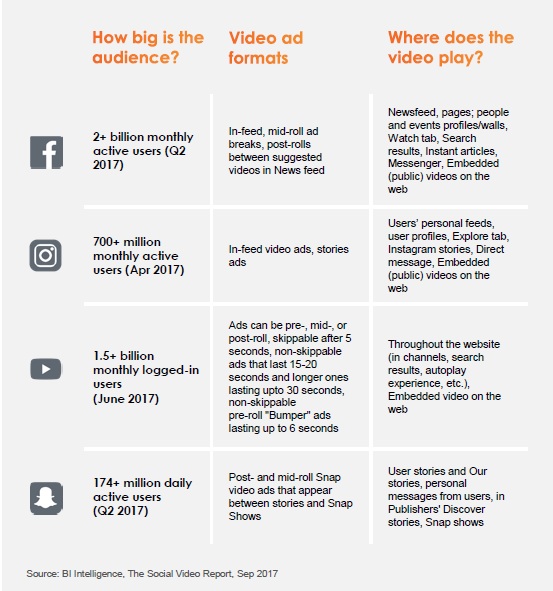
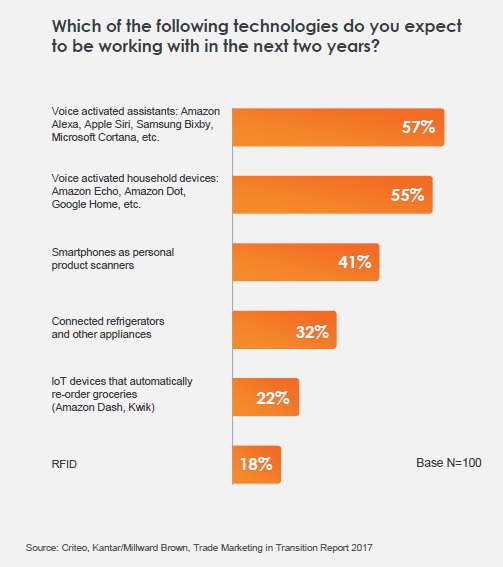
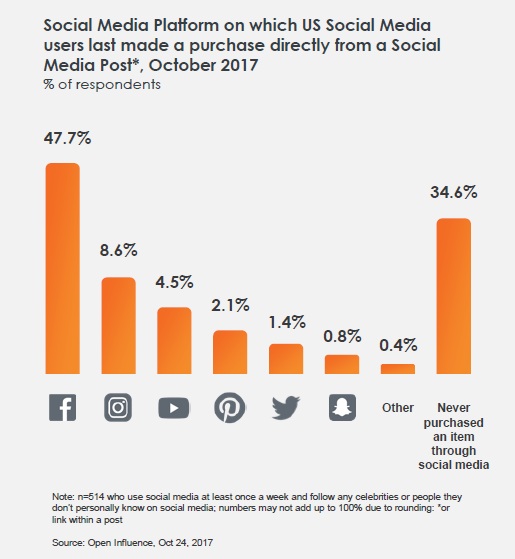
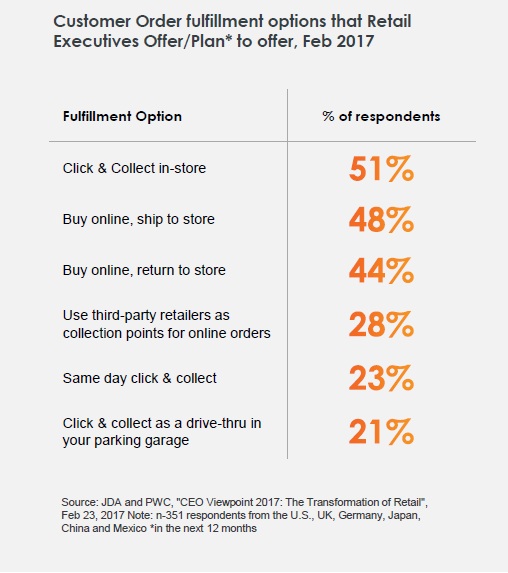
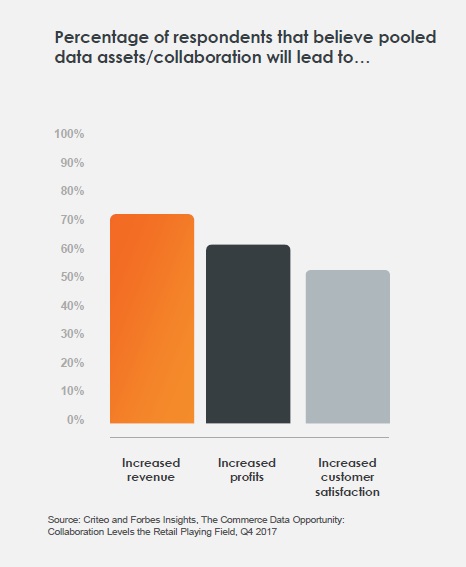
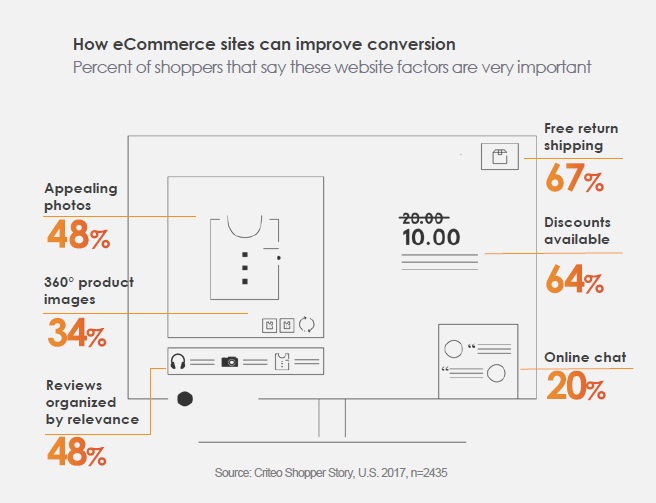
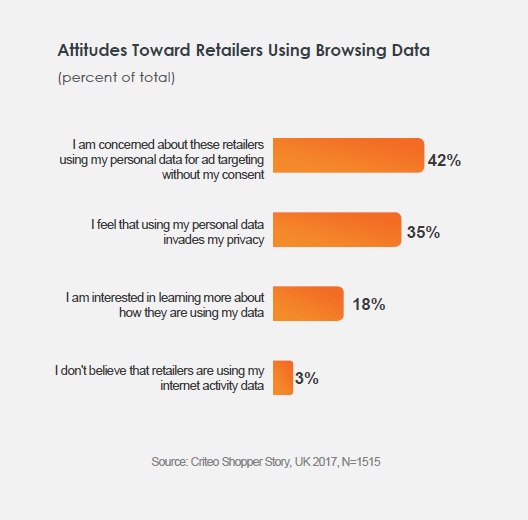































 Marketers will continue to embrace use cases for location data beyond proximity-based push alerts and advertising. Location will be used to enhance more aspects of the shopping journey, including in-store augmented experiences, simplified mobile checkout, product reviews and tutorials, and in-store navigation.





 Think back to the last text-heavy presentation you sat through. Or maybe I should say endured because we all know how boring it can be to look at words on a screen. In our ever-changing, meme-loving world where instant, snapshotted communication reigns supreme, creating visual ways to transmit data in the office is increasingly important.



 The role of the CMO is constantly evolving. According to a report by the