Home Blog Page 4237

Global Brand Leaders Set to Redesign the Future of Commerce at SB’18 Vancouver

0
Global Brand Leaders Set to Redesign the Future of Commerce at SB’18 Vancouver

Sustainable Brands brings P&G, Braskem, PwC, Clif Bar, LG Electronics & Others to Collaborate on Innovative Products and Services for The Good Life

Sustainable Brands recently unveiled the full programming and schedule for the Activation Hub at SB’18 Vancouver, running June 4-7 at the Vancouver Convention Centre in Vancouver, British Columbia. The Activation Hub is the central hub of the Vancouver conference, an area where attendees gather to hear from solution-providers, to collaborate and co-create on market sector innovations, and to network with current and future partners.

This year’s Activation Hub will host pavilions dedicated to 12 different market sectors: Good Food, Good Fashion, Good Technology, Good Materials & Packaging and others. Beginning on Monday, June 4th with an Opening Night Reception in the Activation Hub, each pavilion will feature scheduled programming, business leader meet-n-greets, and Innovation Labs facilitated by subject matter experts from Forum for the Future, Futerra, Sustainability, Elevator, University of British Columbia and others.

Also Read: Salesforce Celebrates Grand Opening of Salesforce Tower

Pavilion highlights include:

  • P&G will host the ‘Good Growth’ pavilion and explore how large, growing brands can inspire and promote responsible consumerism while still growing their business. P&G will also be hosting a youth summit, inviting local youth to discuss the issues of oceans plastics, in preparation of World Ocean Day. The pavilion will also feature American Forests, World Scouts, CarrotNewYork, The Embedding Project, The Ocean Project, The Recycling Partnership, Arbor Day Foundation, and Makersite.
  • Braskem will serve as anchor host for the ‘Good Materials & Packaging’ pavilion, focusing on how brands are reducing packaging and incorporating circular economy practices into their everyday products. The pavilion will also feature BillerudKorsnäs, Vinyl Business Sustainability Council (VSBC), Boothster, Keurig Green Mountain, and Recycle BC.
  • A ‘Good Cities’ pavilion, hosted by PwC, will discuss how to make cities healthier places to live as they continue to grow. The pavilion will also include Vancouver Economic Commission, who launched a Startup City: Impact program to connect attendees from SB’18 Vancouver with up-and-coming social and environmental entrepreneurs from Vancouver.
  • A ‘Good Travel & Leisure’, hosted by Living Elements, will explore how the travel industry can incorporate sustainable practices. The pavilion will feature SoulBuffalo, who will bring their glamping tents onsite for attendees to collaborate in.
  • A ‘Good Earth’ pavilion will explore how brands are helping reduce their impact on the environment, focusing on oceans and forests, featuring The Plastic Bank, One Tree Planted, EREMA Plastic Recycling Systems, The Earth Group, Canadian Council of Foresters, Alive & Awake, World Tree and News Deeply as Media Partner.
  • A ‘Good Fashion’ pavilion, featuring UNIFI, Inc., Savers | Value Village, Bank & Vogue, Green Story, Looptworks, S’well and Biji Biji Ethical Fashion. UNIFI will bring back their popular Repreve truck to the Activation Hub, an interactive, walk-through truck that showcases how peat is turned into recycled materials while giving attendees the chance to win upcycled clothing. S’well will be distributing free water bottles to all conference attendees.
  • A ‘Good Food’ pavilion, focused on shifting tides in our food system, will feature Clif Bar, Nestlé, Padilla | Food Minds, Spoiler Alert, US Farmers & Ranchers Alliance (USFRA), Eagle Protect PBC and Trust in Food™ as a Media Partner. Nestlé will present attendees with ice cream and discuss how they’re working to support bee habitats through their widely-used ingredients.
  • A ‘Good Retail’ pavilion will explore how retail brands are optimizing sourcing and navigating emerging issues in the retail industry. The pavilion will feature the Retail Industry Leaders Association (RILA), LUSH, Starbucks and Smarter Sorting.
  • A ‘Good Finance’ pavilion focused on cutting-edge financial models will host EY, iCompli, Tides and Corporate Knights as a media partner.
  • A ‘Good Workplace’ pavilion will explore how brands are attracting and retaining top talent by innovating their company from the inside out. The pavilion will feature Cupanion, Diversey, and Porpoise.
  • A ‘Good Supply Chain’ pavilion will showcase brands and solution providers that are improving transparency and accountability in the value chain. The pavilion will feature BullFrog Power, Intertek, Segura Weir-TS, The Sustainability Consortium, Trex Company, Water for People and WAP Sustainability.

Also Read: Visto Multi-Platform Optimization Tool Unveiled to Simplify Cross-Platform Programmatic Ad Campaigns

To complement their discussions in the Activation Hub, several sponsors are organizing special events and receptions for attendees. The conference kicks off with a tree planting event hosted by Arbor Day Foundation and a Greening Your Business Infrastructure tour, hosted by The Canadian Council of Forest Ministers. Clif Bar will host a 4-mile Great Trail hike on Monday, Tuesday and Wednesday. The hikes on Tuesday and Wednesday will be led by Ultra runner and Vancouver local, Ellie Greenwood.

On Tuesday evening after a reception hosted by Salesforce.org, LUSH will host a tour of their cosmetics factory for attendees, providing vegan food and drinks. In partnership with LUSH, Hives for Humanity will host a walk to East Van Roasters and Hastings Urban Farm to learn about social entrepreneurship and sample locally roasted coffee, chocolate and honey. The Activation Hub will also host the SB Innovation Open (SBIO) semi-finals on Tuesday, whereby 11 social or environmental startups will pitch their innovations before a panel of judges and audience members.

Other sponsors and exhibitors at SB’18 Vancouver include BASF, Salesforce.org, SC Johnson, 21st Century Fox, Danone, The Nature Conservancy, Driscoll’s, Shaw Industries, 599 Labs, ECOR, Catalist, BSR, younoodle, Participant Media, lululemon, Visa, TD Bank, Target, Schneider Electric, Rolland, MGM Resorts, Do Some Good, MBDC, Future of Internet Power, Nice and Serious and Leger.

The Activation Hub at SB’18 Vancouver will run Monday, June 4th through Thursday, June 7th at the Vancouver Convention Center. This year, Community Passes are available for those wishing to participate in this immersive networking experience, in addition to the Opening Night Welcome Reception hosted by BASF and plenary session featuring Sadhu Johnston, City Manager of Vancouver, John Izzo, Bestselling Author, and Marcelo Lu, President of BASF Canada.

Recommended Read: Sustainable Brands Announces Full Conference Program for SB’18 Vancouver

Visualizing Machine Learning: How Do We Humanize The Intelligence?

1
Visualizing Machine Learning: How Do We Humanize The Intelligence?

gramenerThese are exciting times for data science professionals. With the rapid advances being made in analytics, specifically around machine learning, deep learning and AI, researchers and practitioners around the world have started adapting these technologies for deep, human-impacting applications.

The Age of Advanced Analytics

Social talk is replete with conversations that have shifted gears from self-driving cars to flying vehicles, smart machines to robots that are already collaborating quietly in our homes, and chatbots to conversational AI which is becoming omnipresent, contextual and indistinguishable from a human response.

Many are proud of the fact that, as a race, humans have managed to create real-time intelligence, one that hasn’t naturally evolved. With advances across disciplines, we have finally cracked several challenges in simulating human intelligence and are starting to surpass it in some areas.

The Great Analytics Divide: Salvation or Sorcery?

Interestingly, this is where public opinion across the world splits. At the other end of this spectrum, we have people who question the very existence and intent of AI, with deep debates on not just the trustworthiness of advanced analytics, but also about its very utility.

At some level, there is a sense of fear gripping most consumers. There is an eerie uncertainty around the optimistic spin being given to the areas of potential application, with questions raised about its feasibility, scale and impact.

There’s a connection between the advances that are made in technology and the sense of primitive fear people develop in response to it. — Don DeLillo

Rapid advances in technology have always been accompanied by an escalation of fear over the past decades. While technology earlier was complex, it was perfectly rational. With deep learning and AI, we can no longer claim this, since they now surpass the realm of human logic and understanding.


Also Read: How App Science Will Lead to Better Predictive AI

The Challenge of Analytics Consumption

Lack of basic awareness is the biggest challenge facing the analytics discipline today, and this ranks higher than the ethical dilemmas around its adoption. As users increasingly flounder in their understanding of a new technology, the noises around its perceived utility and questions of adoption get louder.

While large-scale adoption of advanced analytics by end-consumers is still playing out incrementally, this is already a clear and present challenge for enterprises. Notwithstanding their million-dollar investments in data science to glean intelligent insights, businesses also face huge resistance from within.

The biggest challenge in enterprise projects is not with model engineering or accuracy, but with the on-ground adoption of analytics applications and implementation of recommendations provided by these intelligent models. More so, when they end up counter-intuitive to industry heuristics and gut feel.

Model accuracies from a forecasting project, where neural networks outshines other models
Model accuracies from a forecasting project, where neural networks outshine other models

Models with high accuracy and low acceptance

Over years of implementing advanced analytics engagements, we have come across many instances where, outstanding complex models (black-box) meet the engagement objective with exceptional accuracy, but fail to meet human acceptance standards.

While black-box models like neural networks bring about a significant jump in accuracy, this is often at the cost of losing explainability and human comprehension. Compare this with the ease of explaining a decision tree model with intuitive if-then-else conditions and simple thresholds.

However, in projects, the improvements in business benefits made possible by the complex, black-box models are too alluring to ignore. As data science practitioners, our responsibility is to bridge this divide, enable consumption of machine learning insights and gently push towards prescriptive actions.

If you can’t explain it simply, you don’t understand it well enough. — Albert Einstein

Also Read: What Pixar Can Teach Us About AI & Machine Learning

A Visual Framework for Machine learning

While charts are more powerful in conveying information and can prove to be far superior to a table of numbers, a visual framework can be particularly effective in humanizing the intelligence from machine learning.

Here’s a look at the 4 key elements of this visual framework which can promote easy comprehension and help in demystifying advanced analytics models.

A visual framework for humanizing Machine learning
A visual framework for humanizing Machine Learning

Information Design:

Visual story-telling of data is the foremost approach to present not just a table of numbers, but importantly the statistical results and interpretations of the algorithm results to arrive at prescriptive actions.

standardized approach to information design with a user-centric approach, and by designing the right navigation workflow, pertinent representations and relevant visual design is the right place to start on this journey.

Demonstration of how a static visual presentation can encapsulate & illustrate model results well
Demonstration of how a static visual presentation can encapsulate and illustrate model results well

Adaptive abstraction:

The most powerful way to gain insight into a system is by moving across the levels of abstraction. Data scientists and designers instinctively move up-and-down across different levels to glean insights and layout solutions for users.

Its imperative to empower users with some fluidity, so that they can take in the bird’s eye view (abstract summaries), digest the ground-level detail and dynamically navigate across the data, adapted to context and user expertise.

Bret Victor’s ladder of abstraction is a useful reference, where he demonstrates steering around a problem by abstracting over time, algorithm and data. Applying this in a contextual, domain-driven way can demystify the analytical solution by shining a light on the underlying design approach.

Bret Victor’s ladder of abstraction with a toy car example as a walk-through

Also Read: 3 Pivots Marketers Need to Make to Improve Marketing Performance

Model Unraveling

Equally important in the journey of onboarding users is providing them a sneak peek into the model internals, albeit in a non-overwhelming way. While it still befuddles humanity on how algorithms like neural networks learn or map data to the desired output, research is fast progressing in this area.

There are several early attempts at unpacking the internal sequence of steps in deep learning, particularly in areas such as classification and image recognition. Keeping the user safe from toxic statistical jargons, if we can unzip the model and enable simple traceability to the output, this can go a long way in making people appreciate the beauty of these black-box models.

A powerful methodology for classification models; Distill has setup a prize for outstanding work in this area

User Interactivity:

User interactivity can be a powerful glue that stitches together various elements of this framework. It enables a visual storytelling interface that promotes meaningful user-journeys across the levels of abstraction, to understand the salience and operation of a machine learning model.

By making all user interactions consistent, perceivable, learnable and predictable, the entire experience can be turned around from one which is doubt-inducing to something that can be meaningful and awe-inspiring.

Case study: What-if modelling (move the sliders) for prescriptive action, enabled in a Visual causal analysis
Case study: What-if modeling for prescriptive action, enabled in a Visual Causal Analysis

Summary

While the data science and AI disciplines go through exciting and exhilarating advances, it is important to keep the user’s expectations and experiences in perspective. This is very critical since a sizeable segment of target AI users are being alienated with deepening disconnect and distrust.

It doesn’t need a big dash of imagination to bridge this gap. Many of the enablers needed to build user trust and promote understanding are already available in our toolkit, and research in the field is quickly unraveling the rest.

What’s needed is an acknowledgment of this divide and a conscious effort to address it by adapting the above visual framework along with the constituent 4 key aspects, while implementing machine learning solutions.

Also Read: The Future of Artificial Intelligence: Is Your Job Under Threat?

Mark Sciortino Joins Vestcom as Senior Vice President, Strategy and Corporate Development

0
Mark Sciortino Joins Vestcom as Senior Vice President, Strategy and Corporate Development

Mark Sciortino Previously Led Marketing Strategy and Planning for Walgreens Co

Vestcom, the leading provider of customized shelf-edge communications and specialized marketing services for the retail industry, announced that Mark Sciortino has been hired as Senior Vice President, Strategy and Corporate Development. He will oversee developing and delivering Vestcom’s client, product, and communications strategies. In addition, Mark now leads Vestcom’s Marketing and Product Management Organization. Mark previously led marketing strategy and planning for Walgreens Co and was a Principal with the Boston Consulting Group.

“I am ecstatic to join such a strong team focused on engaging shoppers at the first moment of truth: the shelf edge,” said Mark. “Industry dynamics are creating a massive opportunity for us to more deeply support our retail clients. It has never been a better time to be a shopper, Vestcom will accelerate how it helps our retail partners make their shopping experience more distinct and engaging, further enabling them to thrive in the post omnichannel shopping environment.”

Also Read: Persado’s AI Platform Powers Increased Customer Engagement for Caesars Entertainment on Salesforce Marketing 

“My leadership team and I are excited to have Mark join Vestcom in this newly created role,” said John Lawlor, Vestcom CEO. “We are confident his experience and passion will help us identify even more ways to serve our clients and further fuel our growth.”

Little Rock, Ark.-based Vestcom is the leading provider of customized shelf-edge communications and specialized marketing services for the retail industry—delivering proven results and influencing shopper behavior at the point-of-decision for the nation’s top retailers and their suppliers, processing more than two billion price/promotion updates weekly through its production facilities located across the United States. Vestcom’s services benefit retail clients by reducing total cost of ownership, increasing retail sales and coordinating in-store execution with retailers and their brand partners.

Recommended Read: Salesforce Positioned as a Leader in the 2018 Magic Quadrant for CRM Customer Engagement Center for Tenth Consecutive Year

Is Person-Based Marketing an Upgrade to ABM?

0
Is Person-Based Marketing an Upgrade to ABM?

Person-Based Marketing Means You Get to Talk to the Person, so You Know Who Sees Your Message and What Is Relevant for This Person to Use in Your Communication

Your customers are real people, and they want to be treated with real experiences. That’s the whole context of Person-based marketing (PBM). Customers react to personalized experiences positively compared to bland, traditional messages, promoted across marketing channels, sans logic. Earlier this month, Influ2 platform, powered by machine learning, announced the launch of first PBM solution for B2B marketing teams. The solution generates and sends personalized advertising on behalf of B2B marketers to decision makers at enterprises on an individualized basis.

We sat down with CEO of the company, Dmitri Lisitski, to better understand the growing scope of PBM solutions in B2B marketing and how CMOs can add this tech to their existing ABM stack for more refined account’s targeting.

Dmitri Lisitski, Co-founder, Influ2
Dmitri Lisitski, Co-Founder & CEO, Influ2

Does Influ2 replace the dependency on ABM platforms? 

Influ2 doesn’t replace or erase the concept of ABM; instead, it takes ABM further. It narrows it down to the level of a person, rather than the account. That is why it is more effective.

You wouldn’t talk to the marketing manager of the company the same way you’d talk to its CFO. ABM offers very limited capabilities to differentiate between the two when showing them an ad.

We use a PBM (person-based marketing) approach, which means you get to talk to the person, so you know who sees your message and what is relevant for this person to use in your communication.

What made you launch a B2B person-based marketing platform?

When I first learned about account-based marketing, it was love at first sight. The concept of an account as a target market was such an obvious breakthrough for B2B marketing. However, a more diligent analysis of the concept raised tough questions.

  • Would you like all people inside the account to see your ads or just the stakeholders?
  • How do I limit my campaign to reach just the stakeholders?
  • How do I know that those stakeholders actually saw my campaign?
  • What drew their attention?
  • Which of them visited my website and which didn’t?

So, we came up with an upgrade to the ABM concept — person-based marketing, or PBM.

Our primary focus was making advertising efficient, ideally by showing ads only to the decision-makers within the targeted company, tracking ad impact at the individual level and providing the background for actionable follow-up as soon as a click happened.

How does Influ2 exactly fit into a B2B CMO’s tech stack?

Influ2 is integrated with major CRM systems, so you can import a list of people who you want to see your ads and then export all the data about who viewed and clicked your ads back to the CRM.

Our solution allows you to warm up leads before your demand generation or lead generation teams reach out to them. It is an additional, yet unique, touchpoint in the client journey.

How do you add and provide legitimacy to the content you would share with the B2B community?

Our clients upload the content they want their clients to see. The content then goes through a moderation process, and its legitimacy is reviewed twice — first by Influ2’s moderators, then by moderators of platforms that we partner with.

What are the major points of differentiation between influencer marketing and social selling from a B2B marketer’s perspective?

The difference is already in the name – while influencer marketing focuses on targeting an influential person who will, later on, broadcast your ideas/product/service to his or her audience/followers, social selling assumes more of a one-on-one interaction with the consumer-led by a company’s sales representative (and is not necessarily famous or even known).

You can look at it as push-and-pull. With influencer marketing, you are pushing out the idea via an influential person, while with social selling you are reaching out to the consumer directly to pull them in.

Which markets, geographies, and customer profiles could best benefit from Influ2’s platform?

Influ2 is a solution for B2B companies, with no geographic limitation. However, most of our clients are US-based.

Users will benefit from Influ2 if they are trying to reach decision-makers at the enterprises and if the product is hard to explain in one word.

What does your product roadmap look like for 2018-2020? 

When we visualize Influ2 in 2020, we surprisingly see little changes to the user experience. Influ2 is not a workflow application, like say a CRM software, so we don’t expect major changes in the UX. We always advise our customers to manage campaigns from their CRMs where they design their customer funnel across all marketing automation tools.

That’s why our product focus is to deliver highly precise and effective personalized ad campaigns across all available ad platforms. By 2020, Influ2 will provide more opportunities to reach customers and gather more data about ad impact across these initiatives.

Thank you, Dmitri, for chatting with us!

HomeAdvisor to Help Power New Home Services Experience on Facebook Marketplace

0
HomeAdvisor to Help Power New Home Services Experience on Facebook Marketplace

Consumers Can Now Book Home Services Through Facebook Marketplace

HomeAdvisor, an operating business of ANGI Homeservices, announced that the company is powering a new way for consumers to seamlessly book a home services appointment through Facebook Marketplace. Through Facebook Marketplace, consumers can search and be matched with service providers who perform a variety of tasks, including HomeAdvisor service professionals. Consumers can then easily communicate and request quotes directly with their matches via Messenger.

“Facebook Marketplace helps businesses reach consumers on a platform they are already turning to for everyday needs, making it easier than ever for service professionals in our network to reach new customers and for consumers to seamlessly hire one of our trusted service professionals for hundreds of tasks, from plumbing and cleaning to home renovations,” said Chris Terrill, CEO of ANGI Homeservices.

Also Read: Facebook and ActivEngage Provide a New Way to Reach Car Buyers on Facebook

Prior to being accepted into HomeAdvisor’s network, business owners undergo criminal and financial background checks. Since the company’s launch in 1999, HomeAdvisor has received millions of project requests from consumers looking for service professionals to help them complete home projects.

“Facebook Marketplace seamlessly bridges the gap between search and social,” said Terrill. “HomeAdvisor is excited to be at the forefront of home services, allowing consumers to book home service pros through the world’s leading social media platform.”

Also Read: Ad Copy Services Now Available to Facebook Advertisers Within the Creative Marketplace

HomeAdvisor is a digital marketplace evolving the way homeowners connect with service professionals to complete home projects. With HomeAdvisor’s on-demand platform, homeowners can find and vet local, prescreened home service professionals; view average home project costs using True Cost Guide; and instantly book appointments online or through HomeAdvisor’s award-winning mobile app. The app is compatible with all iOS and Android devices, as well as virtual assistants.

Recommended Read: Digital Marketing Tips To Nurture Revenue for B2B Startups

YouWorld Announces Turnkey Mobile Marketing Solution to Reach China’s Rising Independent Travelers

1
YouWorld Announces Turnkey Mobile Marketing Solution to Reach China's Rising Independent Travelers

YouWorld Content Distribution Toolkit (CDT) Provides Seamless Integration with Top Travel Apps and Retailer Marketing Channels

YouWorld Inc. – the Southern California-based technology startup focused on helping brands and brick-and-mortar retailers connect with Chinese travelers – announced the launch of YouWorld Content Distribution Toolkit (CDT), a customizable and trackable marketing solution that enables retailers to publish and distribute branded content via China’s leading travel and lifestyle mobile apps.

Announced during the Travel and Retail Marketing Tech Seminar at the University of Southern California, CDT is YouWorld’s latest innovation to bring retailers integrated and cost-effective online-to-offline marketing solutions. CDT is designed to give Chinese consumers a seamless brand experience, from online exploration to in-store purchase.

Powered by the YouWorld Service Platform content management and data-tracking system, CDT distributes promotional offers automatically to a variety of Chinese audiences via a mobile template embedded into Chinese travel and lifestyle mobile apps such as WeChat, Dianping and MaFengWo. It also connects seamlessly with each brand’s own marketing channels including website, advertising, WeChat Official Account and WeChat Mini Program, as well as customer touch points in stores.

Also Read: Branded Content Powered by Playbuzz Performs in Top 10% of All Nielsen Global Digital Brand Effect Campaigns

“Despite Chinese travelers’ widespread use of mobile devices for shopping, there is often a disconnect between their online experiences and offline interactions with retailers,” said YouWorld Co-Founder and CEO Yuanbo Wang during his remarks at the seminar. “Our mission is to close that gap by creating a centralized platform for retailers to distribute branded content and track the results.”

“YouWorld’s new Content Distribution Toolkit allows us to map a consumer’s interactions with branded content at every step of the travel journey, from pre-trip research to in-store visit and transaction,” he added.

The seminar, hosted by YouWorld in partnership with Alipay Americas and USC Viterbi Technology Innovation and Entrepreneurship, brought together brands, destinations and other key constituents in the retail and travel industry to share innovative ideas and best practices for attracting Chinese travelers. Alipay Americas President Souheil Badran delivered the keynote address showcasing innovations in China’s retail industry.

At the seminar, marketing executives from major retailers and brands such as Caesars Entertainment, Beverly Center, DFS, Simon, South Coast Plaza and Citadel Outlets joined executives from China’s leading travel and lifestyle apps such as CTrip and e-influencers Jason Chen, Lucia Liu and Mok.

Also Read: SmarterTravel Launches Innovative Travel Partnership Program With Performance Horizon

Beverly Center, one of Southern California’s premier fashion and food destinations, participated in YouWorld’s pilot program during the Lunar New Year 2018.

“Beverly Center has been focused on serving the Global Chinese consumer for several years, and we continue to evolve our programming to ensure we provide the best luxury shopping experience as consumer preferences change,” commented Susan Vance, marketing & sponsorship director at Beverly Center. “A great deal of our programming is digital first, which is critical to reach these mobile-savvy customers. YouWorld provides a welcome opportunity for us innovate our offering and partner across their platform to reach the Global Chinese consumer in a mobile-first environment.”

The YouWorld CDT is currently available only to brands and retailers in the U.S., but the company plans to expand its coverage to Europe later this year. Initially available in Chinese and English, it will support other languages and travelers from other countries in the near future.

Recommended Read: Talkwalker’s Summer Travel Dashboard Reveals Traveler’s Social Sharing Habits

Five Ways Artificial Intelligence is Transforming B2B Sales

0

A Brief Insight Into How Artificial Intelligence Has Changed the Business Landscape

Everybody knows ‘The Power of Now’, and that’s exactly why you should know and adopt AI. Artificial Intelligence is no more a theory of the future as it continues to have an unprecedented impact on businesses globally. In less than 10 years, B2B enterprises have begun to implement Artificial Intelligence (AI) to accelerate their growth and revenues. All the fears of humans losing their jobs to AI and machines may not be true after all, especially when you consider marketing and sales in under-billion dollar companies.

New research data shows 80% of B2B executives believe that AI will revolutionize the field by 2020.

Five ways AI is Influencing B2B Sales

Here are five areas in B2B sales heavily influenced by AI —

Arming Sales Teams with Relevant Insights

Marketing Automation has its limits since typically only a sales representative can finally have a 1:1 conversation and close a deal. AI helps marketing teams by allowing them to provide their colleagues with valuable insights about prospects, all throughout the sales cycle. The sales colleagues can be provided with information about organizational and industry dynamics, identification of key decision makers and key prospects, and they can also share information about the levels of engagement. This valuable interaction between marketing teams and sales reps is a positive outlook since sales reps can tackle this information and come up with actionable insights.

Quality and Quantity Leads

A Harvard Business Review Study found that companies which use AI for sales were able to increase their leads by 50%. AI helps sales teams increase the lead quantity as well as lead quality. This is possible because AI has the keen potential of recognizing the best targets for inbound and outbound marketing initiatives. The friction between marketing and sales teams has been longstanding, but with the help of AI- a large chunk of it can be eliminated.

Also Read: The Future of Artificial Intelligence: Is Your Job Under Threat?

Simplifying Tasks

Too much time of a salesperson’s daily activities is spent doing monotonous tasks such as cold-calling, responding to emails etc. Enter AI and the tasks magically reduce. According to McKinsey Global Institute, 40% of the time spent on menial tasks such as these can be automated by adopting all the current technologies that AI has to offer. Embedding AI into Salesforce automation software, CRM databases, other B2B applications and a lot of these crippling tasks can be eliminated for good. AI can liberate salespeople from such monotonous tasks, and the positive effects of this method are far-reaching thus uplifting the enterprise to new heights.

Data over Intuition

Each salesperson generally has a vague idea of what a client or a prospect may be interested in, and this is what they base their USP’s on. Unfortunately, this a lot more experimental than actually based on cold, hard facts. That’s where Artificial Intelligence comes in. AI allows sales professionals to base their opinions and decisions more accurately on data. And data never lies! Focusing on data, the choices will be more precise than ever.

With artificial intelligence, targeting the right customer based on an analysis and profile has never been this simplified. There is no guesswork here, only pure facts, thus leading to profitable conversions and positive outcomes.

The Focus is strong on Analytical Skills

Forrester caused a stir in 2015 when it released a report estimating 1million B2B sales job being eliminated by 2020. AI is never going to be a replacement for AI professionals, instead, it is the technology of the present and future which is only going to propel sales professionals to ‘level-up’ their game. AI is going to be an enhancement for sales teams since it is aiding professionals to commit to their jobs better especially with the use of analytics and data science.

Improving lead generation has been the focal point of the buzz around AI, but that marks only a scratch on the surface for B2B companies. AI-driven solutions can be a blessing throughout the entire marketing-sales lifestyle, turning huge amounts of data into actionable insights.

The power of Artificial Intelligence to automatically analyze aspects of a customer’s behavior helps B2B marketers make informed decisions and improve efficiencies like never before. Sales software do everything from writing emails to scheduling meetings to identifying sales behavior which closes more leads.

Also Read: How to Champion B2B Social Selling and Deliver ROI

Top AI Tools Transforming the B2B Sales World 

Nudge

Nudge is a modern sales platform which uses AI so as to provide sales teams with actionable insights on each target customer. The AI and ML tools here are leveraged to source social and news updates on the individual and the account by filtering through huge amounts of data all across the web. Nudge doesn’t necessarily use AI to automate tasks but it helps sales professionals build lasting, authentic relationships with potential buyers.

People.ai

PeopleAI aims to help teams close onto more business by providing a greater visibility into efficiency and effort. It collects sales activity information and then uses the same information to identify slack deals, and then creates an activity-based success roadmap which potentially narrows down all opportunities. PeopleAI accesses this information so as to make a plan of action, and then execute it accordingly. PeopleAI has established a complete behavioral analytics solution which determines which sales rep’s behavior is most likely going to close a deal.

Crystal Knows

Crystal Knows gives sales reps personality profiles for all the customers/prospects they may have come in touch with. This outlines all the profile information from multiple sites such as LinkedIn, Salesforce and more. Crystal gives them access to personality-driven email templates of the recipient’s personality. Crystal’s AI offers personality insights at any point in need, thus helping sales professionals interact and improve their communicational roles with prospects/customers.

X.ai

X.ai  is an AI personal assistant who schedules meetings for its users. X.ai eliminates the back-and-forth discussion between a sales rep and an individual. The calendar will be connected X.ai, and the AI assistant will handle all the meetings scheduled for sales professionals by simply copying the AI’s email address into the email exchange. X.ai helps sales professionals save a lot of time by conveniently addressing and taking on these tasks.

Many B2B professionals have refused to adapt to AI methods citing various issues that are triggered due to existing technologies, training employees and understanding how the results have been derived. Contrary to belief, AI is totally worth investing in since many professionals who have embraced the technology are constantly reaping its benefits.

Improved efficiency and deliverance of unparalleled personalization throughout a customer’s journey is what AI brings and it is something which every business pursues to achieve.

Recommended Read: How to Find the Right AI Platform for B2B Marketing and Sales Success

TechBytes with Arndt Groth, President, Smaato

0
Arndt C. Groth
TechBytes with Arndt C. Groth, President at Smaato

Arndt Groth
President, Smaato

Not monetizing your app means you are missing out on serious revenue from your ‘best’ mobile advertising tool. To better understand the state of mobile app monetization and the rise of the blockchain in the adtech industry, we spoke to Arndt Groth, President, Smaato.

Html code here! Replace this with any non empty text and that's it.

Tell us about your role at Smaato.

As President of Smaato, I am responsible for the core business operations. Smaato is the leading global real-time advertising platform for mobile publishers and app developers. We work with 90,000+ mobile publishers and app developers, 450+ demand partners and 10,000+ advertisers. Smaato manages over 19 billion mobile ad impressions daily and reaches over one billion unique mobile users monthly. We have offices in San Francisco, Hamburg, New York City, Shanghai and Singapore. With 13 years of mobile-first experience, we are a trusted partner in the mobile in-app advertising ecosystem.

What is the “State of App Monetization” in 2018?

The global in-app advertising industry is set to triple from $72 billion in 2016 to $201 billion in 2021. And according to eMarketer, 80.6% of all US mobile ad dollars in 2018 are expected to go to in-app. With apps responsible for upwards of 95 percent of the time people spend using mobile devices in some regions, our market is growing at a remarkably fast rate. Taking this into account, app monetization is already extremely advanced. However, this is not yet the case in all regions. Some advertisers still tend to prefer mobile web, because that is the logical first step after desktop. Nevertheless, the advantages of in-app are obvious (e.g. no ad blocking, SDKs and targeting, no cookies, more advanced analytics, etc.) — and as such, budgets will continue to shift to in-app advertising.

How would you define Ad Fraud? Is it really possible to beat ad fraud/malvertising in 2018?

Simply stated, ad fraud is any traffic and/or ads that are manipulated or artificial. Here at Smaato, we would never say that it’s possible to eliminate all ad fraud. But there are smart and effective ways to combat it. Smaato has a dedicated team of internal market quality experts in APAC, EMEA and the Americas that monitor our ad and traffic quality 24/7. In addition, we use sophisticated internal and external technology, as well as third-party vendors, to ensure a safe and protected mobile marketplace.

How should mobile-first companies prepare for newer ad formats? How does Smaato enable such companies in achieving full-success with their app marketing?

It is all about testing and benchmarking new formats to individual audiences. We work with both our supply and demand partners on a regular basis to improve our ad formats, as well as their individual performance. At the moment, video is the hottest of all mobile ad formats, especially rewarded video. With higher eCPMs for publishers and highly-engaged users for advertisers can target, video ad formats will continue their upward trend.

How could blockchain technology impact the whole ad tech industry? Could you provide some relevant examples/ context to this disruption?

The ads.txt initiative in the web world is a perfect example of how blockchain could impact the ad tech industry. Implemented by the Interactive Advertising Bureau for the web, ads.txt requires publishers to place a text file on their server that shows which supply-side platforms and networks are allowed to sell their inventory. A blockchain solution could help in proving to all market partners that traffic is valid and that the individual seller is eligible to trade the impressions.

What percentage of ad spend could blockchain technology monetize? Does it really have the potential to outgrow expectations from the mobile advertising campaigns in 2018?

We believe that blockchain technology will have an impact on the mobile advertising industry and we look forward to seeing how it develops. However, it is far too early to tell exactly where and how it will have an impact. One key challenge is the amount of traffic that needs to be tracked. Just imagine: Smaato alone currently delivers more than 500+ billion impressions per month! And at the moment, blockchain lacks a solution to overcome the cost and the time that would be needed to certify the massive volume of ads in our industry.

What audience data do you measure to ensure transparent and effective ad fraud detection?

Our internal teams constantly look at a sampling of our traffic, in order to determine any possible instances of fraud. As mentioned above, we also work with various third-party traffic quality partners to provide an extra layer of security for our marketplace. In terms of onboarding, new publishers requesting access to the Smaato platform face the toughest of standards. Our goal is to offer an exceptionally clean marketplace with only premium publishers and top-quality inventory.

How do you leverage AI/ML and data science at Smaato? What AI companies are you particularly interested in

Smaato is working on artificial intelligence and machine learning in various areas of our business. This is such an important field that we wanted to do our own development. And in the light of the GDPR, machine learning is becoming more interesting, because personally identifiable information (PII) will not be available for everyone.

Thanks for chatting with us, Arndt.
Stay tuned for more insights on marketing technologies. To participate in our Tech Bytes program, email us at news@martechseries-67ee47.ingress-bonde.easywp.com

Interview with Jason Beckerman, Co-Founder and CEO, Unified

0
Jason Beckerman
Interview with Jason Beckerman, CEO & Co-Founder - Unified

[vc_wp_text]“Social data can empower sales teams to sell better, marketers to advertize better, and analytics teams to make real-time recommendations.”[/vc_wp_text]
[easy-profiles profile_twitter=”https://twitter.com/jsbeckerman” profile_linkedin=”https://www.linkedin.com/in/jbeckerman/”]

Tell us about your role and how you got here. What inspired you launch Unified?

My role as CEO of Unified includes overall strategic direction of the organization, as well as our products and services. I grew up in the financial services industry running technology projects for companies like Merrill Lynch. My co-founder and I saw the early power of the Facebook platform and built some of the earliest applications on the social network. As we began to learn more about the advertising industry, we realized how underserved the marketing office was in terms of data ownership and transparency, and that was the inspiration for Unified.

How do you define Social Advertising? How does Unified bring data, transparency and social media performance at one place for its customers?

Social advertising is more than just putting creative on a social platform—it represents arguably the most lucrative opportunity for brands. Producing more data than the NYSE daily, social media provides brands with an unprecedented view into how to reach virtually any audience.

We feel as though there is a shift happening in the industry, where marketers are starting to think of their social initiatives as investments. You wouldn’t have a bank account without visibility into your transactions, but brands are finding themselves in that very position when it comes to their “social advertising transactions.” That’s where Unified comes in. We bring clarity and control to social advertising investments by collecting, connecting, and enriching data to provide data ownership and transparency. This way, they can ensure they are making often critical decisions based on a full and accurate picture of performance.

What are your predictions for social media advertising marketing between 2018 and 2020? How should CMOs plan the inclusion of these technologies into their tech stacks, in 2018?

According to the WSJ, 38% of marketers are requesting specific language in their contracts with partners and agencies to ensure they have control over their data. I expect to see this trend continue in 2018, as the call for more transparency by brands gets even louder. We are, in essence, at a tipping point in the industry that may redefine the relationship between brands and their agencies.

Looking a little further down the road, I imagine a world where marketers are leveraging identity data from the major social advertising networks across the wider internet. These consumer portals will ultimately empower DMPs to be far more beneficial to the marketing organization.

How can lead-gen companies leverage social media advertising to achieve better marketing and sales ROI?

Lead-gen companies are laser-focused on specific KPIs, performance, and uncovering the most effective strategies, tools and teams, even more so than their counterparts. For these marketers, having a connective system is critical to maintaining control over their supply chains and gaining insights that can further increase performance. Essentially, they ultimately need to concentrate on three things to be successful.

First and foremost, marketers need to own their own data so that they can ensure access regardless of changes in their supply chain. This is not only the root of true transparency, but will set the stage for learnings gleaned from social advertising initiatives.

Second, they need to turn “big data” into “small data” by collecting and enriching raw data into intelligence that will best inform their strategies and decisions.

Finally, brands should leverage the breadth of data (e.g. habits, affinities, behaviors) found within social platforms like Facebook and Twitter to better inform how to reach consumers through creative, targeting, partnerships, and more.

With the maturity of B2B selling, how do you see multi-channel marketing and sales automation integrations around social media platforms?

You can think of this in two main ways—information in, and information out.

In regards to information in, brands are collecting critical information daily that’s richer than ever. An example of this would be a retailer inviting customers to enter their email address prior to going into a dressing room, so they can scan and keep track of the items they try on. This CRM data can be ported into social platforms to uncover key information about specific audiences, such as purchase preferences, brand affinities, and basic demographics that will help them better connect and, ultimately, sell to those consumers.

When it comes to information out, social is unique in that it can be a layer across all channels. For example, a brand can leverage the audience data from social to inform and better target on other channels like television, radio, and display. This data can empower sales teams to sell better, marketers to advertize better, and analytics teams to make real-time recommendations to senior leadership.

What startups in the martech/sales intelligence industries are you watching/keen on right now?

I am very interested to see how Po.et progresses—especially with their hire of Jarrod Dicker as their CEO. In general, blockchain applications in marketing technology are a fascinating opportunity right now.

What tools does your marketing and advertising stack consist of in 2018?

The Unified Platform for social advertising intelligence and optimization, native buying tools for social advertising buys, Pardot for email and automation, Salesforce for CRM, Google Adwords for SEM, Slack for collaboration.

Would you tell us about your standout digital campaign at Unified? (Who was your target audience and how did you measure success?)

Last year, we conducted a survey of top brand marketers on the topic of transparency. This turned into an initiative entitled “The New Age of Transparency And The Tipping Point For Social Advertisers.” We put together a full 360-degree campaign, which included pivotal outputs such as a white paper, webinars, dynamic infographics, social and search ads, SEO enhancements, and more.

The success from this campaign was evident in many ways, including qualified leads that turned into sales opportunities, SEO keyword lifts, general awareness from industry prospects, and media coverage in top publications like Ad Age.

How do you prepare for an AI-centric world as a business leader? How do you leverage AI capabilities at Unified?

We are still years away from a world where AI replaces human beings, but we are at the beginning stages of Augmented Intelligence, where incredibly smart computing power is paired with great human capital to bring about business results. We ultimately leverage Augmented Intelligence for our data enrichment processes.

How do you get tech and people to converge at one place?

I think technology and human capital effect each other in ways that we are just beginning to understand. Some of these effects are more negative, such as our growing addiction to technology. In other ways, technology is enabling humans to have infinite intelligence and the ability to invent things our ancestors could not. This is incredibly powerful and the human-machine integration is going to continue for what I think will be the foreseeable future.

What apps/software/tools can’t you live without?

Gmail, Personal Capital, Coinbase

What’s your smartest work related shortcut or productivity hack?

I am loving the new Google mail auto-responders these days.

What are you currently reading? 

I consume a ton of internet content but my latest read, because I have a one-year-old son, is DADA By Jimmy Fallon. 🙂

What’s the best advice you’ve ever received?

Life is a roller coaster. The highs are never really high, and the lows are never really low. Stay stable and focused.

Tag the one person in the industry whose answers to these questions you would love to read:

Marc Benioff

Thank you Jason! That was fun and hope to see you back on MarTech Series soon.

[vc_tta_tabs][vc_tta_section title=”About Jason” tab_id=”1501785390157-b58e162d-0ae25a4b-c27aca64-108e51b0-80edaf37-bd3d357a-6c46d712-3b68e3fe-997d”]

Jason is an innovator and expert in the Social Advertising industry. He has 15+ years of experience with CRM technologies and organizational change management and has been educated in various leadership methodologies as well as organizational theory.

[/vc_tta_section][vc_tta_section title=”About Unified” tab_id=”1501785390320-2d44fa50-740c5a4b-c27aca64-108e51b0-80edaf37-bd3d357a-6c46d712-3b68e3fe-997d”]

unified logo
The Unified Platform transforms fragmented marketing data into actionable intelligence and real-time activation for the worlds largest brands. Follow us to learn effective social media tips, marketing tactics and the latest news.

[/vc_tta_section][/vc_tta_tabs]
[mnky_heading title=”MarTech Interview Series” link=”url:https%3A%2F%2Fmartechseries-67ee47.ingress-bonde.easywp.com%2Fcategory%2Fmts-insights%2Finterviews%2F|||”]

The MTS Martech Interview Series is a fun Q&A style chat which we really enjoy doing with martech leaders. With inspiration from Lifehacker’s How I work interviews, the MarTech Series Interviews follows a two part format On Marketing Technology, and This Is How I Work. The format was chosen because when we decided to start an interview series with the biggest and brightest minds in martech – we wanted to get insight into two areas … one – their ideas on marketing tech and two – insights into the philosophy and methods that make these leaders tick.

Unified Commerce is Here: The Customer Experience of the Future

1
Unified Commerce is Here: The Customer Experience of the Future

According to a Latest Report, 73% of Customers Want Order Tracking Across all Touchpoints but only 7% of Retailers Currently Offer “Start Anywhere, Finish Anywhere” Order Capabilities

Customer-centric retailing and selling are the new business models. The new model goes beyond the traditional horizon of omnichannel, breaking down the lofty walls between internal intent silos and the potent customer experience platforms.

” Unified commerce and a customer experience (CX) that transcends channels are the foundation of the new retail model.”BRP 

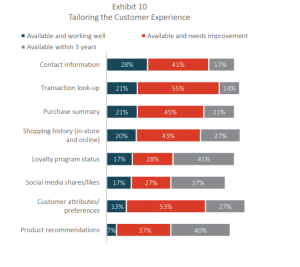
The future of customer experience is now, and Unified Commerce would play the biggest role in assigning performance-related metrics to the use of emerging technologies — AR, VR, AI, and video for commerce. BRP’s 2018 Customer Experience/Unified Commerce Survey of top North American retailers offers insights into retailers’ current priorities and initiatives as digital and physical retail environments converge to facilitate a seamless experience across channels.

Read More: Interview with Sara Gonzalez, Chief Marketing Officer, Simple

Tailoring the CX for Unified Commerce, by BPR

The report also compares retailers’ priorities with customer expectations – based on recent results from the 2018 Retail Consumer Study conducted by Incisiv and sponsored by BRP and Windstream Enterprise – to understand how retailer priorities align with customer expectations.

The E5 of Customer Experience

BRP released the key survey findings, organized around the E5 of Customer Experience. These are —

Educate

Customers start the purchasing process by researching the brand and products, so it is critical to ensure they and the store associates have information and tools that are easy to access and use.

  1. 62% of consumers check reviews/ratings before visiting a store
  2. 61% of retailers offer consumer product reviews for research

Engage

The first step in customer engagement is to identify the customer early in the process and offer associates the ability to leverage customer information to allow personalized interaction.

  1. 64% of consumers are fine with retailers saving purchase history and personal preferences if more personalization is offered
  2. 61% of retailers make in-store and online shopping history available to associates to tailor the customer experience

Read More: Interview with Jon Lombardo, Global Brand Strategy Lead, LinkedIn

Execute

To meet and exceed today’s elevated customer expectations, retailers must deliver unified commerce capabilities and empower associates with the right tools to optimize the experience.

  1. 73% of consumers want the ability to track orders across all points of interaction
  2. 42% of retailers offer the ability to track orders across channels

Enhance

Gathering feedback to understand customers’ likes and dislikes allows for a continuous improvement loop and helps empower associates to create the desired customer experience.

  1. 51% of consumers will stop shopping at a retailer after 1-2 poor in-store shopping trips
  2. 62% of retailers plan to improve their in-store customer experience within three years

Recommended ReadInfluencer Solutions Will Become a Core Component of the Marketing Stack

Enablers

Delivering a personalized customer experience requires the right technology and network.

  1. 68% of consumers are more likely to choose a store offering an automated returns process
  2. 13% of retailers offer an automated returns process

The Role of AI in Unified Commerce

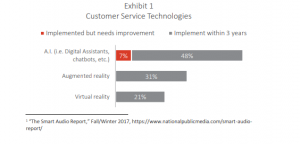
The latest BRP report on the state of Unified commerce highlights the growing role of AI and voice-search retailing. Leading AI persona-builders like Siri, Alexa, and Google have become mainstream channels for brand-human interactions.

via BRP

Unlike retail and online marketing teams that are yet to find the right balance between AI for customer service and empathy, customers are very comfortable with talking to AI and virtual assistants compared to their human counterparts.

While it’s too early to state the true effect of AI on unified commerce and retail CX, it’s the best time to leverage the vast amounts of customer preference and transaction data gathered to personalize the customer experience. Giants like Amazon and other multi-channel retailers are currently experimenting with AI to for buying suggestions based on customer’s historical data.

Recommended ReadB2B Buying Disconnect: Are You Targeting the Right Set of Customers?

Telestax Announces RestcommONE Message Exchange For Broadsoft’s Broadworks UC – One Platform

0
Telestax

RestcommONE Federated Messaging Enables Sending And Receiving SMS Texts From Inside Broadworks UC-ONE Unified Communications Platform

Telestax, the Restcomm company, recently announced the availability of RestcommONE Message Exchange targeted at professionals needing to communicate, by standard SMS text, with business constituents residing outside of the Broadworks UC-One platform. Broadworks UC-One is a rich UC platform that supplies a unified messaging capability to individuals residing within its community. Message Exchange now extends unified messaging to individuals residing outside of the Broadworks UC-One platform.

There are big benefits to be gained by users and organizations that have deployed Broadworks UC-One. UC-One users no longer need to use their personal mobile devices to send and receive work-related texts. Organizations keep all business related messaging on their network and business contacts are kept within the company, increasing privacy and security. Further, Broadsoft UC-One service providers can now offer an additional revenue generating service that increases customer satisfaction and perceived value in the services provided by their network operator.

Message Exchange is a key part of Telestax’s CPaaS enablement strategy. Quickly CPaaS enable our service provider partners and give them immediate access to revenue-generating SMS enabled services. Once up and running, service providers also gain access to powerful programmable messaging, voice and video APIs offered by the RestcommONE platform. The ultimate goal is to give service providers the tools and features they need to be innovative leaders and keep pace with market opportunities.

Also Read: Siftery Track Helps Companies Save Money and SaaS Confidently

15 Minutes To Message Exchange

Telestax’s objective to make Message Exchange implementation straightforward – and easy and quick to configure was successful. Only six steps are required for the first user in a given domain:

  1. Access to Broadsoft UC server available to receive a SMS text
  2. Have a valid SSL in place
  3. Have a RestcommONE account in place
  4. Point the SMS URL to RestcommONE
  5. Obtain the user’s XMPP address
  6. Add a new RestcommONE contact in their UC-One client

Once this process is followed for the first user, all remaining users in the same domain simply add a new RestcommONE contact in their UC-One client. Learn more about RestcommONE Message Exchange by Registering for the upcoming Message Exchange Webinar or go to the RestcommONE Message Exchange web page.

Message Exchange Is In Production

RestcommONE Message Exchange is currently in use by Veracity Networks and MetTel. Both service providers have successfully launched the product into their enterprise customer base.

Also Read: CleverTouch Wins 2018 Marketo International Partner of the Year Revvie Award

Drew Peterson
Drew Peterson

“Competition in the UCaaS market forces Veracity to continue to be innovative and look for new features and services that help our customers,” said Drew Peterson, Veracity Chief Revenue Officer. “With the RestcommONE Message Exchange we are able to quickly and seamlessly integrate SMS into our offering, helping us to deliver a more robust product that our customers need. And it provides a new revenue stream from our installed base. Combined with the Telestax’s Programmable SMS, it gives Veracity a great competitive advantage over other UCaaS SMS only offerings.”

Message Exchange really is just a 15-minute integration process to push messages in and out of UC-One,” said Ed Fox, MetTel VP of Network Services. “The great thing is that we can SMS-enable our customer’s phone numbers for them so everything stays on our network, giving both MetTel and our customers full control over how the services get deployed. Message Exchange, combined with our other SMS enablement initiatives, helps MetTel deliver innovative services for enterprise communications.”

Recommended Read: Talk to People, Not Numbers: How Email Personalization Can Turn a Cold Lead Warm

Black Book Distinguishes 15 American-Based GDPR Advisors Achieving Client Compliance With the EU Data Privacy Law

2
Black Book Market Research

Starting today, a new European regulation came into effect causing some unprepared U.S. sites to block users and shut down activities.

As the European Union implements the much-awaited General Data Protection Regulation (GDPR) to synchronize data privacy laws for its citizens, most U.S. firms, including healthcare companies, are still working to comply with the rigorous regulation.

GDPR, which contains 99 articles and 173 recitals, has key requirements that directly impact the way organizations implement IT security, thus addressing the key security tenets of confidentiality, integrity and availability of data.

Black Book Market Research LLC

According to the latest forensic data analytics survey, only 48 percent of all industries have a plan to comply with GDPR and only 25 percent of U.S. healthcare industry firms.

Doug Brown
Doug Brown

“It is imperative for U.S. firms to plan and continue their efforts towards compliance to safeguard the continuity of business within the EU and avoid substantial penalties because of non-compliance,” Doug Brown, founder of Black Book Market Research LLC.

For North American companies with operations in the EU, data security measures will now have to work alongside legal and compliance teams to ensure maximum adherence to GDPR.

Recommend Read: GDPR Roadmap: Inception to 25 May 2018

“With data privacy concerns, particularly medical information on the rise and stringent regulatory requirements like GDPR coming into force, organizations have no choice but to redefine the way they approach data management,” said Brown.

Non-compliance with GDPR can result in heavy fines and increased regulatory actions. Organizations that collect personal data must be able to prove that they consistently and reliably comply with GDPR privacy and security principles.

Also Read: GDPR is Coming: Monetate Names Dave Swarthout as Data Protection Officer

A new study from Black Book Market Research LLC reveals that only 29 percent of U.S. organizations surveyed are embracing the GDPR globally as an opportunity to improve privacy, security, data management or as a catalyst for new business models, rather than simply a compliance issue or impediment.

GDPR is a fairly complex piece of legislation with far-reaching impact not just within the European Union but the United States and the world as well.

US companies operating in the EU will have to change the way they capture, process and use data of EU nationals. GDPR applies to all the personal data of any employee, consumer, patient and/or customer who are in Europe.

“It is a complicated process involving in-depth understanding of healthcare data privacy laws and policies in particular. With strong data protection strategies in place, consumers will place greater confidence in businesses and businesses will minimize the financial fall-out of a breach,” said Brown.

Also Read: GDPR is the Best Thing to Happen to Personalization

What Do Trucks And Contact Centers Have In Common?

0
Zailab

ZaiLab Remodels Military Truck Into A Brand Mascot For American Roadshow.

A software development firm has taken out-the-box thinking to a new level with its innovative marketing campaign. Meet the ZaiTruck, a converted 18-ton military 6×6 MAN KAT that serves as a larger-than-life mascot for ZaiLab, a software company specializing in contact center software.

The ZaiTruck set off from Cape Town last year for a world tour that has spanned the entire African continent, Western Europe and now the USA. Its purpose? To act as a conversation starter for the crew on board.

The ZaiTruck caused plenty of excitement when it dominated the ZaiLab stand at the Enterprise Connect expo in March this year. Now the epic space vehicle has embarked on a roadshow across America that will culminate at Customer Contact Week in Las Vegas taking place in June.

‘Brick-and-mortar contact centers are a dying trend and cloud-based solutions are dominating the market,’ explains ZaiLab CEO Nour Addine Ayyoub. ‘This means you can operate a contact center anywhere, anytime.’ The truck has served as the literal symbol of the startup’s growth to date as it journeyed across the world.

Also Read: Zailab Gains Momentum, Expands Footprint In North America

The American roadshow kicks off from Orlando in May and will travel westwards towards Arizona.

‘We are in the business of starting and managing effective conversations between people, so why not do a roadshow to start conversations and connect with people who are in the industry. This roadshow is not only about us, but also a depiction of how the world has evolved into virtual workplace,’ explains Ayyoub.

The ZaiTruck was built completely in-house by the ZaiLab industrial design team. The 12-seater features a touchscreen dashboard as well as a host of high-tech features and monitors from which to demo ZaiLab’s software.

Keep an eye out for the ZaiTruck as it winds its way through Tampa, Greenville, Atlanta, Dallas, San Antonio, Phoenix and Las Vegas or catch the team at CCW taking place at The Mirage from 18-22 June 2018. Here’s a sneak preview of what to expect.

Also Read: ZaiLab ‘Trucks’ Into Enterprise Connect

AI Retail Leader Rubikloud Collaborates with Intel to Revitalize the Shopping Experience

0
Rubikloud

Rubikloud Technologies, a global leader in retail artificial intelligence (AI), announced a strategic relationship with Intel to more deeply collaborate on retail AI solutions that can revitalize the shopping experience. Intel Capital recently led a $37 million financing round in Rubikloud and believes AI will transform retail in meaningful ways. Global retail spending on artificial intelligence will grow to $7.3 billion per year by 2022, up from an estimated $2 billion in 2018, according a recent study from Juniper Research.

Through the collaboration, the companies will focus on merging new and old technologies on Rubikloud’s AI platform to help improve the in-store experience and provide a more personalized shopping experience for consumers, online and offline. According to Retail Dive, in coming years retailers will spend heavily on AI tools that will enable them to differentiate and improve the services they offer customers. These will include automated marketing platforms that generate tailored, timely offers so customers receive the products they want, when they want, at the price they’re willing to pay.

With the help of Intel’s responsive retail technology and Rubikloud, retailers now can unify every part of their operations and solve long-standing business challenges. Intel’s edge to cloud technology is designed to streamline and improve store operations. Combined with Rubikloud’s promotion and loyalty data, retailers are able to track how much stock is in the back of the store without leaving the front of it, among other things. The data also informs retailers how to avoid overstocking and stock outs; which promotions to prioritize in which stores; and many other ways to improve sales.

Also Read: XUMO’s Streaming Viewership Measured for Nielsen’s Digital Content Ratings

Kerry Liu
Kerry Liu

“Intel and Rubikloud have created a powerful solution for retailers to compete and thrive in an automated world,” said Kerry Liu, CEO of Rubikloud. “Retailers will see material uplifts to promotional revenue, inventory stock out rates, and loyalty revenue.”

Stacey Shulman
Stacey Shulman

“An increasingly important source of data for retailers comes from in-store sensors, such as RFID tags and computer vision systems,” said Stacey Shulman, Chief Innovation Officer in the Retail Solutions Division at Intel Corporation. “Combining that localized sensor data with Rubikloud’s AI solution can drive more timely and richer insights for Retailers to act on.”

Brands and retailers are starting to realize what’s at stake if they don’t integrate AI now. With more consumers turning to online retailers, this collaboration brings the personalization consumers want into stores, as well as the integration between online and offline sales to run efficient and profitable businesses.

Also Read: The Future of Artificial Intelligence: Is Your Job Under Threat?

New Study Reveals CMO Path To Push Beyond Traditional Brand Storyteller Role

0
Nearly Two-Thirds of Global Marketers Lack Confidence in Their Data, Analytics, Insights

CMO Council and Deloitte Study Finds Hesitation to Embrace Analytics Skills, Forge New C-Suite Partnerships and Extend Strategic Role Beyond Short-Term Acquisition Goals

A new study from the Chief Marketing Officer (CMO) Council and Deloitte, surveying close to 200 chief marketers worldwide, revealed many CMOs are still focused on the traditional storytelling aspect of their position and are less comfortable with aspects associated with driving growth, including acting as revenue science practitioners and customer experience architects.

According to the report, “CMOs and the Spark to Drive Growth,” 35 percent of respondents identify their role as being the chief storyteller, but only 20 percent view themselves as the market explorer that identifies and maps new routes to revenue. Additionally, just 7 percent say they are the data guru that understands the voice and expectations of the customer.

“Sales and driving incremental revenue growth are the first steps on the path to profitability, but this is not the destination,” noted Liz Miller, Senior Vice President of Marketing for the CMO Council. “What best practice leaders have demonstrated is that ownership of experience strategy and voice of the customer must inform key business decisions, ranging from product specification and identification of market expansion and global market readiness. This will require a new mastery of data and intelligence, along with skills that cross-finance and operations boundaries that most marketers feel uncomfortable and unprepared to cross.”

As today’s CMOs remain focused on brand development, customer engagement, lead management and media mix modeling, they are missing the opportunity to focus on business transformation initiatives like mapping global expansion, facilitating mergers and acquisitions, pricing strategy or actively advancing distribution channels.

Of the marketers surveyed, 82 percent believe they are the primary driver of brand development and storytelling; only half believe they own customer experience strategy development. While marketers own the brand and how it melds into engagement and communications, they are also influencers across a vast list of critical business driving functions.

Also Read: Real-life Food Photography Drives Marketing

The disconnects between intention to drive growth and capacity to impact the bottom line beyond new customer acquisition continue. Consider that:

  • 68 percent of marketing leaders surveyed expect to drive and optimize growth through new customer acquisition. Only 9 percent expect to impact growth through the introduction of new engagement or distribution channels.
  • Marketers agree that revenue is the top measure of growth for the organization (95 percent) and for their own personal definition (70 percent). However, while the business also considers gross margin and market share as the second and third indicators of growth, marketers instead look to brand valuation and customer acquisition shifts, highlighting a disconnect in how growth is fundamentally measured.
  • CMOs are allied with their organizations’ president and head of sales in the development and shaping of new growth strategies, but they do far less to involve supply chain, product and operational partners—key leaders who sit at the front line of customer experience.

Also Read: How Brands and Agencies are Affected by GDPR

Sheryl Jacobson
Sheryl Jacobson

“What we hear from our CMO clients is that they are attempting to tackle some of their organizations’ toughest challenges, sometimes losing sight of keeping the customer at the center of it all. For the CMO to be effective, they have to keep the customer at the center of every conversation and figure out solutions that will drive growth. But then translate the strategy into the languages of their c-suite peers,” said Sheryl Jacobson, principal, Deloitte Consulting LLP and CMO Customer Transformation Leader.

The importance is for marketers to align their vision of success with both the customer’s vision of need and value and the business’ definition of growth and success. It will demand more than just a deep understanding of storytelling and the brand and will even transcend having an understanding of the business and the touchpoints spread across it. It will demand that marketers become cultural change agents, sparking innovation in how teams, technologies and touchpoints converge.

Also Read: Here’s How Marketers Can Avoid Brand Safety Violations

Defusing GDPR Landmines Before It’s Too Late

0
Defusing GDPR Landmines

Snow SoftwareWith GDPR now in force, maintaining compliance is imperative. However, the growing use of Software as a Service (SaaS) has become a GDPR landmine threatening to undermine compliance efforts.

One of the foundations of GDPR compliance is a holistic picture of all personal data repositories across the enterprise. Increasing SaaS usage makes establishing this picture more difficult as the discovery tools and methodologies in use in many organizations are focused on – or even functionally limited to – scans of on-premises data centers.

To ensure GDPR compliance, marketing teams must better understand which cloud applications access and house customers’ personal data. This understanding helps to reduce IT’s visibility gap which is widening as cloud solutions are increasingly purchased directly by business units, such as marketing, instead of through the IT team. Without an accurate view of SaaS usage, the GDPR foundation of personal data visibility is shaky and opens the door to audit findings and fines.

Also Read: GDPR is the Best Thing to Happen to Personalization

Minimizing GDPR Non-Compliance Risks

Step 1: Perform ongoing data inventory

To mitigate these risks, performing an accurate data inventory is critical—as is conducting this exercise on a regular basis to ensure personal data isn’t sneaking in as new cloud tools are adopted. Automated discovery solutions help ensure accuracy, as they can sift through thousands of applications and easily identify SaaS solutions that house or process personal data. Manual inventory analysis simply won’t find many of these data repositories.

Step 2: Determine what data is shared with vendors and how they handle it

One of the many ways GDPR is complex is that an organization is responsible not only for ensuring adequate security measures in its own environment but also in the environments of vendors with whom it shares the personal data of its customers. Since many organizations share personal data with processors via SaaS applications, knowing what SaaS applications are in use will allow you to also identify what vendors are processing personal data.  You can then work with these vendors to assess their approach to handling personal data and overall data security practices.

Also Read: GDPR Deadline Will Open the Door for Data Transparency

Step 3: Categorize personal data by type and know where it resides

Many GDPR processes will require organizations to know not only where personal data resides, but what type of personal data is stored. For example, to manage a “right to be forgotten” request, organizations must be able to find the personal data for a specific subject and then segment out what data needs to be deleted and what should be kept. This process must be done across all data repositories, both on-premise and within SaaS applications.

Step 4: Govern access to personal data

While access controls are often properly regulated for on-premises data repositories, the opposite is often true when it comes to SaaS-based personal data repositories. This gap in access control governance exposing personal data to employees who should not have access to it or have perhaps even left the organization represents a major violation of the GDPR. Once personal data is identified and categorized, organizations must do a better job controlling who can access this data—regardless of where it is housed

Also Read: How Brands and Agencies are Affected by GDPR

Defusing SaaS Landmines to Achieve Compliance

Maintaining SaaS controls, especially with regards to GDPR compliance, will require special attention and dedication. As we go forward in the era of GDPR, marketers and IT teams alike must understand how every new project, software deployment and policy impact the collection, processing, and storage of personal data. In time, we will be evaluating how every company decision affects personal data side by side with how we assess the impact of each decision on the bottom line.

Also Read: What Does GDPR Mean For Martech?

Conviva Measures Explosive Growth in Streaming Video on the Internet

11
Conviva

Apple TV Viewership Up 709% in Q1 2018 Compared to Q1 2017, While Android Pulls Ahead of iOS in Mobile Viewing

Conviva, elevating the way OTT businesses use data-driven intelligence with its Video AI Platform, has released its quarterly measurement report on the state of OTT and the streaming video market, covering both the quantity and quality of streaming viewership. The report finds that, compared to this time last year, the audience for video delivered over the internet is experiencing astronomical growth across movies, episodic TV shows, live linear television and live sports.

In an annual census of billions of premium video publisher apps, Conviva found viewing hours of internet-delivered video across mobile, connected TVs and desktop screens grew by 114% in the first quarter of 2018 over the same period last year, with the total viewing hours reaching nearly five billion.

Hui Zhang
Hui Zhang

“Because the complexity and viewership of our customers’ services are growing so fast, they can no longer rely on a sample-set of thousands when they are dealing with billions. Things have changed quite a bit since Nielsen assembled a panel of viewers to analyze television. Conviva’s all-screen census measurement approach provides a unique perspective for understanding the dynamic landscape of viewership, content consumption and user experience across internet streaming services,” said Dr. Hui Zhang, Co-founder & CEO of Conviva.

The data captured covers quantities like the number of streams played, viewing hours, devices and regions, as well as quality metrics like video start time, buffering time and bit rate. These metrics are the key KPIs for the world’s largest OTT publishers looking to deliver perfect streaming experiences for their viewers.

In this first quarterly report, Conviva found that although viewers worldwide are flocking to internet streaming, North America has experienced the largest increase – with a 174% growth in viewing hours. This shows North American viewers continue to lead the transition from traditional TV to next-generation streaming services.

Also Read: The Future of Artificial Intelligence: Is Your Job Under Threat?

More and more content is being consumed on mobile devices and internet-connected TVs, as witnessed by the year-over-year growth of in-app viewing versus browser-based viewing. The report supports what Conviva is calling the appification of TV, and found that app-based plays grew four times faster than browser-based viewing on personal computers. The number of viewing hours via apps grew 136% since last year.

One of the many complexities of delivering video over the internet is the wide range of devices consumers use to stream. In the first quarter of 2018, Conviva found that Apple TV saw 709% growth in viewing hours over the first quarter of 2017, based on the dynamic nature of the market and Conviva’s customer base, outpacing all other devices by almost two times. During the same period, while total viewing hours on Roku devices saw a rise of 87%, its overall share of total viewing hours dropped by 3%. Viewership on mobile devices also evolved in the first quarter of 2018, with viewing hours on Android growing two-and-a-half times faster than on iOS devices.

Also Read: How The Next Generation of Affiliate Marketing is Driving the Digital Future

In addition to examining the number of hours spent viewing internet-streamed video, Conviva also analyzes the quality of viewer experience. The company looked at bit rates and video start times over the first quarter of 2018 and found these metrics continue to improve as publishers further build out their internet delivery ecosystems.

The biggest improvement seen in Q1 2018 over Q1 2017 was the drop in the number of videos failing to start, bringing the global percentage to 2.34%, less than half of what it was in Q1 2017. Viewers in Asia saw the most improvement in the area, while viewers in North America saw about the same rate of video start failures as last year. Conviva also examined bit rate, which determines picture quality on various viewing devices. The bit rate in Q1 2018 reached nearly four megabits per second on average across all devices, which is a 29% improvement over the same period last year.

Overall, the state of the OTT market and the quality of streaming video on the internet continues to improve, and Conviva’s continuous measurement all-screen census provides a bird’s eye view to this dynamic and ever-expanding next-generation-of-TV market. Conviva will be publishing both quarterly and annual reports on the state of the global OTT video streaming market across both quantity and quality of viewership.

Also Read:  Why Influencers, Not Footballers Will Score for Brands During the 2018 FIFA World Cup

Web.com Appoints New Chief Financial Officer

0
Web.com Launches New Quickstart Website Service

Web.com Group, Inc., the marketing partner for businesses wanting to connect with more customers and grow, appointed Jennifer Lada as senior vice president and chief financial officer (CFO), effective July 1, 2018.

David Brown
David Brown

With more than 20 years of financial management experience, Lada serves as vice president and chief accounting officer of Web.com. Before joining the company in 2017, Lada was vice president of financial reporting at PGA TOUR, Inc., and at Advanced Disposal was vice president of financial reporting and director of financial reporting and investor relations. During her 15-year career at PricewaterhouseCoopers, she led domestic and international audit teams and served as chief auditor for the state of Florida. Lada is a Certified Public Accountant and has both a bachelor’s degree and a master’s degree in accounting from the University of Florida.

“Jennifer is a seasoned executive with a wealth of experience and a strong leader who exemplifies everything we value,” said David L. Brown, chairman, chief executive officer, and president of Web.com. “Jennifer is in the perfect position to hit the ground running to ensure continuity at this important time in our company’s growth.”

Also Read: GDPR is the Best Thing to Happen to Personalization

Lada will succeed Kevin Carney, who has been with Web.com for 20 years and has served as executive vice president and CFO since 2002. Carney will continue as CFO until his retirement on June 30 while working with Lada on a smooth transition.

Added Brown, “Through his integrity and leadership, Kevin has been a standard-bearer for the Web.com culture and an integral part of building and ensuring the financial success of Web.com. We will miss Kevin, but he will leave behind a legacy of fiscal stewardship and discipline that has served the company and its investors well.”

Also Read: Why Influencers, Not Footballers Will Score for Brands During the 2018 FIFA World Cup

4 Classic Real Estate Marketing Tactics Reimagined for Social Media

4
Real Estate Marketing Social Media

According to Global Web Index, one out of three Internet users look for information about a product or brand on social media networks. Aware of this trend, more and more real estate agencies are turning to social media to promote their brands. However, the more agents that shift to social, the more difficult it is for any single real estate professional to stand out in the crowd.

Realtors that want to be successful on social media need to come up with a unique marketing campaign. Being unique doesn’t necessarily mean being trend-focused or innovative. Sometimes, old is gold, and old school marketing tactics have surprisingly great relevance on social media. Try these four classic marketing techniques to reinvigorate your real estate agency’s or your personal social media campaign.

Also Read: 6 Steps To Creating A Video Marketing Strategy That Works

Classic Technique: Word-of-Mouth/Friends and Family Recommendations

Reimagined Technique: Online Referral Programs

Online referral programs are the online equivalent of in-person word-of-mouth campaigns. Social media provides the ideal platform for implementing a referral program. It enables the members of your referral program to reach out to a virtually endless pool of potential real estate customers and spread recommendations like wildfire. Additionally, it allows you to recruit new members and give out rewards easily and quickly.

Referrals and recommendations are tried and true marketing tactics in the business world. As the backbone of a good word-of-mouth marketing campaign, they’ve helped numerous businesses expand their customer bases. While it’s an effective way to gain new customers, an offline referral program cannot scale quickly, because it takes more time and effort for a member to spread the word about your business.

In the past, only big real estate companies were able to use referrals and recommendations to great effect. Now, smaller firms can compete on a level playing field with them, thanks to social media.

There are many ways to run a referral campaign. You can either recruit existing customers, vendors, contractors, community organizations, or the general public to become members of your referral program.

Upon completing their required tasks, which can range from lead generation, such as passing on a friend’s email, to conversion, such as securing a client for you, you can reward them accordingly. Make sure to follow state-by-state guidelines of referral programs for agents to understand what’s allowed and what is not.

Also Read: How Technology Is Giving the Hospitality Industry a Much-Needed Boost in Today’s Digital Age

Classic Technique: Building Engagement and Trust In-Person

Reimagined Technique: Conversing with Customers Online

Although social media is a powerful tool for improving visibility, it shouldn’t be used for advertising alone. It’s also an excellent platform for engaging and building trust with your customers because it allows for more intimate interactions. Building trust and credibility is especially crucial in the real estate business, where transactions usually involve large sums of money and substantial consideration.

When you share a blog post or another type of content, include a question at the end of it and invite readers or viewers to leave a comment. By doing so, you’ll create a network effect that can lead to greater visibility and engagement. It’s essential that you converse with your social media followers calmly and professionally, in much the same way as you deal with customers in your office.

Recommending or selling a real estate product in a face-to-face situation comes naturally for many real estate agents, but selling online may seem a bit forced or awkward. You can overcome this problem by encouraging your customers to talk about your company or the experience they had working with you on social media.

Also Read: Blockchain in Advertising: The Implications for Every Player in the System

Classic Technique: Raising Brand Awareness

Reimagined Technique: Conducting Contests and Giveaways

Holding a contest enables you to reach out to your target demographic. For instance, if you’re targeting millennial home buyers, it’s a good idea to hold a tech-related trivia contest with a new tech gadget as the prize. Always look up state-by-state contest guidelines before running an online contest on social media. After the contest is over, you can use the participants’ contact information to create a custom Facebook audience and continue reaching out to them with great content.

Giveaways are one of the most effective ways to spread the word about your real estate business. You can significantly increase your brand exposure by giving away items that bear your company’s name and logo. It’s recommended that you hand out useful everyday items such as caps, t-shirts, pens, or coffee mugs so that they can advertise your business on a regular basis. Be sure to follow real estate guidelines and best practices when handing out any items.

Also Read: The New Marketing: Don’t Be Afraid to Catch Feels

Classic Technique: Creating Urgency

Reimagined Technique: Offering Limited-Time Deals

Besides increasing visibility and engagement, social media can also help your real estate agency convert leads into customers. Limited-time offers are natural calls to action that can create a strong sense of urgency in your customers.

Traditionally, such offers were communicated via paid advertising, email marketing, and celebrity endorsements. On social media, you can use niche influencers to create awareness among your target consumers. These influencers can be popular individuals, bloggers, or Facebook groups that belong to your target demographic.

While consumer trends and marketing tools are constantly changing, some age-old marketing tactics have remained perennially effective. By implementing these old-school tactics, you’ll add a whole new dimension to your real estate agency’s social media marketing campaign.

Also Read: Top 5 Things to Know About Your B2B Prospects