Ignite Sales Wins 2018 Stevie Award for AI / Machine Learning New Product of the Year
Ignite’s Machine Learning Service, Ignite Neuro, Is a Game Changer for Banks and How They Engage With Customers
Ignite Sales was named the winner of the Silver Stevie Award for new product and service of the year in the category of Software – Artificial Intelligence / Machine Learning Solution in the 16th Annual American Business Awards. Ignite Neuro uses customer facing, artificial intelligence (machine learning) based technology to guide customers and prospects through a highly engaging digital conversation to discover their financial needs and make 100% accurate product recommendations regardless of channel.
“We are honored for the tremendous recognition that we have received from the Stevie Award judges,” said Ignite Sales CEO, George Noga. “They recognize that Ignite Sales’ machine learning based customer engagement platform dramatically enhances the way in which banks engage with customers and fulfill their needs in a transparent and consistent manner.”
Ignite Neuro was chosen by the Stevie Judges for these compelling reasons:
“There is so much to admire about how this product is disrupting the banking industry.”
“The innovation is quite impressive along with the use of technology.”
“A strong product that solves an important business problem.”
“It is gratifying to see how Ignite is being used by our client banks and credit unions to significantly improve the financial lives of consumers and businesses,” said Ignite founder and COO, Julie Hamrick. “Our extensive experience with the practical customer-facing application and machine learning technology has allowed our clients to see significant performance improvements and is a major competitive advantage. The cutting-edge Ignite Neuro analytics and reporting provide insights into customer engagement effectiveness across the banking enterprise that the industry has never had access to before now.”
The American Business Awards are the nation’s premier business awards program. All organizations operating in the U.S.A. are eligible to submit nominations – public and private, for-profit and non-profit, large and small.
Michael Gallagher
“The nominations submitted for The 2018 American Business Awards were outstanding. The competition was intense, and those recognized as Stevie Award winners should be immensely proud of this accomplishment,” said Michael Gallagher, president and founder of the Stevie Awards.
Video creation has long been for big brands and companies with a massive budget. But now every entrepreneur and small start-up is beginning to take hold of the power of video content, and for good reason. Video marketing has become the go-to way to build a brand, generate leads and gain sales online. And it’s a trend that’s built to last.
While videos used to be associated only as a branding medium for big companies, now it’s an essential part of performance marketing for every business with an online presence (aka everyone). According to a survey of 570 marketing professionals conducted by Wyzowl 85% of businesses regard video as an important part of their marketing strategy and 99% intend to continue to use video in 2018.
What’s so powerful about video marketing is it covers your marketing strategy from top to bottom. Why? First, it’s essential to take a look at video viewership. According to CISCO, video traffic will be 82% of all global consumer Internet traffic by 2021. Whatsmore, YouTube just released that people are spending over 1 billion hours watching video each day. That’s billion with a “B”! All you need is to grab 30 seconds of that precious time to make an impact on your business.
That said, simply knowing how much video is being consumed and thus you need to be using video to grow your business, is not enough. The essential element of making video marketing work in your favor is creative content, strategy and consistency of publishing. Your videos need to be ones that get attention and engagement and you also need to approach it methodically with a performance mindset.
Nowadays, it’s easier than ever to shoot a quick Live session and Instagram Story for social media or go pro with commercial level videos. Having tools like the Promo video platform and WeVideo entering the market, democratizes the creation of high-quality video content and makes video creation only require a few minutes.
So let’s dive into the step-by-step ways to create a video marketing strategy built for success.
Step 1: Choose The Right Audience
Have a look at your current customer base. How can you profile them? What pain point are you solving? Where do they spend time online? This is the foundation of who you’ll target and how you will communicate your message. If you still have not hit the audience you’re aiming for, consider profiling your target audience based on the ideal customer. Ensure that they are in fact in need of your product or service and that you meet this need in a unique way within the market.
This is also the time to look at your competition. Do they have a loyal following and if so, how can you differentiate yourself when communicating with the same pool of people?
It’s research time! Do some serious Googling, review surveys (or even better, send your own), read blogs about your vertical and engage in communication on relevant forums. Don’t be afraid to ask questions to current and potential customers about why they need what you’re offering.
After you’ve honed in on your audience, focus in on where they spend the most time online. That is where you want to run your video content. For example, if your audience is on Facebook, you’ve got loads of helpful features to support your efforts and creative freedom. If your audience is largely on Instagram or YouTube, you’ll want to continue your analysis to see the style of video that works best on these highly visual platforms.
Your videos need to be short and your message direct. Devise 1 (and only 1) goal for each video asset. Not to worry, you’ll be creating tons of videos and publishing a few a week so you’ll have more time to share all of your interesting and clever ideas with your viewers.
When deciding on your goal you first want to consider if your video is for branding, for lead generation, to promote a specific sale or to announce a big piece of news, among other things. Once you have settled on that, you can then clarify the content that will be most effective to get that message across.
It’s ideal to break your month down into categories. You want to execute 1 branding video per week that shows off your business to every customer and can be run as an acquisition or re-marketing asset. Then you’ll add in any special sales or promotions. This category can include a teaser video, a video for the sale itself and a final “last call” video right before your promotion is over. Next, you can add any special campaigns and/or offline event videos into your monthly plan. And finally, sprinkle in at least 1 video a week that is playful and is created specifically for the goal of engagement.
No two companies are alike. Before creating your videos write down, what do you want the viewer to remember about your business after this video is over? Then as you begin the creation process, go back to your answer to this paramount question. Next, add another inquiry to your agenda; Will the viewer remember us specifically?
The best way to accomplish answering the latter question is clarifying the tone and style of your company’s communication. For example, you can look at MailChimp. They have a playful tone and are always both on trend and helpful. That’s what viewers should remember. This means that every element of a video they create should be fun and give value.
YouAppi conducted a research in February 2018 where marketers documented their video use across all platforms and for all purposes. What is most interesting is the increase in video creation for branding as shown with 65% of video created for business awareness.
You may have thought this would be Step 1, but no. While it’s the front-facing part of your marketing, a lot goes on behind the scenes before you can get to this point. Now that you’re here, focus in on the highest-quality and clearest content possible.
Footage: Think back to your audience, and the platform you’ll be publishing on and then peruse the library of footage available to you. Imagine you’re watching the footage with no text and no sound, does it elicit emotion on it’s own? Do you see a story developing? In addition to finding something dynamic, consider the look and feel of the people or environment in the video. You want to make sure that it is relatable and/or aspirational for your audience.
If you’re a playful and peppy brand, animated video could be the footage that grabs your audience. Powtoon offers quality animated content that can add a new twist on your videos or showcase a brand in a playful way. If you’re looking for high-quality film footage that runs from hilarious to emotional, with a dabble of wow, the Promo video platform has a diverse offering to showcase any brand.
Text: It’s all about a hook. Successful video marketing is held in the balance on the first 3 seconds of every video ad. Write a piece of copy that makes someone say “tell me more”. Too many ideas will be the death of any content item so no need to overload yourself. Micro-copy is the way to go. If you’re feeling a bit stuck, a question hitting on the needs of your target audience is a great way to begin.
Most of all, your video is never complete without a call-to-action as your final slide. You’re not creating video ads just for the fun of it, though it is fun, but because you want to lead your audience to do something. Clarify what you want them to do and exactly where they should go after seeing your add. The standard best practice would be adding your business logo, tagline and your website or link for that unique campaign.
Kmart nailed the video hook with their campaign “Ship My Pants” certainly leaving something to remember.
Sound: Yes, often viewers are watching video ads on silent, mainly on Facebook. But when they’re not, what a world of difference a good track adds to your video. A great tip from the Promo sound editor was, to conder sound an enhancement to every video. A recent study found that when the music in an advertisement fits the message and imagery of the commercial, consumers were significantly more emotionally affected and remembered it longer. Now, this means you can choose music that plays to the tone of the video, or for a bit of humor, take your sound in the opposite direction. This contrast can be video magic and certainly something to make sure you’re remembered.
Studies show that when viewing videos on social media, a viewer commonly first reads text within a video and then immediately bounces to the caption, often even before the video has run to completion. The caption on a video for social media can make or break a post. If posting on Facebook, the platform recommends choosing a descriptive title for your video that will make it easily searchable.
You may remember George Takei from Star Trek but now he is managing exceptionally written social media channels and has grown a massive following. How did he do it? He has mastered the art of a strong caption. His captions have a clear point of view, are littered with emojis (not a must but a great addition for many brands) and make elicit an emotional reaction, and better yet the motivation to comment and/or share with friends. This can be from a simple statement or an interesting question, as long as it’s authentic.
With people freaking out all over the internet due to the recent Facebook changes, it’s become essential to move from organic content to campaigns. It sounds surprising perhaps but after doing an expansive research on the power of images VS videos in Facebook ads, the data shows that video has up to 4x the reach and 2.5x more clicks on each ad. Promo user, Kelley Payne of Big World Art shared that she, “decreased cost-per-click (CPC) from around $1 to $0.40 – $0.70.” Theresa Shepard, owner of Shepherd & Schaller Sporting Goods, echoed the financial gain when using video to run campaign by noting that video ads, “sparked a 50% increase in store visits during campaigns.”
Hunker down and get to work learning the 101 of running an ad. Starting with Facebook is your best bet, and there you’ll be using the conversion optimization feature. Conversion Optimization guarantees that your videos are seen by a target audience who are likely to be interested in your business and will complete the lead of sales funnel you are hoping for.
Last but not least, it’s all about numbers. For the creative artist in us all, this can be a less thrilling part of the marketing process, but it’s crucial. With loads of analytics and optimization tools on the market such as needls, FunnelDash and Ad Espresso, you’re not alone in this task.
Make sure to track your reach, clicks and sales for each ad and consider A/B testing one element of your video or caption and then run it again. Needls Co-Founder Michael Koral points out that, “by testing two videos against each other, you can isolate what messaging does the best for you (and at a larger scale because more eyes will be on your content) to see what provides the best engagement and ROI from their advertising.” As you create more and more videos you will be able to track your business trends and what wins your audience over.
This is just the tip of the iceberg as the surgance of video continues to climb. As Influencer and Best-Selling Author Joel Comm points out, “Instead of designing a graphic ad that’s likely to be ignored, you can create a simple video ad that people will actually watch and might even share.” And at the end of the day, that’s the point, creating something that viewers want to watch and spread across the web.
With the attention span of online users getting smaller each day, mobile devices taking the lead in the competition for screen time and more brands fighting for attention online, video has moved from an added element of a marketing strategy to an imperative piece of your content creation. Luckily, there are online tools that guide business owners, marketing gurus and social media managers from creation to execution with ease. So … lights, camera, action. Or should we say drag, drop and publish.
SundaySky SmartVideo Drives Individualized Video Engagement Using Actionable Data
The SundaySky SmartVideo Platform Is Helping Marketers Fulfill the Promise of the Adtech and Programmatic Worlds, by Enabling the Use of Their Valuable Consumer Data
Video is now a staple technology for most marketing teams, providing relevant content experiences at scale. As we move to the middle of 2018, modern marketers have already written it on the wall for you — Video is ubiquitous to personalized content experiences across all channels. From creating one-to-one connections with your customers or delivering an emotional story to each segment of your audience, personalized video platforms leverage real-time data and insights to match the audience’s taste. SundaySky, a leading personalized video technology provider, launched its SmartVideo platform to create unique stories based on each individual’s profile, interests, transaction history and current behavior.
Mark Flaharty, COO Advertising, SundaySky
To better understand how SundaySky’s SmartVideo technology could revolutionize the video marketing ecosystem, we spoke to Mark Flaharty, COO Advertising at Sunday Sky.
SundaySky SmartVideo Could Disrupt the Existing Programmatic Ecosystem
SundaySky SmartVideo platform is helping marketers fulfill the promise of the AdTech and Programmatic worlds, by enabling the use of their valuable consumer data (first, second, and third-party data sources) to drive more meaningful interactions with the power of sight, sound, and motion.
– Marketers are already spending a large amount of time and resources to understand and organize their data. SundaySky SmartVideo gives them the ability to drive individualized video engagement and make their data more actionable than ever before.
– As for the delivery of these SundaySky SmartVideo ads to the exact right consumer, at the right time, in real-time, we have built our own advertising technology capabilities – from our proprietary bidding and ad-serving to our algorithmic optimizations to facilitate superior marketer value.
– Some might say this is “disruptive” for those in the marketplace who believe that marketers should bring their AdTech “stacks” in-house. But, the smartest marketers understand that they can never bring all of their advertising and marketing under one stack. So, they focus on partnering with the companies that offer the greatest value and opportunity. Delivering truly individualized video advertising, driven by marketers’ data, is hugely compelling and not easy to do.
As a result, our customers rely on us to be their expert and we, in return, make their value our top priority. I’ve heard many marketers say that it is increasingly important to centralize what has been commoditized (e.g. display buying) and then focus elsewhere on what is unique and offers the greatest future potential.
What is Programmatic Personalization?
Logic and data coalesce to establish a scene’s inclusion or exclusion and dynamic content elements shown inside each scene for each individual viewer; each video is optimized to play on the viewer’s device. The result is a personalized video for every individual consumer, delivered at the right time with the right message.
The SmartVideo Platform is built to automatically generate a video at the moment a viewer clicks play, and allows for an unlimited number of videos and permutations.
The Role of Data Privacy Laws in Restricting the Capabilities of Data Management Platforms to Deliver on Personalization Promises
Clearly, user data and permission is important. We focus on helping marketers use the most valuable data they have – first-party customer data they have permission to use.
Our customers are many of the largest brands in the US. Protecting users’ data and privacy is hugely important to them. So, once they have determined, with the consumers that are engaged with them, what data they have and what of that they can use, we are there to help them use it most effectively to drive meaningful video engagements.
What Brand-Safety Standards Are Advertisers Expected to Tow?
Brands should insist on knowing where and how their advertising is interacting with consumers – from the quality of the content to the location of the ad (e.g. viewability) to whether or not it was even viewed by a person (e.g. fraud).
But, it is not just about brand safety measurements, as listed above. It is also about measuring the marketing effectiveness of their advertising. Understanding marketing engagement and ROI/business value have to go hand-in-hand with brand safety.
Brands also need to understand this is an active learning process and that there is no “perfect”. The key is effort and understanding. Each brand needs to be resolute in their commitment to achieving a better understanding of the brand safety and engagement measures that matter most to their business.
OTT and Connected TVs Becoming the Ubiquitous Adtech Model by 2020!
It is undeniable that our marketing and advertising world will continue to be more video-centric. Consumers love the video and we can now get our video content whenever, wherever we want it. So, yes, the video will be more predominant in the coming years, but OTT/CTV are just a part of the video world – and a part that needs to evolve greatly when it comes to measurability and addressability.
Our marketing world will also increasingly move towards identity marketing and personalization. While many millions of people are consuming video today via OTT/CTV, it is still difficult for marketers to identify their target consumers and even harder to generate a quantifiable understanding of how these areas drive business results.
Tremor Video DSP Becomes First Video DSP to Mandate Brand Safety for Advetisers
Tremor Video DSP Partnered with Grapeshot to Add Contextual Intelligence Capabilities to Their Programmatic Video Platform
Tremor Video DSP and Grapeshot (now an Oracle company) have announced the integration of Grapeshot’s pre-bid custom brand safety capabilities. These capabilities will be immediately available for Tremor Video DSP’s advertisers across all supply. The move reinforces Tremor Video DSP’s commitment to protect the investment brands are making in video and to ensure the optimal environment for the delivery of ads. The partnership enables enhanced contextual targeting and custom brand safety, allowing advertisers to reach audiences that consume the most relevant content in-the-moment.
Tremor Video DSP is a leading programmatic video platform while Grapeshot is a leader in Contextual Intelligence.
At the time of this announcement, Lauren Wiener, CEO, Tremor Video DSP, said, “We are dedicated to ensuring brand-safe, fraud-free video advertising for our clients, so we are offering the solution for free to the brands and agencies we work with.”
Lauren added, “Grapeshot shares this commitment, and as our trusted partner, we look forward to extending the protection their cutting-edge solution offers to our customers.”
In a recent report, GumGum claimed that finding the right solution keeps brands protected is more imperative than ever. GumGum’s report found out 75 percent of brands claim that they have experienced brand safety issues in the past year.
Grapeshot’s Contextual Intelligence offering scans and analyzes the relationship of words on a web page to understand the true context, and filters out unfavorable environments—both standard and customized for the sensitivities of the brand—before an advertiser can even bid on it.
With its proprietary Contextual Intelligence platform, Grapeshot transforms information into actionable data and identifies revenue-driving behaviors.
Michael Law, EVP, Managing Director of Media Investment for Dentsu Aegis Network-US, said, “Brand safety is a top priority for Dentsu Aegis Network and our clients, and it’s hugely important that our partners are aligned with our brand safety approach and best practices.”
Michael added, “We’re excited to see technology partners incorporate additional advertiser protection levers within their platforms. Tremor Video DSP’s integration of Grapeshot’s contextual intelligence to offer brand protection is a step forward in helping advertisers reach audiences safely and effectively.”
Tremor Video DSP’s pre-bid integration with Grapeshot’s Contextual Intelligence platform enables advertisers to reach the audiences most receptive to their messaging through customization of contextual targeting, which ensures messages reach only relevant audiences, and custom brand safety, which prevents ads from being delivered in undesirable or irrelevant environments.
“Grapeshot applauds Tremor Video DSP’s commitment to offering brand safety across all available supply,” said Ryan McBride, VP, Platform Partnerships for Grapeshot. Ryan added, “By mandating pre-bid brand safety verification, Tremor Video DSP will help their advertisers reach the most relevant audiences in brand safe environments.”
As a leading programmatic video platform, Tremor Video DSP offers matching advertisers with audiences, enabling them to deliver custom video experiences across all screens.
Oracle Delivers Next Set of Autonomous Cloud Platform Services
Expands Scope of Autonomous Capabilities With Built-In AI and Machine Learning in Its Application Development, Integration, and Analytics Services
As part of its pledge to extend autonomous capabilities across its entire Cloud Platform, Oracle recently announced the availability of Oracle Autonomous Analytics Cloud, Oracle Autonomous Integration Cloud, and Oracle Autonomous Visual Builder Cloud. With built-in advanced artificial intelligence (AI) and machine learning algorithms, these groundbreaking new PaaS services automate and eliminate key tasks to enable organizations to lower cost, reduce risk, accelerate innovation, and get predictive insights.
Earlier this year, Oracle made available the world’s first Autonomous Database for data warehouse workloads. The company is committed to adding self-driving, self-securing, and self-repairing capabilities to all of its PaaS services coupled with specific autonomous capabilities for each functional area. In addition to today’s news, Oracle plans to release more autonomous services later in the calendar year 2018 focused on mobile and chatbots, data integration, Blockchain, security and management, and additional database workloads, including OLTP.
Amit Zavery
“Embedding AI and machine learning in these cloud services will help organizations innovate in revolutionary new ways,” said Amit Zavery, executive vice president of development, Oracle Cloud Platform. “These new cloud services are the latest in a series of steps from Oracle to incorporate industry-first autonomous capabilities that will enable customers to significantly reduce operational costs, increase productivity, and decrease risk.”
As organizations focus on delivering innovation fast, they want a secure set of comprehensive, integrated cloud services to build new applications and run their most demanding enterprise workloads. Only Oracle’s cloud services can automate key operational functions like tuning, patching, backups and upgrades while running to deliver maximum performance, high availability, and in demand security features.
Brake Parts Speeds Ahead with Oracle Autonomous Integration Cloud
Brake Parts, a global company that supplies the world’s top brake brands for cars, vans, SUVs, light trucks and heavy-duty vehicles, has partnered with Oracle to build an intelligent sales operation. By automating its end-to-end customer change, RFQ, and new product introduction processes, Brake Parts was able to eliminate manual steps and increase customer responsiveness.
“Using Oracle Autonomous Integration Cloud with Oracle Sales Cloud, we were able to modernize our applications and automate customer-facing activities across departments – transforming our sales operations,” said Lisa Oliver, Sales Operations, Brake Parts. “Oracle’s autonomous PaaS services enable us to digitize many of our manual processes so we can decrease costs, increase business insights, and better innovate.”
Newly available autonomous services include Oracle Autonomous Analytics Cloud, Oracle Autonomous Integration Cloud, and Oracle Autonomous Visual Builder Cloud. These services help organizations easily build and deploy modern applications, as well as integrate and analyze critical organizational data.
Oracle Autonomous Analytics Cloud
Oracle Autonomous Analytics Cloud combines machine learning, adaptive intelligence, and service automation to create an analytics platform that breaks down barriers between people, places, data, and systems, fundamentally changing the way people analyze, understand, and act on information.
Empowers business users to uncover more insights, quickly. Users can ask questions on their mobile devices, and natural language processing converts those questions into queries in the backend to deliver rich visualizations on their device. It uses machine learning to gain intelligence and proactively suggest insight into data the user might not even have asked for.
Reveals hidden patterns and performance drivers through predictive insights and automatic natural-language explanations powered by machine learning.
Provides predictive analytics on IoT data applying domain-specific machine learning algorithms on large volumes of sensor data and historical patterns of failure.
Oracle Autonomous Integration Cloud
Oracle Autonomous Integration Cloud accelerates digital transformation by enabling business processes spanning multiple Oracle and non-Oracle SaaS and on-premises applications through a combination of machine learning, embedded best-practice guidance, and pre-built application integration and process automation.
Speeds up integrations in the complex process of mapping attributes of objects across two different applications by using crowdsourced data of all executed integrations, and machine learning to deliver visual recommendations of how to connect those objects.
Delivers intelligent dynamic adaptive case management by providing APIs to embed AI/machine learning frameworks, and suggest the next best action in an automated process flow.
Increases resiliency and performance by providing self-driven and tuning Integrations to manage large workloads intelligently.
Enables Robotic Process Automation with AI/machine learning to automate the last mile of case management or process automation with systems that are not API enabled.
Oracle Autonomous Visual Builder Cloud helps to accelerate mobile and web application development and deployment by enabling business users and developers to build these applications with no coding.
Automates code generation using the latest industry-standard technologies with single click deployment enabling rapid application development even by line-of-business users.
Automates delivery of mobile applications across multiple platforms including iOS and Android.
Easily extensible and based on standard open-source technology (Oracle JET, Swagger)
Oracle Cloud Platform services all share foundational autonomous capabilities including:
Self-Driving to Lower Costs and Increase Productivity: Eliminate human labor to provision, secure, monitor, backup, recover and troubleshoot. Automatically upgrade and patch itself while running. Instantly grow and shrink compute or storage without downtime.
Self-Securing to Lower Risk: Protect from external attacks and malicious internal users. Automatically apply security updates while running to protect against cyber attacks, and automatically encrypt all data.
Self-Repairing for Higher Availability: Provide automated protection from all planned and unplanned downtime with up to 99.995 percent availability, resulting in less than 2.5 minutes of downtime per month including planned maintenance.
Kochava Intelligence: Business Services Driven by Predictive Analytics and Machine Learning
Services Include Campaign Insights, Churn Modeling and Ad-Buying Recommendations
Kochava Inc, the industry leader providing holistic measurement solutions for mobile and connected devices, announced an enhancement to their Kochava Intelligence suite of business intelligence tools with campaign analysis on attribution, Insight Reports on ad-inventory buy recommendations, and churn modeling to reduce attrition.
“Marketers are overwhelmed with data and being able to extract the most meaning from it. They must consistently parse and export data to various providers to fully understand their campaign results,” said Grant Simmons, director of client analytics at Kochava. “We address those problems by developing comprehensive tools and maximizing their use on behalf of marketers. Our team of experts is adept at using these predictive tools and surfacing data relationships marketers might not realize on their own.”
Kochava reveals the true value delivered by media partners and provides recommendations on how to “clean” the signals, ultimately boosting return on investment. They have performed business value assessments (BVA) for some of the biggest companies in the ecosystem. Using machine learning tools, they perform campaign insights and explore the correlations among impressions and clicks and the resulting installs.
“Advertisers don’t realize that the signal — the data stream — they send us may be corrupt. Whether intentional or not, the data from media partners may not be ‘clean.’ Signals for impressions and clicks may be mixed, skewing how marketers use attribution to predict revenue or make future marketing decisions,” Simmons said.
A recent BVA for a gaming company showed that their click-to-install relationship was irrational. Under the premise that clicks drive installs, the analytics team looked for a statistical relationship between the two. If true, more clicks would mean more installs. Their analysis showed the opposite; more clicks led to fewer installs. The reason was an attribution signal full of fraud and impressions sent as clicks rendering the underlying data useless.
“Attribution relies on a good signal. Once they sent us impression, click and install data separately, we saw a drastic increase in the trend line between the company’s clicks and installs,” Simmons said. “Now they can better predict how many clicks are required to satisfy an install goal to boost revenue. They are better able to make marketing decisions with the cleaner data.”
Kochava experts are also available to create custom churn models in an effort to reduce attrition. Marketers can receive data of users most likely to churn and reactivate them in the platform. They can further segment the data for precise retargeting or push campaigns through Engagement.
In line with predictive modeling is the new Insights Report. The report uses machine learning technology to make “buy” and “do not buy” recommendations on certain ad inventory. The report is created using their Optimization Beacon technology for marketers to base their future ad-buying decisions on.
“As a measurement provider, we are the nexus between publishers and advertisers and have the ability to analyze data relationships marketers may overlook,” Simmons said. “We make ourselves available to assist in interpreting the data our tools yield to their fullest extent.”
Skorr, an AI-Based App, Unveiled for Social Media Marketers and Influencers
Skorr Empowers iPhone and Android Users with Fact-Based Insights into Their Social Media Influence and Overall Effectiveness
Today, we witnessed the launch of the Skorr app on Apple iOS Store and Google Play. In an era of social media turbulence, Skorr, empowers individuals to take control of their social media presence. The Skorr app measures, monitors and verifies social media behavior to help individuals safely navigate social media channels and increase their influence and effectiveness. Developed to the highest standards of data security and privacy, Skorr has been crafted to appeal to the most demanding users of social media to help them grow socially and safely.
Currently, Skorr aggregates and analyzes content across six major social media platforms, including Twitter, Facebook, LinkedIn, Instagram, Tumblr, and YouTube.
Unlike traditional ranking and influence measurement systems, Skorr delivers insights based on sophisticated, data-driven technologies and patent-pending algorithms, including sentiment and emotion analysis, natural language processing, link analysis, machine learning and artificial intelligence.
The result is the most holistic and fact-based view and control of an individual’s influence, behavior, and personality on social media available.
– Measurement: a comprehensive index of a spectrum of factors that impact influence and effectiveness on a user-specific level, resulting in a 1 to 100 Skorr index;
– Monitoring: an intuitive and reliable dashboard that provides a snapshot of aggregated performance indicators, its evolution over time, as well as a robust post analysis tool;
– Improvement: an automated, data-driven ability to help users refine and manage their specific use of social media as well as expand their influence
Using more than two dozen data points, the Skorr app gives users a familiar 1-100 rating of their current influence based on their specific demographics, as well as their posts’ impact and contextual interpretation.
At the time of this announcement, Miguel Caeiro, CEO of Skorr, said, “Social media has removed many barriers to frictionless communications but it also introduces a lot of challenges in terms of validating influence and developing meaningful conversations and relationships. Skorr takes a very fact-based approach to understanding what is being said and its impact on peoples’ digital communities.”
Miguel added, “We offer new levels of insights and control in a very user-friendly app that will have appeal to all types of individuals, from teenagers who want to compare and compete across their peer groups, to I-branders, influencers and small business owners who want to develop more effective digital marketing strategies.”
Skorr’s proprietary machine learning analytics then develop user-specific influence analysis and tips to guide users to more effective and impactful conversations on any of their social media channels. Intuitive optimization tools will refine their guidance as they learn more about a user’s behavior and context.
“Social media influence measurement hasn’t kept up with the times, and previous generation tools lack both the technological sophistication and cross-platform reach that are required to measure influence accurately,” said Tony Poulos, Managing Editor at Disruptive Asia and Skorr board member.
Tony added, “Skorr is built for today’s digital communications reality. Nothing like this – focused on individuals – exists today. It will become the new standard for measuring social media influence and everyone will soon be asking “What’s Your Skorr?”
The company behind the app is headquartered in Lisbon, Portugal with a global presence in North and South American. Founded by a team of data science, marketing, and social media experts, Skorr has several patent-pending innovations driving its app. Its investor and advisors include successful entrepreneurs and veterans from AI, telecoms media, and marketing sectors.
Mobvista Appoints Ramon Zhu as Vice President of AI and Machine Learning
Mobvista Plans for an AI-driven Advertising Future With the Appointment of Ramon Zhu
Mobvista, Asia’s leading ad tech company, has announced Ramon Zhu as its VP of AI and Machine Learning. Ramon’s appointment adds significant experience and expertise in advanced machine learning and AI, and is part of Mobvista’s ongoing investment in research and development. Ramon will play an integral role as Mobvista continues to grow its global footprint.
Ramon has built an impressive reputation over the past 10 years within China’s fast-growing internet industry. He was the co-founder of GoSo.cn, known as “The People’s Search Engine”, which launched in 2010 following the withdrawal of Google from the Chinese market. Later, Ramon joined online giant Alibaba where he helped to create the personalized recommendation systems underpinning mobile apps such as Taobao (580 million users) and Tmall (over 500 million monthly users). He also won the award of ‘CEO special award of Alibaba’ as the leader of the ‘transaction link of Taobao’ project, and earned ‘Outstanding Algorithm of Alibaba Group’ prize.
Ramon Zhu
“I’m delighted to join Mobvista at such a pivotal and interesting time for the digital marketing industry. The application of machine-learning algorithms and deep-learning methods is opening new doors to how we process, understand and learn from the behaviors and information we see all around us. Being able to harness this insight, and use it to create better, more effective and more useful forms of marketing is something I am excited to be part of,” said Ramon.
“With so much of the online economy dependent on advertising, digital marketing is always looking for new and better ways to serve the right ads to the right consumers. That’s why ad tech companies are at the forefront of developments in AI and smart algorithms,” said Mobvista’s Founder and CEO, Robin Duan. “With Ramon on board, I believe Mobvista will continue to be one of the leaders in this race, and both our business and our customers’ campaigns will hugely benefit from his expertise.”
Ramon holds a PhD from The Institute of Computing Technology of the Chinese Academy of Sciences (ICT), and he has published a number of papers at the world’s leading academic conferences including the IEEE International Conference on Data Mining (ICDM), SIGIR, and the Association for Uncertainty in Artificial Intelligence.
He also acts as the PC member and Reviewer in numerous top academic conferences or journals such as Transactions On Information Systems (TOIS), Special Interest Group on Information Retrieval (SIGIR) and the International Conference on Information and Knowledge Management (CIKM).
Most mobile and web applications were developed to make the lives of marketing teams easier. The cruel irony of the modern workplace, however, is that apps have become so commonplace that the sheer number of them can hinder workplace productivity. App overload is a phenomenon halting the progress of marketing teams all over the world.
But how significant of an issue is app overload? How much time and productivity does it sap from a company? And most importantly, what can be done to streamline app overload issues to create a more efficient workflow?
By the numbers
Fortune.com polled 881 global business professionals and found that the average worker uses 9.4 apps at work on a daily basis and the average IT worker uses 10.4.
Even though this number might seem unbelievable at first, it is important to remember that as a marketer, you probably need an app for every platform you manage content on, including Facebook, Twitter, Instagram, LinkedIn, Google+, and more. When you couple that with inter-office communication apps, customer retention management programs, spreadsheets, Word documents, and cloud-based media storage platforms, it creates a daunting tornado of electronic chaos that teams must navigate their way through, every single day.
Perhaps the most time-consuming app of all comes in the form of email. Fortune goes on to say that 50% of the study’s respondents claimed that they check their email accounts more than five times per hour. In a nine-hour workday, that’s 45 times per day. If it takes a worker an average of three minutes to check their email, they’re wasting 135 minutes of their nine-hour workday clicking back-and-forth to their email account. That’s over two hours of time wasted each day.
If a company is paying an average rate of $11 per hour, they’re wasting $22 of payroll on needless application time per-employee, per-day. With a five-day work week, 52 weeks out of the year, that’s an average of 260 working days in a calendar year. That comes out to $5,720 every year in time used solely for employees to check their email accounts.
The most effective workplaces operate in an organized manner. A chaotic desktop stuffed to the brim with multiple apps, all of which need attention, flies in the face of basic organizational principles. App overload causes a lapse in time management, effectiveness, and overall communication.
Communication is essential for the workplace team environment. Communication extends to clients, colleagues, supervisors, support services, and more. By having to navigate through a sea of applications, marketing teams will inevitably become overwhelmed, and costly mistakes will be made. This could be a simple mistake, such as being late in responding to a coworker’s request, or it could lead to larger issues such as missing an important meeting or lagging in client correspondence.
Much the same as a child who cannot find an important toy in a chaotic and messy room, workers can miss vital information and tasks when faced with an overload of applications on their workplace computer.
In the case of a marketing team, there are a number of additional stressors that add to app overload. For example, social media content has to be written first. Then, the content must be sent for approval by email and using spreadsheets or similar. Finally, content must be scheduled on a calendar before finally it is posted across a client’s various platforms. This multi-step, multi-app process leaves a large margin for error. Creating errors on clients’ social accounts can lead to dissatisfaction, termination of contracts, and can even cause major blows to a company’s overall reputation.
As app overload continues to siphon wasted dollars out of businesses on a daily basis, what can workplace managers do to fight back? How can app overload be overcome, and what will it take to create more streamlined workflows?
Automated tools can offer a valuable boost in efficiency. For example, emails and social media posts can be scheduled ahead of time, ensuring that workers no longer need to log into specific apps multiple times per day manually. Information that needs to go to clients at regular intervals, strategically timed social posts, and even automated email responses can be automated with relative ease.
Evaluating how each team member manages his or her time is another valuable tactic teams can use to battle back against lost productivity. If, rather than checking email accounts five times every hour, team members checked-in once at 8 a.m., 10 a.m., 1 p.m., 2 p.m., and 5 p.m., then a lot of time switching back-and-forth between emails could be saved throughout the day.
When it comes to applications, dedicating a specific time to check or work with various apps is a good first step. For example, if you know that from 8 a.m. to 9:30 a.m. you’re going to be updating your company’s CRM with yesterday’s new contacts, then that helps you focus on the task at hand, rather than jumping haphazardly between applications all day long.
What is truly needed to combat app overload is streamlined, automated solutions which put the majority of your team’s apps in one centralized location. For example, the ability to access all social media platforms, email, and inter-office communications from one dashboard can help create a more manageable day-to-day workflow and greatly reduce the feelings of app overload.
Organizations Select Marketing Cloud Solution from SAP to Connect with Customers and Deliver Personalized Experiences
SAP Hybris Marketing Cloud Is Part of the Customer Experience Portfolio From SAP
SAP SE announced that Palladium Hotel Group, dairy company Emmi Group, food and beverage distributor Atlantic Grupa and warehouse technology maker Modula S.p.A. all adopted the SAP Hybris Marketing Cloud solution to help them innovate campaign management, drive digital transformation and deliver an engaging customer experience.
SAP Hybris Marketing Cloud is part of the customer experience portfolio from SAP. The portfolio allows companies to seamlessly connect the front and back office in order to create a single view of the customer across the enterprise. This covers sales, service and commerce as well as financial account systems and the supply chain. Armed with this data, marketers can tap into data and customer insights for effective marketing planning, understand campaign effectiveness to cut stray losses and make in-the-moment, consent-based offers to deliver personalized experiences.
SAP Software Users Connect Intelligently With Customers
Businesses across all sectors are looking for solutions that empower them to connect intelligently with customers. SAP empowers teams to make quick, intelligent decisions using embedded data exploration and visualization tools.
Inaky Bau
“It is really important to have a clear understanding of who our customers really are,” said Inaky Bau, director of marketing, Palladium Hotel Group. “Using customer journey mapping, we are able to understand and track how customers are responding to our campaigns.”
Palladium Hotel Group is a Spanish company with 13,000 rooms in six different countries. With SAP Hybris Marketing Cloud, the hotel increased e-mail open rate by 22 percent and reduced campaign creation time by 55 percent. According to Sergio Zertuche, chief sales and marketing officer, Palladium Hotel Group, the hotel’s mission is to convert guests into lifelong fans.
Other organizations have also recently invested in the SAP Hybris Marketing Cloud solution:
Atlantic Grupa D.D., one of the largest fast-moving consumer goods distribution companies for food and beverages in southeast Europe, selected SAP to create and develop a unique brand experience across digital and social media channels.
Modula S.p.A, a manufacturer of automated picking and storage solutions for factories and warehouses around the world, is focusing on its business-to-business customer base. SAP Hybris Marketing Cloud helps Modula enhance its interactions through sentiment engagement and real-time insight at every stage of the customer cycle.
Emmi Group is engaged in the development, production and worldwide marketing of a range of dairy and fresh food products. The Swiss company uses its omnichannel digital marketing platform to understand the consumer and transform its marketing processes and practices to deliver the full potential of personalization.
Enhanced Capabilities Support Personalization and Compliance
Only SAP can deliver personalization at scale, with embedded machine learning algorithms that accurately define target audiences; determine the best products, offers and campaigns for customers; and design campaigns that generate the highest marketing returns.
Kevin Cochrane
“Consumers today expect simplified, personalized and contextual experiences,” said Kevin Cochrane, CMO, SAP Hybris (SAP). “With our marketing cloud solution, organizations can connect with their customers at critical points during their buying journey, nudging them towards a purchase with relevant information. In addition to providing dynamic insights, our SAP Hybris solutions now include solutions from Gigya for consent-based marketing and customer identity to help organizations comply with regulations, such as GDPR, and to establish trust. Ultimately, it is trust that drives loyalty.”
TechBytes with Shani Rosenfelder, Head of Content & Mobile Insights at AppsFlyer
Shani Rosenfelder Head of Content and Mobile Insights, AppsFlyer
How do you make sure that only real people see your ads? According to a leading source of ad tech reporting, ad fraud costs the industry $8.2 billion a year in the US alone. As advertisers move to digital channels, how should you protect your brand and seek better efficiency and ROI for your ad dollars? We sat down with Shani Rosenfelder, Head of Content and Mobile Insights at AppsFlyer, to discuss the state of ad fraud and the major challenges faced by mobile advertising companies.
Tell us about your role at AppsFlyer and the team/technology you handle.
I am the head of content and mobile insights. My team’s job is to create meaningful, value-driven content about mobile marketing, analytics and attribution. This includes different types of content such as blogs, guides, presentations, webinars and most importantly data studies. Because of our role in the industry as a trusted third-party attribution platform and due to our unrivaled scale, our data benchmarks generate significant impact, both for our clients and partners and for us. It is therefore one of the main pillars of AppsFlyer’s marketing activities.
What is the ‘State of ad fraud reporting for mobile apps’ in 2018?
Ad fraud reporting is just beginning to come of age. A good ad fraud reporting solution will (1) block known fraud, (2) report on what was blocked and what has been saved, (3) allow the marketer to dive deeper into their fraud metrics, (4) provide the marketer with the ability to customize their fraud terms and (5) provide transparent, real-time postbacks to ad networks. Anti-fraud solutions have become a very hot space. However, the quality of these solutions, including reporting shows lots of room for growth and improvement.
Other than bots in ad fraud, what are the other major threats to mobile marketing companies?
Mobile marketers face an exciting challenge: virtually unlimited opportunity. There are so many solutions and providers, opportunities for growth and scale, improving user experience, LTV, ROI and more. As a result of this abundance of options, many marketers find themselves stuck in analysis paralysis. My advice to marketers is to find the optimal mix of quality and scale, tried and true solutions and exciting new opportunities. If you aren’t testing something new, you likely aren’t recognizing your full marketing potential.
What regulations are in place to defend brands and customers, respectively, from ad fraud?
While there are regulations against fraud, including device farms, in many regions, enforcement of anti-fraud standards falls to the advertiser, the ad networks and any third-parties they engage. This is why we encourage advertisers and networks to clearly delineate fraud terms in their agreements.
Define fraudulent installs. How does AppsFlyer enable mobile app marketers to prevent this malpractice?
Fraudulent installs are installs that did not occur as reported to the advertiser or their measurement partner. Install fraud can come from malware on a real user’s device, bots residing on servers or device farms (physical locations full of real devices).
What is the most sophisticated tactic to overcome fraud? How does technology help measure legitimate traffic?
Mobile fraud has become an increasingly dangerous game of cat and mouse. Fraudsters are continuously improving their ability to mimic legitimate traffic while adapting to new anti-fraud measures much faster than before. Identifying fraudulent activity and validating a new fraud signature requires a massive amount of data and advanced machine learning capabilities that can actually pinpoint malicious and suspicious patterns in the data. Ultimately, the technology separates legitimate traffic from illegitimate traffic.
What is your 5-point-strategy for marketing teams to tackle the threat of ad fraud?
1) Understand the dynamics of fraud: Mobile ad fraud comes in waves and hits practically every app that invests in user acquisition (we did not find any correlation between an app’s audience size and the rate of fraud). As a result, more and more marketers are now investing in fraud solutions as an insurance policy. This proactive investment incrementally improves their performance data integrity today and provides the coverage needed when the next big wave hits.
2) Focus on blocking fraud in real-time, but remember not all fraud can be blocked in real-time: It goes without saying that you would like to block 100% of fraud in real-time. But know this: there is also a significant risk in overzealous blocking. It can damage your relationships with publishers, impact ad network revenues and compromise data accuracy.
Because mobile is highly fragmented, there are numerous potential points of failure, which could set off false fraud alarms. Unsupervised machine learning is highly effective for detecting anomalies, but labeling every anomaly as fraud would be dangerous and misleading. Even a server delay or an external API bug can result in abnormal activity, but in this case, it is clear that no fraud has been committed.
Knowing when and what to block in real-time without compromising data quality and integrity is of the utmost importance. It requires extreme care and precision, significant R&D resources and a massive amount of fresh data.
3) Update your SDKs to the latest versions: Running the most recent SDK version ensures that you have the latest security updates.
4) Set your fraud terms with every media source: Do this before campaigns begin to avoid the headache of reconciliation negotiations.
5) Never rest on your laurels. Mobile ad fraud is extremely dynamic. It is vital to keep fraud top of mind at all times, even if you experience reduced fraud rates. That is exactly when a new type of fraud is likely to surface, inflicting damage before it is noticed.
[vc_wp_text]“Instead of just the product or service being the main purchase-driver, customer decisions are being driven by customer service and brand loyalty.”
Tell us about your role at Convey and how you got here. What inspired you to join Convey after leading a ticketing platform for long?
After the last company sold, I decided to do things a bit different to get Convey started. Before I even knew what product or service we were going to build or create, I decided to put my team together first. I gathered the people, we created a culture that we aligned with and thought would be most productive going forward, and then together as a team, we decided to address a business pain that we had observed in the world and directly experienced.
Tell us more about your entrepreneurial mentoring programs at Jumpstart, Inc., Flash Starts, and in the Studies program at Hawken School?
I had the great fortune of taking public, merging, or selling four successful companies, and it has been especially important to me to pass along all those big and small lessons that I learned all the way. That has manifested in many forms, including mentoring new startups, serving on the board of companies entering the growth stage, or working with high school students with a passion for entrepreneurship. Entrepreneurial communities are so key to the economic development of a region – they are built by people taking the time to invest in others and building those tight connections necessary for innovation.
For Convey, what does your ‘Ideal Customer’ Profile look like? How do you build your customer segments?
Not as much our “ideal customer” – we love all our customers – but we are especially targeting those customers we think would best benefit from Convey. These are the people who are constantly meeting, connecting, and building relationships with others on a consistent basis. Whether that’s in retail, B2B sales, customer experience, account managers, event managers – anyone who is in a customer-centric position is likely to benefit most from Convey. We build our customer segments by observing data on how people use our product and who they are.
Given the changing dynamic of marketing technology landscape, where do you see Convey fitting in a modern CMO’s stack?
We see Convey being that much-needed connection point between an individual employee’s network collection point – whether that’s a cell phone, database, or business card Rolodex – and the company’s contact management system like a CRM or Email/Marketing platform. We’re not looking to replace any one product that a CMO currently uses, we want to make the process of customer interactions easier and more effective.
The current reality is that over 85% of CRM users admit to entering incomplete data into a CRM, and even when that data is entered, those records decay at a rate of 23% a year. We want to help companies lessen those missed opportunities through better and stronger connections.
What data points do you work on to ensure that Convey’s products can optimize results from a CRM?
One of the initial driving stats that we came across is that 88% of business cards are thrown away within a week. Being a $780 million industry, that’s a lot of financial waste. Once we started digging into the current economic state including the data decay due to the rapidly changing job market, we knew this was a growing problem that was going to need to be addressed quickly.
What is the state of ‘Relationship Management’ in 2018? What technologies are ideal for identifying and winning the customer’s choice?
Relationship management should be one of the highest priorities for a company in 2018. We have shifted into a relationship-driven economy which means that instead of just the product or service being the main purchase-driver, customer decisions are being driven by customer service and brand loyalty. Customers are looking for brands that they can trust and that deeply understand them and their needs. This is across all industries; Retail, B2B, Service, etc. To thrive in the new relationship economy, companies need to focus on building better connections with their consumers. Authentic personal and organizational relationships are a strategic advantage, so technology that can help facilitate these interactions will be the most successful.
How can organizations overcome biases to increase customer-centricity?
I think in general, organizations need to realize that their customers are not them – meaning companies need to put a lot of effort into figuring out who their customers actually are, what they want, and what will make their lives better or easier. Sometimes organizations get stuck in their own bubble and make moves to benefit themselves without keeping their customer in mind. Relating to the customer and serving them should be an organization’s main priority.
What startups in the technology industry are you watching keenly right now?
We’re watching the companies in the industry that are embracing the “Relationship Economy” – companies that are putting customers and their needs first and are working to build those connections over time rather than just concentrate on the immediate revenue. We are seeing this shift in every industry, and the companies that are doing it well are seeing huge successes.
What marketing and sales automation tools and technologies do you use?
Currently, our team uses HubSpot for both our marketing automation and our CRM. We thought it was important to have everyone using the same tool so that we could work together and be on the same page.
Could you tell us about a standout digital campaign at Convey?
As a small and nimble team, we have the luxury of being able to move quickly and experiment with many different things to see if they stick. We’ve especially had some success with Facebook Messenger campaigns when we were focusing on building a pre-launch cohort of Android users. The research is saying that messaging apps are the next frontier, and we saw that first hand when we saw a high conversion from those who signed up pre-launch to those who downloaded the app when we launched Android earlier this month. We’re very excited to keep exploring how we can make messaging and bot automation work for us and create better experiences for our customers.
How do you prepare for an AI-centric world as a business leader?
I personally stay on top of the trends to see what’s coming down the pipeline that can help us become better at serving our customers and more importantly, I have a team that is always ready and excited to experiment with new tech and they are flexible enough try the latest new trends if we see fit.
How do you inspire your people to work with technology?
One of our core values is: “We work with purpose!” When everyone comes to work knowing that the work is meaningful and has value in the world, they are inspired to continue working and to use whatever tools that allow them to work effectively and efficiently, including supporting technology. That said, it is critical that we select technologies that have an exceptional user-experience so they represent a clear net benefit for everyone. But that is common sense, too. People are our most important resource, and tools that have bad user-experiences waste that resource.
One word that best describes how you work.
Innovatively
What apps/software/tools can’t you live without?
Organizationally: Convey (!), HubSpot, Slack. Personally: OmniFocus
What’s your smartest work related shortcut or productivity hack?
Do the hardest/least pleasant things first.
What are you currently reading? (What do you read, and how do you consume information?)
I read continuously – my backlog sits at about 20 books (e-books). Right now, I am reading Misbehaving by Richard Thaler. I listen to podcasts on my daily commute: especially Hidden Brain (NPR).
What’s the best advice you’ve ever received?
Great things are accomplished by great teams – Priority #1 is building a great team.
Something you do better than others – the secret of your success?
Creating teams that can innovate and then validate in fast cycles.
Tag the one person from the industry, whose answers to these questions you would love to read: Bob Gilbreath, Co-Founder & CEO at Ahalogy
Thank you Samuel! That was fun and hope to see you back on MarTech Series soon.
Samuel is a five-time tech entrepreneur – the founding CEO of Convey™, Veritix®, Be Free®, PCXIS, and PCX Consulting Inc. Veritix is a sports and live-entertainment SaaS platform company processing over $1 billion in commerce transactions annually; Befree is a digital marketing platform company processing over $2 billion in commerce transactions annually; PCXIS®, Inc. produced public utility marketing software; and PCX Consulting, Inc., offered plant and executive information systems for heavy industry. (Veritix was acquired by AEG/AXS, Be Free was acquired by Conversant.) Samuel has raised over $2M in angel capital, $76M in venture capital/private equity, and over $200M in the public markets for these companies. He is also a Director at Boxcast, and a former Director of ValueClick and Be Free.
ConveyTM is an Identity-Connection Platform that transforms static “contacts” into dynamic and actionable “connections” for individuals and organizations.
The MTS Martech Interview Series is a fun Q&A style chat which we really enjoy doing with martech leaders. With inspiration from Lifehacker’s How I work interviews, the MarTech Series Interviews follows a two part format On Marketing Technology, and This Is How I Work. The format was chosen because when we decided to start an interview series with the biggest and brightest minds in martech – we wanted to get insight into two areas … one – their ideas on marketing tech and two – insights into the philosophy and methods that make these leaders tick.
Marketing leaders will discuss strategic partnerships and how to creative thinking and innovation to drive growth
Performance Horizon, the leading provider of partner marketing software for global brands, announced today that registration is now open for its San Francisco Innovation Day event. Innovation Day is a series of events tailored to the partner marketing industry that are staged in leading cities worldwide. SF Innovation Day 2018 is the sixth such event, and the first to take place in the United States.
Pete Mycock
“Innovation Day is the perfect venue for people who are passionate about strategic partnerships to make connections and share best practices,” said Performance Horizon CRO Pete Mycock, who will host the event. “We are thrilled to be organizing another great gathering for our clients and partners.”
This year’s speakers include Travelocity Senior Manager Strategic Partnerships JoAnn Webster, Mastercard VP Digital Partners David Galvan, RetailMeNot Director of Travel Cormac Jonas, Branch CRO Eric Stein, and more.
The Innovation Day event series attracts senior-level marketers from leading domestic and global brands who gather to discuss game-changing partnerships and innovations that affect partner marketers. Innovation Day combines keynotes and panel discussions with networking opportunities that bring innovators together to connect and collaborate. SF Innovation Day 2018 will take place on Tuesday, May 15th, from 3:00 pm to 6:30 pm at the Bluxome Street Winery.
Performance Horizon helps the world’s leading brands build powerful business partnerships that drive extraordinary business growth. The Performance Horizon Partner Management Platform (PMP) is an end-to-end, SaaS-based solution for forming, managing, analyzing, and predicting the future results of partner marketing programs using artificial intelligence.
New MadCap Central cloud-based editor lets users easily create and review MadCap Flare content via an integrated workflow; MadCap Flare expands features for delivering modern web and print-based content
MadCap Software, Inc., the leader in multi-channel content authoring and a showcase company for Microsoft Visual Studio, announced that MadCap Central May 2018 Release and MadCap Flare 2018 are now available. Through the addition of a new lightweight editor in the cloud, the latest versions of MadCap Central and MadCap Flare give technical writers and content developers greater flexibility than ever to create, review and deliver technical, medical and policy documentation.
Together, MadCap Central and MadCap Flare provide a comprehensive, agile, and cost-effective alternative to enterprise content management (ECM) and component content management system (CCMS) solutions. MadCap Flare offers cutting-edge technical authoring and publishing capabilities with advanced features to maximize authoring efficiency, content reuse, and multi-channel publishing. MadCap Centralis the first cloud-based platform for content and project management designed specifically for the documentation industry. By combining MadCap Flare with MadCap Central’s cloud-based collaboration, publishing, and content management functionality, authors can get the best of both desktop and cloud-based environments, without sacrificing productivity, network requirements, security and more.
MadCap Flare 2018 adds features and functionality designed for the end user, such as powerful new search with Elasticsearch, a distributed, RESTful search and analytics engine that is fast, powerful and easy to configure. This release also includes powerful analytics and reporting capabilities for the optimization of content quality and accuracy. Additional new features include a modern side navigation HTML5 output for improved search engine optimization (SEO) and user experience, Salesforce Connect improvements, and more.
“Today’s technical communications and documentation professionals increasingly want to combine comprehensive functionality for delivering state-of-the-art content with cloud capabilities for easier collaboration and management. We are giving customers greater flexibility than ever to address these dual demands with our newest releases of MadCap Central and MadCap Flare,” said Anthony Olivier, MadCap founder and CEO. “Our new MadCap Central cloud-based editor brings a new level of ease to non-Flare users who need to review on contribute content while new capabilities in MadCap Flare provide authors with a single solution for producing modern, multimedia-enriched web content.”
SundaySky Hires Glen Sussman as the Chief Financial Officer
Glen Sussman Brings More Than 20 Years of Financial Leadership and Technology Sector Expertise
SundaySky, the company that combines the power of personalization with the emotion of video, announced that Glen Sussman has joined the company as the Chief Financial Officer. Glen Sussman brings more than 20 years of financial leadership and technology sector expertise, which will allow him to be a strategic partner across the organization and play a key role in driving SundaySky’s continued growth.
SundaySky’s proprietary SmartVideo Marketing Cloud™ powers billions of personalized video experiences annually for the world’s leading brands.
Glen Sussman was previously CFO and Chief Operating Officer at Receptiv, where helped scale revenue more than 300 percent while steering the company to profitability. He brings deep expertise to the brandtech and software as a service (SaaS) markets, as well as an accomplished background in venture capital, private equity, fundraising, and mergers and acquisitions.
At the time of this announcement, Glen Sussman said, “I could not be more thrilled and honored to be joining the amazing team here at SundaySky. Our team has created a compelling and unique offering that is well-positioned to capitalize on the convergence of video, personalization, and martech solutions to enable Fortune 500 and mid-market brands to create and sustain meaningful connections with their customers.”
Glen Sussman previously held CFO and COO roles with Double Fusion, and Game Trust, respectively. Additionally, he held buy-side and sell-side positions at funds and financial institutions, where he evaluated and managed principal equity investments in software, technology, and telecommunications companies ranging from early-stage startups to mega-cap publicly traded entities. Glen holds a Bachelor of Science Degree in Economics with a concentration in finance from the Wharton School at the University of Pennsylvania.
Jim Dicso, CEO of SundaySky, said, “Glen is a huge win for our company as he is a dynamic leader with a diverse skill set in finance, technology and product development, operations and more. His experience makes him the ideal choice to help us continue our momentum and growth.”
Currently, SundaySky combines the power of personalization with the emotion of video to transform customer relationships, one person at a time.
To Read Millennials and Gen Z, Think Outside the Facebook Box, Horowitz’s Survey Data Suggests
In today’s increasingly cluttered media environment, identifying the most effective media platforms for reaching target audiences is a critical concern for advertisers. Horowitz Research’s latest study, State of Advertising and Social Media, reveals half of the consumers still feel that TV ads during the “regular” (scheduled) airing of a show are the most effective way to reach them with information about new products, followed by sending emails (46%) and ads on websites visited (44%).
There are notable differences by age. Among 18-34 year-olds, social media unseats TV advertising as the most effective medium. Nearly two-thirds (63%) of 18-34 year-olds say that maintaining an active social media presence is an effective way to communicate with them about new products, higher than among 35-49 year-olds (47%) and 50+ year-olds (25%). However, despite their heavy social media orientation, 53% of 18-34-year-olds still feel that TV is effective for advertising. For 35-49 and 50+ consumers, TV advertising still tops the list of effective advertising tactics.
So where should advertisers be focusing their energy and advertising dollars in the social space? The report reveals that while Facebook is still the most-used social media platform overall, for younger (18-24 and 13-17-year-old) consumers, Instagram and Snapchat are as popular as Facebook.
Adriana Waterston
“Social media is not just about reach, it’s about context,” notes Adriana Waterston, Horowitz’s SVP of Insights & Strategy. “While Facebook has the most users overall, it is not necessarily where young people are going to have fun, engage socially, and connect with brands. Instagram and Snapchat are much more about that kind of organic engagement, which is an ideal environment for brands looking to connect with the next generation of consumers.”
Awarded to the Domo University Team, the Horizon Interactive Award Highlighted Domo’s Free E-Learning Training Course Called Domo Basics, Designed for the Company’s 1500+ Enterprise Customers
Domo, the cloud-based operating system for business, announced that it has been named a 2017 Horizon Interactive Awards gold award winner in the “Websites-Training/e-Learning” category. The Horizon Interactive Awards, a leading international interactive media awards competition, highlight the “best of the best” in interactive media production.
Awarded to the Domo University team, the Horizon Interactive Award highlighted Domo’s free e-learning training course called Domo Basics, designed for the company’s 1500+ enterprise customers. Domo Basics courses have the advantage of being found, accessed and downloaded via the Domo App Store, which is available to all Domo users worldwide. This provides sharing options on the Domo platform itself to ensure training deployment at scale. The training includes both engagement activities (clickable, self-guided learning) and scenario-based application activities, and through Domo University, customers can access all of Domo’s learning resources in one place.
Jason Burby
“Domo University is an essential part of Domo’s integrated approach to helping our customers get up to speed quickly with the Domo platform and enabling them with the real-time data they need to discover previously unseen opportunities,” said Jason Burby, chief customer success officer at Domo. “With the support of Domo University’s coursework, our customers can better leverage data and Domo, and improve the way business is run for the good of the company. Congratulations and thank you to our Domo University team for their well-deserved gold Horizon Interactive Award win.”
An international panel of judges, consisting of industry professionals with diverse backgrounds, evaluated categories ranging from online advertising to mobile applications. The 2017 winning entries showcase the industry’s best interactive media solutions including websites, mobile applications, print media, interactive displays, public exhibits, online advertising, video, email, and more.
“The 2017 competition was an extremely interesting competition for many reasons. We saw a return to the simplicity of the user experiences, an emphasis on minimal design, a deepening of the importance of mobile first design, and more targeted and streamlined content to bolster the user’s offline experiences,” said Mike Sauce, founder of the Horizon Interactive Awards. “In addition, we continue to see the use of multiple types of media to seamlessly integrate social channels, audio, video, 360° immersive video, and stunning photography. Many of the top award winners illustrate a perfect balance of form and function that are as welcoming and interesting to look at as they are in their overall purpose.”
The 2017 competition saw over 1,000 entries from around the world, encompassing 36 out of 50 US states and 16 other countries, including: Australia, Austria, Belgium, Canada, China, Hong Kong, India, Ireland, Malaysia, Portugal, Russia, Spain, Taiwan, Turkey, UK, and the United Arab Emirates.
First Self-Serve Platform to Unify Audience Intelligence, Activation, and Analytics Across Tv, Social, Digital, and Mobile Marketplaces
4C, a data science and marketing technology company, launched Scope, a unified platform that empowers marketers to discover cross-channel audience insights, execute campaigns across screens, and analyze performance in a single, self-service tool.
Fragmented media consumption has left marketers struggling to identify and reach their most valuable audiences across different channels. According to Forrester Research, the top three drivers of effective and consumer-centric media buying are better targeting, real-time, optimization, and management of buys across devices. Gartner also reports that “marketing leaders lack a structured approach for defining campaign metrics and, as a result, struggle to gauge the success of their marketing campaigns, channels and tactics.” 4C created Scope to help marketers achieve cross-channel success as the first and only self-serve platform that combines audience intelligence, activation, and measurement across premium marketplaces, including Apple News, Facebook, Instagram, LinkedIn, NBCUniversal, Mediaocean, Pinterest, Snapchat, and Twitter.
Bryan Benavides
“Scope by 4C makes it possible for Abt to deliver a relevant consumer experience, no matter which of our thousands of products a customer might be interested in, or whether someone just watched one of our TV ads, engaged with us on social media – or both,” said Bryan Benavides, Director of Digital Marketing at Abt, the largest single-store retailer in the U.S. “Through Scope, we use our own first-party data and 4C’s Affinity audiences to reach the right customer at the right time and have seen our return on ad spend increase five times since using 4C.
Audience intelligence through Brand Compass, a new solution that surfaces and visualizes exclusive, persona-based insights. Brand Compass is built on the 4C Affinity Graph, a proprietary combination of TV, social, and digital data that comprehensively maps how audiences are connected to media, technology, and each other. Competitive benchmarks, TV and brand affinities, and audience interests are some of the insights available from Brand Compass. The tool is designed to deliver insights for the entire marketing organization, from informing strategy and creative to optimizing media.
Centralized audience creation and activation with Audience Hub, which enables marketers to discover and target segments across private TV, social, digital, and mobile marketplaces. Data types currently supported through Audience Hub include first-party data such as CRM lists and DMP segments, third-party data such as purchase and demographic data, 4C Affinities from brand engagements on social media, Teletrax television monitoring data from more than 2,100 global TV channels, Inscape viewership from more than 8 million opted-in Smart TVs, and Nielsen viewership from 100,000+ People Meter respondents.
Content management with Creative Hub, a central location to host and manage assets across platforms. Creative Hub streamlines creative development and approval processes with user-level permissions for uploading assets, providing approvals, and launching ads, as well as the ability to create multiple variations of ads at once from a single video or image asset.
Centralized, unified measurement through Report Center, a tool that surfaces campaign insights, tracks KPIs, and combines separate reports into a single file across inventory, campaigns, teams, and platforms.
“Until now, marketers haven’t been able to market the way that consumers consume – seamlessly across screens, at the time and place of their choosing. Additionally, the business of buying and selling media has lacked advanced intelligence about the audiences that media is designed to reach,” said Lance Neuhauser, CEO, 4C. “Scope fixes these legacy issues in the only platform designed for both digital and TV marketers, based on 4C’s work with the world’s largest agencies, brands, and media platforms as these domains have grown closer and closer together.”
4C clients report strong improvements in marketing performance through the platform. Nearly half of all clients see up to a 25% increase in return on advertising spend (ROAS) using 4C; nearly a quarter see increases of 26-50%, and one in five see increases of 51-75%. Additionally, 4C boasts the highest-rating for cross-channel advertising software based on user satisfaction.
Partners, Agencies, and Brands Can Leverage Company’s Powerful Location Data to Target Audiences at Scale
Thinknear by Telenav, a leading location-based mobile marketing company, announces the release of Geolink, a self-serve mobile advertising platform that utilizes the company’s proven location-targeting and campaign-optimization technology. Geolink enables users to manage all aspects of their campaigns directly within the platform, allowing for greater control, efficiency, and performance. It leverages Thinknear’s Location Score technology to provide greater accuracy of targeting, customized reporting and more advanced location toolsets than standard DSPs or ad platforms.
Brett Kohn
“Interest in location-based advertising continues to grow and we see an increasing number of use cases for accurate location data in the digital marketing space,” stated Brett Kohn, Thinknear president. “Effective marketing campaigns require reliable data and a robust understanding of real-world consumer behavior. Geolink takes the guesswork out of the equation and delivers the most accurate and efficient targeting for marketers by leveraging Thinknear’s expertise in location data. With nearly two decades of R&D centered on location, no other company can match our depth of experience in building location-focused technologies to connect brands with consumers. Geolink makes location-based mobile marketing simple.”
Geolink offers planning, visualization, optimization, and reporting toolsets for mobile advertising campaigns. This allows users to plan their strategy based on real-world consumer data, execute campaigns successfully, and collect meaningful, in-depth reports on those campaigns. Users can count on Geolink for a high-performance, easy-to-use platform that provides the most accurate location data in the industry. It delivers scale, support, and solutions that perform.
“Adding location-based mobile ads has opened doors and closed deals for us,” commented Walder Amaya, CEO of Apex Mobile. “Thinknear’s Geolink makes it look easy. Our clients couldn’t be happier.”
Key differentiators separating Geolink from its competition are a simple, easy-to-use interface, customized targeting capabilities, and accurate location data filtered with Thinknear’s proprietary Location Score technology – all available on one self-serve platform.
Jane Zhang
“Location-based targeting is one of our most popular products due to the outstanding results we’re able to deliver time after time, and Geolink is at the core of that,” stated Jane Zhang, VP of Ad Operations for Target Media Partners.
Geolink is the perfect solution for brands, agencies, and media re-sellers seeking a trusted, powerful, and easy to use toolset. Geolink is offered as both a white-labeled or branded solution.
End-to-End Dispensary Software Solution to Incorporate Ufly On-Demand Delivery App to Connect Legal Cannabis Dispensaries to Customers
Arias Intel Corp, a technology, media and mobile gaming platform, announced that it has signed an agreement with a software developer of seed-to-sale ERP solutions for legal cannabis dispensaries.
Ufly will be marketed as part of a total ERP (enterprise resource planning) solution for legal cannabis dispensaries. Arias Intel is working with a software developer to expand its offering to include the on-demand capabilities of the Ufly app within an all-in-one business management software solution to run a dispensary’s inventory tracking, order management and POS (point of sale) system. This developer has relationships with over 1,200 dispensaries in California.
Ufly is launching its on-demand delivery app for legal cannabis dispensaries to connect to customers, which is now available for download at the iTunes App Store for Apple iPhones. The Ufly platform is similar to an UberEATS-style delivery app model, providing on-demand cannabis delivery to qualified patients and recreational users in states where cannabis has been legalized. The logistics-based app connects authorized users to a selection of local, legal cannabis dispensaries in designated cities using their smartphone to select and place orders.
The goal of this new consolidated system is to build a more personalized solution for dispensaries to seamlessly integrate individual processes with real-time, interactive reporting on customized dashboards to make it easier to run their business and serve customers. The ‘seed to sale’ platform incorporates barcodes and RFID technology to track plants through their growth and distribution process to safely deliver to the right person in a timely manner via a mobile phone app, thus creating an audit trail for compliance at each step in the process.
Kevin Gillespie
“We want customers to be confident in knowing where their products are coming from and the care is taken during each step of the process,” said Kevin Gillespie, Chief Executive Officer, Arias Intel. “Our marketing plans include a number of strategic alliances and cross-channel platforms to grow through viral marketing campaigns as part of the Ufly app’s launch.”
























 There are notable differences by age. Among 18-34 year-olds, social media unseats TV advertising as the most effective medium. Nearly two-thirds (63%) of 18-34 year-olds say that maintaining an active social media presence is an effective way to communicate with them about new products, higher than among 35-49 year-olds (47%) and 50+ year-olds (25%). However, despite their heavy social media orientation, 53% of 18-34-year-olds still feel that TV is effective for advertising. For 35-49 and 50+ consumers, TV advertising still tops the list of effective advertising tactics.
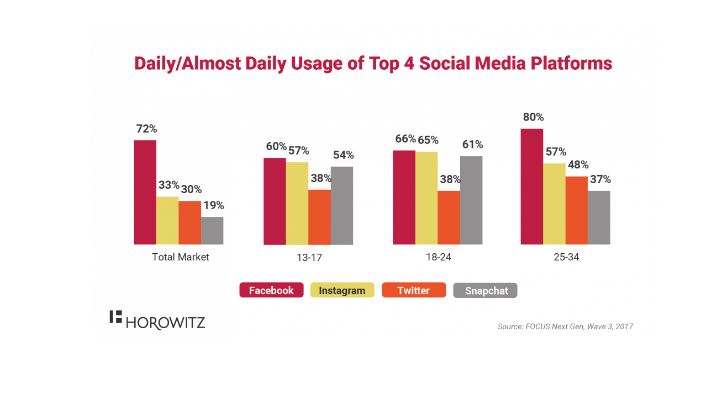 So where should advertisers be focusing their energy and advertising dollars in the social space? The report reveals that while Facebook is still the most-used social media platform overall, for younger (18-24 and 13-17-year-old) consumers, Instagram and Snapchat are as popular as Facebook.