Home Blog Page 4305

Pascal Laik Joins FollowAnalytics as CEO

0
Pascal Laik Joins FollowAnalytics as CEO

Pascal Laik has a Deep Understanding of the CRM Software Market and the Data Management, Data Quality and Data Integration Space

FollowAnalytics, the leader in Enterprise Mobile Success and GDPR compliance, announces the appointment of Pascal Laik as CEO and to the Board of Directors. He brings decades of experience and has a proven record of helping enterprise software players like FollowAnalytics to the next level both in sales and product executive positions on both sides of the Atlantic ocean. In his new role at FollowAnalytics, he will focus on operational excellence and sales scalability.

Also Read: FollowAnalytics Host Event to Help Organizations Prepare for GDPR Compliance

Pascal Laik’s experience includes a deep understanding of the CRM software market and the data management, data quality and data integration space as well enterprise-wide digital transformation platforms in the IoT, Big Data and AI arena.

“There is a significant opportunity for FollowAnalytics that lies ahead, and we couldn’t be happier with Pascal joining us and helping the company and its customers achieve continued success,” said Samir Addamine, Follow Analytics founder.

Also Read: TechBytes with Samir Addamine, Founder and Chairman, FollowAnalytics

Pascal Laik Joins FollowAnalytics as CEO
Pascal Laik

“I am very happy to join a company with great products, marquee customer references such as Allianz, Orange and Louis Vuitton, a unique partnership and synergy with Salesforce and a promising market at the intersection of mobile, marketing, AI and IoT. It is now ready to take on the future!” said Laik.

“Pascal’s executive management experience combined with Samir’s skills as an industry pioneer and visionary, will provide the perfect blend of executive leadership for Follow Analytics future growth”, said Denis Barrier, managing partner et co-fondateur at Cathay Innovation, one of the company’s historical investors.

The announcement follows the $11 million funding round led by Orange Digital Ventures in December 2017, as well as a key win for FollowAnalytics with the signature of its first seven-figure yearly contract.

Also Read: FollowAnalytics Launches Mobile Optimization Suite, An AI-Based Mobile Messaging Technology

Before joining Follow Analytics as CEO, Pascal was VP of Sales at C3 IoT, Managing Director South Europe at Winshuttle, VP Sales International at Informatica and Vice President of Master Data Management and Data Quality products at Oracle/Siebel where he spent 10 years in various products, service and sales leadership roles. Before, Pascal worked 8 years in Consulting at PwC and Andersen Consulting. Pascal has a Master of Science in Engineering from Ecole Nationale Superieure de Techniques Avancées (ENSTA) in Paris France and a Master in Business Administration (MBA) from the Wharton School from the University of Pennsylvania where he graduated with a major in Finance in May 2000 with distinction.

Recommended Read: MarTech Conference 2018 Comes to the West Coast This April

Momo Announces Acquisition of Tantan‎

0
Momo Announces New Executive Chairman and CEO

Tantan Is a Leading Social and Dating App in China for the Young Generation

Momo Inc., a leading mobile social networking platform in China, announced that it has reached a definitive agreement with Tantan Limited and all of its shareholders, pursuant to which Momo agreed to acquire 100% fully diluted equity stake in Tantan for a combination of share consideration and cash, including approximately 5.3 million newly issued Class A ordinary shares of the Company and US$600.9 million in cash. The deal is expected to close in the second quarter of 2018, subject to customary closing conditions.

Founded in 2015, Tantan is a leading social and dating app in China for the young generation. Tantan is designed to help users to find a romantic connection as well as to meet interesting people. With 5 billion matches and counting, Tantan has become a top choice for Chinese young singles to find love and relationships.

Also Read: Small Businesses Use Social Media Instead of a Website: Survey By Clutch

Yan Tang, Chairman and CEO of Momo said, “Our core position will continue to center on social networking and this acquisition enriches our product line in the social space. We will continue to invest and incubate more sub-brands to serve the social and entertainment needs of different demographics. Tantan has become widely recognized within a short period of three years since its inception, which is largely attributable to the outstanding performance of its talented team. We also respect Tantan’s product strategy that focuses on the customer experience of female users. After the acquisition, the Tantan team will continue to operate the mobile apps under the Tantan brand with our full support.”

Also Read: Facebook Copyright ID System To Curb Infringements and Fake News

Yu Wang, Chairman and CEO of Tantan, added, “Momo and Tantan have their own strengths in their respective markets and among targeted customers. The acquisition is a critical strategic upgrade to cover a greater range of user demographics and needs, and build up a larger social networking market through complementary businesses and strategic synergy. We are very confident in our future development.”

Momo connects people in a personal and lively way through a revolutionary mobile-based social networking platform. With powerful and precise location-based features, Momo enables users to connect with each other and expand relationships from online to offline. Momo’s platform includes the Momo mobile application, the Hani mobile application and a variety of related features, functionalities, tools and services that it provides to users, customers and platform partners. Leveraging its social interest graph engine and analysis of user behavior data, Momo is able to provide users a customized experience based on their social and entertainment preferences and needs. Momo users can maintain and strengthen their relationships through private and group communication tools, content creation and sharing functions, as well as the offline social activities promoted on Momo’s platform. Enabled by technological development, video creation and sharing is becoming an important way for users to socialize and have fun via the internet. Momo offers various video features and services including live streaming, short video as well as video chats for its users to interact in an immersive way.

Recommended Read: Demandbase’s ABM Innovation Summit 2018 to Feature Sessions by Billie Jean King, Asif Mandvi, Adam Blitzer, And Chris Golec

Recursive Labs Unveils First-of-Its-Kind, Video-Based Customer Engagement Tool

0
Recursive Labs Unveils First-of-Its-Kind, Video-Based Customer Engagement Tool

Former Disney CTO Brains Behind Industry-Changing Technology that Addresses Increased Demand for Digital Customer Interaction

Recursive Labs, a developer and innovator of state-of-the-art customer engagement platforms used to facilitate real-time communication between online businesses and their customers, announced the unveiling of its new Request solution. Request is the first-of-its-kind customer engagement platform that incorporates live video to enhance online consumer communication.

Request offers a revolutionary way for businesses to interact with their online consumers. Whether using their mobile devices or desktop computers, with Request, consumers can easily and quickly create a live video by recording their screen to show and explain their issues or pose their questions in real-time. They are afforded the ability to describe their issue using their own words, in their own voice, and then, with one click, send the video off to the respective business for rapid resolution. The video allows the business to easily identify, see and hear the issue being brought to their attention.

Also Read: Why the Tug-of-War Will Continue in 2018 Social Marketing

Request’s patented technology takes virtual queuing – traditionally known as the method by which customers receive a call back from a customer service agent – to new levels. Request has the capability to view and interpret exactly what’s on the user’s screen and transcribe it into a video. There are no plug-ins, downloads or installations necessary on the part of the consumer – just a simple click, record and send.

Developed by Recursive Labs’ R&D team, Request fully integrates into various Customer Relationship Management (CRM) systems such as Salesforce, Zendesk and Microsoft Dynamics. It can immediately create support and sales tickets in the system for quick resolution saving customers time and businesses the cost of transcribing the call.

Recursive Labs is known for developing some of the most advanced and secure engagement solutions, designed for security-conscious industries. To this end, Request is applicable to several verticals, such as financial services, e-commerce, retail and a range of other online marketplaces where one-to-one customer communication and security is integral.

Also Read: Salesforce Is #1 in Fortune’s List Of ‘100 Best Companies to Work For’

Recursive Labs Unveils First-of-Its-Kind, Video-Based Customer Engagement Tool
Bud Albers

“In an age of heightened emphasis on digital communication, businesses are continually looking for ways to easily, seamlessly and safely interact with their customers. We developed our pioneering, patented Request technology to directly address this increased demand for digital customer interaction. Request is extremely easy to use for both the consumer and business with whom he or she is communicating. It is designed to enable businesses to focus on their customers by meeting their needs and respecting their time. Since consumers have the ability to reach out about their needs whenever it’s most convenient for them, using whatever device they choose, Request positively impacts the customer experience and aids in acquisition and retention. Request saves time by allowing customers to avoid the frustration of waiting in a virtual line, on hold. They can share what they are looking at, ask questions or simply describe the problem in their own words, which businesses can easily see and decipher,” said Bud Albers, Chief Executive Officer at Recursive Labs.

“Request has the power to change the way online interaction happens. It directly addresses today’s 24/7 expectation for instantaneous access to customer service from anywhere on any device. Request eases frustrations customers currently witness such as long on-hold phone times and delayed email responses. As the world becomes more digitized, personal engagement will become key to creating and sustaining loyal customers. Business leaders will embrace Request’s cutting-edge technology because their customer-focused agents can communicate more directly, quickly and easily with their customers, enable a more scalable call center and be on the cusp of the future digitization of customer service,” Albers explained.

Also Read: How Marketers Can Use Customer Behavior to Drive Revenue

Brian Leckrone, director of operations at Tone It Up, an online health and fitness platform for women, and Request customer, said: “Request is transforming the overall Tone It Up customer experience. By allowing our users to simply and seamlessly notify us in real time, we can quickly react. Seeing the problem just as they see it eliminates the need to transcribe and replicate any user issue. As a result, we can deliver a better product to our customers and more quickly respond to their online needs.”

For a limited time, to maximize the introduction of its advanced technology, Recursive Labs is offering a free 45-day Request trial. Additionally, the first 100 paying beta customers will receive unlimited video minutes for one year.

Digitization of consumer transactions are growing exponentially. For example, according to a survey produced for Mitek, digital channels were the most popular way for customers to open credit, savings and checking accounts in 2016. In fact, 72 percent of consumers used digital channels to open a checking account, up from 12 percent in 2014. Furthermore, today’s digital world created a culture of immediacy that has fundamentally changed the way customers and businesses interact. According to an October 2016 Salesforce Report, entitled State of the Connected Customer Insights, this shift has led to an increased demand for real-time consumer-business interaction. In fact, according to the report, 64 percent of customers expected companies to both respond and interact with them in real-time. The rise in online consumer-business communication, coupled with these evolving customer demands, strategically positions Recursive Labs and its advanced customer engagement platforms to capitalize on the changing dynamics of digital-based interactions.

Recommended Read: Need for Data Orchestration for Contextualizing Customer Experience

Intelligence Partner Brings RingCentral Cloud Communications Solutions to Businesses in Spain

0
Intelligence Partner Brings RingCentral Cloud Communications Solutions to Businesses in Spain

Intelligence Partner Is a Google Premier Partner, and These Product Integrations Between RingCentral and Google Solutions Are Key to Empowering Workforces to Be More Productive

RingCentral UK, Ltd., a leading provider of enterprise cloud communications and collaboration solutions and a wholly owned subsidiary of RingCentral, Inc., announced that Intelligence Partner, a consulting leader in cloud computing solutions, has selected RingCentral as its exclusive cloud communications and collaboration solutions provider. With RingCentral, Intelligence Partner will bring the industry’s leading cloud communications solutions to businesses across Spain. This will enable companies of all sizes to more effectively collaborate and connect with their customers, partners, and employees.

The rapid adoption of smartphones in the consumer realm has caused a shift in the way people work. Today’s modern workforce demands solutions that enable them to work from anywhere, anytime, and on any device. This flexibility can only be accomplished with mobility-driven cloud solutions. RingCentral provides mobile-first voice, video conferencing, web meetings, team messaging, and contact center as a complete cloud solution. In addition, RingCentral’s open platform integrates with the industry’s leading cloud business applications, including Google, Salesforce, and Zendesk, to power greater business efficiencies.

Also Read: 4 Ways Customer Data Will Transform Performance Marketing in 2018

Intelligence Partner is a Google Premier Partner, and these product integrations between RingCentral and Google solutions are key to empowering workforces to be more productive.

With RingCentral for Google, users can seamlessly use the communications capabilities of RingCentral while working in Google G Suite. These capabilities include:

  • Listening to voicemails and sending/receiving text messages with the RingCentral Chrome Extension
  • Click to dial and click to SMS phone numbers that appear in the Chrome browser
  • Scheduling online meetings and audio conferences direct from Google Calendar
  • Making phone calls and sending messages to contacts within a Gmail conversation
  • Logging in to RingCentral using Google credentials
Intelligence Partner Brings RingCentral Cloud Communications Solutions to Businesses in Spain
Ignacio Bañó

“Through this alliance, Intelligence Partner will further expand its range of complementary solutions to G Suite, helping Spanish businesses take full advantage of what a cloud communications solution can offer,” says Ignacio Bañó, General Director of lntelligence Partner.

Also Read: Demandbase’s ABM Innovation Summit 2018 to Feature Sessions by Billie Jean King, Asif Mandvi, Adam Blitzer, And Chris Golec

Built on a global, secure, and open platform with more than 100 partner application integrations, RingCentral can be customized to the specific needs of an organization. By leveraging the RingCentral communications and collaboration functionality integrated with G Suite solutions, organizations can better streamline business workflows.

Intelligence Partner Brings RingCentral Cloud Communications Solutions to Businesses in Spain
Robinder Koura

Robinder Koura, head of channel sales for EMEA, RingCentral, adds, “The opportunity for cloud communications in EMEA is ripe. Unlike legacy on-premises PBX systems, RingCentral offers the advanced functionality businesses need to adapt to the new way of working. With Intelligence Partner, businesses in Spain will now have access to RingCentral’s innovative solutions integrated with G Suite, so they can communicate more effectively to achieve greater business outcomes.”

Recommended Read: Top 5 Cloud Services Predictions 2018

uStudio Expands Enterprise Portfolio

0
uStudio Expands Enterprise Portfolio

uStudio Will Provide Symantec a Comprehensive and Scalable Media Solution

uStudio, Inc., the industry’s leading media platform for the enterprise, announced that Symantec, the world’s largest cybersecurity company, has selected the uStudio platform to boost employee and customer communication.

Interactive media experiences leveraging video, audio, and VR are playing an increasingly strategic role in business — redefining how companies engage and educate their employees, partners, and customers alike.

uStudio will provide Symantec a comprehensive and scalable media solution, allowing the company to manage, deliver and measure rich interactive experiences across live streaming and video-on-demand. The partnership will ensure video is everywhere it needs to be within Symantec, and easier than ever to use.

uStudio Expands Enterprise Portfolio
Jen Grogono

“Video is the language of today. It’s giving business leaders a new way to think about their conversations with company stakeholders. Innovators like Symantec understand this and are making digital media conversations a natural part of the way modern teams work together inside and outside of corporate walls. We’re fortunate to partner with them to capture the value of media across the enterprise,” said uStudio CEO, Jen Grogono.

Also Read: OTT Explosion Provides Safe Platform For Marketers

uStudio is purpose-built for companies looking to redefine the way they communicate. The company’s patented platform helps teams organize audio and video files and deliver them across a suite of innovative applications for live streaming, podcasting, and on-demand portals. Additionally, uStudio ensures that media is exposed within existing business applications including Salesforce, Oracle, and Adobe Experience Manager. Advanced audience analytics provide insights into how media consumption impacts sales, service, and marketing.

uStudio’s patented, cloud-based media platform helps the world’s leading companies reinvent the way they use media across their businesses. From live streaming to VOD, podcasting, media management, and core process and system integration, uStudio helps market leaders such as Universal Music, Kohl’s, and Alcon Novartis use media to deliver speed, scale and competitive advantage.

Recommended Read: Fast Forward Your Video Content Strategy in 2018

Visto Multi-Platform Optimization Tool Unveiled to Simplify Cross-Platform Programmatic Ad Campaigns

0
Visto Multi-Platform Optimization Tool Unveiled to Simplify Cross-Platform Programmatic Ad Campaigns

Next Evolution of Enterprise Ad Hub from Visto Enables Real-Time Reallocation Across Multiple Platforms for Smarter, More Effective Media Buys

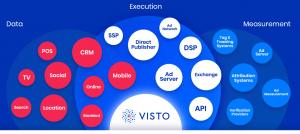
Advertising technology provider Visto™ has announced the launch of its Multi-Platform Optimization tool (MPO) for programmatic advertising campaigns. As part of the Visto Enterprise Ad Hub, MPO provides unified performance and pacing metrics, as well as easy reallocation and optimization of ad-spend across Search, Social, DSPs, SSPs, Publishers, and exchanges from a single screen.

Recommended Read: Shoptalk And Commerce Ventures Partner To Create Shoptalk Ventures

In 2018, most marketing leaders believe that brands, media companies, and agencies would immensely benefit from the transparency in managing execution partners, optimizing ad spend, measuring performance and leveraging analytics to drive efficiencies and improve ROI. 

Kerry Bianchi
Kerry Bianchi

At the time of this announcement, Kerry Bianchi, President and CEO of Visto, said, “At Visto, we fully understand the pain points experienced by digital advertisers as a result of the complex and often onerous programmatic ecosystem, so we’ve made creating better transparency and control our mission.”

“We see the launch of MPO within the Visto Ad Hub as a giant step toward this ultimate goal: providing agencies, marketers, media and data companies with easy to use tools that allow them to efficiently and effectively manage their advertising spend.”

Visto Multi-Platform Optimization Tool Saves Ad Dollars and Time

MPO continues to deliver on the promise of Visto’s Enterprise Advertising Hub, created to bring transparency, control and operational efficiency to the programmatic ecosystem. Through Visto’s time-saving workflow and unification of transparent data across multiple vendors, partners, and platforms in one place, advertisers save time and boost ROI.

Visto Enterprise Advertising Hub

Additionally, MPO enables media buyers to —

– Compare performance side by side across execution partners on one screen

– Review and analyze multiple real-time delivery metrics to identify optimization opportunities across platforms

– Reallocate distribution in a single step

– Identify any pacing or delivery discrepancies requiring adjusted bids

Read More: A Valentine’s Story: How Brands Can Get Customers to Love Them

The Multi-Platform Optimization (MPO) feature augments Visto’s Multi-Platform Allocation (MPA) tool, which automates previously unwieldy and manual ad trafficking processes while eliminating repetitive tasks associated with managing budget and performance across multiple partners. MPO builds on MPA’s benefits by adding the ability once a campaign is live to monitor and modify buys from a single screen based on real-time data on delivery, spend, ad units, KPIs, margins, discrepancies and more.

In the preliminary testing, MPO users were able to optimize a single line in a campaign across three execution platforms in 8 steps, reduced from 55 when using each native platform.

Currently, Visto’s advertising technology is dedicated to bringing transparency, interoperability, and accountability to digital advertising. The company’s Visto™ Enterprise Advertising Hub is a vendor-agnostic platform that unites the complete ad tech stack in a single user-friendly interface.

Read More: Three Retailer Lessons from Amazon Go Stores

Marketing Veteran Heidi Melin is the New CMO at Workfront

0
workfront

Former SAP, Eloqua CMO Heidi Melin Joins Workfront as Chief Marketing Officer

Workfront, a leading provider of cloud-based Enterprise Work Management solutions, has announced that Heidi Melin has joined the company as Chief Marketing Officer (CMO) and a member of the executive leadership team. As Workfront’s CMO, Heidi will be responsible for telling the Workfront story, creating and executing an integrated marketing strategy, driving increased awareness, and building a customer marketing function to deepen Workfront’s customer relationships.

Read More: MarTech RADAR 2018: Top 150 B2B Technology Companies You Should Follow

Heidi Melin
Heidi Melin 

At the time of this announcement, Heidi Melin said, “As a previous Workfront customer, I have seen firsthand how Workfront helps enterprises improve the quality and velocity of their work.”

Heidi added, “I am excited to be a part of a company that has built something so transformational and that, I believe, is going to become a must-have system for modern work management.”

Heidi brings over two decades of senior marketing leadership and her reputation for building award-winning marketing teams in the technology industry. She has a proven track record of driving measurable growth for some of the most respected enterprise SaaS technology brands and has been recognized for her industry expertise. Her knowledge in B2B marketing has enabled her to become a thought leader and a sought out speaker at many industry events throughout the country.

Prior to Workfront, Heidi was the CMO of Plex Systems, Inc., where she was responsible for strategy and execution of all marketing efforts She also previously served as CMO at Eloqua, Polycom, Taleo, Hyperion, and was the group vice president of marketing at PeopleSoft. In addition, Heidi served as a public company board director for Accelrys.

Read More: Adobe Unveils Next-Gen Content Intelligence to Transform Customer Experiences

Alex Shootman, CEO of Workfront, said, “Heidi is the perfect person to take on the role of CMO here at Workfront. We need a person who is a modern, revenue-centric marketer, who has the knowledge and experience to help Workfront become known globally as the Operational System of Record for managing modern work, and someone with experience in the complexities of marketing to large, global companies.  Heidi is that person. She also happens to be one of the most experienced B2B marketers on the planet.  Her leadership will be a driving force in the ongoing success of our marketing efforts and will play an integral role in creating demand for Workfront and our products.”

Read More: Zaius Integrates with Zendesk for 360-Degree View on Customer Experience

Heidi joins Workfront at an exciting time as the company was recently recognized by Comparably as being among the top 50 companies nationwide for women to work for and named to the Women in Tech Council’s 2018 Shatter List for actively employing measures to help break technology’s glass ceiling. Workfront has also been named to Utah Business Magazine’s Best Companies to Work For and Deloitte’s Fast 500 for five consecutive years, and Forbes Cloud 100 for two consecutive years.

Currently, Workfront provides a cloud-based Enterprise Work Management solution that helps marketing, IT and other enterprise teams conquer the chaos of excessive email, redundant status meetings, and disconnected tools. Unlike other tools, Workfront is a centralized, easy-to-adopt solution for managing and collaborating on all types of work through the entire work lifecycle, which improves team productivity and executive visibility.

Recommended Read: Outbrain Launches ‘Sphere’ for Unbiased Audience Development

TechBytes with Wesley MacLaggan, Head of Marketing, Marin Software

0
Wesley MacLaggan, Head of Marketing, Marin Software

Wesley MacLaggan,
Head of Marketing, Marin Software

In 2018, leading B2B brands are increasingly looking at the current crop of cross-channel advertising platforms to see better results from their ad spend— not just for the year, but every day. With the growing demands from the publishers’ side, the focus of leading cross-channel advertising platforms is to deliver transparent retargeting and prospecting solution powered by cross-channel intent backed by real-time performance metrics. To understand the current state of cross-channel advertising technologies and how would these technologies impact audience data ROI, we spoke to Wesley MacLaggan, Head of Marketing, Marin Software.

Html code here! Replace this with any non empty text and that's it.

Tell us about your role at Marin Software.

I joined Marin Software back in 2008 and spent most of my time here in a product role, working alongside the team that built Marin Software into the leading digital advertising platform it is today—responsible for $100 million in annual revenue. Now, as the SVP of Marketing, I’m tasked with driving awareness around the next phase of Marin’s evolution—one that’s focused on uniting advertising across search and social.

After all, our customers are fighting for audiences in a digital landscape where Google and Facebook command nearly 80% time spend on the internet and over 60% of online ad dollars.

According to your Q4 2017 Digital Benchmark Report, social CTRs have remained relatively flat. What does this say about the industry and how can advertisers improve this rate?

This stagnant trend indicates creative personalization is not keeping pace with consumer expectations. Consumers have so many different sources vying for their attention, so without relevant and timely material, advertisers will miss their opportunity to attract more eyeballs and secure more clicks. To improve click-through rates, it’s important for advertisers to assign a budget to the formats that have proven to be successful with consumers, such as video advertising. According to comScore, 64% of users are more likely to buy a product online after watching a video.

There’s also room for increased engagement in some of the emerging technologies, such as Facebook Messenger. Businesses can use Messenger to start 1:1 personalized conversations with their prospects and customers. Google also provides a similar capability with click-to-message ads that prompt SMS interactions with customers.

But, as you work with these new channels and touchpoints, never forget to go back to basics. Ask yourself, who are you targeting and what message are you sending? If you’re struggling to improve CTRs, it could be due to outdated methods of audience targeting. Layering audiences on top of keywords can drive better results than using keywords alone.

In fact, we’ve found that advertisers see 48% more clicks when they use Similar Audiences in conjunction with remarketing.

What are the core tenets of the Marin platform? How does it integrate with modern Adtech and Customer Experience platforms?

The core tenet of the Marin platform is to unite advertisers’ search and social efforts. Our cross-channel advertising platform helps advertisers win more customers, increase revenue, and boost ROI. We’re able to do this through our independent platform, which takes an unbiased look at the customer journey and accurately reports how customers are interacting with a brand through search and social. Although Google and Facebook also have tools that help marketers understand the impact of their advertising spend, they only provide insights on their portion of the customer journey. Being an independent platform allows us to align better with customers’ goals and interests and gives them the holistic view that will maximize their campaign performance.

An open and independent platform also means our customers can integrate their existing adtech and customer experience platforms into our technology. By ingesting audience, revenue, and contextual data from any source, advertisers are able to improve insight and performance across their customers and preferred publishers. That’s a key component of Marin’s unique value proposition.

What are your predictions for Cross-Channel Advertising technologies? How would these technologies impact Audience Data ROI?

A cross-channel strategy is the only way brands can effectively follow customers on their complex journeys and deliver the seamless messaging they expect. In particular, brands that keep their search and social efforts in silos can expect to experience attribution failure, budget allocation mistakes, and mixed messaging across channels.

Cross-channel strategies offer higher returns on digital spend in addition to providing better control and visibility during campaigns. Marketers can make better budgeting and planning decisions when they unify the customer journey, and they can receive higher conversions when they deliver seamless cross-channel messaging. At Marin Software, we see a 2x increase in conversions for users who click search and social ads versus users who only click search ads. Social is even better, with a 2x increase in conversions for users who click search and social ads versus users who only click search ads.

How do you leverage AI/ML at Marin? Would AI/ML make media buying and brand safety compliance easier to deal with?

Machine learning is no longer just a buzzword—it’s starting to make a major impact on ad campaigns. For example, we see Google is leveraging its machine learning capabilities to match users with highly targeted ads, leading to substantially improved engagement. Activity on the Marin Software platform shows that advertisers are increasing spend on dynamic ad formats, like Shopping Ads, which deliver higher click-through rates and drive high-performance campaigns.

Marin Software’s Budget Optimizer uses AI to allocate spend to the highest performing ads so marketers can fulfill their performance goals. AI is also used to calculate optimal bids for low-volume keywords, and it can optimize campaigns for our customers using an algorithm that automatically considers granular data, such as ad performance, geographic locations, audience segment, and time of day.

We also use ML to automatically adjust keyword bids in near real time, so marketers can preserve their target keyword position despite any fluctuations—a significant value-add for advertisers on our platform. These intuitive tools automate and easily scale global campaigns, often with millions of keywords and sophisticated audience targeting, giving our customers more time to manage daily workflows, identify growth opportunities, and optimize revenue performance.

Google and Facebook are both doing amazing things with machine learning. Dynamic ads based on feeds and user behavior allow for personalization at scale with minimal human interaction. This is taking control away from the advertiser, but we believe many will accept this as long as the result is better performance. ML will also help them better match content with advertiser aims to help with brand safety and fraud prevention.

Thanks for chatting with us, Wesley.

Stay tuned for more insights on marketing technologies. To participate in our Tech Bytes program, email us at news@martechseries-67ee47.ingress-bonde.easywp.com

Pegasystems and Idio Join Forces for AI-Driven B2B Content Intelligence

0
Pega Academy Helps Clients and Partners Accelerate In-Demand Pega Skills Growth

The Latest Pegasystem Partnership Brings Together Unified Customer Engagement and Content Intelligence; Clients to Close More Deals with More Effective and Relevant B2B Content Intelligence

Pegasystems, a leader in Customer Engagement Software, and Idio, a demand orchestration platform for B2B Marketing, announced a strategic partnership that will enable B2B organizations to present the most relevant content that accelerates customer buying journeys.

pega + idio

By combining the power of Pega’s AI-driven real-time customer decisioning platform and Idio’s content intelligence engine, businesses can quickly close more B2B deals by serving up the right contextual content at the moment, on any channel.

At the time of this announcement, Dr. Rob Walker, Vice President, Decision Management, Pegasystems, said, “This partnership allows us to further optimize highly complex B2B engagements where most other marketing and sales solutions typically fall short.”

Recommended Read: MarTech RADAR 2018: Top 150 B2B Technology Companies You Should Follow

Dr. Rob added, “Idio’s unique predictive content intelligence engine complements our proven customer engagement solutions to better help B2B organizations keep pace with their customers’ needs with the right content at the right moment.”

Pega and Idio to Provide Customers with Content for B2B Engagements in Real Time 

Together, Pega and Idio will optimize B2B engagements in real time to provide customers with the next-best content. With centralized AI at the heart of every decision, businesses will be able to analyze all past customer interactions to identify and deliver the most valuable and timely materials – including product specification, case studies, or prospectuses. This collaboration will ensure better B2B customer experiences that intelligently move each account and individual to the next stage in their journey, rather than force offers and discounts better suited for B2C strategies.

Recommended Read: Interview with Pushpa Ithal, Founder and CEO, Advo.Ninja

B2B Companies on a Holistic Level by Leveraging a Single Decisioning Process

Available in June and on display at the PegaWorld conference from June 3-5 in Las Vegas, the new offering will provide organizations the ability to —

  • Improve Marketing Journeys – Marketers can intelligently move prospects closer to purchase by using the solution to the surface and deliver the most relevant content designed to progress road-blocked buyers in real time.
  • Optimize Sales Interactions – Salespeople can spend their time more effectively and efficiently by leveraging AI-powered recommendations to share the most relevant content with high-value accounts most likely to convert.
  • Centralize B2B Customer Intelligence – Organizations can engage with B2B companies on a holistic level by leveraging a single decisioning process across channels and business functions with consolidated individual-level and account interaction data.

Idio’s Pioneering AI Takes Advantage of the Exploding Goldmine of ‘Dark Data’

Currently, Idio offers a customer conversation platform, driving better intelligence, engagement, and revenue for leading enterprises, including AllianceBernstein, Fitch Group, and Intel. Idio’s artificial intelligence platform identifies patterns in each client’s content consumption to understand their interests, and inserts real-time dynamic content into communications across digital and advisor channels to personalize the experience.

By engaging customers one-to-one on any channel, Pega clients increase customer satisfaction while enhancing customer lifetime value.

Idio’s pioneering AI takes advantage of the exploding goldmine of ‘dark data’ – unstructured and underutilized digital interaction data – to provide highly predictive customer intelligence that increases target account engagement.

Read More: Interview with Vinay Bhagat, Founder and CEO, TrustRadius

Trained using billions of customer interactions across multiple markets and languages, Idio leverages advanced machine learning and natural language processing to predict every prospect’s intent and provide next-best content recommendations.

AI-Driven Content Intelligence Would Empower B2B Account-Based Marketing Strategies Deliver Personalization at the B2C Level!

B2B organizations driving Account-Based Marketing (ABM) strategies struggle to provide the personalization that business-to-consumer (B2C) buyers now expect. These more complex sales cycles require high-touch nurturing over longer periods of time across a matrix of decision makers. But hindered with marketing, sales, and service silos, most organizations can’t adapt fast enough to meet each stakeholder’s changing needs. This causes missed opportunities to serve timely content that could accelerate account engagement and progress a deal.

Read More: State of Digital Marketing Analytics in Top 1000 U.S. Retailers Report Shows Multi-Platform Adoption, Continued Growth

Idio CEO Edward Barrow, said, “We greatly respect Pega’s innovative solutions that power exceptional customer experiences for some of the largest clients in the world. Our approaches to predictive decisioning are very similar, and we look forward to bringing our experience of automating and personalizing complex B2B decision cycles to Pega’s global 3000 customers.”

Pega provides a unified suite of customer engagement applications for marketing, sales, and customer service powered by Pega Customer Decision Hub, its market-leading real-time AI engine. Built on Pega Platform, Pega’s applications enable clients to constantly anticipate customers’ changing needs and provide personalized AI-driven next-best-action recommendations throughout the customer journey.

Currently, Pegasystems is the leader in software for customer engagement and operational excellence. Pega’s adaptive, cloud-architected software – built on its unified Pega® Platform – empowers people to rapidly deploy, and easily extend and change applications to meet strategic business needs. Over its 30-year history, Pega has delivered award-winning capabilities in CRM and BPM, powered by advanced artificial intelligence and robotic automation, to help the world’s leading brands achieve breakthrough business results.

Recommended Read: Pega Research: Fears Notwithstanding, Executives Believe AI and Robotics Could Improve Workplace

Interview with Pushpa Ithal, Founder and CEO, Advo.Ninja

0
Pushpa Ithal
Interview with Pushpa Ithal, Founder and CEO - Advo.Ninja

[easy-profiles profile_twitter=”https://twitter.com/pushpaithal” profile_linkedin=”https://www.linkedin.com/in/pushpa/”]
[mnky_testimonial_slider slide_speed=”3″][mnky_testimonial name=”” author_dec=”” position=”Designer”]“Corporate culture has been moving towards employees deeply embracing their employer’s brand. Social media is the best platform to showcase this employee-employer relation.”[/mnky_testimonial][/mnky_testimonial_slider]

Tell us about your role and how you got here. What inspired you to Advo.Ninja?

I am the founder and CEO of Advo.Ninja, an enterprise social platform. I am passionate about building products that solve problems, are easy to use and deliver tangible results. I have worked for startups like SilverTail Systems and large companies like Oracle and EMC in product management and marketing roles.

Digital marketing will account for 75% of total marketing efforts by 2020. But, CMOs are not prepared to scale their efforts with respect to skills, resources, and tools. I realized that functional areas in an organization such as accounting, finance, sales, and engineering have very robust sets of tools to accelerate their efforts. However, marketing products are siloed and don’t provide deeper solutions. This lead me to start Advo.Ninja.

How can businesses leverage employee-driven social media strategies to build brand reputation and enhance corporate visibility?

Employee resources are underutilized or completely untapped by marketing teams within companies. There is a huge opportunity for win-win when employees participate in corporate branding. Companies get to expand their reach and reputation through employees’ social networks. And, employees build their personal branding and thought leadership on social with little or no effort.

A decade or two ago, corporations kept their communications very controlled and did not want their employees to openly talk about their workplace. However, corporate culture has been moving towards employees deeply embracing their employer’s brand. This has proved to improve morale and ultimately productivity. Social media is the best platform to showcase this employee-employer relation. Anyway, ad expenses are skyrocketing and they do not create the feeling you get when someone you know is sharing their thoughts with you on social.

In 2018, how would CMOs benefit from leveraging employee networking tools for social media?

Marketing teams do the heavy lifting of corporate branding, reputation, and content that support them. Employees can help connect the brand with the audience at scale, with their human touch by creating social content and amplifying distribution. There are a few tools out there that automate corporate brand messaging through employees to their social networks. The challenges with those tools are, they are neither completely automating the process nor they are adding personalization. Marketing managers end up spending a high percentage of their time in just managing the tools and make them work.

At Advo.Ninja we focus on three major areas:

  1. Decentralizing quality content creation through employees and technology. Employees get to react to industry news and create true social content. They also get to be the center of all the engagement. This makes them true thought leaders.
  2. Content distribution at scale without losing personalization. In this process, employees build their thought leadership by creating a strong social reputation. Employees that use Advo.Ninja immediately observe an increase in LinkedIn profile views, followers, and they also rank high on social searches.
  3. Capturing top of the funnel social leadsm, that would otherwise be lost. Every campaign is measurable including audience analysis, content analysis, and dollar value.

What are the major challenges for CMOs in effectively leveraging real-time events for building brand reputation?

Internet users have grown by 82% since 2012 and there have been over 2.5 trillion posts created on Facebook alone. Content is growing at an alarming rate. It’s becoming increasingly challenging to analyze real-time events let alone effectively leveraging it for brand reputation. Once real-time events are gathered, the next challenge will be in tailoring the message to individual audience creating the sense of one-on-one conversation addressing the event. Persona matching is another challenge. Communication of events should reach right audience to create the desired impact.

Today there is human intervention in every step of marketing. Only the combination of intelligent automation with personalization will win.

What startups in the martech industry are you watching/keen on right now?

  • Sprinklr is a leading Social Media and Social Ad Management platform. It will be interesting to see if the ad market is going to grow or plateau, while PR is becoming participatory. Users are opting out of ads.
  • Demandbase, has the first mover advantage in ABM. It will be interesting to see if ABM products would merge with CRM companies in 2018 or grow independently.
  • ActionIQ, marketing evolution has just begun with AI and Machine Learning. MarTech offerings have to raise their game to provide a complete solution with real-time adjustments to campaigns. ActionIQ is trying to solve the backend data disintegration problem.

What tools does your marketing stack consist of in 2018?

Would you tell us about your standout global digital campaign at Advo.Ninja? 

Calculate my Reach’ campaign which has an engaging calculator on our home page was one of the campaigns that stands out. We now organically rank second and third on Google for the ‘Social Reach Calculator’ keyword. Thanks to Social Media for making this such a big ongoing success for us. We ate our own dog food in significantly increasing our reach on multiple social networks. We invited our friends in business who have great social networks, to spread the word.

Through our dashboards, we measured all social responses, which social network was yielding high results so we could invest more efforts in that and audience highest active time of the day. We also measured where the traffic was originated. We had to adjust post content and post timings to include UK and Germany audience, since we got great response from those locations.

How do you prepare for an AI-centric world as a business leader? How do you leverage AI technologies at Advo.Ninja?

Evolution of AI and its applications in marketing has just begun. The ultimate goal is to tell if a buyer who is a passionate cyclist and is active on Facebook between 3-5pm, likes to watch videos on weekends, read your article, discussed that with friends on Facebook and Twitter, asked a question on quora about the brand, and finally bought a new bicycle on Amazon.  Today, there are siloed solutions that cannot monitor every step in the buyer’s journey and understand buyers’ behavior deeply.

At Advo.Ninja, we are building technology to match content with right employee influencer who can reach right target audience. When there is, a mismatch is any of these three pieces of data, campaigns fail. If an employee is building one of the 50 products a company has, he should be asked to communicate social messages for that one product only. We read content automatically to tag content and find a real match based on employee interests, his previous social engagement and other criteria.

How do you bring people and technology together at one place?

When people understand the depth of the vision behind any technology, they come together naturally. It’s key to empower each one of them while providing clear-cut goals to bring the best the in them.

What apps/software/tools can’t you live without?

Quora, LinkedIn, Zoom

What’s your smartest work related shortcut or productivity hack?

I have limited number of highly valuable apps on my phone. I manage various functions on the go including bank accounts, conferences, email campaigns, connecting with the audience on social media and forums.

What are you currently reading? 

On a daily basis, I read curated industry news, newsletters from unbiased communities and participate in Quora and a few LinkedIn Groups.

I am reading an interesting book, called Hooked by Nir Eyal, on how to build habit-forming products. My true passion is building invaluable products.

What’s the best advice you’ve ever received?

“You won’t know your strength unless you try” – Laura Mather

Tag the one person in the industry whose answers to these questions you would love to read:

Reid Hoffman

Thank you Pushpa! That was fun and hope to see you back on MarTech Series soon.

[vc_tta_tabs][vc_tta_section title=”About Pushpa” tab_id=”1501785390157-b58e162d-0ae25a4b-c27aca64-108e51b0-80edaf37-bd3d357a-6c469f76-e62a”]

Pushpa has twelve years of product management and development experience. She has been involved in product building – including creating the roadmap, writing requirements both in Agile and Waterfall processes with a heavy emphasis on UX/UI, workflows, customer validation programs. Pushpa also has product launch and marketing experience, in positioning, pricing, creating marketing assets, webcasts, public speaking, and analyst briefings.

Her sales experience covers deal support, global sales, and partner enablements including planning and delivering training, and demo strategy. She has also facilitated cross-functional and global team interactions for marketing, architecture/engineering, PS, CS, sales, and pre-sales verticals.

[/vc_tta_section][vc_tta_section title=”About Advo.Ninja” tab_id=”1501785390320-2d44fa50-740c5a4b-c27aca64-108e51b0-80edaf37-bd3d357a-6c469f76-e62a”]

Advo.Ninja
With billions of content added to social networks everyday, reaching relevant audiences has become extremely challenging and expensive for marketing and communication teams. Advo.Ninja has developed a SaaS marketing product to utilize untapped, powerful social networks of employees, partners and investors to reach 10X audiences and build brand reputation. With this, marketers are now able to communicate company brand stories easily, timely and inexpensively through people behind the brand. And, employees build their social profiles and become thought leaders.

[/vc_tta_section][/vc_tta_tabs]
[mnky_heading title=”MarTech Interview Series” link=”url:https%3A%2F%2Fmartechseries-67ee47.ingress-bonde.easywp.com%2Fcategory%2Fmts-insights%2Finterviews%2F|||”]

The MTS Martech Interview Series is a fun Q&A style chat which we really enjoy doing with martech leaders. With inspiration from Lifehacker’s How I work interviews, the MarTech Series Interviews follows a two part format On Marketing Technology, and This Is How I Work. The format was chosen because when we decided to start an interview series with the biggest and brightest minds in martech – we wanted to get insight into two areas … one – their ideas on marketing tech and two – insights into the philosophy and methods that make these leaders tick.

Tech Giants to Attend Morgan Stanley Technology, Media and Telecom (TMT) Conference 2018

0
Tech Giants to attend Morgan Stanley Technology, Media and Telecom (TMT) Conference 2018

The TMT 2018, Starting Today, February 26, Will See Thought Leaders Share Their Insights on the Latest Industry Trends

This year Morgan Stanley Technology, Media and Telecom (TMT) Conference will see tech gurus from companies like Facebook, CriteoCognizant, PegasystemsAkamai, Apptio, Zendesk, LiveRampAcxiomNielsen, etc. participate in the four-day conference. TMT 2018 is being held from February 26 to 2018 – March 1 at The Palace Hotel, San Francisco, California.

Morgan Stanley is bringing together more than 250 public and private companies with more than 1,200 investors to discuss the latest developments, trends and outlook for the technology, media and telecommunications sectors this year.

Also Read: MarTech Conference 2018 Comes to the West Coast This April

Some of the companies that have announced their participation include:

Monday, February 26

  1. Cognizant: Gajen Kandiah, President, Cognizant Digital Business, will present on Monday, February 26, 2018, 1.50 pm, PT.
  2. Criteo: Benoit Fouilland, CFO, Criteo, will present on Monday, February 26, 2018, at 4.05 pm, PT.

Tuesday, February 27

  1. Akamai Technologies: CEO, Tom Leighton, and CFO, Jim Benson will present on Tuesday, February 27, 2018, 8.45 am, PT.
  2. Zendesk: Elena Gomez, Chief Financial Officer, and Marc Cabi, Vice President of Strategy and Head of Investor Relations, will present on Tuesday, February 27 at 4.35 pm, PT.

Wednesday, February 28

  1. Acxiom and LiveRamp: Warren Jenson, Acxiom CFO, will present along with LiveRamp Co-President Anneka Gupta on Wednesday, February 28 at 11.15 am, PT.
  2. Facebook: Sheryl Sandberg, COO, and David Wehner, CFO, will participate on Wednesday, February 28 at 12 pm, PT.
  3. Nielsen Holdings: Jamere Jackson, Chief Financial Officer, Nielson, will participate in a fireside chat on Wednesday, February 28 at 2.40 pm, PT.
  4. Pegasystems Inc: Chief Financial Officer, Chief Administrative Officer, and Senior Vice President, Ken Stillwell, will present on Wednesday, February 28, 2018 at 4.35 pm, PT.
  5. Apptio Inc: One of the senior members of the team will be presenting on Wednesday, February 28, 2018, at 4.35 pm, PT.
  6. Okta Inc: Frederic Kerrest, Chief Operating Officer and Co-Founder, will present on Wednesday, February 28, 2018, at 11.15 am, PT.

Thursday, March 1

  1. Box: Aaron Levie, co-founder and CEO and Dylan Smith, co-founder and CFO, will participate on Thursday, March 1, 2018 at 10:10 am, PT.

Recommended Read: Demandbase’s ABM Innovation Summit 2018 to Feature Sessions by Billie Jean King, Asif Mandvi, Adam Blitzer, And Chris Golec

Shoptalk And Commerce Ventures Partner To Create Shoptalk Ventures

0
Shoptalk And Commerce Ventures Partner To Create Shoptalk Ventures

Program Will Target 20 Investments over the next 24 Months with Participation from Other Leading Investors

Shoptalk, the world’s largest retail and ecommerce conference, and Commerce Ventures, a leading early-stage venture capital firm focused on commerce technology, today announced the launch of Shoptalk Ventures. Shoptalk Ventures is a program that will commit $1 million over the next 24 months to a target of 20 ecommerce and retail technology startups.


As a catalyst for the evolution of retail and ecommerce, Shoptalk will help identify some of the most promising companies in the industry, and become a limited partner in Commerce Ventures. The investment review, selection and due diligence will be managed independently by Commerce Ventures.

Also Read: Oracle NetSuite Named a Leader Among B2B Commerce Suites for Midsize Organizations by Independent Research Firm

Shoptalk And Commerce Ventures Partner To Create Shoptalk Ventures
Anil D. Aggarwal

“Our goal with Shoptalk Ventures is to further support the early startup ecosystem that’s enabling retail and ecommerce as it continues to transform for a digital age. We’re thrilled to partner on this program with Commerce Ventures, which has a successful, sector-specific track record of working with the investment community to fund promising new companies,” said Anil D. Aggarwal, founder and chief executive officer of Shoptalk.

Shoptalk organizes the world’s largest conferences for retail and ecommerce. Held in the US and Europe, Shoptalk is an unprecedented global gathering of individuals and companies reshaping how consumers discover, shop and buy.

Also Read: 87% of Retailers Agree Omnichannel is Critical, Yet Only 8% Have ‘Mastered’ it, Brightpearl Study

Shoptalk And Commerce Ventures Partner To Create Shoptalk Ventures
Dan Rosen

Dan Rosen, General Partner of Commerce Ventures, added, “We look forward to working with Shoptalk to identify and fund the next generation of ecommerce and retail technology leaders. Shoptalk has become the gathering place for next-generation industry thinkers and was a natural partner for this program. This is a unique opportunity to bring the commerce community together and we are excited to engage with retailers as well as other investors to make this program a success. ”

Commerce Ventures is a leading venture firm focused on technology innovations in the retail and commerce ecosystem.  Thus far, the firm has invested in over forty portfolio companies, including leading ecommerce and retail technology startups such as Estimote, Forter, Narvar, RetailNext, SessionM, Theatro, and Tulip Retail.

Recommended Read: Are Marketers Ready for Next-Level Personalization?

Ready For EU Regulations? QuestionPro Offers GDPR Compliant Survey Data Solutions

0
QuestionPro Launches QxBot – a Generative AI Feature that Reduces the Time and Complexity of Survey Building for Researchers

QuestionPro Launches a GDPR-Ready Survey and Insights Solutions That Is Compliant with Data Protection Requirements Within the European Union

QuestionPro Inc., an online survey and insights solutions company, launches a GDPR-ready survey and insights solution ahead of the May 2018 enforcement date. Customers will be able to conduct market research and collect data that meets compliance and data protection requirements for individuals within the European Union (EU).

Also Read: Are You GDPR Ready?

The General Data Protection Regulation (GDPR) regulation will enter into effect in the European Union on May 25th, 2018 and will have a fundamental impact on how organizations treat data from individuals in compliance with the new privacy laws.

Also Read: The One Value that Salesforce and GDPR have in Common 

Online surveys, which are at the forefront of any consumer, market, or employee research, also needs to follow GDPR compliance regulations. In order to make it easier for users to create and send GDPR compliant surveys, QuestionPro launched a sophisticated process to ensure all data being collected is fully GDPR compliant.

Also Read: 3 Reasons Why Marketers Should Welcome GDPR (Other Than Because It’s Required!)

QuestionPro Announces New Integration With Adobe Cloud Platform Launch
Vivek Bhaskaran

“GDPR compliance is a very serious issue for our trusted EU, transnational, and non-profit partners. Implementation is our customers’ greatest worry and we’ve ensured our solution to address those concerns. Our GDPR-ready settings will allow our customers to continue collecting survey responses without the fear of fines at either an organization or survey level,” says Vivek Bhaskaran, CEO, QuestionPro.

Also Read: GDPR Will Drive A Coach And Horses Through The Online Advertising Ecosystem

Customers who incorporate QuestionPro’s GDPR compliant settings can expect the following benefits:

  • GDPR Compliance will be enabled for all accounts on EU servers by default
  • A data protection office (DPO) to be designated by each customer
  • Policy document customization available including:
    1. Data retention period
    2. Use of data for research purposes only
    3. No commercial sale of the data
    4. No solicitation
    5. Language, data server preferences, and settings
    6. Right to be forgotten

Recommended Read: QuestionPro Announces New Integration With Adobe Cloud Platform Launch

State of Digital Marketing Analytics in Top 1000 U.S. Retailers Report Shows Multi-Platform Adoption, Continued Growth

0
http://www.cardinalpath.com/collateral/cardinal-path-whitepaper-state-of-digital-marketing-analytics-2018.pdf

Cardinal Path has published its annual State of Digital Marketing Analytics in the Top 1000 Internet Retailers report for 2018, uncovering analytics maturity and marketing technology adoption across the top 1000 U.S. online retailers.

This year’s report finds that many -and a growing number- of organizations have deployed multiple parallel solutions across analytics, tag management, testing, optimization & personalization, and data management platforms as they continue to optimize and streamline their marketing technology stack amidst explosive growth in this space.

Also Read: Marketing Strategy In 2018: How To Deliver Savvy, Sleek and Integrated Campaigns Amidst Digital Transformation

State of Digital Marketing Analytics in Top 1000 U.S. Retailers Report Shows Multi-Platform Adoption, Continued Growth
Nick Iyengar

“Enabling marketing success through technology is clearly an ongoing priority for many online retailers as they look to automate tasks, gain efficiencies and secure competitive advantage through data-driven insights,” says Nick Iyengar, Director, Digital Intelligence with Cardinal Path and author of the report., adding, “Even in categories that have achieved universal adoption, such as analytics platforms, we continue to see growth as organizations deploy more than one platform.”

Also Read: Patron Raises 10 Million USD, Launches Pre-TGE to Capture the Global Influencer Market

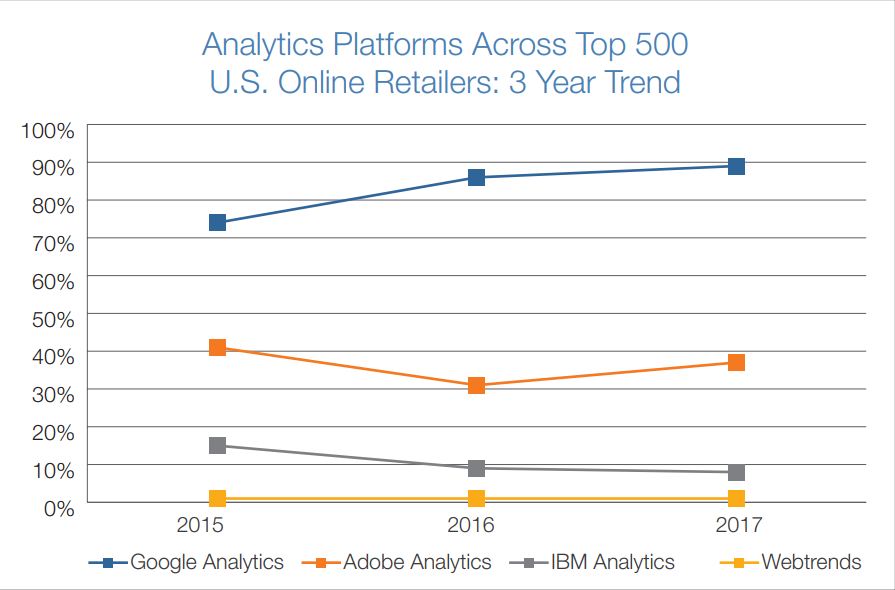
The trend towards multiple platforms plays into the growth seen by leading MarTech vendors including Google and Adobe for analytics.

“Analytics platforms have become a duopoly, with Adobe and Google serving all but a few organizations. The graph below illustrates the market trends in the top 500 online retailers across the past three years. Adobe’s market share has been pretty consistent, aside from a small decrease in 2016, while Google Analytics has made some gains on its already large market share. Up against these two platforms, other players are becoming extinct,” notes the report.

State of Digital Marketing Analytics in Top 1000 U.S. Retailers Report Shows Multi-Platform Adoption, Continued Growth

Cardinal Path partnered with ObservePoint to conduct the analysis using their market-leading scanning tool.

Also Read: Independent Research Firm: SAS a Leader in Cross-Channel Campaign Management

Cardinal Path is an award-winning data & marketing analytics firm that helps marketers to win in the digital economy. The world’s leading brands look to Cardinal Path to understand, evaluate, and navigate the complex marketing technology landscape and stand up a MarTech stack that works for their unique business.

Recommended Read: LinkedIn Marketing Diversifies its Partner Program with New Categories and MarTech Members

Want To Combat Facebook’s News Feed Changes? Read ListenFirst’s State of Social TV Report

0
Want To Combat Facebook's News Feed Changes? Read ListenFirst's State of Social TV Report

Tv Social Branded Content up 30%, Facebook Organic Reach down 40% for Media Industry

ListenFirst, the most comprehensive social analytics solution for the enterprise, recently released its State of Social TV report with key insights into Facebook’s organic reach, how consumers are engaging with TV properties on social media, audience make-up of consumers engaging with TV properties, and the rise of social branded content as a new advertising opportunity.

ListenFirst’s report reveals that in 2017 Instagram took over Facebook in
engagement for the first time, organic reach of media posts on Facebook declined 40%,
and social branded content outperformed all other TV posts by 42%.

“The growth of TV social audiences presented a new advertising opportunity in the form of branded content. So, naturally, Facebook’s recent announcement about changes to its News Feed has put a lot of media companies on edge. The unique insights in this report can help media companies better prepare for the Facebook changes to come, and also presents advertisers with a compelling reason for continuing to partner with media companies on social branded content,” says Jason Klein, Co-Founder and Co-CEO, ListenFirst.

Also Read: YouTube’s Top Kids’ Influencers Announce Participation in SuperAwesome’s SafeFam Program


Want To Combat Facebook's News Feed Changes? Read ListenFirst's State of Social TV Report
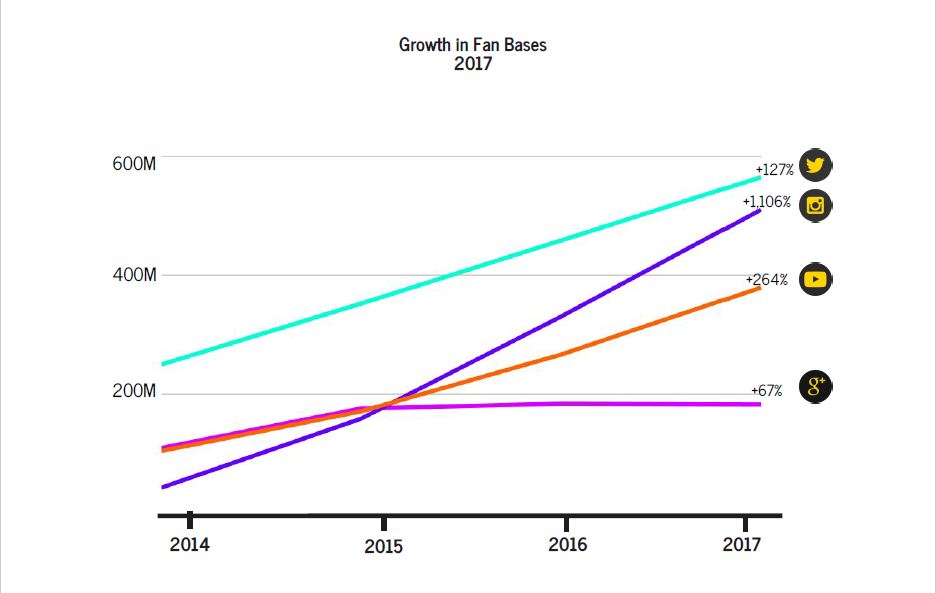
TV Fans Across Social Channels (2014-2017) Facebook, Twitter, Instagram, YouTube, Google+

Which social platforms are TV networks using most?

Both Facebook and Instagram saw growth in posted content, with +9% and +4% more posts since 2016 respectively, while Twitter, YouTube, and Tumblr all saw declines in volume. Despite Twitter producing -16% less content year over year, the channel saw the highest volume of content in 2017 with 663K posts, contributing 40% of total posted content across all social platforms.

Where are TV audiences engaging?

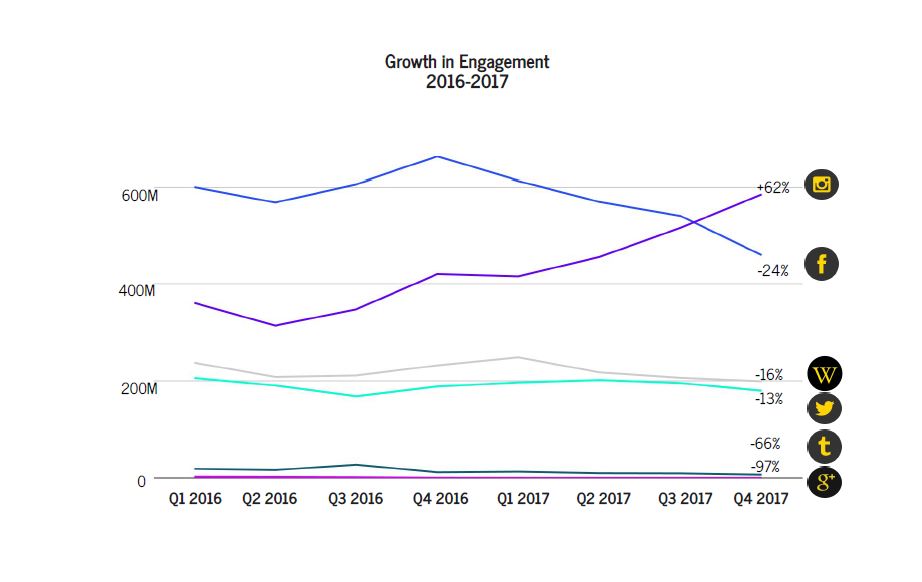
In 2017, consumers engaged with TV content a total of 4.9B times — but on what channels? YouTube aside, Instagram and Facebook accounted for the largest share of engagement in 2017, with Instagram seeing the only positive engagement growth across social, up +62% from Q1 2016.

Want To Combat Facebook's News Feed Changes? Read ListenFirst's State of Social TV Report
TV Engagement Across Channels (2014-2017), Facebook, Twitter, Instagram, Google+, Tumblr, Wikipedia

Reaching your fans organically on Facebook

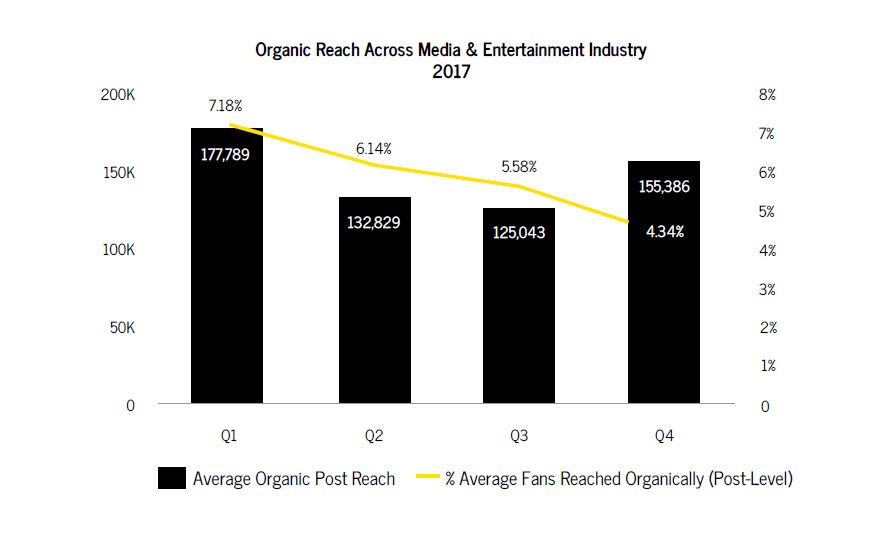
On average, 5.8% of a TV network or program’s Facebook posts reached its fans organically in 2017. This represents a 40% decline in organic reach from Q1 to Q4. At the same time, the number of people who saw a TV post organically decreased by only 13%. Even though less fans (people who “like” a TV page) are seeing less content, the decline is less dramatic when examining reach overall.
The viral nature of the Facebook News Feed is the likely driver. A ‘story’ is created on a fan’s News Feed each time a fan likes a post, which in turn reaches the friends and family of that fan resulting in more people reached.

Want To Combat Facebook's News Feed Changes? Read ListenFirst's State of Social TV Report
Based on ListenFirst’s Proprietary Private Data Network which includes Benchmarks om private data from more than 1,500 TV programs across the top Media Companies

Social Branded Content: A New Ad Opportunity

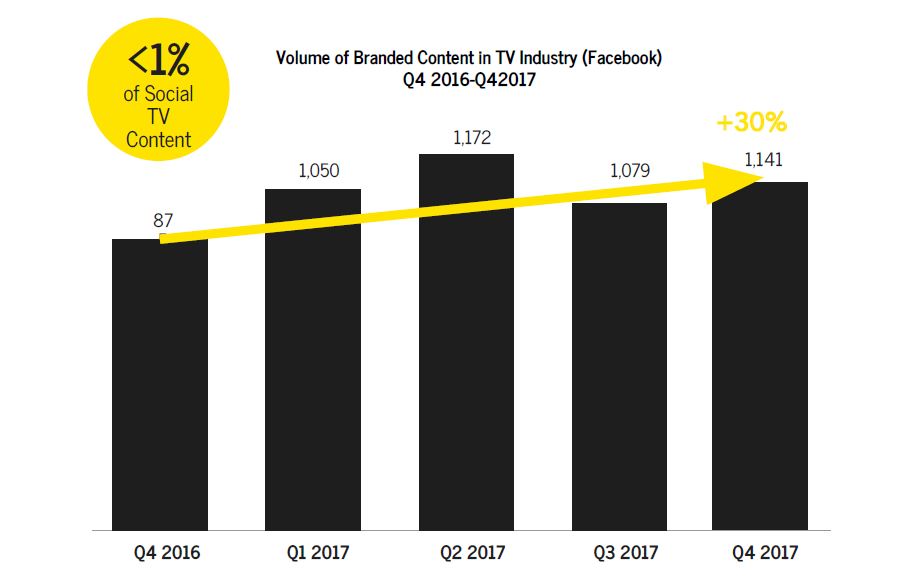
The growth of social audiences presented a new advertising opportunity for the TV industry in 2017. Social branded content (i.e., content that is published by a media property and influenced by a sponsor in exchange of value) published by TV networks over the past year has grown steadily, with a 30% jump from Q4 2016 to Q4 2017. But, while the number of posts continues to rise, branded content is still in its infancy. Today, branded content for the TV industry represents only <1% (0.72%) of all posts.

Want To Combat Facebook's News Feed Changes? Read ListenFirst's State of Social TV Report

Also Read: Small Businesses Use Social Media Instead of a Website: Survey By Clutch

Key takeaways from the report include:

  1. Decline in Facebook organic reach does not mean less people see content from media properties: While Facebook organic reach declined by 40% in 2017, the number of people who saw a TV post organically declined by only 13%, meaning TV posts reached audiences beyond a TV page’s fan base.
  2. Instagram surpassed Facebook as the number one most engaging platform: Instagram grew 41% in engagement in 2017 while Facebook engagement declined by 25%.
  3. Instagram TV audiences catches up to Twitter TV audiences: Instagram’s fan footprint across TV pages grew 11x from 2014 to 2017 topping 256M followers, nearing Twitter’s 283M followers.
  4. Streaming networks outperform broadcast and cable in social engagement: Social engagement for streaming programs spiked 13x from 2016-2017, while Broadcast and Cable programs grew by 6x and 5x, respectively, during the same period.
  5. TV social branded content is highly effective: Social branded content published by TV pages outperformed non-branded content by an average 42% in 2017, and generated 9x more engagement than what an advertiser generated on its own page.

Recommended Read: Can Publishers And Agencies Survive In A World Led By The Duopoly?

A Valentine’s Story: How Brands Can Get Customers to Love Them

0
A Valentine’s Story: How Brands Can Get Customers to Love Them

Consumers were predicted to spend a near-record $19.6 billion on Valentine’s Day, averaging $143.56 per consumer, an increase from last year’s $136.57 according to NRF’s annual survey. With the focus on indulging loved ones, there’s never been a more appropriate time for brands to focus on their own relationship with consumers.

Advice that applies to interpersonal relationships works for brand/customer ones, too. From paying close attention to wants and needs to consistent and effective communication, brands that truly want to inspire loyalty from customers need to think in terms of being a good partner. The challenge, of course, is in an increasingly digital and global world, how can companies do right by consumers at scale?

Advances in artificial intelligence are solving for this challenge. Using natural language processing and the finest-tuned sentiment analysis, Yotpo’s customer content marketing platform has analyzed more than half a million reviews of products and experiences from 2700 brands leading up to Valentine’s Day.

And there’s great news.

Consumer sentiment for these companies–predominantly digital-first eCommerce brands–was overwhelmingly positive.

Customers reported loving their experiences 100x more than they hated it. High up on the love list were key customer experience pillars such as product, quality, service, shipping/delivery, price, and customer service. On the flip side, shoppers also end up kissing a few frogs. Brands stumbled in a variety of areas including sending the wrong size, being unresponsive, and providing “horrible” customer service.

Customers are talking; by reading every review and other user-generated content (with the help of AI), brands can finally demonstrate that they can be good partners by listening.

After all, 186% of consumers are more likely to buy after reading reviews, and 88% of consumers trust reviews as much as personal recommendations.

How can brands show consumers they care enough to deliver a superior experience that will strengthen relationships with consumers? Here are three easy ways:

Also Read: How Marketers Can Use Customer Behavior to Drive Revenue

Show Them You’re Listening.

Brands should recognize and welcome customer feedback anywhere they can get it, as a valuable source of insight into what works and doesn’t. Best practices include incenting buyers to provide and share reviews on social media through discounts and coupons and responding to issues quickly.

Chubbies, the retro shorts-inspired startup that has since become immensely popular among Millennials and American patriots alike, is committed to treating customers like friends. Every month, the founders hold phone calls with customers to get their direct feedback on the Chubbies experience and make improvements where they can.

As a result of efforts like the monthly customer calls, the brand has amassed millions of subscribers to their “Friday at Five” philosophy…and an ever increasing boom in sales.

Also Read:  How To Avoid Being ‘First Down’: Lessons To Learn From Super Bowl LII

Take the Good with the Bad.

Although the majority of reviews analyzed were positive, there were many others with negative sentiment. This is actually a good thing since almost every consumer won’t trust a site that publishes only positive reviews.

Publishing negative feedback helps establish credibility with new consumers. This is especially true if the brand posts their responses inline, given that 53% of consumers say they would expect a reply, and 93% of those shoppers say their loyalty to the brand would be diminished without one.

Make It Better.

Actions are louder than words. If brands are going through the effort to collect performance and product feedback, the act is moot without a meaningful and prompt response. As it turns out, AI-driven sentiment analysis can uncover pain points for scores of customers that a brand might detect, but isn’t able to corroborate with data when there is way too much feedback to track.

For example, a beauty products company was able to pinpoint and ultimately fix a problem with specific warehouses in two different locations on the globe, after discovering 5% of customers very vocally, in reviews, complaining about poor shipping experiences.

Great brands are built on happy customers. Sure, the proliferation of channels, fierce competition, and looming threat of Amazon are making it extremely tough to thrive, let alone survive, in today’s commercial paradigm. But companies ultimately have themselves to blame if they don’t treat customers with care and consideration, wooing them like every time is the first time. Expressing, listening, and demonstrating that you’re hearing them through action.

You have to give love to get love back, to ensure that happily ever after for your brand.

Also Read: 5 Mistakes That Can Be Disastrous to Your B2B Sales and Leads

Three Retailer Lessons from Amazon Go Stores

0
Amazon Go

Amazon can generate a world of press just by opening one store. Admittedly the Amazon Go store is unique in two ways:

  • It’s a brick and mortar store from the world’s largest e-commerce company; and,
  • It doesn’t have any checkout — simply walk in, grab what you want, and walk out.

Since its launch, Amazon has dominated the digital commerce world. But Amazon’s threat isn’t limited to digital; each sector is vulnerable. Whether they want to admit it or not, all retailers, from mom-and-pop shops to behemoths like Walmart, have Amazon as a thorn in their side.

So what does Amazon Go, just one store in Amazon’s headquarters of Seattle, mean to the retail world? That story has yet to unfold, but there are three critical lessons retailers can — and should — take away from Amazon Go.

  1. Make it easy for the customer

The concept of grabbing items from a shelf, putting them in a bag and walking out touches on a pain point for shoppers: the checkout experience.

For many shoppers, the shopping experience is a fulfilling one. Picking out new shoes, buying that new cooking gadget you wanted to try, or simply grabbing a bottle of water and a nutrition bar are often enjoyable experiences. Until checkout — which can feel like hitting a brick wall.

Often 20-40% of the time spent in a store is waiting in line or paying.

And that’s definitely not part of the fun.

While self-checkout in grocery stores has offered some relief, the checkout experience has not evolved much in 75 years.

The broad media coverage of Amazon Go and the sheer number of intrigued consumers are both results of Amazon touching on something that was taken as a given — the checkout experience — and turning its absence into a huge point of difference.

If you had the choice of paying 5 cents more for a bottle of water from a place you could walk in, grab it, and walk out versus a place next door where you had to go through a checkout, which would you chose?

In a way, the experience is modeled on the online one-click checkout experience Amazon offers; they’ve made purchasing super simple, so simple the consumer doesn’t even question whether or not to come back. In our contemporary world where time is money, convenience is often as much a benefit as price.

  1. Don’t pigeonhole your customer

For the Amazon Go store to work, the consumer has to have a credit card on file before they walk in.

Think about the value proposition: To walk into this store you have to provide a credit card first.

Now imagine a retail ideation session where someone says, “Let’s have the customer keep their credit card on file so they can walk out with whatever they want.” My bet is they would be laughed out of the room. The thought being, the customer would never do that!

But Amazon didn’t let that negative voice drown-out what they saw as a significant customer benefit. And note they are currently doing it with low margin, small items, which makes it even tougher.

Of course, yes, Amazon has the benefit of having a credit card on file with a user’s Amazon account — but that’s just them leveraging their strength and putting it to work in a place where they are potentially weak.

Retailers could leverage similar methods to create the same experience or comparable ones, but not if they’re pigeonholing their customers — they would never do that! — by assuming they know what they are and are not willing to do.

  1. Start with a blank page

Too often when we are developing new ideas or striving for a new experience we architect a solution around our current limitations. “We could try that but because of ___ we can’t.”

Limiting our ideas turns the question from “What would the customer want?” to “What can we do based on our shortcomings?”

This is not a customer-centric approach to the problem.

James L. McQuivey, Vice President and Principal Analyst Serving CMO Professionals at Forrester, points out that “Even among Amazon customers who are not Prime members, 66% agree that they ‘trust Amazon to treat me like a valued customer.’”

The Amazon Go concept is a perfect example of why: it’s all about what the customer wants — just grab and go. If you can find the right answer for the customer, then you should move heaven and earth to make that work. Assuming, that is, you want them to trust you the way they trust Amazon.

A true culture of innovation doesn’t find ways to not do things; it finds a way to innovate and execute. The only way to truly innovate is to start with that blank page and a focus on the customer. Maybe it is a solo store experience that isn’t shackled by the entire chain’s limitations, or maybe it starts with a survey, who knows. Whatever it is don’t let your ideas be curbed by perceived internal issues. Start with that blank page.

As Ralph Waldo Emerson said, “Build a better mousetrap and the world will beat a path to your door.”

Amazon Go is experimenting with a better mousetrap, and they understand it’s an experiment. They will tweak, learn, and improve the experience because they know you learn more in the execution than you do in talking about it (or eliminating it before the idea can evolve).

One other note: Each of these three lessons center around the customer. It is easy for all of us to lose sight of that mission when we are bogged down by internal politics, old school thinking, and a myriad of systems issues. But please don’t forget to put yourself in the customer’s shoes and figure out what is best for them so you can leverage that insight to evolve, innovate, and build a better mousetrap.

Also Read:

Qualtrics Announces Online Community Connecting Experience Management Platform Users

0
qualtrics

Qualtrics, the leader in research and experience management, announced the Qualtrics Community, a new, online forum to bring together users of the Qualtrics Experience Management Platform™. The Qualtrics Community allows users to share best practices, tips and advice about using the Qualtrics Experience Management Platform, the world’s only unified experience management platform, utilized by over 8,500 enterprises worldwide to manage the core experiences they provide across their businesses—including customer, product, employee and brand experiences.

Also Read:  Qualtrics Named One of Fast Company’s Top 10 Most Innovative Companies in Enterprise for 2018

The Qualtrics Community members include some of the most prolific Qualtrics users in their fields, compiling thousands of years of combined expertise across business, technology, and academic industries, to name a few. The community is open to expert and novice users alike, and is a forum to discuss the projects that drive them, trade tips and tricks, and to enable networking with other users.

The Qualtrics Community aims to facilitate education and collaboration, allowing users to ask for advice on how best to build their projects using the Qualtrics Experience Management Platform. Experts are available across many domains, including customer experience, employee experience, product experience, brand experience and market research domains. Members can comment and tag the responses they find to be the most helpful. The Qualtrics Community Team is also present to help foster meaningful connections and keep community members on their toes by running competitions and challenges where they can earn points and badges to move up in rank in the community.

Also Read:  Kantar TNS and Qualtrics Join Forces to Form Global Customer Experience Powerhouse

“I love being able to quickly ask questions of other users of the Qualtrics platform to find alternative solutions, or even have a discussion on best practices. This exchange of knowledge has saved me hours across projects,” said Rachel Cvetkovski, an Associate at THREE. “I’ve never had a community of people outside my own company to use as a resource, so I’m very grateful for the collaboration.”

“Everything we do at Qualtrics is focused on building amazing software for our customers and then helping them to best utilize those tools to create amazing experience programs,” said Paul Sheets, Head of Global Operations at Qualtrics. “While we offer world-class training and support programs, sometimes users just want to quickly bounce an idea or problem off another user who has been in their shoes. We created the Qualtrics Community as part of our ongoing commitment to helping our customers learn, collaborate and succeed. It’s a place where novice users can connect with experts, obtain high quality information and create new professional connections, or even friends, along the way.”

Text Request Utilizes Google Messaging to Bring Businesses More Customers

0
textrequest

Text Request, the online business texting service that lets businesses text using their current business numbers, can now be used to manage text conversations started through Google My Business listings.

Google’s free business listing platform, Google My Business, now lets mobile searchers message businesses directly from search listings. Text Request provides the backend dashboard to receive these messages, and makes it easy to manage conversations as a team.

Businesses can use Text Request with their current landline, VOIP, or toll-free numbers without affecting voice services.

Also Read:  Can Publishers And Agencies Survive In A World Led By The Duopoly?

Why does this matter?

Google now accounts for almost 90 per cent of US online searches, and well over half of these searches come from mobile devices. A recent study by Twilio shows that nine out of ten consumers want to message a business. Text Request is bringing these two trends together to help businesses bring in more customers.

Also Read:

Mobile searchers can message your business directly from your Google search listing without having to download any apps (using standard text messaging). This removes barriers for customers trying to reach your business, and, as the research suggests, gives consumers their preferred way to connect with your business.

According to Brian Elrod, CEO of Text Request, “These inbound messages turn into more leads and customers for your business, because people would rather text you than call someone else to get what they need.”

Text Request is an online business texting service. You login to your account from a computer, smartphone, or any other device to send and receive texts, manage groups, integrate texting with your current CRM, and more. Customers can create unlimited users and contacts, and use their current business phone numbers without affecting voice services.

Also Read:  AI, Big Data And Digital Transformation – And The Potential ‘Buzzword Backlash’