Home Blog Page 4203

Aurea CRM Introduces New Ways to Increase Sales Performance On-the-Go

0
Aurea CRM Introduces New Ways to Increase Sales Performance On-the-Go

Aurea CRM.client Unleashes BYOD Mobility and Offline Enablement to Help Sales and Marketing Teams Conduct Their Most Important Work on Their Favorite Devices

Aurea Customer Relationship Management (ACRM)  announced several product enhancements, including the release of a new mobile app, called Aurea CRM.client. This latest mobility innovation extends ACRM’s existing iOS and Windows offerings so customers can seamlessly access essential functionality on the platforms and devices they use most, making it easier to get work done on-the-go through one powerful app.

Part of the Aurea family of companies, ACRM provides a comprehensive customer relationship management solution that helps businesses drive customer engagement tools deep into their sales organizations. With end-to-end capabilities for sales, marketing and customer service, ACRM provides a one-stop-shop that delivers a compact overview of team activities, sales pipelines and key performance indicators so sales leaders can set priorities and make informed decisions.

Also Read: Aurea Software Appoints Former IBM Executive Dan Beer as General Manager of Aurea SMB Solutions Division and Chief Customer Success Officer

“Studies show companies gain an extra 240 hours of productivity annually from employees using mobile devices. This is why it’s especially important to give sales teams full freedom from their desks with bring-your-own-device initiatives,” said Christian Stadlmann, general manager of Europe and senior vice president of global sales at Aurea. “In order to meet the demands of today’s increasing remote workforce and put indispensable mobility solutions into the hands of sales reps worldwide, we’re delivering a solution our customers can use on their favorite devices at any time. Aurea CRM.client builds on the offline enablement we’ve offered for years with Aurea CRM.pad, while providing more power, flexibility and device independence than ever.”

Available now in the Apple and Microsoft Windows app stores and coming soon to Android, Aurea CRM.client provides better ways for sales reps to manage leads and opportunities and capture meeting notes on any Windows or iOS device. Aurea CRM.client lets users access and update vital customer data, even when offline or in poor coverage areas, so they can make informed decisions anytime, anywhere. This new universal app will build on the configurations previously available through its predecessor, Aurea CRM.pad, and offer simple and seamless migration. Aurea CRM.client is included in every ACRM Enterprise Edition subscription, and available to ACRM Standard Edition clients as an add-on subscription.

In addition to these new mobile capabilities, ACRM will roll out major performance improvements and other enhancements to the next version of its Enterprise Edition in the coming months, including deeper email integration with bi-directional contact synch functionality, simplified report sharing and automated export to more third-party databases.

Recommended Read: Aurea’s Solutions Deliver Essential Data Protection Safeguards that Comply with the EU’s New GDPR Requirements

Omnicom Takes Data-Driven Marketing To The Next Level With Launch Of “Omni”

0
Omnicom Takes Data-Driven Marketing To The Next Level With Launch Of "Omni"

Omni Drives People-Based Precision Marketing at Scale Across Creative, Media and CRM

Leading global marketing and corporate communications company Omnicom Group, Inc. announced the roll-out of Omni, its people-based precision marketing and insights platform, designed to identify and define personalized consumer experiences at scale across creative, media, CRM as well as other Omnicom practice areas.

Omni delivers a first-of-its kind, single view of the consumer that can be dynamically tracked and shared across all marketing practices. Omni transforms the way Omnicom teams work, collaborate and deliver value, from insights generation to audience building, channel planning, creative development and message distribution.  All of the activities are continuously measured and optimized with attribution tied to client performance at every step of the consumer journey.

At the core of Omni is the industry’s most robust people-based identity graph – a database of connected consumers built from all significant identity authorities including Neustar, LiveRamp and Experian among several others. The identity graph links second-by-second consumer behaviors to reveal how people connect, engage and transact with brands; joining data sets using a methodology that respects regional regulatory and privacy practices.

Also Read: Brand Embassy and Talkdesk Form Partnership to Provide an Omnichannel Platform for Customer Service

Consumer behaviors are mapped to an equally comprehensive media inventory graph that delivers a precise view of the quality, value and availability of inventory in the marketplace.  This connected plan is activated through a work flow and content engine that enables Omnicom agency teams to efficiently deliver personalized messaging at scale.

“When we launched Annalect seven years ago, we dedicated ourselves to transforming the effects of data and analytics on media. With Omni, we’re extending everything we’ve learned to transform the entire marketing process,” said Omnicom Media Group CEO Daryl Simm.  “Omni connects our talent around a single view of the consumer and inspires them to create the best integrated ideas that drive performance and success for our clients.”

Jonathan Nelson
Jonathan Nelson

Omnicom Digital CEO Jonathan Nelson added, “Until now, the idea of mass personalization was more of an aspiration than a reality.  Omni changes that.  This is precision marketing at scale and in action.  And the new platform can be leveraged by all Omnicom clients across multiple disciplines.”

Also Read: Transcosmos Powers Global Omnichannel Customer Service with Bright Pattern Cloud Contact Center

Developed and hosted by Annalect, in partnership with OPMG (Omnicom Precision Marketing Group), Omni continues the group’s strategy of neutrality with no ownership interest in data or tech partners. This ensures the agility and flexibility to continuously source the right vendors and application partners in an ever-changing data and technology ecosystem.  Additionally, Omni is designed to integrate with marketing cloud providers, allowing clients to get the most from their first-party data and mar-tech investments.

The broad roll-out of Omni comes after several months of implementing the platform on select creative, media and CRM business engagements, as well as other Omnicom Practice Areas. Deployment of Omni will continue across Omnicom’s leading agencies in the coming months.

Recommended Read: Zendesk Suite Launched for Integrated Omnichannel Customer Experience

Clinch Delivers World’s First Dynamic Instagram Stories for Personalized Video Advertising

0
Clinch Delivers World's First Dynamic Instagram Stories for Personalized Video Advertising

New Clinch Product for Instagram Stories Provides Analytics and Unique Insights Regarding Client Data Segments and the Best Performing Creative

Move aside LinkedIn and Twitter, and make way for Instagram. In the chats we do with the global marketers from various industries, most agree to the growing prominence of Instagram Marketing and how the social media and image sharing platform is steadily becoming the ‘Product discovery platform’ of the future. With the launch of IGTV and a recent update to its Instagram Stories, knowing about Instagram Marketing is more important than ever before. Taking an unprecedented step into personalized Instagram video advertising, the global creative tech company has announced a new ability to offer dynamic and personalized Instagram Stories, enabling brands to serve a personalized video at scale. They are the first company to offer this.

The New Product Is an Extension of the Company’s “Clinch for Facebook” Offering, Enabling Brands to Create Dynamic Personalized Video Experiences on the Social Platform.

After the successful launch of “Clinch for Facebook”, Clinch, has become the first company to offer dynamic and personalized Instagram Stories, enabling brands to serve a personalized video at scale.

Recommended ReadNow, Keep Your Best Customers Happy with the Oracle Loyalty Cloud

Despegar Sees 6X More Effective Video Advertising Connect with Clinch

Despegar, the leading online travel company in LATAM, experienced a 28 times increase in return on ad spend (ROAS) when using Clinch for personalized, dynamic Instagram Stories, making it six times more effective compared to the brand’s generic Instagram Story videos.

“Clinch enabled us to turn our Instagram Stories from a brand awareness strategy to a personalized experience that encouraged travelers to book more with Despegar,” said Andrés Patetta, CMO of Despegar.

Andrés added, “With Clinch, we are able to leverage our first-party data to engage with those that just booked a trip, as well as encourage travelers who hadn’t booked in a while to reengage with our platform.”

Read More: Follow That Puck: Multi-Channel, Multi-Location Marketing Is Moving into the 21st Century… Are You?

Beyond Instagram Stories, Clinch can also personalize the Canvas experience (e.g.: landing page, different interactive modules) within the platform. Creative can be changed based on a variety of data points including location, offer and demographics, etc.

“Instagram is really effective for brands as it provides a platform for deep engagement,” said Oz Etzioni, CEO of Clinch.

Ez added, “Unlike other social products, Instagram Stories provide a native content opportunity for consumers to connect with brands and discover products and services. Clinch is bringing the same level of personalization and scale that it has developed for Facebook and programmatic ad serving platforms to Instagram, enabling brands and agencies to shift from just focusing on reach and awareness to performance.”

Clinch Brings AI into Instagram Video Advertising for Better Personalization

Clinch leverages artificial intelligence to provide rapid A/B testing of creatives and generates personalized video and display campaigns at scale (thousands of versions). In addition, the product provides analytics and unique insights regarding client data segments and the best performing creative.

The product is the result of Clinch’s successful completion of the Facebook Marketing API Accelerator, a prestigious program offered by Facebook to encourage the development of technologies to support advertisers. Clinch for Facebook integrates directly with Facebook and Instagram’s API to remove barriers to entry and enables brands and agencies to leverage data to create personalized videos at scale.

Currently, Clinch provides brands and agencies with the ability to target consumers across all platforms and devices including web, mobile, in-app, social media platforms, and Connected TV. Clinch works across all DSPs and does not require technical integration.

Recommended ReadContextual Content and AI: The New Wingmen for Email Marketing Campaigns

Atento Ranked as the 2nd Most Innovative Company in Brazil’s Service Sector, According to Valor Econômico

0
Atento Ranked as the 2nd Most Innovative Company in Brazil's Service Sector, According to Valor Econômico

The Company Has Achieved This Position in the Annual “InovaçãO Brasil” Ranking Published by Valor EconôMico, One of the Country’s Leading Business Journals

Atento S.A., the leading provider of customer relationship management and business process outsourcing services (CRM/BPO) in Latin America, and one of the top five providers worldwide, was recognized as the 2nd most innovative company in Brazil’s service sector in the Ranking Valor Inovação, two positions up from last year’s ranking.

The company came in 47th place in the overall ranking, being considered one of the 50 most innovative companies in the country proving that innovations such as robotization, are already part of the operations routines of Atento. The study is prepared by the journal Valor Econômico, one of the country’s most renowned business publications, in partnership with Strategy&, the strategic consultancy firm of the PwC Network.

Also Read: Atento Receives Seven Recognitions at the 24th Edition of the ABEMD Awards in Brazil

Regis Noronha
Regis Noronha

“This recognition means a lot to our company. We have invested heavily in innovation and the development of new solutions with state-of-the-art technology and intelligence, “said Regis Noronha, Director of Marketing and Strategy for Atento Brazil. “We are very satisfied with this result, which was only possible thanks to the dedication of our employees, who strive to make Atento increasingly digital and which shows that, more than just a technological and process evolution, we are experiencing a real change the culture in innovation, “he said.

Recommended Read: Atento’s End to End Digital Sales Solution Improves Sales Conversion and Drives Customer Experience While Lowering Cost of Sales

Ansira Receives Industry Accolades Ahead of 100-Year Anniversary

0
Ansira Receives Industry Accolades Ahead of 100-Year Anniversary

Ansira Appoints New Executive Leadership, Acquires Brand Protection Agency, and Receives Recognition by Prestigious Independent Research Firm and MarTechExecs

Ansira, one of the largest agencies in North America specializing in CRM, loyalty, marketing solutions and digital strategies, announced tremendous company growth led by increasing year-over-year, top-line performance. In its 99th year, Ansira has been recognized as a leader and strong performer in the The Forrester Wave: Through-Channel Marketing Automation (TCMA) and Customer Database and Engagement Agencies, Q2 2018 report. The company also recently announced the acquisition of Brand Protection Agency and made history by hiring its first female CEO, Daina Middleton.

Daina Middleton
Daina Middleton

“I am thrilled to be leading an award-winning team that has built such an incredible reputation,” said Middleton. “For the last 99 years, we have experienced rapid growth as a direct result of the team’s persistence and dedication to remaining an innovator in activating and curating seamless customer experiences for brands who have a local presence. As we look forward to our 100-year anniversary, we are excited to continue evolving our capabilities while also continuing to provide sophisticated data-driven customer engagement solutions coupled with industry-leading channel partner enablement.”

Also Read: Ansira Acquires SaaS-based Platform Brand Protection Agency (BPA)

Ansira’s continued momentum speaks to significant market opportunities and demand for actionable customer experience management, transparent and accountable enterprise-to-local expertise and channel partner empowerment.

Andrew Arnold
Andrew Arnold

“Our unwavering commitment to enhancing the customer experience while increasing engagement and fostering ever-more profitable customer relationships for our clients has driven us to relentlessly evolve our technology-enabled marketing intelligence capabilities,” said Andy Arnold, EVP, Client Partnership. “Ansira is an innovative company delivering impactful technology integration and data-driven intelligence that we can leverage at scale across our clients’ programs.”

As part of this tremendous growth, Ansira has reached several major milestones including:

New Executive Leadership: Ansira appointed its first female CEO, Daina Middleton and expanded its executive team, hiring John Parks as EVP, chief information officer; Chris Henger as EVP, chief product officer; and Cindy McEntire, chief of people and culture.

Also Read: Ansira Cited as a Strong Performer in Customer Database and Engagement Agencies Report by Independent Research Firm

Industry Recognition and Accolades: Ansira has been cited as a leader and strong agency performer in Through-Channel Marketing Automation (TCMA) and Customer Database and Engagement, by Forrester’s quarterly Forrester Wave report — the only agency to be cited in both Waves, demonstrating the company’s breadth and depth of solution sets. This prestigious recognition comes on the heels of MarTechExec’s 50 Women to Know in MarTech – 2018 award that Middleton and Kelly Jo Sands, EVP, marketing technology and data services, received.

Acquisition of Brand Protection Agency (BPA): Ansira continues its winning acquisition streak by acquiring Dallas-based Brand Protection Agency, an SaaS-based platform that provides manufacturers and brands with the ability to monitor, manage and communicate with their online reseller channels.

“Our recent acquisition aligns with our growth strategy of pursuing companies that share our vision of being a bellwether marketing solutions provider in the brand-to-local marketing space,” said Adam Vandermyde, EVP, operations.

Also Read: Ansira Names Cindy McEntire as Chief People and Culture Officer; Promotes Adam Vandermyde to EVP of Operations

Ansira has maintained an above-average NPS score while remaining one of the top three largest independently owned CRM and direct marketing agencies in the United States. With over 800 team members across 13 office locations, Ansira was built to align brands, consumers and channel partners in today’s complex, rapidly changing business environment — ensuring that all three can compete to win in the marketplace.

Ansira establishes and strengthens profitable customer relationships for its clients, by offering integrated and stand-alone marketing solutions that are focused on transparent and accountable channel partner management, optimizing CRM programs and customer acquisition platforms, and strategies. Ansira’s core capabilities include: data analytics, campaign management, strategic planning, digital design, web development, integrated media/search, creative, channel marketing automation, Co-op and MDF fund management, brand and financial compliance, digital asset management and experiential marketing.

Ansira models, integrates and activates first-, second- and third-party data, delivering data-driven marketing programs at the national and local level. Ansira supports its clients with digital media buying and planning, CRM and loyalty programs, web and creative development, and strategy and analytics. The company is majority owned by Advent International, one of the largest and most experienced global private equity investors and continues to be open to strategic acquisitions to reinforce Ansira’s position as an industry leader. Ansira is focused on other best-in-class marketing services companies that complement Ansira’s business while best positioning it for continued growth.

Recommended Read: Spiceworks Study Reveals Employees Spend 26 Days Per Year on Websites Unrelated to Their Job

5 Pinterest Hacks That Can Be Used For B2B Marketing

8
5 Pinterest Hacks That Can Be Used For B2B Marketing

Pinterest, When Used Intelligently, Can Help You Drive Traffic to Your Website and Help Your Marketing Strategy Too

Wait! Before you dismiss Pinterest as a place where young women go for their wedding gown inspiration, allow us to help you see the other side. Pinterest is much more than a social media platform that can be used as a B2C platform for women-centric consumer goods.

Pinterest allows its users to visually discover, curate and share their interests by posting or ‘pinning’ images, videos and links on digital boards. On the surface, this may come across as a good premise for B2C Marketing, but believe it or not, some of the leading B2B companies, including IBM, Marketo, Salesforce, Hubspot, HP, Oracle, Intel, GE, Microsoft, and Cisco, are actively engaging their audience on Pinterest.

5 Pinterest Hacks That Can Be Used For B2B Marketing
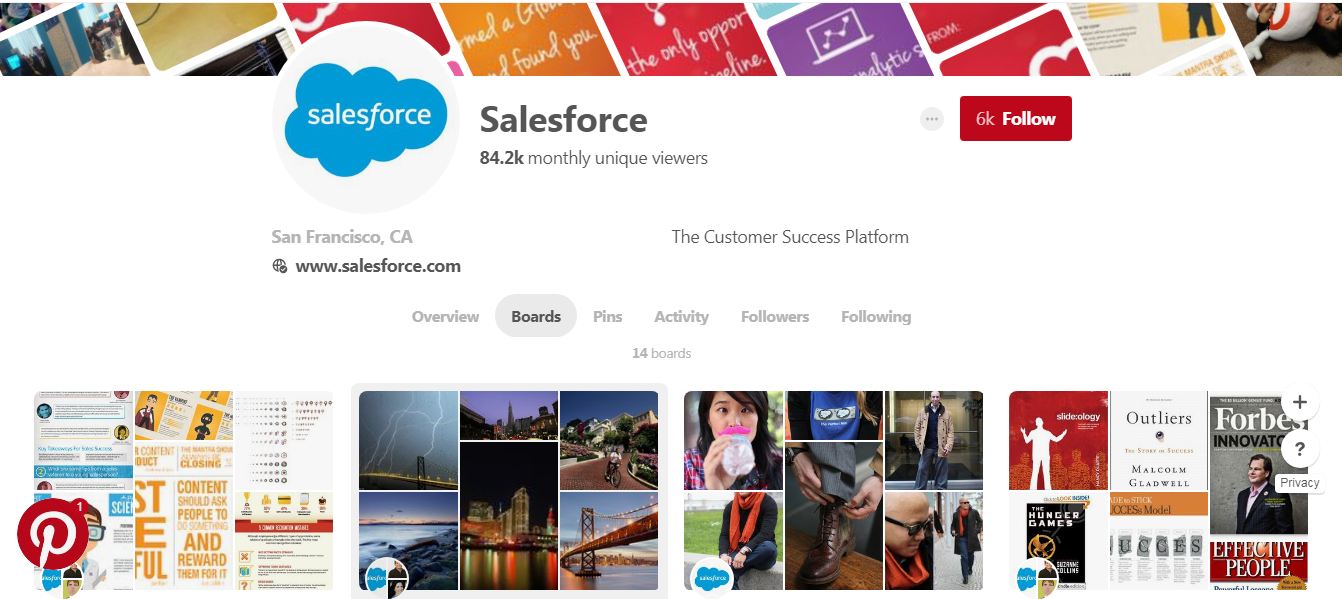
Salesforce currently has 14 different Boards on its Pinterest page

Also Read: Pinterest Expands Pinterest Marketing Partners Program With Creative Specialty

Here’s How B2B Marketers Can Use Pinterest

  1. Visual content
    Remember, Pinterest is all about visuals, so use your infographics, and repurpose your existing content to drive traffic to your Pinterest boards. Some tips to generate good content

    • Create some engaging Boards for your audience to spend time on. Split up and arrange your boards depending on different categories, who are your targeted audiences, and what interests them.
    • Allow your pins to jump off the page by adding extra information. With every image you upload, include an informative caption using specific keywords, link it to the specific landing page on your website.
    • Create a group or collaborative board and invite your audience as well as employees to add their own pins to it. Not only does this allow you to form connections, it also helps promote your brand as the owner of the board.
  2. Generate leads
    Using your existing and new content, and by allowing your audience to reach your website, you can generate traffic. Once these targeted audiences reach your landing pages, you can easily use pins for gated content to drive leads. You can also use the CTA (calls to action) approach. Drive traffic to your blog to increase the likelihood of conversion from there. Give your audience a next step to further engage with your business.
  1. Build a loyal base
    • Don’t shy away from using your other social media pages to drive traffic to your Pinterest page.
    • Connect with your audience through repins and establish contact through one-on-one interactions.
    • Add a ‘Top Pin’ or ‘Pin of the Month’ link to your newsletter.
    • Share pins and boards with your business partners, so that you can drive traffic to your as well as their company website, thereby doubling up audience engagement too.
  2. Use Humor
    5 Pinterest Hacks That Can Be Used For B2B Marketing
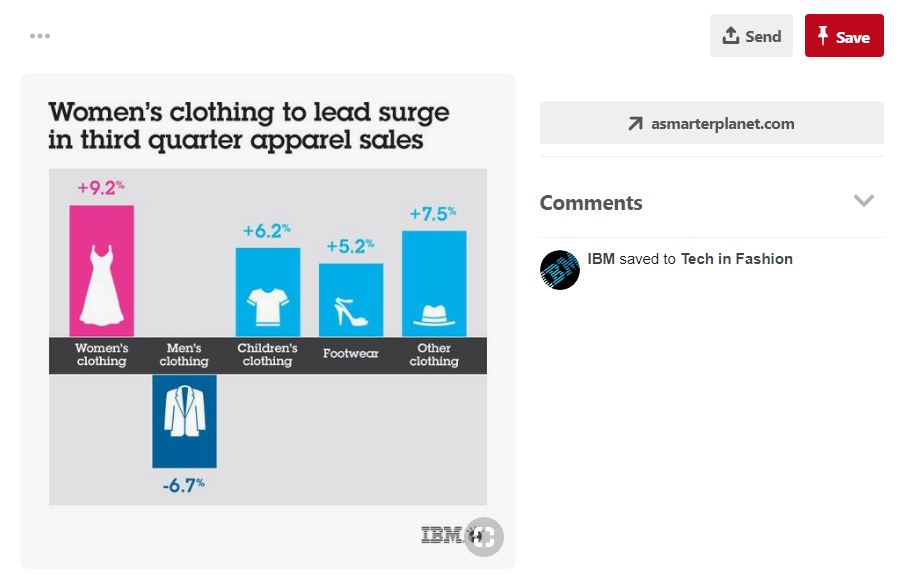
    IBM’s Pinterest page hosts a Tech in Fashion board that engages its audience with informative yet cool pins

    No one likes to engage with boring content, be it B2B or B2C audience. So create a board of your CSR activities or share photos of your office parties. Show that your company isn’t just another corporate machine where dreams go to die, use humor. You can also have an entire board dedicated to your customers. Remember social media is all about people, and so is B2B social media marketing.

  3. Track your progress
    Pinterest allows you to analyze your engagement through Pinterest Analytics, use it to understand what works and what doesn’t for your content. You can also use PinPinterest, the Pinterest automation tool, and its intelligent content-detection algorithm to drive your engagement.

Recommended Read: The Secrets of B2B Influencer Marketing Revealed 

Implementing Multi-Touch Attribution: 7 Best Practices

0
Multi Touch Attribution

Visual IQ Nielsen LogoThe term “omnichannel” may be a buzzword, but it represents a significant shift: marketers now need to reach and engage their best customers wherever they are – whether online, on their device, or on the go.

While continuous growth in the digital space has created more opportunities, it’s also brought new challenges. Marketers can target consumers more precisely with more personalized, relevant information than ever before. But tracking, measuring and optimizing this activity across an ever-growing number of touchpoints can be difficult – especially when channels are managed in silos and analyzed using outdated measurement techniques.

To manage today’s complex consumer journeys, more and more marketers have begun to embrace more holistic, cross-channel approaches to measurement.

Technological Advancements = The Need for New Measurement

Multi-touch attribution has revolutionized marketing measurement by enabling marketers to evaluate consumer journeys as a whole. Unlike siloed measurement approaches, it combines, normalizes and de-de-duplicates user-level touchpoint data into common success metrics and accurately assigns credit to the channels and tactics that influenced a desired action or outcome, such as a lead or sale. Marketers can then use these insights to make more effective and efficient planning and optimization decisions for future campaigns, as well as those already in flight. Some solutions even integrate audience attribute data to provide clarity into the tactics that drive the best results and experiences for each audience.

While multi-touch attribution can help marketers optimize and prove the ROI of their efforts, the sheer volume of cross-channel data, combined with the variety of desired business outcomes can make it hard to know where to begin. Here are seven best practices for navigating the organizational and logistical changes needed to implement and adopt multi-touch attribution.

Also Read: Three Steps Toward a People-Based Marketing Strategy

  1. Select an Attribution Leader

One of benefits of multi-touch attribution is that it reveals the influences and synergies between channels. Teams and individual channel managers can work together to optimize creative messages and spend across touchpoints and audiences to drive sales, revenue, ROI, and other success metrics.

With so many people set to benefit, it is essential to establish a single contact within the company who is responsible for driving implementation, adoption and ongoing education. Assigning and empowering an attribution leader can help ensure that attribution initiatives are prioritized and that the insights and recommendations it produces are incorporated across all channels.

  1. Educate Stakeholders

Prior to implementation, internal stakeholders and external vendors should be educated about multi-touch attribution and its capabilities. For many marketers, this approach to measurement is radically different from their current methods. The insights it produces not only require marketers and their agency partners to think differently, but also to invest their budget differently. Educating stakeholders upfront ensures they understand the value of multi-touch attribution and why it is being implemented. It will also ensure teams are interpreting the insights accurately and using them to effectively optimize spend and performance.

Also Read: Five Inconvenient Truths of Multi-touch Attribution (MTA)

  1. Define Shared Success Metrics

In many organizations, each channel has its own budget and is measured in silos using different metrics. Multi-touch attribution breaks down these silos to reveal how channels and tactics work in tandem to deliver business results. By establishing a shared set of key performance indicators (KPIs) that are aligned with the company’s overall business goals, teams can ensure they are working together to drive desired actions and outcomes, by audience, at each stage of the funnel.

  1. Produce a Data Plan

Multi-touch attribution solutions consolidate performance, cost and audience data from multiple, disparate systems into a single repository. Creating a data plan that outlines the types of data that needs to be pulled and where it will be sourced can help eliminate bottlenecks and keep the implementation on track.

  1. Create a Taxonomy

Taxonomies standardize data inputs and outputs to and from an attribution solution. Defining a taxonomy that aligns with the organization’s unique structure and vocabulary ensures marketers can analyze the performance of the media dimensions that matter most to their business.

Also Read: How ‘More of the Same’ Threatens the Future of Digital Advertising

  1. Begin with a Single Channel or Campaign

Instead of diving in head first, marketers should set their sights on using multi-touch attribution on a single channel or campaign to receive an initial set of results. When deciding on an initial test, consider starting with the most productive and/or largest channels first. A phased implementation approach enables teams to test the new system, achieve success early, and build momentum for expansion. 

  1. Activate Optimization Recommendations

Multi-touch attribution produces sophisticated performance insights that enable marketers to make more informed optimization decisions. But if those optimization recommendations are never put into market, teams will never achieve their ultimate goal of improving marketing results and ROI. By measuring, optimizing and activating the insights produced by multi-touch attribution, marketers can not only boost agility and ROI, but also lay the foundation for delivering true omni-channel consumer experiences.

Implementing any new technology to an existing marketing stack can seem complicated, and a multi-touch attribution solution is no different. By following these seven best practices, marketers will be better prepared to harness the potential of multi-touch attribution—and the significant competitive advantages it offers.

Also Read: Why You Need Engagement-driven Marketing in the Digital Era

Datix Introduces Unity for HubSpot

0
Datix Introduces Unity for HubSpot

Datix, an enterprise software consulting firm based in St. Louis, has long been celebrated for its sophisticated integrations. Unity, its flagship integration application, is a pre-built solution designed to seamlessly connect Epicor ERP with an array of software, including CRM and eCommerce. Recently, they expanded their integration solutions by debuting Unity for HubSpot, a top Marketing Automation vendor.

www.datixinc.com
www.datixinc.com

Marketing Automation software serves as a critical tool for developing customer relationships through digital marketing strategies, such as website content management, social media, search engine optimization (SEO), email campaigns and more. HubSpot earns the distinction of being a forerunner in inbound marketing and a user-friendly solution for small to mid-size businesses (SMBs). With a range of pricing plans and extensive educational support, companies of any size can easily take advantage of a variety of marketing tools to accelerate growth.

Candice Evertowski
Candice Evertowski

However, Datix found that their manufacturing and distribution clients craved more from their Marketing Automation solution. “Today’s marketplace is all about putting the customer first,” explains Candice Evertowski, Datix’s Chief Marketing and Business Development Officer. “Our clients have been inquiring about Epicor and HubSpot integrations because they want quick access to customer data so they can tailor their marketing strategies and content to targeted audiences.”  Evertowski continues, “These clients have a continuous improvement and goal oriented culture, want scalable growth, understand automation complexity, and value relationship and client service.”

Also Read: HubSpot Announces HubSpot Agency Directory to Help Clients Reach Agencies Around the World

Unity supports bidirectional data synchronization between HubSpot and Epicor ERP, eliminating tedious dual data entries and providing marketers with real-time access to customer contact information, sales history, shipping orders and more. Sophisticated reporting tools and total transparency enable marketing teams to track lead conversion and analyze the performance of marketing campaigns and strategies. By connecting HubSpot and Epicor, users enjoy greater efficiency and optimal insight, giving the entire workplace more time to focus on revenue-generating activities.

Matt Schuval
Matt Schuval

Datix CEO Matt Schuval describes how their latest solution is in line with their company values: “We’ve distinguished ourselves as an Epicor Platinum Partner and integration expert because of our commitment to doing whatever it takes to serve our clients. Our latest Unity integration for Epicor and HubSpot was in direct response to our clients, facilitating their need for a comprehensive solution that streamlines business processes and improves marketing strategies.”

In addition, Datix’s newest Unity application offers the same advantages as their existing integration platforms for Salesforce and Microsoft Dynamics CRM. Each pre-built Unity solution integrates software seamlessly, easily and affordably. Datix’s expert consultants ensure the system is deployed quickly and updates and maintenance are seamless throughout the software’s lifetime.

Recommended Read: HubSpot Customers Can Now Access Rybbon’s Loyalty Marketing Capabilities

High Alpha Scoops $100 Million Funding to Grow its Venture Studio Portfolio

0
High Alpha Scoops $100 Million Funding to Grow its Venture Studio Portfolio

Launches High Alpha Studio II and High Alpha Capital II Marking the Beginning of Next-Generation Wave for High-Speed Tech Innovation in Martech and Sales Tech

It’s an exciting Monday! Today, a leading venture studio that has launched numerous MarTech and Sales Tech companies announced its latest funding round. High Alpha raised $100 million to race ahead in the tech innovation game, fueling the next-generation wave for enterprise software making and SaaS launches. With the latest funding round, High Alpha becomes one of the largest venture studios for cloud and SaaS companies in the world.

Currently, the pioneering venture studio model conceives, launches and scales software-as-a-service (SaaS) businesses by uniting company building and venture capital.

High Alpha Studio II, an enterprise cloud startup studio, raised $16.65 million from repeat investor Emergence Capital, based in San Francisco and an early investor in cloud luminaries Salesforce, Box, and Veeva Systems, alongside new investor Foundry Group, based in Boulder, Colo. Brad Feld, Partner at Foundry Group, will join the High Alpha board alongside Gordon Ritter, Founder and General Partner of Emergence Capital, and the High Alpha partners.

MarTech RADAR 2018 has High-Performing High Alpha Companies

High Alpha Capital, a Seed and Series A venture capital fund, also announced the close of High Alpha Capital II, an $85 million fund focused on supporting innovative entrepreneurs building the next generation of enterprise software. With its previous fund of $21 million, High Alpha Capital I’s portfolio boasts many leading software startups and scale-ups across North America, including — G2 Crowd, Narvar, SalesLoft, When I Work, Integrate, Terminus, DroneDeploy, Lessonly, Zylo, Sigstr, and many others.

Continued Success for Ahigh Alpha with 11 Co-Founded Enterprise Cloud Companies and 21 Venture Investments

At the time of this announcement, Scott Dorsey, High Alpha Managing Partner, said, “Three years ago, we pioneered the venture studio model by combining a startup studio with a venture capital fund. We are delighted with the 11 enterprise cloud companies we have co-founded and the 21 venture investments we’ve made.”

Scott added, “With the support of amazing investors like Gordon Ritter from Emergence Capital, Brad Feld from Foundry Group and numerous limited partners in our venture fund, we are doubling-down on our initial vision and making sizeable investments in design, engineering, data science and corporate innovation resources.”

“Emergence Capital has always invested in leading-edge, disruptive technologies that fundamentally improve the way people work,” said Gordon Ritter, Emergence Capital Founder and General Partner.

Gordon added, “After partnering with this amazing team to create High Alpha Studio I, we are thrilled to double down on their next set of companies that leverage machine learning, AI, and coaching networks to dramatically improve human productivity and make the next era of software the most valuable one yet.”

“With the success of ExactTarget and Salesforce, Indianapolis has emerged as one of the most promising tech ecosystems globally,” said Brad Feld, a partner at Foundry Group, co-founder of Techstars and author of Venture Deals and Startup Communities.

Brad added, “We believe the venture studio model will drive the next generation of tech entrepreneurship, and we are excited to be partnering with the High Alpha team to bring this vision to life.”

This announcement builds on recent momentum across the High Alpha portfolio. To date, investors have poured more than $55 million in follow-on funding into High Alpha Studio’s portfolio companies, including Zylo’s $9.3 million Series A led by Bessemer Venture Partners and Sigstr’s $5 million Series A investment led by Hyde Park Venture Partners. Two of High Alpha Studio I’s companies, Octiv and ClearScholar, were also recently acquired by Conga and Civitas Learning respectively.

Currently, the High Alpha team creates and launches new businesses internally, in addition to partnering with entrepreneurs, large corporations and other investors to conceive, launch and scale new businesses. The venture studio is led by proven tech entrepreneurs Scott Dorsey, Eric Tobias, Kristian Andersen and Mike Fitzgerald.

When Organic Installs Turn Rotten

1
When Organic Installs Turn Rotten: Combating Bots

tenjinBotnets continue to damage and dilute established mobile marketing and analytic practices, but it’s not just paid acquisition that’s suffering. Emerging disciplines like app store optimization (ASO) are being equally threatened by the increasingly sophisticated efforts of mobile fraudsters. Left unchecked, mobile botnets could cost lawful publishers billions in the years to come.

With a combined 5 million apps available between the Google Play and Apple App Stores, marketers can’t afford to leave any stage of their acquisition funnels unoptimized. Marketers are investing considerable time and resources into ASO solutions in hopes of maximizing flow-through of users landing on their store pages. Many of these strategies involve controlled multivariate tests of store icons, copy, screenshots, and keywords to find a combination that attracts the maximum number of organic views and produces the highest possible conversion rate. The results of these rigorous tests can be thrown into question, however, once an app attracts the attention of fraudsters. One strategy known as “click hijacking” can nullify weeks of effort in an instant.

Also Read: App Marketing Trends That Will Shape 2018

Automated click hijacking is among the more sinister tactics employed by botnets and the bad actors that control them. Once a device has been compromised, malicious software monitors install activity, waiting for the user to organically download any of the mobile world’s most popular apps. If they do, the malware intercepts the install and deceptively credits it to themselves, generating revenue from paid ad networks in the process. As a result, app marketers end up paying for users that would have otherwise downloaded the app for free. The damage to the mobile marketer, however, doesn’t stop there.

ASO efforts depend, in large part, on understanding the intent of the user and their path to install. Almost all installs must at some point pass through an app store page, and measuring the impact of keyword and creative choices on organic vs paid installs is a crucial division for any sophisticated marketing operation. Any significant misattribution of install source nullifies the scientific validity of an ASO experiment, costing the publisher time and money. If an ASO marketer can’t reliably tell whether a user arrived on their app store page organically or through a paid promotion, they can’t tell which test variant was most effective, and therefore cannot trust their test results.

Also Read: An Impenetrable Attribution Chain Is The Key To Getting Ahead Of Mobile App Install Fraud

Fraud prevention is a complex challenge, requiring cooperation from all those affected. Unfortunately, mobile ad networks are systemically disincentivized from doing so. Fraudulent or otherwise, networks are in the business of selling installs, and so the burden falls on publishers to monitor their own analytics for signs of fraud and to pressure networks into taking appropriate action when they arise.

Concerned app publishers can visit the Tenjin blog to learn 5 Easy Ways To Protect Your Brand From Ad Fraud and other helpful tips for maximizing ROI from your mobile growth marketing efforts.

Also Read:  A Multi-Step Plan to Combat App Install Fraud

Customer Analytics Can ‘Significantly’ Improve Bottom Line, but Most Brands Still Fall Short of Applying It in Real Time, per New Study

0
SAS a Leader in 2021 Gartner Magic Quadrant for Multichannel Marketing Hubs

Harvard Business Review Analytic Services Study Provides Insight into Leading Analytical Strategies from H&R Block and TelefóNica Chile

With the convergence of digital technologies, such as artificial intelligence (AI) and the internet of things (IoT), opportunities are surging for brands to use advanced analytics to learn – and deliver on – what their customers expect in any given moment and place. A new study, conducted by Harvard Business Review Analytic Services and sponsored by SASIntel and Accenture Applied Intelligence, reports that companies using customer analytics are already achieving notable gains. Yet most believe themselves to be a far cry from effectively servicing their customers in real time.

According to the report, “Real-Time Analytics: The Key to Unlocking Customer Insights & Driving the Customer Experience,” 44 percent of respondents noted a “significant increase” in both growth and revenue generation as a result from their customer analytics efforts; 58 percent reported significant improvements in customer retention and loyalty. But only a surprisingly low number – 16 percent – considered their brands “very effective” at delivering real-time interactions across various channels, with 30 percent indicating they were “not effective at all.”

Also Read: Emodo Unveils First-Ever Institution for the Mobile Programmatic Ecosystem

This raises red flags as the clear majority (60 percent) of business leaders surveyed believe the ability to deliver real-time customer interactions is “extremely important” today, and an even larger portion (79 percent) said it will be within two years.

Alex Clemente
Alex Clemente

“Real-time customer analytics are a strategic priority – now and in the future,” said Alex Clemente, Managing Director of Harvard Business Review Analytic Services. “The study shows that early adopters are already reaping tremendous benefits on the engagement and revenue front. That said, there are still significant obstacles to overcome. Strategic alignment and a willingness to constantly retune analytical methods are critical to those most successful in creating personalized customer experiences at scale.”

Also Read: Spiceworks Study Reveals Employees Spend 26 Days Per Year on Websites Unrelated to Their Job

Building an analytics program capable of achieving real-time customer engagement has proven to be a roadblock for many organizations. Just one in ten respondents (11 percent) indicated they have a solution in place that enables this kind of customer interaction. Common barriers to entry are lack of infrastructure to access customer data, an organization’s culture, and the right technology, according to the study report.

“Operationalizing real-time customer analytics will require enterprises to modernize their data infrastructure,” said Maneeza Malik, global analytics and AI manager at Intel. Data silos and lack of a well-defined data strategy continues to be an impediment for many”.

Despite the challenges, organizations like H&R Block and Telefónica Chile understand that each touch point with a customer matters. Both companies continue to grow their real-time offerings in complexity and customization, and are seeing results. “Real time adds value,” Mike Weger, Manager of Direct Marketing and Corporate Analytics at H&R Block said in the report. “It’s not just about driving profits, but also increasing satisfaction, which leads to customer retention and ultimately better profitability.”

Also Read: Is Google’s Responsive Search Ads the Ultimate Advertising Hack You Need?

Who is responsible for customer experience? Survey indicates CMOs cook, CIOs shop for the groceries 

To overcome the challenges inherent in becoming a real-time organization, transformation must start at the top and be a company-wide effort. As the survey results underlined, there are often multiple executive roles involved in the various pieces of customer experience strategy. For example, when asked who owns the organization’s overall customer experience strategy, 36 percent of respondents said the CMO and 25 percent said the CEO. But the responsibility shifted when asked who owns the supporting technology: CIO (30 percent), CTO (23 percent), CMO (12 percent), and CEO (6 percent).

Wilson Raj
Wilson Raj

“To differentiate their brands and deliver on customer needs, successful brands have a customer experience management strategy, at the heart of which is predictive analytics,” says Wilson Raj, Global Director of Customer Intelligence at SAS. “The issue becomes less about who owns customer experience, but how the entire C-suite executes on it. When CMOs, CIOs, and other C-level execs unify customer data and apply smart, robust analytics, they will inform marketing activities, uncover new opportunities and even influence the business well beyond marketing.”

Also Read: Parks Associates: Consumers Watch More Than Two Hours of Alternative Video on a Computer Each Week

Clearly, executive alignment in the organization is critical. Of those respondents who rated their real-time customer analytics efforts very effective, 64 percent indicated that their stakeholders are well aligned.

Dr.Athina Kanioura
Dr.Athina Kanioura

“Customers expect super-relevance, localization and tailored offers that fit their needs and preferences,” said Dr. Athina Kanioura, chief data scientist, Accenture Applied Intelligence. “Successful brands deliver on customer expectation by creating hyper-personalized, real-time customer experiences built on three capabilities: a unified customer data platform, prescriptive analytics powered by machine learning, and contextual interactions across digital and physical touchpoints. Real-time customer analytics is the platform that enable these strategies at scale.”

Recommended Read: Maverick AV Solutions Announces Global Agreement with Zoom Video Communications

Janrain Partners With Akamai To Launch Next-Generation Secure Edge Technology To Protect Companies And Customers

0
Janrain Partners With Akamai To Launch Next-Generation Secure Edge Technology To Protect Companies And Customers

Janrain Secure Edge Brings Industry-Leading Security from Akamai to the Janrain Identity Cloud, The World’s Largest Omnichannel Identity Network

Janrain, the company that pioneered the Customer Identity and Access Management (CIAM) category, and Akamai Technologies, Inc., the world’s largest and most trusted cloud delivery platform, announced that they have partnered to provide Janrain Secure Edge, bringing new integrated security capabilities to the Janrain Identity Cloud, the world’s largest identity network.

The value of customer profile data linked to customer identities has grown dramatically over the past decade and is one of the most crucial success factors for digital-first enterprises today.

This sensitive data, and the systems handling it, are facing an increasingly complex and sophisticated variety of threats ranging from opportunistic and sophisticated breach attempts, to malicious API calls, to Distributed Denial of Service (DDoS) attacks. In addition to these network-based threats, there is risk from fake or fraudulent user identity creation that aims to abuse a company’s systems or other users.

Also Read: Janrain’s Martin Day to Be Honored at Portland Business Journal CFO of the Year Awards Ceremony

Akamai and Janrain have partnered to offer joint customers an unprecedented level of protection against both network-based and identity-based threats, leveraging and combining the capabilities of the Akamai Intelligent Platform, which consists of more than 200,000 servers in more than 3,500 locations across 1,600 networks in 131 countries, and the Janrain Identity Cloud, the world’s largest identity network reaching over 1.75 billion digital identities in more than 3,400 commercial deployments worldwide.

The result is Janrain Secure Edge, a new, always-on multi-component protection layer, which is now an integral part of the Janrain Identity Cloud. It combines industry-leading, risk-adaptive protection from the Akamai Intelligent Platform to safeguard against the latest digital attacks against websites, applications, and API infrastructure in general – including DDoS, Web Application Firewall, direct-to-origin attacks and a best-of-class Bot Management solution – with the identity-based security measures of the Janrain Identity Cloud, including risk-based adaptive authentication powered by automated fraud detection that safeguards against malicious account activities including fraudulent account creation and credential compromise.

Also Read: Janrain Taps Todd Etchieson for VP of Product Post

Because Akamai applies protections at the edge of the internet, they can detect and help fend off malicious activities and bad actors before they even reach the actual systems of companies using the Janrain Identity Cloud. This not only minimizes the risk of intrusion for Janrain clients but keeps attack traffic away from their sites, which helps to eliminate the need to launch additional and expensive compute resources and prevents negative impact on customer experiences from performance degradation or outages.

Josh Shaul
Josh Shaul

“Customer identities are crucial assets to companies, but especially to the individuals who they represent. As individuals engage with digital businesses across more areas of their lives, sensitive personal data ends up in their profile data,” said Josh Shaul, Vice President of Web Security, Akamai. “The Akamai Intelligent Platform provides a unique level of protection to Janrain’s clients, shielding them and their customers from an increasingly diverse and fast changing range of threats and attacks that are trying to steal that valuable customer data.”

Jim Kaskade
Jim Kaskade

“The combination of the leading network protection technology from Akamai with Janrain’s focus and innovation in authentication and authorization for each individual consumer (and thing) identity allows us to secure our clients from malicious activity at the edge in a way that is unique for every user,” said Jim Kaskade, CEO at Janrain. “As the leader in identity security, it was a natural step for us to collaborate with Akamai, the largest and most respected distributed platform operating at the edge of the Internet.”

“The integration of the Akamai Intelligent Platform with the Janrain Identity Cloud allows brands to focus on providing the best digital experiences without compromising on security and data protection, as well as performance or scale,” continued Shaul.

Janrain Secure Edge is available to all Janrain Identity Cloud customers in all global regions, including China and Russia.

As part of Janrain Secure Edge, both companies will work together to further extend security capabilities with an advanced use of data and analytics. “Most companies talking about ‘AI’ reach a level of automation with machine learning technology but miss the mark on self-learning that Artificial Intelligence promises.” said Kaskade. “Akamai and Janrain combined effectively have over one-third of the global internet traffic to learn from, model, and automate to provide the leading identity security solution for our clients.”

Recommended Read: Akamai Announces Akamai Connector, a New Integration with Salesforce Commerce Cloud

Evergage Personalization Book Honored in 2018 PR World Awards

1
Evergage Personalization Book Honored in 2018 PR World Awards

“One-to-One Personalization in the Age of Machine Learning” Dubbed a “Marketing Achievement of the Year” for Helping Companies Learn How to Deliver Individualized Experiences Across Digital Channels

Evergage, The 1-to-1 Platform company, announced it is a winner in the 2018 PR World Awards. The company’s acclaimed, full-length book, “One-to-One Personalization in the Age of Machine Learning,” was recognized as a “Marketing Achievement of the Year” – honored as a first-of-its-kind resource for educating companies on how and why to deliver individualized experiences to their audiences across channels.

An annual program, the PR World Awards celebrate the best achievements and teams in marketing, public relations, corporate communications and more. Organizations from all over the world – public and private, for-profit and non-profit, large and small – are eligible to submit nominations.

Karl Wirth
Karl Wirth

Published late last year, “One-to-One Personalization in the Age of Machine Learning” met with instant critical acclaim in its field – described by customer experience luminaries Don Peppers and Martha Rogers, Ph.D., as “a down-to-earth, eminently practical how-to guide for succeeding in today’s world of predictive analytics, AI and ubiquitous connectivity.” Forbes praised the “first-ever industry publication,” noting that authors Karl

Wirth, Evergage CEO, and Katie Sweet, Evergage senior manager of content marketing, “literally wrote the book on personalization.”

Also Read: Evergage Named a Strong Performer Among Experience Optimization Platforms by Independent Research Firm

“Technological advances and consumer expectations are setting the bar higher and higher for personalization,” Wirth said. “Whether they’re in a store, using a website or app, or opening an email, customers must absolutely be treated like the individuals they are. That’s why we set out to write this book – to educate companies on the evolution and future of personalization, and to show how easy and important it is to power maximally relevant, individualized experiences. We wanted to demystify technologies like machine learning, predictive analytics and customer data platforms (CDPs), so companies can harness them to help and delight their customers.”

Katie Sweet
Katie Sweet

Sweet said: “We’re honored to receive this award – which speaks not only to the success of the book but also to the critical importance of personalization as a discipline. We frequently hear from readers that the examples, best practices and ideas we’ve provided have improved their digital marketing and customer relationships. That feedback is the best award of all! We’re extremely committed to helping companies deliver superior customer experiences, and to sparking and furthering a dialogue on personalization.”

Recommended Read: Evergage SmartSurveys Unveiled to Better Connect with Voice of the Customer

TechBytes with Adam Prishtina, Chief Product Officer, WayBlazer

0
Adam Prishtina
TechBytes with Adam Prishtina, Chief Product Officer at WayBlazer

Adam Prishtina
Chief Product Officer, WayBlazer

If you are online, you are most likely to read as many recommendations as possible before making a purchase decision. One negative or not-so-good recommendation could overshadow all other positive ones. So, how do marketers stay on top of their recommendations engine? In a purchasing journey, shoppers are most likely to read every recommendation that is backed by the most relevant media and reviews. WayBlazer makes this journey fully-automated and driven by AI. Adam Prishtina, Chief Product Officer at WayBlazer, chats about the role of AI and other automated technologies in the travel industry, and in martech.

Html code here! Replace this with any non empty text and that's it.

Tell us about your role at WayBlazer and the team/technology you handle.

As WayBlazer’s chief product officer, I am committed to helping brands improve the end-to-end travel journey through our AI-powered recommendation engine. Given the ongoing advancements in AI technology and digital advertising, I am excited to support WayBlazer in carrying out its mission to help brands improve their travel experience. One of my immediate priorities is to expand our delivery channels to Facebook Messenger, and we’re also building on the recent success of WayBlazer’s first-to-market chatbot ad unit.

What is the ‘State of Behavioral Marketing” platforms in 2018?

Today’s consumers are savvier than ever and expect a certain level of personalization when shopping. In fact, 87 percent of consumers are now willing to give up their personal information to brands if it means getting a better experience. For this reason, many companies are adopting more personalized tools and strategies that allow them to offer experiences that are tailored to consumers down to the individual level.

For example, at WayBlazer, we recently launched a chatbot-powered ad unit that helps customers find and book travel through display ads. Our technology has the ability to understand user intent and context and offers them the most relevant travel recommendations.

Define Travel Intelligence from a modern CPO’s perspective? How do you differentiate travel intelligence from audience targeting technologies?

Travel intelligence technology takes the overall travel shopping journey to the next level. While audience targeting is a great initial step toward offering personalized recommendations and experiences, the level of personalization is limited by what marketers manually add on their own. On the other hand, travel intelligence understands context and offers more personalized recommendations based on user input in real-time.

What analytics and metrics do you provide to your customers?

The WayBlazer platform drives engagement and conversion. We track a wide variety of metrics which includes the basics such as users, active users, sessions, interaction rate and hotel booking rate.

But in order to truly understand engagement, we go a level deeper. We analyze query length to determine how much trip intent we’re gathering in each session. We know the percentage of queries that include “soft” concepts, e.g. “romantic” or “kid friendly”, as opposed to “hard” concepts, e.g. “spa” or “beach”. We also know how often travelers search using points of interest or hotel amenities, for example. These insights not only help our customers better understand their customers, they help WayBlazer continue to evolve the platform.

Today, each brand receives a custom report on a regular basis. In the future, we’ll be empowering them with a self-service, real-time dashboard.

Would you tell us more about the WayBlazer Travel Graph and how it delivers relevant recommendations?

The WayBlazer Travel Graph is large and comprised of millions of hotels, vacation rentals, reviews and images. This data plays a key role in us understanding each property in a unique way. Our technology processes these sources to deliver a result personalized to each individual traveler.

How do you leverage AI/ML to provide better context for recommendations?

WayBlazer leverages NLP and machine learning to understand concepts rather than just keywords.

For example, we use Convolutional Neural Networks for image recognition. Not only do we identify objects within the images provided by the brand – a private beach, a pool, etc. – we extract concepts from those images in order to help us understand what makes the hotel truly special. We also use a proprietary algorithm to determine how aesthetically pleasing each hotel image is – a powerful tool for merchandising.

How have tools and technologies to measure customer journey analytics evolved with new-age AI/ML algorithms?

The power of machine learning comes from predicting outcomes based on historical data. With the right amount of training data, ML can help brands determine the best products to promote to each unique visitor when to promote them, and the best channels to use. And by using reinforcement learning, the algorithm gets even better over time.

Thanks for chatting with us, Adam.

Stay tuned for more insights on marketing technologies. To participate in our Tech Bytes program, email us at news@martechseries-67ee47.ingress-bonde.easywp.com

Interview with Carson Conant, Founder and CEO, Mediafly

0
Carson Conant

[vc_wp_text]“Marketing leaders who can make decisions based on clear data, can move faster and focus on the right things because they know what works and what doesn’t.”[/vc_wp_text]
[easy-profiles profile_twitter=”https://twitter.com/CarsonConant” profile_linkedin=”https://www.linkedin.com/in/carsonconant/”]

Tell us about your role at Mediafly and how you got here.

I am the Founder and CEO of Mediafly, a Chicago-based provider of sales enablement technology. My objective when I founded Mediafly was to assemble an incredible team of leaders that excel in their unique areas and are passionate about their work. I focus most of my time collaborating with them on the vision for Mediafly and ensuring they have the teams and resources they need to make Mediafly successful. It’s challenging, humbling, and thrilling to work with such talented individuals.

What inspired you to found a B2B sales enablement platform?

Most enterprise solutions are designed for administrators but a burden for end users. Mediafly was uniquely positioned to provide an enterprise content management platform and mobile application that addressed the needs of management while also being user-friendly enough for sales reps to want to use the technology. Our first sales enablement customers included industry-leaders like Goldman Sachs, PepsiCo, and NBCUniversal — each of whom brought a different set of needs and product vision which laid the foundation for the platform we are today.

What’s the most interesting part of leading a sales-focused company in a tech-heavy ecosystem?

Mediafly gets to work with the most progressive companies, enabling them to transform the way they sell. We become a core part of their sales strategy, enabling their sales and marketing teams to come together and win against their competition. Most companies are stuck in a “show up and throw up” sales model where they present from static, linear presentations. Seeing companies embrace a technology platform like Mediafly to enable interactive and data-driven sales stories is inspiring.

Given the changing dynamic of marketing analytics and customer insights, how do you stay on top of your game?

The enterprise sales and marketing space is constantly evolving and we had to architect Mediafly to keep pace. Our Extensions platform enables us to leverage partners to rapidly build new custom and turn-key sales tools that can be deployed within a customer’s Mediafly environment. This allows us to explore new and progressive ideas in partnership with customers. We get to learn with our customers and bring the common elements back to the core platform. This model decreases the time to value and allows us to enable companies that have unique objectives.

How has the tech industry evolved since the time you started your career?

When I founded Mediafly, the iPhone and iPad had not yet been invented. As these new devices hit the market, Mediafly was ideally positioned to leverage mobile to help companies sell in a new way. We had a front row seat as companies wrestled with concerns around BYOD, security, cost, and more. I believe that within each concern is an inherent opportunity if you can tap into it. For instance, companies wrestle with the cost of buying iPads vs. touchscreen laptops. They each have their strengths so there is no right answer. We’ve been able to create applications for both laptops and iPads that leverage their individual strengths so that as companies pick their direction we are ready.

The recent move to the cloud was a similarly interesting challenge for companies and presented an opportunity for Mediafly to offer new security capabilities that allowed them to confidently make this move. In many cases, the Mediafly application was the first place a company put sensitive content outside of their own servers.

Now, the desire for Machine Learning and Artificial Intelligence as it relates to analytics and recommendations is a new trend that companies want to leverage but often don’t know where to start. By making ML/AI part of the core Mediafly solution, we get to work closely with companies to answer “holy grail”-type questions, such as “what sales stories drive the most business?”. When Marketing and Sales departments can definitively point to quantifiable success of content and sales stories instead of debating based on anecdotes, it is a game changer.

Can marketing and sales teams survive without data?

They can probably survive, but if they are in a competitive industry, they certainly can’t win without data and knowing what to do with it. Companies need to be collecting key data, they need to know what questions they want answered and they need the right solution in place to use that data to get answers.

In the sales enablement space, companies that have the ability to use customer-specific data insights in their sales stories, can sell based on facts rather than assumptions. Marketing leaders who can make decisions based on clear data can move faster and focus on the right things because they know what works and what doesn’t. A progressive new sales motion is risky for a company to roll out because it can get lost in translation or fail to resonate with buyers, but when backed by data that shows which sales stories perform in terms of revenue, marketers can remove the guesswork and know definitively if new messaging outperforms the status quo.

Do smaller enterprises manage data better than larger enterprises*?

I believe the use of data is independent of the size of a company. The solutions used to capture data are readily available to both small and large organizations. However, this data is useless without the ability to understand the data and act on that understanding.

I have worked with very large companies that have a clear idea of what they want to measure and the ability to act fast based on new insights. I have also worked with large companies that do not take the necessary steps to ensure they are capturing important data. In the end, the desire and respect that the company has for data drives its value.

What’s the idea behind your Evolved Selling solution?

Mediafly’s Evolved Selling philosophy is the encapsulation of the common sales strategies that we have seen effectively used by successful companies to increase market share and revenue through sales transformation. It comes down to 4 steps:

  • Dynamic – Offer sales teams the ability to access and assemble various content types on the fly throughout your presentation. This not only increases sales efficiency but also ensures reps are equipped to easily pivot conversations to address what the buyer wants to talk about.
  • Interactive – Incorporate tools like ROI and TCO calculators, product configurators, and more into your presentation to capture input from buyers, and use the information to guide discussions for more educational and consultative sales interactions.
  • Informed – Enable sellers to automatically pull data from various sources and present it in real-time to create a more relevant and engaging buyer experience that addresses challenges unique to the buyer’s business or industry.
  • Integrated – Integrate Mediafly with other core business systems like CRM to enable easy meeting tracking and follow-up, measure sales performance, and determine which content drives revenue. Use the information to optimize existing content and processes and to inform future strategy.

What is the ‘State of CRM and Lead-generation tools” in 2018?

CRM has essentially become a hub – a central location where data from all other marketing and sales tools, including marketing automation, AdWords, and more, is stored. With organizations utilizing more disparate systems than ever for data collection and data-driven targeting, it’s imperative to have all of these systems successfully integrated back to the CRM to truly harness the power of the data collected. Siloed data isn’t useful to anyone, because it doesn’t provide the full picture. What most businesses today don’t realize is that by also integrating a robust sales enablement platform like Mediafly with CRM, they can measure things like what content drives revenue for reps in the field and use the information alongside lead generation and marketing automation data to optimize collateral and inform future campaigns.

What marketing and sales automation tools and technologies do you currently use?

At Mediafly, we’re using Pardot for marketing automation, Salesforce CRM, and Nova.ai, a personalized selling platform, in addition to our own Mediafly sales enablement solution for Evolved Selling.

Could you tell us about an outstanding digital campaign/ Customer Success story at Mediafly?

It is hard to isolate one story; we pride ourselves on our high-touch approach to customer success, which is why our customers often expand their usage of Mediafly by 5-10x after our first engagement. Our customer Givaudan, the world’s largest flavor and fragrance company, is a great example of this. The company initially implemented Mediafly for use by their North American-based sales reps before expanding use of the solution into all three of their other business regions in a second phase, global rollout. In phase three, the company will look to see how other departments across the organization can leverage Mediafly.

How do you prepare for an AI-centric world as a business leader?

Once we have achieved Artificial General Intelligence, whereby a machine can perform any intellectual task that a human being can, the world will change fundamentally for everyone, but we aren’t there yet. When business leaders talk about AI today, they usually mean Machine Learning, in which computers can learn to recognize specific patterns in data or behavior and use those patterns to draw conclusions about future events or actions.  For instance, a Tesla car can learn to self-drive and Google Photos can learn which faces belong to which people. But unlike Science Fiction, they don’t have personalities and aren’t trying to take over the world…yet.

Thanks to the Machine Learning frameworks available now, companies like Mediafly can create learning models to perform highly sophisticated tasks that were nearly impossible a few years ago. One example of Machine Learning delivering real-world benefits to the Sales Enablement space is the identification and classification of sales meetings. ML can be “taught” to identify when a sales rep has completed a sales presentation (vs. preparation or training), which customer the presentation was for, and what sales topics or themes were presented. Marketing can then take the information collected and gain valuable insights into which sales stories generate the most revenue in various sales scenarios by propelling deals forward.

How do you inspire your people to work with technology?

At Mediafly, we eat our own dog food. Every member of our team is expected to act as an ambassador of what is possible with sales enablement by using Mediafly. This often involves using the latest devices and technologies. While we know not all cutting-edge technologies are ready for prime time, we’ve created a culture where we engage with new technologies early and often.  Many solutions are ahead of their time for our industry — Google Glass, Cryptocurrency. By embracing these technologies early, we are ready when the market is. We’re technologists at our core, so we love this stuff!

One word that best describes how you work.

Supportive. As CEO, my job is to is to hire exceptionally brilliant people and provide them with the support they need to do great things.

What apps/software/tools can’t you live without?

I can’t live without remote conferencing solutions (e.g. Webex, GotoMeeting, Zoom), even though they are a constant frustration for anyone in sales or who has to do mission-critical remote presentations. There is no shortage of startups in this space *trying* to build something that makes web conferencing as simple as making a phone call or sending an email. I look forward to the day someone succeeds, but in the meantime, I’ll be over here watching “A Conference Call in Real Life” on YouTube for comedic relief.

What’s your smartest work related shortcut or productivity hack?

I write emails in a small window. Emails are typically written on a computer but read on a phone, so if you shrink your composer window down, you’ll have a better perspective of how long your emails will appear to the recipient. You’ll find yourself writing shorter, more succinct emails that have a higher probability of someone reading or responding to them.

What are you currently reading? (What do you read, and how do you consume information?)

I’m currently reading Life 3.0 about AI. Read it after reading Sapiens for a better understanding of where we came from and where AI is going to take us. I’m a geek at my core — I love engineering and technology magazines.  A few books have fundamentally changed the way I built Mediafly, including Jack: Straight from the Gut by Jack Welch and Built to Last: Successful Habits from Visionary Companies by Jim Collins and Jerry I. Porras.

What’s the best advice you’ve ever received?

“People are like tea bags. You don’t know what they are made of until you put them in hot water.” This quote has various derivations, one of which is accredited to Eleanor Roosevelt.

Anyone can claim to be honorable, respectful, and ethical when things are good. It’s when times are unbearably tough (hot) that you really find out who a person is. In business and life, you want to surround yourself with people who can remain classy and honest in even the toughest circumstances. I’m proud to say that I’ve been impressed to witness the behavior and actions of my family, friends, and colleagues under pressure.

Something you do better than others – the secret of your success?

I have a unique ability to find insanely talented and fun people and convince them to join me in my entrepreneurial endeavor.  I personally selected most of the 50 founding members of our team, and in some cases, spent years wooing them to join the Mediafly family. I excel at getting people here and keeping them here, as evidenced by Mediafly’s placement on the 2018 Crain’s Best Places to Work in Chicago list where we earned the #1 spot in the Small Business category.

Thank you, Carson! That was fun and hope to see you back on MarTech Series soon.

[vc_tta_tabs][vc_tta_section title=”About Carson” tab_id=”1501785390157-b58e162d-0ae25a4b-c27aca64-108e51b0-80edaf37-bd3d357a-6c46d712-3b68db8f-23cbb5f2-42fb”]

Carson founded Mediafly in 2006 and has led the growth of its enterprise solutions that is being used by some of the world’s largest and most admired companies. Under his leadership, Mediafly has been ranked four consecutive times in Inc. Magazine’s “5000 Fastest Growing Companies” annual edition. When Carson is not traveling to be with customers, prospects, and shareholders, he spends time with his beautiful wife and two rambunctious children in Chicago.

[/vc_tta_section][vc_tta_section title=”About Mediafly” tab_id=”1501785390320-2d44fa50-740c5a4b-c27aca64-108e51b0-80edaf37-bd3d357a-6c46d712-3b68db8f-23cbb5f2-42fb”]

Mediafly
The Evolved Selling™ Solution. Mediafly was founded on the principle that people hate being sold to because it rarely addresses their needs. By using our technology, the world’s top companies are able to shape the sales presentations in real-time, rather than boring their customers with generic pitch decks built the night before. Sales teams using Mediafly are more effective in each meeting because they engage their customers with insights that are directly relevant to them. We call this Evolved Selling. Evolved Sellers become more flexible, dynamic, and interactive, resulting in increased sales and stronger customer relationships. Mediafly works with Global 2000 companies, such as MillerCoors, GE Healthcare, Charles Schwab, and Sony.

[/vc_tta_section][/vc_tta_tabs]
[mnky_heading title=”MarTech Interview Series” link=”url:https%3A%2F%2Fmartechseries-67ee47.ingress-bonde.easywp.com%2Fcategory%2Fmts-insights%2Finterviews%2F|||”]

The MTS Martech Interview Series is a fun Q&A style chat which we really enjoy doing with martech leaders. With inspiration from Lifehacker’s How I work interviews, the MarTech Series Interviews follows a two part format On Marketing Technology, and This Is How I Work. The format was chosen because when we decided to start an interview series with the biggest and brightest minds in martech – we wanted to get insight into two areas … one – their ideas on marketing tech and two – insights into the philosophy and methods that make these leaders tick.

Blis Adds New Blockchain Platform for Better Audience Data Fidelity and Transparency

4
Blis Adds New Blockchain Platform for Better Audience Fidelity and Transparency

Blis Launches Blockchain Platform with Unilever as a Pilot Partner

Blis, the global pioneer in advanced location data technology, backed by Unilever, Endeit, and Beringea, announced a pilot platform to add transparency across the data ecosystem. Digital advertising commonly relies on disparate data sets to help identify audiences likely to buy products and services. Marketers increasingly face pressures to comply with data privacy regulations, understand where it came from, and to account for the performance of data relative to its costs.

Read More: Is GDPR Really Changing Ad Tech?

Currently, Blis provides proprietary technology and platform helps agencies and brands use location data to better understand consumer behavior, allowing for effective targeted advertising to drive business outcomes.

The platform is in response to these increased industry challenges around transparency and verification of data, including location and demographic data, and will run on the IBM Blockchain Platform.

Geographical data enables digital advertisers to create more targeted ads by identifying specific demographics and better understand consumer behavior. With this new platform, the source of the geographical data is written to the blockchain, providing advertisers and data providers with greater confidence in the provenance of the data, by giving them access to a transparent blockchain that is immutable and verified.

Read More: Key Martech-Focused Takeaways from Mary Meeker Internet Trends 2018

Blis Blockchain Platform is an Important Step Towards Transparency and Clarity in Data Provenance

The pilot partner on the platform, Unilever, will help evaluate and refine the service Blis can provide to advertisers and data providers moving forward.

At the time of this announcement, Luis Di Como, Executive VP, Global Media, Unilever Group, said, “Unilever are committed to partnering with organizations which create better digital infrastructure. This new capability is an important step towards transparency and clarity in data provenance and compliance across our global activity.”

“We’ve taken an innovative approach to track geographical data for digital advertising to solve a critical problem. Combining our deep expertise with blockchain technology will allow us to deliver a new solution that will address the growing trust, accountability and transparency needs that are pressing the advertising industry,” said Greg Isbister, CEO at Blis.

Clients will benefit from the new capability as they can transparently validate data provenance and understand individual providers GDPR compliance. Brands can analyze the data they are using by accessing the platform, which provides access to all data transactions, from individual apps to Wi-Fi data.

New Blockchain-based Integration Addresses Critical Concerns Related to Compliance with Data Regulations Globally

Blis has been exploring blockchain integration since last year to demonstrate their commitment to transparency. Coming off the heels of GDPR going into effect late last month, this integration addresses some of the concerns that companies have around compliance with data regulations globally. 

Recommended Read: [24]7.ai Removes Time, Cost and Risk Barriers to Chatbot Deployment

Blis’ technology filters and scales location data, giving advertisers access to the most accurate location events, location data, and unique devices. The data is then applied across the apps that matter most to their consumers for targeting based on rich insights. Clients are supported by our location experts or can work in an agnostic service model of their choice.

Read More: Fierce Pace of Tech Disruption Has Forced Companies to Innovate via M&As

Emodo Unveils First-Ever Institution for the Mobile Programmatic Ecosystem

0
Emodo Unveils First-Ever Institution for the Mobile Programmatic Ecosystem

Emodo Launches First-Ever Educational Initiative to Tackle Advertising’s Data Illiteracy Problem

Emodo, Ericsson’s mobile advertising and data monetization platform, announced the launch of the Emodo Institute. Emodo Institute is a brand new program focused on the research, education, and resolution of the mobile data concerns that hinder the effectiveness of mobile programmatic advertising. The Institute seeks to help advertisers, agencies, and solution providers master best practices, increase their understanding of mobile data, and deliver better results.

The Emodo Institute will offer research and learning programs to help increase clarity and confidence across the mobile programmatic ecosystem. 

Read More: Key Martech-Focused Takeaways from Mary Meeker Internet Trends 2018

The mobile programmatic ecosystem is growing at a phenomenal rate.

The programmatic advertising is projected to make up more than 80 percent of digital display ad spend in 2018; out of which, over 70 percent ( roughly $33 billion) would be targeting mobile.

Recommended Read: Convince Mozilla About Risks of AI and Drive Home with $225,000

Despite advances in programmatic,  there is a major disconnect between the resources set aside and spent on mobile programmatic. Expertise and knowledge sharing between the technological uniqueness of programmatic in the mobile world and the data issues that plague the industry.

There are legitimate challenges that mobile advertisers face today. Overall, misconceptions, misrepresentations, and missed opportunities are commonplace across mobile advertising and the use of mobile targeting data.

Enter the Emodo Institute.

 Recommended ReadB2B Buying Disconnect: Are You Targeting the Right Set of Customers?

The first initiative of its kind, the program uniquely combines Emodo’s first-party research and analysis with a structured education series, all based on Emodo’s unique access to mobile carrier data. Courses will be provided via on-site instructor-led classes, webinars, and presentations at key industry events.

Together, published research, insights and courses create opportunities for advertisers, agencies, and other stakeholders to foster a deeper understanding of mobile advertising, ultimately pushing mobile data issues out of the shadows and toward a resolution.

Read More: Is GDPR Really Changing Ad Tech?

“With the Emodo Institute, we’re aiming to help professionals understand thorny issues like data reliability, privacy, and security to fill the gap that products alone cannot,” remarked Alistair Goodman, General Manager of Ericsson Emodo.

Alistair added, “While we can provide products to help agencies navigate and alleviate the various challenges in mobile programmatic, tools can only go so far. By advancing insight, building knowledge, and deepening understanding about mobile data, we’re helping professionals achieve markedly better advertising outcomes.”

Read more: The Art and Science of Retargeting for Marketers in 2018

In an effort to make mobile marketing more impactful for advertisers and agencies, the Institute has crafted a variety of learning programs that help digital teams learn and explore key topics and innovations together. The initial list of courses will include —

  • Mobile Programmatic Advertising Basics
  • Mobile Data Sourcing + Curation
  • Mobile Data Verification
  • Mobile Data Privacy + Security

The initiative will be spearheaded by Jake Moskowitz, a veteran in the mobile data and measurement space. Prior to his most recent role at Emodo as VP of Data Solutions, he spent four years at Nielsen working with the world’s most prominent digital media platforms to develop new mobile measurement products.

Read More: Interview with Jon Lombardo, Global Brand Strategy Lead, LinkedIn

Jake Moskowitz also spent eight years at AT&T, where he developed and ran the company’s first mobile advertising sales platform, as well as worked on consumer marketing objectives in support of the company’s wireless products. In his new role as Head of Emodo Institute, he will work closely with Emodo clients and partners to identify and solve mobile data problems, direct and publish key research, and lead industry education initiatives.

“The Emodo Institute is the learning program I wish I’d had when I was starting out in the industry, so I’m excited to take this on,” said Jake Moskowitz, Head of Emodo Institute.

Jake added, “Emodo’s access to carrier data puts us in a unique position to glean insights from a mobile, and real-world behavior, truth set. I’ll be working at the ground level, speaking with advertisers and agencies to understand their challenges, and creating solutions to their real-world problems. The Institute gives me an opportunity to share my own learnings, and to directly play a role in the confidence of our partners and clients as practitioners in their field.”

Read AlsoContent Update: Top MarTech Blogs for Every Marketer’s Platter

The announcement comes on the heels of the launch of Emodo Audiences and the Emodo Ad Stack, a suite of brand-safe, carrier data-powered products developed to solve the most challenging mobile advertising problems. The Emodo Institute is currently engaged in a number of research studies and is set to open its course offerings this summer.

Currently, Emodo provides carrier-verified advertising, information, and monetization solutions. It delivers data solutions that help advertisers more accurately find and engage audiences, publishers increase the value of their ad inventory, and carriers drive more revenue from their data assets.

Recommended ReadContextual Content and AI: The New Wingmen for Email Marketing Campaigns

Seven Things You Should Know About Marketing Analytics

0
Seven Things You Should Know About Marketing Analytics

Complete Lifecycle of Web Marketing from a Bird’s Eye View. Basic Touchpoints for Marketers to Develop Functional Online Marketing Campaigns

“Don’t find customers for your product, find products for your customers.”

– Seth Godin

What is Marketing Analytics: 7 Things You Should Know

Discussing the value quotient of marketing analytics

Marketing techniques are multi-dimensional. Marketing campaigns can be run on several mediums like websites, Social media, channel communications etc. Today’s marketers ensure that enterprises market their products on a combination of these platforms.

But, how do marketers judge campaign success?

In order to successfully determine if a marketing campaign was successful, it is essential to get revert statistics from the belvederes upon which the campaigns were rolled out on. The essence of marketing analytics is tools and protocols that marketers can use in order to successfully gauge a marketing campaign’s performance.

As per a recent report, 59% of companies have nearly the same marketing budget. They are also driving their campaigns with the help of similarly structured teams. So, how would companies ensure uniqueness in their marketing initiatives?

Here is a brief look at 7 elements to know during the entire lifecycle of a marketing campaign –assisted by marketing analytics.

Also Read: Role of Fan Experience and Marketing Analytics in Influencing Global Sporting Trends

Why is Marketing Analytics critical?

Diverse technologies were implemented across several platforms in order for companies to advertise, market and create brand awareness. The data generated from them was siloed.

Companies need to analyze data from a combination of channels where marketing activity was carried out. This permits them to be sure about campaign performance. But initially, marketers were only checking for data and deciding about campaign success in silos.

Marketing Analytics eliminated this roadblock by facilitating data scrutiny across all channels. Stakeholders now had enhanced clarity about product performance. Marketing Analytics was revolutionary in changing the Marketing dynamic.

Also Read: conDati Marketing Analytics Unveiled to Transform Digital Campaigns

7 things to know when applying Marketing Analytics

1. Devising a marketing strategy

Before delving into Marketing Analytics, initially, every organization should devise a smart marketing strategy. Several tools are available in the digital marketplace that allows companies to construct tailor-made campaigns which revolve around their product and help brands speak highly about themselves.

These tools center around search engine audience sentiment about popular keywords, trends, popular hashtags among many others. By building a campaign that includes these words marketers can place their bets for a campaign victory.

The strategy is the key and depending on brand perception, platforms that resonate the product should be engaged in the campaign. Once the campaign is launched, back-end analytic tools come into the picture. These tools will allow marketers to check for various aspects that encapsulate the digital marketing spectrum like conversions, incoming leads, website traffic etc.

Key insights can be derived at the end of the campaign if marketers incorporate this workflow. Such insights can be applied to the next campaign or can be used adaptively if the campaign is long-term or recurring.

2. Data collation

Vast amounts of data get generated during the campaigning process which can be converted into meaningful insights. Marketers need to ensure that they have covered and collated data elements getting generated from all the sources which were involved in a marketing campaign.

So other than the data coming out of Search Engines. Social Media, Emails etc. data from any other sources like POS machines, Call centers, Beacons, Wi-Fi needs to be collated and safeguarded. This shall be the entire data set of a single client’s engagement with an organization. The data generated would be unstructured.

This data can later be structured by the use of several tools to get transparency about how customers are shopping today. With an increasing number of people buying products on their mobile phones, entrepreneurs are trying to make shopping as rapid as possible for this group of buyers. Omnichannel e-commerce platforms are also the rage.

Hence, the generated information will provide stakeholders with reliable information about product placement and target audience.

Marketing analytics tools are available for all marketing spheres and getting data insights is one critical aspect of it.

3. The scope of Marketing Analytics

Just like data analysis can give specific insights, the overall scope of Marketing Analytics can be put in a nutshell by these functions –

Assessing marketing campaigns: Marketing Analytics tools provide precise information about campaign performance along with determining areas of improvement if any and predicting how they would perform in the future.  

Competitor assessment: Tools help to understand if the competitor campaign is doing better and why it is doing better. It helps to understand what competitors are doing right and if they are using certain channels that might garner more campaign success.

Assessing the company that has initiated the marketing campaign: Finally, it allows you, the campaign originator to reflect as an organization if the marketing resource allocation is appropriate or not. It also helps in understanding next steps that need to be taken allowing to reshuffle priorities. Lastly, it helps to understand if money and time are being immersed in the right marketing mediums.

4. Reporting

Reports with in-depth information about various components of an organization can be generated at the click of a button via Marketing Analytics tools.

Reporting for historic data: A past report is very useful to figure out which of the several marketing campaigns floated by the company made the most revenue in any given fiscal quarter. It is also very useful to compare individual campaign results and sort these results according to the channel. Reporting even assists in comparing lead generation.

Present-day reporting: Client engagement numbers with the campaign happens almost real-time when using Marketing Analytics tools. Present-day reporting should be mostly centered around client engagement in order to find out about client channel preferences or if clients are channel agnostic. Social Media conversations about the brand can also be analyzed by reporting tools.

Reporting for the future: Reporting can predict a company’s marketing future by assessing how today’s minor customer service wins will propel customer loyalty in the future. It can also handle doubts in regards to future staff hiring and geographic locations that can be targeted for marketing.

5. Bridging operational gaps

Organizations have a massive number of analytic weapons in their arsenal. However, they should be capable to choose the ones that clearly point out ongoing operational gaps. This ensures that organizations do not have any internal sinkholes.

Once the gaps are discovered by comparing company sensitive data with benchmarked and competitor data, provisions can be made to fill up these gaps so that efficiency does not get affected. If stakeholders do not know where to start, they should blindly apply Analytics methodologies to fill that one gap that needs it the most.

By leveraging Marketing Analytics tools, bridging gaps becomes a no-brainer. This get-up-and-go mentality is essential because not having a homogenous functioning structure can drain time and energy of an organization, ultimately hampering sales and marketing productivity.

6. Applying learned insights

Marketing analytics insights are intended to make stakeholders seasoned players in the arena of the Online Marketing stream. The vital information derived from this capability should be applied to enhance your strategies, operations and lastly to close any glitches in your marketing channels.

Analytics permit you to work on your marketing strategies on a trial and error method so that you as an organization can truly evaluate and cherish success. The core competency of Marketing Analytics is targeted towards closing process loops, getting more revenues and winning more customers and brand loyalty.

However, this also allows you to manage a holistic business that is based on deep and actionable insights.

7. Personalizing campaigns

Global Enterprises are paying great attention to client experience as a concept. This has become all the more important in today’s day due to the advent of modern enterprises who have absorbed phenomenal technical capability and a fresh approach to client servicing in entirety.

The winner — Consumer! Consumers have now developed extremely high standards for product specifications and more so for customer service. Competition is tight but Analytics can certainly help in developing a tailor-made and niche campaign.

The delivery of a target audience data set enables enterprises to build customized campaigns for their client base that is intended to create excitement and high brand awareness from the client’s end.

Analytics can also be used to know beforehand, about product expectations from a segregated customer list. This enables an organization to not hard-sell a product offering but to just sell an already desired product via targeted marketing. Conversions will result in a windfall.

61% of marketers who have leveraged on Marketing Analytics tools believe their marketing strategy is effective. That’s a very high number considering the unpredictability of digital marketing campaigns. Hence, optimum utilization of Marketing Statistics tools ensures a robust and effective marketing strategy which guarantees campaign satisfaction & effectiveness.

Recommended Read: Lucidity Debuts Marketing Analytics Protocol On The Ethereum Blockchain

Author Introduces First Book Where Readers Can Shop the Characters’ Clothes: Shopfiction

0
Author Introduces First Book Where Readers Can Shop the Characters' Clothes: Shopfiction

In Waiting at Hayden’s, Riley Costello Has Primarily Featured Brands Such as Winston White and Van De Vort That Were Started by Other Female Entrepreneurs

Women’s fiction author Riley Costello announced a 10 July, release of her new patent-pending reading experience format: Shopfiction.

Waiting at Hayden’s, a novel that deals with the complicated nature of timing in modern-day relationships, will be the first book that allows readers to shop the characters’ outfits.

Waiting at Hayden’s provides links and web addresses  to take readers to video highlights where they can watch key scenes unfold, as well as to photos of the characters wearing the clothing described in the text.

In Waiting at Hayden’sthe author has primarily featured brands such as Winston White and Van De Vort that were started by other female entrepreneurs.

Also Read: Pinterest Expands Pinterest Marketing Partners Program With Creative Specialty

Costello is providing readers a new interactive approach to fiction. “Imagine if after watching episodes of last year’s mega-hit, Big Little Liesviewers could have clicked on shopping links to Reese Witherspoon’s Burberry coat, Nicole Kidman’s Zimmermann dress, or Laura Dern’s Stella McCartney jumpsuit,” Costello said. “That’s what I’m bringing to the printed page.”

At 28 years old, Costello is creating a new platform on which authors can not only connect with their audiences, but also profit from their work through affiliate links.

When readers follow shopping links to retail websites to purchase the items featured in the book, the author can earn a small commission.

Costello has also included filmed scenes from the book, which readers can enjoy by visiting her website. These video highlights provide another way for readers to get to know the characters and in many cases, relive a scene they just read.

“I was inspired by Reese Witherspoon who started her own production company in order to let women tell women’s stories,” Costello explains. “I write love stories with strong female characters and decided to use technology to reach and engage readers in a new, exciting and fun manner.”

Recommended Read: VidMob Named Official Pinterest Marketing Partner

Martech Fortnight: Enterprises Explore Advanced Marketing Analytics Tools; Increase Their Marketing Budgets Just to Build Great Products and More

0
Martech Fortnight

Top Picks from Martech Series’ Original Insights from the Last Fortnight

Seven Email Marketing Automation Features You Should Consider to Drive Better Results

We talk about the agility of email marketing and the best practices to amplify an email marketing campaign. There are seven surefire ways that organizations can follow blindly in order to succeed in email marketing. Some great information about why email marketing is a capable tool to capture new customers.

Insights on Social Media Marketing: Scoop the Best for B2B Marketing

We discuss new ideas about catering to customers via Social Media. Customer experience is a game-changer for most enterprises today. The industry is setting higher standards for their consumers every day. In between this pandemonium, Social Media can be leveraged to keep consumers really happy. Find out how!

Five Strategies to Boost Donor Retention Using Email Marketing

We added another dimension to our previous email marketing novella by talking about donor retention. A donor retention strategy in place will help you with sustainable funding and improves the overall work performance results. Find out how email marketing and Donor Retention are interrelated.

How Google is Transforming Audience Analytics Market

Marketing strategies do not become a slugfest if you know the buying preferences of your target audience. This is a quick reference guide for marketers who are looking to explore Google’s audience analytics capabilities.

Exploring the Role of Choozle Universal Data Catalog in Digital Advertising

Read about how Choozle is simplifying the complex mesh of finding a target audience for digital advertising. We speak with Jeffrey Finch, CPO & Co-Founder, Choozle and try to find out his take on how he intends to change the current advertising scenario.

New True Reach Metric Finally Gives Marketers Influencer Campaign Measurement Equivalent to Other Media Types

Read about Buzzoole, the leading influencer marketing platform, and service in Europe announcing the launch of Buzzoole True Reach. Buzzoole becomes the first influencer platform to provide information on the true reach of influencers’ posts thanks to its collaboration with Nielsen, the market-leading global measurement company.

Social Proof Messaging Gets Personal as N Brown Segments Product Messages by Audience Type with Monetate and Taggstar

We discuss Taggstar’s social proof software pulling crowd-sourced real-time data about product popularity and other trends derived from N Brown customers’ browsing history. The messages include the number of people viewing an item, product reviews and ratings, top-trending items and product scarcity.

VTEX Named in Gartner’s Magic Quadrant for Digital Commerce Report

We cover, VTEX, provider of the True Cloud Commerce platform, announcing that it has been positioned for the second consecutive year in the June 2018 Gartner Magic Quadrant for Digital Commerce. The company is included among the vendors in the global digital commerce segment.

2018 Content Marketing Awards Winners & Top Finalists Revealed

The Content Marketing Institute (CMI) just announced the 92 category winners as well as the finalists for the top four prizes in the prestigious 2018 Content Marketing Awards. The Content Marketing Awards, produced by Content Marketing Institute, is the largest and longest-running international content marketing awards program in the world.

Harness the Full Power of Video Marketing through Analytics

Our staff writers talk at length about new developments happening in the world of Video Marketing. Must read to grasp very interesting insights on the how and what of Video Marketing.

It’s a wrap from our end this fortnight! We will be back with more news soon!