Home Blog Page 4270

Three Misconceptions About Public Relations

0
New Auto Typer Tool To Simulate Realistic Typing In Google Docs Released

If you are looking for media coverage, you’ve come to the right place. Successful PR is simple. Here are the steps.

  1. Generate interesting stories consistently.
  2. Pitch your stories to writers who create content for an audience you’re interested in.
  3. Analyze results, rinse and repeat.

Upbeat PR logoIt’s a simple process to follow, like keeping the count when you’re dancing. 1–2–3, 1–2–3, 1–2–3. However, in our experience, this might not be what you’re thinking about when you think about PR. You’re racing to the desired outcome — the gleaming article on a top industry news site trumpeting the latest and greatest about your company. It feels attainable (and it is) because we all consume a ton of content every day.

We read about companies, sometimes in our industry, having seemingly accomplished much less than us, yet they are receiving a glowing profile. Surely you can get the same treatment. PR doesn’t seem like it requires a process.

No one expects to make a sale on the first call, rank on Google after a few days of SEO, or publish a few posts to immediately find an audience for your blog, but most people think of PR as an easy transaction— I have a story, it’s the reporters’ job to write it. This is wrong. Yes, if you just raised $50M in venture funding from Bill Gates, you can send an email to any reporter at a business publication and the story will get written. Outside of must-cover stories like that, successful PR requires a process because what is worth covering is, at the end of the day, subjective.

Let’s break down three common misconceptions about PR compared to reality.

Customer misconception #1:

I have news (e.g. launch, a milestone reached, etc) that is really significant to us. With the right PR help, we can get someone to write about it.

How It Actually Works

Journalists are choosing from hundreds of stories to cover every day for maybe 1–3 slots. First, the sheer volume means that even if your story is perfectly targeted, they may simply miss it or lack the bandwidth to work on it. They are reading their inbox just like everyone else, without any more sophisticated triage processes. That’s assuming your story is a perfect A+.

In reality, most stories we pitch for companies are “B+” stories. They’re interesting, hard news, targeted at reporters who would have a personal or professional interest. However, there are almost always other “A” stories being pitched to the same reporters from other sources who may be bigger and more credible than you, and in the case where we are being evaluated against 50 other “B+” stories, it takes some luck to be selected.

We like to think of PR as closer to playing baseball. A good hitter in baseball succeeds only 30% of the time. The important part is approaching every at-bat with discipline and look for the rare opportunity to put the bat on the ball.

Customer Misconception #2

I just read a non-news story (e.g. a feature profile, a trend story about the industry, contributed opinion piece, etc) about my competitor. With the right PR help, we can get an article like that about me.

How It Actually Works

News takes precedence at most publications because they are urgent and sometimes important, yet many reporters spend time (often at nights and weekends) working on non-news stories because of personal interest and potential for impact. However, reporters still have to justify it to their editor, so pegging it to a hard news pitch is still preferred. For example, if your company just raised $200M and became a unicorn, you can pitch a personal profile at the same time so the reporter can better justify doing a profile on you because you just accomplished a rare feat.
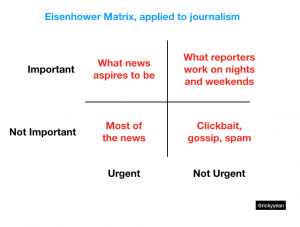
But what about the industry trend pieces? You never know when reporters are working on them, and sometimes they get shelved for months and even years because they’re not timely.

There isn’t a public database of what reporters are working on (they don’t like to have their ideas stolen). However, you can influence the agenda by pitching a trend piece anchored to some unique data and insight that you can bring to the table. For example, you can pitch a trend piece about how companies are increasingly ditching office spaces for completely remote setups, but you should bring supporting evidence to the table to help the journalist with research and offer help connecting journalists with companies without offices and their remote employees. Alternatively, to score inclusion in these trend pieces, you can pitch frequently high-quality stories so you are constantly top-of-mind. Reporters, like the rest of us, suffer from availability bias. If they have to talk to three sources in your industry, you want to be one of those three sources.

Finally, how do you get a contributed opinion piece? Today, publications are starved for content — especially good, timely content. You have to pitch it to the editors and get them to consider letting you publish. Usually, you want your piece to be finished, but not published anywhere else. Alternatively, it could be a piece that you have published already and seen a lot of traction on your own blog, which would help demonstrate that it’s “good” content that should be re-published and shared more widely. You also want it to be timely and insightful. You are competing with hundreds of people who want to write for a brand name publication, in addition to reporters on staff that have been hired, vetted, and have a track record. Why would the editor risk the publication’s brand to let you publish?

Also Read: What Martech Partnerships Really Say About the State of Digital Marketing

Customer misconception #3:

I need a PR professional with strong relationships with the media in my industry. With strong relationships, we can get any media coverage we want.

How It Actually Works

*Relationships are useful, but they tend to be overvalued and difficult to assess the veracity behind anyone claiming to have strong relationships. Because of that, we think it should be discounted most of the time.

However, that’s not giving relationships its proper due. PR-Journalist relationships are like any business relationship: they exist to help everyone do business more effectively. Journalists trade in stories and they want access to high-quality stories. The way PR wins over a journalist in a relationship is by regularly bringing high-quality stories, and once in a while offer something exclusive. Essentially, for a journalist to see a PR pro’s name in the inbox and want to click on it more than any other email, the journalist has to trust that the story contained in this particular email will be high-qualityand potentially lead to rare, unique access. PR pros can communicate that by establishing a record of consistently high-quality stories over time. However, PR is a business, and PR firms inevitably start working with less credible companies who are willing to pay. In order to keep existing credible clients, they inevitably start pitching “B+” or lower stories to journalists. From this perspective, the PR agencies that can plausibly have strong relationships are typically agencies that most businesses cannot afford or bully as a client. They’re priced high enough to filter for more credible companies, and even then, they are selective about who they choose to take on as clients and what stories they would pitch for them. It’s no surprise that the agency you paid $20k a month for did not appear to have strong relationships.

Also Read: An Automated Supply-Side Platform Ecosystem: The Future of Local TV Advertising

#TrustTheProcess

Obsessing about your competitors’ coverage is obsessing over the outcome, not the process. Worrying about PR agencies’ relationships is placing lopsided attention to a tiny (and typically unattainable) lever in the process.

Again, here are the steps to successful PR.

  1. Generate interesting stories consistently.
  2. Pitch your stories to writers who create content for an audience you’re interested in.
  3. Analyze results, rinse and repeat.

This process does not depend on you having to pay to retain a top-tier PR agency and it’s guaranteed to work. Of course, generating interesting stories is hard work, especially if you work on (relatively) boring enterprise procurement software. It’s also hard to find the story that is both interesting to you and the reporter.

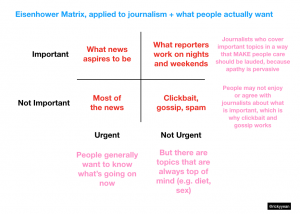
It pays to understand what drives reporters, and what drives their readers, especially when they may be different. Here’s a version of the Eisenhower Matrix from before that also includes a perspective from the average consumer of media.
Eisenhower Matrix
Eisenhower Matrix

TechBytes with Maribeth Ross, SVP Marketing, Monetate

0
TechBytes with Maribeth Ross, SVP Marketing, Monetate

Maribeth Ross
SVP Marketing, Monetate

The digital age has revealed to marketers how no two customers are alike in their interaction with a brand. The art of pleasing a customer is more complex than it ever was, and a good way to start is to leverage technology that measures what works, and what doesn’t across the buyers’ journeys. It’s imperative today for marketers to have a clear understanding of Personalization- Segmentation- Optimization, and Automation at various stages of the Customer Lifecycle. To tell us more about managing customer experiences at each level of this journey, we spoke to Maribeth Ross, SVP Marketing, Monetate.

Html code here! Replace this with any non empty text and that's it.

Tell us about your role at Monetate and the team/technology you handle.

I joined the Monetate team with more than 15 years of experience as a B2B marketer. My fascination has always been with cracking the code that makes customers engage, buy from and champion a brand, so personalization was an interest of mine even before joining. At Monetate, I hold the title of Senior Vice President of Marketing and I lead a team that focuses on the vital marketing functions.

We market personalization software that leverages AI and machine learning to create highly customized consumer experiences. The platform, called The Monetate Intelligent Personalization Engine, allows retailers and marketers to improve all facets of the customer experience across all channels through testing, segmentation, individualization, and product recommendations in real-time.

What is the “State of Omnichannel Personalization” in 2018?

Our recent Personalization Development Study found that more than 70 percent of those that reported year-over-year profitability increases also had a documented personalization strategy in place, while those that reported decreased profitability were more likely to not have one (less than 20 percent). And, not surprising due to the hotness of the topic, almost everyone is increasing their dedicated budget for personalization in 2018 and beyond.

We’re seeing that while investments in personalization are growing, data quality and system integration are gating factors that prevent brands from taking personalization to maturity. Organizations across all levels of maturity reported using a variety of different data sources to personalize communications. Few organizations are fully integrating offline and online data insights today, a fact that reflects the challenges of integrating data sources.

How would you define Personalization- Segmentation- Optimization, and Automation at various stages of Customer Lifecycle? How do you manage customer experiences at each level of this journey?

The most important thing I have learned about customer journeys in the digital age is that they are unique to the buyer, not linear, and are always in flux. No two buyers are exactly alike and, with the goal of pleasing the customer, brands need to be able to adapt to this. That said, no official “model” exists to demonstrate how to manage experiences across the journey. But it is worth noting that the technology and experience design needs to flex with the ever-changing journey for a specific buyer. Therefore, AI is so important to the equation; the ability to adapt the experience to the individual based on everything known about them through their relationship with a brand is something that a human could not predict or process.

In an omnichannel world, the device and channels matter less to the customer and this means that technology needs to reach across these devices and channels from a touchpoint perspective. The holistic customer experience and customer lifetime value need to be taken into consideration to deliver the best experience for an individual in a specific moment, whether that customer is buying, browsing, reviewing, or even returning a product in that interaction with the brand.

How could marketers benefit from real-time cross-channel behavioral data to improve recommendations engine?

Not only can marketers benefit from, but they NEED, real-time omnichannel behavioral data to provide the most personalized and relevant experience for customers. The entire point of personalization is to please the customer and build loyalty and lifetime value. And, frankly, a customer won’t be pleased with an experience that doesn’t recognize their latest action with a brand because it occurred with a different device or channel. When marketers can see how a customer behaves across all channels, it leads to a more complete picture of what will be the customer’s next ideal experience. Access to this data and the ability to analyze it across every available channel gives marketers the power to develop a unified marketing strategy that can provide the best customer experience online, in-app, on mobile browsers, through email, through the call center, or in-store.

How should marketers differentiate between REAL-Human behavior and bots? Do bot analytics impact personalization performance?

Technology has come extremely far in the last several years, especially for digital marketing. Bots are an example of the quickly evolving landscape, and their adoption is continuing to grow.

However, some considerations need to be taken into account for bot usage. Customers are always going to want a great experience. No matter how advanced a bot is, it will never be a replacement for human interaction, so selecting the right use case for bots is critical. And, as real human behavior varies from bots, it is important for marketers to differentiate the two. Less advanced bot technology may not have the AI and natural language processing needed to truly satisfy the customer in every instance. The level of the bot technology needs to be considered for specific use cases, so the experience doesn’t come off as impersonal.

What are your predictions for personalization intelligence technologies for marketers in 2018-2022?

The next four years will show tremendous growth in the adoption of personalization across channels, as well as more reliance on AI capabilities. Brands today are dipping their toes in the AI water and customer needs are changing with a growing expectation of personalization. And, as brands’ reliance on AI grows, the algorithms used will become more sophisticated and powerful. This growth and continued adoption is very exciting for the martech industry.

How do you leverage AI/ML and data science at Monetate? Which AI companies are you particularly interested in?

In these early stages of AI adoption, it is critical that marketers have visibility into how the AI works in the system, so they understand how the AI made the decisions it did and can use that information to inform their marketing strategy. This is one of the things that Monetate does tremendously well in both our ML-enabled testing and our AI-driven individual decisioning capabilities.

When it comes to ML/AI in the marketplace, there are hundreds of companies claiming to offer solutions with this tech, and many of them sound intriguing. What I’ve learned is that you need to ask to see where the AI resided in the UI because this will ferret out the buzzword users from the “real deal” AI companies.

Thanks for chatting with us, Maribeth.
Stay tuned for more insights on marketing technologies. To participate in our Tech Bytes program, email us at news@martechseries-67ee47.ingress-bonde.easywp.com

Oracle + NetSuite is Recognized By Frost & Sullivan As A Leader in Customer Value

0
NetSuite Helps Businesses Run Better and Support Growth

NetSuite’s SuiteSuccess Can Speed Up Implementation by 60% and Reduce Implementation Cost by 18%, Compared to Competing Solutions

Based on its recent analysis of the cloud-ERP for manufacturing and wholesale distribution market, Frost & Sullivan recognizes NetSuite, a wholly owned subsidiary of Oracle with the 2017 North American Customer Value Leadership Award for its product, SuiteSuccess. SuiteSuccess was designed to simplify and streamline the cloud-ERP software implementation process while increasing both business efficiency and flexibility.

Oracle + NetSuite is Recognized By Frost & Sullivan As A Leader in Customer Value
Sankara Narayanan

“NetSuite’s SuiteSuccess offers a pre-configured, packaged approach that was built with proven strategies and industry-specific best practices to encourage rapid adoption and enhance the speed of implementation,” said Sankara Narayanan, Senior Industry Analyst, Frost & Sullivan.

Also Read: Oracle Partner Openprise Launches Data Orchestration Platform

SuiteSuccess is engineered with a number of pre-defined user roles (including CFO, CEO, finance executive, sales executive, IT manager, administrator, and marketing executive), turnkey setup and training, dedicated process flows, key performance indicators (KPIs), over 250 pre-built reports, dashboards (preconfigured by role), and business intelligence. It is worth noting that these pre-built reports and dashboards were developed and used in real-world scenarios by users in distribution companies. Some of the solutions offered by SuiteSuccess include item management, lead to quote, order to cash, and procure to pay. In addition, this comprehensive suite also supports the latest customer resource management (CRM), professional services automation (PSA), supply chain management (SCM), omnichannel commerce, and human resources (HR) solutions.

NetSuite bases its approach on four key pillars (build, engage, consume, and optimize) that position customers to scale easily, grow quickly, and update their model as their businesses evolve in tandem with emerging market trends. NetSuite works with customers to provide an optimized SuiteSuccess solution that is customized to their needs, with the ability to add on more capabilities as dictated by future needs. This type of consultative approach allows Netsuite to serve smaller companies alongside larger enterprises. SuiteSuccess is also available as an industry-specific, pre-built solution for other industries, such as advertising, media, publishing, financial technology (FinTech), nonprofit, retail, service-based businesses, and software/Internet.

“NetSuite recently launched expansion plans that include adding more global data centers to expand its international market reach. In addition, the company has established strong partnerships with other software and financial companies to further expand into target markets,” said Narayanan.

Frost & Sullivan applauds NetSuite for demonstrating powerful customer value leadership by delivering a cloud-ERP solution that is tailored to specific customer needs, minimizes costs, enhances the speed of implementation, and is supported through continuous customer engagement.

For these reasons, NetSuite has earned the 2017 Frost & Sullivan Customer Value Leadership Award in the cloud-ERP for manufacturing and wholesale distribution market.

Also Read: Now, Keep Your Best Customers Happy with the OracleLoyalty Cloud

Each year, Frost & Sullivan presents this award to the company that has demonstrated excellence in implementing strategies that proactively create value for its customers with a focus on improving the return on the investment that customers make in its services or products. The award recognizes the company’s unique focus on augmenting the value that its customers receive, beyond simply good customer service, leading to improved customer retention and customer base expansion.

Frost & Sullivan Best Practices awards recognize companies in a variety of regional and global markets for demonstrating outstanding achievement and superior performance in areas such as leadership, technological innovation, customer service, and strategic product development. Industry analysts compare market participants and measure performance through in-depth interviews, analysis, and extensive secondary research to identify best practices in the industry.

Recommended Read: Interview with Des Cahill, VP, Global Outbound Product Management, Oracle CX Cloud Suite

Interview with Adrianna Burrows, Chief Marketing Officer, Cornerstone OnDemand

0
Adrianna Burrows
Interview with Adrianna Burrows, Chief Marketing Officer at Stack Overflow

[vc_wp_text]“The best marketers will be able to use technology, including machine learning, to fine-tune their campaigns and provide truly personalized experiences for their potential buyers.”

[/vc_wp_text]

[easy-profiles profile_twitter=”https://twitter.com/adriannafb” profile_linkedin=”https://www.linkedin.com/in/adrianna-burrows-7abb2a4/”]

Tell us about your role and how you got here. What inspired you to be a part of a tech-based talent management company?

In March 2018, I joined Cornerstone OnDemand as the Chief Marketing Officer. The company is currently in a pivotal phase of growth, and I was drawn to the enormous opportunity to lead the company’s brand expansion and help it evolve into a major SaaS player. Cornerstone is also doing some incredible, innovative work in the talent management space, particularly in workplace learning. Ongoing training and education have been an incredibly important part of my career, and I’ve worked hard to inspire my teams to be curious and open to learning new skills. So, when I started meeting with Cornerstone, the opportunity felt like a natural fit.

Prior to Cornerstone, I was the CMO at Stack Overflow, where I was responsible for all global corporate marketing, including branding, communications, digital marketing and demand generation. Before that, I spent six years as the General Manager of Windows marketing at Microsoft, where I led product marketing, business strategy, global channel strategy, brand communications, co-marketing initiatives and worldwide marketing strategy across more than 190 countries. You really sharpen your skills when you work with companies that operate at two very different scales. You are reminded that the fundamentals of marketing don’t change regardless of the size of the company or what you are marketing. If you don’t have the fundamentals in check (such as knowing your audience, identifying what problem you’re solving, ensuring your product is a market fit, etc.), then you are dead in the water.

I began my career at the global communications agency Waggener Edstrom, where I spent 13 years leading and supporting global technology accounts, including several Microsoft businesses (Office and Explorer), as well as opening the agency’s Austin, Texas office and a few of the West Coast offices. Beginning a career in PR very much set the course of my career — you see firsthand that perception is reality, so if a company or a product doesn’t have the perception they want with their customers, media, analysts or influencers, then nothing else matters.

How do you see the demand-gen and marketing automation technologies changing the way HR and Talent Management companies drive their sales productivity?

Marketing automation technologies have come a long way in the past few years, and it’s been one of the more interesting aspects of my job figuring out how and when to adopt new technologies. Beyond increasing efficiencies in outreach and reporting, some of the latest automation tools have enabled my teams to develop unique, fresh campaigns that truly reflect the brand they represent. Additionally, integration functionality with social media has drastically improved campaign results, setting the stage for the sales team to jump in and continue the conversation.

What are your predictions for B2B marketing technologies? How should CMOs plan the inclusion of these technologies in 2018?

As marketing teams become more integrated with other business units within a company, the need for more collaborative tools is paramount. Collectively, marketing leaders have worked so hard to open the lines of communication between marketing and sales teams, and the next step is to use these technologies to bridge the gaps between other departments, such as marketing and product development, or marketing and IT. The more collaboration we can get across the entire company, the more innovative and efficient we can become.

Additionally, I foresee major growth in the areas of social media integration and enhanced behavior-based workflows. The best marketing tools are successful when they naturally fit into existing processes. One of the best examples I see here is experience management from companies like Qualtrics — giving companies an opportunity to manage all aspects of their brand and experience.

Which marketing and sales technologies and automation tools do you use to achieve better ROI? 

Throughout my career, I’ve worked primarily with Marketo and Hubspot. For the size of the organizations I’ve worked for, these tools have offered my teams the functionality and scope needed to reach the scale of global clients.

With the maturity of B2B content, how do you see multi-channel marketing and sales automation integrations evolving by 2020?

Today’s buyers are inundated with marketing overload. It’s always been important to know your audience when developing a new campaign, but I see this process getting even more prescriptive. Personalization will become an imperative component of cutting through the clutter. The best marketers will be able to use technology, including machine learning, to fine-tune their campaigns and provide truly personalized experiences for their potential buyers.

What startups in the martech/ sales intelligence industries are you watching/keen on right now?

It’s not that much of a start-up anymore, but I’m a massive fan of Qualtrics. I’m also excited about the momentum behind XM. Traditionally designed for B2C campaigns, I think we’ll start seeing it more and more in the B2B world.

Would you tell us about your standout digital campaign? 

I’ve had a handful that really stick out — the size and impact have obviously varied based on the scale of the company. For Microsoft, the digital campaign to drive Windows 10 downloads (the company’s first SaaS version of Windows) was a huge success. There were varying tactics to reach the different target audiences, but one of the biggest targets was trendsetters, a younger demographic that Windows was losing ground in. The objective was really to modernize the consumer experience through various social channels to engage and inspire new Windows fans. Windows 10 launch day was the most successful launch in Windows history… and the data shows we got those trendsetters. 🙂

At Stack Overflow, we literally had all the world’s developers on our site almost daily, yet very few of them also knew Stack was a place you could find a job or post your CV. Using the massive amounts of developer data we had, we created an online “developer salary calculator” identifying what a given developer should be paid for their skills in varying markets and posted it on our jobs site. We pushed it through several of our owned and operated channels. The traffic it drove was incredible, which ultimately lead to increased awareness/leads for our B2B offerings as well.

How do you prepare for an AI-centric world as a business leader?

Many have said we are embarking on the next industrial revolution and that is proving to be a true statement more and more. As AI and machine learning start infiltrating our workplaces, every single person will be impacted. As a business leader, it is our responsibility to prepare our teams for this massive shift. Whether it’s providing more training on how to work with AI or helping our teams pivot to new career trajectories, proactive leadership and new skills training will be the keys to success.

How do you inspire your people to work with leading technologies?

With any new technologies, there is always a learning curve. It’s important to give my teams time and extra budget to truly deep-dive into new tools and get the most out of all the features. In some cases, I’ve also encouraged team members to participate in beta programs for new functionality, which often results in benefits for both vendor and client.

I’ve also made it a point to include technology management goals in my direct reports’ performance goals. This way, we can track progress throughout the year and they have a target to achieve in a dedicated timeframe.

What apps/software/tools can’t you live without?

Aside from the tools, I talk about above and the dependency I have on the data they supply, I think it’s critical in marketing to keep a finger on the pulse of the industry. For me, that’s a combination of consuming massive amounts of tech press coverage as well as keeping an eye on the latest and greatest products across B2C and B2B. The wider your purview, the more strategic you are.

I am also an app addict. Outside of TripIt, most of my app use is for personal use versus work-related. My family would be a disaster if it weren’t for Cozi – we live and die by what the calendar says we should be doing.

Also, I spend a lot of time on the road and so I geek out when it comes to tracking my flights on Flight Aware — I even select flights based on their percent of on-time arrivals.

My family loves to ski, so I recently became quite obsessed with Slopes. There’s nothing like seeing your vertical feet, total distance and a ton of other cool data at the end of a great day on the hill.

What’s your smartest work-related shortcut or productivity hack?

I’m constantly being pulled in different directions, so it’s incredibly important for me to maximize my time throughout the day. I’m a huge believer in regular, 30-minute 1:1 meetings with my team leads. In that amount of time, I get top-line updates and can help solve any issues. For larger team meetings, I find scheduling them for 45 minutes, instead of an hour, encourages productivity. I also ask whoever is leading the meeting to develop a three-bullet agenda and to share it with all attendees in advance.

When I’m not in meetings, I find it very helpful to schedule two-hour blocks on my calendar to work without any interruptions. I try to schedule these a few times a week if my schedule permits.

What are you currently reading? (What do you read, and how do you consume information?)

I’ve read most of the NYT bestselling business books and have just started reading Barbarians at the Gate. It’s the story of the largest corporate buyout in US history. It is a fascinating recount of the competition to take over RJR Nabisco in the 1980s.

I’m also constantly checking industry news and try to get my hands on as many industry analyst reports as I can. For all marketers, it’s essential to have a tight grasp on the landscape, especially around what your competitors are up to. I’ve always asked my team to send a weekly, sometimes daily, news recap, and I find reading those helps me get a lay of the land quickly, especially on my busiest days.

What’s the best advice you’ve ever received?

I had the honor of working for Pam Edstrom for a number of years (of Waggener Edstrom ). Unfortunately, Pam lost a battle with cancer last year so I hold her advice even more dearly now.  Pam taught me early on in my career to do nothing on a project/campaign/plan until you can answer the most important question: “What business problem are they trying to solve?” I pause and ask myself that to this day.

Tag the one person in the industry whose answers to these questions you would love to read:

Linda Boff, GE’s CMO. I’ve never met her, but I’ve admired her work from afar for a while now. GE is a company that is over 120 years old, yet she runs that marketing program like the most agile start-up I’ve seen.

Thank you Adrianna! That was fun and hope to see you back on MarTech Series soon.

[vc_tta_tabs][vc_tta_section title=”About Adrianna” tab_id=”1501785390157-b58e162d-0ae25a4b-c27aca64-108e51b0-80edaf37-bd3d357a-6c46d712-3b68ce9f-28a5″]

Adrianna is an accomplished marketing leader with expertise in designing and executing cutting-edge strategies, across consumer and commercial channels, to help achieve business objectives and desired brand perceptions. She has successfully built, transformed, and led motivated, high-performance teams.

[/vc_tta_section][vc_tta_section title=”About Cornerstone OnDemand” tab_id=”1501785390320-2d44fa50-740c5a4b-c27aca64-108e51b0-80edaf37-bd3d357a-6c46d712-3b68ce9f-28a5″]


Cornerstone OnDemand is pioneering solutions to help organizations realize the potential of the modern workforce. As a global leader in cloud-based human capital management software, Cornerstone is designed to enable a lifetime of learning and development that is fundamental to the growth of employees and organizations. From recruitment, onboarding, training and collaboration, to performance management, compensation, succession planning, people administration and analytics, Cornerstone is there at every phase of the employee lifecycle. Cornerstone is a single, unified solution that is completely configurable to meet the talent strategy, compliance, business and workflow needs of an organization. Cornerstone works with corporations of all sizes, government agencies, hospitals, nonprofits and schools. Our software and services are used by more than 3,200 clients worldwide, spanning more than 35 million users across 192 countries and 43 languages.

[/vc_tta_section][/vc_tta_tabs]
[mnky_heading title=”MarTech Interview Series” link=”url:https%3A%2F%2Fmartechseries-67ee47.ingress-bonde.easywp.com%2Fcategory%2Fmts-insights%2Finterviews%2F|||”]

The MTS Martech Interview Series is a fun Q&A style chat which we really enjoy doing with martech leaders. With inspiration from Lifehacker’s How I work interviews, the MarTech Series Interviews follows a two part format On Marketing Technology, and This Is How I Work. The format was chosen because when we decided to start an interview series with the biggest and brightest minds in martech – we wanted to get insight into two areas … one – their ideas on marketing tech and two – insights into the philosophy and methods that make these leaders tick.

NYIAX and Rebel AI Unveil Their New Preferred Partnership

0
NYIAX and Rebel AI Unveil Their New Preferred Partnership

Integration of Rebel AI’s Passport Into the NYIAX Marketplace Delivers Blockchain-Based Transparency and Safety Across Advertising Contract Buying, Selling and Trading

NYIAX, the world’s first guaranteed advertising contract marketplace, announced its preferred partnership with Rebel AI, a technology startup focused on securing media trading between advertisers and publishers, at the Global Blockchain Summit in Denver, Colorado.

Developed in partnership with Nasdaq, NYIAX combines a patented Financial Matching Engine℗ with blockchain technology to provide advertisers and publishers with a marketplace where they can buy, sell and re-trade premium advertising contracts in a forward/futures methodology.

Rebel AI secures media trading between premium publishers and advertisers. The company’s Passport solution eliminates ad delivery fraud and domain spoofing in digital media trading by leveraging blockchain identity, encryption and real-time authentication. Under the terms of the partnership, Rebel AI’s Passport will be integrated into the NYIAX marketplace, giving publishers and advertisers the ability to cryptographically verify and deliver NYIAX marketplace contracts.

Also Read: MobFox Partners with Moat to Enhance Viewability for Advertisers

As a result, advertisers and publishers can now be confident that when Rebel AI’s Passport is selected as the Count of Record for contracts executed through the NYIAX platform, contract reconciliation will utilize the most secure and state of the art delivery verification service available. Buyers can be assured of delivery against the contracted inventory through Passport’s real-time cryptographic verification, while NYIAX’s reconciliation process reduces the work and time required to facilitate payments.

“With Rebel AI, we create an end-to-end marketplace,” said Carolina Abenante, founder, vice chairperson, general counsel and head of investments for NYIAX. “Until now, there has never been a one-stop-shop as transparent and trusted as the one our clients are now using.”

Also Read: Ad Copy Services Now Available to Facebook Advertisers Within the Creative Marketplace

“The integration of Passport within the NYIAX marketplace showcases exactly how blockchain creates a new era of transparency for digital advertising and a stronger marketplace for media buyers and sellers,” said Manny Puentes, founder and CEO of Rebel AI.

“The cost of reconciliation was irrational and taking a major bite out of every dollar spent as organizations, like the IAB and major publications, have all called out,” said Abenante. “Fraud has been another giant issue. We’ve effectively eliminated both, to everyone’s advantage.

Recommended Read: As Ad Blockers Take a Bite Out of Cookie-Based Ad Revenue, Opinion-Based Targeting Turns Consumers into Advertising Tastemakers

TruGreen Partners with IBM Watson for Ads That Recommend Personalized Lawn Care Plans

0
TruGreen Partners with IBM Watson for Ads That Recommend Personalized Lawn Care Plans

TruGreenIt’s no secret that AI in advertising is leaping from the experimental stage to something more commonplace. To help consumers develop lawn care plans that are specific to their lawns’ needs, our team at TruGreen has engaged IBM Watson Advertising to create interactive digital advertising units that are powered by artificial intelligence (AI). These ads are currently available on The Weather Channel app, weather.com, and across HGTV properties.

Also Read: IBM Watson Brings New-Age Fan Experience and AI-Based Analytics to Wimbledon

AI is guided by the principle that marketers should be able to leverage solutions, insights, and data across all of their marketing efforts, so they can continually optimize how they reach and engage consumers. Today, companies are exploring expanded use of AI tools to better reach consumers and deepen engagement, by targeting the right person, at the right time, through the right channel, with the right message.

In TruGreen’s case, consumers can help discover their personalized lawn plan recommendations by simply starting a conversation in the AI-powered ad unit, which subsequently guides them through the conversation via images, videos and other interactive buttons that are relevant to the topic. For example, if the consumer is dealing with an issue – such as discoloration in their yard, they can select the “grass not green” option in the AI-powered ad, which will kick off a conversation with Watson to learn more about their specific lawn care concerns. Alternatively, the consumer can type in “How can I get my lawn looking great?” and Watson will respond with a series of questions to get clarity on the specific lawn needs.

At TruGreen, we are constantly looking for new and innovative ways to interact with consumers in a deeper, more personal way. We have long enjoyed collaborating with Watson Advertising, and this test with Watson Ads is a perfect entry point for us to explore AI-powered marketing. IBM’s ability to create an interactive campaign that taps into our consumers’ needs is unparalleled and has the potential to dramatically change how consumers engage with our brand.

Also Read: The Future of a Modern Workplace: “HumAIns” are Coming

Iterable Recognized in ‘2018 Bay Area Best Places To Work’

0
iterable

San Francisco Business Times and the Silicon Valley Business Journal Place Iterable Within Top 20 Best Small Companies in the Bay Area

Iterable, the growth marketing platform that powers true omnichannel relevance at scale, has been recognized within the list of top 20 small businesses in the ‘2018 Bay Area Best Places To Work’ list by the San Francisco Business Times and the Silicon Valley Business Journal. Companies in the region were ranked on how their employees rated them for their management practices. They were also measured by their values, collaborative culture and solid compensation and benefits offerings. Organizations were evaluated and ranked across 5 categories and according to their number of Bay Area employees.

Also Read: Announcing the Winners of the 2018 Iterable Growth Marketing Awards

This prestigious accolade represents the value employees place on the exceptional workplace Iterable has created. This announcement comes on the heels of a record year of growth for the Company as it continues building the next generation omnichannel marketing platform. Founded in 2013, Iterable has raised $32M in funding from CRV and Index Ventures, serving more than 200 customers globally.

“At Iterable, we continue to invest in our team and our culture to enable every single person to do the best work of their careers and ultimately provide outstanding service to our customers. We place a high value on entrepreneurship, professional development, and well-being, and strive to provide each of our employees with the right resources to become leaders in their fields. We’re honored to have been recognized as a great place to work as we continue our exciting journey,” said Justin Zhu, CEO, Iterable.

Also Read: Inkit Integrates with Iterable: Direct Mail Better Than Ever

Iterable is a growth marketing platform that powers true omnichannel relevance at scale. Iterable is trusted by the world’s leading brands including Zillow, Curology, Rocksbox, and Box, to create omnichannel relevance, resulting in 700% ROI

Recommended Read: How Handwritten Notes Can Boost the Effectiveness of Omnichannel Marketing Campaigns

Debbie Qaqish & Pamela Muldoon of The Pedowitz Group Named 2018 Top Women to Watch in Business

0
pedowitzgroup

Sales Lead Management Association Honors Debbie Qaqish & Pamela Muldoon in Their Annual Competition for 2018 Top Women in Tech

The Sales Lead Management Association (SLMA) named their 2018 Top 20 Women to Watch. In the elite list of women in tech, SLMA named two revenue marketing exponents from The Pedowitz Group (TPG). They are TPG’s Chief Strategy Officer Debbie Qaqish and Revenue Marketing Coach Pamela Muldoon. This annual award by SLMA recognizes women with a proven track record for driving wealth for clients and within their respective organizations. This year is the fifth time Debbie has won the Top 20 Women to Watch award and Pamela’s first. Winners of 2018 Top Women competition were chosen by an independent panel of judges.

Recommended ReadContextual Content and AI: The New Wingmen for Email Marketing Campaigns

At the time of this announcement of 2018 Top Women in Tech industry, Jim Obermayer, SLMA president and founder, said, “The Top 20 Women in the Business award is not a popularity contest, but a judged competition based on real contributions to revenue and thought leadership.”

Jim added, “The caliber of women nominees this year was off the chart and reflects a healthy the rise in the number of qualified women moving into and excelling in leadership positions.”

Debbie Coined the Word Revenue Marketing in 2011

Me with Debbie Qaqish, Chief Strategy Officer and Principal at TPG
Debbie Qaqish, Chief Strategy Officer with Jeff Pedowitz, President at TPG

The original Revenue Marketer, Debbie Qaqish coined the term Revenue Marketing,™ in 2011. She is passionate about marketing’s new role as a revenue creator and inspires others to embrace revenue accountability. At TPG, she manages global client relationships and leads the firm’s thought leadership initiatives. Debbie and is a transformational leader and visionary change agent.

Read More: TechBytes with Bridget Bidlack, SVP of Product, Movable Ink

She is the author of the award-winning book – “Rise of the Revenue Marketer,” Chancellor of Revenue Marketing University, and host of Revenue Marketing Radio, which showcases marketing executives from companies like GE and Microsoft sharing advice on marketing transformation. A Ph.D. candidate, Debbie teaches an MBA course at College of William & Mary on Revenue Marketing.

Recommended ReadThe Art and Science of Retargeting for Marketers in 2018

Pamela is a Master in Delivering Strategic Content Marketing with Proven ROI

Pamela Muldoon 
Pamela Muldoon

Pamela Muldoon was named one of SLMA’s 2017 Top 40 Most Inspiring People in Lead Generation. As one of the globally renowned women in tech for content marketing strategy, Pamela also juggles her fame as a Revenue Marketing Rockstar. She was also named One of the Top 50 Content Marketing Women in 2017 at Content Marketing World. A Campaign & Content Strategist, Pamela has mastered the art and science of strategic content marketing that delivers tangible ROI.

Pamela’s success formula incorporates a winning combination of MarTech, data, and storytelling through content development. Her proven strategies ensure the content output from TPG and clients is intrinsically connected to the sales process and produces tangible revenue.

Read More: Follow That Puck: Multi-Channel, Multi-Location Marketing Is Moving into the 21st Century… Are You?

HEED Launches Revolutionary New Way For Fans To Experience Sports

0
heedlive

HEED’s Digital Platform Uses Artificial Intelligence (AI) and Internet of Things (IoT) Technology to Transform How Fans Experience Live Events

HEED, a revolutionary new platform that combines social media, IoT, and data analytics to create an entirely new category of digital experience, has launched its first consumer release in time for the Turkish Airlines EuroLeague Playoffs.

Fans who want to experience the EuroLeague Playoffs in an exciting way never before possible can now download HEED on iOS and Android devices.

Also Read: The Next Brand Sponsorship Frontier: Enhancing the eSports Fan Experience 

A company established by IoT and data analytics trailblazer Mati Kochavi’s AGT International and sports and entertainment leader Endeavor, HEED utilizes cutting-edge sensors, cameras, and data analytics to identify a game’s most exciting moments, generate groundbreaking new insights, and deliver content, automatically, in near real-time directly to fans’ mobile devices.

HEED utilizes all media and data collection elements that exist in EuroLeague arenas alongside other special sensors deployed by the company. HEED combines all these data sources with innovative Artificial Intelligence (AI) technology that analyzes the game dynamics in a way that is not otherwise visible to fans. The AI platform processes the data to continually learn game behavior and reveal new fascinating insights in real time.

With EuroLeague, HEED is transforming the fan experience, and it’s just the beginning. HEED also has partnerships in development with UFC and Professional Bull Riders (PBR), and will soon announce new partnerships with major sports leagues and teams around the world.

Also Read: Enabling the Multi-Screen Sports Experience

HEED collects and analyzes every aspect of the game, including physical, emotional, and behavioral elements that go way beyond what the eye can see. HEED then automatically packages these insights into memorable basketball moments catered to fans in near real-time. HEED Illuminated Reality Technology provides engaging access to the invisible truth contained within a live moment and draws fans deeper into reality.

Who jumped the highest on a dunk? When is the crowd most hyped? How much pressure is a player under during a big moment in the game? How is the coach reacting to the play that just happened?

HEED disrupts the traditional consumption model of the digital fan experience to more deeply engage younger audiences, grow the global fan base, and heighten the connection between fans and their favorite teams and athletes.

HEED allows fans to experience the energy and pulse of live sports in a whole new way, right from their smartphones.

Recommended Read: The State Of Play With OTT Sports Streaming

AppNexus Grows Video Monetization For Microsoft; Improves Revenue 201% And eCPM Performance 29%

0
Appnexus

Microsoft Among the 150 Sellers That Utilizes AppNexus SSP  for Video Monetization of Premium Inventory

AppNexus, the world’s leading independent advertising technology company, announced results of its partnership with Microsoft to monetize the company’s video inventory using the AppNexus SSP. In the first quarter of 2018, Microsoft increased its video revenue on in-stream video inventory from AppNexus by 201 percent and experienced a 29 percent increase in eCPMs, compared to the first quarter of 2017.

“AppNexus has been a key partner in ramping up our video monetization efforts based on their innovative video technology solutions and capability to bring us unique video demand. We launched with a single video ad format in one market and expanded our offering to include three video formats in 65 markets, including broad reach in Europe and emerging markets. As a result, we’ve seen eCPMs increase by 29 percent and grew video advertising revenue from AppNexus 201 percent year-over-year,” said Kelly Davidson, Director of Global Partnerships, Microsoft.

Also Read: AppNexus Launches the AppNexus Programmable Platform, the Industry’s First Programmable DSP

Eric Hoffert“Microsoft’s success in AppNexus’ video marketplace has provided high-quality liquidity and driven powerful network effects. With more than six billion available impressions each month, their scale supports a high degree of audience buyer match and we see more than 150 daily active video buyers purchasing Microsoft’s supply, including major marketers, agencies, and external demand partners,” said Eric Hoffert, SVP Video Technology, AppNexus.

To monetize their inventory, Microsoft leverages three different video ad formats, including in-stream pre-roll, outstream in-article, and AppNexus’ unique multimedia superauction technology to enable multiple media types to participate in a single unified auction. By driving increased demand for each advertising placement, multimedia superauctions provided revenue lift of up to 60 percent in select markets.

User experience is one of Microsoft’s top priorities, and they have designed their pages for maximum video viewability. As such, buyers are attracted to Microsoft’s inventory for its brand safety and high video viewability and completion rates. Microsoft inventory is measured as greater than 80 percent viewable for instream pre-roll, greater than 75 percent viewable for outstream inventory, and greater than 75 percent completed for instream pre-roll.

Also Read: AppNexus Sees Steep Rise in Video Business, with 230% Growth of RTB Video Spend

“We are pleased to see the growing availability of Microsoft’s brand safe, curated video inventory through programmatic channels. As an open, transparent platform that actively supports verification and measurement by 3rd parties, accessing premium inventory via AppNexus’ marketplace is a key element to achieving our clients’ video campaign goals globally. We look forward to making Microsoft video inventory on AppNexus available more broadly to GroupM’s clients,” said Keith Tile, GroupM (A Divison of WPP).

Microsoft is among the more than 150 sellers using the AppNexus Video SSP to monetize premium inventory and grow AppNexus’ video marketplace. Since its launch in late 2015, AppNexus’ video marketplace has experienced a 230 percent compound annual growth rate of real-time bidding (RTB) video spend. The marketplace now has 272 daily active video buyers and 1,250 brands buying video impressions daily in the marketplace.

Recommended Read: AppNexus Join Hands with Tru Optik to Power Audience Targeting, Measurement, and Attribution for AppNexus’ Connected TV Marketplace

Disruptive Innovation: SaaS Companies Are Migrating To Purchase Convenience

1
Disruptive Innovation: SaaS Companies Are Migrating To Purchase Convenience

The Onset Of Online Communication Platforms Have Broken The Red Tape Around Entering The Contact  center market

ZailabFive years ago, who would have thought that businesses could purchase their communication software platforms online, the same way you would electricity or airtime? Times have changed since entering the contact center arena required a heavy budget. The development of consumption-based communication technology enables entrepreneurs to ease into the market, simplifying everything from setup and paying for services to effective management of their contact center environment. Imagine how easy setting up a business would be for every startup operating on a tight budget?

The latest trend in the contact center industry is that you can purchase and set up your call center online and be fully operational in fifteen minutes, without any contractual documents binding you. This means you only pay for the features your business uses. As one of the few SaaS companies operating in the contact center sphere, ZaiLab’s communication software is capitalizing on this model, and is tailored and designed for convenience and the customer of today – the digital citizen operating in a cashless society.

What are the trends that I should be gearing my business towards?

Current contact center payment systems usually comprise the traditional face-to-face transaction and contractual agreement, as has always been practiced. Currently, there are very few SaaS companies that give you the opportunity to buy software online or set up a fully-functional contact center in minutes. Although buying contact center solutions online might seem an overwhelming and scary concept, the market is slowly warming up to the change to digitized transactions, which are proving to be more seamless and convenient.

In the contact center and BPO industries, packages, reseller models, and long-term contracts are very popular. This requires a company to sign a contract with their service provider, use the services and on a monthly basis pay as per invoice or quotation supplied by the supplier through EFT payment or debit order. This is what has been the norm for the past ten years. This is slowly shifting with some SaaS companies understanding that adapting to online business operations is more important than sticking to tradition.

Also ReadWhy Contact Centers Are Critical to Omnichannel Marketing Strategies

Hence, the consumption-based or pay-as-you-use model has entered the market.

The simplicity in topping up credits and using software brings a sense of control and comfort to businesses and how they run their operations. In the next 12-24 months, we should expect to see a rise in SaaS companies moving from complex contracts into cloud-based systems that enable them to offer pay-as-you-use pricing models to their clients.

The key areas that we can expect changes in are the following:

Pricing models; some contact center software providers are already considering changing the way they do business in relation to client contract terms, the way their clients can save and improve payment systems.

– Relocation from on-premise to cloud solutions

– Online purchasing of software

– Changing from post-paid payment methods into prepaid top-ups for software usage, buying of usage credits.

Are SaaS companies offering this already?

ZaiLab allows you to purchase your software credits online through a safe payment gateway system. You use your credit based on the software features that you use. Think of an electricity meter – when you use less electricity, you save your credit. When you use more, you might use up all your credits and need to top up. With ZaiLab, you can top up anywhere, anytime on your phone, laptop or desktop computer. We have used this model in the telecommunications industry time and time again, and are proud to roll it out as a SaaS company that sells communication software.

Also Read: The Great Bot Battle: Chatbots Vs Live Chat

Is it safe for me to make a major business purchase online?

Safety and security are key to achieving effective cashless solutions, which means that the protection of business information in a decentralized setup is a mission-critical factor affecting adoption. The software infrastructure is hosted and secured by Amazon Web Services, and data such as call recordings and payment information is encrypted.

Nevertheless, in conditions of guaranteeing the safety of the consumer’s information, ZaiLab uses a third party payment gateway that acts as a safety net between the consumer and the merchant. This means the merchant does not keep any confidential payment information from customers.

Traditional service providers are collaborating and partnering with the innovation drivers in the sector. This is a sink or swim industry, but only if you don’t keep up with what’s happening in the world.

Also Read: ZaiLab ‘Trucks’ Into Enterprise Connect

More Creative Power To Interactive Content With Instant Magazine’s Drag & Drop Editor

0
More Creative Power To Interactive Content With Instant Magazine's Drag & Drop Editor

Instant Magazine Introduces Interactive Drag & Drop Editor, Will This Change Adobe’s Long Rule over PDF?

Instant Magazine, an Amsterdam-based startup, has introduced an all-new Drag & Drop editor. The editor will provide communications and marketing professionals a choice to move out of legacy slide decks and PDFs and welcome measurable, interactive, and responsive communication assets.

In the last three years, Instant Magazine has bagged some renowned brands as clients such as Volvo, Philips, KPMG, PwC, and Disney. Leading agencies like DDB and Williams Lea Tag are also using the tools offered by Instant Magazine.

Also Read: As Ad Blockers Take a Bite Out of Cookie-Based Ad Revenue, Opinion-Based Targeting Turns Consumers into Advertising Tastemakers

Instant Magazine Enables Creativity

Instant Magazine’s cloud-native platform enables professionals to transform written content into interactive experiences. The platform is powered by ReactJS and the conversions run seamlessly across devices and browsers. Commonly used content forms for Instant Magazine are inclusive of event magazines, corporate brochures, annual reports, business proposals, and sales and marketing collateral.

More Creative Power To Interactive Content With Instant Magazine's Drag & Drop Editor
Daan Reijnders

Daan Reijnders, Co-founder and CEO, Instant Magazine, says, “The great thing about our tool is that marketers and communications people can take control over the creative process and message without having to rely on design or development teams.”

Also Read: CloudEngage Announces New Audience Segmentation Products For Next Generation One-to-one Personalization

Drag & Drop Editor Differentiators

The emphasis of the Drag & Drop editor is on expressing creative freedom without any half measures on user-friendliness. Users have the option of inserting elements such as overlays and forms along with position and size controls through properties similar to CSS. All of this is completely codeless. In addition to that, the editor has embedded analytics allowing users to identify the parts of their content which were most engaging.

Recommended Read: If A Picture’s Worth a Thousand Words, Then Visual, Interactive Content Is Priceless

Bottos Creates A New Marketplace For Data In The AI Ecosystem

0
Bottos Creates A New Marketplace For Data In The AI Ecosystem

Bottos Utilizes the Blockchain to Promote Data Sharing to Drive AI Innovation and Competitiveness

Bottos is poised to boost innovation in the AI ecosystem by creating a new decentralized P2P data sharing network. The Bottos Data Marketplace utilizes blockchain technology to provide a marketplace to connect artificial intelligence companies and data providers.

For Bottos, it’s a simple equation: Blockchain + Data x AI. AI systems continue to become more accessible and affordable; the barrier to growth is acquiring the massive amount of quality data needed for model training. Once a data source is found, the cost can be another barrier; data costs can take up half the budget for an AI or predictive modeling project.

Also Read: A New Community for Ex-Googlers Interested in Blockchain

Bottos Creates A New Marketplace For Data In The AI Ecosystem
Xin Song

“Our goal for the Bottos Data Marketplace is to create the largest global data sharing network to revolutionize the AI field. That will be the first step in building the infrastructure for AI development with blockchain technology, eventually creating a new decentralized AI ecosystem,” said Xin Song, Co-Founder, Bottos.

The Bottos Data Marketplace is the first DApp on the Bottos public blockchain; open sourcing will allow developers around the world to build any kind of AI-related DApp on Bottos public blockchain, including model marketplaces, data storage sharing networks and computer power-sharing networks.

Bottos is currently recruiting companies to join its community as it enters the final testing phase of the Bottos Data Marketplace. Bottos 3.0 is expected to be fully operational by the end of May.

Bottos expects that its open marketplace will reduce the cost of data, perhaps by 50 percent in some cases.

Also Read: How Blockchain Technology Could Disrupt Social Media’s Stronghold on Data

Not only will data be more accessible on the Bottos Data Marketplace, it will also be more secure. The blockchain provides immutability, as well as traceability through the registration of original or transformed data to ensure quality and proper use.

“The blockchain makes data acquisition more transparent and the Bottos Data Marketplace allows parties to verify ownership of data, as well as the ability to trace and remove any data sources that are unreliable,” said Song.

Bottos public blockchain will utilize a rating system for both AI companies and data providers, creating another level of transparency in the marketplace. Transactions will involve smart contracts using BTO tokens, which can also be used for third-party services like data verification or cleaning. AI companies can also issue their own tokens on the Bottos platform to fund their projects or sell their finished model.

Recommended Read: What Blockchain Means for Marketers

BrandFIT Influencer Marketing Platform Simplifies Digital Campaign Delivery Across The Globe

0
BrandFIT Influencer Marketing Platform Simplifies Digital Campaign Delivery Across The Globe

BrandFIT ‘s Online Platforms to Revolutionize Advertising Industry

BrandFIT has developed a unique online platform enabling brands to directly access and hire celebrities and influencers to endorse their products and services through any social media network.

BrandFIT Influencer Marketing Platform Simplifies Digital Campaign Delivery Across The Globe
Maher Jaber

“Social media advertising is a multi-billion-dollar industry and accounts for one-third of all advertising expenditure. We have developed a platform that connects brands with the appropriate social media influencers to effectively and authentically execute digital marketing campaigns. Consumers trust their peers more so than they do traditional advertising, and brands want to deliver their message to the right audience at a fraction of the cost, our platform does just that,” said Maher Jaber, Co-Founder and Chief Executive Officer, BrandFIT.

Key to BrandFIT’s methodology is control over message delivery and extensive post-campaign reporting, both being crucial components for advertisers. The online open marketplace platform allows advertisers to locate and hire social media influencers to execute digital campaigns at a lower cost than traditional advertising. BrandFIT’s robust vetting process also ensures its influencers have real followers.

Also Read: A New Community for Ex-Googlers Interested in Blockchain

“We are providing businesses with the capability to source and hire a celebrity endorser or influencer as easily as you would hire an Uber driver, book a vacation on Expedia or a room on Airbnb. We have detailed information on the influencers we work with, including their reach, engagement rates, audience interests, geographic location and areas of interest so we can best connect brands with influencers who will reach their target demographic,” added Jaber.

The BrandFIT platform supports all 12 major social media networks, Facebook, Instagram, Twitter, Pinterest, LinkedIn, YouTube, Line, Tumblr, Google+, Snapchat, FourSquare, and Reddit. These networks connect over five billion people worldwide. The rating system integrated into the platform allows brands to recommend an influencer to other companies who are also using the platform. A real-time messaging system allows brands to directly message influencers working on their campaign at any point during the process to ensure a seamless execution.

Also Read: How NOT to Handle a Collaboration Request When it Comes to Influencer Marketing

“Our Platform currently has over 30,000 registered social media celebrities and influencers worldwide with direct access to an end influence of over one billion consumers. The combination of a streamlined hiring process, ease of use, pricing model and the valuable post-campaign data will have a significant impact on the advertising industry,” continued Jaber.

The BrandFIT influencer marketing platform allows brands to control their messaging, and content created by the influencer must be approved by the brand prior to posting. With the influencers’ community, messages are being shared, tagged and reposted, enabling campaigns to potentially run endlessly.

Recommended Read: TV May Affect the Brain But Influencer Marketing Affects the Heart

Why Your Brand Needs to Become [P]interesting to Reign Social ROI

1
Pinterest Launches New Overview of Its Advertising Process to Help Simplify Paid Promotions

Brands that have not yet looked at Pinterest to amplify their social ROI could be missing out on a big piece of the revenue pie. If you are a marketer, there’s a lot to like and explore on Pinterest. Going by modern standards of Pinterest Marketing, it’s quite a heady cocktail of social, search, and shopping (purchase or buy).

From a very humble beginning in 2011, Pinterest today is valued at over $11 billion and has over 175 million MAU. Pinterest is not the usual run on the mill social networking platform. In fact, it can be a splendid channel for marketers to get more out of their social spends.

  • More than 100 billion pins have been posted on Pinterest
  • There’re more than 1 billion active Pinterest boards
  • Over 2 million users save shopping pins on boards daily
  • 60% of Pinterest users are from the US
  • 81% of Pinterest users are females
  • Over 5% of referral traffic to websites takes place through Pinterest (Omnicore)

Let’s see why Pinterest can be a social ROI home run!

Powerful Engagement and Influence on Purchase Decisions

Apart from sharing photos (through pins) among friends and family, the second prominent reason that people use Pinterest for is – shopping! No doubt that it’s a social ecommerce platform in more ways than one. The network shot to fame when the Time Magazine named it among the best 50 websites. The rest is history!

  • In the US, Pinterest is second only to Facebook when it comes to influencing purchase decisions of social media users (eMarketer)
  • 93% of active pinners plan purchases on Pinterest and 87% have purchased through Pinterest (Kantar Millward Brown)

Pinterest helps brands interact with audiences through visuals which is always more impactful. You can send quality traffic to your site and leverage that for powerful, relevant engagement. Therefore, the scope of brand exposure on Pinterest is vast and immense.

AI on Pinterest

In 2016, Pinterest created a stir when it allowed users to shop for things by taking their pictures. Target embedded this feature in its app too. It was followed by a revolutionary introduction – Pinterest Lens. This introduction brings AI to Pinterest through computer vision and deep learning to incorporate search advertising on the social platform. Lens leverages computer vision to enable users in identifying, creating or buying things they see in the physical dimensions or online. When someone takes a picture of an item they desire, the Pinterest app uses Lens to automatically find ‘Related Pins’ with links to buy that product online. This contextual personalization has begun to pay off with ‘Related Pins’ garnering 5% higher engagement.

Pinterest Lens

Support for Video Ads

Yet another compelling feature on Pinterest is video advertising. It allows brands to add a whole new element to their Pinterest presence by adding a ‘promoted video’.  With that, there has been a 60% rise in the number of videos on Pinterest. Clearly, people seek visual content to augment their shopping or browsing experience. The combination of promoted pins and video ads can drive your sales opportunities. Pairing a customer review with a tutorial video is a great combination.

Promoted videos can be shared directly from YouTube by just hitting the ‘share’ button for a specific video and then clicking the Pinterest icon. The UX is better as users don’t get redirected from Pinterest and can view a YouTube video on Pinterest itself. This is a great opportunity for video marketers to move away from the noise of YouTube and be more precise in terms of targeting an audience. Slideshare content is also popular on Pinterest but that gets redirected to LinkedIn. It is outreach nonetheless, and can never be bad for a marketer. Moreover, a mere drag-and-drop helps you to link Instagram and Twitter posts as pins too.

Massive Scope to Expand Male Audience

Despite what one of the stats mentioned at the beginning indicates, contrary to the belief, Pinterest is not a female dominated platform by any means. Yes, the number of female pinners is higher with wedding, fashion, beauty, home décor, recipes, and DIYs, being the top categories. However, as a brand marketer, here’s something intriguing for you:

  • 39% of female pinners opt for Pinterest search over other engines like Google and guess what, when it comes to male pinners, the number stands at 48%
  • 40% of Pinterest MAU are males
  • 97% of searches are non-branded  (Hootsuite)

So, what do the above numbers tell you? Don’t bring in gender-divide or mind-cluttering thoughts for marketing or advertising on Pinterest. An ABM professional, irrespective of gender, can be a Super Bowl fan and at the same time love Peruvian cuisine. At Pinterest, you can stitch them all together to offer coherent personalization. What’s more? Pinterest has a microsite dedicated to the Super Bowl.

Meet the Pinteresting Ones

Here’re some brands that you can draw inspiration from to propel your social ROI on Pinterest.

Amazon – There’s no doubt about who they are. From ecommerce to cloud, they’ve been acing it all. The Amazon Pinterest profile has 65K followers and a whopping 68 boards. From their own products like Echo to deals, style, fashion, and food, there’s a board for everything.

HubSpot – 40.7K followers and 59 boards! HubSpot is sailing smoothly on Pinterest. The boards are varied in nature and include digital marketing, HubSpot success stories, marketing cartoons, and much more. The Hubspot Pinterest page confirms the vast scope of the platform.

Twitter – A social platform’s page on another social platform! Weird? Not at all. Twitter on Pinterest has 21.6K followers and 20 boards. All the boards revolve around Twitter and range from hashtags, videos, or its organizational culture and memorable moments. Great take on building brand image and creating brand awareness.

Intel –With 13K followers spread across 21 boards, Intel on Pinterest is all about tech in our lives. They have a dedicated board – ‘Women’s Fashion Tech’ which means the company has the attention of the large audience of female pinners. Intel also includes pins of products form fashion tech companies. The company says that with its Pinterest strategy, monthly engaged viewers have increased by 48% and average monthly viewers are up by a staggering 364%.

IBM – The Pinterest page of IBM is a testimony to its commitment towards spreading awareness among the audience. Over 4.4K followers with 12 boards, you would not believe that they have a dedicated food board on cognitive cooking. It’s called Chef Watson’s Cookbook which is an analogy to its AI platform.

GE – 28K followers and counting with 39 boards, GE’s presence on Pinterest is strong and active. Science DIYs to environment and health to fabulous kitchens, the global conglomerate showcases it all.

Some more with the right Pinterest mix:

Etsy | Birchbox | Whole Foods | L’Oreal | Lonely Planet | Tesco

Never Run Amok and Keep It Meaningful

Pinterest is a highly-immersive social platform. The key is to be strategic in your approach and it can work wonders for your social ROI. Being in a state of helter-skelter and blindly following others won’t work out. Try and stitch together a series of engagements through your pins and boards instead of engaging in isolation. Stick to these four pillars:

  • Maintain a few humor-based boards
  • Repurpose content without overdoing it
  • Stay inspired and keep inspiring with quotes-based boards or pins
  • Maintain the human touch

Like any other social platform, your content on Pinterest reflects you. When it’s developed with your audience in mind, it automatically becomes valuable and resonates for long. So, keep educating, keep entertaining, but remember to keep it meaningful and interesting, or rather, ‘pinteresting’.

Drive-To-Store Campaign – Are You Measuring What Really Counts?

0
Drive To Store Campaign

S4M LogoMarketers are finally unlocking location data potentials from the mobile channel to combine online and offline campaign metrics. The age of drive-to-store campaigns is now upon the ad tech industry. Are digital marketers asking for the right campaign metrics to align with overall business objectives? Here are three best practices for any drive-to-store campaign for advertisers and media buyers to make the most of online and offline campaign attributions.

Differentiate Incremental Visits Versus Total Visits Measured

Don’t be paying for organic visits into stores! When measuring drive-to-store campaigns, put in place clear definitions between the total visits measured versus the visits measured during the campaign lifetime. If the drive-to-store campaign is based on a cost per visit basis, this should be based only on the incremental visits generated from ad impression exposures and strategic real-time targeting.

This distinction is important even during the campaign lifetime as it lets marketers optimize your media spend best on incremental visits generated to improve overall campaign ROI.

Also Read: Three Retailer Lessons from Amazon Go Stores

Defining Visit Uplift Calculations 

For a big picture on whether your campaign had any impact on the total number of visits into brick and mortar stores, you should then look at the percentage of store visit uplift. This is the only way today that we can gauge campaign effectiveness. Before you launch your drive-to-store campaigns, define a controlled group of mobile devices that are the same size as the group of exposed mobile devices – users who will see the online campaign.

The difference between these two groups lets us calculate the store visit uplift percentage, which gives marketers a better idea of the overall campaign impact in terms of visits.

Also Read: How the GDPR Affects American Retailers like Whole Foods and Amazon, and What Businesses Can do to Mitigate Their Risk

Third-Party Measurements for Double Verification

Finally, when it comes to campaign effectiveness measurements, be it drive-to-store or any branding campaign, performances metrics should be double verified by independent third parties. The same technology that delivers the campaign performance, shouldn’t be measuring its own effectiveness. When running online campaigns, seek out technologies that are integrated with third-party store visit measurers to ensure that your campaign results are impartial and truly successful.

As the ad tech industry continues to mature, it is not enough just to ask for transparency. Advertisers and marketers have to go further and seek out measurements for returns on their ad investments.

Also Read: Forget Mobile First, It’s Now Social First

Brand USA Partners With Spotify And Five Emerging Artists To Launch Hear The Music, Experience The USA

0
Brand USA Partners With Spotify And Five Emerging Artists To Launch Hear The Music, Experience The USA

Brand USA’s Innovative New Campaign Uses Music as a Cultural Lens to Showcase Endless Possibilities for Travel in the United States

Brand USA, the destination marketing organization for the United States, announced Hear the Music, Experience the USA, an integrated marketing campaign utilizing the power of music to promote international travel to the United States. A unique exploration in sound, Hear the Music, Experience the USA interprets Bobby Freeman’s iconic song, “Do You Wanna Dance?” through different musical genres as envisioned by five innovative artists bringing the unique cultural sounds of their cities to life. The campaign was created and executed by Mustache, a content-first creative agency, working alongside MediaCom as Brand USA’s communications, data, and audience partner. To amplify the campaign, Brand USA has partnered with digital music service Spotify to enhance discovery and exploration options with more than 20 customized US city soundscape playlists. This dynamic storytelling tool presents a new way for Brand USA to inspire, invite, and welcome visitors from all over the world.

Also Read: Spotify Acquires MightyTV for Enriching CX Based on Programmatic Recommendations

The heart of this campaign lies with the five emerging artists selected to bring the sound of their respective city to life through original renditions of “Do You Wanna Dance?” including:

  • Cam James (Cameron James Williams) – Hip-Hop; Atlanta, Georgia
  • Bass Physics (Arja Adair) – Electronic Dance Music (EDM); Denver, Colorado
  • Nathan Quick – Blues; Houston, Texas
  • Reptaliens (Bambi and Cole Browning) – Rock ‘n’ Roll; Portland, Oregon
  • Calma Carmona – Soul; San Juan, Puerto Rico

As demonstrated through the styles of these artists, the United States’ music scene is constantly evolving and each region has a unique story to tell. By being exposed to the sounds of electronic dance music (EDM) in Denver, the blues in Houston, rock ‘n’ roll in Portland, hip-hop in Atlanta, and soul in Puerto Rico, prospective travelers get a taste of the eclectic cultural and musical soundtrack the United States offers. Each version of the song balances the talents’ creative flair with the energy and style of music inherent to their location, and together, they demonstrate the incredible diversity of people, places, and experiences available in the United States.

Brand USA Partners With Spotify And Five Emerging Artists To Launch Hear The Music, Experience The USA
Tom Garzilli

“Music is a universal language that transcends language and cultural boundaries, and Hear the Music, Experience the USA presents an entertaining and highly engaging platform to showcase vibrant destinations across the United States. The artists’ passion for their cities shines through in each rendition as they reimagine a classic radio hit in a new digital streaming era. We’re hoping their contagious energy connects with culture-seeking tourists across the globe and inspires them to experience the United States in a new way,” said Tom Garzilli, Chief Marketing Officer, Brand USA.

Also Read: Machine-Learning Startup Niland is Bought Over By Spotify

Brand USA Partners With Spotify And Five Emerging Artists To Launch Hear The Music, Experience The USA
Alex Faust

Brand USA’s partnership with Spotify will offer travelers the unique opportunity to explore the USA with 22 U.S. city soundscape playlists. “We’re proud to partner with Brand USA, using music as an instrument to engage with international travelers and accessible show the country’s abundance of culture, innovation, and creativity,” said Alex Faust, Global Head MAP Team, Spotify.

Spotify creates each custom playlist based on the artists and genres that over-index in popularity with local users in each city. As such, each playlist reflects the current mood of the location, using music as a discovery travel tool, including everything from the upbeat Latin-inspired sounds of Miami, Florida to the industrial, Midwestern grit of Cleveland, Ohio. After listening to audio ads or viewing video content or digital display ads, Spotify users will be directed to the Visit The USA website to check out different cities, activities, and music.

Visitors to the music landing music landing page on Brand USA’s consumer website, Visit The USA, can immerse themselves in the captivating and unique sounds from several noteworthy locations, learn about the five artists, listen to the 22 city-inspired Spotify playlists, look at photos, and explore suggested activities waiting to be experienced. The Hear the Music, Experience the USA content – and all of the rich features on the music page – will be featured in native languages in the following markets: Australia, Brazil, Canada, Chile, Colombia, France, Germany, India, Japan, Korea, Mexico, Sweden, and the United Kingdom.

Also Read: Serving it Hot: Pro Tips to Make Marketing on LinkedIn Easy

Hear The Music, Experience the USA represents a collaboration between Brand USA and Mustache, the creative agency responsible for identifying the song, artists, and conceiving and producing the creative centered on the unique power of American music as a cultural lens. MediaCom, Brand USA’s global media agency, provided the traveler insights and performance data underpinning the partnership.

The focus on sound in the campaign aligns with Brand USA’s new large format film, “America’s Musical Journey,” which explores America’s history through its distinctive music and sound. The integrated campaign and film engage the ears and the eyes, and from a small screen to big screen and everything in between, delivers an immersive experience for consumers.

Recommended Read: Five DIY Activities to Become a B2B Content Rockstar

TechBytes with Walt Horstman, SVP Advanced Media & Advertising, TiVo

0
Walt Horstman, SVP Advanced Media & Advertising at TiVo

Walt Horstman
SVP, Advanced Media & Advertising, TiVo

In 2018, would you be still paying for TV advertising over digital? Well, it’s never been more competitive in the ad industry where we see programmatic advertising technologies impacting traditional TV media buying behaviors with measurable metrics on hand. To understand the current State of TV Advertising ecosystem in 2018, we spoke to Walt Horstman, SVP Advanced Media & Advertising, TiVo.


Html code here! Replace this with any non empty text and that's it.

Tell us about your role at TiVo and the team/technology you handle.

I am responsible for leading TiVo’s Advanced Media and Advertising team, which delivers improved targeted advertising and ad effectiveness across all devices and platforms. Additionally, I oversee the company’s strategic product roadmap and manage overall business group operations.

What is the ‘State of TV Advertising’ ecosystem in 2018? Would OTT and Connected TVs become the ubiquitous adtech model by 2020?

In 2018, TV executives are becoming smarter with the ways they use linear TV data. In an environment where there are so many measurement challenges, the industry is increasingly moving towards audience-based buying powered by deterministic 1:1 TV data and that will only accelerate in the future.

With the growth of connected devices in households across the US, we’ll only see OTT and Connected TVs become more important in the TV advertising puzzle. However, we need to keep in mind that targeting consumers is increasingly becoming an omnichannel effort.

As more platforms emerge, with those will come increased fragmentation, new technological enhancements, and increased attribution complexity. From an AdTech and marketing perspective, the winning model will be the one capable to unify all this user behavior data into a single model of attribution that paints the whole picture of the consumer.

In this regard, linear TV data still has a key role to play. Ever-richer TV data resulting from strategically integrating linear TV data with OTT insights holds the secret to cross-channel campaign attribution, bridging the gap between the targeting capabilities of digital and the reach of TV.

How could programmatic advertising technologies impact the traditional TV media buying behaviors?

When it comes to programmatic, I think we are starting to shift our focus away from the word “programmatic” to focus instead on the automation and efficiency capabilities of the technology. Programmatic allows for increased speed of access to TV viewership data, matching data sets and deriving analytics. Historically these processes have taken days or even weeks. Reducing that latency to align with that of digital will continue to grow as a priority in the TV media buying space.

What is the crux of your partnership with Tru Optik? How would advertisers benefit from this collaboration? How do you leverage TruOptik’s Marketing Cloud for better audience insights?

Through our partnership with Tru Optik, TiVo’s linear TV viewership data, which reaches across all 210 national DMAs and more than 2 million households, will now be available through Tru Optik’s OTT Marketing Cloud, combining the scale, reach and ad exposure of linear TV with the advanced targeting and measurement capabilities Tru Optik offers across OTT and connected TV.

Tru Optik users can now create custom segments based on TV viewing behaviors across linear and connected TV, enabling advertisers to more effectively reach cord shavers. The new deal will also enable advertisers to retarget linear TV ads to the same households on CTV. For example, a local auto dealer can retarget households on CTV that saw a national ad campaign for the automaker on linear TV.

How do you leverage Predictive Analytics, Artificial Intelligence/Machine Learning at TiVo? What role do these intelligent technologies play in improving adtech inventories?

TiVo leverages user behavior, dynamic metadata and voice recognition technology to provide highly intuitive entertainment discovery. Tailored to each individual viewer and unique for every situation and moment, search results and recommendations are predictive, dynamic and highly relevant.

These solutions enable fast results through natural-language understanding technology and deep insight into audience behavior, allowing further optimization of content suggestions and services.

The role of these intelligent technologies will grow in the years ahead given the increasing consumer demand. Streaming services and other OTT providers have increasingly developed the trend of Recommendations and Search capabilities (Netflix and Hulu being the most popular), but if the networks want to keep up with these streaming services (and they do) then they must invest.

Thanks for chatting with us, Walt.
Stay tuned for more insights on marketing technologies. To participate in our Tech Bytes program, email us at news@martechseries-67ee47.ingress-bonde.easywp.com

Ogilvy Montreal Acquires Advertising Agency Brad

0
Ogilvy Montreal Acquires Advertising Agency Brad

Ogilvy Aims to Strengthen Its Presence in Quebec with the Acquisition of Brad

Ogilvy Montreal announced the acquisition of Brad. With a presence in Quebec City and more than 175 employees, the agency becomes one of the largest in the province of Quebec.

Ogilvy Montreal Acquires Advertising Agency Brad
David Aubert

“We’re extremely happy to welcome the Brad talent within the Ogilvy family. This acquisition will give us more depth in content creation, social media, and design, and will offer employees and clients more growth opportunities,” stated David Aubert, Chief Executive Officer, Ogilvy Montreal.

Also Read: Walt Disney Animator & Filmmaker Mike Merell Joins ConsumerAcquisition.com As Creative Director

Since its inception more than 20 years ago, Brad has earned a solid reputation in Quebec and across the country, serving a long list of provincial and national clients such as the Volvo Group, Fairmont Hotels, BRP, the Government of Quebec and Irving. Recognized for its innovative ideas and efficient solutions, the agency has been rewarded for its creativity at Cannes Lions International Festival of Creativity and most recently at Créa 2018, Quebec’s premier award show, taking home six honors.

Ogilvy Montreal Acquires Advertising Agency Brad

Martin Bernierwill lead the Ogilvy office in Quebec City as President and Dany Renauld will contribute to the growth of the agency as President of Ogilvy Montreal. They will both report to David Aubert, who becomes CEO of Ogilvy Montreal and Ogilvy Quebec. Carle Coppens will team up with Etienne Bastien to lead the creative team in Quebec.

“The Brad acquisition brings us a step closer to making Ogilvy the leading agency in CanadaThe synergy between the Montreal and Toronto offices has never been as fluid as it is today,” said John Seifert, Worldwide Chairman & CEO, The Ogilvy Group.

Ogilvy Montreal Acquires Advertising Agency Brad
Laurie Young

“The addition of Brad’s talent expands our presence in Quebec and our creative firepower across our national clients as Ogilvy’s next chapter continues to unfold,” said Laurie Young, CEO of Ogilvy Canada.

With 325+ employees in Toronto, Montreal and now Quebec City, Ogilvy becomes one of the 5 largest marketing communications agencies in Canada. The agency is comprised of industry leading units in advertising, branding, and identity, shopper and retail marketing, digital marketing and branded content.

Recommended Read: How to Build Context-Based Email Lists Using Social Media