Home Blog Page 4366

4 Questions Every Marketer Should be Asking about Device Graphs

0
4 Questions Every Marketer Should be Asking about Device Graphs

With the proliferation of mobile devices and the increasingly complicated nature of the consumer journey, a growing proportion of marketers have adopted cross-device tactics to ensure their digital marketing is effectively reaching consumers. According to Winterberry and the IAB, last year over 50% of marketers said that cross-channel measurement and attribution was occupying the most time and resources. This sentiment has increased this year.

While marketers don’t need to be convinced of the importance of cross-device targeting, there is confusion around the qualities that marketers should be seeking from the graphs that empower and enable their cross-device efforts. An Econsultancy study from March 2016 found that less than half of marketers in North America reported the ability to understand cross-device behavior, understand cross-channel purchase paths and tailor creative to meet those behaviors.

Accordingly, there are a number of questions that marketers should be asking about their device graphs to ensure they’re being used to their full potential.

What type of data is used for building the device graph?

Most device graphs are comprised of both deterministic and probabilistic data inputs. In fact, most device graph providers have a limited deterministic truth-set footprint that they combine with a probabilistic model to maximize scale. Graph customers should ask their providers about the breakdown between deterministic/probabilistic and the composition of the various inputs. While more deterministic is better than less, not all deterministic data is equally valuable and some seemingly deterministic data may be deterministic but inaccurate.

How does the device graph account for cookie challenges on both desktop and mobile?

Consumers are increasingly using their mobile devices to make purchases. For example, this year’s back-to-school sales data from NetElixir shows a 44% increase for mobile sales from the previous year. The mobile environment is a more challenging one for leveraging cookies. Furthermore, Apple’s Safari browser is further limiting the use of cookies with its latest iOS update, further complicating reliance upon them.

Also, even if a device graph appears to have a sufficient amount of cookies, it is important to understand how many of these are “Phantom” cookies that have already been deleted. Some device graph providers claim to have billions of cookies included in their graph, but a closer look reveals that a significant number of the cookies could in fact have long been deleted by the user or by software installed by the user.

How does your device graph account for fraudulent mobile ID’s?

Ensuring that a methodology is in place to prevent the use of inaccurate and/or fraudulent MAIDs in the device graph is essential for ensuring quality and accuracy. While fraud is a problem that we often hear associated with site traffic and ad serving, it also impacts mobile advertising IDs, which can be spoofed to create fake users. Ensuring that your device graph vendor has methods in place to prevent incorporation of these fraudulent and/or inaccurate IDs will go a long way.

How accurate is the data provided in the graph?

The accuracy of data within a device graph is not confined to preventing fraud. There are many variables that will impact the accuracy. One is how well the device graph can account for new devices since a user won’t have the same phone, tablet or computer for more than a few years. Another is how the device graph accounts for multiple users on the same WiFi. For example, when users are in an office environment sharing the same WiFi, there could be a match between coworker A’s browsers to co-worker B’s mobile ID.

Because new inputs enter into a device graph all the time, it is important for a device graph provider to test itself constantly—- 24 hours a day, 7 days a week.

Recommended Read: New AdRoll Research Finds 81 Percent of Organizations Use Marketing Attribution

TechBytes with Barry Pellas, Chief Technology Officer, PointSource

0
TechBytes with Barry Pellas, Chief Technology Officer, PointSource

Barry Pellas
Chief Technology Officer, PointSource

A recent study by PointSource, called The Executing Digital Transformation, probed 300 decision makers in marketing, IT and operations about the challenges businesses face when trying to make improvements with the end-users in mind. Challenges include framing a digital strategy, ensuring departments work in synergy and knowing what the consumer wants. We spoke to Chief Technology Officer at PointSource Barry Pellas about how to navigate this digital transformation.

Html code here! Replace this with any non empty text and that's it.

MTS: “Complacency is the Achilles heel of today’s digital organizations.” What complacency is the report referring to?
Barry Pellas: Organizations need to continually evolve if they want to succeed, and that requires actively listening and adapting to meet user needs. When an organization begins to subscribe to a legacy mindset or legacy processes – either by failing to recognize that the customer needs are evolving or choosing not to respond to those changes – that’s when complacency sets in. The organizations that become complacent in today’s competitive landscape will quickly fall behind to those that maintain an iterative, user-focused approach. It’s vital that organizations maintain a clear direction for achieving long and short term goals in order to avoid the sting of this Achilles heel. Investing in internal resources, like technology and trainings, is key so that skills remain relevant to support those ever-changing customer needs. Developing clear, measurable KPIs that are frequently reported against can help drive improvements to the customer experience, thereby preventing complacency and, ultimately, irrelevance in the market. With regards to technology, organizations need to evaluate and determine relevance quickly to see if there is possible enablement of a better user experience. For example, intelligent systems are upon us and now is the time to consider this technology to help achieve business outcomes. Finding that trusted advisor to help navigate the technology will be key as new technologies arise which will in turn fight complacency.

MTS: Marketing technology budgets are growing at a phenomenal pace. How does this reflect on a company’s digital transformation framework?
Barry: It’s no secret that the fight for resources is fierce within companies. While in a perfect world, additional resources being allocated for marketing tech programs would mean some gets spread evenly across all departments, that’s often not the case. In fact, three-fourths of department leaders indicate that they compete with other departments within their organization for resources and/or budget. But for companies undergoing a digital transformation, an increased budget requires collaboration, rather than competition. Applying an incubator team that can be used to support or discredit ideas quickly can be a great way to start building a collaborative culture and provide a universal resource for different departments to go to with ideas. This team can work to formulate UX research which can help an organization determine what users actually need from a system before they fully invest, saving time and money. The user experience is something all members of an organization impact, regardless of department. If the marketing department wants to use some of their newfound budget for a user-focused digital initiative, they’ll need the support of everyone from UX designers to backend developers to sales managers. In order to create a solid foundation for digital transformation a culture of collaboration is required.

MTS: “Digital transformation is not a single destination.” How do you see the journey evolving with AI/ML technologies in the next five years?
Barry: Gartner estimates that the world’s information will grow by 800 percent in the next five years, and that 80 percent of that data will be unstructured. With this influx of information, cognitive computing and AI technologies will be increasingly used to harness data in order to transform business intelligence and digital experiences alongside human capabilities. As artificial intelligence and machine learning become further ingrained within the everyday user experience, we’ll see increased pressure on organizations to employ this technology to stay competitive and achieve better business outcomes.

However, many organizations are still in the early stages of their digital transformation and don’t have the appropriate systems in place to integrate with these advanced technologies. While organizations might not be ready to dive deeply into more mature technology, there is little reason not to start preparing for them by implementing practical applications of AI and machine learning where it makes sense in small chunks. Often, organizations get caught up in the flashy, cool technology without giving thought to the scalable architecture that’s necessary to support these initiatives. As this technology becomes more essential, organizations will need to look for ways to build the necessary foundation to support advanced technology. UX teams should challenge themselves based on assumptions of smarter systems and developers should prepare to create those smart systems by exploring simple ways to inject intelligence. Over the next few years, we can expect to see more organizations start to gradually adopt digital solutions that will equip them with the tools to employ AI and machine learning when they are ready. By gaining familiarity with this technology, organizations can get ahead of the curve with minor investment or change in their process.

Read More: TechBytes with Sam Melnick and Debbie Qaqish – Allocadia & The Pedowitz Group

MTS: Achieving unified, seamless and intuitive customer experience remains an elusive proposition. How should organizations build the right engagements for the right audiences?
Barry: In order to build the right engagements for the right audiences, organizations need to prioritize understanding their users and adapting to their needs and preferences. Right now, about 12 percent of decision makers indicate that their organization doesn’t know when, where and how its users interact with the company across digital and physical channels and devices. In order to achieve a unified, seamless, and intuitive user experience, organizations have to spend time collecting qualitative, cross-channel user data. This type of data collection can be done through focus groups, one-to-one interviews and live observations. Data is an organization’s best friend. Given the advanced tech that is available today, timely and accurate reporting is incredibly easy to achieve. But it’s only by analyzing this information that it’s possible for organizations to quickly act on trends and user behaviors.

Users crave personalization. And because of this, organizations’ demographics are important as they work to engage users across all channels, online and offline. In this process, organizations need to consider the individual users’ unique needs to create more and more brand loyalty through tailored offerings. If businesses can tap into the power of cognitive systems and AI, it’s possible to personalize experiences like never before. Organizations will be able to personalize the user experience and the data that the user interacts with, and then also change the way that data is produced through smarter systems. Ultimately, individual engagement will be key to the seamless experience and deep learning technology will help gather the necessary data to make each interaction a unique one.

MTS: With newer regulations for data privacy in place, how should digital companies prepare their enterprise technology stack to manage and analyze audience data more judiciously?
Barry: In order to prepare to securely manage analytics data, technologists & architects need to design systems with both event management and scalability in mind. The systems need to do much more than just monitor. They need to, in real-time, map different events to correctly react within the system to take the appropriate action. These systems need to have intelligence to make decisions involving both confidence in the data they receive and how to handle partial or supplemental data. With more and more variations in the system, organizations must consider Big Data security analytics solutions to help them manage the volume and coordination of data in the most secure way. In addition to the implementation considerations, organizations also need to consider tools for viewing the new influx of analytics data and reporting on that data. Having the right partners and team members to make sense of the vast amount of data as well as creating a roadmap to collect the right data to be analyzed.

MTS: Thanks for chatting with us, Barry.
Stay tuned for more insights on marketing technologies. To participate in our Tech Bytes program, email us at news@martechseries-67ee47.ingress-bonde.easywp.com

Recommended Read: TechBytes with Gregory Fulton, VP, Product, AdRoll

Interview with Todd Krizelman, CEO, MediaRadar

0
Todd Krizelman

[mnky_team name=”Todd Krizelman” position=” CEO & Co-Founder – MediaRadar”][/mnky_team]
[easy-profiles profile_twitter=”https://twitter.com/ToddKrizelman” profile_linkedin=”https://www.linkedin.com/in/mediaradar/”]

“Open exchange programmatic creates the most immediate challenge for brands. Without any protections on the audience and websites being purchased, there is a real risk of jeopardizing brand safety. “

On Marketing Technology

MTS: Tell us about your role and how you got here. What inspired you to start an ad sales intelligence company?
I am the CEO and co-founder of MediaRadar. In 2003, I started working for Gruner + Jahr, a German publisher with hundreds of titles worldwide. I loved the company, but was frustrated by the lack of timely industry insights in the media market and believed that almost all media formats would be disintermediated by the internet. With no signs of innovation from existing vendors servicing the market segment, my business partner and I started MediaRadar to meet this growing need. MediaRadar sold to its first client in September 2007.

MTS: How does MediaRadar enable customers to build a strong Brand-Company-Agency relationship?
MediaRadar helps ad sales personnel identify the brands most likely to buy advertising, but also prepares them with specific talking points for the sales rep, so they know exactly how to give the most compelling sales pitch. This makes the sales rep more knowledgeable, and the best possible partner. The tool allows for the strongest bond between the publisher and the brand/agency.

MTS: What are the impending challenges for brands leveraging programmatic capabilities?
Open exchange programmatic creates the most immediate challenge for brands. Without any protections on the audience and websites being purchased, there is a real risk of jeopardizing brand safety. This was a big problem for programmatic ad buys on YouTube this spring!

MTS: What would it take the business leaders to fully leverage sales intelligence tools for better ROI?
To improve ROI, we strongly recommend training. This way clients extract the maximum amount of benefit from the tool.

MTS: What startups are you watching/keen on right now?
I like the team at Data Fox, a start-up out of San Francisco that raised their second round just last week.

MTS: What tools does your marketing stack consist of in 2017?
MediaRadar’s marketing efforts are focused on two things – lead generation and client retention. Our marketing team works closely with our Client Services and Sales teams to educate our clients and prospects about the ever-changing marketplace. In order to be successful, we use 26 different tools….Ranging from Google analytics and Moz for transparency. …Hubspot, and Toutapp for marketing automation. We also use Adroll, Adwords, Optinmonster, email, and social channels for lead generation. Trello for project management and numerous design tools…just to name a few. One new addition we like very much is Bizible, which allows us to track marketing attribution, across media formats.

MTS: Would you tell us about your standout digital campaign?
Our most successful campaigns are targeted to the individual decision makers, at each account. Customization of content is key and worth the extra effort when trying to start a conversation. Our stand out digital campaigns go beyond just digital channels to really come at our prospects through many channels – email, retargeting, social, phone, and especially direct mail. We take many steps to customized and personalize the content to “win” the opportunity to have a serious conversation with our prospect.

MTS: How do you prepare for an AI-centric world as a business leader?
I’m not preparing for it today.  More than any other factor, we listen to clients and use this to inform our business decisions.   

This is How I Work

MTS: One word that best describes how you work.
Tenacious

MTS: What apps/software/tools can’t you live without?
On a daily basis I use Excel, Microsoft Mail Merge, Snagit!, PowerPoint, and our internal dashboard of client use metrics.

MTS: What’s your smartest work related shortcut or productivity hack?
I keep a running to-do list that I update all through the day. I like to have visibility into my short and long-term projects, internal and external.

MTS: What are you currently reading? (What do you read, and how do you consume information?)
I read my industry news each morning, a collection of a dozen sources of endemic media.  I especially like reading Lucia Moses in Digiday, Bo Sacks, and Bob Garfield.

MTS: What’s the best advice you’ve ever received?
“Keep pushing, well beyond what is considered normal or appropriate.”

MTS: Tag the one person in the industry whose answers to these questions you would love to read:
There are two that come to mind—both Bob Hoffman (The Ad Contrarian) and Bob Garfield, for sure.

MTS: Thank you Todd! That was fun and hope to see you back on MarTech Series soon.

[vc_tta_tabs][vc_tta_section title=”About Todd” tab_id=”1501785390157-b58e162d-0ae25a4b-c27aca64-108e51b0-80edaf37-bd3dbc0c-38e7″]

Todd leads this 480 person company to develop industry-leading applications to improve ad sales at media companies.
HE has previously worked at media services behemoth Bertelsmann. He was co-founder of Theglobe.com. an online community. He has an MBA from Harvard and has also studied at Cornell University.

[/vc_tta_section][vc_tta_section title=”About MediaRadar” tab_id=”1501785390320-2d44fa50-740c5a4b-c27aca64-108e51b0-80edaf37-bd3dbc0c-38e7″]

MediaRadar Logo
How can you get the inside view on where brands are spending ad dollars, leverage that powerful data to create a bulletproof sales pitch, and win new accounts? MediaRadar is a SaaS company created to provide real-time advertising insights and give you the tools to outsmart your competition – all while streamlining the sales process.

We offer unique, customizable advertising tracking software for over 2.3 million brands across more than 16,000 magazines, websites, and e-newsletters. MediaRadar clients receive the compelling market analysis they need, the personal service they want, and the ease of use they love.

[/vc_tta_section][/vc_tta_tabs]
[mnky_heading title=”MarTech Interview Series” link=”url:https%3A%2F%2Fmartechseries-67ee47.ingress-bonde.easywp.com%2Fcategory%2Fmts-insights%2Finterviews%2F|||”]

The MTS Martech Interview Series is a fun Q&A style chat which we really enjoy doing with martech leaders. With inspiration from Lifehacker’s How I work interviews, the MarTech Series Interviews follows a two part format On Marketing Technology, and This Is How I Work. The format was chosen because when we decided to start an interview series with the biggest and brightest minds in martech – we wanted to get insight into two areas … one – their ideas on marketing tech and two – insights into the philosophy and methods that make these leaders tick.

Mobile ‘App Marketing Agency of the Year’ Spent Exclusively on Paid Social and Google

0
Mobile 'App Marketing Agency of the Year' Spent Exclusively on Paid Social and Google

Bamboo, the San Francisco based advertising agency with a focus on paid social, has been named “App Marketing Agency of the Year” in the 2017 App Growth Awards. The winners were selected by an independent panel of industry experts and announced at App Promotion Summit in Berlin. The awards aim at facilitating and celebrating progress within the global app marketing and growth ecosystem.

Also Read: Google Credits StubGroup for Helping Online Retailer SuperBiiz See “Massive ROAS Growth”

James Cooper
James Cooper

“It’s our mission to help the app industry grow,” said James Cooper, Chairman, App Promotion Summit. “The App Growth Awards are the first of their kind, and we’re thrilled to have had such a great range of high-quality entries, finalists, and winners from across the global app marketing community.”

Receiving this award, in addition to being named as a “Top App Marketing Agency” by mobyaffiliates, bookends a high-velocity year for the mobile-first agency.

  • In 2017, Bamboo launched over 250,000 unique ads, 50% of which were video, exclusively on Facebook, Instagram, Twitter, Pinterest and Google Universal App campaigns.
  • The paid social firm worked with several top-ranking apps across verticals such as Peloton, theSkimm, Shopkick, and more.
  • Beyond driving client success, Bamboo’s team gave back to the industry pointers, guides, and insights on their blog, which quadrupled in subscriptions this year.
Daniel Pearson
Daniel Pearson

Also Read: What Does It Take to Be a Growth Hacker?

“This year has changed the game for mobile advertisers,” remarked Daniel Pearson, CEO, Bamboo. “We’ve committed to do more than our part, not only helping our clients sustainably grow their businesses, but progressing the industry as a whole. Investing in transparent and high-quality platforms such as Facebook and Google has been a big part of that.”

Recognition for Bamboo’s business model signals the industry’s continuing demand for transparent, high-performing growth channels. This year the Facebook and Google ‘duopoly’ controlled 57% of mobile advertising, a reflection of the shift away from low-transparency and high-fraud mobile ad networks. Growth experts and agencies that continue to innovate in this current state are in high demand.

Recommended Read: Metrics That Every Growth Marketer Must Measure

Brandlive Launches Enterprise Live Video Platform for Mobile Devices

1
Brandlive Launches Enterprise Live Video Platform for Mobile Devices

Mobile App Makes it Possible for Brands and Retailers to Broadcast Live HD Video From Anywhere and Across Owned & Operated Channels

Brandlive, the omni-channel live video platform, has announced the rollout of its new mobile app. The app makes it easier for brands and retailers such as adidas, Cabela’s, The North Face, REI, and others to go live to their audiences with increased agility and flexibility. Built on the needs and requirements of sophisticated marketers, the platform is helping to shape the way live video efforts are managed and reported on, for both public and private events.

Additionally, Brandlive partnered with IBM Cloud Video to better understand how marketers intend to incorporate live video into their 2018 marketing strategies. Early results show that 67 percent of those surveyed are taking live video beyond social platforms, leveraging it across their enterprises for training, sales meetings and corporate town halls, as well as consumer events.

Christopher NaegeleCustomer Feedback: “GoPro’s education team operates in a fast-paced world, often in remote places,” shared Chris Naegele, GoPro’s Director of Global Education. “The new Brandlive mobile app opens up some new possibilities on how we connect with our partners by giving us more freedom on how and where we can go live to get them the education they need. We use our GoPros to broadcast 99% of the time, but now that we don’t need a computer, we have that much more flexibility.”

Read More: ViewedIt by Vidyard Leads the Way as Top Video Messaging App for Business

“We are so excited for Brandlive’s mobile app. At Cabela’s we are hosting an average of 300 live events per year, including internal trainings for our North American retailers,” said Dustin Edwards, Learning and Development Manager for Cabela’s. “Live video has become part of the fabric of how we communicate; we’ve seen the performance of our product lines change on a dime when we use a combination of live video and product experts for training. The Brandlive mobile app will make it that much easier for us to connect with our internal and external audiences in the most authentic, cost effective, and beneficial way.”

“We gave the new Brandlive mobile app a test-drive immediately after it appeared in the app store, and were impressed with how effortless it was. The app worked flawlessly and was really intuitive, even for non-video experts like myself,” added Sales Operations Manager Brian Mastrofino from Superfeet.

Brandlive Mobile includes the following features;

For brands and retailers:

  • Mobile Broadcasting – Simply log in and go live from any mobile device on your brand’s owned and operated channels and apps.
  • Public/Private Events – Broadcast internal and external events for increased  use cases and ROI.
  • Easy Simulcasting to Social Channels – Broadcast directly to Facebook, Twitter and YouTube, easily sharing and tracking events on any major platform.
  • Training – Allow internal or external audiences to take quizzes and courses for product trainings or promotions.

Audience Features:

  • Watch Videos – Watch live or on-demand videos at any time.
  • Discover – Find live video events produced by the brands you follow.
  • Training Courses – Participate in classes and trainings from anywhere and at any time.
Fritz Brumder
Fritz Brumder

“Our goal at Brandlive is to make live video as accessible as possible to the brands and companies that we work with. In the past year, we have seen our customers using live video across their entire enterprises, for everything from town halls, product launches, sales meetings and consumer tent pole events,” said Fritz Brumder, CEO of Brandlive. “The mobile app will make it even easier to broadcast live video experiences across owned and operated channels and then distribute them across social media platforms, all from the palm of your hand.”

Brandlive provides an omni-channel live video platform for brands and retailers who use it for training, marketing and eCommerce events. The end-to-end live video platform enables brands to connect their best product experts and influencers directly to global digital audiences, who can then interact with those experts.

Recommended Read: Why Mobile Growth Is Actually About Retention: How Optimizing In-App Experience Leads To 2x Faster Growth

A Multi-Step Plan to Combat App Install Fraud

0
marketers
A Multi-Step Plan to Combat App Install Fraud

Every day, marketers’ concerns about the billion dollar mobile ad fraud problem increase. Like a chess game, it is imperative for marketers to stay steps ahead of fraudsters with built-in deterrence. Once fraud occurs, it is usually too late to do much about it, and the best a marketer can do is put a proverbial band-aid on a budget-eating wound.

The only way for marketers to combat fraud is to make a multi-step plan of action to prevent it before it ever happens. Even with built-in fraud prevention mechanisms, advertisers should be proactive and remain aware of how layers works independently and jointly to guard against fraud. These multiple layers of protection encompass relying on exchanges, using DSP bot detection with attention to anomalies, and protecting oneself with interactive ads. If advertisers are missing one of these layers, they should understand the risks they are taking as new types of fraud arise.

Read More: 63% Marketers Do Not Utilize Fraud Prevention Techniques: Singular’s Fraud Index

Addressing Different Types of App Install Fraud

The latest and not so greatest emerging source of mobile fraud and, specifically, app install fraud is DeviceID reset fraud. Every mobile device has its own DeviceID, which fraudsters reset between each install, generating what looks like new clicks and, in turn, unique installs. Many of these sources of fraud stem from international click farms. Marketers are seeking ways to avoid DeviceID reset fraud, click spam and flooding, and simulated installs, among others. While it is impossible to avoid 100% of fraud, having a plan of action can mitigate the harmful effects. Advertisers should make fraudsters jump through as many hoops as possible so their ad isn’t worth the time. Below are three layers of protection we recommend marketers employ in order to combat the growing threat of app install fraud.

Protection Layer 1: Exchanges

Fortunately, working with exchanges offers a level of fraud protection in itself, as they have their own prevention mechanisms. Exchanges monitor and react to fraud in real-time. They take action through a wide variety of tactics which can include live human reviews, automatic filters, machine learning and more. And some exchanges even credit money to the advertiser when they find something wrong. For instance, MoPub, a leading exchange, outlines in its document, How MoPub is making high quality supply a priority, a three-pronged approach to deter fraud. The company leverages internal processes, product checks, and strong partnerships. This is the first layer fraudsters must pass through to complete their nefarious actions. And it is comforting that the first layer of protection has built-in defense mechanisms that ensure supply quality is up to par.

Protection Layer 2: Bot Detection And DSPs

If marketers are working with an exchange, fraudsters must pass a bot detection layer once they get through the exchange’s initial fraud detection mechanisms. This is where Demand Side Platforms (DSPs) come in by blocking data center IPs and looking for device ID anomalies or an abnormal number of requests. It’s actually difficult for fraudsters to hide in the shadows. DSPs that remain vigilant about spotting anomalies can help advertisers fight the problem head on. Meanwhile, DSPs ensure they don’t bid on IP addresses that could not be mobile devices. For example, Amazon server IP addresses come from data centers so a mobile device couldn’t have one of these same IPs.

Since fraud leads to low quality traffic, a DSP would be compelled to turn off that source of traffic. Plus, suspect anomalies in the data are a cause for further investigation. DeviceID reset marathons, when devices are reset repeatedly at massive scale, can even involve real people but occur in such high concentrations that it is clearly fraud based on IP addresses or VPNs. These provide clues in halting the fraud.

Programmatic is a much cleaner format because it makes fraud more difficult. Programmatic DeviceID reset fraud and other types of app install fraud — such as device IP wiping and VPN geo-spoofing — cause abnormalities that make them easily detected.

Protection Layer 3: Interactive Ads

Interactive ads have built-in fraud counteraction mechanisms not offered by any other format. While many companies have the first two protective layers in place, the third one is missing.

It’s Difficult For Bots To Establish A Pattern For Interactive Ads

Bots work off patterns, so their installs require their algorithms to be programmed for a rinse and repeat scenario. Fortunately, all interactive ads vary. They can use clicks, taps, pinches or other interactive actions to reach the end card, making it more difficult for a fraud robot to replicate. Each has a different script, game flow, and overall uniqueness, making it difficult to simulate fraudulent clicks. With ads varying in format and time length, fraudsters can’t identify patterns and spoof the ads. This fights click farms head-on.

It’s Not Worth The Time For Fraudsters

While most people assume a greater amount of fraud is why more of a marketer’s budget is sunk with the issue, fraudsters are actually just becoming more slick. Like marketers, savvy hackers want to optimize their rate of return, so they are more likely to target ads that are shorter and more pattern-based instead of the variant interactive ads. To get to the true click URL, someone must get to the App Store. This means the user can have up to 25 seconds worth of actions to complete. With interactive ads, advertisers can track to see if actions seem like human or bot engagement. Frankly, there is easier fraud out there.

Fraudsters Don’t Complete The Job

Interactive advertisers who are performance buyers don’t measure success solely based on installs. Even if a fraudster is able to spoof an app and move through an interactive ad, proactive advertisers will ask questions if they are not hitting their KPIs or seeing interactivity. Post-install activity, including retention and in-app purchases, actually means more, which makes it difficult for fraudsters who believe their job is complete after the install.

Also Read: Fraudlogix Study Gets to the Root of Ad Fraud Problem

Key Takeaways

It is the responsibility of the entire advertising industry to promote tools that work and to hold those tech platforms accountable that don’t sufficiently prevent fraud. Competitors and partners alike, everyone is on the same side in the battle to extinguish the criminal practices that weaken the industry as a whole. During the panel “Ad Quality: Who’s Responsible?”at Programmatic I/O New York, Shaune Kolber, Programmatic Creative and Ad Fraud Manager at Dell, mentioned that everyone, including brands, are responsible for deterring ad fraud and that “It’s about setting standards and following up on that.”

It is to an advertiser’s advantage to proactively understand their multiple layers of fraud protection and know the implications of a missing layer. As in a chess game, advertisers strive to stay several steps ahead of fraudster’s shady practices.

Recommended Read: Curate Mobile Ltd Launches Fraud Detection and Prevention Services With Custom Parameters

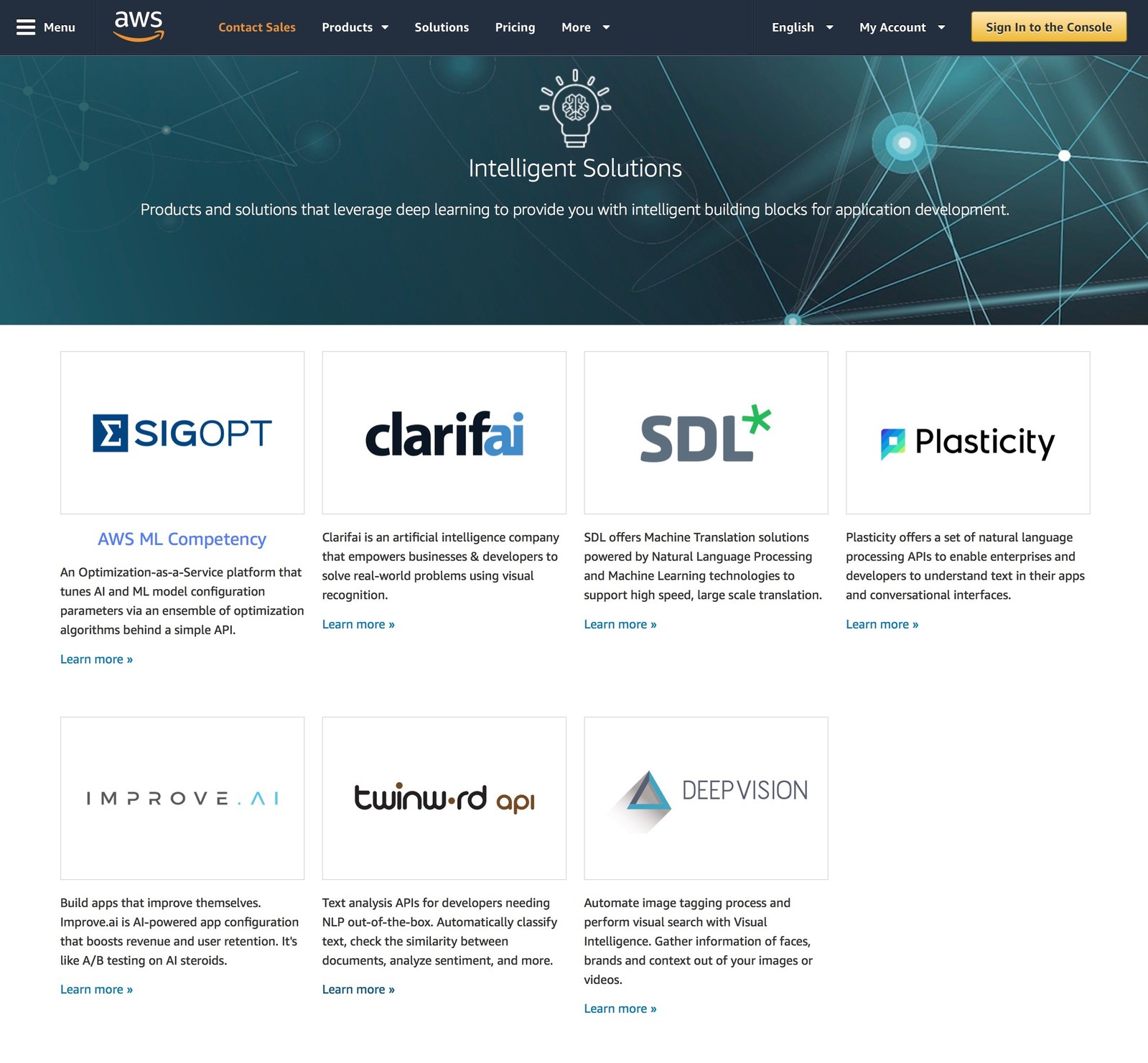
Twinword included among top seven companies on Amazon Web Services Marketplace

0
Twinword included among top seven companies on Amazon Web Services Marketplace

Twinword Has Established Itself As An API Supplier In The AI Solution Sector

Twinword, a company that has developed a platform that collects, analyzes, and uses big data based on natural language processing technology, was recently ranked among the top seven companies on Amazon Web Services (AWS) Marketplace.

A member company of the K-ICT Born2Global Centre, Twinword announced on December 8 that it had been designated as an API supplier in the AI solution sector by AWS Marketplace and featured on its main page.

Twinword
Twinword, a company that has developed a platform that collects, analyzes, and uses big data based on natural language processing technology, was recently ranked among the top seven companies on Amazon Web Services (AWS) Marketplace

AWS Marketplace is an online store that helps customers find and purchase the services and software they need to operate their businesses and establish programs.

Also Read: Genesys PureCloud Integrates with Amazon Lex

With the growing focus that Amazon has been placing on its API marketplace (which features operational systems for web service developers and programmers and application program interfaces), Twinword, which specializes in the extraction of contextual data, released 13 APIs on AWS Marketplace, including its automatic topic tagging, word association, and sentiment analysis APIs.

Twinword’s language analysis API comprehends and analyzes sentences in two ways: natural language processing technology and the human process of creating associations between words. This API is currently being used to create search engines, online shopping websites, and software that is based on language analysis. Twinword also offers search engine optimization service through “Twinword Ideas,” an independently developed API-based keyword research tool.

Kim Kono
Kim Kono

Twinword CEO Kim Kono said, “According to Forbes, the API market is growing very rapidly, as evidenced by the registration of 16,590 APIs released by companies such as Google and Facebook. Within the past few years, many global corporations, including Oracle, HP, and IBM, have entered the API market. With the increasing interest in the Fourth Industrial Revolution and AI, AWS Marketplace is increasingly focusing on APIs related to AI. The fact that Twinword’s API service has been included in Amazon’s rankings of top API developers is itself highly significant.” Kim went on to add, “It is proof of the general recognition of Twinword in the API market. And as a result, we will soon become a much more active player in the market, which is expected to continue growing.”

Also Read: SparkPost Now Available on AWS Marketplace

According to the statistics of RapidAPI, a competitor of AWS Marketplace, Twinword has more members and users than companies such as AlchemyAPI, IBM Watson, and Microsoft.

Kim explained, “It is astonishing that Twinword’s API is competitive with those of conglomerates and multinational corporations–in fact, it is currently believed to be even more advanced than many of the APIs of such companies. The fact that Twinword’s language analysis API has become so widely used implies that, with the shift to a content-centered structure, users are becoming increasingly interested in tools that accurately analyze how people use language.”

Recommended Read: Introducing the Protagonist Platform, A Narrative Analytics Solution That Uses Data Science to Expose Comprehensive Market Landscapes Without Limit or Bias

Swrve Introduces Intent Engine With Support for Real-Time Audience Profiling

0
Swrve Introduces Intent Engine With Support for Real-Time Audience Profiling

Real-time Intent Represents Major Step Forward in Empowering Organizations to Deliver Meaningful, Effective One-to-One Customer Communications

Swrve, the leading Customer Interaction Platform, announced the general availability of its Intent Engine, delivering comprehensive, real-time, behavioral insight relating to every customer or prospect, and supporting more effective communications as a result. With the Intent Engine, Swrve customers can read and target consumer intent and propensity, meaning the interactions these organizations can deliver to their customers are more personal, relevant and effective than ever before, resulting in higher conversion, monetization and retention.

The Intent Engine collates every fragment of customer behavior — from years ago to minutes ago — in a structured, actionable and real-time form. It then supports queries of infinite complexity, with no limits on recency and frequency combinations. As such, it unlocks real-time intent and makes marketing more effective when it comes to loyalty, engagement and revenue.

Christopher S. Dean
Christopher S. Dean

“Every customer interaction is a moment of truth for a brand. Our Intent Engine enables Swrve customers to obtain real-time insight that doesn’t just profile or segment customers – it reads their intent as it changes from moment to moment and provides the brand with the tools to interact personally based on that intent,” said Christopher S. Dean, CEO of Swrve.

Marketing — or any communication — requires the best possible learning apparatus. At the heart of the Intent Engine is the world’s most powerful real-time Event-Processing Engine, handling billions of behavioral events a day to create the most detailed 360° view of each individual customer imaginable. It is only by having an up-to-the-moment understanding of customer behavior that individualized and effective customer communications can be delivered.

For the first time, Swrve’s Intent Engine allows that insight to be accessed, without compromise and in real-time, by marketing teams, increasing campaign effectiveness and reducing costs.

Read More: What Does It Take to Be a Growth Hacker?

Features of the Intent Engine:

  • Unlocks real-time intent from the 12 billion consumer behaviors a day tracked by Swrve across native mobile, OTT and other emerging platforms;
  • Folds in behavioral data from other interaction channels, including desktop and mobile internet, SMS, call center interactions and even POS;
  • Integrates third party data relating to both the business’s own systems (existing marketing stack, inventory, supply chain etc); and,
  • Supports any query against any and all of this data, reflecting any and all recency, frequency and value criteria required.

By providing a single source of real-time data relating to every aspect of customer behavior, the Swrve Intent Engine reduces costs and cycles within marketing teams by providing on-demand access to real-time data, within campaign creation mode, and can be used to drive campaigns in any channel including:

  • Native mobile app campaigns
  • OTT / digital media streaming platforms
  • Web / rich push campaigns
  • Email, either native within Swrve or within external marketing cloud providers
  • SMS

“This is a true paradigm shift in marketing terms:e no longer think in terms of campaigns to existing audiences and segments, we create and deliver interactive experiences as required and in the moment, based on the most sophisticated user Intent Engine in the market,” concludes Dean.

Processing over 12 billion events daily, Swrve’s next generation customer interaction platform helps enterprises maximize engagement and monetization by empowering marketers to deliver bespoke mobile experiences to every customer. Swrve provides a comprehensive set of tools that include audience targeting, real-time segmentation, conversations, push notifications, in-app messaging, A/B testing, predictive models, real-time data orchestration, and rich analytics across all marketing channels.

Recommended Read: Confirmit Adds Machine-Learning Power and End-To-End Usability Enhancements

It’s Not Solved, and It’s Not Easy

0
cross-device
It’s Not Solved, and It’s Not Easy
In the last year, we’ve seen some high profile acquisitions in the cross-device space that have proven out the importance of cross-device identification, or at least that identity resolution companies are ripe for the picking. The rationale behind these acquisitions is sound: marketers can’t afford to be in the dark when it comes to knowing their audience and the details of their customer’s journey, which is why cross-device tracking is so important.
But what has also become increasingly clear is that despite the consolidation and the significant investment, the challenge of cross-device for the ad industry is still not solved; cookies are not an ideal solution, there are massive daisy chains of bad and old data that impact match rates, and the need for privacy safe persistent identity is growing faster than most providers in the industry can manage.
Most vendors in the cross-device space fall into a category which we refer to as “Master Device Graph” companies, where data is co-mingled from various sources, including each of the client’s datasets, and built into a single output which is licensed over and over – in essence, becoming a commodity. These vendors typically only update their graphs every seven to ten days. According to our own analysis of trillions of events, the average half-life of a cookie pool is 6 to 8 days. What good are cookie-linkages if you get them 7 days late? The inability to leverage fresh data is one of the main reasons that there are sub-par match rates across the industry and data freshness impacts everything from retargeting to frequency capping.
About match rates, if you’re working off of a deterministic graph, you’re facing some of the same “data freshness” issues. There are also significant issues related to the general accuracy of deterministic data, issue of scale, and importantly there is the issue of deterministic pieces of PII that are associated with pseudonymous IDs that depreciate very quickly. With GDPR around the corner, the challenge for master device graphs is going to get worse.
Speaking of GDPR, privacy is another looming challenge for the industry. Companies using deterministic and probabilistic matching will have to constantly review privacy regulations and laws to ensure they know which pieces of data they can collect without consent, with consent, or cannot be collected at all. The heft of the new regulations, which give more control and transparency regarding data use to European consumers, will impose many additional, potentially cumbersome, requirements on all vendors in the cross-device space. Solutions need to be built with global privacy in mind and have the ability to adapt and adhere to local regulations.
One of the reasons why traditional targeting, frequency capping, and cross-device profiling are able to provide reasonably accurate results is because they rely on cookies stored on a consumer’s device. In the cross-device space, there are many challenges with cookies; most importantly, with iOS 11, which affects roughly between 10% and 30% of inventory in the space (depending on your reliance on mobile web).
Since the other providers who rely on Master Device Graphs work off of a centralized cookie-pool, which is a 3rd party cookie, they are not capable of working in iOS11. However, providers who work server-to-server, offline, to probabilistically match identifiers, can maintain the 1st party cookie status of an identifier, and therefore, are able to work in iOS11.
Cross-device technology presents a tremendous opportunity for the entire industry to optimize campaigns and meet the promise of highly-targeted and relevant advertising for consumers. But to think that the issue for cross-device identification is solved is actually a disservice to the industry. As consumer habits change and as markets evolve and expand, there is an ongoing need to innovate in the cross-device space and find ways to know your audience. Cross-device is certainly not solved and the journey has, in fact, just begun.

APPrise Mobile Names Doug Pierce Chief Operating Officer

0
APPrise Mobile Names Doug Pierce Chief Operating Officer

APPrise Mobile, a mobile communications and engagement technology company focused on internal employee and external communications, today announced that Doug Pierce has joined the company as Chief Operating Officer.

Jeff Corbin
Jeff Corbin

Pierce will work directly with Jeff Corbin, CEO and Founder of APPrise Mobile, to help scale and take the company to its next level of growth.

Commenting on the appointment, Corbin said, “Over the past several years since we launched theEMPLOYEEapp, APPrise Mobile has grown its client base and is now available to nearly 1 million employees around the world.  Serving enterprise clients in major industries including manufacturing, healthcare, retail and hospitality, among others, it was necessary for us to expand our management team to include someone well experienced in enterprise Software-as-a-Service companies.  Doug’s background will be critical to accelerating our growth.”

Also Read: ReportGarden Makes Tracking Budgets a Breeze for Digital Marketing Agencies

Pierce brings extensive strategic and operational leadership experience to APPrise Mobile.  Most recently, he was the COO of mobile SaaS company, Scrollmotion. He has held COO positions at POSSIBLE and Bridge Worldwide (both WPP Digital Agencies). Previously, Pierce led client delivery and was part of the leadership team at enterprise social media software startup BuzzMetrics which was acquired by Nielsen Online.

Doug Pierce
Doug Pierce

Doug Pierce commented, “I am focused on excellence in client delivery, building high-performing teams, and scaling those processes and teams. I decided to join APPrise Mobile for several reasons.  First, in a very short period of time, they have created and impressively grown an enterprise software company serving global companies.  Second, mobile employer-to-employee communications is a new category of technology that is about to explode.  Third, given their background in communications and HR consulting, APPrise Mobile is leading the way in this burgeoning industry.  I’m excited to work closely with Jeff and the talented APPrise Mobile team and bring rigorous focus to making our business not only more agile but also more competitive.”

Recommended Read: The Clock is ticking – Are You Ready for GDPR?

Teradata Visualizes the Path to Impactful Business Insights

0
teradata

Understanding Relationships, Connectivity and the Big Picture Hidden Within a Company’s Own Data Can Be a Reliable Signpost to Increased Profitability

Whether it’s fraud detection, a preemptive discovery of manufacturing malfunctions, or delivering a more streamlined customer journey, today’s leading corporations are using their data as a significant strength and market advantage to achieve their business outcomes. Teradata, the leading data and analytics company, provides the analytic solutions and the industry expertise that can address such critical business problems, stay competitive and grow.

Corona of Calls
Corona of Calls
Deep Sea Monster
Deep Sea Monster

As companies accept that analytics are key to business success, the audience and appetite for such needle-moving insights have dramatically expanded beyond advanced analytics professionals to marketers, business analysts, C-suite and other leadership teams. One of the more creative ways Teradata is facilitating conversation between these disparate groups within the same organization is through art-worthy visualizations that creatively depict insights through the application of multi-genre advanced analytic techniques.

Also Read: Teradata Announces Executive Appointments

Teradata’s Art of Analytics effort, a program that any Teradata customer can become involved with, transforms analytic findings into enlightening and appealing visuals that showcase causal relationships within the data, making it easier for any interested party to identify patterns that point to actionable solutions to real-world business problems.

Below are examples of compelling Art of Analytics projects that showcase insights that have truly had an impact on the business. The names of each organization have been masked to ensure privacy.

The Sword: A sword, with its tapering shape and sharpness, can precisely describe gamers’ interactions with other players in their network. This sword depicts the strength and rage of interactions between participants in an online game. Online pagers compete against others with the spirit of accumulating massive points in games of one-upmanship. Each of these game networks, regardless of its genre, is filled with passionate participants who seek each other out repeatedly to engage in ever-increasing levels of difficulty and gamely sparring.

Corona of Calls: What would you see in a giant corona, or a large circle of light, with colorful leaves of varying lengths sprouting around it? This corona depicts a network of calls made in a geographic area prior to a terrorist incident. Frantic calls are usually made after an incident occurs by people affected by it. However, calls made before the incident are also informative and can contain clues about the perpetrators. These are the patterns of calls that law enforcement and intelligence agencies want to identify, isolate, and use to locate the perpetrators as well as to prevent future incidents from occurring.

Burning Leaf: Fusing business acumen, data science, and creative visualization, the Burning Leaf of Spending enabled a major bank to detect anomalies in customer spending patterns that indicate major life events, and provided artful insights into the personalized service required to enhance the customer experience, improving lifetime value.

Deep Sea Monster: Fraud costs organizations billions of dollars each year. With fraud becoming increasingly sophisticated and taking many forms, companies need new ways to identify and mitigate the threat. ‘Deep Sea Monster’ looks like a mystical creature, but in reality, it is a visual representation of potentially fraudulent government procurement networks in Russia. Today, government procurement data in Russia is open and can be easily accessed by anyone. The bidding process for procuring good and services is designed to be open and transparent.

Also Read: Teradata Upgrades its ‘Customer Journey’ Solution

Safety Cloud: What would you do if you could speedily read through reams of papers that contain a wide range of content and exhibit a native facility to distill these contents into distinct topics? Sounds like a worthy skill to have. We are in luck with the polychrome cloud that precisely shows how different topics are neatly clustered into self-contained blobs that can be further explored to understand the nature of what is being spoken of within these clusters.

Hollywood Nights: Entertainment companies have placed exclusive focus, especially in an era of intense competitive pressure, on delivering unique customer experiences that are highly personalized to the idiosyncratic and shifting tastes of the viewing public. Gone are the days of two-sizes-fit-all entertainment packages where the onus in on the customer to cherry-pick content from a static set of options. When we add to this the diversity of how entertainment is delivered – through set-top boxes, streaming platforms, digital applications, theaters – the issue becomes even more complex and urgent to address.

Teradata customers are invited to become part of the Art of Analytics Collective, where they can contribute to a diverse portfolio of customer stories that are displayed as highly visual artwork. Teradata data scientists can use their deep business knowledge, creativity, and analytic expertise to turn business use cases into works of art, such as those below.

Recommended Read: Independent Research Reports Name Teradata a Leader in Customer Journey Analytics

Qualtrics Names Julie Larson-Green Chief Experience Officer

0
Qualtrics Names Julie Larson-Green Chief Experience Officer

Larson-Green Joins Qualtrics to Help Reframe How the Enterprise Connects Culture to Experience-Driven Product Innovation

Qualtrics, the leader in experience management, announces the appointment of Julie Larson-Green as Chief Experience Officer, effective January 2018. As CXO, Larson-Green will be leading the design of Qualtrics’ intricately connected customer, employee, product and brand experiences. She will also advise Qualtrics’ customers globally on how to develop their experience management strategies.

Larson-Green is recognized for her ability to foster innovative teams and build scalable business models. Throughout her career she has played pivotal roles in shaping products that enable productivity and cohesive experiences across product platforms.

Julie Larson-Green
Julie Larson-Green

“With the release of the Experience Management Platform in March of this year, Qualtrics is at a pivotal point in changing how organizations leverage experience data. The connection between employee perception, product and brand performance, and customer engagement is more important to understand than ever before. With Qualtrics leading this fundamental shift in how businesses operate, I knew they were the right company for me to connect my passion for people with experience-driven product innovation,” said Julie Larson-Green.

Read More: The New C-Suite: The Rise of the CCO

Ryan Smith
Ryan Smith

“Just like a platform for experience management will become standard in every organization, the CXO role will become imperative for every business. Julie is an incredible leader and we are thrilled to have her join Qualtrics. Her expertise in creating innovative cultures and products that serve billions of people worldwide is legendary. Julie will help us take Qualtrics and the XM Platform to the next level as we continue to pioneer experience management with enterprise customers,” said Ryan Smith, Co-founder and CEO of Qualtrics.

“To build enduring organizations, companies need to be able to understand how people perceive business value by measuring and managing the four core experiences—customer, employee, product and brand—in a single system. This role is an incredible opportunity to lead new innovations in product development and customer-driven culture,” said Julie Larson-Green.

Prior to joining Qualtrics, Larson-Green spent 25 years at Microsoft, most recently as its Chief Experience Officer where she led Microsoft’s efforts to reimagine the Office suite for intelligent work through artificial intelligence, collaboration tools, and digital assistance capabilities.

Recommended Read: Invoca Introduces Signal AI to Unlock New Insights from Offline Voice Conversations

RedPoint Global Expands Partnership With Acxiom

0
Redpoint Global Launches Data Management 8.0, A Platform For Optimizing Customer Engagement

Alliance Enables Seamless Experience for Marketers Seeking Enhanced Real-Time Engagement with Customers

RedPoint Global, a leading provider of data management and customer engagement technology, announced an expanded partnership with Acxiom, the data foundation for the world’s best marketers. As part of this relationship, RedPoint customers now have access to a continuous flow of leading third-party audience enhancement data, AbiliTec a proprietary identity resolution solution that creates accurate identifiers for individual customers, and leading Data Quality hygiene services. The partnership empowers marketers with the deepest customer understanding to create more dynamic audience insight and personalized engagement. In turn, consumers will benefit from a more relevant relationship with the brands they love.

Acxiom
Acxiom

Also Read: RedPoint Global Launches Data Management 8.0, A Platform For Optimizing Customer Engagement

Combining Acxiom’s industry-leading identity resolution, data quality hygiene services, and real-time access to powerful InfoBase consumer data enhancement with RedPoint Global’s solutions allows marketers to enhance their customer data with demographic, psychographic, and behavioral data, enabling them to provide an optimized customer engagement experience across the enterprise. Creating highly-personalized, relevant experiences via the RedPoint and Acxiom partnership helps marketers further strengthen consumer loyalty to their brand.

RedPoint Global Expands Partnership With Acxiom
John Nash

“We are excited to offer enterprises an out-of-the-box, integrated option to enrich their customer data on demand, directly within the RedPoint customer data platform. Leveraging Acxiom data and identity resolution natively within RedPoint enables enterprises to better close the strategy-to-execution gap caused by customer data that is either incomplete or inaccessible, particularly when it is needed most to drive hyper-personalized engagement at the cadence of the customer,” said John Nash, Global Chief Strategy and Marketing Officer, RedPoint.

Also Read: Allant Group Announces Strategic Retail Solution Powered by RedPoint Global

RedPoint Customer Engagement Hub users will experience a seamless process of real-time engagement with customers by activating an Acxiom AbiliTec module within the RedPoint user interface. The data ingested through AbiliTec will add to the data that currently make up the golden record, a single precise view of the customer within RedPoint. From there, users have access to dynamic customer data that can help improve the accuracy of orchestrating engagement enterprise-wide. Having the best data possible enables marketers to generate insights that drive contextually relevant interactions with customers across all touchpoints.

Also Read: Acxiom Launches Facebook Partner Categories in Japan

Chandos Quill
Chandos Quill

Chandos Quill, VP Global Data and Strategic Alliances, Acxiom, added, “Our partnership provides RedPoint customers access to a wealth of audience insights and leading identity resolution technology to seamlessly integrate information and merge customer data. RedPoint users can now more efficiently access and utilize audience insight data with greater speed and precision than ever before, for stronger personalized customer engagement and experiences.”

The integration of audience insights and AbiliTec is an expansion of the current RedPoint partnership with Acxiom, which includes LiveRamp and Acxiom Marketing Services.

Recommended Read: Finding the Perfect Balance Between Personalization and Automation with Event Marketing

Metrics That Every Growth Marketer Must Measure

0
Metrics That Every Growth Marketer Must Measure

The Way Companies’ Measure Growth Has Changed. Industry Veterans Share How to Gauge Evolving Growth Metrics

Growth marketers love metrics! Customer acquisition, customer retention, customer win-backs; are all fit terms to be concerned about. However, the true test of whether your strategy is working will depend on what you want to achieve and the nature of your business. We spoke to thought leaders at the Growth Marketing Conference to understand what metrics they keep track of and which ones are no longer relevant. Here’s what they said;

Ada Chen Rekhi
Ada Chen Rekhi

Ada Chen Rekhi – Founder & COO at Notejoy: For my company Notejoy, which provides a real-time document collaboration for teams, we are laser focused on driving engaged, retained usage of the product in each cohort of customers we onboard. To track that, we are looking at customer feedback and funnel conversion from new signups and how it’s changing over time. We are not at all focused on vanity metrics like traffic, signups, and visits. Also, at this early stage (customers need to request access to onboard to our product), we’re also more focused on the qualitative “why?” learnings from feedback as we iterate.

Brandon Redlinger
Brandon Redlinger

Brandon Redlinger – Director of Growth at Engagio: There’s no one metric or set of metrics that is right for all companies. You have to determine which metrics are the most relevant to your business and its goals. I’m a big believer in simplicity. Sure, you should track as much as you can, but you don’t need to maniacally focus on controlling every single one of them. Focus on what matters most. Identify the actions that correlate most directly to the outcome that you’re trying to influence. A metric is worthwhile when it’s comparative, a ratio or changes behavior.

Also Read: What Does It Take to Be a Growth Hacker?

Tian Lee
Tian Lee

Tian Lee – Senior Communications Manager at Zendesk: Each customer journey is unique, so metrics will vary. But the most important thing for growth marketers to focus on is the changes in critical changes in conversion rates between steps in the customer journey. Many marketers who are not well trained in growth marketing will look only at the actual numbers in an experiment, which can be misleading, particularly if the test cells of different sizes — learnings are often found in analyzing changes in the rate of conversion from one step of the customer journey to the next.

Oli Gardner
Oli Gardner

Oli Gardner – Co-founder of Unbounce: Customer lifetime value (LTV) is the #1 metric we look at, at Unbounce. I’d take 100 of our ideal customer over 300 that don’t stick around long, don’t use the product to its full potential, and aren’t realizing the ROI that you should when using it fully. At the end of the day, you only have a business if your customers are happy.

Recommended Read: Poor Personalization and Lack of Trust Cost US Organizations $756 Billion Last Year

GeoSpark Analytics’ BlueGlass is a Location-Based, AI-Powered Data Analytics Platform

0
GeoSpark Analytics Launches BlueGlass, a Location-Based, AI-Powered Data Analytics Platform

BlueGlass is Operational at the US Department of Defense, Intelligence Community and A Small Number of Commercial Enterprises

GeoSpark Analytics, a new company providing location-based information for risk and threat assessment and decision support, has launched BlueGlass, its flagship platform. BlueGlass aggregates millions of data points and provides machine speed reporting on trends and events in user-defined geographic areas. The launch is supported by an additional $2 million investment from Zero Gravity Capital.

Omar Balkissoon
Omar Balkissoon

“Government and corporate leaders need to plan and react with the best information available and with speed. We built BlueGlass to answer the question ‘what’s happening here and why?’ Today, data is abundant, but chaotic. Organizing all of the data at our disposal by location, frequency, and time provides a complete picture that is more than the sum of its parts,” said Omar Balkissoon, CEO of GeoSpark.

Read More: Location Intelligence Goes In-House with Ubimo’s Polaris

BlueGlass was developed by OGSystems, a technology enabler to the US Department of Defense and Intelligence Community. The OGSystems leadership team and General Catalyst created GeoSpark Analytics as a spin out to focus resources and meet increasing demand for the platform in the public and private sector.

BlueGlass provides multiple ways to understand activity at a specific location or region over the long term, short term or in real time. It collects data from a wide range of open source data feeds – such as social media, global events, radio frequencies, and seismic activity reports – proprietary sources – some include satellite imagery, signals location data, IoT device data, and executive travel schedules – and highly specific data from established GeoSpark Analytics data partners.

“There is no technology platform instrumenting space to ground data available to the market that does what BlueGlass does to unearth otherwise missed threats and opportunities. The public, personal and critical infrastructure security applications are obvious, and there are several compelling use cases for companies looking to understand where to allocate resources to match demand issues that crop up. This is a novel, but immensely practical approach to data correlation: using place and time to turn an ocean of details into a human-scale story with massive implications,” said Alexis Katsarelis, Managing Director for Zero Gravity Capital.

“We recognized a spin out opportunity with the maturing BlueGlass technology stack and how the tool was addressing a cumbersome and inefficient data analysis process.  That process is still mechanical and labor intensive, filled with hunting and pecking of information. Limited, siloed information is a dangerous technology posture when saved minutes could save lives. GeoSpark Analytics connects the dots and gives customers just the right tools to drill down into a situation, giving us a better sense of how to avoid or respond to an incident,”  said David Orfao from General Catalyst.

Recommended Read: Harmelin-PlaceIQ Partnership: Leverage Location Data for 1:1 Marketing

TechBytes with Ira Cohen, Chief Data Scientist, Anodot

0
Ira Cohen Anodot

Ira Cohen
Co Founder, Chief Data Scientist, Anodot

Anodot recently won an award for innovation in analytics. We spoke to Ira Cohen, Chief  Data Scientist, Anodot to figure out what the future of analytics looks like.

Html code here! Replace this with any non empty text and that's it.

MTS: Tell us about your role at Anodot and the team you handle.
Ira Cohen: 
I am the Chief Data Scientist and co-founder of Anodot. The company was founded in 2014 as a new way to provide insights from big data that is changing and growing in real time. Our goal is to illuminate business blind spots so companies will never miss another business incident. So we have gathered together a “dream team” of a half-dozen data scientists that include several PhDs, an engineer from France, a former research engineer at HP Labs, and our “whiz kid,” who began his academic studies at 14 and completed his M.Sc at age 19 & then went on to obtain his PhD. Besides the data science team, however, we also, of course, have product people, devops, UI/UX, and marketing and sales.

MTS: How is Anodot different from contemporary business intelligence tools that service digital media and ad tech companies?
Ira:
Traditional tools rely on dashboards and alerts. Dashboards are only good for what you KNOW you want to look at, but when you’re dealing with big data, you need to track everything. AI asks all the possible questions of the data and provides you with insights so you know what to focus on. Alerts are problematic as well in that most traditional alerting tools will either overwhelm you with alerts or miss crucial issues. Media and advertising data is often seasonal, meaning that it will go up and down predictably during the day and the week. If you set an alert at the top or bottom of the data “wave”, you will miss any issues that happen in the middle of the wave, which is most of them. Setting alerts on seasonal data without AI is an impossible task so this is something our platform overcomes.

Anodot uses unsupervised machine learning – a type of AI — to automatically learn the normal behavior of every metric a company wants to track, so our solution can then alert them to every abnormality or anomaly. An anomaly may be a bad thing that needs to be resolved (such as a drop in clicks or revenue) or a good thing that should be leveraged for increased business or better customer satisfaction. By providing crucial insights into what is happening across the company and its customers in real time, companies can make informed decisions and keep their businesses running smoothly and profitably.

MTS: What are the core tenets of AI-engine driving Anodot’s automated anomaly detection?
Ira:
The most significant tenet to know is that our anomaly detection works at scale. Many data science algorithms work fine in academia, but if it doesn’t work at scale, it can’t work in a production environment in advertising. We have customers that process more transactions daily than Nasdaq and Visa combined. This is true scale.

Another is that we work for any type of data stream. Many analytics solutions work fine for smooth, easily predictable metrics, but there are dozens of types of metrics, and you need to have algorithms that will work for all of them. Our first layer of machine learning determines the type of metric it is, so we know which machine learning algorithm to apply. We continuously re-apply this test since the shape of metrics can change over time.

Lastly, we know how to correlate across multiple data metrics of all types. We didn’t want to be in a situation where we overwhelm people with alerts on single metrics, since when an incident occurs it often affects multiple metrics, sometimes thousands at once. If you’ve ever received 15,000 alert emails or text messages one after the other, you know that this is NOT a good thing for a technology solution to do. We provide another layer of machine learning that correlates related alerts, which not only reduces the number of alerts to a manageable number, but it also provides a clear story to the recipient of what is going on. If you know that the issue is affecting customers in all regions, who use Chrome desktop browser version 30, but is not affecting mobile at all, then that helps you very quickly get at the root cause of the issue so you can fix it quickly.

MTS: What are the major pain points for CIOs and CTOs in adopting full-scale AI Analytics platforms for business anomalies and predictive modeling?
Ira: 
Many companies recognize that they need an AI Analytics platform, and because they already are dealing with big data and have data scientists in house, they figure it’s a piece of cake to simply build what they themselves. Then they get 6 months or even a year or more into the project, sucking up the their data scientists’ time, and dragging along with it some product managers, a UI/UX person, possibly even devops, before they start to realize they are being sucked into a black hole of developing a highly specilaized product, that despite their best efforts, may still not meet their needs. Algorithms that work in a testing environment may not work at scale in production, leading to missed incidents, and revenue losses. We strongly recommend that companies analyze the costs from the standpoint of human resource time as well as time to value before making this decision. We have outlined the key cost elements in a white paper about the build or buy dilemma.

MTS: Would you tell us more about Anodot’s anomaly identification and monitoring for Uprise? How could other ad tech companies benefit from Anodot?
Ira: 
Uprise is an ad-tech company that specializes in performance-advertising, using its machine learning algorithms to target that best performing ad placements for its customers. As a successful advertising technology company, Uprise needs to keep track of hundreds of thousands of metrics, which is the epitome of its business. The company develops its software by each team pushing around 20 new software releases into production each day. Each new release can affect the ad-tech platform’s performance. Because of this it is pertinent to monitor results in a timely way, this can determine if the new release should stay or be rolled back. Uprise uses Anodot to track KPIs like revenue, spend, fill-rate and performance.  In one case revenue and click through data for a particular country rose significantly and Anodot traced it to a Facebook outage (people were not able to access Facebook so they browsed elsewhere on the Web). Uprise uses Anodot to cut through the noise of all of the data they collect.  This is important for all ad tech companies, as well as companies in ecommerce, online companies and mobile companies. They all receive so much data and need real time analytics to help them pull out the significant information in a timely manner.

We work with many leading Internet, mobile and ecommerce companies, such as Waze (Google), Lyft, Rubicon Project, AppNexus, Outfit7 and others, all companies that need to understand in real time what is happening with their company and their customers through their vast data.

MTS: How critical is it for modern IT businesses to leverage AI and machine learning capabilities for better data and analytic management?
Ira:
It is paramount. They have vast amounts of data and should leverage them for competitive advantage, and most importantly- to keep their customers happy. There are so many moving parts in online businesses that it is impossible to keep track of them manually, or using traditional BI tools like dashboards. They will always miss something crucial, and these types of issues typically lead to revenue losses, customer dissatisfaction or damage to the brand. The only way to manage such vast amounts of data quickly and accurately is with AI.

MTS: Thanks for chatting with us, Ira.
Stay tuned for more insights on marketing technologies. To participate in our Tech Bytes program, email us at news@martechseries-67ee47.ingress-bonde.easywp.com

Also Read:  The App Trap: Why Every Mobile App Needs Anomaly Detection

Interview with Alok Kulkarni, CEO, Cyara

0
Alok Kulkarni Cyara

[mnky_team name=”Alok Kulkarni” position=” CEO, Co-Founder, Cyara”][/mnky_team]
[easy-profiles profile_twitter=”https://twitter.com/koolace” profile_linkedin=”https://www.linkedin.com/in/alokkulkarni/”]

“Voice experience management is going to become a core competency for any marketer and represents an exciting opportunity to develop in the digital economy. “

On Marketing Technology

MTS: Tell us about your role and how you got here? What inspired you to start a customer experience assurance platform?
I had been working in the contact center industry for over 15 years and what I loved about it was how critical customer experience was for the success for any business and how passionate our customers were about it. However, delivering a great customer experience was extremely difficult for large enterprises, as each customer was unique. That’s where I saw the opportunity for Cyara.

The complex tech environment— with enterprises dealing with multiple vendors and solutions, and various versions meant it was nearly impossible for companies to be sure that the customer experience they were delivering met the brand promise. The existing testing and monitoring technology was very hard to use, manual, hardware-based and required coders to manage it.

My vision was to create an easy-to-use, cloud-based CX assurance platform that was independent of any specific technology. Our platform enables companies to measure and detect any CX flaws from their customers’ perspective in real-time.

Since starting Cyara eleven years ago, we have become the global leader in providing an omnichannel customer experience assurance platform. The world’s most trusted and respected brands use Cyara and it’s been quite an honor working with them. My role now as CEO at Cyara is to build the team and work with the world-class Cyara team and customers to define our vision, strategy, culture, product direction and the user experience for Cyara. It’s been a very exciting journey getting to this point.

MTS: How does Cyara fit into a modern CMO’s martech stack?
Cyara provides CMOs with visibility and real-time insight into their customer experience from an operational perspective. It’s what we call operational customer experience. Just think of it as live NPS or Customer Satisfaction scores without having to survey actual customers. CMOs can use the Cyara Mobile App to close the loop between the actual experience their customers are having and their marketing strategy.

In today’s digital world, it’s not good enough to get analytics days or weeks later on the success of any campaign. It needs to be real-time. Cyara can give marketers the assurance that the customer journeys they have designed are not being compromised by technology-related issues which are the primary channels of communications in a digital economy.

MTS: How do you see the technology evolving around voice experience management in the coming years?
I think bots and voice-based assistants will play a vital role in helping engage with the customer on a more personal level. And it may potentially move on to a virtual or augmented reality scenario. Therefore, voice experience management is going to become a core competency for any marketer and represents an exciting opportunity to develop in the digital economy. From Siri to Echo, as these virtual assistants proliferate on our phones, cars, and laptops, they offer a very powerful platform to deliver the ultimate personalized customer experience for marketers. It’s a marketer’s dream.

MTS: What are the pain points for marketers in leveraging virtual assistants and chatbots for refined content delivery and personalization?
The very dynamic nature of providing a personalized service to the consumer with a bot can be challenging because of the vast minutiae involved with personalization. Human beings do a great job of conversations with empathy and context and are able to have a more emotionally sensitive dialogue with customers reading between the lines instead of the abstract. This can be more difficult to do with a bot. The maturing of AI technology can hopefully solve these challenges.

Another critical pain point is providing connected journeys— which is a major focus for us at Cyara. If the customer needs assisted service and the virtual agent is not able to transfer the interaction with context to a customer service agent, customers get really annoyed. It’s the number one customer-facing issue that was identified as part of a Frost & Sullivan survey we commissioned last year. It can be achieved but there is currently limited visibility if you don’t have an assurance solution like Cyara.

MTS: What startups are you watching/keen on right now?
I’m watching for trends directly applicable to CX world, with companies such as Amazon Connect, Talkdesk, and Jibo. I’m also watching the evolution of variety of startups— from Slack to Sonos, Uber, Tesla, Snapchat, Highfive, Evernote, Square, Headspace, Hubspot, and SignNow, among others.

The common thread is that they’re all potential game-changers– either in changing the way people communicate and interact, or disrupting an existing market– and those all carry potential learning and inspiration for me at Cyara.

MTS: What tools does your marketing stack consist of in 2017?
A big component of our marketing efforts is customer education, so we’re regularly hosting webinars, publishing newsletters and blog posts. And we’re getting ready to host our first user conference in 2018.

To effectively manage the outreach and content, we use blogging platforms, event management and survey tools, a CRM platform, and ERP (enterprise resource planning) software.

And of course, we track our own customer experience, across all our platforms, using Cyara.

MTS: Would you tell us about your standout digital campaign?
We recently launched a new product called Velocity, with a visually arresting campaign and the tagline, “You’ll be blown away.” Having a bold campaign like this is unusual for our category and drove 10X engagement on LinkedIn. And we consistently delivered it across all touchpoints, from news to social media and direct marketing.

The audience for the campaign was potential buyers, and engagement with the email campaign was really high. We also had a lot of demos scheduled as a result. Strategically, we are transforming our product offering with Velocity, so it needed to stand out. The launch has allowed us to have much more strategic conversations with potential buyers — particularly because Velocity ties in seamlessly with the DevOps approach that is a key market-wide trend — which is a great result.

MTS: How do you see the conversational platforms evolving with the maturity of AI/ML technologies?
I see them evolving to provide a very personalized experience and the ability to complete a transaction rather than a hand-off to assisted service. A proactive, pre-emptive approach around the intent of the buyer persona so that bots assist with timely valuable insight will succeed. I think the evolution of AI- and ML-based systems will also go omnichannel. By that I mean not just voice, but also chat and other media types to deliver a business outcome tailored to the user.

This is How I Work

MTS: One word that best describes how you work.
It’s not one word, but “Like it’s day 1.”

MTS: What apps/software/tools can’t you live without?
My Gmail, Active Inbox, GoToMeeting, Trello, Reminders, Music, Tally Counters, Kindle, TripIt, Google Apps, Cyara, my Apple Watch Fitness App, my Fitbit app, WhatsApp, Calendar, TimeScroller, Google Maps, MindNode, virtual assistants, Evernote, OmniFocus, YouTube, SignNow, and LinkedIn.

MTS: What’s your smartest work related shortcut or productivity hack?
My Apple watch automatically unlocking my laptop every time I need to login, my air pods which change context depending on which device I’m using for. For example, I can seamless connect to my laptop or my iPhone.

MTS: What are you currently reading? (What do you read, and how do you consume information?)
I’m currently reading Crystallizing Public Opinion by Edward Bernays and the Technology-as-a-Service Playbook by Thomas Lah and J. B. Wood.

I consume information through podcasts, my Kindle, via Medium, and various apps.

MTS: What’s the best advice you’ve ever received?
I’m always keeping an ear open for great advice, but one that perhaps resonates the most is: “You’ll never get your time back, so don’t waste it.”

MTS: Tag the one person in the industry whose answers to these questions you would love to read:
Jeff Bezos

MTS: Thank you Alok! That was fun and hope to see you back on MarTech Series soon.

Also Read: The New Disruptor-Conversational Marketing and its Practices

[vc_tta_tabs][vc_tta_section title=”About Alok” tab_id=”1501785390157-b58e162d-0ae25a4b-c27aca64-108e51b0-80edaf37-bd3dd3bd-ea3f”]

Alok likes building things, watching people grow and pushing the boundaries of possibilities. He has the benefit of enjoying a wide range of roles ranging from a research engineer, consulting through to professional services, pre-sales, sales and leadership.

Alok’s passion is innovation, technology and getting a team together to deliver it. He loves dreaming about what can be achieved however impossible it may seem.

His goal is to make Cyara a huge success. Customers, employees and innovation are his no. 1 priority.

[/vc_tta_section][vc_tta_section title=”About Cyara” tab_id=”1501785390320-2d44fa50-740c5a4b-c27aca64-108e51b0-80edaf37-bd3dd3bd-ea3f”]

Cyara
Cyara provides the world’s leading Customer Experience (CX) Assurance platform for digital (email, web chat, SMS…) and voice channels. Many of the world’s best known companies trust Cyara to enable rapid innovation of the customer experience and to achieve better customer outcomes, while dramatically reducing the cost of development and testing and minimizing the risk of exposing customers to poor customer experiences. The Cyara Platform provides a foundation for organizations designing, testing, and monitoring the customer experience, across all customer interaction media, and across the entire technical architecture.

Typically Cyara customers innovate 40 to 70% faster than their peers, and reduce the time and expense for testing their software by a third or more compared to manual testing while providing better test coverage to identify and correct issues in their customer experience environment. In addition to testing, Cyara also provides active monitoring of the customer’s environment. From self-service applications through to the agent desktop, Cyara provides leading-edge solutions to some of the most recognizable brands in the world. Every day, millions of flawless customer interactions are delivered by organizations utilizing the Cyara Platform.

[/vc_tta_section][/vc_tta_tabs]
[mnky_heading title=”MarTech Interview Series” link=”url:https%3A%2F%2Fmartechseries-67ee47.ingress-bonde.easywp.com%2Fcategory%2Fmts-insights%2Finterviews%2F|||”]

The MTS Martech Interview Series is a fun Q&A style chat which we really enjoy doing with martech leaders. With inspiration from Lifehacker’s How I work interviews, the MarTech Series Interviews follows a two part format On Marketing Technology, and This Is How I Work. The format was chosen because when we decided to start an interview series with the biggest and brightest minds in martech – we wanted to get insight into two areas … one – their ideas on marketing tech and two – insights into the philosophy and methods that make these leaders tick.

Passage.AI Partners With Edgewood Networks to Expand Into Key Vertical Markets

0
Passage.AI Partners With Edgewood Networks to Expand Into Key Vertical Markets and Grow Global Footprint

Strategic Agreement Enables Edgewood Networks Customers In Various Industries to Quickly Deploy AI-Powered Chatbot Solution

 Passage.AI, a pioneer in AI/NLP-enabled conversational interfaces, announced a strategic partnership with Edgewood Networks, a leading network security and integration firm. Through this partnership, Edgewood Networks will leverage its relationships with leading companies in the telecom, government, travel and entertainment industries to now offer a AI-powered conversational interface solution. The agreement will also enable Passage.AI to accelerate its expansion within the US and Asia.

Ravi N. Raj
Ravi N. Raj

“Edgewood Networks has well-established and long-standing relationships with executives in key industries where chatbots can have a significant impact on improving business efficiencies and customer service experiences. Our patent-pending conversational AI platform complements Edgewood’sportfolio of products and provides a differentiated, quick-to-market solution that can generate new revenue while increasing client satisfaction. Passage.AI’s customers like Kohl’s, Udacity and Calgary Public Library have experienced tremendous success with our platform and we look forward to helping Edgewood’s telecom, government and travel and entertainment customers achieve success as well,” said Ravi N. Raj, CEO and founder of Passage.AI.

Read More: Education, IT, E-Commerce and Financial & Legal Services Are the Leading Bot Verticals

Companies from all industries are evaluating how to improve their business operations through the use of AI technologies. With Passage.AI, companies can address a variety of internal and external use cases while slashing expenses by enabling anyone to create a highly versatile AI chatbot, without writing a line of code. As a result, organizations can automate routine and often mundane tasks and provide instantaneous responses to common questions, improving both employee and customer experience.

Vishal Verma
Vishal Verma

“We believe in the power of technology to transform organizations, boosting productivity and helping them to succeed in an increasingly competitive and challenging business world. Passage.AI represents a cutting-edge yet practical way for our customers to leverage the benefits of AI across their organization – from interactions with HR, to IT, to customer service and support. The power of the Passage.AI platform is evident once you see how quickly and easily anyone can get started and launch an intelligent bot. We are excited to integrate and introduce Passage.AI technology to our products and customers,” said Vishal Verma, CEO of Edgewood Networks.

Passage.AI has created a bot-building tool that utilizes AI and natural language processing technologies, requires no coding and can be deployed anywhere in as little as two weeks. Its sophisticated deep learning model enables Passage.AI bots to more readily understand a user, regardless of how they express themselves. Passage.AI understands natural language text and speech, creating an intelligent conversational interface capable of better identifying intents, extracting the most useful, pertinent and timely information, understanding and responding to queries and searching through vast amounts of data.

Recommended Read: AWS Announces Amazon Machine Learning Solutions Lab

MindTickle Raises $27 Million in Series B Funding to Accelerate Product Innovation and Global Expansion

0
MindTickle
MindTickle

MindTickle, a company revolutionizing how businesses prepare and train their sales teams, raised $27 million in Series B funding to accelerate product innovation and global expansion. Canaan Partners led the round, with participation from existing investors Accel Partners, New Enterprise Associates (NEA), and Qualcomm Ventures, the investment arm of Qualcomm Incorporated. MindTickle’s total amount raised is now $41.3 million.

MindTickle is the most comprehensive, data-driven sales readiness platform in the market. The company offers a modern, mobile and engaging experience for onboarding, micro-learning, skills development and coaching – a purpose built platform that companies stuck with legacy learning management systems (LMS) have been waiting for.

Krishna Depura
Krishna Depura

“In today’s dynamic and highly competitive environment, companies need to prepare their sales teams like never before. MindTickle’s comprehensive readiness platform enables companies to be at the forefront of sales excellence through its unique combination of gamification, automation, and a strong analytics framework for correlating learning and performance,” said Krishna Depura, co-founder and CEO of MindTickle. “This additional funding will allow us to accelerate the vision we share with our customers for data-driven sales enablement.”

Companies such as Symantec, Phillips, Micro Focus, DexCom, Ola, Cloudera, and Nutanix use the platform to go to market faster, boost win rates, increase average deal sizes, and engage their teams in a learning experience that is both enjoyable and impactful.

Joydeep Bhattacharyya

“Sales Readiness is the single most important metric that every public company CEO is paying attention to and the best predictor of future performance,” said Joydeep Bhattacharyya, partner at Canaan Partners, who has joined MindTickle’s board of directors. “MindTickle is the leader in this new massive area of applications for sales teams, with tremendous customer adoption.”

This funding underscores the momentum MindTickle has achieved in 2017, a year that’s closing with stellar additions to the executive team, exciting product innovation, solid partnerships, and accelerated revenue growth.