Home Blog Page 4367

Kentico Goes World Class

0
Kentico Goes World Class

Drag And Drop Email Builder, GDPR Features, Enhanced E-Commerce, And Greater Connectivity To Technology Stack Push Kentico 11 To Greater Heights; Capable Of Powering Digital Marketing Initiatives For The World’s Largest Corporations

c, a fast-growing CMS vendor with offices in EuropeAsia Pacific, and North America, announced Kentico 11. The company’s flagship Enterprise Marketing Solution (EMS) has been engineered with global enterprises in mind and is by far the company’s most enterprise-ready product release to date.

Petr Palas
Petr Palas

“Kentico has long been known as a workhorse, recognized for its ease of use, for getting the job done, and for putting CMS technology within reach of companies of all sizes. But today, we are raising the bar quite dramatically. Kentico 11 is now fully featured and industrial strength, able to support the digital marketing and commerce initiatives of the world’s largest and most demanding corporations,” stated Petr Palas, Founder and CEO.

Karol Jarkovsky
Karol Jarkovsky

Native Email and E-commerce Capabilities Dramatically Improved
The release features improvements at both the functional and strategic level. “In terms of in-house engineering, we have designed a brand-new Email Marketing engine featuring incredibly easy-to-use, drag-and-drop capability. We also re-wrote our e-commerce engine from the ground up so that we’re delivering a very potent CMS and e-commerce solution for small businesses, midsize companies, and even some large corporations,” explained Karol Jarkovsky, Vice President of Product.

Also Read: Google Credits StubGroup for Helping Online Retailer SuperBiiz See “Massive ROAS Growth”

GDPR Capabilities Baked In
Jarkovsky continues, “But we didn’t stop there. At the strategic level, we have created a number of capabilities that will help businesses comply with the EU’s upcoming General Data Protection Regulation or GDPR.” GDPR is a piece of legislation produced by the European Union that is going to impact digital marketers not only on the European continent but all around the globe when it comes into effect in mid-2018. “This is one of Kentico’s thought leadership areas, an area where we have invested a significant amount of time and expertise.”

Salesforce, Marketo, and Dynamics CRM Connectors Enable Greater Connectivity
Kentico 11 also sets a new standard in terms of connectivity. Rolling out in the coming weeks are integrations to a variety of other platforms that make up the typical company’s technology stack, including Salesforce.com, Marketo, and Dynamics CRM. Data will be able to flow seamlessly between Kentico 11 and these other widely-used technologies.

Upcoming Combination of Kentico 11 and Ucommerce Going to Be “Tough to Beat”
Even though Kentico’s main target is midsize businesses, the company recognizes that a growing number of Fortune 500 and Global Fortune 500 companies are using its platform. So, one more major change was announced to sweeten the pot for these larger businesses: As part of the ongoing rollout of Kentico 11’s extensions, Kentico has made the strategic decision to partner with Ucommerce, a widely recognized and highly-regarded vendor in the e-commerce space. “This combination of Kentico 11 and Ucommerce is going to be tough to beat,” noted Jarkovsky, adding, “We view it as a content-first, commerce-first solution capable of handling the digital marketing and commerce needs of the world’s leading corporations.”

Also Read: Don’t Fall for These “Urban Myths” About Email Marketing!

Kentico 11 Features and Capabilities

ONLINE MARKETING

  • Extensive, built-in data privacy management support for the European Union’s General Data Protection Regulation (GDPR):
    • Helps partners and clients streamline GDPR compliance
    • Personal data flow documentation
    • Consents management
    • Right to Access: Access all the data processed about a specific data subject
    • Right to Data Portability: Export personal data in commonly used, structured, and machine-readable format
    • Right to be Forgotten (Right for Erasure): Ability to delete collected personal data
  • Email marketing
    • Designed from the ground up with the emphasis on ease of use
    • Drag-and-drop widgets to help non-technical users produce modern looking and responsive emails
    • Clean HTML output and CSS in-lining
    • Personalization
    • A/B Testing
    • Plaintext support
    • “View in Browser” support
    • Pre-header
  • Enhanced reporting
    • Email marketing and campaign insights
    • Contact touch points
    • Personas history
  • Salesforce CRM, Dynamics CRM, and Marketo Connectors (Soon to be released)
    • Integrate your digital marketing and sales efforts by connecting Kentico EMS to these often used technology stack solutions

E-COMMERCE

  • Kentico has rebuilt its native e-commerce engine from scratch, affording small, midsize, and larger businesses with a fully integrated CMS/e-commerce platform. Improvements include:
    • New modular architecture for flexible customizations and extensibility
    • New cart calculation, tax calculation, and discounting engine
    • Product catalog categories, styles, and brands
    • Gift cards and multiple coupons support
    • Scalability
    • Authorize and capture support
    • Google Analytics e-commerce tracking to correlate sales data with website usage data
    • Faceted Search
  • Plus, Kentico is introducing an integration to the widely used and highly popular Ucommerce platform that addresses solutions for the most difficult, multichannel situations; Kentico 11 plus Ucommerce will equal a world-class, content-first, commerce-first solution

PLATFORM

  • Azure Search integration

A Content-first, Commerce-first Platform for the Global Enterprise

Palas added, “We believe that with the introduction of Kentico 11…our partnership with Ucommerce…the backing of resourceful solution partners around the world…and Kentico Software’s continued positioning in the Gartner Magic Quadrant for Web Content Management we’re seeing an ever-increasing number of Global Fortune 500 companies taking a serious look at Kentico for their digital marketing and customer experience needs. We look forward to showing them how much easier Kentico can make their lives.”

Recommended Read: Six Steps to Achieving Customer-Centric Marketing

Dotz is the fastest growing coalition loyalty program in Brazil

0
Dotz is the fastest growing coalition loyalty program in Brazil

Partner Of Canada-Based Loyalty One, The Brazilian Company Aims To Double In Size In 3 Years

Created in the online universe in 2000 and expanding to brick-and-mortar retail where customers participate in a single program whenever they make purchases at various establishments, earning the same type of points. Founded by Brazilian businessman Roberto Chade, Dotz formed an international partnership with Loyalty One, the manager of the world’s largest coalition loyalty program, Air Miles. As a result of this partnership, since 2009 Loyalty One has held a 37% stake in Dotz, with the Chade family owning the remaining 63%.

Also Read: New Interactive Impartner Infographic Shows How Partner Relationship Management Enhances the Partner Journey

Seeking to boost earnings and expand the profitability to partnering retailers, at the same time that it allows consumers to use their daily purchases to get more out of life, increasing the purchasing power of Brazilians, Dotz is the fastest growing coalition loyalty program in the country. Dotz currently has more than 23 million clients, more than 300 partners, 8,200 brick-and-mortar partner establishments, physical presence in 690 cities across 12 states, and more than 160 online partners that allow people from all over Brazil to take part in the loyalty program. With this array of partners, customers earn Dotz in their daily purchases and then redeem them for products, plane tickets, supermarket vouchers, or pay their water, electric, or phone bills, and much more. Dotz can be redeemed for more than 50,000 products and experiences. The company registers an average of 900 Dotz distributed every second, and close to 10,000 redemptions every day.

Also Read: LuvJo Partners with LevelUp to Give Local Coffee Shops Access to Millions of Mobile Customers 

Among Dotz’s main partners are major brands familiar to every Brazilian, such as Banco do Brasil, Banco Santander, Vivo, Polishop, Ri Happy, the Super Nosso, Big Box, Angeloni, Paulistao, and Prezunic supermarkets, Posto Ale, Atlantica Hotels, Walmart.com, Americanas.com, and Submarino.com. If Dotz were classified as a retailer, considering the unified revenue at the company’s 17 partner food retailers, Dotz could be said to be the 4th-largest supermarket group in Brazil.

Recommended Read: Active International and AlmondNet Group Form Long-Term Strategic Business Partnership

Allant Group Announces Strategic Retail Solution Powered by RedPoint Global

0
Allant Group Announces Strategic Retail Solution Powered by RedPoint Global

Partnership Provides Retailers With Superior Marketing And Analytical Solutions

Allant Group, a nationally recognized, data-driven analytics and marketing firm, announced a partnership with RedPoint Global, a provider of data management and customer engagement technology, to deliver solutions for retailers that enable optimized customer engagement and accelerated revenue generation. Allant Group’s omnichannel solution produces highly-relevant, personalized messaging that can be in production within weeks instead of the traditional platforms that take quarters to develop.

Also Read: Allant Group and Aginity Announce Landmark Strategic Partnership

Allant Group’s Cloud-based solution contains a set of pre-configured components including:

  • Marketing campaign templates
  • Data analytics
  • KPIs/dashboards
  • Data transformations
  • Retail industry data model

Also Read: Pegasystems Unveils Industry-First Cloud Choice Guarantee to Move Away from Vendor Lock-In Culture

Dale Renner
Dale Renner

“Allant has an impressive track record of delivering high-value solutions to their clients,” said RedPoint Global CEO Dale Renner, “Through the powerful combination of Allant’s rich expertise and RedPoint’s market-leading software products, retailers can now more effectively enable their customer growth and retention strategies.”

Gaurav Issar
Gaurav Issar

“Combining Allant’s data analytics and campaign execution expertise with RedPoint Global’s industry-leading customer interaction and data management platform, we are able to deliver a fully functional marketing campaign to retailers with a shortened time to value,” said Gaurav Issar, CEO of Allant Group. “Together, we will produce measurable results related to key customer engagement metrics that deliver a strong marketing ROI.”

Also Read: Four Tips to Design an Analytics Product that Democratizes Data

To learn more about the Allant Group and RedPoint solution read “Mind the Gap: Bridging the gap between strategy & execution with data-driven marketing.”

Allant is a marketing technology services provider that delivers end-to-end omnichannel marketing services. Allant’s expertise and market knowledge enable the delivery through faster customer and 3rd party data integration, improved analytical insights, easy to understand data visualizations, and effective campaign management execution to enable personalized communication by marketers to acquire, retain and win back customers.

Recommended Read: Identity Is The Next Competitive Battleground: Signal’s 2018 Prediction

Janrain Unveils First Private Groups Capability for Janrain Identity Cloud

0
Janrain Unveils First Private Groups Capability for Janrain Identity Cloud

Janrain Identity Groups Enables Brands to Extend Access to Subscriptions, Accounts and Devices across Multiple Profiles

Janrain, the company that pioneered the Customer Identity and Access Management (CIAM) category, unveiled Janrain Identity Groups, which enables device and account owners to share assets and create private groups around them by linking multiple profiles. Brands and individual customers can segment accounts tied to specific products, subscriptions, devices and other “things” into several profiles. Under Janrain Identity Groups, they can also manage these groups of profiles and define access rights to data, resources and services for each individual member.

Also Read: Janrain Helps Slate Increase Registrations More Than 30 Percent

For example, a magazine or television subscription can be shared by the subscriber with friends and family members by creating individual accounts that can be accessed with different email addresses or usernames. With Janrain Identity Groups, the administrator of the account can create different rules for each individual—to gate young children from explicit content, for instance—and the content for each member can be personalized based on their specific profile and behavioral data. These additional accounts provide the media/entertainment company valuable customer data that allows for more targeted personalization, deeper insights into the customer’s needs and better business intelligence. At the same time, by enabling customers to share subscriptions, brands can provide more attractive offerings with different price points.

When multiple individuals use a single username associated with an account, it is difficult to get an accurate picture of each consumer’s interests and activities. Hierarchical individual profiles linked to a shared account result in better data segmentation, which enables brands to hyper-customize messages and content to each group member. Janrain Identity Groups further aids marketing efforts by empowering customers to become brand ambassadors—account holders can invite others to receive trials of products, services or subscriptions. Partitioned profiles also address security concerns by reducing password sharing as account administrators can simply grant and revoke access at any time.

Also Read: Janrain Raises Bar for Most Rigorous Security Certifications in CIAM Industry

In addition to sharing entertainment subscriptions, Janrain Identity Groups allows:

  • Homeowners, kids, technicians and customer service representatives to have different permissions that reflect their interaction with a home alarm system. Kids might not have the ability to turn the system off at night, while repairmen could be granted temporary access once appointments are scheduled by the customer rep.
  • Pet owners to create an account for their dog on a pet supplies portal and then add (or invite) the veterinarian, family members or the dog sitter, all of whom could be empowered to order food or make medical decisions when taking care of that animal.
  • Medical equipment containing sensitive patient data to be federated so that doctors are granted full access, nurses are enabled to administer care only, healthcare providers are limited to a view of account, and billing information and manufacturers can solely deliver upgrades and maintenance.

Also Read: Janrain Offers Migration Program to Customers Unsettled by SAP Acquisition

Jamie Beckland
Jamie Beckland

“Janrain Identity Groups greatly enhances CIAM’s core value proposition,” said Jamie Beckland, vice president of product at Janrain. “CIAM is all about easier and secure account access, friction-free customer experiences, and allowing companies to gain a better understanding of their customers, their needs, and how offerings resonate with their consumers. Janrain Identity Groups advances Janrain Identity Cloud in each one of these areas.”

Recommended Read: Janrain and Symphonic Software Jointly Develop Most Advanced Fine-Grained Access Control for CIAM

Kyvos Insights to Host Webinar on Best Practices for Implementing Self-Service

0
Kyvos Insights to Host Webinar on Best Practices for Implementing Self-Service

Attendees Will Learn About The Guiding Principles And Practices Empowering Some Of The World’s Best-Known Companies To Drive Enterprise Wide Adoption Of Big Data

Kyvos Insights, a big data analytics company, today announced that it will host a webinar “Implementing BI on Big Data Best Practices” on Wednesday, December 13, 2017 at 1 p.m. Eastern time/10 a.m. Pacific time. Drawing on examples from the many enterprises that rely on Kyvos, the webinar will show how new technologies and practices enable organizations to provide self-service, interactive business intelligence (BI) on big data for thousands of concurrent users, including business users with little or no data science skills.

Also Read: 6sense Strengthens Executive Team with Proven SaaS Leaders to Accelerate Company Growth and the Industry Shift Towards AI-Driven Marketing Platforms

Ajay Anand
Ajay Anand

“The problem with self-service BI has always been two-fold: business users lack the technical acumen to parse data as they wish and SQL on Hadoop solutions typically slow to a crawl as concurrent access increases,” said Ajay Anand, vice president of products at Kyvos. “We’ve solved these issues and radically changed how our customers use their big data. Now thousands of business users can simultaneously, and quickly and easily, analyze massive data sets with hundreds of billions of rows and hundreds of dimensions – all with the nearly instantaneous responses times needed to drive business decisions that make an impact.”

Many Fortune 100 firms rely on Kyvos. Its breakthrough technology makes it possible to create data cubes with near limitless scalability and performance, and a BI Consumption Layer that enables them to be stored and managed with ease for unmatched levels of scalability, performance and support. Kyvos also provides row-and-column level access control to ensure the security of enterprises’ big data, and works with a wide range of BI tools, including Tableau, Microsoft Power BI, Microsoft Excel, Qlik, MicroStrategy, IBM Cognos and SAP Business Objects.

Also Read: AtScale Appoints Former Goldman Sachs Executive Pete Perrone as CFO

Presented by Anand, the webinar will be of interest to developers, data scientists, information technology (IT) professionals and any business users that need to interactively explore and analyze big data to develop real-time business insights. Some of the topics Anand will cover include:

  • The BI components of a big data solution, including data ingestion, ETL, governance, security, and visualization;
  • Key performance metrics and service level agreements (SLAs) for a successful deployment; and
  • Real world examples of how enterprises have implemented a BI Consumption Layer to drive enterprise wide adoption of big data.

Recommended Read: How CMOs Can Turn Analytics into their Secret Weapon

Education, IT, E-Commerce and Financial & Legal Services Are the Leading Bot Verticals

1
Education, IT, E-Commerce and Financial & Legal Services are the leading Bot Verticals

Analysis Based on the 6,022 Bots Developed Using SnatchBot’s Platform in 2017

With 30 million users chatting with bots created using the SnatchBot bot building platform through October 2017, the company discovered that the average bot session length was one minute and 32 seconds.

According to SnatchBot, 11.8% of users abandon their bot session while 14% escalate to a human-based chat. In addition, the company reports that in 80% of the bot sessions, the user writes ‘Thank you’, during the chat session, indicating satisfaction with the experience.

SnatchBot CTO & founder Avi Ben Ezra
SnatchBot CTO & founder, Avi Ben Ezra

“The fact that only 11.8% of user bot chats were abandoned among the 30 million users who have chatted with bots developed using SnatchBot’s platform, and that such a high percentage write ‘Thank you’ this early in the bot lifecycle are two very encouraging data points,” said SnatchBot CTO & Cofounder Avi Ben Ezra.

Surprisingly, Customer Service was only the 5th largest vertical, following Education, Information Technology, E-Commerce and Financial & Legal Services / Insurance.

Read More: Bitext Makes Any Chatbot 100% Conversational

“SnatchBot enabled us to launch our first bot in days, and to easily add new pathways based on user queries in minutes so that we had a fully functioning bot a few weeks after launching, which immediately saved our call center time,” said Elie Bros, head of Digital Customer Experience at Tata Communications.The country with the most SnatchBot users was the USA followed by Brazil and then Germany.

Most bots were created to support two channels, with Web Chat (chatting via the website/app) the leading channel followed by Facebook Messenger.

“SnatchBot is one of the most intuitive bot development platforms I’ve worked with,” said Oisin Muldowney, author of Chatbots: An Introduction And Easy Guide To Making Your Own.

Since launching the company’s bot building solution in May 2017, 6,022 bots have been developed on SnatchBot’s completely free platform by companies including Accenture, Allianz, Aman Bank, Uber, Veolia and Vodafone.

The company’s platform does not require any coding, and the SnatchBot Bot Store offers 50 pre-built bot templates supporting many channels including Facebook Messenger, SnatchApp, Slack, Skype, SMS, Email and Web Channels, and soon Telegram, Viber, Line, WeChat, Microsoft Team, Cisco Spark and Amazon Chime.

SnatchBot’s Natural Language Processing (NLP) algorithm utilizes a two-fold approach with Fundamental Meaning and Machine Learning capabilities, signifying that not only can the bot “learn” and be trained, but it can also recognize intent by way of context or text patterns from the user.

The goal of SnatchBot, since its inception in 2015, has been to expand the accessibility of chatbots and make bot building easy for anyone, developer or otherwise. Based in the heart of the “start-up nation”, Herzliya Pituach, SnatchBot provides access around the world to sophisticated, natural-language conversational bots (“chatbots”) with highly engaging user experiences and lifelike conversational interactions across all communication channels.

Recommended Read: Point Inside Announces Retail Chatbot to Help Shoppers Find Products In-Store

Commerce Signals Expands Executive Team to Support Multi-Channel Growth

0
Commerce Signals Expands Executive Team to Support Multi-Channel Growth

The Hires Are Part of a Nationwide Expansion Strategy That Follows the Recent Acquisition of $12 Million in Series B Funding

Commerce Signals, the marketing technology innovator, has pioneered solutions for measuring and improving marketing impact on in-store sales in near-real time. They have announced the addition of four senior roles for its Executive Leadership team. The hires are part of a nationwide expansion strategy that follows the recent acquisition of $12 million in Series B funding and the successful signing of four of the top 15 retailers and restaurants as Commerce Signals clients.

Commerce Signals
(clockwise from top left) Todd Lawson, Nick Mangiapane, Chris Hammer and Aimee Tumaneng join the commerce Signals team as the Chief Financial Officer, Chief Marketing Officer, Executive Vice President of Product and Vice President of Sales, respectively

“Marketing measurement using aggregate consumer payments data is not new, but it has been slow and complex. The delay in reporting meant most campaigns were already complete, limiting the value of the data. Our strategy at Commerce Signals is to enable retail marketers to drive more in-store sales with every digital campaign using the fastest-possible intel. Adding experienced resources to our team is an essential part of delivering on that promise, ” explained Commerce Signals Founder and CEO, Tom Noyes.

Also Read: SmartBug Media Hires Industry Digital Marketing Leader Jen Spencer as Vice President of Sales and Marketing

Todd Lawson has been named Chief Financial Officer. Lawson brings more than thirty years of experience in finance, treasury and accounting management. Lawson was most recently CFO at AFS Technologies, Inc., a SaaS software company. His experience also includes CFO for Echo Automotive, Inc.; SNTech, Inc.; 41st Parameter, Inc.; and Vcommerce Corp.

Nick Mangiapane joins Commerce Signals as the Chief Marketing Officer, where he will further the company’s customer-first growth strategy by helping marketers make better, faster decisions that result in higher sales. Mangiapane has a 20-year track record of driving profitable brand growth for companies including Procter & Gamble, Newell Rubbermaid and Ingersoll Rand.

Chris Hammer joins the team as Executive Vice President of Product, responsible for the development and evolution of the company’s solutions and strategy that help advertisers, agencies and publishers optimize and measure ads with real sales insights. Hammer comes to Commerce Signals from Nielsen, most recently as the Senior Vice President of Product, where he spent more than 18 years focused on creating innovative marketing solutions designed to better segment audiences and measure and report advertising effectiveness.

Aimee Tumaneng joins as Vice President of Sales, responsible for scaling revenue and achieving growth targets. Tumaneng brings over 15 years of experience in media sales, programmatic, data and analytics. Tumaneng was previously Head of Sales, U.S. East and South America, at IAC, and prior to that, spent more than 11 years at Google in various sales management and strategy capacities.

Also Read: Jetlore Promotes Chris Feroli as VP of Sales to Meet Growing Customer Demand

Noyes added, “As marketers are pressured to deliver better results with fewer resources, they’re looking for the quickest and best way to understand sales response in order to optimize campaigns for the highest revenue. Adding Chris, Nick, Todd, and Aimee to our team will enhance and strengthen our ability to support the unprecedented demand we see from our national brand and retail clients, who have turned to Commerce Signals to meet these growing needs.”

Commerce Signals is the fastest way to measure advertising’s impact on in-store sales. Its secure platform allows advertisers to measure how different advertising tactics are performing so they can optimize those tactics in near real-time. By deterministically matching ad exposures to payment data from the world’s leading payment providers, and comparing the aggregate spend to a control group, Commerce Signals isolates the incremental impact of each specific marketing tactic, enabling marketers to remove the mystery on tracking advertising effectiveness.

Recommended Read: App Integration Startup Button Scoops $20 Million in Series B Funding

Canvs & Ampsy Partner To Bring Audience Emotion Measurement To Live Events

0
Canvs & Ampsy Partner To Bring Audience Emotion Measurement To Live Events

Partnership Unlocks Granular Location-Centric Audience Emotion Insights for Biggest Brands in Music, Sports, Retail, Travel and Conferences

While Digital can’t compete with the physical magic of live events, that doesn’t stop people from live-sharing their real-world experiences across social platforms. Enter the emotion measurement leader Canvs who has partnered with the hyperlocal live events analytics company Ampsy to deliver location-centric audience emotion insights at events for the biggest brands in music, sports, retail, travel and conferences.

The Ampsy platform combines proprietary geofencing technology with real-time experience analytics to deliver a live event media aggregation service with insights about attendees who take to social during games, concerts, conferences and more. Ampsy helps identify and compartmentalize this digitally-engaged live audience, uncovering people with influence over their followers. These influencers are important ongoing sales targets, in addition to serving as candidates to be activated for future marketing campaigns.

By plugging into the Canvs API, Ampsy can now further qualify live audiences with an understanding of the event moments which most emotionally resonate with attendees. These emotion insights can be used for marketing — for example, taking the most “loved” play in the game or moment in the concert and using it as video snippet for social media marketing. Further, Canvs insights can be used to identify themes, songs and programming that most resonate with people, subsequently informing companies about where to make iterative marketing and programming changes moving forward.

“Sentiment analysis isn’t enough, and with Canvs we have a true view into how event attendees feel about the live content they’re experiencing. Emotion measurement data gives us a more granular understanding into the specific moments that people love, and with these insights we can prescribe to our partners marketing and programming initiatives, in addition to signaling specific ways to improve and elicit more emotions at future events,” said Jeremy Gocke, CEO at Ampsy.

Ampsy creates a virtual fence around a physical location, uncovering real-time posts from geo-enabled social media accounts — with no need for beacons, hashtags or third party app data.

The company’s unique offering has enjoyed broad adoption from brands: Jimmy Kimmel Live, Red Bull, AT&T, Washington Wizards, American Idol and many more.

Read More: Brandwatch’s Quick Search Brings Speed To Mass Social Data Analysis

Jared A. Feldman
Jared A. Feldman

“Ampsy has cracked the nut on measuring the real-time social signal at events, making them a strategic partner and this an important API deal for Canvs as we’ve aspired to bring our audience emotion insights to the live events marketplace for some time now. We’re working closely with Ampsy to apply learnings from our work with TV networks and brands to now help professional sports teams, music industry organizations and others utilize emotion measurement data for better programming and business outcomes,” said Jared Feldman, CEO at Canvs.

Canvs was founded in 2014 to help media companies inform their TV programming results from reactions on Twitter. Today, with API access to YouTube, Instagram, Facebook and with their own API, Canvs is empowers media companies, technology platforms, brands and agencies to decode the troves of social banter across platforms. Companies who trust Canvs for emotion analytics include: Netflix, FOX, NBC, Viacom, Warner Brothers, Sony Entertainment, Initiative, Lionsgate, Pilgrim Studios, PopSugar, StyleHaul, Creative Artist Agency, Assembly, and 360i, among countless more.

“Ampsy gives us quick, efficient clarity on influential attendees who take to social at our client events and experiential activations, and we’ve had success retargeting and leveraging those,” said Darren Wilson, president of bluemedia, the national signage firm behind the design, printing, fabrication, and installation of the biggest events in the world, including the Super Bowl, MLB All-Star Game, NFL Kickoff, Playstation Fiesta Bowl,and more. “As we look to further unlock insights about what motivates and interests fans, we’re eager to see how audience emotion data can help us engage event attendees with purpose and improve our clients’ activations over time.”

Canvs is the industry standard in measuring emotion. The company uses patented semantic analysis technology to understand how people feel, why they feel that way, and the business impact created for brands, agencies, and media companies. Organizations including Comcast, Fox, Turner and Netflix use Canvs daily to create research efficiencies, unlock authentic marketing opportunities and increase revenue by enabling emotions to be used as a currency in media transactions.

At scale, Ampsy uses its proprietary social geofencing technology and machine learning algorithms to help clients identify, segment & activate their most socially influential customers at events or business locations, leading to increased brand loyalty, engagement & revenue.

Recommended Read: SocialFlow Unveils AttentionStream Dashboard

Smartly.io Introduces Agency Partner Program to Meet Evolving Customer Needs

0
Smartly.io Introduces Agency Partner Program to Meet Evolving Customer Needs

Powered by Smartly.io Technology, Brands Manage Social Marketing At Scale Via Network of Full-Service Agencies; Three Additional Service Models Available

Smartly.io, a Facebook advertising creative, optimization and automation tool, announced the launch of its Agency Partner Program to complement the three service models introduced previously. Digital advertisers of all sizes can take advantage of Smartly.io’s scalable technology and automation capabilities through a Certified Agency Partner. The program is designed for both the marketers looking to combine efforts across various media channels, as well as the brands that simply prefer collaborating with a dedicated agency team.

Each agency is carefully vetted to ensure in-depth knowledge of both Facebook advertising and the Smartly.io platform, which now manages $1 billion in annual ad spend. The versatile launch partners provide the right fit for any industry, goal or budget.

In addition to the Agency Partner Program, Smartly.io offers three distinct service models: SaaS for advertisers who run ad operations in-house, Managed Onboarding for brands who need outside resources to get started and gradually roll operations back in-house, and Managed Service where Smartly.io handles everything from setup to execution and reports back to the advertiser.

Also Read: Facebook Marketing Partner Smartly.io Closes $20 Million Investment in Secondary Funding Round

Whether working with a Smartly.io Agency Partner or directly with Smartly.io, advertisers receive access to the latest insights, optimization strategies, best practices and formats from Facebook—helping them acquire more customers, generate a greater return on ad spend and stay at the forefront of a rapidly evolving industry.

Mobile ad agency and Certified Agency Partner, Bamboo, implemented a scalable paid social acquisition strategy for dog walking app, Rover, by running campaigns through Smartly.io. Using Smartly.io’s Predictive Budget Allocation tool to better distribute budget across campaigns, and optimizing creative with Smartly.io’s stop-loss automation feature, Rover saw 200% more completed user registrations week-over-week.

Danny Sauter
Danny Sauter

“Bamboo is excited to be a newly certified Smartly.io partner, as it enables us to provide clients, like Rover and Care/of, with the immediate proof of who is truly their highest value audience and which campaigns deliver the most value,” said Danny Sauter, co-founder, Bamboo. “The ability to quickly iterate and optimize creatives is a game changer. Not only can we optimize for the highest value channels and placements, but we can also test creatives faster and automatically stop underperforming ads, guaranteeing that only top performing ones are served.”

Also Read: 6S Marketing Named a Finalist in Google Premier Partner Awards

Many other sophisticated digital advertisers are already working with Smartly.io Agency Partners, and reaping the benefits of a dedicated Facebook Marketing Partner:

  • Jellyfish saw increased efficiencies translate directly into measurable results, for a large educational institution. With the ability to automatically allocate budgets on the Smartly.io platform, Jellyfish achieved 43% more leads for its customer while simultaneously cutting the cost per lead by 27% month-over-month.
  • eBoost utilized Smartly.io’s Creative Rotation functionality for its client, a growing ecommerce company that had never achieved positive ROI from Facebook ads, to test hundreds of creatives and identify the ones that drove the most revenue. The resulting campaigns achieved over 500% ROAS in the first month.
Kristo Ovaska
Kristo Ovaska

“From the very beginning, a core tenet of Smartly.io has been the commitment to our customers’ needs, demonstrated by our ability to continuously innovate alongside them,” said Kristo Ovaska, founder and CEO, Smartly.io. “We’ve achieved great success with the addition of our Managed Service program, and, because of our close collaboration with customers, we recognized that many benefit from having an agency, as well. The launch of our Agency Partner Program maintains the level of support, strategy and execution that customers require as they take their ad performance to the next level.”

Recommended Read: What Moved the Needle? Conversion Tracking Across Facebook and Google Analytics

A Letter From Our Founders

0
A Letter From Our Founders

We created #paid in an effort to support people’s passion for creating engaging content, and enable the world to experience their photography and powerful storytelling on a day-to-day basis. After thousands of brand collaborations with #ThePaidCrew, we’re happy to see that we’re connecting the most creative minds with some of the most reputable, innovative, and forward-thinking brands in the world.

To the urban photographers, the parent bloggers, the wanderlust explorers, the dedicated pet owners, the fitness gurus, the fashion stars, and many other amazing content creators, the #paid team is proud to support your passions and facilitate collaborations with world-class brands as you entertain and engage your audiences.

Our Story

Our desire to empower creatives and facilitate collaborations started with our good friend, Ronnie. Ronnie was on a personal journey to reach her fitness goals and began documenting her path to better health and fitness. Much to her and our surprise, her Instagram account quickly gained traction as she amassed tens of thousands of followers who were looking to her for inspiration and motivation to make a positive change in their life. Ronnie’s audience was looking for tips on products that help them achieve their lifestyle goals, and that’s when we realized there was a huge opportunity for Ronnie to make money sharing the products she believed in with her engaged audience. Ronnie didn’t have time to find or negotiate with marketers, and so we helped bring her authentic brand collaboration opportunities while she focused on what she did best: share beautiful content with her engaged followers. Today, we utilize our proprietary technology to facilitate collaborations between marketers and tens of thousands of creators from around the world.

There is a new revolution taking place. With the growth of social media, the barriers to creating and sharing digital content are lowered; we’re seeing the democratization of creative talent, where the most talented people can organically build a following and become their own media publisher. Smart marketers recognize this new wave and have fueled the fastest growing marketing channel—most commonly called influencer marketing—and we are excited to be leaders shaping the industry in the best way possible for the marketers, the creators, and the audiences themselves.

We’re proud to share with you a collection of collaborations we’ve facilitated and showcase the amazing people of #ThePaidCrew, as well as our brand partners.

We hope what you see inspires you.

Very best,

Adam Rivietz

Co-Founder of #paid

Recommended Read: New Linqia Survey Uncovers Key Influencer Marketing Trends in 2018

Customer Support Could Be Key Differentiator To Win-Over Digitally Transformed Users

0
Customer Support Could Be Key Differentiator To Win-Over Digitally Transformed Customers

One-third of Respondents Said That Support Took a Long Time to Resolve Their Issue While 24% Were Never Resolved, According to New Study by IDC and LogMeIn

A new study from IDC and LogMeIn found that fast and effective support will be a competitive differentiator for companies looking to win-over digitally transformed customers and employees.  According to the study “Support Services as a Competitive Differentiator”, nearly 67% of consumers said that customer satisfaction was more important than price when doing business with a company, yet nearly 30% of companies still say that reducing the cost of support is more important than customer satisfaction.  With the rules of customer and employee engagement changing, this disconnect is setting companies up for a negative long-term impact.

In August 2017, IDC conducted two surveys to better understand how existing support technologies were meeting the needs of a changing user base. One survey focused on the end-user experience, and the other survey examined enterprise and service provider support programs and the tools they used, with the goal of assessing the current state of support, identifying areas of success, and uncovering areas that needed improvement. The 1,400 survey respondents were from a broad mix of industries, company sizes, professional roles, and geographic regions.

Also Read: Conversocial’s Launch is The Next-generation in Social Customer Care

Increasing Customer Expectations

Today’s connected world demands that support and service teams take a greater role in driving customer engagement and loyalty.  Digitalization, including the adoption of mainstream social platforms and the use of online forums, is acting as an accelerator on this shift.  This is turning customer support improvement into an urgent imperative and making business practices increasingly transparent.

According to the study, customers rank better communication and fast problem resolution among their top priorities for customer support.  While an overwhelming 89% of respondents believe that having a support agent they can communicate with is the most important aspect of a support experience, companies are challenged to meet this goal due to the various nuances of each user and individual devices.  In fact, almost one-third of respondents said that support took a long time to resolve their issue while 24% said the problem was never resolved.  With 64%, of consumers reporting that good support experience result in advocacy and additional purchases from the company and 60% reporting that they share bad experiences as well, residual impacts of customer support satisfaction have impacts far beyond a single engagement.

Jennifer Cooke
Jennifer Cooke

“Today’s digital disruption signals the need for a fresh support strategy.  Service teams are being called upon to fulfill a greater purpose and are in a prime position to create success stories that can lead to better brand awareness, improve sales conversions, and ultimately, repeat business. As the research shows, the degree to which support is effective is now a competitive differentiator and companies need to approach it in a more proactive and predictive way or risk damaging relationships with customers, employees and partners,” said Jennifer Cooke, Research Director, IDC.

Read More: Caribbean’s Logic to Radically Transform Marketing and Customer Support Efficiency and Effectiveness with Calix Cloud

Expectations for Internal IT Are Also on the Rise

Negative support experience has a widespread impact on a company beyond just lost customers and revenue.  Internal IT teams are under similar pressures from their end-users.   In nearly all the topics surveyed, employee experiences and expectations of their internal IT teams matched those consumers have of customer support underscoring the importance of efficient support across the board.  In addition, faulty internal IT support is costing companies in productivity of employees.

When users don’t receive effective support, 52% said that they waste time because they can’t perform their jobs.

In addition to not doing their jobs, 45% of the time they pull another colleague away from their own jobs and ask for help. The net impact is a dramatic decrease in productivity.

Developing an Effective Support Strategy

Companies are facing a variety of hurdles when it comes to developing a modern and effective support strategy.  These challenges range from decreasing or stagnant budgets for support tools (41%) and lack of executive support (20%) to inability to scale with current tools and technologies (42%). Even for those that have made some changes to their internal processes or invested in technologies (50% of respondents), only 25% have been able to drive strong relationships due to the lack of adaptability and intelligence capabilities.

The survey did find that technologies like remote support are helping alleviate some of the pain customers associate with support today.  Nearly 75% of organizations reported using remote support solutions within their environment and 85% of end users saying these technologies helped resolve their issues more quickly than other methods of support.  As companies look to continue to mature their support organizations, they will need to look adopt these technologies as well as ones that will enable emerging artificial intelligence and automation to help meet the needs of changing users, devices and geographic locations.

David Campbel
David Campbell

“Customer service inextricably linked with the overall success of a company. This becomes even more apparent when discussing customer support specifically.  In today’s competitive landscape, support organizations are being viewed two ways – as a competitive advantage or a detriment to success.  As a result, finding the right balance of people, process and technology will be key for companies to mature their support strategy to a point where it will create long term loyalty, customer advocacy, and business growth,” said Dave Campbell, Vice President, Customer Engagement and Support at LogMeIn.

LogMeIn delivers industry leading solutions designed to empower companies to deliver smarter, more personalized customer engagement and support.

Recommended Read: Three Trends Driving the Shift From Customer Support to Customer Success 

Got a Qutee for yourself?

0
Got a Qutee for yourself?

Qutee Provides an Advanced New Data-Driven Comments Platform for Collecting Digital Community Insights

It’s the middle of the day, you are busy scrolling through your Facebook feed and come across a heated discussion about the Season 2 finale of Stranger Things. You have a lot of things to say about EL and her increasing powers, by the time you articulate your thoughts, the discussion has moved to the character arc of Steve Harrington. That’s it! You can’t go back, the party has moved.

Has this ever happened to you? Have you ever wanted to scream your lungs out after a missed opportunity to share a popular Tweet, or pulled your hair because you missed the Reddit thread? Tim Wilson has come to our rescue. His startup Qutee provides an advanced new data-driven comments platform for collecting digital community insights.

Express your opinion through comments and poll

How different is Qutee from others?

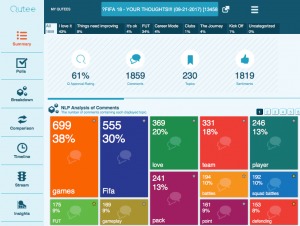
If you thought that every social media essentially gives you the same insights, you couldn’t be farther from the truth. “We analyze and archive every comment,” informs Tim, adding, “We also utilize polls to analyze additional data. So behind every Qutee discussion is a world-class analytic dashboard on every conversation, for free.” Tim calls it data democracy.

Also Read: Tech Startup Qutee To Incentivize Key Influencers With Stake In The Business

This is how it works:

  • Data discussions analyze, organize and archive every comment via the real-time analytics engine.
  • Data democracy means open data and analytics technology for everyone via the comment filters and analytics dashboard that come with every Qutee page.
  • Users can filter 1000’s of comments in seconds to find the topics and people that interest them.
  • Discussions don’t drown in a sea of comments.
  • Digital communities can track and empower the voice of their audience.
  • Everyone understands and influences the conversation.

Got a Qutee for yourself?

“Think of Qutee as an intelligent data-driven Twitter/Facebook
that analyses and filters every comment so you can filter the
conversation and find the comments and people that interest you.”
– Tim Wilson, Qutee

How to use Qutee? 

Got a Qutee for yourself?
Browse through thousands of comments in three simple clicks
  1. Select a Qutee (topic) of your interest.
  2. Use the Qgage to rate the Qutee between 0 and 100.
  3. Go through the entire comments section with the help of 3 simple clicks and get to the ones that matter to you.
  4. Place your opinion on the ongoing discussion.

Alternatively, you can also create your own Qutee in a matter of seconds. Qutee can be used on your website via an I-frame too.

Recommended Read: Qutee Changes the Online Conversation with Launch of Data-driven Discussion Platform

Six Steps to Achieving Customer-Centric Marketing

0
Six Steps to Achieving Customer-Centric Marketing

MediaMath LogoBroadly speaking, being customer-centric in your marketing represents a shift from a sole focus on company objectives to a focus on customer objectives first. The thought is that happy customers will lead to the meeting of your company objectives — sales.

Significantly, it also swaps “go with your gut” marketing to data-driven marketing. That’s because such marketing relies on learning from and activating against signals (data) that your customer is giving you. Ultimately, this is about building up individual-level data that you translate into actionable insights, which leads to actionable growth.

This shift to customer-centric marketing is significant in that it requires an evolutionary transformation of your people, processes, and technologies. Connecting the dots to improve your customers’ brand experiences is a complex endeavor. Multiple touchpoints, siloed data, existing marketing processes and the coordination of marketing messaging in an omnichannel environment make customer-centric marketing trickier to pull off than many initially understand when they add it to their marketing strategy verbiage.

Don’t let that complexity scare you off. Achieving customer-centric marketing doesn’t have to be all or nothing: You can and should apply a crawl-walk-run approach to your people, process and technology changes. Pick off the easiest marketing channels and processes to change and then build up your complexity.

We recommend starting with programmatic marketing channels, then expanding to your entire digital marketing and sales world. Finally, you should migrate to your whole marketing organization, including omnichannel sales. Here’s how to get started:

  1. Start with the data: Data is the foundation on which any good future marketing strategy should be built. In practice, customer-centric marketing means marketing to an individual, not to a device or cookie. The first step is to aggregate and activate against all of your customer inputs across first- second- and third-party data. Said another way, work on bolstering your single view of the customer. That view should be used not only to measure marketing efficacy but also for optimization, activation and predictive analytics. This data isn’t all marketing-related data. Instead, it refers to all your customer touchpoints, including customer service interactions, purchases to signing up for loyalty programs and registries.
  2. Focus on the customer: Marketing is traditionally driven by business needs. For instance, a product might be on promotion, so you need to advertise it. Maybe you’re having a Fourth of July sale or if the product isn’t selling, you need to advertise it more. While marketing communications may be based in aggregate-level customer understanding (if customers generally think free shipping is important, we push that in our messaging), shifting to focus first on the individual customer-level needs, desires and preferences are different. This means selecting creatives, marketing channel, content, frequency, etc, based on individual customer data and context. It means activating, optimizing and measuring at the customer-level, not the overall campaign. Examples of this include programmatic optimization, fluid and adaptive audience segments, sequential marketing. The end goal is to positively influence a customer’s behaviors. Campaigns might typically do this with aggregate assumptive data (like demographics). But a customer-centric approach is executed at an individual level. It’s based on trying to figure out and influence the consumer’s needs in that moment.

  3. Think of omnichannel as a single channel: The customer doesn’t think of your brand as email, search, social, programmatic, etc. Yet as marketers, we continue to operate independently within our marketing organizations, sending emails, display ads, social ads, direct mail pieces that all have differing objectives, creatives and performance goals. Being omnichannel means recognizing both that online and offline sales are just sales to a customer and that marketing touchpoints are all one conversation with your brand. It’s still common, for instance, for the email marketing team to operate separately from the direct mail teams and from other digital marketing teams. Digital teams are often still siloed into search, display, social etc and/or based on their position on the funnel. Fixing this means reorganizing your marketing structure and incentives (for internal employees and agencies) and marketing effectiveness judgments. “Effectiveness” in this case refers to an individual customer and all of their sales, not to a campaign or marketing channel.
  4. Integrate customer engagements: Having one connected conversation with the customer that is relevant to their current status only happens when there’s integration of your marketing silos – data, processes and teams. Maximizing this value means getting every aspect of customer engagement right to deliver long-run incremental value from marketing. That means being where the customer is when he or she wants you to be there and personalizing those engagements based on customer signals. For instance, when a customer has just made a purchase of a pair of jeans on their desktop, why continue to serve ads for jeans on their mobile device?
  5. Optimize your messaging: Leverage signals and feedback across all aspects of your relationship with your customer. Adapt your audience models based on the customer behavior you observe in real time. Doing so maximizes both customer experience and ROI. Make use of dynamic creative optimization and ensure that messaging is personally relevant. Get rid of duplicative marketing created by siloed marketing teams, disconnected customer data and lack of understanding of what customer behaviors will lead to incremental revenues.
  6. Build comprehensive understanding: The final step is to not only develop a comprehensive understanding of your customer relationships, but develop it in timely fashion that lets you take action against those insights. Measurement for measurement’s sake alone is most often useless. Measurement’s real value is in your ability to create actions off of or decision off of those results. This means both developing a deeper understanding of your customer and closing the loop to action off of that understanding.  Measurement can and should be used to influence the quality and efficacy of the media spend not just in the strategy and planning stages, but while your marketing is running. Doing so means employing tactics such as multi-touch attribution and incremental lift to deepen your understanding of the impact of your marketing on your customers’ behaviors, and then using those results in your optimization.

The end result of implementing these strategies and achieving CCM is fourfold: (1) the customer will feel a greater connection with your brand, (2) your costs will decrease, (3) your revenues will increase and (4) your brand perception in the market will grow. If you are overwhelmed as to where to start, I recommend first assessing your data and getting that in order. Most of the above strategies and tactics are not implementable without having your data connected at the customer-level.

Recommended Read: The People-Based Data Lake – A More Nimble Marketing Data Solution

Can Your Video Compete on Social Media?

0
Can Your Video Compete on Social Media?

In An Oversaturated Market, Socialbaker’s New Video Performance Benchmark Feature Keeps an Eye on Context and Competitors So Your Video Doesn’t Lose Out

Four in 5 millennials check out video content when they research a purchase decision. More than half of the population watch videos online every day. Facebook is rated as the most impactful social channel for video — 8.4 times higher than any other social channel — with more than 8 billion videos being watched each day. Adoption of native video across media is almost 100%, and across brands above 80%. Videos are 6 times more likely to be retweeted than photos and 3 times more likely than GIFs. Companies who use videos in their marketing experience 27% higher Click-through Rate than those who don’t.

Marketers definitely need to keep their video strategy up and running. To meet audiences with content that resonates with them, it’s now a must to integrate video into the wider social media strategy. However, many marketers are still unsure what video KPIs they want to tie to larger marketing objectives.

Recently, Socialbakers, the leading AI-powered social media marketing platform, announced the addition of its video performance benchmarks for social networks to its Socialbakers Suite. Socialbakers video performance benchmarks let marketers view their video performance metrics in a competitive context against industries, countries and regions. These benchmarks go beyond the simple measures available on social platforms about the brands’ own content.

Metrics indices for video performance benchmarks include: overall score, video views (total, 10 and 30 seconds), video viewers (unique, unique 10 and 30, time watched, average time watched), and view types (repeated, click to play, auto).

Moses Velasco
Moses Velasco

“Socialbakers provides customers with a comparison of video performance metrics on a page level, against industries, countries and regions, allowing marketers to determine where they stand based on performance. They can then make adjustments to their video strategy and engage audiences through video content in a significant way,” said Moses Velasco, Chief Product Evangelist at Socialbakers.

Read More: LinkedIn Launches Beta Program with Video for Sponsored Content

Video Benchmarks help marketers navigate the relationship between the obvious potential value of video, the oversaturated environment in which they compete and the actual investment it takes to make an impact. With Video Benchmarks, marketers can finally judge their private videos metrics realistically and adjust their video strategy to improve their position and deliver ROI from social media.

Having Video Benchmarks within Socialbakers Analytics allows marketers to easily monitor all aspects of their video strategy in a single location, providing a comprehensive overview of everything related to their video campaigns. Compared to native video analytics, the ability to track all video performance metrics, regardless of where they have been uploaded, allows for seamless integration of video insights with other marketing data.
Update your metrics

In the last 10 years, the digital landscape has changed, with consumers phasing out desktop and laptop computers to search the web and interact with content, turning to their mobile phones and tablets instead. Due to this shift, video as a post type is growing rapidly, as it is one of the few types of online material that provides the value, relevance and flexibility consumers need, in a quick and succinct way to fit consumers’ on-the-go lifestyle.

Videos, both traditional and live, are an engaging post type and marketers know they must use video to remain relevant. However, it’s still a less familiar, less certain landscape to navigate. Many marketers, especially those who are relatively new to video, are still unsure what video KPIs they want to tie to larger marketing objectives.

“Before Video Benchmarks, marketers could only monitor their own performance over time, and only monitor the competition’s public metrics; however, neither of those metrics tells the whole story. As video continues to grow, both with sharing content and consuming, marketers can use Video Benchmarks to help compare their overall results against a more meaningful standard in order to fine-tune their strategy, identify performance gaps and develop best practices and justify the impact video has on their larger marketing objectives,” said Velasco.

Leveraging the largest social media data-set in the industry, Socialbakers’ social media marketing platform helps brands large and small ensure their investment in social media is delivering measurable business outcomes.

Recommended Read: Brightcove and FORA.tv Partnering to Provide Full-Scale Live Video Technology and Production

TechBytes with Daniel Kuperman, Director Product Marketing, MindTickle

0
Daniel Kuperman Mind Tickle

Daniel Kuperman
Director Product Marketing, MindTickle

We spoke to Daniel Kuperman, Director, Product Marketing, Mindtickle, to understand their approach to sales enablement.

Html code here! Replace this with any non empty text and that's it.

MTS: Tell us about your role at MindTickle and the team you handle?
Daniel Kuperman:
I lead product marketing and sales enablement for MindTickle. This includes working with our product team on understanding how customers are using the product, training our sales reps on positioning MindTickle and enabling them to handle conversations with buyers, talking with analysts and keeping an eye on the competition.

MTS: How does your partnership with Playboox drive excellence in the execution of sales processes?
Daniel: Sales excellence is accomplished by a combination of mastery of the message (how you articulate your company’s value proposition and handle conversations with buyers), as well as the ability to follow a process (what you do in each stage of the sales cycle). This partnership helps companies achieve both: MindTickle helps you ensure your reps are ready to have the sales conversations, while Playboox gives you the step-by-step plays that enable you to navigate the deal.

MTS: What are the major pain points for businesses in their adoption of sales readiness technologies?
Daniel: There are three key areas we see companies struggling with:

  • Getting executive sponsorship;
  • Adoption of the technology by the sales team;
  • Proving the ROI.

Sales Enablement professionals need to work with vendors to put together a solid business case to get executive buy-in for a solution. The technology being implemented should have mechanisms to help increase adoption via gamification and user experience, and key metrics need to be thought out and put in place to ensure you can track the ROI. It is hard work but unless enablement leaders have this approach the adoption of sales readiness technologies will falter.

MTS: With the coming-of-age of ABM platforms, how should B2B sales teams utilize social and gamification solutions for better customer engagement?
Daniel: B2B sales teams need to be enabled on how to better leverage social media as an engagement tool with customers and prospects, while gamification can increase engagement of the sales reps with these tools and get higher adoption.

MTS: At MindTickle, how do you leverage data science and machine-level intelligence for sales coaching and enablement?
Daniel: At MindTickle we have been focused on leveraging new machine learning and AI technologies to create automated workflows and intelligent dashboards for our customers. We will have announcements around these new capabilities soon.

MTS: What would sales onboarding strategies look like in 2020, given the rapid adoption of intelligent assistants and AI-bots for workflow management?
Daniel: The future of sales onboarding will have a stronger emphasis on experiential learning that leverages technology that helps simulate real sales scenarios reps can use to practice and hone their skills. AI technology will improve the automation required for onboarding programs to scale easily and create automated workflows that can dynamically change learning paths according to actual field execution and will intelligently correlate sales performance with key capabilities being developed by new sales reps.

MTS: Thanks for chatting with us, Daniel.
Stay tuned for more insights on marketing technologies. To participate in our Tech Bytes program, email us at news@martechseries-67ee47.ingress-bonde.easywp.com

Also Read: TechBytes with Nishant Mungali, Co-Founder and Chief Product Officer at MindTickle

Interview with Julie Lyle, Chief Marketing Officer, DemandJump

1
Julie Lyle DemandJump

[mnky_team name=”Julie Lyle” position=” Chief Marketing Officer, DemandJump”][/mnky_team]
[easy-profiles profile_twitter=”https://twitter.com/julielyle” profile_linkedin=”https://www.linkedin.com/in/jclylelinkedin/”]

“CMOs should have a clear understanding of the business challenges they are trying to solve and/or the customer value they are trying to deliver and use these factors to invest in prescriptive intelligence platforms. “

On Marketing Technology

MTS: Tell us about your role and how you got here? What inspired you to be part of an AI-based marketing intelligence company?
My role at DemandJump is a hybrid between Chief Revenue Officer, Chief Marketing Officer, and Advisor. In fact, I became an investor in DemandJump after I had been involved with the business for 9 months because I believe so strongly in the need they are fulfilling in the marketplace – specifically – how to drive qualified traffic in an increasingly cluttered competitive environment. That’s what inspired me to get involved in the first place. There are so many marketing tech tools out there today, but more than 90% of them are focused on extracting value from customers or prospects a brand has already identified. Very few tools (and no AI platforms) are focused on the acquisition of new, highly-converting customers, across all digital channels.  That’s the DemandJump “sweet spot”.

MTS: What are the foundational tenets of the Traffic Cloud™? How does it help marketers turn into 21st century winners?
DemandJump customers have a “bird’s-eye” view into what their competitors are doing and how/where they are acquiring new customers. It’s like having a seat at your competitors’ executive committee meeting when their CMO’s recap what is working or not, and lay out where they will invest next. I wish I had that intelligence when I was CMO at Walmart, Prudential, etc.!

With a view to where qualified prospects are 3 steps before they reach your competition, today’s marketers can step in front of that traffic and redirect those prospects to their brand, driving incremental revenue market share. That’s how they become 21st century winners.

MTS: What are the major challenges for businesses in leveraging data science and human intelligence?
One challenge is that businesses need to understand that different math is required to solve different business problems.  One size algorithm does not “fit all”. Finding the talented mathematicians and data scientists that can isolate specific business issues and then craft the appropriate AI solutions is difficult.

Another thing to consider: Many experts agree that AI will largely augment, rather than replace, human labor in a symbiotic way, where algorithms learn implicitly from our actions and incrementally take over the redundant aspects of our work. This dream of semi-supervised learning, where humans provide some minimal amount of feedback and training to an algorithmic agent, has been rather illusive in real-world applications. This is because the feedback loops we have today are extremely manual. The challenge for businesses, going forward will be to find innovative ways to capture feedback and other metadata to solve optimization challenges in a way that feels effortless.

MTS: How should CMOs determine the baseline to choose and invest in prescriptive intelligence platforms?

  • CMOs should be careful to ensure they have a clear understanding of the business challenge they are trying to solve and/or the customer value they are trying to deliver, and use these factors as the baseline to evaluate and invest in prescriptive intelligence platforms.
  • Before choosing to invest in prescriptive intelligence platforms, CMOs should have a solid understanding of the reliability of their existing data sets, BI analysis and predictive modeling, as this is often the foundation upon which prescriptive intelligence platforms build. Where predictive modeling takes explanatory variables from past occurrences and exploits them to predict the previously unknown future, prescriptive intelligence platforms typically apply algorithms to those predictive models and suggest decision options and outcomes that will deliver an optimal result, based on the business parameters specified.
  • CMOs should be looking for prescriptive intelligence platforms with the following characteristics:
    • Cross-channel data integration and analysis
    • Ability to ingest external data sources and assimilate those data sets into their analytics
    • 3rd party data sets, such as competitive intelligence, consumer cohorts, market data, etc.
    • Ability to integrate with external platforms or tools
    • Ability to deliver real-time (or, near real-time) insights, so businesses can adjust as quickly as market dynamics shift
    • Simple, efficient user interface, including drill down capabilities and customizable dashboards
    • Efficient data export functionality
    • Purposeful artificial intelligence – meaning the right math applied to the right problems, not just AI for the sake of AI

MTS: Do you feel that institutional barriers are the biggest hurdle for intelligence analysts to turn into decision-making leaders?
Every organization and every intelligence analyst is different. However, institutional and organizational barriers can present hurdles for these analysts to progress to leadership positions. If these barriers exist in a company, my experience has been that the hurdles result from a broad lack of understanding or appreciation for the importance of data and analytics in informing decision making and strategy.  In today’s global marketplace, regardless of your industry vertical, businesses that are able to efficiently and effectively leverage data to solve customer problems, or to deliver customer value, will be the ones that succeed and continue to grow. More and more, executive leadership teams and Boards are recognizing this.

MTS: What startups are you watching/keen on right now?

  • Ampsy
  • Arria
  • BounceX
  • Quartz
  • SessionM
  • Swarmsales
  • The Upshot (NY Times)
  • Viv Lab

MTS: What tools does your marketing stack consist of in 2017?
DemandJump Traffic Cloud (Yes! We “drink our own champagne”), automation, email, competitive intelligence, video, SMS, collaboration, DMP, analytics, CRM and advertising platforms.

MTS: Would you tell us about your standout digital campaign? (Who was your target audience and how did you measure success?)
As a startup, we’ve spent the last 18 months ensuring our solution is truly aligned with the needs of our market. As such, we are just now gearing up to launch our digital campaigns.

That said, we recently leveraged our DemandJump insights to assist one of our customers with their display/remarketing efforts.  The client was underperforming on display and remarketing ads. By overlaying a DemandJump recommended placement whitelist on their agency’s established whitelist, and only serving ads on the sites we recommended, this retailer increased revenue per click by 31%, increased revenue per visitor by 38%, improved order per click by 99% and improved orders per visitor by 109%.

MTS: How do you prepare for an AI-centric world as a marketing leader?

  • Foster a DNA for change throughout the enterprise
  • Dedicate resources for innovation and learning
  • Build collaboration tools and processes
  • Form contingencies that allow scale
  • Automate redundant tasks, streamline processes and free up time for experimentation
  • Nurture innovators and hire for gaps
  • Balance institutional knowledge with external points of view

This Is How I Work

MTS: One word that best describes how you work.
Purposefully.

MTS: What apps/software/tools can’t you live without?

  • DemandJump!
  • Also:
  • Starbucks App
  • Hotels Tonight App
  • IFTTT App
  • iTunes
  • Slack

MTS: What’s your smartest work related shortcut or productivity hack?
Establishing “Rules of Engagement” with my team as relates to email.  Start the subject with “HOT” if you need me to read and respond as quickly as possible, (and keep your ask concise and to the point);  use “ACTION” at the beginning of the subject line if you need me to do something or make a decision in order for you to keep work moving forward; and use FYI at the start of the subject if I don’t necessarily need to read or respond right away – or at all.

These guidelines not only keep my team focused and my inbox safe from unnecessary email strings – it also causes my team to thoughtfully consider the importance/urgency of their messages, whom should be on copy, and how they should clearly frame their “ask” in the subject line and the body of the email.  It’s refreshing not to receive numerous email strings with subject lines that may have been relevant to the original message 3 days ago, but have nothing to do with the latest send.

Then of course, I set filters to prioritize the HOT emails at the top of my inbox, and so on.

MTS: What are you currently reading? (What do you read, and how do you consume information?)
I just started reading The Digital Matrix, by Venkat Venkatraman. I usually read a book every week or so. Most often I read them when I’m on the treadmill. I subscribe to numerous blogs and feeds following business, the stock markets, AI and private equity / investing newsletters. There are also retail and CPG industry trades I subscribe to and read mostly on planes. And of course, I can’t live without MarTech.

MTS: What’s the best advice you’ve ever received?
 “Ask more questions than you answer.”

MTS: Tag the one person in the industry whose answers to these questions you would love to read.
Jonathan Mildenhall 
Jeff Jones

MTS: Thank you Julie! That was fun and hope to see you back on MarTech Series soon.

Also Read: Dreamforce TechBytes with Julie Lyle, CMO, DemandJump

[vc_tta_tabs][vc_tta_section title=”About Julie” tab_id=”1501785390157-b58e162d-0ae25a4b-c27aca64-108e51b0-80edaf37-bd3d4ade-e84f”]

Executive leader with a passion for building world class brands and teams. Successful entrepreneur and Board Member. Passionate about Exponential Organizations, health & wellness.

Senior Marketing Executive – proficient in industry-leading, integrated Marketing, eCommerce, Merchandising, Operations, Digital Media, CRM, Branding and Social Engagement programs that reach diverse consumer segments in both mature and emerging markets. Extensive marketing, merchandising and operational expertise with a track record for leveraging innovation & technology to drive new customer acquisition, retention, and upsell that delivers long term shareholder value.

Driver of revenue and market share growth through transformational business development, rebranding, marketing planning, media optimization, product innovation and creating seamless online/offline consumer experiences. Passionate builder and leader of people. Senior marketing executive honored to have led award-winning marketing organizations ranging from 10 – 300 professionals.

[/vc_tta_section][vc_tta_section title=”About DemandJump” tab_id=”1501785390320-2d44fa50-740c5a4b-c27aca64-108e51b0-80edaf37-bd3d4ade-e84f”]

DemandJump
The way companies find new customers online has changed. DemandJump is leading the way.

By focusing on the entire digital ecosystem, DemandJump gives you increased visibility on where to focus your online marketing spend to drive the greatest revenue growth. With custom artificial intelligence and sophisticated algorithmic attribution models built right into our platform, we analyze the network effects of user traffic flow between sites up to three degrees of separation from you or your competitors to identify prescriptive strategies across channels. This gives you an unbiased view of your greatest, often untapped, sources of traffic and revenue across all digital channels. With this, you can now decide how to invest your time and budget with purpose and precision to maximize ROI. DemandJump proves #whywhere matters for our customers.

[/vc_tta_section][/vc_tta_tabs]
[mnky_heading title=”MarTech Interview Series” link=”url:https%3A%2F%2Fmartechseries-67ee47.ingress-bonde.easywp.com%2Fcategory%2Fmts-insights%2Finterviews%2F|||”]

The MTS Martech Interview Series is a fun Q&A style chat which we really enjoy doing with martech leaders. With inspiration from Lifehacker’s How I work interviews, the MarTech Series Interviews follows a two part format On Marketing Technology, and This Is How I Work. The format was chosen because when we decided to start an interview series with the biggest and brightest minds in martech – we wanted to get insight into two areas … one – their ideas on marketing tech and two – insights into the philosophy and methods that make these leaders tick.

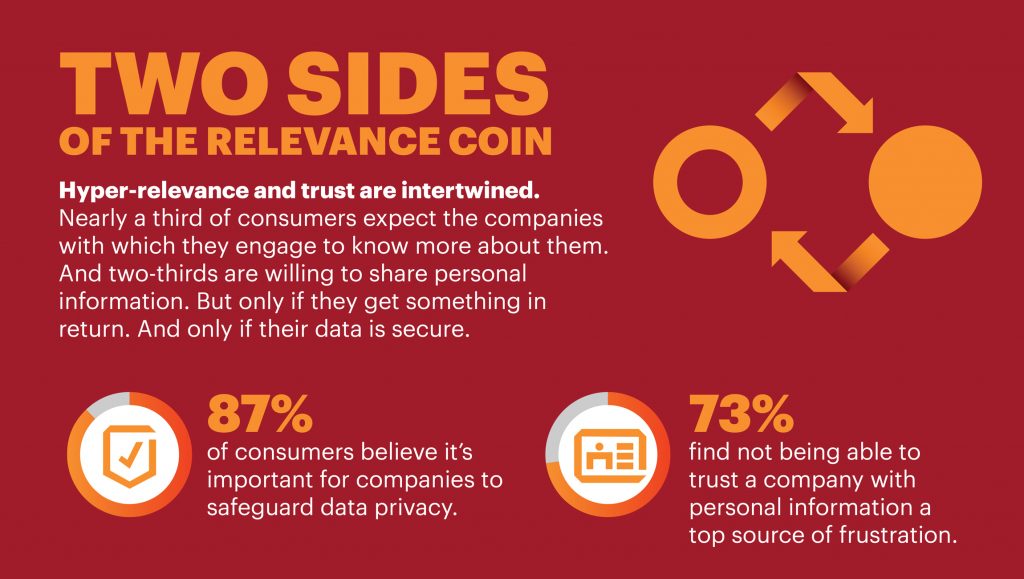
Poor Personalization and Lack of Trust Cost US Organizations $756 Billion Last Year

0
Poor Personalization and Lack of Trust Cost US Organizations $756 Billion Last Year

Accenture Study Finds that 44% Consumers Are Frustrated When Companies Fail To Deliver Relevant, Personalized Shopping Experiences, 49% Are Concerned About Personal Data Privacy

US consumers are locked in a vicious circle with brands over customer experience, according to new research from Accenture. While 44 percent are frustrated when companies fail to deliver relevant, personalized shopping experiences, nearly half (49 percent) are concerned about personal data privacy as they subscribe to intelligent services designed to understand and anticipate their needs. Poor personalization and lack of trust cost U.S. organizations $756 billion last year, as 41 percent consumers switched companies. Without deeper customer insight, companies cannot deliver the experiences they crave.

The thirteenth annual Accenture Strategy Global Consumer Pulse Research gauged the attitudes and expectations of more than 25,000 consumers around the world, including 2,000 US consumers, about their appetite for more intuitive, technology-driven brand experiences. As organizations strive to become ‘living businesses’ – companies that are extraordinarily pre-emptive and responsive to changing customer needs – the study revealed a significant digital trust deficit that must be addressed before true customization can be delivered.

Robert Wollan
Robert Wollan

“As technologies such as artificial intelligence, machine learning and digital assistants become more sophisticated and mainstream, companies are creating new touch points, offerings and services that intelligently anticipate and flex to their customer’s precise needs, offering a level of hyper-relevance not experienced before. Those that succeed will hit a ‘sweet spot’ whereby US customers will be willing to share more personal insights into their world in return for greater value and the confidence that their data is protected,” said Robert Wollan, Senior Managing Director and Advanced Customer Strategy global lead at Accenture Strategy.

Read More: Gigya Introduces Enterprise Preference Manager To Fortify Customer Trust and Address New Privacy Regulations

US consumer appetite for hyper-relevant experiences

Forty-three percent of U.S. consumers are more likely to shop with companies that always personalize experiences, as long as their trust isn’t compromised. Nearly a third (31 percent) say they would find great value in services that intuitively learn about their needs over time to customize product, service or content recommendations.

Nearly half (48 percent) of US consumers would use ‘smart-reordering’ services where intelligent sensors in the home pre-empt when a product, such as laundry detergent, is running low and automatically re-orders it on their behalf. Another 36 percent use digital assistants. While the vast majority (89 percent) are satisfied with the experience, 40 percent say it can feel slightly creepy when technology starts to correctly interpret and anticipate their needs.

Digital trust deficit

Digital trust remains a critical barrier to enabling hyper-relevant experiences. Expectedly, a clear majority (92 percent) of U.S. consumers say that it is extremely important that companies protect the privacy of their personal information. Another 79 percent say it is frustrating to realize that some cannot be trusted to use it appropriately.

Poor Personalization and Lack of Trust Cost US Organizations $756 Billion Last Year
Predictive analytics, artificial intelligence (AI) and machine learning manifested through devices such as digital assistants are all contributing to the shift to hyper-relevance

Forty-three percent of US consumers fear intelligent new services will come to know too much about them and their family. Overall, 66 percent want companies to earn their trust by being more open and transparent with how their information is being used.

Also Read: LiveRamp and Criteo Partner to Enhance People-Based Marketing Campaigns for Omnichannel Engagement

Building digital trust

“Digital trust will become increasingly challenging for companies to achieve as they look to capture new categories of customer data, such as biometric, geo-location and even genomic data, in their drive for greater relevance. Customer concerns will inevitably rise, so it’s critical that companies have strong data security and privacy measures in place, they give customers full control over their data, and are transparent with how they use it,” said Kevin Quiring, managing director, Advanced Customer Strategy North America lead, Accenture Strategy.

Hyper-relevance is the next wave of growth for companies operating in consumer industries, but it cannot be achieved without engendering digital trust. To pivot to hyper-relevance, companies should consider:

  • Giving customers full control over their data – As customers demand greater control over how companies use their personal information, organizations must become more transparent. Customers must be given full access to, and control over, their data which will demonstrate responsible stewardship and ethics. Furthermore, they must ensure the appropriate safeguards are in place to protect it.
  • Creating new customer value – Companies that distinguish themselves with hyper-relevant experiences look beyond the traditional customer journey. They prioritize areas where they can dynamically deliver something that customers value, at the right moment every time.
  • Investing in precise insights – Hyper-relevant companies invest in predictive analytics, collaborate with an ecosystem of partners to capture real-time customer insight, and mine data in new ways to understand their specific needs.

The thirteenth annual Accenture Strategy Global Consumer Pulse Research (GCPR) surveyed more than 25,000 consumers from around the world about their appetite for more intuitive brand experiences.

Accenture Strategy operates at the intersection of business and technology. The focus is on issues related to digital disruption, competitiveness, global operating models, talent and leadership help drive both efficiencies and growth.

Recommended Read: Accenture Strategy Report Provides Insights On The New B2B Customer Experience

MediaOne Business Group Launches Its Revamped Website with Comprehensive Digital Marketing Services

0
MediaOne Business Group
MediaOne Business Group Launches Its Revamped Website with Comprehensive Digital Marketing Services

MediaOne Business Group, one of the best known digital marketing agencies in Singapore, recently relaunched their new website, which promises to rebrand its work and offer a range of new services for local and global clients. The portal is also targeted to offer MediaOne’s digital marketing services. The company recently arranged for a press conference to announce this new initiative which they feel will revolutionize the way companies can enjoy more online visibility without the hassle of more costs, more processes and more agencies to deal with.

Also Read: Vitiello Communications Group Expands Its Service Offerings

For a while, MediaOne was known for its website services and SEO work, but with a revamped website and a planned range of additional services, the company is set to unleash new possibilities. The management of MediaOne had a detailed talk with press members and selected clients and partners on occasion of the launch on November 17, 2017.

“With the new website, MediaOne now offers a whole range of digital marketing services for businesses, partners, and clients in Singapore and beyond. Apart from SEO services Singapore, we are now focusing exclusively on online reputation, social media marketing, and brand management. We are opening new avenues for our partners, who will be able to offer our customized services to clients in Singapore and beyond. Our new website will have a portal that will allow partners to lodge new projects and find the status of their client marketing programs in an effortless way. In short, MediaOne is finally making room for collaborative work, and we seek your support for the same,” said the marketing head.

Also Read: G2 Crowd Appoints Ryan Bonnici as Chief Marketing Officer

Additionally, MediaOne has also announced its plans to launch regional brands in other parts of the world besides SEO Singapore, and currently, they are starting with Hong Kong and Australia. “We believe digital marketing is a global language, and we would want to launch our solutions for brands worldwide, keeping the language and local barriers aside. We are expecting to launch the full version of our new website by January 18, 2018, which will offer a better insight of our global vision,” the PR team concluded.

Recommended Read: Roxot Report Names AppNexus, Rubicon, and Index Exchange As Top Header Bidding Partners

Death of The 3rd Party Cookie

0
Death of the 3rd Party Cookie

4cite LOG- Bob GaitoThe digital ad industry relies heavily on third-party cookies. These little pieces of code get placed in your browser as you move from site to site, letting advertisers collect data about your interests and serve you related ads. They differ from first-party cookies because they are placed by an object on the page (e.g. an ad) that originates from a different domain than the one you are visiting. So if you visit, say, Macy’s website, Macy’s can place a first-party cookie to collect data about your visit. But if you visit a different site that’s running an ad for Macy’s, the ad company can place a third-party cookie to collect data about you.

This information is collected without permission and is used for ad re-targeting, which is how ads follow people around the Internet. The new Intelligent Tracking Prevention feature detects and eliminates cookies and other data used for this cross-site tracking, which means it helps keep a person’s browsing private. The feature does not block ads or interfere with legitimate tracking on the sites that people actually click on and visit.” – Apple Company Statement

There’s been controversy about privacy issues related to third-party cookies for years, and the big browsers (Chrome, IE, Firefox) have taken steps to limit them. But to date, techniques to skirt cookie blocking have largely thwarted predictions for the third-party cookie’s demise. But things are changing.

Apple, whose browser market share is rapidly growing, is getting serious about third-party cookie blocking.  Their recently announced Intelligent Tracking Prevention (ITP) will take place not only on desktops, but on mobile too – where Safari holds nearly 50 percent of the browser market share in North America. All third-party tracking data is to be proactively removed after a 24-hour period, leaving only data from the sites a user has directly interacted with (i.e. first-party cookies). When this happens, ad companies will no longer be able to effectively track your interests as you browse the web.

This is striking a major nerve, with some of the biggest advertising organizations claiming Apple will “sabotage” the current economic model of the internet. The digital ad world has a lot to lose, with 2017 digital ad spending in the US expected to exceed $80 billion.  But Apple is undeterred.  Love it or hate it, Apple wants to help consumers keep their browsing data private.

The ad industry is already under scrutiny, with targeting inaccuracies and performance measurement problems causing retailers to question the effectiveness of their ad spends, and this will only make matters worse. From an open letter to Apple from six advertising trade groups: “Blocking cookies in this manner will drive a wedge between brands and their customers, and it will make advertising more generic and less timely and useful.”

So when the third-party cookie crumbles, what’s a retailer to do?

Read More: SteelHouse Releases AI Technology that Disrupts Manual Media Buying

Focus on people-based marketing driven by first-party data  

Instead of driving a wedge between brands and their consumers, focusing here will make the retailer-consumer relationship stronger. People-based marketing links online shopping data to people rather than browsers and devices. Sometimes called cross device marketing, it enables consistent communication with consumers across multiple devices instead of the choppy, “50 first dates syndrome” that often happens when a shopper on a PC isn’t recognized as the same shopper on a phone or other device. At its heart is technology that identifies shoppers when they come to your website, regardless of device, and links them to a persistent identifier where website and email activity is tracked.

This lets retailers concentrate on engaging with individual consumers to create the kinds of positive experiences that lead to brand loyalty, and ultimately, a higher return on marketing investment. It lets them take into account where each customer is in the customer journey and communicate accordingly (still getting ads for that treadmill you bought six months ago? This won’t happen.) It also supports multiple channels including email, social media, apps, print and real-time communication directly on your website.  In addition, it optimizes ad spending on Facebook and Google.

One of the major complaints of the ad industry regarding Apple’s ITP is that it gives an unfair advantage to Facebook and Google. The 24-hour purge won’t have the same effect on them because users often stay logged on.  But for users who don’t stay logged on, ITP will cause problems. For example, it will disable Facebook’s social plugins, which it uses to track people’s browsing across the web. Even without any new limitations, know that audiences determined with first-party data are much more effective than the audiences these platforms can determine for you. Ideally, you should send them audience data that is dynamically updated in real-time based upon each individual’s up-to-the-second interactions with your brand. For example, if Jane Doe visits your website and was a consistent purchaser in the past but is now inactive, you can switch her to an audience for which you have a higher bid.

To be ready for the changes ahead, the best thing that retailers can do is start looking at their first-party data: what they’re collecting, how they’re collecting it, how they’re using it, and how they can do better.

Winter is coming for the third-party cookie.  It’s time to prepare.

Recommended Read: Beachfront Media Data Proves Massive Uptick in Connected TV Usage, Strong Advertiser Metrics

Tapjoy Adds Custom Exchange Rates and Permanent Currency Sales to Offerwall Plus

0
Tapjoy Adds Custom Exchange Rates and Permanent Currency Sales to Offerwall Plus

New Features Empower App Developers To Better Segment Users And Customize Their Monetization Strategies To Maximize Revenue

Tapjoy, the Maximum Impact Platform for mobile advertisers and app developers, announced the launch of two innovative features to its industry-leading advertising offerwall: Custom Exchange Rates and Permanent Currency Sales. The new features expand upon the already sophisticated capabilities of Tapjoy’s Offerwall Plus and enable app developers to maximize ad revenue by customizing their monetization strategy for different user groups.

The features were released in conjunction with Tapjoy’s latest Maximum Impact Report, “Tips to Maximize Offerwall Revenue During the Holidays.” Offering best practices on how to integrate, promote and customize in-app offerwalls during the holiday season.

The report also reveals insightful data on the impact an offerwall has on application revenue. Aside from generating incremental ad-based revenue, offerwalls typically help publishers increase In-App Payment (IAP) revenue as well. Recent data from Tapjoy’s publisher network shows that in-app spend per user increased an average of 172 percent during the first week after their initial offerwall engagement. Tapjoy’s data also revealed that apps monetizing via rewarded video ads alone generate about half the revenue per unique ad viewer (ARPDUV) as apps that monetize through both videos and an offerwall combined.

Read More: Mobile Gamers Expect to Play More Games This Holiday Season, Tapjoy Research Finds

Recent data from Tapjoy’s publisher network shows that in-app spend per user increased an average of 172 percent during the first week after their initial offerwall engagement

Tapjoy’s Offerwall Plus features thousands of opt-in, rewarded advertisements from hundreds of leading brands and trusted partners, allowing app users to earn free virtual currency by engaging with the ads of their choice. The new features in Offerwall Plus include:

  • Custom Exchange Rates
    Tapjoy’s new Custom Exchange Rate feature allows app developers to easily set different levels of rewards for different user groups. For example, a developer may offer new users 100 coins for watching a video trailer, but provide a more mature user 200 coins for the same action. Custom exchange rates help sustain ad monetization as users progress in the game and require more currency for higher value items. This encourages ongoing user engagement, provides more time to convert players into paying users, and prevents currency inflation by enabling publishers to avoid raising payouts across the board.
  • Permanent Currency Sales
    Tapjoy now makes it easy for publishers to implement rules-based currency sales that target specific user groups on an ongoing basis. Currency sales are promotions in which users are given the chance to earn more virtual currency than usual for every ad they engage with for a limited time. With permanent currency sales, publishers can target specific user segments and automatically offer the promotion if a user meets certain criteria. Permanent currency sales can be used to achieve a number of objectives, such as incentivizing user loyalty, shortening time to conversion for new users, or re-engaging offerwall “churners”. For example, publishers could offer a special promotion only to users who have downloaded the app within the last three days, or those who have failed to engage with the offerwall for the past two weeks, or loyal users who have consistently engaged with the app every day for the past week.

Research published by Tapjoy in the new Maximum Impact Report demonstrates the significance that running a currency sale can have on publisher revenue. PONOS, publisher of the hit app Battle Cats, conducted a case study in November, 2017 which found that participating in a 3-day long weekend currency sale led to a 4x increase in average daily revenue, followed by a sustained lift of 89% during the week following the sale (compared to the week before the sale)

“We found that temporarily increasing our virtual currency exchange rate not only led to a significant boost in ad revenue, but also proved to stimulate the app’s economy and drive a sustained lift in ad conversions. Tapjoy’s Offerwall Plus makes it easy for our team to experiment with different currency sale exchange rates and user targeting to consistently drive optimal revenue for our apps,” said Yuta Nozowa, Chief Marketing Officer of PONOS.

Benjamin Chen
Benjamin Chen

“If you look at some of the most savvy developers in the freemium space, you’ll see that they’re monetizing through both video and offerwall. Your most engaged users are looking for premium rewards to help them progress through the game, which offerwall helps them unlock. As a developer, you win by having both integrated,” said Ben Chen, SVP Developer Relations, Tapjoy.

Tapjoy’s Maximum Impact Platform provides mobile engagement and monetization services for leading advertisers and app developers. The Tapjoy SDK is currently embedded in over 20,000 mobile apps, reaching 600 million monthly active users.

Recommended Read: An Impenetrable Attribution Chain Is The Key To Getting Ahead Of Mobile App Install Fraud