Home Blog Page 4172

New Pipeliner CRM Mobile Released!

0
New Pipeliner CRM Mobile Released!

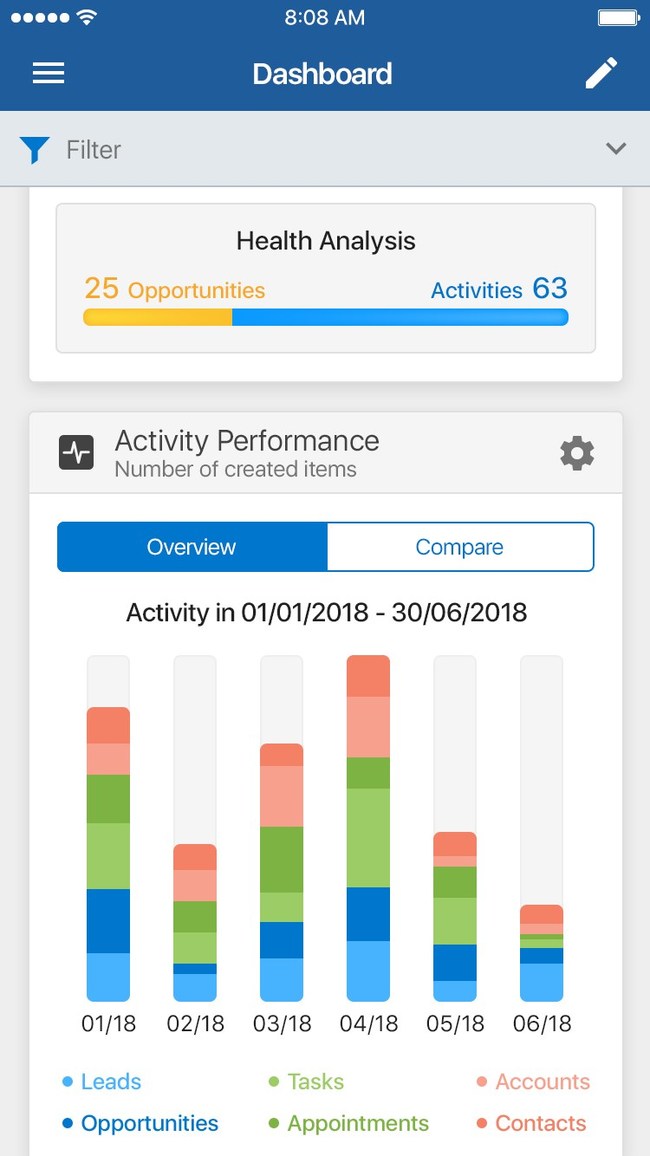
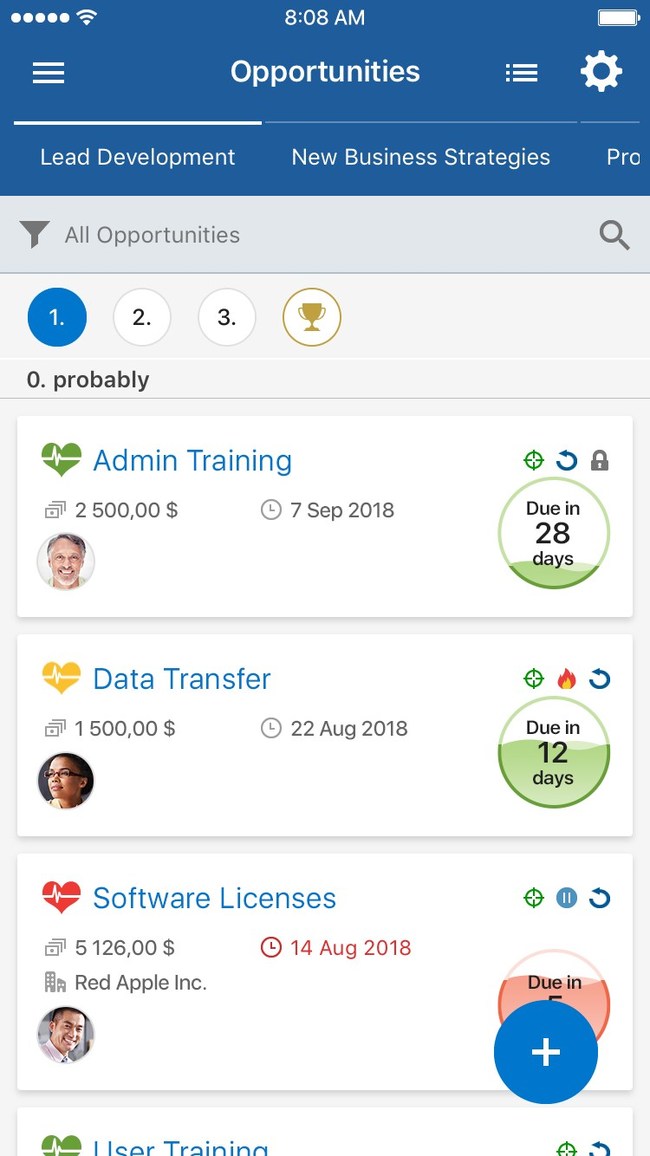
Pipeliner announced the release of the latest version of its unrivalled and market-leading Mobile CRM App. The new Mobile App, developed specifically for the new Cloud version of Pipeliner CRM, introduces even more visual elements such as new dashboards as well as functionality such as the ability to create and edit profiles (custom views) within the mobile App itself.

Pipeliner CRM Mobile: Opportunities Health Analysis Screen
Pipeliner CRM Mobile: Opportunity Review Screen

Salespeople are using mobile apps more extensively than ever before, often bypassing desktop apps – this is why Pipeliner has invested so much time and resources into developing a Mobile CRM App designed specifically for this audience. Today Pipeliner has the biggest and most highly-skilled Mobile CRM development team in the industry.

Also Read: Pipeliner CRM Cloud Released

The new dashboards include the ability to view Activity Performance in color-coded bar graphs as well as the ability to instantly do a visual health analysis of your pipeline opportunities. Combined with all the other dashboard KPIs, Pipeliner CRM Mobile now has the most comprehensive, visual and intuitive dashboards of any mobile CRM available today.

The profiles feature in Pipeliner allows the user multiple ways to visualize and instantly filter data so they can have the precise view they need. Now Pipeliner Mobile CRM users can edit or create new profiles in the mobile App and have these profiles available in the cloud version as well and vice versa.

Also Read: Only 1 in 2 B2B Professionals Confident in Data Quality, According to Annual Dun & Bradstreet Report

“The release of our new Mobile App for Pipeliner CRM Cloud continues to push us further ahead of other mobile CRM Apps on the market today,” said Nikolaus Kimla, founder and CEO of Pipelinersales. “We always have the reality of sales professional firmly in mind when we develop our products and we know that these busy sales professionals need to be able to instantly interpret the data on their mobile devices. This is why we make it visual, highly intuitive and dynamic so they are delivered actionable insights instantly!”

The new Pipeliner CRM Mobile App is available for both IOS and Android and works in conjunction with Pipeliner CRM Cloud.

Recommended Read: comScore Continues to Attract New Leadership with Key Additions to Technology & Digital Partnerships Teams

Affinio Joins Adobe and Episerver in Microsoft’s New Intelligent Customer Journey

0
Affinio Joins Adobe and Episerver in Microsoft's New Intelligent Customer Journey

Affinio Selected as Part of Microsoft’s Intelligent Customer Journey for Retail, Providing a New Level of Customer Intelligence to Retailers

Affinio, Inc., the AI-Powered Consumer Intelligence Platform, announced it has been selected as part of Microsoft’s Intelligent Customer Journey for Retail alongside Adobe and Episerver. The Intelligent Customer Journey for Retail provides Microsoft’s retail customers with a seamless, personalized shopping experience across every step of their shopping journey.

In April 2018, Affinio announced its offering with Microsoft’s Global Consumer Goods and Retail Solutions teams on Microsoft AppSource, an online cloud marketplace providing tailored line-of-business solutions. Today, as an addition to the Intelligent Customer Journey for Retail, Affinio is continuing to help Microsoft customers gain a better understanding of the behaviors, interests, and affinity patterns laying hidden within their customer data sets.

Also Read: Episerver Customers Realize More Than 400% Return on Investment in Three Years According to Total Economic Impact Study from Independent Consulting Firm

“Our team is thrilled to be working with Microsoft, Adobe and their retail and consumer good customers. Our solution will help them power high-performing marketing strategies with built-in AI technology that uncovers and visualizes unique consumer segments based on their common behaviours, interests and affinities.” shares Tim Burke, founder and CEO of Affinio.

Duncan Taylor, Global Industry Director’s Lead, Microsoft Global Industry Marketing, Microsoft Corp. said, “Affinio’s addition to the Intelligent Customer Journey will provide tremendous value to our customers. Their AI-driven solution reveals those hidden consumer insights that will help our retail and consumer goods customers develop compelling marketing strategies that enable personalization-at-scale.”

Also Read: Episerver Named a Leader Again in the 2018 Gartner Magic Quadrant for Web Content Management

The Affinio AI-Powered Consumer Intelligence platform helps marketers gain a deep understanding of consumers based on their behavioral patterns, interests, and affinities. Using our patented Graph technology, segmentation and visualizations, Affinio reveals naturally-forming clusters within any consumer data set without ever being told what to look for. Affinio is trusted by customers worldwide including BBC Studios, Unilever, and Lionsgate.

Recommended Read: Episerver Named a Visionary in the 2018 Gartner Magic Quadrant for Personalization Engines

SpotX and JW Player Team Up at IBC 2018

0
SpotX and JW Player Team Up at IBC 2018

Video Experts on Hand to Discuss the Value of Implementing Video Player Bidding

SpotX, the global video advertising and monetisation platform, and JW Player, the world’s largest network-independent video platform, are teaming up at IBC 2018 for joint strategy sessions and demonstrations in Hall 14 Booth G16.

The SpotX and JW Player teams will demonstrate the monetisation potential of Video Player Bidding, a market-changing header bidding solution built directly into JW Player and powered by SpotX. Launched in February 2018, Video Player Bidding reduces loading times and improves monetisation by allowing JW Player’s clients to easily access SpotX’s demand marketplace as well as its ad serving capabilities.

Also Read: SpotX Releases New ‘Global TV and Video Trends’ White Paper

Historically, the potential of header bidding has not been fully realised in digital video due to the difficulty of implementation and fragmented nature of the marketplace. Now, JW Player and SpotX offer the only video header bidding solution for media companies and broadcasters. By integrating directly into the video player, the ad decision is made server-side before a viewer hits play. This reduces latency, leading to higher fill rates and increasing ad revenue. Buyers will also have access to video metadata, such as content data, before they bid, allowing better targeting and thereby increasing the value of the opportunity and ultimately maximising CPMs.

Also Read: SPi CRM Announces Company Rebrand to Inspiro

Sean Buckley, Chief Revenue Officer at SpotX explains, “Video Player Bidding is a solution built by two video-first companies to target the specific complexities of video advertising. We saw that the industry needed a simple and elegant product which could empower publishers to monetise effectively without the problems they had faced in the past. Partnering with JW Player allowed us to develop this product unlock value across the ecosystem.”

Brian Rifkin, Co-founder & SVP of Strategic Partnershipsstated, “As media companies and broadcasters look to maximise their revenue, programmatic video advertising is a critical source of demand for their inventory. Over the last several months we’ve seen the partnership with SpotX increase fill rates and CPMs for clients of all sizes. We look forward to highlighting how this offering can help media companies and broadcasters at this year’s IBC Show.”

Recommended Read: MullenLowe Profero Australia Appoints Hamilton Jones to Managing Director

Executives Arrange Managed Buyout of Mediasmith

0
Executives Arrange Managed Buyout of Mediasmith

Veteran Digital Agency Maintains Internal Ownership, Names John Cate CEO

Mediasmith, a leading independent media agency, announced a management buyout of agency co-founders David L. Smith and Karen McFee. Mediasmith has long been a self-sustaining force in the media strategy, planning, and buying world and is known for promoting programmatic buying and championing transparency for a roster of loyal clients. This will continue, and Mediasmith’s clients and employees will be unaffected by the buyout while benefiting from the evolution.

Mediasmith executives have set a strategy in motion that will solidify the agency’s success in the future. While many independent agencies have been acquired by holding companies or sidelined by walled gardens, Mediasmith has succeeded with a consultative, transparent approach. In the next phase of the company’s growth, executives will broaden and deepen strategic, consultative and educational capabilities to empower brand clients and differentiate from opaque competitors.

Also Read: Content is The “Lion Factor” in Succeeding with ABM and Person-Based Marketing

“Mediasmith is a unique, right-sized, media partner who sees the media landscape as mobile and digital first. They understand the value of our dollar and work tirelessly to find us the right customers, which has contributed to our phenomenal growth this year,” said Kevin Mayer, CMO at BJ’s Restaurants. “As a media firm, they have responsive A-level players and use data and strategy to think through channels objectively to give us important guidance.”

“The day after we launched TBD we reached out to Mediasmith to help us pitch and win our first client,” said Jordan Warren, co-founder and CEO of TBD. “I’ve long admired Mediasmith’s commitment to remaining independent and appreciate that even while they have grown over the years, the agency principals remain actively involved in their clients’ businesses. I’ve always known them to be on the forefront of digital media planning and buying and was pleasantly surprised by their ability to stretch clients’ traditional media budgets to help them punch above their weight.”

Also Read: Branch Acquires TUNE’s Attribution Analytics in Landmark Mobile Marketing Acquisition

John Cate, formerly COO at the agency, moves up to the CEO position. With extensive operational experience, Cate has more than 25 years in leadership roles at major agencies. Prior to joining Mediasmith, John was EVP and General Manager for Carat/Aegis PLC, and has held senior media roles at Leftfield, TBWA\Chiat\Day, and McCann-Erickson.

Former SVP Greg Pomaro will become EVP, Media and will serve as the management representative to the Mediasmith Board of Directors. Marcus Pratt, VP, Insights and Technology and Ryan Buensuceso, Finance Director, round out the new partnership.

Mediasmith founder David L. Smith will become Chairman and continue to help Mediasmith with innovation and new business development. Co-founder Karen McFee will retire from her active role but retain the Board Secretary role and her seat on the Mediasmith Board of Directors.

Also Read: Beckon Introduces New Artificial Intelligence Capability; Empowers Marketers to Turn Messy Marketing Data into Actionable Insights with a Single Click

“Mediasmith has a history of innovation and transparency for our clients, which is why we’ve flourished. This legacy will serve the team well in the company’s next phase,” Smith said, “This passing of the mantle is a long overdue recognition of John having already stepped up to run Mediasmith on a day-to-day basis.”

“Mediasmith was founded nearly 30 years ago, before digital advertising existed. Today, we’re an independent leader in media innovation across digital channels,” said John Cate, former COO and newly appointed CEO. “The innovative spirit and dedication to client success that has propelled so many years of success will remain a guiding light for the leadership team and for our clients as we set our go-forward plan in motion.”

Also Read: Valossa Introduces Video Recognition Solution for Reviewing Inappropriate Video Scenes

comScore Continues to Attract New Leadership with Key Additions to Technology & Digital Partnerships Teams

0
comScore Continues to Attract New Leadership with Key Additions to Technology & Digital Partnerships Teams

Measurement Company Brings in New Talent to Accelerate Strategic Cross-Platform Initiatives on Heels of Appointing Its New President

comScore, a trusted partner for planning, transacting, and evaluating media across platforms, announced that it has made several key hires aimed at accelerating key cross-platform and data science initiatives designed to help partners navigate and grow their businesses amid an increasingly complex and splintered media environment.

Ajay Sravanapudi, former CTO of Videology, will join the company as senior vice president of technology architecture and engineering; Kumar Rao, former chief of measurement science at Broadcast Audience Research Council (BARC), as vice president of analytics; and Sumit Shukla, former vice president of strategic partnerships & corporate development at Neustar, as senior vice president of strategic partnerships at comScore. The appointments come on the heels of the announcement that award-winning marketing executive Sarah Hofstetter, current chairwoman of 360i and former CEO of the Dentsu-owned agency, will join comScore as President in October.

Also Read:comScore Partners with Adobe to Help Marketers Deliver Hyper-Personalized Messages in a Post-GDPR, Post-Cookie Era

Ajay Sravanapudi will play an integral role in streamlining the company’s product stacks to enable and accelerate true cross-platform measurement. Sravanapudi joins comScore’s development team from Videology, a pioneer in addressable video advertising technology, and has 15 years of experience in building ad tech solutions to solve for complex business challenges. He has a track record as an industry change agent, creating a team culture that inspires a focus on quality, velocity, scale and reliability.

“I am excited by the opportunity to join an organization that is dedicated to delivering trusted, innovative solutions that support every part of the media and marketing ecosystem,” said Sravanapudi. “comScore is ripe to win in the marketplace. I look forward to bringing my expertise in development, implementation and continuous improvement to help streamline comScore’s current offerings and accelerate the company’s rapid progression.”

Commenting on Sravanapudi’s appointment, Brian Pugh, executive vice president of product technology at comScore, said, “This is a pivotal moment for the comScore development team. Ajay is a critical hire as we advance our mission to be a transformative cross-platform currency. Ajay’s extensive experience in pioneering advanced video technologies and dynamic leadership style will help comScore continue to build its momentum in the marketplace. We could not be more elated to welcome him to the team.”

Also Read: comScore Adds Smart TV Data to Marketing Solutions through Partnership with Inscape

Kumar Rao brings over 14 years of data science expertise and practice to help further boost comScore’s product innovation and analytical capabilities. Rao has extensive experience designing and developing digital (desktop, mobile, and over-the-top) and television measurement products. As a results-driven data analytics executive, Rao will help lead a team of data scientists to develop new analytical methodologies and solutions designed to solve the unique media measurement challenges born out of an increasingly cross-platform world.

“I have a long history of working in the measurement space and I’m looking forward to bringing my skill set to comScore,” said Rao. “Cross-platform measurement is ready for innovation, specifically when it comes to data science applications, and I know comScore has the assets and talent to lead in the new measurement landscape.”

On Rao’s appointment, Michael Vinson, senior vice president of statistical operations at comScore commented, “Kumar is yet another strategic hire for the comScore technology team. He has been developing measurement solutions across channels (OTT, TV, mobile, desktop) for over 7 years and has a deep understanding of the current complexities that exist in this space. Adding Kumar to the team will continue to enhance our analytical capabilities, especially in regard to data science.”

Also Read: Mobiquity Technologies and Gopher Protocol Announce Share Exchange

Sumit Shukla joins comScore’s strategic partnerships team to lead its relationships and strategic plans with major digital platforms. Shukla has extensive marketing analytics, data and strategic partnerships experience, and most recently led business development, corporate development and strategy for Neustar’s Marketing Solutions division. Prior to that, Shukla also worked at Rocket Fuel (now Sizmek), [X+1] and Microsoft in similar functional capacities.

“This is an important moment in our industry and I look forward to joining comScore to help strengthen and grow the strategic partnerships that are central to cross-platform measurement,” said Shukla. “As consumer behavior continues to evolve within a dynamic media environment, building strong and trusted partnerships with the leading digital platforms is increasingly critical to providing actionable reporting and insights.”

On Shukla’s appointment, Cathy Hetzel, executive vice president of commercial at comScore, said, “Sumit has ample experience in building and managing partnerships across the data, identity, media, and walled garden ecosystems. These are complex and ever-evolving ecosystems, so bringing in someone with a deep understanding of the digital space will only help strengthen comScore’s position as a trusted currency and partner for both media buyers and sellers.”

Recommended Read: 8th Wall Web Brings Augmented Reality to Websites for the First Time

Only 1 in 2 B2B Professionals Confident in Data Quality, According to Annual Dun & Bradstreet Report

1
Only 1 in 2 B2B Professionals Confident in Data Quality, According to Annual Dun & Bradstreet Report

Still, 89 Percent Believe Data Quality Drives Sales and Marketing

Dun & Bradstreet released the company’s annual B2B Marketing Data Report, which finds that half of B2B professionals express a lack of confidence in the quality of their data, amid growing consensus that data is increasingly critical to the success of sales and marketing programs. The study surveyed 250 B2B sales and marketing professionals with titles at the Director level and above.

The percentage of those stating that data quality is important to sales and marketing functions has continued to increase over the years, with a nearly 15 percent increase compared to 2016.

Based on responses from this year’s survey, B2B marketers understand that data plays a crucial role in enabling all stages of sales and marketing strategies, with the top five activities being campaign execution, personalized content and messaging, sales prospecting and closing, generating customer insights with analytics, and lead qualification and scoring.

Also Read: nFusz and Odoo Announce Strategic Partnership

“B2B companies are currently at a crossroads,” says Josh Mueller, Global Head of Marketing for Dun & Bradstreet. “They overwhelmingly understand the value of data to their organizations, but have not yet figured out how to collect, integrate and apply that data in insightful ways to help make business decisions. Organizations that have established a solid data foundation as core to their sales and marketing programs can improve performance over their counterparts that don’t have that data foundation.”

Data Quality and Management are Top Challenges

Lack of B2B data confidence impacts the most fundamental sales and marketing initiatives. As a result, even buzzworthy strategies like account-based marketing (ABM) may not be as prevalent as previously thought, with only one-third of surveyed companies implementing ABM programs.

Also Read: Advantage Solutions Acquires Jun Group to Help Accelerate Performance Outcomes for Both Brand and Retail Clients

Data management across the organization continues to frustrate. Despite massive investments in CRMs and other systems over the past decade, nearly 40 percent of respondents still claim to be beginners or novices in integrating data with their CRM. Likewise, over 90 percent of respondents said that it is difficult to align sales and marketing data about companies and contacts when executing programs across multiple channels.

Only 33 percent of respondents state they are confident in the ability to attribute specific marketing activities to the buyer’s journey, tracking initial outreach to closed sale.

“By using data to connect sales and marketing activities, businesses can better identify new opportunities, focus on the right audience with the right message, arm sellers with the right intelligence, and provide learnings that enable them to continually improve their strategy,” says Mueller. “When done right, this is the winning formula for more personalized, efficient, and impactful marketing at scale.”

Recommended Read: B2B Marketing Technology Veteran Jenn Steele Joins Madison Logic as Chief Marketing Officer

Liveperson’s LiveEngage Platform Enables T-Mobile Customers to Connect with Their Team of Experts Through Messaging

0
Liveperson's LiveEngage Platform Enables T-Mobile Customers to Connect with Their Team of Experts Through Messaging

LivePerson, Inc., a leading provider of conversational commerce solutions, announced that its LiveEngage platform enables messaging for T-Mobile’s vaunted Team of Experts approach to customer care. LiveEngage connects T-Mobile Team of Experts to the different messaging platforms that customers prefer, providing the automation and operational capabilities necessary to run a customer care experience over messaging, at scale.

“LivePerson works with the most innovative brands in the world so that they can have one-to-one conversations with their customers at scale,” said LivePerson Founder and CEO Robert LoCascio. “Our team is proud to help make messaging another great way for T-Mobile customers to reach their Team of Experts.  The best relationships start with a conversation.”

Also Read: Content is The “Lion Factor” in Succeeding with ABM and Person-Based Marketing

T-Mobile designed Team of Experts so that postpaid customers can message their Team in the same way they message friends and family, moving in and out of conversations to multitask or go about their day. T-Mobile customers can message via popular platforms such as Facebook Messenger as well as T-Mobile’s own mobile app and website. Messaging is available for T-Mobile customer care, online sales, and in select retail locations where store associates can message with local customers they serve.

Also Read: Zendesk Acquires the Company Behind Base to Deliver Software Designed for Salespeople

LiveEngage also provides an online workspace for T-Mobile’s Team of Experts to message with the customers they support. The workspace shows agents the conversations a customer has had with T-Mobile across the different messaging platforms.

“The frustration of endless robotic phone menus and transfers from rep to rep can ruin a customer’s experience – so we ended it. Now with T-Mobile Team of Experts, our customers can get assistance when and how they want to – including via messaging,” said Nick Drake, executive vice president of marketing and digital experience at T-Mobile. “We were one of the first companies to launch asynchronous messaging in 2016, and we’ve continued to build out this capability across a variety of digital channels. Our customers love the convenience of messaging us like they do with their friends – it’s the primary way most of us communicate every single day.”

Recommended Read:  Spotify Deepens Relationship with Nielsen to Measure Effectiveness and Reach of Its Global Advertising Platform

Mux Launches API To Help Engineers Provide Seamless Live Content Streaming

0
Mux Introduces Low-Latency Live Streaming

Mux , a leader in streaming video technology, launched its Live Streaming API . Developed by Mux’s team of video experts who previously built some of the internet’s biggest video technologies, the Live Streaming API makes it easy for developers to support scalable live video on all platforms (mobile, desktop, and TV).

While many video platforms offer some level of support for live video, the state of live video technology is still far behind the state of file-based video technology. Recent high-profile streams plagued with difficulties—like YouTube’s World Cup outage, and Amazon’s rocky US Open coverage—have cast the difficulties behind live streaming into sharp relief.

Also Read: Mux Launches Real-Time Streaming Dashboard to Help Engineers Address Issues Immediately When Live Streaming Content

“We built the Mux Video Live Streaming API because we know first-hand how difficult it is to handle live encoding and streaming at scale,” Mux CEO and co-founder, Jon Dahl, observed. “Building file-based video streaming is hard enough, and live is 10x more difficult. We’ve made it easy for any developer to support scalable, high-quality live video with just a few lines of code.”

The Mux team is no stranger to live video. Mux founders previously created the first cloud-based live transcoding service at Zencoder, and the engineering team at Mux has worked on live video at places like Twitch and YouTube. Mux’s first product, Mux Data, monitors live streaming performance for companies like The New York Times, CBS, and Vimeo.

Also Read: TrustArc Expands Industry Leading Compliance Solutions with First Privacy Certification for Data Processors

The Live Streaming API is unique in its simplicity and power. Unlike other live encoding platforms, once you’ve provisioned a live stream with Mux, it is always available for immediate streaming (rather than requiring a 3-5 minute delay). After a live stream finishes, a file-based archive is instantly available (“Live-to-VOD”). And since everything is handled via API, developers can build web or mobile applications that let their users stream video in a matter of minutes, thereby significantly speeding up time to market.

Recommended Read:  B2B Marketing Technology Veteran Jenn Steele Joins Madison Logic as Chief Marketing Officer

Google Announces New Capabilities for Advertisers to Test AMP Performance

1
Google Announces New Capabilities for Advertisers to Test AMP Performance

The Announcement Is a Part of Google’s Initiative to Help Brands Better Assess Ad Performance

Google is progressively changing its technology to benefit advertisers. The advertising community has been receiving periodic updates about the changes that Google is making in their platforms. The search engine giant recently announced that now, advertisers, globally, will have advanced capabilities to test AMP performance.

What is AMP?

Accelerated Mobile Pages (AMP) are pages that load quickly on Mobile phones. Launched by Google in October 2015, AMP is an open-source technology built on several platforms. Google intends that content deployed via AMP is engaging, fluid and user-controlled. AMP competes with Facebook’s Instant articles.

Also Read: Amazon Marketing Agency CPC Strategy Acquired by Elite SEM

AMP is an evolved version of Traditional Web Pages, which are device agnostic. Websites designed leveraging Traditional Web Pages do not adjust as per the device or internet speeds hampering customer experience. Google has always been stating customer-centricity to be their main reason for innovating content avenues.

What Has Changed?

As content gets continuously created on both Traditional Web Pages as well as AMP, Google is optimizing advertisement assessment on both mediums. Till date advertisers could assess the impact of both mediums using either Google AdWords campaign experiments or ad variations. Although there were pros and cons to both methodologies.

Google’s latest campaign experiment is assessing campaign performance by leveraging device cookies. This new method is a part of Google’s campaign experiment and is known as ‘Cookie-Based Splits.’

Also Read: New Content Personalization, Segmentation Tools and Insights to Be Salient Features of Nosto’s New Platform

Cookie-Based Split

Pre-Cookie-Based Split, Google’s campaign experiments were defaulting to align users with a ‘control‘ or a ‘test’ group. Users, searching the web segregated in either a ‘control’ or a ‘test’ category. This means every user will experience both, test and control experiences during the course of the day. Hence analyzing campaign performance was not as accurate. These are also known as ‘Search-Based Splits.’

Cookie-Based Split aligns users to one specific group only. Test group users will only see the AMP page while the control group users will see the non-AMP page. This is terrific news for advertisers who can now specifically know the exact number of users that visited the AMP page. Advertisers can leverage this capability and further refine advertising campaigns.

Recommended Read: Deloitte’s Acquisition of Magnetic’s Business Platform Enables New Capabilities for Deloitte

SAP Intelligent Services for Marketing Deliver Deep Learning to Win New Customers and Reduce Churn

0
SAP Intelligent Services for Marketing Deliver Deep Learning to Win New Customers and Reduce Churn

SAP SE announced plans to enhance the SAP Marketing Cloud solution, introducing new “smart” capabilities to help companies focus on the best sales leads and increase customer retention.

Plans for SAP Intelligent Services for Marketing were launched at the DMEXCO annual conference being held in Cologne, Germany.

The new services use SAP Leonardo Machine Learning capabilities to add artificial intelligence (AI) to the cloud-based marketing suite from SAP. Using deep learning techniques, the new software analyzes the footprint that consumers leave behind while shopping online or offline, enabling businesses to better understand their customers’ preferences and intent as they consider a purchase.

Also Read: Record Video Growth for Rubicon Project in First Half of 2018 Driven by Private Marketplace Deals

This enables marketers to detect patterns in individual customer behavior and gives them the tools to engage more skillfully with their customers, drive brand loyalty and increase revenue. In addition, by automatically identifying the leads with high probabilities of conversion, SAP Intelligent Services for Marketing lets marketing and sales teams focus on increasing revenue while reducing marking costs.

“Marketers are dealing with an unprecedented amount of data about customers. But it doesn’t mean that they understand them better,” said Nicholas Cumins, general manager, SAP Marketing Cloud, SAP. “That’s where AI comes in. It allows marketers to make sense of all that data and achieve a much deeper understanding of customers.”

Also Read: Oath Unifies Ad Tech Under New Brand, Adds Advanced Features to Drive Growth for Advertisers and Publishers

One Solution, Two Benefits: Grow Conversion Rates and Predict Customer Churn

Since the cost of acquiring a new customer is much higher than retaining an existing customer, it is critical for companies to reduce customer churn. SAP Intelligent Services for Marketing help businesses address this issue by continuously monitoring and mining customer data to identify churn-related behavioral patterns or events, and predict which customers are at risk.

By presenting this information in a visual way, marketers can more easily understand a customer’s churn score – the reasons why a customer is considering leaving – and take immediate action to persuade them to stay.

This is particularly valuable to companies in sectors that have churn rates as high as 25%. For example, in the sports industry the retention of season ticket holders is crucial. Similarly, in banking and business-to-business industries like chemicals and high tech, it is important to identify high-value customers and high-risk accounts at a very early stage.

Recommended Read: CoreMedia Launches CoreMedia Content Cloud in Response to Strong Demand by Iconic Brands

Why Millennials Gravitate Towards Minimalistic Branding

3
Millenials Minimal Branding

While doing business, the design of your website is a key factor that you ought to look into. This is mainly because if the business lacks its website design, many people may just decide not to carry out business with you. research has revealed that a large percentage of the people in business rely on the website design to determine the credibility of the particular business. The research has also revealed that the manipulation of a simple website is better compared to the use of complex websites. There are several beneficial reasons why a person in business, you should decide to make use of a simple website design. Below are some of the reasons;

Millennials' Liking Towards Minimalistic Branding Culture

Simple website design minimizes the salesy feel by a large extent

The major issue that arises from complex websites is that they tend to appear too much exaggerated. Appearing too salesy will definitely keep off potential customers as they will judge you as a person who is not genuine in business. Therefore, you should endorse manipulation of a minimalistic website design which invites potential customers without them having a feeling that the site is too much exaggerated. In addition, a flashy website design may appear like a grab for customers, which is not the case if the website is simple and clean. Take a look at Oroton’s men’s wallet shopping page and get inspired by the minimal approach that they have adopted.

Also Read: Four Out of Five Millennials Purchased From Amazon in the Past Month

It is very easy to use a simple website design

Remember, this website is basically for the use of your potential customers. By making it clean and also making it simple, then it makes it easy for the visitors to use it. Simplifying your website can be done through reduction of the options on the site, by removal of any extra options that only a few individuals will click on. In another way, you can provide a simple header bar which possesses navigation options that tend to make it easier for the users to learn about the brand you are selling and also making the buying process easier. Most people who visit your website will always rely on the directions you ask them to follow.

Manipulation of a simple website design helps develop trust

The visitors of your website can manipulate it to weigh how trustworthy you are. Therefore, it is upon you to ensure that these visitors can trust you via the content in your website. It is very difficult for them to trust you in case your website is too flashy. Building trust via your website design can be achieved through ensuring that the layout is simple in that each and every page focuses on one thing. Gaining trust with the website visitors definitely enables you to make more sales and creating large amounts of profits.

Also Read: Keeping up with Everyone’s Insatiable Appetite for Visual Content

Simple website designs are timeless

The major problem associated with websites is that they quickly become outdated. In most cases, you end up making one update after the other, which shouldn’t be the case. However, it has been proven that simple and clean website designs have the capability to withstand the test of time. Simple designs require few revisions which result in you saving money by avoiding making frequent updates.

Simple design appears more beautiful compared to a complex one

Based on the results of most pronounced findings, complex designs are not preferable compared to the simple once. This is due to the facts tabled after a research done in the Harvard University that the complexity of a site plays a major role in determining how appealing a particular site is. To achieve this, you ought to ensure that your website focuses on just a few elements and also has plenty of white space. this kind of layout helps make the site likable to many of its visitors. A likable site encourages the visitor to read more about the contents of the site which will definitely enable you to make more sales. This will enable you to make large profits in your business.

Also Read: Is a Virtual Workplace Really Possible?

Simple designs impress the visitor at first sight

For a person to judge and conclude the kind of a person you really are, it only requires the first impression. The same thing happens when it comes to the visitors judging a particular site. Therefore, many people prefer simple website designs rather than the complex ones. To be able to come up with a good first impression, provide a single basic image, headline, a self-explanatory text and don’t forget the navigation buttons hence creating an impression that will be inviting in just a few seconds that a visit is made on the site. This makes the visitor read further and eventually buy your product, which is the main goal that you intend to achieve.

Also Read: It’s All In The Stories: How To Attract Millennials And Gen Z

The rate at which simple website loads is very fast

The rate at which a site load is very significant, this is mainly because if it loads slowly most of its visitors tend to opt out the site for another. Factors resulting in the slow loading of the site include complex options and features, not leaving out complex images. If these factors are eliminated, then the resultant site becomes minimalistic. Such simple websites tend to load very fast, hence attracting most readers from making your blog very successful.

Also Read: Your Buyers are Online: Why Aren’t You?

Unlike complex websites, simple ones are easy to scan

The readers of the content in your site will rarely read everything in it. Most people tend to skim these articles due to the limiting time factor. To ensure that most of the site visitors view the most significant content in your site, it is advisable that you make sure that the site is simply designed. This can be done by the removal of all the unnecessary contents hence directing the reader’s attention to what is vital. By doing so it makes it easy to scan and as a result of this, the number of people reading your content increases.

Also Read: Scrapping Email: How Millennials are Changing Workforce Communication

Millennials and Mobiles

Millennials are the generation of change, thus they’re always curious about the latest technology, things happening around them and, in the world, and what is bringing change. They like to stay on the edge and mobile is an inseparable part, for this curious mind. According to the 2017 U.S. Mobile App Report, any app that doesn’t have an appealing logo on their home screen could get relegated to the trash bin by Millennials. This proves how much the look matters to this generation and how website designers should focus on creating crisp, smart and attractive first mobile index pages when targeting the millennials.

A simple and clean website will always serve you the best no matter the field of specialization that you are in.

Also Read: Reaching the Millennial Travelers: The Marketing Channel That’s Making a Surprising Impact

The New Rules: Establishing Consumer Trust in a Post-GDPR World

0
The New Rules: Establishing Consumer Trust in a Post-GDPR World

Ask any marketer about the biggest events of 2018 so far and you’re not likely to hear about the results of an election, the passing of an iconic celebrity, or even the outcome of The World Cup. For marketers, the year’s defining moment arrived on May 25th when the European Union officially rolled out The General Data Protection Regulation commonly known as GDPR. The regulation is designed to protect consumer privacy and give individuals more control of their online footprint.

GDPR places new limitations on how customer data can be gathered, stored, and used and expands the definition of what types of data are considered private. For marketers, it means rethinking how they build and maintain customer databases as consumers must now give explicit consent to have their data collected and to be contacted, tracked, or targeted based on that data. But there is a silver lining. Because GDPR raises the bar on consumer consent, it gives marketers a chance to rethink how they build trust.

Also Read: GDPR is the Best Thing to Happen to Personalization

Compliance is key

The toughest thing for many marketers and advertisers to admit is that GDPR doesn’t come out of nowhere. Many consumers are concerned about how their data is being collected and used. Those concerns are reasonable, especially after a year of major data breaches. In a post-Equifax, post-Cambridge Analytica world it’s not hard to imagine why consumers might be feeling a little anxious about how their data is being handled. That’s why the first step to building consumer trust is complying fully with the new regulations.

Making sure that your campaigns and your data collection process are fully compliant with the new regulations doesn’t just protect your business from fines and penalties–although that’s critical given the wide enforcement powers provided under the new regulation– it also shows consumers that you take their privacy seriously. The conversation you hold around these steps can be key to building trust.

Also Read: How Brands and Agencies are Affected by GDPR

Communication is critical

GDPR provides an opportunity to have a more honest dialogue with consumers about the ways in which you’re acting in accordance with their wishes, and what you have to offer in exchange for their data and consent. By creating the climate for this level of transparency, the dawn of GDPR offers a chance to establish a foundation of trust on which savvy marketers can build a more honest, and mutually beneficial relationship.

With GDPR now in full effect marketers can’t rely on volume plays to get their message out. The hard truth is that email databases have been slashed by double-opt-in requirements and the ability to track and target consumers has been greatly curtailed. The good news is that most of the people who didn’t opt-in, weren’t listening to us anyway. Now we can stop yelling into the void and start having real conversations with consumers that we know are interested, and listening.

Also Read: GDPR: Developing a Proportionate Response

Content is king

Now that GDPR has narrowed down our audience, we have an opportunity to build trust by providing value. While we may be reaching fewer people, we also know who those people are and what they want to know. Serving that audience with content that they’ll value provides an opportunity to build trust through thought leadership, through expertise, and through a demonstrated understanding of the consumer’s needs.

Instead of bombarding prospects with our message, we have a chance to entertain them, or teach them, or even inspire them with a new perspective. Providing useful content shows consumers that we’re willing to exchange something of value for their data. Showing them that their time, attention, data, and consent are all valued will be critical to re-establishing the trust that’s going to be essential in a post-GDPR world.

Also Read: 3 Reasons Why Marketers Should Welcome GDPR (Other Than Because It’s Required!)

Challenges create opportunity

There’s no doubt that GDPR presents a challenge for marketers. It’s raised the bar on what we’ll have to do to earn the attention of consumers in the E.U. However, the new regulations also provide a rare opportunity to completely rethink the way we operate and restructure our organizations around building trust and providing value rather than simply around reaching the largest number with the loudest message. This realignment has been difficult in some cases, but it also sets us up for a future in which consumer trust rather than consumer data is the coin of the realm

Also Read: A Penny For Your Thoughts: Can Consumers Become The Benefactors Of Our Own Data?

Google Taps CMU Dean Dr. Andrew Moore to Lead AI Research

0
Google

A Former Googler, Andrew Moore, Would Replace Fei-Fei Li as She Moves Back to Stanford

Education and research expertise are keys to making it big in the AI/ML ecosystem. Google Cloud AI has announced the arrival of Dr. Andrew Moore, as an advisor to its Cloud AI platform until the end of 2018. This is not the first interaction between Google and Dr. Andrew. In 2006, Andrew joined Google to build the company’s new engineering office—Google Pittsburgh, which has since grown in scale and size. He played a major role in making Google Shopping productive and customized to a visitor’s behavior. His past Google experience would certainly help Google Cloud AI researchers in making AI ubiquitous to omnichannel applications.

Read More: Data Innovators Coming to San Francisco for JOIN 2018

Fei-Fei Li Will Continue as an AI/ML Advisor for Google Cloud

In 2019, Andrew will move up to head the research programs at Google Cloud AI. This is a step forward for Google Cloud AI, enabling Dr. Fei-Fei Li to transition into her role at Stanford. Li is one of the top-10 AI and deep learning influencers on Twitter. Currently, Andrew serves as the Dean of the School of Computer Science at CMU. Li will continue as an AI/ML Advisor for Google Cloud.

In an official blog, Diane Greene, CEO of Google Cloud mentioned the significant transformation in the way AI/ML technologies are leveraged in the real world. Google’s Cloud AI is a major innovator and institutional repository in helping AI vendors democratize the application of AI and other intelligent technologies benefiting businesses and public life.

Diane said, “We believe that if we can get every developer in the world using AI in great ways, we can spur innovation that will benefit everyone. Building on Google’s expertise in AI, we have introduced a series of products over the last three years that have helped make this mission a reality.”

Post-Google Next ’18 Development

About bringing Andrew to Google Cloud AI, Diane explained the efforts her company is taking to bring the “best of Google’s AI in vision, language, speech, and conversation to companies everywhere through cloud services, and have built a platform for customers to scale their own models on Google Cloud through GPUs and TPUs.”

Only recently, the company announced the gathering of over 2 million Data Scientists at the largest community for the profession in the world – Kaggle.

Read More: Sizmek DSP Brings in Contemporary AI/Machine Learning Technology for Better Programmatic Control and Efficiency

Since the conclusion of Google Next 2018, the company has claimed to see large-scale broad spectrum adoption of AI/ML technologies among businesses. Diane confirmed in her blog—

“We have over 15,000 paid customers on our platform, and we have seen ten thousand more start using our AutoML products since we released them at Google Next in July 2018. Moreover, as AI is used more and more widely, we aim to ensure that AI is used in a responsible way by adhering to our AI Principles.  We believe that we are just at the beginning of this journey, and we are looking forward to the benefit we can bring to all of society in the years to come. Google Cloud is leading the way in helping organizations apply AI, and we are excited that Andrew will be joining us to continue building our technology and bringing it to customers.”

During the transition phase, Dr. Fei-Fei Li would continue to play her role as an advisor and collaborator for AI/ML research programs before heading to Stanford to further expand her AI expertise.

Google Cloud AI is expected to scale its global AI outreach, enabling solutions to developers, innovators and organizations to make AI-as-a-Service more efficient and ROI-focused.

Read More: DoubleClick Search and adMarketplace Partner to Launch Engine Track Reporting Integration

Andrew Moore’s Long Tryst with ML

Andrew joined CMU’s faculty as an assistant professor, working in the fields of machine learningreinforcement learning, manufacturing and algorithms for non-parametric regression. He was tenured in 2000. In recent years his main research interests are computational statistics, artificial intelligence, and statistical data mining.

He had built a research group called the Auton Lab (which since 2006 has been under the directorship of Artur Dubrawski and Jeff Schneider). This group has devised new ways of performing large statistical operations efficiently, in several cases accelerating state-of-the-art by several magnitudes.

Members of the Auton Lab collaborate closely with many scientists, government agencies, technology companies and engineers, in a constant quest to determine what are some of the most urgent unresolved questions at the borders of computation, statistical data mining, machine learning, and AI. Auton Lab algorithms are now in use in dozens of commercial, university and government applications.

Read More:  Four Signs Your Document Management Tools Need a Fresh Look

Sizmek Unveils Solution for Advanced TV

0
Sizmek Unveils Solution for Advanced TV

Marketers Empowered with AI-Driven Insights Across Linear, Addressable, and Connected TV

Sizmek, the world’s largest independent buy-side advertising platform delivering impressions that inspire, announced the launch of a new Advanced TV initiative with plans to roll-out a fully integrated solution across linear, addressable, and connected TV later this year. Today, Sizmek is already a one-stop-shop for linear, addressable and connected TV inventory. Soon, advertisers and media agencies will be able to apply AI-driven insights from digital advertising to TV for optimal targeting, reach and frequency across the full campaign. By bringing data, media and creative together with AI, Sizmek will enable agencies and marketers to drive brand awareness on both TV and digital.

Last month, Sizmek released an enhanced version of their industry-leading AI-powered DSP, offering advertisers and agencies greater efficiency and effectiveness for programmatic buying. Today’s announcement represents a logical next-step, to bring together data, media, and creative across all digital media channels, now including Advanced TV.

Also Read: Branch Acquires TUNE’s Attribution Analytics in Landmark Mobile Marketing Acquisition

eMarketer estimates there will be 182.6 million Connected TV users in the US this year, up 8.1% from 2017, meaning 55% of the population, or 71.6% of all households will be watching programs through Connected TV, Smart TVs, and OTT platforms. While advertisers are making investments in Advanced TV options they still face challenges with reaching this growing audience through a united cross-channel approach.

Today’s solutions for buying the various forms of TV require multiple vendors — with different sets of data and inventory for linear and every category of Advanced TV. The result is often over delivery against target audiences due to inability to optimize for reach and frequency goals.

Also Read: Valossa Introduces Video Recognition Solution for Reviewing Inappropriate Video Scenes

By working with data and supply partners across the Advanced TV landscape and using AI to bridge the gaps between them, Sizmek will offer a single solution for buyers to activate and optimize their TV campaigns within a vast pool of integrated inventory.

Sizmek will provide inventory by partnering with several Advanced TV supply platforms including Telaria, Spotx, and Freewheel.

Also Read: Beckon Introduces New Artificial Intelligence Capability; Empowers Marketers to Turn Messy Marketing Data into Actionable Insights with a Single Click

“As buyers increasingly see the value of connected TV, it is imperative that the solutions they use solve for the medium’s cross-device nature,” said Mark Zagorski, Chief Executive of Telaria. “Sizmek’s dedicated advanced TV offering addresses this need and enables advertisers to get the most ROI from their connected TV buys. We look forward to working closely with Sizmek to collaborate on initiatives that move the needle forward for connected TV advertising.”

“Sizmek has proved it consistently invents new, innovative and data-driven ideas that help extend our awareness for client campaigns and optimise our return on ad spend,” said Carmen Graf, SVP Executive Media Director at GSD&M. “With Sizmek’s digital knowledge around advanced TV plans, it helps us execute more comprehensive campaigns that reach our clients’ target audiences across all channels and devices.”

Also Read: Zendesk Acquires the Company Behind Base to Deliver Software Designed for Salespeople

With this new offering, Sizmek helps buyers overcome the difficulties with varied access to supply. This is the first phase of an Advanced TV initiative, with plans to introduce support for smart audience targeting, allowing for greater reach and frequency control, as well as deliver superior insights into video consumption and ad effectiveness, allowing marketers to make the best use of their media budgets, and produce optimized media plans.

“We consistently hear from agencies that one of their biggest challenges is achieving reach and frequency, while using media efficiently,” said Mark Grether, CEO Sizmek.  “Audiences are moving away from linear TV and toward Addressable TV, Connected TV, and OTT.  This fragmentation is a challenge we are trying to solve.  Our ability to leverage AI-driven insights from digital advertising to Advanced TV allows us to offer the best possible solution to marketers and agencies.”

Recommended Read:  Spotify Deepens Relationship with Nielsen to Measure Effectiveness and Reach of Its Global Advertising Platform

Evergage Unveils Evergage Gears – Empowering Companies to Extend Evergage’s Core Capabilities

0
Evergage Unveils Evergage Gears – Empowering Companies to Extend Evergage’s Core Capabilities

Increasingly Serving as the Central Hub for Companies’ Digital Interactions, Evergage Introduces New Framework – for Creating and Using Connectors, Extensions, Templates and Custom Reports That Enhance the Value of the Evergage Personalization and Customer Data Platform

Evergage, The 1-to-1 Platform company, introduced Evergage Gears, a new framework that empowers customers and partners to create and use connectors, extensions, templates and custom reports for the Evergage platform.  With Evergage Gears, companies can quickly and easily integrate Evergage with other systems, add functionality to extend the platform’s power and core capabilities, and take advantage of templates and custom reports to simplify campaign creation and data analysis tasks.

 Evergage is unveiling this new framework at its fifth annual Personalization Summit, the premier event for personalization taking place this week in Boston, featuring speakers from Carhartt, Citrix, Dell, The Boston Consulting Group and more.

Also Read: CoreMedia Launches CoreMedia Content Cloud in Response to Strong Demand by Iconic Brands

Reflecting Evergage’s rapid growth, the framework comes as Evergage “is increasingly being used by its clients as the central data hub for visitor and customer intelligence to drive 1-to-1 digital experiences,” according to 451 Research. As the leading personalization and customer data platform (CDP), Evergage powers in-the-moment personalization for billions of people worldwide. Creating and drawing from a single, unified profile for each customer, visitor and account, Evergage delivers maximally relevant, individualized experiences across websites, email, web and mobile apps, and onsite search – faster than the blink of an eye.

Evergage Gears builds on the partnerships and integrations Evergage already supports with some of the world’s most recognizable brands, empowering developers to leverage the platform’s data and connectivity to create next-generation personalization functionality and business-specific experiences, and use machine learning in new ways. The new framework leverages the platform’s robust APIs, webhooks and orchestration capabilities that have been built to support the most sophisticated enterprise business requirements. Evergage Gears also expands on the acclaimed features and capabilities of the Evergage platform – including individual and account-level profiles; deep behavioral data; contextual understanding of customers’ businesses; real-time decisioning and experience delivery; and machine learning-driven insights and personalization delivered natively across web, email and mobile touchpoints, and through integration into ad-tech, social, contact center and in-branch/in-store channels.

Also Read: Content is The “Lion Factor” in Succeeding with ABM and Person-Based Marketing

“Evergage has become a critical personalization and customer data platform for Citrix – collecting and processing important user activity data that is passed to a complementary analytics solution,” said Dennis White, web business analyst at Citrix. “We are excited about Evergage Gears simplifying the process of integrating data with this system and others, and providing useful add-on functionality, templates and reports that will plug in easily to the platform and enhance the value of our investment.”

With Evergage Gears, customers and partners benefit from:

  • Connectors – Accessing and building connectors that pass data to and from external systems using a variety of integration options.
  • Extensions – Accessing and adding to a library of pre-built extensions and plug-ins that add specific functions to websites, emails or mobile apps.
  • Campaign Templates – Incorporating pre-built snippets of code that can be customized and deployed into a personalization campaign.
  • Custom Reports – Taking advantage of a library of reports designed to view and interpret Evergage-produced data for business intelligence purposes.

 Also Read: Evergage Named ‘Best Customer Data Platform’ in MarTech Breakthrough Awards

The creation of Evergage Gears comes on the heels of other recent news for Evergage: Evergage was named a Leader in Gartner’s first-ever “Magic Quadrant for Personalization Engines.” The company won “Best E-Commerce Solution” in the SIIA CODiE Awards for the second year in a row and doubled fiscal year revenues for three years straight. Evergage works with hundreds of companies across the world – including Citrix, Lenovo, Publishers Clearing House, Newegg Flash, Rue La La, Walmart Mexico and many more.

“Fueled by our rapid growth and customers’ business imperatives, Evergage now occupies an important role as the heart of many companies’ customer intelligence and experience decisioning and delivery operations,” said Evergage CEO and Co-Founder Karl Wirth. “As our customers and partners realize profound results from their personalization efforts, there’s an opportunity for them to do even more – in a customized, scalable way that makes sense for their business. We’re thrilled to unveil the next stage in the strategic evolution of our platform architecture – opening up Evergage with Evergage Gears to help companies accelerate to the 1-to-1 world, in exactly the way they want, for their specific business objectives.”

Recommended Read:  New Content Personalization, Segmentation Tools and Insights to Be Salient Features of Nosto’s New Platform

Facebook’s Bob Gruters to Join Digital Trends Executive Team

0
Facebook's Bob Gruters to Join Digital Trends Executive Team

Digital Trends, the world’s largest independently owned technology review site, announced that Facebook executive Bob Gruters is joining the company as their Chief Revenue Officer. In addition to Facebook, Gruters has worked with media heavyweights Viacom, Conde Nast, Univision and recent indie entrant, REVOLT Media, among others, during his 25+ year industry tenure.

Gruters’ decision to leave Facebook speaks to the growing position Digital Trends occupies. Inc. Magazine recently ranked Digital Trends among the nation’s fastest growing private companies on their INC. 5000 list for the third year in a row. The digital media company that attracts more than 30 million unique visitors per month has grown more than 200 percent since 2014, and has been a coveted acquisition target since that time as it zeroes in on ownership of a sought-after advertising sector: the high earning Millennial demographic.

Also Read:Amazon Marketing Agency CPC Strategy Acquired by Elite SEM

“I couldn’t be more excited to join the smart, innovative, and nimble team at DT as they continue to ramp and scale this business,” says Gruters.  “I’ve been overseeing the industry’s top publishers for the last 4 years as one of Facebook’s Entertainment focus areas, and I’ve been so impressed by DT and all they’ve done already.”

For Gruters, the move to Digital Trends represents a return to publishing. In addition to REVOLT Media, Univision, and Viacom, Gruters has held titles at MTV, Comedy Central, Esquire, and The New Yorker, prior to his four years as Group Head of Sales Emerging Technology Entertainment at Facebook.

Also Read:Spotify Deepens Relationship with Nielsen to Measure Effectiveness and Reach of Its Global Advertising Platform

“We’re thrilled to welcome Bob to our team,” says Ian Bell, co-founder and CEO of Digital Trends. “Bob will play an important role in enhancing the experience of our advertising partners and spearheading business development initiatives as we continue to break barriers in our industry.”

Other top talent joining Digital Trends this year have been Chris Carlson, the company’s COO; Lynda Mann, former business development director at New York Times subsidiary Wirecutter, who joined Digital Trends as senior director of commerce; and Ray Philip, who came on as director of SEO after leaving a position as director of search and analytics at Verizon’s Complex Media. Digital Trends continues to grow with more than 20 open job requisitions.

Recommended Read: New Content Personalization, Segmentation Tools and Insights to Be Salient Features of Nosto’s New Platform

TechBytes with Dorian Kim, VP, Retargeting and Programmatic Operations, AppLift

0
TechBytes with Dorian Kim, VP of Retargeting & Programmatic Operations at AppLift

Dorian Kim
VP, Retargeting and Programmatic Operations, AppLift

Audience segmentation remains the most challenging aspects of building powerful targeting campaigns. Dividing population groups based on their interaction with products and devices are ways to segment the audience. The biggest questions today — what is the extent are their effectiveness and how would Marketing Technology companies cope with the ever-growing demand for attributable audience segmentation? Dorian Kim, VP, Retargeting and Programmatic Operations, AppLift, explains the core tenets of audience segmentation for the mobile-centric marketing technology ecosystem.

Html code here! Replace this with any non empty text and that's it.

Tell us about your role at AppLift and the team and technology that you handle.

I am the VP of Retargeting and Programmatic Operations at AppLift. I oversee a global team of specialists and programmatic traders that implement audience strategies and optimize mobile in-app retargeting campaigns. AppLift owns and operates a mobile-first proprietary DSP that has a robust custom dynamic audience segmentation tool and proven performance driven algorithms.

How would you define Audience Segmentation from a mobile-Commerce point of view?

The first rule of any retargeting program is to accept that not all user behavior is the same within each vertical. There are three primary methods of activating Audience Segmentation; secure static CSV upload, MMP Audience Builder, and third, and most effective, is when mCommerce applications stream dynamic events. The relevant audience segmentation in mCommerce observes the user activity for frequency, and recency of visitation, and purchasing habit, or lack thereof. The dynamic events streams of users can be turned in to audience segmentation to re-engage a mobile customer not only to perform the initial purchase but continued purchases.

How can mobile retargeting automation help meet data privacy and transparency regulations?

The baseline technical implementation of retargeting is always with audience data that is used to re-engage customers. It is imperative that all integrations streaming data into targetable non-PII format is seamlessly automated in order to comply to data privacy regulations. Users are now given the chance to opt-out on advertising, and OpenRTB specification ensures targeting only those that have provided consent. Modern-day marketers are increasingly aware of the importance of brand association and messaging in a brand safe environment. Programmatic activation of retargeting campaigns allows for increased granularity and transparency of delivery on to client-approved brand safe whitelists. This gives advertisers more power to control where, what, and whom they want to show their message to.

What are the main key takeaways for mobile marketing teams from your latest report?

The mobile app ecosystem has matured and requires a sophisticated, holistic approach to reaching new users and activating them to customers. Continuing the dialogue with users during the customer journey along the funnel requires a refined audience strategy and complex optimization. The report provides key requirement criteria that advertisers can use to assess the right retargeting partner to choose. The readers of this report will find in-depth steps on how to execute a successful retargeting strategy.

How do you help your customers benefit from your retargeting platform?

We believe that a user’s journey with an app does not simply end with an install, but provides an opportunity to engage and increase the customer value over time. AppLift’s Retargeting solutions allows for custom-tailored remarketing solutions to re-engage churned users and help turn existing users into customers. The AppLift retargeting platform offers a variety of capabilities such as Audience Segmentation, Product Feed integration, and Dynamic Creatives that can be customized to allow for a seamless execution of performance-driven retargeting campaigns.

How  do Retargeting platforms integrate with CDPs?

Retargeting platforms must have dedicated data endpoints for direct API integrations with CDPs. It is important to thoroughly understand the format, as well as the recency of data streaming in order to accurately receive the data and turn it into actionable data. We have experienced that it is also important to establish communication early on regarding the counting methodology and the original format of the customer data before it is streamed to the retargeting platform.

How do you see trends in mobile audience data influencing the adoption of mobile-only CDP technologies for marketing?

We live in a mobile-first world where people are using their mobile devices for various situations and for longer periods. The application verticals are becoming pillars of the daily utility function, entertainment, and lifestyle. The amount of content available in in-app environments has also increased to encourage deeper user experience. As mobile applications have become a part of our daily life, the amount of mobile audience data has not only grown in volume but also in which application events can be sent as postbacks to create targetable segments. I believe that this dynamic evolution of mobile is creating a need for mobile-specific CDP technologies that understand and keep pace with the fast growth of mobile.

 How do you work with AI/machine-learning technologies at AppLift?

AppLift employs Data Scientists, Business Intelligence Analysts, as well as sophisticated Machine Learning Engineers to continue to refine the automation of optimization algorithms.  In order to remain competitive in the field of AI-driven technologies, we constantly vet 3rd-party solutions against AppLift’s proprietary algorithms to ensure that our solutions are providing best-in-class results.

What are your predictions on the most disruptive forces in the Mobile Retargeting market in 2018-2020? How do you prepare for these disruptions?

Until now, the mobile ecosystem has been heavily siloed in acquiring new users with only user acquisition marketing plans. The merger of UA and Retargeting into a singular optimization engine will fuel the next evolution of customer activation and transform user acquisition into customer acquisition. This elegant, organic marriage of different parts of the funnel feeds each other with real-time data utilizing the best learnings from retargeting to empower UA. With GDPR, advertisers need to share data only with trusted partners rather than sampling multiple “specialist” players that can cater to both efforts at once.

How much has GDPR impacted your operations?   

There seems to have been a wave of panic in the industry that swept across many stakeholders this year. Embracing GDPR and addressing it with deep consideration throughout all aspects of our organization has been a major priority of ours. This includes a thorough internal education and certification as well as providing insights and education to our clients. Ensuring GDPR compliance has added a layer of security validation that only provides more transparency and consent to receiving relevant advertising in our industry.

Thanks for chatting with us, Dorian.

Stay tuned for more insights on marketing technologies. To participate in our Tech Bytes program, email us at news@martechseries-67ee47.ingress-bonde.easywp.com

Brightcove Appoints Sara Larsen Chief Marketing Officer; Announces Organizational Changes to Enhance Go-To-Market Efficiency

0
Brightcove Appoints Sara Larsen Chief Marketing Officer; Announces Organizational Changes to Enhance Go-To-Market Efficiency

Brightcove Inc., the leading global provider of cloud services for video, announced the appointment of Sara Larsen as Chief Marketing Officer. Ms. Larsen is an experienced executive who has a demonstrated track record leading innovative, high performing go-to-market organizations in the software industry. Ms. Larsen will report to Brightcove CEO Jeff Ray and be responsible for lead and demand generation, product marketing, client marketing, branding and messaging, and marketing communication.

“We believe combining the marketing organizations will enhance the Company’s ability to capitalize on Brightcove’s market leadership and better serve the needs of customers.”

In conjunction with Ms. Larsen’s appointment, the Company is consolidating its corporate marketing function, the Media Business Unit and the Digital Marketing Business Unit into a single marketing organization focused on developing Brightcove’s unified marketing and demand generation strategies. The consolidation of demand generation efforts under a single executive will improve alignment with the sales and product organizations and increase the effectiveness of the Company’s marketing investments.

Also Read: MullenLowe Profero Australia Appoints Hamilton Jones to Managing Director

“A well-defined and aggressive marketing effort that increases brand awareness and demand generation is an essential component of our plan to deliver consistent high levels of growth,” said Jeff Ray, Brightcove CEO. “Sara is a terrific addition to Brightcove’s leadership team and the right person to lead our marketing organization. She is an accomplished executive who has delivered impressive results across multiple sales channels and numerous end markets. I am confident that under Sara’s leadership our consolidated marketing organization will establish Brightcove as the choice for any company looking to leverage video to realize significant business value.” Mr. Ray continued: “We believe combining the marketing organizations will enhance the Company’s ability to capitalize on Brightcove’s market leadership and better serve the needs of customers.”

Also Read: 8th Wall Web Brings Augmented Reality to Websites for the First Time

Sara Larsen, Brightcove CMO, said, “Brightcove’s long history of leadership in the video market puts the Company in a unique position to benefit from the explosion of digital video content that is transforming how companies engage with their employees, customers and partners. I am excited by the tremendous opportunity for growth we see in every market segment we serve around the world.”

In addition to appointing Ms. Larsen as CMO, Brightcove is currently conducting a search for a Chief Revenue Officer, a newly created position, to oversee the global sales organization. All customer facing direct sales, channel sales, and professional services organizations will report to this executive, who will report to the CEO.

Recommended Read: SPi CRM Announces Company Rebrand to Inspiro

From ‘Mobile Only’ Internet to Content Strategies: New GSMA Study Identifies the ‘Megatrends’ Shaping Mobile Industry

1
From ‘Mobile Only’ Internet to Content Strategies: New GSMA Study Identifies the ‘Megatrends’ Shaping Mobile Industry

New Report Provides Insights on Consumer Trends, Network Evolution and More

GSMA Intelligence published its third annual ‘Global Mobile Trends’ report, providing a wealth of data and insight on the direction of the global communications industry over the coming years. This flagship research offering outlines the key ‘megatrends’ that will shape the industry in the period out to 2025. This new edition features in-depth analysis on the latest mobile internet trends; the evolution of mobile network technology into the 5G era; Internet of Things (IoT) revenue opportunities; and the rapidly changing market for the delivery of media and content. It also provides an overview of the current mobile industry financial situation and includes the latest data points for every region worldwide.

“The latest edition of Global Mobile Trends provides a comprehensive deep dive into the key themes and issues shaping our industry today, and is required reading for anyone involved in the mobile ecosystem that wants to understand where we are headed next”

“The latest edition of Global Mobile Trends provides a comprehensive deep dive into the key themes and issues shaping our industry today, and is required reading for anyone involved in the mobile ecosystem that wants to understand where we are headed next,” commented Peter Jarich, Head of GSMA Intelligence.

Also Read: 180byTwo and PeerLogix Extend Relationship with Direct Integration of OTT Data

Key takeaways from the new report include:

  • The next generation of internet users will be mobile only. By 2025, 3.7 billion people – 72 per cent of the global internet base – will be accessing the internet exclusively via mobile. Around half of new users coming online over this period will come from just five markets: China, India, Indonesia, Nigeria and Pakistan.
  • 5G is here – in a few markets at least. 5G will account for about 15 per cent of global mobile connections by 2025, but will be driven by only a handful of markets: China, Japan, Korea and the US. Europe could be a 5G leader too, but only if spectrum availability and fragmentation issues are resolved.
  • The 5G/IoT opportunity is shifting to the enterprise. 5G and IoT will open up new opportunities in a range of enterprise sectors, and an additional 10 billion industrial IoT connections will be made between now and 2025. This will also drive a shift to decentralised and edge computing, which will bring telcos and cloud players (particularly Amazon and Microsoft) into a mix of competition and partnership in servicing the vast range of enterprise sectors, overhauling operations with advanced connectivity and analytics.

Also Read: Ericsson Emodo Partners with Axonix to Launch Emodo Supply, the First-Ever Carrier-Verified Media Supply Solution for Programmatic Advertising

  • Connectivity will be commoditised in the IoT era. Providing connectivity will account for only around 5 per cent of the global IoT revenue opportunity by 2025 ($51 billion). The vast majority of growth will come from the applications, platforms and services layer, which will account for more than two-thirds of IoT revenue ($754 billion).
  • Content is king – but expensive. Netflix spent $6.3 billion on original programming in 2017, not far behind Time Warner ($8 billion), Fox ($8 billion) and Disney ($7.8 billion). The company remains the largest driver behind the rise of streaming, which continues to eat into time on traditional TV. For most operators, this trend means that partnering or licencing content is a more realistic prospect than acquiring or creating content in an expensive marketplace.
  • Volume growth is clearer than revenue growth. An additional 16 billion IoT connections (industrial and consumer) will be added by 2025, alongside ongoing 4G and 5G connections growth. However, until fresh revenue streams are unlocked in these new areas, the revenue outlook for operators is modest. Global mobile revenues topped $1 trillion in 2017, but revenue growth is likely to stay at around 1 per cent a year in the period out to 2025.

Recommended Read: Mobiquity Technologies and Gopher Protocol Announce Share Exchange

Interview with Mike Baker, President and CEO, dataxu

0
Interview with Mike Baker, President and CEO at Dataxu

[vc_wp_text]“There are two megatrends that will define the future of the industry: convergent TV and AI. Convergent TV is being driven by consumers cord-cutting and cord-shaving in favor of streaming TV.”[/vc_wp_text]
[easy-profiles profile_twitter=”https://twitter.com/michaelkbaker” profile_linkedin=”https://www.linkedin.com/in/michaelkbaker/”]

Tell us about your role and journey into technology. What galvanized you to be a part of dataxu?

I’ve been lucky to have a number of successful marketing tech positions over the course of my career, including at CMGI (Internet investment company), Engage Technologies (data profiling), Enpocket (mobile marketing), Nexage (mobile programmatic) and now dataxu. I met my co-founders when they were pitching for angel capital; I liked the fact that they came out of the labs at MIT as trained scientists, and thought that it would be cool to bring real data science to marketing. I invested money and, more importantly, my time!

How do you see dataxu fitting into a modern technology stack? Which industries and geographies are you currently focusing?

DSPs offer a level of automation unmatched in marketing and ad tech. dataxu has a reputation for being an innovator in the use of AI to optimize ROI on marketing investment. dataxu ingests your first-party data (e.g., customer purchase information), matches it up with many other kinds of data across devices and identifiers and creates a customer machine learning classifier for each of your campaigns that invests more in what’s driving acquisition and less in what isn’t. It learns automatically how to optimize your investment.

We’ve always had strong customer relationship in automotive, CPG and B2B, and more recently we are seeing the media vertical come on strong due to our market leading connected TV offerings, which use this same AI to do things like optimize TV investment for in-store traffic.

How do you leverage AI/ Data Science to make programmatic advertising better?

Most DSP solutions focus on making workflow easier. For us, that’s table stakes and the real value comes from providing very powerful analytics that makes it simple for you to drive better campaign performance. We do this in a bunch of ways: the industry’s only algorithm marketplace to test and learn the best way to use machine learning for your brand; an AI partnership with Oracle that allows our users to scan all the consumer insights in the Oracle Data Cloud and apply the learnings to acquisition campaigns with a click of a button; daily personalized predictions so a user of our DSP can adjust tactics, budgets and bids to increase ROI; and an industry-leading real-time identity management solution that lets you target and attribute a strategic audiences across mobile, PC, connected TV and even TV set-top boxes.

What is the state of Programmatic Marketing in 2018?

Programmatic continues its strong growth and has moved from a “what” to a “how.” It’s become the preferred way ad media is bought and sold — automated and API-based. It’s a no-brainer because it reduces the cost of labor for both buyers and sellers. So, it’s not a surprise that programmatic is now moving beyond basic banner ads to TV, radio and out of home media. And what’s next is even more exciting: moving past automation into intelligence. While most software offers you passive analytics like charts, we talk about “active analytics” that helps a marketer move from data to insight to action at the speed of thought.

How do you prepare for the post-GDPR era? What benefits do you extend to your customers and employees as part of the GDPR preparedness?

Data hygiene is the new normal. As we scaled into petabyte-level data processing several years ago, we made a significant investment in tools to ensure we can meet or exceed evolving data privacy and protection rules and norms around the world. For GDPR specifically, we completed about 40 different technical projects over the course of 24 months. It was a huge effort and I’ve been really pleased with the results. Our EU business has seen no disruption; in fact, the new data security features we built are catalyzing growth. All that said, the real issue continues to be informed consent for consumers. People need to understand that enabling collection and use of their data offers them benefits. And business needs to respect the consumer by allowing them to control whether and how their data is used.

What are your predictions on the most impactful disruptions in data-driven programmatic transformation?

There are two megatrends that will define the future of the industry: convergent TV and AI. Convergent TV – or the digitization of linear TV – is being driven by consumers cord-cutting and cord-shaving in favor of streaming TV, whether it’s paid like Netflix or ad-supported like Hulu. The viewing TV through digital delivery systems will change the entire industry like it did with the digital migration of the print and music industries. AI is increasingly allowing marketers to predict optimal budgets and allocation to drive sales and to execute this programmatically. Because traditional media like TV, radio and out-of-home are all going API-based and programmatic, marketers will be able to use AI to run their entire plan in an intelligent automated fashion.

What startups in the technology industry are you watching keenly right now?

There are a number of areas that I am interested in, watching keenly and investing. These include blockchain applied to the data industry (e.g., Fysikal Labs), eSports betting (e.g., Skillz), major league sportslive streamingg direct-to-consumer (e.g., Tappp) and better ways of creating and managing a marketing plan (e.g., Plannuh).

What marketing and sales automation tools and technologies do you currently use?

At dataxu, we use our own software to run and optimize corporate marketing advertising. We also use Pardot and Salesforce for CRM, as well as tools such as Slack, Jira and Github.

Could you tell us about an outstanding digital campaign at dataxu?

One of our agency clients recently saw tremendous success from our DSP, Touchpoint and our DMP, OneView, to target a B2B telecom audience on TV, including linear, addressable and connected TVs. The objective of the campaign was to drive SME business owners into the telecom stores to purchase corporate plans, which is a tough goal! They measured how many viewers of the TV ad went into a store and derived a sales lift by comparing the exposed consumers to a control group. The results showed a strong sales lift and resulted in scaling up the tactic across geographies. The agency showed how you can win by mastering innovative technology, and they stole share from a much larger incumbent TV agency.

How do you prepare for an AI-centric world as a business leader?

Beyond the technology, there are some important people issues. First, how do you create a culture where AI can thrive? Have you hired and trained people who can explore and solve problems using an analytical approach? Do you encourage a culture where insights from data are used to make decisions? Do you open the data to all transparently so you can have the mind of massively parallel test & learn environment that propels a business forward? Second, have you created a framework to use algorithms in an ethical way? Many life science companies have developed mature ethical frameworks for things like testing experimental drugs on animals and humans. But very few IT companies have shown this level of thoughtfulness for the power of their AI. This is a critically important societal issue as AI is used to make more and more decisions that have a very real impact on people’s lives.

How do you inspire your people to work with technology?

My colleagues inspire me to work with technology. We’re a tech company and most people at dataxu are smarter than I am, especially when it comes to data analytics technologies like AI, identity management and new areas like convergent TV. It’s an innovation culture where we celebrate smart risk-taking. For example, we routinely stop work to run an Innovation Contest when everyone teams up and builds new tech that solves a nagging problem for us and for our customers. We vote on the best projects and prioritize the roadmap to get them into production. When it comes to using marketing tech, I make sure we maintain a healthy budget to license useful software, try a lot of things and use our own DSP in innovative ways like Account-Based Marketing.

One word that best describes how you work.

Energetic. Ideas give me mental energy and working out gives me physical energy. I need both every day.

What apps/software/tools can’t you live without?

Text messaging. I’m a 24/7 communicator, so when I’m not talking or listening to someone, I’m texting. SMS is one of the best inventions in the history of the world. It’s a simple, cheap, global and immediate way to communicate.

What’s your smartest work-related shortcut or productivity hack?

Delete, delegate, do or decide. Scrupulous time management.

What are you currently reading? (What do you read, and how do you consume information?)

I just finished a business book, The Hard Thing About Hard Things, and I’m also reading SPQR which is a fabulous history of ancient Rome.

What’s the best advice you’ve ever received?

Your peers elect you. The winning organizations are moving from hierarchy to network in terms of human capital management. This means that you need to win respect and build influence among your peers to get things done. And it’s how you rise through the ranks too.

Something you do better than others – the secret of your success?

I see around the corner and I’m comfortable taking risks. This is why my “side hustle” is investing in startups; I’ve built a portfolio of over 45 investments and my strategy is “first money in.” It’s a great way to meet some impressive entrepreneurs while also sharing my battle scars and learning a lot along the way.

Tag the one person (or more) in the industry whose answers to these questions you would love to read:

Jeff Bezos. In my opinion, he is the most impressive entrepreneur and CEO of our time. And Reed Hastings; I’d love to learn more about how he used data to successfully pivot Netflix and to create great shows.

Thank you, Mike! That was fun and hope to see you back on MarTech Series soon.

[vc_tta_tabs][vc_tta_section title=”About Mike” tab_id=”1501785390157-b58e162d-0ae25a4b-c27aca64-108e51b0-80edaf37-bd3d357a-6c46d712-3b68db8f-23cb7a6a-3143″]

Mike Baker has been pioneering digital media platforms for 20 years and is a widely recognized thought leader in interactive advertising. Before co-founding dataXu, he was vice president at Nokia, where he created and ran Nokia Interactive. Baker came to Nokia through its acquisition of mobile advertising leader Enpocket in 2007, where he was the founding investor and CEO. Baker was previously a partner at venture capital firm GrandBanks Capital.

He has also been executive vice president at Engage Technologies, an innovator in online advertising and behavioral targeting. An active angel investor in digital media, he is currently chairman of the board of Nexage, a mobile advertising solutions provider. Baker holds degrees in law and telecommunications management.

[/vc_tta_section][vc_tta_section title=”About dataxu” tab_id=”1501785390320-2d44fa50-740c5a4b-c27aca64-108e51b0-80edaf37-bd3d357a-6c46d712-3b68db8f-23cb7a6a-3143″]

Dataxu LogoIn 2009, dataxu was founded on the premise that data science could help make marketing better. Not just more efficient for agencies or more profitable for brands, but also more personalized and more engaging for consumers.


Our vision of helping marketers truly understand how marketing investments cause sales and profitable customer relationships is now a reality. And we’re proud to say that the world’s top agencies and brands partner with us to deliver real results and prove how marketing impacts the business.

[/vc_tta_section][/vc_tta_tabs]
[mnky_heading title=”MarTech Interview Series” link=”url:https%3A%2F%2Fmartechseries-67ee47.ingress-bonde.easywp.com%2Fcategory%2Fmts-insights%2Finterviews%2F|||”]

The MTS Martech Interview Series is a fun Q&A style chat which we really enjoy doing with martech leaders. With inspiration from Lifehacker’s How I work interviews, the MarTech Series Interviews follows a two part format On Marketing Technology, and This Is How I Work. The format was chosen because when we decided to start an interview series with the biggest and brightest minds in martech – we wanted to get insight into two areas … one – their ideas on marketing tech and two – insights into the philosophy and methods that make these leaders tick.