Home Blog Page 4243

Top 5 Email Marketing Tools For Every Business

1
Top 5 Email Marketing Tools For Every Business

Make Email Marketing Your Priority

The impact of social media resurgence could have offset the business value of email. To an extent, it could even render emails obsolete and ineffective. However, going by B2B trends, contrary to such claims, a statistics report by Radicati shows 2.8 billion people use email and this number is expected to grow over 3 billion by 2020.

Most businesses send out tons of emails on a daily basis. So, how do you organize the clutter and sort out the prospects? Email Marketing is a key to getting your email content displayed and the message delivered to the right set of people, at the right time. All this measured with a clear intent – to get their attention and to allow them to engage. Email Marketing, powered by automation and delivery metrics, assures your contact list stays updated and that the emails make their way to the right audience each time.

Email Marketing is the most efficient and cost-effective tool, which is easy to operate and gives you absolute control on establishing a direct contact with your customers.

Email Marketing is beginning to gain popularity and tools are supporting brands by offering admirable templates, engaging features, and high-performing data analytic services.

Also Read: Email Marketers Are Confident Machine Learning Can Personalize Content To Individual Interests, New Study By The Relevancy Group And OneSpot

Here are the top 5 leading Email Marketing tools which every business must implement (no spamming though!)
Mail Chimp:

The impact of social media resurgence could have offset the business value of email. To an extent, it could even render emails obsolete and ineffective. However, going by B2B trends, contrary to such claims, a statistics report by Radicati shows 2.8 billion people use email and this number is expected to grow over 3 billion by 2020. Most businesses send out tons of emails on a daily basis. So, how do you organize the clutter and sort out the prospects? Email Marketing is a key to getting your email content displayed and the message delivered to the right set of people, at the right time. All this measured with a clear intent – to get their attention and to allow them to engage. Email Marketing, powered by automation and delivery metrics, assures your contact list stays updated and that the emails make their way to the right audience each time. Email Marketing is the most efficient and cost-effective tool, which is easy to operate and gives you absolute control on establishing a direct contact with your customers. Email Marketing is beginning to gain popularity and tools are supporting brands by offering admirable templates, engaging features, and high-performing data analytic services. Here are the top 5 leading Email Marketing tools which every business must implement (no spamming though!) Mail Chimp: Mail Chimp is the leading platform for marketing automation. It works as the second brain which helps millions of customers, right from small businesses to e-commerce and giant MNC’s. Mail Chimp strives to support businesses by finding the right audience, engaging their customers and then building a brand. Mail Chimp uses interactive graphs in their reports which help customers view every activity associated with the email. The reports also help in providing additional insight into campaigns so as to calculate the amount of ROI the campaign is capable of creating. The easy-to-use interface has some great tools and it integrates beautifully with WordPress, Magento and many other platforms. Drip: Drip is a powerful Email Marketing tool for bloggers and marketers. They offer a wide range of tools within their platform. Drip, with its starter-friendly Email Marketing functions, offers smarter email segmentation, list groups and additional features which help you to reach a specific audience on the contact list. Support Options at Drip also include webinars, automation training, and excellent documentation. Constant Contact: Constant Contact is easy-to-use and it can arrange your mailing lists, email templates, contacts and more. For email list mailings and newsletters, Constant Contact has over 400 templates to choose from. Apart from its core features for Email Marketing, Constant Contact has also expanded to support other marketing related services. It also lends unparalleled support for email, community support, a vast library of resources and live chat. Apart from online training offers, they also provide live seminars in a location closest to you. ConvertKit: ConvertKit is a resilient marketing platform for authors, marketers or professional bloggers. It is extremely powerful and incredibly easy to use. ConvertKit also allows the user to offer incentives and content-based upgrades with email signup forms. ConvertKit also lets you segment contacts into those that are interested and those who have already made purchases. This is ideal for marketing automation and ConvertKit also offers email-based support. Simple but powerful automations will help lessen the tedious work and send synchronized, timely and targeted content to your subscribers. ConvertKit also lets you utilize your skills and design your own template thus giving you space to think creatively and implement those ideas. ConvertKid has multiple integrations like Gumroad, Teachable, Webinar Ninja, Twitter, and WordPress to name a few. GetResponse: GetResponse is an extremely popular email marketing tool since it is easy to use and is incredibly simplified for businesses and marketers. The marketing automation tools allow you to create smart automated campaigns, which are not time-consuming or complex. The drag-and-drop builder in GetResponse allows marketers for contact segmentation, the creation of campaigns and is also suited to meet the needs of special content for certain designated lists. These tools are immensely effective as opportunities for campaigns to create profits. GetResponse is available in seamlessly beautiful templates which also integrate with third-party lead generation software such as Salesforce, Google Docs, OptinMonster etc. The interface is user-friendly and it has over 1,000 free high-quality images. The purpose of email marketing is to acquire new customers, encourage customer loyalty and to retain the current batch of customers with new and exciting offers. The aim involves building loyalty, trust and brand awareness. Choosing the best email marketing tool will have a significant impact on the success of your marketing campaign. Email marketing has been proven extremely effective for modern-day businesses since it has always co-existed with the other booming giants in social media and has still cut through the clutter. Clearly, in 2018 email automation could continue to add more tools to further establish brand messaging and social popularity among premium audience.
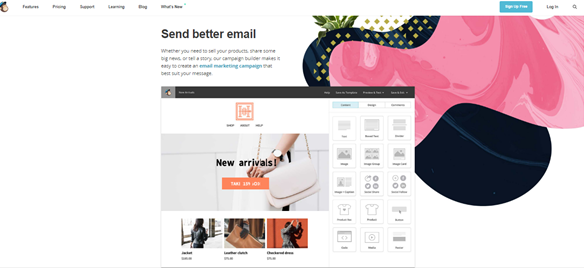
Mail Chimp is the leading platform for marketing automation. It works as the second brain which helps millions of customers, right from small businesses to e-commerce and giant MNC’s. Mail Chimp strives to support businesses by finding the right audience, engaging their customers and then building a brand. Mail Chimp uses interactive graphs in their reports which help customers view every activity associated with the email. The reports also help in providing additional insight into campaigns so as to calculate the amount of ROI the campaign is capable of creating. The easy-to-use interface has some great tools and it integrates beautifully with WordPress, Magento and many other platforms.

Drip:

Top 5 Email Marketing Tools for Every Business
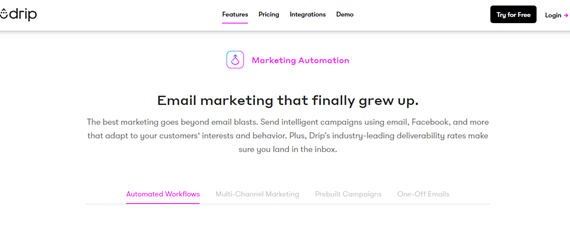
Drip is a powerful Email Marketing tool for bloggers and marketers. They offer a wide range of tools within their platform. Drip, with its starter-friendly Email Marketing functions, offers smarter email segmentation, list groups, and additional features which include being geared for ecommerce. Drip helps you to reach a specific audience on the contact list. Support Options at Drip also include webinars, automation training, and excellent documentation.
Constant Contact:

Top 5 Email Marketing Tools for Every Business

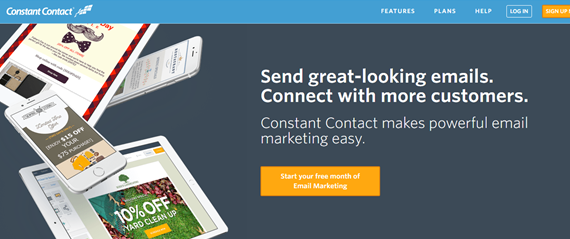
Constant Contact is easy-to-use and it can arrange your mailing lists, email templates, contacts and more.  For email list mailings and newsletters, Constant Contact has over 400 templates to choose from. Apart from its core features for Email Marketing, Constant Contact has also expanded to support other marketing related services. It also lends unparalleled support for email, community support, a vast library of resources and live chat. Apart from online training offers, they also provide live seminars in a location closest to you.
ConvertKit:

Top 5 Email Marketing Tools for Every Business

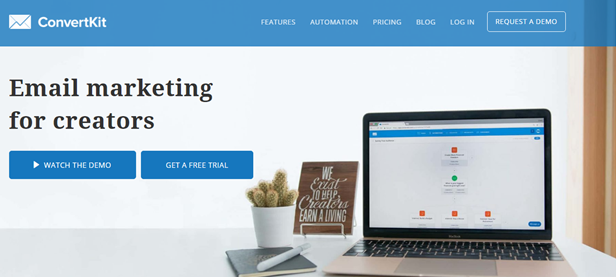
ConvertKit is a resilient marketing platform for authors, marketers or professional bloggers. It is extremely powerful and incredibly easy to use. ConvertKit also allows the user to offer incentives and content-based upgrades with email signup forms. ConvertKit also lets you segment contacts into those that are interested and those who have already made purchases. This is ideal for marketing automation and ConvertKit also offers email-based support. Simple but powerful automations will help lessen the tedious work and send synchronized, timely and targeted content to your subscribers. ConvertKit also lets you utilize your skills and design your own template thus giving you space to think creatively and implement those ideas. ConvertKid has multiple integrations like Gumroad, Teachable, Webinar Ninja, Twitter, and WordPress to name a few.
GetResponse:

Top 5 Email Marketing Tools for Every Business

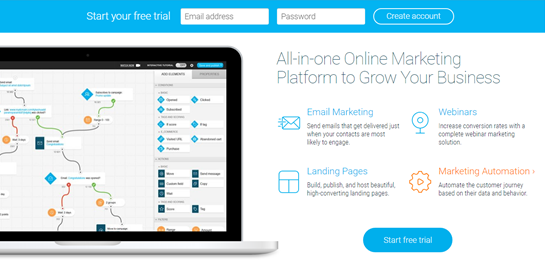
GetResponse is an extremely popular email marketing tool since it is easy to use and is incredibly simplified for businesses and marketers. The marketing automation tools allow you to create smart automated campaigns, which are not time-consuming or complex. The drag-and-drop builder in GetResponse allows marketers for contact segmentation, the creation of campaigns and is also suited to meet the needs of special content for certain designated lists. These tools are immensely effective as opportunities for campaigns to create profits.
GetResponse is available in seamlessly beautiful templates which also integrate with third-party lead generation software such as Salesforce, Google Docs, OptinMonster etc. The interface is user-friendly and it has over 1,000 free high-quality images.

Also Read: Email Signature Marketing: 10 Tips on How to Drive Leads, Increase Sales and Boost Your Social Following

The purpose of email marketing is to acquire new customers, encourage customer loyalty and to retain the current batch of customers with new and exciting offers. The aim involves building loyalty, trust and brand awareness.

Choosing the best email marketing tool will have a significant impact on the success of your marketing campaign. Email marketing has been proven extremely effective for modern-day businesses since it has always co-existed with the other booming giants in social media and has still cut through the clutter.

Clearly, in 2018 email automation could continue to add more tools to further establish brand messaging and social popularity among the premium audience.

Recommended Read: Email Is Hard – Here’s How To Make It Easier

Tremor Video DSP and Cuebiq Join Forces to Bring First Geo-Behavioral Targeting on CTV

0
Tremor Video DSP and Cuebiq Join Forces to Bring First Geo-Behavioral Targeting on CTV

MullenLowe Mediahub is First Agency to Utilize Breakthrough OTT Targeting for Its Clients

Tremor Video DSP, the leading programmatic video platform, and Cuebiq, a leading location intelligence, and measurement company, has announced their exclusive partnership to deliver the industry’s first geo-behavioral targeting solution on over-the-top (OTT) devices. As part of a preferred partnership, MullenLowe Mediahub will be the first agency to execute this innovative audience hyper-targeting for its clients.

tremorvideodsp-cuebiq

Recommended ReadOracle Marketing Cloud Adds Infinity and Audience CX to Enable Pinpoint Targeting

Abbey Thomas, CMO, Tremor Video DSP

At the time of this announcement, Abbey Thomas, CMO, Tremor Video DSP, said, “Our partnership with Cuebiq represents an exciting next phase in our ongoing commitment to advancing video across all screens including CTV.”

Cubeiq’s leading data intelligence platform analyzes location patterns of 61 million monthly anonymous, opted-in US smartphone users on over 180 mobile apps, allowing businesses to glean actionable insights about real-world consumer behaviors and trends.

“Tremor Video DSP has a proven track record of bringing new and dynamic media solutions to market, and we are thrilled to partner exclusively with them to take our leading geo-behavioral insights into the rapidly growing OTT space,” said Antonio Tomarchio, CEO, Cuebiq.

Abbey added, “Applying insights about offline consumer behaviors to the TV screen is an exciting value proposition for marketers and we are committed to investing in opportunities that allow brands to meaningfully connect with their audiences watching CTV.”

Jade Watts, SVP, Group Media Director at Mediahub
Jade Watts, SVP, Group Media Director, Mediahub

Jade Watts, SVP, Group Media Director at Mediahub, said, “Our partnership with Tremor Video DSP has enabled our clients to leverage OTT strategically using custom geo-behavioral audiences. We are excited that our clients will be the first to benefit from this unique offering to meet their brand objectives.”

Read More: Tealium Leads Industry with Enhanced Privacy and Consent Functionality

Brands that use Tremor Video DSP’s Proximity Plus solution – which is powered by Cuebiq’s insights – can now extend this advanced targeting to full episode, fully viewable and fraud-free inventory on the biggest screen in the house via Connected TV (CTV).

Recommended ReadContextual Content and AI: The New Wingmen for Email Marketing Campaigns

Currently, Tremor Video DSP is the leading programmatic video platform, matching advertisers with audiences—wherever they may be. Delivering custom video experiences across all screens, we help advertisers tell captivating brand stories to create meaningful, personalized moments with prospective customers. Tremor Video DSP is a Taptica Company.

Currently, Cubeiq provides next-generation location intelligence and measurement company. It is leveraging the largest database of accurate and precise location data in the US to help marketers map and measure the consumer journey.

 Recommended ReadB2B Buying Disconnect: Are You Targeting the Right Set of Customers?

Blue Prism to Collaborate with Microsoft to Strategically Provide Access to AI Technology

0
Blue Prism to Collaborate with Microsoft to Strategically Provide Access to AI Technology

Collaboration Gives Blue Prism Customers Access to the Microsoft AI Platform, Microsoft Azure Machine Learning and Analytics Capabilities Running on Azure

Blue Prism, a leading Robotic Process Automation (RPA) provider, announced that it has been selected to provide access to Microsoft‘s cutting-edge AI technologies, expertise, advice and support as the company incorporates Microsoft AI into its Digital Workforce.

As part of this ongoing collaboration, Blue Prism is now the only RPA vendor to achieve both Microsoft Gold Certified partner status as well as offer a certified cloud reference architecture for Microsoft Azure. Microsoft also won a Blue Prism Global Reach Award for helping drive automation with global enterprise and government clients looking to streamline operations and increase productivity.

Since last October, both companies have continued to work closely not only on product integration but also on joint marketing and sales efforts. As a result, global customers like Mashreq Bank, Npower and Telefonica O2 are utilizing Blue Prism’s Digital Workforce while taking advantage of native access to Microsoft Cognitive Services and the Microsoft AI Platform.

Also Read: Widen 2018 Connectivity Report Finds AI Key to Modern Marketing Organizations

“Our customers are looking beyond the automation of work processes. They are looking to deploy a digital workforce that can easily integrate with their other best-in-breed AI and cognitive solutions,” said Alastair Bathgate, CEO, Blue Prism. “Being selected by Microsoft helps enable this vision by providing everyone with unprecedented access and flexibility to the latest automation capabilities while ensuring that it is done in a sustainable, scalable way. Our digital workforce when coupled with the Microsoft AI Platform and Microsoft Cognitive Services delivers an innovation breakthrough.”

Blue Prism complements the workplace with an elastic, multi-faceted and multi-talented digital workforce, helping organizations automate and scale business processes via AI, machine learning, intelligent automation and sentiment analysis. The Digital Workforce Platform eliminates vendor lock-in by providing access to the best of breed AI technologies and Intelligent Automation skills through Blue Prism’s Technology Alliance Program (TAP) that transforms how organizations can leverage technology to deliver true operational agility.

Also Read: Artificial Intelligence: Transforming Business Analytics and Predictive Intelligence

“Blue Prism and Microsoft continue to be at the forefront of innovations driving intelligent automation,” said Holly Muscolino, Research VP, Content Technologies and Document Workflow at IDC. “This relationship is more than enabling and embedding technology—it covers a broader go-to-market strategy which will see RPA play an even greater role in driving digital transformations. It can deliver real and tangible business benefits of AI and machine learning driving automation which enterprise users can take advantage of now.”

Janet Lewis, vice president of Worldwide Financial Services at Microsoft said, “Today’s enterprises are always looking for new ways to make their operations faster, more secure and more efficient—which is what drives them to seek out cloud and automation solutions. Working with Blue Prism to bring their best-in-class software robots to the cloud not only delivers on that promise but enables enterprises to truly realize the digital transformation they’re working toward.”

Blue Prism continues to win awards and industry accolades including a Silver Stevie® Award in the Most Innovative Tech Company category. The company was also named one of MIT Tech Review’s 50 Smartest Companies, as well as the winner of the 2017 UK Tech awards last year, and acknowledged by Everest Research as an RPA market leader in their PEAK Matrix Assessment report for 2018.

Recommended Read: AI Leader Faraday Secures $2 Million In New Funding; Adds Industry Experts to Its Team

Video Advertising Report Reveals Completion Rates at New Highs, Fraud Rates at New Lows

1
Video Advertising Report Reveals Completion Rates at New Highs, Fraud Rates at New Lows

Performance Benchmarks from Extreme Reach Show Positive Trends for Campaign Metrics That Matter for Brands and Agencies in Video Advertising

Video advertising technology provider, Extreme Reach has released its Q1 2018 Video Advertising Benchmark Report, bringing brands and agencies fresh insights into performance trends and comparisons for judging campaign success. The report found that the Desktop campaigns have experienced its fourth consecutive quarter of decline. Dropping 41.6 percent compared to Q1 2017, desktop impressions are now just 24.0 percent of the total.

The quarterly report from Extreme Reach examines trends in click-through, completion and viewability rates as well as invalid traffic and time spent, with breakdowns according to purchase method (i.e., premium media sites vs. media aggregators) and device used (i.e., desktop, mobile, tablet and Connected Television [CTV]).

Read More: Mastering the Science of Creating Simple-Scalable-Effective Branded Content

Advertiser Demand for Accountability Driving Increased Vigilance Among Ad Tech Vendor

Mary Vestewig, Senior Director, Video Account Management, Extreme Reach

At the time of this announcement, Mary Vestewig, Senior Director, Video Account Management at Extreme Reach, said, “The way consumers interact with media is almost completely different than it was just a few short years ago, and as ‘lean back’ is supplanted by ‘on-the-go,’ brands are learning quickly that their campaigns must also adapt – and that means more video.”

Mary continued, “With these most recent metrics, the trends are unmistakably positive. As a result, we expect to see accelerated growth in cross-platform video advertising in the months and years ahead.”

The Average Completion Rate for 6-Second Ads Is 74%

Among the report’s key findings on top issues are —

Ad Fraud

Video continues to prove powerful in the fight against ad fraud, with filtered general invalid traffic reaching a new low of 3.7 percent, a reduction of 32.3 percent compared to Q1 2017. Premium media sites experienced even greater declines, dropping 45.9 percent year over year to reach just 2.2 percent. Extreme Reach attributes the declines to advertiser demand for accountability driving increased vigilance among ad tech vendors.

Viewability

Viewable completion rates (percentage of impressions that are both viewable and completed), remain on an upward trajectory, achieving modest gains over Q1 2017. On average, the percent of video ads that are both viewable and played in their entirety is an unprecedented 88 percent for premium media sites and 69 percent for aggregators.

Ad Lengths

After generating considerable buzz in the advertising world in the second half of 2017, 6-second ads picked up steam in Q1 2018. Extreme Reach saw the number of vendors running 6-second ads increase over 300 percent versus Q1 2017. The new format currently accounts for 2.8 percent of all video ads served by Extreme Reach, up from .04 percent in Q1 2017.

The video benchmarks report shows the average completion rate for 6-second ads is 74%, but when removing any impressions where 3rd party measurement was not also available for completion, the rate jumps to 90%. These numbers are likely to drive exponential increases in the quarters ahead.

Engagement

After several quarters of declining click-through rates (CTR), Q1 2018 featured a reversal of the trend, with both premium media and aggregators showing increases. Mobile continues to prove the most effective channel for advertisers driving user action from video advertising, as indicated by an increase in CTR of 79.2 percent from the prior quarter.

Still, this remains 20.4 percent lower than the peak seen in Q1 2017. Tablets also showed gains for the first time in 3 consecutive quarters, increasing 40.0 percent from the previous high in Q1 2017 and 90 percent over Q4 figures.

Devices

Responsible for one-third of all video ad impressions, mobile is solidifying its position at the head of the media-consumption pack. CTV/OTT is also growing quickly, largely driven by the increasing number of consumers who are “cutting the cord.” In Q1 2018, these platforms realized a 47.6 percent increase in impressions year over year.

Desktop, on the other hand, experienced its fourth consecutive quarter of decline. Dropping 41.6 percent compared to Q1 2017, desktop impressions are now just 24.0 percent of the total.

For the next benchmark report, Extreme Reach will continue to monitor trends and insights in order to provide agencies and brands with the video advertising metrics that matter for their business.

Currently, Extreme Reach offers the only enterprise technology designed distinctly to bring together the TV and video ad workflow and all aspects of Talent & Rights management in a single, easy-to-use cloud platform.

Read More: Grapeshot’s New Video Context Solution Fortifies Brand Safety Measures

Rise of the Revenue Analyst in Marketing Operations

2
Revenue Analyst Marketing Operations

Pedowitz GroupSometimes I feel like Colombo.

For the Gen Xers, Millennials and Gen Zs reading this article, Columbo was a frumpy, bumbling detective on a late ‘60s TV show. The modus operandi of the detective was that he was very observant and asked obvious questions. As a result, he was often perceived as not being “in the know” or not that bright. Ironically, he always solved the crime. As I carefully observe the ever-changing landscape of the marketing operations (MO) function, I must ask the most obvious question: Why doesn’t marketing have accountability for a revenue number? This is a Columbo-type question – the answer may seem obvious and I may seem not to be in the know, but there is more to this question.

If you have read any of my articles, you know I am a huge fan of everything that makes a MO group function well. This includes how the group is structured, who they report to, their roles and responsibilities, their martech stack and how they bring an operational discipline to marketing.

As we throw everything but the kitchen sink at the MO group, their responsibilities have greatly expanded beyond optimizing technology for marketing.  Yet, 99% of the MO groups I talk and work with, have no direct revenue accountability. They often tell me, “Well, we are responsible for driving efficiency and effectiveness that enables marketing to meet their goals.” On the surface, this may seem reasonable and you are probably nodding your head in affirmation. However, I challenge this statement. First, because it sounds exactly like the response from the traditional IT group as to why they need to manage martech for marketers. Second, because it is a cop out response, similar to what I’d expect to hear from traditional marketing best known as the pens & mugs department who create killer swag.

Also Read: Debbie Qaqish & Pamela Muldoon of The Pedowitz Group Named 2018 Top Women to Watch in Business

Martech’s Promise: Revenue Accountability

The promise of martech being managed by marketing and not IT was that the tech-focused entity needed to be a unicorn – proficient in technology, marketing and running marketing like a business (revenue oriented). During this time, tremendous pressure was being applied to marketing to use all this new technology to step up and assume financial accountability in terms of contribution to pipeline and closed business. I often call the rise of the MO function, the CMO’s mulligan – a second chance to get the technology, people and process in line to produce credible financial results.

The rise of the MO function was first observed by analyst firm IDC in its annual Tech Marketing Benchmarks study early in 2005, with a detailed analysis and framework for the staffing requirements and responsibilities for this role′s contribution to marketing. Thirteen years later, I am dismayed to not find revenue front and center as a goal for the MO team. With that said, I understand the pressures of the organization given the direct connection between technology and operations. What I don’t get is where revenue got lost.

Also Read: TechBytes with Sam Melnick and Debbie Qaqish

The Traditional MO Analyst

Let’s look at an analyst role in the context of a non-revenue accountable MO function. In this type of MO organization, the MO analyst is responsible for data mining and analysis to provide actionable insights to improve marketing performance. These insights are most often associated with improvements in three distinct areas: system functionality, processes and campaign/content. Reporting may also be part of the role. The problem with the traditional MO analyst role is it is too often tactically focused. The MO analyst looks to improve parts of the puzzle, not the entire puzzle.

From Analyst to Revenue Analyst

Fortunately, the MO analyst role is continuously evolving. I was recently talking with a director of a very interesting organization that has combined marketing ops, sales ops and customer success ops. One key role in the organization was the analyst who reported directly to the director. The reason was to ensure data analysis was honest and best served the needs of the customer and the company. This was especially important around customer data as the company had just completed a pivot away from being product-centric to customer-centric. As I pondered on this analyst’s customer focused role, I asked myself, “With all this data at hand and given marketing’s responsibility for revenue, shouldn’t there be a revenue analyst (RA) role?”

Also Read: Nailing the B2B Campaign Optimization Strategies in 2018

The Rise of the Revenue Analyst (RA)

In all honesty, I have yet to see this role on a marketing operations team. It seems to fall on the VP or CMO to figure out this part. My premise is that if a MO team had a dedicated revenue analyst, marketing would over-achieve their number. Let’s look at key elements of this role

The focus of the revenue analyst is to optimize not just marketing performance in general, but a specific number. That number might be the contribution to the pipeline or closed business in terms of percentage and dollars. It would not be a number of MQLs. With this focus, I suggest this role needs a sales background and needs to be intimate with how a sales funnel works. Next, the revenue analyst needs to be an opportunity spotter.

Translation: she uses data to continuously examine the entire customer life-cycle from acquisition to expansion to advocacy and determines the best opportunities where marketing can invest and get the greatest return. With a deep analytical acumen that is passionately applied to spot the best ROI opportunities, the revenue analyst is poised to optimize martech for its ultimate purpose – making marketing accountable for revenue.

Clearly, marketing has other responsibilities such as customer engagement. My argument is that the revenue analyst can only drive optimal revenue results based on a deep understanding of the customer. In this sense, the revenue analyst is a two-for-one.

Marketing gets a better revenue result while driving improved customer engagement.

Also Read: Fireside Chat with Jeff Pedowitz

Io-Tahoe Asks Strata London Attendees to Regard GDPR As Opportunity to Create Transparency and Trust with Customers

0
Io-Tahoe Asks Strata London Attendees to Regard GDPR As Opportunity to Create Transparency and Trust with Customers

Machine-Learning Based Data Discovery: A Key Element in Helping Firms Comply with the New Regulation

While many attendees at this week’s Strata conference in London may be scurrying to deploy last-second compliance measures with the upcoming General Data Protection Regulations (GDPR), one exhibitor will ask them to look at GDPR as a “silver lining,” and embrace it as a way of gaining a potential competitive advantage.

Io-Tahoe LLC, a pioneer in machine learning-driven smart data discovery, will showcase its platform which features a unique algorithmic approach to auto-discover rich information about data and data relationships. The company will also distribute copies of its “Eight Mandates for GDPR Compliance and the Dividends Beyond” e-book at its Strata booth (#503).

Oksana Sokolovsky
Oksana Sokolovsky

“Too many firms see GDPR as penalizing them. By contrast, we see GDPR as an opportunity that can pay dividends to those firms around the world that actively embrace its goals,” said Oksana Sokolovsky, Interim CEO & Co-Founder – COO, Io-Tahoe. “Discovering where data resides throughout the enterprise to gain the full picture is a key element in GDPR compliance. Employing machine learning to catalog that data, regardless of where it is, can make what’s been a tedious, onerous task far easier to complete. This is what we’ll be sharing with Strata attendees.”

Also Read: Io-Tahoe Unveils Data Discovery Solution To Enable GDPR

GDPR’s regulations are set to take effect on May 25, one day after the conclusion of the Strata conference. Estimates of implementation costs run as high as $7.8 billion at Fortune 500 companies, according to Bloomberg News1. Groups such as the International Association of Privacy Professionals (IAPP) say “the changes needed for GDPR compliance can turn into real competitive differentiators for organizations moving forward,” in areas such as security and data indexing2. Io-Tahoe’s e-book notes that “being ethical with customer data and transparent in how it’s handled are confidence-building measures that enhance customer satisfaction immensely.”

In addition to obtaining a copy of the e-book, visitors to the Io-Tahoe booth will be able to view demonstrations of the company’s newly-launched Data Catalog feature, which allows data owners and data stewards to utilize a machine learning-based smart catalog to create, maintain and search business rules; define policies and provide governance workflow functionality. Io-Tahoe’s data discovery capability provides complete business rule management and enrichment. It enables a business user to govern the rules and define policies for critical data elements. It allows data-driven enterprises to enhance information about data automatically, regardless of the underlying technology and build a data catalog.

Attendees will also have an opportunity to see Io-Tahoe’s smart data discovery platform, recently recognized by John Myers, Managing Research Director of Analytics at industry analyst firm, Enterprise Management Associates (EMA), for “innovation in and application of machine learning for data management practices.” The platform features a unique algorithmic approach to auto-discover rich information about data and data relationships. Its machine learning technology looks beyond metadata, at the data itself for greater insight and visibility into complex data sets, across the enterprise. Built to scale for even the largest of enterprises, Io-Tahoe makes data available to everyone in the organization, untangling the complex maze of data relationships and enabling applications such as data science, data analytics, data governance and data management.

Recommended Read: Io-Tahoe Announces General Availability of Machine Learning-Driven Smart Data Discovery Platform

Intelivideo Announces Three New Board Members

0
Intelivideo Named by Inc. Magazine as One of America's Fastest-Growing Private Companies

Leading White-label OTT Platform Deepens Board in the Midst of Explosive Growth

Intelivideo, a Video-On-Demand technology platform headquartered in Broomfield, CO, announced the appointment of three new Board members.

Joining the Board of Directors are Peter Markham, Ben Wright and Vijay Bangaru. This appointment follows Intelivideo’s Series B funding round in mid-2017.

“All three of our newest Board members are experienced operators and business leaders in the broader technology space with some specific domain expertise in new media and video,” said Matt Given, CEO. “They’re each uniquely qualified and bring a passion for our mission to the company. Intelivideo will simply be a better company with them on our team.”

Markham is a Managing Director at TMT Capital, a New York-based strategic advisory and value creation firm focused on the corporate and private equity markets. Markham has a distinguished track record in the new media and broadcasting segments with roles as CEO and Chairman of trend-setting companies in the Direct-to-Consumer and OTT TV movements. He is an adjunct faculty member in NYU’s MBA program (where he earned an MBA), lectures at the London Business School and is a graduate of Clemson University where he serves on the Spiro Institute for Entrepreneurship Board of Directors.

Also Read: Intelivideo Scoops $5.6 Million in Series B Funding Round to Expand into New VOD Categories

Wright of San Francisco, CA, has a series of operational and leadership roles with new media companies including, most recently IAC Publishing where he was SVP of Strategy and Operations, Ask.com, Trada and Yahoo. He has also served as a strategy consultant with technology and content companies in the Bay area and around the world. Wright has excelled at roles that have been both strategic and roll-your-sleeves-up operational. He is a graduate of Bournemouth University in the United Kingdom.

Bangaru of Boulder, CO, currently serves as the Senior Director of Software Development at the Public Cloud division of Oracle. Bangaru is a seasoned technology executive who has launched products and massive scale technology to hundreds of millions of users. He has a record of success in building and leading successful engineering and cross-discipline teams. His experience includes product leadership for Google Drive and a major overhaul of Google Search, a key member of the turn-around team at MapQuest, and technical leadership on file systems at Microsoft. Bangaru also served as the CEO of Splick.it, an early stage mobile commerce company and serves on the Board of Directors of several early-stage companies including Arryved, Storyvine and Windward Studios.

The Board of Directors is completed by Scott Heinemann, COO and CFO, and Given. Founders Brad Brown and Monty Sooter serve as Advisors to the Board.

Recommended Read: Intelivideo announces Live Streaming, a Powerful New Component in Subscription Video On Demand

How to Beat Amazon in the War for Consumer Conversations and Retail Dominance

2
How to Beat Amazon in the War for Consumer Conversations and Retail Dominance

What Retailers like Target, Macy’s and Kohl’s are Doing Right in the War Against Amazon for Consumer Conversations and Retail Dominance; According to an Analysis by Engagement Labs on Word of Mouth and Social Media Conversations, Several Retailers Are Outperforming Amazon

Amazon’s impact on the retail industry is undeniable – each and every retailer now competes with the e-Commerce giant. And, rightfully so, according to Engagement Labs, Amazon dominates consumer conversations and is the focus of more consumer talk than any other retail brand, which equates to increased sales.

At the time of this announcement, Ed Keller, CEO, Engagement Labs, said, “While it is obvious that Amazon is redefining the retail industry, there is still tremendous opportunity for retailers to compete.”

Ed added, “Our research found that several retailers outperform Amazon in offline conversation – which is equally important in driving consumer sales as the conversations happening online. By understanding consumer conversations, and optimizing marketing campaigns based on this data, retailers have the opportunity to increase their marketing ROI and revenue.”

Conversations About Brands Drive US Consumer Purchases Significantly

In a recent landmark study, Engagement Labs proved that conversations about brands, on average, drive 19 percent of U.S. consumer purchases, representing between $7 and $10 trillion in annual sales. As a formidable competitor across every retail category, it is imperative for retail marketers to leverage strategies that motivate consumers to talk about their brands.

TotalSocial is an “always-on” proprietary scoring system, based on the most important drivers of brand performance: Volume, Sentiment, Brand Sharing, and Influence. TotalSocial tracks 500 brands across 16 major industry categories within the U.S., and 350 brands across 18 industry categories in the UK.

According to Engagement Labs’ new analysis of offline (face-to-face) and online (social media) consumer conversations, many retail brands are doing well, and in some cases, even better than Amazon in certain conversational categories. With a greater understanding of the power of consumer talk, as well as a holistic view of online and offline consumer conversations, retailers can more effectively stand up against Amazon in the battle for social influence and market share.

What a Complete View of Consumer Conversations About Their Brands Truly Mean

The study is based on the Company’s TotalSocial® score, which combines online social media listening data with offline word-of-mouth tracking to provide marketers with a complete view of consumer conversations about their brands. Together, these are proven to be key drivers of sales.

According to the study, brand marketers can learn from different retailers across categories to better measure up against the online shopping behemoth. 

Discount Stores

Costco Wholesale

In the discount stores category, Costco’s strong TotalSocial score places it second – after Amazon – with high offline scores for volume (how much the brand is being talked about), sentiment (how positive the conversation is) and influence (how well the brand connects with the everyday influencers).

In fact, Costco’s offline sentiment and offline volume scores surpass Amazon’s. Costco’s consistent focus on wholesale prices and quality merchandise is a strategy that resonates with its members in their offline conversations. However, the report found Costco does not perform as well online, revealing an area for improvement for the brand.

Target

Target has a stronger TotalSocial online score than either Walmart or Costco, and it ranks just behind Amazon with a very competitive online sentiment score. Target’s success in sparking online conversations is driving e-Commerce sales for the brand.

Department Stores

Macy’s

A retailer’s entire year is often determined in the months leading up to the holiday season, and according to Engagement Labs’ report, Macy’s surpassed Amazon in online sentiment during this period. In addition, Macy’s online and offline brand sharing scores–the extent to which people are sharing or talking about a brand’s marketing or advertising–are a close second to Amazon’s, and the retailer has higher offline and online influence scores than Amazon, indicating that more influential consumers are talking about Macy’s than Amazon.

Kohl’s

The analysis finds that Kohl’s has such strong offline sentiment that it’s a close second to Amazon throughout the year, but similarly to Macy’s, it surpasses Amazon for offline sentiment during the critical holiday shopping season.

Over the last several years, Kohl’s has invested in an aggressive omnichannel strategy which motivates brand sharing and both online and offline discussion. For example, mobile now accounts for 67 percent of its online traffic.

The Home Center / Hardware Stores

Lowe’s and Home Depot

Lowe’s and Home Depot have created experiential marketing campaigns that motivate consumers to talk, leading to strong offline volume and sentiment. Lowe’s ranks higher than Amazon in online sentiment, and both retailers rank higher than Amazon in offline influence, largely due to the fact that when consumers look to make home improvements they seek recommendations from the influencers in their everyday lives.

Specialty Stores

Sephora and Ulta

Beauty products are intensely personal and Sephora and Ulta understand this. They have created experiential marketing to encourage shoppers to visit the stores, try the products, and then purchase.

This approach has motivated consumers to talk about each brand. Sephora has the second highest overall TotalSocial score in the beauty category, behind Amazon. Ulta takes third place. In addition, both brands have higher online sentiment and offline influence scores than Amazon. Ulta also surpasses Amazon in offline sentiment, while Sephora ranks first for offline brand sharing.

CEO of Engagement Labs added, “Each conversation metric can impact sales for retail brands.”

Ed continued, “To better compete, retailers should think about ‘talkability’ when creating their marketing campaigns. By activating consumers to talk positively and share their content offline and online will impact their ability to compete in a rapidly changing retail environment.”

Currently, Engagement Labs provides the world’s leading brands with a unique and powerful data and technology solution to drive sales growth and improve marketing ROI. Our TotalSocial® technology combines online social media listening metrics with the world’s only ongoing measurement of offline word-of-mouth conversations into a single dashboard, to provide marketers with the ability to measure performance, diagnose areas of weakness and opportunity and identify specific strategies and tactics to increase sales and improve marketing ROI.

TechBytes with Jeremy Finch, Product Marketing Manager, Adobe

0
Jeremy Finch
TechBytes with Jeremy Finch, Product Marketing Manager, Adobe

Jeremy Finch
Product Marketing Manager, Adobe

Yesterday, Adobe announced that they were acquiring leading content management platform for B2B and B2C companies, Magento Commerce. The leading martech company has a clear mission to continue with digital transformation while delivering high-value customer experiences for desktop, mobile, social and display. Today, Adobe looks set to blow away the major challenges that marketers face in delivering truly omnichannel customer experiences. To better understand how customers could leverage Adobe to create superlative cross-channel Customer Experiences, we spoke to Adobe’s Product Marketing Manager, Jeremy Finch.

Html code here! Replace this with any non empty text and that's it.

What is the true state of “Customer Experience” in 2018?

In 2018, customers are becoming more experience-loyal than brand-loyal. But, according to a recent study by Forrester Consulting, commissioned by Adobe, only 31% of brands qualify as experience-driven businesses. People don’t care that organizations have different functions for managing their marketing, advertising or analytics technologies. Customers just want to be treated like individuals and be spoken to in a cohesive, unified voice without being overloaded by irrelevant and transactional offers and messages.

As brands increasingly prioritize customer experience, they should tap into research from behavioral science that suggests people often look at three key points when judging experiences – positive first impressions, helpful surprises and satisfying endings. A good “customer experience” should consistently include all three of these elements. Technology can help enable this trifecta at scale.

What are the major challenges for marketers in delivering truly omnichannel customer experiences?

The three main challenges marketers face include data, content and delivery.

  • Data: Customer data can be scattered across different systems or siloed in different parts of an organization, making it hard to develop a complete view of each person’s interests, values and journey stage. On the reporting and measurement side, the fact that marketers use many technologies across different channels can also make it hard to get an accurate view into the tactics that resonate best and how those tactics interact with each other.
  • Content: It can be challenging to create content that is personalized to the recipient, relevant to the channel it’s delivered in, and optimized for the format and device it will be consumed on. And it’s even more challenging doing all of this in a time- and energy-efficient way, especially when so much content is being created and used by different groups.
  • Delivery: It’s also challenging for marketers to connect email, mobile, web and offline marketing technologies at scale and to deliver timely, relevant communications to people at exactly the time and place they want it. Timing and context is everything.

These are large challenges for marketers to overcome, but tools like Adobe Campaign can help people pull together these elements in a way that improves collaboration and makes omnichannel marketing achievable for most organizations.

How is CX linked to overall business goals? To what extent does technology help achieve those goals by delivering relevant CX?

Customer experience is deeply linked to overall business goals, but it must be measured cohesively next to other organizational priorities in order to stay front and center. The four key areas where technology can help achieve business goals include customer acquisition, customer retention, win-back and virality. Great customer experience makes customer acquisition easier and cheaper – marketers don’t have to spend as much money and effort convincing people that their product or service is great if the experience clearly speaks for itself. Customer experience also helps with retention and win-back by starting with the assumption that customers seek different types of information and services at different stages of loyalty or involvement with a brand. And it also helps with virality in the sense that satisfied customers are your best marketers – they want to share their positive experiences with friends, family, colleagues and peers. And the happiest ones will scale their recommendation power using reviews, social media and referrals.

How do customers leverage Adobe to create superlative cross-channel Customer Experiences?

For digitally-empowered consumers, making an informed decision about a brand takes only a few seconds. These decision-making opportunities are happening constantly. That’s why it is imperative that brands deliver relevant experiences on every channel, at the most crucial moments. One way Adobe Experience Cloud customers are implementing this omnichannel approach is through the combination of Adobe Analytics and Adobe Campaign. Using this integration, marketers can leverage real-time user behavior on web and digital properties to trigger personalized messages through email and mobile channels. The combination of Adobe Campaign and Adobe Analytics also helps marketers eliminate unnecessary guesswork by only sending targeted follow-ups and reminders to customers who may have gotten side-tracked while attempting to complete a particular task.

Redtag.ca, one of Canada’s top digital travel agencies, is using Adobe Experience Cloud solutions to turn online journeys into real-life vacations. Redtag.ca found its customers were actively engaging across online, mobile, email and call center channels, but they struggled to improve and personalize these experiences due to legacy limitations around data consolidation. Using Adobe Analytics, Redtag.ca consolidated all of their cross-channel data to see which vacation packages, activities and offers resonated with certain customer segments. The marketing team then took these insights and used these segments in Adobe Campaign to target people with more personalized and relevant content through email and other mobile channels. This effort helped Redtag.ca increase email open rates, clickthroughs and time spent on its website, and enabled a more data-driven organizational culture.

How do you see investments in CX technologies impacting overall marketing budget in 2018-2022?

Companies are actively prioritizing improving customer experience. In fact, the Forrester Consulting study I mentioned earlier indicated that 80% of brands surveyed viewed improving the customer experience as a critical or high priority over the next 12 months. Their top two areas of focus in improving customer experience include manging the entire customer journey and improving cross-channel customer experiences – both of which require investment in connecting people, processes and technology. Also, when looking at the budgets of experience-driven businesses (the 31% I mentioned earlier), the Forrester study found that these brands are now more likely to have dedicated budget specific to improving the customer experience than other companies. But it’s all paying off: Experience-driven businesses report an average revenue growth rate of 15% (compared to the 11% average growth from other companies) and 1.6x higher growth in brand awareness.

How do you pivot AI/machine learning to deliver CX at the highest level of engagement?

Leveraging AI and machine learning, marketers can break through the noise and surface only the most relevant customer experiences possible. These tools also give marketers the ability to get more granular and build individualized campaigns that are tailored at the 1:1 level. For example, leveraging functionality in Adobe Campaign powered by Adobe Sensei, Adobe’s AI and machine learning framework, marketers can now predict the open rate of an email based on the words used in the subject line. We also highlighted a project last year from our research labs that’s aiming to predict customer churn based on how customers engage with emails.

AI and machine learning saves marketers valuable time and energy, automates manual tasks, uncovers data that was previously hidden, and frees up space to focus on the most important thing: Building better customer experiences.

Thanks for chatting with us, Jeremy.
Stay tuned for more insights on marketing technologies. To participate in our Tech Bytes program, email us at news@martechseries-67ee47.ingress-bonde.easywp.com

SpotX Launches Online Resource Library For Publishers Seeking GDPR Guidance

0
SpotX Launches Online Resource Library For Publishers Seeking GDPR Guidance

SpotX, a Leading Video Advertising and Monetization Platform, Also Puts Its Own Compliance Strategy into Action

SpotX, the leading video advertising and monetization platform, today announced the launch of an online resource library offering a variety of content to foster awareness and education about the implementation of data protection as it pertains to the European Union’s General Data Protection Regulations (GDPR). The library can be found on the company’s website and is part of a wider educational initiative by SpotX to offer everything a publisher, media owner, or advertiser needs to know about preparing for GDPR compliance.

Effective May 25, 2018, GDPR aims to strengthen and unify data protection for individuals in the European Union and applies to any company that processes personal data of subjects in EU member states, even if the data subject is not an EU citizen. The new regulations intend to give individuals control over their data and to simplify the regulatory environment for international business. Companies that do not comply with GDPR regulations face fines up to 4 percent of their annual global revenue, including its parent company or €20 million, whichever is greater.

“As a global company, we are well aware that GDPR is a huge concern for everybody within the digital ecosystem, and the implications of non-compliance are massive,” said Mike Shehan, co-founder and CEO at SpotX. “One of our company’s missions is to support our partners by providing all of the necessary tools, information, and guidance they may need to effectively and efficiently execute advertising transactions.”

Also Read: SpotX Provides Total Campaign Audience Insights for CTV

As part of its own GDPR compliance strategy, SpotX has created an internal, cross-functional, global GDPR Task Force to help train all SpotX employees on the new regulations and provide extensive guidance for every type of stakeholder. SpotX is also developing several tools and products that will allow its partners to manage their own privacy settings.

SpotX’s educational initiative includes plans for future case studies, roundtable discussions, social media campaigns, and more blog posts describing important GDPR information and recommended action items. For more information about SpotX’s GDPR compliance strategy, please email GDPR@spotx.tv.

SpotX is currently in the process of merging operational businesses with its sister company smartclip. SpotX’s GDPR initiatives are all-inclusive of both organizations in their respective regions.

Recommended Read: SpotX To Host Go Live, Exclusive Two-City Event To Explore Live OTT Advertising

Interview with Daina Middleton, CEO, Ansira

0
Daina Middleton
Interview with Daina Middleton, CEO of Ansira

[vc_wp_text]“Moving from a transactional to a relational approach to marketing is having a profound effect on marketing programs.”

[/vc_wp_text]

[easy-profiles profile_twitter=”https://twitter.com/DainaMiddleton” profile_linkedin=”https://www.linkedin.com/in/dainamiddleton/”]

Tell us about your role and how you got here. What inspired you to be part of a data-driven marketing agency? 

I feel as though all of my previous roles have provided the perfect skills and experience for my role as CEO of Ansira. I spent 16 years at Hewlett-Packard Company during its glory days. The experience I received at HP was truly invaluable. Sixteen years may seem like a long time, but I wasn’t in a role longer than two years. During that time, I literally wore every marketing communications hat there is: sales promotion, branding, advertising, PR, integrated marketing to name a few. I worked in B2B and B2C; national and global; marketing and engineering; technology and packaged goods (supplies). My marketing foundation was traditional, but I was fortunate enough to pioneer digital. I grew up in a culture rooted in consensus and understanding how to influence other without having authority. I worked with the best partners in the industry and together we pioneered groundbreaking data-driven marketing, with Google, YouTube, Yahoo and others. I developed a network that is still fueling my success today. HP’s leaders were smart, articulate, humble and transformational. Overall, I could not ask for a better foundation to catapult my career. In 2007, I was working on a beautiful campaign for HP about self-expression. The tagline was “What do you have to say?” And, it dawned on me that for the first time in history, because of the Internet, customers could respond and tell us what they had to say. Remember, in 2007 social was still in its infancy and mobile was younger than that from a marketing standpoint. But, HP really wasn’t interested in understanding what our customers had to say and that’s when it struck me that marketing had to change. Marketing through persuasion wasn’t enough, understanding the science behind participation was vital to success in the age of digital and the internet. It was this realization which drove me to depart HP and join the agency world where I could test my ideas on participation marketing. I subsequently published a book about the topic titled Marketing in the Participation Age in 2012.

I joined Moxie Interactive (Publicis) and pioneered their paid social practice. I was there for a little under two years when I was approached about taking the helm at the search company Performics. Publicis has just purchased the services part of the business from Google who had retained the Doubleclick technology but chose to divest the services side of the business because of conflict of interest. During my time as CEO, the company evolved from being primarily a paid search business operating only in the US to a performance marketing global powerhouse in 34 countries in 4-1/2 years. It was a journey that required vision, positioning, culture, operational excellence, and product diversification. The role at Performics taught me so much about leadership and vision, specifically, how simple it is to design a vision and how difficult it is to get others to follow you there.

I then joined Twitter to run business marketing to drive revenue growth globally. My experience at Twitter taught me that having an operational foundation is critical to successfully scaling a business. I also learned the publisher side of the business. During my time at Twitter I completed my second book which is about the conversation I felt was missing in leadership: gender differences. The book, titled Grace Meets Grit: How to Bring Out the Remarkable Courageous Leader Within, was published in 2016 which caused me to invest deeply in organizational development.

I partnered for 18 months with a private equity firm working with executives in their portfolio firms as a leadership coach. This experience provided me with a really unique lens about leading others. In my journey of helping others, I also reflected on my own leadership strengths and stretches. I’m not sure that any other experience could have provided this unique lens. I also was able to get an inside view of private equity and this made me realize just how much I love all aspects of business: operations, sales, culture, finance, strategy, etc., and I began to contemplate moving back into an operational role. It was shortly thereafter that I received the call about the opportunity at Ansira.

In summary, each of these roles has provided me with invaluable skills and experiences that I can bring to the role at Ansira.

How do you see customer data acquisition models evolving with the availability of better CRM and Data Management Platforms? 

The biggest evolution today is the notion that successful CRM and loyalty programs are about relationships and therefore customer acquisition models aren’t enough. Accumulating customers isn’t enough. Customers expect brands to know them, respect them and develop a relationship with them. Brands are understanding that nurturing relationships is more valuable than having a one-time transactional engagement. This movement from a transactional to relational approach to marketing is having profound effects on marketing programs. Furthermore, understanding all of the players involved in the relationship with the customer is vital. Ansira is an expert at working with brands who have both a national and local presence. In the past, most marketers only focused on the national relationship which worked well for mass media programs. Local relationships are becoming more important than ever before because customers expect their interactions in the store or dealer to be consistent and seamless with the interactions they have at the national level, yet relevant to their own community. Through data and technology solutions that help brands scale local partner marketing, it is now possible to have a holistic view of both the transactional and relational marketing, and brand and channel or sales marketing. We have been talking about this for years, but only now are we able to deliver it in a scaled manner.

How should CMOs better plan their data + marketing technology investments? 

Relationship marketing begins with an understanding of expectations on both sides. Oftentimes, marketers leap to how they will measure or build something without thinking about the customer first. What type of relationship do you want to have? What actions do you expect customers to take as a result of this marketing program? Only after answering these and other questions that take the customer and objectives into account, can the data and marketing technology investment questions be addressed.

What are the benefits of leveraging AI-powered marketing performance platforms? 

AI offers scale and speed which are vitally important to delivering relevant and timely experiences for customers. I attended the Intel keynote at the Consumer Electronics Show last week. They began the program with music composed by AI. It was really cool and allowed the orchestrator flexibility in mixing and timing. However, while it was really cool, the music wasn’t really very pleasant to the ear. I think this is an important an analogy and provides a lesson for marketers. While scale and speed are important, creative, quality content is still critical.

What tools does your marketing stack consist of in 2017? 

Ansira provides technologies and services that drive transparency, accountability and effectiveness in national to local marketing from management all the way to execution. We take a technology independent approach, acting as a cross-cloud integrator for our clients to maximize past investments and future-proof against strategy. Active client supported examples in the cross-channel campaign management space would be Adobe, Salesforce, Alterian, SAS CI, and Oracle, among others.  Where we have seen gaps in the marketplace, the AnsiraEdge Technology Suite enables brands to create consistent and compelling customer interactions at a national and local level. For example, Distributor provides a one-stop shop for all brand assets and customizable templates. Either used as self-service or with dedicated Ansira support, our clients can build, customize and activate their marketing material through execution. Localizer is then leveraged for co-op and market development fund administration, and a myriad of trade promotion management services, to motivate channel partners to initiate compliant marketing at the local level. Whereas Insighter provides transparent and engaging reporting across channels and partners.

Would you tell us about your standout digital campaign? 

Domino’s digital strategy is considered to be the best in the pizza category and is credited with helping to drive Domino’s category killing growth. In an industry that is growing at 1-2%, Domino’s has had double digit for years due to its ability to drive digital orders. The sophisticated strategy doesn’t focus on heavy budgets and an e-commerce website, it is a compilation of micro-targets and tactics. Every aspect of the customer search pathway is accounted for in the strategy. As a result, Ansira can be fully attributed with developing and executing a national to local digital strategy that drove $1.8 billion in online sales in 2017.

How do you prepare for an AI-centric world as a business leader? 

AI can enable insights, speed, and scale that can be invaluable. But, just like any technology, it is not a substitute for process and people. I think the key is to understand the contribution of process, technology and people. This is not a static understanding, and so continuous evaluation and improvement is the key to success. I also believe that testing and learning is the best way to prepare. This has been the case in our technology-driven environment for some time and will continue. Only through testing and learning can we understand what works and what doesn’t and adapt and scale quickly to keep a competitive edge.

One word that best describes how you work. 

Curious

What apps/software/tools can’t you live without? 

A tablet with a pen and notability which has replaced volumes of notebooks.

What’s your smartest work related shortcut or productivity hack? 

Sleep and thinking time. I undervalued both when I was younger. We all think we can do 100 meetings and multitask all day and all night. We are analog and need time to process, think, and regenerate.

What are you currently reading?

Harvard Business Review – love it for a constant stream of short-form content.

I have moved to consuming digital content. I love books and really miss the smell and feel of them. But I now carry 150-300 books with me virtually at all times. Like music, the practicality of that has converted me to reading digitally.

What’s the best advice you’ve ever received? 

Believe in yourself. You are better than you think.

Thank you Daina! That was fun and hope to see you back on MarTech Series soon.

[vc_tta_tabs][vc_tta_section title=”About Daina” tab_id=”1501785390157-b58e162d-0ae25a4b-c27aca64-108e51b0-80edaf37-bd3d357a-6c46d712-3b68f9d5-ca7e”]

Daina Middleton is CEO of Ansira. Prior to her current role, Daina spent time as a leadership development coach, and headed up global business marketing at Twitter. As CEO of the Performics, the performance marketing agency grew from being a small US-only organization to a global powerhouse with offices in 34 countries in just 4-1/2 years.

Prior to Performics, Daina pioneered social media at the digital creative agency Moxie.  She began her marketing career at Hewlett-Packard where she managed every marketing function during her 16-year tenure pioneering both digital and search.

Daina received a bachelor’s degree in technical journalism from Oregon State University.

[/vc_tta_section][vc_tta_section title=”About Ansira” tab_id=”1501785390320-2d44fa50-740c5a4b-c27aca64-108e51b0-80edaf37-bd3d357a-6c46d712-3b68f9d5-ca7e”]

Ansira Logo
Ansira is a leader at leveraging intelligence at every interaction to acquire, grow and retain your best customers. Our data-driven marketing helps brands create and strengthen customer relationships at a national and local level through customer engagement and channel partner empowerment, delivering long-term profitability for our clients.

[/vc_tta_section][/vc_tta_tabs]
[mnky_heading title=”MarTech Interview Series” link=”url:https%3A%2F%2Fmartechseries-67ee47.ingress-bonde.easywp.com%2Fcategory%2Fmts-insights%2Finterviews%2F|||”]

The MTS Martech Interview Series is a fun Q&A style chat which we really enjoy doing with martech leaders. With inspiration from Lifehacker’s How I work interviews, the MarTech Series Interviews follows a two part format On Marketing Technology, and This Is How I Work. The format was chosen because when we decided to start an interview series with the biggest and brightest minds in martech – we wanted to get insight into two areas … one – their ideas on marketing tech and two – insights into the philosophy and methods that make these leaders tick.

SalesLoft Acquires Noteninja to Bring AI-based Sales Meeting Intelligence

1
SalesLoft Acquires Noteninja to Bring AI-based Sales Meeting Intelligence

The Acquisition of Noteninja Allows SalesLoft Customers with an Advanced Opportunity to Deliver a Better Sales Experience to Their Customers Based on Sales Meeting Intelligence

In a major salestech announcement, SalesLoft has announced that they have acquired Noteninja to meet the growing demands of the users and authentic sellers around the world. Noteninja is a leading meeting intelligence provider that also provides call transcription services using AI. In a blog post from CEO of SalesLoft, Kyle Porter, he mentioned what this means to SalesLoft customers and the advanced opportunity they will now have to deliver a better sales experience to their customers.

Personally, I’ve spoken with over 200 VPs of sales this year. They tell me they’ve codified their go-to-market plans in SalesLoft and they share how they use it to deploy action lists to their AEs, SDRs, and account managers. – Kyle Porter, SalesLoft CEO

Meeting intelligence now forms a very critical part of any sales tech stack for a company. It is helping sales teams to execute their campaigns based on their cadence of communications with customers and prospects through phone, email, social, and other activities. Much to the delight, these platforms are delivering success to sale teams.

SalesLoft offers partner integrations on its platform to more than 34 leading SaaS companies including for LinkedIn Sales Navigator, Slack, DiscoverOrg, Engagio, and Vidyard.

Noteninja within Salesloft

Kyle mentioned that the customer analysis showed how users are increasing opportunities created by over 25% in the first 90 days. According to a recent TOPO report, SalesLoft customers have ranked the company go-to platform for sales dialer and also for sales email. This is a testimony to the growing popularity of SalesLoft as the leading provider of a Sales Engagement Platform.

Why SalesLoft Acquired NoteNinja

The acquisition of Noteninja arrived following Kyle’s realization of what SalesLoft customers were missing out on their sales success platform. With customers wanting more insights from their sales meetings, it was clear that SalesLoft pitched in with the best solution to providing an answer to deliver a “positive buying experience”.

Why Modern Revenue Organizations Need Meeting Intelligence Software 

Via SalesLoft CEO, Kyle Porter
via SalesLoft CEO, Kyle Porter

Kyle writes, “When I saw Noteninja, I immediately realized our customers are going to want this solution. I was impressed by Noteninja’s innovation, customer-centric approach, and by the culture and character of their founders. Adding intelligence capabilities, along with continued innovation in our meeting scheduling module is a natural addition to better serving customers to greater sales.”

After Salesforce acquired Mulesoft earlier this year, it’s a great time to invest in a sales intelligence and full-funnel automation technology platform to drive better productivity from your sales campaigns.

Adobe Set to Acquire Magento Commerce for $1.68 Billion

0
Adobe Set to Acquire Magento Commerce for $1.68 Billion

Adobe Surges Ahead in Content Management and Digital Experience Race Adding Magento Commerce Platform to Adobe Experience Cloud

MarTech 150 RADAR company for 2018, Adobe has announced that it has entered into a definitive agreement to acquire Magento Commerce. Magento Commerce is a market-leading commerce platform. The acquisition is set for $1.68 billion, subject to customary purchase price adjustments. The addition of the Magento Commerce Cloud will enable commerce to be seamlessly integrated into the Adobe Experience Cloud, delivering a single platform that serves both B2B and B2C customers globally.

Recommended Read: MarTech RADAR 2018: Top 150 B2B Technology Companies You Should Follow

At the time of this announcement, Brad Rencher, Executive Vice President and General Manager, Digital Experience, Adobe, said, “Adobe is the only company with leadership in content creation, marketing, advertising, analytics and now commerce – enabling real-time experiences across the entire customer journey.”

Brad added, “Embedding commerce into the Adobe Experience Cloud with Magento enables Adobe to make every moment personal and every experience shoppable.”

The Magento Platform brings together digital commerce, order management, and predictive intelligence into a unified commerce platform enabling shopping experiences across a wide array of industries.

The addition of the Magento Commerce Cloud will enable commerce to be seamlessly integrated into the Adobe Experience Cloud, delivering a single platform that serves both B2B and B2C customers globally.

Adobe is the leader in designing and delivering digital experiences through content and data. At the core of every great experience are content and data, which enable the consistent, personal, intuitive experiences consumers have come to expect. Commerce is also integral to the customer experience. Consumers and businesses now expect every interaction to be shoppable – whether on the web, mobile, social, in-product or in-store.

Read More: AdRoll and Magento Commerce Announce Strategic Partnership to Help Online Stores Drive More Growth

Magento Brings Adobe Experience Cloud Digital Commerce Enablement

Magento brings Adobe Experience Cloud digital commerce enablement and order orchestration for both physical and digital goods across a range of industries, including consumer packaged goods, retail, wholesale, manufacturing and the public sector. The Magento Platform is built on proven, scalable technology supported by a vibrant community of more than 300,000 developers.

The Magento partner ecosystem provides thousands of pre-built extensions, including payment, shipping, tax, and logistics. This level of flexibility gives businesses the ability to quickly ramp and iterate their commerce capabilities for their unique business needs.

Current Magento customers include brands like Canon, Helly Hansen, Paul Smith and Rosetta Stone. Adobe and Magento share joint customers including Coca-Cola, Warner Music Group, Nestlé and Cathay Pacific.

“Adobe and Magento share a vision for the future of digital experiences that brings together Adobe’s strength in content and data with Magento’s open commerce innovation,” said Mark Lavelle, CEO, Magento.

Mark added, “We’re excited to join Adobe and believe this will be a great opportunity for our customers, partners and developer community.”

Upon close, Magento CEO Mark Lavelle will continue to lead the Magento team as part of Adobe’s Digital Experience business, reporting to executive vice president and general manager Brad Rencher.

Magento Commerce to Continue Operating as an Independent Until Q3 2018

The transaction, which is expected to close during the third quarter of Adobe’s 2018 fiscal year, is subject to regulatory approval and customary closing conditions. Until the transaction closes, each company will continue to operate independently.

Currently, Magento Commerce is a leading provider of cloud commerce innovation to merchants and brands across B2C and B2B industries. In addition to its flagship digital commerce platform, Magento Commerce boasts a strong portfolio of cloud-based omnichannel solutions that empower merchants to successfully integrate digital and physical shopping experiences.

Recommended Read: Top Insights on the CMO’s Best Allies, Content Marketing, and the Art of Story-Telling for Brands

Ogury Consent Manager Unveiled to Help Publishers with GDPR Compliance

0
Ogury Consent Manager Unveiled to Help Publishers with GDPR Compliance

Ogury Consent Manager Is a Free Solution to Help Publishers Comply With GDPR Requirements

Ogury, the world’s leading mobile data company, launches Consent Manager to strengthen its Ogury for Apps suite of solutions. This new product enables app publishers to be compliant with the General Data Protection Regulation (GDPR), which comes into effect on 25 May 2018.

Read More: TechBytes with Shouvick Mukherjee, Chief Technology Officer, Amobee

Consent Manager allows Ogury to offer its partners a complete ecosystem of solutions while ensuring all the other connected players in the ecosystem respect the new GDPR legislation.

Since its inception in 2014, Ogury has been developing solutions that help brands and app publishers get the most out of mobile user data. By greatly simplifying the collection of consent from users of apps, Consent Manager aligns with this mission and further strengthens the Ogury for Apps suite of solutions.

Consent Manager Is a Free Solution for Ogury Partners

Designed for Android and iOS-based applications, Consent Manager is a free product that is available to all Ogury app partners. This unique, end-user, license agreement-management interface simplifies user review and validation of the collection and use of data. The user can freely consent to or opt-out of the collection and the publisher can centralize all requests for consent in a single interface. This integrated, easy and transparent solution for both publishers and end-users is a continuation of Ogury’s dedication to data management, based on values of transparency, protection, and consent.

Read More: TechBytes with Bridget Bidlack, SVP of Product, Movable Ink

Consent Manager, Available in Open Source in 2019

Though the beta version of Consent Manager released today is exclusively for partnered publishers who have integrated the Ogury SDK into their applications, Ogury will promote a universal ecosystem that respects user data. Beginning in July, the Consent Manager solution will be available to every publisher. Continuing its dedication to promoting best practices in the collection of consent and the respect of user data, Ogury will open the Consent Manager software to all app-editors in 2019, enabling engineers to collaboratively improve upon the product.

At the time of this announcement, Jules Minvielle, Chief Strategy Officer at Ogury, said, “GDPR is a fundamental step forward for the data protection of European citizens. We look forward to this GDPR initiative that represents a major step forward and an undeniable competitive advantage for compliant data specialists. It is essential to ensure the consent and protection of users on the data issue. As Ogury’s dedication to data protection and privacy is in its DNA since launch, the issue of consent is at the heart of the design of our products.”

Test Your Knowledge with the “GDPR Grandmaster Challenge”

In order to raise awareness about the challenges of the GDPR, and to allow everyone to have a more complete understanding of the new regulations, Ogury is also launching “The GDPR Grandmaster Challenge“, a 10-question online quiz about general GDPR knowledge that is accessible to the general public. The interactive digital experience is intended to be an educational project that further emphasizes Ogury’s mission to support and spread the protection of user data.

Currently, Ogury, the world’s leading mobile data company, enables brands, publishers, and users, to make informed choices, and secure their fair share of value in a complex and competitive mobile ecosystem. Ogury has access to 400+ Million high-quality and consented mobile user profiles in 120 countries.

Recommended Read: Salesforce Einstein Analytics Unveils Conversational Queries to Simplify Data

Millennials Want Access to Technical Content Before Purchasing, Finds SDL Study

0
Millennials Want Access to Technical Content Before Purchasing

According to SDL Research on Technical Content, Quality Online Tutorials, Manuals and Communities Influence Millennials Buying Behaviors

SDL, a leader in global content management, translation and digital experience, today launches a report looking at the way millennials want to engage with brands, and the value they place on instant access to technical product-related content throughout the customer buying experience.

Read AlsoContent Update: Top MarTech Blogs for Every Marketer’s Platter

Over 40% of Millennials Actively Search for Online Tutorial

The SDL report, ‘Making Your Content Connect with the Next Generation,’ found that 41% of millennials actively search for online tutorials, and a third (33%) search for technical Q&A documents and manuals, before buying a product online. A third (29%) also try to understand the size, activeness, and popularity of user communities before completing their purchase.

Recommended ReadContextual Content and AI: The New Wingmen for Email Marketing Campaigns

The report findings indicate that millennials are also more loyal to companies that deliver product-related content. Almost three-quarters (72%) admit that product information affects their impression of a product, and 71% are willing to recommend brands that provide access to high-quality technical information.

Brands Need to Offer Easy to Access, High-Quality Technical Content in Multiple Languages

At the time of this announcement, Arjen van den Akker, Director Product Marketing at SDL, said, “Millennials grew up on digital, and are accustomed to having instant access to any information they want. They don’t expect to flip through a paper manual or even download a PDF.”

Arjen added, “This means brands need to offer easy to access, high-quality technical content in multiple languages, optimized for search and delivered across multiple formats. Brands must support this new way of engaging with customers by evolving and improving the way they create, manage, and deliver content.”

The report also highlights how millennials like to engage with brands, and how they want their content delivered. Not surprisingly, millennials want access to product information across multiple devices, formats, and channels.

Two-thirds (66%) value interactive content, and 67% expect content to be personalized to their own preferences and search behavior. Millennials also value content that takes into account their own personal context (65%).

Read more: The Art and Science of Retargeting for Marketers in 2018

Content Management and Their Role in Connecting with Millennials to High-Quality Technical Content on a Website

Brands can support this demand for high-quality technical information by reducing the complexity of creating, managing and distributing in-depth product content and technical documentation at scale. SDL Tridion DX combines the best of Structured Content Management (CCMS), Web Content Management (WCM) and translation technology to help teams create and manage technical content – like manuals, datasheets, and documents – and better collaborate throughout the review process.

By managing content creation and delivery in this way, companies can offer millennials instant access to high-quality technical content on a website, or through any channel or digital device, they choose to engage with a brand.

Currently, SDL is the global innovator in language translation technology, services, and content management. For over 25 years we’ve helped companies deliver transformative business results by enabling powerful, nuanced digital experiences with customers around the world.

Recommended Read: Mobfox Introduces Audience Analytics for Better In-App Monetization

Lytics Commits to Trust-Based Marketing

0
Lytics Commits to Trust-Based Marketing

Calls for New Standard for Digital Marketing Industry

Lytics Inc., the customer data platform company, unveiled its commitment to a new paradigm for digital marketing: Trust-Based Marketing. The company launched this new initiative at the Gartner Digital Marketing Conference in San Diego.

“Digital marketing is at an operational and ethical crossroads,” said Lytics co-founder and CEO James McDermott. “We’re all tired of lazy marketing that is intrusive, inefficient and that leaves customers frustrated and burned. Digital marketers owe their customers more.”

In the midst of controversies around misuse and misappropriation of consumer data, brands are struggling to deliver effective marketing campaigns tailored to the individual consumer. Good digital marketing practices require good digital data obtained with the knowledge and consent of the individual consumer and used in a way that respects and empowers that consumer.

Third-party data pieced together and purchased without the knowledge and consent of the individual consumer is no longer acceptable. The marketing campaigns built on that sort of flawed data are no longer merely rude or annoying; they are unethical in a time like this.

Instead, marketers should be able to communicate with their customers the way their customers want and like and with their permission. First-party data, knowingly shared, is more accurate and better captures an individual’s preferences and behaviors.

Also Read: Lattice Engines Launches the First Customer Data Platform for Account-Based Marketing

In the wake of consumer data misappropriation scandals, companies and brands that align with the values of Trust-Based Marketing will thrive, said Darren Guarnaccia, CMO of Lytics.

But embracing Trust-Based Marketing means more than just respectful gathering of data, Guarnaccia said. The concept also sets the expectation that marketers use personal data to serve the customer’s best interests. The end goal is to make customers feel both valued and understood.

“All the data in the world won’t help you if you don’t use it the right way,” Guarnaccia said. “Lytics is committed to trust and transparency, and so are the digital marketers we serve. Now we’re calling on all digital marketers to raise their standards and embrace Trust-Based Marketing.”

The company is also committed to helping marketers understand and measure the impact they are having on customer trust. Lytics has been developing tools and KPIs to help marketers understand how their marketing practices are impacting consumer’s trust in the brand.

Also Read: Velocidi Acquires ShiftForward; Becomes the World’s First Private Customer Data Platform

“The heart of Trust-Based Marketing is being intentional about being trustful in your engagement with your customers,” Guarnaccia said. To that end, the company has also developed a formal methodology to guide organizations as they shift from legacy marketing approaches to Trust-Based Marketing.

The security and privacy of customer data is built into the Lytics customer data platform. The Lytics system only collects and stores the data its customers gave permission to collect and store, under their valid privacy policies or other end-user agreements. In turn, the consumer gets treated as an individual, with marketing tailored to serve them based on their individual preferences and needs.

When this core principle was challenged by inaccurate news reports recently, the company’s leadership determined that now was the time to rally its customers to the concept of Trust-Based Marketing.

“We believe this is the future of digital marketing – built on trust, and in service of the consumer,” said McDermott. “Brands that put their customers’ interests ahead of their own will thrive in this environment.”

Recommended Read: You Can’t Spell Digital Transformation Without CDP

Manzama and OnePlace Partnership Brings Market Intelligence to Client Lifecycle Management

0
Manzama and OnePlace Partnership Brings Market Intelligence to Client Lifecycle Management

The Partnership Allows Bringing Key Information Provided by the Manzama Intelligence Platform Directly into Their Oneplace CRM Environment 

Manzama and OnePlace announced a partnership which will allow for seamless integration of Manzama data and insights into OnePlace’s Client Lifecycle Management solution for Professional Services firms. The integration allows organizations to bring in key information provided by the Manzama Intelligence Platform directly into their OnePlace CRM environment for better access and utilization by stakeholders and teams across the firm. This integration encompasses not only information from the Manzama base platform, but also from Manzama’s new, transformative Manzama Insights product, which leverages the latest in data science techniques to uncover risks and opportunities around clients, prospects, and industry sectors.

“We are thrilled to partner with a company like OnePlace whose core principle is to centralize critical information within Professional Service firms, and make that information more easily accessible and discoverable,” said Mark Hinkle, co-founder of Manzama. “Combining not just news, but analytics at a centralized point of need which can be easily leveraged for quick identification of risks and opportunities around clients and prospects, and horizon spotting across industry sectors, is what this partnership and integration are all about.”

Also Read: OnePlace Solutions Launches add-in for Microsoft Outlook on Android

“The OnePlace solution is designed to deliver tangible value not only to Marketing and BD teams but also to lawyers, partners and firm management,” added Tim Smith, CEO at OnePlace. “Integrating Manzama information, particularly Manzama Insights, into our solution was a no-brainer, and we’re excited to offer this option to our shared clients. The concept of pro-actively managing risk and uncovering opportunities in client relationships is embedded in our approach, so this is a great match.”

With intuitive search and sharing tools, user-friendly implementation, and integrations into numerous best-in-class third-party platforms, the Manzama Base and Manzama Insights platforms automate the process of finding and sharing critical business insights.

OnePlace is a Client Lifecycle Management (CLM) solution that helps professional services firms identify and nurture new engagements, build strong pathways into existing clients and monitor and manage revenue risk. Developed natively on the Salesforce Platform, OnePlace delivers capabilities beyond legacy CRM systems to support the complete client lifecycle: from initial contact to cultivating profitable, long-lasting relationships.

Recommended Read: Salesforce CRM Tops the Chart for the Fifth Consecutive Year

Global eCommerce Communities Inspiring Brands To Rethink And Reinvent Go-To-Market Strategies: CMO Council Research

0
Global eCommerce Communities Inspiring Brands To Rethink And Reinvent Go-To-Market Strategies: CMO Council Research

New Research From the CMO Council Highlights How Leading Brands Are Learning From Big Digital Marketplaces and Adapting to a New 4P Model of Marketing That Is Based On Precision, Personalization, Persuasion and Perfection to Multiply Purchase

Leaders have followers, and nowhere is that more evident than the global eCommerce market, where giant digital shopping destinations like eBay, Amazon and Alibaba now account for more than 50 percent of the nearly $500 billion spent by North American consumers online.

Large, global eCommerce communities are disrupting the retail marketplace by bringing together vast numbers of buyers and sellers in frictionless transactional environments. Inspired by their success, brand marketers are rethinking go-to-market strategies to better integrate digital advertising with personalized shopper engagement and more effective conversion programs.

New research by the Chief Marketing Officer (CMO) Council — titled “Ingenuity in the Global eCommerce Community” — explores how the massive scale, data quality and customization capability of online marketplaces are bringing new levels of customer insight, enriched experiences and added value to brands. Digital commerce accounts for about 10 percent of the $5 trillion in total annual sales across all retail channels.

Also Read: Programmatic Media Buying Has Marketers Worried About Brand Safety, says CMO Council Report

According to a CMO Council survey of nearly 200 brand marketers, well over 50 percent believe that large eCommerce communities are revolutionizing and reinventing the global retail marketplace. It was also forcing them to rethink every aspect of how they go to market. In a telling self-assessment, 60 percent report that they need to embrace a more cohesive, integrated, multi-channel digital retail strategy to improve their own eCommerce business.

The CMO Council study, conducted in collaboration with eBay, revealed the top five ways in which big eCommerce channels were impacting the go-to-market planning and strategies of major product marketers. According to the marketers surveyed, these included:

  • Putting pressure on us to lower pricing
  • Rethinking our monetization and customer revenue models
  • Forcing us to seek greater brand differentiation
  • Recalibrating and allocating our digital marketing spend
  • Shifting us into an agile, real-time marketing mode

“The millennial-driven shift to digital retail shopping is prompting the evolution of the old 4P model of marketing—now, more notably, we need Precision, Personalization, Persuasion and Perfection of execution to multiply purchases,” notes Donovan Neale-May, Executive Director of the CMO Council. “Exemplifying this are innovations in customer attraction, convenience, conversion and consistency of experience that are behind the success of eBay, Amazon and other digital commerce communities.”

Also Read: CMO Council And NPES Launch Brand Inspiration Center To Deepen Collaboration Between Brands And Supply Chain Partners

For its part, eBay is using advances in technology, such as augmented reality (AR), artificial intelligence (AI) and machine learning, to improve search relevancy and make buying and selling on eBay much more gratifying.

“eBay has made it even easier to shop and sell on the platform by leveraging new technology to redefine what online shopping means today,” notes Bridget Davies, eBay’s VP of Advertising and Marketing Activation. “We use AI and big data to learn how people move at a granular scale to better connect with consumers, brands and businesses.”

Davies points to eBay’s AI-powered, personalized homepage and over 1.1B listings using structured data. “Over 80 percent of eBay users are logged in when they access our platform, allowing us to deterministically identify users across channels, browsers, and devices rather than relying on cookie-based probability models,” she adds.

The CMO Council report notes that marketers today are challenged to evidence how they are using data and real-time insights to “gain greater satisfaction from every customer interaction” and determine whether they have the ability to “scale the way they track the digital buying trail.”

Also Read: CMOs Struggling To Meet Needs Of Local Audiences And Geographies With Adaptive Marketing Creative, Says New CMO Council Study

The CMO Council’s new thought leadership initiative gathered insights from nearly 200 global brands and their physical and digital retail partners. This included category leaders like Lenovo, LEGO, Puma, Casio, Serta, Bosch, Brooks, PERRIN PARIS and Fruit of the Loom/Spalding. The resulting best-practice report (available here) accents how brands are using proprietary data and insights to execute smarter customer acquisition campaigns that key off of seasonal, event-related, price-based and more personalized offers and promotions.

Areas of exploration covered by the CMO Council research included:

  • How marketers view the disruptive and transformative nature of global eCommerce communities and online marketplaces like eBay, Alibaba, Amazon and others
  • To what degree these always-open, price-driven shopping, trading and auctioning channels are impacting and influencing go-to-market strategies, transactional margins and traditional retail distribution models
  • The percentage of manufacturer revenue that now comes from online commerce and how marketers expect this will shift in the year ahead in terms of resource allocation and business results
  • The benefits that global eCommerce communities offer in terms of how a brand or channel partner can reach, engage, convert, support, satisfy and repeatedly sell to target customers
  • What might worry brands about the enormous economic clout and market-making capacity of giant online retailers and large, aggregated communities of predisposed buyers and motivated sellers
  • How well product advertisers are sourcing “shoppergraphic” insights, mass-customizing and localizing digital ad messages, and evaluating campaign effectiveness

Recommended Read: Are Creative Marketplaces and Dynamic Creative Optimization the Future of Online Advertising?

V12 Data Expands Email Append Database by 23%

0
V12 Data Expands Email Append Database by 23%

Using a Name and Postal Address, V12 Data Can Locate and Append a Matching Email Address

V12 Data, a leading provider of people-based marketing solutions, announced the expansion of its email append database by 23%. The database grew from 200 million records to 245 million records. The increase in the total universe of records provides clients with higher match rates when adding or updating missing email address to their customer database.

According to Michelle Taves, EVP of Data Strategy & Product Management, “Although email appending is one of the fastest and most accurate ways to add emails to customer lists, many brands are not using it often enough or even at all. However, according to industry research, email marketing databases naturally degrade by about 22% every year. Experts also agree that brands can see an average increase of 30% in ROI with email append processes.”

Also Read: V12 Data Appoints Jason Webby as Chief Revenue Officer

Using a name and postal address, V12 Data can locate and append a matching email address that the consumer has given permission to receive marketing messages with. This can be done at the individual level where the first name/last name/address are matched or at the household level where last name/address are matched to locate someone in the household. A permission message is deployed to all matches and only deliverable, non-opted out emails is added to the client’s original file.

Anders Ekman - Image
Anders Ekman

“Email marketing is thriving and has the potential to produce huge ROI. However, email addresses are only valuable if they offer a company a viable channel of communication by being continually deliverable,” said Anders Ekman, President of V12 Data. “The V12 Email database is a high quality, permission-based national file with over 200 million email addresses and our eAppend service offers a superior solution for companies that would like to transform their customer database into a digital marketing resource.”

Recommended Read: V12 Data Launches “Lending Helping Hands” in Support of Community Service

SpotX To Host Go Live, Exclusive Two-City Event To Explore Live OTT Advertising

0
SpotX To Host Go Live, Exclusive Two-City Event To Explore Live OTT Advertising

Yospace and Akamai Will Join SpotX, the Leading Video Advertising and Monetization Platform, as Co-Hosts in Both New York City and Los Angeles

SpotX, the leading video advertising and monetization platform, announced that it will co-host, with Yospace and Akamai, an exclusive event called Go Live to discuss the latest trends, challenges, and innovations around live, over-the-top (OTT) advertising. The event is scheduled to take place on two separate days in both New York City and Los Angeles with presentations from SpotX, Yospace, and Akamai.

Also Read: SpotX Doubles Down on Digital Video Advertising Safety, Granted Renewal on All Trustworthy Accountability Group (TAG) Certifications

“Live OTT services are entering the mainstream and we have no doubt that they will become even more popular in the coming months as viewership grows and advertisers continue to invest,” said Mike Shehan, co-founder and CEO at SpotX. “We think this transformative time serves as the perfect moment to bring together leaders throughout the advertising industry to share ideas and insights.”

With a carefully selected audience of 30 movers and shakers from throughout the OTT advertising ecosystem per city, the presentations and fireside chat with David Springall (founder and CTO at Yospace), Wendy Verschoor (senior product manager, Media Division at Akamai), Kevin Schaum (senior director, Advanced Solutions Group at SpotX), and Eric Boyd (director of product at JW Player) are set to spark thought-provoking conversation and valuable networking amongst attendees.

Also Read: Akamai Announces Akamai Connector, a New Integration with Salesforce Commerce Cloud

When:

Tuesday, May 22, 2018 in New York City

Thursday, May 24, 2018 in Los Angeles

10:30 a.m. – Introductions

11:00 a.m. – Yospace: Monetizing Live Streaming at Scale

11:45 a.m. – Akamai: Bring the TV Experience Online: Delivering Low Latency at Broadcast Quality

12:30 p.m. – Lunch

1:30 p.m. – SpotX: Crossing the Live Chasm: Scaling Programmatic Execution

2:30 p.m. – Fireside Chat with SpotX, Yospace, Akamai, and JW Player

3:15 p.m. – Cocktails and Networking

Where:

Convene, 237 Park Ave, New York, NY (on May 22)*

Kimpton Hotel Palomar, 10740 Wilshire Blvd, Los Angeles, CA (on May 24)*

*Both events are invite-only.

Recommended Read: OTT Explosion Provides Safe Platform For Marketers